
PCLA 20-F
PicoCELA Inc. (PCLA)
UNITED STATES
SECURITIES AND EXCHANGE COMMISSION
WASHINGTON, D.C. 20549
FORM
OR
For
the fiscal year ended
OR
OR
Date of event requiring this shell company report
For the transition period from to
Commission
file number:
(Exact name of Registrant as specified in its charter)
Not Applicable
(Translation of Registrant’s name into English)
(Jurisdiction of incorporation or organization)
(Address of principal executive offices)
Telephone:
Email:
At the address of the Company set forth above
(Name, Telephone, E-mail and/or Facsimile number and Address of Company Contact Person)
Securities registered or to be registered pursuant to Section 12(b) of the Act.
| Title of each class | Trading Symbol(s) | Name of each exchange on which registered | ||
| * |
Securities registered or to be registered pursuant to Section 12(g) of the Act.
None
(Title of Class)
Securities for which there is a reporting obligation pursuant to Section 15(d) of the Act.
None
(Title of Class)
Indicate the number of outstanding shares of each of the issuer’s classes of capital or common stock as of the close of the period covered by the annual report: common shares as of September 30, 2025
Indicate by check mark if the registrant is a well-known seasoned issuer, as defined in Rule 405 of the Securities Act.
Yes
☐
If this report is an annual or transition report, indicate by check mark if the registrant is not required to file reports pursuant to Section 13 or 15(d) of the Securities Exchange Act of 1934.
Yes
☐
Indicate by check mark whether the registrant (1) has filed all reports required to be filed by Section 13 or 15(d) of the Securities Exchange Act of 1934 during the preceding 12 months (or for such shorter period that the registrant was required to file such reports), and (2) has been subject to such filing requirements for the past 90 days.
Indicate by check mark whether the registrant has submitted electronically every Interactive Data File required to be submitted pursuant to Rule 405 of Regulation S-T (§232.405 of this chapter) during the preceding 12 months (or for such shorter period that the registrant was required to submit such files).
Indicate by check mark whether the registrant is a large accelerated filer, an accelerated filer, a non-accelerated filer, or an emerging growth company. See definition of “large accelerated filer,” “accelerated filer,” and “emerging growth company” in Rule 12b-2 of the Exchange Act.
| Large accelerated filer | ☐ | Accelerated filer | ☐ | |
| ☒ | Emerging growth company |
If
an emerging growth company that prepares its financial statements in accordance with U.S. GAAP, indicate by check mark if the registrant
has elected not to use the extended transition period for complying with any new or revised financial accounting standards provided pursuant
to Section 13(a) of the Exchange Act.
Indicate
by check mark whether the registrant has filed a report on and attestation to its management’s assessment of the effectiveness
of its internal control over financial reporting under Section 404(b) of the Sarbanes-Oxley Act (15 U.S.C. 7262(b)) by the registered
public accounting firm that prepared or issued its audit report.
If
securities are registered pursuant to Section 12(b) of the Act, indicate by check mark whether the financial statements of the registrant
included in the filing reflect the correction of an error to previously issued financial statements.
Indicate by check mark whether any of those error corrections are restatements that required a recovery analysis of incentive-based compensation received by any of the registrant’s executive officers during the relevant recovery period pursuant to §240.10D-1(b). ☐
Indicate by check mark which basis of accounting the registrant has used to prepare the financial statements included in this filing:
| International Financial Reporting Standards as issued by the International Accounting Standards Board ☐ | Other ☐ |
If “Other” has been checked in response to the previous question, indicate by check mark which financial statement item the registrant has elected to follow. Item 17 ☐ Item 18 ☐
If
this is an annual report, indicate by check mark whether the registrant is a shell company (as defined in Rule 12b-2 of the Exchange
Act). Yes ☐
TABLE OF CONTENTS
INTRODUCTION
In this annual report on Form 20-F, unless the context otherwise requires, references to:
| ● | “ADRs” are to the American Depositary Receipts that may evidence the ADSs (defined below); | |
| ● | “ADSs” are to the American Depositary Shares, each of which represents one Common Share (defined below); | |
| ● | “Common Shares” are to the common shares of PicoCELA; | |
| ● | “Exchange Act” are to the Securities Exchange Act of 1934, as amended; | |
| ● | “JPY” or “¥” are to Japanese yen, the legal currency of Japan; | |
| ● | “PicoCELA” are to PicoCELA Inc., a joint-stock corporation (kabushiki kaisha) with limited liability organized under Japanese law; | |
| ● | “SEC” are to the U.S. Securities and Exchange Commission; | |
| ● | “Securities Act” are to the Securities Act of 1933, as amended; | |
| ● | “U.S. dollars,” “$,” and “dollars” are to the legal currency of the United States; and | |
| ● | “we,” “us,” “our,” “our Company,” or the “Company” are to PicoCELA and its subsidiaries, as the case may be. |
This annual report on Form 20-F includes our audited consolidated financial statements for the fiscal years ended September 30, 2025, 2024, and 2023. Our functional currency and reporting currency is JPY. Convenience translations included in this annual report of JPY into U.S. dollars have been made at the exchange rate of JPY147.97 = $1.00, which was the foreign exchange rate on September 30, 2025 as reported by the Board of Governors of the Federal Reserve System (the “U.S. Federal Reserve”) in its weekly release on October 6, 2025. Historical and current exchange rate information may be found at https://www.federalreserve.gov/releases/h10/.
We have made rounding adjustments to some of the figures included in this annual report. Accordingly, numerical figures shown as totals in some tables may not be an arithmetic aggregation of the figures that precede them.
| 2 |
Glossary of Technical Terms
This glossary contains explanations of certain terms used in this annual report. Unless we indicate otherwise, references in this annual report to:
| ● | “access network” are to wireless links between Wi-Fi access points and user terminals such as smartphones and personal computers (“PCs”); | |
| ● | “application programming interface” or “API” are to a way for two or more computer programs or components to communicate with each other; | |
| ● | “backhaul” are to the portion of a hierarchical telecommunication network which relay links connecting each wireless base station to the Internet; | |
| ● | “Bluetooth” are to a short-range wireless technology standard that is used for exchanging data between fixed and mobile devices over short distances and building personal area networks (PANs). In the most widely used mode, transmission power is limited to 2.5 milliwatts, giving it a very short range of up to 10 meters (33 ft). It employs UHF radio waves in the ISM bands, from 2.402 GHz to 2.48 GHz. It is mainly used as an alternative to wired connections to exchange files between nearby portable devices and connect cell phones and music players with wireless headphones; | |
| ● | “Bluetooth gateway” are to a wireless base station that connects to multiple Bluetooth-compatible devices, such as remote sensors, to connect them to the Internet; | |
| ● | “captive portal” are to a web page accessed with a web browser that is displayed to newly connected users of a Wi-Fi network before they are granted broader access to network resources. It is typically used at a public network by business centers, airports, hotel lobbies, coffee shops and other public venues that offer free Wi-Fi hotspots for internet users; | |
| ● | “cloud-computing” are to a practice of using a network of remote servers hosted on the internet to store, manage, and process data, rather than a local server, a personal computer, or a local newt work device; | |
| ● | “demodulation” are to extracting the original information-bearing signal from a carrier wave; | |
| ● | “digital goods” are software programs, music, videos, or other electronic files that users download exclusively from the Internet; | |
| ● | “digital taxation” are to a taxation of digital goods imposed on the profit generated by sale of digital goods by national tax jurisdictions; | |
| ● | “edge-computer” are to a computing device that is ubiquitously deployed in places where people live and engage in activities such as buildings, public spaces, parks, and so on. The edge computer is equipped with a main processor, data memory, data storage, operating system, application software, and wired or wireless interfaces. The wireless interface of an edge computer allows mobile devices such as smartphones, tablets, or laptops to connect to the edge computer to provide not only Internet connectivity but also various services such as image recognition, web portal, data cache; | |
| ● | “edge computing” are to a distributed computing model that brings computation and data storage closer to the sources of data, such as mobile devices. That distinguishes edge computing from cloud computing, where hosted services, such as data storage, servers, databases, networking, and software, are processed in a centralized cloud data center, with other computers and mobile devices connected remotely. Generally, edge computing refers to any design that moves computation physically closer to a user, so as to reduce the latency compared to the situation when an application runs on a single data center. Edge-computing is effective in reducing the data traffic from the edge-computer to the remote cloud data center, compared to the case that mobile devices must communicate to the remote cloud data center; |
| 3 |
| ● | “graphical user interface” or “GUI” are to a form of user interface that allows users to interact with electronic devices through graphical icons and visual indicators such as secondary notation; | |
| ● | “hop” are to a wireless relay link between two nodes. One node relays data packets wirelessly to the other node or vice versa; | |
| ● | “integrated circuit” or “IC chip” are to a small electronic device made up of multiple interconnected electronic components such as transistors, resistors, and capacitors. These components are etched onto a small piece of semiconductor material, usually silicon; | |
| ● | “internet of things” or “IoT” are to devices with sensors, processing ability, software and other technologies that connect and exchange data with other devices and systems over the Internet or other communications networks; | |
| ● | “LAN” are to a local area network that includes local client devices and local servers connected by network switches. The client devices and servers are connected to each other by means of an electrical cable, fiber optic cable, or radio waves; | |
| ● | “low-power wide-area network” or “LPWA network” are to a type of wireless telecommunication wide area network designed to allow long-range communication at a low bit rate between IoT devices, such as sensors operated on a battery; | |
| ● | “mesh Wi-Fi access point” are to a wireless device that is capable of wirelessly connecting to other mesh Wi-Fi access points as well as wirelessly connecting to mobile station devices. The mesh Wi-Fi access point is equipped with different radio modules, i.e. one for wireless connection to the other mesh Wi-Fi access points and one for connection to the mobile station devices; | |
| ● | “mesh link” are to a wireless link that connects two mesh Wi-Fi access points in a mesh Wi-Fi access points network. Mesh Wi-Fi access points network is organized by multiple mesh links; | |
| ● | “mesh cluster by PBE” is a cluster consisting of a single parent unit connected by LAN cable and multiple child units connected by wireless multi-hop relay under the said parent unit; | |
| ● | “middleware” are to a type of computer software program that provides services to software applications beyond those available from the operating system; | |
| ● | “modulation” are to the process of varying one or more properties of a periodic waveform, called the carrier signal, with a separate signal called the modulation signal that typically contains information to be transmitted; | |
| ● | “multi-hop routing” are to a type of communication in radio networks in which network coverage area is larger than radio range of single nodes. Therefore, to reach some destination a node can use other nodes as relays; | |
| ● | “multi-hop relay” are to a multi-stage relay of data packets between a source node and a destination node via intermediate relay nodes; | |
| ● | “network throughput” are to the rate of message delivery over a communication channel, such as Ethernet or packet radio, in a communication network; | |
| ● | “node” are to a wireless device that transmits and receives data packets; | |
| ● | “open systems interconnection reference model” or “OSI reference model” are to a reference model from the International Organization for Standardization (ISO) that provides a common basis for the coordination of standards development for the purpose of systems interconnection. In the OSI reference model, the communications between systems are split into seven different abstraction layers: Physical, Data Link, Network, Transport, Session, Presentation, and Application; |
| 4 |
| ● | “packets” are to a protocol data unit at layer 3, the network layer, in the seven-layer OSI model of computer networking; | |
| ● | “proprietary protocol” are to a communications protocol owned by a single organization or individual. A communication protocol is a system of rules that allows two or more entities of a communications system to transmit information via any variation of a physical quantity. The protocol defines the rules, syntax, semantics, and synchronization of communication and possible error recovery methods. Protocols may be implemented by hardware, software, or a combination of both; | |
| ● | “protocol stack” are to an implementation of a computer networking protocol suite or protocol family; | |
| ● | “radio propagation” are to the behavior of radio waves as they travel, or are propagated, from one point to another in vacuum, or into various parts of the atmosphere; | |
| ● | “received signal strength indicator” or “RSSI” are to a measurement of the power present in a received radio signal; | |
| ● | “routing” are to the process of selecting a path for traffic in a network or between or across multiple networks; | |
| ● | “SaaS” or “Software as a service” are to a software licensing and delivery model in which software is licensed on a subscription basis and is centrally hosted; | |
| ● | “tree routing” are to a low-overhead routing protocol designated for simple, low-cost, and low-power wireless sensor networks. It avoids flooding the network with path search and update messages in order to conserve bandwidth and energy by using only parent–child links for packet forwarding; | |
| ● | “Wi-Fi access point” are to a device that creates a wireless local area network, or WLAN, usually in an office or large building. An access point connects to a wired router, switch, or hub via an Ethernet cable, and projects a Wi-Fi signal to a designated area; | |
| ● | “Wi-Fi Chips” are to an integrated circuit made of semiconductors, which are designed to process Wi-Fi radio activities and are installed in Wi-Fi access points device as its integral electronic components; | |
| ● | “Wi-Fi frequency channel” are to a frequency range within which wireless devices can communicate; | |
| ● | “Wi-Halow” are to a global radio standard for low power and wide area network; | |
| ● | “wireless mesh network” are to a communications network made up of radio nodes organized in a mesh topology. A mesh refers to rich wireless interconnection among devices or nodes; | |
| ● | “virtual local area network” or “VLAN” are to a virtualized connection that connects multiple devices and network nodes from different LANs into one logical network; and | |
| ● | “802.1 X authentication” are to an authentication process making sure something interfacing with the system is actually what it claims it is. When someone wants to gain access to a network using 802.11 and variants like 802.11n, b, or g, 802.1 X authentication acts as a protocol that verifies the person connecting is who they say they are. It works for both wireless and wired devices. |
| 5 |
Part I
Item 1. IDENTITY OF DIRECTORS, SENIOR MANAGEMENT AND ADVISERS
Not Applicable.
Item 2. OFFER STATISTICS AND EXPECTED TIMETABLE
Not Applicable.
Item 3. KEY INFORMATION
A. [Reserved]
B. Capitalization and Indebtedness
Not applicable.
C. Reasons for the Offer and Use of Proceeds
Not applicable.
D. Risk Factors
Risks Related to Our Business and Industry
The enterprise mesh Wi-Fi access points market in Japan is highly competitive and if we cannot continue to remain competitive, our operations could be adversely impacted.
The enterprise mesh Wi-Fi access points market in Japan is highly competitive. Our industry of enterprise mesh Wi-Fi access points in Japan is dominated by a few global market leaders, such as Cisco’s Meraki and Hewlett Packard’s Aruba. The competitive factors influencing our market position include product innovation, price competitiveness, brand strength, customer service excellence, and the timely introduction of new technologies. In response to these market dynamics, we prioritize the security, reliability, and performance of our solutions to meet the growing demands of our customers and to navigate the complexities of the global mobile and wireless backhaul market. However, we cannot assure you that our strategies will remain competitive or that they will continue to be successful in the future. Increasing competition could result in pricing pressure and loss of our market share, either of which could have a material adverse effect on our financial condition and results of operations.
Revenue generated from our development and sales of mesh Wi-Fi access points, PCWL series, have been uncertain and volatile, subject to our supply chain of Wi-Fi Chips.
The revenue generated from our development and sales of our mesh Wi-Fi access points, PCWL series, have been uncertain and volatile, depending on our ability to obtain stable supply of Wi-Fi Chips sufficient to meet our manufacturing needs. For the fiscal years ended September 30, 2025, 2024, and 2023, revenue generated from sales of our mesh Wi-Fi access points, PCWL series was JPY447,069 thousand (approximately $3,021 thousand), JPY627,720 thousand, and JPY465,691 thousand, respectively, accounting for approximately 82.1%, 80.0%, and 83.2% of our total revenue, respectively. This is mainly because our ability to manufacture and deliver our products to the market has recovered from the shortage of Wi-Fi Chips which caused a delay in our product launch and delivery of our products to the market. Although we do not source Wi-Fi Chips directly, our third-party manufacturers need to source the Wi-Fi Chips designated by us to fulfill the requirements of our product design, and they have no discretion of choosing replacement chips if Wi-Fi Chips are unavailable in the required quantities or not available at all. If there is shortage of Wi-Fi Chips, our revenue would be negatively affected. See also “—A shortage of Wi-Fi Chips or labor, or increases in their costs, could delay delivery and launch of our mesh Wi-Fi access points or increase their cost, which could materially and adversely affect us,” and “Item 5. Operating and Financial Review and Prospects—D. Trend Information—Changes in supply or price of Wi-Fi Chips or labor costs.”
| 6 |
In addition, because our enterprise customers’ orders for our industrial use products are subject to cyclical capital investment decisions and budgeting considerations at the customers business enterprises, our revenue may be uneven during a customer’s fiscal year as well as over the years of investment cycle. If we fail to predict the revenue generated from sales of mesh Wi-Fi access points in the future or if such revenue continues to be uncertain and volatile, it could adversely impact our business, prospects, liquidity, financial condition, and results of operations.
We have not been profitable and have incurred negative cash flows in operating activities, both of which may continue in the future.
During the fiscal years ended September 30, 2025, 2024, and 2023, we recorded a net loss. During the fiscal years ended September 30, 2025, 2024, and 2023, the net loss was JPY626,312 thousand (approximately $4,233 thousand), JPY479,921 thousand, and JPY633,956 thousand, respectively. See “Item 5. Operating and Financial Review and Prospects—A. Operating Results” and audited financial statements for the fiscal years ended September 30, 2025, 2024, and 2023. In addition, as of September 30, 2025, 2024, and 2023, we had accumulated deficit of JPY2,828,980 thousand (approximately $19,119 thousand), JPY2,202,668 thousand, and JPY1,722,747 thousand, respectively.
As of September 30, 2025, 2024, and 2023, the Company had net operating loss carryforwards in Japan of approximately JPY3,249 million (approximately $22 million), JPY2,354 million, and JPY1,748 million, respectively, which can be carried forward to offset future taxable income. Any available net operating loss carryforwards would have value only to the extent there is income in the future against which such net operating loss carryforwards may be offset. In addition, limitations imposed by applicable law on our ability to utilize net operating loss carryforwards could cause income taxes to be paid earlier than these taxes would be paid if such limitations were not in effect, thereby reducing or eliminating the benefit of such net operating loss carryforwards.
We expect to continue the development and expansion of our business, particularly to invest significantly in upgrading our Wi-Fi access point hardware products to meet various industrial needs, and these investments may not result in an increase in revenue or positive cash flow on a timely basis, or at all. We anticipate additional costs in connection with legal, accounting and other administrative expenses related to operating as a public company. Accordingly, we cannot assure you that we will ever achieve profitability or that, if we do become profitable, we will sustain profitability. Our failure to achieve or sustain profitability in the future would make it more difficult to finance our business and accomplish our strategic objectives, which would have a material adverse effect on our business, financial condition, and results of operations. In addition, failure to expand our business would negatively affect our business, financial condition, and results of operations.
We rely substantially on short-term borrowings to fund our operations, and the failure to renew these short-term borrowings or the failure to continue to obtain financing on favorable terms, if at all, may adversely affect our ability to operate our business.
To date, we have funded our investment in our third-party manufactured inventory of products primarily through short-term bank loans, typically with terms ranging from one to four months, and we have funded our general and administrative expenses using cash generated from our operations.
As of September 30, 2025, we had approximately JPY261,940 thousand (approximately $1,629 thousand) in short-term borrowings outstanding. During the fiscal year ended September 30, 2025, we repaid JPY243 million (approximately $1.6 million), and newly borrowed JPY287 million (approximately $1.9 million) in our short-term borrowings.
As of September 30, 2024, we had approximately JPY217,970 thousand in short-term borrowings outstanding. During the fiscal year ended September 30, 2024, we repaid JPY469 million, and newly borrowed JPY461 million in our short-term borrowings.
As of September 30, 2023, we had approximately JPY215,000 thousand in short-term borrowings outstanding. During the fiscal year ended September 30, 2023, we repaid JPY100,728 thousand and newly borrowed JPY220,000 thousand in our short-term borrowings.
| 7 |
We expect that we will be able to renew all of the existing bank loans upon their maturity based on our past experience and credit history. However, we cannot assure you that we will be able to renew these loans in the future as they mature. If we are unable to renew these bank loans in the future, our liquidity position would be adversely affected, and we may be required to seek more expensive sources of short-term or long-term funding to finance our operations.
Our ability to secure sufficient financing for working capital for our operations depends on a number of factors that are beyond our control, including market conditions in the capital markets, lenders’ perceptions of our creditworthiness, the Japanese economy, and the Japanese government regulations that affect the availability and cost of financing for mesh Wi-Fi access point companies. Further financing may not be available to us on favorable terms, if at all. If we are unable to obtain short-term financing in an amount sufficient to support our operations, it may be necessary, to suspend or curtail our operations, which would have a material adverse effect on our business and financial condition. In that event, current shareholders would likely experience a loss of most of or all of their investment.
Our substantial indebtedness could materially and adversely affect our business, financial condition, results of operations, and cash flows.
As of September 30, 2025, we had approximately JPY261,940 thousand (approximately $1,770 thousand) in short-term borrowings and JPY10,436 thousand (approximately $71 thousand) in long-term borrowings outstanding.
The amount of our debt could have significant consequences on our operations, including:
| ● | reducing the availability of our cash flow to fund working capital, capital expenditures, acquisitions, and other general corporate purposes as a result of our debt service obligations; | |
| ● | limiting our ability to obtain additional financing; | |
| ● | limiting our flexibility in planning for, or reacting to, changes in our business, the industry in which we operate, and the general economy; | |
| ● | increasing the cost of any additional financing; and | |
| ● | limiting the ability of our subsidiaries to pay dividends to us for working capital or return on our investment. |
Our ability to meet our payment obligations under our outstanding indebtedness depends on our ability to generate significant cash flow in the future. This, to some extent, is subject to general economic, financial, competitive, legislative, and regulatory factors as well as other factors that are beyond our control. Any of the aforementioned factors and other possible consequences that of our substantial indebtedness could have a material adverse effect on our business, financial condition, results of operations, and cash flows, impacting our ability to meet our payment obligations with respect to our debts.
| 8 |
We rely on key relationships with cloud service providers and agencies across the enterprise mesh Wi-Fi access points industry, and to the extent they experience pressures in Internet communication load, labor, or timely delivery of service, it could in turn have an adverse impact on our business, prospect, liquidity, financial condition, and results of operations.
We currently use various third-party cloud service providers such as Amazon Web Services to provide cloud infrastructure and cloud platform services for PicoManager. PicoManager relies on the operations of this infrastructure. End-users of PicoManager need to be able to access it at any time, without interruption or decline in performance, and we provide some end-users with service-level commitments with respect to uptime. We collaborate with various cloud hosting providers as mentioned above to reduce the reliance on one single provider. However, we cannot guarantee that there will be no disruption in the operations of these third-party providers, or limitations of capacity of the cloud infrastructure and platform services or interference with our use of those. Any limitation on the capacity of our cloud infrastructure could impede our ability to onboard new end-users of PicoManager, expand the usage of our existing users, or advance the development of PicoManager, any of which could materially and adversely affect our business, financial condition, and results of operations. In addition, any incident affecting our cloud infrastructure that may be caused by cyber-attacks, natural disasters, fire, flood, severe storm, earthquake, power loss, outbreaks of contagious diseases, telecommunications failures, terrorist or other attacks, and other similar events beyond our control could materially and adversely affect the cloud-based portion of our platform. A prolonged service disruption affecting our cloud-based services for any of the foregoing reasons would materially and adversely impact our ability to serve our end-users and could damage our reputation with current and potential end-users, expose us to liability, cause us to lose customers, or otherwise harm our business. We may also incur significant costs for using alternative providers or taking other actions in preparation for, or in response to, events that damage the third-party hosting services we use.
In the event our service agreements relating to our cloud infrastructure are terminated, or there is a lapse of service, elimination of services or features that we utilize, interruption of internet service provider connectivity, or damage to such facilities, we could experience interruptions in access to PicoManager, loss of revenue from cloud platform services for PicoManager, as well as significant delays and additional expense in arranging or creating new facilities and services or re-architecting PicoManager for deployment on a different cloud infrastructure service provider, any of which could materially and adversely affect our business, financial condition, and results of operations.
A shortage of Wi-Fi Chips or labor, or increases in their costs, could delay delivery and launch of our mesh Wi-Fi access points or increase its cost, which could materially and adversely affect us.
The enterprise mesh Wi-Fi access points industry experiences labor and raw material shortages from time to time. Shortages in Wi-Fi Chips, in particular, could result in an increase in our production cost paid to the manufacturers and could result in delay in the delivery of our products to customers, which in turn could have a material adverse effect on our business, prospects, financial condition, and results of operations. Although we do not source Wi-Fi Chips directly, our third-party manufacturers need to source the Wi-Fi Chips designated by us to fulfill the requirements of our product design, and they have no discretion of choosing replacement chips if Wi-Fi Chips are short in demand. Once there is shortage of Wi-Fi Chips, our revenue would be negatively affected. For example, the price of Wi-Fi Chips has been increasing since 2020, which has in turn increased the payments to our manufacturers. These labor and raw material shortages can be more severe during economic booming periods, natural disasters, and global pandemics, such as the COVID-19 pandemic. In addition, our success in our existing market in Japan substantially on our ability to source labor on terms that are favorable to us. We might face difficulties in sourcing skilled laborers to meet the increasing demand of mesh Wi-Fi access point devices in Japan. Labor and raw material shortages and related price increases could cause delays in the delivery of mesh Wi-Fi access point devices and increase in our costs of manufacturing mesh Wi-Fi access point devices, which in turn could have a material adverse effect on our business, prospects, financial condition, and results of operations.
Our business could be materially and adversely disrupted by an epidemic or pandemic (such as the COVID-19 pandemic), or similar public threat, or fear of such an event, and the measures that the governmental authorities implement to address it.
An epidemic, a pandemic, or similar serious public health issue, and the measures undertaken by governmental authorities to address it, could significantly disrupt or prevent us from operating our business in the ordinary course for an extended period, and thereby, along with any associated economic and social instability or distress, have a material adverse impact on our business, prospects, liquidity, financial condition, and results of operations.
| 9 |
On March 11, 2020, the World Health Organization declared the current outbreak of the COVID-19 virus to be a global pandemic, and in April 2020, the Japanese government issued the Declaration of a State of Emergency, whereby the Japanese government ordered non-essential activities and businesses across Japan to close as a preemptive safeguard against the COVID-19 pandemic. This adversely impacted many business sectors across Japan, including the sectors in which we operate, especially in Tokyo. The COVID-19 pandemic has materially impacted our business operations and operating results since our corporate customers shut down their facilities, such as plants, offices, and retail chain stores, where our products would have been installed. This has materially impacted our revenue generated from product equipment sales. In addition to the impact on our sales of products, COVID-19 disrupted our supply chain in overseas outsourced manufacturing companies because many of our manufacturers shut down their assembly lines. Immediately after the COVID-19 pandemic, our overseas outsourced manufacturing companies resumed their factory operations, but they were faced with the global supply shortage of electrical components, including certain semiconductor chips such as Wi-Fi Chips, which were integral parts of our products. Our third-party manufacturers could not source the Wi-Fi Chips we specified at an affordable price, and, as a result, they could not complete our manufacturing orders on time. This not only adversely affected our ability to complete our existing customers’ orders, but also made it hard for us to sell our products to potential customers since we could not commit to a specific delivery date. The shortage of Wi-Fi Chips had a lingering adverse impact on our revenue even after the COVID-19 pandemic because we did not have sufficient financial resources and ability to purchase and capture the supply of Wi-Fi Chips. As a result, we were unable to bid for Wi-Fi Chips at a competitive price, and we had to wait until the supply of Wi-Fi Chips resumed and the price dropped back to our affordable level.
As the economy started recovering from the COVID-19 pandemic, the demand for Wi-Fi Chips surged which caused a shortage of Wi-Fi Chips worldwide and our supply chain was disrupted. As a result, the launch of our new mesh Wi-Fi devices was delayed significantly, leading to lower revenue in the fiscal year ended September 30, 2023. For the fiscal year ended September 30, 2025 and as of the date of this annual report, the shortage of Wi-Fi Chips has been alleviated and our supply chain has resumed normal activities. See also “—A shortage of Wi-Fi Chips or labor, or increases in their costs, could delay delivery and launch of our mesh Wi-Fi access points or increase their cost, which could materially and adversely affect us,” and “Item 5. Operating and Financial Review and Prospects—D. Trend Information—Changes in supply or price of Wi-Fi Chips or labor costs.”
Our enterprise mesh Wi-Fi access points operations are subject to the business, financial, and operating risks inherent to the enterprise mesh Wi-Fi access points industry, any of which could reduce our revenue and limit opportunities for growth.
Our enterprise mesh Wi-Fi access points operations are subject to a number of business, financial, and operating risks inherent to the enterprise mesh Wi-Fi access points industry, including:
| ● | changes in the economic climate in the markets in which we design and sell enterprise mesh Wi-Fi access points, including interest rates, the overall level of economic activity, the availability of consumer credit, unemployment rates, and other factors; | |
| ● | competition from enterprise mesh Wi-Fi access points providers and development of competing enterprise mesh Wi-Fi access points technology; | |
| ● | relationships with business partners; | |
| ● | increases in costs due to inflation or other factors that may not be fully offset by increases in revenue in our business, as well as increases in overall prices and the prices of our offerings due to inflation, which could weaken customers’ demand for our mesh Wi-Fi access points and services we offer and adversely affect our revenue; | |
| ● | cyclical fluctuations and seasonal volatility in the enterprise mesh Wi-Fi access points industry; | |
| ● | changes in the supply and demand for enterprise mesh Wi-Fi access points services, including cloud server service, and other products and services; | |
| ● | a lessening of demand for the product inventory that we own; | |
| ● | our inability to maintain the quality of our enterprise mesh Wi-Fi access points; |
| 10 |
| ● | changes in governmental policies (including regulations governing communication environment) and laws and regulations affecting our products (including Radio Act and Telecommunications Business Act in Japan); | |
| ● | changes in digital taxation; and | |
| ● | political instability, pandemics (such as the COVID-19 pandemic), geopolitical conflict, and other factors that may affect the enterprise mesh Wi-Fi access points industry. |
Any of these factors could increase our costs or limit or reduce the prices we are able to charge for enterprise mesh Wi-Fi access points products and services, or otherwise affect our ability to maintain our existing products and services or develop new products and services. As a result, any of these factors could reduce our revenue and limit opportunities for growth.
Our customization services to adapt our access point devices to our specific customers’ edge-computing software requirements might not be efficient and we might not be successful in expanding the sales of our solutions as we expect, which could impact our revenue and results of operations.
We started to offer customization services in 2023 to adapt our access point devices to work with specific customers’ edge-computing software and we plan to increase such customization services designed to meet each enterprise customer’s particular needs. However, we face an obstacle that the model of our customization services can only be provided to a limited number of specific customers, compared to mass production of generic solutions. Our step to overcome this obstacle includes developing and selling generic summary solutions designed to each specific industry, respectively, addressing the shared issues in the relevant industry based on our cumulative knowledge gained from the experience of customization to the customers of that industry. Through this method, we expect to increase the efficiency of our edge-computing software customization services. See “Item 4. Information on The Company B—Business Overview—Our Growth Strategies—Integrating enterprise edge-computing software into our mesh Wi-Fi access points.” However, we cannot guarantee that this strategy will work successfully as we expect. If we are not able to successfully implement this strategy, our revenue could be adversely affected and our opportunities for growth could be limited.
We may fail to optimize the prices for PicoManager and our mesh Wi-Fi access points, and any adverse trend in pricing or customer subscription rates will adversely impact our revenue and results of operations.
We plan to require a recurring subscription to PicoManager as a condition for purchasing our mesh Wi-Fi access point devices. As the markets for our products and services mature, or as new competitors introduce new products or services that compete with ours, we expect that we will face a price competition and we may be unable to maintain existing customers or attract new customers in the competition. See “Item 4. Information on the Company—B. Business Overview—Our Growth Strategies—Expanding PicoManager, our SaaS model.” Moreover, certain customers may demand greater price concessions. As a result, we may be required to reduce our prices in the future, which could materially and adversely affect our net revenue, gross margin, profitability, financial position, and cash flow.
In addition, we cannot guarantee that all or at least a majority of our customers will accept recurring subscription to PicoManager as a condition for purchasing our mesh Wi-Fi access point devices, or even they accept for an initial subscription period, whether they will renew their subscription. In addition, our customers may renew for fewer elements of our services or on different pricing terms. We may not accurately predict customer subscription or renewal rates. Our customers’ subscription or renewal rates may decline or fluctuate as a result of a number of factors, including their dissatisfaction with our pricing or our products and services and their ability to continue their operations and spending levels. If our customers do not subscribe or renew their subscriptions for our services on similar pricing terms, our net revenue may decline and our business could suffer.
| 11 |
Our future performance in terms of expanding PicoManager, our SaaS model, depends in part on support from third-party software developers and edge-computing software purchasers.
Currently, PicoManager primarily serves as a cloud platform for enterprise customers to install proprietary edge-computing software into PCWL mesh Wi-Fi access points.
We believe the availability of third-party software depends in part on the developers’ perception and analysis of the relative benefits of developing, maintaining, and upgrading such software and services. This analysis may be based on factors such as our market position, market occupation rate of our mesh Wi-Fi access point hardware products and our products’ adaptability to third-party developed software, the anticipated revenue that may be generated, expected future growth of product sales, and the costs of developing such applications and services.
Our minority market share in the overall Japanese mesh Wi-Fi access point markets and our experience in only limited industries such as construction and plants can make third party software developers less inclined to develop or upgrade software through our store and more inclined to devote their resources to developing and upgrading generally applicable software for competitors’ products with much larger market share in the broader market. When developers focus their efforts on these competing platforms, the availability and quality of our software store can suffer.
Our strategy to expand PicoManager will rely on the continued availability and development of compelling and innovative software from third-party developers. Our online store will be subject to rapid technological change, and when third-party developers are unable to or choose not to keep up with this pace of change, their software can fail to take advantage of these changes to deliver improved customer experiences, can operate incorrectly, and can result in dissatisfied customers and lower customer demand our online store.
We plan to distribute third-party applications for its products through the online store. We will collect payment from customers for the software they purchase from our online store and pay the sales proceeds to third-party developers, net of our sales commission. If the rate of the commission that we can retain on such sales is reduced, or if it is otherwise narrowed in scope or eliminated, our business, results of operations and financial condition could be materially adversely affected.
The successful implementation of this strategy depends on the establishment of a sizable number of sales and users of our PCWL mesh Wi-Fi access points and edge-computing software purchasers. We cannot guarantee when we will be able to establish such a market base, or at all. If we cannot establish or maintain such a market base, our strategy to expand PicoManager could fail and our revenue could be adversely affected and our opportunities for growth could be limited.
We may not be able to successfully launch our PBE module as planned, or, if we launch it, we may not be able to offer it at a price which meet our customers’ need. This could adversely impact our revenue and results of operations.
We are planning to manufacture and market a hardware module, a circuit board, incorporating our proprietary wireless mesh technology software PicoCELA Backhaul Engine (“PBE”). This module is designed to be integrated into our customers’ existing Wi-Fi access points, factory robots, sensory cameras, and automated guided vehicles. One major obstacle to implement this growth strategy is maintaining low production cost of our PBE module to meet our customers’ pricing requirement of their own products, in which our PBE module is installed. Since the potential customers for our PBE module are large industrial manufacturers which expect to install PBE module in large quantities, if we receive a large quantity of purchase orders from them, we expect to be able to reduce our production costs significantly through mass production and deliver PBE module at a unit price meeting their price requirements. See “Item 4. Information on the Company—B. Business Overview—Our Growth Strategies—Offering a cost-effective alternative built on customers’ existing hardware.” However, we cannot guarantee that this strategy will work successfully as we expect. If we are not able to successfully implement this strategy, our revenue could be adversely affected and our opportunities for growth could be limited.
| 12 |
As a Japanese mesh Wi-Fi access point developer and manufacturer, we are subject to a number of risks regarding our international expansion plan.
We currently operate solely in Japan. We plan to continue to expand our operations into Europe in December 2026 and the United States in June 2028. See “Item 4. Information on the Company—B. Business Overview—Our Growth Strategies—Global expansion and partnering with local distributors.” Our international operations and expansion may result in increased costs, and we are subject to a variety of risks, including but not limited to:
| ● | more restrictive or unfavorable governmental laws, regulations, policies toward mesh Wi-Fi access point; | |
| ● | political instability, economical uncertainties, unfavorable treatment within certain of the emerging markets, foreign currency exchange rate risks and inflation; | |
| ● | violations of anti-bribery and anti-corruption laws, such as the United States Foreign Corrupt Practices Act; | |
| ● | limitation of our enforcement of intellectual property rights as well limitations on our ability to enforce legal rights and remedies with third parties or partners; | |
| ● | adverse tax consequences due to the complexity of local tax laws or the interpretation of international tax treaties, or incremental tax liabilities that are difficult to predict; | |
| ● | limitation on the ability of foreign subsidiaries to repatriate profits or otherwise remit earnings; and | |
| ● | expropriation of investment in foreign countries and unfair and unequitable treatment of the host countries, such as favoring domestic companies or arbitrary termination of cooperation contract with governmental authorities. |
As we expand into new markets, it is difficult for us to manage and coordinate across the relationship between our partners and our company, and certain business practices and customer may vary from markets to markets. We may have to adapt our business models to local markets due to various legal requirements and market conditions. Moreover, future growth and expansion to new markets, as well as growth and expansion within existing markets, may expose our group and executive management, administration, IT systems, internal control functions and operational and financial infrastructure to several challenges. Future growth and expansion will likely lead to an increased pressure on these functions within our group, which could adversely affect our ability to effectively operate and expand our business. Our failure to successfully maintain and grow our business on a global scale could be intensified with the speed of our expansion, and impose more strain on our business, results of operations, and financial conditions.
Contraction in the global economy or low levels of economic growth could adversely affect our revenue and profitability as an enterprise mesh Wi-Fi access points operator.
Consumer demand for our enterprise mesh Wi-Fi access points is linked to the performance of the general economy and is sensitive to business and personal discretionary spending levels. Decreased global or regional demand for enterprise mesh Wi-Fi access points can be especially pronounced during periods of economic contraction or low levels of economic growth, and the recovery period in our industry may lag the overall economic improvement. Decline in demand for our products and services due to the general economic conditions could negatively affect our business by limiting the amount of fee revenue we are able to generate from our enterprise mesh Wi-Fi access points and decreasing the revenue and profitability of our enterprise mesh Wi-Fi access points. In addition, many of the expenses associated with our business, including personnel costs, interest, rent, property taxes, insurance, and utilities, are relatively fixed. During a period of overall economic weakness, if we are unable to meaningfully decrease these costs as demand for our products or services decreases, our business, financial condition, and results of operations may be adversely affected.
| 13 |
If we are unable to attract, train, assimilate, and retain employees that embody our culture, including engineers, researchers, product and service developers, and quality assurance professionals in the field of radio and Internet communication and senior managers, we may not be able to grow or successfully operate our business.
Our success depends in part upon our ability to attract, train, assimilate, and retain a sufficient number of employees, including engineers, researchers, product and service developers, and quality assurance professionals in the field of radio and Internet communication. If we are unable to hire and retain engineers and researchers capable of applying patented technologies to hardware and software development, our ability to continuously innovate customer’s radio and Internet communication environment may be impaired, our long-term revenue could be materially and adversely affected, and our brand image may be negatively impacted. Our growth strategy will require us to attract, train, and assimilate even more personnel. Any failure to meet our staffing needs or any material increases in team member turnover rates could have a material adverse effect on our business or results of operations.
We place substantial reliance on the industry experience and knowledge of our senior management team as well as their relationships with other industry participants. Mr. Hiroshi Furukawa, our chief executive officer (“CEO”) and representative director, is particularly important to our future success due to his substantial experience and reputation in the industry. We do not carry, and do not intend to procure, key person insurance on any of our senior management team. The loss of the services of one or more members of our senior management team due to their departure, or otherwise, could hinder our ability to effectively manage our business and implement our growth strategies. Finding suitable replacements for our current senior management could be difficult, and competition for such personnel of similar experience is intense. If we fail to retain our senior management, our business and results of operations could be materially and adversely affected.
Any unauthorized use of our brand or trademark may adversely affect our business.
We currently have registered or been licensed to 22 patents in Japan, 12 patents in the U.S., seven patents in Europe, five patents in mainland China, four patents in Taiwan, and one patent in Australia, respectively, and one pending patent application in Japan. We have eight trademarks for mesh Wi-Fi access points products and related services in Japan and four pending trademark applications in the U.S., as of the date of this annual report. See “Item 4. Information on the Company—B. Business Overview—Intellectual Property.” We rely on the Japanese and U.S. intellectual property and anti-unfair competition laws and contractual restrictions to protect our brand name and trademarks. We believe our brand, trademarks, and other intellectual property rights are important to our success. Any unauthorized use of our brand, trademarks, and other intellectual property rights could harm our competitive advantages and business. Monitoring and preventing unauthorized use are difficult. The measures we take to protect our intellectual property rights may not be adequate. If we are unable to adequately protect our brand, trademarks, and other intellectual property rights, our reputation may be harmed and our business may be adversely affected.
We do not have sufficient insurance to cover potential losses and claims.
We currently maintain fire insurance, life insurance, and product liability insurance. However, we do not have insurance coverage against potential losses or damages with respect to business interruption. Our contractors may not be sufficiently insured themselves or have the financial ability to absorb any losses that may arise with respect to our products and services or pay our claims. While we believe that our practice is in line with the general practice in the Japanese enterprise mesh Wi-Fi access points industry and there have not been instances when we had to incur losses, damages, and liabilities because of the lack of insurance coverage, there may be such instances in the future as our business develops, which may in turn adversely affect our financial condition and results of operations.
| 14 |
In Japan, where we currently sell our products, we are required to obtain technical certification on all of our mesh Wi-Fi access point products under the Radio Act and the Telecommunications Business Act and violations of, or changes to, such laws and regulations may adversely affect our business. We will be required to obtain similar technical and product quality certifications from governmental authorities of the overseas markets where we plan to enter.
The businesses we engage in are subject to various laws and regulations in Japan.
Before we sell our new products, we are required to obtain certification on the products in terms of its quality and technical standards under the Radio Act and the Telecommunication Business Act, which regulates services and products in radio and telecommunication business. Selling our products without certification is a violation of the Radio Act and the Telecommunication Business Act and could result in fines of JPY300 thousand (approximately $2 thousand). We have obtained certifications from two Registered Certification Body: TELEC (Telecom Engineering Center) and JATE (Japan Approvals Institute for Telecommunications Equipment). In addition, for the product quality control purposes, independent of government regulations, we have obtained certification for each of our products from another organization - VCCI (Voluntary Control Council for Interference by Information Technology Equipment), which is a self-regulatory organization established by several electronic, electrical, and radio wave-related industry associations which certifies the technical conformity of products in order to self-regulate electrical and electronic equipment interference emitted from the relevant products. However, there can be no assurance that we will be able to maintain our existing licenses, approvals, registrations or permits in Japan, renew any of them when their current term expires, or update existing licenses or obtain additional licenses, approvals, permits, registrations, or filings necessary for our business expansion from time to time. If we fail to do so, our reputation, financial condition, and results of operations could be materially and adversely affected.
If we export our products to foreign markets, we may be required to obtain similar technical and product quality certifications from the territory’s regulatory authorities such as the Federal Communications Commission (the “FCC”) in the U.S., the European Telecommunications Standards Institute (the “ETSI”) in Europe, and the equivalent regulatory authorities in charge of radio transmission and communication devices such as our PCWL series. In addition to the certifications applicable to radio transmission and communication devices, we may also be required to obtain licenses, approvals, permits, registrations, and/or filings pertaining to import and export from the countries in which we plan to sell our products. For example, a special authorization from the U.S. government may be needed to export our products from Japan. We cannot assure you that we will be able to obtain all of these certifications, licenses, approvals, permits, registrations, and filings from the countries in which we plan to sell our products. If we fail to obtain the necessary authorizations, we will not be able to enter the relevant overseas market and may be subject to various penalties, such as confiscation of illegal revenue, fines and discontinuation or restriction of business operations, which may materially and adversely affect our business, financial condition, and results of operations.
Changes to other laws and regulations with more general applicability to Japanese corporations, such as tax laws and accounting rules, could also have an impact on our financial condition and results of operations. Violations of laws and regulations could result in significant regulatory sanctions against us. Changes in applicable laws and regulations could also result in reduced flexibility in conducting our business and increased compliance costs or may have other adverse effects on our business, financial condition, and results of operations. For a description of these and certain further laws and regulations that are material to our businesses, see “Item 4. Information on the Company—B. Business Overview—Regulations.”
Our business is geographically concentrated, which subjects us to greater risks from changes in local or regional conditions.
We operate solely in the enterprise mesh Wi-Fi access points market in Japan and we solely generate revenue from this market. Due to this geographic concentration, our results of operations and financial conditions are subject to greater risks from changes in general economic and other conditions in Japan, than the operations of more geographically diversified competitors. These risks include:
| ● | changes in economic conditions and unemployment rates; | |
| ● | changes in laws and regulations; | |
| ● | a decline in the number of our enterprise customers which purchase mesh Wi-Fi access points; | |
| ● | changes in competitive environment; and | |
| ● | natural disasters. |
| 15 |
As a result of the geographic concentration of our business, we face a greater risk of a negative impact on our business, financial condition, results of operations, and prospects in the event the country in which we operate is more severely impacted by any such adverse conditions, as compared to other areas or countries.
An economic downturn in the market in which we operate could adversely impact the selling of enterprise mesh Wi-Fi access points. Factors that could affect customers’ willingness to purchase our products include general business conditions, levels of employment, market interest rates and tax rates, and customer confidence in future economic conditions. In the event of an economic downturn, sales of our products could be adversely affected and we could experience lower than expected net sales, which could force us to delay or slow our growth strategy and have a material adverse effect on our business, financial condition, profitability, and cash flows.
In recent years, the economic indicators in Japan have shown mixed signs, and the future growth of the Japanese economy is subject to many factors beyond our control. Any future deterioration of the Japanese or global economy may result in a decline in consumption that would have a negative impact on demand for our enterprise mesh Wi-Fi access points and their prices.
We may be unsuccessful in selling our products internationally, which could adversely affect our results of operations.
We may export our mesh Wi-Fi access points to Europe and the U.S. The entry of our products into these markets could cause us to be subject to unexpected, uncontrollable, and rapidly changing events and circumstances outside Japan. As we grow our international sales markets, we need to seek local import and distribution partners and may need to recruit and hire new sales, marketing, and support personnel in the countries which we plan to sell our products to. Our ability to continue to expand into international markets involves various risks, including the possibility that our expectations regarding the level of returns we will achieve as a result of such expansion will not be achieved in the near future, or ever, and that competing in markets with which we are unfamiliar may be more difficult than anticipated. If we are less successful than we expect in a new market, we may not be able to realize an adequate return on our initial investment and our operating results could suffer.
Our international sales plan may also fail due to other risks inherent in foreign operations, including:
| ● | varied, unfamiliar, unclear, and changing legal and regulatory restrictions, including different legal and regulatory standards applicable to the enterprise mesh Wi-Fi access points industry; | |
| ● | laws and policies affecting trade, investment and taxes, including tariffs; | |
| ● | compliance with multiple and potentially conflicting regulations; | |
| ● | difficulties in staffing and managing foreign operations; | |
| ● | longer collection cycles; | |
| ● | differing intellectual property laws that may not provide sufficient protections for our intellectual property; | |
| ● | proper compliance with local tax laws, which can be complex and may result in unintended adverse tax consequences; |
| 16 |
| ● | localized spread of infection resulting from a global pandemic, including any economic downturn and other adverse impacts; | |
| ● | difficulties in enforcing agreements in foreign legal systems; | |
| ● | impact of different enterprise mesh Wi-Fi access points trends in different regions; | |
| ● | fluctuations in currency exchange rates that may affect mesh Wi-Fi access points demand and may adversely affect the profitability in JPY of mesh Wi-Fi access points provided by us in foreign markets where payment for our mesh Wi-Fi access points is made in the local currency; | |
| ● | changes in general economic, health, and political conditions in countries where our mesh Wi-Fi access points are sold; | |
| ● | potential labor strikes, lockouts, work slowdowns, and work stoppages; and | |
| ● | different consumer preferences and requirements in specific international markets. |
Our current and any future international expansion plans will require management attention and resources and may be unsuccessful. We may find it impossible or prohibitively expensive to continue expanding internationally or we may be unsuccessful in our attempt to do so, and our results of operations could be adversely impacted.
We may become involved in legal and other proceedings from time to time and may suffer significant liabilities or other losses as a result.
From time to time, we may become involved in disputes with the development and sale of our products or other aspects of our business and operations, including labor disputes with employees. These disputes may lead to legal or other proceedings and may result in substantial costs and diversion of resources and management’s attention. Disputes and legal and other proceedings may require substantial time and expense to resolve, which could divert valuable resources, such as management time and working capital, delay our planned projects, and increase our costs. Third parties that are found liable to us may not have the resources to compensate us for our incurred costs and damages. We could also be required to pay significant costs and damages if we do not prevail in any such disputes or proceedings. In addition, we may have disagreements with regulatory bodies in the course of our operations, which may subject us to administrative proceedings and unfavorable decrees that result in pecuniary liabilities and cause delays to offering products and services to our customers.
Our businesses are subject to risks related to natural or man-made disasters, pandemics, and other catastrophic events.
Our business is subject to the risk of natural disasters, such as earthquakes, typhoons, tsunamis, flooding, and volcanic eruptions, as well as man-made disasters, such as fire, industrial accidents, war, riots, or terrorism. We are also exposed to the risk of pandemics, such as the COVID-19 pandemic, public health issues, and other catastrophic events. Should a disaster or other catastrophic event occur, our personnel could suffer injuries, our operations could be disrupted, and we may experience production and delivery delays. In addition, we may be unable to sell our products in inventory and our products could decrease in value or be directly and severely damaged. We may also be required to incur expenses to restore or replace damaged products in inventory or other facilities we rely on to operate our business.
Japan is earthquake-prone and has historically experienced numerous large earthquakes that have resulted in extensive property damage, such as the earthquake on March 11, 2011, or the Great East Japan Earthquake, and the earthquakes that occurred in Kumamoto in April 2016. In addition, typhoons also frequently hit various regions of Japan. For instance, major typhoons affected parts of Japan in the fall of 2019. Although we have not experienced material disruptions to our business or physical damage resulting from typhoons in the past, we cannot guarantee that such disruptions or physical damage will not happen in the future. Even if our facilities do not incur physical damage, any loss or limit to our use of utilities, such as electricity, could disrupt our businesses. Our insurance against damage or liability caused by typhoons and other natural disasters may not be sufficient to cover repair costs or other losses, and we generally maintain no insurance coverage relating to earthquakes or business interruption insurance.
| 17 |
Changes in the policies of the Japanese government that affect demand for enterprise mesh Wi-Fi access points may adversely affect the ability or willingness of prospective customers to purchase our Wi-Fi access points devices.
Demand in the Japanese enterprise mesh Wi-Fi access points market is significantly affected by the policies of the Japanese government, which currently include policies on radio wave governance by Ministry of Internal Affairs and Communications (“MIC”). Such policies may change, become restrictive or discontinued in the future or may not continue to contribute to increased demand for enterprise mesh Wi-Fi access points products as intended. Changes in MIC’s policies on radio wave governance may materially and adversely affect our business, financial condition, and results of operations.
Fluctuation of the value of the Japanese yen against certain foreign currencies may have a material adverse effect on the results of our operations.
We purchase our inventory products manufactured at our overseas third-party manufacturing suppliers and our payment for our inventory products produced outside of Japan is denominated in U.S. dollars. Since the currency in which sales are made is Japanese yen and the currency in which our inventory is paid is U.S. dollars, foreign exchange rate fluctuations may materially affect our results of operations, especially when U.S. dollars appreciates against Japanese yen, our cost of goods in yen terms will increase while our sales price in Japanese yen is held constant, it materially impacts our yen denominated profit margin.
Future acquisitions may have a material adverse effect on our ability to manage our business and our results of operations and financial condition.
We may acquire businesses, technologies, services, or products which are complementary to our core enterprise mesh Wi-Fi access points business. Future acquisitions may expose us to potential risks, including risks associated with the integration of new operations, services, and personnel, unforeseen or hidden liabilities, the diversion of resources and management attention from our existing business and technology, our potential inability to generate sufficient revenue to offset new costs, the costs and expenses incurred in connection with such acquisitions, or the potential loss of or harm to relationships with suppliers, employees, and customers resulting from our integration of new businesses.
Any of the potential risks listed above could have a material adverse effect on our ability to manage our business or our results of operations and financial condition. In addition, we may need to fund any such acquisitions through the incurrence of additional debt or the sale of additional debt or equity securities, which would result in increased debt service obligations, including additional operating and financing covenants, or liens on our assets, that would restrict our operations, or dilution to our shareholders.
We rely on third parties to manufacture our mesh Wi-Fi access points devices we offer and depend on them for the supply and quality of our products.
We outsource the manufacturing of all hardware products, PCWL series, our mesh Wi-Fi access points devices, and are therefore subject to certain risks if our third-party manufacturers do not provide our end-customers with the quality and performance that they expect from our products. Our orders may represent a relatively small percentage of the overall orders received by our manufacturers. As a result, fulfilling our orders may not be considered a priority in the event our manufacturers are constrained in their ability to fulfill their larger customers’ orders in a timely manner, or at their urgent delivery requests. In order to mitigate the impact of these issues, we diversify our suppliers by assigning different third-party manufacturers to different models of PCWL series. In addition, when we design a new model of PCWL devices, we would invite both existing manufacturers and new manufacturers and organize biding to attract the most competitive offer. We must also accurately predict the number of products that we require our manufacturers to produce. If we overestimate our prospective sales and inventory requirements, we may purchase excess inventory, which could negatively affect our cash flows. Conversely, if we underestimate our requirements, our manufacturers may have inadequate materials and components required to produce our products to fulfill our expected sales orders. This could result in an interruption of the manufacturing of our products, delays in shipments and deferral or loss of revenue. Quality or performance failures of our products or changes in our manufacturers’ financial or business condition could disrupt our ability to supply quality products to our customers and thereby have a material and adverse effect on our business and operating results.
| 18 |
For the fiscal years ended September 30, 2025, 2024, and 2023, we relied on three, three, and two manufacturers, respectively, to manufacture our PCWL series. As of the date of this annual report, we maintain a stable relationship with our major manufacturers. While we may have certain contractual remedies against them, if any of our major manufacturers become unable or unwilling to continue to manufacture our PCWL series, such remedies may not be sufficient in scope, we may not be able to effectively enforce such remedies, and we may incur significant costs in enforcing such remedies. See “Item 4. Information on the Company—B. Business Overview—Manufacturing and Suppliers.”
Some of the components used in our products are purchased from a limited number of sources. Some of the technologies we used are licensed from Kyushu University. The loss of any of these suppliers or licenses may cause us to incur additional transition costs, result in delays in the manufacturing and delivery of our products, or cause us to carry excess or obsolete inventory and could cause us to redesign our products.
While supplies of our components are generally available from a variety of sources, we currently depend on a limited number of sources for several components for our products. For example, the Wi-Fi Chips that we use in our products to maintain a certain level of communication quality are currently available only from a limited number of sources. We have also entered into exclusive license agreements with Kyushu University for some of their patented technologies to be used in our products, and the termination of these licenses could have a material adverse effect on our business. As of the date of this annual report, of total 51 patents of inventions, 21 patents of inventions are registered and owned by Kyushu University and exclusively licensed to us. Another 30 patents of inventions are registered and owned by us. Of the 21 patents licensed by Kyushu University, six patents as indicated in the section below are currently used in our products, including PCWL series and PBE module. See “Item 4. Information on the Company—B. Business Overview—Intellectual Property.” As there are no other sources identical to these components and technologies, if we lost any of these suppliers or license, we could be required to transition to new suppliers or new licensors, which could increase our costs, result in delays in the manufacturing and delivery of our products or cause us to carry excess or obsolete inventory, and we could be required to redesign our hardware and software in order to incorporate components or technologies from alternative sources.
In addition, for certain components for which there are multiple sources, we are still subject to potential price increases and limited availability due to market demand for such components. In the past, unexpected demand for communication products caused worldwide shortages of certain electronic parts. If such shortages occur in the future, our business would be adversely affected. We carry very little inventory of our products, and we and our manufacturers rely on raw material suppliers to deliver necessary components in a timely manner. We and our manufacturers rely on purchase orders rather than long-term contracts with these suppliers, and as a result, even if available, we or our manufacturers may not be able to secure sufficient components at reasonable prices or of acceptable quality to build products in a timely manner and, therefore, may not be able to meet customer demands for our products, which would have a material and adverse effect on our business, results of operations and financial condition.
We are dependent on patents licensed from Kyushu University. If we were to lose our rights to licensed patents due to license expiration or termination, we may not be able to continue developing or commercializing our products. If we breach any of the terms under the agreement, we could lose license rights that are important to our business.
As disclosed above, we have entered into exclusive license agreements with Kyushu University for some of their patented technologies to be used in our products, and the termination of these licenses could have a material adverse effect on our business.
As of the date of this annual report, of total 51 patents of inventions, 21 patents of inventions are registered and owned by Kyushu University and exclusively licensed to us. Another 30 patents of inventions are registered and owned by us. Of the 21 patents licensed by Kyushu University, six patents as indicated in the section below are currently used in our products, including PCWL series and PBE module. The license has been renewed periodically without interruption since its inception of April 1, 2014, and the current licensing term ends on March 31, 2028, subject to renewal, pursuant to terms and conditions of the license agreement between us and Kyushu University. See “Item 4. Information on the Company—B. Business Overview—Intellectual Property.”
| 19 |
Because our newly acquired patents on more advanced technology have been replacing Kyushu University’s licensed patents, our reliance on Kyushu University’s license has significantly decreased since April 1, 2014. As of the date of this annual report, we are relying on only six patents out of 21 patents licensed from Kyushu University. Nevertheless, although we may be noticed 12 months prior to the license expiration, if we are unable to renew the license after March 31, 2028, or if the license is otherwise terminated subject to other termination provisions, we may not be able to develop or identify alternative options in a timely manner. Consequently, our sales may significantly decrease after we complete selling all of Wi-Fi products in inventory. We may also be unable to complete the manufacturing of Wi-Fi products that are work in process at the time the license expires. As a result, the manufacture and sales of our Wi-Fi products will be materially affected, significantly reducing our ability to generate revenue.
Additionally, our existing license agreement imposes, and we expect that future license renewals will impose on us, various obligations. If we fail to comply with our obligations under the agreement, Kyushu University may have the right to terminate the license, in which event we would not be able to develop and sell the relevant products. Our business could also suffer, for example, if any current or future licenses terminate, if Kyushu University fails to abide by the terms of the license, if the licensed patents or other rights are found to be invalid or unenforceable, or if we are unable to enter into renewals on acceptable terms.
Although we have been less relying on the licensing of patents from Kyushu University, as of the date of this annual report, the license is still of critical importance to our business and involves complex legal, business, and technological issues. Although we have not come across any disputes with Kyushu University as of the date of this annual report, disputes may arise between us and Kyushu University regarding the patents subject to the license agreement, including:
| ● | the scope of rights granted under the license agreement and other interpretation-related issues; | |
| ● | whether and the extent to which our technology and processes infringe on intellectual property of Kyushu University that is not subject to the licensing agreement; | |
| ● | our right to sublicense patent and other rights to third parties; | |
| ● | our obligation to pursue, or license others to pursue, development of indications we are not currently pursuing; | |
| ● | our right to transfer or assign the license; and | |
| ● | the effects of termination. |
If disputes over the patents that we have licensed prevent or impair our ability to maintain our current licensing arrangements on acceptable terms, we may be unable to successfully develop and commercialize the affected products.
If we fail to comply with any of our obligations under the current license agreement or future license renewals, Kyushu University may allege that we have breached our license agreement and may accordingly seek to terminate our license. Termination of the license agreement could result in our loss of the right to use the licensed patents, which could materially adversely affect our ability to develop and commercialize our product, as well as harm our competitive business position and our business prospects.
| 20 |
The license agreement under which we license patents from Kyushu University is complex, and certain provisions in such agreements may be susceptible to multiple interpretations. The resolution of any contract interpretation disagreement that may arise could narrow what we believe to be the scope of our rights to the relevant patents or increase what we believe to be our financial or other obligations under the relevant agreement, either of which could have a material adverse effect on our business, financial condition, results of operations, and prospects. Moreover, if such disputes prevent or impair our ability to maintain our current licensing arrangement on commercially acceptable terms, we may be unable to successfully develop and commercialize the affected products.
In addition, if Kyushu University fails to abide by the terms of the license, if it fails to prevent infringement by third parties, if the licensed patents or other rights are found to be invalid or unenforceable, or if we are unable to enter into necessary renewals on acceptable terms, our business could suffer. Moreover, Kyushu University may own or control intellectual property that has not been licensed to us and, as a result, we may be subject to claims, regardless of their merit, that we are infringing, misappropriating or otherwise violating Kyushu University’s rights.
Similarly, if we are unable to successfully maintain the existing patent rights we have, we may have to seek alternative options, such as developing new products with design-around technologies, which may require more time and investment, or abandon development of the relevant research programs or products, and our business, financial condition, results of operations and prospects could suffer.
Our ability to sell our products is highly dependent on the quality of our support and services offerings, and our failure to offer high-quality support and services could have a material and adverse effect on our business and results of operations.
Once our products are deployed within our customers’ networks, they depend on our support organization to resolve any issues relating to our products. High-quality support is critical for the continued successful marketing and sale of our products. If we or our channel partners do not effectively assist our customers in deploying our products, succeed in helping our customers quickly resolve post-deployment issues, or provide effective ongoing support, it could adversely affect our ability to sell our products to existing customers and could harm our reputation with potential customers. In addition, when we plan to export our products internationally, our support and service will face challenges including the need to establish at overseas sales partners to with deliver support, training and documentation in languages other than Japanese. Our failure or the failure of our channel partners to maintain high-quality support and services could have a material and adverse effect on our business and operating results.
If our estimates or judgments relating to our critical accounting policies are based on assumptions that change or prove to be incorrect, our operating results could fall below expectations of securities analysts and investors, resulting in a decline in our stock price.
The preparation of financial statements in conformity with generally accepted accounting principles requires management to make estimates and assumptions that affect the amounts reported in the financial statements and accompanying notes. We base our estimates on historical experience and on various other assumptions that we believe to be reasonable under the circumstances, as described under “Item 5. Operating and Financial Review and Prospects—E. Critical Accounting Estimates” in this annual report, the results of which form the basis for making judgments about the carrying values of assets and liabilities that are not readily apparent from other sources. Our operating results may be adversely affected if our assumptions change or if actual circumstances differ from those in our assumptions, which could cause our operating results to fall below market expectations, resulting in a decline in our stock price. Significant assumptions and estimates used in preparing our financial statements include those related to revenue recognition, stock-based compensation, valuation of inventory, fair value of financial instruments, allowance for doubtful accounts, and accounting for income taxes.
Our continuing development largely depends upon our strong working relationships with our distributors.
The marketing and sale of our current products, PCWL series, and potential new and improved products or future product indications largely depend upon our working relationships with our distributors. We mainly rely on those professionals to provide them with their knowledge and experience regarding their end user customers and the customer input gained from their marketing and sale of our PCWL series. Approximately 94%, 68%, and 88% of our sales were made through our distributors for the fiscal years ended September 30, 2025, 2024, and 2023, respectively. As our sales volume increases, our dependence on our major distributors’ sales network increases.
Distributors assist us in marketing and sales, as well as collecting customers’ feedback and advice related to PCWL series. If we cannot maintain strong working relationships with these professionals and continue to receive their advice and input, the development, improvement, and marketing of our products could suffer, which could have a material adverse effect on our business, financial condition, and results of operations.
In addition, we have only entered into written distribution agreements with a limited number of major domestic distributors. Accordingly, at any time, the distributors can reduce the quantities of products they order from us, or cease purchasing products from us. Such reductions or terminations could have a material adverse impact on our revenue, profits, and financial condition.
| 21 |
If we sustain cyber-attacks or other privacy or data security incidents that result in security breaches, we could be subject to increased costs, liabilities, reputational harm, or other negative consequences.
We may be subject to cyber-attacks, viruses, malicious software, break-ins, theft, computer hacking, phishing, employee error or malfeasance, or other security breaches. Hackers and data thieves are increasingly sophisticated and operate large-scale and complex automatic hacks. Experienced computer programmers and hackers may be able to penetrate our security controls and misappropriate or compromise sensitive proprietary or confidential information, create system disruptions or cause shutdowns. They also may be able to develop and deploy malicious software programs that attack our technology and/or operating systems or otherwise exploit any security vulnerabilities. Our systems and the data stored on those systems also may be vulnerable to security incidents or security attacks, acts of vandalism or theft, coordinated attacks by activist entities, misplaced or lost data, human errors, or other similar events that could materially and adversely affect the systems and the data stored on or transmitted by those systems, including the data our business stakeholders such as our distributors and manufacturers. If any of our operating systems experiences cyber-attacks and fails to function normally as a result, which is out of our control, we may be liable to our business stakeholders, and our operations could be interrupted or we could incur financial, legal, or reputational losses arising from misappropriation, misuse, leakage, falsification, or intentional or accidental release or loss of information. The number and complexity of these threats continue to increase over time. Any of these threats, if happens, could have a material adverse impact on our business, results of operations, and financial condition.
Risks Relating to the Trading Market
The sale or availability for sale of substantial amounts of the ADSs could adversely affect their market price.
Sales of a substantial amount of the ADSs in the public market or the perception that these sales could occur, could adversely affect the market price of the ADSs and could materially impair our ability to raise capital through equity offerings in the future. As of the date of this annual report, 4,153,805 of our Common Shares are issued and outstanding, and 493,026 ADSs (representing 493,026 Common Shares) are issued, outstanding, and freely tradeable. The number of Common Shares here reflects (i) a 60-for-1 forward split of our Common Shares effective October 24, 2024, and (ii) a 1-for-30 reverse split of our Common Shares effective January 26, 2026. We cannot predict what effect, if any, market sales of securities held by our significant shareholders or any other shareholder or the availability of these securities for future sale will have on the market price of the ADSs.
We may not maintain the listing of the ADSs on Nasdaq, which could limit investors’ ability to make transactions in the ADSs and subject us to additional trading restrictions.
The ADSs are listed on Nasdaq. In order to continue listing the ADSs on Nasdaq, we must maintain certain financial and ADS price levels and we may be unable to meet these requirements. On April 22, 2025, we received a letter from the Listings Qualifications Department of Nasdaq, notifying us that we had not been in compliance with the minimum bid price requirement as set forth under Nasdaq Listing Rule 5550(a)(2) for continued listing on Nasdaq (“Minimum Bid Price Requirement”) for a period of consecutive 30 business days from March 10, 2025 to April 21, 2025. On June 25, 2025, the Company received a letter from Nasdaq stating that the Company regained compliance with the Minimum Bid Price Requirement by maintaining a minimum closing bid price of the ADSs of $1.00 or greater per ADS for the preceding 10 consecutive business days, from June 10, 2025 to June 24, 2025, and that this matter was now closed.
However, on August 26, 2025, we received another letter from the Listings Qualifications Department, notifying us that we had not been in compliance with the Minimum Bid Price Requirement for a period of consecutive 30 business days from July 15, 2025 to August 25, 2025. In accordance with Nasdaq Listing Rule 5810(c)(3)(A), we have been provided 180 calendar days, or until February 23, 2026, to regain compliance with Nasdaq Listing Rule 5550(a)(2). To regain compliance, the ADSs must have a closing bid price of at least US$1.00 for a minimum of 10 consecutive business days. On December 29, 2025, our shareholders resolved to implement reverse share split at the reverse share split ratio of 1-for-30, which became effective on January 26, 2026. On February 10, 2026, the Company received a letter from Nasdaq stating that the Company regained compliance with the Minimum Bid Price Requirement by maintaining a minimum closing bid price of the ADSs of $1.00 or greater per ADS for the preceding 10 consecutive business days, from January 26, 2026 to February 9, 2026, and that this matter was now closed. While we have regained compliance with the Minimum Bid Price Requirement, we cannot assure you that we will be able to maintain compliance with the Minimum Bid Price Requirement or any other listing requirements and that the ADSs will continue to be listed on Nasdaq in the future.
If Nasdaq delists the ADSs and we are unable to list the ADSs on another national securities exchange, we expect the ADSs could be quoted on an over-the-counter market in the United States. If this were to occur, we could face significant material adverse consequences, including:
(a) a limited availability of market quotations for the ADSs;
(b) reduced liquidity for the ADSs;
(c) a significant reduction in the trading price of our ADSs;
(d) a determination that the ADSs are “penny stock,” which will require brokers trading in the ADSs to adhere to more stringent rules and possibly result in a reduced level of trading activity in the secondary trading market for the ADSs;
(e) a limited amount of news and analyst coverage; and
(f) a decreased ability to issue additional securities or obtain additional financing in the future.
As long as the ADSs are listed on Nasdaq, U.S. federal law prevents or pre-empts the states from regulating their sale. However, the law does allow the states to investigate companies if there is a suspicion of fraud, and, if there is a finding of fraudulent activity, then the states can regulate or bar their sale. Further, if we were no longer listed on Nasdaq, we would be subject to regulations in each state in which we offer the ADSs.
When our board of directors proposes to the shareholders, subject to the existing shareholders’ special approval, we can issue classes of shares in the future that may have greater or more senior voting rights compared to holders of our Common Shares (the “Senior Voting Shares”), which will limit your ability to influence corporate matters and could discourage others from pursuing any change of control transactions that holders of our Common Shares and ADSs may view as beneficial.
When our board of directors proposes to the shareholders, subject to the existing shareholders’ special approval, we can issue classes of shares in the future that may have greater or more senior voting rights compared to holders of our Common Shares. As of the date of this annual report, each Common Share represents one vote, and each ADS is converted to one Common Share, and we do not have multiple classes of shares or different voting rights among different shareholders. However, subject to shareholders special approval including the holders of Common Shares, any future issuances of classes of shares that may have greater or more senior voting rights may be dilutive to the voting power of holders of Common Shares. Any conversions of such Senior Voting Shares into Common Shares may dilute the percentage ownership of the existing holders of Common Shares. Such conversions may increase the aggregate voting power of the existing holders of Common Shares. In the event that we have multiple holders of Senior Voting Shares in the future and certain of them convert shares into Common Shares, the remaining holders who retain their Senior Voting Shares may experience increases in their relative voting power.
| 22 |
Furthermore, certain shareholder advisory firms have announced changes to their eligibility criteria for inclusion of shares of public companies on certain indices, including the S&P 500, to exclude companies with multiple classes of shares and companies whose public shareholders hold no more than 5% of total voting power from being added to such indices. In addition, several shareholder advisory firms have announced their opposition to the use of multiple class structures. As a result, the potential of us issuing any Senior Voting Shares may prevent the inclusion of the ADSs representing Common Shares in such indices and may cause shareholder advisory firms to publish negative commentary about our corporate governance practices or otherwise seek to cause us to change our capital structure. Any such exclusion from indices could result in a less active trading market for the ADSs. Any actions or publications by shareholder advisory firms critical of our corporate governance practices or capital structure could also adversely affect the value of the ADSs.
Share ownership remains concentrated in the hands of our management, who will continue to be able to exercise a direct or indirect controlling influence on us.
As of the date of this annual report, our directors and executive officers together beneficially own approximately 74.62% of our Common Shares issued and outstanding. As a result, these shareholders, acting together, will have significant influence over all matters that require approval by our shareholders, including the election of directors and approval of significant corporate transactions. Corporate action might be taken even if other shareholders oppose them. This concentration of ownership might also have the effect of delaying or preventing a change of control of our Company that other shareholders may view as beneficial.
If securities or industry analysts do not publish research or reports about our business, or if they publish a negative report regarding the ADSs, the price of the ADSs and trading volume could decline.
Any trading market for the ADSs may depend in part on the research and reports that industry or securities analysts publish about us or our business. We do not have any control over these analysts. If one or more of the analysts who cover us downgrade us, the price of the ADSs would likely decline. If one or more of these analysts cease coverage of our Company or fail to regularly publish reports on us, we could lose visibility in the financial markets, which could cause the price of the ADSs and the trading volume to decline.
The market price of the ADSs may be volatile or may decline regardless of our operating performance.
The market price of the ADSs may fluctuate significantly in response to numerous factors, many of which are beyond our control, including:
| ● | actual or anticipated fluctuations in our revenue and other operating results; | |
| ● | the financial projections we may provide to the public, any changes in these projections, or our failure to meet these projections; | |
| ● | actions of securities analysts who initiate or maintain coverage of us, changes in financial estimates by any securities analysts who follow our company, or our failure to meet these estimates or the expectations of investors; | |
| ● | announcements by us or our competitors of significant products, technical innovations, acquisitions, strategic partnerships, joint ventures, or capital commitments; | |
| ● | price and volume fluctuations in the overall stock market, including as a result of trends in the economy as a whole; | |
| ● | the trading volume of the ADSs on Nasdaq; | |
| ● | sales of the ADSs or Common Shares by us, our executive officers and directors, or our shareholders or the anticipation that such sales may occur in the future; | |
| ● | lawsuits threatened or filed against us; and | |
| ● | other events or factors, including those resulting from war or incidents of terrorism, or responses to these events. |
| 23 |
In addition, the stock markets have experienced extreme price and volume fluctuations that have affected and continue to affect the market prices of equity securities of many companies. Stock prices of many companies have fluctuated in a manner unrelated or disproportionate to the operating performance of those companies. In the past, stockholders have filed securities class action litigation following periods of market volatility. If we were to become involved in securities litigation, it could subject us to substantial costs, divert resources and the attention of management from our business, and adversely affect our business.
The price of the ADSs could be subject to rapid and substantial volatility. Such volatility, including any stock run- ups, may be unrelated to our actual or expected operating performance and financial condition or prospects, making it difficult for prospective investors to assess the rapidly changing value of the ADSs.
There have been instances of extreme stock price run-ups followed by rapid price declines and strong stock price volatility with companies that have recently publicly issued shares, especially among those with relatively smaller public floats. As a relatively small-capitalization company with a relatively small public float, we may experience greater share price volatility, extreme price run-ups, lower trading volume, and less liquidity than large-capitalization companies. In particular, the ADSs may be subject to rapid and substantial price volatility, low volumes of trades, and large spreads in bid and ask prices. Such volatility, including any stock run-ups, may be unrelated to our actual or expected operating performance and financial condition or prospects, making it difficult for prospective investors to assess the rapidly changing value of the ADSs.
In addition, if the trading volumes of the ADSs are low, persons buying or selling in relatively small quantities may easily influence the price of the ADSs. This low volume of trades could also cause the price of the ADSs to fluctuate greatly, with large percentage changes in price occurring in any trading day session. Holders of the ADSs may also not be able to readily liquidate their investment or may be forced to sell at depressed prices due to low volume trading. Broad market fluctuations and general economic and political conditions may also adversely affect the market price of the ADSs. As a result of this volatility, investors may experience losses on their investment in the ADSs. A decline in the market price of the ADSs also could adversely affect our ability to issue additional ADSs or other securities and our ability to obtain additional financing in the future. No assurance can be given that an active market in the ADSs will be sustained. If an active market is not sustained, holders of the ADSs may be unable to readily sell the ADSs they hold or may not be able to sell their ADSs at all.
If we fail to implement and maintain an effective system of internal control, we may fail to meet our reporting obligations or be unable to accurately report our results of operations or prevent fraud, and investor confidence and the market price of the ADSs may be materially and adversely affected.
As a public company in the United States, we are subject to the Sarbanes-Oxley Act of 2002. Section 404 of the Sarbanes-Oxley Act of 2002 (“Section 404”) requires that we include a report of management on our internal control over financial reporting in our annual report on Form 20-F beginning with our second annual report following the completion of our initial public offering (“IPO”). In addition, once we cease to be an “emerging growth company,” as such term is defined in the Jumpstart Our Business Startups Act of 2012 (the “JOBS Act”), our independent registered public accounting firm must attest to and report on the effectiveness of our internal control over financial reporting. Our management may conclude that our internal control over financial reporting is not effective. Moreover, even if our management concludes that our internal control over financial reporting is effective, our independent registered public accounting firm, after conducting its own independent testing, may issue a report that is qualified if it is not satisfied with our internal controls or the level at which our controls are documented, designed, operated, or reviewed, or if it interprets the relevant requirements differently from us. In addition, our reporting obligations may place a significant strain on our management, operational, and financial resources and systems for the foreseeable future. We may be unable to complete our evaluation testing and any required remediation in a timely manner.
During the course of documenting and testing our internal control procedures, in order to satisfy the requirements of Section 404, we may identify weaknesses and deficiencies in our internal control over financial reporting. In addition, if we fail to maintain the adequacy of our internal control over financial reporting, as these standards are modified, supplemented, or amended from time to time, we may not be able to conclude on an ongoing basis that we have effective internal control over financial reporting in accordance with Section 404. If we fail to achieve and maintain an effective internal control environment, we could suffer material misstatements in our financial statements and fail to meet our reporting obligations, which would likely cause investors to lose confidence in our reported financial information. This could in turn limit our access to capital markets, harm our results of operations, and lead to a decline in the trading price of the ADSs. Additionally, ineffective internal control over financial reporting could expose us to increased risk of fraud or misuse of corporate assets and subject us to potential delisting from Nasdaq, regulatory investigations, and civil or criminal sanctions. We may also be required to restate our financial statements for prior periods. See “Item 15. Controls And Procedures” for more information.
Rights of shareholders under Japanese law may be different from rights of shareholders in other jurisdictions.
Our articles of incorporation and the Companies Act of Japan (Act No. 86 of 2005, as amended), or the Companies Act, govern our corporate affairs. Legal principles relating to matters such as the validity of corporate procedures, directors’ and executive officers’ fiduciary duties, and obligations and shareholders’ rights under Japanese law may be different from, or less clearly defined than, those that would apply to a company incorporated in any other jurisdiction. Shareholders’ rights under Japanese law may not be as extensive as shareholders’ rights under the law of other countries. For example, under the Companies Act, only holders of 3% or more of our total voting rights or our outstanding shares are entitled to examine our accounting books and records. Furthermore, there is a degree of uncertainty as to what duties the directors of a Japanese joint-stock corporation may have in response to an unsolicited takeover bid, and such uncertainty may be more pronounced than that in other jurisdictions.
| 24 |
As holders of ADSs, you may have fewer rights than holders of our Common Shares and must act through the depositary to exercise those rights.
The rights of shareholders under Japanese law to take actions, including voting their shares, receiving dividends and distributions, bringing derivative actions, examining our accounting books and records, and exercising appraisal rights, are available only to shareholders of record. ADS holders are not shareholders of record. The depositary, through its custodian or their respective nominees, is the record holder of our Common Shares underlying the ADSs. ADS holders will not be able to bring a derivative action, examine our accounting books and records, or exercise appraisal rights through the depositary.
Holders of ADSs may exercise their voting rights only in accordance with the provisions of the deposit agreement. If we instruct the depositary to ask for your voting instructions, upon receipt of voting instructions from the ADS holders in the manner set forth in the deposit agreement, the depositary will make efforts to vote the Shares underlying the ADSs in accordance with the instructions of the ADS holders. The depositary and its agents may not be able to send voting instructions to ADS holders or carry out their voting instructions in a timely manner. Furthermore, the depositary and its agents will not be responsible for any failure to carry out any instructions to vote, for the manner in which any vote is cast, or for the effect of any such vote. As a result, holders of ADSs may not be able to exercise their right to vote.
Direct acquisition of our Common Shares is subject to a prior filing requirement under recent amendments to the Japanese Foreign Exchange and Foreign Trade Act and related regulations.
Under recent amendments in 2019 to the Japanese Foreign Exchange and Foreign Trade Act and related regulations (which we refer to as “FEFTA”), direct acquisition of our Common Shares by a foreign investor (as defined herein under “Japanese Foreign Exchange Controls and Securities Regulations”) could be subject to the prior filing requirement under FEFTA. A foreign investor wishing to acquire direct ownership of our Common Shares will be required to make a prior filing with the relevant governmental authorities through the Bank of Japan and wait until clearance for the acquisition is granted by the applicable governmental authorities, which approval may take up to 30 days and could be subject to further extension. Without such clearance, the foreign investor will not be permitted to acquire our Common Shares directly. We cannot assure you that the applicable Japanese governmental authorities will grant such clearance in a timely manner or at all.
The discussion above is not exhaustive of all possible foreign exchange controls requirements that may apply to a particular investor, and potential investors are advised to satisfy themselves as to the overall foreign exchange controls consequences of the acquisition, ownership, and disposition of our Common Shares or the ADSs by consulting their own advisors. For a more detailed discussion on the requirements and procedures regarding the prior notifications under the Foreign Exchange Regulations, see “Item 10. Additional Information—D. Exchange Controls.”
ADS beneficial owners and holders may not be entitled to a jury trial with respect to claims arising under the deposit agreement, which could result in less favorable outcomes to the plaintiff(s) in any such action.
The deposit agreement governing the ADSs representing our Common Shares provides that, to the fullest extent permitted by applicable law, beneficial owners and holders of ADSs irrevocably waive the right to a jury trial for any claim that they may have against us or the depositary arising from or relating to our Common Shares, the ADSs, any ADR, or the deposit agreement, including any claim under the U.S. federal securities laws.
However, ADS beneficial owners and holders will not be deemed, by agreeing to the terms of the deposit agreement, to have waived our or the depositary’s compliance with U.S. federal securities laws and the rules and regulations promulgated thereunder. In fact, ADS beneficial owners and holders cannot waive our or the depositary’s compliance with U.S. federal securities laws and the rules and regulations promulgated thereunder. If we or the depositary opposed a demand for jury trial relying on the jury trial waiver mentioned above, it is up to the court to determine whether such waiver was enforceable considering the facts and circumstances of that case in accordance with the applicable state and federal law. If this jury trial waiver provision is prohibited by applicable law, an action could nevertheless proceed under the terms of the deposit agreement with a jury trial. To our knowledge, the enforceability of a jury trial waiver under the federal securities laws has not been finally adjudicated by a federal court or by the United States Supreme Court. Nonetheless, we believe that a jury trial waiver provision is generally enforceable under the laws of the State of New York, which govern the deposit agreement, or by a federal or state court in the City of New York, which has non-exclusive jurisdiction over matters arising under the deposit agreement. In determining whether to enforce a jury trial waiver provision, New York courts will consider whether the visibility of the jury trial waiver provision within the agreement is sufficiently prominent such that a party has knowingly waived any right to trial by jury. We believe that this is the case with respect to the deposit agreement and the ADSs. In addition, New York courts will not enforce a jury trial waiver provision in order to bar a viable setoff or counterclaim sounding in fraud or one which is based upon a creditor’s negligence in failing to liquidate collateral upon a guarantor’s demand, or in the case of an intentional tort claim, none of which we believe are applicable in the case of the deposit agreement or the ADSs.
| 25 |
If you or any other beneficial owners or holders of ADSs bring a claim against us or the depositary relating to the matters arising under the deposit agreement or the ADSs, including claims under federal securities laws, you or such other beneficial owner or holder may not have the right to a jury trial regarding such claims, which may limit and discourage lawsuits against us or the depositary. If a lawsuit is brought against us or the depositary under the deposit agreement, it may be heard only by a judge or justice of the applicable trial court, which would be conducted according to different civil procedures and may have different outcomes compared to that of a jury trial, including results that could be less favorable to the plaintiff(s) in any such action. Nevertheless, if the jury trial waiver provision is not enforced, to the extent a court action proceeds, it would proceed under the terms of the deposit agreement with a jury trial. No condition, stipulation, or provision of the deposit agreement or ADSs serves as a waiver by any beneficial owner or holder of ADSs or by us or the depositary of compliance with any substantive provision of U.S. federal securities laws and the rules and regulations promulgated thereunder.
Holders of ADSs may not receive distributions on our Common Shares or any value for them if it is illegal or impractical to make them available to such holders.
Subject to the terms of the deposit agreement, the depositary has agreed to pay holders of ADSs the cash dividends or other distributions it or the custodian for the ADSs receives on the Common Shares or other deposited securities after deducting its fees and expenses and any taxes or other government charges. Holders of ADSs will receive these distributions in proportion to the number of our Common Shares that such ADSs represent. However, the depositary is not responsible for making such payments or distributions if it is unlawful or impractical to make a distribution available to any holders of ADSs. For example, it would be unlawful to make a distribution to a holder of ADSs if it consists of securities that require registration under the Securities Act, but that are not properly registered or distributed pursuant to an applicable exemption from registration. The depositary is not responsible for making a distribution available to any holders of ADSs if any government approval or registration required for such distribution cannot be obtained after reasonable efforts made by the depositary. We have no obligation to take any other action to permit distributions on our Common Shares to holders of ADSs. This means that holders of ADSs may not receive the distributions we make on our Common Shares if it is illegal or impractical to make them available to such holders. These restrictions may materially reduce the value of the ADSs.
Holders of ADSs may be subject to limitations on transfer of their ADSs.
ADSs are transferable on the books of the depositary. However, the depositary may close its transfer books at any time or from time to time when it deems expedient in connection with the performance of its duties. In addition, the depositary may refuse to deliver, transfer, or register transfers of ADSs generally when our books or the books of the depositary are closed, or at any time if we or the depositary deems it advisable to do so because of any requirement of law or of any government or governmental body, or under any provision of the deposit agreement, or for any other reason.
We may amend the deposit agreement without consent from holders of ADSs and, if such holders disagree with our amendments, their choices will be limited to selling the ADSs or cancelling and withdrawing the underlying Common Shares.
We may agree with the depositary to amend the deposit agreement without consent from holders of ADSs. If an amendment increases fees to be charged to ADS holders or prejudices a substantial existing right of ADS holders, it will not become effective until 30 days after the depositary notifies ADS holders of the amendment. At the time an amendment becomes effective, ADS holders are considered, by continuing to hold their ADSs, to have agreed to the amendment and to be bound by the amended deposit agreement. If holders of ADSs do not agree with an amendment to the deposit agreement, their choices will be limited to selling the ADSs or cancelling and withdrawing the underlying Common Shares. No assurance can be given that a sale of ADSs could be made at a price satisfactory to the holder in such circumstances.
| 26 |
We are incorporated in Japan, and it may be more difficult to enforce judgments obtained in courts outside Japan.
We are incorporated in Japan as a joint-stock corporation with limited liability. All of our directors are non-U.S. residents, and all of our assets and the personal assets of our directors and executive officers are located outside the United States. As a result, when compared to a U.S. company, it may be more difficult for investors to effect service of process in the United States upon us or to enforce against us, our directors or executive officers, judgments obtained in U.S. courts predicated upon civil liability provisions of the federal or state securities laws of the U.S. or similar judgments obtained in other courts outside Japan. There is doubt as to the enforceability in Japanese courts, in original actions or in actions for enforcement of judgments of U.S. courts, of civil liabilities predicated solely upon the federal and state securities laws of the United States.
Dividend payments and the amount you may realize upon a sale of our Common Shares or the ADSs that you hold will be affected by fluctuations in the exchange rate between the U.S. dollar and the Japanese yen.
Cash dividends, if any, in respect of our Common Shares represented by the ADSs will be paid to the depositary in Japanese yen and then converted by the depositary or its agents into U.S. dollars, subject to certain conditions and the terms of the deposit agreement. Accordingly, fluctuations in the exchange rate between the Japanese yen and the U.S. dollar will affect, among other things, the amounts a holder of ADSs will receive from the depositary in respect of dividends, the U.S. dollar value of the proceeds that a holder of ADSs would receive upon sale in Japan of our Common Shares obtained upon cancellation and surrender of ADSs and the secondary market price of ADSs. Such fluctuations will also affect the U.S. dollar value of dividends and sales proceeds received by holders of our Common Shares.
If we cease to qualify as a foreign private issuer, we would be required to comply fully with the reporting requirements of the Exchange Act applicable to U.S. domestic issuers, and we would incur significant additional legal, accounting, and other expenses that we would not incur as a foreign private issuer.
As a foreign private issuer, we are exempt from the rules under the Exchange Act prescribing the furnishing and content of proxy statements, and our executive officers, directors, and principal shareholders are exempt from the reporting and short-swing profit recovery provisions contained in Section 16 of the Exchange Act. In addition, we are not required under the Exchange Act to file periodic reports and financial statements with the SEC as frequently or as promptly as United States domestic issuers, and we are not required to disclose in our periodic reports all of the information that United States domestic issuers are required to disclose. We may cease to qualify as a foreign private issuer in the future, in which case we would incur significant additional expenses that could have a material adverse effect on our results of operations.
Because we are a foreign private issuer and have taken advantage of exemptions from certain Nasdaq corporate governance standards applicable to U.S. issuers, you have less protection than you would have if we were a domestic issuer.
Nasdaq Listing Rules require listed companies to have, among other things, a majority of its board members be independent. As a foreign private issuer, however, we are permitted to, and we have followed home country practice in lieu of the above requirements. The corporate governance practice in our home country, Japan, does not require a majority of our board to consist of independent directors. Thus, although a director must act in the best interests of the company, it is possible that fewer board members will be exercising independent judgment and the level of board oversight on the management of our company may decrease as a result. In addition, Nasdaq Listing Rules also require U.S. domestic issuers to have an audit committee, a compensation committee, and a nominating/corporate governance committee composed entirely of independent directors, and an audit committee with a minimum of three members. We, as a foreign private issuer, are not subject to these requirements. Consistent with corporate governance practices in Japan, we do not have a standalone compensation committee or nomination and corporate governance committee of our board. As a result of these exemptions, investors would have less protection than they would have if we were a domestic issuer. Nasdaq Listing Rules may require shareholder approval for certain corporate matters, such as requiring that shareholders be given the opportunity to vote on all equity compensation plans and material revisions to those plans, certain share issuances. We intend to comply with the requirements of Nasdaq Listing Rules in determining whether shareholder approval is required on such matters.
| 27 |
We are an “emerging growth company” within the meaning of the Securities Act, and we have taken advantage of certain exemptions from disclosure requirements available to emerging growth companies, this will make it more difficult to compare our performance with other public companies.
We are an “emerging growth company” within the meaning of the Securities Act, as modified by the JOBS Act. Section 102(b)(1) of the JOBS Act exempts emerging growth companies from being required to comply with new or revised financial accounting standards until private companies (that is, those that have not had a Securities Act registration statement declared effective or do not have a class of securities registered under the Exchange Act) are required to comply with the new or revised financial accounting standards. The JOBS Act provides that a company can elect to opt out of the extended transition period and comply with the requirements that apply to non-emerging growth companies but any such an election to opt out is irrevocable. We have elected not to opt out of such extended transition period, which means that when a standard is issued or revised and it has different application dates for public or private companies, we, as an emerging growth company, can adopt the new or revised standard at the time private companies adopt the new or revised standard. This will make comparison of our financial statements with another public company which is neither an emerging growth company nor an emerging growth company which has opted out of using the extended transition period difficult or impossible because of the potential differences in accounting standards used.
Because we are an “emerging growth company,” we may not be subject to requirements that other public companies are subject to, which could affect investor confidence in us and the ADSs.
For as long as we remain an “emerging growth company,” as defined in the JOBS Act, we will elect to take advantage of certain exemptions from various reporting requirements that are applicable to other public companies that are not “emerging growth companies,” including, but not limited to, not being required to comply with the auditor attestation requirements of Section 404, reduced disclosure obligations regarding executive compensation in our periodic reports and proxy statements, and exemptions from the requirements of shareholder approval of any golden parachute payments not previously approved. Because of these lessened regulatory requirements, our shareholders would be left without information or rights available to shareholders of other public companies. If some investors find the ADSs less attractive as a result, there may be a less active trading market for the ADSs and the ADS price may be more volatile.
| 28 |
If we are classified as a passive foreign investment company, United States taxpayers who own the ADSs or our Common Shares may have adverse United States federal income tax consequences.
A non-U.S. corporation such as ourselves will be classified as a passive foreign investment company (“PFIC”) for any taxable year if, for such year, either:
| ● | at least 75% of our gross income for the year is passive income; or | |
| ● | the average percentage of our assets (determined at the end of each quarter) during the taxable year which produce passive income or which are held for the production of passive income is at least 50%. |
Passive income generally includes dividends, interest, rents and royalties (other than rents or royalties derived from the active conduct of a trade or business), and gains from the disposition of passive assets.
If we are determined to be a PFIC for any taxable year (or portion thereof) that is included in the holding period of a U.S. taxpayer who holds the ADSs or our Common Shares, the U.S. taxpayer may be subject to increased U.S. federal income tax liability and may be subject to additional reporting requirements.
Depending on our operations, together with any other assets held for the production of passive income, it is possible that, for our 2026 taxable year or for any subsequent year, more than 50% of our assets may be assets which produce passive income, in which case we would be deemed a PFIC, which could have adverse U.S. federal income tax consequences for U.S. taxpayers who are shareholders. We will make this determination following the end of any particular tax year.
The classification of certain of our income as active or passive, and certain of our assets as producing active or passive income, and hence whether we are or will become a PFIC, depends on the interpretation of certain United States Treasury Regulations as well as certain IRS guidance relating to the classification of assets as producing active or passive income. Such regulations and guidance are potentially subject to different interpretations. If due to different interpretations of such regulations and guidance the percentage of our passive income or the percentage of our assets treated as producing passive income increases, we may be a PFIC in one or more taxable years.
For a more detailed discussion of the application of the PFIC rules to us and the consequences to U.S. taxpayers if we were or are determined to be a PFIC, see “Item 10. Additional Information—E. Taxation—United States Federal Income Taxation—PFIC Consequences.”
U.S. HOLDERS SHOULD CONSULT THEIR OWN TAX ADVISERS ABOUT THE PFIC RULES, THE POTENTIAL APPLICABILITY OF THESE RULES TO THE COMPANY CURRENTLY AND IN THE FUTURE, AND THEIR FILING OBLIGATIONS IF THE COMPANY IS A PFIC.
Item 4. INFORMATION ON THE COMPANY
A. History and Development of the Company
Corporate History
All representations of share amounts issued and outstanding prior to October 24, 2024 under this heading do not reflect the to a 60-for-1 share split, which took effect on October 24, 2024.
All representations of share amounts issued and outstanding prior to January 26, 2026 under this heading do not reflect the 1-for-30 reverse share split which took effect on January 26, 2026.
PicoCELA was incorporated in Tokyo, Japan in 2008 as a joint-stock corporation (kabushiki kaisha) with limited liability. As of the date of this annual report, the Company does not have any subsidiaries.
Before July 5, 2024, our shares authorized for issuance were divided into four classes: Common Shares, without special provisions regarding the matters set forth in each item of Article 108, Paragraph 2 of the Companies Act, and the Class A, Class B, and Class C preferred shares. On July 5, 2024, we converted all the preferred share then issued and outstanding to Common Shares, and, on July 17, 2024, all classes of preferred shares were eliminated from our authorized share capital. As such, we have only one class of shares, the Common Shares, authorized for issuance as of the date of this annual report.
On October 6, 2024, our board of directors approved a forward split of our Common Shares at a ratio of 60-for-1 share. The forward split became effective on October 24, 2024.
Consulting Agreement
On March 31, 2023, the Company entered into a consulting and services agreement (the “Consulting Agreement”) with Spirit Advisors LLC (“Spirit Advisors”). Pursuant to the terms of the Consulting Agreement, Spirit Advisors agreed to provide the Company with certain advisory services in connection with our IPO, and the Company agreed to compensate Spirit Advisors as follows:
(a) U.S.$320,000 (and additional performance bonus, if applicable), to be paid in installments by milestones and conditions achieved; and
| 29 |
(b) subject to the shareholders’ approval under Japanese Companies Acts, issuance by the Company to Spirit Advisors of a free warrant, exercisable upon completion of our IPO for a period of 10 years to purchase 3% of outstanding common shares of the Company on a fully-diluted basis immediately before the IPO, automatically exercisable at the time of the IPO for an exercise price per share of U.S.$0.01, subject to adjustments as set forth in the warrant.
The Consulting Agreement has an initial term of 12 months. After that, the agreement can be terminated by either party by giving 30 days’ prior written notice or by completion of the IPO. The issuance of a free warrant to Spirit Advisors pursuant to the Consulting Agreement was disapproved at the Company’s extraordinary shareholder meeting on November 29, 2024, and the Consulting Agreement was terminated upon successful completion of the IPO.
Completion of IPO
On January 16, 2025, the trading of the ADSs commenced on the Nasdaq Capital Market under the symbol “PCLA”. On January 20, 2025, the Company announced the closing of its initial offering at a price of $4.00 per ADS. We raised $7,000,000 in gross proceeds from our IPO, before deducting underwriting discounts and other related expenses. Net proceeds of our IPO were approximately $4,986,870.
Private Placement with Nikken
On April 28, 2025, we entered into a share subscription agreement with Nikken Lease Kogyo Co., Ltd. (“Nikken”), a Tokyo-based company specializing in the sales and leasing of temporary construction materials and equipment, pursuant to which we agreed to issue 2,531,645 Common Shares (“First Private Placement Shares”) to Nikken at a purchase price of JPY79 ($0.53) per share, for an aggregate purchase price of JPY199,999,955 ($1,351,625), on April 30, 2025. The objective of this private placement is to undertake a joint project aimed at developing new products. The First Private Placement Shares were issued to Nikken on April 30, 2025.
Under the share subscription agreement, the First Private Placement Shares are restricted for 18 months from being transferred, converted into ADSs representing our Common Shares, or resold in the U.S. stock market where our Common Shares and ADSs are registered.
Public Offering
On May 27, 2025, the Company announced the closing of its public offering (the “May 2025 Offering”) of 6,100,000 Common Shares, each represented by one ADS, at a price of $0.30 per ADS. We raised $1,830,000 in gross proceeds from the May 2025 Offering, before deducting placement agents’ fee and other related expenses. Net proceeds of the May 2025 Offering were approximately $1,020,000.
Private Placement with MCC and You Planning
On July 28, 2025, we entered into certain share subscription agreements with MCC Venture Capital Limited Liability Company (“MCC”) and You Planning Limited Liability Company (“You Planning”), respectively. MCC and You Planning are Osaka-based venture capital firms. Pursuant to the share subscription agreements, we agreed to issue each investor 649,351 Common Shares, totaling 1,298,702 Common Shares (“Second Private Placement Shares”), at a purchase price of JPY77 ($0.52) per share, for a respective total purchase price of JPY50,000,027 ($337,907) per each investor, on August 18, 2025. The aggregate amount of equity capital raised by the issuance of the Second Private Placement Shares was JPY100,000,054 ($675,814). The Second Private Placement Shares were issued to MCC and You Planning on August 18, 2025.
Under the share subscription agreements, the Second Private Placement Shares are subject to a six-month restriction starting August 18, 2025, during which they may not be transferred, converted into the ADSs representing our common shares, or resold in the U.S. stock market where the Common Shares and ADSs are trading.
Elimination of the Audit and Supervisory Board and Establishment of the Audit and Supervisory Committee
On September 30, 2025, our shareholders approved the termination of the Company’s audit and supervisory board and the establishment of the audit and supervisory committee, a committee within the Company’s board of directors. As a result, the Company became a “company with audit and supervisory committee” under Japanese laws. See “Item 6. Directors, Senior Management and Employees—C. Board Practice—Audit and Supervisory Committee” for details of the audit and supervisory committee.
Issuance of Common Shares to Mr. Hideaki Horikiri
See “Item 6. Directors, Senior Management and Employees—B. Compensation—Issuance of Common Shares to Mr. Hideaki Horikiri.”
Issuance of Common Shares to Mr. Hiroshi Furukawa
See “Item 6. Directors, Senior Management and Employees—B. Compensation—Issuance of Common Shares to Mr. Hiroshi Furukawa.”
Nasdaq Minimum Bid Requirement and Reverse Share Split
On April 22, 2025, we received a letter from the Listings Qualifications Department of Nasdaq, notifying us that we had not been in compliance with the Minimum Bid Price Requirement for a period of consecutive 30 business days from March 10, 2025 to April 21, 2025. On June 25, 2025, the Company received a letter from Nasdaq stating that the Company regained compliance with the Minimum Bid Price Requirement by maintaining a minimum closing bid price of the ADSs of $1.00 or greater per ADS for the preceding 10 consecutive business days, from June 10, 2025 to June 24, 2025, and that this matter was now closed. The details of the foregoing notice are described in the report of foreign private issuer on Form 6-K filed with the SEC on July 2, 2025 (File No. 001-42470), which is incorporated by reference herein.
On August 26, 2025, we received another letter from the Listings Qualifications Department, notifying us that we had not been in compliance with the Minimum Bid Price Requirement for a period of consecutive 30 business days from July 15, 2025 to August 25, 2025. In accordance with Nasdaq Listing Rule 5810(c)(3)(A), we have been provided 180 calendar days, or until February 23, 2026, to regain compliance with Nasdaq Listing Rule 5550(a)(2). To regain compliance, the ADSs must have a closing bid price of at least US$1.00 for a minimum of 10 consecutive business days. On December 29, 2025, our shareholders resolved to implement reverse share split at the reverse share split ratio of 1-for-30, which became effective on January 26, 2026. The details of the foregoing notice are described in the report of foreign private issuer on Form 6-K filed with the SEC on August 29, 2025 (File No. 001-42470), which is incorporated by reference herein.
| 30 |
On December 29, 2025, we held the 2026 annual general meeting of shareholders, at which our shareholders resolved, among other things, as a special resolution, the reverse share split of all of the authorized, issued, and outstanding Common Shares, at the reverse share split ratio of 1-for-30, to be effective on January 26, 2026. The reverse share split was proposed so that we can meet the Minimum Bid Price Requirement and mitigate the risk of us being delisted from Nasdaq. On January 26, 2026, the reverse share split became effective. The details of the foregoing notice are described in the report of foreign private issuer on Form 6-K filed with the SEC on January 26, 2025 (File No. 001-42470), which is incorporated by reference herein.
On February 10, 2026, the Company received a letter from Nasdaq stating that the Company regained compliance with the Minimum Bid Price Requirement by maintaining a minimum closing bid price of the ADSs of $1.00 or greater per ADS for the preceding 10 consecutive business days, from January 26, 2026 to February 9, 2026, and that this matter was now closed. The details of the foregoing notice are described in the report of foreign private issuer on Form 6-K filed with the SEC on February 11, 2026 (File No. 001-42470), which is incorporated by reference herein.
Corporate Information
Our headquarters are located at 2-34-5 Ningyocho, SANOS Building, Nihonbashi, Chuo-ku, Tokyo 103-0013, Japan, and our phone number is +81 03-6661-2780. Our website address is https://picocela.com/en/. The information contained in, or accessible from, our website or any other website does not constitute a part of this annual report. Our agent for service of process in the United States is Cogency Global Inc., located at 122 East 42nd Street, 18th Floor, New York, NY 10168.
The SEC maintains a website at www.sec.gov that contains reports, proxy, and information statements, and other information regarding issuers that file electronically with the SEC using its EDGAR system.
For information regarding our principal capital expenditures, see “Item 5. Operating and Financial Review and Prospects—B. Liquidity and Capital Resources.”
B. Business Overview
We are engaged in the manufacturing, installation, and services for enterprise wireless mesh solutions. We derive our revenue mainly from two sources: (1) sales of product equipment, and (2) SaaS, maintenance and others. Under the first revenue source, we develop mesh Wi-Fi access point devices, PCWL series, utilizing our proprietary patented wireless mesh communication technology software PBE, which enables wireless Wi-Fi and mesh communication by linking a chain of multiple wireless Wi-Fi access points by radio communication not by cabling. We outsource the manufacturing of PCWL series and sell PCWL series both through distributors and to end customers directly. Under the second revenue source, we provide a cloud portal service, PicoManager, in a SaaS model, which enables users to monitor connectivity and communication traffic at each of our mesh Wi-Fi access points. PicoManager, our cloud portal service, also serves as a platform for customers to install their proprietary edge-computing software into PCWL series, our mesh Wi-Fi access point devices. We also license our patented wireless mesh technology to third-party manufacturers which utilize our wireless mesh technology. We operate solely in Japan as of the date of this annual report. Due to this geographic concentration, our results of operations and financial conditions are subject to greater risks from changes in general economic and other conditions in Japan, than the operations of more geographically diversified competitors. See “Item 3. Key Information—D. Risk Factors—Risks Related to Our Business and Industry—Our business is geographically concentrated, which subjects us to greater risks from changes in local or regional conditions.”
For the fiscal years ended September 30, 2025, 2024, and 2023, we had a total revenue of JPY544,690 thousand (approximately $3,681 thousand), JPY784,403 thousand, and JPY559,521 thousand, respectively. Revenue generated from the sales of product equipment was JPY447,069 thousand (approximately $3,021 thousand), JPY627,720 thousand, and JPY465,691 thousand for the fiscal years ended September 30, 2025, 2024, and 2023, respectively. Revenue derived from SaaS, maintenance and others was JPY97,621 thousand (approximately $660 thousand), JPY156,683 thousand, and JPY93,830 thousand for the fiscal years ended September 30, 2025, 2024, and 2023, respectively.
However, our revenue has been uncertain and volatile, subject to our supply chain of Wi-Fi Chips. See “Item 3. Key Information—D. Risk Factors—Risks Related to Our Business and Industry—Revenue generated from our development and sales of mesh Wi-Fi access points, PCWL series, have been uncertain and volatile, subject to our supply chain of Wi-Fi Chips,” “Item 3. Key Information—D. Risk Factors—Risks Related to Our Business and Industry—A shortage of Wi-Fi Chips or labor, or increases in their costs, could delay delivery and launch of our mesh Wi-Fi access points or increase its cost, which could materially and adversely affect us,” and “Management’s Discussion and Analysis of Financial Condition and Results of Operations—Factors Impacting Our Operating Results—Changes in supply or price of Wi-Fi Chips or labor costs.” Moreover, during the fiscal years ended September 30, 2025, 2024, and 2023, we recorded a net loss. During the fiscal year ended September 30, 2025, 2024, and 2023, the net loss was JPY626,312 thousand (approximately $4,233 thousand), JPY479,921 thousand, and JPY633,956 thousand, respectively. See our audited financial statements for the fiscal years ended September 30, 2025, 2024, and 2023. As of September 30, 2025, 2024, and 2023, the Company has net operating loss carryforwards in Japan of approximately JPY3,249 million (approximately $22 million), JPY2,354 million, and JPY1,748 million, respectively, which can be carried forward to offset future taxable income. In addition, as of September 30, 2025, 2024, and 2023, we had accumulated deficit of JPY2,828,980 thousand (approximately $19,119 thousand), JPY2,202,668 thousand, and JPY1,722,747, respectively. See “Item 3. Key Information—D. Risk Factors—Risks Related to Our Business and Industry—We have not been profitable and have incurred negative cash flows in operating activities, both of which may continue in the future” and our audited consolidated financial statements for the fiscal years ended September 30, 2025, 2024, and 2023.
| 31 |
Today, Wi-Fi communications are developed to make the internet communication wireless. While the radio frequencies allocated by radio wave regulators to Wi-Fi can be used by anyone without regulatory license to transmit Wi-Fi radio wave, only a small signal output is permitted to be broadcast at the allocated frequencies, and such small signal output’s coverage area is narrow. Therefore, it is our view that in order to ensure Wi-Fi is accessible in a larger area, multiple Wi-Fi access points need to be linked by LAN cabling to establish Wi-Fi network for such large area. However, since such LAN cabling would be required for each access point, an extensive physical LAN cabling work to fill a large area with Wi-Fi access points would be challenging both in terms of cabling costs and physical cabling construction. In our opinion, the need for the extensive LAN cable wiring may be obviated by virtue of a recently developed method of solving this type of a problem wireless—the wireless mesh Wi-Fi technology.
We believe that the wireless mesh Wi-Fi technology has made it possible to expand the Wi-Fi coverage area reducing the need for extensive LAN cabling to connect each access point. However, due to various radio interferences the wireless relaying faces in the air, in our view, the practical limit for most wireless mesh Wi-Fi to date has been a few wireless hop relays at most. The reason for this, in our opinion, is that any attempt to relay more than a few hops would make the wireless communication unstable, inconsistent, and prone to interruption. Therefore, we estimate that most mesh Wi-Fi has been limited to home use or use for small-medium enterprises.
Our PBE is a mesh Wi-Fi software that uses a unique dynamic tree routing technology to successfully control radio interference caused by wireless relaying. To solve the problem of the instability of the wireless relay lines, PBE’s relay path is altered proactively and autonomously to obtain the optimum tree path (See Figure 1). Furthermore, PBE can change the relay path or tree route with limited interruption. As a result, stable mesh Wi-Fi connectivity can be achieved. We have registered patents for PBE in Japan, the U.S., Europe, mainland China, Taiwan, and Australia, respectively. We design and sell wireless Wi-Fi access points equipped with PBE.
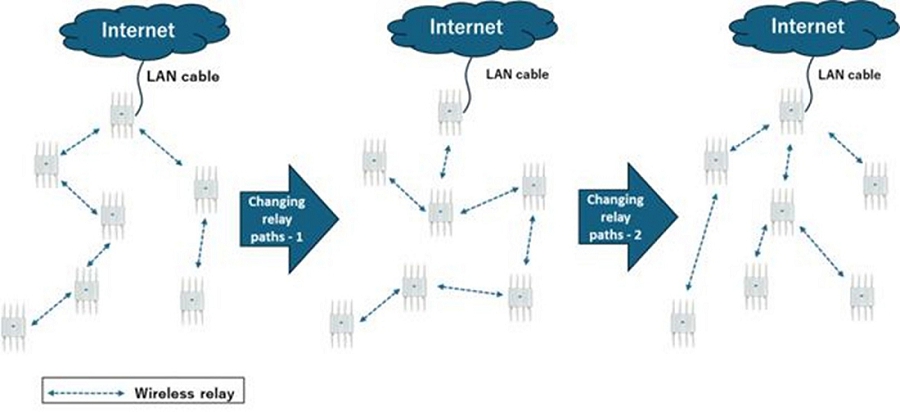
Figure 1: PBE’s core technology, dynamic tree routing
| 32 |
Our PBE can significantly reduce the need for LAN cabling when installing mesh Wi-Fi access points, a conventional way to build Wi-Fi network in large-scale factories, warehouses, and commercial facilities. It is our opinion that our proprietary mesh software, PBE, could reduce the need for LAN cabling, which could allow flexible and easy installation of Wi-Fi network devices. Our PBE has been used for business operation in construction and civil engineering sites, large manufacturing plants where traditional LAN cabling is impractical due to obstacles and high cable installation costs.
In addition to reducing the need for LAN cabling, we believe that our mesh Wi-Fi access points, PCWL series, equipped with PBE, could still maintain the communication quality and transmission speed even if used outdoors and in large areas. This makes it easier for our users to establish Wi-Fi network covering large outdoor areas such as parks, outdoor plants, and near offshore locations such as loading dock piers and ship docks stretching across waterways over a small bay. Our wireless mesh Wi-Fi access points enable the establishment of Wi-Fi network in places where it has been previously considered too difficult or too costly to establish. Our wireless mesh technology is expected to trailblazing digitalization and digital transformation across various industrial fields and businesses where Wi-Fi networking was previously considered impossible.
We have also provided a cloud portal service, PicoManager, in a SaaS model. PicoManager enables users of our service to visually monitor the connectivity and communication traffic in real-time at each of our mesh Wi-Fi access points installed over the user’s premises. PicoManager also serves as a platform to install the enterprise customers’ proprietary edge-computing software directly into our PCWL mesh Wi-Fi access points on-line. With the integrated utilization of our mesh Wi-Fi access points installed with PBE and our portal service PicoManager, our customers can transform the Wi-Fi space for mere Internet connectivity into a space for highly-value-added real time edge-computing and operational and commercial data processing systems. For example, our PCWL series mesh Wi-Fi access points installed with PBE and connected to our portal, PicoManager can help customers to locate certain misplaced construction materials on a web map of construction site by pre-attaching wireless tags to such construction materials.
Our Competitive Strengths
We believe the following competitive strengths are essential for our success and differentiate us from our competitors:
| Specialty and experience in industrial-use mesh Wi-Fi network in demanding environment |
Our specialization in industrial-use mesh Wi-Fi networks is rooted in our deep understanding of the evolving landscape of mobile communications. As mobile communications continue to be integral to the modern social infrastructure, mesh Wi-Fi technology emerges as a crucial solution to expanding coverage areas without the constraints of extensive physical LAN cabling. However, traditionally, establishing Wi-Fi networks in challenging environments, such as building construction sites, solar power plants, parks, camp sites, ski resorts, and ship docks have been hindered by the limitations of conventional requirement of physical LAN cabling. We believe that our commitment to revolutionizing such landscape by our innovative PBE software could reduce the need for extensive LAN cabling. By leveraging our dynamic tree routing technology, in our opinion, we aim to ensure stable and quality connectivity by PBE, overcoming the radio interference inherent in wireless relaying. With our patented PBE technology, we aim to empower industrial enterprises to establish robust wireless mesh Wi-Fi networks in even the most demanding environments.
| Extensive product offerings with diverse application use cases |
We offer comprehensive and diverse solutions including our mesh Wi-Fi access point devices for indoor and outdoor uses, with the capacity to install customer’s industry-specific proprietary edge-computing software. Our portal service, PicoManager, offers the users configuration and monitoring functions, which assists our enterprise customers installation and maintenance staff working onsite to efficiently install the devices and immediately and evaluate whether the network is working properly. PicoManager service offers captive portal service for our enterprise customers in public areas such as shopping malls and ski resorts. Captive portal refers to the pop-up window showcasing advertisement or marketing questionnaires to visitors in such public areas before they are granted Wi-Fi access.
| 33 |
| A founder-led management team with strong technology, operational, and financial background and track records |
Our management team led by our founder and CEO, Mr. Furukawa, is a small but elite team of professionals with outstanding background and track records in the fields of technology, business operation, and finance. Our CEO Mr. Furukawa is a leading expert in the fields of radio communications, such as Wi-Fi and mesh. He represented Japan at global technology standardization bodies in this field, such as 3G at the Association of Radio Industries and Businesses, the European Telecommunications Standards Institute, and the 3rd Generation Partnership Project Release 99 standardization from 1998 to 1999. Mr. Furukawa is the inventor of more than 40 patents in radio communications, which provides the basis of our mesh Wi-Fi products and software. With his strong technical background as a former leading expert in the field, Mr. Furukawa leads our product design and manages outsourced manufacturing companies as well as our technology and engineering team in person. His experience and expertise in radio communications has led the Company to grow.
Our chief financial officer (“CFO”), Mr. Horikiri, has extensive experience in finance and operations. After having served as a securities dealer at a financial institution and a certified public accountant at global accounting firms, Mr. Horikiri served as a CFO and a COO at the Japanese subsidiaries of three U.S. multinational companies for over 20 years, where he significantly improved profitability of the companies by restructuring and conducting digital transformation of the business, organizations, and employees. In addition to managing our finance and corporate governance matters, Mr. Horikiri is also responsible for our intellectual property management. He has extensive experience in managing intellectual properties through his prior experience.
Our Chief Technology Officer (“CTO”), Mr. Kanai, has extensive experience in technology development and Quality Assurance and Quality Control in the field of radio and telecommunication devices and applications for over 30 years. Mr. Kanai has served as a research and development staff and a head of technology and business development at three multi-national technology companies where he managed teams of engineers and led technology development and quality assurance activities.
Our Head of Corporate Affairs, Mr. Nakanishi, has extensive experience in corporate governance and administration at a Japanese public company listed on the Tokyo Stock Exchange. He also has extensive experience as a human resource director.
Our Growth Strategies
We intend to develop our business and strengthen brand loyalty by implementing the following strategies:
| Integrating enterprise edge-computing software into our mesh Wi-Fi access points |
Our standard mesh Wi-Fi access points are designed to accommodate and integrate seamlessly with enterprise customers’ proprietary edge-computing software. We target to enable customers to leverage edge-computed data for online analysis and computing, addressing the growing demand for edge computing’s speed and low latency compared to traditional cloud computing.
To meet this demand, we started to offer customization services in 2023 to adapt our access point devices to work with customers’ edge-computing software and we plan to increase such customization services. These customization orders typically involve collaboration with our individual enterprise customers in exchange for the customers’ substantial volume purchase commitments. Additionally, we charge extra for adjustment development and installation fees to ensure tailored solutions that meet specific industry and business needs. Through these customizable solutions, we strive to meet the evolving requirements of the enterprise market, providing adaptable solutions that empower businesses to optimize their network infrastructure with edge computing. The obstacle we face currently is that the model of our customization services can only be provided to a limited number of specific customers with customization needs, compared to mass production of generic solutions. Our step to overcome this obstacle includes developing and selling generic summary solutions designed to each specific industry, respectively, addressing the shared issues in the relevant industry based on our cumulative knowledge gained from the experience of customization to customers of that industry. Through this method, we expect to increase the efficiency of our edge-computing software customization services. In September 2023, we launched generic customization service designed to construction industry based on our experience of providing products customized to meet the construction industry specific needs and requirements. See “Item 3. Key Information—D. Risk Factors—Risks Related to Our Business and Industry—Our customization services to adapt our access point devices to our customers’ edge-computing software might not be successful as we expect, which could impact our revenue and results of operations.”
| 34 |
| Expanding PicoManager, our SaaS model |
We are transitioning to a subscription model for our cloud-based platform service, PicoManager, which is currently bundled with our mesh Wi-Fi access points. While we currently offer a basic version of PicoManager with the purchase of our access points, we also provide an option to subscribe to upgraded PicoManager services.
As the market for enterprise mesh Wi-Fi device grows, we expect that we will face a price competition and we expect to reduce the one-time and sell-off price per device of our PCWL mesh Wi-Fi access points. We plan to establish recurring platform service revenue source from purchaser and users of PCWL mesh Wi-Fi access points to offset the potential revenue decrease per device. The risk associated with this strategy is that, we might need to reduce the price of PCWL mesh Wi-Fi access points in response to the fierce price competition even before we establish a solid customer base for recurring subscription to PicoManager. We cannot guarantee that all or at least a majority of our customers will accept recurring subscription to PicoManager as a condition for purchasing our mesh Wi-Fi access point devices, or even they accept for an initial subscription period, whether they will renew their subscription. If our customers do not subscribe or renew their subscriptions for our services on similar pricing terms, our net revenue may decline and our business could suffer. See “Item 3. Key Information—D. Risk Factors—Risks Related to Our Business and Industry—We may fail to optimize the prices for PicoManager and our mesh Wi-Fi access points, and any adverse trend in pricing or customer subscription rates will impact our revenue and results of operations.” Currently, PicoManager primarily serves as a cloud platform for enterprise customers to install proprietary edge-computing software into PCWL mesh Wi-Fi access points.
This is a strategy to allow third-party developer and sellers of edge-computing software and charge minimum fees for each purchase transaction. Instead of developing our own edge-computing software solutions, we only need to establish and maintain an online software store to facilitate the sales and purchases between third-party developers and users of edge-computing software. We plan to distribute third-party applications for its products through the online store. We will collect payment from customers for the software they purchase from our online store and pay the sales proceeds to third-party developer, net of our sales commission.
However, the successful implementation of this strategy depends on the establishment of a sizable number of sales and uses of our PCWL mesh Wi-Fi access points and edge-computing software purchasers. We cannot guarantee when we will be able to establish such a market base, or at all. If we cannot establish or maintain such a market base, our strategy to expand PicoManager could fail and our revenue could be adversely affected and our opportunities for growth could be limited. See “Item 3. Key Information—D. Risk Factors—Risks Related to Our Business and Industry—Our future performance in terms of expanding PicoManager, our SaaS model, depends in part on support from third-party software developers and edge-computing software purchasers.”
| Offering a cost-effective alternative built on customers’ existing hardware |
We are planning to manufacture and market a hardware module, i.e., a circuit board, incorporating our proprietary wireless mesh technology software PBE. This module is designed to be integrated into our customers’ existing Wi-Fi access points, factory robots, sensory cameras, and automated guided vehicles. By installing the PBE module, our customers’ equipment might function as mesh wireless network devices, eliminating the need for additional mesh wireless network devices.
| 35 |
The introduction of the PBE module is estimated to allow us to extend the reach of our core technology, PBE, to a wider range of applications and industries. We hope to offer a cost-effective and flexible solution for customers who may not require our complete set of mesh Wi-Fi access points, PCWL devices. We anticipate that the availability of the PBE module will contribute to increased revenue generation.
Prototype products of the PBE module are currently in production, and we are actively engaging with potential manufacturing customers. We anticipate launching the PBE module in December 2026, further solidifying our goal to be a leader in wireless mesh technology. One major obstacle to implement this growth strategy is maintaining low production cost of our PBE module to meet our customer’s pricing requirement of their own products, in which our PBE module is installed. Since the potential customers for our PBE module are large industrial manufactures which expect to install PBE module in large quantities, if we receive a large quantity of purchase orders from them, we expect to be able to reduce our production costs significantly through mass production and deliver PBE module at a price meeting their price requirements. See “Item 3. Key Information—D. Risk Factors—Risks Related to Our Business and Industry—We might not be able to successfully launch our PBE module as planned, or, if we launch it, we might not be able to offer it at a price which meet our customers’ need. This could impact our revenue and results of operations.”
| Global expansion and partnering with local distributors |
We are planning to extend the availability of our PCWL mesh Wi-Fi access points to international markets, focusing on the United States and Europe. Our phased approach involves entry into Europe in December 2026 and the United States in June 2028.
At present, our products and services are offered exclusively in Japan. To facilitate our expansion efforts, we are actively seeking local import and distribution partners in the targeted regions. By establishing collaborative relationships with reputable partners, we aim to introduce our mesh Wi-Fi solutions to a wider global audience, fostering growth and market penetration. Our major obstacle to this strategy is our lack of global network to establish business with local partners in the above overseas markets. In order to overcome this obstacle, our first step is to partner with Japanese international trading companies with global distribution network. We plan to sell our products to the trading companies at a lower price and the trading companies can export our products to our targeted markets as mentioned above. However, we cannot ensure whether we can successfully enter into these markets and maintain our operations overseas. Our failure to successfully maintain and grow our business on a global scale could be intensified with the speed of our expansion, and impose more strain on our business, results of operations, and financial conditions. See “Item 3. Key Information—D. Risk Factors—Risks Related to Our Business and Industry— As a Japanese mesh Wi-Fi access point developer, we are subject to a number of risks regarding our international expansion plan.”
Our Business Model
We are engaged in the manufacturing, installation, and services for enterprise wireless mesh solutions. We derive our revenue mainly from two sources: (1) sales of product equipment, and (2) SaaS, maintenance and others. Our products are mesh Wi-Fi access point, PCWL series, which can be installed to our customers’ edge computing devices. We sell our products both through distributors and to end customers directly. Our services PicoManager, which is a cloud-based service monitoring communication quality and connectivity, is provided together with the PCWL series mesh Wi-Fi access points.
| 36 |
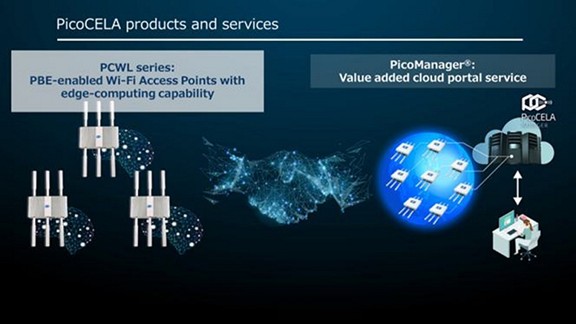
Figure 2 PicoCELA Products & Services
Our revenue, disaggregated by revenue stream for the fiscal years ended September 30, 2025, 2024, and 2023, , was as follows (in thousands):
(in thousands, except change % data)
| Fiscal Years Ended September 30, | Change (2025 vs 2024) | |||||||||||||||||||||||
| 2025($) | 2025(¥) | 2024(¥) | 2023(¥) | ¥ | YoY % | |||||||||||||||||||
| Revenue from product equipment | 3,021 | 447,069 | 627,720 | 465,691 | (180,651 | ) | -28.8 | % | ||||||||||||||||
| Revenue from SaaS, Maintenance and others | 660 | 97,621 | 156,683 | 93,830 | (59,062 | ) | -37.7 | % | ||||||||||||||||
| Total revenue | 3,681 | 544,690 | 784,403 | 559,521 | (239,713 | ) | -30.6 | % | ||||||||||||||||
Below are the details of our PBE technology, PCWL series, and PicoManager services.
Our Product: PCWL Series
Our mesh Wi-Fi access points: PCWL series, are equipped with separate wireless modules for backhaul and access networks. In addition, the PCWL series have memory capacity of 2 GB and data storage capacity of 16GB so that our customers’ various applications can run on top of their PCWL devices. With this function, PCWL series can also act as an edge computer. The backhaul part is driven by the PBE, which is the foundation of our technology.
PCWL series are enterprise-grade Wi-Fi access points equipped with PBE. It can also act as an edge computer, allowing customized applications to run on each PCWL device. For example, such applications as web server functions and customized Bluetooth gateway functions can be implemented. These devices are equipped with capacity to accommodate installation of customer’s proprietary edge-computing software.
We provide a limited warranty for PCWL series for one year. Our standard warranty requires us or our subcontractors to repair or replace defective products during such warranty period at no cost to the customer as far as the damages or defects are not caused by the customer and the claimed defects are violating our written product specifications.
| 37 |
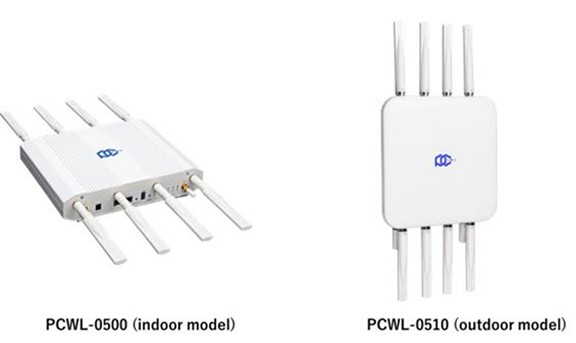
Figure 3 Wi-Fi6-compatible wireless access points with PBE: PCWL-0500 (indoor) and PCWL-0510 (outdoor).
Our Cloud System Service: PicoManager
PicoManager is our cloud system service provided in a SaaS model to optimize enterprise customer users’ management and operation of mesh Wi-Fi network created by the PCWL series access points. PicoManager’s management functions are divided into two categories: configuration and monitoring. The configuration function includes configuring parameters, mesh links, and radio settings between PCWL devices and mobile terminal devices (for example, cell phone, and PC). The monitoring function includes monitoring the status of the number of terminal devices connected to PCWL devices, and activities such as mesh links; connection status at each mobile terminal device; average and range of connection status of a group of mobile terminal devices connected to each PCWL mesh access point; throughput performance; and latency performance. Both configuration and monitoring functions assist the installation and maintenance staff working on-site to efficiently install the devices and immediately evaluate whether the network is functioning properly.
The PicoManager service is useful for our enterprise customers at their facilities and premises in a public area. One feature of PicoManager is to display the physical locations of connected mesh Wi-Fi devices on the customer’s floor map or area map. On the floor map, PicoManager displays the real-time connection status of terminal devices at respective mesh Wi-Fi devices in the form of a heat map. PicoManager also provides a captive portal: a web page accessed with a browser that is displayed to newly-connected users of a Wi-Fi network before they are granted broader access to network. Captive portal is useful for the enterprise customers at their facilities in a public area such as shopping malls, hotel lobbies, and ski resorts to run advertisement or marketing questions.
| 38 |
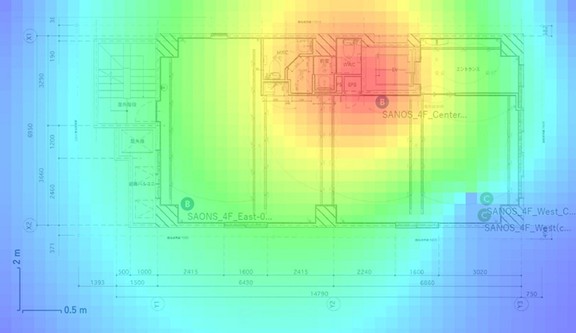
Figure 4 PicoManager’s Heat Map displaying on a floor map the concentration status of the terminal devices connected to respective mesh Wi-Fi Access Points (PCWL)
Our Solutions
Our Wi-Fi access points have been sold to customers in industries where operational mesh Wi-Fi access points were not available, such as construction, civil engineering, factories, and shopping malls and retail chain stores. Our market expands as the digitalization of these industries become prevalent. The following are representative examples from each industry.
Construction and civil engineering
Our mesh Wi-Fi access points with PBE are used at construction sites of high-rise buildings, tunnel construction sites, large-scale bridge construction sites, and so on. In these construction sites, cellular signals are often weak or not sensitive enough. Therefore, the primary objective of building a Wi-Fi network is to construct a self-managed wireless space that does not rely on cellular signals. In addition, our mesh Wi-Fi network is used for transmitting data from customers’ surveillance cameras and sensors to monitor various construction activities and construction equipment to quickly locate construction materials using wireless tags attached to the materials.
| 39 |
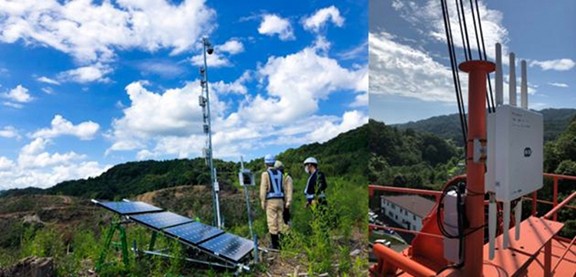
Figure 5 PCWL-0400 in use at a construction site
The radio propagation environment in construction sites is constantly changing as construction progresses, making it difficult to install fixed cable Wi-Fi devices. In addition, LAN cables at construction building sites are easily damaged and create high risk of entanglements and trip-over accidents. Our solution is increasingly applied to construction digital transformation, as it can reduce LAN cabling and quickly create and establish Wi-Fi network at vast construction sites.
Factories
Today’s factories are running numerous IoT devices. Various solutions called Industrial IoT are being deployed, and our solutions are designed to be the underlying wireless infrastructure to connect IoT devices to Internet.
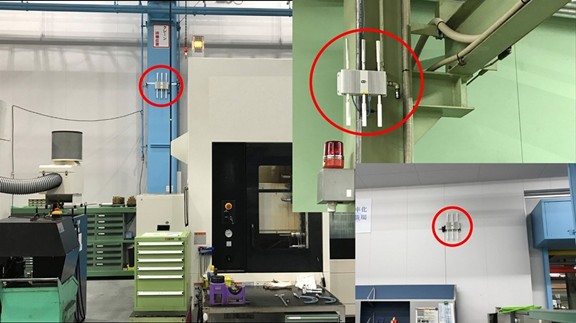
Figure 6 PCWL devices in use at a large factory
| 40 |
In factories, radio waves are easily attenuated due to the presence of many metal fixtures. We believe that our wireless mesh Wi-Fi provides stable and uninterrupted radio transmission while significantly reducing the amount of LAN wiring.
Shopping malls and retail chain stores
We believe demand of free Wi-Fi from shoppers and visitors of shopping malls and retail chain stores have increased, but the business use of Wi-Fi access point devices for retail store management and operation is still in its growth phase. In our opinion, in recent years, the introduction of handheld inventory control and replenishment terminals, portable wireless point-of-sale (“POS”) terminals and smartphone-linked voice communication devices used by store clerks and staff, have created a need for the wireless space that store clerks and staff could easily establish and operate by themselves. However, the store layout at a retail store is frequently changed and it is our opinion that such change of store layout will cause the radio propagation environment to be prone to instability, often resulting in the appearance of a “dead zone,” an area without Wi-Fi signal. By installing our mesh Wi-Fi access points, the retail store layout designers can immediately eliminate such “dead zones” without adding new routing LAN cable wiring and the store clerks and staff can also simply relocate our mesh Wi-Fi access points without the need to re-cable LAN routing to fit to the store layout change. In addition, the remote on-line monitoring function of PicoManager enables centralized management of each store’s wireless network device for hundreds of retail chain stores across the nation. It is our opinion that the capacity for online central monitoring and management of the nationwide retail stores network condition could provide efficiency and effectiveness for the retail business. Finally, when we install PCWL mesh Wi-Fi network for a shopping mall, the need for LAN cabling has been reduced by more than 80%.
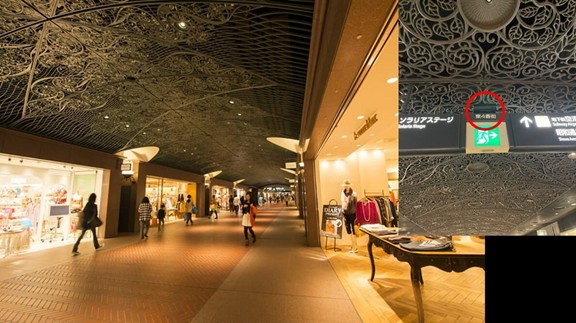
Figure 7 PCWL devices being used in a shopping mall
| 41 |
Our Technology: PicoCELA Backhaul Engine (PBE) Software
PBE software combines multiple of our proprietary protocols and is a type of middleware running on the Linux OS. Beneficial features of PBE are summarized as below.
| Minimal channel consumption |
The mesh cluster formed by PBE consumes only one radio frequency channel. In our opinion, this saves valuable radio frequency resources and allows more channels to be allocated to access networks and, as a result, the Wi-Fi access points installed with PBE can catch more radio waves from terminal devices such as cellphones and PCs.
| Triple routing mechanism for high stability |
Routing is a central function in wireless mesh networks. PBE, which is an installed software in our mesh Wi-Fi access point devices, does not rely on a single routing mechanism, but rather three routing mechanisms operating in parallel. The three mechanisms are: (i) reset routing, which is performed at the time of launching of PBE in our mesh Wi-Fi devices to establish mesh network; (ii) route update, which is performed instantly and is repeated periodically from every few seconds to every 10 minutes depending on the radio environment during operation; and (iii) self-healing, which is triggered in a few seconds in the event of PBE node failure. In other words, routes guided by PBE do not apply a constant route but change dynamically according to radio propagation environment, equipment failures, and other conditions. In our experience, PBE’s route updates are also performed very quickly. Therefore, it is our view that this beneficial feature of PBE provides stable wireless multi-hop relaying even if some of the nodes in a wireless mesh network physically move. We believe that such a dynamic adaptive routing mechanism of PBE will expand the application area of PBE not only to the backhaul of wireless base stations that are fixed to structures, but also to moving vehicles such as automated guided vehicles, drones, and robots in the future.
| Full use of open Wi-Fi chip technology and compatibility with any Wi-Fi chips |
PBE can work with a wide variety of Wi-Fi chips with minimum adaptation requirements. If cheap and mass-produced Wi-Fi chips are available at low costs, we can utilize those Wi-Fi chips for PBE. Our goal of designing PBE is to utilize existing Wi-Fi chips with minimum modification. By making full use of open technologies such as Wi-Fi, we believe we can provide end-user customers with enterprise-grade wireless mesh networks at reasonable prices through our PBE technologies.
Our philosophy of designing PBE software is expected to provide another benefit: making PBE compatible with most types of Wi-Fi chips with different features and functionality. Wi-Fi chips are evolving at a rapid pace and new versions of Wi-Fi standards are emerging every few years. As the Wi-Fi standard evolves and improves, we are required to upgrade the performance of our wireless mesh network device with PBE, which needs to readily run on newly developed Wi-Fi chips. It is our view that PBE is compatible with a wide variety of Wi-Fi chips with different characteristics, whether they are low-power or high-power design. As a result, we believe that we can adapt quickly to new technological development of Wi-Fi chips as we would not need to change, re-design, or adjust PBE software every time when a new type of Wi-Fi chips is introduced to the market.
Our design concept of PBE, which clearly separates the radio chips from the radio mesh protocol, also enables us to license PBE software technology to other companies using the radio chips of their own. We have already licensed our PBE software to another manufacturer with PBE wireless mesh Wi-Fi network functions.
Data Privacy and Security
Our business operations do not require obtaining personal data from the users of our products. We only collect personal information of our employees necessary for our human resource management purposes. We protect our employees’ personal information and are in compliance with the applicable laws in Japan. See “Item 4. Information on the Company—B. Business Overview—Regulations—Personal information.”
| 42 |
Manufacturing and Suppliers
We outsource the manufacturing of PCWL series to third-party manufacturers. We recognize outsourced manufacturers of our PCWL series and cloud digital service providers as our suppliers. Our manufacturers mainly provide sourcing of raw material parts specified by us and assembly service to us, and our cloud service providers provide cloud infrastructure and cloud platform services for PicoManager. We supervise the process of manufacturing and assembly and the raw material parts used in our products from time to time. We consider their manufacturing quality, delivery time, and price quotations when selecting our suppliers in a competitive project bidding process. Our production manager and product supervisor maintain our oversight on these third-party manufactures by inspecting their manufactured products before acceptance, periodical on-site visits and review of the manufacturing process to ensure its compliance with our specifications stated in the manufacturing agreement, and check if the raw material parts purchased and used in our products are the same ones we specifically selected and instructed. The use of any raw material parts not agreed with our prior written consent is considered a breach of the third-party manufacturing agreement. Before manufacturing starts, we agree on the price of manufacturing. However, any price fluctuations of raw material parts used in our products need to be borne by third-party manufacturers.
We normally sign manufacturing master agreements with our manufacturers and these agreements are designed to renew automatically every year in absence of formal prior notice of termination. We have cooperated with many of our manufacturers as listed below for years through this approach. We do not rely on a single source supplier. In order to mitigate the risks of concentration, we diversify our manufacturers by assigning different third-party manufacturers to different models of PCWL series and by assigning different process of manufacturing to more than one third party manufacturer. In addition, when we design a new model of PCWL devices, we would invite both existing manufacturers and new manufacturers and organize a project bidding to attract the most competitive offer.
There were two, three, and two suppliers from whom the purchases made individually represent more than 10% of our total purchases for the fiscal years ended September 30, 2025, 2024, and 2023, respectively. Below are the tables listing our major suppliers for the fiscal years ended September 30, 2025, 2024, and 2023. The amounts in the tables refer to our payment amount paid to our suppliers for the products they manufactured and their services. The percentages refer to the payment amount occupied in our total payment to all our suppliers.
| ● | Fiscal year ended September 30, 2025 |
| Supplier | Amount for (JPY); Percentage | Major Contract Terms | ||
Compex
|
JPY177,415 thousand (approximately $1,199 thousand); 60.4% | Service scope: Compex purchases raw material parts specified by the Company, manufactures products as required by the Company and delivers and sells the completed products to the Company at the agreed price.
Term: The first term of the contract was in effect between June 17, 2022 and June 16, 2024. It can be automatically renewed annually for successive one-year periods unless either party provides a written notice of its intent not to renew at least 90 days prior to the expiration of the applicable term. As of the date of this annual report, the parties have renewed the contract, and it is still in effect.
Termination provisions: The agreement may be terminated upon written notice by a party for breach of agreement.
Purchase Order with down payment as negotiated between the parties. Full payment at the time of shipping.
There are no minimum purchase requirements. | ||
Emplus Technologies, Inc. (“Emplus”)
|
JPY41,081 thousand (approximately $278 thousand); 14%
|
Service scope: Emplus purchases raw material parts specified by the Company, manufactures products as required by the Company, and delivers and sells the completed products to the Company at the agreed price.
Term: The current contract is in effect from June 20, 2023 to June 19, 2026. It may be renewed by a written consent agreed by both parties at least 180 days before the expiry date.
Termination provisions: The contract may be terminated by either party by giving the other party 180 days prior written notice. However, in the event of material contractual breach by one party, the other non-breaching party may demand remedies by written notice within 30 days. If the demand does not result in the breach being corrected, the non-breaching party may terminate the contract immediately via written notice.
Purchase: The purchase shall be initiated by the Company via issuing separate purchase orders to Emplus.
Payment: The payment shall be made by the Company to Emplus in accordance with separate statement of work.
There are no minimum purchase requirements. |
| 43 |
| ● | Fiscal year ended September 30, 2024 |
| Supplier | Amount for (JPY); Percentage | Major Contract Terms | ||
| Emplus | JPY155,236 thousand (approximately $1,084 thousand); 41% | Service scope: Emplus purchases raw material parts specified by the Company, manufactures products as required by the Company, and delivers and sells the completed products to the Company at the agreed price.
Term: The current contract is in effect from June 20, 2023 to June 19, 2026. It may be renewed by a written consent agreed by both parties at least 180 days before the expiry date.
Termination provisions: The contract may be terminated by either party by giving the other party 180 days prior written notice. However, in the event of material contractual breach by one party, the other non-breaching party may demand remedies by written notice within 30 days. If the demand does not result in the breach being corrected, the non-breaching party may terminate the contract immediately via written notice.
Purchase: The purchase shall be initiated by the Company via issuing separate purchase orders to Emplus.
Payment: The payment shall be made by the Company to Emplus in accordance with separate statement of work.
There are no minimum purchase requirements. |
| Compex | JPY87,883 thousand (approximately $613 thousand); 23% | Service scope: Compex purchases raw material parts specified by the Company, manufactures products as required by the Company and delivers and sells the completed products to the Company at the agreed price.
Term: The first term of the contract was in effect between June 17, 2022 and June 16, 2024. It can be automatically renewed annually for successive one-year periods unless either party provides a written notice of its intent not to renew at least 90 days prior to the expiration of the applicable term. As of the date of this annual report, the parties have renewed the contract, and it is still in effect.
Termination provisions: The agreement may be terminated upon written notice by a party for breach of agreement.
Purchase Order with down payment as negotiated between the parties. Full payment at the time of shipping.
There are no minimum purchase requirements. | ||
| SolidRun Ltd. (“SolidRun”) | JPY37,999 thousand (approximately $265 thousand); 10% | Service scope: SolidRun purchases raw material parts specified by the Company, manufactures PCWL-0400 products as required by the Company, and delivers and sell the completed products to the Company at the agreed price.
Term: The initial term was one year from April 1, 2018, the date of execution of the original framework contract. Automatically renewed for successive one-year periods unless either party provides a written notice of its intent not to renew at least three months prior to the expiration of the applicable term.
Termination provisions: If any of the events specified in the agreement occur with respect to either party, the other party may terminate the agreement by sending a written notice to the defaulting party.
Purchase Order with down payment of 50% of the total order for the products to be manufactured after SolidRun notifies the Company of its acceptance of the purchase order. Full payment is required after the manufactured products are delivered to and accepted by the Company.
There are no minimum purchase requirements. |
| 44 |
| ● | Fiscal year ended September 30, 2023 |
| Supplier | Amount for (JPY); Percentage | Major Contract Terms | ||
| Compex | JPY221,953 thousand (approximately $1,549 thousand); 55% | See the description of the major contract terms above. | ||
| SolidRun | JPY51,687 thousand (approximately $361 thousand); 13% | See the description of the major contract terms above. |
Sales and Marketing
We primarily sell our enterprise-use wireless mesh Wi-Fi network products to major B2B distributors of telecommunication devices and major IT consulting firms in Japan by our enterprise sales team. Our enterprise sales team targets the large enterprises of end purchasers and promotes our products to them by collaborating with distributors and IT consulting firms. Our technical account managers also formulate enterprise-specific solutions for our customers. Distributors provide delivery and installation services when they sell our devices to enterprise users. We collect our sales proceeds from distributors for the Wi-Fi network products sold through them. Approximately 94%, 68%, and 88% of our sales were made through our distributors for the fiscal years ended September 30, 2025, 2024, and 2023, respectively.
We also sell Wi-Fi network products to our end customers directly. Our end customers can place purchase orders with us directly once they require certain products, but they do not sign a framework purchase and sales contract with us. The purchase order normally specifies product model numbers, price per unit, quantity, and expected delivery date. Approximately 6%, 32%, and 12% of our sales are made directly to our end customers for the fiscal years ended September 30, 2025, 2024, and 2023, respectively. In addition, we also sell subscriptions to our Wi-Fi monitoring portal service, PicoManager, to end-user customers of our wireless mesh Wi-Fi network products.
We license our PBE software directly to large manufacturers of telecommunication devices, which allows the licensee companies utilize and install our backhaul software in their communication devices. We charge them licensing fees.
There were three, four, and four from whom the revenue derived individually represents greater than 10% of our total revenue for the years ended September 30, 2025, 2024, and 2023, respectively. Below are the lists of our major customers for the fiscal years ended September 30, 2025, 2024, and 2023.
| 45 |
| ● | Fiscal year ended September 30, 2025 |
| Customer | Sales Amount (JPY); Percentage |
Major Contract Terms | ||
| EXEO Group | JPY119,328 thousand (approximately $806 thousand); 22% | Contract scope: the Company grants EXEO Group non-exclusive rights to sell the products as negotiated between the parties in Japan.
Term: The initial term was one year from January 17, 2019, the date of execution of the original framework contract. Automatically renewed annually for successive one-year periods unless either party provides a written notice of its intent not to renew at least three months prior to the expiration of the applicable term.
Price and payment: The prices of the products sold by EXEO Group to end-users are determined by the Company in a form of price list distributed to all distributors. EXEO Group shall accept the prices before purchasing relevant products from the Company. EXEO Group shall pay the Company for the products it purchases monthly.
Amount: EXEO Group shall purchase and maintain 10 PCWL-0400 devices.
Termination provisions: Either party may terminate the agreement at any time during the agreement period with a written notice submitted at least six months in advance. If any of the events specified in the agreement occur in respect to either party, the other party may immediately terminate the agreement, in whole or in part, without any notice. | ||
| SCSK Minori Solutions (“SCSK Minori”) | JPY118,190 thousand (approximately $799 thousand); 22% | Contract scope: the Company grants SCSK Minori non-exclusive rights to sell the products as negotiated between the parties in Japan.
Term: The initial term was one year from February 26, 2019, the date of execution of the original framework contract. Automatically renewed annually for successive one-year periods unless either party provides a written notice of its intent not to renew at least three months prior to the expiration of the applicable term.
Price and payment: The prices of the products sold by SCSK Minori to end-users are determined the Company in a form of price list distributed to all distributors. SCSK Minori shall accept the prices before purchasing relevant products from the Company. SCSK Minori shall pay the Company for the products it purchases monthly.
Amount: SCSK Minori shall purchase and maintain at least 10 PCWL-0400 devices.
Termination provisions: Either party may terminate the agreement anytime during the agreement period with a written notice submitted at least six months in advance. If any of the events specified in the agreement occur in respect to either party, the other party may immediately terminate the agreement, in whole or in part, without any notice. | ||
| Nikken | JPY89,686 thousand (approximately $606 thousand); 17% | Contract scope: the Company grants Nikken non-exclusive rights to sell the products as negotiated between the parties in Japan. Term: The initial term was one year from August 22, 2019, the date of execution of the original framework contract. Automatically renewed for successive one-year periods unless either party provides a written notice of its intent not to renew at least three months prior to the expiration of the applicable term.
Price and payment: The prices of the products sold by Nikken to end-users are determined the Company in a form of price list distributed to all distributors. Nikken shall accept the prices before purchasing relevant products from the Company. Nikken shall pay the Company for the products it purchases monthly.
Amount: Nikken shall purchase and maintain at least 15 PCWL-0400 devices and 35 PCWL-0410 devices, half of which shall be purchased by end of September 2019 and all of which shall be purchased by end of March 2020. Termination provisions: Either party may terminate the agreement anytime during the agreement period with a written notice submitted at least six months in advance. If any of the events specified in the agreement occur in respect to either party, the other party may immediately terminate the agreement, in whole or in part, without any notice. |
| 46 |
| ● | Fiscal year ended September 30, 2024 |
| Customer | Sales Amount (JPY); Percentage | Major Contract Terms | ||
| SCSK Minori | JPY207,804 thousand (approximately $1,451 thousand); 26% | See the description of the major contract terms above. | ||
| NISHIMATSU CONTSTRUCTION CO., LTD. (“NISHIMATSU”) | JPY123,000 thousand (approximately $859 thousand); 16% | Contract scope: NISHIMATSU agreed to manufacture the products the Company developed exclusively for NISHIMATSU to be resold under NISHIMATSU’s brand name at NISHIMATSU’s request and order, and NISHIMATSU agreed to purchase such products from the Company.
Term: From the date of the agreement (June 28, 2024) to (i) the termination date of the agreement, or (ii) the date of the termination of the product of the products, agreed in writing by both parties.
Price and payment: The manufacture price was JPY78,000 thousand which 50% of each was paid to the Company (i) by the end of the month following the date of this agreement, and (ii) by the end of the month following the delivery of the products.
The prices of the products sold by NISHIMATSU to its end-user customers are determined by NISHIMATSU.
Termination provisions: If any of the events specified in the agreement occur in respect to either party, the other party may immediately terminate the agreement, in whole or in part, without any notice.
|
| FURUNO ELECTRIC CO., LTD (“FURUNO”) | JPY85,436 thousand (approximately $596 thousand); 11% | Contract scope: the Company grants FURUNO non-exclusive rights to sell the products as negotiated between the parties in Japan.
Term: The initial term was one year from June 12, 2024, the date of execution of the original framework contract. Automatically renewed annually for successive one-year periods, with the current term until unless either party provides a written notice of its intent not to renew at least three months prior to the expiration of the applicable term.
Price and payment: The prices of the products sold by FURUNO to end-users are determined the Company in a form of price list distributed to all distributors. FURUNO shall accept the prices before purchasing relevant products from the Company. FURUNO shall pay the Company for the products it purchases monthly.
Termination provisions: Either party may terminate the agreement at any time during the agreement period with a written notice submitted at least six months in advance. If any of the events specified in the agreement occur in respect to either party, the other party may immediately terminate the agreement, in whole or in part, without any notice. | ||
| EXEO Group | JPY 78,142 thousand (approximately $545 thousand); 10% | See the description of the major contract terms above. |
| 47 |
| ● | Fiscal year ended September 30, 2023 |
| Customer | Sales Amount (JPY); Percentage | Major Contract Terms | ||
| SCSK Minori | JPY 205,767 thousand (approximately $1,377 thousand); 34% | See the description of the major contract terms above. | ||
| NISHIO HOLDINGS CO., LTD (“NISHIO,” TYO: 9699, the name of which was changed to Nishio Rental Co., Ltd. on April 1, 2023) | JPY 80,682 thousand (approximately $540 thousand); 13% | Contract scope: the Company grants NISHIO non-exclusive rights to sell the products as negotiated between the parties in Japan.
Term: The initial term was one year from October 1, 2019, the date of execution of the original framework contract. Automatically renewed annually for successive one-year periods unless either party provides a written notice of its intent not to renew at least three months prior to the expiration of the applicable term.
Price and payment: The prices of the products sold by NISHIO to end-users are determined the Company in a form of price list distributed to all distributors. NISHIO shall accept the prices before purchasing relevant products from the Company. NISHIO shall pay the Company for the products it purchases monthly.
Amount: NISHIO shall purchase and maintain 100 PCWL-0410 devices in the first year after signing the original framework contract (the “First Contract Term”). The purchasing amount and products are decided by separate purchasing orders after the First Contract Term and no minimum purchasing amount of certain PCWL devices is needed.
Termination provisions: Either party may terminate the agreement at any time during the agreement period with a written notice submitted at least six months in advance. If any of the events specified in the agreement occur in respect to either party, the other party may immediately terminate the agreement, in whole or in part, without any notice. | ||
| KAGA FEI | JPY 65,825 thousand (approximately $441 thousand); 11% | Contract scope: the Company grants KAGA FEI non-exclusive rights to sell the products as negotiated between the parties in Japan.
Term: The initial term was one year from November 28, 2019, the date of execution of the original framework contract. Automatically renewed annually for successive one-year periods, with the current term until unless either party provides a written notice of its intent not to renew at least three months prior to the expiration of the applicable term.
Price and payment: The prices of the products sold by KAGA FEI to end-users are determined the Company in a form of price list distributed to all distributors. KAGA FEI shall accept the prices before purchasing relevant products from the Company. KAGA FEI shall pay the Company for the products it purchases monthly.
Amount: KAGA FEI shall purchase and maintain 10 PCWL-0400 devices. |
| 48 |
| Termination provisions: Either party may terminate the agreement at any time during the agreement period with a written notice submitted at least six months in advance. If any of the events specified in the agreement occur in respect to either party, the other party may immediately terminate the agreement, in whole or in part, without any notice. | ||||
| EXEO Group | JPY 60,011 thousand (approximately $402 thousand); 10% | See the description of the major contract terms above. |
We invest in marketing activities and programs to increase market share of our multi-patented technology, engage with prospective customers, and build a pipeline for our sales team by leveraging on our customer success stories through trade shows, field events, webinars, case studies, press conferences. To drive growth, we design customized marketing strategies for individualized enterprise customers.
Competition and Market Environment
We operate in the global Wi-Fi market, a sector characterized by rapid technological advancements and intensifying competition. According to the International Market Analysis Research and Consulting (“IMARC”) Group, this market size reached $31.8 billion in 2023. Looking forward, IMARC Group expects the market to reach $89.8 billion by 2032, exhibiting a growth rate (CAGR) of 12% during 2024-2032. See IMARC Wi-Fi Market Report by Component, Location Type, Organization Size, Industry Vertical, and Region 2024-2032, available at https://www.imarcgroup.com/wi-fi-market (last accessed on May 11, 2024). This growth trajectory is underpinned by escalating internet usage, advancements in long-term evolution (LTE) technologies followed by 5G, and the expanding footprint of wireless communication networks.
| 49 |
We face competition from a range of entities, including established telecommunications equipment manufacturers and emerging technology firms. Notable publicly traded competitors in our sector include Commscope Holding Company, Inc. (NASDAQ: COMM), alongside innovative firms such as Quectel Wireless Solutions Co., Ltd., and Actelis Networks, Inc. These companies are recognized for their significant market presence, technological expertise, and substantial investment in research and development.
In the mobile backhaul domain, we face competition from such established players as Cisco Systems, Hewlett Packard’s Aruba, Nokia, Huawei, Ericsson, and ZTE. These companies have a strong foothold in telecommunications equipment and offer comprehensive solutions for mobile backhaul, leveraging their extensive experience and technological expertise.
Within the Wi-Fi mesh market, notable competitors include Google Nest Wi-Fi, Eero (owned by Amazon), Netgear, TP-Link, and Linksys. These companies offer consumer and small-medium-business-grade Wi-Fi solutions that emphasize ease of use, reliability, and comprehensive coverage, targeting both home users and small-medium enterprises seeking small scale Wi-Fi mesh in low priced market.
Emerging and potential competitors encompass a broad spectrum of technology firms. This includes consumer electronics manufacturers like Apple and Samsung, which could integrate advanced networking functionalities into their devices, and internet service providers (ISPs) that may bundle proprietary or partner-supplied networking devices with their service offerings. Additionally, the rise of original design manufacturers (ODMs) and contract manufacturers (CMs) selling directly to service providers poses a growing challenge, potentially altering traditional supply chains and customer relationships.
The mobile backhaul and Wi-Fi mesh markets demand continuous innovation and adaptability due to the rapid pace of technological change and evolving customer requirements. Our competitors range from large multinational corporations with extensive financial resources and broad product portfolios to specialized firms focusing on niche segments of the market.
We are committed to maintaining a competitive edge through strategic investments in product development, market expansion and customer engagement. Our focus on integrating patented, proprietary, enterprise-grade Wi-Fi mesh with capacity to install customer’s edge-computing software and our portal service to monitor communication quality and connectivity reflects our commitment to transforming conventional mesh Wi-Fi’s spotty radio coverage into wide radio coverage, enabling various types of high value-added applications and services over the radio space.
The competitive factors influencing our market position include product innovation, price competitiveness, brand strength, customer service excellence, and the timely introduction of new technologies. In response to these market dynamics, we prioritize the security, reliability, and performance of our solutions to meet the growing demands of our customers and to navigate the complexities of the global mobile and wireless backhaul market.
Manufacturing and Assembly
We outsource the manufacturing and assembly of our physical products to third parties who manufacture our products based on our design specifications. We purchase products manufactured from them. Before we ship our finished products to our customers, we install our integral technology software, wireless backhaul (PBE) in the assembled products.
We place purchase orders for manufactured products based on our customers’ pre-orders with delivery schedules. We have leveraged our manufacturing capabilities through our agreement with third-party manufacturers in the Asia-Pacific region. This subcontracting agreement expands our manufacturing capabilities and enables us to deliver larger quantities of products upon demand in a timely manner, allowing for more consistent product delivery. We have trained the manufacturers on how to produce our products and we conduct product quality monitoring.
| 50 |
For the fiscal years ended September 30, 2025, 2024, and 2023, we relied on three, three, and two manufacturers, respectively, to manufacture our PCWL series. As of the date of this annual report, we maintain a stable relationship with our major manufacturers. While we may have certain contractual remedies against them, if any of our major manufacturers becomes unable or unwilling to continue to manufacture our PCWL series, such remedies may not be sufficient in scope, we may not be able to effectively enforce such remedies, and we may incur significant costs in enforcing such remedies. See “Item 3. Key Information—D. Risk Factors—Risks Related to Our Business and Industry—We rely on third parties to manufacture our mesh Wi-Fi access points devices we offer, and depend on them for the supply and quality of our products” and “Business—Manufacturing and Suppliers.”
Intellectual Property
We value our intellectual property. We rely on a combination of patents, trademarks, domain name registrations, and contractual restrictions to establish and protect our technologies, brand name and logos, marketing designs, and internet domain names.
Domain name
As of the date of this annual report, we have one registered domain name: https://picocela.com/.
Trademark information
As of the date of this annual report, we have eight registered trademarks in Japan as follows:
| No. | Trademark | Trademark Name | Class | Registration Number |
Registration Date |
Valid Until | ||||||
| 1 |  |
Picocela | 09 | 5305139 | 02/26/2010 | 02/26/2030 | ||||||
| 2 |  |
PC | 09 | 53055140 | 02/26/2010 | 02/26/2030 | ||||||
| 3 |  |
PicoCELA | 09; 42 | 6058941 | 07/06/2018 | 07/06/2028 |
| 51 |
| 4 |  |
PicoManager | 09; 42 | 6058942 | 07/06/2018 | 07/06/2028 | ||||||
| 5 |  |
PCWL | 09; 42 | 6168808 | 08/02/2019 | 08/02/2029 | ||||||
| 6 |  |
稼ぐWi-Fi | 35; 42 | 6369881 | 03/29/2021 | 03/29/2031 | ||||||
| 7 |  |
PicoCELA | 09; 42 | 6851588 | 10/07/2024 | 10/07/2034 | ||||||
| 8 |  |
PicoMesh | 09; 42 | 6958219 | 08/18/2025 | 08/18/2035 |
In addition, we have four pending trademark applications in the U.S., as of the date of this annual report.
Patents
As of the date of this annual report, we have 22 patents in Japan, 12 patents in the U.S., seven patents in Europe, five patents in mainland China, four patents in Taiwan, and one patent in Australia, respectively, totaling 51 patents. Patent applications filed in different countries for the same invention are counted individually.
As of the date of this annual report, of total 51 patents of inventions, 21 patents of inventions are registered and owned by Kyushu University and exclusively licensed to us. Another 30 patents of inventions are registered and owned by us. Of the 21 patents licensed by Kyushu University, six patents as indicated below are currently used in our products, including PCWL series and PBE module. All of the 21 patents owned by us are used in our products.
| 52 |
Set forth below is a detailed description of our registered patents:
| No. | Country | Registration No. | Name | Registration/Filing Date |
Expiration Date |
Patent Status |
Patent Registrant | |||||||
| 1 | Japan | JP5515072B2 | Network system, node, packet forwarding method, program, and recording medium | 04/11/2014 | 01/29/2028 | Registered and effective | Kyushu University* | |||||||
| 2 | Japan | JP5388137B2 | Network system, node, packet forwarding method, program, and recording medium | 10/18/2013 | 03/30/2029 | Registered and effective | Kyushu University* | |||||||
| 3 | Japan | JP5777112B2** | Communication system, master node, the routing method and program | 06/17/2015 | 02/22/2031 | Registered and effective | Kyushu University* | |||||||
| 4 | Japan | JP5493131B2 | Packet communication system, emission control apparatus, antenna control method and computer program | 03/14/2014 | 09/08/2030 | Registered and effective | Kyushu University* | |||||||
| 5 | Japan | JP5888785B2 | The transmission period determining method, the transmission cycle decision apparatus and program | 02/26/2016 | 02/17/2032 | Registered and effective | Kyushu University* | |||||||
| 6 | Japan | JP5652872B2 | Wireless relay device, wireless relay method, and program | 11/28/2014 | 12/03/2030 | Registered and effective | PicoCELA | |||||||
| 7 | Japan | JP6413054B2 | Network system, path control method, node, and program | 10/12/2018 | 10/31/2033 | Registered and effective | PicoCELA | |||||||
| 8 | Japan | JP6508745B2 | Network system, method and program | 04/12/2019 | 10/31/2033 | Registered and effective | PicoCELA | |||||||
| 9 | Japan | JP7025479B2 | The reception status display method, node, slave nodes, and program | 02/15/2022 | 10/31/2033 | Registered and effective | PicoCELA | |||||||
| 10 | Japan | JP6624780B2 | Positioning method, server, and program | 12/06/2019 | 12/10/2034 | Registered and effective | PicoCELA | |||||||
| 11 | Japan | JP6580462B2 | Network system, node, communication method, and program | 09/06/2019 | 11/02/2035 | Registered and effective | PicoCELA | |||||||
| 12 | Japan | JP6905275B2 | Network system, node, communication method, and program | 06/29/2021 | 11/02/2035 | Registered and effective | PicoCELA | |||||||
| 13 | Japan | JP7218852 | The wireless routing control method, a radio communication system, a radio node, and a radio path control program | 01/30/2023 | 05/02/2038 | Registered and effective | PicoCELA | |||||||
| 14 | Japan | JP7152476 | The wireless routing control method, a radio communication system, a radio node, and a radio path control program | 10/03/2022 | 05/02/2038 | Registered and effective | PicoCELA |
| 53 |
| No. | Country | Registration No. | Name |
Registration/Filing Date |
Expiration Date |
Patent Status |
Patent Registrant | |||||||
| 15 | Japan | JP7465462B | Wireless communication system and wireless nodes | 04/03/2024 | 11/06/2039 | Registered and effective | PicoCELA | |||||||
| 16 | Japan | JP7307909B | The wireless nodes, wireless communication system, and wireless communication method | 07/05/2023 | 11/29/2039 | Registered and effective | PicoCELA | |||||||
| 17 | Japan | JP7352241B | Radio communication system, radio communication method, and radio nodes. | 09/20/2023 | 11/29/2039 | Registered and effective | PicoCELA | |||||||
| 18 | Japan | JP7557817B | Node | 09/19/2024 | 09/19/2044 | Registered and effective | PicoCELA | |||||||
| 19 | Japan | JP7620278B | Wireless route control method, wireless communication system, and wireless node | 01/18/2023 | 01/18/2043 | Registered and effective | PicoCELA | |||||||
| 20 | Japan | JP7565546B | Wireless node, wireless communication system, and wireless communication method | 06/22/2023 | 06/22/2043 | Registered and effective | PicoCELA | |||||||
| 21 | Japan | JP7549851B | Wireless node, wireless communication system, and wireless communication method | 09/06/2023 | 09/06/2043 | Registered and effective | PicoCELA | |||||||
| 22 | Japan | JP7539679B | Node, system, method, and program | 01/15/2024 | 01/15/2044 | Registered and effective | PicoCELA | |||||||
| 23 | U.S. | US08526365B2 | Network system, node, packet forwarding method, program, and recording medium | 01/28/2009 (PCT (“Patent Cooperation Treaty”) filed) | 01/27/2029 | Registered and effective | Kyushu University* | |||||||
| 24 | U.S. | US09220047B2 | Network system, node, packet forwarding method, program, and recording medium | 03/30/2009 (PCT filed) | 03/29/2029 | Registered and effective | Kyushu University* | |||||||
| 25 | U.S. | US08693366B2** | Communication system, a slave node, a route making method and a program | 02/23/2011 (PCT filed) | 02/22/2031 | Registered and effective | Kyushu University* | |||||||
| 26 | U.S. | US08937986B2 | Packet communication system, emission control apparatus, antenna control method and computer program | 09/07/2011 (PCT filed) | 09/06/2031 | Registered and effective | Kyushu University* | |||||||
| 27 | U.S. | US09154981B2 | Transmission period determination method, transmission period determination device and program | 02/17/2012 (PCT filed) | 02/16/2032 | Registered and effective | Kyushu University* | |||||||
| 28 | U.S. | US10862707B2 | Network system, node, frame communication method, and program | 11/01/2016 (PCT filed) | 10/31/2036 | Registered and effective | PicoCELA | |||||||
| 29 | U.S. | US11019550B2 | Controlling tree topology over mesh topology based on autonomous decentralized control | 05/02/2019 | 05/01/2039 | Registered and effective | PicoCELA | |||||||
| 30 | U.S. | US11765639B2 | Controlling tree topology over mesh topology based on autonomous decentralized control | 04/23/2021 | 04/22/2041 | Registered and effective | PicoCELA | |||||||
| 31 | U.S. | US11483757B2 | Wireless route control method, wireless communication system, and wireless node | 05/02/2018 (PCT filed) | 05/01/2038 | Registered and effective | PicoCELA | |||||||
| 32 | U.S. | US11838847B2 | Wireless route control method, wireless communication system, and wireless node | 09/22/2022 | 09/21/2042 | Registered and effective | PicoCELA | |||||||
| 33 | U.S. | US12143915B2 | Controlling tree topology over mesh topology based on autonomous decentralized control | 08/08/2023 | 08/08/2043 | Registered and effective | PicoCELA | |||||||
| 34 | U.S. | US12200597B2 | Wireless route control method, wireless communication system, and wireless node | 10/24/2023 | 10/24/2043 | Registered and effective | PicoCELA |
| 54 |
| No. | Country | Registration No. | Name | Registration/Filing Date |
Expiration Date |
Patent Status |
Patent Registrant | |||||||
| 35 | Australia | AU2011218961B2** | Communications system, slave node, route building method, and program | 02/22/2011 | 02/22/2031 | Registered and effective | Kyushu University* | |||||||
| 36 | China | CN102792737B** | Communications system, slave node, route building method, and program | 03/25/2015 | 02/22/2031 | Registered and effective | Kyushu University* | |||||||
| 37 | China | CN103460748B | Transmission period determination method, transmission period determination device and program | 02/15/2017 | 02/17/2032 | Registered and effective | Kyushu University* | |||||||
| 38 | China | ZL201680063517.2 | Network system, node, frame communication method, and computer storage medium | 02/25/2022 | 11/01/2036 | Registered and effective | PicoCELA | |||||||
| 39 | China | ZL201910343794.4 | Wireless route control method, wireless communication system, and wireless node and storage medium | 05/12/2023 | 04/26/2039 | Registered and effective | PicoCELA | |||||||
| 40 | China | ZL201880093076.X | Wireless route control method, wireless communication system, and wireless node | 05/02/2018 | 05/02/2038 | Registered and effective | PicoCELA | |||||||
| 41 | Europe | EP2242326B2 | Network system, packet forwarding method, program, and recording medium | 01/28/2009 | 01/27/2029 | Registered and effective | Kyushu University* | |||||||
| 42 | Europe | EP2268083B1 | Network system, node, packet forwarding method, program, and recording medium | 03/30/2009 | 03/29/2029 | Registered and effective | Kyushu University* | |||||||
| 43 | Europe | EP2541989B1** | Communications system, slave node, route building method, and program | 02/22/2011 | 02/21/2031 | Registered and effective | Kyushu University* | |||||||
| 44 | Europe | EP2677796B1 | Transmission period determination method, transmission period determination device, and program | 02/17/2012 | 02/16/2032 | Registered and effective | Kyushu University* | |||||||
| 45 | Europe | EP3373691B1 | Network system, node, frame communication method, and program | 11/01/2016 | 10/31/2036 | Registered and effective | PicoCELA | |||||||
| 46 | Europe | EP3565314B1 | Wireless route control method, wireless communication system, and wireless node | 05/02/2018 | 05/01/2038 | Registered and effective | PicoCELA | |||||||
| 47 | Europe | EP3790321 | Wireless route control method, wireless communication system, wireless node, and wireless route control program | 12/04/2024 | 05/02/2038 | Registered and effective | PicoCELA | |||||||
| 48 | Taiwan | TWI457034B | Network system, node, packet forwarding method, program, and recording medium | 10/11/2014 | 01/22/2029 | Registered and effective | Kyushu University* | |||||||
| 49 | Taiwan | TWI472245B** | Communications system, slave node, route building method, and program | 02/01/2015 | 02/21/2031 | Registered and effective | Kyushu University* | |||||||
| 50 | Taiwan | TWI517619B | Packet communication system, emission control apparatus, antenna control method and computer program | 01/11/2016 | 09/06/2031 | Registered and effective | Kyushu University* | |||||||
| 51 | Taiwan | TWI520629B | Transmission period determination method, transmission period determination device, and program | 02/01/2016 | 02/15/2032 | Registered and effective | Kyushu University* |
| 55 |
Additionally, as of the date of this annual report, we have one pending patent applications in Japan.
| * | As of the date of this annual report, there are 21 patents of inventions created by Hiroshi Furukawa, the founder and CEO of PicoCELA, when he was a professor at Kyushu University. These patents are owned by Kyushu University and PicoCELA has been granted an exclusive license to such Kyushu University’s patents (the “Licensed Patents”). The exclusive license was granted on April 1, 2014 and has been renewed until March 31, 2028. | |
| ** | As of the date of this annual report, six patents licensed from Kyushu University are used in our products, including PCWL series and PBE module. |
The key provisions of our license agreement with Kyushu University include:
| - | licensed patents: the 21 patents as listed in the table above; | ||
| - | licensed region: The country or region where the patent is registered; | ||
| - | licensed mode: all formats allowed under the patent laws of the country or region where the patent is registered; | ||
| - | sub-contracting to a third-party manufacturer and sub-licensing are both allowed; | ||
| - | the license is exclusive; | ||
| - | authorized products: the Licensed Patents can only be used in products that these patents of inventions are used; | ||
| - | consideration and payment: |
| 1) | license payment: 3% of the annual revenue generated from the sales of the products using Licensed Patents to be paid at the end of each fiscal year, and | |
| 2) | sub-license payment: if the Licensed Patents are sublicensed, 3% of the revenue obtained from the sub-licensee. |
| If the total amount of the 1) license payment and 2) sub-license payment is less than JPY1,000,000 in any fiscal year, the Company shall pay JPY1,000,000 to Kyushu University as the minimum consideration for that fiscal year. | |||
| - | report: From every April 1 to March 31 of the following year is a reporting period. The Company shall submit a report detailing the basis for calculating the consideration to be paid to Kyushu University. | ||
| - | term and termination: |
| 1) | If neither party notifies the other party in writing of the intention to terminate this agreement at least 12 months before the expiration date, the term of this agreement shall be extended; | |
| 2) | Kyushu University may terminate this agreement if it determines, based on the business status of the Company reported at the conferences discussing the patent license, that there are reasonable grounds (such as consecutive negative operating profits for two terms with no prospect of business recovery); | |
| 3) | If either party violates the agreement, the non-violating party may cancel this agreement immediately after notifying the violating party to rectify the violation within 30 days, and the violation is not rectified within the specified period; | |
| 4) | Kyushu University may terminate the agreement immediately without any responsibility or prior notice if the Company falls under certain circumstances, such as bankruptcy, dissolves, cancel or suspend business as ordered by regulatory authorities; |
| 56 |
| 5) | If Kyushu University receives two consecutive reports indicating that the Company has not sold products, and there is no income from its sublicensees, if any, Kyushu University may terminate the agreement immediately without any liability. |
| As of the date of this annual report, the license will expire on March 31, 2028, subject to other termination provisions. Based on our past experience, the agreement is likely to be renewed on the same terms as are currently in effect. | ||
| Since we rely on the technologies licensed by Kyushu University to develop our products, the termination of these licenses could have a material adverse effect on our business. See “Item 3. Key Information—D. Risk Factors—Risks Related to Our Business and Industry—Some of the components used in our products are purchased from a limited number of sources. Some of the technologies we used are licensed from Kyushu University. The loss of any of these suppliers or licenses may cause us to incur additional transition costs, result in delays in the manufacturing and delivery of our products, or cause us to carry excess or obsolete inventory and could cause us to redesign our products,” and “Item 3. Key Information—D. Risk Factors—Risks Related to Our Business and Industry— We are dependent on patents licensed from Kyushu University. If we were to lose our rights to licensed patents due to license expiration or termination, we may not be able to continue developing or commercializing our products. If we breach any of the terms under the agreement, we could lose license rights that are important to our business.” |
We normally do not file invention applications for certain know-hows included in the PBE. This ensures that third parties cannot easily imitate PBE by simply referring to our patents. In addition, we license the executable programs in the PBE encrypted with individual encryption keys to prevent reverse engineering by decompiling.
Furthermore, PicoCELA’s commitment to intellectual property is highly regarded among the intellectual property professionals as well as Japanese government agency. PicoCELA received the “Intellectual Property Utilization Encouragement Award, Intellectual Property Information Category” at the Intellectual Property Management Forum 2019-the 6th Intellectual Property Utilization Award Ceremony, awarded by the Japan Patent Attorneys Association, as well as the “Commissioner of the Japan Patent Office Award (Excellent Company for Utilization of Intellectual Property Rights System)” at the 2022 Intellectual Property Merit Awards Ceremony, awarded by a government agency, the Japan Patent Office.
Insurance
We currently maintain fire insurance, product liability insurance, and life insurance. There are certain types of losses, such as losses from natural disasters, terrorist attacks, construction delays, and business interruptions, for which insurance is either not available or not available at a reasonable cost. We believe our practice is consistent with the customary industry practice in Japan.
Employees
We had 55, 53, and 55 full-time employees and two, two, and two temporary employees as of September 30, 2025, 2024, and 2023, respectively. The following table sets forth the number of our full-time employees categorized by areas of operations as of September 30, 2025:
| Function: | Number | |||
| Management | 7 | |||
| Finance | 5 | |||
| Sales and product | 19 | |||
| Engineering | 20 | |||
| Administrative and human resources | 4 | |||
| Total | 55 | |||
| 57 |
We enter into employment agreements with our full-time employees. The employment agreements have a term until the retirement age of 65 and may be terminated by the employee with a 60-day advance notice. Dismissal of the employee by us is required to meet any of the following requirements: (1) when an employee is found to be unable to perform his/her duties due to physical or mental disability; (2) when an employee’s work performance or work efficiency is so poor that he/she is deemed unfit for employment; (3) there is termination, downsizing, or other unavoidable circumstances affecting our business operations; (4) when an employee is found to be unfit for employment during the probationary period or by the expiration of the probationary period, which is normally three months from the date of employment, unless shortened or waived by us for employees with special skills or experience; or (5) when an employee is found to be an anti-social force such as organized crime groups. Moreover, we enter into confidentiality agreements with our employees to protect our intellectual property rights.
In addition to our full-time employees, we had two, two and two independent contractors as of September 30, 2025, 2024, and 2023, respectively. These independent contractors are based in Poland and are primarily responsible for engineering and technical consultation.
We believe that we maintain a good working relationship with our employees, and we have not experienced material labor disputes in the past. None of our employees is represented by a labor union.
Seasonality
Our business is not subject to seasonal fluctuations.
Properties
We do not own any real estate. Our principal executive office is located in Tokyo, Japan, where we lease offices on the 4th and 5th floor of SANOS Building, located at 2-34-5 Ningyocho, Nihonbashi, Chuo-ku, Tokyo, from an independent third party with a total area of approximately 1,004 square feet. The lease term for the office on the 4th floor is from July 27, 2024 to July 26, 2026, with a monthly rent of JPY240,000. The current lease term for the office on the 5th floor is from June 13, 2025 to June 12, 2027, with a monthly rent of JPY125,000. We lease another office at Handa Building, 1-17-1, Nihonbashi-Kaigaracho, Chuo-ku, Tokyo from an independent third party with an area of approximately 609 square feet. The lease term for this office is from March 19, 2024 to March 18, 2026, with a monthly rent of JPY145,435.
We lease offices in Fukuoka, Japan, from an independent third party with an area of approximately 953 square feet, with a lease term from February 1, 2025 to January 31, 2027 and a monthly rent of JPY202,716.
We also lease offices in Warsaw, Poland, from an independent third party with an area of approximately 156 square feet, with a flexible lease until either party terminates it and a monthly rent of PLN3,750. This office is intended to provide a working space for the two local engineering contractors we engage there. We do not have business operations in Poland as of the date of this annual report.
We believe that our existing facilities are sufficient for our near-term needs.
Regulations
Our business operations are subject to various governmental regulations in Japan. The principal regulations affecting our business operations are summarized below.
| 58 |
Telecommunications Business Act
Telecommunications Business Act (Act No. 86 of December 25, 1984, as amended, hereinafter referred to as the “Business Law”) provides for a standards certification system for manufacturers of telecommunications equipment in Japan. The standards certification system is a system to set technical standards to be complied with for products in various fields, including telecommunications equipment (terminal equipment and specified radio equipment) and electrical goods for the purpose of consumer protection, efficiency of transactions, etc., and to check whether each product complies with the standards. The system is designed to prevent the distribution and use of products that do not meet the standards in advance. The technical standards to be complied with and the procedures for certification are stipulated by Business Law. In the event of distribution or use of a product that does not conform to the standards, some of them provide for follow-up measures such as an improvement order or recall order.
Technical standards for terminal facilities as regulated in Article 52 of the Business Law are as follows;
| i | Prevention of damage to telecommunications line facilities and interference with their functions; | |
| ii | Prevention of disturbance to other users of telecommunications line facilities; and | |
| iii | Clarification of the boundary of responsibility between telecommunication line facilities and terminal facilities. |
Procedures for approval of conformity with technical standards are stipulated in various articles in the Business Law, such as Article 53. Upon receiving an application from a manufacturer of terminal equipment, etc., the Minister of Internal Affairs and Communications (“MIC”) and a registered certification body conduct an examination of the conformity of the terminal equipment (or terminal equipment design) to the technical standards, based on the terminal equipment design, test data, etc. As a result of the examination, if the terminal equipment conforms to the technical standards, the applicant shall affix the certification mark label specified in the applicable ministerial ordinance to the terminal equipment (in the case of certification of the design of terminal equipment, the applicant shall affix the mark to each individual part of terminal equipment). Terminal equipment upon which the certification mark label is affixed in accordance with the law shall be given special status under the law.
The effect of affixing the certification mark label in accordance with laws and regulations is exemption from connection inspections. In principle, when using terminal equipment connected to a telecommunication line, the user is required to have the connection inspected by a telecommunications carrier to confirm that the terminal equipment complies with the technical standards. However, if the terminal equipment conforms to the technical standards and bears an indication specified in the applicable MIC ordinance, the user of the terminal equipment will not be required to have the connection inspected by the telecommunications carrier (Article 69, Paragraph 1 of the Business Law).
We have obtained certifications from the authorized laboratories of two Registered Certification Body: TELEC and JATE. In addition, for product quality control purposes, independent of government regulations, we have obtained certification for each of our products from another organization VCCI, which is a self-regulatory organization established by several electronic, electrical, and radio wave related industry associations which certifies the technical conformity of products in order to self-regulate electrical and electronic equipment interference emitted from each other’s products.
If we export our products to foreign markets, we may be required to obtain similar technical and product quality certifications from the territory’s regulatory authorities such as the FCC in the U.S., the ETSI in Europe, and the equivalent regulatory authorities in charge of radio transmission and communication devices such as our PCWL series. In addition to the certifications applicable to radio transmission and communication devices, we may also be required to obtain licenses, approvals, permits, registrations, and/or filings regarding import and export from the countries we plan to sell our products to. For example, explicit authorization from the U.S. government may be needed to export our products from Japan. We cannot assure you that we will be able to obtain all of these certifications, licenses, approvals, permits, registrations, and filings from the countries we plan to sell our products to. If we fail to obtain necessary authorizations, we will not be able to enter the relevant overseas market and may be subject to various penalties, such as confiscation of illegal revenue, fines and discontinuation or restriction of business operations, which may materially and adversely affect our business, financial condition, and results of operations.
| 59 |
Radio Act
Radio Act (Act No. 131 of May 2, 1950, as amended) stipulates that, in order to prevent interference in radio communications and to ensure the efficient use of radio waves, which are an effective and scarce resource, in principle, the establishment of radio stations shall be require a license, and that the radio equipment to be used in such radio stations shall be inspected during the license application procedure in conformity with the technical standards. For radio equipment to be used for small-scale radio stations defined as of the Article 38-2-2 of Radio Act such as cell phones, Wireless LAN (2.4GHz band, 5GHz band, etc.), transceivers and wireless microphones etc., which are specified in the MIC ordinance (specified radio equipment), from the viewpoint of user convenience, if the radio station has been certified in accordance with the Radio Law in advance and bears an indication (technical compliance mark) specified in the MIC ordinance, special measures are available for the procedures for establishing a radio station. In this case, the inspection at the time of the license procedure is omitted.
Radio Act provides for a technical regulation’s conformity certification of specified radio equipment. Technical Regulations Conformity Certification (Article 38-6 of Radio Act) is a system whereby an organization registered by the MIC, etc. determines whether or not specified radio equipment conforms to the technical standards stipulated in the Radio Law for each piece of radio equipment. We have obtained certifications from TELEC, JATE, and VCCI as mentioned above.
Article 102-11 paragraph (1) of Radio Act stipulates that in order to contribute to maintaining orderly radio communications, a manufacturer, importer, or seller of radio equipment must endeavor not to manufacture, import, or sell radio equipment that does not conform to the technical regulations. Article 102-11 paragraph (4) of Radio Act stipulates that if, after being made public that a manufacturer, importer, or seller who has been given the recommendations failed to follow such recommendations, or if the manufacturer, importer, or seller still fails to implement measures pertaining to the recommendations without due reason, and if a radio station of which operation is deemed likely to suffer serious adverse effects therefrom, as specified by Order of the MIC, for radio stations for which it is necessary to ensure proper operation, such as if a radio station transmits important radio communications, the MIC may order the manufacturer, importer, or seller to implement measures pertaining to the corrective recommendations, to the extent necessary for maintaining orderly radio communications.
Article 113 of Radio Act stipulates that if a person violates an order under the provisions of Article 102-11, paragraph (4), the person that has committed the violation is punished by a fine not exceeding three hundred thousand Japanese yen (approximately $2 thousand).
Product liability
In Japan, the Product Liability Act (Act No. 85 of 1994, as amended) regulates mainly product quality. The Product Liability Act sets forth the liability of a manufacturer, processor, or importer for damage caused by defects in a product. Liability to compensate for damages caused by infringement on the life, body, or property under this act can be imposed even if the manufacturer was not negligent. This law stipulates that a victim may seek compensation from the manufacturer for damage to life, body, or property caused by a defect in a product.
In general, defects can be classified into the following three categories.
| i | A manufacturing defect occurs when a product is not made according to the design and specifications and lacks safety due to the inclusion of inferior materials in the manufacturing process or faulty assembly of the product. | |
| ii | When a product is unsafe due to insufficient consideration of safety at the design stage of the product, a so-called design defect. | |
| iii | When a manufacturer fails to provide consumers with adequate information as to the prevention or avoidance of accidents due to the hazards of a product which cannot be eliminated when such product is used, a so-called instruction/warning defect. |
| 60 |
We take all necessary action to ensure that our products are free from defects, including purchasing liability insurance. As of the date of this annual report, we have not been involved in any proceedings and/or found liable under this Act.
Personal information
The Personal Information Protection Act of Japan (Act No. 57 of 2003, as amended) and related guidelines impose various requirements on businesses that use database containing personally identifiable information, including employee’s data, such as appropriate custody of such information and restrictions on information sharing with third parties. Non-compliance with any order issued by the Personal Information Protection Commission or any other relevant authorities to take necessary measures to comply with the act could result in criminal and/or administrative sanctions. As a result of recent amendments, pseudonymized information (kamei kako joho) and individual-related information (kojin kanren joho) are subject to the Personal Information Protection Act. As we do not collect the personal information of our customers, this law applies to us only because we collect personal information of our employees necessary to comply with labor laws and payroll tax regulations as well as for our human resource management purposes. We believe that we are in compliance with these regulations as of the date of this annual report.
Advertising
The Premiums and Representations Act (Act No. 134 of 1962, as amended) stipulates the restricted methods and means of various advertisements, representations, and sales promotions, in a broad sense. When we advertise our products, we must provide appropriate information under this act, so as not to mislead our customers. We believe that we are in compliance with these regulations as of the date of this annual report.
Labor laws
There are various labor-related laws in Japan, including the Labor Standards Act (Act No. 49 of 1947, as amended), the Industrial Safety and Health Act (Act No. 57 of 1972, as amended), and the Labor Contracts Act (Act No. 128 of 2007). The Labor Standards Act regulates, among others, minimum standards for working conditions, such as working hours, leave periods, and leave days. The Industrial Safety and Health Act requires, among others, the implementation of measures to secure employee safety and protect the health of workers in the workplace. The Labor Contracts Act regulates, among others, the change of terms of employment contracts and work rules, and dismissal and disciplinary action. We believe that we are in compliance with these regulations as of the date of this annual report.
C. Organizational Structure
See “—A. History and Development of the Company.”
D. Property, Plants and Equipment
See “—B. Business Overview—Properties.”
Item 4A. UNRESOLVED STAFF COMMENTS
Not applicable.
Item 5. OPERATING AND FINANCIAL REVIEW AND PROSPECTS
The following discussion of our financial condition and results of operations is based upon and should be read in conjunction with our consolidated financial statements and their related notes included in this annual report. This report contains forward-looking statements. In evaluating our business, you should carefully consider the information provided under the caption “Item 3. Key Information—D. Risk Factors” in this annual report. We caution you that our businesses and financial performance are subject to substantial risks and uncertainties.
| 61 |
A. Operating Results
Comparison of Results of Operations for the Fiscal Years Ended September 30, 2025 and 2024
The following table sets forth our statements of operations for the fiscal years ended September 30, 2025 and 2024:
(in thousands, except change % data)
| Fiscal Year Ended September 30, | Change 2025 vs 2024 |
|||||||||||||||||||
| 2025($) | 2025(¥) | 2024(¥) | ¥ | YoY % | ||||||||||||||||
| Revenue from product equipment | 3,021 | 447,069 | 627,720 | (180,651 | ) | -28.8 | % | |||||||||||||
| Revenue from SaaS, Maintenance and others | 660 | 97,621 | 156,683 | (59,062 | ) | -37.7 | % | |||||||||||||
| Total revenues | 3,681 | 544,690 | 784,403 | (239,713 | ) | -30.6 | % | |||||||||||||
| Cost of revenues | 1,717 | 254,079 | 361,202 | (107,123 | ) | -29.7 | % | |||||||||||||
| Selling, general and administrative expenses | 6,029 | 892,048 | 870,385 | 21,663 | 2.5 | % | ||||||||||||||
| Operating loss | (4,065 | ) | (601,437 | ) | (447,184 | ) | (154,253 | ) | 34.5 | % | ||||||||||
| Interest income (expense), net | (118 | ) | (17,412 | ) | (31,028 | ) | 13,616 | -43.9 | % | |||||||||||
| Other income (expense), net | (50 | ) | (7,463 | ) | (1,709 | ) | (5,754 | ) | 336.7 | % | ||||||||||
| Net loss before tax | (4,233 | ) | (626,312 | ) | (479,921 | ) | (146,391 | ) | 30.5 | % | ||||||||||
| Income tax benefit (expense) | - | - | - | - | 0.0 | % | ||||||||||||||
| Net loss | (4,233 | ) | (626,312 | ) | (479,921 | ) | (146,391 | ) | 30.5 | % | ||||||||||
Revenue
Revenue decreased by JPY239,713 thousand, or 30.6%, year-over-year to JPY544,690 thousand (approximately $3,681 thousand). The decrease was primarily driven by following factors:
| ● | Revenue from product equipment decreased by JPY180,651 thousand, mainly due to the delay in completion and delivery of our tailor-made products for special industry-use customers. | |
| ● | Revenue from SaaS and maintenance services decreased by JPY59,062 thousand, mainly due to the decrease in revenue from the hardware products. |
Cost of Revenue
Cost of revenue decreased by JPY107,123 thousand, or 29.7%, year-over-year to JPY254,079 thousand (approximately $1,717 thousand), reflecting the lower direct costs associated with the lower revenue during the fiscal year ended September 30, 2025.
| 62 |
Selling, General and Administrative Expenses (“SG&A expenses”)
SG&A expenses increased by JPY21,663 thousand, or 2.5%, year-over-year to JPY892,048 thousand (approximately $6,028 thousand), primarily due to professional fees and expenses related to the US securities depositary and the filing of the reports required for the US securities registration.
Interest Income (Expense), net
Interest expense decreased from JPY31,028 thousand in the fiscal year ended September 30, 2024 to JPY17,412 thousand in the fiscal year ended September 30, 2025, mainly due to the decrease in borrowings.
Other Income (Expense), net
Other expenses increased by JPY5,754 thousand, or 336.7%, year-over-year to JPY7,463 thousand (approximately $50 thousand).
Net Loss
As a result of the foregoing, the net loss was JPY626,312 thousand during the fiscal year ended September 30, 2025 compared to the net loss of JPY479,921 thousand during the fiscal year ended September 30, 2024.
Comparison of Results of Operations for the Fiscal Years Ended September 30, 2024 and 2023
The following table sets forth our statements of operations for the fiscal years ended September 30, 2024 and 2023:
(in thousands, except change % data)
| Fiscal Years Ended September 30, | Change 2024 vs 2023 |
|||||||||||||||||||
| 2024($) | 2024(¥) | 2023(¥) | ¥ | YoY % | ||||||||||||||||
| Revenue from product equipment | 4,366 | 625,482 | 465,691 | 159,791 | 34.3 | % | ||||||||||||||
| Revenue from SaaS, maintenance and others | 1,109 | 158,921 | 93,830 | 65,091 | 69.4 | % | ||||||||||||||
| Total revenue | 5,475 | 784,403 | 559,521 | 224,882 | 40.2 | % | ||||||||||||||
| Cost of revenue | 2,521 | 361,202 | 290,090 | 71,112 | 24.5 | % | ||||||||||||||
| Selling, general and administrative expenses | 6,076 | 870,385 | 897,965 | (27,580 | ) | (3.1 | )% | |||||||||||||
| Operating loss | (3,122 | ) | (447,184 | ) | (628,534 | ) | 181,350 | (28.9 | )% | |||||||||||
| Interest income (expense), net | (217 | ) | (31,028 | ) | 245 | (31,273 | ) | (1,2764.5 | )% | |||||||||||
| Other income (expense), net | (12 | ) | (1,709 | ) | (5,667 | ) | 3,958 | (69.8 | )% | |||||||||||
| Net loss before tax | (3,351 | ) | (479,921 | ) | (633,956 | ) | 154,035 | (24.3 | )% | |||||||||||
| Income tax benefit (expense) | - | - | - | - | 0.0 | % | ||||||||||||||
| Net loss | (3,351 | ) | (479,921 | ) | (633,956 | ) | 154,035 | -24.3 | % | |||||||||||
Revenue
Revenue increased by JPY224,882 thousand, or 40.2%, year-over-year to JPY784,403 thousand. The increase was primarily driven by following factors:
| ● | Revenue from product equipment increased by JPY159,791 thousand, mainly due to the increased demand for our new products launched in the second half of fiscal year ended September 30, 2023. | |
| ● | Revenue from SaaS and maintenance services increased by JPY65,091 thousand, mainly due to the increase in product equipment sold. |
Cost of Revenue
Cost of revenue increased by JPY71,112 thousand, or 24.5%, year-over-year to JPY361,202 thousand, reflecting the higher direct costs associated with the higher revenue during the fiscal year ended September 30, 2024.
| 63 |
Selling, General and Administrative Expenses (“SG&A expenses”)
SG&A expenses decreased by JPY27,580 thousand, or 3.1%, year-over-year to JPY870,385 thousand, primarily due to efficient marketing spending.
Interest Income (Expense), net
Interest income (expense) decreased from the interest income of JPY245 thousand in the fiscal year ended September 30, 2023 to the interest expense of JPY31,028 thousand in the fiscal year ended September 30, 2024, mainly due to the increase in borrowings.
Other Income (Expense), net
Other expenses decreased by JPY3,958 thousand, or 69.8%, year-over-year to JPY1,709 thousand, primarily due to the decrease in foreign currency settlement losses.
Net Loss
As a result of the foregoing, the net loss was JPY479,921 thousand during the fiscal year ended September 30, 2024 compared to the net loss of JPY633,956 thousand during the fiscal year ended September 30, 2023.
Comparison of Results of Operations for the Fiscal Years Ended September 30, 2023 and 2022
The following table sets forth our statements of operations for the fiscal years ended September 30, 2023 and 2022:
| (in thousands, except change % data) | ||||||||||||||||||||
| Fiscal Years Ended September 30, | Change (2023 vs 2022) | |||||||||||||||||||
| 2023 ($) | 2023 (¥) | 2022(¥) | ¥ | YoY % | ||||||||||||||||
| Revenue from product equipment | 3,251 | 465,691 | 540,857 | (75,166 | ) | -13.9 | % | |||||||||||||
| Revenue from SaaS, maintenance and others | 655 | 93,830 | 141,264 | (47,434 | ) | -33.6 | % | |||||||||||||
| Total revenue | 3,906 | 559,521 | 682,121 | (122,600 | ) | -18.0 | % | |||||||||||||
| Cost of revenue | 2,025 | 290,090 | 244,815 | 45,275 | 18.5 | % | ||||||||||||||
| Selling, general and administrative expenses | 6,269 | 897,965 | 453,545 | 444,420 | 98.0 | % | ||||||||||||||
| Operating loss | (4,388 | ) | (628,534 | ) | (16,239 | ) | (612,295 | ) | 3770.5 | % | ||||||||||
| Other income (expense), net | (38 | ) | (5,422 | ) | 11,059 | (16,481 | ) | -149.0 | % | |||||||||||
| Net loss before tax | (4,426 | ) | (633,956 | ) | (5,180 | ) | (628,776 | ) | 12138.5 | % | ||||||||||
| Income tax benefit (expense) | - | - | - | - | 0.0 | % | ||||||||||||||
| Net loss | (4,426 | ) | (633,956 | ) | (5,180 | ) | (628,776 | ) | 12138.5 | % | ||||||||||
Revenue
Revenue decreased by JPY122,600 thousand, or 18.0%, from JPY682,121 thousand for the fiscal year ended September 30, 2022 to JPY559,521 thousand for the fiscal year ended September 30, 2023. The decrease was primarily driven by following factors:
| ● | Revenue from product equipment: Revenue from product equipment decreased by JPY75,166 thousand mainly due to significant delay in our new product launch. Our planned launch of new mesh Wi-Fi devices was delayed due to our supply chain disruption caused by worldwide Wi-Fi IC chip shortage, which was caused by extraordinary surge of demand for Wi-Fi Chips when the manufacturing resumed after the COVID-19 pandemic ended globally. | |
| ● | Revenue from SaaS, maintenance, and others: Revenue from SaaS, maintenance and others decreased by JPY47,434 thousand mainly due to fewer devices were sold. |
Cost of Revenue
Cost of revenue increased by JPY45,275 thousand, or 18.5%, year-over-year from JPY244,815 thousand for the fiscal year ended September 30, 2022 to JPY290,090 thousand for the fiscal year ended September 30, 2023. The cost of revenue increased while revenue decreased primarily due to sharp depreciation of yen against U.S. dollars, driving up our outsourced manufacturing costs of PCWL devices. In addition, extra-manufacturing and engineering costs was incurred to adjust the new product’s design to cope with Wi-Fi IC chip shortage.
| 64 |
Selling, General and Administrative Expenses
SG&A expenses increased by JPY444,420 thousand, or 98.0%, year-over-year from JPY453,545 thousand for the fiscal year ended September 30, 2022 to JPY 897,965 thousand for the fiscal year ended September 30, 2023. This was primarily due to an employee headcount increase from 44 to 59 at September 30, 2022 and 2023, respectively. There was also an increase in research and development costs and marketing and sales promotion expenses.
Other Income (Expense), net
Other income (expense), net decreased by JPY 16,481 thousand, or 149.0%, year-over-year from the income of JPY11,059 thousand during the fiscal year ended September 30, 2022 to the expense of JPY 5,422 thousand during the fiscal year ended September 30, 2023 primarily due to foreign exchange loss incurred due to yen’s sharp depreciation against U.S. dollars.
Net Loss
As a result of the foregoing, the net loss was JPY 633,956 thousand during the fiscal year ended September 30, 2023 compared to the net loss of JPY 5,180 thousand during the fiscal year ended September 30, 2022.
B. Liquidity and Capital Resources
As of September 30, 2024 and 2023, we had cash of JPY456,775 thousand and JPY427,967 thousand, respectively. Liquidity is a measure of our ability to meet potential cash requirements. We generally funded our operations with cash flow from operations, and, when needed, borrowing from Japanese financial institutions and capital injections from our principal shareholders. Our principal use of liquidity has been to fund our daily operations and working capital. We expect that our cash and cash equivalents will be sufficient to fund our operating expenses and cash obligations for the next 12 months, although our ability to continue as a going concern depends upon our ability to attract and retain revenue generating customers, acquire new customer contracts, and secure additional financing.
Cash flows for the fiscal years ended September 30, 2025 and 2024
| (Yen in thousands) | Fiscal Years Ended September 30, | |||||||
| 2025 | 2024 | |||||||
| Cash flows from operating activities: | ||||||||
| Net loss | ¥ | (626,312 | ) | ¥ | (479,921 | ) | ||
| Adjustments to reconcile net loss to net cash used in operating activities: | ||||||||
| Depreciation and amortization | 26,528 | 20,668 | ||||||
| Loss on disposal of assets | - | 28 | ||||||
| Noncash operating lease expense | 9,442 | 10,660 | ||||||
| Share-based compensation expense | 5,213 | - | ||||||
| Changes in assets and liabilities: | ||||||||
| Accounts receivable | 169,679 | (6,604 | ) | |||||
| Related party receivable | (30,829 | ) | 54,678 | |||||
| Inventories | (57,650 | ) | (22,739 | ) | ||||
| Advance payments | (53,329 | ) | 79,100 | |||||
| Prepaid expenses and other current assets | 5,288 | (12,246 | ) | |||||
| Other assets | 4,511 | 2,593 | ||||||
| Accounts payable | (5,054 | ) | 30 | |||||
| Contract liabilities | 41,562 | 75,307 | ||||||
| Accrued expenses and other liabilities | (23,628 | ) | 46,293 | |||||
| Operating lease liabilities | (9,441 | ) | (10,660 | ) | ||||
| Net cash used in operating activities | (544,020 | ) | (242,813 | ) | ||||
| Cash flows from investing activities: | ||||||||
| Purchases of property and equipment | (28,338 | ) | (18,814 | ) | ||||
| Purchases of intangible assets | (17,659 | ) | (25,211 | ) | ||||
| Net cash used in investing activities | (45,997 | ) | (44,025 | ) | ||||
| Cash flows from financing activities: | ||||||||
| Proceeds from borrowing | 372,292 | 501,000 | ||||||
| Payments on borrowing | (346,170 | ) | (496,022 | ) | ||||
| Proceeds from convertible bond | - | 299,997 | ||||||
| Repayments of convertible bond | (299,997 | ) | - | |||||
| Proceeds from common stock issuance | 1,241,458 | - | ||||||
| Proceeds from preferred C stock issuance | - | 138,720 | ||||||
| Payments on deferred offering costs | (299,452 | ) | (128,049 | ) | ||||
| Net cash provided by financing activities | 668,131 | 315,646 | ||||||
| Net increase in cash and cash equivalents | 78,114 | 28,808 | ||||||
| Cash and cash equivalents at beginning of year | 456,775 | 427,967 | ||||||
| Cash and cash equivalents at end of year | ¥ | 534,889 | ¥ | 456,775 | ||||
Operating Activities
Net cash used in operating activities increased from JPY242,813 thousand during the fiscal year ended September 30, 2024 to JPY544,020 thousand (approximately $3,677 thousand) during the fiscal year ended September 30, 2025. The increase was primarily due to the larger loss we had during the fiscal year ended September 30, 2025.
| 65 |
Investing Activities
Net cash used in investing activities increased slightly from JPY44,025 thousand during the fiscal year ended September 30, 2024 to JPY45,997 thousand (approximately $311 thousand) during the fiscal year ended September 30, 2025. The increase was mainly due to the purchase of property and equipment.
Financing Activities
Net cash provided by financing activities increased from JPY315,646 thousand during the fiscal year ended September 30, 2024 to JPY668,131 thousand (approximately $4,515 thousand) during the fiscal year ended September 30, 2025. The increase was primarily due to the proceeds received from issuance of common stocks during the fiscal year ended September 30, 2025.
Cash flows for the fiscal years ended September 30, 2024 and 2023:
| (Yen in thousands) | Fiscal Years Ended September 30, | |||||||
| 2024 | 2023 | |||||||
| Cash flows from operating activities: | ||||||||
| Net loss | ¥ | (479,921 | ) | ¥ | (633,956 | ) | ||
| Adjustments to reconcile net loss to net cash used in operating activities: | ||||||||
| Depreciation and amortization | 20,668 | 12,176 | ||||||
| Loss on disposal of assets | 28 | 43 | ||||||
| Noncash operating lease expense | 10,660 | 9,835 | ||||||
| Changes in assets and liabilities: | ||||||||
| Accounts receivable | (6,604 | ) | 52,728 | |||||
| Related party receivable | 54,678 | (48,693 | ) | |||||
| Inventories | (22,739 | ) | (114,057 | ) | ||||
| Advance payments | 79,100 | (49,052 | ) | |||||
| Prepaid expenses and other current assets | (12,246 | ) | (34,351 | ) | ||||
| Other assets | 2,593 | (3,921 | ) | |||||
| Accounts payable | 30 | 1,736 | ||||||
| Contract liabilities | 75,307 | 47,915 | ||||||
| Accrued expenses and other liabilities | 46,293 | 29,646 | ||||||
| Operating lease liabilities | (10,660 | ) | (9,964 | ) | ||||
| Net cash used in operating activities | (242,813 | ) | (739,915 | ) | ||||
| Cash flows from investing activities: | ||||||||
| Purchases of property and equipment | (18,814 | ) | (20,477 | ) | ||||
| Purchases of intangible assets | (25,211 | ) | - | |||||
| Net cash used in investing activities | (44,025 | ) | (20,477 | ) | ||||
| Cash flows from financing activities: | ||||||||
| Proceeds from borrowing | 501,000 | 250,000 | ||||||
| Payments on borrowing | (496,022 | ) | (109,068 | ) | ||||
| Proceeds from convertible bond | 299,997 | - | ||||||
| Proceeds from common stock issuance | - | 9,890 | ||||||
| Proceeds from preferred C stock issuance | 138,720 | 852,137 | ||||||
| Payments on deferred IPO costs | (128,049 | ) | (77,700 | ) | ||||
| Net cash provided by (used in) financing activities | 315,646 | 925,259 | ||||||
| Net increase (decrease) in cash and cash equivalents | 28,808 | 164,867 | ||||||
| Cash and cash equivalents at beginning of year | 427,967 | 263,100 | ||||||
| Cash and cash equivalents at end of year | ¥ | 456,775 | ¥ | 427,967 | ||||
Operating Activities
Net cash used in operating activities decreased from JPY739,915 thousand during the fiscal year ended September 30, 2023 to JPY242,813 thousand during the fiscal year ended September 30, 2024. The decrease was primarily due to the smaller loss we had during the fiscal year ended September 30, 2024.
| 66 |
Investing Activities
Net cash used in investing activities increased from JPY20,477 thousand during the fiscal year ended September 30, 2023 to JPY44,025 thousand during the fiscal year ended September 30, 2024. The increase was mainly due to the purchase of software.
Financing Activities
Net cash provided by financing activities decreased from JPY925,259 thousand to JPY315,646 thousand. The decrease was primarily due to financing through issuance of preferred share issuance during the fiscal year ended September 30, 2023 and the increase in payments for borrowing which was partially offset by financing through convertible bonds during the fiscal year ended September 30, 2024.
Cash flows for the fiscal years ended September 30, 2023 and 2022
As of September 30, 2023 and 2022, we had cash of JPY427,967 thousand and JPY263,100 thousand, respectively. Liquidity is a measure of our ability to meet potential cash requirements. We generally funded our operations with cash flow from operations, and, when needed, borrowing from Japanese financial institutions and obtain capital injections from our principal shareholders. Our principal use of liquidity has been to fund our daily operations and working capital.
| Fiscal Years Ended September 30, | ||||||||
| 2023 | 2022 | |||||||
| (in thousands of Japanese yen) | ||||||||
| Cash flows from operating activities: | ||||||||
| Net loss | ¥ | (633,956 | ) | ¥ | (5,180 | ) | ||
| Adjustments to reconcile net loss to net cash (used in) provided by operating activities: | ||||||||
| Depreciation and amortization | 12,176 | 8,234 | ||||||
| Loss (gain) on disposal of assets | 43 | - | ||||||
| Noncash operating lease expense | 9,835 | 8,901 | ||||||
| Changes in assets and liabilities: | ||||||||
| Accounts receivable | 4,035 | (158,421 | ) | |||||
| Inventories | (114,057 | ) | 30,139 | |||||
| Advance payments | (49,052 | ) | (22,519 | ) | ||||
| Prepaid expenses and other current assets | (34,351 | ) | 4,418 | |||||
| Other assets | (3,921 | ) | (4,288 | ) | ||||
| Accounts payable | 1,736 | (4,182 | ) | |||||
| Contract liabilities | 47,915 | 16,215 | ||||||
| Accrued expenses and other liabilities | 29,646 | 20,325 | ||||||
| Operating lease liabilities | (9,964 | ) | (8,900 | ) | ||||
| Net cash used in operating activities | (739,915 | ) | (115,258 | ) | ||||
| Cash flows from investing activities: | ||||||||
| Purchases of property and equipment | (20,477 | ) | (3,561 | ) | ||||
| Purchases of intangible assets | - | (11,886 | ) | |||||
| Net cash used in investing activities | (20,477 | ) | (15,447 | ) | ||||
| Cash flows from financing activities: | ||||||||
| Proceeds from borrowing | 250,000 | - | ||||||
| Payments on borrowing | (109,068 | ) | (6,588 | ) | ||||
| Proceeds from Common Shares issuance | 9,890 | - | ||||||
| Proceeds from Class C preferred shares issuance | 852,137 | - | ||||||
| Payments on deferred IPO costs | (77,700 | ) | - | |||||
| Net cash (used in) provided by financing activities | 925,259 | (6,588 | ) | |||||
| Net decrease in cash and cash equivalents | 164,867 | (137,293 | ) | |||||
| Cash and cash equivalents at beginning of year | 263,100 | 400,393 | ||||||
| Cash and cash equivalents at end of year | ¥ | 427,967 | ¥ | 263,100 | ||||
Operating Activities
Net cash used in operating activities increased from JPY 115,258 thousand during the fiscal year ended September 30, 2022 to JPY 739,915 thousand during the fiscal year ended September 30, 2023. The increase was primarily due to net loss from operations.
Investing Activities
Net cash used in investing activities increased from JPY 15,447 thousand during the fiscal year ended September 30, 2022 to JPY 20,477 thousand during the fiscal year ended September 30, 2023. The increase was mainly due to the purchase of technical equipment for research and development.
| 67 |
Financing Activities
Net cash provided by financing activities increased from the cash use of JPY6,588 during the fiscal year ended September 30, 2022 to the source of JPY925,259 thousand during the fiscal year ended September 30, 2023. The increase was primarily due to financing by preferred share issuance and additional bank borrowings.
Contractual Obligations and Commitments
As of September 30, 2025, the Company had a total of JPY281,727 thousand (approximately $1,904 thousand) contractual obligations for future payments.
| As of September 30, 2025 | ||||||||||||||||||||
| Yen in thousands | Payments due by period: | |||||||||||||||||||
| Total | Less
than 1 year | 1 – 3 years | 4 – 5 years | More
than 5 years | ||||||||||||||||
| Long-term debt | ¥ | 272,376 | ¥ | 261,940 | ¥ | 10,436 | ¥ | - | ¥ | - | ||||||||||
| Operating lease payments | 9,351 | 7,540 | 1,811 | — | — | |||||||||||||||
| Total | ¥ | 281,727 | ¥ | 269,480 | ¥ | 12,247 | ¥ | - | ¥ | - | ||||||||||
As of September 30, 2024, the Company had a total of JPY257,500 thousand contractual obligations for future payments.
| As of September 30, 2024 | ||||||||||||||||||||
| Yen in thousands | Payments due by period: | |||||||||||||||||||
| Total | Less
than 1 year | 1 – 3 years | 4 – 5 years | More
than 5 years | ||||||||||||||||
| Long-term debt | ¥ | 59,604 | ¥ | 31,320 | ¥ | 21,644 | ¥ | 6,640 | ¥ | - | ||||||||||
| Short-term debt | 186,650 | 186,650 | — | — | — | |||||||||||||||
| Bonds | — | 299,997 | — | — | ||||||||||||||||
| Operating lease payments | 11,246 | 7,639 | 3,607 | — | — | |||||||||||||||
| Total | ¥ | 257,500 | ¥ | 225,609 | ¥ | 325,248 | ¥ | 6,640 | ¥ | - | ||||||||||
Capital Expenditures
Our capital expenditures primarily consist of acquisitions of machinery, equipment, and intangible assets, including trademarks and software.
During the fiscal years ended September 30, 2025, 2024 and 2023, we spent JPY45,997 thousand, JPY44,025 thousand and JPY20,477 thousand, respectively, on the acquisitions of machinery, equipment, and intangible assets.
C. Research and Development, Patents and Licenses, etc.
See “Item 4. Information on the Company—B. Business Overview—Intellectual Property.”
D. Trend Information
Our financial condition and results of operation have been and will continue to be affected by a number of factors, many of which may be beyond our control, including those factors set out in the section headed “Item 3. Key Information—D. Risk Factors” in this annual report and those set out below.
| ● | Ability to maintain relationships with service providers and agencies |
We primarily rely on services of cloud server providers to maintain our own portal service, PicoManager, on the Internet. If our service providers fail to timely maintain their services, we will be subject to customers’ complaints and, in some cases, cancelation of our portal service. Furthermore, to the extent such service providers experience difficulties in load of Internet communication traffic and access, labor (including an increase in labor cost), or timely delivery of services, they may raise their fee quotes and our costs could increase, which could adversely impact our business, prospects, liquidity, financial condition, and results of operations. See also “Item 3. Key Information—D. Risk Factors—Risks Related to Our Business and Industry—We rely on key relationships with cloud service providers and agencies across the enterprise mesh Wi-Fi access points industry, and to the extent they experience pressures in Internet communication load, labor, or timely delivery of service, it could in turn have an adverse impact on our business, prospect, liquidity, financial condition, and results of operations.”
| ● | Shortage in supply or price of Wi-Fi Chips or labor costs |
From time to time, the enterprise mesh Wi-Fi access points industry experiences labor and raw material shortages. Shortages in Wi-Fi Chips, in particular, could result in an increase in our production costs paid to the manufacturers and could result in delay in the delivery of our products to customers, which in turn could have a material adverse effect on our business, prospects, financial condition, and results of operations. Although we do not source Wi-Fi Chips directly, our third-party manufacturers need to source the Wi-Fi Chips designated by us to fulfill the requirements of our product design, and they have no discretion as to the choice of a replacement chip if the Wi-Fi Chips specifically designated by us are unavailable in the required quantities or at all. Once there is shortage of the Wi-Fi Chips we need, our revenue would be negatively affected. In addition, the price of Wi-Fi Chips has been increasing since 2020, which has in turn lead the increase in the payments we make to our manufacturers. These labor and raw material shortages can be more severe during the period of economic boom, natural disasters, and global pandemics, such as the COVID-19 pandemic. In addition, our success in our existing market in Japan is substantially dependent on our ability to source labor on the terms that are favorable to us. We might face difficulties in sourcing skilled labor in Japan, including sales employees and engineers, to meet the increasing demand for mesh Wi-Fi access point devices in Japan. Labor shortage in Japan, raw material shortages faced by our manufacturers, and related price increases could cause delays in delivery of mesh Wi-Fi access point devices and increase in our manufacturing costs of mesh Wi-Fi access point devices, which in turn could have a material adverse effect on our business, prospects, financial condition, and results of operations. See also “Item 3. Key Information—D. Risk Factors—Risks Related to Our Business and Industry—A shortage of Wi-Fi Chips or labor, or increases in their costs, could delay delivery and launch of our mesh Wi-Fi access points or increase its cost, which could materially and adversely affect us.”
| 68 |
| ● | Ability to maintain quantity and quality of our products supplied by third-party manufacturers |
We outsource the manufacturing of all hardware products, PCWL series, and our mesh Wi-Fi access points devices, and are therefore subject to certain risks if our third-party manufacturers do not provide our end-customers with the quality and performance they expect from our products. Our orders may represent a relatively small percentage of the overall orders received by our manufacturers. As a result, fulfilling our orders may not be considered a priority in the event our manufacturers are constrained in their ability to fulfill their larger customers’ orders in a timely manner, or to comply with their urgent delivery requests. In order to mitigate the impact of these issues, we diversify our supplier base by assigning different third-party manufacturers to different models of PCWL series. In addition, when we design a new model of PCWL devices, we would invite both our existing manufacturers and the prospective manufacturers to compete for such work, and we organize bidding to attract the most competitive offer. We must also accurately predict the number of products that we require our manufacturers to produce. If we overestimate our requirements, we may incur extra costs for excess inventory, which could negatively affect our cash flows. Conversely, if we underestimate our requirements, our manufacturers may have inadequate quantities of materials and components required to produce our products to fulfill our expected sales orders. This could result in an interruption of the manufacturing of our products, delays in shipments and deferral or loss of revenues. Quality or performance failures of our products or changes in our manufacturers’ financial or business condition could disrupt our ability to supply quality products to our customers and thereby have a material and adverse effect on our business and results of operations. See also “Item 3. Key Information—D. Risk Factors—Risks Related to Our Business and Industry—We rely on third parties to manufacture our mesh Wi-Fi access points we offer, and depend on them for the supply and quality of our products.”
| ● | Competitive market |
The enterprise mesh Wi-Fi access points market in Japan is highly competitive. Our industry of enterprise mesh Wi-Fi access points in Japan is dominated by a few global market leaders such as Cisco’s Meraki and Hewlett Packard’s Aruba. The competitive factors influencing our market position include product innovation, price competitiveness, brand strength, customer service excellence, and the timely introduction of new technologies. In response to these market dynamics, we prioritize the security, reliability, and performance of our solutions to meet the growing demands of our customers and to navigate the complexities of the global mobile and wireless backhaul market. However, we cannot assure you that our strategies will remain competitive or that they will continue to be successful in the future. Increasing competition could result in pricing pressure and loss of our market share, either of which could have a material adverse effect on our financial condition and results of operations. See also “Item 3. Key Information—D. Risk Factors—Risks Related to Our Business and Industry—The enterprise mesh Wi-Fi access points market in Japan is highly competitive and if we cannot continue to remain competitive, our operations could be adversely impacted.”
| ● | Changes in policies related to the demand of mesh Wi-Fi access points |
Demand in the Japanese enterprise mesh Wi-Fi access points market is significantly affected by the policies of the Japanese government, which currently include policies on radio wave governance by MIC. Such policies may change, become restrictive or discontinued in the future or may not continue to contribute to increased demand for enterprise mesh Wi-Fi access points products as intended. Changes in MIC’s policies on radio wave governance may materially and adversely affect our business, financial condition, and results of operations. See also “Item 3. Key Information—D. Risk Factors—Risks Related to Our Business and Industry—Changes in the policies of the Japanese government that affect demand for enterprise mesh Wi-Fi access points may adversely affect the ability or willingness of prospective customers to purchase our Wi-Fi access points devices.”
| 69 |
| ● | Ability to attract and retain talent and scale our team |
Our success depends in part upon our ability to attract, train, assimilate, and retain a sufficient number of employees, including engineers, researchers, product and service developers, and quality assurance professionals in the field of radio and Internet communication. If we are unable to hire and retain employees, especially engineers and researchers capable of applying patented technologies to hardware and software development, our ability to continuously innovate customer’s radio and Internet communication environment may be impaired, our revenues could be materially adversely affected, and our brand image may be negatively impacted. Our growth strategy will require us to attract, train, and assimilate even more personnel. Any failure to meet our staffing needs or any material increases in team member turnover rates could have a material adverse effect on our business or results of operations.
We place substantial reliance on the industry experience and knowledge of our senior management team as well as their relationships with other industry participants. Mr. Hiroshi Furukawa, our chief executive officer and representative director, is particularly important to our future success due to his substantial experience and reputation in the industry. We do not carry, and do not intend to procure, key person insurance on any of our senior management team. The loss of the services of one or more members of our senior management team due to their departure, or otherwise, could hinder our ability to effectively manage our business and implement our growth strategies. Finding suitable replacements for our current senior management could be difficult, and competition for such personnel of similar experience is intense. If we fail to retain our senior management, our business and results of operations could be materially and adversely affected. See also “Item 3. Key Information—D. Risk Factors—Risks Related to Our Business and Industry—If we are unable to attract, train, assimilate, and retain employees that embody our culture, including engineers, researchers, product and service developers, and quality assurance professionals in the field of radio and Internet communication and senior managers, we may not be able to grow or successfully operate our business.”
E. Critical Accounting Estimates
Our financial statements and accompanying notes have been prepared in accordance with U.S. GAAP. The preparation of these financial statements and accompanying notes requires us to make estimates and judgments that affect the reported amounts of assets, liabilities, revenue and expenses, and related disclosure of contingent assets and liabilities. We base our estimates on historical experience and on various other assumptions that are believed to be reasonable under the circumstances, the results of which form the basis of making judgments about the carrying values of assets and liabilities that are not readily apparent from other sources. We have identified certain accounting policies that are significant to the preparation of our financial statements. These accounting policies are important for an understanding of our financial condition and results of operations. Critical accounting policies are those that are most important to the portrayal of our financial conditions and results of operations and require management’s difficult, subjective, or complex judgment, often as a result of the need to make estimates about the effect of matters that are inherently uncertain and may change in subsequent periods. Certain accounting estimates are particularly sensitive because of their significance to financial statements and because of the possibility that future events affecting the estimate may differ significantly from management’s current judgments. While our significant accounting policies are more fully described in Note 2 to the financial statements included elsewhere in this annual report, we believe the following critical accounting policies involve the most significant estimates and judgments used in the preparation of our financial statements.
Use of Estimates
The preparation of the financial statements in conformity with U.S. GAAP requires management to make estimates and assumptions that affect the reported amounts of assets and liabilities and disclosure of contingent assets and liabilities at the date of the financial statements and the reported amounts of revenue and expenses during the reporting periods. Actual results could differ from those estimates, and these differences could have a significant impact on the financial statements. The significant accounting estimates include impairment of inventory and property and equipment, incentive compensation expenses, and income taxes.
| 70 |
Revenue Recognition
The Company recognizes revenue in accordance with ASC 606, Revenue from Contracts with Customers (“ASC 606”) for all periods presented. Consistent with the criteria of ASC 606, the Company recognizes revenue to depict the transfer of promised goods or services to customers in an amount that reflects the consideration to which the Company expects to receive in exchange for those goods or services. The consumption tax that the Company collects concurrent with revenue-producing activities is excluded from revenue.
The Company recognizes revenue as it satisfies a performance obligation when its customer obtains control of promised goods or services, in an amount that reflects the consideration that the Company expects to receive in exchange for those goods or services. To determine revenue recognition for arrangements that an entity determines are within the scope of ASC 606, the Company performs the following five steps: (i) identify the contract(s) with a customer; (ii) identify the performance obligations in the contract; (iii) determine the transaction price, including variable consideration, if any; (iv) allocate the transaction price to the performance obligations in the contract; and (v) recognize revenue when (or as) the entity satisfies a performance obligation. The Company only applies the five-step model to contracts when it is probable that the entity will collect the consideration to which it is entitled in exchange for the goods it transfers to the customer. Once a contract is determined to be within the scope of ASC 606 at contract inception, the Company reviews the contract to determine which performance obligations it must deliver and which of these performance obligations are distinct. The Company recognizes revenue based on the amount of the transaction price that is allocated to each performance obligation when that performance obligation is satisfied or as it is satisfied. The Company is a principal and records revenue on a gross basis when the Company is primarily responsible for fulfilling the obligation, has discretion in establishing pricing and controls the promised goods before transferring those goods or services to customers.
The Company derives its revenue mainly from two sources: (1) product equipment, and (2) SaaS, maintenance and others. All of the Company’s contracts with customers do not contain cancellable or refund-type provisions. The following is a description of the accounting policy for the principal revenue streams of the Company:
Product equipment
The Company generally sells the product based on market price plus a minor markup and sets the selling price per device based on cost plus margin. The Company does not offer discounts, price concessions, or right of return to the customers. Performance obligations are satisfied at the point in time when control of the product is transferred to the customer, which is generally the closing date on which title to and possession of the product or the completed installation and the risks and rewards of ownership are transferred to the customer. The Company bills customers (i) upon the execution of the contract and (ii) when control of the product is transferred to the customer, and customers generally pay within the same day of each billing.
SaaS, maintenance and others
The Company recognizes revenue in accordance with ASC 606, Revenue from Contracts with Customers (“ASC 606”) for all periods presented. Consistent with the criteria of ASC 606, the Company recognizes revenue to depict the transfer of promised goods or services to customers in an amount that reflects the consideration to which the Company expects to receive in exchange for those goods or services. The consumption tax that the Company collects concurrent with revenue-producing activities is excluded from revenue.
The Company recognizes revenue as it satisfies a performance obligation when its customer obtains control of promised goods or services, in an amount that reflects the consideration that the Company expects to receive in exchange for those goods or services. To determine revenue recognition for arrangements that an entity determines are within the scope of ASC 606, the Company performs the following five steps: (i) identify the contract(s) with a customer; (ii) identify the performance obligations in the contract; (iii) determine the transaction price, including variable consideration, if any; (iv) allocate the transaction price to the performance obligations in the contract; and (v) recognize revenue when (or as) the entity satisfies a performance obligation. The Company only applies the five-step model to contracts when it is probable that the entity will collect the consideration to which it is entitled in exchange for the goods it transfers to the customer. Once a contract is determined to be within the scope of ASC 606 at contract inception, the Company reviews the contract to determine which performance obligations it must deliver and which of these performance obligations are distinct. The Company recognizes revenue based on the amount of the transaction price that is allocated to each performance obligation when that performance obligation is satisfied or as it is satisfied. The Company is a principal and records revenue on a gross basis when the Company is primarily responsible for fulfilling the obligation, has discretion in establishing pricing and controls the promised goods before transferring those goods or services to customers.
The Company derives its revenue mainly from two sources: (1) Product equipment, and (2) SaaS, maintenance and others. All of the Company’s contracts with customers do not contain cancellable or refund-type provisions. The following is a description of the accounting policy for the principal revenue streams of the Company:
Product equipment
The Company generally sells the product based on market price plus a minor markup and sets the selling price per device based on cost plus margin. The Company does not offer discounts, price concessions, or right of return to the customers. Performance obligations are satisfied at the point in time when control of the product is transferred to the customer, which is generally the closing date on which title to and possession of the product or the completed installation and the risks and rewards of ownership are transferred to the customer. The Company bills customers (i) upon the execution of the contract and (ii) when control of the product is transferred to the customer, and customers generally pay within the same day of each billing.
SaaS, maintenance and others
The Company provides SaaS, maintenance and other services to the customers. The Company does not offer discounts or price concessions. The only performance obligation is to provide related services stated in the SaaS or maintenance agreements the Company entered into. Fees related to the services are billed and collected monthly. The revenue is recognized over the contract term of up to six years since the customers simultaneously receive and consume the benefits provided by the services over the contract period.
| 71 |
Inventories
Inventories consist of finished goods, raw materials, and work in progress (“WIP”). Inventory is stated at cost unless the carrying amount is determined not to be recoverable, in which case the affected inventory is written down to net realizable value. Inventories include the costs of finished goods, raw materials, work in progress, and direct overhead costs incurred related to the manufacturing. Indirect overhead costs are charged to selling, general, and administrative expenses as incurred. Inventories are carried at the lower of accumulated cost or net realizable value. The Company computes inventory cost on an average cost basis and adjusts for excess and obsolete inventories primarily based on future demand and market conditions, including product specific facts and circumstances that considers the Company’s customer base and an assessment of selling price in relation to product cost. Once written down, a new lower cost basis for that inventory is established.
Impairment of Long-Lived Assets
Long-lived assets, such as property and equipment and finite-lived intangible assets are reviewed for impairment whenever events and circumstances indicate that the carrying amount of an asset may not be recoverable. If circumstances require a long-lived asset or asset group to be tested for impairment, the Company first compares undiscounted cash flows expected to be generated by that asset or asset group to its carrying amount unless the Company is able to satisfy itself that there is no impairment loss by doing some analysis without the need for detailed projections. If the carrying amount of the long-lived asset or asset group is not recoverable on an undiscounted cash flow basis, an impairment is recognized to the extent that the carrying amount exceeds its fair value. Fair value is determined using various valuation techniques depending on the type and nature of assets including discounted cash flow models, quoted market values, third-party independent appraisals and depreciated replacement cost method, as considered necessary. The Company’s assumptions about future conditions that are important to its assessment of potential impairment of its long-lived assets are subject to uncertainty, and the Company will continue to monitor these conditions in future periods as new information becomes available. There were no impairments of property, equipment and intangible assets during the fiscal years ended September 30, 2025 and 2024.
Stock Based Compensation
The Company accounts for stock-based compensation awards in accordance with ASC Topic 718, “Compensation – Stock Compensation.” The cost of services received from employees and non-employees in exchange for awards without performance conditions is recognized in the statements of income based on the estimated fair value of those awards on the grant date and amortized on a straight-line basis over the requisite service period or vesting period. The Company recognizes compensation cost for awards with performance conditions if and when the Company concludes that it is probable that the performance condition will be achieved. The Company records forfeitures as they occur.
Item 6. DIRECTORS, SENIOR MANAGEMENT AND EMPLOYEES
A. Directors and Senior Management
The following sets forth information regarding members of our board of directors and our executive officers as of the date of this annual report.
| Name | Age | Position(s) | ||
| Hiroshi Furukawa | 55 | CEO and Representative Director | ||
| Hideaki Horikiri | 65 | CFO, Director, and Member of the Audit and Supervisory Committee | ||
| Toshihito Kanai | 65 | CTO and Director | ||
| Kosuke Nakanishi | 48 | Head of Corporate Affairs | ||
| Yoshinari Noguchi | 54 | Independent Director and Member of the Audit and Supervisory Committee | ||
| Mutsuko Oba | 39 | Independent Director and Member of the Audit and Supervisory Committee |
| 72 |
Mr. Hiroshi Furukawa is our founder and has served as our CEO and representative director since August 2008. Mr. Furukawa served as our CTO from August 2008 to May 2024. Mr. Furukawa leads our product design and manages outsourced manufacturing companies as well as our technology and engineering team in person. Mr. Furukawa is an experienced professional in the radio resource management. He used to be a system evaluation group member for standardization of 3G at the Association of Radio Industries and Businesses, the European Telecommunications Standards Institute, and the 3rd Generation Partnership Project Release 99 standardization bodies during 1998 and 1999. He is the inventor of Site Selection Diversity Transmit, an innovative fast quasi-hard handover scheme standardized by 3G and subsequent generations. He has made more than 60 inventions and published over 100 research papers in Japan and overseas. Mr. Furukawa was a professor at Kyushu University from April 2003 to March 2018. Mr. Furukawa received Ph.D. in engineering from Kyushu University in 1998, and bachelor’s degree in engineering and information technology from Kyushu Institute of Technology in 1992.
Mr. Hideaki Horikiri has served as our CFO and director since November 2022. He has also served as a member of our audit and supervisory committee since October 2025 . He manages our finance and corporate governance matters, as well as intellectual property matters. Prior to joining our Company, Mr. Horikiri served as the Head of Music Contents Acquisition at Amazon Japan, from March 2022 to September 2022, as the CFO and chief operation officer (“COO”) of Warner Music Japan, Inc. from July 2015 to February 2022, as the CFO of NBC Universal Entertainment Japan LLC, from July 2011 to June 2015, and as the CFO of I&S BBDO Inc., a full service marketing communications agency, from September 2002 to May 2011. He specialized in audit, mergers and acquisitions, and IPO at Price Waterhouse and Deloitte & Touche as a certified public accountant (U.S.) from September 1990 to September 2002, and was a Foreign Stock Trader at Nikko Securities Ltd. from July 1987 to August 1989. He earned a Master of Business Administration degree (“MBA”) from the State University of New York at Binghamton in 1987, and bachelor’s degree in English from Soka University in 1984.
Mr. Toshihito Kanai has served as our CTO and Director since June 2024. He manages our engineers and supervises our technology development and improvement process. From August 2023 to May 2024, he served as our head of quality assurance and quality control (“QAQC”). Mr. Kanai is an experienced professional in telecommunication. Prior to joining our Company, Mr. Kanai served as the Head of KDDI Business Development Services Group at Ericsson Japan from July 2011 to July 2023, as the Head of Technology Department at Motorola Japan from January 1996 to June 2011, and as a senior telecommunication researcher at Central Laboratory of NEC Corporation from April 1985 to December 1995. He earned a Master and a Bachelor of Science in Engineering in 1985 and 1983, respectively, from Kyoto University.
Mr. Yoshinari Noguchi has served as our director and member of our audit and supervisory committee since October 2025. Mr. Noguchi served as our Audit and Supervisory Board member from December 2022 to September 2025, before we changed our corporate structure from a company with an audit and supervisory board to a company with an audit and supervisory committee pursuant to the Companies Act. Mr. Noguchi also serves as a member of the Audit & Supervisory Board of CARTA HOLDINGS Corporation (TYO: 3688) since December 2014, PC Depot Corporation (TYO: 7618) since June 2016, and Rakumo Corporation since August 2017. Mr. Noguchi obtained his bachelor’s degree in commerce and business administration from Hitotsubashi University in March 1996.
Ms. Mutsuko Oba has served as our director and member of our audit and supervisory committee since October 2025. Ms. Oba served as our Audit and Supervisory Board member from December 2021 to September 2025, before we changed our corporate structure from a company with an audit and supervisory board to a company with an audit and supervisory committee pursuant to the Companies Act. Ms. Oba is a certified public accountant and an Audit and Supervisory Board member of M&A Capital Partners Co., Ltd. She is also an outside director of JTOWER Inc., a telecom infrastructure service company in Japan, since June 2018, and TASUKI Corp, a real estate company, since December 2021. She used to work at KPMG AZSA LLC from April 2014 to June 2018.
None of our directors or executive officers has a family relationship as defined in Item 401 of Regulation S-K.
| 73 |
B. Compensation
In accordance with the Companies Act, compensation for our directors, including bonuses, retirement allowances, and incentive stock options, must be approved at our general meeting of shareholders, unless otherwise specified in our articles of incorporation in the future. The shareholders’ approval may specify the upper limit of the aggregate amount of compensation or calculation methods, but if compensation includes benefits in kind, the shareholders’ approval must include the description of such benefits. Compensation for a director is fixed by our board of directors in accordance with our internal regulations and practice and, in the case of retirement allowances, generally reflects the position of the director or executive officer at the time of retirement, length of service as a director and contribution to our performance.
For the fiscal year ended September 30, 2025, we paid an aggregate of JPY65,557 thousand (approximately $443 thousand) as compensation to our executive officers and directors.
Issuance of Common Shares to Mr. Hideaki Horikiri
On December 30, 2025, we issued 1,333,333 Common Shares (the “CFO Compensation Shares”) to Mr. Hideaki Horikiri, the chief financial officer and director of the Company, pursuant to that certain restricted common share compensation agreement (the “CFO Compensation Agreement”) between the Company and Mr. Horikiri, dated December 15, 2025. Pursuant to the CFO Compensation Agreement, the issuance of the CFO Compensation Shares was in consideration for Mr. Horikiri’s services rendered and included a prohibition on any sale, transfer, loan or pledge of the CFO Compensation Shares for a period of 20 years from the date of grant. However, the prohibition may be canceled by a resolution of our board of directors.
The execution of the CFO Compensation Agreement and the issuance of CFO Compensation Shares were authorized by our shareholder resolution and board of directors’ resolution dated September 30, 2025 and December 15, 2025, respectively. Giving the effect of the reverse stock split at the ratio of 1-for-30 on January 26, 2026, as of the date of this annual report, Mr. Horikiri holds 1,333,333 Common Shares. See also “—E. Share Ownership.”
Issuance of Common Shares to Mr. Hiroshi Furkuawa
On December 29, 2025, we entered into a restricted common share compensation agreement (the “CEO Compensation Agreement”) with Mr. Hiroshi Furukawa, our chief executive officer and representative director. Pursuant to the CEO Compensation Agreement, we agreed to issue 1,666,667 Common Shares (the “CEO Compensation Shares”) to Mr. Furukawa on January 20, 2026. The issuance of the CEO Compensation Shares was in consideration for Mr. Furukawa’s services rendered and included a prohibition on any sale, transfer, loan or pledge of the CEO Compensation Shares for a period of 20 years from the date of grant. However, the prohibition may be canceled by a resolution of our board of directors.
On January 20, 2026, we issued the CEO Compensation Shares to Mr. Furukawa pursuant to the CEO Compensation Agreement. The execution of the CEO Compensation Agreement and the issuance of the CEO Compensation Shares were authorized by our shareholders’ resolution and board of directors’ resolution, both dated December 29, 2025. Giving the effect of the reverse stock split at the ratio of 1-for-30 on January 26, 2026, as of the date of this annual report, Mr. Furukawa holds 1,759,798 Common Shares. See also “—E. Share Ownership.”
Compensation Recovery Policy
We have adopted a compensation recovery policy to provide for the recovery of erroneously-awarded incentive compensation, as required by the Dodd-Frank Wall Street Reform and Consumer Protection Act, final SEC rules, and applicable listing standards
Stock Based Compensation Plan
The Company has historically awarded stock options to various officers, directors, and employees of the Company to purchase Common Shares of the Company. During the years ended September 30, 2017 to September 30, 2019, the Company issued four batches of stock options to acquire the equivalent of total 56,000 Common Shares of the Company (the “Plan No. 1”). The options granted under Plan No. 1 generally vest two years after the grant date and have an exercise period of 10 years. The options are exercisable once after the Company successfully completes its IPO. On May 31, 2023, the Company awarded options to purchase an aggregate of 6,000 and 11,258 Common Shares at an exercise price of JPY7,500 and JPY5,490 per Common Share, respectively, to various officers, directors, and employees of the Company (the “Plan No. 2,” and Plan No. 1 and Plan No. 2 are collectively referred to as the “Plan”). The stock options granted under Plan No. 2 are exercisable only after (i) May 15, 2025, and (ii) the Company successfully completes its IPO. Some stock options originally awarded have been forfeited by the officers, directors, and employees who have departed from the Company. As of the date of this annual report, 24,400 of Plan 1 stock options and 12,356 of Plan 2 stock options, totaling 36,756 stock options of Plan, are outstanding.
The following paragraphs summarize the terms of the Plan.
Eligibility. Our officers, directors, and employees are eligible to participate in the Plan.
Designation of the Plan. Each award under the Plan is designated in a stock option agreement, which is a written agreement evidencing the grant of certain stock options executed by the Company and the grantee.
Conditions of the Plan. The stock options under Plan No. 1 are not exercisable until the completion of the IPO of the Company. The stock options under Plan No. 2 are not exercisable until (i) May 15, 2025, and (ii) the completion of the IPO of the Company.
Terms of the Plan. The term of the Plan is stated in the stock option agreement between the Company and the grantee of such stock options.
Transfer Restrictions. The stock options may not be transferred, pledged, or otherwise disposed of in any manner.
| 74 |
Exercise of Stock Options. Any stock options granted under the Plan is exercisable at such times and under such conditions under the terms of the Plan and specified in the stock option agreement. Stock options granted under the Plan are not automatically convertible or exercisable in conjunction with the IPO of the Company. The awardees shall be employed by the Company at the time of submitting their written exercise notice, shall have served at the Company for a certain period as required by the Plan and during such required service period, shall be deemed by the Company to have observed the employee work rule or the director’s obligations stipulated under the Japanese Company Acts and the Company bylaws. Stock options are deemed to be exercised when exercise notice has been given to the Company in accordance with the terms of the stock options by the person entitled to exercise them and full payment has been made to the Company for the Common Shares with respect to which the stock options are exercised.
Forfeiture. If an awarded employee voluntarily resigns from the Company before exercising the options or a director violates the Companies Act, which stipulates the responsibility of director or voluntarily resigns from the Board of Directors before exercising the options, the options held by such employee or director are automatically forfeited unless such options are restated for continued ownership by the resolution of the Board of Directors. If an awarded employee, director, or officer is terminated for cause, the options held by such employee, director, or officer are automatically forfeited.
C. Board Practices
Board of Directors
Our board of directors has the ultimate responsibility for the administration of our affairs. Under the Companies Act and our articles of incorporation, we are required to have no fewer than three but not more than five directors. Directors are elected at general meetings of shareholders. The normal term of office of any director expires at the close of the ordinary general meeting of shareholders held with respect to the last fiscal year ended within one year after such director’s election to office or, in the case of a director who is a member of the audit and supervisory board, four years after the same. Our directors may, however, serve any number of consecutive terms.
The board of directors appoints from among its members one or more representative directors, who have the authority individually to represent us in the conduct of our affairs. The board of directors may appoint from among its members a chairperson and a president, or one or more vice-presidents, senior managing directors, and executive managing directors of the board.
Our board of directors currently consists of five directors. We have determined that Mr. Yoshinari Noguchi and Ms. Mutsuko Oba satisfy the “independence” requirements of the Nasdaq listing rules and Rule 10A-3 under the Exchange Act. As a foreign private issuer, we follow Japanese law and corporate practices in lieu of Nasdaq Rule 5605(b)(1). See also “Item 16G. Corporate Governance.”
Limitation of Liability of Directors
Under the Companies Act and our articles of incorporation we may exempt, by resolution of the board of directors, our directors from liabilities to us arising in connection with their failure to execute their duties in good faith and without gross negligence, within the limits stipulated by applicable laws and regulations. In addition, our articles of incorporation provide that we may enter into agreements with our directors (excluding executive directors) to limit their respective liabilities to us arising in connection with a failure to execute their duties in good faith and without gross negligence to the minimum liability amount stipulated in laws and regulations. We obtained directors and officers liability insurance upon the consummation of the IPO of the Company, which covers expenses, capped at a certain amount, that our directors and officers may incur in connection with their conduct as our directors or executive officers.
Audit and Supervisory Committee
We currently have an audit and supervisory committee pursuant the Companies Act of Japan, consisting of three members, Mr. Hideaki Horikiri, Mr. Yoshinari Noguchi, and Ms. Mutsuko Oba. With respect to the requirements of Rule 10A-3 under the Exchange Act and Nasdaq Rule 5600 relating to audit committees, we chose to rely on exemptions under these rules that are available to foreign private issuers with an audit and supervisory committee meeting certain requirements.
Directors who are audit and supervisory committee members are not required to be certified public accountants. Under the Companies Act, the majority of the members of the audit and supervisory committee must be outside directors as defined under the Companies Act, who have not served as executive directors, corporate executive officers, managers or any other type of employee for us or any of our subsidiaries for ten years prior to their election and fulfill certain other requirements specified in the Companies Act. We believe that Mutsuko Oba and Yoshinari Noguchi are outside directors, causing the audit and supervisory committee to meet the requirements under the Companies Act.
The audit and supervisory committee oversees our accounting and financial reporting processes and the audits of our financial statements. An audit and supervisory committee member may note his or her opinion in the audit report issued by the audit and supervisory committee if such an opinion differs from that expressed in the audit report. The audit and supervisory committee is responsible for, among other things:
| ● | supervising the administration of affairs by the directors and also examining the financial statements and business reports to be submitted to the general meeting of shareholders by a representative director and preparing an audit report; | |
| ● | appointing the independent auditors and pre-approving all auditing and non-auditing services permitted to be performed by the independent auditors; | |
| ● | reviewing with the independent auditors any audit problems or difficulties and management’s response; | |
| ● | discussing the annual audited financial statements with management and the independent auditors; | |
| ● | reviewing the adequacy and effectiveness of our accounting and internal control policies and procedures and any steps taken to monitor and control major financial risk exposures; | |
| ● | reviewing and approving all proposed related party transactions; | |
| ● | meeting separately and periodically with management and the independent auditors; | |
| ● | monitoring compliance with our code of business conduct and ethics, including reviewing the adequacy and effectiveness of our procedures to ensure proper compliance; and | |
| ● | determining the opinion on election, removal, resignation of, or compensation for directors who are not audit and supervisory committee members, which may be expressed at a general meeting of shareholders. |
In addition to our audit and supervisory committee, we must appoint accounting auditors (kaikei kansa-nin) from independent certified public accountants or an independent audit firm in Japan. The accounting auditors have the statutory duties of examining the financial statements to be submitted to the shareholders by a representative director at the general meetings of shareholders and reporting their opinion thereon to the relevant directors and the audit and supervisory committee. The accounting auditors also audit the financial statements to be included in the securities reports that, if required, will be filed with the relevant local finance bureau of the Ministry of Finance. We have appointed Nanatsu-boshi Audit Corporation as our accounting auditor.
| 75 |
D. Employees
See “Item 4. Information on the Company—B. Business Overview—Employees.”
E. Share Ownership
The following table sets forth information with respect to the beneficial ownership, within the meaning of Rule 13d-3 under the Exchange Act, of our shares as of the date of this annual report for:
| ● | each of our directors and executive officers; | |
| ● | all directors and executive officers as a group; and | |
| ● | each person known to us to own beneficially more than 5% each class of our voting Common Shares. |
Beneficial ownership includes voting or investment power with respect to the Common Shares. Except as indicated below, and subject to applicable community property laws, the persons named in the table have sole voting and investment power with respect to all Common Shares shown as beneficially owned by them. Percentage of beneficial ownership of each listed person is based on 4,153,805 Common Shares outstanding as of the date of this annual report (reflecting (i) a 60-for-1 forward split of our Common Shares effective October 24, 2024, and (ii) a 1-for-30 reverse split of our Common Shares effective January 26, 2026) and any Common Shares deemed to be outstanding which are underlying any options, warrants, rights or other conversable securities held by such listed person.
Information with respect to beneficial ownership has been furnished by each director, executive officer, or beneficial owner of 5% or more of our Common Shares. Beneficial ownership is determined in accordance with the rules of the SEC and generally requires that such person have voting or investment power with respect to securities. In computing the number of shares beneficially owned by a person listed below and the percentage ownership of such person, shares underlying options, warrants, or convertible securities held by each such person that are exercisable or convertible within 60 days of the date of this annual report are deemed outstanding, but are not deemed outstanding for computing the percentage ownership of any other person.
Common Shares Beneficially Owned | ||||||||
| Number | Percent | |||||||
| Directors and Executive Officers(1) | ||||||||
| Hiroshi Furukawa(2) | 1,765,798 | 42.45 | % | |||||
| Hideaki Horikiri(3) | 1,333,633 | 32.10 | % | |||||
| Toshihito Kanai | — | * | ||||||
| Yoshinari Noguchi | — | * | ||||||
| Mutsuko Oba | — | * | ||||||
| Kosuke Nakanishi(4) | 2,750 | * | ||||||
| All directors and executive officers as a group (six individuals) | 3,102,181 | 74.62 | % | |||||
| 5% Shareholders: | ||||||||
| Hiroshi Furukawa(2) | 1,765,798 | 42.45 | % | |||||
| Hideaki Horikiri(3) | 1,333,633 | 32.10 | % | |||||
| * | Represents less than 1% of ownership. |
| (1) | Unless otherwise indicated, the business address of each of the individuals is 2-34-5 Ningyocho, SANOS Building, Nihonbashi, Chuo-ku, Tokyo 103-0013 Japan. |
| (2) | The number of Common Shares held by Hiroshi Furukawa represents (i) 1,759,798 Common Shares he holds as of the date of this annual report, and (ii) 6,000 stock options granted by the Company, convertible to 6,000 Common Shares (a) after the IPO, and (b) after May 15, 2025. |
| (3) | The number of Common Shares held by Hideaki Horikiri represents (i) 1,333,333 Common Shares he holds as the date of this annual report, and (ii) 300 stock options granted by the Company, convertible to 300 Common Shares (a) after the IPO, and (b) after May 15, 2025. |
| (4) | The number of Common Shares held by Kosuke Nakanishi represents (i) 750 stock options granted by the Company, convertible to 750 Common Shares (a) after the IPO, and (b) after May 15, 2025; and (ii) 2,000 stock options granted by the Company, convertible to 2,000 Common Shares after the IPO. |
| 76 |
As of the date of this annual report, none of our issued and outstanding Common Shares are held in the United States. The number of individual holders of record is based exclusively upon our share register and does not address whether a share or shares may be held by the holder of record on behalf of more than one person or institution who may be deemed to be the beneficial owner of a share or shares in our company.
To our knowledge, the Company is not directly or indirectly owned or controlled by another corporation(s), by any foreign government, or by any other natural or legal person(s) severally or jointly. None of the Company’s major shareholders have any different or special voting rights with respect to their Common Shares. We are not aware of any arrangement that may, at a subsequent date, result in a change of control of our Company.
F. Disclosure of a Registrant’s Action to Recover Erroneously Awarded Compensation
Not applicable.
Item 7. MAJOR SHAREHOLDERS AND RELATED PARTY TRANSACTIONS
A. Major Shareholders
See “Item 6. Directors, Senior Management and Employees—E. Share Ownership.”
B. Related Party Transactions
Share Issuance to Related Parties
For information on private placements with Nikken and MCC, see “Private Placement with Nikken”, “Private Placement with MCC and You Planning”, in “Item 4. Information on the Company –A. History and Development of the Company—Corporate History.”
For information on issuance of Common Shares to Hideaki Horikiri, our CFO and director, see “Item 6. Directors, Senior Management and Employees—B. Compensation—Issuance of Common Shares to Mr. Hideaki Horikiri.”
For information on issuance of Common Shares to Mr. Hiroshi Furukawa, our CEO and representative director, see “Item 6. Directors, Senior Management and Employees—B. Compensation—Issuance of Common Shares to Mr. Hiroshi Furukawa.”
Management Compensation
For the details of ethe compensation of directors and executive officers, see “Item 6. Directors, Senior Management and Employees—B. Compensation.”
Material Transactions with Related Parties
As of September 30, 2025, 2024, and 2023 or at some point during the fiscal years then ended, EXEO Group, a multinational radio and telecommunication device distributor, held more than 5% of the Company’s outstanding share capital. EXEO Group purchased mesh Wi-Fi access points PCWL devices from the Company for a total amount of JPY105,607 thousand (approximately $714 thousand), JPY78,142 thousand, and JPY60,011 thousand during the fiscal years ended September 30, 2025, 2024 and 2023, respectively. The Company also provided SaaS and maintenance related service for a total amount of JPY13,720 thousand (approximately $93 thousand), nil, and nil during the fiscal years ended September 30, 2025, 2024 and 2023, respectively. The Company’s sale was in the arm’s length transaction, and the sale price was based on the price lists distributed to other third-party distributors. The account receivable balance from EXEO Group as of September 30, 2025 and 2024 was JPY31,146 thousand (approximately $210 thousand) and JPY1,394 thousand, respectively. The contract liabilities balance to EXEO Group as of September 30, 2025 and 2024 was JPY15,947 thousand (approximately $108 thousand) and JPY13,822 thousand, respectively.
During the three months ended December 31, 2025, EXEO Group purchased mesh Wi-Fi access points PCWL devices from the Company for a total amount of JPY42,513 thousand (approximately $287 thousand). The Company also provided SaaS and maintenance related services for a total amount of JPY3,147 thousand. The accounts receivable balance from EXEO Group as of December 31, 2025 was JPY38,057 thousand (approximately $257 thousand).
As of September 30, 2025, 2024, and 2023 or at some point during the fiscal years then ended, SHIMIZU CORPORATION, a multinational construction company, held more than 5% of the Company’s outstanding share capital. SHIMIZU CORPORATION purchased mesh Wi-Fi access points PCWL devices from the Company for a total amount of JPY219 thousand (approximately $1 thousand), JPY1,856 thousand, and JPY189 thousand during the fiscal years ended September 30, 2025, 2024 and 2023, respectively. The Company’s sale was in the arm’s length transaction, and the sale price was based on the price lists distributed to other third-party distributors. The account receivable balance from SHIMIZU CORPORATION as of September 30, 2025 and 2024 was nil and nil, respectively.
During the three months ended December 31, 2025, SHIMIZU CORPORATION purchased mesh Wi-Fi access points PCWL devices from the Company for a total amount of JPY253 thousand (approximately $2 thousand). The account receivable balance from SHIMIZU CORPORATION as of December 31, 2025 was nil.
As of September 30, 2025, 2024, and 2023 or at some point during the fiscal years then ended, Sojitz Corporation, a multinational trading company, held more than 5% of the Company’s outstanding share capital. The Company had advance payments of JPY39,325 thousand (approximately $266 thousand) as of September 30, 2025.
During the fiscal year ended September 30, 2023, KAGA ELECTRONICS CO., LTD., a holder of more than 5% of the Company’s outstanding share capital during such fiscal year and a multinational electronics wholesaler, purchased mesh Wi-Fi access points PCWL devices from the Company for a total amount of JPY35,952 thousand. The Company’s sale was in the arm’s length transaction, and the sale price was based on the price lists distributed to other third-party distributors.
| 77 |
The Company incurred guarantee fees of JPY660 thousand (approximately $4,460) to Hiroshi Furukawa, the Company’s CEO and representative director, during the fiscal year ended September 30, 2025. The Company incurred guarantee fees of JPY132 thousand during the fiscal year ended September 30, 2024 and had prepaid expenses of JPY660 thousand and unpaid guarantee fees of JPY792 thousand as of September 30, 2024 to Hiroshi Furukawa. During the fiscal year ended September 30, 2023, Hiroshi Furukawa extended his personal guarantee to the Company on its 3-year bank loan of JPY50,000 thousand extended on March 31, 2023, and the Company paid him JPY1,371 thousand for guarantee fees. The Company also paid him the past unpaid guarantee fees and accrued interest of JPY8,513 thousand arising from the past personal loans and guarantee transactions from 2012 through 2019.
As of September 30, 2025 and 2024, MCC held more than 5% of the Company’s outstanding share capital. MCC entered into a convertible bond agreement with the Company during the fiscal year ended September 30, 2024, in the amount of JPY199,998 thousand (approximately $1,352 thousand). As of September 30, 2024, the Company had a bond payable of JPY199,998 thousand. During the fiscal years ended September 30, 2025 and 2024, the Company had interest expenses of JPY9,370 thousand (approximately $63 thousand) and JPY19,178 thousand to MCC, respectively.
As of September 30, 2025, Nikken, a multinational leasing company, held more than 5% of the Company’s outstanding share capital. Nikken purchased mesh Wi-Fi access points PCWL devices from the Company for a total amount of JPY83,348 thousand (approximately $563 thousand) during the fiscal year ended September 30, 2025. The Company also provided SaaS and maintenance related service for a total amount of JPY6,337 thousand (approximately $43 thousand) during the fiscal year ended September 30, 2025. The Company’s sale was in the arm’s length transaction, and the sale price was based on the price lists distributed to other third-party distributors. The account receivable balance from Nikken as of September 30, 2025 was JPY1,077 thousand (approximately $7 thousand). The contract liabilities balance to Nikken as of September 30, 2025 was JPY136 thousand (approximately $1 thousand).
During the three months ended December 31, 2025, Nikken purchased mesh Wi-Fi access points PCWL devices from the company for a total amount of JPY1,844 thousand (approximately $12 thousand). The Company also provided SaaS and maintenance related service for a total amount of JPY2,008 thousand. The account receivable balance from Nikken as of December 31, 2025 was JPY2,611 thousand (approximately $18 thousand).
At September 30, 2025, Citibank N.A., a multinational bank, held more than 5% of the Company’s outstanding share capital on behalf of the Company’s ADS holders. Offering related expenses and securities registration maintenance fee of JPY71,730 thousand (approximately $485 thousand) incurred to Citibank N.A. during the fiscal year ended September 30, 2025. The accrued expenses balance to Citibank N.A. as of September 30, 2025 was JPY24,474 thousand (approximately $165 thousand).
During the three months ended December 31, 2025, the Company incurred securities registration maintenance fee of JPY9,717 thousand (approximately $66 thousand) to Citibank N.A. The accrued expenses balance to Citibank N.A. as of December 31, 2025 was JPY34,191 thousand (approximately $231 thousand).
C. Interests of Experts and Counsel
Not applicable.
Item 8. FINANCIAL INFORMATION
A. Consolidated Statements and Other Financial Information
We have appended consolidated financial statements filed as part of this annual report. See “Item 18. Financial Statements.”
| 78 |
Legal Proceedings
From time to time, we may become a party to various legal or administrative proceedings arising in the ordinary course of our business, including actions with respect to intellectual property infringement, breach of contract, and labor and employment claims. We are currently not a party to, and we are not aware of any threat of, any legal or administrative proceedings that, in the opinion of our management, are likely to have any material and adverse effect on our business, financial condition, cash flow, or results of operations.
Dividend Policy
Since our inception, we have not declared or paid cash dividends on our Common Shares. Our board of directors may suggest to the shareholders meeting in the future that it resolves to pay dividends. Any decision to make such a suggestion in the future will be subject to a number of factors, including our financial condition, results of operations, the level of our retained earnings, capital demands, general business conditions, and other factors our board of directors may deem relevant. Consequently, we cannot give any assurances that any dividends will be declared and paid in the future.
If declared, holders of our outstanding shares on a dividend record date will be entitled to the full dividend declared without regard to the date of issuance of the shares or any subsequent transfer of the shares. Payment of declared annual dividends in respect of a particular year, if any, will be made in the following year after approval by our shareholders at the annual general meeting of shareholders, subject to certain provisions of our articles of incorporation and the Companies Act.
Subject to the terms of the deposit agreement for the ADSs, investors will be entitled to receive dividends on our Common Shares represented by ADSs to the same extent as the holders of our Common Shares, less the fees and expenses payable under the deposit agreement in respect of, and any Japanese tax or any other taxes or other governmental charges applicable to, such dividends. See “Item 10. Additional Information—E. Taxation—Japanese Taxation” and “Description of American Depositary Shares.” The depositary will generally convert the Japanese yen it receives into U.S. dollars and distribute the U.S. dollar amounts to holders of ADSs. Cash dividends on our Common Shares, if any, will be paid in Japanese yen.
B. Significant Changes
Except as disclosed elsewhere in this annual report, we have not experienced any significant changes since the date of our audited consolidated financial statements included in this annual report.
Item 9. THE OFFER AND LISTING
A. Offer and Listing Details.
Our ADSs are listed on the Nasdaq Capital Market under the symbol “PCLA.” Each ADS represents one Common Share.
B. Plan of Distribution
Not applicable.
C. Markets
Our ADSs are listed on the Nasdaq Capital Market under the symbol “PCLA.” Each ADS represents one Common Share.
D. Selling Shareholders
Not applicable.
| 79 |
E. Dilution
Not applicable.
F. Expenses of the Issue
Not applicable.
Item 10. ADDITIONAL INFORMATION
A. Share Capital
Not applicable.
B. Memorandum and Articles of Association
The information set forth in Exhibits 1.1 and 2.3 to this annual report is incorporated herein by reference.
C. Material Contracts
For the two years immediately preceding the date of this annual report, we have not entered into any material contracts other than in the ordinary course of business and other than those described in “Item 4. Information on the Company” or elsewhere in this annual report.
D. Exchange Controls
Foreign Exchange Regulations
The FEFTA and related cabinet orders and ministerial ordinances, which we refer to collectively as the Foreign Exchange Regulations, govern certain aspects relating to the acquisition and holding of shares by “exchange non-residents” and by “foreign investors” (as these terms are defined below). It also applies in some cases to the acquisition and holding of ADSs representing our Common Shares acquired and held by non- residents of Japan and by foreign investors. In general, the Foreign Exchange Regulations currently in effect do not affect transactions between exchange non-residents to purchase or sell Common Shares or ADSs outside Japan using currencies other than Japanese yen.
Exchange residents are defined in the Foreign Exchange Regulations as:
| (i) | individuals who reside within Japan; or | |
| (ii) | corporations whose principal offices are located within Japan. |
Exchange non-residents are defined in the Foreign Exchange Regulations as:
| (i) | individuals who do not reside in Japan; or | |
| (ii) | corporations whose principal offices are located outside Japan. |
Generally, branches and other offices of non-resident corporations located within Japan are regarded as exchange residents. Conversely, branches and other offices of Japanese corporations located outside Japan are regarded as exchange non-residents.
| 80 |
Foreign investors are defined in the Foreign Exchange Regulations as:
| (i) | individuals who are exchange non-residents; | |
| (ii) | corporations or other entities organized under the laws of foreign countries or whose principal offices are located outside Japan; | |
| (iii) | corporations of which 50% or more of the total voting rights are held, directly or indirectly, by individuals and/or corporations falling within (i) and/or (ii) above; | |
| (iv) | investment partnerships and limited liability partnerships for investment, etc. (including foreign partnerships) in which the ratio of capital contribution from exchange non-residents is 50% or more of the total amount of capital contribution by all partners, or in which a majority of the managing partners are exchange non-residents; or | |
| (v) | corporations or other entities having a majority of either (A) directors or other persons equivalent thereto or (B) directors or other persons equivalent thereto having the power of representation who are non-resident individuals. |
Acquisition of Shares
Acquisition by a foreign investor of shares of a Japanese corporation from a non-foreign investor requires pre or post facto reporting by the foreign investor through an exchange resident to the Minister of Finance of Japan through the Bank of Japan. No such reporting requirement is imposed, however, if:
(i) shares are acquired due to the occurrence of an event of inheritance, bequest, gratis allotment of shares, or acquisition of shares with a call provision; or
(ii) both the investment ratio and the voting right ratio (total of closely related parties) of all shares held after the share acquisition are less than 10% (provided that the nationality of the foreign investor is that of the listed country or Japan, and the business purpose of the issuing company under its articles of incorporation falls under the category of post facto reporting industry); or
(iii) the acquisition falls under any other case prescribed in Article 55-5 of the FEFTA, Article 3.1 of the Cabinet Order on Inward Direct Investment, etc., and Articles 3.2 and 3.3 of the Order on Inward Direct Investment, etc.
Dividends and Proceeds of Sale
Under the Foreign Exchange Regulations, dividends paid on, and the proceeds from sales in Japan of, shares held by exchange non-residents of Japan may generally be converted into any foreign currency and repatriated abroad.
E. Taxation
Japanese Taxation
The following is a general summary of the principal Japanese tax consequences (limited to national tax) to owners of our Common Shares, in the form of Common Shares or ADSs, who are non-resident individuals of Japan or who are non-Japanese corporations without a permanent establishment in Japan, collectively referred to in this section as non-resident holders. The statements below regarding Japanese tax laws are based on the laws and treaties in force and as interpreted by the Japanese tax authorities as of the date of this annual report, and are subject to changes in applicable Japanese laws, tax treaties, conventions, or agreements, or in the interpretation of them, occurring after that date. This summary is not exhaustive of all possible tax considerations that may apply to a particular investor, and potential investors are advised to satisfy themselves as to the overall tax consequences of the acquisition, ownership, and disposition of our Common Shares, including, specifically, the tax consequences under Japanese law, under the laws of the jurisdiction of which they are resident and under any tax treaty, convention, or agreement between Japan and their country of residence, by consulting their own tax advisors.
| 81 |
For the purpose of Japanese tax law and the tax treaty between the United States and Japan, a U.S. holder of ADSs will generally be treated as the owner of the Common Shares underlying the ADSs evidenced by the ADRs.
Generally, a non-resident holder of Common Shares or ADSs will be subject to Japanese income tax collected by way of withholding on dividends (meaning in this section distributions made from our retained earnings for the Companies Act purposes) we pay with respect to our Common Shares and such tax will be withheld prior to payment of dividends. Share splits generally are not subject to Japanese income or corporation taxes.
In the absence of any applicable tax treaty, convention, or agreement reducing the maximum rate of Japanese withholding tax or allowing exemption from Japanese withholding tax, the rate of the Japanese withholding tax applicable to dividends paid by Japanese corporations on their Common Shares to non-resident holders is generally 20.42% (or 20% for dividends due and payable on or after January 1, 2038) under Japanese tax law. However, with respect to dividends paid on listed shares issued by a Japanese corporation (such as Common Shares or ADSs) to non-resident holders, other than any individual shareholder who holds 3% or more of the total number of shares issued by the relevant Japanese corporation (to whom the aforementioned withholding tax rate will still apply), the aforementioned withholding tax rate is reduced to (i) 15.315% for dividends due and payable up to and including December 31, 2037 and (ii) 15% for dividends due and payable on or after January 1, 2038. The withholding tax rates described above include the special reconstruction surtax (2.1% multiplied by the original applicable withholding tax rate, i.e., 15% or 20%, as the case may be), which is imposed during the period from and including January 1, 2013 to and including December 31, 2037, to fund the reconstruction from the Great East Japan Earthquake.
If distributions were made from our capital surplus, rather than retained earnings, for the Companies Act purposes, the portion of such distributions in excess of the amount corresponding to a pro rata portion of return of capital as determined under Japanese tax laws would be deemed dividends for Japanese tax purposes, while the rest would be treated as return of capital for Japanese tax purposes. The deemed dividend portion, if any, would generally be subject to the same tax treatment as dividends as described above, and the return of capital portion would generally be treated as proceeds derived from the sale of Common Shares and subject to the same tax treatment as sale of our Common Shares as described below. Distributions made in consideration of repurchase by us of our own shares or in connection with certain reorganization transactions will be treated substantially in the same manner.
Japan has income tax treaties whereby the withholding tax rate (including the special reconstruction surtax) may be reduced, generally to 15%, for portfolio investors, with, among others, Canada, Denmark, Finland, Germany, Ireland, Italy, Luxembourg, New Zealand, Norway, and Singapore, while the income tax treaties with, among others, Australia, Belgium, France, Hong Kong, the Netherlands, Portugal, Sweden, Switzerland, the United Arab Emirates, the United Kingdom, and the United States generally reduce the withholding tax rate to 10% for portfolio investors and the income tax treaties with, among others, Spain, generally reduce the withholding tax rate to 5% for portfolio investors. In addition, under the income tax treaty between Japan and the United States, dividends paid to pension funds which are qualified U.S. residents eligible to enjoy treaty benefits are exempt from Japanese income taxation by way of withholding or otherwise unless the dividends are derived from the carrying on of a business, directly or indirectly, by the pension funds. Similar treatment is applicable to dividends paid to pension funds under the income tax treaties between Japan and, among others, Belgium, Denmark, Spain, the United Kingdom, the Netherlands, and Switzerland. Under Japanese tax law, any reduced maximum rate applicable under a tax treaty shall be available when such maximum rate is below the rate otherwise applicable under the Japanese tax law referred to in the second preceding paragraph with respect to the dividends to be paid by us on our Common Shares or the ADSs.
| 82 |
Non-resident holders of our Common Shares or the ADSs who are entitled under an applicable tax treaty to a reduced rate of, or exemption from, Japanese withholding tax on any dividends on our Common Shares or the ADSs, in general, are required to submit, through the withholding agent to the relevant tax authority prior to the payment of dividends, an Application Form for Income Tax Convention regarding Relief from Japanese Income Tax and Special Income Tax for Reconstruction on Dividends together with any required forms and documents. A standing proxy for a non-resident holder of our Common Shares or the ADSs may be used in order to submit the application on a non-resident holder’s behalf. In this regard, a certain simplified special filing procedure may also be available for non-resident holders to claim treaty benefits of reduction of or exemption from Japanese withholding tax, by submitting a Special Application Form for Income Tax Convention regarding Relief from Japanese Income Tax and Special Income Tax for Reconstruction on Dividends of Listed Stock, together with any required forms or documents. If the depositary needs investigation to identify whether any non-resident holders of ADSs are entitled to claim treaty benefits of exemption from or reduction of Japanese withholding tax the depositary or its agent submits an application form before payment of dividends so that the withholding cannot be made in connection with such holders for eight months after the record date concerning such payment of dividends. If it is proved that such holders are entitled to claim treaty benefits of exemption from or reduction of Japanese withholding tax within the foregoing eight-month period, the depositary or its agent submits another application form together with certain other documents so that such holder can be subject to exemption from or reduction of Japanese withholding tax. To claim this reduced rate or exemption, such non- resident holder of ADSs will be required to file a proof of taxpayer status, residence, and beneficial ownership, as applicable, and to provide other information or documents as may be required by the depositary. Non-resident holders who are entitled, under any applicable tax treaty, to a reduced rate of Japanese withholding tax below the rate otherwise applicable under Japanese tax law, or exemption therefrom, as the case may be, but fail to submit the required application in advance may nevertheless be entitled to claim a refund from the relevant Japanese tax authority of withholding taxes withheld in excess of the rate under an applicable tax treaty (if such non-resident holders are entitled to a reduced treaty rate under the applicable tax treaty) or the full amount of tax withheld (if such non-resident holders are entitled to an exemption under the applicable tax treaty), as the case may be, by complying with a certain subsequent filing procedure. We do not assume any responsibility to ensure withholding at the reduced treaty rate, or exemption therefrom, for shareholders who would be eligible under an applicable tax treaty but who do not follow the required procedures as stated above.
Gains derived from the sale of our Common Shares or the ADSs outside Japan by a non-resident holder that is a portfolio investor will generally not be subject to Japanese income or corporation taxes. Japanese inheritance and gift taxes, at progressive rates, may be payable by an individual who has acquired from another individual our Common Shares or the ADSs as a legatee, heir, or donee, even if none of the acquiring individual, the decedent, or the donor is a Japanese resident.
United States Federal Income Taxation
WE URGE POTENTIAL PURCHASERS OF THE ADSS OR OUR COMMON SHARES TO CONSULT THEIR OWN TAX ADVISORS CONCERNING THE U.S. FEDERAL, STATE, LOCAL, AND NON-U.S. TAX CONSEQUENCES OF PURCHASING, OWNING, AND DISPOSING OF THE ADSs OR OUR COMMON SHARES.
The following does not address the tax consequences to any particular investor or to persons in special tax situations such as:
| ● | banks; | |
| ● | financial institutions; | |
| ● | insurance companies; | |
| ● | regulated investment companies; | |
| ● | real estate investment trusts; | |
| ● | broker-dealers; | |
| ● | persons that elect to mark their securities to market; | |
| ● | U.S. expatriates or former long-term residents of the U.S.; | |
| ● | governments or agencies or instrumentalities thereof; | |
| ● | tax-exempt entities; |
| 83 |
| ● | persons liable for alternative minimum tax; | |
| ● | persons holding our Common Shares or the ADSs as part of a straddle, hedging, conversion, or integrated transaction; | |
| ● | persons that actually or constructively own 10% or more of our voting power or value (including by reason of owning our Common Shares or the ADSs); | |
| ● | persons who acquired our Common Shares or the ADSs pursuant to the exercise of any employee share option or otherwise as compensation; | |
| ● | persons holding our Common Shares or the ADSs through partnerships or other pass-through entities; | |
| ● | beneficiaries of a Trust holding our Common Shares or the ADSs; or | |
| ● | persons holding our Common Shares or the ADSs through a trust. |
The brief discussion set forth below is addressed only to U.S. Holders (defined below) that purchase Common Shares or ADSs. Prospective purchasers are urged to consult their own tax advisors about the application of the U.S. federal income tax rules to their particular circumstances as well as the state, local, foreign and other tax consequences to them of the purchase, ownership and disposition of our Common Shares or the ADSs.
Material Tax Consequences Applicable to U.S. Holders of the ADSs or Common Shares
The following sets forth a brief summary of the material U.S. federal income tax consequences related to the ownership and disposition of the ADSs or our Common Shares. This description does not deal with all possible tax consequences relating to ownership and disposition of the ADSs or our Common Shares or U.S. tax laws, other than the U.S. federal income tax laws, such as the tax consequences under non-U.S. tax laws, state, local, and other tax laws.
The following brief description applies only to U.S. Holders (defined below) that hold ADSs or Common Shares as capital assets and that have the U.S. dollar as their functional currency. This brief description is based on the federal income tax laws of the United States in effect as of the date of this annual report and on U.S. Treasury regulations in effect or, in some cases, proposed, as of the date of this annual report, as well as judicial and administrative interpretations thereof available on or before such date, and the income tax treaty between the United States and Japan (the “Tax Convention”). All of the foregoing authorities are subject to change, which change could apply retroactively and could affect the tax consequences described below.
The brief description below of the U.S. federal income tax consequences to “U.S. Holders” will apply to you if you are a beneficial owner of ADSs or Common Shares and you are, for U.S. federal income tax purposes,
| ● | an individual who is a citizen or resident of the United States; | |
| ● | a corporation (or other entity taxable as a corporation for U.S. federal income tax purposes) organized under the laws of the United States, any state thereof or the District of Columbia; | |
| ● | an estate whose income is subject to U.S. federal income taxation regardless of its source; or | |
| ● | a trust that (1) is subject to the primary supervision of a court within the United States and the control of one or more U.S. persons for all substantial decisions or (2) has a valid election in effect under applicable U.S. Treasury regulations to be treated as a U.S. person. |
| 84 |
If a partnership (or other entities treated as a partnership for United States federal income tax purposes) is a beneficial owner of the ADSs or our Common Shares, the tax treatment of a partner in the partnership will depend upon the status of the partner and the activities of the partnership. Partnerships and partners of a partnership holding the ADSs or our Common Shares are urged to consult their tax advisors regarding an investment in the ADSs or our Common Shares.
An individual is considered a resident of the U.S. for federal income tax purposes if he or she meets either the “Green Card Test” or the “Substantial Presence Test” described as follows:
The Green Card Test: You are a lawful permanent resident of the United States, at any time, if you have been given the privilege, according to the immigration laws of the United States, of residing permanently in the United States as an immigrant. You generally have this status if the U.S. Citizenship and Immigration Services issued you an alien registration card, Form I-551, also known as a “green card.”
The Substantial Presence Test: If an alien is present in the United States on at least 31 days of the current calendar year, he or she will (absent an applicable exception) be classified as a resident alien if the sum of the following equals 183 days or more (See §7701(b)(3)(A) of the Internal Revenue Code and related Treasury Regulations):
| 1. | The actual days in the United States in the current year; plus | |
| 2. | One-third of his or her days in the United States in the immediately preceding year; plus | |
| 3. | One-sixth of his or her days in the United States in the second preceding year. |
This summary is based, in part, upon the representations made by the depositary to us and assumes that the deposit agreement for the ADSs, and all other related agreements, will be performed in accordance with their terms.
Treatment of the ADSs
U.S. Holders of ADSs generally will be treated for U.S. federal income tax purposes as holding our Common Shares represented by the ADSs. No gain or loss will be recognized on an exchange of our Common Shares for ADSs or an exchange of ADSs for our Common Shares if the depositary has not taken any action inconsistent with the material terms of the deposit agreement for the ADSs or the U.S. Holder’s ownership of the underlying Common Shares. A U.S. Holder’s tax basis in the Common Shares received in exchange for ADSs will be the same as its tax basis in the ADSs, and the holding period in the shares will include the holding period in the ADSs.
Taxation of Dividends and Other Distributions on the ADSs or Our Common Shares
Subject to the application of the PFIC rules discussed below, a U.S. Holder generally will recognize ordinary dividend income in an amount equal to the amount of any cash and the value of any property we distribute as a distribution with respect to the U.S. Holder’s Common Shares (or ADSs), to the extent that the distribution is paid out of our current or accumulated earnings and profits, as determined under U.S. federal income tax principles, when the distribution is received (or when received by the depositary in the case of ADSs). We do not intend to maintain calculations of earnings and profits under U.S. federal income tax principles. Therefore, a U.S. Holder should expect that distributions paid with respect to our Common Shares or the ADSs generally will be treated as dividends. Dividends will not be eligible for the dividends received deduction generally allowable to U.S. corporations. Dividends paid on our Common Shares or the ADSs will be treated as “qualified dividends” taxable at preferential rates, if (i) we are eligible for the benefits of a comprehensive income tax treaty with the United States that the IRS has approved for the purposes of the qualified dividend rules, (ii) we were not, in the year prior to the year in which the dividend was paid, and are not, in the year in which the dividend is paid, a PFIC, and (iii) the U.S. Holder satisfies certain holding period and other requirements. The Tax Convention has been approved for the purposes of the qualified dividend rules and we believe we will be eligible for the benefits of the Tax Convention.
| 85 |
Dividend income will include any amounts withheld in respect of Japanese taxes, and will be treated as foreign-source income for foreign tax credit purposes. Subject to applicable limitations, some of which vary depending upon the U.S. Holder’s circumstances, Japanese taxes withheld from dividends on our Common Shares or the ADSs generally will be creditable against the U.S. Holder’s U.S. federal income tax liability to the extent such taxes do not exceed any reduced withholding rate available under the Tax Convention. The rules governing foreign tax credits are complex, and U.S. Holders should consult their tax advisors regarding the creditability of foreign taxes in their particular circumstances. In lieu of claiming a foreign tax credit, a U.S. Holder may, at its election, deduct creditable foreign taxes, including Japanese taxes, in computing its taxable income, subject to applicable limitations. An election to deduct foreign taxes instead of claiming foreign tax credits applies to all foreign taxes paid or accrued by the U.S. Holder in the taxable year.
Dividends paid in a currency other than U.S. dollars will be includable in income in a U.S. dollar amount based on the exchange rate in effect on the date of receipt (or the date of the depositary’s receipt in the case of ADSs), whether or not the payment is converted into U.S. dollars at that time. A U.S. Holder should not recognize any foreign currency gain or loss in respect of the distribution if the foreign currency is converted into U.S. dollars on the date the distribution is received. If the foreign currency is not converted into U.S. dollars on the date of receipt, however, gain or loss may be recognized upon a subsequent sale or other disposition of the foreign currency. The foreign currency gain or loss (if any) generally will be treated as ordinary income or loss to the U.S. Holder and generally will be treated as U.S.-source income or loss, which may be relevant in calculating the U.S. Holder’s foreign tax credit limitation.
Taxation of Dispositions of ADSs or Common Shares
Subject to the PFIC rules discussed below, you will recognize taxable gain or loss on any sale, exchange or other taxable disposition of a share equal to the difference between the amount realized (in U.S. dollars) for the share and your tax basis (in U.S. dollars) in the ADSs or Common Shares. The gain or loss will be capital gain or loss. If you are a non-corporate U.S. Holder, including an individual U.S. Holder, who has held the ADSs or Common Shares for more than one year, you will generally be eligible for reduced tax rates. The deductibility of capital losses is subject to limitations. Any such gain or loss that you recognize will generally be treated as United States source income or loss for foreign tax credit limitation purposes which will generally limit the availability of foreign tax credits.
PFIC Consequences
A non-U.S. corporation is considered a PFIC, as defined in Section 1297(a) of the U.S. Internal Revenue Code, for any taxable year if either:
| ● | at least 75% of its gross income for such taxable year is passive income; or | |
| ● | at least 50% of the value of its assets (based on an average of the quarterly values of the assets during a taxable year) is attributable to assets that produce or are held for the production of passive income (the “asset test”). |
Passive income generally includes dividends, interest, rents and royalties (other than rents or royalties derived from the active conduct of a trade or business) and gains from the disposition of passive assets. We will be treated as owning our proportionate share of the assets and earning our proportionate share of the income of any other corporation in which we own, directly or indirectly, at least 25% (by value) of the stock. In determining the value and composition of our assets for purposes of the PFIC asset test, (1) the cash we raise in the IPO of the Company will generally be considered to be held for the production of passive income and (2) the value of our assets must be determined based on the market value of the ADSs or our Common Shares from time to time, which could cause the value of our non-passive assets to be less than 50% of the value of all of our assets (including the cash raised in the IPO of the Company) on any particular quarterly testing date for purposes of the asset test.
| 86 |
Based on our operations and the composition of our assets we do not expect to be treated as a PFIC under the current PFIC rules. We must make a separate determination each year as to whether we are a PFIC, however, and there can be no assurance with respect to our status as a PFIC for our current taxable year or any future taxable year. Depending on the amount of cash we raise in the IPO of the Company, together with any other assets held for the production of passive income, it is possible that, for our current taxable year or for any subsequent taxable year, more than 50% of our assets may be assets held for the production of passive income. We will make this determination following the end of any particular tax year. In addition, because the value of our assets for purposes of the asset test will generally be determined based on the market price of the ADSs or our Common Shares and because cash is generally considered to be an asset held for the production of passive income, our PFIC status will depend in large part on the market price of the ADSs or our Common Shares and the amount of cash we raise in the IPO of the Company. Accordingly, fluctuations in the market price of the ADSs or Common Shares may cause us to become a PFIC. In addition, the application of the PFIC rules is subject to uncertainty in several respects and the composition of our income and assets will be affected by how, and how quickly, we spend the cash we raise in the IPO of the Company. We are under no obligation to take steps to reduce the risk of our being classified as a PFIC, and as stated above, the determination of the value of our assets will depend upon material facts (including the market price of the ADSs or our Common Shares from time to time and the amount of cash we raise in the IPO of the Company) that may not be within our control. If we are a PFIC for any year during which you hold ADSs or Common Shares, we will continue to be treated as a PFIC for all succeeding years during which you hold ADSs or Common Shares. If we cease to be a PFIC and you did not previously make a timely “mark-to-market” election as described below, you may still avoid some of the adverse effects of the PFIC regime by making a “purging election” (as described below) with respect to the ADSs or Common Shares.
If we are a PFIC for your taxable year(s) during which you hold ADSs or Common Shares, you will be subject to special tax rules with respect to any “excess distribution” that you receive and any gain you realize from a sale or other disposition (including a pledge) of the ADSs or Common Shares, unless you make a “mark-to-market” election as discussed below. Distributions you receive in a taxable year that are greater than 125% of the average annual distributions you received during the shorter of the three preceding taxable years or your holding period for the ADSs or Common Shares will be treated as an excess distribution. Under these special tax rules:
| ● | the excess distribution or gain will be allocated ratably over your holding period for the ADSs or Common Shares; | |
| ● | the amount allocated to your current taxable year, and any amount allocated to any of your taxable year(s) prior to the first taxable year in which we were a PFIC, will be treated as ordinary income, and | |
| ● | the amount allocated to each of your other taxable year(s) will be subject to the highest tax rate in effect for that year and the interest charge generally applicable to underpayments of tax will be imposed on the resulting tax attributable to each such year. |
The tax liability for amounts allocated to years prior to the year of disposition or “excess distribution” cannot be offset by any net operating losses for such years, and gains (but not losses) realized on the sale of the ADSs or Common Shares cannot be treated as capital, even if you hold the ADSs or Common Shares as capital assets.
A U.S. Holder of “marketable stock” (as defined below) in a PFIC may make a mark-to-market election under Section 1296 of the U.S. Internal Revenue Code for such stock to elect out of the tax treatment discussed above. If you make a mark-to-market election for first taxable year which you hold (or are deemed to hold) ADSs or Common Shares and for which we are determined to be a PFIC, you will include in your income each year an amount equal to the excess, if any, of the fair market value of the ADSs or Common Shares as of the close of such taxable year over your adjusted basis in such ADSs or Common Shares, which excess will be treated as ordinary income and not capital gain. You are allowed an ordinary loss for the excess, if any, of the adjusted basis of the ADSs or Common Shares over their fair market value as of the close of the taxable year. Such ordinary loss, however, is allowable only to the extent of any net mark-to-market gains on the ADSs or Common Shares included in your income for prior taxable years. Amounts included in your income under a mark-to-market election, as well as gain on the actual sale or other disposition of the ADSs or Common Shares, are treated as ordinary income. Ordinary loss treatment also applies to any loss realized on the actual sale or disposition of the ADSs or Common Shares, to the extent that the amount of such loss does not exceed the net mark-to-market gains previously included for such ADSs or Common Shares. Your basis in the ADSs or Common Shares will be adjusted to reflect any such income or loss amounts. If you make a valid mark-to-market election, the tax rules that apply to distributions by corporations which are not PFICs would apply to distributions by us, except that the lower applicable capital gains rate for qualified dividend income discussed above under “— Taxation of Dividends and Other Distributions on the ADSs or our Common Shares” generally would not apply.
| 87 |
The mark-to-market election is available only for “marketable stock,” which is stock that is traded in other than de minimis quantities on at least 15 days during each calendar quarter (“regularly traded”) on a qualified exchange or other market (as defined in applicable U.S. Treasury regulations), including the Nasdaq. If the ADSs or Common Shares are regularly traded on the Nasdaq and if you are a holder of ADSs or Common Shares, the mark-to-market election would be available to you were we to be or become a PFIC.
Alternatively, a U.S. Holder of stock in a PFIC may make a “qualified electing fund” election under Section 1295(b) of the U.S. Internal Revenue Code with respect to such PFIC to elect out of the tax treatment discussed above. A U.S. Holder who makes a valid qualified electing fund election with respect to a PFIC will generally include in gross income for a taxable year such holder’s pro rata share of the corporation’s earnings and profits for the taxable year. The qualified electing fund election, however, is available only if such PFIC provides such U.S. Holder with certain information regarding its earnings and profits as required under applicable U.S. Treasury regulations. We do not currently intend to prepare or provide the information that would enable you to make a qualified electing fund election. If you hold ADSs or Common Shares in any taxable year in which we are a PFIC, you will be required to file U.S. Internal Revenue Service Form 8621 in each such year and provide certain annual information regarding such ADSs or Common Shares, including regarding distributions received on the ADSs or Common Shares and any gain realized on the disposition of the ADSs or Common Shares.
If you do not make a timely “mark-to-market” election (as described above), and if we were a PFIC at any time during the period you hold the ADSs or our Common Shares, then such ADSs or Common Shares will continue to be treated as stock of a PFIC with respect to you even if we cease to be a PFIC in a future year, unless you make a “purging election” for the year we cease to be a PFIC. A “purging election” creates a deemed sale of such ADSs or Common Shares at their fair market value on the last day of the last year in which we are treated as a PFIC. The gain recognized by the purging election will be subject to the special tax and interest charge rules treating the gain as an excess distribution, as described above. As a result of the purging election, you will have a new basis (equal to the fair market value of the ADSs or Common Shares on the last day of the last year in which we are treated as a PFIC) and holding period (which new holding period will begin the day after such last day) in your ADSs or Common Shares for tax purposes.
IRC Section 1014(a) provides for a step-up in basis to the fair market value for the ADSs or our Common Shares when inherited from a decedent that was previously a holder of the ADSs or our Common Shares. However, if we are determined to be a PFIC and a decedent that was a U.S. Holder did not make either a timely qualified electing fund election for our first taxable year as a PFIC in which the U.S. Holder held (or was deemed to hold) the ADSs or our Common Shares, or a mark-to-market election and ownership of those ADSs or Common Shares are inherited, a special provision in IRC Section 1291(e) provides that the new U.S. Holder’s basis should be reduced by an amount equal to the Section 1014 basis minus the decedent’s adjusted basis just before death. As such if we are determined to be a PFIC at any time prior to a decedent’s passing, the PFIC rules will cause any new U.S. Holder that inherits the ADSs or our Common Shares from a U.S. Holder to not get a step-up in basis under Section 1014 and instead will receive a carryover basis in those ADSs or Common Shares.
You are urged to consult your tax advisors regarding the application of the PFIC rules to your investment in the ADSs or our Common Shares and the elections discussed above.
Information Reporting and Backup Withholding
Dividend payments with respect to the ADSs or our Common Shares and proceeds from the sale, exchange, or redemption of the ADSs or our Common Shares may be subject to information reporting to the U.S. Internal Revenue Service and possible U.S. backup withholding under Section 3406 of the U.S. Internal Revenue Code with at a current flat rate of 24%. Backup withholding will not apply, however, to a U.S. Holder who furnishes a correct taxpayer identification number and makes any other required certification on U.S. Internal Revenue Service Form W-9 or who is otherwise exempt from backup withholding. U.S. Holders who are required to establish their exempt status generally must provide such certification on U.S. Internal Revenue Service Form W-9. U.S. Holders are urged to consult their tax advisors regarding the application of the U.S. information reporting and backup withholding rules.
| 88 |
Backup withholding is not an additional tax. Amounts withheld as backup withholding may be credited against your U.S. federal income tax liability, and you may obtain a refund of any excess amounts withheld under the backup withholding rules by filing the appropriate claim for refund with the U.S. Internal Revenue Service and furnishing any required information. We do not intend to withhold taxes for individual shareholders. Transactions effected through certain brokers or other intermediaries, however, may be subject to withholding taxes (including backup withholding), and such brokers or intermediaries may be required by law to withhold such taxes.
Under the Hiring Incentives to Restore Employment Act of 2010, certain U.S. Holders are required to report information relating to the ADSs or our Common Shares, subject to certain exceptions (including an exception for ADSs or Common Shares held in accounts maintained by certain financial institutions), by attaching a complete Internal Revenue Service Form 8938, Statement of Specified Foreign Financial Assets, with their tax return for each year in which they hold ADSs or Common Shares. Failure to report such information could result in substantial penalties. You should consult your own tax advisor regarding your obligation to file a Form 8938.
F. Dividends and Paying Agents
Not applicable.
G. Statement by Experts
Not applicable.
H. Documents on Display
We are subject to the periodic reporting and other informational requirements of the Exchange Act. Under the Exchange Act, we are required to file reports and other information with the SEC. Specifically, we are required to file annually a Form 20-F within four months after the end of each fiscal year. The SEC maintains a website at http://www.sec.gov that contains reports, proxy and information statements, and other information regarding registrants that make electronic filings with the SEC using its EDGAR system. As a foreign private issuer, we are exempt from the rules of the Exchange Act prescribing, among other things, the furnishing and content of proxy statements to shareholders, and our executive officers, directors and principal shareholders are exempt from the reporting and short-swing profit recovery provisions contained in Section 16 of the Exchange Act.
I. Subsidiary Information
Not applicable.
J. Annual Report to Security Holders
Not applicable.
Item 11. QUANTITATIVE AND QUALITATIVE DISCLOSURES ABOUT MARKET RISK
Currency Risk
We transact our operating activities in Japanese yen. Foreign exchange risk arises from future commercial transactions, recognized assets and liabilities, and net investments in foreign operations. We acknowledge the recent deterioration and volatility of the Japanese yen relative to U.S. dollars, but believe we are relatively insulated from foreign exchange risk, as primarily all of our economical transactions are conducted within Japan and using Japanese yen.
| 89 |
Market Risk
Market risk for our product is global supply chain disruption due to the shortage and subsequent price hike of Wi-Fi Chips, which will slow down our customers’ business operation and investment in our enterprise wireless network devices at their factories, large warehouses, retail chain-stores, and construction sites. Wi-Fi IC chip shortage and related price hike will also impact our own supply chain and negatively impact our ability to manufacture and deliver products to customers on time, which will decrease our revenue and will drive up our manufacturing costs, resulting in lower profit margin.
Item 12. DESCRIPTION OF SECURITIES OTHER THAN EQUITY SECURITIES
A. Debt Securities
Not applicable.
B. Warrants and Rights
Not applicable.
C. Other Securities
Not applicable.
D. American Depositary Shares
Citibank, N.A. has agreed to acts as the depositary for the American Depositary Shares. Citibank’s depositary offices are located at 388 Greenwich Street, New York, New York 10013. American Depositary Shares are frequently referred to as “ADSs” and represent ownership interests in securities that are on deposit with the depositary. ADSs may be represented by certificates that are commonly known as “American Depositary Receipts” or “ADRs.” The depositary typically appoints a custodian to safekeep the securities on deposit. In this case, the custodian is Citibank, N.A., Tokyo Branch, located at 1-1, Otemachi 1-chome Chiyoda-ku, Tokyo, Japan.
The form of deposit agreement for the ADSs and the form of ADRs that represents an ADS have been incorporated by reference as exhibits to this annual report.
Fees and Charges
As an ADS holder, you will be required to pay the following fees (some of which may be cumulative) under the terms of the deposit agreement:
| Service | Fees | ||
| ● | Issuance of ADSs (e.g., an issuance of ADS upon a deposit of Common Shares upon a change in the ADS(s)-to- Common Shares ratio, ADS conversions, or for any other reason), excluding ADS issuances as a result of distributions of Common Shares) | Up to U.S. 5¢ per ADS issued | |
| ● | Cancellation of ADSs (e.g., a cancellation of ADSs for delivery of deposited property, upon a change in the ADS(s)-to- Common Shares ratio, ADS conversions, upon termination of the Deposit Agreement, or for any other reason) | Up to U.S. 5¢ per ADS cancelled | |
| ● | Distribution of cash dividends or other cash distributions (e.g., upon a sale of rights and other entitlements) | Up to U.S. 5¢ per ADS held | |
| 90 |
| ● | Distribution of ADSs pursuant to (i) stock dividends or other free stock distributions, or (ii)exercise of rights to purchase additional ADSs | Up to U.S. 5¢ per ADS held | |
| ● | Distribution of financial instruments, including, without limitation, securities other than ADSs or rights to purchase additional ADSs (e.g., upon a spin-off and contingent value rights) | Up to U.S. 5¢ per ADS held | |
| ● | ADS Services | Up to U.S. 5¢ per ADS held on the applicable record date(s) established by the depositary | |
| ● | Registration of ADS transfers (e.g., upon a registration of the transfer of registered ownership of ADSs, upon a transfer of ADSs into DTC and vice versa, or for any other reason) | Up to U.S. 5¢ per ADS (or fraction thereof) transferred | |
| ● | Conversion of ADSs of one series for ADSs of another series (e.g., upon conversion of Partial Entitlement ADSs for Full Entitlement ADSs, or upon conversion of Restricted ADSs (each as defined in the Deposit Agreement) into freely transferable ADSs, and vice versa or conversion of ADSs for unsponsored American Depositary Shares (e.g., upon termination of the Deposit Agreement)). | Up to U.S. 5¢ per ADS (or fraction thereof) converted |
As an ADS holder you will also be responsible to pay certain charges (some of which may be cumulative) such as:
| ● | taxes (including applicable interest and penalties) and other governmental charges; | |
| ● | the registration fees as may from time to time be in effect for the registration of Common Shares on the share register and applicable to transfers of Common Shares to or from the name of the custodian, the depositary or any nominees upon the making of deposits and withdrawals, respectively; | |
| ● | certain cable, telex and facsimile transmission and delivery expenses; | |
| ● | the fees, expenses, spreads, taxes and other charges of the depositary and/or service providers (which may be a division, branch or affiliate of the depositary) in the conversion of foreign currency; | |
| ● | the reasonable and customary out-of-pocket expenses incurred by the depositary in connection with compliance with exchange control regulations and other regulatory requirements applicable to Common Shares, ADSs and ADRs; | |
| ● | the fees, charges, costs and expenses incurred by the depositary, the custodian, or any nominee in connection with the ADR program, including, without limitation, the fees and expenses, including fees and expenses of counsel, of the depositary for any FEFTA-related filings relating to the Common Shares on deposit in, to be deposited into, or to be withdrawn from, the ADR program existing pursuant to the Deposit Agreement; and | |
| ● | the amounts payable to the depositary by any party to the deposit agreement pursuant to any ancillary agreement to the deposit agreement in respect of the ADR program, the ADSs, and the ADRs. |
| 91 |
ADS fees and charges for (i) the issuance of ADSs, and (ii) the cancellation of ADSs are charged to the person for whom the ADSs are issued (in the case of ADS issuances) and to the person for whom ADSs are cancelled (in the case of ADS cancellations). In the case of ADSs issued by the depositary into DTC, the ADS issuance and cancellation fees and charges may be deducted from distributions made through DTC, and may be charged to the DTC participant(s) receiving the ADSs being issued or the DTC participant(s) holding the ADSs being cancelled, as the case may be, on behalf of the beneficial owner(s) and will be charged by the DTC participant(s) to the account of the applicable beneficial owner(s) in accordance with the procedures and practices of the DTC participants as in effect at the time. ADS fees and charges in respect of distributions and the ADS service fee are charged to the holders as of the applicable ADS record date. In the case of distributions of cash, the amount of the applicable ADS fees and charges is deducted from the funds being distributed. In the case of (i) distributions other than cash and (ii) the ADS service fee, holders as of the ADS record date will be invoiced for the amount of the ADS fees and charges and such ADS fees and charges may be deducted from distributions made to holders of ADSs. For ADSs held through DTC, the ADS fees and charges for distributions other than cash and the ADS service fee may be deducted from distributions made through DTC, and may be charged to the DTC participants in accordance with the procedures and practices prescribed by DTC and the DTC participants in turn charge the amount of such ADS fees and charges to the beneficial owners for whom they hold ADSs. In the case of (i) registration of ADS transfers, the ADS transfer fee will be payable by the ADS Holder whose ADSs are being transferred or by the person to whom the ADSs are transferred, and (ii) conversion of ADSs of one series for ADSs of another series (which may entail the cancellation, issuance and transfer of ADSs and the conversion of ADSs from one series to another series), the applicable ADS issuance, cancellation, transfer and conversion fees will be payable by the Holder whose ADSs are converted or by the person to whom the converted ADSs are delivered.
In the event of refusal to pay the depositary fees, the depositary may, under the terms of the deposit agreement, refuse the requested service until payment is received or may set off the amount of the depositary fees from any distribution to be made to the ADS holder. Certain depositary fees and charges (such as the ADS services fee) may become payable shortly after the closing of the ADS offering. Note that the fees and charges you may be required to pay may vary over time and may be changed by us and by the depositary. You will receive prior notice of such changes. The depositary may reimburse us for certain expenses incurred by us in respect of the ADR program, by making available a portion of the ADS fees charged in respect of the ADR program or otherwise, upon such terms and conditions as we and the depositary agree from time to time.
Amendments and Termination
We may agree with the depositary to modify the deposit agreement at any time without your consent. We undertake to give holders 30 days’ prior notice of any modifications that would materially prejudice any of their substantial rights under the deposit agreement. We will not consider to be materially prejudicial to your substantial rights any modifications or supplements that are reasonably necessary for the ADSs to be registered under the Securities Act or to be eligible for book-entry settlement, in each case without imposing or increasing the fees and charges you are required to pay. In addition, we may not be able to provide you with prior notice of any modifications or supplements that are required to accommodate compliance with applicable provisions of law.
You will be bound by the modifications to the deposit agreement if you continue to hold your ADSs after the modifications to the deposit agreement become effective. The deposit agreement cannot be amended to prevent you from withdrawing the Common Shares represented by your ADSs (except as permitted by law).
We have the right to direct the depositary to terminate the deposit agreement. Similarly, the depositary may in certain circumstances on its own initiative terminate the deposit agreement. In either case, the depositary must give notice to the holders at least 30 days before termination. Until termination, your rights under the deposit agreement will be unaffected.
After termination, the depositary will continue to collect distributions received (but will not distribute any such property until you request the cancellation of your ADSs) and may sell the securities held on deposit. After the sale, the depositary will hold the proceeds from such sale and any other funds then held for the holders of ADSs in a non-interest bearing account. At that point, the depositary will have no further obligations to holders other than to account for the funds then held for the holders of ADSs still outstanding (after deduction of applicable fees, taxes and expenses).
In connection with any termination of the deposit agreement, the depositary may make available to owners of ADSs a means to withdraw the Common Shares represented by ADSs and to direct the depositary of such Common Shares into an unsponsored American depositary share program established by the depositary. The ability to receive unsponsored American depositary shares upon termination of the deposit agreement would be subject to satisfaction of certain U.S. regulatory requirements applicable to the creation of unsponsored American depositary shares and the payment of applicable depositary fees.
| 92 |
In connection with any termination of the deposit agreement, the depositary may, with our consent, and shall, at our instruction, distribute to owners of ADSs the deposited property in a mandatory exchange for, and upon a mandatory cancellation of, the ADSs. The ability to receive the deposited property upon termination of the deposit agreement would be subject, in each case, to receipt by the depositary of (i) confirmation of satisfaction of certain U.S. regulatory requirements and (ii) payment of applicable depositary fees and taxes. The depositary will give notice to owners of ADSs at least 30 calendar days before termination of the deposit agreement. Owners of ADSs would be required to surrender ADSs to the depositary for cancellation in exchange for the deposited property.
Books of Depositary
The depositary will maintain ADS holder records at its depositary office. You may inspect such records at such office during regular business hours but solely for the purpose of communicating with other holders in the interest of business matters relating to the ADSs and the deposit agreement.
The depositary will maintain in New York facilities to record and process the issuance, cancellation, combination, split-up and transfer of ADSs. These facilities may be closed from time to time, to the extent not prohibited by law.
Limitations on Obligations and Liabilities
The deposit agreement limits our obligations and the depositary’s obligations to you. Please note the following:
| ● | We and the depositary are obligated only to take the actions specifically stated in the deposit agreement without negligence or bad faith. | |
| ● | The depositary disclaims any liability for any failure to carry out voting instructions, for any manner in which a vote is cast or for the effect of any vote, provided it acts in good faith and in accordance with the terms of the deposit agreement. | |
| ● | The depositary disclaims any liability for any failure to determine the lawfulness or practicality of any action, for the content of any document forwarded to you on our behalf or for the accuracy of any translation of such a document, for the investment risks associated with investing in Common Shares, for the validity or worth of the Common Shares, for any financial transaction entered into by any person in respect of the ADSs or any Common Shares, for any tax consequences that result from the ownership of, or any transaction involving, ADSs, for the credit-worthiness of any third party, for allowing any rights to lapse under the terms of the deposit agreement, for the timeliness of any of our notices or for our failure to give notice. | |
| ● | We and the depositary will not be obligated to perform any act that is inconsistent with the terms of the deposit agreement. | |
| ● | We and the depositary disclaim any liability if we or the depositary are prevented or forbidden from or subject to any civil or criminal penalty or restraint on account of, or delayed in, doing or performing any act or thing required by the terms of the deposit agreement, by reason of any provision, present or future of any law or regulation, or by reason of present or future provision of any provision of our Articles of Incorporation, or any provision of or governing the securities on deposit, or by reason of any act of God or war or other circumstances beyond our control. |
| 93 |
| ● | We and the depositary disclaim any liability by reason of any exercise of, or failure to exercise, any discretion provided for in the deposit agreement or in our Articles of Incorporation or in any provisions of or governing the securities on deposit. | |
| ● | We and the depositary further disclaim any liability for any action or inaction in reliance on the advice or information received from legal counsel, accountants, any person presenting Shares for deposit, any holder of ADSs or authorized representatives thereof, or any other person believed by either of us in good faith to be competent to give such advice or information. | |
| ● | We and the depositary also disclaim liability for the inability by a holder to benefit from any distribution, offering, right or other benefit that is made available to holders of Common Shares but is not, under the terms of the deposit agreement, made available to you. | |
| ● | We and the depositary may rely without any liability upon any written notice, request or other document believed to be genuine and to have been signed or presented by the proper parties. | |
| ● | We and the depositary also disclaim liability for any consequential or punitive damages for any breach of the terms of the deposit agreement. | |
| ● | No disclaimer of any Securities Act liability is intended by any provision of the deposit agreement. | |
| ● | Nothing in the deposit agreement gives rise to a partnership or joint venture, or establishes a fiduciary relationship, among us, the depositary and you as ADS holder. | |
| ● | Nothing in the deposit agreement precludes Citibank (or its affiliates) from engaging in transactions in which parties adverse to us or the ADS owners have interests, and nothing in the deposit agreement obligates Citibank to disclose those transactions, or any information obtained in the course of those transactions, to us or to the ADS owners, or to account for any payment received as part of those transactions. |
As the above limitations relate to our obligations and the depositary’s obligations to you under the deposit agreement, we believe that, as a matter of construction of the clause, such limitations would likely to continue to apply to ADS holders who withdraw the Common Shares from the ADS facility with respect to obligations or liabilities incurred under the deposit agreement before the cancellation of the ADSs and the withdrawal of the Common Shares, and such limitations would most likely not apply to ADS holders who withdraw the Common Shares from the ADS facility with respect to obligations or liabilities incurred after the cancellation of the ADSs and the withdrawal of the Common Shares and not under the deposit agreement.
In any event, you will not be deemed, by agreeing to the terms of the deposit agreement, to have waived our or the depositary’s compliance with U.S. federal securities laws and the rules and regulations promulgated thereunder. In fact, you cannot waive our or the depositary’s compliance with U.S. federal securities laws and the rules and regulations promulgated thereunder.
Taxes
You will be responsible for the taxes and other governmental charges payable on the ADSs and the securities represented by the ADSs. We, the depositary and the custodian may deduct from any distribution the taxes and governmental charges payable by holders and may sell any and all property on deposit to pay the taxes and governmental charges payable by holders. You will be liable for any deficiency if the sale proceeds do not cover the taxes that are due.
The depositary may refuse to issue ADSs, to deliver, transfer, split, and combine ADRs or to release securities on deposit until all taxes and charges are paid by the applicable holder. The depositary and the custodian may take reasonable administrative actions to obtain tax refunds and reduced tax withholding for any distributions on your behalf. However, you may be required to provide to the depositary and to the custodian proof of taxpayer status and residence and such other information as the depositary and the custodian may require to fulfill legal obligations. You are required to indemnify us, the depositary and the custodian for any claims with respect to taxes based on any tax benefit obtained for you.
Foreign Currency Conversion
The depositary will arrange for the conversion of all foreign currency received into U.S. dollars if such conversion is practical, and it will distribute the U.S. dollars in accordance with the terms of the deposit agreement. You may have to pay fees and expenses incurred in converting foreign currency, such as fees and expenses incurred in complying with currency exchange controls and other governmental requirements.
If the conversion of foreign currency is not practical or lawful, or if any required approvals are denied or not obtainable at a reasonable cost or within a reasonable period, the depositary may take the following actions in its discretion:
| ● | Convert the foreign currency to the extent practical and lawful and distribute the U.S. dollars to the holders for whom the conversion and distribution is lawful and practical. | |
| ● | Distribute the foreign currency to holders for whom the distribution is lawful and practical. | |
| ● | Hold the foreign currency (without liability for interest) for the applicable holders. |
| 94 |
Part II
Item 13. DEFAULTS, DIVIDEND ARREARAGES AND DELINQUENCIES
None.
Item 14. MATERIAL MODIFICATIONS TO THE RIGHTS OF SECURITY HOLDERS AND USE OF PROCEEDS
See “Item 10. Additional Information” for a description of the rights of securities holders, which remain unchanged.
Use of Proceeds
This “Use of Proceeds” information relates to the registration statement on Form F-1, as amended (File Number 333-282931), which was declared effective by the SEC on December 20, 2024 (the “Registration Statement”). The Registration Statement related to the IPO by the Company of 1,750,000 ADSs at a price to the public of $4.00 per ADS. On January 16, 2025, the ADSs began trading on the Nasdaq Capital Market under the ticker symbol “PCLA.” On January 20, 2025, the Company announced the closing of its offering. Benjamin Securities, Inc. acted as a lead book-running representative and Prime Number Capital LLC acted as a co-underwriter in connection with the Company’s offering.
We incurred approximately $3,167,000 in expenses in connection with our IPO, which included approximately $595,000 in underwriting discounts, approximately $70,000 in non-accountable expense allowance, approximately $250,000 in expenses paid to or for underwriters, and approximately $2,252,000 in other expenses. None of the transaction expenses included payments to directors or officers of our company or their associates, persons owning more than 10% or more of our equity securities or our affiliates. None of the net proceeds we received from the IPO were paid, directly or indirectly, to any of our directors or officers or their associates, persons owning 10% or more of our equity securities or our affiliates. We received aggregate net proceeds of US$4,986,870 from our IPO, after deducting underwriting discounts, non-accountable expense allowance, and other related expenses. As of the date of this annual report, we have used all of the proceeds for working capital.
We still intend to use the proceeds from that offering as disclosed in the Registration Statement.
Item 15. CONTROLS AND PROCEDURES
Disclosure Controls and Procedures
Our management, with the participation of our CEO and CFO, has performed an evaluation of the effectiveness of our disclosure controls and procedures (as defined in Rule 13a-15(e) and 15d-15(e) under the Exchange Act) as of the end of the period covered by this report.
As of September 30, 2025, we identified material weaknesses in our internal control over financial reporting, which related to the fact that our internal audit function was not set up properly. The material weaknesses identified are mainly as follows:
| 1. | We are still in the process of designing entity level controls, including deploying Internal regulations or rules in relation to areas such as accounting evaluation of internal control over financial reporting, enterprise risk management, and budget controls. |
| 2. | We do not have sufficient accounting personnel with sufficient knowledge of the U.S. GAAP and SEC reporting rules to develop and perform sufficient internal controls over financial reporting, including segregation of duties, and maintaining working papers with sufficient evidence in a timely manner. |
| 95 |
Notwithstanding the identified material weaknesses, management, including our CEO and CFO, believes the consolidated financial statements included in this annual report on Form 20-F present fairly, in all material respects, our financial condition, results of operations, and cash flows in conformity with U.S. GAAP.
Management’s Annual Report on Internal Control over Financial Reporting
This annual report does not include a report of management’s assessment regarding internal control over financial reporting or an attestation report of our registered public accounting firm due to a transition period established by rules of the SEC for newly public companies.
Attestation Report of the Registered Public Accounting Firm
This annual report on Form 20-F does not include an attestation report of our registered public accounting firm regarding internal control over financial reporting. Management’s report was not subject to attestation by our registered public accounting firm pursuant to rules of the SEC where domestic and foreign registrants that are non-accelerated filers, which we are, and “emerging growth companies,” which we also are, are not required to provide the auditor attestation report.
Changes in Internal Control over Financial Reporting
There were no changes in our internal controls over financial reporting that occurred during the period covered by this annual report on Form 20-F that have materially affected, or are reasonably likely to materially affect, our internal control over financial reporting.
Item 16. [RESERVED]
Item 16A. AUDIT COMMITTEE FINANCIAL EXPERT
Under the Companies Act, we have elected to structure our corporate governance system as a company with an audit and supervisory committee. With respect to the requirements of Rule 10A-3 under the Exchange Act and Nasdaq Rule 5600 relating to audit committees, we chose to rely on exemptions under these rules that are available to foreign private issuers with an audit and supervisory committee meeting certain requirements.
Item 16B. CODE OF ETHICS
We have adopted a Charter of Corporate Ethics and Conduct, which is applicable to all of our directors and employees. A copy of such Charter of Corporate Ethics and Conduct is publicly available on our website.
Item 16C. PRINCIPAL ACCOUNTANT FEES AND SERVICES
The following table sets forth the aggregate fees by categories specified below in connection with certain professional services rendered and billed by TAAD LLP, our independent registered public accounting firm for the periods indicated.
| For the Fiscal Years Ended September 30, | ||||||||
| 2025 | 2024 | |||||||
| Audit fees (1) | $ | 220,000 | $ | 298,000 | ||||
| Audit-related fees(2) | - | 9,090 | ||||||
| Tax fees | - | - | ||||||
| All other fees(3) | - | 64,715 | ||||||
| Total | $ | 220,000 | $ | 371,805 | ||||
| (1) | Audit fees include the aggregate fees billed for each of the fiscal years for professional services rendered by our independent registered public accounting firm for the audits of our financial statements and review of the interim financial statements in connection with our IPO in 2025 and post-IPO regulatory filings. |
| (2) | Audit-related fees include third party professionals’ fees incurred in connection with the audit and review of the financial statements. |
| (3) | Non-audit related review services of regulatory filings. |
| 96 |
Item 16D. EXEMPTIONS FROM THE LISTING STANDARDS FOR AUDIT COMMITTEES
Please refer to “Item 3. Key Information—D. Risk Factors—Risks Relating to the Trading Market—Because we are a foreign private issuer and have taken advantage of exemptions from certain Nasdaq corporate governance standards applicable to U.S. issuers, you will have less protection than you would have if we were a domestic issuer.”
Item 16E. PURCHASES OF EQUITY SECURITIES BY THE ISSUER AND AFFILIATED PURCHASERS
None.
Item 16F. CHANGE IN REGISTRANT’S CERTIFYING ACCOUNTANT
Not applicable.
Item 16G. CORPORATE GOVERNANCE
We are a “foreign private issuer” as defined under the federal securities laws of the U.S. and the Nasdaq listing standards. Under the federal securities laws of the U.S., foreign private issuers are subject to different disclosure requirements than U.S.-domiciled public companies. We intend to take all actions necessary for us to maintain our status as a foreign private issuer under the applicable corporate governance requirements of the Sarbanes-Oxley Act of 2002, the Exchange Act, and other applicable rules adopted by the SEC, and the Nasdaq listing standards. Under the SEC rules and the Nasdaq listing standards, a foreign private issuer is subject to less stringent corporate governance requirements. Subject to certain exceptions, the SEC and the Nasdaq permit a foreign private issuer to follow its home country practices in lieu of their respective rules and listing standards. In general, our articles of incorporation and the Companies Act govern our corporate affairs.
As a foreign private issuer, we follow Japanese law and corporate practices in lieu of the corporate governance provisions set out under Nasdaq Rule 5600. The following rules under Nasdaq Rule 5600 differ from Japanese law requirements:
| ● | Nasdaq Rule 5605(b)(1) requires that at least a majority of a listed company’s board of directors be independent directors, and Nasdaq Rule 5605(b)(2) requires that independent directors regularly meet in executive session, where only independent directors are present. Under our current corporate structure, the Companies Act does not require independent directors. Our board of directors is currently comprised of five directors, two of whom satisfy the “independence” requirements of the Nasdaq listing rules and Rule 10A-3 under the Exchange Act. | |
| ● | Nasdaq Rule 5605(c)(2)(A) requires a listed company to have an audit committee composed entirely of not less than three directors, each of whom must be independent. Under Japanese law, the Company is required to establish an audit and supervisory committee, the majority of which are independent directors meeting the requirements under the Companies Act, to monitor directors’ activities and report to the shareholders. We rely on exemptions pursuant to Rule 10A-3 of the Exchange Act and Nasdaq Rule 5600 relating to audit committees and currently have a three-member audit and supervisory committee meeting certain requirements. See “Item 6. Directors, Senior Management and Employees—C. Board Practices—Audit and Supervisory Committee” for additional information; | |
| ● | Nasdaq Rule 5605(d) requires, among other things, that a listed company’s compensation committee be comprised of at least two members, each of whom is an independent director as defined under such rule. Our board of directors will collectively participate in the discussions and determination of compensation for our executive officers and directors, and other compensation related matters; | |
| ● | Nasdaq Rule 5605(e) requires that a listed company’s nomination and corporate governance committee be comprised solely of independent directors. Our board of directors will not have a standalone nomination and corporate governance committee. Our board of directors will collectively participate in the nomination process of potential directors and oversee our corporate governance practices; and | |
| ● | Nasdaq Rule 5620(c) sets out a quorum requirement of 331∕3% applicable to meetings of shareholders. In accordance with Japanese law and generally accepted business practices, our articles of incorporation provide that there is no quorum requirement for a general resolution of our shareholders. Under the Companies Act and our articles of incorporation, however, a quorum of not less than one-third of the total number of voting rights is required in connection with the election of directors and statutory auditors and certain other matters. | |
|
● | Nasdaq Listing Rule 5635 requires a listed company to obtain shareholder approval for certain dilutive events, including:
a. certain acquisitions in connection with the acquisition of the stock or assets of another company; b. an issuance that will result in a change of control of the company; c. the establishment or amendment of certain equity-based compensation plans and arrangements; and d. certain transactions other than a public offering involving issuances of a 20% or greater interest in the company.
Under the Companies Act and our articles of incorporation, however, unless it constitutes a favorable issue of shares or stock acquisition rights or an acquisition of the entire business requiring a special resolution of shareholders’ meeting, we are not required to obtain shareholder approval for the dilutive events listed in Listing Rule 5635. |
| 97 |
Item 16H. MINE SAFETY DISCLOSURE
Not applicable.
Item 16I. DISCLOSURE REGARDING FOREIGN JURISDICTIONS THAT PREVENT INSPECTIONS
Not applicable.
Item 16J. INSIDER TRADING POLICIES
Our
board of directors has
Item 16K. CYBERSECURITY
We
recognize the importance of safeguarding the security of our computer systems, software, networks, and other technology assets.
In the fiscal year ended September 30, 2025, we did not detect any cybersecurity incidents that have materially affected or are reasonably likely to materially affect us, including our business strategy, results of operations, or financial condition.
Governance
At the board level, cybersecurity risk management has been delegated to Hideaki Horikiri, the CFO and Director, who oversees the Company’s risk management function. A cybersecurity manager reports to the CFO and Director through the Company’s enterprise risk management process to provide updates on the Company’s cybersecurity risks, cybersecurity risk management, cyber incident response and respective developments within the organization.
Our
| 98 |
Part III
Item 17. FINANCIAL STATEMENTS
We have elected to provide financial statements pursuant to Item 18.
Item 18. FINANCIAL STATEMENTS
The consolidated financial statements of our Company are included at the end of this annual report.
Item 19. EXHIBITS
EXHIBIT INDEX
| 99 |
| 100 |
* Filed with this annual report on Form 20-F
** Furnished with this annual report on Form 20-F
| 101 |
SIGNATURES
The registrant hereby certifies that it meets all of the requirements for filing on Form 20-F and that it has duly caused and authorized the undersigned to sign this annual report on its behalf.
| PicoCELA Inc. | ||
| By: | /s/ Hiroshi Furukawa | |
| Hiroshi Furukawa | ||
| Chief Executive Officer and Representative Director | ||
| (Principal Executive Officer) | ||
| Date: February 13, 2026 | ||
| 102 |
PICOCELA INC.
INDEX
TO FINANCIAL STATEMENTS
TABLE OF CONTENTS
| F-1 |
REPORT OF INDEPENDENT REGISTERED PUBLIC ACCOUNTING FIRM
To the Board of Directors and Shareholders of PicoCELA Inc.
Opinion on the Financial Statements
Substantial Doubt About the Company’s Ability to Continue as a Going Concern
The accompanying financial statements have been prepared assuming that the Company will continue as a going concern. As discussed in Note 2 to the financial statements, the Company has accumulated losses to date that raises substantial doubt about its ability to continue as a going concern. Management’s plans in regard to these matters are also described in Note 2. The financial statements do not include any adjustments that might result from the outcome of this uncertainty.
Basis for Opinion
These financial statements are the responsibility of the Company’s management. Our responsibility is to express an opinion on the Company’s financial statements based on our audits. We are a public accounting firm registered with the Public Company Accounting Oversight Board (United States) (PCAOB) and are required to be independent with respect to the Company in accordance with the U.S. federal securities laws and the applicable rules and regulations of the Securities and Exchange Commission and the PCAOB.
We conducted our audits in accordance with the standards of the PCAOB. Those standards require that we plan and perform the audit to obtain reasonable assurance about whether the financial statements are free of material misstatement, whether due to error or fraud. The Company is not required to have, nor were we engaged to perform, an audit of its internal control over financial reporting. As part of our audits, we are required to obtain an understanding of internal control over financial reporting, but not for the purpose of expressing an opinion on the effectiveness of the Company’s internal control over financial reporting. Accordingly, we express no such opinion.
Our audits included performing procedures to assess the risks of material misstatement of the financial statements, whether due to error or fraud, and performing procedures that respond to those risks. Such procedures included examining, on a test basis, evidence regarding the amounts and disclosures in the financial statements. Our audits also included evaluating the accounting principles used and significant estimates made by management, as well as evaluating the overall presentation of the financial statements. We believe that our audits provide a reasonable basis for our opinion.
| /s/
| |
| We have served as the Company’s auditor since 2023. | |
| February 13, 2026 | |
| F-2 |
PICOCELA INC.
BALANCE SHEETS
(Japanese yen in thousands, except share data)
| September 30, | ||||||||
| 2025 | 2024 | |||||||
| ASSETS | ||||||||
| Current assets: | ||||||||
| Cash and cash equivalents | ¥ | ¥ | ||||||
| Accounts receivable-trade, net | ||||||||
| Related party receivable | ||||||||
| Inventories | ||||||||
| Advance payments | ||||||||
| Prepaid expenses and other current assets | ||||||||
| Total current assets | ||||||||
| Property and equipment, net | ||||||||
| Other intangible assets, net | ||||||||
| Operating lease right-of-use assets | ||||||||
| Deferred offering costs | ||||||||
| Other assets | ||||||||
| Total assets | ¥ | ¥ | ||||||
| LIABILITIES AND SHAREHOLDERS’ EQUITY | ||||||||
| Current liabilities: | ||||||||
| Accounts payable | ¥ | ¥ | ||||||
| Contract liabilities – current | ||||||||
| Current portion of borrowings | ||||||||
| Operating lease liabilities – current | ||||||||
| Accrued expenses and other current liabilities | ||||||||
| Total current liabilities | ||||||||
| Contract liabilities - non-current | ||||||||
| Borrowings - net of current portion | ||||||||
| Bond payable | ||||||||
| Operating lease liabilities - non-current | ||||||||
| Total liabilities | ||||||||
| Commitments and contingencies | ||||||||
| SHAREHOLDERS’ EQUITY: | ||||||||
| Common shares, | ||||||||
| Additional paid-in capital | ||||||||
| Accumulated deficit | ( | ) | ( | ) | ||||
| Total shareholders’ equity | ||||||||
| Total liabilities and shareholders’ equity | ¥ | ¥ | ||||||
See accompanying notes to the financial statements.
| * |
| F-3 |
PICOCELA INC.
STATEMENTS OF OPERATIONS
(Japanese yen in thousands, except share and per share data)
| Fiscal Years Ended September 30, | ||||||||||||
| 2025 | 2024 | 2023 | ||||||||||
| Revenue: | ||||||||||||
| Revenue from product | ¥ | ¥ | ¥ | |||||||||
| Revenue from product - related parties | ||||||||||||
| Revenue from SaaS, Maintenance and others | ||||||||||||
| Revenue from SaaS, Maintenance and others - related parties | ||||||||||||
| Total revenue | ||||||||||||
| Cost of revenue and operating expenses: | ||||||||||||
| Cost of product revenue | ||||||||||||
| Cost of SaaS, Maintenance and others | ||||||||||||
| Selling, general and administrative expenses | ||||||||||||
| Total cost of revenue and operating expenses | ||||||||||||
| Operating loss | ( | ) | ( | ) | ( | ) | ||||||
| Other income (expense): | ||||||||||||
| Interest income (expense) | ( | ) | ( | ) | ||||||||
| Foreign exchange loss | ( | ) | ( | ) | ( | ) | ||||||
| Other non-operating income (expenses) | ( | ) | ||||||||||
| Total other expense | ( | ) | ( | ) | ( | ) | ||||||
| Net loss before tax | ( | ) | ( | ) | ( | ) | ||||||
| Income tax benefit (expense) | ||||||||||||
| Net loss | ¥ | ( | ) | ¥ | ( | ) | ( | ) | ||||
| Net loss per share attributable to shareholders of the Company | ||||||||||||
| Basic | ¥ | ( | ) | ¥ | ( | ) | ¥ | ( | ) | |||
| Diluted | ¥ | ( | ) | ¥ | ( | ) | ¥ | ( | ) | |||
| Weighted average stocks outstanding* | ||||||||||||
| Basic* | ||||||||||||
| Diluted * | ||||||||||||
See accompanying notes to the financial statements.
| * |
| F-4 |
PICOCELA INC.
STATEMENTS OF SHAREHOLDERS’ EQUITY
(Japanese yen in thousands, except share data)
| Class A | Class B | Class C | Additional | |||||||||||||||||||||||||||||||||||||||||
| Common shares | preferred shares | preferred shares | preferred shares | paid-in | Accumulated | |||||||||||||||||||||||||||||||||||||||
| Shares | Amount | Shares | Amount | Shares | Amount | Shares | Amount | capital | deficit | Total | ||||||||||||||||||||||||||||||||||
| Balance, September 30, 2022 | ( | ) | ||||||||||||||||||||||||||||||||||||||||||
| Issuance of class C preferred shares for cash | - | - | - | |||||||||||||||||||||||||||||||||||||||||
| Issuance of common shares for cash | - | - | - | |||||||||||||||||||||||||||||||||||||||||
| Capital reduction | - | ( | ) | - | ( | ) | - | ( | ) | - | ( | ) | ||||||||||||||||||||||||||||||||
| Net loss | - | - | - | - | ( | ) | ( | ) | ||||||||||||||||||||||||||||||||||||
| Balance, September 30, 2023 | ( | ) | ||||||||||||||||||||||||||||||||||||||||||
| Issuance of class C preferred shares for cash | - | - | - | |||||||||||||||||||||||||||||||||||||||||
| Conversion of Class A, B, and C preferred shares into common shares | ( | ) | ( | ) | ( | ) | ( | ) | ( | ) | ( | ) | ||||||||||||||||||||||||||||||||
| Capital reduction | - | ( | ) | - | - | - | ||||||||||||||||||||||||||||||||||||||
| Net loss | ( | ) | ( | ) | ||||||||||||||||||||||||||||||||||||||||
| Balance, September 30, 2024 | ¥ | ¥ | ¥ | ¥ | ¥ | ¥ | ( | ) | ¥ | |||||||||||||||||||||||||||||||||||
| Issuance of common shares for cash, net of offering cost | ||||||||||||||||||||||||||||||||||||||||||||
| Share-based compensation | ||||||||||||||||||||||||||||||||||||||||||||
| Capital reduction | ( | ) | ||||||||||||||||||||||||||||||||||||||||||
| Net loss | ( | ) | ( | ) | ||||||||||||||||||||||||||||||||||||||||
| Balance, September 30, 2025 | ( | ) | ||||||||||||||||||||||||||||||||||||||||||
See accompanying notes to the financial statements.
| * | The number of shares presented above is adjusted retrospectively to reflect the 1 for 60 sub-division effected on October 24, 2024 and the 30 for 1 reverse share split effected on January 26, 2026. |
| F-5 |
PICOCELA INC.
STATEMENTS OF CASH FLOWS
(Japanese yen in thousands)
| Fiscal Years Ended September 30, | ||||||||||||
| 2025 | 2024 | 2023 | ||||||||||
| Cash flows from operating activities: | ||||||||||||
| Net loss | ¥ | ( | ) | ¥ | ( | ) | ¥ | ( | ) | |||
| Adjustments to reconcile net loss to net cash used in operating activities: | ||||||||||||
| Depreciation and amortization | ||||||||||||
| Loss on disposal of assets | ||||||||||||
| Noncash operating lease expense | ||||||||||||
| Share-based compensation expense | ||||||||||||
| Changes in assets and liabilities: | ||||||||||||
| Accounts receivable | ( | ) | ||||||||||
| Related party receivable | ( | ) | ( | ) | ||||||||
| Inventories | ( | ) | ( | ) | ( | ) | ||||||
| Advance payments | ( | ) | ( | ) | ||||||||
| Prepaid expenses and other current assets | ( | ) | ( | ) | ||||||||
| Other assets | ( | ) | ||||||||||
| Accounts payable | ( | ) | ||||||||||
| Contract liabilities | ||||||||||||
| Accrued expenses and other liabilities | ( | ) | ||||||||||
| Operating lease liabilities | ( | ) | ( | ) | ( | ) | ||||||
| Net cash used in operating activities | ( | ) | ( | ) | ( | ) | ||||||
| Cash flows from investing activities: | ||||||||||||
| Purchases of property and equipment | ( | ) | ( | ) | ( | ) | ||||||
| Purchases of intangible assets | ( | ) | ( | ) | ||||||||
| Net cash used in investing activities | ( | ) | ( | ) | ( | ) | ||||||
| Cash flows from financing activities: | ||||||||||||
| Proceeds from borrowing | ||||||||||||
| Payments on borrowing | ( | ) | ( | ) | ( | ) | ||||||
| Proceeds from bond | ||||||||||||
| Repayments of bond | ( | ) | ||||||||||
| Proceeds from common shares issuance | ||||||||||||
| Proceeds from class C preferred shares issuance | ||||||||||||
| Payments on deferred offering costs | ( | ) | ( | ) | ( | ) | ||||||
| Net cash provided by financing activities | ||||||||||||
| Net increase in cash and cash equivalents | ||||||||||||
| Cash and cash equivalents at beginning of year | ||||||||||||
| Cash and cash equivalents at end of year | ¥ | ¥ | ¥ | |||||||||
| Supplemental disclosure of cash flow information: | ||||||||||||
| Cash paid during the year for: | ||||||||||||
| Interest | ¥ | ¥ | ¥ | |||||||||
| Income taxes | ||||||||||||
| Non-cash activities: | ||||||||||||
| Operating lease right-of-use assets obtained in exchange for operating lease liabilities | ¥ | ¥ | ¥ | |||||||||
See accompanying notes to the financial statements.
| F-6 |
PICOCELA INC.
NOTES TO THE FINANCIAL STATEMENTS
1. ORGANIZATION AND BUSINESS
PicoCELA Inc. (“PicoCELA”) (the “Company,” “we,” and “our”) is engaged in the manufacturing, installation, and services for enterprise wireless mesh solutions. PicoCELA backhaul engine (PBE) is a patented enterprise-grade wireless mesh technology which is used in cable-free connections in a variety of devices and equipment by customers across different industries, such as construction, industrial manufacturing, parks, malls, and various venues located in Japan. As of the date of this annual report, we solely operate in Japan. The Company has PicoManager, a Cloud mesh network management service which helps managing and monitoring the connectivity of the wireless mesh Wi-Fi access points. The Company is focused on developing and providing technology that enables high density and cableless connections for mobile communications and information processing.
2. LIQUIDITY AND GOING CONCERN CONSIDERATIONS
The financial statements have been prepared assuming that the Company will continue as a going concern. The Company has considered whether there is a substantial doubt about its ability to continue as a going concern in accordance with Accounting Standards Update (“ASU”) 2014-15, Disclosure of Uncertainties about an Entity’s Ability to Continue as a Going Concern (Subtopic 205-40).
For
the fiscal year ended September 30, 2025, the Company had net loss of ¥
In order to alleviate the substantial doubt, management has commenced a strategy to obtain debt and equity financings. However, there can be no certainty that these additional financings will be available on acceptable terms or at all. If management is unable to execute this plan, there would likely be a material adverse effect on the Company’s business. The financial statements have been prepared on a going concern basis and do not include any adjustments that might result from the outcome of this uncertainty.
3. SUMMARY OF SIGNIFICANT ACCOUNTING POLICIES
Basis of Presentation
The accompanying financial statements are presented in Japanese yen, the currency of the country in which the Company is incorporated and operates. The accompanying financial statements have been prepared in accordance with U.S. Generally Accepted Accounting Principles (“U.S. GAAP”) and pursuant to the rules and regulations of the U.S. Securities and Exchange Commission (the “SEC”).
Use of Estimates
The preparation of the financial statements in conformity with U.S. GAAP requires management to make estimates and assumptions that affect the reported amounts of assets and liabilities and disclosure of contingent assets and liabilities at the date of the financial statements and the reported amounts of revenue and expenses during the reporting periods. Actual results could differ from those estimates, and these differences could have a significant impact on the financial statements. The significant accounting estimates include impairment of inventory and property and equipment, incentive compensation expenses, and income taxes.
Revenue Recognition
The Company recognizes revenue in accordance with ASC 606, Revenue from Contracts with Customers (“ASC 606”) for all periods presented. Consistent with the criteria of ASC 606, the Company recognizes revenue to depict the transfer of promised goods or services to customers in an amount that reflects the consideration which the Company expects to receive in exchange for those goods or services. The consumption tax that the Company collects concurrent with revenue-producing activities is excluded from revenue.
The Company recognizes revenue as it satisfies a performance obligation when its customer obtains control of promised goods or services, in an amount that reflects the consideration that the Company expects to receive in exchange for those goods or services. To determine revenue recognition for arrangements that an entity determines are within the scope of ASC 606, the Company performs the following five steps: (i) identify the contract(s) with a customer; (ii) identify the performance obligations in the contract; (iii) determine the transaction price, including variable consideration, if any; (iv) allocate the transaction price to the performance obligations in the contract; and (v) recognize revenue when (or as) the entity satisfies a performance obligation. The Company only applies the five-step model to contracts when it is probable that the entity will collect the consideration to which it is entitled in exchange for the goods it transfers to the customer. Once a contract is determined to be within the scope of ASC 606 at contract inception, the Company reviews the contract to determine which performance obligations it must deliver and which of these performance obligations are distinct. The Company recognizes revenue based on the amount of the transaction price that is allocated to each performance obligation when that performance obligation is satisfied or as it is satisfied. The Company is a principal and records revenue on a gross basis when the Company is primarily responsible for fulfilling the obligation, has discretion in establishing pricing and controls the promised goods before transferring those goods or services to customers.
| F-7 |
The Company derives its revenue mainly from two sources: (1) Product equipment, and (2) SaaS, maintenance and others. All of the Company’s contracts with customers do not contain cancellable or refund-type provisions. The following is a description of the accounting policy for the principal revenue streams of the Company:
Product equipment
The Company generally sells the product based on market price plus a minor markup and sets the selling price per device based on cost plus margin. The Company does not offer discounts, price concessions, or right of return to the customers. Performance obligations are satisfied at the point in time when control of the product is transferred to the customer, which is generally the closing date on which title to and possession of the product or the completed installation and the risks and rewards of ownership are transferred to the customer. The Company bills customers (i) upon the execution of the contract and (ii) when control of the product is transferred to the customer, and customers generally pay within the same day of each billing.
SaaS, maintenance and others
The Company provides SaaS, maintenance and other services to the customers. The Company does not offer discounts or price concessions. The only performance obligation is to provide related services stated in the SaaS or maintenance agreements the Company entered into. Fees related to the services are billed and collected monthly. The revenue is recognized over the contract term of up to six years since the customers simultaneously receive and consume the benefits provided by the services over the contract period.
Disaggregation of Revenue
Revenue is disaggregated among product equipment and SaaS, maintenance and others.
Product (Software or Wi-Fi equipment): Sales of equipment or software product delivered to the customer for revenue include: “PCWL,” our mesh Wi-Fi devices with PBE installed. These products may be customized based on the customer needs. Revenue is recognized upon at a point in time when our performance obligation is complete and control and ownership of the equipment passes to the customer or upon customer acceptance of the product delivery. The contract to deliver a software or physical product equipment can be separated from a service agreement that can be provided to the customer. Customers typically purchase the equipment from the Company and can choose to use the Company’s service plan (i.e., maintenance and/or SaaS) or can have a qualified third party to perform the installation, management and maintenance services separately. The equipment and software are separate performance obligations because the equipment and software can be used separately from the SaaS and/or maintenance plans.
Platform Service (SaaS), Maintenance and others: we provide SaaS services through PicoManager (PM), which is our SaaS platform, and web-based configuration and management, activation and customer service, and asset management. We developed PM and manage is ourselves. SaaS platform’s term of use is that our customers use the service over the contract period, and revenue recognition is based on the subscription period. Revenue for maintenance service is recognized when service is rendered, and the retainer for such service is invoiced monthly.
The Company’s revenue, disaggregated by revenue stream for the fiscal years ended September 30, 2025, 2024, and 2023, was as follows (in thousands):
| For the Fiscal Years Ended September 30, | ||||||||||||
| 2025 | 2024 | 2023 | ||||||||||
| Product equipment | ¥ | ¥ | ¥ | |||||||||
| SaaS, Maintenance and others | ||||||||||||
| Total revenue | ¥ | ¥ | ¥ | |||||||||
Operation and Functional Currency
The Company’s reporting and functional currency is the Japanese yen and the Company operates in Japan.
| F-8 |
Emerging Growth Company Status
The Company is an emerging growth company, as defined in the Jumpstart Our Business Startups Act of 2012 (the “JOBS Act”). Under the JOBS Act, emerging growth companies can delay adopting new or revised accounting standards issued subsequent to the enactment of the JOBS Act until such time as those standards apply to private companies. The Company has elected to use this extended transition period for complying with new or revised accounting standards that have different effective dates for public and private companies until the earlier of the date that it (i) is no longer an emerging growth company or (ii) affirmatively and irrevocably opts out of the extended transition period provided in the JOBS Act. As a result, these financial statements may not be comparable to companies that comply with the new or revised accounting pronouncements as of public company effective dates.
Concentration of Credit Risk and Significant Vendors and Customers
Financial
instruments that potentially subject the Company to concentrations of credit risk consist primarily of cash and cash equivalents. The
Company maintains all of its bank accounts at high-quality and accredited financial institutions in Japan. Cash balances in bank accounts
in Japan are insured by the Deposit Insurance Corporation of Japan, but may exceed the insured limits of ¥
There
were two, three, and two suppliers from whom the purchase individually represents greater than 10% of the total purchase of the Company
for the fiscal years ended September 30, 2025, 2024, and 2023, respectively. As of September 30, 2025, 2024, and 2023, there were
Revenue
of ¥
Segment Reporting
ASC
Topic 280, Segment Reporting, operating segments are defined as components of an enterprise for which separate financial information
is available that is evaluated regularly by the chief operating decision-maker (“CODM”) in deciding how to allocate resources
and in assessing performance. The Company’s CODM has been identified as the Chief Executive Officer (“CEO”), who primarily
evaluates performance based on the sales results. Segment profitability is measured by net income. The Company only has
The Company primarily operates in Japan and the revenue is generated only in Japan, which is the only geographic operating segment.
The table below shows long-lived assets, which consist of property and equipment, other intangible assets, and operating lease right-of-use assets, located in Japan and all foreign countries as of June 30, 2025 and 2024 (in thousands):
| As of September 30, | ||||||||
| 2025 | 2024 | |||||||
| Japan | ¥ | ¥ | ||||||
| All foreign countries | ||||||||
| Total | ¥ | ¥ | ||||||
Cash and Cash Equivalents
Cash and cash equivalents are defined as cash on hand, demand deposits with financial institutions, and short-term liquid investments with an initial maturity date of three months or less.
Accounts Receivable
The
Company’s accounts receivable consists primarily of receivables from distributors of our products and direct customers, which were
recorded in accordance with Accounting Standards Codification 606, Revenue from Contracts with Customers (“ASC 606”).
The balance is presented net of an allowance for expected credit losses. The Company monitors the financial condition of its contractors
and records the allowance for expected credit losses on receivables when it believes that contractors are unable to make their required
payments based on relevant information about past events, such as delinquencies and aging trends, current economic conditions, and reasonable
and supportable forecasts of future economic conditions that affect the collectability of the reported amounts. The allowance for
expected credit loss is the Company’s best estimate of the amount of probable credit losses related to existing accounts receivable.
Accounts receivable are written off after considerable collection efforts have been made and the amounts are determined to be uncollectible.
As of October 1, 2023, accounts receivable balance was ¥
| F-9 |
Inventories
Inventories consist of finished goods, raw materials, and work in progress (“WIP”). Inventory is stated at cost unless the carrying amount is determined not to be recoverable, in which case the affected inventory is written down to net realizable value. Inventories include the costs of finished goods, raw materials, work in progress, and direct overhead costs incurred related to the manufacturing. Indirect overhead costs are charged to selling, general, and administrative expenses as incurred. Inventories are carried at the lower of accumulated cost or net realizable value. The Company computes inventory cost on an average cost basis and adjusts for excess and obsolete inventories primarily based on future demand and market conditions, including product specific facts and circumstances that consider the Company’s customer base and an assessment of selling price in relation to product cost. Once written down, a new lower cost basis for that inventory is established.
Advance payments
Advancement
payments represent payments made to certain vendors of raw materials in advance of receiving such raw materials. As of September 30,
2025 and 2024, advance payments were ¥
Property and equipment, net
Property and equipment are measured using the cost model and is stated at cost less accumulated depreciation. Depreciation is calculated using the straight-line method over the estimated useful lives of the assets. The estimated useful lives of property and equipment are as follows:
| Property and equipment | Useful life/Depreciation period | |
| Machinery and Equipment | ||
| Tools, Furniture and Fixtures | ||
| Vehicles |
Impairment of Long-Lived Assets
Long-lived assets, such as property and equipment and finite-lived intangible assets are reviewed for impairment whenever events and circumstances indicate that the carrying amount of an asset may not be recoverable. If circumstances require a long-lived asset or asset group to be tested for impairment, the Company first compares undiscounted cash flows expected to be generated by that asset or asset group to its carrying amount, unless the Company is able to satisfy itself that there is no impairment loss by doing some analysis without the need for detailed projections. If the carrying amount of the long-lived asset or asset group is not recoverable on an undiscounted cash flow basis, an impairment is recognized to the extent that the carrying amount exceeds its fair value. Fair value is determined using various valuation techniques depending on the type and nature of assets, including discounted cash flow models, quoted market values, third-party independent appraisals and depreciated replacement cost method, as considered necessary. The Company’s assumptions about future conditions that are important to its assessment of potential impairment of its long-lived assets are subject to uncertainty, and the Company will continue to monitor these conditions in future periods as new information becomes available. There were no impairments of property, equipment and intangible assets during the fiscal years ended September 30, 2025 and 2024.
Other intangible assets, net
Intangible assets with finite lives are initially recorded at cost and amortized on a straight-line basis over the estimated economic useful lives of the respective assets.
The estimated useful lives of other intangible assets are as follows:
| Other intangible assets | Useful life/Depreciation period | |
| Software | ||
| Trademark |
| F-10 |
Leases
Lessee accounting
The Company has leases classified as operating leases for corporate offices in Tokyo and Fukuoka in Japan. Assets and liabilities associated with operating leases are included in operating lease right-of-use (“ROU”) assets and operating lease liabilities in the Company’s balance sheets. ROU assets and related lease liabilities associated with operating leases are recognized at the commencement date based on the present value of lease payments over the lease term. When determining the lease term, the Company includes options to extend or terminate the lease when it is reasonably certain that it will exercise that option, if any. As the Company’s leases do not provide an implicit rate, the Company used an incremental borrowing rate based on the information available at commencement date in determining the present value of lease payments.
For leases with a term of 12 months or less, the Company makes an accounting policy election by class of underlying asset not to recognize lease assets and lease liabilities. The Company recognizes lease expenses for such leases on a straight-line basis over the lease term.
Modification to existing lease agreements, including changes to the lease term or payment amounts, are reviewed to determine whether they result in a separate contract. For modifications that do not result in a separate contract, management reviews the lease classification and re-measures the related ROU assets and lease liabilities at the effective date of the modification.
Lessor accounting
The Company enters into non-cancellable sales-type lease agreements for PCWL equipment with a renewal option. There is no purchase option. At the commencement date of the lease agreements, the Company derecognizes the carrying amount of the underlying assets and recognizes the net investment in the lease measured at the present value, discounted using the rate implicit in the lease, of the lease receivable and unguaranteed residual asset. Current portion of net investment in leases is included in accounts receivable-trade, net and the long-term portion of the net investment in the lease is included in other assets on the balance sheets.
The Company also recognizes selling profit or selling loss at the commencement date and interest income using the effective interest method over the lease term. Revenue from the sales-type leases is included in revenue from SaaS, maintenance and others and the corresponding cost is included in cost of SaaS, maintenance and others on the statements of operations. Interest income from the sales-type leases is included in interest income (expense) on the statements of operations.
The Company elected to exclude the taxes assessed and collected from the lessee from consideration in the contract and from variable payments not included in the consideration in the contract, if applicable.
Deferred IPO costs
Deferred
IPO costs represent the incremental costs incurred for the Company’s initial public offering (“IPO”). These costs were
deferred and deducted from the proceeds of the IPO upon the completion of the IPO. Deferred IPO costs primarily included professional
fees related to the IPO. As of September 30, 2025 and 2024, the deferred IPO costs were and ¥
Warranty Cost
The Company provides a limited warranty for its hardware products: PCWLs for one year. The Company’s standard warranty requires the Company or its subcontractors to repair or replace defective products during such warranty period at no cost to the customer as far as the damages or defects are not caused by the customer and the claimed defects are violating our written product specifications. Warranty costs are charged to cost of sales as incurred due to immaterial warranty costs.
Contract Liabilities
Contract liabilities are amounts collected from customers with the execution of the sales contract. Contract liabilities represent advances received on contracts in progress and are recognized as revenue as we provide related services. In the event of contract default or termination, the customer deposit is forfeited and recognized as revenue.
The Company accounts for stock-based compensation awards in accordance with ASC Topic 718, “Compensation – Stock Compensation.” The cost of services received from employees and non-employees in exchange for awards without performance conditions is recognized in the statements of income based on the estimated fair value of those awards on the grant date and amortized on a straight-line basis over the requisite service period or vesting period. The Company recognizes compensation cost for awards with performance conditions if and when the Company concludes that it is probable that the performance condition will be achieved. The Company records forfeitures as they occur.
| F-11 |
Basic net loss per share is computed by dividing the net loss attributable to common shareholders for the period by the weighted average number of common shares outstanding during the period. Diluted net loss per share is computed by dividing the net loss for the period by the weighted average number of common shares and potential common shares outstanding during the period. Potential common shares, composed of incremental common shares issuable upon the exercise of options in all periods, are included in the computation of diluted net loss per share to the extent such shares are dilutive. In a period in which a loss is incurred, only the weighted average number of common shares issued and outstanding is used to compute the diluted net loss per share, as the inclusion of potential common shares would be anti-dilutive.
Cost of Revenue
Cost of revenue includes product costs, processing costs, and software costs of each product.
Selling, general and administrative expenses
Selling,
general and administrative expenses consist primarily of directors’ compensations, salaries and allowances, bonuses, welfare expenses,
recruitment expenses, travel expenses, advertising expenses, rent, taxes and duties, commission fees, depreciation and amortization,
shipping and handling costs, research and development costs and others. Research and development costs incurred were ¥
Selling and Commission Costs
Sales commissions are paid and expensed based on products closed, if any. Other selling costs are expensed in the period incurred.
Advertising Costs
Advertising
costs are expensed as incurred. Advertising costs were ¥
Income Taxes
Income taxes are computed in accordance with the provision of ASC, 740, Income Taxes. Income taxes are accounted for on the asset and liability method. Under this method, deferred tax assets and liabilities are recognized for all future tax consequences attributable to differences between the financial statement carrying amounts of existing assets and liabilities and their respective tax basis and operating loss and tax credit carryforwards. Deferred tax assets and liabilities are measured using enacted tax rates expected to apply to taxable income in the years in which those temporary differences are expected to be recovered or settled. The effect on deferred tax assets and liabilities of a change in tax rates is recognized in income in the period that includes the enactment date. The Company recognizes the effect of income tax provisions only if those positions are more likely than not of being sustained. Recognized income tax positions are measured at the largest amount that is greater than 50% likelihood of being realized. Changes in recognition and measurement are reflected in the period in which the change in judgement occurs.
The Company recognizes deferred tax assets to the extent that these assets are believed to be more likely than not to be realized. Valuation allowances are established when necessary to reduce deferred tax assets to the amounts that are more likely than not expected to be realized. In making such a determination, all available positive and negative evidence is considered, including future reversals of existing taxable temporary differences, projected future taxable income, tax-planning strategies, and results of recent operations.
Tax benefits for uncertain tax positions are based upon management’s evaluation of the information available at the reporting date. To be recognized in the financial statements, a tax benefit must be at least more likely than not of being sustained based on technical merits. The benefit for positions meeting the recognition threshold is measured as the largest benefit more likely than not of being realized upon settlement with a taxing authority that has full knowledge of all relevant information.
| F-12 |
Recent Accounting Pronouncements
New Accounting Pronouncements Recently Adopted
In November 2023, the FASB issued ASU 2023-07, Segment Reporting (Topic 280)-Improvements to Reportable Segment Disclosures, which improves reportable segment disclosure requirements, primarily through enhanced disclosures about segment expenses. In addition, the standard enhances interim disclosure requirements, clarifies circumstances in which an entity can disclose multiple segment measures of profit or loss, provides new segment disclosure requirements for entities with a single reportable segment, and contains other disclosure requirements. This standard is effective for public entities from fiscal years beginning after December 15, 2023, and interim periods within fiscal years beginning after December 15, 2024. The Company adopted this standard on October 1, 2024, but it has not had a material effect on its financial statements.
New Accounting Pronouncements Not Yet Effective
The Company has reviewed all other recently issued accounting pronouncements and concluded that they were either not applicable or not expected to have a material impact on the Company’s financial statements.
4. SALES-TYPE LEASES AND NET INVESTMENT IN THE LEASE
For
the fiscal years ended September 30, 2025, 2024, and 2023, the Company recorded revenue from the sales-type leases of , ¥
For
the fiscal years ended September 30, 2025, 2024, and 2023, the Company recorded interest income of ¥
The component of its aggregate net investment in leases is as follows (in thousands):
| As of September 30, | ||||||||
| 2025 | 2024 | |||||||
| Lease receivable | ¥ | ¥ | ||||||
| Unguaranteed residual asset | ||||||||
| Net investment in the lease | ||||||||
| Current portion | ( | ) | ( | ) | ||||
| Long-term portion | ¥ | ¥ | ||||||
As of September 30, 2025, the annual aggregate maturities of lease payments under sales-type leases during each of the next five fiscal years were as follows (in thousands):
| Year Ending September 30: | Amount | |||
| 2026 | ¥ | |||
| 2027 | ||||
| 2028 | ||||
| 2029 | ||||
| 2030 | ||||
| Total undiscounted lease payments | ||||
| Less: lease amount representing interest | ( | ) | ||
| Net investment in the lease | ¥ | |||
| F-13 |
5. INVENTORIES
Inventories consist of finished goods, raw materials, and work in progress (“WIP.”) WIP includes the cost of the developed product as well as all of the direct costs incurred to manufacture the product. The cost of the product is capitalized on an average cost basis.
Inventories consisted of the following as of September 30, 2025 and 2024 (in thousands):
| As of September 30, | ||||||||
| 2025 | 2024 | |||||||
| Raw materials | ¥ | ¥ | ||||||
| Work in progress | ||||||||
| Finished goods | ||||||||
| Total | ¥ | ¥ | ||||||
6. PREPAID EXPENSES AND OTHER CURRENT ASSETS
Prepaid expenses and other current assets consist of the following (in thousands):
| As of September 30, | ||||||||
| 2025 | 2024 | |||||||
| Deposit | ¥ | ¥ | ||||||
| Prepaid expenses | ||||||||
| Refund of taxes and public dues | ||||||||
| Consumption tax receivable | ||||||||
| Others | ||||||||
| Total | ¥ | ¥ | ||||||
7. PROPERTY AND EQUIPMENT, NET
In
the fiscal years ended September 30, 2025, 2024, and 2023, the Company disposed of its property and equipment and incurred disposal loss
of , ¥
As of September 30, 2025 and 2024, property and equipment consisted of the following (in thousands):
| As of September 30, | ||||||||||
| Useful Life (years) | 2025 | 2024 | ||||||||
| Machinery and Equipment | ¥ | ¥ | ||||||||
| Tools, Furniture, and Fixtures | ||||||||||
| Vehicles | ||||||||||
| Less: Accumulated depreciation | ( | ) | ( | ) | ||||||
| Property and equipment, net | ¥ | ¥ | ||||||||
The
Company recorded depreciation expense on property and equipment of ¥
8. OTHER INTANGIBLE ASSETS, NET
The components of intangible assets as of September 30, 2025 and 2024 are as follows (in thousands):
| As of September 30, | ||||||||
| 2025 | 2024 | |||||||
| Intangible assets subject to amortization: | ||||||||
| Software | ¥ | ¥ | ||||||
| Trademark | ||||||||
| Accumulated amortization | ( | ) | ( | ) | ||||
| Net carrying amount | ||||||||
| Intangible assets not subject to amortization: | ||||||||
| Software in progress | ¥ | ¥ | ||||||
| Total intangible assets | ¥ | ¥ | ||||||
| F-14 |
The
aggregate amortization expense was ¥
The estimated aggregate amortization expense for other intangible assets for the next five years and thereafter is as follows:
| Thousands of Yen | ||||
| Years Ending September 30: | ||||
| 2026 | ¥ | |||
| 2027 | ||||
| 2028 | ||||
| 2029 | ||||
| 2030 | ||||
| Thereafter | ||||
| Total | ¥ | |||
9. OTHER ASSETS
Other assets consist of the following (in thousands):
| As of September 30, | ||||||||
| 2025 | 2024 | |||||||
| Net investment in the lease | ¥ | ¥ | ||||||
| Guarantee deposits(a) | ||||||||
| Investment in security(b) | ||||||||
| Prepaid expenses (non-current) | ||||||||
| Others | ||||||||
| Total | ¥ | ¥ | ||||||
| (a) | ||
| (b) |
10. CONTRACT LIABILITIES
As
of September 30, 2025, 2024, and 2023, the contract liabilities balance was ¥
Significant changes in the contract liabilities balances during the fiscal years ended September 30, 2025 and 2024 were as follows (in thousands):
For the Fiscal Years Ended September 30, | ||||||||
| 2025 | 2024 | |||||||
| Beginning Balance | ¥ | ¥ | ||||||
| Reclassification of the beginning contract liabilities to revenue, as the result of performance obligations satisfied | ( | ) | ( | ) | ||||
| Cash received in advance and not recognized as revenue | ||||||||
| Net change in contract liabilities | ||||||||
| Ending Balance | ¥ | ¥ | ||||||
11. ACCRUED EXPENSES AND OTHER CURRENT LIABILITIES
Accrued and other current liabilities consisted of the following as of September 30, 2025 and 2024 (in thousands):
| As of September 30, | ||||||||
| 2025 | 2024 | |||||||
| Other Account Payable | ¥ | ¥ | ||||||
| Accrued Expenses | ||||||||
| Accrued Vacation | ||||||||
| Accrued Consumption Taxes (VAT) | ||||||||
| Deposits Received | ||||||||
| Others | ||||||||
| Total | ¥ | ¥ | ||||||
| F-15 |
12. BORROWINGS
The Company’s borrowings are from financial institutions in Japan and used for working capital and other general corporate purposes. Debt issuance costs related to these borrowings are immaterial and expensed as incurred.
Borrowings consisted of the following as of September 30, 2025 (in thousands):
| Original Amount Borrowed | Loan Duration | Annual Interest Rate | Amount | |||||||||||
| Lender 1 | ¥ | % | ¥ | |||||||||||
| Lender 2 | % | |||||||||||||
| Lender 3 | % | |||||||||||||
| Lender 4 | % | |||||||||||||
| Lender 6 | % | |||||||||||||
| Aggregate outstanding principal balances | ||||||||||||||
| Less: current portion and short-term borrowings | ( | ) | ||||||||||||
| Long-term portion of borrowings | ¥ | |||||||||||||
Borrowings consisted of the following as of September 30, 2024 (in thousands):
| Original Amount Borrowed | Loan Duration | Annual Interest Rate | Amount | |||||||||||
| Lender 1 | ¥ | % | ¥ | |||||||||||
| Lender 2 | % | |||||||||||||
| Lender 3 | % | |||||||||||||
| Lender 4 | % | |||||||||||||
| Lender 5 | % | |||||||||||||
| Lender 6 | % | |||||||||||||
| Aggregate outstanding principal balances | ||||||||||||||
| Less: current portion and short-term borrowings | ( | ) | ||||||||||||
| Long-term portion of borrowings | ¥ | |||||||||||||
The
weighted average interest rate on short-term borrowings outstanding as of September 30, 2025 and 2024 was
The
Company made a line of credit agreement with a financial institution with a credit limit of ¥
The guaranty information for the Company’s outstanding borrowings consisted of the following as of September 30, 2025 and 2024 (in thousands):
| As of September 30, | ||||||||
| 2025 | 2024 | |||||||
| Current portion of borrowings | ||||||||
| Guaranteed by CEO of the Company | ¥ | ¥ | ||||||
| Borrowings – net of current portion | ||||||||
| Guaranteed by CEO of the Company | ¥ | ¥ | ||||||
The
Company had unpaid guaranty fees to the CEO of and ¥
As of September 30, 2025, the annual aggregate maturities of borrowing during each of the next five fiscal years were as follows (in thousands):
| Amount | ||||
| 2026 | ¥ | |||
| 2027 | ||||
| 2028 | ||||
| 2029 | ||||
| 2030 | ||||
| Thereafter | ||||
| Total borrowings | ¥ | |||
| F-16 |
13. BONDS
On
October 16, 2023, the Company entered into convertible bond agreements for the aggregate amount of ¥
On
August 30, 2024,
14. COMMITMENTS AND CONTINGENCIES
Contingencies
In the ordinary course of business, the Company often includes standard indemnification provisions in its arrangements with third parties, including vendors, customers, investors, and the Company’s directors and officers. Pursuant to these provisions, the Company may be obligated to indemnify such parties for losses or claims suffered or incurred in connection with its activities or non-compliance with certain representations and warranties made by the Company. It is not possible to determine the maximum potential loss under these indemnification provisions due to the Company’s limited history of prior indemnification claims and the unique facts and circumstances involved in each particular provision. The Company is subject to claims or proceedings from time to time relating to the products and other aspects of its product operations. Management believes that these claims include usual obligations incurred in the normal course of business. In the opinion of management, these matters will not have a material effect on the Company’s financial condition, results of operations or cash flows.
Borrowings
The Company has borrowings that are primarily made under general agreements. Refer to “Note 12. Borrowings” for information about future debt payments.
Legal Matters
From time to time in the normal course of business, the Company may be a party to various legal matters, such as threatened or pending claims or proceedings. There were no such material matters as of and for the fiscal years ended September 30, 2025, 2024, and 2023.
Lease Obligations
Operating Leases
The Company entered into non-cancellable operating lease agreements for corporate offices and recognized rent expenses on a straight-line basis over the term of the lease. None of the amounts disclosed below for these leases contain variable payments or residual value guarantees.
Operating
lease cost included in selling, general and administrative expense in the Company’s statements of operations totaled ¥
The following table (in thousands) presents the operating lease related assets and liabilities recorded on the Company’s balance sheets as of September 30, 2025 and 2024:
| September 30, | ||||||||
| 2025 | 2024 | |||||||
| Right-of-use assets – non-current | ¥ | ¥ | ||||||
| Total operating lease assets | ¥ | ¥ | ||||||
| Operating lease liabilities – current | ¥ | ¥ | ||||||
| Operating lease liabilities – non-current | ||||||||
| Total operating lease liabilities | ¥ | ¥ | ||||||
| F-17 |
The table below shows the future minimum payments under non-cancelable operating leases as of September 30, 2025 (in thousands):
| Years Ending September 30, | Operating Leases | |||
| 2026 | ¥ | |||
| 2027 | ||||
| 2028 | ||||
| 2029 | ||||
| 2030 | ||||
| Thereafter | ||||
| Total | ||||
| Less: lease amount representing interest | ( | ) | ||
| Present value of lease liabilities | ¥ | |||
15. EQUITY
As of September 30, 2025 and 2024, the Company had and stocks authorized, respectively. Each holder of a common share is entitled to one vote for each share held as of the record date and is entitled to receive dividends, when, as and if declared by the shareholders’ meeting or the board of directors of the Company. The number of total common shares outstanding was and as of September 30, 2025 and 2024, respectively.
PicoCELA is subject to the Companies Act of Japan (the “Companies Act”). The significant provisions in the Companies Act that affect financial and accounting matters are summarized below:
Common shares
Under
the Companies Act, issuances of common shares are required to be credited to the common shares account for at least 50% of the
proceeds and to the additional paid-in capital account for the remaining amounts. During the fiscal year ended September 30, 2025,
the Company issued an aggregate of
common shares through public offerings and third-party allotments. During the fiscal year ended September 30, 2024, Class A
preferred shares of
units, Class B preferred shares of
units, and Class C preferred shares of
units were converted into common shares of
units with no gain or loss recognized when the conversion occurred. As disclosed under “Note 12. Borrowings,” during the
fiscal year ended September 30, 2023,
common shares, which were retrospectively adjusted to reflect the
Class A preferred shares
In the event of distribution of residual assets upon dissolution of the Company, the Company shall pay to the Class A preferred shareholders as equally as to Class B and C preferred shareholders, prior to common shareholders, an amount equal to the contributed amount. At any time, Class A preferred shares are convertible into the Company’s common shares at a certain conversion price. Class A preferred shares contain terms that change the conversion prices as disclosed below. On July 8, 2024, Class A preferred shares of units were converted into common shares of units at a conversion price of ¥ per share. On July 17, 2024, at the Extraordinary Shareholders Meeting, the Company’s shareholders approved a resolution to amend the articles of incorporation to eliminate Class A preferred shares.
Class B preferred shares
In the event of distribution of residual assets upon dissolution of the Company, the Company shall pay to the Class B preferred shareholders as equally as to Class A and C preferred shareholders, prior to common shareholders, an amount equal to the contributed amount. At any time, Class B preferred shares are convertible into the Company’s common shares at a certain conversion price. Class B preferred shares contain terms that change the conversion prices as disclosed below. On July 8, 2024, Class B preferred shares of units were converted into common shares of units at a conversion price of ¥ per share. On July 17, 2024, at the Extraordinary Shareholders Meeting, the Company’s shareholders approved a resolution to amend the articles of incorporation to eliminate Class B preferred shares.
| F-18 |
Class C preferred shares
In the event of distribution of residual assets upon dissolution of the Company, the Company shall pay to the Class C preferred shareholders as equally as to Class A and B preferred shareholders, prior to common shareholders, an amount equal to the contributed amount. At any time, Class C preferred shares are convertible into the Company’s common shares at a certain conversion price. Class C preferred shares contain terms that change the conversion prices as disclosed below. During the fiscal year ended September 30, 2023, the Company issued an aggregate of units of Class C preferred shares, which were retrospectively adjusted to reflect the 1 for 60 sub-division effected on October 24, 2024, in exchange for ¥ thousand. During the fiscal year ended September 30, 2024, the Company issued an aggregate of units of Class C preferred shares, which were retrospectively adjusted to reflect the 1 for 60 sub-division effected on October 24, 2024, in exchange for ¥ thousand. On July 8, 2024, Class C preferred shares of units were converted into common shares of units at a conversion price of ¥ and ¥. On July 17, 2024, at the Extraordinary Shareholders Meeting, the Company’s shareholders approved a resolution to amend the articles of incorporation to eliminate Class C preferred shares.
Terms that change the conversion prices of Class A, B and C preferred shares
Class A, B and C preferred shares contain a feature that requires the conversion price to be adjusted in the following events.
| (a) | In the event of a stock split of common shares | |
| (b) | In the event of a reverse stock split of common shares | |
| (c) | In the event that the Company issues common shares or disposes of common shares held by the Company for an amount lower than the conversion price before adjustment | |
| (d) | In the event that the Company issues or disposes of shares, stock acquisition rights (including those attached to bonds with stock acquisition rights) or other securities, or shares, stock acquisition rights or other securities that may be acquired by the Company in exchange for the delivery of common shares of the Company at a price lower than the amount to be paid for such shares, stock acquisition rights, or other securities | |
| (e) | In the event of the issuance of stock acquisition rights (including Common Shares or shares to be acquired in exchange for delivery of Common Shares or shares that may be requested to be acquired by the Company) that would result in the issue price per share (the amount obtained by dividing the amount paid for the issuance of stock acquisition rights plus the amount of assets to be contributed upon exercise by the number of shares of the Company to be delivered upon exercise; the same shall apply hereinafter) issued upon exercise of the stock acquisition rights (including the case of gratis allotment) being less than the conversion price before adjustment | |
| (f) | In the events of merger, share exchange, share transfer, corporate capital, or reduction in the amount of capital | |
| (g) | In the event that causes or may cause a change in the number of outstanding common shares of the Company (excluding a change caused by the number of common shares of the Company held by the Company) |
Capital reduction
Under
the Companies Act, the Company is allowed to transfer the amounts of common shares, additional paid-in capital, and accumulated deficit
among the balances of these equity accounts under certain conditions upon resolution of the shareholders. On September 30, 2025, the
Company reduced ¥ million of common shares and increased ¥
| F-19 |
Dividends
Under
the Companies Act, companies can pay dividends at any time during the fiscal year in addition to the year-end dividend upon a resolution
approved at the shareholders’ meeting. The Companies Act permits companies to distribute dividends-in-kind (non-cash assets) to
the shareholders, subject to certain limitations and additional requirements. Semi-annual interim dividends may also be paid once a year
upon a resolution approved by the board of directors, if the articles of incorporation of the company stipulate so. The Companies Act
provides certain limitations on the amounts available for dividends or the purchase of treasury stocks. The limitation is defined as
the amount available for distribution to the shareholders, but the amount of net assets after the payment dividends must be maintained
at the level that is not below ¥
Increases/decreases and transfer of common shares, reserve, and surplus
The Companies Act requires that an amount equal to 10% of dividends must be appropriated as legal reserve (a component of retained earnings) or as additional paid-in capital (a component of capital surplus) depending on the equity account charged upon the payment of such dividends until the total of the aggregate amount of legal reserve and additional paid-in capital equals 25% of common share. Under the Companies Act, the total amount of additional paid-in capital and legal reserve may be reduced without limitation. The Companies Act also provides that common share, legal reserve, additional paid-in capital, other capital surplus and retained earnings may be transferred among the accounts under certain conditions upon resolution of the shareholders.
Treasury Stocks
The Companies Act also provides for companies to purchase treasury stocks and dispose of such treasury stocks by resolution of the board of directors. The amount of treasury stock purchased cannot exceed the amount available for distribution to the shareholders which is determined by a specific formula.
The Company has historically awarded stock options to various officers, employees and consultants of the Company to purchase common shares of the Company. During the years ended September 30, 2017 to 2019, the Company issued four batches of stock options to acquire the equivalent of total common shares of the Company. The options generally vest two years after the grant date and have a contractual term of ten years. The options are exercisable only after the Company successfully completes the IPO.
On May 31, 2023, the Company awarded options to purchase an aggregate of and common shares at an exercise price of ¥ and ¥ per common share, respectively, to various officers, directors and employees of the Company. The weighted-average grant-date fair value of the options was ¥. The IPO, one of the performance conditions for the exercise of both options, was successfully completed on January 17, 2025. The option to purchase an aggregate of common shares has another performance condition under which the options will be exercisable upon achieving certain pre-tax income.
| Number of options | Weighted Average Exercise Price | Weighted Average Remaining Contractual Term | ||||||||||
| (JPY) | (Years) | |||||||||||
| Outstanding as of September 30, 2022 | ||||||||||||
| Granted | ||||||||||||
| Forfeited/cancelled | ( | ) | - | |||||||||
| Exercised | - | |||||||||||
| Outstanding as of September 30, 2023 | ||||||||||||
| Granted | - | |||||||||||
| Forfeited/cancelled | ( | ) | - | |||||||||
| Exercised | - | |||||||||||
| Outstanding as of September 30, 2024 | ||||||||||||
| Granted | - | |||||||||||
| Forfeited/cancelled | - | |||||||||||
| Exercised | - | |||||||||||
| Outstanding as of September 30, 2025 | ||||||||||||
| Vested and exercisable as of September 30, 2025 | ||||||||||||
| F-20 |
| For the Fiscal Years Ended September 30, | ||||||||||||
| 2025 | 2024 | 2023 | ||||||||||
| Expected volatility | % | |||||||||||
| Risk-free rate | % | |||||||||||
| Dividend yield | % | |||||||||||
| Exercise term | - | - | years | |||||||||
| Stock price at grant date | ¥ | |||||||||||
| Exercise price | ¥ | |||||||||||
For the fiscal years ended September 30, 2025, 2024, and 2023, the Company recognized share-based compensation expense of ¥ million, l, and , respectively. As of September 30, 2025, the unrecognized share-based compensation related to the unvested option was ¥ million, which is expected to be recognized when a performance condition is considered probable of achieving.
During the fiscal years ended September 30, 2025, 2024, and 2023, the Company recorded a net loss. Basic net loss per share is computed by dividing the net loss by the weighted average number of common shares outstanding during the period. The Company has not included the effects of options on diluted net loss per share because to do so would be antidilutive.
| For the Fiscal Years Ended September 30, | ||||||||||||
| 2025 | 2024 | 2023 | ||||||||||
| Numerator: | ||||||||||||
| Net loss attributable to common shareholders | ¥ | ( | ) | ¥ | ( | ) | ¥ | ( | ) | |||
| Denominator: | ||||||||||||
| Weighted average number of common shares outstanding, basic and diluted | ||||||||||||
| Basic and diluted net loss per share | ¥ | ) | ¥ | ) | ¥ | ) | ||||||
| Antidilutive shares excluded from computation of net loss per share | ||||||||||||
18. INCOME TAXES
The
Company has an effective tax rate of
The components of income tax expenses were as follows for the fiscal years ended September 30, 2025, 2024, and 2023 (in thousands):
| For the Fiscal Years Ended September 30, | ||||||||||||
| 2025 | 2024 | 2023 | ||||||||||
| Current | ¥ | ¥ | ¥ | |||||||||
| Deferred | ||||||||||||
| Total | ¥ | ¥ | ¥ | |||||||||
A reconciliation of income tax expenses to the amount of income tax benefit at the statutory rate in Japan for the fiscal years ended September 30, 2025, 2024, and 2023 was as follows:
| For the Fiscal Years Ended September 30, | ||||||||||||
| 2025 | 2024 | 2023 | ||||||||||
| Statutory tax rate | % | % | % | |||||||||
| Permanent differences | % | % | % | |||||||||
| Change in tax rate | ( |
)% | % | ( |
)% | |||||||
| Valuation allowance | ( |
)% | ( |
)% | ( |
)% | ||||||
| Other | ( |
)% | ||||||||||
| Effective tax rate | % | % | % | |||||||||
Prior period amounts have been updated to conform to current period presentation.
| F-21 |
The statutory tax rate in effect for the fiscal year in which the temporary differences are expected to reverse are used to calculate the tax effects of temporary differences that are expected to reverse in the future years.
The primary components of deferred tax assets and liabilities were as follows as of September 30, 2025 and 2024 (in thousands):
| As of September 30, | ||||||||
| 2025 | 2024 | |||||||
| Deferred tax assets: | ||||||||
| Inventories | ¥ | ¥ | ||||||
| Net operating loss | ||||||||
| Property and equipment | ||||||||
| Operating lease liabilities | ||||||||
| Other | ||||||||
| Total deferred tax assets | ||||||||
| Less: valuation allowance | ( | ) | ( | ) | ||||
| Deferred tax assets, net of valuation allowance | ||||||||
| Deferred tax liabilities: | ||||||||
| Operating lease right-of-use assets | ( | ) | ( | ) | ||||
| Other | ( | ) | ( | ) | ||||
| Total deferred tax liabilities | ( | ) | ( | ) | ||||
| Net deferred tax asset | ¥ | ¥ | ||||||
As
of September 30, 2025 and September 30, 2024, the Company had net operating loss carryforwards in Japan of approximately ¥
The
Company has recorded a valuation allowance against the net deferred tax assets as management believes that it is more likely than not
that the future benefit from the deferred tax assets will not be realized in full. Management evaluates, on an annual basis, whether
the realization of the Company’s deferred tax assets are more likely than not to be realized. The valuation allowance increased
by approximately ¥
The Company is subject to taxation and files income tax returns in Japan. Tax years for the periods ended September 30, 2021 through September 30, 2025 for Japan jurisdiction remain subject to examination.
Penalties and interest incurred related to underpayment of income tax are recognized as a component of selling, general, and administrative expenses in the statements of operations, if applicable. The Company did not have any uncertain tax benefits, interest, or penalties associated with uncertain tax benefits that have been accrued or recognized as of and for the fiscal years ended September 30, 2025, 2024, and 2023.
19. FAIR VALUE DISCLOSURES
ASC Topic 820, Fair Value Measurements (ASC 820), defines fair value as “the price that would be received to sell an asset or paid to transfer a liability in an orderly transaction between market participants at the measurement date” within an entity’s principal market, if any. The principal market is the market in which the reporting entity would sell the asset or transfer the liability with the greatest volume and level of activity, regardless of whether it is the market in which the entity will ultimately transact for a particular asset or liability or if a different market is potentially more advantageous. Accordingly, this exit price concept may result in a fair value that differs from the transaction price or market price of the asset or liability.
ASC 820 provides a framework for measuring fair value under U.S. GAAP, expands disclosures about fair value measurements, and establishes a fair value hierarchy, which requires an entity to maximize the use of observable inputs and minimize the use of unobservable inputs when measuring fair value. The three levels of the fair value hierarchy are summarized as follows:
Level 1 – Fair value is based on quoted prices in active markets for identical assets or liabilities.
Level 2 – Fair value is determined using significant observable inputs, generally either quoted prices in active markets for similar assets or liabilities, or quoted prices in markets that are not active.
Level 3 – Fair value is determined using one or more significant inputs that are unobservable in active markets at the measurement date, such as a pricing model, discounted cash flow, or similar technique.
| F-22 |
The Company utilizes fair value measurements to account for certain items and account balances within the financial statements. Fair value measurements may also be utilized on a non-recurring basis, such as for the impairment of long-lived assets. The fair value of financial instruments, including cash and cash equivalents, accounts receivable, accounts payable, current portion of borrowings and certain accrued liabilities approximate their carrying amounts due to the short-term nature of these instruments. The Company’s Level 1 assets consist of cash and cash equivalents in the accompanying balance sheets. The carrying value of the Company’s long-term borrowings and bond payable approximates fair value at each balance sheet date because the stated rate of interest of the debts approximates the market interest rate at which the Company can borrow similar debts. As of September 30, 2025 and 2024, the Company did not have any assets or liabilities measured at fair value classified as Level 2 or Level 3.
The
Company held investment in non-marketable equity securities of ¥
20. RELATED PARTY TRANSACTIONS
As
of September 30, 2025, 2024, and 2023 or at some point during the fiscal years then ended, EXEO Group, a multinational radio and telecommunication
device distributor, held more than
As
of September 30, 2025, 2024, and 2023 or at some point during the fiscal years then ended, SHIMIZU CORPORATION, a multinational construction
company, held more than
As
of September 30, 2025, 2024, and 2023 or at some point during the fiscal years then ended, Sojitz Corporation, a multinational trading
company, held more than
During
the fiscal year ended September 30, 2023, KAGA ELECTRONICS CO., LTD., a holder of more than
The
Company incurred guarantee fees of ¥
| F-23 |
As
of September 30, 2025 and 2024, MCC Venture Capital Limited Liability Company (“MCC”), held more than
As
of September 30, 2025, Nikken Lease Kogyo Co., Ltd. (“Nikken”), a multinational leasing company, held more than
As
of September 30, 2025, Citibank N.A., a multinational bank, held more than
21. CONSULTING AGREEMENT
On
March 31, 2023, the Company entered into a consulting and services agreement with Spirit Advisors LLC (“Spirit Advisors”).
The Company agreed to compensate Spirit Advisors with initial engagement fee of U.S.$
The
Company entered into a financial advisory agreement and a follow-on advisory agreement on February 7, 2025, and March 6, 2025, respectively,
with Qing “Calvin” Zhu (the “Advisor”), an individual advisor, in connection with the Company’s financing.
The Company incurred and paid the Advisor U.S.$
22. SUBSEQUENT EVENTS
On December 29, 2025, the Company entered into a restricted common share compensation agreement with Hiroshi Furukawa, the Company’s chief executive officer and representative director. Pursuant to the compensation agreement, the Company issued common shares of the Company to Mr. Furukawa on January 20, 2026. The issuance of the shares was in consideration for Mr. Furukawa’s services rendered and included a prohibition on any sale, transfer, loan or pledge of the Shares for a period of 20 years from the date of grant. However, the prohibition may be canceled by a resolution of the Company’s board of directors.
On December 29, 2025, the Company held the 2026 annual general meeting
of shareholders, at which the Company’s shareholders resolved, as a special resolution, the reverse share split of all of the authorized,
issued, and outstanding common shares of the Company, at the reverse share split ratio of
On December 15, 2025, the Company entered into a restricted stock compensation agreement (the “Compensation Agreement”) with Mr. Hideaki Horikiri, the Company’s chief financial officer and director. Pursuant to the Compensation Agreement, on December 30, 2025, the Company issued common shares of the Company to Mr. Horikiri, and the issuance of the common shares is in consideration for Mr. Horikiri’s services rendered and included a prohibition on any sale, transfer, loan or pledge of the shares for a period of 20 years from the date of grant. However, the prohibition may be canceled by a resolution of the Company’s board of directors. The execution of the Compensation Agreement and the issuance of the common shares under the Compensation Agreement were authorized by the Company’s shareholder resolution and board of directors’ resolution dated September 30, 2025 and December 15, 2025, respectively.
The Company has evaluated subsequent events after the balance sheet date through February 13, 2026, the date the financial statements were available for issuance. Management has determined that no significant events or transactions have occurred subsequent to the balance sheet date other than the event disclosed above that require recognition or disclosure in the financial statements.
| F-24 |
Exhibit 2.3
Description of Rights of Each Class of Securities
Registered under Section 12 of the Securities Exchange Act of 1934, as Amended (the “Exchange Act”)
American depositary shares (“ADSs”) of PicoCELA Inc. (“we,” “our,” “our Company,” or “us”) are listed and traded on the Nasdaq Capital Market under the symbol “PCLA” since January 16, 2025, and in connection with this listing (but not for trading), our ADSs are registered under Section 12(b) of the Exchange Act. Each ADS represents one of our common shares (“Common Shares”). This exhibit contains a description of the rights of the holders of Common Shares and ADSs.
Description of Common Shares
The following description is a summary of the material information concerning our Common Shares, including brief summaries of the relevant provisions of our Articles of Incorporation and of the Companies Act relating to joint-stock corporation (kabushiki kaisha) with limited liability, and certain related laws and legislation, each as currently in effect. Because it is a summary, this discussion should be read together with our Articles of Incorporation.
Pre-emptive Rights (Item 9.A.3 of Form 20-F)
Holders of Common Shares have no pre-emptive rights under our Articles of Incorporation or the Companies Act.
Type and Class of Securities (Item 9.A.5 of Form 20-F)
We are incorporated in Japan as a joint-stock corporation with limited liability under the Companies Act. The rights of our shareholders are represented by our Common Shares as described below, and shareholders’ liability is limited to the amount of subscription for such Common Shares. As of the date of September 30, 2025, our authorized share capital consisted of 138,456,828 Common Shares, of which 34,614,207 Common Shares were issued and outstanding. As of the date of this annual report, our authorized share capital consisted of 4,615,224 Common Shares, of which 4,153,805 Common Shares were issued and outstanding. We are not a company which issues share certificate.
Limitations or Qualifications (Item 9.A.6 of Form 20-F)
Request by Controlling Shareholder to Sell All Shares
Under the Companies Act, in general, a shareholder holding 90% or more of our voting rights, directly or through wholly-owned subsidiaries, shall have the right to request that all other shareholders (and all other holders of share acquisition rights, as the case may be) sell all shares (and all share acquisition rights, as the case may be) held by them with our approval, which must be made by a resolution of the board of directors (kabushiki tou uriwatashi seikyu, or a “Share Sales Request”). In order to make a Share Sales Request, such controlling shareholder will be required to issue a prior notice to us. If we approve such Share Sales Request, we will be required to make a public notice to all holders and registered pledgees of shares (and share acquisition rights, as the case may be) not later than 20 days before the effective date of such sales.
Sale by Us of Shares Held by Shareholders Whose Addresses Are Unknown
Under the Companies Act, we are not required to send a notice to a shareholder if notices to such shareholder fail to arrive for a continuous period of five or more years at the registered address of such shareholder in the register of our shareholders or at the address otherwise notified to us.
In addition, we may sell or otherwise dispose of the shares held by a shareholder whose location is unknown. Generally, if
| ● | notices to a shareholder fail to arrive for a continuous period of five or more years at the shareholder’s registered address in the register of our shareholders or at the address otherwise notified to us, and | |
| ● | the shareholder fails to receive distribution of surplus on the shares for a continuous period of five or more years at the address registered in the register of our shareholders or at the address otherwise notified to us, |
we may sell or otherwise dispose of the shareholder’s shares at the market price after giving at least three months’ prior public and individual notices, and hold or deposit the proceeds of such sale or disposal for the shareholder.
Rights of Other Types of Securities (Item 9.A.7 of Form 20-F)
Not applicable.
Rights of Shareholders of our Common Shares (Item 10.B.3 and 10.B.4 of Form 20-F)
General Meeting of Shareholders
Our ordinary general meeting of shareholders shall be convened within three months from the day following each business year and is usually held every December in Tokyo, Japan. The record date for an ordinary general meeting of shareholders is September 30 of each year. In addition, we may hold an extraordinary general meeting of shareholders whenever necessary by giving at least one-week advance notice to shareholders.
Notice of convocation of a general meeting of shareholders setting forth the time, place, purpose thereof, and certain other matters set forth in the Companies Act and relevant ordinances must be mailed to each shareholder having voting rights (or, in the case of a non-resident shareholder, to his or her standing proxy or mailing address in Japan) at least two weeks prior to the date set for such meeting. Such notice may be given to shareholders by electronic means, subject to the consent of the relevant shareholders.
Any shareholder or group of shareholders holding at least 3% of the total number of voting rights for a period of six months or more may require, with an individual shareholder notice, the convocation of a general meeting of shareholders for a particular purpose. Unless such general meeting of shareholders is convened without delay or a convocation notice of a meeting which is to be held not later than eight weeks from the day of such demand is dispatched, the requiring shareholder may, upon obtaining a court approval, convene such general meeting of shareholders.
Any shareholder or group of shareholders holding at least 300 voting rights or 1% of the total number of voting rights for a period of six months or more, which period is required after the removal of restrictions on the transfer of shares, may propose a matter to be included in the agenda of a general meeting of shareholders, and may propose to describe such matter together with a summary of the proposal to be submitted by such shareholder in a notice to our shareholders, by submitting a request to a director at least eight weeks prior to the date set for such meeting, with an individual shareholder notice.
The Companies Act enables a company to amend its Articles of Incorporation in order to loosen the requirements for the number of shares held and shareholding period, as well as the period required for dispatching a convocation notice or submission of requests, all of which are required for any shareholder or group of shareholders to request the convocation of a general meeting of shareholders or to propose a matter to be included in the agenda of a general meeting of shareholders. Our Articles of Incorporation do not provide for loosening such requirements.
Voting Rights
A shareholder of record is entitled to one vote per each Common Share, except that neither we nor any corporation, partnership, or other similar entity in which we hold, directly or indirectly, 25% or more of the voting rights shall exercise any voting rights in respect of Common Shares held by us or such entity, as the case may be. Except as otherwise provided by law or by our Articles of Incorporation, a resolution can be adopted at a general meeting of shareholders by a majority of the voting rights represented at the meeting. Shareholders may exercise their voting rights by representation either in person or by proxy. The shareholders’ voting rights are determined based on the shareholders on the record date. The Companies Act and our Articles of Incorporation provide that the quorum for the election of directors is one-third of the total number of voting rights. Our Articles of Incorporation provide that the Common Shares may not be voted cumulatively for the election of directors.
The Companies Act provides that a special resolution of the general meeting of shareholders is required for certain significant corporate transactions, including:
| ● | any amendment to our Articles of Incorporation (except for amendments that may be authorized solely by the board of directors under the Companies Act); | |
| ● | a reduction of share capital, subject to certain exceptions under which a shareholders’ resolution is not required, such as a reduction of share capital for the purpose of replenishing capital deficiencies; | |
| ● | transfer of the whole or a part of our equity interests in any of our subsidiaries, subject to certain exceptions under which a shareholders’ resolution is not required; | |
| ● | a dissolution, merger, or consolidation, subject to certain exceptions under which a shareholders’ resolution is not required; | |
| ● | the transfer of the whole or a substantial part of our business, subject to certain exceptions under which a shareholders’ resolution is not required; | |
| ● | the taking over of the whole of the business of any other corporation, subject to certain exceptions under which a shareholders’ resolution is not required; | |
| ● | a corporate split, subject to certain exceptions under which a shareholders’ resolution is not required; | |
| ● | share exchange (kabushiki kokan) or share transfer (kabushiki iten) for the purpose of establishing 100% parent-subsidiary relationships, subject to certain exceptions under which a shareholders’ resolution is not required; | |
| ● | any issuance of new shares or transfer of existing shares held by us as treasury shares at a “specially favorable” price and any issuance of share acquisition rights or bonds with share acquisition rights at a “specially favorable” price or in a “specially favorable” condition to any persons other than shareholders; |
| ● | any acquisition by us of our own shares from specific persons other than our subsidiaries (if any); | |
| ● | reverse share split; or | |
| ● | the removal of a corporate auditor. |
Except as otherwise provided by law or in our Articles of Incorporation, a special resolution of the general meeting of shareholders requires the approval of the holders of at least two-thirds of the voting rights of all shareholders present or represented at a meeting where a quorum is present. Our Articles of Incorporation provide that a quorum exists when one-third or more of the total number of voting rights is present or represented.
Distribution of Surplus
Under the Companies Act, the distribution of dividends takes the form of distribution of surplus, and a distribution of surplus may be made in cash and/or in kind, with no restrictions on the timing and frequency of such distributions. The Companies Act generally requires a joint-stock corporation to make distributions of surplus authorized by a resolution of a general meeting of shareholders. Distributions of surplus are, however, permitted pursuant to a resolution of the board of directors if:
| (a) | the company’s articles of incorporation so provide; | |
| (b) | the normal term of office of directors (excluding those who are member of the audit and supervisory board) expires on or before the day of the conclusion of the annual shareholders meeting for the last business year ending within one year from the time of their election; | |
| (c) | the company has accounting auditor(s) and board of corporate auditors, audit and supervisory board, or nominating committee, etc.; and | |
| (d) | the company’s non-consolidated annual financial statements and certain documents for the latest fiscal year fairly present its assets and profit or loss, as required by the ordinances of the Ministry of Justice. |
In an exception to the above rule, even if the requirements described in (a) through (d) are not met, the company may be permitted to make distributions of surplus in cash to its shareholders by resolution of the board of directors once per fiscal year if its articles of incorporation so provide. Our Articles of Incorporation do not have provisions to that effect.
A resolution of a general meeting of shareholders authorizing a distribution of surplus must specify the kind and aggregate book value of the assets to be distributed, the manner of allocation of such assets to shareholders, and the effective date of the distribution. If a distribution of surplus is to be made in kind, we may, pursuant to a resolution of a general meeting of shareholders, grant a right to the shareholders to require us to make such distribution in cash instead of in kind. If no such right is granted to shareholders, the relevant distribution of surplus must be approved by a special resolution of a general meeting of shareholders. See “— Voting Rights” for more details regarding a special resolution. Our Articles of Incorporation provide that we are relieved of our obligation to pay any distributions in cash that go unclaimed for three years after the date they first become payable.
Restriction on Distribution of Surplus
Under the Companies Act, we may distribute surplus up to the excess of the aggregate of (a) and (b) below, less the aggregate of (c) through (f) below, as of the effective date of such distribution, if our net assets are not less than JPY3,000,000:
| (a) | the amount of surplus, as described below; | |
| (b) | in the event that extraordinary financial statements as of, or for a period from the beginning of the fiscal year to, the specified date are approved, the aggregate amount of (i) the aggregate amount as provided for by an ordinance of the Ministry of Justice as the net income for such period described in the statement of income constituting the extraordinary financial statements, and (ii) the amount of consideration that we received for the treasury shares that we disposed of during such period; | |
| (c) | the book value of our treasury shares; | |
| (d) | in the event that we disposed of treasury shares after the end of the previous fiscal year, the amount of consideration that we received for such treasury shares; |
| (e) | in the event described in (b) in this paragraph, the aggregate amount as provided for by an ordinance of the Ministry of Justice as the net loss for such period described in the statement of income constituting the extraordinary financial statements; and | |
| (f) | certain other amounts set forth in the ordinances of the Ministry of Justice, including (if the sum of one-half of goodwill and the deferred assets exceeds the total of share capital, additional paid-in capital and legal earnings reserve, each such amount as it appears on the balance sheet as of the end of the previous fiscal year) all or a certain part of such excess amount as calculated in accordance with the ordinances of the Ministry of Justice. |
For the purposes of this section, the amount of “surplus” is the excess of the aggregate of (I) through (IV) below, less the aggregate of (V) through (VII) below:
| (I) | the aggregate of other capital surplus and other retained earnings at the end of the previous fiscal year; | |
| (II) | in the event that we disposed of treasury shares after the end of the previous fiscal year, the difference between the book value of such treasury shares and the consideration that we received for such treasury shares; | |
| (III) | in the event that we reduced our share capital after the end of the previous fiscal year, the amount of such reduction less the portion thereof that has been transferred to additional paid-in capital and/or legal earnings reserve (if any); | |
| (IV) | in the event that we reduced additional paid-in capital and/or legal earnings reserve after the end of the previous fiscal year, the amount of such reduction less the portion thereof that has been transferred to share capital (if any); |
| (V) | in the event that we cancelled treasury shares after the end of the previous fiscal year, the book value of such treasury shares; | |
| (VI) | in the event that we distributed surplus after the end of the previous fiscal year, the aggregate of the following amounts: |
| (1) | the aggregate amount of the book value of the distributed assets, excluding the book value of such assets that would be distributed to shareholders but for their exercise of the right to receive dividends in cash instead of dividends in kind; | |
| (2) | the aggregate amount of cash distributed to shareholders who exercised the right to receive dividends in cash instead of dividends in kind; and |
| (3) | the aggregate amount of cash paid to shareholders holding fewer shares than the shares that were required in order to receive dividends in kind; |
| (VII) | the aggregate amounts of (1) through (4) below, less (5) and (6) below: |
| (1) | in the event that the amount of surplus was reduced and transferred to additional paid-in capital, legal earnings reserve and/or share capital after the end of the previous fiscal year, the amount so transferred; | |
| (2) | in the event that we distributed surplus after the end of the previous fiscal year, the amount set aside in additional paid-in capital and/or legal earnings reserve; | |
| (3) | in the event that we disposed of treasury shares in the process of (x) a merger in which we acquired all rights and obligations of a company, (y) a corporate split in which we acquired all or a part of the rights and obligations of a split company, or (z) a share exchange (kabushiki kokan) in which we acquired all shares of a company after the end of the previous fiscal year, the difference between the book value of such treasury shares and the consideration that we received for such treasury shares; | |
| (4) | in the event that the amount of surplus was reduced in the process of a corporate split in which we transferred all or a part of our rights and obligations after the end of the previous fiscal year, the amount so reduced; | |
| (5) | in the event of (x) a merger in which we acquired all rights and obligations of a company, (y) a corporate split in which we acquired all or a part of the rights and obligations of a split company, or (z) a share exchange in which we acquired all shares of a company after the end of the previous fiscal year, the aggregate amount of (i) the amount of the other capital surplus after such merger, corporate split or share exchange, less the amount of other capital surplus before such merger, corporate split or share exchange, and (ii) the amount of the other retained earnings after such merger, corporate split or share exchange, less the amount of other retained earnings before such merger, corporate split or share exchange; and | |
| (6) | in the event that an obligation to cover a deficiency, such as the obligation of a person who subscribed newly issued shares with an unfair amount to be paid in, was fulfilled after the end of the previous fiscal year, the amount of other capital surplus increased by such payment. |
In Japan, the “ex-dividend” date and the record date for any distribution of surplus come before the date a company determines the amount of distribution of surplus to be paid.
Liquidation Rights
If we are liquidated, the assets remaining after payment of all taxes, liquidation expenses, and debts will be distributed among shareholders in proportion to the number of shares they hold.
Rights to Allotment of Shares
Holders of our Common Shares have no pre-emptive rights. Authorized but unissued shares may be issued at the times and on the terms as the board of directors determines, so long as the limitations with respect to the issuance of new shares at “specially favorable” prices (as described in “—Voting Rights”) are observed. Our board of directors may, however, determine that shareholders shall be given rights to allotment regarding a particular issue of new shares, in which case such rights must be given on uniform terms to all holders of the shares as of a record date for which not less than two weeks’ prior public notice must be given. Each shareholder to whom such rights are given must also be given notice of the expiration date thereof at least two weeks prior to the date on which such rights expire. The rights to allotment of new shares may not be transferred. However, the Companies Act enables us to allot share acquisition rights to shareholders without consideration therefor, and such share acquisition rights are transferable. See “—Share Acquisition Rights” below.
In cases where a particular issuance of new shares (i) violates laws and regulations or our Articles of Incorporation, or (ii) will be performed in a manner materially unfair, and shareholders may suffer disadvantages therefrom, such shareholders may file an injunction with a court of law to enjoin such issuance.
Share Acquisition Rights
Subject to certain conditions and to the limitations on issuances at a “specially favorable” price or on “specially favorable” conditions described in “—Voting Rights,” we may issue share acquisition rights (shinkabu yoyakuken) and bonds with share acquisition rights (shinkabu yoyakuken-tsuki shasai) by a resolution of the board of directors. Holders of share acquisition rights may exercise their rights to acquire a certain number of shares within the exercise period as set forth in the terms of their share acquisition rights. Upon exercise of share acquisition rights, we will be obligated either to issue the relevant number of new shares or, alternatively, to transfer the necessary number of shares of treasury shares held by us.
Record Date
The record date for annual dividends and the determination of shareholders entitled to vote at the ordinary general meeting of our shareholders is September 30. The record date for the extraordinary general meeting of our shareholders is determined by a resolution of the board of directors.
In addition, by a resolution of the board of directors, we may set a record date for determining the shareholders entitled to other rights and for other purposes by giving at least two weeks’ prior public notice.
Purchase of Our Own Shares
Under the Companies Act, we may acquire our own shares:
| ● | by purchase from a specific party other than any of our subsidiaries, pursuant to a special resolution of a general meeting of shareholders; and | |
| ● | by purchase from any of our subsidiaries, pursuant to a resolution of the board of directors. |
Any such acquisition of shares must satisfy certain requirements, such as that we may only acquire our own shares in an aggregate amount up to the amount that we may distribute as surplus. See “—Distribution of Surplus” above for more details regarding this amount.
Our own shares acquired by us may be held by us as treasury shares for any period or may be cancelled by resolution of the board of directors. We may also transfer the shares held by us to any person, subject to a special resolution of a general meeting of shareholders or a resolution of the board of directors, as the case may be, and subject also to other requirements similar to those applicable to the issuance of new shares, as described in “—Rights to Allotment of Shares” above. We may also utilize our treasury shares (x) for the purpose of transfer to any person upon exercise of share acquisition rights or (y) for the purpose of acquiring another company by way of merger, share exchange, or corporate split through exchange of treasury shares for shares or assets of the acquired company.
Limitations on the Rights to Own Common Shares (Item 10.B.6 of Form 20-F)
There are no restrictions with respect to non-residents of Japan or foreign shareholders holding our Common Shares or on the exercise of voting rights, except for filing requirements with respect to an acquisition of shares by a Non-Resident of Japan under the Foreign Exchange and Foreign Trade Act of Japan and related regulations. However, pursuant to a provision of our share handling regulations, a shareholder who does not have an address or residence in Japan is required to file with our transfer agent its temporary address to receive notices in Japan or that of a standing proxy having any address or residence in Japan.
Provisions Affecting Any Change of Control (Item 10.B.7 of Form 20-F)
There are no provisions in our Articles of Incorporation that would have the effect of delaying, deferring, or preventing a change in control that would operate only with respect to a merger, acquisition, or corporate restructuring involving us.
Ownership Threshold (Item 10.B.8 of Form 20-F)
There are no provisions in our Articles of Incorporation or other subordinated rules regarding an ownership threshold, above which shareholder ownership must be disclosed.
Differences Between the Law of Different Jurisdictions (Item 10.B.9 of Form 20-F)
With respect to Items 10.B.2 to 10.B.8, the Company has identified in the responses above where provisions of the Companies Act applicable to the Company are significantly different from the comparable Delaware law.
Changes in Capital (Item 10.B.10 of Form 20-F)
There are no provisions in our Articles of Incorporation governing changes in our Company’s capital more stringent than are required by law.
Debt Securities (Item 12.A of Form 20-F)
Not applicable.
Warrants and Rights (Item 12.B of Form 20-F)
Not applicable.
Other Securities (Item 12.C of Form 20-F)
Not applicable.
Description of American Depositary Shares (Items 12.D.1 and 12.D.2 of Form 20-F)
Citibank, N.A. has agreed to act as the depositary for the American Depositary Shares. Citibank’s depositary offices are located at 388 Greenwich Street, New York, New York 10013. American Depositary Shares are frequently referred to as “ADSs” and represent ownership interests in securities that are on deposit with the depositary. ADSs may be represented by certificates that are commonly known as “American Depositary Receipts” or “ADRs.” The depositary typically appoints a custodian to safekeep the securities on deposit. In this case, the custodian is Citibank, N.A., Tokyo Branch, located at 1-1, Otemachi 1-chome Chiyoda-ku, Tokyo, Japan.
We appointed Citibank as depositary pursuant to a deposit agreement. The form of deposit agreement for the ADSs and the form of ADRs that represents an ADS have been incorporated by reference as exhibits to this annual report.
We are providing you with a summary description of the material terms of the ADSs and of your material rights as an owner of ADSs. Please remember that summaries by their nature lack the precision of the information summarized and that the rights and obligations of an owner of ADSs will be determined by reference to the terms of the deposit agreement and not by this summary. We urge you to review the deposit agreement in its entirety. The portions of this summary description that are italicized describe matters that may be relevant to the ownership of ADSs but that may not be contained in the deposit agreement.
Each ADS represents the right to receive, and to exercise the beneficial ownership interests in, one Common Share that are on deposit with the depositary and/or custodian. An ADS also represents the right to receive, and to exercise the beneficial interests in, any other property received by the depositary or the custodian on behalf of the owner of the ADS but that has not been distributed to the owners of ADSs because of legal restrictions or practical considerations. We and the depositary may agree to change the ADS-to-Common Share ratio by amending the deposit agreement. This amendment may give rise to, or change, the depositary fees payable by ADS owners. The custodian, the depositary and their respective nominees will hold all deposited property for the benefit of the holders and beneficial owners of ADSs. The deposited property does not constitute the proprietary assets of the depositary, the custodian or their nominees. Beneficial ownership in the deposited property, under the terms of the deposit agreement, will be vested in the beneficial owners of the ADSs. The depositary, the custodian and their respective nominees will be the record holders of the deposited property represented by the ADSs for the benefit of the holders and beneficial owners of the corresponding ADSs. A beneficial owner of ADSs may or may not be the holder of ADSs. Beneficial owners of ADSs will be able to receive, and to exercise beneficial ownership interests in, the deposited property only through the registered holders of the ADSs, the registered holders of the ADSs (on behalf of the applicable ADS owners) only through the depositary, and the depositary (on behalf of the owners of the corresponding ADSs) directly, or indirectly, through the custodian or their respective nominees, in each case upon the terms of the deposit agreement.
If you become an owner of ADSs, you will become a party to the deposit agreement and therefore will be bound to its terms and to the terms of any ADR that represents your ADSs. The deposit agreement and the ADR specify our rights and obligations as well as your rights and obligations as an owner of ADSs and those of the depositary. As an ADS holder you appoint the depositary to act on your behalf in certain circumstances. The deposit agreement and the ADRs are governed by New York law. However, our obligations to the holders of Common Shares will continue to be governed by the laws of Japan, which may be different from the laws in the United States.
In addition, applicable laws and regulations may require you to satisfy reporting requirements and obtain regulatory approvals in certain circumstances. You are solely responsible for complying with such reporting requirements and obtaining such approvals. Neither the depositary, the custodian, us or any of their or our respective agents or affiliates shall be required to take any actions whatsoever on your behalf to satisfy such reporting requirements or obtain such regulatory approvals under applicable laws and regulations.
As an owner of ADSs, we will not treat you as one of our shareholders and you will not have direct shareholder rights. The depositary will hold on your behalf the shareholder rights attached to the Common Shares underlying your ADSs. As an owner of ADSs you will be able to exercise the shareholders rights for the Common Shares represented by your ADSs through the depositary only to the extent contemplated in the deposit agreement. To exercise any shareholder rights not contemplated in the deposit agreement you will, as an ADS owner, need to arrange for the cancellation of your ADSs and become a direct shareholder.
The manner in which you own the ADSs (e.g., in a brokerage account vs. as registered holder, or as holder of certificated vs. uncertificated ADSs) may affect your rights and obligations, and the manner in which, and extent to which, the depositary’s services are made available to you. As an owner of ADSs, you may hold your ADSs either by means of an ADR registered in your name, through a brokerage or safekeeping account, or through an account established by the depositary in your name reflecting the registration of uncertificated ADSs directly on the books of the depositary (commonly referred to as the “direct registration system” or “DRS”). The direct registration system reflects the uncertificated (book-entry) registration of ownership of ADSs by the depositary. Under the direct registration system, ownership of ADSs is evidenced by periodic statements issued by the depositary to the holders of the ADSs. The direct registration system includes automated transfers between the depositary and The Depository Trust Company (“DTC”), the central book-entry clearing and settlement system for equity securities in the United States. If you decide to hold your ADSs through your brokerage or safekeeping account, you must rely on the procedures of your broker or bank to assert your rights as ADS owner. Banks and brokers typically hold securities such as the ADSs through clearing and settlement systems such as DTC. The procedures of such clearing and settlement systems may limit your ability to exercise your rights as an owner of ADSs. Please consult with your broker or bank if you have any questions concerning these limitations and procedures. All ADSs held through DTC will be registered in the name of a nominee of DTC. This summary description assumes you have opted to own the ADSs directly by means of an ADS registered in your name and, as such, we will refer to you as the “holder.” When we refer to “you,” we assume the reader owns ADSs and will own ADSs at the relevant time.
The registration of the Common Shares in the name of the depositary or the custodian shall, to the maximum extent permitted by applicable law, vest in the depositary or the custodian the record ownership in the applicable Common Shares with the beneficial ownership rights and interests in such Common Shares being at all times vested with the beneficial owners of the ADSs representing the Common Shares. The depositary or the custodian shall at all times be entitled to exercise the beneficial ownership rights in all deposited property, in each case only on behalf of the holders and beneficial owners of the ADSs representing the deposited property.
Dividends and Distributions
As a holder of ADSs, you generally have the right to receive the distributions we make on the securities deposited with the custodian. Your receipt of these distributions may be limited, however, by practical considerations and legal limitations, including, without limitation, FEFTA regulations. Holders of ADSs will receive such distributions under the terms of the deposit agreement in proportion to the number of ADSs held as of the specified record date, after deduction of the applicable fees, taxes and expenses.
Distributions of Cash
Whenever we make a cash distribution for the securities on deposit with the custodian, we will deposit the funds with the custodian. Upon receipt of confirmation of the deposit of the requisite funds, the depositary will arrange for the funds received in a currency other than U.S. dollars to be converted into U.S. dollars and for the distribution of the U.S. dollars to the holders, subject to the laws and regulations of Japan.
The conversion into U.S. dollars will take place only if practicable and if the U.S. dollars are transferable to the United States. The depositary will apply the same method for distributing the proceeds of the sale of any property (such as undistributed rights) held by the custodian in respect of securities on deposit.
The distribution of cash will be made net of the fees, expenses, taxes and governmental charges payable by holders under the terms of the deposit agreement. The depositary will hold any cash amounts it is unable to distribute in a non-interest bearing account for the benefit of the applicable holders and beneficial owners of ADSs until the distribution can be effected or the funds that the depositary holds must be escheated as unclaimed property in accordance with the laws of the relevant states of the United States.
Distributions of Common Shares
Whenever we make a free distribution of Common Shares for the securities on deposit with the custodian, we will deposit the applicable number of Common Shares with the custodian. Upon receipt of confirmation of such deposit, the depositary will either distribute to holders new ADSs representing the Common Shares deposited or modify the ADS-to-Common Shares ratio, in which case each ADS you hold will represent rights and interests in the additional Common Shares so deposited. Only whole new ADSs will be distributed. Fractional entitlements will be sold and the proceeds of such sale will be distributed as in the case of a cash distribution.
The distribution of new ADSs or the modification of the ADS-to-Common Shares ratio upon a distribution of Common Shares will be made net of the fees, expenses, taxes and governmental charges payable by holders under the terms of the deposit agreement. In order to pay such taxes or governmental charges, the depositary may sell all or a portion of the new Common Shares so distributed.
No such distribution of new ADSs will be made if it would violate a law (e.g., the U.S. securities laws) or if it is not operationally practicable. If the depositary does not distribute new ADSs as described above, it may sell the Common Shares received upon the terms described in the deposit agreement and will distribute the proceeds of the sale as in the case of a distribution of cash.
Distributions of Rights
Whenever we intend to distribute rights to subscribe for additional Common Shares, we will give prior notice to the depositary and we will assist the depositary in determining whether it is lawful and reasonably practicable to distribute rights to subscribe for additional ADSs to holders.
The depositary will establish procedures to distribute rights to subscribe for additional ADSs to holders and to enable such holders to exercise such rights if it is lawful and reasonably practicable to make the rights available to holders of ADSs, and if we provide all of the documentation contemplated in the deposit agreement (such as opinions to address the lawfulness of the transaction). You may have to pay fees, expenses, taxes and other governmental charges to subscribe for the new ADSs upon the exercise of your rights. The depositary is not obligated to establish procedures to facilitate the distribution and exercise by holders of rights to subscribe for new Common Shares other than in the form of ADSs.
The depositary will not distribute the rights to you if:
| ● | We do not timely request that the rights be distributed to you or we request that the rights not be distributed to you; or | |
| ● | We fail to deliver satisfactory documents to the depositary; or | |
| ● | It is not reasonably practicable to distribute the rights. |
The depositary will sell the rights that are not exercised or not distributed if such sale is lawful and reasonably practicable. The proceeds of such sale will be distributed to holders as in the case of a cash distribution. If the depositary is unable to sell the rights, it will allow the rights to lapse.
Elective Distributions
Whenever we intend to distribute a dividend payable at the election of shareholders either in cash or in additional Common Shares, we will give prior notice thereof to the depositary and will indicate whether we wish the elective distribution to be made available to you. In such case, we will assist the depositary in determining whether such distribution is lawful and reasonably practicable.
The depositary will make the election available to you only if it is reasonably practicable and if we have provided all of the documentation contemplated in the deposit agreement. In such case, the depositary will establish procedures to enable you to elect to receive either cash or additional ADSs, in each case as described in the deposit agreement.
If the election is not made available to you, you will receive either cash or additional ADSs, depending on what a shareholder in Japan would receive upon failing to make an election, as more fully described in the deposit agreement.
Other Distributions
Whenever we intend to distribute property other than cash, Common Shares or rights to subscribe for additional Common Shares, we will notify the depositary in advance and will indicate whether we wish such distribution to be made to you. If so, we will assist the depositary in determining whether such distribution to holders is lawful and reasonably practicable.
If it is reasonably practicable to distribute such property to you and if we provide to the depositary all of the documentation contemplated in the deposit agreement, the depositary will distribute the property to the holders in a manner it deems practicable.
The distribution will be made net of fees, expenses, taxes and governmental charges payable by holders under the terms of the deposit agreement. In order to pay such taxes and governmental charges, the depositary may sell all or a portion of the property received.
The depositary will not distribute the property to you and will sell the property if:
| ● | We do not request that the property be distributed to you or if we request that the property not be distributed to you; or | |
| ● | We do not deliver satisfactory documents to the depositary; or | |
| ● | The depositary determines that all or a portion of the distribution to you is not reasonably practicable. |
The proceeds of such a sale will be distributed to holders as in the case of a cash distribution.
Redemption
Whenever we decide to redeem any of the securities on deposit with the custodian, we will notify the depositary in advance. If it is practicable and if we provide all of the documentation contemplated in the deposit agreement, the depositary will provide notice of the redemption to the holders.
The custodian will be instructed to surrender the Common Shares being redeemed against payment of the applicable redemption price. The depositary will convert into U.S. dollars upon the terms of the deposit agreement the redemption funds received in a currency other than U.S. dollars and will establish procedures to enable holders to receive the net proceeds from the redemption upon surrender of their ADSs to the depositary. You may have to pay fees, expenses, taxes and other governmental charges upon the redemption of your ADSs. If less than all ADSs are being redeemed, the ADSs to be retired will be selected by lot or on a pro rata basis, as the depositary may determine.
Changes Affecting Common Shares
The Common Shares held on deposit for your ADSs may change from time to time. For example, there may be a change in nominal or par value, split-up, cancellation, consolidation or any other reclassification of such Common Shares or a recapitalization, reorganization, merger, consolidation or sale of assets of the Company.
If any such change were to occur, your ADSs would, to the extent permitted by law and the deposit agreement, represent the right to receive the property received or exchanged in respect of the Common Shares held on deposit. The depositary may in such circumstances deliver new ADSs to you, amend the deposit agreement, the ADRs and the applicable Registration Statement(s) on Form F-6, call for the exchange of your existing ADSs for new ADSs and take any other actions that are appropriate to reflect as to the ADSs the change affecting the Common Shares. If the depositary may not lawfully distribute such property to you, the depositary may sell such property and distribute the net proceeds to you as in the case of a cash distribution.
Issuance of ADSs upon Deposit of Common Shares
After the completion of an offering, the Common Shares that are being offered for sale will be deposited by us with the custodian. Upon receipt of confirmation of such deposit, the depositary will issue ADSs to the investors.
After the closing of an offering, the depositary may create ADSs on your behalf if you or your broker deposit Common Shares with the custodian. The depositary will deliver these ADSs to the person you indicate only after you pay any applicable issuance fees and any charges and taxes payable for the transfer of the Common Shares to the custodian. Your ability to deposit Common Shares and receive ADSs may be limited by U.S. and Japanese legal considerations applicable at the time of deposit.
The issuance of ADSs may be delayed until the depositary or the custodian receives confirmation that all required approvals have been given and that the Common Shares have been duly transferred to the custodian. The depositary will only issue ADSs in whole numbers.
When you make a deposit of Common Shares, you will be responsible for transferring good and valid title to the depositary. As such, you will be deemed to represent and warrant that:
| ● | The Common Shares are duly authorized, validly issued, fully paid, non-assessable and legally obtained. | |
| ● | All preemptive (and similar) rights, if any, with respect to such Common Shares have been validly waived or exercised. | |
| ● | You are duly authorized to deposit the Common Shares. | |
| ● | The Common Shares presented for deposit are free and clear of any lien, encumbrance, security interest, charge, mortgage or adverse claim, and are not, and the ADSs issuable upon such deposit will not be, “restricted securities” (as defined in the deposit agreement). | |
| ● | The Common Shares presented for deposit have not been stripped of any rights or entitlements. |
If any of the representations or warranties are incorrect in any way, we and the depositary may, at your cost and expense, take any and all actions necessary to correct the consequences of the misrepresentations.
We have informed the depositary that as of the date of this annual report, we engage in one or more of the business sectors designated by the Foreign Exchange and Foreign Trade Act of Japan (Act No. 228 of 1949, as amended), or the FEFTA, (the “Designated Business Sectors,” Shitei-Gyoshu). We have advised the depositary that a proposed transferee of our Common Shares who is a Foreign Investor (as defined under the FEFTA) will be required to submit an application for pre-clearance to the applicable Japanese governmental authority prior to the transfer of our Common Shares, which pre-clearance may take up to 30 days subject to further extensions. Therefore, prior to accepting Common Shares for deposit in return for the issuance of ADSs, the depositary, which is considered a Foreign Investor for purposes of the FEFTA, would be required to obtain pre-clearance from the applicable Japanese governmental authority. Accordingly, investors wishing to deposit Common Shares with the depositary for the issuance of ADSs should notify the depositary well in advance of the proposed deposit to allow time for the depositary to apply for any required pre-clearance, if not already obtained. The depositary will not accept any Common Shares for deposit until any required pre-clearance has been obtained (if the pre-clearance is required). The depositary has no contractual obligation under the deposit agreement or any ADR to accept Common Shares for deposit from any investor nor to submit any application for pre-clearance under FEFTA for any investor proposing to deposit Common Shares.
Transfer, Combination and Split Up of ADRs
As an ADR holder, you will be entitled to transfer, combine or split up your ADRs and the ADSs evidenced thereby. For transfers of ADRs, you will have to surrender the ADRs to be transferred to the depositary and also must:
| ● | ensure that the surrendered ADR is properly endorsed or otherwise in proper form for transfer; | |
| ● | provide such proof of identity and genuineness of signatures as the depositary deems appropriate; | |
| ● | provide any transfer stamps required by the State of New York or the United States; and | |
| ● | pay all applicable fees, charges, expenses, taxes and other government charges payable by ADR holders pursuant to the terms of the deposit agreement, upon the transfer of ADRs. |
To have your ADRs either combined or split up, you must surrender the ADRs in question to the depositary with your request to have them combined or split up, and you must pay all applicable fees, charges and expenses payable by ADR holders, pursuant to the terms of the deposit agreement, upon a combination or split up of ADRs.
Withdrawal of Common Shares Upon Cancellation of ADSs
As a holder, you will be entitled to present your ADSs to the depositary for cancellation and then receive the corresponding number of underlying Common Shares at the custodian’s offices. Your ability to withdraw the Common Shares held in respect of the ADSs may be limited by U.S. and Japanese legal considerations applicable at the time of withdrawal. In order to withdraw the Common Shares represented by your ADSs, you will be required to pay to the depositary the fees for cancellation of ADSs and any charges and taxes payable upon the transfer of the Common Shares. You assume the risk for delivery of all funds and securities upon withdrawal. Once cancelled, the ADSs will not have any rights under the deposit agreement.
If you hold ADSs registered in your name, the depositary may ask you to provide proof of identity and genuineness of any signature and such other documents as the depositary may deem appropriate before it will cancel your ADSs. The withdrawal of the Common Shares represented by your ADSs may be delayed until the depositary receives satisfactory evidence of compliance with all applicable laws and regulations. Please keep in mind that the depositary will only accept ADSs for cancellation that represent a whole number of securities on deposit.
You will have the right to withdraw the securities represented by your ADSs at any time except for:
| ● | Temporary delays that may arise because (i) the transfer books for the Common Shares or ADSs are closed, or (ii) Common Shares are immobilized on account of a shareholders’ meeting or a payment of dividends. | |
| ● | Obligations to pay fees, taxes and similar charges. | |
| ● | Restrictions imposed because of laws or regulations applicable to ADSs or the withdrawal of securities on deposit. |
The deposit agreement may not be modified to impair your right to withdraw the securities represented by your ADSs except to comply with mandatory provisions of law.
We have informed the depositary that any Foreign Investor expecting to receive delivery of our Common Shares upon surrender of ADSs may also be required to obtain pre-clearance from the applicable Japanese governmental authority prior to accepting delivery, which pre-clearance may take up to 30 days subject to further extensions. Accordingly, ADS holders who are Foreign Investors wishing to surrender ADSs for the purpose of withdrawing the underlying deposited Common Shares should apply for pre-clearance well in advance of such surrender (if the pre-clearance is required). The depositary will not accept surrender of ADSs for the purpose of withdrawal of Common Shares until it receives assurances satisfactory to the depositary that any required pre-clearance for the delivery of the Common Shares to a Foreign Investor has been obtained (if the pre-clearance is required).
Voting Rights
As a holder, you generally have the right under the deposit agreement to instruct the depositary to exercise the voting rights for the Common Shares represented by your ADSs. The voting rights of holders of Common Shares are described in “Rights of Shareholders of our Common Shares— Voting Rights” above.
At our request, the depositary will distribute to you any notice of shareholders’ meeting received from us together with information explaining how to instruct the depositary to exercise the voting rights of the securities represented by ADSs. In lieu of distributing such materials, the depositary may distribute to holders of ADSs instructions on how to retrieve such materials upon request.
If the depositary timely receives voting instructions from a holder of ADSs who held such ADSs as of the ADS record date set by the depositary, it will endeavor to vote the securities (in person or by proxy) represented by the holder’s ADSs in accordance with such voting instructions. Securities for which no voting instructions have been received will not be voted (except as otherwise contemplated in the deposit agreement).
Please note that the ability of the depositary to carry out voting instructions may be limited by practical and legal limitations and the terms of the securities on deposit. We cannot assure you that you will receive voting materials in time to enable you to return voting instructions to the depositary in a timely manner.
We will notify the depositary promptly if we intend to propose any agenda item at our general meeting of shareholders which would require the depositary to apply for pre-clearance under FEFTA (which could include an addition of any FEFTA Designated Business to its business purposes in its Articles of Incorporation, and appointment of a person closely related with the depositary as director of the Company). We will not take any action requiring notice under the preceding sentence unless or until the relevant pre-clearance under FEFTA has been obtained in accordance with the FEFTA without any recommendation or order relating to the FEFTA Pre-Notification having been issued by any of those ministers.
Governing Law/Waiver of Jury Trial
The deposit agreement, the ADRs and the ADSs will be interpreted in accordance with the laws of the State of New York. The rights of holders of Common Shares (including Common Shares represented by ADSs) are governed by the laws of Japan.
As an owner of ADSs, you irrevocably agree that any legal action arising out of the Deposit Agreement, the ADSs or the ADRs, involving the Company or the Depositary, may only be instituted in a state or federal court in the city of New York.
AS A PARTY TO THE DEPOSIT AGREEMENT, YOU IRREVOCABLY WAIVE, TO THE FULLEST EXTENT PERMITTED BY APPLICABLE LAW, YOUR RIGHT TO TRIAL BY JURY IN ANY LEGAL PROCEEDING ARISING OUT OF THE DEPOSIT AGREEMENT OR THE ADRs AGAINST US AND/OR THE DEPOSITARY.
The deposit agreement provides that, to the extent permitted by law, ADS holders waive the right to a jury trial of any claim they may have against us or the depositary arising out of or relating to our Common Shares, the ADSs or the deposit agreement, including any claim under U.S. federal securities laws. If we or the depositary opposed a jury trial demand based on the waiver, the court would determine whether the waiver was enforceable in the facts and circumstances of that case in accordance with applicable case law. However, you will not be deemed, by agreeing to the terms of the deposit agreement, to have waived our or the depositary’s compliance with U.S. federal securities laws and the rules and regulations promulgated thereunder.
Exhibit 12.1
CERTIFICATION OF CHIEF EXECUTIVE OFFICER PURSUANT TO SECTION 302 OF THE SARBANES-OXLEY ACT OF 2002
I, Hiroshi Furukawa certify that:
| 1. | I have reviewed this annual report on Form 20-F, as amended, of PicoCELA Inc.(the “Company”); | |
| 2. | Based on my knowledge, this report does not contain any untrue statement of a material fact or omit to state a material fact necessary to make the statements made, in light of the circumstances under which such statements were made, not misleading with respect to the period covered by this report; | |
| 3. | Based on my knowledge, the financial statements, and other financial information included in this report, fairly present in all material respects the financial condition, results of operations and cash flows of the Company as of, and for, the periods presented in this report; | |
| 4. | The Company’s other certifying officer(s) and I are responsible for establishing and maintaining disclosure controls and procedures (as defined in Exchange Act Rules 13a-15(e) and 15d-15(e)) and internal control over financial reporting (as defined in Exchange Act Rules 13a-15(f) and 15d-15(f)) for the Company and have: |
| a. | Designed such disclosure controls and procedures, or caused such disclosure controls and procedures to be designed under our supervision, to ensure that material information relating to the Company, including its consolidated subsidiaries, is made known to us by others within those entities, particularly during the period in which this report is being prepared; | |
| b. | Designed such internal control over financial reporting, or caused such internal control over financial reporting to be designed under our supervision, to provide reasonable assurance regarding the reliability of financial reporting and the preparation of financial statements for external purposes in accordance with generally accepted accounting principles; | |
| c. | Evaluated the effectiveness of the Company’s disclosure controls and procedures and presented in this report our conclusions about the effectiveness of the disclosure controls and procedures, as of the end of the period covered by this report based on such evaluation; and | |
| d. | Disclosed in this report any change in the Company’s internal control over financial reporting that occurred during the period covered by the annual report that has materially affected, or is reasonably likely to materially affect, the Company’s internal control over financial reporting; and |
| 5. | The Company’s other certifying officer(s) and I have disclosed, based on our most recent evaluation of internal control over financial reporting, to the Company’s auditors and the audit committee of the Company’s board of directors (or persons performing the equivalent functions): |
| a. | All significant deficiencies and material weaknesses in the design or operation of internal control over financial reporting which are reasonably likely to adversely affect the Company’s ability to record, process, summarize and report financial information; and | |
| b. | Any fraud, whether or not material, that involves management or other employees who have a significant role in the Company’s internal control over financial reporting. |
| Date: | February 13, 2026 | |
| /s/ Hiroshi Furukawa | ||
| Name: | Hiroshi Furukawa | |
| Title: | Chief Executive Officer (Principal Executive Officer) |
Exhibit 12.2
CERTIFICATION OF CHIEF FINANCIAL OFFICER PURSUANT TO SECTION 302 OF THE SARBANES-OXLEY ACT OF 2002
I, Hideaki Horikiri, certify that:
| 1. | I have reviewed this annual report on Form 20-F, as amended, of PicoCELA Inc. (the “Company”); | |
| 2. | Based on my knowledge, this report does not contain any untrue statement of a material fact or omit to state a material fact necessary to make the statements made, in light of the circumstances under which such statements were made, not misleading with respect to the period covered by this report; | |
| 3. | Based on my knowledge, the financial statements, and other financial information included in this report, fairly present in all material respects the financial condition, results of operations and cash flows of the Company as of, and for, the periods presented in this report; | |
| 4. | The Company’s other certifying officer(s) and I are responsible for establishing and maintaining disclosure controls and procedures (as defined in Exchange Act Rules 13a-15(e) and 15d-15(e)) and internal control over financial reporting (as defined in Exchange Act Rules 13a-15(f) and 15d-15(f)) for the Company and have: |
| a. | Designed such disclosure controls and procedures, or caused such disclosure controls and procedures to be designed under our supervision, to ensure that material information relating to the Company, including its consolidated subsidiaries, is made known to us by others within those entities, particularly during the period in which this report is being prepared; | |
| b. | Designed such internal control over financial reporting, or caused such internal control over financial reporting to be designed under our supervision, to provide reasonable assurance regarding the reliability of financial reporting and the preparation of financial statements for external purposes in accordance with generally accepted accounting principles; | |
| c. | Evaluated the effectiveness of the Company’s disclosure controls and procedures and presented in this report our conclusions about the effectiveness of the disclosure controls and procedures, as of the end of the period covered by this report based on such evaluation; and | |
| d. | Disclosed in this report any change in the Company’s internal control over financial reporting that occurred during the period covered by the annual report that has materially affected, or is reasonably likely to materially affect, the Company’s internal control over financial reporting; and |
| 5. | The Company’s other certifying officer(s) and I have disclosed, based on our most recent evaluation of internal control over financial reporting, to the Company’s auditors and the audit committee of the Company’s board of directors (or persons performing the equivalent functions): |
| a. | All significant deficiencies and material weaknesses in the design or operation of internal control over financial reporting which are reasonably likely to adversely affect the Company’s ability to record, process, summarize and report financial information; and | |
| b. | Any fraud, whether or not material, that involves management or other employees who have a significant role in the Company’s internal control over financial reporting. |
| Date: | February 13, 2026 | |
| /s/ Hideaki Horikiri | ||
| Name: | Hideaki Horikiri | |
| Title: | Chief Financial Officer (Principal Financial Officer) |
Exhibit 13.1
CERTIFICATION OF CHIEF EXECUTIVE OFFICER PURSUANT TO 18 U.S.C. SECTION 1350, AS ADOPTED PURSUANT TO SECTION 906 OF THE SARBANES-OXLEY ACT OF 2002
In connection with the Annual Report of PicoCELA Inc. (the “Company”) on Form 20-F for the fiscal year ended September 30, 2025, as filed with the U.S. Securities and Exchange Commission on the date hereof (the “Report”), I, Hiroshi Furukawa, Chief Executive Officer of the Company, certify, pursuant to 18 U.S.C. Section 1350, as adopted pursuant to Section 906 of the Sarbanes-Oxley Act of 2002, that to my knowledge:
(1) The Report fully complies with the requirements of Section 13(a) or 15(d) of the Securities Exchange Act of 1934; and
(2) The information contained in the Report fairly presents, in all material respects, the financial condition and results of operations of the Company.
| Dated: February 13, 2026 | |
| /s/ Hiroshi Furukawa | |
| Hiroshi Furukawa | |
Chief Executive Officer (Principal Executive Officer) |
Exhibit 13.2
CERTIFICATION OF THE CHIEF FINANCIAL OFFICER PURSUANT TO 18 U.S.C. SECTION 1350, AS ADOPTED PURSUANT TO SECTION 906 OF THE SARBANES-OXLEY ACT OF 2002
In connection with the Annual Report of PicoCELA Inc. (the “Company”) on Form 20-F for the fiscal year ended September 30, 2025, as filed with the U.S. Securities and Exchange Commission on the date hereof (the “Report”), I, Hideaki Horikiri, Chief Financial Officer of the Company, certify, pursuant to 18 U.S.C. Section 1350, as adopted pursuant to Section 906 of the Sarbanes-Oxley Act of 2002, that to my knowledge:
(1) The Report fully complies with the requirements of Section 13(a) or 15(d) of the Securities Exchange Act of 1934; and
(2) The information contained in the Report fairly presents, in all material respects, the financial condition and results of operations of the Company.
| Dated: February 13, 2026 | |
| /s/ Hideaki Horikiri | |
| Hideaki Horikiri | |
Chief Financial Officer (Principal Financial Officer) |