
Stock Market Research
Data-driven company analysis and original studies from Equibles, grounded in disclosed primary sources and documented methods.

What Happens After Stock Buyback Announcements? Evidence From 430 Companies
We tracked verified stock buyback announcements across 430 U.S.-listed companies. The typical stock beat SPY briefly, then lagged by 0.9 percentage points after 63 trading sessions.

Introducing Our New Short Interest Forecast Model
Equibles has launched a new short interest forecast model. It predicted direction correctly 61.6% of the time, rising to 72.3% for its strongest signals.

IREN’s AI Cloud build now depends on Horizon execution
IREN has assembled $4 billion of contracted ARR through project finance, customer prepayments and equity. Horizon delivery and cash conversion will determine how much value reaches shareholders.
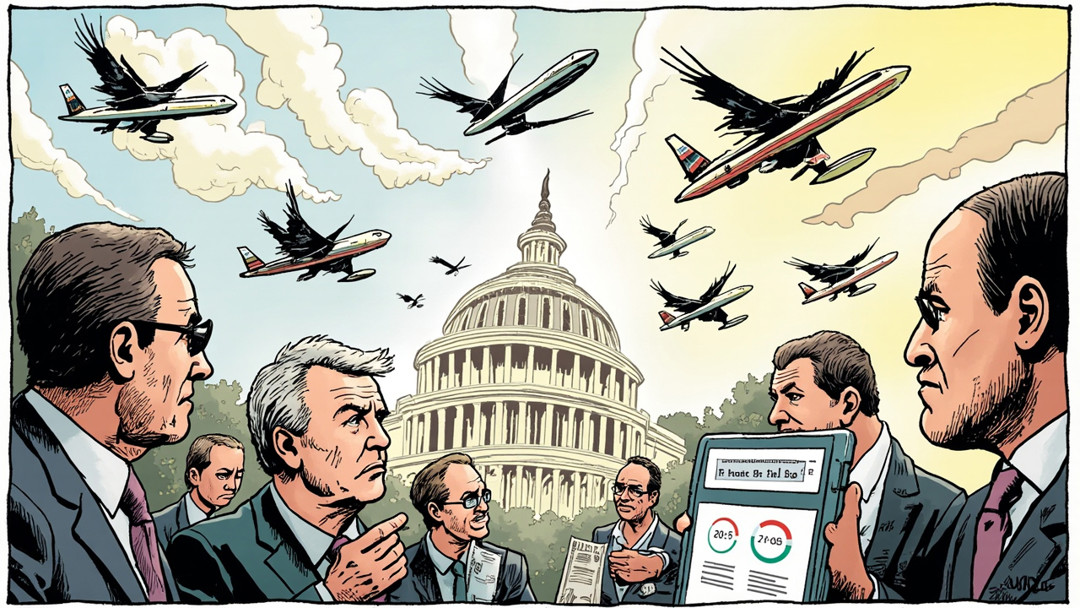
Do Congressional Stock Trades Beat the Market?
We tested 17,859 congressional stock disclosures. Copying buys or sells after disclosure trailed the S&P 500; buys did not reliably beat sells.
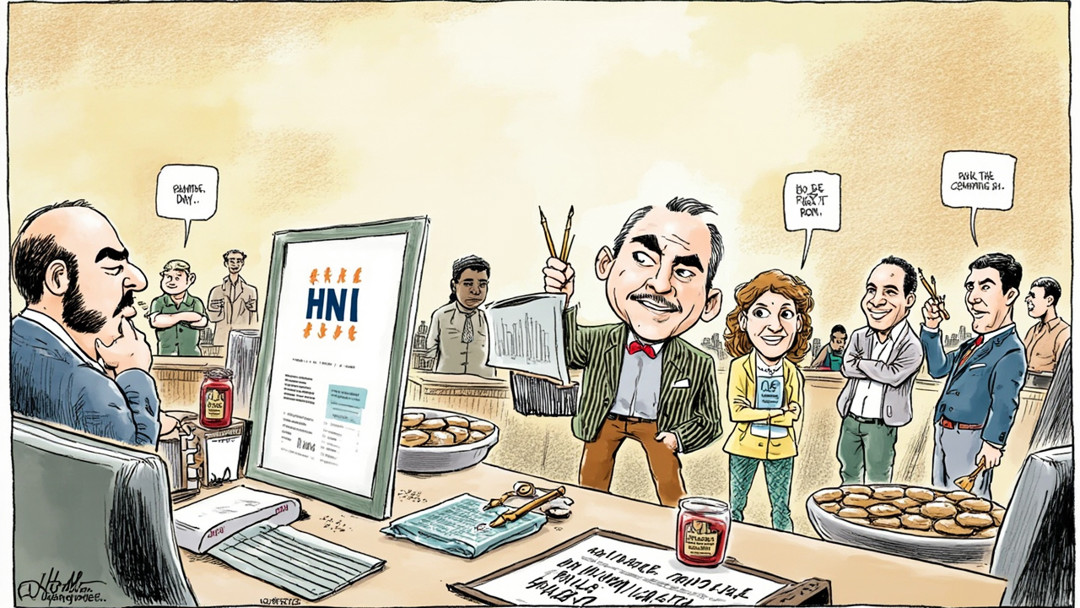
Three First-Time Repurchasers Put $634M on the Table, Led by HNI's $284M Program
The week's three authorizations are all first-time programs, with HNI Corp's $284.3M authorization the largest, and two of the three (HNI and United States Antimony) sit on cash that covers less than half the new ceiling.

What Happens After an Insider Buys? Evidence From 47,458 Open-Market Purchases
Across 47,458 insider open-market purchases, the headline changes with the benchmark: the same stocks lag the S&P 500 by 12.95 points over a year and beat the median listed stock by 2.56 points. The first purchase after two quiet years exposes the trap. Its modest return beats a weak broad-stock benchmark but trails the typical S&P 500 company; the still-larger index gap reflects mega-cap leadership. The weakness persists in shifted windows, so the drought is neither a buy nor a short signal. What does survive the placebo is inverted: the largest insider cheques are followed by the worst relative returns.

SpaceX's $1.8T cap is a two-customer AI bet, with $14.1B in CSAs carrying the entire $100B ARR claim
A Q2-print read on SpaceX as a public company: how $15.8B of the $18.4B Q2 capex flowed into the AI segment, why Customer B at 19.5% and Customer A at 18.3% of revenue sit between the $47.5B backlog and the $100B December ARR target, and how the Cursor close reframes the same concentration risk.
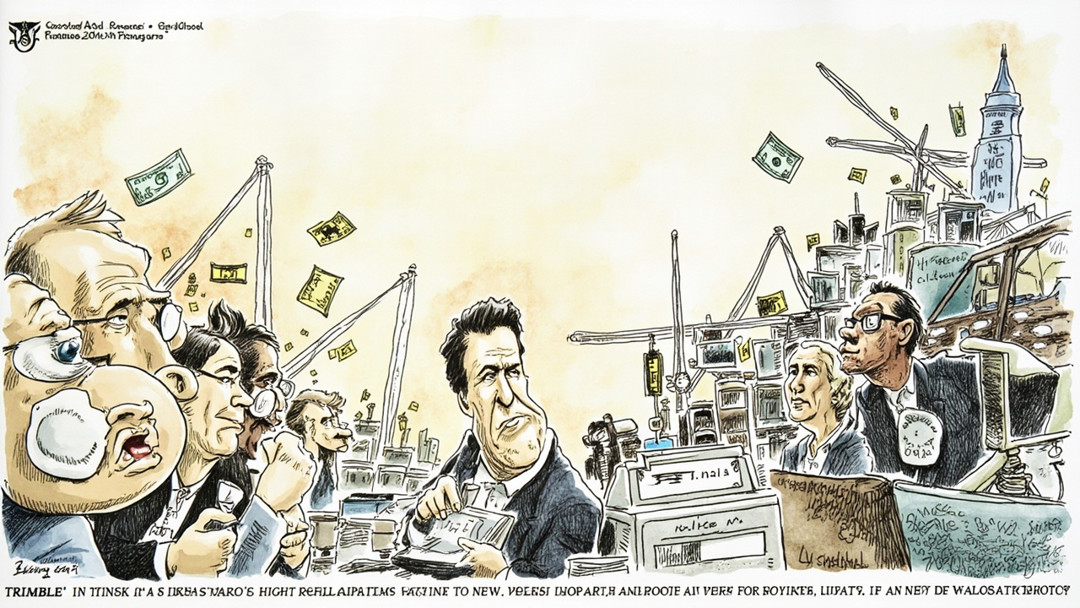
Trimble's $1B Authorization Lifts Week's Buyback Total to $1.3B; Six Other Programs Trail by an Order of Magnitude
Seven companies authorized a combined $1.3 billion in share repurchases between August 10 and August 16, with Trimble Inc.'s $1 billion program accounting for 76.9% of the weekly total and running ten times the size of the next-largest authorization.
Does Daily Short Volume Predict Short Interest? Evidence From 660,000 Settlement Windows
Across 660,246 settlement windows, a 26,213-parameter numeric transformer reached +0.414 pooled Spearman in a retrospective 2025–July 2026 test, versus +0.343 for ridge and +0.305 for a transparent composite. It estimates completed settlement endpoints, not daily positions or a trading signal.

MetLife Tops a $15.3B Buyback Week; First-Timers Dominate the Field
Ten repurchase authorizations totaling $15.3B were announced in the week ended August 9, 2026, led by MetLife's $3.0B program. Nine of the ten are first-time repurchasers on Equibles' records, and the heaviest hitters sit near 52-week highs.

Hertz's crowded short and improving print stage an asymmetric setup — dilution caps the ceiling
Short interest of 32.7% and a FINRA squeeze score of 92 meet a third straight quarter of RPD-DOE spread improvement, but -$786M of stockholders' equity and continued operating-cash outflow bound the upside.

Rocket Lab's $2.2B backlog makes the bull case bigger than Neutron
Rocket Lab's record Q1 and $2.2B backlog show the bull case no longer rests on Neutron alone. The proposed Iridium merger could add a recurring-services engine, while financing, dilution and execution remain the price of that upside.

Novo Nordisk's 1.3 million Wegovy pill TRxs meet a 50% WAC cut — and the bear case still wins
Novo Nordisk is the only name in the GLP-1 bellwether set guiding negative adjusted-sales growth for 2026 (-4% to -12% at CER), even as Wegovy pill TRxs hit around 1.3 million in Q1 2026 and the 1 January 2027 WAC reset to USD 675 locks in further realised-price compression.
Super Micro Computer's 15–17% margin guide against a 10.1% recent print makes the bear trade the heavier one
The $60B FQ4 backlog is the cleanest demand signal in AI servers, but the lifted 15–17% gross-margin guide against a 10.1% Q3 FY2026 print, an active export-control board review, and 16.2% short interest leave the bear case as the heavier of the two trades heading into the August 11 print.

Sandisk's $42 billion contract floor has bought the bull case three times trailing revenue; the bear trades it for the multiple
Sandisk re-rated on one quarter of contracted datacenter revenue: three fiscal Q3 contracts carry roughly $42 billion of minimum contractual revenue, five multi-year deals are backed by over $11 billion of guarantees, and the stock still sits 45.3% off its $2,335 52-week high at 14.1× EV/Revenue, the cheapest of the three storage names on that multiple.

Intel: The $465.7B market cap attached to a $57.0B money-losing business has one quarter to prove the Q2 2026 reset
Intel's 326.7% rally has priced in a turnaround the Q2 2026 print only just began to earn, with $57.0B of TTM revenue against -$77.0M of TTM EBIT. The Q3 2026 guide of $15.8B–$16.8B revenue and $0.31 GAAP EPS is the first datapoint that will decide whether the 41.8% non-GAAP gross margin holds and a dividend reinstatement becomes credible, or whether the -28.9% drawdown from $140.94 deepens.

AMD at 171.1× earnings is the cycle's most multiple-expanding bet, and Q2 2026 is the bar
Advanced Micro Devices trades at 171.1× on +34.3% revenue growth against Nvidia at 31.7× on +125.9% and Broadcom at 63.6× on +143% AI semiconductor growth, with the $11.2B Q2 2026 guide and initial Helios volume in Q3 now the only thing standing between the multiple holding and a re-rating toward Broadcom's 63.6×.

Micron's FQ4-26 guide of $50.0B and 86% gross margin: a single quarter larger than every full year through FY2024, with SK hynix's P&T7 build as the contestable mirror
Micron's FQ4-26 guided band exceeds every full fiscal year through FY2024 on a revenue base that has reset free cash flow to $18.3B in Q3 2026 and operating cash flow to $25.39B; the bull case rests on DRAM/NAND pricing, HBM4E absorption, and SCA lock-in holding ahead of SK hynix's Cheongju P&T7 advanced-packaging acceleration funded by a US$26.5B ADR allotment.

SoFi's 47.2% drawdown prices a credit-cycle casualty the Q1 2026 print disproves
Record originations across every lending product, 1,055,000 net new members, and a 22 basis-point NIM expansion to 5.94% sit beneath a 37.8x P/E and 14.7% short interest that price SoFi Technologies as if the bear case on capital deployment has already landed.

Hims & Hers has 26.4% shorts arguing against $2.9B of guided 2026 revenue; the Q2 print decides whether subscriber growth or ARPU decay wins
Hims & Hers closed at $32.84, off 50.4% from its 52-week high, with short interest at 26.4% of shares outstanding and the steepest positioning in the comp set against a +59.0% TTM revenue base and a 10%–12% full-year adjusted EBITDA guide — the next quarter decides whether the multiple re-rates with subscriber growth or compresses further on the 6% ARPU slide.