
Aardvark Therapeutics, Inc 8-K, filed Nov 4, 2025
Aardvark Therapeutics, Inc. (AARD)
About this 8-K
Aardvark Therapeutics, Inc filed this 8-K on November 4, 2025.
Items reported
- Item 7.01: Regulation FD disclosure
- Item 8.01: Other events
- Item 9.01: Financial statements and exhibits
UNITED STATES
SECURITIES AND EXCHANGE COMMISSION
WASHINGTON, D.C. 20549
FORM 8-K
CURRENT REPORT
Pursuant to Section 13 or 15(d) of the Securities Exchange Act of 1934
Date of Report (Date of earliest event reported): |
(Exact name of Registrant as Specified in Its Charter)
(State or Other Jurisdiction |
(Commission File Number) |
(IRS Employer |
||
|
|
|
|
|
|
||||
|
||||
(Address of Principal Executive Offices) |
|
(Zip Code) |
||
Registrant’s Telephone Number, Including Area Code: |
(Former Name or Former Address, if Changed Since Last Report)
Check the appropriate box below if the Form 8-K filing is intended to simultaneously satisfy the filing obligation of the registrant under any of the following provisions:
Securities registered pursuant to Section 12(b) of the Act:
|
|
Trading |
|
|
|
|
Indicate by check mark whether the registrant is an emerging growth company as defined in Rule 405 of the Securities Act of 1933 (§ 230.405 of this chapter) or Rule 12b-2 of the Securities Exchange Act of 1934 (§ 240.12b-2 of this chapter).
Emerging growth company
If an emerging growth company, indicate by check mark if the registrant has elected not to use the extended transition period for complying with any new or revised financial accounting standards provided pursuant to Section 13(a) of the Exchange Act.
Item 7.01 Regulation FD Disclosure.
On November 4, 2025, Aardvark Therapeutics, Inc. (the “Company”) presented: (i) a poster titled TAS2R Agonist ARD-101 Attenuates Weight Gain in Mice and Reduces Hunger in Adults with Obesity (the “ARD-201 Poster”) and (ii) a poster titled “An Isoflavonoid Modulator of Oxidative Metabolism with Therapeutic Potential in Obesity and Diabetes” (the “WE-868 Poster” and, together with the ARD-201 Poster, the “Posters”) at the ObesityWeek 2025 conference. A copy of each of the Posters is furnished as Exhibit 99.1 and Exhibit 99.2 to this Current Report on Form 8-K (this “Report”), respectively.
The information contained in the Posters is summary information that should be considered in the context of the Company’s filings with the Securities and Exchange Commission and other public announcements the Company may make by press release or otherwise from time to time. The Posters speak as of the date of this Report. While the Company may elect to update either of the Posters in the future to reflect events and circumstances occurring or existing after the date of this Report, the Company specifically disclaims any obligation to do so.
The information contained in Item 7.01 of this Current Report on Form 8-K (including Exhibit 99.1 and Exhibit 99.2 hereto) shall not be deemed “filed” for purposes of Section 18 of the Securities Exchange Act of 1934, as amended (the “Exchange Act”), or otherwise subject to the liabilities of that section, nor shall it be deemed incorporated by reference in any filing under the Securities Act of 1933, as amended, or the Exchange Act, except as expressly provided by specific reference in such a filing.
Item 8.01 Other Events.
On November 4, 2025, the Company issued a press release announcing the presentation of data supporting its metabolic obesity pipeline programs at the ObesityWeek 2025 conference, the notable findings to be presented, and that it will hosting an investor webinar on November 5, 2025 to review its ARD-101 and ARD-201 programs, as well as its ObesityWeek 2025 presentations. The full text of the press release is filed as Exhibit 99.3 to this Current Report on Form 8-K and incorporated herein by reference.
Item 9.01 Financial Statements and Exhibits.
(d) Exhibits.
|
|
|
Exhibit |
|
Description |
99.1 |
|
|
99.2 |
|
|
99.3 |
|
|
104 |
|
Cover Page Interactive Data File (embedded within the Inline XBRL document). |
SIGNATURES
Pursuant to the requirements of the Securities Exchange Act of 1934, the registrant has duly caused this report to be signed on its behalf by the undersigned hereunto duly authorized.
|
|
|
AARDVARK THERAPEUTICS, INC. |
|
|
|
|
Date: |
November 4, 2025 |
By: |
/s/ Tien-Li Lee, M.D. |
|
|
|
Tien-Li Lee, M.D. |
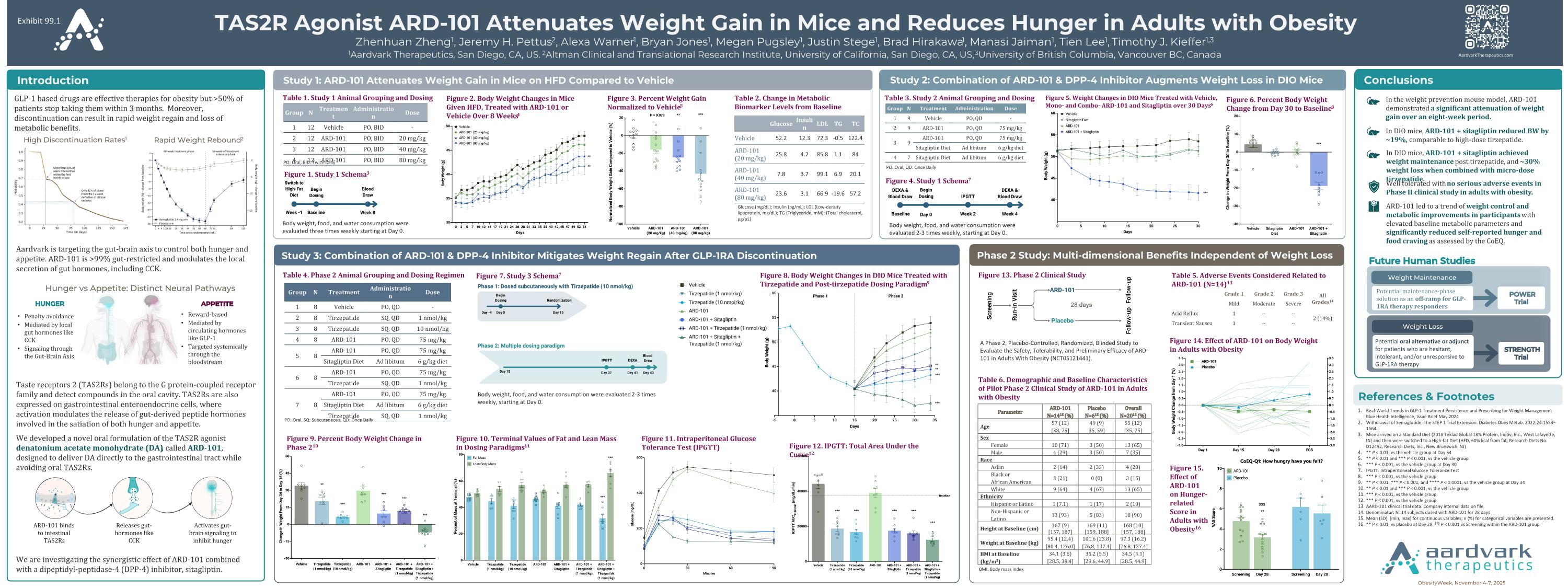
TAS2R Agonist ARD-101 Attenuates Weight Gain in Mice and Reduces Hunger in Adults with Obesity Zhenhuan Zheng1, Jeremy H. Pettus2, Alexa Warner1, Bryan Jones1, Megan Pugsley1, Justin Stege1, Brad Hirakawa1, Manasi Jaiman1, Tien Lee1, Timothy J. Kieffer1,3 1Aardvark Therapeutics, San Diego, CA, US. 2Altman Clinical and Translational Research Institute, University of California, San Diego, CA, US, 3University of British Columbia, Vancouver BC, Canada Introduction GLP-1 based drugs are effective therapies for obesity but >50% of patients stop taking them within 3 months. Moreover, discontinuation can result in rapid weight regain and loss of metabolic benefits. Rapid Weight Rebound2 High Discontinuation Rates1 Hunger vs Appetite: Distinct Neural Pathways Penalty avoidance Mediated by local gut hormones like CCK Signaling through the Gut-Brain Axis Reward-based Mediated by circulating hormones like GLP-1 Targeted systemically through the bloodstream Aardvark is targeting the gut-brain axis to control both hunger and appetite. ARD-101 is >99% gut-restricted and modulates the local secretion of gut hormones, including CCK. HUNGER APPETITE Taste receptors 2 (TAS2Rs) belong to the G protein-coupled receptor family and detect compounds in the oral cavity. TAS2Rs are also expressed on gastrointestinal enteroendocrine cells, where activation modulates the release of gut-derived peptide hormones involved in the satiation of both hunger and appetite. We developed a novel oral formulation of the TAS2R agonist denatonium acetate monohydrate (DA), called ARD-101, designed to deliver DA directly to the gastrointestinal tract while avoiding oral TAS2Rs. ARD-101 binds to intestinal TAS2Rs Releases gut-hormones like CCK Activates gut-brain signaling to inhibit hunger We are investigating the synergistic effect of ARD-101 combined with a dipeptidyl-peptidase-4 (DPP-4) inhibitor, sitagliptin. Study 1: ARD-101 Attenuates Weight Gain in Mice on HFD Compared to Vehicle Group N Treatment Administration Dose 1 12 Vehicle PO, BID - 2 12 ARD-101 PO, BID 20 mg/kg 3 12 ARD-101 PO, BID 40 mg/kg 4 12 ARD-101 PO, BID 80 mg/kg PO: Oral, BID: Twice Daily Body weight, food, and water consumption were evaluated three times weekly starting at Day 0. Figure 1. Study 1 Schema3 Table 1. Study 1 Animal Grouping and Dosing Figure 2. Body Weight Changes in Mice Given HFD, Treated with ARD-101 or Vehicle Over 8 Weeks4 Figure 3. Percent Weight Gain Normalized to Vehicle5 Study 2: Combination of ARD-101 & DPP-4 Inhibitor Augments Weight Loss in DIO Mice Group N Treatment Administration Dose 1 9 Vehicle PO, QD - 2 9 ARD-101 PO, QD 75 mg/kg 3 9 ARD-101 PO, QD 75 mg/kg Sitagliptin Diet Ad libitum 6 g/kg diet 4 7 Sitagliptin Diet Ad libitum 6 g/kg diet Table 3. Study 2 Animal Grouping and Dosing PO: Oral, QD: Once Daily Body weight, food, and water consumption were evaluated 2-3 times weekly, starting at Day 0. Figure 4. Study 1 Schema7 Figure 5. Weight Changes in DIO Mice Treated with Vehicle, Mono- and Combo- ARD-101 and Sitagliptin over 30 Days6 Figure 6. Percent Body Weight Change from Day 30 to Baseline8 Study 3: Combination of ARD-101 & DPP-4 Inhibitor Mitigates Weight Regain After GLP-1RA Discontinuation Group N Treatment Administration Dose 1 8 Vehicle PO, QD - 2 8 Tirzepatide SQ, QD 1 nmol/kg 3 8 Tirzepatide SQ, QD 10 nmol/kg 4 8 ARD-101 PO, QD 75 mg/kg 5 8 ARD-101 PO, QD 75 mg/kg Sitagliptin Diet Ad libitum 6 g/kg diet 6 8 ARD-101 PO, QD 75 mg/kg Tirzepatide SQ, QD 1 nmol/kg 7 8 ARD-101 PO, QD 75 mg/kg Sitagliptin Diet Ad libitum 6 g/kg diet Tirzepatide SQ, QD 1 nmol/kg PO: Oral, SQ: Subcutaneous, QD: Once Daily Body weight, food, and water consumption were evaluated 2-3 times weekly, starting at Day 0. Figure 8. Body Weight Changes in DIO Mice Treated with Tirzepatide and Post-tirzepatide Dosing Paradigm9 Figure 12. IPGTT: Total Area Under the Curve12 Table 4. Phase 2 Animal Grouping and Dosing Regimen Figure 9. Percent Body Weight Change in Phase 210 Figure 10. Terminal Values of Fat and Lean Mass in Dosing Paradigms11 Phase 2 Study: Multi-dimensional Benefits Independent of Weight Loss Parameter ARD-101 N=1415 (%) Placebo N=615 (%) Overall N=2015 (%) Age 57 (12) [38, 75] 49 (9) 35, 59] 55 (12) [35, 75] Sex Female 10 (71) 3 (50) 13 (65) Male 4 (29) 3 (50) 7 (35) Race Asian 2 (14) 2 (33) 4 (20) Black or African American 3 (21) 0 (0) 3 (15) White 9 (64) 4 (67) 13 (65) Ethnicity Hispanic or Latino 1 (7.1) 1 (17) 2 (10) Non-Hispanic or Latino 13 (93) 5 (83) 18 (90) Height at Baseline (cm) 167 (9) [157, 187] 169 (11) [159, 188] 168 (10) [157, 188] Weight at Baseline (kg) 95.4 (12.4) [80.4, 126.0] 101.6 (23.8) [76.8, 137.4] 97.3 (16.2) [76.8, 137.4] BMI at Baseline (kg/m2) 34.1 (3.6) [28.5, 38.4] 35.2 (5.5) [29.6, 44.9] 34.5 (4.1) [28.5, 44.9] Table 6. Demographic and Baseline Characteristics of Pilot Phase 2 Clinical Study of ARD-101 in Adults with Obesity Figure 14. Effect of ARD-101 on Body Weight in Adults with Obesity Figure 13. Phase 2 Clinical Study Grade 1 Grade 2 Grade 3 All Grades14 Mild Moderate Severe Acid Reflux 1 -- -- 2 (14%) Transient Nausea 1 -- -- Table 5. Adverse Events Considered Related to ARD-101 (N=14)13 Figure 15. Effect of ARD-101 on Hunger-related Score in Adults with Obesity16 A Phase 2, Placebo-Controlled, Randomized, Blinded Study to Evaluate the Safety, Tolerability, and Preliminary Efficacy of ARD-101 in Adults With Obesity (NCT05121441). Conclusions In the weight prevention mouse model, ARD-101 demonstrated a significant attenuation of weight gain over an eight-week period. In DIO mice, ARD-101 + sitagliptin reduced BW by ~19%, comparable to high-dose tirzepatide. In DIO mice, ARD-101 + sitagliptin achieved weight maintenance post tirzepatide, and ~30% weight loss when combined with micro-dose tirzepatide. POWER Trial Potential maintenance-phase solution as an off-ramp for GLP-1RA therapy responders Weight Maintenance References & Footnotes Figure 11. Intraperitoneal Glucose Tolerance Test (IPGTT) Future Human Studies Figure 7. Study 3 Schema7 Table 2. Change in Metabolic Biomarker Levels from Baseline Glucose Insulin LDL TG TC Vehicle 52.2 12.3 72.3 -0.5 122.4 ARD-101 (20 mg/kg) 25.8 4.2 85.8 1.1 84 ARD-101 (40 mg/kg) 7.8 3.7 99.1 6.9 20.1 ARD-101 (80 mg/kg) 23.6 3.1 66.9 -19.6 57.2 BMI: Body mass index STRENGTH Trial Potential oral alternative or adjunct for patients who are hesitant, intolerant, and/or unresponsive to GLP-1RA therapy Weight Loss Well tolerated with no serious adverse events in Phase II clinical study in adults with obesity. ARD-101 led to a trend of weight control and metabolic improvements in participants with elevated baseline metabolic parameters and significantly reduced self-reported hunger and food craving as assessed by the CoEQ. Real-World Trends in GLP-1 Treatment Persistence and Prescribing for Weight Management Blue Health Intelligence, Issue Brief May 2024 Withdrawal of Semaglutide: The STEP 1 Trial Extension. Diabetes Obes Metab. 2022;24:1553–1564. Mice arrived on a Standard Diet (2018 Teklad Global 18% Protein, Inotiv, Inc., West Lafayette, IN) and then were switched to a High-fat Diet (HFD, 60% kcal from fat; Research Diets No. D12492, Research Diets, Inc., New Brunswick, NJ) ** P < 0.01, vs the vehicle group at Day 54 ** P < 0.01 and *** P < 0.001, vs the vehicle group *** P < 0.001, vs the vehicle group at Day 30 IPGTT: Intraperitoneal Glucose Tolerance Test *** P < 0.001, vs the vehicle group ** P < 0.01, *** P < 0.001, and **** P < 0.0001, vs the vehicle group at Day 34 ** P < 0.01 and *** P < 0.001, vs the vehicle group *** P < 0.001, vs the vehicle group *** P < 0.001, vs the vehicle group AARD-201 clinical trial data. Company internal data on file. Denominator: N=14 subjects dosed with ARD-101 for 28 days Mean (SD), [min, max] for continuous variables; n (%) for categorical variables are presented. ** P < 0.01, vs placebo at Day 28. $$$ P < 0.001 vs Screening within the ARD-101 group Glucose (mg/dL); Insulin (ng/mL); LDL (Low-density lipoprotein, mg/dL); TG (Triglyceride, mM); (Total cholesterol, μg/μL) AardvarkTherapeutics.com ObesityWeek, November 4-7, 2025 Exhibit 99.1
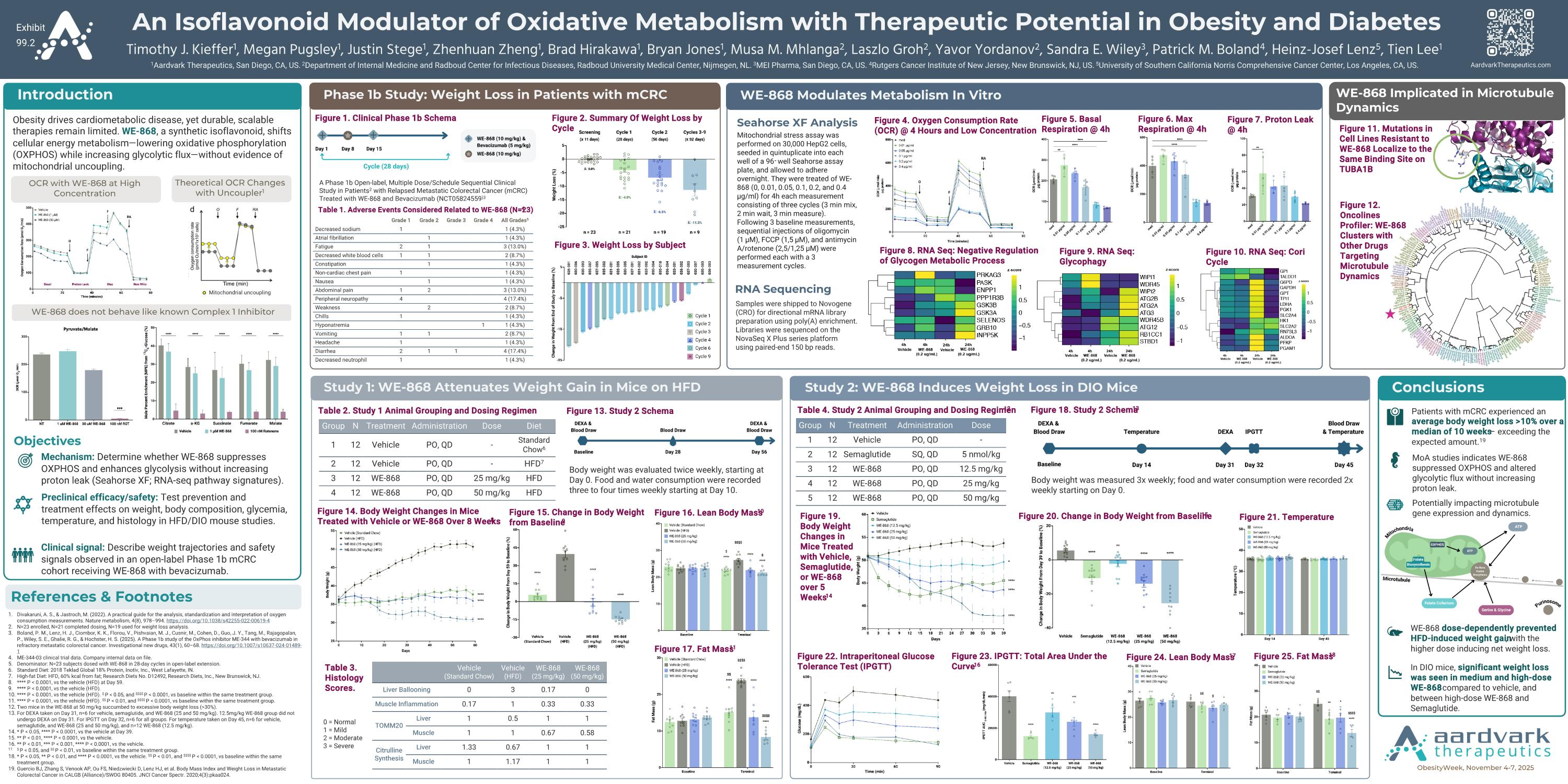
An Isoflavonoid Modulator of Oxidative Metabolism with Therapeutic Potential in Obesity and Diabetes Timothy J. Kieffer1, Megan Pugsley1, Justin Stege1, Zhenhuan Zheng1, Brad Hirakawa1, Bryan Jones1, Musa M. Mhlanga2, Laszlo Groh2, Yavor Yordanov2, Sandra E. Wiley3, Patrick M. Boland4, Heinz-Josef Lenz5, Tien Lee1 1Aardvark Therapeutics, San Diego, CA, US. 2Department of Internal Medicine and Radboud Center for Infectious Diseases, Radboud University Medical Center, Nijmegen, NL. 3MEI Pharma, San Diego, CA, US. 4Rutgers Cancer Institute of New Jersey, New Brunswick, NJ, US. 5University of Southern California Norris Comprehensive Cancer Center, Los Angeles, CA, US. AardvarkTherapeutics.com Introduction Theoretical OCR Changes with Uncoupler1 Phase 1b Study: Weight Loss in Patients with mCRC Conclusions References & Footnotes WE-868 Modulates Metabolism In Vitro Study 1: WE-868 Attenuates Weight Gain in Mice on HFD Study 2: WE-868 Induces Weight Loss in DIO Mice Figure 1. Clinical Phase 1b Schema A Phase 1b Open-label, Multiple Dose/Schedule Sequential Clinical Study in Patients2 with Relapsed Metastatic Colorectal Cancer (mCRC) Treated with WE-868 and Bevacizumab (NCT05824559)3 Grade 1 Grade 2 Grade 3 Grade 4 All Grades5 Decreased sodium 1 1 (4.3%) Atrial fibrillation 1 1 (4.3%) Fatigue 2 1 3 (13.0%) Decreased white blood cells 1 1 2 (8.7%) Constipation 1 1 (4.3%) Non-cardiac chest pain 1 1 (4.3%) Nausea 1 1 (4.3%) Abdominal pain 1 2 3 (13.0%) Peripheral neuropathy 4 4 (17.4%) Weakness 2 2 (8.7%) Chills 1 1 (4.3%) Hyponatremia 1 1 (4.3%) Vomiting 1 1 2 (8.7%) Headache 1 1 (4.3%) Diarrhea 2 1 1 4 (17.4%) Decreased neutrophil 1 1 (4.3%) Table 1. Adverse Events Considered Related to WE-868 (N=23)4 Figure 19. Body Weight Changes in Mice Treated with Vehicle, Semaglutide, or WE-868 over 5 Weeks14 Figure 22. Intraperitoneal Glucose Tolerance Test (IPGTT) Figure 14. Body Weight Changes in Mice Treated with Vehicle or WE-868 Over 8 Weeks8 Table 3. Histology Scores. Figure 2. Summary Of Weight Loss by Cycle Figure 3. Weight Loss by Subject Figure 4. Oxygen Consumption Rate (OCR) @ 4 Hours and Low Concentration Figure 5. Basal Respiration @ 4h Figure 6. Max Respiration @ 4h Figure 7. Proton Leak @ 4h Group N Treatment Administration Dose 1 12 Vehicle PO, QD - 2 12 Semaglutide SQ, QD 5 nmol/kg 3 12 WE-868 PO, QD 12.5 mg/kg 4 12 WE-868 PO, QD 25 mg/kg 5 12 WE-868 PO, QD 50 mg/kg Figure 24. Lean Body Mass17 Figure 23. IPGTT: Total Area Under the Curve16 Table 2. Study 1 Animal Grouping and Dosing Regimen Group N Treatment Administration Dose Diet 1 12 Vehicle PO, QD - Standard Chow6 2 12 Vehicle PO, QD - HFD7 3 12 WE-868 PO, QD 25 mg/kg HFD 4 12 WE-868 PO, QD 50 mg/kg HFD Table 4. Study 2 Animal Grouping and Dosing Regimen12 WE-868 dose-dependently prevented HFD-induced weight gain, with the higher dose inducing net weight loss. Patients with mCRC experienced an average body weight loss >10% over a median of 10 weeks – exceeding the expected amount.19 MoA studies indicates WE-868 suppressed OXPHOS and altered glycolytic flux without increasing proton leak. In DIO mice, significant weight loss was seen in medium and high-dose WE-868 compared to vehicle, and between high-dose WE-868 and Semaglutide. ObesityWeek, November 4-7, 2025 Body weight was measured 3x weekly; food and water consumption were recorded 2x weekly starting on Day 0. Body weight was evaluated twice weekly, starting at Day 0. Food and water consumption were recorded three to four times weekly starting at Day 10. Figure 18. Study 2 Schema13 Figure 13. Study 2 Schema Figure 15. Change in Body Weight from Baseline9 Figure 20. Change in Body Weight from Baseline15 Figure 21. Temperature Figure 16. Lean Body Mass10 Figure 17. Fat Mass11 Obesity drives cardiometabolic disease, yet durable, scalable therapies remain limited. WE-868, a synthetic isoflavonoid, shifts cellular energy metabolism—lowering oxidative phosphorylation (OXPHOS) while increasing glycolytic flux—without evidence of mitochondrial uncoupling. Mechanism: Determine whether WE-868 suppresses OXPHOS and enhances glycolysis without increasing proton leak (Seahorse XF; RNA-seq pathway signatures). Objectives OCR with WE-868 at High Concentration Vehicle (Standard Chow) Vehicle (HFD) WE-868 (25 mg/kg) WE-868 (50 mg/kg) Liver Ballooning 0 3 0.17 0 Muscle Inflammation 0.17 1 0.33 0.33 TOMM20 Liver 1 0.5 1 1 Muscle 1 1 0.67 0.58 Citrulline Synthesis Liver 1.33 0.67 1 1 Muscle 1 1.17 1 1 0 = Normal 1 = Mild 2 = Moderate 3 = Severe Figure 25. Fat Mass18 Figure 12. Oncolines Profiler: WE-868 Clusters with Other Drugs Targeting Microtubule Dynamics Figure 11. Mutations in Cell Lines Resistant to WE-868 Localize to the Same Binding Site on TUBA1B Mitochondrial stress assay was performed on 30,000 HepG2 cells, seeded in quintuplicate into each well of a 96‑well Seahorse assay plate, and allowed to adhere overnight. They were treated of WE-868 (0, 0.01, 0.05, 0.1, 0.2, and 0.4 µg/ml) for 4h each measurement consisting of three cycles (3 min mix, 2 min wait, 3 min measure). Following 3 baseline measurements, sequential injections of oligomycin (1 µM), FCCP (1,5 µM), and antimycin A/rotenone (2,5/1,25 µM) were performed each with a 3 measurement cycles. Seahorse XF Analysis RNA Sequencing Samples were shipped to Novogene (CRO) for directional mRNA library preparation using poly(A) enrichment. Libraries were sequenced on the NovaSeq X Plus series platform using paired-end 150 bp reads. Figure 8. RNA Seq: Negative Regulation of Glycogen Metabolic Process Figure 9. RNA Seq: Glycophagy Figure 10. RNA Seq: Cori Cycle Divakaruni, A. S., & Jastroch, M. (2022). A practical guide for the analysis, standardization and interpretation of oxygen consumption measurements. Nature metabolism, 4(8), 978–994. https://doi.org/10.1038/s42255-022-00619-4 N=23 enrolled, N=21 completed dosing, N=19 used for weight loss analysis. Boland, P. M., Lenz, H. J., Ciombor, K. K., Florou, V., Pishvaian, M. J., Cusnir, M., Cohen, D., Guo, J. Y., Tang, M., Rajagopalan, P., Wiley, S. E., Ghalie, R. G., & Hochster, H. S. (2025). A Phase 1b study of the OxPhos inhibitor ME-344 with bevacizumab in refractory metastatic colorectal cancer. Investigational new drugs, 43(1), 60–68. https://doi.org/10.1007/s10637-024-01489-1 ME-344-03 clinical trial data. Company internal data on file. Denominator: N=23 subjects dosed with WE-868 in 28-day cycles in open-label extension. Standard Diet: 2018 Teklad Global 18% Protein, Inotiv, Inc., West Lafayette, IN. High-fat Diet: HFD, 60% kcal from fat; Research Diets No. D12492, Research Diets, Inc., New Brunswick, NJ. **** P < 0.0001, vs the vehicle (HFD) at Day 59. **** P < 0.0001, vs the vehicle (HFD). **** P < 0.0001, vs the vehicle (HFD). $ P < 0.05, and $$$$ P < 0.0001, vs baseline within the same treatment group. **** P < 0.0001, vs the vehicle (HFD). $$ P < 0.01, and $$$$ P < 0.0001, vs baseline within the same treatment group. Two mice in the WE-868 at 50 mg/kg succumbed to excessive body weight loss (>30%). For DEXA taken on Day 31, n=6 for vehicle, semaglutide, and WE-868 (25 and 50 mg/kg). 12.5mg/kg WE-868 group did not undergo DEXA on Day 31. For IPGTT on Day 32, n=6 for all groups. For temperature taken on Day 45, n=6 for vehicle, semaglutide, and WE-868 (25 and 50 mg/kg), and n=12 WE-868 (12.5 mg/kg). * P < 0.05, **** P < 0.0001, vs the vehicle at Day 39. ** P < 0.01, **** P < 0.0001, vs the vehicle. ** P < 0.01, *** P < 0.001, **** P < 0.0001, vs the vehicle. $ P < 0.05, and $$ P < 0.01, vs baseline within the same treatment group. * P < 0.05, ** P < 0.01, and **** P < 0.0001, vs the vehicle. $$ P < 0.01, and $$$$ P < 0.0001, vs baseline within the same treatment group. Guercio BJ, Zhang S, Venook AP, Ou FS, Niedzwiecki D, Lenz HJ, et al. Body Mass Index and Weight Loss in Metastatic Colorectal Cancer in CALGB (Alliance)/SWOG 80405. JNCI Cancer Spectr. 2020;4(3):pkaa024. Preclinical efficacy/safety: Test prevention and treatment effects on weight, body composition, glycemia, temperature, and histology in HFD/DIO mouse studies. Clinical signal: Describe weight trajectories and safety signals observed in an open-label Phase 1b mCRC cohort receiving WE-868 with bevacizumab. WE-868 does not behave like known Complex 1 Inhibitor Potentially impacting microtubule gene expression and dynamics. WE-868 Implicated in Microtubule Dynamics Mitochondrial uncoupling Exhibit 99.2
 Exhibit 99.3
Aardvark Therapeutics Presents Data Supporting its Metabolic Obesity Pipeline Programs at ObesityWeek 2025
New preclinical results demonstrate the potential of ARD-201 in enhanced glucose control, along with preservation of lean mass, underscoring its opportunity in addressing key challenges in today’s obesity treatment landscape
Preclinical and clinical data demonstrates the potential of ARD-201 to attenuate weight gain, promote weight loss and help maintain weight after the discontinuation of GLP-1RA
Aardvark to host investor webinar on November 5th, 2025 to review ARD-101 and ARD-201 programs, as well as ObesityWeek presentations
SAN DIEGO – November 4, 2025 (GLOBE NEWSWIRE) -- Aardvark Therapeutics, Inc. (Aardvark) (Nasdaq: AARD), a clinical-stage biopharmaceutical company focused on developing novel, small-molecule therapeutics to activate innate homeostatic pathways for the treatment of metabolic diseases, presented data today at the ObesityWeek 2025 conference demonstrating the mechanistic rationale and therapeutic potential of two of its metabolic obesity programs, including ARD-201.
“More than 50% of patients stop taking GLP-1 therapies within 3 months, often resulting in rapid weight regain,” said Tien Lee, M.D., Founder and Chief Executive Officer of Aardvark. “ARD-201 combines the noted anti-hunger and metabolic effects of ARD-101 with the synergistic properties of sitagliptin to enhance the anti-appetite effects of ARD-101 to create a potential first-in-class therapy that may overcome the tolerability and rebound challenges of GLP-1 therapies. We’re looking forward to advancing ARD-201 into two Phase 2 trials, POWER and STRENGTH, to further evaluate its potential for individuals living with metabolic obesity.”
ARD-201 Obesity Program
ARD-201 is planned to be a fixed-dose combination of the TAS2R agonist ARD-101 and the DPP-4 inhibitor sitagliptin. The co-administration of these two compounds will be tested in the Phase 2 POWER Trial (Prevention Of WEight Regain) expected to commence by the end of 2025.
Poster Title: TAS2R Agonist ARD-101 Attenuates Weight Gain in Mice and Reduces Hunger in Adults with Obesity
Summary: Preclinical and clinical data support the continued development of ARD-201 to attenuate weight gain, promote weight loss, and help maintain weight after the
|
|
|

discontinuation of glucagon-like peptide-1 receptor agonist (GLP-1RA) therapies. In addition, ARD-201 improved glucose tolerance and lean body mass composition.
Notable findings:
WE-868 Obesity Program
WE-868 is a small molecule isoflavonoid designed to modulate oxidative phosphorylation and represents a potentially novel pathway for promoting weight loss and additional metabolic benefits.
Poster Title: An Isoflavonoid Modulator of Oxidative Metabolism with Therapeutic Potential in Obesity and Diabetes
Summary: A clinical study of WE-868 showed a correlation between treatment and weight loss in patients in another indication, and subsequent preclinical studies explored the mechanism as a novel treatment for obesity. An additional preclinical study showed that WE-868 shifts cellular energy metabolism by modulating oxidative phosphorylation.
Notable findings:
|
|
|
|
|
|
Aardvark to Host an Investor Webinar on November 5
Aardvark will host an investor webinar on Wednesday, November 5th, 2025 from 5:00 p.m. to 7:00 p.m. ET to provide an overview of ARD-101, ARD-201 and WE-868 data presented at ObesityWeek. The event will feature a discussion with leading key opinion leaders Tony Lam, Ph.D., Professor at the University of Toronto, and Caroline Apovian, M.D., Co-Director at Center for Weight Management and Wellness at Brigham and Women’s Hospital. The event will also feature a discussion on ARD-101 in Prader-Willi Syndrome with Stacy Ward, MS, BCBA, Chief Executive Officer of Prader-Willi Syndrome Association - USA, and Dorothea Lantz, Director of Community Engagement at Prader-Willi Syndrome Association - USA.
The live webcast presentation will be accessible on the company’s website, https://ir.aardvarktherapeutics.com/news-events/events, under the investors section, and an archived recording will be available on the website following the presentation.
About ARD-101
ARD-101 is a gut-restricted small molecule agonist of select taste receptors (TAS2Rs) expressed on the luminal side of the intestine. As a potent bitter taste receptor pan-agonist, ARD-101 stimulates enteroendocrine cells of the digestive tract to release multiple gut-peptide hormones including GLP-1 and the satiety hormone cholecystokinin (CCK), which activates gut-brain neurologic signaling to mediate hunger. ARD-101 has demonstrated an ability to reduce hunger when used alone or in combination with currently available GLP-1 therapies. The FDA has granted ARD-101 both Orphan Drug Designation and Rare Pediatric Disease Designation for PWS.
ARD-101 is being evaluated in the Phase 3 HERO trial for hyperphagia associated with PWS.
About ARD-201
ARD-201 is planned to be an oral fixed-dose combination of a dipeptidyl peptidase-4 (DPP-4) inhibitor and the TAS2R agonist ARD-101. These receptors normally respond to nutrients and are part of the gut-brain axis that helps regulate food intake. Activation of TAS2Rs stimulates the release of endogenous signaling molecules, including CCK and GLP-1, which play key roles in promoting satiety and reducing hunger. DPP-4 inhibitors, which are widely used for the treatment of diabetes, extend the biological activity of gut hormones, including GLP-1, by preventing their enzymatic inactivation. Together, these mechanisms allow ARD-201 to enhance and prolong the body’s natural signals for fullness.
Aardvark is advancing ARD-201 in two Phase 2 trials:
|
|
|
|
|
|
About WE-868
WE-868 is a novel, small molecule that modulates mitochondrial energy metabolism without directly suppressing the OXPHOS pathway. It is being evaluated in preclinical studies for the potential treatment of obesity and diabetes.
About Aardvark Therapeutics, Inc.
Aardvark is a clinical-stage biopharmaceutical company developing novel, small-molecule therapeutics designed to suppress hunger for the treatment of Prader-Willi Syndrome and metabolic diseases. Recognizing hunger (the discomfort from not having eaten recently) is a distinct neural signaling pathway separate from appetite (the reward-seeking, desirability of food). Our programs explore therapeutic applications in hunger-associated indications and potential complementary uses with anti-appetite therapies. Our lead compound, oral ARD-101, is in Phase 3 clinical development for the treatment of hyperphagia associated with PWS, a rare disease characterized by insatiable hunger. Aardvark is also developing ARD-201, a planned fixed-dose combination of ARD-101 with a DPP-4 inhibitor, and conducting two separate trials with a goal of addressing some of the limitations of currently marketed GLP-1 therapies for the treatment of obesity and obesity-related conditions. For more information, visit aardvarktherapeutics.com.
Forward-Looking Statements
Statements in this press release about future expectations, plans and prospects, as well as any other statements regarding matters that are not historical facts, may constitute “forward-looking statements.” These statements include, but are not limited to, statements concerning: Aardvark’s business strategy; product candidates and programs, including ARD-201, ARD-101 and WE-868; ongoing clinical trials; planned clinical trials; expected timing for data readouts and reporting topline results; likelihood of success; as well as plans and objectives for future operations; ARD-201’s potential, including its potential as a first-in-class therapy and ability to overcome the tolerability and rebound challenges of GLP-1 therapies; and Aardvark’s upcoming webinar and the topics expected to be discussed in such webinar . The words, without limitation, “anticipate,” “believe,” “continue,” “could,” “estimate,” “expect,” “intend,” “may,” “plan,” “potential,” “predict,” “project,” “should,” “target,” “will,” “would” and similar expressions are intended to identify forward-looking statements, although not all forward-looking statements contain
|
|
|
|
|
|
these or similar identifying words. Actual results may differ materially from those indicated by such forward-looking statements as a result of various important factors, including: uncertainties related to potential delays in the commencement, enrollment and completion of clinical trials; the risk that Aardvark may use its capital resources sooner than expected and that they may be insufficient to allow Aardvark to achieve its anticipated milestones; risks related to its dependence on third parties for manufacturing, shipping and production of drug product for use in clinical and preclinical trials; the risk of unfavorable clinical trial results; the risk that results from earlier clinical trials and preclinical studies may not necessarily be predictive of future results; and other risks and uncertainties, including the factors described under the “Risk Factors” section of Aardvark’s Quarterly Report on Form 10-Q for the quarter ended June 30, 2025 that the Company filed with the Securities and Exchange Commission on August 13, 2025. When evaluating Aardvark’s business and prospects, careful consideration should be given to these risks and uncertainties. Any forward-looking statements contained in this press release are based on the current expectations of Aardvark’s management team and speak only as of the date hereof, and Aardvark specifically disclaims any obligation to update any forward-looking statement, whether as a result of new information, future events or otherwise, unless required by law.
###
Contact:
Carolyn Hawley, Inizio Evoke Comms
(619) 849-5382
Carolyn.hawley@inizioevoke.com
|
|
|