
ABOS 8-K
Acumen Pharmaceuticals, Inc. (ABOS)
8-K
2025-03-27
For: 2025-03-27
View Original
Added on
April 06, 2026
UNITED STATES
SECURITIES AND EXCHANGE COMMISSION
WASHINGTON, D.C. 20549
____________________________
FORM 8-K
____________________________
CURRENT REPORT
Pursuant to Section 13 or 15(d)
of the Securities Exchange Act of 1934
Date of Report (Date of earliest event reported): March 27, 2025
____________________________
(Exact name of Registrant as Specified in Its Charter)
____________________________
(State or Other Jurisdiction of Incorporation) | (Commission File Number) | (IRS Employer Identification No.) | ||||||
| (Address of Principal Executive Offices) | (Zip Code) | ||||
(617 ) 344-4190
(Registrant’s Telephone Number, Including Area Code)
Not Applicable
(Former Name or Former Address, if Changed Since Last Report)
____________________________
Check the appropriate box below if the Form 8-K filing is intended to simultaneously satisfy the filing obligation of the registrant under any of the following provisions (see General Instructions A.2. below):
| Written communications pursuant to Rule 425 under the Securities Act (17 CFR 230.425) | |||||
| Soliciting material pursuant to Rule 14a-12 under the Exchange Act (17 CFR 240.14a-12) | |||||
| Pre-commencement communications pursuant to Rule 14d-2(b) under the Exchange Act (17 CFR 240.14d-2(b)) | |||||
| Pre-commencement communications pursuant to Rule 13e-4(c) under the Exchange Act (17 CFR 240.13e-4(c)) | |||||
Securities registered pursuant to Section 12(b) of the Act:
| Title of each class | Trading Symbol(s) | Name of each exchange on which registered | ||||||||||||
Indicate by check mark whether the registrant is an emerging growth company as defined in Rule 405 of the Securities Act of 1933 (§230.405 of this chapter) or Rule 12b-2 of the Securities Exchange Act of 1934 (§240.12b-2 of this chapter).
Emerging growth company x
If an emerging growth company, indicate by check mark if the registrant has elected not to use the extended transition period for complying with any new or revised financial accounting standards provided pursuant to Section 13(a) of the Exchange Act. o
Item 2.02 Results of Operations and Financial Condition.
On March 27, 2025, Acumen Pharmaceuticals, Inc. (the “Company”) reported financial results and business highlights for the year ended December 31, 2024. A copy of this press release (the “Earnings Press Release”) is furnished as Exhibit 99.1 to this Current Report on Form 8-K (this “Report”) and is incorporated by reference.
The information in this Item 2.02 of this Report (including Exhibit 99.1) is being furnished and shall not be deemed “filed” for purposes of Section 18 of the Securities Exchange Act of 1934, as amended (the “Exchange Act”), or otherwise subject to the liabilities of that Section, nor shall it be deemed incorporated by reference in any filing under the Securities Act of 1933, as amended (the “Securities Act”), or the Exchange Act, except as expressly set forth by specific reference in such a filing.
Item 7.01 Regulation FD Disclosure.
On March 27, 2025, the Company posted an updated corporate presentation to its website at https://investors.acumenpharm.com/news-events/presentations, which the Company may use from time to time in communications or conferences. The corporate presentation was updated to reflect the completion of enrollment of the ALTITUDE-AD clinical trial, projected timing for topline results, and that, as of December 31, 2024, the Company’s cash, cash equivalents and marketable securities balance was $231.5 million, based upon which the Company projects that its cash, cash equivalents and marketable securities will be sufficient to support the Company’s operations into the first half of 2027. A copy of the corporate presentation is attached as Exhibit 99.2 to this Report.
The information in this Item 7.01 of this Report (including Exhibit 99.2), is being furnished and shall not be deemed “filed” for purposes of Section 18 of the Exchange Act, or otherwise subject to the liabilities of that Section, nor shall it be deemed incorporated by reference in any filing under the Securities Act or the Exchange Act, except as expressly set forth by specific reference in such filing. The Company’s submission of this Report shall not be deemed an admission as to the materiality of any information required to be disclosed solely to satisfy the requirements of Regulation FD.
Item 9.01 Financial Statements and Exhibits.
(d).Exhibits
| Exhibit No. | Description | |||||||
| 99.1 | ||||||||
| 99.2 | ||||||||
| 104 | Cover Page Interactive Data File (embedded within the Inline XBRL document) | |||||||
SIGNATURES
Pursuant to the requirements of the Securities Exchange Act of 1934, as amended, the Company has duly caused this report to be signed on its behalf by the undersigned hereunto duly authorized.
| Acumen Pharmaceuticals, Inc. | ||||||||
| Dated: March 27, 2025 | By: | /s/ Matthew Zuga | ||||||
Matthew Zuga Chief Financial Officer and Chief Business Officer | ||||||||
Exhibit 99.1

Acumen Pharmaceuticals Reports Financial Results for the Year Ended December 31, 2024
and Business Highlights
•Enrollment complete for ALTITUDE-AD, a Phase 2 study to investigate sabirnetug (ACU193) for the treatment of early Alzheimer’s disease
◦Anticipate topline results in late 2026
•Topline results from the Phase 1 study investigating a subcutaneous sabirnetug formulation support further development of this dosing option for patients
•Cash, cash equivalents and marketable securities of $231.5 million as of Dec. 31, 2024, expected to support current clinical and operational activities into the first half of 2027
•Company to host conference call and webcast today at 8:00 a.m. ET
NEWTON, Mass., Mar. 27, 2025 – Acumen Pharmaceuticals, Inc. (NASDAQ: ABOS) (“Acumen” or the “Company”), a clinical-stage biopharmaceutical company developing a novel therapeutic that targets toxic soluble amyloid beta oligomers (AβOs) for the treatment of Alzheimer’s disease (AD), today reported financial results for the full year ended December 31, 2024 and provided a business update.
“I am exceptionally proud of the considerable progress our team has made this past year in advancing the clinical development of sabirnetug, our next generation treatment for early Alzheimer’s disease. We completed enrollment in our 540-participant Phase 2 study, ALTITUDE-AD, earlier than originally anticipated and expect topline results in late 2026. We also recently announced Phase 1 topline results for a subcutaneous option of sabirnetug, that support further development of this dosing option for increased patient convenience,” said Daniel O’Connell, Chief Executive Officer of Acumen. “Looking ahead, our team remains focused on the transformative opportunity to redefine the standard of care in early Alzheimer’s disease. Through disciplined execution, continuous innovation and sabirnetug’s high selectivity for toxic amyloid beta oligomers, we believe we are well-positioned to deliver a differentiated treatment option for patients.”
Recent Highlights
•In January 2025, the Company announced that the Journal of Prevention of Alzheimer’s Disease (JPAD) published the results of its Phase 1 INTERCEPT-AD study, demonstrating that sabirnetug (ACU193) was generally well-tolerated with dose- and exposure-dependent target engagement and reduction in amyloid plaques.
◦The publication titled “INTERCEPT-AD, a phase 1 study of intravenous sabirnetug in participants with mild cognitive impairment or mild dementia due to Alzheimer’s disease” is available online here.

•In February 2025, JPAD also published the results of the Company’s Phase 1 INTERCEPT-AD fluid biomarker changes associated with Aβ and tau pathology and synaptic dysfunction.
◦The publication titled “Biofluid biomarker changes following treatment with sabirnetug (ACU193) in INTERCEPT-AD, a phase 1 trial in early Alzheimer’s disease” is available online here.
•In March 2025, the Company announced the topline results of the Phase 1 study investigating a subcutaneous (SC) administration of sabirnetug.
◦The Phase 1 study in healthy volunteers enrolled 12 subjects who received single IV doses of 2,800 mg and 16 subjects who received four weekly SC doses of 1,200 mg. The most frequently reported adverse events included injection site reactions (62.5%), all of which were mild (Grade 1) in severity, resolved, and did not cause any discontinuations from the study. No other safety signals were identified. Importantly, SC administration of sabirnetug produced sufficient systemic exposure to enable further clinical studies of SC dosing.
•In March 2025, the Company announced the completion of patient enrollment in its Phase 2 ALTITUDE-AD study designed to evaluate the clinical efficacy and safety of sabirnetug in patients with early AD.
◦542 individuals with early AD have been randomized to receive one of two dose levels of sabirnetug (35mg/kg or 50mg/kg once every four weeks) or placebo. The primary endpoint of the study is the change from baseline in the Integrated Alzheimer’s Disease Rating Scale (iADRS) at 18 months. Secondary endpoints will include the Clinical Dementia Rating – Sum of Boxes scale (CDR-SB), ADAS-Cog13, ADCS-ADL and various AD biomarkers. Standard safety measures and MRIs will also be assessed. Participants who complete the double-blind portion of the study will have the opportunity to continue into an open-label extension.
Anticipated Milestones
•The Company expects topline results from ALTITUDE-AD, a Phase 2 study to investigate sabirnetug for the treatment of early Alzheimer’s disease, in late 2026.
2024 Financial Results
•Cash Balance. As of Dec. 31, 2024, cash, cash equivalents and marketable securities totaled $231.5 million, compared to cash, cash equivalents and marketable securities of $306.1 million as of December 31, 2023. The decrease in cash is related to funding ongoing operations. Cash is expected to support current clinical and operational activities into the first half of 2027.
•Research and Development (R&D) Expenses. R&D expenses in 2024 were $93.8 million, compared to $42.3 million in 2023. The increase in R&D expenses was primarily due to increased costs related to clinical trial costs related to ALTITUDE-AD, personnel, license expenses and other costs.
2
•General and Administrative (G&A) Expenses. G&A expenses in 2024 were $20.2 million, compared to $18.8 million in 2023. The increase in G&A expenses was primarily due to increased costs related to personnel and was offset by reductions in insurance and consulting.
•Loss from Operations. Loss from operations in 2024 was $114.0 million, compared to $61.1 million in 2023. This increase was due to the increased R&D and G&A expenses over the prior year period.
•Net Loss. Net loss for the year ended December 31, 2024 was $102.3 million, compared to a net loss of $52.4 million for the year ended December 31, 2023.
Conference Call Details
Acumen will host a conference call and live audio webcast today, Mar. 27, 2025, at 8:00 a.m. ET.
To participate in the live conference call, please register using this link. After registration, you will be informed of the dial-in numbers including PIN. Please register at least one day in advance.
The webcast audio will be available via this link.
An archived version of the webcast will be available for at least 30 days in the Investors section of the Company’s website at www.acumenpharm.com.
About Sabirnetug (ACU193)
Sabirnetug (ACU193) is a humanized monoclonal antibody (mAb) discovered and developed based on its selectivity for soluble amyloid beta oligomers (AβOs), which are a highly toxic and pathogenic form of Aβ, relative to Aβ monomers and amyloid plaques. Soluble AβOs have been observed to be potent neurotoxins that bind to neurons, inhibit synaptic function and induce neurodegeneration. By selectively targeting toxic soluble AβOs, sabirnetug aims to address the hypothesis that soluble AβOs are an early and persistent underlying cause of the neurodegenerative process in Alzheimer’s disease (AD). Sabirnetug has been granted Fast Track designation for the treatment of early AD by the U.S. Food and Drug Administration and is currently being evaluated in a Phase 2 study in patients with early AD.
About ALTITUDE-AD (Phase 2)
Initiated in 2024, ALTITUDE-AD is a Phase 2, multi-center, randomized, double-blind, placebo-controlled clinical trial designed to evaluate the efficacy and safety of sabirnetug (ACU193) infusions administered once every four weeks in slowing cognitive and functional decline as compared to placebo in participants with early Alzheimer's disease. The study has enrolled 542 individuals with early Alzheimer’s disease (mild cognitive impairment or mild dementia due to AD) at multiple investigative sites located in the United States, Canada, the European Union and the United Kingdom. More information can be found on www.clinicaltrials.gov, NCT identifier NCT06335173.
About INTERCEPT-AD (Phase 1)
Completed in 2023, INTERCEPT-AD was a Phase 1, U.S.-based, multi-center, randomized, double-blind, placebo-controlled clinical trial evaluating the safety and tolerability, and establishing clinical proof of mechanism, of sabirnetug in patients with early Alzheimer’s disease (AD). Sixty-five individuals with early AD (mild cognitive impairment or mild dementia due to AD) enrolled in this first-in-human study of sabirnetug. The INTERCEPT-AD study consisted of single-ascending-dose (SAD) and multiple-ascending-
3
dose (MAD) cohorts. Results showed sabirnetug to be well-tolerated with a favorable overall safety profile. The trial showed amyloid plaque reduction, effects on synaptic biomarkers, low overall rates of ARIA-E, and evidence of target engagement that validated proof of mechanism. More information can be found on www.clinicaltrials.gov, NCT identifier NCT04931459.
About Acumen Pharmaceuticals, Inc.
Acumen Pharmaceuticals is a clinical-stage biopharmaceutical company developing a novel therapeutic that targets toxic soluble amyloid beta oligomers (AβOs) for the treatment of Alzheimer’s disease (AD). Acumen’s scientific founders pioneered research on AβOs, which a growing body of evidence indicates are early and persistent triggers of Alzheimer’s disease pathology. Acumen is currently focused on advancing its investigational product candidate, sabirnetug (ACU193), a humanized monoclonal antibody that selectively targets toxic soluble AβOs, in its ongoing Phase 2 clinical trial ALTITUDE-AD (NCT06335173) in early symptomatic Alzheimer’s disease patients, following positive results in its Phase 1 trial INTERCEPT-AD. The company is headquartered in Newton, Mass. For more information, visit www.acumenpharm.com.
Forward-Looking Statements
This press release contains forward-looking statements within the meaning of The Private Securities Litigation Reform Act of 1995. Any statement describing Acumen’s goals, expectations, financial or other projections, intentions or beliefs is a forward-looking statement and should be considered an at-risk statement. Words such as “believes,” “expects,” “anticipates,” “could,” “should,” “would,” “seeks,” “aims,” “plans,” “potential,” “will,” “milestone” and similar expressions are intended to identify forward-looking statements, although not all forward-looking statements contain these identifying words. Forward-looking statements include statements concerning Acumen’s business, and Acumen’s ability to achieve its strategic and financial goals, including its projected use of cash, cash equivalents and marketable securities and the expected sufficiency of its cash resources into the first half of 2027, the therapeutic potential of Acumen’s product candidate, sabirnetug (ACU193), including against other antibodies, the timing of anticipated topline results of ALTITUDE-AD, and the potential for additional development to support a subcutaneous dosing option of sabirnetug. These statements are based upon the current beliefs and expectations of Acumen management, and are subject to certain factors, risks and uncertainties, particularly those inherent in the process of discovering, developing and commercializing safe and effective human therapeutics. Such risks may be amplified by the impacts of geopolitical events and macroeconomic conditions, such as rising inflation and interest rates, supply disruptions and uncertainty of credit and financial markets. These and other risks concerning Acumen’s programs are described in additional detail in Acumen’s filings with the Securities and Exchange Commission (“SEC”), including in Acumen’s most recent Annual Report on Form 10-K, and in subsequent filings with the SEC. Copies of these and other documents are available from Acumen. Additional information will be made available in other filings that Acumen makes from time to time with the SEC. These forward-looking statements speak only as of the date hereof, and Acumen expressly disclaims any obligation to update or revise any forward-looking statement, except as otherwise required by law, whether, as a result of new information, future events or otherwise.
CONTACTS:
Investors:
Alex Braun
Media: [email protected]
4
Acumen Pharmaceuticals, Inc.
Balance Sheets
(in thousands, except share and per share data)
| December 31, | |||||||||||
| 2024 | 2023 | ||||||||||
| ASSETS | |||||||||||
| Current assets | |||||||||||
| Cash and cash equivalents | $ | 35,627 | $ | 66,886 | |||||||
| Marketable securities, short-term | 135,930 | 176,636 | |||||||||
| Prepaid expenses and other current assets | 6,749 | 3,093 | |||||||||
| Total current assets | 178,306 | 246,615 | |||||||||
| Marketable securities, long-term | 59,968 | 62,553 | |||||||||
| Restricted cash | 232 | 233 | |||||||||
| Other assets, long-term | 486 | 724 | |||||||||
| Total assets | $ | 238,992 | $ | 310,125 | |||||||
| LIABILITIES AND STOCKHOLDERS’ EQUITY | |||||||||||
| Current liabilities | |||||||||||
| Accounts payable | $ | 5,648 | $ | 1,379 | |||||||
| Accrued clinical trial expenses | 15,344 | 4,387 | |||||||||
| Accrued expenses and other current liabilities | 6,615 | 6,449 | |||||||||
| Finance lease liability | — | 756 | |||||||||
| Total current liabilities | 27,607 | 12,971 | |||||||||
| Debt, long-term | 29,419 | 29,897 | |||||||||
| Other liabilities, long-term | 150 | 284 | |||||||||
| Total liabilities | 57,176 | 43,152 | |||||||||
| Commitments and contingencies | |||||||||||
| Stockholders’ equity | |||||||||||
| Preferred stock, $0.0001 par value; 10,000,000 shares authorized and no shares issued and outstanding as of December 31, 2024 and 2023 | — | — | |||||||||
| Common stock, $0.0001 par value; 300,000,000 shares authorized as of December 31, 2024 and 2023; 60,094,083 and 57,910,461 shares issued and outstanding as of December 31, 2024 and 2023, respectively | 6 | 6 | |||||||||
| Additional paid-in capital | 506,985 | 489,453 | |||||||||
| Accumulated deficit | (325,127) | (222,798) | |||||||||
| Accumulated other comprehensive income (loss) | (48) | 312 | |||||||||
| Total stockholders’ equity | 181,816 | 266,973 | |||||||||
| Total liabilities and stockholders’ equity | $ | 238,992 | $ | 310,125 | |||||||
5
Acumen Pharmaceuticals, Inc.
Statements of Operations and Comprehensive Loss
(in thousands, except share and per share data)
| Year Ended December 31, | |||||||||||
| 2024 | 2023 | ||||||||||
| Operating expenses | |||||||||||
| Research and development | $ | 93,798 | $ | 42,318 | |||||||
| General and administrative | 20,219 | 18,820 | |||||||||
| Total operating expenses | 114,017 | 61,138 | |||||||||
| Loss from operations | (114,017) | (61,138) | |||||||||
| Other income (expense) | |||||||||||
| Interest income | 14,317 | 10,791 | |||||||||
| Interest expense | (4,068) | (581) | |||||||||
| Change in fair value of embedded derivatives | 1,590 | (1,360) | |||||||||
| Other expense, net | (151) | (83) | |||||||||
| Total other income | 11,688 | 8,767 | |||||||||
| Net loss | (102,329) | (52,371) | |||||||||
| Other comprehensive gain (loss) | |||||||||||
| Unrealized gain (loss) on marketable securities | (360) | 1,063 | |||||||||
| Comprehensive loss | $ | (102,689) | $ | (51,308) | |||||||
| Net loss per common share, basic and diluted | $ | (1.71) | $ | (1.08) | |||||||
| Weighted-average shares outstanding, basic and diluted | 60,013,277 | 48,609,383 | |||||||||
6
Acumen Pharmaceuticals, Inc.
Statements of Cash Flows
(in thousands)
| Year Ended December 31, | |||||||||||
| 2024 | 2023 | ||||||||||
| Cash flows from operating activities | |||||||||||
| Net loss | $ | (102,329) | $ | (52,371) | |||||||
| Adjustments to reconcile net loss to net cash used in operating activities: | |||||||||||
| Depreciation | 63 | 61 | |||||||||
| Stock-based compensation expense | 9,635 | 6,145 | |||||||||
| Amortization of premiums and accretion of discounts on marketable securities, net | (5,015) | (3,121) | |||||||||
| Change in fair value of embedded derivatives | (1,590) | 1,360 | |||||||||
| Amortization of right-of-use asset | 115 | 123 | |||||||||
| Non-cash research and development expense | — | 739 | |||||||||
| Realized gain on marketable securities | (97) | (11) | |||||||||
| Non-cash interest expense | 1,118 | 145 | |||||||||
| Other non-cash expense | 232 | — | |||||||||
| Changes in operating assets and liabilities: | |||||||||||
| Prepaid expenses and other current assets | (3,656) | (369) | |||||||||
| Other long-term assets | 74 | (70) | |||||||||
| Accounts payable | 4,269 | (261) | |||||||||
| Accrued clinical trial expenses | 10,957 | 1,670 | |||||||||
| Accrued expenses and other liabilities | 32 | 2,879 | |||||||||
| Finance lease liability | (23) | 17 | |||||||||
| Net cash used in operating activities | (86,215) | (43,064) | |||||||||
| Cash flows from investing activities | |||||||||||
| Purchases of marketable securities | (170,731) | (250,634) | |||||||||
| Proceeds from maturities and sales of marketable securities | 218,774 | 78,981 | |||||||||
| Proceeds from sale of property and equipment | — | 3 | |||||||||
| Purchases of property and equipment | (16) | (21) | |||||||||
| Net cash provided by (used in) investing activities | 48,027 | (171,671) | |||||||||
| Cash flows from financing activities | |||||||||||
| Proceeds from issuance of common stock, net of issuance costs | 7,938 | 121,904 | |||||||||
| Proceeds from Term Loan | — | 30,000 | |||||||||
| Payment for financing lease | (739) | — | |||||||||
| Payments for financing costs | — | (476) | |||||||||
| Payments for deferred offering costs | (230) | — | |||||||||
| Repurchase of common shares to pay employee withholding taxes | (41) | — | |||||||||
| Proceeds from exercise of stock options | — | 325 | |||||||||
| Net cash provided by financing activities | 6,928 | 151,753 | |||||||||
| Net change in cash and cash equivalents and restricted cash | (31,260) | (62,982) | |||||||||
| Cash and cash equivalents and restricted cash at the beginning of the period | 67,119 | 130,101 | |||||||||
| Cash and cash equivalents and restricted cash at the end of the period | $ | 35,859 | $ | 67,119 | |||||||
7

Corporate Presentation March 2025 1
Forward-Looking Statements 2 This presentation contains forward-looking statements within the meaning of The Private Securities Litigation Reform Act of 1995. Any statement describing Acumen’s goals, expectations, financial or other projections, intentions or beliefs is a forward-looking statement and should be considered an at-risk statement. Words such as “believes,” “expects,” “anticipates,” “could,” “would,” “seeks,” “aims,” “plans,” “potential,” “will” and similar expressions are intended to identify forward-looking statements, although not all forward-looking statements contain these identifying words. Forward-looking statements include statements concerning Acumen’s business, and Acumen’s ability to achieve its strategic and financial goals, including its projected use of cash, cash equivalents and marketable securities and the expected sufficiency of its cash resources into the first half of 2027, the therapeutic potential of Acumen’s product candidate, sabirnetug (ACU193), including against other antibodies, the timing of anticipated topline results of ALTITUDE-AD, and the potential for additional development to support a subcutaneous dosing option of sabirnetug. These statements are based upon the current beliefs and expectations of Acumen management, and are subject to certain factors, risks and uncertainties, particularly those inherent in the process of discovering, developing and commercializing safe and effective human therapeutics. Such risks may be amplified by the impacts of the COVID-19 pandemic. These and other risks concerning Acumen’s programs are described in additional detail in Acumen’s filings with the Securities and Exchange Commission (“SEC”), including in Acumen’s most recent Annual Report Form 10-K and future filings and reports by Acumen. Copies of these and other documents are available from Acumen. Additional information will be made available in other filings that Acumen makes from time to time with the SEC. These forward-looking statements speak only as of the date hereof, and Acumen expressly disclaims any obligation to update or revise any forward-looking statement, except as otherwise required by law, whether, as a result of new information, future events or otherwise. In this presentation, references to cash also include cash equivalents.
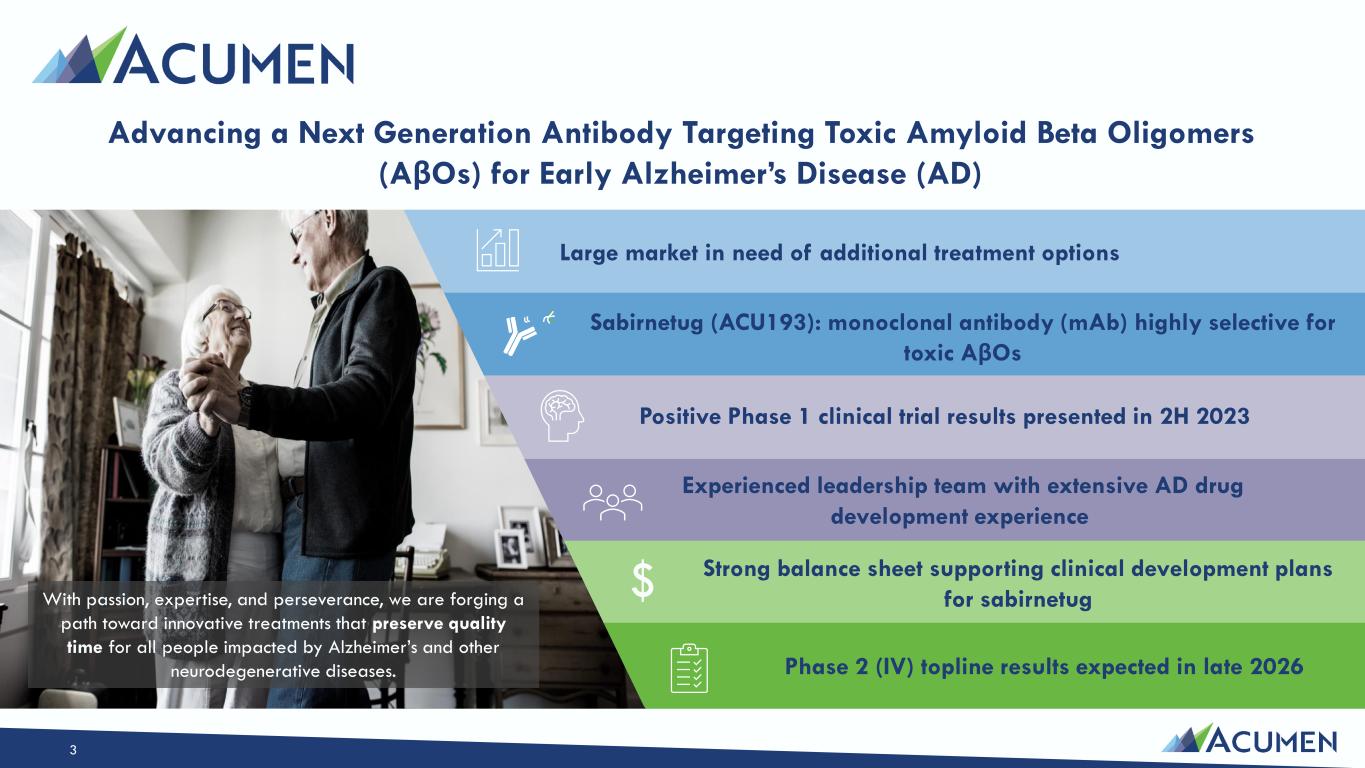
3 Advancing a Next Generation Antibody Targeting Toxic Amyloid Beta Oligomers (AβOs) for Early Alzheimer’s Disease (AD) With passion, expertise, and perseverance, we are forging a path toward innovative treatments that preserve quality time for all people impacted by Alzheimer’s and other neurodegenerative diseases. Large market in need of additional treatment options Sabirnetug (ACU193): monoclonal antibody (mAb) highly selective for toxic AβOs Positive Phase 1 clinical trial results presented in 2H 2023 Experienced leadership team with extensive AD drug development experience Strong balance sheet supporting clinical development plans for sabirnetug Phase 2 (IV) topline results expected in late 2026 $
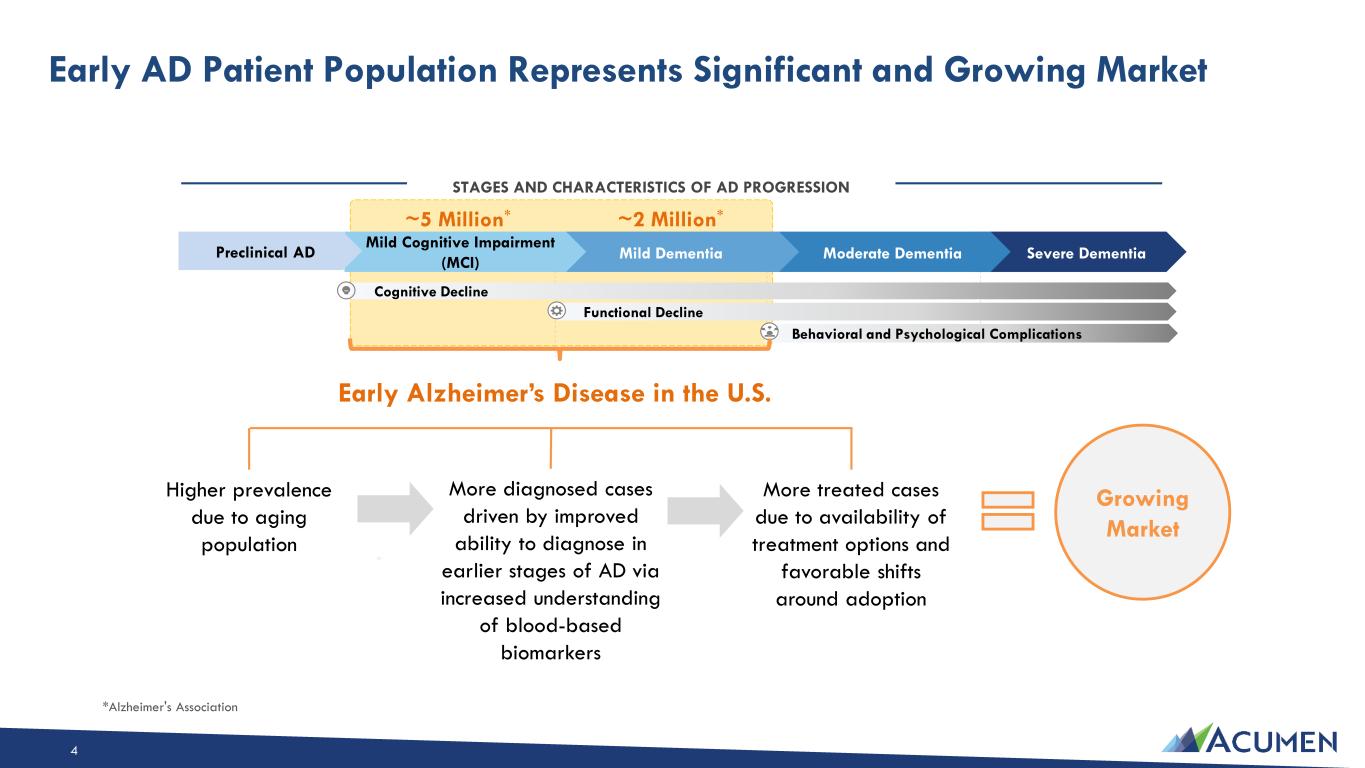
Early AD Patient Population Represents Significant and Growing Market 4 STAGES AND CHARACTERISTICS OF AD PROGRESSION Severe DementiaModerate DementiaMild Dementia Mild Cognitive Impairment (MCI) Preclinical AD ~5 Million* ~2 Million* Early Alzheimer’s Disease in the U.S. Cognitive Decline Behavioral and Psychological Complications Functional Decline *Alzheimer's Association Growing Market Higher prevalence due to aging population More diagnosed cases driven by improved ability to diagnose in earlier stages of AD via increased understanding of blood-based biomarkers More treated cases due to availability of treatment options and favorable shifts around adoption

Amyloid & Abeta Oligomers in AD Sabirnetug (ACU193): monoclonal antibody (mAb) highly selective for toxic AβOs
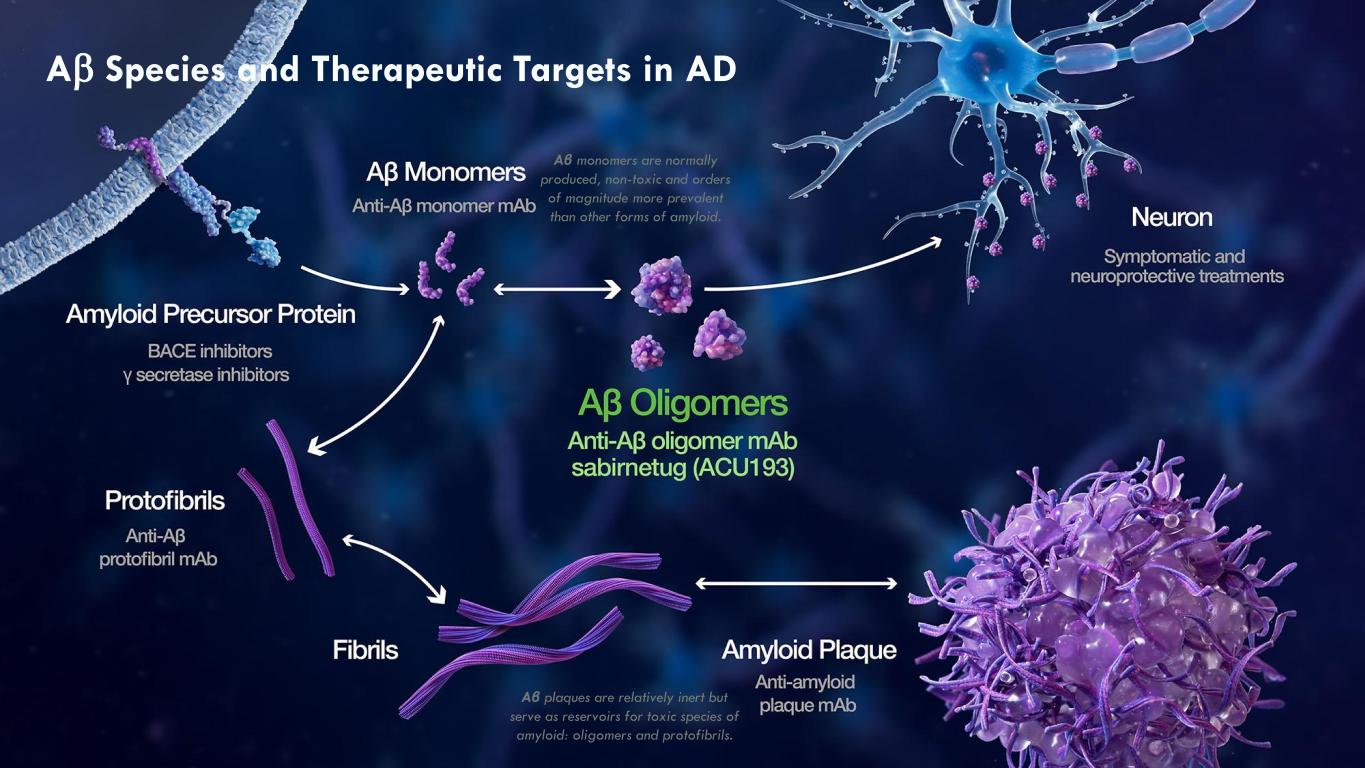
6 Amyloid Beta Oligomers (AβOs) in Alzheimer’s Disease Pathology Aβ monomers are normally produced, non-toxic and orders of magnitude more prevalent than other forms of amyloid. Aβ plaques are relatively inert but serve as reservoirs for toxic species of amyloid: oligomers and protofibrils. A Species and Therapeutic Targets in AD

Soluble AβOs Contribute to Pathophysiological Processes Associated with Alzheimer’s Disease Disrupted Ca2+ homeostasis Demuro et al, 2005 De Felice et al, 2007 Alberdi et al, 2010 Wang et al, 2018 ChAT loss Heinitz et al, 2006 Nunes-Tavares et al, 2012 Inhibition of axonal transport Pigino et al, 2009 Poon et al, 2009 Decker et al, 2010 Oxidative stress Longo et al, 2000 Sponne et al, 2003 Tabner et al, 2005 De Felice et al, 2007 ER stress Resende et al, 2008 Nishitsuji et al, 2009 Insulin resistance Zhao et al, 2008 Zhao et al, 2009 Ma et al, 2009 De Felice et al, 2009 Impact on astrocytes/microglia Hu et al, 1998 Jimenez et al, 2008 Sondag et al, 2009 Tomiyama et al, 2010 Aberrant Tau phosphorylation De Felice et al, 2008 Ma et al, 2009 Tomiyama et al, 2010 Zempel et al, 2010 Bloom, 2014 Forny-Germano et al, 2020 Wakeman et al, 2022 Darricau et al, 2023 Selective neuron death Lambert et al, 1998 Kim et al, 2003 Florent et al, 2006 Ryan et al, 2009 Lee et al, 2017 Komura, 2019 Plasticity dysfunction Lambert et al, 1998 Walsh et al, 2002 Wang et al, 2002 Townsend et al, 2006 Yasumoto et al, 2019 Synapse deterioration Zhao et al, 2006 Lacor et al, 2007 Shankar et al, 2007 Wu et al, 2010 Brito-Moreira et al, 2017 Actor-Engel et al, 2021 Sackmann & Hallbeck, 2020 Limegrover et al, 2021 Receptor Redistribution Snyder et al, 2005 Roselli et al, 2005 Lacor et al, 2007 Zhao et al, 2008 • Soluble Aβ forms appear early in the course of disease pathophysiology • Toxic consequences of soluble Aβ oligomer production include synapse dysfunction and loss, tau hyperphosphorylation, immune cell activation and functional impairment • Reduced neuronal toxicity and intervention at the synaptic level may prevent irreversible neuronal cell death • Production of toxic soluble Aβ persists after plaque removal Aberrant Tau Phosphorylation Selective Neuron Death Oxidative & ER Stress Insulin Resistance ChAT Loss Synaptic Deterioration Plasticity Dysfunction Receptor Redistribution Impact on Astrocytes/Microglia Disrupted Ca2+ homeostasis Inhibition of Axonal Transport Supported by extensive literature: 7
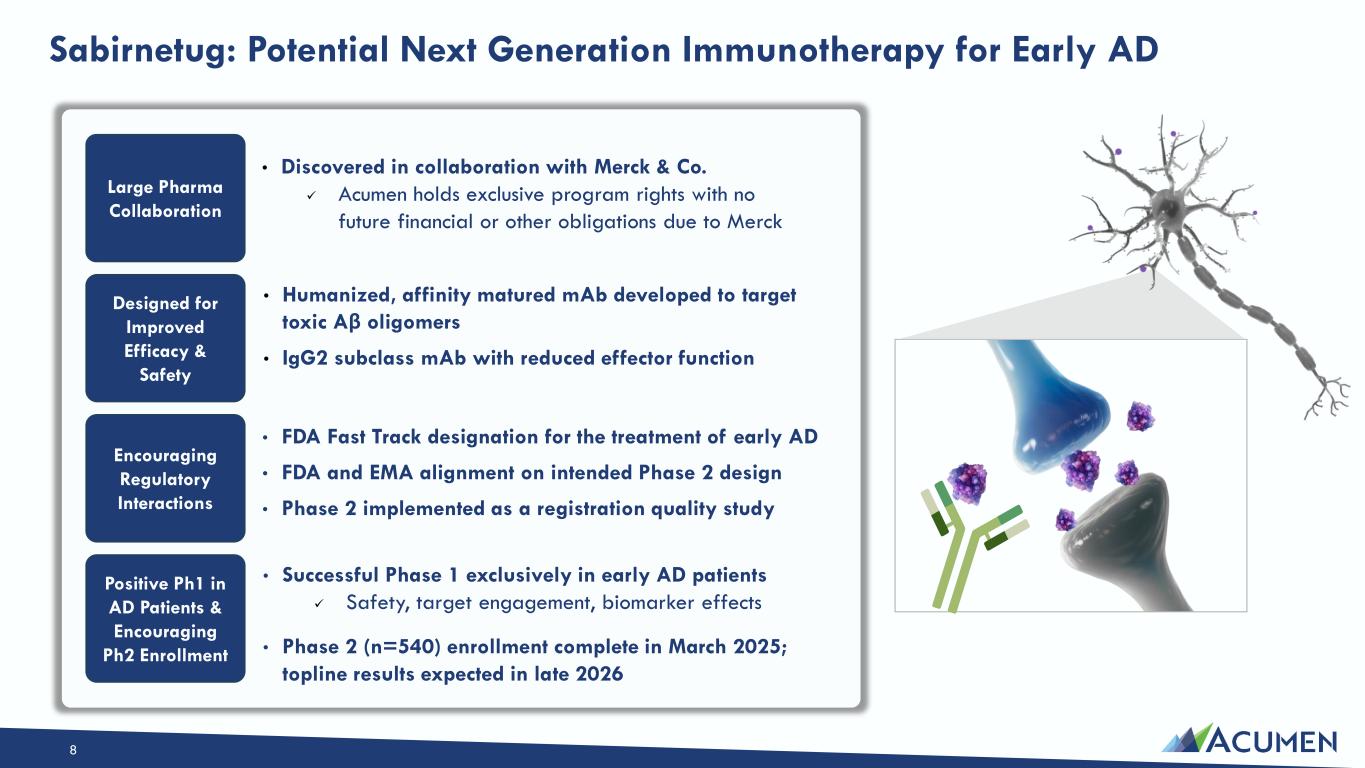
Sabirnetug: Potential Next Generation Immunotherapy for Early AD 8 • Humanized, affinity matured mAb developed to target toxic Aβ oligomers • IgG2 subclass mAb with reduced effector function Designed for Improved Efficacy & Safety Large Pharma Collaboration Encouraging Regulatory Interactions • FDA Fast Track designation for the treatment of early AD • FDA and EMA alignment on intended Phase 2 design • Phase 2 implemented as a registration quality study • Discovered in collaboration with Merck & Co. ✓ Acumen holds exclusive program rights with no future financial or other obligations due to Merck Positive Ph1 in AD Patients & Encouraging Ph2 Enrollment • Successful Phase 1 exclusively in early AD patients ✓ Safety, target engagement, biomarker effects • Phase 2 (n=540) enrollment complete in March 2025; topline results expected in late 2026

• Aβ monomers are ~7000x higher concentration than AβOs in AD CSF • Higher affinity for monomeric Aβ will reduce functional selectivity due to high monomer levels • Sabirnetug has much lower affinity than other mAbs for Aβ monomers Sabirnetug was Developed to Target AβOs Sabirnetug demonstrates high selectivity for AβOs versus monomeric Aβ 9 M urin e D onan em ab A duca num ab Lec an em ab S ab irn et ug 0 2×10 -6 4×10 -6 6×10 -6 Aβ1-40 monomer binding A ff in it y - K D ( M ) 100.2 nM 338.2 nM 215.7 nM 5215.5 nM H ig h e r b in d in g a ff in it y Internal data, 2024 Note: Calculated KD value for sabirnetug was above the highest analyzed concentration.
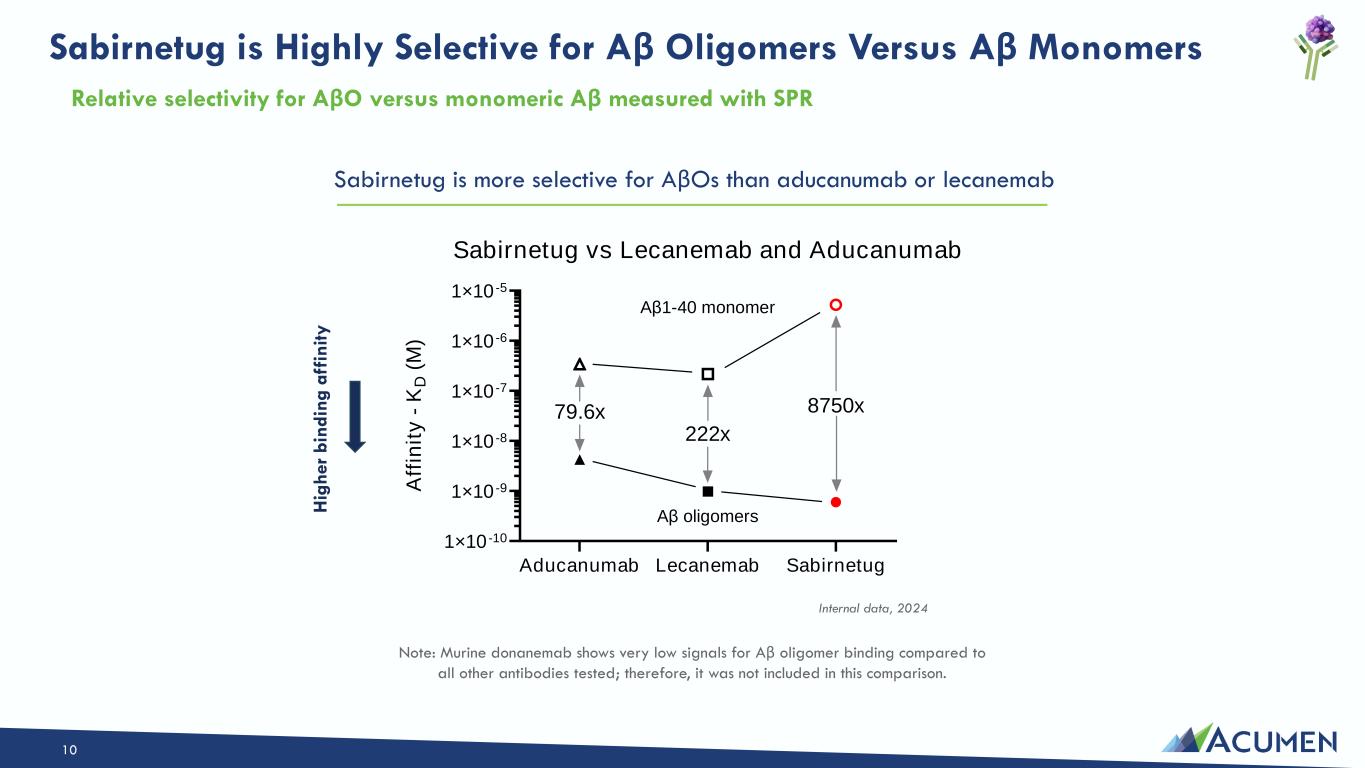
Sabirnetug is Highly Selective for Aβ Oligomers Versus Aβ Monomers Relative selectivity for AβO versus monomeric Aβ measured with SPR 10 Sabirnetug is more selective for AβOs than aducanumab or lecanemab Aducanumab Lecanemab Sabirnetug 1×10 -10 1×10 -9 1×10 -8 1×10 -7 1×10 -6 1×10 -5 Sabirnetug vs Lecanemab and Aducanumab A ff in it y - K D ( M ) Aβ1-40 monomer Aβ oligomers 8750x 222x 79.6x H ig h e r b in d in g a ff in it y Internal data, 2024 Note: Murine donanemab shows very low signals for Aβ oligomer binding compared to all other antibodies tested; therefore, it was not included in this comparison.
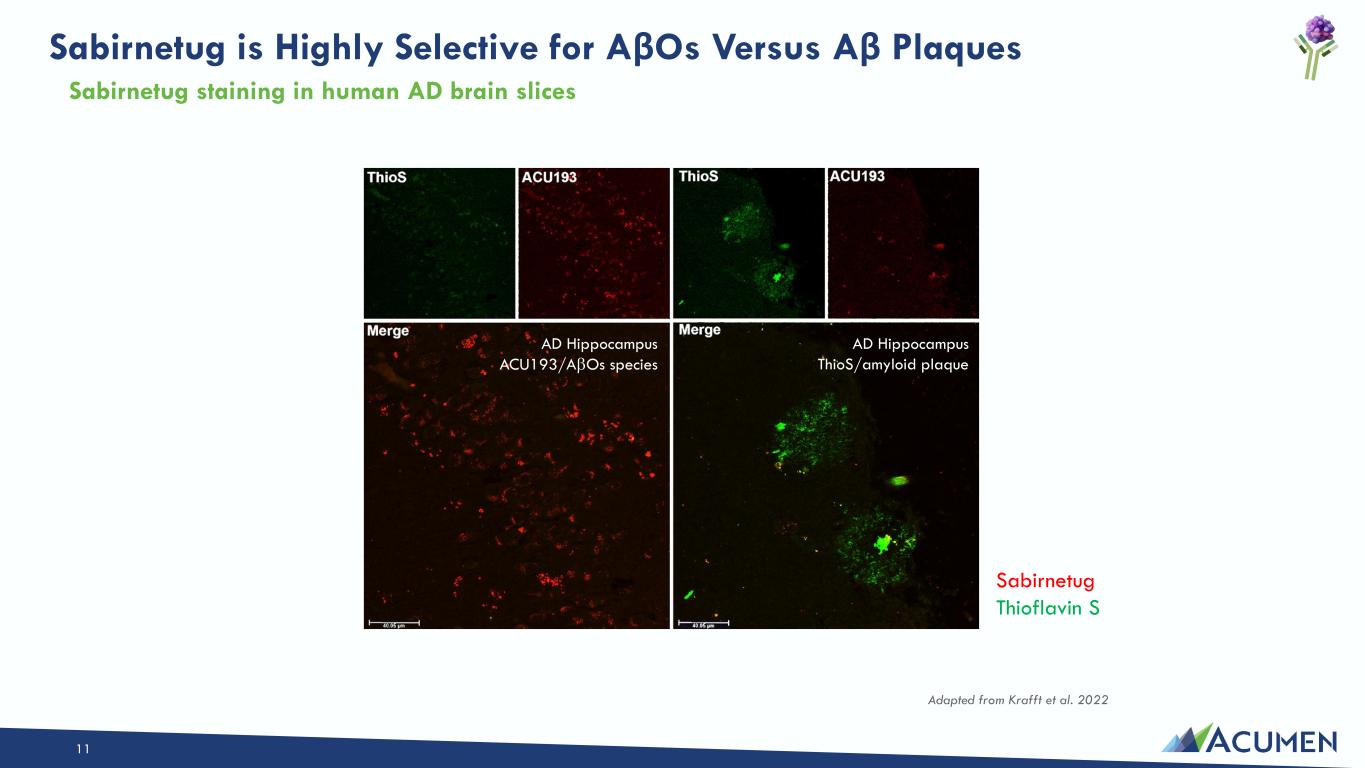
11 AD Hippocampus ThioS/amyloid plaque AD Hippocampus ACU193/AOs species Sabirnetug is Highly Selective for AβOs Versus Aβ Plaques Sabirnetug Thioflavin S Sabirnetug staining in human AD brain slices Adapted from Krafft et al. 2022
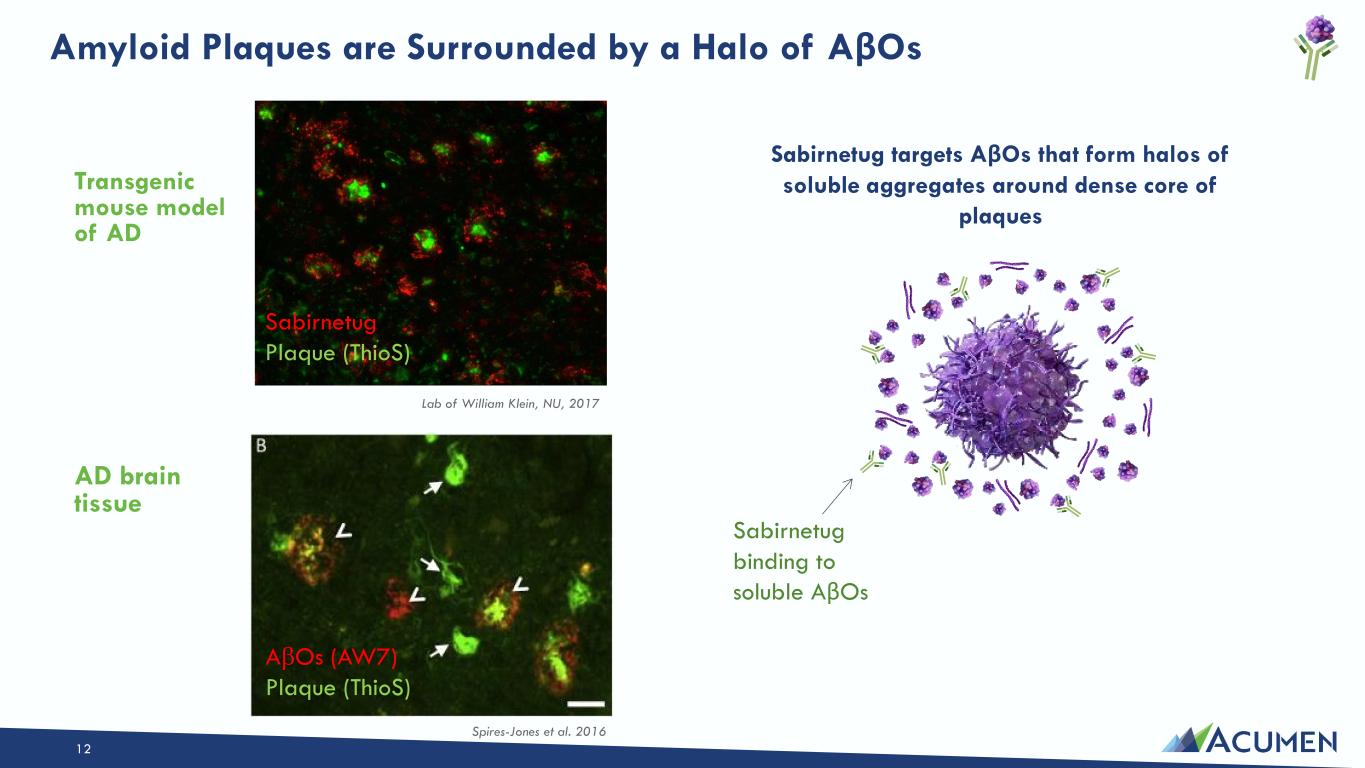
12 Amyloid Plaques are Surrounded by a Halo of AβOs Transgenic mouse model of AD Sabirnetug targets AβOs that form halos of soluble aggregates around dense core of plaques Sabirnetug binding to soluble AβOs Sabirnetug Plaque (ThioS) Spires-Jones et al. 2016 AOs (AW7) Plaque (ThioS) AD brain tissue Lab of William Klein, NU, 2017
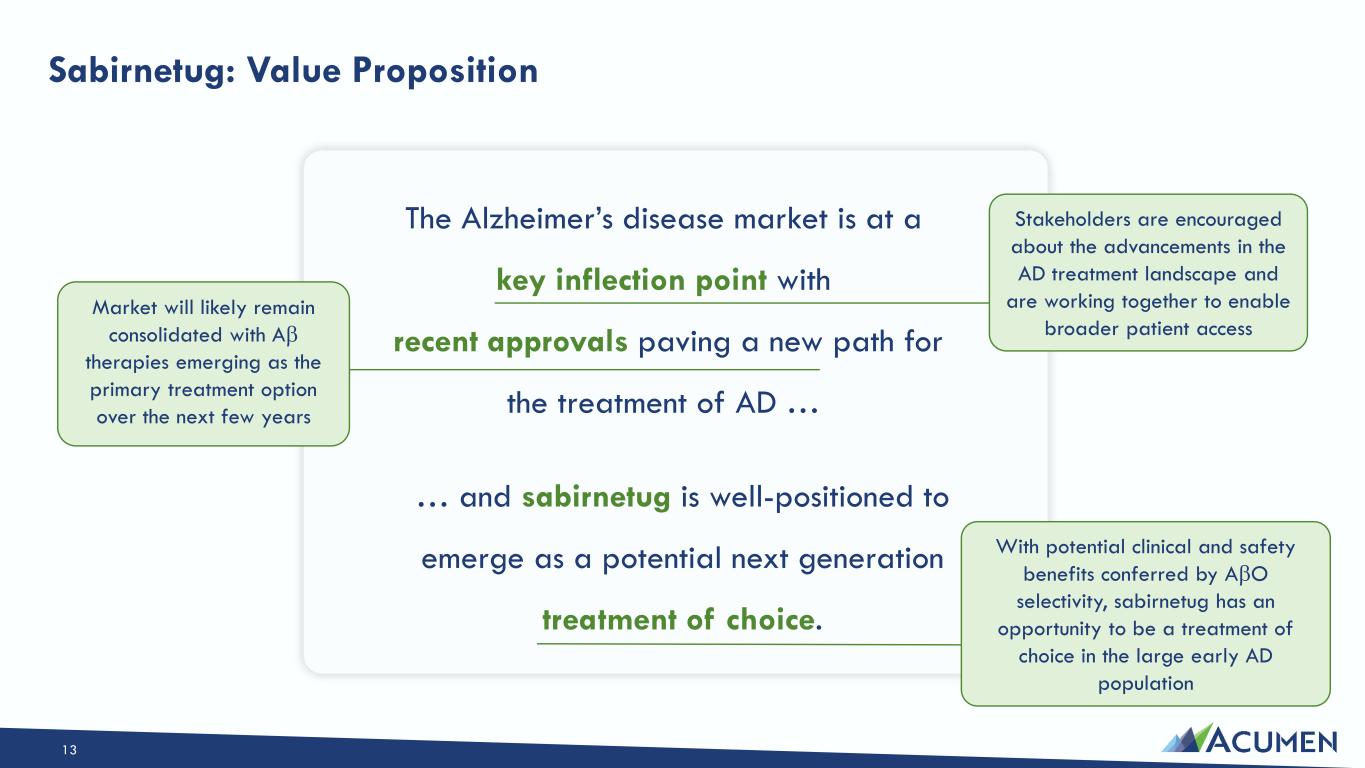
Sabirnetug: Value Proposition 13 The Alzheimer’s disease market is at a key inflection point with recent approvals paving a new path for the treatment of AD … … and sabirnetug is well-positioned to emerge as a potential next generation treatment of choice. Market will likely remain consolidated with A therapies emerging as the primary treatment option over the next few years Stakeholders are encouraged about the advancements in the AD treatment landscape and are working together to enable broader patient access With potential clinical and safety benefits conferred by AO selectivity, sabirnetug has an opportunity to be a treatment of choice in the large early AD population

Positive INTERCEPT-AD Phase 1 Results for Sabirnetug
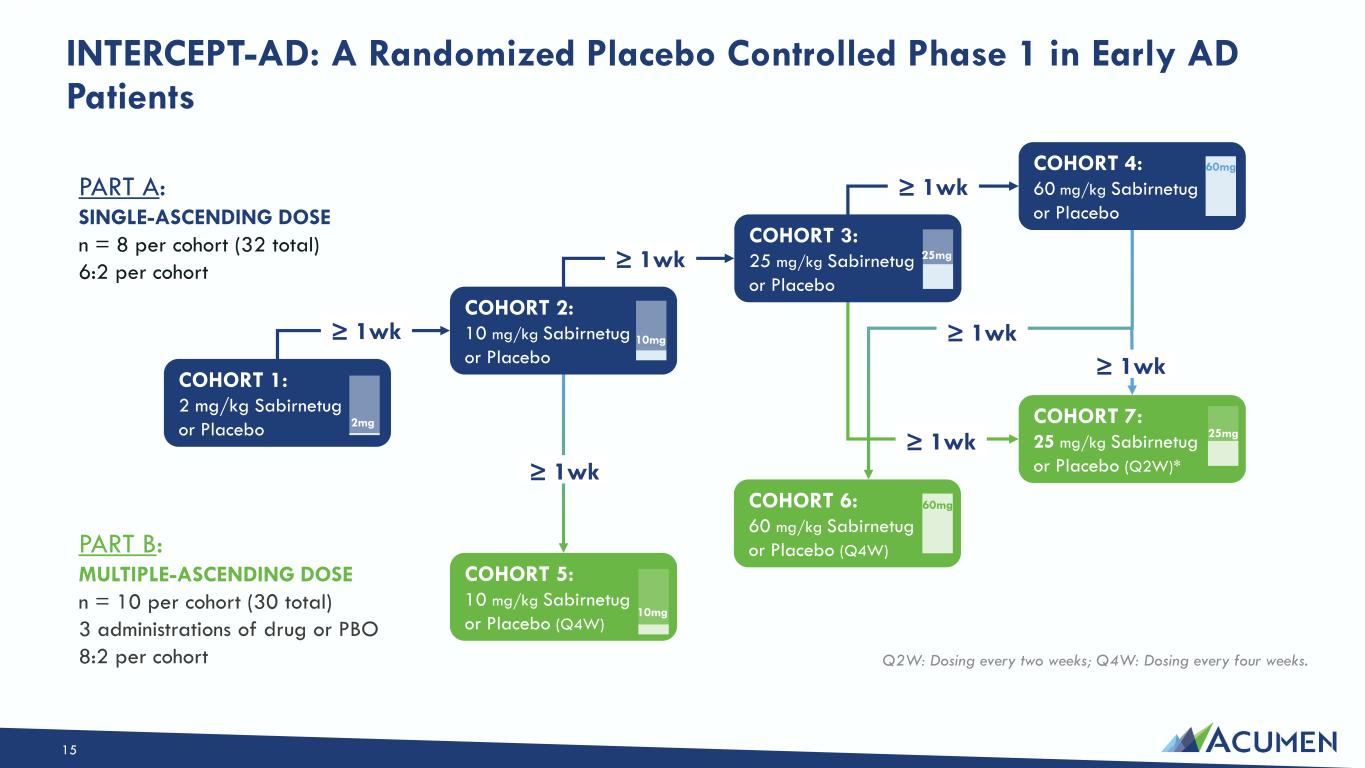
Q2W: Dosing every two weeks; Q4W: Dosing every four weeks. PART A: SINGLE-ASCENDING DOSE n = 8 per cohort (32 total) 6:2 per cohort PART B: MULTIPLE-ASCENDING DOSE n = 10 per cohort (30 total) 3 administrations of drug or PBO 8:2 per cohort COHORT 1: 2 mg/kg Sabirnetug or Placebo 2mg COHORT 2: 10 mg/kg Sabirnetug or Placebo 10mg COHORT 3: 25 mg/kg Sabirnetug or Placebo 25mg COHORT 4: 60 mg/kg Sabirnetug or Placebo 60mg COHORT 5: 10 mg/kg Sabirnetug or Placebo (Q4W) 10mg COHORT 6: 60 mg/kg Sabirnetug or Placebo (Q4W) 60mg COHORT 7: 25 mg/kg Sabirnetug or Placebo (Q2W)* ≥ 1wk ≥ 1wk ≥ 1wk ≥ 1wk ≥ 1wk ≥ 1wk 25mg ≥ 1wk INTERCEPT-AD: A Randomized Placebo Controlled Phase 1 in Early AD Patients 15
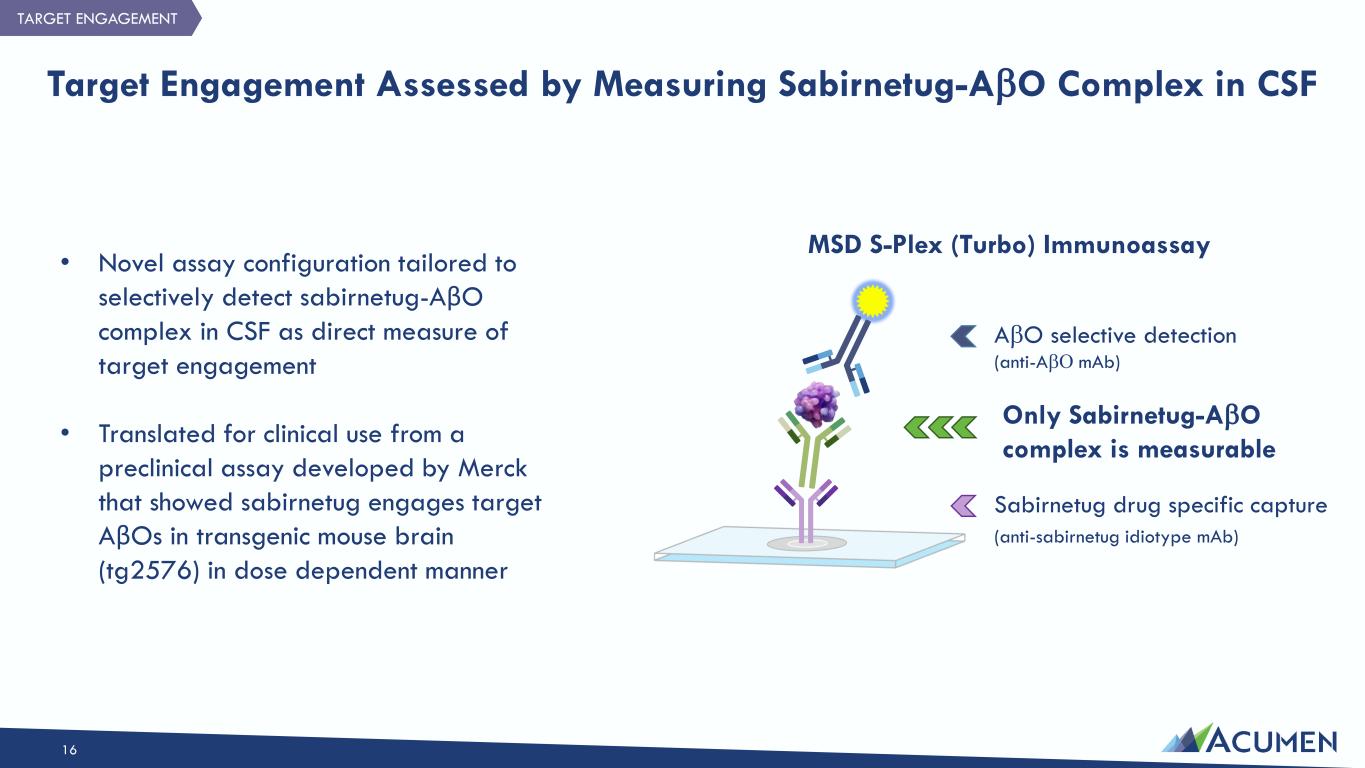
Sabirnetug drug specific capture (anti-sabirnetug idiotype mAb) 16 Target Engagement Assessed by Measuring Sabirnetug-AO Complex in CSF AO selective detection (anti-A mAb) Only Sabirnetug-AO complex is measurable • Novel assay configuration tailored to selectively detect sabirnetug-AβO complex in CSF as direct measure of target engagement • Translated for clinical use from a preclinical assay developed by Merck that showed sabirnetug engages target AβOs in transgenic mouse brain (tg2576) in dose dependent manner MSD S-Plex (Turbo) Immunoassay TARGET ENGAGEMENT
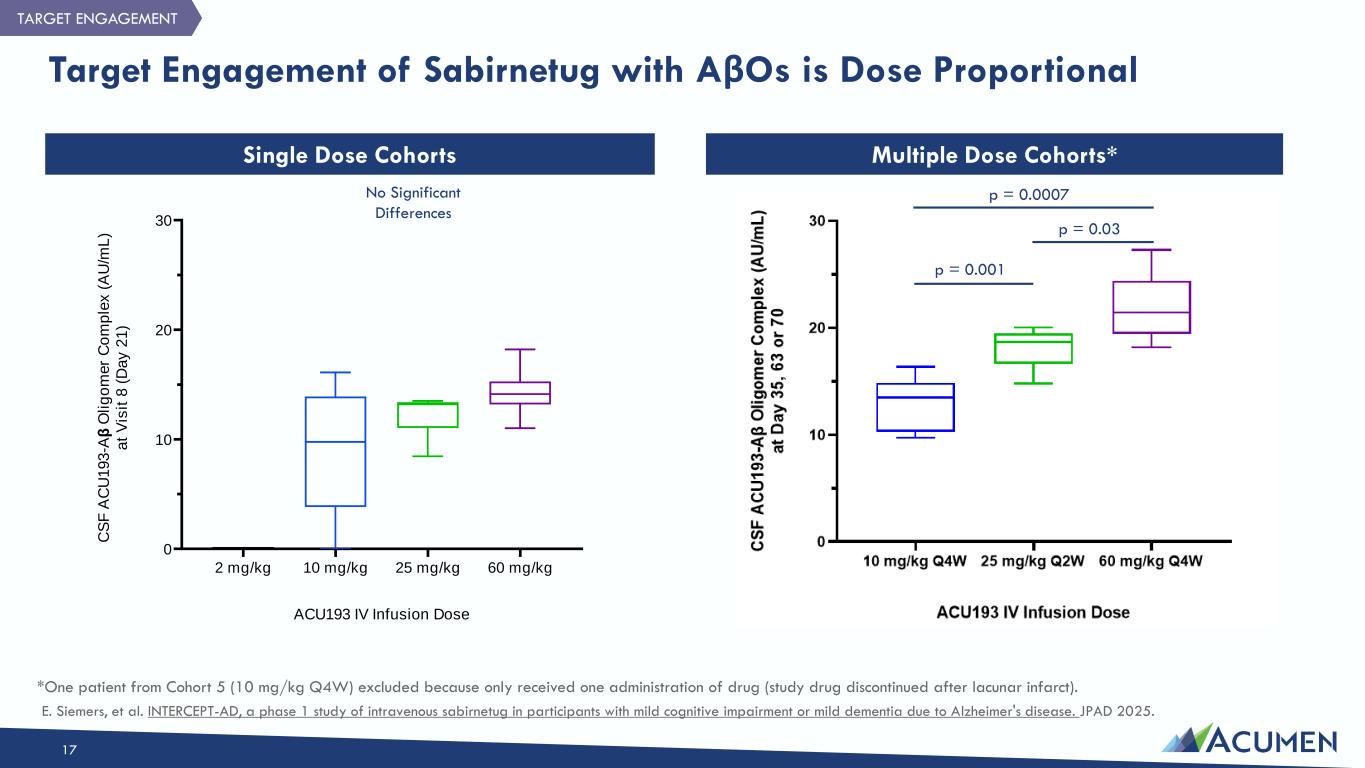
Target Engagement of Sabirnetug with AβOs is Dose Proportional 17 Single Dose Cohorts Multiple Dose Cohorts* 2 mg/kg 10 mg/kg 25 mg/kg 60 mg/kg 0 10 20 30 ACU193 IV Infusion Dose C S F A C U 1 9 3 -A β O li g o m e r C o m p le x ( A U /m L ) a t V is it 8 ( D a y 2 1 ) *One patient from Cohort 5 (10 mg/kg Q4W) excluded because only received one administration of drug (study drug discontinued after lacunar infarct). TARGET ENGAGEMENT p = 0.001 p = 0.03 p = 0.0007No Significant Differences E. Siemers, et al. INTERCEPT-AD, a phase 1 study of intravenous sabirnetug in participants with mild cognitive impairment or mild dementia due to Alzheimer's disease. JPAD 2025.

Doses Approaching Maximal Target Engagement Support Sabirnetug AO Mechanism and Helped Guide Dose Selection for Next Study Phase 18 Single & Multiple Dose Cohorts - Exposure Response Relationship (Emax Model) Emax: 22.71 AU/mL Complex EC50: 136 ng/mL sabirnetug 0 600 1200 1800 0 10 20 30 CSF [ACU193] (ng/mL) A C U 1 9 3 -A β O C o m p le x ( A U /m L ) SAD 2 mg/kg SAD 10 mg/kg SAD 25 mg/kg SAD 60 mg/kg MAD 10 mg/kg Q4W MAD 60 mg/kg Q4W MAD 25 mg/kg Q2W Sabirnetug- AO Complex Target Engagement TARGET ENGAGEMENT *One patient from Cohort 5 (10 mg/kg Q4W) excluded because only received one administration of drug (study drug discontinued after lacunar infarct). E. Siemers, et al. INTERCEPT-AD, a phase 1 study of intravenous sabirnetug in participants with mild cognitive impairment or mild dementia due to Alzheimer's disease. JPAD 2025.
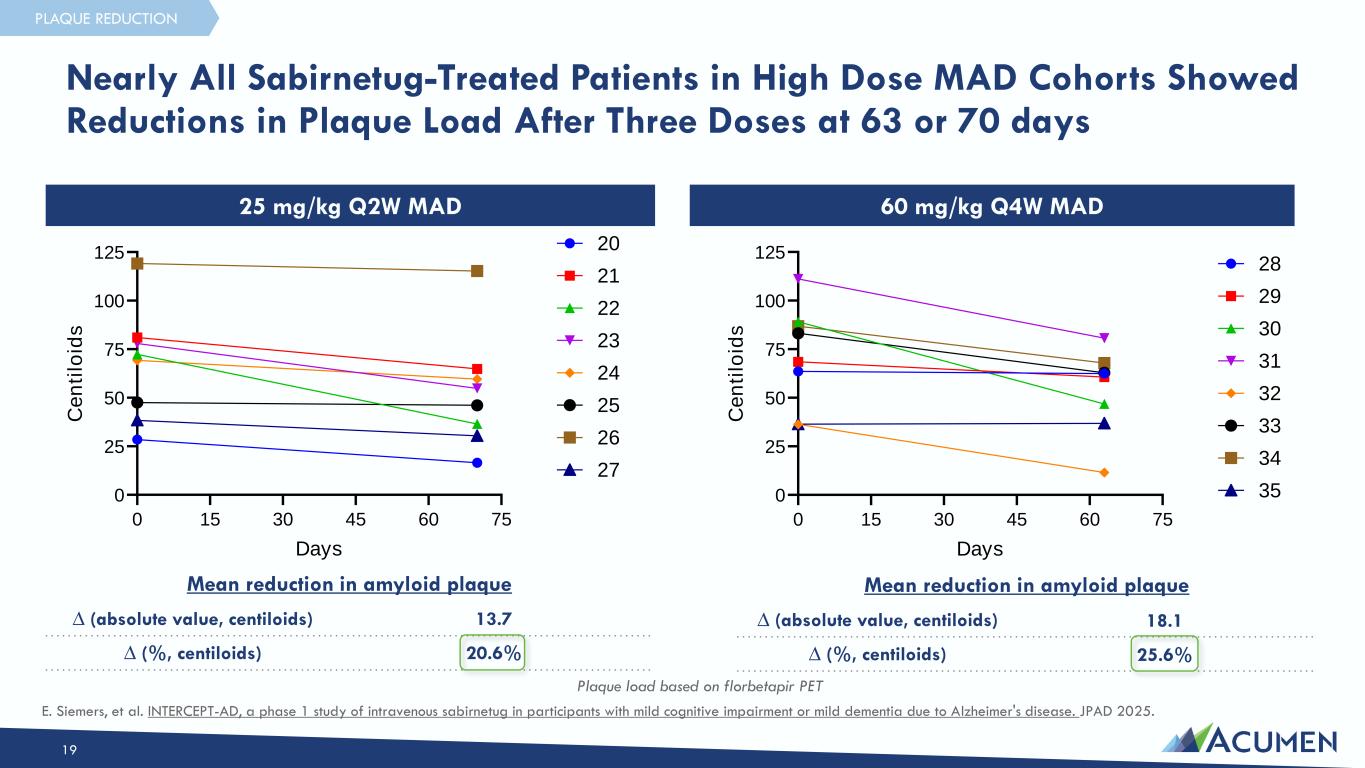
Nearly All Sabirnetug-Treated Patients in High Dose MAD Cohorts Showed Reductions in Plaque Load After Three Doses at 63 or 70 days 19 Plaque load based on florbetapir PET 0 15 30 45 60 75 0 25 50 75 100 125 25 mg/kg Q2W MAD Days C e n ti lo id s 20 21 22 23 24 25 26 27 0 15 30 45 60 75 0 25 50 75 100 125 60 mg/kg Q4W MAD Days C e n ti lo id s 28 29 30 31 32 33 34 35 25 mg/kg Q2W MAD 60 mg/kg Q4W MAD Mean reduction in amyloid plaque ∆ (absolute value, centiloids) 13.7 ∆ (%, centiloids) 20.6% Mean reduction in amyloid plaque ∆ (absolute value, centiloids) 18.1 ∆ (%, centiloids) 25.6% PLAQUE REDUCTION E. Siemers, et al. INTERCEPT-AD, a phase 1 study of intravenous sabirnetug in participants with mild cognitive impairment or mild dementia due to Alzheimer's disease. JPAD 2025.
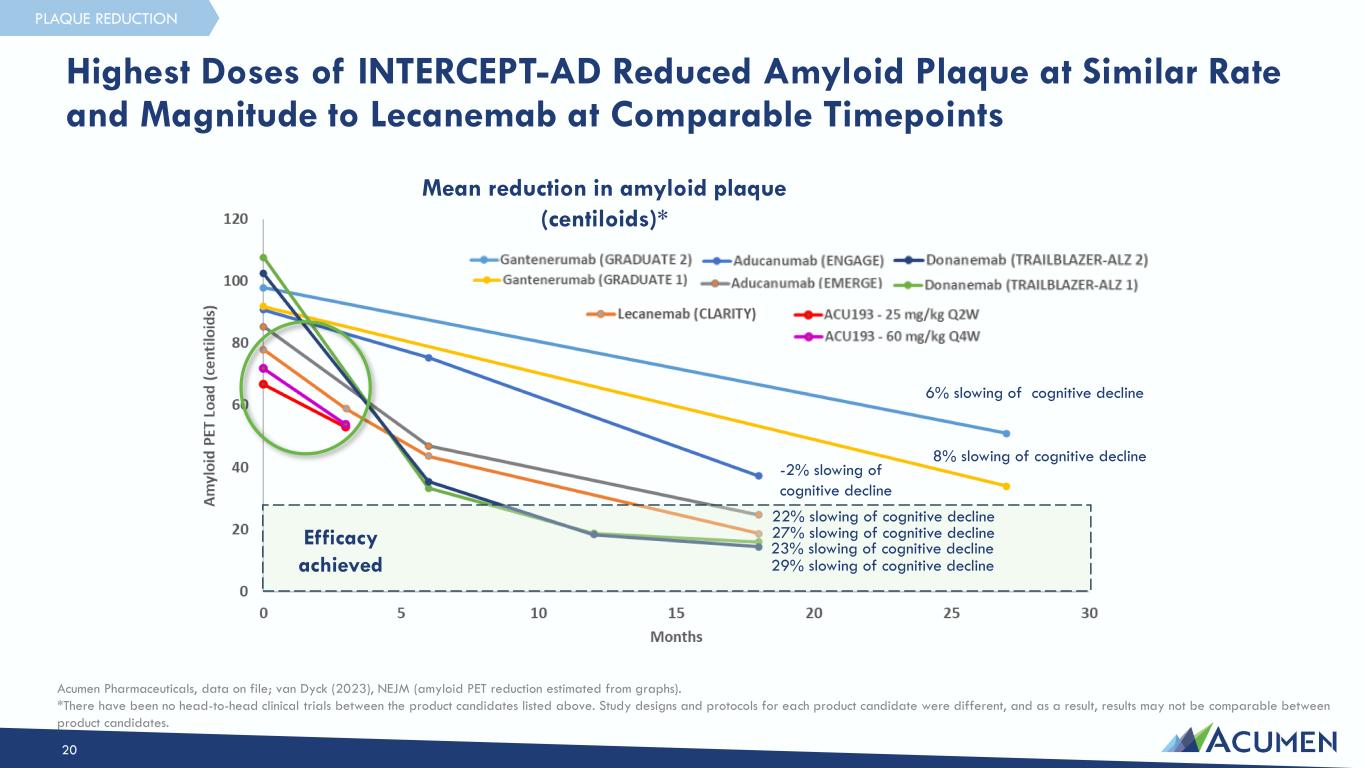
Highest Doses of INTERCEPT-AD Reduced Amyloid Plaque at Similar Rate and Magnitude to Lecanemab at Comparable Timepoints 6% slowing of cognitive decline 8% slowing of cognitive decline -2% slowing of cognitive decline 22% slowing of cognitive decline 27% slowing of cognitive decline 23% slowing of cognitive decline 29% slowing of cognitive decline Efficacy achieved Mean reduction in amyloid plaque (centiloids)* Acumen Pharmaceuticals, data on file; van Dyck (2023), NEJM (amyloid PET reduction estimated from graphs). *There have been no head-to-head clinical trials between the product candidates listed above. Study designs and protocols for each product candidate were different, and as a result, results may not be comparable between product candidates. 20 PLAQUE REDUCTION
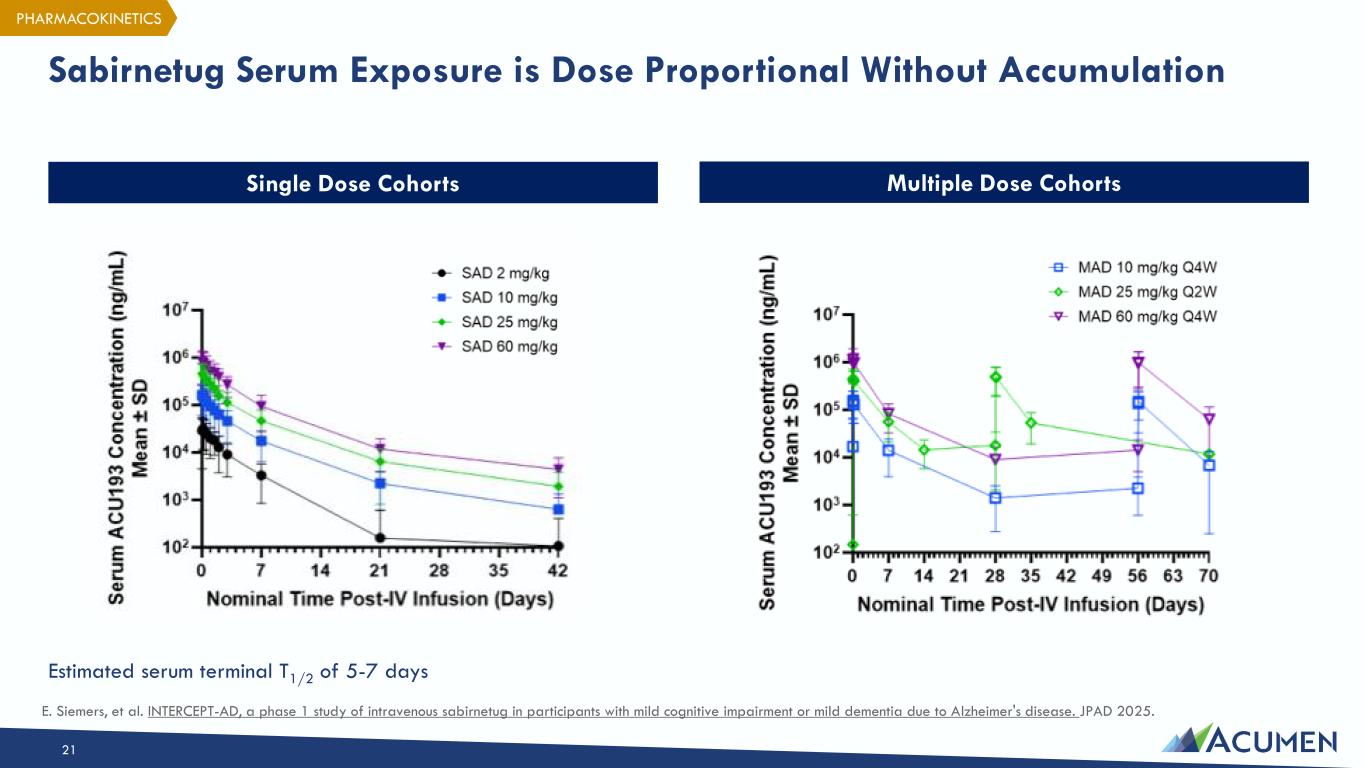
Sabirnetug Serum Exposure is Dose Proportional Without Accumulation 21 Single Dose Cohorts Multiple Dose Cohorts PHARMACOKINETICS Estimated serum terminal T1/2 of 5-7 days E. Siemers, et al. INTERCEPT-AD, a phase 1 study of intravenous sabirnetug in participants with mild cognitive impairment or mild dementia due to Alzheimer's disease. JPAD 2025.
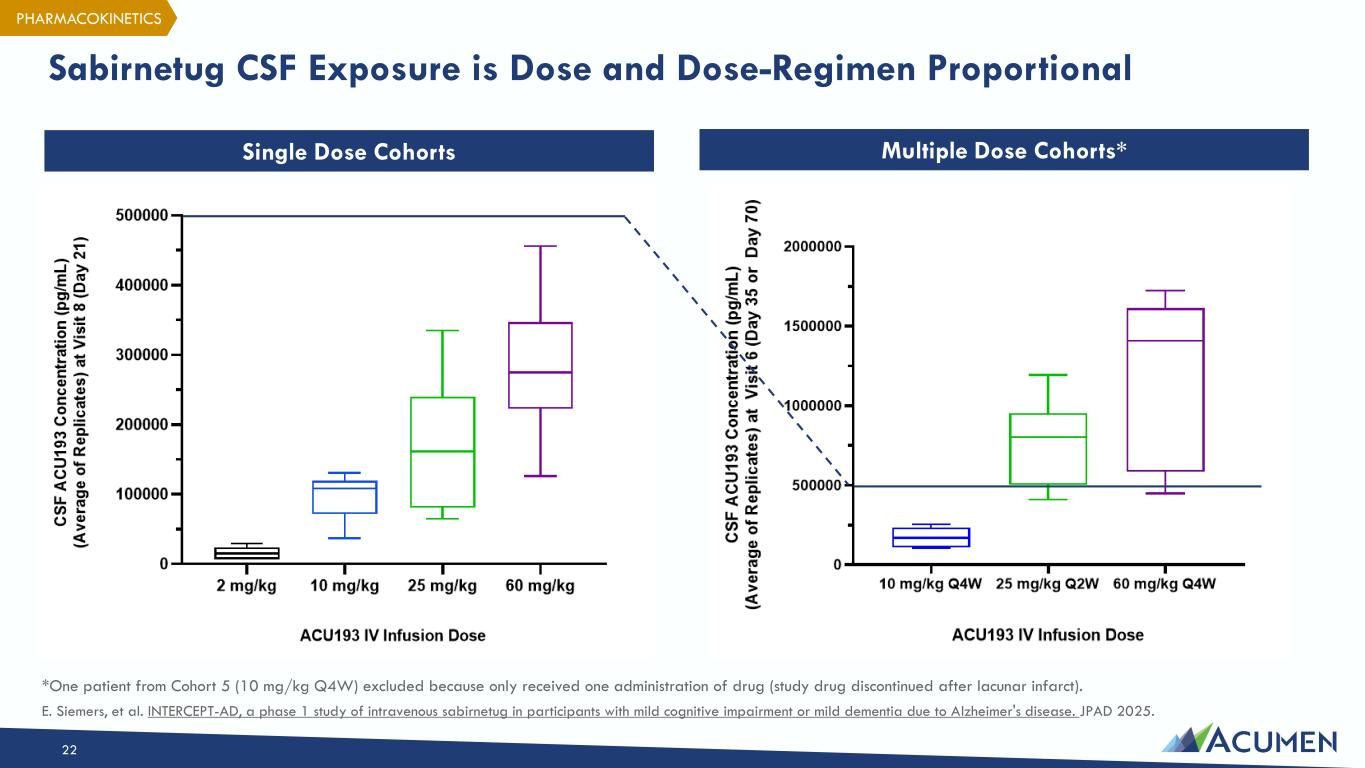
Sabirnetug CSF Exposure is Dose and Dose-Regimen Proportional 22 Single Dose Cohorts Multiple Dose Cohorts* *One patient from Cohort 5 (10 mg/kg Q4W) excluded because only received one administration of drug (study drug discontinued after lacunar infarct). PHARMACOKINETICS E. Siemers, et al. INTERCEPT-AD, a phase 1 study of intravenous sabirnetug in participants with mild cognitive impairment or mild dementia due to Alzheimer's disease. JPAD 2025.
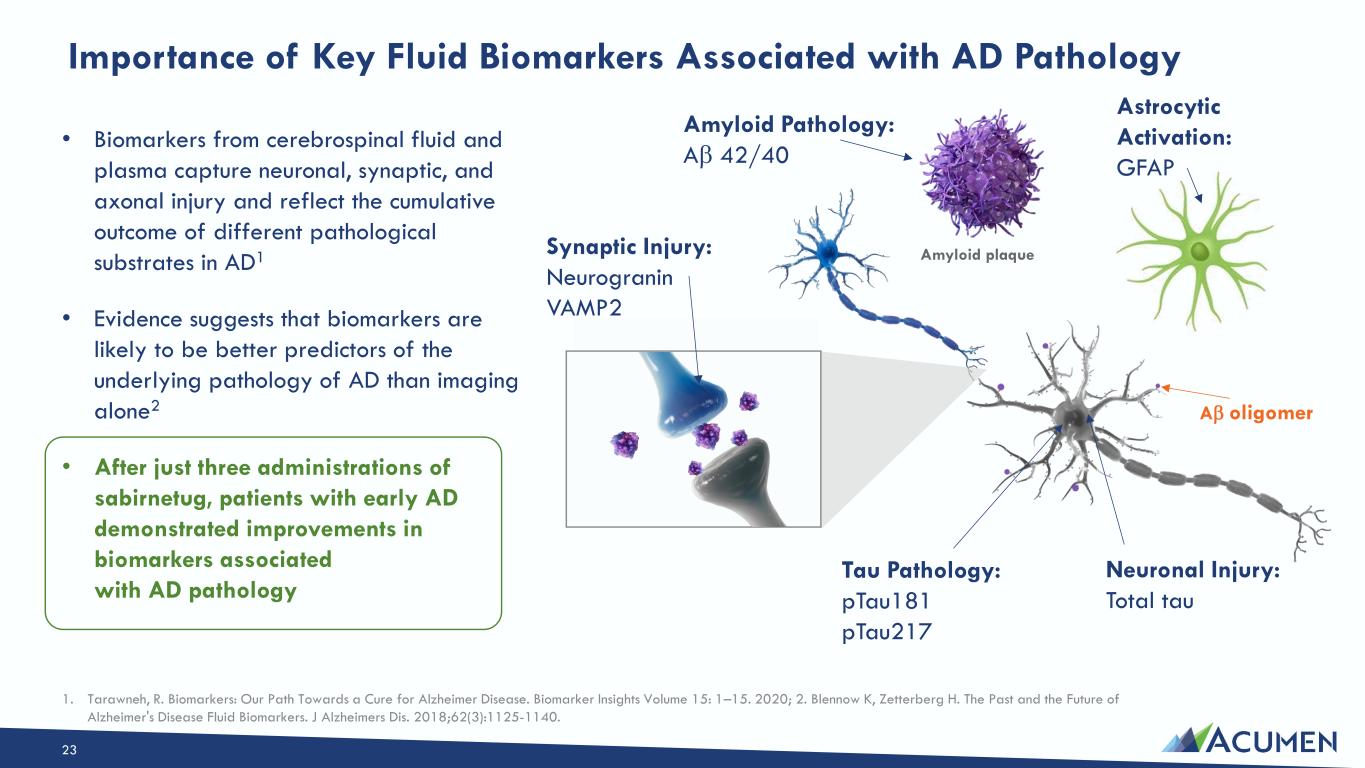
Importance of Key Fluid Biomarkers Associated with AD Pathology 23 Tau Pathology: pTau181 pTau217 Neuronal Injury: Total tau Synaptic Injury: Neurogranin VAMP2 Amyloid Pathology: A 42/40 Astrocytic Activation: GFAP • Biomarkers from cerebrospinal fluid and plasma capture neuronal, synaptic, and axonal injury and reflect the cumulative outcome of different pathological substrates in AD1 • Evidence suggests that biomarkers are likely to be better predictors of the underlying pathology of AD than imaging alone2 • After just three administrations of sabirnetug, patients with early AD demonstrated improvements in biomarkers associated with AD pathology 1. Tarawneh, R. Biomarkers: Our Path Towards a Cure for Alzheimer Disease. Biomarker Insights Volume 15: 1–15. 2020; 2. Blennow K, Zetterberg H. The Past and the Future of Alzheimer's Disease Fluid Biomarkers. J Alzheimers Dis. 2018;62(3):1125-1140. A oligomer Amyloid plaque

Consistent Improvement in CSF Amyloid, Tau and Synaptic Biomarkers Indicate Downstream Pharmacology of Sabirnetug After Only Three Doses 24 CSF BIOMARKERS pTau181 NeurograninA 42/40 Ratio VAMP2 Tau pathologyAmyloid pathology Synaptic injury n = 8 subjects/treated group; 6 subjects in pooled placebo (PBO); p-values from unpaired, 2-sided Student’s t test
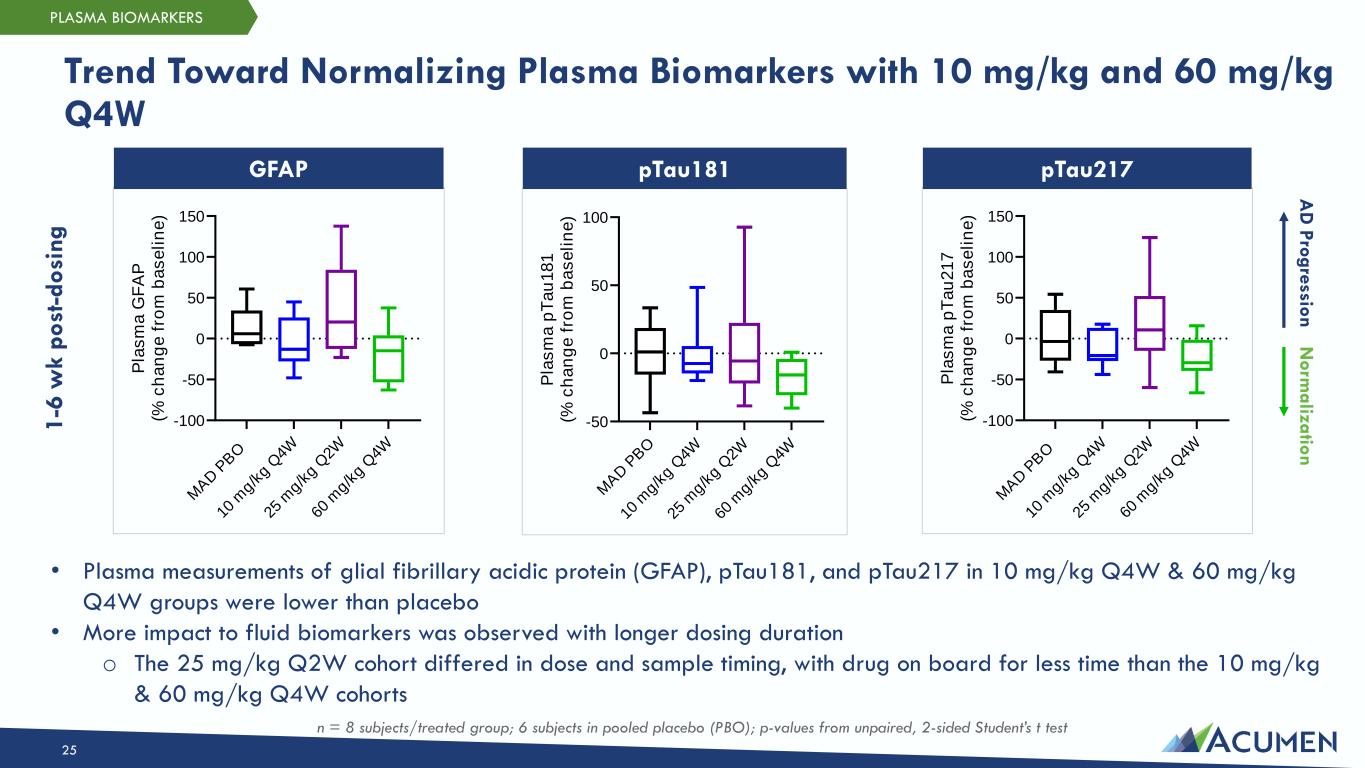
Trend Toward Normalizing Plasma Biomarkers with 10 mg/kg and 60 mg/kg Q4W 25 M A D P B O 10 m g/k g Q 4W 25 m g/k g Q 2W 60 m g/k g Q 4W -100 -50 0 50 100 150 P la s m a G F A P (% c h a n g e f ro m b a s e li n e ) M A D P B O 10 m g/k g Q 4W 25 m g/k g Q 2W 60 m g/k g Q 4W -50 0 50 100 P la s m a p T a u 1 8 1 (% c h a n g e f ro m b a s e li n e ) M A D P B O 10 m g/k g Q 4W 25 m g/k g Q 2W 60 m g/k g Q 4W -100 -50 0 50 100 150 P la s m a p T a u 2 1 7 (% c h a n g e f ro m b a s e li n e ) 1 -6 w k p o st -d o si n g • Plasma measurements of glial fibrillary acidic protein (GFAP), pTau181, and pTau217 in 10 mg/kg Q4W & 60 mg/kg Q4W groups were lower than placebo • More impact to fluid biomarkers was observed with longer dosing duration o The 25 mg/kg Q2W cohort differed in dose and sample timing, with drug on board for less time than the 10 mg/kg & 60 mg/kg Q4W cohorts PLASMA BIOMARKERS pTau181GFAP pTau217 A D P ro g re ssio n N o rm a liz a tio n n = 8 subjects/treated group; 6 subjects in pooled placebo (PBO); p-values from unpaired, 2-sided Student’s t test
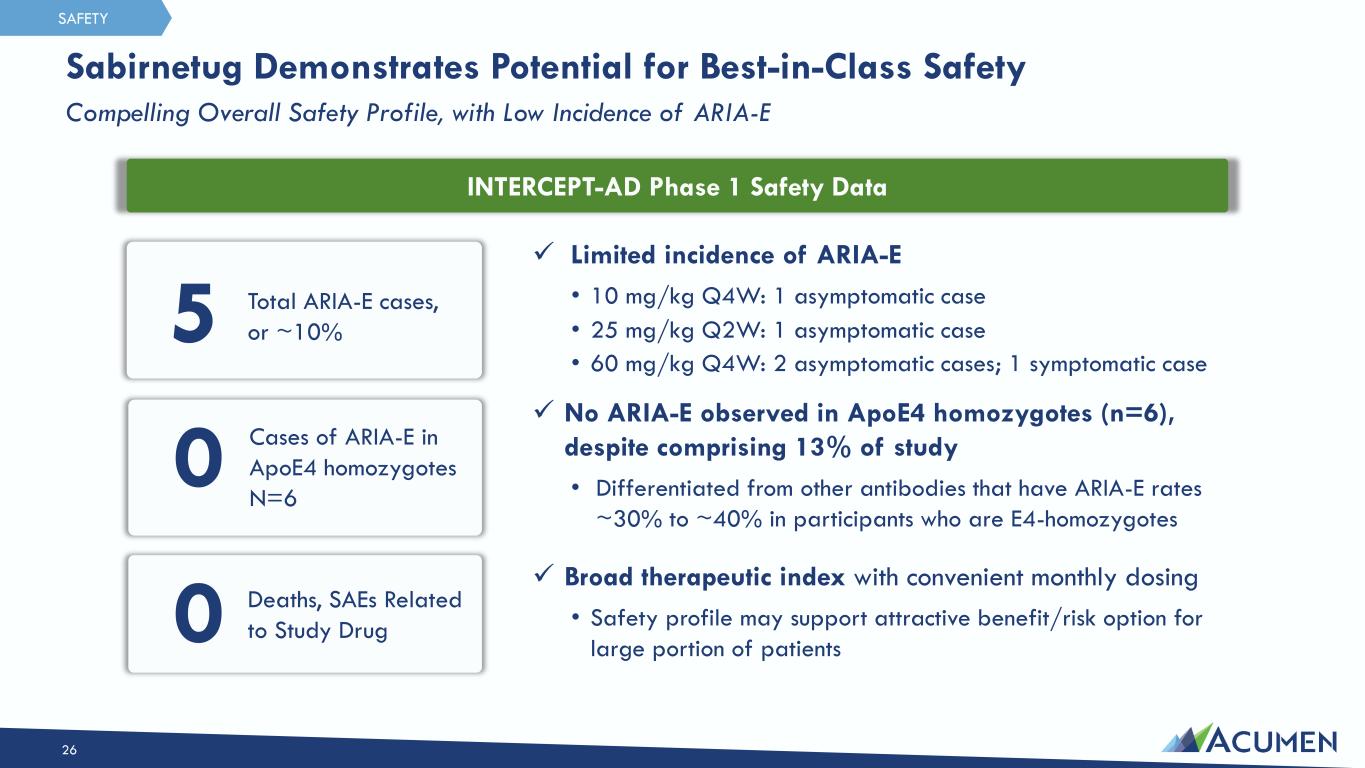
Sabirnetug Demonstrates Potential for Best-in-Class Safety Compelling Overall Safety Profile, with Low Incidence of ARIA-E 26 SAFETY ✓ Limited incidence of ARIA-E • 10 mg/kg Q4W: 1 asymptomatic case • 25 mg/kg Q2W: 1 asymptomatic case • 60 mg/kg Q4W: 2 asymptomatic cases; 1 symptomatic case ✓ No ARIA-E observed in ApoE4 homozygotes (n=6), despite comprising 13% of study • Differentiated from other antibodies that have ARIA-E rates ~30% to ~40% in participants who are E4-homozygotes ✓ Broad therapeutic index with convenient monthly dosing • Safety profile may support attractive benefit/risk option for large portion of patients 5 0 Total ARIA-E cases, or ~10% Cases of ARIA-E in ApoE4 homozygotes N=6 0 Deaths, SAEs Related to Study Drug INTERCEPT-AD Phase 1 Safety Data
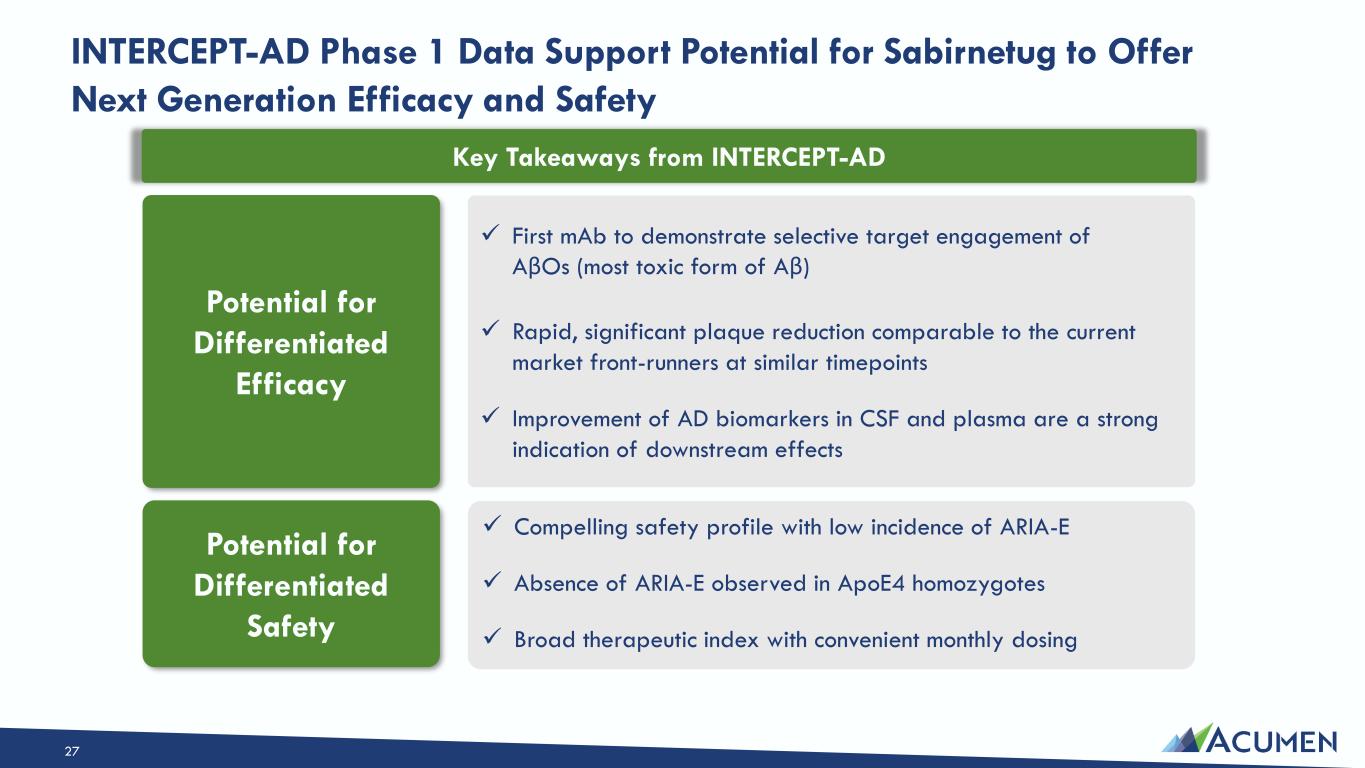
Potential for Differentiated Efficacy Potential for Differentiated Safety INTERCEPT-AD Phase 1 Data Support Potential for Sabirnetug to Offer Next Generation Efficacy and Safety 27 ✓ Compelling safety profile with low incidence of ARIA-E ✓ Absence of ARIA-E observed in ApoE4 homozygotes ✓ Broad therapeutic index with convenient monthly dosing ✓ First mAb to demonstrate selective target engagement of AβOs (most toxic form of Aβ) ✓ Rapid, significant plaque reduction comparable to the current market front-runners at similar timepoints ✓ Improvement of AD biomarkers in CSF and plasma are a strong indication of downstream effects Key Takeaways from INTERCEPT-AD

Clinical Development Plans & Strategic Considerations
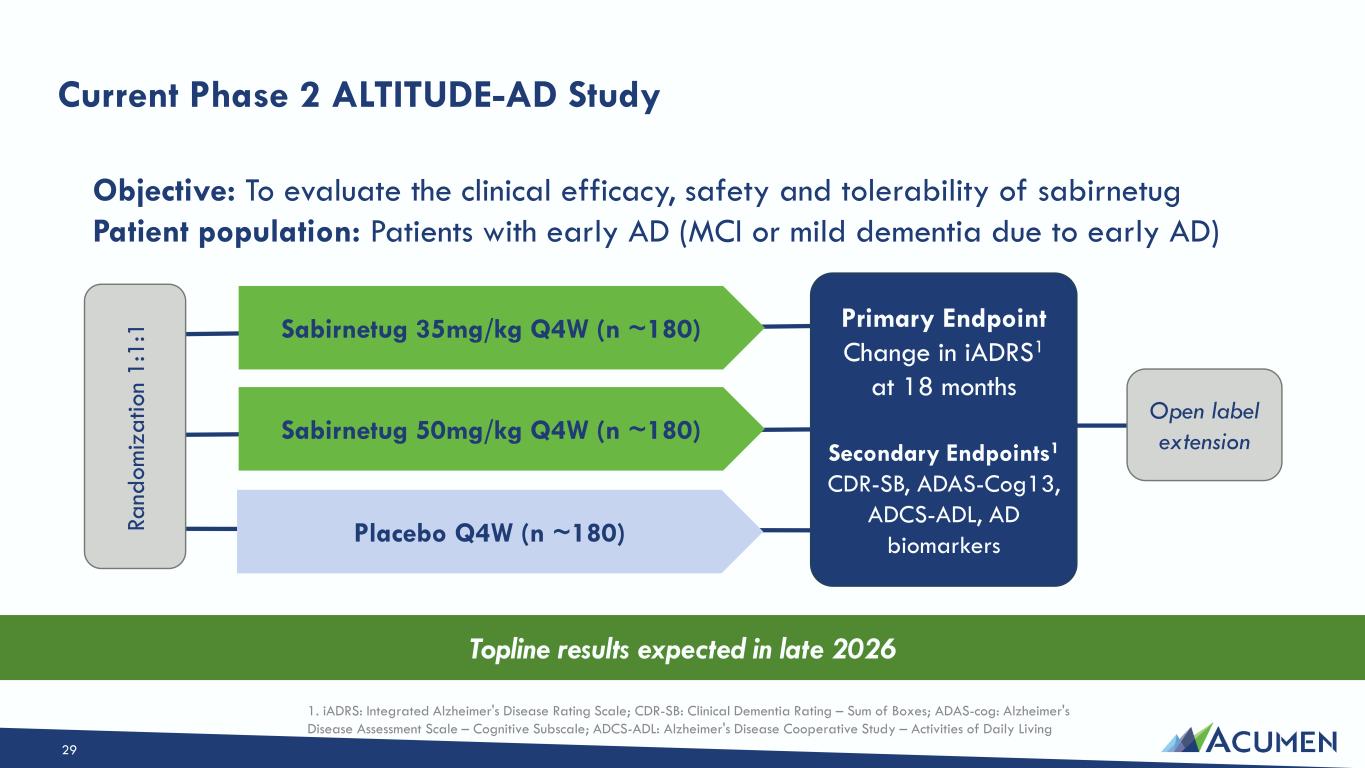
R a n d o m iz a ti o n 1 :1 :1 Sabirnetug 35mg/kg Q4W (n ~180) Sabirnetug 50mg/kg Q4W (n ~180) Placebo Q4W (n ~180) Primary Endpoint Change in iADRS1 at 18 months Secondary Endpoints1 CDR-SB, ADAS-Cog13, ADCS-ADL, AD biomarkers Open label extension Objective: To evaluate the clinical efficacy, safety and tolerability of sabirnetug Patient population: Patients with early AD (MCI or mild dementia due to early AD) Current Phase 2 ALTITUDE-AD Study 1. iADRS: Integrated Alzheimer's Disease Rating Scale; CDR-SB: Clinical Dementia Rating – Sum of Boxes; ADAS-cog: Alzheimer's Disease Assessment Scale – Cognitive Subscale; ADCS-ADL: Alzheimer's Disease Cooperative Study – Activities of Daily Living 29 Topline results expected in late 2026

Simulated CSF Target Engagement at Steady-State for ALTITUDE-AD Doses • CSF target engagement was simulated at a candidate list of doses given Q4W at steady-state • Notable diminishing differentiation as dose increases • Doses were selected with peak-trough variation in mind: select doses based on trough (end of dosing interval) CSF engagement upper dose: 50 mg/kg Q4W lower dose: 35 mg/kg Q4W Ph2 Dosing Strategy (ALTITUDE-AD) TIME 30
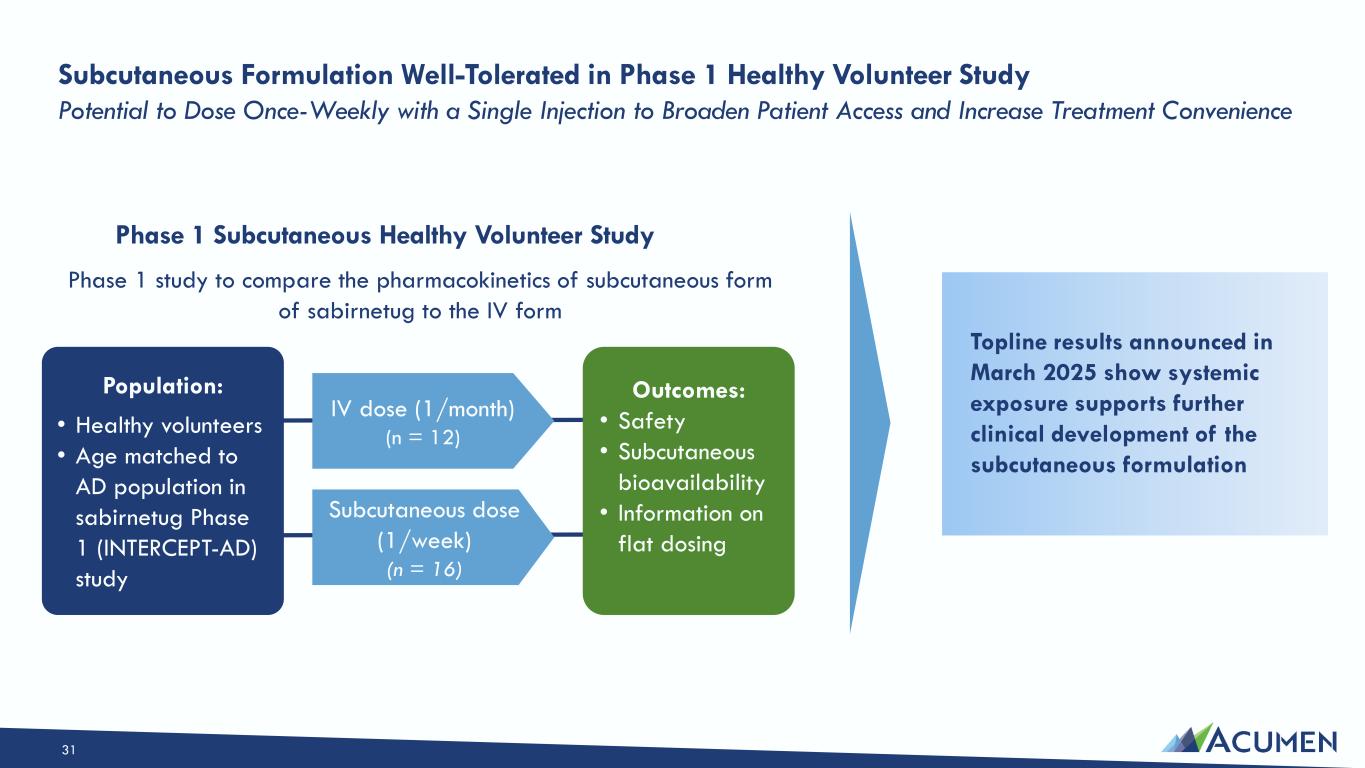
Subcutaneous Formulation Well-Tolerated in Phase 1 Healthy Volunteer Study Potential to Dose Once-Weekly with a Single Injection to Broaden Patient Access and Increase Treatment Convenience Topline results announced in March 2025 show systemic exposure supports further clinical development of the subcutaneous formulation 31 Phase 1 study to compare the pharmacokinetics of subcutaneous form of sabirnetug to the IV form Outcomes: • Safety • Subcutaneous bioavailability • Information on flat dosing Population: • Healthy volunteers • Age matched to AD population in sabirnetug Phase 1 (INTERCEPT-AD) study IV dose (1/month) (n = 12) Subcutaneous dose (1/week) (n = 16) Phase 1 Subcutaneous Healthy Volunteer Study

Acumen Leadership Team Experienced in AD/Neuro Drug Development Acumen team has decades of experience in Alzheimer’s drug discovery and development AMY SCHACTERLE, PHD Chief Regulatory Officer, Head of Quality PAUL SHUGHRUE, PHD VP, Research & Strategy JASNA JERECIC, PHD Analytical Methods Leader, Research Scientist ERIC SIEMERS, MD Chief Medical Officer MATT ZUGA Chief Financial Officer & Chief Business Officer RUSSELL BARTON Chief Operating Officer DANIEL O'CONNELL Chief Executive Officer LIEAN SCHENK VP, Head of CMC SIEW TIN GAN Head of Clinical Operations 32 DEREK MEISNER, JD Chief Legal Officer JULIE BOCKENSTETTE Executive Vice President, Head of HR JAMES DOHERTY, PHD President & Chief Development Officer

Sabirnetug IP & Market Exclusivity • Exclusive, perpetual, irrevocable, worldwide, royalty-free license from Merck to its Amyloid Derived Diffusible Ligand (ADDL) IP including issued sabirnetug patents • Sabirnetug Global IP estate: ✓ Issued patents in 19 countries ✓ Composition of matter patents and methods of use run into July 2031 ✓ Patent term extensions may be available, 3-5 years depending on jurisdiction • Biologics market exclusivity is expected for sabirnetug as a novel biologic drug ✓ US provides 12 years market exclusivity for novel biologics ✓ Europe provides 10 years of market exclusivity for novel biologics 33

Milestones Achieved in 2024 and 2025 ~$232M Cash, cash equivalents and marketable securities as of Dec. 31, 2024 34 MILESTONES STATUS/ EXPECTED TIMING Initiation of ALTITUDE-AD Phase 2 trial ✓ Initiation of Phase 1 subcutaneous trial ✓ Phase 1 subcutaneous topline results ✓ Completion of enrollment of ALTITUDE-AD ✓ We believe that Acumen has the expertise and resources to advance sabirnetug into the first half of 2027
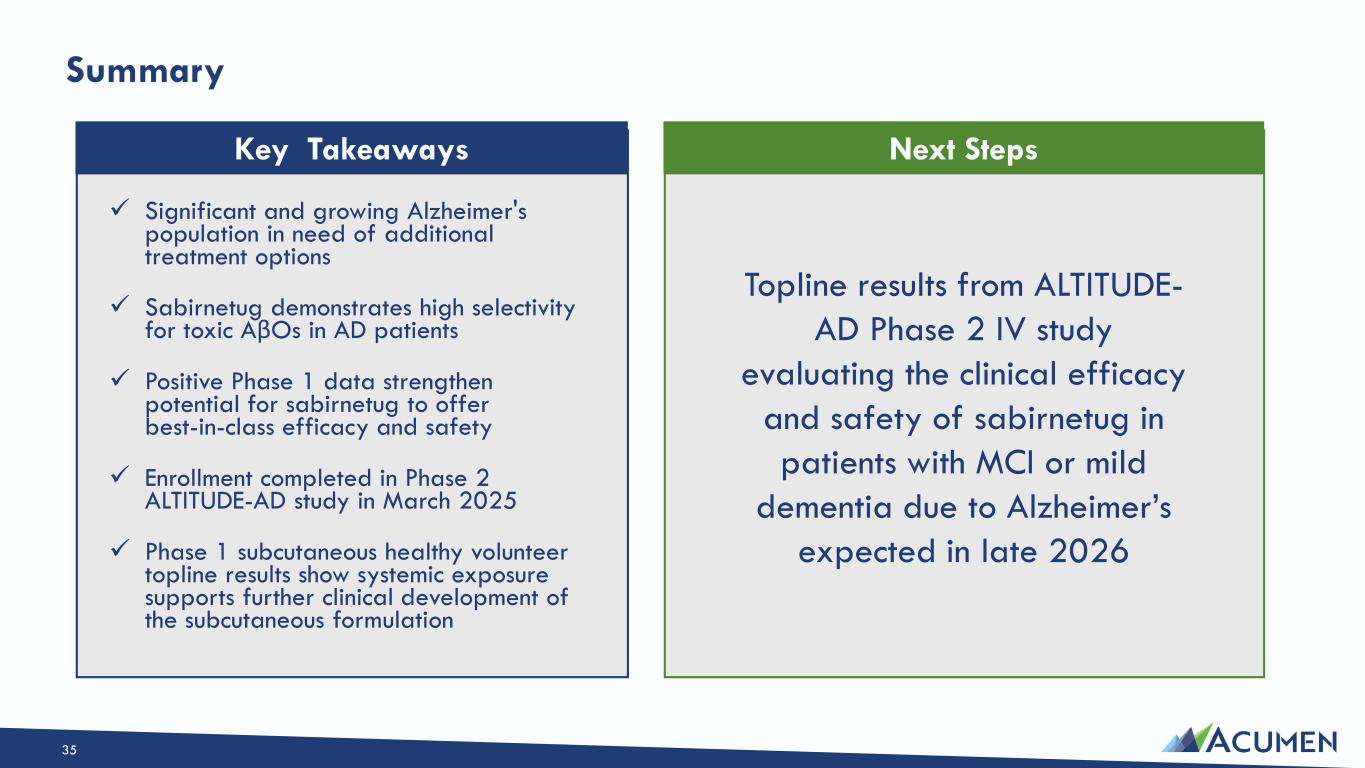
Summary 35 ✓ Significant and growing Alzheimer's population in need of additional treatment options ✓ Sabirnetug demonstrates high selectivity for toxic AβOs in AD patients ✓ Positive Phase 1 data strengthen potential for sabirnetug to offer best-in-class efficacy and safety ✓ Enrollment completed in Phase 2 ALTITUDE-AD study in March 2025 ✓ Phase 1 subcutaneous healthy volunteer topline results show systemic exposure supports further clinical development of the subcutaneous formulation Key Takeaways Next Steps Topline results from ALTITUDE- AD Phase 2 IV study evaluating the clinical efficacy and safety of sabirnetug in patients with MCI or mild dementia due to Alzheimer’s expected in late 2026

Appendix www.acumenpharm.com 36

Nonclinical Data
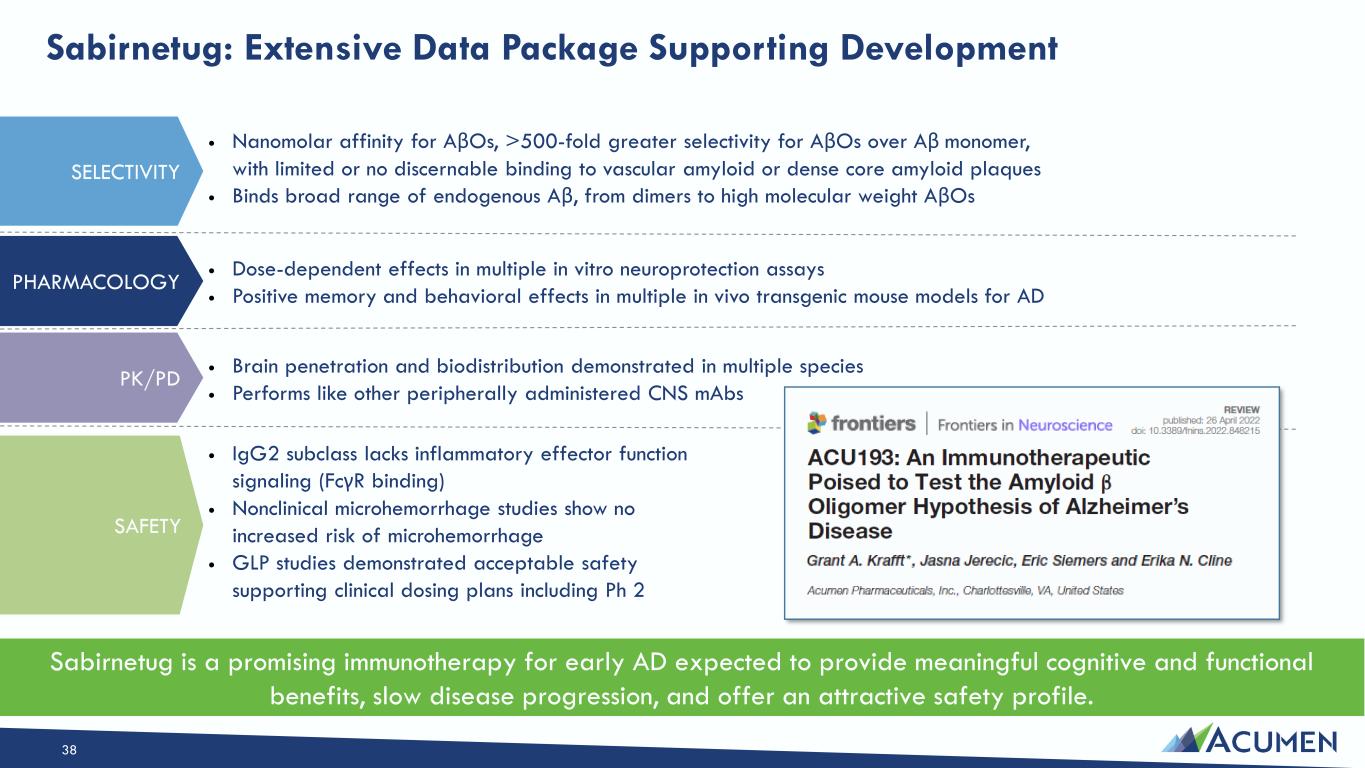
Sabirnetug: Extensive Data Package Supporting Development Sabirnetug is a promising immunotherapy for early AD expected to provide meaningful cognitive and functional benefits, slow disease progression, and offer an attractive safety profile. Nanomolar affinity for AβOs, >500-fold greater selectivity for AβOs over Aβ monomer, with limited or no discernable binding to vascular amyloid or dense core amyloid plaques Binds broad range of endogenous Aβ, from dimers to high molecular weight AβOs Brain penetration and biodistribution demonstrated in multiple species Performs like other peripherally administered CNS mAbs Dose-dependent effects in multiple in vitro neuroprotection assays Positive memory and behavioral effects in multiple in vivo transgenic mouse models for AD IgG2 subclass lacks inflammatory effector function signaling (FcγR binding) Nonclinical microhemorrhage studies show no increased risk of microhemorrhage GLP studies demonstrated acceptable safety supporting clinical dosing plans including Ph 2 SELECTIVITY PHARMACOLOGY PK/PD SAFETY 38
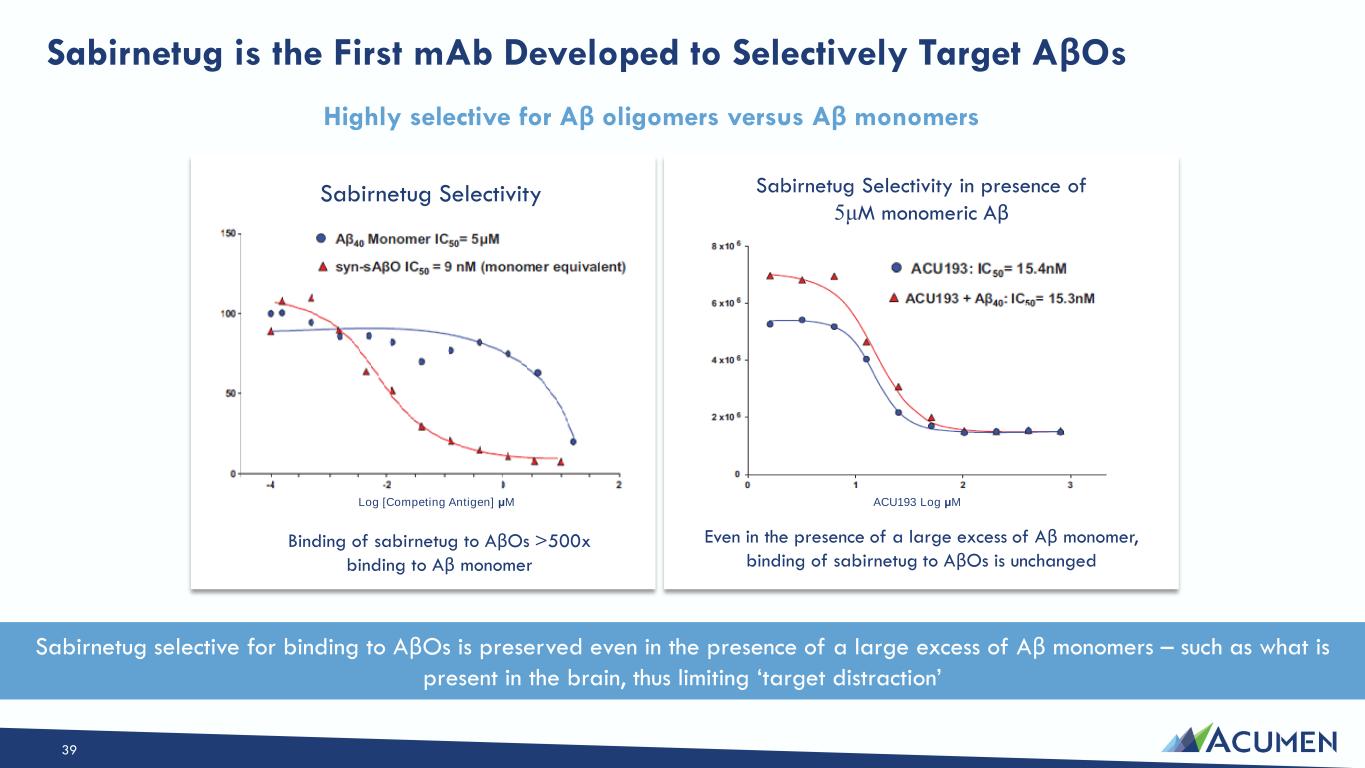
Highly selective for Aβ oligomers versus Aβ monomers Even in the presence of a large excess of Aβ monomer, binding of sabirnetug to AβOs is unchanged Binding of sabirnetug to AβOs >500x binding to Aβ monomer Log [Competing Antigen] μM Sabirnetug Selectivity Sabirnetug Selectivity in presence of 5μM monomeric Aβ ACU193 Log μM Sabirnetug is the First mAb Developed to Selectively Target AβOs Sabirnetug selective for binding to AβOs is preserved even in the presence of a large excess of Aβ monomers – such as what is present in the brain, thus limiting ‘target distraction’ 39
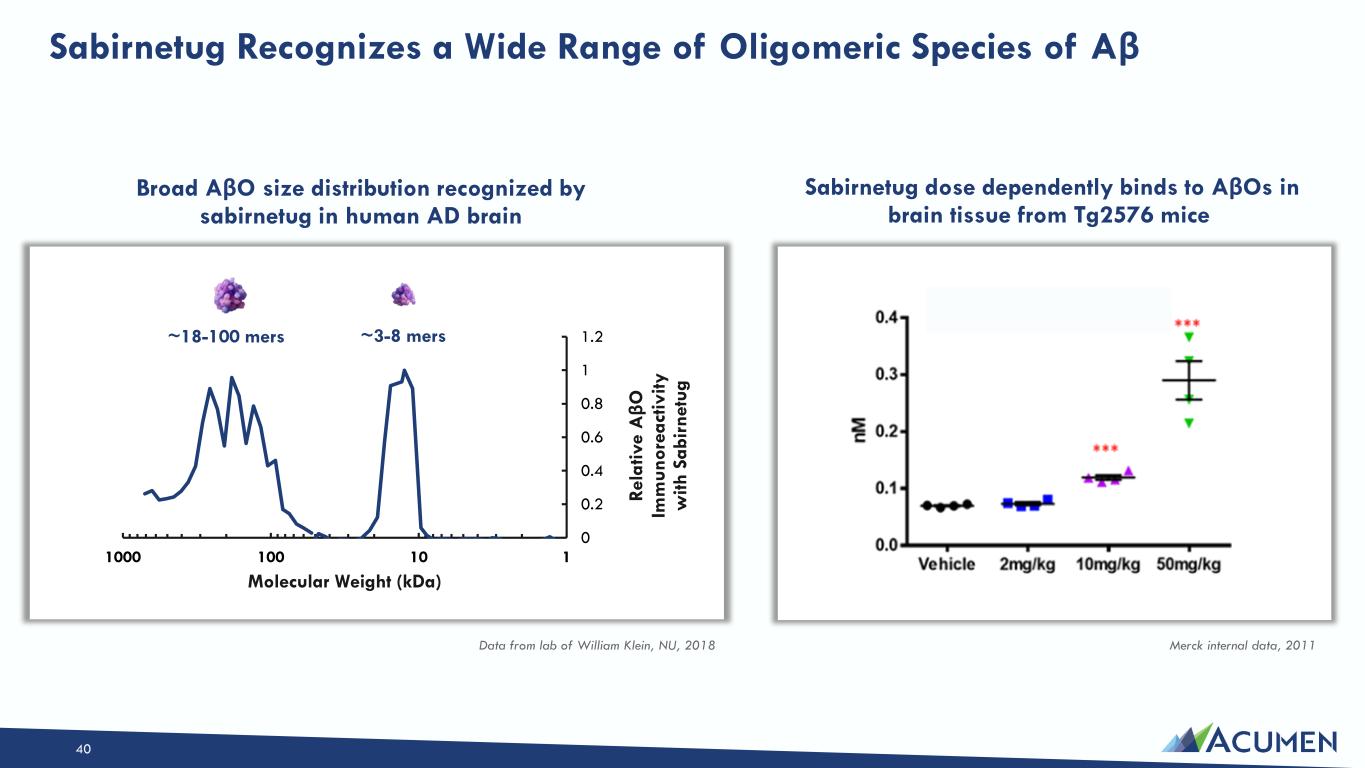
40 Sabirnetug Recognizes a Wide Range of Oligomeric Species of Aβ Broad AβO size distribution recognized by sabirnetug in human AD brain Sabirnetug dose dependently binds to AβOs in brain tissue from Tg2576 mice Data from lab of William Klein, NU, 2018 Merck internal data, 2011 0 0.2 0.4 0.6 0.8 1 1.2 1101001000 R e la ti v e A β O Im m u n o re a ct iv it y w it h S a b ir n e tu g Molecular Weight (kDa) ~3-8 mers~18-100 mers
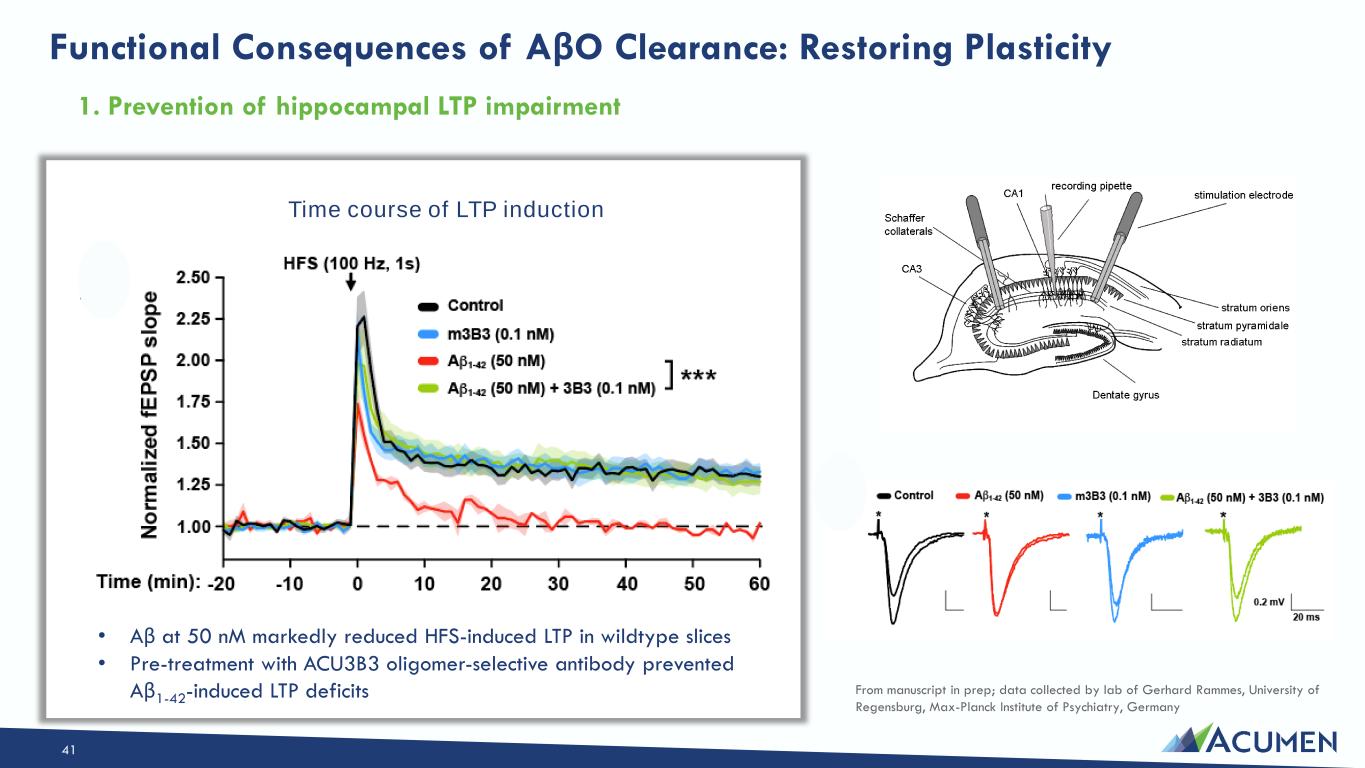
1. Prevention of hippocampal LTP impairment Functional Consequences of AβO Clearance: Restoring Plasticity 41 • Aβ at 50 nM markedly reduced HFS-induced LTP in wildtype slices • Pre-treatment with ACU3B3 oligomer-selective antibody prevented Aβ1-42-induced LTP deficits Time course of LTP induction From manuscript in prep; data collected by lab of Gerhard Rammes, University of Regensburg, Max-Planck Institute of Psychiatry, Germany

Functional Consequences Following ACU3B3 Treatment 42 • ACU3B3 (murine oligomer selective antibody) treatment prior to plaque pathology leads to reduced amyloid deposition in J20 Tg model (5-7 months) • Treatment effects are less prominent in aged animals (16-23 months) • Evidence of synaptic recovery in advanced stages of pathology in contrast to minor effects on plaque deposition From manuscript in prep; data collected by lab of Jorge Palop, Gladstone Institute 2. Reduced amyloid deposition and increased spine density