8-K
Galectin Therapeutics Inc (GALT)
UNITED STATES
SECURITIES AND EXCHANGE COMMISSION
WASHINGTON, D.C. 20549
| FORM 8-K |
|---|
CURRENT REPORT
PURSUANT TO SECTION 13 OR 15(d) OF THE
SECURITIES EXCHANGE ACT OF 1934
Date of Report (Date of earliest event reported): November 10, 2025
GALECTIN THERAPEUTICS INC.
(Exact name of registrant as specified in its charter)
| Nevada | 001-31791 | 04-3562325 |
|---|---|---|
| (State or Other Jurisdiction of Incorporation) | (Commission File Number) | (IRS Employer Identification No.) |
4960 PEACHTREE INDUSTRIAL BOULEVARD, STE 240
NORCROSS, GA 30071
(Address of principal executive office) (zip code)
Registrant’s telephone number, including area code: (678) 620-3186
N/A
(Former name or former address, if changed since last report)
Check the appropriate box below if the Form 8-K filing is intended to simultaneously satisfy the filing obligation of the registrant under any of the following provisions (see General Instruction A.2. below):
| ☐ | Written communications pursuant to Rule 425 under the Securities Act (17 CFR 230.425) |
|---|---|
| ☐ | Soliciting material pursuant to Rule 14a-12 under the Exchange Act (17 CFR 240.14a-12) |
| --- | --- |
| ☐ | Pre-commencement communications pursuant to Rule 14d-2(b) under the Exchange Act (17 CFR 240.14d-2(b)) |
| --- | --- |
| ☐ | Pre-commencement communications pursuant to Rule 13e-4(c) under the Exchange Act (17 CFR 240.13e-4(c)) |
| --- | --- |
Indicate by check mark whether the registrant is an emerging growth company as defined in Rule 405 of the Securities Act of 1933 (§230.405 of this chapter) or Rule 12b-2 of the Securities Exchange Act of 1934 (§240.12b-2 of this chapter).
Emerging growth company ☐
If an emerging growth company, indicate by check mark if the registrant has elected not to use the extended transition period for complying with any new or revised financial accounting standards provided pursuant to Section 13(a) of the Exchange Act. ☐
Securities registered pursuant to Section 12(b) of the Act:
| Title of each class | Trading<br><br> <br>Symbol | Name of each exchange on which<br><br> <br>registered |
|---|---|---|
| Common Stock $0.001par value per share | GALT | The Nasdaq Stock Market |
| Item 7.01 | Regulation FD Disclosure. |
|---|
On November 10, 2025, Galectin Therapeutics Inc. (the “Company”) issued a press release announcing that it presented its NAVIGATE trial results at the American Association for the Study of Liver Diseases (AASLD) 2025 Annual Meeting and posted to its website an updated Corporate Presentation, furnished hereto as Exhibit 99.1 and Exhibit 99.2, respectively. and incorporated herein by reference.
In accordance with General Instruction B.2 of Form 8-K, the information furnished under this Item 7.01 of this Current Report on Form 8-K and the exhibits furnished hereto are deemed to be “furnished” and shall not be deemed “filed” for the purpose of Section 18 of the Exchange Act, or otherwise subject to the liabilities of that section, nor shall such information and exhibits be deemed incorporated by reference into any filing under the Securities Act of 1933, as amended, or the Securities Exchange Act of 1934, as amended.
This Current Report on Form 8-K and Exhibits 99.1 and 99.2 hereto contain forward-looking statements within the meaning of the federal securities laws. These forward-looking statements are based on current expectations and are not guarantees of future performance. Further, the forward-looking statements are subject to the limitations listed in Exhibits 99.1 and 99.2 and in the other reports of the Company filed with the Securities and Exchange Commission, including that actual events or results may differ materially from those in the forward-looking statements.
| Item 9.01 | Financial Statements and Exhibits. |
|---|
(d) Exhibits.
| Exhibit No. | Exhibit Description |
|---|---|
| 99.1 | Press release dated November 10, 2025 |
| 99.2 | Galectin Therapeutic Inc. Corporate Presentation, updated November 10, 2025 |
| 104 | Cover Page Interactive Data File (embedded within the Inline XBRL document) |
- 2 -
SIGNATURES
Pursuant to the requirements of the Securities Exchange Act of 1934, Galectin Therapeutics Inc. has duly caused this report to be signed on its behalf by the undersigned hereunto duly authorized.
| Galectin Therapeutics Inc. | ||
|---|---|---|
| Date: November 10, 2025 | By: | /s/ Jack W. Callicutt |
| Jack W. Callicutt | ||
| Chief Financial Officer |
- 3 -
Exhibit 99.1

Galectin Therapeutics Presented NAVIGATE Trial Results at the American Association for the Study of Liver Diseases (AASLD) 2025 Annual Meeting
| • | New biomarker analyses from the NAVIGATE trial demonstrated consistent antifibrotic effects of belapectin 2 mg/kg |
|---|---|
| • | Using established criteria for clinically meaningful worsening, a lower proportion of patients treated with belapectin 2 mg/kg experienced ≥30% or ≥5 kPa increases in liver stiffness (LSM) by FibroScan®<br> compared with placebo, indicating slowing of fibrosis progression and stabilization of liver function |
| --- | --- |
| • | Across all ELF fibrosis risk categories, belapectin 2 mg/kg showed a lower incidence of new varices compared with placebo, with the largest benefit in patients with ELF > 11.3 (22.7% vs 42.9%),<br> representing those at highest risk for liver complications |
| --- | --- |
| • | Pro-C3 biomarker analysis demonstrated a >50% reduction from baseline at 18 months with belapectin 2 mg/kg versus placebo, supporting the therapy’s antifibrotic and disease-modifying potential in<br> compensated MASH cirrhosis with portal hypertension. |
| --- | --- |
| • | Analysis of YKL-40, a biomarker associated with Galectin-3 upregulation in fibrotic liver disease, demonstrated a ≥20% reduction in a higher proportion of patients treated with belapectin 2 mg/kg compared<br> with placebo, providing additional mechanistic evidence of belapectin’s antifibrotic activity. |
| --- | --- |
| • | Analysis of PRO-C4, a key biomarker of liver injury and fibrogenesis, showed a ≥20% increase in a higher proportion of placebo-treated patients compared with those receiving belapectin 2 mg/kg, consistent<br> with ongoing fibrotic progression and further supporting belapectin’s disease-modifying potential |
| --- | --- |
| • | For available patients who completed 36 months of therapy, belapectin maintained the sustained reduction in new variceal development seen at 18 months |
|---|
NORCROSS, Ga., Nov 10, 2025 (GLOBE NEWSWIRE) -- Galectin Therapeutics Inc. (NASDAQ:GALT), the leading developer of galectin-3-targeted therapeutics for patients with MASH cirrhosis and portal hypertension, presented a poster and will deliver an oral presentation of the NAVIGATE study analysis at the AASLD 2025 Annual Meeting. The Phase 2 NAVIGATE trial evaluated belapectin, a proprietary galectin-3 inhibitor, in patients with compensated MASH cirrhosis and portal hypertension.
The global Phase 2b NAVIGATE trial (NCT04365868) was a randomized, double-blind, placebo-controlled study evaluating the galectin-3 inhibitor belapectin in 355 patients with compensated MASH cirrhosis and portal hypertension confirmed by non-invasive markers and baseline endoscopy. Patients were randomized 1:1:1 to receive intravenous belapectin at 2 mg/kg or 4 mg/kg of lean body mass or placebo every other week for 18 months (78 weeks).
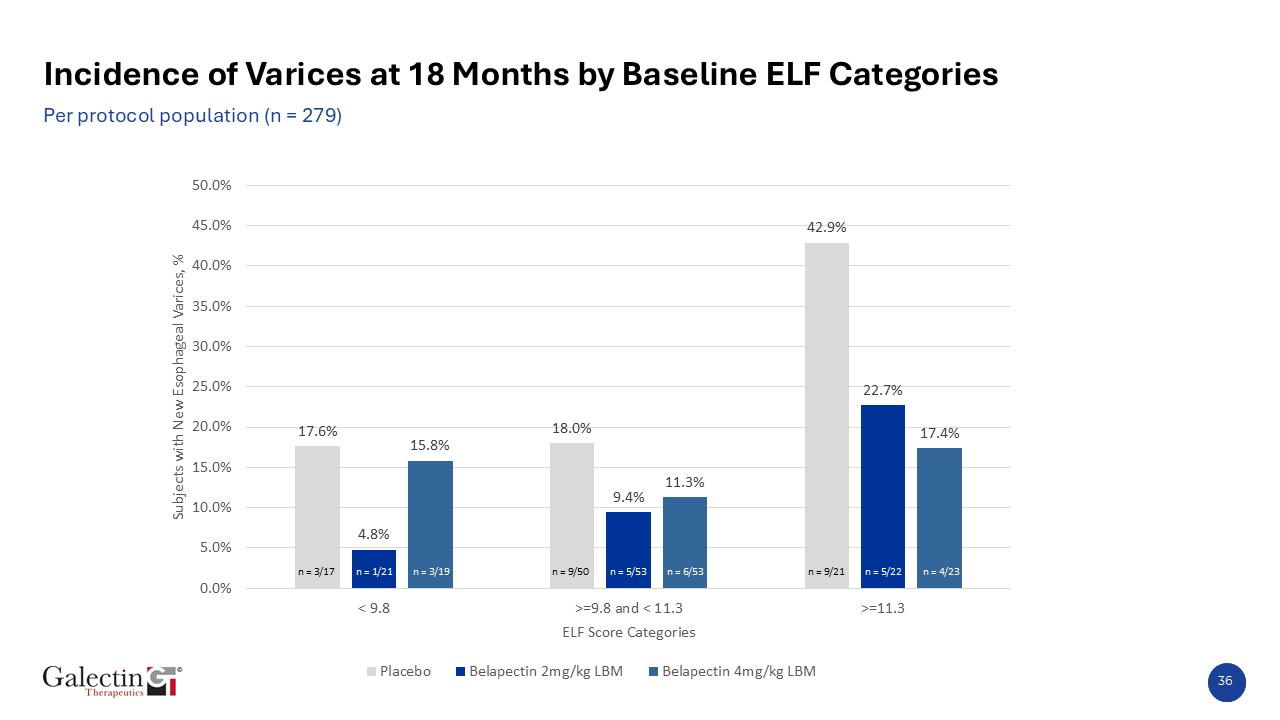
When patients were stratified using FDA-approved Enhanced Liver Fibrosis (ELF) score cutoffs, belapectin 2 mg/kg demonstrated a consistently lower incidence of new varices across all fibrosis categories, with the largest reduction observed among patients with ELF >11.3, representing those at highest risk for liver complications (22.7% vs 42.9% for placebo). Incidences across ELF strata were as follows:
| Subjects with New Esophageal Varices by Baseline ELF Categories at 18 Months %, n=245 | placebo | 2 mg/kg<br><br> <br>belapectin | 4mg/kg<br><br> <br>belapectin |
|---|---|---|---|
| ELF score < 9.8 | 17.6% (3/17) | 4.8% (1/21) | 15.8% (3/19) |
| ELF score between < 9.8 and <11.3 | 18% (9/50) | 9.4% (5/53) | 11.3% (6/53) |
| ELF score > 11.3 | 42.9% (9/21) | 22.7% (5/22) | 17.4% (4/23) |
Note: ELF: Risk of disease progression. < 9.8 Low risk, ≥11.3 mid risk, highest risk ≥13
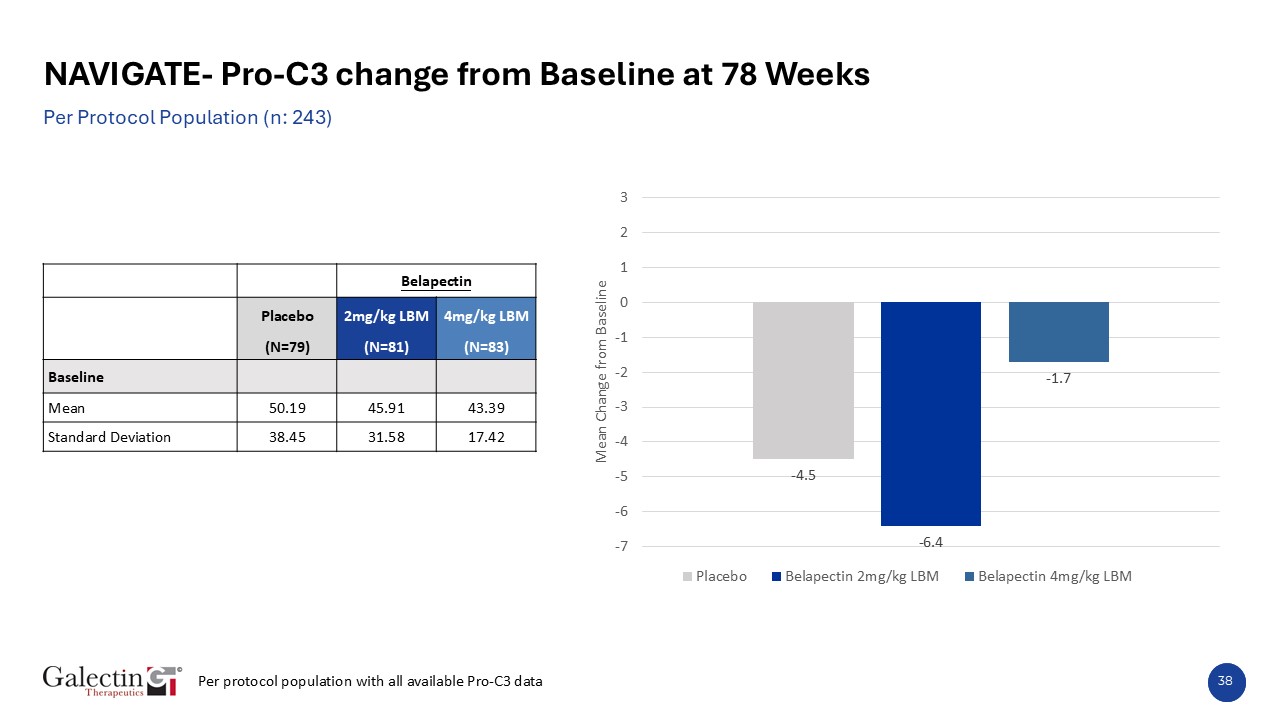
Additionally, analysis of the Pro-C3 fibrosis biomarker showed that baseline levels were comparable across all groups (placebo: 50.2 ng/mL; 2 mg/kg: 45.9 ng/mL; 4 mg/kg: 43.4 ng/mL). At 78 weeks, patients receiving 2 mg/kg belapectin achieved a mean –6.4 ng/mL reduction in Pro-C3, representing >50% improvement from baseline compared with placebo (–4.5 ng/mL), while the 4 mg/kg dose showed a –1.7 ng/mL change. These biomarker findings were consistent with the clinical outcome of reduction in development of new varices, further supporting the antifibrotic and disease-modifying potential of belapectin in patients with compensated MASH cirrhosis and portal hypertension.
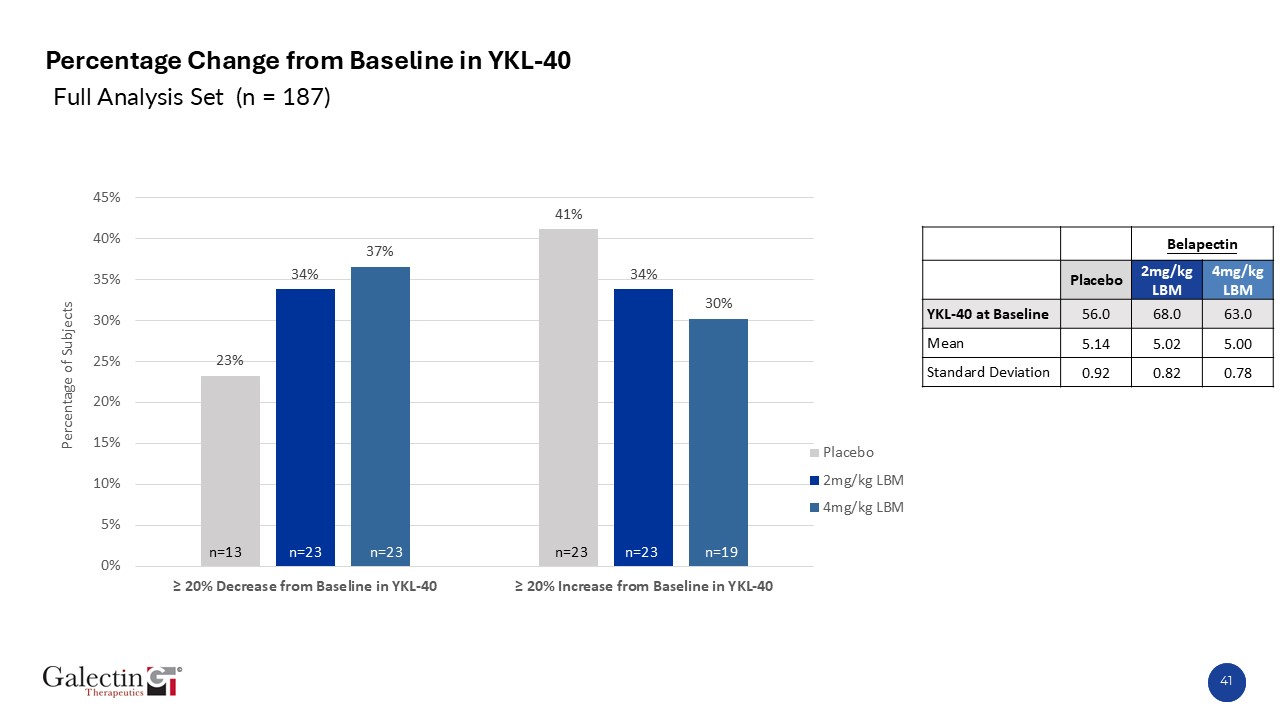
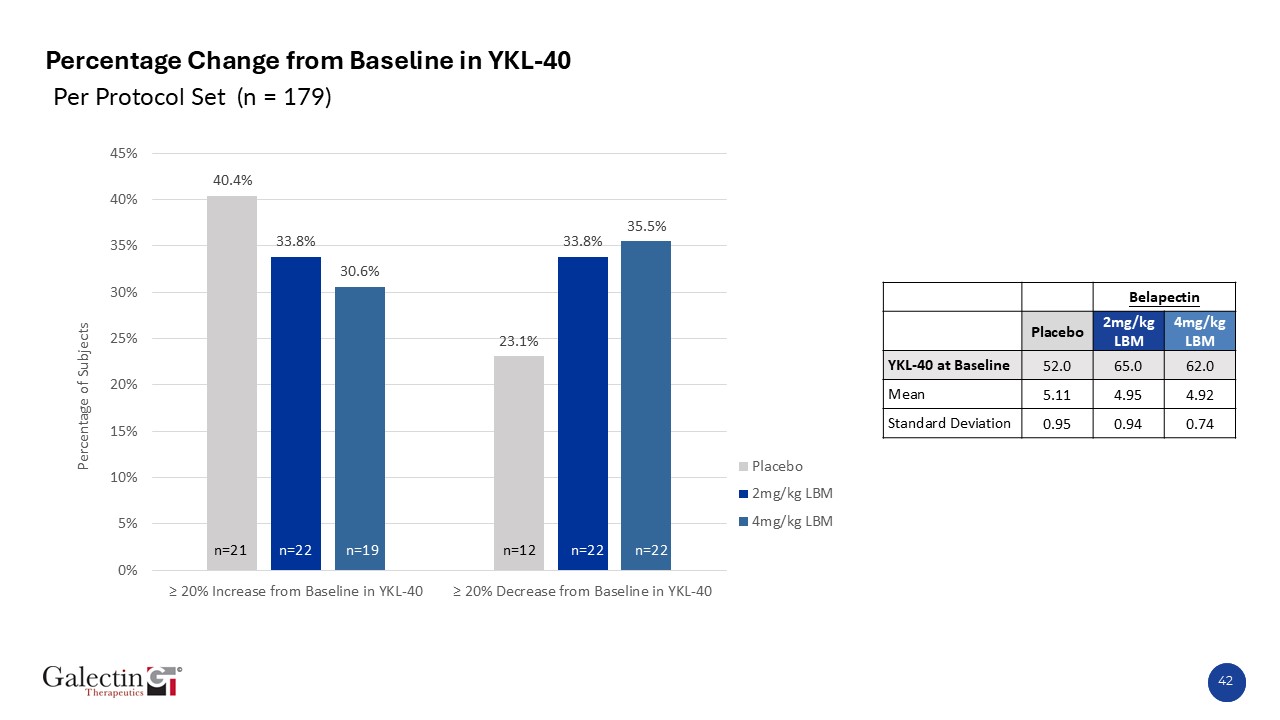
Baseline YKL-40 levels were comparable across treatment groups (placebo: 5.11 ng/mL; 2 mg/kg: 4.95 ng/mL; 4 mg/kg: 4.92 ng/mL). At 18 months, a greater proportion of patients receiving belapectin 2 mg/kg achieved a ≥ 20% reduction in YKL-40 compared with placebo (33.8% vs 23.1%), while fewer belapectin-treated patients experienced increases from baseline. These findings provide additional mechanistic evidence of galectin-3 pathway modulation and support belapectin’s antifibrotic biological activity in patients with MASH cirrhosis and portal hypertension.
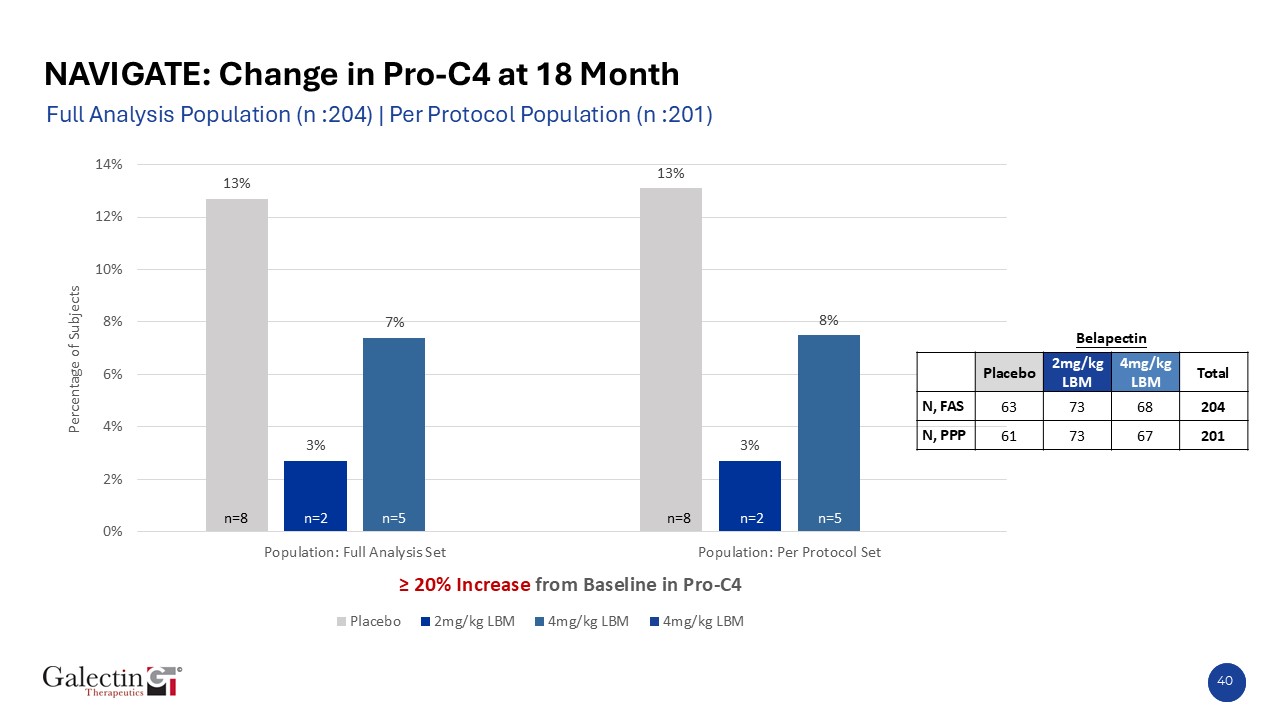
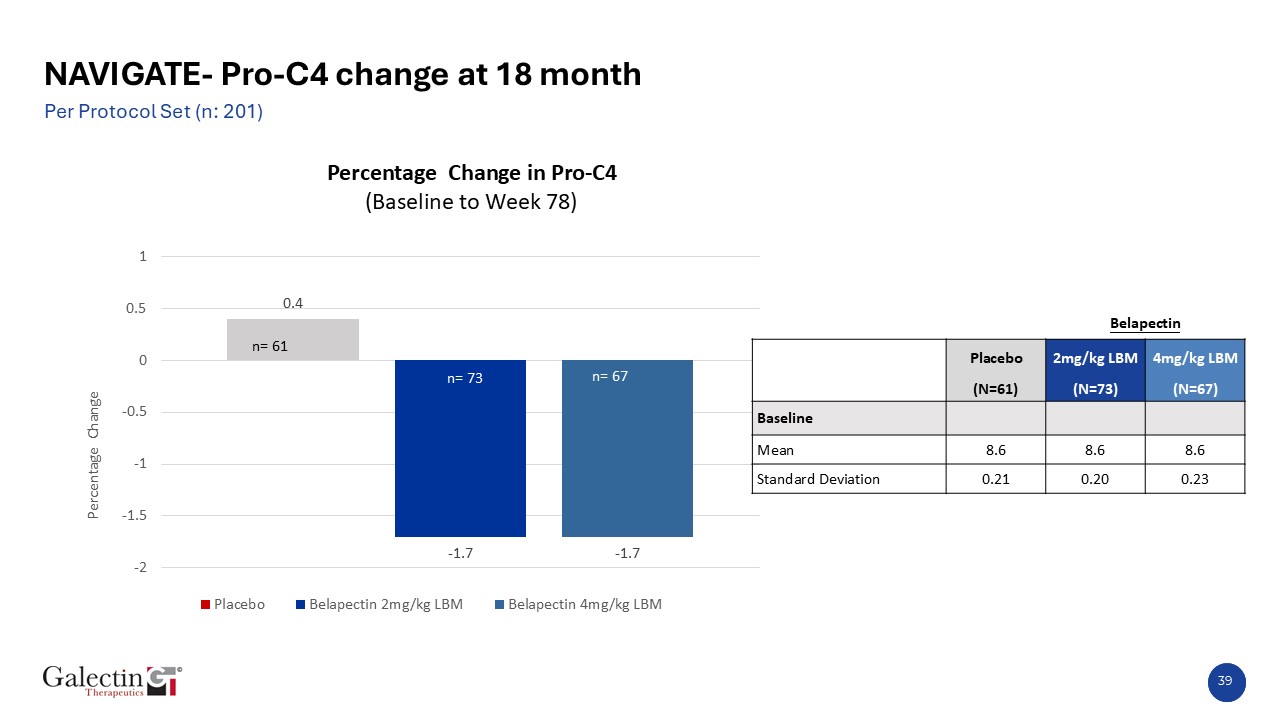
Analysis of PRO-C4, a key biomarker associated with liver injury and fibrogenesis, showed that a ≥ 20% increase from baseline occurred at a higher rate in placebo-treated subjects compared with those receiving belapectin 2 mg/kg (13% vs 3%). This pattern, consistent across both the full analysis and per-protocol populations, indicates ongoing fibrotic progression in the placebo arm and further reinforces belapectin’s potential to modify disease progression in compensated MASH cirrhosis with portal hypertension.
Separately, a poster presentation at AASLD over the weekend showed that reduction in the development of esophageal varices observed at 18 months was sustained through 36 months in patients with MASH cirrhosis and portal hypertension. A total of 57 subjects completed 36 months of therapy in NAVIAGTE. At 36 months, the cumulative incidence of new varices in the study was 23.4%, 12.4% and 16.7% respectively, in placebo, 2 mg/kg, and 4 mg/kg cohorts.
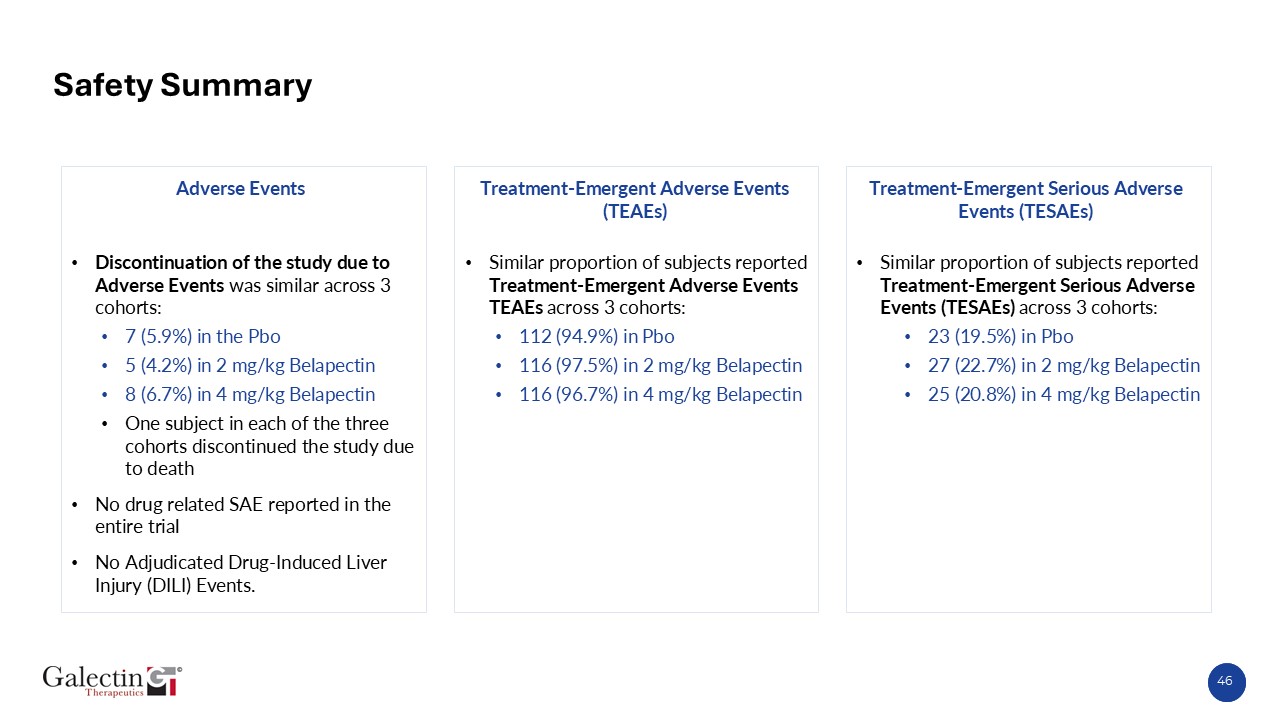
As in prior trials, the safety profile of belapectin remains highly encouraging with incidence of adverse events and serious adverse events comparable across the three cohorts. Rates of discontinuation, adverse events (AEs), and serious adverse events (SAEs) were comparable to placebo, with no drug-related SAEs reported in the NAVIGATE trial.
Raj Vuppalanchi, M.D., serves as Professor of Medicine and Director of Hepatology at Indiana University School of Medicine, stated “The long-term NAVIGATE data presented at AASLD provide important insights into the potential of Galectin-3 inhibition in advanced fibrosis. The sustained improvements in liver stiffness and multiple serum biomarkers, including ELF, PRO-C3, and YKL-40, are particularly noteworthy, as they collectively suggest a consistent antifibrotic effect and stabilization of disease. These results are encouraging for patients with MASH cirrhosis and portal hypertension, a population with few effective therapeutic options.”
Dr. Khurram Jamil, Chief Medical Officer at Galectin Therapeutics, stated, “The consistency we observed across both clinical and biomarker endpoints reinforces belapectin’s potential as a disease-modifying therapy for patients with compensated MASH cirrhosis and portal hypertension. The 2 mg/kg dose demonstrated a clear and clinically meaningful reduction in the incidence of new varices across all ELF risk categories, with the strongest effect seen in patients at highest risk for liver complications. In addition, the more than 50% greater reduction in Pro-C3 levels versus placebo further supports belapectin’s antifibrotic activity and alignment between biomarker and clinical outcomes.”
Joel Lewis, Chief Executive Officer at Galectin Therapeutics, added, “We are very encouraged to see the robust effects of belapectin maintained over 36 months of therapy. These results represent an important milestone for the belapectin program and for patients living with MASH cirrhosis, a population with no approved therapeutic options today. With a solid foundation of clinical and biomarker evidence, we are focused on advancing regulatory discussions and exploring strategic partnerships to accelerate the next phase of development. We are deeply encouraged by the potential of belapectin to make a meaningful difference for patients and families affected by this serious disease.”
About Galectin Therapeutics
Galectin Therapeutics is dedicated to developing novel therapies to improve the lives of patients with chronic liver disease and cancer. Galectin’s lead drug belapectin is a carbohydrate-based drug that inhibits the galectin-3 protein, which is directly involved in multiple inflammatory, fibrotic, and malignant diseases, for which it has Fast Track designation by the U.S. Food and Drug Administration. The lead development program is in metabolic dysfunction-associated steatohepatitis (MASH, formerly known as nonalcoholic steatohepatitis, or NASH) with cirrhosis, the most advanced form of MASH-related fibrosis. Liver cirrhosis is one of the most pressing medical need and a significant drug development opportunity. Additional development programs are in treatment of combination immunotherapy for advanced head and neck cancers and other malignancies. Advancement of these additional clinical programs is largely dependent on finding a suitable partner. Galectin seeks to leverage extensive scientific and development expertise as well as established relationships with external sources to achieve cost-effective and efficient development. Additional information is available at www.galectintherapeutics.com.
Forward Looking Statements
This press release contains forward-looking statements within the meaning of the Private Securities Litigation Reform Act of 1995. These statements relate to future events or future financial performance, and use words such as “may,” “estimate,” “could,” “expect”, “look forward”, “believe”, “hope” and others. They are based on management’s current expectations and are subject to factors and uncertainties that could cause actual results to differ materially from those described in the statements. These statements include those regarding the hope that Galectin’s development program for belapectin will lead to the first therapy for the treatment of MASH, formerly known as NASH, with cirrhosis and those regarding the hope that our lead compounds will be successful in cancer immunotherapy and in other therapeutic indications. Factors that could cause actual performance to differ materially from those discussed in the forward-looking statements include, among others, full analysis of the NAVIGATE trial data may not produce positive data; Galectin may not be successful in developing effective treatments and/or obtaining the requisite approvals for the use of belapectin or any of its other drugs in development; the Company may not be successful in scaling up manufacturing and meeting requirements related to chemistry, manufacturing and control matters; the Company’s current clinical trial and any future clinical studies may not produce positive results in a timely fashion, if at all, and could require larger and longer trials, which would be time consuming and costly; plans regarding development, approval and marketing of any of Galectin’s drugs are subject to change at any time based on the changing needs of the Company as determined by management and regulatory agencies; regardless of the results of any of its development programs, Galectin may be unsuccessful in developing partnerships with other companies or raising additional capital that would allow it to further develop and/or fund any studies or trials. Galectin has incurred operating losses since inception, and its ability to successfully develop and market drugs may be impacted by its ability to manage costs and finance continuing operations. For a discussion of additional factors impacting Galectin’s business, see the Company’s Annual Report on Form 10-K for the year ended December 31, 2024, and subsequent filings with the SEC. You should not place undue reliance on forward-looking statements. Although subsequent events may cause its views to change, management disclaims any obligation to update forward-looking statements.
Company Contact:
Jack Callicutt, Chief Financial Officer
(678) 620-3186
ir@galectintherapeutics.com
Investors Relations Contacts:
Kevin Gardner
kgardner@lifesciadvisors.com
Galectin Therapeutics and its associated logo is a registered trademark of Galectin Therapeutics Inc. Belapectin is the USAN assigned name for Galectin Therapeutics’ galectin-3 inhibitor belapectin.
Exhibit 99.2


Galectin TherapeuticsCorporate OverviewNovember 2025

Forward-Looking Statements This presentation contains, in addition to historical information, forward-looking statements within the meaning of the Private Securities Litigation Reform Act of 1995. These statements relate to future events or future financial performance and use words such as “may,” “estimate,” “could,” “expect” and others. They are based on our current expectations and are subject to factors and uncertainties that could cause actual results to differ materially from those described in the statements.These statements include those regarding potential therapeutic benefits of our drugs, expectations, plans and timelines related to our clinical trials, supporting activities, potential partnering opportunities and estimated spending for 2025 and beyond. Factors that could cause our actual performance to differ materially from those discussed in the forward-looking statements include, among others, full analysis of the NAVIGATE trial data may not product positive data.Future phases or future clinical studies may not begin or produce positive results in a timely fashion, if at all, and could prove time consuming and costly. Plans regarding development, approval and marketing of any of our drugs are subject to change at any time based on the changing needs of our company as determined by management and regulatory agencies. Strategies and spending projections may change. We may be unsuccessful in developing partnerships with other companies or obtaining capital that would allow us to complete our clinical trials or further develop and/or fund any future studies or trials.To date, we have incurred operating losses since our inception, and our future success may be impacted by our ability to manage costs and finance our continuing operations. For a discussion of additional factors impacting our business, see our Annual Report on Form 10-K for the year ended December 31, 2024, and our subsequent filings with the SEC. You should not place undue reliance on forward-looking statements. Although subsequent events may cause our views to change, we disclaim any obligation to update forward-looking statements. 2

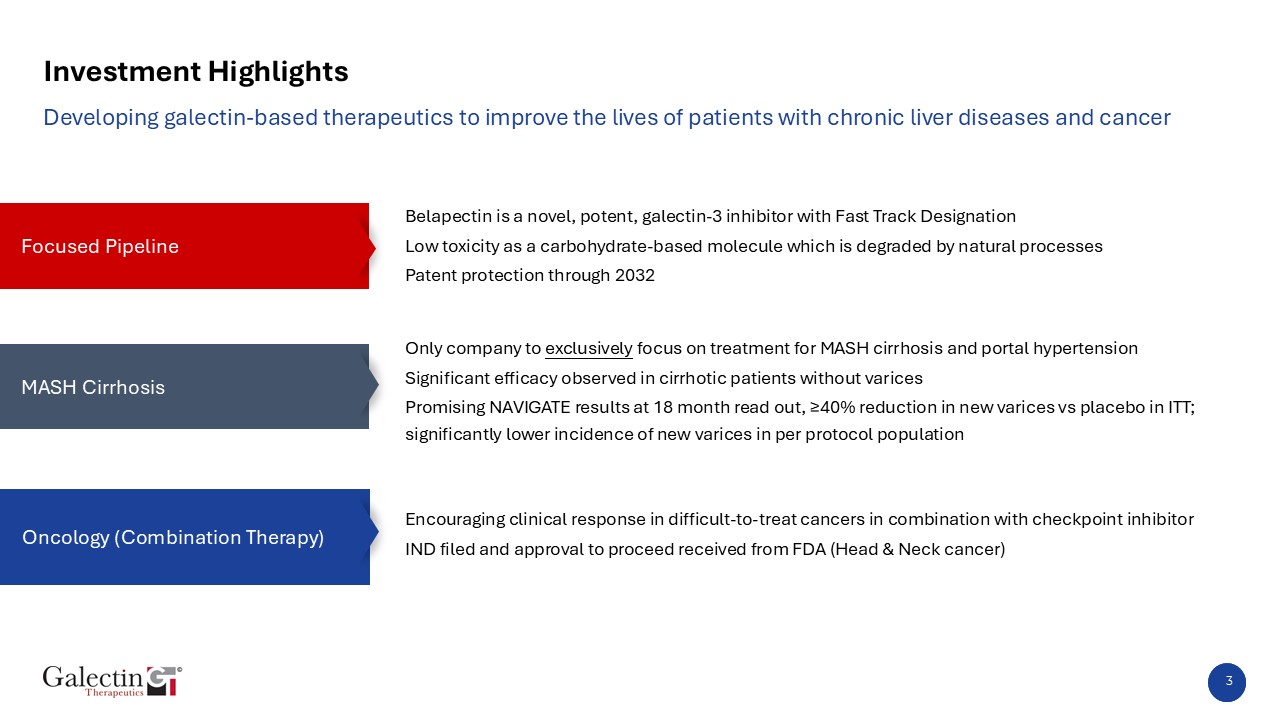
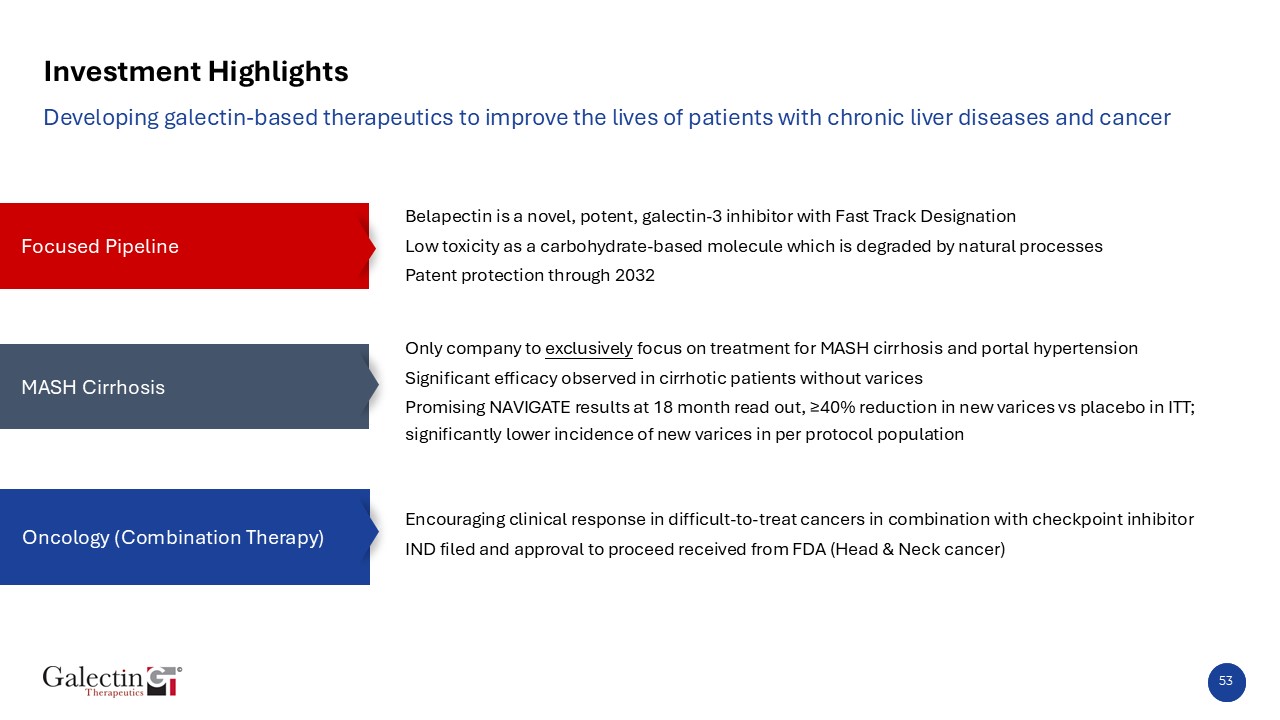
Belapectin is a novel, potent, galectin-3 inhibitor with Fast Track Designation Low toxicity as a carbohydrate-based molecule which is degraded by natural processes Patent protection through 2032 Only company to exclusively focus on treatment for MASH cirrhosis and portal hypertension Significant efficacy observed in cirrhotic patients without varices Promising NAVIGATE results at 18 month read out, ≥40% reduction in new varices vs placebo in ITT; significantly lower incidence of new varices in per protocol population Encouraging clinical response in difficult-to-treat cancers in combination with checkpoint inhibitor IND filed and approval to proceed received from FDA (Head & Neck cancer) Developing galectin-based therapeutics to improve the lives of patients with chronic liver diseases and cancer Focused Pipeline MASH Cirrhosis Oncology (Combination Therapy) 3 Investment Highlights

4 Highly Experienced Leadership Team Over 32 years of public and private company experience including more than a decade of audit, tax and SEC registrant experience with a major accounting firm. JACK W. CALLICUTT Chief Financial Officer SETH ZUCKERMANSenior Director, Biostatistics JESSICA KOPACZEWSKI Senior Director, Clinical Operations Financial executive with over 25 years of management experience in a taxation, restructuring, acquisition, and private equity ventures. JOEL LEWIS Chief Executive Officer & President Have two decades of expereince leading drug development across various stages of clinical trials in the pharmaceutical industry. Led multiple new drug application filings and secured approvals from several regulatory agencies. KHURRAM JAMIL, M.D.Chief Medical Officer Over 25 years diverse experience in the pharmaceutical research industry supporting global study operations from site to personnel management. Over 28 years of experience working in the pharmaceutical industry in clinical data and trial management with 23 years as statistician. Over 20 years of experience in clinical pharmacology, DMPK, and bioanalysis across multiple therapeutic areas. ANDREW VOLOSOV, PH.D. Senior Director, Clinical Pharmacology and Preclinical Research & Development JIM WILKINS, PH.D.Head of CMC and Pharmaceutical Development Over 30 years of experience in CMC and biopharmaceutical development. Previously served as Chief Technology Officer at Sensorin and Director of Technology Assessment at Genentech.

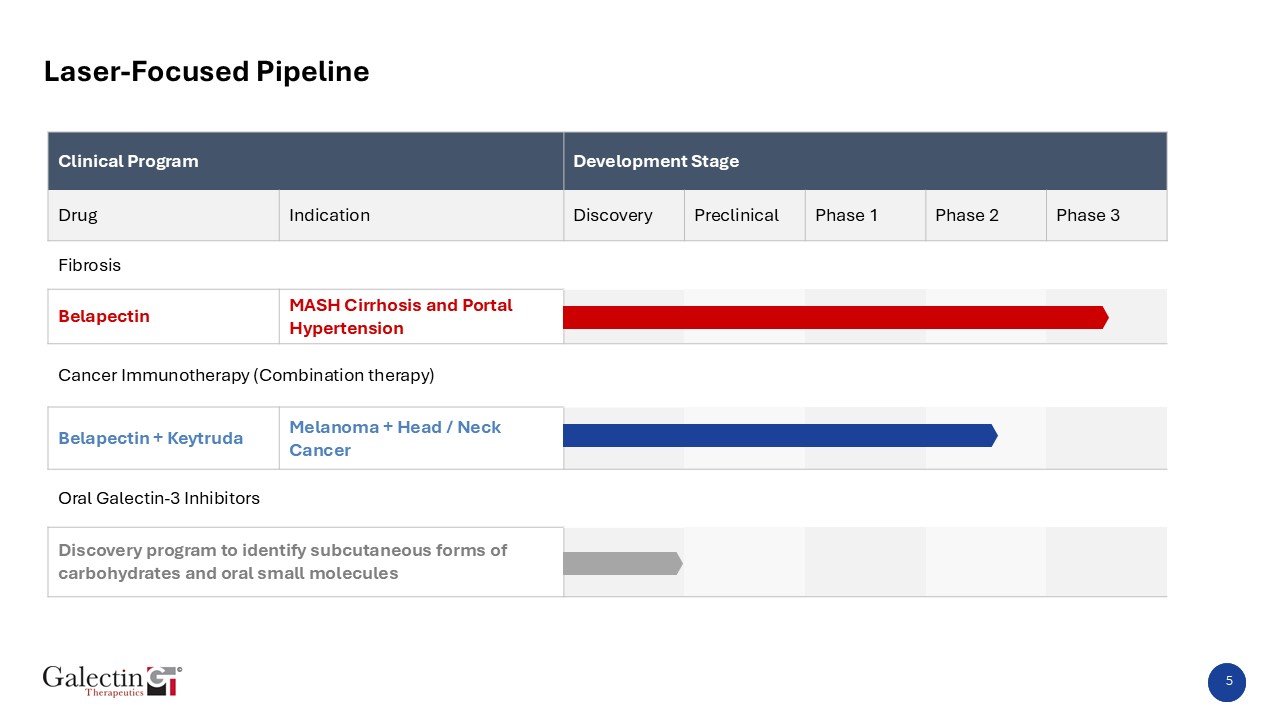
Clinical Program Development Stage Drug Indication Discovery Preclinical Phase 1 Phase 2 Phase 3 Fibrosis Belapectin MASH Cirrhosis and Portal Hypertension Cancer Immunotherapy (Combination therapy) Belapectin + Keytruda Melanoma + Head / Neck Cancer Oral Galectin-3 Inhibitors Discovery program to identify subcutaneous forms of carbohydrates and oral small molecules 5 Laser-Focused Pipeline

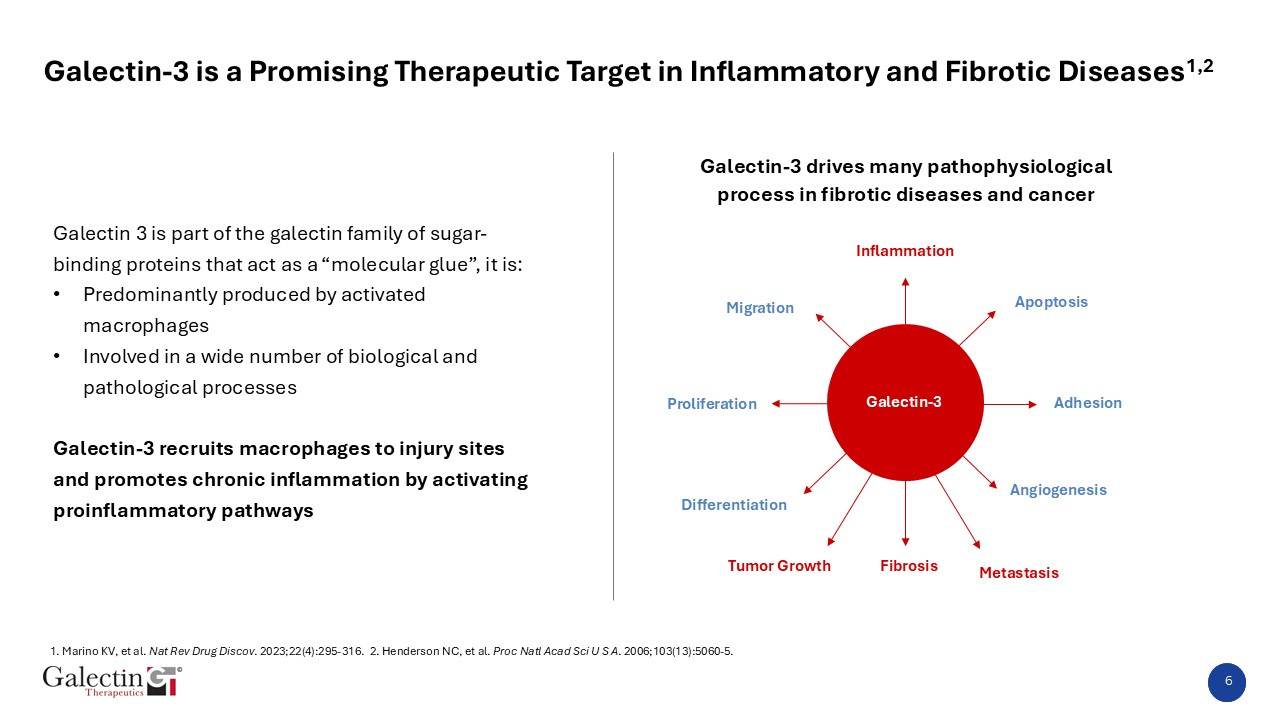
Galectin 3 is part of the galectin family of sugar-binding proteins that act as a “molecular glue”, it is: Predominantly produced by activated macrophages Involved in a wide number of biological and pathological processes Galectin-3 recruits macrophages to injury sites and promotes chronic inflammation by activating proinflammatory pathways 1. Marino KV, et al. Nat Rev Drug Discov. 2023;22(4):295-316. 2. Henderson NC, et al. Proc Natl Acad Sci U S A. 2006;103(13):5060-5. 6 Galectin-3 is a Promising Therapeutic Target in Inflammatory and Fibrotic Diseases1,2 Proliferation Inflammation Fibrosis Apoptosis Adhesion Angiogenesis Metastasis Tumor Growth Differentiation Migration Galectin-3 Galectin-3 drives many pathophysiological process in fibrotic diseases and cancer

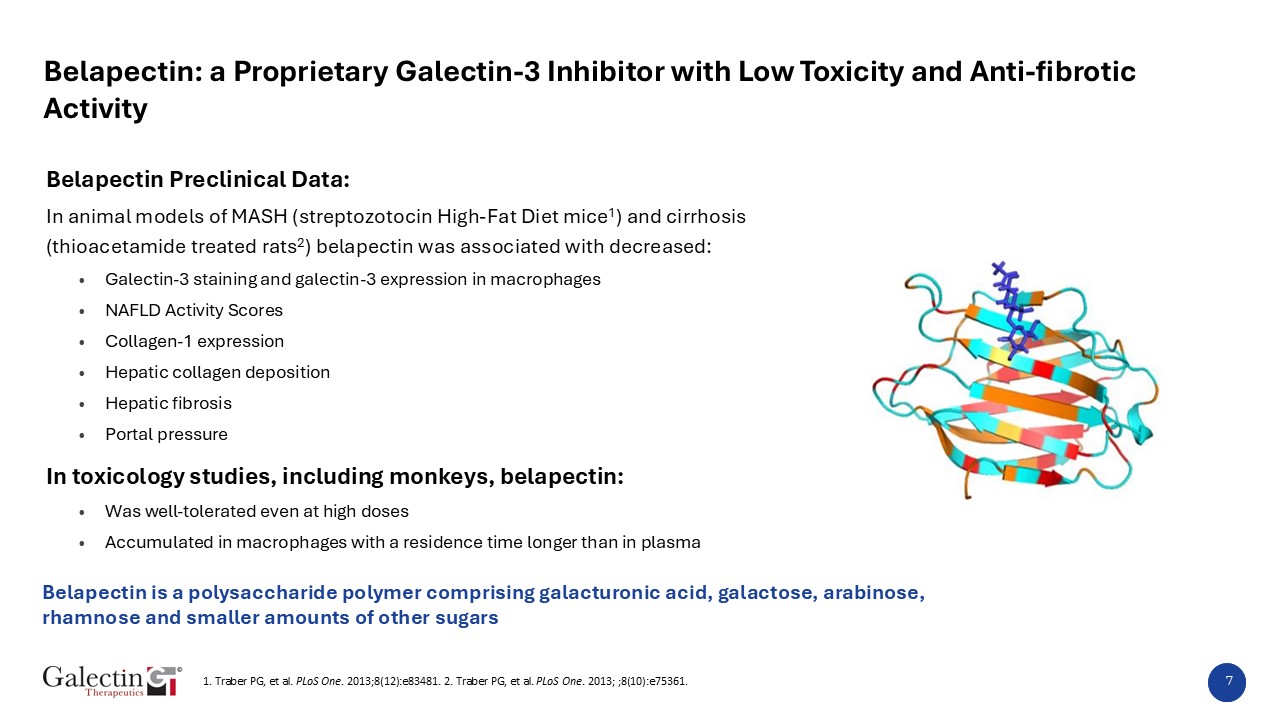
Belapectin is a polysaccharide polymer comprising galacturonic acid, galactose, arabinose, rhamnose and smaller amounts of other sugars Belapectin Preclinical Data: In animal models of MASH (streptozotocin High-Fat Diet mice1) and cirrhosis (thioacetamide treated rats2) belapectin was associated with decreased: Galectin-3 staining and galectin-3 expression in macrophages NAFLD Activity Scores Collagen-1 expression Hepatic collagen deposition Hepatic fibrosis Portal pressure In toxicology studies, including monkeys, belapectin: Was well-tolerated even at high doses Accumulated in macrophages with a residence time longer than in plasma 1. Traber PG, et al. PLoS One. 2013;8(12):e83481. 2. Traber PG, et al. PLoS One. 2013; ;8(10):e75361. 7 Belapectin: a Proprietary Galectin-3 Inhibitor with Low Toxicity and Anti-fibrotic Activity

MASH Cirrhosis 8

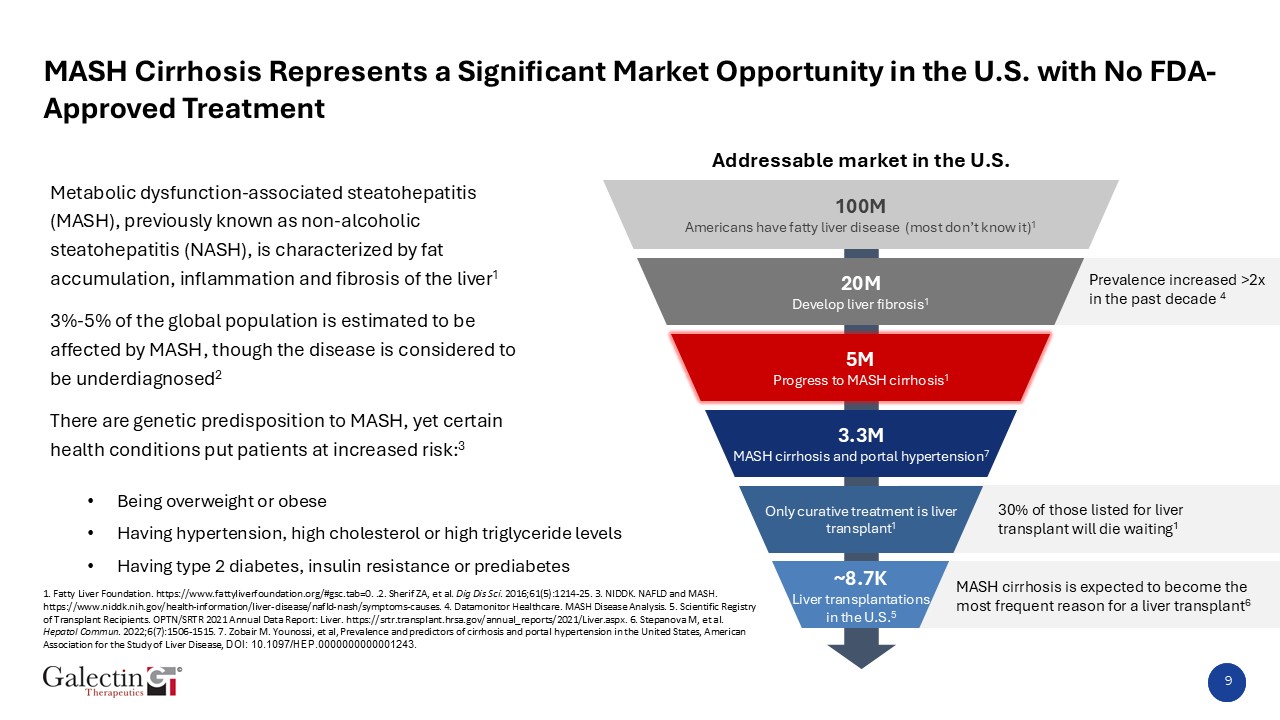
Metabolic dysfunction-associated steatohepatitis (MASH), previously known as non-alcoholic steatohepatitis (NASH), is characterized by fat accumulation, inflammation and fibrosis of the liver1 3%-5% of the global population is estimated to be affected by MASH, though the disease is considered to be underdiagnosed2 There are genetic predisposition to MASH, yet certain health conditions put patients at increased risk:3 1. Fatty Liver Foundation. https://www.fattyliverfoundation.org/#gsc.tab=0. .2. Sherif ZA, et al. Dig Dis Sci. 2016;61(5):1214-25. 3. NIDDK. NAFLD and MASH. https://www.niddk.nih.gov/health-information/liver-disease/nafld-nash/symptoms-causes. 4. Datamonitor Healthcare. MASH Disease Analysis. 5. Scientific Registry of Transplant Recipients. OPTN/SRTR 2021 Annual Data Report: Liver. https://srtr.transplant.hrsa.gov/annual_reports/2021/Liver.aspx. 6. Stepanova M, et al. Hepatol Commun. 2022;6(7):1506-1515. 7. Zobair M. Younossi, et al, Prevalence and predictors of cirrhosis and portal hypertension in the United States, American Association for the Study of Liver Disease, DOI: 10.1097/HEP.0000000000001243. Being overweight or obese Having hypertension, high cholesterol or high triglyceride levels Having type 2 diabetes, insulin resistance or prediabetes 9 MASH Cirrhosis Represents a Significant Market Opportunity in the U.S. with No FDA-Approved Treatment 30% of those listed for liver transplant will die waiting1 MASH cirrhosis is expected to become the most frequent reason for a liver transplant6 Prevalence increased >2x in the past decade 4 Addressable market in the U.S. ~8.7K Liver transplantations in the U.S.5 100M Americans have fatty liver disease (most don’t know it)1 20M Develop liver fibrosis1 5M Progress to MASH cirrhosis1 3.3M MASH cirrhosis and portal hypertension7 Only curative treatment is liver transplant1 ~8.7K Liver transplantations in the U.S.5

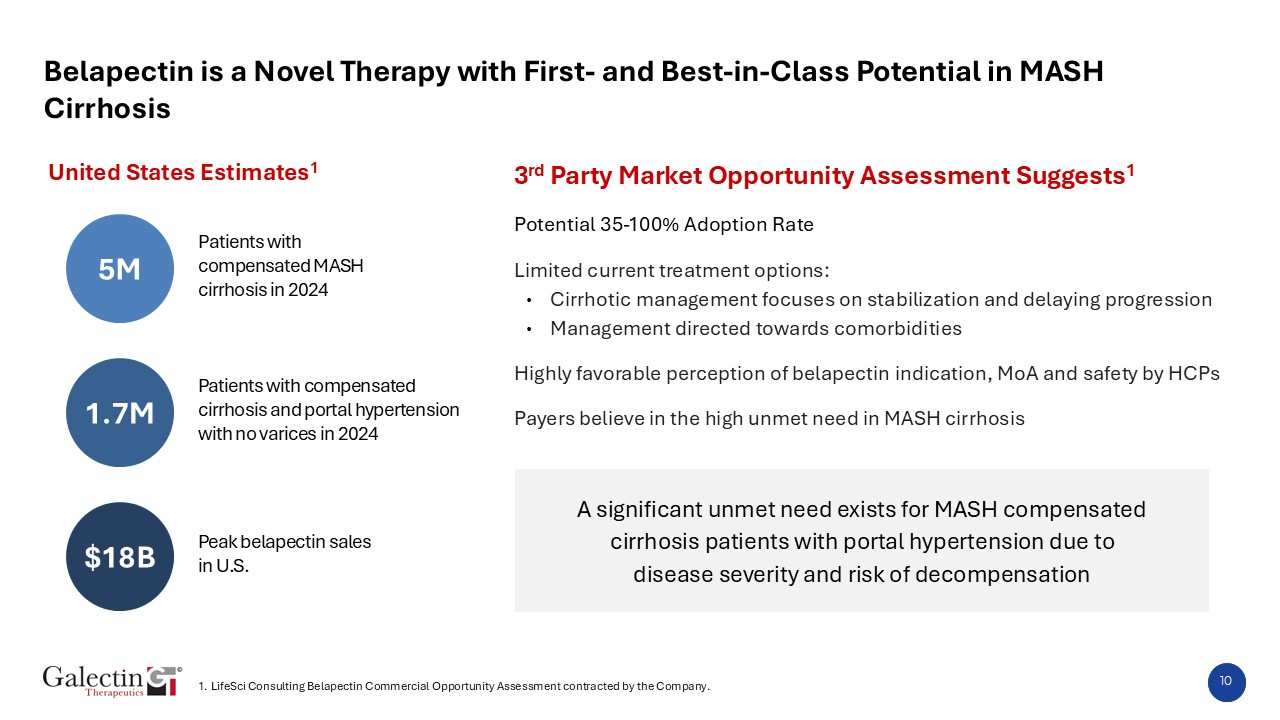
10 Belapectin is a Novel Therapy with First- and Best-in-Class Potential in MASH Cirrhosis 3rd Party Market Opportunity Assessment Suggests1 Potential 35-100% Adoption Rate Limited current treatment options: Cirrhotic management focuses on stabilization and delaying progression Management directed towards comorbidities Highly favorable perception of belapectin indication, MoA and safety by HCPs Payers believe in the high unmet need in MASH cirrhosis 1. LifeSci Consulting Belapectin Commercial Opportunity Assessment contracted by the Company. United States Estimates1 A significant unmet need exists for MASH compensated cirrhosis patients with portal hypertension due to disease severity and risk of decompensation $18B 5M 1.7M Patients with compensated MASH cirrhosis in 2024 Peak belapectin sales in U.S. Patients with compensated cirrhosis and portal hypertension with no varices in 2024

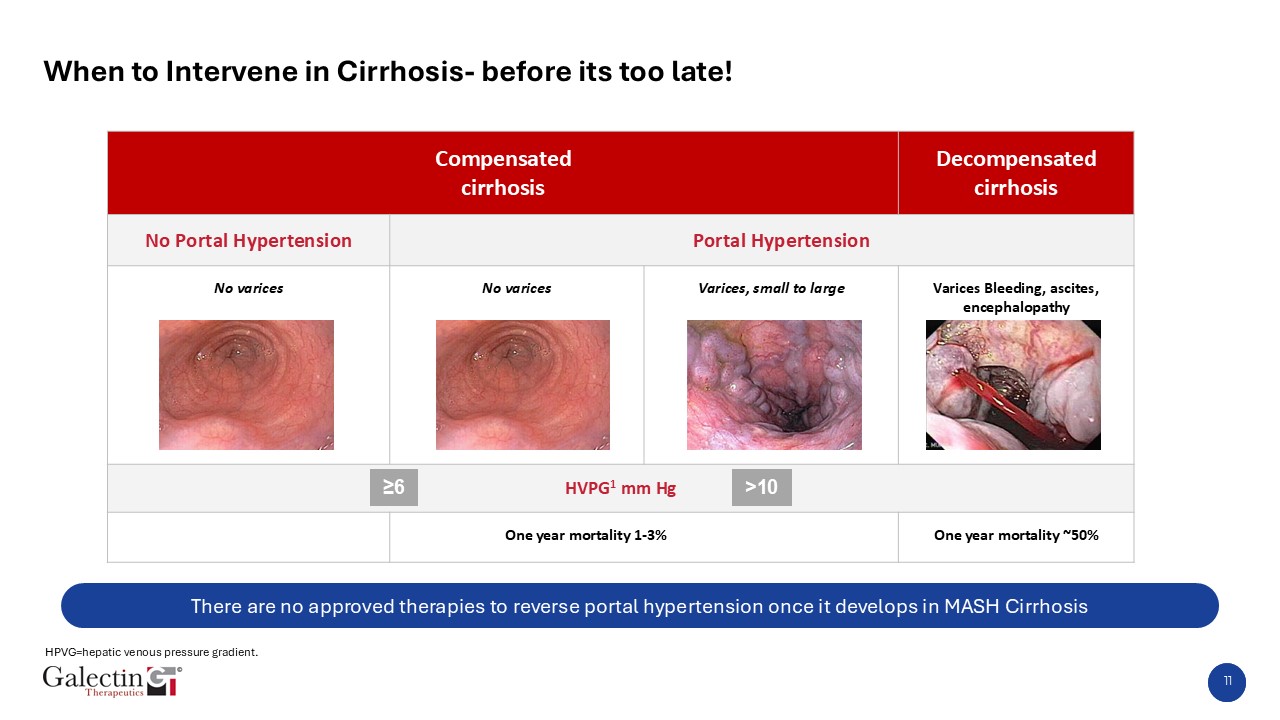
HPVG=hepatic venous pressure gradient. There are no approved therapies to reverse portal hypertension once it develops in MASH Cirrhosis 11 When to Intervene in Cirrhosis- before its too late! Compensated cirrhosis Decompensated cirrhosis No Portal Hypertension Portal Hypertension Stage 2 Stage 3 and 4 No varices No varices Varices, small to large Varices Bleeding, ascites, encephalopathy HVPG1 mm Hg One year mortality 1-3% One year mortality ~50% ≥6 >10

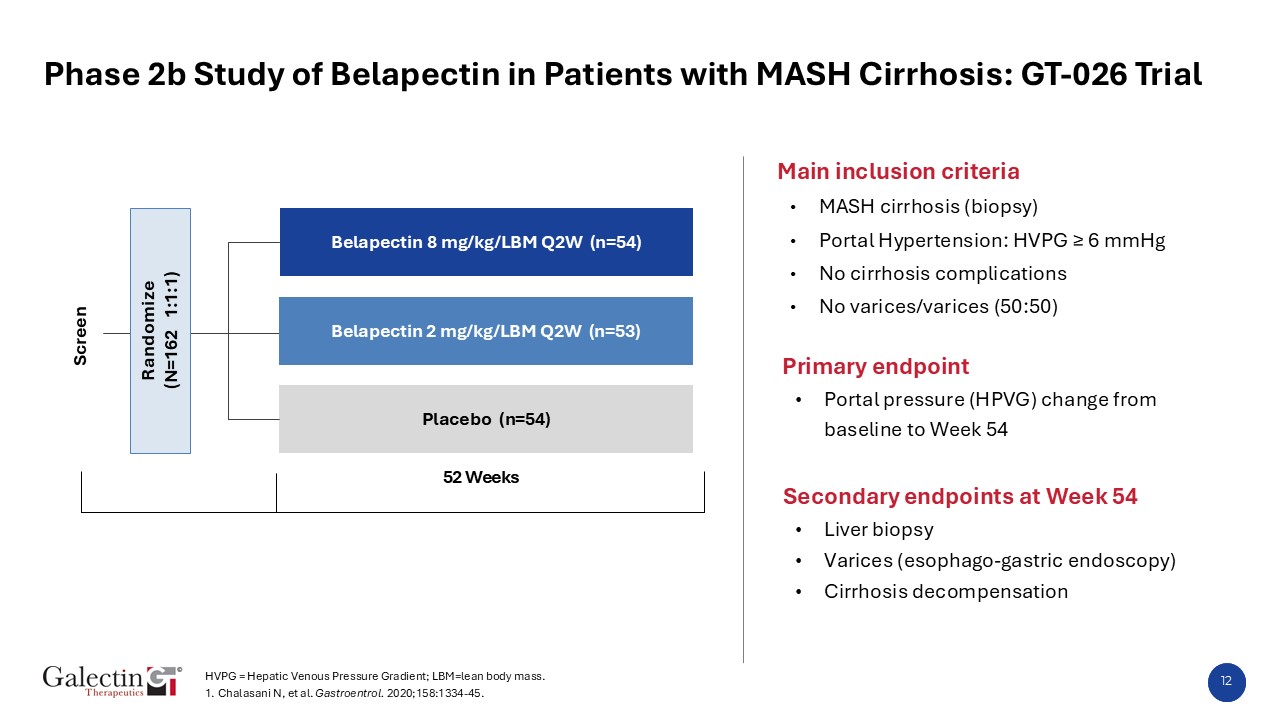
12 Phase 2b Study of Belapectin in Patients with MASH Cirrhosis: GT-026 Trial Main inclusion criteria MASH cirrhosis (biopsy) Portal Hypertension: HVPG ≥ 6 mmHg No cirrhosis complications No varices/varices (50:50) Primary endpoint Portal pressure (HPVG) change from baseline to Week 54 Secondary endpoints at Week 54 Liver biopsy Varices (esophago-gastric endoscopy) Cirrhosis decompensation Placebo (n=54) Screen Belapectin 8 mg/kg/LBM Q2W (n=54) 52 Weeks Belapectin 2 mg/kg/LBM Q2W (n=53) Randomize (N=162 1:1:1) HVPG = Hepatic Venous Pressure Gradient; LBM=lean body mass. 1. Chalasani N, et al. Gastroentrol. 2020;158:1334-45.

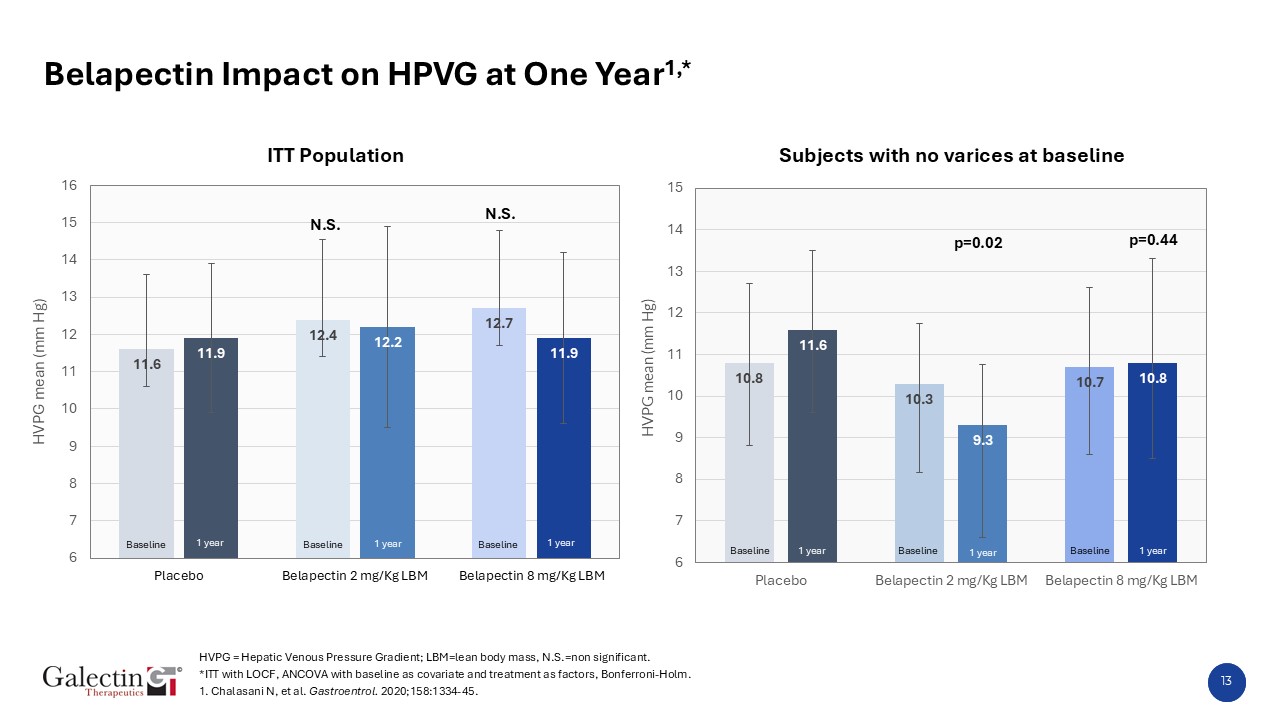
13 Belapectin Impact on HPVG at One Year1,* HVPG = Hepatic Venous Pressure Gradient; LBM=lean body mass, N.S.=non significant. *ITT with LOCF, ANCOVA with baseline as covariate and treatment as factors, Bonferroni-Holm.1. Chalasani N, et al. Gastroentrol. 2020;158:1334-45. N.S. N.S. Baseline 1 year p=0.02 p=0.44 ITT Population Subjects with no varices at baseline Baseline Baseline 1 year 1 year Baseline Baseline Baseline 1 year 1 year 1 year

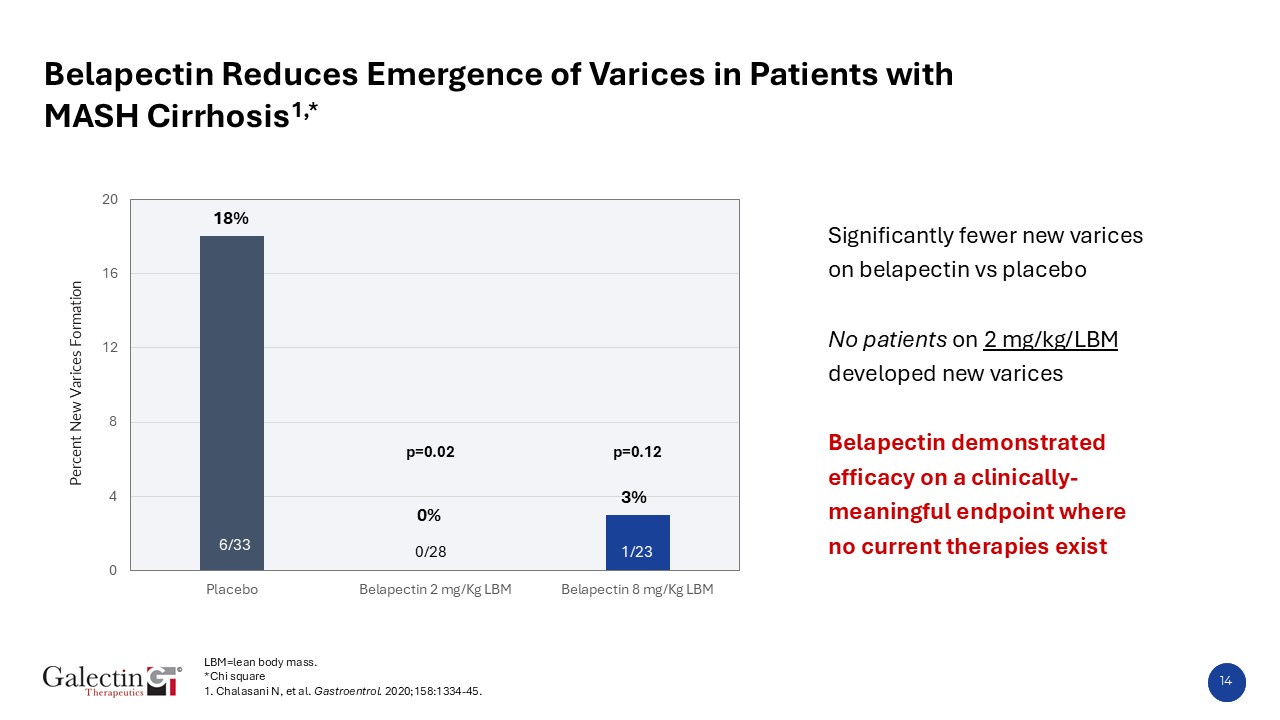
14 Belapectin Reduces Emergence of Varices in Patients with MASH Cirrhosis1,* Significantly fewer new varices on belapectin vs placebo No patients on 2 mg/kg/LBM developed new varices Belapectin demonstrated efficacy on a clinically-meaningful endpoint where no current therapies exist LBM=lean body mass. *Chi square 1. Chalasani N, et al. Gastroentrol. 2020;158:1334-45. p=0.02 p=0.12 6/33 1/23

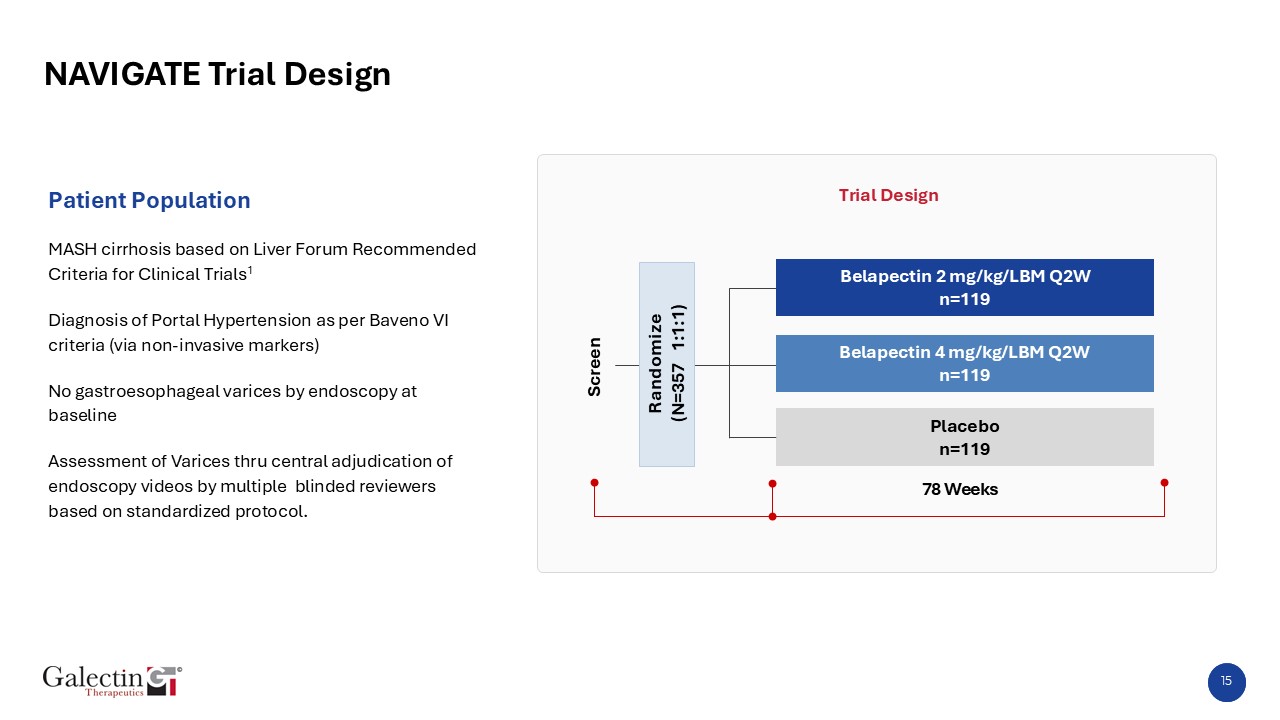
15 NAVIGATE Trial Design Placebo n=119 Screen Belapectin 2 mg/kg/LBM Q2W n=119 78 Weeks Belapectin 4 mg/kg/LBM Q2W n=119 Randomize (N=357 1:1:1) Trial Design Patient Population MASH cirrhosis based on Liver Forum Recommended Criteria for Clinical Trials1 Diagnosis of Portal Hypertension as per Baveno VI criteria (via non-invasive markers) No gastroesophageal varices by endoscopy at baseline Assessment of Varices thru central adjudication of endoscopy videos by multiple blinded reviewers based on standardized protocol.

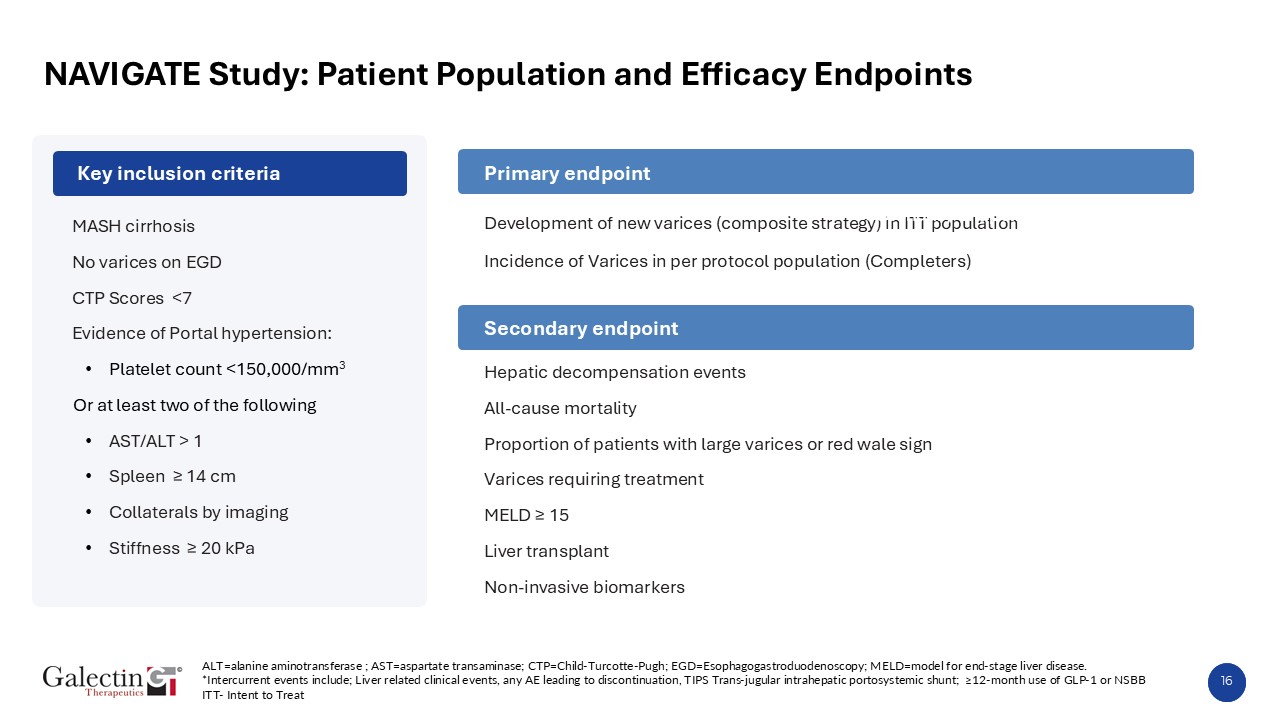
MASH cirrhosis No varices on EGD CTP Scores <7 Evidence of Portal hypertension: Platelet count <150,000/mm3 Or at least two of the following AST/ALT > 1 Spleen ≥ 14 cm Collaterals by imaging Stiffness ≥ 20 kPa Development of new varices (composite strategy) in ITT population Incidence of Varices in per protocol population (Completers) Hepatic decompensation events All-cause mortality Proportion of patients with large varices or red wale sign Varices requiring treatment MELD ≥ 15 Liver transplant Non-invasive biomarkers ALT=alanine aminotransferase ; AST=aspartate transaminase; CTP=Child-Turcotte-Pugh; EGD=Esophagogastroduodenoscopy; MELD=model for end-stage liver disease. *Intercurrent events include; Liver related clinical events, any AE leading to discontinuation, TIPS Trans-jugular intrahepatic portosystemic shunt; ≥12-month use of GLP-1 or NSBB ITT- Intent to Treat Secondary endpoint NAVIGATE Study: Patient Population and Efficacy Endpoints 16 Key inclusion criteria Primary endpoint Secondary endpoint

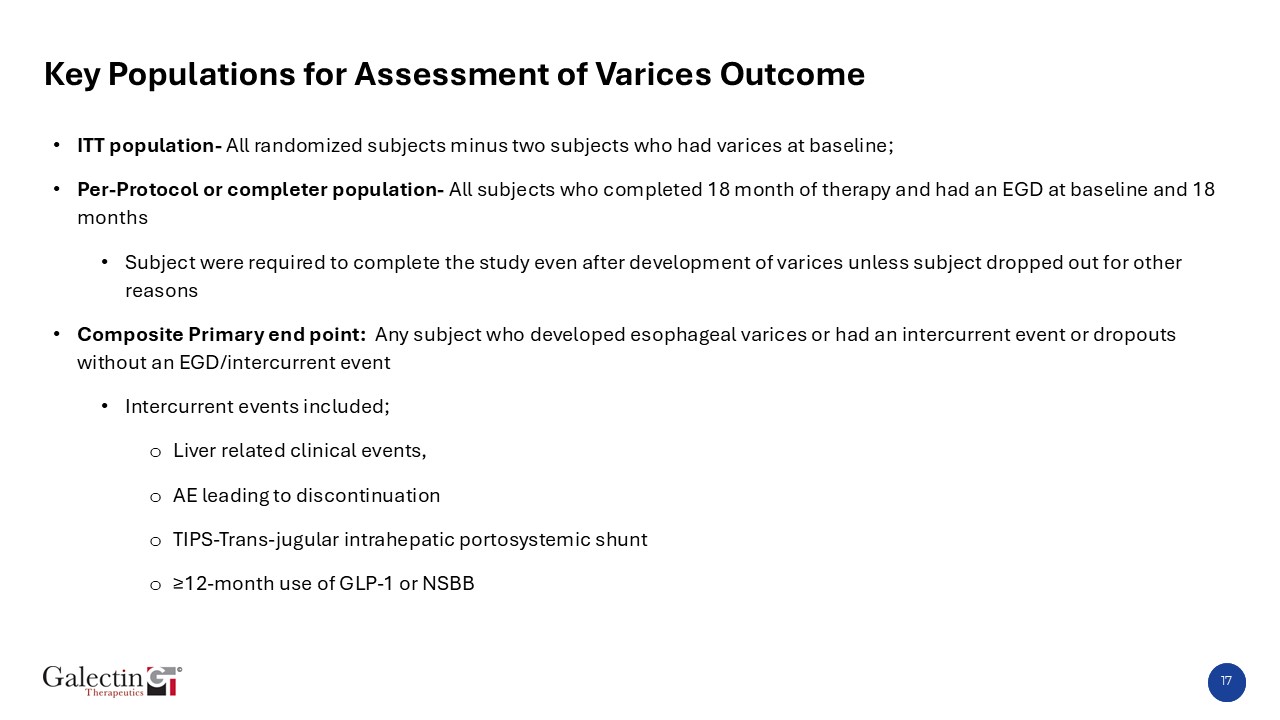
17 Key Populations for Assessment of Varices Outcome ITT population- All randomized subjects minus two subjects who had varices at baseline; Per-Protocol or completer population- All subjects who completed 18 month of therapy and had an EGD at baseline and 18 months Subject were required to complete the study even after development of varices unless subject dropped out for other reasons Composite Primary end point: Any subject who developed esophageal varices or had an intercurrent event or dropouts without an EGD/intercurrent event Intercurrent events included; Liver related clinical events, AE leading to discontinuation TIPS-Trans-jugular intrahepatic portosystemic shunt ≥12-month use of GLP-1 or NSBB

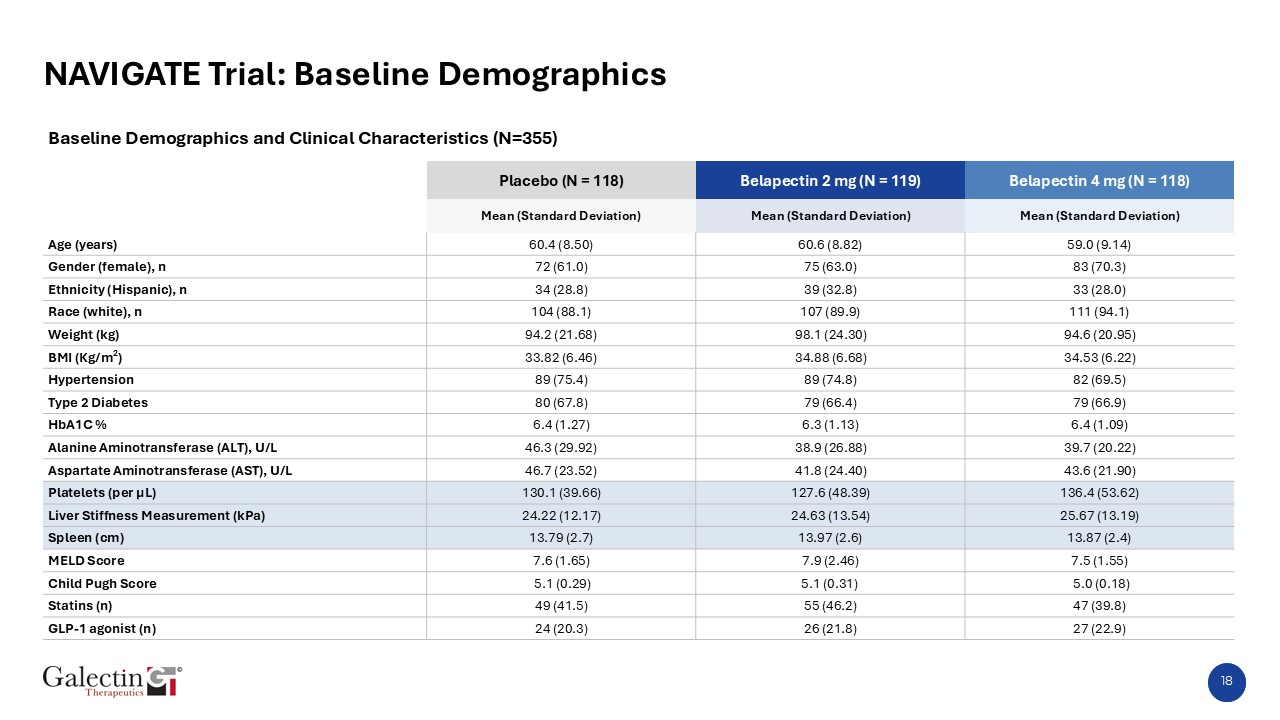
18 NAVIGATE Trial: Baseline Demographics Baseline Demographics and Clinical Characteristics (N=355) Placebo (N = 118) Belapectin 2 mg (N = 119) Belapectin 4 mg (N = 118) Mean (Standard Deviation) Mean (Standard Deviation) Mean (Standard Deviation) Age (years) 60.4 (8.50) 60.6 (8.82) 59.0 (9.14) Gender (female), n 72 (61.0) 75 (63.0) 83 (70.3) Ethnicity (Hispanic), n 34 (28.8) 39 (32.8) 33 (28.0) Race (white), n 104 (88.1) 107 (89.9) 111 (94.1) Weight (kg) 94.2 (21.68) 98.1 (24.30) 94.6 (20.95) BMI (Kg/m2) 33.82 (6.46) 34.88 (6.68) 34.53 (6.22) Hypertension 89 (75.4) 89 (74.8) 82 (69.5) Type 2 Diabetes 80 (67.8) 79 (66.4) 79 (66.9) HbA1C % 6.4 (1.27) 6.3 (1.13) 6.4 (1.09) Alanine Aminotransferase (ALT), U/L 46.3 (29.92) 38.9 (26.88) 39.7 (20.22) Aspartate Aminotransferase (AST), U/L 46.7 (23.52) 41.8 (24.40) 43.6 (21.90) Platelets (per µL) 130.1 (39.66) 127.6 (48.39) 136.4 (53.62) Liver Stiffness Measurement (kPa) 24.22 (12.17) 24.63 (13.54) 25.67 (13.19) Spleen (cm) 13.79 (2.7) 13.97 (2.6) 13.87 (2.4) MELD Score 7.6 (1.65) 7.9 (2.46) 7.5 (1.55) Child Pugh Score 5.1 (0.29) 5.1 (0.31) 5.0 (0.18) Statins (n) 49 (41.5) 55 (46.2) 47 (39.8) GLP-1 agonist (n) 24 (20.3) 26 (21.8) 27 (22.9)
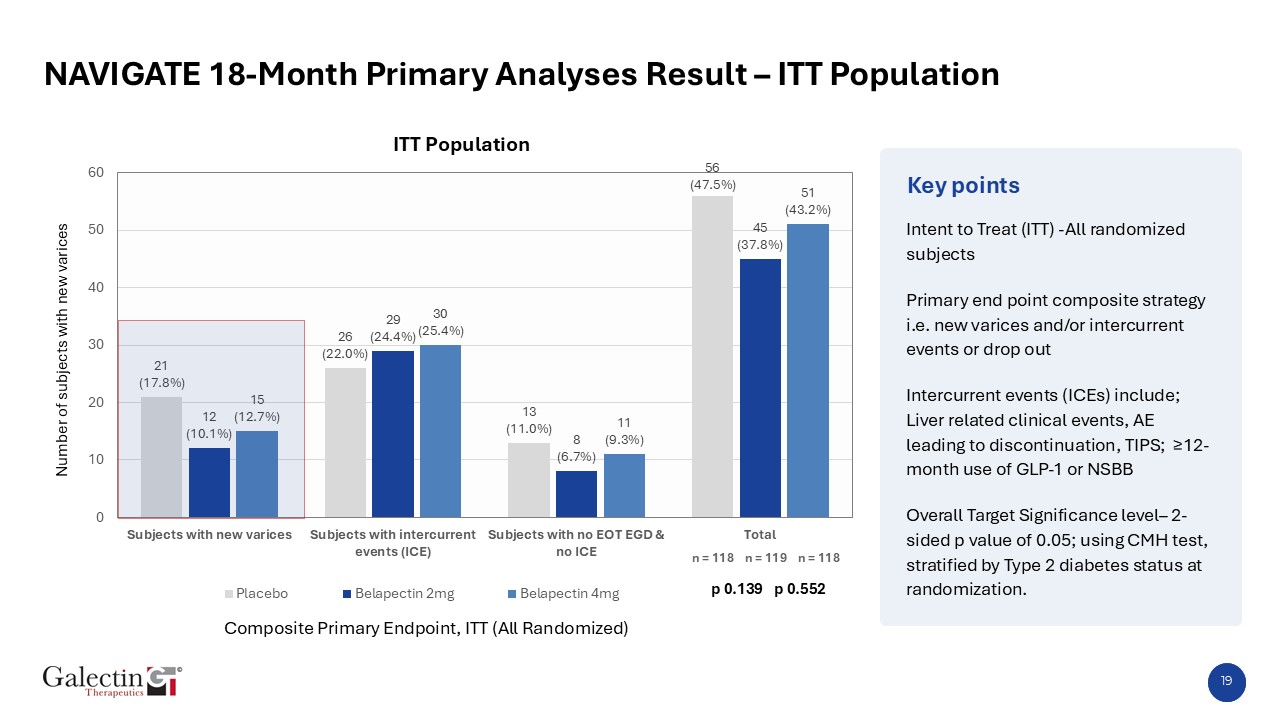
NAVIGATE 18-Month Primary Analyses Result – ITT Population Intent to Treat (ITT) -All randomized subjects Primary end point composite strategy i.e. new varices and/or intercurrent events or drop out Intercurrent events (ICEs) include; Liver related clinical events, AE leading to discontinuation, TIPS; ≥12-month use of GLP-1 or NSBB Overall Target Significance level– 2-sided p value of 0.05; using CMH test, stratified by Type 2 diabetes status at randomization. p 0.139 p 0.552 n = 118 n = 119 n = 118 ITT Population Number of subjects with new varices Composite Primary Endpoint, ITT (All Randomized) Key points 19

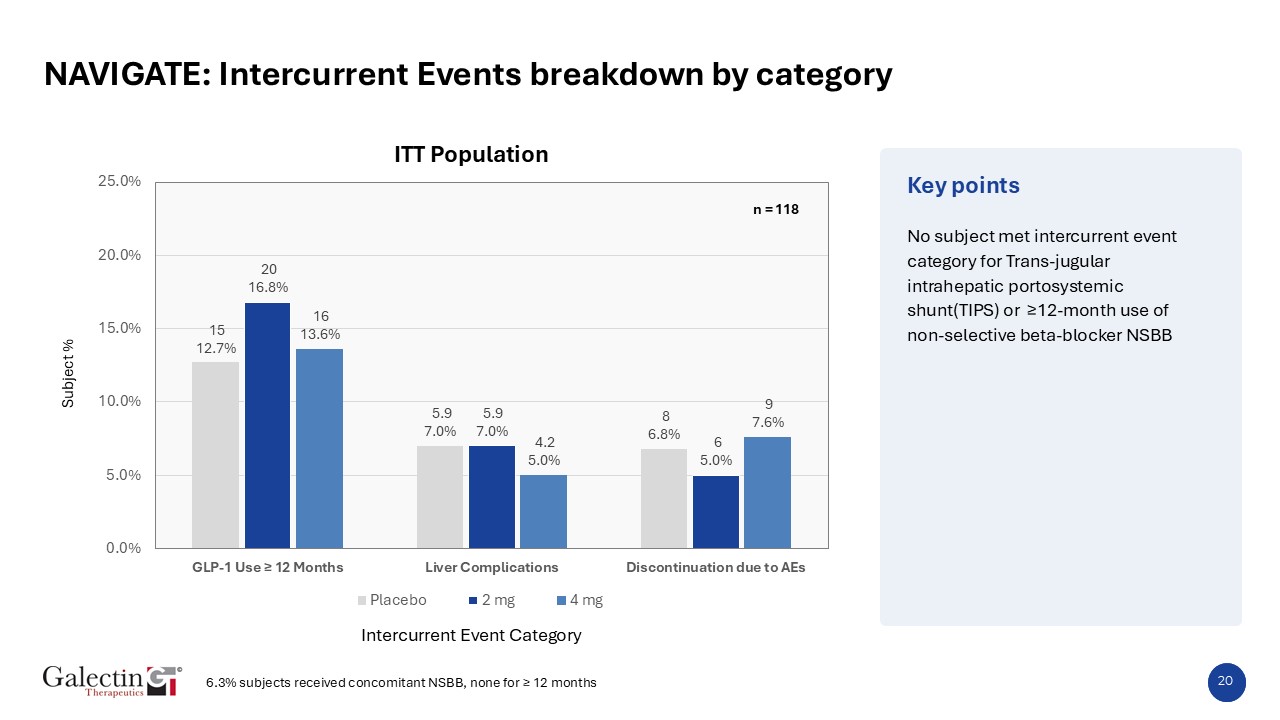
Key points 20 NAVIGATE: Intercurrent Events breakdown by category n = 118 Subject % Intercurrent Event Category No subject met intercurrent event category for Trans-jugular intrahepatic portosystemic shunt(TIPS) or ≥12-month use of non-selective beta-blocker NSBB ITT Population 6.3% subjects received concomitant NSBB, none for ≥ 12 months

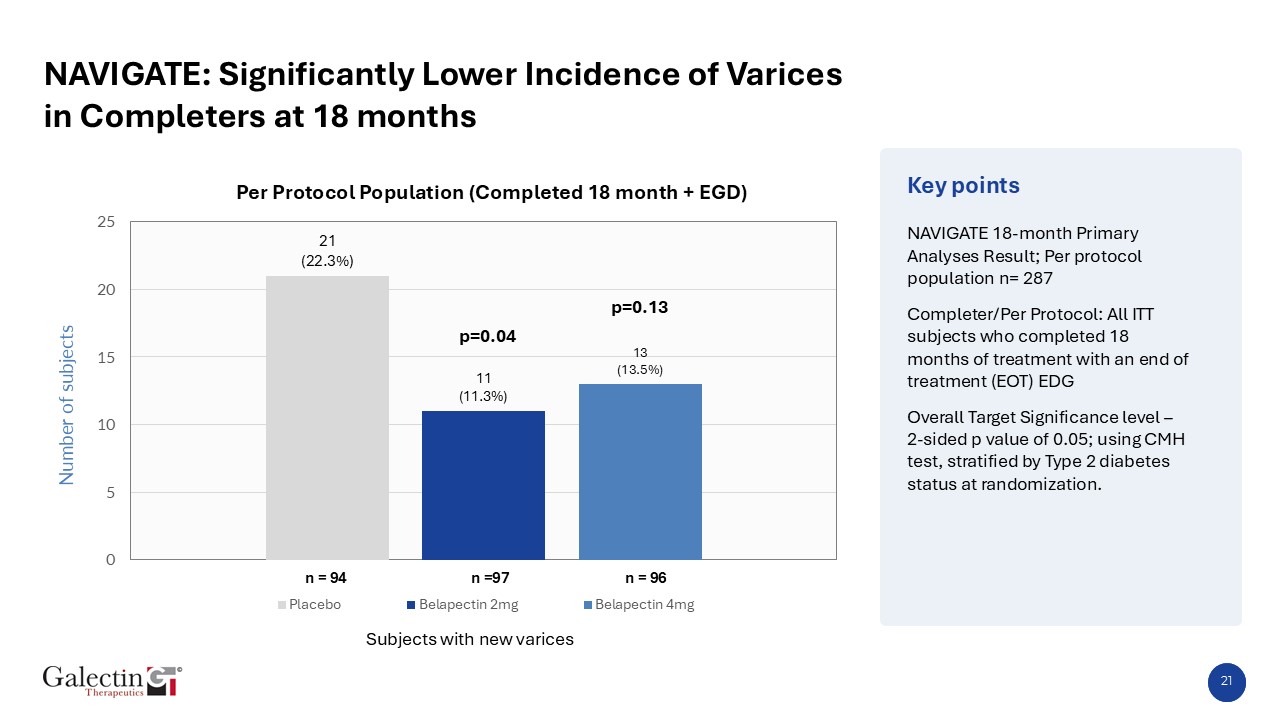
Key points NAVIGATE: Significantly Lower Incidence of Varices in Completers at 18 months N = 97 N = 98 N = 95 n = 94 n =97 n = 96 p=0.04 p=0.13 Number of subjects Subjects with new varices NAVIGATE 18-month Primary Analyses Result; Per protocol population n= 287 Completer/Per Protocol: All ITT subjects who completed 18 months of treatment with an end of treatment (EOT) EDG Overall Target Significance level – 2-sided p value of 0.05; using CMH test, stratified by Type 2 diabetes status at randomization. 21

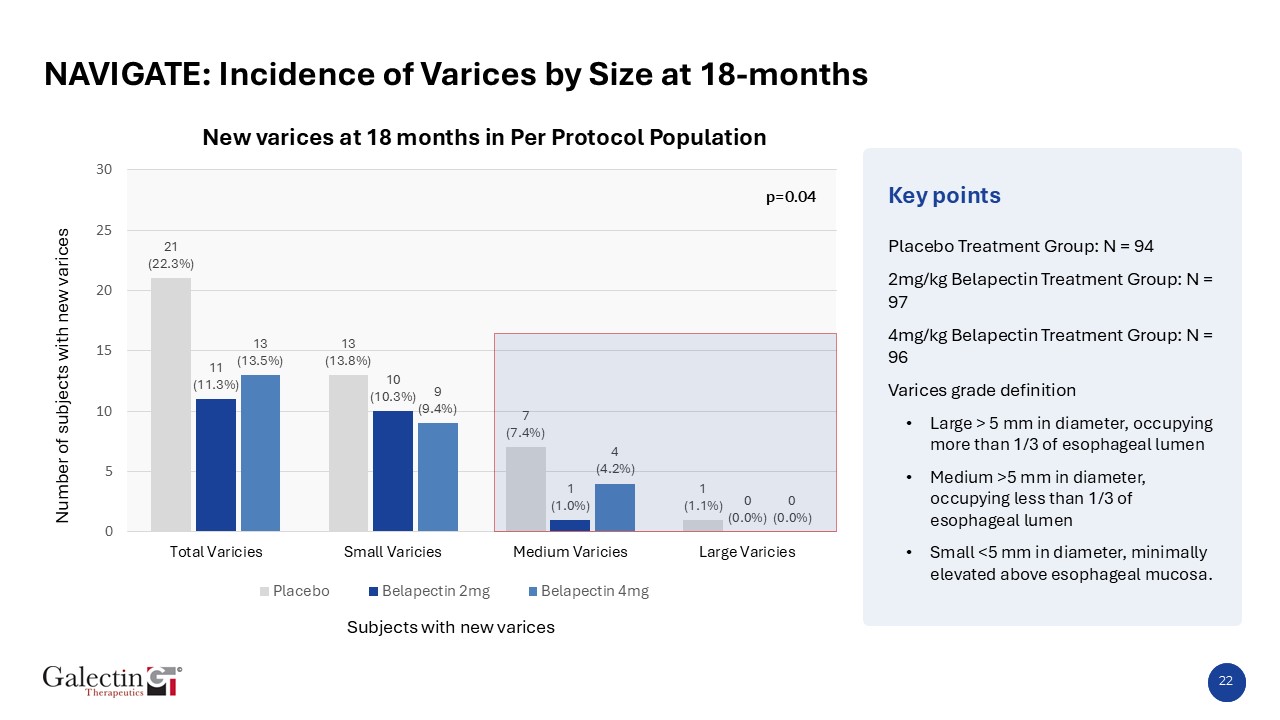
Key points NAVIGATE: Incidence of Varices by Size at 18-months Number of subjects with new varices Subjects with new varices New varices at 18 months in Per Protocol Population Placebo Treatment Group: N = 94 2mg/kg Belapectin Treatment Group: N = 97 4mg/kg Belapectin Treatment Group: N = 96 Varices grade definition Large > 5 mm in diameter, occupying more than 1/3 of esophageal lumen Medium >5 mm in diameter, occupying less than 1/3 of esophageal lumen Small <5 mm in diameter, minimally elevated above esophageal mucosa. p=0.04 22

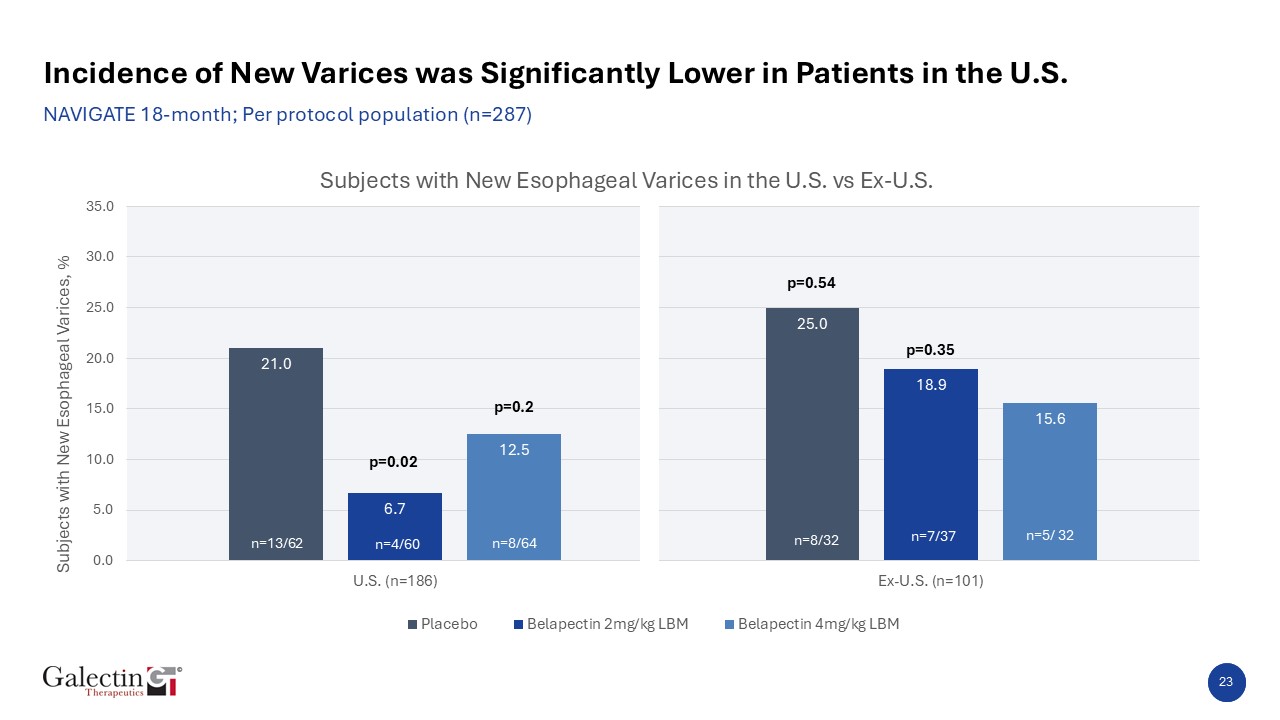
Incidence of New Varices was Significantly Lower in Patients in the U.S. n=13/62 n=4/60 n=8/64 n=8/32 n=7/37 n=5/ 32 p=0.02 p=0.54 p=0.35 NAVIGATE 18-month; Per protocol population (n=287) p=0.2 23

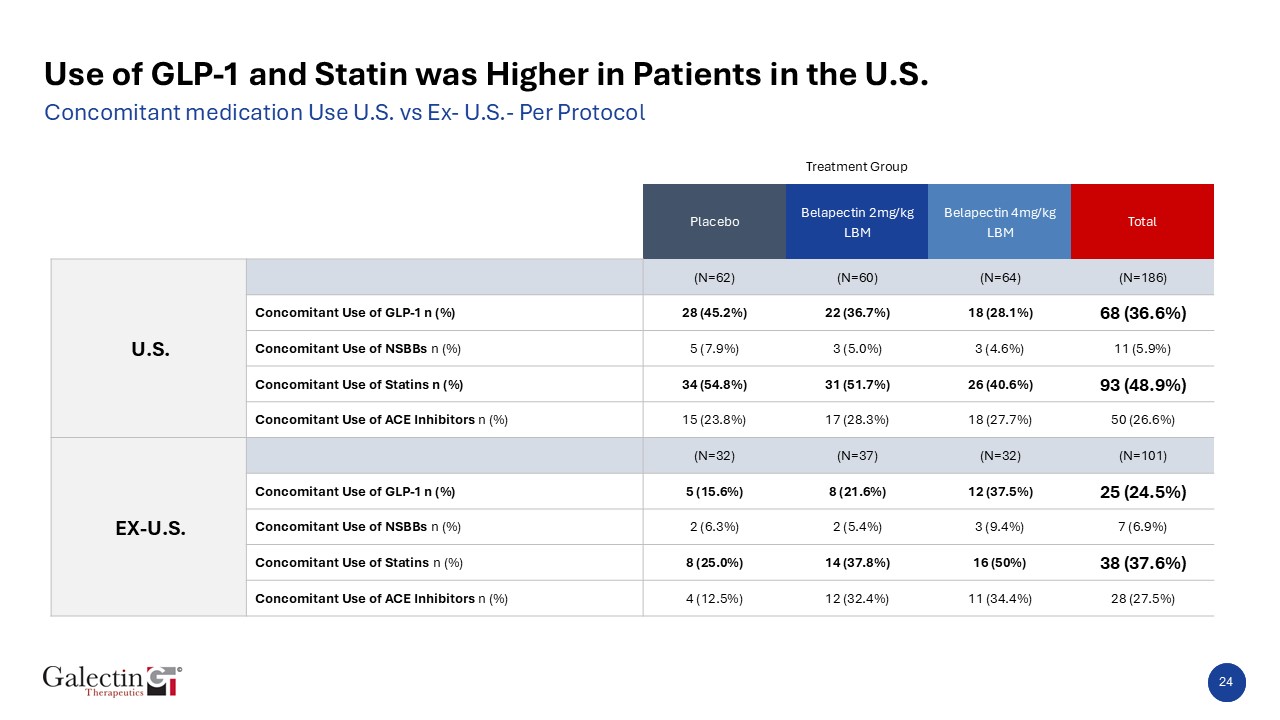
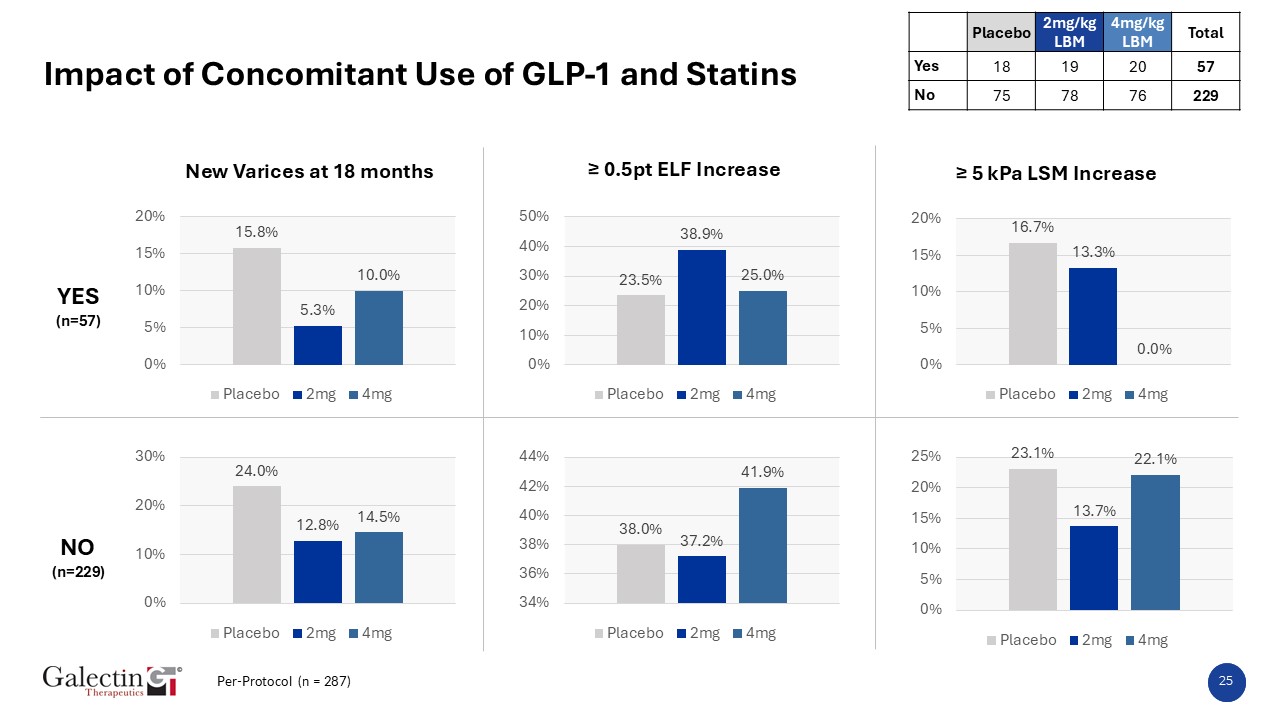
24 Use of GLP-1 and Statin was Higher in Patients in the U.S. 24 Treatment Group Placebo Belapectin 2mg/kg LBM Belapectin 4mg/kg LBM Total U.S. (N=62) (N=60) (N=64) (N=186) Concomitant Use of GLP-1 n (%) 28 (45.2%) 22 (36.7%) 18 (28.1%) 68 (36.6%) Concomitant Use of NSBBs n (%) 5 (7.9%) 3 (5.0%) 3 (4.6%) 11 (5.9%) Concomitant Use of Statins n (%) 34 (54.8%) 31 (51.7%) 26 (40.6%) 93 (48.9%) Concomitant Use of ACE Inhibitors n (%) 15 (23.8%) 17 (28.3%) 18 (27.7%) 50 (26.6%) EX-U.S. (N=32) (N=37) (N=32) (N=101) Concomitant Use of GLP-1 n (%) 5 (15.6%) 8 (21.6%) 12 (37.5%) 25 (24.5%) Concomitant Use of NSBBs n (%) 2 (6.3%) 2 (5.4%) 3 (9.4%) 7 (6.9%) Concomitant Use of Statins n (%) 8 (25.0%) 14 (37.8%) 16 (50%) 38 (37.6%) Concomitant Use of ACE Inhibitors n (%) 4 (12.5%) 12 (32.4%) 11 (34.4%) 28 (27.5%) Concomitant medication Use U.S. vs Ex- U.S.- Per Protocol

25 Impact of Concomitant Use of GLP-1 and Statins Per-Protocol (n = 287) New Varices at 18 months ≥ 0.5pt ELF Increase YES (n=57) NO (n=229) ≥ 5 kPa LSM Increase Placebo 2mg/kg LBM 4mg/kg LBM Total Yes 18 19 20 57 No 75 78 76 229

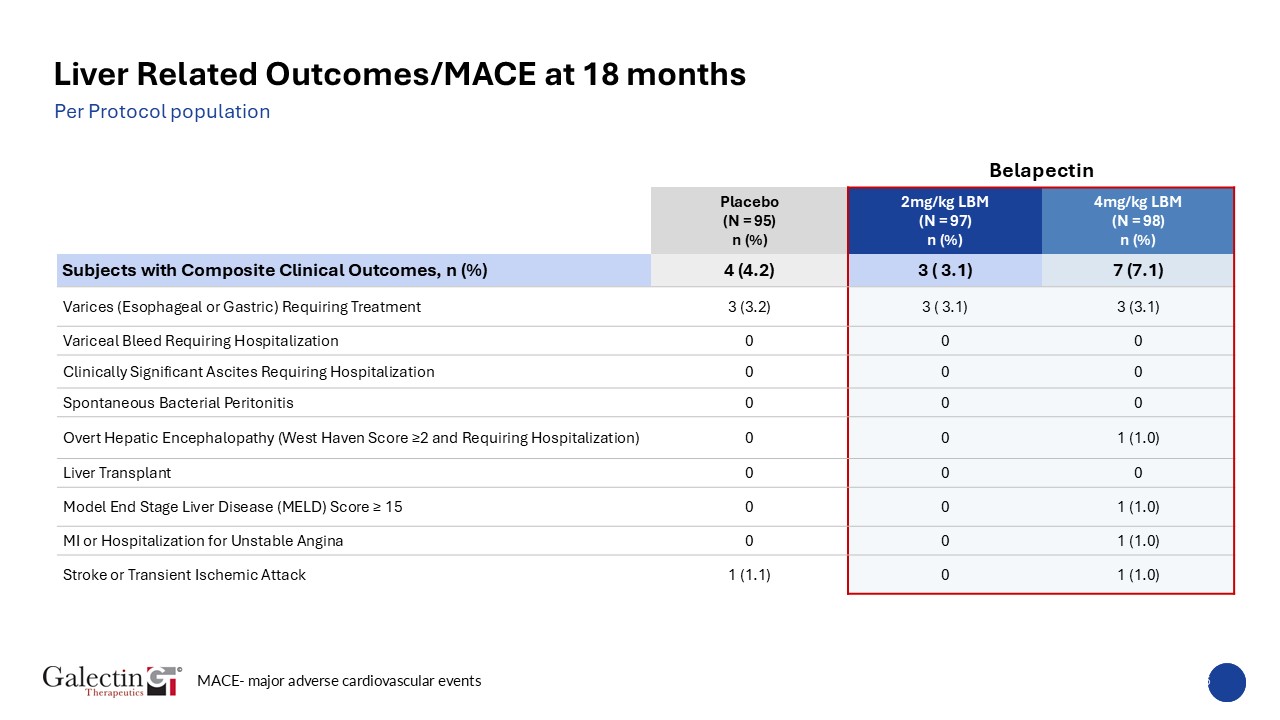
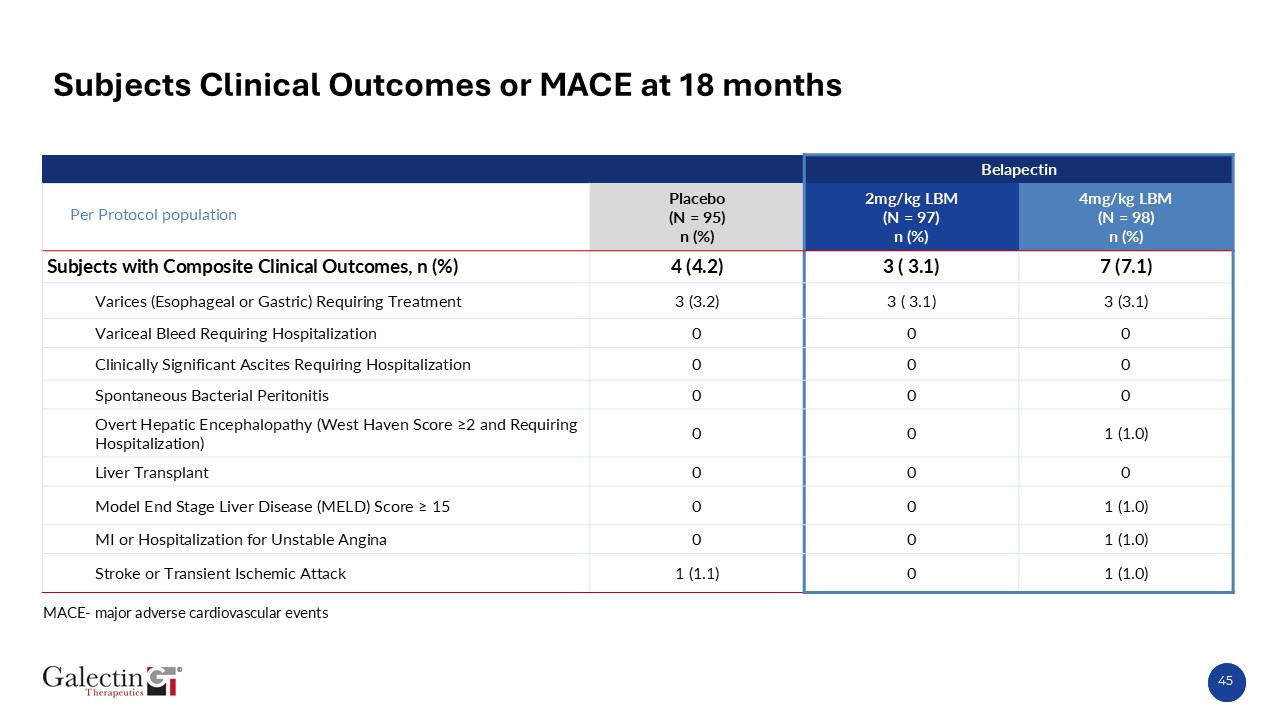
26 Liver Related Outcomes/MACE at 18 months Belapectin Placebo (N = 95) n (%) 2mg/kg LBM (N = 97) n (%) 4mg/kg LBM (N = 98) n (%) Subjects with Composite Clinical Outcomes, n (%) 4 (4.2) 3 ( 3.1) 7 (7.1) Varices (Esophageal or Gastric) Requiring Treatment 3 (3.2) 3 ( 3.1) 3 (3.1) Variceal Bleed Requiring Hospitalization 0 0 0 Clinically Significant Ascites Requiring Hospitalization 0 0 0 Spontaneous Bacterial Peritonitis 0 0 0 Overt Hepatic Encephalopathy (West Haven Score ≥2 and Requiring Hospitalization) 0 0 1 (1.0) Liver Transplant 0 0 0 Model End Stage Liver Disease (MELD) Score ≥ 15 0 0 1 (1.0) MI or Hospitalization for Unstable Angina 0 0 1 (1.0) Stroke or Transient Ischemic Attack 1 (1.1) 0 1 (1.0) MACE- major adverse cardiovascular events Per Protocol population

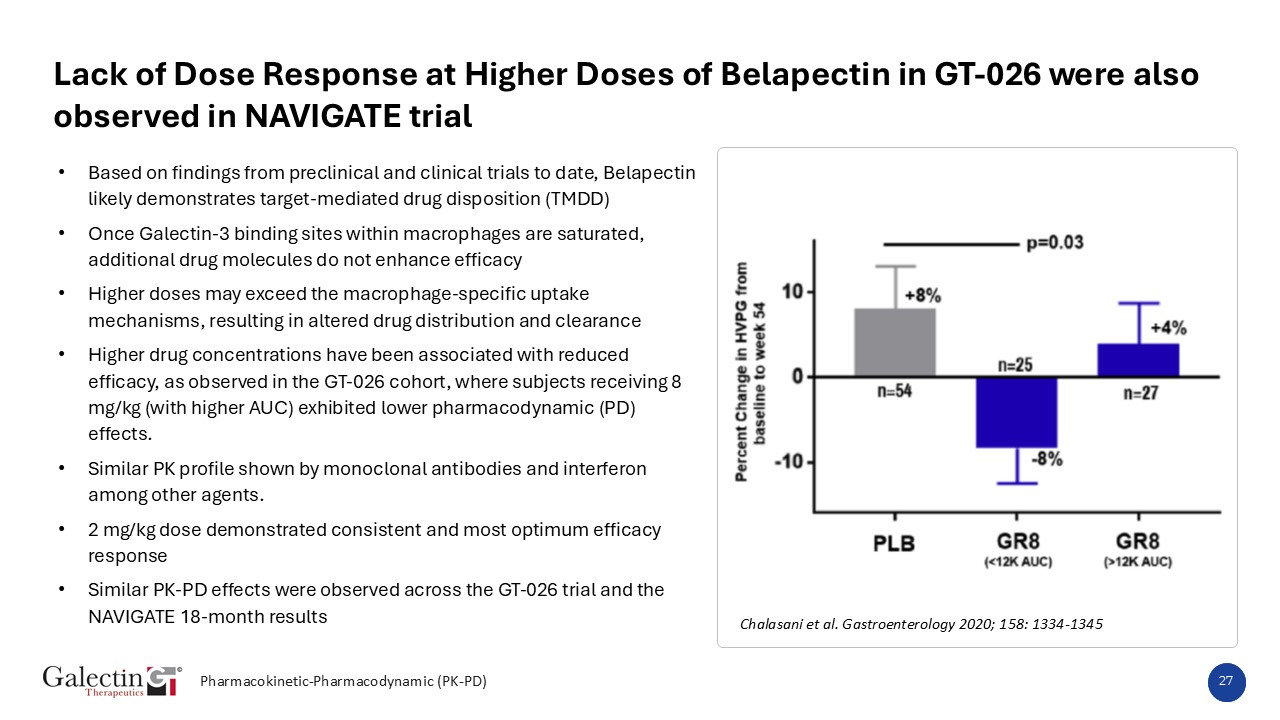
Lack of Dose Response at Higher Doses of Belapectin in GT-026 were also observed in NAVIGATE trial Based on findings from preclinical and clinical trials to date, Belapectin likely demonstrates target-mediated drug disposition (TMDD) Once Galectin-3 binding sites within macrophages are saturated, additional drug molecules do not enhance efficacy Higher doses may exceed the macrophage-specific uptake mechanisms, resulting in altered drug distribution and clearance Higher drug concentrations have been associated with reduced efficacy, as observed in the GT-026 cohort, where subjects receiving 8 mg/kg (with higher AUC) exhibited lower pharmacodynamic (PD) effects. Similar PK profile shown by monoclonal antibodies and interferon among other agents. 2 mg/kg dose demonstrated consistent and most optimum efficacy response Similar PK-PD effects were observed across the GT-026 trial and the NAVIGATE 18-month results Chalasani et al. Gastroenterology 2020; 158: 1334-1345 Pharmacokinetic-Pharmacodynamic (PK-PD) 27

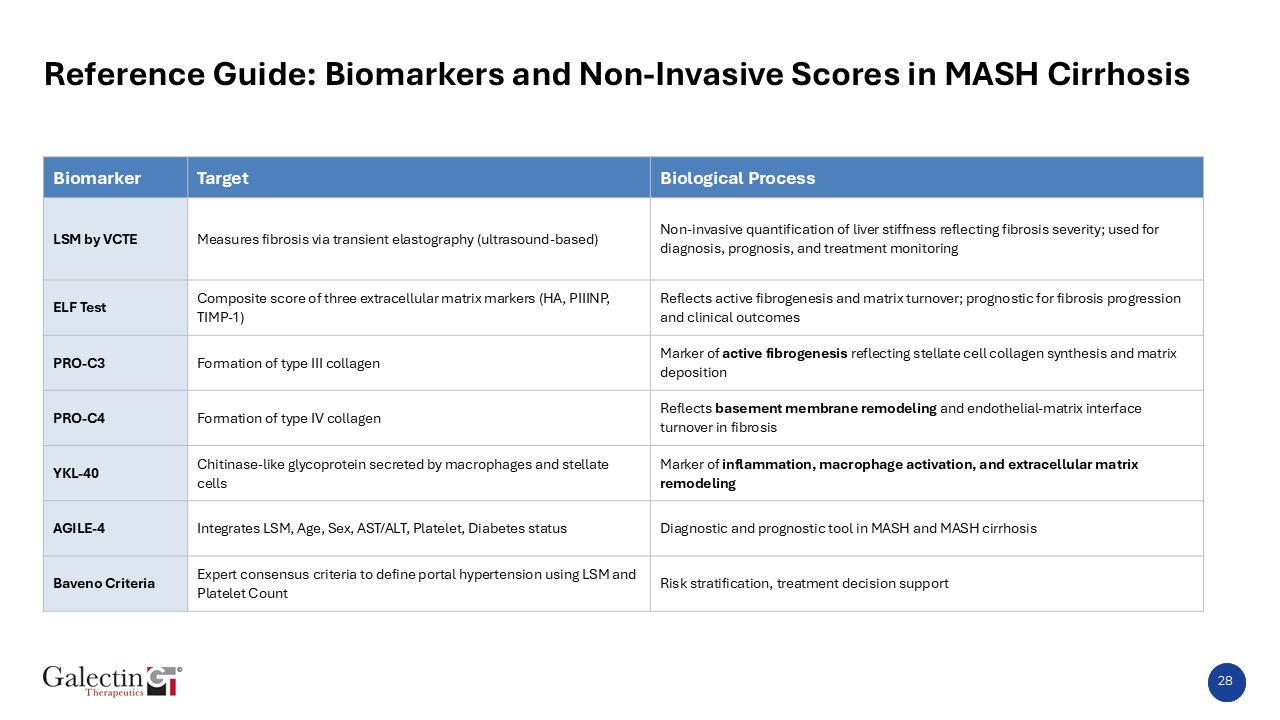
28 Reference Guide: Biomarkers and Non-Invasive Scores in MASH Cirrhosis Biomarker Target Biological Process LSM by VCTE Measures fibrosis via transient elastography (ultrasound-based) Non-invasive quantification of liver stiffness reflecting fibrosis severity; used for diagnosis, prognosis, and treatment monitoring ELF Test Composite score of three extracellular matrix markers (HA, PIIINP, TIMP-1) Reflects active fibrogenesis and matrix turnover; prognostic for fibrosis progression and clinical outcomes PRO-C3 Formation of type III collagen Marker of active fibrogenesis reflecting stellate cell collagen synthesis and matrix deposition PRO-C4 Formation of type IV collagen Reflects basement membrane remodeling and endothelial-matrix interface turnover in fibrosis YKL-40 Chitinase-like glycoprotein secreted by macrophages and stellate cells Marker of inflammation, macrophage activation, and extracellular matrix remodeling AGILE-4 Integrates LSM, Age, Sex, AST/ALT, Platelet, Diabetes status Diagnostic and prognostic tool in MASH and MASH cirrhosis Baveno Criteria Expert consensus criteria to define portal hypertension using LSM and Platelet Count Risk stratification, treatment decision support

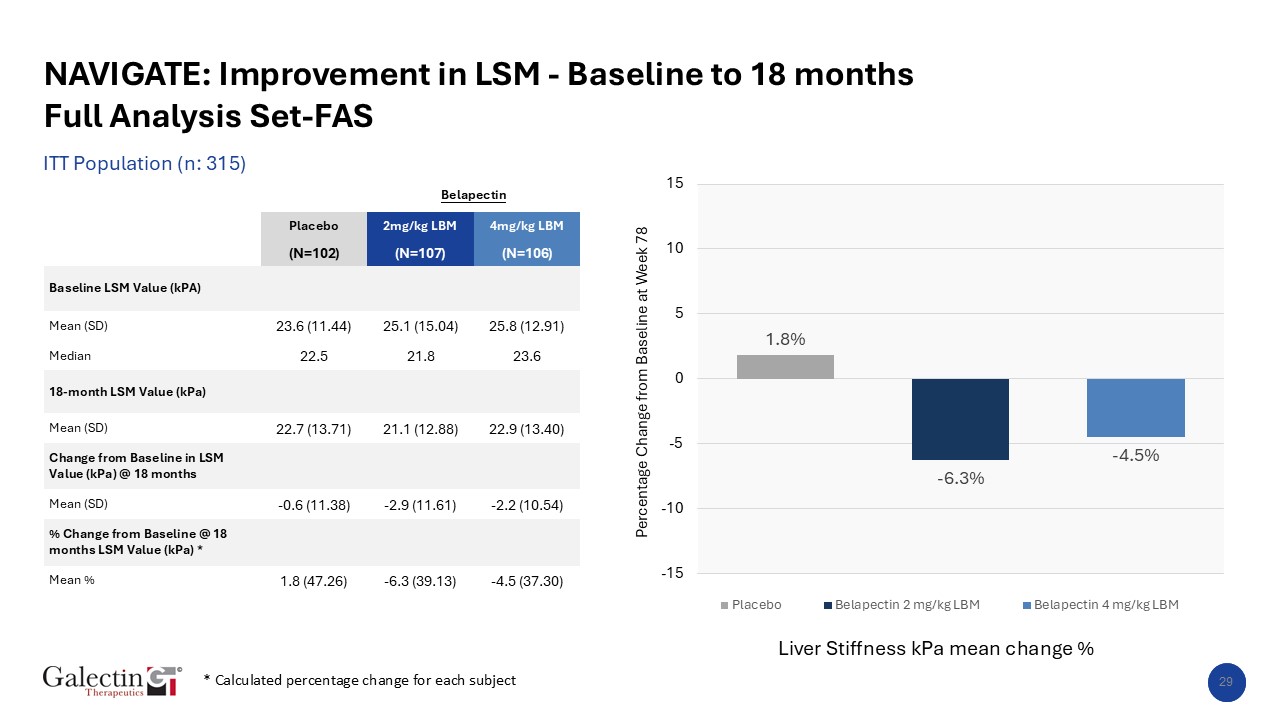
29 NAVIGATE: Improvement in LSM - Baseline to 18 monthsFull Analysis Set-FAS ITT Population (n: 315) N=97 N=96 Liver Stiffness kPa mean change % Belapectin Placebo 2mg/kg LBM 4mg/kg LBM (N=102) (N=107) (N=106) Baseline LSM Value (kPA) Mean (SD) 23.6 (11.44) 25.1 (15.04) 25.8 (12.91) Median 22.5 21.8 23.6 18-month LSM Value (kPa) Mean (SD) 22.7 (13.71) 21.1 (12.88) 22.9 (13.40) Change from Baseline in LSM Value (kPa) @ 18 months Mean (SD) -0.6 (11.38) -2.9 (11.61) -2.2 (10.54) % Change from Baseline @ 18 months LSM Value (kPa) * Mean % 1.8 (47.26) -6.3 (39.13) -4.5 (37.30) * Calculated percentage change for each subject

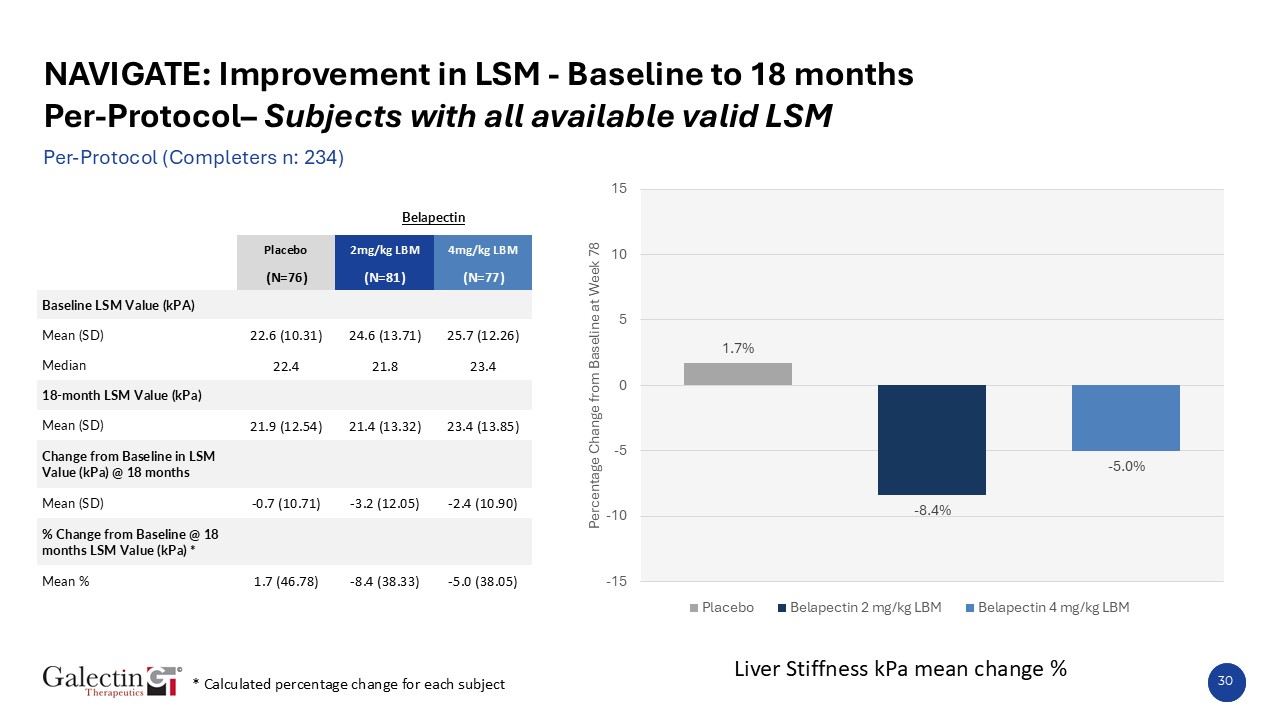
NAVIGATE: Improvement in LSM - Baseline to 18 monthsPer-Protocol– Subjects with all available valid LSM Per-Protocol (Completers n: 234) N=97 N=96 Liver Stiffness kPa mean change % Belapectin Placebo 2mg/kg LBM 4mg/kg LBM (N=76) (N=81) (N=77) Baseline LSM Value (kPA) Mean (SD) 22.6 (10.31) 24.6 (13.71) 25.7 (12.26) Median 22.4 21.8 23.4 18-month LSM Value (kPa) Mean (SD) 21.9 (12.54) 21.4 (13.32) 23.4 (13.85) Change from Baseline in LSM Value (kPa) @ 18 months Mean (SD) -0.7 (10.71) -3.2 (12.05) -2.4 (10.90) % Change from Baseline @ 18 months LSM Value (kPa) * Mean % 1.7 (46.78) -8.4 (38.33) -5.0 (38.05) * Calculated percentage change for each subject 30

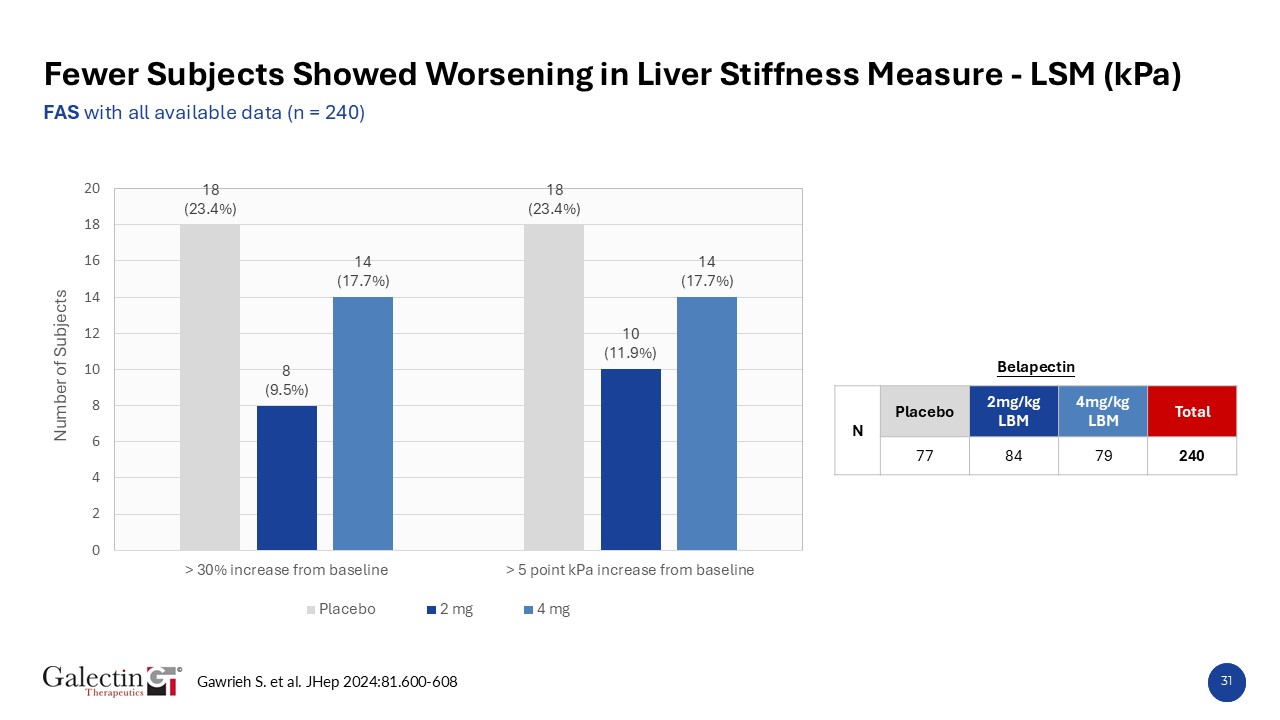
Gawrieh S. et al. JHep 2024:81.600-608 Belapectin N Placebo 2mg/kg LBM 4mg/kg LBM Total 77 84 79 240 31 Fewer Subjects Showed Worsening in Liver Stiffness Measure - LSM (kPa) FAS with all available data (n = 240)

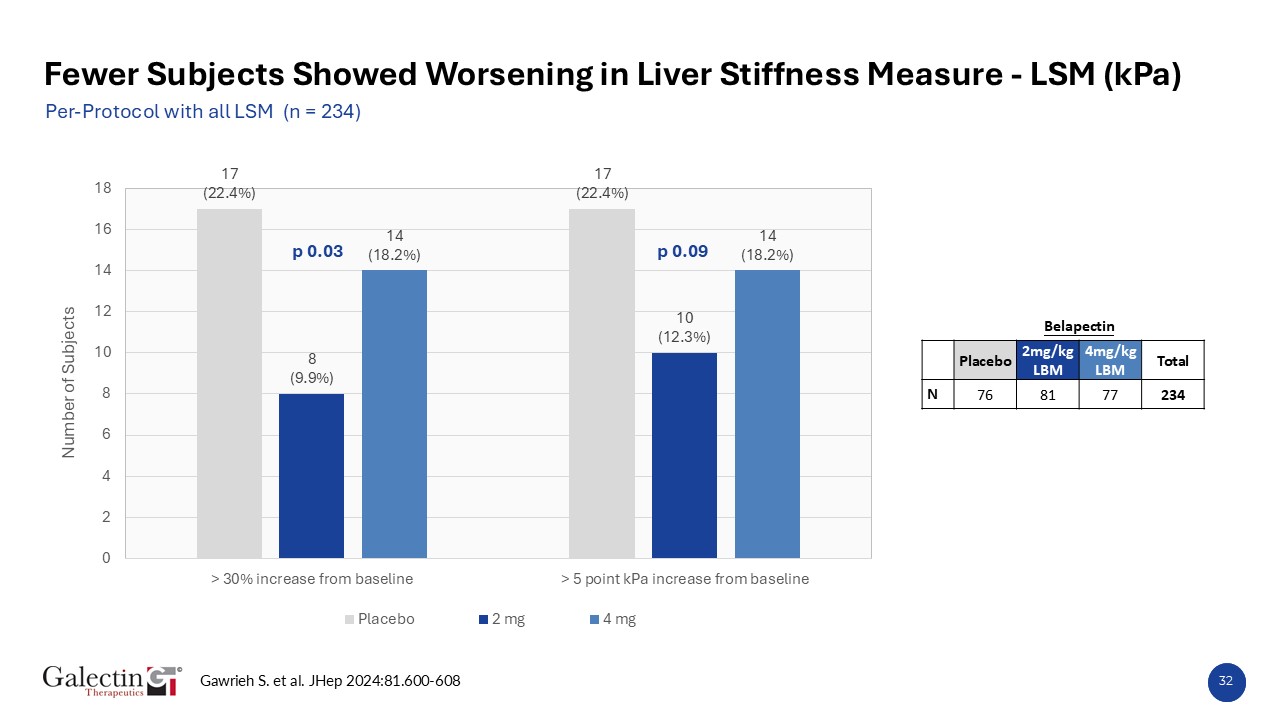
32 Fewer Subjects Showed Worsening in Liver Stiffness Measure - LSM (kPa) Per-Protocol with all LSM (n = 234) Gawrieh S. et al. JHep 2024:81.600-608 p 0.09 p 0.03 Belapectin Placebo 2mg/kg LBM 4mg/kg LBM Total N 76 81 77 234

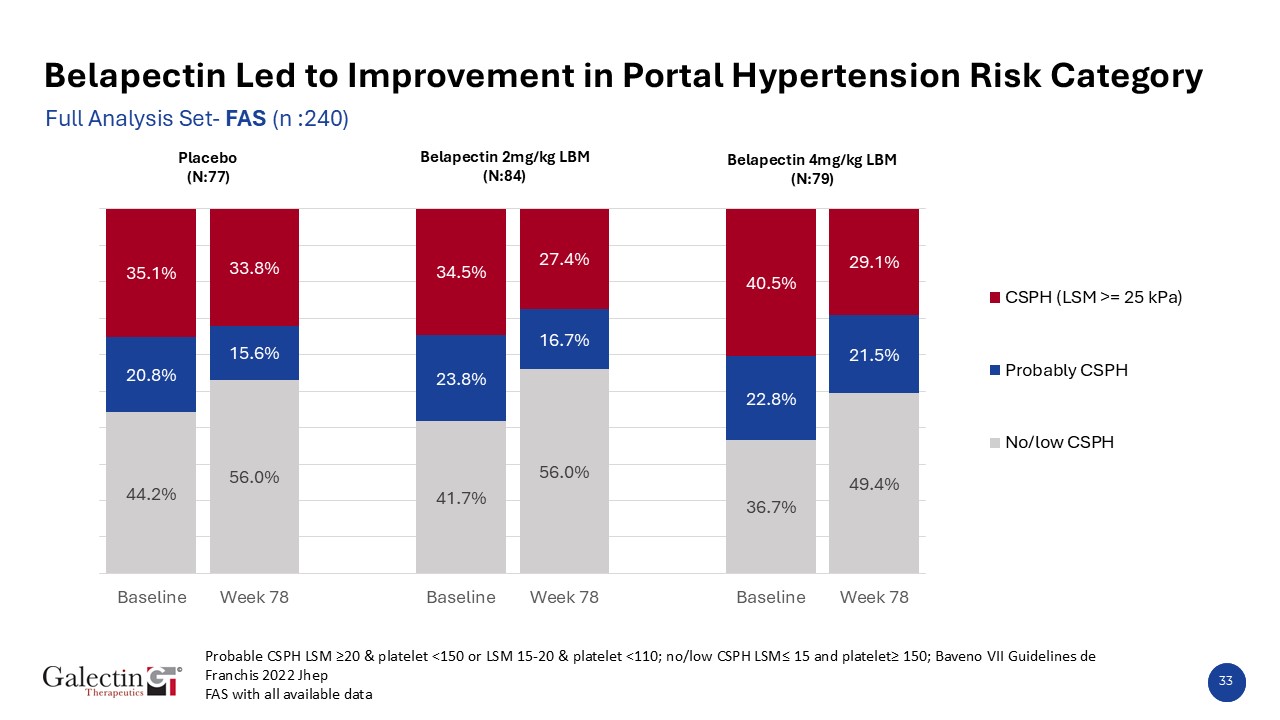
33 Belapectin Led to Improvement in Portal Hypertension Risk Category Full Analysis Set- FAS (n :240) Probable CSPH LSM ≥20 & platelet <150 or LSM 15-20 & platelet <110; no/low CSPH LSM≤ 15 and platelet≥ 150; Baveno VII Guidelines de Franchis 2022 Jhep FAS with all available data Belapectin 2mg/kg LBM (N:84) Placebo (N:77) Belapectin 4mg/kg LBM (N:79)

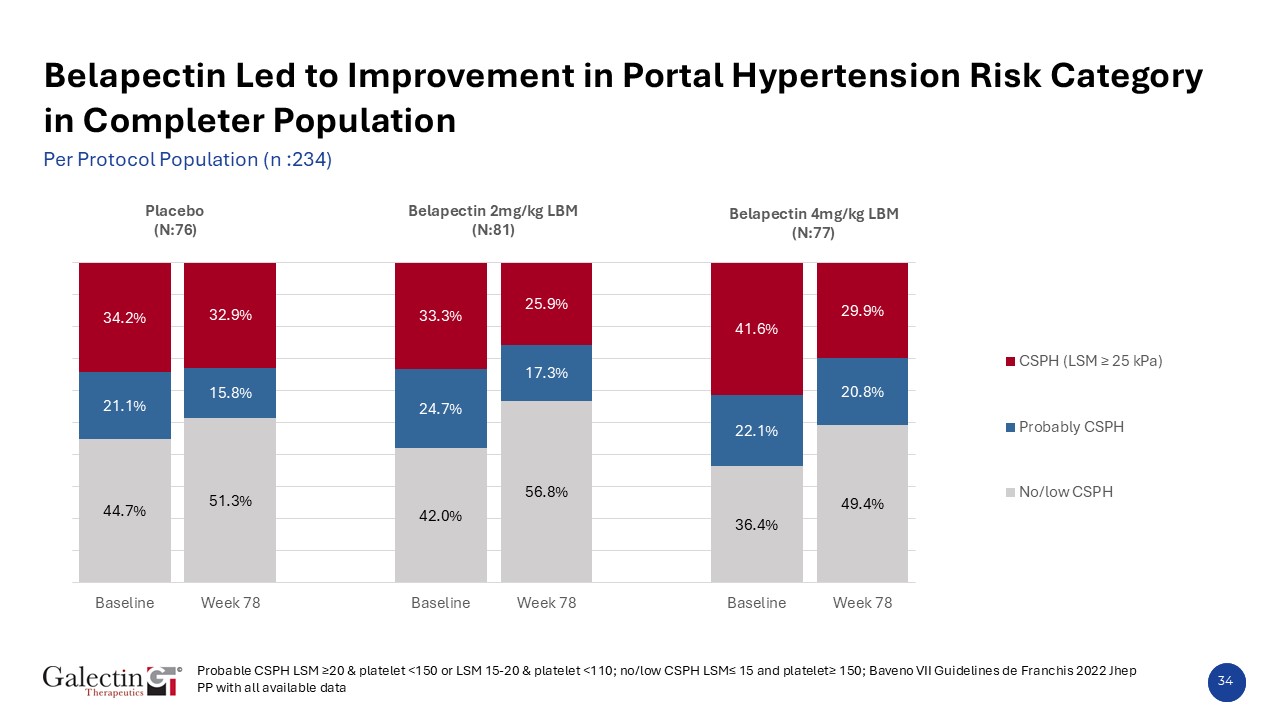
34 Belapectin Led to Improvement in Portal Hypertension Risk Category in Completer Population Placebo (N:76) Belapectin 2mg/kg LBM (N:81) Belapectin 4mg/kg LBM (N:77) Per Protocol Population (n :234) Probable CSPH LSM ≥20 & platelet <150 or LSM 15-20 & platelet <110; no/low CSPH LSM≤ 15 and platelet≥ 150; Baveno VII Guidelines de Franchis 2022 Jhep PP with all available data

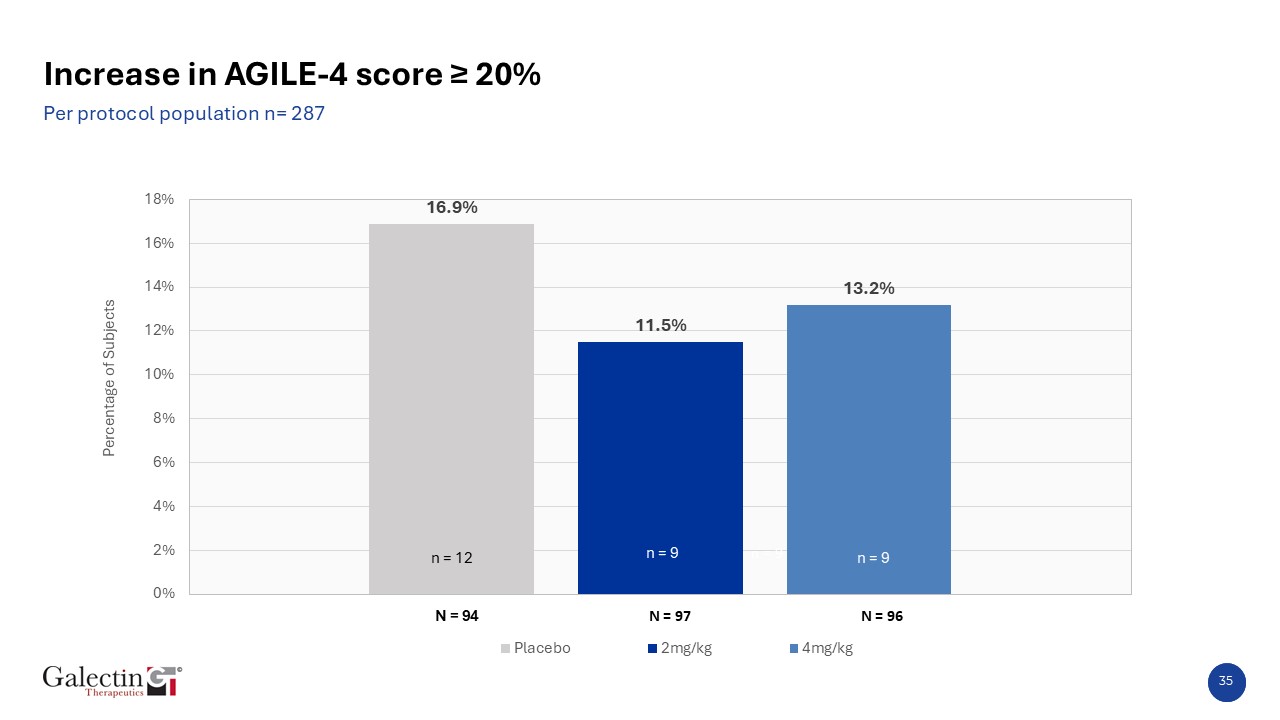
35 Increase in AGILE-4 score ≥ 20% Per protocol population n= 287 N = 95 n = 12 n = 9 n = 9 N = 94 N = 97 N = 96 n = 9

Incidence of Varices at 18 Months by Baseline ELF Categories Per protocol population (n = 279) N = 30 N = 25 N = 25 n = 3/18 n = 3/19 n = 3/17 n = 1/21 n = 3/19 n = 9/50 n = 5/53 n = 6/53 n = 9/21 n = 5/22 n = 4/23 36

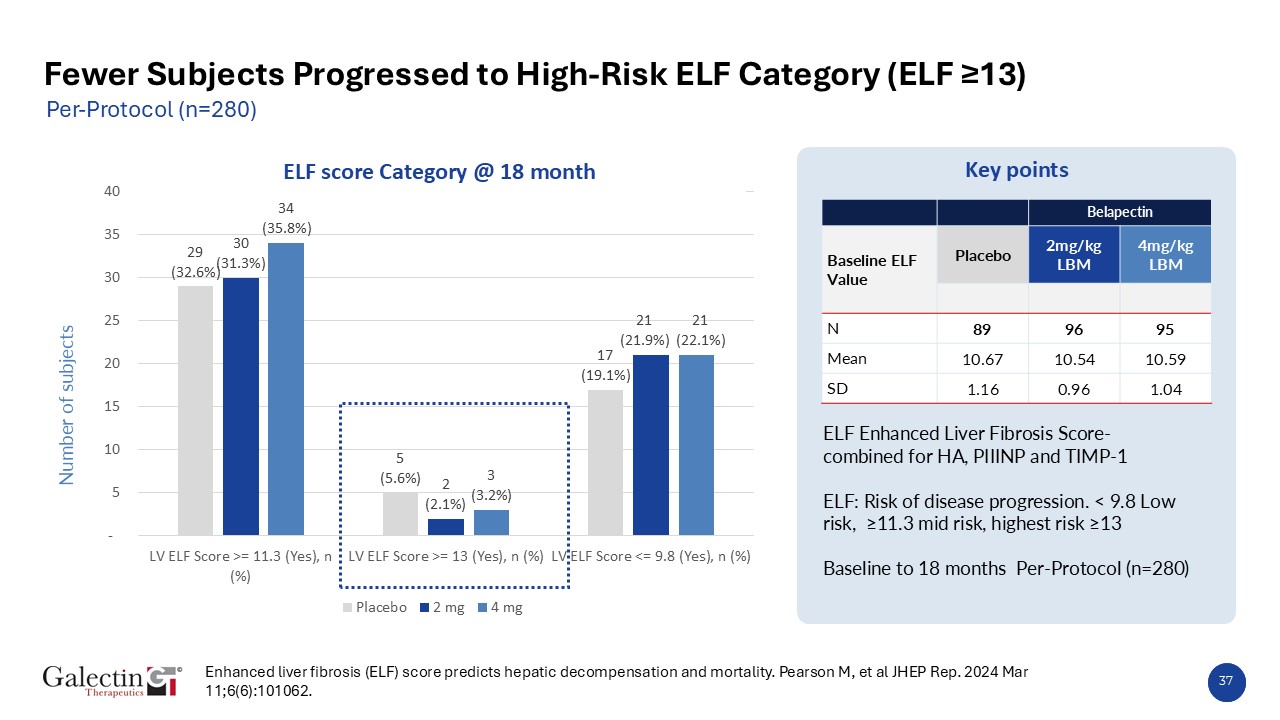
Key points 37 Fewer Subjects Progressed to High-Risk ELF Category (ELF ≥13) ELF Enhanced Liver Fibrosis Score- combined for HA, PIIINP and TIMP-1 ELF: Risk of disease progression. < 9.8 Low risk, ≥11.3 mid risk, highest risk ≥13 Baseline to 18 months Per-Protocol (n=280) Belapectin Baseline ELF Value Placebo 2mg/kg LBM 4mg/kg LBM N 89 96 95 Mean 10.67 10.54 10.59 SD 1.16 0.96 1.04 Number of subjects ELF score Category @ 18 month Enhanced liver fibrosis (ELF) score predicts hepatic decompensation and mortality. Pearson M, et al JHEP Rep. 2024 Mar 11;6(6):101062. Per-Protocol (n=280)

38 NAVIGATE- Pro-C3 change from Baseline at 78 Weeks Per Protocol Population (n: 243) Belapectin Placebo 2mg/kg LBM 4mg/kg LBM (N=79) (N=81) (N=83) Baseline Mean 50.19 45.91 43.39 Standard Deviation 38.45 31.58 17.42 Per protocol population with all available Pro-C3 data

39 NAVIGATE- Pro-C4 change at 18 month Per Protocol Set (n: 201) Percentage Change in Pro-C4 (Baseline to Week 78) n= 61 n= 73 Belapectin Placebo 2mg/kg LBM 4mg/kg LBM (N=61) (N=73) (N=67) Baseline Mean 8.6 8.6 8.6 Standard Deviation 0.21 0.20 0.23 n= 67

40 NAVIGATE: Change in Pro-C4 at 18 Month Full Analysis Population (n :204) |
Per Protocol Population \(n :201\) n=8 n=2 n=5 n=8 n=2 n=5 Belapectin Placebo 2mg/kg LBM 4mg/kg LBM Total N, FAS 63 73 68 204 N, PPP 61 73 67 201

Percentage Change from Baseline in YKL-40 Full Analysis Set (n = 187) n=13 n=23 n=23 n=23 n=23 n=19 Belapectin Placebo 2mg/kg LBM 4mg/kg LBM YKL-40 at Baseline 56.0 68.0 63.0 Mean 5.14 5.02 5.00 Standard Deviation 0.92 0.82 0.78 41

Percentage Change from Baseline in YKL-40 Per Protocol Set (n = 179) n=21 n=22 n=19 n=12 n=22 n=22 Belapectin Placebo 2mg/kg LBM 4mg/kg LBM YKL-40 at Baseline 52.0 65.0 62.0 Mean 5.11 4.95 4.92 Standard Deviation 0.95 0.94 0.74 42

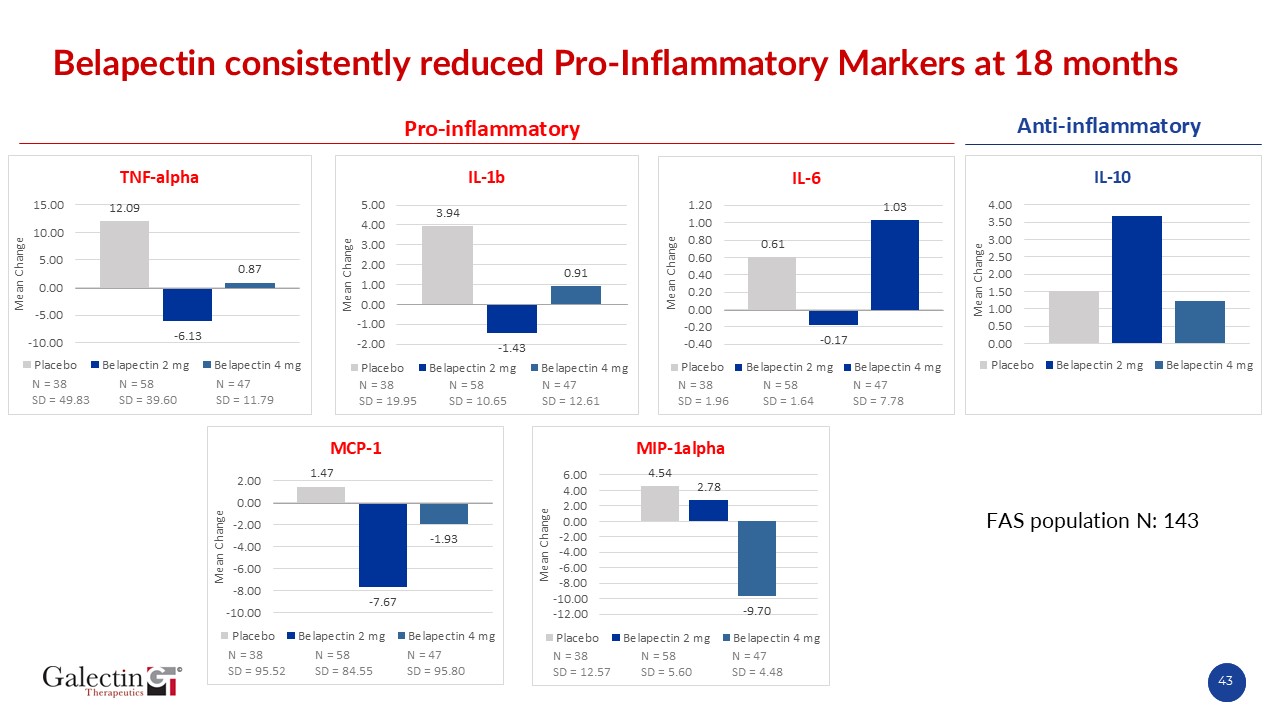
Belapectin consistently reduced Pro-Inflammatory Markers at 18 months FAS population N: 143 N = 38 SD = 19.95 N = 58 SD = 10.65 N = 47 SD = 12.61 N = 38 SD = 95.52 N = 58 SD = 84.55 N = 47 SD = 95.80 N = 38 SD = 49.83 N = 58 SD = 39.60 N = 47 SD = 11.79 N = 38 SD = 1.96 N = 58 SD = 1.64 N = 47 SD = 7.78 N = 38 SD = 12.57 N = 58 SD = 5.60 N = 47 SD = 4.48 43 Pro-inflammatory Anti-inflammatory

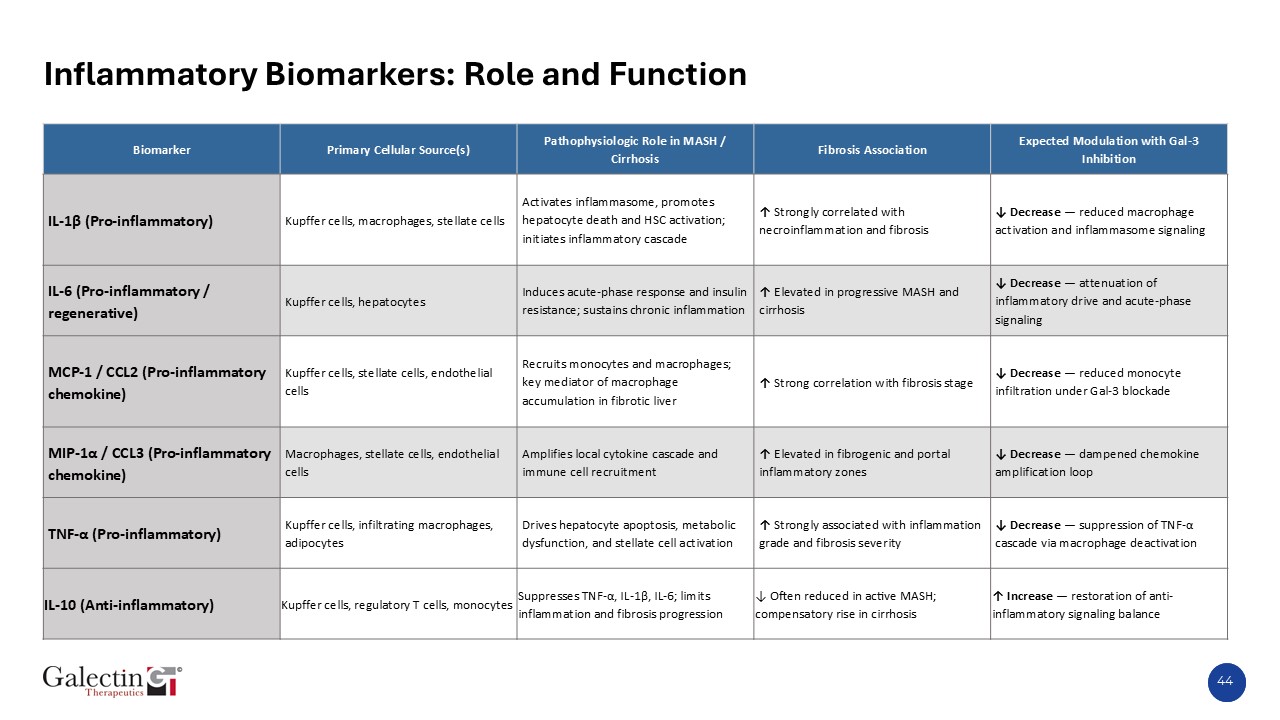
44 Inflammatory Biomarkers: Role and Function Biomarker Primary Cellular Source(s) Pathophysiologic Role in MASH / Cirrhosis Fibrosis Association Expected Modulation with Gal-3 Inhibition IL-1β (Pro-inflammatory) Kupffer cells, macrophages, stellate cells Activates inflammasome, promotes hepatocyte death and HSC activation; initiates inflammatory cascade ↑ Strongly correlated with necroinflammation and fibrosis ↓ Decrease — reduced macrophage activation and inflammasome signaling IL-6 (Pro-inflammatory / regenerative) Kupffer cells, hepatocytes Induces acute-phase response and insulin resistance; sustains chronic inflammation ↑ Elevated in progressive MASH and cirrhosis ↓ Decrease — attenuation of inflammatory drive and acute-phase signaling MCP-1 / CCL2 (Pro-inflammatory chemokine) Kupffer cells, stellate cells, endothelial cells Recruits monocytes and macrophages; key mediator of macrophage accumulation in fibrotic liver ↑ Strong correlation with fibrosis stage ↓ Decrease — reduced monocyte infiltration under Gal-3 blockade MIP-1α / CCL3 (Pro-inflammatory chemokine) Macrophages, stellate cells, endothelial cells Amplifies local cytokine cascade and immune cell recruitment ↑ Elevated in fibrogenic and portal inflammatory zones ↓ Decrease — dampened chemokine amplification loop TNF-α (Pro-inflammatory) Kupffer cells, infiltrating macrophages, adipocytes Drives hepatocyte apoptosis, metabolic dysfunction, and stellate cell activation ↑ Strongly associated with inflammation grade and fibrosis severity ↓ Decrease — suppression of TNF-α cascade via macrophage deactivation IL-10 (Anti-inflammatory) Kupffer cells, regulatory T cells, monocytes Suppresses TNF-α, IL-1β, IL-6; limits inflammation and fibrosis progression ↓ Often reduced in active MASH; compensatory rise in cirrhosis ↑ Increase — restoration of anti-inflammatory signaling balance

Subjects Clinical Outcomes or MACE at 18 months Per Protocol population Belapectin Placebo (N = 95) n (%) 2mg/kg LBM (N = 97) n (%) 4mg/kg LBM (N = 98) n (%) Subjects with Composite Clinical Outcomes, n (%) 4 (4.2) 3 ( 3.1) 7 (7.1) Varices (Esophageal or Gastric) Requiring Treatment 3 (3.2) 3 ( 3.1) 3 (3.1) Variceal Bleed Requiring Hospitalization 0 0 0 Clinically Significant Ascites Requiring Hospitalization 0 0 0 Spontaneous Bacterial Peritonitis 0 0 0 Overt Hepatic Encephalopathy (West Haven Score ≥2 and Requiring Hospitalization) 0 0 1 (1.0) Liver Transplant 0 0 0 Model End Stage Liver Disease (MELD) Score ≥ 15 0 0 1 (1.0) MI or Hospitalization for Unstable Angina 0 0 1 (1.0) Stroke or Transient Ischemic Attack 1 (1.1) 0 1 (1.0) MACE- major adverse cardiovascular events 45

Safety Summary Discontinuation of the study due to Adverse Events was similar across 3 cohorts: 7 (5.9%) in the Pbo 5 (4.2%) in 2 mg/kg Belapectin 8 (6.7%) in 4 mg/kg Belapectin One subject in each of the three cohorts discontinued the study due to death No drug related SAE reported in the entire trial No Adjudicated Drug-Induced Liver Injury (DILI) Events. Similar proportion of subjects reported Treatment-Emergent Adverse Events TEAEs across 3 cohorts: 112 (94.9%) in Pbo 116 (97.5%) in 2 mg/kg Belapectin 116 (96.7%) in 4 mg/kg Belapectin Similar proportion of subjects reported Treatment-Emergent Serious Adverse Events (TESAEs) across 3 cohorts: 23 (19.5%) in Pbo 27 (22.7%) in 2 mg/kg Belapectin 25 (20.8%) in 4 mg/kg Belapectin Adverse Events Treatment-Emergent Adverse Events (TEAEs) Treatment-Emergent Serious Adverse Events (TESAEs) 46

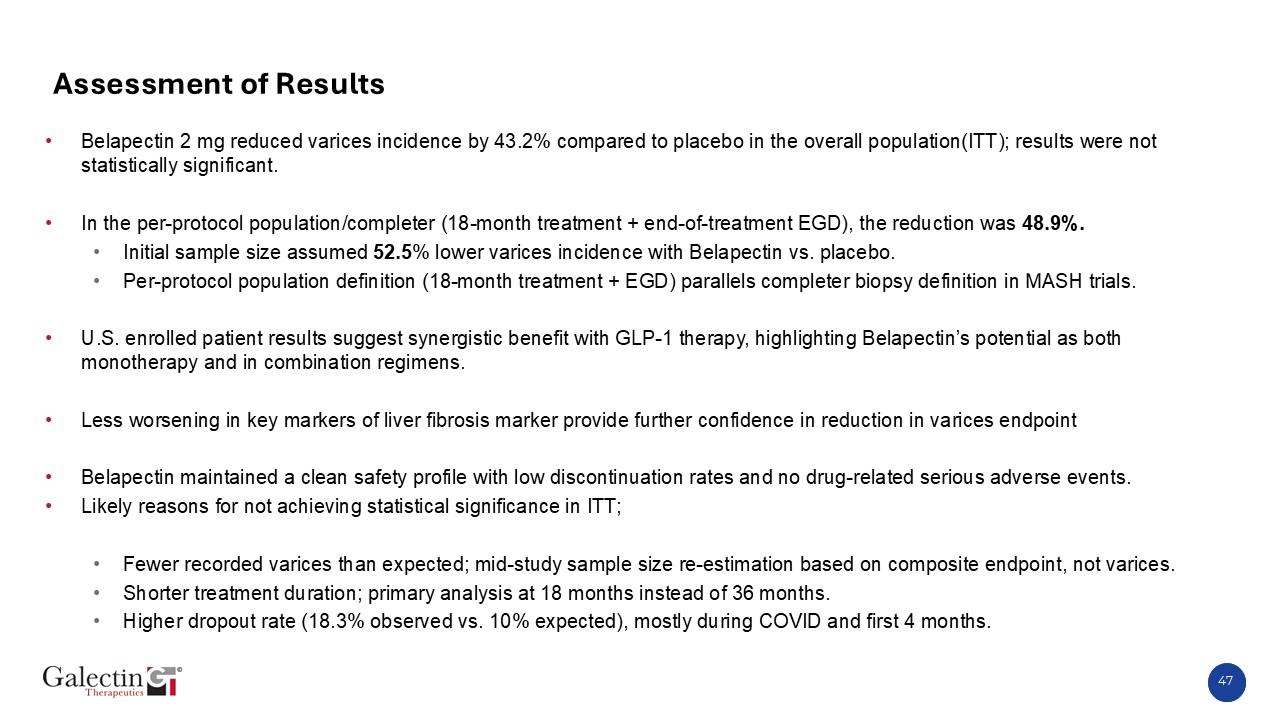
Assessment of Results Belapectin 2 mg reduced varices incidence by 43.2% compared to placebo in the overall population(ITT); results were not statistically significant. In the per-protocol population/completer (18-month treatment + end-of-treatment EGD), the reduction was 48.9%. Initial sample size assumed 52.5% lower varices incidence with Belapectin vs. placebo. Per-protocol population definition (18-month treatment + EGD) parallels completer biopsy definition in MASH trials. U.S. enrolled patient results suggest synergistic benefit with GLP-1 therapy, highlighting Belapectin’s potential as both monotherapy and in combination regimens. Less worsening in key markers of liver fibrosis marker provide further confidence in reduction in varices endpoint Belapectin maintained a clean safety profile with low discontinuation rates and no drug-related serious adverse events. Likely reasons for not achieving statistical significance in ITT; Fewer recorded varices than expected; mid-study sample size re-estimation based on composite endpoint, not varices. Shorter treatment duration; primary analysis at 18 months instead of 36 months. Higher dropout rate (18.3% observed vs. 10% expected), mostly during COVID and first 4 months. 47

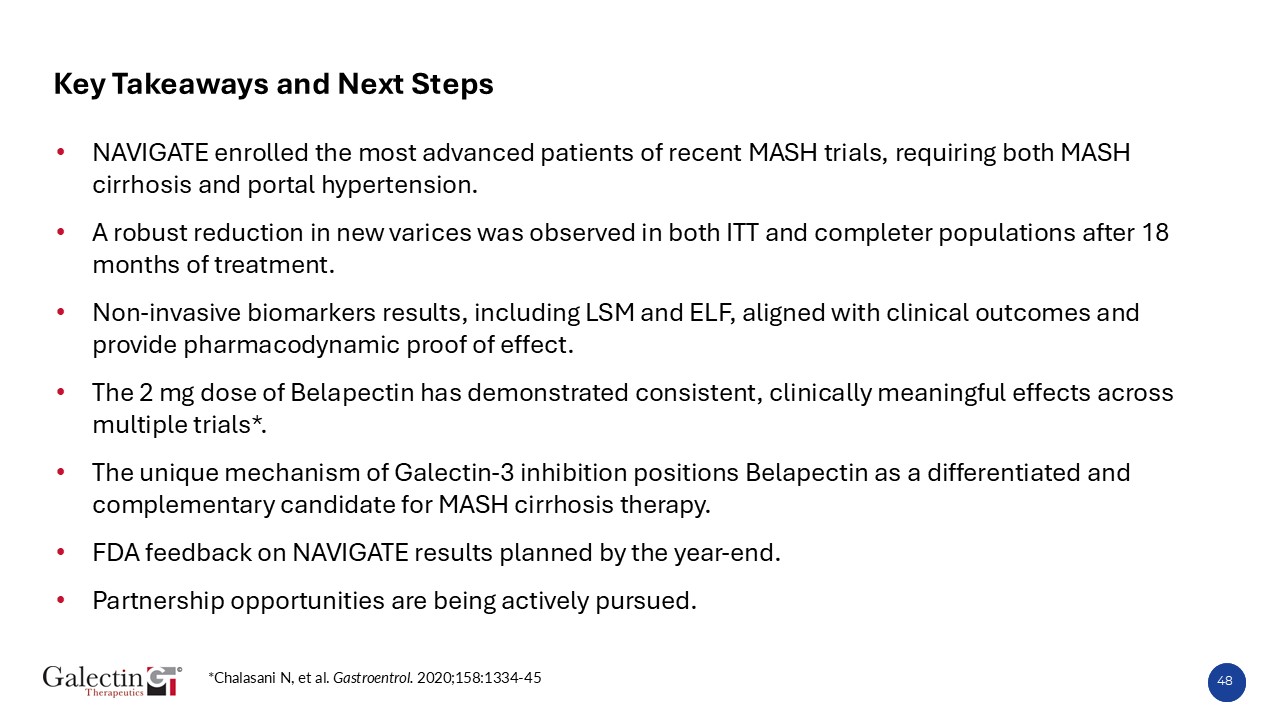
Key Takeaways and Next Steps NAVIGATE enrolled the most advanced patients of recent MASH trials, requiring both MASH cirrhosis and portal hypertension. A robust reduction in new varices was observed in both ITT and completer populations after 18 months of treatment. Non-invasive biomarkers results, including LSM and ELF, aligned with clinical outcomes and provide pharmacodynamic proof of effect. The 2 mg dose of Belapectin has demonstrated consistent, clinically meaningful effects across multiple trials*. The unique mechanism of Galectin-3 inhibition positions Belapectin as a differentiated and complementary candidate for MASH cirrhosis therapy. FDA feedback on NAVIGATE results planned by the year-end. Partnership opportunities are being actively pursued. *Chalasani N, et al. Gastroentrol. 2020;158:1334-45 48

Cancer Immunotherapy Program (Belapectin + checkpoint inhibitor)

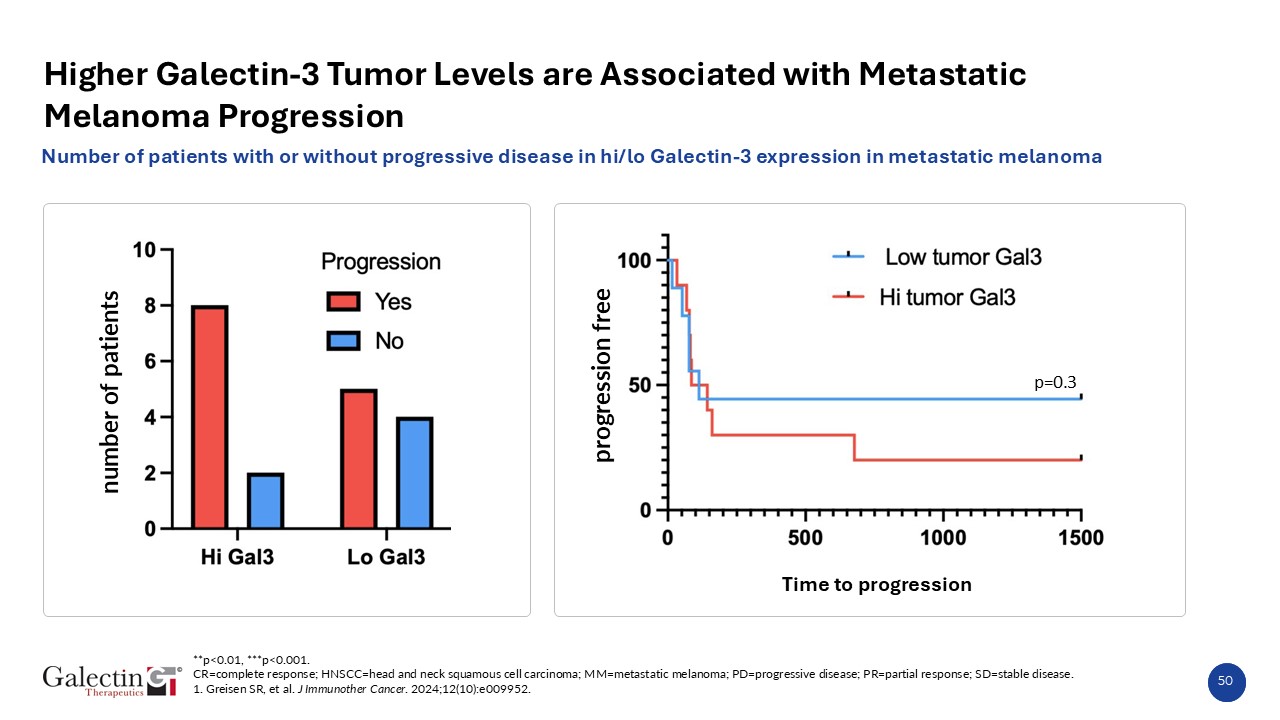
50 Higher Galectin-3 Tumor Levels are Associated with Metastatic Melanoma Progression **p<0.01, ***p<0.001. CR=complete response; HNSCC=head and neck squamous cell carcinoma; MM=metastatic melanoma; PD=progressive disease; PR=partial response; SD=stable disease. 1. Greisen SR, et al. J Immunother Cancer. 2024;12(10):e009952. Number of patients with or without progressive disease in hi/lo Galectin-3 expression in metastatic melanoma number of patients p=0.3 progression free Time to progression

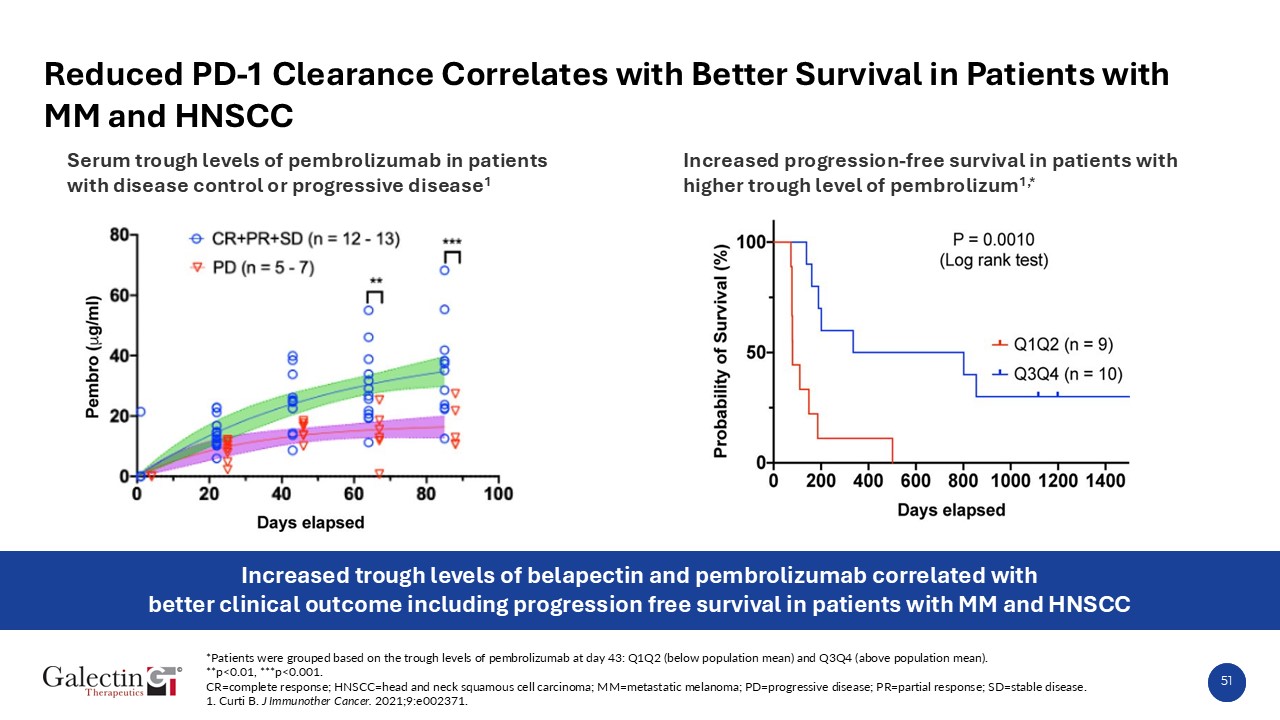
Increased progression-free survival in patients with higher trough level of pembrolizum1,* 51 Reduced PD-1 Clearance Correlates with Better Survival in Patients with MM and HNSCC Serum trough levels of pembrolizumab in patients with disease control or progressive disease1 Increased trough levels of belapectin and pembrolizumab correlated with better clinical outcome including progression free survival in patients with MM and HNSCC *Patients were grouped based on the trough levels of pembrolizumab at day 43: Q1Q2 (below population mean) and Q3Q4 (above population mean). **p<0.01, ***p<0.001. CR=complete response; HNSCC=head and neck squamous cell carcinoma; MM=metastatic melanoma; PD=progressive disease; PR=partial response; SD=stable disease. 1. Curti B. J Immunother Cancer. 2021;9:e002371.

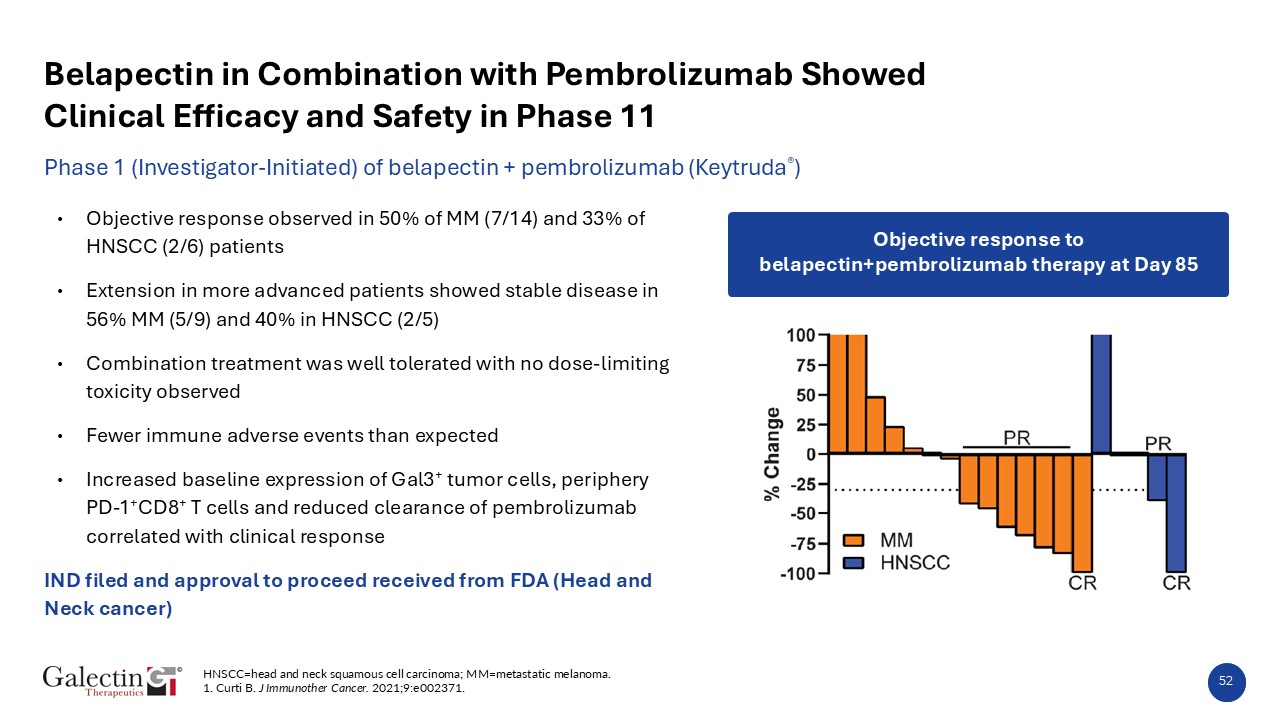
Phase 1 (Investigator-Initiated) of belapectin + pembrolizumab (Keytruda®) 52 Belapectin in Combination with Pembrolizumab Showed Clinical Efficacy and Safety in Phase 11 Objective response observed in 50% of MM (7/14) and 33% of HNSCC (2/6) patients Extension in more advanced patients showed stable disease in 56% MM (5/9) and 40% in HNSCC (2/5) Combination treatment was well tolerated with no dose-limiting toxicity observed Fewer immune adverse events than expected Increased baseline expression of Gal3+ tumor cells, periphery PD-1+CD8+ T cells and reduced clearance of pembrolizumab correlated with clinical response IND filed and approval to proceed received from FDA (Head and Neck cancer) HNSCC=head and neck squamous cell carcinoma; MM=metastatic melanoma. 1. Curti B. J Immunother Cancer. 2021;9:e002371. Objective response to belapectin+pembrolizumab therapy at Day 85

Belapectin is a novel, potent, galectin-3 inhibitor with Fast Track Designation Low toxicity as a carbohydrate-based molecule which is degraded by natural processes Patent protection through 2032 Only company to exclusively focus on treatment for MASH cirrhosis and portal hypertension Significant efficacy observed in cirrhotic patients without varices Promising NAVIGATE results at 18 month read out, ≥40% reduction in new varices vs placebo in ITT; significantly lower incidence of new varices in per protocol population Encouraging clinical response in difficult-to-treat cancers in combination with checkpoint inhibitor IND filed and approval to proceed received from FDA (Head & Neck cancer) Developing galectin-based therapeutics to improve the lives of patients with chronic liver diseases and cancer Focused Pipeline MASH Cirrhosis Oncology (Combination Therapy) 53 Investment Highlights

Thank You!