
PAR 10-K
Par Technology Corp (PAR)
10-K
2026-02-26
For: 2025-12-31
View Original
Added on
April 08, 2026
UNITED STATES
SECURITIES AND EXCHANGE COMMISSION
Washington, D.C. 20549
FORM 10-K
SECURITIES EXCHANGE ACT OF 1934
For the Fiscal Year Ended December 31 , 2025
OR
SECURITIES EXCHANGE ACT OF 1934
For the Transition Period From __________ to __________
Commission File Number 1-09720
(Exact name of registrant as specified in its charter)
| (State or other jurisdiction of incorporation or organization) | (I.R.S. Employer Identification Number) | ||||
| (Address of principal executive offices, including zip code) | |||||
(315 ) 738-0600
(Registrant’s telephone number, including area code)
Securities registered pursuant to Section 12(b) of the Act:
| Title of each class | Trading symbol | Name of each exchange on which registered | ||||||
Securities registered pursuant to Section 12(g) of the Act: None
Indicate by check mark if the registrant is a well-known seasoned issuer, as defined in Rule 405 of the Securities Act. Yes ☑ No ☐
Indicate by check mark if the registrant is not required to file reports pursuant to Section 13 or Section 15(d) of the Act. Yes ☐ No ☑
Indicate by check mark whether the registrant (1) has filed all reports required to be filed by Section 13 or 15(d) of the Securities Exchange Act of 1934 during the preceding 12 months (or for such shorter period that the registrant was required to file such reports), and (2) has been subject to such filing requirements for the past 90 days. Yes ☑ No ☐
Indicate by check mark whether the registrant has submitted electronically every Interactive Data File required to be submitted pursuant to Rule 405 of Regulation S-T (§232.405 of the Chapter) during the preceding 12 months (or for such shorter period that the registrant was required to submit such files). Yes ☑ No ☐
Indicate by check mark whether the registrant is a large accelerated filer, an accelerated filer, a non-accelerated filer, a smaller reporting company or an emerging growth company. See the definitions of “large accelerated filer”, “accelerated filer”, “smaller reporting company”, and “emerging growth company” in Rule 12b-2 of the Exchange Act.
| Accelerated filer ☐ | Non-accelerated filer ☐ | |||||||
Smaller reporting company | Emerging growth company | |||||||
If an emerging growth company, indicate by check mark if the registrant has elected not to use the extended transition period for complying with any new or revised financial accounting standards provided pursuant to Section 13(a) of the Exchange Act. ☐
Indicate by check mark whether the registrant has filed a report on and attestation to its management’s assessment of the effectiveness of its internal control over financial reporting under Section 404(b) of the Sarbanes-Oxley Act (15 U.S.C. 7262(b)) by the registered public accounting firm that prepared or issued its audit report. ☑
If securities are registered pursuant to Section 12(b) of the Act, indicate by check mark whether the financial statements of the registrant included in the filing reflect the correction of an error to previously issued financial statements. ☐
Indicate by check mark whether any of those error corrections are restatements that required a recovery analysis of incentive-based compensation received by any of the registrant’s executive officers during the relevant recovery period pursuant to §240.10D-1(b). ☐
Indicate by check mark whether the registrant is a shell company (as defined in Rule 12b-2 of the Act). Yes ☐ No ☑
The aggregate market value of the registrant’s voting common stock held by non-affiliates (computed by reference to the price at which the common stock was last sold) was $2,784,987,956 on June 30, 2025.
There were 41,152,632 shares of common stock outstanding as of February 24, 2026.
DOCUMENTS INCORPORATED BY REFERENCE
Portions of the registrant’s definitive proxy statement for its 2026 annual meeting of shareholders are incorporated by reference into Items 10, 11, 12, 13 and 14 of Part III of this Annual Report.
PAR TECHNOLOGY CORPORATION
Form 10-K
For the Fiscal Year Ended December 31, 2025
TABLE OF CONTENTS
| Item Number | Description | Page | ||||||
Unless the context indicates otherwise, references in this Annual Report to "we," "us," "our," the "Company," and "PAR" mean PAR Technology Corporation and its consolidated subsidiaries.
“PAR®,” “PAR POSTM”, “Punchh®,” “PAR OrderingTM”, "PAR OPS®," “Data Central®," “DelagetTM,” "PAR RetailTM", "PAR® Pay”, “PAR® Payment Services”, and other trademarks identifying our products and services appearing in this Annual Report belong to us. Solely for convenience, our trademarks referred to in this Form 10-K may appear without the ® or TM symbols, but such references are not intended to indicate in any way that we will not
1
assert, to the fullest extent under applicable law, our rights to these trademarks. This Annual Report may also contain trade names and trademarks of other companies. Our use of such other companies’ trade names or trademarks is not intended to imply any endorsement or sponsorship by these companies of us or our products or services.
FORWARD-LOOKING STATEMENTS
This Annual Report contains “forward-looking statements” within the meaning of Section 21E of the Securities Exchange Act of 1934, as amended (the “Exchange Act”), Section 27A of the Securities Act of 1933, as amended (the “Securities Act”), and the Private Securities Litigation Reform Act of 1995. Forward-looking statements are not historical in nature, but rather are predictive of PAR's future operations, financial condition, financial results, business strategies, and prospects. Forward-looking statements are generally identified by words such as “believe,” “could”, "would," "should," "will," “continue,” "anticipate," “expect,” "plan," "intend," “estimate,” “future,” “may,” “potential,” and similar expressions.
Forward-looking statements are based on management's current expectations and assumptions and are inherently uncertain. Actual results and outcomes could differ materially from those expressed in or implied by forward-looking statements, including forward-looking statements relating to and our expectations regarding:
•our plans, strategies, and objectives for future operations and the growth of our business, including our service and product offerings, our go-to-market strategies, and the expected development, demand, performance, market share, and competitive performance of our products and services;
•our ability to achieve and sustain profitability;
•our future revenues, gross margins, expenses, cash flows, and other financial measures;
•annual recurring revenue (ARR), active sites, subscription service gross margins, net loss, net income (loss) per share, and other key performance indicators and non-GAAP financial measures;
•the availability and terms of product and component supplies for our hardware products;
•the timing and expected benefits of acquisitions, divestitures, and capital markets transactions;
•our human capital strategies and engagement;
•macroeconomic trends, geopolitical events, tariffs, and trade disputes and the expected impact of those trends and events on our business, financial condition, results of operations, and cash flows;
•claims, disputes, or other litigation matters; and
•assumptions underlying any of the foregoing.
Factors, risks, trends, and uncertainties that could cause our actual results to differ materially from those expressed in or implied by forward-looking statements include:
•our ability to successfully develop, acquire, and transition new products and services, while enhancing existing ones to meet evolving customer needs and emerging technological trends, including our effective use of artificial intelligence (AI) in product development and integration of AI tools into our product and service offerings;
•our ability to add and maintain active sites;
•our ability to retain and add integration partners;
•macroeconomic trends, such as the effects of inflation, recession, interest rate fluctuations, and changes in consumer confidence and discretionary spending; and geopolitical events affecting countries where we operate or our customers or suppliers operate;
•our ability to retain and manage suppliers, secure alternative suppliers, and manage inventory levels and costs, navigate manufacturing disruptions or logistics challenges, shipping delays and shipping costs;
•the impact of changes in import/export regulations, including tariffs, and trade disputes between the United States and other countries where we operate or our customers or suppliers operate;
•the effects, costs, and timing of acquisitions, divestitures, and capital markets transactions;
•our ability to integrate acquisitions into our operations and the timing, complexity, and costs associated with integrations;
•our ability to attract, develop, and retain qualified employees to develop and expand our business, execute product installations, and respond to customer service level needs;
•the protection of our intellectual property;
•our ability to generate sufficient cash flow or access additional financing sources as needed to repay outstanding debts, including amounts owed under our outstanding convertible notes;
•legal, reputational, and financial risks if we fail to protect customer and/or our data from security breaches and/or cyber attacks;
•the impact of future pandemics, epidemics, or other outbreaks of disease;
2
•changes in estimates and assumptions we make in connection with the preparation of our financial statements, or in building our business and operations plan and in executing our strategies;
•our ability to maintain proper and effective internal control over financial reporting;
•our ability to execute our business and operations plan, implement our strategies, and manage our business continuity risks, including service interruptions and disruptions or delays in product assembly and fulfillment;
•potential impacts, liabilities, and costs from pending or potential investigations, claims, and disputes; and
•other factors, risks, trends, and uncertainties that could cause our actual results to differ materially from those expressed in or implied by forward-looking statements contained in this Annual Report, including but not limited to, those described under “Part I, Item 1. Business”, “Part I, Item 1A. Risk Factors,” “Part II, Item 7. Management’s Discussion and Analysis of Financial Condition and Results of Operations” and elsewhere in this Annual Report and in our other filings with the Securities and Exchange Commission (the “SEC”).
We undertake no obligation to update or revise any forward-looking statements, whether as a result of new information, future events, or otherwise, except as may be required under applicable securities law.
3
PART I
Item 1. BUSINESS
Overview
PAR is a leading foodservice technology company providing omnichannel cloud-based software and hardware solutions to the restaurant industry in three major restaurant categories – quick service, fast casual, and table service – and to the retail industry, including convenience and fuel retailers (C-Stores). Our product and service offerings include point-of-sale, customer engagement and loyalty, digital ordering and delivery, operational intelligence, payment processing, hardware, and related technologies, solutions, and services. We provide enterprise restaurants, franchisees, and other foodservice outlets with operational efficiencies through a data-driven network with integration capabilities from front- and back-of-house to customer fulfillment. Our omnichannel solutions are used in more than 150,000 active restaurants and retail locations across the world.
PAR’s solutions are designed with flexibility and openness at their core and are engineered to scale and adapt with brands at every stage of growth. Our solutions integrate with others, yet deliver significant value when used together across our software, hardware, and payments offerings. With intentional innovation as a priority, PAR’s solutions help streamline operations, drive higher engagement, and strengthen guest experiences for restaurants and retailers globally.
Our Mission and Vision
Our mission is to enable personalized experiences that connect people to the brands, meals, and moments they love; and our strategy to achieve this mission is grounded in delivering a unified experience across our comprehensive suite of subscription services, hardware, and professional services that simplifies our customers' operations, elevates their customer engagement, and drives their continued success.
PAR's vision of unified experience is a single platform that provides seamless connections from our customers' backend systems through to their customer-facing channels enabling our customers to deliver innovation, differentiated experiences, and competitive advantage. It's the setup enterprise restaurants and retailers require to support omnichannel journeys and create a unified view of customer interactions, products, and management systems. We continually strive to enhance and expand our cloud-based solutions to provide full integration of key data points that drive guest satisfaction and operational efficiencies to our customers across our product and service offerings.
4
Our Products and Services
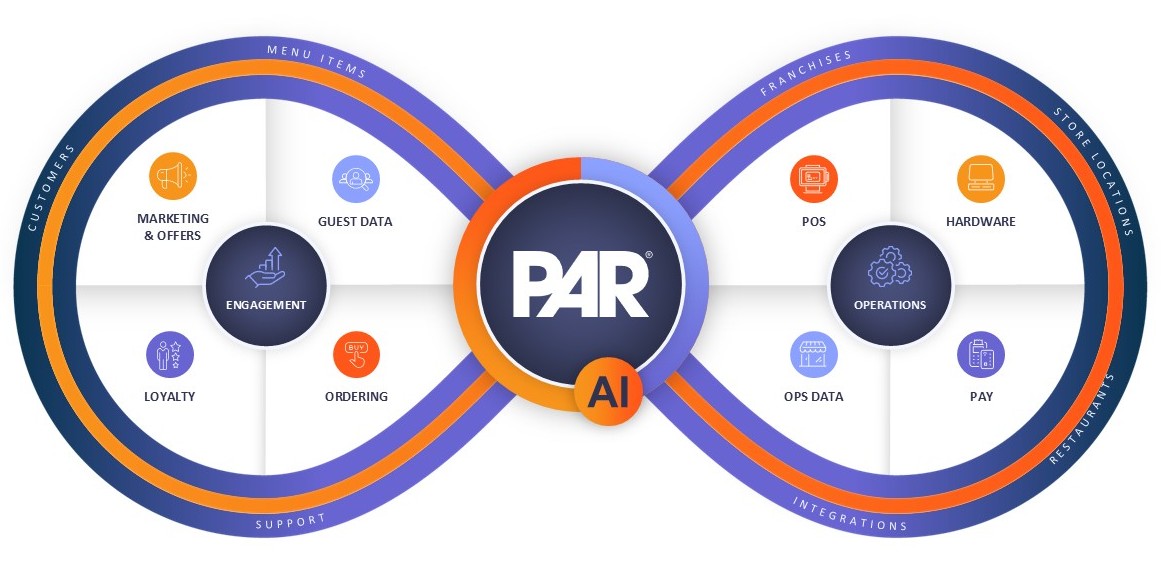
Subscription Services
Our subscription services consist of software-as-a-service ("SaaS") solutions, related software support, managed platform development services, and transaction-based payment processing services, and are grouped into two product lines:
ENGAGEMENT CLOUD, offering customer facing solutions:
PAR ENGAGEMENT, which includes the Punchh and PAR Ordering product offerings, is our expanded guest engagement suite of enterprise-grade, AI-powered tools to manage loyalty, marketing and offers, ordering, and guest data across key touchpoints. When used together, these tools power personalized loyalty programs with rewards and flexible, branded ordering experiences across web, mobile, and kiosk, with dynamic upsells and menu logic that make ordering and reward redemption easy for guests and operators. Underneath it all, real-time guest identity and behavioral data unify interactions into a single view, which can then be leveraged through targeted campaigns and personalized offers across email, SMS, web, app, and wallets to increase customer lifetime value.
PAR RETAIL, a digital engagement software solution for convenience and fuel retailers (C-Stores) with an industry-leading guest engagement platform serving major brands in the space. PAR Retail enables retailers to deliver seamless, personalized experiences across mobile, web, and in-store channels. By leveraging data-driven insights, PAR Retail helps businesses increase customer engagement, drive loyalty program participation, and grow same-store sales with innovative, integrated technology solutions.
PLEXURE, an international customer engagement and loyalty platform that delivers hyper-personalized marketing campaigns and promotions in real-time. Leveraging advanced data analytics and machine learning, Plexure seamlessly integrates with existing systems to provide actionable insights and enhance the customer experience. By driving engagement across multiple channels, Plexure helps increase customer lifetime value, boost repeat transactions, and improve same-store sales performance through tailored, data-driven solutions.
OPERATOR CLOUD, offering front-of-house and back-of-house operator solutions:
PAR POS, an open cloud, point-of-sale solution that provides operators with tools to seamlessly integrate with multiple product offerings - including kiosks, kitchen video systems, and enterprise reporting - through PAR's ecosystem of integration partners.
PAR PAY, includes our PAR Payment Services merchant services business that enables electronic payment and processing services for businesses of all sizes to accept electronic payments online or in-person and PAR Pay Gateway, our front-end technology that reads payment cards and sends customer information to the merchant
5
acquiring bank for processing. Combined PAR Payment Services and PAR Pay Gateway offer a comprehensive payment processing solution that allows our customers to accept a variety of payments methods including debit and credit cards, near-field communication contactless, mobile devices, digital wallets and gift cards.
PAR OPS, includes Data Central and Delaget product offerings that leverage business intelligence, analytics, and automation technologies to streamline operations. Serving as the central hub of restaurant intelligence, PAR OPS aggregates data from point-of-sale, inventory, supply, payroll, and accounting systems to deliver actionable insights and a comprehensive view of operations. By simplifying complex data into intuitive dashboards and reports, PAR OPS equips customers with the tools to achieve peak operational and financial efficiency, driving better decision-making and performance across their business.
TASK, an enterprise-grade technology solution, delivers powerful solutions to streamline operations and drive efficiency for hospitality and retail businesses. Specializing in point-of-sale, kitchen management, and inventory systems, TASK offers a transaction management platform that integrates seamlessly with existing infrastructure. Designed for scalability and reliability, TASK empowers businesses to optimize workflows, enhance service delivery, and elevate the customer experience through innovative, data-driven solutions.
Our SaaS solutions are extensible and built on open application programming interfaces (“API”) enabling integration by more than 600 integration partners, including leading industry brands, to extend the reach and capabilities of our SaaS solutions and those of our integration partners.
Hardware
Our hardware offerings include point-of-sale terminals and tablets, wireless headsets, drive-thru systems, kitchen display systems, kiosks, printers, payment devices, and other in-store peripherals:
Point-of-Sale Hardware. Our POS hardware platforms are designed to reliably operate in harsh environments associated with food service. PAR terminals, including PAR WAVE and PAR PHASE, and our EverServ® POS tablets are durable and highly functioning, scalable, and easily integrated, offering customers competitive performance at a cost-conscious price. Our open architecture POS platforms are optimized to support our SaaS solutions, as well as many third-party POS software applications, support a distributed processing environment and are suitable for a broad range of use and functions within the markets served.
Wireless Communications, Drive-Thru Systems. Our wireless headsets for drive-thru order-taking provide our customers with another means to deliver their products and serve their customers. The PAR G5® headset provides clear audio and an ergonomic fit. PAR's drive-thru timer systems provide crew and managers near-real-time feedback to improve speed of service and meet performance targets.
In-Store Peripherals. We partner with numerous vendors that offer in-store peripherals, including payment devices, cash drawers, and printers, allowing us to deliver a comprehensive, integrated hardware solution.
Professional Services
We provide a comprehensive portfolio of support services to our customers, including hardware repair, installation and implementation, training, and on-site and technical support.
Hardware repair. We offer depot repair, warranty, and overnight Advanced Exchange services from our office in Mississauga, Ontario and our corporate headquarters in New Hartford, New York.
Installation and implementation. We offer hardware installation and software implementation services.
Training. We offer application training to customers’ in-store staff and provide technical training to our customers’ information systems personnel.
On-site and technical support. We offer on-site support in the continental U.S. through our field tech service network and 24-hour help desk support from our diagnostic service centers located in New Hartford, New York and Tampa, Florida. Outside the continental U.S. we provide our professional services directly or through authorized providers.
6
Supply
We have agreements for the supply of hardware products and components, including long-term or volume-based purchase agreements with some suppliers. We have alternative sources in the event one or more of our component suppliers are not able to perform or fully perform; and we hold safety stocks of single source hardware products in quantities that we believe are sufficient to protect against possible supply chain disruptions. To mitigate supply chain risks, we continue to adjust our pricing to reflect market conditions, increase our inventory levels of scarce components, and expand our supplier network by identifying and/or establishing alternative suppliers of our hardware products.
Sales and Marketing
We sell our products and services to enterprise restaurants, franchisees, and other restaurant outlets and to C-Stores and other retail customers, including amusement parks, cinemas, cruise lines, spas, casinos, and other ticketing and entertainment venues. Our dedicated sales teams work closely with potential customers to understand their operational challenges and recommend the most effective solutions. Our sales teams are organized in two main areas: enterprise customer sales, focused on tier-one (brands operating 500 or more sites) and tier-two (brands operating 50-499 sites) customers; these customers are generally driven by requests for proposals and have longer sales cycles, where we aid our sales team with premier support and pre-sales engineers; and sales to customers with small to medium-size businesses, where we focus on providing simplified solutions and quicker implementation of our products. We also leverage a network of channel partners, including resellers, distributors, and integrators, as a cost effective means of extending our selling opportunities. Sales and marketing expenses were $48.9 million, $41.7 million, and $38.5 million, for the years ended December 31, 2025, 2024, and 2023, respectively.
We have longstanding relationships with several of the largest brands in the restaurant space, including as an approved provider of restaurant technology solutions and related support to McDonald's Corporation and its franchisees since 1980, to Yum! Brands since 1983, and to Dairy Queen since 2018. McDonald's Corporation accounted for 21% of our total revenue in 2025.
Competition
The markets for our products and services are highly competitive and rapidly evolving. We compete on the basis of features and functionality, user experience, integration capabilities, method of delivery (cloud versus traditional on-premise software applications), existing and planned product design, quality and reliability, product development capabilities, price, and customer service. Many of our larger customers have approved several suppliers of software and hardware similar to one or more of our products.
Our open integration platform, enterprise-grade omnichannel cloud-based software and hardware solutions, combined with our development capabilities, extensive domain knowledge and expertise, excellent product reliability, direct sales teams, and responsive customer service and support are some of our competitive advantages. We also believe our customer base is a competitive advantage; our customers are primarily enterprise and fast-growing brands and typically choose our products when opening new stores and locations. However, several factors can affect our ability to successfully compete, including rapid adoption of new technologies such as AI in product development and as a component of products and services, the constant introduction of new product and service offerings, and aggressive pricing strategies.
We face competition from companies both within our market segment and from those targeting lower market tiers. Some of these competitors have greater financial and technical resources, more relevant product and service offerings, and larger established customer bases. This competitive landscape can impact our market share and growth potential. As competition intensifies, both from existing competitors and new market entrants, we must continually innovate and adapt to maintain our competitive edge. Additionally, as we expand into new markets, we will encounter established competitors and new market entrants, further challenging our ability to compete effectively.
7
Research and Development
Product research, innovation, and product development are an integral part of our business. We continually evaluate customer needs and new technologies to enable us to develop innovative and relevant products and product enhancements. We leverage AI to assist in the generation of code and other product-related artifacts which assists in driving efficiency and innovation in our development process. Research and development expenses were $81.8 million, $67.3 million, and $58.4 million, for the years ended December 31, 2025, 2024, and 2023, respectively.
Intellectual Property
We rely on various intellectual property laws, confidentiality procedures, and contractual provisions to establish, maintain, and protect our intellectual property. We have U.S. and foreign patents filed and issued to protect our discoveries and inventions, registered and common law trademarks to protect our brand, and copyrights that relate to software and various distinctive characteristics of our products. We also rely on a combination of confidentiality and assignment-of-invention agreements with our employees and consultants, and enter into confidentiality and licensing agreements with our customers and other third parties with whom we have strategic relationships. We believe our use and reliance on intellectual property laws and our agreements and licenses protect and maintain our rights in our intellectual property; however, there can be no assurance that our trademarks, copyrights, patents, and other intellectual property rights will not be challenged, invalidated, or circumvented; that others will not assert intellectual property rights in technologies that are relevant to our business; or that our intellectual property rights will give us a competitive advantage. For a discussion of risks associated with intellectual property, refer to the Risk Factor—"Assertions by third parties of infringement or other violations by us of their intellectual property rights could result in significant costs and materially and adversely harm our business, financial conditions, results of operations and cash flows" in "Part I, Item 1A. Risk Factors", which is incorporated herein by reference.
Government Regulation
We are subject to a variety of laws and regulations in the United States and other jurisdictions that involve matters central to our business, including privacy, data security and personal information, content, data retention and deletion as well as U.S. and foreign laws and regulations that impact the operations of our business, including employee matters, import/export controls, trade restrictions, including tariffs, anti-corruption and bribery. A failure, or alleged failure, by us to comply with any of these laws or regulations could have a material adverse effect on our business, financial condition, and results of operations. For additional information about government regulation and laws applicable to our business, refer to the risks described in "Part I, Item 1A. Risk Factors".
Human Capital
We prioritize finding, developing and rewarding extraordinary talent. Our employee-first strategy is designed to provide an inclusive and safe environment where our employees enjoy coming to work each day to support our customers and grow our business. As of December 31, 2025, we employed 1,809 people worldwide, 1,800 of whom were full-time.
We value urgency, ownership, delivering outcomes, never settling, and winning together, which we consider to be the foundation for how we operate and make decisions.
Leadership's Role: Our senior management team is responsible for developing and executing our human capital strategy. We seek employees who share a passion for technology and its ability to improve our customers’ businesses. Our mission is to create an environment that reflects our values of urgency, ownership, delivering outcomes, never settling, and winning together where our employees thrive. Our strategy is to seek to hire the best talent, give them the responsibility and authority they deserve, and let them make the decisions on how to best execute. We design our employee compensation and benefits programs to be competitive and consistent with our values, to incentivize and reward outstanding performance. Our Chief Executive Officer and Chief Human Resources Officer regularly update the compensation committee of our board of directors on key areas of our human capital strategy, including the following:
Culture: Our commitment to culture is simple: it’s about community and belonging. We want to understand and integrate our employees’ unique perspectives and voices every day. Our employees should feel a sense of belonging and want to be part of the PAR team.
8
Employee Engagement and Talent Management/Development: Consistent with our employee-first strategy, we believe that our employees should have the opportunity to communicate their feedback, concerns and suggestions. We conduct annual employee engagement surveys to understand the sentiment of our employees and inform our strategies around employee engagement, retention, and total rewards. In 2025, we continued our quarterly “Living Our Values” awards. Employees submit examples where PAR values are demonstrated by a coworker, enabling them to be selected as a quarterly Living Our Values winner. Winning recipients are recognized in front of their peers for their efforts and accomplishments, in addition to custom swag and spot bonuses.
We offer a variety of programs to support employee growth and development at PAR. In 2025, we launched a company-wide mentorship program as well as a focused rising female leaders summit. We also rolled out a career development management toolkit to enable intentional career discussions between managers and employees, enabling ongoing development of talent and internal mobility across the organization.
Our Annual Talent Roadmap includes a performance review, and 360 feedback annually for all employees, as well as a robust talent review of director level and above employees with our executive team. In 2026, we will invest in the design and launch of an internally focused learning function to accelerate our career development options.
Our compensation philosophy aims to attract, retain, and incentivize top performers in a highly competitive market for talent using short-term and long-term performance targets. To support our meritocratic, pay-for-performance strategy, we reward employees for achieving performance targets and contributing to our culture by living our values day in and day out. We have a robust CEO award program that gives leaders the opportunity to over index on rewarding top performers in their organizations during the annual performance review cycle.
Health and Safety: The health and safety of our employees in the workplace are of utmost importance to us. We regularly assess our facilities to ensure compliance with our health and safety guidelines and regulatory requirements. We continue to offer the Headspace Employee Assistance Program (EAP) to our global team, providing confidential, best-in-class meditation, mindfulness support, and a full suite of work-life services to full-time employees and their families. We also introduced the Benepass Wellness Program and Lifestyle Spending Account, providing additional funding for personalized wellness needs to every employee. Additionally, as part of our dedication to employees' health, safety, and well-being, PAR established the donor-funded PAR-Sammon Family Employee Assistance Fund (EAF) to provide support during times of need.
Talent Acquisition and Attrition: PAR is committed to attracting top talent from diverse sources to meet current and future business needs. In 2025, we implemented a standardized talent selection process to raise hiring standards and introduced AI-powered resume scanning to reduce time-to-fill while helping to minimize bias. To proactively attract diverse talent and broaden our candidate pool, we continue to engage with universities, professional associations, industry groups, and leverage PAR’s robust employee value proposition, which includes our location-flexible philosophy, a collaborative global work environment, and a shared sense of purpose. Our focus on retaining talent is rooted in our employee-first strategy and includes investments in employee engagement, diverse talent sourcing tools, talent management systems, and development. We continue to make appropriate adjustments to help ensure competitive compensation, including the review of our career and compensation framework and the creation of a globally unified total rewards operating model.
Available Information
Our website is located at https://partech.com. Our Annual Reports on Form 10-K, Proxy Statements on Schedule 14A, Quarterly Reports on Form 10-Q, Current Reports on Form 8-K, and amendments to such reports and statements filed or furnished by us pursuant to the Exchange Act are available, free of charge, on our website at https://partech.com/investor-relations/ as soon as reasonably practicable after we electronically file such material with, or furnish it to, the SEC. Our Corporate Governance Guidelines, Board of Directors’ committee charters and Code of Conduct are also available, free of charge, at https://partech.com/investor-relations/. The information posted on or accessible through our website is not incorporated into this Annual Report or in any other report or document we file with the SEC. The SEC also maintains a website at http://www.sec.gov that contains reports, proxy statements and other information regarding SEC registrants, including PAR.
Item 1A. RISK FACTORS
Investing in our common stock involves a high degree of risk. The risks described below are not the only risks or uncertainties we face. The occurrence of any of the following risks or additional risks and uncertainties not presently known to us, or that we currently believe to be immaterial, could materially and adversely affect our business, results of operations, financial condition, cash flows, and stock price.
9
Risks Related to Our Business and Operations
We face extensive competition in our markets, and our failure to compete effectively could result in decreased demand for our products and services and/or price reductions, which could materially and adversely affect our ability to achieve and sustain profitability and harm our business, financial condition, and results of operations.
The markets for our products and services are characterized by rapid technological advances, intense competition among existing and emerging competitors, fluid and evolving industry practices, disruptive technology developments (including the use and integration of AI into products and service offerings), and frequent new product introductions; any one of these factors, could create downward pressure on pricing and gross margins and could adversely affect sales to our existing customers, as well as our ability to attract and sell to new customers. Our future success depends on our ability to anticipate and identify changes in customer needs and/or relevant technologies (including AI), quickly respond to customer requirements, and rapidly and effectively introduce new and innovative products, features, and functions, while maintaining the integrity, quality, and competitiveness of our existing products and services. If we fail in these efforts, our business, financial condition, and results of operations could suffer, and our ability to achieve and sustain profitability could be adversely impacted.
Our failure to meet service level commitments or milestones under customer contracts may result in our customer contracts being less profitable, and expose us to liability and reputational harm.
Our subscription services agreements typically include service level commitments or milestones. If we fail to meet these contractual commitments, we may be contractually obligated to pay penalties or provide service credits for a portion of the service fees paid by our customers. Customers also typically have the right to terminate their agreements and pursue damages claims for serious or repeated failures to meet service level commitments. These contractual commitments have, and may in the future, adversely impact our revenues, ARR, and gross margins earned on our subscription services. Moreover, our failure to meet our commitments could result in customer dissatisfaction, reputational harm, or the loss of customers, and adversely affect our business and results of operations.
We rely on third-party cloud and network infrastructure providers to deliver our subscription services, and any interruptions or delays in their services could harm our reputation and business.
Our ability to deliver our subscription services in a timely, secure, and reliable manner to our customers depends on the protection of the information we store with our third-party cloud providers, as well as the maintenance of third-party network infrastructures. Interruptions or delays in these services, including those which may be caused by natural disasters or malicious actors, have, and may in the future, result in service disruptions, resulting in our failure to meet service level commitments or milestones, exposing us to liability, reputational damage, and potential loss of customers. We may also incur significant costs to use alternative providers or equipment to deliver our subscription services or taking other actions to mitigate any prolonged service disruptions. Any such alternatives could be more difficult or costly to replace than what we currently license, and integration of alternatives into our information technology system could require significant work and resources and delays.
Our products might experience coding, configuration, or manufacturing errors, which could damage our reputation, deter current and potential customers from purchasing our products and materially and adversely affect our business, financial conditions, results of operations, and cash flows.
Our products or product updates may contain coding, configuration or manufacturing errors that can negatively impact their functionality, performance, operation, and integration capabilities, and expose us to product liability, performance issues, warranty claims, and harm to our reputation, which could adversely affect our business, financial condition, results of operations, and cash flows.
Macroeconomic conditions and geopolitical events could have a material adverse effect on our business, financial condition, results of operations, and cash flows.
Economic instability or regulatory or political conditions in the United States and in other countries and regions in which we, our customers, suppliers, and our other third-party providers conduct business, and the impact of such conditions or insecurities, including inflated costs of goods and muted or decreased consumer confidence and discretionary spending, could materially and adversely impact the cost and demand for our products and services, our ability to perform our contractual obligations, and execute our operational and growth strategies.
10
•Cost of products and components. Certain areas of our business have and could continue to experience supply chain challenges, including: shortages, shipping delays, and increased costs due to price increases for hardware products and components (including as a result of increased demand from AI data center construction around the world) and in shipping costs; changes in U.S. and foreign trade policies, including new or increased tariffs, potential sanctions and counter-sanctions, particularly with or involving China, South Korea, and Taiwan, could result in increased costs. We have taken steps to minimize the impact of these factors. We have expanded the regions where we sell our hardware products, and we continue to adjust our pricing to reflect market conditions, increase our inventory levels of scarce components, and expand our supplier network by identifying and/or establishing alternative suppliers of our hardware products.
•Cost of labor and labor shortages. High labor costs have a direct negative impact on our results of operations and could negatively influence our customers’ investment choices, including whether and when to invest in our products and services. Additionally, fewer participants in the labor market may dampen businesses’ and consumers’ ability and desire to invest and spend, which could also negatively influence our customers’ investment choices. Any of the forgoing events could adversely impact our business, including our costs of sales and operating results.
•Changes in consumer confidence. The restaurant/retail industries depend on consumer discretionary spending. Our customers are impacted by consumer confidence, which is influenced, in part, by general economic conditions, which may negatively affect consumer discretionary spending. A material decline in consumer confidence could result in consumers dining out less, spending less on meals, or altering the source or mix of their purchasing choices, which could negatively impact our customers’ sales and, in turn, result in reduced, delayed, or cancelled orders (bookings) or a decrease in active sites, revenue, or annual recurring revenue (ARR) from our subscription services, or an increase in customer churn; or reduced, delayed or cancelled hardware sales and installations.
Issues with product and component availability or supplier performance may affect our ability to assemble, repair, and deliver our hardware products and perform related services, which could have a material adverse effect on our business, financial condition, and results of operations.
We depend on third-party suppliers to deliver hardware products and components in sufficient quantities, at reasonable prices, and timely so that we can timely deliver and install our hardware products and perform our Advanced Exchange, depot repair and field services. We have agreements for the supply of hardware products and components, including long-term or volume-based purchase agreements with some suppliers. We have alternative sources in the event one or more of our component suppliers are not able to perform or fully perform; and we hold safety stocks of single source hardware products in quantities that we believe are sufficient to protect against possible supply chain disruptions; however, we cannot assure that hardware products and components will be available or available in needed quantities and quality or at favorable or competitive prices, including because of increased demand for hardware products and components from AI data center construction around the world. If we experience a problem (availability, quantity, quality, or pricing) with one or more of our suppliers that we are not able to cover or adequately cover from other sources, it could lead to a shortage of hardware products and components and extended lead times for the delivery and installation of our hardware products or adversely affect our performance of Advanced Exchange, depot repair and field services, which could negatively impact our ability to satisfactorily and timely meet our contractual and customer obligations. This could result in reduced sales, breach or termination of contracts, and damage to our reputation and relationships with our customers, which could have a material adverse effect on our business, financial condition, and results of operations.
Further, in some instances, we are dependent on single-source suppliers for our hardware products, which may subject us to other significant risks, including inadequate inventory, higher prices, and reduced control over delivery schedules.
Most of our suppliers of hardware products and components are located internationally, including in South Korea, China, and Taiwan, and are susceptible to hostilities in those regions and tariffs and other restrictions on trade between the United States and countries where our hardware products and components are sourced, which could increase the cost or restrict the availability of hardware products and components to us that we may not be able to offset or cover from another source. Furthermore, certain of our suppliers have and may continue to limit the allocation of hardware products and components to us and could decide to discontinue business with us (including as a result of increased demand from AI data center construction around the world), which could result in our inability to fill our supply needs, jeopardizing our ability to fulfill our contractual obligations, which could in turn, result in a decrease in sales and cash flows, contract penalties or terminations, and damage to customer relationships and our reputation.
11
While we have been able to secure favorable terms from most of our suppliers, this is not the case with all of our suppliers. Unfavorable pricing, quantity, and delivery terms negatively impact our gross margins associated with hardware sales and Advanced Exchange, depot repair, and field services. To offset increased costs, we have and may in the future increase the prices of our hardware products and installation, repair, and field services. These price increases could make us less competitive, result in reduced sales, and loss of potential new customers, and cause damage to our reputation and relationships with our customers, which could have a negative impact on our business, financial condition, and results of operations.
Inventory management is an area of focus as we balance the need to maintain strategic inventory levels to ensure competitive lead times against the risk of hardware product and component inventory availability and shortages and customer requirements. We hold safety stocks of single source hardware products in quantities that we believe are sufficient to protect against possible supply chain disruptions and, in some instances, we have increased our inventory levels of components to satisfy anticipated customer requirements. Higher inventory levels can lead to increased costs for hardware products and components, higher inventory expenses, and lower gross margins, potentially necessitating the write-down of excess inventory. Effective inventory management is crucial, and failure to maintain optimal inventory levels could negatively impact our financial condition, operational results, and ability to achieve and sustain profitability.
If we are unable to recruit, develop, and retain skilled employees, our business, financial condition, and results of operations may be materially and adversely harmed.
Our ability to successfully execute our operational plans and growth strategies, achieve our business and/or development objectives, or increase the scope or range of our service or product offerings is dependent, in part, on our ability to attract, develop, and retain skilled employees, including data security and product architects, engineers and technical personnel, and sales representatives. Competition for top talent in the restaurant/retail and technology industries is intense. If we cannot effectively recruit, develop, and retain qualified employees to drive our operational and strategic goals and develop and convert opportunities our business could suffer. Our ability to recruit, develop, and retain necessary qualified employees depends on a number of factors, including compensation and benefits, flexibility regarding virtual and hybrid work arrangements, work location, work environment, and corporate culture.
Acquisitions are an element of our growth strategy, which subjects us to risks commonly associated with acquisition transactions, which could materially and adversely affect our business, financial condition, results of operations, and cash flows.
We expect to continue expanding our business through acquisitions of complementary companies, products, and technologies, including those in new or adjacent verticals. Acquisition transactions are subject to risks including:
•the diversion of our management’s time and focus from operating PAR’s business;
•difficulties in obtaining required regulatory or stakeholder approvals;
•equity or debt financing transactions to finance an acquisition, including potential dilution from the issuance of our capital stock or the incurrence of additional debt or the failure to obtain satisfactory financing terms;
•the failure of our due diligence to identify significant issues associated with or arising out of an acquisition transaction, including issues related to the acquisition target (such as quality of product or technology and financial reporting, accounting practices, and internal controls) or country specific laws and regulations;
•our inability to fully realize the expected financial or strategic benefits of an acquisition transaction including within the timeframe we expected;
•unforeseen costs, cost overruns, or unanticipated investments;
•failure to successfully integrate and further develop the acquired business, product, or technology;
•employee retention costs and expenses, including compensation and benefit costs and retention payments to executive officers and key employees;
•difficulties coordinating and managing geographically separate organizations, and with foreign acquisitions, the need to integrate operations across different cultures and languages and to comply with country specific laws and regulations;
•difficulties entering geographic markets, new market segments, or new verticals in which we have limited or no prior experience, which may expose us to unfamiliar market dynamics and heightened execution risk;
•cybersecurity and data security and protection related considerations, controls and exposures, including risks related to becoming subject to additional rapidly evolving and complex regulatory regimes;
•inability to retain customers and suppliers of the acquired business, and on terms similar to, or better than, those in place with the acquired business;
•assumed and unknown liabilities; and
•failure to maintain our internal controls and systems.
12
If we fail to realize expected benefits or synergies from our acquisitions, such as cost-savings and earnings accretion, or if we decrease our liquidity by using a significant portion of our available cash to finance acquisitions, incur additional indebtedness or issue additional equity securities to finance acquisitions or incur or assume unanticipated liabilities, losses or costs associated with our acquisitions, our business, financial condition, results of operations, and cash flows could be materially and adversely affected.
Our international operations subject us to local laws and regulatory regimes, geopolitical or economic changes or events, uncertainties, and other factors that could harm our business, financial condition, and results of operations.
For the years ended December 31, 2025, 2024, and 2023, 16.9%, 12.5%, and 8.5%, respectively, of our total consolidated revenues were derived from sales outside of the United States. Our business, financial condition, and operations could suffer due to a variety of international risks including:
•compliance with the General Data Protection Regulation (“GDPR”), the United Kingdom's Data Protection Act (the "UK-GDPR") and similar laws and regulations governing data privacy and data protection, the U.S. Foreign Corrupt Practices Act, the U.K. Bribery Act and other anti-corruption laws, and other regulatory or contractual limitations governing our operations and sale of products and services in foreign jurisdictions, and the risks and costs of non-compliance with such laws and regulations, including fines, penalties, criminal sanctions against us, our officers or employees, prohibitions on the conduct of our business, and damage to our reputation;
•compliance with the EU AI Act and similar laws and regulations of other foreign jurisdictions governing the development, adoption, and use of AI, which could result in significant additional costs or result in fines or other penalties for failing to comply;
•geopolitical events, such the Russia-Ukraine war, tensions with China and between China and Taiwan, hostilities in the Middle East, and uncertainty relating to new or increased tariffs or other trade restrictions implemented by the U.S. or retaliatory trade measures or tariffs implemented by other countries, which could result in reduced economic activity, increased costs in operating our business, or other potentially adverse economic outcomes;
•compliance by international employees with accounting practices generally accepted in the United States, including adherence to our accounting policies and internal controls;
•increased financial accounting and reporting burdens and complexities;
•increased risks of unfair or corrupt business practices in certain geographies and of improper or fraudulent sales arrangements that may impact financial results and result in restatements of financial statements and irregularities in financial statements;
•reduced protection of our intellectual property rights in certain countries and practical difficulties and costs of enforcing those rights abroad;
•difficulties in managing international employees and exposure to different employment practices and local labor conditions and regulations, including labor issues faced by suppliers or immigration and labor laws which may adversely impact our access to technical and senior management;
•compliance with the laws and regulatory requirements of numerous foreign jurisdictions, including foreign taxing jurisdictions and overlapping of different tax regimes;
•sales and customer service challenges associated with operating in different countries;
•difficulties in receiving payments from different geographies, including difficulties associated with currency fluctuations, payment cycles, transfer of funds, or collecting accounts receivable; and
•increased management, travel, infrastructure, and legal compliance costs associated with having international operations.
The risks described above could increase the cost of doing business internationally, which could have a material adverse effect on our business, financial condition, results of operations, and cash flows. In addition, our international employees, including our employees located in India, Canada, New Zealand, Australia, and Serbia, and third-party consultants, including consultants located in the Philippines, Ukraine, Poland, and Nicaragua, provide software development and support services. A sustained loss of the software development services provided by our international employees and third-party consultants could negatively impact our software development efforts, adversely affect our competitive position, harm our reputation, impede our ability to achieve and sustain profitability, and negatively impact our business, financial condition, results of operations, and cash flows.
Natural disasters, pandemics, or other natural or manmade disasters or outbreaks could negatively impact our business and operations.
Our business is susceptible to losses and interruptions caused by flooding, hurricanes, earthquakes, power shortages, telecommunications failures, pandemics and other natural or manmade disasters any one of which could
13
have an adverse impact in countries or regions in which we conduct our business or offer and sell our services and products or our customers conduct their businesses and, in turn, decrease the demand for our services or products. Such events could also: cause delays or disruptions in access to our subscription services or third-party providers’ software and systems; cause supply chain disruptions, resulting in shortages or delays in shipments of hardware products and components; create health and safety risks to our employees and distract employee productivity; and result in changes in consumer spending choices and customer investment decisions, any one of which could harm our business and results of operations. Moreover, we may be subject to climate-related regulations and reporting requirements and changing market dynamics and stakeholder expectations regarding climate change and any impact our operations have or may have on the environment, all of which may impact our business, financial condition and results of operations.
Risks Related to Cyber Security, Data Privacy, and Intellectual Property
Our cloud applications and information technology systems or those of our service providers could be subject to cyberattacks or other security incidents, which could result in operational disruptions, costly governmental investigations or litigation and other adverse consequences that could have a material adverse effect on our business, financial condition, results of operations and cash flows.
We experience cyber-attacks and other attempts to gain unauthorized access to our cloud applications and information technology systems on a regular basis, and we anticipate that we will continue to be subject to such attempts as we continue to expand the products and services we offer to customers. Despite our cybersecurity program and the technical and organizational security measures we use to detect and prevent unauthorized access and usage, our cloud applications and information technology systems, and the third-party cloud computing platforms on which our cloud applications and data are stored or processed, are vulnerable to cyber-attacks, including computer viruses, distributed denial of services attacks, malware, social engineering, credential-based attacks, supply chain attacks and other attacks which may result in unauthorized access by malicious actors, including nation-states and their agents. Such events have caused, and in the future could result in, the disruption of access to or the interruption of the operation of our cloud applications and information technology systems, or the cloud computing platforms and cloud applications of our third-party providers.
Even though prior events did not have a material adverse effect on our cloud applications and information technology systems or the cloud computing platforms and cloud applications of our third-party providers/integrators and our operations, there can be no guarantee that the same will be the case in the future. Cyber-attacks have become increasingly more sophisticated, frequent, and difficult to predict and protect against. In particular, the shift to a widespread remote working environment, including additional remote development teams, and the addition of new infrastructures, as well as the emergence and maturation of AI capabilities, increases the opportunities available to malicious actors, and, as such, increases the risk of a cyber-attack potentially occurring which may result in the disruption of access to or the interruption of the operation of our cloud applications and information technology systems, or the cloud computing platforms and cloud applications of our third-party providers/integrators. A material failure or disruption in our operations due to such an attack could result in unauthorized access, data loss, misappropriation of information, interruption of systems availability or denial of access to applications or information required by our customers to conduct their businesses, which in turn could result in costly governmental investigations and litigation, breach of contract claims, indemnity obligations, and reputational damage, which could have a material adverse effect on our business, financial condition, results of operations, and cash flows.
Security defects and vulnerabilities in our cloud applications and information technology systems or those of our service providers, integrators, and customers could result in claims of liability against us, damage our reputation, or otherwise materially harm our business, financial condition, results of operations, and cash flows.
Our cloud applications and information technology systems and those of our third-party service providers/integrators and customers are inherently subject to security defects and vulnerabilities due to the release of new technologies and new techniques developed by malicious actors. If the manner and timing of how we fix identified security defects and vulnerabilities to our cloud applications and information technology systems is wrong or the manner and timing of how our third-party service providers/integrators, or third-party network providers fix defects and vulnerabilities in their cloud applications and information technology systems is wrong, or our customers do not implement or timely implement security updates or version upgrades provided by us or our third-party service providers\integrators, then our and our third-party service providers\integrators cloud applications and information technology systems, and the information technology systems of our customers may be left vulnerable to delays and disruptions to access, which may result in our customer’s being unable to conduct their businesses. Unchecked security defects or vulnerabilities, may result in a material failure of our or our third-party providers\integrators cloud applications and information technology systems, substantial service disruptions, unauthorized access or denial of
14
access, data loss or misappropriation of information, which in turn could result in breach of contract claims, indemnity obligations, governmental investigations and litigation, indemnity obligations, and reputational damage, which could have a material and adverse effect on our business, financial condition, results of operations and cash flows.
Our failure to comply with data privacy or data protection laws and regulations could subject us to significant penalties and legal liability, harm our reputation or otherwise materially harm our business, financial condition, results of operations, and cash flows.
Global data privacy and data protection legislation, enforcement, and policy activity are rapidly expanding and creating a complex compliance environment and the potential for significant liability in the event of a data incident. We are subject to data privacy and data protection laws and regulations (including AI laws and regulations) in the United States and abroad, some of which place restrictions on our ability to process personal data across our business. For example:
•Various state data privacy and data protection laws, including the California Consumer Privacy Act ("CCPA"), as amended by the California Privacy Rights Act ("CPRA"), the Illinois Biometric Information Privacy Act ("BIPA"), the Virginia Consumer Data Protection Act, the Colorado Privacy Act, the Utah Consumer Privacy Act, Connecticut’s Act Concerning Personal Information Privacy and Online Monitoring, the New York SHIELD Act, and the regulations implementing these laws, establish data privacy rights to their respective residents (including in California, where residents have a private right of action for violations of the CCPA and CPRA) and regulate how we may collect, use, process and store personal data.
•The General Data Protection Regulation ("GDPR") and the United Kingdom’s Data Protection Act 2018 ("UK-GDPR"), impose requirements relating to the processing of personal data, the information provided to individuals regarding the processing of their personal data, the security, confidentiality, minimization, and retention of personal data, notifications in the event of personal data breaches and the use of third-party processors. The GDPR and the UK GDPR impose substantial fines for breaches of data protection requirements, which can be up to four percent of annual worldwide revenues or 20 million Euros, whichever is greater.
These laws and regulations are evolving and the application, interpretation, and enforcement of these laws and regulations are often uncertain; nevertheless, our failure or perceived failure to adequately address data privacy and data protection concerns, or to comply with applicable laws and regulations could damage our reputation, discourage current or potential customers from using our products and services, and result in costly governmental investigations, enforcement actions or litigation, breach of contract claims, indemnity obligations, additional insurance costs, complaints by private individuals, and/or the payment of penalties to consumers or governmental entities, which could have a material and adverse effect our business, financial condition, results of operations and cash flows.
Assertions by third parties of infringement or other violations by us of their intellectual property rights could result in significant costs and materially and adversely harm our business, financial conditions, results of operations and cash flows.
We believe that our products and services do not infringe the intellectual property rights of third parties; however, third parties have asserted infringement, misappropriation, and other related claims against us in the past and we cannot guarantee that third parties will not assert such claims against us with respect to our current or future products and services, or that any such assertions will not require us to enter into royalty arrangements or settlement agreements, or result in costly litigation or in our being unable to use certain intellectual property. Infringement assertions and related causes of action from third parties have involved, and may in the future involve, patent holding companies or non-practicing entities or other patent owners who have no relevant product revenue, and therefore our viable and supportable defenses may provide little or no deterrence to these entities or patent owners in bringing intellectual property rights claims against us. Any of these events could have a material adverse effect on our business, financial condition, results of operations, and cash flows.
There are risks related to our information technology systems, which could have a material adverse effect on our business, financial condition, results of operations, and cash flows.
We are in the process of combining our customer relationship management (CRM) and enterprise resource planning (ERP) systems into a single pre-existing CRM and ERP system, both of which are intended to improve the efficiency and effectiveness of our operations by streamlining information flow. The implementation processes are complex and time-consuming and are subject to project delays, integration risks, data conversion risks, and risks associated with the efficient and effective adoption of these systems by employees and customers. These risks
15
could result in operational inefficiencies that materially and adversely affect our business, financial condition, results of operations, and cash flows due to:
•unforeseen and unbudgeted costs;
•reduced, delayed, or cancelled orders (bookings) for our subscription services, a decrease in sites actively using our subscription services or a decrease in subscription service revenue or annualized recurring revenue (ARR) from our subscription services, or an increase in customer churn;
•reduced, delayed, or cancelled hardware sales and installations; and
•customer payment delays.
Furthermore, the implementation processes of these systems may create change management risks that require effective internal controls to mitigate. Our failure to maintain an effective internal control environment could have a material adverse effect on our ability to accurately and timely report our financial results.
Our use of AI could have a material adverse effect on our business, financial condition, and results of operations.
We actively develop AI-native products and sophisticated AI tooling, integrating advanced AI technologies across our product development, internal operations, and customer solutions. We are committed to significantly expanding these capabilities with the clear ambition to establish and maintain PAR's role as an AI innovation leader within our industry. However, our expanding use of AI—and that of third parties—carries risks, including the potential for bias or inaccurate outputs leading to flawed decision-making, misuse or infringement of intellectual property rights, operational inefficiencies, and unauthorized disclosure of sensitive information. Ensuring the integrity and security of AI tools and usage may require significant investment, potentially impacting our gross margins; however, if we fail to properly address these issues our reputation could be harmed and the demand for our products or services reduced, which could have a material adverse effect on our business, financial condition, and results of operations.
The legal and regulatory landscape surrounding AI technologies is rapidly evolving and uncertain, with jurisdictions around the world applying, or considering applying, laws and regulations related to intellectual property, cybersecurity, export controls, privacy, data security, and data protection to AI, or general legal frameworks on AI, such as the Colorado AI Act, which goes into effect in June 2026, or the EU AI Act, parts of which went into effect in 2025. These laws and regulations are evolving and the application, interpretation, and enforcement of these laws and regulations are uncertain; nevertheless, our failure or perceived failure to comply with applicable laws and regulations, industry standards or ethical requirements and expectations relating to AI could damage our reputation, discourage current or potential customers from using our products and services, and result in costly governmental investigations, enforcement actions or litigation, breach of contract claims, indemnity obligations, additional insurance costs, and/or penalties, which could have a material and adverse effect on our business, financial condition, and results of operations. Moreover, the public may perceive AI negatively, associating it with job displacement and privacy and ethical concerns. This perception could harm our reputation, lead to reduced demand for our products or services or harm our ability to obtain favorable pricing or other terms for our products and services, which could have a material adverse effect on our business, financial condition and results of operations.
Financial Related Risks
We may not be able to achieve and sustain profitability, which could have a material adverse effect on our financial condition and the trading price of our common stock.
We have incurred operating losses in each of the last several years, including for the year ended December 31, 2025. For us to achieve and sustain profitability, we must operate our business consistent with our capital allocation strategy, which focuses on the allocation of our capital to revenue generating activities, while controlling expenses. We cannot assure that we will be successful in achieving or sustaining profitability in the future, among other things:
•our investments in new products, new features for existing products—including the development of AI-native products, advanced AI tooling and capabilities, and related infrastructure—may require significantly greater capital than anticipated, or these initiatives may not deliver the expected commercial success, incremental revenue, or business growth;
•we may not realize the anticipated revenue contributions or operational synergies of our acquired businesses or achieve our targeted growth rates or improve our market share; and
•we may not be able to control expenses at the levels planned due to internal and external factors, such as a recession or slowed economic growth, inflationary pressures, and geopolitical events, many of which are beyond our control.
16
If we fail to achieve and sustain profitability, our financial condition could be materially and adversely impacted and the market price of our common stock could decline.
For the year ended December 31, 2025, one customer accounts for a significant portion of our revenues. The loss of this customer's purchase of hardware, subscription services, and professional services, or a significant reduction, delay, or cancellation of purchases of hardware, subscription services, and professional services by this customer, could materially and adversely affect our business, results of operations, and cash flows.
Aggregate sales of hardware, subscription services, and professional services to the one customer and their respective franchisees accounted for 21% of our consolidated revenues for the year ended December 31, 2025. Significant reductions, delays or cancellations of hardware sales, subscription services, and professional services to this customer and its franchisees would reduce our revenue and operating income and could materially and adversely affect our business, results of operations, and cash flows.
We may not have sufficient cash flow from our operating subsidiaries to pay our debt, which may seriously harm our business.
Our ability to make scheduled payments of the principal of, to pay interest on or to refinance our indebtedness, including our 2.875% Convertible Senior Notes due 2026 (the “2026 Notes”), our 1.50%
Convertible Senior Notes due 2027 (the “2027 Notes”), and our 1.00% Convertible Senior Notes due 2030 (the "2030 Notes", and together with the 2026 Notes and the 2027 Notes, the "Senior Notes"), depends on our future performance, which is subject to economic, financial, competitive and other factors beyond our control. Our operating subsidiaries may not continue to generate cash flow from operations in the future sufficient to service our debt because of factors beyond our control. If our operating subsidiaries are unable to generate such cash flow, we may be required to adopt one or more alternatives, such as selling assets, restructuring debt or obtaining additional equity capital on terms that may be onerous or highly dilutive. Our ability to raise funds through debt or equity issuances, refinance our indebtedness and otherwise access the credit and capital markets at the times and in the amounts needed and on acceptable terms will depend on the capital markets and our financial condition at such time. We may not be able to engage in any of these activities or engage in these activities on desirable terms, which could result in a default on our debt obligations.
Our indebtedness could, among other things, restrict or limit our ability to plan and react to changes in our business and our industries; place us at a disadvantage compared to our competitors who have less debt; and limit our ability to borrow additional amounts to fund acquisitions, for working capital, and for other general corporate purposes.
A conversion of the Senior Notes, or a fundamental change under the Senior Notes, if triggered, may materially and adversely affect our financial condition and results of operations.
If a fundamental change occurs, holders of the Senior Notes may require us to repurchase all or a portion of their Senior Notes in cash. Furthermore, upon conversion of any Senior Notes, unless we elect to deliver solely shares of our common stock to settle the conversion (excluding cash in lieu of delivering fractional shares of our common stock), we must make cash payments in respect of the Senior Notes. Even if holders do not elect to convert their Senior Notes, we could be required under applicable accounting rules to reclassify all or a material portion of the outstanding principal of the Senior Notes as a current rather than long-term liability, which would result in a material reduction of our net working capital. Any of the cash payments described above could be significant, and if we fail to repurchase the Senior Notes when required or deliver the consideration due upon conversion, we will be in default under the indentures governing the Senior Notes. In such an event of default, holders of the Senior Notes with the defaulted indebtedness could elect to declare all principal, together with accrued and unpaid interest, due and payable, which would materially and adversely affect our financial condition and results of operations.
We make estimates and assumptions in connection with the preparation of our financial statements, and any changes to those estimates and assumptions could adversely affect our results of operations, cash flows and financial condition.
In connection with the preparation of our financial statements, we use certain estimates and assumptions based on historical experience and other factors. Our most critical accounting estimates are described in “Item 7. Management’s Discussion and Analysis of Financial Condition and Results of Operations – Critical Accounting Policies and Estimates”. For example, we make significant estimates and assumptions when accounting for revenue
17
recognition, the recognition and measurement of assets acquired and liabilities assumed in business combinations and asset acquisitions at fair value, stock-based compensation, identifiable intangible assets and goodwill, valuation allowances for receivables, and valuation of excess and obsolete inventories. These estimates and assumptions are subject to significant uncertainties, some of which are beyond our control. Should any of these estimates and assumptions change or prove to have been incorrect, it could adversely affect our results of operations, cash flows, and financial condition.
A portion of our total assets consists of goodwill and identifiable intangible assets, which are subject to a periodic impairment analysis. A significant impairment determination in any future period could have an adverse effect on our financial condition and results of operations, even without a significant loss of revenue or increase in cash expenses attributable to such period.
Our goodwill was approximately $898.0 million at December 31, 2025 and our intangibles were $203.4 million at December 31, 2025. Identifiable intangible assets are primarily a result of business acquisitions and internally developed capitalized software. We test our goodwill and identifiable intangible assets for impairment annually, or more frequently if an event occurs or circumstances change that would indicate possible impairment. We describe the impairment testing process more thoroughly in “Item 7. Management’s Discussion and Analysis of Financial Condition and Results of Operations – Critical Accounting Policies and Estimates.” Our estimates are subject to uncertainties. If we determine an impairment has occurred at any point in time, we will be required to reduce goodwill or identifiable intangible assets on our balance sheet, which could materially and adversely impact our financial condition and results of operations. Additional information about our impairment testing is contained in "Note 1 – Summary of Business and Significant Accounting Policies" of the notes to consolidated financial statements in "Part II, Item 8. Financial Statements and Supplementary Data" of this Annual Report.
Ineffective internal controls could have a material adverse effect on our business, financial conditions, and results of operations.
Our internal control over financial reporting may not prevent or detect misstatements because of its inherent limitations, including the possibility of human error, failure or interruption of information technology systems, the circumvention or overriding of controls, or fraud. Even effective internal controls can provide only reasonable assurance with respect to the preparation and fair presentation of financial statements. If we fail to maintain the adequacy of our internal controls, including any failure to implement required new or improved controls, or if we experience difficulties in their implementation, our ability to record, process, summarize and report financial information accurately and within the time periods specified in the rules and forms of the SEC could be adversely affected. This could cause our financial reporting to be unreliable and potentially result in a restatement of our financial statements, which in turn could lead to a loss of investor confidence and a decline in the trading price of our common stock, and could subject us to investigation or sanctions by the SEC. Any such consequence or other negative effect could have a material adverse effect on our business, financial condition, and results of operations.
Our financial results may be impacted by changes in tax law or changes in our tax position.
We are subject to taxation in the United States and various foreign jurisdictions in which we operate. Changes to existing tax laws, regulations, or their interpretation may materially and adversely affect our effective tax rate, tax payments, results of operations, financial condition, and cash flows. Our future tax rates could be influenced by several factors, including changes in accounting standards, modifications to tax laws at federal, state, or international levels, or new tax rulings and regulations issued by government authorities.
We are also subject to sales tax laws in various states and countries, and changes to these laws or their interpretation could affect our tax responsibilities. Certain state tax authorities may challenge or dispute our tax reporting, potentially requiring us to collect or remit additional taxes, which could result in penalties, interest, and other sanctions. Moreover, some states have enacted or are considering new tax obligations for online marketplaces, payment service providers, and other intermediaries, which could increase our compliance burden and result in additional reporting and record-keeping requirements. Non-compliance with these obligations could lead to substantial monetary penalties and restrict our ability to operate in certain jurisdictions. Any one of these consequences or other negative effects could have a material adverse effect on our financial condition, cash flows or results of operations.
Our tax position may be further impacted by fluctuations in the mix of earnings between jurisdictions with varying tax rates, changes in the valuation of our deferred tax assets, including net operating losses (“NOLs”), and adjustments to unrecognized tax benefits. Tax authorities may review and challenge the pricing arrangements between our domestic and foreign subsidiaries, and an adverse determination in this regard could negatively impact our financial results. Additionally, if we are unable to utilize our NOLs or other deferred tax assets due to changes in
18
tax laws or insufficient future taxable income, we could face an increased cash tax liability, which could have a materially adverse effect on cash flows and financial condition.
Risks Related to the Ownership of our Common Stock
We have not paid dividends in the past and we do not anticipate paying dividends in the foreseeable future.
We have never paid dividends on our common stock and have no plans to pay dividends on our common stock in the foreseeable future. Any declaration and payment of future dividends to holders of our common stock will be at the sole discretion of our board of directors and will depend on many factors, including our financial condition, results of operations, capital requirements, level of indebtedness, statutory and contractual restrictions applying to the payment of dividends and other considerations that our board of directors deems relevant. Until such a time that we pay a dividend, our investors must rely on sales of their PAR common stock after price appreciation, which may never occur, as the only way to realize any future gains on their investment.
Future sales of our common stock or other securities could depress the price of our common stock and could result in dilution to our shareholders.
We have and likely will in the future issue and sell shares of common stock or other securities to raise capital or issue securities for a variety of purposes, including in connection with acquisitions of other businesses or other strategic transactions. The issuance of newly issued shares of our common stock or securities convertible into our common stock could dilute existing shareholders by reducing each share’s percentage ownership of the company, thereby decreasing current shareholders’ proportionate interest in future earnings, assets, and voting power, and potentially lowering the market price of our common stock. Additionally, dilution may have a negative impact on the price of our common stock if investors react unfavorably to a transaction involving the issuance of shares.
Our evaluation or completion of strategic transactions may negatively impact our business and stock price.
Our board of directors and management periodically evaluate strategic transactions to maximize value for our shareholders, including strategic acquisitions, sales of non-strategic assets or businesses, capital markets and other transactions. We cannot provide assurance that any transaction will be completed; whether we decide to pursue a transaction will depend on numerous factors, some of which are beyond our control. Such factors include the interest of potential acquisition targets or acquirers, sources of financing and terms, market conditions, and industry trends. Even if a transaction is completed, there can be no assurance that the transaction will be successful or have a positive effect on shareholder value. In addition, our financial results and operations could be adversely affected, including the diversion of management’s attention from our operations and the execution of other strategies. We have and will continue to incur substantial expenses associated with identifying, evaluating, and negotiating potential strategic transactions, including legal, accounting, and financial advisor fees. Furthermore, the public announcement of a strategic transaction may negatively impact our operating results if investors react unfavorably to the announcement or if we are not able to realize the anticipated benefits of the transaction. We do not intend to disclose developments or provide updates with respect to potential strategic transactions unless and until disclosure is appropriate or required. Accordingly, speculation regarding potential strategic transactions could cause our stock price to significantly fluctuate.
The trading price and volume of our common stock has experienced, and may continue to experience, volatility, which could result in losses for our shareholders.
The trading price and volume of our common stock has experienced, and may continue to experience, volatility, which could result in losses for our shareholders. Additionally, such volatility could limit our ability to finance strategic transactions, including acquisitions, using our common stock, potentially impacting our ability to pursue valuable opportunities. A number of factors can impact the trading price of our common stock, including:
•the actual or perceived impact of uncertainties, volatility, and economic disruption created by macroeconomic conditions and geopolitical events, including, inflation, recession, interest rate fluctuations, actual and potential shifts in and uncertainties with respect to U.S. and foreign trade policies (including new or increased tariffs or other trade restrictions implemented by the U.S. or retaliatory trade measures or tariffs implemented by other countries), actual or anticipated military or political conflicts (including the Russian-Ukraine war, tensions with China and between China and Taiwan, hostilities in the Middle East)
19
and global pandemics or other public health crises, on our business, our customers, and the industries in which we operate;
•actual or anticipated fluctuations in our financial condition and results of operations (including, shortfalls or changes in expectations about, our revenue, gross margins, earnings, annual recurring revenue (“ARR”), sales of our product and service offerings or other key performance metrics;
•the performance and prospects of major customers;
•our quarterly or annual financial results or those of other companies operating in our industries;
•the lack of earnings guidance;
•investor perception of us and the industries in which we operate;
•the contents of published research reports about us or the industries in which we operate;
•any increased indebtedness we may incur in the future;
•actions by institutional shareholders;
•operating and stock performance of other companies that investors deem comparable to us (and changes in their market valuations) and overall performance of the equity markets;
•announcements by us or our competitors of significant contracts, acquisitions, dispositions, strategic relationships, or capital commitments; and
•litigation and governmental investigations.
In addition, the market for technology stocks or the stock market in general has experienced and may continue to experience uneven investor confidence, which may cause the trading price for our common stock to decline for reasons unrelated to our operating performance.
Our bylaws designate the Court of Chancery of the State of Delaware as the sole and exclusive forum for certain types of actions and proceedings that may be initiated by our shareholders, and the federal district courts as the exclusive forum for Securities Act claims, which could limit our shareholders’ ability to obtain what some shareholders believe to be a favorable judicial forum for disputes with us or our directors, officers, other employees, or agents.
Our bylaws provide that unless we select or consent in writing to the selection of an alternative forum, all complaints asserting any internal corporate claims, which are claims (including claims brought on PAR’s behalf): (i) that are based upon a violation of a duty (including any fiduciary duty) owed by a current or former director, officer, employee, or shareholder in such capacity; or (ii) as to which the Delaware General Corporation Law (DGCL) confers jurisdiction upon the Court of Chancery, shall, to the fullest extent permitted by law and subject to applicable jurisdictional requirements, be made in the Court of Chancery of the State of Delaware (or, if the Court of Chancery does not have, or declines to accept, subject matter jurisdiction, another state court or a federal court located within the State of Delaware). Further, unless we select or consent in writing to the selection of an alternative forum, the federal district courts of the United States shall be the exclusive forum for the resolution of any complaint asserting a cause of action arising under the Securities Act. The choice-of-forum provision in our bylaws does not apply to suits brought to enforce any liability or duty created by the Exchange Act, and shareholders cannot waive compliance with the federal securities laws and the rules and regulations thereunder. Any person or entity purchasing or otherwise acquiring or holding any interest in our common stock shall be deemed to have notice of and to have consented to the forum selection provisions described in our bylaws. These choice-of-forum provisions may limit a shareholder’s ability to bring a claim in a judicial forum that it finds favorable for disputes with us or our directors, officers, or other employees, which may discourage such lawsuits against us and such persons. It is possible that a court may find these provisions of our bylaws inapplicable to, or unenforceable in respect of, one or more of the specified types of actions or proceedings, in which case we may incur additional costs associated with resolving such matters in other jurisdictions, which could materially adversely affect our business, financial condition, or results of operations and result in a diversion of the time and resources of our management and board of directors.
Certain provisions of our certificate of incorporation and bylaws and Delaware law may discourage a takeover of our company.
Our certificate of incorporation and bylaws contain certain provisions that may discourage, delay, or prevent a change in our management or control over us. For example, our certificate of incorporation and bylaws, collectively:
•authorize the issuance of undesignated preferred stock that could be issued by our board of directors to thwart a takeover attempt;
•provide that vacancies on our board of directors, including vacancies resulting from an enlargement of our board of directors, may be filled only by a majority vote of directors then in office;
20
•permits only the board of directors, or the chairman of the board of directors or the president pursuant to a resolution approved by a majority of the then authorized number of our directors to call special meetings of shareholders;
•prohibit shareholder action by written consent except by unanimous written consent of all shareholders; and
•establish advance notice requirements for nominations of candidates for elections as directors or to bring other business before an annual meeting of our shareholders.
These provisions could discourage potential acquisition proposals and could delay or prevent a change in control, even though a majority of shareholders may consider such proposal, if effected, desirable. Such provisions could also make it more difficult for third parties to remove and replace the members of our board of directors. Moreover, these provisions may inhibit increases in the market price of our common stock that may result from takeover attempts or speculation.
Item 1B. UNRESOLVED STAFF COMMENTS
None.
Item 1C. CYBERSECURITY
Risk Management and Strategy
Our cybersecurity risk management framework includes steps for assessing the severity of a cybersecurity threat (including an escalation process for potentially material cybersecurity threats and incidents to an internal committee comprised of members of senior management), identifying the source of a cybersecurity threat (including whether the cybersecurity threat is associated with a third-party service provider), and implementing cybersecurity countermeasures and mitigation strategies. The internal committee is responsible for assessing the materiality of cybersecurity threats and incidents, and it informs members of senior management and the audit committee of our board of directors of material cybersecurity threats and incidents.
PAR’s cybersecurity risk management program leverages industry-recognized security frameworks, including the U.S. National Institute of Standards and Technology ("NIST") and the Center for Internet Security ("CIS") Critical Security Controls. We also engage third-party independent auditors to attest to the implementation and operational effectiveness of security controls implemented within our product and service environments in scope for Payment Card Industry Data Security Standard ("PCI DSS") and American Institute of Certified Public Accountants ("AICPA") System and Organization Controls ("SOC") as well as financial systems in scope for Sarbanes-Oxley information technology general controls.
We require our vendors to comply with our privacy and cybersecurity requirements, and we perform risk assessments of vendors, including their ability to protect data from unauthorized access. We implement enterprise-wide information security policies and security awareness training to promote compliance and enhance security awareness and vigilance among our workforce. This training is distributed to all employees and includes interactive training on the acceptable use of technology, secure software development practices and phishing simulations.
21
Governance
As part of our overall enterprise risk management program, we prioritize the identification and management of cybersecurity risk at several levels. Our board of directors has overall oversight responsibility for our risk management, and delegates cybersecurity risk management oversight to the audit committee, which is responsible for overseeing that management has processes in place designed to identify and evaluate cybersecurity risks and that management has implemented processes and programs to manage cybersecurity risks and mitigate cybersecurity incidents.
Management is responsible for identifying, considering, and assessing material cybersecurity risks on an ongoing basis, establishing processes to provide that such potential cybersecurity risk exposures are monitored, putting in place appropriate mitigation measures, and maintaining cybersecurity programs.
Our audit committee, typically in joint session with our board of directors, meets quarterly with the Vice President of Information Security & Privacy, the Vice President of Information Technology, and/or the CTO who provide updates to it on, among other things, cybersecurity threat landscape, risk assessments, mitigation plans, notable incidents, the status of projects to strengthen our information security systems, engagement of third parties (e.g., consultants and auditors) and third-party tools, and our employee-training programs.
Item 2. PROPERTIES
Our principal executive offices are located in 208,700 square feet of owned office space at 8383 Seneca Turnpike, New Hartford, New York, from which we operate out of 180,900 square feet and lease the remaining space to third parties. We also use this space to assemble certain of our hardware products and for research and development, sales, and professional services. In addition to this principal property, we have leasehold interests in small office spaces located in Australia, New Zealand, Japan, Poland, Canada, India, United Arab Emirates, England, Switzerland, Serbia, and other locations within the U.S. We are currently operating in a substantially remote work environment and believe our current facilities are adequate for our present needs. If and when our property needs change, we believe the capacity of our current facilities and ability to obtain suitable additional facilities on commercially reasonable terms will satisfy our business requirements.
Item 3. LEGAL PROCEEDINGS
The information set forth in "Note 14 – Commitments and Contingencies" of the notes to consolidated financial statements in "Part II, Item 8. Financial Statements and Supplementary Data" of this Annual Report is incorporated herein by reference. We do not believe that we have any pending litigation that would have a material adverse effect on our financial condition or results of operations.
Item 4. MINE SAFETY DISCLOSURES
Not applicable.
22
PART II
Item 5. MARKET FOR THE REGISTRANT'S COMMON EQUITY, RELATED SHAREHOLDER MATTERS AND ISSUER PURCHASES OF EQUITY SECURITIES
Trading Market
Our common stock is listed on the New York Stock Exchange under the symbol “PAR”. According to the records of our transfer agent, as of February 24, 2026, there were 258 holders of record of our common stock. The actual number of holders of our common stock is greater than this number of record holders, and includes shareholders who are beneficial owners, but whose shares are held in street name by brokers, banks, and other nominees.
Dividend Policy
We have never paid cash dividends on our common stock. We currently intend to retain any future earnings for use in the operation of our business and do not intend to pay any cash dividends in the foreseeable future. Any declaration and payment of future dividends to holders of our common stock will be at the sole discretion of our board of directors and will depend on many factors, including our financial condition, results of operations, capital requirements, level of indebtedness, statutory and contractual restrictions applying to the payment of dividends and other considerations that our board of directors deems relevant.
23
Performance Graph
The performance graph below shows the cumulative total shareholder return on our common stock compared to the cumulative total shareholder return on the Russell 2000 index and the Russell 2000 Technology index, a published peer industry group of 193 companies on an annual basis.
The performance graph assumes the investment of $100 on December 31, 2020 in our common stock, the Russell 2000 and the Russell 2000 Technology indices. The cumulative total shareholder returns shown below represent the value that such investments would have had on December 31, 2025 (assuming reinvestment of all dividends). Historical stock price performance should not be relied upon as an indication of future stock price performance.
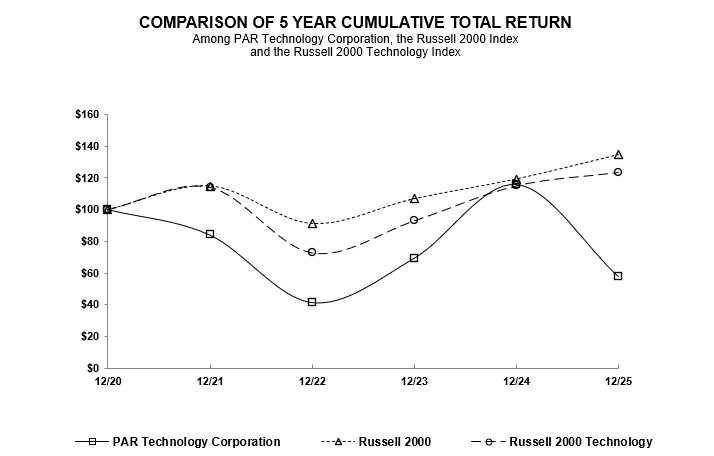
Item 6. RESERVED
Not applicable.
24
Item 7. MANAGEMENT'S DISCUSSION AND ANALYSIS OF FINANCIAL CONDITION AND RESULTS OF OPERATIONS
The following discussion and analysis of our financial condition and results of operations should be read in conjunction with our audited consolidated financial statements and the notes thereto included under "Part II, Item 8. Financial Statements and Supplementary Data" of this Annual Report. This discussion contains forward-looking statements that involve risks and uncertainties. Our actual results could differ materially from the results contemplated by these forward-looking statements due to a number of factors, including those discussed under "Forward-Looking Statements" above and "Part I, Item 1A. Risk Factors" above.
The following section generally discusses year-over-year comparisons between 2025 and 2024. Discussions related to year-over-year comparisons between 2024 and 2023 are included in “Management’s Discussion and Analysis of Financial Condition and Results of Operations” in Part II, Item 7 of the Company's Annual Report on Form 10-K for the fiscal year ended December 31, 2024, filed with the SEC on March 3, 2025.
2025 Operating Performance Highlights
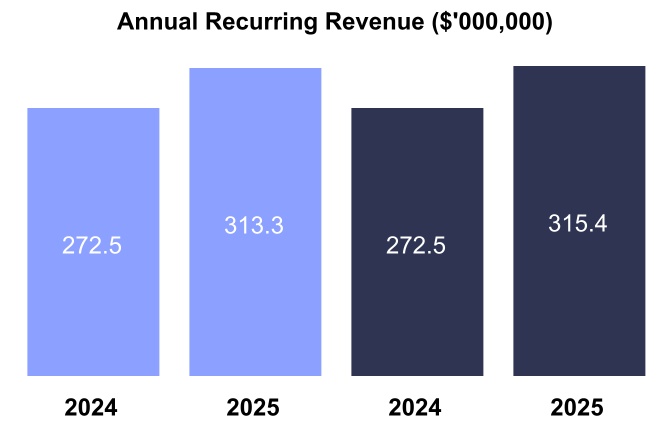
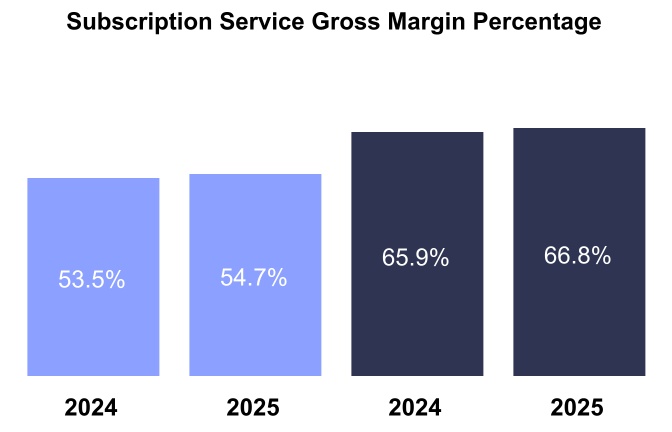
Organic - Year-over-year growth of 15.0% | Total - Year-over-year growth of 15.7% | ||||
GAAP - Year-over-year improvement of 120 basis points (bps) | ||
Non-GAAP - Year-over-year improvement of 90 basis points (bps) | ||
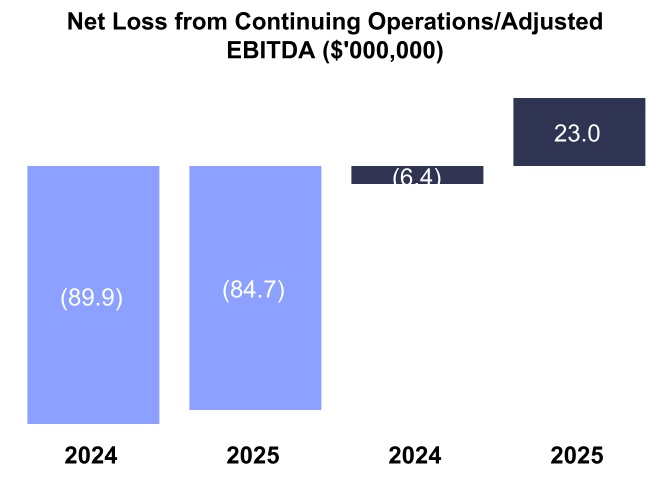
Net Loss from Cont. Ops. Year-over-year improvement of $5.3 million | ||
Adjusted EBITDA Year-over-year improvement of $29.3 million | ||
Refer to "Key Performance Indicators and Non-GAAP Financial Measures" below for important information on key performance indicators, such as annual recurring revenue (ARR), and non-GAAP financial measures, including non-GAAP subscription service gross margin percentage and adjusted EBITDA. We use these key performance indicators and non-GAAP financial measures to evaluate our performance.
25
Macroeconomic Environment
The tariff and supply chain environment is complex and evolving. Beginning in the second quarter of 2025, the U.S. government implemented a series of significant new tariffs, including on imports from several countries where we source certain components and hardware products. Other countries have responded with retaliatory actions or plans for retaliatory actions. There has been significant uncertainty resulting from the implementation, termination, and conditional pause of these tariffs and the situation remains fluid, including because of the U.S. Supreme Court's decision that the International Emergency Economic Powers Act does not authorize the President to impose tariffs. Additionally, increased demand for hardware products and components from AI data center construction around the world has created uncertainty as to whether these products will be available or available in needed quantities and quality or at favorable or competitive prices. We continue to monitor macroeconomic trends and uncertainties in light of continuing changes to global trade policies and supply chain pressures, which may have adverse effects on our hardware revenue and hardware gross margin. As a result of these events, we anticipate increased supply chain challenges, commodity cost volatility, and consumer and economic uncertainty. Management continues to evaluate and implement mitigating actions, including potential supply chain resiliency movements, cost or pricing measures and alternative shipping practices, if needed, as the macroeconomic environment evolves.
On July 4, 2025, the One Big Beautiful Bill Act (the "Act") was signed into law. The Act contains changes to U.S. federal tax law, including reinstatement of immediate expensing of domestic research and development expenditures, and has multiple effective dates. The enacted legislation did not have a material impact on our annual effective tax rate for the fiscal year ended December 31, 2025, and resulted in a decrease to taxes payable. We will continue to evaluate all applicable provisions of the legislation and their impact on our consolidated financial statements for the fiscal year ended December 31, 2026 and beyond.
COMPONENTS OF RESULTS OF OPERATIONS
Revenues
Subscription Service
Consists of revenue from software-as-a-service ("SaaS") solutions, related software support, managed platform development services, and transaction-based payment processing services.
Hardware
Consists of revenue from the sale of point-of-sale terminals and tablets, wireless headsets, drive-thru systems, kitchen display systems, kiosks, printers, payment devices, and other in-store peripherals.
Professional Service
Consists of revenue from hardware support, installations and implementations, and on-site and technical support.
Cost of Sales
Subscription Service
Consists of expenses directly related to the delivery of our software, including customer support and infrastructure management personnel costs, hosting and cloud infrastructure costs, amortization of capitalized and acquired developed technology, third-party software licensing fees, and payment processing fees.
Hardware
Consists of expenses directly related to the production, procurement, and delivery of hardware products sold to customers, including manufacturing and procurement personnel costs, freight charges, excess and obsolete inventory expenses, and allocated overhead.
26
Professional Service
Consists of the personnel costs of our deployment team associated with delivering these services and costs related to hardware repairs and advanced exchange contracts.
Operating Expenses
Sales and Marketing
Consists of employee-related costs incurred for personnel that support sales and marketing activities, as well as general marketing and event costs.
General and Administrative
Consists of employee-related costs incurred for management and administrative functions, including finance, legal, human resources, and information technology. General and administrative expenses also include costs related to fees paid for certain professional services and software, insurance, and occupancy costs, as well as bad debt expense and depreciation expense.
Research and Development
Consists of uncapitalized engineering and product development personnel costs associated with improvements to our platform and the development of new product offerings and expenses associated with the use of third-party software directly related to the development of our products and services.
Amortization of Identifiable Intangible Assets
Consists of amortization expense related to acquired intangible assets including customer relationships, non-competition agreements, and trade names.
Adjustment to Contingent Consideration Liability
Reflects a reduction to the fair market value of the contingent consideration liability related to the acquisition of MENU Technologies A.G. in July 2022 (the “MENU Acquisition”).
Gain on Insurance Proceeds
Consists of insurance proceeds from the settlement of legacy insurance claims.
Other Non-Operating Expenses
Interest expense, net
Consists of interest incurred on the 2026 Notes, 2027 Notes, and 2030 Notes, as well as on the credit facility with Blue Owl Capital Corporation as administrative agent and collateral agent and Blue Owl Credit Advisors, LLC as lead arranger and bookrunner (the "Credit Facility") prior to its repayment in January 2025 and on the 4.500% Convertible Senior Notes due 2024 (the "2024 Notes") prior to the induced conversion in October 2023, offset by interest earned from cash held in money market accounts and on our marketable securities.
Loss on extinguishment of debt
Represents the loss on inducement of our 2024 Notes and partial inducement of our 2026 Notes, and the loss related to the early repayment of the Credit Facility.
Other (expense) income, net
Consists of foreign currency transaction gains and losses and other miscellaneous non-operating income and expenses.
27
(Provision for) Benefit from Income Taxes
Consists of U.S. federal and state income tax, international income taxes in various foreign jurisdictions, and interest and penalties related to income taxes. Our effective tax rate fluctuates from period to period due to changes in the mix of income and losses in jurisdictions with a wide range of tax rates, the effect of acquisitions, changes resulting from the amount of recorded valuation allowance, and permanent differences between GAAP and local tax laws. Refer to "Note 13 – Income Taxes" of the notes to consolidated financial statements in "Part II, Item 8. Financial Statements and Supplementary Data" of this Annual Report for additional information about our income taxes and effective tax rate.
RESULTS OF OPERATIONS
Results of operations for the years ended December 31, 2025, 2024, and 2023 were as follows:
Consolidated Results
| Year Ended December 31, | Percentage of total revenue | Increase (decrease) | |||||||||||||||||||||||||||||||||||||||||||||
| (in thousands) | 2025 | 2024 | 2023 | 2025 | 2024 | 2023 | 2025 vs 2024 | 2024 vs 2023 | |||||||||||||||||||||||||||||||||||||||
| Revenues, net: | |||||||||||||||||||||||||||||||||||||||||||||||
| Subscription service | $ | 291,170 | $ | 207,422 | $ | 122,597 | 63.9 | % | 59.3 | % | 44.3 | % | 40.4 | % | 69.2 | % | |||||||||||||||||||||||||||||||
| Hardware | 106,410 | 87,040 | 103,391 | 23.4 | % | 24.9 | % | 37.4 | % | 22.3 | % | (15.8) | % | ||||||||||||||||||||||||||||||||||
| Professional service | 57,967 | 55,520 | 50,726 | 12.7 | % | 15.9 | % | 18.3 | % | 4.4 | % | 9.5 | % | ||||||||||||||||||||||||||||||||||
| Total revenues, net | $ | 455,547 | $ | 349,982 | $ | 276,714 | 100.0 | % | 100.0 | % | 100.0 | % | 30.2 | % | 26.5 | % | |||||||||||||||||||||||||||||||
| Gross margin | |||||||||||||||||||||||||||||||||||||||||||||||
| Subscription service | 159,143 | 110,903 | 58,862 | 34.9 | % | 31.7 | % | 21.3 | % | 43.5 | % | 88.4 | % | ||||||||||||||||||||||||||||||||||
| Hardware | 24,366 | 21,117 | 23,072 | 5.3 | % | 6.0 | % | 8.3 | % | 15.4 | % | (8.5) | % | ||||||||||||||||||||||||||||||||||
| Professional service | 14,517 | 14,104 | 7,512 | 3.2 | % | 4.0 | % | 2.7 | % | 2.9 | % | 87.8 | % | ||||||||||||||||||||||||||||||||||
| Total gross margin | 198,026 | 146,124 | 89,446 | 43.5 | % | 41.8 | % | 32.3 | % | 35.5 | % | 63.4 | % | ||||||||||||||||||||||||||||||||||
| Operating expenses: | |||||||||||||||||||||||||||||||||||||||||||||||
| Sales and marketing | 48,911 | 41,708 | 38,513 | 10.7 | % | 11.9 | % | 13.9 | % | 17.3 | % | 8.3 | % | ||||||||||||||||||||||||||||||||||
| General and administrative | 122,707 | 108,898 | 72,139 | 26.9 | % | 31.1 | % | 26.1 | % | 12.7 | % | 51.0 | % | ||||||||||||||||||||||||||||||||||
| Research and development | 81,771 | 67,258 | 58,356 | 18.0 | % | 19.2 | % | 21.1 | % | 21.6 | % | 15.3 | % | ||||||||||||||||||||||||||||||||||
| Amortization of identifiable intangible assets | 13,408 | 8,452 | 1,858 | 2.9 | % | 2.4 | % | 0.7 | % | 58.6 | % | >200 % | |||||||||||||||||||||||||||||||||||
| Adjustment to contingent consideration liability | — | (600) | (9,200) | — | % | (0.2) | % | (3.3) | % | (100.0) | % | (93.5) | % | ||||||||||||||||||||||||||||||||||
| Gain on insurance proceeds | — | (495) | (500) | — | % | (0.1) | % | (0.2) | % | (100.0) | % | (1.0) | % | ||||||||||||||||||||||||||||||||||
| Total operating expenses | 266,797 | 225,221 | 161,166 | 58.6 | % | 64.4 | % | 58.2 | % | 18.5 | % | 39.7 | % | ||||||||||||||||||||||||||||||||||
| Operating loss | (68,771) | (79,097) | (71,720) | (15.1) | % | (22.6) | % | (25.9) | % | (13.1) | % | 10.3 | % | ||||||||||||||||||||||||||||||||||
| Other (expense) income, net | (1,118) | 1,146 | (485) | (0.2) | % | 0.3 | % | (0.2) | % | (197.6) | % | <(200)% | |||||||||||||||||||||||||||||||||||
| Loss on extinguishment of debt | (5,791) | (6,560) | (635) | (1.3) | % | (1.9) | % | (0.2) | % | (11.7) | % | >200 % | |||||||||||||||||||||||||||||||||||
| Interest expense, net | (6,055) | (10,167) | (6,931) | (1.3) | % | (2.9) | % | (2.5) | % | (40.4) | % | 46.7 | % | ||||||||||||||||||||||||||||||||||
| Loss from continuing operations before income taxes | (81,735) | (94,678) | (79,771) | (17.9) | % | (27.1) | % | (28.8) | % | (13.7) | % | 18.7 | % | ||||||||||||||||||||||||||||||||||
| (Provision for) benefit from income taxes | (2,923) | 4,768 | (1,848) | (0.6) | % | 1.4 | % | (0.7) | % | (161.3) | % | <(200)% | |||||||||||||||||||||||||||||||||||
| Net loss from continuing operations | $ | (84,658) | $ | (89,910) | $ | (81,619) | (18.6) | % | (25.7) | % | (29.5) | % | (5.8) | % | 10.2 | % | |||||||||||||||||||||||||||||||
| Net income from discontinued operations | 197 | 84,923 | 11,867 | — | % | 24.3 | % | 4.3 | % | (99.8) | % | >200 % | |||||||||||||||||||||||||||||||||||
| Net loss | $ | (84,461) | $ | (4,987) | $ | (69,752) | (18.5) | % | (1.4) | % | (25.2) | % | >200 % | (92.9) | % | ||||||||||||||||||||||||||||||||
Historical results from our Government segment are reported as discontinued operations. Refer to "Note 4 - Discontinued Operations" within "Item 8. Financial Statements and Supplementary Data" for additional information.
28
Revenues, Net
| Year Ended December 31, | Percentage of total revenue | Increase (decrease) | |||||||||||||||||||||||||||||||||||||||||||||
| (in thousands) | 2025 | 2024 | 2023 | 2025 | 2024 | 2023 | 2025 vs 2024 | 2024 vs 2023 | |||||||||||||||||||||||||||||||||||||||
| Revenues, net: | |||||||||||||||||||||||||||||||||||||||||||||||
| Subscription service | $ | 291,170 | $ | 207,422 | $ | 122,597 | 63.9 | % | 59.3 | % | 44.3 | % | 40.4 | % | 69.2 | % | |||||||||||||||||||||||||||||||
| Hardware | 106,410 | 87,040 | 103,391 | 23.4 | % | 24.9 | % | 37.4 | % | 22.3 | % | (15.8) | % | ||||||||||||||||||||||||||||||||||
| Professional service | 57,967 | 55,520 | 50,726 | 12.7 | % | 15.9 | % | 18.3 | % | 4.4 | % | 9.5 | % | ||||||||||||||||||||||||||||||||||
| Total revenues, net | $ | 455,547 | $ | 349,982 | $ | 276,714 | 100.0 | % | 100.0 | % | 100.0 | % | 30.2 | % | 26.5 | % | |||||||||||||||||||||||||||||||
For the Year Ended December 31, 2025 Compared to the Year Ended December 31, 2024
Total revenues were $455.5 million for the year ended December 31, 2025, an increase of $105.6 million or 30.2% compared to $350.0 million for the year ended December 31, 2024.
Subscription service revenues were $291.2 million for the year ended December 31, 2025, an increase of $83.7 million or 40.4% compared to $207.4 million for the year ended December 31, 2024. The increase was driven by increased Engagement Cloud subscription service revenues of $53.8 million, of which $31.2 million was attributable to inorganic revenue growth due to the inclusion of approximately six additional months of revenue from the Plexure product line and two additional months of revenue from the existing PAR Retail business in the current period, and from customer contracts acquired in the GoSkip Asset Acquisition (now integrated into the PAR Retail product line). The residual increase of $22.6 million from Engagement Cloud subscription services was driven by organic growth in both active sites and average revenue per site through cross-selling initiatives, upselling, and price increases. Operator Cloud subscription service revenues increased $29.9 million, of which $20.3 million was attributable to inorganic revenue growth contributed by the Delaget product line and the inclusion of approximately six additional months of revenue from the TASK product line in the current period. The residual increase of $9.6 million from Operator Cloud subscription services was primarily driven by organic growth in active sites.
Hardware revenues were $106.4 million for the year ended December 31, 2025, an increase of $19.4 million or 22.3% compared to $87.0 million for the year ended December 31, 2024. The increase was substantially driven by increased revenues from sales of peripherals (scanners, printers, and components) of $5.0 million, terminals of $4.9 million, kiosks of $2.4 million, kitchen display systems of $2.1 million, and an increase in international sales of $3.4 million. These increases were substantially driven by the timing of tier-one enterprise customer hardware refresh cycles and the onboarding of Operator Cloud customers purchasing hardware. Hardware revenues will continue to be affected by the timing of the aforementioned drivers.
Professional service revenues were $58.0 million for the year ended December 31, 2025, an increase of $2.4 million or 4.4% compared to $55.5 million for the year ended December 31, 2024. The increase was substantially driven by a $4.1 million increase in hardware repair services and field operations, partially offset by a $1.6 million decrease in implementation revenues as a result of offering discounts and incentives on SaaS implementations to facilitate the adoption of our recurring subscription service revenue streams.
29
Gross Margin
| Year Ended December 31, | Gross Margin Percentage | Increase (decrease) | |||||||||||||||||||||||||||||||||||||||||||||
| (in thousands) | 2025 | 2024 | 2023 | 2025 | 2024 | 2023 | 2025 vs 2024 | 2024 vs 2023 | |||||||||||||||||||||||||||||||||||||||
| Gross margin | |||||||||||||||||||||||||||||||||||||||||||||||
| Subscription service | $ | 159,143 | $ | 110,903 | $ | 58,862 | 54.7 | % | 53.5 | % | 48.0 | % | 120 bps | 550 bps | |||||||||||||||||||||||||||||||||
| Hardware | 24,366 | 21,117 | 23,072 | 22.9 | % | 24.3 | % | 22.3 | % | (140) bps | 200 bps | ||||||||||||||||||||||||||||||||||||
| Professional service | 14,517 | 14,104 | 7,512 | 25.0 | % | 25.4 | % | 14.8 | % | (40) bps | 1,060 bps | ||||||||||||||||||||||||||||||||||||
| Total gross margin | $ | 198,026 | $ | 146,124 | $ | 89,446 | 43.5 | % | 41.8 | % | 32.3 | % | 170 bps | 950 bps | |||||||||||||||||||||||||||||||||
For the Year Ended December 31, 2025 Compared to the Year Ended December 31, 2024
Total gross margin as a percentage of revenue for the year ended December 31, 2025, increased to 43.5% as compared to 41.8% for the year ended December 31, 2024.
Subscription service margin as a percentage of subscription service revenue for the year ended December 31, 2025, increased to 54.7% as compared to 53.5% for the year ended December 31, 2024. The increase was substantially driven by operating efficiencies in hosting and customer support costs relative to the growth in subscription service revenues for both Engagement Cloud and Operator Cloud, as well as improved margin contributions stemming from post-acquisition operations of the Delaget product line and the inclusion of approximately two additional months of PAR Retail product line results in the current period. These improvements were partially offset by an impairment loss recorded in the current period related to the write-off of capitalized software development costs for the PAR Clear product.
Hardware margin as a percentage of hardware revenue for the year ended December 31, 2025, decreased to 22.9% as compared to 24.3% for the year ended December 31, 2024. The decrease was primarily driven by increased supply chain costs resulting from recently implemented U.S. tariff policies, partially offset by a year-over-year reduction in compensation expense as we aligned our hardware-related workforce with organizational priorities. The Company began implementing pricing adjustments during the third quarter of 2025 to mitigate the impact of tariffs in future periods.
Professional service margin as a percentage of professional service revenue for the year ended December 31, 2025, was relatively unchanged at 25.0% as compared to 25.4% for the year ended December 31, 2024.
Sales and Marketing Expenses ("S&M")
| Year Ended December 31, | Percentage of total revenue | Increase (decrease) | |||||||||||||||||||||||||||||||||||||||||||||
| (in thousands) | 2025 | 2024 | 2023 | 2025 | 2024 | 2023 | 2025 vs 2024 | 2024 vs 2023 | |||||||||||||||||||||||||||||||||||||||
| Sales and marketing | $ | 48,911 | $ | 41,708 | $ | 38,513 | 10.7 | % | 11.9 | % | 13.9 | % | 17.3 | % | 8.3 | % | |||||||||||||||||||||||||||||||
For the Year Ended December 31, 2025 Compared to the Year Ended December 31, 2024
S&M expenses were $48.9 million for the year ended December 31, 2025, an increase of $7.2 million or 17.3% compared to $41.7 million for the year ended December 31, 2024. The increase was substantially driven by a $6.7 million increase in inorganic S&M expense stemming from post-acquisition operations of the Delaget product line and the inclusion of approximately six additional months of TASK Group S&M expense and two additional months of PAR Retail S&M expense in the current period. Organic S&M expense increased by $0.5 million, primarily driven by an increase in commission expense due to year-over-year sales growth.
30
General and Administrative Expenses ("G&A")
| Year Ended December 31, | Percentage of total revenue | Increase (decrease) | |||||||||||||||||||||||||||||||||||||||||||||
| (in thousands) | 2025 | 2024 | 2023 | 2025 | 2024 | 2023 | 2025 vs 2024 | 2024 vs 2023 | |||||||||||||||||||||||||||||||||||||||
| General and administrative | $ | 122,707 | $ | 108,898 | $ | 72,139 | 26.9 | % | 31.1 | % | 26.1 | % | 12.7 | % | 51.0 | % | |||||||||||||||||||||||||||||||
For the Year Ended December 31, 2025 Compared to the Year Ended December 31, 2024
G&A expenses were $122.7 million for the year ended December 31, 2025, an increase of $13.8 million or 12.7% compared to $108.9 million for the year ended December 31, 2024. The increase was substantially driven by a $10.8 million increase in inorganic G&A expense stemming from post-acquisition operations of the Delaget product line and the inclusion of approximately six additional months of TASK Group G&A expense and two additional months of PAR Retail G&A expense in the current period. The residual $3.0 million increase was primarily driven by certain non-cash or non-recurring expenses consisting of a $4.4 million increase in stock-based compensation expense and a $3.7 million litigation expense in the current period, partially offset by a $4.8 million decrease in costs related to transaction due diligence and integration and a $0.3 million decrease in severance costs related to non-recurring restructuring events.
Research and Development Expenses ("R&D")
| Year Ended December 31, | Percentage of total revenue | Increase (decrease) | |||||||||||||||||||||||||||||||||||||||||||||
| (in thousands) | 2025 | 2024 | 2023 | 2025 | 2024 | 2023 | 2025 vs 2024 | 2024 vs 2023 | |||||||||||||||||||||||||||||||||||||||
| Research and development | $ | 81,771 | $ | 67,258 | $ | 58,356 | 18.0 | % | 19.2 | % | 21.1 | % | 21.6 | % | 15.3 | % | |||||||||||||||||||||||||||||||
For the Year Ended December 31, 2025 Compared to the Year Ended December 31, 2024
R&D expenses were $81.8 million for the year ended December 31, 2025, an increase of $14.5 million or 21.6% compared to $67.3 million for the year ended December 31, 2024. The increase was substantially driven by a $9.5 million increase in inorganic R&D expense stemming from post-acquisition operations of the Delaget product line, the inclusion of approximately six additional months of TASK Group R&D expense and two additional months of PAR Retail R&D expense in the current period, and R&D expense resulting from the integration of assets acquired in the GoSkip Asset Acquisition. Organic R&D expense increased by $5.0 million, primarily driven by an increase in development costs as we continue to invest in improving and diversifying our product and service offerings.
Other Operating Expenses: Amortization of Intangible Assets / Contingent Consideration / Insurance Proceeds
| Year Ended December 31, | Percentage of total revenue | Increase (decrease) | |||||||||||||||||||||||||||||||||||||||||||||
| (in thousands) | 2025 | 2024 | 2023 | 2025 | 2024 | 2023 | 2025 vs 2024 | 2024 vs 2023 | |||||||||||||||||||||||||||||||||||||||
| Amortization of identifiable intangible assets | $ | 13,408 | $ | 8,452 | $ | 1,858 | 2.9 | % | 2.4 | % | 0.7 | % | 58.6 | % | >200 % | ||||||||||||||||||||||||||||||||
| Adjustment to contingent consideration liability | $ | — | $ | (600) | $ | (9,200) | — | % | (0.2) | % | (3.3) | % | N/A | (93.5) | % | ||||||||||||||||||||||||||||||||
| Gain on insurance proceeds | $ | — | $ | (495) | $ | (500) | — | % | (0.1) | % | (0.2) | % | N/A | (1.0) | % | ||||||||||||||||||||||||||||||||
For the Year Ended December 31, 2025 Compared to the Year Ended December 31, 2024
Amortization of identifiable intangible assets was $13.4 million for the year ended December 31, 2025, an increase of $5.0 million as compared to $8.5 million for the year ended December 31, 2024. The increase was driven by an increase in amortizable intangible assets stemming from the Stuzo Acquisition, the TASK Group Acquisition, the Delaget Acquisition, and the GoSkip Asset Acquisition.
Included in operating expenses for the year ended December 31, 2024 was a $0.6 million reduction to the
31
fair value of the contingent consideration liability for certain post-closing revenue focused milestones from the MENU Acquisition. There was no comparable adjustment to contingent consideration liability for the year ended December 31, 2025.
Included in operating expenses for the year ended December 31, 2024 was $0.5 million in insurance proceeds received from the settlement of a legacy insurance claim. There was no comparable gain for the year ended December 31, 2025.
Other (Expense) Income, Net
| Year Ended December 31, | Percentage of total revenue | Increase (decrease) | |||||||||||||||||||||||||||||||||||||||||||||
| (in thousands) | 2025 | 2024 | 2023 | 2025 | 2024 | 2023 | 2025 vs 2024 | 2024 vs 2023 | |||||||||||||||||||||||||||||||||||||||
| Other (expense) income, net | $ | (1,118) | $ | 1,146 | $ | (485) | (0.2) | % | 0.3 | % | (0.2) | % | (197.6) | % | <(200)% | ||||||||||||||||||||||||||||||||
For the Year Ended December 31, 2025 Compared to the Year Ended December 31, 2024
Other expense, net was $1.1 million for the year ended December 31, 2025, a change of $2.3 million as compared to other income, net of $1.1 million for the year ended December 31, 2024. The change was substantially driven by foreign currency transaction fluctuations, with net foreign currency losses recognized in the current period compared to net gains in the prior period.
Loss on Extinguishment of Debt
| Year Ended December 31, | Percentage of total revenue | Increase (decrease) | |||||||||||||||||||||||||||||||||||||||||||||
| (in thousands) | 2025 | 2024 | 2023 | 2025 | 2024 | 2023 | 2025 vs 2024 | 2024 vs 2023 | |||||||||||||||||||||||||||||||||||||||
| Loss on extinguishment of debt | $ | (5,791) | $ | (6,560) | $ | (635) | (1.3) | % | (1.9) | % | (0.2) | % | (11.7) | % | >200 % | ||||||||||||||||||||||||||||||||
For the Year Ended December 31, 2025 Compared to the Year Ended December 31, 2024
Loss on extinguishment of debt was $5.8 million for the year ended December 31, 2025 related to the early repayment of the Credit Facility. Loss on extinguishment of debt was $6.6 million for the year ended December 31, 2024 related to the induced conversion of a portion of the 2026 Notes.
Interest Expense, Net
| Year Ended December 31, | Percentage of total revenue | Increase (decrease) | |||||||||||||||||||||||||||||||||||||||||||||
| (in thousands) | 2025 | 2024 | 2023 | 2025 | 2024 | 2023 | 2025 vs 2024 | 2024 vs 2023 | |||||||||||||||||||||||||||||||||||||||
| Interest expense, net | $ | (6,055) | $ | (10,167) | $ | (6,931) | (1.3) | % | (2.9) | % | (2.5) | % | (40.4) | % | 46.7 | % | |||||||||||||||||||||||||||||||
For the Year Ended December 31, 2025 Compared to the Year Ended December 31, 2024
Interest expense, net was $6.1 million for the year ended December 31, 2025, a decrease of $4.1 million or 40.4% as compared to $10.2 million for the year ended December 31, 2024. The decrease was primarily driven by the replacement of the Credit Facility with the 2030 Notes, which bear a lower interest rate.
32
Taxes
| Year Ended December 31, | Percentage of total revenue | Increase (decrease) | |||||||||||||||||||||||||||||||||||||||||||||
| (in thousands) | 2025 | 2024 | 2023 | 2025 | 2024 | 2023 | 2025 vs 2024 | 2024 vs 2023 | |||||||||||||||||||||||||||||||||||||||
| (Provision for) benefit from income taxes | $ | (2,923) | $ | 4,768 | $ | (1,848) | (0.6) | % | 1.4 | % | (0.7) | % | (161.3) | % | <(200)% | ||||||||||||||||||||||||||||||||
For the Year Ended December 31, 2025 Compared to the Year Ended December 31, 2024
The provision for income taxes was $2.9 million for the year ended December 31, 2025, a change of $7.7 million as compared to a benefit from income taxes of $4.8 million for the year ended December 31, 2024. The change was primarily due to the absence of the benefit recorded in the prior year, resulting from a reduction of the Company's valuation allowance following the establishment of deferred tax liabilities in connection with the Stuzo Acquisition and Delaget Acquisition. The provision recorded during the year ended December 31, 2025 primarily related to foreign income tax expense.
Net Income from Discontinued Operations
| Year Ended December 31, | Percentage of total revenue | Increase (decrease) | |||||||||||||||||||||||||||||||||||||||||||||
| (in thousands) | 2025 | 2024 | 2023 | 2025 | 2024 | 2023 | 2025 vs 2024 | 2024 vs 2023 | |||||||||||||||||||||||||||||||||||||||
| Net income from discontinued operations | $ | 197 | $ | 84,923 | $ | 11,867 | — | % | 24.3 | % | 4.3 | % | (99.8) | % | >200 % | ||||||||||||||||||||||||||||||||
For the Year Ended December 31, 2025 Compared to the Year Ended December 31, 2024
Net income from discontinued operations was $0.2 million for the year ended December 31, 2025, a decrease of $84.7 million as compared to $84.9 million for the year ended December 31, 2024. During the year ended December 31, 2025, a $0.2 million gain from the divestiture of RRC was recognized as a result of a favorable net working capital settlement. During the year ended December 31, 2024, an $81.2 million gain on sale of PGSC and RRC was recognized. The residual amount represents PGSC and RRC operating income, offset by a provision for income taxes relating to the gain on sale of PGSC and RRC.
Key Performance Indicators and Non-GAAP Financial Measures:
We monitor certain key performance indicators and non-GAAP financial measures in the evaluation and management of our business; certain key performance indicators and non-GAAP financial measures are provided in this Annual Report because we believe they are useful in facilitating period-to-period comparisons of our business performance. Key performance indicators and non-GAAP financial measures do not reflect and should be viewed independently of our financial performance determined in accordance with GAAP. Key performance indicators and non-GAAP financial measures are not forecasts or indicators of future or expected results and should not have undue reliance placed upon them by investors.
Key Performance Indicators
Within this Annual Report, the Company makes reference to annual recurring revenue, or ARR, and active sites, which are both key performance indicators. The Company utilizes ARR and active sites as key performance indicators of the scale of our subscription services for both new and existing customers.
ARR is the annualized revenue from our subscription services, which includes subscription fees for our SaaS solutions and related support, managed platform development services, and transaction-based fees for payment processing services. We generally calculate ARR by annualizing the monthly recurring revenue for all active sites as of the last day of each month for the respective reporting period. ARR is an operating measure, it does not reflect our revenue determined in accordance with GAAP, and ARR should be viewed independently of, and not combined with or substituted for, our revenue and other financial information determined in accordance with GAAP. Further, ARR is not a forecast of future revenue and investors should not place undue reliance on ARR as an indicator of our future or expected results. Our reported ARR is based on a constant currency, using the exchange rates established at the beginning of the year and consistently applied throughout the period and to comparative
33
periods presented. The table below presents our ARR on a constant currency basis, calculated using the exchange rates set at the beginning of 2025. Using the exchange rates established during the prior period, Engagement Cloud ARR and Operator Cloud ARR as of December 31, 2024 were $2.9 million and $0.6 million higher, respectively, than the constant currency ARR reported below. There was no impact to ARR as of December 31, 2023 as the exchange rate effects only began with the TASK Group Acquisition in 2024.
Active sites represent locations active on our subscription services as of the last day of the respective reporting period. Our key performance indicators ARR and active sites are presented as two subscription service product lines:
•Engagement Cloud consisting of PAR Engagement (Punchh and PAR Ordering), PAR Retail (including GoSkip), and Plexure product offerings.
•Operator Cloud consisting of PAR POS, PAR Pay, PAR OPS (Data Central and Delaget) and TASK product offerings.
Annual Recurring Revenue
| As of December 31, | Increase (decrease) | ||||||||||||||||||||||||||||
| (in thousands) | 2025 | 2024 | 2023 | 2025 vs 2024 | 2024 vs 2023 | ||||||||||||||||||||||||
| Engagement Cloud: | |||||||||||||||||||||||||||||
| Organic | $ | 183,311 | $ | 156,248 | $ | 63,784 | 17.3 | % | 145.0 | % | |||||||||||||||||||
| Inorganic* | 2,100 | — | — | N/A | N/A | ||||||||||||||||||||||||
| Total Engagement Cloud | 185,411 | 156,248 | 63,784 | 18.7 | % | 145.0 | % | ||||||||||||||||||||||
| Operator Cloud: | |||||||||||||||||||||||||||||
| Organic | 129,964 | 116,224 | 73,119 | 11.8 | % | 59.0 | % | ||||||||||||||||||||||
| Total Operator Cloud | 129,964 | 116,224 | 73,119 | 11.8 | % | 59.0 | % | ||||||||||||||||||||||
| Total | $ | 315,375 | $ | 272,472 | $ | 136,903 | 15.7 | % | 99.0 | % | |||||||||||||||||||
*Inorganic Engagement Cloud ARR represents GoSkip ARR only as of December 31, 2025.
Revaluing our ending ARR as of December 31, 2025 using exchange rates determined at the beginning of 2026, our Engagement Cloud ARR would be $186.7 million and Operator Cloud ARR would be $130.5 million.
Active Sites
| Year Ended December 31, | Increase (decrease) | ||||||||||||||||||||||||||||
| (in thousands) | 2025 | 2024 | 2023 | 2025 vs 2024 | 2024 vs 2023 | ||||||||||||||||||||||||
| Engagement Cloud: | |||||||||||||||||||||||||||||
| Organic | 121.2 | 119.7 | 70.8 | 1.3 | % | 68.9 | % | ||||||||||||||||||||||
| Inorganic* | 0.6 | — | — | N/A | N/A | ||||||||||||||||||||||||
| Total Engagement Cloud | 121.8 | 119.7 | 70.8 | 1.8 | % | 68.9 | % | ||||||||||||||||||||||
| Operator Cloud: | |||||||||||||||||||||||||||||
| Organic | 60.1 | 54.8 | 25.3 | 9.8 | % | 116.4 | % | ||||||||||||||||||||||
| Total Operator Cloud | 60.1 | 54.8 | 25.3 | 9.8 | % | 116.4 | % | ||||||||||||||||||||||
*Inorganic Engagement Cloud active sites includes GoSkip active sites only as of December 31, 2025.
34
Non-GAAP Financial Measures
In addition to disclosing financial results in accordance with GAAP, this Annual Report contains references to the non-GAAP financial measures below. We believe these non-GAAP financial measures provide investors with useful supplemental information about our operating performance, enable comparison of financial trends and results between periods where certain items may vary independent of business performance, and allow for greater transparency with respect to key metrics used by management in operating our business and measuring our performance. Our non-GAAP financial measures reflect adjustments based on one or more of the following items below. The income tax effect of the below adjustments, with the exception of non-recurring income taxes, were not tax-effected due to the valuation allowance on all of our net deferred tax assets.
Our non-GAAP financial measures should not be considered a substitute for, or superior to, financial measures calculated in accordance with GAAP, and the financial results calculated in accordance with GAAP and reconciliations from these results should be carefully evaluated. Additionally, these measures may not be comparable to similarly titled measures disclosed by other companies.
| Non-GAAP Measure or Adjustment | Definition | Usefulness to management and investors | ||||||
| Non-GAAP subscription service gross margin percentage | Represents subscription service gross margin percentage adjusted to exclude amortization from acquired and internally developed software, stock-based compensation, severance, and impairment of capitalized software development costs. | We believe that non-GAAP subscription service gross margin percentage and adjusted EBITDA provide useful perspectives with respect to the Company's core operating performance and ongoing cash earnings by adjusting for certain non-cash and non-recurring charges that may not be indicative of our financial performance. | ||||||
| Adjusted EBITDA | Represents net loss before income taxes, interest expense, and depreciation and amortization adjusted to exclude discontinued operations, stock-based compensation, contingent consideration, transaction costs, gain on insurance proceeds, severance, impairment loss, litigation expense, loss on extinguishment of debt, and other expense (income), net. | |||||||
| Non-GAAP diluted net income (loss) per share | Represents net loss per share excluding amortization of acquired intangible assets, non-recurring income taxes, non-cash interest, discontinued operations, stock-based compensation, contingent consideration, transaction costs, gain on insurance proceeds, severance, impairment loss, litigation expense, loss on extinguishment of debt, and other expense (income), net. | We believe that adjusting our diluted net loss per share to remove non-cash and non-recurring charges provides a useful perspective with respect to the Company's operating performance as well as comparisons to past and competitor operating results. | ||||||
| Stock-based compensation | Consists of non-cash charges related to our employee equity incentive plans. | We exclude stock-based compensation because management does not view these non-cash charges as part of our core operating performance. This adjustment facilitates a useful evaluation of our current operating performance as well as comparisons to past and competitor operating results. | ||||||
| Contingent consideration | Adjustment reflects a non-cash reduction to the fair market value of the contingent consideration liability related to the MENU Acquisition. | We exclude changes to the fair market value of our contingent consideration liability because management does not view these non-cash, non-recurring charges as part of our core operating performance. This adjustment facilitates a useful evaluation of our current operating performance as well as comparisons to past and competitor operating results. | ||||||
35
| Non-GAAP Measure or Adjustment | Definition | Usefulness to management and investors | ||||||
| Transaction costs | Adjustment reflects non-recurring professional fees incurred in transaction due diligence and integration, including costs incurred in the acquisitions of Stuzo, TASK Group, and Delaget. | We exclude professional fees incurred in corporate development and integration because management does not view these non-recurring charges, which are inconsistent in size and are significantly impacted by the timing and valuation of our transactions, as part of our core operating performance. This adjustment facilitates a useful evaluation of our current operating performance, comparisons to past and competitor operating results, and additional means to evaluate expense trends. | ||||||
| Gain on insurance proceeds | Adjustment reflects the gain on insurance proceeds due to the settlement of legacy claims. | We exclude these non-recurring adjustments because management does not view these costs as part of our core operating performance. These adjustments facilitate a useful evaluation of our current operating performance as well as comparisons to past and competitor operating results. | ||||||
| Severance | Adjustment reflects severance tied to non-recurring restructuring events included in cost of sales, sales and marketing expense, general and administrative expense, and research and development expense. | |||||||
| Litigation expense | Adjustment reflects non-recurring legal fees incurred in connection with certain litigation matters and the release of a loss contingency and settlement expenses for certain legal matters. | |||||||
| Loss on extinguishment of debt | Adjustment reflects loss on extinguishment of debt related to the conversion of the 2024 Notes and a portion of the 2026 Notes, and related to the early repayment of the Credit Facility. | |||||||
| Discontinued operations | Adjustment reflects income from discontinued operations related to the divestiture of our Government segment. | |||||||
| Impairment loss | Adjustment reflects impairment loss related to the discontinuance of the Brink POS trademark and the write-off of capitalized software development costs related to the PAR Clear product. | |||||||
| Other expense (income), net | Adjustment reflects foreign currency transaction gains and losses and other non-recurring income and expenses recorded in other (expense) income, net in the accompanying statements of operations. | |||||||
| Non-recurring income taxes | Adjustment reflects a partial release of our deferred tax asset valuation allowance resulting from the Stuzo Acquisition and Delaget Acquisition. | We exclude these non-cash and non-recurring adjustments for purposes of calculating non-GAAP diluted net income (loss) per share because management does not view these costs as part of our core operating performance. These adjustments facilitate a useful evaluation of our current operating performance, comparisons to past and competitor operating results, and additional means to evaluate expense trends. | ||||||
| Non-cash interest | Adjustment reflects non-cash amortization of issuance costs and discount related to the Company's long-term debt. | |||||||
| Acquired intangible assets amortization | Adjustment reflects amortization expense of acquired developed technology included within cost of sales and amortization expense of other acquired intangible assets. | |||||||
36
The tables below provide reconciliations between net loss and adjusted EBITDA, diluted net loss per share and non-GAAP diluted net income (loss) per share, and subscription service gross margin percentage and non-GAAP subscription service gross margin percentage. Amounts presented in the reconciliations and other tables presented herein may not sum due to rounding.
| (in thousands) | Year Ended December 31, | ||||||||||||||||
| Reconciliation of Net Loss to Adjusted EBITDA | 2025 | 2024 | 2023 | ||||||||||||||
| Net loss | $ | (84,461) | $ | (4,987) | $ | (69,752) | |||||||||||
| Discontinued operations | (197) | (84,923) | (11,867) | ||||||||||||||
| Net loss from continuing operations | (84,658) | (89,910) | (81,619) | ||||||||||||||
| Provision for (benefit from) income taxes | 2,923 | (4,768) | 1,848 | ||||||||||||||
| Interest expense, net | 6,055 | 10,167 | 6,931 | ||||||||||||||
| Depreciation and amortization | 49,018 | 37,907 | 27,014 | ||||||||||||||
| Stock-based compensation | 30,645 | 24,487 | 14,291 | ||||||||||||||
| Contingent consideration | — | (600) | (9,200) | ||||||||||||||
| Litigation expense | 3,749 | — | (808) | ||||||||||||||
| Transaction costs | 3,682 | 8,454 | 2,273 | ||||||||||||||
| Gain on insurance proceeds | — | (495) | (500) | ||||||||||||||
| Severance | 1,089 | 2,769 | 253 | ||||||||||||||
| Loss on extinguishment of debt | 5,791 | 6,560 | 635 | ||||||||||||||
| Impairment loss | 3,555 | 225 | — | ||||||||||||||
| Other expense (income), net | 1,118 | (1,146) | 485 | ||||||||||||||
| Adjusted EBITDA | $ | 22,967 | $ | (6,350) | $ | (38,397) | |||||||||||
| (in thousands, except per share amounts) | Year Ended December 31, | ||||||||||||||||
| Reconciliation between GAAP and Non-GAAP diluted net income (loss) per share | 2025 | 2024 | 2023 | ||||||||||||||
| Diluted net loss per share | $ | (2.09) | $ | (0.14) | $ | (2.53) | |||||||||||
| Discontinued operations | — | (2.49) | (0.43) | ||||||||||||||
| Diluted net loss per share from continuing operations | (2.09) | (2.63) | (2.96) | ||||||||||||||
| Non-recurring income taxes | — | (0.19) | — | ||||||||||||||
| Non-cash interest | 0.06 | 0.07 | 0.08 | ||||||||||||||
| Acquired intangible assets amortization | 0.96 | 0.84 | 0.66 | ||||||||||||||
| Stock-based compensation | 0.76 | 0.72 | 0.52 | ||||||||||||||
| Contingent consideration | — | (0.02) | (0.33) | ||||||||||||||
| Litigation expense | 0.09 | — | (0.03) | ||||||||||||||
| Transaction costs | 0.09 | 0.25 | 0.08 | ||||||||||||||
| Gain on insurance proceeds | — | (0.01) | (0.02) | ||||||||||||||
| Severance | 0.03 | 0.08 | 0.01 | ||||||||||||||
| Loss on extinguishment of debt | 0.14 | 0.19 | 0.02 | ||||||||||||||
| Impairment loss | 0.09 | 0.01 | — | ||||||||||||||
| Other expense (income), net | 0.03 | (0.03) | 0.02 | ||||||||||||||
| Non-GAAP diluted net income (loss) per share | $ | 0.15 | $ | (0.73) | $ | (1.96) | |||||||||||
| Diluted weighted average shares outstanding | 40,473 | 34,155 | 27,552 | ||||||||||||||
37
| (in thousands) | Year Ended December 31, | ||||||||||||||||
| Reconciliation between GAAP and Non-GAAP Subscription Service Gross Margin Percentage | 2025 | 2024 | 2023 | ||||||||||||||
| Subscription Service Gross Margin Percentage | 54.7 | % | 53.5 | % | 48.0 | % | |||||||||||
| Subscription Service Gross Margin | $ | 159,143 | $ | 110,903 | $ | 58,862 | |||||||||||
| Depreciation and amortization | 31,115 | 25,312 | 22,373 | ||||||||||||||
| Stock-based compensation | 628 | 282 | 317 | ||||||||||||||
| Severance | — | 152 | — | ||||||||||||||
| Impairment loss | 3,555 | — | — | ||||||||||||||
| Non-GAAP Subscription Service Gross Margin | $ | 194,441 | $ | 136,649 | $ | 81,552 | |||||||||||
| Non-GAAP Subscription Service Gross Margin Percentage | 66.8 | % | 65.9 | % | 66.4 | % | |||||||||||
LIQUIDITY AND CAPITAL RESOURCES
Our primary sources of liquidity are cash and cash equivalents. As of December 31, 2025, we had cash and cash equivalents of $79.6 million. Cash and cash equivalents consist of highly liquid investments with maturities of 90 days or less, including money market funds.
Cash used in operating activities was $27.2 million for the year ended December 31, 2025, compared to $25.2 million for the year ended December 31, 2024. The increase in cash used in operating activities of $1.9 million was due to additional net working capital requirements substantially driven by an increase in accounts receivable resulting from revenue growth.
Cash used in investing activities was $13.1 million for the year ended December 31, 2025, compared to $180.1 million for the year ended December 31, 2024. Cash used in investing activities for the year ended December 31, 2025 included $4.3 million of cash consideration paid in connection with the GoSkip Asset Acquisition, capital expenditures of $3.3 million for fixed assets, and capital expenditures of $5.6 million for developed technology costs associated with our software platforms. The greater amount of cash used in investing activities during the year ended December 31, 2024 was largely driven by $309.4 million of cash consideration paid in connection with the Stuzo Acquisition, the TASK Group Acquisition, and the Delaget Acquisition (net of cash acquired), partially offset by $96.1 million of cash consideration received in connection with the disposition of PGSC and RRC and $36.7 million of proceeds from net sales of short-term held-to-maturity investments.
Cash provided by financing activities was $12.3 million for the year ended December 31, 2025, compared to $278.5 million for the year ended December 31, 2024. Cash provided by financing activities during the year ended December 31, 2025 primarily consisted of the net proceeds from the sale of the 2030 Notes of $111.1 million (net of issuance costs), partially offset by the repayment in full of $93.6 million principal amount outstanding under the Credit Facility plus accrued interest and prepayment premium. Cash provided by financing activities during the year ended December 31, 2024 primarily consisted of a private placement of common stock of $194.5 million (net of issuance costs) and $87.3 million (net of issuance costs) from the Credit Facility. We do not have any off-balance sheet arrangements or obligations.
We expect our available cash and cash equivalents will be sufficient to meet our operating needs for at least the next 12 months. Over the next 12 months our total contractual obligations are $77.2 million, consisting of purchase commitments for normal operations (purchase of inventory, software licensing, use of external labor, and third-party cloud services) of $48.6 million, interest payments of $6.1 million and principal payments of $20.0 million related to long-term debt, and facility lease obligations of $2.4 million. We expect to fund such commitments with cash provided by operating activities and our sources of liquidity.
Our non-current contractual obligations are $413.1 million, consisting of purchase commitments for normal operations (purchase of inventory, software licensing, use of external labor, and third-party cloud services) of $16.7 million, interest payments of $9.1 million and principal payments of $380.0 million related to long-term debt, and facility leases of $7.4 million. Refer to "Note 5 – Leases" and “Note 10 – Debt” of the notes to consolidated financial statements in "Part II, Item 8. Financial Statements and Supplementary Data" of this Annual Report for additional information. We expect to fund such commitments with cash provided by operating activities, our sources of liquidity, and if necessary, equity, equity-linked, or debt financing arrangements.
38
After period end, the Company acquired approximately $17.1 million aggregate principal amount of its remaining outstanding 2026 Notes (the "Additional Exchanged Notes") in exchange for 485,186 shares of the Company's common stock, plus approximately $134,000 in cash for accrued and unpaid interest on the Additional Exchanged Notes to, but excluding, the closing date (the "Additional Notes Exchange"). Following the Additional Notes Exchange, an aggregate of approximately $2.9 million principal amount of the 2026 Notes remained outstanding. Refer to "Note 17 – Subsequent Events" of the notes to consolidated financial statements in "Part II, Item 8. Financial Statements and Supplementary Data" of this Annual Report for additional information.
Our actual cash needs will depend on many factors, including our rate of revenue growth, growth of our SaaS revenues, the timing and extent of spending to support our product development and acquisition integration efforts, the timing of introductions of new products and enhancements to existing products, market acceptance of our products, and the factors described above in Part II, Item 7. "Management's Discussion and Analysis of Financial Condition and Results of Operations” and elsewhere in this Annual Report and our other filings with the SEC.
From time to time, we may seek to raise additional capital through equity, equity-linked, and debt financing arrangements. In addition, our board of directors and management regularly evaluate our business, strategy, and financial plans and prospects. As part of this evaluation, the board of directors and management periodically consider strategic alternatives to maximize value for our shareholders, including strategic transactions such as an acquisition, or a sale or spin-off of non-strategic company assets or businesses. We cannot provide assurance that any additional financing or strategic alternatives will be available to us on acceptable terms or at all.
CRITICAL ACCOUNTING POLICIES AND ESTIMATES
Our consolidated financial statements are prepared in accordance with accounting principles generally accepted in the United States of America, which requires the use of estimates, assumptions, judgments, and subjective interpretations of accounting principles that affect the reported amounts of assets, liabilities, revenue, expenses, and related disclosures. We believe our use of estimates and underlying accounting assumptions adhere to GAAP and are consistently applied. Valuations based on estimates are reviewed for reasonableness and adequacy on a consistent basis. However, because these estimates are inherently uncertain, actual results could differ. Our estimates are also subject to uncertainties, including those associated with market conditions, risks, and trends. Refer to "Item 1A. Risk Factors" of this Annual Report for additional information. The accounting policies and estimates summarized below are those that we consider critical, due to the significant judgments and assumptions involved and their potential impact on our financial condition and results of operations. Refer to “Note 1 – Summary of Business and Significant Accounting Policies” of the notes to consolidated financial statements in "Part II, Item 8. Financial Statements and Supplementary Data" of this Annual Report for additional information regarding our accounting policies and other disclosures required by GAAP.
Revenue Recognition
The Company's revenue is derived from three types of revenue: hardware sales, subscription services, and professional services, which may be sold separately or bundled together in a single contract. ASC Topic 606, Revenue from Contracts with Customers, requires the Company to distinguish and measure performance obligations under customer contracts. Contract consideration is allocated to all performance obligations within the arrangement or contract. Assessing whether products and services constitute distinct performance obligations that should be recognized separately or combined may require judgment. Performance obligations that are determined not to be distinct are combined with other performance obligations until the combined unit is determined to be distinct and that combined unit is then recognized as revenue over time or at a point in time depending on when control is transferred. The Company evaluated the potential performance obligations and evaluated whether each performance obligation met the ASC Topic 606 criteria to be considered a distinct performance obligation.
The primary method used to estimate a stand-alone selling price is the price that the Company charges for the particular good or service sold by the Company separately under similar circumstances to similar customers. Assessing the stand-alone selling price for each distinct performance obligation may involve significant judgment. Key pricing factors taken into consideration include our discounting policies, transaction size and volume, target customer demographic, price lists, as well as both historical and current sales and contract prices.
39
For certain arrangements, particularly those involving managed platform development services and transaction-based payment processing, we must determine whether we are acting as a principal or an agent. This assessment is based on our level of control over the services before they are transferred to the customer, our pricing discretion, and our responsibility for fulfillment. Where we conclude that we are the principal, we recognize revenue on a gross basis; otherwise, revenue is recorded net of certain pass-through costs.
Accounts Receivable – Current Expected Credit Losses
The Company maintains a provision for accounts receivables that it does not expect to collect. In accordance with ASC Topic 326, Financial Instruments - Credit Losses, the Company accrues its estimated losses from uncollectible accounts receivable to the provision based upon recent historical experience, the length of time the receivable has been outstanding, other specific information as it becomes available, and reasonable and supportable forecasts not already reflected in the historical loss information. Provisions for current expected credit losses are charged to current operating expenses. Actual losses are charged against the provision when incurred.
Inventories
The Company’s inventories are valued at the lower of cost and net realizable value, with cost determined using the weighted average cost method. The Company uses certain estimates and judgments and considers several factors including hardware demand, changes in customer requirements, and changes in technology to provide for excess and obsolescence reserves to properly value inventory.
Capitalized Software Development Costs
We capitalize certain costs related to the development of our platform and other software applications for internal use in accordance with ASC Topic 350-40, Intangibles - Goodwill and Other - Internal - Use Software. We begin to capitalize our costs to develop software when preliminary development efforts are successfully completed, management has authorized and committed project funding, and it is probable that the project will be completed and the software will be used as intended. We stop capitalizing these costs when the software is substantially complete and ready for its intended use, including the completion of all significant testing. These costs are amortized on a straight-line basis over the estimated useful life of the related asset, generally estimated to be three to seven years. We also capitalize costs related to specific upgrades and enhancements when it is probable the expenditure will result in additional functionality and expense costs incurred for maintenance and minor upgrades and enhancements. Costs incurred prior to meeting these criteria together with costs incurred for training and maintenance are expensed as incurred and recorded within research and development expenses in our consolidated statements of operations.
We exercise judgment in determining the point at which various projects may be capitalized, in assessing the ongoing value of the capitalized costs and in determining the estimated useful lives over which the costs are amortized. To the extent that we change the manner in which we develop and test new features and functionalities related to our platform, assess the ongoing value of capitalized assets or determine the estimated useful lives over which the costs are amortized, the amount of internal-use software development costs we capitalize and amortize could change in future periods.
Accounting for Business Combinations
We account for acquired businesses in accordance with ASC Topic 805, Business Combinations, which requires that assets acquired and liabilities assumed be recorded at their respective fair values on the date of acquisition. The fair value of the consideration paid is assigned to the underlying net assets of the acquired business based on their respective fair values. Any excess of the purchase price over the estimated fair values of the net assets acquired is recorded to goodwill. Intangible assets are amortized over the expected life of the asset. Fair value determinations and useful life estimates are based on, among other factors, estimates of expected future cash flows from revenues of the intangible assets acquired, estimates of appropriate discount rates used to present value expected future cash flows, estimated useful lives of the intangible assets acquired and other factors. Although we believe the assumptions and estimates we have made have been reasonable and appropriate, they are based, in part, on historical experience, information obtained from the management of the acquired companies, and future expectations. For these and other reasons, actual results may vary significantly from estimated results.
40
Discontinued Operations
In determining whether a group of assets disposed of (or is to be disposed of) should be presented as a discontinued operation, the Company analyzes whether the group of assets disposed of represented a component of the entity; that is, whether it had historic operations and cash flows that were discrete both operationally and for financial reporting purposes. In addition, the Company considers whether the disposal represents a strategic shift that has or will have a major effect on the Company’s operations and financial results.
The assets and liabilities of a discontinued operation, other than goodwill, are measured at the lower of carrying amount or fair value, less cost to sell. When a portion of a reporting unit that constitutes a business is to be disposed of, the goodwill associated with that business is included in the carrying amount of the business based on the relative fair values of the business to be disposed of and the portion of the reporting unit that will be retained. Interest is allocated to discontinued operations if the interest is directly attributable to the discontinued operations or is interest on debt that is required to be repaid as a result of the disposal.
Stock-Based Compensation
The Company records stock-based compensation for employee stock options, restricted stock awards, and restricted stock units using a straight-line method over the vesting period, based on the fair value at the grant date. The fair value of stock options is determined using the Black-Scholes valuation model, which incorporates assumptions as to the fair value of stock price, volatility, the expected life of options or awards, a risk-free interest rate, and dividend yield. In valuing stock options, significant judgment is required in determining the expected volatility of the Company's common stock and the expected life that individuals will hold their stock options prior to exercising. Expected volatility is based on the historical and implied volatility of the Company's common stock. The expected life of stock options is derived from the historical actual term of stock option grants and an estimate of future exercises during the remaining contractual period of the stock option. While volatility and estimated life are assumptions that do not bear the risk of change subsequent to the grant date of stock options, these assumptions may be difficult to measure, as they represent future expectations based on historical experience. Further, expected volatility and the expected life of stock options may change in the future, which could substantially change the grant-date fair value of future awards and, ultimately, the expense the Company records.
Impairment of Long-Lived Assets
The Company evaluates the accounting and reporting for the impairment of long-lived assets in accordance with the reporting requirements of ASC Topic 360-10, Accounting for the Impairment or Disposal of Long-Lived Assets. The Company will recognize impairment of long-lived assets or asset groups if the net book value of such assets exceeds the estimated future undiscounted cash flows attributable to such assets. If the carrying value of a long-lived asset or asset group is considered impaired, a loss is recognized based on the amount by which the carrying value exceeds the fair market value of the long-lived asset or asset group for assets to be held and used, or the amount by which the carrying value exceeds the fair market value less cost to sell for assets to be sold.
Goodwill
Fair values of the reporting unit are estimated using a weighted methodology considering the output from both the income and market approaches. The income approach incorporates the use of a discounted cash flow (DCF) analysis. A number of significant assumptions and estimates are involved in the application of the DCF model to forecast operating cash flows, including revenue growth, operating income margin and discount rate. The market approach incorporates the use of the quoted price and public company methods utilizing public market data for our company and comparable companies.
Under GAAP, the Company has the option to first assess qualitative factors to determine whether the existence of events or circumstances leads to a determination that it is more likely than not that the fair value of the reporting unit is greater than its carrying amount. If, after assessing the totality of events or circumstances, the Company determines it is more likely than not that the fair value of a reporting unit is greater than its carrying amount, there is no need to perform any further testing. However, if the Company concludes otherwise, then it is required to perform a quantitative impairment test by calculating the fair value of the reporting unit and comparing the fair value with the carrying amount of the reporting unit. If the fair value of the reporting unit is less than its carrying value, an impairment loss is recorded based on that difference.
41
Recent Accounting Pronouncements Not Yet Adopted
Refer to “Note 1 – Summary of Business and Significant Accounting Policies” of the notes to consolidated financial statements in "Part II, Item 8. Financial Statements and Supplementary Data" of this Annual Report for details.
Item 7A. QUANTITATIVE AND QUALITATIVE DISCLOSURES ABOUT MARKET RISK
Foreign Currency Exchange Risk
Our primary exposures relate to certain non-dollar denominated sales and operating expenses in Canada, Europe, Asia, and Australia. These primary currencies are the Great British Pound, the Euro, the Swiss Franc, the Serbian Dinar, the Australian dollar, the New Zealand dollar, the Singapore dollar, the Canadian dollar, the Indian Rupee, the Japanese Yen, the Polish Zloty, and the Chinese Renminbi. Accordingly, changes in exchange rates may negatively affect our revenue and net loss as expressed in U.S. dollars. We also have foreign currency risk related to foreign currency transactions and monetary assets and liabilities, including intercompany balances denominated in currencies that are not the functional currency. We have experienced and will continue to experience fluctuations in our net loss as a result of gains (losses) on these foreign currency transactions and the remeasurement of monetary assets and liabilities. As of December 31, 2025, the impact of foreign currency exchange rate changes on our revenues and net loss was not material. The volatility of exchange rates depends on many factors that we cannot forecast with reliable accuracy. Additionally, as of December 31, 2025, we estimated that a 10 percent change in exchange rates against the U.S. dollar would not have a material impact on earnings, cash flows, or fair values over a one-year period, and we have not engaged in any foreign currency hedging transactions.
Interest Rate Risk
As of December 31, 2025, we had $20.0 million, $265.0 million, and $115.0 million in aggregate principal amount outstanding on the 2026 Notes, the 2027 Notes, and the 2030 Notes, respectively. Refer to "Note 17 – Subsequent Events" of the notes to consolidated financial statements in "Part II, Item 8. Financial Statements and Supplementary Data" of this Annual Report for further information on the remaining principal amount outstanding on the 2026 Notes.
We carry the Senior Notes at face value less amortized debt issuance costs on the on the consolidated balance sheets. The fair value of the Senior Notes are subject to interest rate risk, market risk, and other factors due to their conversion features. In particular, the fair value of the Senior Notes changes when interest rates change or the market price of our stock fluctuates, with the fair value of the Senior Notes generally increasing as our stock price increases and generally decreasing as our stock price declines. Despite the effects of interest rate and market value changes on the Senior Notes’ fair value, we have no financial statement risk associated with changes in interest rates related to the Senior Notes because they bear interest at fixed rates. At December 31, 2025, a hypothetical 10 percent change in interest rates would not have a material impact on earnings or cash flows over a one-year period.
The Credit Facility contained a variable interest rate, presenting interest rate exposure based on the rate selected by management. As described in "Note 10 – Debt" of the notes to consolidated financial statements in "Part II, Item 8. Financial Statements and Supplementary Data" of this Annual Report, the Credit Facility was paid in full on January 30, 2025, and the Credit Agreement was terminated.
42
Item 8. FINANCIAL STATEMENTS AND SUPPLEMENTARY DATA
43
REPORT OF INDEPENDENT REGISTERED PUBLIC ACCOUNTING FIRM
To the shareholders and the Board of Directors of PAR Technology Corporation
Opinion on the Financial Statements
We have audited the accompanying consolidated balance sheets of PAR Technology Corporation and subsidiaries (the "Company") as of December 31, 2025 and 2024, the related consolidated statements of operations, comprehensive loss, changes in shareholders' equity, and cash flows, for each of the three years in the period ended December 31, 2025, and the related notes (collectively referred to as the “financial statements”). In our opinion, the financial statements present fairly, in all material respects, the financial position of the Company as of December 31, 2025 and 2024 and the results of its operations and its cash flows for the each of the three years in the period ended December 31, 2025, in conformity with accounting principles generally accepted in the United States of America.
We have also audited, in accordance with the standards of the Public Company Accounting Oversight Board (United States) (PCAOB), the Company's internal control over financial reporting as of December 31, 2025, based on criteria established in Internal Control — Integrated Framework (2013) issued by the Committee of Sponsoring Organizations of the Treadway Commission and our report dated February 26, 2026, expressed an unqualified opinion on the Company's internal control over financial reporting.
Basis for Opinion
These financial statements are the responsibility of the Company's management. Our responsibility is to express an opinion on the Company's financial statements based on our audits. We are a public accounting firm registered with the PCAOB and are required to be independent with respect to the Company in accordance with the U.S. federal securities laws and the applicable rules and regulations of the Securities and Exchange Commission and the PCAOB.
We conducted our audits in accordance with the standards of the PCAOB. Those standards require that we plan and perform the audit to obtain reasonable assurance about whether the financial statements are free of material misstatement, whether due to error or fraud. Our audits included performing procedures to assess the risks of material misstatement of the financial statements, whether due to error or fraud, and performing procedures that respond to those risks. Such procedures included examining, on a test basis, evidence regarding the amounts and disclosures in the financial statements. Our audits also included evaluating the accounting principles used and significant estimates made by management, as well as evaluating the overall presentation of the financial statements. We believe that our audits provide a reasonable basis for our opinion.
Critical Audit Matter
The critical audit matter communicated below is a matter arising from the current-period audit of the financial statements that was communicated or required to be communicated to the audit committee and that (1) relates to accounts or disclosures that are material to the financial statements and (2) involved our especially challenging, subjective, or complex judgments. The communication of critical audit matters does not alter in any way our opinion on the financial statements, taken as a whole, and we are not, by communicating the critical audit matter below, providing a separate opinion on the critical audit matter or on the accounts or disclosures to which it relates.
Deferred Revenue — Refer to Note 2 of the consolidated financial statements
Critical Audit Matter Description
Deferred revenue is recorded when cash payments are received or due in advance of revenue recognition from software licenses, professional services, and maintenance agreements. The timing of revenue recognition may differ from when customers are invoiced.
We identified the deferral of revenue as our critical audit matter due to the high volume of transactions and the extent of manual processes used to recognize the deferral of revenue transactions. As a result, performing audit procedures to evaluate whether deferred revenue was recorded appropriately required a high degree of auditor judgment and an increased extent of audit effort.
How the Critical Audit Matter Was Addressed in the Audit
Our audit procedures related to recording deferred revenue included the following, among others:
•We tested the effectiveness of controls within the relevant deferred revenue business processes, including those in place to record deferral of revenue.
44
•For a sample of deferred revenue transactions, we agreed the amounts recognized to source documents, including contracts, and tested the mathematical accuracy of the deferred revenue recorded.
/s/ Deloitte & Touche LLP
Rochester, New York
February 26, 2026
We have served as the Company's auditor since 2020.
45
PAR TECHNOLOGY CORPORATION
CONSOLIDATED BALANCE SHEETS
(in thousands, except share and per share amounts)
| December 31, | |||||||||||
| Assets | 2025 | 2024 | |||||||||
| Current assets: | |||||||||||
| Cash and cash equivalents | $ | $ | |||||||||
| Cash held on behalf of customers | |||||||||||
| Short-term investments | |||||||||||
| Accounts receivable – net | |||||||||||
| Inventories | |||||||||||
| Other current assets | |||||||||||
| Total current assets | |||||||||||
| Property, plant and equipment – net | |||||||||||
| Goodwill | |||||||||||
| Intangible assets – net | |||||||||||
| Lease right-of-use assets | |||||||||||
| Other assets | |||||||||||
| Total Assets | $ | $ | |||||||||
| Liabilities and Shareholders’ Equity | |||||||||||
| Current liabilities: | |||||||||||
| Current portion of long-term debt | $ | $ | |||||||||
| Accounts payable | |||||||||||
| Accrued salaries and benefits | |||||||||||
| Accrued expenses | |||||||||||
| Customers payable | |||||||||||
| Lease liabilities – current portion | |||||||||||
| Customer deposits and deferred service revenue | |||||||||||
| Total current liabilities | |||||||||||
| Lease liabilities – net of current portion | |||||||||||
| Long-term debt | |||||||||||
| Deferred service revenue – noncurrent | |||||||||||
| Other long-term liabilities | |||||||||||
| Total liabilities | |||||||||||
| Commitments and Contingencies (Note 14) | |||||||||||
| Shareholders’ equity: | |||||||||||
Preferred stock, $ | |||||||||||
Common stock, $ | |||||||||||
| Additional paid in capital | |||||||||||
| Equity consideration payable | |||||||||||
| Accumulated deficit | ( | ( | |||||||||
| Accumulated other comprehensive loss | ( | ( | |||||||||
Treasury stock, at cost, | ( | ( | |||||||||
| Total shareholders’ equity | |||||||||||
| Total Liabilities and Shareholders’ Equity | $ | $ | |||||||||
See accompanying notes to consolidated financial statements
46
PAR TECHNOLOGY CORPORATION
CONSOLIDATED STATEMENTS OF OPERATIONS
(in thousands, except per share amounts)
| Year Ended December 31, | |||||||||||||||||
| 2025 | 2024 | 2023 | |||||||||||||||
| Revenues, net: | |||||||||||||||||
| Subscription service | $ | $ | $ | ||||||||||||||
| Hardware | |||||||||||||||||
| Professional service | |||||||||||||||||
| Total revenues, net | |||||||||||||||||
| Cost of sales: | |||||||||||||||||
| Subscription service | |||||||||||||||||
| Hardware | |||||||||||||||||
| Professional service | |||||||||||||||||
| Total cost of sales | |||||||||||||||||
| Gross margin | |||||||||||||||||
| Operating expenses: | |||||||||||||||||
| Sales and marketing | |||||||||||||||||
| General and administrative | |||||||||||||||||
| Research and development | |||||||||||||||||
| Amortization of identifiable intangible assets | |||||||||||||||||
| Adjustment to contingent consideration liability | ( | ( | |||||||||||||||
| Gain on insurance proceeds | ( | ( | |||||||||||||||
| Total operating expenses | |||||||||||||||||
| Operating loss | ( | ( | ( | ||||||||||||||
| Other (expense) income, net | ( | ( | |||||||||||||||
| Loss on extinguishment of debt | ( | ( | ( | ||||||||||||||
| Interest expense, net | ( | ( | ( | ||||||||||||||
| Loss from continuing operations before income taxes | ( | ( | ( | ||||||||||||||
| (Provision for) benefit from income taxes | ( | ( | |||||||||||||||
| Net loss from continuing operations | ( | ( | ( | ||||||||||||||
| Net income from discontinued operations | |||||||||||||||||
| Net loss | $ | ( | $ | ( | $ | ( | |||||||||||
| Net (loss) income per share (basic and diluted) | |||||||||||||||||
| Continuing operations | $ | ( | $ | ( | $ | ( | |||||||||||
| Discontinued operations | |||||||||||||||||
| Total | $ | ( | $ | ( | $ | ( | |||||||||||
| Weighted average shares outstanding (basic and diluted) | |||||||||||||||||
See accompanying notes to consolidated financial statements
47
PAR TECHNOLOGY CORPORATION
CONSOLIDATED STATEMENTS OF COMPREHENSIVE LOSS
(in thousands)
| Year Ended December 31, | |||||||||||||||||
| 2025 | 2024 | 2023 | |||||||||||||||
| Net loss | $ | ( | $ | ( | $ | ( | |||||||||||
| Other comprehensive income (loss), net of applicable tax: | |||||||||||||||||
| Foreign currency translation adjustments | ( | ||||||||||||||||
| Comprehensive loss | $ | ( | $ | ( | $ | ( | |||||||||||
See accompanying notes to consolidated financial statements
48
PAR TECHNOLOGY CORPORATION
CONSOLIDATED STATEMENTS OF CHANGES IN SHAREHOLDERS’ EQUITY
(in thousands)
| Common Stock | Additional Paid in Capital | Equity Consideration Payable | Accumulated Deficit | Accumulated Other Comprehensive Income (Loss) | Treasury Stock | Total Shareholders’ Equity | |||||||||||||||||||||||||||||||||||||||||||||||
| Shares | Amount | Shares | Amount | ||||||||||||||||||||||||||||||||||||||||||||||||||
| Balances at December 31, 2022 | $ | $ | $ | $ | ( | $ | ( | $ | ( | $ | |||||||||||||||||||||||||||||||||||||||||||
| Issuance of common stock upon the exercise of stock options | — | — | — | — | — | ||||||||||||||||||||||||||||||||||||||||||||||||
| Net issuance of restricted stock awards and restricted stock units | — | — | — | — | — | — | |||||||||||||||||||||||||||||||||||||||||||||||
| Issuance of common stock for conversion of 2024 Notes | — | — | — | — | — | ||||||||||||||||||||||||||||||||||||||||||||||||
| Treasury stock acquired from employees upon vesting or forfeiture of restricted stock | — | — | — | — | — | — | ( | ( | |||||||||||||||||||||||||||||||||||||||||||||
| Stock-based compensation | — | — | — | — | — | — | — | ||||||||||||||||||||||||||||||||||||||||||||||
| Foreign currency translation adjustments | — | — | — | — | — | — | — | ||||||||||||||||||||||||||||||||||||||||||||||
| Net loss | — | — | — | — | ( | — | — | — | ( | ||||||||||||||||||||||||||||||||||||||||||||
| Balances at December 31, 2023 | $ | $ | $ | $ | ( | $ | ( | $ | ( | $ | |||||||||||||||||||||||||||||||||||||||||||
| Issuance of common stock upon the exercise of stock options | — | — | — | — | — | ||||||||||||||||||||||||||||||||||||||||||||||||
| Net issuance of restricted stock awards and restricted stock units | ( | — | — | — | — | — | |||||||||||||||||||||||||||||||||||||||||||||||
| Issuance of common stock for acquisition (Note 3) | — | — | — | — | — | ||||||||||||||||||||||||||||||||||||||||||||||||
| Equity consideration payable for acquisition (Note 3) | — | — | — | — | — | — | — | ||||||||||||||||||||||||||||||||||||||||||||||
| Issuance of common stock for conversion of 2026 Notes | — | — | — | — | — | ||||||||||||||||||||||||||||||||||||||||||||||||
| Treasury stock acquired from employees upon vesting or forfeiture of restricted stock | — | — | — | — | — | — | ( | ( | |||||||||||||||||||||||||||||||||||||||||||||
| Issuance of common stock for employee stock purchase plan | — | — | — | — | — | ||||||||||||||||||||||||||||||||||||||||||||||||
Proceeds from private placement of common stock, net of issuance costs of $ | — | — | — | — | — | ||||||||||||||||||||||||||||||||||||||||||||||||
| Stock-based compensation | — | — | — | — | — | — | — | ||||||||||||||||||||||||||||||||||||||||||||||
| Foreign currency translation adjustments | — | — | — | — | — | ( | — | — | ( | ||||||||||||||||||||||||||||||||||||||||||||
| Net loss | — | — | — | — | ( | — | — | — | ( | ||||||||||||||||||||||||||||||||||||||||||||
| Balances at December 31, 2024 | $ | $ | $ | $ | ( | $ | ( | $ | ( | $ | |||||||||||||||||||||||||||||||||||||||||||
See accompanying notes to consolidated financial statements
49
PAR TECHNOLOGY CORPORATION
CONSOLIDATED STATEMENTS OF CHANGES IN SHAREHOLDERS’ EQUITY (continued)
(in thousands)
| Common Stock | Additional Paid in Capital | Equity Consideration Payable | Accumulated Deficit | Accumulated Other Comprehensive Income (Loss) | Treasury Stock | Total Shareholders’ Equity | |||||||||||||||||||||||||||||||||||||||||||||||
| Shares | Amount | Shares | Amount | ||||||||||||||||||||||||||||||||||||||||||||||||||
| Balances at December 31, 2024 | $ | $ | $ | $ | ( | $ | ( | $ | ( | $ | |||||||||||||||||||||||||||||||||||||||||||
| Issuance of common stock upon the exercise of stock options | — | — | — | — | — | ||||||||||||||||||||||||||||||||||||||||||||||||
| Net issuance of restricted stock awards and restricted stock units | ( | — | — | — | — | — | |||||||||||||||||||||||||||||||||||||||||||||||
| Issuance of common stock for acquisition (Note 3) | ( | — | — | — | — | ||||||||||||||||||||||||||||||||||||||||||||||||
| Treasury stock acquired from employees upon vesting or forfeiture of restricted stock | — | — | — | — | — | — | ( | ( | |||||||||||||||||||||||||||||||||||||||||||||
| Issuance of common stock for employee stock purchase plan | — | — | — | — | — | ||||||||||||||||||||||||||||||||||||||||||||||||
| Stock-based compensation | — | — | — | — | — | — | — | ||||||||||||||||||||||||||||||||||||||||||||||
| Foreign currency translation adjustments | — | — | — | — | — | — | — | ||||||||||||||||||||||||||||||||||||||||||||||
| Net loss | — | — | — | — | ( | — | — | — | ( | ||||||||||||||||||||||||||||||||||||||||||||
| Balances at December 31, 2025 | $ | $ | $ | $ | ( | $ | ( | $ | ( | $ | |||||||||||||||||||||||||||||||||||||||||||
See accompanying notes to consolidated financial statements
50
PAR TECHNOLOGY CORPORATION
CONSOLIDATED STATEMENTS OF CASH FLOWS
(in thousands)
| Year Ended December 31, | |||||||||||||||||
| 2025 | 2024 | 2023 | |||||||||||||||
| Cash flows from operating activities: | |||||||||||||||||
| Net loss | $ | ( | $ | ( | $ | ( | |||||||||||
| Net income from discontinued operations | ( | ( | ( | ||||||||||||||
| Adjustments to reconcile net loss to net cash used in operating activities: | |||||||||||||||||
| Depreciation and amortization | |||||||||||||||||
| Accretion of debt in interest expense, net | |||||||||||||||||
| Accretion of discount on held to maturity investments in interest expense, net | ( | ||||||||||||||||
| Current expected credit losses | |||||||||||||||||
| Provision for obsolete inventory | ( | ( | |||||||||||||||
| Stock-based compensation | |||||||||||||||||
| Impairment loss | |||||||||||||||||
| Loss on debt extinguishment | |||||||||||||||||
| Adjustment to contingent consideration liability | ( | ( | |||||||||||||||
| Deferred income tax | ( | ( | |||||||||||||||
| Changes in operating assets and liabilities, net of acquisitions: | |||||||||||||||||
| Accounts receivable | ( | ( | ( | ||||||||||||||
| Inventories | ( | ||||||||||||||||
| Other current assets | ( | ( | ( | ||||||||||||||
| Other assets | ( | ||||||||||||||||
| Accounts payable | |||||||||||||||||
| Accrued salaries and benefits | ( | ||||||||||||||||
| Accrued expenses | ( | ||||||||||||||||
| Customer deposits and deferred service revenue | ( | ( | |||||||||||||||
| Customers payable | |||||||||||||||||
| Other long-term liabilities | ( | ( | ( | ||||||||||||||
| Cash used in operating activities - continuing operations | ( | ( | ( | ||||||||||||||
| Cash (used in) provided by operating activities - discontinued operations | ( | ||||||||||||||||
| Net cash used in operating activities | ( | ( | ( | ||||||||||||||
| Cash flows from investing activities: | |||||||||||||||||
| Cash paid for acquisitions, net of cash acquired | ( | ( | ( | ||||||||||||||
| Capital expenditures | ( | ( | ( | ||||||||||||||
| Capitalization of software costs | ( | ( | ( | ||||||||||||||
| Proceeds from company owned life insurance policies | |||||||||||||||||
| Proceeds from sale of held to maturity investments | |||||||||||||||||
| Purchases of held to maturity investments | ( | ( | ( | ||||||||||||||
| Cash used in investing activities - continuing operations | ( | ( | ( | ||||||||||||||
| Cash provided by (used in) investing activities - discontinued operations | ( | ||||||||||||||||
| Net cash used in investing activities | ( | ( | ( | ||||||||||||||
| Cash flows from financing activities: | |||||||||||||||||
| Principal payments of long-term debt | ( | ||||||||||||||||
| Proceeds from private placement of common stock, net of issuance costs | |||||||||||||||||
| Proceeds from debt issuance, net of original issue discount | |||||||||||||||||
| Treasury stock acquired from employees upon vesting or forfeiture of restricted stock | ( | ( | ( | ||||||||||||||
| Proceeds from exercise of stock options | |||||||||||||||||
| Proceeds from employee stock purchase plan | |||||||||||||||||
| Cash paid for debt extinguishment | ( | ||||||||||||||||
| Net cash provided by (used in) financing activities | ( | ||||||||||||||||
See accompanying notes to consolidated financial statements
51
PAR TECHNOLOGY CORPORATION
CONSOLIDATED STATEMENTS OF CASH FLOWS (continued)
(in thousands)
| Year Ended December 31, | |||||||||||||||||
| 2025 | 2024 | 2023 | |||||||||||||||
| Effect of exchange rate changes on cash and cash equivalents | ( | ||||||||||||||||
| Net (decrease) increase in cash, cash equivalents, and cash held on behalf of customers | ( | ( | |||||||||||||||
| Cash, cash equivalents, and cash held on behalf of customers at beginning of period | |||||||||||||||||
| Cash, cash equivalents, and cash held on behalf of customers at end of period | $ | $ | $ | ||||||||||||||
| Reconciliation of cash, cash equivalents, and cash held on behalf of customers | |||||||||||||||||
| Cash and cash equivalents | $ | $ | $ | ||||||||||||||
| Cash held on behalf of customers | |||||||||||||||||
| Total cash, cash equivalents, and cash held on behalf of customers | $ | $ | $ | ||||||||||||||
| Supplemental disclosures of cash flow information: | |||||||||||||||||
| Cash paid for income taxes | $ | $ | $ | ||||||||||||||
| Capitalized software recorded in accounts payable | |||||||||||||||||
| Capital expenditures in accounts payable | |||||||||||||||||
| Common stock issued for acquisition | |||||||||||||||||
See accompanying notes to consolidated financial statements
52
NOTES TO CONSOLIDATED FINANCIAL STATEMENTS
Note 1 — Summary of Business and Significant Accounting Policies
Nature of Business
The Company, through its consolidated subsidiaries, operates in one
Our product and service offerings include point-of-sale, customer engagement and loyalty, digital ordering and delivery, operational intelligence, payment processing, hardware, and related technologies, solutions, and services. We provide enterprise restaurants, franchisees, and other foodservice outlets with operational efficiencies through a data-driven network with integration capabilities from front- and back-of-house to customer fulfillment. Our subscription services are grouped into two product lines: Engagement Cloud, which includes PAR Engagement — a unified suite that combines Punchh and PAR Ordering products and services — for customer loyalty, engagement, and omnichannel digital ordering and delivery, Plexure for international customer loyalty and engagement, and PAR Retail (including GoSkip) products and services for customer loyalty and engagement solutions for convenience and fuel retailers; and Operator Cloud, which includes PAR POS and TASK for front-of-house, PAR Pay for payments, and PAR OPS — a suite of back-of-house solutions that combines Delaget and Data Central product offerings. The accompanying consolidated financial statements include the Company's accounts and those of its consolidated subsidiaries. All intercompany transactions have been eliminated in consolidation.
Basis of Presentation and Use of Estimates
The results of operations of the Company's Government segment are reported as discontinued operations in the consolidated statements of operations for all periods presented. All results and information in the consolidated financial statements are presented as continuing operations and exclude the Government segment unless otherwise noted specifically as discontinued operations.
Discontinued Operations
In determining whether a group of assets disposed of (or is to be disposed of) should be presented as a discontinued operation, the Company analyzes whether the group of assets disposed of represented a component of the entity; that is, whether it had historic operations and cash flows that were discrete both operationally and for financial reporting purposes. In addition, the Company considers whether the disposal represents a strategic shift that has or will have a major effect on the Company’s operations and financial results.
The assets and liabilities of a discontinued operation, other than goodwill, are measured at the lower of carrying amount or fair value, less cost to sell. When a portion of a reporting unit that constitutes a business is to be disposed of, the goodwill associated with that business is included in the carrying amount of the business based on the relative fair values of the business to be disposed of and the portion of the reporting unit that will be retained. Interest is allocated to discontinued operations if the interest is directly attributable to the discontinued operations or is interest on debt that is required to be repaid as a result of the disposal.
53
Business Combinations
The Company accounts for business combinations pursuant to ASC Topic 805, Business Combinations, which requires that assets acquired and liabilities assumed be recorded at their respective fair values on the date of acquisition. The fair value of the consideration paid is assigned to the underlying net assets of the acquired business based on their respective fair values. Any excess of the purchase price over the estimated fair values of the net assets acquired is allocated to goodwill. The purchase price allocation process requires the Company to make significant assumptions and estimates in determining the purchase price and the fair value of assets acquired and liabilities assumed at the acquisition date. The Company’s assumptions and estimates are subject to refinement and, as a result, during the measurement period, which may be up to one year from the acquisition date, the Company records adjustments to the assets acquired and liabilities assumed with the corresponding offset to goodwill. Upon conclusion of the measurement period, any subsequent fair value adjustments are recorded in the Company’s consolidated statements of operations. The Company’s consolidated financial statements and results of operations reflect an acquired business after the completion of the acquisition.
Cash and Cash Equivalents and Cash Held on Behalf of Customers
The Company considers all highly liquid investments, purchased with a remaining maturity of three months or less, to be cash equivalents, including money market funds. Cash held on behalf of customers represents an asset arising from our payment processing services that is restricted for the purpose of satisfying obligations to remit funds to various merchants.
The Company maintained bank balances that, at times, exceeded the federally insured limit during the years ended December 31, 2025 and 2024. The Company did not experience losses relating to these deposits and management does not believe that the Company is exposed to any significant credit risk with respect to these amounts.
Cash and cash equivalents and cash held on behalf of customers consist of the following:
| (in thousands) | December 31, 2025 | December 31, 2024 | |||||||||
| Cash and cash equivalents | |||||||||||
| Cash | $ | $ | |||||||||
| Money market funds | |||||||||||
| Cash held on behalf of customers | |||||||||||
| Total cash and cash equivalents and cash held on behalf of customers | $ | $ | |||||||||
Short-Term Investments
Short-term investments include held-to-maturity investment securities consisting of investment-grade interest bearing instruments, primarily treasury bills and notes and short-term deposits, which are stated at amortized cost. The Company does not intend to sell these investment securities and the contractual maturities are not greater than 12 months. The Company did not have any material gains or losses on these securities during the year ended December 31, 2025. The estimated fair value of these securities approximated their carrying value as of December 31, 2025.
The carrying value of investment securities consist of the following:
| (in thousands) | December 31, 2025 | December 31, 2024 | |||||||||
| Short-term investments | |||||||||||
| Short-term deposits | $ | $ | |||||||||
| Total short-term investments | $ | $ | |||||||||
54
Accounts Receivable – Current Expected Credit Losses
The Company maintains a provision for accounts receivables that it does not expect to collect. In accordance with ASC Topic 326, Financial Instruments - Credit Losses, the Company accrues its estimated losses from uncollectible accounts receivable to the provision based upon recent historical experience, the length of time the receivable has been outstanding, other specific information as it becomes available, and reasonable and supportable forecasts not already reflected in the historical loss information. Provisions for current expected credit losses are charged to current operating expenses. Actual losses are charged against the provision when incurred.
Inventories
The Company’s inventories are valued at the lower of cost and net realizable value, with cost determined using the weighted average cost method. The Company uses certain estimates and judgments and considers several factors including hardware demand, changes in customer requirements, and changes in technology to provide for excess and obsolescence reserves to properly value inventory.
Property, Plant and Equipment
Property, plant and equipment are recorded at cost and depreciated using the straight-line method over the estimated useful lives of the assets, which range from to forty years . Expenditures for maintenance and repairs are expensed as incurred.
Other Current Assets and Other Assets
Other current assets include the current portion of deferred implementation costs of $3.5 million and zero and deferred commissions of $3.4 million and zero at December 31, 2025 and December 31, 2024, respectively, which represent capitalized costs expected to be amortized within the next twelve months. Other current assets also include prepaid expenses of $17.0 million and $12.1 million and income taxes receivable of $3.4 million and $0.7 million at December 31, 2025 and December 31, 2024, respectively.
Other assets include the noncurrent portion of deferred implementation costs of $2.6 million and $7.3 million and deferred commissions of $5.6 million and $3.3 million at December 31, 2025 and December 31, 2024, respectively.
The following table summarizes amortization expense for deferred implementation costs and deferred commissions:
| Year Ended December 31, | ||||||||||||||||||||
| (in thousands) | 2025 | 2024 | 2023 | |||||||||||||||||
| Amortization of deferred implementation costs | $ | $ | $ | |||||||||||||||||
| Amortization of deferred commissions | $ | $ | $ | |||||||||||||||||
Identifiable Intangible Assets
The Company's identifiable intangible assets represent intangible assets acquired in the acquisition of 3M Company's Drive-Thru Communications Systems, the acquisition of Data Central, the acquisition of Punchh Inc., the MENU Acquisition, the Stuzo Acquisition, the TASK Group Acquisition, the Delaget Acquisition, the GoSkip Asset Acquisition, and capitalized software development costs.
The Company capitalizes certain costs related to the development of its platform and other software applications for internal use in accordance with ASC Topic 350-40, Intangibles - Goodwill and Other - Internal - Use
55
Software. The Company begins to capitalize its costs to develop software when preliminary development efforts are successfully completed, management has authorized and committed project funding, and it is probable that the project will be completed and the software will be used as intended. The Company stops capitalizing these costs when the software is substantially complete and ready for its intended use, including the completion of all significant testing. These costs are amortized on a straight-line basis over the estimated useful life of the related asset, generally estimated to be to seven years . The Company also capitalizes costs related to specific upgrades and enhancements when it is probable the expenditure will result in additional functionality and expense costs incurred for maintenance and minor upgrades and enhancements. Costs incurred prior to meeting these criteria together with costs incurred for training and maintenance are expensed as incurred and recorded within research and development expenses in the Company's consolidated statements of operations.
The Company exercises judgment in determining the point at which various projects may be capitalized, in assessing the ongoing value of the capitalized costs and in determining the estimated useful lives over which the costs are amortized. To the extent that the Company can change the manner in which new features and functionalities are developed and tested related to its platform, assessing the ongoing value of capitalized assets or determining the estimated useful lives over which the costs are amortized, the amount of internal-use software development costs the Company capitalizes and amortizes could change in future periods.
Goodwill
Goodwill represents the excess of the purchase price over the fair value of the net tangible and intangible assets acquired in a business combination. Goodwill is not amortized, but is tested for impairment at least annually or more frequently if events or changes in circumstances indicate that the asset may be impaired. The Company's impairment tests are based on the Company's reporting unit used in the test for goodwill impairment. In conducting this impairment testing, the Company may first perform a qualitative assessment of whether it is more likely than not that a reporting unit's fair value is less than its carrying value. If not, no further goodwill impairment testing is required. If it is more likely than not that a reporting unit's fair value is less than its carrying value, or if we elect not to perform a qualitative assessment of a reporting unit, a quantitative analysis is performed, in which the fair value of the reporting unit is compared to its carrying value. If the carrying value of the reporting unit exceeds its fair value, an impairment charge is recognized for the excess of the carrying value of the reporting unit over its fair value.
Impairment of Long-Lived Assets
56
Other Long-Term Liabilities
Foreign Currency Translation Adjustments
Warranty Provisions
Activity related to warranty claims are as follows:
| December 31, 2025 | December 31, 2024 | |||||||||||||
| (in thousands) | ||||||||||||||
| Beginning balance | $ | $ | ||||||||||||
| Adjustments to reserve | ||||||||||||||
| Warranty claims settled | ( | ( | ||||||||||||
| Ending balance | $ | $ | ||||||||||||
Related Party Transactions
During the year ended December 31, 2023, Act III Management LLC (“Act III Management”), a service company to the restaurant, hospitality, and entertainment industries, provided software development and restaurant technology consulting services to the Company pursuant to a master development agreement. Separately, during the year ended December 31, 2023, Ronald Shaich, the sole member of Act III Management, served as a strategic advisor to the Company's board of directors pursuant to a strategic advisor agreement, which terminated on June 1, 2023. Keith Pascal, a director of the Company, is an employee of Act III Management and serves as its vice president and secretary. Mr. Pascal does not have an ownership interest in Act III Management.
As of December 31, 2025 and 2024, the Company had zero zero , zero , and $0.1 million, respectively, in consideration for services performed under the master development agreement.
57
Revenue Recognition
The Company's revenue is derived from three types of revenue: hardware sales, subscription services, and professional services. ASC Topic 606, Revenue from Contracts with Customers, requires the Company to distinguish and measure performance obligations under customer contracts. Contract consideration is allocated to all performance obligations within the arrangement or contract. Performance obligations that are determined not to be distinct are combined with other performance obligations until the combined unit is determined to be distinct and that combined unit is then recognized as revenue over time or at a point in time depending on when control is transferred. The Company evaluated the potential performance obligations and evaluated whether each performance obligation met the ASC Topic 606 criteria to be considered a distinct performance obligation.
Amounts invoiced in excess of revenue recognized represent deferred revenue. Contracts typically require payment within 30 to 90 days from the shipping date or installation date, depending on the Company's terms with the customer. The primary method used to estimate a stand-alone selling price is the price that the Company charges for the particular good or service sold by the Company separately under similar circumstances to similar customers. Assessing the stand-alone selling price for each distinct performance obligation may involve significant judgment. Key pricing factors taken into consideration include our discounting policies, transaction size and volume, target customer demographic, price lists, as well as both historical and current sales and contract prices.
Hardware
Hardware revenue consists of hardware product sales and is recognized as a point in time revenue. Revenue on these items is recognized when the customer obtains control of the asset in accordance with the terms of sale. This generally occurs upon delivery to a third-party carrier for onward delivery to customer. We accept returns for hardware sales and recognize them at the time of sale as a reduction to revenue based on historical experience.
Subscription Service
Our subscription services consist of revenue from our SaaS solutions, related software support, managed platform development services, and transaction-based payment processing services.
SaaS solutions
SaaS solution revenues consist of subscription fees from customers for access to our SaaS solutions and third party SaaS solutions and are recognized ratably over the contract period, commencing when the subscription service is made available to the customer, as the customer simultaneously receives and consumes the benefits of the Company’s performance obligations. Our contracts with customers are generally for a period ranging from 12 to 36 months. We determined we are the principal in transferring these services to the customer and recognize revenue on a gross basis. We control the services being provided to our customer, are responsible for fulfillment of the promise in our contract with the customer, and have discretion in setting the price with our customer.
Software support
Software support revenues include fees from customers from the sales of varying levels of support services which are “stand-ready obligations” satisfied over time on the basis that the customer consumes and receives a benefit from having access to the Company's support resources, when and as needed, throughout the contract term, which is generally 12 months . For this reason, the support services are recognized ratably over the contract term since the Company satisfies its obligation to stand ready by performing these services each day.
Managed platform development services
Managed platform development services revenues include subscription based advanced support to our customers to help them customize our SaaS solutions to better manage and optimize their use. This revenue is recognized over time as the service is performed. As we utilize external contractors to support the development, we control the services being provided to our customer, are responsible for fulfillment of the promise in our contract with the customer, and have discretion in setting the price with our customer, we determined we are the principal in transferring these services to the customer and recognize revenue on a gross basis.
58
Transaction-based payment processing
Transaction-based payment processing revenues include transaction-based payment processing services for customers which are charged a transaction fee for payment processing. This transaction fee is generally calculated as a percentage of the total transaction amount processed plus a fixed per transaction fee. We satisfy our payment processing performance obligations and recognize the transaction fees as revenue net of refunds and reversals initiated by the restaurant upon authorization by the issuing bank and submission for processing. We allocate all variable fees earned from transaction-based revenue to this performance obligation on the basis that it is consistent with the ASC 606 allocation objectives.
Our transaction-based payment processing contracts are primarily layered rate contracts. In layered rate contracts, we pass through the costs of interchange and card assessment and network fees to our customers, which are recorded as a reduction to revenue, and we incur processing fees, which are recorded as cost of sales. For layered rate contracts, we have concluded we are generally the principal in the performance obligation to process payments because we control the payment processing services before the customer receives them, perform authorization and fraud check procedures prior to submitting transactions for processing in the payment network, have sole discretion over which third-party acquiring payment processors we will use and are ultimately responsible to the customers for amounts owed if those acquiring payment processors do not fulfill their obligations. We generally have full discretion in setting processing prices charged to the customers. Additionally, we are obligated to comply with certain payment card network operating rules and contractual obligations under the terms of our registration as a payment facilitator and as a master merchant under our third-party acquiring payment processor agreements which make us liable for the costs of processing the transactions for our customers and chargebacks and other financial losses if such amounts cannot be recovered from the restaurant. However, specifically as it relates to the costs of interchange and card assessment and network fees, we have concluded we are the agent because we do not control pricing for these services and the costs are passed through to our customers.
Professional Service
Professional service revenue consists of revenues from hardware support, installations, implementations, and other professional services.
Hardware support
Hardware support revenues consist of fees from customers from the Company's Advanced Exchange overnight hardware replacement program, on-site support, and extended warranty repair service programs and are all “stand-ready obligations” satisfied over time on the basis that the customer consumes and receives a benefit from having access to the Company's support resources, when and as needed, throughout the contract term, which is generally 12 months . For this reason, the support services are recognized ratably over the contract term since the Company satisfies its obligation to stand ready by performing these services each day.
Installations
Installation revenue is recognized point in time. Installation revenue is recognized when installation is complete and the customer obtains control of the related asset. The Company offers installation services to its customers for hardware for which the Company primarily hires third-party contractors to install the equipment on the Company's behalf. The Company pays third-party contractors an installation service fee based on an hourly rate agreed to by the Company and contractor. When third-party installers are used, the Company determines whether the nature of its performance obligations is to provide the specified goods or services itself (principal) or to arrange for a third-party to provide the goods or services (agent). In the Company's customer arrangements, the Company is primarily responsible for providing a good or service, has inventory risk before the good or service is transferred to the customer, and has discretion in establishing prices; as a result, the Company has concluded that it is the principal in the arrangement and records installation revenue on a gross basis.
59
Implementations
Implementation revenue includes set-up and activation fees from customers to implement our SaaS solutions. We have concluded that this service generally does not represent a stand-alone performance obligation and is instead tied to the performance obligation to provide the subscription service. As such, we defer and amortize related revenues and costs over the life of the contract, commencing when the subscription service is made available to the customer.
Other professional services
Stock-Based Compensation
The Company measures and records compensation expense for all stock-based compensation to employees, including awards of employee stock options, restricted stock awards and restricted stock units (both time and performance vesting), in the financial statements as compensation cost over the applicable vesting periods using a straight-line expense recognition method, based on their fair value on the date of grant. The fair value of stock-based awards is determined by using the Black-Scholes option valuation model for option awards and closing price on the date of grant for restricted stock awards and restricted stock units. The Black-Scholes valuation model incorporates assumptions as to the fair value of stock price, volatility, the expected life of options or awards, a risk-free interest rate and dividend yield. In valuing stock options, significant judgment is required in determining the expected volatility of the Company's common stock and the expected life that individuals will hold their stock options prior to exercising. Expected volatility is based on the historical and implied volatility of the Company's common stock. The expected life of stock options is derived from the historical actual term of stock option grants and an estimate of future exercises during the remaining contractual period of the stock option. While volatility and estimated life are assumptions that do not bear the risk of change subsequent to the grant date of stock options, these assumptions may be difficult to measure, as they represent future expectations based on historical experience. Further, expected volatility and the expected life of stock options may change in the future, which could substantially change the grant-date fair value of future awards and, ultimately, the expense the Company records. The Company elects to account for forfeitures based on recognition in the reporting period incurred. Compensation expense for awards with performance conditions is reassessed each reporting period and recognized based upon the probability that the performance targets will be achieved.
The Company expenses stock-based compensation for stock options, restricted stock awards, restricted stock units and performance awards over the requisite service period. For awards with only a service condition, the Company expenses stock-based compensation using the straight-line method over the requisite service period for the entire award. For awards with both performance and service conditions, the Company expenses the stock-based compensation on a straight-line basis over the requisite service period for each separately vesting portion of the award, taking into account the probability that the Company will satisfy the performance condition.
Contingent Consideration
The Company determined the acquisition date fair value of contingent consideration associated with the MENU Acquisition using Monte-Carlo simulation valuation techniques, with significant inputs that are not observable in the market and thus represents a Level 3 fair value measurement as defined in ASC Topic 820, Fair Value Measurement. This valuation technique is also used to determine current fair value of any contingent consideration. The simulation uses probability distribution for each significant input to produce hundreds or thousands of possible outcomes and the results are analyzed to determine probabilities of different outcomes occurring. Significant increases or decreases to these inputs in isolation would result in a significantly higher or lower liability with a higher liability capped by the contractual maximum of the contingent post-closing revenue focused milestones obligation. Ultimately, the liability will be equivalent to the amount paid, and the difference between the fair value estimate and amount paid will be recorded in earnings. The amount paid that is less than or equal to the liability on the acquisition
60
date is reflected as cash used in financing activities in the Company's consolidated statements of cash flows. Any amount paid in excess of the liability on the acquisition date is reflected as cash used in operating activities.
The MENU Acquisition resulted in an initial liability for the contingent consideration recorded in the amount of $14.2 million during 2022. The liability for the contingent consideration was established at the time of the acquisition and is evaluated quarterly based on additional information as it becomes available; any change in the fair value adjustment is recorded in the earnings of that period. During 2022, the Company recorded a $4.4 million adjustment to decrease the fair value of the contingent consideration liability related to the MENU Acquisition to $9.8 million as of December 31, 2022.
During the second quarter of 2023, the MENU earn-out was amended to remove the EBITDA based threshold and reduce the future software as a service ("SaaS") annual recurring revenue threshold. During 2023, the Company recorded a $9.2 million adjustment to decrease the fair value of the contingent consideration liability related to the MENU Acquisition to $0.6 million as of December 31, 2023.
Gain on Insurance Proceeds
During the years ended December 31, 2024 and 2023, the Company received $0.5 million and $0.5 million, respectively, of insurance proceeds in connection with the settlement of legacy claims. No insurance proceeds were received during the year ended December 31, 2025.
Other (Expense) Income, net
Income Taxes
The Company and its subsidiaries file a consolidated U.S. federal income tax return. State tax returns are filed on a combined or separate basis depending on the applicable laws in the jurisdictions where the tax returns are filed. The Company also files foreign tax returns on a separate company basis in the countries in which it operates. The provision for income taxes is based upon pretax loss with deferred income taxes provided for the temporary differences between the financial reporting basis and the tax basis of the Company’s assets and liabilities. The Company records a valuation allowance when necessary to reduce deferred tax assets to their net realizable amounts. The effect on deferred tax assets and liabilities of a change in tax rates is recognized in income in the period that includes the enactment date.
Net Loss Per Share
Net loss per share is calculated in accordance with ASC Topic 260, Earnings per Share, which specifies the computation, presentation and disclosure requirements for earnings per shares (“EPS”). It requires the presentation of basic and diluted EPS. Basic EPS excludes all dilution and is based upon the weighted average number of shares of common stock outstanding during the period. Diluted EPS reflects the potential dilution that would occur if convertible securities or other contracts to issue common stock were exercised. At December 31, 2025, there were 812,337 anti-dilutive stock options outstanding compared to 713,534 as of December 31, 2024 and 920,403 as of December 31, 2023. At December 31, 2025 there were 1,086,020 anti-dilutive restricted stock units compared to 1,122,090 and 839,455 as of December 31, 2024 and December 31, 2023, respectively.
In accordance with ASC Topic 260, Earnings Per Share, when an entity reports a discontinued operation, income from continuing operations is used as the control number to determine whether potential common shares are included in the calculation of diluted EPS. Since the Company reported a net loss from continuing operations for all periods presented, the potential effects of the 2026 Notes, the 2027 Notes, and the 2030 Notes conversion features (see “Note 10 – Debt” for additional information) and the unissued shares from the Company's 2021 Employee Stock Purchase Plan ("ESPP", see "Note 12 – Stock Based Compensation" for additional information) were excluded from the diluted net loss per share calculation due to their anti-dilutive nature as of December 31,
61
The following is a reconciliation of the weighted average shares outstanding for the basic and diluted loss per share computations:
| December 31, | |||||||||||||||||
(in thousands, except per share data) | 2025 | 2024 | 2023 | ||||||||||||||
| Net loss from continuing operations | $ | ( | $ | ( | $ | ( | |||||||||||
| Net income from discontinued operations | |||||||||||||||||
| Net loss | $ | ( | $ | ( | $ | ( | |||||||||||
| Basic and diluted: | |||||||||||||||||
| Weighted average common shares | |||||||||||||||||
| Loss from continuing operations per common share, basic and diluted | $ | ( | $ | ( | $ | ( | |||||||||||
| Income from discontinued operations per common share, basic and diluted | |||||||||||||||||
| Loss per common share, basic and diluted | $ | ( | $ | ( | $ | ( | |||||||||||
Recently Adopted Accounting Pronouncements
In December 2023, the FASB issued ASU 2023-09, Income Taxes (Topic 740): Improvements to Income Tax Disclosures, which is intended to enhance the transparency and decision usefulness of income tax disclosures. The Company adopted ASU 2023-09 and applied the new disclosure requirements on a prospective basis beginning with the year ended December 31, 2025. The adoption of ASU 2023-09 affected only the Company's disclosures with no impact to the consolidated financial statements. Refer to "Note 13 – Income Taxes" for further detail.
Accounting Pronouncements Not Yet Adopted
In November 2024, the FASB issued ASU 2024-04, Induced Conversions of Convertible Debt Instruments, which is intended to clarify the assessment of whether a transaction should be accounted for as an induced conversion or extinguishment of convertible debt. ASU 2024-04 is effective for fiscal years beginning after December 15, 2025, and interim reporting periods within those annual reporting periods. The Company is currently evaluating the impact of this update on its consolidated financial statements and related disclosures for future filings.
In November 2024, the FASB issued ASU 2024-03, Disaggregation of Income Statement Expenses, requiring public companies to disaggregate key expense categories such as inventory purchases, employee compensation and depreciation in their financial statements which is intended to improve investor insights into company performance. ASU 2024-03 is effective for fiscal years beginning after December 15, 2026, and interim periods within fiscal years beginning after December 15, 2027. The Company is currently evaluating the impact of this update on its consolidated financial statements and related disclosures for future filings.
In September 2025, the FASB issued ASU 2025-06, Intangibles - Goodwill and Other - Internal-Use Software (Subtopic 350-40): Targeted Improvements to the Accounting for Internal-Use Software, which updates the accounting for internal-use software by enhancing disclosure requirements and replacing the previous stage-based guidance with a principles-based framework. The ASU removes all references to distinct development stages and requires entities to begin capitalizing software costs once (i) management has authorized and committed funding for the project, and (ii) it is probable that the software will be completed and used for its intended purpose. The amendments in this update are effective for fiscal years beginning after December 15, 2027, and interim periods within those fiscal years, with early adoption permitted. The Company is currently evaluating the impact of this update on its consolidated financial statements and related disclosures for future filings.
62
With the exception of the standards discussed above, there were no other recent accounting pronouncements or changes in accounting pronouncements during the year ended December 31, 2025 that are of significance or potential significance to the Company.
Note 2 — Revenue Recognition
Deferred Revenue
Deferred revenue is recorded when cash payments are received or due in advance of revenue recognition from software licenses, professional services, and maintenance agreements. The timing of revenue recognition may differ from when customers are invoiced.
Deferred revenue is as follows:
| (in thousands) | December 31, 2025 | December 31, 2024 | |||||||||
| Current | $ | $ | |||||||||
| Non-current | |||||||||||
| Total | $ | $ | |||||||||
Most performance obligations greater than one year relate to service and support contracts that the Company expects to fulfill within 36 months. The Company expects to fulfill 100 % of service and support contracts within 60 months.
The changes in deferred revenue, inclusive of both current and long-term, are as follows:
| (in thousands) | 2025 | 2024 | |||||||||
| Beginning balance - January 1 | $ | $ | |||||||||
| Acquired deferred revenue (refer to "Note 3 - Acquisitions") | |||||||||||
| Recognition of deferred revenue | ( | ( | |||||||||
| Deferral of revenue | |||||||||||
| Impact of foreign currency translation of deferred revenue | ( | ||||||||||
| Ending balance - December 31 | $ | $ | |||||||||
The above tables exclude customer deposits of $2.0 million and $1.8 million as of December 31, 2025 and 2024, respectively. During the years ended December 31, 2025 and 2024, the Company recognized revenue included in contract liabilities at the beginning of each respective period of $22.6 million and $7.1 million.
63
Disaggregated Revenue
The Company disaggregates revenue from contracts with customers by major product line because the Company believes it best depicts how the nature, amount, timing, and uncertainty of revenue and cash flows are affected by economic factors.
| Year Ended December 31, 2025 | |||||||||||
| (in thousands) | Point in time | Over time | |||||||||
| Subscription service | $ | $ | |||||||||
| Hardware | |||||||||||
| Professional service | |||||||||||
| Total | $ | $ | |||||||||
| Year Ended December 31, 2024 | |||||||||||
| (in thousands) | Point in time | Over time | |||||||||
| Subscription service | $ | $ | |||||||||
| Hardware | |||||||||||
| Professional service | |||||||||||
| Total | $ | $ | |||||||||
| Year Ended December 31, 2023 | |||||||||||
| (in thousands) | Point in time | Over time | |||||||||
| Subscription service | $ | $ | |||||||||
| Hardware | |||||||||||
| Professional service | |||||||||||
| Total | $ | $ | |||||||||
Note 3 — Acquisitions
GoSkip Asset Acquisition
On March 11, 2025 (the "GoSkip Closing Date"), the Company entered into an Asset Purchase Agreement (the "GoSkip Asset Purchase Agreement"), pursuant to which, on the GoSkip Closing Date, the Company acquired certain assets and assumed certain liabilities of GoSkip (the "GoSkip Asset Acquisition") from a privately held company for approximately $4.8 million in cash consideration (the "GoSkip Cash Consideration"). Pursuant to the GoSkip Asset Purchase Agreement, the Company acquired substantially all of the assets related to the GoSkip self-checkout line of business to expand its PAR Retail product and service offerings. GoSkip is a cloud-POS solution offering a suite of mobile checkout kiosks and scan-and-go products.
Under the terms of the GoSkip Asset Purchase Agreement, approximately $0.5 million of the GoSkip Cash Consideration was held back by the Company to cover general representations and warranties. As the representations and warranties are assumed to be accurate and release of the holdback is likely to occur, the holdback amount has been included in the total consideration transferred. The holdback amount will be released over two years , with 50 % to be released one year after the GoSkip Closing Date and the remaining 50 % to be released two years after the GoSkip Closing Date.
The Company incurred acquisition expenses related to the GoSkip Asset Acquisition of approximately $0.6 million which were capitalized as a component of the cost of the assets acquired.
64
The transaction was accounted for as an asset acquisition in accordance with ASC Topic 805, Business Combinations, whereby the purchase price is allocated to the assets acquired and liabilities assumed based on their relative fair values as of the GoSkip Closing Date, and no goodwill is recognized. The fair value determinations were based on management's estimates and assumptions, with the assistance of valuation consultants.
During the quarter ended September 30, 2025, the fair values of assets and liabilities as of the GoSkip Closing Date were finalized. There were no measurement period adjustments made to the initial fair values of assets and liabilities recorded.
The following table presents management's purchase price allocation:
| (in thousands) | Purchase price allocation | ||||
| Inventory | $ | ||||
| Developed technology | |||||
| Customer relationships | |||||
| Total assets | |||||
| Deferred revenue | |||||
| Consideration paid | $ | ||||
Intangible Assets
The Company identified two acquired intangible assets in the GoSkip Asset Acquisition: developed technology and customer relationships. The fair value of developed technology was determined utilizing the “relief from royalty” approach, which is a form of the income approach that attributes savings recognized from not having to pay a royalty for the use of an asset. The Company applied a seven-year economic life, a fair and reasonable royalty rate of 15.0 %, and a discount rate of 26.0 % in determining the GoSkip developed technology intangible fair value. The fair value of the customer relationship intangible asset was determined utilizing the “multi-period excess earnings method”, which method is predicated upon the calculation of the net present value of after-tax net cash flows respectively attributable to each asset. The Company applied a 14.3 % estimated annual attrition rate and discount rate of 26.0 % in determining the GoSkip customer relationships intangible fair value. The estimated useful life of each of the foregoing identifiable intangible assets was determined to be: seven years for developed technology and seven years for customer relationships.
Delaget Acquisition
On December 31, 2024 (the “Delaget Closing Date”), PAR entered into an Agreement and Plan of Merger (the “Delaget Merger Agreement”), pursuant to which, on the Delaget Closing Date, PAR acquired 100 % of the outstanding equity interests of Delaget, LLC ("Delaget" and such acquisition, the "Delaget Acquisition").
On the Delaget Closing Date, the Company paid equity holders of Delaget $16.9 million in cash (the "Delaget Cash Consideration"), and committed to issue 1,488,669 shares of common stock. The closing stock price as of the Delaget Closing Date was $72.67 , resulting in equity consideration of $108.2 million (the "Delaget Equity Consideration") and a total purchase consideration of $125.1 million (the "Delaget Merger Consideration"). The Delaget Merger Consideration is subject to adjustment for any cash, indebtedness (including debt-like items), and net working capital of the acquired entities. The Delaget Equity Consideration was not issued as of December 31, 2024 and was included in equity consideration payable in the consolidated financial statements. However, the Company determined that control of Delaget was transferred to the Company on December 31, 2024 due to the transfer of the Delaget Cash Consideration, the establishment of the equity consideration payable on the Delaget Closing Date, and the Company gaining full authority over the operations and decision-making of Delaget. On January 6, 2025, pursuant to the Delaget Merger Agreement, the Company issued 1,488,669 shares of common
65
stock as consideration for the Delaget Acquisition. The total value of the shares issued was $109.7 million as of January 6, 2025. The Company acquired Delaget to complement its Operator Cloud solutions.
On the Delaget Closing Date, $1.9 million of the Delaget Cash Consideration was deposited into separate escrow accounts administered by third parties to fund potential post-closing adjustments and obligations.
Additionally, on the Delaget Closing Date, $2.3 million of the Delaget Cash Consideration was deposited into an indemnification escrow fund to be held for up to 36 months to fund potential post-closing indemnification obligations of Delaget equity holders in accordance with the Delaget Merger Agreement. The Company recognized indemnification assets and liabilities of approximately $2.3
The Company incurred acquisition and integration expenses related to the Delaget Acquisition of approximately $1.1 million and $1.4 million during the years ended December 31, 2025 and 2024, respectively, which are included in general and administrative expense in the consolidated statements of operations.
The Delaget Acquisition was accounted for as a business combination in accordance with ASC Topic 805, Business Combinations. Accordingly, assets acquired and liabilities assumed have been accounted for at their determined respective fair values as of the Delaget Closing Date. The fair value determinations were based on management's estimates and assumptions, with the assistance of valuation and independent tax consultants.
During the year ended December 31, 2025, fair values of assets and liabilities as of the Delaget Closing Date were finalized to reflect ongoing acquisition valuation analyses and net working capital adjustments. These adjustments included changes to deferred taxes and goodwill to refine tax exposure estimates, and changes to accounts receivable, property and equipment, accrued expenses, and goodwill to reflect net working capital adjustments.
The following table presents management's final purchase price allocation and initial purchase price allocation:
| (in thousands) | Final purchase price allocation | Initial purchase price allocation | |||||||||
| Cash | $ | $ | |||||||||
| Accounts receivable | |||||||||||
| Property and equipment | |||||||||||
| Lease right-of-use assets | |||||||||||
| Developed technology | |||||||||||
| Customer relationships | |||||||||||
| Non-competition agreements | |||||||||||
| Indemnification assets | |||||||||||
| Prepaid and other acquired assets | |||||||||||
| Goodwill | |||||||||||
| Total assets | |||||||||||
| Accounts payable | |||||||||||
| Accrued expenses | |||||||||||
| Lease right-of-use liabilities | |||||||||||
| Deferred revenue | |||||||||||
| Indemnification liabilities | |||||||||||
| Deferred taxes | |||||||||||
| Consideration paid | $ | $ | |||||||||
66
Intangible Assets
The Company identified three acquired intangible assets in the Delaget Acquisition: developed technology; customer relationships; and non-competition agreements. The fair value of developed technology was determined utilizing the “relief from royalty” approach, which is a form of the income approach that attributes savings recognized from not having to pay a royalty for the use of an asset. The Company applied a seven-year economic life, a fair and reasonable royalty rate of 15.0 %, and a discount rate of 15.0 % in determining the Delaget developed technology intangible preliminary fair value. The fair value of the customer relationship intangible asset was determined utilizing the “multi-period excess earnings method”, which method is predicated upon the calculation of the net present value of after-tax net cash flows respectively attributable to each asset. The Company applied a 10.0 % estimated annual attrition rate and discount rate of 15.0 % in determining the Delaget customer relationships intangible fair value. The fair value of the Delaget non-competition agreements was determined utilizing the discounted earnings method. The estimated useful life of each of the foregoing identifiable intangible assets was determined to be: seven years for developed technology; thirteen years for customer relationships; and five years for the non-competition agreements.
Goodwill
Goodwill represents the excess of consideration transferred for the fair value of net identifiable assets acquired and is tested for impairment at least annually. The goodwill value represents expected synergies from the product acquired and other benefits. It is not deductible for income tax purposes.
Deferred Taxes
The Company determined the deferred tax position to be recorded at the time of the Delaget Acquisition in accordance with ASC Topic 740, Income Taxes, resulting in recognition of $1.0 million in deferred tax liabilities for future reversal of taxable temporary differences primarily for intangible assets.
The net deferred tax liability relating to the Delaget Acquisition was determined by the Company to provide future taxable temporary differences that allow for the Company to utilize certain previously fully reserved deferred tax assets. Accordingly, the Company recognized a reduction to its valuation allowance resulting in a net tax benefit of $1.0 million for the year ended December 31, 2025.
TASK Group Acquisition
On July 18, 2024 (New York Time), July 19, 2024 (Sydney Time) (the "TASK Closing Date"), the Company completed its acquisition of TASK Group, pursuant to a court-approved scheme of arrangement. On the TASK Closing Date, the Company paid TASK Group's shareholders approximately $131.5 million in cash consideration, and issued 2,163,393 shares of common stock at a price of $52.70 per share of Company common stock, for a total purchase consideration of $245.5 million. The Company acquired TASK Group to expand its footprint in the international foodservice vertical with TASK Group's Australia-based global foodservice transaction platform that offers international unified commerce solutions and loyalty and engagement solutions.
The Company incurred acquisition and integration expenses related to the TASK Group Acquisition of approximately $1.6 million and $3.6 million during the years ended December 31, 2025 and 2024, respectively, which are included in general and administrative expense in the consolidated statements of operations.
The TASK Group Acquisition was accounted for as a business combination in accordance with ASC Topic 805, Business Combinations. Accordingly, assets acquired and liabilities assumed have been accounted for at their determined respective fair values as of the TASK Closing Date. The fair value determinations were based on management's estimates and assumptions, with the assistance of independent valuation and tax consultants.
During the quarter ended June 30, 2025, fair values of assets and liabilities as of the TASK Closing Date were finalized to reflect ongoing acquisition valuation analyses. These adjustments included changes to accrued expenses, deferred taxes, and goodwill to refine tax exposure estimates.
67
The following table presents management's final purchase price allocation and initial purchase price allocation:
| (in thousands) | Final purchase price allocation | Initial purchase price allocation | |||||||||
| Cash | $ | $ | |||||||||
| Short-term investments | |||||||||||
| Accounts receivable | |||||||||||
| Property and equipment | |||||||||||
| Lease right-of-use assets | |||||||||||
| Developed technology | |||||||||||
| Customer relationships | |||||||||||
| Trade names | |||||||||||
| Prepaid and other acquired assets | |||||||||||
| Goodwill | |||||||||||
| Total assets | |||||||||||
| Accounts payable | |||||||||||
| Accrued expenses | |||||||||||
| Lease right-of-use liabilities | |||||||||||
| Deferred revenue | |||||||||||
| Deferred taxes | |||||||||||
| Consideration paid | $ | $ | |||||||||
Intangible Assets
The Company identified three acquired intangible assets in the TASK Group Acquisition: developed technology; customer relationships; and trade names split across the TASK and Plexure product lines. The fair value of developed technology was determined utilizing the relief from royalty approach. The Company applied a seven-year economic life, a fair and reasonable royalty rate of 20.0 %, and a discount rate of 12.5 % in determining the Plexure developed technology and a seven-year economic life, a fair and reasonable royalty rate of 12.0 %, and a discount rate of 14.0 % in determining the TASK developed technology intangible fair values. The fair values of the customer relationship intangible asset was determined utilizing the multi-period excess earnings method. The Company applied a 10.0 % estimated annual attrition rate and a discount rate of 14.0 % for the TASK customer relationships and applied a 95.0 % probability of renewal factor and a discount rate of 12.5 % for the Plexure customer relationships intangible fair values. The fair value of the trade names intangible was determined utilizing the relief from royalty approach. The Company applied a fair and reasonable royalty rate of 0.5 % and a discount rate of 12.5 % for the Plexure trade name and a fair and reasonable royalty rate of 1.0 % and a discount rate of 14.0 % in determining the TASK trade name intangible fair values. The estimated useful life of each of the foregoing identifiable intangible assets was determined to be: seven years for developed technology; thirteen years for customer relationships; and eight years for the trade names.
Goodwill
Goodwill represents the excess of consideration transferred for the fair value of net identifiable assets acquired and is tested for impairment at least annually. The goodwill value represents expected synergies from the product acquired and other benefits. It is not deductible for income tax purposes.
Deferred Taxes
The Company determined the deferred tax position to be recorded at the time of the TASK Group Acquisition in accordance with ASC Topic 740, Income Taxes, resulting in recognition of $20.7 million in deferred tax liabilities for future reversal of taxable temporary differences primarily for intangible assets.
68
Stuzo Acquisition
On March 8, 2024, the Company acquired 100 % of the outstanding equity interests of Stuzo Blocker, Inc., Stuzo Holdings, LLC and their subsidiaries (collectively, “Stuzo” and such acquisition, the “Stuzo Acquisition”), a digital engagement software provider to convenience and fuel retailers ("C-Stores"), for purchase consideration of approximately $170.5 million paid in cash (the "Stuzo Cash Consideration"), subject to certain adjustments (including customary adjustments for Stuzo cash, debt, debt-like items, and net working capital), and $19.2 million paid in shares of Company common stock. 441,598 shares of common stock were issued as purchase consideration, determined using a fair value share price of $43.41 . The Company acquired Stuzo to expand its footprint in the C-Stores market vertical with Stuzo's industry-leading guest engagement platform (PAR Retail) serving major brands in the space.
$1.5 million of the Stuzo Cash Consideration was deposited into an escrow account administered by a third party to fund potential post-closing adjustments and obligations. The escrow account was released in full during 2024.
The Company incurred acquisition and integration expenses related to the Stuzo Acquisition of approximately $0.3 million and $2.9 million during the years ended December 31, 2025 and 2024, respectively, which are included in general and administrative expense in the consolidated statements of operations.
The Stuzo Acquisition was accounted for as a business combination in accordance with ASC Topic 805, Business Combinations. Accordingly, assets acquired and liabilities assumed have been accounted for at their determined respective fair values as of March 8, 2024, (the "Stuzo Acquisition Date"). The fair value determinations were based on management's estimates and assumptions, with the assistance of independent valuation and tax consultants.
During the year ended December 31, 2024, fair values of assets and liabilities as of the Stuzo Acquisition Date were finalized to reflect ongoing acquisition valuation analyses and net working capital adjustments. These adjustments included changes to accounts receivable, customer relationships, trademarks, non-competition agreements, deferred revenue, deferred taxes, accrued expenses, and goodwill to reflect updates in underlying fair value assumptions.
The following table presents management's final purchase price allocation and initial purchase price allocation:
| (in thousands) | Final purchase price allocation | Initial purchase price allocation | |||||||||
| Cash | $ | $ | |||||||||
| Accounts receivable | |||||||||||
| Property and equipment | |||||||||||
| Developed technology | |||||||||||
| Customer relationships | |||||||||||
| Trademarks | |||||||||||
| Non-competition agreements | |||||||||||
| Prepaid and other acquired assets | |||||||||||
| Goodwill | |||||||||||
| Total assets | |||||||||||
| Accounts payable | |||||||||||
| Accrued expenses | |||||||||||
| Deferred revenue | |||||||||||
| Deferred taxes | |||||||||||
| Consideration paid | $ | $ | |||||||||
Intangible Assets
The Company identified four acquired intangible assets in the Stuzo Acquisition: developed technology; customer relationships; trademarks; and non-competition agreements. The fair value of developed technology was
69
determined utilizing the relief from royalty approach. The Company applied a seven-year economic life, a fair and reasonable royalty rate of 15.0 %, and a discount rate of 12.5 % in determining the Stuzo developed technology intangible fair value. The fair value of the customer relationship intangible asset was determined utilizing the multi-period excess earnings method. The Company applied a 7.0 % estimated annual attrition rate and discount rate of 12.5 % in determining the Stuzo customer relationships intangible fair value. The fair value of the trademarks intangible was determined utilizing the relief from royalty approach. The Company applied a fair and reasonable royalty rate of 1.0 % and discount rate of 12.5 % in determining the trademarks intangible fair value. The fair value of the Stuzo non-competition agreements was determined utilizing the discounted earnings method. The estimated useful life of each of the foregoing identifiable intangible assets was determined to be: seven years for developed technology; fifteen years for customer relationships related to SaaS platform and related support; five years for customer relationships related to managed platform development services; indefinite for the trademarks; and five years for the non-competition agreements.
Goodwill
Goodwill represents the excess of consideration transferred for the fair value of net identifiable assets acquired and is tested for impairment at least annually. The goodwill value represents expected synergies from the product acquired and other benefits. It is not deductible for income tax purposes.
Deferred Taxes
The Company determined the deferred tax position to be recorded at the time of the Stuzo Acquisition in accordance with ASC Topic 740, Income Taxes, resulting in recognition of $5.4 million in deferred tax liabilities for future reversal of taxable temporary differences primarily for intangible assets.
The net deferred tax liability relating to the Stuzo Acquisition was determined by the Company to provide future taxable temporary differences that allow for the Company to utilize certain previously fully reserved deferred tax assets. Accordingly, the Company recognized a reduction to its valuation allowance resulting in a net tax benefit of $5.3 million for the year ended December 31, 2024.
Pro Forma Financial Information - unaudited
The following table summarizes the Company's unaudited pro forma results of operations for the years ended December 31, 2024 and 2023 as if the Delaget Acquisition, TASK Group Acquisition, and Stuzo Acquisition had occurred on January 1, 2023:
| Year Ended December 31, | |||||||||||
| (in thousands) | 2024 | 2023 | |||||||||
| Total revenue | $ | $ | |||||||||
| Net loss from continuing operations | $ | ( | $ | ( | |||||||
The unaudited pro forma results presented above are for illustrative purposes only and do not reflect the realization of actual cost savings or any related integration costs. The unaudited pro forma results do not purport to be indicative of the results that would have been obtained, or to be a projection of results that may be obtained in the future. These unaudited pro forma results include certain adjustments, primarily due to increases in amortization expense due to the fair value adjustments of intangible assets, acquisition related costs, and the impact of income taxes on the pro forma adjustments. $10.4 million of acquisition and integration costs have been reflected in the 2023 pro forma results.
Q4 2023 Acquisition
During the three months ended December 31, 2023, Par Payment Services, LLC acquired the rights to ongoing payment facilitator referral commissions from a privately held restaurant technology company. The transaction was accounted for as an asset acquisition in accordance with ASC Topic 805, Business Combinations, resulting in an increase to the customer relationships component of intangible assets of $2.2 million. The Company determined that the fair values of ongoing referral commissions acquired relating to the transaction did not materially affect the Company's financial condition. The fair value determinations were based on management's best estimates and assumptions. The Company considers the results of operations of the acquired rights to be immaterial and therefore has not presented combined pro forma financial information.
70
Note 4 — Discontinued Operations
On June 7, 2024 (the "PGSC Closing Date"), the Company entered into a Stock Purchase Agreement (the “Purchase Agreement”) with Booz Allen Hamilton Inc. ("Booz Allen Hamilton") for the divestiture of PAR Government Systems Corporation ("PGSC"), a wholly owned subsidiary of the Company. Pursuant to the Purchase Agreement, on the PGSC Closing Date, Booz Allen Hamilton acquired 100 % of the issued and outstanding shares of common stock of PGSC for a cash purchase price of $95.0 million, before customary post-closing adjustments based on PGSC’s indebtedness, working capital, cash, and transaction expenses at closing. At closing we entered into a transition services agreement with Booz Allen Hamilton pursuant to which the Company and Booz Allen Hamilton provide certain transitional services to each other as contemplated by and subject to the Purchase Agreement. The service period for the transitional services generally ended during the third quarter of 2025.
On July 1, 2024, the Company divested 100 % of the issued and outstanding equity interests of Rome Research Corporation ("RRC"), a wholly-owned subsidiary of the Company, to NexTech Solutions Holdings, LLC ("NexTech") for a cash purchase price of $7.0 million, before customary post-closing adjustments based on RRC’s indebtedness, working capital, cash, and transaction expenses at closing. At closing we entered into a transition services agreement with NexTech pursuant to which the Company and NexTech provide certain transitional services to each other as contemplated by and subject to the transition services agreement. The service period for the transitional services generally ended during the third quarter of 2025.
The divestiture of PGSC and RRC comprise the divestiture of 100 % of the Company's Government segment. The Company recognized a pre-tax gain on sale of $81.2 million from the divestiture of PGSC and RRC in the year ended December 31, 2024.
Pursuant to the Purchase Agreement, within 120 days following the PGSC Closing Date Booz Allen Hamilton was required to deliver to the Company a closing statement setting forth its determination of net working capital and any resulting net working capital surplus or deficit. During the three months ended December 31, 2024, the working capital adjustments were finalized and the Company received $4.0 million, resulting in a $4.0 million increase in the pre-tax gain on sale.
Pursuant to the divestiture of RRC, $0.7 million of the cash purchase price was deposited into an escrow account administered by a third party to fund potential post-closing adjustments and obligations. Within 90 days following the RRC Closing Date, NexTech was required to deliver to the Company a closing statement setting forth its determination of net working capital and any resulting net working capital surplus or deficit. During the three months ended March 31, 2025, the working capital adjustments were finalized and the Company received $0.2 million, resulting in a $0.2 million increase in the pre-tax gain on sale.
As of December 31, 2024, the Company estimated the federal taxable gain on sale for PGSC and RRC to be $78.9 million, however, we expect to offset the taxable gain through the utilization of several tax benefits including $50.5 million of our net operating loss carryforwards, $24.3 million of our Section 163(j) interest expense limitation carryforwards, and $1.0 million of our research and development tax credits.
The Company incurred expenses related to its disposition of PGSC and RRC of approximately $7.1 million in the year ended December 31, 2024, which are included in net income from discontinued operations in the consolidated statements of operations.
The accounting requirements for reporting the disposition of PGSC and RRC as discontinued operations were met when the disposition of PGSC was completed and the divestiture of RRC was deemed probable. Accordingly, the historical results of PGSC and RRC have been presented as discontinued operations and, as such, have been excluded from continuing operations for all periods presented.
71
The following table presents the major categories of income from discontinued operations:
| Year Ended December 31, | |||||||||||||||||
| (in thousands) | 2025 | 2024 | 2023 | ||||||||||||||
| Contract revenue | $ | $ | $ | ||||||||||||||
| Contract cost of sales | ( | ( | |||||||||||||||
| Operating income from discontinued operations | |||||||||||||||||
| General and administrative expense | ( | ( | |||||||||||||||
| Other expense, net | ( | ||||||||||||||||
| Gain on sale of discontinued operations | |||||||||||||||||
| Income from discontinued operations before taxes | |||||||||||||||||
| Provision for income taxes | ( | ( | |||||||||||||||
| Net income from discontinued operations | $ | $ | $ | ||||||||||||||
In accordance with ASC Topic 205, Presentation of Financial Statements, the Company adjusted contract cost of sales to exclude corporate overhead allocated to discontinued operations for all periods presented.
The following table presents select non-cash operating and investing activities related to cash flows from discontinued operations:
| Year Ended December 31, | |||||||||||||||||
| (in thousands) | 2025 | 2024 | 2023 | ||||||||||||||
| Depreciation and amortization | $ | $ | $ | ||||||||||||||
| Capital expenditures | $ | $ | $ | ||||||||||||||
| Stock-based compensation | $ | $ | $ | ||||||||||||||
Note 5 — Leases
A significant portion of the Company's operating lease portfolio includes office space, research and development facilities, IT equipment, and automobiles. The Company's leases have remaining lease terms of to six years . Substantially all lease expense is presented within general and administrative expense in the consolidated statements of operations and is as follows:
| Year Ended December 31, | |||||||||||||||||
| (in thousands) | 2025 | 2024 | 2023 | ||||||||||||||
| Total lease expense | $ | $ | $ | ||||||||||||||
Supplemental cash flow information related to leases is as follows:
| December 31, | |||||||||||
| (in thousands) | 2025 | 2024 | |||||||||
| Cash paid for amounts included in the measurement of lease liabilities: | |||||||||||
| Operating cash flows from leases | $ | $ | |||||||||
| Non-cash amounts included in the measurement of lease liabilities: | |||||||||||
| Right-of-use assets obtained in exchange for new operating lease liabilities | $ | $ | |||||||||
72
Supplemental balance sheet information related to leases is as follows:
| December 31, | |||||||||||
| 2025 | 2024 | ||||||||||
| Weighted-average remaining lease term | |||||||||||
| Weighted-average discount rate | % | % | |||||||||
The following table summarizes future lease payments for operating leases at December 31, 2025:
| (in thousands) | Operating leases | ||||
| 2026 | $ | ||||
| 2027 | |||||
| 2028 | |||||
| 2029 | |||||
| 2030 | |||||
| Thereafter | |||||
| Total lease payments | |||||
| Less: portion representing imputed interest | ( | ||||
| Total | $ | ||||
Note 6 — Accounts Receivable, Net
At December 31, 2025 and 2024, the Company had current expected credit loss of $5.3 million and $3.4 million, respectively, against accounts receivable. The following table presents changes in the current expected credit loss during the years ended December 31:
| (in thousands) | 2025 | 2024 | |||||||||
| Beginning balance - January 1 | $ | $ | |||||||||
| Acquired provisions | |||||||||||
| Provisions | |||||||||||
| Write-offs | ( | ( | |||||||||
| Ending balance - December 31 | $ | $ | |||||||||
Receivables recorded as of December 31, 2025 and 2024 all represent unconditional rights to payments from customers.
Note 7 — Inventories, Net
Inventories are used in the manufacture and service of our hardware products. The components of inventories, net consist of the following:
| December 31, | |||||||||||
| (in thousands) | 2025 | 2024 | |||||||||
| Finished goods | $ | $ | |||||||||
| Work in process | |||||||||||
| Component parts | |||||||||||
| Service parts | |||||||||||
| Inventories, net | $ | $ | |||||||||
At December 31, 2025 and 2024, the Company had excess and obsolescence reserves of $7.6 million and $8.8 million, respectively, against inventories.
73
Note 8 — Property, Plant and Equipment, Net
The components of property, plant and equipment, net, are:
| December 31, | |||||||||||
| (in thousands) | 2025 | 2024 | |||||||||
| Land | $ | $ | |||||||||
| Building and improvements | |||||||||||
| Software | |||||||||||
| Furniture and equipment | |||||||||||
| Construction in process | |||||||||||
| Less accumulated depreciation | ( | ( | |||||||||
| $ | $ | ||||||||||
The estimated useful lives of buildings and improvements are 15 to 40 years. The estimated useful lives of furniture and equipment range from to eight years . The estimated useful life on software is to seven years . Depreciation expense was $4.3 million, $4.0 million, and $2.8 million, for the years ended December 31, 2025, 2024, and 2023, respectively.
Note 9 — Identifiable Intangible Assets and Goodwill
The components of identifiable intangible assets are:
| (in thousands) | December 31, 2025 | December 31, 2024 | Estimated Useful Life | Weighted-Average Amortization Period | |||||||||||||
| Acquired developed technology | $ | $ | |||||||||||||||
| Internally developed software costs | |||||||||||||||||
| Customer relationships | |||||||||||||||||
| Trade names | |||||||||||||||||
| Non-competition agreements | |||||||||||||||||
| Impact of currency translation on intangible assets | ( | ( | |||||||||||||||
| Less: accumulated amortization | ( | ( | |||||||||||||||
| $ | $ | ||||||||||||||||
| Internally developed software costs not meeting general release threshold | |||||||||||||||||
| Trademarks, trade names (non-amortizable) | Indefinite | ||||||||||||||||
| $ | $ | ||||||||||||||||
Internally developed software costs not meeting general release threshold will be ready for their intended use within the next 12 months. Software costs placed into service during the years ended December 31, 2025 and 2024 were $4.9 million and $7.6 million, respectively. Annual amortization charged to cost of sales is computed using the straight-line method over the remaining estimated economic life of the product, generally three years .
74
The following table summarizes amortization expense for identifiable intangible assets:
| Year Ended December 31, | |||||||||||||||||
| (in thousands) | 2025 | 2024 | 2023 | ||||||||||||||
| Amortization of acquired developed technology | $ | $ | $ | ||||||||||||||
| Amortization of internally developed software | |||||||||||||||||
| Amortization of identifiable intangible assets recorded in cost of sales | $ | $ | $ | ||||||||||||||
| Amortization expense recorded in operating expenses | $ | $ | $ | ||||||||||||||
| Impact of foreign currency translation on intangible assets | $ | $ | $ | ( | |||||||||||||
The expected future amortization of intangible assets, assuming straight-line amortization of capitalized software development costs and acquisition-related intangibles, excluding software costs not meeting the general release threshold, is as follows:
| (in thousands) | |||||
| 2026 | $ | ||||
| 2027 | |||||
| 2028 | |||||
| 2029 | |||||
| 2030 | |||||
| Thereafter | |||||
| Total | $ | ||||
The following table summarizes changes in the carrying balance of goodwill:
| (in thousands) | ||||||||
| Beginning Balance - December 31, 2023 | $ | |||||||
| Stuzo Acquisition | ||||||||
| TASK Group Acquisition | ||||||||
| Delaget Acquisition | ||||||||
| Foreign currency translation | ( | |||||||
| Balance - December 31, 2024 | ||||||||
| Delaget Acquisition ASC 805 measurement period adjustment | ||||||||
| Foreign currency translation | ||||||||
| Ending Balance - December 31, 2025 | $ | |||||||
Refer to "Note 3 — Acquisitions" for additional information on goodwill recognized in acquisitions. There was no impairment loss related to goodwill in any of the periods presented in the accompanying consolidated financial statements as discussed in further detail in "Note 1 – Summary of Business and Significant Accounting Policies".
75
Note 10 — Debt
The following table summarizes information about the net carrying amounts of long-term debt as of December 31, 2025:
| (in thousands) | 2026 Notes | 2027 Notes | 2030 Notes | Total | |||||||||||||||||||
| Principal amount outstanding | $ | $ | $ | $ | |||||||||||||||||||
| Unamortized debt issuance cost | ( | ( | ( | ( | |||||||||||||||||||
| Total long-term debt | |||||||||||||||||||||||
| Less: current portion of long-term debt | ( | ( | |||||||||||||||||||||
| Total non-current portion of long-term debt | $ | $ | $ | $ | |||||||||||||||||||
The following table summarizes information about the net carrying amounts of long-term debt as of December 31, 2024:
| (in thousands) | 2026 Notes | 2027 Notes | Credit Facility | Total | |||||||||||||||||||
| Principal amount outstanding | $ | $ | $ | $ | |||||||||||||||||||
| Unamortized debt issuance cost | ( | ( | ( | ( | |||||||||||||||||||
| Unamortized discount | ( | ( | |||||||||||||||||||||
| Total long-term debt | |||||||||||||||||||||||
| Less: current portion of long-term debt | |||||||||||||||||||||||
| Total non-current portion of long-term debt | $ | $ | $ | $ | |||||||||||||||||||
Convertible Senior Notes
On February 10, 2020, the Company sold $120.0 million in aggregate principal amount of 2.875 % Convertible Senior Notes due 2026. The 2026 Notes were issued pursuant to an indenture, dated February 10, 2020, between the Company and The Bank of New York Mellon Trust Company, N.A., as Trustee (the “2026 Indenture”). The 2026 Notes pay interest at a rate equal to 2.875 % per year, payable semiannually in arrears on April 15 and October 15 of each year, beginning October 15, 2020. Interest accrues on the 2026 Notes from the last date to which interest has been paid or duly provided for or, if no interest has been paid or duly provided for, from February 10, 2020. Unless earlier converted, redeemed or repurchased, the 2026 Notes mature on April 15, 2026.
On September 17, 2021, the Company sold $265.0 million in aggregate principal amount of 1.500 % Convertible Senior Notes due 2027. The 2027 Notes were issued pursuant to an indenture, dated September 17, 2021, between the Company and The Bank of New York Mellon Trust Company, N.A., as Trustee (the “2027 Indenture” and, together with the 2026 Indenture, the “Indentures”). The 2027 Notes bear interest at a rate of 1.500 % per year, which is payable semiannually in arrears on April 15 and October 15 of each year, beginning April 15, 2022. Interest accrues on the 2027 Notes from the last date to which interest has been paid or duly provided for or, if no interest has been paid or duly provided for, from September 17, 2021. Unless earlier converted, redeemed or repurchased, the 2027 Notes mature on October 15, 2027.
Pursuant to privately negotiated agreements dated November 20, 2024, the Company acquired $100.0 million aggregate principal amount of its outstanding 2026 Notes (the “Exchanged Notes”) for 2,381,765 shares of the Company's common stock at a closing stock price of $76.06 on November 20, 2024, plus $1.5 million in cash for the payout of fractional shares and third-party fees paid in connection with the conversion (the “Notes Exchange”). Additionally, the Company wrote-off $0.9 million of unamortized debt issuance costs in connection with the Notes Exchange. Furthermore, $4.1 million of the loss represents the difference between the fair value of the original conversion terms and the fair value of the induced conversion terms at the time of settlement. As such, the Notes Exchange resulted in an inducement loss on settlement of convertible notes of $6.6 million, which is recorded as a loss on extinguishment of debt in the Company’s consolidated statements of operations. Following the Notes Exchange, an aggregate of $20.0 million principal amount of the 2026 Notes remained outstanding. Refer to "Note 17 – Subsequent Events" for further information on the remaining principal amount outstanding on the 2026 Notes.
76
On January 24, 2025, the Company completed a private offering of $115.0 million aggregate principal amount of 1.00 % Convertible Senior Notes due 2030, which amount includes $15.0 million aggregate principal amount of 2030 Notes issued pursuant to the initial purchaser’s exercise of its option to purchase additional 2030 Notes. The 2030 Notes were issued pursuant to an indenture, dated January 24, 2025, between the Company and U.S. Bank Trust Company, National Association, as trustee. The 2030 Notes pay interest at a rate equal to 1.00 % per year, payable semiannually in arrears on January 15 and July 15 of each year, beginning July 15, 2025. Interest accrues on the 2030 Notes from the last date to which interest has been paid or duly provided for or, if no interest has been paid or duly provided for, from January 24, 2025. The Company incurred debt issuance costs of $3.9 million related to the offering of the 2030 Notes. Unless earlier converted, redeemed or repurchased, the 2030 Notes mature on January 15, 2030.
The Senior Notes are senior, unsecured obligations of the Company. The Senior Notes are convertible, in whole or in part, at the option of the holder, upon the occurrence of specified events or certain fundamental changes set forth in the Indentures prior to the close of business on the business day immediately preceding October 15, 2025, April 15, 2027, and October 15, 2029, respectively; and, thereafter, at any time until the close of business on the second business day immediately preceding maturity. The 2026 Notes are convertible into Company common stock at an initial conversion rate of 23.2722 shares per $1,000 principal amount, the 2027 Notes are convertible into Company common stock at an initial conversion rate of 12.9870 shares per $1,000 principal amount, and the 2030 Notes are convertible into Company common stock at an initial conversion rate of 10.3089 shares per $1,000 principal amount. Upon conversion, the Company may elect to settle by paying or delivering either solely cash, shares of Company common stock or a combination of cash and shares of Company common stock. The Indentures contain covenants that, among other things, restrict the Company’s ability to merge, consolidate or sell, or otherwise dispose of, substantially all of its assets and customary Events of Default (as defined in the Indentures). The Company was in compliance with all covenants as of December 31, 2025.
Credit Facility
In connection with, and to partially fund the TASK Group Acquisition, on July 5, 2024, the Company entered into the Credit Agreement, as the borrower, with certain of its U.S. subsidiaries, as guarantors, the lenders party thereto, Blue Owl Capital Corporation, as administrative agent and collateral agent, and Blue Owl Credit Advisors, LLC, as lead arranger and bookrunner, that provides for a term loan in an initial aggregate principal amount of $90.0 million.
On January 30, 2025, the Company utilized proceeds from its sale of the 2030 Notes to fully repay the $90.0 million aggregate principal amount outstanding under its Credit Facility. As a result of this early repayment, the Company recognized a $5.8 million loss on extinguishment of debt, recorded in the consolidated statement of operations, which primarily consists of the write-off of unamortized debt issuance costs and discount, the payment of prepayment penalties, accrued and unpaid interest, and other related expenses.
The following table summarizes interest expense recognized on long-term debt:
| Year Ended December 31, | |||||||||||||||||
| (in thousands) | 2025 | 2024 | 2023 | ||||||||||||||
| Contractual interest expense | $ | $ | $ | ||||||||||||||
| Amortization of debt issuance costs | |||||||||||||||||
| Amortization of discount | |||||||||||||||||
| Total interest expense | $ | $ | $ | ||||||||||||||
The cash paid for interest was $5.1 million for the year ended December 31, 2025.
77
The following table summarizes the future principal payments as of December 31, 2025:
| (in thousands) | |||||
| 2026 | $ | ||||
| 2027 | |||||
| 2028 | |||||
| 2029 | |||||
| 2030 | |||||
| Thereafter | |||||
| Total | $ | ||||
Note 11 — Common Stock
In January 2025, the Company issued 1,488,669 shares of its common stock related to the Delaget Acquisition. Refer to "Note 3 – Acquisitions" for additional information about the Delaget Acquisition.
In November 2024, the Company issued 2,381,765 shares of its common stock as part of the Notes Exchange related to the exchange of the 2026 Notes. Refer to "Note 10 – Debt" for additional information about the Notes Exchange.
In 2024, Company issued 441,598 and 2,163,393 shares of its common stock related to the Stuzo Acquisition and TASK Group Acquisition, respectively. Refer to "Note 3 – Acquisitions" for additional information about the Stuzo Acquisition and TASK Group Acquisition.
In connection with, and to partially fund the Stuzo Cash Consideration, on March 7, 2024, the Company entered into a Securities Purchase Agreement (the "Securities Purchase Agreement") with funds and accounts advised by T. Rowe Price Investment Management, Inc., ADW Capital, Voss Capital, Greenhaven Road Capital, Jane Street, Progeny 3, Fund 1 Investments LLC, Newtyn Capital, Ghisallo Capital Management and Burkehill Global Management (collectively, the “Purchasers”) to raise approximately $200 million through a private placement of PAR common stock. Pursuant to the Securities Purchase Agreement, PAR issued and sold 5,174,638 shares of its common stock at a 10 % discount to the Purchasers for a gross purchase price of approximately $200 million ($38.65 per share). Net proceeds from the Securities Purchase Agreement were approximately $194.4 million, net of issuance costs of $5.5 million.
On January 2, 2024, the Company entered into a consulting agreement with PAR Act III, LLC ("PAR Act III") pursuant to which PAR Act III provides the Company with strategic consulting, merger and acquisition technology due diligence, and other professional and expert services that may be requested from time to time by the Company’s Chief Executive Officer through April 8, 2026. In consideration for the services provided under the consulting agreement, the Company amended its common stock purchase warrant issued to PAR Act III on April 8, 2021 (the "Warrant") to extend the termination date of the Warrant to April 8, 2028, subject to the consulting agreement remaining in effect through April 8, 2026.
The issuance date fair value of the Warrant extension was determined to be $4.5 million based on using the Black-Scholes model with the following assumptions as of January 2, 2024:
| Original Warrant | Modified Warrant | ||||||||||
| Expected term | |||||||||||
| Risk free interest rate | % | % | |||||||||
| Expected volatility | % | % | |||||||||
| Expected dividend yield | |||||||||||
| Fair value (per warrant) | $ | $ | |||||||||
In connection with the Company's private placement of its common stock on March 7, 2024 to partially fund the Stuzo Acquisition, an additional 6,312 shares of common stock are available for purchase under the Warrant, increasing the total to 510,287 shares of common stock available for purchase at an exercise price of $74.96 per share.
78
The Warrant is accounted for as stock-based compensation to non-employees pursuant to ASC Topic 718, Stock Compensation, by way of ASC Topic 815, Derivatives and Hedging, due to the Warrant extension being in exchange for consulting services. The issuance date fair value of the Warrant extension of $4.5 million will be recognized as stock-based compensation expense ratably over the requisite service period for the Warrant extension ending April 8, 2026.
Note 12 — Stock-Based Compensation
The Company recorded stock-based compensation expense for the years ended December 31, 2025, 2024, and 2023, net of forfeitures and adjustments, in the consolidated statements of operations as follows:
| (in thousands) | 2025 | 2024 | 2023 | ||||||||||||||
| Cost of sales | $ | $ | $ | ||||||||||||||
| General and administrative | |||||||||||||||||
| Sales and marketing | |||||||||||||||||
| Research and development | |||||||||||||||||
| Total | $ | $ | $ | ||||||||||||||
As a result of forfeitures of non-vested stock awards prior to the completion of the requisite service period or failure to meet requisite performance targets, the Company recorded a reduction of stock-based compensation expense for the years ended December 31, 2025, 2024, and 2023 of $0.9 million, $0.2 million, and $0.6 million, respectively.
The Company has 6.4 million shares of common stock reserved for stock-based awards under its Amended and Restated PAR Technology Corporation 2015 Equity Incentive Plan (the “2015 Plan”). The 2015 Plan provides for the grant of several different forms of stock-based awards including:
•Stock options granted under the 2015 Plan, enable the recipient to purchase shares of the Company's common stock which may be incentive stock options or non-qualified stock options. Generally, stock options are nontransferable other than upon death. Stock options generally vest over a to four year period and expire ten years after the date of the grant. The Compensation Committee has authority to administer the 2015 Plan and determine the material terms of options and other awards under the 2015 Plan.
•Restricted Stock Awards (“RSA”) and Restricted Stock Units (“RSU”) can have service-based and/or performance-based vesting. Grants of RSAs and RSUs with service-based vesting are subject to vesting periods ranging from to three years . Grants of RSAs and RSUs with performance-based vesting are subject to a vesting period of to four years and performance targets as defined by the Compensation Committee. These include awards with internal performance targets for which the Company assesses the likelihood of achievement throughout the performance period and recognizes compensation expense associated with its performance awards based on this assessment in accordance with ASC Topic 718, Stock Compensation, and awards with market-based performance targets for which compensation expense is recognized over the service period. Other terms and conditions applicable to any RSA or RSU award will be determined by the Compensation Committee and set forth in the agreement relating to that award.
79
Stock Options
The below tables present information with respect to stock options:
| (in thousands, except for exercise price) | Number of Shares | Weighted Average Exercise Price | Aggregate Intrinsic Value | ||||||||||||||
| Outstanding at January 1, 2025 | $ | ||||||||||||||||
| Options granted | $ | ||||||||||||||||
| Options exercised | ( | $ | |||||||||||||||
| Options canceled/forfeited | ( | $ | |||||||||||||||
| Outstanding at December 31, 2025 | $ | $ | |||||||||||||||
| Vested and expected to vest at December 31, 2025 | $ | $ | |||||||||||||||
| Total shares exercisable at December 31, 2025 | $ | $ | |||||||||||||||
| (in thousands, except for grant date fair value) | 2025 | 2024 | 2023 | ||||||||||||||
| Option expense recorded for the year ended December 31, | $ | $ | $ | ||||||||||||||
| Weighted average grant date fair value | $ | $ | $ | ||||||||||||||
| Total intrinsic value of stock options exercised for the year ended December 31, | $ | $ | $ | ||||||||||||||
| Cash received for options exercised | $ | $ | $ | ||||||||||||||
The fair value of options at the date of the grant was estimated using the Black-Scholes model with the following assumptions for the period ending December 31, 2025:
| 2025 | |||||
| Expected option life | |||||
| Weighted average risk-free interest rate | % | ||||
| Weighted average expected volatility | % | ||||
| Expected dividend yield | |||||
For the years ended December 31, 2025, 2024, and 2023, the expected option life was based on the Company’s historical experience with similar type options. Expected volatility is based on historic volatility levels of the Company’s common stock over the preceding period of time consistent with the expected life. The risk-free interest rate is based on the implied yield currently available on U.S. Treasury zero coupon issues with a remaining term equal to the expected life. Stock options outstanding at December 31, 2025 are summarized as follows:
| Range of exercise prices | Number outstanding (in thousands) | Weighted average remaining life | ||||||||||||
$ | ||||||||||||||
80
Restricted Stock Units
Current year activity with respect to the Company’s non-vested RSUs is as follows:
| (in thousands, except weighted average fair value) | Shares | Weighted Average grant- date fair value | |||||||||
| Balance at January 1, 2025 | $ | ||||||||||
| Granted | $ | ||||||||||
| Vested | ( | $ | |||||||||
| Canceled/forfeited | ( | $ | |||||||||
| Balance at December 31, 2025 | $ | ||||||||||
The below table presents information with respect to RSUs:
| (in thousands) | 2025 | 2024 | 2023 | ||||||||||||||
| Service-based RSU | $ | $ | $ | ||||||||||||||
| Performance-based RSU | |||||||||||||||||
| Total stock-based compensation expense related to RSUs | $ | $ | $ | ||||||||||||||
The Company determined the achievement of non-market performance based awards to be probable in 2024 and 2023. As of 2025, the Company had no outstanding performance-based awards with non-market performance conditions. Accordingly, a probability assessment was not applicable in 2025.
Employee Stock Purchase Plan
In June 2021, the Company's shareholders approved the 2021 Employee Stock Purchase Plan ("ESPP"), through which eligible employees may purchase shares of the Company's common stock at a discount through accumulated payroll deductions. The ESPP became effective on November 1, 2021. Participation in the ESPP by eligible employees of the Company and participating subsidiaries began on December 1, 2023. A total of 330,000 shares of Company common stock are reserved for purchase under the ESPP, subject to adjustment as provided for in the ESPP. As of December 31, 2025, 62,870 shares of common stock were purchased.
81
Note 13 — Income Taxes
The provision for (benefit from) income taxes consists of:
| Year Ended December 31, | |||||||||||||||||
| (in thousands) | 2025 | 2024 | 2023 | ||||||||||||||
| Current income tax: | |||||||||||||||||
| Federal | $ | $ | $ | ||||||||||||||
| State | ( | ||||||||||||||||
| Foreign | |||||||||||||||||
| Deferred income tax: | |||||||||||||||||
| Federal | ( | ||||||||||||||||
| State | ( | ||||||||||||||||
| Foreign | ( | ( | |||||||||||||||
| ( | |||||||||||||||||
| Provision for (benefit from) income taxes | $ | $ | ( | $ | |||||||||||||
The components of net loss before income taxes consist of the following:
| Year Ended December 31, | |||||||||||||||||
| (in thousands) | 2025 | 2024 | 2023 | ||||||||||||||
| United States | $ | ( | $ | ( | $ | ( | |||||||||||
| International | ( | ( | ( | ||||||||||||||
| Total net loss before income taxes | $ | ( | $ | ( | $ | ( | |||||||||||
Applying the updated requirements in ASU 2023-09 on a prospective basis, cash payments made for income taxes, net of refunds, are as follows:
| Year Ended December 31, | |||||
| (in thousands) | 2025 | ||||
| Federal | $ | ||||
| State and municipal: | |||||
| California | |||||
| Maryland | |||||
| New York | |||||
Other(1) | |||||
| Foreign: | |||||
| Australia | |||||
| India | |||||
| New Zealand | |||||
Other(1) | |||||
| Income taxes paid, net of refunds | $ | ||||
(1) No other jurisdiction meets the 5% threshold for the separate reporting requirement.
82
Deferred tax (liabilities) assets are comprised of the following at:
| December 31, | |||||||||||
| (in thousands) | 2025 | 2024 | |||||||||
| Deferred tax liabilities: | |||||||||||
| Operating lease assets | $ | ( | $ | ( | |||||||
| Software development costs | ( | ( | |||||||||
| Intangible assets | ( | ( | |||||||||
| 481(a) adjustment | ( | ( | |||||||||
| Depreciation on property, plant and equipment | ( | ( | |||||||||
| Partnership basis difference | ( | ( | |||||||||
| Gross deferred tax liabilities | ( | ( | |||||||||
| Deferred tax assets: | |||||||||||
| Allowances for bad debts and inventory | |||||||||||
| Capitalized inventory costs | |||||||||||
| Employee benefit accruals | |||||||||||
| Interest expense limitation under section 163 (j) | |||||||||||
| Operating lease liabilities | |||||||||||
| Federal net operating loss carryforward | |||||||||||
| State net operating loss carryforward | |||||||||||
| Foreign net operating loss carryforward | |||||||||||
| Federal and state tax credit carryforwards | |||||||||||
| R&D capitalization | |||||||||||
| Other | |||||||||||
| Gross deferred tax assets | |||||||||||
| Less valuation allowance | ( | ( | |||||||||
| Non-current net deferred tax liabilities | $ | ( | $ | ( | |||||||
The non-current net deferred tax liabilities are included within other long-term liabilities on the Company's consolidated balance sheets. The Company has a federal operating loss carryforward of $249.7 million with an unlimited carryforward period. The Company also has state tax credits of $2.0 million and net operating loss carryforwards that vary by jurisdiction, ranging from zero to $83.3 million, and expire in various tax years through 2045. The Company has foreign net operating loss carryforwards of $60.5 million expiring through 2044 and $24.3 million with an indefinite carryforward period.
In evaluating our ability to recover our deferred tax assets, management considers all available positive and negative evidence, including scheduled reversals of deferred tax liabilities, projected future taxable income, tax planning strategies, and results of recent operations. A valuation allowance is required to the extent it is more likely than not that the future benefit associated with certain federal, state, and foreign deferred tax assets including tax loss carryforwards will not be realized.
As of December 31, 2025, management believes that it is more likely than not that the benefit from its deferred tax assets will not be realized except for the estimated amount of future tax associated with indefinite lived intangible assets in certain jurisdictions. In calculating the valuation allowance, the Company was only permitted to use its existing deferred tax liabilities related to its indefinite-lived intangible assets (i.e. “naked credit deferred tax liabilities”) as a source of taxable income to support the realization of its existing indefinite-lived deferred tax assets.
As a result of this analysis, management determined that the Company's United States, Switzerland, Australia, and certain Canadian jurisdictions should maintain a full valuation allowance.
83
No provision is made for certain taxes applicable to the undistributed earnings of the Company's foreign subsidiaries as it is the intention of management to fully utilize those earnings in the operations of foreign subsidiaries.
The Tax Cuts and Jobs Act created a new requirement that certain income earned by foreign subsidiaries, known as global intangible low-tax income ("GILTI"), must be included in the gross income of their U.S. shareholder. The FASB allows an accounting policy election of either recognizing deferred taxes for temporary differences expected to reverse as GILTI in future years or recognizing such taxes as a current-period expense when incurred. The company elected to treat the tax effect of GILTI as a current-period expense when incurred.
In the current year, the income tax provision includes an overall increase in deferred tax assets and a corresponding increase in U.S. valuation allowance of $14.0 million primarily related to the write-off of unamortized research and development costs, resulting in the generation of NOL's. The foreign valuation allowance increased $7.0 million primarily due to increased NOL’s in Canada, Switzerland, and Australia and interest disallowance in Australia.
In 2024, the income tax provision included a decrease in deferred tax assets and a corresponding decrease in U.S. valuation allowance of $10.1 million primarily related to the impact of non-deductible stock-based compensation and deferred tax liabilities recorded as a result of the Stuzo Acquisition and Delaget Acquisition. The foreign valuation allowance increased $7.2 million due to increased PAR Ordering NOL’s and Australia NOL’s acquired in the TASK Group Acquisition, which did not have any impact on tax expense.
In 2023, the income tax provision included an increase in deferred tax assets and a corresponding increase in valuation allowance of $10.8 million related to the capitalization of R&D expenses for tax purposes and an increase in deferred tax assets and corresponding increase in valuation allowance of $3.3 million from foreign net operating loss carryforwards related to the MENU Acquisition.
The Company records the benefits relating to uncertain tax positions only when it is more likely than not (likelihood of greater than 50%), based on technical merits, that the position would be sustained upon examination by taxing authorities. Tax positions that meet the more likely than not threshold are measured using a probability-weighted approach as the largest amount of tax benefit that is greater than 50% likely of being realized upon settlement. At December 31, 2025, the Company had no reserve for uncertain tax positions and the Company believes the Company has adequately provided for its tax-related liabilities. The Company is no longer subject to federal income tax audits for years before 2021. The Company's foreign subsidiaries have statutes of limitations ranging from 3 - 5 years. The statute is closed through 2020 for the major jurisdictions of Australia and New Zealand.
84
The following table presents the required disclosures pursuant to ASU 2023-09 and reconciles the Company's effective tax rate from the U.S. federal statutory tax rate of 21%:
| Year Ended December 31, 2025 | |||||||||||
| Amount | Percent | ||||||||||
| Federal statutory tax rate | $ | ( | % | ||||||||
State taxes, net of federal benefit(1) | ( | ||||||||||
| Tax credits: | |||||||||||
| Research and development | ( | ||||||||||
| Foreign tax impacts: | |||||||||||
| Australia | |||||||||||
| Statutory tax rate difference | ( | ||||||||||
| Valuation allowance | ( | ||||||||||
| Other | ( | ||||||||||
| Canada | |||||||||||
| Prior Year NOL Adjustment | ( | ||||||||||
| Other | ( | ||||||||||
| Switzerland | |||||||||||
| Statutory tax rate difference | ( | ||||||||||
| Other | ( | ||||||||||
| Other foreign jurisdictions | ( | ||||||||||
| Nontaxable or nondeductible expenses: | |||||||||||
| Stock based compensation | ( | ||||||||||
| Executive compensation | ( | ||||||||||
| Other | ( | ||||||||||
| Valuation allowance | ( | ||||||||||
| Other | ( | ||||||||||
| Effective tax rate | $ | ( | % | ||||||||
(1) State taxes in New York and Texas comprised greater than 50% of the tax effect in this category.
The following table reconciles the Company's effective tax rate from the U.S. federal statutory tax rate of 21% prior to the adoption of ASU 2023-09:
| Year Ended December 31, | |||||||||||
| 2024 | 2023 | ||||||||||
| Federal statutory tax rate | % | % | |||||||||
| State taxes, net of federal benefit | ( | ( | |||||||||
| Contingent consideration revaluation | |||||||||||
| Nondeductible expenses | ( | ( | |||||||||
| Tax credits (including R&D) | |||||||||||
| Foreign income tax rate differential | ( | ( | |||||||||
| Stock based compensation | ( | ( | |||||||||
| Valuation allowance | ( | ( | |||||||||
| Other | ( | ( | |||||||||
| Effective tax rate | % | ( | % | ||||||||
The effective income tax rate was (3.6 )%, 5.0 % and (2.3 )% during the years ended December 31, 2025, December 31, 2024, and December 31, 2023, respectively. The decrease in 2025 compared to the statutory tax rate of 21.0% was primarily due to the increase in valuation allowance, stock-based compensation, and the foreign income tax rate differential. The decrease in 2024 and 2023 compared to the statutory tax rate of 21.0% was primarily due to the increase in valuation allowance and the foreign income tax rate differential.
85
Note 14 — Commitments and Contingencies
Purchase Commitments
As of December 31, 2025, our non-cancellable purchase commitments totaled $65.3 million, consisting of $48.6 million due within the next 12 months and $16.7 million due thereafter. These primarily consist of unconditional purchase commitments for inventory, software licensing, external labor, and third-party cloud services.
Legal Proceedings
Note 15 — Segment and Related Information
The Company operates in one
The following tables present revenues and significant segment expenses:
| Year Ended December 31, | |||||||||||||||||
| (in thousands) | 2025 | 2024 | 2023 | ||||||||||||||
| Total revenues, net | $ | $ | $ | ||||||||||||||
| Less (add): | |||||||||||||||||
Subscription service cost of sales(1) | |||||||||||||||||
Hardware cost of sales(1) | |||||||||||||||||
Professional service cost of sales(1) | |||||||||||||||||
Sales and marketing(1) | |||||||||||||||||
General and administrative(1) | |||||||||||||||||
Research and development(1) | |||||||||||||||||
| Depreciation and amortization | |||||||||||||||||
| Stock-based compensation | |||||||||||||||||
| Transaction costs | |||||||||||||||||
| Amortization of identifiable intangible assets | |||||||||||||||||
Other segment items(2) | ( | ( | |||||||||||||||
| Operating loss | $ | ( | $ | ( | $ | ( | |||||||||||
Other segment items(3) | ( | ||||||||||||||||
| Net loss | $ | ( | $ | ( | $ | ( | |||||||||||
(1) These amounts exclude stock-based compensation expense, depreciation and amortization expense, and transaction costs, which are presented separately as additional significant segment expenses.
(2) Other segment items include adjustment to contingent consideration liability and gain on insurance proceeds. See the consolidated statements of operations for additional information on these amounts.
(3) Other segment items include other (expense) income, net; loss on extinguishment of debt; interest expense, net; (provision for) benefit from income taxes; and net income from discontinued operations. See the consolidated statements of operations for additional information on these amounts.
86
The following table presents revenues by geographic area based on the location of the customer:
| Year Ended December 31, | |||||||||||||||||
| (in thousands) | 2025 | 2024 | 2023 | ||||||||||||||
| United States | $ | $ | $ | ||||||||||||||
| International | |||||||||||||||||
| Total | $ | $ | $ | ||||||||||||||
The following table presents long-lived assets, which consist of property, plant, and equipment, net and lease right-of-use assets, by geographic area based on the location of the assets:
| December 31, | |||||||||||
| (in thousands) | 2025 | 2024 | |||||||||
| United States | $ | $ | |||||||||
| International | |||||||||||
| Total | $ | $ | |||||||||
Customers accounting for 10% or more of the Company’s total revenues are summarized as follows:
| Year Ended December 31, | |||||||||||||||||
| 2025 | 2024 | 2023 | |||||||||||||||
| McDonald’s Corporation | % | % | % | ||||||||||||||
| Yum! Brands, Inc. | % | % | % | ||||||||||||||
| Dairy Queen | % | % | % | ||||||||||||||
| All Others | % | % | % | ||||||||||||||
| Total | % | % | % | ||||||||||||||
Note 16 — Fair Value of Financial Instruments
The Company’s financial instruments have been recorded at fair value using available market information and valuation techniques. The fair value hierarchy is based upon three levels of input, which are:
Level 1 − quoted prices in active markets for identical assets or liabilities (observable)
Level 2 − inputs other than Level 1 that are observable, either directly or indirectly, such as quoted prices for similar assets or liabilities, quoted prices in inactive markets, or other inputs that are observable market data for essentially the full term of the asset or liability (observable)
Level 3 − unobservable inputs that are supported by little or no market activity, but are significant to determining the fair value of the asset or liability (unobservable)
The Company’s financial instruments primarily consist of cash and cash equivalents, cash held on behalf of customers, short-term investments, and debt instruments. The carrying amounts of cash and cash equivalents, cash held on behalf of customers, and short-term investments as of December 31, 2025 and December 31, 2024 were considered representative of their fair values because of their short term nature and are classified as Level 1 of the fair value hierarchy. Debt instruments are recorded at principal amount net of unamortized debt issuance cost and discount (refer to "Note 10 – Debt" for additional information). The estimated fair value of the 2026 Notes, 2027 Notes, and 2030 Notes at December 31, 2025 was $20.7 million, $260.7 million, and $98.6 million, respectively. The estimated fair value of the 2026 Notes, 2027 Notes, and Credit Facility as of December 31, 2024 was $34.5 million, $305.7 million, and $87.7 million, respectively. As the Credit Facility had a variable interest rate and no equity
87
component, the book value of the Credit Facility is equal to the fair value. The valuation techniques used to determine the fair values of the Company's long-term debt are classified within Level 2 of the fair value hierarchy as they are derived from broker quotations.
The Company used a Monte Carlo simulation modeling of a discounted cash flow model to determine the fair value of the earn-out liability associated with the MENU Acquisition. Significant inputs used in the simulation are not observable in the market and thus the liability represents a Level 3 fair value measurement as defined in ASC 820. Ultimately, the liability will be equivalent to the amount paid, and the difference between the fair value estimate and amount paid will be recorded in earnings. The amount paid that is less than or equal to the liability on the acquisition date will be reflected as cash used in financing activities in the Company's consolidated statements of cash flows. Any amount paid in excess of the liability on the acquisition date will be reflected as cash used in operating activities.
During 2024, the earn-out period expired with no payment made. As such, the Company recorded a $0.6 million adjustment to decrease the fair value of the contingent consideration liability related to the MENU Acquisition to zero as of December 31, 2024.
The following table presents the changes in the estimated fair values of the Company’s liabilities for contingent consideration measured using significant unobservable inputs (Level 3):
| (in thousands) | |||||
| December 31, 2021 | $ | ||||
| New contingent consideration | |||||
| Change in fair value of contingent consideration | ( | ||||
| Balance at December 31, 2022 | |||||
| Change in fair value of contingent consideration | ( | ||||
| Balance at December 31, 2023 | |||||
| Change in fair value of contingent consideration | ( | ||||
| Balance at December 31, 2024 | $ | ||||
The change in fair value of contingent consideration was recorded within "Adjustment to contingent consideration liability" in the consolidated statements of operations.
The following table provides quantitative information associated with the fair value measurement of the Company’s liabilities for contingent consideration:
| December 31, 2023 | ||||||||||||||||||||||||||||||||
| Contingency Type | Maximum Payout (1) (undiscounted) (in thousands) | Fair Value | Valuation Technique | Unobservable Inputs | Weighted Average or Range | |||||||||||||||||||||||||||
| Revenue based payments | $ | $ | Monte Carlo | Revenue volatility | % | |||||||||||||||||||||||||||
| Discount rate | % | |||||||||||||||||||||||||||||||
| Projected year of payments | 2024 | |||||||||||||||||||||||||||||||
Note 17 — Subsequent Events
Pursuant to privately negotiated agreements dated January 14, 2026, on January 23, 2026, the Company acquired approximately $17.1 million aggregate principal amount of its remaining outstanding 2026 Notes (the "Additional Exchanged Notes") in exchange for 485,186 shares of the Company's common stock, plus approximately $134,000 in cash for accrued and unpaid interest on the Additional Exchanged Notes to, but excluding, the closing date (the “Additional Notes Exchange”). The difference between the fair value of the original conversion terms and the fair value of the induced conversion terms at the time of settlement resulted in an
88
inducement loss on settlement of convertible notes of approximately $3.7 million. Following the Additional Notes Exchange, an aggregate of approximately $2.9 million principal amount of the 2026 Notes remained outstanding.
On January 26, 2026, the Company announced that it had entered into an asset purchase agreement with Cardlytics, Inc. to acquire substantially all of the assets of Bridg, an identity resolution and shopper intelligence platform. The Company will also assume certain liabilities associated with the acquired assets. The consideration for the transaction is expected to consist of shares of the Company's common stock with a purchase price of $27.5 million, subject to purchase price adjustments, with a maximum total purchase price of $30.0 million. The transaction is expected to close during the first quarter of 2026, subject to customary closing conditions.
Item 9. CHANGES IN AND DISAGREEMENTS WITH ACCOUNTANTS ON ACCOUNTING AND FINANCIAL DISCLOSURE
None.
Item 9A. CONTROLS AND PROCEDURES
Evaluation of Disclosure Controls and Procedures.
Our management, with the participation of our Chief Executive Officer and Chief Financial Officer, evaluated the effectiveness of our disclosure controls and procedures (as defined in Rule 13a-15(e) and Rule 15d-15(e) under the Exchange Act) as of December 31, 2025. Based on that evaluation, our Chief Executive Officer and Chief Financial Officer concluded that our disclosure controls and procedures were effective as of December 31, 2025.
Management’s Annual Report on Internal Control over Financial Reporting.
Our management, including our Chief Executive Officer and Chief Financial Officer, is responsible for establishing and maintaining adequate internal control over financial reporting (as defined in Rules 13a-15(f) and 15d-15(f) under the Exchange Act). Our management, with the participation of our Chief Executive Officer and Chief Financial Officer, evaluated the effectiveness of our internal control over financial reporting as of December 31, 2025 based on the criteria established in Internal Control — Integrated Framework (2013) issued by the Committee of Sponsoring Organizations of the Treadway Commission. Based on its evaluation, our management concluded that our internal control over financial reporting was effective as of December 31, 2025.
The effectiveness of our internal control over financial reporting as of December 31, 2025 has been audited by Deloitte & Touche LLP, our independent registered public accounting firm, as stated in its report below.
Changes in Internal Control over Financial Reporting.
The Company's internal controls over financial reporting included those inherited from the Delaget Acquisition, which have been evaluated by management and supplemented where deemed appropriate. In its evaluation of changes in our internal control over financial reporting, our management, with the participation of our Chief Executive Officer and Chief Financial Officer, did not identify any other changes that occurred in our internal control over financial reporting during the quarter ended December 31, 2025, that have materially affected, or are reasonably likely to materially affect, our internal control over financial reporting.
89
REPORT OF INDEPENDENT REGISTERED PUBLIC ACCOUNTING FIRM
To the shareholders and the Board of Directors of PAR Technology Corporation
Opinion on Internal Control over Financial Reporting
We have audited the internal control over financial reporting of PAR Technology Corporation and subsidiaries (the “Company”) as of December 31, 2025, based on criteria established in Internal Control — Integrated Framework (2013) issued by the Committee of Sponsoring Organizations of the Treadway Commission (COSO). In our opinion, the Company maintained, in all material respects, effective internal control over financial reporting as of December 31, 2025, based on criteria established in Internal Control — Integrated Framework (2013) issued by COSO.
We have also audited, in accordance with the standards of the Public Company Accounting Oversight Board (United States) (PCAOB), the consolidated financial statements as of and for the year ended December 31, 2025, of the Company and our report dated February 26, 2026, expressed an unqualified opinion on those financial statements.
Basis for Opinion
The Company’s management is responsible for maintaining effective internal control over financial reporting and for its assessment of the effectiveness of internal control over financial reporting, included in the accompanying Management’s Annual Report on Internal Control Over Financial Reporting. Our responsibility is to express an opinion on the Company’s internal control over financial reporting based on our audit. We are a public accounting firm registered with the PCAOB and are required to be independent with respect to the Company in accordance with the U.S. federal securities laws and the applicable rules and regulations of the Securities and Exchange Commission and the PCAOB.
We conducted our audit in accordance with the standards of the PCAOB. Those standards require that we plan and perform the audit to obtain reasonable assurance about whether effective internal control over financial reporting was maintained in all material respects. Our audit included obtaining an understanding of internal control over financial reporting, assessing the risk that a material weakness exists, testing and evaluating the design and operating effectiveness of internal control based on the assessed risk, and performing such other procedures as we considered necessary in the circumstances. We believe that our audit provides a reasonable basis for our opinion.
Definition and Limitations of Internal Control over Financial Reporting
A company’s internal control over financial reporting is a process designed to provide reasonable assurance regarding the reliability of financial reporting and the preparation of financial statements for external purposes in accordance with generally accepted accounting principles. A company’s internal control over financial reporting includes those policies and procedures that (1) pertain to the maintenance of records that, in reasonable detail, accurately and fairly reflect the transactions and dispositions of the assets of the company; (2) provide reasonable assurance that transactions are recorded as necessary to permit preparation of financial statements in accordance with generally accepted accounting principles, and that receipts and expenditures of the company are being made only in accordance with authorizations of management and directors of the company; and (3) provide reasonable assurance regarding prevention or timely detection of unauthorized acquisition, use, or disposition of the company’s assets that could have a material effect on the financial statements.
Because of its inherent limitations, internal control over financial reporting may not prevent or detect misstatements. Also, projections of any evaluation of effectiveness to future periods are subject to the risk that controls may become inadequate because of changes in conditions, or that the degree of compliance with the policies or procedures may deteriorate.
/s/ Deloitte & Touche LLP
February 26, 2026
90
Item 9B. OTHER INFORMATION
Menar and King Employment Letters
On February 25, 2026, PAR entered into an employment offer letter (the "Menar Employment Letter") with Bryan Menar that sets forth the terms of his continued service as Chief Financial Officer, including base salary, eligibility for short- and long-term incentive compensation, and certain restrictive covenants. Pursuant to the Menar Employment Letter, Mr. Menar's annual base salary is $450,000, he is eligible to earn an annual short-term incentive cash bonus ("STI bonus") equal to 65% of his then base salary, subject to the achievement of annual performance goals established by the Compensation Committee, and Mr. Menar will participate in the Company’s long-term incentive program, pursuant to which he will be granted equity or equity-based awards ("LTI Awards") for the fiscal year ending December 31, 2026 representing a total grant date value of $1,800,000. If the Company terminates Mr. Menar's employment without Cause (as such term is defined in the Menar Employment Letter) during the period beginning three months before and ending 18 months after a Change of Control (as such term is defined in the Menar Employment Letter), subject to a release of claims, the Company will pay Mr. Menar, among other things, his annual STI bonus for the fiscal year in which his employment is terminated and continued payment of his annual base salary for 18 months, and his unvested equity awards shall vest as provided for in the Menar Employment Letter.
Additionally, PAR entered into an employment offer letter, dated February 25, 2026 (the "King Employment Letter" and together with the Menar Employment Letter, the "Employment Letters"), with Cathy King that sets forth the terms of her continued service as Chief Legal Officer and Corporate Secretary, including base salary, eligibility for short- and long-term incentive compensation, and certain restrictive covenants. Pursuant to the King Employment Letter, Ms. King's annual base salary is $450,000, she is eligible to earn an annual STI bonus equal to 50% of her then base salary, subject to the achievement of annual performance goals established by the Compensation Committee, and Ms. King will participate in the Company’s long-term incentive program, pursuant to which she will be granted LTI Awards for the fiscal year ending December 31, 2026 representing a total grant date value of $1,500,000. If the Company terminates Ms. King's employment without Cause (as such term is defined in the King Employment Letter) during the period beginning three months before and ending 18 months after a Change of Control (as such term is defined in the King Employment Letter), subject to a release of claims, the Company will pay Ms. King, among other things, her annual STI bonus for the fiscal year in which her employment is terminated and continued payment of her annual base salary for 18 months, and her unvested equity awards shall vest as provided in the King Employment Letter.
This summary of the Employment Letters does not purport to be complete and is qualified in its entirety by
reference to the Menar Employment Letter and the King Employment Letter, copies of which are attached hereto as
Exhibits 10.19 and 10.20, respectively, and are incorporated herein by reference.
Director and Officer Trading Arrangements
None of the Company’s directors or officers (as defined in Rule 16a-1(f) of the Exchange Act) adopted terminated
Item 9C. DISCLOSURE REGARDING FOREIGN JURISDICTIONS THAT PREVENT INSPECTIONS
Not applicable.
PART III
Item 10. DIRECTORS, EXECUTIVE OFFICERS AND CORPORATE GOVERNANCE
The information required by this item will be included in our definitive proxy statement for our 2026 Annual Meeting of Shareholders and is incorporated herein by reference as it appears under the headings, “Proposal 1: Election of Directors,” “Executive Officers,” “Corporate Governance - Code of Conduct,” “Corporate Governance - Insider Trading Policy,” “Corporate Governance - Committees - Audit Committee” and “Delinquent Section 16(a) Reports.”
91
Item 11. EXECUTIVE COMPENSATION
The information required by this item will be included in our definitive proxy statement for our 2026 Annual Meeting of Shareholders and is incorporated herein by reference as it appears under the headings, “Director Compensation,” “Compensation Discussion and Analysis,” “Executive Compensation Tables,” and “Pay Versus Performance.”
Item 12. SECURITY OWNERSHIP OF CERTAIN BENEFICIAL OWNERS AND MANAGEMENT AND RELATED SHAREHOLDER MATTERS
The information required by this item will be included in our definitive proxy statement for our 2026 Annual Meeting of Shareholders and is incorporated herein by reference as it appears under the headings, “Equity Compensation Plan Information” and “Security Ownership of Certain Beneficial Owners and Management.”
Item 13. CERTAIN RELATIONSHIPS AND RELATED TRANSACTIONS, AND DIRECTOR INDEPENDENCE
The information required by this item will be included in our definitive proxy statement for our 2026 Annual Meeting of Shareholders and is incorporated herein by reference as it appears under the headings, “Transactions with Related Persons” and “Corporate Governance – Director Independence.”
Item 14. PRINCIPAL ACCOUNTANT FEES AND SERVICES
The information required by this item will be included in our definitive proxy statement for our 2026 Annual Meeting of Shareholders and is incorporated herein by reference as it appears under the heading, “Principal Accounting Fees and Services.”
92
PART IV
Item 15. EXHIBITS AND FINANCIAL STATEMENT SCHEDULES
(a) 1. Financial Statements:
PAR's consolidated financial statements and notes thereto are included in "Part II, Item 8. Financial Statements and Supplementary Data" of this Annual Report.
(a) 2. Financial Statement Schedules
All financial statement schedules have been omitted, since the required information is not applicable or is not present in amounts sufficient to require submission of the schedule, or because the information required is included in the consolidated financial statements and notes thereto included in this Annual Report.
93
(a) 3. Exhibits
| Incorporated by reference into this Annual Report on Form 10-K | ||||||||||||||
Exhibit Number | Exhibit Description | Form (File No.) | Exhibit | Date Filed/Furnished | ||||||||||
| 2.1 | Form 8-K (File No. 001-09720) | 2.1 | 3/11/2024 | |||||||||||
| 2.2 | Form 8-K (File No. 001-09720) | 2.2 | 3/11/2024 | |||||||||||
| 2.3 | Form 8-K (File No. 001-09720) | 2.1 | 6/10/2024 | |||||||||||
| 3.1 | Form 8-K (File No.001-09720) | 3.2 | 6/3/2025 | |||||||||||
| 3.2 | Form 8-K (File No.001-09720) | 3.3 | 6/3/2025 | |||||||||||
| 4.1 | Form S-2 (File No. 333-04077) | 4 | 5/20/1996 | |||||||||||
| 4.2 | Form 8-K (File No. 001-09720) | 4.1 | 2/10/2020 | |||||||||||
| 4.3 | Form 8-K (File No. 001-09720) | 4.1 | 9/17/2021 | |||||||||||
| 4.4 | Form 8-K (File No. 001-09720) | 4.2 | 9/17/2021 | |||||||||||
| 4.5 | Form 8-K (File No. 001-09720) | 4.1 | 1/24/2025 | |||||||||||
| 4.6 | Form 10-K (File No. 001-09720) | 4.6 | 3/3/2025 | |||||||||||
| 10.1 †† | Form S-8 (File No. 333-208063) | 4.2 | 11/16/2015 | |||||||||||
| 10.2 †† | Form S-8 (File No. 333-208063) | 4.3 | 11/16/2015 | |||||||||||
94
| Incorporated by reference into this Annual Report on Form 10-K | ||||||||||||||
Exhibit Number | Exhibit Description | Form (File No.) | Exhibit | Date Filed/Furnished | ||||||||||
| 10.3 †† | Form 10-K (File No. 001-09720) | 10.16 | 3/16/2018 | |||||||||||
| 10.4 †† | Form S-8 (File No. 333-232589) | 99.1 | 7/9/2019 | |||||||||||
| 10.5 †† | Form 10-Q (File No. 001-09720) | 10.2 | 8/7/2019 | |||||||||||
| 10.6 †† | Form S-8 (File No. 333-232589) | 99.1 | 6/17/2020 | |||||||||||
| 10.7 †† | Form 10-Q (File No. 001-09720) | 10.1 | 8/8/2024 | |||||||||||
| 10.8 †† | Form 10-Q (File No. 001-09720) | 10.1 | 8/8/2025 | |||||||||||
| 10.9 †† | Filed herewith | |||||||||||||
| 10.10 | Form 8-K (File No. 001-09720) | 10.2 | 4/8/2021 | |||||||||||
| 10.11 | Form 8-K (File No. 001-09720) | 10.3 | 4/8/2021 | |||||||||||
| 10.12 | Form 8-K (File No. 001-09720) | 10.4 | 4/8/2021 | |||||||||||
| 10.13 | Form 8-K (File No. 001-09720) | 10.5 | 4/8/2021 | |||||||||||
| 10.14 | Form 8-K (File No. 001-09720) | 10.6 | 4/8/2021 | |||||||||||
| 10.15 | Form 8-K (File No. 001-09720) | 10.7 | 4/8/2021 | |||||||||||
| 10.16 †† | Form 10-Q (File No. 001-09720) | 10.1 | 5/10/2023 | |||||||||||
| 10.17 †† | Form 8-K (File No. 001-09720) | 10.1 | 3/28/2024 | |||||||||||
95
| Incorporated by reference into this Annual Report on Form 10-K | ||||||||||||||
Exhibit Number | Exhibit Description | Form (File No.) | Exhibit | Date Filed/Furnished | ||||||||||
| 10.18 †† | Filed herewith | |||||||||||||
| 10.19 †† | Filed herewith | |||||||||||||
| 10.20 †† | Filed herewith | |||||||||||||
| 10.21 | Form 8-K (File No. 001-09720) | 99.1 | 1/4/2024 | |||||||||||
| 10.22 | Form 8-K (File No. 001-09720) | 99.2 | 1/4/2024 | |||||||||||
| 10.23 | Form 8-K (File No. 001-09720) | 10.1 | 3/11/2024 | |||||||||||
| 10.24 | Form 8-K (File No. 001-09720) | 10.2 | 3/11/2024 | |||||||||||
| 10.25 | Form 8-K (File No. 001-09720) | 10.1 | 11/21/2024 | |||||||||||
| 10.26 | Form 8-K (File No. 001-09720) | 10.1 | 1/15/2026 | |||||||||||
| 19 | Form 10-K (File No. 001-09720) | 19 | 3/3/2025 | |||||||||||
| 21 | Filed herewith | |||||||||||||
| 23 | Filed herewith | |||||||||||||
| 31.1 | Filed herewith | |||||||||||||
| 31.2 | Filed herewith | |||||||||||||
| 32.1 | Furnished herewith | |||||||||||||
| 32.2 | Furnished herewith | |||||||||||||
96
| Incorporated by reference into this Annual Report on Form 10-K | ||||||||||||||
Exhibit Number | Exhibit Description | Form (File No.) | Exhibit | Date Filed/Furnished | ||||||||||
| 97 | Form 10-K (File No. 001-09720) | 97 | 2/27/2024 | |||||||||||
| 101.CAL | XBRL Taxonomy Extension Calculation Linkbase Document | Filed herewith | ||||||||||||
| 101.DEF | XBRL Taxonomy Extension Definition Linkbase Document | Filed herewith | ||||||||||||
| 101.INS | XBRL Instance Document | Filed herewith | ||||||||||||
| 101.LAB | XBRL Taxonomy Extension Label Linkbase Document | Filed herewith | ||||||||||||
| 101.PRE | XBRL Taxonomy Extension Presentation Linkbase Document | Filed herewith | ||||||||||||
| 101.SCH | XBRL Taxonomy Extension Schema Document | Filed herewith | ||||||||||||
| 104 | Cover Page Interactive Data File (formatted as Inline XBRL and contained in Exhibit 101). | Filed herewith | ||||||||||||
†† Indicates management contract or compensatory plan or arrangement.
Item 16. FORM 10-K SUMMARY
None.
97
SIGNATURES
Pursuant to the requirements of Section 13 or 15(d) of the Securities Exchange Act of 1934, the Registrant has duly caused this report to be signed on its behalf by the undersigned, thereunto duly authorized.
| PAR TECHNOLOGY CORPORATION | |||||
| February 26, 2026 | /s/ Savneet Singh | ||||
| Savneet Singh | |||||
| Chief Executive Officer & President | |||||
| (Principal Executive Officer) | |||||
Pursuant to the requirements of the Securities Exchange Act of 1934, this report has been signed below by the following persons on behalf of the Registrant and in the capacities and on the dates indicated.
| Signatures | Title | Date | |||||||||
| /s/ Savneet Singh | Chief Executive Officer, President & Director | ||||||||||
| Savneet Singh | (Principal Executive Officer) | February 26, 2026 | |||||||||
| /s/ Bryan A. Menar | Chief Financial Officer | ||||||||||
| Bryan A. Menar | (Principal Financial Officer) | February 26, 2026 | |||||||||
| /s/ Michael A. Steenberge | Senior Vice President, Finance & Transformation | ||||||||||
| Michael A. Steenberge | (Principal Accounting Officer) | February 26, 2026 | |||||||||
| /s/ Cynthia A. Russo | |||||||||||
| Cynthia A. Russo | Director | February 26, 2026 | |||||||||
| /s/ Douglas G. Rauch | |||||||||||
| Douglas G. Rauch | Director | February 26, 2026 | |||||||||
| /s/ James C. Stoffel | |||||||||||
| James C. Stoffel | Director | February 26, 2026 | |||||||||
| /s/ Keith Pascal | |||||||||||
| Keith Pascal | Director | February 26, 2026 | |||||||||
| /s/ Linda M. Crawford | |||||||||||
| Linda M. Crawford | Director | February 26, 2026 | |||||||||
| /s/ Narinder Singh | |||||||||||
| Narinder Singh | Director | February 26, 2026 | |||||||||
98
Exhibit 10.9
FORM OF
Amended and Restated
PAR Technology Corporation
2015 Equity Incentive Plan
GRANT NOTICE – RESTRICTED STOCK UNIT AWARD
(Performance Grant)
PAR Technology Corporation (the “Company”) hereby grants as of the Grant Date to Participant the number of restricted stock units (the “RSUs”) specified below (the “Award”). The Award is granted pursuant to the Amended and Restated PAR Technology Corporation 2015 Equity Incentive Plan (as the same may be amended or restated from time to time, or its successor (the “Plan”)) and is subject to the terms and conditions of the Restricted Stock Unit Award Agreement attached to this Grant Notice - Restricted Stock Unit Award (this “Grant Notice”) as Appendix A (the “Award Agreement”), and the Plan. The Plan is incorporated into and forms a part of this Grant Notice and the Award Agreement. In the event of any conflict between the Grant Notice or the Award Agreement on the one hand and the Plan on the other hand, the terms of the Plan shall control.
Name of Participant: | ###PARTICIPANT_NAME### | ||||
Grant Date: | ###GRANT_DATE### | ||||
Number of Restricted Stock Units (RSUs): | ###TOTAL_AWARDS### | ||||
Type of Shares Issuable (“Shares”): | Common stock of the Company | ||||
Vesting Schedule: | Subject to the level of achievement of the performance target(s) set forth in Schedule A to this Grant Notice for the Performance Period(s) and Participant’s continued employment or service with the Company or any of its subsidiaries or affiliates through and including the applicable vesting date,(1) the RSUs shall vest in accordance with the Vesting Schedule below. (1) vesting date: the first day of the last month of the fiscal quarter in which the Board of Directors, Compensation Committee or other proper delegate in accordance with the Plan (the “Committee”) shall have certified performance, including the percentage of achievement, after the end of the applicable Performance Period. | ||||
Settlement (distribution) Schedule: | Settlement (distribution) shall be as set forth in the Vesting Schedule. | ||||
Change of Control (as defined in the Plan): | As an exception to the Vesting Schedule, if both (i) Participant’s employment is terminated by the Company other than for cause and (ii) such termination occurs upon or within 12-months following the effective date of a Change of Control, all unvested RSUs shall vest as of the effective date of Participant's termination of employment. | ||||
| Death: | As an exception to the Vesting Schedule, in the event Participant’s employment or service with the Company or any of its subsidiaries or affiliates is terminated due to Participant’s death, all unvested RSUs as of such date shall vest and settle. | ||||
Vesting Schedule:
###VEST_SCHEDULE_TABLE###
Withholding Tax; Sell-to-Cover. Participant designates, authorizes, and instructs the broker-dealer or sales agent selected by the Company in its sole discretion (“Agent”) to sell pursuant to Section 4 of the Award Agreement a number of Shares sufficient to generate cash proceeds to satisfy the Tax Obligations and Transaction Costs (each of the foregoing as defined in the Award Agreement) upon vesting or settlement of Participant’s RSUs. It is Participant’s intent that the sale of Shares pursuant to Section 4 of the Award Agreement comply with the requirements of Rule 10b5-1(c) of the Securities Exchange Act of 1934, as amended (the “Exchange Act”); Participant does not have, and cannot and will not be allowed to attempt to exercise authority, influence, or control over any sales of Shares effected by the Agent pursuant to Section 4 of the Award Agreement; Participant’s designation, authorization and instruction above are made and given in good faith and not as part of a plan or scheme to evade the prohibitions of Rule 10b5-1 of the Exchange Act (that is, the purchase or sale of the Company’s securities on the basis of material nonpublic information); and Participant is not aware of any material nonpublic information about the Company or any securities of the Company.
Governing Terms; Administration of the Plan. Participant acknowledges that he or she has received and read the Award Agreement, the Plan, and this Grant Notice, and agrees to be bound by the terms and conditions of the Plan, the Award Agreement, and this Grant Notice. All decisions or interpretations of the Board of Directors, the Compensation Committee (the “Committee”) or other proper delegate in accordance with the Plan upon any questions arising under the Plan, this Grant Notice, or the Award Agreement are conclusive and final unless determined to be arbitrary or capricious or unlawful prior to a Change of Control.
Clawback Policy. If the Participant is a Covered Person under the PAR Technology Corporation Clawback and Forfeiture Policy, as may be amended or restated from time to time, the Award granted hereby may be subject to recovery as set forth in such policy.
Participant’s execution of this Grant Notice and/or his or her continued service to the Company or to any of its subsidiaries or other affiliates constitutes Participant’s understanding and agreement with the terms of this Grant Notice, the Award Agreement, and the Plan.
PAR Technology Corporation
By Name:
Title:
Participant’s Signature
Participant: (Print Name)
Appendix A
TO GRANT NOTICE – RESTRICTED STOCK UNIT AWARD
RESTRICTED STOCK UNIT AWARD AGREEMENT
This Restricted Stock Unit Award Agreement (“Award Agreement”) applies to the Award evidenced by the Grant Notice to which this Award Agreement is attached, is incorporated into and forms a part thereof. Capitalized terms not specifically defined in this Award Agreement shall have the meanings specified in the Plan and the Grant Notice.
1.Award of RSUs. PAR Technology Corporation (the “Company”) has granted to Participant the number of RSUs specified in the Grant Notice. Each RSU represents the right to receive one Share upon the satisfaction of the vesting conditions described in the Grant Notice and the Award Agreement. Unless and until the RSUs have vested, Participant will have no right to the payment of any Shares subject to the Award. Prior to the actual delivery of any Shares, the RSUs will represent an unsecured obligation of the Company, payable only from the authorized but unissued or treasury shares of the Company’s common stock.
2.Vesting of RSUs.
(a)Vesting Schedule. After the Grant Date, subject to termination or acceleration as provided in the Grant Notice, the Plan and the Award Agreement, the RSUs shall vest in such amounts and at such times as set forth in the Grant Notice. There shall be no proportionate or partial vesting in the periods prior to the applicable Vesting Date. All vesting shall occur only on the applicable Vesting Date if the applicable vesting conditions described in the Grant Notice and the Award Agreement are satisfied and Participant is employed or providing services to the Company or to any of its subsidiaries or other affiliates (“Affiliate” means collectively, the Company’s subsidiaries and other affiliates) on the applicable Vesting Date.
(b)Cancellation. Notwithstanding anything to the contrary herein or in the Plan, and unless otherwise set forth in the Grant Notice, in the event Participant’s employment or service terminates for any reason, each unvested RSU shall be automatically cancelled as of the time of such termination without payment of any consideration by the Company. In the absence of a determination by the Committee to the contrary, ceasing to be an employee of the Company or any of its Affiliates constitutes a termination of employment regardless of Participant’s transition from an employee to a service provider and the timing of any such transition.
3. Settlement of RSUs. The RSUs shall be distributed to Participant in Shares (either in book-entry form or otherwise) on the applicable settlement date specified for the applicable RSU as set forth in the Grant Notice or as soon thereafter as administratively practicable. Notwithstanding the foregoing, the Company may delay a distribution or payment in settlement of RSUs if it reasonably determines that such payment or distribution will violate Federal securities laws or any other applicable law. All distributions of Shares shall be made by the Company in the form of whole Shares, and to the extent that the total number of Shares to be issued in connection with any distribution would otherwise result in a fractional Share, such total number of Shares shall be rounded down to the next whole Share and the number of Shares to be issued in connection with the final settlement date set forth in the Grant Notice shall equal, subject to the rounding convention described in this Section 3, the excess of (i) the total number of Shares underlying Participant’s RSUs over (ii) the whole number of Shares issued in connection with prior settlement dates.
4.Conditions to Issuance of Certificates Upon Vesting; Tax Obligations.
(a)Participant is responsible for the payment of all federal, state, local and foreign taxes related to the vesting or settlement of the RSUs or any other taxable event related to the RSUs or otherwise arising in connection with the Award and legally applicable to Participant, including the Tax Obligations. For purposes of this Award Agreement, the term “Tax Obligations” shall mean the income taxes required to be withheld by the Company with respect to such RSUs (calculated based on the supplemental wage withholding rates where applicable) and all employment taxes required to be withheld with respect to such RSUs. The Company shall not be obligated to issue or cause to be issued any certificate(s) representing Shares (including in book-entry form) to Participant, until the Tax Obligations are satisfied.
(b)Participant does hereby designate and appoint, authorize and instruct, the Agent to sell, on Participant’s behalf and account, a whole number of Shares from those Shares otherwise issuable to Participant pursuant to the vesting or settlement of the RSUs so as to generate cash proceeds sufficient to satisfy the Tax Obligations created by such vesting or settlement and the Agent is authorized and instructed to remit the proceeds of such sale to the Company or to the Company’s Affiliate with respect to which the Tax Obligations arose; and to pay all applicable fees and commissions due to, or required to be collected by, the Agent with respect to the foregoing (the “Transaction Costs”). Any excess proceeds remaining after satisfaction of the Tax Obligations and Transaction Costs shall be remitted to Participant.
(c) Participant authorizes the Company and the Agent to cooperate and communicate with one another to determine the number of Shares that must be sold pursuant to this Section to satisfy the Tax Obligations and Transaction Costs. Participant acknowledges that the Agent is under no obligation to arrange for sales at any price. In addition, Participant acknowledges that it may not be possible to execute the sale of Shares as provided for in this Section 4 and in the event of the Agent’s inability to execute such sale(s), Participant will continue to be responsible for the payment of the Tax Obligations and the Company shall not be obligated to issue or cause to be issued any certificate(s) representing the Shares until Participant satisfies the Tax Obligations. Participant hereby agrees to execute and deliver to the Company and Agent any other agreements or documents as the Company or Agent deems necessary or appropriate to carry out the purposes and intent of this Section 4.
5.Rights as Stockholder; Dividends.
(a)Neither Participant nor any person claiming under or through Participant will have any of the rights or privileges of a stockholder of the Company in respect of any Shares deliverable hereunder unless and until certificates representing such Shares (which may be in book-entry form) will have been issued and recorded on the records of the Company or its transfer agent and delivered to Participant (including through electronic delivery to a brokerage account). Except as otherwise provided herein, after such issuance, recordation and delivery, Participant will have all the rights of a stockholder of the Company with respect to such Shares, including, without limitation, voting rights and rights to dividends in respect of any such Shares.
(b) With respect to each RSU granted pursuant to the Award, Participant shall be entitled to receive payment of any dividends declared and paid by the Company on its Common Stock with a record date that occurs between the Grant Date and the date when the Shares underlying the RSU are issued and delivered to Participant. Payment shall be made at the time that, or as soon as administratively practicable after, the Shares underlying the RSU are issued in accordance with Section 3 above. Such dividend
equivalents shall not be payable to Participant with respect to any portion of the RSU that is cancelled, forfeited, terminated or expires at a time when the RSU is unvested.
6.General Provisions.
(a)RSUs Not Transferable. The RSUs may not be sold, assigned, transferred, pledged, hypothecated or otherwise disposed of, by operation of law or otherwise (each of the forgoing individually or collectively, a “Transfer”), unless the Board of Directors, Committee or other proper delegate in accordance with the Plan (the “Committee”). Once the Shares underlying the RSUs have been issued, and all restrictions applicable to such Shares under the Plan, the Award Agreement and the Grant Notice have lapsed, then the Shares may be transferred to the extent not restricted under applicable law. The RSUs may not be hedged, including (without limitation) any short sale or any acquisition or disposition of any put or call option or other instrument tied to the value of the RSUs or the underlying Shares.
(b)Successors and Assigns. The Company may assign any of its rights under this Award Agreement to single or multiple assignees, and this Award Agreement shall inure to the benefit of the successors and assigns of the Company. Subject to the restrictions on transfer set forth in Section 6(a) and the Plan, the Award Agreement shall be binding upon and inure to the benefit of the heirs, beneficiaries, legatees, legal representatives, successors and assigns of the parties hereto.
(c)No Rights to Continued Employment or Service or to Future Awards. Nothing in the Plan or in this Award Agreement shall confer on Participant any right to employment or continued service with the Company or its Affiliates or interfere in any way with the right of the Company or its Affiliates to terminate or change the terms of Participant's employment or service at any time. Any grant of an equity award, including RSUs, is made at the discretion of the Committee and does not create any contractual or other right to receive future grants of equity awards, or benefits in lieu of equity awards, even if equity awards have been granted periodically in the past.
(d)Injurious Conduct. If Participant shall engage in Injurious Conduct as described in this Section 6(d), the RSUs shall be automatically forfeited and the Award shall terminate as of such date and, the Committee shall have the right, in its sole discretion, to require Participant to return to the Company any Shares acquired upon settlement of the RSUs and, if Shares distributed upon settlement of the RSUs have been disposed of by Participant, then the Company shall have the right, in its sole discretion, to require Participant to pay to the Company the gross pre-tax proceeds received by Participant on such disposition. For purposes of this Award Agreement, “Injurious Conduct” means: (i) “for Cause” conduct; and (ii) during the Participant’s employment or service with the Company or an Affiliate and thereafter, if Participant breaches any written confidentiality, non-solicitation or non-competition covenant with the Company or an Affiliate.
(e)Claw-Back. Participant and the Award are subject to the terms and conditions of Section 7(i) (Clawback, Recovery and Recoupment) of the Plan.
(f)Governing Law and Construction. This Award Agreement shall be governed by, and construed in accordance with, the laws of the State of Delaware, without giving effect to any choice of law or conflict of law rules or provisions.
(g)Limitations Applicable to Section 16 Persons. Notwithstanding any other provision of the Plan or this Award Agreement, if Participant is subject to Section 16 of the Exchange Act, the Plan, the RSUs, the Shares, the Grant Notice and the Award Agreement shall be subject to any additional
limitations set forth in any applicable exemptive rule under Section 16 of the Exchange Act (including any amendment to Rule 16b-3 of the Exchange Act) that are requirements for the application of such exemptive rule. To the extent permitted by applicable law, this Award Agreement shall be deemed amended to the extent necessary to conform to such applicable exemptive rule.
(h)Notices. Any notice to be given under the terms of the Award Agreement shall be in writing and, if to the Company, addressed to the Company in care of the Secretary of the Company at the Company's principal office, and, if to Participant, addressed to Participant at the most recent address on file with the Company for Participant. All notices shall be deemed effective (i.e., duly received, duly given): (a) if delivered by hand or sent by courier, on the day it is delivered unless that day is not a day upon which commercial banks and governmental agencies are open for business in the city specified (a “Local Business Day”) in the address for notice to the party, or if delivered after the close of business on a Local Business Day, then on the next succeeding Local Business Day; (b) if sent by electronic means or facsimile, on the date transmitted, provided confirmation of receipt is obtained by the sender, unless the transmission date is not a Local Business Day or if delivered after the close of business on a Local Business Day, in which case on the next succeeding Local Business Day; and (c) if sent by overnight courier on the next succeeding Local Business Day following delivery, which delivery is confirmed.
(i)Entire Agreement; Severability. The Plan, the Grant Notice and the Award Agreement (including any exhibit hereto or thereto) constitute the entire agreement of the parties and supersede in their entirety all prior undertakings and agreements of the Company and Participant with respect to the subject matter hereof. Wherever possible, each provision of the Award Agreement shall be interpreted in such manner as to be effective and valid under applicable law, but if any provision shall be prohibited by or invalid under any such law, that provision shall be ineffective only to the extent of such prohibition or invalidity, without invalidating or nullifying the remainder of that provision or any other provisions of the Award Agreement.
(j)Consent to Personal Data Processing and Transfer. Participant acknowledges and consents to the collection, use, processing and transfer of personal data as described below. The Company or its Affiliates holds certain personal information, including Participant’s name, home address and telephone number, date of birth, social security number or other employee tax identification number, employment history and status, salary, nationality, job title, and any equity compensation grants or Shares awarded, cancelled, purchased, vested, unvested or outstanding in Participant’s favor, for the purpose of managing and administering the Plan (“Data”). Participant is aware that providing the Company with Participant’s Data is necessary for the performance of the Award Agreement and that Participant’s refusal to provide such Data would make it impossible for the Company to perform its contractual obligations and may affect Participant’s ability to participate in the Plan. The Company or its Affiliates will transfer Data from time to time and without notice to third parties in the course of the Company’s or its Affiliates’ respective business, including for the purpose of assisting the Company in the implementation, administration and management of the Plan and the Award. The Company or its Affiliates may also make Data available to public authorities where required under applicable law. Such recipients may be located in the jurisdiction in which Participant is based or elsewhere in the world, which Participant separately and expressly consents to, and accepts and understands that the data protection laws in other jurisdictions may not be as protective as the data protection laws in the jurisdiction in which Participant is based. Participant hereby authorizes and consents to the Company and its Affiliates and all such third parties receiving, possessing, using, retaining, processing and transferring Data, in electronic or other form, in the course of the Company’s and its Affiliates’ respective business, including for purposes of implementing, administering and managing participation in the Plan, and including any requisite transfer of such Data as may be required for the administration of the Plan and/or the Award on behalf of Participant to a third party to whom Participant may have elected to have payment made pursuant to the Plan. Participant understands
that he or she may request a list with the names and addresses of any potential recipients of Data by contacting Participant’s human resources representative. Participant may, at any time, review Data, require any necessary amendments to it or withdraw the consent given by this Section in writing by contacting the Company through its human resources representative; Participant understands withdrawing the consent given by this Section may affect Participant’s ability to participate in the Plan and receive the benefits intended by the Award. Data will only be held as long as necessary to implement, administer and manage Participant’s participation in the Plan and any subsequent claims or rights.
(k)Section 409A. The Award Agreement and the Grant Notice shall be interpreted in accordance with, and incorporate the terms and conditions required by, Section 409A of the Code. Notwithstanding any provision of the Award Agreement to the contrary, in the event the Company determines that any amounts payable hereunder will be immediately taxable to Participant under Section 409A, the Company reserves the right (without any obligation to do so or to indemnify Participant for failure to do so) to (i) adopt such amendments to the Award Agreement or adopt such other policies and procedures (including amendments, policies and procedures with retroactive effect) that it determines to be necessary or appropriate to preserve the intended tax treatment and economic benefits the Company intended to be provided by the Award Agreement and the Grant Notice and to avoid less favorable accounting or tax consequences for the Company and/or (ii) take such other actions it determines to be necessary or appropriate to exempt the amounts payable hereunder from Section 409A or to comply with the requirements of Section 409A and thereby avoid the application of penalty taxes thereunder. Notwithstanding anything herein to the contrary, in no event shall any liability for failure to comply with the requirements of Section 409A be transferred from Participant or from any other individual to the Company, to any of its Affiliates or to any Company or Affiliate employee or agent pursuant to the terms of the Award Agreement or the Grant Notice or otherwise. Notwithstanding any provision to the contrary in the Award Agreement or the Grant Notice no amount that constitutes nonqualified deferred compensation (within the meaning of Section 409A) shall be payable hereunder upon termination of Participant’s employment or service unless such termination constitutes a “separation from service” within the meaning of Section 1.409A-1(h) of the Code. Notwithstanding any provision to the contrary in the Award Agreement, the Grant Notice or the Plan, if Participant is deemed at the time of his or her separation from employment or service to be a “specified employee” for purposes of Section 409A, to the extent delayed distribution of any of the Shares to which Participant is entitled under the Award Agreement or the Grant Notice is required to avoid a prohibited distribution under Section 409A(a)(2)(B)(i) of the Code, such Shares shall not be distributed to Participant prior to the earlier of (x) the expiration of the six-month period measured from the date of Participant’s “separation from service” with the Company (within the meaning of Section 409A) or (y) the date of Participant’s death; upon the earlier of such dates, all Shares not distributed pursuant to this sentence shall be distributed to Participant, and any remaining distributions of Shares pursuant to the Award Agreement shall be paid as otherwise provided herein, subject to the provisions of this Section. The determination of whether Participant is a “specified employee” for purposes of Section 409A(a)(2)(B)(i) of the Code as of the time of Participant’s separation from employment or service shall be made by the Company in accordance with the terms of Section 409A (including, without limitation, Section 1.409A-1(i) of the Department of Treasury regulations).
(l)Limitation on Participant’s Rights. Participation in the Plan confers no rights or interests other than as provided in the Award Agreement and the Grant Notice, which creates only a contractual obligation on the part of the Company as to Shares distributable and/or amounts payable and shall not be construed as creating a trust. Neither the Plan nor any underlying program, in and of itself, has any assets. Participant shall have only the rights of a general unsecured creditor of the Company with respect to amounts credited and benefits payable, if any, with respect to the RSUs.
End of Restricted Stock Unit Award Agreement
Exhibit 10.18
December 10, 2025
Mr. Savneet Singh
c/o PAR Technology Corporation
8383 Seneca Turnpike
New Hartford, NY 13413
Re: Amendment to Amended and Restated Employment Letter: Service as Chief Executive Officer
Dear Savneet:
This Amendment (“Amendment”) sets forth certain amendments to the Amended and Restated Employment Agreement dated May 9, 2023 (as previously amended, the “Employment Letter”) between you and PAR Technology Corporation (the “Company”). Capitalized terms used in this Amendment and not otherwise defined herein shall have the meanings ascribed to them in the Employment Letter. You and the Company agree that as of the Effective Date (defined below) the Employment Letter is amended as follows:
1. The below paragraph from Section 8(c) of the Employment Letter is removed:
For purposes of this Letter, the term “Change of Control Protection Period” shall mean the period beginning the third month immediately before and ending the 13th month immediately following the effective date of a Change of Control.
2. The paragraph removed pursuant to Section 1 of this Amendment is replaced with the following:
For purposes of this Letter, the term “Change of Control Protection Period” shall mean the period beginning the third month immediately before and ending the 21st month immediately following the effective date of a Change of Control.
Except as set forth in this Amendment and amended hereby, all other terms and provisions of the Employment Letter shall remain unchanged and in full force and effect.
If you agree with the terms and conditions of this Amendment, please evidence your agreement by countersigning and dating this Amendment in the space indicated and return it to me. Your signature will acknowledge that you have read and understand and agree to the terms and conditions of this Amendment. This Amendment shall be effective on the date of your countersignature on this Amendment (“Effective Date”).
[Signature Page Immediately Follows]
Feel free to contact me if you have questions or if you need any additional information.
Sincerely,
By: /s/Bryan A. Menar
Name: Bryan A. Menar
Title: Chief Financial Officer
Accepted and Agreed to:
/s/Savneet Singh
Savneet Singh
Dated: 12/10/2025
Exhibit 10.19
February 25, 2026
Bryan A. Menar
Re: Offer of Employment
Dear Bryan,
We are pleased to present you with revised terms of employment in connection with the continuation of your service as Chief Financial Officer (“CFO”) of PAR Technology Corporation (the “Company”). You will continue to report directly to the Company’s President and Chief Executive Officer (“CEO”).
As the CFO of the Company, you will continue to perform those duties and shall have such authority and responsibilities customarily consistent with, and incident to, the office of CFO, and you shall perform such additional duties and shall have such additional authority and responsibilities as the CEO and/or the Company’s Board of Directors (the “Board”) may prescribe. Your principal office will be located at the Company’s principal executive offices. You will be required to travel as reasonably necessary to properly fulfill your employment duties and responsibilities.
You will devote all of your business time, energy, business judgment, knowledge and skill and your best efforts to the performance of your duties with the Company, provided that the foregoing shall not prevent you from (a) serving as a director of a public or private company subject to the Company's conflict of interest policy; (b) participating in charitable, civic, educational, professional, community or industry affairs; and (c) managing your passive investments so long as, in the reasonable discretion of the CEO, the activities described in clauses (a) - (c), individually or in the aggregate, do not interfere or conflict with your duties and responsibilities to the Company or create a potential business or fiduciary conflict.
The terms of this Letter also include the Non-Disclosure; Non-Solicitation Agreement attached as Exhibit A (the “NDA”), which forms a part of and is incorporated into this Letter.
1.Base Salary. Your annual base salary is $450,000, less any applicable tax withholding and deductions as required or permitted by law, for your full-time efforts and will be paid in accordance with the Company’s regular payroll practices. Your base salary will be subject to review by the Compensation Committee of the Board and/or the CEO from time to time, but no less than annually, and may be adjusted from time to time by the Compensation Committee.
2.Incentive Compensation. You are eligible to participate, at the discretion of the Company’s Board (or Committee thereof, together with the Board, the “Committee”), in the Company’s incentive compensation programs as in effect from time to time for certain of the Company’s officers and employees as follows:
(a)Equity Compensation (“LTI”). Beginning with the fiscal year ending December 31, 2026 (“FY 2026”) and for subsequent fiscal years while you continue to serve as CFO of the Company, you will participate in the Company’s long-term incentive program for certain officers and employees, as in effect from time to time, and receive periodic equity or equity-based awards (“LTI Awards”) as determined by the Committee. LTI Award(s) will be granted under and pursuant to the terms and conditions of the Amended and Restated PAR Technology Corporation 2015 Equity Incentive Plan (as the same may be amended and restated from time to time, or its successor (“Plan”)) and in accordance
with the Company’s Equity Grant Policy (as the same may be amended and restated from time to time, or its successor), and will be subject to the terms and conditions of the Company’s LTI program and award agreement(s) then in effect, including vesting requirements and the Committee’s certification as to the achievement of performance targets for the applicable performance period.
The grant date value of your FY 2026 LTI Award is $1,800,000 and shall be subject to the achievement of performance targets established by the Committee for the applicable performance period, and the Committee’s certification thereof. The Committee will establish the amount, form, and performance targets (if any) for LTI Awards in subsequent fiscal years.
(b)Incentive Cash Compensation (“STI”). Beginning with FY 2026 and for subsequent fiscal years while you continue to serve as CFO of the Company, you will participate in the Company’s short-term incentive plan as in effect from time to time for certain officers and employees (“STI Plan”). Pursuant to the STI Plan you will have the opportunity to earn, on an annual basis, a cash bonus subject to the achievement of performance targets established by the Committee for the applicable performance period. Your annual STI bonus target for FY 2026 is 65% of your earned base salary in FY 2026. Annual STI bonus targets and associated payments, if any, for subsequent fiscal years will be established by the Committee. Any annual STI bonus earned for a completed fiscal year will be paid in the immediately following fiscal year at the same time annual STI bonuses are paid to other officers and employees of the Company, subject to your continued employment with the Company through the date of payment. All STI bonus payments, if any, are subject to the Committee’s certification as to the satisfaction of the performance targets for the applicable performance period.
3.Change of Control. Upon the consummation of a Change of Control (as defined in the Plan) unvested performance-vesting equity awards granted to you, including unvested performance RSUs, restricted stock, and stock options, shall convert to Unvested Time-Vesting Equity (as defined in Section 5) based on actual performance achievement as calculated immediately prior to the effective date of the Change of Control and shall vest, subject to termination of your employment without Cause or for Good Reason during a Change of Control Protection Period as contemplated by Section 5 and subject to the provisions of Section 5, consistent with the original vesting schedule of the converted unvested performance-vesting equity awards (e.g., 3 years), but based solely on continued employment.
4.Benefits. Subject to satisfaction of any applicable eligibility requirements, you will continue to be eligible to participate in any employee benefit plan that the Company has adopted or may adopt, maintain, or contribute to, for the benefit of its employees, which includes health insurance and participation in the PAR Technology Corporation Retirement Plan (401(k)). You will participate in the Company’s flexible time-off policy. You will be reimbursed for reasonable travel and other expenses incurred by you in the course of performing your duties and responsibilities as CFO in accordance with the Company’s travel reimbursement policy. The Company reserves the right to amend, modify or terminate any of its benefit plans, policies, or programs at any time and for any reason.
5.Termination Without Cause & Termination for Good Reason during a Change of Control Protection Period. If both (i) your employment is terminated by the Company other than for Cause (as herein defined) (but not including due to death or disability) or terminated by you for Good Reason (as herein defined), subject to the Company’s right to cure and (ii) such termination occurs during a Change of Control Protection Period (as herein defined), then, subject to the satisfaction of Section 6, the Company will pay you:
1.any STI bonus earned but unpaid with respect to a fiscal year ended, payable as provided in Section 2(b) (without regard to any continued employment requirement);
2.the annual STI bonus that you would have earned for the fiscal year in which your employment was terminated (if you had remained employed for the entire year), which shall
be payable as provided in Section 2(b) (without regard to any continued employment requirement);
3.a series of semi-monthly severance payments for eighteen (18) months, each in an amount equal to one-twenty-fourth (1/24th) of your base salary in effect on the date of your termination, to be paid in accordance with the Company’s normal payroll practices;
4.your unvested time-vesting equity awards granted to you, including unvested RSUs, restricted stock, and stock options (collectively, “Unvested Time-Vesting Equity”) shall become 100% vested; and, in the case of the vested portion of any such stock options, such vested portion may be exercised at any time within three (3) months following the termination date of your employment; and
5.the amount of all premiums for continued coverage under any group health plan maintained by the Company in which you and any dependents participated at the time of your termination for up to the end of the eighteenth (18th) full calendar month following your termination of employment, provided that you timely elect to receive continuation coverage under Section 4980B of the Code.
For purposes of this Letter, the term “Change of Control Protection Period” shall mean the period beginning the third month immediately before and ending the eighteenth (18th) month immediately following the effective date of a Change of Control.
Notwithstanding anything to the contrary contained in the Plan, to the extent that, upon a Change of Control, any of the payments and benefits provided for under the Plan or any other agreement or arrangement between the Company and you (collectively, the “Payments”) would constitute a “parachute payment” within the meaning of Section 280G of the Code (a “Parachute Payment”), as determined by an independent accountant or tax advisor (“Independent Tax Advisor”) selected by the Company, then, if and solely to the extent that reducing the benefits payable hereunder would result in you receiving a greater amount, on an after-tax basis, taking into account any excise taxes payable under Section 4999 of the Code and all applicable income, employment and other taxes payable on such amounts, the amounts payable hereunder shall be reduced or eliminated, as the case may be, so that the total amount of Parachute Payments received by you do not exceed the amount that would result in no portion of the Payments being treated as an excess parachute payment pursuant to Section 280G of the Code. Any reduction in the amount of compensation or benefits effected pursuant to this paragraph shall first come, in order and, in each case, solely to the extent necessary, from any cash severance benefits payable to you, then from any other payments which are treated in their entirety as Parachute Payments and then from any other Parachute Payments payable to you, as determined by the Independent Tax Advisor.
For purposes of this Letter,
(i)“Cause” shall mean: (A) your willful refusal or material failure to perform your job duties and responsibilities (other than by reason of your serious physical or mental illness, injury, or medical condition); (B) your willful refusal or failure to comply in any material respect with (1) the Company’s policies; or (2) lawful directives of the CEO and/or the Board of the Company; (C) your material breach of any contract or agreement between you and the Company (including but not limited to this Letter and any incentive equity or restrictive covenants agreement(s) (or similar agreement between you and the Company, including the NDA); (D) your material breach of any statutory duty, fiduciary duty or any other obligation that you owe to the Company; (E) your commission of an act of fraud, theft, embezzlement, or other unlawful act against the Company or involving its property or assets (including its products); (F) your violation of Federal or state securities laws; (G) your engaging in unprofessional, unethical or other acts that materially discredit the Company or are materially detrimental to the reputation, character or good standing of the Company, its property or assets (including its products); and (H) your indictment or conviction or plea of nolo contendere or guilty plea with respect to any felony or crime of moral turpitude. In the event the CEO determines to terminate your employment for Cause, you shall be given written notice of such determination and a period of 30 days following your receipt of such notice to cure such
for Cause event to the reasonable satisfaction of the CEO. Notwithstanding anything to the contrary contained herein, your right to cure shall not apply if there are habitual breaches by you or if the CEO determines, in the CEO’s reasonable discretion, that the for Cause event is not susceptible to cure.
(ii)“Good Reason” shall mean any of the following circumstances to which you
have not consented, which are not substantially cured by the Company within 30 days following written notification from you to the Company as required below: (A) the diminution (other than temporarily while physically or mentally incapacitated or as required by applicable law) in your duties, authorities or responsibilities that is inconsistent with your position, excluding immaterial diminutions not taken in bad faith; or (B) the Company's breach of its material obligations to you under this Letter. You will provide the Company with a written notice detailing the specific circumstances alleged to constitute Good Reason within 30 days after you first know, or with the exercise of reasonable diligence would have known, of the occurrence of such circumstances, and you must actually terminate your employment within 30 days following the expiration of the Company's cure period as set forth above if the Company has failed to substantially cure the alleged breach. Otherwise, any claim of such circumstances as Good Reason shall be deemed irrevocably waived by you.
6.Conditions to Receipt of Separation Payments or Benefits. The Company’s payment or provision of benefits under Section 5 is subject to the Company’s receipt of your fully executed and effective Release (in accordance with Section 7) and your continued compliance with the NDA and any additional post-employment covenants set forth in this Letter and/or in the Release. To the extent that any amounts payable under Section 5 constitute "non-qualified deferred compensation” for purposes of Section 409A of the Code, any such payment scheduled to occur during the first 6 months following such termination shall not be paid until the expiration of 6 months following such termination and shall include payment of any amount that was otherwise scheduled to be paid prior thereto.
7.Release. Any and all amounts payable and benefits or additional rights provided pursuant to this Letter in connection with the termination of your employment shall only be payable or provided if you deliver a fully executed and effective release of claims in favor of the Company, in a form satisfactory to the Company (“Release”). The Release will be deemed “effective” when it is no longer subject to revocation by you, if applicable.
8.Non-Compete and Non-Solicitation Obligations.
(a)To protect the Company’s, including its subsidiaries, confidential information and good will, you agree, that, during your employment with the Company and (i) for a period of 18 months from the date of termination of your employment without Cause or for Good Reason pursuant to Section 5; or (ii) for a period of 12 months from the date of termination of your employment for any other reason (the “Restricted Period”), you will not, as an employee or otherwise in any other capacity, directly or indirectly, either alone or in association with any other person or entity, be employed by, perform services as a contractor, consultant, or in any other capacity for, or become an owner or manager of, or an investor in, any person or entity engaged in a Competitive Business in the Territory. For purposes of this Agreement, “Competitive Business” means the development, sale, licensing, manufacturing, installation and servicing of software and hardware solutions for the restaurant and retail industries, including point-of-sale, customer engagement and loyalty, digital ordering and delivery, operational intelligence technologies, payment processing, hardware, and related technologies, solutions, and services; and “Territory” means the states of the United States of America, the provinces and territories of Canada, Australia, New Zealand, Poland and the United Kingdom.
(b)The provisions of subsection (a) above notwithstanding, your record or beneficial
ownership of not more than 3% of the shares or other equity of any corporation or other entity whose shares or other equity are publicly traded shall not of itself constitute a breach hereunder.
(c)In addition, during the Restricted Period, you will not, directly or indirectly, in any manner, other than for the benefit of the Company, (i) solicit, assist, discuss with or advise, influence, induce or otherwise encourage in any way, any employee of the Company, its subsidiaries, to terminate such employee's relationship with the Company or its subsidiaries, for any reason, or (to the extent permitted by applicable law) hire any such employee; and/or (ii) solicit, assist, discuss with or advise, influence, induce or otherwise encourage in any way, any customer, vendor, supplier or business associate or prospective customer, vendor, supplier or business associate of the Company or its subsidiaries to cancel, terminate or alter its business relationship with the Company or its subsidiaries. For purposes of subsection (ii) of this Section, reference to “any customer, vendor, supplier or business associate” means any one of the foregoing that were customers, vendors, suppliers, or business associates of the Company or its subsidiaries at any time within the 12 months prior to the last day of your employment, and reference to “prospective customer, vendor, supplier or business associate” means any one of the foregoing that you knew or reasonably should have known that the Company or its subsidiaries was actively soliciting or actively considered soliciting at any time within the 12 months prior to the last day of your employment.
(d)You acknowledge and agree that the restrictions contained in this Section 8 are necessary to maintain the confidentiality of the confidential information and the protection of the business and goodwill of the Company or its subsidiaries, and are fair, reasonable, and necessary for such purposes. You hereby waive, to the extent permitted by law, any and all right to contest the validity of this Section 8 on the ground of breadth of scope, duration or area. You understand Section 8(a) is void if you reside in California or if you reside in any other state where non-compete restrictions are void. In addition, if the final judgment of a court or other tribunal of competent jurisdiction declares that any term or provision of this Section 8 is invalid or unenforceable, you agree that the court or other tribunal making the determination of invalidity or unenforceability will have the power to reduce the scope, duration, or area of the term or provision, to delete specific words or phrases, or to replace any invalid or unenforceable term or provision with a term or provision that is valid and enforceable and that comes closest to expressing the intention of the invalid or unenforceable term or provision, and this Section 8 shall be enforced as so modified.
9.Additional Provisions.
(a)This Letter does not represent any guarantee of employment for any period. Your employment with the Company will be “at will”; either the Company or you may terminate your employment at any time, with or without notice, for any reason or no reason.
(b)All forms of compensation paid to you as an employee shall be less applicable tax withholdings and deductions as required or permitted by law. Any awards of equity, including LTI Awards as well as any other equity awards that may be granted to you throughout your employment term—such as restricted stock units, stock options, performance shares, or other forms of equity compensation—will be subject to the approval of the Committee or its authorized designee. This means that whether such equity awards are granted as part of annual or special incentive programs, or in connection with promotions, retention, or other circumstances during your tenure with the Company, they will not be effective or finalized unless and until approved by the Committee or its authorized designee.
(c)This Letter and those documents expressly referred to herein (including the NDA) embody the complete agreement and understanding between you and the Company with respect to the subject matter herein and supersede and preempt any prior understandings, agreements, or representations by and between you and the Company, written or oral, which may have related to the
subject matter hereof in any way; provided that the terms and conditions of any LTI Awards and other equity awards granted to you prior to the Effective Date (defined below) of this Letter are unchanged by this Letter.
(d)This Letter shall be binding upon and inure to the benefit of and be enforceable by the Company and its successors and assigns and, except as expressly provided in this Letter, no term or provision of this Letter is intended to be, or shall be, for the benefit of any person other than the Company and you. The provisions of this Letter shall be deemed severable. The invalidity or unenforceability of any provision of this Letter in any jurisdiction shall not affect the validity, legality, or enforceability of the remainder of this Letter in such jurisdiction or the validity, legality, or enforceability of any provision of this Letter in any other jurisdiction, it being intended that all rights and obligations of the Company and you hereunder shall be enforceable to the fullest extent permitted by applicable law. For purposes of this Letter, the words “include,” “includes” and “including” shall be deemed to be followed by the words “without limitation”.
(e)The validity, interpretation, construction and performance of this Letter, and all acts and transactions pursuant hereto and the rights and obligations of you and the Company hereunder shall be governed, construed, and interpreted in accordance with the laws of the State of Delaware without giving effect to principles of conflicts of law.
If you agree with the terms and conditions of this Letter, please evidence your agreement by counter-signing and dating this Letter in the space indicated and return it to me. Your signature will acknowledge that you have read and understand and agree to the terms and conditions of this Letter. This Letter shall be effective on the date of your counter-signature on this Letter (“Effective Date”).
Signature Page Follows
Feel free to contact me if you have questions or if you need any additional information.
Sincerely,
By: /s/Savneet Singh
Name and Title: Savneet Singh, CEO and President
Accepted and Agreed to:
/s/Bryan A. Menar
Bryan A. Menar
Dated: 2/25/2026
Exhibit A
Non-Disclosure; Non-Solicitation Agreement
(Attachment is Omitted)
Exhibit 10.20
February 25, 2026
Cathy A. King
Re: Offer of Employment
Dear Cathy,
We are pleased to present you with revised terms of employment in connection with the continuation of your service as Chief Legal Officer and Corporate Secretary (“CLO”) of PAR Technology Corporation (the “Company”). You will continue to report directly to the Company’s Chief Executive Officer (“CEO”).
As the CLO of the Company, you will continue to perform those duties and shall have such authority and responsibilities customarily consistent with, and incident to, the office of CLO, and you shall perform such additional duties and shall have such additional authority and responsibilities as the CEO and/or the Company’s Board of Directors (the “Board”) may prescribe. Your principal office will be your personal residence. You will be required to travel as reasonably necessary to properly fulfill your employment duties and responsibilities.
You will devote all of your business time, energy, business judgment, knowledge and skill and your best efforts to the performance of your duties with the Company, provided that the foregoing shall not prevent you from (a) serving as a director of a public or private company subject to the Company's conflict of interest policy; (b) participating in charitable, civic, educational, professional, community or industry affairs; and (c) managing your passive investments so long as, in the reasonable discretion of the CEO, the activities described in clauses (a) - (c), individually or in the aggregate, do not interfere or conflict with your duties and responsibilities to the Company or create a potential business or fiduciary conflict.
The terms of this Letter also include the Non-Disclosure; Non-Solicitation Agreement attached as Exhibit A (the “NDA”), which forms a part of and is incorporated into this Letter.
1.Base Salary. Your annual base salary is $450,000, less any applicable tax withholding and deductions as required or permitted by law, for your full-time efforts and will be paid in accordance with the Company’s regular payroll practices. Your base salary will be subject to review by the Compensation Committee of the Board and/or the CEO from time to time, but no less than annually, and may be adjusted from time to time by the Compensation Committee.
2.Incentive Compensation. You are eligible to participate, at the discretion of the Company’s Board (or Committee thereof, together with the Board, the “Committee”), in the Company’s incentive compensation programs as in effect from time to time for certain of the Company’s officers and employees as follows:
(a)Equity Compensation (“LTI”). Beginning with the fiscal year ending December 31, 2026 (“FY 2026”) and for subsequent fiscal years while you continue to serve as CLO of the Company, you will participate in the Company’s long-term incentive program for certain officers and employees, as in effect from time to time, and receive periodic equity or equity-based awards (“LTI Awards”) as determined by the Committee. LTI Award(s) will be granted under and pursuant to the terms and conditions of the Amended and Restated PAR Technology Corporation 2015 Equity Incentive Plan (as the same may be amended and restated from time to time, or its successor (“Plan”)) and in accordance with the Company’s Equity Grant Policy (as the same may be amended and restated from time to time, or its
successor), and will be subject to the terms and conditions of the Company’s LTI program and award agreement(s) then in effect, including vesting requirements and the Committee’s certification as to the achievement of performance targets for the applicable performance period.
The grant date value of your FY 2026 LTI Award is $1,500,000 and shall be subject to the achievement of performance targets established by the Committee for the applicable performance period, and the Committee’s certification thereof. The Committee will establish the amount, form, and performance targets (if any) for LTI Awards in subsequent fiscal years.
(b)Incentive Cash Compensation (“STI”). Beginning with FY 2026 and for subsequent fiscal years while you continue to serve as CLO of the Company, you will participate in the Company’s short-term incentive plan as in effect from time to time for certain officers and employees (“STI Plan”). Pursuant to the STI Plan you will have the opportunity to earn, on an annual basis, a cash bonus subject to the achievement of performance targets established by the Committee for the applicable performance period. Your annual STI bonus target for FY 2026 is 50% of your earned base salary in FY 2026. Annual STI bonus targets and associated payments, if any, for subsequent fiscal years will be established by the Committee. Any annual STI bonus earned for a completed fiscal year will be paid in the immediately following fiscal year at the same time annual STI bonuses are paid to other officers and employees of the Company, subject to your continued employment with the Company through the date of payment. All STI bonus payments, if any, are subject to the Committee’s certification as to the satisfaction of the performance targets for the applicable performance period.
3. Change of Control. Upon the consummation of a Change of Control (as defined in the Plan) unvested performance-vesting equity awards granted to you, including unvested performance RSUs, restricted stock, and stock options, shall convert to Unvested Time-Vesting Equity (as defined in Section 5) based on actual performance achievement as calculated immediately prior to the effective date of the Change of Control and shall vest, subject to termination of your employment without Cause or for Good Reason during a Change of Control Protection Period as contemplated by Section 5 and subject to the provisions of Section 5, consistent with the original vesting schedule of the converted unvested performance-vesting equity awards (e.g., 3 years), but based solely on continued employment.
4. Benefits. Subject to satisfaction of any applicable eligibility requirements, you will continue to be eligible to participate in any employee benefit plan that the Company has adopted or may adopt, maintain, or contribute to, for the benefit of its employees, which includes health insurance and participation in the PAR Technology Corporation Retirement Plan (401(k)). You will participate in the Company’s flexible time-off policy. You will be reimbursed for reasonable travel and other expenses incurred by you in the course of performing your duties and responsibilities as CLO in accordance with the Company’s travel reimbursement policy. The Company reserves the right to amend, modify or terminate any of its benefit plans, policies, or programs at any time and for any reason.
5. Termination Without Cause & Termination for Good Reason during a Change of Control Protection Period. If both (i) your employment is terminated by the Company other than for Cause (as herein defined) (but not including due to death or disability) or terminated by you for Good Reason (as herein defined), subject to the Company’s right to cure and (ii) such termination occurs during a Change of Control Protection Period (as herein defined), then, subject to the satisfaction of Section 6, the Company will pay you:
1.any STI bonus earned but unpaid with respect to a fiscal year ended, payable as provided in Section 2(b) (without regard to any continued employment requirement);
2.the annual STI bonus that you would have earned for the fiscal year in which your employment was terminated (if you had remained employed for the entire year), which shall be payable as provided in Section 2(b) (without regard to any continued employment requirement);
3.a series of semi-monthly severance payments for eighteen (18) months, each in an amount equal to one-twenty-fourth (1/24th) of your base salary in effect on the date of your termination, to be paid in accordance with the Company’s normal payroll practices;
4.your unvested time-vesting equity awards granted to you, including unvested RSUs, restricted stock, and stock options (collectively, “Unvested Time-Vesting Equity”) shall become 100% vested; and, in the case of the vested portion of any such stock options, such vested portion may be exercised at any time within three (3) months following the termination date of your employment; and
5.the amount of all premiums for continued coverage under any group health plan maintained by the Company in which you and any dependents participated at the time of your termination for up to the end of the eighteenth (18th) full calendar month following your termination of employment, provided that you timely elect to receive continuation coverage under Section 4980B of the Code.
For purposes of this Letter, the term “Change of Control Protection Period” shall mean the period beginning the third month immediately before and ending the eighteenth (18th) month immediately following the effective date of a Change of Control.
Notwithstanding anything to the contrary contained in the Plan, to the extent that, upon a Change of Control, any of the payments and benefits provided for under the Plan or any other agreement or arrangement between the Company and you (collectively, the “Payments”) would constitute a “parachute payment” within the meaning of Section 280G of the Code (a “Parachute Payment”), as determined by an independent accountant or tax advisor (“Independent Tax Advisor”) selected by the Company, then, if and solely to the extent that reducing the benefits payable hereunder would result in you receiving a greater amount, on an after-tax basis, taking into account any excise taxes payable under Section 4999 of the Code and all applicable income, employment and other taxes payable on such amounts, the amounts payable hereunder shall be reduced or eliminated, as the case may be, so that the total amount of Parachute Payments received by you do not exceed the amount that would result in no portion of the Payments being treated as an excess parachute payment pursuant to Section 280G of the Code. Any reduction in the amount of compensation or benefits effected pursuant to this paragraph shall first come, in order and, in each case, solely to the extent necessary, from any cash severance benefits payable to you, then from any other payments which are treated in their entirety as Parachute Payments and then from any other Parachute Payments payable to you, as determined by the Independent Tax Advisor.
For purposes of this Letter,
(i)“Cause” shall mean: (A) your willful refusal or material failure to perform your job duties and responsibilities (other than by reason of your serious physical or mental illness, injury, or medical condition); (B) your willful refusal or failure to comply in any material respect with (1) the Company’s policies; or (2) lawful directives of the CEO and/or the Board of the Company; (C) your material breach of any contract or agreement between you and the Company (including but not limited to this Letter and any incentive equity or restrictive covenants agreement(s) (or similar agreement between you and the Company, including the NDA); (D) your material breach of any statutory duty, fiduciary duty or any other obligation that you owe to the Company; (E) your commission of an act of fraud, theft, embezzlement, or other unlawful act against the Company or involving its property or assets (including its products); (F) your violation of Federal or state securities laws; (G) your engaging in unprofessional, unethical or other acts that materially discredit the Company or are materially detrimental to the reputation, character or good standing of the Company, its property or assets (including its products); and (H) your indictment or conviction or plea of nolo contendere or guilty plea with respect to any felony or crime of moral turpitude. In the event the CEO determines to terminate your employment for Cause, you shall be given written notice of such determination and a period of 30 days following your receipt of such notice to cure such for Cause event to the reasonable satisfaction of the CEO. Notwithstanding anything to the contrary contained herein, your right to cure shall not apply if there are habitual breaches by you or if the CEO determines, in the CEO’s reasonable discretion, that the for Cause event is not susceptible to cure.
(ii)“Good Reason” shall mean any of the following circumstances to which you have not consented, which are not substantially cured by the Company within 30 days following written notification from you to the Company as required below: (A) the diminution (other than temporarily while physically or mentally incapacitated or as required by applicable law) in your duties, authorities or responsibilities that is inconsistent with your position, excluding immaterial diminutions not taken in bad faith; or (B) the Company's breach of its material obligations to you under this Letter. You will provide the Company with a written notice detailing the specific circumstances alleged to constitute Good Reason within 30 days after you first know, or with the exercise of reasonable diligence would have known, of the occurrence of such circumstances, and you must actually terminate your employment within 30 days following the expiration of the Company's cure period as set forth above if the Company has failed to substantially cure the alleged breach. Otherwise, any claim of such circumstances as Good Reason shall be deemed irrevocably waived by you.
6.Conditions to Receipt of Separation Payments or Benefits. The Company’s payment or provision of benefits under Section 5 is subject to the Company’s receipt of your fully executed and effective Release (in accordance with Section 7) and your continued compliance with the NDA and any additional post-employment covenants set forth in this Letter and/or in the Release. To the extent that any amounts payable under Section 5 constitute "non-qualified deferred compensation” for purposes of Section 409A of the Code, any such payment scheduled to occur during the first 6 months following such termination shall not be paid until the expiration of 6 months following such termination and shall include payment of any amount that was otherwise scheduled to be paid prior thereto.
7.Release. Any and all amounts payable and benefits or additional rights provided pursuant to this Letter in connection with the termination of your employment shall only be payable or provided if you deliver a fully executed and effective release of claims in favor of the Company, in a form satisfactory to the Company (“Release”). The Release will be deemed “effective” when it is no longer subject to revocation by you, if applicable.
8.Non-Compete and Non-Solicitation Obligations.
(a) To protect the Company’s, including its subsidiaries, confidential information and good will, you agree, that, during your employment with the Company and (i) for a period of 18 months from the date of termination of your employment without Cause or for Good Reason pursuant to Section 5; or (ii) for a period of 12 months from the date of termination of your employment for any other reason (the “Restricted Period”), you will not, as an employee or otherwise in any other capacity, directly or indirectly, either alone or in association with any other person or entity, be employed by, perform services as a contractor, consultant, or in any other capacity for, or become an owner or manager of, or an investor in, any person or entity engaged in a Competitive Business in the Territory. For purposes of this Agreement, “Competitive Business” means the development, sale, licensing, manufacturing, installation and servicing of software and hardware solutions for the restaurant and retail industries, including point-of-sale, customer engagement and loyalty, digital ordering and delivery, operational intelligence technologies, payment processing, hardware, and related technologies, solutions, and services; and “Territory” means the states of the United States of America, the provinces and territories of Canada, Australia, New Zealand, Poland and the United Kingdom.
(b)The provisions of subsection (a) above notwithstanding, your record or beneficial ownership of not more than 3% of the shares or other equity of any corporation or other entity whose shares or other equity are publicly traded shall not of itself constitute a breach hereunder.
(c)In addition, during the Restricted Period, you will not, directly or indirectly, in any manner, other than for the benefit of the Company, (i) solicit, assist, discuss with or advise, influence, induce or otherwise encourage in any way, any employee of the Company, its subsidiaries, to terminate such employee's relationship with the Company or its subsidiaries, for any reason, or (to the extent permitted by applicable law) hire any such employee; and/or (ii) solicit, assist, discuss with or advise, influence, induce or otherwise encourage in any way, any customer, vendor, supplier or business associate or prospective customer, vendor, supplier or business associate of the Company or its subsidiaries to cancel, terminate or alter its business relationship with the Company or its subsidiaries. For purposes of subsection (ii) of this Section, reference to “any customer, vendor, supplier or business associate” means any one of the foregoing that were customers, vendors, suppliers, or business associates of the Company or its subsidiaries at any time within the 12 months prior to the last day of your employment, and reference to “prospective customer, vendor, supplier or business associate” means any one of the foregoing that you knew or reasonably should have known that the Company or its subsidiaries was actively soliciting or actively considered soliciting at any time within the 12 months prior to the last day of your employment.
(d)You acknowledge and agree that the restrictions contained in this Section 8 are necessary to maintain the confidentiality of the confidential information and the protection of the business and goodwill of the Company or its subsidiaries, and are fair, reasonable, and necessary for such purposes. You hereby waive, to the extent permitted by law, any and all right to contest the validity of this Section 8 on the ground of breadth of scope, duration or area. You understand Section 8(a) is void if you reside in California or if you reside in any other state where non-compete restrictions are void. In addition, if the final judgment of a court or other tribunal of competent jurisdiction declares that any term or provision of this Section 8 is invalid or unenforceable, you agree that the court or other tribunal making the determination of invalidity or unenforceability will have the power to reduce the scope, duration, or area of the term or provision, to delete specific words or phrases, or to replace any invalid or unenforceable term or provision with a term or provision that is valid and enforceable and that comes closest to expressing the intention of the invalid or unenforceable term or provision, and this Section 8 shall be enforced as so modified.
9.Additional Provisions.
(a)This Letter does not represent any guarantee of employment for any period. Your employment with the Company will be “at will”; either the Company or you may terminate your employment at any time, with or without notice, for any reason or no reason.
(b)All forms of compensation paid to you as an employee shall be less applicable tax withholdings and deductions as required or permitted by law. Any awards of equity, including LTI Awards as well as any other equity awards that may be granted to you throughout your employment term—such as restricted stock units, stock options, performance shares, or other forms of equity compensation—will be subject to the approval of the Committee or its authorized designee. This means that whether such equity awards are granted as part of annual or special incentive programs, or in connection with promotions, retention, or other circumstances during your tenure with the Company, they will not be effective or finalized unless and until approved by the Committee or its authorized designee.
(c)This Letter and those documents expressly referred to herein (including the NDA) embody the complete agreement and understanding between you and the Company with respect to the subject matter herein and supersede and preempt any prior understandings, agreements, or representations by and between you and the Company, written or oral, which may have related to the subject matter hereof in any way; provided that the terms and conditions of any LTI Awards and other equity awards granted to you prior to the Effective Date (defined below) of this Letter are unchanged by this Letter.
(d)This Letter shall be binding upon and inure to the benefit of and be enforceable by the Company and its successors and assigns and, except as expressly provided in this Letter, no term or provision of this Letter is intended to be, or shall be, for the benefit of any person other than the Company and you. The provisions of this Letter shall be deemed severable. The invalidity or unenforceability of any provision of this Letter in any jurisdiction shall not affect the validity, legality, or enforceability of the remainder of this Letter in such jurisdiction or the validity, legality, or enforceability of any provision of this Letter in any other jurisdiction, it being intended that all rights and obligations of the Company and you hereunder shall be enforceable to the fullest extent permitted by applicable law. For purposes of this Letter, the words “include,” “includes” and “including” shall be deemed to be followed by the words “without limitation”.
(e)The validity, interpretation, construction and performance of this Letter, and all acts and transactions pursuant hereto and the rights and obligations of you and the Company hereunder shall be governed, construed, and interpreted in accordance with the laws of the State of Delaware without giving effect to principles of conflicts of law.
If you agree with the terms and conditions of this Letter, please evidence your agreement by counter-signing and dating this Letter in the space indicated and return it to me. Your signature will acknowledge that you have read and understand and agree to the terms and conditions of this Letter. This Letter shall be effective on the date of your counter-signature on this Letter (“Effective Date”).
Signature Page Follows
Feel free to contact me if you have questions or if you need any additional information.
Sincerely,
By: /s/Savneet Singh
Name and Title: Savneet Singh, CEO and President
Accepted and Agreed to:
/s/Cathy A. King
Cathy A. King
Dated: 2/26/2026
Exhibit A
Non-Disclosure; Non-Solicitation Agreement
(Attachment is Omitted)
EXHIBIT 21
| Subsidiaries of PAR Technology Corporation | ||||||||
| Name | Jurisdiction of Incorporation | |||||||
| ParTech, Inc. | New York, U.S. | |||||||
| Punchh Inc. | Delaware, U.S. | |||||||
| Stuzo, LLC | Delaware, U.S. | |||||||
| TASK Group Holdings Ltd. | Australia | |||||||
Exhibit 23
CONSENT OF INDEPENDENT REGISTERED PUBLIC ACCOUNTING FIRM
We consent to the incorporation by reference in Registration Statement Nos. 333-279124, 333-278391, 333-277885, 333-267205, 333-259170, 333-256941, 333-255772, 333-255183, 333-236361, 333-228026, 333-102197, and 333-284152 on Form S-3 and Registration Statement Nos. 333-281715, 333-266121, 333-256915, 333-255214, 333-239230, 333-232589, 333-208063, 333-187246, 333-137647, 333-119828, 033-63095, 33-58110, 33-39784, and 33-04968 on Form S-8 of our reports dated February 26, 2026, relating to the financial statements of PAR Technology Corporation and subsidiaries, and the effectiveness of the PAR Technology Corporation and subsidiaries’ internal control over financial reporting, appearing in this Annual Report on Form 10-K of PAR Technology Corporation for the year ended December 31, 2025.
/s/ Deloitte & Touche LLP
Rochester, NY
February 26, 2026
EXHIBIT 31.1
I, Savneet Singh, certify that:
| 1. | I have reviewed this annual report on Form 10-K of PAR Technology Corporation; | ||||
| 2. | Based on my knowledge, this report does not contain any untrue statement of a material fact or omit to state a material fact necessary to make the statements made, in light of the circumstances under which such statements were made, not misleading with respect to the period covered by this report; | ||||
| 3. | Based on my knowledge, the financial statements, and other financial information included in this report, fairly present in all material respects the financial condition, results of operations and cash flows of the registrant as of, and for, the periods presented in this report; | ||||
| 4. | The registrant’s other certifying officer(s) and I are responsible for establishing and maintaining disclosure controls and procedures (as defined in Exchange Act Rules 13a-15(e) and 15d-15(e)) and internal control over financial reporting (as defined in Exchange Act Rules 13a-15(f) and 15d-15(f)) for the registrant and have: | ||||
| a. | Designed such disclosure controls and procedures, or caused such disclosure controls and procedures to be designed under our supervision, to ensure that material information relating to the registrant, including its consolidated subsidiaries, is made known to us by others within those entities, particularly during the period in which this report is being prepared; | ||||
| b. | Designed such internal control over financial reporting, or caused such internal control over financial reporting to be designed under our supervision, to provide reasonable assurance regarding the reliability of financial reporting and the preparation of financial statements for external purposes in accordance with generally accepted accounting principles; | ||||
| c. | Evaluated the effectiveness of the registrant’s disclosure controls and procedures and presented in this report our conclusions about the effectiveness of the disclosure controls and procedures, as of the end of the period covered by this report based on such evaluation; and | ||||
| d. | Disclosed in this report any change in the registrant’s internal control over financial reporting that occurred during the registrant’s most recent fiscal quarter (the registrant’s fourth fiscal quarter in the case of an annual report) that has materially affected, or is reasonably likely to materially affect, the registrant’s internal control over financial reporting; and | ||||
| 5. | The registrant’s other certifying officer(s) and I have disclosed, based on our most recent evaluation of internal control over financial reporting, to the registrant’s auditors and the audit committee of the registrant’s board of directors (or persons performing the equivalent functions): | ||||
| a. | All significant deficiencies and material weaknesses in the design or operation of internal control over financial reporting which are reasonably likely to adversely affect the registrant’s ability to record, process, summarize and report financial information; and | ||||
| b. | Any fraud, whether or not material, that involves management or other employees who have a significant role in the registrant’s internal control over financial reporting. | ||||
| February 26, 2026 | /s/ Savneet Singh | ||||
| Savneet Singh | |||||
| Chief Executive Officer & President | |||||
| (Principal Executive Officer) | |||||
EXHIBIT 31.2
I, Bryan A. Menar, certify that:
| 1. | I have reviewed this annual report on Form 10-K of PAR Technology Corporation; | ||||
| 2. | Based on my knowledge, this report does not contain any untrue statement of a material fact or omit to state a material fact necessary to make the statements made, in light of the circumstances under which such statements were made, not misleading with respect to the period covered by this report; | ||||
| 3. | Based on my knowledge, the financial statements, and other financial information included in this report, fairly present in all material respects the financial condition, results of operations and cash flows of the registrant as of, and for, the periods presented in this report; | ||||
| 4. | The registrant’s other certifying officer(s) and I are responsible for establishing and maintaining disclosure controls and procedures (as defined in Exchange Act Rules 13a-15(e) and 15d-15(e)) and internal control over financial reporting (as defined in Exchange Act Rules 13a-15(f) and 15d-15(f)) for the registrant and have: | ||||
| a. | Designed such disclosure controls and procedures, or caused such disclosure controls and procedures to be designed under our supervision, to ensure that material information relating to the registrant, including its consolidated subsidiaries, is made known to us by others within those entities, particularly during the period in which this report is being prepared; | ||||
| b. | Designed such internal control over financial reporting, or caused such internal control over financial reporting to be designed under our supervision, to provide reasonable assurance regarding the reliability of financial reporting and the preparation of financial statements for external purposes in accordance with generally accepted accounting principles; | ||||
| c. | Evaluated the effectiveness of the registrant’s disclosure controls and procedures and presented in this report our conclusions about the effectiveness of the disclosure controls and procedures, as of the end of the period covered by this report based on such evaluation; and | ||||
| d. | Disclosed in this report any change in the registrant’s internal control over financial reporting that occurred during the registrant’s most recent fiscal quarter (the registrant’s fourth fiscal quarter in the case of an annual report) that has materially affected, or is reasonably likely to materially affect, the registrant’s internal control over financial reporting; and | ||||
| 5. | The registrant’s other certifying officer(s) and I have disclosed, based on our most recent evaluation of internal control over financial reporting, to the registrant’s auditors and the audit committee of the registrant’s board of directors (or persons performing the equivalent functions): | ||||
| a. | All significant deficiencies and material weaknesses in the design or operation of internal control over financial reporting which are reasonably likely to adversely affect the registrant’s ability to record, process, summarize and report financial information; and | ||||
| b. | Any fraud, whether or not material, that involves management or other employees who have a significant role in the registrant’s internal control over financial reporting. | ||||
| February 26, 2026 | /s/ Bryan A. Menar | ||||
| Bryan A. Menar | |||||
| Chief Financial Officer | |||||
| (Principal Financial Officer) | |||||
EXHIBIT 32.1
Certification of Principal Executive Officer
pursuant to Rule 13a-14(b) of the Securities Exchange Act of 1934, as amended,
and 18 U.S.C. Section 1350
In connection with the Annual Report of PAR Technology Corporation (the “Company”) on Form 10-K for the period ended December 31, 2025, as filed with the Securities and Exchange Commission on the date hereof (the “Report”), I, Savneet Singh, Chief Executive Officer and President of the Company, certify, pursuant to 18 U.S.C. § 1350, that, to my knowledge:
| (i) | The Report fully complies with the requirements of Section 13(a) or 15(d), as applicable, of the Securities Exchange Act of 1934, as amended; and | ||||
| (ii) | The information contained in the Report fairly presents, in all material respects, the financial condition and results of operations of the Company. | ||||
| February 26, 2026 | ||
| /s/ Savneet Singh | ||
| Savneet Singh | ||
| Chief Executive Officer & President | ||
| (Principal Executive Officer) | ||
EXHIBIT 32.2
Certification of Principal Financial Officer
pursuant to Rule 13a-14(b) of the Securities Exchange Act of 1934, as amended,
and 18 U.S.C. Section 1350
In connection with the Annual Report of PAR Technology Corporation (the “Company”) on Form 10-K for the period ended December 31, 2025, as filed with the Securities and Exchange Commission on the date hereof (the “Report”), I, Bryan A. Menar, Chief Financial Officer of the Company, certify, pursuant to 18 U.S.C. § 1350, that, to my knowledge:
| (i) | The Report fully complies with the requirements of Section 13(a) or 15(d), as applicable, of the Securities Exchange Act of 1934, as amended; and | ||||
| (ii) | The information contained in the Report fairly presents, in all material respects, the financial condition and results of operations of the Company. | ||||
| February 26, 2026 | ||
| /s/ Bryan A. Menar | ||
| Bryan A. Menar | ||
| Chief Financial Officer | ||
| (Principal Financial Officer) | ||