PASG 8-K
Passage BIO, Inc. (PASG)
UNITED STATES
SECURITIES AND EXCHANGE COMMISSION
Washington, D.C. 20549
FORM 8-K
CURRENT REPORT
Pursuant to Section 13 or 15(d)
of the Securities Exchange Act of 1934
Date of Report (Date of earliest event reported): May 5, 2021
PASSAGE BIO, INC.
(Exact name of registrant as specified in its charter)
Delaware | | 001-39231 |
| 82-2729751 |
(State or other jurisdiction | | (Commission | | (IRS Employer |
One Commerce Square | 19103 |
(Address of principal executive offices) | (Zip Code) |
(267) 866-0311
(Registrant’s telephone number, including area code)
N/A
(Former name or former address, if changed since last report)
Check the appropriate box below if the Form 8-K filing is intended to simultaneously satisfy the filing obligation of the registrant under any of the following provisions:
◻ | Written communications pursuant to Rule 425 under the Securities Act (17 CFR 230.425) |
| |
◻ | Soliciting material pursuant to Rule 14a-12 under the Exchange Act (17 CFR 240.14a-12) |
| |
◻ | Pre-commencement communications pursuant to Rule 14d-2(b) under the Exchange Act (17 CFR 240.14d-2(b)) |
| |
◻ | Pre-commencement communications pursuant to Rule 13e-4(c) under the Exchange Act (17 CFR 240.13e-4(c)) |
Securities registered pursuant to Section 12(b) of the Act:
Title of each class | Trading symbol(s) | Name of each exchange on which registered |
Common Stock, $0.0001 Par Value Per Share | PASG | The Nasdaq Stock Market LLC |
Indicate by check mark whether the registrant is an emerging growth company as defined in Rule 405 of the Securities Act of 1933 (§230.405 of this chapter) or Rule 12b-2 of the Securities Exchange Act of 1934 (§240.12b-2 of this chapter).
Emerging growth company ☒
If an emerging growth company, indicate by check mark if the registrant has elected not to use the extended transition period for complying with any new or revised financial accounting standards provided pursuant to Section 13(a) of the Exchange Act. ◻
Item 2.02 Results of Operations and Financial Condition.
On May 5, 2021, Passage Bio, Inc. issued a press release announcing its financial results for the quarter ended March 31, 2021. A copy of the press release is attached as Exhibit 99.1 to this report.
The information in this Item 2.02, including Exhibit 99.1 to this report, shall not be deemed to be “filed” for purposes of Section 18 of the Securities Exchange Act of 1934, as amended (the “Exchange Act”), or otherwise subject to the liabilities of that section or Sections 11 and 12(a)(2) of the Securities Act of 1933, as amended (the “Securities Act”). The information contained in this Item 2.02 and in the accompanying Exhibit 99.1 shall not be incorporated by reference into any other filing under the Exchange Act or under the Securities Act, except as shall be expressly set forth by specific reference in such filing.
Item 7.01 Regulation FD Disclosure.
On May 5, 2021, the Company also updated its corporate presentation. A copy of the corporate presentation is attached as Exhibit 99.2 to this report.
The information in this Item 7.01, including Exhibit 99.2 to this report, shall not be deemed to be “filed” for purposes of Section 18 of the Exchange Act, or otherwise subject to the liabilities of that section or Sections 11 and 12(a)(2) of the Securities Act. The information contained in this Item 7.01 and in the accompanying Exhibit 99.2 shall not be incorporated by reference into any other filing under the Exchange Act or under the Securities Act, except as shall be expressly set forth by specific reference in such filing.
Item 9.01 Financial Statements and Exhibits.
(d) Exhibits
Exhibit No. |
| Description |
| | |
99.1 | | |
99.2 | |
2
SIGNATURE
Pursuant to the requirements of the Securities Exchange Act of 1934, the registrant has duly caused this report to be signed on its behalf by the undersigned hereunto duly authorized.
| PASSAGE BIO, INC. | ||
| | ||
Date: | May 5, 2021 | By: | /s/ Richard Morris |
| | Richard Morris | |
| | Chief Financial Officer | |
3
Exhibit 99.1

Passage Bio Reports First Quarter 2021 Financial Results and Recent Business Highlights
- | Dosed first patient with infantile GM1 gangliosidosis in Imagine-1 Phase 1/2 trial of PBGM01, initial safety and 30-day biomarker data expected 4Q21 |
- | Received multiple regulatory clearances for clinical trial initiations for three most advanced pipeline programs |
- | Expected enrollment of first patient in Phase 1/2 FTD-GRN trial in 2Q/3Q21 and first patient in Phase 1/2 Krabbe trial in 3Q21 |
- | Continued to advance pipeline under leadership of newly appointed Chief R&D Officer Eliseo Salinas, M.D., Msc. |
- | Appointed Maxine Gowen, Ph.D., an experienced biotech leader, to Passage Bio Board of Directors |
- | Raised $166 million, further strengthening company’s cash position |
- | Management to host conference call today at 8:30 a.m. ET |
Philadelphia, PA – May 5, 2021 – Passage Bio, Inc. (Nasdaq: PASG), a clinical-stage genetic medicines company focused on developing transformative therapies for rare, monogenic central nervous system disorders, today reported financial results for the first quarter ended March 31, 2021 and provided recent business highlights.
“We are particularly proud to have recently dosed our first patient in our global Imagine-1 trial of PBGM01 for infantile GM1 gangliosidosis,” said Bruce Goldsmith, Ph.D., president and chief executive officer of Passage Bio. “This accomplishment speaks to the strength of our collaboration with the University of Pennsylvania’s Gene Therapy Program. By raising an additional $166 million in the first quarter, we are well funded to advance both our clinical- and research-stage programs.
“Our primary focus in 2021 remains advancing and expanding our differentiated pipeline for patients with rare CNS disorders,” Dr. Goldsmith added. “We are pleased to have successfully received a number of clinical trial regulatory approvals in a period of several months for our three most advanced programs. While some impact on clinical site initiations from the Covid-19 pandemic has occurred, which is reflected in adjusted study timelines, we look forward to reporting on several meaningful milestones throughout 2021 as we diligently work toward delivering transformative CNS therapies for patients.”
Recent Highlights:
· | First patient dosed in Imagine-1 study of PBGM01 for infantile GM1 gangliosidosis: The company announced in April 2021 that the first patient had been dosed in its Imagine-1 global Phase 1/2 trial of PBGM01 for the treatment of infantile GM1 gangliosidosis (GM1). Imagine-1 is a global open-label study of PBGM01 administered by a single injection into the cisterna magna in pediatric subjects with early and late infantile GM1. |

· | Several recent regulatory milestones achieved in a period of three months for three most advanced pipeline programs: |
o | PBGM01 for GM1 and PBKR03 for Krabbe disease received regulatory clearances for clinical trial initiations from U.S. Food and Drug Administration (FDA), UK MHRA, and Health Canada |
o | PBGM01 also received regulatory clearance for clinical trial initiation from the Brazilian Regulatory Health Agency |
o | PBFT02 for frontotemporal dementia with granulin mutations (FTD-GRN) received regulatory clearances for clinical trial initiation from FDA and Health Canada |
o | The European Commission granted Orphan designation for PBKR03 for the treatment of early infantile Krabbe disease. |
· | Announced collaboration with InformedDNA, the nation’s leading genetics services organization: The collaboration will provide no-cost genetic counseling and testing for adults who have been diagnosed with FTD. The testing program will facilitate identification of FTD patients with certain inherited genetic mutations as well as support for clinical trial recruitment and enrollment. It is estimated that approximately 5 to 10 percent of FTD is caused by a GRN gene mutation. |
· | Timelines adjusted for global Phase 1/2 clinical trials for PBGM01, PBFT02 and PBKR03 due primarily to impacts associated with Covid-19: The initial safety and 30-day biomarker data for Imagine-1 for PBGM01 for GM1 is expected to read out in 4Q21. The global clinical trial upliFT-D for PBFT02 for FTD-GRN is expected to initiate in 2Q/3Q 2021 with initial safety and 30-day biomarker data to be reported in 1H22. The global clinical trial GALax-C for PBKR03 for Krabbe disease is expected to initiate in 3Q21 with initial safety and 30-day biomarker data to be reported in 1H22. |
· | Eliseo O. Salinas, M.D., MSc, appointed as chief research & development officer: In March 2021, the company appointed Dr. Salinas as the company’s chief research and development (R&D) officer. Dr. Salinas has extensive experience in the development of small molecules, biologics and cell therapy and has been directly involved with numerous investigational new drug (IND) application submissions and regulatory approvals in the United States and globally. |
· | Maxine Gowen, Ph.D., appointed to Passage Bio board of directors: In February 2021, the company announced the appointment of Dr. Gowen to its board of directors. She brings significant public company leadership and clinical development expertise, having co-founded and led a start-up biotech company and served in a variety of leadership roles at GlaxoSmithKline over a period of 15 years. |
· | Raised $166 million in public offering of common stock: In January 2021, the company announced a public offering of 7,000,000 shares of its common stock at a price of $22 per share. The underwriters also exercised their option to purchase an additional 1,050,000 shares of common stock for total offering net proceeds of $166 million. |
Anticipated Upcoming Milestones
· | Host R&D day focused on FTD-GRN, May 17. |
· | Open CMC research and development site in Hopewell, NJ, by the end of the second quarter of 2021. |
· | Report initial safety and 30-day biomarker data from Phase 1/2 PBGM01 trial in 4Q21. |
· | Dose first patient in Phase 1/2 FTD-GRN trial in 2Q/3Q21; report initial safety and 30-day biomarker data in 1H22. |
· | Dose first patient in Phase 1/2 Krabbe trial in 3Q21; report initial safety and 30-day biomarker data in 1H22. |
· | Continue to advance preclinical programs for PBML04 (Metachromatic leukodystrophy), PBLA05 (Amyotrophic lateral sclerosis) and PBCM06 (Charcot-Marie-Tooth Disease Type 2A), and an undisclosed adult CNS program. |
First Quarter 2021 Financial Results
· | Cash Position: Cash, cash equivalents and marketable securities were $437.6 million as of March 31, 2021 as compared to $304.8 million as of December 31, 2020. This includes $166 million in net proceeds from the company’s public offering in January 2021. |
· | Research and Development (R&D) Expenses: R&D expenses were $25.0 million for the first quarter ended March 31, 2021, compared to $13.1 million for the same quarter in 2020. Acquired in-process R&D expenses were $1.5 million for the first quarter ended March 31, 2021, compared to none in the same quarter of 2020. |
· | General and Administrative (G&A) Expenses: G&A expenses were $12.5 million for the first quarter ended March 31, 2021, compared to $4.8 million for the same quarter in 2020. |
· | Net Loss: Net loss was $38.9 million, or a net loss of $0.76 per basic and diluted share, for the quarter ended March 31, 2021 compared to $17.6 million, or a net loss of $1.00 per basic and diluted share, for the same quarter in 2020. |
Conference Call Details
Passage Bio will host a conference call and webcast today at 8:30 a.m. ET. To access the live conference call, please dial 833-528-0605 (domestic) or 830-221-9711 (international) and reference conference ID number 6366724. A live audio webcast of the event will be available on the Investors & Media section of Passage Bio’s website at investors.passagebio.com. The archived webcast will be available on Passage Bio's website approximately two hours after the completion of the event and for 30 days following the call.
About Passage Bio
At Passage Bio (Nasdaq: PASG), we are on a mission to provide life-transforming gene therapies for patients with rare, monogenic CNS diseases that replace their suffering with boundless possibility, all while building lasting relationships with the communities we serve. Based in Philadelphia, PA, our company has established a strategic collaboration and licensing agreement with the renowned University of Pennsylvania’s Gene Therapy Program to conduct our discovery and IND-enabling preclinical work. This provides our team with enhanced access to a broad portfolio of gene therapy candidates and future gene therapy innovations that we then pair with our deep clinical, regulatory, manufacturing and commercial expertise to rapidly advance our robust pipeline of optimized gene therapies into clinical testing. As we work with speed and tenacity, we are always mindful of patients who may be able to benefit from our therapies. More information is available at www.passagebio.com.
Forward-Looking Statements
This press release contains “forward-looking statements” within the meaning of, and made pursuant to the safe harbor provisions of, the Private Securities Litigation Reform Act of 1995, including, but not limited to: our expectations about timing and execution of anticipated milestones, including initiation of clinical trials and the availability of clinical data from such trials; our expectations about our collaborators’ and partners’ ability to execute key initiatives; our expectations about manufacturing plans and strategies; our expectations about cash runway; and the ability of our lead product candidates to treat their respective target monogenic CNS disorders. These forward-looking statements may be accompanied by such words as “aim,” “anticipate,” “believe,” “could,” “estimate,” “expect,” “forecast,” “goal,” “intend,” “may,” “might,” “plan,” “potential,” “possible,” “will,” “would,” and other words and terms of similar meaning. These statements involve risks and uncertainties that could cause actual results to differ materially from those reflected in such statements, including: our ability to develop and obtain regulatory approval for our product candidates; the timing and results of preclinical studies and clinical trials; risks associated with clinical trials, including our ability to adequately manage clinical activities, unexpected concerns that may arise from additional data or analysis obtained during clinical trials, regulatory authorities may require additional information or further studies, or may fail to approve or may delay approval of our drug candidates; the occurrence of adverse safety events; the risk that positive results in a preclinical study or clinical trial may not be replicated in subsequent trials or success in early stage clinical trials may not be predictive of results in later stage clinical trials; failure to protect and enforce our intellectual property, and other proprietary rights; our dependence on collaborators and other third parties for the development and manufacture of product candidates and other aspects of our business, which are outside of our full control; risks associated with current and potential delays, work stoppages, or supply chain disruptions caused by the coronavirus pandemic; and the other risks and uncertainties that are described in the Risk Factors section in documents the company files from time to time with the Securities and Exchange Commission (SEC), and other reports as filed with the SEC. Passage Bio undertakes no obligation to publicly update any forward-looking statement, whether written or oral, that may be made from time to time, whether as a result of new information, future developments or otherwise.
For further information, please contact:
Investors:
Stuart Henderson
Passage Bio
267.866.0114
Media:
Gwen Fisher
Passage Bio
215.407.1548
Passage Bio, Inc.
Balance Sheets
(Unaudited)
(in thousands, except share data) |
| March 31, 2021 |
| December 31, 2020 | ||
Assets | | | | | ||
Current assets: | | | | | | |
Cash and cash equivalents | | $ | 249,521 | | $ | 135,002 |
Marketable securities | | | 188,068 | | | 169,815 |
Prepaid expenses | | | 3,374 | | | 1,405 |
Prepaid research and development | | | 9,986 | | | 10,961 |
Total current assets | | | 450,949 | | | 317,183 |
Property and equipment, net | | | 6,574 | | | 2,795 |
Other assets | | | 7,649 | | | 8,029 |
Total assets | | $ | 465,172 | | $ | 328,007 |
Liabilities and stockholders’ equity | | | | | | |
Current liabilities: | | | | | | |
Accounts payable | | $ | 6,248 | | $ | 5,265 |
Accrued expenses and other current liabilities | | | 13,221 | | | 15,910 |
Total current liabilities | | | 19,469 | | | 21,175 |
Deferred rent | | | 4,199 | | | 2,077 |
Other liabilities | | | — | | | 41 |
Total liabilities | | | 23,668 | | | 23,293 |
| | | | | | |
Commitments and Contingencies | | | | | | |
| | | | | | |
Stockholders’ equity: | | | | | | |
Common stock, $0.0001 par value: 300,000,000 shares authorized; 53,977,484 shares issued and 53,848,324 shares outstanding at March 31, 2021 and 45,917,084 shares issued and 45,614,807 shares outstanding at December 31, 2020 | | | 5 | | | 4 |
Additional paid‑in capital | | | 651,283 | | | 475,617 |
Accumulated other comprehensive loss | | | (7) | | | (12) |
Accumulated deficit | | | (209,777) | | | (170,895) |
Total stockholders’ equity | | | 441,504 | | | 304,714 |
Total liabilities and stockholders’ equity | | $ | 465,172 | | $ | 328,007 |
Passage Bio, Inc.
Statements of Operations and Comprehensive Loss
(Unaudited)
| | Three Months Ended March 31, | | ||||
(in thousands, except share and per share data) |
| 2021 |
| 2020 | | ||
Operating expenses: | | | | | | | |
Research and development | | $ | 24,970 | | $ | 13,117 | |
Acquired in‑process research and development | | | 1,500 | | | — | |
General and administrative | | | 12,464 | | | 4,795 | |
Loss from operations | | | (38,934) | | | (17,912) | |
Interest income, net | | | 52 | | | 327 | |
Net loss | | $ | (38,882) | | $ | (17,585) | |
Per share information: | | | | | | | |
Net loss per share of common stock, basic and diluted | | $ | (0.76) | | $ | (1.00) | |
Weighted average common shares outstanding, basic and diluted | | | 51,331,449 | | | 17,624,011 | |
Comprehensive loss: | | | | | | | |
Net loss | | $ | (38,882) | | $ | (17,585) | |
Unrealized gain on marketable securities | | | 5 | | | — | |
Comprehensive loss | | $ | (38,877) | | $ | (17,585) | |
Exhibit 99.2
| Corporate Presentation May 2021 NASDAQ GS: PASG Fulfilling the Promise of Gene Therapies for Central Nervous System Disorders |

| Forward-Looking Statement This presentation includes “forward-looking statements” within the meaning of, and made pursuant to the safe harbor provisions of, the Private Securities Litigation Reform Act of 1995, including, but not limited to: our expectation about timing and execution of anticipated milestones, including our planned initiation of clinical trials and the availability of clinical data from such trials; our expectations about our collaborators’ and partners’ ability to execute key initiatives; estimates regarding our cash forecasts; the expected impact of the COVID-19 pandemic on our operations; and the ability of our lead product candidates to treat their respective target monogenic CNS disorders. These forward-looking statements may be accompanied by such words as “aim,” “anticipate,” “believe,” “could,” “estimate,” “expect,” “forecast,” “goal,” “intend,” “may,” “might,” “plan,” “potential,” “possible,” “will,” “would,” and other words and terms of similar meaning. These statements involve risks and uncertainties that could cause actual results to differ materially from those reflected in such statements, including: our ability to develop, obtain regulatory approval for and commercialize PBGM01, PBFT02, PBKR03 and future product candidates; the timing and results of preclinical studies and clinical trials; the risk that positive results in a preclinical study or clinical trial may not be replicated in subsequent trials or success in early stage clinical trials may not be predictive of results in later stage clinical trials; risks associated with clinical trials, including our ability to adequately manage clinical activities, unexpected concerns that may arise from additional data or analysis obtained during clinical trials, regulatory authorities may require additional information or further studies, or may fail to approve or may delay approval of our drug candidates; the occurrence of adverse safety events; failure to protect and enforce our intellectual property, and other proprietary rights; failure to successfully execute or realize the anticipated benefits of our strategic and growth initiatives; risks relating to technology failures or breaches; our dependence on collaborators and other third parties for the development of product candidates and other aspects of our business, which are outside of our full control; risks associated with current and potential delays, work stoppages, or supply chain disruptions caused by the coronavirus pandemic; risks associated with current and potential future healthcare reforms; risks relating to attracting and retaining key personnel; failure to comply with legal and regulatory requirements; risks relating to access to capital and credit markets; and the other risks and uncertainties that are described in the Risk Factors section of our most recent filings with the U.S. Securities and Exchange Commission. These statements are based on our current beliefs and expectations and speak only as of the date of this presentation. We do not undertake any obligation to publicly update any forward-looking statements except as required by law. By attending or receiving this presentation you acknowledge that you are cautioned not to place undue reliance on these forward-looking statements, which speak only as of the date such statements are made; you will be solely responsible for your own assessment of the market and our market position; and that you will conduct your own analysis and be solely responsible for forming your own view of the potential future performance of Passage Bio. 2 |
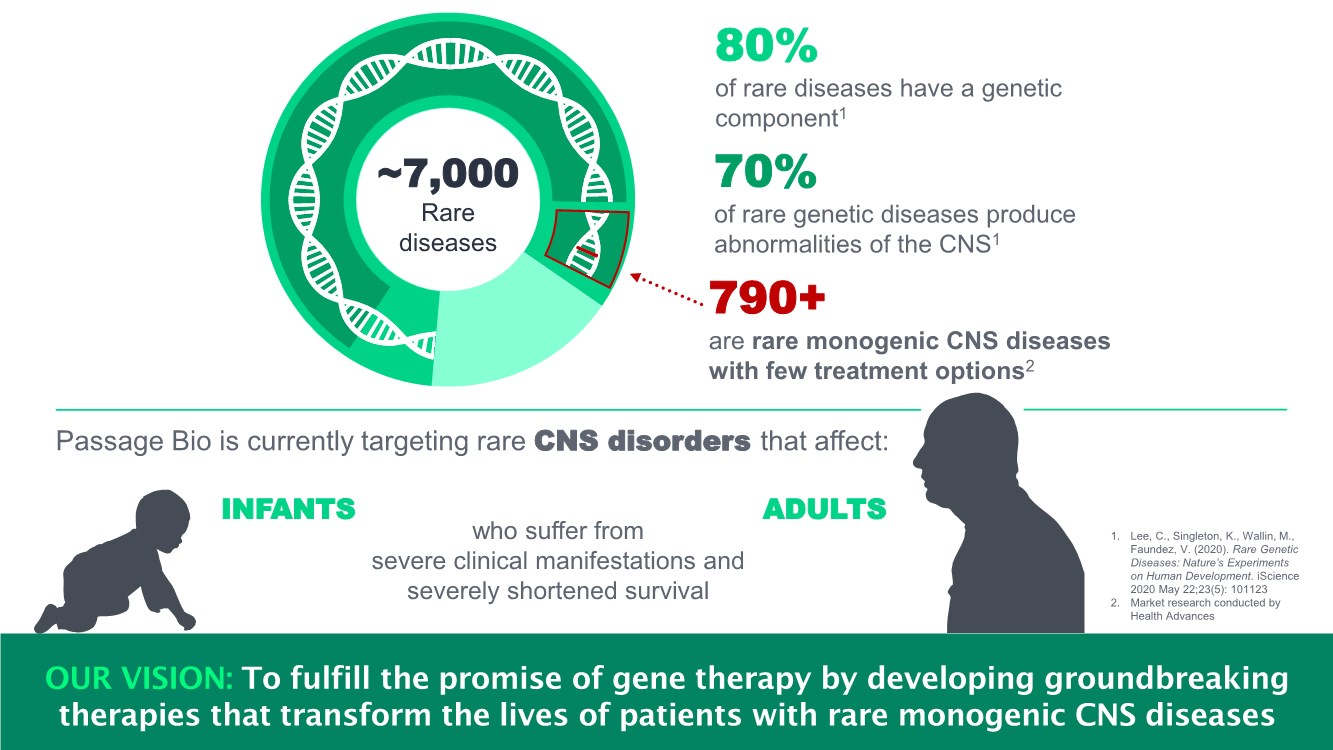
| ~7,000 Rare diseases 70% of rare genetic diseases produce abnormalities of the CNS1 790+ are rare monogenic CNS diseases with few treatment options2 Passage Bio is currently targeting rare CNS disorders that affect: INFANTS ADULTS 1. Lee, C., Singleton, K., Wallin, M., Faundez, V. (2020). Rare Genetic Diseases: Nature’s Experiments on Human Development. iScience 2020 May 22;23(5): 101123 2. Market research conducted by Health Advances 80% of rare diseases have a genetic component1 who suffer from severe clinical manifestations and severely shortened survival 3 OUR VISION: To fulfill the promise of gene therapy by developing groundbreaking therapies that transform the lives of patients with rare monogenic CNS diseases |
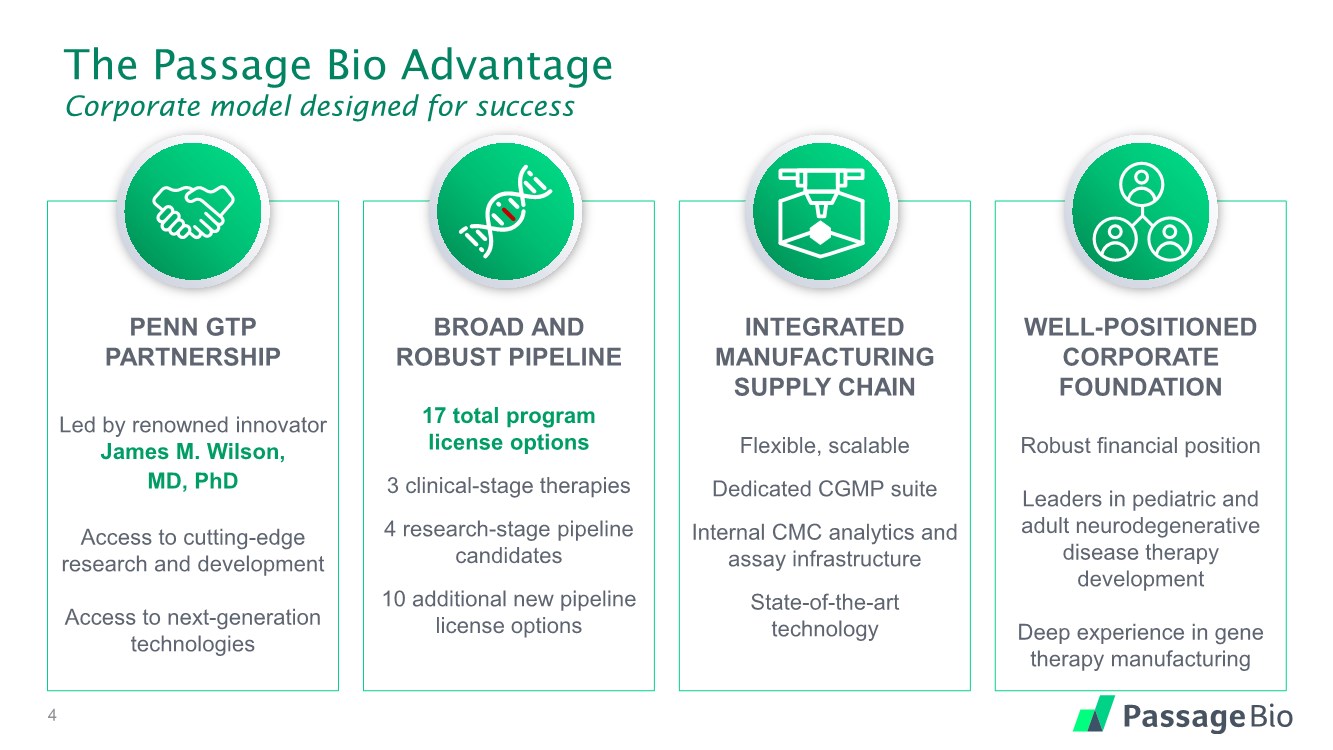
| The Passage Bio Advantage Corporate model designed for success PENN GTP PARTNERSHIP Led by renowned innovator James M. Wilson, MD, PhD Access to cutting-edge research and development Access to next-generation technologies BROAD AND ROBUST PIPELINE 17 total program license options 3 clinical-stage therapies 4 research-stage pipeline candidates 10 additional new pipeline license options INTEGRATED MANUFACTURING SUPPLY CHAIN Flexible, scalable Dedicated CGMP suite Internal CMC analytics and assay infrastructure State-of-the-art technology WELL-POSITIONED CORPORATE FOUNDATION Robust financial position Leaders in pediatric and adult neurodegenerative disease therapy development Deep experience in gene therapy manufacturing 4 |
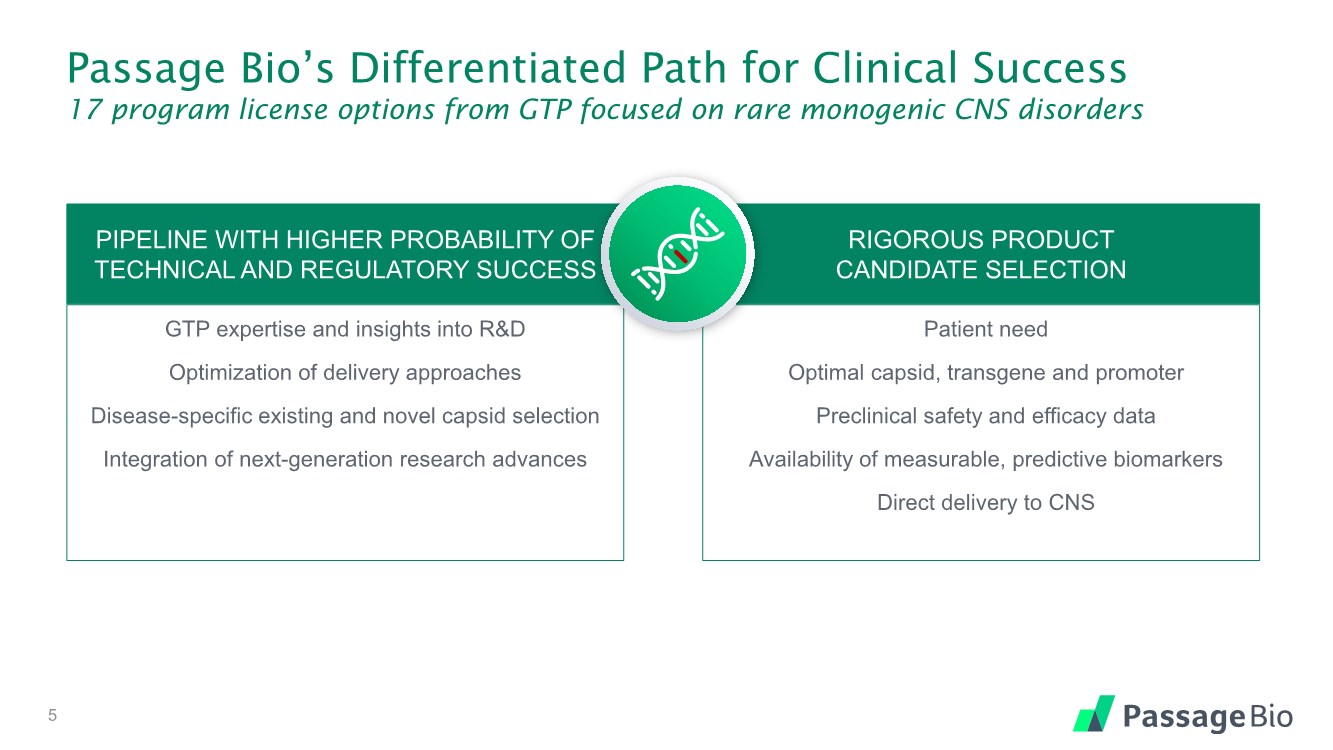
| Passage Bio’s Differentiated Path for Clinical Success 17 program license options from GTP focused on rare monogenic CNS disorders GTP expertise and insights into R&D Optimization of delivery approaches Disease-specific existing and novel capsid selection Integration of next-generation research advances 5 Patient need Optimal capsid, transgene and promoter Preclinical safety and efficacy data Availability of measurable, predictive biomarkers Direct delivery to CNS PIPELINE WITH HIGHER PROBABILITY OF TECHNICAL AND REGULATORY SUCCESS RIGOROUS PRODUCT CANDIDATE SELECTION |
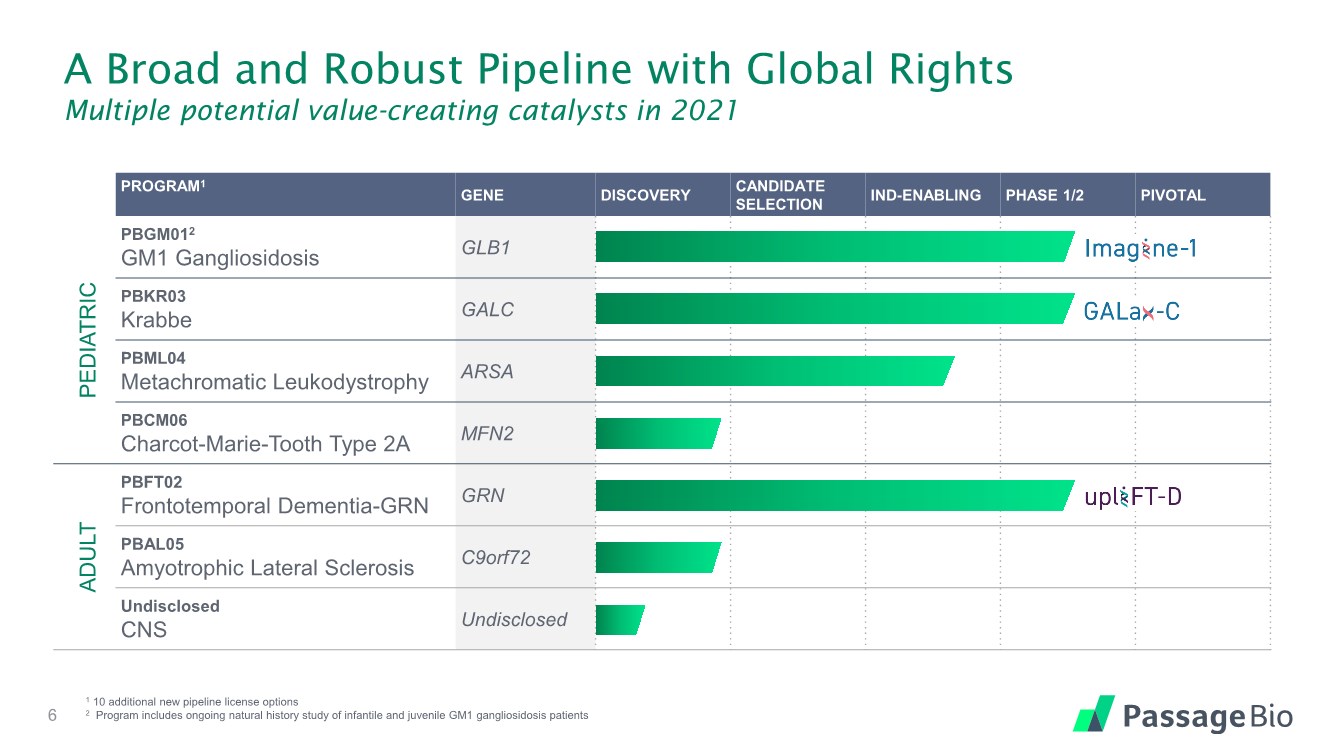
| PROGRAM1 GENE DISCOVERY CANDIDATE SELECTION IND-ENABLING PHASE 1/2 PIVOTAL PEDIATRIC PBGM012 GM1 Gangliosidosis GLB1 PBKR03 Krabbe GALC PBML04 Metachromatic Leukodystrophy ARSA PBCM06 Charcot-Marie-Tooth Type 2A MFN2 ADULT PBFT02 Frontotemporal Dementia-GRN GRN PBAL05 Amyotrophic Lateral Sclerosis C9orf72 Undisclosed CNS Undisclosed A Broad and Robust Pipeline with Global Rights Multiple potential value-creating catalysts in 2021 6 1 10 additional new pipeline license options 2 Program includes ongoing natural history study of infantile and juvenile GM1 gangliosidosis patients |
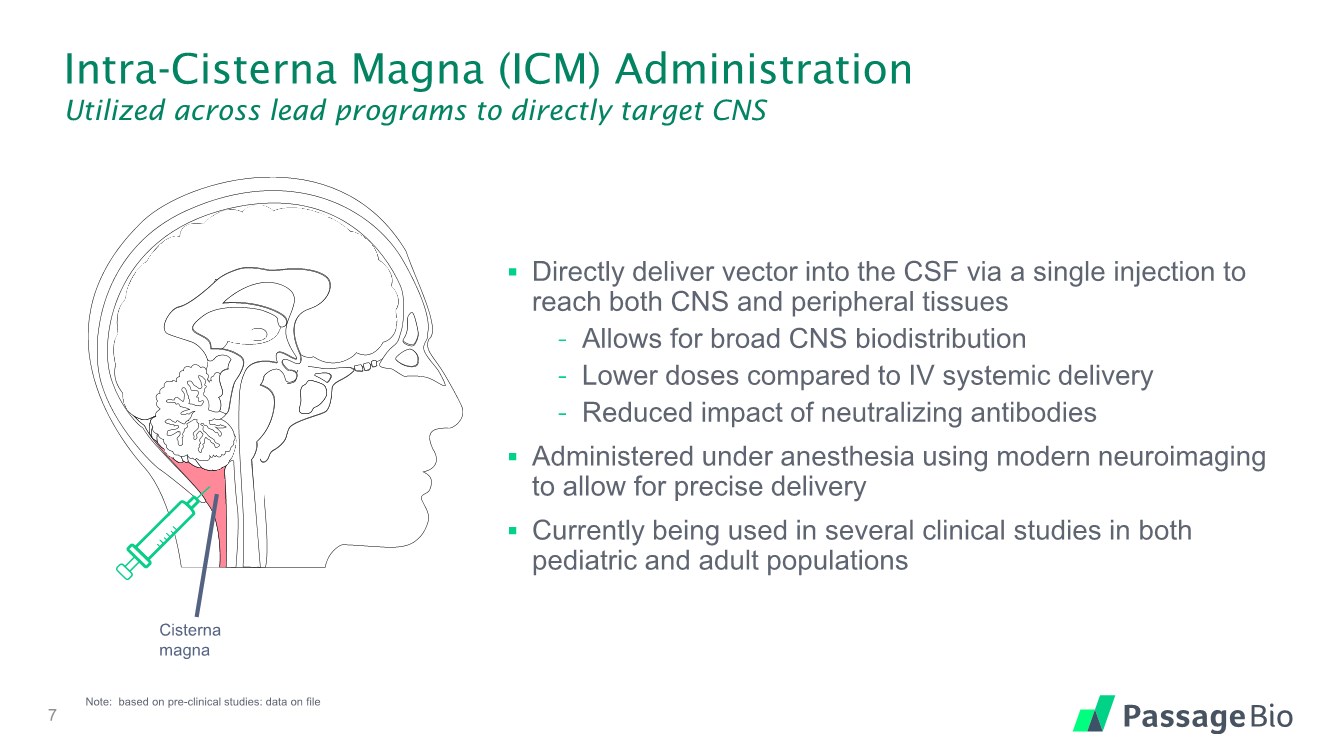
| Intra-Cisterna Magna (ICM) Administration Utilized across lead programs to directly target CNS ▪ Directly deliver vector into the CSF via a single injection to reach both CNS and peripheral tissues - Allows for broad CNS biodistribution - Lower doses compared to IV systemic delivery - Reduced impact of neutralizing antibodies ▪ Administered under anesthesia using modern neuroimaging to allow for precise delivery ▪ Currently being used in several clinical studies in both pediatric and adult populations 7 Note: based on pre-clinical studies: data on file Cisterna magna |
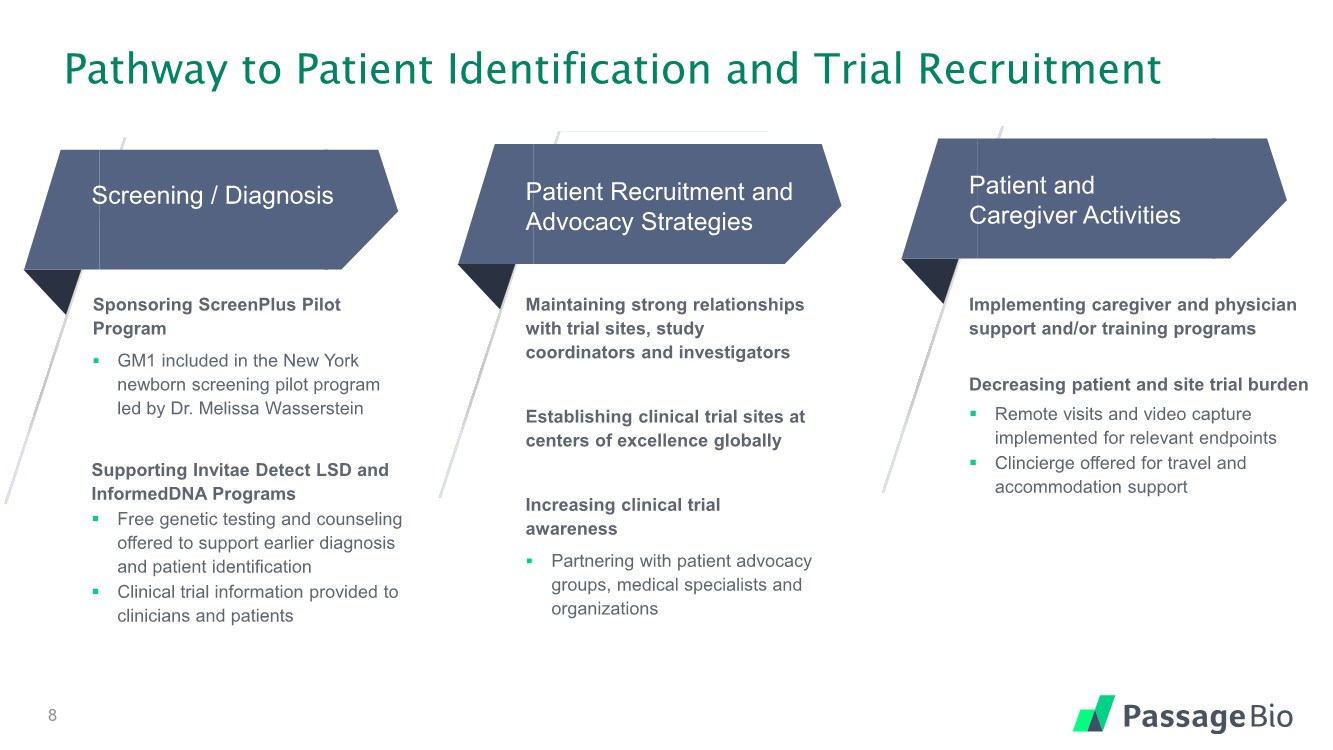
| Pathway to Patient Identification and Trial Recruitment Screening / Diagnosis Patient Recruitment and Advocacy Strategies Patient and Caregiver Activities Sponsoring ScreenPlus Pilot Program ▪ GM1 included in the New York newborn screening pilot program led by Dr. Melissa Wasserstein Supporting Invitae Detect LSD and InformedDNA Programs ▪ Free genetic testing and counseling offered to support earlier diagnosis and patient identification ▪ Clinical trial information provided to clinicians and patients Implementing caregiver and physician support and/or training programs Decreasing patient and site trial burden ▪ Remote visits and video capture implemented for relevant endpoints ▪ Clincierge offered for travel and accommodation support Maintaining strong relationships with trial sites, study coordinators and investigators Establishing clinical trial sites at centers of excellence globally Increasing clinical trial awareness ▪ Partnering with patient advocacy groups, medical specialists and organizations 8 |
| PBGM01 GM1 Gangliosidosis |
| GM1 Gangliosidosis A Devastating Pediatric Disease 10 Source: NIH, CHOP, American Journal of Neuroradiology FATAL, PEDIATRIC NEUROLOGICAL LYSOSOMAL STORAGE DISORDER caused by GLB1 gene mutations characterized by destruction of neurons in the brain and spinal cord. Characterized by rapidly progressive neurological decline resulting in reduced muscle tone, progressive CNS dysfunction, deafness, blindness, rigidity and skeletal dysplasia. RARE AND UNDERSERVED populations with incidence of up to ~1 per 100,000 live births worldwide. No disease-modifying therapies are presently approved. |
| PBGM01 Potential Transformative Therapy For Rare, Underserved Disorder ▪ Next-generation, proprietary AAVhu68 capsid delivers functional GLB1 gene encoding β-gal to the brain and peripheral tissues ▪ Compelling preclinical data showing meaningful transduction of both central nervous system and critical peripheral organs ▪ Received multiple global regulatory clearances for Phase 1/2 clinical trial ▪ Received Orphan Drug, Rare Pediatric Disease and Fast Track designations by FDA and Orphan designation by EC for treatment in GM1 ▪ First patient dosed in Phase 1/2 trial ▪ Initial safety and 30-day biomarker data from cohort 1 planned for 4Q21 11 |
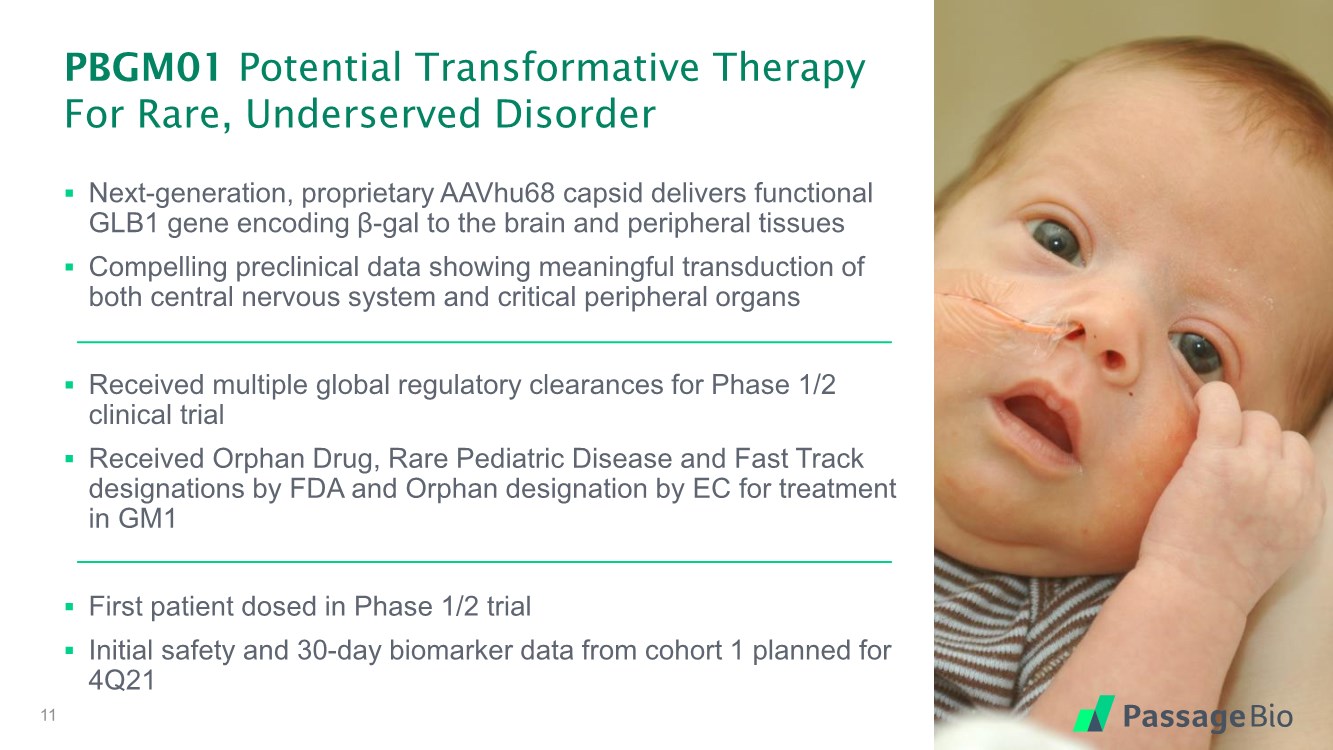
| PBGM01 Supportive Preclinical Findings Improvement in biomarker and pathophysiology in knock-out mouse model Stable, dose-dependent increases in β-gal enzyme activity in brain, cerebrospinal fluid, serum, and critical peripheral tissues Dose-dependent reduction of brain lysosomal storage lesions as measured by LAMP1 positive cells 12 Source: Data on file p<0.05, p<0.01, NS=not significant. GLB1 +/ - + PBS GLB1 - / - + PBS GLB1 - / - + AAV 10,000 10 1 10.1 CSF 100 1,000 ß - gal activity ( nmol /mL/h) GLB1+/- + PBS GLB1-/- + PBS GLB1-/- + AAV GLB1 +/ - + PBS GLB1 - / - + PBS GLB1 - / - + AAV 10,000 1,000 100 10 NS Liver GLB1+/- + PBS GLB1-/- + PBS GLB1-/- + AAV NS Increased Biomarker Activity Histological Confirmation GLB1+/- + vehicle GLB1-/- + vehicle GLB1-/- + PBGM01 |
| Dose-Related Effect on Survival GLB1 -/- (KO) GLB1 +/- (HET) Dose 4 (highest) Dose 3 Dose 2 Dose 1 (lowest) Vehicle Vehicle Percent Survival 0 Day 100 200 300 0 50 100 Preservation of Neurological Function 0 5 10 15 20 Total score ( + SEM) Days 240 180 120 60 0 Neurological Examinations GLB1 -/- (KO) GLB1 +/- (HET) Dose 4 (highest) Dose 3 Dose 2 Dose 1 (lowest) Vehicle Vehicle PBGM01 Supportive Preclinical Findings Improvement in neurological function and survival in knock-out mouse model ▪ Dose-related improvements in neurological function demonstrated ▪ Top two doses similar to GLB +/- vehicle ▪ Treated mice demonstrated increased survival at all doses tested ▪ Top 2 doses achieved 100% survival to study endpoint 13 Source: Hinderer et. al, Hum Gene Ther. 2020 Nov; 31(21-22):1169-1177 |
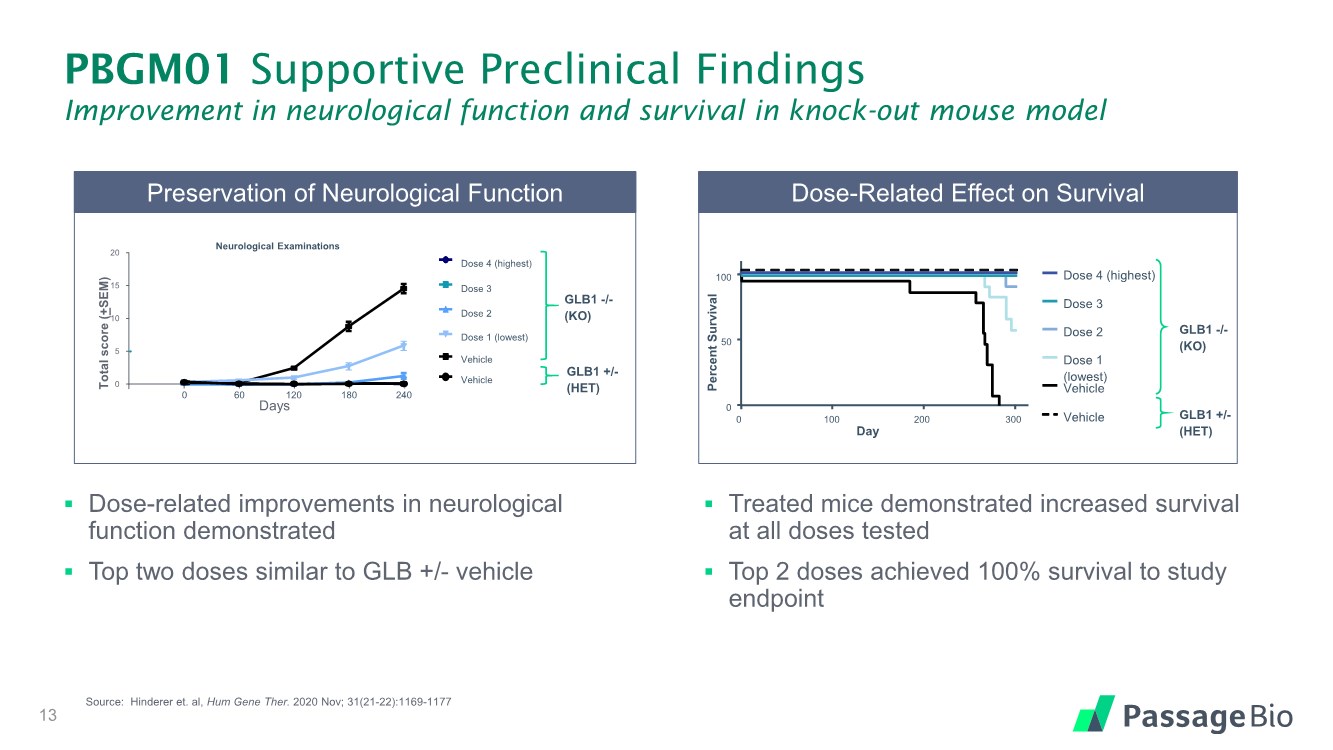
| Goal of Imagine-1 Trial in Early and Late Infantile GM1 Elevate β-gal activity to preserve neurological function and improve developmental potential and survival CLINICAL TRIAL OBJECTIVES 1. Assess the safety and tolerability of a single intra-cisterna magna dose of PBGM01 2. Demonstrate treatment- related increase in β-gal enzyme activity in CSF and serum 3. Demonstrate resultant normalization of disease biomarkers and pathophysiology 4. Demonstrate improvement in clinical outcomes through developmental milestone assessment 14 GM1 Gangliosidosis is a Continuum Disease Severity Residual Enzyme Activity Imagine-1 Trial will include Type I (Early Infantile) and Type IIa (Late Infantile) patients Negligible to 5% ~ 1– 5% ~ 3 – 10% Type I (Early Infantile) • Onset <6 months • Hypotonia • Neurodegeneration • Developmental regression • Seizures • Skeletal dysplasia • Survival: <2 years without supportive care Type IIa (Late-Infantile) • Onset 6–24 months • Developmental plateau, followed by regression • Impaired ambulation • Impaired cognition • Seizures • Survival: 5 to 10 years Type II (Juvenile) • Onset 2–5 years • Impaired ambulation • Dysarthria • Variable skeletal disease • Decreased cognition • Survival into 2nd decade Adapted from Regier DS, et al. 2016 GLB-1 Disorders, In Adam MP, et al. GeneReviews. |
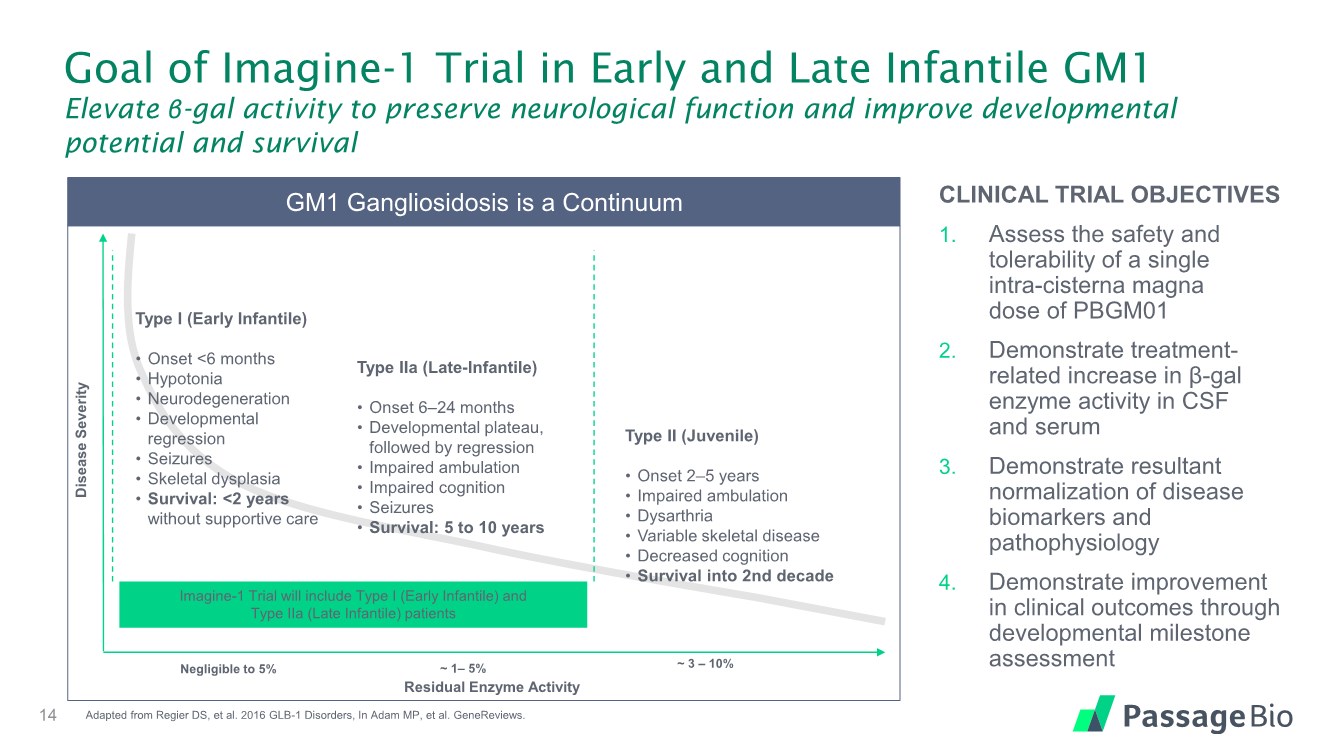
| Imagine-1 Global Phase 1/2 Trial with PBGM01 Initial safety and biomarker data expected 4Q21 Trial Design ◼ Phase 1/2, multi-center, open-label, single-arm, 2+2 dose escalation and confirmatory study ◼ Separate cohorts of pediatric subjects with Late Onset Infantile GM1 in cohorts 1 and 2 and Early Onset Infantile GM1 in cohorts 3 and 4 Intervention ◼ Single ICM dose of AAVhu68.hGLB1 First Read Out ◼ Initial safety and 30-day biomarker data from cohort 1 planned for 4Q21 Duration ◼ Two years, with rollover into a separate long-term follow-up study Primary Endpoints ◼ Safety and tolerability ◼ Efficacy COHORT 4 Early Infantile n = 2 DOSE 2 DOSE 1 Expansion Cohort Early Infantile n = 6 Expansion Cohort Late Infantile n = 6 COHORT 2 Late Infantile n = 2 COHORT 3 Early Infantile n = 2 COHORT 1 Late Infantile n = 2 IDMC review 15 60 days between subject enrollment |
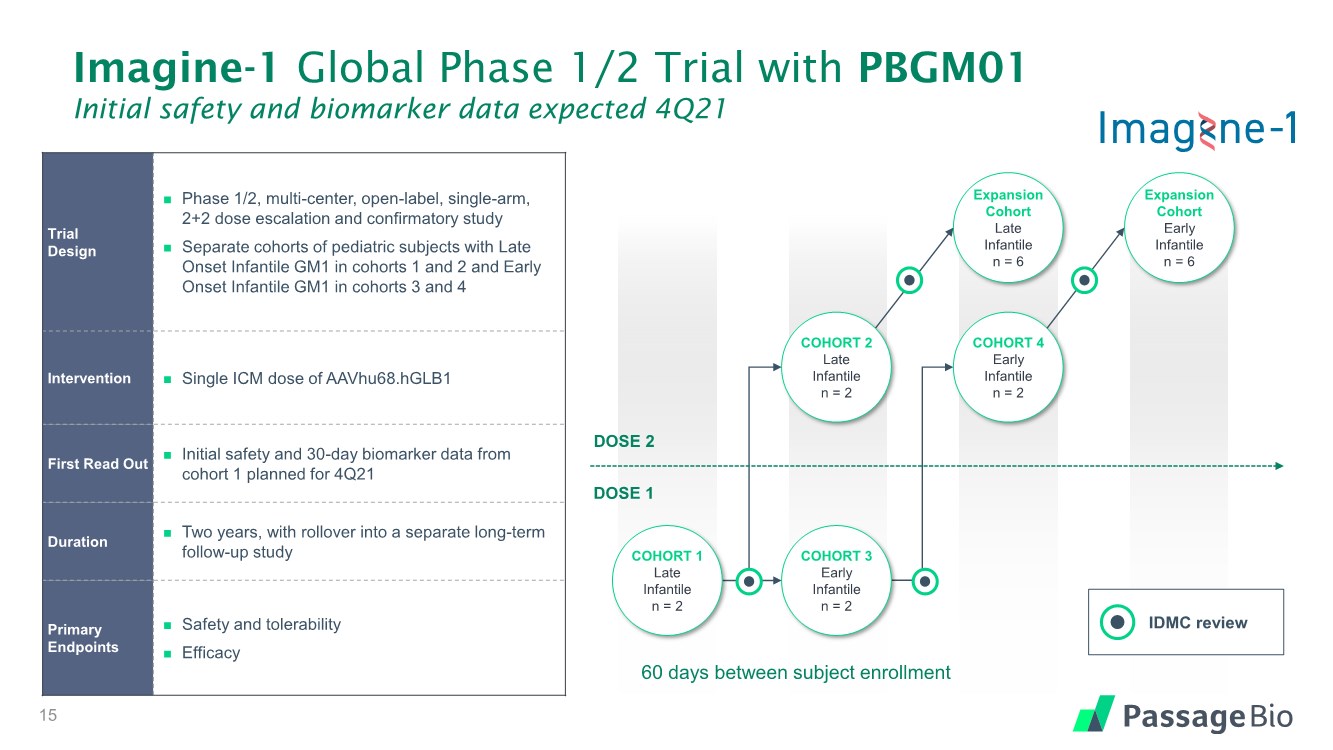
| PBKR03 Krabbe Disease |
| Krabbe Disease A Devastating Pediatric Disease 17 Source: NIH, CHOP, American Journal of Neuroradiology, Third Party Research FATAL, PEDIATRIC NEUROLOGICAL LYSOSOMAL STORAGE DISORDER caused by GALC gene mutations characterized by demyelination of neurons in the brain and periphery. Disease progression is rapid and highly predictable including loss of acquired milestones, staring episodes, peripheral neuropathy, seizures, blindness and deafness. RARE AND UNDERSERVED populations with incidence of up to ~2.6 per 100,000 live births worldwide. No disease-modifying therapies are presently approved. |
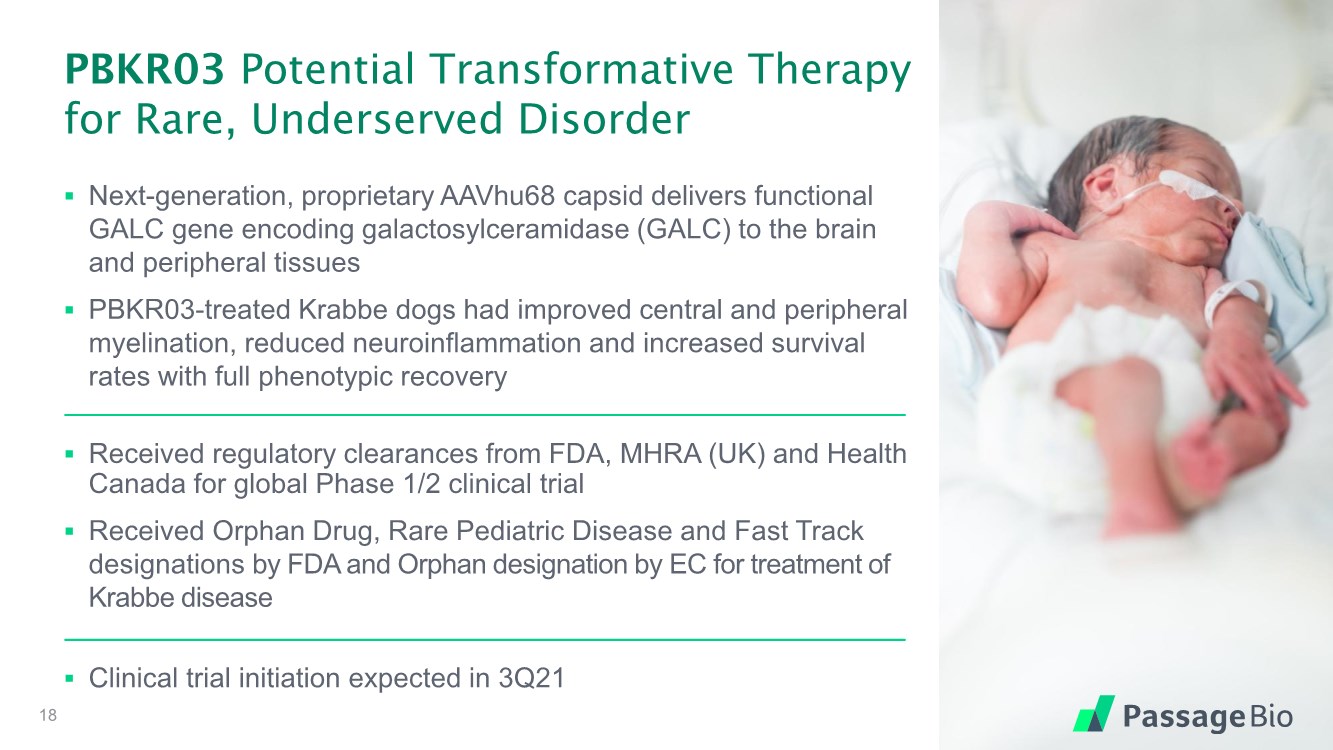
| PBKR03 Potential Transformative Therapy for Rare, Underserved Disorder 18 ▪ Next-generation, proprietary AAVhu68 capsid delivers functional GALC gene encoding galactosylceramidase (GALC) to the brain and peripheral tissues ▪ PBKR03-treated Krabbe dogs had improved central and peripheral myelination, reduced neuroinflammation and increased survival rates with full phenotypic recovery ▪ Received regulatory clearances from FDA, MHRA (UK) and Health Canada for global Phase 1/2 clinical trial ▪ Received Orphan Drug, Rare Pediatric Disease and Fast Track designations by FDA and Orphan designation by EC for treatment of Krabbe disease ▪ Clinical trial initiation expected in 3Q21 |
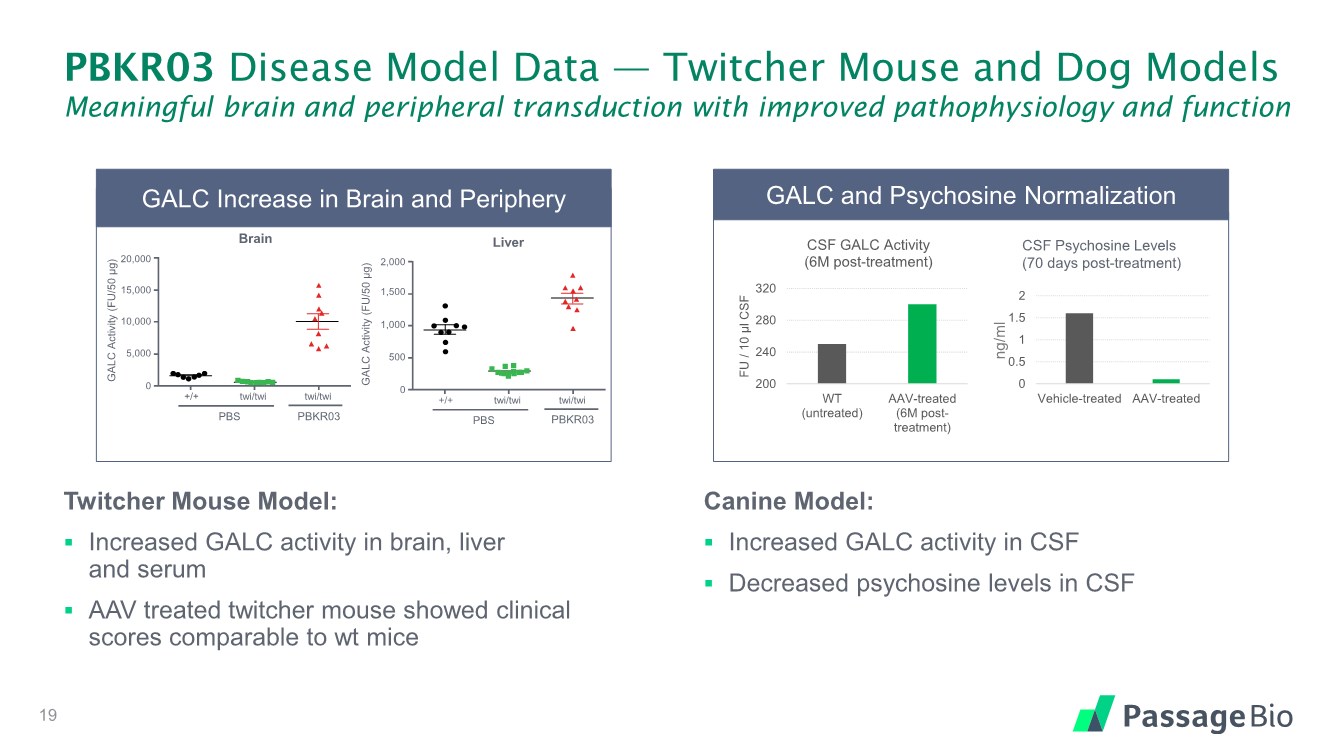
| PBKR03 Disease Model Data — Twitcher Mouse and Dog Models Meaningful brain and peripheral transduction with improved pathophysiology and function Twitcher Mouse Model: ▪ Increased GALC activity in brain, liver and serum ▪ AAV treated twitcher mouse showed clinical scores comparable to wt mice Canine Model: ▪ Increased GALC activity in CSF ▪ Decreased psychosine levels in CSF 19 GALC Increase in Brain and Periphery GALC Activity (FU/50 µg) 20,000 15,000 10,000 0 5,000 +/+ twi/twi twi/twi PBS GTP-206 Brain PBKR03 GALC Activity (FU/50 µg) 2,000 1,500 0 500 +/+ twi/twi twi/twi PBS GTP-206 1,000 Liver PBKR03 GALC and Psychosine Normalization 200 240 280 320 WT (untreated) AAV-treated (6M post- treatment) FU / 10 µl CSF CSF GALC Activity (6M post-treatment) CSF Psychosine Levels (70 days post-treatment) ng/ml 0 0.5 1 1.5 2 Vehicle-treated AAV-treated |
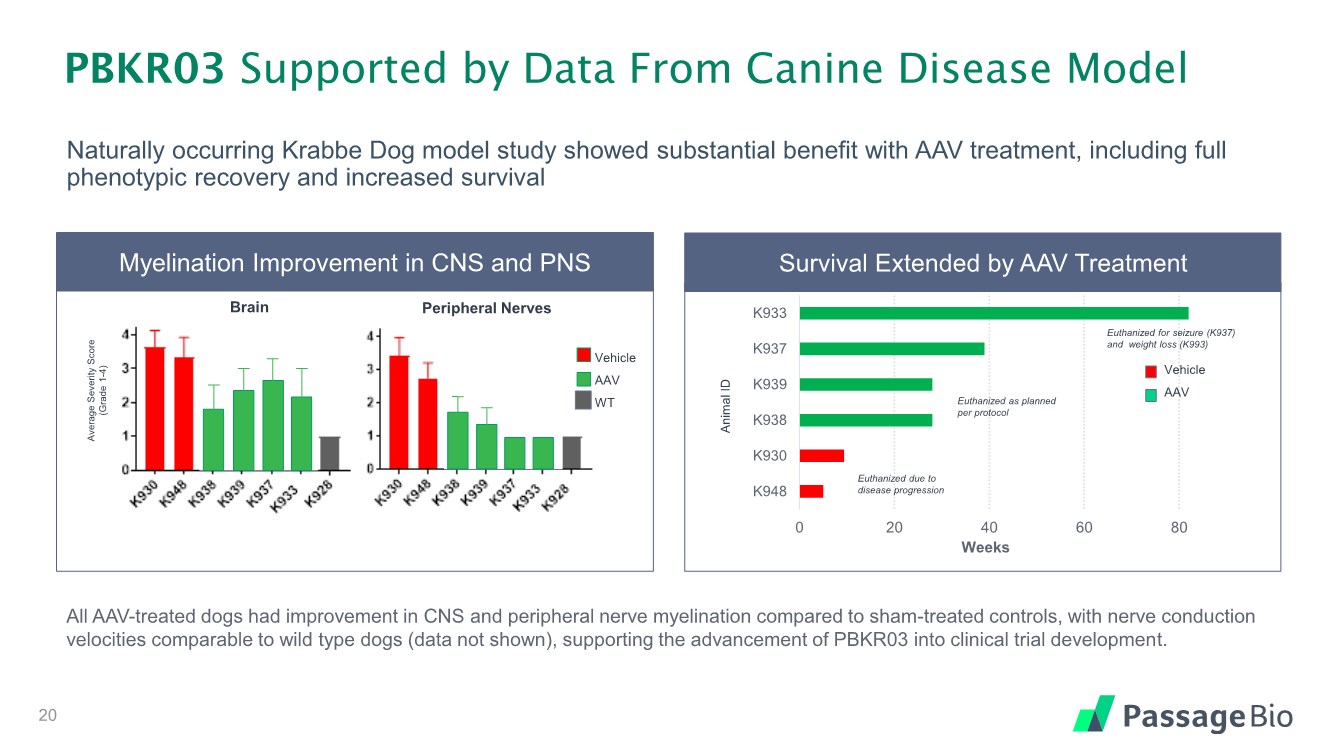
| Naturally occurring Krabbe Dog model study showed substantial benefit with AAV treatment, including full phenotypic recovery and increased survival 0 20 40 60 80 K948 K930 K938 K939 K937 K933 Weeks PBKR03 Supported by Data From Canine Disease Model Survival Extended by AAV Treatment Euthanized due to disease progression Euthanized as planned per protocol Euthanized for seizure (K937) and weight loss (K993) Myelination Improvement in CNS and PNS Brain Peripheral Nerves Animal ID Average Severity Score (Grade 1 - 4) Vehicle AAV WT Vehicle AAV All AAV-treated dogs had improvement in CNS and peripheral nerve myelination compared to sham-treated controls, with nerve conduction velocities comparable to wild type dogs (data not shown), supporting the advancement of PBKR03 into clinical trial development. 20 |
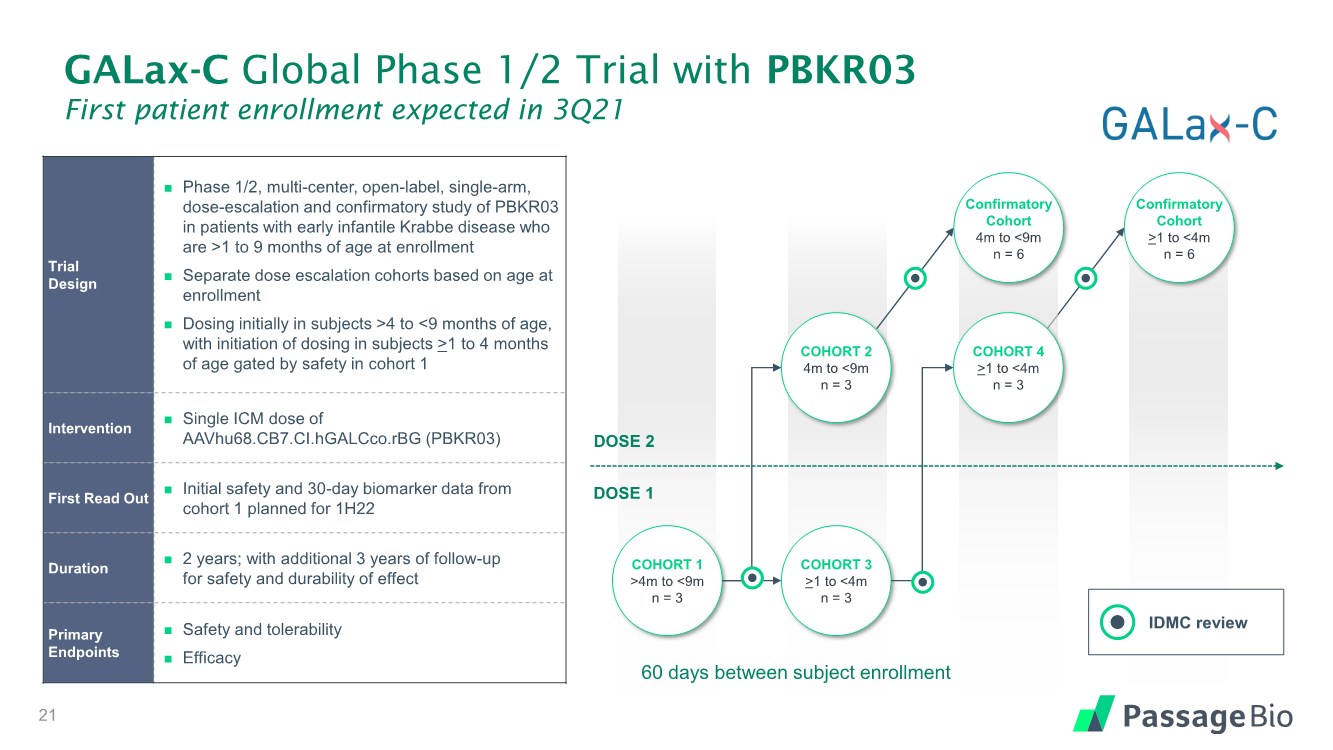
| COHORT 2 4m to <9m n = 3 COHORT 3 >1 to <4m n = 3 COHORT 1 >4m to <9m n = 3 GALax-C Global Phase 1/2 Trial with PBKR03 First patient enrollment expected in 3Q21 Trial Design ◼ Phase 1/2, multi-center, open-label, single-arm, dose-escalation and confirmatory study of PBKR03 in patients with early infantile Krabbe disease who are >1 to 9 months of age at enrollment ◼ Separate dose escalation cohorts based on age at enrollment ◼ Dosing initially in subjects >4 to <9 months of age, with initiation of dosing in subjects >1 to 4 months of age gated by safety in cohort 1 Intervention ◼ Single ICM dose of AAVhu68.CB7.CI.hGALCco.rBG (PBKR03) First Read Out ◼ Initial safety and 30-day biomarker data from cohort 1 planned for 1H22 Duration ◼ 2 years; with additional 3 years of follow-up for safety and durability of effect Primary Endpoints ◼ Safety and tolerability ◼ Efficacy IDMC review Confirmatory Cohort >1 to <4m n = 6 21 Confirmatory Cohort 4m to <9m n = 6 COHORT 4 >1 to <4m n = 3 DOSE 2 DOSE 1 60 days between subject enrollment |
| PBFT02 Frontotemporal Dementia — GRN |

| FTD-GRN A Devastating Adult Disease DEVASTATING FORM OF DEMENTIA caused by a GRN gene mutation resulting in progranulin (PGRN) deficiency. Approximately 5–10% of FTD is caused by a GRN mutation. Disease progression is rapid and degenerative including loss of speech, loss of expression, severe behavioral changes and immobility. RARE AND UNDERSERVED populations with estimated U.S. prevalence of ~3,000 to 6,000 patients. No disease-modifying therapies are presently approved. 23 |
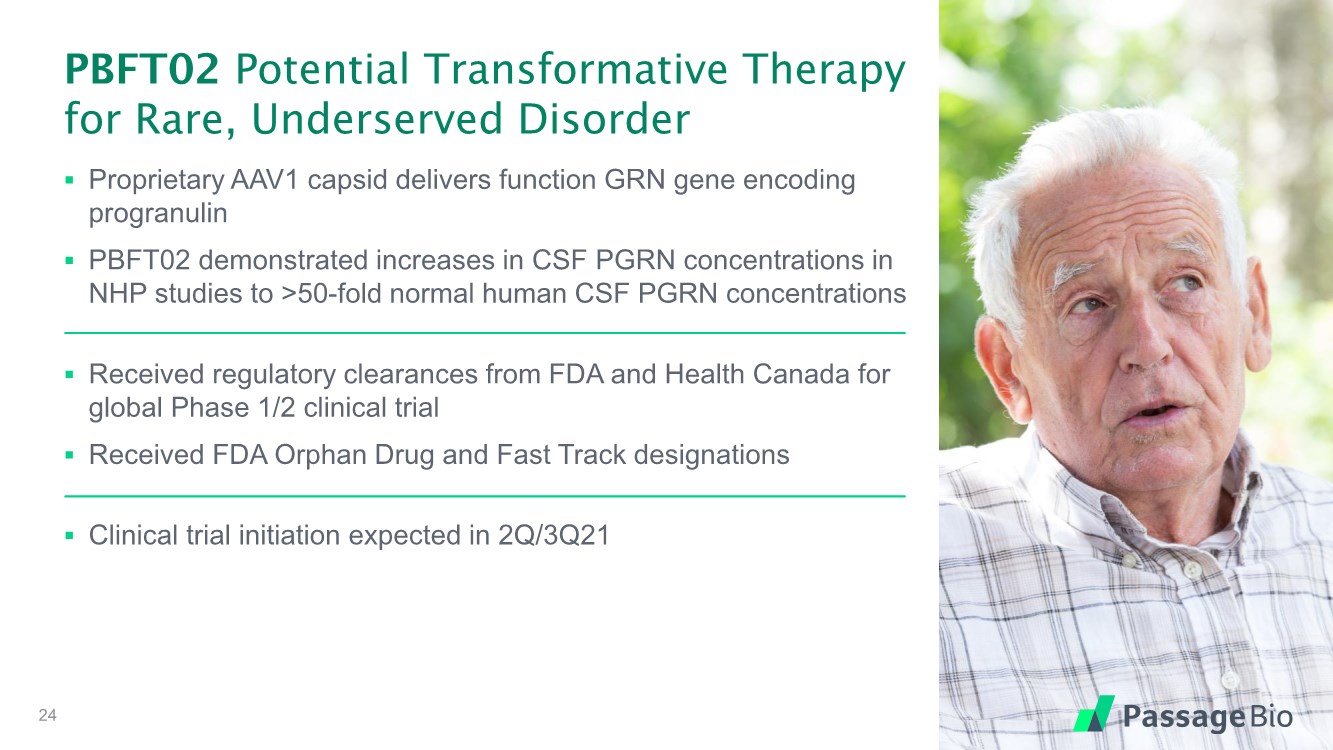
| PBFT02 Potential Transformative Therapy for Rare, Underserved Disorder ▪ Proprietary AAV1 capsid delivers function GRN gene encoding progranulin ▪ PBFT02 demonstrated increases in CSF PGRN concentrations in NHP studies to >50-fold normal human CSF PGRN concentrations ▪ Received regulatory clearances from FDA and Health Canada for global Phase 1/2 clinical trial ▪ Received FDA Orphan Drug and Fast Track designations ▪ Clinical trial initiation expected in 2Q/3Q21 24 |
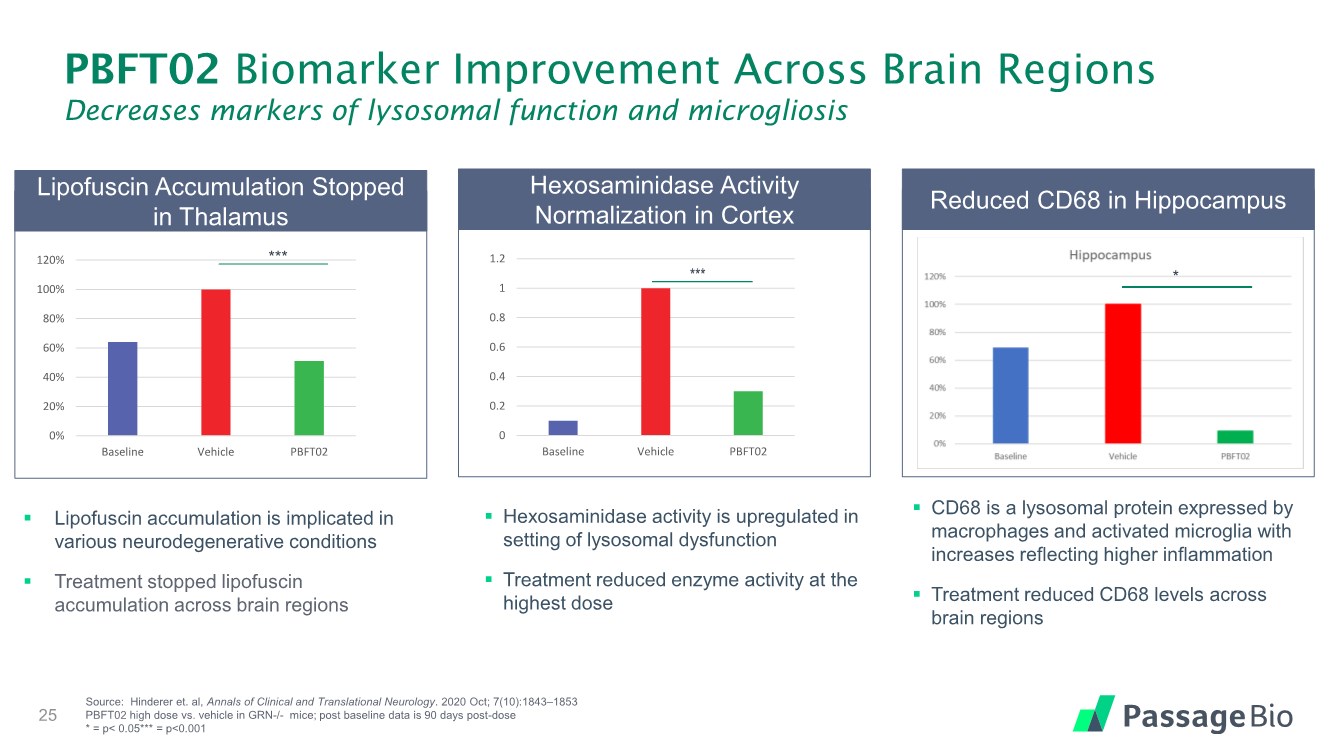
| PBFT02 Biomarker Improvement Across Brain Regions Decreases markers of lysosomal function and microgliosis 25 Source: Hinderer et. al, Annals of Clinical and Translational Neurology. 2020 Oct; 7(10):1843–1853 PBFT02 high dose vs. vehicle in GRN-/- mice; post baseline data is 90 days post-dose * = p< 0.05*** = p<0.001 *** * 0% 20% 40% 60% 80% 100% 120% Baseline Vehicle PBFT02 0 0.2 0.4 0.6 0.8 1 1.2 Baseline Vehicle PBFT02 Lipofuscin Accumulation Stopped in Thalamus Hexosaminidase Activity Normalization in Cortex Reduced CD68 in Hippocampus ▪ Lipofuscin accumulation is implicated in various neurodegenerative conditions ▪ Treatment stopped lipofuscin accumulation across brain regions ▪ Hexosaminidase activity is upregulated in setting of lysosomal dysfunction ▪ Treatment reduced enzyme activity at the highest dose ▪ CD68 is a lysosomal protein expressed by macrophages and activated microglia with increases reflecting higher inflammation ▪ Treatment reduced CD68 levels across brain regions |
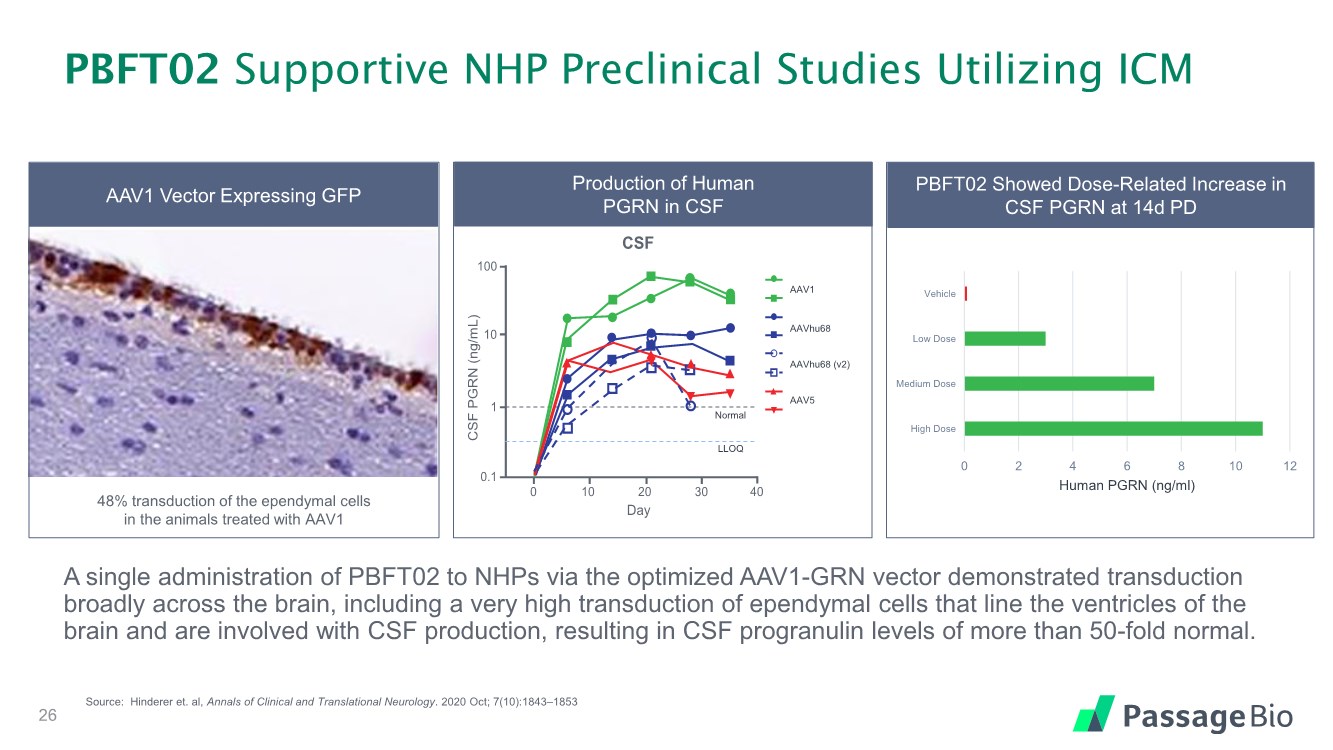
| PBFT02 Supportive NHP Preclinical Studies Utilizing ICM A single administration of PBFT02 to NHPs via the optimized AAV1-GRN vector demonstrated transduction broadly across the brain, including a very high transduction of ependymal cells that line the ventricles of the brain and are involved with CSF production, resulting in CSF progranulin levels of more than 50-fold normal. 26 Source: Hinderer et. al, Annals of Clinical and Translational Neurology. 2020 Oct; 7(10):1843–1853 PBFT02 Showed Dose-Related Increase in CSF PGRN at 14d PD 0 2 4 6 8 10 12 High Dose Medium Dose Low Dose Vehicle Human PGRN (ng/ml) Production of Human PGRN in CSF CSF PGRN (ng/mL) 0 10 20 30 40 CSF 0.1 1 10 100 LLOQ Normal Day RA2981 RA2982 RA3027 RA3153 RA3151 RA3170 RA3155 RA3160 AAVhu68 AAVhu68 (v2) AAV1 AAV5 RA2981 RA2982 RA3027 RA3153 RA3151 RA3170 R A3155 RA3160 A A V hu 68 A A V hu 68 (v 2) AAV1 AAV5 RA2981 RA2982 RA3027 RA3153 RA3151 RA3170 R A3155 RA3160 A A V hu 68 A A V hu 68 (v 2) AAV1 AAV5 AAVhu68 AAVhu68 (v2) AAV5 AAV1 Normal LLOQ AAVhu68 AAV1 Ependyma 1–2% transduction 48% transduction AAV1 Vector Expressing GFP 48% transduction of the ependymal cells in the animals treated with AAV1 |
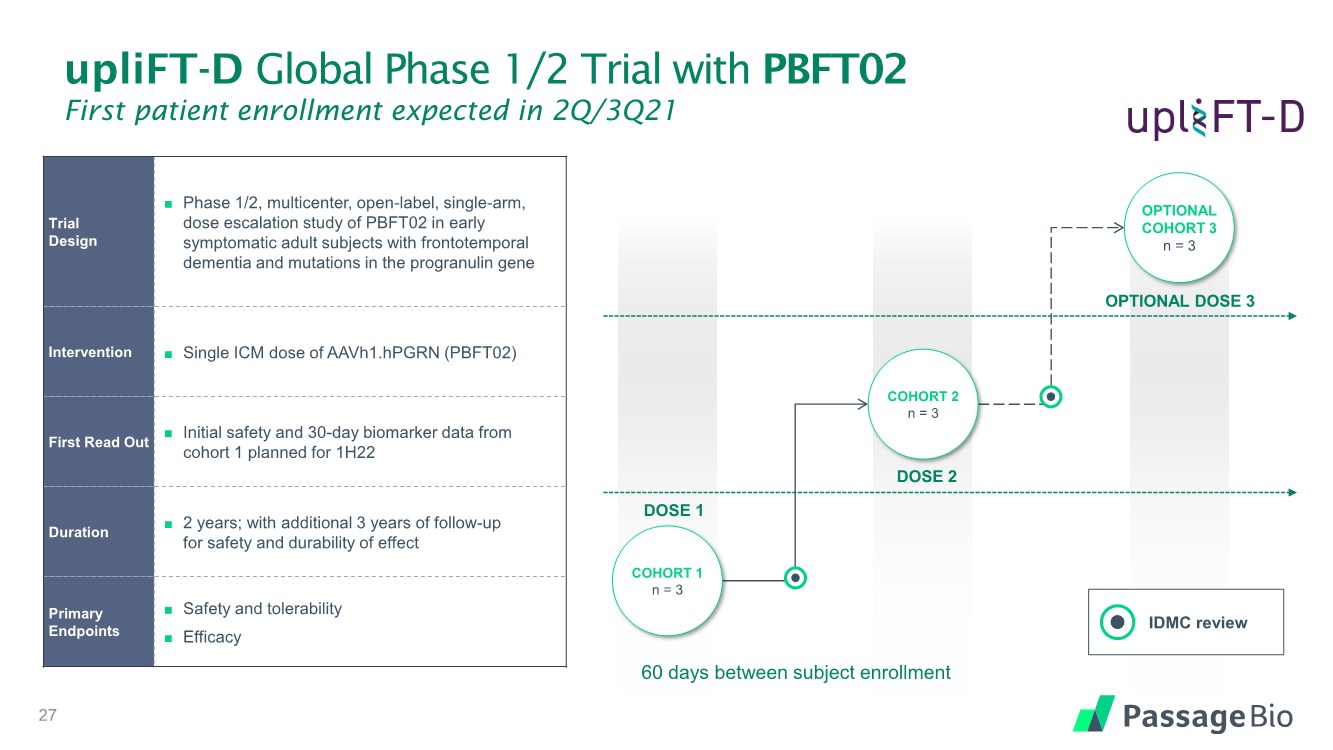
| upliFT-D Global Phase 1/2 Trial with PBFT02 First patient enrollment expected in 2Q/3Q21 Trial Design ◼ Phase 1/2, multicenter, open-label, single-arm, dose escalation study of PBFT02 in early symptomatic adult subjects with frontotemporal dementia and mutations in the progranulin gene Intervention ◼ Single ICM dose of AAVh1.hPGRN (PBFT02) First Read Out ◼ Initial safety and 30-day biomarker data from cohort 1 planned for 1H22 Duration ◼ 2 years; with additional 3 years of follow-up for safety and durability of effect Primary Endpoints ◼ Safety and tolerability ◼ Efficacy OPTIONAL DOSE 3 DOSE 2 DOSE 1 27 60 days between subject enrollment COHORT 1 n = 3 COHORT 2 n = 3 OPTIONAL COHORT 3 n = 3 IDMC review |
| State-of-the-Art Manufacturing |
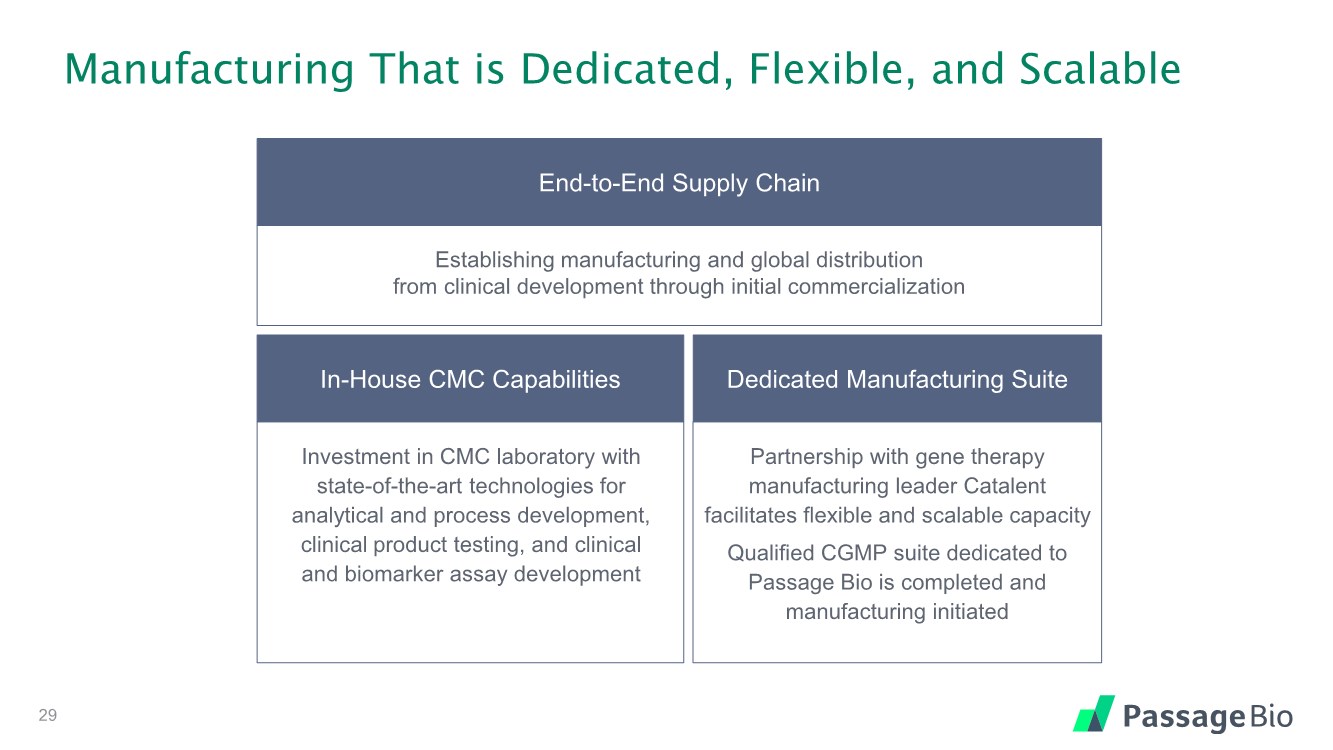
| Manufacturing That is Dedicated, Flexible, and Scalable In-House CMC Capabilities Investment in CMC laboratory with state-of-the-art technologies for analytical and process development, clinical product testing, and clinical and biomarker assay development End-to-End Supply Chain Establishing manufacturing and global distribution from clinical development through initial commercialization Dedicated Manufacturing Suite Partnership with gene therapy manufacturing leader Catalent facilitates flexible and scalable capacity Qualified CGMP suite dedicated to Passage Bio is completed and manufacturing initiated 29 |
| Corporate Foundation 30 SOURCE: www.brandywinerealty.com |

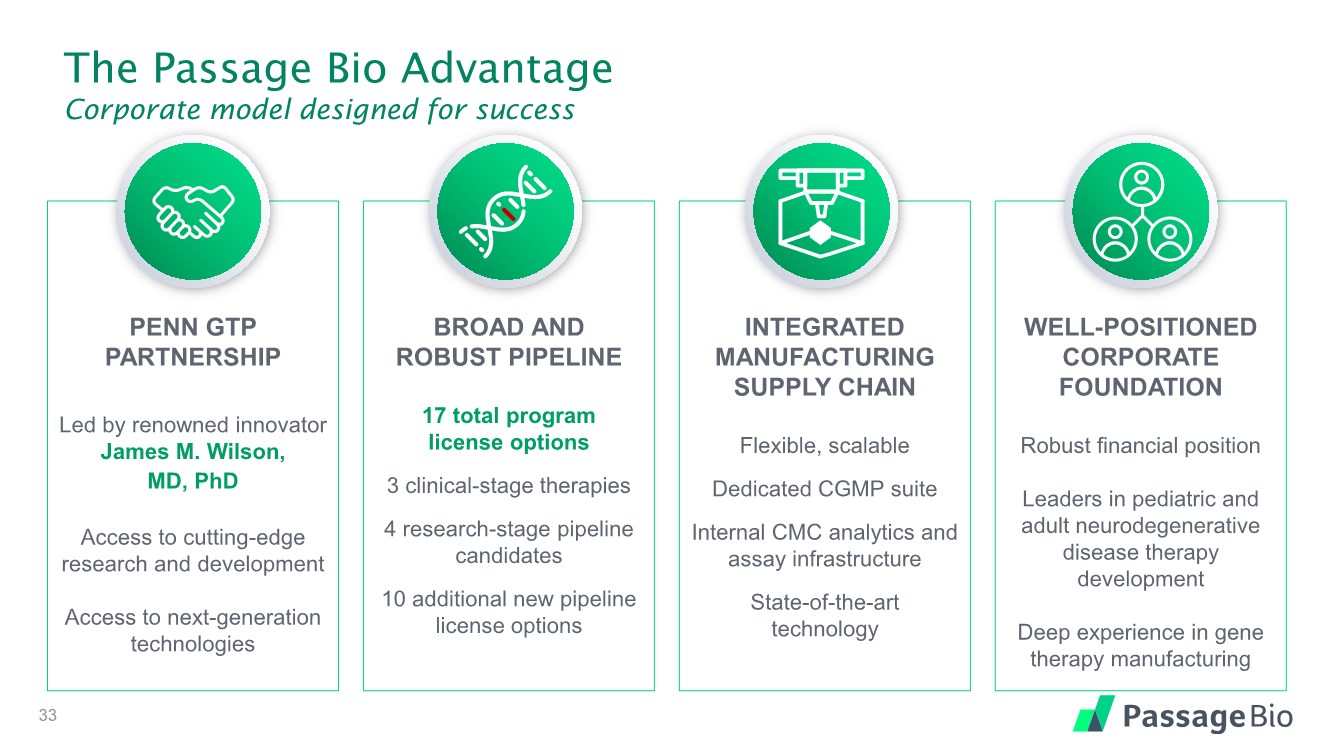
| Financial Summary 31 * Cash, cash equivalents and marketable securities Cash balance of $438M at 3/31/21* Cash on hand to fund operations for at least 24 months Runway to potentially deliver meaningful catalysts over multiple programs |
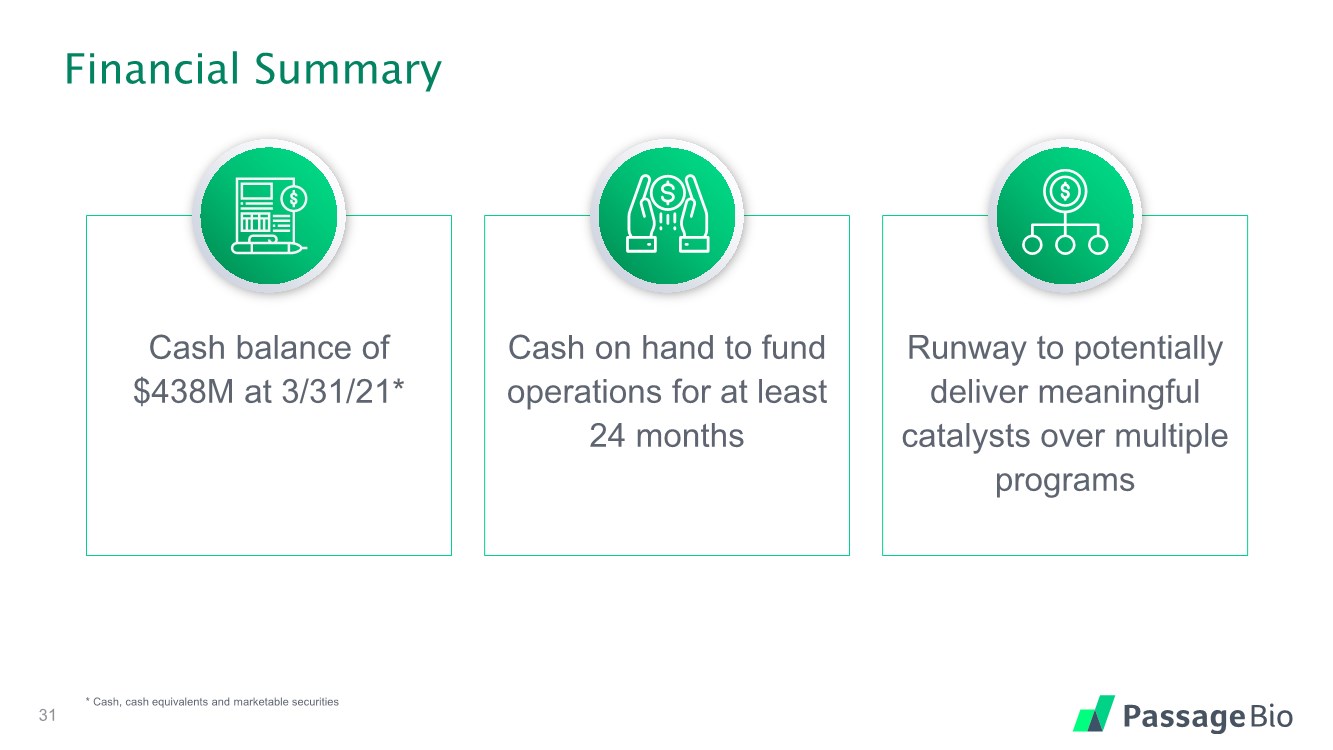
| Anticipated Upcoming Milestones Phase 1/2 trial for PBGM01 in patients with infantile GM1 1Q21 INITIATE Phase 1/2 trial for PBFT02 in patients with FTD-GRN in 2Q/3Q21 INITIATE Advance preclinical programs for MLD, ALS CMT2A, and undisclosed adult indication ADVANCE Evaluate and expand pipeline by pursuing new licenses in partnership with Penn’s GTP BUILD INITIATE PBGM01 safety and 30-day biomarker data 4Q21 REPORT PBFT02 safety and 30-day biomarker data in 1H22 REPORT PBKR03 safety and 30-day biomarker data in 1H22 REPORT GM1 FTD-GRN KRABBE PIPELINE ADVANCEMENT Phase 1/2 trial for PBKR03 in patients with early infantile Krabbe disease in 3Q21 32 |
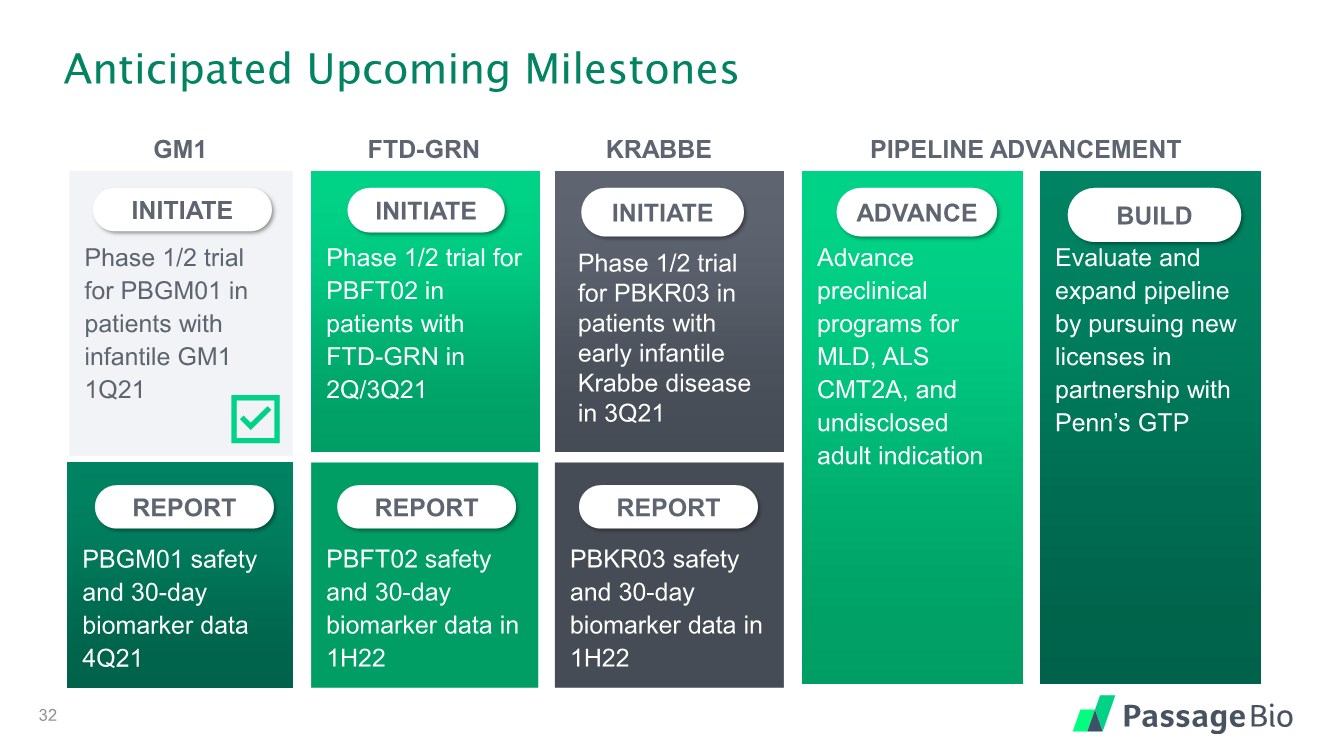
| The Passage Bio Advantage Corporate model designed for success PENN GTP PARTNERSHIP Led by renowned innovator James M. Wilson, MD, PhD Access to cutting-edge research and development Access to next-generation technologies BROAD AND ROBUST PIPELINE 17 total program license options 3 clinical-stage therapies 4 research-stage pipeline candidates 10 additional new pipeline license options INTEGRATED MANUFACTURING SUPPLY CHAIN Flexible, scalable Dedicated CGMP suite Internal CMC analytics and assay infrastructure State-of-the-art technology WELL-POSITIONED CORPORATE FOUNDATION Robust financial position Leaders in pediatric and adult neurodegenerative disease therapy development Deep experience in gene therapy manufacturing 33 |
| www.passagebio.com NASDAQ GS: PASG THANK YOU |

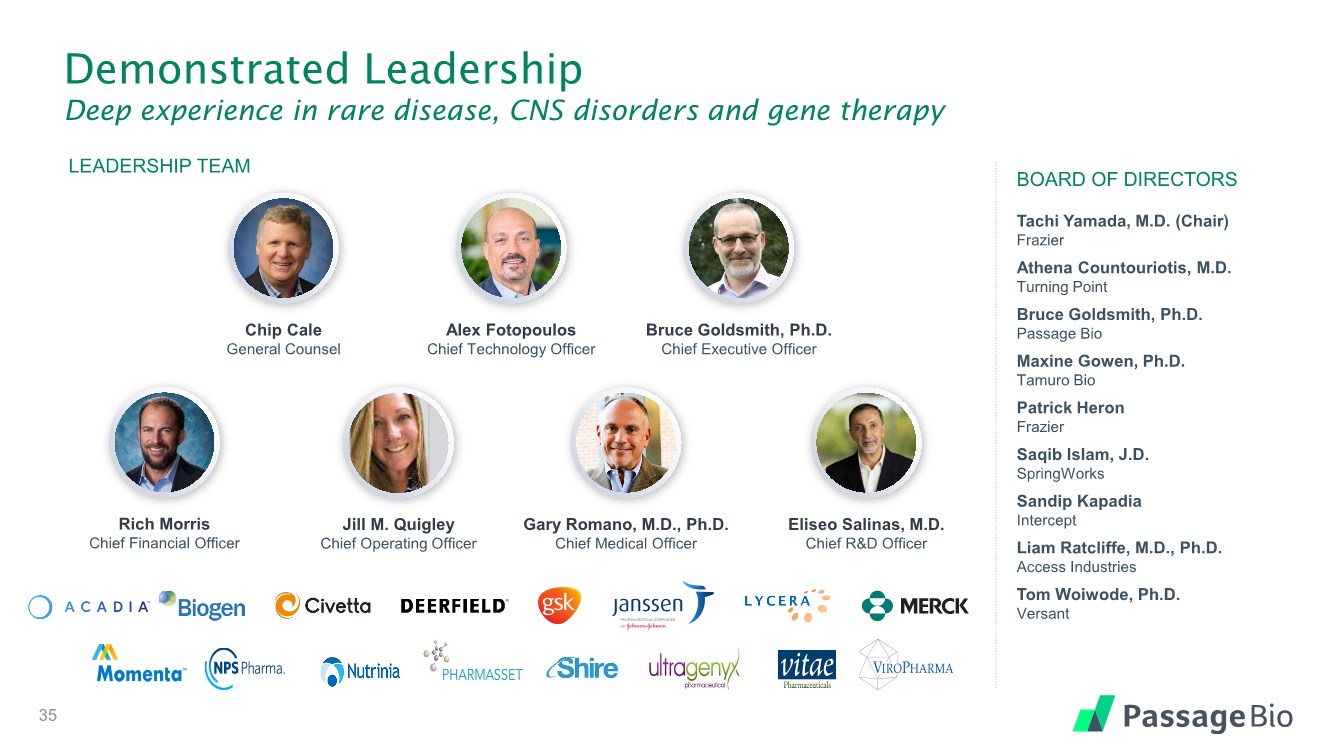
| Demonstrated Leadership Deep experience in rare disease, CNS disorders and gene therapy LEADERSHIP TEAM BOARD OF DIRECTORS Tachi Yamada, M.D. (Chair) Frazier Athena Countouriotis, M.D. Turning Point Bruce Goldsmith, Ph.D. Passage Bio Maxine Gowen, Ph.D. Tamuro Bio Patrick Heron Frazier Saqib Islam, J.D. SpringWorks Sandip Kapadia Intercept Liam Ratcliffe, M.D., Ph.D. Access Industries Tom Woiwode, Ph.D. Versant Rich Morris Chief Financial Officer Chip Cale General Counsel Alex Fotopoulos Chief Technology Officer Bruce Goldsmith, Ph.D. Chief Executive Officer Jill M. Quigley Chief Operating Officer Gary Romano, M.D., Ph.D. Chief Medical Officer Eliseo Salinas, M.D. Chief R&D Officer 35 |
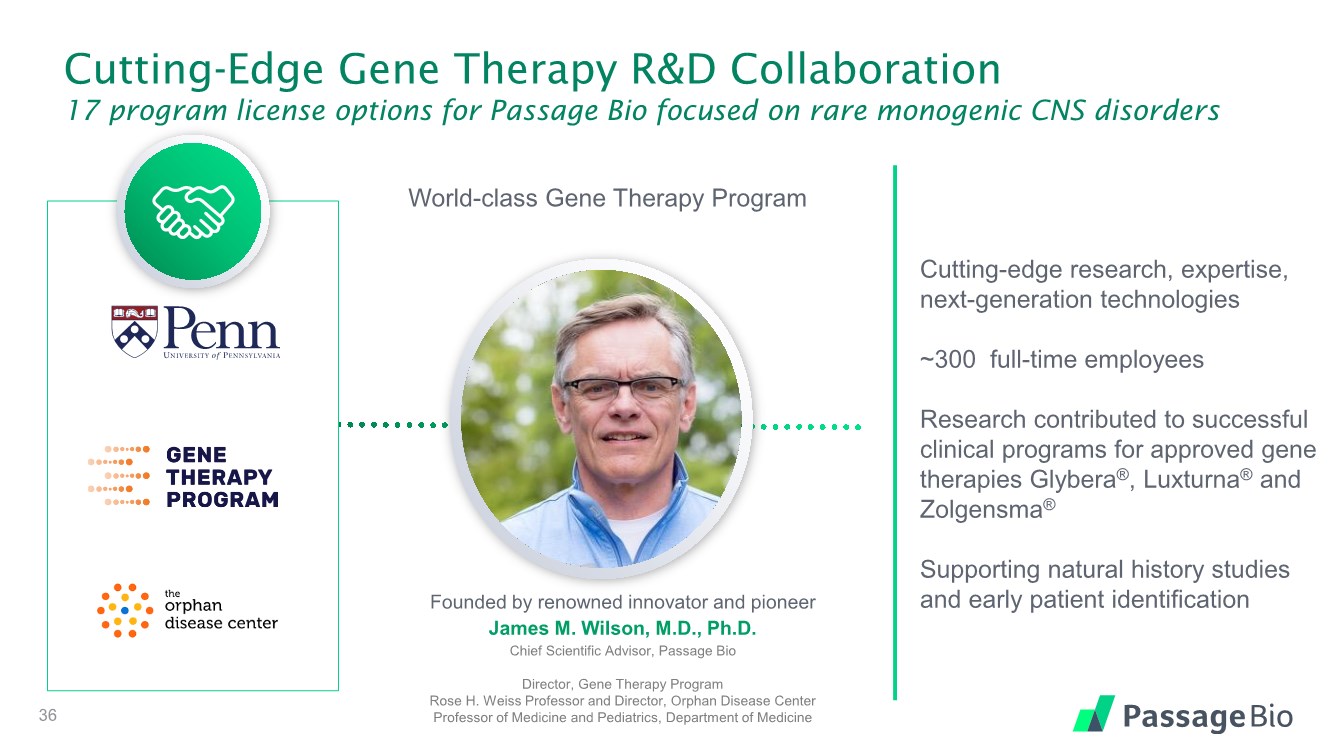
| Cutting-Edge Gene Therapy R&D Collaboration 17 program license options for Passage Bio focused on rare monogenic CNS disorders Founded by renowned innovator and pioneer James M. Wilson, M.D., Ph.D. Chief Scientific Advisor, Passage Bio Director, Gene Therapy Program Rose H. Weiss Professor and Director, Orphan Disease Center Professor of Medicine and Pediatrics, Department of Medicine Cutting-edge research, expertise, next-generation technologies ~300 full-time employees Research contributed to successful clinical programs for approved gene therapies Glybera®, Luxturna® and Zolgensma® Supporting natural history studies and early patient identification World-class Gene Therapy Program 36 |