
SANG 6-K
Sangoma Technologies Corp (SANG)
6-K
2025-11-10
For: 2025-09-30
View Original
Added on
April 11, 2026
SECURITIES AND EXCHANGE COMMISSION
Washington, D.C. 20549
FORM 6-K
REPORT OF FOREIGN PRIVATE ISSUER PURSUANT TO RULE 13a-16 OR 15d-16 UNDER THE SECURITIES EXCHANGE ACT OF 1934
For the month of November 2026
Commission File Number: 001-41175
Sangoma Technologies Corporation
(Exact name of Registrant as specified in its charter)
N/A
(Translation of registrant's name into English)
Bay-Adelaide Centre,
333 Bay Street, Suite 3400,
Toronto, Ontario, Canada M5H 2S7
(905) 474-1990
(Address and telephone number of registrant’s principal executive offices)
Indicate by check mark whether the registrant files or will file annual reports under cover of Form 20-F or Form 40-F. Form 20-F [ ] Form 40-F [ X ]
DOCUMENTS INCLUDED AS PART OF THIS REPORT
| Exhibit | ||||||||
| 99.1 | ||||||||
| 99.2 | ||||||||
| 99.3 | ||||||||
| 99.4 | ||||||||
99.5 | ||||||||
SIGNATURES
Pursuant to the requirements of the Securities Exchange Act of 1934, the registrant has duly caused this report to be signed on its behalf by the undersigned, thereunto duly authorized.
| Sangoma Technologies Corporation | |||||||||||
Date: November 10, 2025 | By: | /s/ Larry Stock | |||||||||
| Name: Larry Stock | |||||||||||
| Title: Chief Financial Officer | |||||||||||

SANGOMA TECHNOLOGIES CORPORATION
Condensed consolidated interim financial statements for the
three month periods ended September 30, 2025 and 2024
(Unaudited in thousands of US dollars)
Bay-Adelaide Centre,
333 Bay Street, Suite 3400,
Toronto, Ontario,
Canada M5H 2S7
Sangoma Technologies Corporation
Three month periods ended September 30, 2025 and 2024
Table of contents
Condensed consolidated interim statements of financial position | |||||
Condensed consolidated interim statements of loss and comprehensive loss | |||||
Condensed consolidated interim statements of changes in shareholders’ equity | |||||
Condensed consolidated interim statements of cash flows | |||||
Notes to the condensed consolidated interim financial statements | |||||
| Sangoma Technologies Corporation | ||
Condensed consolidated interim statements of financial position | ||
As at September 30, 2025, and June 30, 2025 | ||
(Unaudited in thousands of US dollars, except per share data) | ||
| September 30 | June 30 | |||||||||||||
| Note | 2025 | 2025 | ||||||||||||
| $ | $ | |||||||||||||
| Assets | ||||||||||||||
| Current assets | ||||||||||||||
| Cash and cash equivalents | 4 | 15,683 | 13,494 | |||||||||||
| Trade and other receivables | 4 | 13,059 | 15,131 | |||||||||||
| Inventories | 6 | 7,550 | 8,227 | |||||||||||
| Sales tax receivable | — | 231 | ||||||||||||
| Income tax receivable | 593 | 484 | ||||||||||||
| Contract assets | 1,149 | 1,172 | ||||||||||||
| Derivative assets | 14 | 185 | 254 | |||||||||||
| Other current assets | 4,489 | 3,629 | ||||||||||||
| 42,708 | 42,622 | |||||||||||||
| Non-current assets | ||||||||||||||
| Property and equipment | 7 | 5,674 | 6,433 | |||||||||||
| Right-of-use assets | 8 | 6,855 | 7,215 | |||||||||||
| Intangible assets | 9 | 82,952 | 91,124 | |||||||||||
| Development costs | 10 | 8,441 | 8,438 | |||||||||||
| Deferred income tax assets | 1,313 | 1,711 | ||||||||||||
| Goodwill | 12 | 186,840 | 186,840 | |||||||||||
| Contract assets | 1,621 | 1,752 | ||||||||||||
| Derivative assets | 14 | 19 | 41 | |||||||||||
| Other non-current assets | 410 | 369 | ||||||||||||
| 336,833 | 346,545 | |||||||||||||
| Liabilities | ||||||||||||||
| Current liabilities | ||||||||||||||
| Accounts payable and accrued liabilities | 4,16(i) | 17,350 | 15,552 | |||||||||||
| Provisions | 13 | 166 | 172 | |||||||||||
| Sales tax payable | 2,744 | 4,012 | ||||||||||||
| Income tax payable | 214 | 647 | ||||||||||||
| Operating facility and loans | 14 | 20,600 | 20,600 | |||||||||||
| Contract liabilities | 15 | 6,516 | 7,037 | |||||||||||
| Lease obligations on right-of-use assets | 8 | 1,462 | 1,456 | |||||||||||
| 49,052 | 49,476 | |||||||||||||
| Long term liabilities | ||||||||||||||
| Operating facility and loans | 14 | 22,150 | 27,300 | |||||||||||
| Contract liabilities | 15 | 2,812 | 2,695 | |||||||||||
| Non-current lease obligations on right-of-use assets | 8 | 6,383 | 6,752 | |||||||||||
| Deferred income tax liabilities | 3,183 | 4,297 | ||||||||||||
| Other non-current liabilities | 1,814 | 1,830 | ||||||||||||
| 85,394 | 92,350 | |||||||||||||
| Shareholders’ equity | ||||||||||||||
| Share capital | 380,911 | 380,126 | ||||||||||||
| Contributed surplus | 19,733 | 20,949 | ||||||||||||
| Accumulated other comprehensive income | 77 | 65 | ||||||||||||
| Accumulated deficit | (149,282) | (146,945) | ||||||||||||
| 251,439 | 254,195 | |||||||||||||
| 336,833 | 346,545 | |||||||||||||
| Approved by the Board | ||||||||
| (Signed) | Al Guarino | Director | ||||||
| (Signed) | Allan Brett | Director | ||||||
The accompanying notes are an integral part of these condensed consolidated interim financial statements.
3
| Sangoma Technologies Corporation | ||
Condensed consolidated interim statements of loss and comprehensive loss | ||
For the three month periods ended September 30, 2025 and 2024 | ||
(Unaudited in thousands of US dollars, except per share data) | ||
| Three month periods ended | |||||||||||
| September 30, | |||||||||||
| Note | 2025 | 2024 | |||||||||
| $ | $ | ||||||||||
| Revenue | 18 | 50,818 | 60,150 | ||||||||
| Cost of sales | 14,013 | 18,969 | |||||||||
| Gross profit | 36,805 | 41,181 | |||||||||
| Expenses | |||||||||||
| Sales and marketing | 11,725 | 12,556 | |||||||||
| Research and development | 10 | 11,313 | 11,342 | ||||||||
| General and administration | 7,246 | 9,960 | |||||||||
| Amortization of intangible assets | 9 | 8,172 | 8,198 | ||||||||
| Interest expense (net) | 4, 8 ,14 | 649 | 1,378 | ||||||||
| Restructuring and business integration costs | 563 | — | |||||||||
| Loss before income tax | (2,863) | (2,253) | |||||||||
| Provision for income taxes | |||||||||||
| Current | 11 | 528 | 491 | ||||||||
| Deferred | 11 | (1,054) | (834) | ||||||||
| Net loss | (2,337) | (1,910) | |||||||||
Other comprehensive loss | |||||||||||
Items to be reclassified to net loss | |||||||||||
| Loss in fair value of interest rate swaps, net of tax | 11,14 | (67) | (324) | ||||||||
| Foreign currency translation adjustment | 79 | — | |||||||||
| Comprehensive loss | (2,325) | (2,234) | |||||||||
| Loss per share | |||||||||||
| Basic and diluted | 16(iii) | $ | (0.07) | $ | (0.06) | ||||||
| Weighted average number of shares outstanding | |||||||||||
| Basic and diluted | 16(iii) | 33,243,223 | 33,402,422 | ||||||||
The accompanying notes are an integral part of these condensed consolidated interim financial statements.
4
| Sangoma Technologies Corporation | ||
Condensed consolidated interim statements of changes in shareholders' equity | ||
For the three month periods ended September 30, 2025 and 2024 | ||
(Unaudited in thousands of US dollars, except per share data) | ||
| Note | Number of common shares | Share capital | Contributed surplus | Accumulated other comprehensive earnings | Retained earnings (accumulated deficit) | Total shareholders' equity | |||||||||||||||||
| # | $ | $ | $ | $ | $ | ||||||||||||||||||
| Balance, July 1, 2024 | 33,340,159 | 380,986 | 20,053 | 626 | (141,935) | 259,730 | |||||||||||||||||
| Net loss | — | — | — | — | (1,910) | (1,910) | |||||||||||||||||
| Change in fair value of interest rate swaps, net of tax | 11, 14 | — | — | — | (324) | — | (324) | ||||||||||||||||
| Common shares issued for RSU exercised | 16(i),16(ii) | 197,525 | 1,056 | (1,056) | — | — | — | ||||||||||||||||
| Share-based compensation expense | 16(ii) | — | — | 728 | — | — | 728 | ||||||||||||||||
Balance, September 30, 2024 | 33,537,684 | 382,042 | 19,725 | 302 | (143,845) | 258,224 | |||||||||||||||||
| Balance, July 1, 2025 | 33,262,910 | 380,126 | 20,949 | 65 | (146,945) | 254,195 | |||||||||||||||||
| Net loss | — | — | — | — | (2,337) | (2,337) | |||||||||||||||||
| Change in fair value of interest rate swaps, net of tax | 11, 14 | — | — | — | (67) | — | (67) | ||||||||||||||||
| Change in cumulative impact of foreign currency | — | — | — | 79 | — | 79 | |||||||||||||||||
| Common shares issued under employee share purchase plan | 16(i) | 12,033 | 72 | — | — | — | 72 | ||||||||||||||||
| Common shares issued for RSU exercised | 16(i),16(ii) | 129,557 | 757 | (757) | — | — | — | ||||||||||||||||
| Common shares purchased and cancelled, net of tax | 16(i) | (74,745) | (44) | — | — | — | (44) | ||||||||||||||||
| Shares repurchase commitments under the automatic share purchase plan | 16(i) | — | — | (988) | — | — | (988) | ||||||||||||||||
| Share-based compensation expense | 16(ii) | — | — | 529 | — | — | 529 | ||||||||||||||||
Balance, September 30, 2025 | 33,329,755 | 380,911 | 19,733 | 77 | (149,282) | 251,439 | |||||||||||||||||
The accompanying notes are an integral part of these condensed consolidated interim financial statements.
5
| Sangoma Technologies Corporation | ||
Condensed consolidated interim statements of cash flows | ||
For the three month periods ended September 30, 2025 and 2024 | ||
(Unaudited in thousands of US dollars, except per share data) | ||
| Three month periods ended | |||||||||||
| September 30 | |||||||||||
| Note | 2025 | 2024 | |||||||||
| Operating activities | $ | $ | |||||||||
| Net loss | (2,337) | (1,910) | |||||||||
| Adjustments for: | |||||||||||
| Depreciation of property and equipment | 7 | 887 | 1,085 | ||||||||
| Depreciation of right-of-use assets | 8 | 360 | 678 | ||||||||
| Amortization of intangible assets | 9 | 8,172 | 8,198 | ||||||||
| Amortization of development costs | 10 | 1,535 | 1,426 | ||||||||
| Income tax recovery | 11 | (526) | (343) | ||||||||
| Income tax paid | (773) | (819) | |||||||||
| Share-based compensation expense | 16(ii) | 529 | 728 | ||||||||
| Unrealized foreign exchange gain (loss) | 78 | (29) | |||||||||
| Accretion expense | 8 | 51 | 83 | ||||||||
| Loss on disposal of property and equipment | 7 | 113 | 76 | ||||||||
| Changes in working capital | |||||||||||
| Trade and other receivables | (2,428) | 2,297 | |||||||||
| Inventories | 677 | 980 | |||||||||
| Sales tax receivable | 231 | 32 | |||||||||
| Contract assets | 154 | 269 | |||||||||
| Other assets | (901) | 297 | |||||||||
| Sales tax payable | (1,268) | 1,919 | |||||||||
| Accounts payable and accrued liabilities | 810 | (2,732) | |||||||||
| Provisions | (6) | — | |||||||||
| Other non current liabilities | (16) | 954 | |||||||||
| Contract liabilities | (404) | (1,062) | |||||||||
| Net cash provided by operating activities | 4,938 | 12,127 | |||||||||
| Investing activities | |||||||||||
| Purchase of property and equipment | 7 | (241) | (436) | ||||||||
| Development costs | 10 | (1,467) | (1,679) | ||||||||
| Proceeds from sale of VoIP Supply LLC | 19 | 4,500 | — | ||||||||
| Net cash flows provided by (used in) investing activities | 2,792 | (2,115) | |||||||||
| Financing activities | |||||||||||
| Repayments of operating facility and loan | 14 | (5,150) | (8,725) | ||||||||
| Repayment of lease obligations on right-of-use assets | 8 | (419) | (769) | ||||||||
| Common shares issued under employee share purchase plan | 16(i) | 72 | — | ||||||||
| Common shares purchased and canceled | 16(i) | (44) | — | ||||||||
| Net cash flows used in financing activities | (5,541) | (9,494) | |||||||||
| Increase in cash and cash equivalents | 2,189 | 518 | |||||||||
Cash and cash equivalents, beginning of the period | 13,494 | 16,231 | |||||||||
Cash and cash equivalents, end of the period | 15,683 | 16,749 | |||||||||
The accompanying notes are an integral part of these condensed consolidated interim financial statements.
6
| Sangoma Technologies Corporation | ||
Notes to the condensed consolidated interim financial statements | ||
For the three month periods ended September 30, 2025 and 2024 | ||
(Unaudited in thousands of US dollars, except per share data) | ||
1. General information
Founded in 1984, Sangoma Technologies Corporation (“Sangoma” or the “Company”) is publicly traded on the Toronto Stock Exchange (TSX: STC) and NASDAQ (NASDAQ: SANG). The Company was incorporated in Canada, and its legal name is Sangoma Technologies Corporation. Its primary operating subsidiaries as of September 30, 2025 are Sangoma Technologies Inc., and Sangoma US Inc.. As a result of the reorganization activities completed during fiscal 2025, Sangoma US Inc. is now the single operating subsidiary in the United States of America responsible for all businesses in the United States.
Sangoma is a leading provider of hardware and software components that enable or enhance Internet Protocol Communications Systems for both telecom and datacom applications. Enterprises, small to medium sized businesses (“SMBs”) and telecom operators globally rely on Sangoma’s technology as part of their mission critical infrastructures. The product line includes data and telecom boards for media and signal processing, as well as gateway appliances and software.
The Company is domiciled in Ontario, Canada. The address of the Company’s registered office is Bay-Adelaide Centre, 333 Bay Street, Suite 3400, Toronto, Ontario, M5H 2S7 and the Company operates in multiple jurisdictions.
2. Significant accounting policies
Statement of compliance and basis of presentation
These interim financial statements for the three month periods ended September 30, 2025 and 2024 have been prepared in accordance with International Accounting Standard 34 Interim Financial Reporting, as issued by the International Accounting Standards Board (“IASB”).
These interim financial statements do not include all of the disclosures required by International Financial Reporting Standards (“IFRS Accounting Standards”) for annual consolidated financial statements and accordingly should be read in conjunction with the Company’s audited consolidated financial statements for the year ended June 30, 2025 (“annual financial statements”) prepared in accordance with IFRS Accounting Standards.
3. Significant accounting judgements, estimates and uncertainties
These unaudited condensed consolidated interim financial statements were prepared using the same basis of presentation, accounting policies and methods of computation as those of the audited consolidated financial statements for the year ended June 30, 2025. They were prepared using the same critical estimates and judgments in applying the accounting policies as those of the audited consolidated financial statements for the year ended June 30, 2025.
The preparation of the unaudited condensed consolidated interim financial statements requires Management to make judgments, estimates and assumptions that affect the application of accounting policies and reported assets, liabilities, revenue and expenses, consistent with those described in the Company’s annual financial statements and as described in these interim financial statements. Estimates and underlying assumptions are reviewed on an ongoing basis. Estimates are based on historical experience and other assumptions that are considered reasonable in the circumstances. The actual amount or values may vary in certain instances from the assumptions and estimates made. Changes will be recorded, with the corresponding effect on profit or loss, when, and if, better information is obtained.
7
| Sangoma Technologies Corporation | ||
Notes to the condensed consolidated interim financial statements | ||
For the three month periods ended September 30, 2025 and 2024 | ||
(Unaudited in thousands of US dollars, except per share data) | ||
4. Financial instruments
The fair values of the cash, trade and other receivables, other current assets, accounts payable and accrued liabilities approximate their carrying values due to the relatively short-term nature of these financial instruments. The fair values of operating facility and loans approximate their carrying values due to variable interest loans or fixed rate loan, which represent market rate.
Derivative assets and liabilities are recorded at fair value.
Cash and cash equivalents are comprised of:
| September 30 | June 30 | |||||||
| 2025 | 2025 | |||||||
| $ | $ | |||||||
| Cash at bank and on hand | 15,683 | 13,494 | ||||||
Cash includes demand deposits with financial institutions and cash equivalents consist of short-term, highly liquid investments purchased with original maturities of three months or less. As at September 30, 2025 and June 30, 2025 the Company had no demand deposits and cash equivalents.
Interest expense (net) comprises of total interest income and interest expense for financial assets or financial liabilities that are not at fair value through profit or loss, and can be summarized as follows:
The Company earns interest income from its liquidable money market deposit account to generate steady cash flows and to manage liquidity. The interest rate on the account is variable based on prevailing market rate.
| Three month periods ended | |||||||||||
| September 30 | |||||||||||
| Note | 2025 | 2024 | |||||||||
| $ | $ | ||||||||||
| Interest income | (141) | (11) | |||||||||
| Interest expense | 14 | 739 | 1,306 | ||||||||
| Accretion expense | 8 | 51 | 83 | ||||||||
| Interest expense (net) | 649 | 1,378 | |||||||||
The Company examines the various financial instrument risks to which it is exposed and assesses the impact and likelihood of those risks. These risks may include credit risk, liquidity risk, foreign currency risk, interest rate risk and market risk.
8
| Sangoma Technologies Corporation | ||
Notes to the condensed consolidated interim financial statements | ||
For the three month periods ended September 30, 2025 and 2024 | ||
(Unaudited in thousands of US dollars, except per share data) | ||
Credit risk
Credit risk is the risk of financial loss to the Company if a customer or counterparty to a financial instrument fails to meet its obligations. Where possible, the Company uses an insurance policy with Export Development Canada (“EDC”) for its trade receivables to manage this risk and minimize any exposure.
| September 30 | June 30 | ||||||||||
| Note | 2025 | 2025 | |||||||||
| $ | $ | ||||||||||
| Trade receivables | 13,059 | 10,631 | |||||||||
| Proceeds due on sale of VoIP Supply LLC | 19 | — | 4,500 | ||||||||
| Trade and other receivables | 13,059 | 15,131 | |||||||||
As at June 30, 2025, the Company recorded $4,500 in respect of proceeds due on the the sale of VoIP Supply LLC. (note 19 ), all of which was received during the three months ended September 30, 2025.
The Company’s maximum exposure to credit risk for its trade receivables is summarized as follows with some of the over 90-day receivable not being covered by EDC:
| September 30 | June 30 | |||||||
| 2025 | 2025 | |||||||
| $ | $ | |||||||
| Trade receivables aging: | ||||||||
| 0-30 days | 9,174 | 9,294 | ||||||
| 31-90 days | 3,391 | 812 | ||||||
| Greater than 90 days | 951 | 1,021 | ||||||
| 13,516 | 11,127 | |||||||
| Expected credit loss provision | (457) | (496) | ||||||
| Net trade receivables | 13,059 | 10,631 | ||||||
The movement in the provision for expected credit losses can be reconciled as follows:
| September 30 | June 30 | |||||||
| 2025 | 2025 | |||||||
| $ | $ | |||||||
| Expected credit loss provision: | ||||||||
| Expected credit loss provision, beginning balance | (496) | (1,369) | ||||||
Net change in expected credit loss provision during the period | 39 | 873 | ||||||
| Expected credit loss provision, ending balance | (457) | (496) | ||||||
The Company applies the simplified approach to provide for expected credit losses as prescribed by IFRS 9, which permits the use of the lifetime expected loss provision for all trade receivables and contract assets. The expected
credit loss provision is based on the Company’s historical collections and loss experience and incorporates forward-looking factors, where appropriate.
Substantially all of the Company’s cash and cash equivalents are held with major Canadian and US financial institutions and thus the exposure to credit risk is considered insignificant. Management actively monitors the Company’s exposure to credit risk under its financial instruments, including with respect to trade receivables.
9
| Sangoma Technologies Corporation | ||
Notes to the condensed consolidated interim financial statements | ||
For the three month periods ended September 30, 2025 and 2024 | ||
(Unaudited in thousands of US dollars, except per share data) | ||
Liquidity risk
Liquidity risk is the risk that the Company will not be able to meet its obligations associated with financial liabilities. The Company has a planning and budgeting process in place by which it anticipates and determines the funds required to support its normal operating requirements. The Company coordinates and align this planning and budgeting process with its financing activities through its capital management process.
The Company holds sufficient cash and cash equivalents and working capital, maintained through stringent cash flow management, to ensure sufficient liquidity is maintained. The following are the undiscounted contractual maturities of significant financial liabilities of the Company as at September 30, 2025:
| within 12 months | 13-24 months | 25-36 months | >36 months | Total | |||||||||||||
| $ | $ | $ | $ | $ | |||||||||||||
| Accounts payable and accrued liabilities | 17,350 | — | — | — | 17,350 | ||||||||||||
| Sales tax payable | 2,744 | — | — | — | 2,744 | ||||||||||||
| Operating facility and loans | 20,600 | 16,225 | 5,925 | — | 42,750 | ||||||||||||
| Lease obligations on right of use assets | 1,670 | 1,571 | 1,221 | 4,176 | 8,638 | ||||||||||||
| Other non-current liabilities | — | — | — | 1,814 | 1,814 | ||||||||||||
| 42,364 | 17,796 | 7,146 | 5,990 | 73,296 | |||||||||||||
Foreign currency risk
A portion of the Company’s transactions occur in a foreign currency (Australian Dollar (AUD), Canadian Dollars (CAD), Columbia Peso (COP), Euros (EUR), Great British Pounds (GBP), Indian Rupees (INR), and Philippine Peso (PHP), therefore, the Company is exposed to foreign currency risk at the end of the reporting period through its foreign denominated cash, trade receivables, contract assets, accounts payable and accrued liabilities. As at September 30, 2025, a 10% depreciation or appreciation of the AUD, CAD, COP, EUR, GBP, INR, and PHP currencies against the U.S. dollar would have resulted in an approximate $42 (June 30, 2025 - $58) increase or decrease, respectively, in total comprehensive loss.
Interest rate risk
The Company’s exposure to interest rate fluctuations is with its credit facility (Note 14) which bears interest at a floating rate. As at September 30, 2025, a change in the interest rate of 1% per annum would have an impact of approximately $362 (September 30, 2024 - $553) per annum in finance costs. The Company also entered an interest rate swap arrangement for its loan facility (Note 14) to manage the exposure to changes in SOFR-rate based interest rate. As described in detail in Note 14, the fair value of the interest rate swaps are a current asset of $185 and non-current asset of $19 on September 30, 2025 (June 30, 2025 - current asset of $254 and non-current asset of $41).
5. Capital management
The Company’s objectives in managing capital is to safeguard the Company’s assets, to ensure sufficient liquidity to sustain the viability of the future development of the business via advancement of its significant research and development efforts, to conservatively manage financial risk and to maximize investor, creditor, and market confidence. The Company considers its capital structure to include its shareholders’ equity and operating facilities and loans. Working capital is optimized via stringent cash flow policies surrounding disbursement, foreign currency exchange and investment decision-making. There have been no changes in the Company’s approach to capital management during the period, and apart from the financial covenants as discussed in Note 14, the Company is not subject to any other capital requirements imposed by external parties.
10
| Sangoma Technologies Corporation | ||
Notes to the condensed consolidated interim financial statements | ||
For the three month periods ended September 30, 2025 and 2024 | ||
(Unaudited in thousands of US dollars, except per share data) | ||
6. Inventories
Inventories recognized in the condensed consolidated interim statements of financial position are comprised of:
| September 30 | June 30 | |||||||
| 2025 | 2025 | |||||||
| $ | $ | |||||||
| Finished goods | 3,546 | 4,310 | ||||||
| Components and parts | 4,948 | 5,263 | ||||||
| 8,494 | 9,573 | |||||||
| Provision for obsolescence | (944) | (1,346) | ||||||
| Net inventory carrying value | 7,550 | 8,227 | ||||||
11
| Sangoma Technologies Corporation | ||
Notes to the condensed consolidated interim financial statements | ||
For the three month periods ended September 30, 2025 and 2024 | ||
(Unaudited in thousands of US dollars, except per share data) | ||
7. Property and equipment
| Office furniture | Stockroom | ||||||||||||||||||||||
| and computer | Software | and production | Tradeshow | Leasehold | |||||||||||||||||||
| Note | equipment | equipment | equipment | improvements | Total | ||||||||||||||||||
| Cost | $ | $ | $ | $ | $ | $ | |||||||||||||||||
Balance at July 1, 2024 | 5,974 | 500 | 15,656 | 47 | 510 | 22,687 | |||||||||||||||||
| Additions | 804 | — | 1,587 | — | — | 2,391 | |||||||||||||||||
| Disposals | (3) | — | (606) | — | — | (609) | |||||||||||||||||
| Disposal of VoIP Supply LLC | 19 | (113) | (82) | — | — | — | (195) | ||||||||||||||||
Balance at June 30, 2025 | 6,662 | 418 | 16,637 | 47 | 510 | 24,274 | |||||||||||||||||
| Additions | 67 | — | 174 | — | — | 241 | |||||||||||||||||
| Disposals | — | — | (259) | — | — | (259) | |||||||||||||||||
Balance at September 30, 2025 | 6,729 | 418 | 16,552 | 47 | 510 | 24,256 | |||||||||||||||||
| Accumulated depreciation | |||||||||||||||||||||||
Balance at July 1, 2024 | 4,179 | 456 | 9,207 | 47 | 404 | 14,293 | |||||||||||||||||
| Depreciation expense | 721 | 15 | 3,295 | — | 35 | 4,066 | |||||||||||||||||
| Disposals | — | — | (389) | — | — | (389) | |||||||||||||||||
| Disposal of VoIP Supply LLC | 19 | (74) | (55) | — | — | — | (129) | ||||||||||||||||
Balance at June 30, 2025 | 4,826 | 416 | 12,113 | 47 | 439 | 17,841 | |||||||||||||||||
| Depreciation expense | 244 | — | 635 | — | 8 | 887 | |||||||||||||||||
| Disposals | — | — | (146) | — | — | (146) | |||||||||||||||||
Balance at September 30, 2025 | 5,070 | 416 | 12,602 | 47 | 447 | 18,582 | |||||||||||||||||
| Net book value as at: | |||||||||||||||||||||||
Balance at June 30, 2025 | 1,836 | 2 | 4,524 | — | 71 | 6,433 | |||||||||||||||||
Balance at September 30, 2025 | 1,659 | 2 | 3,950 | — | 63 | 5,674 | |||||||||||||||||
For the three month period ended September 30, 2025, depreciation expense of $160 (September 30, 2024 - $211) was recorded in general and administration expense in the condensed consolidated interim statements of loss and comprehensive loss. Depreciation expense in the amount of $727 was included in cost of sales for the three month period ended September 30, 2025 (September 30, 2024 - $874).
For the three month period ended September 30, 2025, loss on disposal of $113 (September 30, 2024- $76) was recorded in general and administration expense in the condensed consolidated interim statements of loss and comprehensive loss.
12
| Sangoma Technologies Corporation | ||
Notes to the condensed consolidated interim financial statements | ||
For the three month periods ended September 30, 2025 and 2024 | ||
(Unaudited in thousands of US dollars, except per share data) | ||
8. Leases: Right-of-use assets and lease obligations
The Company’s lease obligations and right-of-use assets are presented below:
| Note | Right-of-use assets | |||||||
| $ | ||||||||
| Present value of leases | ||||||||
Balance as at July 1, 2024 | 19,757 | |||||||
| Additions | 93 | |||||||
| Terminations | (4,504) | |||||||
| Disposal of VoIP Supply LLC | 19 | (1,149) | ||||||
Balance at June 30, 2025 | 14,197 | |||||||
Balance at September 30, 2025 | 14,197 | |||||||
| Accumulated depreciation and repayments | ||||||||
Balance as at July 1, 2024 | 9,593 | |||||||
| Depreciation expense | 2,564 | |||||||
| Terminations | (4,072) | |||||||
| Disposal of VoIP Supply LLC | 19 | (1,103) | ||||||
Balance at June 30, 2025 | 6,982 | |||||||
| Depreciation expense | 360 | |||||||
Balance at September 30, 2025 | 7,342 | |||||||
| Net book value as at: | ||||||||
| June 30, 2025 | 7,215 | |||||||
| September 30, 2025 | 6,855 | |||||||
| Note | Lease obligations | |||||||
| $ | ||||||||
| Present value of leases | ||||||||
Balance as at July 1, 2024 | 11,284 | |||||||
| Additions | 93 | |||||||
| Repayments | (2,924) | |||||||
| Accretion expense | 301 | |||||||
| Terminations | (502) | |||||||
| Effects of movements on exchange rates | 5 | |||||||
| Disposal of VoIP Supply LLC | 19 | (49) | ||||||
Balance at June 30, 2025 | 8,208 | |||||||
| Repayments | (419) | |||||||
| Accretion expense | 51 | |||||||
| Effects of movements on exchange rates | 5 | |||||||
Balance at September 30, 2025 | 7,845 | |||||||
| Lease Obligations - Current | 1,462 | |||||||
| Lease Obligations - Non-current | 6,383 | |||||||
| 7,845 | ||||||||
13
| Sangoma Technologies Corporation | ||
Notes to the condensed consolidated interim financial statements | ||
For the three month periods ended September 30, 2025 and 2024 | ||
(Unaudited in thousands of US dollars, except per share data) | ||
9. Intangible assets
| Other | ||||||||||||||||||||
| Purchased | Customer | purchased | ||||||||||||||||||
| Note | technology | relationships | Brand | intangibles | Total | |||||||||||||||
| $ | $ | $ | $ | $ | ||||||||||||||||
| Cost | ||||||||||||||||||||
Balance at July 1, 2024 | 110,123 | 126,456 | 6,787 | 2,748 | 246,114 | |||||||||||||||
| Disposal of VoIP Supply LLC | 19 | — | (1,160) | (1,050) | — | (2,210) | ||||||||||||||
Balance at June 30, 2025 | 110,123 | 125,296 | 5,737 | 2,748 | 243,904 | |||||||||||||||
Balance at September 30, 2025 | 110,123 | 125,296 | 5,737 | 2,748 | 243,904 | |||||||||||||||
| Accumulated amortization | ||||||||||||||||||||
Balance at July 1, 2024 | 59,259 | 55,769 | 4,210 | 2,748 | 121,986 | |||||||||||||||
| Amortization expense | 17,385 | 14,793 | 590 | — | 32,768 | |||||||||||||||
| Disposal of VoIP Supply LLC | 19 | — | (1,160) | (814) | — | (1,974) | ||||||||||||||
Balance at June 30, 2025 | 76,644 | 69,402 | 3,986 | 2,748 | 152,780 | |||||||||||||||
| Amortization expense | 4,346 | 3,698 | 128 | — | 8,172 | |||||||||||||||
Balance at September 30, 2025 | 80,990 | 73,100 | 4,114 | 2,748 | 160,952 | |||||||||||||||
| Net book value as at: | ||||||||||||||||||||
Balance at June 30, 2025 | 33,479 | 55,894 | 1,751 | — | 91,124 | |||||||||||||||
Balance at September 30, 2025 | 29,133 | 52,196 | 1,623 | — | 82,952 | |||||||||||||||
For the three month period ended September 30, 2025, amortization expense of intangible assets was $8,172 (September 30, 2024 - $8,198).
14
| Sangoma Technologies Corporation | ||
Notes to the condensed consolidated interim financial statements | ||
For the three month periods ended September 30, 2025 and 2024 | ||
(Unaudited in thousands of US dollars, except per share data) | ||
10. Development costs
| Cost | $ | ||||
Balance at July 1, 2024 | 17,702 | ||||
| Additions | 6,448 | ||||
| Investment tax credits | (174) | ||||
Balance at June 30, 2025 | 23,976 | ||||
| Additions | 1,467 | ||||
| Investment tax credits | 71 | ||||
Balance at September 30, 2025 | 25,514 | ||||
| Accumulated amortization | |||||
Balance at July 1, 2024 | (9,892) | ||||
| Amortization | (5,646) | ||||
Balance at June 30, 2025 | (15,538) | ||||
| Amortization | (1,535) | ||||
Balance at September 30, 2025 | (17,073) | ||||
| September 30 | June 30 | |||||||
| 2025 | 2025 | |||||||
| $ | $ | |||||||
| Net capitalized development costs | 8,441 | 8,438 | ||||||
Amortization expense is included in research and development expense in the condensed consolidated interim statements of loss and comprehensive loss. For the three month period ended September 30, 2025, amortization was $1,535 (September 30, 2024 - $1,426 ). In addition to the above amortization, the Company has recognized $9,778 of engineering expenditures as expenses during the three month period ended September 30, 2025 (September 30, 2024 - $9,916).
15
| Sangoma Technologies Corporation | ||
Notes to the condensed consolidated interim financial statements | ||
For the three month periods ended September 30, 2025 and 2024 | ||
(Unaudited in thousands of US dollars, except per share data) | ||
11. Income tax
The Company income tax expense is determined as follows:
| Three month periods ended | ||||||||
| September 30 | ||||||||
| 2025 | 2024 | |||||||
| Statutory income tax rate | 25.81% | 25.78% | ||||||
| $ | $ | |||||||
| Loss before income tax | (2,863) | (2,253) | ||||||
| Expected income tax recovery | (739) | (581) | ||||||
| Difference in foreign tax rates | 15 | — | ||||||
| Share based compensation | 137 | 187 | ||||||
| Other non deductible expenses | (9) | (24) | ||||||
| Changes in estimates | 7 | 1 | ||||||
| Scientific Research and Experimental Development (SR&ED) | 16 | 20 | ||||||
| Changes in tax benefits not recognized | 47 | 54 | ||||||
| Income tax recovery | (526) | (343) | ||||||
| The Company’s income tax expense is allocated as follows: | $ | $ | ||||||
| Current tax expense | 528 | 491 | ||||||
| Deferred income tax recovery | (1,054) | (834) | ||||||
| Income tax recovery | (526) | (343) | ||||||
12. Goodwill
The carrying amount and movements of goodwill was as follows:
| Note | $ | |||||||
Balance at July 1, 2024 | 187,502 | |||||||
| Disposal of VoIP Supply LLC | 19 | (662) | ||||||
Balance at June 30, 2025 | 186,840 | |||||||
Balance at September 30, 2025 | 186,840 | |||||||
There is no addition to goodwill for the three month period ended September 30, 2025. The Company has evaluated for triggers of impairment at September 30, 2025 and has not identified any indicators of impairment.
16
| Sangoma Technologies Corporation | ||
Notes to the condensed consolidated interim financial statements | ||
For the three month periods ended September 30, 2025 and 2024 | ||
(Unaudited in thousands of US dollars, except per share data) | ||
13. Provisions
| $ | |||||
Balance at July 1, 2024 | 405 | ||||
Provision reversed during the period | (233) | ||||
Balance at June 30, 2025 | 172 | ||||
Provision reversed during the period | (6) | ||||
Balance at September 30, 2025 | 166 | ||||
The provisions represent the Company’s best estimate of the value of the products sold in the current financial period that may be returned in a future period.
14. Operating facility and loan and derivative assets and liabilities
(a) Operating facility and loan
(i)On October 18, 2019, the Company entered into a loan facility with two banks and drew down $34,800. This loan is repayable on a straight-line basis through quarterly installment of $1,450, and was scheduled to be fully repaid on September 30, 2025. On March 24, 2025, the Company issued the repayment notice for the prepayment of the remaining balance of $2,900. On March 31, 2025, the remaining balance of $2,900 was paid in full. The balance outstanding against this term loan facility as of September 30, 2025 is $nil (June 30, 2025 - $nil).
(ii)On March 31, 2021, the Company amended its term loan facility with its lenders and drew down a second loan of $52,500 to fund part of the acquisition of StarBlue Inc. The second loan is repayable, on a straight-line basis, through quarterly payments of $2,188 and matures on February 28, 2027. The balance outstanding against this term loan facility as of September 30, 2025 is $13,125 (June 30, 2025 - $15,313). As at September 30, 2025, $8,750 (June 30, 2025 - $8,750) is classified as current and $4,375 (June 30, 2025 - $6,563) is classified as long-term in the condensed consolidated interim statements of financial position.
(iii) On March 28, 2022, the Company amended its term loan facility with its lenders and drew down a third loan of $45,000 to fund part of the acquisition of NetFortris Corporation. The loan is repayable, on a straight-line basis, through quarterly payments of $1,875 and is due to mature on March 31, 2028. On June 28, 2022, the Company amended its term loan facility with its lenders, the amended repayment for the first twelve quarterly payments of $788 and $2,963 thereafter. The first quarterly repayment of $2,963 was made on June 30, 2025. The balance outstanding against this term loan facility as of September 30, 2025 is $29,625 (June 30, 2025 - $32,587). As at September 30, 2025, $11,850 (June 30, 2025 - $11,850) is classified as current and $17,775 (June 30, 2025 - $20,737) is classified as long-term in the condensed consolidated interim statements of financial position. On June 4, 2024, the Company entered into the third amendment to the Second Amended and Restated Credit Agreement to reflect certain administrative amendments.
(iv)On April 6, 2023 the Company increased the amount of the revolving credit facility from $6,000 to $20,000 and the amount of the swingline credit facility from $1,500 to $5,000. As of September 30, 2025, there is no outstanding balance on the revolving credit facility (June 30, 2025 - $nil).
For the three month period ended September 30, 2025, the Company incurred interest costs to service its borrowing facilities, comprising of the loans and operating facilities, in the amount of $739 (September 30, 2024 - $1,306). During the three month period ended September 30, 2025, the Company borrowed $nil
17
| Sangoma Technologies Corporation | ||
Notes to the condensed consolidated interim financial statements | ||
For the three month periods ended September 30, 2025 and 2024 | ||
(Unaudited in thousands of US dollars, except per share data) | ||
(September 30, 2024 - $nil) in term loans and repaid $5,150 (September 30, 2024 - $4,425) in term loans. The Company repaid $nil (September 30, 2024 - $4,300) in revolving credit facility.
Under its credit agreements with its lenders, the Company must satisfy certain financial covenants, principally in respect of total funded debt to earnings before interest, taxes and amortization (“EBITDA”), and debt service coverage ratio. As at September 30, 2025, and June 30, 2025 the Company was in compliance with all covenants related to its credit agreements.
(b) Derivative assets and liabilities
The Company uses derivative financial instruments to hedge its exposure to interest rate risks. All derivative financial instruments are recognized as either assets or liabilities at fair value on the condensed consolidated interim statements of financial position. Upon entering into a hedging arrangement with an intent to apply hedge accounting, the Company formally documents the hedge relationship and designates the instrument for financial reporting purposes as a fair value hedge, a cash flow hedge, or a net investment hedge. When the Company determines that a derivative financial instrument qualifies as a cash flow hedge and is effective, the changes in fair value of the instrument are recorded in accumulated other comprehensive loss, net of tax in the condensed consolidated interim statements of financial position and will be reclassified to earnings when the hedged item affects earnings.
The interest rate swap arrangement with two banks became effective on January 31, 2020, with a maturity date of December 31, 2024. The notional amount of the swap agreement at inception was $17,400 and decreases in line with the term of the loan facility. Effective March 31, 2022, Sangoma US Inc. entered into a fixed rate swap transaction worth $43,750 over a five year period and terminating on February 28, 2027. As of September 30, 2025, the notional amount of the interest rate swap was $13,125 (June 30, 2025 – $15,313). The interest rate swap has a weighted average fixed rate of 1.80% (June 30, 2025 – 1.80%) and have been designated as an effective cash flow hedge and therefore qualifies for hedge accounting.
As at September 30, 2025, the fair value of the interest rate swap assets were valued at current of $185 (June 30, 2025 - $254) and non-current $19 (June 30, 2025 – $41). The current and non-current derivative assets were recorded in the condensed consolidated interim statements of financial position.
For the three month period ended September 30, 2025, the change in fair value of the interest rate swaps, net of tax, was a loss of $67 (September 30, 2024 – a loss of $324) recorded in other comprehensive loss in the condensed consolidated interim statements of loss and comprehensive loss. The fair value of interest rate swap is determined based on the market conditions and the terms of the interest rate swap agreement using the discounted cash flow methodology. Any differences between the hedged SOFR rate and the fixed rate are recorded as interest expense on the same period that the related interest is recorded for the loan facility based on the SOFR rate.
18
| Sangoma Technologies Corporation | ||
Notes to the condensed consolidated interim financial statements | ||
For the three month periods ended September 30, 2025 and 2024 | ||
(Unaudited in thousands of US dollars, except per share data) | ||
15. Contract liabilities
Contract liabilities, which includes deferred revenues, represent the future performance obligations to customers in respect of services or customer activation fees for which consideration has been received upfront and is recognized over the expected term of the customer relationship.
Contract liabilities as at September 30, 2025, and June 30, 2025 are below:
| $ | |||||
Opening balance, July 1, 2024 | 12,654 | ||||
Revenue deferred during the period | 36,627 | ||||
Deferred revenue recognized as revenue during the period | (39,549) | ||||
Ending balance, June 30, 2025 | 9,732 | ||||
Revenue deferred during the period | 29,446 | ||||
Deferred revenue recognized as revenue during the period | (29,850) | ||||
Ending balance, September 30, 2025 | 9,328 | ||||
| Contract liabilities - Current | 6,516 | ||||
| Contract liabilities - Non-current | 2,812 | ||||
| 9,328 | |||||
16. Shareholders' equity
(i)Share capital
The Company’s authorized share capital consists of an unlimited number of common shares without par value. As at September 30, 2025 and 2024, the Company’s issued and outstanding common shares consist of the following:
| Three month periods ended | ||||||||
| September 30 | ||||||||
| 2025 | 2024 | |||||||
| # | # | |||||||
| Shares issued and outstanding: | ||||||||
Outstanding, beginning of the period | 33,262,910 | 33,340,159 | ||||||
| Shares issued under employee share purchase plan | 12,033 | — | ||||||
| Shares purchased and cancelled | (74,745) | — | ||||||
| Shares issued upon exercise of RSUs | 129,557 | 197,525 | ||||||
Outstanding, end of the period | 33,329,755 | 33,537,684 | ||||||
During the three month period ended September 30, 2025, a total of 129,557 (September 30, 2024 – 197,525) shares were issued upon the exercise of Restricted Share Units, and the Company recorded a charge of $757 (September 30, 2024 – $1,056) from contributed surplus to share capital.
In September 2024 the Company adopted the Employee Stock Purchase Plan ("ESPP"). The first offering period began on January 15, 2025, with the first purchase under the plan occurring on July 15, 2025. Under the Plan, the Share-based compensation expense related to the ESPP is measured based on the grant date at fair value of the expected discount to be provided to the employees who are registered in the plan. The Company recognizes share
19
| Sangoma Technologies Corporation | ||
Notes to the condensed consolidated interim financial statements | ||
For the three month periods ended September 30, 2025 and 2024 | ||
(Unaudited in thousands of US dollars, except per share data) | ||
based compensation expense related to shares issued pursuant to the ESPP on a straight-line basis over the offering period, which is 6 months. The ESPP allows employees to purchase shares of the Company's common stock at a 10 percent discount from the Company’s stock price on the last day of the offering period. Under the plan, employees may withdraw from the plan at any time during the offering period. Other changes to the percentage contributions can be made at any time during the offering period but will only take effect the next offering period. The ESPP does not include any buy-back provisions or price protection against reductions in share price.
During the three month period ended September 30, 2025, a total of 12,033 (September 30, 2024 – nil) shares were issued upon the exercise of ESPP, and the Company recorded a total of $72 (September 30, 2024 –$nil) to share capital.
On March 25, 2025, the Company announced its intention to make an Normal Course Issuer Bid (“NCIB”) with respect to its Shares. Pursuant to the NCIB, the Company may, during the 12-month period commencing March 27, 2025 and ending no later than March 26, 2026, purchase up to 1,679,720 shares, representing 5% of the total number of 33,594,409 shares outstanding as of March 17, 2025, through the facilities of the TSX, the Nasdaq Global Select Market or alternative Canadian trading systems.
Under the term of the NCIB, during the three month period ended September 30, 2025, the Company purchased nil common shares (September 30, 2024 – nil). During the three month period ended September 30, 2025, the Company recorded a total reduction of $44 (September 30, 2024 - $nil) in share capital for the value of the common shares settled in the first quarter of fiscal 2026 which were purchased in the fourth quarter of fiscal 2025. During the three month period ended September 30, 2025, the company cancelled the remaining 74,745 common shares (September 30, 2024 – nil) purchased in the fourth quarter of fiscal 2025.
In connection with the NCIB, the Company entered into an automatic share purchase plan ("ASPP") with a designated broker for the purpose of allowing the Company to purchase its common shares under the NCIB during self-imposed trading blackout periods. Under the ASPP, the broker is authorized to repurchase common shares during blackout periods, without consultation with the Company, on predefined terms, including share price, time period and subject to other limitations imposed by the Company and subject to rules and policies of the TSX and applicable securities laws, such as a daily purchase restriction. A liability, representing the maximum amount that the Company could be required to pay the designated broker under the ASPP, as at September 30, 2025 the Company recorded $988 (September 30, 2024 – $nil) in accounts payable and accrued liabilities. The offsetting amount was charged to contributed surplus.
(ii) Share based payments
On December 13, 2022, the Company’s shareholders approved the Omnibus Equity Incentive Plan (the “Plan”), which replaces the previous share option plan (the “Legacy Plan”). No further grants will be made under the Legacy Plan.
Under the Plan, the Company may grant participants Options, Deferred Share Units (DSUs), Performance Share Units (PSUs), Restricted Share Units (RSUs), and Employee Share Purchase Plan (ESPP).
The DSUs, PSUs, RSUs are redeemable either for one common share or for an amount in cash equal to the fair market value of one common share (at the option of the Company and as set out in the participant’s equity award agreement). All DSUs, PSUs and RSUs and are accounted for as equity-settled awards.
DSUs generally vest immediately and become redeemable once a director no longer serves on the board of the Company.
RSUs vest over a three-year period after the date of grant. The expense is measured based on the fair value of the awards at the grant date.
20
| Sangoma Technologies Corporation | ||
Notes to the condensed consolidated interim financial statements | ||
For the three month periods ended September 30, 2025 and 2024 | ||
(Unaudited in thousands of US dollars, except per share data) | ||
PSUs vest in full at the end of a three-year period. the final amount is based 100% on market-based performance targets. The expense related to the PSUs is measured based on the fair value of the awards at the grant date using the Monte Carlo simulation.
For the three month period ended September 30, 2025, the Company recognized share-based compensation expense in the amount of $529 (September 30, 2024 - $728).
Stock Options
Under the Plan (and previously under the Legacy Plan), employees are periodically granted share options to purchase common shares at prices not less than the market price of the common shares on the day prior to the date of grant or the volume weighted average trading price per share on the TSX during the five trading days immediately preceding the grant date. The fair value of each option grant is estimated at the date of grant using the Black-Scholes option pricing model. Expected volatility is determined by the amount the Company’s daily share price fluctuated over a period commensurate with the expected life of the options. During the three month period ended September 30, 2025 and September 30, 2024, the Company did not grant any options.
The following table shows the movement in the stock option plan:
| Number | Weighted | |||||||
| of options | average price | |||||||
| # | $ | |||||||
Balance, July 1, 2024 | 462,346 | 15.21 | ||||||
| Forfeited | (13,970) | 24.15 | ||||||
Balance, September 30, 2024 | 448,376 | 16.44 | ||||||
Balance, July 1, 2025 | 381,686 | 15.62 | ||||||
| Expired | (17,869) | 17.27 | ||||||
| Forfeited | (746) | 7.93 | ||||||
Balance, September 30, 2025 | 363,071 | 15.55 | ||||||
The following table summarizes information about the stock options outstanding and exercisable at the end of each period:
| Three month periods ended | ||||||||||||||||||||
| September 30, | ||||||||||||||||||||
| 2025 | 2024 | |||||||||||||||||||
| Number of | Weighted | Number of | Weighted | |||||||||||||||||
| Number of | stock options | average | Number of | stock options | average | |||||||||||||||
| stock options | outstanding and | remaining | stock options | outstanding | remaining | |||||||||||||||
| Exercise price | outstanding | exercisable | contractual life | outstanding | and exercisable | contractual life | ||||||||||||||
$7.01 - $9.00 | 78,254 | 64,157 | 1.75 | 116,000 | 58,117 | 2.75 | ||||||||||||||
$9.01 - $12.00 | 62,023 | 62,023 | 0.67 | 76,308 | 65,615 | 0.68 | ||||||||||||||
$12.01 - $15.00 | 42,000 | 36,770 | 1.50 | 45,000 | 25,325 | 2.50 | ||||||||||||||
$15.01 - $18.00 | 99,378 | 99,378 | 0.75 | 120,085 | 90,273 | 1.75 | ||||||||||||||
$18.01 - $20.00 | 22,856 | 22,856 | 0.75 | 22,856 | 15,740 | 1.75 | ||||||||||||||
$20.01 - $27.00 | 58,560 | 58,560 | 0.36 | 68,127 | 59,794 | 1.36 | ||||||||||||||
| 363,071 | 343,744 | 0.98 | 448,376 | 314,864 | 1.84 | |||||||||||||||
21
| Sangoma Technologies Corporation | ||
Notes to the condensed consolidated interim financial statements | ||
For the three month periods ended September 30, 2025 and 2024 | ||
(Unaudited in thousands of US dollars, except per share data) | ||
Share Units
The following table summarizes information about the DSUs, RSUs and PSUs granted, exercised and forfeited during the three month period ended September 30, 2025.
| DSU | PSU | RSU | Total | |||||||||||
Awards outstanding July 1, 2024 | 172,086 | 499,800 | 607,157 | 1,279,043 | ||||||||||
Awards granted during the period | — | 271,000 | 271,000 | 542,000 | ||||||||||
Awards exercised during the period | — | — | (197,525) | (197,525) | ||||||||||
Awards outstanding September 30, 2024 | 172,086 | 770,800 | 680,632 | 1,623,518 | ||||||||||
Awards outstanding July 1, 2025 | 236,442 | 688,300 | 465,042 | 1,389,784 | ||||||||||
Awards exercised during the period | — | — | (129,557) | (129,557) | ||||||||||
Awards forfeited during the period | — | (75,000) | — | (75,000) | ||||||||||
Awards outstanding September 30, 2025 | 236,442 | 613,300 | 335,485 | 1,185,227 | ||||||||||
During the three month period ended September 30, 2025, a total of nil PSUs were granted (September 30, 2024 – 271,000). The average fair value tied to market-based performance targets for each PSU issued during the three month period ended September 30, 2025 is $nil per share (September 30, 2024 – $6.68 ) using the Monte Carlo simulation.
The key assumptions used in the Monte Carlo simulation are:
Three month periods ended | ||||||||
| September 30 | ||||||||
| 2025 | 2024 | |||||||
| Fair value per share | $— | $6.68 | ||||||
| Expected volatility | —% | 64.00% | ||||||
| Time to expiry | 0 years | 2.76 years | ||||||
| Risk-free interest rate | —% | 3.42% | ||||||
During the three month period ended September 30, 2025, a total of nil RSUs were granted (September 30, 2024 – 271,000). The average fair value of each RSU issued during the three month period ended September 30, 2025 is $nil per share (September 30, 2024 –$5.65 ).
During the three month period ended September 30, 2025, a total of 129,557 RSUs were exercised and settled through the issuance of common shares (September 30, 2024 – 197,525).
(iii)Loss per share
Both the basic and diluted loss per share have been calculated using the net loss attributable to the shareholders of the Company as the numerator.
22
| Sangoma Technologies Corporation | ||
Notes to the condensed consolidated interim financial statements | ||
For the three month periods ended September 30, 2025 and 2024 | ||
(Unaudited in thousands of US dollars, except per share data) | ||
| Three month periods ended | ||||||||
| September 30 | ||||||||
| 2025 | 2024 | |||||||
| Number of shares: | ||||||||
| Weighted average number of shares outstanding | 33,243,223 | 33,402,422 | ||||||
| Weighted average number of shares used in basic and diluted earnings per share | 33,243,223 | 33,402,422 | ||||||
| Net loss | $ | (2,337) | $ | (1,910) | ||||
| Loss per share | ||||||||
| Basic and diluted | $ | (0.07) | $ | (0.06) | ||||
Potentially diluted shares relating to DSUs, PSUs, RSUs, and stock options as set-out below have been excluded from the calculation of the diluted number of shares as the impact would be anti dilutive.
| Three month periods ended | ||||||||
| September 30 | ||||||||
| 2025 | 2024 | |||||||
| DSU | 236,442 | 172,086 | ||||||
| PSU | 613,300 | 770,800 | ||||||
| RSU | 335,485 | 680,632 | ||||||
| Stock options | 363,071 | 448,376 | ||||||
| 1,548,298 | 2,071,894 | |||||||
17. Related parties
The Company’s related parties include key management personnel and directors. Unless otherwise stated, none of the transactions incorporated special terms and conditions and no guarantees were given or received. Outstanding balances payable are usually settled in cash and relate to director fees.
The Company had incurred no related party transactions and had no outstanding balance with related parties as of and for the three month periods ended September 30, 2025 and 2024.
18. Segment disclosures
The Company operates as one operating segment in the development, manufacturing, distribution and support of voice and data connectivity components for software-based communication applications. The majority of the Company’s assets are located in Canada and the United States of America (“USA”). The Company sells into two major geographic centers: USA and Others. The Company has determined that it has a single reportable segment as the Company’s decision makers review information on a consolidated basis.
Revenues for group of similar products and services can be summarized for the three month periods ended September 30, 2025 and 2024 as follows:
| Three month periods ended | ||||||||
| September 30 | ||||||||
| 2025 | 2024 | |||||||
| $ | $ | |||||||
| Products | 3,940 | 10,457 | ||||||
| Services | 46,878 | 49,693 | ||||||
| Total revenues | 50,818 | 60,150 | ||||||
23
| Sangoma Technologies Corporation | ||
Notes to the condensed consolidated interim financial statements | ||
For the three month periods ended September 30, 2025 and 2024 | ||
(Unaudited in thousands of US dollars, except per share data) | ||
The sales in each of these geographic locations for the three month periods ended September 30, 2025 and 2024 as follows:
| Three month periods ended | ||||||||
| September 30 | ||||||||
| 2025 | 2024 | |||||||
| $ | $ | |||||||
| USA | 48,338 | 56,753 | ||||||
| Others | 2,480 | 3,397 | ||||||
| Total revenues | 50,818 | 60,150 | ||||||
The non-current assets, in US dollars, in each of the geographic locations as at September 30, 2025, and June 30, 2025 are below:
| September 30 | June 30 | |||||||
| 2025 | 2025 | |||||||
| $ | $ | |||||||
| USA | 289,596 | 299,041 | ||||||
| Others | 4,529 | 4,882 | ||||||
| Total non-current assets | 294,125 | 303,923 | ||||||
Non-current assets included in Others primarily consists of assets held in Canada.
19. Disposal of VoIP Supply LLC
As disclosed in note 20 of the annual financial statement for the year ended June 30, 2025, during fiscal 2025, the Company initiated plans for the disposal of substantially all of the assets and liabilities from VoIP Supply LLC, as part of its strategic realignment. In accordance with the criteria set out in IFRS 5, the Company determined that the assets and liabilities at VoIP Supply LLC met the criteria of a disposal group.
The associated assets and liabilities within the disposal group were measured at the lower of their carrying amounts and fair value less costs to sell. VoIP Supply LLC did not represent a separate operating segment under IFRS 8, as the Company considers the entire business of the Company from a single operating segment perspective and assesses the performance of the segment based on measures of profit and loss as well as assets and liabilities. As a result, the operating results of VoIP Supply LLC were not determined to meet the criteria of a discontinued operation under IFRS 5.
On June 30, 2025, the Company completed the sale of the VoIP Supply LLC to PVG Technology Holdings, LLC for a total aggregate purchase price of $4,500 (the “Transaction”) which was recorded as a receivable at June 30, 2025 and collected during the three months ended September 30, 2025.
20. Authorization of the consolidated financial statements
The condensed consolidated interim financial statements were authorized for issuance by the Board of Directors on November 10, 2025.
24

Management discussion and analysis of financial
condition and results of operations for the
three month period ended September 30, 2025
TABLE OF CONTENTS
INTRODUCTION
As used in this Management Discussion and Analysis (“MD&A”), unless the context indicates or requires otherwise, all references to the “Company”, “Sangoma”, “we”, “us”, or “our” refer to Sangoma Technologies Corporation, together with our subsidiaries, on a consolidated basis as constituted on September 30, 2025. The MD&A is for the three month period ended September 30, 2025 as compared to the same period in the previous year. This MD&A should be read in conjunction with Sangoma’s audited annual consolidated financial statements and related notes as at and for the year ended June 30, 2025 (“Financial Statements”), which have been prepared in accordance with International Financial Reporting Standards as issued by the International Accounting Standards Board (“IFRS Accounting Standards”). All amounts are in thousands of United States dollars except where otherwise indicated.
Additional information about us, including copies of our continuous disclosure materials, is available on our website at www.sangoma.com, through the EDGAR website at www.sec.gov or through the SEDAR+ website at www.sedarplus.ca.
This MD&A is dated as of November 10, 2025.
NON-IFRS MEASURES
This MD&A contains references to certain non-IFRS financial measures such as Adjusted EBITDA and Free Cash Flow. These measures are used by management to evaluate the performance of the Company and do not have any meaning prescribed by IFRS and therefore may not be comparable to similar measures presented by other reporting issuers. Rather, these measures are provided as additional information to complement those IFRS measures by providing further understanding of our results of operations from management’s perspective should not be considered in isolation nor as a substitute for analysis of our financial information reported under IFRS. These non-IFRS measures are used to provide investors with alternative measures of our operating performance and liquidity and thus highlight trends in our business that may not otherwise be apparent when relying solely on IFRS measures. We also believe that securities analysts, investors and other interested parties frequently use non-IFRS measures to compare issuers. Management also uses non-IFRS measures to facilitate operating performance comparisons from period to period, the preparation of annual operating budgets and forecasts and to determine components of executive compensation. “Adjusted EBITDA” means earnings before income taxes, interest expense (net), share-based compensation, depreciation (including for right-of-use assets), amortization, restructuring and business integration costs, goodwill impairment, change in fair value of consideration payable and loss on sale divestiture of subsidiary. “Free Cash Flow” means cash flows from operating activities less cash used for purchases of property and equipment and capitalized development costs. The reconciliation of the closest IFRS measure to the non-IFRS measure is set out on pages 15 and 17 herein.
FORWARD-LOOKING STATEMENTS
This MD&A contains forward-looking statements, including statements regarding the future success of our business, development strategies and future opportunities. Forward-looking statements are provided for the purpose of presenting information about management’s current expectations and plans relating to the future, and readers are cautioned that such statements may not be appropriate for other purposes. Forward-looking statements include, but are not limited to, statements relating to management’s guidance
3
on revenue and Adjusted EBITDA, expectations regarding demand for the Company’s Products and Services, supply chain dynamics, foreign exchange impacts, cash flows, and other statements that are not historical facts. Words such as “believe”, “could”, “plan”, “estimate”, “expect”, “will”, “intend”, “may”, “potential”, “should”, and similar expressions are intended to identify forward-looking statements.
Although Sangoma believes that the expectations reflected in these forward-looking statements are reasonable, such statements involve known and unknown risks, uncertainties, and other factors that may cause actual results, performance, or achievements to differ materially from those expressed or implied by such forward-looking statements. These risks and uncertainties include, but are not limited to: supply chain disruptions, cost inflation, or shipping delays, the Company’s ability to execute its go-to-market strategy, including expansion of subscription and cloud services, changes in customer demand, churn, or adoption of new technologies, macroeconomic and geopolitical developments, including inflation, interest rates, recessions, political instability, conflicts, trade restrictions, sanctions, or tariffs, foreign exchange fluctuations, cybersecurity risks, evolving regulatory and compliance requirements, and data sovereignty changes, the Company’s ability to attract and retain key employees, changes in technology, including the impacts of artificial intelligence, automation, or other innovations that could alter competitive dynamics; and the risks and uncertainties described in the Company’s most recently filed Annual Information Form for the fiscal year ended June 30, 2025.
Forward-looking statements are based on the opinions, estimates, and assumptions of management as of the date of this press release and are inherently subject to significant business, economic, and competitive uncertainties and contingencies. Readers are cautioned not to place undue reliance on forward-looking statements, as there can be no assurance that the plans, intentions, or expectations upon which they are based will occur. Except as required by applicable securities laws, Sangoma undertakes no obligation to update or revise any forward-looking statements, whether as a result of new information, future events, or otherwise.
The forward-looking statements contained in this MD&A are expressly qualified by this cautionary statement. Sangoma undertakes no obligation to update forward-looking statements if circumstances or management’s estimates or opinions should change except as required by law.
4
OVERVIEW
Sangoma is a leading business communications platform provider with solutions that include its award-winning UCaaS, CCaaS, CPaaS, and Trunking technologies. The enterprise-grade communications suite is developed in-house; available for cloud, hybrid, or on-premises deployments. Additionally, Sangoma’s integrated approach provides managed services for connectivity, network, and security. A trusted communications partner with over 40 years on the market, Sangoma has over 2.7 million UC seats across a diversified base of over 100,000 customers. Sangoma has been recognized for 11 years in the Gartner UCaaS Magic Quadrant. As the primary developer and sponsor of the open source Asterisk and FreePBX projects, Sangoma is determined to continuously drive innovation in communication technology.
Please refer to the Glossary of Terms for detailed definitions of terms used throughout this MD&A.
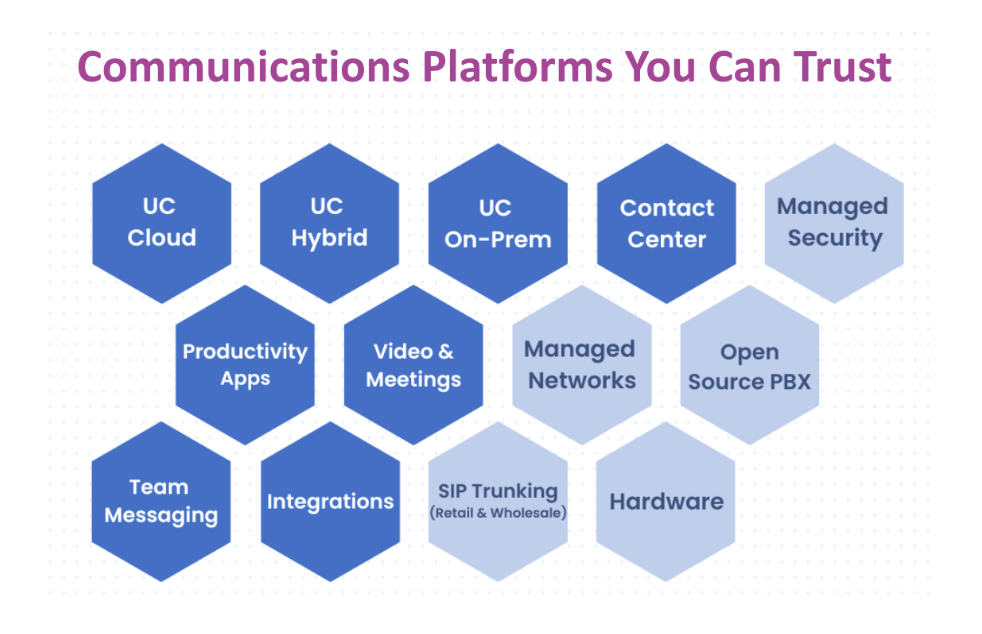
Unified Communications
Sangoma’s UC platforms are business communication systems (PBXs with advanced UC features, such as presence/chat, conferencing, mobility, fax, and more) that fully integrate with our phones, soft clients, and network interoperability products.
We build our platforms in-house to provide reliable, affordable Unified Communications services with strong security. This approach reduces third-party vulnerabilities and allows us to swiftly troubleshoot and customize solutions for customers.
Cloud-Based Business Phone Solution (UCaaS)
Sangoma UC Cloud
5
Our intuitive cloud solutions seamlessly integrate voice, video, messaging, and call center capabilities into a single platform, enhancing productivity and streamlining operations at a fraction of the cost. Experience true white-glove support.
Sangoma UC Hybrid
Our hybrid UCaaS is powered by our unique cloud architecture, which includes our on-premises StarBox® appliance and cloud-based network backbone components. This blend of cloud and on-premises ensures unparalleled scalability, flexibility, and reliability for your business communications. It provides local survivability, multiple failover options (4G LTE / POTS lines) and multi-location flexibility.
On-Premises Business Phone Solution
Sangoma UC Prem
Sangoma also offers the more traditional on-premise UC phone system, giving administrators complete control over updates and integrations, to deploy their business phone system on-premises. Whether deployed on a dedicated appliance or in the customer’s virtual environment, Sangoma provides the power and connectivity customers and partners can trust.
IP DeskPhone, headsets, UC Clients and Softphones
Sangoma offers a variety of IP deskphones and headsets for both cloud and on-premise systems, featuring HD Voice and seamless integration with UC systems. Their headsets support connectivity with phones or computers and allow roaming up to 325 feet. Additionally, Sangoma provides UC Clients and Softphones for making business calls via smartphone or computer, functioning as a primary phone or desk phone extension.
Additional Communications Products
Contact Center as a Service (CCaaS)
Sangoma CX is a cloud-based Contact Center as a Service (CCaaS) solution that enhances customer experience by integrating with UCaaS offerings. It enables businesses to manage inbound interactions across various channels and supports outbound call campaigns. With features like end-to-end encryption, AI automation, and an intuitive interface, it streamlines contact center operations for higher agent productivity and improved customer experience.
Communications Platform as a Service (CPaaS)
Sangoma CPaaS allows developers to create applications with real-time communication features like voice, video, chat, and SMS via the cloud. Sangoma provides a platform for developers and customers to build communication services using voice, APIs, WebRTC, and SMS. To ensure optimal performance, Sangoma offers its own SIP trunking service and sells communication apps based on their CPaaS product.
6
Video, meetings, and collaboration
Sangoma Meet is our video meetings, cloud-based service accessible from desktop or mobile. It enables file sharing on screen, integrates seamlessly with your calendar, and enables PSTN phone calls. TeamHub is Sangoma’s collaboration platform, which allows users to interact via chatting, calling, and video.
Trunking (Taas)
SIP trunks provide Internet-based telephony services using existing internet connections, eliminating the need for separate PSTN or digital connections. SIP trunking is increasingly popular for connecting an IP PBX system to a phone company due to cost efficiency and UC features. Sangoma offers two SIP trunking services: Retail SIP Trunking, with predictable monthly costs and easy integration into UC platforms, including a fax service; and Wholesale SIP Trunking, which is usage-based with a larger monthly minimum, suitable for large businesses. Additionally, Sangoma provides FaxStation, a hosted fax service with a telecom appliance for secure fax communication.
MSP Portfolio
Sangoma’s cloud-based Managed Service Provider (MSP) offerings deliver essential communication services that businesses rely on, enhancing our comprehensive suite of Communications as a Service solutions. This MSP product line is founded on a seamlessly integrated, enterprise-grade, end-to-end managed network, all backed by a dedicated 24/7 team of expert network engineers.The current MSP offering includes: SD-WAN, Internet, VPN, 5G, and WiFi access points. Sangoma also provides Managed Security solutions, which include anti-spam & antivirus, VPN, content filtering, data protection, and interaction detection.
Hardware
Sangoma provides network interconnection products that seamlessly link various types of networks. These products enable the connection of VoIP networks to PSTN, mobile networks, or even to other VoIP networks, ensuring versatile and efficient communication.
Sangoma provides solutions for secure and interoperable VoIP network connections, including Session Border Controllers (SBCs) and VoIP gateways. SBCs manage security and connectivity between various networks, available as hardware, software, or hybrid solutions. VoIP gateways facilitate voice traffic between VoIP and traditional PSTN networks. Additionally, Sangoma offers PSTN interface and media processing boards for developers needing to connect to the PSTN, maximizing flexibility and compatibility in various environments. All products have broad interoperability certifications.
Open-Source Software Products
Sangoma is the main developer and sponsor of the Asterisk project, the most widely used open-source communications software, and the FreePBX project, the most popular open-source PBX software. Sangoma also provides revenue-generating products and services beyond these open-source projects. These include software add-ons, IP phones, SIP trunking, cloud-based fax, training, technical support, maintenance, PSTN cards, VoIP gateways, session border controllers, and commercial versions of the PBX/UC software.
7
OVERALL PERFORMANCE
Operational
Sangoma is a trusted leader in developing technology platforms for essential business communications. Customers include companies in the SMB, mid-market and enterprise spaces looking for all the advantages of cloud-based communications at a fair price. Sangoma offers a wide range of products to complement its services, delivering high-quality solutions through a global network of partners and distributors.
Sangoma has always been operated and managed as a single economic entity. There is one management team that directs the activities of all aspects of the Company and it is managed globally by our executive team. As a result, we believe that we have one reporting segment, being the consolidated Company. Over time, this may change as the Company grows and when this occurs, we will reflect the change in our reporting practice.
Revenue
Sangoma generates revenue from both Services and Products. Our Services revenue is generated primarily from customers entering recurring revenue agreements for services such as our UCaaS platforms and MSP services. Product revenues are comprised of the sale of products and services that generate non-recurring revenue, including our UC on-prem platform and hardware.
Beginning in Fiscal 2026, following the divestiture of Sangoma’s third-party hardware resale business, the Company will also provide supplemental revenue information in two categories: Core and Adjacent. Core services includes UCaaS, Switchvox, access, and MSP offerings, while Adjacent services comprises open source, connectivity, and TaaS solutions. This information provides an additional view of Sangoma’s revenue and growth drivers, highlighting the Company’s focus on expanding recurring revenue and increasing the proportion of total revenue derived from it.
Innovation
Sangoma is committed to advancing its AI capabilities by investing in and developing its proprietary AI platform and collaborating with leading third-party AI platforms.
By building on top of our existing CPaaS offerings and leveraging the low code/no code Studio workflow engine, we are delivering innovative Voice AI and Knowledge AI (RAG) Agent solutions that seamlessly integrate with our existing Cloud, Hybrid, and Prem products and services.
This approach ensures that our partners and customers benefit from both our in-house expertise and the broader AI ecosystem, enhancing their operations with cutting-edge, AI-driven services and insights.
Sales and marketing
Over the past year, Sangoma has undergone a transformation in its go-to-market strategy. We’ve embarked on a brand revitalization program with a strong focus on our digital properties, including new company positioning and refined messaging that reflects who we are as a company. We have established continuous education and training programs in collaboration with distributors and partners. Additionally,
8
we have forged robust partnerships with key Technology Services Distributors (TSDs) like Telarus, Avant, App Direct, Intelisys, Jenne, and ScanSource to grow our business nationwide through the channel.
Sales
Sangoma utilizes a 100% channel-driven 'go to market' strategy, collaborating with diverse partners and market influencers. Our network includes individual agents, large technology service distributors (TSDs), and both national and regional distributors. Our customers span from mid-market enterprises needing distributed solutions to smaller SMBs that rely on our partners for digital infrastructure strategies.
Sangoma thrives in several sectors, notably healthcare, retail, and service providers. Through the Pinnacle Channel Partner Program, we offer extensive support to our partners, enabling them to deliver Sangoma's essential communication platform solutions to their end users. This support includes formal lead registration, training, quoting assistance, co-marketing efforts, and competitive commission structures and incentives.
Marketing
Sangoma's marketing goals are seamlessly aligned with its business objectives, which focus on driving revenue growth and delivering value to stakeholders. We also recognize the importance of increased brand visibility, recognition, and trust within the channel partner community and among end users.
Four key pillars anchor our marketing transformation: brand development and perception, channel marketing and enablement, lead generation, and fostering a culture of innovation and process efficiency.
For brand development, Sangoma has clarified its position as a leader in the communications industry, known for developing essential communication platforms with in-house software for all UC deployment types. This is complemented by offerings such as SIP trunking, hardware, managed services, and managed security.
Channel marketing and enablement are crucial for Sangoma, as we are dedicated to supporting our channel partners and distributors. Our multichannel strategy includes large and small events, webinars, trainings, online advertising, email marketing, public relations, promotional programs, and discounts.
In lead generation, our goal is to deliver more qualified leads to our partners, utilizing both outbound and inbound strategies. These are multichannel efforts targeting our Ideal Customer Profile with key messages about our solutions. Tactics include email, calls, content marketing, online advertising, social media, and public relations.
Lastly, cultivating a strong culture of trust and rapid experimentation, combined with robust CRM and email automation processes, is vital to our marketing transformation.
9
RESULTS OF OPERATIONS
All amounts are in thousands of United States dollars except where otherwise indicated.
SUMMARY
The following table outlines our unaudited condensed consolidated interim statements of loss and comprehensive loss for the periods indicated:
Three month periods ended September 30 | ||||||||||||||
| 2025 | 2024 | Change | Change | |||||||||||
| $ | $ | $ | % | |||||||||||
| Revenue | 50,818 | 60,150 | (9,332) | (16)% | ||||||||||
| Cost of sales | 14,013 | 18,969 | (4,956) | (26)% | ||||||||||
| Gross profit | 36,805 | 41,181 | (4,376) | (11)% | ||||||||||
| Expenses | ||||||||||||||
| Sales and marketing | 11,725 | 12,556 | (831) | (7)% | ||||||||||
| Research and development | 11,313 | 11,342 | (29) | —% | ||||||||||
| General and administration | 7,246 | 9,960 | (2,714) | (27)% | ||||||||||
| Amortization of intangible assets | 8,172 | 8,198 | (26) | —% | ||||||||||
| Interest expense (net) | 649 | 1,378 | (729) | (53)% | ||||||||||
| Restructuring and business integration costs | 563 | — | 563 | 100% | ||||||||||
| Loss before income tax | (2,863) | (2,253) | (610) | 27% | ||||||||||
| Provision for income taxes | ||||||||||||||
| Current | 528 | 491 | 37 | 8% | ||||||||||
| Deferred | (1,054) | (834) | (220) | 26% | ||||||||||
| Net loss | (2,337) | (1,910) | (427) | 22% | ||||||||||
Other comprehensive income (loss) | ||||||||||||||
Items to be reclassified to net income (loss) | ||||||||||||||
| Loss in fair value of interest rate swaps, net of tax | (67) | (324) | 257 | (79)% | ||||||||||
| Foreign currency translation adjustment | 79 | — | 79 | 100% | ||||||||||
| Comprehensive loss | (2,325) | (2,234) | (91) | 4% | ||||||||||
Loss per share | ||||||||||||||
| Basic and diluted | $ | (0.07) | $ | (0.06) | $ | (0.01) | 17% | |||||||
| Weighted average shares outstanding (thousands) | ||||||||||||||
| Basic and diluted | 33,243 | 33,402 | (159) | — | ||||||||||
10
REVIEW OF OPERATIONS
As previously noted, following the divestiture of Sangoma’s third-party hardware resale business, VoIP Supply, LLC (“VS”), the Company is presenting its revenue in two categories: Core and Adjacent, as defined above. This new presentation provides a clearer view of Sangoma’s operations and growth drivers, highlighting the Company’s focus on expanding recurring revenue and increasing the proportion of total revenue derived from it.
To ensure consistent and meaningful comparisons, references to the new Core and Adjacent categories exclude VS from all historical periods. In contrast, the Company’s traditional revenue categories of Products and Services include VS, as the Company owned and operated VS for the entirety of Fiscal 2025. To facilitate comparability, Sangoma has also provided certain supplemental metrics—such as revenue, cost of sales, gross profit and margin, and Adjusted EBITDA—excluding VS, as further described within the MD&A.
Revenue Product vs Service
| Three month periods ended September 30 | Three month periods ended June 30 | ||||||||||||||||||||||
| 2025 | 2024 | Change | Change | 2025 | Change | Change | |||||||||||||||||
| $ | $ | $ | % | $ | $ | % | |||||||||||||||||
| Service revenue | 46,878 | 49,693 | (2,815) | (6)% | 48,057 | (1,179) | (2)% | ||||||||||||||||
| % of total revenue | 92% | 83% | 9% | 81% | 11% | ||||||||||||||||||
| Product revenue | 3,940 | 10,457 | (6,517) | (62)% | 11,305 | (7,365) | (65)% | ||||||||||||||||
| % of total revenue | 8% | 17% | (9)% | 19% | (11)% | ||||||||||||||||||
| Total revenue | 50,818 | 60,150 | (9,332) | (16)% | 59,362 | (8,544) | (14)% | ||||||||||||||||
Quarterly Comparison
Services revenue for the first quarter of Fiscal 2026 was $46,878 at 92% of total revenue, lower compared to $49,118 at 94% of total revenue in the equivalent quarter of the prior year, excluding VS, which the Company divested at the end of Fiscal 2025. The decline in Service revenue was primarily the result of longer sales cycles for larger deals.
Product revenue for the first quarter of Fiscal 2026 was $3,940 increased 16% compared to $3,397 of Product revenue without VS in the equivalent quarter of the prior year. The increase was partially the result of a higher attachment rate of product sales to larger sales deals.
11
Revenue Core & Adjacent
| Three month periods ended September 30 | Three month periods ended June 30 | ||||||||||||||||||||||
| 2025 | 2024 | Change | Change | 2025 | Change | Change | |||||||||||||||||
| $ | $ | $ | % | $ | $ | % | |||||||||||||||||
| Core | 37,596 | 40,032 | (2,436) | (6)% | 38,788 | (1,192) | (3)% | ||||||||||||||||
| % of total revenue | 74% | 76% | (2)% | 75% | (1)% | ||||||||||||||||||
| Adjacent revenue | 13,222 | 12,482 | 740 | 6% | 13,081 | 141 | 1% | ||||||||||||||||
| % of total revenue | 26% | 24% | 2% | — | 1% | ||||||||||||||||||
| Total revenue excluding VS | 50,818 | 52,514 | (1,696) | (3)% | 51,869 | (1,051) | (2)% | ||||||||||||||||
Quarterly Comparison
Core revenue for the first quarter of Fiscal 2026 was $37,596 representing 74% of total revenue compared to $40,032 or 76% of total revenue in the equivalent quarter of the prior year. The decline was primarily the result of longer sales cycles for larger deals.
Adjacent revenue for the first quarter of fiscal 2026 was $13,222, representing a 6% increase as compared to $12,482 in the equivalent quarter of the prior year. This increase is mainly the result of the Company’s TaaS offering, following a series of operational efficiencies that were implemented in the latter half of Fiscal 2025.
Total revenue for the first quarter of fiscal 2026 was $50,818, lower as compared to $52,514 of total revenue without VS revenue of $7,636 in the equivalent quarter of the prior year. On a quarter-over-quarter basis, Core revenue was lower compared to $38,788 in the fourth quarter of Fiscal 2025, while Adjacent revenue was higher compared to $13,081, excluding VS revenue of $7,636. Total revenue for the quarter was in line with the Company’s forecast and the Company expects to see sequential growth in its second fiscal quarter.
Cost of sales and gross profit
Three month periods ended September 30 | Three month periods ended June 30 | ||||||||||||||||||||||
| 2025 | 2024 | Change | Change | 2025 | Change | Change | |||||||||||||||||
| $ | $ | $ | % | $ | $ | % | |||||||||||||||||
| Cost of sales | 14,013 | 18,969 | (4,956) | (26)% | 19,321 | (5,308) | (27)% | ||||||||||||||||
| Gross profit | 36,805 | 41,181 | (4,376) | (11)% | 40,041 | (3,236) | (8)% | ||||||||||||||||
| Gross margin | 72% | 68% | 4% | 67% | 5% | ||||||||||||||||||
12
Quarterly Comparison
The cost of sales for the first quarter of Fiscal 2026 was $14,013 compared to $12,748 excluding VS in the equivalent quarter of the prior year, driven primarily by the increase in Product attachment to our Services deals.
Gross profit and margin for the first quarter of Fiscal 2026, were $36,805 and 72% respectively, lower than $39,767 and 76% in the equivalent quarter of the prior year, excluding VS. This change was driven mainly by an increase in the sale of Products with lower gross margins and we saw an increase in Product attachment to our recurring revenue offerings.
Expenses
Costs are allocated to four main categories as follow:
Three month periods ended September 30 | ||||||||||||||
| 2025 | 2024 | Change | Change | |||||||||||
| $ | $ | $ | % | |||||||||||
| Sales and marketing | 11,725 | 12,556 | (831) | (7)% | ||||||||||
| Research and development | 11,313 | 11,342 | (29) | —% | ||||||||||
| General and administration | 7,246 | 9,960 | (2,714) | (27)% | ||||||||||
| Amortization of intangible assets | 8,172 | 8,198 | (26) | —% | ||||||||||
Sales and marketing
Quarterly Comparison
Sales and marketing expense was $11,725 for the first quarter of Fiscal 2026, which decreased 7% from the $12,556 incurred in the equivalent quarter of the prior year, at approximately 23% of revenue compared to 21% the same quarter a year ago. The decrease was mainly attributed to continuing efforts to refine and focus the marketing efforts with our Go-To-Market strategy and the sale of VS.
Research and development
Quarterly Comparison
A portion of the Company’s R&D costs are capitalized each period and amortized on a straight-line basis over three years (see the audited consolidated financial statements and related notes for the fiscal year ended June 30, 2025, available at www.sedarplus.ca and www.sec.gov).
The research and development costs incurred and amortized during the first quarter of Fiscal 2026 were $11,313 similar to the $11,342 incurred in the equivalent quarter of the prior year, at approximately 22% of revenue compared to 19% a year ago. For the quarter ended September 30, 2025, the Company did not have any significant projects that have not yet generated revenue, nor did it have any products or services that are not fully developed, and which are material to the Company.
13
General and administration
Quarterly Comparison
During the first quarter of Fiscal 2026, general and administration expenses were $7,246 at approximately 14% of revenue, which decreased 27% from the $9,960 in the first quarter of Fiscal 2025. The decrease is due to the Company’s ongoing cost savings initiatives, following it’s transformation in Fiscal 2024 and the sale of VS.
Amortization of intangible assets
Quarterly Comparison
Amortization of intangible assets was $8,172 for the first quarter of fiscal 2026, similar to the $8,198 incurred in the same quarter of Fiscal 2025.
Other expenses are allocated as follow:
Three month periods ended September 30 | ||||||||||||||
| 2025 | 2024 | Change | Change | |||||||||||
| $ | $ | $ | % | |||||||||||
| Interest expense (net) | 649 | 1,378 | (729) | (53)% | ||||||||||
| Restructuring and business integration costs | 563 | — | 563 | 100% | ||||||||||
Interest expense (net)
Quarterly Comparison
Net interest expense was $649 for the first quarter of fiscal 2026, a savings of $729 from the $1,378 incurred in the same quarter of Fiscal 2025. The savings of 53% on the interest expense was primarily driven by the quarterly repayments of the term loans, the repayments of the first term loan and revolving credit facility in full, and interest income from its liquidable money market deposit account.
Restructuring and business integration costs
Quarterly Comparison
The restructuring cost was $563 for the first quarter of fiscal 2026, no restructuring cost incurred in the same quarter of fiscal 2025.
Net loss
Quarterly Comparison
Net loss for the first quarter of Fiscal 2026 was $2,337 ($0.07 loss per share fully diluted), compared to a net loss of $1,910 ($0.06 loss per share fully diluted) incurred in the same quarter of Fiscal 2025.
14
Adjusted EBITDA
The derivation of Adjusted EBITDA and the reconciliation of net loss to Adjusted EBITDA for the comparable quarters and fiscal years are shown in the table below.
Three month periods ended September 30 | ||||||||||||||
| 2025 | 2024 | Change | Change | |||||||||||
| $ | $ | $ | % | |||||||||||
| Net loss | (2,337) | (1,910) | (427) | 22% | ||||||||||
| Tax expense (recovery) | (526) | (343) | (183) | 53% | ||||||||||
| Interest expense (net) | 649 | 1,378 | (729) | (53)% | ||||||||||
| Share-based compensation | 529 | 728 | (199) | (27)% | ||||||||||
| Depreciation of property and equipment | 887 | 1,085 | (198) | (18)% | ||||||||||
| Depreciation of right-of-use assets | 360 | 678 | (318) | (47)% | ||||||||||
| Amortization of intangibles | 8,172 | 8,198 | (26) | —% | ||||||||||
| Restructuring and business integration costs | 563 | — | 563 | 100% | ||||||||||
| Adjusted EBITDA | 8,297 | 9,814 | (1,517) | (15)% | ||||||||||
| AEBITDA as a % of revenue | 16% | 16% | —% | |||||||||||
Quarterly Comparison
Adjusted EBITDA for the first quarter of Fiscal 2026 was $8,297, down from 9,814 in the equivalent quarter of Fiscal 2025, at 16% of revenue in each period. Adjusted EBITDA for the quarter met the Company’s forecasts.
QUARTERLY RESULTS OF OPERATIONS
Selected financial information over the prior eight quarters is shown in the table below.
| Second | Third | Fourth | First | Second | Third | Fourth | First | |||||||||||||||||||
| quarter | quarter | quarter | quarter | quarter | quarter | quarter | quarter | |||||||||||||||||||
| 2024 | 2024 | 2024 | 2025 | 2025 | 2025 | 2025 | 2026 | |||||||||||||||||||
| Revenue | $62,276 | $61,046 | $60,934 | $60,150 | $59,113 | $58,067 | $59,362 | $50,818 | ||||||||||||||||||
| Gross Profit | $43,986 | $43,000 | $41,807 | $41,181 | $40,488 | $40,039 | $40,041 | $36,805 | ||||||||||||||||||
Operating Expenses1 | $44,537 | $42,745 | $41,600 | $42,056 | $41,296 | $40,605 | $39,063 | $38,456 | ||||||||||||||||||
| Net (loss) income | $(3,239) | $(1,268) | $(1,708) | $(1,910) | $(1,881) | $(1,428) | $209 | $(2,337) | ||||||||||||||||||
| Earnings (loss) per share - basic | $(0.10) | $(0.04) | $(0.05) | $(0.06) | $(0.06) | $(0.04) | $0.01 | $(0.07) | ||||||||||||||||||
| Earnings (loss) per share - diluted | $(0.10) | $(0.04) | $(0.05) | $(0.06) | $(0.06) | $(0.04) | $0.01 | $(0.07) | ||||||||||||||||||
| Free Cash Flow | $6,757 | $13,023 | $8,305 | $10,012 | $9,786 | $8,355 | $4,794 | $3,230 | ||||||||||||||||||
| Free Cash Flow per share - basic | $0.20 | $0.39 | $0.25 | $0.30 | $0.29 | $0.25 | $0.14 | $0.10 | ||||||||||||||||||
| Free Cash Flow per share - diluted | $0.20 | $0.39 | $0.25 | $0.30 | $0.29 | $0.25 | $0.14 | $0.10 | ||||||||||||||||||
| Adjusted EBITDA | $10,448 | $11,155 | $11,110 | $9,814 | $10,088 | $9,772 | $11,361 | $8,297 | ||||||||||||||||||
| AEBITDA as a % Revenue | 17% | 18% | 18% | 16% | 17% | 17% | 19% | 16% | ||||||||||||||||||
| AEBITDA as a % Revenue quarterly change | 1% | —% | (2)% | 1% | —% | 2% | (3)% | |||||||||||||||||||
1 Operating Expenses consist of sales and marketing, research and development, general and administration and amortization of intangible assets.
15
Sales and Net Loss by Quarter
As indicated in Fiscal 2025, the Company recently completed a comprehensive transformation of its go-to-market approach, which, while necessary for long-term scalability, contributed to extended sales cycles particularly for larger enterprise accounts and temporarily delayed revenue growth. With this foundational work now complete, the Company has shifted its focus to revenue generation and customer acquisition in Fiscal 2026, with sequential quarterly growth forecasted beginning in the second fiscal quarter. Services revenue continues to account for the majority of total revenue at 92% this quarter, while the Company did see an uptick in Product sales resulting from an increased attachment rate to its Services offerings. Operational efficiencies and cost-savings initiatives have helped maintain Adjusted EBITDA margin within a narrow range of 16-19% over the past eight quarters. The Company is beginning to realize the benefits of its revamped sales strategy, as reflected in early revenue indicators such as a growing pipeline.
LIQUIDITY AND CAPITAL RESOURCES
As at September 30, 2025, the Company had current assets of $42,708 and current liabilities of $49,052, compared with $42,622 and $49,476 at June 30, 2025, respectively. The increase in current assets is mainly due to trade and other receivables, while the decrease in current liabilities is primarily due to accounts payable and accrued liabilities.
Cash of $15,683 on September 30, 2025 was 16% higher than the $13,494 on June 30, 2025. The Company used a portion of its cash to continue servicing the debts. During the first quarter of Fiscal 2026, the Company repaid $5,150 in facility and loan payments compared to $8,725 in Fiscal 2025. As at September 30, 2025, the total outstanding debt was reduced to $42,750 from $69,100 as at September 30, 2024.
Trade receivables of $13,059 on September 30, 2025, were higher than the $10,631 on June 30, 2025, primarily due to the transition to the new payment processor which was a part of the ERP implementation. The Company has since seen trade receivables return to historical levels.
Inventories of $7,550 on September 30, 2025, were $677 lower than the $8,227 on June 30, 2025 due to the Company continuing to focus on selling existing inventories first while managing new purchases.
The Company’s net cash flows from operating activities in the first quarter of Fiscal 2026 was $4,938, lower than the $12,127 incurred in the same quarter of Fiscal 2025.
Net cash provided by operating activities as a percentage of Adjusted EBITDA for the first quarter of fiscal 2026 was 60% lower than 124% in the same quarter of fiscal 2025, primarily as a result of the increase in trade receivables resulting from the timing of the ERP implementation and the decrease in sales tax payable. To-date in the second quarter, the Company has seen trade receivables decrease to historical levels and the Company continues to anticipate quarterly net cash provided by operating activities as a percentage of Adjusted EBITDA in the range of 90-100%, further underscoring the improved operational efficiency and focus on long-term value creation.
16
Free Cash Flow
The derivation of Free Cash Flow and the reconciliation of net cash from operating activities to Free Cash Flow for the comparable periods are shown in the table below.
| Three month periods ended September 30 | ||||||||||||||
| 2025 | 2024 | Change | Change | |||||||||||
| $ | $ | $ | % | |||||||||||
| Net cash provided by operating activities | 4,938 | 12,127 | (7,189) | (59)% | ||||||||||
| Purchase of property and equipment | (241) | (436) | 195 | (45)% | ||||||||||
| Development costs | (1,467) | (1,679) | 212 | (13)% | ||||||||||
| Free Cash Flow | 3,230 | 10,012 | (6,782) | (68)% | ||||||||||
| Free Cash Flow per share - basic & diluted | $ | 0.10 | $ | 0.30 | $ | (0.20) | (68)% | |||||||
| Weighted average shares outstanding (thousands) - basic & diluted | 33,243 | 33,402 | -159 | —% | ||||||||||
Free Cash Flow for the first quarter of Fiscal 2026 was $3,230 ($0.10 per share fully diluted), lower than the $10,012 ($0.30 per share fully diluted) incurred in the same quarter of Fiscal 2025.
Credit Facility
On October 18, 2019, the Company entered into a new credit agreement (the “Original Credit Agreement”) in favour of its subsidiaries, Sangoma Technologies Inc. and Sangoma US Inc. (the “Borrowers”) with inter alia The Toronto-Dominion Bank and The Bank of Montreal, as lenders (the “Lenders”). Under the terms of the Original Credit Agreement, the Lenders provided the Borrowers with a term loan facility to refinance the Company’s existing credit facilities and to fund part of the purchase of Voip Innovation Acquisition.
On March 31, 2021, the Company entered into an amended and restated credit agreement (the “Amended and Restated Credit Agreement”) which amended and restated the Original Credit Agreement to allow the Company to fund part of the StarBlue Acquisition.
On March 28, 2022, the Company entered into the Second Amended and Restated Credit Agreement (the “Second Amended and Restated Credit Agreement”) which amended and restated the Amended and Restated Credit Agreement to allow the Company to fund part of the NetFortris Acquisition. The Second Amended and Restated Credit Agreement is comprised of: (i) a $6,000 revolving credit facility, (ii) a $21,750 term credit facility, which was used to partially fund the Voip Innovation Acquisition (iii) a $52,500 term credit facility, which was used to partially fund the StarBlue Acquisition, (iv) a $45,000 term credit facility, which was used to partially fund the NetFortris Acquisition (the “Term 3 Facility”), and (v) a $1,500 swingline credit facility.
On June 28, 2022, the Company entered into the first amendment to the Second Amended and Restated Credit Agreement to reflect certain administrative amendments and to amend the amount of the Term 3 Facility quarterly principal installments.
On October 19, 2022 and January 31, 2023 the Company drew down $3,000 and $2,300 from the revolving credit facility, respectively which were fully repaid on June 28, 2024.
17
On April 6, 2023 the Company entered into a second amendment to the Second Amended and Restated Credit Agreement to reflect certain administrative amendments and to amend the amount of the revolving credit facility from $6,000 to $20,000 and the amount of the swingline credit facility from $1,500 to $5,000. Both the first term loan and the the revolving credit facility were fully repaid in fiscal 2025.
On June 4, 2024, the Company entered into the third amendment to the Second Amended and Restated Credit Agreement to reflect certain administrative amendments. As at September 30, 2025, the total debt outstanding is $42,750 compared to $69,100 as at September 30, 2024.
Under its Second Amended and Restated Credit Agreement with its lenders, the Company must satisfy certain financial covenants, principally in respect of total funded debt to earnings before interest, taxes and amortization, and debt service coverage ratio. As at September 30, 2025, the Company was in compliance with all covenants related to its Credit Agreement.
CONTRACTUAL OBLIGATIONS
The following table shows the movement in contractual liabilities from July 1, 2025 to September 30, 2025:
| $ | |||||
Opening balance, July 1, 2024 | 12,654 | ||||
Revenue deferred during the period | 36,627 | ||||
Deferred revenue recognized as revenue during the period | (39,549) | ||||
Ending balance, June 30, 2025 | 9,732 | ||||
Revenue deferred during the period | 29,446 | ||||
Deferred revenue recognized as revenue during the period | (29,850) | ||||
Ending balance, September 30, 2025 | 9,328 | ||||
| Contract liabilities - Current | 6,516 | ||||
| Contract liabilities - Non-current | 2,812 | ||||
| 9,328 | |||||
Commitments
The table below outlines our contractual commitments as of September 30, 2025:
| within 12 months | 13-24 months | 25-36 months | >37 months | Total | |||||||||||||
| $ | $ | $ | $ | $ | |||||||||||||
| Accounts payable and accrued liabilities | 17,350 | — | — | — | 17,350 | ||||||||||||
| Sales tax payable | 2,744 | — | — | — | 2,744 | ||||||||||||
| Operating facility and loans | 20,600 | 16,225 | 5,925 | — | 42,750 | ||||||||||||
| Lease obligations on right of use assets | 1,670 | 1,571 | 1,221 | 4,176 | 8,638 | ||||||||||||
| Other non-current liabilities | — | — | — | 1,814 | 1,814 | ||||||||||||
| 42,364 | 17,796 | 7,146 | 5,990 | 73,296 | |||||||||||||
18
OFF-BALANCE SHEET ARRANGEMENTS
There are no off-balance sheet arrangements that have, or are reasonably likely to have, a current or future effect on the results of operations or financial condition of Sangoma.
RELATED PARTY TRANSACTIONS
Except as disclosed in the notes to the consolidated financial statements, the Company is not party to any material transactions with related parties.
CRITICAL ACCOUNTING POLICIES AND ESTIMATES
The preparation of our consolidated financial statements in conformity with IFRS requires management to make estimates and assumptions that affect the amounts reported in the consolidated financial statements and accompanying notes. We review these estimates on an ongoing basis based on management’s best knowledge of current events and actions that we may undertake in the future. Actual results could differ from these estimates. All significant estimates and critical judgments, estimates, and assumptions are described in Note 3 of the Company’s Financial Statements.
FINANCIAL INSTRUMENTS AND OTHER INSTRUMENTS
The fair values of the cash and cash equivalents, trade and other receivables, contract assets, other current assets, accounts payable and accrued liabilities, approximate their carrying values due to the relatively short-term nature of these financial instruments or as these financial instruments are fair valued at each reporting period. The fair values of operating facility and loans approximate their carrying values due to variable interest loans or fixed rate loan, which represent market rate. Derivative assets and liabilities and consideration payable are recorded at fair value. Further details relating to our financial instruments, the risks associated with the financial instruments and how we manage those risks, are described in Note 4 of the Company’s Financial Statements.
OUTSTANDING SHARE INFORMATION
We are currently authorized to issue an unlimited number of common shares. As of the date hereof, 33,139,165 common shares, 359,007 stock options and 1,185,227 share units are issued and outstanding.
GUIDANCE
Guidance for Fiscal 2026
The Company provided guidance for Fiscal 2026 on September 17, 2025. The Company is reaffirming that guidance as follows:
•Total revenue is expected to be in the range of $200 to $210 million, compared to Fiscal 2025 revenue of $209 million when excluding the contribution from VoIP Supply LLC.
•Adjusted EBITDA margin is expected to be in the range of 17% - 19% of revenue.
19
Our guidance is based on the Company’s assessment of numerous material assumptions, including but not limited to the following:
Operational & Supply Chain
•The Company’s ability to effectively manage ongoing supply chain dynamics, including securing necessary electronic components and parts, contract manufacturers delivering finished products on schedule, and no material increases in the cost of components, labor, or logistics.
•Shipping lanes and freight services remaining available without significant delay or cost escalation.
Go-to-Market & Revenue
•The successful execution of the Company’s go-to-market transformation and related initiatives, including expansion of sales capacity, improved channel enablement, and increasing customer adoption of subscription-based services.
•Revenue trends consistent with those observed in fiscal 2025 to date, adjusted for anticipated market conditions in fiscal 2026.
•Continued customer demand for both Services and Products, supported by stable renewal rates, new logo acquisition, and expansion within the existing customer base.
•The Company’s internal sales force and channel partners delivering forecasted revenue in line with management expectations.
Market & Macroeconomic Environment
•Continued expansion of the global UCaaS and cloud communications markets, supported by ongoing digital transformation and hybrid work adoption.
•General macroeconomic conditions not deteriorating beyond currently anticipated levels, including inflation, interest rates, recessions, geopolitical conflicts, political instability, or government fiscal constraints.
•No introduction of materially adverse tariffs, trade restrictions, or other regulatory barriers that would impact the Company’s cost structure or demand environment.
Customers & Ecosystem
•Customers maintaining their business operations and technology investment levels without significant disruption that would materially reduce demand for the Company’s Products or Services.
•Stable or growing demand from key verticals, including SMB, enterprise, and channel-driven markets.
•The ability of customers and partners to adapt to evolving regulatory, security, and compliance requirements without negatively impacting purchase cycles.
Currency & Financial
•Foreign exchange rates remain within a range that does not materially impact reported results.
•Access to capital and credit markets remains available on reasonable terms, with no material change in financing costs.
Talent & Execution
•The Company’s continued ability to attract, develop, and retain key employees necessary to support growth and innovation.
•No significant labor disruptions, attrition spikes, or challenges in securing specialized talent in technology, sales, or operations.
•Execution of planned product roadmaps and technology enhancements on time and within budget.
20
CONTROLS AND PROCEDURES
Management of the Company, under the supervision of the Chief Executive Officer and Chief Financial Officer, is responsible for establishing and maintaining (i) disclosure controls and procedures, and (ii) adequate internal control over financial reporting (“ICFR”) (as defined under applicable Canadian securities laws and by the United States Securities and Exchange Commission (“SEC”) in Rule 13a-15(e) under the Securities Exchange Act of 1934, as amended (the “Exchange Act”) for the company to ensure that (i) material information relating to the Company is made known to management by others, particularly during the period in which the annual and interim filings are being prepared; and (ii) information required to be disclosed by the Company in its annual and interim filings or other reports filed or submitted under securities legislation is recorded, processed, summarized and reported within the time period specified in securities legislation.
Management, under the supervision and with the participation of our Chief Executive Officer and Chief Financial Officer and oversight of the Board of Directors evaluated the effectiveness of our ICFR as of September 30, 2025 against the criteria set forth in Internal Control – Integrated Framework (2013) issued by the Committee of Sponsoring Organizations of the Treadway Commission. Based upon the evaluation, management has concluded that the Company’s disclosure controls and procedures and ICFR were effective.
During the first quarter ended September 30, 2025, we continued to roll out our new ERP system in stages to improve the efficiency and consistency of our financial processes. As part of this rollout, we made related updates to certain ICFR. We are monitoring the transition closely and do not believe these changes have materially affected, or are reasonably likely to materially affect, our ICFR.
GLOSSARY OF TERMS
Analog
Analog telephony is the telephone system that dates back to the original experiments by Alexander Graham Bell. The voice signal is picked up by a microphone and transmitted to the central office. Voice signals from the central office consist of voltages that drive a headset to produce sound. Analog means that the voice pressure signals are represented by voltages levels on the line.
API
Application Program Interface: An API is a purpose-built interface that allows fourth party software to interact with a particular application. A typical API is the user interface for Windows that allows programmers to write programs for Windows that use all its built-in utilities. APIs do not depend on revealing source code, in general. They are usually well documented and include sample programs that make development easy.
Codec
In the telephony context a codec is a mechanism of digitally encoding voice. On the PSTN a voice channel takes up 64kbps in a codec standard called G.711. Cell phones use a codec called GSM that compresses the voice further so that a GSM call consumes about 24kbps. Other compressed codecs are used in VoIP to conserve bandwidth. These include standards such as G.729, G.723. Most audio codecs are lossy, in that some of the voice quality is degraded by the compression. On the other hand, as bandwidth becomes cheaper, VoIP allows one to use other codecs that in fact use more bandwidth than the PSTN, the so-called broadband codecs that have DVD-like voice quality.
Digital telephony
In the modern PSTN only the “last mile” line to the customer is still analog, all other internal parts of the network are digital. Digital in this case means that at the central office the analog signal from the subscriber’s telephone is sampled digitally, converting the line voltages to a series of numbers that can be easily transmitted error free over long distances. See T1, E1 below.
21
DID
Direct Inward Dialing (“DID”) is a virtual phone number that uses the existing phone lines to route incoming calls. Callers can connect to a phone extension directly without an operator. This offers convenience for both employees and callers alike. DID offers a cost saving on its own and is less expensive when purchased with a SIP trunk.
Gateway
In the telephony context this is typically a separate unit with its own case and power supply that provides VoIP-to-PSTN services for a VoIP network. Almost all gateway devices use SIP interfaces to the VoIP system over Ethernet and have analog or digital telephony interfaces that connect to the PSTN. VoIP gateways are available from many manufacturers including Audiocodes, Cisco, Grandstream, Patton Electronics and many others.
ISDN
Integrated Services Digital Network (“ISDN”) is a set of communications standards for simultaneous digital transmission of voice, video, data, and other network services over the traditional circuits of the public switched telephone network. Of the many variations of ISDN, Sangoma supports BRI (Basic Rate Interface) which is essentially an all-digital replacement for ordinary analog lines and PRI (Primary Rate Interface) which is used over T1 and E1 lines. BRI is very popular outside of North America. PRI is used worldwide.
IoT
Internet of Things (“IoT”) refers to a system of interrelated, internet-connected objects that are able to collect and transfer data over a wireless network without human intervention.
IP
The Internet Protocol (“IP”) is the primary protocol in the internet layer of the Internet protocol suite, and delivers data packets from the source host to the destination host solely based on the IP address.
ISP
Internet Service Provider
ITSP
Internet Telephony Service Provider who offer telecommunications service including voice over internet type connections.
IVR
Interactive Voice Response: IVR systems use the phone to navigate a menu, for example those used by banks to allow access to customer’s account information. IVR systems have typically been driven by dial tones as the buttons on your phone are pressed, but increasingly they are using voice recognition for navigation.
Open Source
Open Source software is distributed free subject to certain conditions. Open Source licenses usually stipulate that source code must always be distributed or made available, and any improvements in the code have to be donated back to the community. It is possible to have dual licensing: Open Source to the community and also a closed, commercial license of the same or similar software.
NetBorder
This is the trade name of a Sangoma SIP to PSTN gateway product. It includes several other functions in addition to the PSTN gateway function. The mass marketed version is known as NetBorder Express or NBE.
PBX
Private branch exchange. A PBX is a premised basis device to deliver calls from the PSTN or VOIP network to phones in a single or multiple locations.
PSTN
Public Switched Telephone Network: This is the standard telephone network that has been in operation for many decades. A telephone or FAX or PBX or other telephony device is generally connected to an analog line at a wall plug, which is connected by “last mile” cabling to the central office. The analog signal from the device is converted to a digital signal at the Telco central office and is multiplexed, 24 simultaneous voice channels per line (in North America) onto a T1 for onward transmission. At the other end of the line the digital channel is reconverted to analog for transmission over the “last mile” to the receiving phone or other device.
22
SBC
A Session Border Controller (“SBC”) is a device deployed in Voice over Internet Protocol (“VoIP”) networks to exert control over the signaling and usually also the media streams involved in setting up, conducting, and tearing down telephone calls or other interactive media communications. SBCs are deployed as demarcation points between enterprises and service providers and between service provider networks.
SD-WAN
A Software-defined Wide Area Network (“SD-WAN”) uses software to control and manage connectivity across a customers wide area network. While traditional wide area networks rely on physical routers to connect remote users, this centralized software solution can help customers monitor their performance of the network and manage traffic.
Signaling
Call setup and tear down is remarkably complicated, involving such things as responding to the different tones as well as generating them, caller identification, and handling the different features like hook-flash and voicemail properly. There are different signaling mechanisms for different types of circuits. Analog circuits use tones such as out-of-order, busy, ringing as well as the dialing tones. T1 lines often use a data protocol called ISDN PRI, where packets of control data are exchanged on a separate data channel. ISDN PRI is a simplification of the general signaling protocol used internally by the telecommunications networks known as SS7. In all cases, signaling must be exactly compatible with what the Telco expects, so interoperability and standards are important.
SIP
Session Initiation Protocol: SIP is the emerging standard signaling protocol for VoIP, though it has much broader applications. SIP is responsible for setting up and teardown of two party and multiparty calls, as well as a host of management features. To a great and increasing extent, VoIP calls are SIP based. The term SIP Trunk is used to describe the provision of a SIP line to an end customer.
T1, E1
A T1 line is a circuit that simultaneously carries 24 digital telephone calls. At higher densities, 28 T1s are aggregated into a T3 line carrying 672 calls. Larger offices can also connect to the central office via T1 directly, so as to have only one circuit for up to 24 calls. T1 is standard in North America and Japan while E1 is the standard in the rest of the world. E1 carries 30 channels of digitized voice per line.
TDM
Time Division Multiplexing (“TDM”) is used in circuit switched networks to increase the number of calls carried simultaneously on any one circuit and formed the basis for the digital telephony networks.
TSD
A Technology Services Distributor (TSD) is a company that connects technology vendors and selling partners, and provides technology service solutions to IT sales agents. TSDs are also known as "master agents" or "telecom agents or brokers". TSDs play a key role in the technology advisory channel, and offer many benefits, including: quick access to solutions, generating sales volume, collecting commissions, industry experience and business solutions, enablement training, and marketing activities.
Unified Communications
Unified communications is a concept in which voice, email, messaging, video, and any other type of communication are all considered forms of data that can be combined, manipulated, and used in intelligent applications seamlessly.
VoIP
Voice over IP is the transfer of voice traffic over the Internet Protocol. IP is used universally for all networking, including local area networks and private networks, not just the Internet. VoIP is not necessarily voice over the Internet, but voice over general data networks.
23
NEWS RELEASE
SANGOMA ANNOUNCES FIRST QUARTER FISCAL 2026 RESULTS
Solid First Quarter Under Software- and Services-Led Recurring Revenue Model;
Guidance Reaffirmed
TORONTO, ONTARIO, November 10, 2025 – Sangoma Technologies Corporation (TSX: STC; Nasdaq: SANG) (“Sangoma” or the “Company”), a trusted industry leader uniquely offering businesses a choice of on-premises, cloud-based, or hybrid Communications as a Service solutions, today announced its first quarter financial results and unaudited condensed consolidated interim financial statements for the three month period ended September 30, 2025. All amounts are expressed in US dollars unless otherwise stated.
“Our first quarter results represent a confident start to Fiscal 2026,” said Charles Salameh, Chief Executive Officer. “We delivered results aligned with our operating plan, maintained solid margins, and generated healthy free cash flow — demonstrating the strength and resilience of our recurring revenue model. With our transformation complete, Sangoma is operating from a position of agility and focus. We are executing with discipline, expanding our software and services portfolio, and deepening relationships across our global customer and partner base. We are also seeing growth in average booking sizes as customers increasingly adopt our integrated bundles and recognize the value of our unified communications platform. With a strong balance sheet and clear strategic direction, we are well positioned to capture emerging opportunities, drive sequential revenue growth next quarter, and deliver sustained value for our shareholders.”
First Quarter of Fiscal 2026 Highlights:
•Revenue tracked to plan at $50.8 million, setting the stage for sequential growth in Q2. Excluding $7.6 million of revenue from VoIP Supply, LLC ("VS"), which was strategically sold to exit low-margin, non-recurring resale activity, revenue was down 3% year-over-year on a like-for-like basis.
•Average revenue per customer increased 19% year-over-year, while the Company saw a 6% increase in bookings over the same period, supporting the Company’s growth outlook for the remainder of the year.
•Gross profit of $36.8 million representing 72% of total revenue, up from 67% in the fourth quarter of Fiscal 2025, driven by the shift toward higher-margin recurring services following the sale of VS.
1
•Operating expenses1 were $38.5 million, a decrease of $3.6 million or 9% over the same quarter in the prior year, reflecting efficiency gains from transformation activities in Fiscal 2025.
•Net Loss of $2.3 million ($0.07 loss per share fully diluted) compared to a Net Loss of $1.9 million ($0.06 loss per share fully diluted) over the same quarter in the prior year.
•Adjusted EBITDA2 of $8.3 million representing 16% of total revenue, was in line with historical seasonal patterns and margin improvement is expected over the course of the year.
•Quarterly churn remained low at approximately 1%.
•Net cash provided by operating activities of $4.9 million in the first quarter or 60% as a percentage of Adjusted EBITDA2.
•Free Cash Flow2 in the first quarter of $3.2 million ($0.10 per share fully diluted).
•More than 700,000 shares have been repurchased for cancellation under the Company's Normal Course Issuer Bid launched on March 27, 2025, including 195,949 repurchased after the end of the first quarter.
Guidance for Fiscal 20263
Sangoma provided guidance for Fiscal 2026 on September 17, 2025 and is reaffirming that guidance as follows:
•Total revenue is expected to be in the range of $200 - $210 million, compared to $209 million in Fiscal 2025 when excluding the contribution from VS, with sequential growth expected in the second quarter of Fiscal 2026.
•Adjusted EBITDA2 margin in the range of 17%-19%, inclusive of incremental go-to-market investments to stimulate organic growth.
Conference call
Sangoma will host a conference call on Wednesday, November 10, 2025, at 5:30 pm ET to discuss these results. The dial-in number for the call is 1-833-752-3740 (International +1-647-846-8617). Participants are requested to dial in 5 minutes before the scheduled start time and ask to join the Sangoma Technologies call.
1 Operating Expenses consist of sales and marketing, research and development, general and administration and amortization of intangible assets.
2 Adjusted EBITDA and Free Cash Flow are non-IFRS financial measures used by the Company to monitor its performance. Please see the section entitled “Non-IFRS Measures and Reconciliation of Non-IFRS Measures” in this press release for how we define “Adjusted EBITDA” and "Free Cash Flow".
3 The information in this section is forward-looking. Please see the section entitled “Cautionary Statement Regarding Forward-Looking Information” in this press release.
2
About Sangoma Technologies Corporation
Sangoma (TSX: STC; Nasdaq: SANG) is a leading business communications platform provider with solutions that include its award-winning UCaaS, CCaaS, CPaaS, and Trunking technologies. The enterprise-grade communications suite is developed in-house; available for cloud, hybrid, or on-premises setups. Additionally, Sangoma provides managed services for connectivity, network, and security. A trusted communications partner with over 40 years on the market, Sangoma has over 2.7 million UC seats across a diversified base of over 100,000 customers. Sangoma has been recognized for nine years running in the Gartner UCaaS Magic Quadrant. As the primary developer and sponsor of the open source Asterisk and FreePBX projects, Sangoma is determined to drive innovation in communication technology continuously. For more information, visit www.sangoma.com.
Cautionary Statement Regarding Forward Looking Statements
This press release contains forward-looking information and forward-looking statements (collectively, “forward-looking statements”), including statements regarding the Company’s future financial and operating performance, business strategy, growth opportunities, market outlook, and management’s expectations for fiscal 2026 and beyond.
Forward-looking statements are provided for the purpose of presenting information about management’s current expectations and plans relating to the future, and readers are cautioned that such statements may not be appropriate for other purposes. Forward-looking statements include, but are not limited to, statements relating to management’s guidance on revenue and Adjusted EBITDA, expectations regarding demand for the Company’s Products and Services, supply chain dynamics, foreign exchange impacts, cash flows, and other statements that are not historical facts. Words such as “believe”, “could”, “plan”, “estimate”, “expect”, “will”, “intend”, “may”, “potential”, “should”, and similar expressions are intended to identify forward-looking statements.
Although Sangoma believes that the expectations reflected in these forward-looking statements are reasonable, such statements involve known and unknown risks, uncertainties, and other factors that may cause actual results, performance, or achievements to differ materially from those expressed or implied by such forward-looking statements. These risks and uncertainties include, but are not limited to: supply chain disruptions, cost inflation, or shipping delays, the Company’s ability to execute its go-to-market strategy, including expansion of subscription and cloud services, changes in customer demand, churn, or adoption of new technologies, macroeconomic and geopolitical developments, including inflation, interest rates, recessions, political instability, conflicts, trade restrictions, sanctions, or tariffs, foreign exchange fluctuations, cybersecurity risks, evolving regulatory and compliance requirements, and data sovereignty changes, the Company’s ability to attract and retain key employees, changes in technology, including the impacts of artificial intelligence, automation, or other innovations that could alter competitive dynamics; and the risks and uncertainties described in the Company’s most recently filed Annual Information Form for the fiscal year ended June 30, 2025.
3
Forward-looking statements are based on the opinions, estimates, and assumptions of management as of the date of this press release and are inherently subject to significant business, economic, and competitive uncertainties and contingencies. Readers are cautioned not to place undue reliance on forward-looking statements, as there can be no assurance that the plans, intentions, or expectations upon which they are based will occur. Except as required by applicable securities laws, Sangoma undertakes no obligation to update or revise any forward-looking statements, whether as a result of new information, future events, or otherwise.
Our guidance is based on the Company’s assessment of numerous material assumptions, including but not limited to the following:
Operational & Supply Chain
•The Company’s ability to effectively manage ongoing supply chain dynamics, including securing necessary electronic components and parts, contract manufacturers delivering finished products on schedule, and no material increases in the cost of components, labor, or logistics.
•Shipping lanes and freight services remaining available without significant delay or cost escalation.
Go-to-Market & Revenue
•The successful execution of the Company’s go-to-market transformation and related initiatives, including expansion of sales capacity, improved channel enablement, and increasing customer adoption of subscription-based services.
•Revenue trends consistent with those observed in Fiscal 2025 to date, adjusted for anticipated market conditions in Fiscal 2026.
•Continued customer demand for both Services and Products, supported by stable renewal rates, new logo acquisition, and expansion within the existing customer base.
•The Company’s internal sales force and channel partners delivering forecasted revenue in line with management expectations.
Market & Macroeconomic Environment
•Continued expansion of the global UCaaS and cloud communications markets, supported by ongoing digital transformation and hybrid work adoption.
•General macroeconomic conditions not deteriorating beyond currently anticipated levels, including inflation, interest rates, recessions, geopolitical conflicts, political instability, or government fiscal constraints.
•No introduction of materially adverse tariffs, trade restrictions, or other regulatory barriers that would impact the Company’s cost structure or demand environment.
Customers & Ecosystem
•Customers maintaining their business operations and technology investment levels without significant disruption that would materially reduce demand for the Company’s Products or Services.
•Stable or growing demand from key verticals, including SMB, enterprise, and channel-driven markets.
•The ability of customers and partners to adapt to evolving regulatory, security, and compliance requirements without negatively impacting purchase cycles.
4
Currency & Financial
•Foreign exchange rates remain within a range that does not materially impact reported results.
•Access to capital and credit markets remains available on reasonable terms, with no material change in financing costs.
Talent & Execution
•The Company’s continued ability to attract, develop, and retain key employees necessary to support growth and innovation.
•No significant labor disruptions, attrition spikes, or challenges in securing specialized talent in technology, sales, or operations.
•Execution of planned product roadmaps and technology enhancements on time and within budget.
Non-IFRS Measures and Reconciliation of Non-IFRS Measures
This press release contains references to non-IFRS measures. These measures are used by management to evaluate the performance of the Company and do not have any meaning prescribed by IFRS and therefore may not be comparable to similar measures presented by other reporting issuers. Rather, these measures are provided as additional information to complement those IFRS measures by providing further understanding of our results of operations from management’s perspective should not be considered in isolation nor as a substitute for analysis of our financial information reported under IFRS. These non-IFRS measures are used to provide investors with alternative measures of our operating performance and liquidity and thus highlight trends in our business that may not otherwise be apparent when relying solely on IFRS measures. We also believe that securities analysts, investors and other interested parties frequently use non-IFRS measures to compare issuers. Management also uses non-IFRS measures to facilitate operating performance comparisons from period to period, the preparation of annual operating budgets and forecasts and to determine components of executive compensation. The non-IFRS measures referred to in this press release include “Adjusted EBITDA” and “Free Cash Flow”.
“Adjusted EBITDA” means earnings before income taxes, interest expense (net), share-based compensation, depreciation (including for right-of-use assets), amortization, restructuring and business integration costs, goodwill impairment, change in fair value of consideration payable and loss on sale divestiture of subsidiary.
The IFRS measure most directly comparable to Adjusted EBITDA presented in our financial statements is net income (loss).
5
The following table reconciles Adjusted EBITDA to net income (loss) for the periods indicated:
| in US $000 | Three month periods ended September 30 | |||||||||||||
| 2025 | 2024 | Change | Change | |||||||||||
| $ | $ | $ | % | |||||||||||
| Net loss | (2,337) | (1,910) | (427) | 22% | ||||||||||
| Tax expense (recovery) | (526) | (343) | (183) | 53% | ||||||||||
| Interest expense (net) | 649 | 1,378 | (729) | (53)% | ||||||||||
| Share-based compensation | 529 | 728 | (199) | (27)% | ||||||||||
| Depreciation of property and equipment | 887 | 1,085 | (198) | (18)% | ||||||||||
| Depreciation of right-of-use assets | 360 | 678 | (318) | (47)% | ||||||||||
| Amortization of intangibles | 8,172 | 8,198 | (26) | —% | ||||||||||
| Restructuring and business integration costs | 563 | — | 563 | 100% | ||||||||||
| Non-Recurring Litigation | — | — | — | —% | ||||||||||
| Adjusted EBITDA | 8,297 | 9,814 | (1,517) | (15)% | ||||||||||
| AEBITDA as a % of revenue | 16% | 16% | —% | |||||||||||
"Free Cash Flow" means cash provided by operating activities less cash used for purchases of property and equipment and capitalized development costs.
The IFRS measure most directly comparable to Free Cash Flow presented in our financial statements is net cash provided by operating activities.
The following table reconciles Free Cash Flow to net cash provided by operating activities for the periods indicated:
| in US $000 | Three month periods ended September 30 | |||||||||||||
| 2025 | 2024 | Change | Change | |||||||||||
| $ | $ | $ | % | |||||||||||
| Net cash provided by operating activities | 4,938 | 12,127 | (7,189) | (59)% | ||||||||||
| Purchase of property and equipment | (241) | (436) | 195 | (45)% | ||||||||||
| Development costs | (1,467) | (1,679) | 212 | (13)% | ||||||||||
| Free Cash Flow | 3,230 | 10,012 | (6,782) | (68)% | ||||||||||
Sangoma Technologies Corporation
Larry Stock
Chief Financial Officer
6
FORM 52-109F2
CERTIFICATION OF INTERIM FILINGS
FULL CERTIFICATE
I, Charles Salameh, Chief Executive Officer of Sangoma Technologies Corporation, certify the following:
1. Review: I have reviewed the interim financial report and interim MD&A (together, the “interim filings”) of Sangoma Technologies Corporation (the “issuer”) for the interim period ended September 30, 2025.
2. No misrepresentations: Based on my knowledge, having exercised reasonable diligence, the interim filings do not contain any untrue statement of a material fact or omit to state a material fact required to be stated or that is necessary to make a statement not misleading in light of the circumstances under which it was made, with respect to the period covered by the interim filings.
3. Fair presentation: Based on my knowledge, having exercised reasonable diligence, the interim financial report together with the other financial information included in the interim filings fairly present in all material respects the financial condition, financial performance and cash flows of the issuer, as of the date of and for the periods presented in the interim filings.
4. Responsibility: The issuer’s other certifying officer(s) and I are responsible for establishing and maintaining disclosure controls and procedures (DC&P) and internal control over financial reporting (ICFR), as those terms are defined in National Instrument 52-109 Certification of Disclosure in Issuers’ Annual and Interim Filings, for the issuer.
5. Design: Subject to the limitations, if any, described in paragraphs 5.2 and 5.3, the issuer’s other certifying officer(s) and I have, as at the end of the period covered by the interim filings
1.designed DC&P, or caused it to be designed under our supervision, to provide reasonable assurance that
a. material information relating to the issuer is made known to us by others, particularly during the period in which the interim filings are being prepared; and
b. information required to be disclosed by the issuer in its annual filings, interim filings or other reports filed or submitted by it under securities legislation is recorded, processed, summarized and reported within the time periods specified in securities legislation; and
2. designed ICFR, or caused it to be designed under our supervision, to provide reasonable assurance regarding the reliability of financial reporting and the preparation of financial statements for external purposes in accordance with the issuer’s GAAP.
5.1 Control framework: The control framework the issuer’s other certifying officer(s) and I used to design the issuer’s ICFR is Internal Control – Integrated Framework (COSO 2013 Framework) published by The Committee of Sponsoring Organizations of the Treadway Commission.
5.2 N/A
5.3 N/A
6. Reporting changes in ICFR: The issuer has disclosed in its interim MD&A any change in the issuer’s ICFR that occurred during the period beginning on July 1, 2025 and ended on September 30, 2025 that has materially affected, or is reasonably likely to materially affect, the issuer’s ICFR.
Date: November 10, 2025
/s/ Charles Salameh
Chief Executive Officer
FORM 52-109F2
CERTIFICATION OF INTERIM FILINGS
FULL CERTIFICATE
I, Larry Stock, Chief Financial Officer of Sangoma Technologies Corporation, certify the following:
1. Review: I have reviewed the interim financial report and interim MD&A (together, the “interim filings”) of Sangoma Technologies Corporation (the “issuer”) for the interim period ended September 30, 2025.
2. No misrepresentations: Based on my knowledge, having exercised reasonable diligence, the interim filings do not contain any untrue statement of a material fact or omit to state a material fact required to be stated or that is necessary to make a statement not misleading in light of the circumstances under which it was made, with respect to the period covered by the interim filings.
3. Fair presentation: Based on my knowledge, having exercised reasonable diligence, the interim financial report together with the other financial information included in the interim filings fairly present in all material respects the financial condition, financial performance and cash flows of the issuer, as of the date of and for the periods presented in the interim filings.
4. Responsibility: The issuer’s other certifying officer(s) and I are responsible for establishing and maintaining disclosure controls and procedures (DC&P) and internal control over financial reporting (ICFR), as those terms are defined in National Instrument 52-109 Certification of Disclosure in Issuers’ Annual and Interim Filings, for the issuer.
5. Design: Subject to the limitations, if any, described in paragraphs 5.2 and 5.3, the issuer’s other certifying officer(s) and I have, as at the end of the period covered by the interim filings
1.designed DC&P, or caused it to be designed under our supervision, to provide reasonable assurance that
a. material information relating to the issuer is made known to us by others, particularly during the period in which the interim filings are being prepared; and
b. information required to be disclosed by the issuer in its annual filings, interim filings or other reports filed or submitted by it under securities legislation is recorded, processed, summarized and reported within the time periods specified in securities legislation; and
2. designed ICFR, or caused it to be designed under our supervision, to provide reasonable assurance regarding the reliability of financial reporting and the preparation of financial statements for external purposes in accordance with the issuer’s GAAP.
5.1 Control framework: The control framework the issuer’s other certifying officer(s) and I used to design the issuer’s ICFR is Internal Control – Integrated Framework (COSO 2013 Framework) published by The Committee of Sponsoring Organizations of the Treadway Commission.
5.2 N/A
5.3 N/A
6. Reporting changes in ICFR: The issuer has disclosed in its interim MD&A any change in the issuer’s ICFR that occurred during the period beginning on July 1, 2025 and ended on September 30, 2025 that has materially affected, or is reasonably likely to materially affect, the issuer’s ICFR.
Date: November 10, 2025
| /s/ Larry Stock | ||
| Chief Financial Officer | ||