8-K
Scholar Rock Holding Corp (SRRK)
UNITED
STATES
SECURITIES AND EXCHANGE COMMISSION
Washington, D.C. 20549
\_\_\_\_\_\_\_\_\_\_\_\_\_\_\_\_\_\_\_\_\_
FORM
8-K
\_\_\_\_\_\_\_\_\_\_\_\_\_\_\_\_\_\_\_\_\_
CURRENT REPORT
Pursuant to Section 13 or 15(d) of the Securities Exchange Act of 1934
Date of Report (Date of earliest event Reported): August 6, 2020
Scholar Rock Holding Corporation
\(Exact Name of Registrant as Specified in Charter\)
| Delaware | 001-38501 | 82-3750435 |
|---|---|---|
| (State or Other Jurisdiction of Incorporation) | (Commission File Number) | (I.R.S. Employer Identification Number) |
620 Memorial Drive, 2nd Floor, Cambridge, MA 02139
\(Address of Principal Executive Offices\) \(Zip Code\)
(857) 259-3860
\(Registrant’s telephone number, including area code\)
(Former name or former address, if changed since last report)
Check the appropriate box below if the Form 8-K filing is intended to simultaneously satisfy the filing obligation of the registrant under any of the following provisions:
☐ Written
communications pursuant to Rule 425 under the Securities Act \(17 CFR 230.425\)
☐ Soliciting
material pursuant to Rule 14a-12 under the Exchange Act \(17 CFR 240.14a-12\)
☐ Pre-commencement
communications pursuant to Rule 14d-2\(b\) under the Exchange Act \(17 CFR 240.14d-2\(b\)\)
☐ Pre-commencement
communications pursuant to Rule 13e-4\(c\) under the Exchange Act \(17 CFR 240.13e-4\(c\)\)
Securities registered pursuant to Section 12(b) of the Act:
| Title of each class | Trading Symbol(s) | Name of each exchange on which registered |
|---|---|---|
| Common Stock, par value $0.001 per share | SRRK | The Nasdaq Global Select Market |
Indicate by check mark whether the registrant is an emerging growth company as defined in Rule 405 of the Securities Act of 1933 (17 CFR §230.405) or Rule 12b-2 of the Securities Exchange Act of 1934 (17 CFR §240.12b-2). Emerging growth company ☒
If an emerging growth company, indicate by check mark if the registrant has elected not to use the extended transition period for complying with any new or revised financial accounting standards provided pursuant to Section 13(a) of the Exchange Act. ☒
Item 2.02. Results of Operations and Financial Condition.
On August 7, 2020, Scholar Rock Holding Corporation (the “Company”) issued a press release announcing its financial and operating results for the quarter ended June 30, 2020. A copy of the press release is being furnished as Exhibit 99.1 to this Report on Form 8-K.
The Company will host a live conference call and webcast at 8:00am ET on Friday, August 7, 2020 to discuss second quarter 2020 financial results and business progress, as well as provide an introduction to the newest members of its management team. Participating on the call will be Tony Kingsley (President and CEO), Ted Myles (CFO and Head of Business Operations), and Yung Chyung (Chief Medical Officer). A copy of the slide deck that will be presented during the conference call and webcast is being furnished as Exhibit 99.2 to this Report on Form 8-K. A live webcast of the conference call may be accessed by visiting the Investors & Media section of the Company’s website at http://investors.scholarrock.com.
The information in this Report on Form 8-K and Exhibits 99.1 and 99.2 attached hereto is intended to be furnished and shall not be deemed “filed” for purposes of Section 18 of the Securities Exchange Act of 1934, as amended (the “Exchange Act”), or otherwise subject to the liabilities of that section, nor shall it be deemed incorporated by reference in any filing under the Securities Act of 1933, as amended, or the Exchange Act, except as expressly set forth by specific reference in such filing.
Item 9.01. Financial Statements and Exhibits.
(d) Exhibits
| Exhibit<br><br> <br>No. | Description |
|---|---|
| 99.1 | Press Release issued<br> by the Company on August 7, 2020, furnished hereto. |
| 99.2 | Presentation Slide<br> Deck, furnished hereto. |
SIGNATURE
Pursuant to the requirements of the Securities Exchange Act of 1934, the registrant has duly caused this report to be signed on its behalf by the undersigned hereunto duly authorized.
| Scholar Rock Holding Corporation | ||
|---|---|---|
| Date: August 7, 2020 | By: | /s/ Junlin Ho |
| Junlin Ho | ||
| Senior Vice President, Head of Legal |
Exhibit 99.1
Scholar Rock Reports Second Quarter 2020 Financial Results and Highlights Business Progress
- On track to report interim efficacy and safety results from TOPAZ Phase 2 clinical trial of SRK-015 in patients with Type 2 and Type 3 Spinal Muscular Atrophy (SMA) in 4Q20
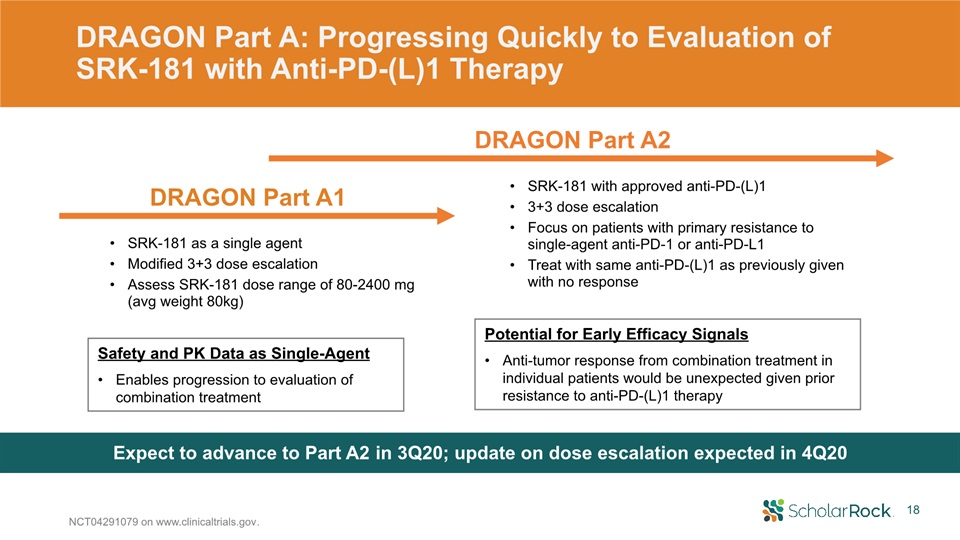
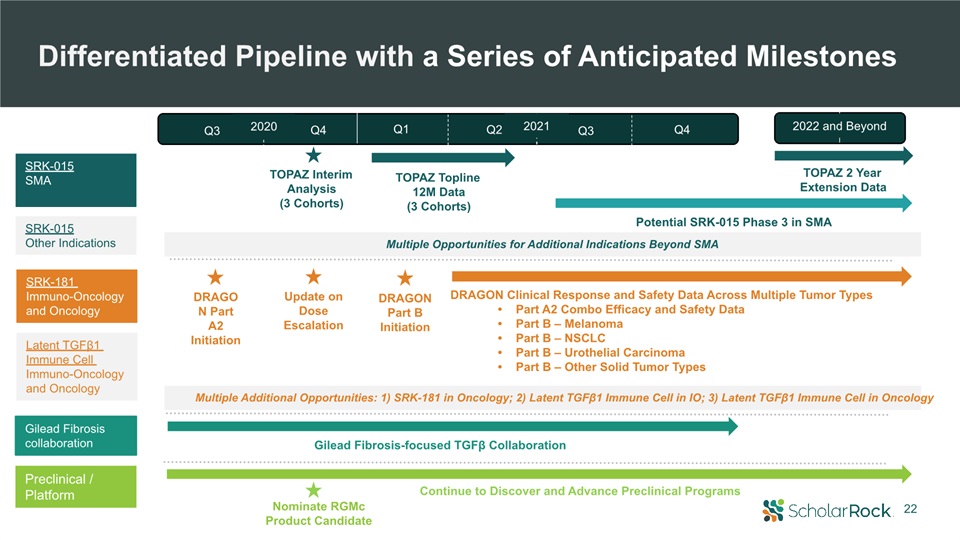
- Enrollment expected to advance to combination treatment of SRK-181 and an approved anti-PD-(L)1 therapy in Part A of DRAGON Phase 1 clinical trial in 3Q20; update on dose escalation expected in 4Q20
- Appointed Tony Kingsley as President and CEO and Ted Myles as CFO and Head of Business Operations; highly accomplished leaders with proven track records of growing and advancing biopharma companies
- Company hosting conference call at 8am ET to discuss financial results and introduce newest members of management
CAMBRIDGE, Mass.--(BUSINESS WIRE)--August 7, 2020--Scholar Rock (NASDAQ: SRRK), a clinical-stage biopharmaceutical company focused on the treatment of serious diseases in which protein growth factors play a fundamental role, today reported financial results for the second quarter ended June 30, 2020 and highlighted recent progress and upcoming milestones for its pipeline programs.
“I am impressed by the execution of the team, and momentum is rapidly building for our lead clinical programs, SRK-015 in SMA and SRK-181 in immuno-oncology, towards several potential value-creation opportunities in late 2020 and throughout 2021,” said Tony Kingsley, President and CEO of Scholar Rock. “Scholar Rock has an exceptional proprietary platform that has yielded multiple clinical candidates that have the potential to transform the lives of patients living with serious diseases, and I look forward to seeing the company continue to drive additional product candidates forward.”
Company Updates and Upcoming Milestones
SRK-015 Program for Spinal Muscular Atrophy:
SRK-015 is a highly selective inhibitor of latent myostatin being developed as the potential first muscle-directed therapy for the treatment of SMA.
- **On Track to Report Interim Efficacy and Safety Data from the TOPAZ Phase 2 Trial in the Fourth Quarter of 2020.**The interim efficacy, safety, pharmacokinetic (PK), and pharmacodynamic (PD) analysis will include data from 54
patients who have progressed through at least six months of treatment in the TOPAZ Phase 2 trial. The remaining three patients (one in Cohort 2 and two in Cohort 3) missed three doses of SRK-015 due to COVID-19-related restrictions at their
trial site, and their 6-month assessments will be excluded from the interim analysis. These patients have resumed dosing and the Company is working closely with the trial site to schedule their next assessments.
- To date, one patient (Cohort 1) has discontinued from the trial for reasons unrelated to the study drug and which occurred prior to the COVID-19 pandemic. All remaining 57 patients are continuing in the study.
- As of August 1, 2020:
- 56 of 57 patients have completed the 5-month visit.
- 54 of 57 patients have completed the 6-month visit for the interim efficacy and safety analysis.
- Eight of eight patients who have completed the 12-month treatment period have opted into the 12-month extension study.
With the progress to date for the completion of patient visits towards the interim analysis, Scholar Rock is working closely with the clinical trial sites through the ongoing COVID-19 pandemic to enable access to routine data monitoring activities to prepare for the interim analysis. The Company remains on track to report interim efficacy and safety data in the fourth quarter of 2020. Top-line data for the 12-month treatment period are expected in the first half of 2021. There may be further impacts on the timing of future doses and assessments for patients in the trial as the effects of the COVID-19 pandemic continue to evolve.
SRK-181 Program for Immuno-Oncology:
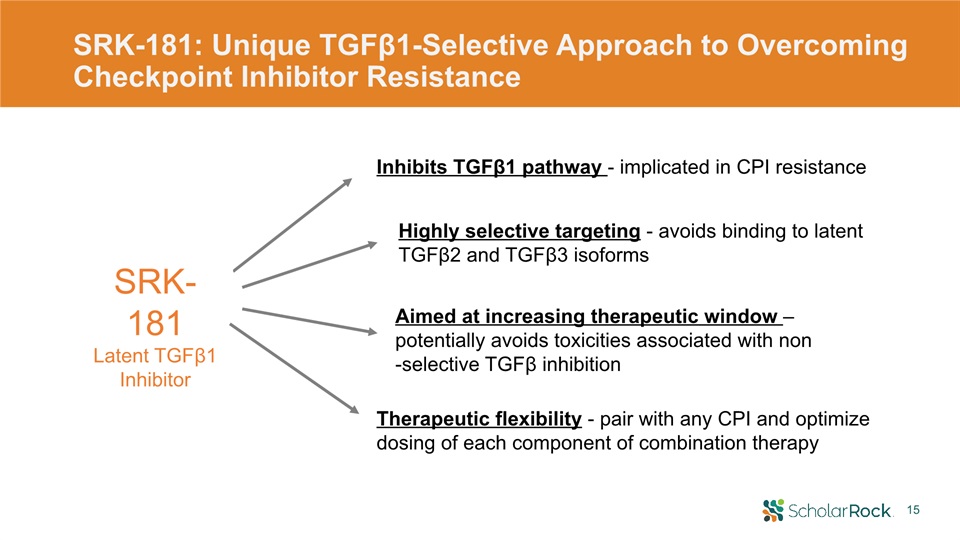
SRK-181 is a potent and highly selective inhibitor of latent TGFβ1 activation being developed towards an aim of overcoming resistance and meaningfully increasing the number of patients who may benefit from checkpoint inhibitor therapy.
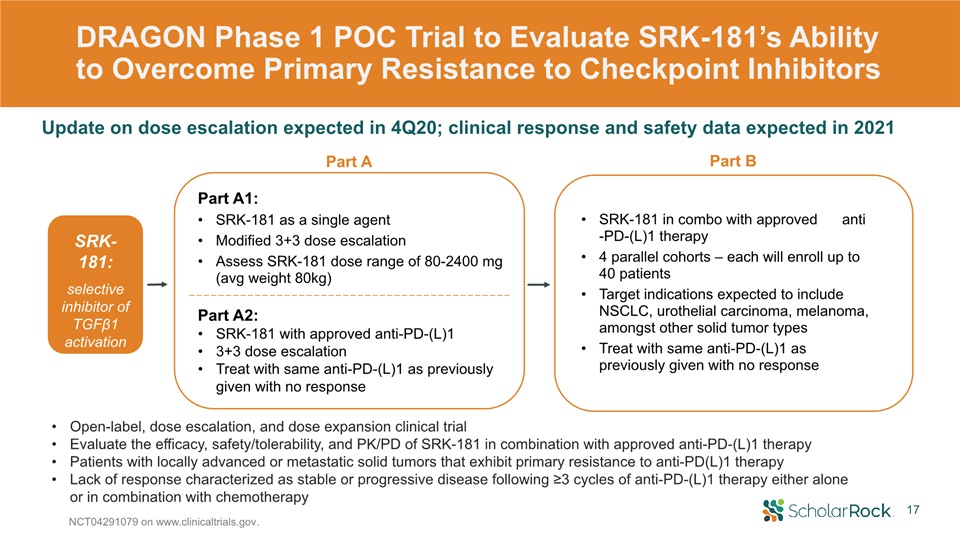
Enrollment Advancing in DRAGON Phase 1 Proof-of-Concept Trial with Update on Dose Escalation Expected in the Fourth Quarter of 2020. The DRAGON Phase 1 dose escalation and dose expansion trial is evaluating SRK-181 in patients with locally advanced or metastatic solid tumors. Dose escalation in Part A1 of the trial continues to progress, and the Company expects to advance to Part A2 of the trial to evaluate SRK-181 in combination with an approved anti-PD-(L)1 therapy in the third quarter of 2020 and to Part B of the trial in the first quarter of 2021. An update on dose escalation of SRK-181 as a single agent as well as in combination with anti-PD-(L)1 therapy is on track for the fourth quarter of 2020. Clinical response and safety data are anticipated in 2021.
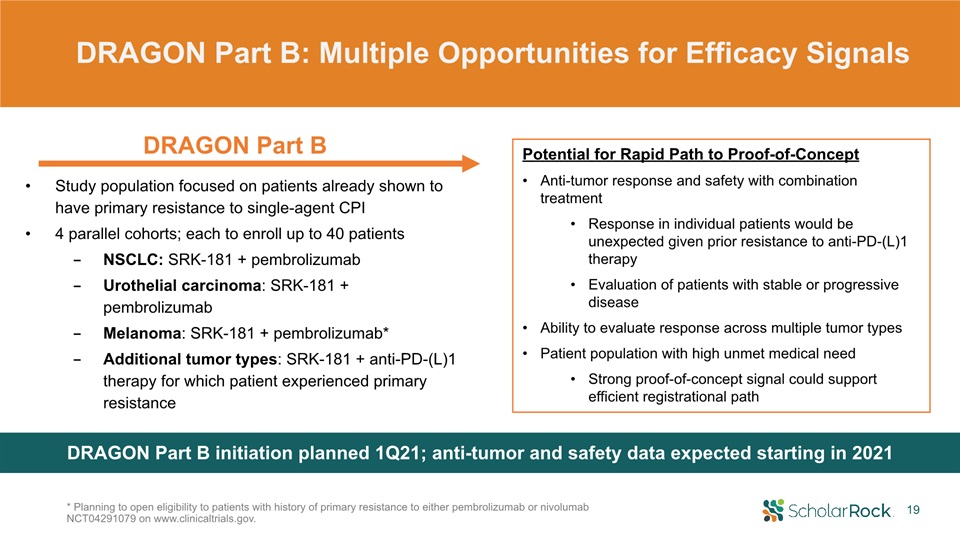
The two-part DRAGON trial consists of a dose escalation portion \(Part A\) for SRK-181 as both a single-agent \(Part A1\) and in combination with an approved anti-PD-\(L\)1 therapy \(Part A2\), followed by a dose expansion portion \(Part B\) evaluating SRK-181 in combination with an approved anti-PD-\(L\)1 therapy in patients with solid tumors exhibiting primary resistance to that anti-PD-\(L\)1 therapy. Part B will encompass multiple cohorts that are expected to include urothelial carcinoma, cutaneous melanoma, non-small cell lung cancer, and other solid tumors. Patients will be administered SRK-181 IV every 3 weeks \(Q3W\), and additional dosing regimens may be explored in the future. Key objectives of the study include evaluating the efficacy, PK, and safety of SRK-181.
“We are encouraged by the high level of engagement of our trial investigators and patients. Patients in our SRK-015 TOPAZ trial are continuing their visits and thus far, we’ve seen a high rate of enrollment into the 12-month extension study,” said Yung Chyung, M.D., Chief Medical Officer of Scholar Rock. “We are also pleased with the progress to date enrolling patients in our SRK-181 DRAGON trial, particularly given the backdrop of the ongoing COVID-19 pandemic. Important readouts from these trials will provide meaningful insights into the therapeutic potential of our product candidates as well as the power of our drug discovery platform.”
Executive Leadership Updates:
- Appointment of Tony Kingsley as President and Chief Executive Officer. In July 2020, Scholar Rock announced that Tony Kingsley was being appointed President and Chief Executive Officer, effective August 1, 2020. Mr. Kingsley replaces Nagesh K. Mahanthappa, Ph.D., MBA, who chose to step down after serving in this role since 2012. Mr. Kingsley is a proven leader with a successful track record of driving growth, strategy and all facets of corporate operation. Dr. Mahanthappa continues to serve as a scientific advisor to the Company.
- Appointment of Ted Myles as Chief Financial Officer and Head of Business Operations. In July 2020, Scholar Rock announced the appointment of Ted Myles as Chief Financial Officer and Head of Business Operations, bringing more than 20 years of experience as a senior finance and operations executive with development and commercial stage biopharmaceutical companies. He had previously served on Scholar Rock’s Board of Directors, including as chair of the audit committee and a member of the compensation committee.
Second Quarter 2020 Financial Results
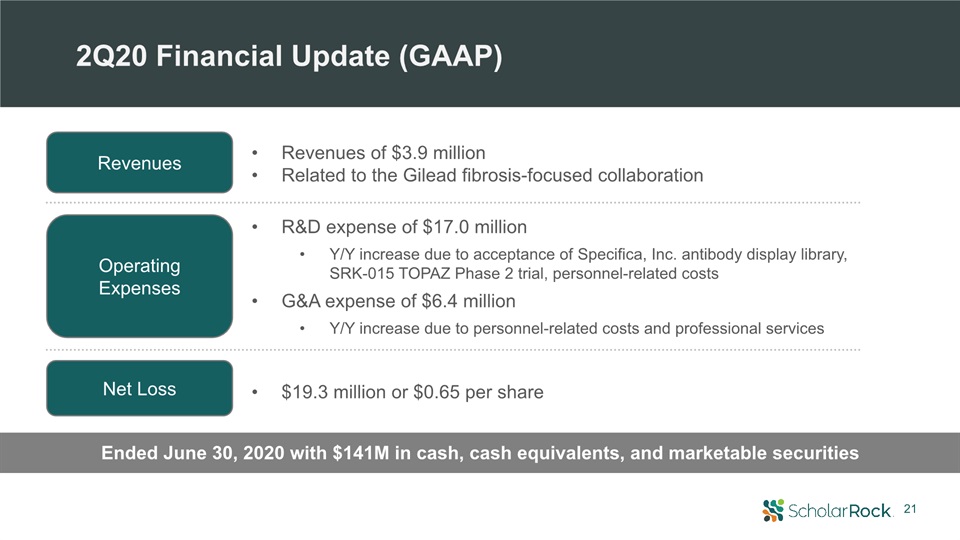
For the quarter ended June 30, 2020, net loss was $19.3 million or $0.65 per share compared to a net loss of $12.5 million or $0.48 per share for the quarter ended June 30, 2019.
- Revenue was $3.9 million for the quarter ended June 30, 2020 compared to $5.0 million for the quarter ended June 30, 2019. Revenue was related to the Gilead fibrosis-focused collaboration that was executed in December 2018.
- Research and development expense was $17.0 million for the quarter ended June 30, 2020 compared to $13.7 million for the quarter ended June 30, 2019. The increase year-over-year is attributable to the acceptance of a customized antibody display library from Specifica, Inc., costs associated with the TOPAZ Phase 2 clinical trial for SRK-015, and higher personnel-related costs.
- General and administrative expense was $6.4 million for the quarter ended June 30, 2020 compared to $4.7 million for the quarter ended June 30, 2019. The increase year-over-year was primarily attributable to increased headcount and professional services.
As of June 30, 2020, Scholar Rock had cash, cash equivalents, and marketable securities of $141.2 million, which compares to cash, cash equivalents, and marketable securities of $157.4 million as of December 31, 2019.
Conference Call/Webcast:
Scholar Rock will host a conference call and audio webcast to discuss the second quarter 2020 financial results today at 8:00 a.m. Eastern Time. To participate in the call, please dial 833-519-1308 (domestic) or 914-800-3874 (international) and refer to conference ID: 5627485. A webcast of the call will also be available on the Investors & Media section of the Scholar Rock website at http://investors.scholarrock.com. An archived replay of the webcast will be available on Scholar Rock’s website at: https://scholarrock.com/ for approximately 90 days following the presentation.
About Scholar Rock
Scholar Rock is a clinical-stage biopharmaceutical company focused on the discovery and development of innovative medicines for the treatment of serious diseases in which signaling by protein growth factors plays a fundamental role. Scholar Rock is creating a pipeline of novel product candidates with the potential to transform the lives of patients suffering from a wide range of serious diseases, including neuromuscular disorders, cancer, fibrosis and anemia. Scholar Rock’s approach to targeting the molecular mechanisms of growth factor activation enabled it to develop a proprietary platform for the discovery and development of monoclonal antibodies that locally and selectively target these signaling proteins at the cellular level. By developing product candidates that act in the disease microenvironment, the Company intends to avoid the historical challenges associated with inhibiting growth factors for therapeutic effect. Scholar Rock believes its focus on biologically validated growth factors may facilitate a more efficient development path. For more information, please visit www.ScholarRock.com or follow Scholar Rock on Twitter (@ScholarRock) and LinkedIn (https://www.linkedin.com/company/scholar-rock/).
Scholar Rock® is a registered trademark of Scholar Rock, Inc.
Forward-Looking Statements
This press release contains "forward-looking statements" within the meaning of the Private Securities Litigation Reform Act of 1995, including, but not limited to, statements regarding Scholar Rock’s future expectations, plans and prospects, including without limitation, Scholar Rock’s expectations regarding its growth, strategy, progress and timing of its clinical trials for SRK-015, SRK-181, and other product candidates and indication selection and development timing, the ability of any product candidate to perform in humans in a manner consistent with nonclinical or preclinical study data, the potential of its proprietary platform, and the impact of COVID-19 on its clinical trials and its business and operations in general. The use of words such as “may,” “might,” “will,” “should,” “expect,” “plan,” “anticipate,” “believe,” “estimate,” “project,” “intend,” “future,” “potential,” or “continue,” and other similar expressions are intended to identify such forward-looking statements. All such forward-looking statements are based on management's current expectations of future events and are subject to a number of risks and uncertainties that could cause actual results to differ materially and adversely from those set forth in or implied by such forward-looking statements. These risks and uncertainties include Scholar Rock’s ability to provide the financial support, resources and expertise necessary to identify and develop product candidates on the expected timeline, the data generated from Scholar Rock’s nonclinical and preclinical studies and clinical trials, competition from third parties that are developing products for similar uses, Scholar Rock’s ability to obtain, maintain and protect its intellectual property, the success of Scholar Rock’s current and potential future collaborations, including its collaboration with Gilead, Scholar Rock’s dependence on third parties for development and manufacture of product candidates including to supply any clinical trials, Scholar Rock’s ability to manage expenses and to obtain additional funding when needed to support its business activities and establish and maintain strategic business alliances and new business initiatives, and the impacts of public health pandemics such as COVID-19 on business operations and expectations, as well as those risks more fully discussed in the section entitled "Risk Factors" in Scholar Rock’s Quarterly Report on Form 10-Q for the quarter ended March 31, 2020, as well as discussions of potential risks, uncertainties, and other important factors in Scholar Rock’s subsequent filings with the Securities and Exchange Commission. Any forward-looking statements represent Scholar Rock’s views only as of today and should not be relied upon as representing its views as of any subsequent date. All information in this press release is as of the date of the release, and Scholar Rock undertakes no duty to update this information unless required by law.
| Scholar Rock Holding Corporation | ||||||||||||
|---|---|---|---|---|---|---|---|---|---|---|---|---|
| Condensed Consolidated Statements of Operations | ||||||||||||
| (unaudited) | ||||||||||||
| (in thousands, except share and per share data) | ||||||||||||
| Three Months Ended June 30 | Six Months Ended June 30 | |||||||||||
| 2020 | 2019 | 2020 | 2019 | |||||||||
| Revenue | $ | 3,900 | $ | 5,039 | $ | 8,930 | $ | 8,145 | ||||
| Operating expenses | ||||||||||||
| Research and development | 16,997 | 13,715 | 33,899 | 24,454 | ||||||||
| General and administrative | 6,365 | 4,710 | 12,187 | 8,780 | ||||||||
| Total operating expenses | 23,362 | 18,425 | 46,086 | 33,234 | ||||||||
| Loss from operations | (19,462 | ) | (13,386 | ) | (37,156 | ) | (25,089 | ) | ||||
| Other income (expense), net | 181 | 861 | 805 | 1,809 | ||||||||
| Net loss | $ | (19,281 | ) | $ | (12,525 | ) | $ | (36,351 | ) | $ | (23,280 | ) |
| Net loss per share, basic and diluted | $ | (0.65 | ) | $ | (0.48 | ) | $ | (1.23 | ) | $ | (0.90 | ) |
| Weighted average common shares outstanding, basic and diluted | 29,690,280 | 25,922,833 | 29,608,814 | 25,758,658 |
| Scholar Rock Holding Corporation | ||||
|---|---|---|---|---|
| Condensed Consolidated Balance Sheets | ||||
| (unaudited) | ||||
| (in thousands) | ||||
| June 30, 2020 | December 31, 2019 | |||
| Assets | ||||
| Cash, cash equivalents and marketable securities | $ | 141,176 | $ | 157,448 |
| Other current assets | 4,011 | 27,719 | ||
| Total current assets | 145,187 | 185,167 | ||
| Other assets | 11,173 | 11,214 | ||
| Total assets | $ | 156,360 | $ | 196,381 |
| Liabilities and Stockholders' Equity | ||||
| Current liabilities | $ | 32,567 | $ | 32,814 |
| Long-term liabilities | 41,619 | 50,666 | ||
| Total liabilities | 74,186 | 83,480 | ||
| Total stockholders' equity | 82,174 | 112,901 | ||
| Total liabilities and stockholders' equity | $ | 156,360 | $ | 196,381 |
Contacts
Scholar Rock Contact:
Investors/Media
Catherine Hu
chu@scholarrock.com
917-601-1649
Media Contact:
The Yates Network
Kathryn Morris
kathryn@theyatesnetwork.com
914-204-6412
Exhibit 99.2

2Q20 Financial Results and Business Progress August 7, 2020

Disclaimers Various statements in this presentation concerning Scholar Rock’s future expectations, plans and prospects, including without limitation, Scholar Rock’s expectations regarding its strategy, its product candidate selection and development timing, including timing for the initiation of and reporting results from its clinical trials for its product candidates, its disease indication selection and timing for such selection, the ability of SRK-015 to affect the treatment of patients suffering from Spinal Muscular Atrophy (SMA) either as a monotherapy or in conjunction with the current standard of care, and the ability of SRK-181 to affect the treatment of cancer patients in a manner consistent with preclinical data constitute forward-looking statements for the purposes of the safe harbor provisions under The Private Securities Litigation Reform Act of 1995. The use of words such as “may,” “might,” “will,” “should,” “expect,” “plan,” “anticipate,” “believe,” “estimate,” “target,” “project,” “intend,” “future,” “potential,” or “continue,” and other similar expressions are intended to identify such forward-looking statements. Actual results may differ materially from those indicated by these forward-looking statements as a result of various important factors, including, without limitation, Scholar Rock’s ability to provide the financial support and resources necessary to identify and develop multiple product candidates on the expected timeline, competition from others developing products for similar uses, the preliminary nature of interim clinical data, Scholar Rock’s ability to obtain, maintain and protect its intellectual property, Scholar Rock’s dependence on third parties for development and manufacture of product candidates including to supply any clinical trials, and Scholar Rock’s ability to manage expenses and to obtain additional funding when needed to support its business activities and establish and maintain strategic business alliances and new business initiatives as well as those risks more fully discussed in the section entitled "Risk Factors" in the Quarterly Report on Form 10-Q for the quarter ended June 30, 2020, which is on file with the Securities and Exchange Commission, as well as discussions of potential risks, uncertainties, and other important factors in Scholar Rock’s subsequent filings with the Securities and Exchange Commission. Any forward-looking statements represent Scholar Rock’s views only as of today and should not be relied upon as representing its views as of any subsequent date. Scholar Rock explicitly disclaims any obligation to update any forward-looking statements unless required by law. © Scholar Rock, Inc. All rights reserved. August 2020.

Newest Members of Highly Experienced Leadership Team 3 TONY KINGSLEY, MBAPresident & CEO TED MYLES, MBACFO & Head of Business Operations Joined Scholar Rock’s Board of Directors in May 2020President & CEO of Taris Bio President & COO of The Medicines CompanyEVP at Biogen, led global commercial operations Strategic, operational, and commercial leader Financial and operational executive Served on Scholar Rock’s Board of Directors for nearly 2 yearsCFO & COO of AMAG Pharmaceuticals, Inc.CFO & COO of Ocata TherapeuticsCFO & Vice President of Operations at PrimeraDx, Inc.

Proprietary platform has produced multiple programs with significant therapeutic potential Two most advanced programs, SRK-015 and SRK-181, are advancing quickly and address markets that are well developed and growing Multiple programs and multiple anticipated milestones offer near- and long-term value inflection points and strategic optionality 4

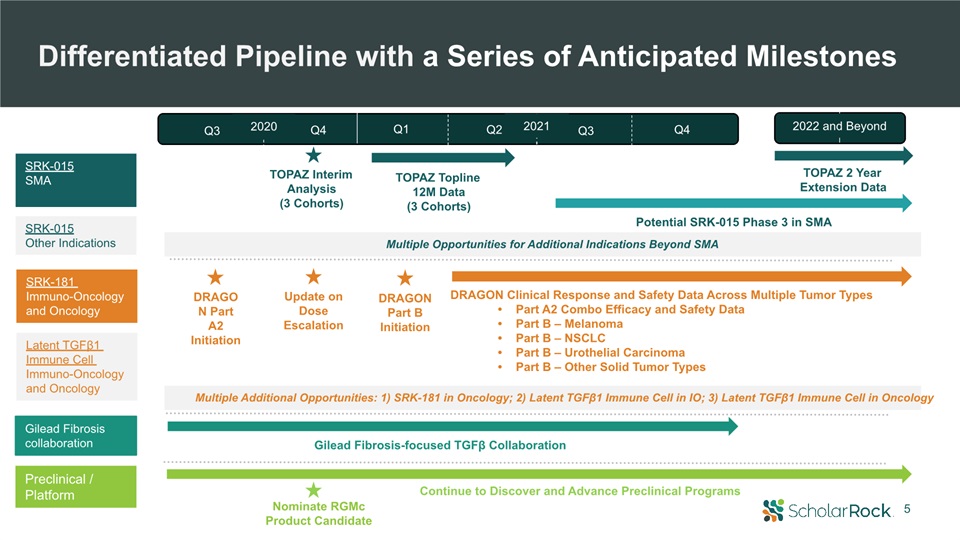
5 DRAGON Part A2 Initiation DRAGON Part B Initiation Nominate RGMcProduct Candidate Gilead Fibrosis-focused TGFβ Collaboration DRAGON Clinical Response and Safety Data Across Multiple Tumor TypesPart A2 Combo Efficacy and Safety DataPart B – MelanomaPart B – NSCLCPart B – Urothelial CarcinomaPart B – Other Solid Tumor Types SRK-015SMA SRK-181 Immuno-Oncology and Oncology Preclinical / Platform TOPAZ Topline12M Data(3 Cohorts) Potential SRK-015 Phase 3 in SMA TOPAZ Interim Analysis(3 Cohorts) Differentiated Pipeline with a Series of Anticipated Milestones TOPAZ 2 Year Extension Data Continue to Discover and Advance Preclinical Programs Update on Dose Escalation Multiple Opportunities for Additional Indications Beyond SMA Multiple Additional Opportunities: 1) SRK-181 in Oncology; 2) Latent TGFβ1 Immune Cell in IO; 3) Latent TGFβ1 Immune Cell in Oncology SRK-015Other Indications Gilead Fibrosis collaboration 2022 and Beyond 2021 Q3 Q4 Q3 Q4 Q1 Q2 2020 Latent TGFβ1 Immune Cell Immuno-Oncology and Oncology

Review of Clinical Programs: SRK-015 and SRK-181 6 Yung Chyung, MDChief Medical Officer

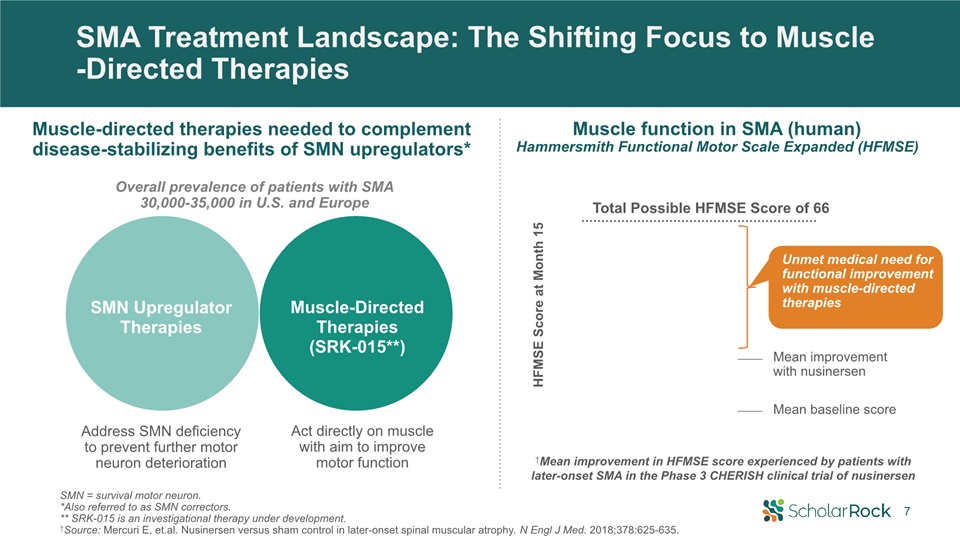
SMA Treatment Landscape: The Shifting Focus to Muscle-Directed Therapies †Mean improvement in HFMSE score experienced by patients withlater-onset SMA in the Phase 3 CHERISH clinical trial of nusinersen HFMSE Score at Month 15 Mean baseline score Mean improvement with nusinersen Unmet medical need for functional improvement with muscle-directed therapies Total Possible HFMSE Score of 66 Muscle function in SMA (human)Hammersmith Functional Motor Scale Expanded (HFMSE) Address SMN deficiency to prevent further motor neuron deterioration Act directly on muscle with aim to improve motor function SMN Upregulator Therapies Muscle-Directed Therapies (SRK-015**) SMN = survival motor neuron. *Also referred to as SMN correctors. ** SRK-015 is an investigational therapy under development.†Source: Mercuri E, et.al. Nusinersen versus sham control in later-onset spinal muscular atrophy. N Engl J Med. 2018;378:625-635. Muscle-directed therapies needed to complement disease-stabilizing benefits of SMN upregulators* Overall prevalence of patients with SMA 30,000-35,000 in U.S. and Europe 7

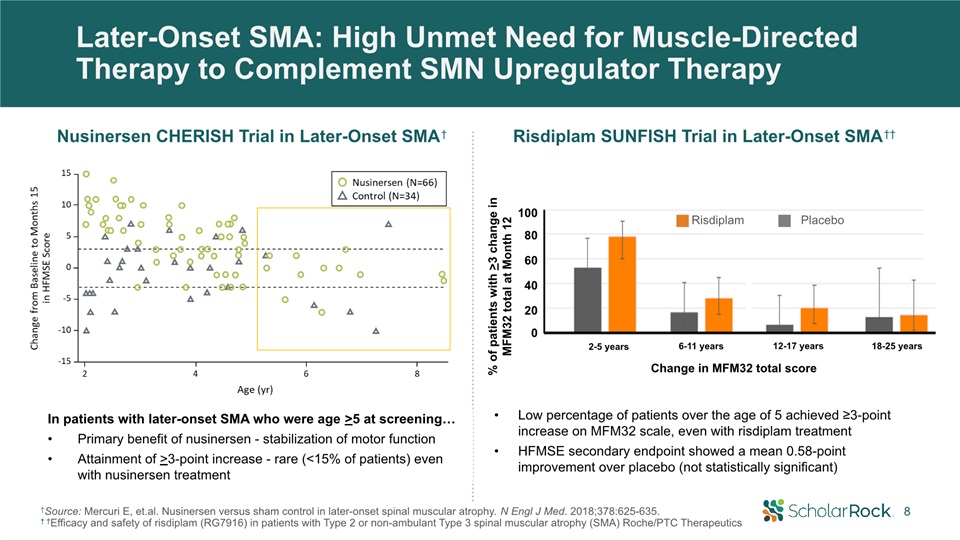
†Source: Mercuri E, et.al. Nusinersen versus sham control in later-onset spinal muscular atrophy. N Engl J Med. 2018;378:625-635.† †Efficacy and safety of risdiplam (RG7916) in patients with Type 2 or non-ambulant Type 3 spinal muscular atrophy (SMA) Roche/PTC Therapeutics Nusinersen CHERISH Trial in Later-Onset SMA† In patients with later-onset SMA who were age >5 at screening…Primary benefit of nusinersen - stabilization of motor functionAttainment of >3-point increase - rare (<15% of patients) even with nusinersen treatment Later-Onset SMA: High Unmet Need for Muscle-Directed Therapy to Complement SMN Upregulator Therapy 8 Risdiplam SUNFISH Trial in Later-Onset SMA†† Low percentage of patients over the age of 5 achieved ≥3-point increase on MFM32 scale, even with risdiplam treatmentHFMSE secondary endpoint showed a mean 0.58-point improvement over placebo (not statistically significant) % of patients with >3 change in MFM32 total at Month 12 2-5 years 6-11 years 12-17 years 18-25 years Change in MFM32 total score Risdiplam Placebo 100806040200

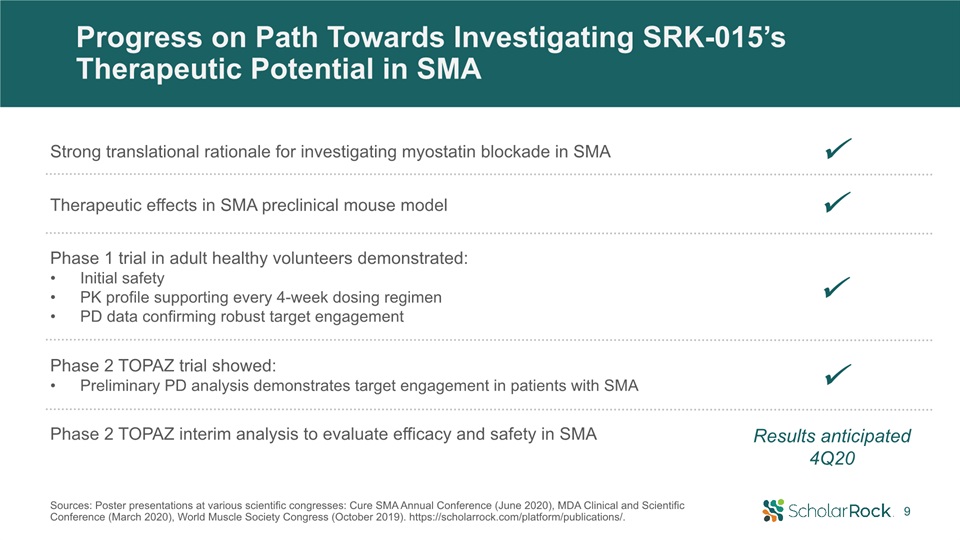
Progress on Path Towards Investigating SRK-015’s Therapeutic Potential in SMA Phase 2 TOPAZ interim analysis to evaluate efficacy and safety in SMA Results anticipated 4Q20 Strong translational rationale for investigating myostatin blockade in SMA Therapeutic effects in SMA preclinical mouse model Phase 1 trial in adult healthy volunteers demonstrated: Initial safetyPK profile supporting every 4-week dosing regimenPD data confirming robust target engagement Phase 2 TOPAZ trial showed: Preliminary PD analysis demonstrates target engagement in patients with SMA 9 Sources: Poster presentations at various scientific congresses: Cure SMA Annual Conference (June 2020), MDA Clinical and Scientific Conference (March 2020), World Muscle Society Congress (October 2019). https://scholarrock.com/platform/publications/.

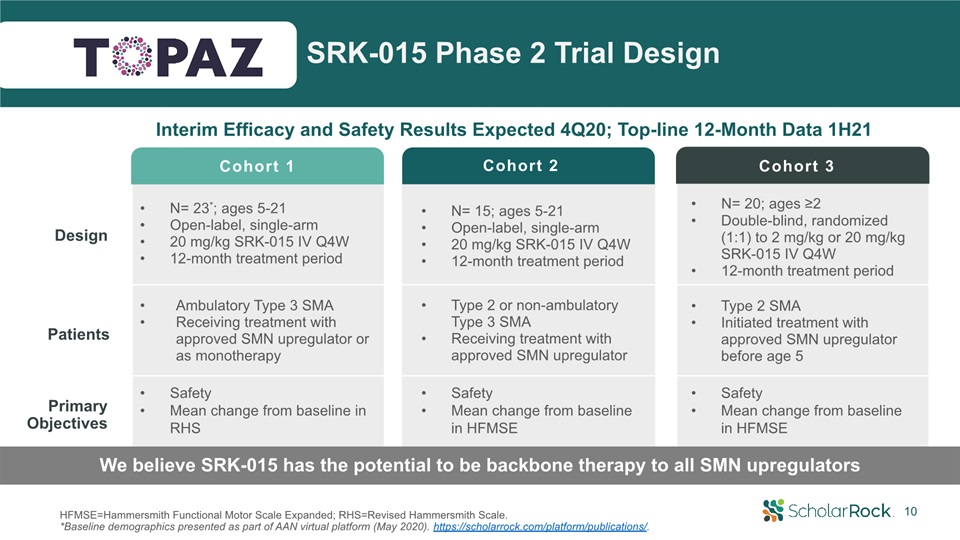
SRK-015 Phase 2 Trial Design Cohort 1 Cohort 3 Design Patients N= 23*; ages 5-21Open-label, single-arm20 mg/kg SRK-015 IV Q4W12-month treatment period Ambulatory Type 3 SMAReceiving treatment with approved SMN upregulator or as monotherapy Cohort 2 N= 15; ages 5-21 Open-label, single-arm20 mg/kg SRK-015 IV Q4W12-month treatment period Type 2 or non-ambulatory Type 3 SMAReceiving treatment with approved SMN upregulator N= 20; ages ≥2Double-blind, randomized (1:1) to 2 mg/kg or 20 mg/kg SRK-015 IV Q4W12-month treatment period Type 2 SMA Initiated treatment with approved SMN upregulator before age 5 Primary Objectives SafetyMean change from baseline in RHS SafetyMean change from baseline in HFMSE SafetyMean change from baseline in HFMSE HFMSE=Hammersmith Functional Motor Scale Expanded; RHS=Revised Hammersmith Scale.*Baseline demographics presented as part of AAN virtual platform (May 2020). https://scholarrock.com/platform/publications/. We believe SRK-015 has the potential to be backbone therapy to all SMN upregulators Interim Efficacy and Safety Results Expected 4Q20; Top-line 12-Month Data 1H21 10

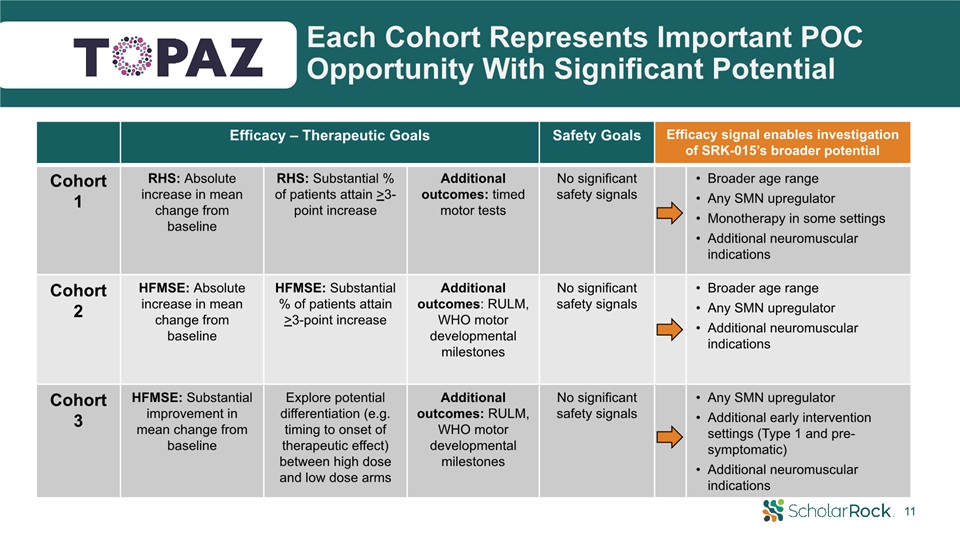
Each Cohort Represents Important POC Opportunity With Significant Potential Cohort 3 Efficacy – Therapeutic Goals Safety Goals Efficacy signal enables investigation of SRK-015’s broader potential Cohort 1 RHS: Absolute increase in mean change from baseline RHS: Substantial % of patients attain >3-point increase Additional outcomes: timed motor tests No significant safety signals Broader age rangeAny SMN upregulatorMonotherapy in some settingsAdditional neuromuscular indications Cohort 2 HFMSE: Absolute increase in mean change from baseline HFMSE: Substantial % of patients attain >3-point increase Additional outcomes: RULM, WHO motor developmental milestones No significant safety signals Broader age rangeAny SMN upregulatorAdditional neuromuscular indications Cohort 3 HFMSE: Substantial improvement in mean change from baseline Explore potential differentiation (e.g. timing to onset of therapeutic effect) between high dose and low dose arms Additional outcomes: RULM, WHO motor developmental milestones No significant safety signals Any SMN upregulatorAdditional early intervention settings (Type 1 and pre-symptomatic)Additional neuromuscular indications 11

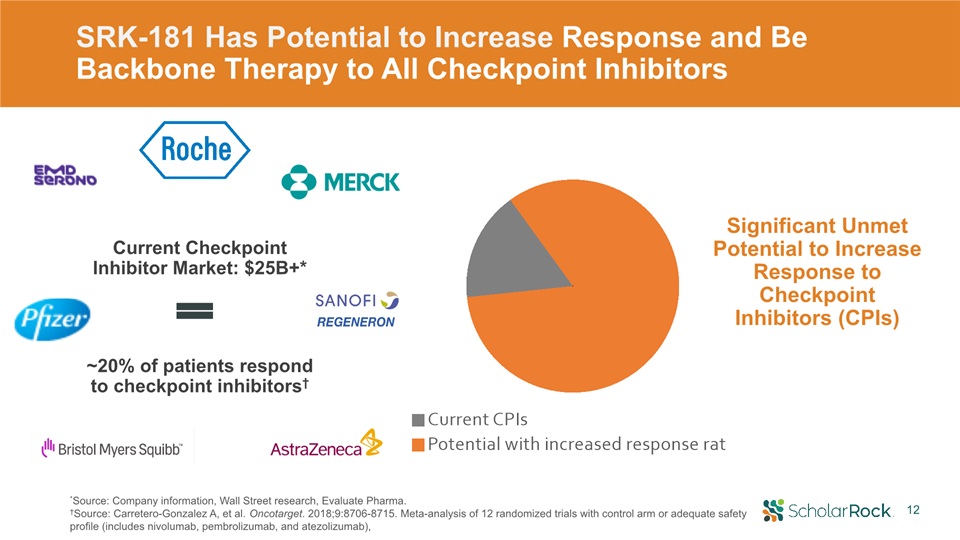
SRK-181 Has Potential to Increase Response and Be Backbone Therapy to All Checkpoint Inhibitors *Source: Company information, Wall Street research, Evaluate Pharma.†Source: Carretero-Gonzalez A, et al. Oncotarget. 2018;9:8706-8715. Meta-analysis of 12 randomized trials with control arm or adequate safety profile (includes nivolumab, pembrolizumab, and atezolizumab), Significant Unmet Potential to Increase Response to Checkpoint Inhibitors (CPIs) Current Checkpoint Inhibitor Market: $25B+*~20% of patients respond to checkpoint inhibitors† 12

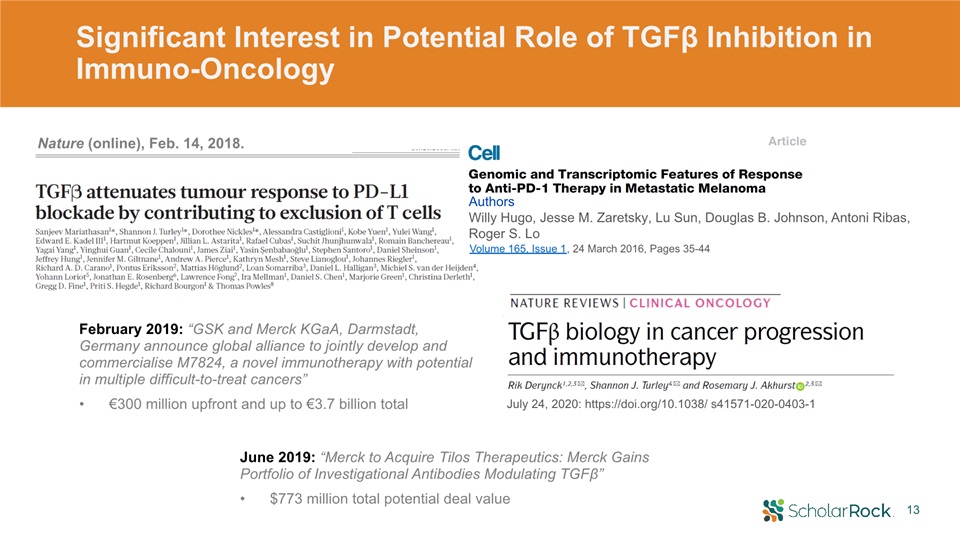
Significant Interest in Potential Role of TGFβ Inhibition in Immuno-Oncology Nature (online), Feb. 14, 2018. AuthorsWilly Hugo, Jesse M. Zaretsky, Lu Sun, Douglas B. Johnson, Antoni Ribas, Roger S. Lo Volume 165, Issue 1, 24 March 2016, Pages 35-44 July 24, 2020: https://doi.org/10.1038/ s41571-020-0403-1 February 2019: “GSK and Merck KGaA, Darmstadt, Germany announce global alliance to jointly develop and commercialise M7824, a novel immunotherapy with potential in multiple difficult-to-treat cancers”€300 million upfront and up to €3.7 billion total June 2019: “Merck to Acquire Tilos Therapeutics: Merck Gains Portfolio of Investigational Antibodies Modulating TGFβ”$773 million total potential deal value 13

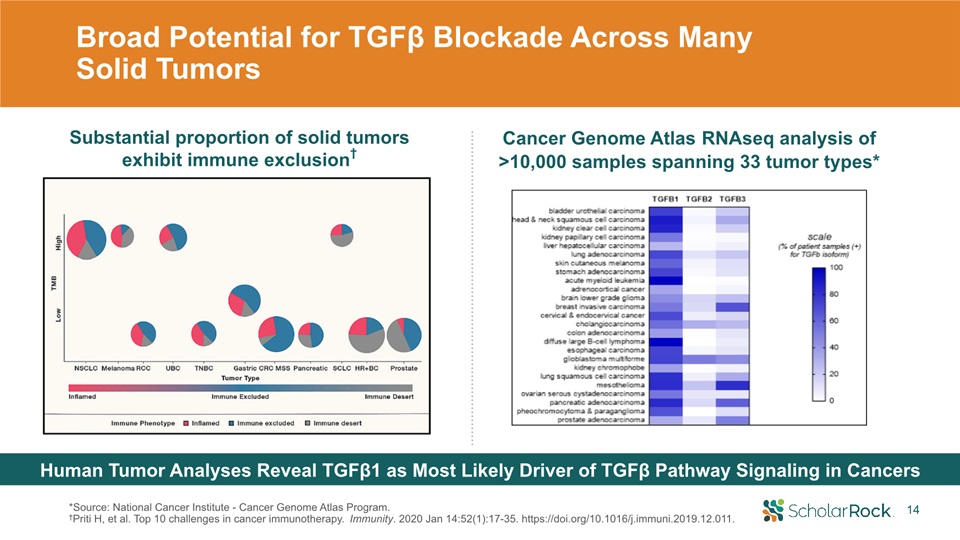
Cancer Genome Atlas RNAseq analysis of >10,000 samples spanning 33 tumor types* *Source: National Cancer Institute - Cancer Genome Atlas Program.†Priti H, et al. Top 10 challenges in cancer immunotherapy. Immunity. 2020 Jan 14:52(1):17-35. https://doi.org/10.1016/j.immuni.2019.12.011. Substantial proportion of solid tumors exhibit immune exclusion† Broad Potential for TGFβ Blockade Across Many Solid Tumors Human Tumor Analyses Reveal TGFβ1 as Most Likely Driver of TGFβ Pathway Signaling in Cancers 14

SRK-181: Unique TGFβ1-Selective Approach to Overcoming Checkpoint Inhibitor Resistance 15 SRK-181Latent TGFβ1 Inhibitor Inhibits TGFβ1 pathway - implicated in CPI resistance Highly selective targeting - avoids binding to latent TGFβ2 and TGFβ3 isoforms Aimed at increasing therapeutic window – potentially avoids toxicities associated with non-selective TGFβ inhibition Therapeutic flexibility - pair with any CPI and optimize dosing of each component of combination therapy

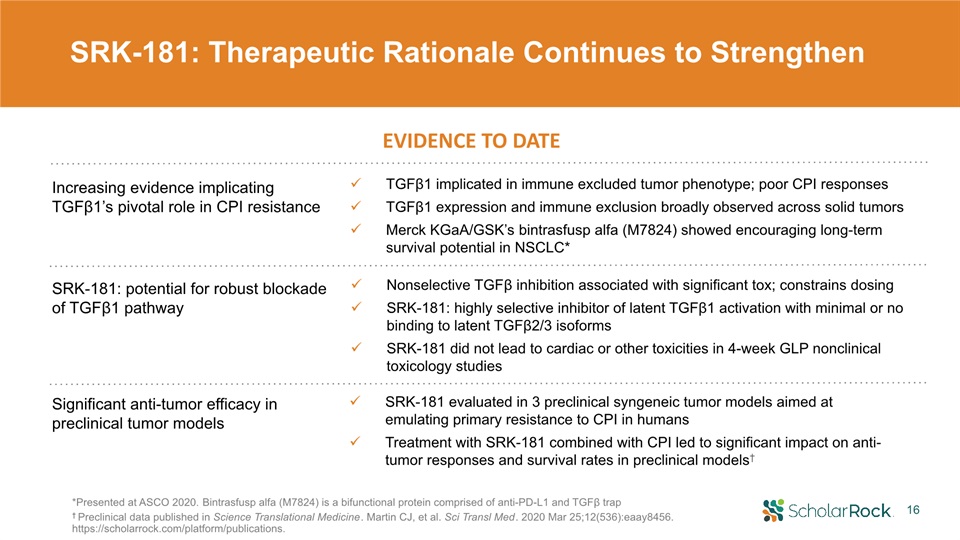
SRK-181: Therapeutic Rationale Continues to Strengthen EVIDENCE TO DATE Increasing evidence implicating TGFβ1’s pivotal role in CPI resistance TGFβ1 implicated in immune excluded tumor phenotype; poor CPI responsesTGFβ1 expression and immune exclusion broadly observed across solid tumorsMerck KGaA/GSK’s bintrasfusp alfa (M7824) showed encouraging long-term survival potential in NSCLC* SRK-181 evaluated in 3 preclinical syngeneic tumor models aimed at emulating primary resistance to CPI in humansTreatment with SRK-181 combined with CPI led to significant impact on anti-tumor responses and survival rates in preclinical models† Nonselective TGFβ inhibition associated with significant tox; constrains dosingSRK-181: highly selective inhibitor of latent TGFβ1 activation with minimal or no binding to latent TGFβ2/3 isoforms SRK-181 did not lead to cardiac or other toxicities in 4-week GLP nonclinical toxicology studies SRK-181: potential for robust blockade of TGFβ1 pathway Significant anti-tumor efficacy in preclinical tumor models *Presented at ASCO 2020. Bintrasfusp alfa (M7824) is a bifunctional protein comprised of anti-PD-L1 and TGFβ trap † Preclinical data published in Science Translational Medicine. Martin CJ, et al. Sci Transl Med. 2020 Mar 25;12(536):eaay8456. https://scholarrock.com/platform/publications. 16

DRAGON Phase 1 POC Trial to Evaluate SRK-181’s Ability to Overcome Primary Resistance to Checkpoint Inhibitors Open-label, dose escalation, and dose expansion clinical trialEvaluate the efficacy, safety/tolerability, and PK/PD of SRK-181 in combination with approved anti-PD-(L)1 therapyPatients with locally advanced or metastatic solid tumors that exhibit primary resistance to anti-PD(L)1 therapyLack of response characterized as stable or progressive disease following ≥3 cycles of anti-PD-(L)1 therapy either alone or in combination with chemotherapy NCT04291079 on www.clinicaltrials.gov. Update on dose escalation expected in 4Q20; clinical response and safety data expected in 2021 SRK-181:selective inhibitor of TGFβ1 activation Part A Part A1:SRK-181 as a single agent Modified 3+3 dose escalationAssess SRK-181 dose range of 80-2400 mg (avg weight 80kg)Part A2:SRK-181 with approved anti-PD-(L)13+3 dose escalation Treat with same anti-PD-(L)1 as previously given with no response Part B SRK-181 in combo with approved anti-PD-(L)1 therapy4 parallel cohorts – each will enroll up to 40 patientsTarget indications expected to include NSCLC, urothelial carcinoma, melanoma, amongst other solid tumor typesTreat with same anti-PD-(L)1 as previously given with no response 17

DRAGON Part A: Progressing Quickly to Evaluation of SRK-181 with Anti-PD-(L)1 Therapy NCT04291079 on www.clinicaltrials.gov. SRK-181 with approved anti-PD-(L)13+3 dose escalation Focus on patients with primary resistance to single-agent anti-PD-1 or anti-PD-L1 Treat with same anti-PD-(L)1 as previously given with no response Expect to advance to Part A2 in 3Q20; update on dose escalation expected in 4Q20 SRK-181 as a single agent Modified 3+3 dose escalationAssess SRK-181 dose range of 80-2400 mg (avg weight 80kg) Safety and PK Data as Single-AgentEnables progression to evaluation of combination treatment Potential for Early Efficacy SignalsAnti-tumor response from combination treatment in individual patients would be unexpected given prior resistance to anti-PD-(L)1 therapy DRAGON Part A1 DRAGON Part A2 18

DRAGON Part B: Multiple Opportunities for Efficacy Signals * Planning to open eligibility to patients with history of primary resistance to either pembrolizumab or nivolumabNCT04291079 on www.clinicaltrials.gov. Study population focused on patients already shown to have primary resistance to single-agent CPI4 parallel cohorts; each to enroll up to 40 patientsNSCLC: SRK-181 + pembrolizumabUrothelial carcinoma: SRK-181 + pembrolizumabMelanoma: SRK-181 + pembrolizumab*Additional tumor types: SRK-181 + anti-PD-(L)1 therapy for which patient experienced primary resistance DRAGON Part B initiation planned 1Q21; anti-tumor and safety data expected starting in 2021 Potential for Rapid Path to Proof-of-ConceptAnti-tumor response and safety with combination treatmentResponse in individual patients would be unexpected given prior resistance to anti-PD-(L)1 therapyEvaluation of patients with stable or progressive diseaseAbility to evaluate response across multiple tumor typesPatient population with high unmet medical needStrong proof-of-concept signal could support efficient registrational path DRAGON Part B 19

20 2Q20 Financial ResultsTed MylesCFO & Head of Business Operations

21 2Q20 Financial Update (GAAP) Revenues Operating Expenses Net Loss Ended June 30, 2020 with $141M in cash, cash equivalents, and marketable securities Revenues of $3.9 millionRelated to the Gilead fibrosis-focused collaboration R&D expense of $17.0 millionY/Y increase due to acceptance of Specifica, Inc. antibody display library, SRK-015 TOPAZ Phase 2 trial, personnel-related costs G&A expense of $6.4 millionY/Y increase due to personnel-related costs and professional services $19.3 million or $0.65 per share

22 DRAGON Part A2 Initiation DRAGON Part B Initiation Nominate RGMcProduct Candidate Gilead Fibrosis-focused TGFβ Collaboration DRAGON Clinical Response and Safety Data Across Multiple Tumor TypesPart A2 Combo Efficacy and Safety DataPart B – MelanomaPart B – NSCLCPart B – Urothelial CarcinomaPart B – Other Solid Tumor Types SRK-015SMA SRK-181 Immuno-Oncology and Oncology Preclinical / Platform TOPAZ Topline12M Data(3 Cohorts) Potential SRK-015 Phase 3 in SMA TOPAZ Interim Analysis(3 Cohorts) Differentiated Pipeline with a Series of Anticipated Milestones TOPAZ 2 Year Extension Data Continue to Discover and Advance Preclinical Programs Update on Dose Escalation Multiple Opportunities for Additional Indications Beyond SMA Multiple Additional Opportunities: 1) SRK-181 in Oncology; 2) Latent TGFβ1 Immune Cell in IO; 3) Latent TGFβ1 Immune Cell in Oncology SRK-015Other Indications Gilead Fibrosis collaboration 2022 and Beyond 2021 Q3 Q4 Q3 Q4 Q1 Q2 2020 Latent TGFβ1 Immune Cell Immuno-Oncology and Oncology

Appendix

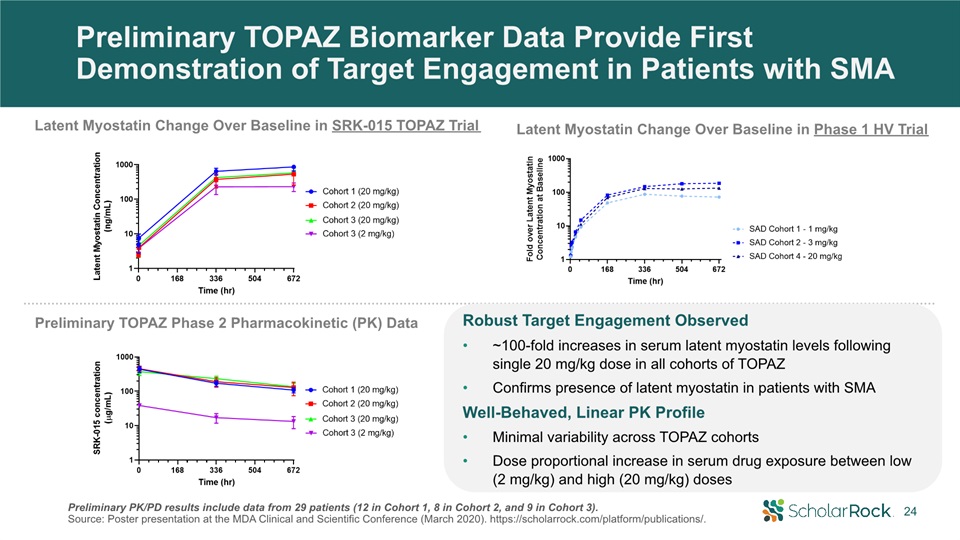
24 Robust Target Engagement Observed~100-fold increases in serum latent myostatin levels following single 20 mg/kg dose in all cohorts of TOPAZConfirms presence of latent myostatin in patients with SMAWell-Behaved, Linear PK Profile Minimal variability across TOPAZ cohortsDose proportional increase in serum drug exposure between low (2 mg/kg) and high (20 mg/kg) doses Preliminary TOPAZ Biomarker Data Provide First Demonstration of Target Engagement in Patients with SMA Preliminary PK/PD results include data from 29 patients (12 in Cohort 1, 8 in Cohort 2, and 9 in Cohort 3).Source: Poster presentation at the MDA Clinical and Scientific Conference (March 2020). https://scholarrock.com/platform/publications/. Latent Myostatin Change Over Baseline in SRK-015 TOPAZ Trial Latent Myostatin Change Over Baseline in Phase 1 HV Trial Preliminary TOPAZ Phase 2 Pharmacokinetic (PK) Data

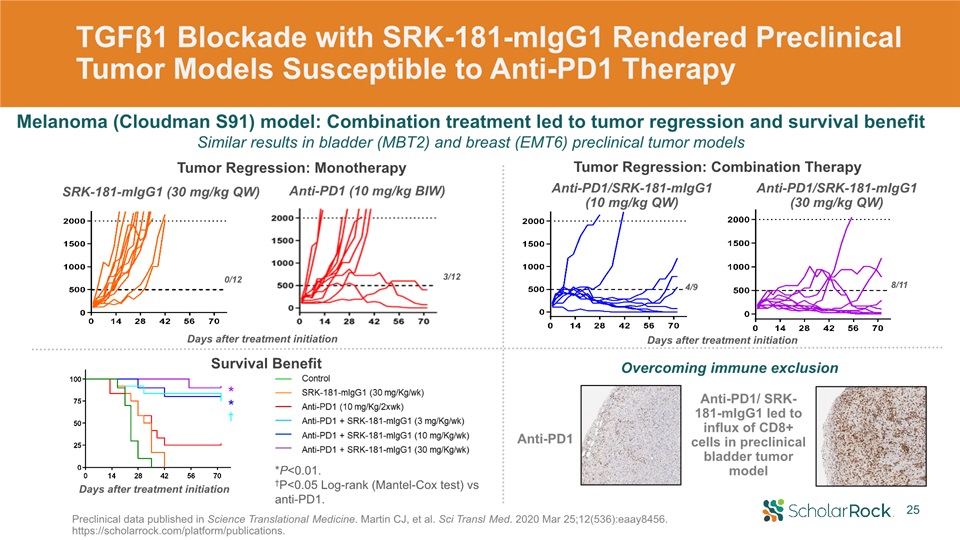
25 TGFβ1 Blockade with SRK-181-mIgG1 Rendered Preclinical Tumor Models Susceptible to Anti-PD1 Therapy Preclinical data published in Science Translational Medicine. Martin CJ, et al. Sci Transl Med. 2020 Mar 25;12(536):eaay8456. https://scholarrock.com/platform/publications. Melanoma (Cloudman S91) model: Combination treatment led to tumor regression and survival benefitSimilar results in bladder (MBT2) and breast (EMT6) preclinical tumor models Anti-PD1/SRK-181-mIgG1 (10 mg/kg QW) Anti-PD1/SRK-181-mIgG1 (30 mg/kg QW) 4/9 8/11 SRK-181-mIgG1 (30 mg/kg QW) 3/12 0/12 Anti-PD1 (10 mg/kg BIW) *P<0.01. †P<0.05 Log-rank (Mantel-Cox test) vs anti-PD1. **† Tumor Regression: Monotherapy Tumor Regression: Combination Therapy Days after treatment initiation Days after treatment initiation Days after treatment initiation Survival Benefit Anti-PD1/ SRK-181-mIgG1 led to influx of CD8+ cells in preclinical bladder tumor model Anti-PD1 Overcoming immune exclusion

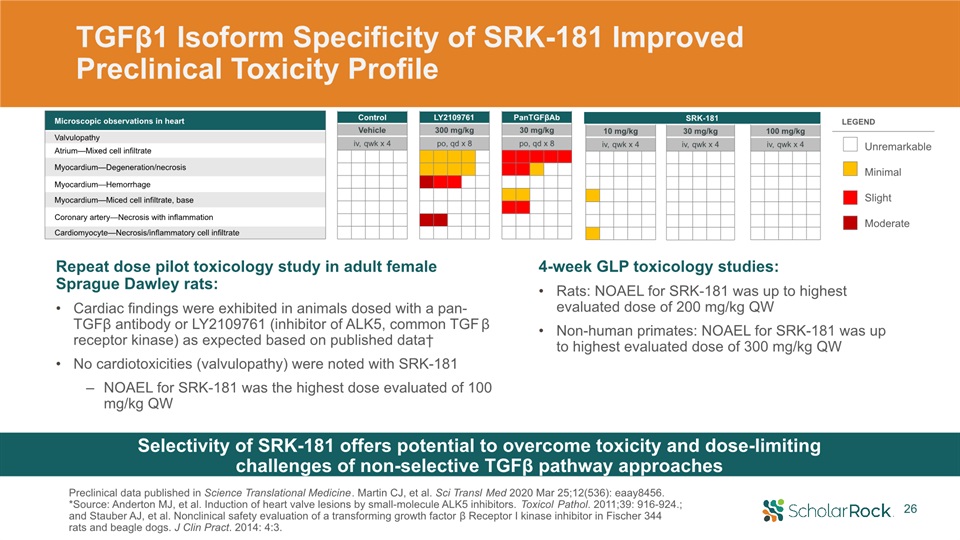
TGFβ1 Isoform Specificity of SRK-181 Improved Preclinical Toxicity Profile Preclinical data published in Science Translational Medicine. Martin CJ, et al. Sci Transl Med 2020 Mar 25;12(536): eaay8456. *Source: Anderton MJ, et al. Induction of heart valve lesions by small-molecule ALK5 inhibitors. Toxicol Pathol. 2011;39: 916-924.; and Stauber AJ, et al. Nonclinical safety evaluation of a transforming growth factor β Receptor I kinase inhibitor in Fischer 344 rats and beagle dogs. J Clin Pract. 2014: 4:3. Selectivity of SRK-181 offers potential to overcome toxicity and dose-limiting challenges of non-selective TGFβ pathway approaches Microscopic observations in heart Valvulopathy Atrium—Mixed cell infiltrate Myocardium—Degeneration/necrosis Myocardium—Hemorrhage Myocardium—Miced cell infiltrate, base Coronary artery—Necrosis with inflammation Cardiomyocyte—Necrosis/inflammatory cell infiltrate Control Vehicle iv, qwk x 4 LY2109761 300 mg/kg po, qd x 8 PanTGFβAb 30 mg/kg po, qd x 8 10 mg/kg iv, qwk x 4 30 mg/kg iv, qwk x 4 100 mg/kg iv, qwk x 4 SRK-181 LEGEND UnremarkableMinimalSlightModerate Repeat dose pilot toxicology study in adult female Sprague Dawley rats:Cardiac findings were exhibited in animals dosed with a pan-TGFβ antibody or LY2109761 (inhibitor of ALK5, common TGFβ receptor kinase) as expected based on published data†No cardiotoxicities (valvulopathy) were noted with SRK-181 NOAEL for SRK-181 was the highest dose evaluated of 100 mg/kg QW 4-week GLP toxicology studies: Rats: NOAEL for SRK-181 was up to highest evaluated dose of 200 mg/kg QWNon-human primates: NOAEL for SRK-181 was up to highest evaluated dose of 300 mg/kg QW 26