
FSLY 8-K
Fastly, Inc. (FSLY)
8-K
2021-11-03
For: 2021-11-03
View Original
Added on
April 11, 2026
UNITED STATES
SECURITIES AND EXCHANGE COMMISSION
WASHINGTON, D.C. 20549
FORM 8-K
CURRENT REPORT
Pursuant to Section 13 or 15(d)
of the Securities Exchange Act of 1934
Date of Report (Date of earliest event reported): November 3, 2021
(Exact name of Registrant as Specified in Its Charter)
| (State or other jurisdiction of incorporation or organization) | (Commission File Number) | (I.R.S. Employer Identification Number) | ||||||
(Address of principal executive offices) (Zip code)
(844 ) 432-7859
(Registrant’s Telephone Number, Including Area Code)
Not Applicable
(Former Name or Former Address, if Changed Since Last Report)
Check the appropriate box below if the Form 8-K filing is intended to simultaneously satisfy the filing obligation of the registrant under any of the following provisions (see General Instructions A.2. below):
| Written communications pursuant to Rule 425 under the Securities Act (17 CFR 230.425) | |||||
| Soliciting material pursuant to Rule 14a-12 under the Exchange Act (17 CFR 240.14a-12) | |||||
| Pre-commencement communications pursuant to Rule 14d-2(b) under the Exchange Act (17 CFR 240.14d-2(b)) | |||||
| Pre-commencement communications pursuant to Rule 13e-4(c) under the Exchange Act (17 CFR 240.13e-4(c)) | |||||
Securities registered pursuant to Section 12(b) of the Act:
| Title of each class | Trading Symbol(s) | Name of each exchange on which registered | ||||||||||||
Indicate by check mark whether the registrant is an emerging growth company as defined in Rule 405 of the Securities Act of 1933 (§230.405 of this chapter) or Rule 12b-2 of the Securities Exchange Act of 1934 (§240.12b-2 of this chapter).
Emerging growth company ☐
If an emerging growth company, indicate by check mark if the registrant has elected not to use the extended transition period for complying with any new or revised financial accounting standards provided pursuant to Section 13(a) of the Exchange Act. ☐
Item 2.02 Results of Operations and Financial Condition.
On November 3, 2021, Fastly, Inc. (the "Company") announced its financial results for the quarter ended September 30, 2021 by issuing a press release and a shareholder letter. A copy of the Company's letter to its shareholders and a copy of the press release are attached hereto as Exhibits 99.1 and 99.2, respectively, and are incorporated herein by reference.
The information furnished on this Form 8-K, including the exhibits attached, shall not be deemed "filed" for purposes of Section 18 of the Securities Exchange Act of 1934, as amended (the "Exchange Act"), or otherwise subject to the liabilities of that section, nor shall it be deemed incorporated by reference into any filing under the Securities Act of 1933, as amended, or the Exchange Act, except as shall be expressly set forth by specific reference in such a filing.
Item 9.01 Financial Statements and Exhibits.
(d)Exhibits
| Exhibit No. | Exhibit Description | |||||||
| 99.1 | ||||||||
| 99.2 | ||||||||
SIGNATURE
Pursuant to the requirements of the Securities Exchange Act of 1934, as amended, the Registrant has duly caused this report to be signed on its behalf by the undersigned hereunto duly authorized.
| FASTLY, INC. | ||||||||||||||||||||
| Dated: | November 3, 2021 | By: | /s/ Ronald W. Kisling | |||||||||||||||||
| Ronald W. Kisling | ||||||||||||||||||||
| Chief Financial Officer | ||||||||||||||||||||
Exhibit 99.1
Exhibit 99.1
Highlights
Continued Growth and Security Acceleration
Q3 2021 Key Highlights1
•Top-line growth of 23% year-over-year with revenue of $87 million, net of a $0.9 million deferred revenue write-down related to purchase accounting adjustments from the Signal Sciences acquisition
•GAAP gross margin of 52.4%, compared to 58.5% in Q3 2020; non-GAAP gross margin2 of 57.5%, which excludes stock-based compensation and amortization of acquired intangible assets, compared to 59.8% in Q3 2020
•GAAP operating loss of $55 million, compared to GAAP operating loss of $23 million for Q3 2020; non-GAAP operating loss2 of $13 million, which excludes stock-based compensation, amortization of acquired intangible assets, acquisition-related costs and amortization of debt discount and issuance costs, compared to non-GAAP operating loss2 of $4 million for Q3 2020
•GAAP basic and diluted net loss per share of $0.48, compared to GAAP basic and diluted net loss per share of $0.22 for Q3 2020; non-GAAP basic and diluted net loss per share2 of $0.11, compared to non-GAAP basic and diluted net loss per share2 of $0.04 for Q3 2020
•Capital expenditures3 of $28 million, or 32% of revenue
Key Metrics1
•Continued enterprise customer growth and expansion:
◦Enterprise customer count4 increased to 430 from 408 in Q2 2021
◦Total customer count increased to 2,748 from 2,581 in Q2 2021
◦Net Retention Rate (NRR)5 of 112%, compared to 93% in Q2 2021
▪Last-twelve-month (LTM) NRR6 of 114%, compared to 121% in Q2 2021
▪Dollar-Based Net Expansion Rate (DBNER)7 of 118%, compared to 126% in Q2 2021
▪Average enterprise customer spend8 of approximately $698,000, compared to $702,000 in Q2 2021
▪Enterprise customers4 generated 88% of our trailing twelve-month total revenue, essentially flat since Q2 2021
____________________________________________
1The contribution of Signal Sciences, following our acquisition of them, has been consolidated into our third quarter 2021 financial information.
2For a reconciliation of non-GAAP financial measures to their corresponding GAAP measures, please refer to the reconciliation table at the end of this letter.
3Capital Expenditures are defined as cash used for purchases of property and equipment and capitalized internal-use software, as reflected in our statement of cash flows.
4Enterprise customers are defined as those spending $100,000 or more in a twelve-month period.
5Net Retention Rate measures the net change in monthly revenue from existing customers in the last month of the period (the “current" period month) compared to the last month of the same period one year prior (the “prior" period month). The revenue included in the current period month includes revenue from (i) revenue contraction due to billing decreases or customer churn, (ii) revenue expansion due to billing increases, but excludes revenue from new customers. We calculate Net Retention Rate by dividing the revenue from the current period month by the revenue in the prior period month.
6We calculate LTM Net Retention Rate by dividing the total customer revenue for the prior twelve-month period (“prior 12-month period”) ending at the beginning of the last twelve-month period (“LTM period”) minus revenue contraction due to billing decreases or customer churn, plus revenue expansion due to billing increases during the LTM period from the same customers by the total prior 12-month period revenue. We believe the LTM Net Retention Rate is supplemental as it removes some of the volatility that is inherent in a usage-based business model.
7We calculate Dollar-Based Net Expansion Rate by dividing the revenue for a given period from customers who remained customers as of the last day of the given period (the “current” period) by the revenue from the same customers for the same period measured one year prior (the “base” period).The revenue included in the current period excludes revenue from (i) customers that churned after the end of the base period and (ii) new customers that entered into a customer agreement after the end of the base period.
8Calculated based on trailing twelve-months
Exhibit 99.1
To Our Shareholders
We have navigated unexpected volatility and ever-changing market conditions over the past two years, but today we are more excited than ever about the opportunities in front of us. Our foundational technology to enable enterprise developers to deliver fast, secure and modern digital experiences through programmable and reliable edge computing has not changed. We continue to invest into these opportunities and believe that successful execution will lead to a billion dollar business by 2025. We have set this timeline as one of our primary business goals as we head into our next phase of growth.
Our trajectory over the past few years has not always been linear. We’ve experienced tailwinds, including the massive and immediate upsurge in internet traffic due to the global pandemic and the positive contributions of our acquisition of Signal Sciences. We’ve also faced significant challenges such as geopolitical factors affecting our then largest customer in 2020, the global outage we experienced in Q2 2021 and the uncertain timing of traffic coming onto our platform. While we have experienced some volatility, we are more convinced than ever about the magnitude of the opportunity before us. We are confident that our edge cloud network is going to be the future of how content is created, secured, and delivered - with Fastly, developers will deliver “always on” instant experiences with security and privacy embedded in all aspects of the user experience. Our edge cloud network continues to provide mission critical stability and support to companies fueling our digital lives, including the news, connections, commerce, and entertainment for billions of users around the world. We stand behind the best of the web, supporting and securing the websites and digital experiences of our communities, our families, and our future. We will continue to invest to ensure that our network is capable of scaling with our customers and meeting their ever-changing needs.
In order to achieve our $1 billion revenue goal by 2025, we have set clear milestones and goals. With our CRO Brett Shirk fully on board, we are aggressively accelerating our customer acquisition through clarity of direction, accountability and unrelenting focus. Winning developers onto our platform, driving enterprise adoption and enhancing our security offerings are the three key factors to driving success. Our specific goals in each area are:
•50 trillion requests by the end of 2022 by winning over developers. We reached the important milestone of processing over a trillion requests on Compute@Edge during Q3. We will continue to invest in new products and capabilities to win over developers onto our edge computing platform. In order to accelerate adoption, we introduced the start of a much broader incentive and brand program offering up nearly a million dollar Compute@Edge usage credit for new and
Exhibit 99.1
existing enterprise customers. This is just the start and we remain focused on winning over even more developers during this critical period in the evolution of the edge computing market.
•100,000 enterprise developers in 2023 by reducing friction for developer-led enterprise adoption. We are focused on encouraging developers to standardize on Fastly. To this end, we launched our fully functional free trial version of Compute@Edge for all customers to encourage their exploration of and experimentation on the platform. We know from our self-service experience with delivery that rapid developer success and self-reinforcing, positive experiences are critical to drive enterprise-wide adoption. We also continue to work with our platform partners to evolve new and innovative ways for their users to experience the benefits of Compute@Edge and to enhance our brand in the developer community.
•Expand our security business by 10 times by 2025 by enhancing our security offering to new and existing customers. We will continue to invest in our security capabilities with the goal of accelerating the security-led go-to-market motion and growing security as a third beachhead (Delivery, Compute, Security) for customers to adopt and expand usage of our entire platform. We have already seen that a security-led go-to-market strategy is working and we have a strong pipeline of new products that we will be talking about in the coming quarters.
Following our outage in Q2, a few of our top customers paused using our platform. However, I am pleased to report that our top customers have returned traffic and continue to ramp following significant stability and resilience work by our infrastructure and engineering teams. This return reinforces the mission-critical nature of our services and ever-growing demand for our differentiated performance, security, and edge compute products. Alongside the return of our top customers, we had encouraging enterprise customer1 additions, which increased by 22 to 430 in the quarter compared to 13 in Q2 2021, the largest organic quarter over quarter increase in the company’s history since our public offering. Our NRR2 was up 19% from Q2 to Q3 to 112%.
I am also thrilled to welcome Vanessa Smith and Richard Daniels to our board of directors. They bring vast experience across security, healthcare, and digital transformation, which makes them extraordinarily qualified to help us accelerate our leadership in Compute@Edge and security.
Moving forward, we are focused on execution, bringing lasting growth to our business, and delivering the value to our shareholders that we outlined from the very beginning. In order to accomplish these goals, we will continue to invest in our platform’s capabilities, and in our customers. We are as committed as ever to fueling and securing digital experiences, and we have the team and technology in place to continue innovating for our customers and creating value for our shareholders.
Exhibit 99.1
____________________________________________
1Enterprise customers are defined as those spending $100,000 or more in a twelve-month period
2Net Retention Rate measures the net change in monthly revenue from existing customers in the last month of the period (the “current" period month) compared to the last month of the same period one year prior (the “prior" period month). The revenue included in the current period month includes revenue from (i) revenue contraction due to billing decreases or customer churn, (ii) revenue expansion due to billing increases, but excludes revenue from new customers. We calculate Net Retention Rate by dividing the revenue from the current period month by the revenue in the prior period month
Recognized for Leadership and Broad Customer Adoption in Edge Computing
This past quarter also brought some strong analyst validation for our edge computing capabilities. Forrester named Fastly as one of only two leaders in their New Wave for Edge Development Platforms report. Fastly’s Compute@Edge was given the highest scores across multiple criteria and was the only vendor to receive the highest rating in security. This inaugural report acknowledges Fastly’s leadership in vision, roadmap, platform execution model, security and developer experience, among other areas. It also represents a strong endorsement of the progress we have made in empowering customers to solve key business challenges by building high scale, globally distributed applications faster and more securely at the network edge.
We continue to see good traction for Compute@Edge with broader customer adoption across geographies and industries, which will remain a key execution focus for us in the coming quarters. Online retailers in particular are using our powerful serverless compute environment to deliver the future of ecommerce architectures. Examples include:
•Loveholidays, a rapidly growing online travel agency in the UK, was able to dynamically generate and process A/B tests on the edge at scale allowing them to provide more personalized customer experiences without impacting SEO rankings.
•EdgeMesh, an online ecommerce acceleration company, saw significantly faster page load times for ecommerce customers by rewriting their stack onto Compute@Edge. With 30-40 million requests going through Edgemesh daily, their performance analytics showed a time-to-first-byte improvement of 5 times in just the first few weeks of implementation.
•Mercari, a Japanese C2C company, takes telemetry from their iOS app and pre-processes it in Compute@Edge before sending it on to their central data warehouse. This allows them to get near real-time telemetry from end users for faster decision-making at the edge while also saving on storage costs.
Building upon these successes, we are increasing our focus on building developer trust and adoption of Compute@Edge. As mentioned above, our free trial program recently opened up to all customers, making it easy for developers to start exploring this technology. These programs are designed to drive
Exhibit 99.1
even more traffic on our platform as early adopters look to Compute@Edge to unlock the power of serverless computing at scale.
Expanding our Security Product Portfolio and Research Capabilities
We continue to invest in our goal of bringing security to the edge, where customers and users can benefit from the scale of our global platform and the advanced compute available on our edge offerings. In recognition of our continued acceleration, Gartner has recognized Fastly as a Challenger in their 2021 Magic Quadrant for Web Application and API Protection (WAAP). This marks the first year in which Gartner has recognized Fastly as a Challenger, placing us significantly higher on the “ability to execute” axis compared to the past two years where Signal Sciences was named a Visionary. The move acknowledges Fastly’s significant gains in our execution, our expanded WAAP portfolio, and our ability to scale the protection of apps and APIs across global architectures. This market validation expands our opportunity and credibility within our target enterprise customers.
This past quarter, cross-sell and up-sell opportunities in security resulted in both new business wins and customer expansions. The following are some examples across multiple verticals:
•PaaS: Webflow, the leading visual development platform for websites, chose to double down on Fastly’s security offerings through the next phase of their growth. They added Fastly’s next-gen WAF and Platform TLS to their existing delivery services to provide scale across their security and platform needs.
•Ecommerce: Monkey Sports, a leading sport ecommerce retailer, were looking for “a world class CDN and security solution”. They knew they had made the right choice with Fastly when their hosting site was exposed to hundreds of thousands of SQL attacks in 24 hours. Their Director of Ecommerce Development, Ki Song, noted that “thanks to the Fastly CDN and next-gen WAF”, they were “protected while experiencing zero down time.”
•Financial Services: A fintech credit card company that helps consumers grow credit and improve their financial health needed to strengthen their security posture having expanded beyond expectations. They ran a POC with Fastly and were able to quickly see how our next-gen WAF could be used in tandem with Rate Limiting to combat attacks.
•Social Media: A popular social media app was experiencing a period of hyper growth and needed to build out a robust security posture with a more advanced WAF and bot mitigation plan. They chose Fastly’s next-gen WAF over their incumbent CDN vendor and deployed our new Rate-Limiting feature to mitigate bot attacks.
Exhibit 99.1
•Security: A UK-based cyber security services company needed a robust WAF offering with the ability to push data in real time, gain multi-factor authentication visibility, and protect against API abuse. They tested our next-gen WAF against a competitor’s solution and chose Fastly based on quality of performance.
We have also enhanced and expanded our Security Research capabilities. This Security Research team is focused on investigating emerging attack strategies with the goal of providing novel detection tactics and countermeasures to safeguard our customers’ applications and services. The tooling, insights and expertise they develop will greatly enhance our security product line while also ensuring our edge compute platform continues to meet the resilience and security needs of modern enterprises. Recently, the team rapidly identified and deployed new rules to protect our customers globally from mass exploitation of the Atlassian Confluence injection vulnerability and issued guidance on the recent Apache HTTP Server vulnerability that our software had already detected.
Building the Next Generation of our Network
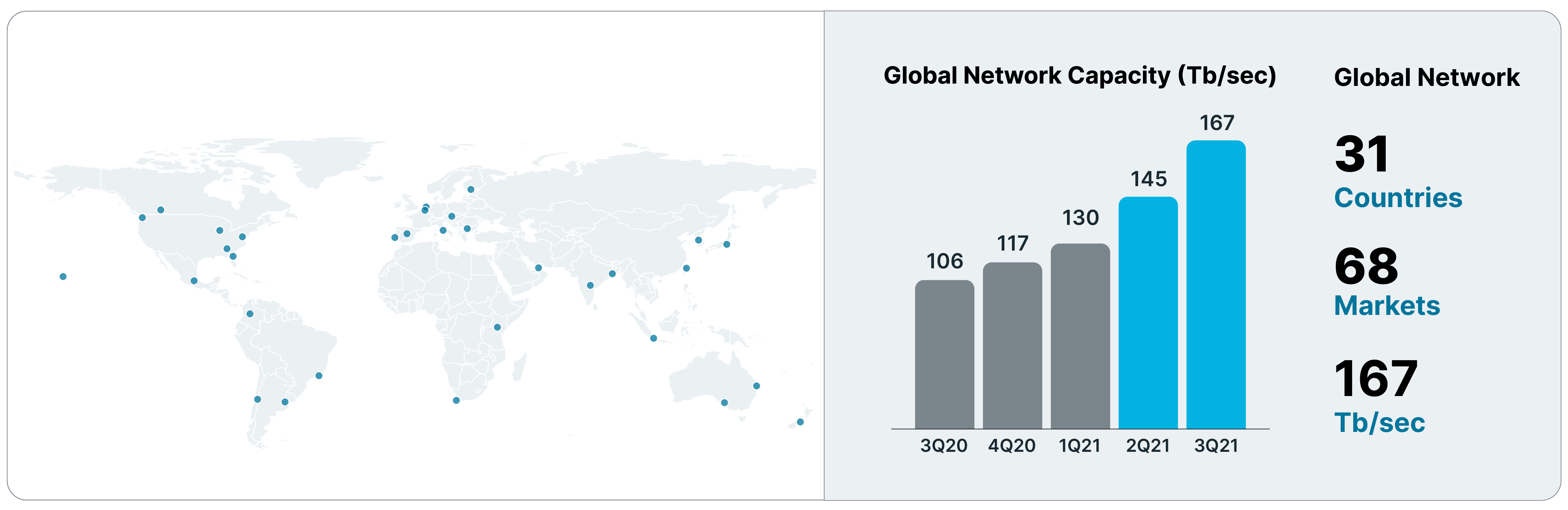
We are constantly looking to improve and modernize our network and platform to provide even faster, more efficient services to our customers and keep pace with the next generation of use-cases. As part of this ongoing innovation, we have started to build larger, more efficient points of presence (POPs) which leverage highly customized hardware to maximize both power usage and storage density. These POPs allow us to combine the power of all the caches across multiple locations within major markets for greater efficiency. They also further enhance our ability to support high traffic peaks while providing greater compute density at the edge. We are referring to these next-gen POPs as CoreFlex sites which we first rolled-out in Ashburn, VA during this past quarter and plan to build out more in the future.
Over the past year, our software R&D teams built a new automated traffic management system, called Autopilot, which allows us to react automatically to internet “weather” by moving traffic to different POPs.
The system detects the best path for our customer’s traffic based on a range of performance criteria and leverages both the accumulated experience of our network engineers and our real-time view of the Internet to shift traffic as needed between POPs to optimize for the best experience for our customers. During Q3, we began to deploy Autopilot to our software defined edge cloud network and expect to expand its use across the platform in coming quarters. Our engineering teams also released several resiliency optimizations and improvements to address the outage in Q2 and meet customer requirements for their return, including enhanced automated systems and processes for disabling
Exhibit 99.1
problematic service configurations, automated cache reconstitution to enable graceful restoration of services, and dramatically improved recovery time and error handling of core caching systems
We have leaned-in on these investments, across our POPs, hardware research and traffic management capabilities, in order to continue to drive growth. These capabilities will be critical to our ability to build our enterprise customer base, continue to scale and expand with the needs of our existing customers, and cultivate developers. We balance these investments against the growth opportunity that we see, and are confident that as these investments deliver returns and begin to taper, we will continue to see gross margin and operating margin leverage in the business. As demonstrated in the second quarter of 2020, as traffic and utilization rate increases, our business and financial model supports these investments. As we look forward into 2022, we are confident that now is the right time to be making these investments and capture the customer and developer shift to edge computing.
Combined Customer Growth While Driving our Land and Expand Strategy
As a reminder, we now report all of our customer metrics on a combined basis, including both Fastly and Signal Sciences. Our customer count grew from 2,581 in Q2 2021 to 2,748 in Q3 2021. We also saw increased engagement and further expansion of our enterprise customer base1. Enterprise customer count1 grew to 430 from 408 in the previous quarter. Our average enterprise customer spend1 is relatively flat at $698,000 as compared to $702,000 in the last quarter.
We delivered a Net Retention Rate (NRR)2 of 112% in Q3 2021 (114% on a last-twelve-month (LTM) basis3). Additionally, our Dollar-Based Net Expansion Rate (DBNER)4 which measures the change in revenue from existing customers over a twelve-month period came in at 118%. Our enterprise customers1, generated 88% of our revenue which is essentially flat from Q2 2021. We measure NRR in addition to DBNER in an effort to provide insight into our customer base in a similar fashion to what is
Exhibit 99.1
commonly found with traditional SaaS companies. DBNER differs from NRR in that DBNER only includes existing customers that have been on the platform at least 13 months, and excludes churn.
____________________________________________
1Enterprise customers are defined as those spending $100,000 or more in a twelve-month period.
2Net Retention Rate measures the net change in monthly revenue from existing customers in the last month of the period (the “current" period month) compared to the last month of the same period one year prior (the “prior" period month). The revenue included in the current period month includes revenue from (i) revenue contraction due to billing decreases or customer churn, (ii) revenue expansion due to billing increases, but excludes revenue from new customers. We calculate Net Retention Rate by dividing the revenue from the current period month by the revenue in the prior period month..
3We calculate LTM Net Retention Rate by dividing the total customer revenue for the prior twelve-month period (“prior 12-month period”) ending
at the beginning of the last twelve-month period (“LTM period”) minus revenue contraction due to billing decreases or customer churn, plus revenue expansion due to billing increases during the LTM period from the same customers by the total prior 12-month period revenue. We believe the LTM Net Retention Rate is supplemental as it removes some of the volatility that is inherent in a usage-based business model.
4We calculate Dollar-Based Net Expansion Rate by dividing the revenue for a given period from customers who remained customers as of the last day of the given period (the “current” period) by the revenue from the same customers for the same period measured one year prior (the “base” period). The revenue included in the current period excludes revenue from (i) customers that churned after the end of the base period and (ii) new customers that entered into a customer agreement after the end of the base period..
Exhibit 99.1
Financial Discussion
Q3 2021 Performance
Revenue
Total revenue for Q3 2021 increased 23% year-over-year to $87 million, net of a $0.9 million deferred revenue write-down associated with the acquisition of Signal Sciences. As noted above, revenue growth was driven by the acquisition of Signal Sciences and the further adoption of our modern edge platform and products, partially offset by the impact of purchase price accounting adjustments.
Customer Count
As of September 31, 2021, 430 of our 2,748 customers were enterprise customers1, which accounted for 88% of our trailing twelve-month total revenue.
Gross Margin
GAAP gross margin was 52.4% for Q3 2021, down from 58.5% in the same quarter a year ago. Excluding stock-based compensation and amortization of acquired intangible assets, our non-GAAP gross margin2 was 57.5% for Q3 2021, compared to 59.8% in the same quarter a year ago. The decrease in gross margin primarily reflects the return to traditional seasonal usage patterns as compared to the increased traffic experienced in the prior year due to the onset of the COVID pandemic.
Additionally, our GAAP gross margin also reflects the amortization of acquired intangibles from our acquisition of Signal Sciences in the fourth quarter of 2020.
____________________________________________
1Enterprise customers are defined as those spending $100,000 or more in a twelve-month period.
2For a reconciliation of non-GAAP financial measures to their corresponding GAAP measures, please refer to the reconciliation table at the end of this letter.
Expenses
Our total operating expenses were $100 million in Q3 2021, or 116% of revenue, up from $65 million, or 92% of revenue in Q3 2020. The increase in expense can primarily be attributed to the personnel added as a result of the Signal Sciences acquisition, as well as other acquisition related costs. Additional personnel related investments were also made as we continue to develop new products and features for our next-generation edge computing solutions.
Research and development expenses were $33 million in Q3 2021, or 38% of revenue, up from $18 million, or 26% of revenue in Q3 2020. Sales and marketing expenses were $39 million in Q3 2021, representing 45% of revenue, up from $23 million, or 32% of revenue in Q3 2020. General and
Exhibit 99.1
administrative expenses were $29 million in Q3 2021, or 33% of revenue, up from $24 million, or 34% of revenue in Q3 2020.
We generated a GAAP operating loss for Q3 2021 of $55 million, or 63% of revenue, compared to GAAP operating loss of $23 million, or 33% of revenue in Q3 2020. Excluding stock-based compensation, amortization of acquired intangible assets, acquisition-related expenses and debt discount and issuance costs, our non-GAAP operating loss1 for Q3 2021 was $13 million, or 15% of revenue, compared to non-GAAP operating loss1 of $4 million, or 6% of revenue in Q3 2020.
Net Loss
Net loss for Q3 2021 was $56 million, or a $0.48 loss per basic and diluted shares, compared to $24 million or a $0.22 loss per basic and diluted shares in Q3 2020. Non-GAAP net loss1 for Q3 2021 was $13 million, or a $0.11 loss per basic and diluted shares, compared to $4 million or a $0.04 loss per basic and diluted shares in Q3 2020. For a reconciliation of non-GAAP financial measures to their corresponding GAAP measures, please refer to the reconciliation table at the end of this letter.
Balance Sheet, Capital Expenditures, and Cash Flow
We ended Q3 2021 with $1.1 billion in cash, restricted cash, and investments, including those classified as long-term. Cash used in operations was $3 million in the quarter, compared to $27 million cash provided by operations in Q3 2020. Capital expenditures, or cash used for purchases of property and equipment and capitalized internal-use software, were $28 million in Q3 2021, representing 32% of total revenue in Q3 2021. Free Cash Flow was $31 million in Q3 2021. For additional Information, please refer to the free cash flow table at the end of this letter.
____________________________________________
1For a reconciliation of non-GAAP financial measures to their corresponding GAAP measures, please refer to the reconciliation table at the end of this letter
Exhibit 99.1
Q4 and Full-Year 2021 Business Outlook
Our 2021 outlook reflects the timing of customer traffic ramping on our platform, anticipated renewals and given our usage based business model, the visibility we have today. Our expected operating profile reflects our continued investment for future growth, along with the impact of the Signal Sciences acquisition.
| Q4 2021 | Full Year 2021 | ||||||||||
Total Revenue | $90 - $93 million | $347 - $350 million | |||||||||
| Non-GAAP Operating Loss | ($18) - ($15) million | ($63) - ($60) million | |||||||||
Non-GAAP Net Loss Per Share 1,2 | ($0.19) - ($0.16) | ($0.58) - ($0.55) | |||||||||
____________________________________________
1Assumes weighted average basic shares outstanding of 117.7 million in Q4 2021 and 115.9 million for the full year 2021
2Non-GAAP Net Loss per share calculation is full-year Non-GAAP Net Loss divided by weighted average basic shares for the full-year
We believe we have a tremendous opportunity to invest in our edge cloud network this year and plan to do so to position Fastly for future growth. We will invest in our network given the large opportunity in front of us. We expect our gross margin to remain relatively flat to down slightly in the short to medium term and capital expenditures as a percentage of revenue to be at the high end of our previously announced range of 12% to 14% of revenue.
A reconciliation of non-GAAP guidance measures to corresponding GAAP measures for our Q4 and Full Year 2021 Business Outlook is not available on a forward-looking basis without unreasonable effort due to the uncertainty regarding, and the potential variability of many of these costs and expenses that may be incurred in the future. We have provided a reconciliation of GAAP to non-GAAP financial measures for Q3 2021 in the reconciliation table at the end of this letter.
Exhibit 99.1
Quarterly Conference Call
We will host a live Q&A session at 2:00 p.m. PT / 5:00 p.m. ET on Wednesday, November 3, 2021 to discuss these financial results. To participate in the live call, please dial (888) 330-2022 (U.S. / Canada) or (646) 960-0690 (international) and provide conference ID 7543239. A live webcast of the call will be available at https://investors.fastly.com and will be archived on our site following the call.
In closing, I want to thank all of our stakeholders — specifically our investors, customers and employees — for their commitment to the edge cloud network we’ve built and will continue to iterate on, as well as the future of Fastly. We know there is more work to be done, but we are excited by the opportunities ahead of us and remain as committed as ever to fueling and securing digital experiences. Moving forward, we remain focused on execution, bringing lasting growth to our business, and delivering the value to our shareholders that we outlined from the very beginning as we continue to execute against our goal of achieving $1 billion revenue goal by 2025 by successfully winning developers onto our platform, driving enterprise adoption and enhancing our security offerings.
We look forward to your questions on our call this afternoon.
Sincerely,
Joshua Bixby
CEO
Exhibit 99.1
Forward-Looking Statements
This letter to shareholders contains forward-looking statements within the meaning of Section 27A of the Securities Act of 1933, as amended (the "Securities Act"), and Section 21E of the Securities Exchange Act of 1934, as amended, about us and our industry that involve substantial risks and uncertainties. Forward-looking statements generally relate to future events or Fastly's future financial or operating performance. In some cases, you can identify forward-looking statements because they contain words such as "may," "will," "should," "expects," "plans," "anticipates,” “going to,” "could," "intends," "target," "projects," "contemplates," "believes," "estimates," "predicts," "potential," or "continue," or the negative of these words or other similar terms or expressions that concern Fastly's expectations, goals, strategy, priorities, plans, projections, or intentions. Forward-looking statements in this letter to shareholders include, but are not limited to, statements regarding Fastly’s future financial and operating performance, including its outlook and guidance; the impact of the outage and delayed deployment of new traffic onto Fastly’s platform; Fastly’s goal to achieve $1 billion in revenue by 2025; Fastly's strategies, product and business plans, including its ability to scale and further invest in the business to expand its edge cloud network; Fastly’s ability to meet its long-term goals and milestones; the abilities of Fastly’s personnel; statements regarding the integration and success of Signal Sciences; statements regarding Fastly's investments in revenue, marketing and demand generation, and the impact of such investments on its business; statements regarding the performance of Fastly's platform, including its ability to augment capacity safely, drive efficiency, and support continued growth; statements regarding Fastly's expectations regarding the expansion of its customer base, including anticipated enterprise customer deals, the growth and usage of its customers, and continued demand for future products from the combined Signal Sciences portfolio. Fastly's expectations and beliefs regarding these matters may not materialize, and actual results in future periods are subject to risks and uncertainties that could cause actual results to differ materially from those projected. These risks include the possibility that: Fastly is unable to attract and retain customers; Fastly's existing customers and partners do not maintain or increase usage of Fastly's platform; Fastly's platform and product features do not meet expectations, including due to defects, interruptions, security breaches, delays in performance or other similar problems; Fastly is unable to adapt to meet evolving market and customer demands and rapid technological change; Fastly is unable to comply with modified or new industry standards, laws and regulations; Fastly is unable to generate sufficient revenues to achieve or sustain profitability; Fastly’s limited operating history makes it difficult to evaluate its prospects and future operating results; Fastly is unable to effectively manage its growth; and Fastly is unable to compete effectively. The forward-looking statements contained in this shareholder letter are also subject to other risks and uncertainties,
Exhibit 99.1
including those more fully described in Fastly’s Quarterly Report on Form 10-Q for the quarter ended June 30, 2021, and additional information that will be set forth on Fastly's Quarterly Report on Form 10-Q for the quarter ended September 30, 2021 and other filings and reports that we may file from time to time with the SEC. The forward-looking statements in this letter to shareholders are based on information available to Fastly as of the date hereof, and Fastly disclaims any obligation to update any forward-looking statements, except as required by law.
Non-GAAP Financial Measures
To supplement our condensed consolidated financial statements, which are prepared and presented in accordance with accounting principles generally accepted in the United States ("GAAP"), the Company uses the following non-GAAP measures of financial performance: non-GAAP gross profit, non-GAAP gross margin, non-GAAP operating loss, non-GAAP net loss, non-GAAP basic and diluted net loss per common share, non-GAAP research and development, non-GAAP sales and marketing, non-GAAP general and administrative, free cash flow and adjusted EBITDA. The presentation of this additional financial information is not intended to be considered in isolation from, as a substitute for, or superior to, the financial information prepared and presented in accordance with GAAP. These non-GAAP measures have limitations in that they do not reflect all of the amounts associated with our results of operations as determined in accordance with GAAP. In addition, these non-GAAP financial measures may be different from the non-GAAP financial measures used by other companies. These non-GAAP measures should only be used to evaluate our results of operations in conjunction with the corresponding GAAP measures. Management compensates for these limitations by reconciling these non-GAAP financial measures to the most comparable GAAP financial measures within our earnings releases.
Non-GAAP gross profit, non-GAAP gross margin, non-GAAP operating loss, Non-GAAP net loss and non-GAAP basic and diluted net loss per common share differ from GAAP, non-GAAP research and development, non-GAAP sales and marketing, and non-GAAP general and administrative differ from GAAP in that they exclude stock-based compensation expense, amortization of acquired intangibles assets, acquisition-related expenses and amortization of debt discount and issuance costs.
Adjusted EBITDA: excludes stock-based compensation expense, depreciation and other amortization expenses, amortization of acquired intangibles assets, amortization of debt discount and issuance costs, acquisition-related expenses, interest income, interest expense, other expense, (net), and income taxes.
Acquisition-related Expense: consists of one-time expenses related to the acquisition related activities. Management considers its operating results without the one-time acquisition-related expense when evaluating its ongoing non-GAAP performance and its ongoing adjusted EBITDA performance because
Exhibit 99.1
these charges are one-time and may not be reflective of our core business, ongoing operating results, or future outlook.
Amortization of Acquired Intangible Assets: consists of non-cash charges that can be affected by the timing and magnitude of asset purchases and acquisitions. Amortization of acquired intangible assets is included in the following cost and expense line items of our GAAP presentation: cost of revenue and sales and marketing. Management considers its operating results without the amortization expense of our acquired intangible assets when evaluating its ongoing non-GAAP performance and its ongoing adjusted EBITDA performance because these charges are non-cash expenses that can be affected by the timing and magnitude of asset purchases and acquisitions and may not be reflective of our core business, ongoing operating results, or future outlook.
Amortization of Debt Discount and Issuance Costs: consists primarily of amortization expense related to our debt obligations. Management considers its adjusted EBITDA results without this activity when evaluating its ongoing performance because it is not believed by management to be reflective of our core business, ongoing operating results or future outlook.
Capital Expenditures: cash used for purchases of property and equipment and capitalized internal-use software, as reflected in our statement of cash flows.
Depreciation and Other Amortization Expense: consists of non-cash charges that can be affected by the timing and magnitude of asset purchases. Depreciation and amortization expense is included in the following cost and expense line items of our GAAP presentation: cost of revenue, research and development, sales and marketing, and general and administrative. Management considers its operating results without the depreciation and other amortization expense when evaluating its ongoing adjusted EBITDA performance because these charges are non-cash expenses that can be affected by the timing and magnitude of asset purchases and may not be reflective of our core business, ongoing operating results, or future outlook.
Free Cash Flow: calculated as net cash used in operating activities less capital expenditures.
Interest Expense: consists primarily of interest expense related to our debt instruments. Management considers its operating results without total interest expense when evaluating its ongoing adjusted EBITDA performance because it is not believed by management to be reflective of our core business, ongoing operating results or future outlook.
Exhibit 99.1
Interest Income: consists primarily of interest income related to our marketable securities. Management considers its adjusted EBITDA results without this activity when evaluating its ongoing performance because it is not believed by management to be reflective of our core business, ongoing operating results or future outlook.
Income Taxes: consists of expenses recognized related to state and foreign income taxes. Management considers its adjusted EBITDA results without these charges when evaluating its ongoing performance because it is not believed by management to be reflective of our core business, ongoing operating results or future outlook.
Non-GAAP Operating Loss: calculated as GAAP revenue less non-GAAP cost of revenue and non-GAAP operating expenses.
Other Expense (Income), Net: consists primarily of foreign currency transaction gains and losses. Management considers its operating results without other expense, net when evaluating its ongoing adjusted EBITDA performance because it is not believed by management to be reflective of our core business, ongoing operating results or future outlook.
Interest Income: consists primarily of interest income related to our marketable securities. Management considers its adjusted EBITDA results without this activity when evaluating its ongoing performance because it is not believed by management to be reflective of our core business, ongoing operating results or future outlook.
Stock-based Compensation Expense: consists of expenses for stock options, restricted stock units, performance awards, restricted stock awards and Employee Stock Purchase Plan ("ESPP") under our equity incentive plans. Stock-based compensation is included in the following cost and expense line items of our GAAP presentation: cost of revenue, research and development, sales and marketing, and general and administrative.
Although stock-based compensation is an expense for the Company and is viewed as a form of compensation, management excludes stock-based compensation from our non-GAAP measures and adjusted EBITDA results for purposes of evaluating our continuing operating performance primarily because it is a non-cash expense not believed by management to be reflective of our core business, ongoing operating results, or future outlook. In addition, the value of some stock-based instruments is determined using formulas that incorporate variables, such as market volatility, that are beyond our control.
Exhibit 99.1
Management believes these non-GAAP financial measures and adjusted EBITDA serve as useful metrics for our management and investors because they enable a better understanding of the long-term performance of our core business and facilitate comparisons of our operating results over multiple periods and to those of peer companies, and when taken together with the corresponding GAAP financial measures and our reconciliations, enhance investors' overall understanding of our current financial performance.
In the financial tables below, the Company provides a reconciliation of the most comparable GAAP financial measure to the historical non-GAAP financial measures used in this shareholder letter.
Exhibit 99.1
Condensed Consolidated Statements of Operations
(in thousands, except per share amounts, unaudited)
| Three months ended September 30, | Nine months ended September 30, | |||||||||||||||||||||||||
| 2021 | 2020 | 2021 | 2020 | |||||||||||||||||||||||
| Revenue | $ | 86,735 | $ | 70,638 | $ | 256,613 | $ | 208,225 | ||||||||||||||||||
| Cost of revenue | 41,244 | 29,292 | 119,058 | 86,254 | ||||||||||||||||||||||
| Gross profit | 45,491 | 41,346 | 137,555 | 121,971 | ||||||||||||||||||||||
| Operating expenses: | ||||||||||||||||||||||||||
| Research and development | 32,528 | 18,271 | 91,862 | 49,224 | ||||||||||||||||||||||
| Sales and marketing | 39,288 | 22,568 | 110,494 | 66,416 | ||||||||||||||||||||||
| General and administrative | 28,609 | 23,961 | 97,564 | 56,199 | ||||||||||||||||||||||
| Total operating expenses | 100,425 | 64,800 | 299,920 | 171,839 | ||||||||||||||||||||||
| Loss from operations | (54,934) | (23,454) | (162,365) | (49,868) | ||||||||||||||||||||||
| Interest income | 280 | 353 | 730 | 1,450 | ||||||||||||||||||||||
| Interest expense | (1,555) | (410) | (3,652) | (1,097) | ||||||||||||||||||||||
| Other income | 41 | 69 | 155 | 418 | ||||||||||||||||||||||
| Loss before income taxes | (56,168) | (23,442) | (165,132) | (49,097) | ||||||||||||||||||||||
| Income tax expense | 30 | 336 | 44 | 1,131 | ||||||||||||||||||||||
| Net loss | $ | (56,198) | $ | (23,778) | $ | (165,176) | $ | (50,228) | ||||||||||||||||||
| Net loss per share attributable to common stockholders, basic and diluted | $ | (0.48) | $ | (0.22) | $ | (1.43) | $ | (0.50) | ||||||||||||||||||
| Weighted-average shares used in computing net loss per share attributable to common stockholders, basic and diluted | 116,475 | 105,942 | 115,320 | 100,413 | ||||||||||||||||||||||
__________
(1)Includes stock-based compensation expense as follows:
| Three months ended September 30, | Nine months ended September 30, | |||||||||||||||||||||||||
| 2021 | 2020 | 2021 | 2020 | |||||||||||||||||||||||
| Cost of revenue | $ | 1,897 | $ | 929 | $ | 4,911 | $ | 2,634 | ||||||||||||||||||
| Research and development | 14,752 | 4,371 | 31,344 | 10,095 | ||||||||||||||||||||||
| Sales and marketing | 9,121 | 3,194 | 19,760 | 11,753 | ||||||||||||||||||||||
| General and administrative | 10,866 | 3,648 | 44,885 | 10,270 | ||||||||||||||||||||||
| Total | $ | 36,636 | $ | 12,142 | $ | 100,900 | $ | 34,752 | ||||||||||||||||||
Exhibit 99.1
Condensed Consolidated Balance Sheets
(in thousands)
| As of September 30, 2021 | As of December 31, 2020 | |||||||||||||
| (unaudited) | (audited) | |||||||||||||
| ASSETS | ||||||||||||||
| Current assets: | ||||||||||||||
| Cash and cash equivalents | $ | 282,131 | $ | 62,900 | ||||||||||
| Marketable securities, current | 361,290 | 131,283 | ||||||||||||
| Accounts receivable, net of allowance for credit losses | 54,234 | 50,258 | ||||||||||||
| Restricted cash | — | 87 | ||||||||||||
| Prepaid expenses and other current assets | 22,230 | 16,728 | ||||||||||||
| Total current assets | 719,885 | 261,256 | ||||||||||||
| Marketable securities, non current | 429,489 | 20,448 | ||||||||||||
| Property and equipment, net | 147,729 | 95,979 | ||||||||||||
| Operating right-of-use assets | 70,149 | 60,019 | ||||||||||||
| Goodwill | 635,635 | 635,590 | ||||||||||||
| Intangible assets, net | 107,905 | 121,742 | ||||||||||||
| Other assets | 28,142 | 24,917 | ||||||||||||
| Total assets | $ | 2,138,934 | $ | 1,219,951 | ||||||||||
| LIABILITIES AND STOCKHOLDERS’ EQUITY | ||||||||||||||
| Current liabilities: | ||||||||||||||
| Accounts payable | $ | 7,766 | $ | 9,150 | ||||||||||
| Accrued expenses | 36,063 | 34,334 | ||||||||||||
| Finance lease liabilities, current | 18,675 | 11,033 | ||||||||||||
| Operating lease liabilities, current | 20,007 | 19,895 | ||||||||||||
| Other current liabilities | 24,758 | 19,677 | ||||||||||||
| Total current liabilities | 107,269 | 94,089 | ||||||||||||
| Long-term debt | 932,305 | — | ||||||||||||
| Finance lease liabilities, noncurrent | 24,659 | 14,707 | ||||||||||||
| Operating lease liabilities, noncurrent | 54,066 | 44,890 | ||||||||||||
| Other long-term liabilities | 5,056 | 4,400 | ||||||||||||
| Total liabilities | 1,123,355 | 158,086 | ||||||||||||
| Stockholders’ equity: | ||||||||||||||
| Class A and Class B common stock | 2 | 2 | ||||||||||||
| Additional paid-in capital | 1,469,366 | 1,350,050 | ||||||||||||
| Accumulated other comprehensive income (loss) | (420) | 6 | ||||||||||||
| Accumulated deficit | (453,369) | (288,193) | ||||||||||||
| Total stockholders’ equity | 1,015,579 | 1,061,865 | ||||||||||||
| Total liabilities and stockholders’ equity | $ | 2,138,934 | $ | 1,219,951 | ||||||||||
Exhibit 99.1
Condensed Consolidated Statements of Cash Flows
(in thousands, unaudited)
| Three months ended September 30, | Nine months ended September 30, | |||||||||||||||||||||||||
| 2021 | 2020 | 2021 | 2020 | |||||||||||||||||||||||
| Cash flows from operating activities: | ||||||||||||||||||||||||||
| Net loss | $ | (56,198) | $ | (23,778) | $ | (165,176) | $ | (50,228) | ||||||||||||||||||
| Adjustments to reconcile net loss to net cash used in operating activities: | ||||||||||||||||||||||||||
| Depreciation expense | 7,364 | 4,894 | 20,710 | 14,266 | ||||||||||||||||||||||
| Amortization of intangible assets | 5,309 | 73 | 15,929 | 145 | ||||||||||||||||||||||
| Amortization of right-of-use assets and other | 7,158 | 5,636 | 19,818 | 15,824 | ||||||||||||||||||||||
| Amortization of debt discount and issuance costs | 966 | 20 | 2,235 | 58 | ||||||||||||||||||||||
| Amortization of deferred contract costs | 1,621 | 894 | 4,567 | 2,375 | ||||||||||||||||||||||
| Stock-based compensation | 36,636 | 12,142 | 100,900 | 34,752 | ||||||||||||||||||||||
| Provision for credit losses | 236 | 196 | 41 | 1,212 | ||||||||||||||||||||||
| Interest paid on finance leases | (524) | (186) | (1,259) | (454) | ||||||||||||||||||||||
| Loss on disposals of property and equipment | (204) | (133) | (177) | (133) | ||||||||||||||||||||||
| Other adjustments | 683 | 480 | 1,496 | 176 | ||||||||||||||||||||||
| Changes in operating assets and liabilities: | ||||||||||||||||||||||||||
| Accounts receivable | 1,595 | 15,542 | (4,017) | (6,669) | ||||||||||||||||||||||
| Prepaid expenses and other current assets | (8) | (1,795) | (5,502) | (3,778) | ||||||||||||||||||||||
| Other assets | (2,231) | (2,641) | (7,320) | (7,410) | ||||||||||||||||||||||
| Accounts payable | (1,815) | 5,682 | (1,653) | 7,046 | ||||||||||||||||||||||
| Accrued expenses | 6,548 | 14,598 | 2,713 | 17,224 | ||||||||||||||||||||||
| Operating lease liabilities | (6,879) | (4,439) | (19,735) | (12,852) | ||||||||||||||||||||||
| Other liabilities | (2,947) | 15 | 5,856 | (321) | ||||||||||||||||||||||
| Net cash (used in) provided by operating activities | (2,690) | 27,200 | (30,574) | 11,233 | ||||||||||||||||||||||
| Cash flows from investing activities: | ||||||||||||||||||||||||||
| Purchases of marketable securities | (443,701) | (148,174) | (777,569) | (204,361) | ||||||||||||||||||||||
| Sales of marketable securities | 51,739 | 143,241 | 64,236 | 143,241 | ||||||||||||||||||||||
| Maturities of marketable securities | 15,600 | 38,817 | 72,853 | 83,718 | ||||||||||||||||||||||
| Purchases of property and equipment | (20,254) | (11,361) | (31,267) | (23,602) | ||||||||||||||||||||||
| Proceeds from sale of property and equipment | 291 | 150 | 291 | 150 | ||||||||||||||||||||||
| Capitalized internal-use software | (7,619) | (1,901) | (10,299) | (4,082) | ||||||||||||||||||||||
| Purchases of intangible assets | — | — | (2,092) | (1,811) | ||||||||||||||||||||||
| Net cash (used in) provided by investing activities | (403,944) | 20,772 | (683,847) | (6,747) | ||||||||||||||||||||||
| Cash flows from financing activities: | ||||||||||||||||||||||||||
| Proceeds from follow-on public offering, net of underwriting fees | — | — | — | 274,896 | ||||||||||||||||||||||
| Payments of costs related to initial public offering | — | (502) | — | (675) | ||||||||||||||||||||||
| Issuance of convertible note, net of issuance costs | — | — | 930,775 | — | ||||||||||||||||||||||
| Payments of other debt issuance costs | — | — | (1,351) | — | ||||||||||||||||||||||
| Repayments of finance lease liabilities | (3,985) | (1,001) | (10,564) | (3,901) | ||||||||||||||||||||||
| Proceeds from employee stock purchase plan | 3,489 | 2,042 | 5,994 | 6,206 | ||||||||||||||||||||||
| Proceeds from exercise of vested stock options | 1,430 | 4,122 | 9,094 | 12,953 | ||||||||||||||||||||||
| Net cash provided by financing activities | 934 | 4,661 | 933,948 | 289,479 | ||||||||||||||||||||||
| Effects of exchange rate changes on cash, cash equivalents, and restricted cash | (242) | (83) | (383) | (139) | ||||||||||||||||||||||
| Net increase (decrease) in cash, cash equivalents, and restricted cash | (405,942) | 52,550 | 219,144 | 293,826 | ||||||||||||||||||||||
| Cash, cash equivalents, and restricted cash at beginning of period | 688,966 | 327,505 | 63,880 | 86,229 | ||||||||||||||||||||||
| Cash, cash equivalents, and restricted cash at end of period | $ | 283,024 | $ | 380,055 | $ | 283,024 | $ | 380,055 | ||||||||||||||||||
| Reconciliation of cash, cash equivalents, and restricted cash as shown in the statements of cash flows: | ||||||||||||||||||||||||||
| Cash and cash equivalents | 282,131 | 309,968 | 282,131 | 309,968 | ||||||||||||||||||||||
| Restricted cash | — | 70,087 | — | 70,087 | ||||||||||||||||||||||
| Restricted cash included in other assets | 893 | — | 893 | — | ||||||||||||||||||||||
| Total cash, cash equivalents, and restricted cash | $ | 283,024 | $ | 380,055 | $ | 283,024 | $ | 380,055 | ||||||||||||||||||
Exhibit 99.1
Free Cash Flow
(in thousands, unaudited)
| Quarter ended | Year ended | Quarter ended | ||||||||||||||||||||||||||||||||||||||||||||||||
| Q1 2020 | Q2 2020 | Q3 2020 | Q4 2020 | FY2020 | Q1 2021 | Q2 2021 | Q3 2021 | |||||||||||||||||||||||||||||||||||||||||||
| Cash flow provided by (used in) operations | $ | (7,186) | $ | (8,781) | $ | 27,200 | $ | (31,149) | $ | (19,916) | $ | (10,869) | $ | (17,014) | $ | (2,690) | ||||||||||||||||||||||||||||||||||
Capital expenditures(1),(2) | (11,606) | (2,816) | (13,262) | (8,016) | (35,700) | (9,068) | (4,625) | (27,873) | ||||||||||||||||||||||||||||||||||||||||||
Free Cash Flow(2) | $ | (18,792) | $ | (11,597) | $ | 13,938 | $ | (39,165) | $ | (55,616) | $ | (19,937) | $ | (21,639) | $ | (30,563) | ||||||||||||||||||||||||||||||||||
__________
(1)Capital Expenditures are defined as cash used for purchases of property and equipment and capitalized internal-use software, as reflected in our statement of cash flows.
(2)As disclosed in our form 10-K filed on March 1, 2021, we reduced our capital expenditures previously reported by $1.7 million for the year ended December 31, 2020. The quarterly and year-to-date capital expenditure and free cash flow amounts in the table for fiscal year 2020 have been adjusted for this change which was not previously reflected in our quarterly filings on Form 10-Q.
Exhibit 99.1
Reconciliation of GAAP to Non-GAAP Financial Measures
(in thousands, unaudited)
| Three months ended September 30, | Nine months ended September 30, | |||||||||||||||||||||||||
| 2021 | 2020 | 2021 | 2020 | |||||||||||||||||||||||
| Gross Profit | ||||||||||||||||||||||||||
| GAAP gross profit | $ | 45,491 | $ | 41,346 | $ | 137,555 | $ | 121,971 | ||||||||||||||||||
| Stock-based compensation—Cost of revenue | 1,897 | 929 | 4,911 | 2,634 | ||||||||||||||||||||||
| Amortization of acquired intangible assets | 2,475 | — | 7,425 | — | ||||||||||||||||||||||
| Non-GAAP gross profit | $ | 49,863 | $ | 42,275 | $ | 149,891 | $ | 124,605 | ||||||||||||||||||
| GAAP gross margin | 52.4 | % | 58.5 | % | 53.6 | % | 58.5 | % | ||||||||||||||||||
| Non-GAAP gross margin | 57.5 | % | 59.8 | % | 58.4 | % | 59.8 | % | ||||||||||||||||||
| Research and development | ||||||||||||||||||||||||||
| GAAP research and development | $ | 32,528 | $ | 18,271 | $ | 91,862 | $ | 49,224 | ||||||||||||||||||
| Stock-based compensation | (14,752) | (4,371) | (31,344) | (10,095) | ||||||||||||||||||||||
| Non-GAAP research and development | $ | 17,776 | $ | 13,900 | $ | 60,518 | $ | 39,129 | ||||||||||||||||||
| Sales and marketing | ||||||||||||||||||||||||||
| GAAP sales and marketing | $ | 39,288 | $ | 22,568 | $ | 110,494 | $ | 66,416 | ||||||||||||||||||
| Stock-based compensation | (9,121) | (3,194) | (19,760) | (11,753) | ||||||||||||||||||||||
| Amortization of acquired intangible assets | (2,709) | — | (8,234) | — | ||||||||||||||||||||||
| Non-GAAP sales and marketing | $ | 27,458 | $ | 19,374 | $ | 82,500 | $ | 54,663 | ||||||||||||||||||
| General and administrative | ||||||||||||||||||||||||||
| GAAP general and administrative | $ | 28,609 | $ | 23,961 | $ | 97,564 | $ | 56,199 | ||||||||||||||||||
| Stock-based compensation | (10,866) | (3,648) | (44,885) | (10,270) | ||||||||||||||||||||||
| Acquisition-related expenses | (179) | (7,158) | (2,406) | (7,158) | ||||||||||||||||||||||
| Non-GAAP general and administrative | $ | 17,564 | $ | 13,155 | $ | 50,273 | $ | 38,771 | ||||||||||||||||||
| Operating loss | ||||||||||||||||||||||||||
| GAAP operating loss | $ | (54,934) | $ | (23,454) | $ | (162,365) | $ | (49,868) | ||||||||||||||||||
| Stock-based compensation | 36,636 | 12,142 | 100,900 | 34,752 | ||||||||||||||||||||||
| Amortization of acquired intangible assets | 5,184 | — | 15,659 | — | ||||||||||||||||||||||
| Acquisition-related expenses | 179 | 7,158 | 2,406 | 7,158 | ||||||||||||||||||||||
| Non-GAAP operating loss | $ | (12,935) | $ | (4,154) | $ | (43,400) | $ | (7,958) | ||||||||||||||||||
| Net loss | ||||||||||||||||||||||||||
| GAAP net loss | $ | (56,198) | $ | (23,778) | $ | (165,176) | $ | (50,228) | ||||||||||||||||||
| Stock-based compensation | 36,636 | 12,142 | 100,900 | 34,752 | ||||||||||||||||||||||
| Amortization of acquired intangible assets | 5,184 | — | 15,659 | — | ||||||||||||||||||||||
Amortization of debt discount and issuance costs | 967 | — | 1,960 | — | ||||||||||||||||||||||
| Acquisition-related expenses | 179 | 7,158 | 2,406 | 7,158 | ||||||||||||||||||||||
| Non-GAAP loss | $ | (13,232) | $ | (4,478) | $ | (44,251) | $ | (8,318) | ||||||||||||||||||
| Non-GAAP net loss per common share—basic and diluted | $ | (0.11) | $ | (0.04) | $ | (0.38) | $ | (0.08) | ||||||||||||||||||
| Weighted average basic and diluted common shares | 116,475 | 105,942 | 115,320 | 100,413 | ||||||||||||||||||||||
Exhibit 99.1
| Three months ended September 30, | Nine months ended September 30, | |||||||||||||||||||||||||
| 2021 | 2020 | 2021 | 2020 | |||||||||||||||||||||||
| Adjusted EBITDA | ||||||||||||||||||||||||||
| GAAP net loss | $ | (56,198) | $ | (23,778) | $ | (165,176) | $ | (50,228) | ||||||||||||||||||
| Stock-based compensation | 36,636 | 12,142 | 100,900 | 34,752 | ||||||||||||||||||||||
| Depreciation and other amortization | 7,489 | 4,967 | 20,980 | 14,411 | ||||||||||||||||||||||
| Amortization of acquired intangible assets | 5,184 | — | 15,659 | — | ||||||||||||||||||||||
| Interest income | (280) | (353) | (730) | (1,450) | ||||||||||||||||||||||
| Interest expense | 1,555 | 410 | 3,652 | 1,097 | ||||||||||||||||||||||
| Other income | (41) | (69) | (155) | (418) | ||||||||||||||||||||||
| Income tax expense | 30 | 336 | 44 | 1,131 | ||||||||||||||||||||||
| Acquisition-related expenses | 179 | 7,158 | 2,406 | 7,158 | ||||||||||||||||||||||
| Adjusted EBITDA | $ | (5,446) | $ | 813 | $ | (22,420) | $ | 6,453 | ||||||||||||||||||
Exhibit 99.2
Fastly Announces Third Quarter 2021 Financial Results
SAN FRANCISCO, November 3, 2021 — Fastly, Inc. (NYSE: FSLY), the world’s fastest global edge cloud network provider, today posted its financial results for the third quarter 2021 in its shareholder letter on the Investor Relations section of its website at https://investors.fastly.com.
“This quarter, we reported revenues of $87M, up 23% year-over-year and I am pleased to report that our top customers have returned traffic following our outage in Q2. We have navigated unexpected volatility and ever-changing market conditions over the past two years, but are encouraged about the opportunities before us,” said Joshua Bixby, CEO of Fastly. “Our foundational technology enables enterprise developers to build modern, distributed applications and digital experiences that maximize performance, programmability, and security, and we believe our global edge cloud network will be the future of how online content is created, secured, and delivered. As we continue to invest and execute against these opportunities, we are focused on achieving $1 billion in revenue by 2025. We have set clear milestones to drive success, including winning developers, enhancing our security offerings, and driving enterprise customer adoption. Combined with a strong roadmap of new products that we will discuss further in upcoming quarters, we are optimistic about the journey ahead of us.”
Fastly management will host a live Q&A session today at 2:00 p.m. PT / 5:00 p.m. ET to discuss financial results and outlook.
Fastly Third Quarter 2021 Q&A Session
When: Wednesday, November 3, 2021
Time: 2:00 p.m. PT / 5:00 p.m. ET
Conference ID: 7543239
Live Call: (888) 330-2022 (US/Canada) or (646) 960-0690 (International)
Webcast: https://investors.fastly.com
The webcast will be archived on the investor relations site following the call.
About Fastly
Fastly is upgrading the internet experience to give people and organizations more control, faster content, and more dynamic applications. By combining the world’s fastest global edge cloud network with powerful software, Fastly helps customers develop, deliver, and secure modern distributed applications and compelling digital experiences. Fastly’s customers include many of the world’s most prominent companies, including Pinterest, The New York Times, and GitHub. For more information on our mission and products, visit https://www.fastly.com/.
This press release contains “forward-looking” statements that are based on our beliefs and assumptions and on information currently available to us on the date of this press release. Forward-looking statements may involve known and unknown risks, uncertainties, and other factors that may cause our actual results, performance, or achievements to be materially different from those expressed or implied by the forward-looking statements. These statements include, but are not limited to, statements regarding our future financial and operating performance, including our outlook and guidance, the demand for our platform, our ability to invest in our platform for future growth, our goal to achieve $1 billion in revenue by 2025, the potential of our network to be the future of how content is created, secured, and delivered, our ability to win developers, enhance our security offerings, and drive enterprise customer adoption, and our ability to deliver on our long-term strategy. Except as required by law, we assume no obligation to update these forward-looking statements publicly or to update the reasons actual results could differ materially from those anticipated in the forward-looking statements, even if new information becomes available in the future. Important factors that could cause our actual results to differ materially are detailed from time to time in the reports Fastly files with the Securities and Exchange Commission (SEC), including in our Quarterly Report on Form 10-Q for the quarter ended June 30, 2021. Additional information will also be set forth in our Quarterly Report on Form 10-Q for the quarter ended September 30, 2021. Copies of reports filed with the SEC are posted on Fastly’s website and are available from Fastly without charge.
Source: Fastly, Inc.
Investor Contact:
Media Contact: