IRD 8-K
Opus Genetics, Inc. (IRD)
8-K
2026-09-09
For: 2026-09-09
View Original
Added on
September 09, 2026
UNITED STATES
SECURITIES AND EXCHANGE COMMISSION
Washington, D.C. 20549
FORM 8-K
CURRENT REPORT
Pursuant to Section 13 or 15(d) of the Securities Exchange Act of 1934
Date of Report (Date of earliest event reported): September 9, 2026
(Exact name of registrant as specified in its charter)
|
|
|
|
|
(State or other jurisdiction of incorporation)
|
(Commission File Number)
|
(IRS Employer Identification No.)
|
|
|
|
|
|
(Address of principal executive offices)
|
(Zip Code)
|
(984 ) 884-6030
(Registrant’s telephone number, including area code)
N/A
(Former name or former address, if changed since last report)
Check the appropriate box below if the Form 8-K filing is intended to simultaneously satisfy the filing obligation of the registrant under any of the
following provisions:
|
Written communications pursuant to Rule 425 under the Securities Act (17 CFR 230.425)
|
|
Soliciting material pursuant to Rule 14a-12 under the Exchange Act (17 CFR 240.14a-12)
|
|
Pre-commencement communications pursuant to Rule 14d-2(b) under the Exchange Act (17 CFR 240.14d-2(b))
|
|
Pre-commencement communications pursuant to Rule 13e-4(c) under the Exchange Act (17 CFR 240.13e-4(c))
|
Securities registered pursuant to Section 12(b) of the Act:
|
Title of each class
|
Trading Symbol(s)
|
Name of each exchange on which registered
|
|
|
|
|
Indicate by check mark whether the registrant is an emerging growth company as defined in
Rule 405 of the Securities Act of 1933 (§230.405 of this chapter) or Rule 12b-2 of the Securities Exchange Act of 1934 (§240.12b-2 of this chapter). Emerging growth company ☐
If an emerging growth company, indicate by check mark if the registrant has elected not to
use the extended transition period for complying with any new or revised financial accounting standards provided pursuant to Section 13(a) of the Exchange Act. ☐
| Item 7.01 |
Regulation FD Disclosure.
|
On September 9, 2026, Opus Genetics, Inc. (the “Company”) issued a
press release and held an investor conference announcing clinical data from Cohort 1 of the Company’s ongoing Phase 1/2 clinical trial of OPGx-BEST1 in patients with BEST1-related retinal diseases, including
best vitelliform macular dystrophy (“BVMD”) and autosomal recessive bestrophinopathy (“ARB”). A copy of the press release is furnished as Exhibit 99.1 to this Current Report on
Form 8-K. A copy of the data presentation used in connection with the investor conference is furnished as Exhibit 99.2 to this Current Report on Form 8-K.
The information in this report is furnished pursuant to Item 7.01, including Exhibit 99.1 attached hereto, shall not be deemed
“filed” for purposes of Section 18 of the Securities Exchange Act of 1934, as amended (the “Exchange Act”) or otherwise subject to the liabilities of that section, nor shall it be deemed incorporated by reference in any filing under the Securities
Act of 1933, as amended, or the Exchange Act, except as expressly set forth by specific reference in such filing.
| Item 8.01 |
Other Events.
|
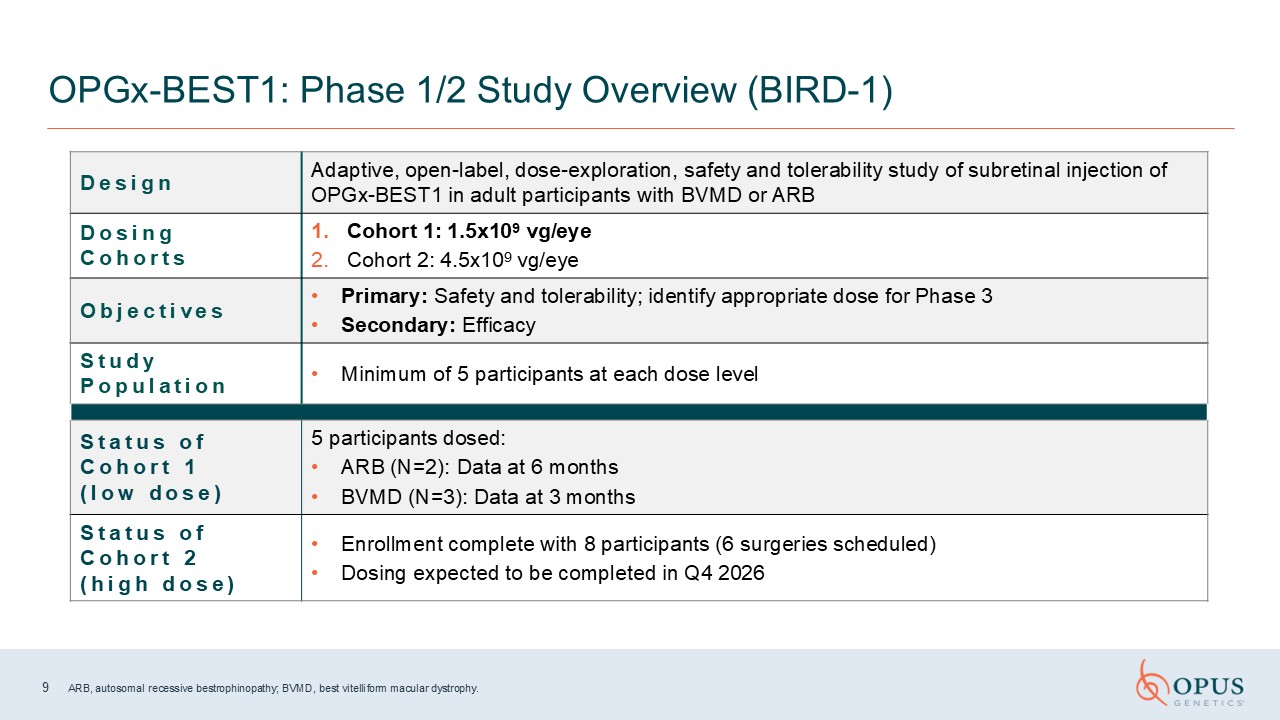
On September 9, 2026, the Company shared 3- and 6-month results from the
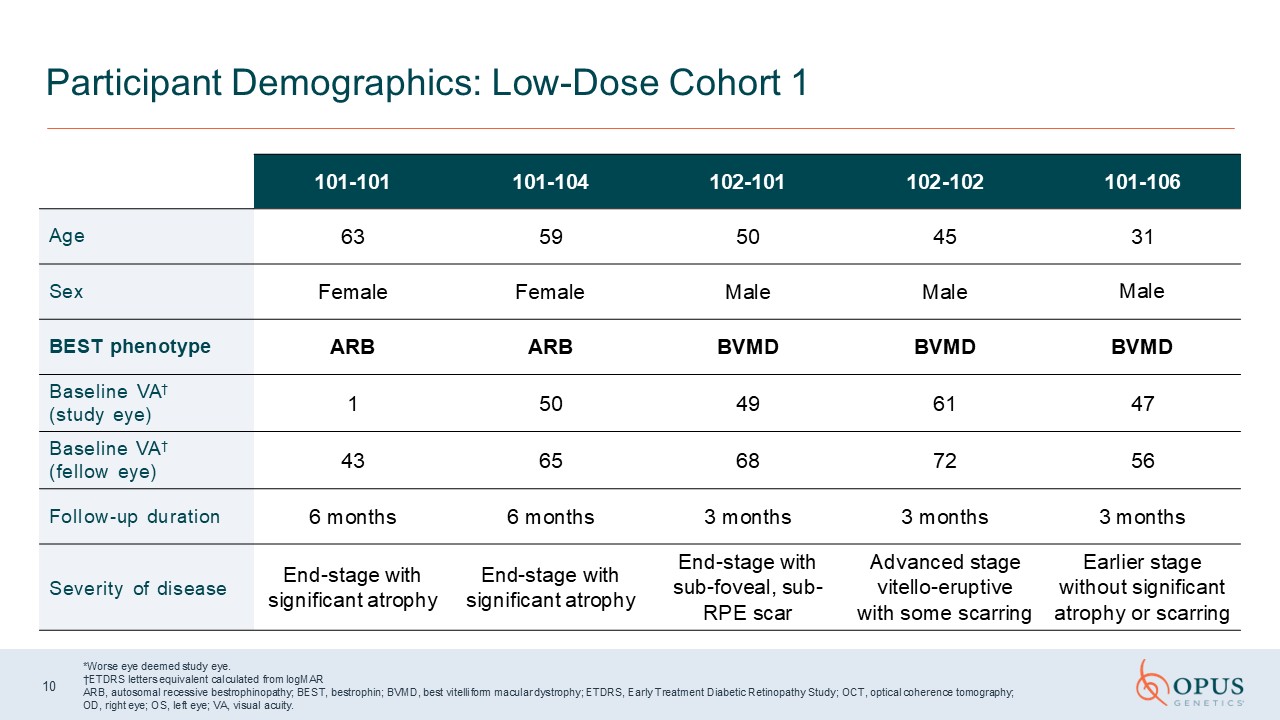
low-dose Cohort 1 of BIRD-1, the Company’s ongoing Phase 1/2 clinical trial of OPGx-BEST1 in patients with BEST1-related retinal diseases, including BVMD and ARB. Cohort 1 enrolled five participants treated at 1.5 x 10⁹ vg/eye: three
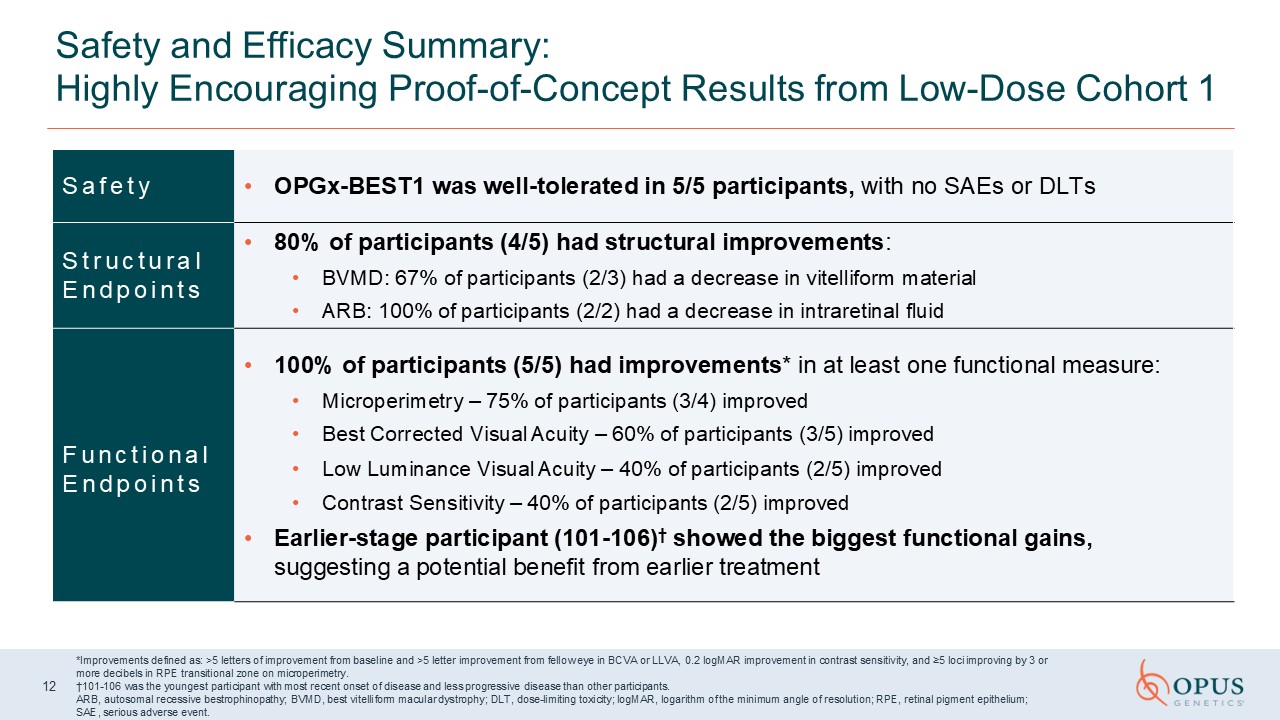
participants with BVMD who have reached three months of follow-up and two participants with ARB who have reached six months of follow-up. Following treatment with OPGx-BEST1, all five participants demonstrated clinically meaningful improvement in
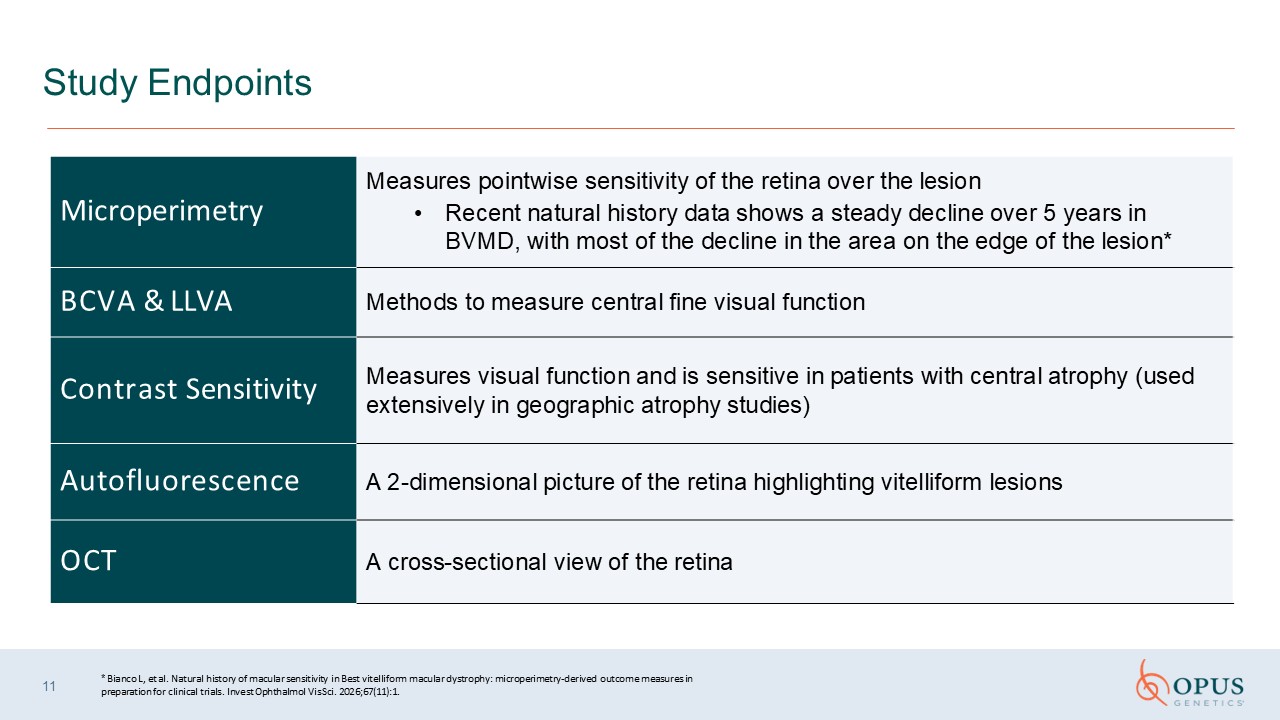
visual function, measured as one or more of the following: best-corrected visual acuity (“BCVA”), low-luminance visual acuity (“LLVA”), contrast sensitivity (“CS”) or microperimetry, an advanced eye test that maps how well the central part of the
retina sees light. Structural improvements were also observed across four participants.
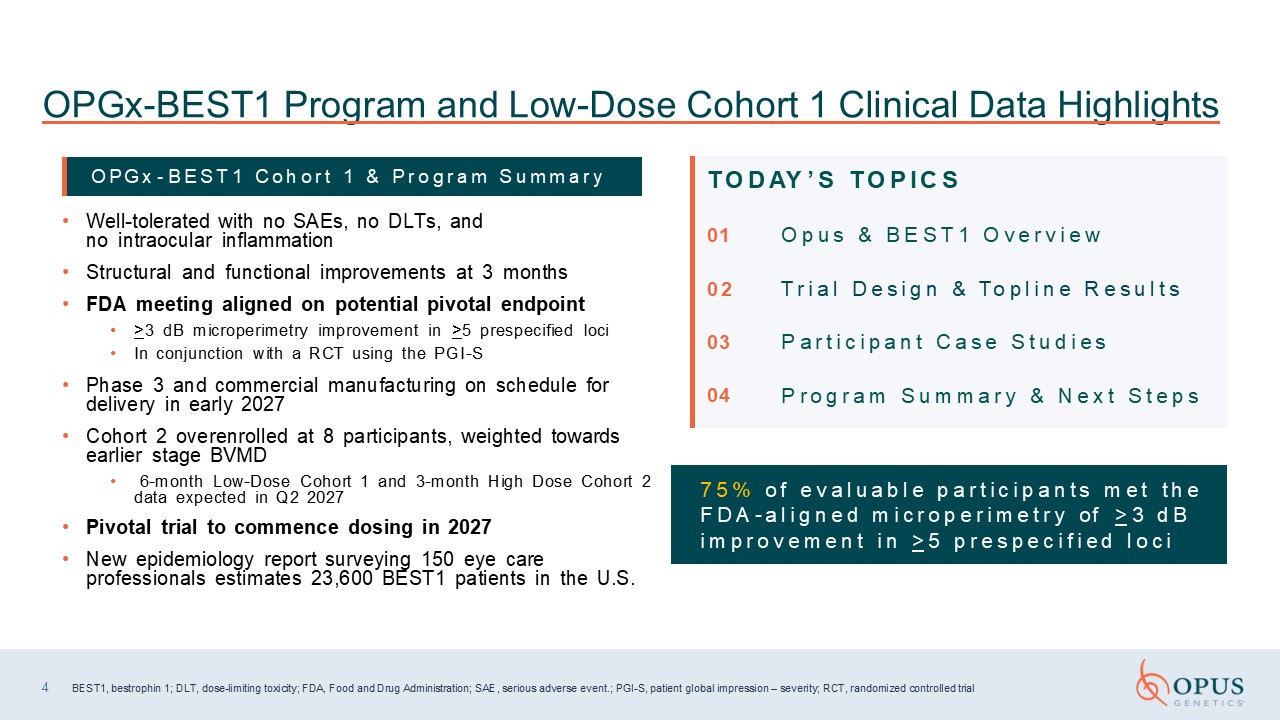
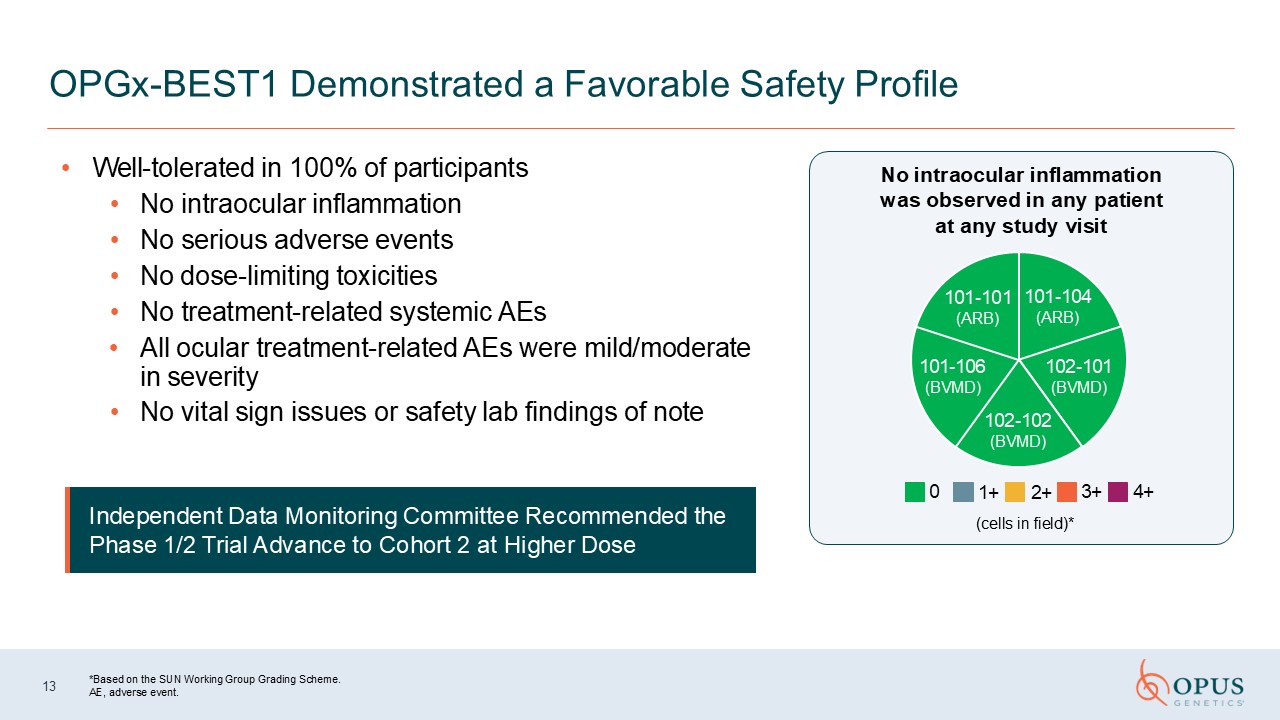
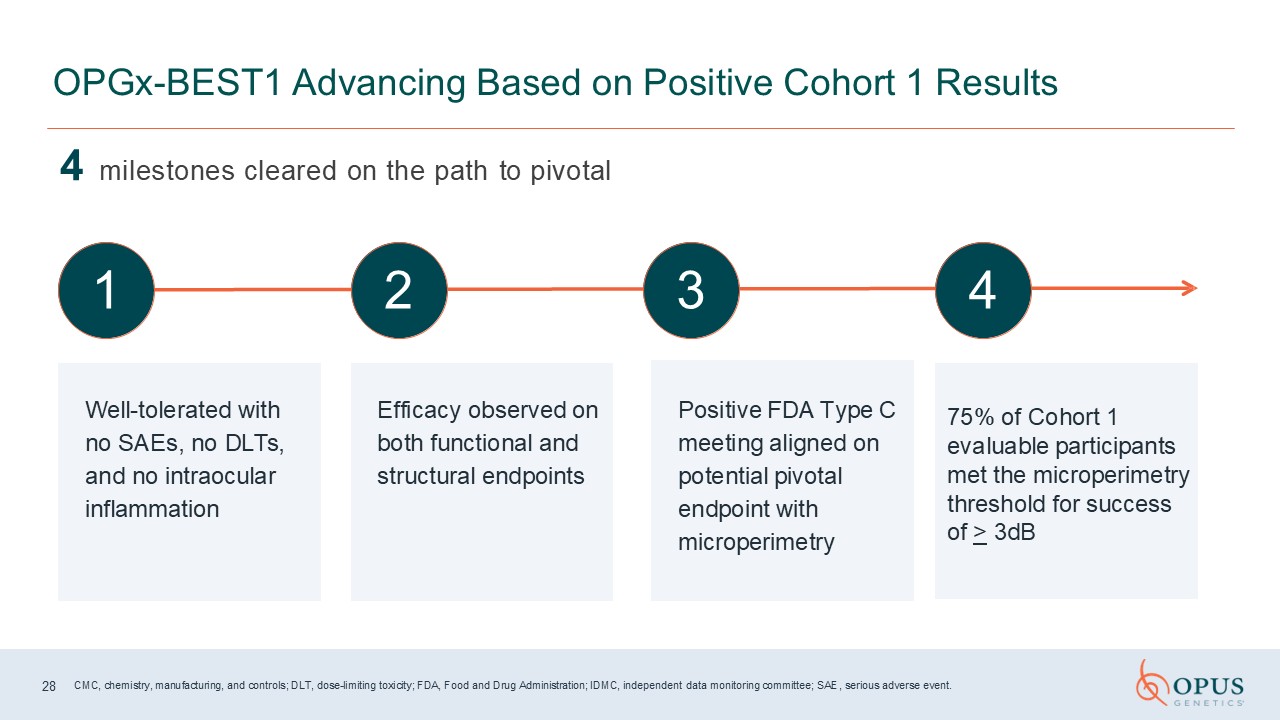
OPGx-BEST1 demonstrated a favorable safety and tolerability profile, with no serious adverse events or dose-limiting toxicities, no
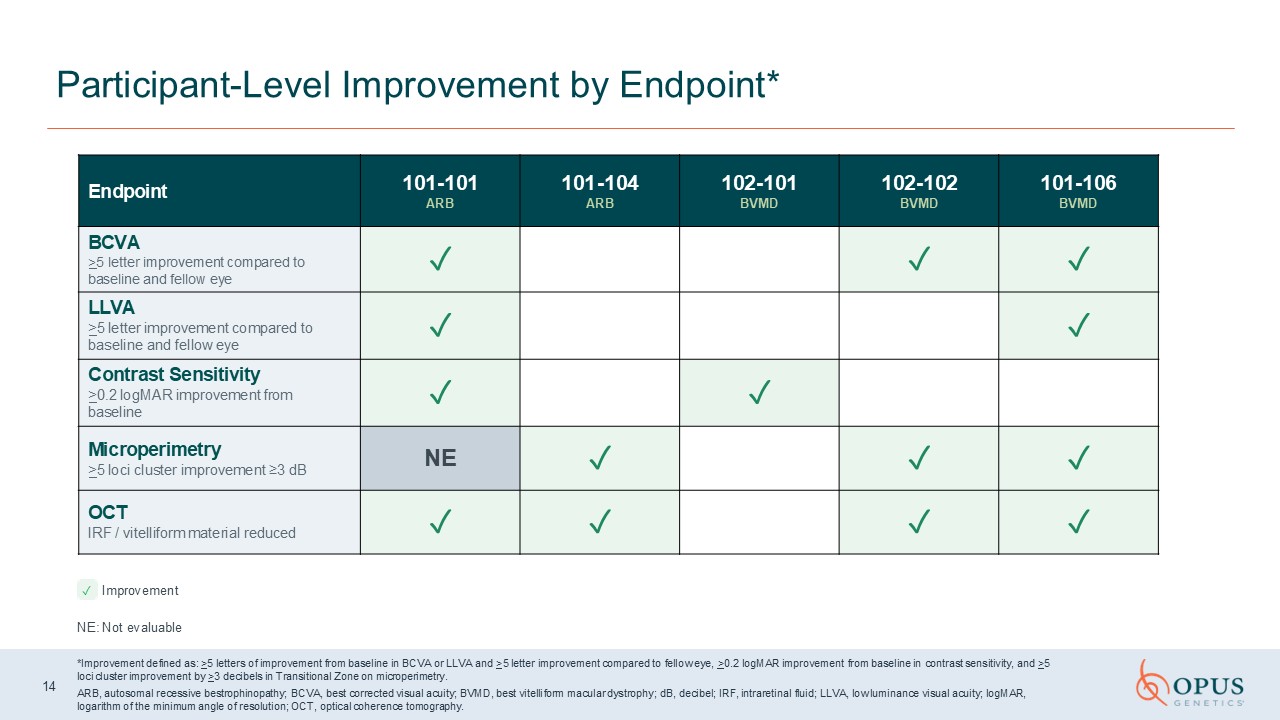
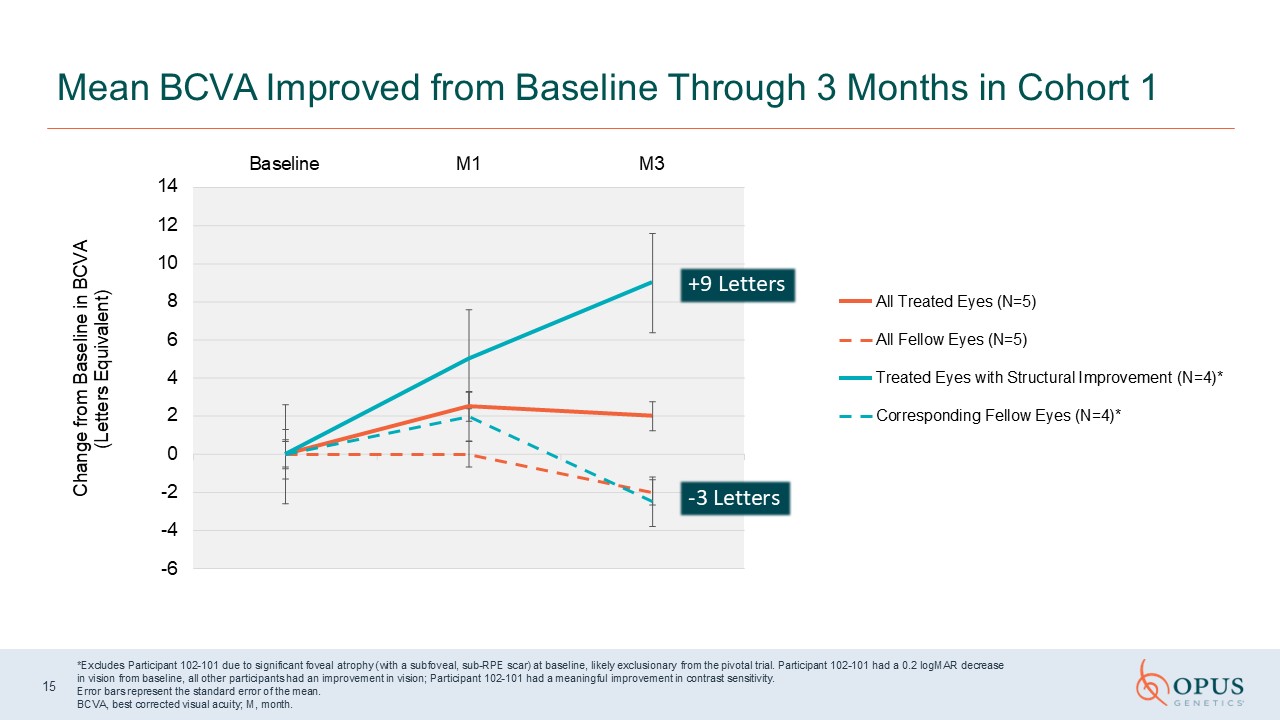
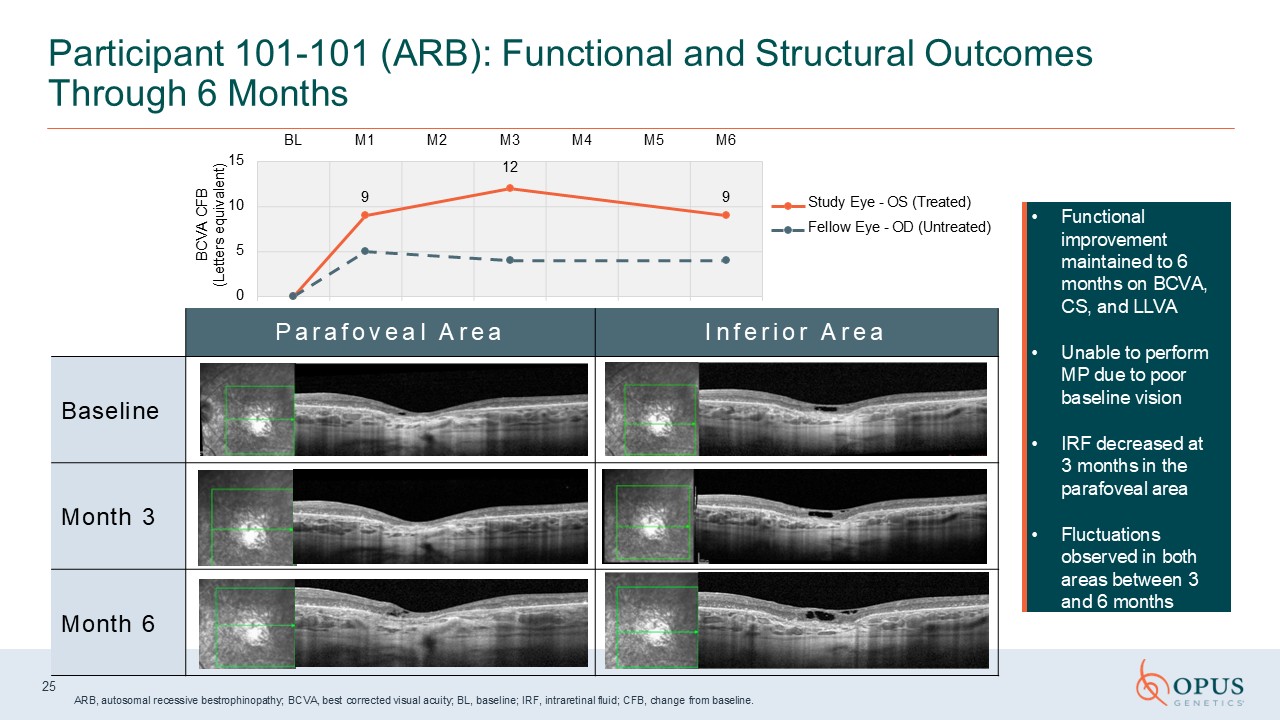
intraocular inflammation and no vital-sign or safety-laboratory findings of note. All treatment-related adverse events were mild or moderate in severity. BCVA improved in 60% of participants (3/5), LLVA improved in 40% of participants (2/5), and
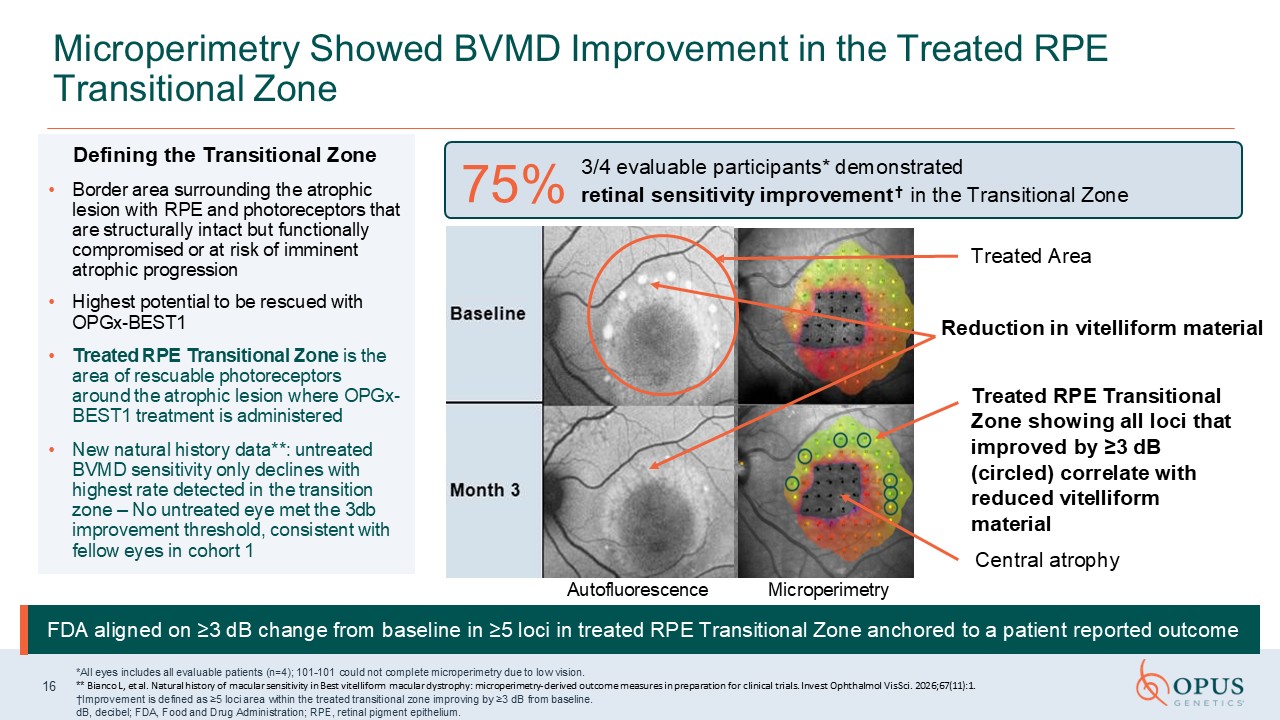
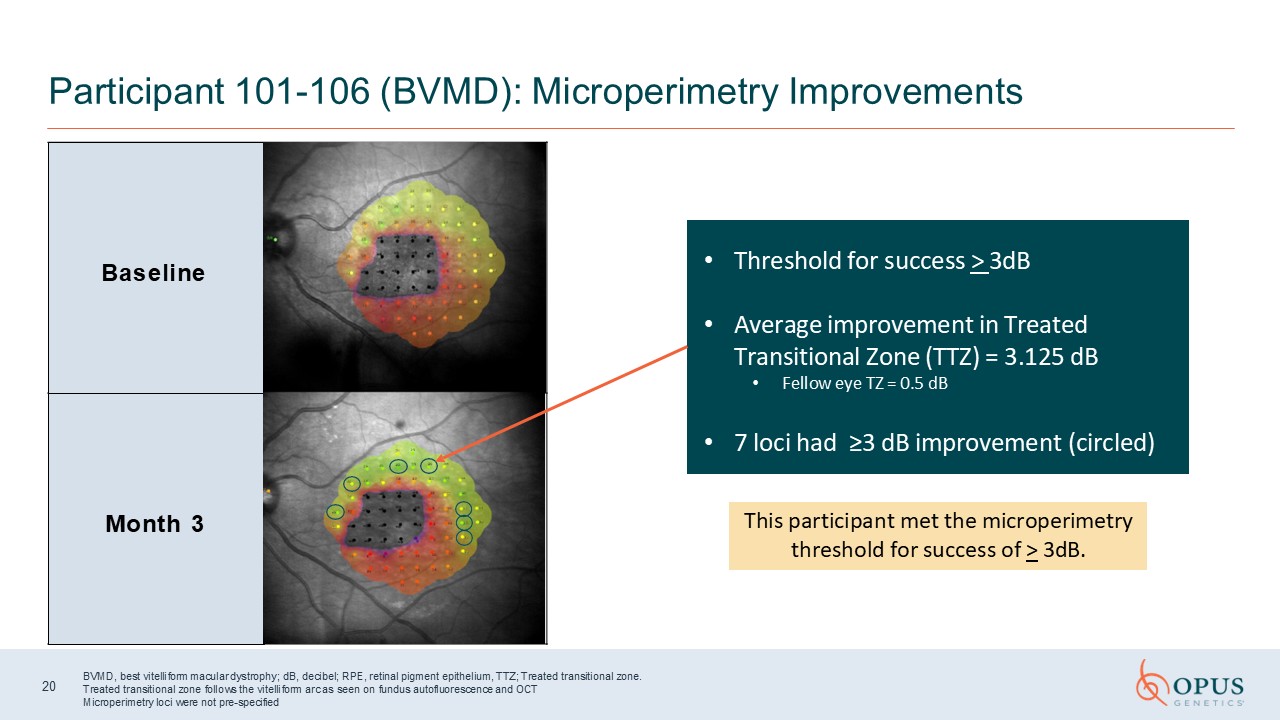
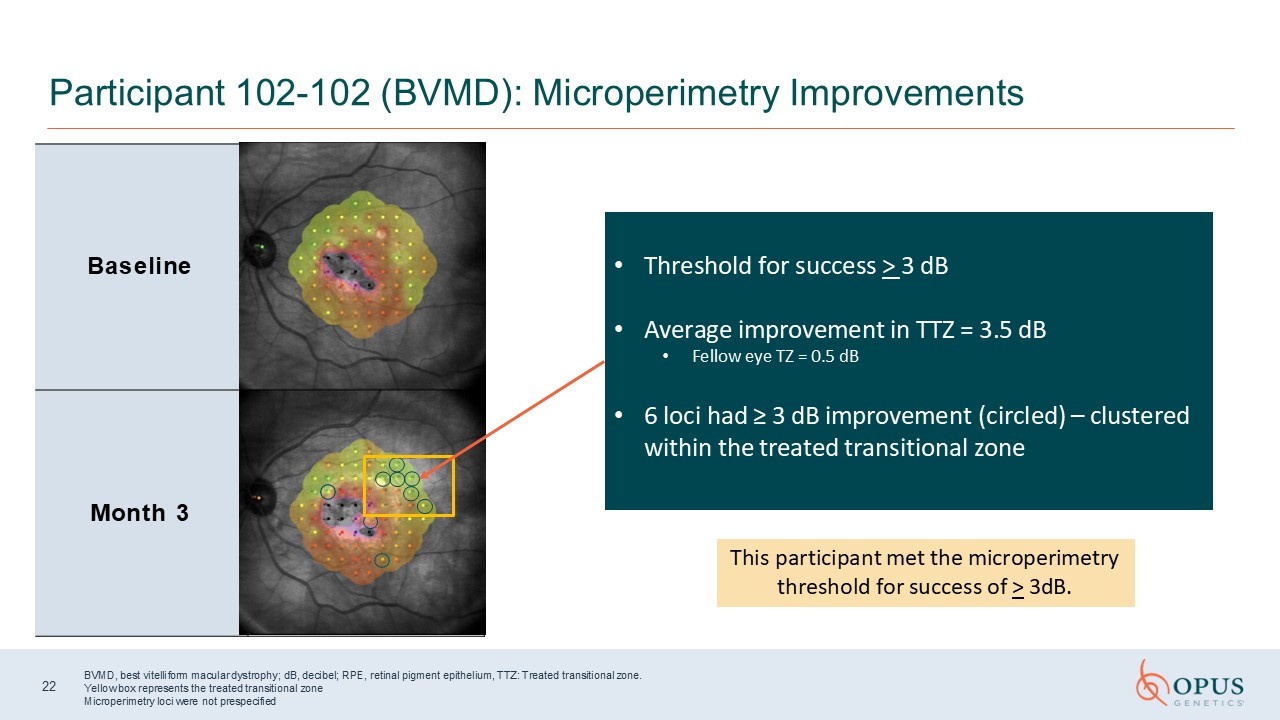
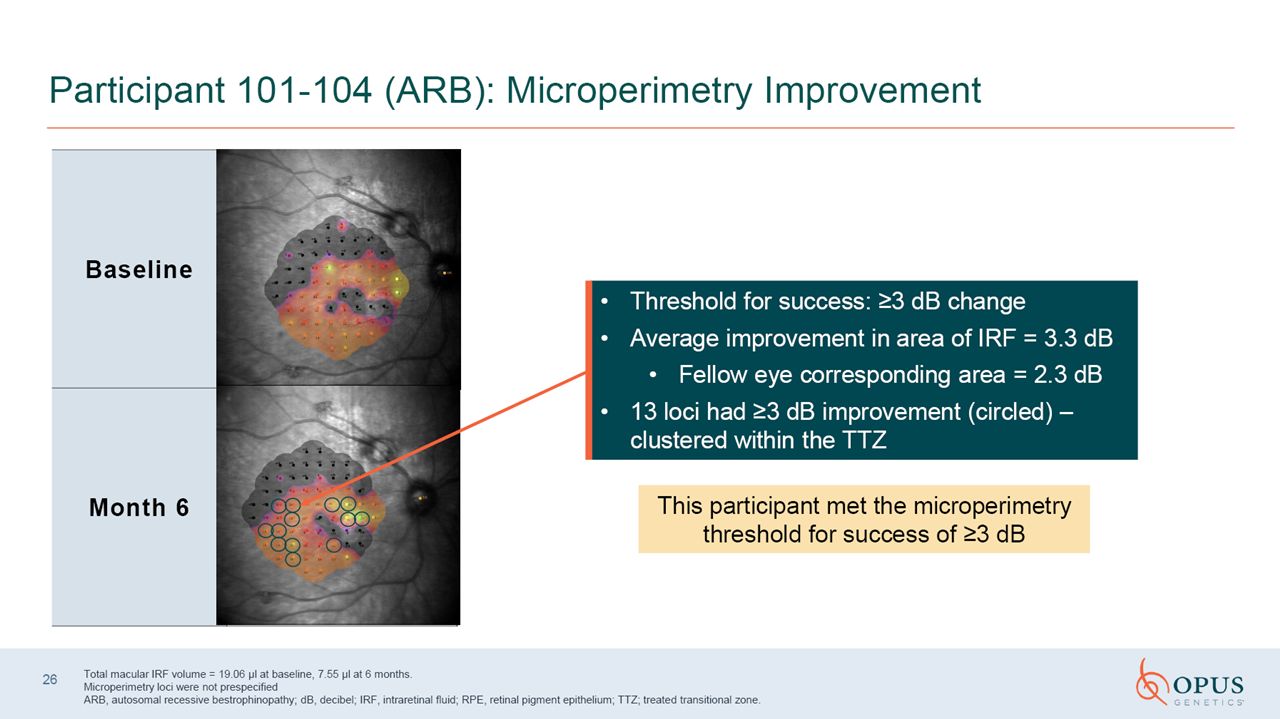
contrast sensitivity improved in 40% of participants (2/5). Among evaluable participants, 75% (3/4) demonstrated clinically meaningful improvement in retinal sensitivity by microperimetry. Importantly, these gains were concentrated in the treated
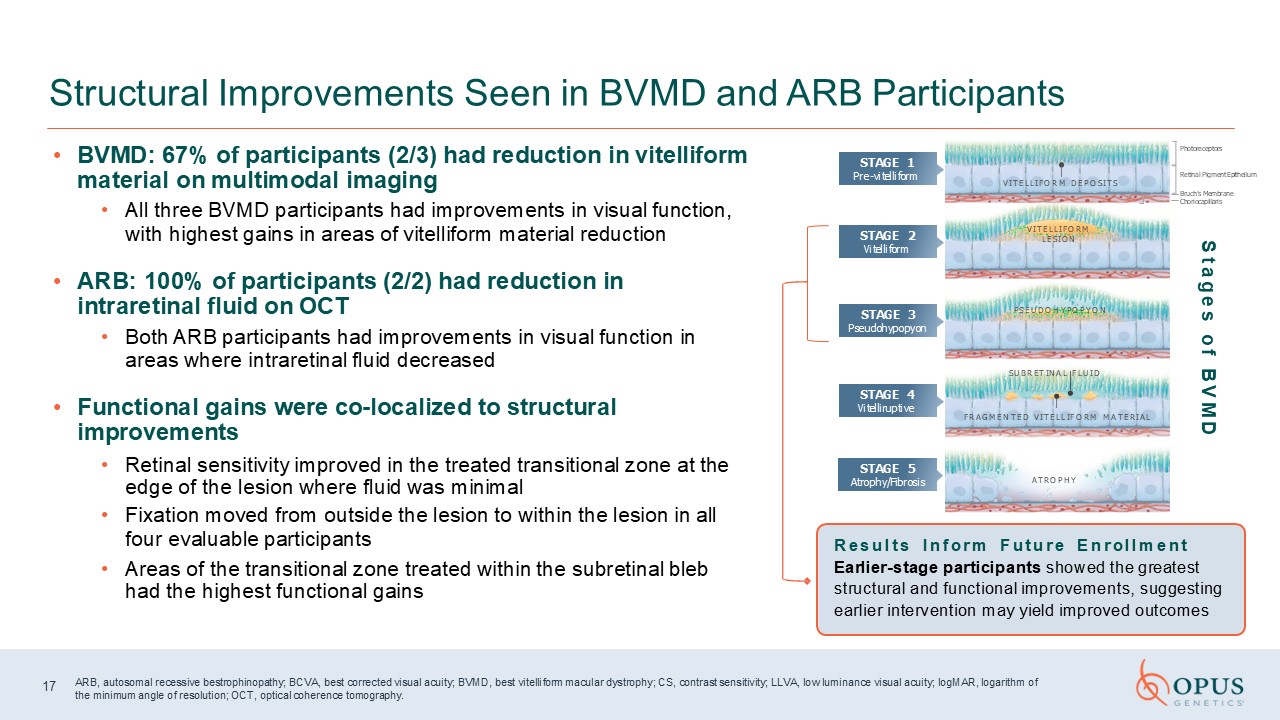
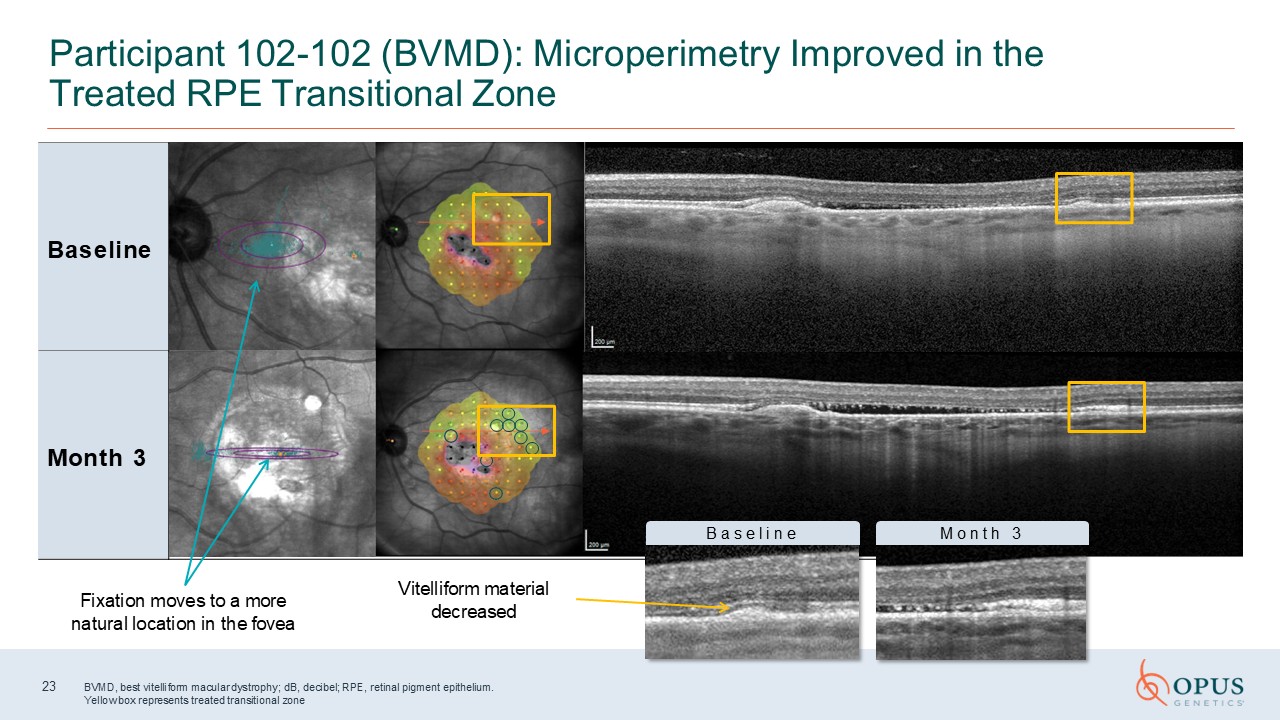
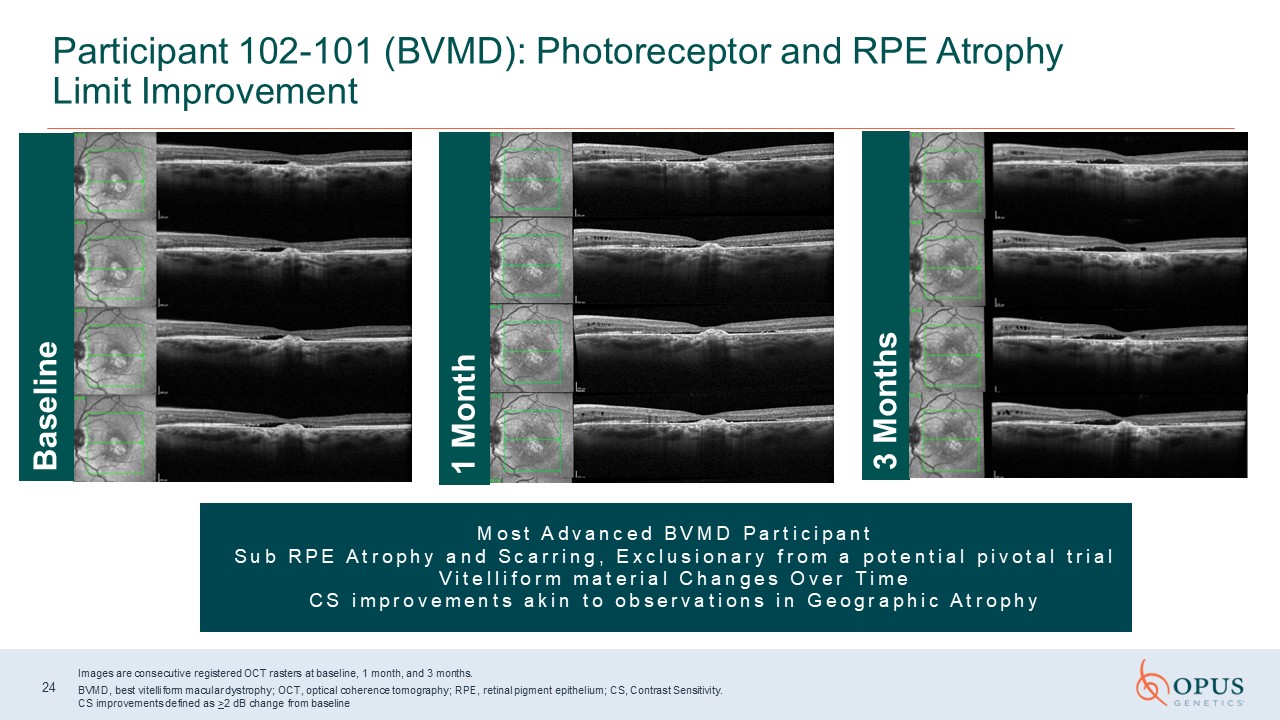
retinal pigment epithelial Transitional Zone, where viable photoreceptors remain, with the greatest functional improvements observed in participants with less advanced disease. Structural improvements were observed in four of five participants,
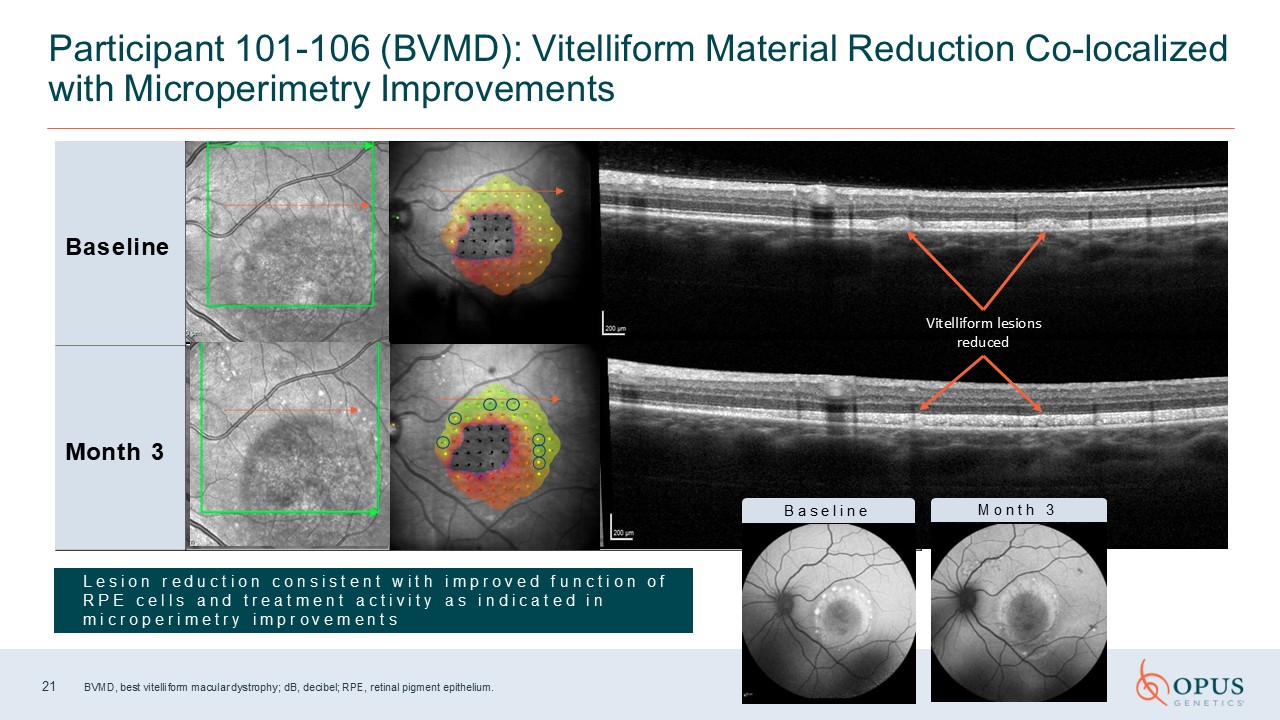
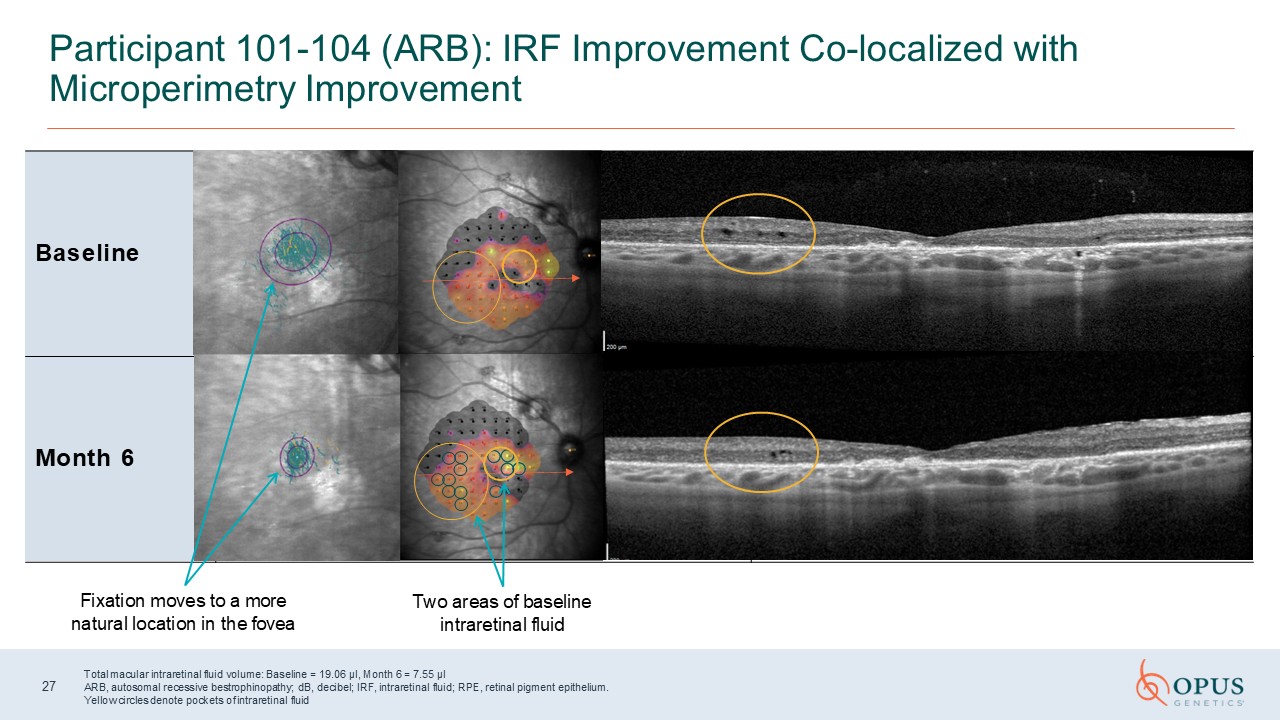
with reductions in vitelliform material, the hallmark of BVMD, in 67% of participants with BVMD (2/3) and reductions in intraretinal fluid in 100% of participants with ARB (2/2). The third BVMD participant had possible, but not definitive,
reduction in vitelliform material.
Based on the safety profile and positive proof-of-concept findings from Cohort 1, the Company has advanced to the higher-dose Cohort 2, evaluating
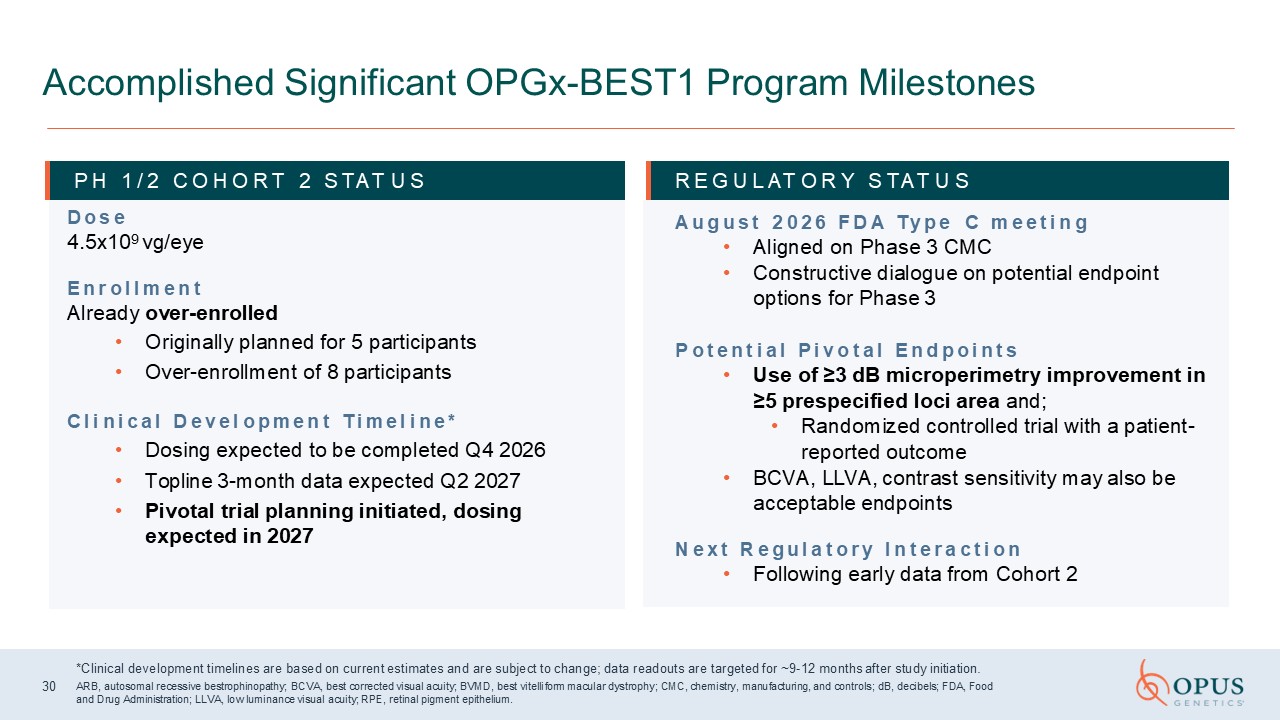
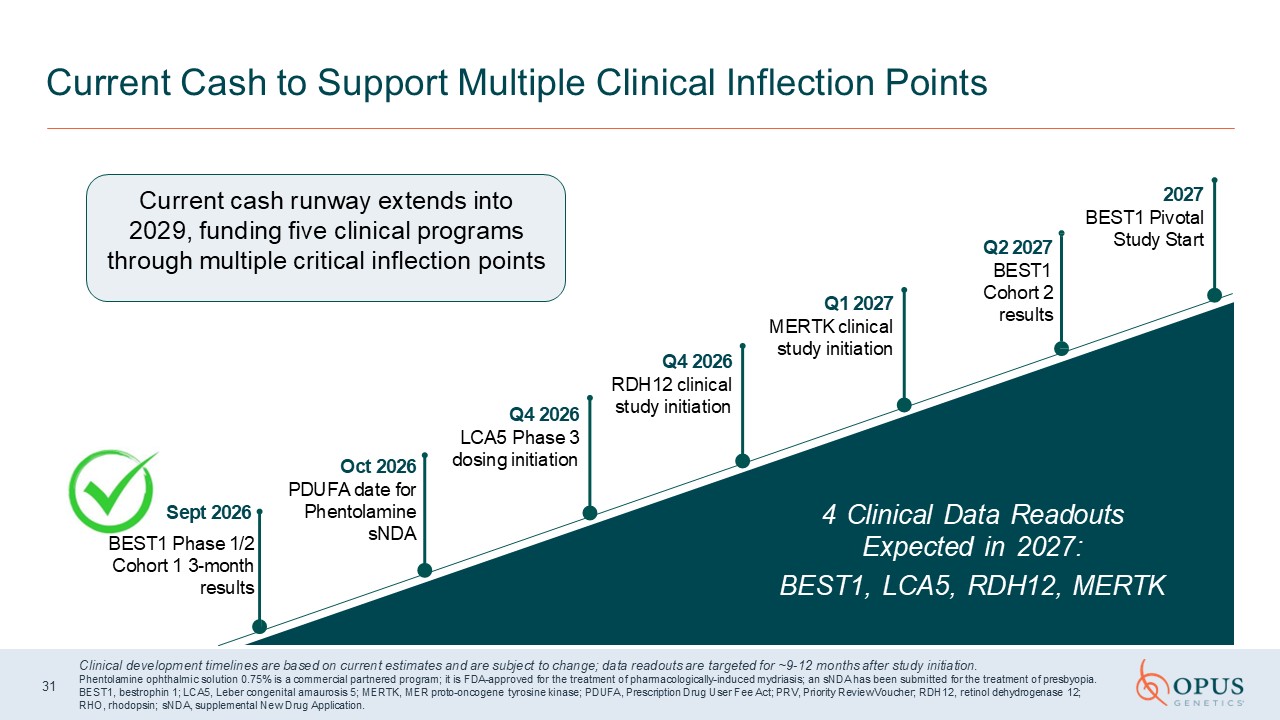
OPGx-BEST1 at 4.5 x 10⁹ vg/eye, with dosing expected to be complete in the fourth quarter of 2026 and topline three-month data expected to be available in the second quarter of 2027. Originally designed to enroll five participants, Cohort 2 has
been over-enrolled with eight participants, most of whom have BVMD. Data from Cohort 2 are expected to further characterize the safety, functional and structural responses to OPGx-BEST1 at the higher dose and inform the design of a potential
pivotal clinical trial.
In addition, the Company announced that in August 2026, the Company met with the U.S. Food and Drug Administration (“FDA”) to discuss OPGx-BEST1
development and potential endpoints for a pivotal clinical trial. The Company aligned with the FDA on a potential pivotal endpoint based on ≥3 dB microperimetry improvement in ≥5 prespecified loci, in conjunction with a patient-reported outcome in
a randomized, controlled trial. BCVA, LLVA and CS may also be acceptable endpoints. The Company also aligned with the FDA on Phase 3 and commercial manufacturing requirements, which it expects to complete in early 2027. The Company currently
expects to begin planning for participant dosing in the Phase 3 clinical trial in 2027.
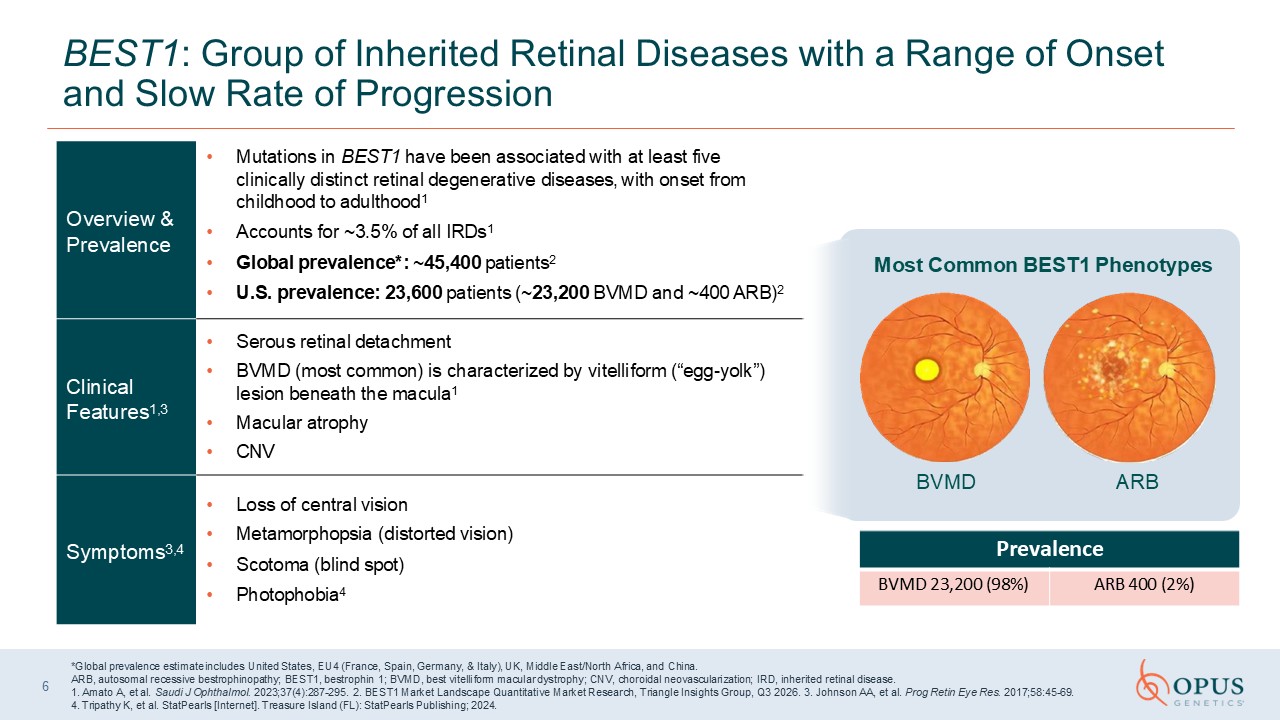
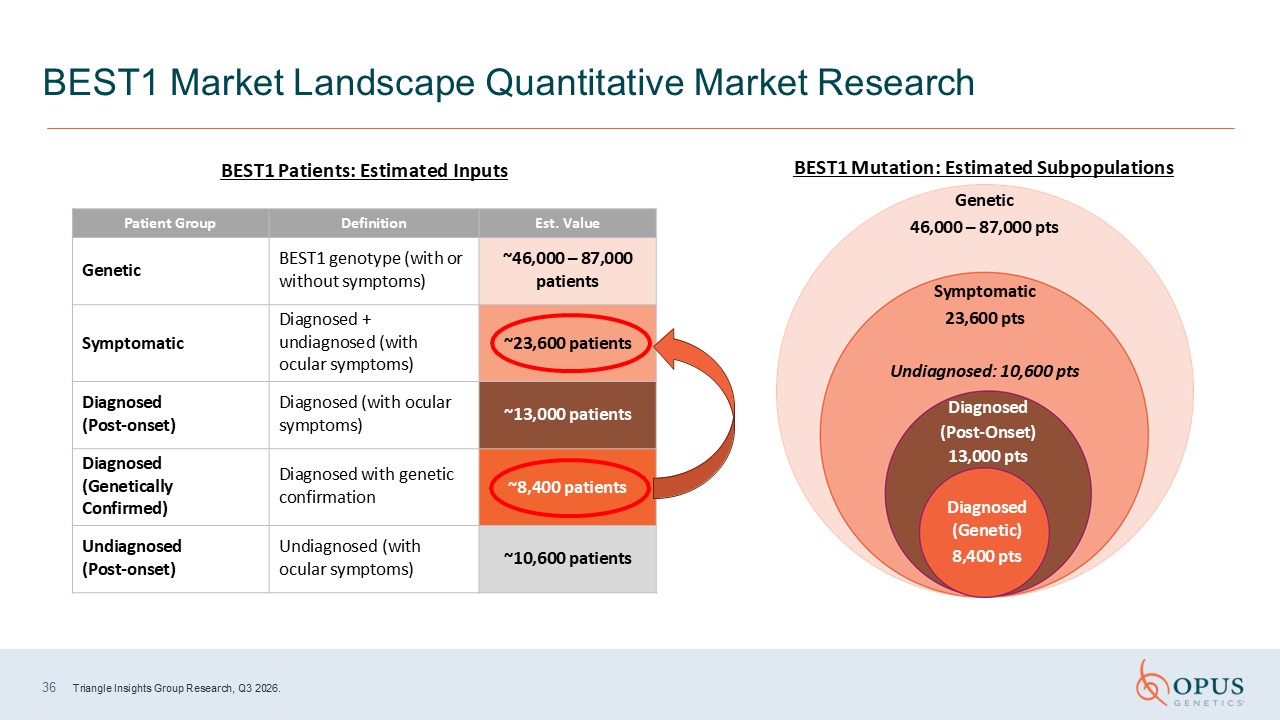
Finally, new epidemiology research estimates approximately 23,600 symptomatic BEST1 patients in the U.S., including 13,000 diagnosed
and 10,600 undiagnosed patients, and approximately 45,400 symptomatic BEST1 patients globally.
Forward-Looking Statements
This Current Report on Form 8-K contains forward-looking statements. All statements contained in this Current Report on Form 8-K that do not relate to
matters of historical fact should be considered forward-looking statements, including, without limitation, statements regarding the Company’s continued clinical development, clinical results, preclinical data, and future plans for OPGx-BEST1,
including the anticipated timing of dosing completion and topline data from Cohort 2 of the OPGx-BEST1 Phase 1/2 clinical trial; the outcome of the Company’s ongoing regulatory interactions with the FDA and its expectations regarding the design of,
and potential endpoints for, of any pivotal clinical trial of OPGx-BEST1; the Company’s expectations regarding the clinical and therapeutic potential of OPGx-BEST1; the Company’s estimates of the BEST1 symptomatic patient population in the U.S. and
globally; and the Company’s expectations regarding its business prospects and results of operations. The clinical trial referenced in this Current Report on Form 8-K is ongoing, and the data described are interim, subject to change, and based on data
available as of a specified date. As patient enrollment continues and additional follow-up data is obtained, the reported safety profile and other clinical outcomes may change materially. There can be no assurance that the interim results will be
predictive of final clinical trial results or that additional data will confirm or support these observations. In some cases, you can identify forward-looking statements by terms such as “aim,” “anticipate,” “approach,” “believe,” “contemplate,”
“could,” “designed”, “estimate,” “expect,” “goal,” “intend,” “look,” “may,” “mission,” “plan,” “possible,” “potential,” “predict,” “project,” “pursue,” “should,”, “strive”, “target,” “will,” “would,” or the negative thereof and similar words and
expressions. Forward-looking statements are based on management’s current expectations, beliefs and assumptions and on information currently available to the Company. Such statements are neither promises nor guarantees, and involve a number of known
and unknown risks, uncertainties and assumptions that may cause the Company’s actual results, performance or achievements to be materially different from any expressed or implied by the forward-looking statements. Such risks and uncertainties
include, but are not limited to, the risk that the results of preclinical studies or clinical trials will not be predictive of future results in connection with future studies or clinical trials, uncertainty regarding the timing and results of
regulatory submissions, the risk that any Investigational New Drug Applications, New Drug Applications or other global regulatory submissions the Company may file with the FDA or other global regulatory agencies are not cleared on the Company’s
expected timelines, or at all, risks related to the Company’s ability to protect and maintain the Company’s intellectual property position, and risks related to manufacturing, supply, and distribution of the Company’s product candidates, along with
the risks detailed under the heading “Risk Factors” included in the Company’s Annual Report on Form 10-K for the fiscal year ended December 31, 2025 and in the Company’s other filings with the U.S. Securities and Exchange Commission. The
forward-looking statements in this Current Report on Form 8-K speak only as of the date of this Current Report on Form 8-K, and the Company undertakes no obligation to update or revise any of the statements. The Company’s business is subject to
substantial risks and uncertainties, including those referenced above. Investors, potential investors, and others should give careful consideration to these risks and uncertainties.
|
Item 9.01
|
Financial Statements and Exhibits.
|
(d) Exhibits
|
Exhibit No.
|
Description
|
|
Press release issued by Opus Genetics, Inc. on September 9, 2026, furnished herewith
|
|
|
Data presentation issued by Opus Genetics, Inc. on September 9, 2026, furnished herewith
|
|
|
104
|
Cover page from this Current Report on Form 8-K, formatted in Inline XBRL
|
SIGNATURES
Pursuant to the requirements of the Securities Exchange Act of 1934, the registrant has duly caused this report to be signed on its behalf by the
undersigned hereunto duly authorized.
|
OPUS GENETICS, INC.
|
|||
|
Date:
|
September 9, 2026
|
By:
|
/s/ Dr. George Magrath
|
|
Dr. George Magrath
|
|||
|
Chief Executive Officer
|
Exhibit 99.1

Opus Genetics Announces Positive Low Dose Cohort 1 Data from Phase 1/2 Clinical Trial of OPGx-BEST1 and Successful FDA Type C Meeting
with Potential Phase 3 Dosing in 2027
OPGx-BEST1 demonstrated a favorable safety and tolerability profile with no serious adverse events or dose-limiting toxicities observed
All five participants demonstrated clinically meaningful improvement in visual function, with structural improvements observed in four
participants
FDA aligned on ≥3 decibels microperimetry improvement in conjunction with patient reported outcomes as a potential pivotal endpoint
Clinically meaningful best-corrected visual acuity improvements in 3 of 5 participants and retinal sensitivity improvements on
microperimetry observed in 3 of 4 evaluable participants
Cohort 2 over-enrolled, with dosing expected to be completed in Q4 2026 and topline 3-month data expected in Q2 2027
Cash runway into 2029 expected to support multiple clinical inflection points and opportunities for priority review vouchers
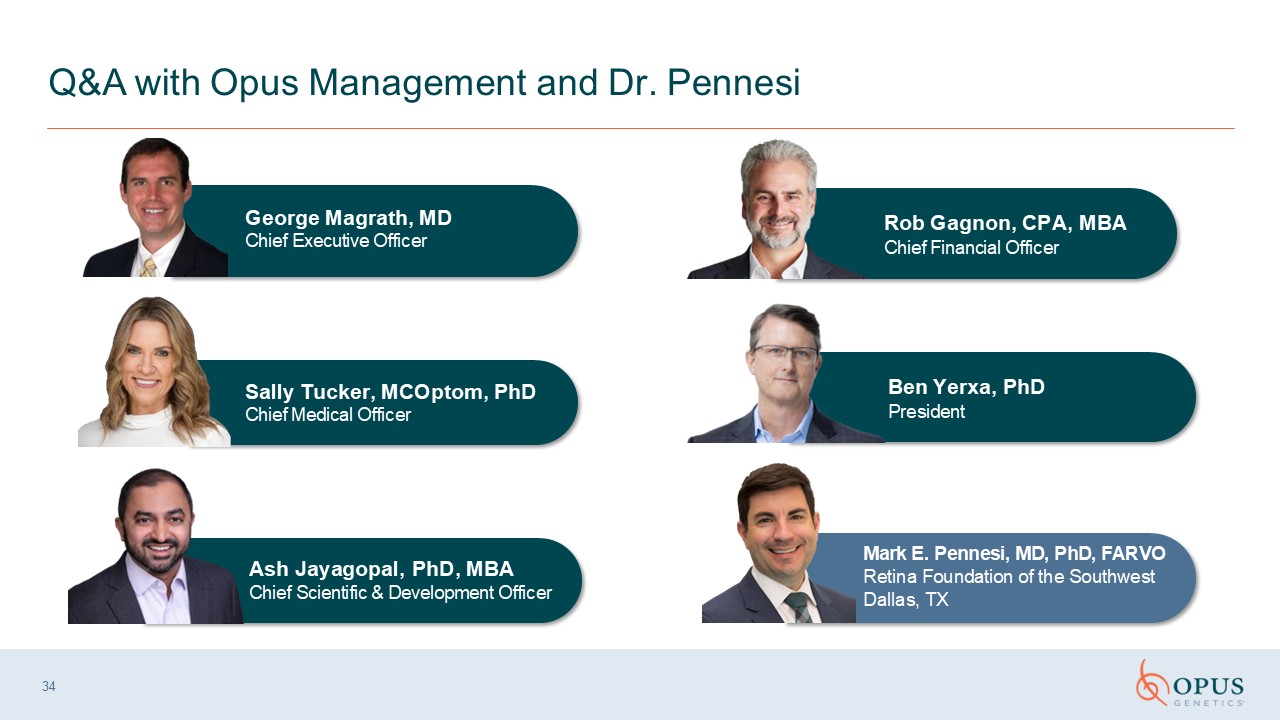
Webcast and conference call today at 8:00 a.m. ET with management and Key Opinion Leader and retinal specialist, Mark Pennesi, M.D., PhD.
RESEARCH TRIANGLE PARK, N.C. - Opus Genetics, Inc. (Nasdaq: IRD) (the “Company” or “Opus Genetics”), a clinical-stage biopharmaceutical company developing gene
therapies to restore vision and prevent blindness in patients with inherited retinal diseases (IRDs), today announced positive 3- and 6-month results from the low-dose Cohort 1 of BIRD-1, its ongoing Phase 1/2 clinical trial evaluating OPGx-BEST1 in
patients with BEST1-related retinal diseases, including Best vitelliform macular dystrophy (BVMD) and autosomal recessive bestrophinopathy (ARB).
Cohort 1 enrolled five participants treated at 1.5 x 10⁹ vg/eye: three participants with BVMD who have reached three months of follow-up and two with ARB who have
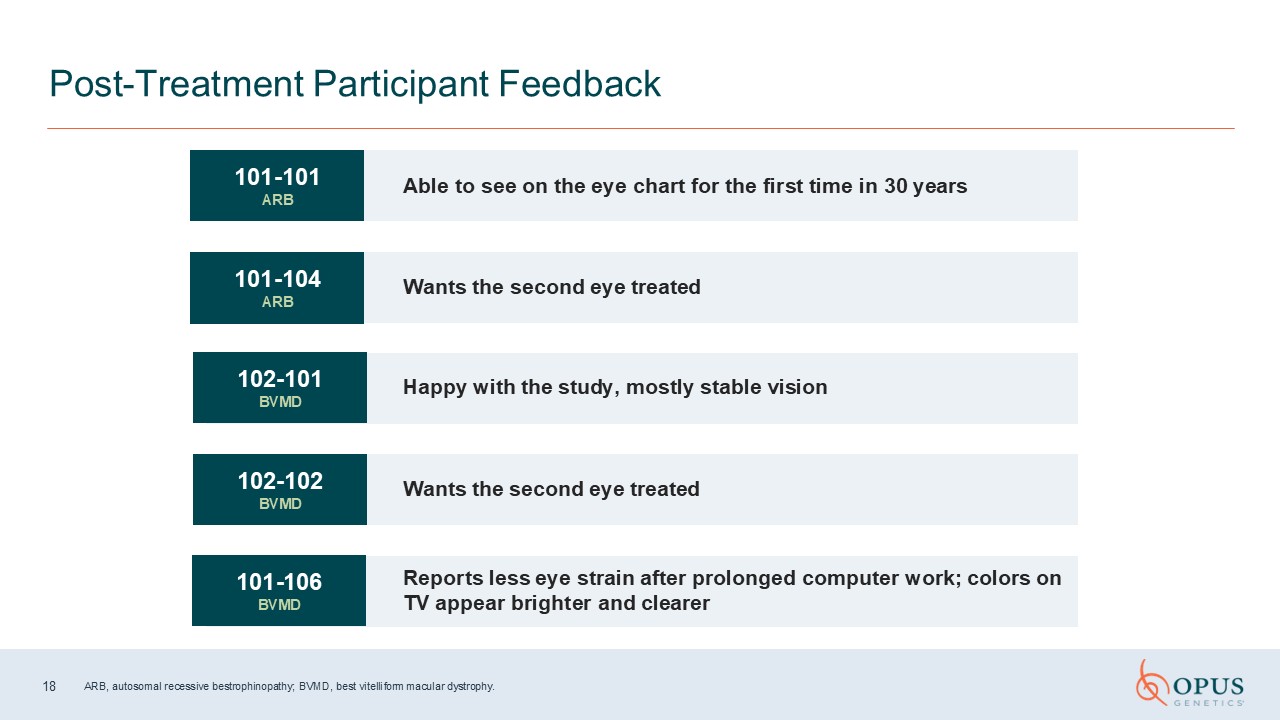
reached six months of follow-up. All five participants demonstrated clinically meaningful improvement in visual function, measured as one or more of the following: best-corrected visual acuity (BCVA), low-luminance visual acuity (LLVA), contrast
sensitivity (CS) or microperimetry, an advanced eye test that maps how well the central part of the retina sees light. Structural improvements were also observed across four participants. The greatest functional gains were observed in participants
with less advanced disease, supporting the potential benefit of treating patients while viable retinal tissue remains. The Company expects to announce 6-month data for the three participants with BVMD in Q2 2027.
“These positive results provide important evidence of OPGx-BEST1’s potential to improve both visual function and retinal structure in patients with BEST1-related
retinal disease, which we believe has a significantly larger underserved patient population than we previously thought,” said George Magrath, M.D., Chief Executive Officer of Opus Genetics. “The functional and structural improvements across Cohort 1,
particularly the greater functional gains observed in patients with viable retinal tissue, reinforce our confidence in OPGx-BEST1’s potential to have a positive impact on the lives of patients with BEST disease. Together with our recent FDA
interaction and rapid enrollment of Cohort 2, we believe these data provide a clear path toward pivotal development, which we plan to begin next year. We want to recognize the contributions of our investigators, clinical teams, and most importantly,
the patients helping advance a potential treatment for this blinding disease.”
“These Cohort 1 data provide encouraging evidence that OPGx-BEST1 can be delivered safely and may improve both retinal structure and visual function in patients
with advanced BEST1-related retinal disease,” said Christine Nichols Kay, M.D., clinical trial investigator and Director of Clinical Research and Retinal Genetics at Vitreo Retinal Associates.
“We are encouraged by the localization of functional gains to areas of viable, but compromised retina and by the opportunity to apply these insights prospectively
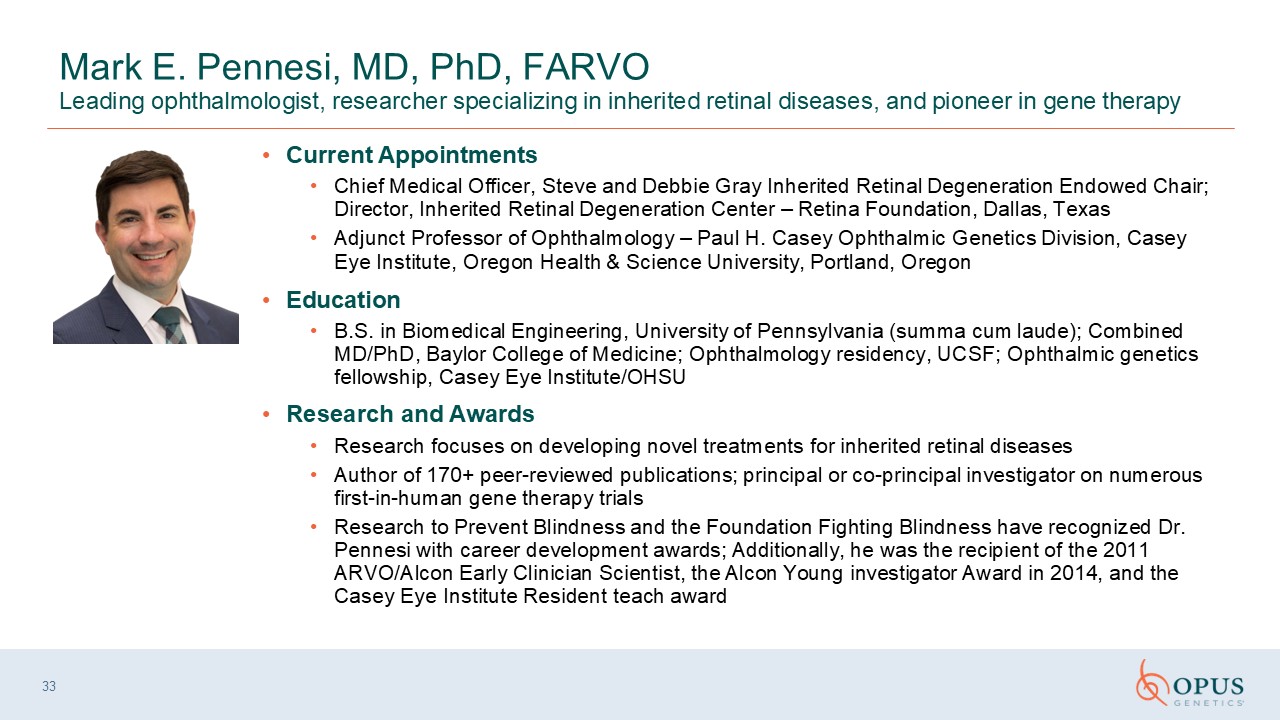
as OPGx-BEST1 is advanced into Cohort 2 and potential pivotal development,” said Mark Pennesi, M.D., Ph.D., clinical trial investigator and Chief Medical Officer at the Retina Foundation and Adjunct Professor of Ophthalmology, Casey Eye Institute,
Oregon Health & Science University. “From a regulatory perspective, it is particularly exciting to align with the FDA on a >3 decibels change from baseline in microperimetry anchored to patient reported outcomes as a potential pivotal
endpoint.”
OPGx-BEST1 demonstrated a favorable safety and tolerability profile, with no serious adverse events or dose-limiting toxicities, no intraocular inflammation and
no vital-sign or safety-laboratory findings of note. All treatment-related adverse events were mild or moderate in severity.
All five participants demonstrated clinically meaningful improvement in visual function following treatment with OPGx-BEST1. BCVA improved in 60% of participants
(3/5), LLVA improved in 40% of participants (2/5), and contrast sensitivity improved in 40% of participants (2/5). Among evaluable participants, 75% (3/4) demonstrated clinically meaningful improvement in retinal sensitivity by microperimetry.
Importantly, these gains were concentrated in the treated retinal pigment epithelial (RPE) Transitional Zone, where viable photoreceptors remain, with the greatest functional improvements observed in participants with less advanced disease.
Structural improvements were observed in four of five participants, with reductions in vitelliform material, the hallmark of BVMD, in 67% of participants with
BVMD (2/3) and reductions in intraretinal fluid in 100% of participants with ARB (2/2). The third BVMD participant had possible, but not definitive, reduction in vitelliform material. These findings provide proof-of-concept that OPGx-BEST1 may
improve visual function and retinal structure in areas where viable retinal tissue remains and are informing patient selection and future clinical development.
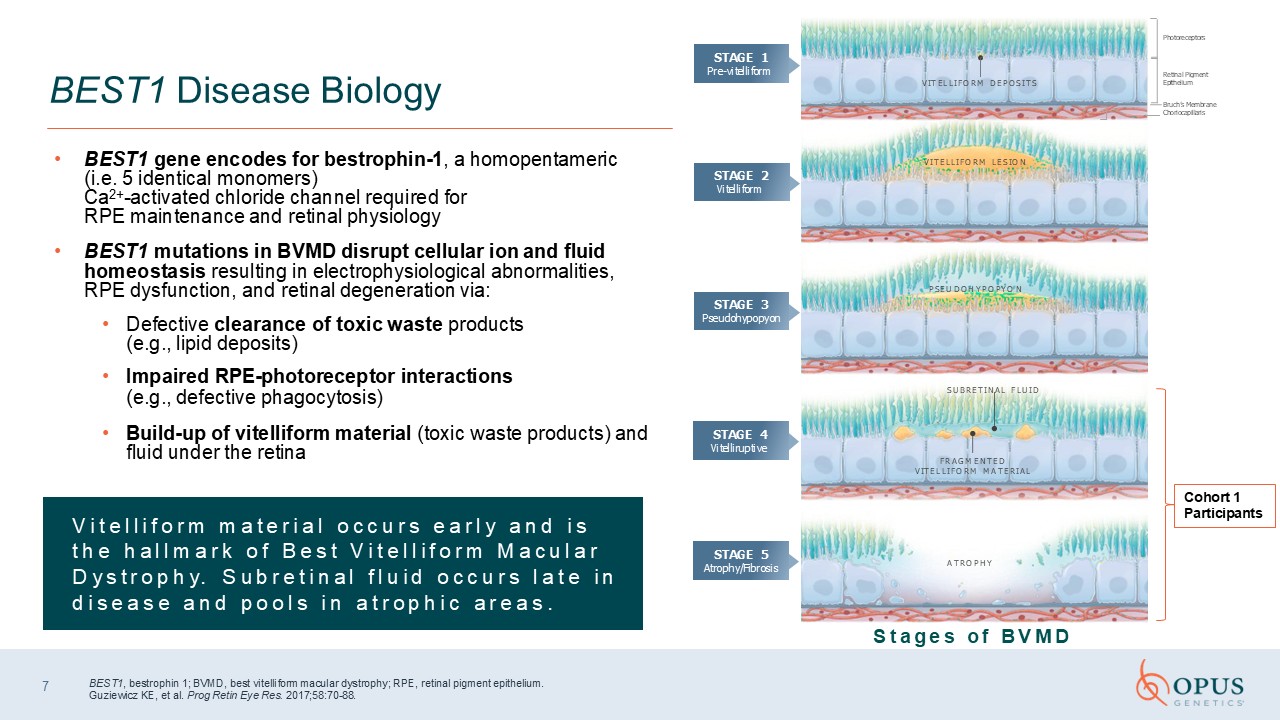
In BVMD, vitelliform material accumulates early and is the defining structural feature of the disease, while subretinal fluid appears late and pools in areas of
established atrophy. Reduction of vitelliform material is therefore the more direct measure of restored RPE function in this population, and it is the structural change that corresponded with functional improvement in those participants. In ARB,
where intraretinal fluid is the dominant structural manifestation, fluid reduction was substantial and consistent in both participants.
In August 2026, the Company met with the U.S. Food and Drug Administration (FDA) to discuss OPGx-BEST1 development and potential endpoints for a pivotal clinical
trial. The Company aligned with the FDA on a potential pivotal endpoint based on ≥3 dB microperimetry improvement in ≥5 prespecified loci, in conjunction with a patient-reported outcome in a randomized, controlled trial. BCVA, LLVA, and CS may also
be acceptable endpoints. The Company also aligned with the FDA on Phase 3 and commercial manufacturing requirements, which it expects to complete in early 2027. The Company expects to begin planning for the Phase 3 trial immediately, with
participant dosing expected to begin in 2027.
Based on the safety profile and positive proof-of-concept findings from Cohort 1, the Company has advanced to the higher-dose Cohort 2, evaluating OPGx-BEST1 at
4.5 x 10⁹ vg/eye, with dosing expected to be completed in Q4 2026 and topline three-month data expected in Q2 2027. Originally designed to enroll five participants, Cohort 2 has been over-enrolled with eight participants, most of whom have BVMD. Data
from Cohort 2 are expected to further characterize the safety, functional and structural responses to OPGx-BEST1 at the higher dose and inform the design of a potential pivotal clinical trial.
New epidemiology research conducted by Triangle Insights Group, based on a survey of more than 150 eye care professionals, estimates approximately 23,600
symptomatic BEST1 patients in the U.S., including 13,000 diagnosed and 10,600 undiagnosed patients, and approximately 45,400 symptomatic BEST1 patients globally. These findings suggest a substantially larger addressable patient population and unmet
need than previously estimated.
Conference Call & Webcast Details
Opus Genetics will host a webcast and conference call with accompanying slides today at 8:00 A.M. ET, including comments by management and key opinion leader,
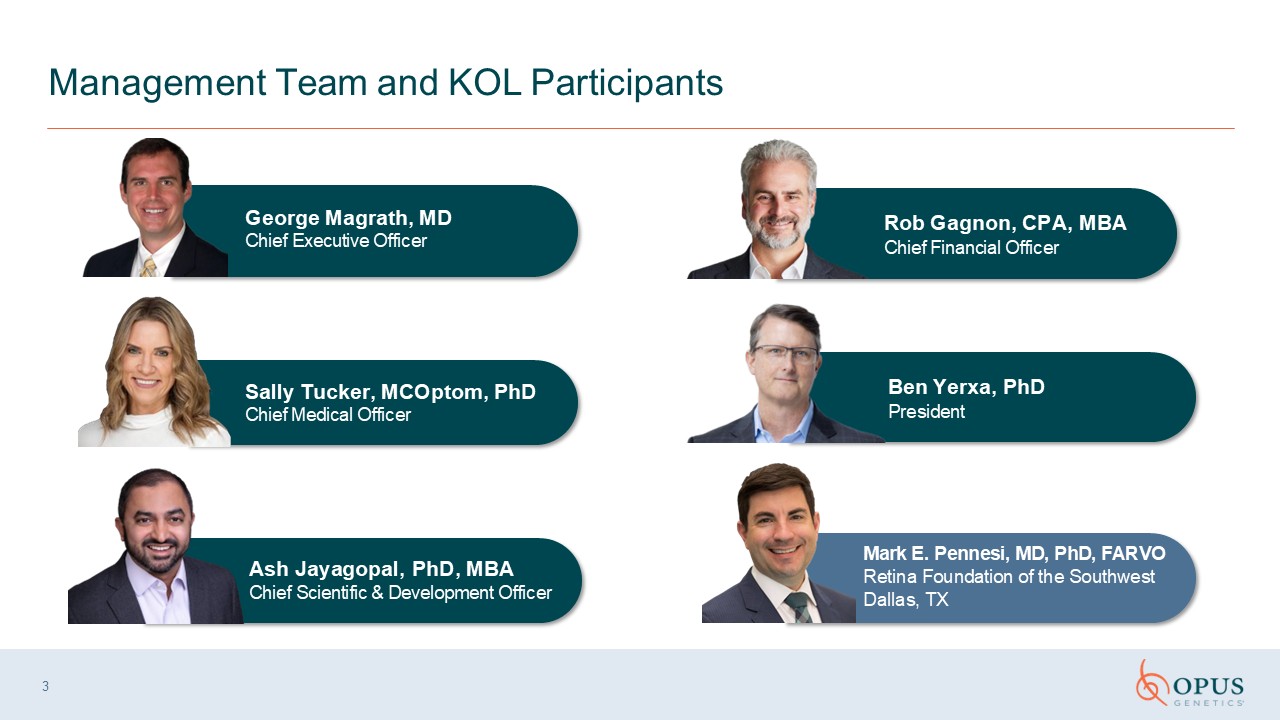
Mark Pennesi, M.D., PhD., FARVO, a board-certified retinal surgeon at the Retina Foundation of the Southwest. The live and archived webcast may be accessed on the Opus Genetics website under the Investors section: Events. Opus Genetics suggests
participants join 15 minutes in advance of the event.
About BEST1 and OPGx-BEST1
BEST1-related inherited retinal diseases, or bestrophinopathies, are rare forms of inherited macular degeneration caused by mutations in the BEST1 gene. These
mutations disrupt the normal function of RPE cells, leading to retinal lesions, progressive degeneration and vision loss. BEST1-related diseases include BVMD and ARB, and there are currently no approved therapies that address the underlying genetic
cause of these diseases.
OPGx-BEST1 is an investigational gene therapy designed to address the underlying genetic cause of BEST1-related inherited retinal diseases, including BVMD and
ARB. OPGx-BEST1 uses an AAV vector to deliver a functional copy of the BEST1 gene to retinal pigment epithelial cells. The ongoing BIRD-1 clinical trial is an adaptive, open-label Phase 1/2 clinical trial evaluating the safety and efficacy of
single-eye subretinal administration of OPGx-BEST1 in adults with BVMD or ARB.
About Opus Genetics
Opus Genetics is a clinical-stage biopharmaceutical company developing gene therapies to restore vision and prevent blindness in patients with inherited retinal
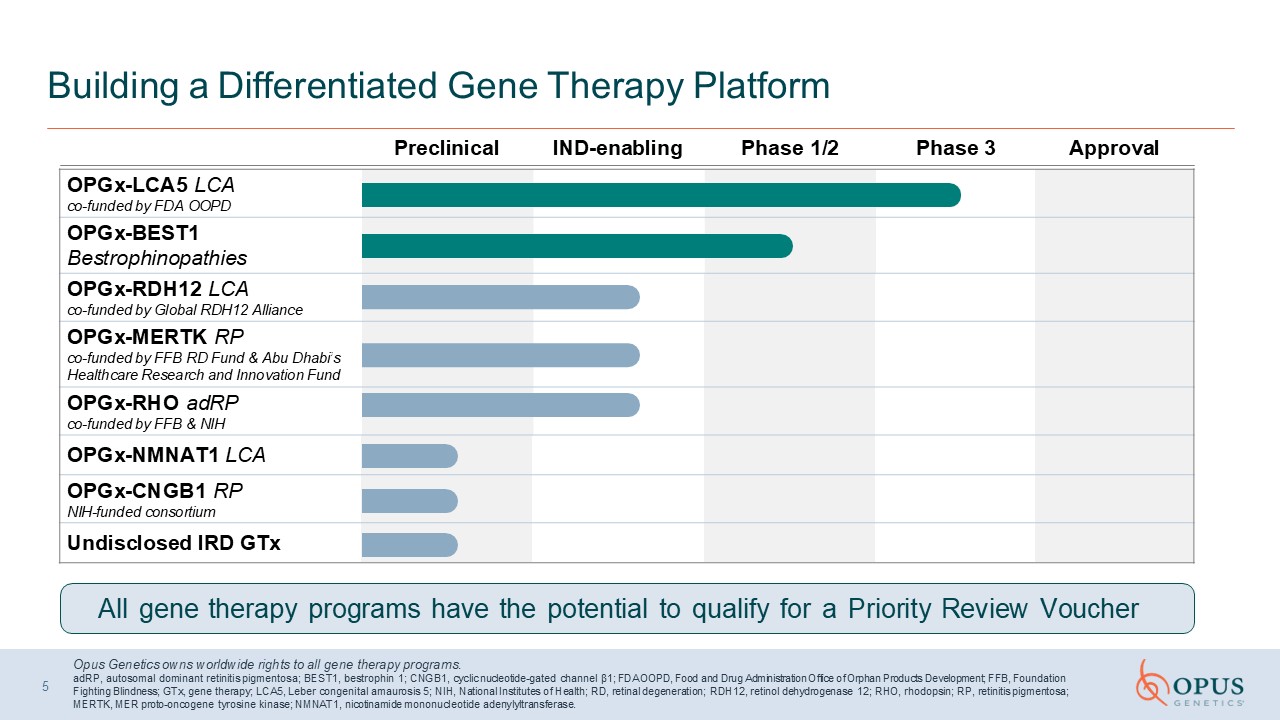
diseases (IRDs). The Company is developing durable, one-time treatments designed to address the underlying genetic causes of severe retinal disorders. The Company’s pipeline includes seven AAV-based programs, led by OPGx-LCA5 for LCA5-related
mutations and OPGx-BEST1 for BEST1-related retinal degeneration, with additional candidates targeting RDH12, MERTK, RHO, CNGB1 and NMNAT1. The Company is based in Research Triangle Park, NC. For more information, visit www.opusgtx.com.
Forward-Looking Statements
This press release contains certain statements that are not statements of historical fact and are forward-looking statements within the meaning of Section 27A of
the Securities Act of 1933, as amended, Section 21E of the Securities Exchange Act of 1934, as amended, and the Private Securities Litigation Reform Act of 1995. In some cases, you can identify forward-looking statements by the following words:
“anticipate,” “believe,” “continue,” “could,” “estimate,” “expect,” “intend,” “aim,” “may,” “ongoing,” “plan,” “potential,” “predict,” “project,” “should,” “strive,” “will,” “would” or the negative of these terms or other comparable terminology,
although not all forward-looking statements contain these words. Such statements include, but are not limited to, statements related to the Company’s continued clinical development, clinical results, preclinical data, and future plans for OPGx-BEST1,
including the anticipated timing of dosing completion and topline data from Cohort 2 of the OPGx-BEST1 Phase 1/2 clinical trial; the Company’s patient-selection and development strategy for subsequent clinical trials of OPGx-BEST1; the outcome of the
Company’s ongoing regulatory interactions with the FDA and its expectations regarding the design of, and potential endpoints for, of any pivotal clinical trial of OPGx-BEST1; the Company’s expectations regarding the clinical and therapeutic potential
of OPGx-BEST1, including with respect to its ability to improve visual function and retinal structure in patients with BEST1-related retinal disease; the potential benefit of treating patients with viable retinal tissue; the Company’s estimates of
the BEST1 symptomatic patient population in the U.S. and globally; and the Company’s expectations regarding its business prospects and results of operations. The clinical trial referenced in this press release is ongoing, and the data described are
interim, subject to change, and based on data available as of a specified date. As patient enrollment continues and additional follow-up data is obtained, the reported data and other clinical outcomes may change materially. There can be no assurance
that the interim results will be predictive of final clinical trial results or that additional data will confirm or support these observations. The forward-looking statements contained herein are subject to certain risks and uncertainties posed by
many factors and events that could cause the Company’s actual business, prospects and results of operations to differ materially from those anticipated by such forward-looking statements. Factors that could cause or contribute to such differences
include, but are not limited to, those described under the heading “Risk Factors” included in the Company’s most recent Annual Report on Form 10-K for the fiscal year ended December 31, 2025, its Quarterly Report on Form 10-Q for the quarter ended
June 30, 2026, and in the Company’s other filings with the U.S. Securities and Exchange Commission. Readers are cautioned not to place undue reliance on these forward-looking statements, which speak only as of the date of this press release. These
forward-looking statements are based upon the Company’s current expectations and involve assumptions that may never materialize or may prove to be incorrect. Actual results and the timing of events could differ materially from those anticipated in
such forward-looking statements as a result of various risks and uncertainties. The Company undertakes no obligation to revise any forward-looking statements in order to reflect events or circumstances that might subsequently arise.
Contacts:
Investors
Jenny Kobin
Remy Bernarda
IR Advisory Solutions
Media
Kimberly Ha
KKH Advisors
917-291-5744
Exhibit 99.2