XXII 8-K
22nd Century Group, Inc. (XXII)
UNITED STATES
SECURITIES AND EXCHANGE COMMISSION
WASHINGTON, D.C. 20549
FORM
CURRENT REPORT
Pursuant to Section 13 or 15(d) of the
Securities Exchange Act of 1934
Date of Report (Date of earliest event reported):
(Exact Name of Registrant as Specified in Charter)
(State or Other Jurisdiction of Incorporation) | (Commission File Number) | (I.R.S. Employer |
|
|
|
(Address of Principal Executive Office) | (Zip Code) | |
Registrant’s telephone number, including area code: ( | ||
Check the appropriate box below if the Form 8-K filing is intended to simultaneously satisfy the filing obligation of the registrant under any of the following provisions:
Securities registered pursuant to Section 12(b) of the Act:
Title of each class | Trading symbol | Name of each exchange on which registered |
Indicate by check mark whether the registrant is an emerging growth company as defined in Rule 405 of the Securities Act of 1933 (§230.405 of this chapter) or Rule 12b-2 of the Securities Exchange Act of 1934 (§240.12b-2 of this chapter). Emerging growth company
If an emerging growth company, indicate by check mark if the registrant has elected not to use the extended transition period for complying with any new or revised financial accounting standards provided pursuant to Section 13(a) of the Exchange Act. ☐
Item 2.02 | Disclosure of Results of Operations and Financial Condition |
On November 5, 2020, 22nd Century Group, Inc. (the “Company”) issued an earnings release for the nine months ended September 30, 2020, which is attached as Exhibit 99.1.
The information in this item shall not be deemed “filed” for purposes of Section 18 of the Securities Exchange Act of 1934 (the “Exchange Act”), or otherwise subject to the liabilities of Section 18, nor shall it be deemed incorporated by reference in any of the Company’s filings under the Securities Act of 1933, as amended, or the Exchange Act, except to the extent, if any, expressly set forth by specific reference in such filing.
Item 9.01(d) | Financial Statements and Exhibits |
Earnings release for the quarter ended September 30, 2020 |
Supplemental financial information for the quarter ended September 30, 2020 |
104 | Cover Page Interactive Data File- The cover page XBRL tags are embedded within the inline XBRL document |
SIGNATURES
Pursuant to the requirements of the Securities Exchange Act of 1934, the Registrant has duly caused this report to be signed on its behalf by the undersigned hereunto duly authorized.
| 22nd Century Group, Inc. |
|
|
|
|
| /s/ James A. Mish |
Date: November 5, 2020 | James A. Mish |
| Chief Executive Officer |
Exhibit 99.1
22nd Century Group Reports Financial Results and Business Highlights for the Third Quarter 2020
Key Highlights:
| ● | 22nd Century remains focused on its primary mission of reducing the harm caused by smoking. To this end, in recent weeks the Company has intensified its proactive efforts to secure a Modified Risk Tobacco Product (MRTP) authorization from the U.S. Food and Drug Administration (FDA) for VLN®. With 95% less nicotine than leading brands - or any other cigarette in the U.S. - VLN® will make 22nd Century the first, and only company in the world to achieve a MRTP designation for a combustible cigarette. |
| ● | The Company has plans in place to commercialize VLN® in the U.S. 90 days after receiving MRTP authorization. These plans include a rollout through large, well-recognized retail chains in the U.S. and a marketing campaign to introduce adult smokers to the world’s lowest nicotine content cigarette. |
| ● | 22nd Century was recently granted a new, highly valuable U.S. patent which provides the Company with precise genetic control over nicotine levels in virtually any variety of the tobacco plant. The breakthrough technology will enable the Company to rapidly introduce very low nicotine traits into all varieties of tobacco currently used in the production of cigarettes and other tobacco products. |
| ● | The Company has refocused its hemp/cannabis strategy to prioritize the upstream value chain segments of plant/seed biotechnology, breeding, cultivation, and purification of disruptive, proprietary plant lines over cannabidiol (CBD) and hemp-based consumer products in the U.S. |
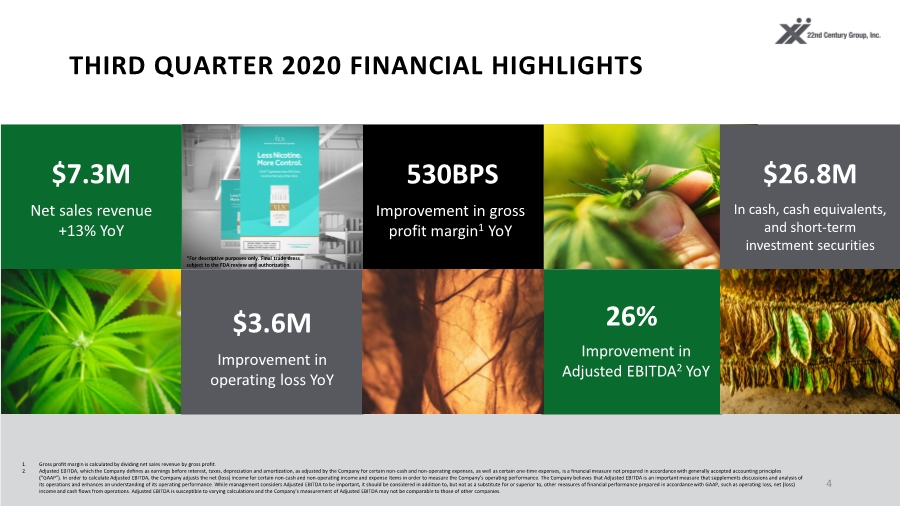
| ● | Net sales revenue increased approximately 13.1% from the third quarter of 2019 to $7.3 million. |
| ● | Year-to-date, gross profit improved by $1.1 million year-over-year and continues to show improvement as a result of increased contract manufacturing operation (CMO) sales volume and pricing as well as targeted actions to improve production costs. |
| ● | Quarter-to-date, total operating expenses improved by $3.2 million and operating loss improved by $3.6 million over the prior-year quarter. |
| ● | Net loss improved by $6.0 million over the same quarter in the prior year. |
| ● | The Company's financial position remains strong with cash, cash equivalents, and short-term investment securities totaling approximately $26.8 million at the end of the third quarter 2020. |
| ● | Adjusted EBITDA improved by 26.4% compared to the third quarter of 2019. |
WILLIAMSVILLE, N.Y., November 5, 2020 (Globe Newswire) — 22nd Century Group, Inc. (NYSE American: XXII), a leading plant-based, biotechnology company that is focused on tobacco harm reduction, very low nicotine content tobacco, and hemp/cannabis research, announced today that the Company filed its 2020 Third Quarter Report on Form 10-Q with the U.S. Securities and Exchange Commission. The Company will provide a business update for investors on a live audio webcast to be held today at 8:00 a.m. ET.
James A. Mish, chief executive officer of 22nd Century Group, together with Michael Zercher, chief operating officer, and John Franzino, chief financial officer, will host the webcast. Interested parties are invited to participate by visiting the Events section on the Company’s Investor Relations website at www.xxiicentury.com/investors/events. Following prepared remarks, the Company will host a Q&A session during which management will accept questions from industry analysts. Investors, shareholders, and members of the media will also have the opportunity to submit their questions through the interactive webcast.
“In my first few months as CEO of 22nd Century, I met with scientists, public health officials, national cigarette retailers, farmers, and 22nd Century shareholders. What I heard, from each of these groups, is that 22nd Century’s VLN® cigarettes have the potential to disrupt and redefine the entire tobacco industry and, in doing so, prevent millions of our nation’s youth from becoming addicted to the only legal consumer product that, when used as intended, will kill half of all long-term users,” said James A. Mish, chief executive officer of 22nd Century Group. “Understanding these facts has helped me to truly appreciate the Company’s primary mission of reducing the harm caused by smoking and to reaffirm the Company’s strategic priorities.”
After conducting a comprehensive review of 22nd Century’s existing business, extensive intellectual property portfolio, and the regulatory climate in which the Company operates, management has identified near-term milestones and medium/long-term opportunities:
| 1. | Securing a MRTP authorization from the FDA for VLN® remains the Company’s number one priority. Separately, but at the same time, 22nd Century has made product launch plans that include a national roll-out with large, well-recognized retail chains in the U.S. and a marketing campaign that has been designed to introduce adult smokers to the world’s lowest nicotine content cigarette. Commercial product launch and licensing discussion with potential strategic partners in the U.S. and globally will commence within 90 days of MRTP authorization. |
| 2. | An equally important first priority initiative is supporting and advancing the FDA’s plan to require that all cigarettes sold in the U.S. be made “minimally or non-addictive” by limiting their nicotine content to just 0.5 milligrams of nicotine per gram of tobacco (a level already achieved by 22nd Century’s proprietary VLN® cigarettes). When the FDA mandate ultimately goes into effect, 22nd Century plans to make the Company’s proprietary reduced nicotine content tobacco and related intellectual property available to every cigarette manufacturer in the U.S. |
| 3. | 22nd Century’s near- and medium-term commercial prospects have never been brighter. Since reporting second quarter earnings, the Company has refocused its hemp/cannabis strategy to target the upstream segments of the value chain such as plant biotechnology research, gene modification and engineering, and modern plant breeding. This renewed emphasis on intellectual property and high-value genetic traits is a shift away from CBD and hemp-based consumer products in the already saturated U.S. market. Accordingly, 22nd Century will concentrate its hemp/cannabis efforts on initiatives related to the Company’s current (and exclusive) KeyGene collaboration and on the existing worldwide license agreement with Anandia Laboratories. |
| 4. | 22nd Century has also identified a third plant-based franchise that has similarities in its genome to the hemp/cannabis plant. The Company plans to turn attention to this franchise after execution of its tobacco and hemp/cannabis strategies. 22nd Century is in the process of securing valuable and necessary intellectual property and pursuing strategic partnerships to support the development of this franchise. The Company will provide additional information as the competitive situation allows. |
| 5. | Additionally, 22nd Century’s operating results for the third quarter were strong, driven by year-over-year revenue growth and continued gross margin improvement. The Company’s balance sheet is healthy and has excellent prospects to establish strategic partnerships upon its MRTP authorization. 22nd Century is fully prepared to launch its historic VLN® product. |
Business Highlights and Key Events
| ● | On September 17, 2020, 22nd Century announced the appointment of Michael Koganov, Sc.D., Ph.D., to its Board of Directors. Dr. Koganov will serve as Chair of the Company’s Scientific Advisory Board and as a member of the Board of Director’s Finance Committee. Recognized as a leading expert in the development of plant-derived, natural products and solutions for pharmaceutical, consumer packaged goods, and life science companies, Dr. Koganov brings a valuable scientific perspective to 22nd Century’s business and research and development strategies. |
| ● | On October 14, 2020, the Company announced that it was granted U.S. Patent No. 10,669,552 entitled “Up-regulation of auxin response factor NbTF7 to decrease nicotine in a plant.” This crucial patent covers methods of manipulating plant metabolism and alkaloid levels by controlling transcription factor NbTF7, which regulates the nicotine alkaloid biosynthetic pathway. This breakthrough technology provides the Company with a rapid pathway to introduce very low nicotine traits into virtually any variety of tobacco, including bright, burley, oriental, and cigar tobacco varieties. This achievement further demonstrates that the FDA’s Comprehensive Plan for Tobacco and Nicotine Regulation to limit the nicotine content for all cigarettes sold in the U.S. is technically feasible and at the same time definitively disproves the “Big Tobacco” claim that such low nicotine levels cannot be achieved in all tobacco varieties. |
| ● | On October 19, 2020, the Company announced its participation in the Food and Drug Law Institute’s Tobacco and Nicotine Products Regulation and Policy Conference. John Pritchard, 22nd Century’s vice president of regulatory science, presented as a member of the conference’s “Nicotine and Harm Reduction” panel on Thursday, October 22. During the conference, 22nd Century expressed strong support for the FDA’s landmark 2017 Comprehensive Plan for Tobacco and Nicotine Regulation, in particular the FDA’s plan to require all cigarettes sold in the U.S. to be made “minimally or non-addictive” by limiting their nicotine content to just 0.5 milligrams of nicotine per gram of tobacco, a level already achieved by 22nd Century’s proprietary VLN® cigarettes. The Company gained significant exposure with the 300 participants attending the conference, including members of the FDA’s Center for Tobacco Products (CTP), advocates of public health and regulation, and key members of the media. 22nd Century continues to advocate for common-sense tobacco and nicotine regulation and urges public health officials to unite against the tragic toll of cigarette addiction. |
| ● | Since reporting second quarter earnings in August, the Company has finalized its strategic plans, set near-term milestones, and identified exciting medium and long-term opportunities. 22nd Century’s primary mission and highest, near-term priority is on reducing the harm caused by smoking. The Company will achieve its mission by bringing to market its proprietary, reduced nicotine content tobacco cigarettes – containing 95% less nicotine than conventional cigarettes – under the brand name VLN® upon the FDA’s authorization of its MRTP application. The Company continues to maintain its dialogue with the FDA, and believes the Agency is in the final stages of the review process related to its application. In addition to its ongoing contact with the FDA, 22nd Century is also working with various legal counsel, advisors, and government affairs specialists to highlight the public health importance of its MRTP application to encourage a near-term authorization of its application. |
With more than 34 million smokers in the U.S. and more than 1 billion worldwide, the FDA’s authorization of the VLN® MRTP application will serve as a catalyst for 22nd Century’s commercial sales. The Company believes that achieving just one-quarter of one percent (0.25%) market share of the U.S. cigarette market, could result in revenues that may over time, based on the disruptive nature of VLN®, drive the Company’s market capitalization more than 10 times higher. In addition, the Company believes the FDA’s authorization of 22nd Century’s MRTP with modified exposure claims would open multiple licensing opportunities for 22nd Century’s proprietary reduced nicotine content tobacco in the U.S. and globally.
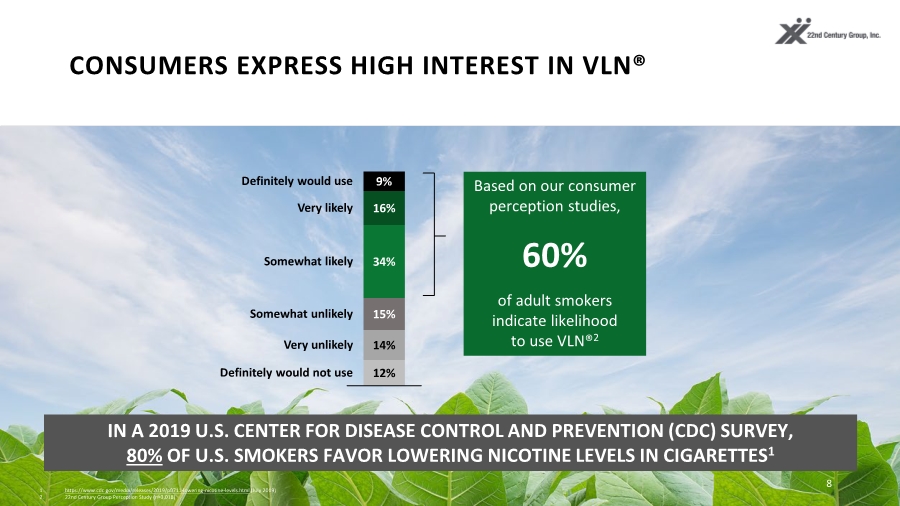
| ● | The Company will make VLN® available to adult smokers in the U.S. through its planned distribution in pharmacies, convenience stores, and other tobacco retail outlets within 90 days of receiving MRTP authorization from the FDA. 22nd Century has received extremely positive feedback on its reduced nicotine content cigarettes from many potential partners in the independent, regional, and national retail trade, and the Company is in the process of finalizing its distribution plans and agreements. The Company is also in the final stages of completing its marketing plans for VLN® and currently anticipates a phased roll out in select geographies within 90 days of MRTP authorization. 22nd Century plans to position VLN® in the premium pricing segment of the cigarette market and expects it to deliver corresponding margins. The Company’s consumer market research indicates that 60% of adult smokers have an interest in using VLN®. Discussions with potential tobacco retailers have indicated strong support from trade channel partners. |
| ● | 22nd Century has also made considerable progress in the development of its non-GMO (genetically modified organisms) technology and has successfully applied the next generation methodology of reducing nicotine levels in tobacco plants to several varieties of tobacco. The non-GMO technology has shown to consistently achieve reductions in nicotine levels by as much as 99% compared to conventional tobacco. The Company believes that non-GMO technology is key to commercializing global opportunities where non-GMO products are preferred by consumers or where GMO products are banned. The Company will begin to execute on commercial opportunities overseas once it secures MRTP authorization from the FDA, as the Agency is viewed as the gold standard in public health. The Company has already harvested non-GMO crops from field trials conducted earlier this year and is already developing a non-GMO very low nicotine content cigarette prototype. |
| ● | The Company’s genesis in hemp/cannabis research was established in 2014 through a worldwide license agreement with Anandia Laboratories. The Company maintains its exclusive sublicense in the U.S. and co-exclusive sublicense in the remainder of the world, excluding Canada, for 23 patent and patent applications relating to the hemp/cannabis plant. The licenses for these valuable patents survive Aurora Cannabis’s acquisition of Anandia. The Company believes that it can accelerate its research in hemp/cannabis through selective partnerships. |
| ● | Through its partnership with KeyGene, the Company has recently completed building its proprietary bioinformatics platform. Armed with this encyclopedia of information on the hemp/cannabis genome, 22nd Century looks now to begin monetizing the vast knowledge foundation and intellectual property it has developed over the past year. The Company believes that its collaborative efforts with KeyGene enables the Company to modify and improve the hemp/cannabis plant using the fastest and most cost-effective methods available. 22nd Century continues to target and develop hemp/cannabis lines with select agronomic traits including lines with stable, ultra-high tetrahydrocannabinol (THC) levels, lines with higher levels of rare cannabinoids, and lines with ultra-low terpene levels. |
| ● | 22nd Century has refocused its hemp/cannabis strategy to target the upstream segments of the cannabinoid value chain, in particular, in the areas of plant biotechnology research, gene modification and engineering, modern plant breeding and development, and extraction. The Company intends to build upon its core strengths in the plant science and ingredient value chain and seek to form operational partnerships that will enable it to offer comprehensive commercial breeding, cultivation, and extract purification services utilizing its proprietary hemp/cannabis plants in development. With the progress that 22nd Century has made over the past year in its partnership with Panacea, the Company will focus on and ensure the accelerated delivery of valuable, commercial plant lines and technology, and intellectual property for the life science, consumer product, and pharmaceutical markets over finished consumer goods. |
| ● | 22nd Century has also identified a third plant-based franchise that has similarities in its genome to the hemp/cannabis plant. The Company plans to turn attention to this franchise after execution of its tobacco and hemp/cannabis strategies. 22nd Century is in the process of securing valuable intellectual property and pursuing strategic partnerships to support the development of this franchise and will provide additional information over the coming months as the competitive situation allows. |
2020 Third Quarter and Year-to-Date Financial Results
| ● | Net sales revenue for the third quarter of 2020 was $7.3 million, an increase of 13.1% over net sales revenue of $6.5 million during the third quarter of 2019. Net sales revenue year-to-date was $20.8 million, an increase of 12.0% from net sales revenue of $18.6 million for the first nine months of 2019. The increase in sales for both periods was primarily driven by higher volume and pricing in its contract manufacturing business. |
| ● | Gross profit improved by $383 thousand in the third quarter of 2020 compared to prior year and improved $1.1 million year-to-date compared to the first nine months of 2019. The improved gross margin was primarily the result of higher volume, price increases, and lower labor and overhead costs driven by factory efficiencies implemented over the last nine months. |
| ● | Total operating expenses improved by $3.2 million for the third quarter and improved by $4.0 million year-to-date, driven by the following: |
| ● | Research and development expenses decreased by $1.0 million quarter-to-date and $2.2 million year-to-date. This was primarily driven by a reduction in personnel expense, lower license and contract costs, and the absence of a one-time impairment charge taken on research tobacco leaf inventory in the prior year. |
| ● | Research and development expenses related to the MRTP application was favorable in the third quarter by $65 thousand and $1.4 million year-to-date. The expenses in the prior year were primarily related to preparation for the Company’s Tobacco Products Scientific Advisory Committee (TPSAC) hearing which occurred on February 14, 2020. |
| ● | Sales, general and administrative expense was favorable by $890 thousand in the third quarter. The favorability was driven primarily by lower one-time severance expenses and decreased equity compensation that occurred in the third quarter of 2019 as a result of management changes. |
| ● | Sales, general and administrative expense was $690 thousand higher year-to-date compared to the first nine months of 2019. This was driven primarily by an increase in expenses related to consulting and professional services and personnel and insurance costs and was partially offset primarily by lower equity compensation and a decrease in one-time severance expense. |
| ● | Impairment of intangible assets decreased by $1.1 million in the third quarter and by $997 thousand year-to-date. The decrease year-over year was related to an intellectual property portfolio rationalization that resulted in higher impairment in the prior year. |
| ● | Operating loss improved by $3.6 million in the third quarter of 2020 to ($4.0) million. The improvement in the quarter was driven by higher gross profit which increased by $384 thousand and lower total operating expenses of $3.2 million, primarily driven by the aforementioned impairment of intangible assets recorded in the prior year, lower sales, general and administrative expenses, and lower research and development spend. |
| ● | Operating loss year-to-date improved by $5.1 million to ($12.9) million driven by the combination of higher gross profit which increased by $1.1 million and a $4.0 million reduction in operating expenses. The decrease in operating expenses were primarily driven by a decrease in research and development expenses and the aforementioned impairment of intangible assets recorded in the prior year. |
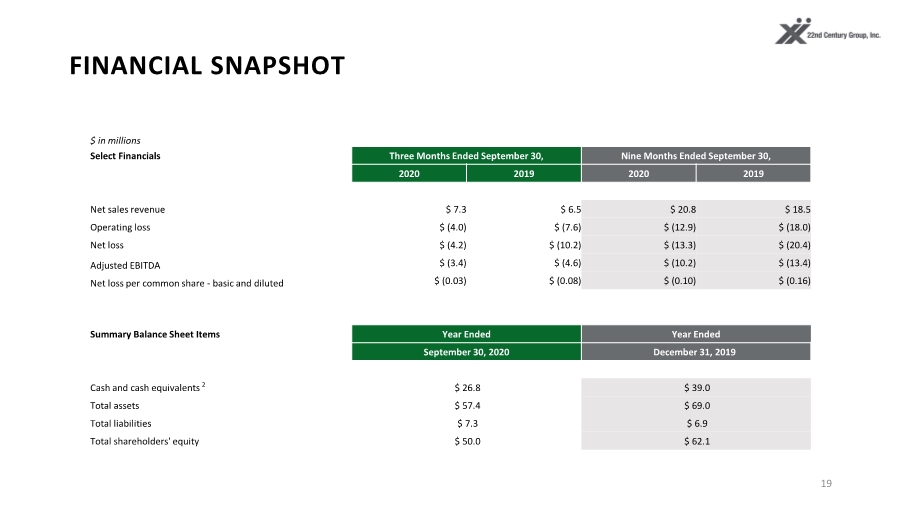
| ● | Net loss for the third quarter of 2020 improved by $6.0 million to ($4.2) million, representing a net loss per share of ($0.03) as compared to a net loss of ($10.3) million, or a net loss per share of ($0.08) for third quarter of 2019. In addition to the improvement in operating loss of $3.6 million, other income and expense improved by $2.5 million primarily due to a reduction in the unrealized loss on Aurora warrants of ($3.0) million in the quarter. |
| ● | Net loss for the first nine months of 2020 improved by $7.1 million to ($13.3) million, representing a net loss per share of ($0.10) as compared to a net loss of ($20.4) million, or a net loss per share of ($0.16). In addition to the improvement in operating loss of $5.1 million, other income and expense improved by $2.0 million primary due to a $1.9 million litigation expense recorded in the prior year. This was partially offset in the current year by an impairment charge of $1.1 million related to the Panacea stock warrant investment. |
| ● | Adjusted EBITDA was ($3.4) million for the third quarter of 2020, an improvement of $1.2 million, or 26.4% compared to Adjusted EBITDA of ($4.6) million for the third quarter of 2019. |
| ● | Adjusted EBITDA was ($10.2) million for the first nine months of 2020, an improvement of $3.1 million, or 23.3% compared to Adjusted EBITDA of ($13.4) million for the first nine months of 2019. |
Balance Sheet and Liquidity
| ● | For the first nine months of 2020, net cash used in operating activities was approximately $12.6 million, compared to approximately $11.7 million in the first nine months of 2019. |
| ● | The Company’s liquidity remains strong with cash, cash equivalents, and short-term investment securities totaling approximately $26.8 million as of September 30, 2020. |
| ● | The Company does not have any plans or need to raise capital at this time. It believes the continued improvement in quarterly cash burn rate, an ongoing reduction in costs, and a healthy cash position should provide the Company with ample ability to execute for the foreseeable future. |
Third Quarter Earnings Conference Call
22nd Century will host a live audio webcast today at 8:00 a.m. ET to discuss its third quarter 2020 financial results. Following prepared remarks, the Company will host a Q&A session during which management will accept questions from interested analysts. Investors, shareholders, and members of the media will also have the opportunity to pose questions to management by submitting questions through the interactive webcast during the event.
The live audio webcast, interactive Q&A, and investor presentation will be accessible in the Events section on the Company's Investor Relations website at www.xxiicentury.com/investors/events. An archived replay of the webcast and the event transcript will also be available shortly after the live event has concluded.
About 22nd Century Group, Inc.
22nd Century Group, Inc. (NYSE American: XXII) is a leading plant biotechnology company focused on technologies that alter the level of nicotine in tobacco plants and the level of cannabinoids in hemp/cannabis plants through genetic engineering, gene-editing, and modern plant breeding. 22nd Century’s primary mission in tobacco is to reduce the harm caused by smoking through the Company’s proprietary reduced nicotine content tobacco cigarettes – containing 95% less nicotine than conventional cigarettes. The Company’s primary mission in hemp/cannabis is to develop and commercialize proprietary hemp/cannabis plants with valuable cannabinoid profiles and desirable agronomic traits.
Learn more at xxiicentury.com, on Twitter @_xxiicentury and on LinkedIn.
Cautionary Note Regarding Forward Looking Statements
Except for historical information, all of the statements, expectations, and assumptions contained in this press release are forward-looking statements. Forward-looking statements typically contain terms such as “anticipate,” “believe,” “consider,” “continue,” “could,” “estimate,” “expect,” “explore,” “foresee,” “goal,” “guidance,” “intend,” “likely,” “may,” “plan,” “potential,” “predict,” “preliminary,” “probable,” “project,” “promising,” “seek,” “should,” “will,” “would,” and similar expressions. Actual results might differ materially from those explicit or implicit in forward-looking statements. Important factors that could cause actual results to differ materially are set forth in “Risk Factors” in the Company’s Annual Report on Form 10-K filed on March 11, 2020 and in its subsequently filed Quarterly Report on Form 10-Q. 22nd Century undertakes no obligation to publicly update or revise any forward-looking statement as a result of new information, future events, or otherwise, except as otherwise required by law.
All information provided in this release is as of the date hereof, and the Company assumes no obligation to and does not intend to update these forward-looking statements, except as required by law.
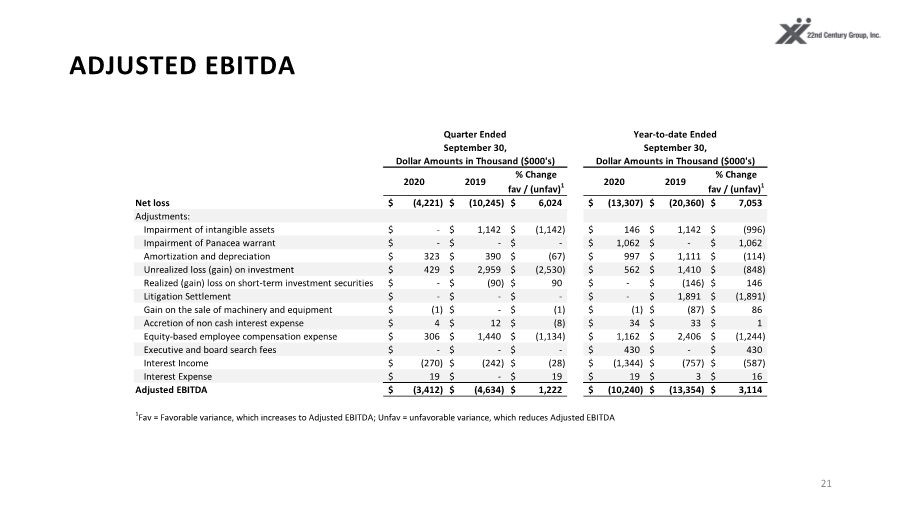
Below is a table containing information relating to the Company’s Adjusted EBITDA for the three and nine months ended September 31, 2020 and 2019, including a reconciliation of net (loss) income to Adjusted EBITDA for such periods.
| | Quarter Ended | |||||||
| | September 30, | |||||||
| | Dollar Amounts in Thousands ($000's) | |||||||
|
| | |
| | |
| $ Change | |
| | 2020 | | 2019 | | fav / (unfav) | |||
Net loss | | $ | (4,221) | | $ | (10,245) |
| $ | 6,024 |
Adjustments: | | | | | | | | | |
Impairment of intangible assets | | | — | | | 1,142 | | | (1,142) |
Amortization and depreciation | | | 323 | | | 390 | | | (67) |
Unrealized loss (gain) on investment | | | 429 | | | 2,959 |
| | (2,530) |
Realized (gain) loss on short-term investment securities | | | — | | | (90) |
| | 90 |
Gain on the sale of machinery and equipment | | | (1) | | | — | | | (1) |
Accretion of non-cash interest expense | | | 4 | | | 12 |
| | (8) |
Equity-based employee compensation expense | | | 306 | | | 1,440 |
| | (1,134) |
Interest Income | | | (270) | | | (242) |
| | (28) |
Interest Expense | | | 19 | | | — |
| | 19 |
Adjusted EBITDA | | $ | (3,412) | | $ | (4,634) |
| $ | 1,222 |
1Fav = Favorable variance, which increases Adjusted EBITDA; Unfav = unfavorable variance, which reduces Adjusted EBITDA
| | Year-to-date Ended | |||||||
| | September 30, | |||||||
| | Dollar Amounts in Thousands ($000's) | |||||||
|
| | |
| | |
| $ Change | |
| | 2020 | | 2019 | | fav / (unfav) | |||
Net loss | | $ | (13,307) | | $ | (20,360) |
| $ | 7,053 |
Adjustments: | | | | | | | | | |
Impairment of intangible assets | | | 146 | | | 1,142 | | | (996) |
Impairment of Panacea warrant | | | 1,062 | | | — | | | 1,062 |
Amortization and depreciation | | | 997 | | | 1,111 | | | (114) |
Unrealized loss (gain) on investment | | | 562 | | | 1,410 |
| | (848) |
Realized (gain) loss on short-term investment securities | | | — | | | (146) |
| | 146 |
Litigation Settlement | | | — | | | 1,891 |
| | (1,891) |
Gain on the sale of machinery and equipment | | | (1) | | | (87) |
| | 86 |
Accretion of non-cash interest expense | | | 34 | | | 33 |
| | 1 |
Equity-based employee compensation expense | | | 1,162 | | | 2,406 |
| | (1,244) |
Executive and board search fees | | | 430 | | | — |
| | 430 |
Interest Income | | | (1,344) | | | (757) |
| | (587) |
Interest Expense | | | 19 | | | 3 |
| | 16 |
Adjusted EBITDA | | $ | (10,240) | | $ | (13,354) |
| $ | 3,114 |
1Fav = Favorable variance, which increases Adjusted EBITDA; Unfav = unfavorable variance, which reduces Adjusted EBITDA
Adjusted EBITDA, which the Company defines as earnings before interest, taxes, depreciation and amortization, as adjusted by the Company for certain non-cash and non-operating expenses, as well as certain one-time expenses, is a financial measure not prepared in accordance with generally accepted accounting principles (“GAAP”). In order to calculate Adjusted EBITDA, the Company adjusts the net (loss) income for certain non-cash and non-operating income and expense items listed in the table above in order to measure the Company’s operating performance. The Company believes that Adjusted EBITDA is an important measure that supplements discussions and analysis of its operations and enhances an understanding of its operating performance. While management considers Adjusted EBITDA to be important, it should be considered in addition to, but not as a substitute for or superior to, other measures of financial performance prepared in accordance with GAAP, such as operating loss, net (loss) income and cash flows from operations. Adjusted EBITDA is susceptible to varying calculations and the Company’s measurement of Adjusted EBITDA may not be comparable to those of other companies.
Investor Relations & Media Contact:
Mei Kuo
Director, Communications & Investor Relations
22nd Century Group, Inc.
(716) 300-1221
Exhibit 99.2
| THIRD QUARTER 2020 EARNINGS SUPPLEMENTAL NOVEMBER 5, 2020 |
| CAUTIONARY NOTE ON FORWARD-LOOKING STATEMENTS This presentation contains forward-looking statements concerning our business operations and financial performance and conditions, as well as our plans, objectives, and expectations for our business operations and financial performance and conditions that are subject to risks and uncertainties. All statements other than those of historical fact are forward-looking statements. These types of statements typically contain words such as “aim,” “anticipate,” “assume,” “believe,” “could,” “due,” “estimate,” “expect,” “goal,” “intend,” “may,” “objective,” “plan,” “potential,” “positioned,” “predict,” “should,” “target,” “will,” “would” and other similar expressions that are predictions of or indicate future events and future trends. Forward-looking statements are based on current expectations, estimates, forecasts, and projections about our business, the industry in which we operate, and our management’s beliefs and assumptions. These statements are not guarantees of future performance or development and involve known and unknown risks, uncertainties, and other factors that are in some cases beyond our control. All forward-looking statements are subject to risks and uncertainties that could cause actual results to differ materially from those estimated. Please refer to the “Risk Factors” in our Annual Report, Form 10-K filed on March 11, 2020 and in our subsequently filed Quarterly Report, Form 10-Q. We undertake no obligation to publicly update or revise any forward-looking statement as a result of new information, future events, or otherwise, except as required by law. 2 |
| Q3 2020 BUSINESS HIGHLIGHTS • Remain focused on primary mission of reducing the harm caused by smoking • Intensified proactive efforts to secure Modified Risk Tobacco Product (MRTP) authorization from the U.S. Food and Drug Administration (FDA) for VLN® • Plans in place to commercialize VLN® in the U.S. 90 days after receiving MRTP designation • Commercial plans include a rollout through large, well-recognized retail chains in the U.S. and a marketing campaign to introduce adult smokers to the world’s lowest nicotine content cigarette • Refocused hemp/cannabis strategy to prioritize the upstream value chain segments of plant/seed biotechnology, breeding, cultivation, and purification of disruptive, proprietary plant lines • Identified a third plant-based franchise; securing valuable and necessary intellectual property and pursuing strategic partnerships to support the development of this franchise • Strong operating results for the third quarter, driven by year-over- year revenue growth and continued gross margin improvement; healthy balance sheet 3 |
| THIRD QUARTER 2020 FINANCIAL HIGHLIGHTS 1. Gross profit margin is calculated by dividing net sales revenue by gross profit. 2. Adjusted EBITDA, which the Company defines as earnings before interest, taxes, depreciation and amortization, as adjusted by the Company for certain non-cash and non-operating expenses, as well as certain one-time expenses, is a financial measure not prepared in accordance with generally accepted accounting principles (“GAAP”). In order to calculate Adjusted EBITDA, the Company adjusts the net (loss) income for certain non-cash and non-operating income and expense items in order to measure the Company’s operating performance. The Company believes that Adjusted EBITDA is an important measure that supplements discussions and analysis of its operations and enhances an understanding of its operating performance. While management considers Adjusted EBITDA to be important, it should be considered in addition to, but not as a substitute for or superior to, other measures of financial performance prepared in accordance with GAAP, such as operating loss, net (loss) income and cash flows from operations. Adjusted EBITDA is susceptible to varying calculations and the Company’s measurement of Adjusted EBITDA may not be comparable to those of other companies. 4 26% Improvement in Adjusted EBITDA2 YoY $7.3M Net sales revenue +13% YoY 530BPS Improvement in gross profit margin1 YoY $26.8M In cash, cash equivalents, and short-term investment securities $3.6M Improvement in operating loss YoY *For descriptive purposes only. Final trade dress subject to the FDA review and authorization. |
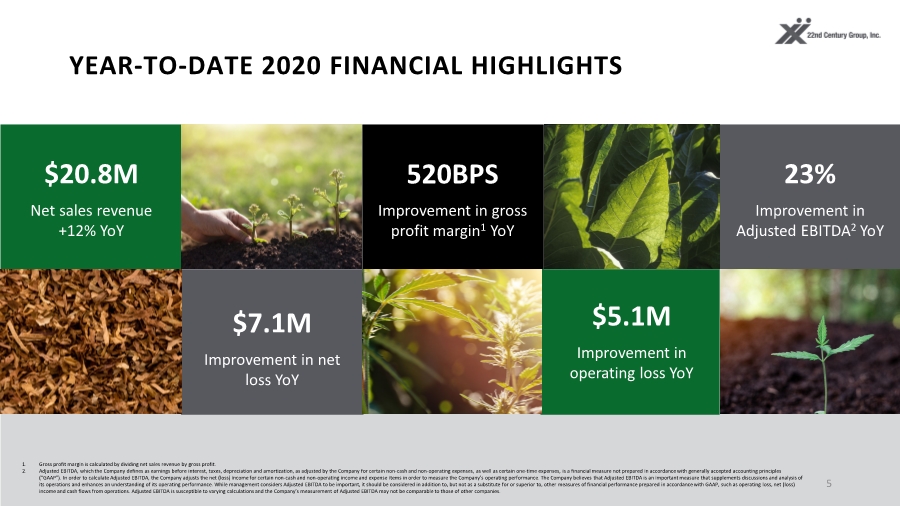
| YEAR-TO-DATE 2020 FINANCIAL HIGHLIGHTS 5 $5.1M Improvement in operating loss YoY $20.8M Net sales revenue +12% YoY 520BPS Improvement in gross profit margin1 YoY 23% Improvement in Adjusted EBITDA2 YoY $7.1M Improvement in net loss YoY 1. Gross profit margin is calculated by dividing net sales revenue by gross profit. 2. Adjusted EBITDA, which the Company defines as earnings before interest, taxes, depreciation and amortization, as adjusted by the Company for certain non-cash and non-operating expenses, as well as certain one-time expenses, is a financial measure not prepared in accordance with generally accepted accounting principles (“GAAP”). In order to calculate Adjusted EBITDA, the Company adjusts the net (loss) income for certain non-cash and non-operating income and expense items in order to measure the Company’s operating performance. The Company believes that Adjusted EBITDA is an important measure that supplements discussions and analysis of its operations and enhances an understanding of its operating performance. While management considers Adjusted EBITDA to be important, it should be considered in addition to, but not as a substitute for or superior to, other measures of financial performance prepared in accordance with GAAP, such as operating loss, net (loss) income and cash flows from operations. Adjusted EBITDA is susceptible to varying calculations and the Company’s measurement of Adjusted EBITDA may not be comparable to those of other companies. |
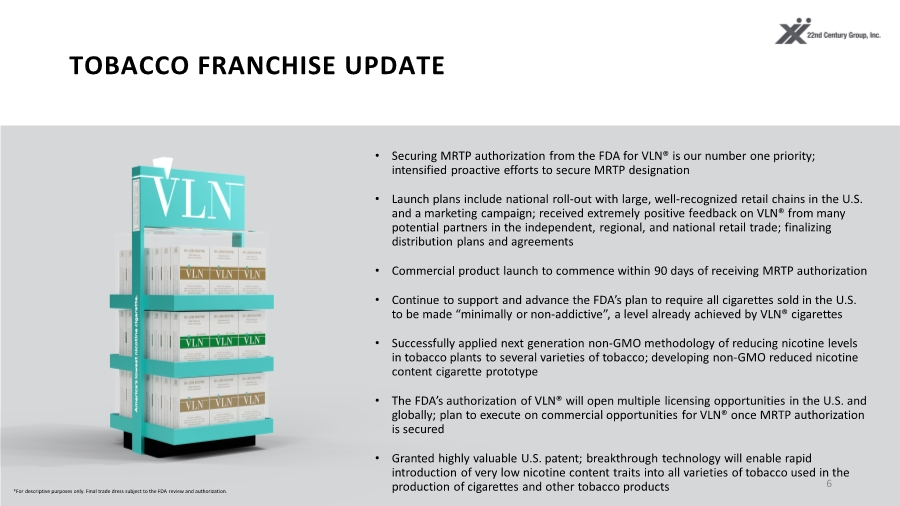
| TOBACCO FRANCHISE UPDATE • Securing MRTP authorization from the FDA for VLN® is our number one priority; intensified proactive efforts to secure MRTP designation • Launch plans include national roll-out with large, well-recognized retail chains in the U.S. and a marketing campaign; received extremely positive feedback on VLN® from many potential partners in the independent, regional, and national retail trade; finalizing distribution plans and agreements • Commercial product launch to commence within 90 days of receiving MRTP authorization • Continue to support and advance the FDA’s plan to require all cigarettes sold in the U.S. to be made “minimally or non-addictive”, a level already achieved by VLN® cigarettes • Successfully applied next generation non-GMO methodology of reducing nicotine levels in tobacco plants to several varieties of tobacco; developing non-GMO reduced nicotine content cigarette prototype • The FDA’s authorization of VLN® will open multiple licensing opportunities in the U.S. and globally; plan to execute on commercial opportunities for VLN® once MRTP authorization is secured • Granted highly valuable U.S. patent; breakthrough technology will enable rapid introduction of very low nicotine content traits into all varieties of tobacco used in the production of cigarettes and other tobacco products 6 *For descriptive purposes only. Final trade dress subject to the FDA review and authorization. |
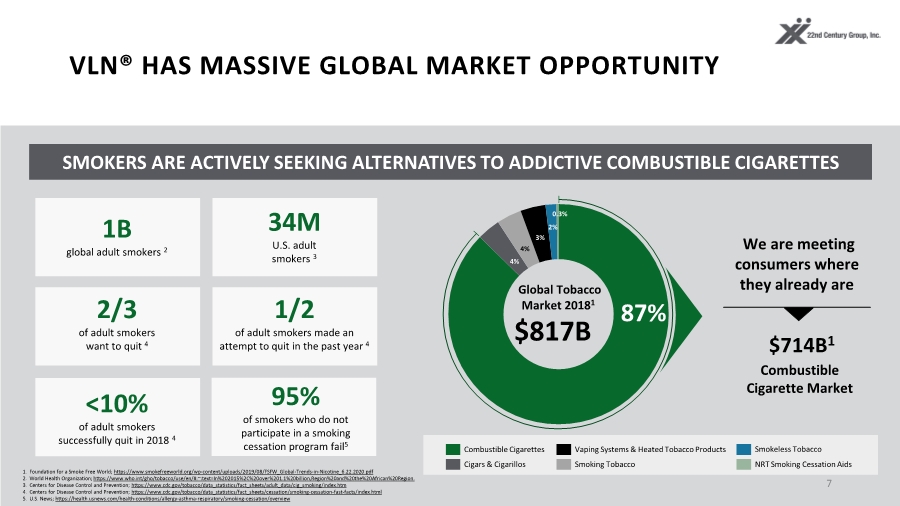
| VLN® HAS MASSIVE GLOBAL MARKET OPPORTUNITY 7 SMOKERS ARE ACTIVELY SEEKING ALTERNATIVES TO ADDICTIVE COMBUSTIBLE CIGARETTES 95% of smokers who do not participate in a smoking cessation program fail5 1. Foundation for a Smoke Free World; https://www.smokefreeworld.org/wp-content/uploads/2019/08/FSFW_Global-Trends-in-Nicotine_6.22.2020.pdf 2. World Health Organization; https://www.who.int/gho/tobacco/use/en/#:~:text=In%202015%2C%20over%201.1%20billion,Region%20and%20the%20African%20Region. 3. Centers for Disease Control and Prevention; https://www.cdc.gov/tobacco/data_statistics/fact_sheets/adult_data/cig_smoking/index.htm 4. Centers for Disease Control and Prevention; https://www.cdc.gov/tobacco/data_statistics/fact_sheets/cessation/smoking-cessation-fast-facts/index.html 5. U.S. News; https://health.usnews.com/health-conditions/allergy-asthma-respiratory/smoking-cessation/overview Cigars & Cigarillos Combustible Cigarettes Vaping Systems & Heated Tobacco Products Smoking Tobacco NRT Smoking Cessation Aids $817B Global Tobacco Market 20181 We are meeting consumers where they already are $714B1 3% 4% 4% 87% Combustible Cigarette Market 2% 0.3% 2/3 of adult smokers want to quit 4 1/2 of adult smokers made an attempt to quit in the past year 4 1B global adult smokers 2 34M U.S. adult smokers 3 <10% of adult smokers successfully quit in 2018 4 Smokeless Tobacco |
| CONSUMERS EXPRESS HIGH INTEREST IN VLN® 8 Based on our consumer perception studies, of adult smokers indicate likelihood to use VLN®2 IN A 2019 U.S. CENTER FOR DISEASE CONTROL AND PREVENTION (CDC) SURVEY, 80% OF U.S. SMOKERS FAVOR LOWERING NICOTINE LEVELS IN CIGARETTES1 12% 14% 15% 34% 16% 9% Somewhat likely Definitely would use Very likely Somewhat unlikely Very unlikely Definitely would not use 1. https://www.cdc.gov/media/releases/2019/p0711-lowering-nicotine-levels.html (July 2019) 2. 22nd Century Group Perception Study (n=3,018) 60% |
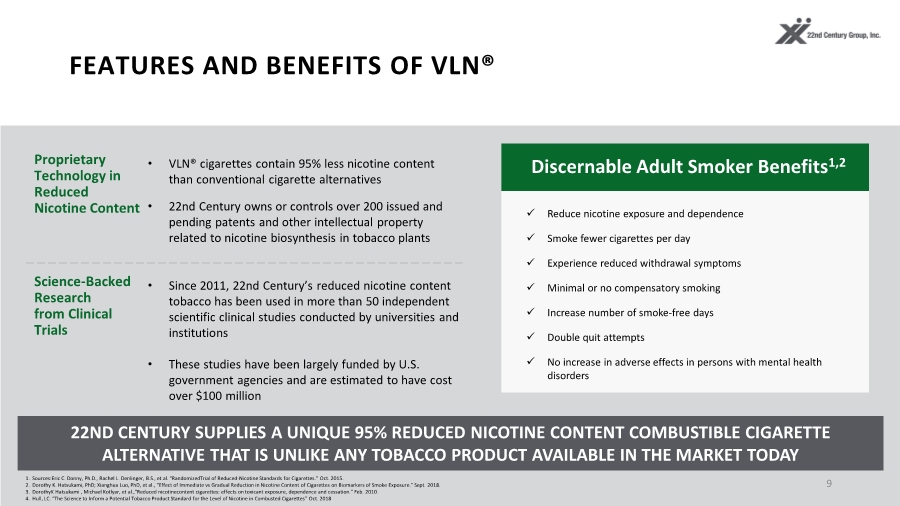
| FEATURES AND BENEFITS OF VLN® 9 22ND CENTURY SUPPLIES A UNIQUE 95% REDUCED NICOTINE CONTENT COMBUSTIBLE CIGARETTE ALTERNATIVE THAT IS UNLIKE ANY TOBACCO PRODUCT AVAILABLE IN THE MARKET TODAY Proprietary Technology in Reduced Nicotine Content • VLN® cigarettes contain 95% less nicotine content than conventional cigarette alternatives • 22nd Century owns or controls over 200 issued and pending patents and other intellectual property related to nicotine biosynthesis in tobacco plants Discernable Adult Smoker Benefits1,2 Science-Backed Research from Clinical Trials • Since 2011, 22nd Century’s reduced nicotine content tobacco has been used in more than 50 independent scientific clinical studies conducted by universities and institutions • These studies have been largely funded by U.S. government agencies and are estimated to have cost over $100 million Reduce nicotine exposure and dependence Smoke fewer cigarettes per day Experience reduced withdrawal symptoms Minimal or no compensatory smoking Increase number of smoke-free days Double quit attempts No increase in adverse effects in persons with mental health disorders 1. Sources:Eric C. Donny, Ph.D., Rachel L. Denlinger, B.S., et al. “RandomizedTrial of Reduced-Nicotine Standards for Cigarettes.” Oct. 2015. 2. Dorothy K. Hatsukami, PhD; Xianghua Luo, PhD, et al., “Effect of Immediate vs Gradual Reduction in Nicotine Content of Cigarettes on Biomarkers of Smoke Exposure.” Sept. 2018. 3. DorothyK Hatsukami , Michael Kotlyar, et al.,“Reduced nicotinecontent cigarettes: effects on toxicant exposure, dependence and cessation.” Feb. 2010. 4. Hull, LC. “The Science to Inform a Potential Tobacco Product Standard for the Level of Nicotine in Combusted Cigarettes” Oct. 2018 |
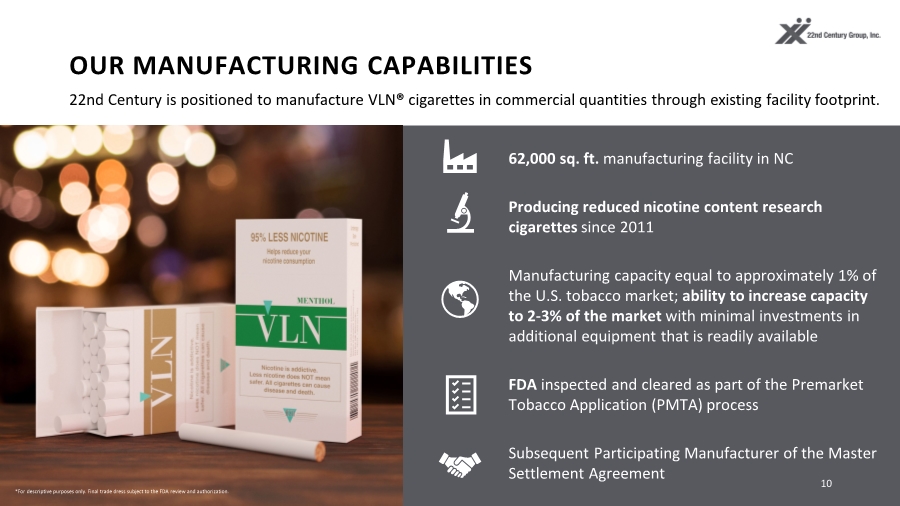
| OUR MANUFACTURING CAPABILITIES 10 62,000 sq. ft. manufacturing facility in NC Producing reduced nicotine content research cigarettes since 2011 Manufacturing capacity equal to approximately 1% of the U.S. tobacco market; ability to increase capacity to 2-3% of the market with minimal investments in additional equipment that is readily available FDA inspected and cleared as part of the Premarket Tobacco Application (PMTA) process Subsequent Participating Manufacturer of the Master Settlement Agreement 22nd Century is positioned to manufacture VLN® cigarettes in commercial quantities through existing facility footprint. *For descriptive purposes only. Final trade dress subject to the FDA review and authorization. |
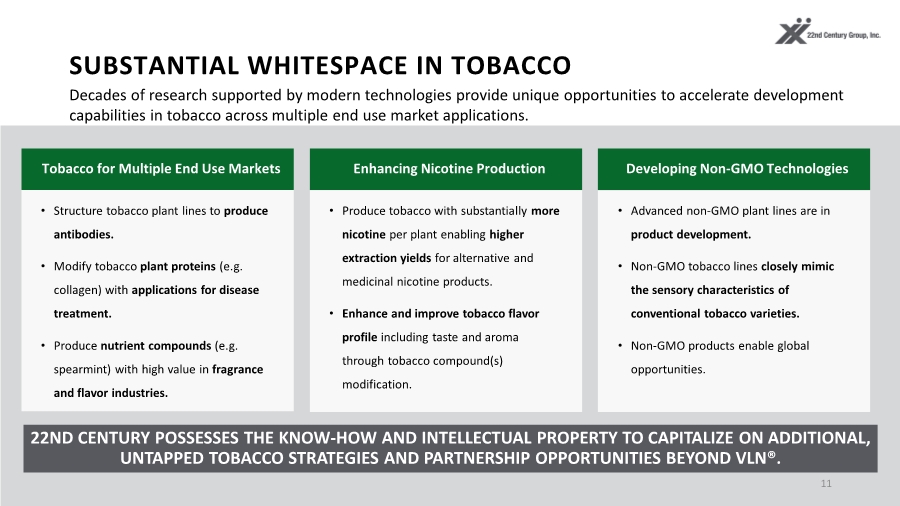
| SUBSTANTIAL WHITESPACE IN TOBACCO 11 Decades of research supported by modern technologies provide unique opportunities to accelerate development capabilities in tobacco across multiple end use market applications. 22ND CENTURY POSSESSES THE KNOW-HOW AND INTELLECTUAL PROPERTY TO CAPITALIZE ON ADDITIONAL, UNTAPPED TOBACCO STRATEGIES AND PARTNERSHIP OPPORTUNITIES BEYOND VLN®. Tobacco for Multiple End Use Markets • Structure tobacco plant lines to produce antibodies. • Modify tobacco plant proteins (e.g. collagen) with applications for disease treatment. • Produce nutrient compounds (e.g. spearmint) with high value in fragrance and flavor industries. Enhancing Nicotine Production • Produce tobacco with substantially more nicotine per plant enabling higher extraction yields for alternative and medicinal nicotine products. • Enhance and improve tobacco flavor profile including taste and aroma through tobacco compound(s) modification. Developing Non-GMO Technologies • Advanced non-GMO plant lines are in product development. • Non-GMO tobacco lines closely mimic the sensory characteristics of conventional tobacco varieties. • Non-GMO products enable global opportunities. Tobacco for Multiple End Use Markets Enhancing Nicotine Production Developing Non-GMO Technologies |
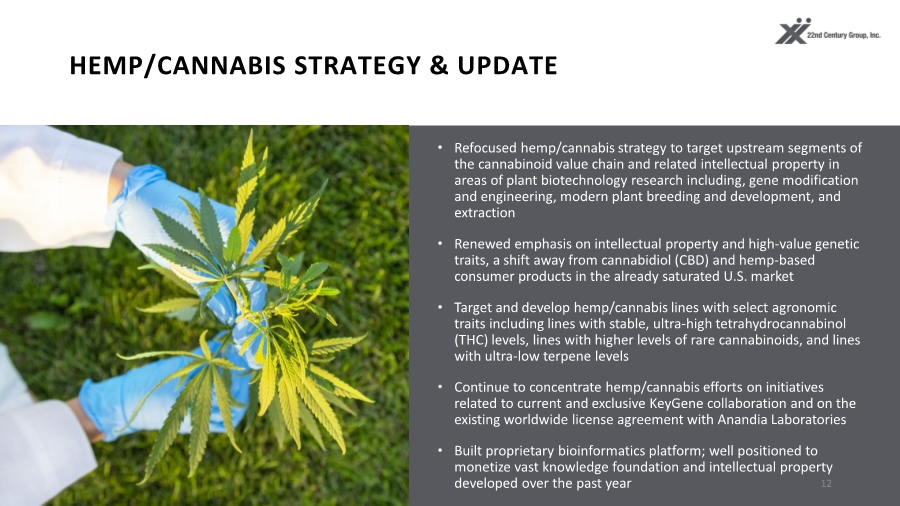
| HEMP/CANNABIS STRATEGY & UPDATE • Refocused hemp/cannabis strategy to target upstream segments of the cannabinoid value chain and related intellectual property in areas of plant biotechnology research including, gene modification and engineering, modern plant breeding and development, and extraction • Renewed emphasis on intellectual property and high-value genetic traits, a shift away from cannabidiol (CBD) and hemp-based consumer products in the already saturated U.S. market • Target and develop hemp/cannabis lines with select agronomic traits including lines with stable, ultra-high tetrahydrocannabinol (THC) levels, lines with higher levels of rare cannabinoids, and lines with ultra-low terpene levels • Continue to concentrate hemp/cannabis efforts on initiatives related to current and exclusive KeyGene collaboration and on the existing worldwide license agreement with Anandia Laboratories • Built proprietary bioinformatics platform; well positioned to monetize vast knowledge foundation and intellectual property developed over the past year 12 |
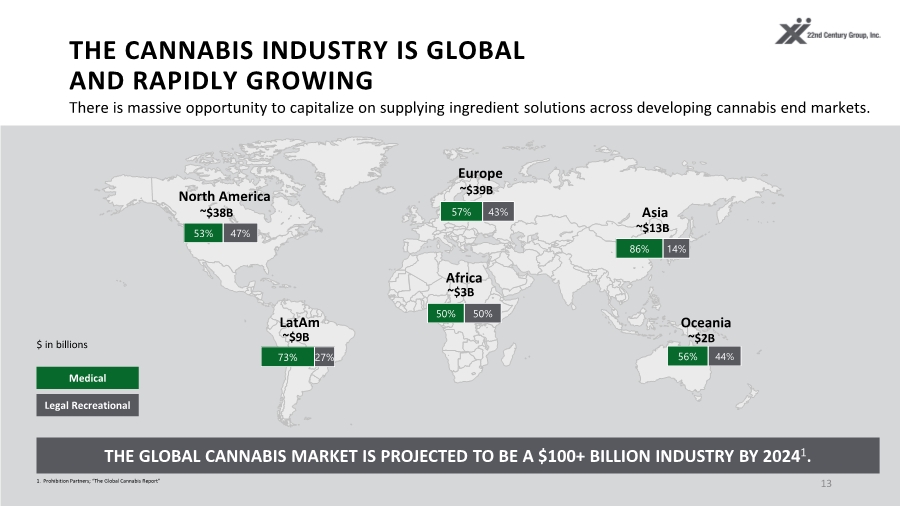
| THE CANNABIS INDUSTRY IS GLOBAL AND RAPIDLY GROWING 13 North America LatAm Europe Asia Africa Oceania Legal Recreational Medical $ in billions ~$38B 53% 47% 57% 43% ~$39B 86% 14% ~$13B 50% 50% ~$3B 73% 27% ~$9B 56% 44% ~$2B THE GLOBAL CANNABIS MARKET IS PROJECTED TO BE A $100+ BILLION INDUSTRY BY 20241. 1. Prohibition Partners; “The Global Cannabis Report” There is massive opportunity to capitalize on supplying ingredient solutions across developing cannabis end markets. |
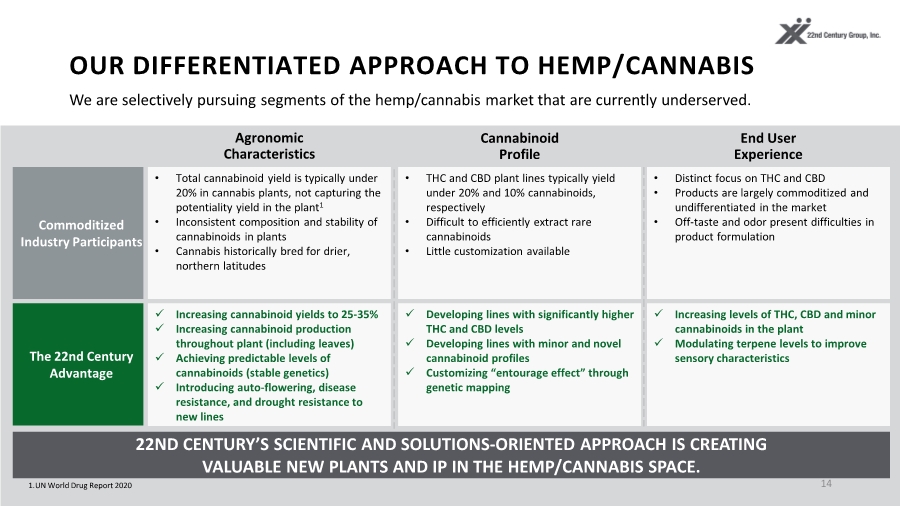
| OUR DIFFERENTIATED APPROACH TO HEMP/CANNABIS 14 1.UN World Drug Report 2020 22ND CENTURY’S SCIENTIFIC AND SOLUTIONS-ORIENTED APPROACH IS CREATING VALUABLE NEW PLANTS AND IP IN THE HEMP/CANNABIS SPACE. Commoditized Industry Participants The 22nd Century Advantage • Total cannabinoid yield is typically under 20% in cannabis plants, not capturing the potentiality yield in the plant1 • Inconsistent composition and stability of cannabinoids in plants • Cannabis historically bred for drier, northern latitudes Cannabinoid Profile Agronomic Characteristics End User Experience Increasing cannabinoid yields to 25-35% Increasing cannabinoid production throughout plant (including leaves) Achieving predictable levels of cannabinoids (stable genetics) Introducing auto-flowering, disease resistance, and drought resistance to new lines • THC and CBD plant lines typically yield under 20% and 10% cannabinoids, respectively • Difficult to efficiently extract rare cannabinoids • Little customization available Developing lines with significantly higher THC and CBD levels Developing lines with minor and novel cannabinoid profiles Customizing “entourage effect” through genetic mapping Increasing levels of THC, CBD and minor cannabinoids in the plant Modulating terpene levels to improve sensory characteristics • Distinct focus on THC and CBD • Products are largely commoditized and undifferentiated in the market • Off-taste and odor present difficulties in product formulation We are selectively pursuing segments of the hemp/cannabis market that are currently underserved. |
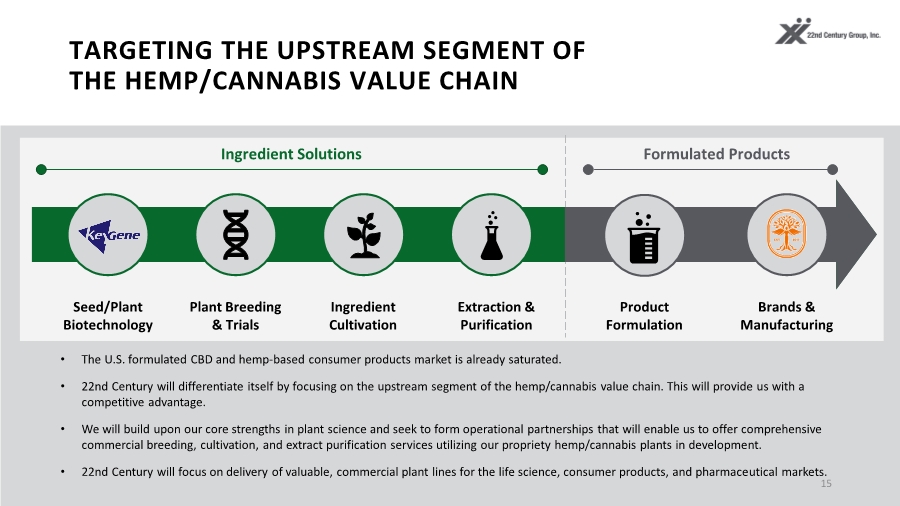
| TARGETING THE UPSTREAM SEGMENT OF THE HEMP/CANNABIS VALUE CHAIN 15 • The U.S. formulated CBD and hemp-based consumer products market is already saturated. • 22nd Century will differentiate itself by focusing on the upstream segment of the hemp/cannabis value chain. This will provide us with a competitive advantage. • We will build upon our core strengths in plant science and seek to form operational partnerships that will enable us to offer comprehensive commercial breeding, cultivation, and extract purification services utilizing our propriety hemp/cannabis plants in development. • 22nd Century will focus on delivery of valuable, commercial plant lines for the life science, consumer products, and pharmaceutical markets. Seed/Plant Biotechnology Ingredient Solutions Formulated Products Plant Breeding & Trials Ingredient Cultivation Product Formulation Brands & Manufacturing Extraction & Purification |
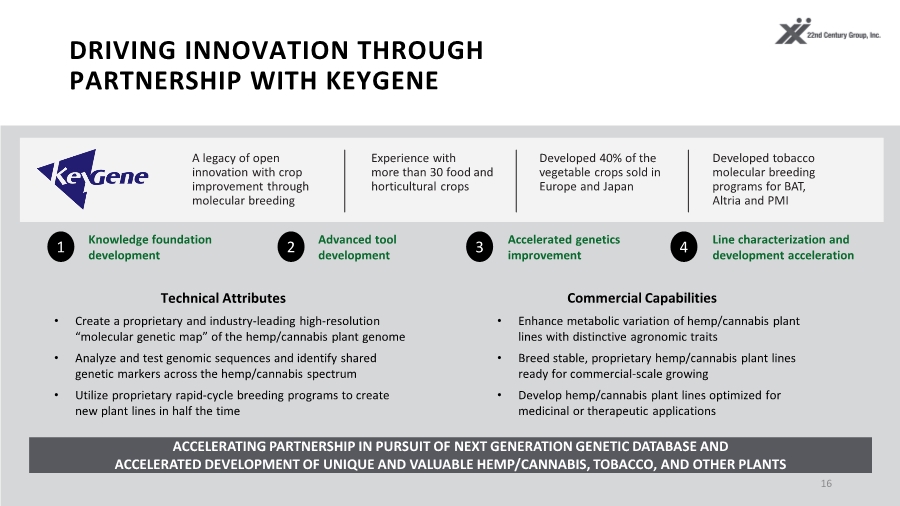
| DRIVING INNOVATION THROUGH PARTNERSHIP WITH KEYGENE 16 A legacy of open innovation with crop improvement through molecular breeding Experience with more than 30 food and horticultural crops Developed 40% of the vegetable crops sold in Europe and Japan Developed tobacco molecular breeding programs for BAT, Altria and PMI ACCELERATING PARTNERSHIP IN PURSUIT OF NEXT GENERATION GENETIC DATABASE AND ACCELERATED DEVELOPMENT OF UNIQUE AND VALUABLE HEMP/CANNABIS, TOBACCO, AND OTHER PLANTS • Enhance metabolic variation of hemp/cannabis plant lines with distinctive agronomic traits • Breed stable, proprietary hemp/cannabis plant lines ready for commercial-scale growing • Develop hemp/cannabis plant lines optimized for medicinal or therapeutic applications Technical Attributes Commercial Capabilities • Create a proprietary and industry-leading high-resolution “molecular genetic map” of the hemp/cannabis plant genome • Analyze and test genomic sequences and identify shared genetic markers across the hemp/cannabis spectrum • Utilize proprietary rapid-cycle breeding programs to create new plant lines in half the time Knowledge foundation development 1 Advanced tool development 2 Accelerated genetics improvement 3 Line characterization and development acceleration 4 |
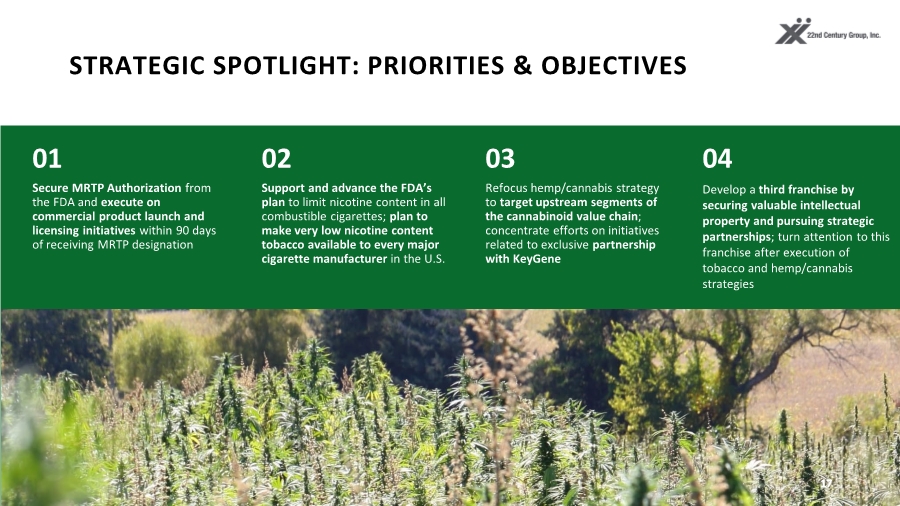
| STRATEGIC SPOTLIGHT: PRIORITIES & OBJECTIVES Refocus hemp/cannabis strategy to target upstream segments of the cannabinoid value chain; concentrate efforts on initiatives related to exclusive partnership with KeyGene 03 Secure MRTP Authorization from the FDA and execute on commercial product launch and licensing initiatives within 90 days of receiving MRTP designation 01 Support and advance the FDA’s plan to limit nicotine content in all combustible cigarettes; plan to make very low nicotine content tobacco available to every major cigarette manufacturer in the U.S. 02 Develop a third franchise by securing valuable intellectual property and pursuing strategic partnerships; turn attention to this franchise after execution of tobacco and hemp/cannabis strategies 04 |
| 18 FINANCIAL DETAILS |

| FINANCIAL SNAPSHOT 19 $ in millions Select Financials Three Months Ended September 30, Nine Months Ended September 30, 2020 2019 2020 2019 Net sales revenue $ 7.3 $ 6.5 $ 20.8 $ 18.5 Operating loss $ (4.0) $ (7.6) $ (12.9) $ (18.0) Net loss $ (4.2) $ (10.2) $ (13.3) $ (20.4) Adjusted EBITDA $ (3.4) $ (4.6) $ (10.2) $ (13.4) Net loss per common share - basic and diluted $ (0.03) $ (0.08) $ (0.10) $ (0.16) Summary Balance Sheet Items Year Ended Year Ended September 30, 2020 December 31, 2019 Cash and cash equivalents 2 $ 26.8 $ 39.0 Total assets $ 57.4 $ 69.0 Total liabilities $ 7.3 $ 6.9 Total shareholders' equity $ 50.0 $ 62.1 |
| ADJUSTED EBITDA DEFINITION Adjusted EBITDA, which the Company defines as earnings before interest, taxes, depreciation and amortization, as adjusted by the Company for certain non-cash and non-operating expenses, as well as certain one-time expenses, is a financial measure not prepared in accordance with generally accepted accounting principles (“GAAP”). In order to calculate Adjusted EBITDA, the Company adjusts the net (loss) income for certain non-cash and non-operating income and expense items in order to measure the Company’s operating performance. The Company believes that Adjusted EBITDA is an important measure that supplements discussions and analysis of its operations and enhances an understanding of its operating performance. While management considers Adjusted EBITDA to be important, it should be considered in addition to, but not as a substitute for or superior to, other measures of financial performance prepared in accordance with GAAP, such as operating loss, net (loss) income and cash flows from operations. Adjusted EBITDA is susceptible to varying calculations and the Company’s measurement of Adjusted EBITDA may not be comparable to those of other companies. 20 |
| ADJUSTED EBITDA 21 2020 2019 % Change fav / (unfav)1 2020 2019 % Change fav / (unfav)1 Net loss (4,221) $ (10,245) $ 6,024 $ (13,307) $ (20,360) $ 7,053 $ Adjustments: Impairment of intangible assets - $ 1,142 $ (1,142) $ 146 $ 1,142 $ (996) $ Impairment of Panacea warrant - $ - $ - $ 1,062 $ - $ 1,062 $ Amortization and depreciation 323 $ 390 $ (67) $ 997 $ 1,111 $ (114) $ Unrealized loss (gain) on investment 429 $ 2,959 $ (2,530) $ 562 $ 1,410 $ (848) $ Realized (gain) loss on short-term investment securities - $ (90) $ 90 $ - $ (146) $ 146 $ Litigation Settlement - $ - $ - $ - $ 1,891 $ (1,891) $ Gain on the sale of machinery and equipment (1) $ - $ (1) $ (1) $ (87) $ 86 $ Accretion of non cash interest expense 4 $ 12 $ (8) $ 34 $ 33 $ 1 $ Equity-based employee compensation expense 306 $ 1,440 $ (1,134) $ 1,162 $ 2,406 $ (1,244) $ Executive and board search fees - $ - $ - $ 430 $ - $ 430 $ Interest Income (270) $ (242) $ (28) $ (1,344) $ (757) $ (587) $ Interest Expense 19 $ - $ 19 $ 19 $ 3 $ 16 $ Adjusted EBITDA (3,412) $ (4,634) $ 1,222 $ (10,240) $ (13,354) $ 3,114 $ 1Fav = Favorable variance, which increases to Adjusted EBITDA; Unfav = unfavorable variance, which reduces Adjusted EBITDA Quarter Ended Year-to-date Ended September 30, Dollar Amounts in Thousand ($000's) September 30, Dollar Amounts in Thousand ($000's) |
| CONTACT INFORMATION INVESTOR RELATIONS & MEDIA CONTACT Mei Kuo Director, Communications & Investor Relations 22nd Century Group, Inc. (716) 300-1221 [email protected] |