Operator
Good day, and welcome to the Angel Oak mortgage REIT Fourth Quarter 2024 Earnings Conference Call. Please note this event is being recorded. I would now like to turn the conference over to Mr. KC Kelleher. Please go ahead.
Good morning. Thank you for joining us today for Angel Oak Mortgage REIT's Fourth Quarter and Full Year 2024 Earnings Conference Call. This morning, we filed our press release detailing these results, which is available in the Investors section of our website at www.angeloakreit.com. As a reminder, remarks made on today's conference call may include forward-looking statements. Forward-looking statements are subject to risks and uncertainties that may cause actual results to differ materially from those discussed today. We do not undertake any obligation to update our forward-looking statements in light of new information or future events. For a more detailed discussion of the factors that may affect the company's results, please refer to our earnings release for this quarter and to our most recent SEC filings. During this call, we will be discussing certain non-GAAP financial measures. More information about these non-GAAP financial measures and reconciliations to the most directly comparable GAAP financial measures are contained in our earnings release and SEC filings. This morning's conference call is hosted by Angel Oak Mortgage REIT's Chief Executive Officer, Sreeni Prabhu, Chief Financial Officer, Brandon Filson and Angel Oak Capital's Co-CIO, Namit Sinha. Management will make some prepared comments, after which we will open up the call to your questions. Additionally, we recommend reviewing our earnings supplement posted on our website, www.angeloakreit.com. Now I will turn the call over to Sreeni.
Speaker 2
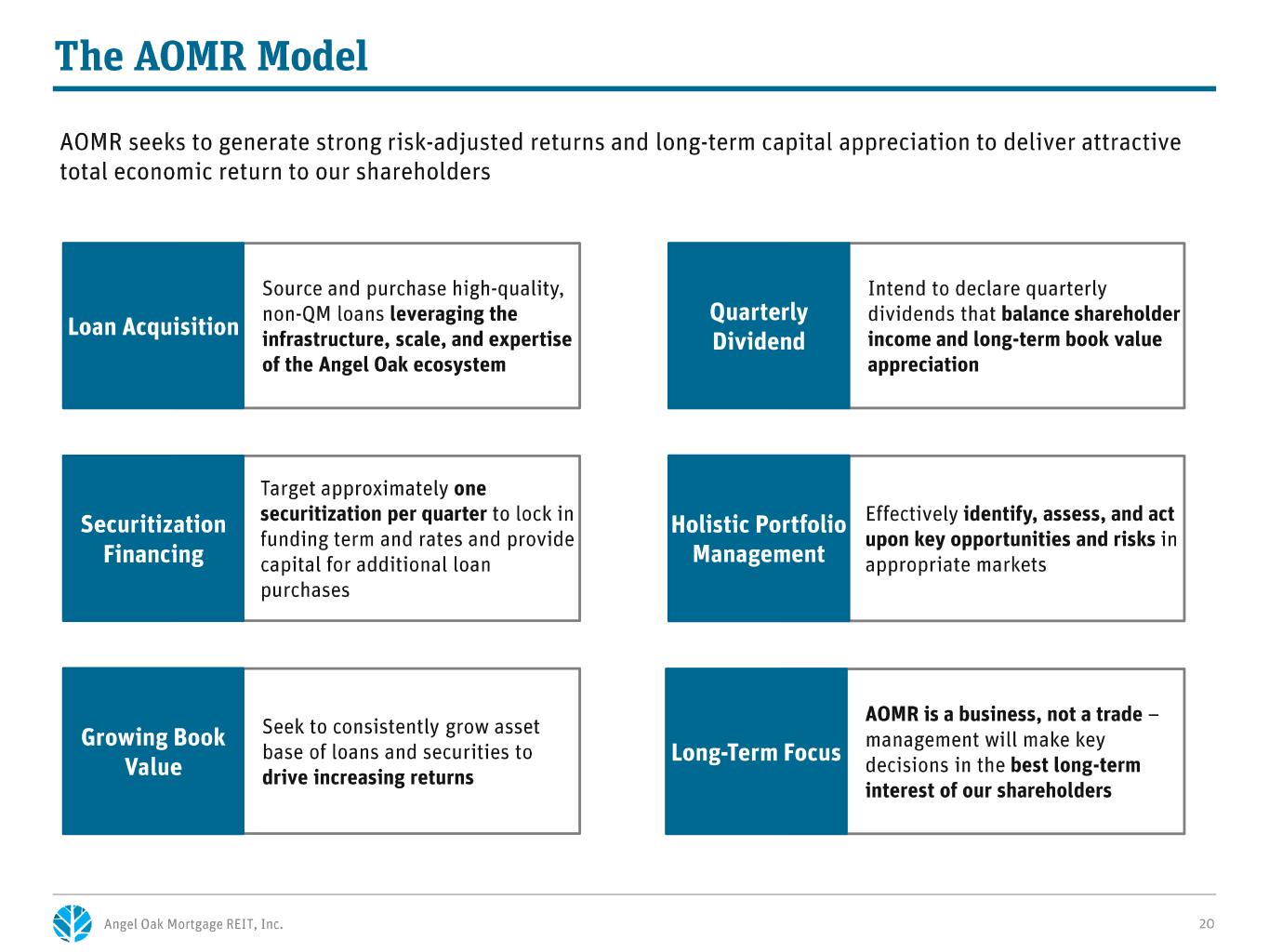
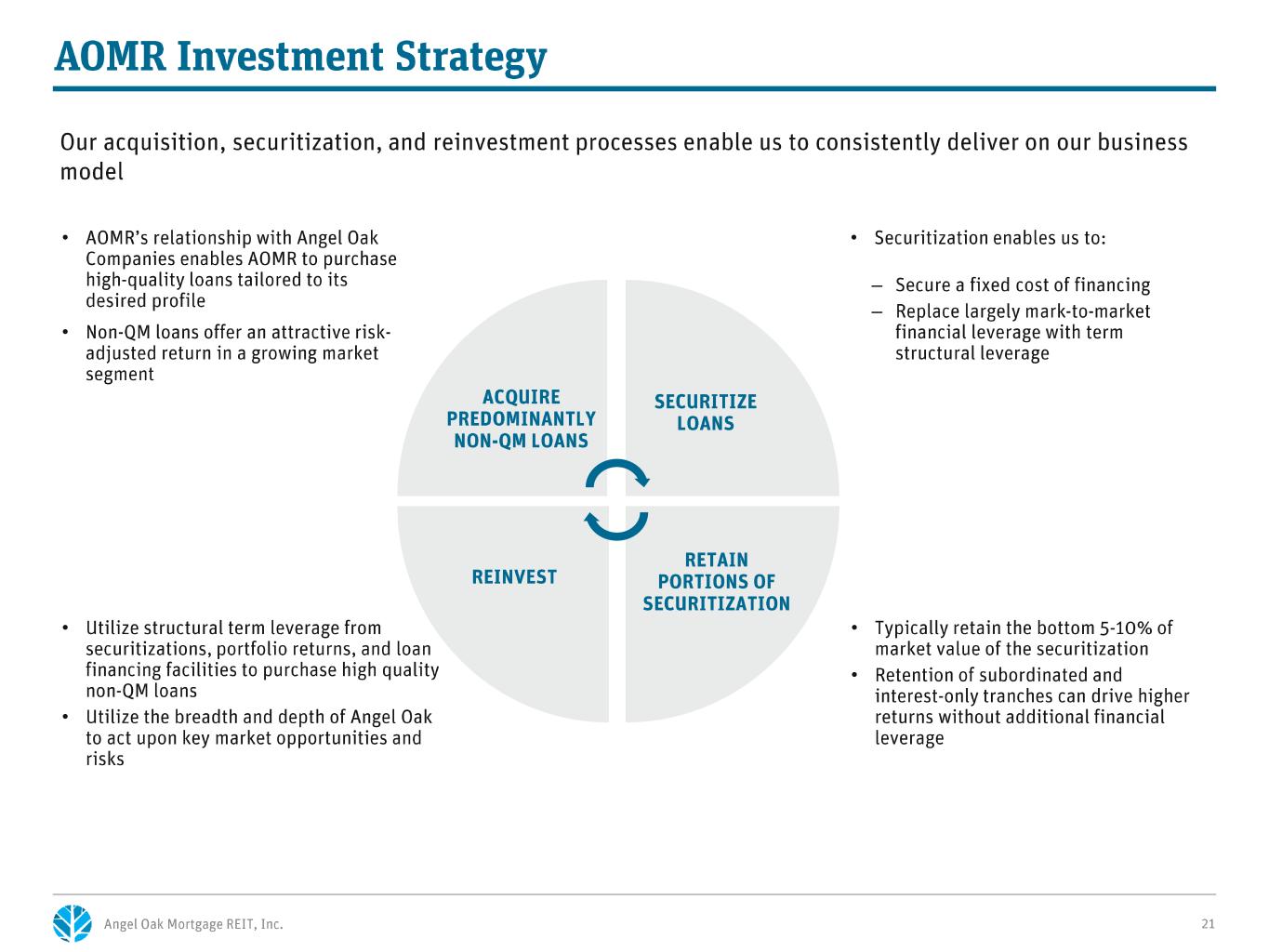
Thank you, KC, and thank you all for joining us today. We closed out 2024 with another quarter of net interest margin expansion reflecting solid financial and operational performance. Our continued progress, increasing cash flow and dividend coverage is a direct result of our company's disciplined execution of a proven and repeatable management model designed to drive consistent, sustainable growth. Our focus remains on prioritizing long-term earnings accretion, methodical decision-making, managing risk, and creating value for our shareholders. With this commitment, we have continued to perform in line with our growth expectations quarter after quarter throughout 2024. Unfortunately, rates were not kind to our portfolio valuation during Q4, and we saw a decline in book value during the quarter. Interest rate levels and volatility are key drivers of our portfolio's valuation and fluctuate according to the latest macroeconomic data points. Therefore, we may continue to experience these ups and downs from a valuation perspective as long as the rate path remains uncertain. The advancements we have made in the past year continue to underscore the strength of our differentiated operating model, which at its core is prudent risk management and efficient capital recycling, with credit selection serving as a key competitive advantage. We have continued to deliver sequential improvements driven by intelligent loan portfolio management, a consistent securitization strategy, and disciplined execution. In 2024, we completed five securitizations, exceeding our target of one per quarter, which in turn enhanced our capital flexibility, increased portfolio yield, and funded further loan portfolio growth. The long-term backdrop of our business remains constructive, and we are encouraged by our portfolio's trajectory. Interest rates appear to have moderated from their peak in December, although further rate cuts seem more elusive now than they were in the prior quarter. We have not seen consistent momentum in one direction or the other in terms of mortgage rates. We observed increased activity along with improved execution and securitization in 2024, particularly in the non-QM space. This drove tightening spreads throughout the year as well. We view the current environment as active and deep, offering ample opportunities to recycle capital and continue growing our target asset portfolio. Our capital deployment strategy will remain adaptive and flexible, aligned with evolving market dynamics in order to maximize returns. Regarding raising capital, our approach remains to raise funds opportunistically and when it provides additional earnings. This allows us to maintain flexibility and ensure that the investment decisions are accretive and value-driven over the near term and long term. We demonstrated the success of this approach with our senior unsecured note issuance this year, which was accretive to earnings within one quarter of issuance and continues to add to our net interest margin with further loan purchases and securitization activity. As we move forward, our focus remains on continuing to execute against our earnings generation model and delivering positive outcomes for our shareholders while positioning our balance sheet to capitalize on emerging accretive opportunities as they arise. With that, I'll turn it over to Brandon who will walk us through our fourth quarter and full year financial performance in greater detail.
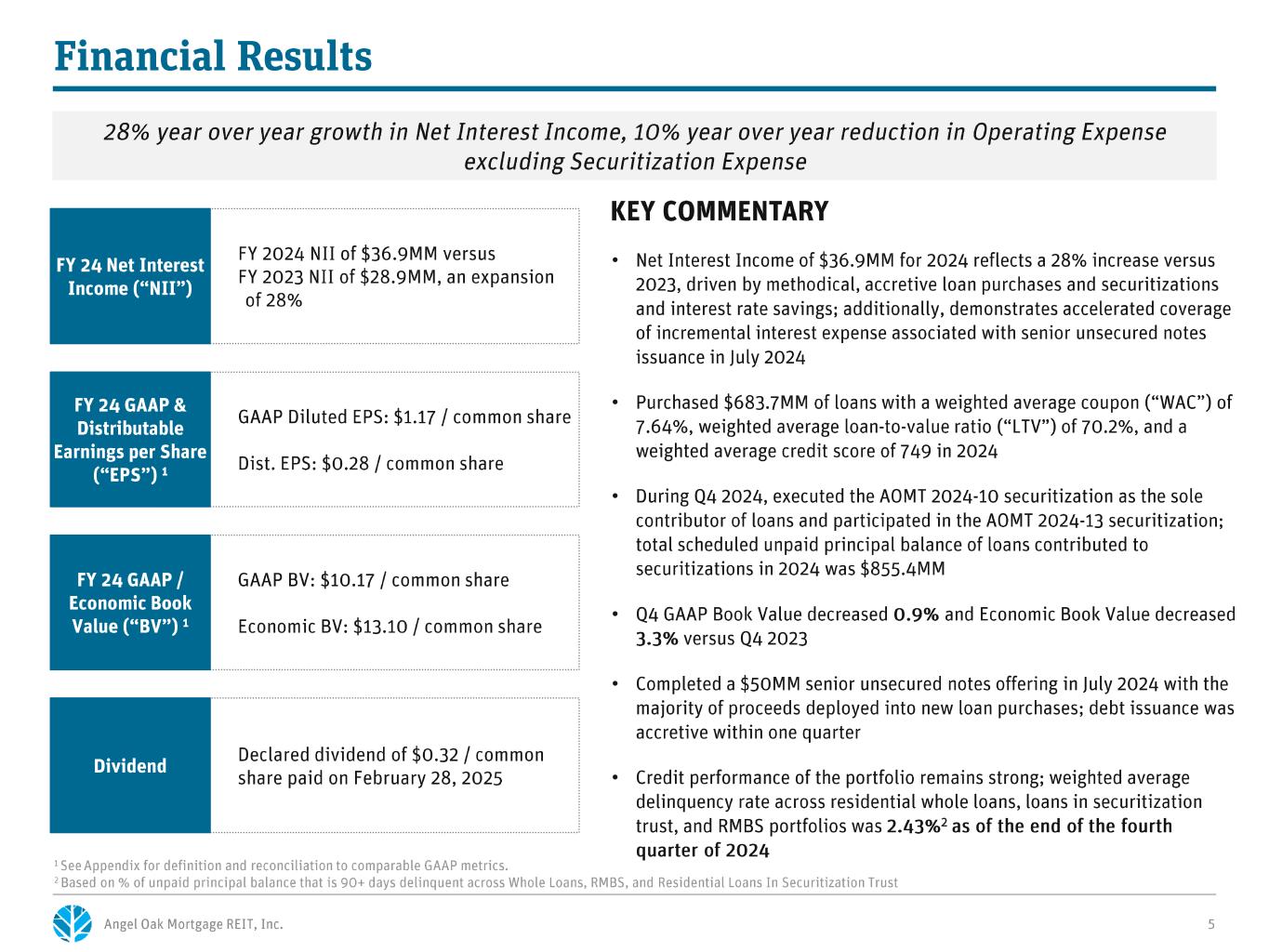
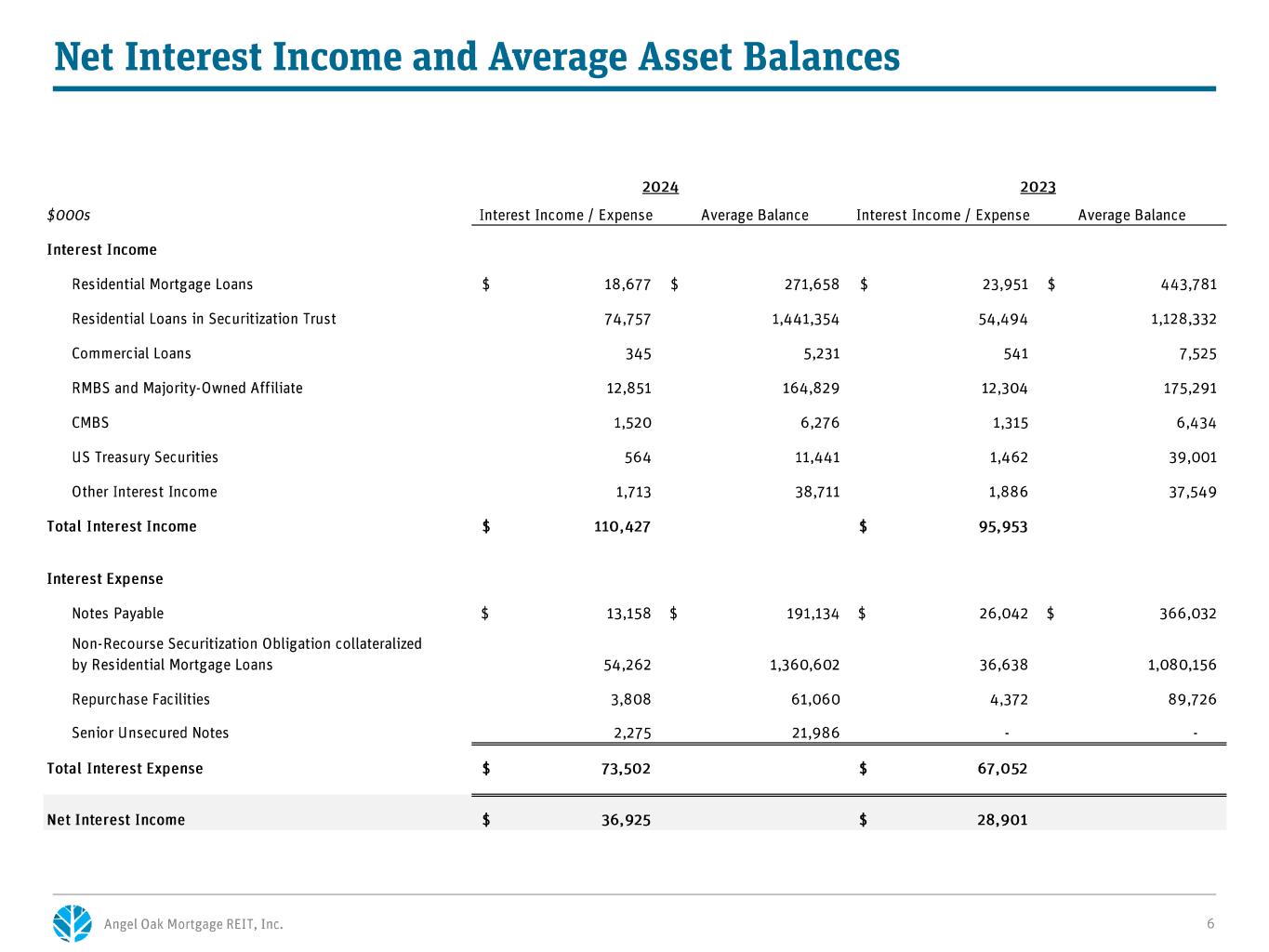
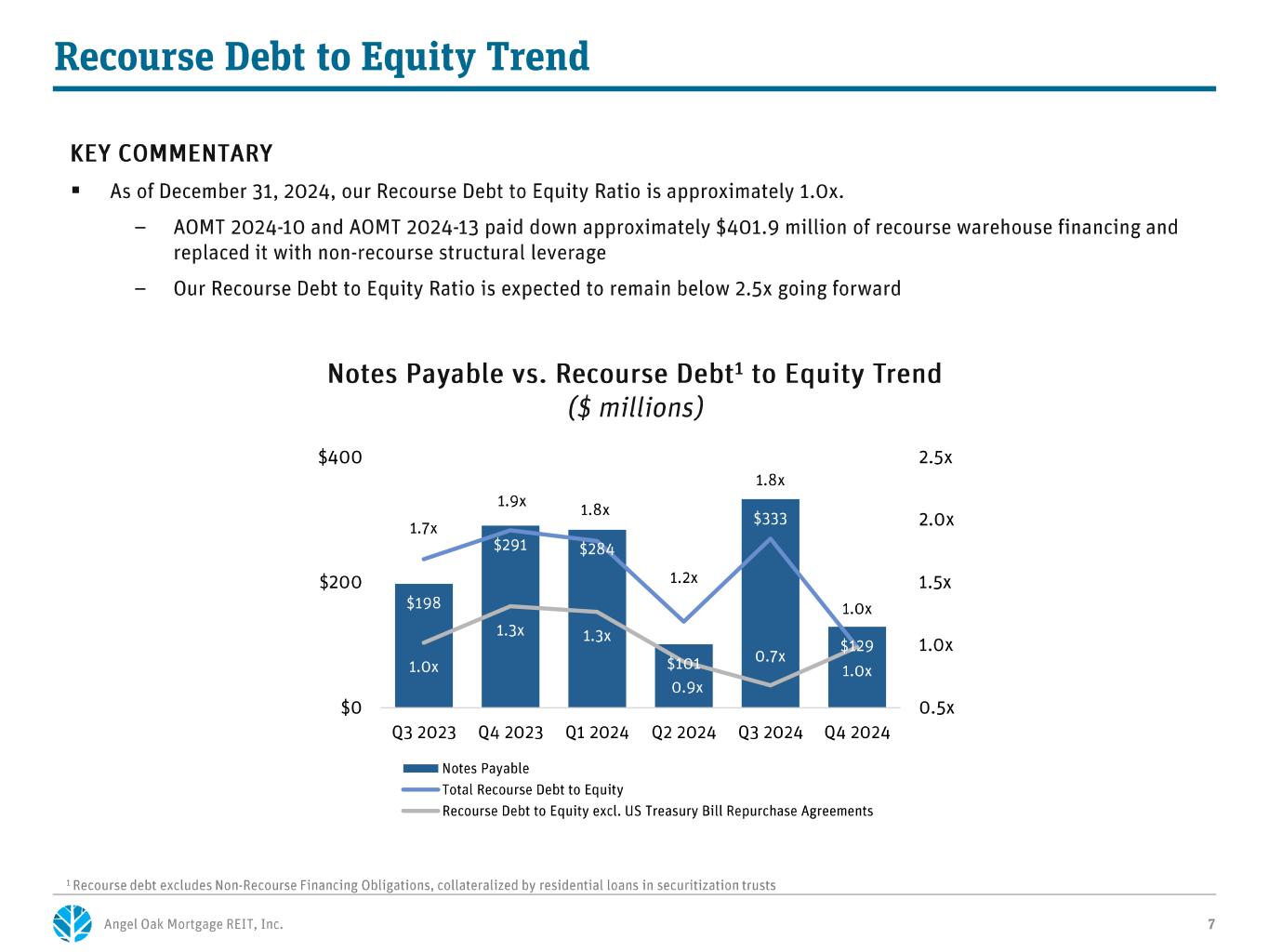
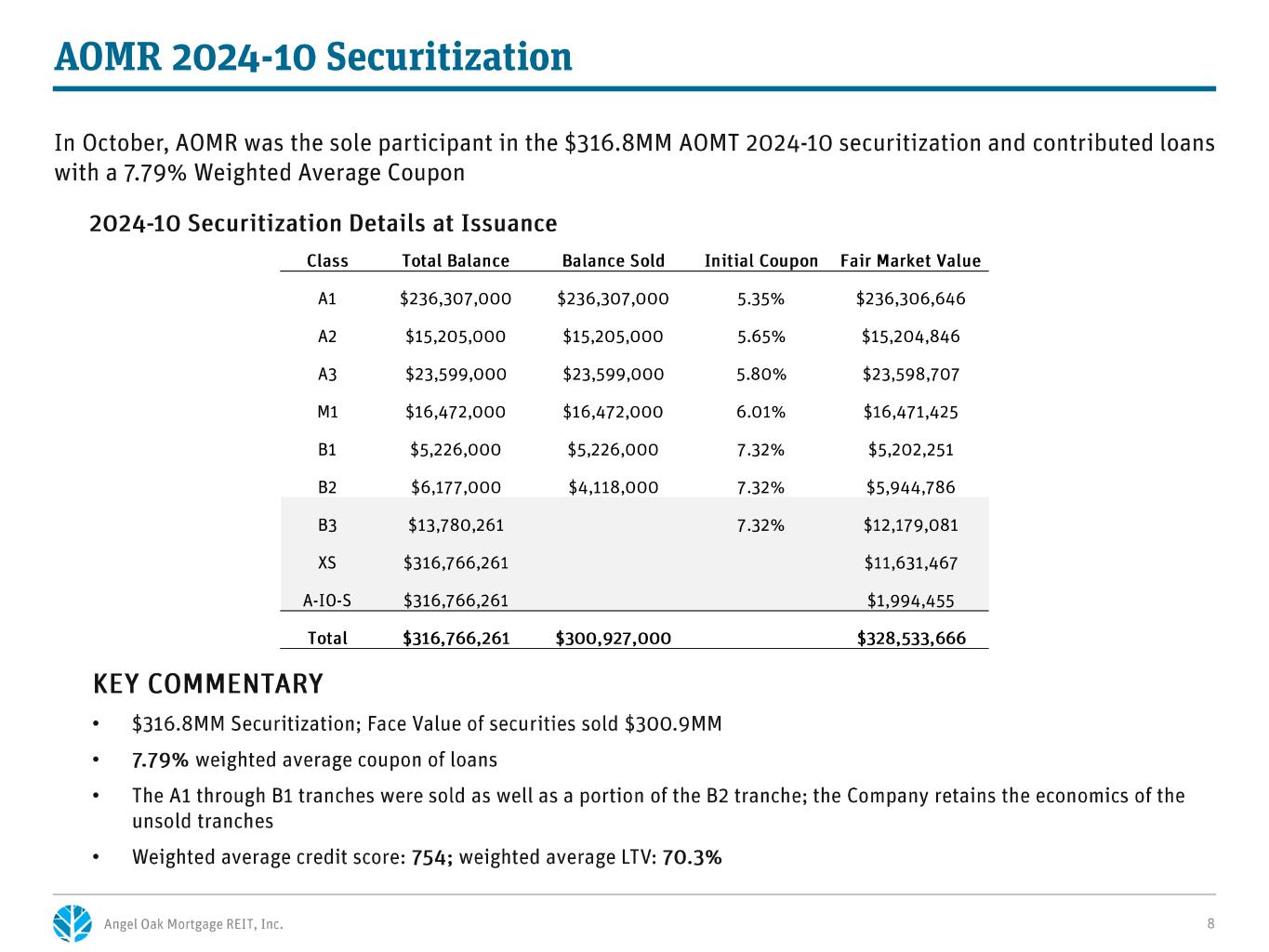
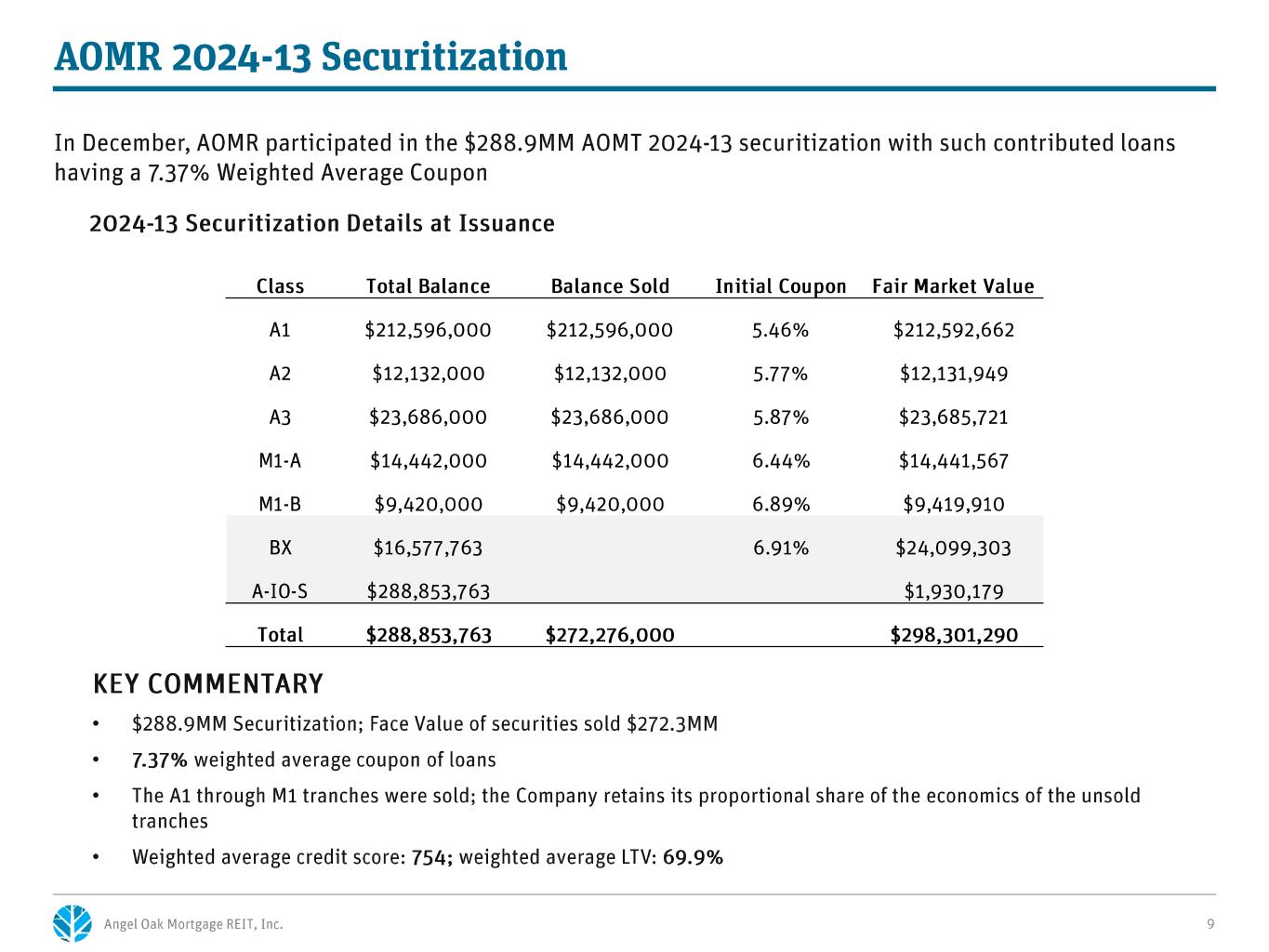
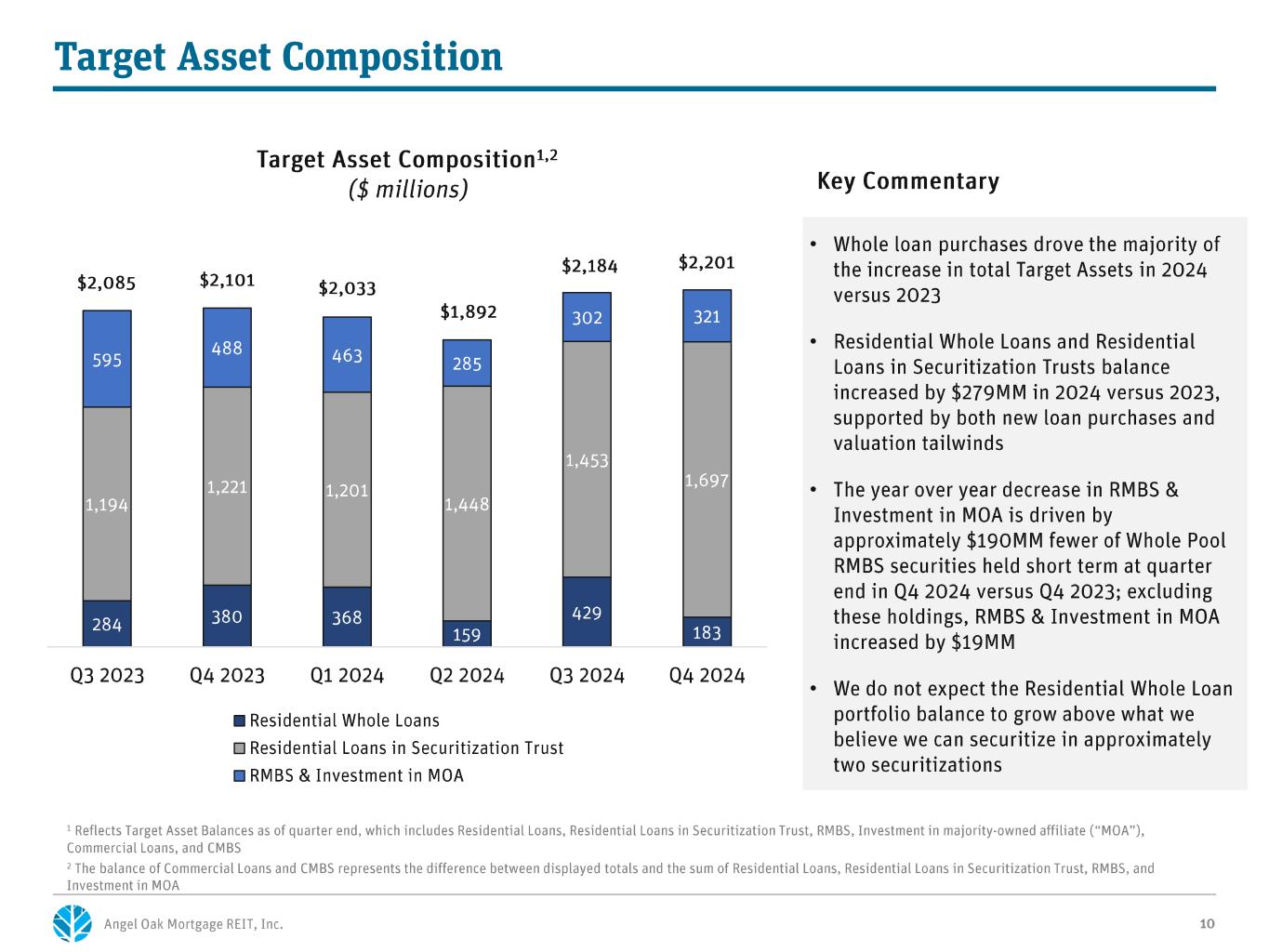
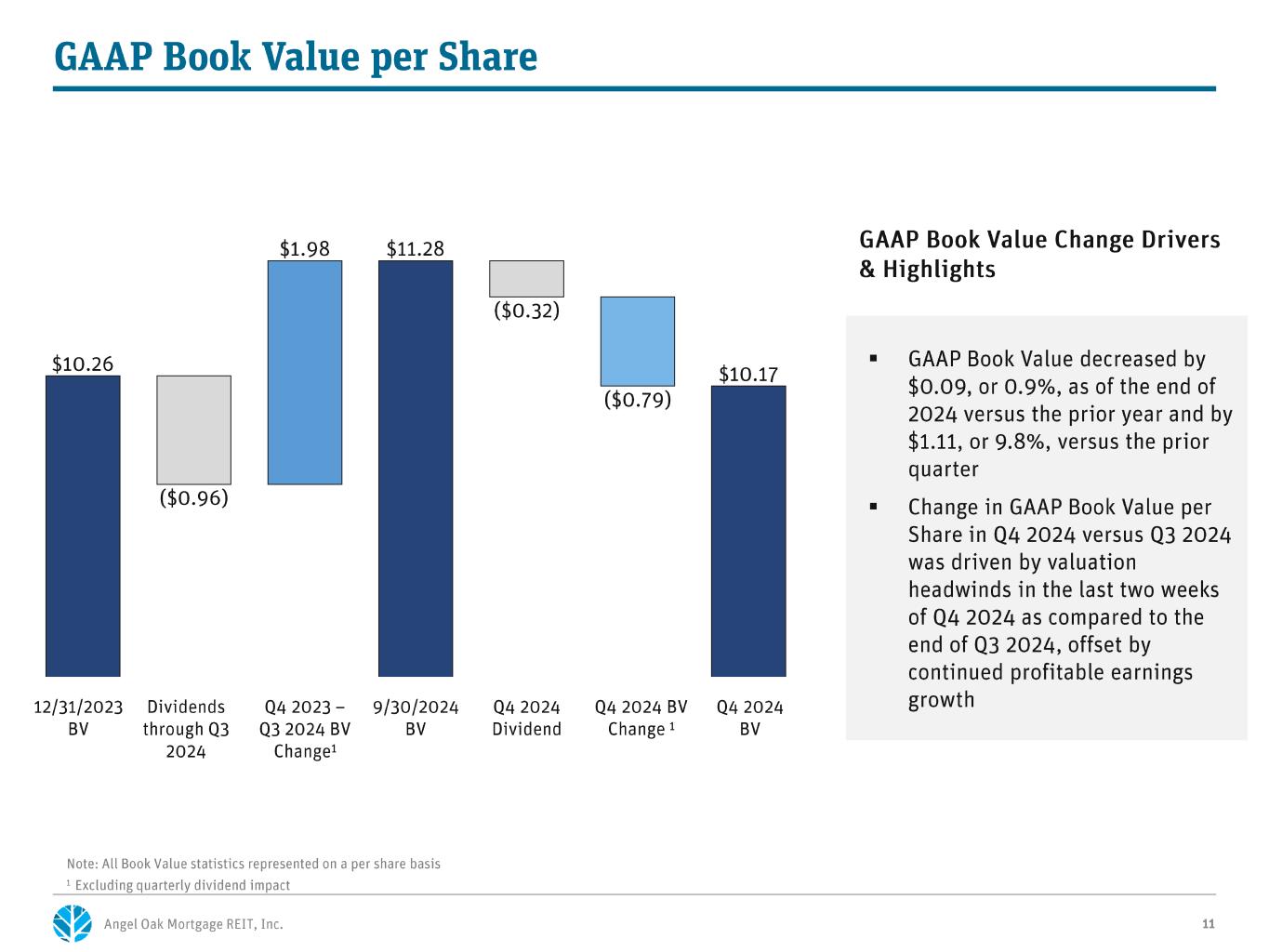
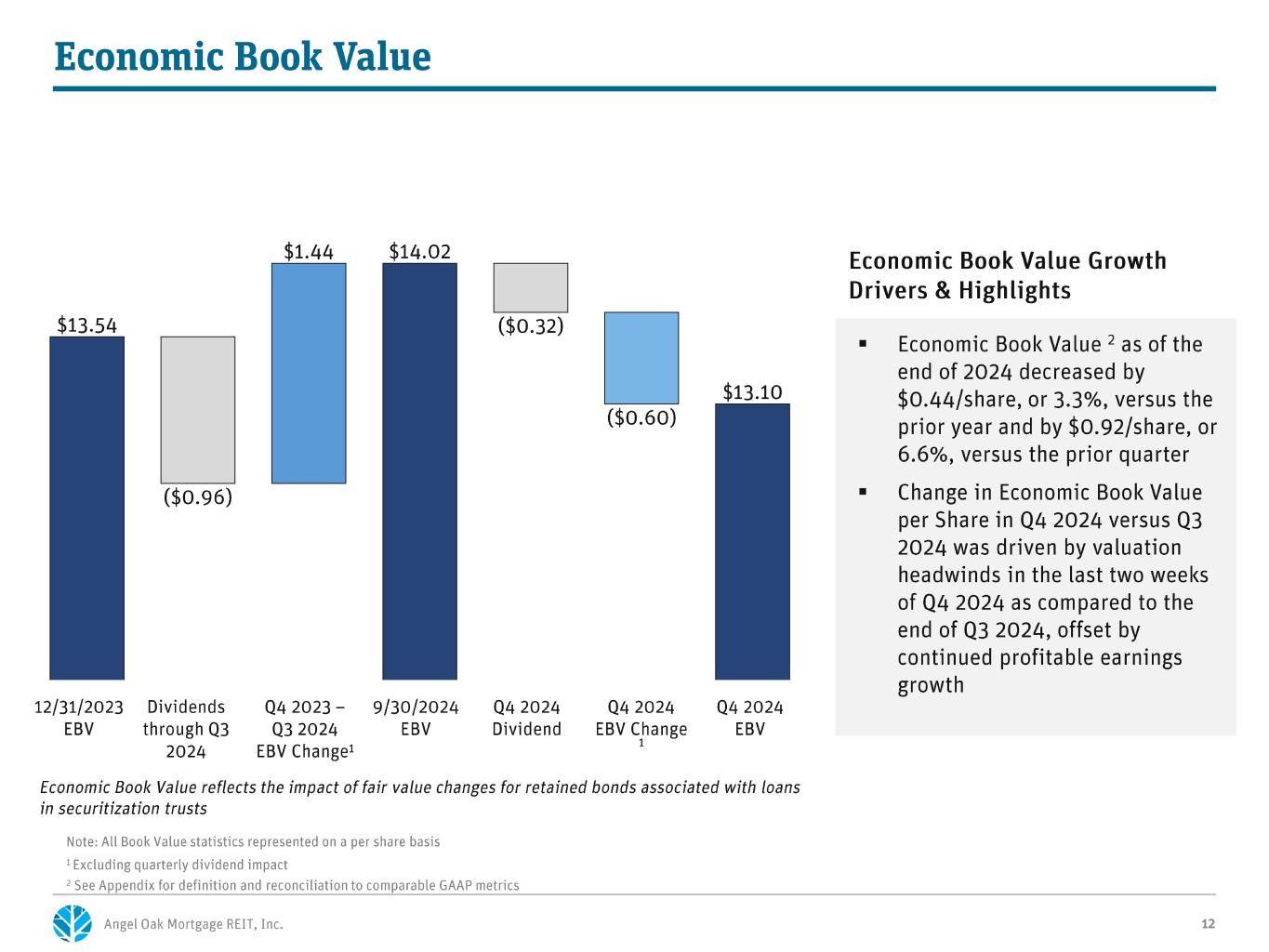
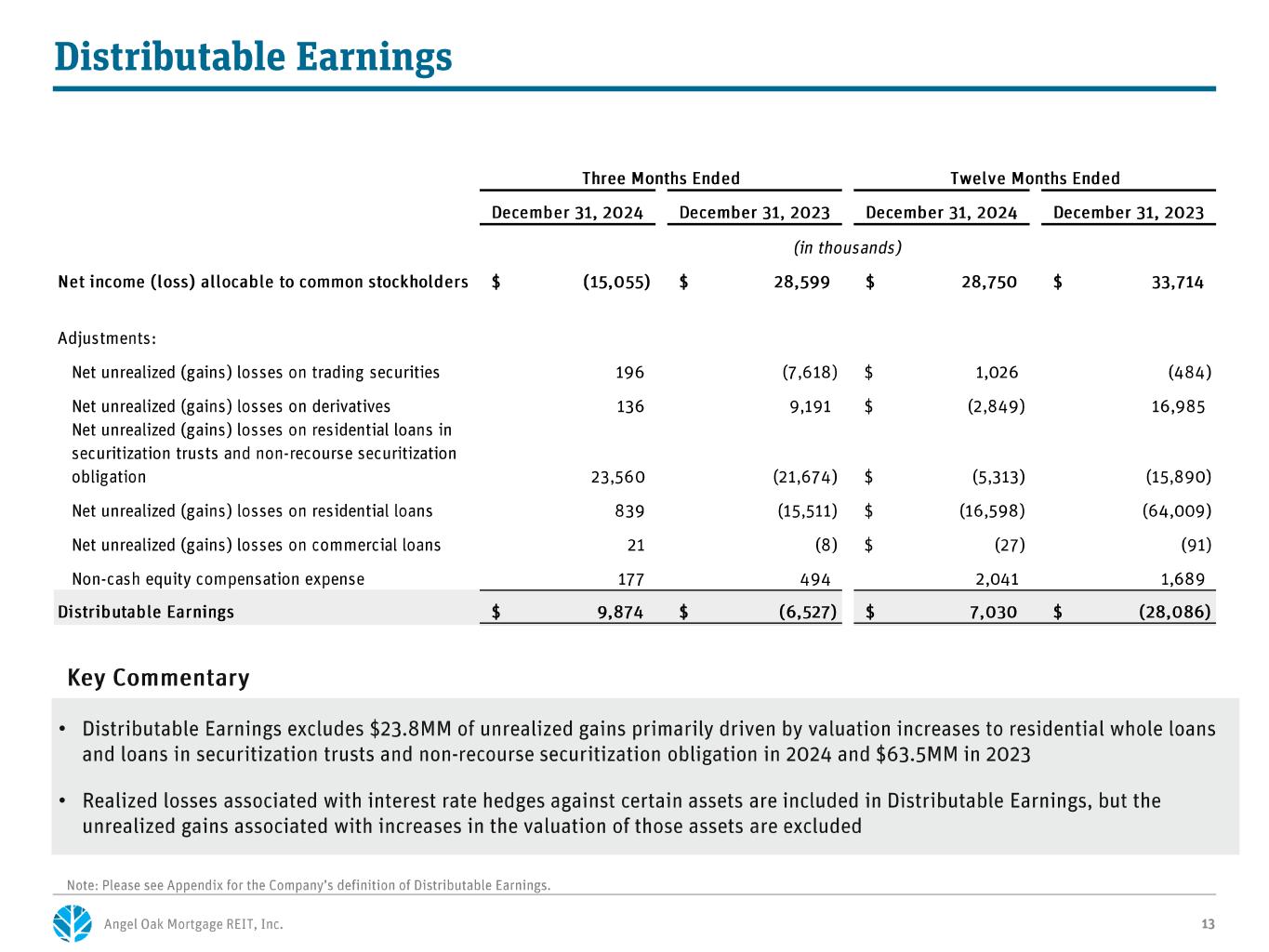
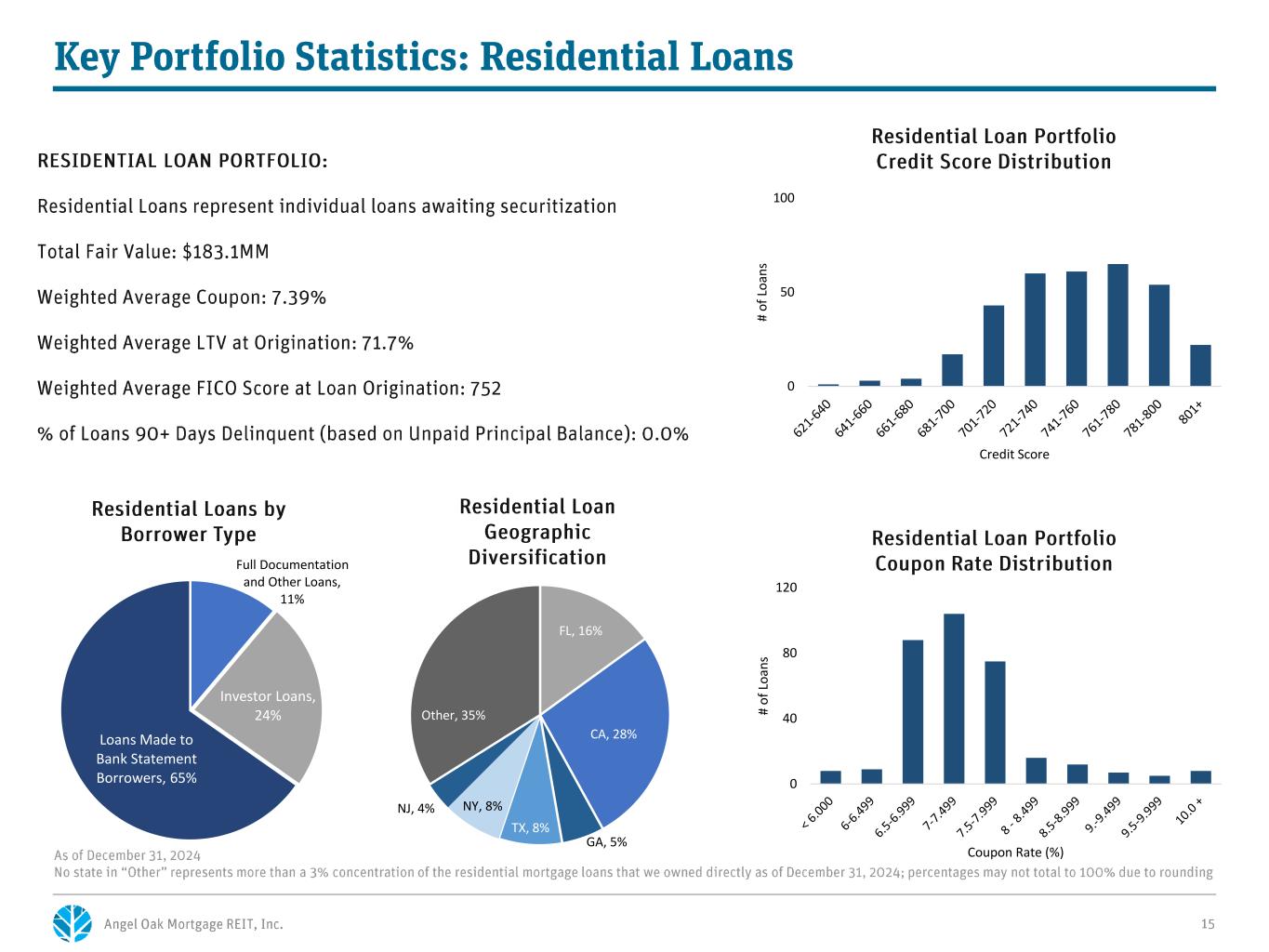
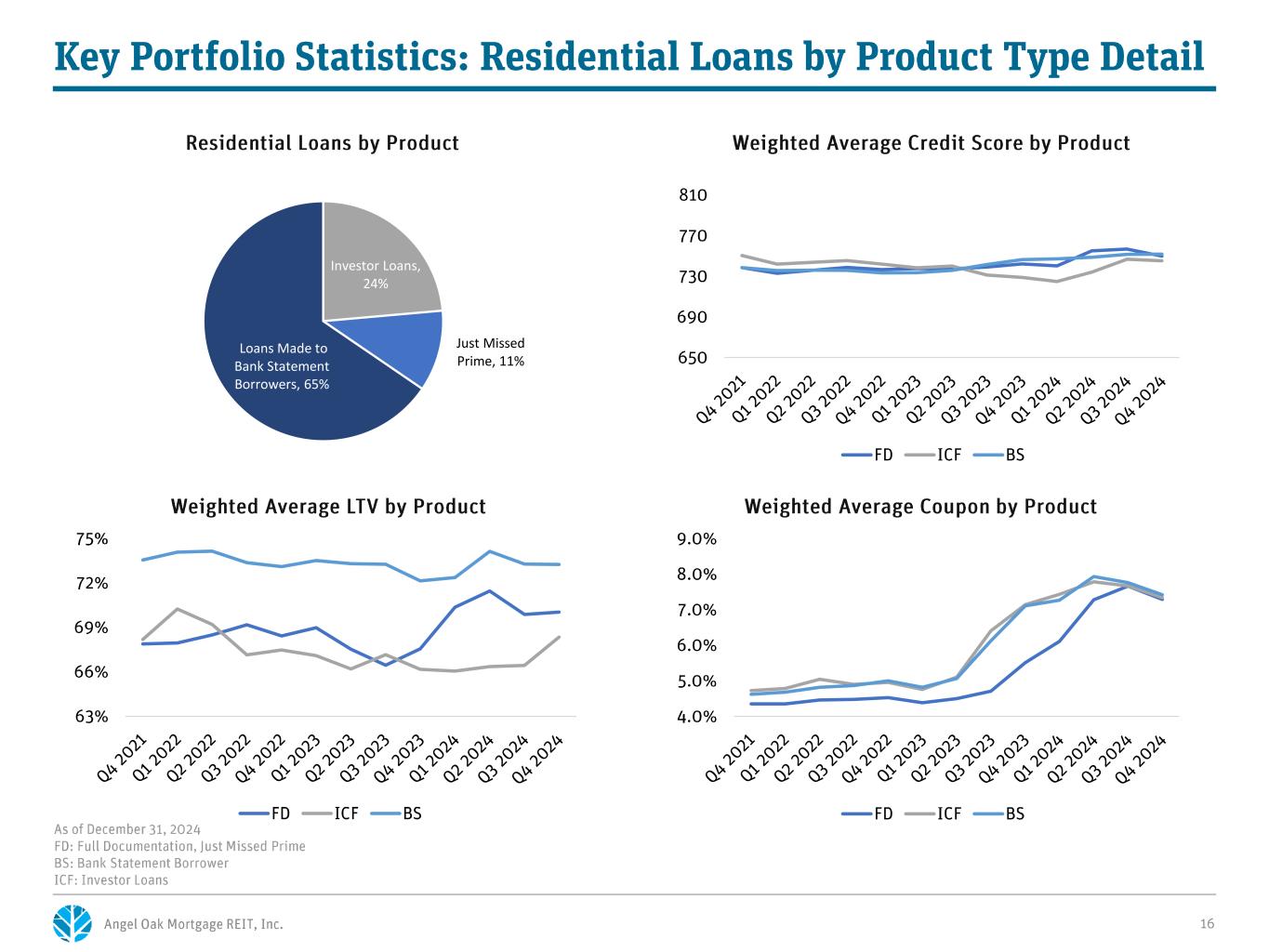
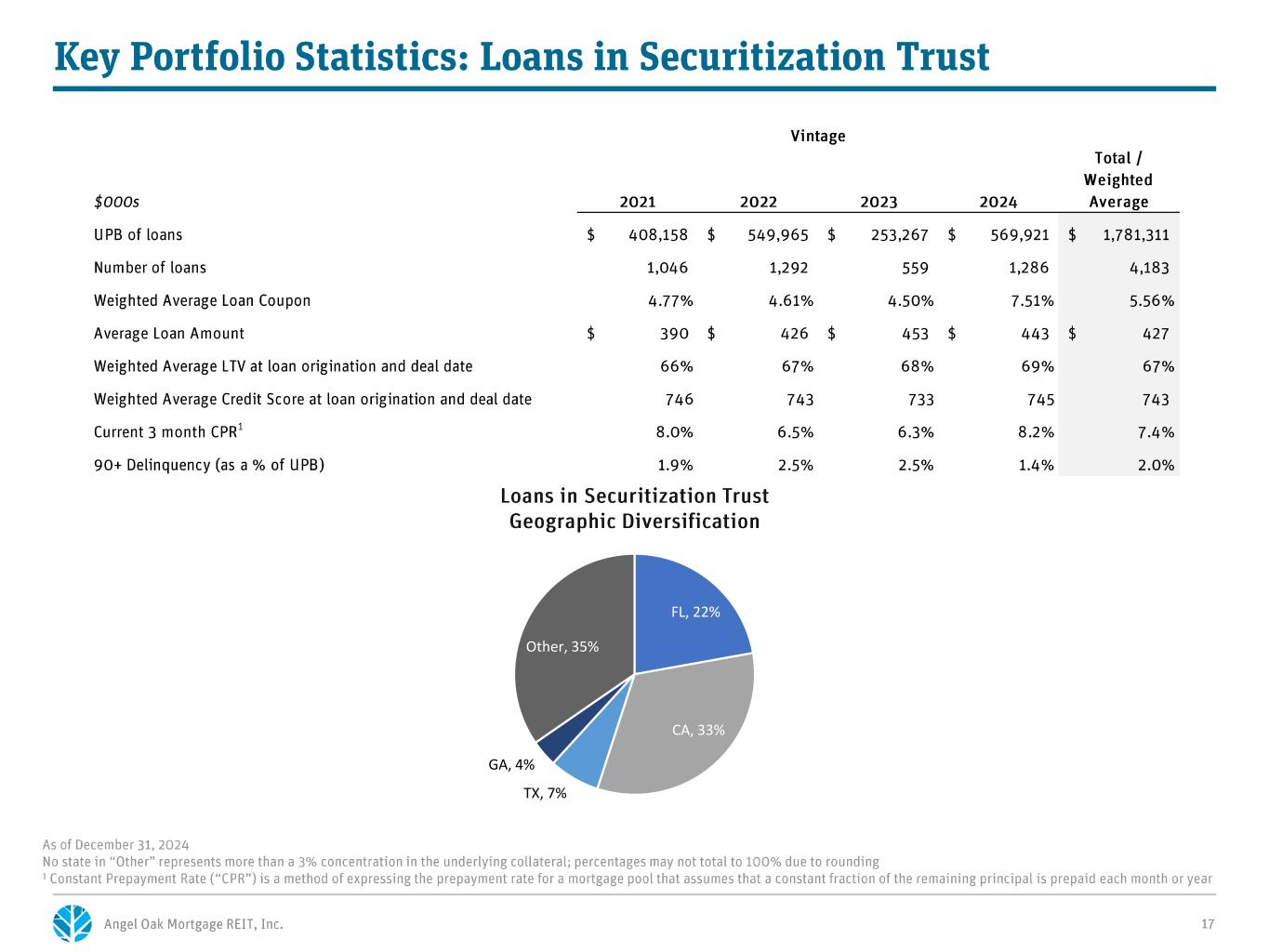
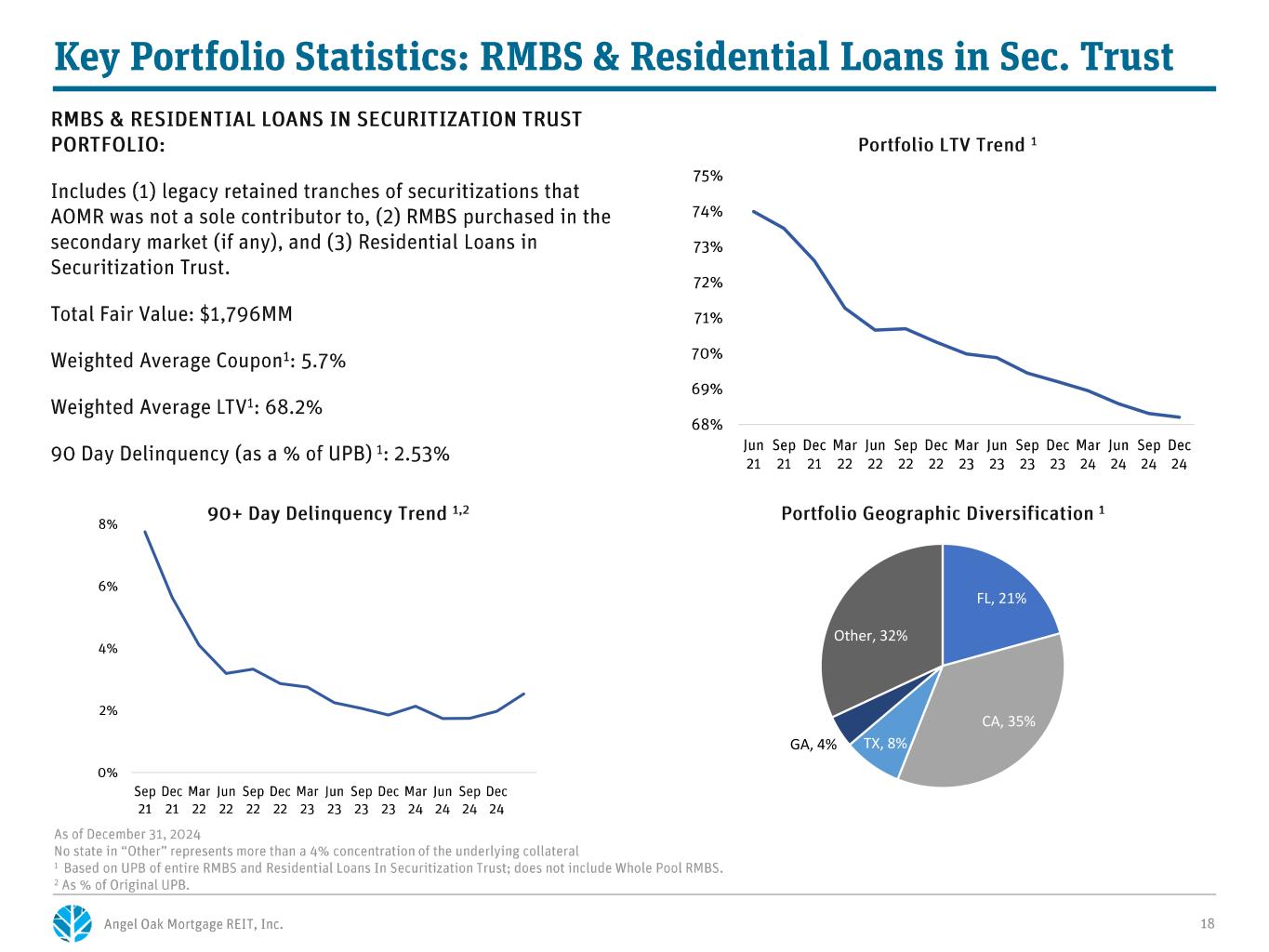
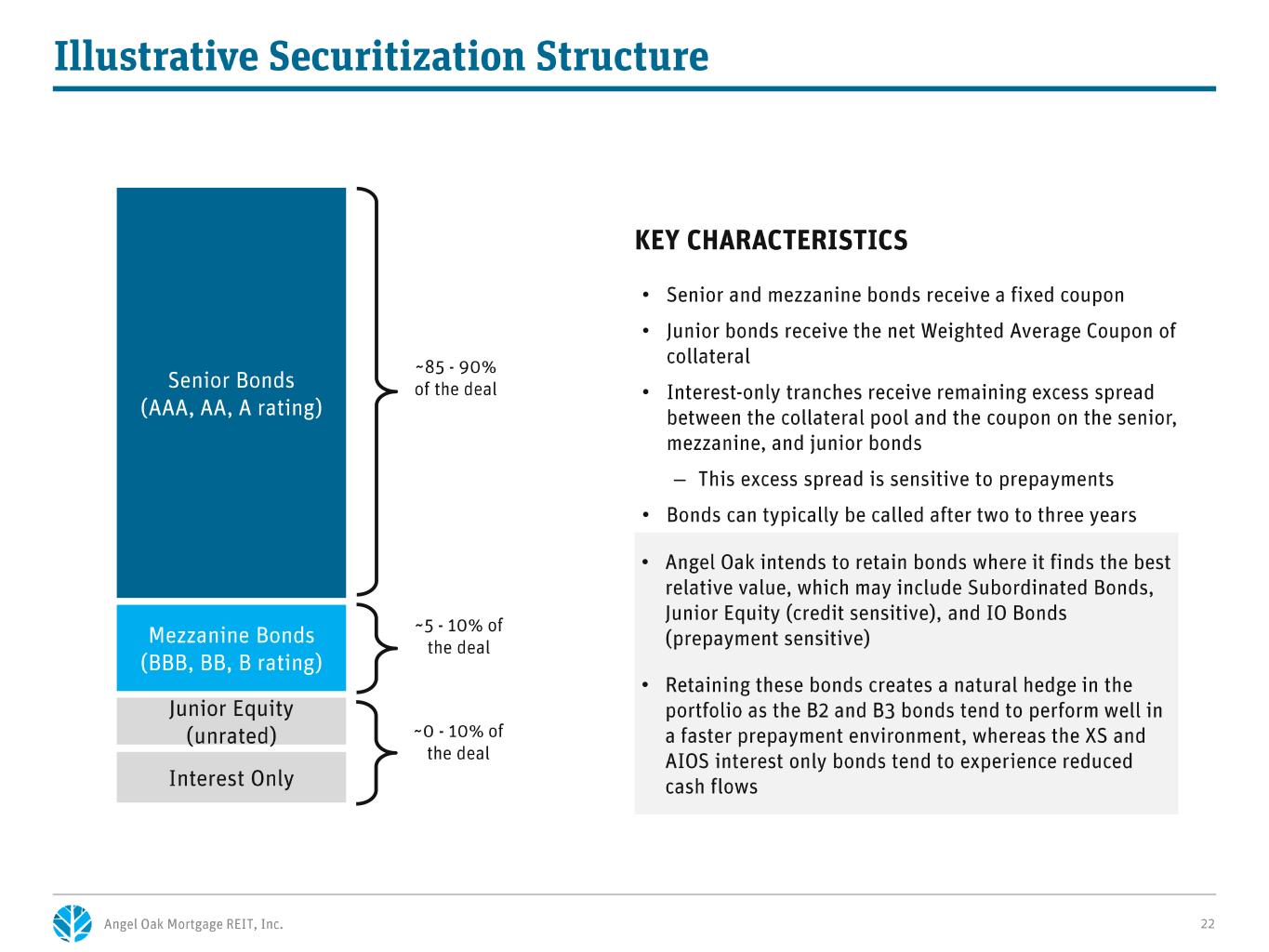
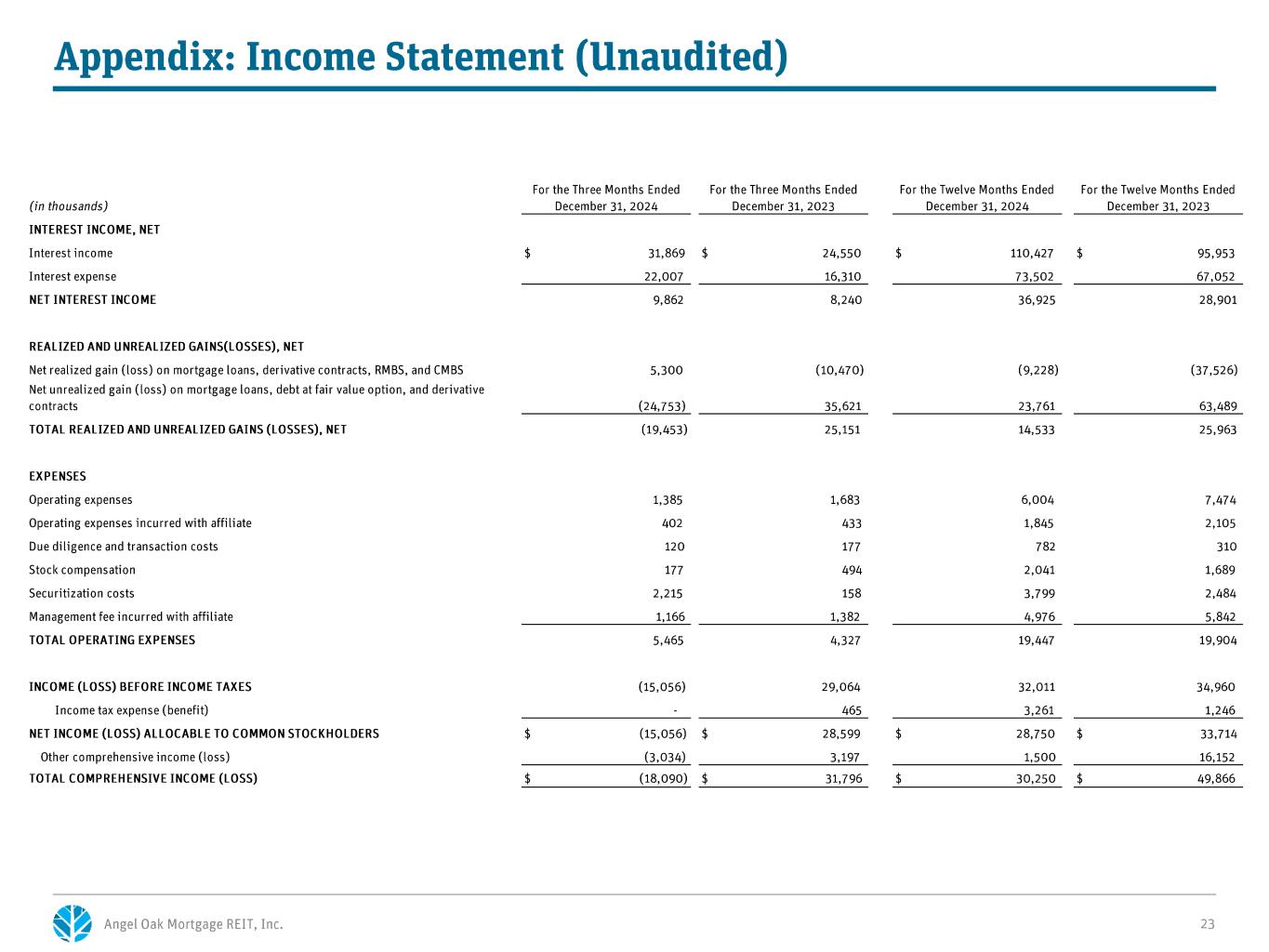
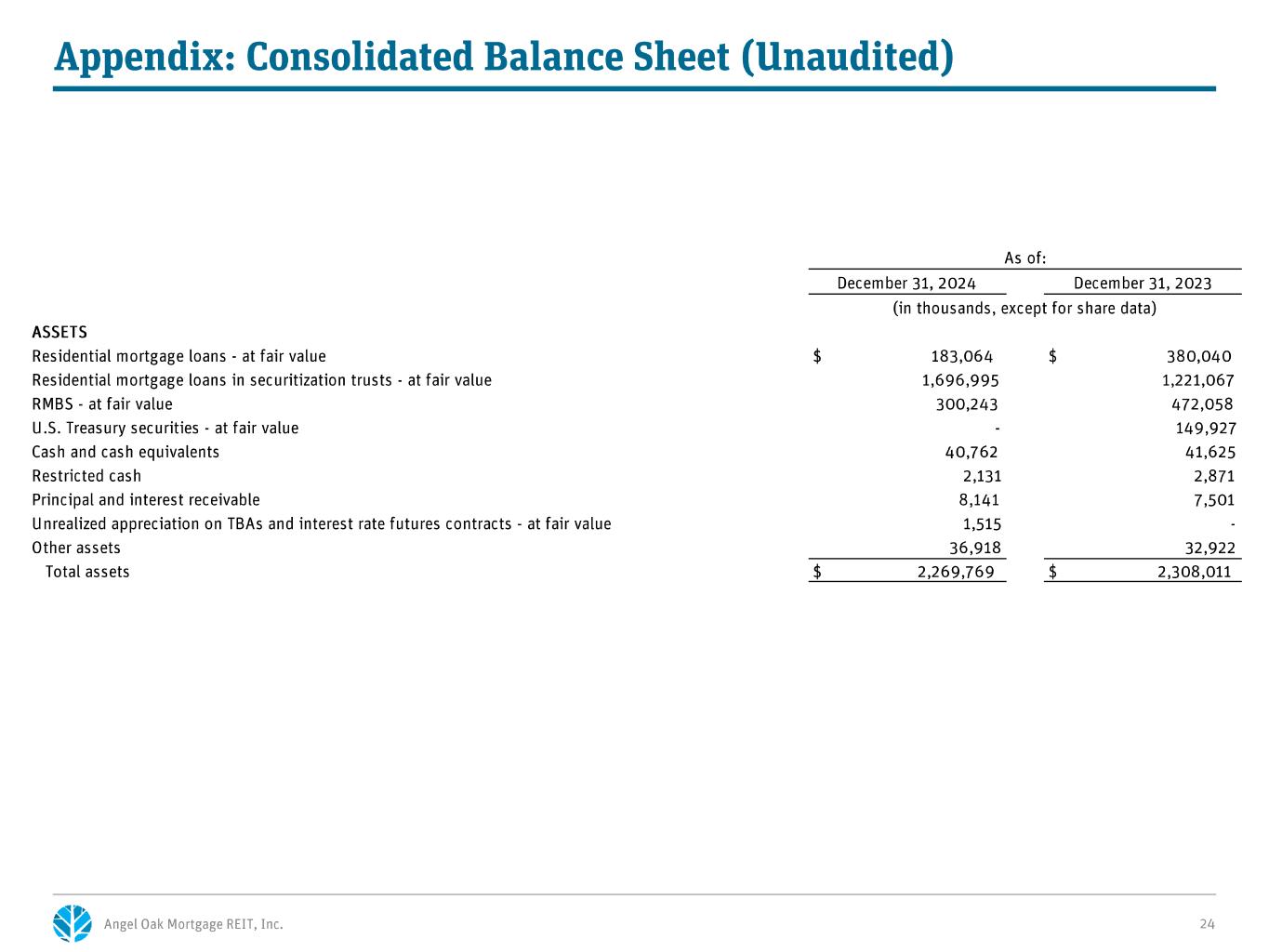
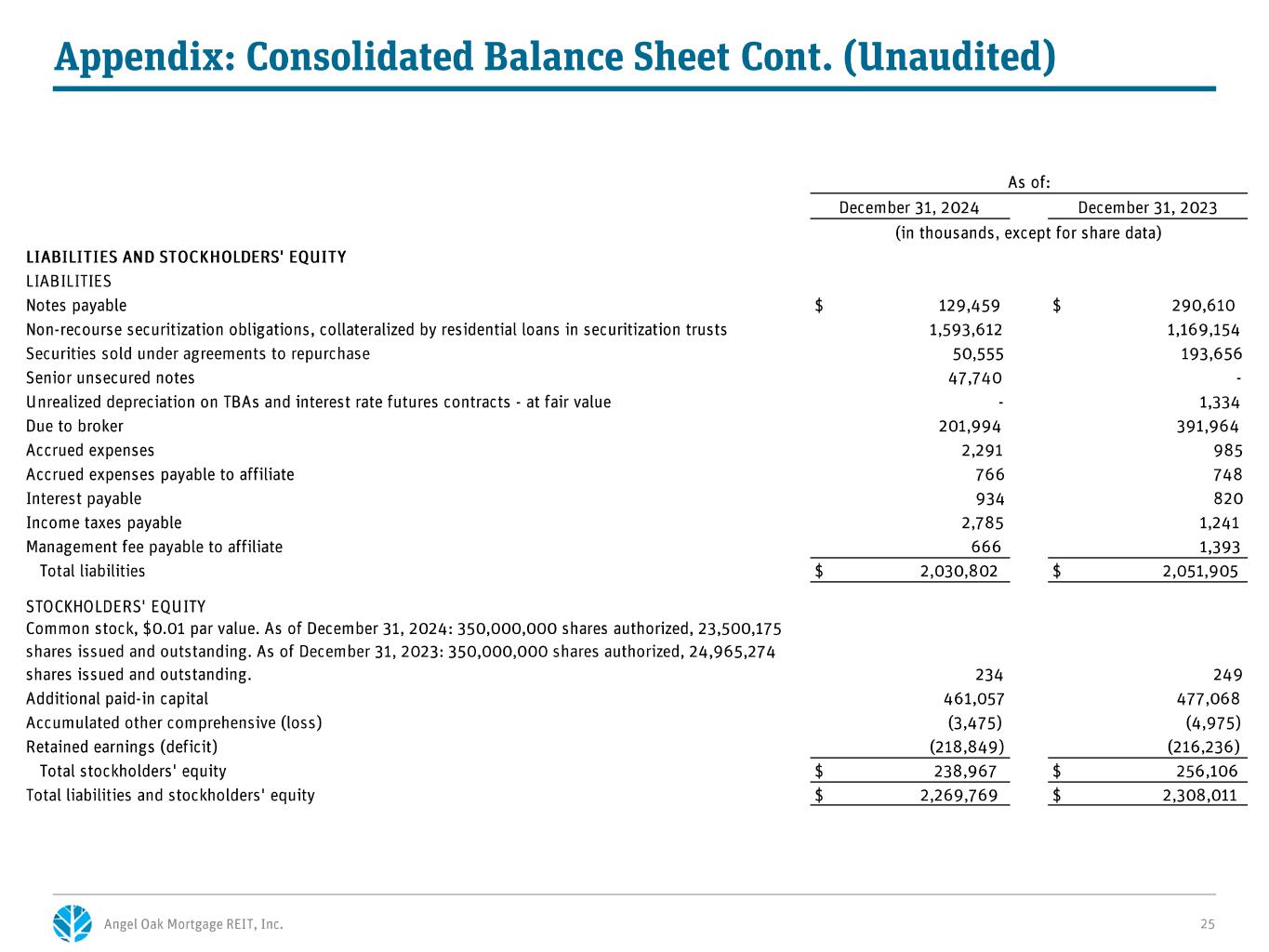
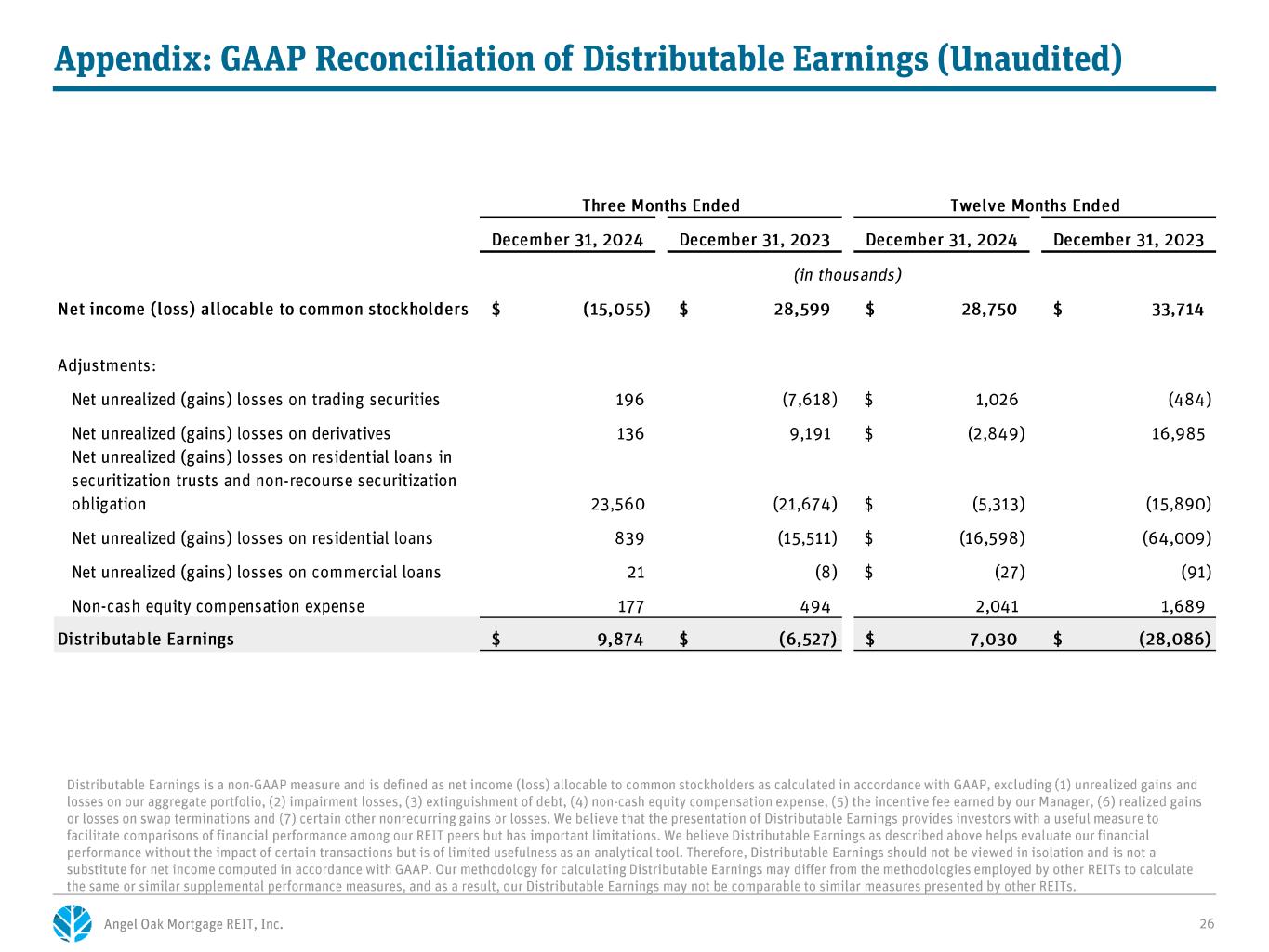
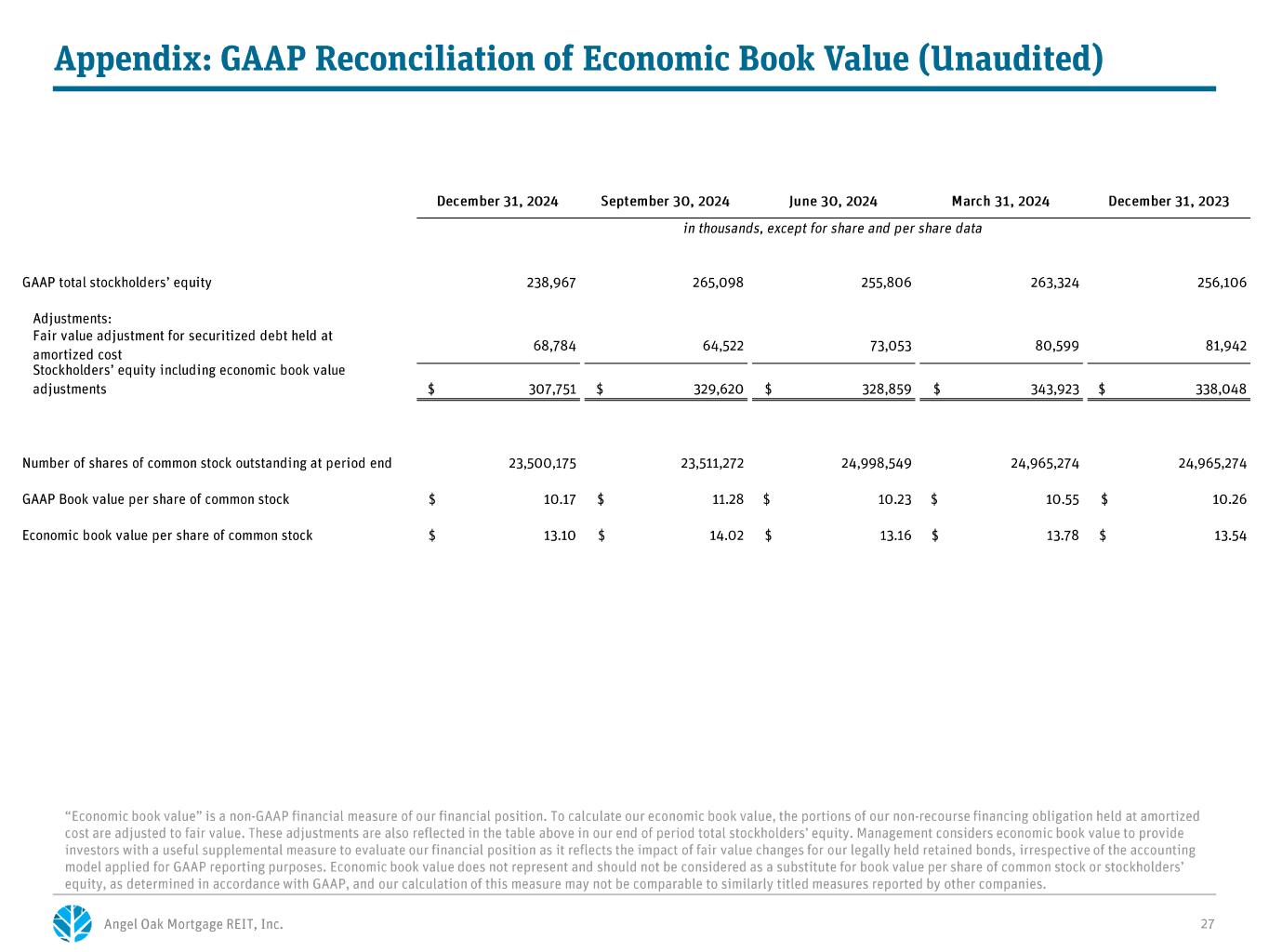
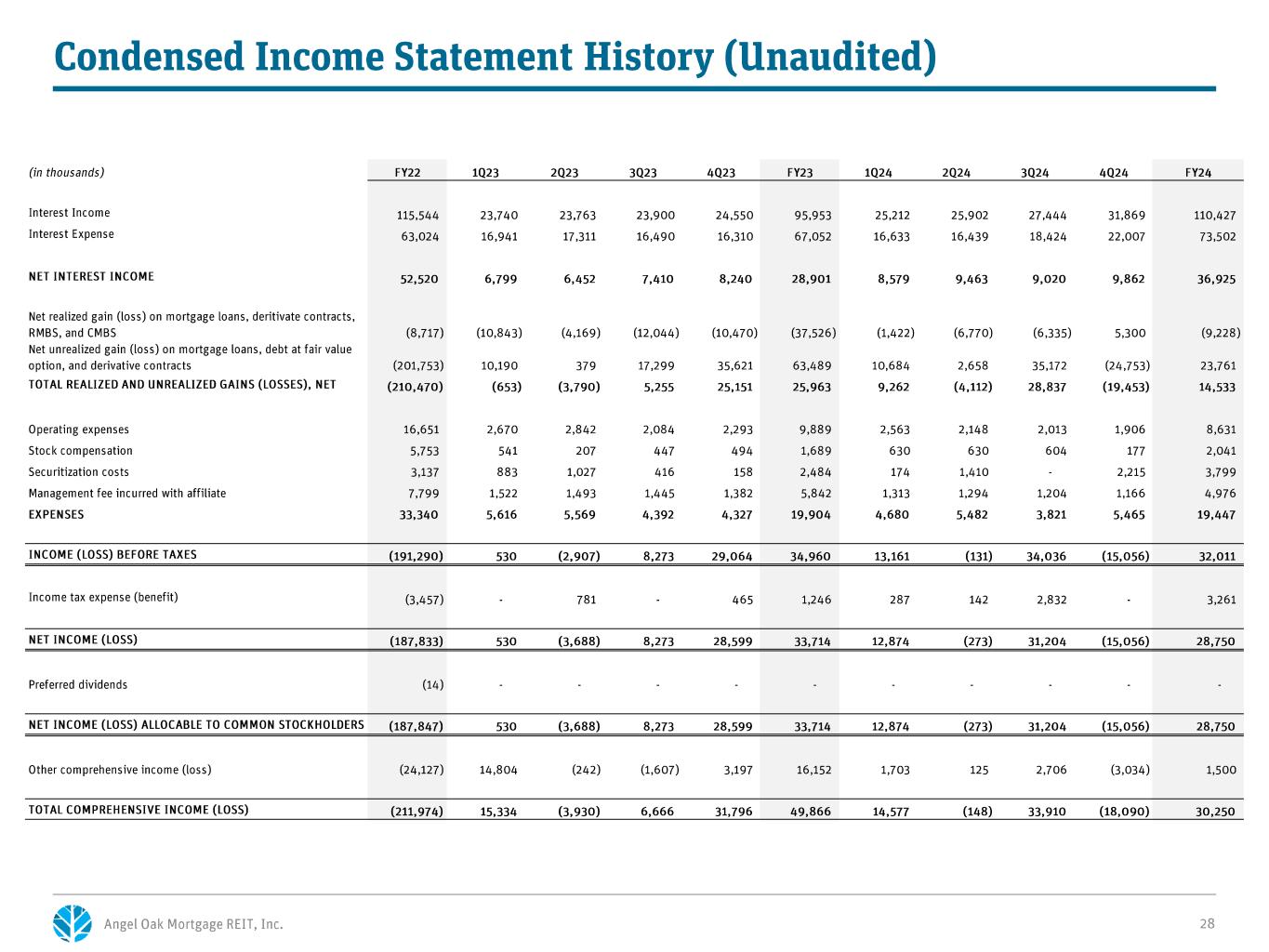
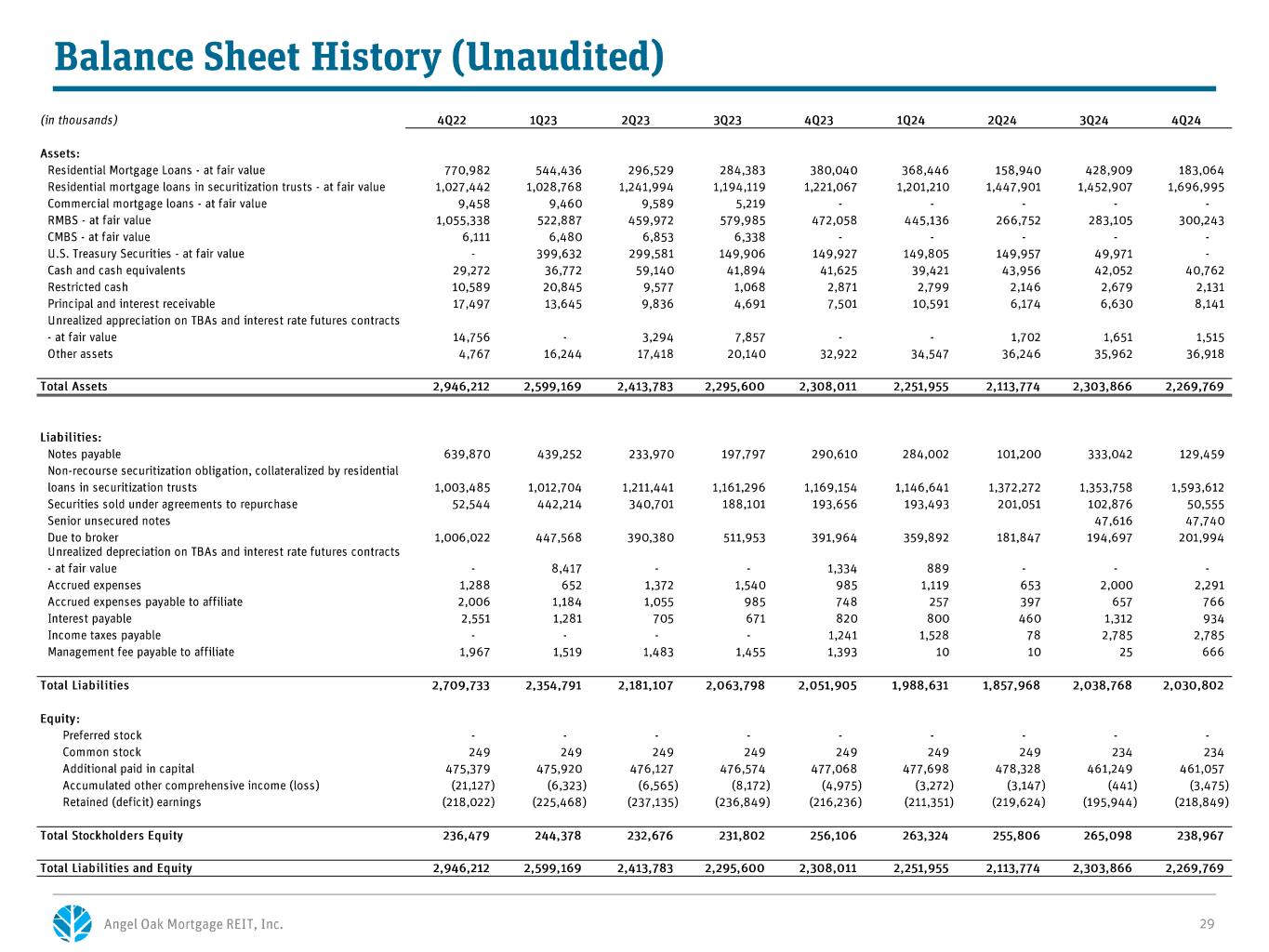
Thank you, Sreeni. Fourth quarter operating results followed expectations and the positive trend established throughout the year as we saw a 9% net interest income growth versus the third quarter, accompanied by the maintenance of reduced operating expense levels, and supported by active loan purchasing and securitization activity. As Sreeni mentioned, rates sold off and spreads widened, which were a headwind for portfolio valuation during the fourth quarter. The valuation decrease was almost exclusively driven by unrealized losses in our securitized loan portfolio. I'll point out that the loans in our securitized loan portfolio continue to perform well, and these unrealized losses will be recouped as the loans pay off and/or rates and spreads decline. For the fourth quarter of 2024, we had a GAAP net loss of $15 million or $0.65 per common share. For the full year, we had a GAAP net income of $28.8 million or $1.17 per diluted common share. Distributable earnings for the fourth quarter were $9.9 million or $0.42 per diluted common share. As mentioned previously, the driver of the difference between GAAP net income and distributable earnings is a removal of unrealized gains and losses, primarily on our securitized loan portfolios. In the fourth quarter, we had $24.4 million of unrealized losses on our residential and securitized loan portfolios. For the full year, distributable earnings were $7 million. The difference between GAAP net income and distributable earnings was driven by the removal of $21.9 million of unrealized gains on our residential and securitized loan portfolios. Interest income for the fourth quarter was $31.9 million, and net interest income was $9.9 million, marking a 30% improvement in interest income and a 20% improvement in net interest income compared to the fourth quarter of 2023. Compared to the third quarter of 2024, interest income increased by 16% and net interest income increased by 9%. For the full year, interest income was $110.4 million and net interest income was $36.9 million, which marks an improvement of 15% and 28%, respectively, compared to 2023. We expect interest income to continue to grow as we purchase accretive loans, employ sound portfolio management and leverage effective securitization execution. Our $684 million of loan purchases this year carried a weighted average coupon of 7.64%, a weighted average loan-to-value ratio of 70.2%, and a weighted average FICO score of 749. The weighted average coupon of our residential whole loan portfolio as of the end of the year was 7.39%, representing an increase of 61 basis points since the end of 2023. Including loans purchased subsequent to the end of 2024, our weighted average coupon is approximately 7.5%. We were pleased to have executed five securitizations over the course of the year, outpacing our stated goal of one securitization per quarter through a combination of both stand-alone and co-mingled deals. In total, we securitized $855 million and scheduled unpaid principal balance across these five securitizations. In the fourth quarter, we completed AOMT-24-10 as the sole contributor, contributing a balance of $316.8 million in loans. Additionally, near the end of the year, we closed AOMT-2024-13, which was a $289 million securitization to which we contributed $167 million in loans. As of the end of the year, our securitized loan portfolio carried a weighted average coupon rate of 5.6% with a weighted average funding cost of approximately 4%. The securitization market remains active and receptive with tight spreads, and we plan to continue to access it via our methodical securitization strategy. Operating expenses for the fourth quarter were $5.5 million. Excluding non-cash stock compensation expenses and securitization costs, fourth quarter operating expenses were $3.1 million, representing a 16% decrease compared to the same metric in the fourth quarter of 2023. For the full year, operating expenses were $19.4 million or $13.6 million excluding non-cash stock compensation expenses and securitization costs, demonstrating approximately 14% decrease in expenses compared to the prior year. Looking at our balance sheet as of December 31, we had $40.8 million in cash, and our recourse debt-to-equity ratio was 1x at the end of the year. GAAP book value per share decreased 9.8% to $10.17 as of December 31, 2024, down from $11.28 as of September 30, 2024, and nearly flat year-over-year. Economic book value, which fair values all non-recourse securitization obligations, was $13.10 per share as of December 31, 2024, down 6.6% from $14.02 per share as of September 30, 2024, and down 3.3% versus December 31, 2023. The decline in book value was driven primarily by the aforementioned unrealized losses on our securitized and unsecuritized portfolio due to interest rate and spread movements toward the end of the year. We note that the loans in our securitized loan portfolio continue to perform well and that these unrealized losses will be recouped as these loans pay off and as rates or spreads decline. We ended the year with residential whole loans at fair value of $183.1 million financed with $129.5 million of warehouse debt. We had $1.7 billion of residential mortgage loans and securitization trust and $321 million of RMBS, including $20.7 million of investments in co-mingled securitization entities, which are included in other assets on our balance sheet. We finished the year with undrawn loan financing capacity of approximately $920 million. Now looking at credit, we ended the year with the total portfolio weighted average percentage of loans 90 days plus delinquent at 2.4%, inclusive of our residential loan, securitized loan and RMBS portfolios, an increase from 1.85% as of the end of the third quarter of this year. As we stated previously, we expect this type of nominal increase and believe it is indicative of a return to normalized historical levels. We continue to expect that our portfolio-wide low LTV, tight underwriting standards, and inherent credit selection will mitigate losses throughout a cycle if credit becomes an issue. Three-month prepayment speeds for our RMBS and securitized loan portfolios were at 8.4% to end the year, marking a 10 basis point decrease compared to the third quarter. As borrowing rates remain steady, we do not expect prepayment speeds to exhibit any meaningful increases on the 2021 to '23 securitizations. If rates do fall, increasing prepay speeds in our securitized loan and RMBS portfolios are weighted towards loans that are still well below current rates, reducing or eliminating a homeowner's incentive to refinance. Non-QM loans are historically prepaid at 25 to 20 CPR. Lastly, we do have the ability to use capital to re-securitize and relever securitizations, which will increase the effective yield. On a more somber note, our thoughts and prayers go out to all those impacted by the California wildfires that started in January 2025. We hope that those individuals and their families are able to return to a sense of normalcy soon. As it relates to our portfolio, our exposure was fortunately very small due to our lower exposure to the California mortgage market. We have completed a full set of collateral inspections of all loans in the affected areas, and one loan in our securitized loan portfolio appears to have been damaged. As a reminder, we require property insurance on all our loans, which we expect to substantially mitigate or entirely eliminate our financial losses. Finally, as previously communicated, the company declared a $0.32 per share common dividend, which was paid on February 28, 2025. For additional color on our financial results, please review the earnings supplement available on our website. I will now turn it back to Sreeni for closing remarks.
Speaker 2
I would like to thank the entire Angel Oak team for their hard work and contributions over the last year as we seek to build long-term value for our shareholders. With that, we'll open up the call to your questions.
Operator
The first question comes from Matthew Erdner with JonesTrading.
Speaker 4
Brandon, thanks for touching on the prepayments there. But I kind of have a follow-up to that. It looks like we're shifting into a new environment and rates are heading lower. How insulated are those '21 to '23 vintages? And where do you think rates would kind of need to go to trigger significant prepayments there?
Those 8 CPR, as I mentioned earlier, historically we expect 20 to 25 CPR in a stable, normalized environment. For the '21 to '23 vintage, the weighted average coupons are around 5%, 5.25%, or so. We believe that real rates and mortgage rates would need to decrease significantly since new productions are in the mid- to high 7s. We might need to see a movement of 150 to 200 basis points in that rate before anyone considers cashing out some equity or refinancing. So, they are relatively insulated. I do anticipate that over time, as you mentioned, they will increase. They won't remain at 8 forever. However, I don't foresee any significant elevation beyond what we project when entering a securitization at least for now.
Speaker 4
I appreciate the color. And then as you look to relever some of these down the road, generate that additional yield, how much incremental yield are you guys kind of expecting to get from those kind of re-securitizations?
It largely depends on the specific securitizations in question. If we focus on our pre-IPO securitizations, particularly the 2019 vintages, those have deleveraged. The weighted average coupon of those loans is currently in the high 6s, so we aren't overly leveraged on them, resulting in an 8% levered yield remaining on those deals. If we decide to call them and either resecuritize or convert collateral into new collateral, we will be able to leverage back up to around 12% during the whole loan aggregation phase and 15% once they are securitized.
Speaker 4
And then I apologize if I missed it, but did you provide book value quarter-to-date?
Yes. We didn't provide it at the time, we wanted to get the most up-to-date information, but it's looking like as of February 28, or you can call it as of today, we'll be looking up excluding the dividend just over 6% and then net of the dividend about 3% up.
Operator
The next question comes from Don Fandetti with Wells Fargo.
Speaker 5
Brandon, can you talk a little bit about the pluses and minuses for thinking about NII in terms of the next quarter? And then I assume you feel like the pipeline is strong enough to where you can just continue to grow NII each quarter as we progress through '25. Is that a fair assumption?
Yes, we have made significant strides in net interest income over the past year. For the fourth quarter, we're around 90% covered on the dividend based on cash use, and by the end of the year, we are also adequately covered. I expect this coverage to continue increasing in the upcoming quarters as we pursue more securitizations. We have one planned that should take place by the end of the first quarter or possibly into the second quarter, which will allow us to release additional capital for further loan purchases. Our mortgage company pipeline remains strong; we have as much product as we wish to acquire and at our desired pace. Rates are still in the high to mid-7% range, so we are optimistic that net interest income will keep growing throughout 2025.
Speaker 5
And then as you look at the new administration and you think about non-QM and what might happen with the GSEs, how are you feeling about the non-QM market as you look out over the next few years, just given potential changes on the regulatory side?
I believe that if we consider what Trump aimed to accomplish during his first term and what he might pursue in a second term, it could positively impact the non-QM market by freeing up loans that were previously with the GSEs and pushing them into non-QM, or by fostering a larger market. However, this situation is likely to be dynamic, and similar to the first term, not much materialized from that. Given the current trajectory, things could change overnight. Overall, I would wager that non-QM will expand if any actions are taken during this term.
Operator
The next question comes from Eric Hagen with BTIG.
Speaker 6
Good to hear from you guys. So when we look at accretive opportunities that you guys mentioned in the opening remarks, can you remind us if you consider the GAAP book value or the economic book value to be the more relevant benchmark? And then with respect to completing incremental securitization deals, could you ever consider taking the cash that gets released from completing a deal and repurchase your stock at these valuations? Or do you see the unsecured market as a possible source of cash for repurchasing stock as well?
I will address the last part first. In terms of the senior unsecured market, we've demonstrated its potential benefits from our issuance in July. We are actively monitoring this market, which remains accessible if we decide to utilize it. At this time, I am not particularly inclined to repurchase a significant amount of stock, as I prefer to grow our equity base over time. When examining our repurchase strategy, the additional capital currently yields a return on equity of 15% to 20%, while our dividend yield is approximately 13%. Therefore, from a financial standpoint, it may not be wise to prioritize stock buybacks, except from a book value perspective. This past year, particularly in Q4, we encountered some challenges, but we anticipate a trajectory resembling Q3 of 2024, which had a notable increase in book value due to either the continued prepayments from earlier deals or tightening of rates and spreads, neither of which occurred in Q4. Regarding the initial question about GAAP and economic book value, this is a complex issue as we consider economic book value to be a significant metric for the company. The convergence of GAAP and economic book values will require time, driven by substantial decreases in rates—potentially back to the 2021 levels—or through prepayments on the loans underpinning our securitizations, which, with an 8% CPR, seems unlikely to happen soon. As we pursue accretive opportunities, we will start to align our considerations more closely with GAAP book value as we approach a premium over that level compared to economic book value.
Speaker 6
Thank you for the explanation. Moving on to the portfolio, what do you consider a normal level of delinquencies? What are your expectations for the next year? How do you think the mark-to-market will react to any increase in delinquencies?
I believe that the 1.8% we experienced prior to this quarter was somewhat of a low point. Looking at our trend lines over time, we are moving back towards a more typical level of 2% to 3% for 90-day delinquencies in our loan portfolio. Some of the securitized loans from our IPO are becoming more aged, which is allowing them to self-select based on paydowns and other factors. We are currently operating within that range. There have been no indications of an increase in delinquencies. Overall, I feel we are in a healthy spot, and we've consistently improved credit each quarter, while also preparing for a potential period of credit stress, which hasn't occurred since 2007-2008, by building in protective measures on new production.
Speaker 6
Okay. So it's safe to say that non-QM valuations embed maybe some increase in delinquencies from here, but not a material increase. Is that kind of fair?
Operator
The next question comes from Jason Stewart with Janney. It’s safe to say that non-QM valuations may include some increase in delinquencies from here, but not a significant increase. Would you say that’s accurate? That's right.
Speaker 7
Just a follow-up on KC's question. I mean, obviously, from a FICO and LTV standpoint, the credit quality of the originations looks very strong. Was there anything in the fourth quarter performance from a vintage standpoint where you saw transition or roll rates deteriorate? And then maybe if you could just give us a thought on where that's performing quarter-to-date in 2025 and 1Q, just taking seasonality into account.
Yes, we haven't really observed a significant trend with any particular vintage differentiating itself. In times of economic stress, newer loans tend to experience a slight increase in delinquencies, as borrowers may not be as committed to the property. We do notice a small difference in loans originated in 2024 compared to earlier vintages, excluding the COVID loans, which still have some forbearance. However, the delinquencies remain relatively low, around 2.5%. I apologize, I forgot the second part of your question.
Speaker 7
I was just curious how the seasonality impacted that and maybe what you're seeing in terms of a reversal of the increase in delinquency so far in 2025.
Yes. Okay. Yes, we have seen a little bit more payments come in; not quite 2.4% today, we're about 10 basis points down on that level as of the latest information, which gets us a little bit delayed because of just the reporting. But effectively, as of January, full January payments we took about 10 basis points back of that delinquency level.
Operator
This concludes our question-and-answer session. I would like to turn the conference back over to Brandon Filson for any closing remarks.
Thank you, everyone, for your time and interest in Angel Oak Mortgage REIT. We look forward to connecting with you again next quarter. In the meantime, if you have any questions, please feel free to reach out to us. Have a great day.
Operator
The conference has now concluded. Thank you for attending today's presentation. You may now disconnect.