Operator
Good day, and welcome to the Angel Oak Mortgage REIT First Quarter 2025 Earnings Conference Call. All participants will be in listen-only mode. After today’s presentation, there will be an opportunity to ask questions. Please note this event is being recorded. I would now like to turn the conference over to Mr. KC Kelleher. Please go ahead.
Good morning. Thank you for joining us today for Angel Oak Mortgage REIT's First Quarter 2025 Earnings Conference Call. This morning, we filed our press release detailing these results, which is available in the Investors section on our website at www.angeloakreit.com. As a reminder, remarks made on today's conference call may include forward-looking statements. Forward-looking statements are subject to risks and uncertainties that may cause actual results to differ materially from those discussed today. We do not undertake any obligation to update our forward-looking statements in light of new information or future events. For a more detailed discussion of the factors that may affect the company's results, please refer to our earnings release for this quarter and to our most recent SEC filings. During this call, we will be discussing certain non-GAAP financial measures. More information about these non-GAAP financial measures and reconciliations to the most directly comparable GAAP financial measures are contained in our earnings release and SEC filings. This morning's conference call is hosted by Angel Oak Mortgage REIT's Chief Executive Officer, Sreeni Prabhu, and Chief Financial Officer, Brandon Filson. Management will make some prepared comments, after which we will open up the call to your questions. Additionally, we recommend reviewing our earnings supplement posted on our website, www.angelokereit.com. Now I'll turn the call over to Sreeni.
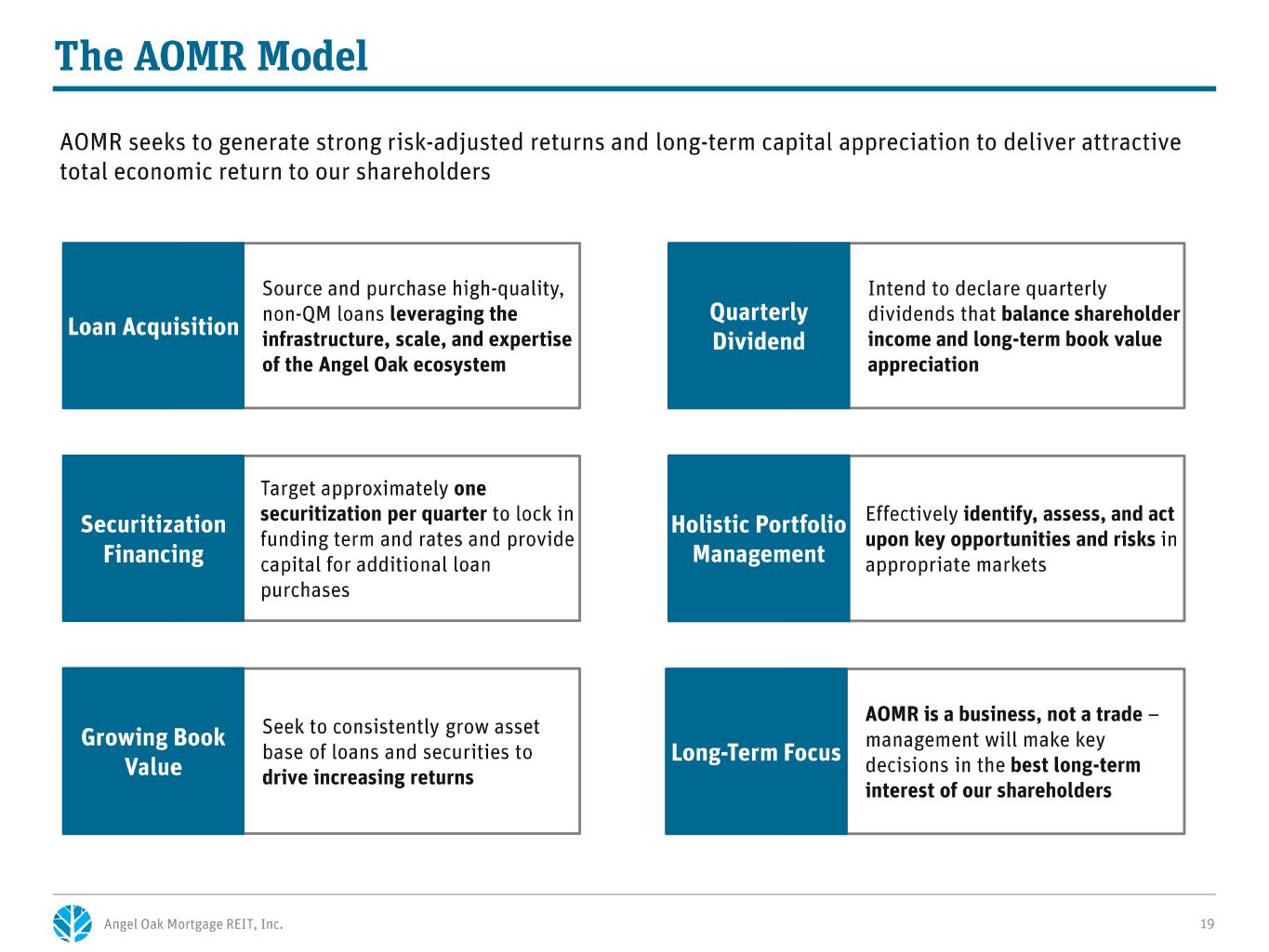
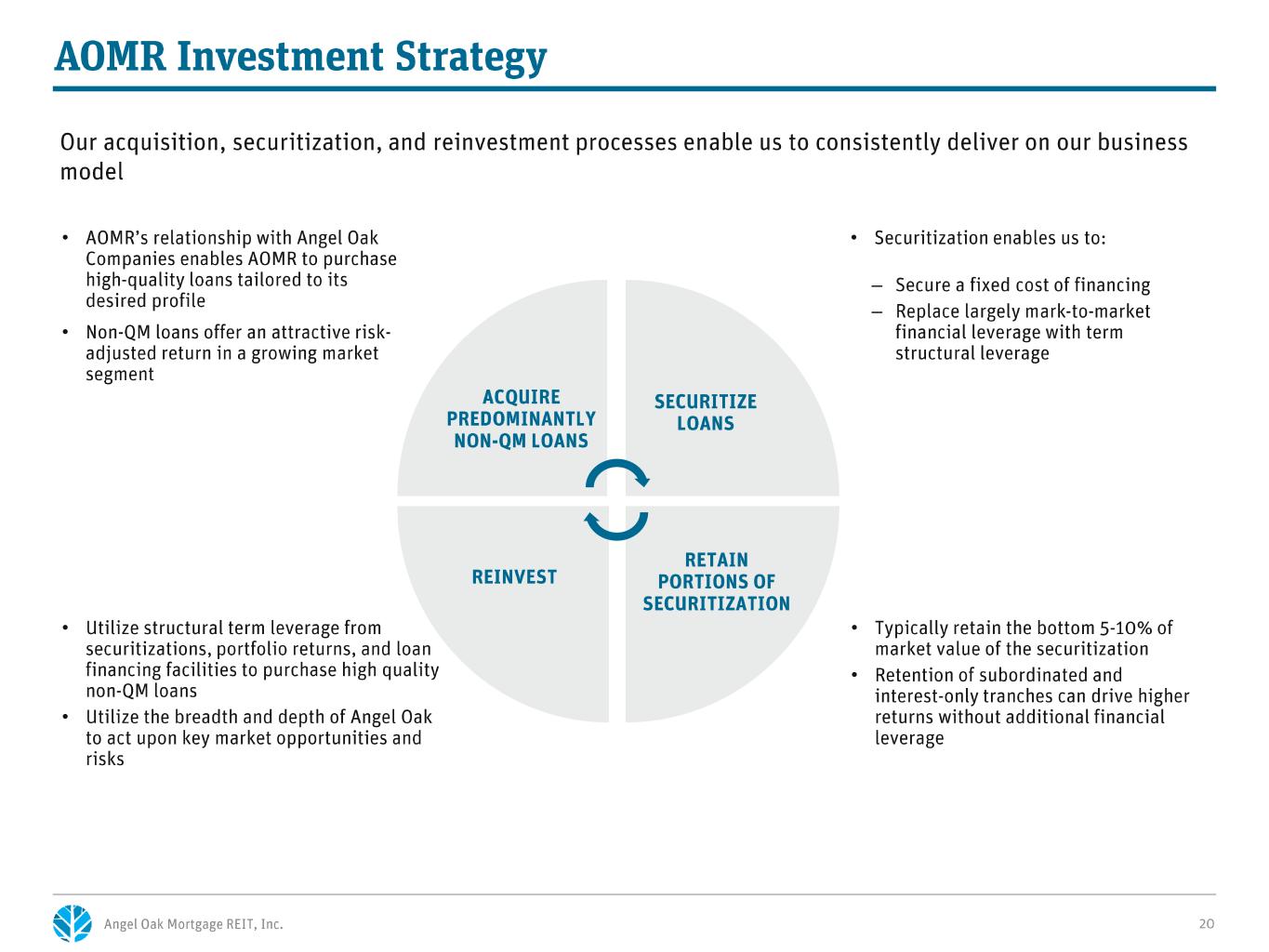
Thank you, KC, and thank you all for joining us today. Our performance in the first quarter of 2025 was highlighted by continued net interest margin growth driven by newly originated loan purchases, maintained operating expense savings, and valuation tailwinds that buoyed book value growth compared to the end of 2024. Cash flow and dividend coverage continued to expand as a result of our disciplined and value-driven operating model, which enables us to grow the earnings power of the portfolio even in periods of sustained market volatility. Our priority is to drive long-term earnings accretion through our focused operational strategy while appropriately managing risk. While we did not execute a securitization in the first quarter, we were the sole participant in the AOMT 2025-4 securitization, which we closed shortly after quarter-end, and has provided us with capital to continue to purchase new loans and reduce some repurchased debt associated with our retained bond portfolio, both of which should drive incremental net interest income in the coming quarters. Despite uncertainty surrounding international trade and tariff activity beginning at the end of the first quarter, the foundation of our business model continues to be supportive, and we expect to continue the earnings growth trajectory established over the course of the past 1.5 years. Interest rates have declined meaningfully from the end of 2024, though the positive impact has likely been at least partially offset by previously mentioned international trade uncertainty, which has widened interest rate spreads. Mortgage rates have been stable as we continue to see our non-QM loan originations in the mid to high 7% range. Overall, securitization markets have been resilient with a deep pool of market participants willing to participate in the market. That being said, there have been some variations in execution levels in terms of spreads depending on the timing with data points and/or trade announcements. We have ample opportunities for us to recycle capital and continue growing our target asset portfolio. Our capital deployment strategy will remain adaptive and flexible aligning with evolving market dynamics in order to maximize expected shareholder returns. With regards to capital raises, we will remain flexible and we'll continue to evaluate opportunities from the perspective of earnings and value accretion over the near and long term as reflected by our accretive senior unsecured note issuances last year. As we move forward, our focus remains on executing in line with our earnings-generating model and delivering positive outcomes for shareholders, while positioning our balance sheet to be an active buyer of high-quality non-QM loans. With that, I'll turn it over to Brandon who will walk us through our first quarter financial performance in greater detail.
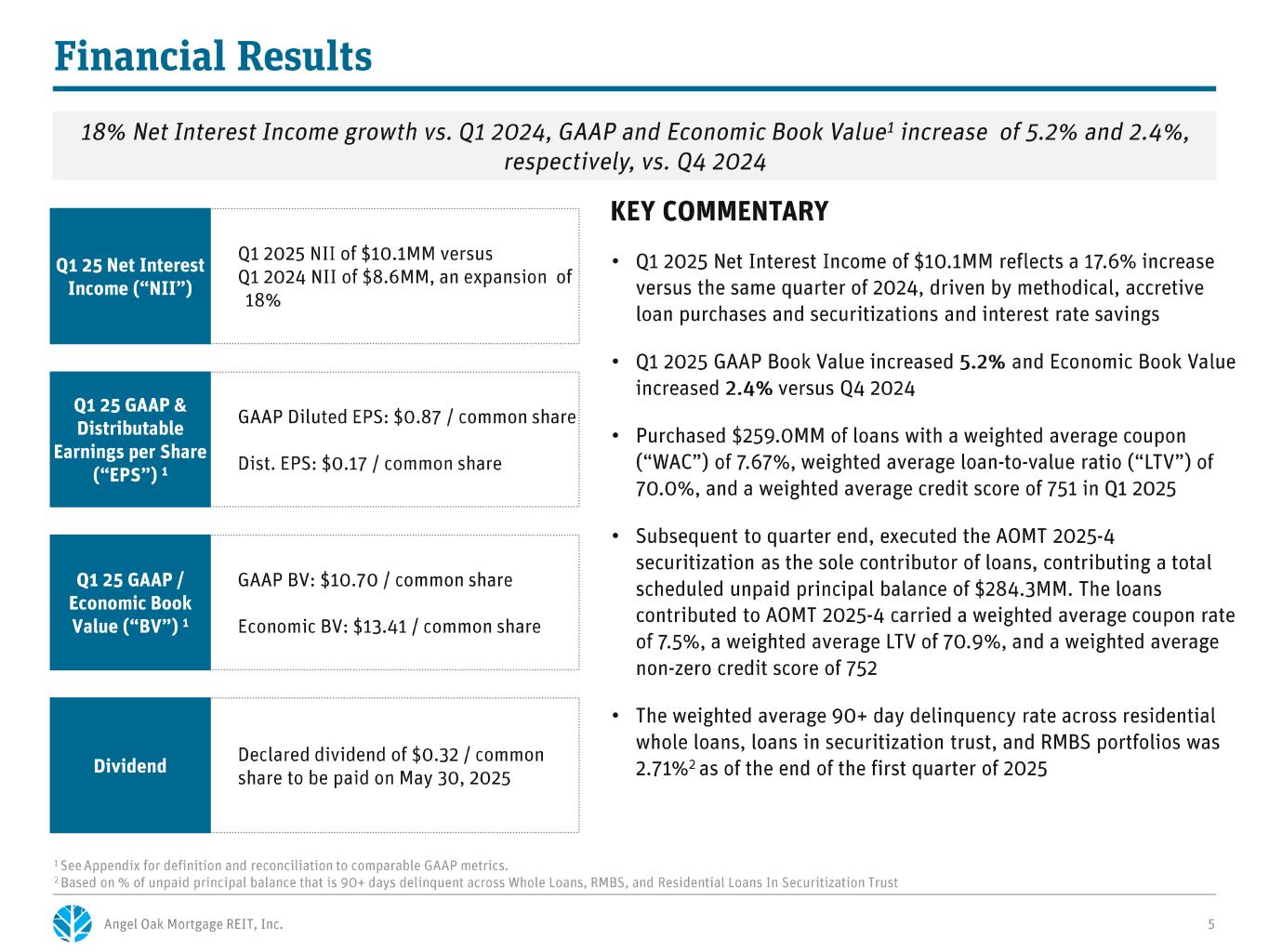
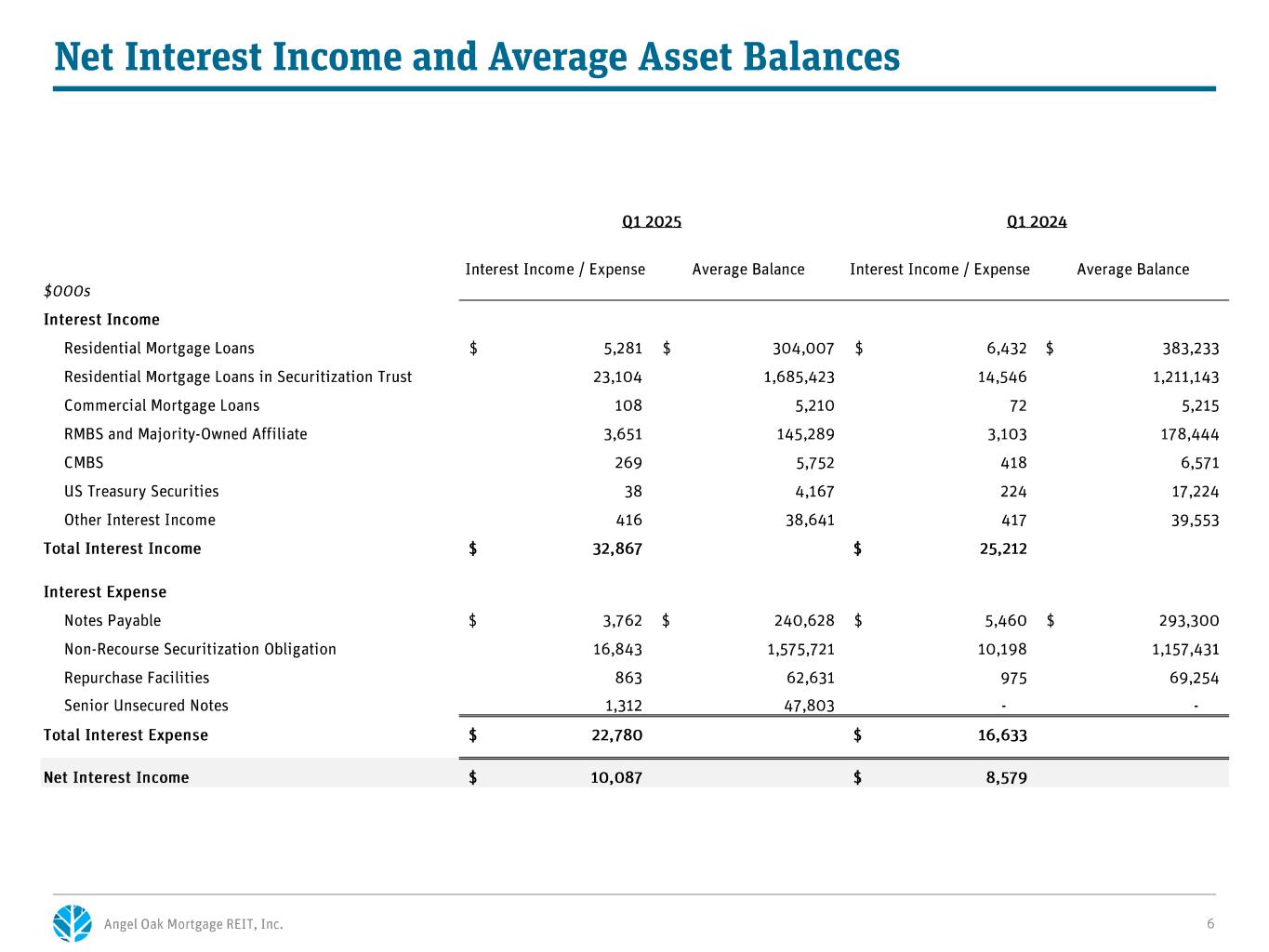
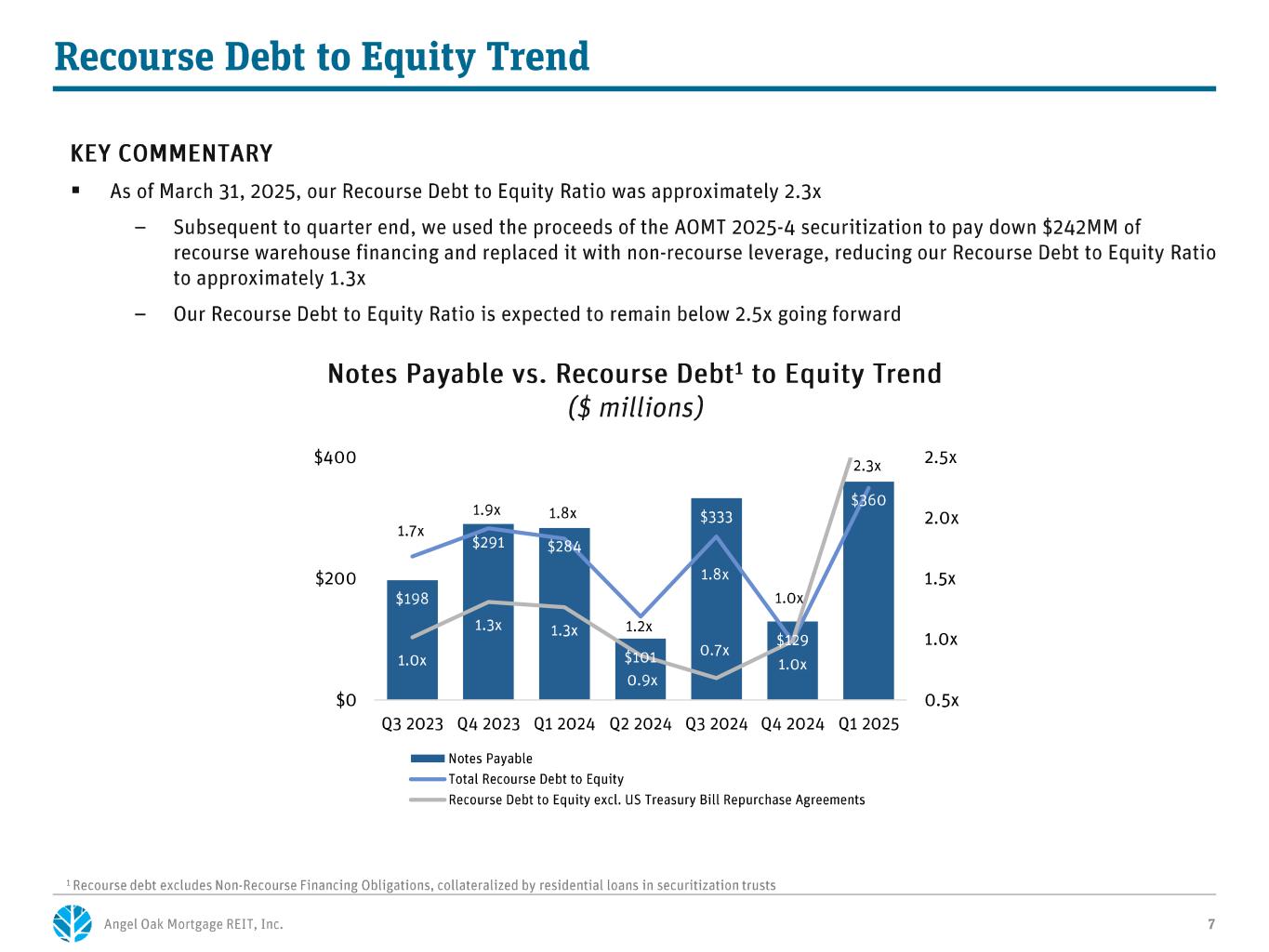
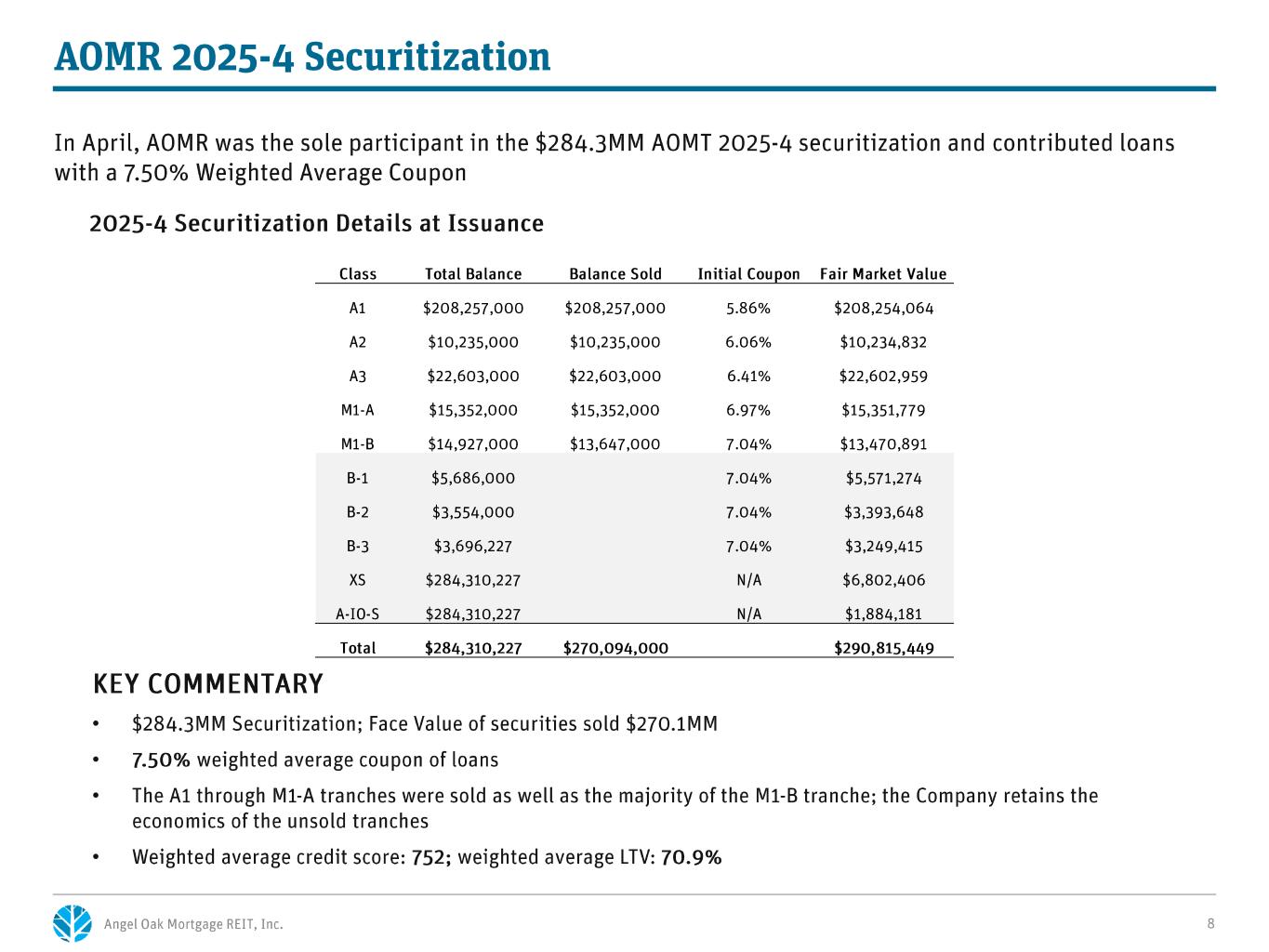
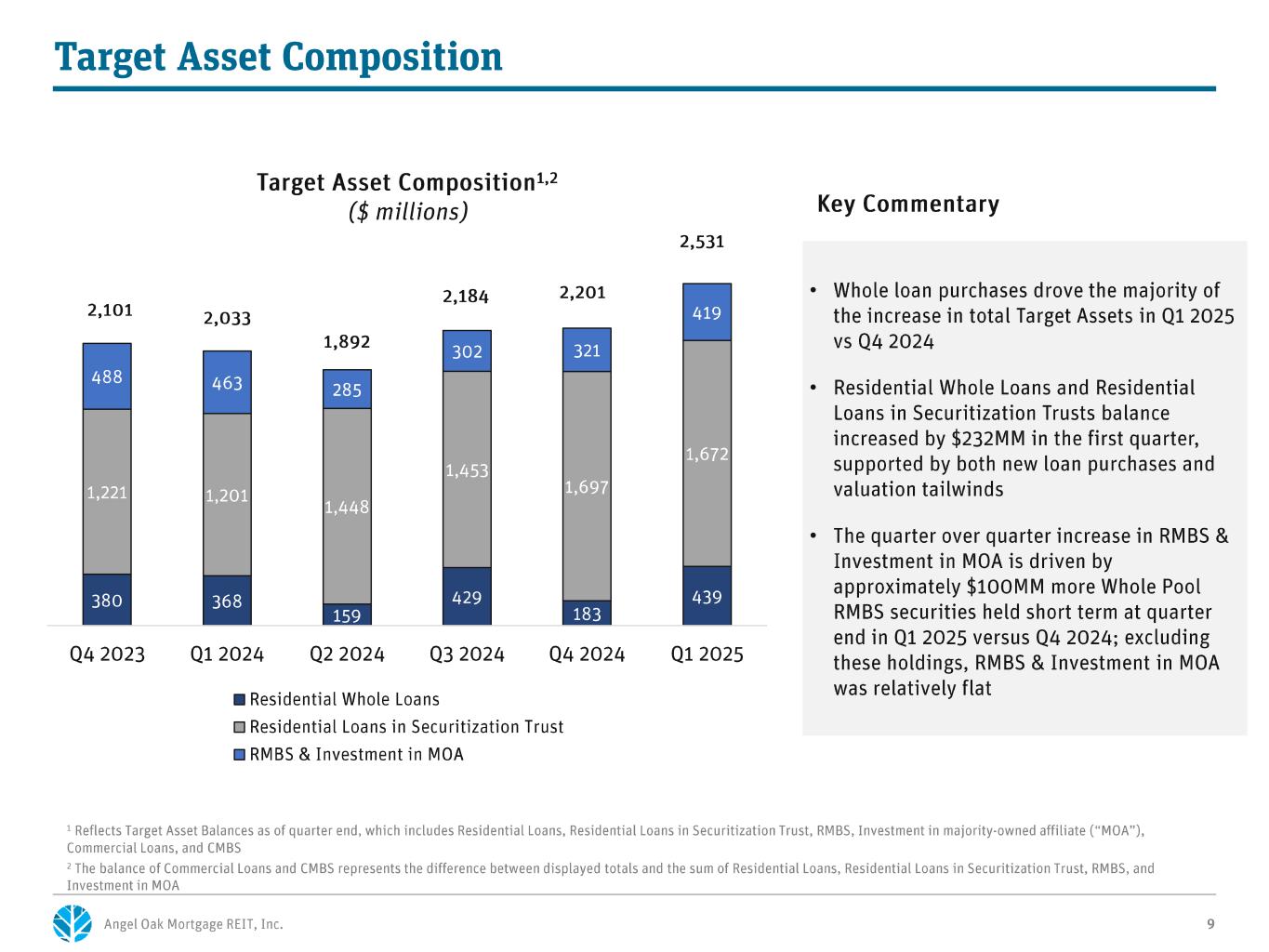
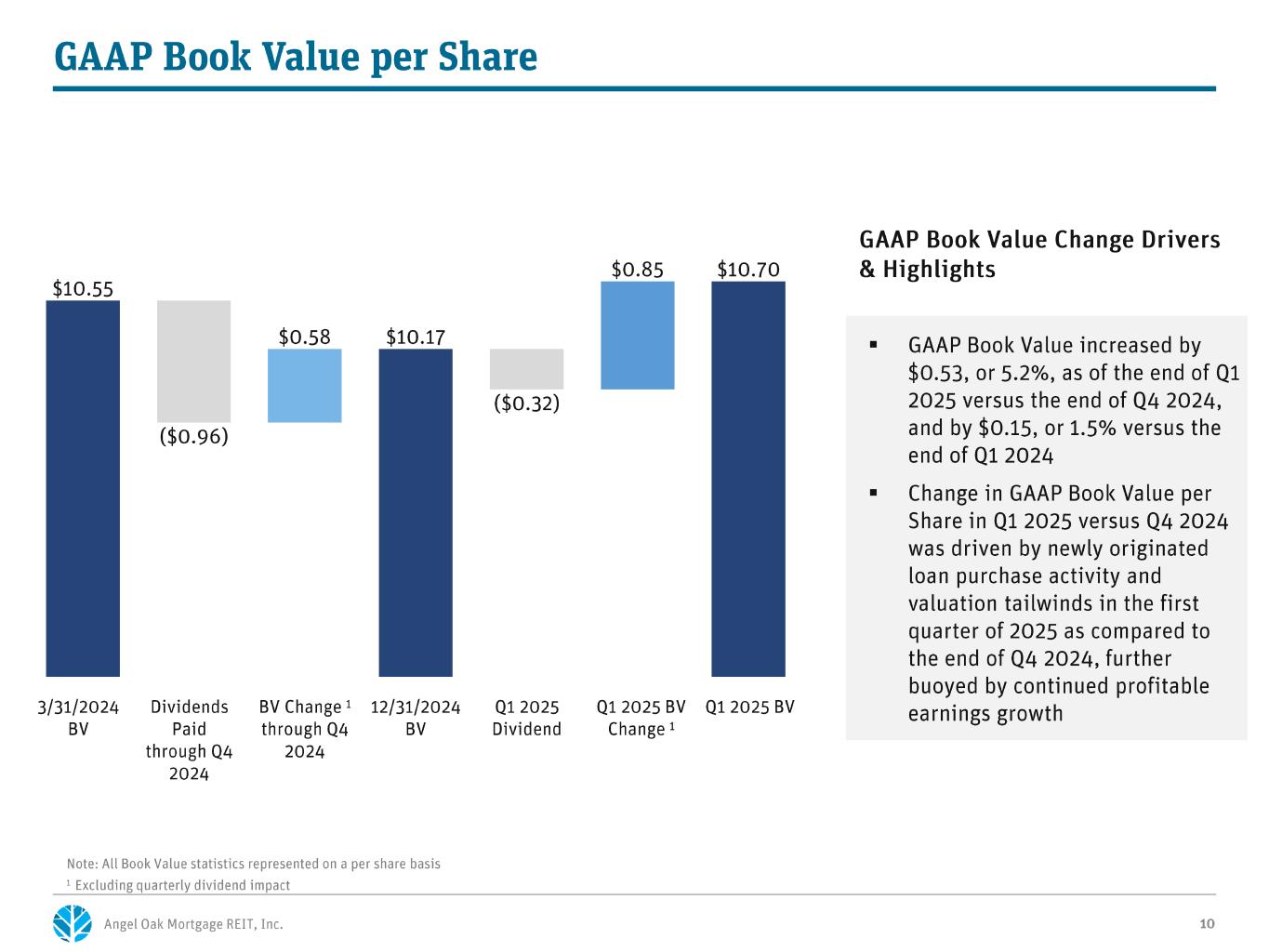
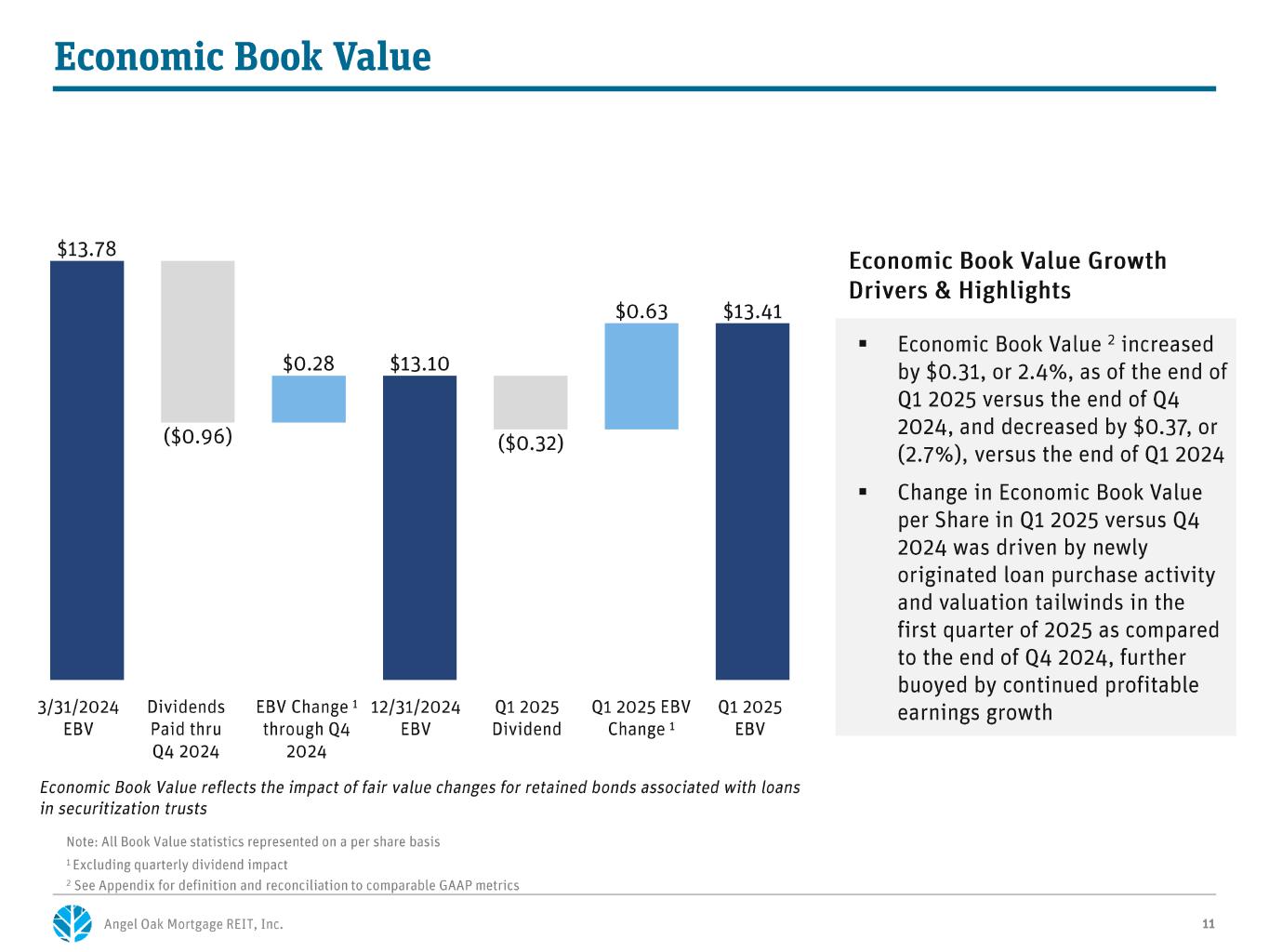
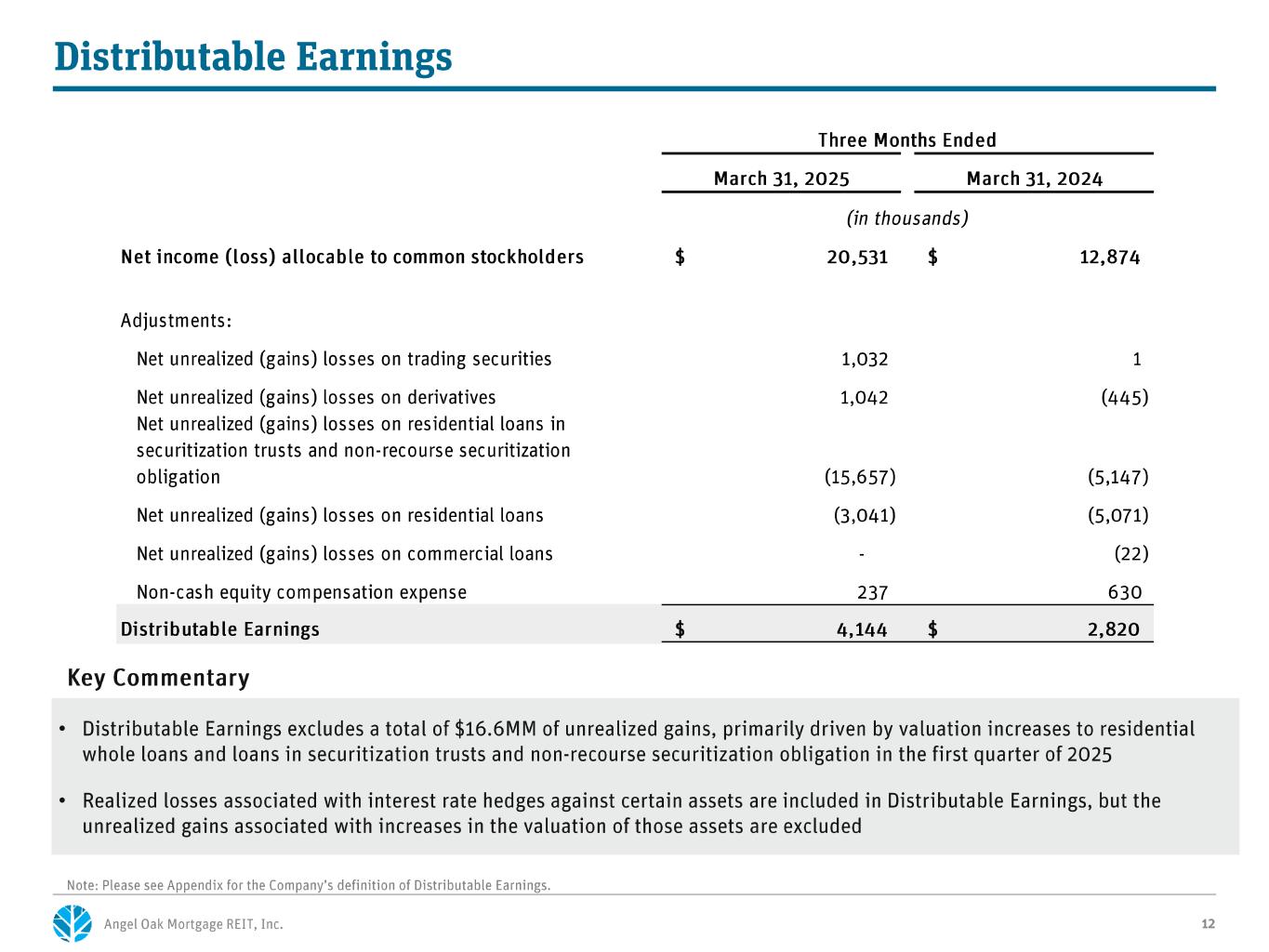
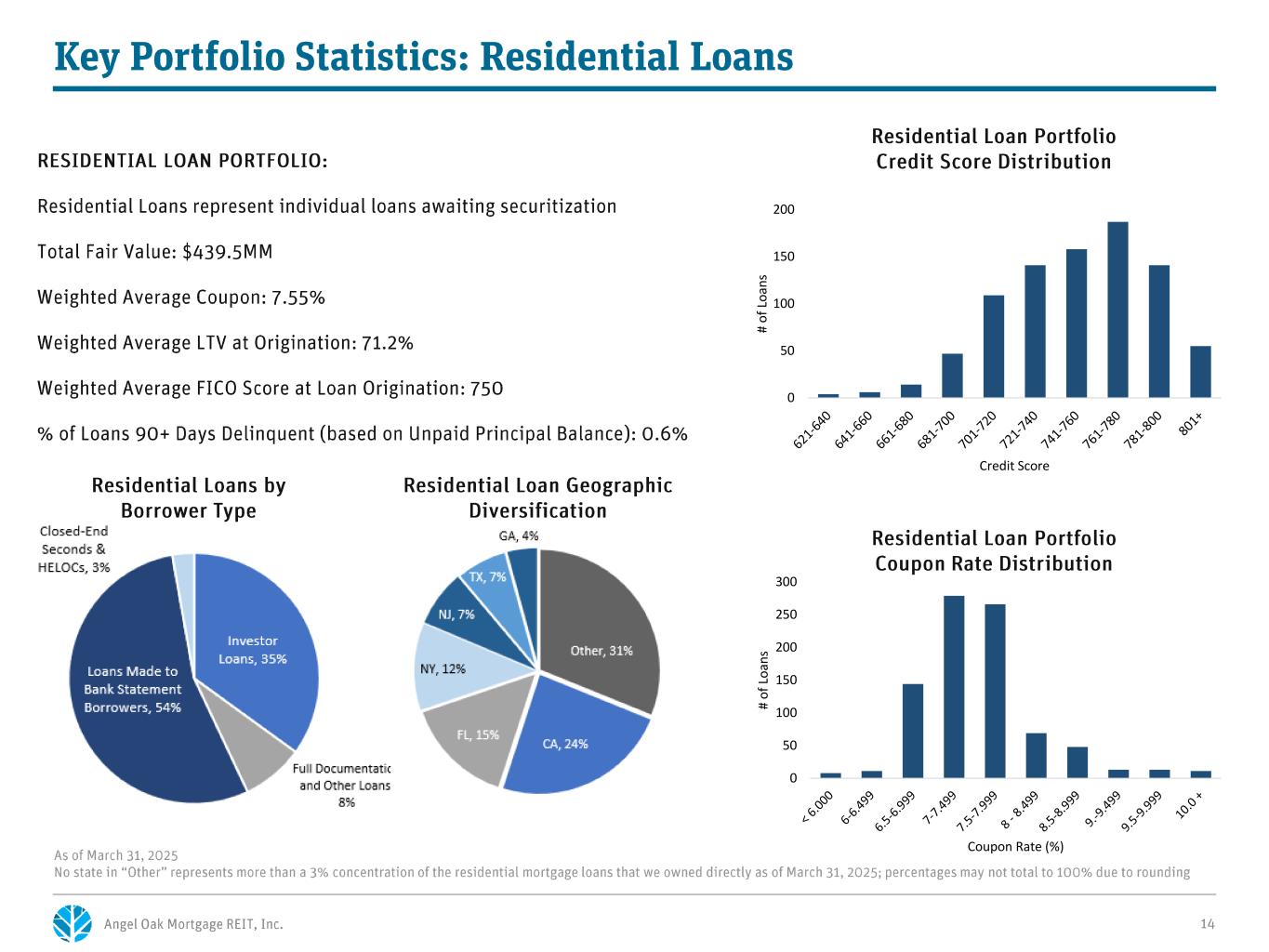
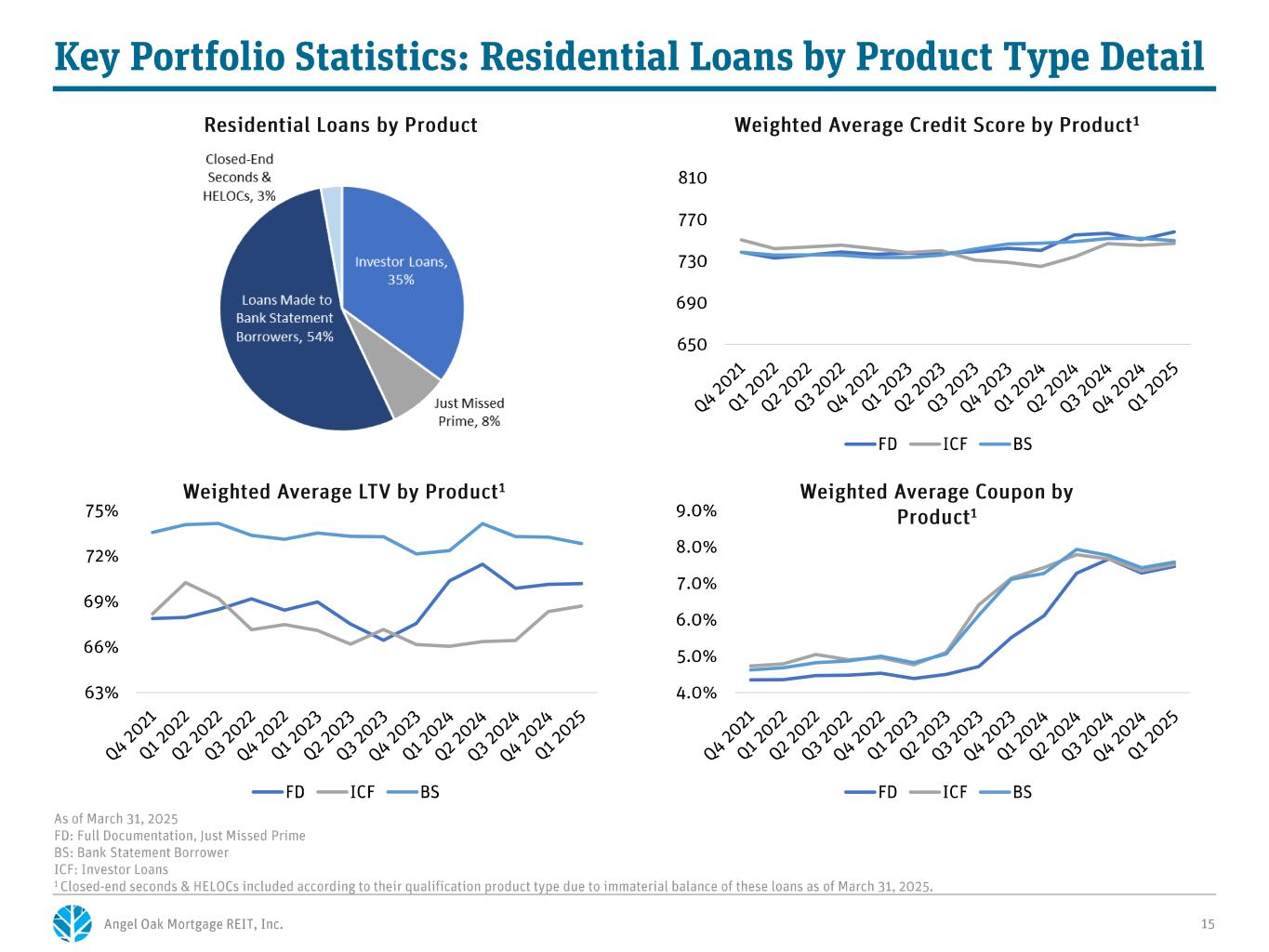
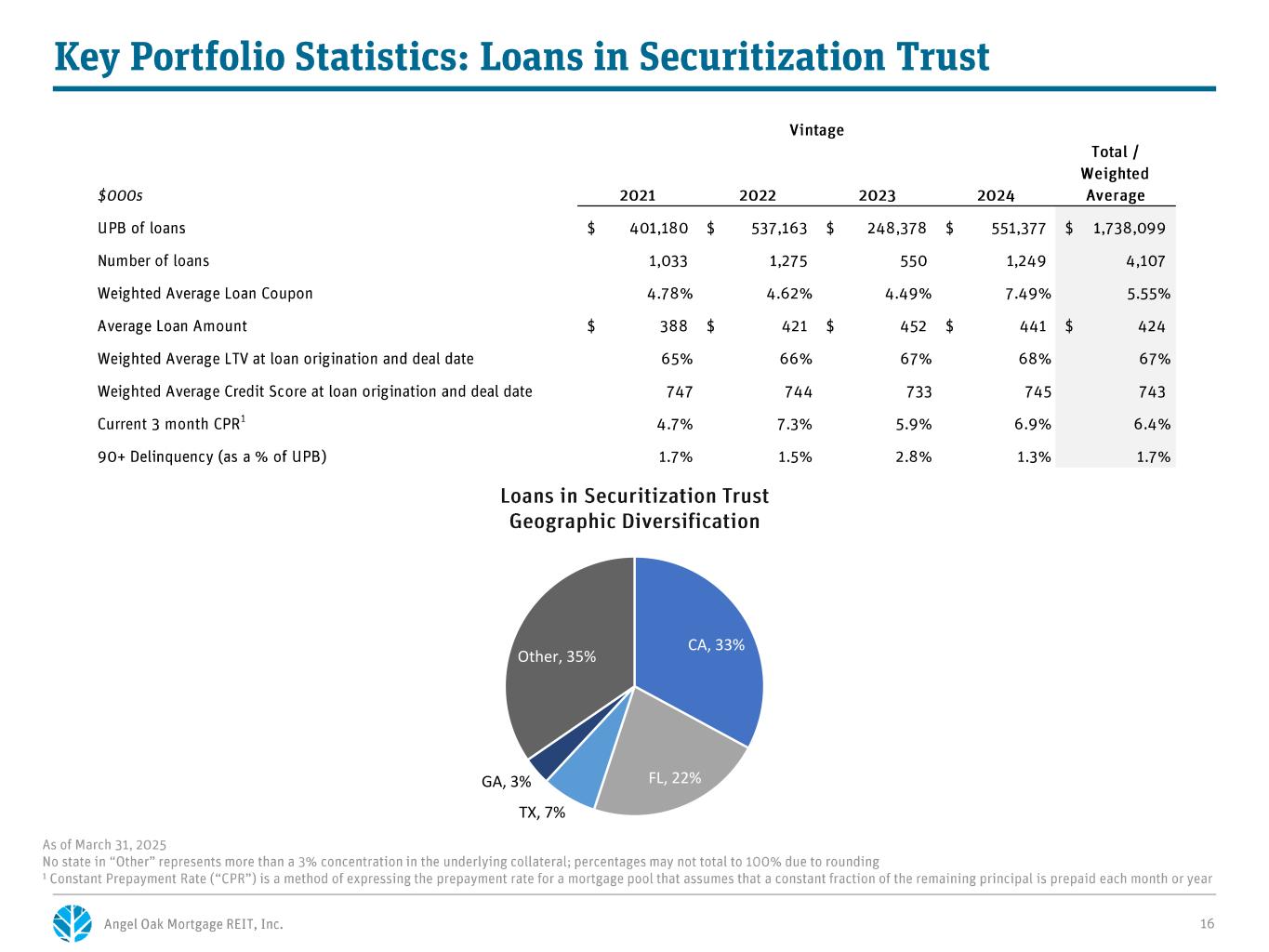
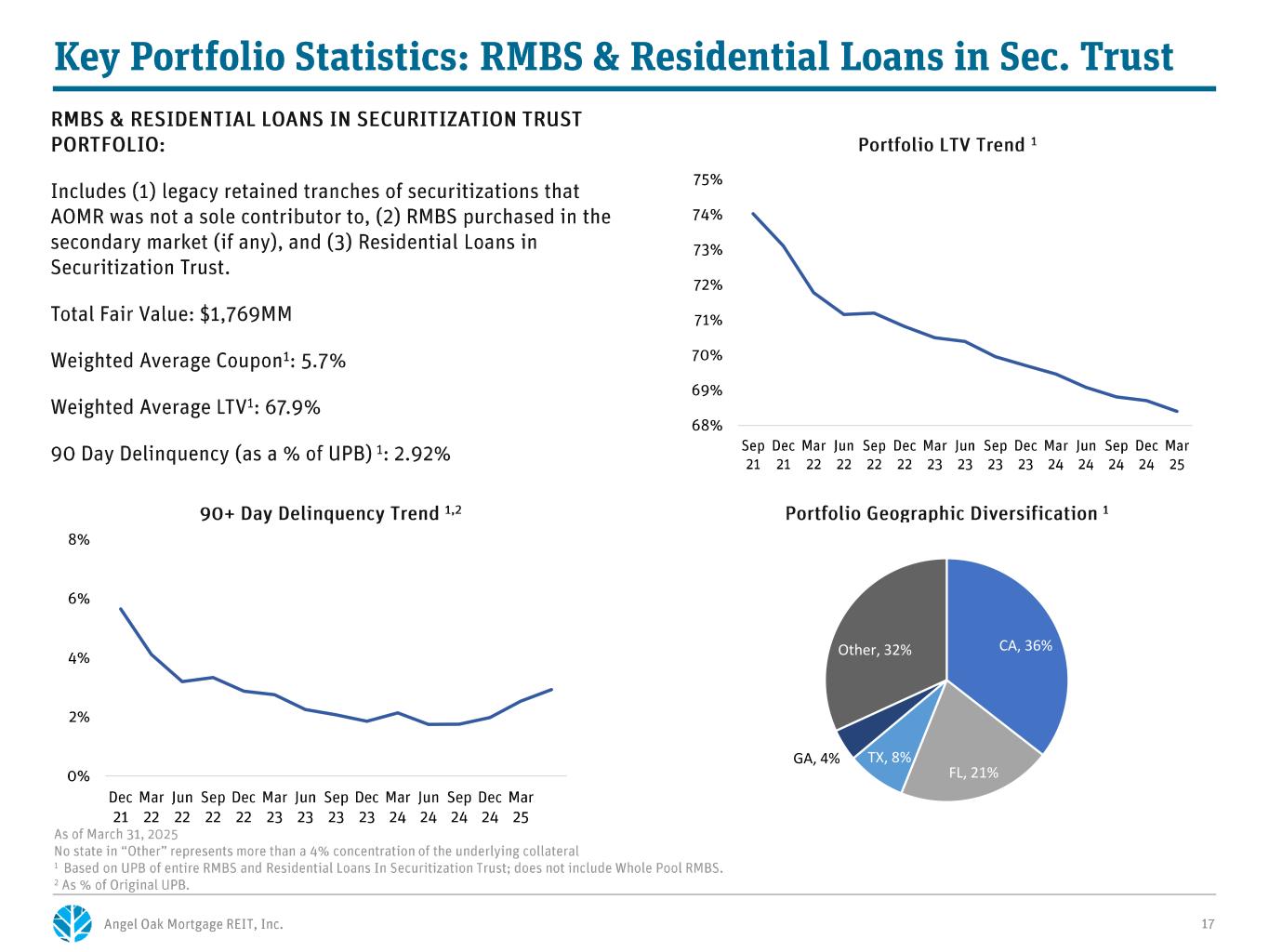
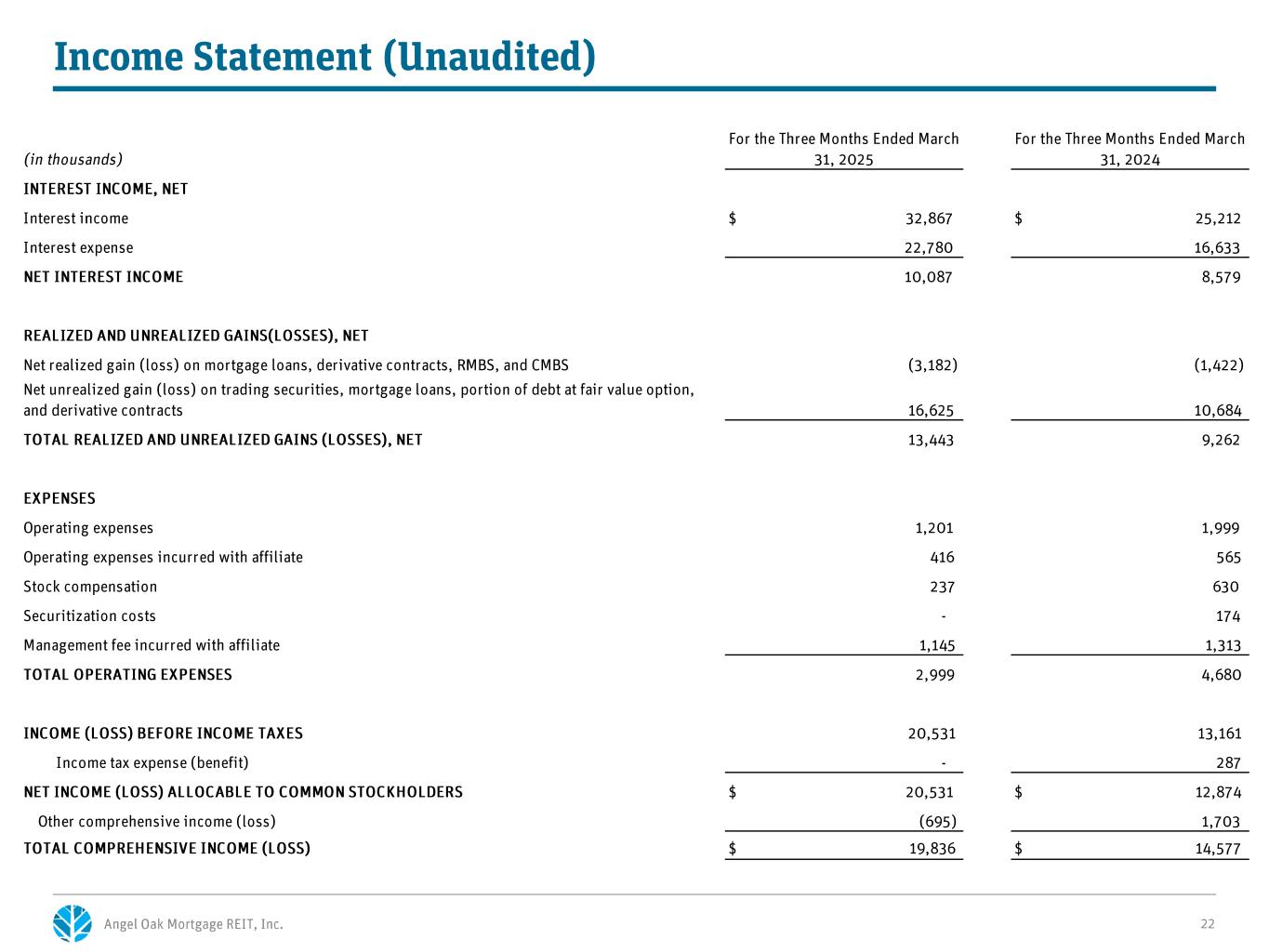
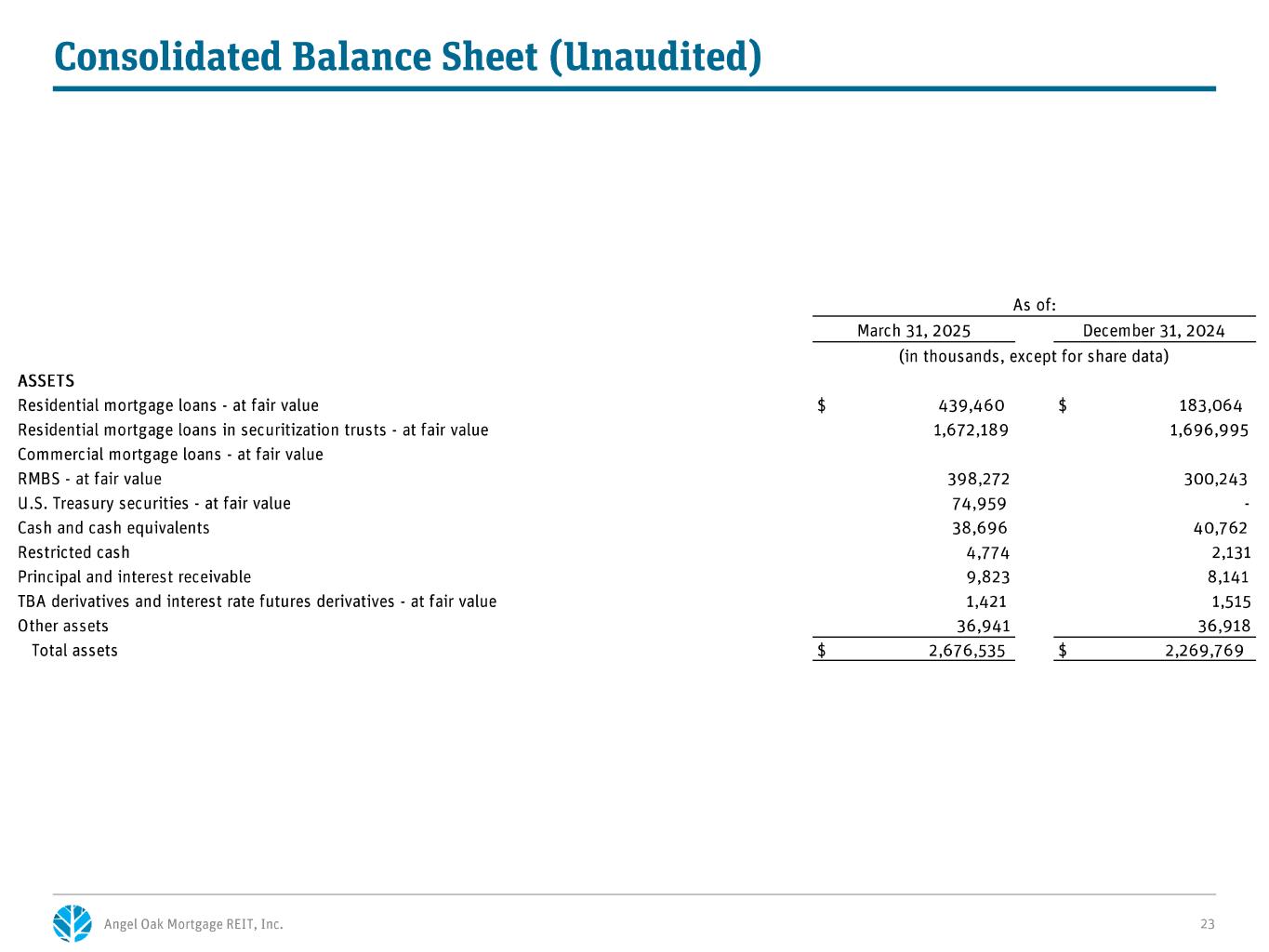
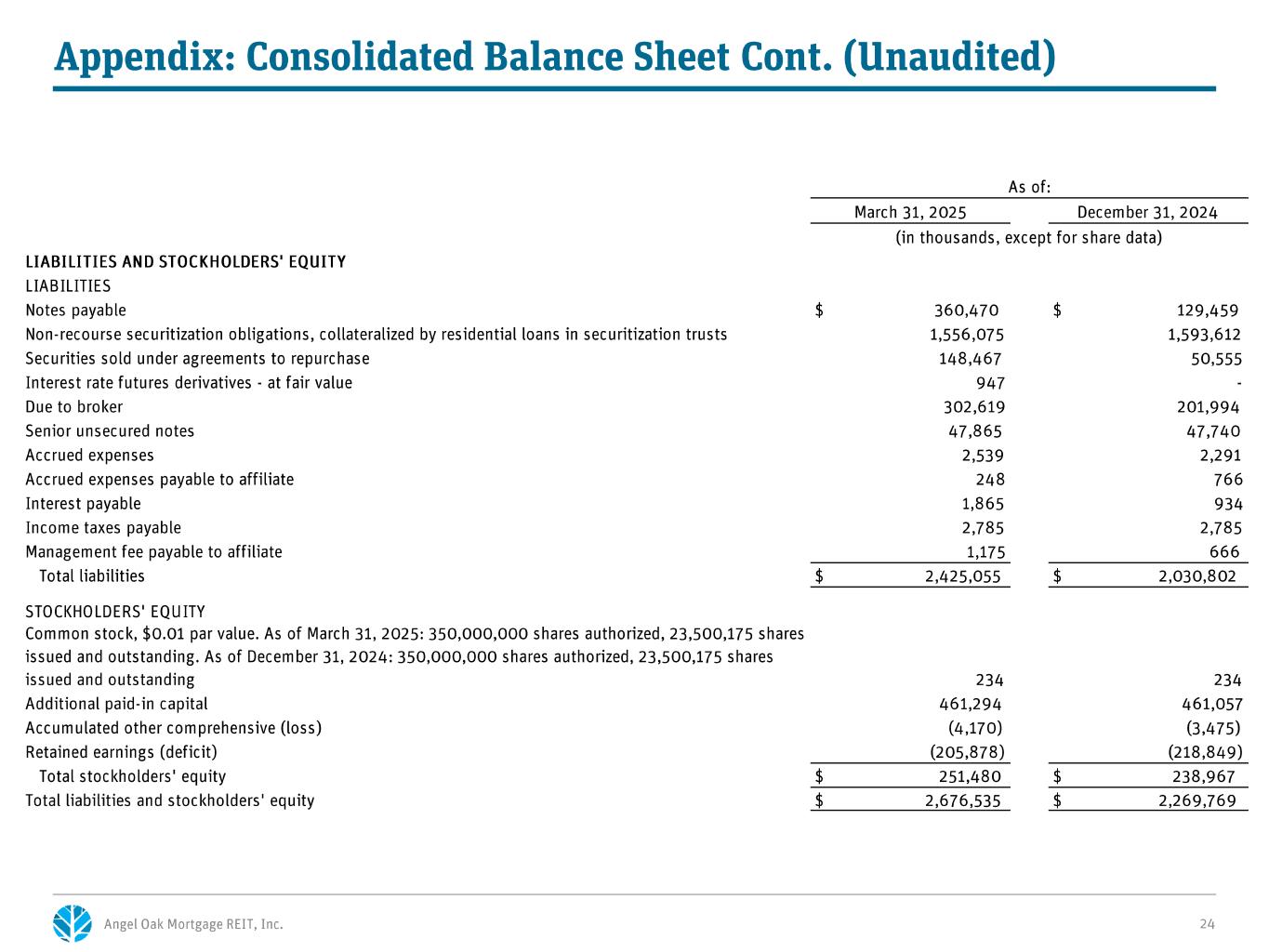
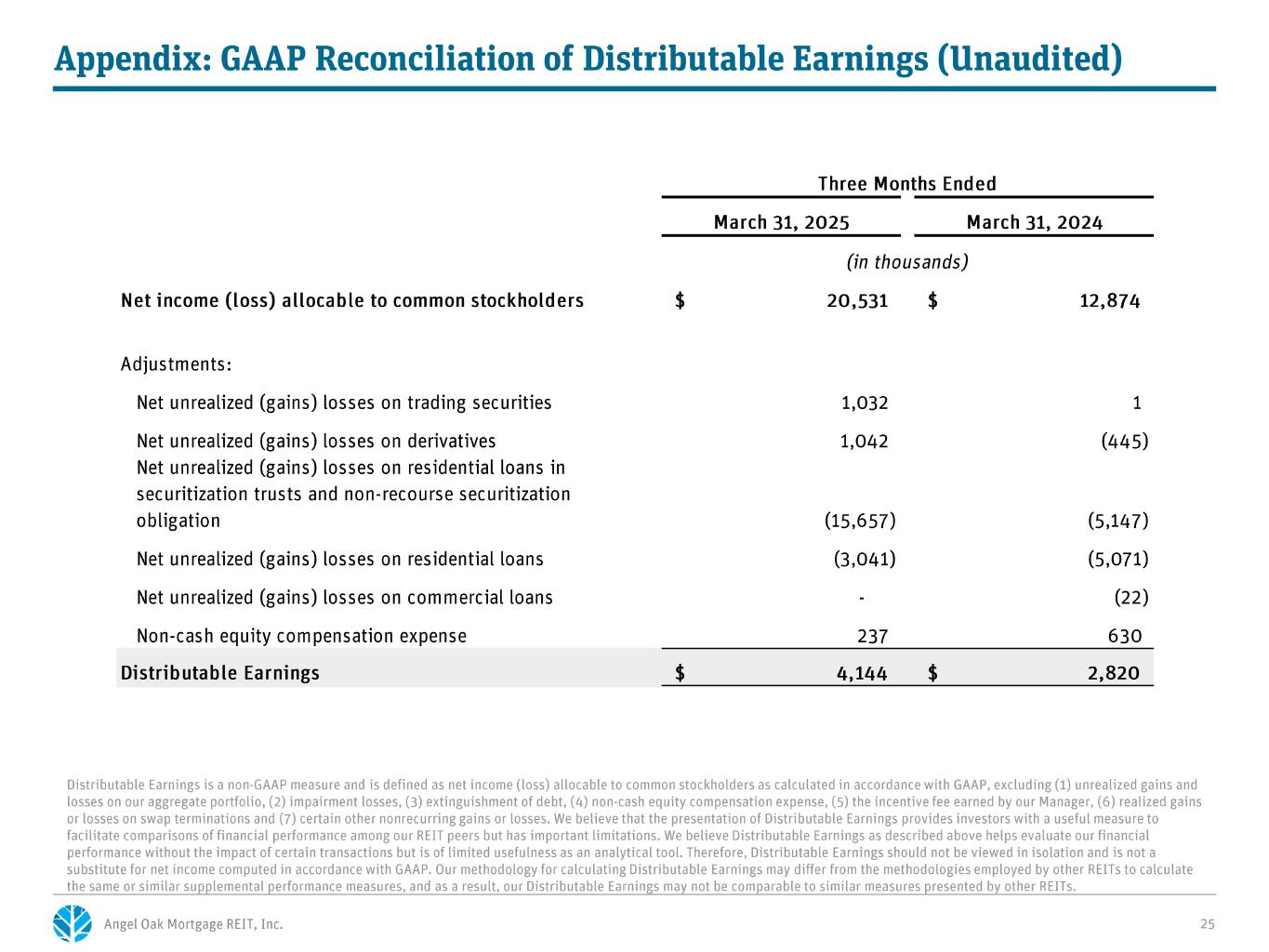
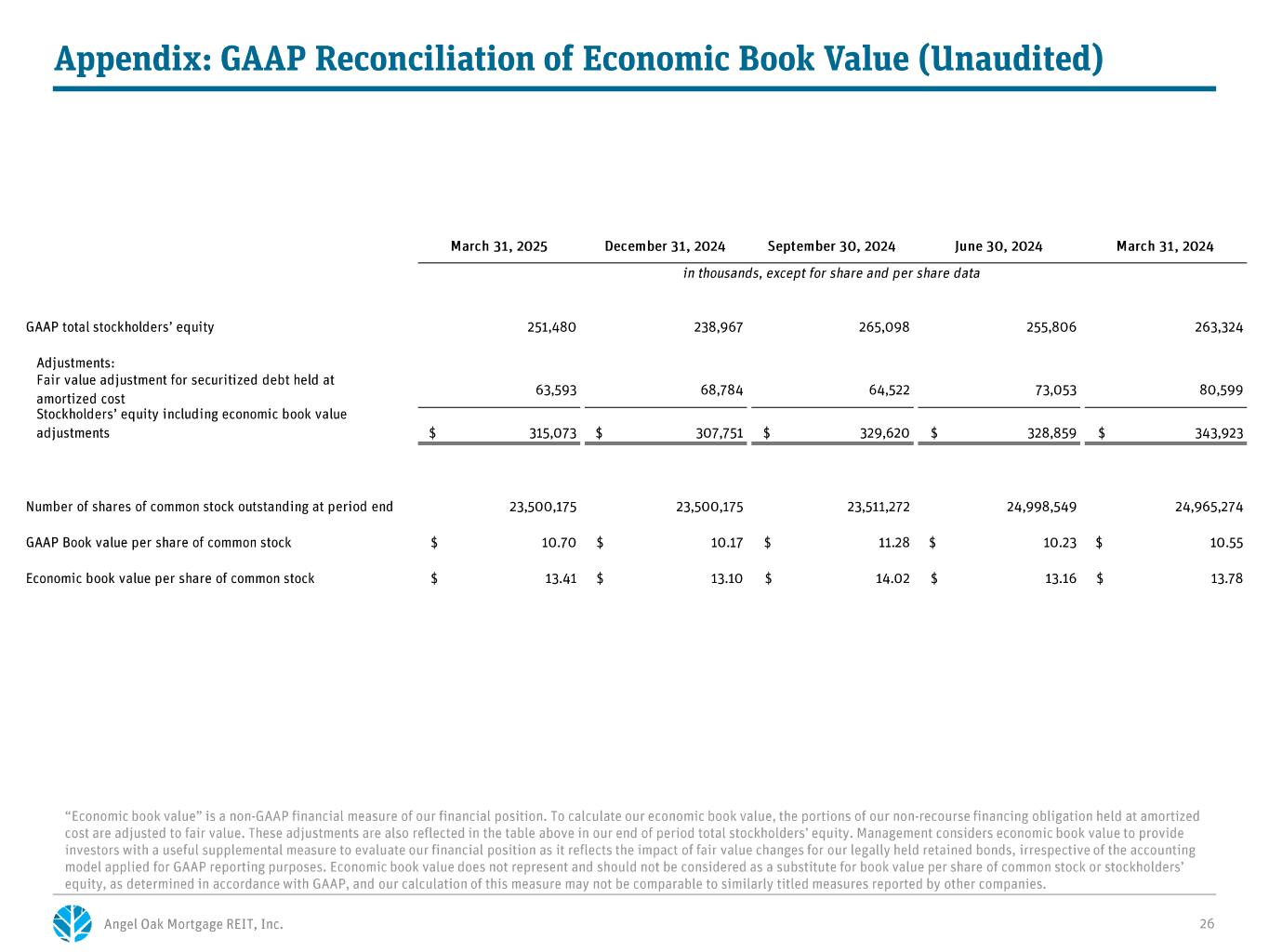
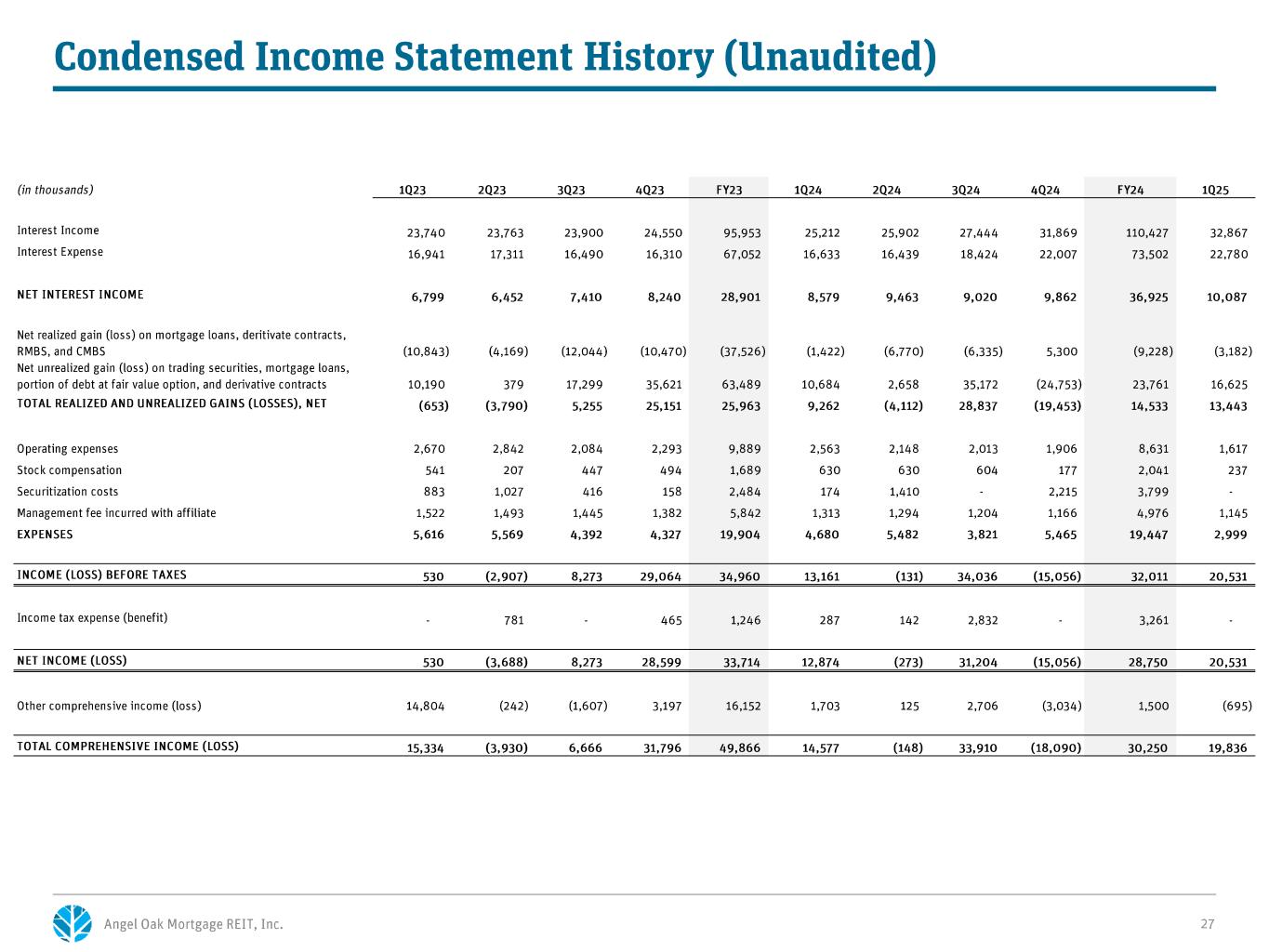
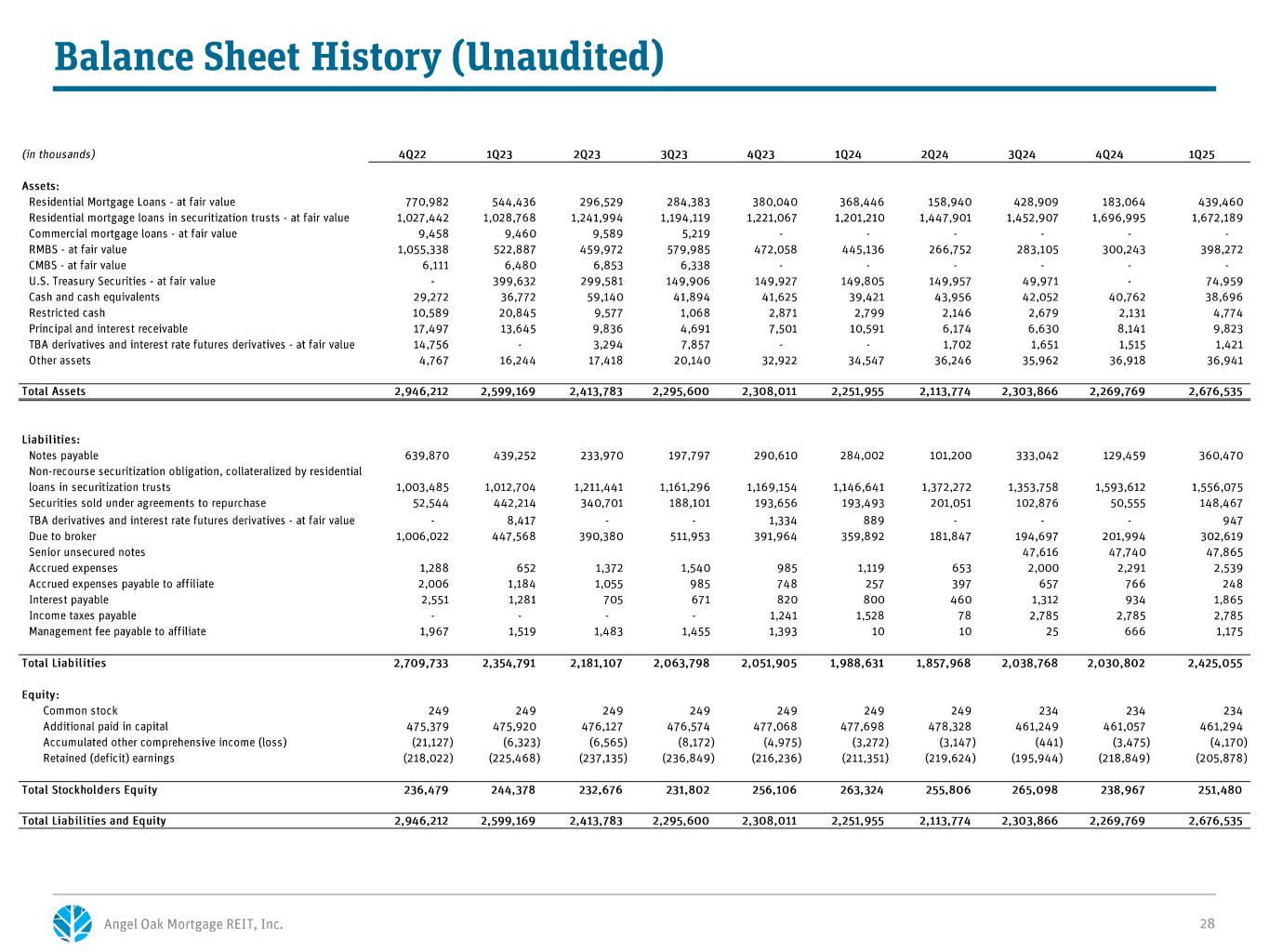
Thank you, Sreeni. First quarter operating results were in line with expectations and continued our established earnings growth trend as we saw 18% net interest income growth versus the first quarter of 2024 and over 2% net interest income growth compared to the fourth quarter of 2024. Operating expenses, excluding securitization costs and stock compensation expenses, were $1.1 million or 29% lower than in the first quarter of 2024 and represent a $300,000 decrease compared to the fourth quarter of 2024. As Sreeni mentioned, valuations were a tailwind during the first quarter as rates came down relative to the end of 2024. The valuation increase was primarily observed in the loans underlying our 2021 and 2022 on-balance sheet securitization. As of today, we expect that our book value is approximately flat compared to the end of the first quarter as decreases in base rates work to offset slight widening of spreads. For the first quarter of 2025, we had GAAP net income of $20.5 million or $0.87 per diluted common share. Distributable earnings for the first quarter were $4.1 million or $0.17 per diluted common share. The driver of the difference between GAAP net income and distributable earnings is a removal of unrealized gains, primarily on our securitized and unsecuritized loan portfolios. In the first quarter, we had $18.7 million of unrealized gains on our securitized and residential loan portfolios. Interest income for the first quarter was $32.9 million and net interest income was $10.1 million, marking a 30% improvement in interest income and an 18% improvement in net interest income compared to the first quarter of 2024. Compared to the fourth quarter of 2024, interest income increased by 3% and net interest income increased by over 2%. We expect interest income to continue to grow as we purchase accretive loans, employ sound portfolio management, and leverage effectively Angel Oak's securitization platform. Our $259 million of loan purchases this quarter carried a weighted average coupon of 7.67%, weighted average loan-to-value ratio of 70%, and a weighted average FICO score of 751. The weighted average coupon of our residential whole loan portfolio as of the end of the quarter was 7.55%, representing an increase of 44 basis points since the first quarter of 2024. Including loan purchases and securitization activity subsequent to the end of the quarter, our weighted average coupon is approximately 7.6%. Current loan production continues to be in the mid to high 7% range. Following the fourth quarter of 2024 in which we completed two securitizations, we did not execute a securitization in the first quarter. However, shortly after quarter-end, we completed the AOMT 2025-4 securitization as a sole contributor, contributing $284.3 million in loans. The weighted average coupon of AOMT 2025-4 was 7.5%, with a weighted average LTV of 70.9% and a weighted average credit score of 752. The deal paid down $242.4 million of warehouse debt and released $24.7 million of cash, which was used to purchase new loans and reduce outstanding repurchase debt on our retained bond portfolio to reduce financing risk and costs. As of the end of the quarter, our loans and securitization trust portfolio carried a weighted average coupon rate of 5.6% and weighted average funding cost of approximately 4.3%. We expect that following the AOMT 2025-4 securitization, the weighted average coupon rate of our loans and securitization trust portfolio will increase to 5.8%. The securitization market remains active, and we plan to continue to access it via our methodical securitization strategy. Operating expenses for the first quarter were $3 million. Excluding noncash stock compensation expenses and securitization costs, first quarter operating expenses were $2.8 million. This represents a 29% decrease compared to the same metric in the first quarter of 2024 and a 10% decrease compared to the same metric in the fourth quarter of 2024. Going forward, we expect to maintain similar operating expense levels. Looking at our balance sheet, as of the end of the quarter, we had $38.7 million of cash, and our recourse debt-to-equity ratio was 2.3 times. Subsequent to the end of the quarter, the execution of AOMT 2025-4 drove our recourse debt-to-equity ratio down to approximately 1.3 times. GAAP book value increased 5.2% to $10.70 as of March 31, 2025, from $10.17 as of December 31, 2024. Economic book value, which fair values all nonrecourse securitization obligations, was $13.41 per share as of March 31, 2025, up 2.4% from $13.10 per share as of December 31, 2024. The increase in book value was driven primarily by the aforementioned unrealized gains on our securitized and unsecuritized portfolio, supported by portfolio earnings growth. We ended the quarter with residential whole loans at a value of $439.5 million financed with $360.5 million of warehouse debt, $1.7 billion of residential mortgage loans and securitization trust, and $419 million of RMBS, including $20.8 million of investments in commingled securitization entities, which are included in other assets on our balance sheet. We finished the quarter with undrawn loan financing capacity of approximately $690 million. Now looking at credit, we ended the quarter with a total portfolio weighted average percentage of loans 90-plus days delinquent at 2.79%, inclusive of our residential loan, securitized loan, and RMBS portfolios, an increase of 35 basis points from the first quarter of 2024. As we stated previously, we expect this type of nominal increase as we return to normalized historical credit performance levels. The AOMT securitization shelf has an exceptional credit performance history and has proven its ability to execute in choppy markets. We've laid a strong foundation by making an intentional effort to move up in credit for our loan originations and purchases over the past couple of years, which provides us with the confidence that we will continue to deliver amid potential periods of volatility. Thus, as credit performance normalizes, we expect our credit to outperform relative to peers. Additionally, we expect that our portfolio-wide low LTV, diligent underwriting standards, and inherent credit selection to mitigate losses throughout a credit cycle if credit becomes an issue. Three-month prepay speeds for our RMBS and securitized loan portfolios were 6.6% to end the quarter, reflecting a decrease compared to the end of 2024. As borrowing rates remain steady, we do not expect prepayment speeds to exhibit any meaningful increases on the 2021 to 2023 securitizations. If rates do fall, increasing prepayment speeds, our securitized loan and RMBS portfolios are weighted towards loans that are well below current rates, reducing or eliminating a homeowner's incentive to refinance as non-QM has historically prepaid at approximately 25% to 30% CPR. Lastly, we do have the ability to use capital to resecuritize and relever securitizations, which will increase the effective yield. Finally, the company has declared a $0.32 per share common dividend, which will be paid on May 30, 2025, to common shareholders of record as of May 22, 2025. For additional color on our financial results, please review the earnings supplement available on the website. I will now turn it back to Sreeni for closing remarks.
Thank you, Brandon. Additionally, and as many of you know, we were pleased to have recently announced a strategic partnership between Brookfield Asset Management and Angel Oak companies. We are excited for the new growth and innovation opportunities that this partnership can provide across the Angel Oak platform. We do not expect any material changes to the day-to-day management of AOMR as a result of this transaction. I would like to thank the entire Angel Oak team for their hard work towards building what we believe is the best non-QM loan origination purchase and securitization platform by focusing on diligent credit selection, consistent securitization execution, and value-driven decision-making. We look forward to continuing to build long-term value for our shareholders in the coming quarters and years. With that, we'll open up the call to questions.
Operator
Thank you. We will now begin the question-and-answer session. The first question comes from Doug Harter with UBS. Please go ahead.
Speaker 4
Thanks, and good morning. I was hoping you could talk a little bit about the securitization you did in April, kind of how that execution looked like in the volatility and how that impacted the returns on that versus some of the more recent deals you did?
Yes, good morning, Doug. We went ahead with that securitization despite some volatility. We managed to execute well, considering that treasury rates were slightly higher than when we issued. We did have to widen the spread on the AAA to around 180 to make it happen, but that's since tightened if we were to do it again today. Overall, I believe it was a solid deal for us. However, we had previously projected a 15% to 20% expected securitization yield, and now it's looking more like a 13% to 17% yield, depending on how long the securitization remains outstanding. Even so, it has been beneficial and allowed us to free up capital to keep acquiring newer loans, which have remained relatively stable with coupons slightly higher than what we were purchasing last quarter, so we are seeing rates in the high 7s recently in terms of locks.
Operator
Thank you. The next question comes from Randy Binner with B. Riley FBR. Please go ahead.
Speaker 5
Good morning. Thank you. I have a couple of questions. Picking up on the comments regarding prepayment speeds and securitizations, would mortgage rates need to reach 5% before that becomes a concern? I'm looking for a straightforward explanation, but is that the margin we are considering compared to where mortgage rates are currently approaching 7%?
Yes, I believe there is a noticeable difference in our securitized loan portfolio. We have the 5.5% under portfolio that was established after the IPO, and for the vintages of 2023, 2024, and 2025, the coupons are over 7.5%. The earlier deals with lower rates could see an increase in speeds with a 200 basis point movement in mortgage rates. We would likely need around a 100 basis point move to see a significant increase in the current coupon. To remind you, our overall prepayment speed is currently about 10 CPR. Historically, non-QM loans have demonstrated prepayment speeds in the range of 25% to 30%, indicating there is still some room for speeds to rise while maintaining favorable outcomes.
Speaker 5
Got it. And then I had another one, I think this is for Sreeni. Just some commentary about the securitization market being good, but maybe variation in execution and conditions. I guess, when there's off days for the market. Just wondering if I heard that correctly. It makes sense intuitively, but did that affect you kind of just doing one large and good deal looking back because the market volatility kind of started in early April and this one got done, I think, kind of in the first part of April. But yes, just curious kind of how that is day by day just to understand how the macro is affecting that.
Yes. I mean across the year, you always have these bouts of volatility. So you look for two things, one is the cost of execution and then the second one is absolute illiquidity. And what we saw, even with a lot of the tariff issues and volatility in equity markets and the bond markets, there was no illiquidity. So that's number one, right? We could at least do our securitization. So it was not like we cannot get anything done and the liquidity has dried up. And what we have to do is we have to be consistent in terms of execution. It's all risk management, right? So the question at that point we have is do we widen our spreads to see where execution happens or do we take the securitization back? And what we have talked to the investment community consistently is we want to be prudent risk managers. So one of the things you want to do at that point is see where the liquidity is, where the spreads are and execute. So spreads probably went from 130, 135 beginning of the year all the way to the first quarter and we were printing that deal at 180. Spreads have now tightened in the 160s, probably could be even in the 150. So stuff moves. There was a lot of pain probably for the first two weeks of April. But what I would tell you is that not just us or even our peers, the capital markets were open and that was the most important thing. I hope that answers the question.
Speaker 5
Yes. That’s perfect. Appreciate it. Thank you.
Operator
Thank you. The next question comes from Matthew Erdner with JonesTrading. Please go ahead.
Speaker 6
Hey, good morning, guys. Thanks for taking the question. Could you talk a little bit about loan purchases post-securitization? And if you've seen any difference in the market there? And then as a follow-up to that, you mentioned playing up a little bit more on credit. Are you guys paying a little more for expanded credit there? Just kind of want to get your thoughts on post-securitization loan purchases. Thanks.
Yes. So yes, in the securitization, we freed up $24 million of capital, which we'll use. We did earmark some of that to reduce some repurchase debt outstanding, but we'll have enough capital to really go through another, call it, $100 million, $150 million in loan purchases over the next couple of quarters. And then I think you'll be able to see us at that point do some commingled securitizations with other Angel Oak entities as well. Like I mentioned a little bit ago, current coupons are back to the high 7s. I expect them with maybe the retrenchment of volatility to go back to the mid-7s, but we're kind of seeing things range-bound well over 7%, but under 8% is kind of what we're seeing in almost a day-to-day basis regardless of what the volatility or reduction in volatility is.
Operator
Thank you. The next question comes from Eric Hagen with BTIG. Please go ahead.
Speaker 7
Thanks. Good morning. Just following up here a little bit. I mean, with the macro being a little bit more sensitive, I mean, how do you expect valuations in the secondary market to differ going forward for the bank statement loans versus the investor DSCR loans? And do you have an appetite for one versus the other, maybe a little bit more right now? Thank you, guys.
Yes. I mean, good question. I think one part of your question is also the credit of the borrowers as we enter a new environment. Obviously, what we have seen is other parts of consumer credit ex-housing have weakened considerably over the last probably nine to 12 months. We are not seeing that generally in residential credit, but we are seeing some signs of that. The way I would answer that is if you look at it from a pure returns perspective, DSCR loans obviously do better just because of prepaid penalties in there. But they are also aligned to rental income, aligned to more investment purposes, etc., versus bank statement loans. So right now, I think we'll keep the current mix. We don't plan to increase anything or decrease anything, but we have more scrutiny probably around DSCR loans. And the way we are solving it, and this is a bigger question that you can have a chat with Namit who's the CIO because he can go into a lot more detail, but generally, on the DSCR side, you have to be careful about Airbnb or what type of purposes these loans are being used for. But there's been a little bit more scrutiny. We have obviously got tremendously more conservative in credit, and we can provide you details on that. So the mix won't change, but there's more scrutiny, I would say.
Speaker 7
That's really helpful detail. Thank you. Following on the comments around resecuritization, should we think of that as being mostly connected to interest rates potentially falling? And in the event that you are able to resecuritize, how long should we expect those loans to maybe sit on a warehouse line of funding before you're able to turn them around into securitization? And are you seeing any relief on the warehouse funding costs relative to benchmarks like SOFR and stuff? Thank you.
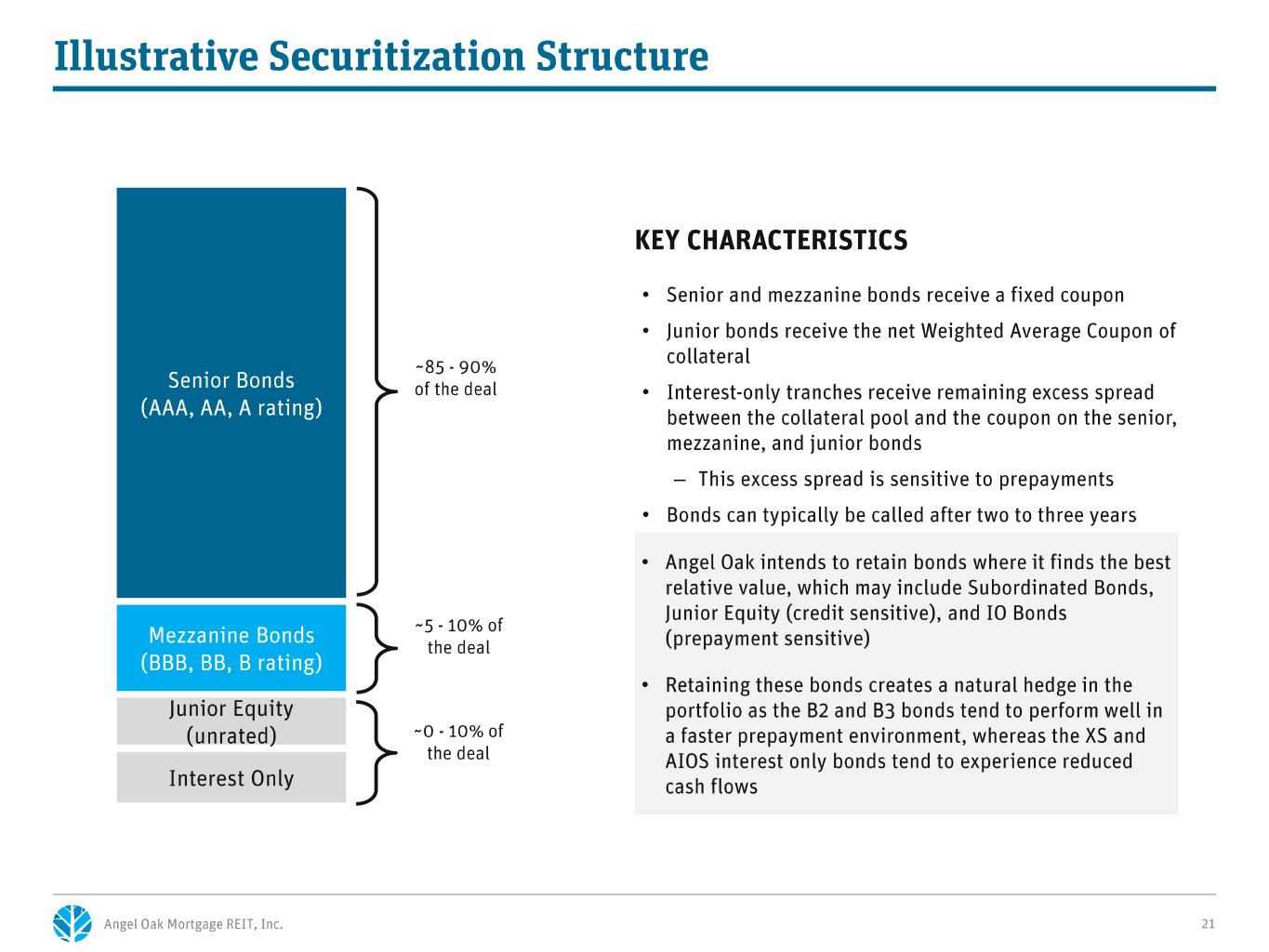
Yes. The resecuritization has two components. We have the pre-IPO securitizations, which remain similar to today's market, but these securitizations have been around for nearly six years and are significantly deleveraged. Any resecuritization would focus on freeing up capital without taking the loans back for a considerable time. We aim for an immediate call and resecuritization, avoiding the risk of converting fixed funding costs back to variable during that period. If we proceed, it would involve a same-day resecuritization or sale of some underlying loans. Currently, our funding costs aren't favorable compared to older deals, but post-IPO costs are low, and new deals are competitive. On the warehouse funding side, several lenders are working with us to reduce spreads, moving from facilities with a 210 basis point spread and a 20 basis point SOFR adjustment to no adjustment and 190 basis points. Some lines are now at 175 and one at 165. This shift offers a positive impact on returns, and I believe that as long as the market remains stable and we continue executing, we can negotiate tighter spreads in the future.
Speaker 7
Great detail from you guys this morning. I appreciate it. Thank you.
Operator
Thank you. The next question comes from Don Fandetti with Wells Fargo. Please go ahead.
Speaker 8
Hi. Can you talk a bit about the competitive landscape for non-QM currently? And then how you're thinking about it long term if the GSE footprint shrinks?
Yes, good question. So I would say as rates went up in 2022, a few things happened. I'll talk about the supply and the demand. So as the rates went up in 2022, you would think that the overall non-QM mortgage market will shrink as the agency mortgage market shrunk. But that's not what's happened. The non-QM mortgage market has actually grown. We'll probably finish this year at $100-plus billion. And last year, I think we were around $80 billion, plus or minus, depending on who you talk to. So the supply side, what's happened is as the agency volumes have shrunk, a lot of guys who would generally do six or seven agency loans are now doing one or two agency loans, and so they are more proactive in non-QM. And so the supply of that has grown. On the buy side, you have tremendous demand from insurance companies. So the market has definitely become decently more commoditized. And these are the markets where don't expect Angel Oak from the origination or from the REIT side to try to capture market share. We've just gone up in quality and remained focused on our relationships with the brokers we've been doing business with. If you think about all the people that have come in and out of the market over the last 8-plus years, I think it's probably us and maybe one more entity that might have been there. So throughout the ups and downs of this market, our relationship with the brokers allows us to get what we need to relative to the competitive landscape. If we try to grow it beyond what the market gives us, we’ll have to squeeze spreads and widen out our credit box, which we don’t intend to do. So we are happy where we are, but the market is definitely competitive. Now when does that change? That changes as rates come down because, interestingly enough, when rates come down, from the demand side, insurance company demand may slow down. We don’t know; there’s a lot of appetite. So let’s see how much it comes down. But on the supply side, I think the model then reverts back to the agency guys doing more agency loans. There’s a lot of 7%, 7.5%, 8% coupons sitting out in the agency market that will have to be refinanced. And so those guys will refocus back on the agency business and lose focus on the non-QM business. And that’s when our business model then becomes even more active. So today, we are happy. Our market is getting more commoditized. No doubt about it, everybody knows it. But this is when you stay true to credit. From a relationship perspective, our core relationships with brokers, what we have developed in the mortgage industry over the last almost 10 years now is playing out the way we wanted it to play out.
Speaker 8
Great. Thank you.
Operator
Thank you. This concludes our question-and-answer session. I would like to turn the conference back over to Mr. Brandon Filson for any closing remarks.
Thank you, everyone, for your time and interest in Angel Oak Mortgage REIT. We look forward to connecting with you again next quarter. In the meantime, if you have any questions, please feel free to reach out to us, and have a great day.
Operator
The conference has now concluded. Thank you for attending today's presentation. You may now disconnect.