Operator
Good day, and welcome to the Angel Oak Mortgage Right Second Quarter 2025 Earnings Conference Call. All participants will be in listen-only mode. Should you need assistance, please signal a conference specialist by pressing the star key followed by zero. After today's presentation, there will be an opportunity to ask questions. To ask a question, you may press star, then one on your telephone keypad. To withdraw your question, please press star, then two. Please note this event is being recorded. I would now like to turn the conference over to Mr. K.C. Kelleher. Please go ahead.
Good morning, and thank you for joining us today for Angel Oak Mortgage Reits' second quarter 2025 earnings conference call. This morning, we filed our press release detailing these results, which is available in the investors section on our website at www.angelogreet.com. As a reminder, remarks made on today's conference call may include forward-looking statements. Forward-looking statements are subject to risks and uncertainties that may cause actual results to differ materially from those discussed today. We do not undertake any obligation to update our forward-looking statements in light of new information or future events. For a more detailed discussion of the factors that may affect the company's results, please refer to our earnings release for this quarter and to our most recent SEC filings. During this call, we will be discussing certain non-GAAP financial measures. More information about these non-GAAP financial measures and reconciliations to the most directly comparable GAAP financial measures are contained in our earnings release and SEC filings. This morning's conference call is hosted by Angel Oak Mortgage REIT's Chief Executive Officer Srini Prabhu and Chief Financial Officer Brandon Filson. Management will make some prepared comments, after which we will open up the call to your questions. Additionally, we recommend reviewing our earnings supplement posted on our website, www.angelogreet.com. Now I will turn the call over to Srini.
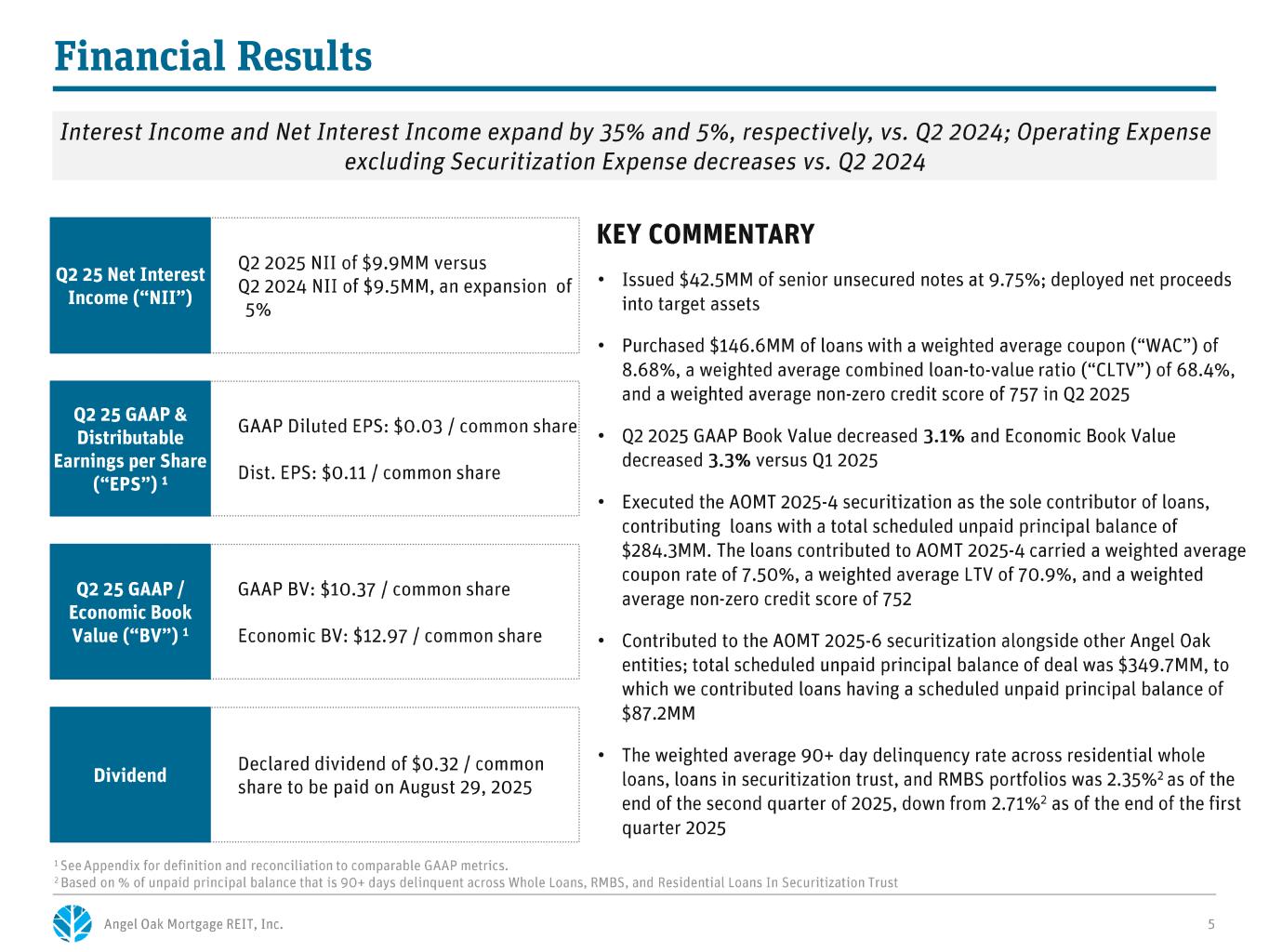
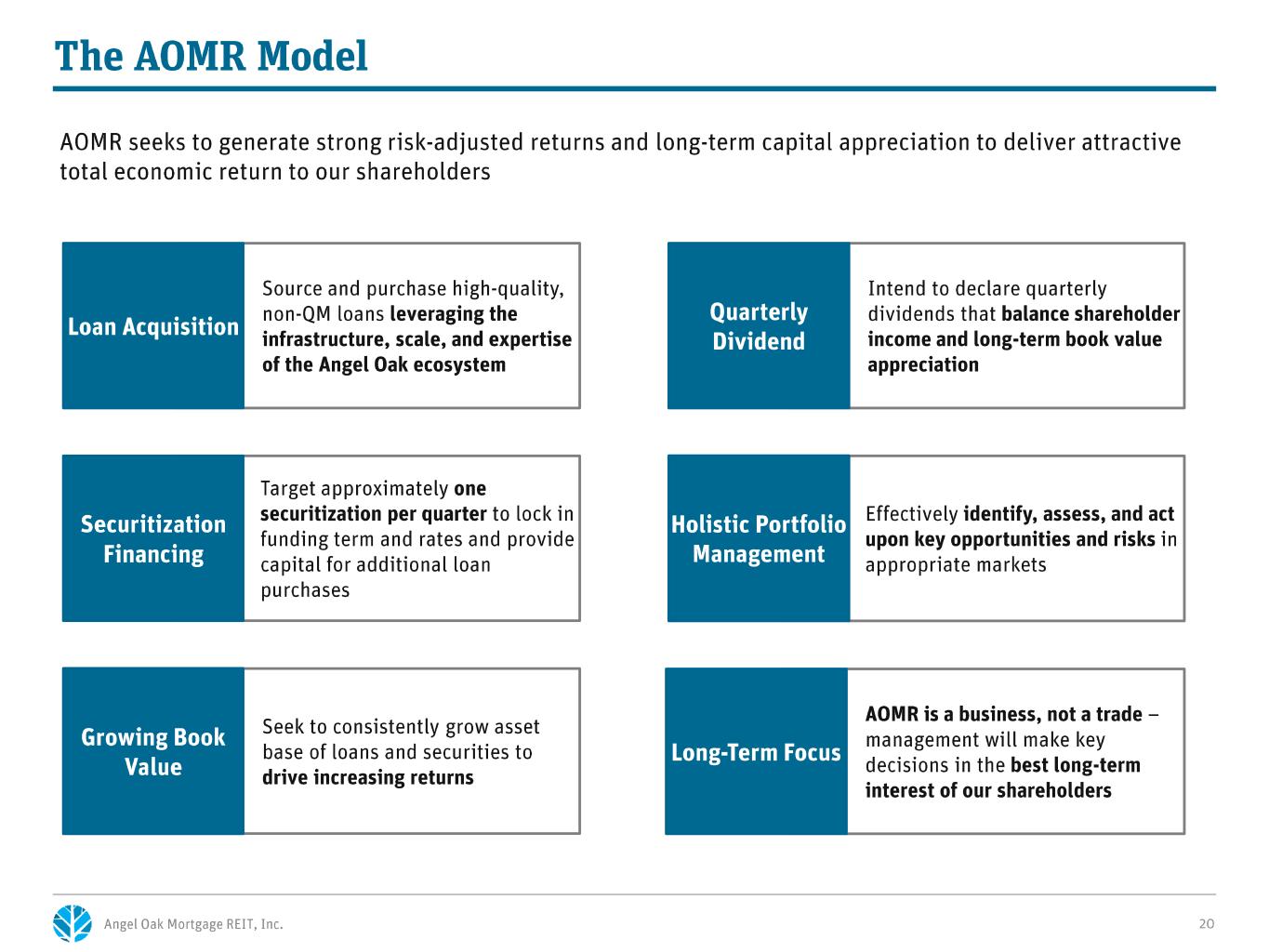
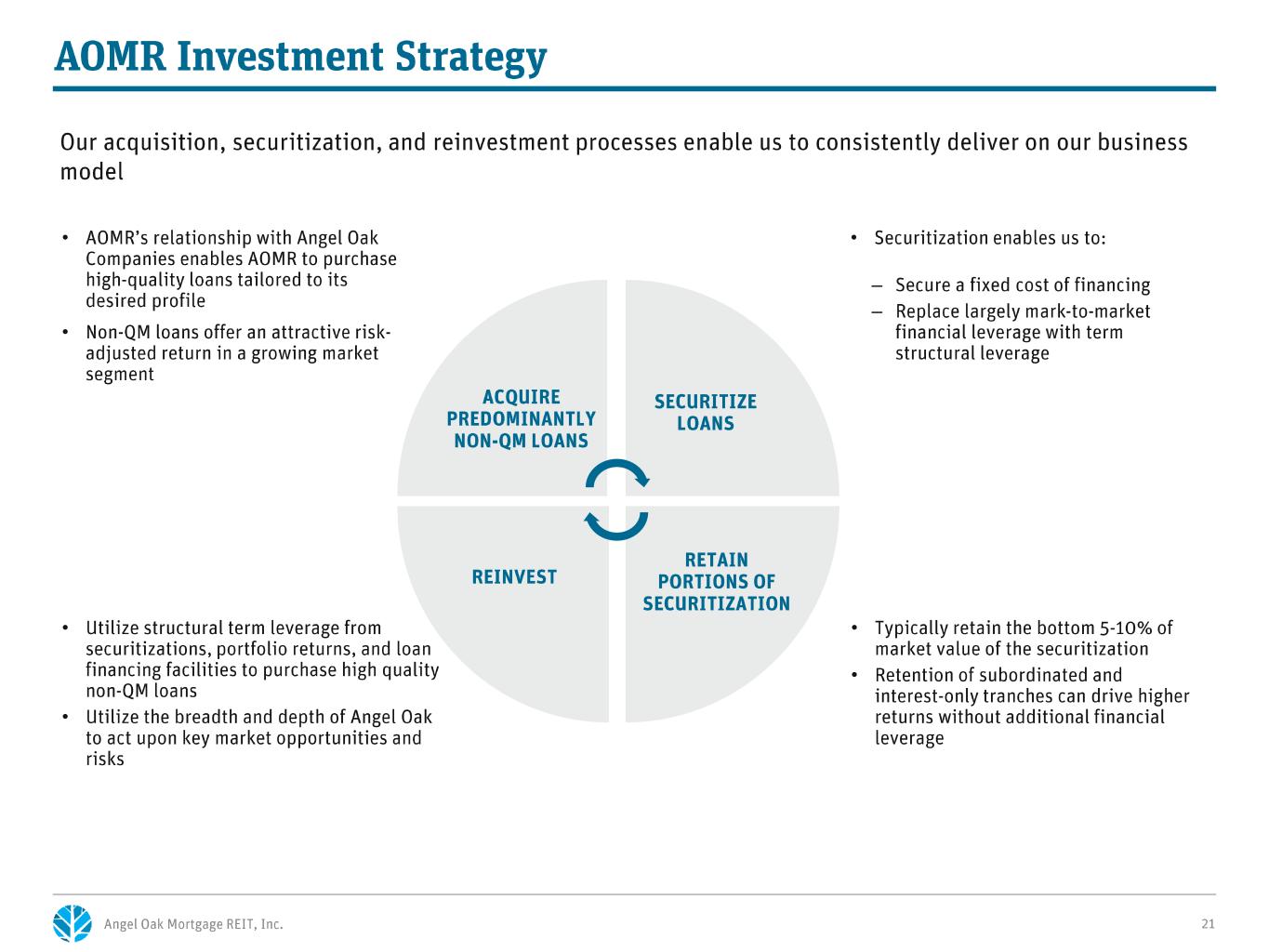
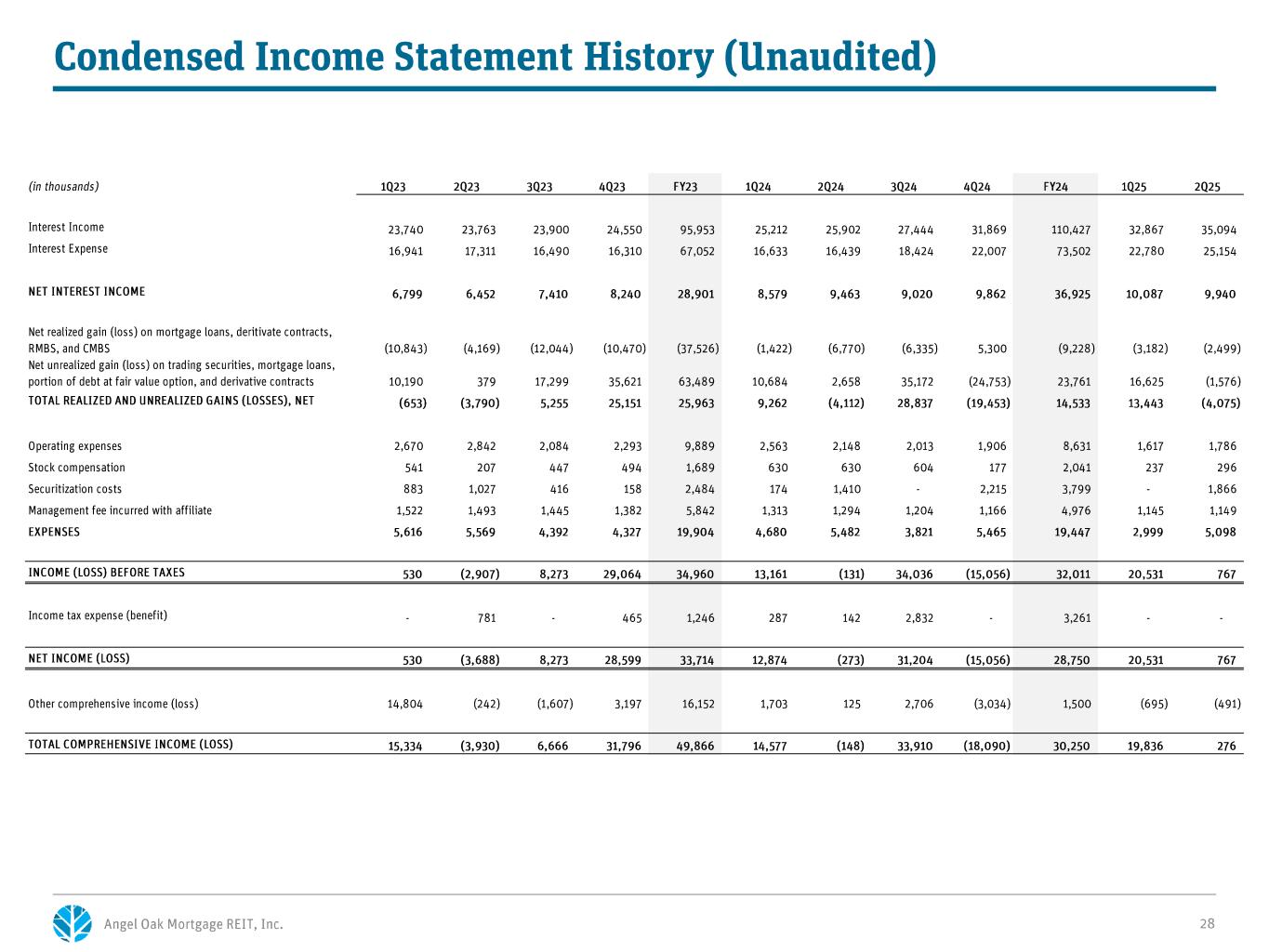
Thank you, Casey, and thank you all for joining us today. The second quarter of 2025 was highlighted by our securization and capital markets activity as we continue to execute towards our earnings growth goals. We completed two securizations during the quarter and issued $42.5 million of unsecured debt. The capital released and raised by these transactions was deployed into high-quality loans that are expected to drive incremental earnings. Similar to senior unsecured notes we issued in 2024, we expect the new issuance to be accreted to earnings within the next quarter as the earnings from newly purchased assets make their way into the portfolio. This is a strategic playbook we have used successfully in the past, and it continues to be a vital growth catalyst for us and the performance of our investment portfolio. Results for the quarter were in line with expectations, with 5% growth in net interest income compared to Q2 2024, and a slight contraction compared to the first quarter due to the added expense of the new senior unsecured notes. Despite the decrease versus the last quarter, we have generated strong expansion in year-to-date net interest income compared to the first half of 2024, which Brandon will detail further. Book value declined slightly compared to the first quarter on per share basis, driven by net decrease in valuations and the payment of our dividend. Cash flow and dividend coverage remains relatively stable and are expected to resume their respective growth trends demonstrated over the last two years, driven by earnings from assets purchased during and after the quarter. On credit, notably, 90-plus day delinquency rates decreased at the portfolio-wide level compared to the past two quarters, driven by reduction in delinquency rates for loans securedized in the past two years. The AOMT shelf has begun to distinguish itself along its peers with regards to delinquency performance, which is a direct reflection of our expertise as credit managers. Despite continued uncertainty surrounding international trade and tariff activity, our mortgage rates have been relatively stable, and we continue to purchase loans in the mid to high 7% range. Securization markets have remained active and accretive amid uncertainty, with both traditional and new participants being active in the market. We have ample opportunities to recycle capital and continue growing our target asset portfolio. Our capital deployment strategy will remain adaptive and flexible, aligning with evolving market dynamics in order to maximize expected returns for our shareholders. Moving forward, our focus remains on executing our business strategy and delivering positive outcomes for our shareholders, while positioning our balance sheet to be an active buyer of high-quality non-QM loans. With that, I'll turn it over to Brandon, who will walk us through our second quarter financial performance in greater detail.
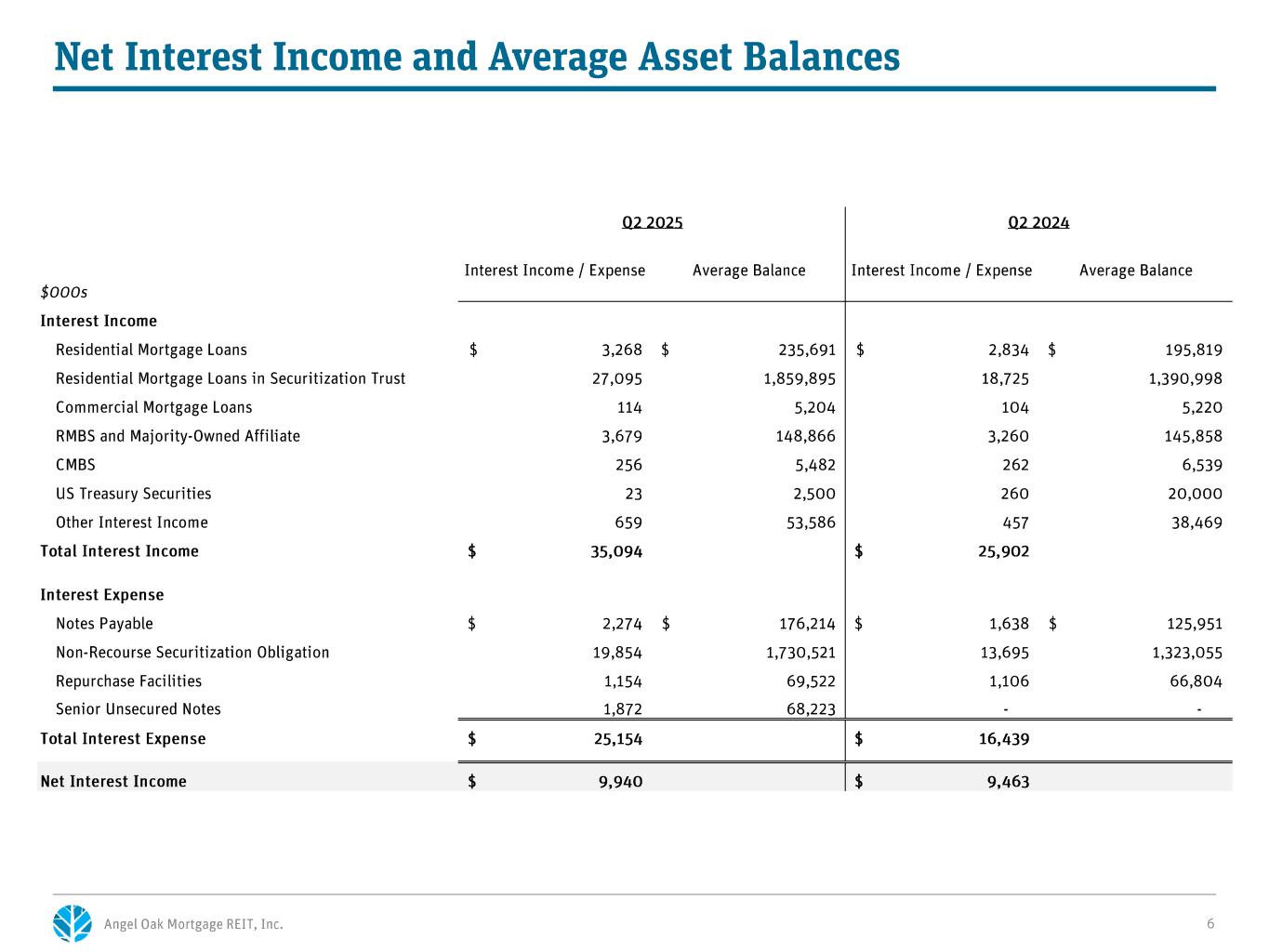
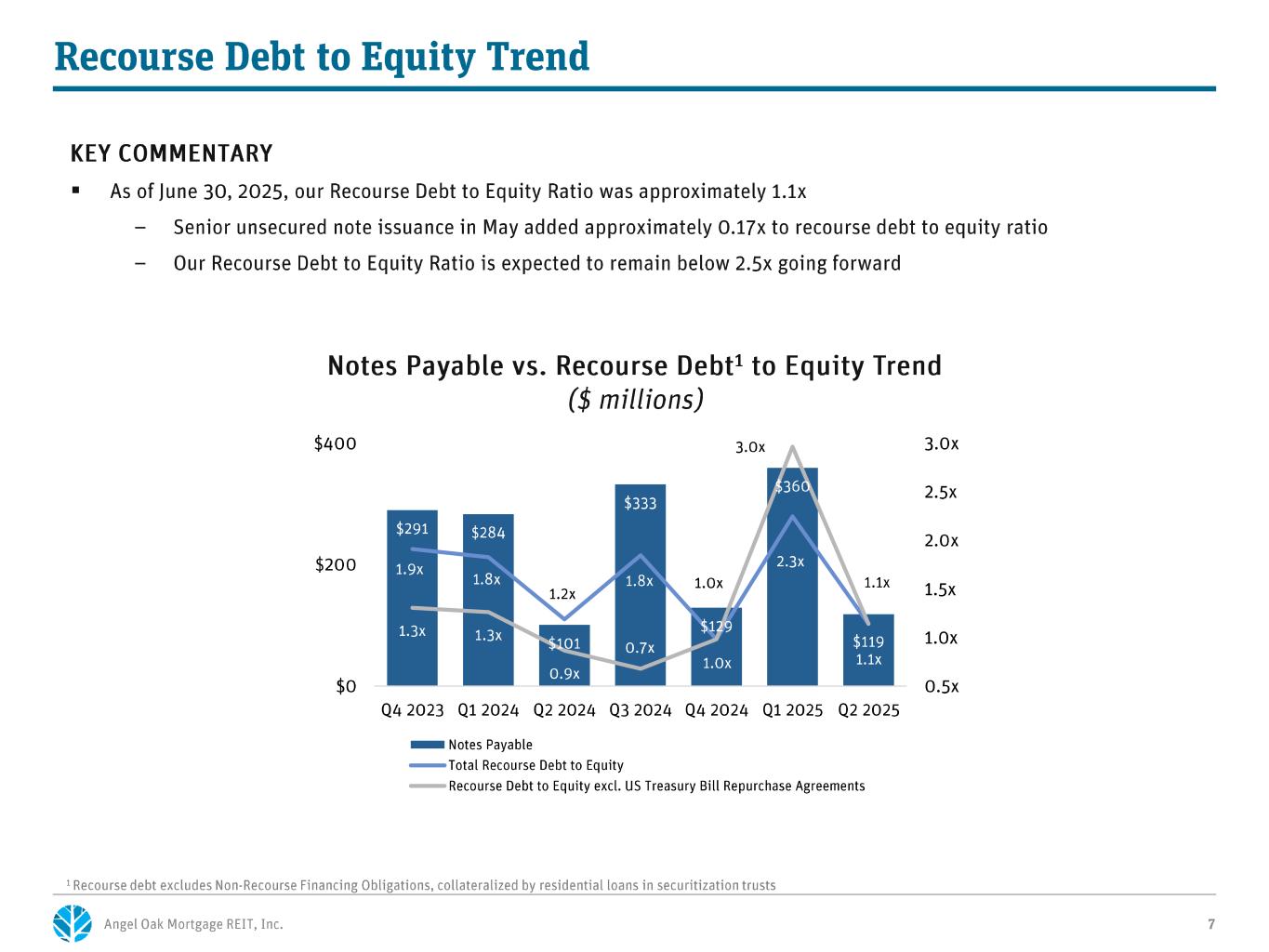
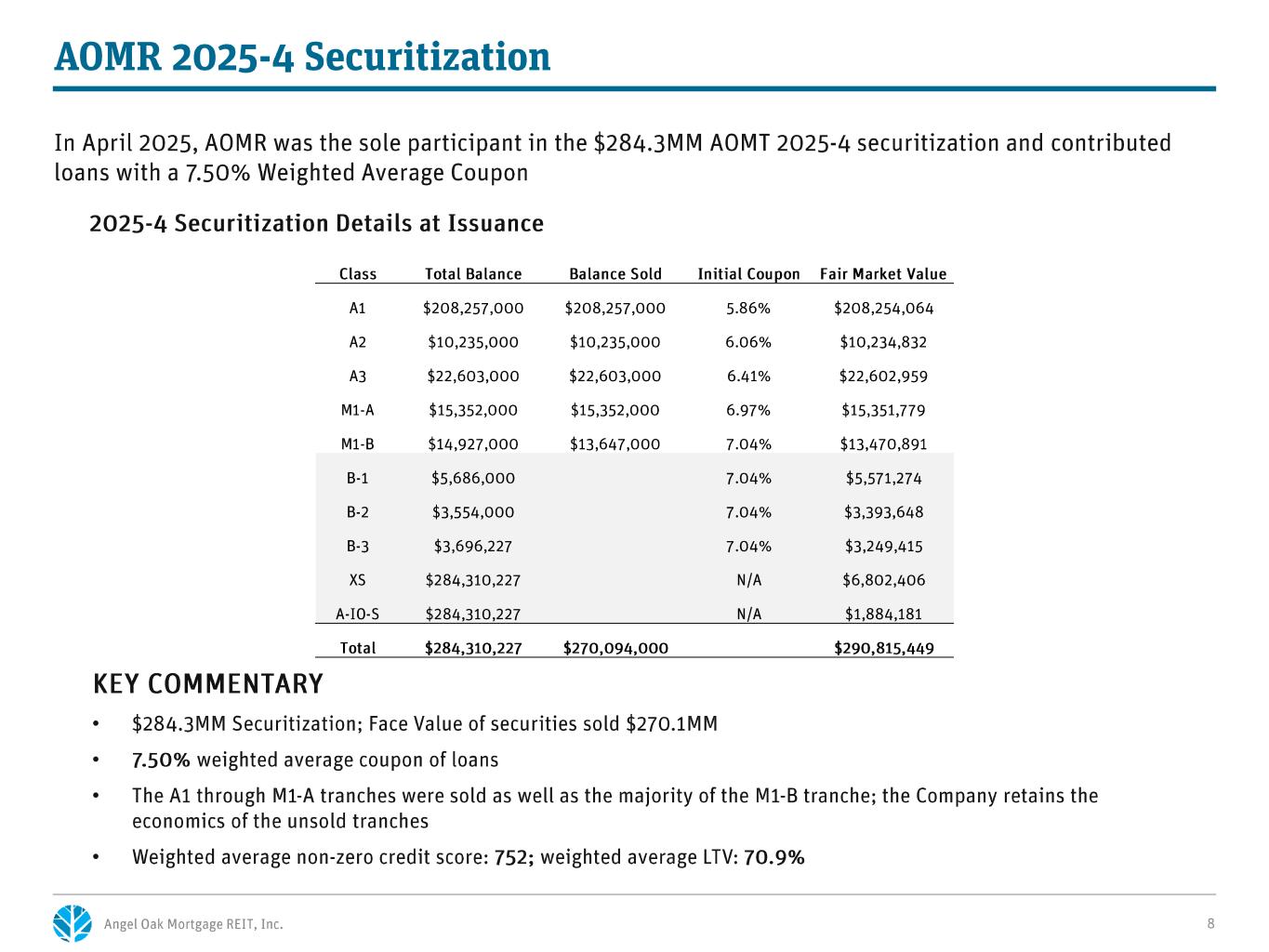
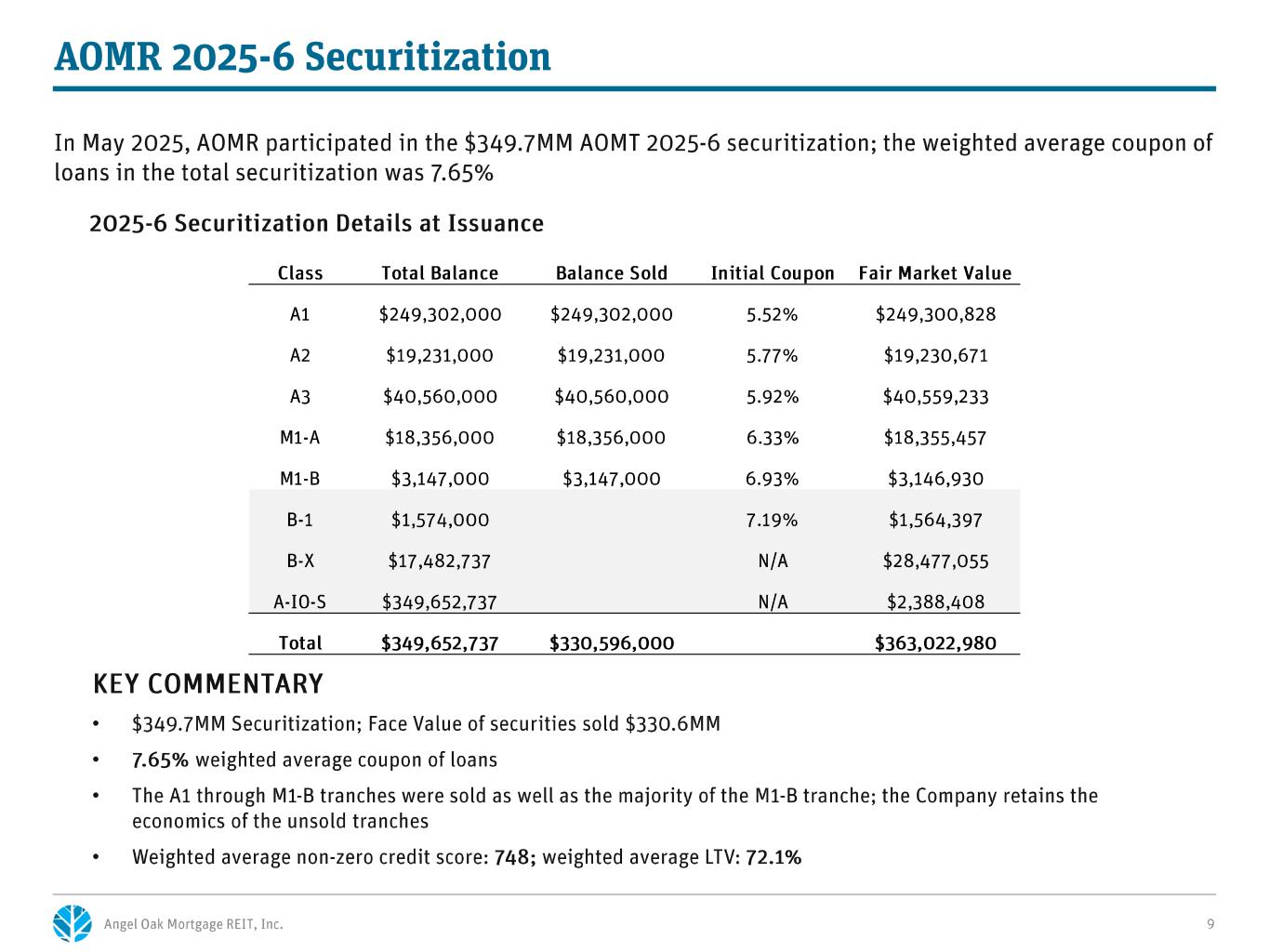
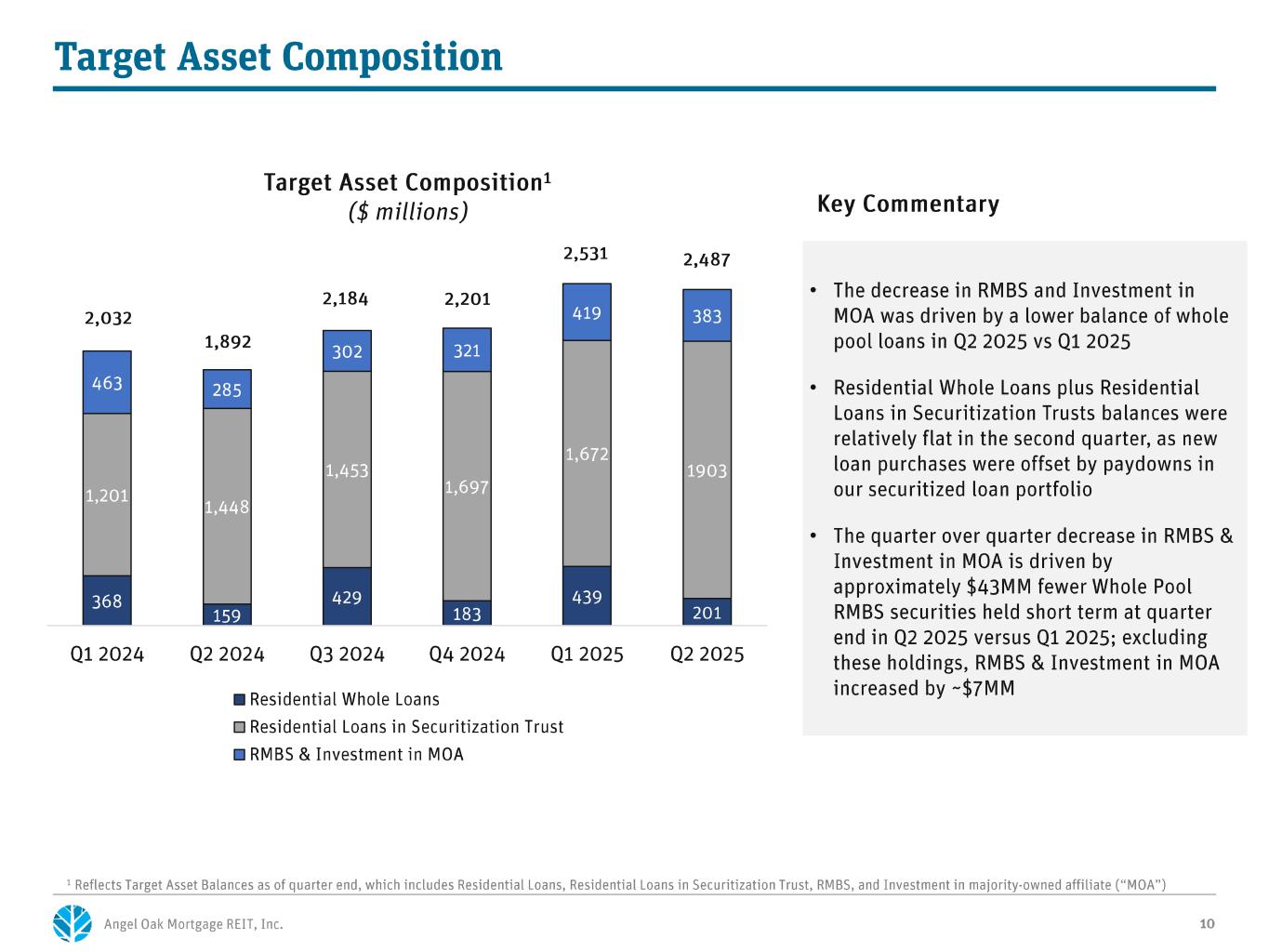
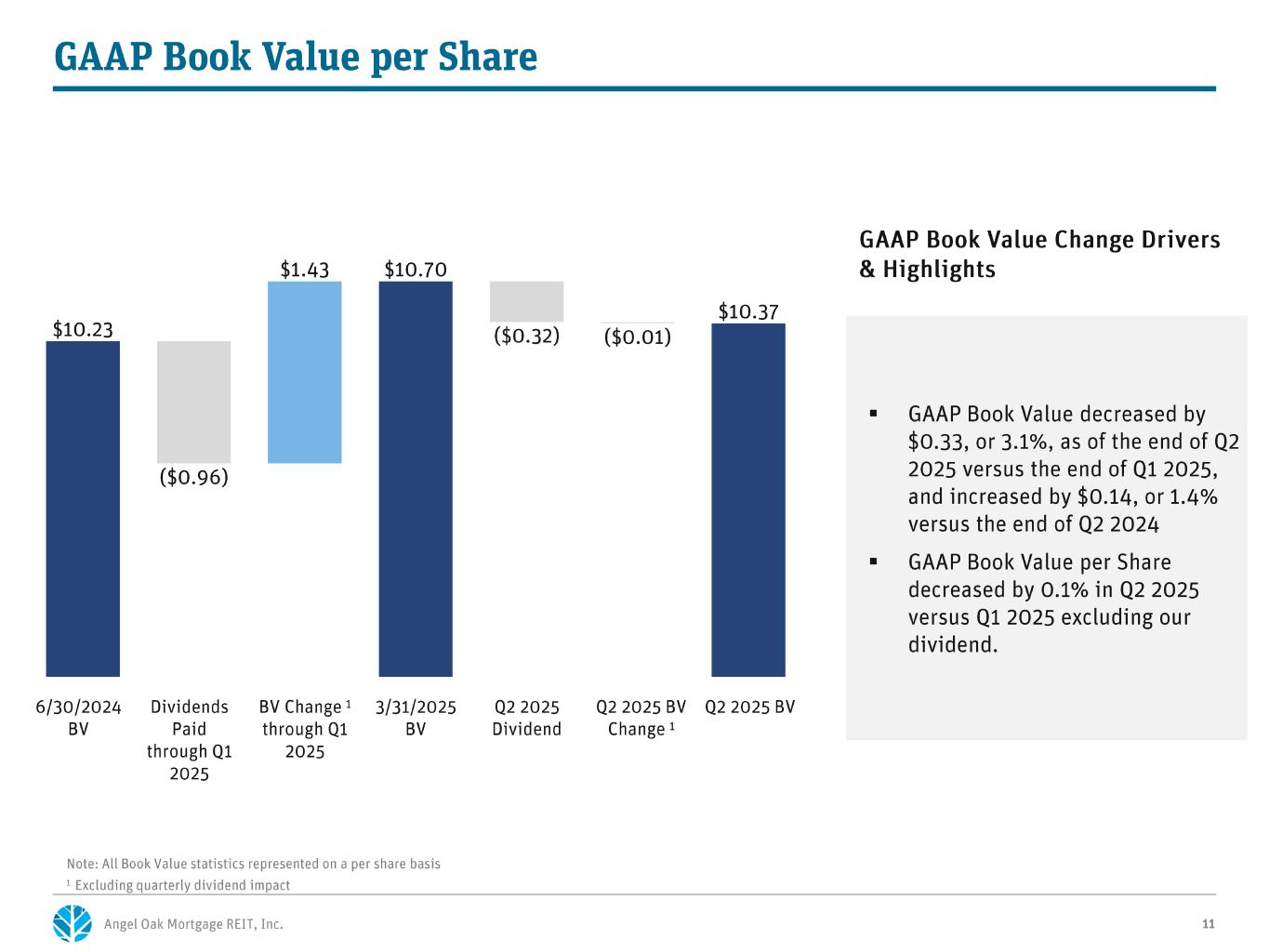
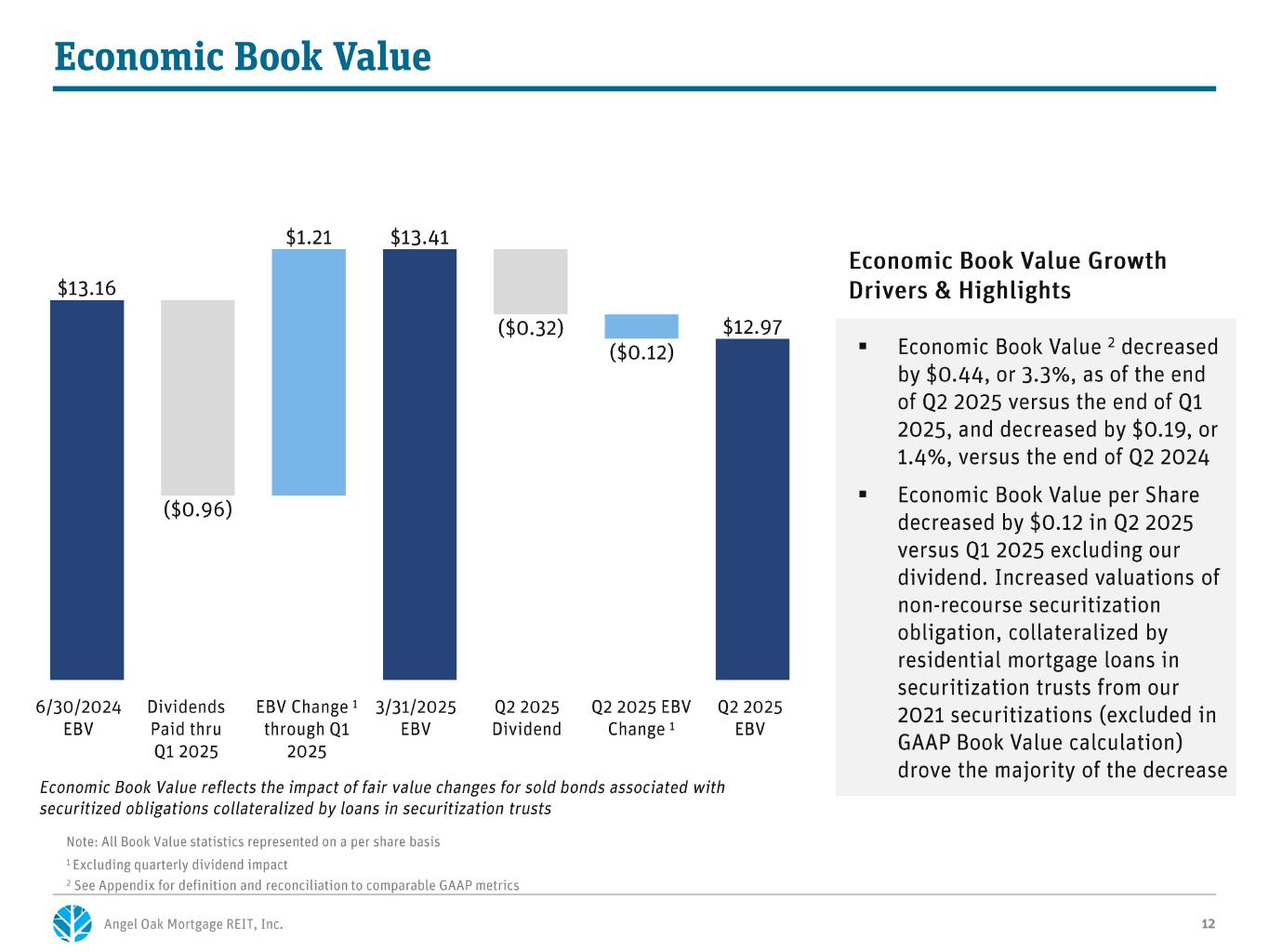
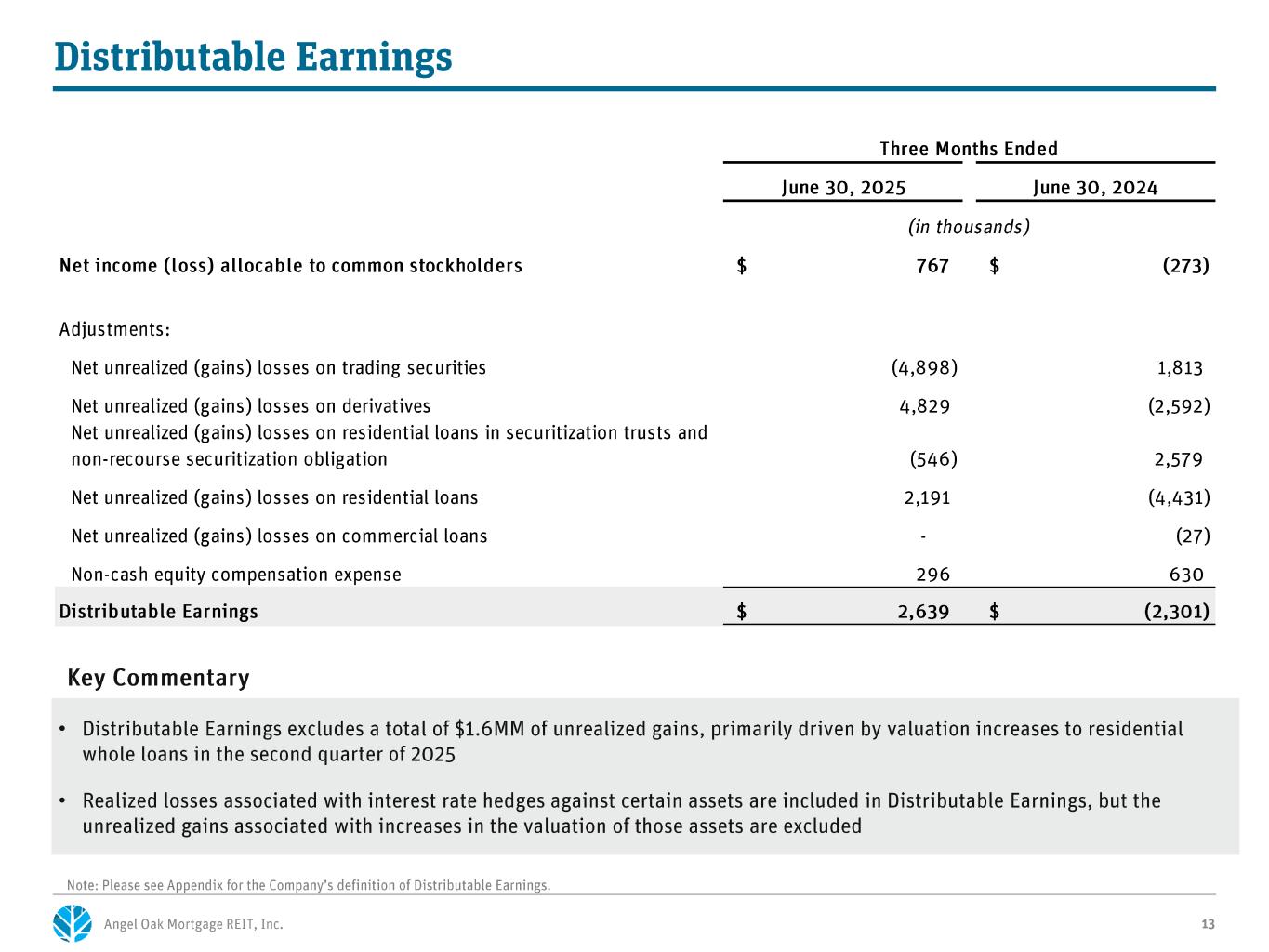
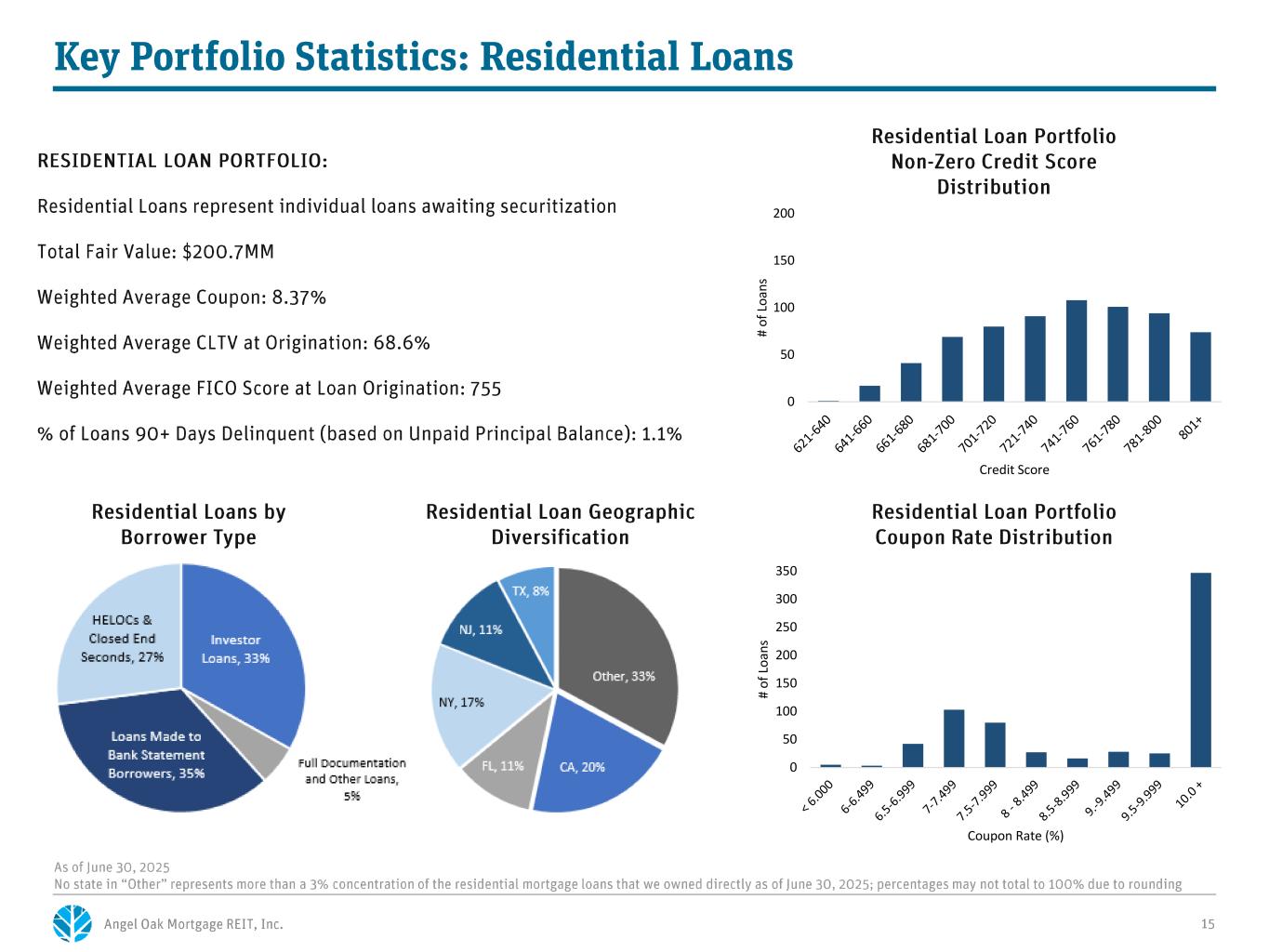
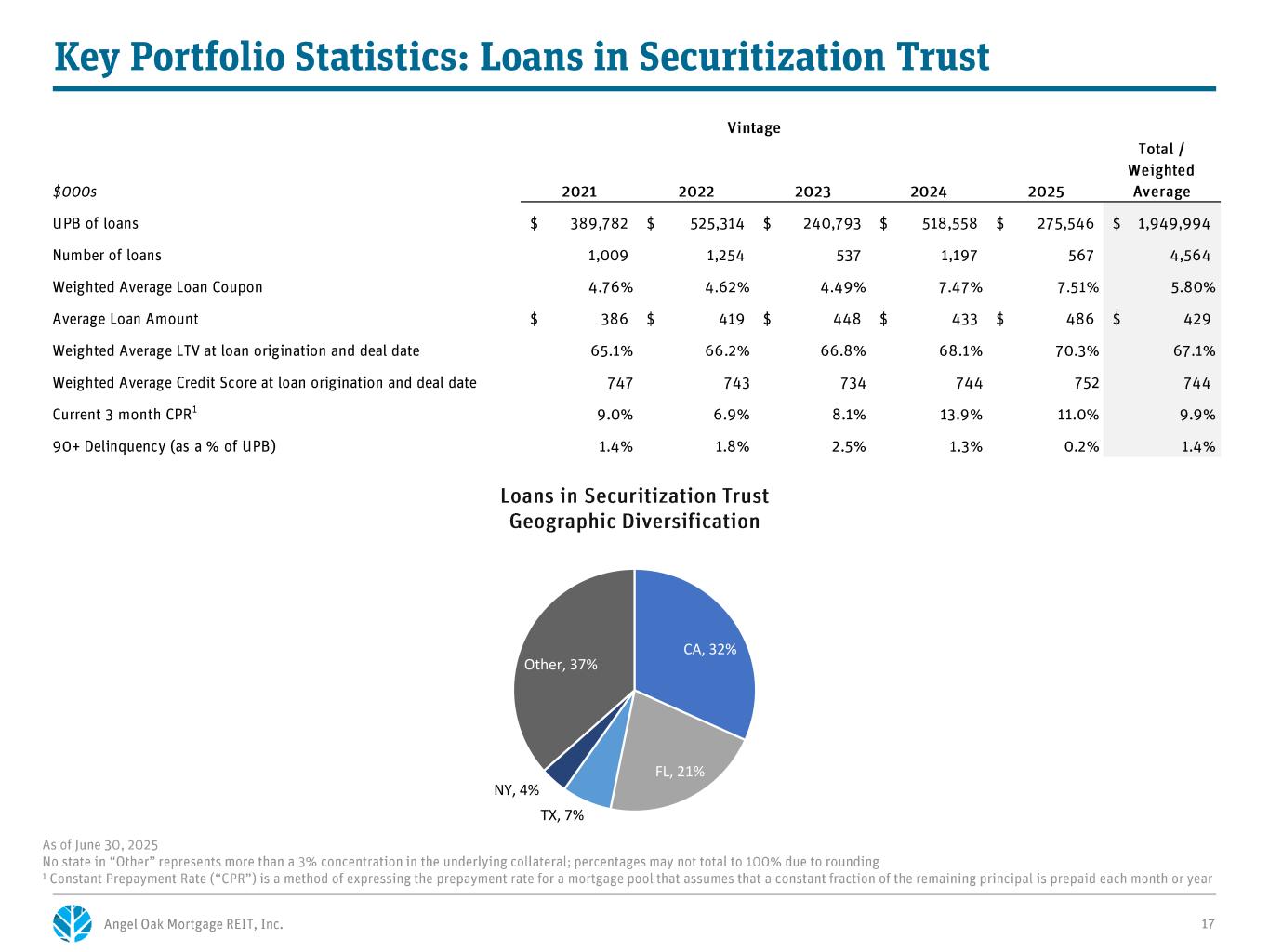
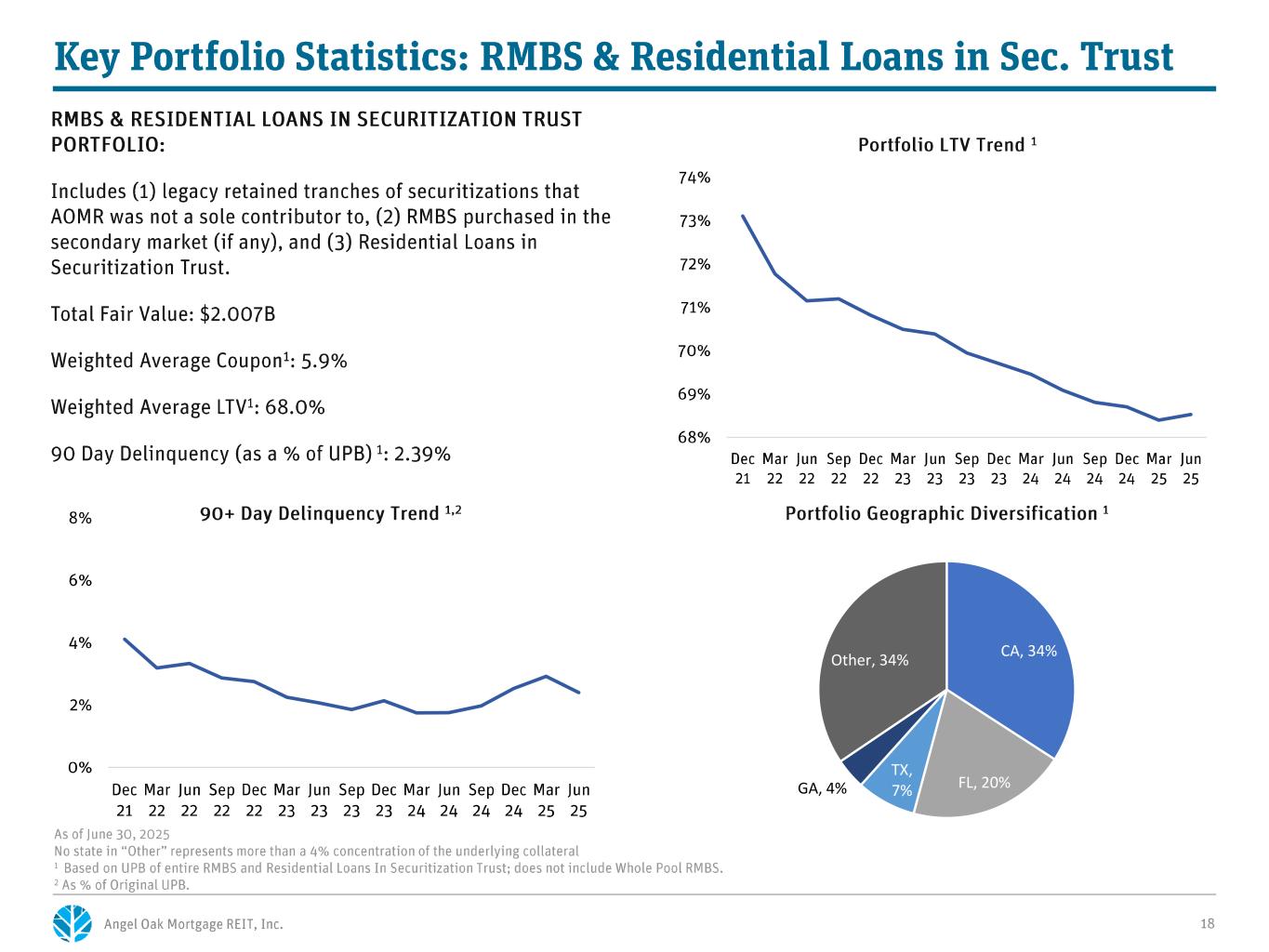
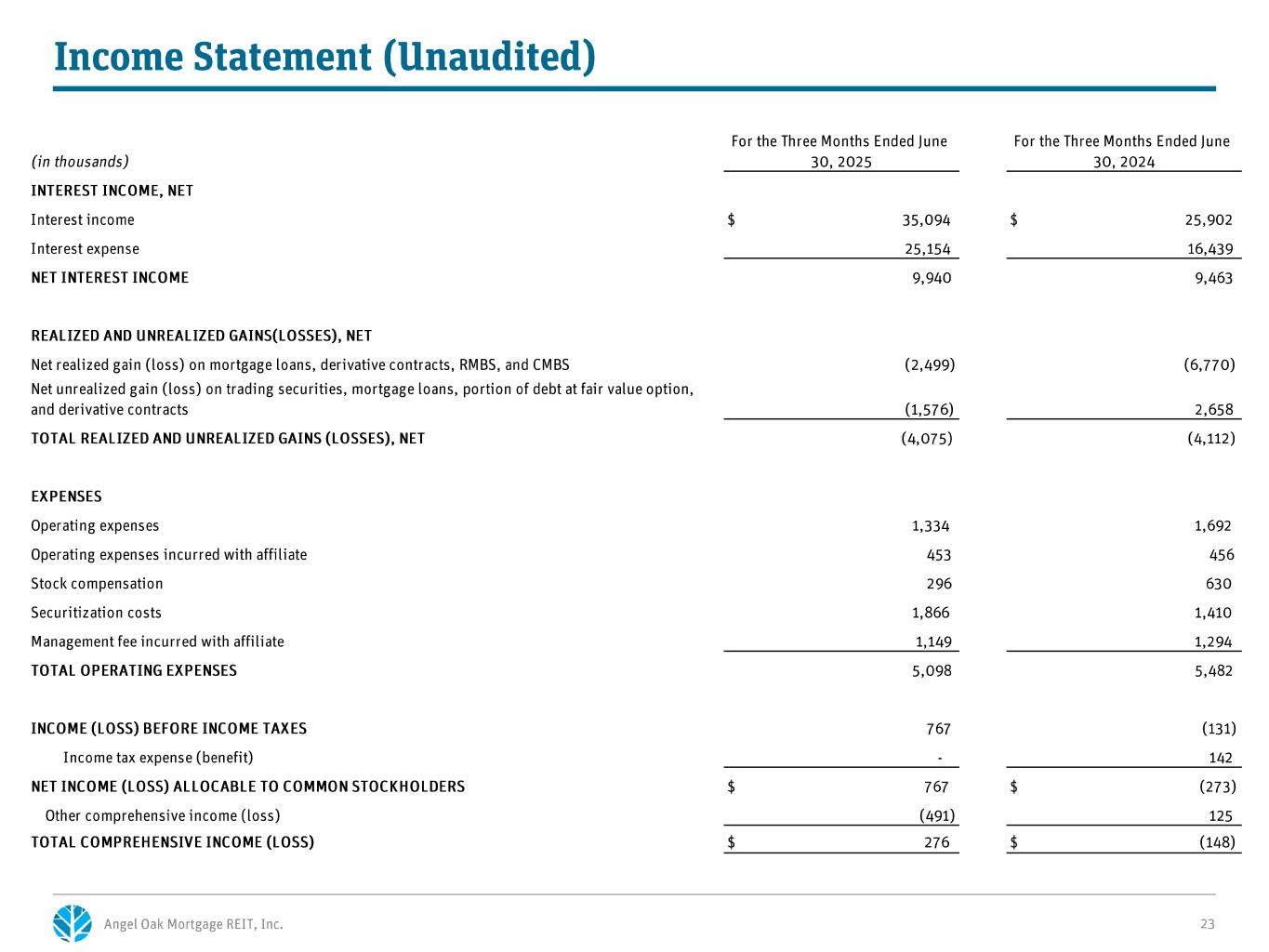
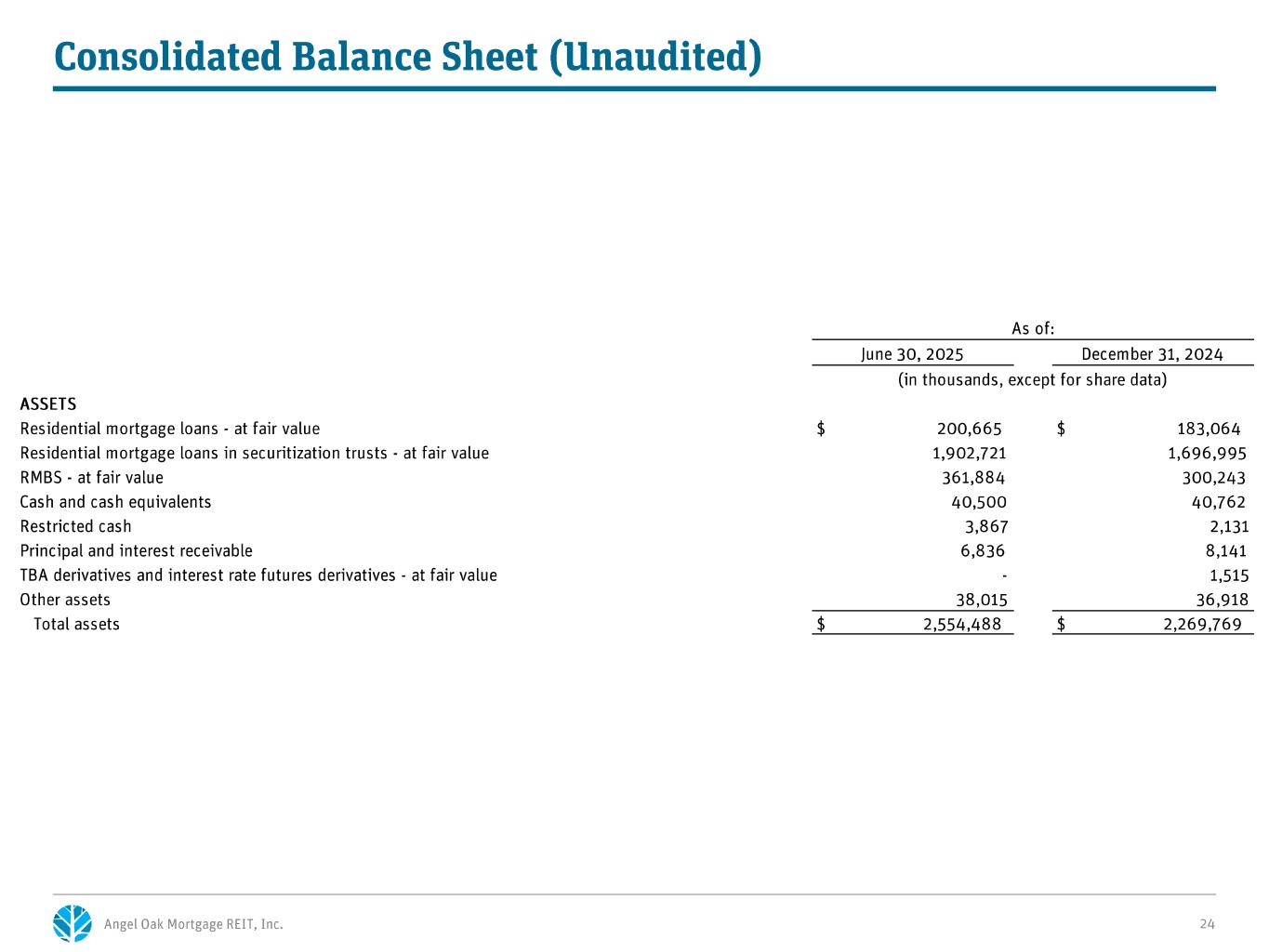
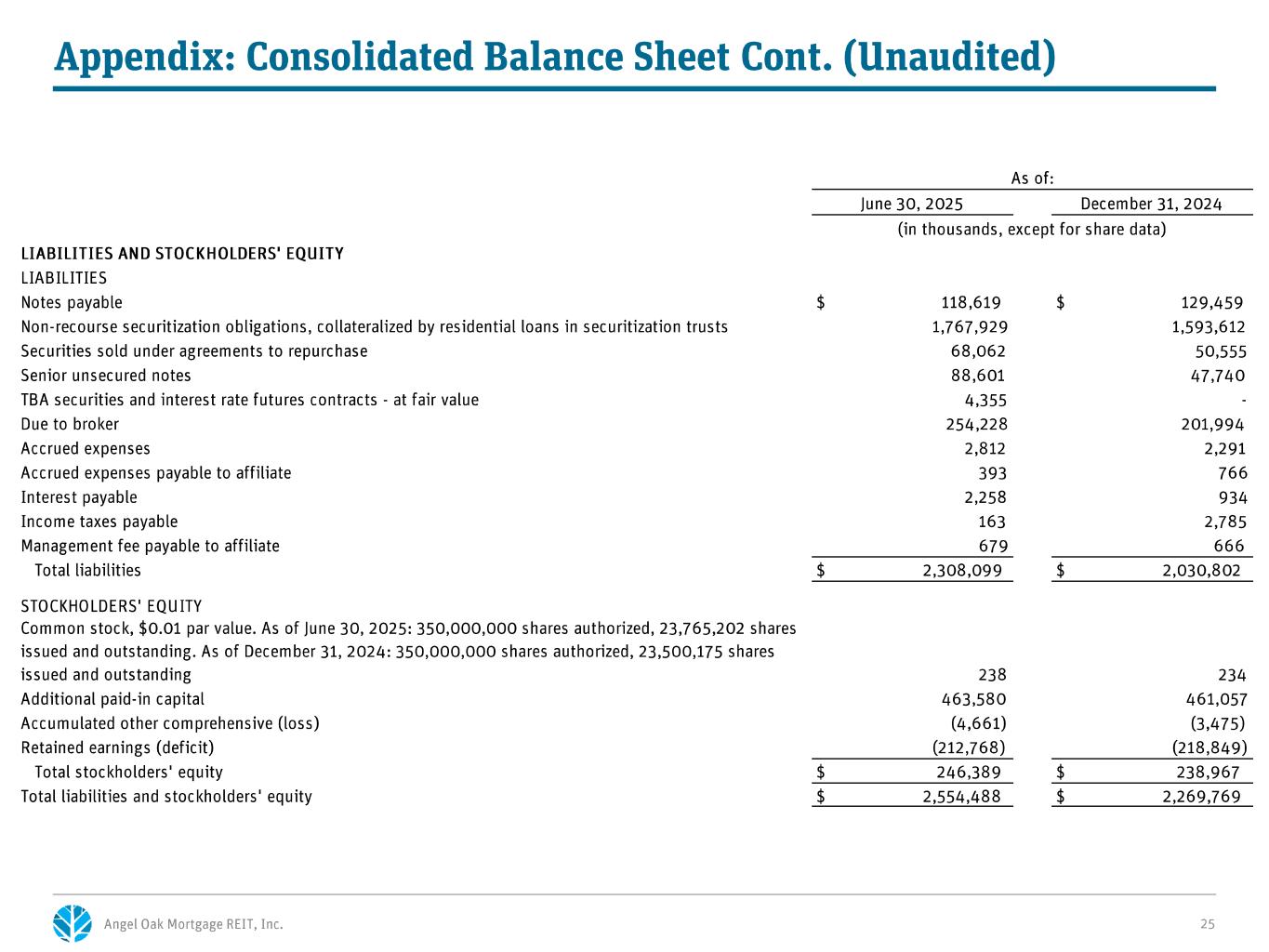
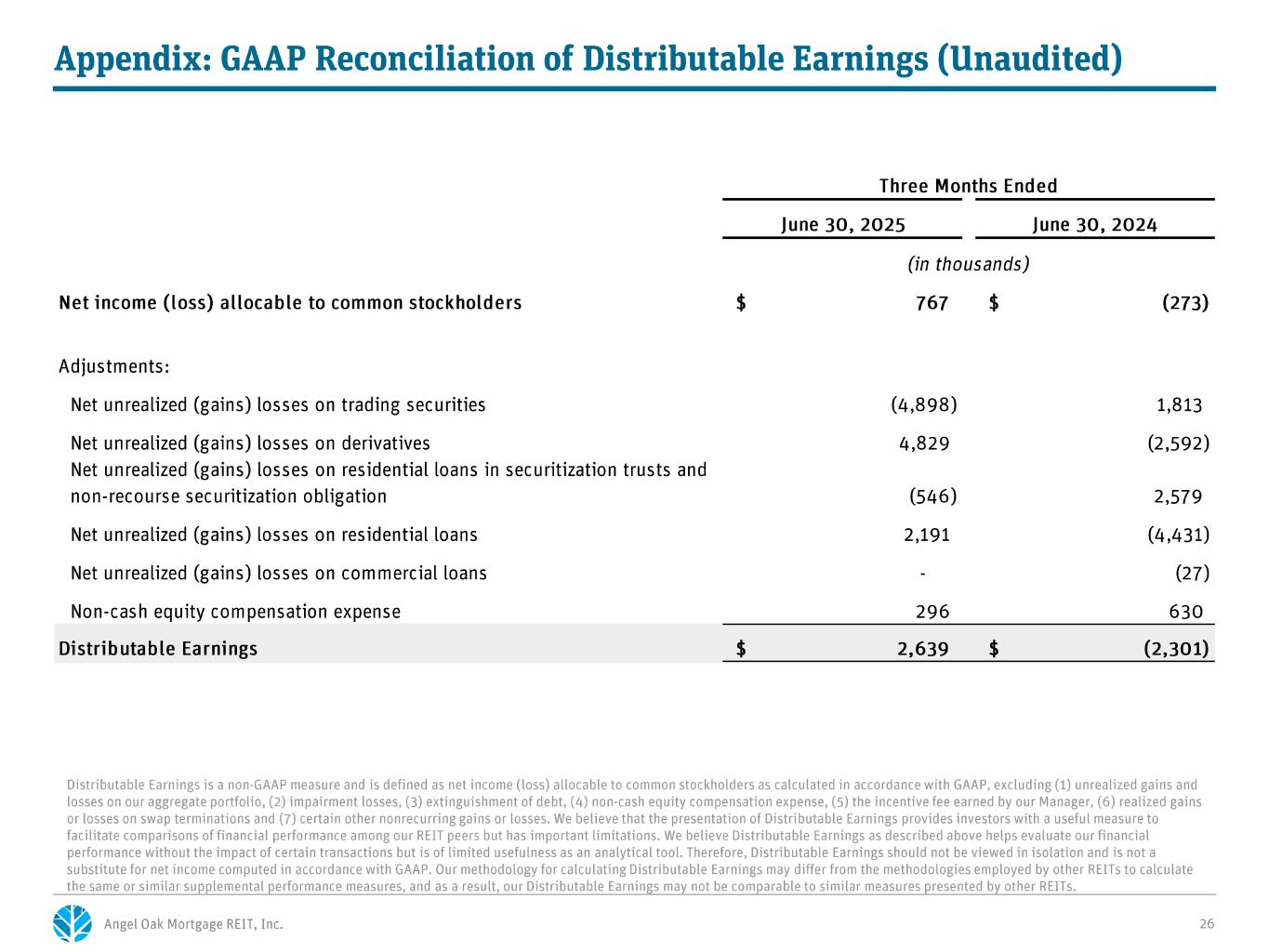
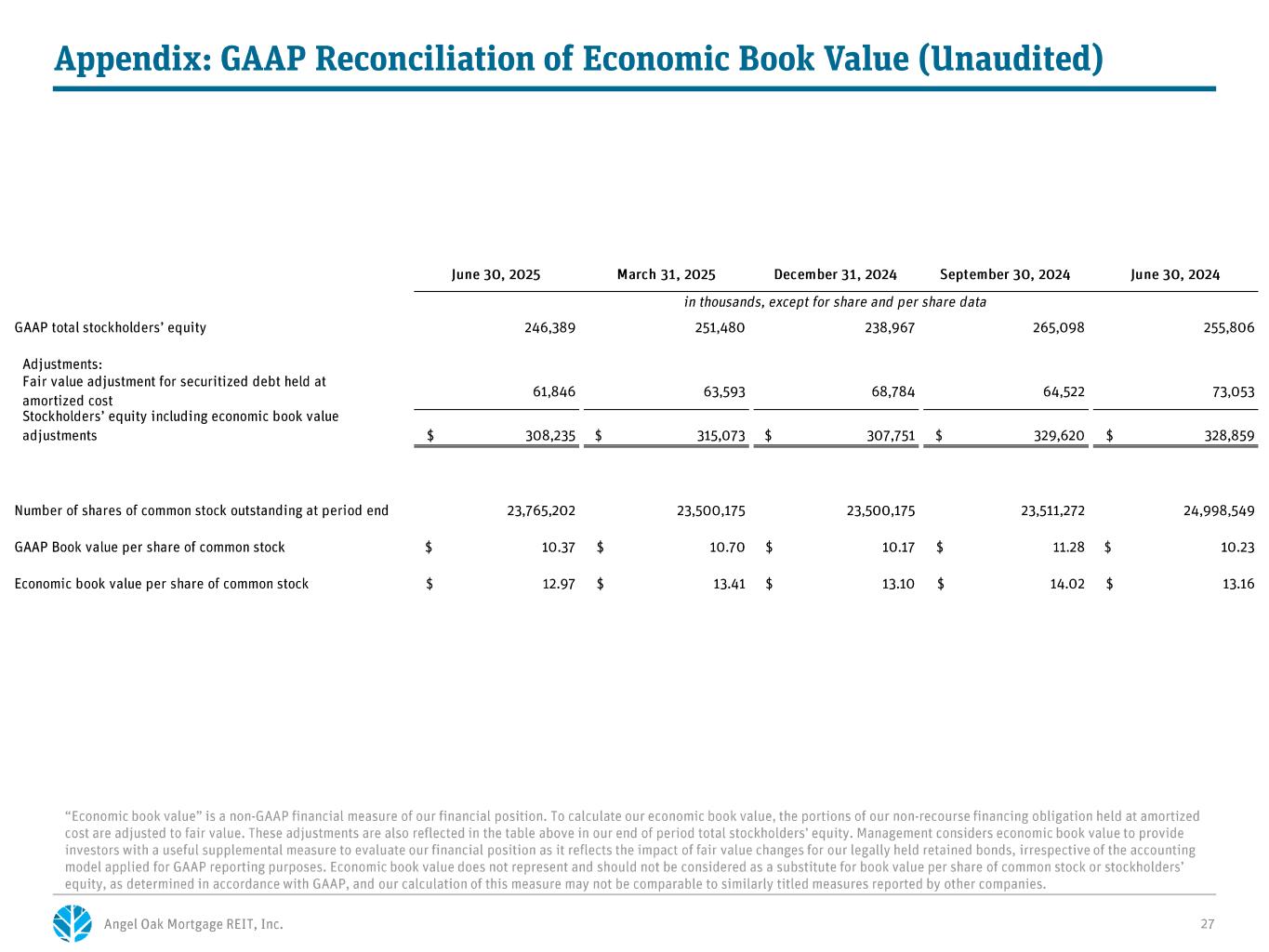
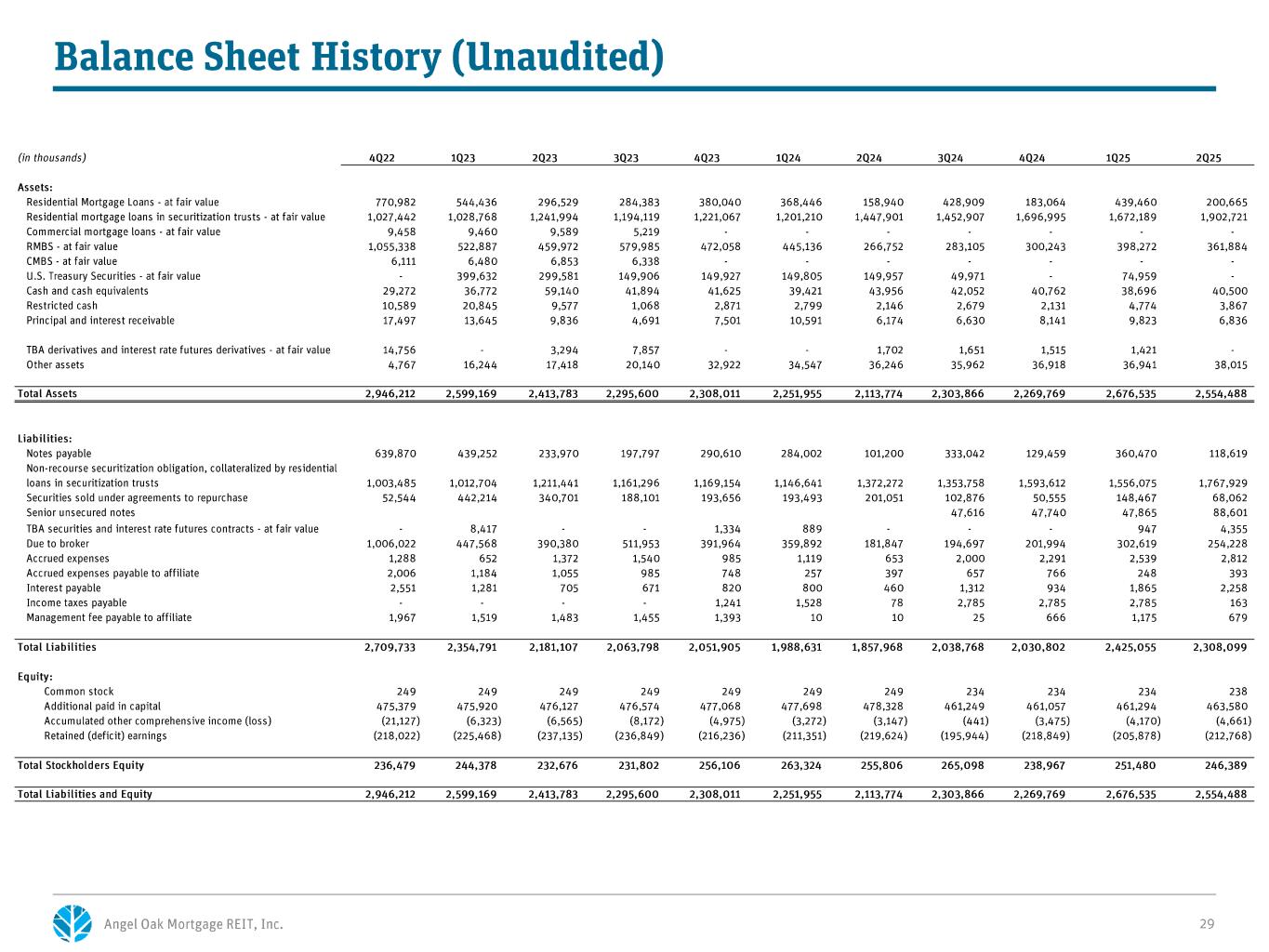
Thank you, Srini. Second quarter operating results were in line with expectations, with 5% net interest income growth versus the second quarter of 2024, and a slight contraction compared to the first quarter of 2025, owing to the increased interest expense associated with May's senior unsecured nodes issuance. Year-to-date, net interest income increased 11% compared to 2024. Operating expenses excluding securitization costs, stock compensation expense for $500,000 are 15% lower than in the second quarter of 2024 and relatively flat compared to the first quarter of 2025. Year-to-date, operating expenses excluding securitization costs and stock compensation were 22% lower than in 2024. Valuations were a slight headwind during the second quarter as increases in valuations for our loans and trust portfolio were offset by increases in the valuation of our non-recourse securitization obligation. As of today, we expect that our book value is approximately flat compared to the end of the second quarter. For the second quarter of 2025, we had gap net income of $767,000 or three cents per diluted common share. Distributable earnings for the second quarter were $2.6 million or 11 cents per diluted common share. The main driver of the difference between gap net income and distributable earnings is the realization of unrealized gains on residential loans that were securitized during the second quarter. For the second quarter, we had $1.6 million of unrealized loss on our securitized and residential loan portfolios. Interest income for the second quarter was $35.1 million and interest income was $9.9 million, marking a 35% improvement in interest income and a 5% improvement in net interest income compared to the second quarter of 2024. Compared to the first quarter of 2025, interest income increased by 6.8 percent and net interest income decreased by 1 percent. For the first six months of the year, interest income was $68 million and net interest income was $20 million, which translates to an improvement of 33 and 11 percent respectively, compared to the first six months of 2024. Our $147 million of loan purchases in the quarter, inclusive of HELOCs and closed-in-second mortgages, carried a weighted average coupon of 8.68% and a weighted average combined loan-to-value ratio of 68.4% and a weighted average FICO score of 757. The weighted average coupon of a residential whole-on portfolio as of the end of the quarter was 8.37%, representing an expansion of 82 basis points versus the end of the first quarter, and 66 basis points versus the same period, 2024. As of today, our current weighted average coupon is approximately 8.4%. Current loan production and locks have had stable rates for the past several quarters. We completed two securitizations in the second quarter. were their sole contributor to AOMT 2025-4, contributing $284.3 million worth in loans. The deal paid down $242.4 million of warehouse debt and released $24.7 million of cash, which was used to purchase new loans and reduce outstanding repurchase debt on a retained bond portfolio to reduce financing risk. Additionally, we participated in AOMT 2025-6, alongside other Angel Oak entities, contributing $87.2 million of the total $349.7 million scheduled unpaid principal balance. AOMT 2025-6 paid down outstanding debt of approximately $73.1 million and retained bonds with a value of $8.1 million in addition to releasing $9.2 million of cash, which was also used to purchase new loans. As of the end of the quarter, our loans and securitization trust portfolio carried a weighted average coupon rate of 5.8%, with a weighted average funding cost of approximately 4.1%. As Srini mentioned, the securitization market remains active, and we intend to continue leveraging it to our discipline, methodical securitization strategy. Operating expenses for the second quarter were $5.1 million, excluding non-cash stock compensation expenses and securitization costs. Second quarter operating expenses were $2.9 million. This represents a 15% decrease compared to the same metric in the second quarter of 2024. For the first six months of the year, operating expenses were $8.1 million. Excluding non-cash stock compensation expenses and securitization costs, operating expenses for the first six months of the year were $5.7 million, representing a decrease of 22% compared to the first six months of 2024. Going forward, we expect to maintain similar operating expense levels. Looking at our balance sheet as of the end of the quarter, we had $40.5 million in cash, and our recourse debt-to-equity ratio was 1.1 times. Gap book value per share decreased 3.1% to $10.37 as of June 30th, 2025, from $10.70 as of March 31st, 2025. Economic book value, which fair by all non-recourse securitization obligations, was $12.97 per share as of June 30, 2025, down 3.3% from $13.41 per share as of March 31, 2025. The decrease in book value was driven primarily by the aforementioned unrealized losses on our unsecuritized portfolio and our Q2 dividend payment, offset by operating earnings generated buyer portfolio. We ended the quarter with unsecuritized residential whole loans at a fair value of $200.7 million, financed with $118.6 million of warehouse debt, $1.9 billion of residential mortgage loans and securitization trusts, and $383 million of RMBS, including $21 million of investments in co-mingled securitization entities, which are included and other assets on our balance sheet. We finished the quarter with undrawn loan financing capacity of approximately $931 million. Now looking at credit, we ended the quarter with the total portfolio weighted average percentage of loans 90-plus days delinquent at 2.35 percent, inclusive of our residential loan, securitized loan, and RMBS portfolio, representing a decrease of 44 basis points from the first quarter of 2025. This decrease was observed notably in the loans underlying our 2023-2024 securitizations, which had been the primary drivers of increases in the 90-plus days delinquent in prior quarters. As expected, it appears performance in these securitizations had begun to normalize. The AOMT securitization shelf has started to demonstrate outperformance relative to other non-QM shelves in terms of delinquencies. We expect that, through a credit cycle, this outperformance will leave fewer defaults and lower losses than other non-QM securitization platforms. This expectation is born out of our intentional effort to move up in credit for our loan origination and purchases over the past couple of years. It continues to provide us with the confidence we will deliver amid potential periods of volatility. Additionally, we expect our portfolio-wide LTV, diligent underwriting standards, and inherent credit selection to mitigate losses throughout the cycle if credit becomes an issue. Three-month prepayment speeds for our RMBS and securitized loan portfolios were 11.1% in the quarter, reflecting an increase compared to the first quarter of 2020. The increase stems primarily from an acceleration in speed on securitizations within the past two years, as the loans underlying our older securitizations are still significantly below current mortgage rates. While speeds have accelerated, they're still well below historical and assumed rates of 20 to 30%, which is what we model our returns on. Finally, the company has declared a $0.32 per share common dividend, which will be paid on August 29, 2025, to common shareholders of records as of August 22, 2025. For additional color on our financial results, please review the earning supplement available on our website. I will now turn it back to Srini for closing remarks.
Thank you, Brandon. I do like to thank the entire Angel of Team for their hard work towards building what we believe is the best non-QM loan origination, purchase, and signalization platform. by focusing on diligent credit selection, consistent synchronization execution, and value-driven decision-making. We look forward to continuing to build long-term value for our shareholders in the coming quarters and years. With that, we'll open up the call to your questions. Operator?
Operator
We will now begin the question and answer session. To ask a question, you may press star, then 1 on your telephone keypad. If you are using a speakerphone, please pick up your handset before pressing the keys. If at any time your question has been addressed and you would like to withdraw your question, please press star then 2. At this time, we will pause momentarily to assemble our roster. The first question will come from Doug Harder with UBS. Please go ahead.
Thanks and good morning. I was hoping you could talk a little bit about your pathway for continuing to grow the portfolio, whether that's, you know, through additional unsecured issuance, continued recycling of the portfolio. Just, you know, help us understand how you see the capacity for further balance sheet growth from here.
Hey, Doug. I think, you know, this past week, right, we've seen a little bit of life in the preferred equity markets with Amelie coming out their deal that priced inside of 9%. I mean, certainly we'd be a little bit higher pricing than that, but that's something we're looking at as far as immediate growth trajectory and a different piece of the capital structure we haven't utilized, you know, yet. But I believe that, you know, at least in our current common equity base, we're probably more or less, let's call it, you know, tapped out on senior unsecured notes issuance. So, you know, there's potential if the stock starts trading well, we could do a little ATM issuance, but nothing really that material for us. So really, we'd be looking at new capital in the preferred markets, especially if we think it's open now that Annaly, like I said, has hit the market there. Really, it's recycling. You know, we have some additional leverage we can apply from the $42 million that we're continuing to apply over time. If you look at our unsecured portfolio right now, you know, it's like 50% leverage. We have additional leverage we can apply there to keep buying loans, you know, and keep our cash balance about the same. You know, so we have several more securitizations in the pipeline that should re-up capital that will be able to, you know, continue purchasing loans and really, you know, much like we did last, you know, fall, you should see or, you know, we're expecting next quarter to really grow the net interest margin again to continue to improve dividend coverage from a cash flow basis.
Thanks. And in the past, you've talked about potentially re-levering, I guess, calling and reissuing some of the older securitizations as a way to free up capital. Can you just talk about how the economics look on that today?
Yeah, I mean, that's still something that's in flight. And really what we'll be talking there is some of our pre-IPO securitization. So we have three securitizations with like a 2019 vintage, one securitization, and a 2020 vintage. You know, from like a true funding cost perspective, I mean, the funding cost today looks very similar to what they did in 2019. So really it's just a re-leveraging exercise there. And, you know, that's something that we're looking at. And, you know, so far the go-no-go decision has trended a little bit on the no-go decision. Just based on, you know, if we're spending incremental dollars on that, it's not quite as accretive as new loan purchases, especially as we started to buy some HELOCs, which have a much higher coupon. And, you know, the current issue securitization market continues to get tighter and stronger in the non-QM space.
Great. Appreciate the answers.
Operator
The next question is from Randy Binner with B. Riley. Please go ahead.
Hey, thanks. So just in the commentary on book value, did you give an indication of where book value is quarter to date?
Yeah, we believe it. I apologize if I missed that. Yeah, no worries. I mean, I think, you know, there's been a lot of movement in the last couple days. It's flat to slightly up right now.
Okay. That's helpful. And then on, yeah, I guess I'm just interested. So the, the, I think you said you're, you're buying kind of at a mid 7% coupon and the, and the, the average weighted coupon in the book is like eight and a half. So is there, is there, can you say, can we just talk about that a little bit more? Like where, kind of how do you, how do you see where you're able to purchase developing, you know, kind of over the next month or the remainder of the year, how, you know, if the Fed cuts rates, how that, that would impact kind of where, kind of what coupon you're, you're, you're purchasing.
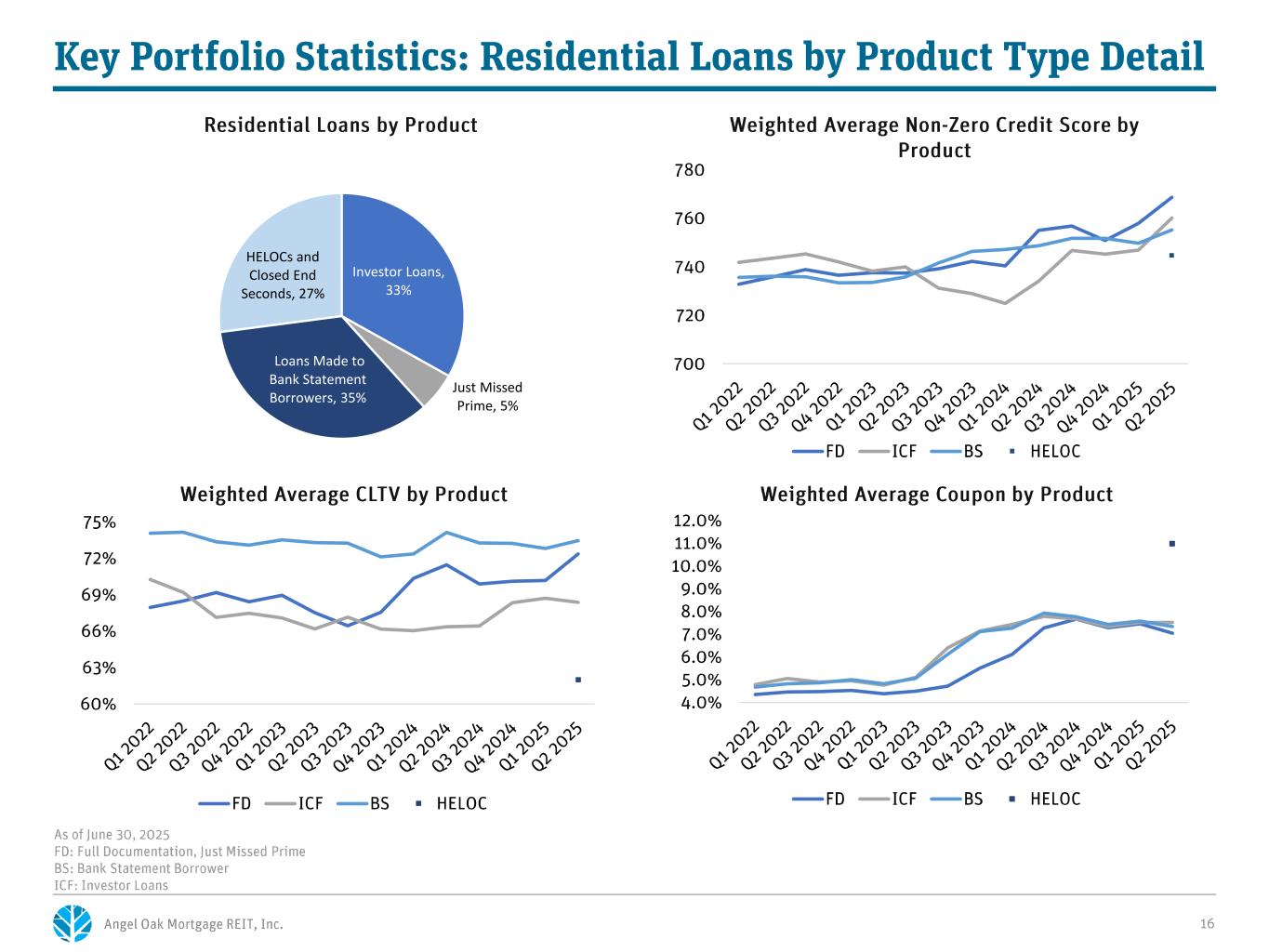
Yeah. So when we say our mortgage rates are seven and a half or, you know, call it mid sevens, That's for our traditional non-QM product. Right now, our portfolio is in the low to mid-eighths because we purchased post the $42 million debt issuance about $75 million worth of home equity line of credits, which is really a newer product for us. We had a couple in the portfolio at the end of Q1. We purchased a couple pools. You know, those are, you know, similar credit profiles, I mean, mid-700 FICOs, combined LTVs, even in the 60s, but coupons of, you know, averaging nearly 11%, sometimes a little bit higher than that. So that's driven that increase. We'd expect where we are, again, where we want to be. Those will be in a separate type of securitization structure when we do that. They'll be co-mingled with other Angel Oak entities. So, we like the product, but now we've kind of slowed down the purchases of that product to get enough of your traditional non-QM loans back in the balance sheet to do a, you know, securitization here in the next couple of months.
Okay. And that was the related question. So, it sounds like you're planning, hopefully, to get one in before the end of the third quarter securitization. Yeah, that's the plan. Got it. All right.
Operator
The next question is from Matthew Erdner with Jones Trading. Please go ahead.
Hey, good morning, guys. Thanks for taking the question. I'm going to follow up a little on that last one, you know, just kind of on the HELOCs and second liens. You know, where are you guys seeing the most opportunity right now, you know, in the acquisition market when you're out there buying loans? And then just kind of following up on the securitization question, you know, should we kind of expect that towards the end of the quarter?
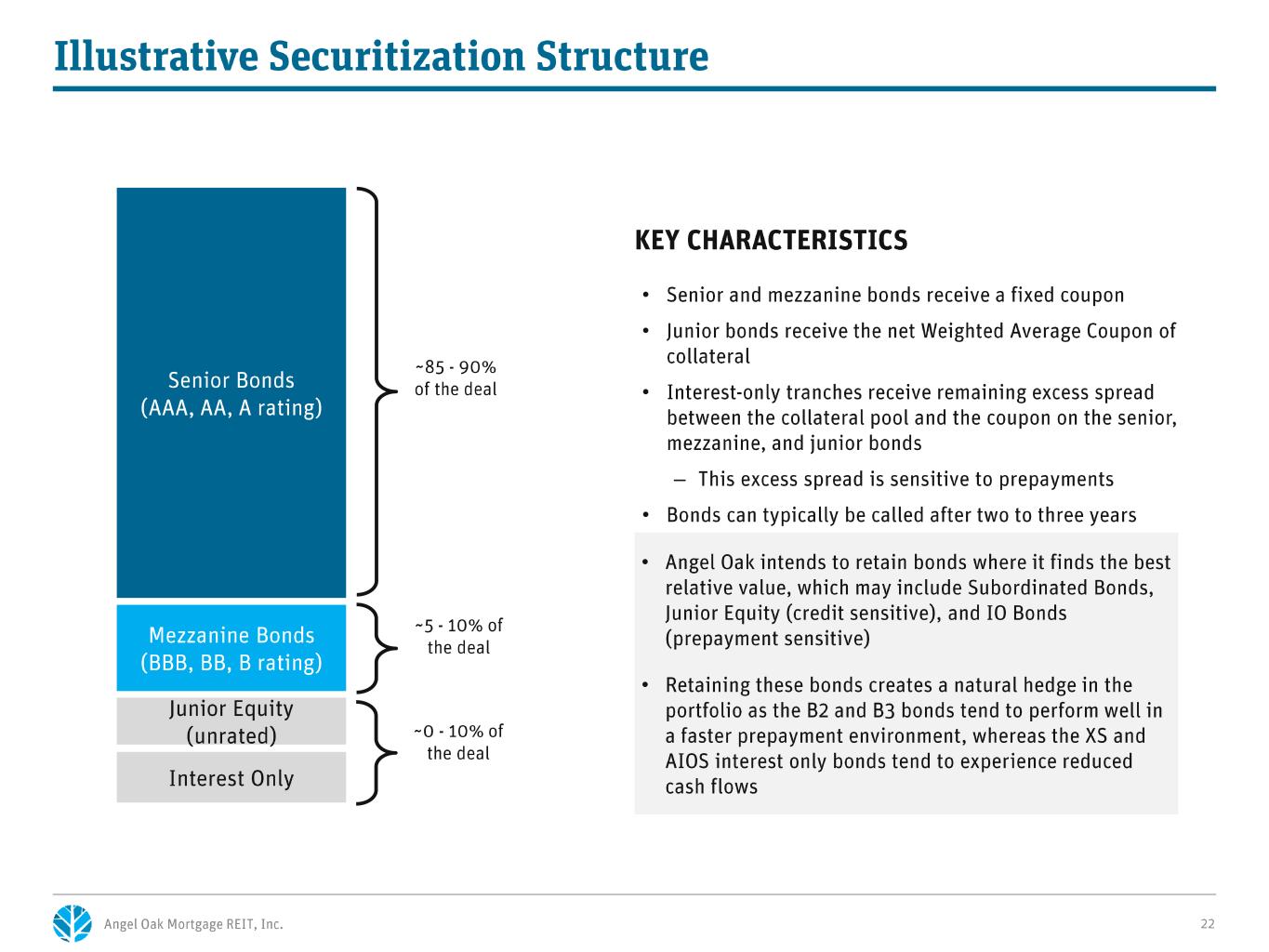
On the securitization side, I would think that, yeah, we're probably looking at targeting sometime September for the deal. You know, again, it depends a little bit on where exactly we are with some of our loan pipeline. You know, we have 100-plus million of committed loan purchases, but some of those take a little time to get closed from a locked position to a loan position. If those close a little quicker, you know, we can push it out a little earlier. Otherwise, we have to wait to get to that critical mass, right, as our securitizations are high $200s, low $300 million range right now. You know, and as far as incremental purchase volume, I think origination volume has been relatively strong. Rates have been very stable in that market, even if you get a little volatility. I think that's probably a little bit of a reflection of the fact that our securitization market continues to be very strong. You know, we're pricing deals now kind of low in the, you know, 140 range at the AAA level, which is kind of pricing on top of agency bonds. Very tight spreads. So we're, you know, that market is strong in taking out some of the volatility we've seen over the past. Even in, you know, with rates rising or rates declining, you know, if the Fed starts cutting rates, our portfolio is I don't expect a huge move in prepayment speeds as we have a lot of current market coupon deals but if the Fed starts cutting a little bit and rates go from 7.5 to 7.3 8 or 7.25 it's probably not going to move that much and then so much of our portfolio is also still significantly underwater or out of the money from a refinance decision at the 5% coupon range. Obviously, there'll be incremental speed pickup, but nothing to increase even, at least is what we're expecting, back to historical levels and not QM of like a 25 to 30 CPR. Today, we're seeing new deals in the low 20s and some of the older ones still down in the low 10s. Really, the change there on rates declining, it's going to be a book value change. As we see, you know, the rates come in, real rates come in, Fed rates cut, you'll see our financing costs decrease a little bit on the warehouse side, and then book value start to increase as well, especially, again, back on those 5% loans that we were originating in 2021-2022.
That's very helpful. Thank you for the call.
Operator
Again, if you have a question, please press star than one. The next question is from Eric Hagen from BTIG. Please go ahead.
Hey, thanks. We've seen some more of the mortgage rates allocate more capital to their origination platforms. Do you guys see that maybe changing the competitive dynamic in the market at all and just any general perspectives on, you know, what that kind of, you know, that capital allocation kind of means for our market?
Yeah, I mean, you know, we are seeing a lot of mortgage REITs actually invest in the non-QM side, especially when, you know, the other sectors of the mortgage market don't seem to be giving that kind of returns. To be perfectly honest with you, we haven't seen from our mortgage company side, I mean, the market is getting bigger, right? The overall size of the market is getting bigger just because there's more education out there. So that's necessarily not a bad thing. So I would not say that it's eating into other originations. The overall pot is growing, which is exciting for the overall market. From our originations, we had a team over to our offices, the mortgage company team in our offices yesterday. And our pipelines are growing. So that's healthy for the market. We're not seeing that much creep in credit standards from even other guys. So that's also a good thing, right, because that's a worrisome trend. You've seen that the delinquencies of some of the other originators have gone up. But generally, I would say that even the new guys coming in or guys investing in origination companies, the credit seems to be still on a good path. So, yes, we are seeing more people enter, but it hasn't pushed on the fact that it's eating into our origination, or I don't think it's eating into other originations.
Got it. That's really helpful. You know, historically, you guys have been a fixed rate lender, but do you guys think we'll eventually see more demand for hybrid arms, you know, to refi these high coupon borrowers if the long end of the yield curve stays high, but the Fed cuts rates? I mean, and from your perspective, are you guys able to supply that kind of credit? Just your perspective on doing that.
You know, it's funny. We haven't seen hybrids in a long, long time. But you've talked about it. To be honest with you, the curve will have to steepen a lot. But, you know, I don't know. That's a good question. I think all of us will have to get to that point. And I do think those conversations will happen if the longer rates stay higher and you start seeing the front end because that environment hasn't happened in a long time. But as of today, it's not efficient, and we really haven't discussed it in great detail.
Gotcha. Thank you guys very much. Thank you.
Operator
This concludes our question and answer session. I would like to turn the conference back over to Brandon Filson for closing remarks.
Thank you, everyone, for your time and interest in Angel Oak Mortgage REIT. We look forward to connecting with you again next quarter. In the meantime, if you have any questions, please feel free to reach out to us and have a great day.
Operator
The conference is now concluded. Thank you for attending today's presentation. You may now disconnect.