Operator
Good day and welcome to the Angel Oak Mortgage Wreath 3rd Quarter 2025 Earnings Conference Call. All participants will be less and only more. Should you need assistance, please signal a conference specialist by pressing the star key followed by zero. After today's presentation, there will be an opportunity to ask a question. To ask a question, you may press star, then 1 on your telephone keypad. To withdraw your question, please press star and then 2. Please note this event is being recorded. I would now like to turn the conference over to Mr. Casey Keller. Please go ahead.
Good morning, and thank you for joining us today for Angel Oak Mortgage Reads' third quarter 2025 earnings conference call. This morning, we filed our press release detailing these results, which is available in the Investors section on our website at www.angelogreed.com. As a reminder, remarks made on today's conference call may include forward-looking statements. Forward-looking statements are subject to risks and uncertainties that may cause actual results to differ materially from those discussed today. We do not undertake any obligation to update our forward-looking statements in light of new information or future events. For a more detailed discussion of the factors that may affect the company's results, please refer to our earnings released for this quarter and to our most recent SEC filings. During this call, we will be discussing certain non-GAAP financial measures. More information about these non-GAAP financial measures and reconciliations to the most directly comparable GAAP financial measures are contained in our earnings release and SEC filings. This morning's conference call is hosted by Angel Oak Mortgage Reits Chief Executive Officer, Srini Prabhu, and Chief Financial Officer, Brandon Filson. Management will make some prepared comments, after which we will open up the call to your questions. Additionally, we recommend reviewing our earnings
supplement posted on our website, www.angeloakreed.com.
Now, I will turn the call over to Srini.
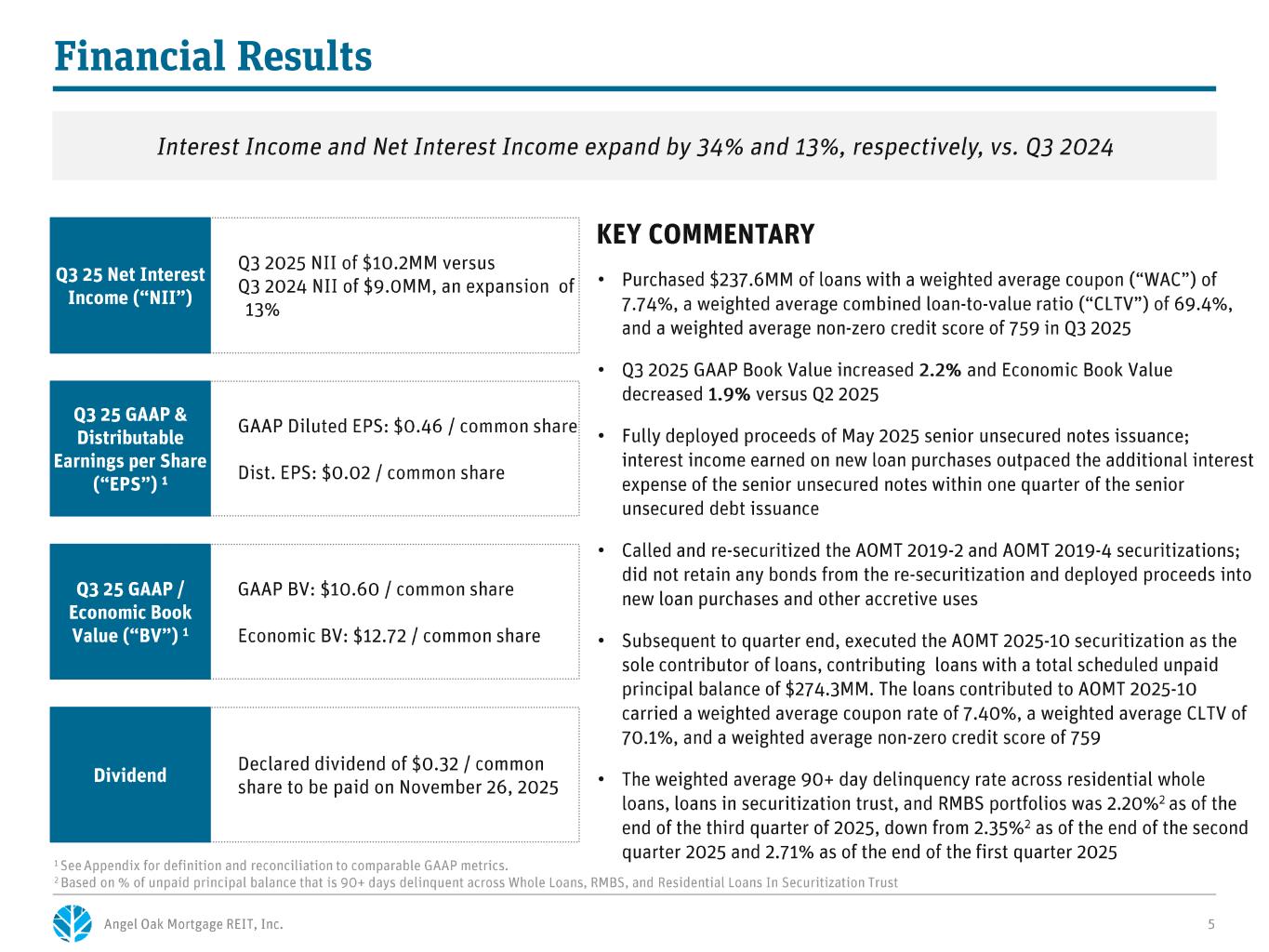
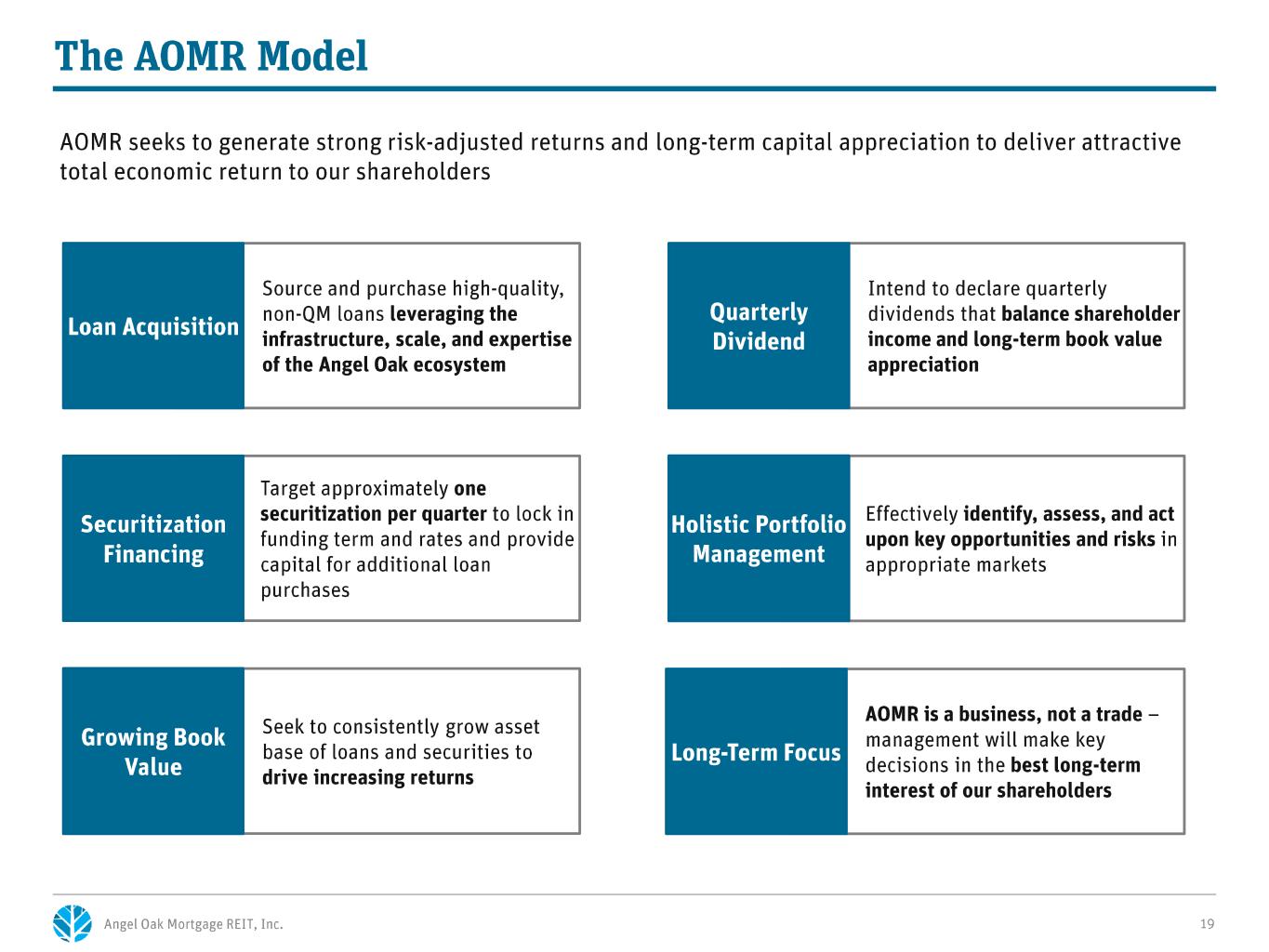
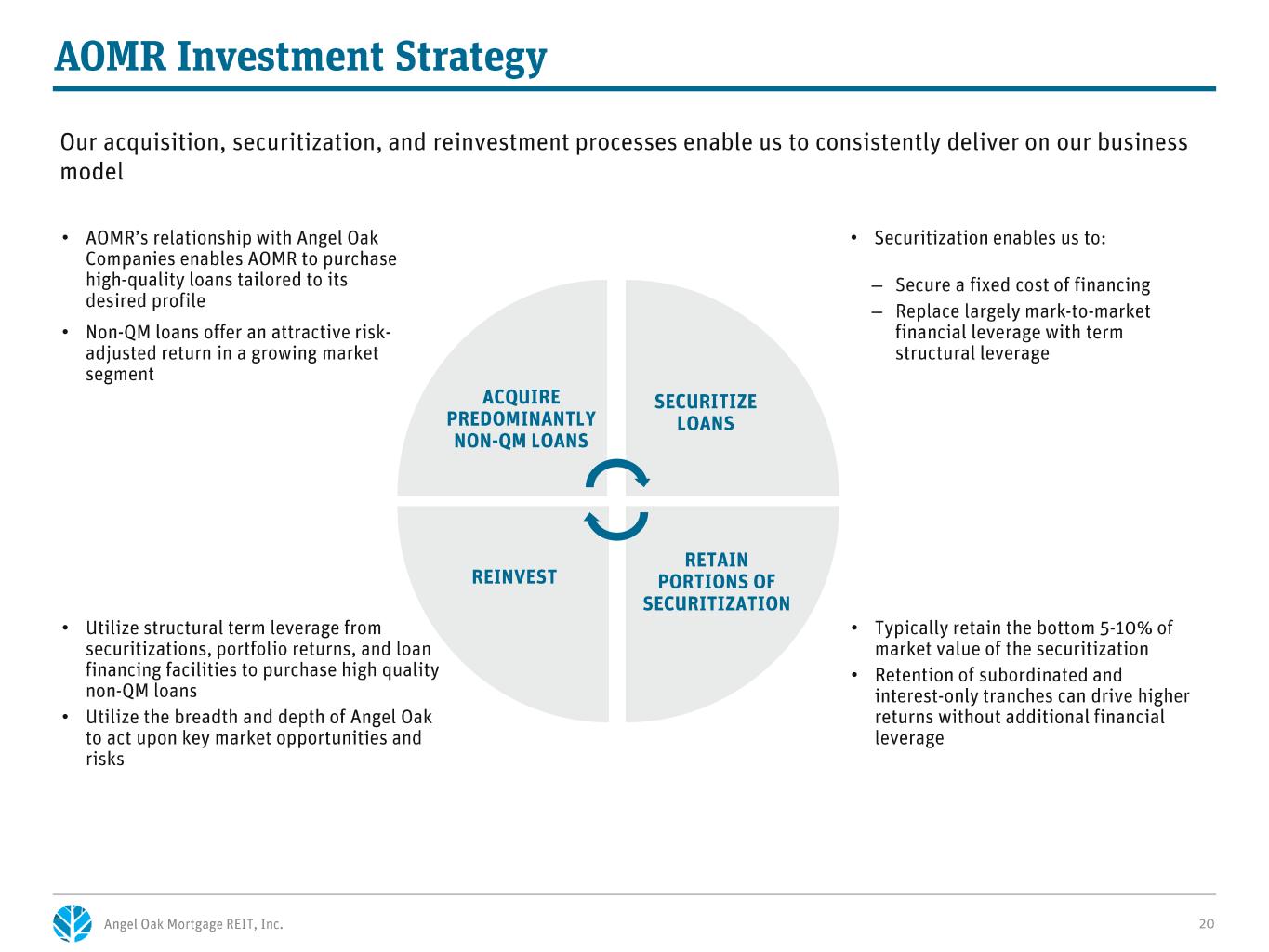
Thank you, Casey, and thank you all for joining us today. Our third quarter performance reflected another period of discipline execution and strategic progress for AOMR. We continue to execute both operationally and strategically in a constructive market environment we capitalize on a couple of strategic opportunities to reallocate capital into high yielding assets improve our loan financing funding costs and diversify our lender base and as always our team continue to focus on deploying capital into high quality income accretive opportunities supporting both portfolio growth and underlying earnings quality while maintaining vigilance on credits our results this quarter were in line with our expectations this was highlighted by our 13 percent growth in net interest income compared to third quarter of 2024 and a two percent increase compared to second quarter of the year gap book value per share increased by over two percent compared to the second quarter driven by increases in valuations across our portfolio cash flow dividend coverage increased and is expected to continue its growth trend as demonstrated over the last two years this is driven by earnings from assets purchased during and post-quarter end as well as the resicurization of some pre-ipo deals which will rotate capital into higher yield uses Credit continues to perform well, both in aggregate and relative to our peers, and our earning generation engine continues to strengthen. As I mentioned, we executed on several key initiatives during the quarter. First, we successfully called and retired two legacy vintage deals, which is something we have been opportunistically monitoring for the last several quarters. Retiring these deals allowed us to release and reinvest capital into new attractive opportunities and further optimize the yield on our investment portfolio. Second, we added new warehouse credit facility and extended another facility at attractive funding rates, which combined with decreases in SOFR are expected to improve margins while also diversifying our lender base. These actions, along with our continued focus on official capital recycling and securization, emphasize the reliability and the repeatability of our strategy. We are encouraged by the strength and stability in the securization market, as well as the constructive environment for portfolio growth. Securization spreads continue to tighten and the market continues to function efficiently with new and traditional participants active in the marketplace. The market backdrop has become more positive as the year has progressed, and the interest rate trajectory and the efficient securization execution have supported valuation and earnings growth for AOMR. While the competition in the space has increased, we see this as an indication of solid demand in an area where we have demonstrated expertise. Further, our differentiated platform and dynamic approach to capital deployment and portfolio management positions us to capitalize on opportunities. As we look ahead, we remain committed to continuing execution of our strategies, delivering strong results for shareholders and building on a solid historical track record. With that, I'll turn it over to Brandon, who will walk us through our third quarter financial performance in greater detail.
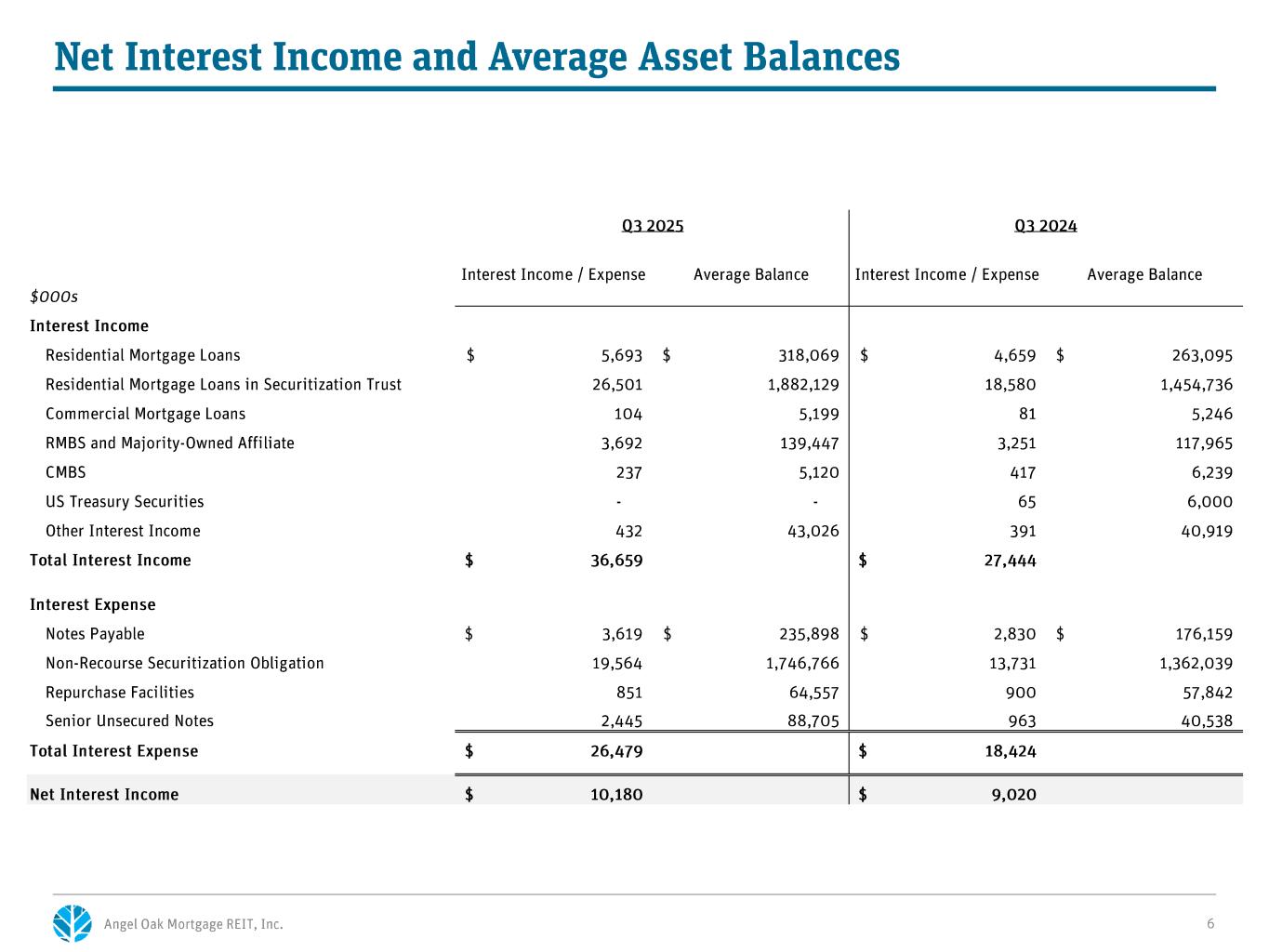
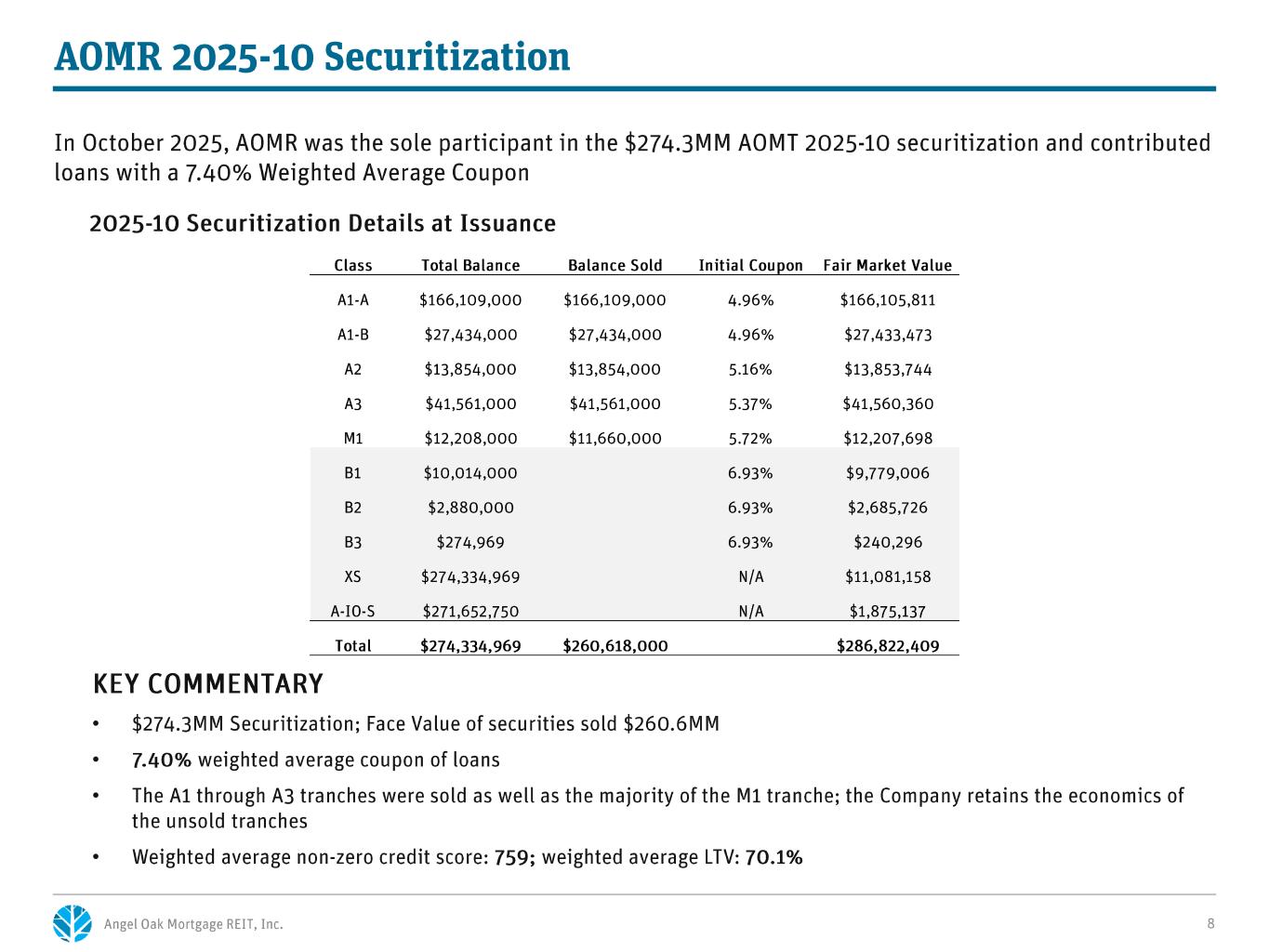
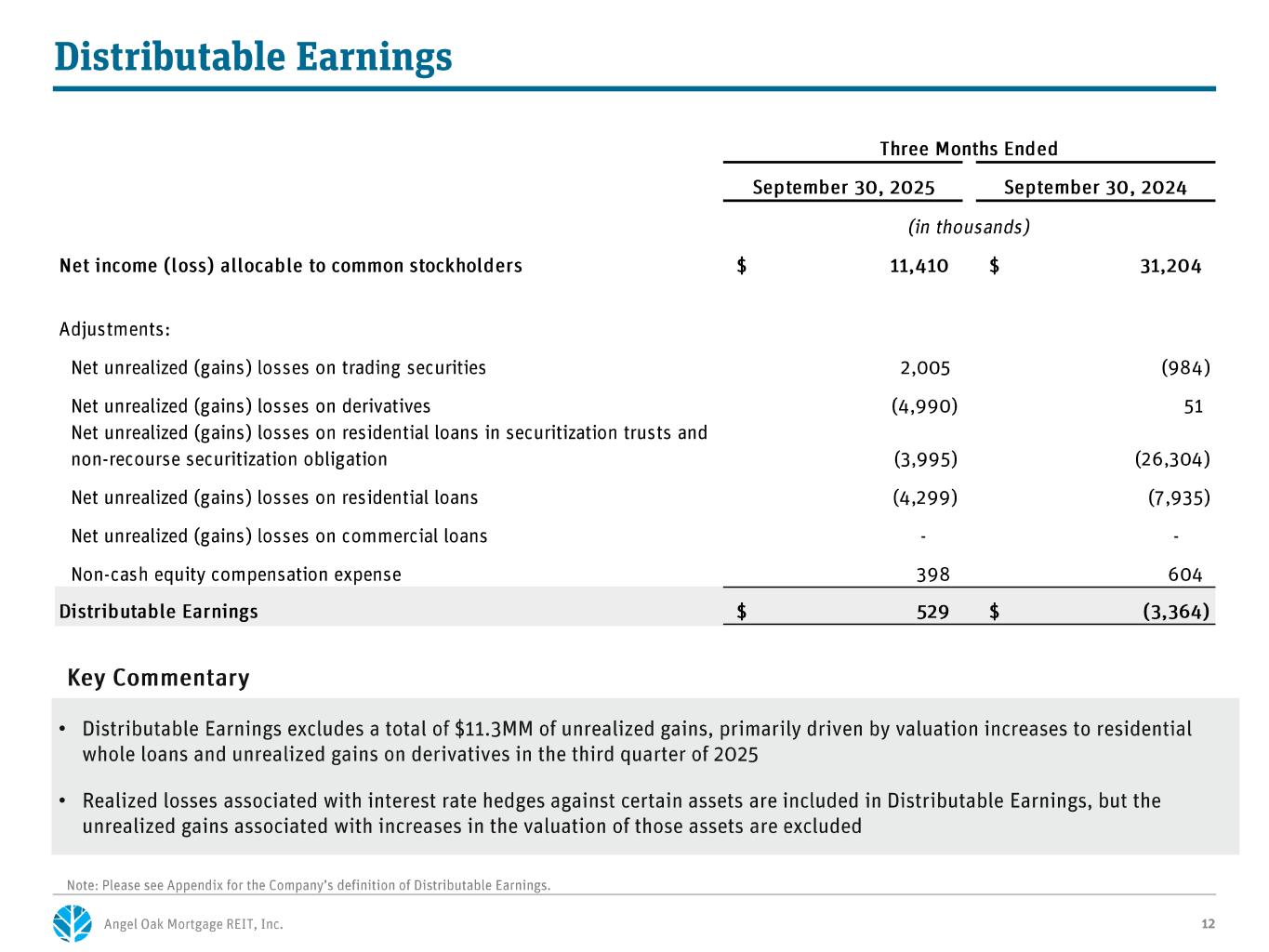
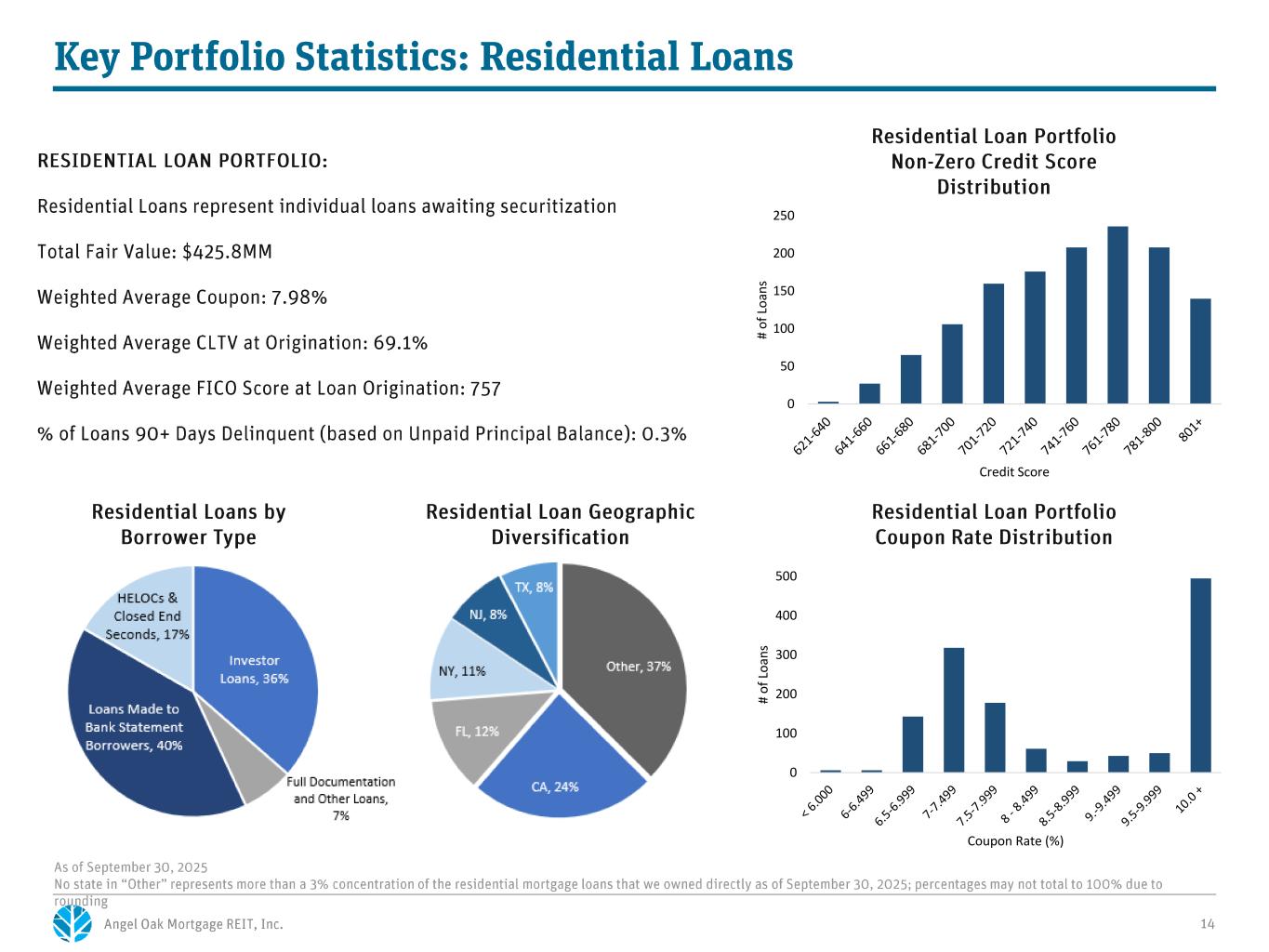
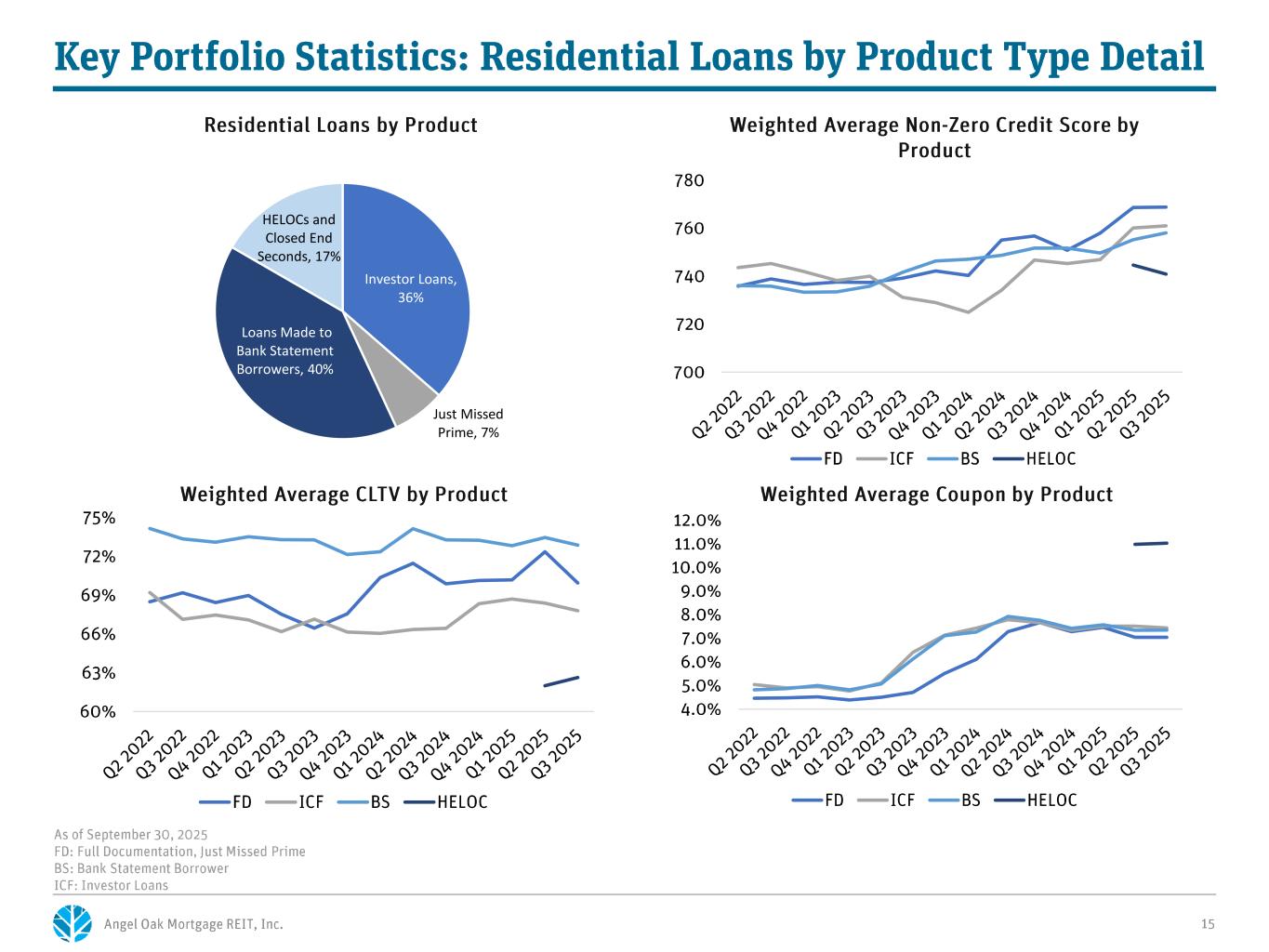
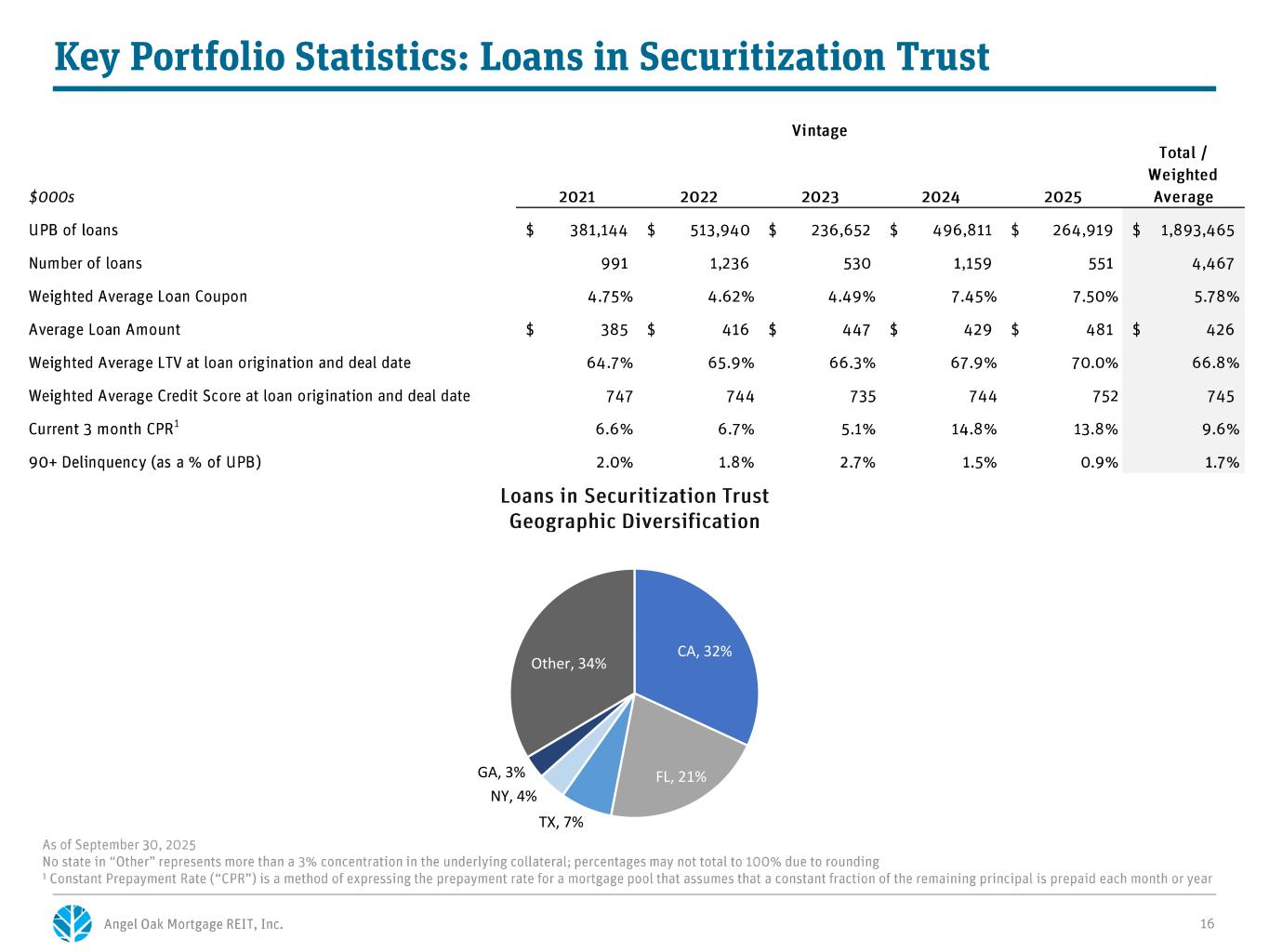
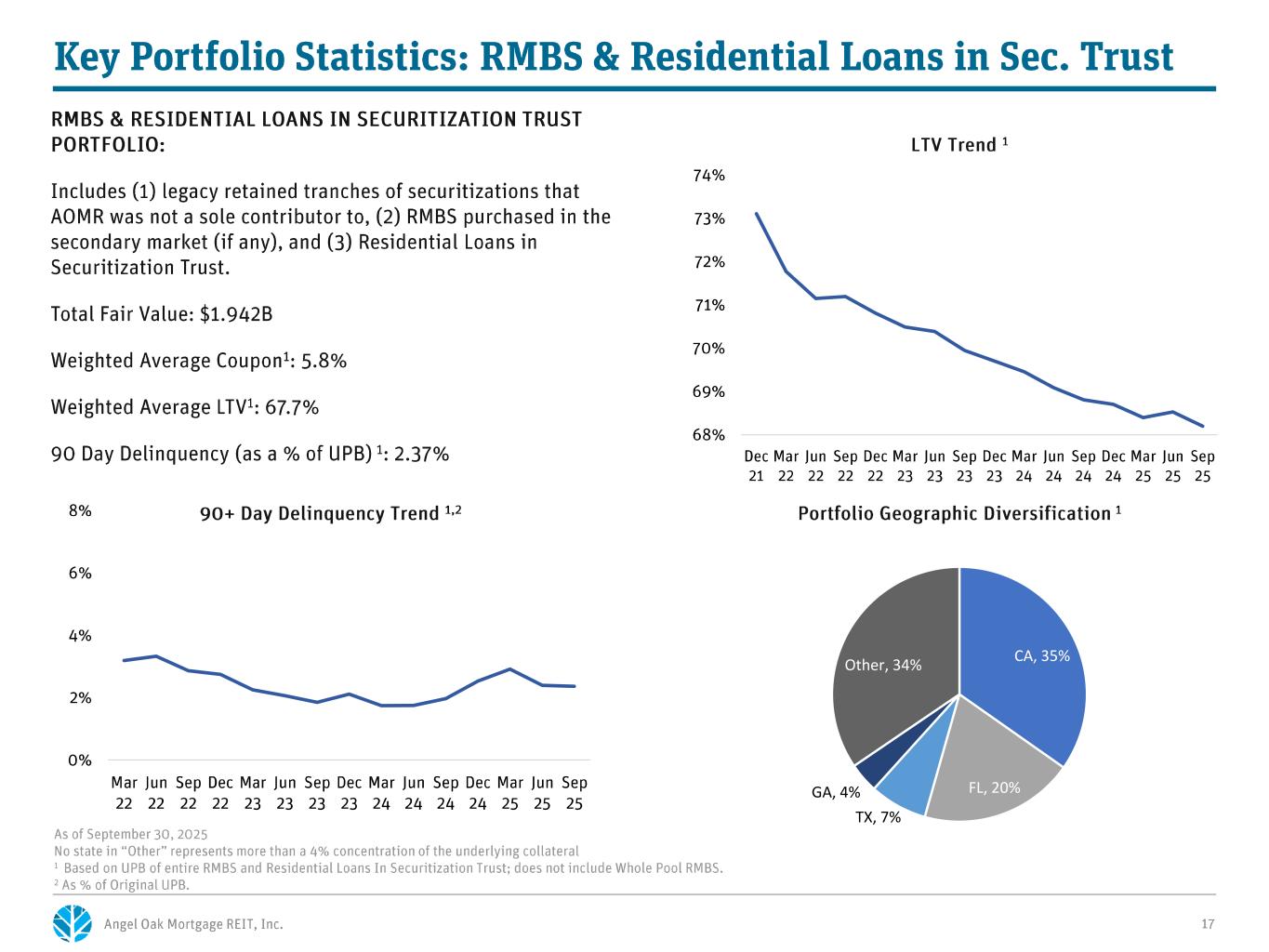
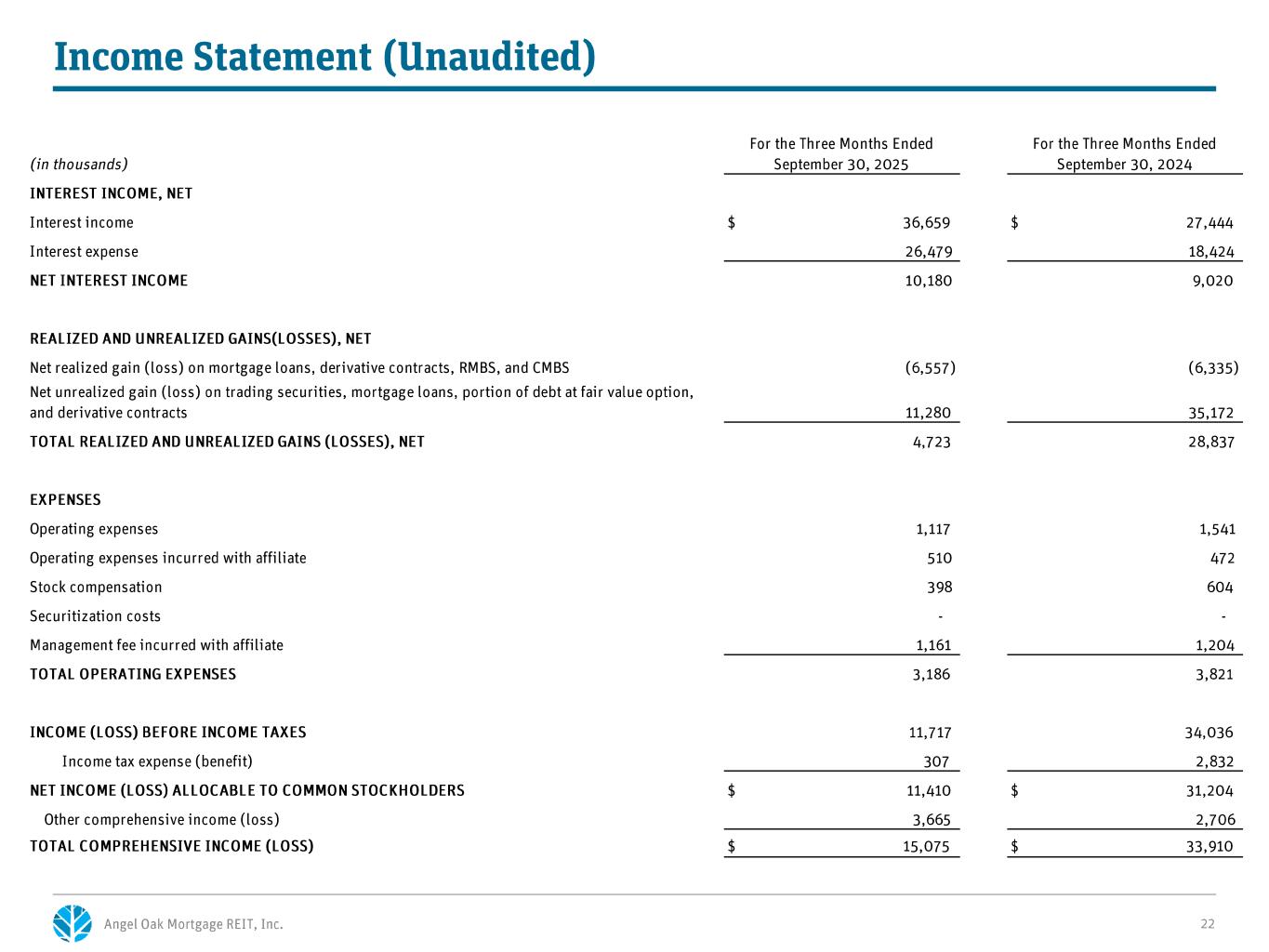
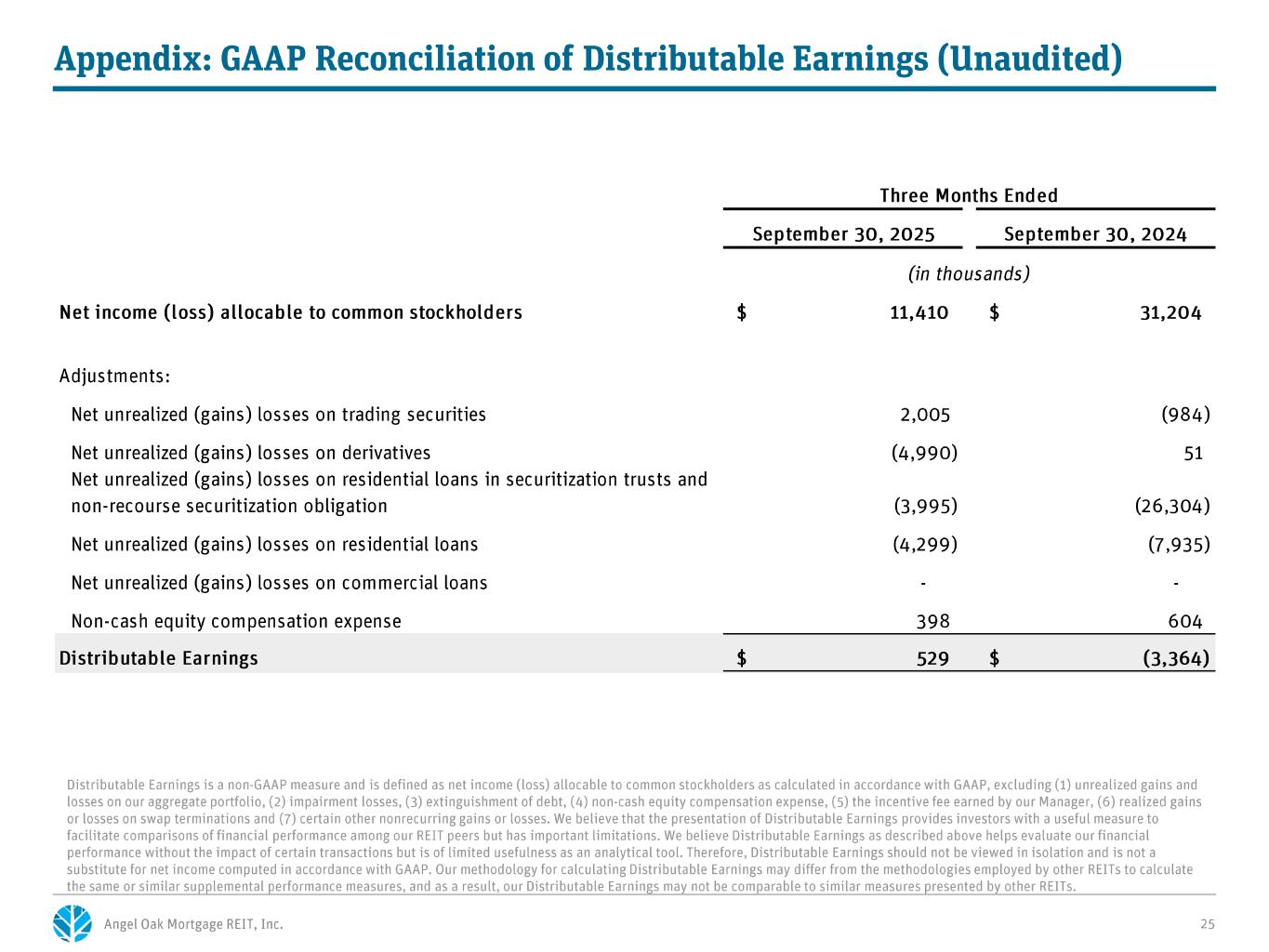
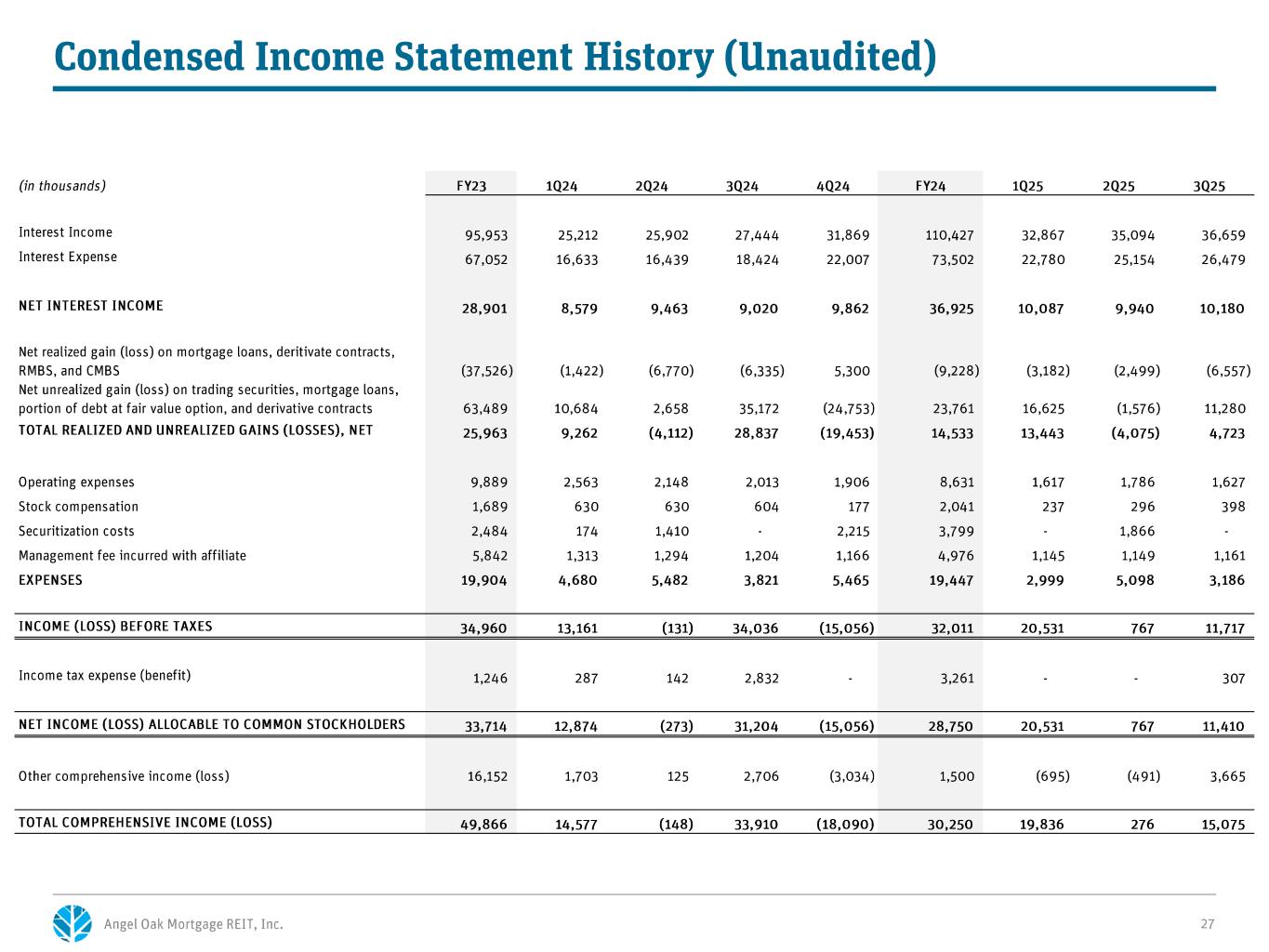
Thank you, Srini. Third quarter operating results were in line with our expectations, with 13% net interest income growth versus the third quarter of 2024, an expansion versus the second quarter of this year, demonstrating a positive return on May's senior unsecured debt issuance within one quarter. Year to date, net interest income increased 11% compared to 2024. Operating expenses excluding securitization cost and stock compensation expense were 13% lower than in the third quarter of 2024 and 5% lower than the second quarter of 2025. Year to date, operating expenses excluding securitization cost and stock compensation were 19% lower than in 2024 as we continue to push hard on cost rationalization and key expense-saving initiatives. Valuations were a tailwind during the third quarter as we observed increases in valuations across the portfolio. As of today, we expect that our book value has grown moderately compared to the end of the third quarter alongside the recent rate rally. For the third quarter of 2025, we had gap net income of $11.4 million or 46 cents per diluted common share. Distributable earnings for the second quarter were $529,000. The primary driver of the difference between gap net income and distributable earnings were the impacts of $4.3 million of unrealized gains on our residential loan portfolios and $5 million of unrealized gains on hedge contracts. Interest income for the third quarter was $36.7 million and net interest income was $10.2 million, marking a 34% improvement in interest income and a 13% improvement in net interest income, compared to the third quarter of 2024. Compared sequentially to the second quarter of 2025, interest income increased by 4%, and net interest income increased by 2%. For the first nine months of the year, interest income was $104.6 million, and net interest income was $30.2 million, which translates to increases of 33% and 12% respectively compared to the first nine months of 2024. As we previously noted, we expect our net interest income to continue its growth trend with earnings generated from accretive loans purchased throughout the year and our securitization activity in Q4. Our $238 million of loan purchases in the quarter carried a weighted average coupon of 7.74% with a weighted average combined loan-to-value ratio of 69.4% and a weighted average FICO score of 759. Our total residential whole loan portfolio had a weighted average coupon of 7.98% as of the end of the quarter. The non-QM portion of our whole loan portfolio carried a weighted average coupon of 7.37% and HELOCs carried an 11.03% weighted average coupon. As of today, our current weighted average coupon is approximately 8.7%, reflecting the 2025-10 securitization, which closed in October. As of the end of the quarter, our loans and securitization trust portfolio carried a weighted average coupon rate of 5.8%, with a weighted average funding cost of approximately 4.2%. As Srini mentioned, the securitization market remains active, and we intend to continue leveraging this strength through our disciplined, methodical securitization strategy. As mentioned earlier, we called and retired our retained bonds from AOMT 2019-2 and AOMT 2019-4 securitizations in the third quarter. These deals have become delivered over time, and the call released $19 million of capital to be reinvested into higher yielding, new loan purchases, and other earnings accretive uses. Additionally, in October, we executed the AOMT 2025-10 securitization. This securitization was a $274 million deal that enabled us to pay down $237 million of
warehouse financing and release $22 million of cash for redeployment.
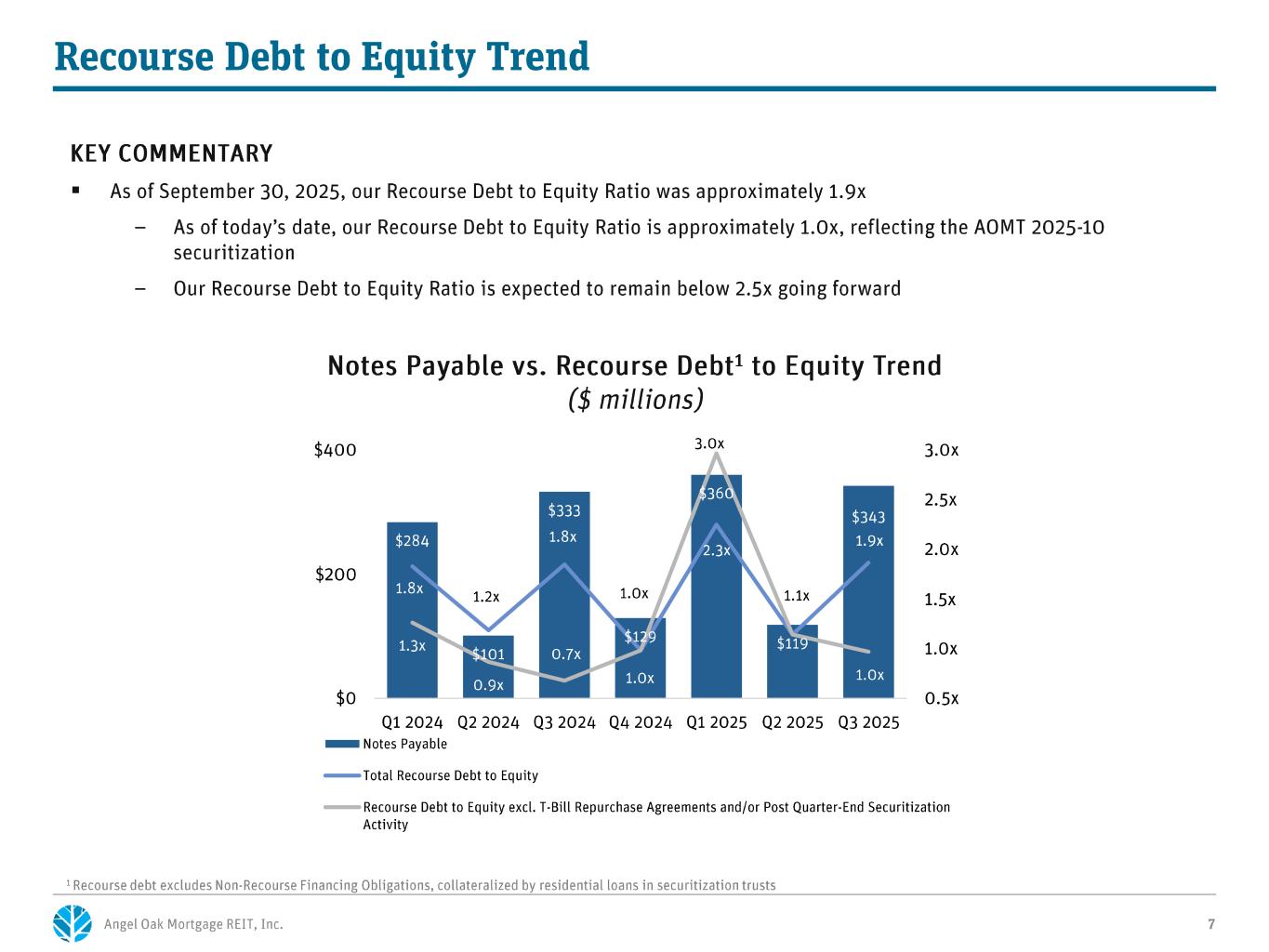
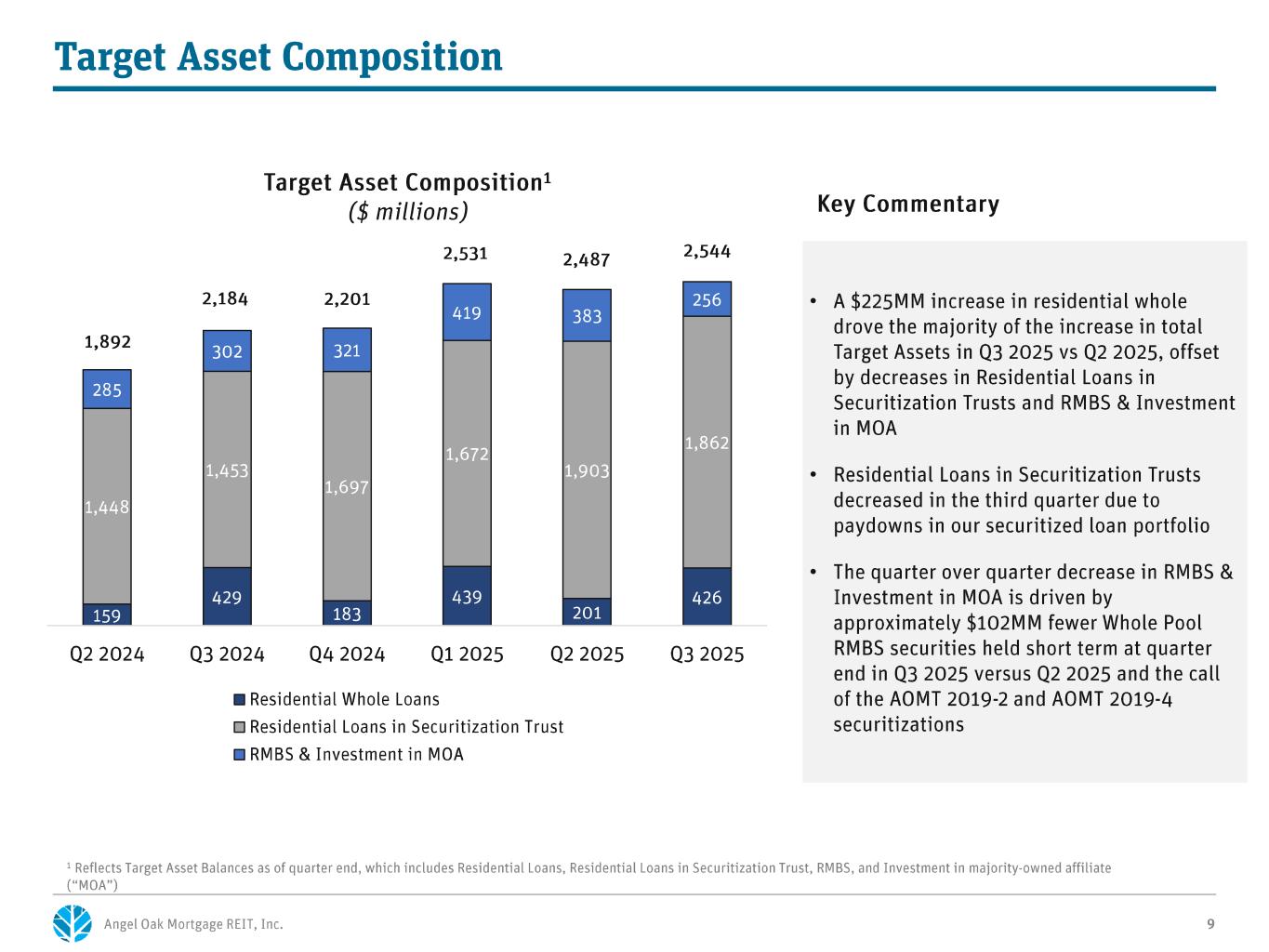
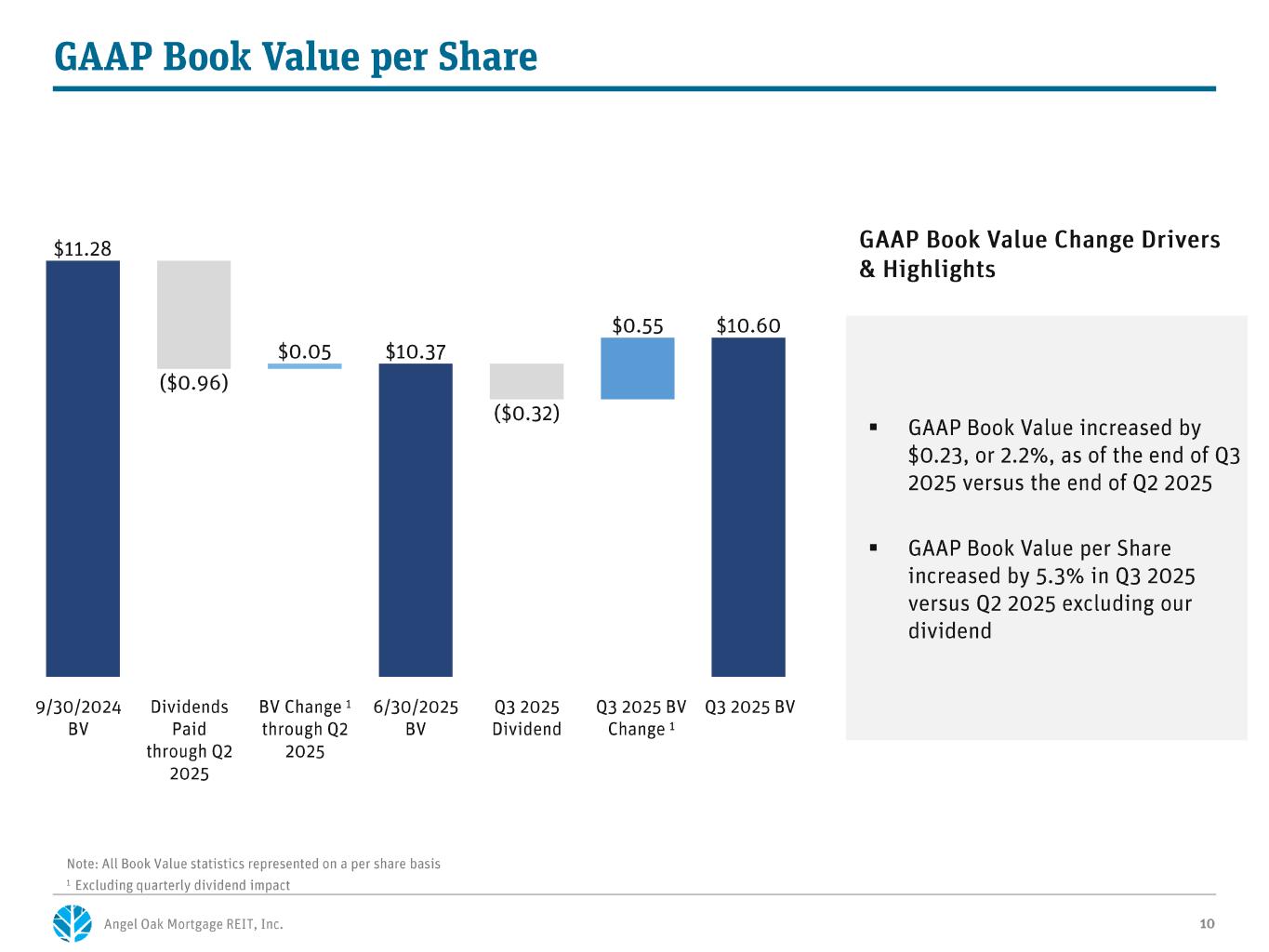
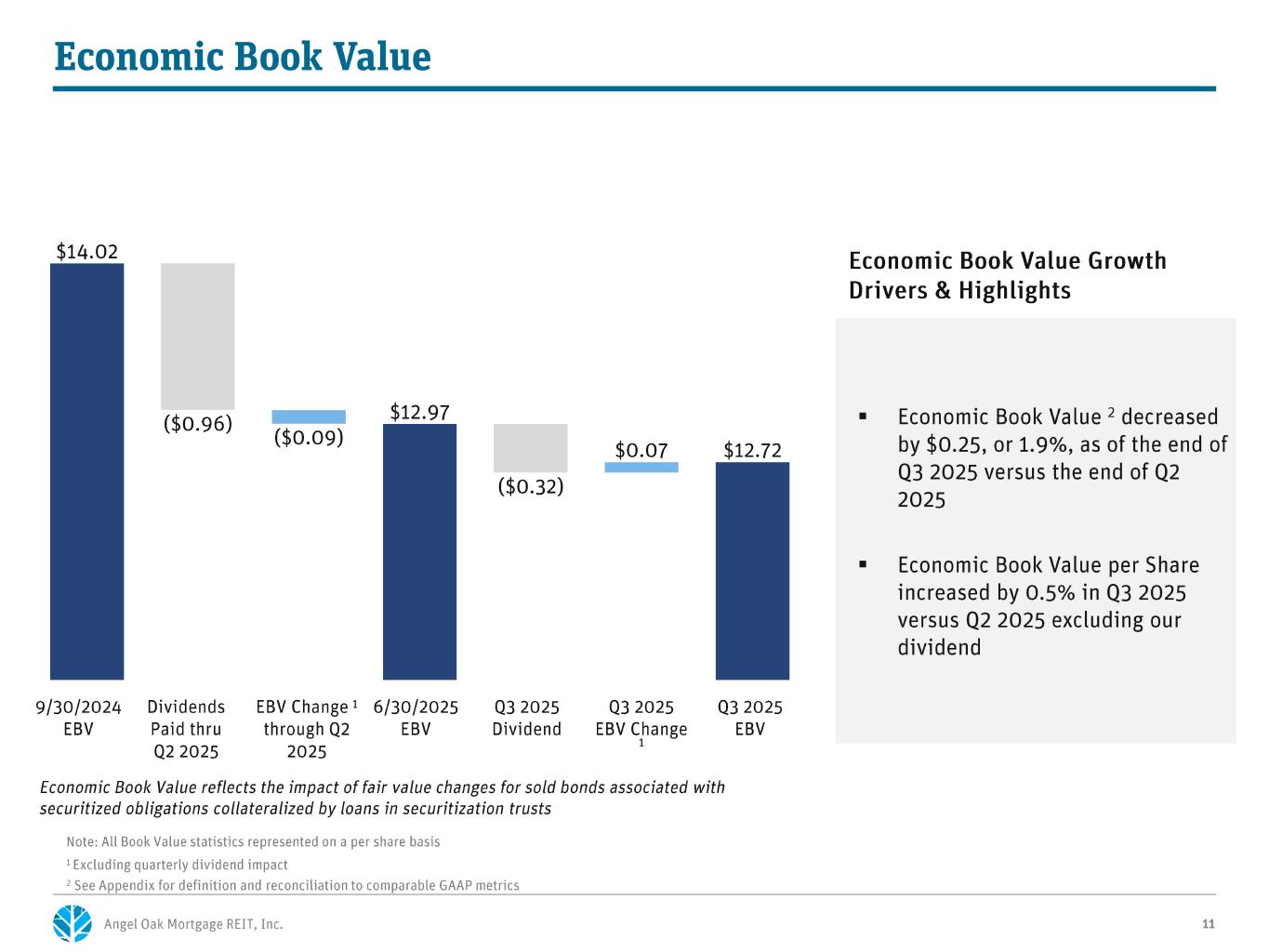
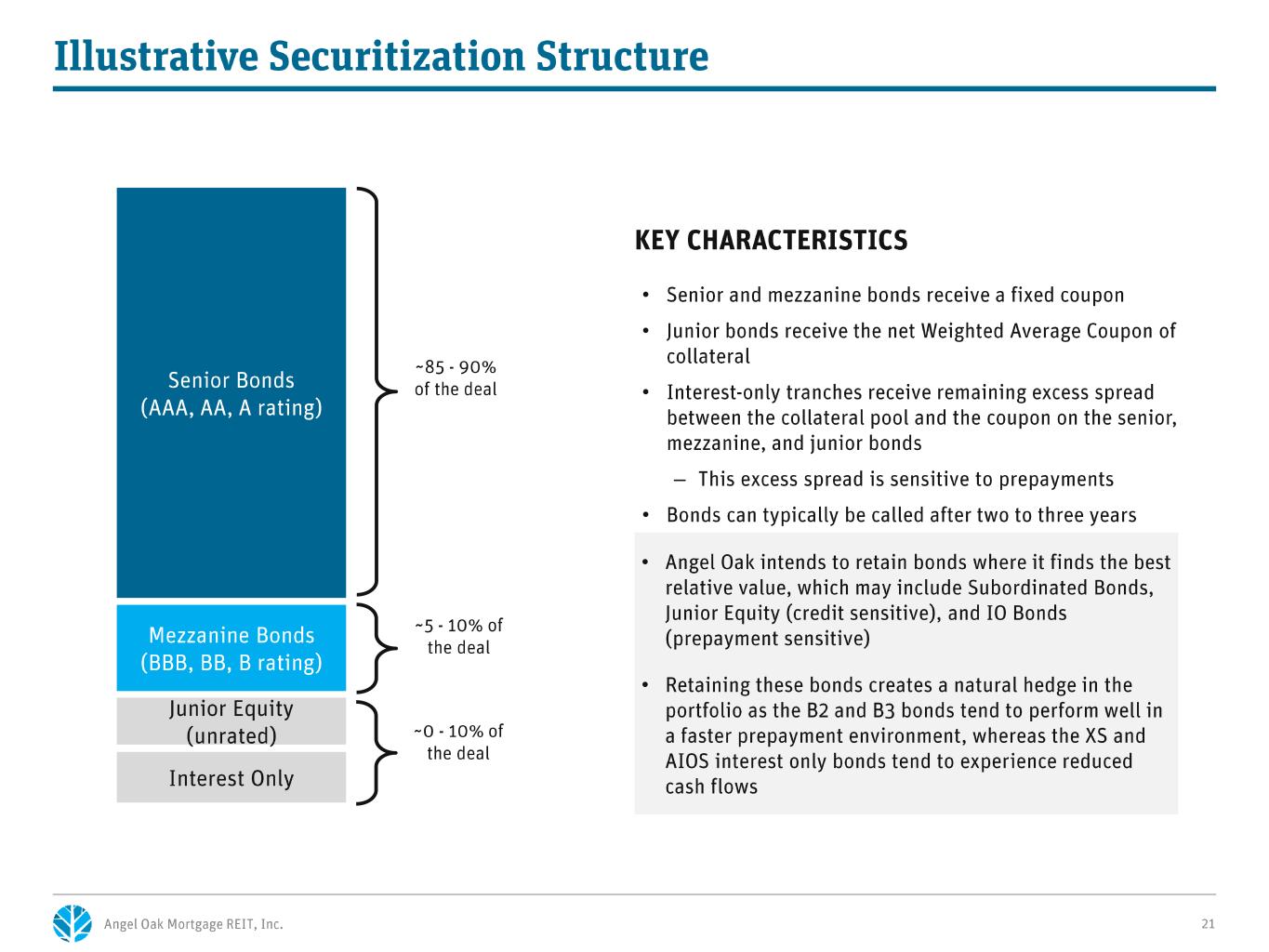
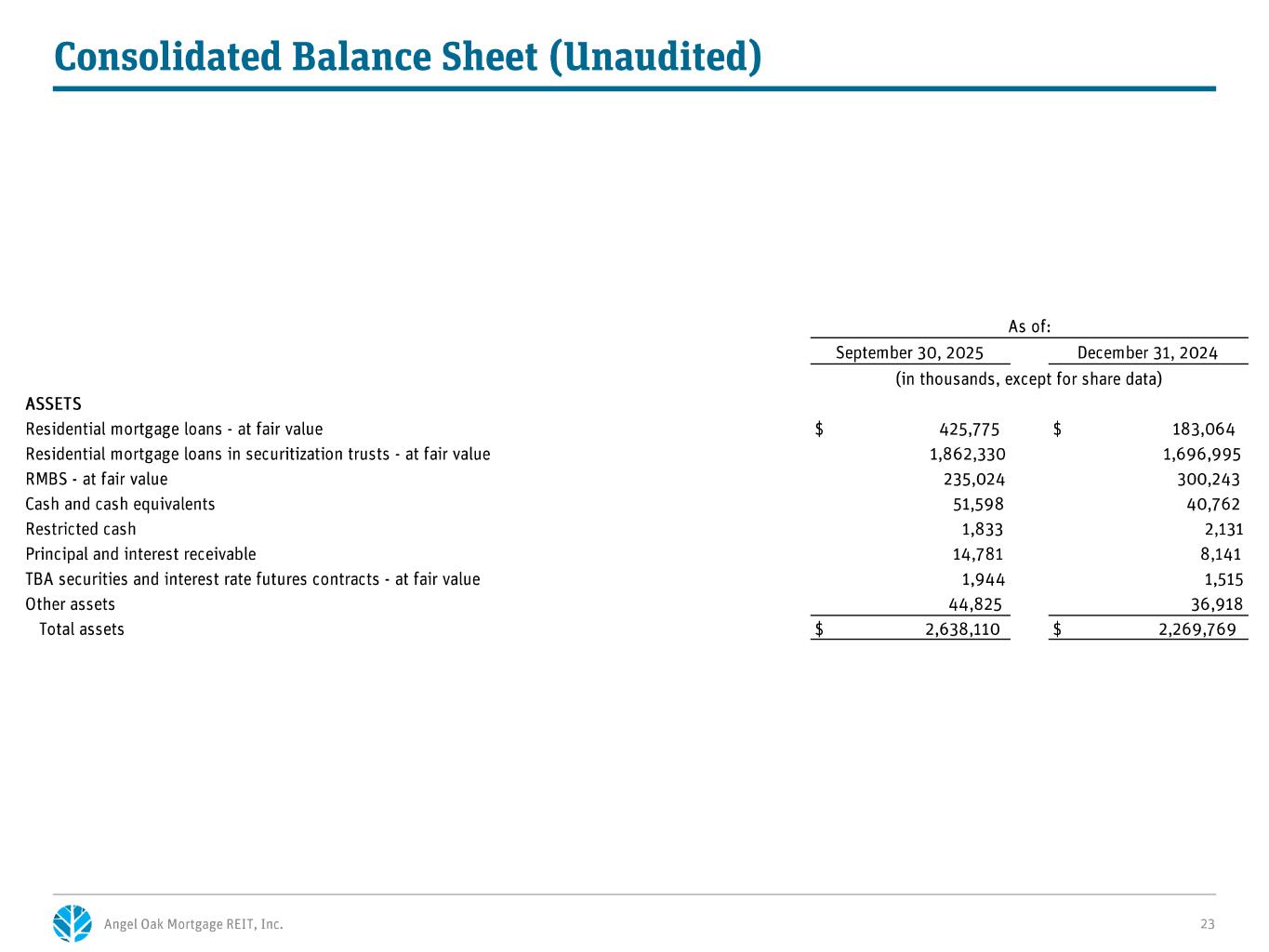
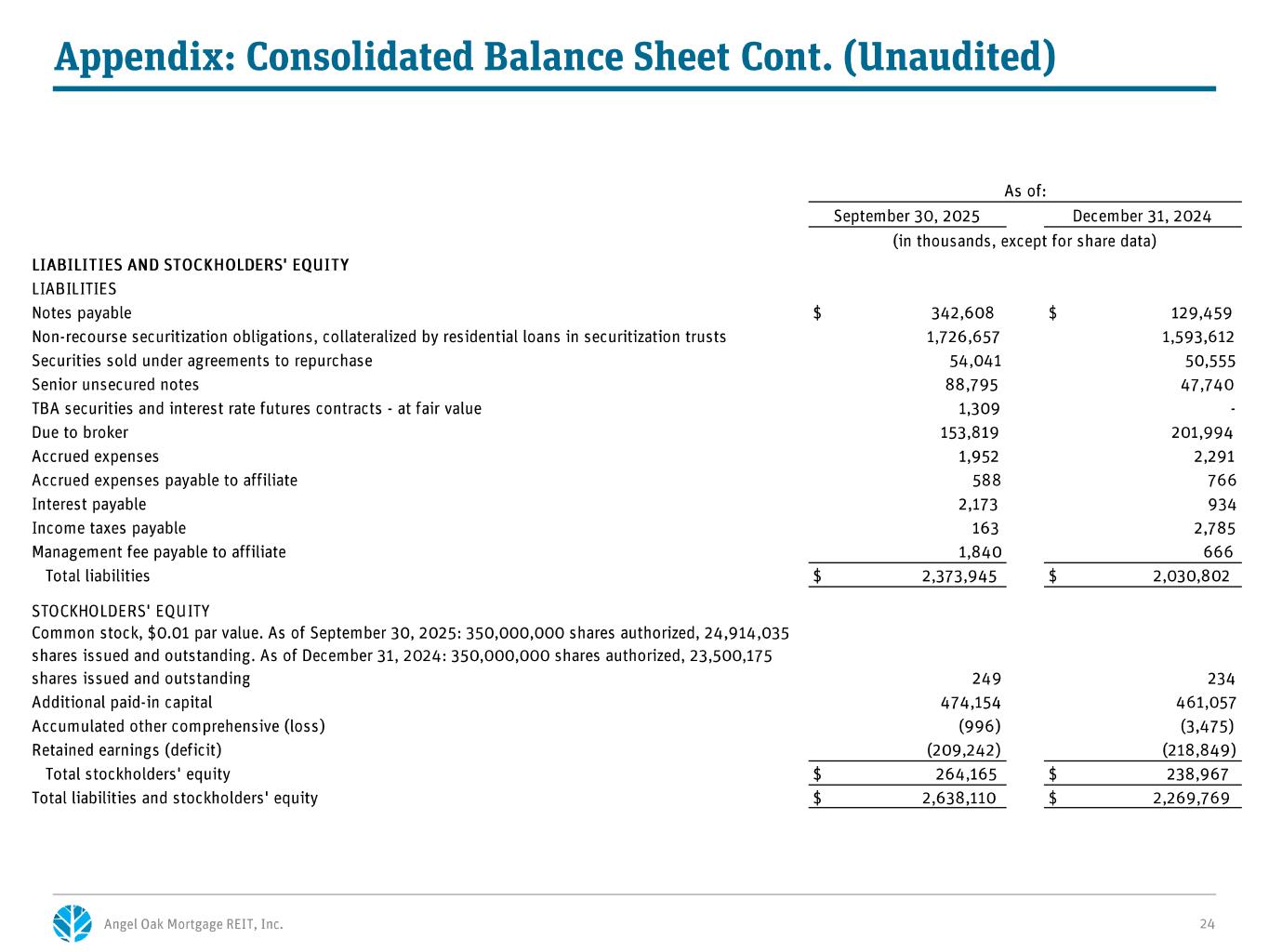
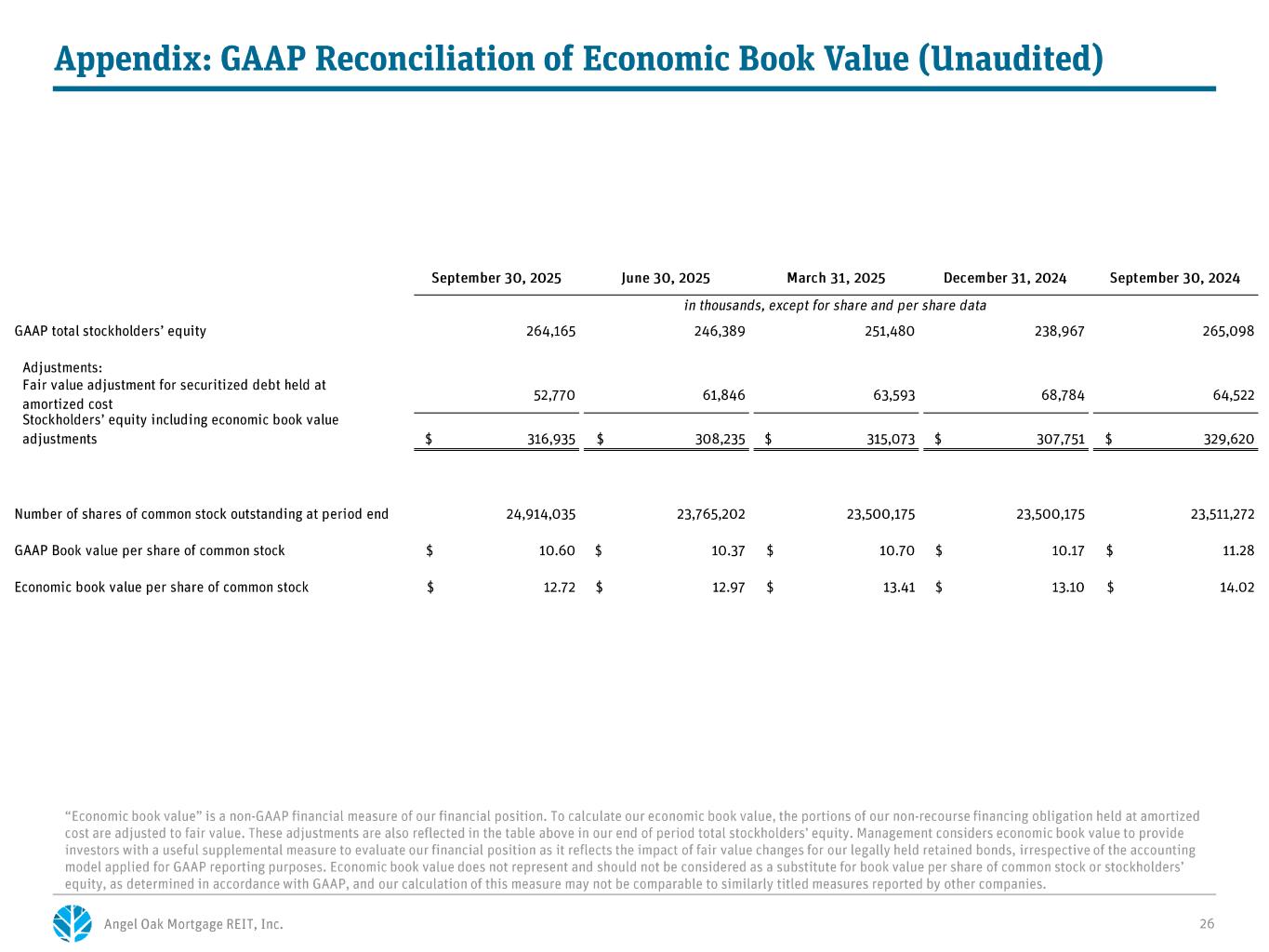
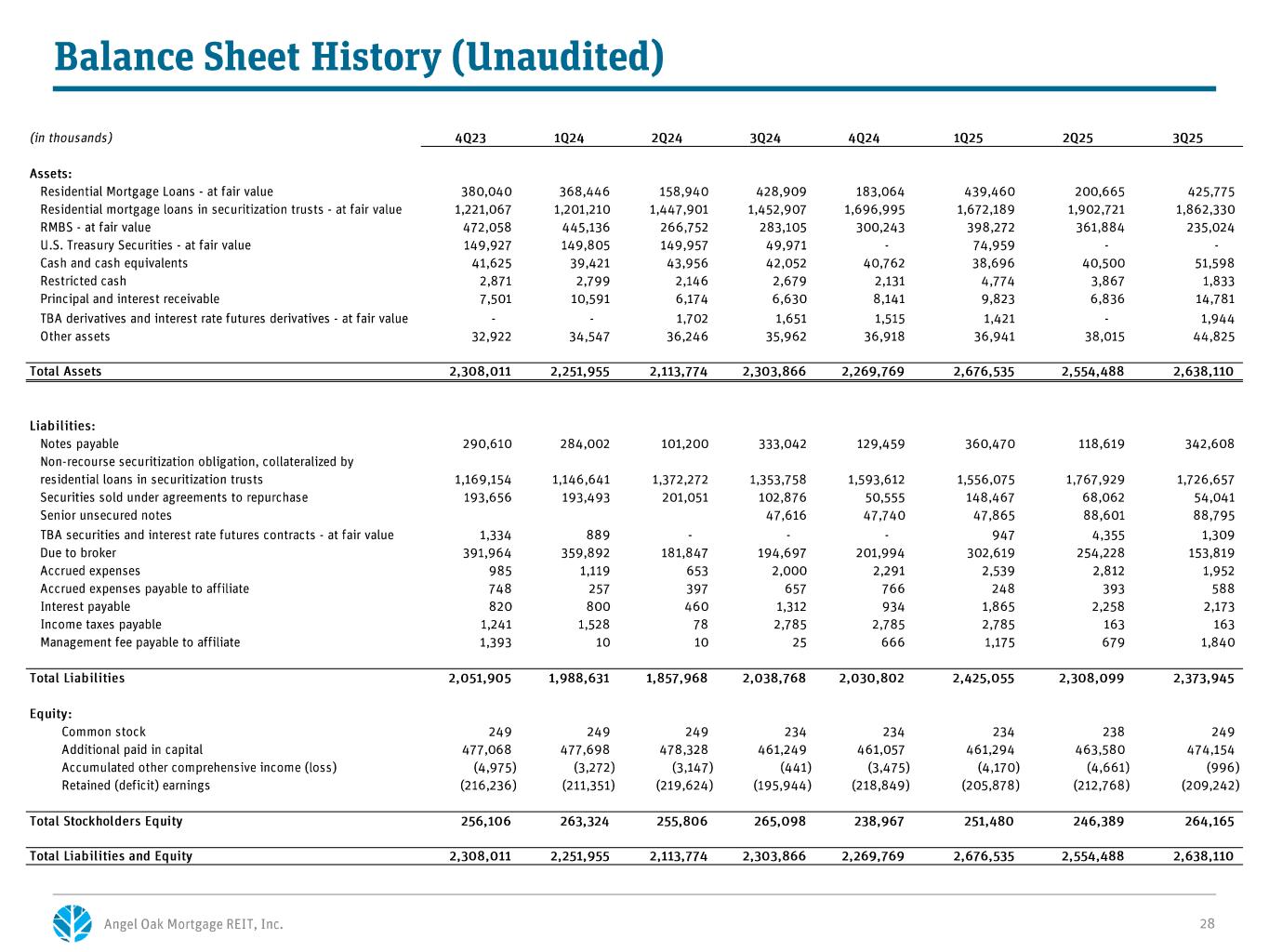
The execution of this deal was strong, with the senior bonds issued at a spread of 125 basis points over treasuries. Operating expenses for the third quarter were $3.2 million. Excluding non-cash stock compensation expenses and securitization costs, third quarter operating expenses were $2.8 million. This represents a 13% decrease compared to the same metric in the third quarter of 2024. For the first nine months of the year, operating expenses were $11.3 million. Excluding non-cash stock compensation expenses and securitization costs, operating expenses for the first nine months of the year were $8.5 million, representing a decrease of 19% compared to the first nine months of 2024. Going forward, we expect to maintain similar operating expense levels and will continue to be as efficient as possible with our expense structure. Looking at our balance sheet, as of the end of the quarter, we have $51.6 million of cash and our recourse debt-to-equity ratio is 1.9 times. As of today's dates and factoring in these October securitization, we estimate our recourse debt-to-equity ratio to be approximately only one time. Gap book value per share increased 2.2% to $10.60 per share as of September 30th, 2025 from $10.37 as of June 30th, 2025. Economic book value, which fair values all non-recourse securitization obligations, was $12.72 per share as of September 30th, 2025, down 1.9% from $12.97 per share as of June 30, 2025. The increase in gap book value was driven primarily by the aforementioned valuation increases across our portfolio, and valuations of the sold bonds from our 2021-4 and 2021-7 securitizations are included as a liability in our economic book value calculation, and the markup of these bonds drove the directional difference between gap and economic book value. We ended the quarter with unsecuritized residential whole loans at fair value of $425.8 million, financed with $342.6 million of warehouse debt, $1.9 billion of residential mortgage loans and securitization trust, and $256.2 million of RMBS, including $21.2 million of investments in commingled securitization entities, which are included and other assets on our balance sheet. We finished the quarter with an undrawn loan financing capacity of approximately $707.4 Now looking at credit, we ended the quarter with a total portfolio weighted average percentage of the loan's 90-plus days delinquent at 2.2%, inclusive of our residential loan, securitized loan, and RMBS portfolios, which represents a decrease of 15 basis points from the second quarter of 2025. The AOMT securitization shelf continues to demonstrate outperformance relative to other non-QM shelves in terms of delinquency. We expect that throughout the credit cycle, this outperformance will lead to fewer defaults and lower credit losses than comparable non-QM securitization platforms. The expectation is born out of our intentional effort to move up in credit for our loan originations and purchases over the past couple of years, which continues to provide us with the confidence that we will deliver consistently amid periods of potential volatility. Additionally, we expect our portfolio-wide low LTV, diligent underwriting standards, and inherent credit selection to mitigate losses throughout a cycle if credit becomes an issue. Three-month prepay speeds for our RMBS and securitized loan portfolios were 9.4% to end the quarter, reflecting a marginal decrease compared to the second quarter of 2025. As a reminder, we model our returns on historical average prepayment speed of 20 to 30%. We continue to expect that mortgage rates would need to fall meaningfully in order to drive a significant uptick in refinances and prepayment speeds in our portfolio. Finally, the company declared a $0.32 per share common dividend, which will be paid on November 26, 2025 to common shareholders of record as of November 18th, 2025. For additional color on our financial results, please review the earnings supplement available on our website. I will now turn it back to Srini
for closing remarks. Thank you, Brandon. I would like to thank the entire Angelog team for their hard work towards building what we believe is the best non-QM loan origination, purchase, and securization platform. We look forward to continuing to build long-term value for our shareholders in the coming quarters and years. With that, we'll open up the call to your questions. Operator. Thank you.
Operator
We will now begin the question and answer session. To ask a question, you may press star, then one on your touchstone phone. If you are using a speakerphone, please pick up your handset before pressing the keys. If at any time your question has been addressed and you would like to withdraw your question, Please press star, then two. At this time, we will pause momentarily to assemble our roster. First question comes from Matthew Erdner with Jones Trading. Please go ahead.
Hey, good morning, guys. Thanks for taking the question. I'd like to touch on kind of the calling of the old securitizations there. One, get your thoughts going forward. And two, how much incrementally were you guys able to pick up on the margin there in terms of cost of funds, you know, kind of coming in as a result of calling those securitizations? And then, you know, expectation going forward as to what other calls would do to that cost
Hey, thanks, Matt. Yeah, 19-2, 19-4, you know, those were our very first securitizations that we did even
before, you know, this vehicle was a public REIT. They're very de-levered. The point, I mean, the factors were down to, you know, very, very low levels where effectively our retained interest was earning the weighted average coupon of the deals or in some cases even a bit less. So, you know, six, seven percent kind of retained yields on those bond positions. The 19 million dollars in cash would be then immediately reinvested into, you know, whole loans that would at least lever, you know, earn that unlevered yield today with leverage, you know, 12 to 14 percent. And then once we securitize, you know, 15 to 20 percent kind of return. So you can think of, you know, 8 percent of our capital over the next couple of quarters going from earning a 6 to a 14 at a base case level. As we look at other deals, I mean, we do have, you know, 19-6 securitization and 20-20-3 securitization out there that we're evaluating what to do with them as they de-lever. It all depends on what the execution price and where we are in terms of the cycle, but I'd expect us to be looking hard at that over the next year.
Yeah, I got it. That's helpful there. And then you guys mentioned competition earlier on the call. I'd like to touch on this given the amount of people that have entered the space or starting to come in. You know, how are you guys able to go out there and kind of source the loans, you know, that you find attractive, opportunistic and whatnot, and kind of, you know, beat out that
competition, so to speak? Yeah, I think we, you know, we, with our affiliation with, you know, Angel Oak Mortgage Solutions and the Angel Oak platform in general, you know, we've had a very consistent non-QM program over, you know, the past many years. Our rate sheets are similar. We're always buying, you know, we're a surety of closing deals. So, when we go out, you know, we think we are able to pull in, you know, good demand versus maybe the new guys entering the space that may not be there tomorrow, that may change their mind, and they're just coming in out based on, you know, a trade item that, you know, again, we said many times, this is a business for us, not a trade. So we have great relationships, again, with our affiliated originators and other third-party originators where they, you know, will show us the loans that we want with the rates we want and the prices we want, because they know that we'll be able to execute and, you know,
Operator
close those loans. Got it. That's helpful. Thank you, guys. The next question comes from Doug harder with UBS. Please go ahead.
Hoping you could touch on, you know, your outlook for growth in the investment portfolio, you know, I guess given a combination of the re-securitization opportunities plus, you know, maybe adding some more leverage to the balance sheet. Yeah, no, I think
we have, you know, we did our senior unsecured notes offering, second one this last summer, that those proceeds have effectively been deployed, maybe not fully. I mean, it takes several cycles of securitization to get 100% deployed in terms of capital. We released, you know, the securitization from the 19-2, 19-4 deals. You'll also see in the filings and whatnot that we also took back an interest in a vehicle that holds some of the non-performing loans from those deals. It'd be about $7 million that those proceeds should also be coming in today, literally. Then, you know, 2510 released over $20 million in capital. So we have kind of a very good runway for growth in terms of what, you know, we're looking at in terms of purchasing volume. We like to be consistent in the space. We've been buying $200 to $300 million a quarter really over the past year of loans. We're also looking at, we have about $75 million worth of HELOCs in our portfolio. We're looking at doing a securitization in that regard here in the coming quarter that should release additional capital and continuing to grow. So we and then, as you mentioned, we're going to be looking at the 19-2 and then the 2020-3 securitizations to re-securitize and, you know, call if, you know, if and when that time and opportunity comes up in 19-6.
Great. I appreciate that. And then, you know, I know in the prepared remarks, you did walk through some of the difference between gap and economic book value in the quarter. But, you know, if you could just kind of give a little more detail and, you know, just how we might think about the drivers of change as we go forward, you know, on those metrics.
Yeah. So the genesis of economic book value was the 21.4 and 21.6 securitizations that we did immediately post IPO. Those were the deals that were in the Goldilocks phase of the market when interest rates were zero and the securitization market was incredibly accretive. So they had one of them, you know, 21-4, the coupon on the senior bond was just over 1%, so literally very little funding cost. We made the election at that time, if you recall, to hold those liabilities for those sold bonds at amortized cost, meaning that as, you know, obviously rates sold off over the next couple of years, they stayed at par when in reality, you know, the fair value of those bonds or the fair value of the liability would have been significantly below par. as we're in this cycle now where real rates are starting to decline. Securization market's getting better. Things are getting tighter. You know, there's a lot of demand for these products. And again, real rates are declining. Those bonds are starting to mark back up, which doesn't happen under gap book values. And that's why you see, you know, the divergence or, you know, the decrease in economic book value quarter versus the increase in gap book value. Because, you know, from a gap book value perspective, if you think about those two securitizations, we effectively have an unhedged asset with several hundred million dollars in loans in it. And then, you know, from an economic book value, then we effectively then hedge that back down as that liability is starting to increase in value.
And that liability value is based on the value of those sold bonds.
Operator
Appreciate that. Thank you. If you have a question, please press star, then one. The next question comes from Timothy D'Agostino with B. Riley Securities. Please go ahead.
Good morning. Thanks for taking the question. Just one for me. Regarding the size of securitizations, just flipping back through prior quarters, it seemed like in 2024, securitizations were slightly above $300 million. And so far in 25, they've kind of hovered around 280. I was just kind of wondering if we could see future securitization kind of get back to that 300 level, or if you guys are comfortable with kind of the size you're doing now.
Yeah, we've made the conscious decision to, you know, be hitting the securitization market very programmatically and insistently, right, And not waiting in this rate environment to, you know, get to a $300, $400 million level. That was something we did used to do. And now we found it better, especially with all the supply coming on the market, to be a very consistent issuer. That's why, you know, this year we're already up to, you know, 10, 11 real non-QM securitizations. We've done the re-securitization, and then earlier in the year we had our first HELOC securitization. And I say we here as AOMT or, you know, Angel Oak itself. So we're consistently in the market, and we find that has helped tighten up our spreads and keep our risk low on our balance sheets as, you know, we move to term out that funding cost.
And just a quick follow-up. Could we see you investing more in HELOCs going forward, or are you going to continue to just, like, majority focus on non-QM things?
We're majority focused on non-QM, and we consider our HELOCs kind of non-QM adjacent. A lot of times they look a lot and they feel a lot like a non-QM loan from what we're doing. They're just, especially in today's environment, they're very attractive in terms of their yield profile. You know, like you can see from some of the disclosures, the weighted average coupon on those are just north of 11% currently versus, you know, new originated non-QM loans, 7.25 to 7.5%. The funding cost is similar between the two, so you can get a lot of extra margin on those. I would imagine that over the coming quarters, we'll keep it kind of where we are today, which is call it $75 to $150 million worth of HELOCs in the portfolio, and then we'll securitize them off.
Okay, great. Thank you so much.
Operator
Thank you. This concludes our question and answer session. I would like to turn the conference back over to Brandon Filson for any closing remarks.
Thank you, everyone, for your time and interest in Angel Oak Mortgage REIT. We look forward to connecting with you again for year-end. In the meantime, if you have any questions, feel free to reach out to us and have a great day.
Operator
Thank you. The conference has now concluded. You may now disconnect your lines. Thank you.