ATH-PA $23.88 -0.38%
ATH-PA logo
ATH-PA · Athene Holding Ltd.
Track ATH-PA — free
$23.88 -0.09 (-0.38%) At close · Sep 3
Market Cap
$4.97M
Shares
199.76M
All earnings calls

Earnings call · FY2026 Q2

Athene Holding Ltd. (ATH-PA) Q2 2026 Earnings Call Transcript

Concluded Jul 1, 2026 Audio replay Verified speakers
Jul 1, 2026 5:13 11 turns
Period
FY2026 Q2
Runtime
5:13
Sources
5 artifacts

Listen and read together

Transcript & audio

The spoken word highlights as audio plays. Select any word to seek to that moment.

Verified speakers 5:13 Audio

structure is the A-rated tranche.

Speaker 2

So are you buying just in proportion to that 75%?

No, we don't buy the food A tranche.

That's the question either.

No, we're not buying the food. I'm just saying of the capital stack, we're overwhelmingly in the A tranche because it's 75% of the capital stack, but we're not necessarily buying a vertical strip of the capital structure What Jim's saying is we have some de minimis exposure to the equity because AAA buys the equity, and we own roughly half of AAA. So on a look-through basis, we have some exposure to the equity, but Athene is buying primarily the A tranche and the BBB tranche.

Chad Stogel Analyst — Spectrum

Okay, thanks. My second question is on your funding liability side, really on your funding agreement back at repo, which are backed by collateral. So you mentioned that you guys put the policyholder interest atop, you know, look at the safety. But how do you address the criticism? You know, your FABR are backed by collaterals. So those collaterals basically sit higher than the policyholders. If you're in trouble, the policyholders really have no access. And the basic policyholders are subordinated. So how do you address that criticism? Policyholders subordinated to whom? backed repo, which are collateralized. So if you are in trouble, those collaterals belong to the counterparties of the funding agreement backed repo counterparties. They don't belong to the policyholders. The policyholders have no access to that collateral if you're in trouble, of course.

We conduct cash flow testing as required by the regulators for every legal entity on a quarterly basis. It excludes anything that's pledged. It assumes we actually have no equity. So it just looks at the cash flow of our assets, unencumbered assets, and says, can we pay off all liabilities in various interest rate scenarios? And we pass every scenario in every legal entity every quarter by quite a bit of margin.

Operator

Thank you. Our next question comes from the line of Chad Stogel with Spectrum. Please proceed with your question.

Chad Stogel Analyst — Spectrum

Yeah, thanks for the call and the question. First, just a clarification on the page full of the supplement. You show some of the asset mix in the alternatives bucket and notice that the equity piece has gone up. It's not a material number relative overall sheet, but just that it's kind of material is that AMAPS related?

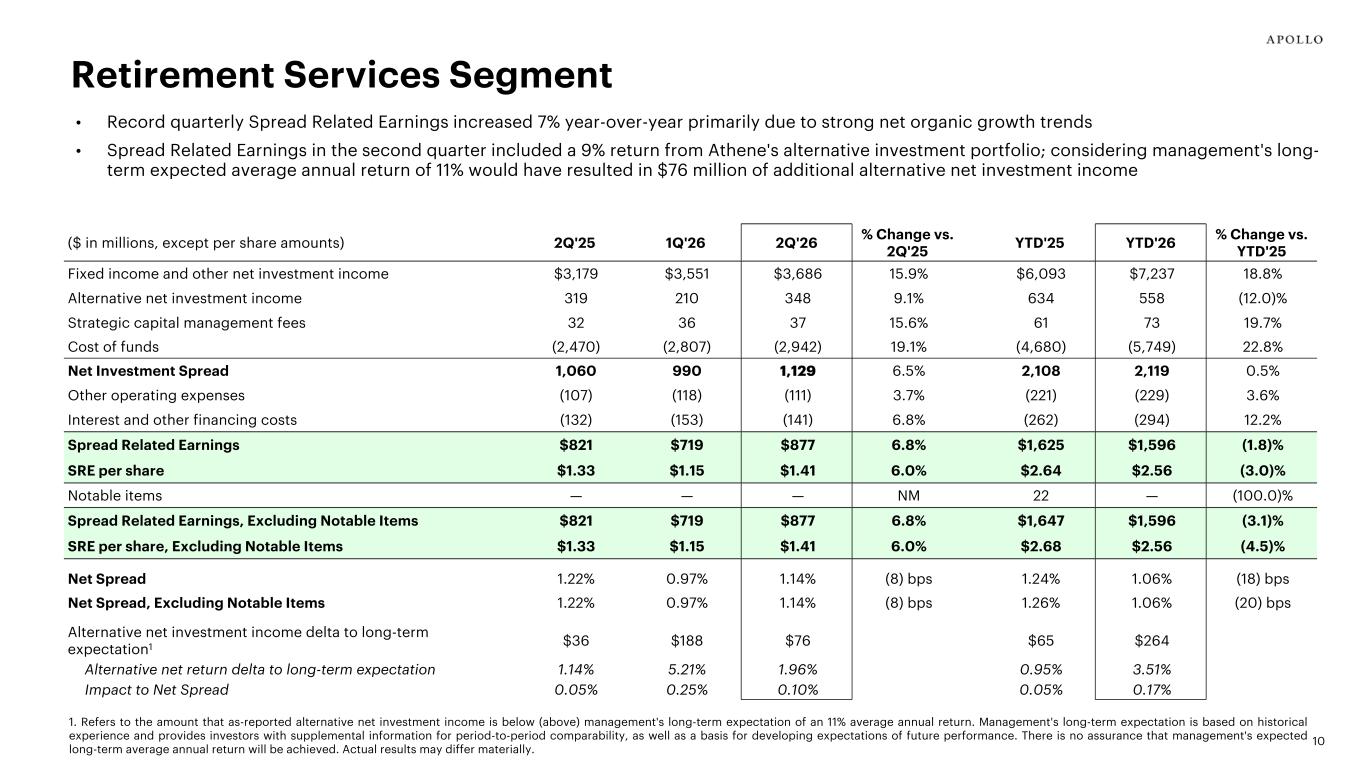
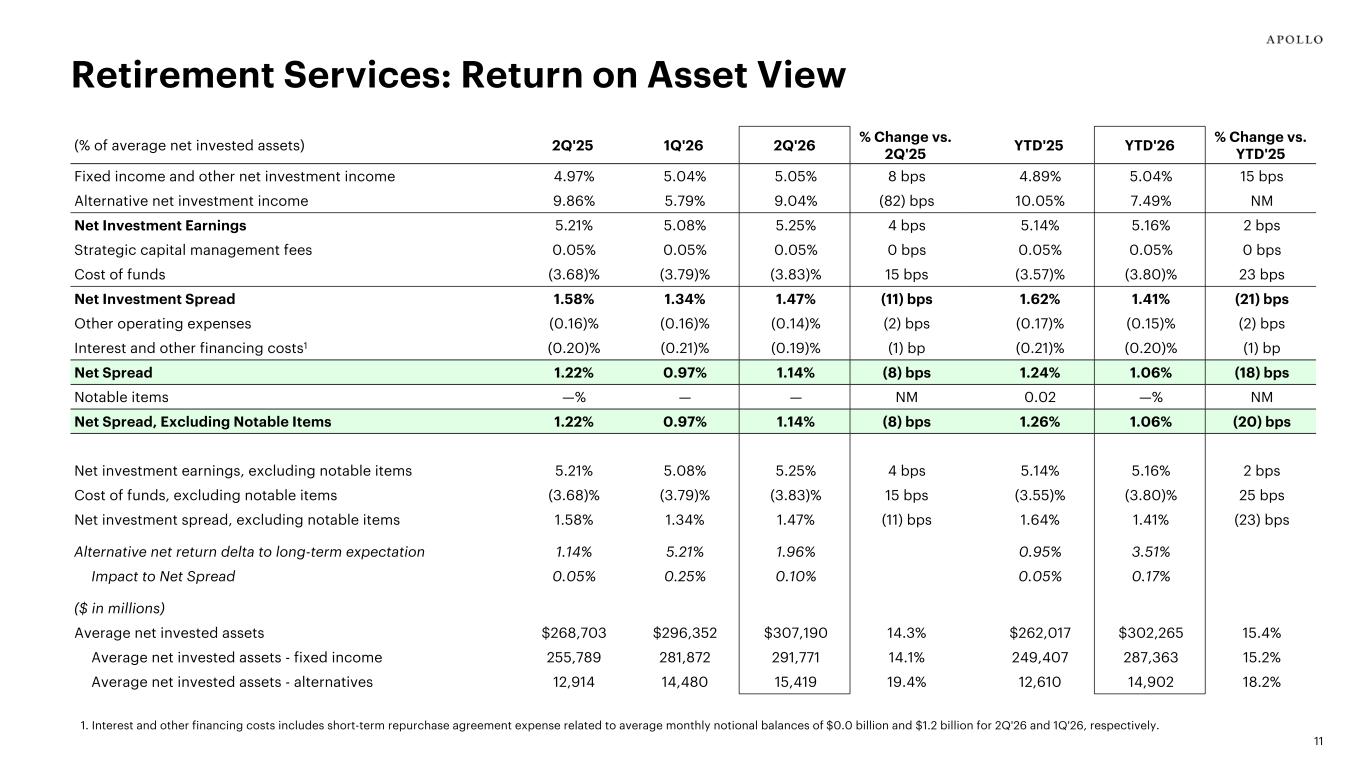
No, it's not I can take that So so maybe just to put in relative terms the performance in the quarter Athene's house return was nine percent annualized on the quarter and that compares to A shy seven percent for the rest of the peers and some of those are laggers And if you should recall alternatives really represent five percent of Athene's portfolio and it's mostly senior secured private credit and ordination platforms so not equity beta and those investments are very well diversified so they're very well diversified portfolio both to the vast majority of which sits in AAA where we have very material third-party investors the rest of that portfolio is a thing is a thing invested in into what we call retirement services platforms which we have Venerable and Athora to just name two. So the AAA actually has produced in Q2 roughly 11% and is bang on our long-term benchmark. And going forward, what we see is some further gains in organic growth and returns at Athora as the peak integration progresses and the asset portfolio is optimized.

Chad Stogel Analyst — Spectrum

So we reaffirm, effectively, our long-term view of 11% as being a reasonable normalized assumption and that's effectively the way the way we look at this house portfolio and and within that i just see structured equity and other jump from here and from about seven percent to twenty percent that just so i can classify what what that refers to within that uh within that investment yeah that's the increase that's pretty much all it is oh okay got it got Okay. And then just within AMAPS, on the slide deck that you provided a few months ago, there was a comparison, obviously, to CLOs and the advantages. When you reference that a vast majority or a significant amount of AMAPS is…

Full-screen source Call document