Operator
Hello, and welcome to Bowhead Specialty's Q3 2025 Earnings Call. This conference is being recorded. If you have any objections, please disconnect at this time. With that, I would like to turn the call over to Shirley Yap, Head of Investor Relations. Shirley, you may begin.
Speaker 1
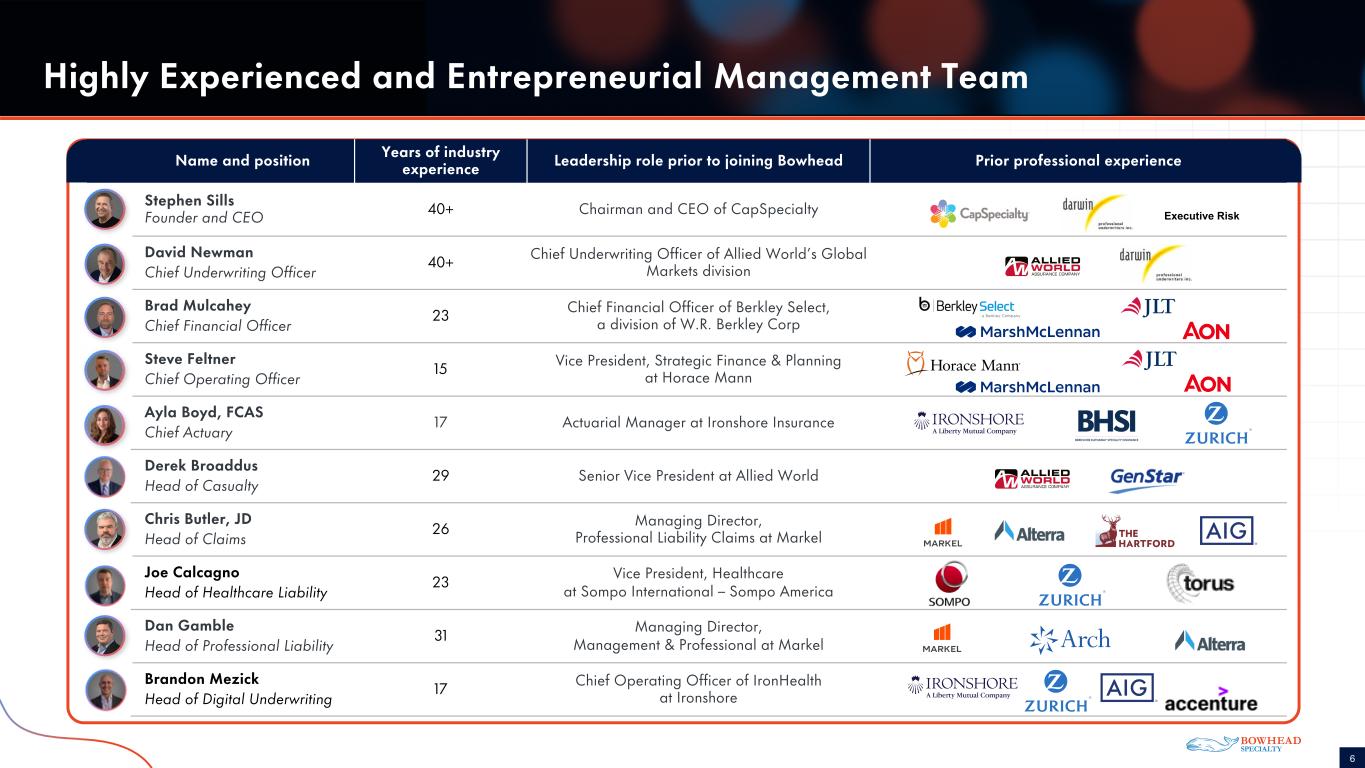
Thanks, operator. Good morning, and welcome to Bowhead's Third Quarter 2025 Earnings Conference Call. I'm Shirley Yap, Bowhead's Chief Accounting Officer and Head of Investor Relations. Joining me today are Stephen Sills, our Chief Executive Officer; Brad Mulcahey, our Chief Financial Officer; and Steve Feltner, our Chief Operating Officer. Before we jump into our performance and financial highlights, I wanted to introduce a new format we plan to use for today's call and going forward. Each quarter, we plan to invite an additional member of our management team to share insights from their areas of expertise. Today, we are joined by Steve Feltner, our Chief Operating Officer, who will discuss our technology initiatives and other efficiencies that are enabling us to scale profitably while growing rapidly across market cycles. Turning to our performance. Earlier this morning, we released our financial results for the third quarter of 2025. You can find our earnings release in the Investor Relations section of our website. Our Form 10-Q will also be made available on our website later this evening. I'd like to remind everyone that this call contains forward-looking statements within the meaning of the Private Securities Litigation Reform Act of 1995. Investors should not place undue reliance on any forward-looking statement. These statements are made only as of the date of this call and are based on management's current expectations and beliefs. Forward-looking statements are subject to risks and uncertainties that could cause actual results to differ materially from those contemplated by these statements. You should review the risks and uncertainties fully described in our SEC filings. We expressly disclaim any duty to update any forward-looking statement, except as required by law. Additionally, we will be referencing certain non-GAAP financial measures on this call. Reconciliations of these non-GAAP financial measures to their respective most directly comparable GAAP measure can be found in the earnings release we issued this morning and in the Investor Relations section of our website. With that, it's my pleasure to turn the call over to Stephen Sills.
Speaker 2
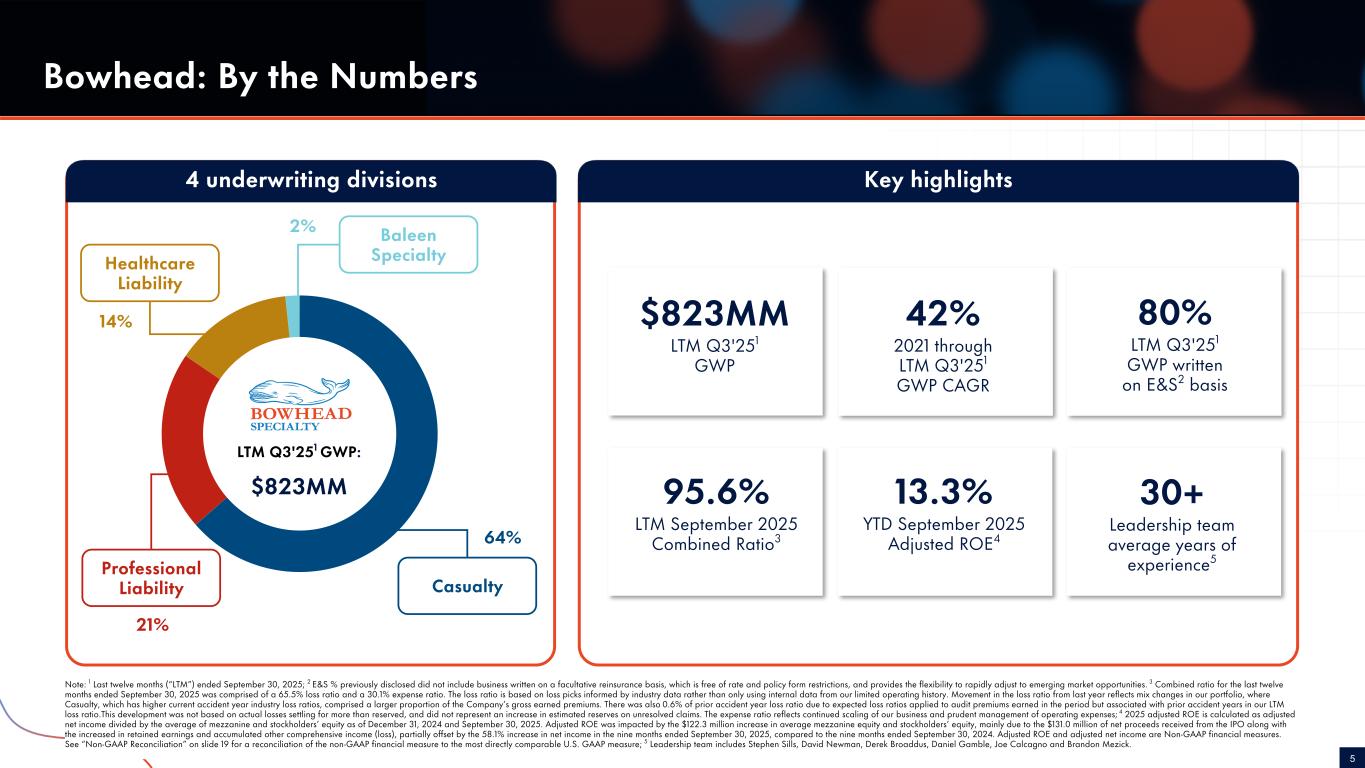
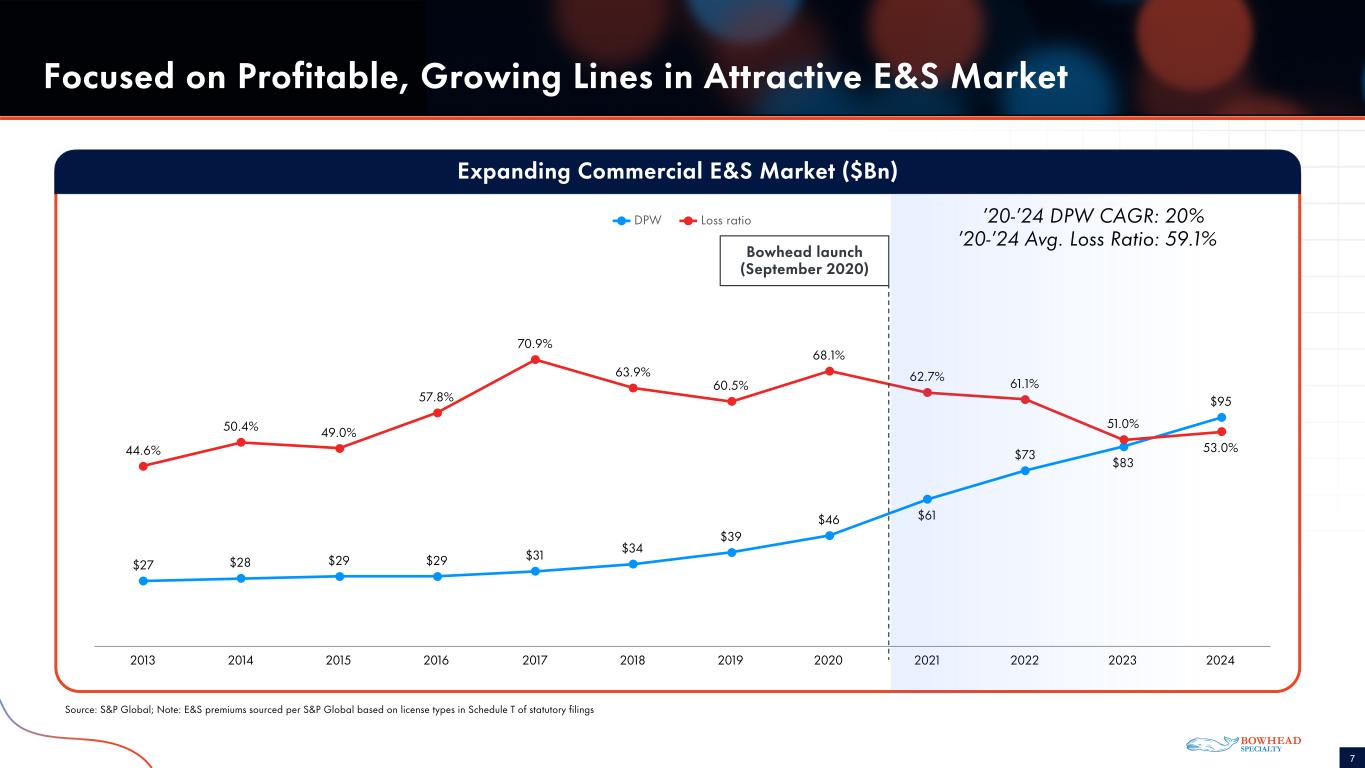
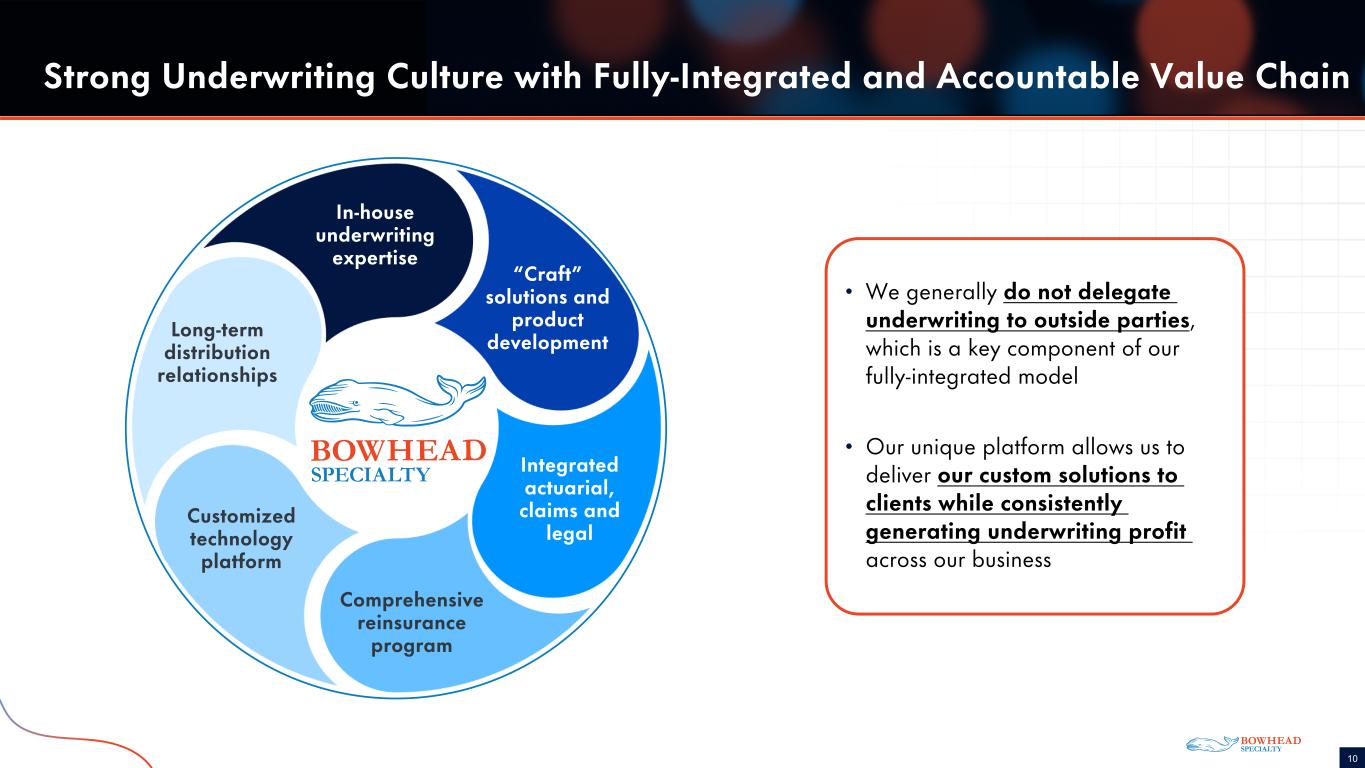
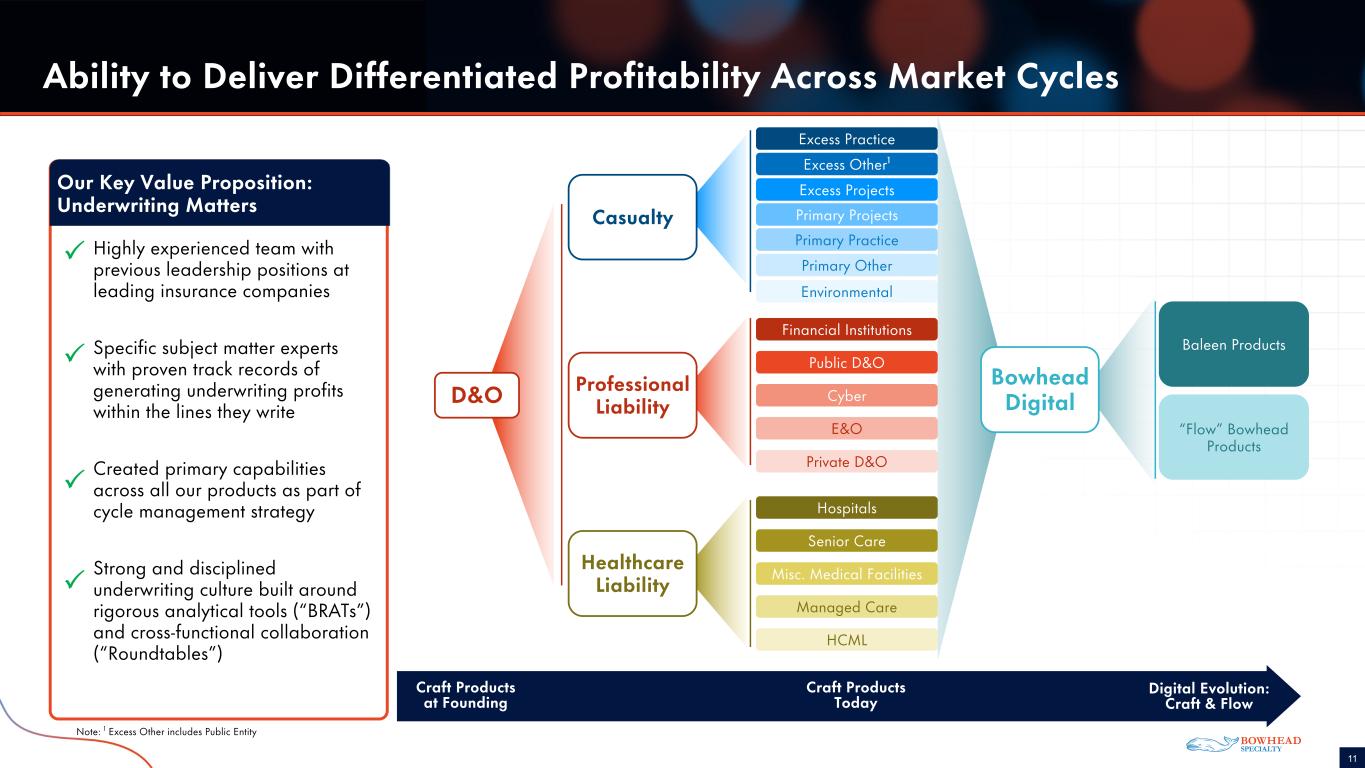
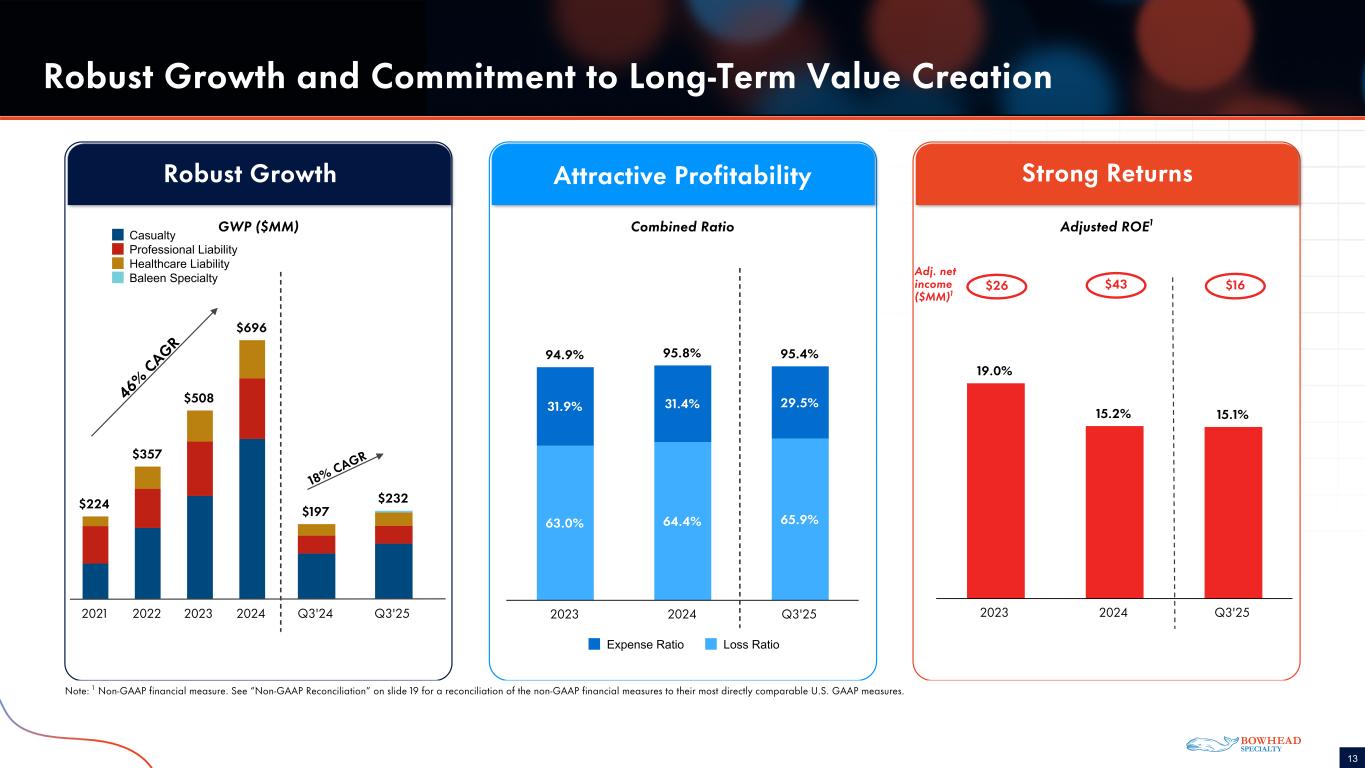
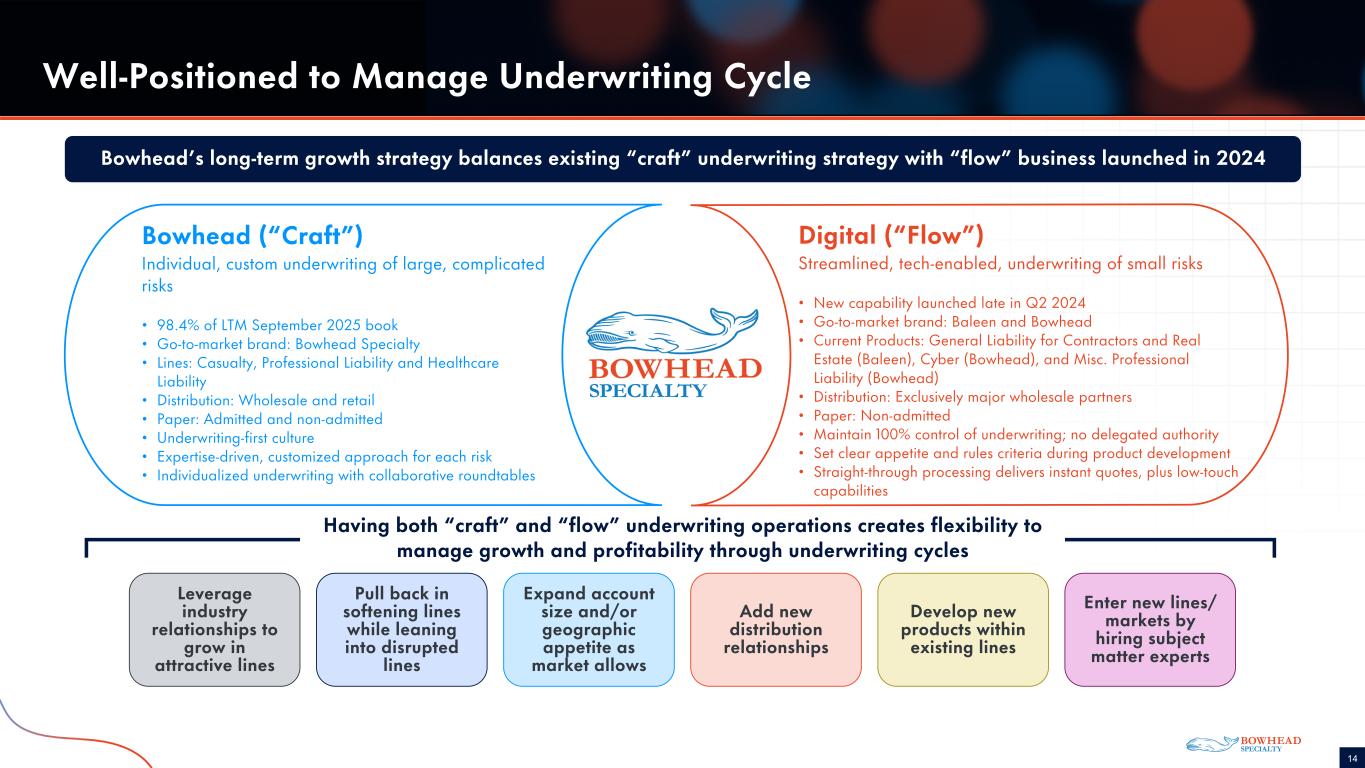
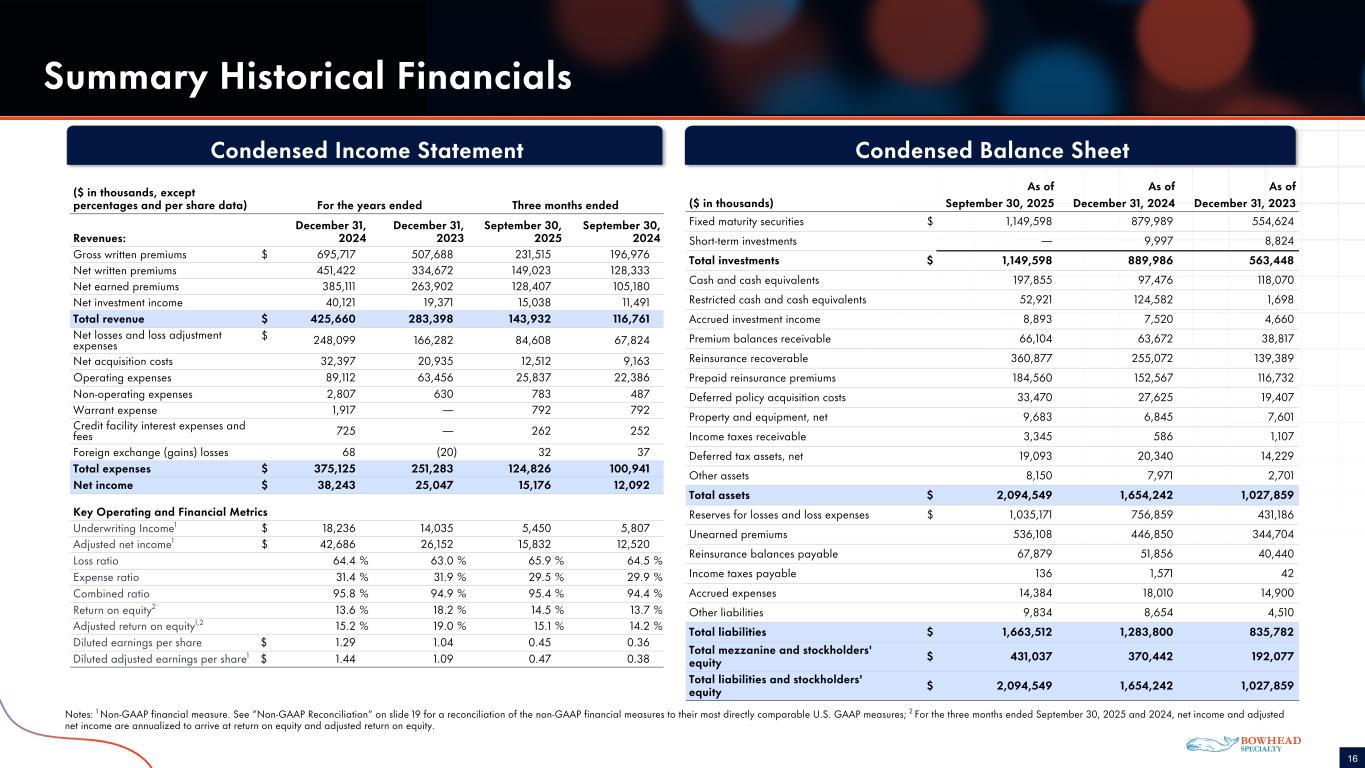
Thank you, Shirley. Good morning, everyone, and thank you for joining our call today. I'm pleased to announce that Bowhead has once again achieved strong growth in both revenue and profit in the third quarter. Gross written premiums rose by 17.5% compared to last year, while adjusted net income increased by 25.5%, and diluted adjusted earnings per share climbed by 23.7% to $0.47. These results reflect our meticulous underwriting approach, the ongoing expansion of our craft and flow underwriting operations, and our dedication to operational excellence. In terms of gross written premiums, Bowhead generated approximately $232 million in the third quarter. Our Casualty division saw a 20% increase, reaching $145 million for the quarter. We believe the excess casualty business is the most favorable segment in today's marketplace. Our excess casualty book was the major contributor to our 20% growth. Given recent adverse reserve developments in casualty lines, I want to highlight two key differentiators that set us apart from others facing these challenges. First, we entered the casualty market at the end of 2020, enabling us to take advantage of the hardening E&S casualty market, while other carriers dealt with pre-2020 losses. This allowed us to price business correctly in a market characterized by increasing rates, better terms and conditions, and lower average limits. Second, we maintain a disciplined approach. We are very selective about the casualty risks we underwrite and intentional about avoiding high-risk areas. In our business, choosing winners is less critical than avoiding losers. Our casualty division specializes in primary and excess general liability coverage through a wholesale-only distribution channel, targeting construction, distribution, manufacturing, real estate, and public entity segments. We rarely write business for Fortune 1000 companies, which we consider traditionally underpriced. Additionally, we do not engage in primary commercial auto business, or many other classes that have led to adverse reserve developments for others in recent years. While we have some auto exposure in our excess policies, we believe we price this risk appropriately. With the launch timing of our casualty division, the specialized products we offer, the risks we intentionally reject, and our disciplined underwriting strategy, we believe we have established a casualty underwriting operation geared for profitable and sustainable growth. Now, turning to our Healthcare Liability division, our premiums grew by 11% to $35 million, driven by our healthcare management liability, hospitals, and senior care portfolios. As we analyze both new and renewal submissions, we remain disciplined, choosing to let other carriers handle accounts that do not meet our underwriting standards. In our professional liability division, premiums increased by 2% to $46 million for the quarter, spurred by growth in commercial, public D&O, and cyber liability, though partially offset by a decline in our financial institutions portfolio, which we noted last quarter suffers from excessive competition. The expansion in our cyber liability portfolio was supported by leveraging the technology behind Baleen's growth. Speaking of Baleen, I'm happy to report that we generated $6.2 million in premium during the quarter, reflecting an 83% increase since Q2 and surpassing the total premiums written by Baleen in the first half of 2025. We are excited about the momentum established in the third quarter and look forward to sharing Baleen's continued strong growth in Q4. Now, regarding the broader E&S market, I want to address the September E&S stamping data from California, Florida, and Texas. Collectively, these top E&S states reported a 1% decline in overall E&S premiums in the third quarter, largely due to falling E&S property premiums, a segment Bowhead does not engage in. However, E&S casualty premiums relevant to Bowhead continued to increase during the quarter, and we anticipate this trend to continue as complex risks transition into the E&S market. During the quarter, in casualty, we observed markets maintaining discipline with their limits and pricing. With carriers noting recent adverse reserve development from past accident years and rising current accident year loss picks in casualty, we do not foresee limits increasing or a widespread price drop in the near future. Additionally, the Everest AIG renewal rights deal is expected to present the industry with an opportunity to re-underwrite a significant portion of the business. Looking at the E&S construction project sector, we have noticed a slowdown in new large residential projects due to uncertainties around interest rates, building materials, and labor costs. Additionally, delays are occurring in infrastructure projects financed by the government due to the federal shutdown. The healthcare liability market remains competitive, but we've seen positive developments in a couple of areas. Our reputation within the healthcare sector is leading to more opportunities, and we are seeing traction with exclusions for sexual abuse and molestation. In professional liability, aside from commercial public D&O, we continue to face difficult market conditions, particularly in financial institutions and large cyber liability accounts. As mentioned earlier, we are utilizing the technology propelling Baleen's growth to efficiently underwrite small and middle-market cyber liability accounts, which we view as a very promising space. Finally, I previously stated I was confident we could get our expense ratio below 30%. I'm proud to report that we achieved an expense ratio of 29.5% during the quarter. We are leveraging technology to enhance processes, improve decision-making, and support our distribution partners more effectively while managing expenses and driving top-line growth. Leading these efforts is Steve Feltner, our Chief Operating Officer. I will now turn the call over to Steve to discuss these initiatives.
Speaker 3
Thanks, Stephen, and good morning, everyone. Our expense ratio improved 40 basis points year-over-year, reflecting continued benefits from automation, workflow optimization, and sharper execution. We streamlined submission intake, enriched underwriting data from third-party sources, and enabled underwriters to more effectively triage opportunities. We've achieved this by delivering the information they need by the time we open the file. We are also optimizing our rating experience. For underwriters, it means efficient data integration and a clearer view of how each risk fits into the broader portfolio. For actuaries, it simplifies model development and maintenance, freeing up time to collaborate more closely with underwriters. In claims, we are developing a system that will process incoming claims, provide initial assessments, and help triage workload, allowing our claims professionals to focus where human judgment adds the most value. Our approach to operating leverage is about building a foundation that scales efficiently as we grow. We expect continued improvement in our operating expense ratio as we leverage the technology investments we've made over the past 18 months in our core functions. We want to grow premium without a commensurate increase in expense. That is the essence of sustainable profitability and long-term shareholder value. Bowhead has already made great strides in capturing efficiency gains, and we look forward to continuing our progress as we move through the quarters and years ahead. With that, I'll turn the call over to Brad. Brad?
Speaker 4
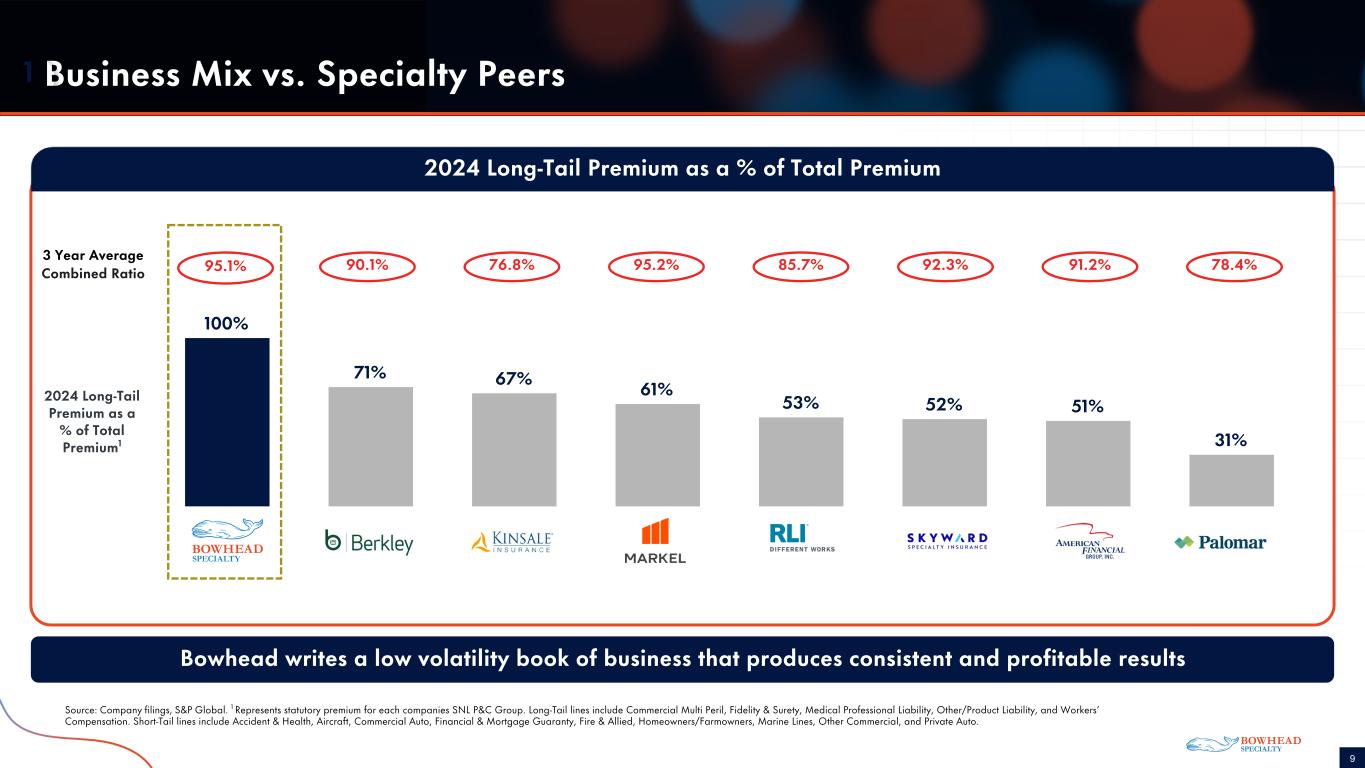
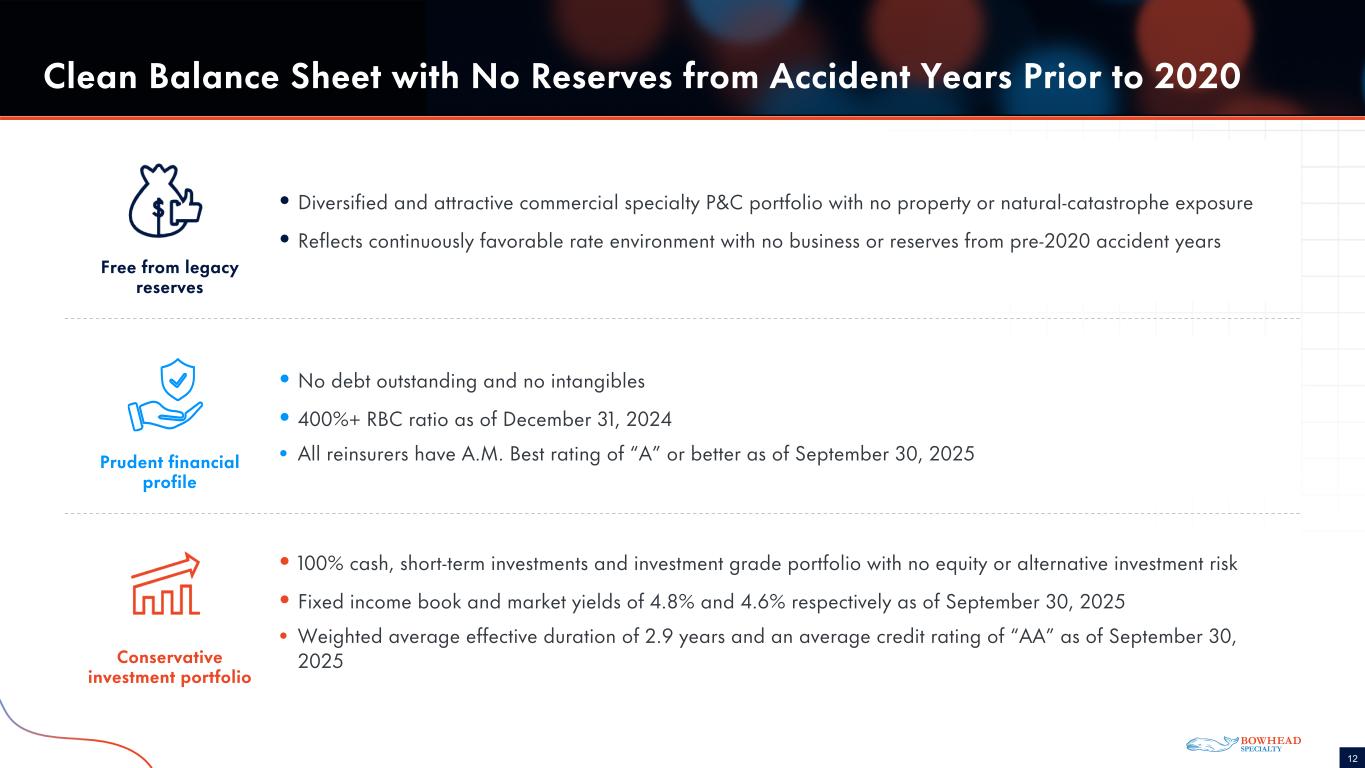
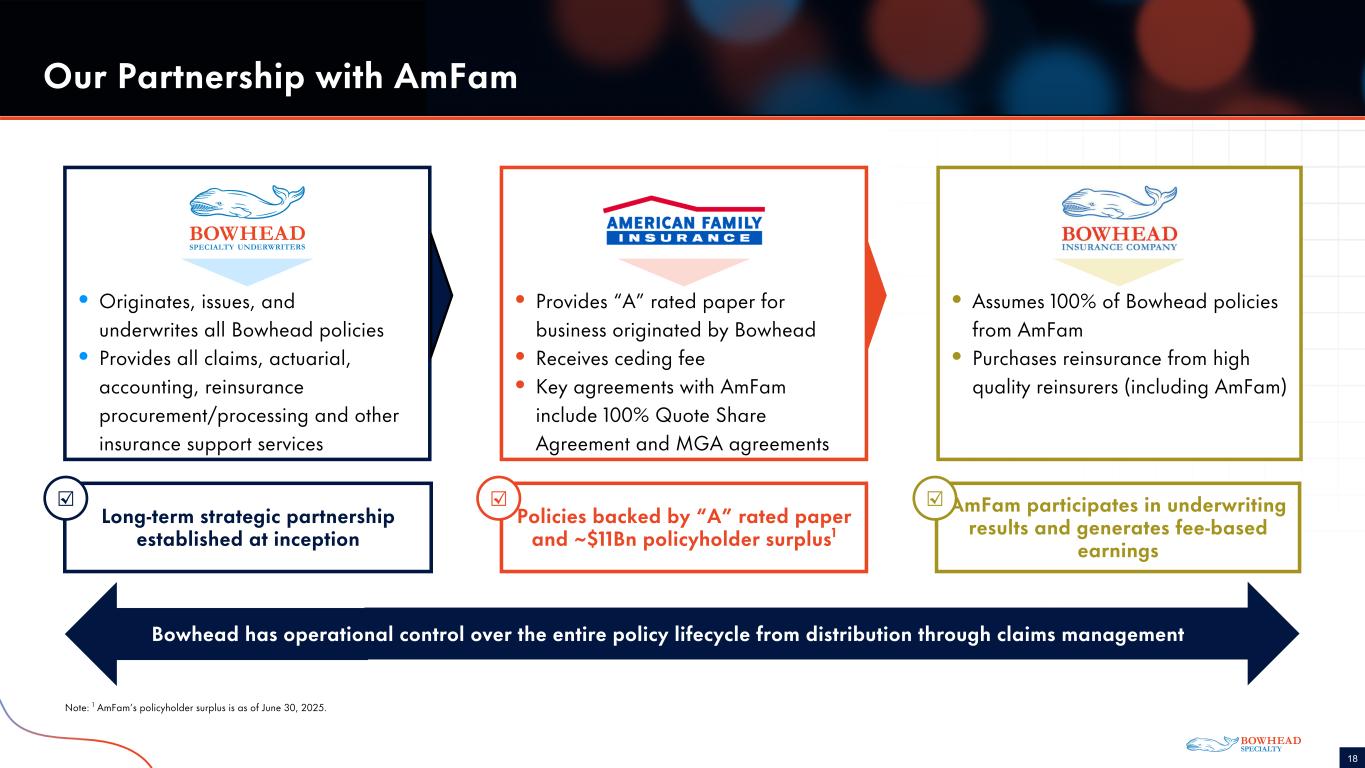
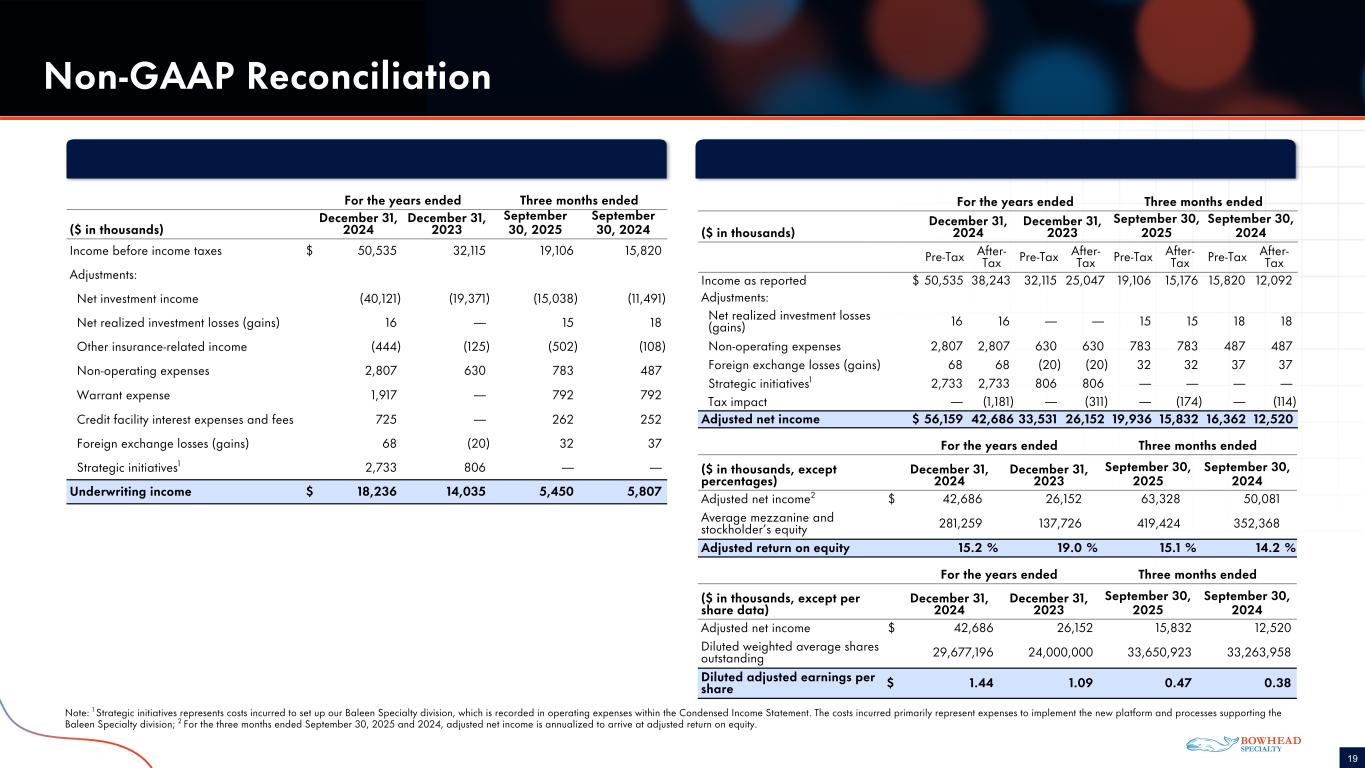
Thanks, Steve. Bowhead generated adjusted net income of $15.8 million or $0.47 per diluted share and adjusted return on average equity of 15.1% for the third quarter of 2025. Our strong results were driven by top and bottom line growth. Gross written premiums increased approximately 18% to $232 million for the quarter. As Stephen mentioned, we achieved growth in each of our divisions, with casualty continuing to be the largest driver and Baleen generating $6.2 million of premiums in the quarter. Turning to our loss ratio. The story is the same as the past. First, as a reminder, since we're writing long-tail lines with a short history of losses, when setting our loss reserves, we're heavily reliant on industry observed loss information over our own internal data. This reliance is evident in our high ratio of IBNR as a percentage of total reserves, which was 88.2% at the end of the quarter. Second, product mix continues to affect our industry-reliant loss ratio because casualty products naturally have higher current accident year loss ratio assumptions. Since these products make up an ever-larger portion of our net earned premium, our loss ratio has been trending higher. This mix change had the effect of increasing our current accident year loss ratio by 30 basis points from 64.5% in Q3 of last year to 64.8% this quarter. As I mentioned in the past few earnings calls, the change in our prior accident year loss ratio is simply due to IBNR booked on audit premiums that were billed and fully earned in the current quarter, but related to policies from prior accident years. This is not based on actual losses selling for more than reserve and does not represent an increase in estimated reserves on unresolved claims. We are simply putting loss reserves into the appropriate accident year regardless of when the premiums are billed and earned. As we continue to grow and our history continues to develop, we expect the impact of the audit premiums to be less pronounced on our prior accident year reserves. As a result, our loss ratio for the quarter was 65.9%, a 1.4 point increase from 64.5% year-over-year. As we already mentioned, our expense ratio for the quarter was 29.5%, a decrease of 40 basis points year-over-year. The decrease was driven by the reduction in our operating expense ratio from the continued scaling of our business as well as the prudent management of our expenses. There is also an increase in our other insurance-related income that contributed to the reduction in our expense ratio from last year. These favorable improvements were partially offset by the increase in our net acquisition ratio, specifically the increase in the fee we paid to American Family and to a lesser extent, increasing brokerage commissions due to portfolio mix. As we mentioned last quarter, we expect the increased fee we pay to American Family to be offset by the continued scaling of our business and the prudent management of our expenses. Overall, the loss ratio and expense ratio contributed to a combined ratio of 95.4% for the quarter. Turning to our investment portfolio. Net investment income increased 31% year-over-year to $15 million for the quarter, primarily due to higher balance of investments and higher yields on invested assets. Our investment portfolio had a book yield of 4.8% and a new money rate of 4.6% at the end of the quarter. The average credit quality of our investment portfolio remained at AA and our average duration was 2.9 years at the end of the quarter. We expect net investment income to grow in the future as the balance of our investment portfolio continues to grow. Total equity was $431 million, giving us a diluted book value per share of $12.75 at the end of the quarter, an increase of 16% from year-end. Lastly, we announced earlier in the year that we would assess our capital needs and the appropriate source of capital based on our growth in 2025. Since we're growing faster than we anticipated at the time of the IPO and have available debt capacity in our capital structure, we are planning to access capital through resources other than the equity markets by the end of the year. With that, we'll turn the call over for questions.
Operator
Our first question is from Meyer Shields from Keefe, Bruyette, & Woods.
Speaker 5
Stephen, I was hoping for a little bit more color on, I guess, what we had talked about as maybe some green shoots in the various D&O and cyber markets. So you talked a little bit about growth. So I was hoping for a bigger picture of how pricing for those product lines is evolving.
Speaker 2
Sure. Pretty much flat, maybe a little bit up, but it's still highly competitive and certainly a lot more competitive than what we're seeing in the casualty space and what we're seeing in the hospital space and the senior living space. But it's not an area that we're seeing or looking for big growth anytime soon. As I mentioned before, the financial institution space, which a few years back used to be viewed as kind of rarefied air. If there were 50 commercial D&O markets, there were maybe 20 financial institution markets. Now for some reason, I think a lot of people are piling into that space. I think it was last quarter, the quarter before, I mentioned a private equity firm that had a tower loss and they ended up securing a decrease on their renewal, and we stepped away from it. But it's still very competitive. I would not look for big growth from us in that space.
Speaker 5
Okay. That's very helpful. And moving to health care. Are there markets for the sexual molestation cover that's being excluded? Is that something that Bowhead is interested in?
Speaker 2
There has been some discussion about lower limits, which have resulted in significant claims affecting many health care systems. While this type of coverage isn't completely excluded everywhere, the market seems to be starting to accept exclusions in this area moving forward. However, I believe there will still be some markets that will offer lower limits for that SAM coverage.
Operator
Our next question comes from Daniel Lee at Morgan Stanley.
Speaker 6
Sorry, can you hear me?
Speaker 6
This is Dan on for Bob. I guess I wanted to ask first on growth overall. I know the construction projects work was a...
Speaker 2
Daniel, you cut out.
Speaker 6
Can you hear me?
Speaker 2
Yes, we can again.
Speaker 6
Sorry. My first question is just on growth for the casualty business. I know the construction projects was a driver for top line previously, but given the construction market feels softer now, except for maybe data centers, can you talk about business opportunities going forward within construction?
Speaker 2
Well, you're right. There is expected growth in the data center space. I'm not sure how much we'll participate in that because some of the terms and conditions that are being looked for are things that we may not find favorable, whether in terms of reinstatement of limits or things like that. But there will be plenty of other construction projects. We think that once the government shutdown ends, it will shake loose funds for projects that were planned. And so we still think that there's going to be plenty of opportunity in the future. One of the things, of course, we are concerned about is by planning too much in doing project business it becomes very, very lumpy. So we're available when the opportunities come, but it's less predictable in terms of future opportunities. But we do see the practice policies, we see opportunities there. And the construction will come. It's just going to be lumpy.
Speaker 6
Got it. My second question is more on Baleen. As we head into 2026 as Baleen continues to ramp up, will you pursue more wholesale partnerships to kind of expand the distribution network or maybe potentially new product lines that you may consider adding for Baleen?
Speaker 2
The question was adding...?
Speaker 6
Wholesale partnerships or...
Speaker 2
Yes. We'll keep it brief. Baleen is currently operating on a wholesale basis only, starting with a limited number of wholesalers. There will be opportunities to bring on more wholesalers in the future. It's equally important to note the technology we're employing, which not only facilitates Baleen but is also being used for other products now and in the future. This technology has allowed us to operate with minimal human intervention in some smaller businesses, and that’s a significant aspect of what we’re witnessing currently. It enhances our underwriting capabilities for risks that are becoming slightly larger and more complex. An example of this is in the small cyber insurance sector. We began with companies generating under $25 million in revenue, and we are now extending that to those with up to $50 million in revenue, all while maintaining a virtually no-touch process. Previously, underwriters needed considerable time to review materials and set up files, but we lacked the resources for that. Now, we can utilize underwriters who are compensated at a lower level, allowing them to spend just a few minutes on each account for it to be underwritten and quoted. We believe that as we expand this approach into areas beyond cyber, such as small casualty insurance, where we receive numerous submissions that are currently too small for our handling capabilities, we will soon be able to underwrite these accounts efficiently.
Operator
Our next question is from Cave Montazeri at Deutsche Bank.
Speaker 7
My first question, maybe I'll take such that Steve is on the line right now, and that's on the operating expense ratio. Thank you for the color on the call about the technology advancements that you're putting through to help on that front. How much of the improvement in the operating expense ratio this quarter was kind of due to these efficiencies, the technology-driven improvement? And where do you think that operating expense ratio can go to in 2026, 2027 or over the medium term?
Speaker 4
Cave, this is Brad. I'll start by addressing some of your questions about our trajectory and then hand it over to Steve for additional insights. Thank you for joining us and for your recent coverage initiation. It's quite challenging to assess how much of the efficiency gains are impacting the expense ratio, but we believe that is a significant factor. We expect the American Family fee to rise, and our commissions are relatively stable, possibly increasing slightly. There are various elements at play here. However, when we examine our staff costs, it's clear that these efficiencies Steve discussed are contributing to savings in our expense ratio. I hope that provides some clarity. Now, I'll let Steve share more details on those efficiencies.
Speaker 3
Yes, I would be happy to. Thank you, Cave, for your question. Some of these initiatives are already in place, while others are in progress. As we move forward, the efficiencies will be realized by underwriters and other core functions. As Brad mentioned, we will continue to see the impact of this on our operating expense ratio in the future. Currently, we are at a point where we are enhancing our processes and procedures to make them more robust, allowing us to scale efficiently in the coming quarters and years.
Speaker 7
Okay. My follow-up question, Brad, is for you. Right at the end of your prepared remarks, you mentioned that you won't need to tap the equity market to fund growth for 2026. Could you maybe give us a bit more color just given that your net premium to equity is already above 1.2x, are you thinking about getting some kind of debt that has equity-like features?
Speaker 4
Still TBD, I don't want to get into too many details on that. But I think what we are comfortable is we're not going to go to the equity markets to raise equity on this. We do think that net premium, the surplus ratio will continue the trajectory under 1 in the next couple of years. But stay tuned on the exact details of what we're looking at.
Operator
Our next question comes from Pablo Singzon at JPMorgan.
Speaker 8
Can you hear me?
Speaker 8
So first question, I want to get an update on your medium-term view of gross premium growth, right? So 18% this quarter is still a good number. It's off a tough comp in '24, but it is slower than the high 20s you're putting up in the first half of the year. So just any thoughts there, recognizing that you don't write property, right? So that's good. But any thoughts there? And I guess the related question is that as you grow the premium book, how much incremental expense do you need to add, right? And here, I'm thinking more about underwriting teams to generate the growth you anticipate?
Speaker 2
We're always looking for new growth opportunities. Last year, we made strides in the environmental sector, which is gradually expanding. Regarding technology, there's potential for small environmental businesses that our technology can help grow without significantly increasing our staff. We are also interested in developing new products. American Family is willing to explore new areas for growth. We believe there’s still substantial growth potential in the casualty market, including the Baleen-type growth and our small business offering called Express, as well as in the health care sector. We don’t feel constrained in our current opportunities and remain open to new possibilities.
Speaker 8
Understood. It seems that, based on what you currently have, you believe the market is growing and without adding significant headcount or expenses, you expect the premiums to come your way. Is that an accurate reflection of the current situation?
Speaker 2
Yes. When discussing headcount, it's important to consider the type of personnel we've been hiring. The requirements for starting the business were different compared to our current focus on smaller operations, which demands a different level of staffing. As for our growth expectations and headcount for the upcoming year compared to the previous one, we anticipate that each new hire will contribute significantly more to growth than in the past.
Speaker 8
Understood. And this will be my third question. Apologies for this one in. But I think there's a broad view at this point that accident years during the hard markets post-2020 might not have as much margin as initially thought, right, mainly because loss trends just developed more favorably than what people had expected. So I guess, either for you, Stephen or Brad, do you agree with this, the sort of like consensus view? Are you seeing it in your book in some way, right? I know it's a long tail, but maybe there's something that's shown in the page. And then I guess maybe for Brad, at what point would you actually start recognizing favorable or unfavorable reserve development, right? Again, recognizing that your book is quite young and you want to have credibility in the data.
Speaker 2
Yes. I think your last thought is important that it's still young, and it is too early to say. I think over the last few years, people have been cutting limits while they're raising price. So maybe people who haven't cut limits fast enough or put out too much limits there could be some adverse development. I have no idea at this point in time. But it's certainly better than it was prior to when we got into the marketplace. Brad, do you want to add some more color on that?
Speaker 4
Yes, I mentioned that we have observed adverse developments in more recent accident years, but we believe we are not experiencing the same situation. The auto business and primary coverage are not representative of our portfolio. In the fourth quarter, we will conduct our annual review of reserves with external actuaries, which will provide clearer insights on reserve levels and their trends after year-end. So far, everything looks positive from our viewpoint.
Operator
Our next question comes from Paul Newsome at Piper Sandler.
Speaker 9
I would like to revisit the capital question a little bit. Beyond debt and equity, are you also looking at other alternative sources of capital like reinsurance changes?
Speaker 4
Paul, it's Brad. Yes, I mean that's always an option. when we look at our capital specifically for 2025, we have a requirement to maintain a certain level of capital for our RBC by the end of the year. So reinsurance options to meet that requirement are kind of limited, but we do look at reinsurance long term and do we have the optimal structure, both from a risk appetite as well as from a capital balance. But for now, I think the only thing we've really taken off of the schedule for the current year's capital raise is an equity raise, and we just wanted to be clear with everybody on that.
Speaker 9
And different topic, the investment portfolio is obviously maturing, the liability line I would imagine you're still in a position where your float is growing as your book matures. Does that imply any changes prospectively as the float grows relative to equity capital that you might be making in the future?
Speaker 4
I'm not sure I understand the question. Can you maybe restate it, Paul...?
Speaker 9
You're float liability business, which means that the float will become an increasingly important part of what you do, and you'll have a higher amount of float relative to your equity over time. I'm just curious if that potential change in the portfolio itself implies any changes in the investment portfolio perspective.
Speaker 4
Got you. Okay. Sorry, I was thinking float on our own equity, but I got what you're saying. No, I don't think so. We're really happy with our portfolio as it is, our investment portfolio. We are still adding to it quite a bit. As you mentioned, we write long-tail lines. So the benefit of that is collecting the premium and hopefully not paying a claim until much later in the policy. But we're still growing that portfolio. We think when we look at our returns, we focus on risk-adjusted returns. And we think on a risk-adjusted basis, our returns are best-in-class. So we're really happy with the current structure. We'll continue to assess it as obviously the interest rates change and the macro environment changes, but we're pretty happy with it.
Speaker 9
Great. I appreciate the help as always.
Operator
That concludes the question-and-answer portion of today's call. I will now hand the call back to Stephen Sills, CEO, for closing remarks.
Speaker 2
Thank you. Bowhead delivered another quarter of strong results. Thank you to our Bowhead team members for your continued dedication. To everyone else joining us on the call today, we appreciate your support.