Operator
Good day and welcome to the Blackstone Secured Lending Second Quarter 2026 Investor Call. Today's call is being recorded. At this time, all participants are in a listening mode. If you require operator assistance, please press star zero. If you would like to ask a question, please signal by pressing star one. If you are using a speakerphone, please make sure your mute function is turned off to allow your signal to reach our equipment. At this time, I'd like to turn the call over to Stacey Wong, Head of Stakeholder Relations. Please go ahead.
Speaker 2
Thank you. Good morning and welcome to Blackstone Secure Lending Fund's second quarter results conference call. Joining me today are Brad Marshall, Chief Executive Officer, and Teddy Deloge, Chief Financial Officer, along with other members of the management team available for Q&A, including Carlos Whitaker, President. Earlier today, we issued a press release with the presentation of our results and filed our 10Q, both of which are available on the Shareholder Resources section of our website, www.bxsl.com. We will be referring to that presentation throughout today's call. I'd like to remind you that this call may include forward-looking statements which are uncertain and outside of the firm's control and may differ materially from actual results. We do not undertake any duty to update these statements for some of the risks that could effect results, please see the risk factor section of our Form 10-Q filed earlier today. The audio copyright material of Blackstone may not be duplicated without consent. With that, I'd like to turn the call over to Brad Marshall.
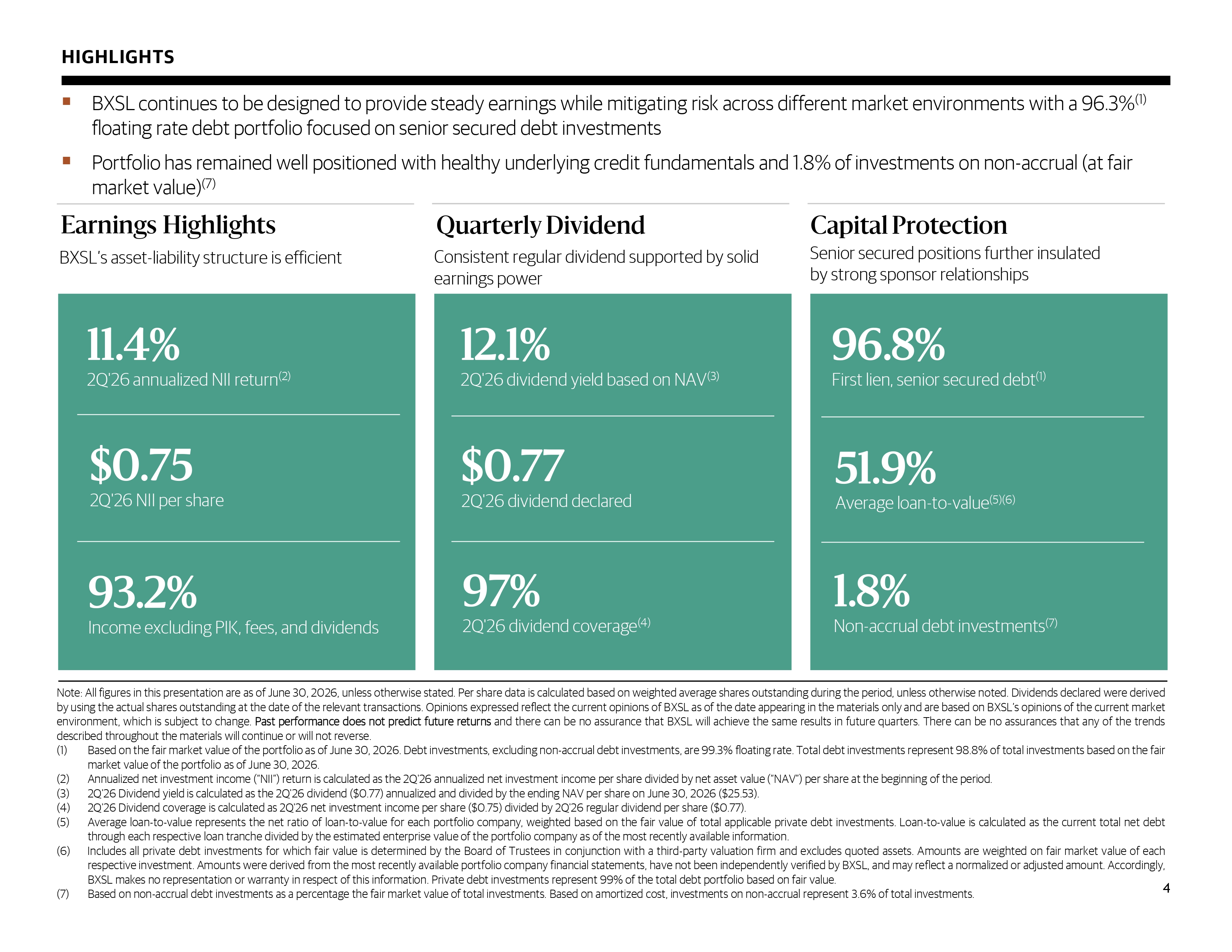
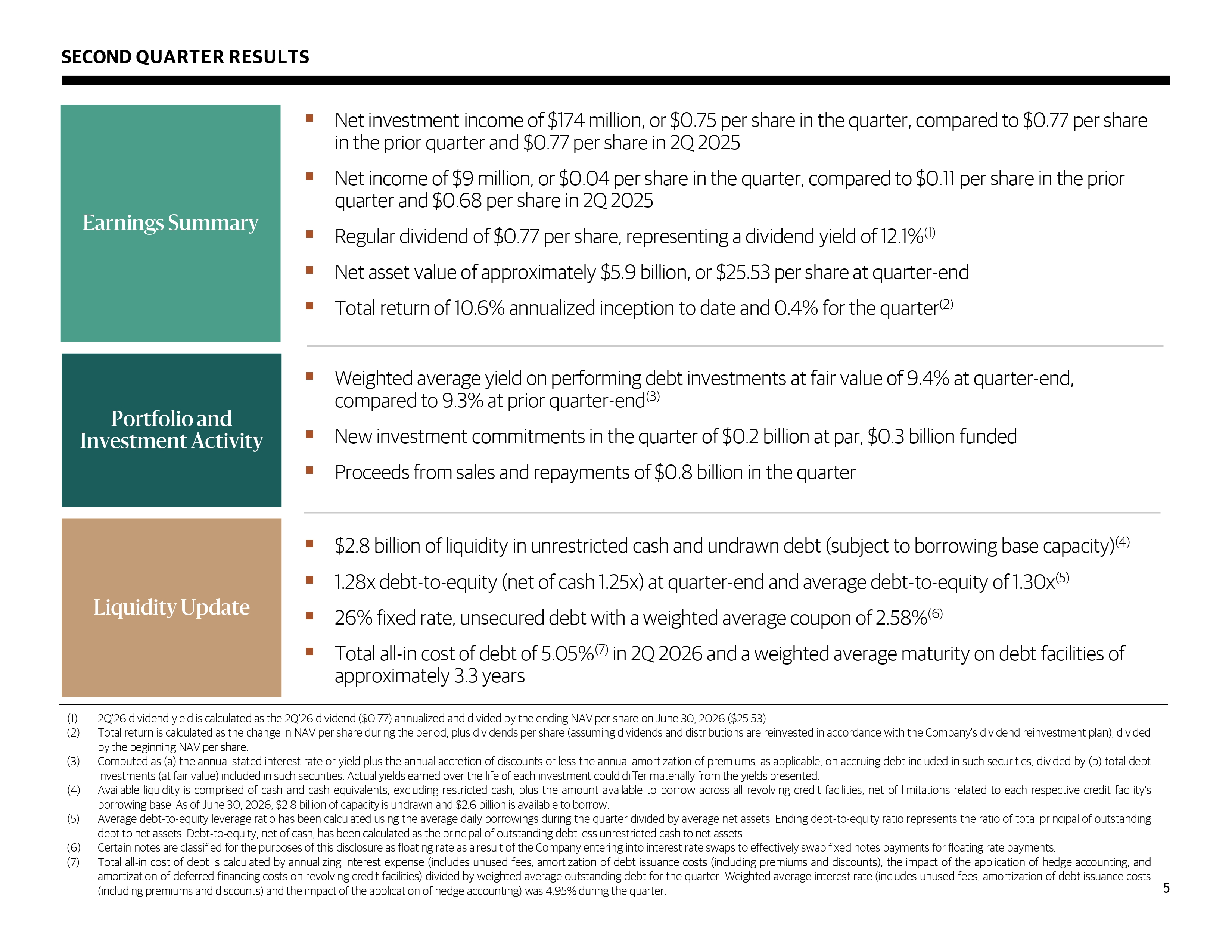
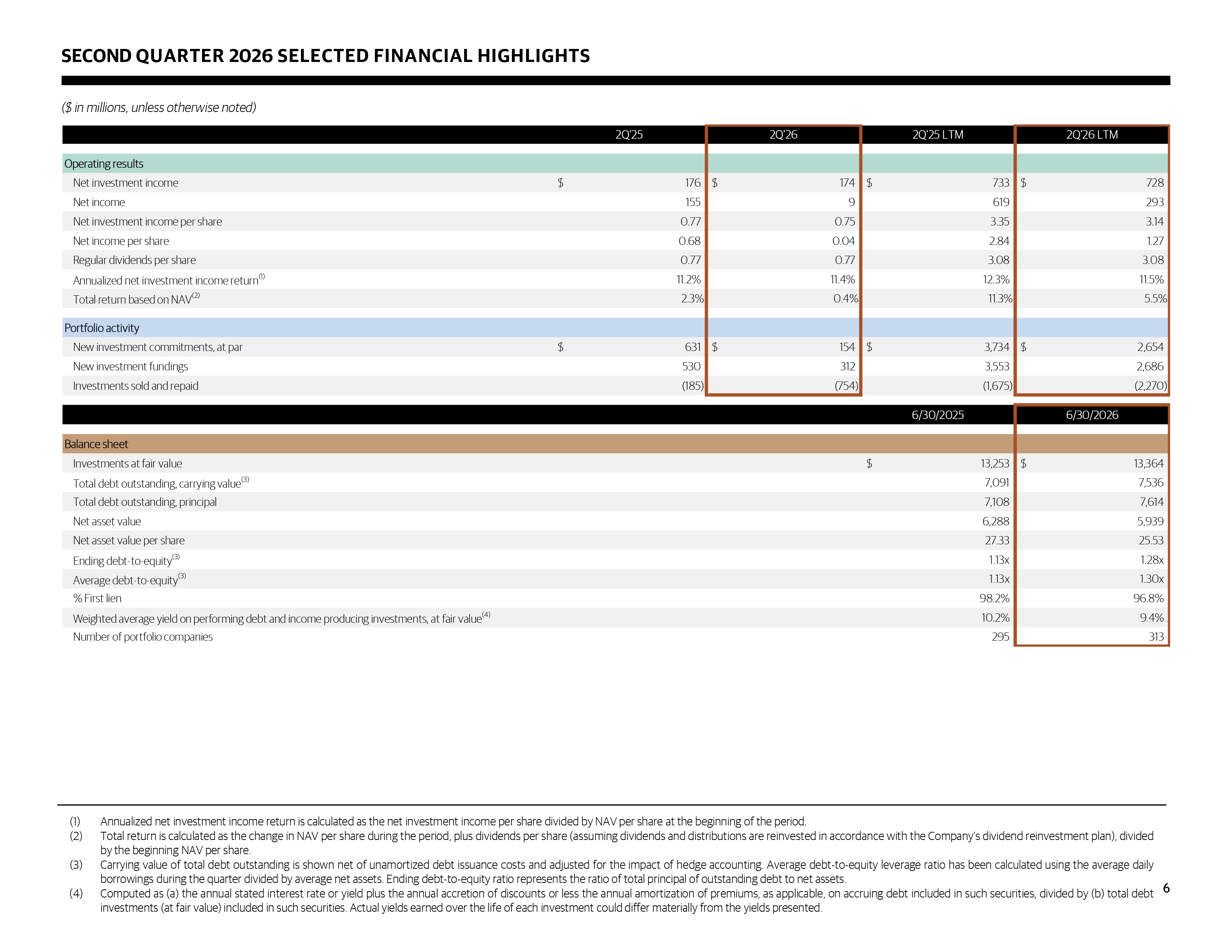
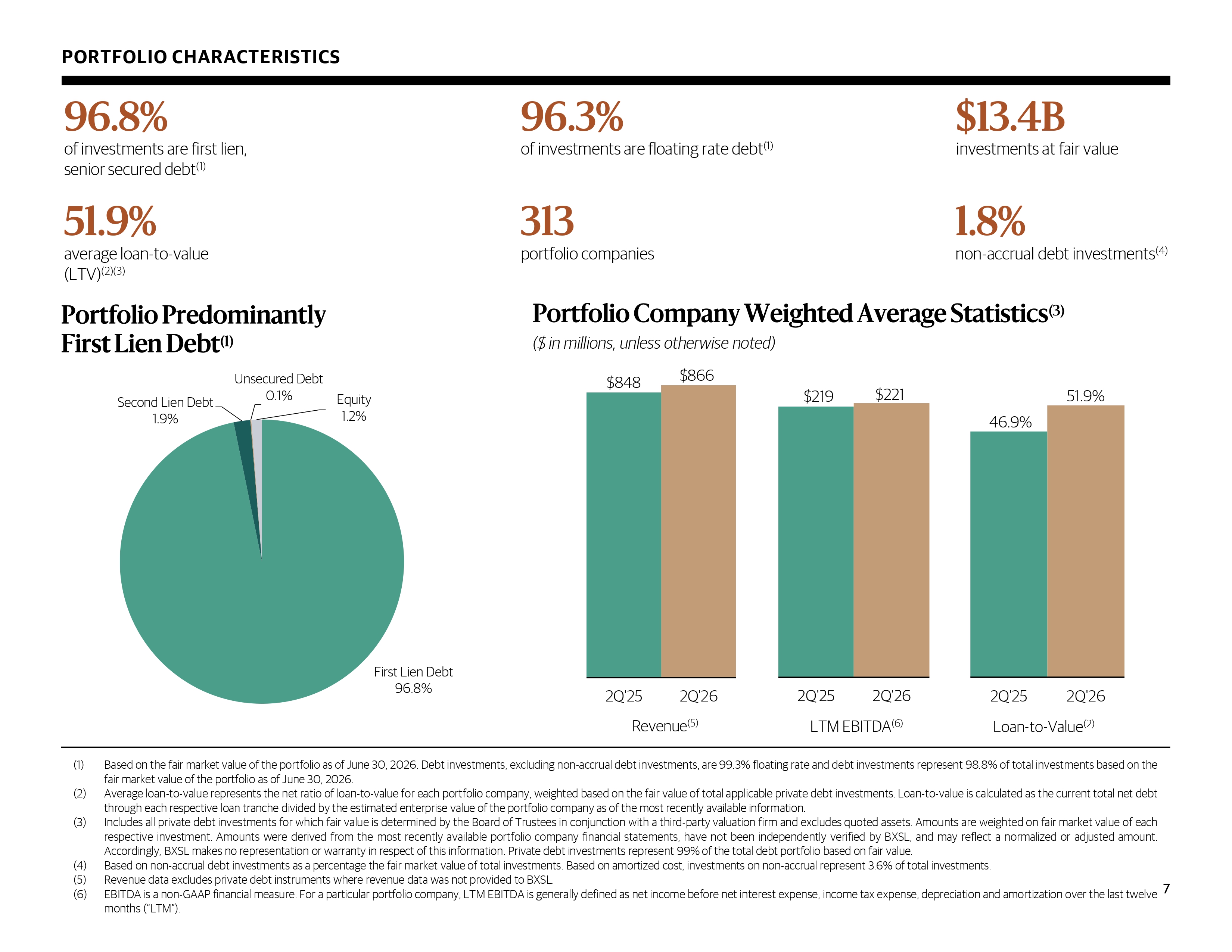
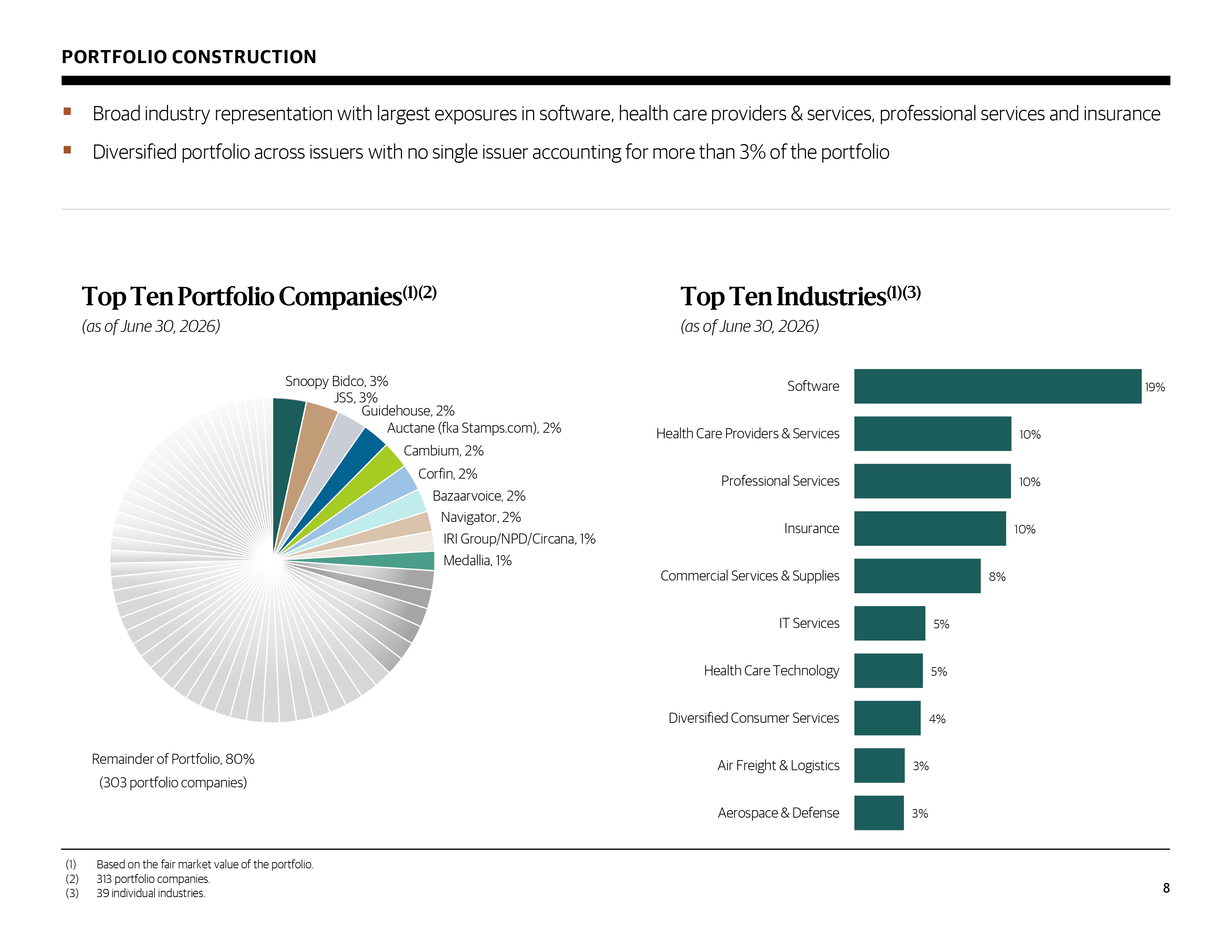
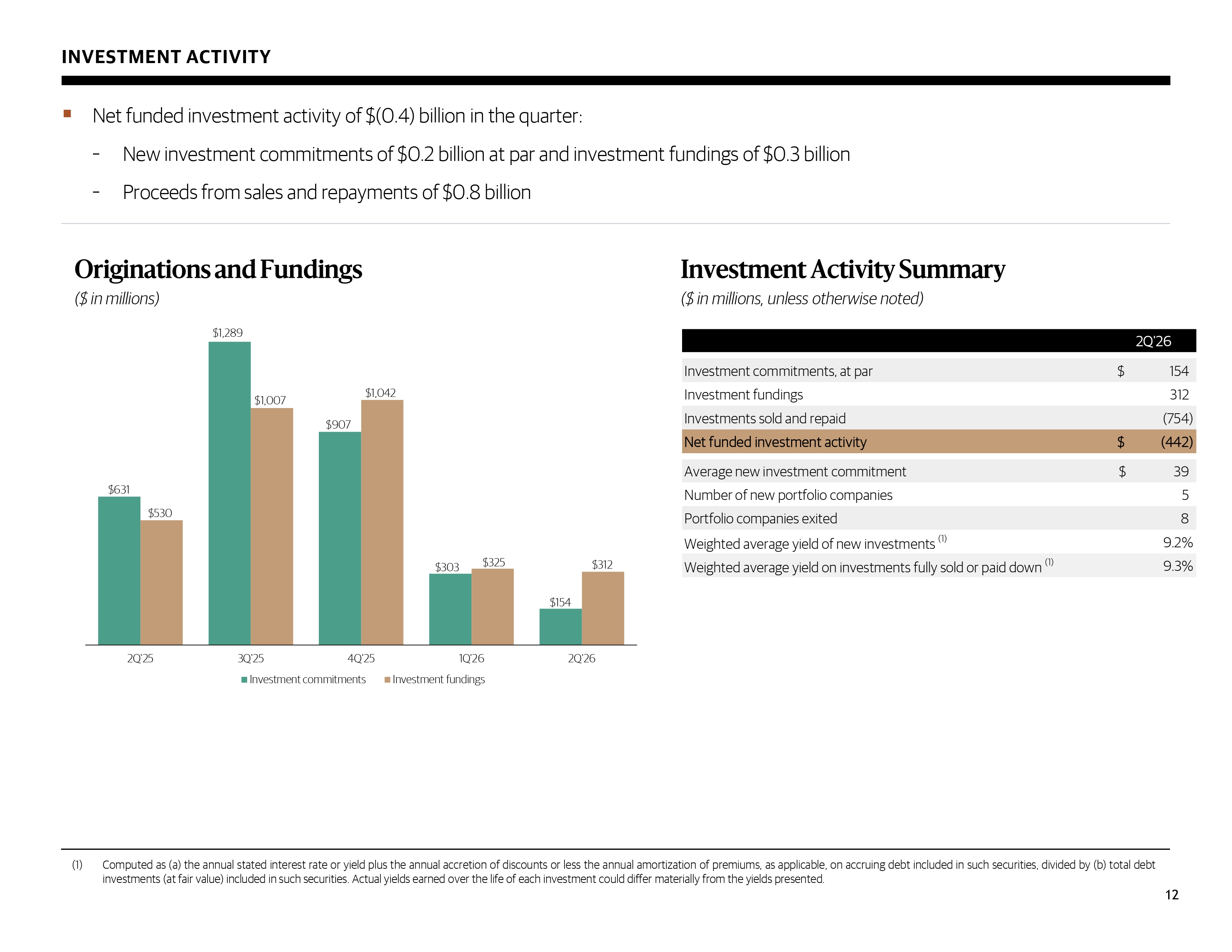
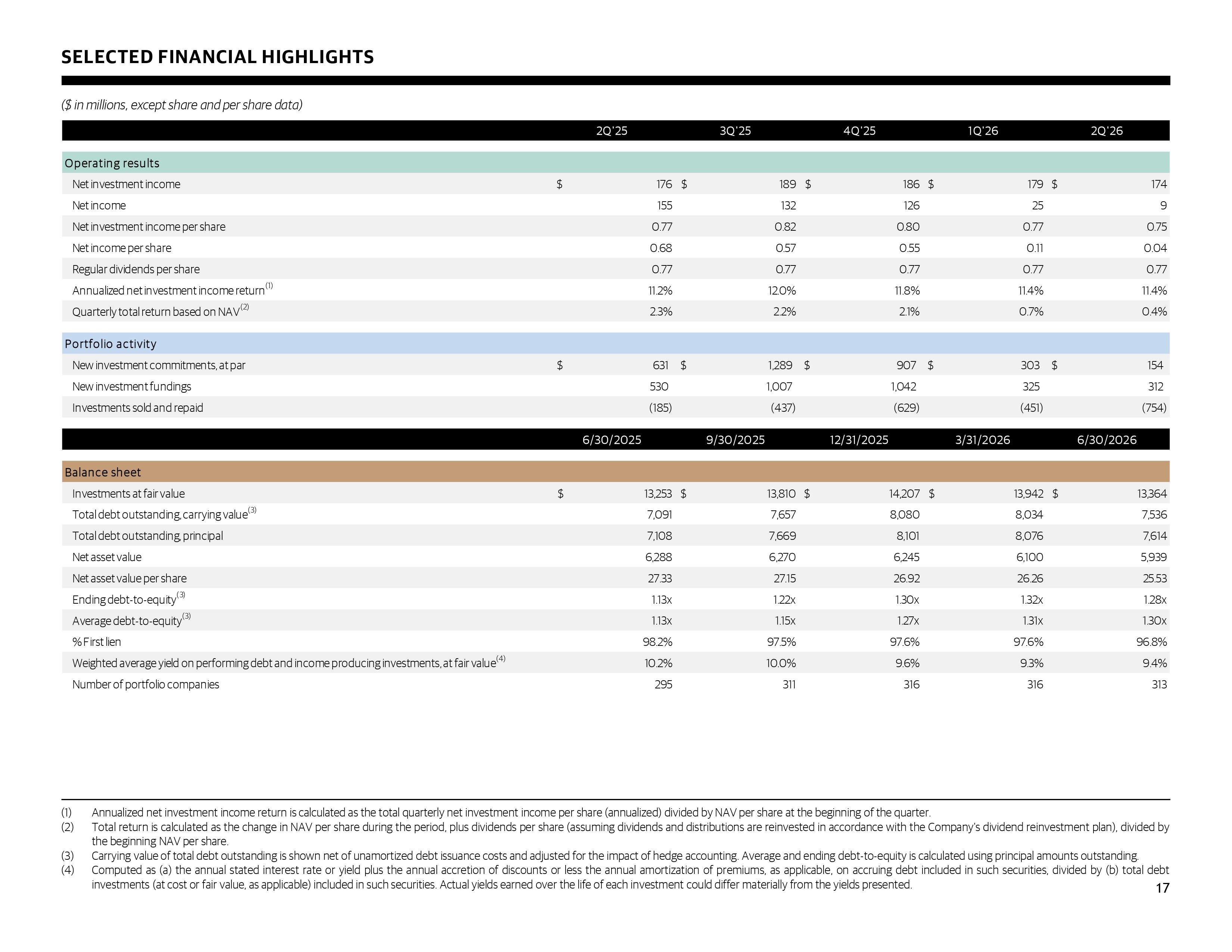
Thank you, Stacey, and good morning, everyone. Before we dive into quarterly results, I did want to thank my colleagues, John Bach and Kate Rubenstein, for all their contributions to BXSL over the past several years. John and Kate are both good friends of the firm and many of us here, and John in particular has been a long-time leading expert in the BDC space, as many as you know, and both will be missed by all of us at Blackstone, and we wish them the best of luck in their next endeavors. I thought I'd start by highlighting a few key observations from the quarter. First, we delivered healthy earnings again in the second quarter, supported by our shareholder aligned fee structure. Second, repayment activity continued to accelerate this order which helped drive realizations, potential additional income, and additional liquidity. Third, our deployment remains disciplined with new fundings featuring strong credit profiles, thematic orientation, and attractive spreads. Fourth, we remain highly proactive with underperforming borrowers, leveraging our senior position, strong documentation, and deep restructuring expertise to protect long-term value for investors, as seen at Blackstone Credit Insurance, or BXCI, for over 20 years. And finally, we continue to be constructive on the outlook for deal activity, with M&A benefiting from strength in the U.S. economy. While the year started slower, activity levels, as measured by new deals through BXEI's global private deal screenings improved during the quarter, particularly in June. Some of the areas where we are seeing new deal flow in the current quarter in the current market are where Blackstone has deep industry expertise and thematic conviction, including AI and digital infrastructure, infrastructure services, and life sciences. BXEL funded over $300 million during the quarter, adding five new borrowers to the portfolio, bringing our total to 313 companies. Generally, we are seeing new, recently committed deals across BXEI set up with less leverage, lower loan-to-values, and average spreads higher than in previous quarters. We will continue to use available liquidity selectively, focusing on areas where we believe we have distinct advantages and where we can leverage our scale, as we believe we have done successfully in the past. As an example, DXCI co-led a $1.1 billion financing for Aspen Pharmacare, a scaled pharmaceutical platform in Asia Pacific. In addition, Firmus Technologies, a leading AI infrastructure platform drew on its $5 billion delay draw term loan as part of a $10 billion financing led by Blackstone. BXEL's liquidity position remains strong with over $700 million in additional repayments this quarter in line with the expectations we discussed on our last call. This represented an annualized repayment rate of 21 percent of the portfolio at fair value, compared to 13% for the prior quarter and 5% for the same quarter in the prior year. The average low mark across assets fully repaid during the quarter was below 94, and select repayments included call protection leading to realization slightly above par on average. We believe this reinforces what we discussed last quarter, that performance of sub-investment-grade companies can evolve over the duration of a directly originated loan. Importantly, seniority in the capital structure dictates repayment in full ahead of subordinated capital absent a restructuring, and BXSL's portfolio remains at nearly 97% first lien senior security. Valuations reflect both company fundamentals and current market conditions. But as first-lane secured lenders, our realized outcomes are ultimately driven by repayment at par over time or by enforcing our rights during periods of underperformance to maximize recoveries. This quarter's activity also highlights the importance of portfolio turnover. Repayments can provide additional capacity to reinvest into new investments that attract the spreads. More broadly, we believe repayment activity has continued to be an important indicator of underlying market health and a meaningful signal for future deal activity, as it typically reflects improving capital market conditions, increased M&A and sponsor activity, and greater borrower confidence. In the second quarter, BXSL generated net investment income, or NII, of $0.75 per share, which represents an 11.4% annualized NII yield. NAV per share ended at $25.53, down approximately 2.8% quarter over quarter. The total portfolio mark declined to 95.2. Nearly half of the unrealized private marks reflected continued broader market spread widening throughout the second quarter, while the remaining marks were attributed to some underperforming assets. As a point of reference, the bottom 10% of the portfolio today is currently marked at 70. We remained highly proactive on this subset of the portfolio during the quarter, leveraging the broader Blackstone operating resources, over 110 strategic advisors that support our firm across a range of sectors, and a 120-person BXCI CIO office, including the BXCI value creation team dedicated to operational support. This team helps portfolio companies drive operational efficiencies and cost savings across various categories, from healthcare and insurance services to facilitating introductions across the broader Blackstone portfolio. Further, the team also provides comprehensive management and board enhancements to these portfolio companies through our extensive network of operating executives and industry professionals. As we have discussed on previous calls, we believe the value creation team is one of the critical advantages BXEI possesses as part of the largest alternative asset manager. Importantly, BXEI has experienced an annualized loss rate of less than 10 basis points across its over 20-year North American direct lending track record. While we are highly focused on this bottom 10% of the portfolio and are actively leveraging these resources available to us to help these companies drive improved outcomes, we continue to see strong performance across the remaining 90% of the portfolio. And across the entire portfolio, LTM EBTA growth was 7% year-over-year, in line with the growth we've seen in recent quarters. Additionally, interest coverage modestly improved to 2.1 times and PIC as a percentage of investment income was flat from last quarter at approximately 6.6%, which is over 20% below fourth quarter last year. We ended the period with a non-accrual rate of 1.8% at fair value and 3.6% at cost, down from 3.1% at fair value and 4.7% at cost in Q1, primarily driven by two assets that were removed post-restructuring. We had no new non-accrual assets added in the quarter. Prior to completing its restructuring post-quarter end, Medallia represented 1.5% of BXSL's non-accrual rate based on fair value for 79% of fair value of the portfolio on non-accrual as of 630. On software specifically, which represented 19% of BXSL's fair market value, fundamentals overall remained healthy across our 70 borrowers. These companies have a weighted average LTM EPA of more than $275 million, growing in line with the broader portfolio. They have a weighted average revenue above $780 million, and they have average interest coverage of 2.2 times. In closing, we remained highly aligned with our shareholders. We continue to generate liquidity through attractive levels of portfolio turnover, and we took proactive steps to drive better outcomes on the minority positions that are underperforming expectations.
Speaker 6
With that, I'll turn it over to Teddy. Thanks, Brad.
Speaker 8
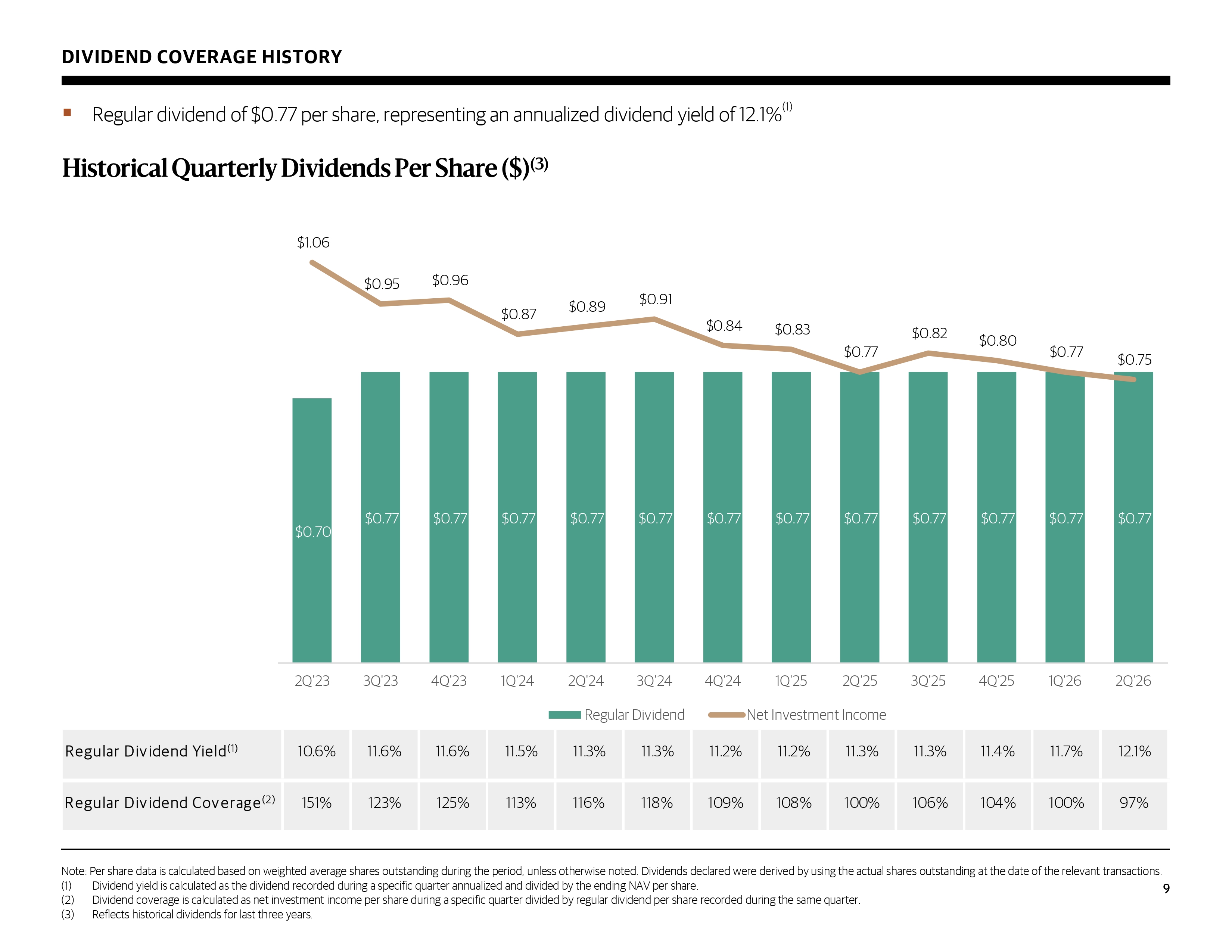
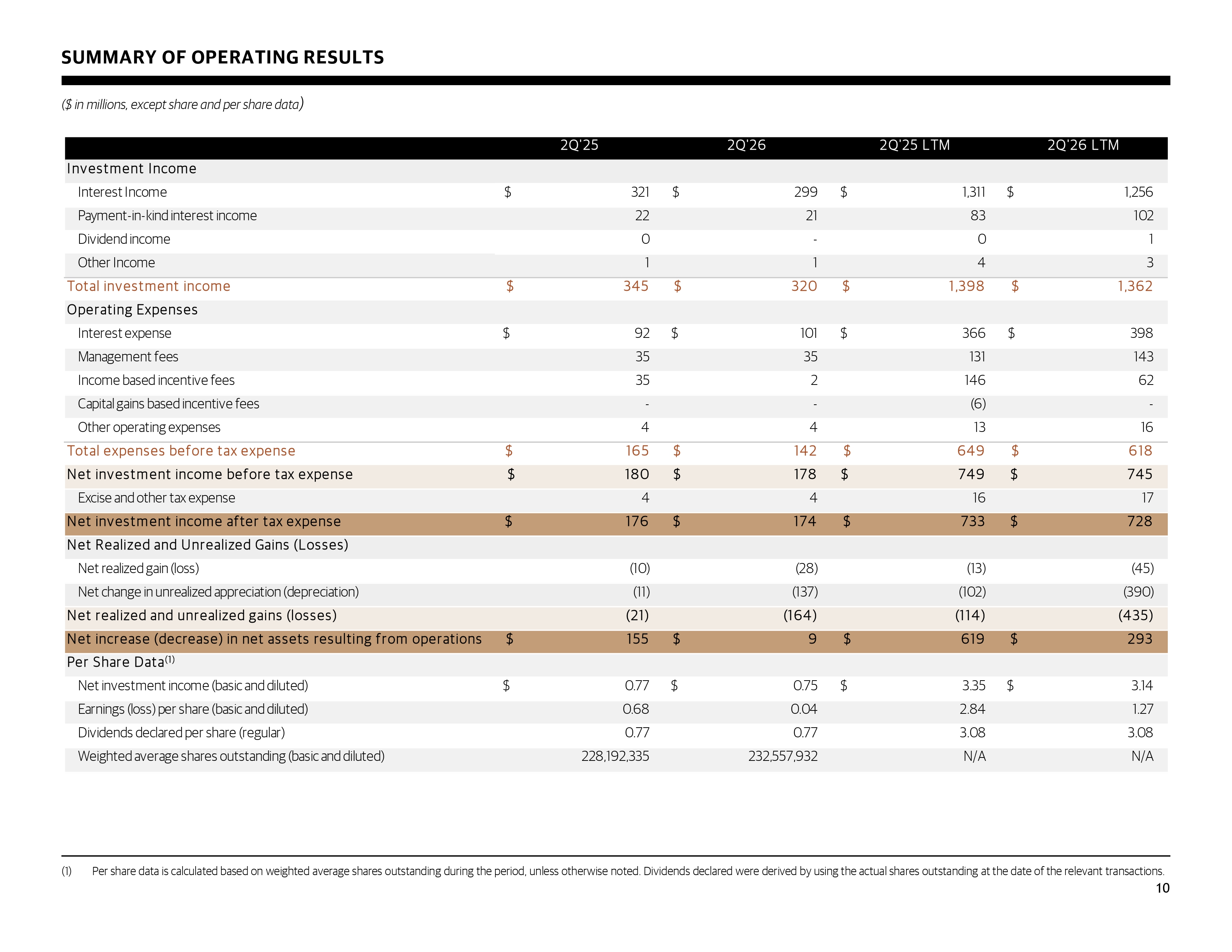
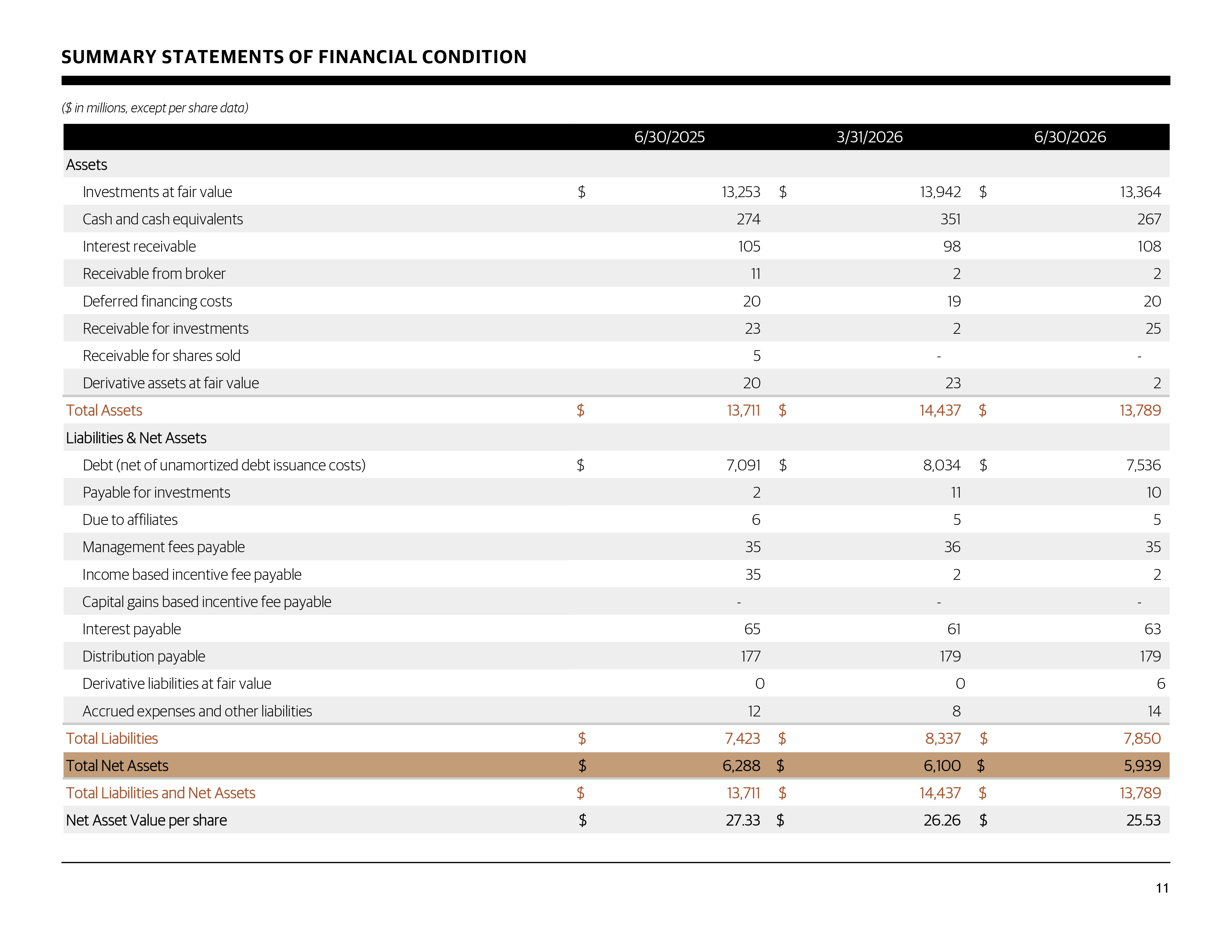
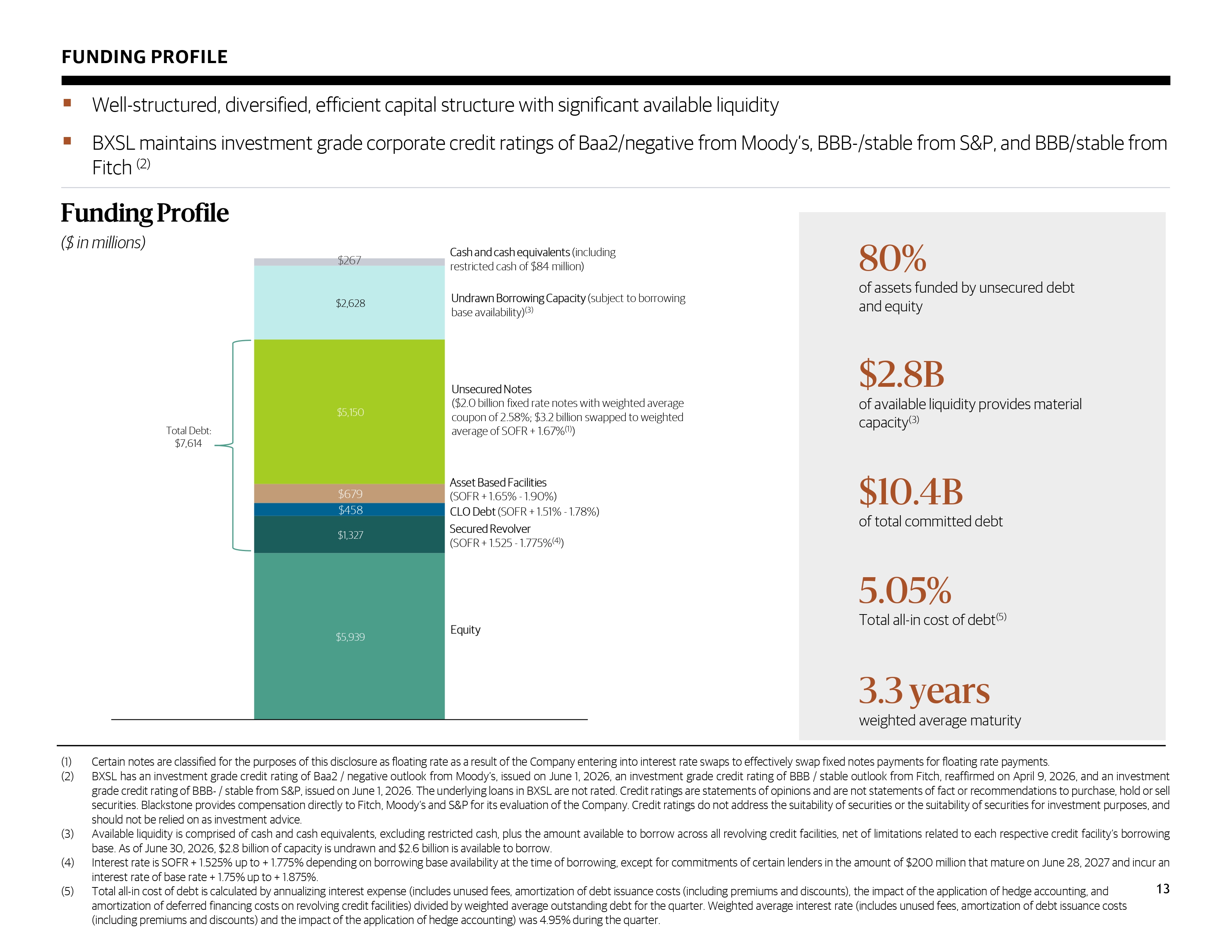
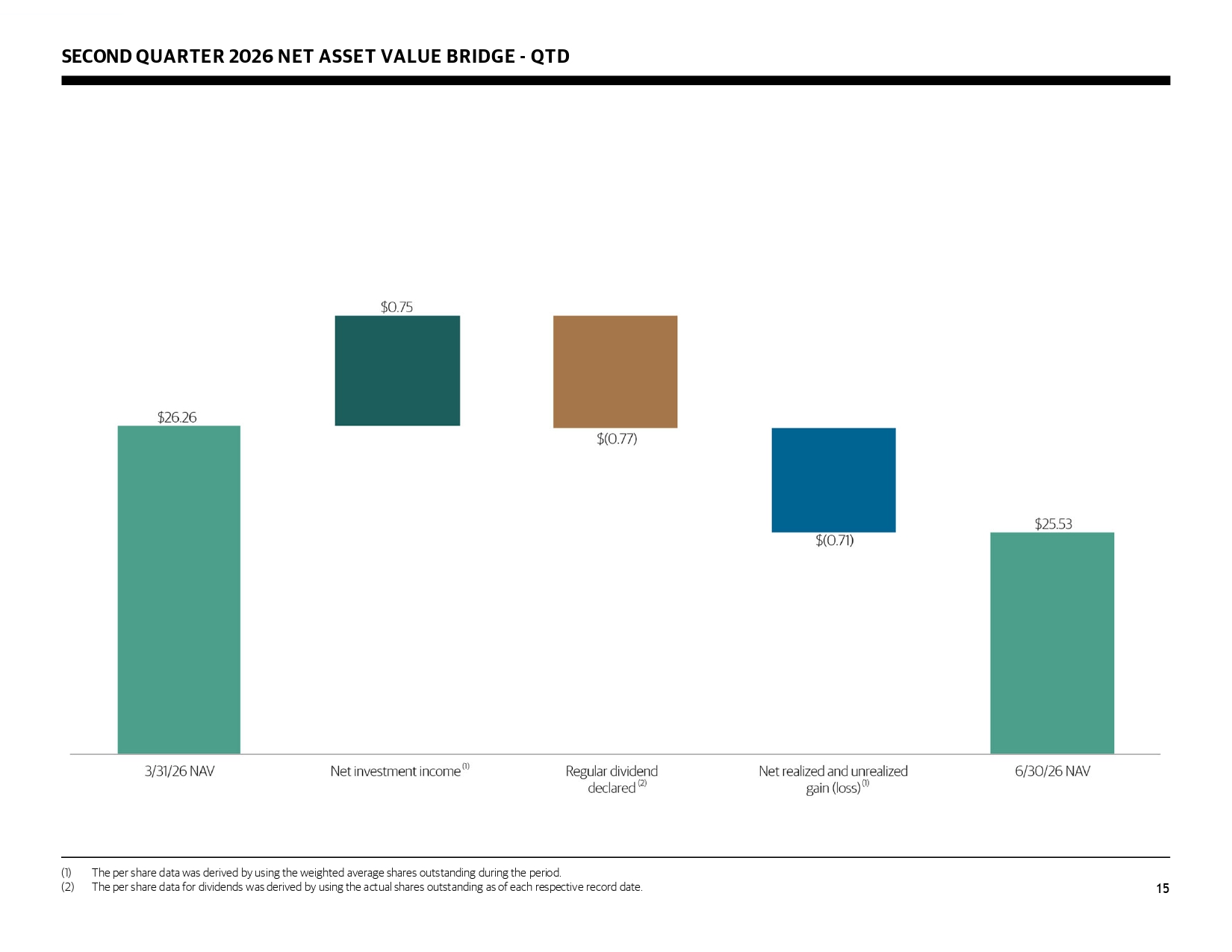
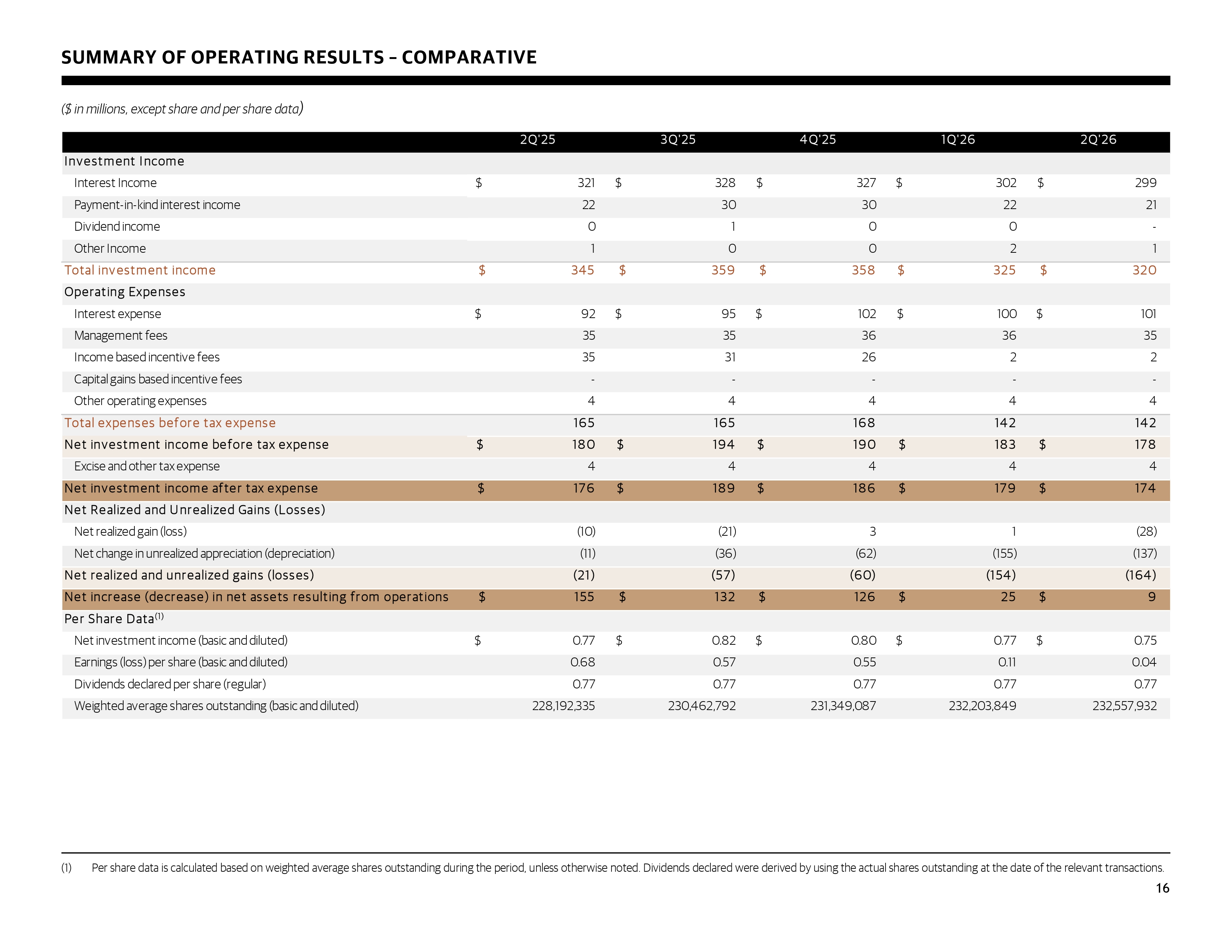
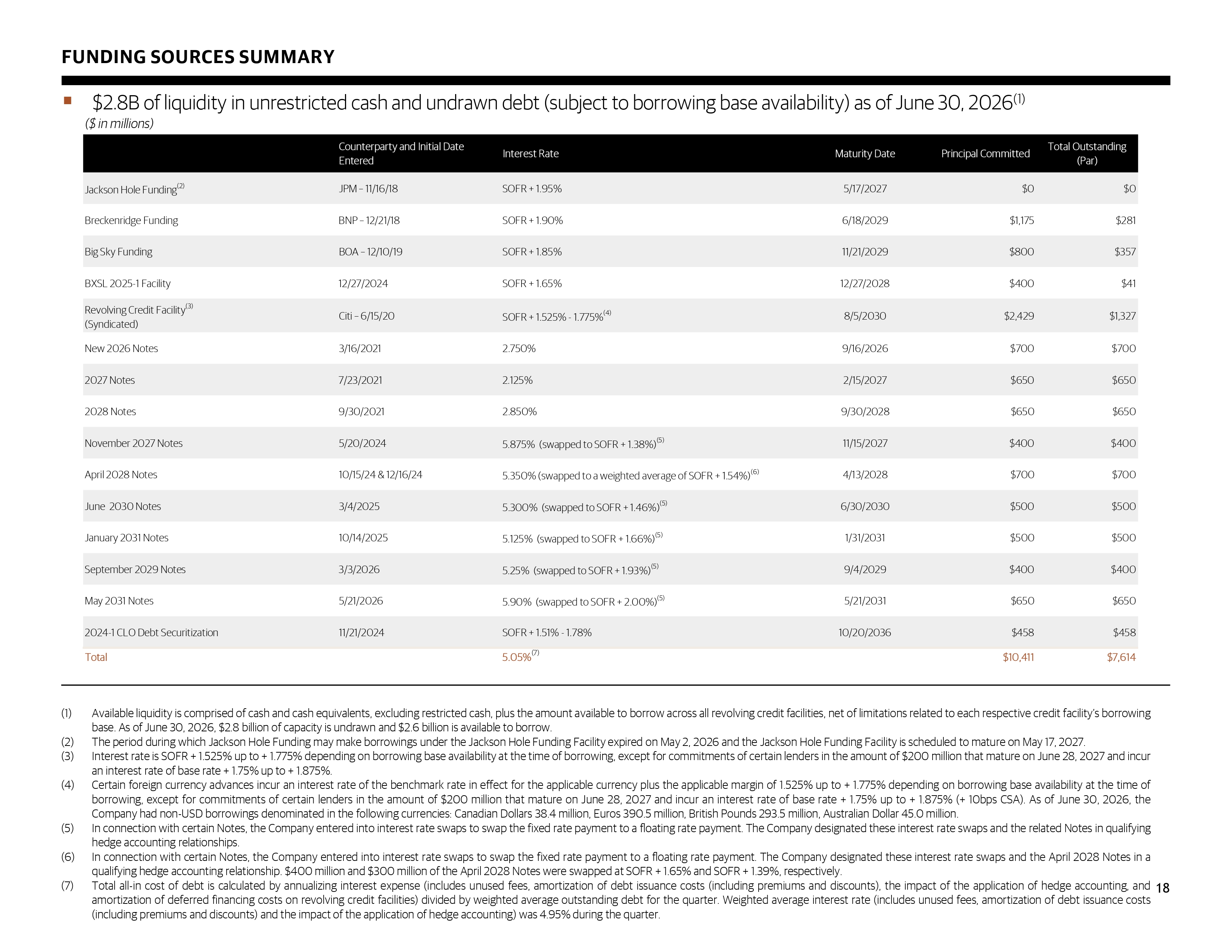
First, on performance, BXSL's net investment income for the quarter was $174 million, or $0.75 per share, compared to our $0.77 per share dividend. These results represent an 11.4% annualized NII yield, or 12.1% annualized distribution yield, both among the highest across traded BDC peers with similar levels of first lien senior secured exposure while continuing to benefit from one of the lowest management incentive fee structures in the BDC industry. Payment-in-kind income was flat quarter-over-quarter and marginally higher year-over-year at 6.6% of total investment income, but down 20% since the fourth quarter of 2025. Interest income excluding payment-in-kind, fees, and dividends represented over 93% of our total investment income in the quarter. As we communicated last quarter, we continue to maintain our dividend at $0.77 per share. We intend to use excess earnings in the near term as we transition to a lower dividend level that is aligned with the fund's longer-term earnings profile, reflecting lower base rates and maturities of lower-cost investment-grade bonds. Prior to the second quarter, BXSL's NII per share had met or exceeded our regular dividend per share for 28 consecutive quarters, and excess earnings was retained in net asset value and reinvested in the portfolio over time. As of quarter end, total undistributed earnings represented $1.77 per share, down from $1.80 per share at the end of the first quarter. Turning to the balance sheet, we ended the quarter with $13.4 billion of total portfolio investments at fair value, $7.5 billion of outstanding debt, and $5.9 billion of total net assets. Net asset value per share at quarter end was $25.53, down from $26.26 in the first quarter, or 2.8%, which was impacted primarily by $0.59 of unrealized net losses. We also had $0.12 of realized net losses in the portfolio tied to two restructurings that closed in the quarter, as Brad previously mentioned. Further, the portfolio is marked at 95 spot two at quarter end, down from 96 to last quarter, reflecting a combination of broader spread widening and company-specific fundamentals. Importantly, from a wider lens, we have delivered net cumulative realized gains overall on investments since inception through the second quarter. We are constantly working constructively with our companies on amendments to support our businesses for growth and M&A, often including new sponsor capital, and to improve terms and mitigate risk where possible. To that end, we completed amendments for 38 of our 313 issuers in the quarter, and over 97% of amendments, as measured by fair value, were associated with what we believe are benign or positive events, add-ons, M&A, DDTL extensions, or immaterial technical matters. Moving to our liabilities, our liability profile remains diverse across multiple financing markets, including $10.4 billion of committed debt capacity and $7.6 billion of funded debt as of the end of the second quarter. We have relationships across diverse lending counterparties and a balanced mix of unsecured and secured funding with approximately 68% of funded debt unsecured and 32% secured. This diversity of funding sources combined with our scale and longstanding lender relationships support financial flexibility and low cost of capital relative to our traded BDC peers. We have $679 million drawn on our asset-based facilities with multiple banks, of which we had a weighted average drawn spread of SOFR plus 186. In addition, BXSL benefits from one of the most competitively priced revolvers across our traded BDC peers at SOFR plus 153 basis points on drawn amounts, over 450 million of CLO debt outstanding at a weighted average coupon of SOFR plus 154, and 5.2 billion of unsecured bonds outstanding as of June 30th, $2 billion of which were not swapped and has an average coupon of 2.58%. That includes a $650 million five-year bond we issued in May, which priced at 205 basis points above the benchmark treasury rate or a 5.9% coupon. And taking this all together, our all-in cost of debt for the second quarter was 5.05 percent. Total liquidity comprised of unrestricted cash and undrawn debt available to borrow was $2.8 billion at quarter end, while ending leverage as of June 30th was one and a quarter times on a net of cash basis and 1.28 turns on a gross basis, which is below where we ended each of the last two quarters. As a reminder, BXSL's Board of Trustees approved a discretionary share repurchase plan earlier this year under which BXSL may repurchase up to $250 million in the aggregate of its outstanding common shares in the open market at prices below its net asset value per share. While we have not exercised the program, we continue to expect repayment activity to create additional balance sheet capacity through year-end and will weigh repurchases against deployments at wider spreads while managing to our stated long-term leverage range of one to one and a quarter turns. To close, the second quarter was important for BXSL and highlighted several strengths of our model. Earnings supported by a fee structure highly aligned with shareholders, continued healthy portfolio turnover, creating balance sheet flexibility, disciplined deployment with new commitments at wider spreads and industries where we see tailwinds, and active asset management leveraging our operating resources to proactively drive positive outcomes. And with that, I'll ask the operator to open it up for questions. Thank you.
Operator
Thank you. As a reminder, please press star 1 to ask a question. We ask you to limit yourself to one question and one follow-up to allow as many callers to join the queue as possible. We will take our first question from Finn O'Shea with Wells Fargo Securities.
Hey, everyone. Thanks. Thanks. To start, Brad, hitting on some of the remarks around restructurings and maximizing recovery. I know a couple came off this quarter, ACI, DCA, which is good, of course. But in the spirit of, like, longer-term recovery, earnings power for the BDC, why not restructure those all into equity, which would, you know, more directly allow recovery of lost NAV?
Thanks, Finn. And so every restructuring, you know, we take into a lot of different considerations on restructuring the balance sheet. We want the balance sheet to be done in a way that aligns with the company's kind of earnings power. So that's kind of first and foremost. That's what you've seen in the Medallia. That's what you saw in ACI, DCA. If I take a kind of bigger step back and look at the 10 restructurings we've done so far over the past eight years in DXCI, we've exited two, and actually, if you add select quote, because we just have a stub position, we've exited three positions. And in each of those cases, we had a little bit of debt, we converted some to equity, or we just did debt alone. Our recovery rate, excluding the coupons, was 0.93 in those three positions. So I think the formula has worked out quite well. So BXSL is kind of – that's been experienced in those restructurings, but each situation is going to be, you know, different, and I think we'll continue to evaluate it on that basis.
Well, I appreciate that. And a follow for Teddy on the ending remarks on buybacks and leverage. It sounds like being at target leverage is sort of a constraint for flexibility there. um do you think target leverage is too high it seems like some managers are are rethinking this and kind of taking a step back and seeing if you've had um you know if you have any thoughts on that yeah thanks finn um i'd say a couple things i think first off just in short we have been prioritizing deleveraging the last couple quarters right leverage is below uh where where at the end of the quarter, where it's been the last two quarters, we've been highly focusing
Speaker 8
on manage to that one and a one and a quarter times range. We also do have clear visibility to increasing in repayment volume. And that's a big piece of the calculus for us. We had 21% annualized repayments in the quarter, similar level of visibility in the future versus we've had the last few quarters. So as we look forward to the back end of the year, that flexibility should continue to trend towards the mid to high end of the range. That creates more flexibility to buy back shares. That creates flexibility to deploy capital into a market, as Brad said, at wider spread. So both of those, we will be quite balanced in the approach, but certainly at current trading levels, if they possess, you know, we would expect, you know, some potential activity weighed against new deployments.
Speaker 6
Great. All from me. Thank you, guys.
Operator
We will take our next question from Rick Shane with J.P. Morgan.
Speaker 6
Hey, guys. Can you hear me? You bet.
Excellent. Hey, you know, look, there are – we're in a world right now where there's sort of three types of transactions that exist. There's potential refinance activity related to healthy companies as equity values improve. There are restructurings of challenged investments, and then there is sort of new-to-the-market investments. When you look at the dispersion across those three types of activity, can you help us understand how divergent terms and pricing and structure is?
So, and I would say there's a fourth, which is just companies that are drawing on their delay draws or doing some sort of kind of add-on financing. Those are typically done at the current terms of their existing loan. And in some cases, if they're asking for new capital and their old loan was kind of underpriced relative to the market, then we'd price that a little bit wider. Overall spreads relative to last year, we would say is somewhere between 25 and 50 basis points wider. And that has been reflected in our marks. We had to take the markdowns because of the spread widening. I would say that's new investment. That's add-ons for deals to loans that are underpriced relative to the market. In terms of restructurings, that is a little bit more dependent on kind of how we set up the capital structure. So if we really underlever it, then it's going to be paying maybe a market rate that's a little bit below a new deal. And we do that to give it a little bit more flexibility. Or we may kind of restructure it in line with equity capital that comes in, and that is priced at or maybe a bit wide to the market. So I would say that range is somewhere between 25 and 100 basis points, depending on the situation, if that's helpful, Rick.
Very, very much. And then, look, you know, there's an interesting comment embedded in what you just said, which is that a lot of the marks that you are referring to are market driven, and there should be pull to par associated with that as those loans approach maturity. um how have you guys can you guys give some sort of I'm at a loss for words it's been a long day already I apologize um can you give us some sort of sense of how much accretion you could expect um from pull to par over time when we look at the discount to the cost basis
Yeah, so good question. I understand. And I think maybe the best way to think about it, Rick, is you just take a look at the assets that repaid this quarter, $700 million. The average low of those marks were $94. The portfolio today is marked at $95 and change. So I would expect the vast majority of the assets that are currently marked below PAR to migrate and be repaid at PAR. That takes a little bit of time, but that would be my expectation. And then, of course, you're going to have assets that go through restructurings, and those may take on a little bit of a different journey. But to answer your question, I would expect the vast majority of the assets to repay at par over the next several years, which is why we're very, very focused. We keep bringing this up on calls about this turnover, this repayment activity, because that does kind of drive, you know, pulled apart on assets that may be marked at 95, 96 that are, you know, perfectly fine assets, but, you know, spreads widened with maybe a missed kind of quarter and leverage ticked up a half turn. And, you know, unfortunately, you have to mark those assets down a little bit, but they're very good assets and will have a high probability of repaying it far.
Appreciate the answers, guys. Thank you so much.
Operator
We will take our next question from Melissa Waddell with UBS.
Good morning. Thanks for taking my questions today. I wanted to revisit your comments about the dividends. And I realize that what you're saying now is that there's a slight shortfall this quarter in NII versus that stable dividend level. And in the short term, the board and management, you guys are willing to sort of use that spillover income to supplement a shortfall. I guess the question that that begs is really how do you think about your willingness to do that or your timeline and how you define short term in that context? And then as you think about the longer-term earnings of the power of the portfolio, what kind of scenarios are you thinking about in terms of base rates and then embedded spread outlook?
Speaker 8
Yeah. Thanks, Melissa. This is Teddy. I'm happy to take that. So I think you kind of nailed it. You hit it head on. So on our last call, we did set that expectation, right? What we said was we would use excess earnings as a temporary bridge in the near term to transition. and this quarter is consistent with that approach. We did cover the shortfall by previous earnings that was in NAV, and that's after 28 consecutive quarters of meeting or exceeding our dividend. I think what I would say is, you know, we are being front-footed about this, right? We will continuously and are continuously evaluating the dividend with the board. That long-term dividend level takes into account the potential adjustment on earnings take into account both base rates and some lower cost maturities in our capital structure. So as those flow through, we would expect this to be very much a short-term temporary bridge, not a long-term solution.
And then just following up on sort of that topic of earnings power longer term, I know that historically you guys have not really expressed much interest in the sort of JV structures that a few other BDCs or many other BDCs have pursued to enhance earnings power. I'm curious if that is also on the table or sort of in discussion or of any interest to management. Thanks.
Thanks, Melissa. It's Brad. I think we are constantly looking at all available ways to drive shareholder value. And we've also wanted to do it in a way that was very, with a very clear message of what we're trying to accomplish, which is focusing on senior secured risk for our investors. So trying to deliver attractive dividend, which I think we have one of the highest dividends, but in a way that had the least amount of risk. When you do the JVs, it's certainly an interesting structure. We look at it, it does add more leverage. So we just want to weigh that against, you know, what we set out to do for our investors longer term. So everything's on the table, buybacks, you know, investing into the market, different leverage structures. But what we don't want to do is really layer in a lot of risk. So it's the reason why, you know, PIC preferreds, which have been very topical recently, we have almost 0% of PIC preferreds in the portfolio. And because we think when those go sideways, the recovery is close to zero. So we'll weigh all of those things, but with the overarching, you know, goal of minimizing risk and maximizing returns for investors.
Operator
Thank you. We will take our next question from Robert Dodd with Raymond James.
Hi, guys. Sorry to kind of pile on Finn's question about restructuring, et cetera. I mean, historically, right, for BDCs, about the worst kind of outcome for recovery is a restructuring that doesn't stick, right? If it gets non-acrual, restructured, and then ends up back on non-acrual, those tend to produce, you know, extremely low recovery. So I'm not saying you've had any of them yet, but that's the issue, right? So when it comes to a restructuring, obviously a BDC has an income mandate, so you don't want to eliminate all the debt necessarily. But you also, worst case, do not want it to have another failure. We've seen over the last two years, maybe not over the last, a much greater incidence of restructurings failing. I can give you a list of names if you want. Not generally yours, obviously, right, but across the industry. So when you look at, like, some of these, not just ACI and DCI, but the Medallia, like, obviously a very big deal. There was also a big software deal a couple of years ago that underwent a restructuring and has defaulted again, right? So why three is not really a meaningful sample size in terms of historic. So why should we investors believe that you've done it right? And I realize that's really hard to quantify, but the risk of a re-default really is really outsized in terms of NAV risk. So how do you evaluate that? How are you sure that you're not going to have that kind of incident occur?
Yeah, thanks, Robert. This is Brad. Well, we agree with you. We start there that when you restructure a business, you need to set it up with the right capital structure. I've referenced the 10 we've done in BXSL, but clearly in BXCI, we've been doing this for 20 years, and we've had our fair share of restructurings that went exceptionally well, and we've had our fair share of some that didn't go well. It's really the ones that didn't go well that you learn your lessons, your best lessons from. And that informs us on these new restructurings that we do and how to set up the capital structure that positions the business for success. The only reason why you go through these restructurings is to reset the capital structure, give the company cash flow so they can reinvest in the business and reposition them to grow. That is what restructuring is all about. And over that time period, over 20 years, our loss rates being 10 basis points. So not all of them have worked out perfectly. Some of them have worked out exceptionally well. But it comes from a lot of experience. But it starts from us agreeing with what you just said, which is you need to set these up with appropriate amount of debt. You're right, We're an income payer, so we need to think about that, but to do so in a way that positions the company for success and you're not back at the table. So we have 120 people in our CIO office, our restructuring team. This is all they do. That's all they think about because we're very much in line with how you and Finn are thinking about it. Got it. Thank you.
In fact, one more, if I can, not texting your phone. A lot of talk about the second half of the year in terms of deal flow, to your point, like the repayment activity is pretty good. Your choice of words today, I think, was constructive on the outlook for activity. A lot of other managers have said things like optimistic or things like that. Constructive sounds less optimistic than optimistic to me um so can you give us any color obviously um we've all everybody's been wrong multiple times over the last couple years so a little caution is justified but can you give us any kind of like what's your comfort level that activity really is actually going to pick up in the second half and maybe in 27 or or you're still um constructively cautious if i guess So, I am one person.
This is Brad, and I would say I'm very constructive. How about that? But I also, as you know, said, I also said two years ago we were going to start a super cycle. So, but listen, I think all the fundamentals are there, which is why we're optimistic that, you know, deal activity in the past couple of months has picked up a fair bit, just in terms of screenings. The U.S. economy is fairly healthy. We've got to get through this war, which feels like it's trending the right way. So there are a lot of reasons to support us being very constructive. Thank you.
Operator
As a reminder, Star One, if you would like to ask a question, we'll go next to Aaron Siganovich with Tourist Securities.
Thanks. You highlighted amendment activity during the quarter, and it sounded as though you were being somewhat proactive on this front, but you also mentioned that it was kind of mostly benign or positive events. Are you getting a decent amount of amendment requests from any of your borrowers, or are you actually kind of looking to be proactive in terms of some of the ones that maybe you want to give a little bit more flexibility to?
Speaker 8
Yeah, thanks, Aaron. I'm happy to take that This is Teddy. I'd say a couple things. Overall, no real significant change over the last few quarters. I will say we did see amendment activity pick up, you know, marginally versus the previous quarter. As we dig through that activity, over 97% is driven by M&A, DDTL extensions, things we can do proactively to support our companies over a long period of time, in addition to what are just ongoing sort of more benign technical matters that are a little bit less relevant. We are being highly proactive with our companies, you know, more on being supportive in an environment to Brad's point where M&A is picking up across the space. Our companies can take advantage of that, particularly in some sectors where multiples are lower, that, you know, builds to the equity thesis and also helps diversify from a credit perspective. So, So, you know, we've had good case studies over a long period of time where we've financed our businesses over the life cycle, and we'll continue to do that through amendment activity.
And where are we seeing, I guess, the impacts of that? And maybe it's just kind of behind the scenes. It doesn't look like there's much in terms of amendment fees that are going through. How are you structuring these typically?
Speaker 8
Less so fees, but if you do look at sort of what we deployed in the quarter, you do see some add-ons, you see some DDTLs that increased. So, you know, it's less going to be driven by fees. I think there was, you know, marginal, you know, structuring slash amendment fees on the income statement that you can see, but more so in deployment.
Yeah, and most of the amendments, because they're positive, Aaron, you don't, Meaning it's good for the credit. You don't typically charge fees on those sort of activities, and that's the bulk of kind of what we've seen in the past couple of quarters.
Speaker 6
Yeah, it makes sense. Thank you.
Operator
We will take our next question from Ken Lee with RBC Capital Markets.
Ken Lee
Analyst — RBC Capital Markets
Hey, good morning, and thanks for taking my question. Just one on the portfolio. I'm wondering if you could just talk about how much of the investments are or would be considered to be on some sort of watch list and maybe how that's been trending more recently.
Speaker 6
Yeah, I'm happy to take that.
Speaker 8
So, you know, we've given the stat that, you know, we started this a couple quarters ago where the bottom 10% of the portfolio, that was marked at 70 this last quarter. I think that's the best way to frame it. You know, what we have seen is, you know, some positions that have taken marks continue to take some marks. It's a relatively concentrated set in the portfolio. But in terms of, you know, that bottom 10%, you know, Mark, that's probably the best stat to look at. Again, that was marked at 70 in the last quarter.
Ken Lee
Analyst — RBC Capital Markets
Gotcha. Very helpful there. And then one follow-up, if I may, I wonder if you could talk about any additional efforts or options that you have to further optimize your funding mix over the near term.
Speaker 8
Yeah, I'm happy to take that as well. So highly focused on funding mix. We've seen increased diversity over the last year. We've actually seen spreads come down overall over the last year on our funding and liabilities. I think what we also see is a financing market that's wide open. I mean, we have access to all capital markets, seeing strong demand post the Q1 volatility. IG bond spreads have largely retraced the widening we saw earlier this year. We did take advantage of that. We issued a $650 million five-year bond that priced just over 200 basis points over Treasuries. That book was near five times oversubscribed and is actually now trading tight to where we issued. So, you know, we'll continue to access the markets. We're sitting at right around 32% secured, 68% unsecured. We like being in that position because that adds operating flexibility to the portfolio. We also do see the bank and CLO markets continue to be functioning in a healthy way. So I would expect that we're continuing to access the capital markets.
Ken Lee
Analyst — RBC Capital Markets
Great. Very helpful there.
Operator
We will take our final question from Paul Johnson with KBW Research Analyst.
Good morning. Thanks for taking my questions. Just a little bit more on Ken's question in terms of like the internal watch list and the bottom 10% of the portfolio. I mean, you know, at this point in the cycle, you know, lots kind of developed here this year in terms of credit risk and spreads, et cetera. But, you know, do you see, I guess, do you feel, I guess, that bottom 10% is kind of, you know, as you mentioned, I guess, kind of a contained, you know, subset of the portfolio where you feel like you've got a pretty good handle on, you know, this is what you've identified as maybe the tail risk within the portfolio. or maybe it's still just relatively early, you know, in addressing some of the, you know, maturity walls from the earlier COVID vintages that, you know, are set to be addressed here over the next few years?
Yeah, maybe I'll start, Paul. So I would say the reason why we focused on this bottom 10% is just to highlight that, you know, from a Mark standpoint, we'll feel like we're being very proactive. and in marketing the assets to the right level. If you look at kind of half of those, you know, assets, actually the sponsors are putting in more kind of equity into those businesses. So that would suggest that, you know, longer term, you know, they're fairly supportive, you know, of those assets. I think your question is, one, do you see a, you know, migration to that, you know, to the bottom tail kind of expanding. And I would, you know, point out just a couple statistics that we've highlighted. One, we don't have a lot of kind of pick assets and we're first lien. So I think, you know, all our companies continue to generally service, you know, their debt with cash. And that is a really important statistic for everyone to focus on. The other thing this quarter, you saw the percentage of assets below 90 and below 85 actually decrease this quarter. So it's trending in the right way. The overall portfolio continues to perform very well, except for the bottom few assets that we have that tend to be older vintages. They tend to be, you know, your tail tends to be assets that are a little bit older and they haven't grown out of their capital structure. Some of these businesses, though, Paul, are actually quite good, but they didn't grow into their capital structure given how they were set up maybe five, six years ago. So those are the ones that we can reset and try and reposition them for growth and get a good recovery. But I don't see that, you know, that tail really, we don't see it in the statistics that we look at as it's expanding, it's fairly contained, and we're working through it.
Thanks for that, Brad. That's very helpful. My last question, maybe a little bit more of a technical one, but just trying to understand in the presentation, in terms of your LTV statistics, sort of year over year, the 51.9% LTV in the portfolio today versus 46.9% a year ago, is the change there? Is it just kind of like a weighted average, you know, change is, you know, mixed within the portfolio or is that driven more from where I guess is there some sort of valuation impact where, you know, is the valuation going from, you know, your own proprietary valuation versus the most recent mark that would be, you know, making that adjustment or is it just kind of further drawdown of debt within these companies?
Speaker 8
Yeah. Good question. It's a relatively simple answer. It is a weighted average. We are refreshing our view for LTVs, taking into account both underlying fundamentals and valuations, both public and private. Remember, we are predominantly first lien. Average LTV at close is low 40s, but certainly in a market where multiples have compressed over the last year, you would see that reflected in your LTV. The pickup in the last quarter alone was actually most related to just two companies. So a bit of a weighted average that you're seeing somewhat tied to multiples that we've seen over the last year in the public market.
Speaker 6
Got it. Thanks. That's all for me.
Operator
Thank you. With no additional questions in queue at this time, I'd like to turn the call back over to Stacey Wong for any additional or closing remarks.
Speaker 2
Thank you, everyone, for joining us for our call this morning. We really appreciate all the thoughtful questions, and our team will be available for any follow-ups. With that, that wraps our call this morning, and we look forward to speaking with you again next quarter.