Operator
Good day, and welcome to the Cypher Mining Third Quarter 2025 Business Update Conference Call. After the speaker's presentation, there'll be a question and answer session. To ask a question, please press star 11 on your touchstone telephone. To remove yourself from the queue, please press star 11 again. As a reminder, this call may be recorded. I would like to turn the call over to Courtney Knight, Head of Investor Relations. Please go ahead.
Good morning, and thank you for joining us on this conference call to address Cypher Mining's business update for the third quarter of 2025. Joining me on the call today are Tyler Page, Chief Executive Officer, Greg Mumford, Chief Financial Officer, and Edward Farrell, Senior Advisor and former Chief Financial Officer. Please note that our press release and presentation can be found on the Investor Relations section of the company's website, where this conference call will also be simultaneously webcast. Please also note that this conference call is the property of Cypher Mining, and any taping or other reproduction is expressly prohibited without prior consent. Before we start, I'd like to remind you that the following discussion, as well as our press release and presentation, contain forward-looking statements. These statements include, but are not limited to, Cypher's financial outlook, business plans and objectives, and other future events and developments, including statements about the market potential of our business operations, potential competition, and our goals and strategies. Forward-looking statements and risks in this conference call, including responses to your questions, are based on current expectations as of today, and CIFR assumes no obligation to update or revise them, whether as a result of new developments or otherwise, except as required by law. Additionally, the following discussion may contain non-GAAP financial measures. We may use non-GAAP measures to describe the way in which we manage and operate our business. We reconcile non-GAAP measures to the most directly comparable GAAP measures, and you are encouraged to examine those reconciliations, which are filed at the end our earnings release issued earlier this morning i will now turn the call over to our ceo tyler page
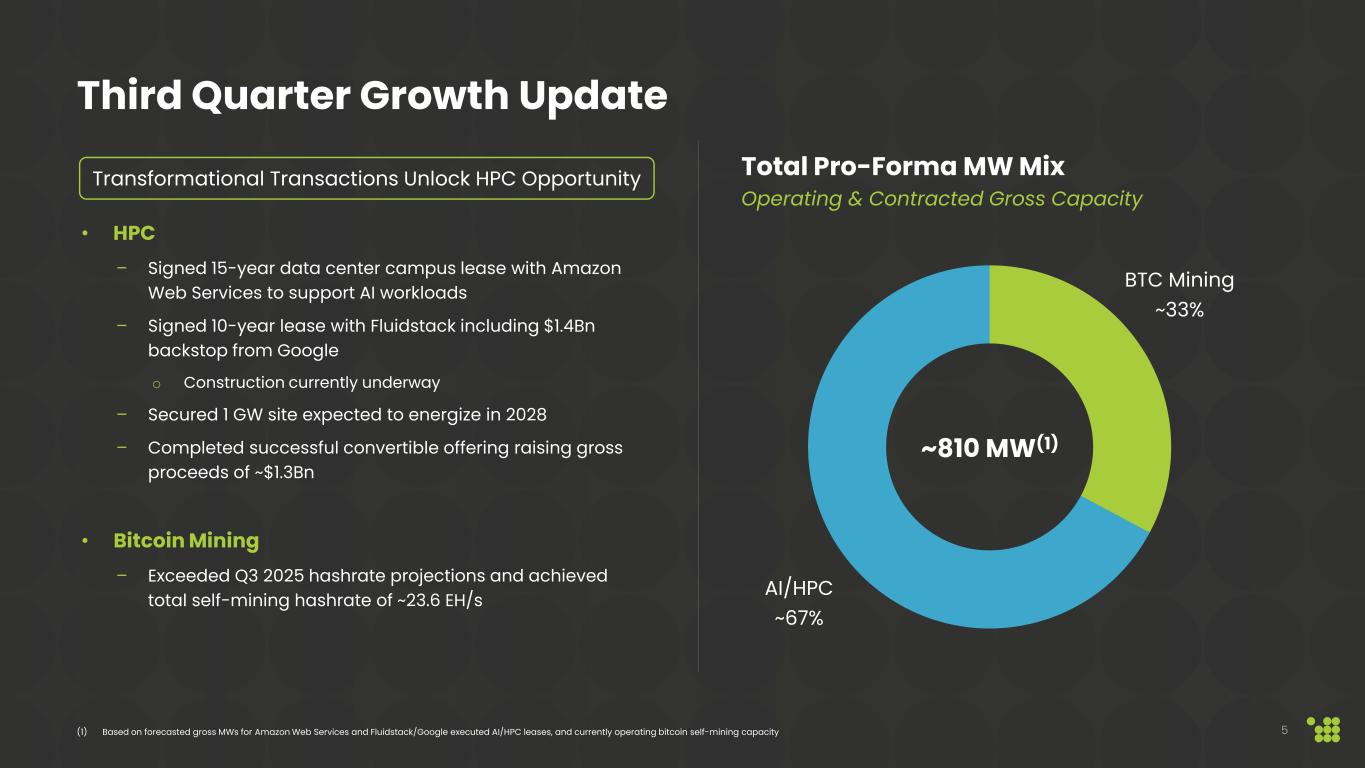
tyler thanks courtney good morning everyone and thank you for joining us today i'm tyler page ceo of cypher mining and i'm pleased to welcome you to our third quarter 2025 business update call the third quarter was truly transformative for cypher as we made huge strides on our strategic pivot into the high performance computing space and set the stage for what is without question the most exciting earnings update in our company's history this quarter we executed a pivotal transaction with fluid stack and google which firmly established our credibility in the hpc space following that groundbreaking transaction and leveraging that success we've now taken another major step forward. I'm thrilled to announce today that we've executed a second landmark HPC transaction, this time with Amazon Web Services. Partnering directly with one of the largest and most innovative companies in the world underscores Cypher's emergence as a trusted leader in next generation compute infrastructure and confirms our full-scale transformation into an HPC data center developer. Our first HPC deal with Fluidstack and Google established not only Cypher's credibility as a data center developer for the world's most demanding tenants, but also the desirability of more remote areas of Texas for next generation data centers. We have been talking to investors for over a year about this thesis and saying that we
thought the market would evolve in our direction. Our second long-term lease, this time with Amazon,
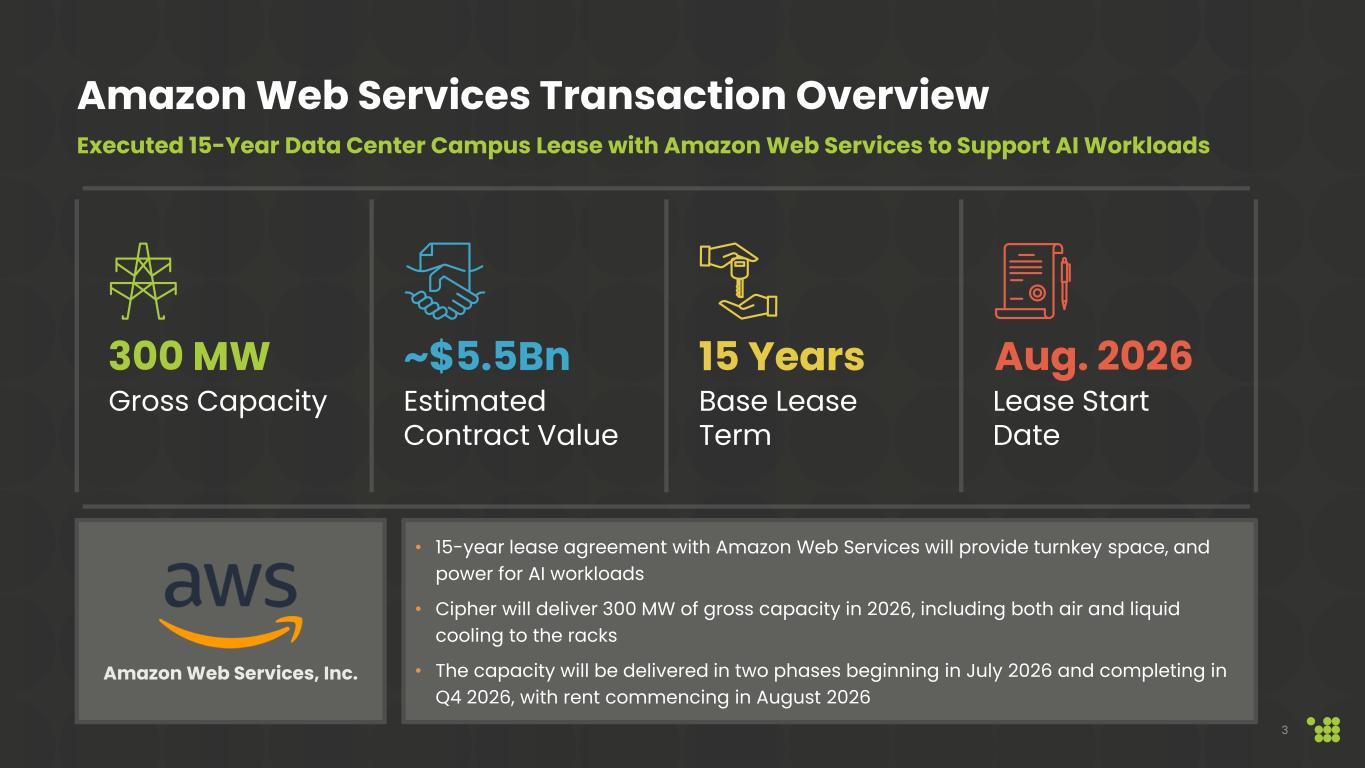
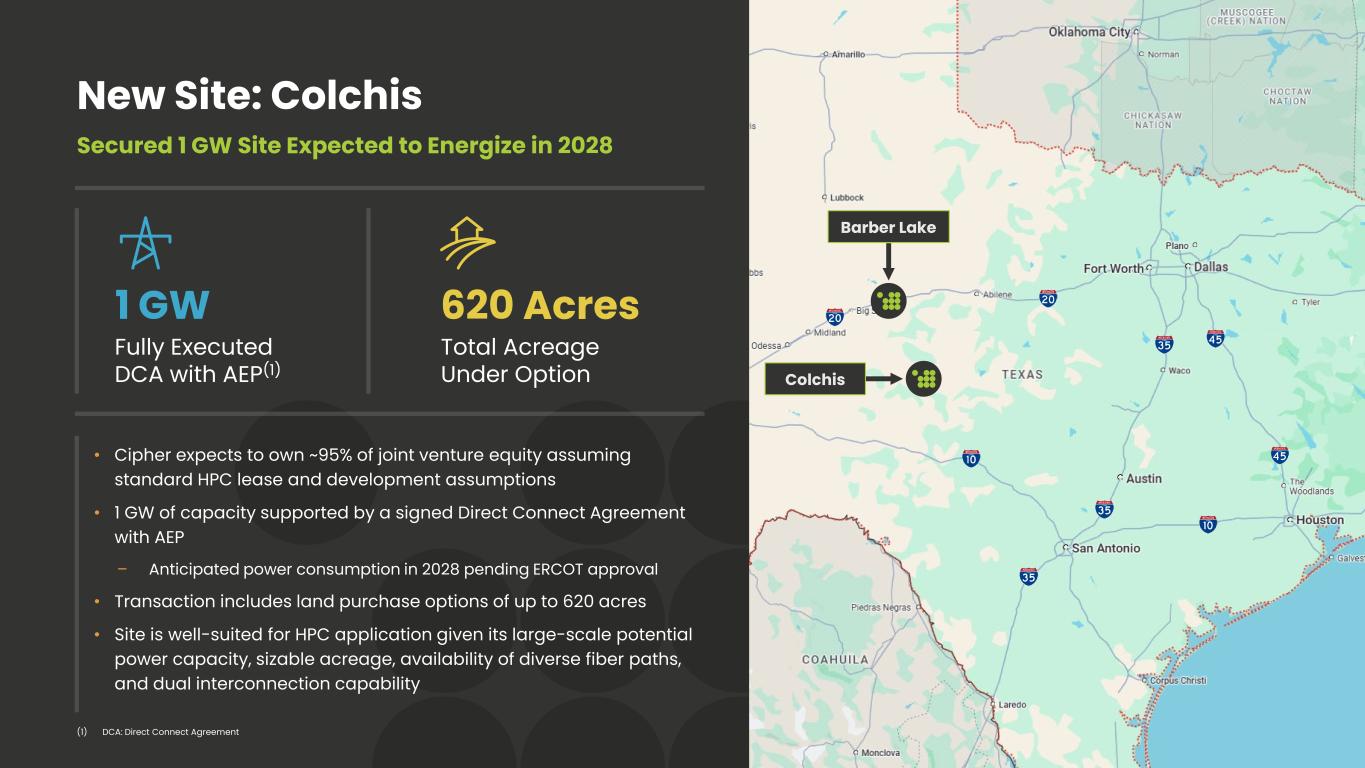
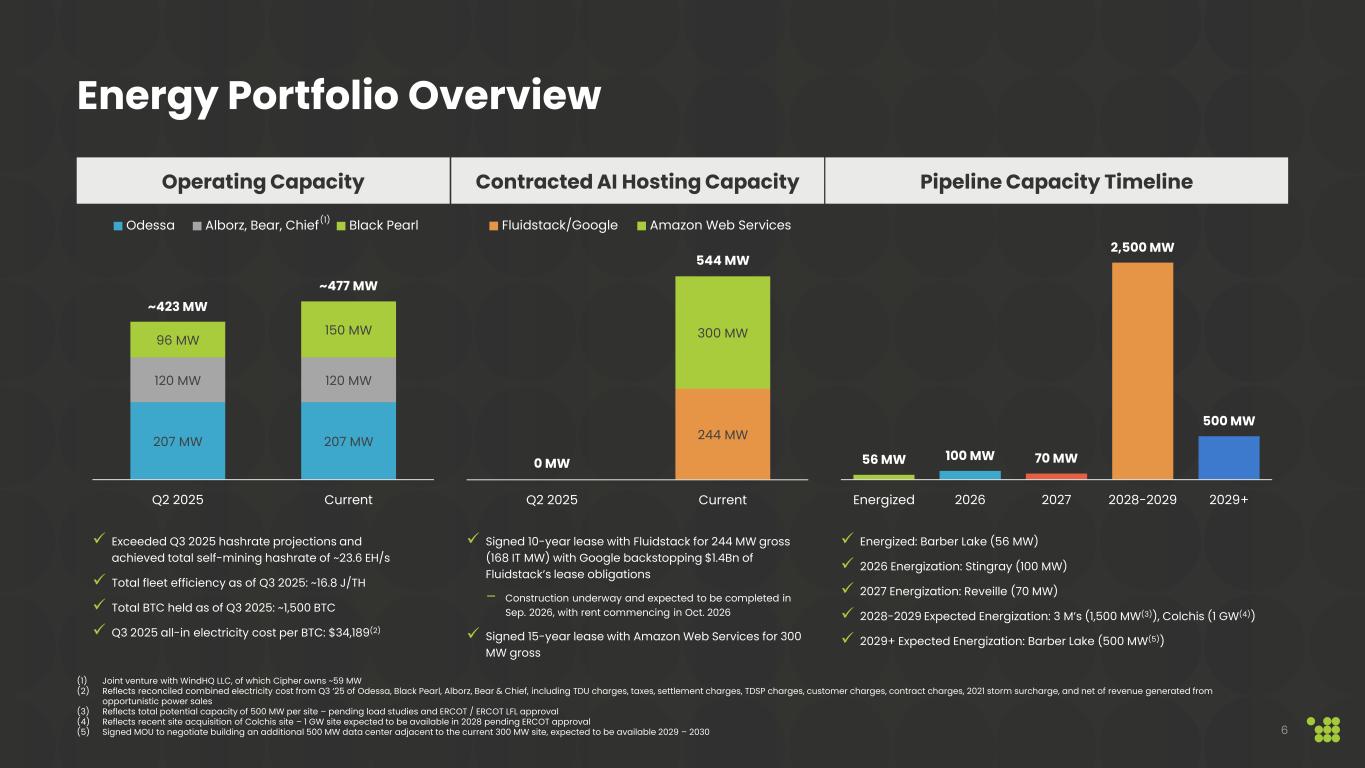
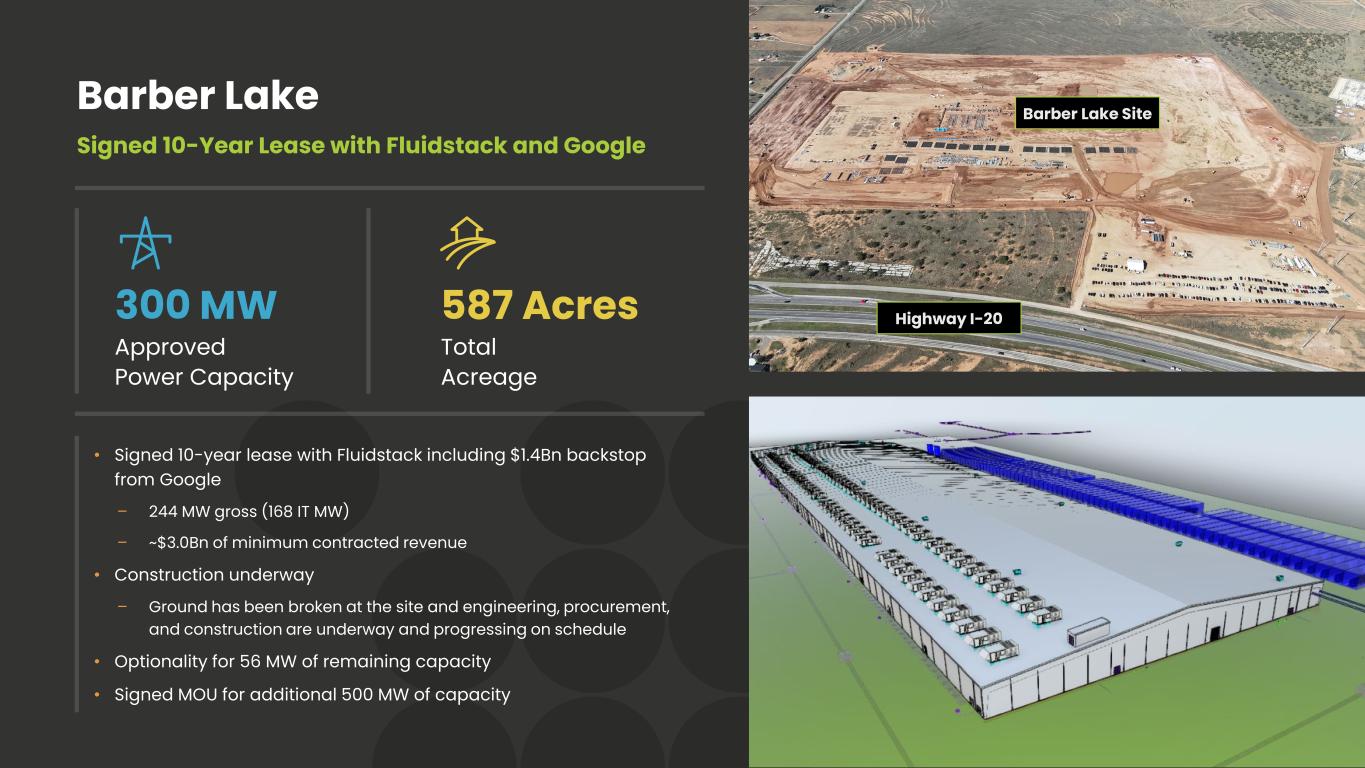
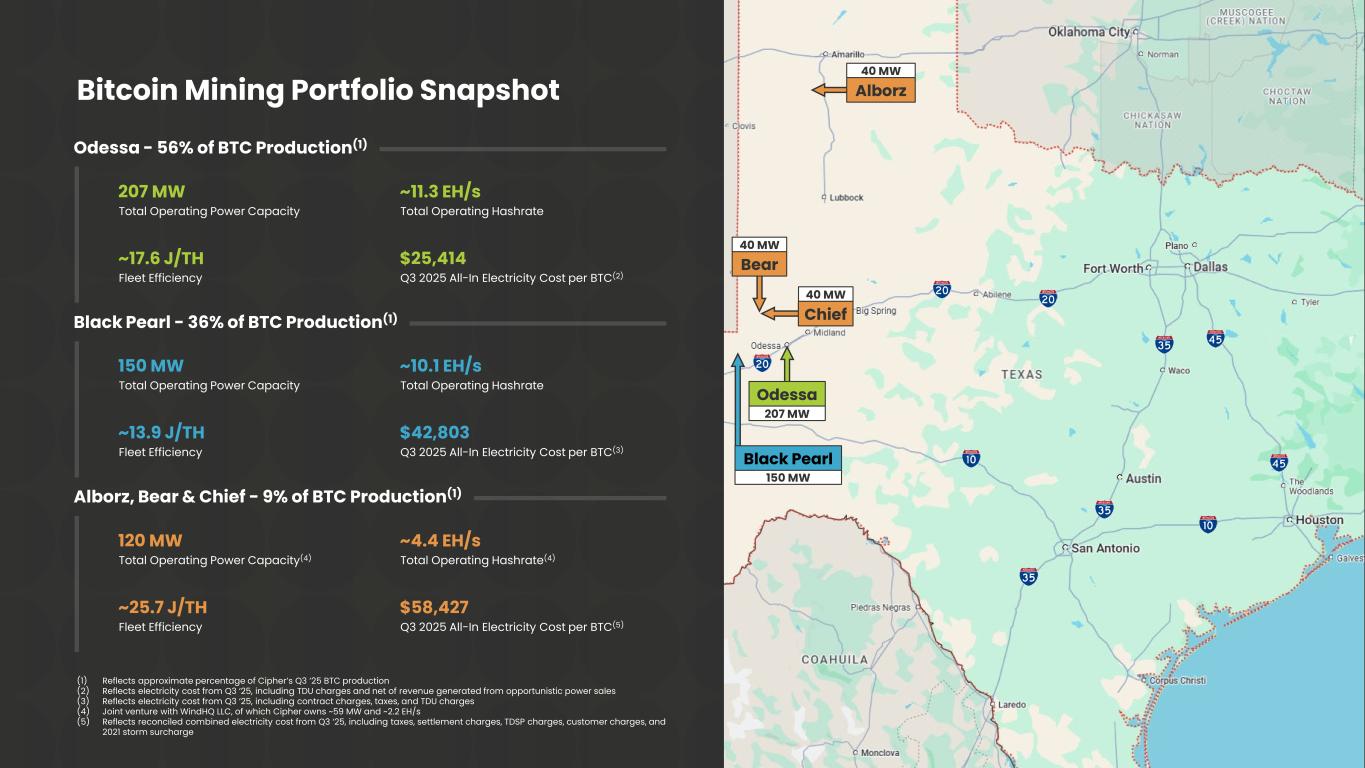
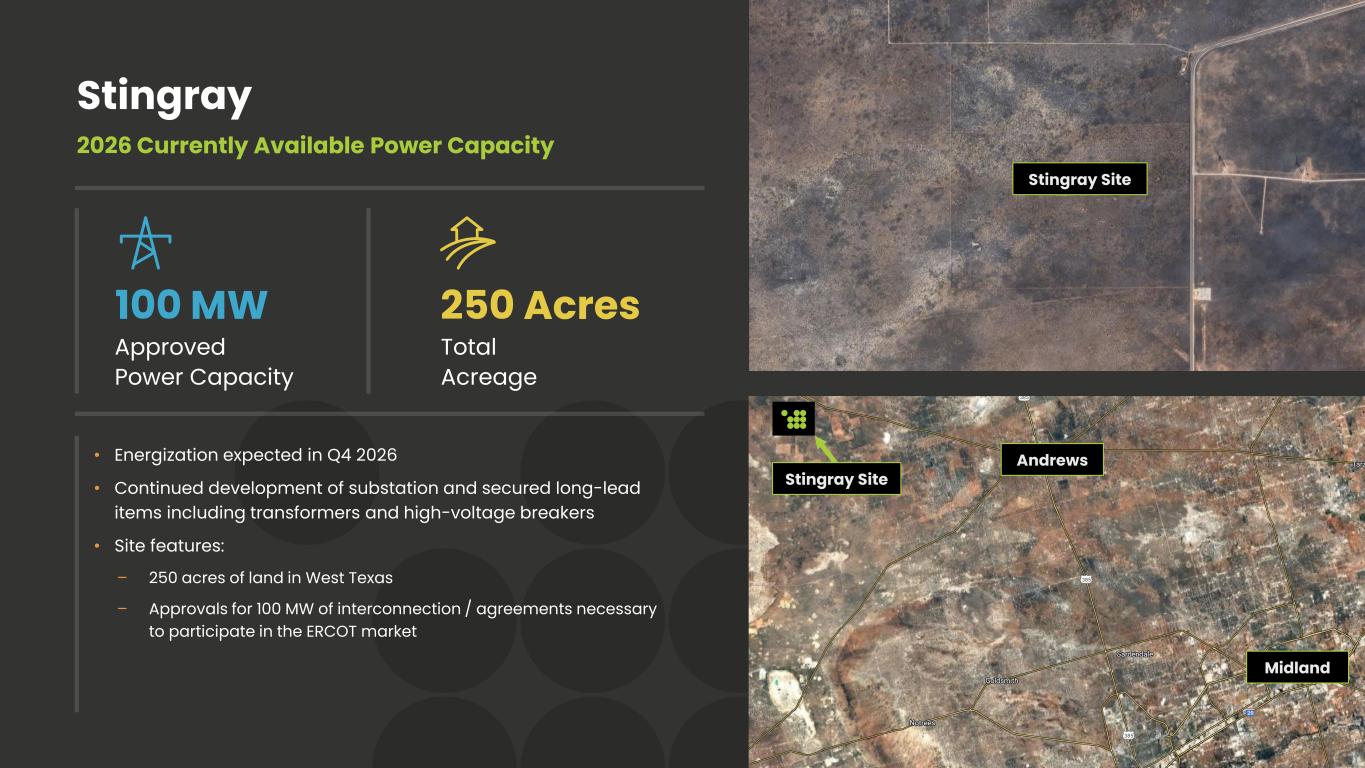
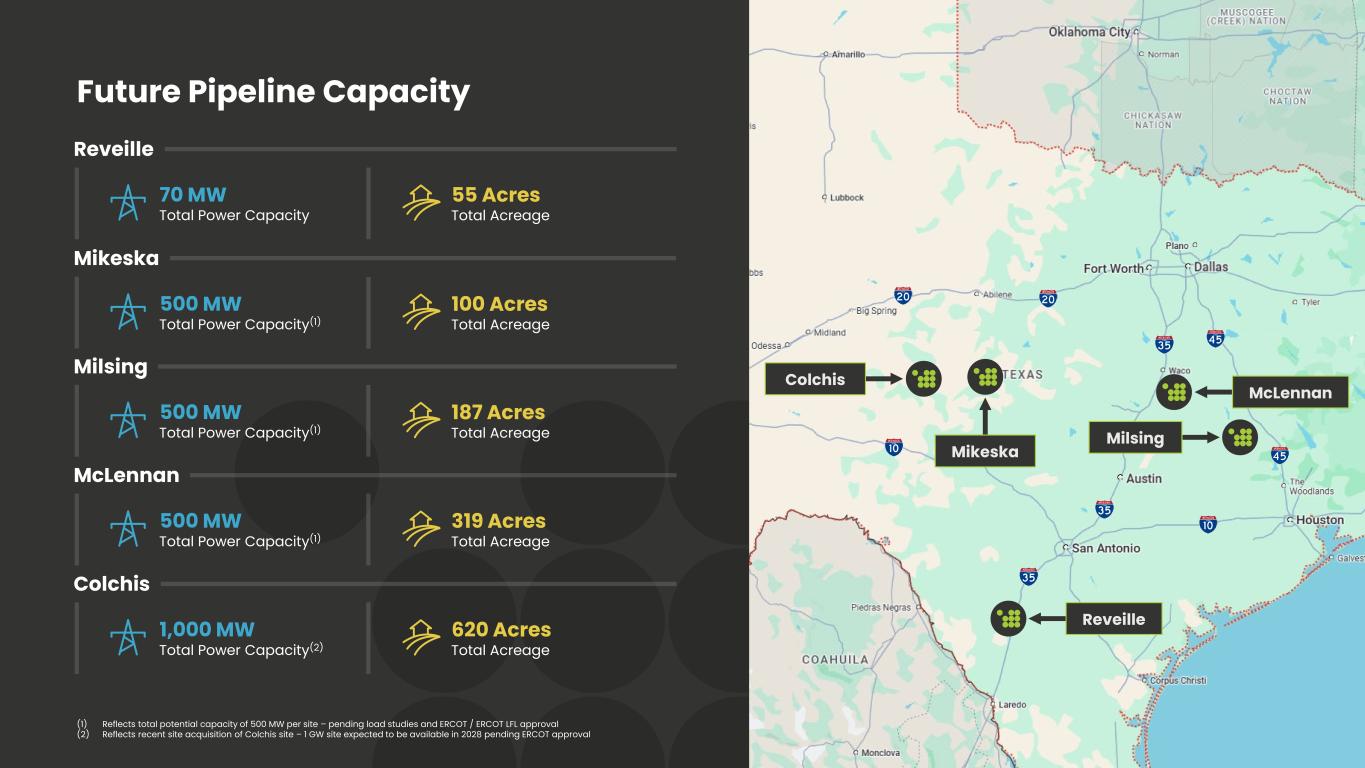
proves that neither we nor west texas are one hit wonders our second lease faces the world's largest hyperscaler directly on a 15-year lease at very attractive terms this is not a fluke and will not be our last hpc deal under the agreement we contracted 300 megawatts of gross capacity and the project carries approximately 5.5 billion dollars in contract revenue over the initial 15-year term. The capacity will be delivered in two phases beginning in July 2026 and completing in Q4 2026 with rent commencing in August of 2026. Given the strength of the lease we have secured, we believe that we will utilize debt financing to fund the majority of construction costs at the site and any remaining construction obligations will be funded from cash on hand with no need for further equity fundraising. With these milestones, Cypher has officially arrived as a leader in the HPC revolution, harnessing our sourcing expertise, energy assets, best-in-class team, and operational excellence to power the world's most advanced computing workloads. Continuing with that momentum, we're proud to announce today that we've secured ownership in a joint venture to develop a one gigawatt site in West Texas. We expect to own approximately 95% of the JV once a turnkey HPC lease is executed, assuming standard lease and development terms. We are calling the site Colchis, which refers to the mythical home of the Golden Fleece and was a land of legendary wealth located at the edge of the known world. For the past year and a half, conventional knowledge in the traditional data center industry has been that hyper-steelers would not venture outside of major metropolitan areas and that our sites were at the edge of the world. But we have now conclusively proven those incumbents wrong. We will continue to do so at Colchis. This is the most significant addition to our development pipeline to date. This site features a fully executed one gigawatt direct connect agreement with American Electric Power, providing dual interconnection capability and targeted power availability in 2028. The transaction also includes options to purchase up to 620 acres of land adjacent to the existing substation. The Colchis site checks every box for a premier HPC development opportunity. Ample acreage, large-scale power capacity, availability of diverse fiber routes, and dual interconnection capability. We have already begun to have early-stage discussions with potential tenants for the site. The execution of this transaction once again demonstrates our team's sourcing expertise and ability to secure some of the most attractive large-scale sites in the world. Cypher is one of the few companies in the world that can combine boots-on-the-ground expertise, working directly with landowners to source best-in-class sites, with the deep technical sophistication needed to serve hyperscalers. This unique and powerful combination makes Cipher exceptionally well-positioned to bridge the growing gap between the limited supply of suitable sites and surging large-scale tenant demand. The announcements we shared today are the results of years of hard work and the strong execution and momentum built over the past quarter. I'd like to take a moment to reflect on some of our third quarter successes. At the forefront of these highlights is our recent transaction with Fluidstack and Google, a transformative 10-year, 168 critical IT megawatt AI hosting agreement that first positioned Cypher as a major developer in the HPC space. Under this agreement, Cypher will deliver 168 megawatts of critical IT load at our Barber lake site in colorado city texas supported by up to 244 megawatts of total capacity this project represents approximately 3 billion in contracted revenue over the initial 10-year term with options that could extend total contract value to roughly 7 billion dollars over 20 years notably construction is already underway at the site and we are on track to deliver the full 168 megawatts of critical IT capacity by September 30th, 2026. Importantly, Google is backstopping 1.4 billion dollars of fluid stacks obligations to support project financing and will receive warrants representing roughly a 5.4 percent pro forma equity stake in Cypher. Cypher will retain full ownership of the site and is in the process of securing debt to fund construction. We will provide more details around that construction financing in the near future. We believed and have now proven that Barber Lake was just the beginning, the first of several projects to capitalize on our team's sourcing expertise, proven development capabilities, strong industry relationships, and unmatched construction track record. We look forward to continuing to partner with leading technology companies to secure HPC leases at our growing pipeline of sites. This expansion is well-supported by our successful $1.3 billion convertible offering completed this quarter. This was the largest digital infrastructure convertible issuance to date and was roughly seven times oversubscribed, demonstrating investor confidence in our strategy and pipeline. The strong demand allowed us to take advantage of favorable market conditions, securing a 0% coupon and further strengthening our balance sheet. Greg will discuss the convertible offering in further depth later on the call. The Amazon transaction, the Fluid Stack and Google transaction at Barber Lake, the addition of significant new capacity at Colchis, and our successful convertible offering all represent major milestones in advancing our HPC strategy. Together, these achievements expand our business model, secure substantial future capacity, and strengthen our balance sheet. All positioning cipher to capture the tremendous demand we're seeing and play a critical role in building the next generation of AI infrastructure. As we scale and expand our business model, our Bitcoin mining business continues to generate meaningful cash flow. The company surpassed expectations this quarter and is now operating approximately 23.6 exahash per second of self-mining capacity. the same disciplined foundation we established in the bitcoin mining space delivering five data centers on time and on budget will fuel our successful expansion into hpc i'd now like to provide a brief overview of our energy portfolio which highlights our execution across business lines and the strength of our pipeline going forward on the mining side of the business this quarter we brought black pearl fully online which grew our operational mining capacity from 423 megawatts to 477 megawatts across odessa albors bear chief and black pearl in doing so we exceeded our previous hash rate projections and achieved a total self-mining hash rate of approximately 23.6 exit hash per second in addition our fleet efficiency stands at an extremely impressive 16.8 joules per tera hash making us among the most efficient miners in the industry our proprietary software which allows us to dynamically curtail our data centers has proven to be a critical advantage in optimizing for profitability maintaining low power prices and monetizing older rigs this area of expertise is expected to remain a key competitive advantage in the future and in fact may be an increasingly valuable aspect of the business as the HPC landscape continues to evolve. Importantly, our current mining operations are fully funded, and we do not anticipate further investment in that side of the business as we prioritize our pipeline toward HPC. As discussed, this was a monumental quarter for Cypher in that we grew our contracted AI hosting capacity from zero last quarter to 544 gross megawatts this quarter across two transactions with world-class partners. Behind that, we have a robust pipeline of 3.2 gigawatts of future capacity that spans from 2025 to 2029 and beyond. While we are extremely proud of our mining production, market dynamics, scarcity of energy capacity, and frenzied demand from tenants has made it clear that the best use of our extensive pipeline of sites is for HPC workloads. We are in ongoing discussions on our pipeline with leading partners and look forward to prioritizing all of these sites for HPC development. Let's now turn to a review of our current operations on both sides of the business. At Barber Lake, we are constructing a data center for our industry-leading partners FluidStack and Google. Construction at the site is well underway, Ground has been broken, and both engineering and procurement are progressing smoothly. We've secured the necessary labor force and locked in most of the long lead time equipment, putting us in a strong position to meet all key construction milestones on schedule. We are firmly on track to deliver the full 168 megawatts of critical IT capacity by September 30, 2026. The lease is anticipated to commence the following month in October, 2026. Note that we still retain 56 megawatts of current capacity at Barber Lake. These additional megawatts allow us to pursue an additional co-location agreement, potentially prioritizing different deal elements, or to deploy our own compute at the site. Our team is carefully assessing the merits of all potential options to maximize the value of the remaining 56 megawatts in phase one. In addition, we maintain an MOU on an additional 500 megawatt upsides at the site, which would come online in 2029 to 2030. Given the site's ongoing development potential and live deal discussions, we look forward to providing further updates as things progress. Turning to our current mining operations, slide nine has a production summary across our five operational mining sites. Odessa is still the most significant part of our portfolio, representing approximately 56 percent of our bitcoin production in q3 as of september the current operating hash rate at the site is approximately 11.3 exahash per second using approximately 207 megawatts odessa's fleet efficiency stands at roughly 17.6 joules per tera hash on this page we also provide the observed all-in electricity cost per bitcoin at our five sites moving down the page black pearl began contributing significant cash flow to the business in the third quarter the first 150 megawatts at the 300 megawatt site are currently mining at approximately 10.1 exit hash per second exceeding prior guidance and contributing approximately 36 percent of production this quarter fleet efficiency at the site stands at an extremely impressive 13.9 joules per tera hash Lastly, we provided a combined overview of our joint venture data centers of Alborz, Bayer, and Chief. The three sites have a total power capacity of 120 megawatts and generate approximately 4.4 exahash per second. We own 49% of the JV sites and our portion recently generated roughly 9% of our overall Bitcoin production in the third quarter. Let's now shift to an update on our development portfolio. IAID 11 provides an overview of our next to energized site in Andrews County, Texas, called Stingray. The site features 100 megawatts of front of the meter capacity, all necessary regulatory approvals, and 250 acres of land adjacent to the transmission assets. In the third quarter, we continued development of the substation for the site and secured long lead time items including transformers and high voltage breakers. The site is on track to energize in the fourth quarter of 2026. Slide 12 outlines additional capacity spanning 2027 and beyond. Reveille, located in Ketula, Texas, is on track to energize in Q2 2027. The site is fully approved for 70 megawatts and we have initiated development of the substation. Given both Stingray and Reveille have secured interconnect approvals and established energization timelines, we've engaged with multiple prospective tenants and are in ongoing discussions to secure the most attractive lease agreements for these locations. Our three Ms, Mikeska, Milsing, and McLennan, are all currently undergoing final interconnection approval processes, and load studies have been completed at all three sites. The interim Encore FEAs have been signed with Encore for McKeska and McLennan, and the required deposits have been paid. We're targeting up to 500 megawatts of capacity at each of these sites. In addition to interconnection rights, our purchase options also include significant land parcels at each location, all of which are well suited for HPC, data center development we are confident these sites will be in high demand as development progresses last on this page is colchis which as mentioned is our latest site acquisition and the most substantial addition to our pipeline to date the site features a fully executed one gigawatt direct connect agreement with american electric power providing dual interconnection capability and targeted power availability in 2028. The site is roughly 80 miles southwest of Abilene and around 80 miles southeast of our Barber Lake facility. As mentioned, the site is extremely well-suited for HPC given its ample acreage, large-scale power capacity, availability of diverse fiber routes, and dual interconnection capability. Last quarter, we discussed our strategy to position Cypher ahead of the curve in anticipation of the evolving AI data center landscape. Since then, we have executed two landmark HPC transactions, as well as our most significant pipeline addition to date. With the industry moving even faster than we had anticipated, we are more confident than ever that Cypher is among the best positioned companies in the world to seize the near-term opportunities created by the growing power shortfall. Simply put, we are just getting started. I will now turn it over to our new CFO, Greg Mumford, for a review
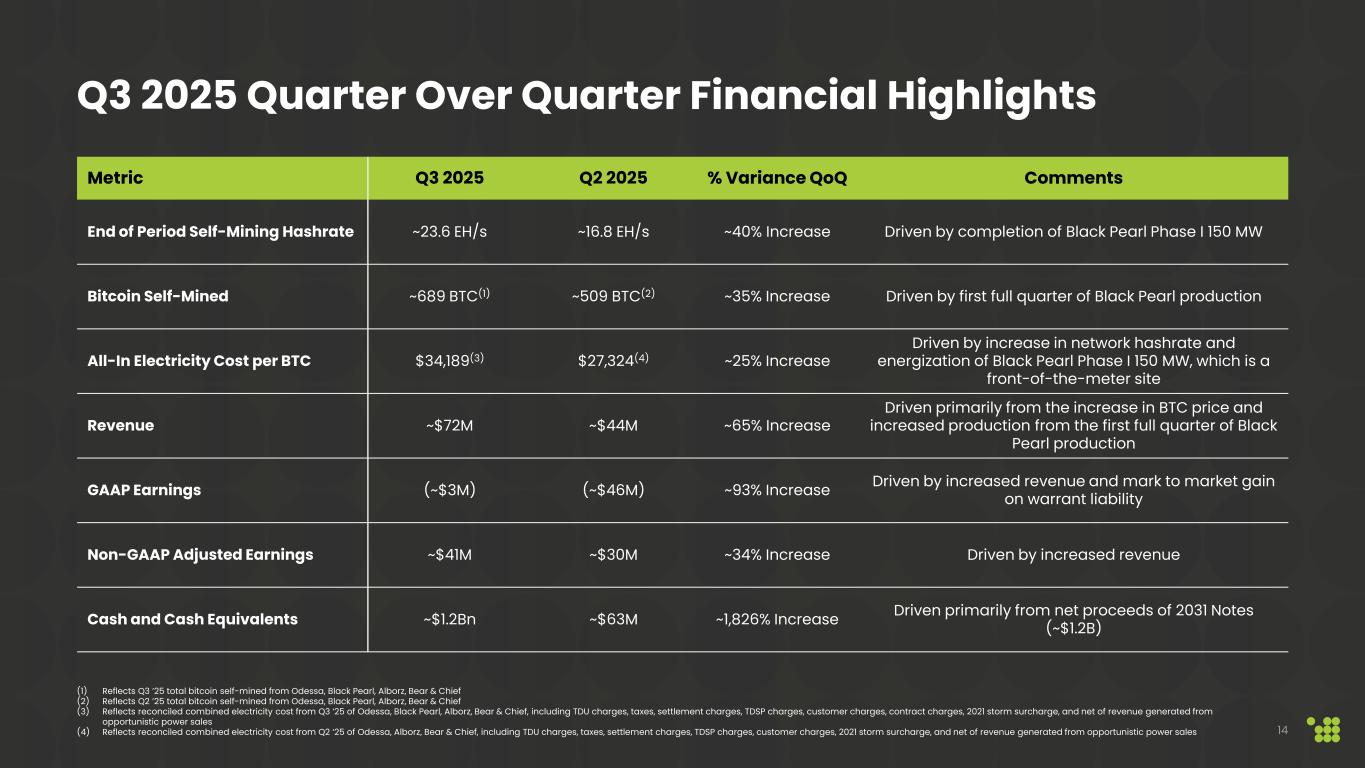
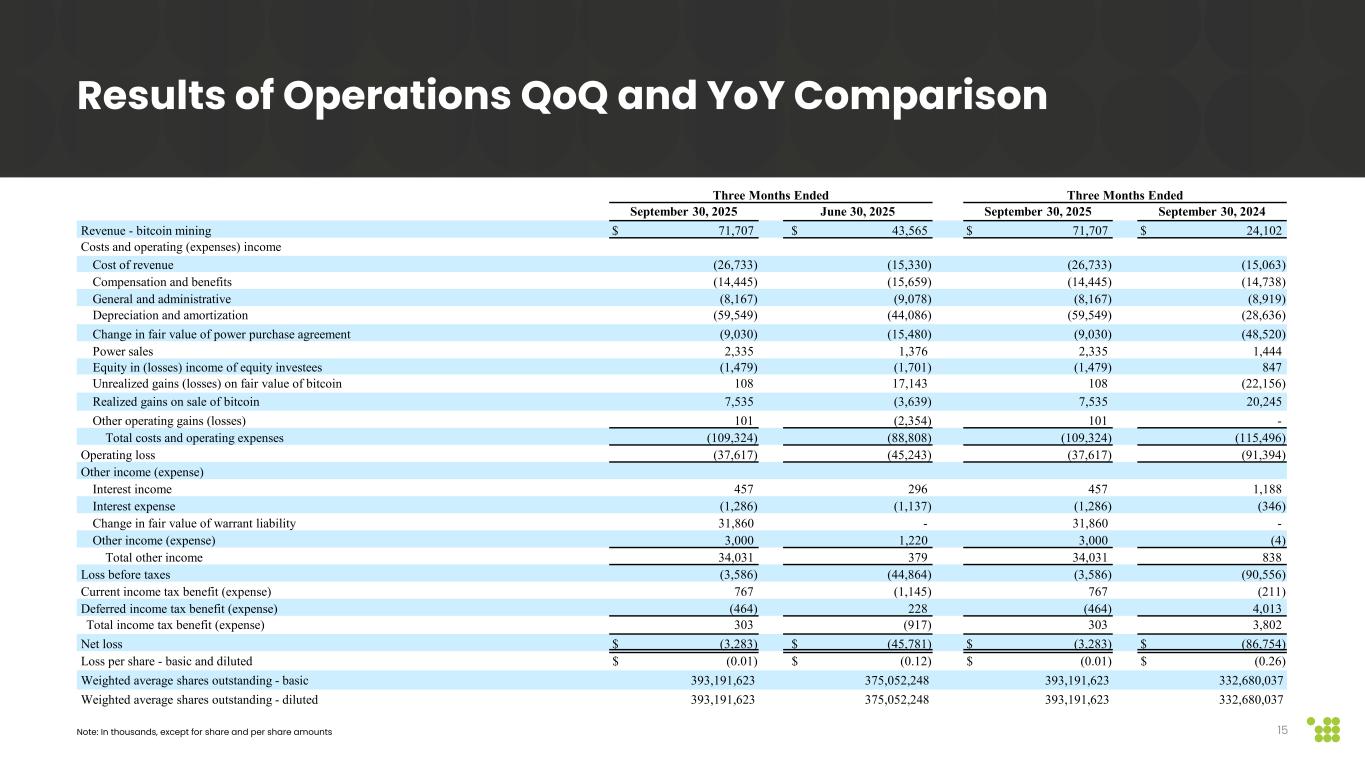
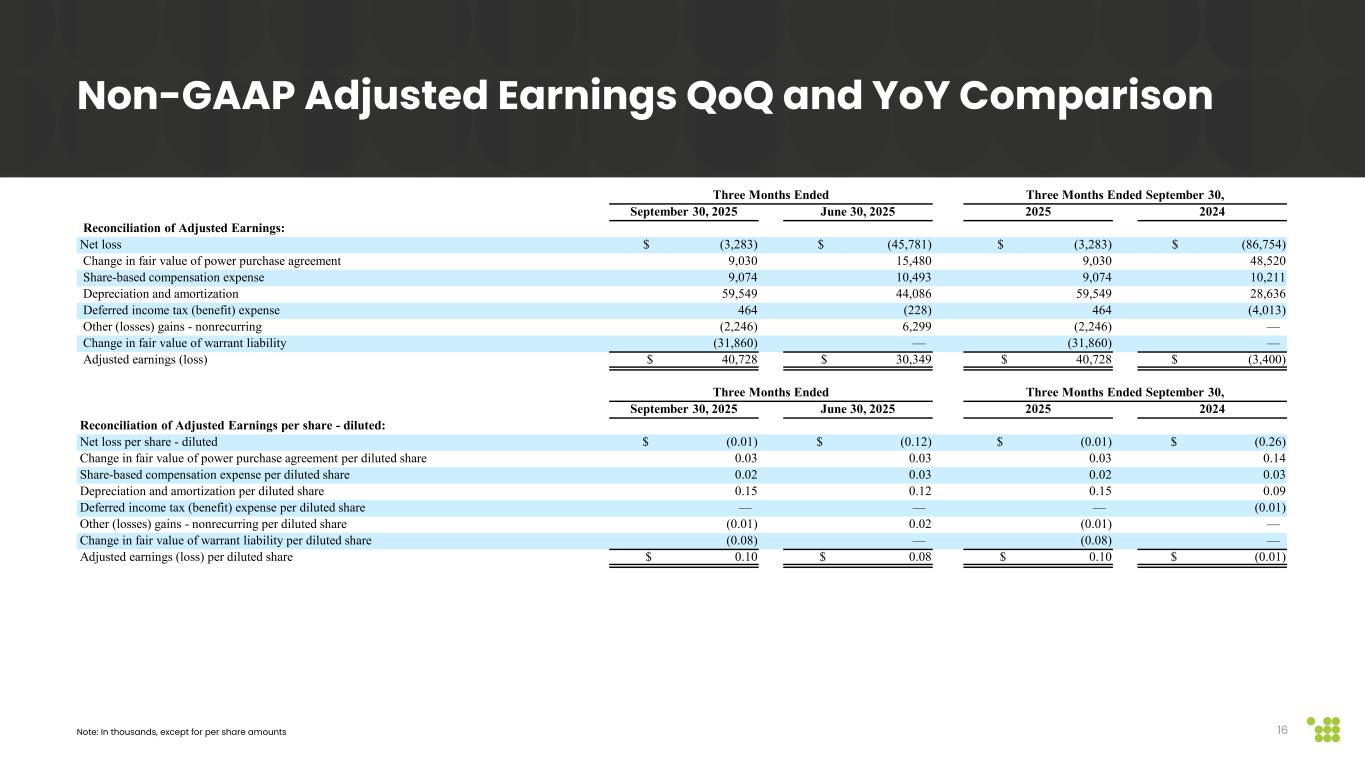
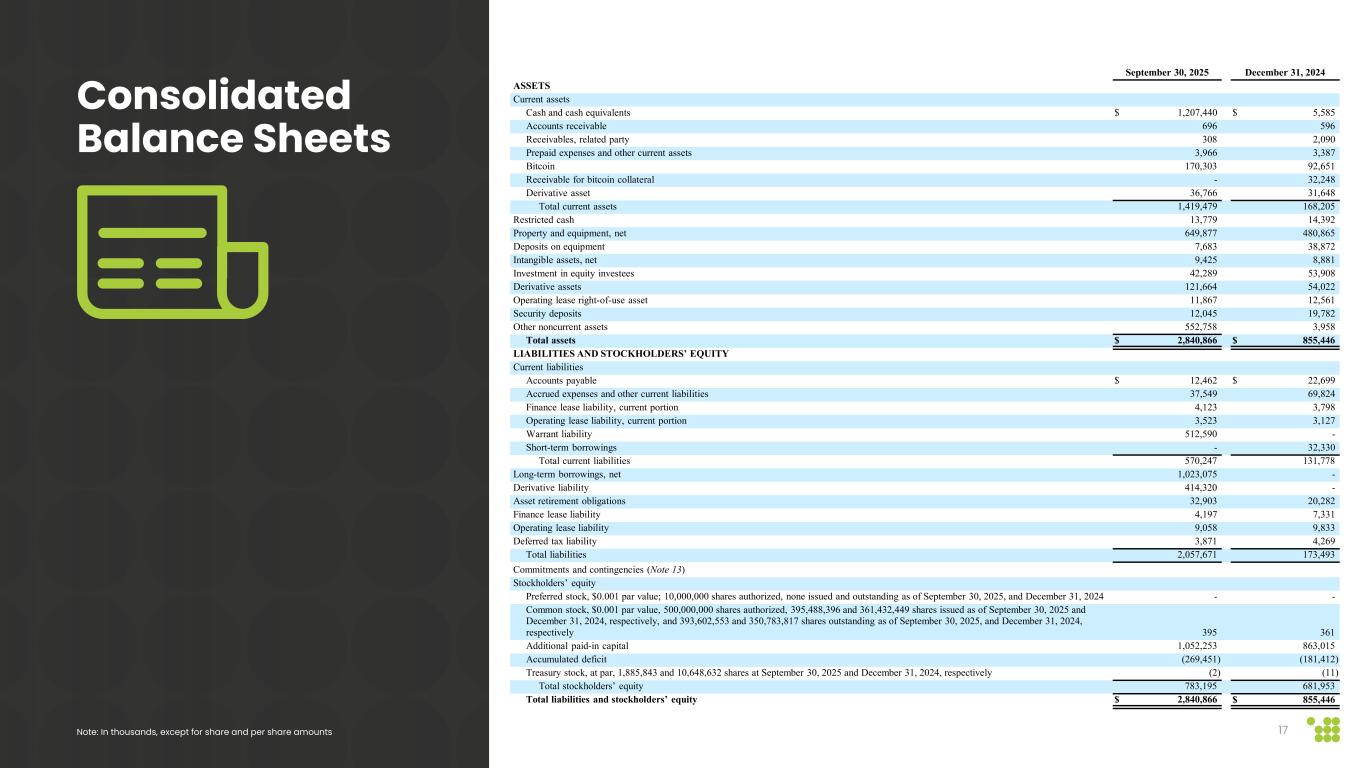
of our third quarter financials. Thanks, Tyler, and good morning to everyone on the call. I'm excited to join today's call as Cypher's new Chief Financial Officer. It's a privilege to be part of such an innovative company that's playing a key role in the evolution of digital infrastructure and high-performance computing. I want to start by expressing my gratitude to Ed Farrell for his leadership and many contributions over the past five years. Ed has built a world-class finance organization and leaves behind a strong foundation that positions Cypher well for its next phase of growth. The company is fortunate to have his continued guidance as a senior advisor during this transition period. As I step into this role, my focus will be on maintaining a disciplined approach to our financial strategy, broadening access to new funding sources, and optimizing our overall cost of capital. We'll continue to take a thoughtful approach to capital allocation, ensuring we're maximizing sustainable long-term growth and driving value for our shareholders. I'm excited to work with Tyler, the leadership team, and our talented finance organization to build on Cypher's strong momentum. To begin, I'd like to remind everyone that today I will be discussing our performance for the third quarter of 2025, which ended on September 30th. I'd like to highlight that this quarter was marked not only by strong execution as we officially expanded into our HPC hosting and grew our pipeline, but also by disciplined capital raising that positions us to sustain and accelerate that momentum moving forward. During the quarter, we completed our second convertible offering, an upsized private placement of $1.3 billion of 0% convertible senior notes due 2031. This transaction reflected strong investor demand and confidence in Cypher's long-term strategy. The notes were issued with an initial conversion premium of approximately $16.03 per share, representing a 37.5% premium to our stock price at issuance. We also entered caps call transactions that increased the effective conversion price to approximately $23.32 per share, substantially reducing potential dilution to our shareholders. The net proceeds from the offering were used to fund the cost of entering into the capital transactions and will be used for construction at our two currently contracted HPC sites to advance our HPC strategy across our now 3.2 gigawatt development pipeline and for working capital and general corporate purposes. Importantly, this financing bolsters our balance sheet and reflects our disciplined approach to growth. We're very pleased with the market reception and believe this transaction positions Cypher well to capture the significant opportunities ahead in hpc and digital infrastructure let's now turn to a review of our financials beginning with our sequential financial performance outlined on slide 14. in the third quarter our hash rate increased by 40 percent driven by the energization and ramp up of our black pearl facility where phase one of the 150 megawatt front of the meter site came online in june black pearl began the quarter contributing approximately 3.4 exahash per second and ramped up to approximately 10.1 exahash per second during the quarter this led to a 35 increase in production as well as an increase in our electricity cost per bitcoin given black pearl is a front of the meter site the higher cost per bitcoin was also driven by an increase in network hash rate over the quarter moving down the slide we reported 72 million in revenue up 65 from 44 million in the prior quarter this growth was driven primarily by the increase recent Bitcoin price and the increased production from Black Pearl. For the quarter, we reported a gap net loss of $3 million, or $0.01 per share, compared to a net loss of $0.46 million, or $0.12 per share in the prior quarter. We are proud of a substantial quarter-over-quarter improvement in our results, particularly given that bottom-line performance was impacted by higher depreciation expense. This depreciation expense reflects the assets placed into service at Black Pearl, including the deployment of latest generation rigs, as well as the upgrade at Odessa completed in Q4, 2024. Additionally, the bottom line continues to be influenced by changes in the fair value of our power purchase agreement at Odessa. These expected fluctuations reflect movements in forward power prices and the decaying time value of the remaining contract term, which extends through July, 2027. As Ed has previously noted, the true benefit of this contract lies in its provision of long-term, low-cost, fixed-price power for our DESA operations. This quarter, as part of the execution of our HPC lease at Barber Lake, we granted Google warrants as compensation for their commitment to backstop the lease payments from our tenant fluid staff. These warrants are recorded at fair value, and as a result, this quarter we recognized a $32 million gain in change of fair value of the warrant liability. Excluding non-cash expenses, such as the change in fair value of our power purchase agreement, share-based compensation, depreciation and amortization, deferred income taxes, the change in the fair value of the warrant liability, and non-recurring losses, we reported a third quarter adjusted earnings of $41 million, or $0.10 per share, up roughly 34% from $30 million last quarter. Cash and cash equivalents increased significantly, driven by the $1.2 billion of net proceeds from most recent convertible financing let's move on to slide 15 and take a deeper look at the results of our operations for the quarter we mined 383 bitcoin at odessa and 246 at black pearl bringing our total production to 629 bitcoin mine in total across our wholly owned sites this production generated 72 million in revenue at an average price of roughly 114 400 per bitcoin This compares to the 434 Bitcoin mined in Q2 2025 at an average price of $99,700 per Bitcoin, resulting in $44 million in revenue. G&A expenses, which include IT, corporate insurance, professional fees, and other public company costs, decreased slightly both sequentially quarter over quarter and year over year. Depreciation and amortization expense totaled $60 million, up from prior periods driven by the deployment of new mining rigs over the last 12 months. Our oldest rigs in the fleet will be fully depreciated in Q4, but those rigs can remain productive and continue to generate attractive returns when deployed strategically. We recognized a small unrealized gain on our Bitcoin holdings this quarter compared to a $17 million gain in Q2, reflecting a modest increase in the spot price at quarter end. We finished the quarter holding approximately 1,500 Bitcoin in Treasury. On our non-GAAP reconciliation, we reported a GAAP net loss of $3 million. Adjusting for $44 million in non-cash and one-time items results in adjusted earnings of $41 million for the quarter, up from $30 million in the previous quarter. Now let's turn our attention to the balance sheet. On slide 17, total current assets at quarter end were $1.4 billion, up from $220 million last quarter, driven primarily by the net proceeds of the $1.3 billion we received from our convertible offering. In addition, we held $170 million of Bitcoin. As we have discussed in depth on our previous earning calls, we actively manage our treasury, neither selling nor holding every Bitcoin month, and we remain disciplined in our approach to capital management. I'll quickly cover some additional balance sheet line items as of September 30th. DP&E totaled $650 million, up 37% from $474 million. This increase is primarily related to equipment deployed at Black Pearl. Deposits on equipment of $8 million, down from $183 million last quarter, is primarily related to the reclassification of rigs at Black Pearl from deposits to in-use property equipment at the end of the third quarter our equity interest in the alborz bear and chief jvs stood at 42 million dollars moving down the balance sheet derivative assets were up primarily due to the inclusion of 90 million dollars of capped calls associated with the new convertible note which raises the effective conversion price of the convertible debt and effectively minimizes potential dilution to shareholders current liabilities increased this quarter due to the short-term classification of the google warrants associated with the fluid stack lease at barber lake lastly and importantly i want to highlight that short-term borrowings remain at zero we continue to manage the balance sheet conservatively ensuring we're well positioned to meet any capital needs before we conclude i'd like to thank everyone for joining today's call we're proud of the tremendous progress we've made this quarter and the transformative growth we've achieved as we continue to expand our business lines, grow our pipeline, and strengthen our balance sheet to support that growth. As always, we remain firmly committed to discipline execution, capital efficiency, and delivering long-term value for our shareholders. Thank you for your continued support, and we look forward to updating you on our progress of the next quarter. At this time, I will pause, and Tyler and I would be pleased to take any questions.
Operator
Thank you. As a reminder, if you'd like to ask a question, please press star 11. If your question hasn't answered and you'd like to remove yourself from the queue, please press star 11 again. Our first question comes from Paul Golding with Macquarie. Your line is open.
Thanks so much, and congrats on the announcement and all the progress on HPC. I wanted to start off with a question around the deal itself. 300 gross megawatts, Stingray, you have on-track for energization, 100 megawatts in 26, and Barbara Lake, you have 56 megawatts after the fluid stack deal. How should we think about the distribution of power to deliver the 300 megawatts as well as maybe pricing across liquid and air-cooled since you're delivering both? It looks like averaging out the deals about $1.7 million per critical megawatt on my back of the envelope math. If you could just talk through some of those deal points on pricing as well as how you plan to deliver that capacity across your fleet. And then I have a follow-up. Thank you so much.
Sure. Thanks, Paul. Thanks for the question. So let me start with the framework that the ink is still drying on the deal we signed with AWS. So there's some element of finalizing basis of design involved and getting you the exact numbers that will be represented. So they are taking 300 gross. We are recutting an existing air-cooled 150 megawatts, so there will be a quick time to market with the first phase of that build. The second build, we are still finalizing design, and some of the debates that are happening are between speed to market, so speed to availability of the compute versus optimizing for highest critical IT load possible that's not finalized yet so I'd say that in general if the whole site ends up air-cooled the PUE will be in line with the design we've got at Barber Lake which shakes out at about 1.4 1.45 depending on the balance of what might be used with more of a liquid cooled approach we could improve that by having the second phase have a higher or sorry a lower PUE a more efficient PUE so still shaking out exactly where those numbers will be as far as cost goes which you referenced it would be in line with again Barber Lake what we've done in the past we would expect the cost per critical IT megawatt to be in line with that estimate thanks so much if not if not better because we do have some infrastructure in place already that was bought in a in a cheaper market got it appreciate that
color and then you also uh mentioned debt financing as a majority uh of uh capex sourcing and then cash on hand are you able to give any more detail around uh financing plans in terms of of you're already developing the FluidStack capacity. So is this cash on hand from prepayment deposits? And is there any kind of backstop here to help support project financing and going to market for that?
Let me give some high-level framework for that, and then Greg can chime in if he wants to talk about any specifics. So two different structures. Obviously, the first deal is with FluidStack and Google. That structure looks similar to one that's been out there in the market. Fair to say we'll be looking to pursue our debt financing options for that in the coming days and weeks. And I would expect, depending on where the market is, those structures are not too dissimilar. So that's how we would envision probably how that shakes out. On the AWS lease, that is a direct-facing hyperscaler lease. I think it's the first of its kind among anyone that has converted from Bitcoin mining to do a long-term 15-year direct-facing hyperscaler lease. That should be very financeable. As far as the equity support for whatever shakes out in the final terms for that financing, keep in mind we upsized the convert we did recently quite a bit. market was so favorable that it went up all the way up to $1.3 billion offering. So we already have a fair amount of excess cash on hand, and by all estimates, that should support what we would anticipate to be the equity piece of the financing to build the structure related to the AWS lease. Greg, would you give any other further color, or is that enough, do you think?
Yeah. I mean, Tyler, I think you said it right earlier, is that we're not prepared to give specifics on the financing that we're looking at for the Google Fluids back deal, but we are exploring opportunities and we'll be hopefully updating the market in short order. As it relates to the AWS deal, we think that there's going to be a lot of opportunities in front of us to explore different types of project or construction level financing, and we're going to work through those options and make sure that we're making the right decision. Thanks so much. Thank you. Our next
Operator
question comes from Greg Lewis with BTIG. Your line is open. Yeah, thank you and good morning
and thank you for taking my questions. You know, I guess the first question is around, you know, the additional sourcing of power. You know, congratulations on that. It seems pretty tough. You know, Tyler, as we think about, you know, and you're talking about things accelerating and kind of what's possible, could you kind of ballpark, you know, how things are progressing and what you're seeing at our cot you know you have the different five that they ends that you referenced you know 500 megawatts you know when did those get in the queue obviously we have some power coming online in 26 just kind of an overall update on how we should be thinking about availability of power from
that growth pipeline that you have sure so let me give some color as it relates on the sites that are awaiting final or caught approval so a lot of this shakes down to so first of all they've been in the queue for a while and all load studies and everything have been submitted a little bit on the timing expectation shakes out to the sort of business operating model of the particular transmission distribution service provider you're working with so in the case of Colchis you know we're anticipating a 2028 energization we have already paid a kayak so construction in advancing construction payment to assist with the work that the TDSP has to do. That's with AEP, and AEP is confident moving forward with that construction based on an expectation of having that site energized by 2028. So then that's where we are there. I mean, construction will be progressing on the AEP side, and we are in live discussions while they await that final approval from ERCOT. At McKeska and McLennan, we have signed interim FEAs. So, that's a requirement of the TDSP there, which is Encore. So, in those cases, again, the deposit's paid, but the construction will likely begin on the Encore side once that final ERCOT approval is in hand, which we're anxiously awaiting. And then, Milsing, we have not paid a deposit yet. Again, working with a different TDSP there, their process works a little bit different. So that's kind of the overall picture. And as far as ERCOT goes, it's hard to make any prediction with exact specificity. But given the progress in anticipation of where we think those sites will be available on the feedback from the TDSPs, we're confident in the timelines we've given. Okay, super helpful. And then on the
optionality of the 56 megawatts. I think you mentioned potentially, you know, maybe offering your own, you know, AI cloud services. Could you talk a little bit about, you know, how we're thinking about that in terms of, you know, just bringing on another customer, maybe there's an option that could be extended, you know, just how we should think about that 56 megawatts and And maybe around the timing, is this something we want to kind of have buttoned up in the next 12, 18, 24 months? Or, you know, hey, it's out there and, you know, time is on our side.
So the answer is it depends. I think, you know, we've had a lot of questions and interests around the idea of owning and operating our own GPUs and then selling the compute to an offtaker. I think in general, we have been progressing slowly on that front because we want to make sure we're getting the best risk-adjusted returns for the megawatts we've got. So obviously, you can produce numbers that are higher on the revenue side if you're selling compute, but you're taking on a whole bunch of risks, much larger financing risks, GPU lifecycle, obsolescence risk, etc. I do think a key to making that business very attractive would be to lock up a long-term offtake with a highly credible counterparty for the compute. So we've seen those deals. We're looking at them candidly. I think the numbers we signed on our lease with AWS are better. I think we will probably both make more in terms of profits and with much, much, much less risk. So it still remains to be seen from our perspective what the best use of a megawatt is to make the most money. But we're in very active discussions in exploring all available business models. And obviously, as we sign up new one gigawatt sites, we're going to have a lot of optionality as things progress. As it relates to the specific 56 megawatts, I'm highly confident we will have some sort of deal there pretty soon. There is a lot of interest, both on using that capacity to operate our own GPUs and cell compute, as well as have it leased on a co-location basis. It's fair to say that this market is literally getting more frenzied by the, certainly by the week, if not the day. So rental rates on leases are going up rapidly. The level of interest is overwhelming. And so from our perspective, we're spoiled for choice. We've put ourselves in a very advantageous position. And so depending on which deals we think will produce the best risk-adjusted returns, that's how we'll proceed. But I do think the 56 megawatts there, as well as the 100 megawatts at Stingray, the 70 at Reveille, will all be taken up. If this market level of interest continues, we will not have an available megawatt. We have multiple parties interested in all those sites and locking them up as soon as possible.
Okay, thank you very much, and congrats on the AWS announcement.
Operator
Thank you. Our next question comes from Andrew Beal with the research. Your line is open.
Hi. Can I just ask, what are you thinking about the design of Colchis, and what do you think the likely capex of that as a greenfield will be per megawatt? And just thinking about ERCOT approval, can you talk about what getting the Google FluidStack and AWS leases does in helping your approvals at the other sites, such as the 3M's, and how much difference partnering with AAP makes on that approval front?
Yeah, thank you very much for the question. So predicting the budgetary costs at Colchis is a little bit challenging, only because that's going to be, number one, again, that's another one, the ink is still drying on the acquisition. We're beginning to have exploratory conversations with folks that are interested in co-location there, just given the size of it. What we would do, I guess I'd say, in the interim would be we'll be deploying the CAPEX for the minimum requirements at the site, so fiber, substation, land, water, sourcing, etc. You know, I would say I expect our build costs to be in line with what we've done at other sites if we are building the same co-location type access, which has generally been, you know, call it $9 to $11 million per critical IT megawatt. Now, that said, there could be inflation, prices could change, supply chains, et cetera. I don't have any reason to believe that the cost would be different per megawatt other than just the passage of time and those factors. um you know so we will be able to give more details in the coming months and quarters i i think that um candidly with a with an expected availability of power in 2028 given the size of colchis um we hope to find a partner you know before too long just because that's a tremendous construction timeline and obligation and so we'll have to get moving on it but i have no reason to believe the cost would be any different. And then, sorry, remind me of your second question again. I
got lost there. Just about, I mean, you know, signing these leases with Google and AWS.
Oh, yeah, how it changes us with, sorry. Yeah, thank you. Yeah, there's huge benefits to these partnerships. I think, again, up until a few months ago, I can't tell you how many times we heard no one's ever going to sign at those sites. No one's ever going to sign with a former Bitcoin miner, at least not a traditional hyperscaler. That discussion is now over, obviously. And it probably won't be for us. It will be for others as well as other deals get signed across the ecosystem. I think every deal adds incremental credibility. We deserve a lot of credibility. Anyone that got to know the quality of our team, their experience, the things they've built in the past. And just looking at Cypher's own track record, if you took the word Bitcoin out and just said our team has delivered five data centers on time and on budget in this exact geographical region, there would be no reason to doubt what we say. It's just the traditional bias from incumbent industries against the word Bitcoin. So I think every deal adds credibility with everyone. Deals beget deals. And I talked about this a fair amount about striking our initial deals, focusing on the quality of the counterparty and setting our business up as a franchise such that we can extract the most value from the entire pipeline we've got. And I'm happy to say that that's exactly what we're seeing. So every conversation gets a little bit easier and we have a lot more credibility on new leases with regulators, with transmission distribution service providers. And truthfully, that kayak I mentioned in the case of Colchis, which is actually scheduled to go out shortly, that's what matters to ERCOT, right? So having more credibility and having money invested in the space and being a credible counterparty makes a transmission distribution service partner want to move forward on your project and spend their own money because they're more likely to get paid. And the same on the ERCOT side. So all these things beget more success. And that's probably the biggest reason for optimism around here these
Operator
days. Right. Thanks. Thank you. Our next question comes from Michael Donovan with Compass Point.
Your line is open. Thanks for taking the question, Tyler, and congrats on the progress. I guess just in terms of supply chain, what are you seeing in terms of constraints for long lead assets?
Yeah. So, I mean, listen, I think we've talked about this over the years that we often work backwards in terms of what the long lead time items look like when we try to come up with a timeline. And as a high-level generalization, that keys off of getting your substation in place. and then downstream from there on the HPC side, it matters a little bit in terms of basis of design for the particular site, which is driven by tenant requirements. But as a broad generalization, if they want backup gens to be there to provide the necessary uptime, those tend to be the next gating item in terms of timeline. I'd say we have a great track record. Our team, keep in mind, like our construction team comes from places like Vantage and Whiting-Turner and Google and Meta and very experienced in dealing with procuring all the items necessary for these data centers and have relationships up and down the supply chain. You know, to give you a sense, I think back of the envelope in terms of Barber Lake, over 85% of the equipment I think is secured, including all long lead time items. So this is a process in each build spec and will continue to be that way. Generally, our risk now and anyone's risk now signing these deals is, of course, delivering the construction, financing whatever you're building, and then delivering the construction on time. Our team has an excellent track record of that. I have no reason to expect we won't have the best performance of anyone in the space in terms of on-time delivery. The supply chain is kind of a moving thing, but I think we're really well positioned. And on the builds we've got, we feel very confident on our timelines, which are aggressive.
That's helpful, Tyler. And then I guess my second question is a bit more esoteric. So I'm hearing discussions about sites being linked up to, let's say you have a 500-megawatt site here, 500-megawatt site there to link them up to deliver one gigawatt campus for a specific workload. Are you hearing more of these types of discussions and could we theoretically think of the three M's coming together for one large 1.5 megawatt or gigawatt
campus? I think it depends on how the market evolves. So there's no doubt that a lot of the hyperscalers seek sort of redundancy of data centers in the same geographical areas close together. I would say, look, we have a concentration of data center sites, and now a dozen basically in West Texas. I don't think of the 3Ms as being geographically close enough, at least in today's construct, to think about linking them. I think it's beneficial that they're not way far away, but I don't know that that's necessarily how folks would think of them. That phenomenon definitely exists, but I'm not sure I would group our sites in that manner. I think there's a lot of other efficiencies of scale of having, you know, a workforce in that geographical area, et cetera, that it's great to have things concentrated, but we don't have sites that are necessarily, you know, 10 miles away or something like that. They tend to be a little bit further. Colchis, for example, is about, I think, 80 miles away from Barber Lake. I mean, I'll say at a high level, those customers do like to have a conversation about potentially constructing their own availability zone, but we're not far enough along to say exactly like it would be these sites that would be dedicated for that one tenant.
Great. Appreciate that, Tyler. Then last one, I promise. So great progress at the edge of the earth. What should we think about outside of Texas?
So great question. we are always looking at opportunities. We just happen to love Texas, and it seems that we always find the best opportunities. I do think that part of it is that there's a lot of things. Business is great in Texas. It's a great place to do business. It also has a history of risk takers and entrepreneurs that want to speculate on early stage opportunities. I think it echoes oil and gas somewhat and that there are folks that will speculate on grid interconnections and take a risk on being able to get something. And maybe Cypher's secret sauce, to be honest with you, now that we've originated 12 sites down there, is that we have a team that has demonstrated excellence at sourcing these sites from what I'll call kind of grid wildcatters or people that are early stage investors in an interconnection opportunity, but are not prepared to develop the site, you know, at a high level that would be ready for an end user like a hyperscaler. I would argue that Cypher is basically the only firm, maybe we have a handful of competitors, but I think we certainly do it best in that we can speak very credibly with that audience that originates these sites. And at the same time, go have an all day technical meeting with our entire construction and operations team with a hyperscaler and impress them as well. And so bridging that gap between, let's call early stage speculation on grid opportunities, and then delivering that to the highest quality end user we have in-house. And honestly, that's why I believe we're a tremendous growth stock opportunity. We're not just a basket of assets. The point being, we're not going to stop developing these sites. Now, to answer your question more directly, however, because I was just saying how wonderful Texas is. Yes, we are looking at sites, particularly in PJM. Historically, we've looked at sites all over the world. Often the economics haven't gotten to a position we like to be in. We do have a relentless focus on risk adjusted returns here. And so often things are either too risky to justify the investment or perhaps the price is too high. They're too mature. There's not enough risk that we feel like we can quantify better than others. So we are looking at PJM. That's a market we would like to expand into, and stay tuned. I hope that we'll have announcements in the future.
Operator
Thank you. Our next question comes from Mike Colonese with H.C. Wainwright & Company. Your line is open.
Good morning, Tyler and team, and congrats on the two big HBC deals here. Really great to see.
I can appreciate the expected delivery timelines you provided with regards to the two contracts,
But how should we think about the revenues layering in over the course of 2026 and beyond from the two agreements?
Yeah, so the full delivery of the FluidStat Google deal is expected to be completed at the end of September next year. And so rent begins in October of 26. Amazon is, again, getting finalized, but it begins in August of next year. And then there'll be stages, though. The second stage would be closer to year-end of next year.
And then more of a high-level question, Tyler. You know, in your view, what has changed for counterparties that has accelerated the pace of deal announcements we've seen in the space for the past month or so? It feels like the level of urgency from the hyperscalers, Neoclabs, and some others has really picked up from where we were just a few months ago. So it'd be great to get your thoughts there.
Yeah, I mean, it's fair to say that in my 25-year professional career, I've never witnessed anything close to what is going on in the market right now. You asked why. I don't know. I listen to the podcast like everyone else and hear the CEOs of hyperscalers talking about a shortfall. My sense is that if you are a big diversified cloud provider, it is easier to predict your capacity needs for the traditional cloud business out several years. I think the thing that has snuck up on everyone is the just meteoric rise in demand for AI. And what is happening now is not only is that demand off the charts, there's a scramble because those folks underestimated how much they need quickly. And, of course, there's a little bit of a race between them. So, you know, right now discussions are beyond, you know, every discussion starts with we want megawatts that are available right now. It has now become we want anything in 26 and that's now become we want anything in 27. literally week over week the tone changes and gets more excitable and in higher demand and you know look lease rates are going up as you would expect in a market like that i'm very happy with where we put our markers down to have the best possible anchor tenants in the world for our business, I think we have now some pricing strengths on our side to improve economics and improve deal terms. Again, the first 15-year long-term lease directly with a hyperscaler in our space, not only a hyperscaler, the biggest hyperscaler demonstrates just the balance of power coming to those with the scarce assets, which we very strategically arranged over the last few years. So, you know, I don't know if that level of frenzy can continue forever, but we do feel a little bit like the tip of the spear here just with what we get insight into. And I've been saying it for a while now, but the demand is just off the charts and only seems to get more off the charts.
Really interesting, Tyler. Tyler, appreciate your views.
Operator
Thank you. Our next question comes from Joseph Boffy with Canaccord Genuity. Your line is open.
Hey, guys. Good morning. Congrats on all this great progress, and welcome on board, Greg, and congrats, Ed, on your retirement. Just a couple here. Maybe this is the most updated thoughts here, Tyler, on your behind-the-meter agreement and what comes next. here for Black Pearl, given, you know, that site and its unique, you know, power procurement and the expiration of that deal, and then overlay on top of that, obviously, everything going on in the HPC environment, and how does that site evolve from here?
Joe, do you mean Odessa? You said Black Pearl, but our behind-the-meter PPA is at Odessa. Yeah, okay, just wanted to make sure I'm answering the correct answer. Yeah, absolutely. Sorry for the before the market call. So, yes, at Odessa. So for those for just as a reminder, we have a PPA at an extraordinarily cheap price for electricity for 207 megawatts at our Odessa Bitcoin mining facility that runs through the end of July 2027. That contract is extremely valuable. It is way in the money. We're carrying it at a decent value on our balance sheet, and that's because the price is fixed and so cheap for a while. It's fair to say that in these conversations that are frenzied for more power available now, we get a lot of interest in saying, hey, would you ever think about converting that site? I think where we're sitting right now is that given our extraordinarily cheap cost of power there, mining Bitcoin is a fantastic business there. HPC over time could be interesting there, but we're not in any rush given how strong our contract is and just what that implies for Bitcoin mining economics. I think it's fair to say it could be a really good site. It is co-located with a natural gas generation facility that is owned by Vistra. And as things evolve, again, in relation to a question I answered earlier, as our credibility grows in the space, I think it's fair to say that more big names across the spectrum will look to Cypher to provide their data centers. So there is the possibility that something happens there. we would have to coordinate with our power provider, Vistra, and coordinate with a potential tenant. But we're not in any rush, just given that the economics are locked in at very favorable levels there for another year and three quarters. Sure. Thanks, Tyler. And then
just really quickly, I may have missed it, but this deal with Microsoft, is it going to be at one particular site, or is it going to be distributed? I just don't know if I saw that
press release. Thanks. So we haven't done a deal with Microsoft yet. I know it's confusing today
because I think there's... I'm sorry. Yeah, I'm getting them all confused today. There was another
one. Yeah, Amazon. Sorry about that. No, that's fine. Amazon is at one large site that needs to convert from a Bitcoin mining facility to HPC. Right, but you haven't said which site it is yet, I guess. Yeah, it's at the Black Pearl site. Okay, great. Thank you. Thank you.
Operator
And our last question comes from John Tadaro with Needham. Your line is open.
Great. Thanks, guys. Congrats on the lease. The timeline seems pretty quick on getting that Black Pearl site for AWS delivered. Just wondering kind of if I'm missing something or the confidence in being able to deliver that, and then I have a quick follow-up.
Yeah, so confidence is very high. Again, a lease like this is the result of a lot of deep technical meetings with their team. Keep in mind at that site, we have built 150 megawatts to an extraordinarily high level of building quality. That is not like our other sites where we had a more limited timeline and we may have used like a containerized solution. That it was always built with a long-term eye towards being convertible. I'm happy to say that, again, most of that site is immediately reusable on phase one for 150 megawatts. So that's what drives that aggressive timeline on the phase one. And the phase two, again, that's just relying on the conversations we've had, talking, going through a procurement exercise and scoping out a supply chain timeline. So I think we can easily meet it. but that aggressive timeline is largely based that we're reconfiguring a site that was just
built to a very high standard got it that makes sense and then my my last one just when you're
procuring a site like caucus um who are you competing with like obviously you're signing
the major hyperscalers are they looking to build out some of their own sites at this point too or is it mostly i guess maybe other bitcoin miners you're competing with yeah so that's a great
question, and again, I sort of alluded to this earlier, but this is, I think, the underappreciated growth equity aspect of our company, which is doing deals like that requires real local knowledge and understanding. This is like dealing directly with, by analogy, a wildcatter, right typically um the the hyperscalers are much more used to first of all they're big institutions that move they're not quite as nimble as we are but second of all you know they're used to um you know jones lang la salle bringing them a a pretty deal deck for a completed data center or site that is very polished and ready to present to them they are not going local to understand the local requirements and dealing with whatever hairy situation there might be on some of these deals. We're, I would argue, certainly the best, if not the only company that has extremely high levels of credibility with that crowd for getting deals done, but also the ability to talk to hyperscalers. So there's layers of capital that come to a traditional commodities production business that just don't exist here. So we don't see as much competition from them at that level, and that's really part of our value.
Yep, got it. Thank you for that. Appreciate it. Congrats again.
Operator
Thank you. That's all the time we have for today. I'd like to turn the call back over to CEO Tyler Page for closing remarks.
Well, thank you, everyone, for joining today. I want to call out Ed Farrell. Ed Farrell has been my right-hand man since day one at Cypher. We've had many internal thank yous and congratulations on his retirement and transition to senior advisor from chief financial officer. But I wanted to take this opportunity to give a special investor thank you. As one of the largest shareholders of Cypher, I want to say thank you for all of us for the hard work he's done. I can tell everyone that's a shareholder, we would not have made it here without him. He's been amazing, and it's very exciting to get the company to where it is today on the back of his hard work. It's hard for me to believe that I'm not going to be able to walk around the office and have obscure Godfather references anymore. I'm not going to be able to hear from him, or I'm not going to be able to tell him, rather, that Don needs to hear bad news right away. And I think every time I run into an obstacle that frustrates me, I'm not going to have Ed here to remind me that Tyler, this is the business we've chosen. But we are in great hands with Greg Mumford, our new CFO. And when we think about all the capital raising and optimization we've got to do going forward, we are in excellent hands. So thank you to Ed on behalf of all shareholders and we wish you a fantastic retirement. Thanks, everyone. We'll talk to you soon.
Operator
Thank you for your participation. You may now disconnect. Everyone, have a great day.