Operator
Hello, and welcome to Columbia Banking System's third quarter 2025 earnings conference call. At this time, all participants are in a listen-only mode. After the speaker's presentation, there will be a question and answer session. To ask a question during the session, you will need to press star 11 on your telephone. You will then hear an automated message advising your hand is raised. To withdraw your question, please press star 1-1 again. Please be advised that today's conference is being recorded. I would now like to turn the conference over to Jackie Bolin, Investor Relations Director, to begin the call. You may begin.
Thank you, DeeDee. Good afternoon, everyone. Thank you for joining us as we review our third quarter results. The earnings release and corresponding presentation are available on our website at columbiabankingsystem.com. During today's call, we will make forward-looking statements which are subject to risks and uncertainties and are intended to be covered by the safe harbor provisions of federal securities law. First, for a list of factors that may cause actual results to differ materially from expectations, please refer to the disclosures contained within our SEC filings. We will also reference non-GAAP financial measures and I encourage you to review the non-GAAP reconciliations provided in our earnings materials. I will now hand the call over to Columbia's President and CEO, Clint Stein. Thank you, Jackie. Good afternoon,
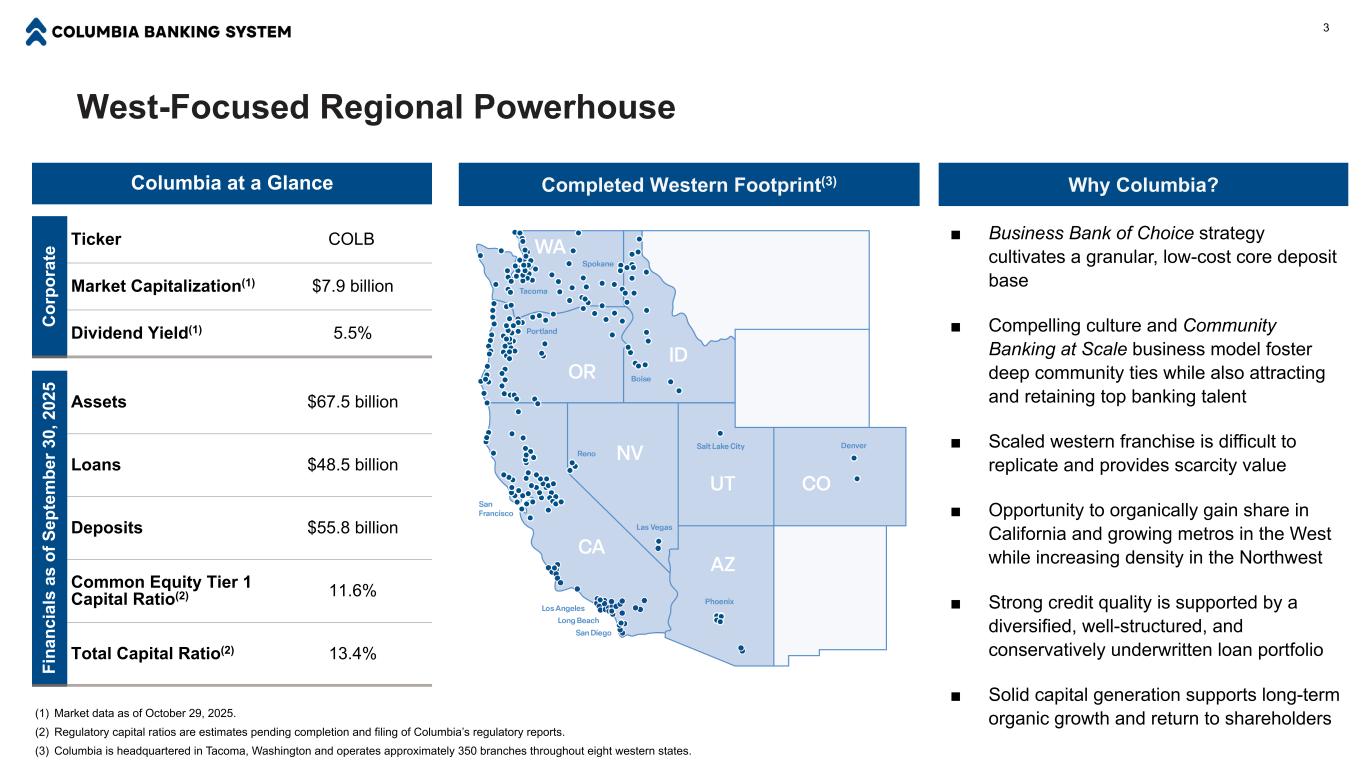
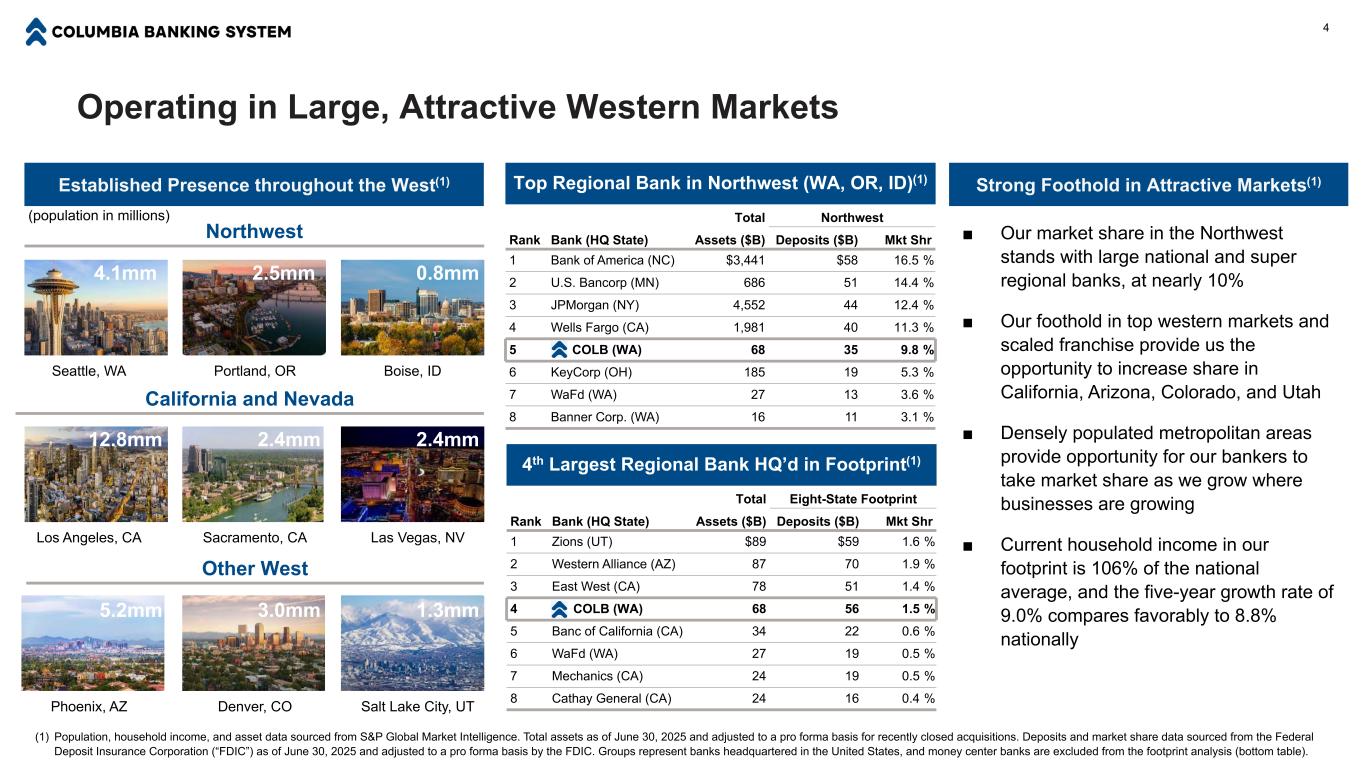
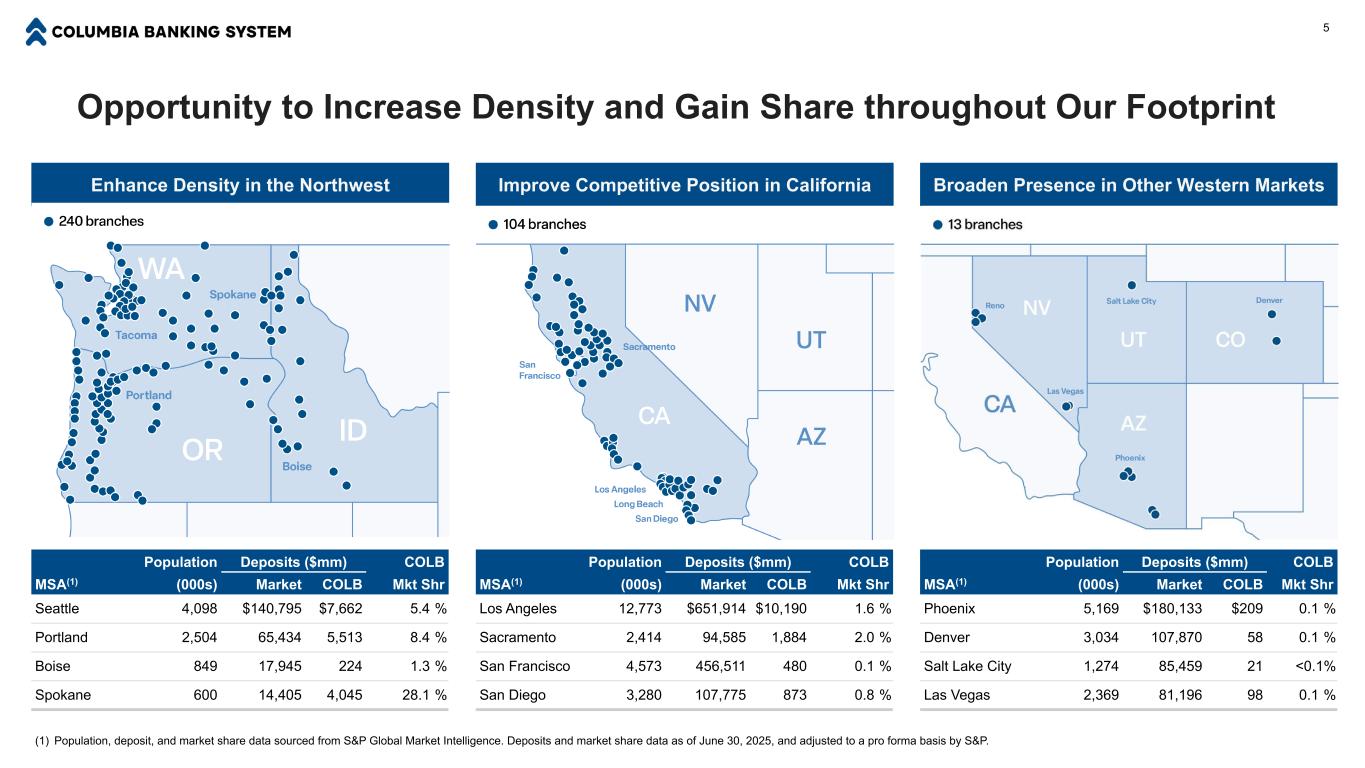
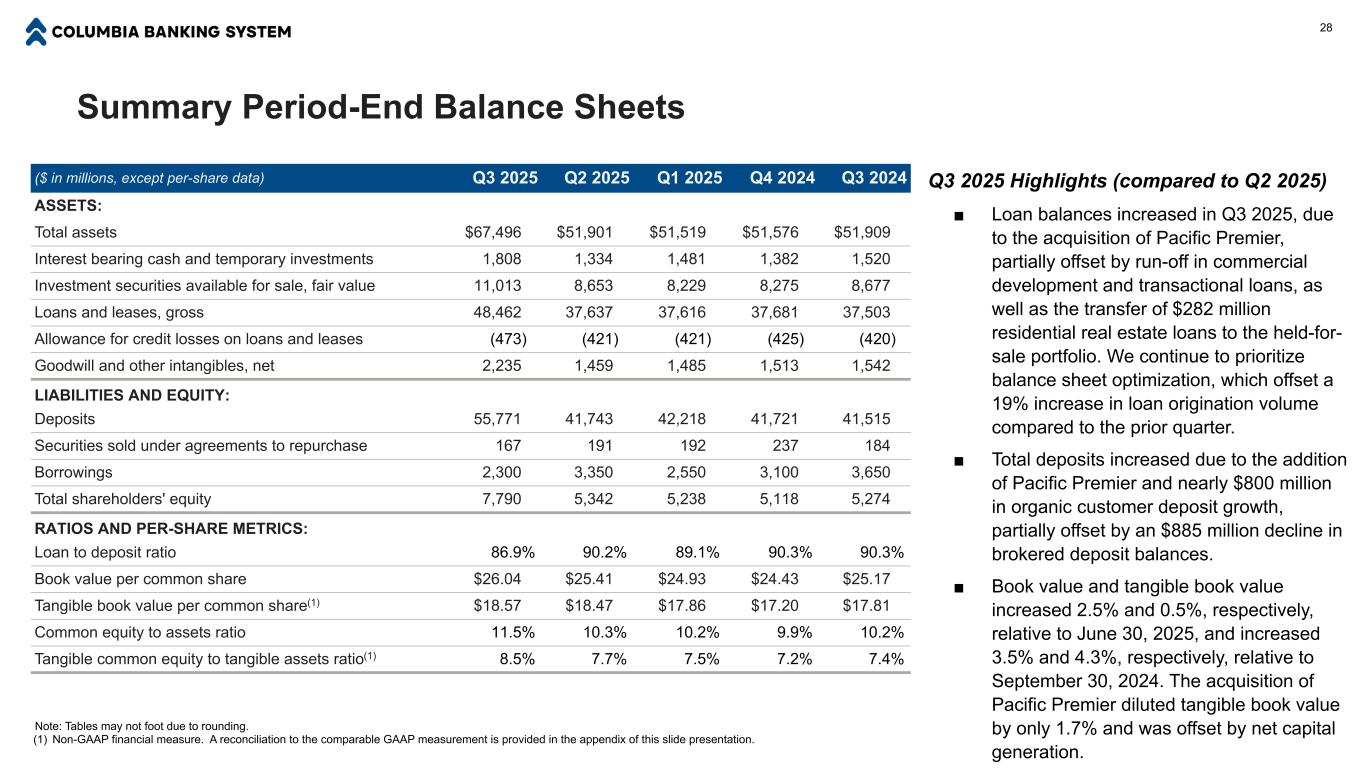
everyone. Our eventful third quarter is characterized by meaningful progress and growing momentum. First, we were excited to successfully close our strategic acquisition of Pacific Premier on August 31st. This milestone completes our eight-state western footprint and bolsters our position as a preeminent regional bank in the Northwest with approximately $68 billion in assets. We hold nearly 10% deposit market share in the Northwest and an improved competitive position in other key Western markets. PAC Premier significantly enhances our scale and positions us to capitalize on our low-cost core deposit base across an expanded and highly attractive footprint, most notably in Southern California, one of the nation's most dynamic and densely populated markets. Over the last few years, we have created a cohesive regional powerhouse. Our Western franchise now spans the entire West Coast from Washington throughout California. We are uniquely positioned in our region for organic growth opportunities in dynamic markets such as Arizona, Colorado, Nevada, and Utah. We are integrating new capabilities and deepening relationships with both new and existing customers while maintaining our commitment to consistent top quartile performance and sustainable relationship-driven growth focused on generating positive economic impact. We remain focused on optimization, generating new business, supporting the growing needs of existing customers, and delivering superior results for all of our shareholders, even as we look to complete the integration of PAC Premier. We have strengthened our company by gaining scale, broadening our product offerings, and adding to our best-in-class core deposit franchise driven by our business bank of choice strategy, all while delivering robust profitability and maintaining a conservative balance sheet. The scale and breadth of the franchise we've built allows us to concentrate our focus on organic growth in our footprint, and our robust profitability will support our plans to deliver meaningful capital returns to all our shareholders. We believe this strategy will drive long-term shareholder value. Within our first week as a combined organization, nearly every former PAC Premier branch made a referral to a product or service that was not offered before the acquisition. Our new team members hit the ground sprinting and we were thrilled by their continued enthusiasm. We see tremendous opportunities with our newly enhanced presence in Southern California and throughout our broader footprint. We have quickly begun to benefit from the capabilities PAC Premier brings to our organization like custodial trust services, expertise in HOA banking, and proprietary technology that enhances the banker and customer experience. Turning According to the third quarter, Columbia's operating results were once again consistent and repeatable, underscoring our focus on operational enhancement and top quartile, and in some cases, top decile performance. Third quarter operating PPNR is up 12% from the second quarter and 22% from the year-abill The improvement reflects our focus on profitability and balance sheet optimization, as well as one month with PAC Premier. Our teams continue to cultivate new and existing relationships, driving strong customer deposit growth and meaningfully higher loan origination volume during the third quarter, which Torrey will detail in a few minutes. The success of our bankers and the exceptional teams that support them enables us to organically remix both the left and right sides of our balance sheet, enhancing the quality of our earnings and driving strong internal capital generation. We continued to allow transactional portfolios to run down, and we transferred a small portfolio of residential mortgages to help for sale. These activities offset our relationship driven growth in support of our portfolio remix efforts. We intend to organically manage down roughly 8 billion of inherited transactional loans. As I've stated many times before, absent a significant decline in rates, we will hold the majority of these loans until they mature or pay off. However, we will strategically prune the portfolio with sale opportunities where payback periods are short and align with value preservation and creation. As I've said before, we prioritize profitability over growth for the sake of growth. In keeping with that approach, we utilized excess cash from customer deposit growth and balance sheet optimization actions to repay higher-cost wholesale funding sources during the quarter. The result was a meaningful increase in our net interest margin. Our disciplined approach to lending supports our strong credit profile as well as our profitability. Our adherence to prudent credit underwriting and proactive portfolio monitoring is reflected in our stable third-quarter portfolio metrics and a lower level of net charge-offs. It remains a busy and exciting time in Columbia, and I want to thank all of our associates for their hard work and contributions to another period of solid performance with our third quarter results. With the addition of PAC Premier, we are sharpening our focus on organic growth initiatives amplified by the disciplined, cost-conscious culture that defines our operating model. This is the franchise we set out to build, one that is scalable, resilient, and positioned for continued long-term value creation that reward shareholders with the return of capital. Now that we've outlined our third quarter results, I want to take a moment to acknowledge our CFO, Ron Farnsworth. This will be Ron's last earnings call with Columbia, as he is stepping down following a very successful tenure as our CFO, marked by many notable accomplishments. Ron has been a valuable member of our team and a partner to me over the last several years as we integrated our teams, optimized performance, to drive profitability, completed our Western franchise with the acquisition of PAC Premier, and meaningfully expanded our opportunities to drive long-term shareholder value. The board, management team, and I want to thank Ron for his many contributions to Columbia and wish him the best in his future endeavors. Ivan Shetta, who has served as our deputy CFO since last August, has been appointed Columbia's next CFO. Ivan is a proven financial leader with extensive financial services experience, having previously served as CFO of Union Bank and other executive roles. Ivan hit the ground running over the last several months, and we know he will be a great asset to Columbia as CFO. You'll be spending a lot of time with him in the quarters ahead. I'll now turn the call over to Ron.
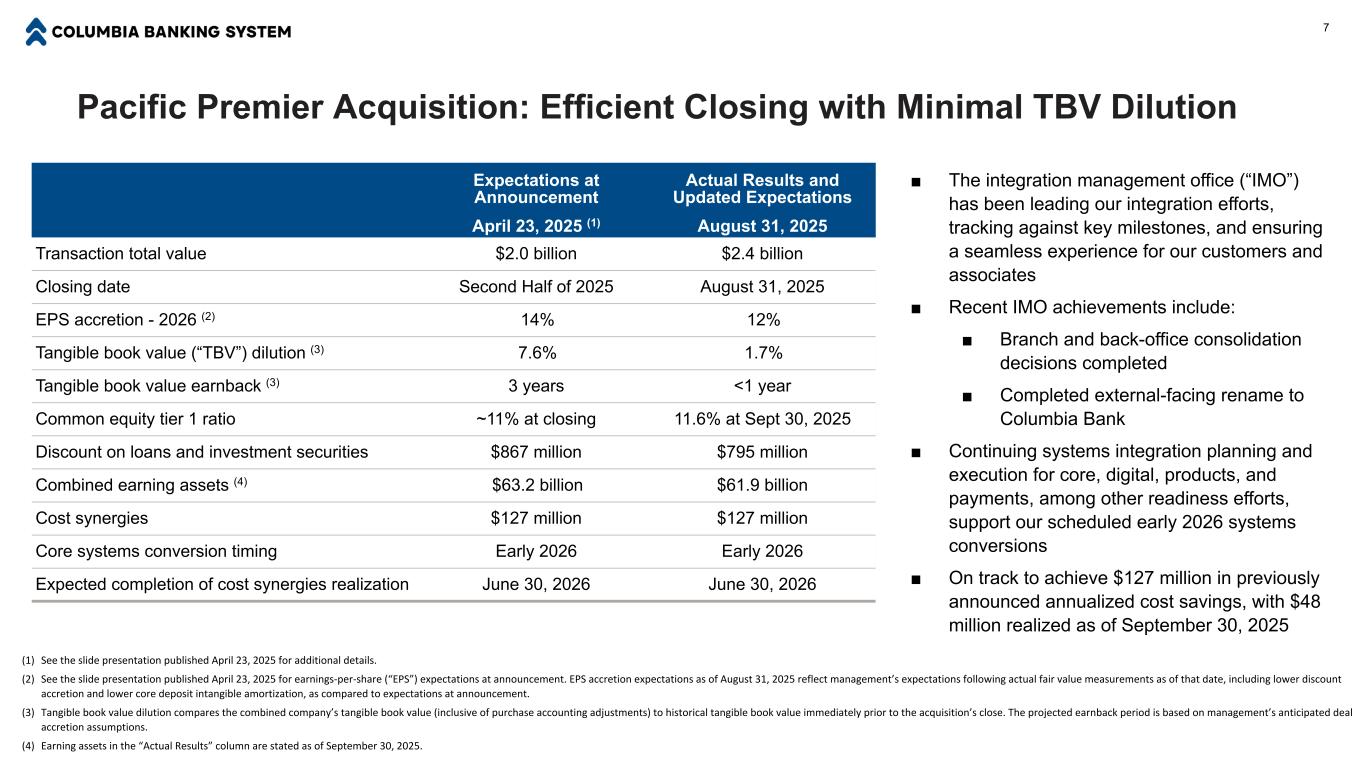
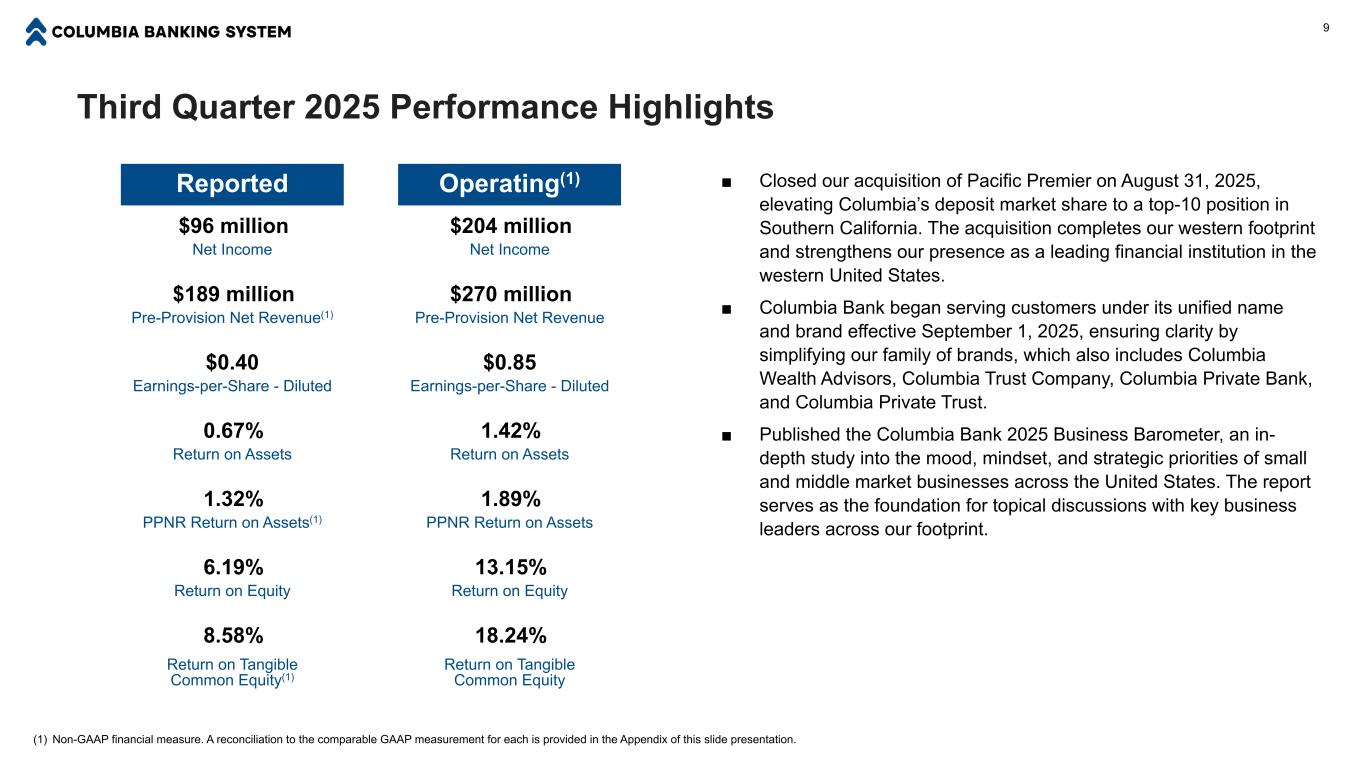
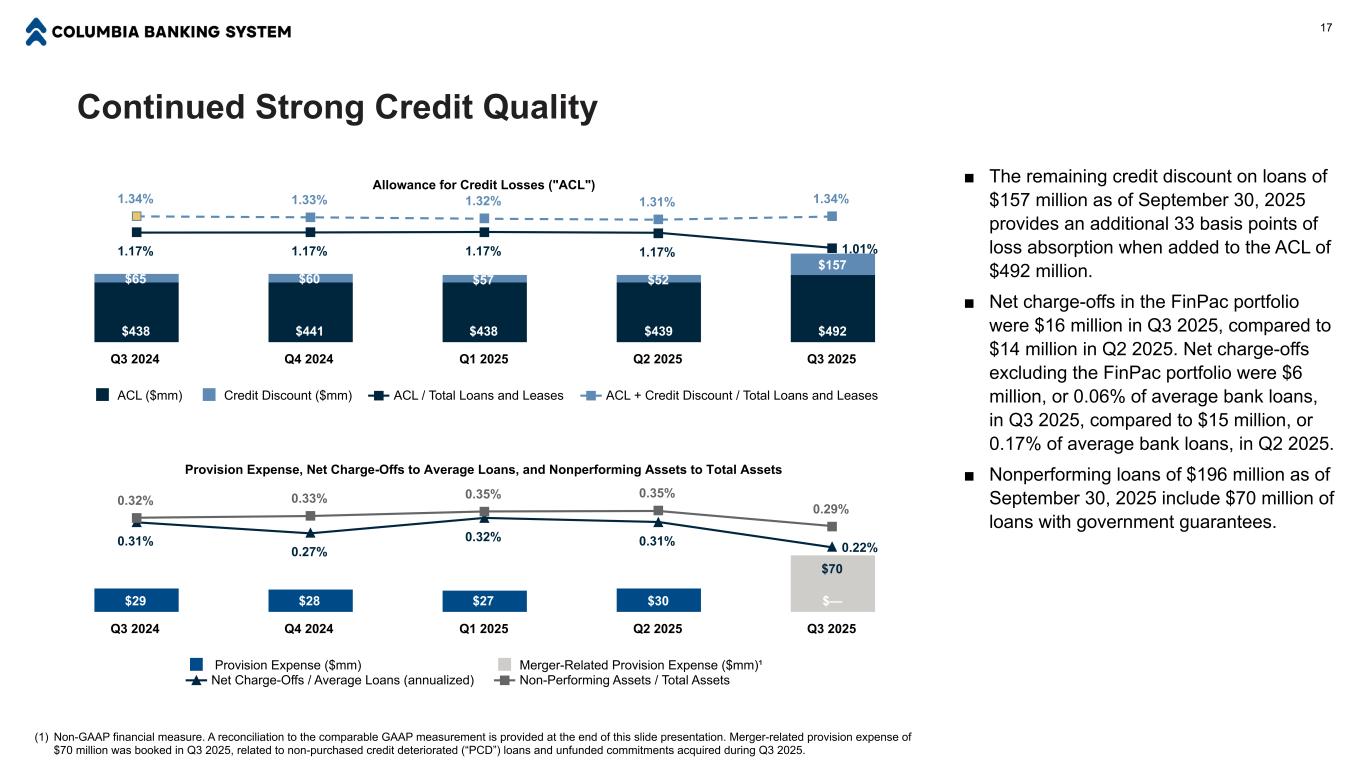
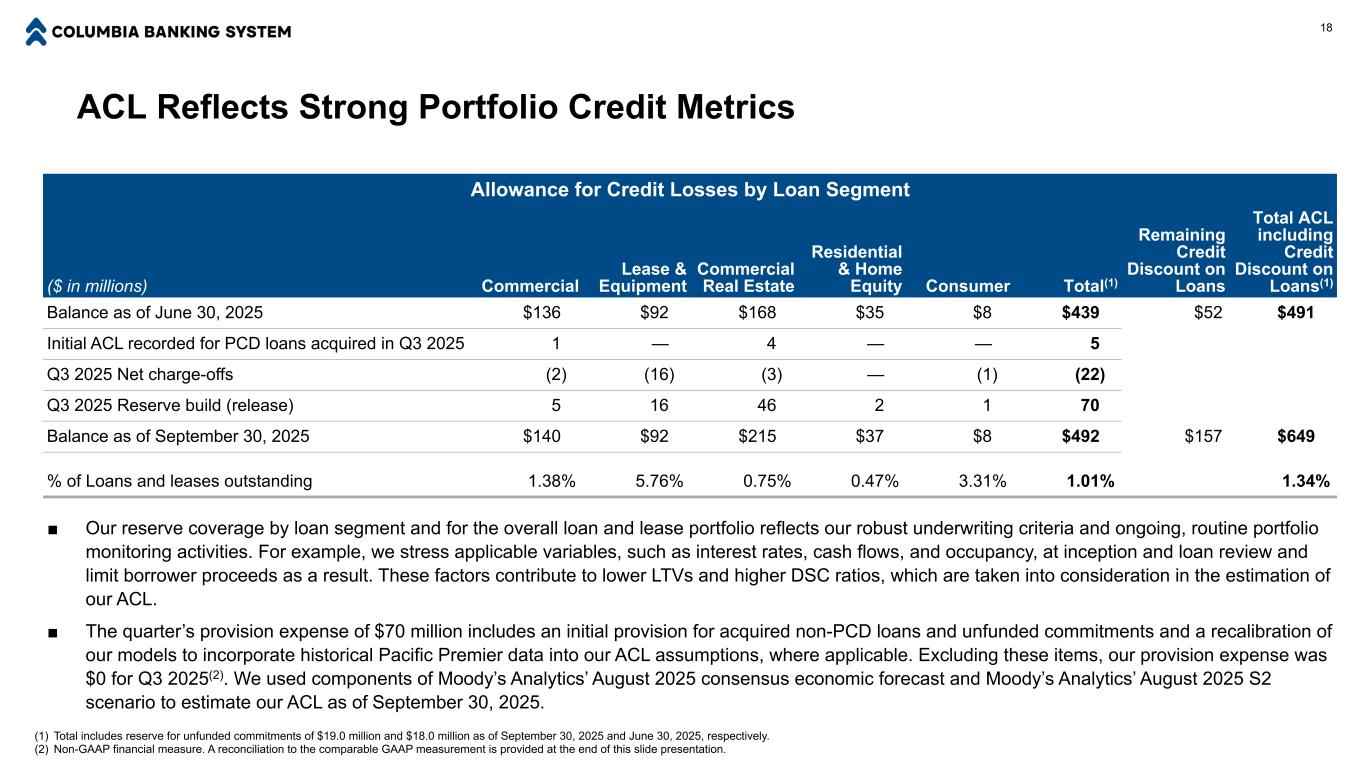
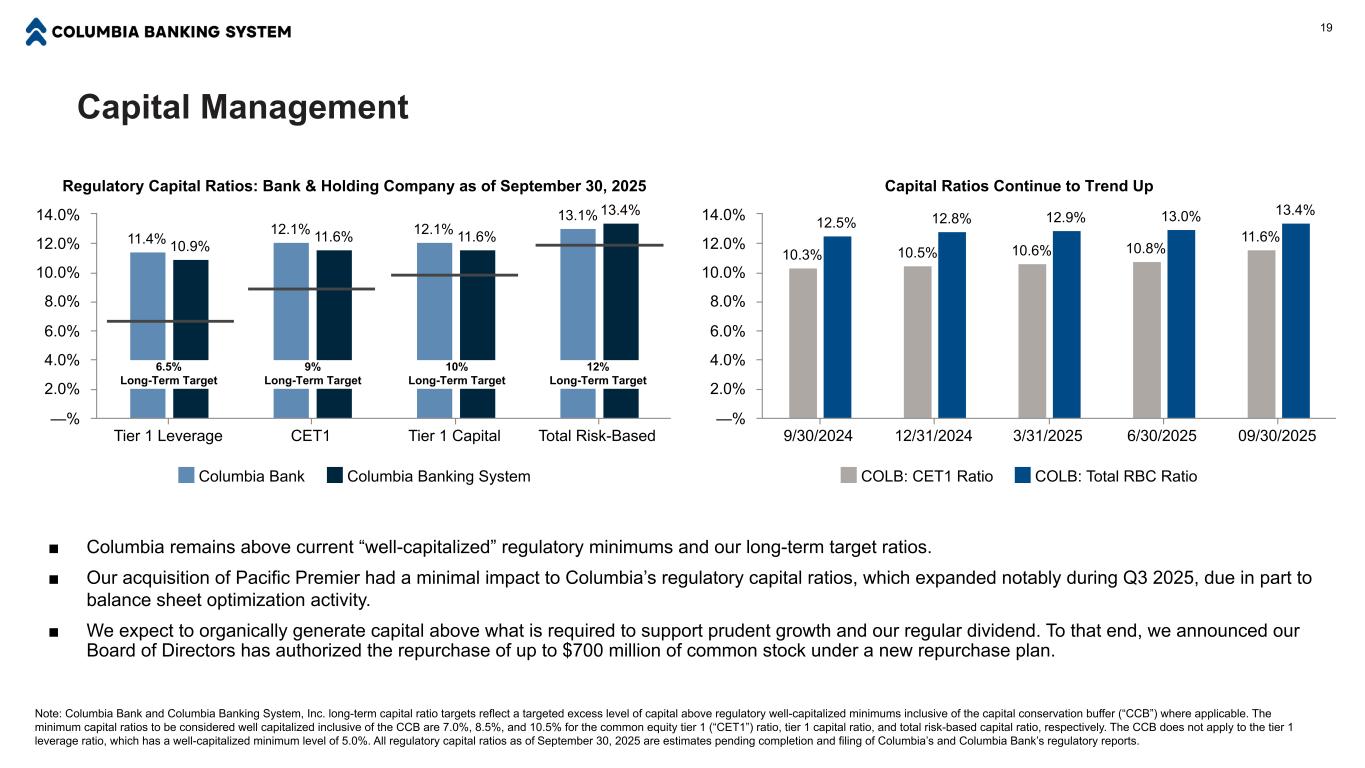
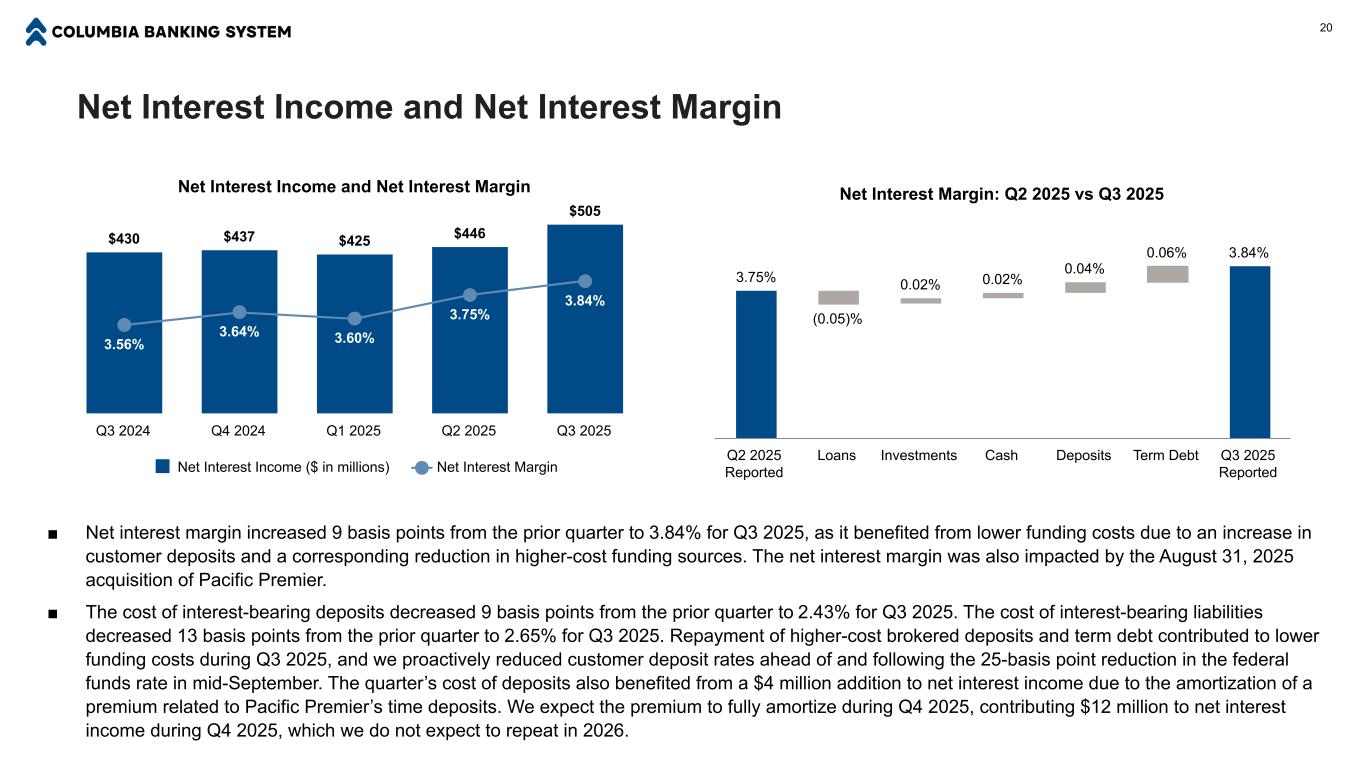
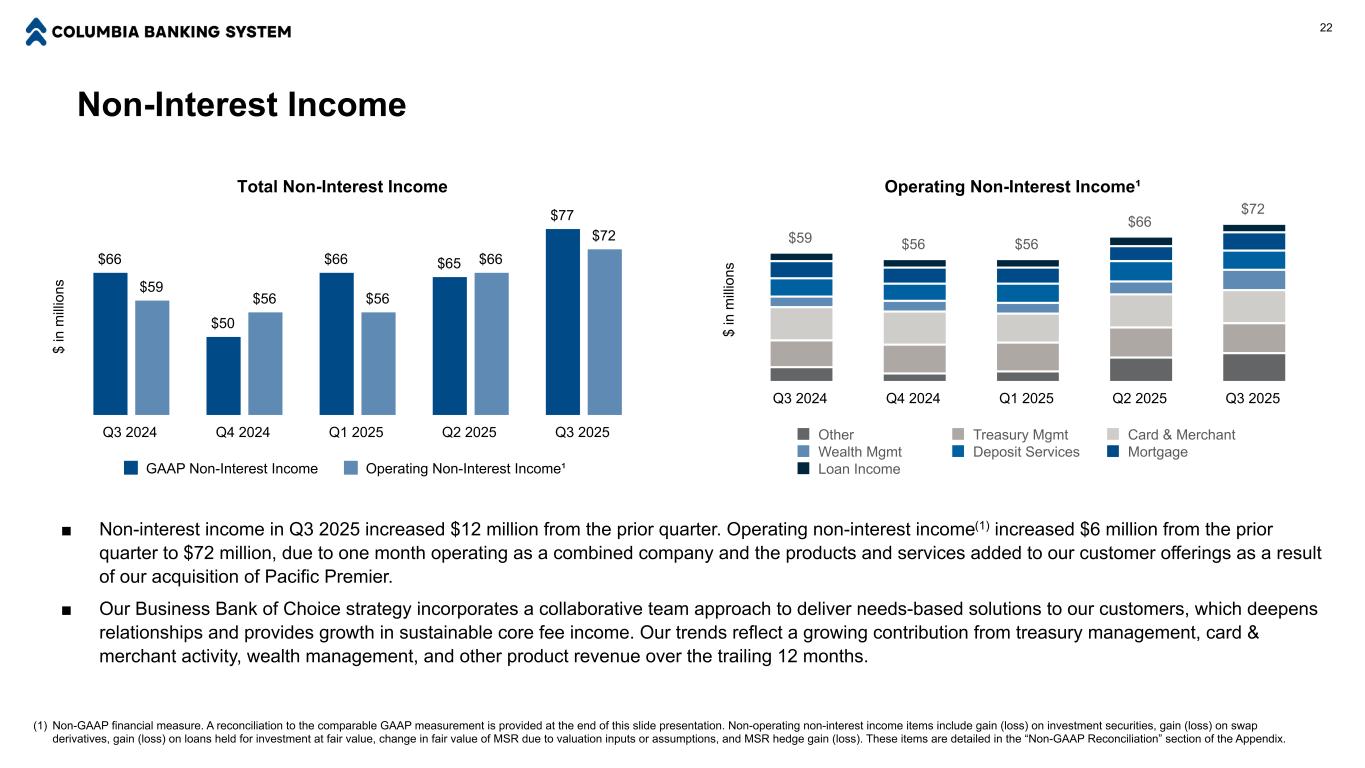
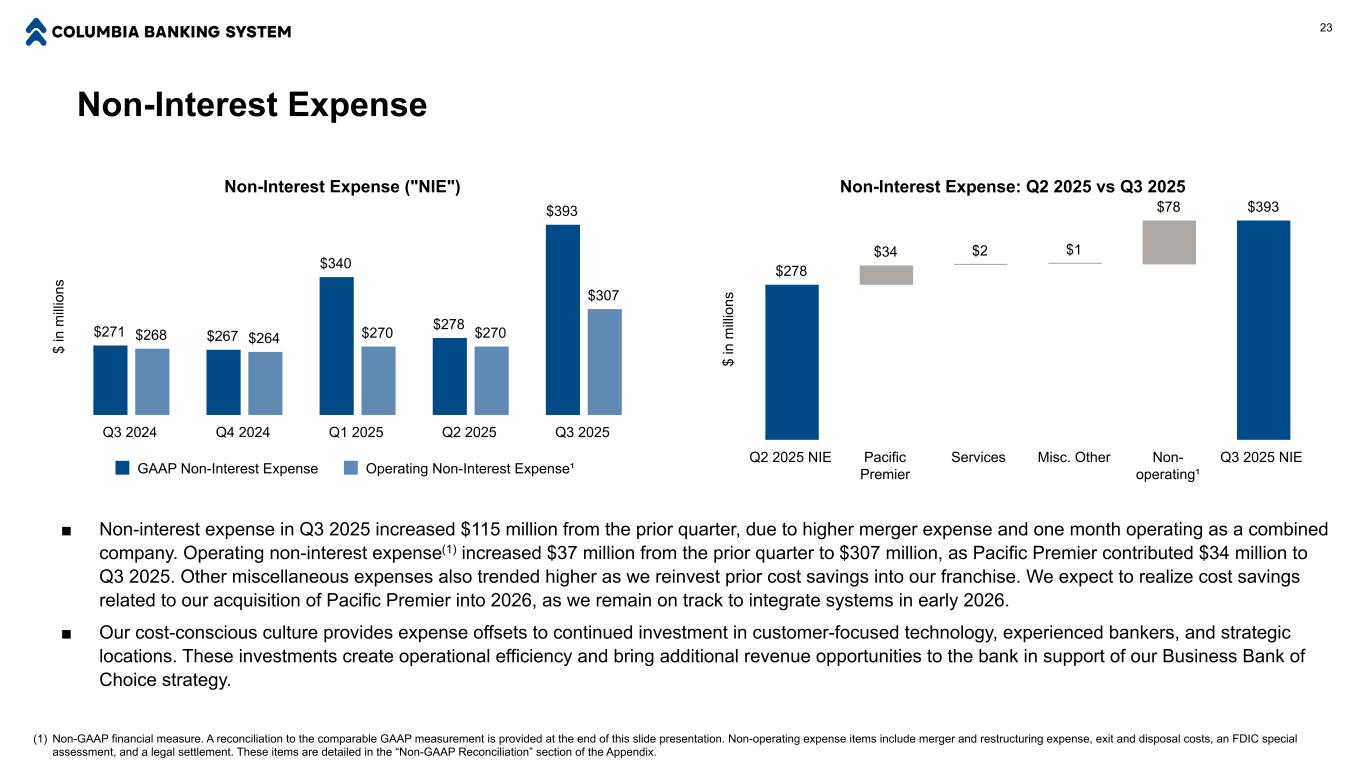
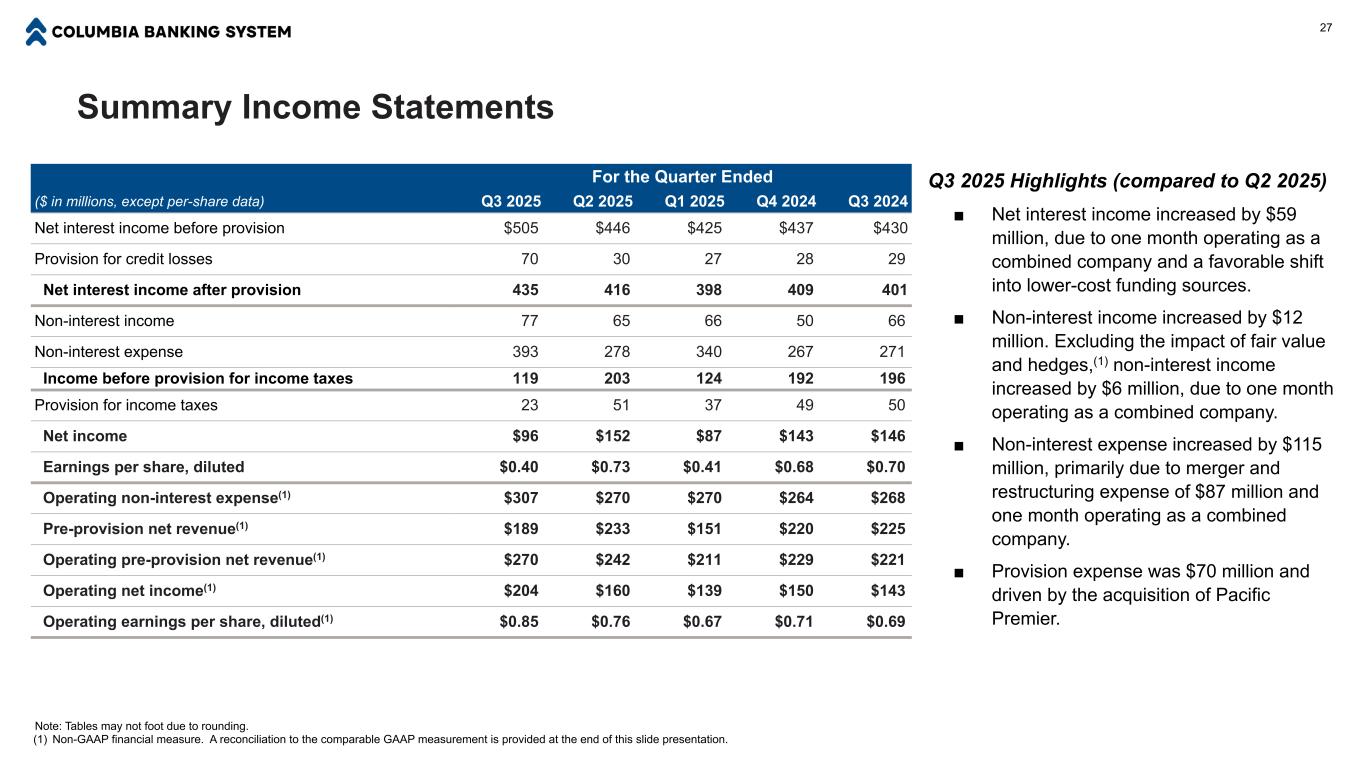
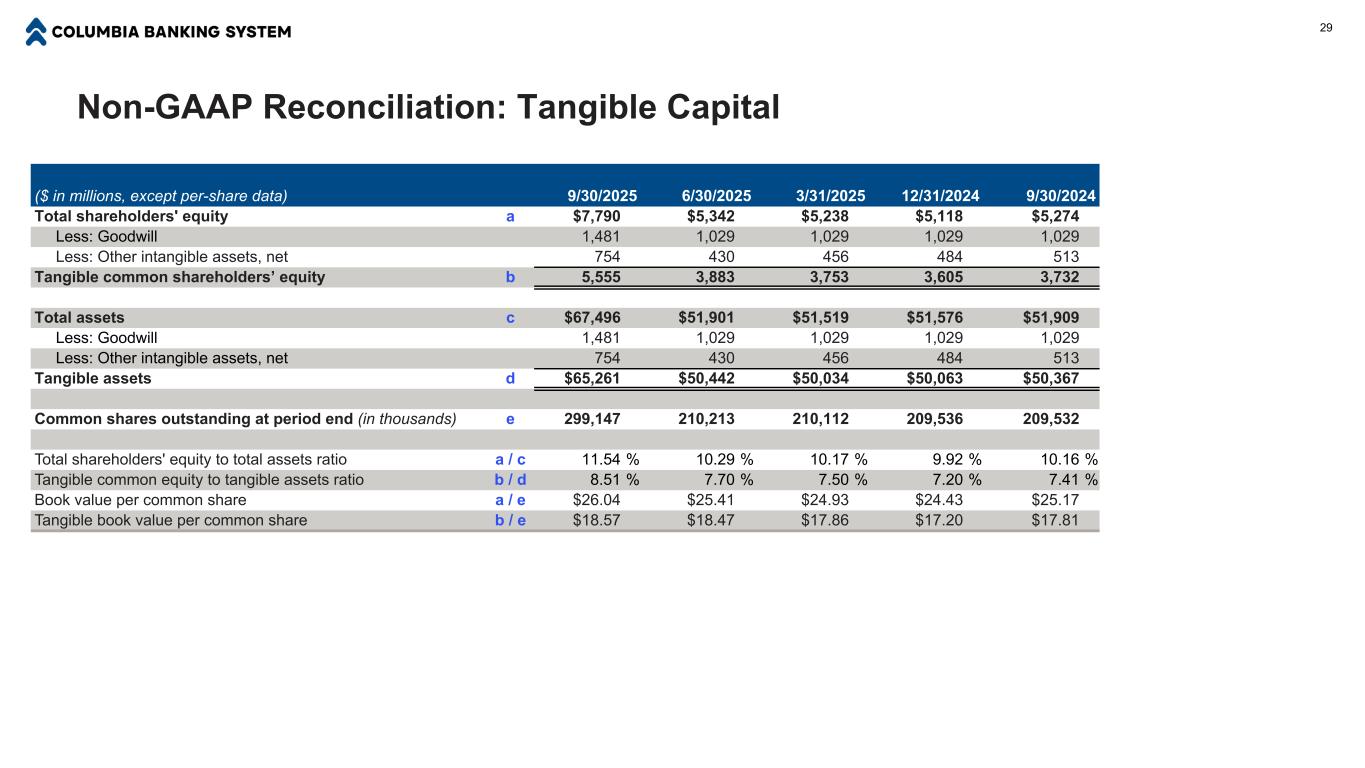
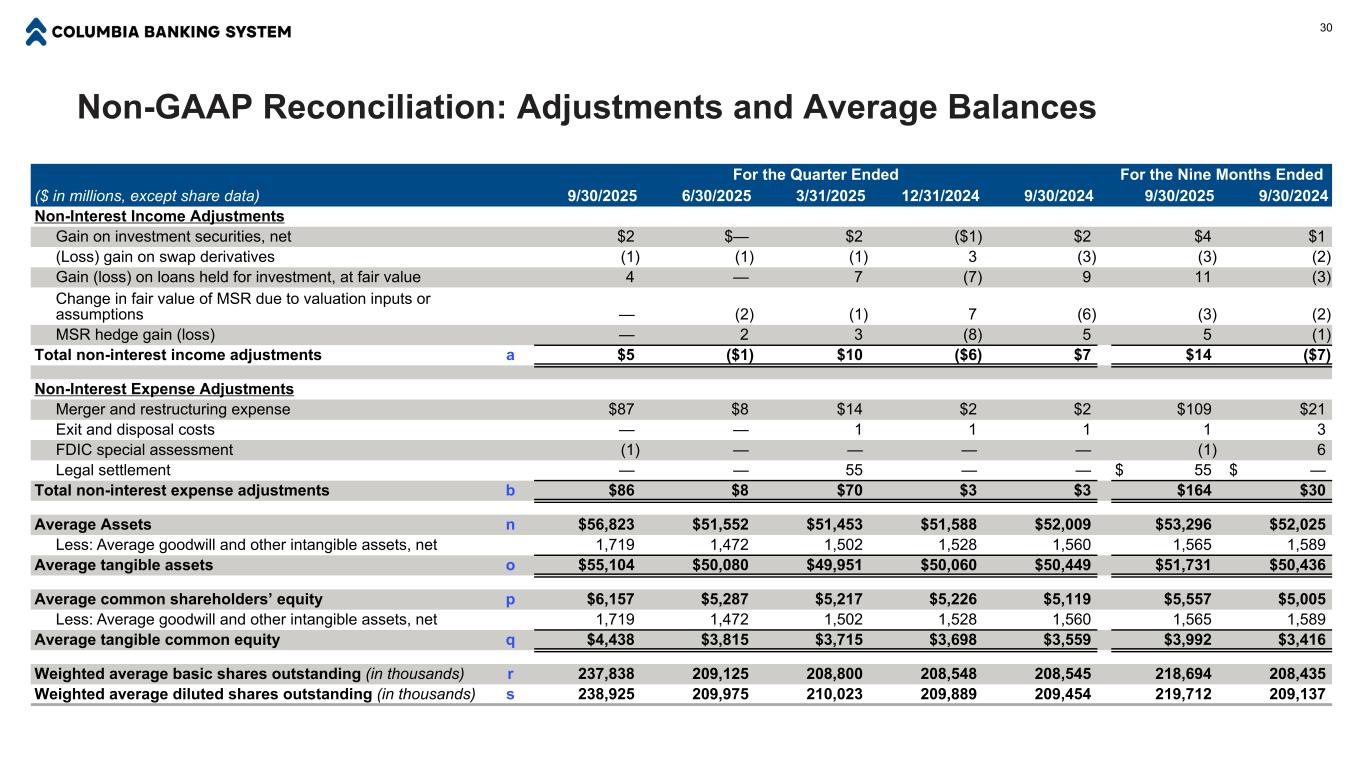
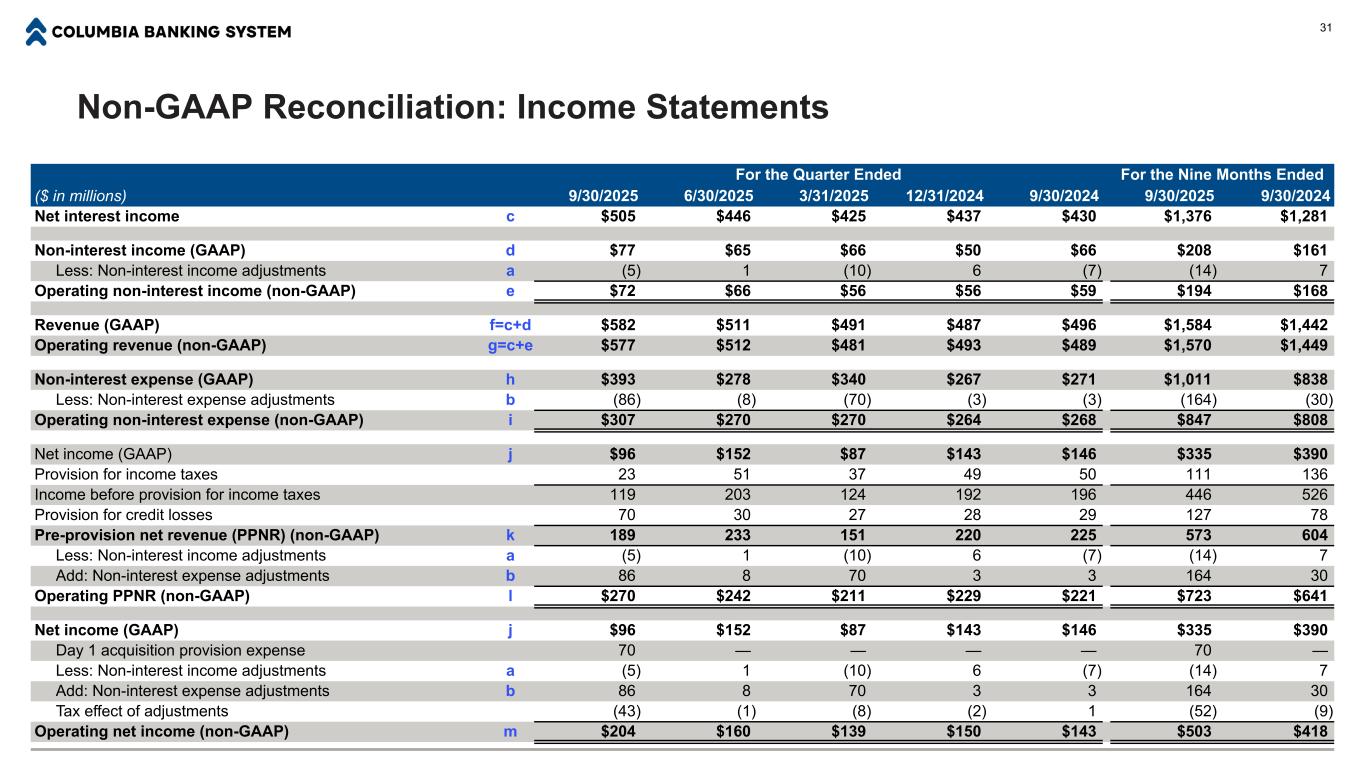
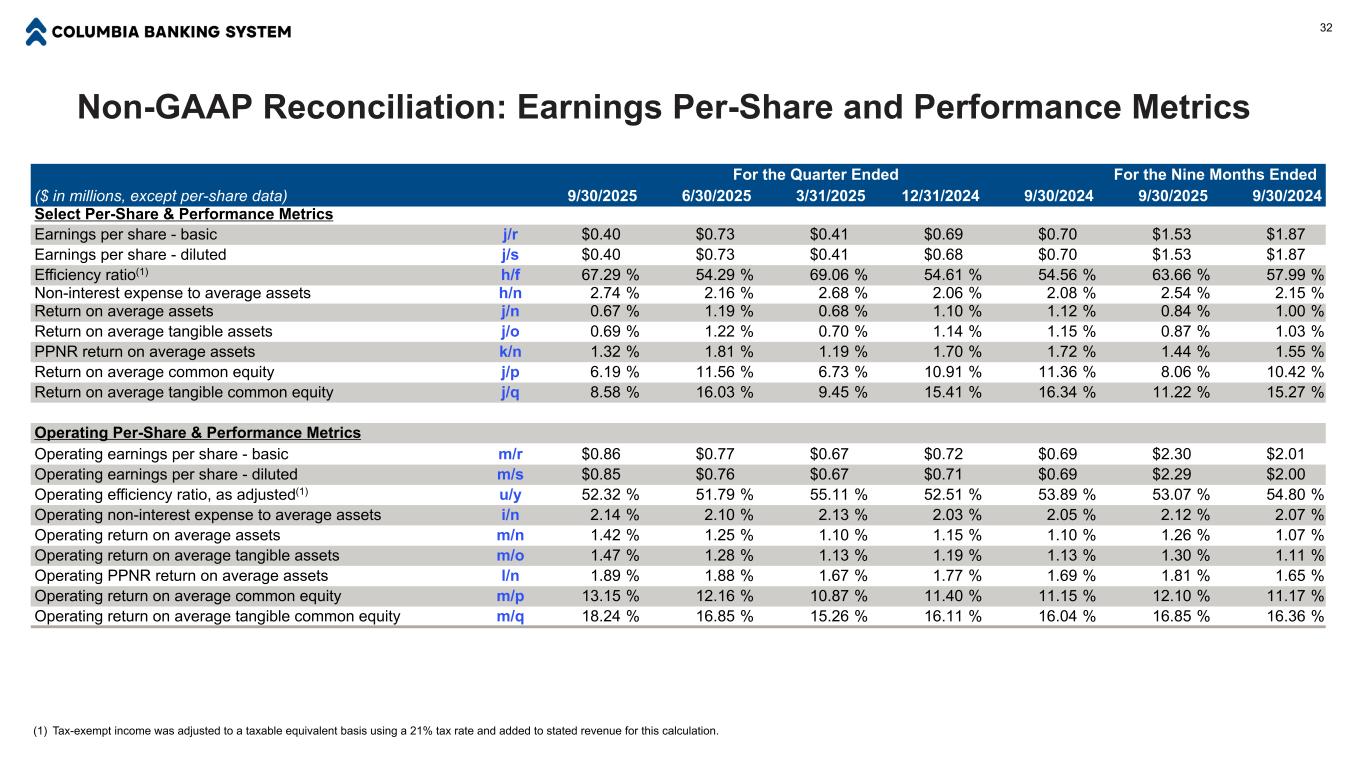
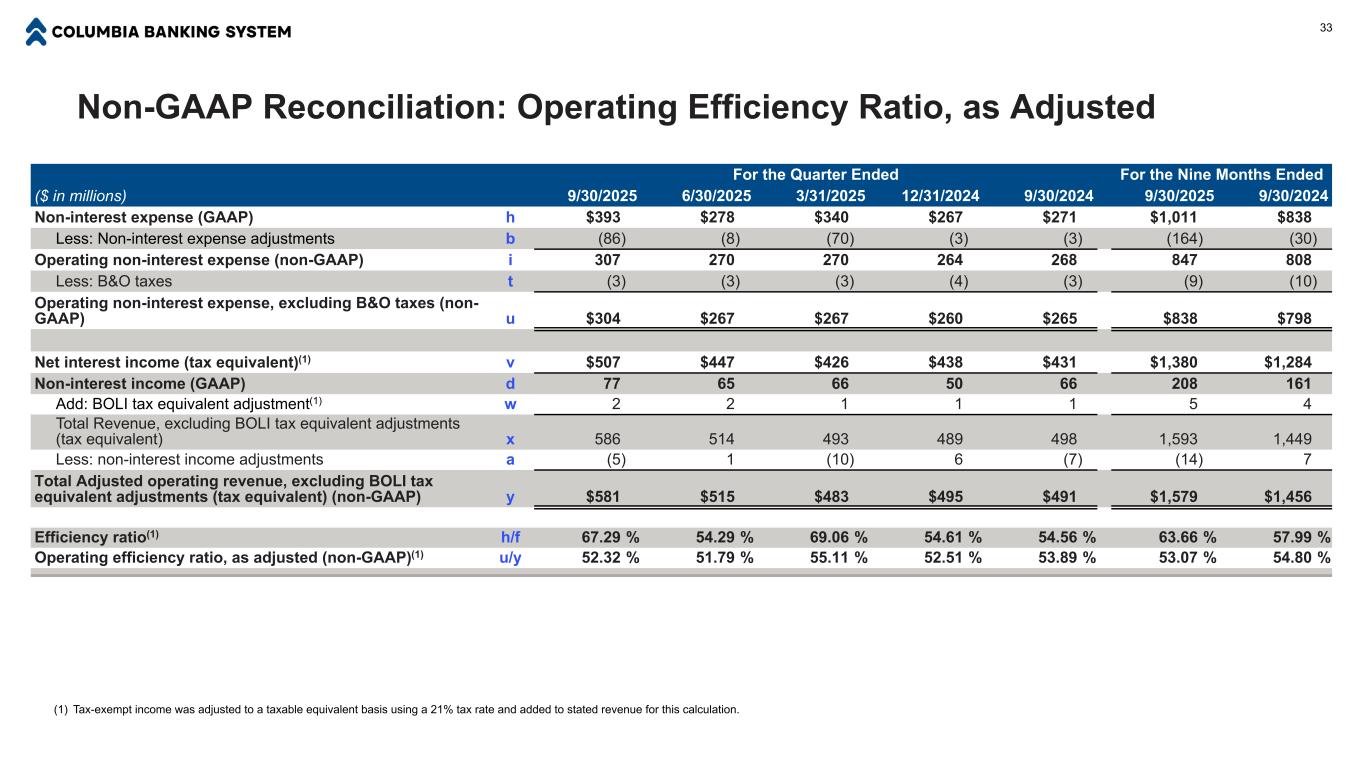
All right. Thank you, Quint. We reported second quarter EPS of 40 cents and operating EPS of 85 cents. Operating excludes merger and restructuring expense, along with other fair value and hedging items detailed in our non-GAAP disclosures, which I encourage you to review. Our operating return on average tangible equity was 18.2%, while operating PPNR increased 12% from the second quarter to $270 million. The main drivers of operating PPNR growth this quarter were the contribution of one month of Pacific Premier and favorable balance sheet remix trends, giving customer deposit growth and transactional loan runoff. Operating earnings further benefited from no provision for credit losses due to the impact of improving economic scenarios on our CISL models and a decline in loan balances outside of the acquisition. Our gap provision expense of $70 million was due to purchase accounting stemming from the acquisition. On the balance sheet, we strategically sold acquired investment securities that did not fit within our existing portfolio after deal closing and purchased new securities to maintain our relatively neutral position to interest rate changes, as detailed on slide 21. Cash from net security sales, Pacific Premier, and transactional loan portfolio runoff was used to reduce our reliance on wholesale funding sources as we continue to optimize our balance sheet. Strong customer deposit growth also contributed to a collective 1.9 billion dollar reduction in broker deposits and term debt during the third quarter, driving net interest margin expansion. Our tangible book value per share increased slightly quarter to $18.57 as internal capital generation and a variable change in AOCI offset deal-related dilution. Notably, tangible book value has increased by 4% since Q1 when we announced the transaction. Our acquisition of Pacific Premier resulted in tangible book dilution of 1.7%, well below the 7.6% we anticipated at deal announcement, due primarily to lower discount fair value marks as market yields are slightly lower than when we announced the deal. Our regulatory capital ratios expanded meaningfully with our tier one common now to 11.6% and total risk-based capital ratio at 13.4%. Our excess capital positioned us to put a share repurchase authorization in place, which Clint will detail in a few minutes. As I mentioned earlier, our NAM expanded during the quarter increasing nine basis points to 3.84 percent. The funding remix I discussed drove the majority of the change with three basis points of the quarter's expansion and tributal purchase accounting on acquired CDs as detailed in our earnings release. The amortization will continue during the fourth quarter but we do not expect it to extend into 2026. As I noted our provision for credit loss was 70 million dollars for the quarter and our overall allowance for credit losses was 1.1% of total loans, down from 1.17% as a prior quarter end, due to portfolio composition shifts, model recalibration following the addition of the Pacific Premier portfolio. Inclusive of the credit discount, our allowance was 1.34% of total loans, up three basis points from the prior quarter end. Non-interest income was $77 million for the quarter, and on page 23 of our earnings release, we detail the non-operating fair value changes. Excluding those items, our operating non-earned income of $72 million for Q3 was up $6 million, reflecting the addition of Pacific Premier. Also noted on page 23, total gap expense for the quarter was $393 million, while operating expense was $307 million. The increase from Q2 reflects one month operating as a combined company and other miscellaneous increases as we reinvest cost savings realized in 2024. We are already realizing savings associated with Pacific Premier with approximately $48 million of the targeted $127 million in expected annualized cost savings achieved as of September 30th. Systems conversions are scheduled for Q1, and we expect a clean expense run rate in the third quarter of 2026. With that, I'll now hand the call over to Tori.
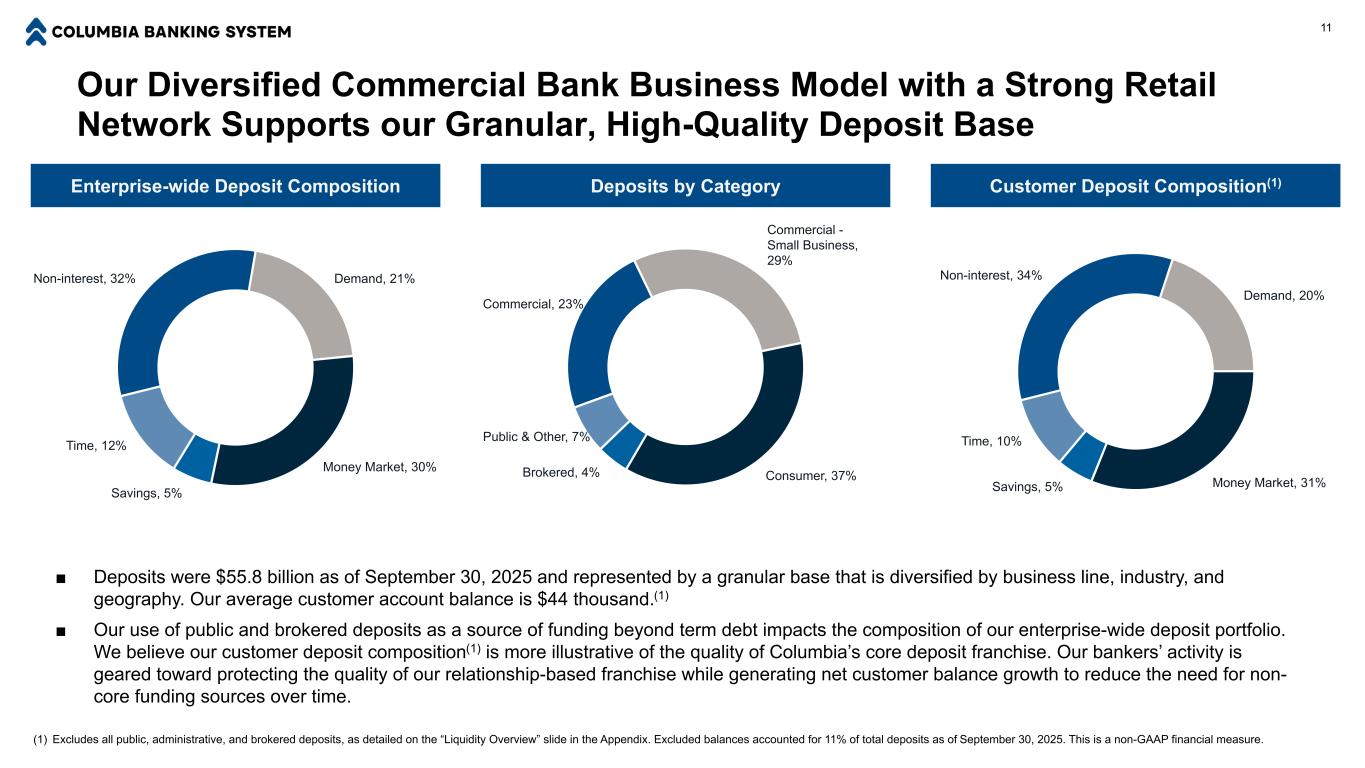
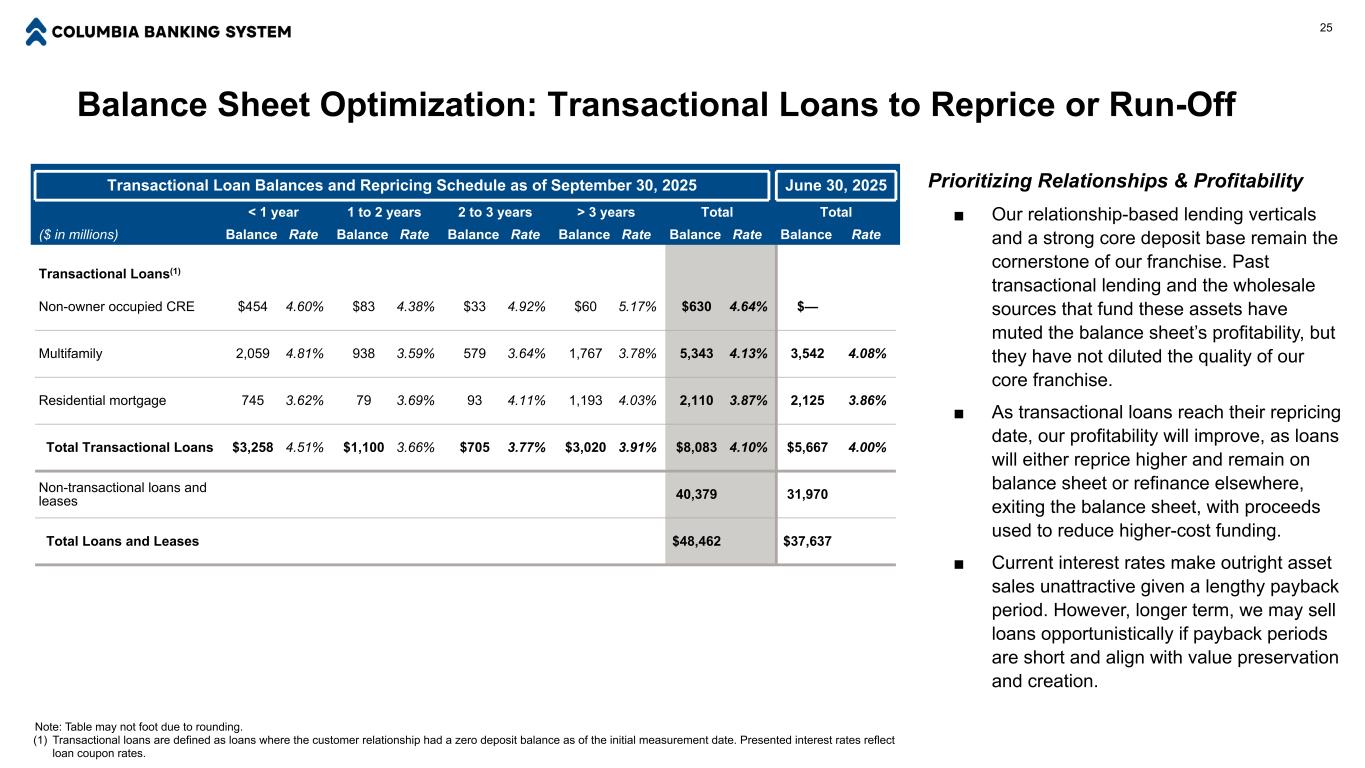
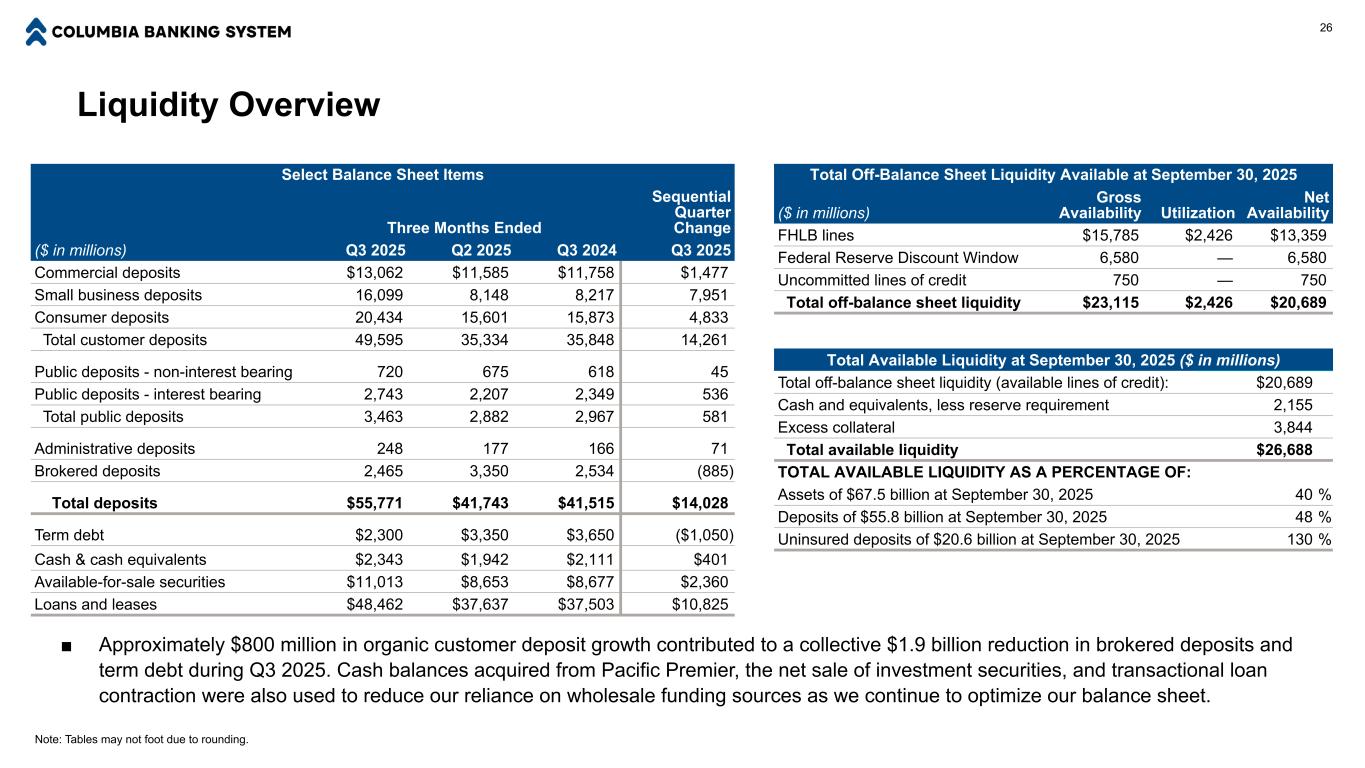
Thanks, Ron. Our team's had a tremendous quarter of business generation. New loan originations of $1.2 billion is up 36%, while year-to-date volume is up 21% from last year. On an organic basis, Columbia's commercial portfolio, inclusive of owner-occupied real estate, increased by 5% on an annualized basis, contributing to our targeted loan portfolio remix as we allow transactional balances to decline. Slide 25 in our earnings presentation provides additional balance and repricing details related to transactions. We expect this portfolio to amortize down until loans reach their repricing date, at which point they will reprice higher or refinance elsewhere improving our profitability in both scenarios turning to customer deposits balance has increased nearly 800 million organically during the quarter while balance has benefited from the seasonal balance lift we typically see during the third quarter approximately 30% of the growth was attributable to new customers our bankers continue to target full banking relationships when they bring new customers to Columbus reflects their success we are also seeing the benefit of our de novo branch strategy in our newer markets the 150 million to the quarter's deposit growth core fee income increased from the second quarter's strong base we continue to target a higher concentration from core fee income to overall revenue and we are already seeing revenue synergies from pacific premier on an operating basis non non-interest income increased 9% due to one month's contribution from Pacific Premier, including a $3 million contribution from custodial trust services. Not only will Pacific Premier's custodial trust business complement our existing wealth management platform, but their expertise in HOA banking and escrow and 1031 exchange businesses also offer revenue-generating opportunities. We expect to see deeper customer relationships with legacy Pacific Premier customers, and we are already introducing Pacific Premier branches to the CB way, which offers needs-based sales solutions to our customers. This has contributed to strong referral activity from legacy PAC Premier branches. Since deal closing, referrals to Columbia business lines, including branches, from our new PAC Premier Associates has driven over 1,200 opportunities. Our business bank of choice strategy, which is powered by our talented team of associates, is a key driver of our ongoing balance sheet optimization efforts, helping to further strengthen our profitability. Our pipelines are healthy, and we remain outwardly focused on generating business in a disciplined manner. I'll now hand the call back over to Clint.
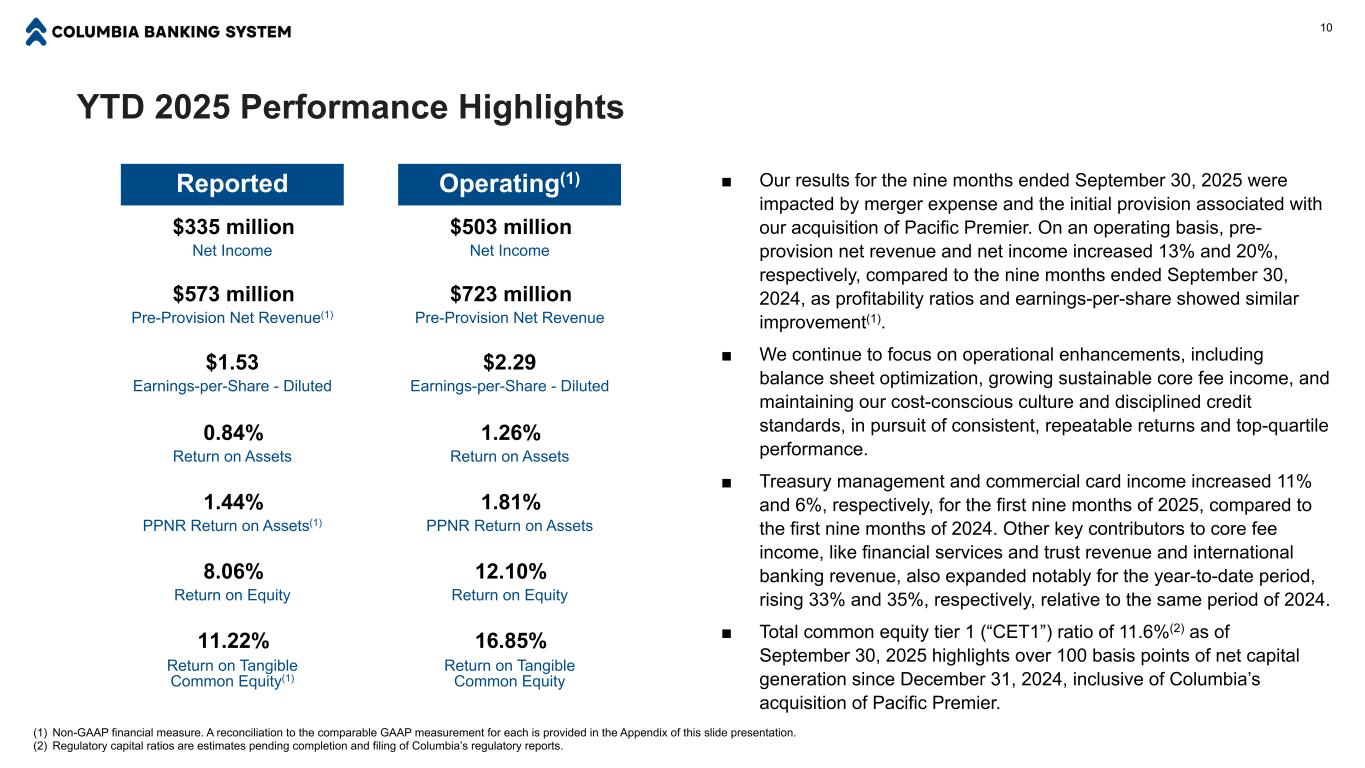
Thanks, Tori. Our third quarter results wrap up seven consecutive stable quarters of operational performance in capital accumulation. Our ability to generate capital beyond what is required for prudent growth and our regular dividend is significantly enhanced by our balance sheet management activity during the quarter contributed to our expanding regulatory capital ratios. Ron mentioned the dilution to tangible book value from the PAC premier acquisition was 1.7%. Our anticipated three-year earnback at announcement is now expected to be less than one year. Our CET1 and total capital ratios were 11.6 and 13.4% at quarter end, well above our long-term targets of 9% and 12% respectively, and up notably from 10.8% and 13% as of June 30th, despite closing a strategic value-enhancing acquisition. Let me repeat that. Our CET1 and total capital ratios were 11.6% and 13.4% at quarter end, well above our long-term targets of 9% and 12% respectively. Further, our TCE ratio was 8.5% as of September 30th, well above the 8% target exclusive of AOCI marks we have consistently discussed since Q1 of 2024 as an indicator that we were able to evaluate share repurchases. Given our excess capital and strong forward outlook for continued net generation, especially in light of our progress integrating PAC Premier, I'm pleased to announce our Board of Directors authorized a $700 million share repurchase program, reflecting our confidence in the strength of Columbia's balance sheet. To put that in context, we have roughly 110 basis points, or approximately $550 million dollars of excess capital above our long-term target today. In addition, we expect to produce exceptional profitability, which will result in meaningful capital generation over the coming quarters. We do not currently plan or have a need to do any securities restructurings. However, we are continuing to drive organic growth and evaluate balance sheet optimization opportunities in line with our commitment to enhancing long-term shareholder value. This concludes our prepared comments. Chris, Tori, Ron, Ivan, and Frank are with me, and we're happy to take your
Operator
questions. DeeDee, please open the call for Q&A. Thank you. As a reminder, to ask a question, please press star 11 on your telephone and wait for your name to be announced. To withdraw your question, please press star 11 again. Please stand by while we compile the Q&A roster. And our first question comes from Chris McGrady of KBW. Your line is open.
Clint, I mean, you're making a pretty big statement with the buyback. I think I'm interested in kind of the balancing act between capitalizing on a cheap valuation and the balance sheet optimization strategies that you talked about. Maybe could you unpack the pace at which you'd expect the buyback to come out?
yeah hi Chris so so the program is a 12-month program you know it is it is a bit of a balancing act between you know where where we're at and there will be some things from time to time we'll want to maintain flexibility you know for any uncertainty or in the macro environment or volatility you know a couple weeks ago is a great example. A couple of banks reported a credit issue and our stock went down for no apparent reason. So things like that will be opportunistic and strategically take down some shares in terms of a repurchase. But I'll step back and let Ivan kind of give you a little more details that might be able to help you kind of figure out how to model that.
Yeah. Hey, Chris. Thanks for the question. Like Clint mentioned, right, we're sitting today about $550 million above the target on the back of the lower tangible book dilution and the strong financial performance the last few quarters. As we look forward to Q4 in 2026, as Clint mentioned, you know, strong expectation that will continue to show strong profitability as we go throughout the course of the next year. We've got a $700 million authorization, which spans the rest of this year through late 2026. You know, given where we are today, you know, one month through the quarter and thinking about some of the potential restriction dates coming up, you know, I would anticipate that the pace of purchases the rest of this year will come in modestly lower than the average quarter before we look to ramp it back up into 2026, obviously subject to market conditions and how things progress throughout the fourth quarter here.
Okay, thank you. My follow up would be, it would feel based on the excess capital of 500 plus today. And are we generation over the next 12 months? I mean, you could you could presumably do the whole 700 by the time it expires. I guess that's, I guess part one of the follow up and part two, how do we think about just net balance sheet growth? Because that's obviously a piece of that too. Thank you.
Yeah. On the first part, I think the answer is yes. It's presumable that we could go through the entire authorization over the course of the next 12 months when you, like you said, start with a $550 million surplus and then think about the profitability profile that we anticipate moving forward with. And I think we'll talk probably a little bit more on that second piece of it in terms of the proform outlook shortly. But the answer, I think, to the first one is yes. And I'll hand it over to Clint to talk a bit about kind of the balance sheet outlook from a loan perspective.
Yeah, you know, we mentioned in our prepared remarks and actually, I think, included a new slide in the earnings presentation this time around to kind of call out the remixing that we're doing. and you know we had made some some decent progress on that and we have a couple billion more of those same type of transactional multi-family loans that we want to remix off the balance sheet that came over from PAC premier the good news is those are at current current rates current market rates and and also have very short remaining lives but as you see that numbers now roughly 8 billion that we'll be remixing over the next several years so I think that that that's going to mute bottom line loan growth but as as we've talked in the past you know as we remix those into relationship based loans that come with deposits come with fee income opportunities that it actually should And generally, loans that are at a higher rate, it should result in revenue growth, despite, you know, maybe bottom line net assets being flat.
All right. Thanks so much. I appreciate it.
Operator
Thank you. And our next question comes from David Feaster of Raymond James. Your line is open.
Hey, good afternoon, everybody. Hey, David. um maybe first off i was hoping we could maybe just address the elephant in the room to some degree with just the the recent activist investor piece that we had i i'm sure you saw the deck but i was hoping we could just maybe get your thoughts on that some reactions to it to the extent that
you can even comment on it uh yeah yeah um well i'll start by saying you know we're obviously aware of the presentation, and as you know, we regularly speak with shareholders, gather their perspectives, and share our perspectives as well. With that said, we don't talk about the specific conversations that we have with individual shareholders, because those are typically private conversations. In this situation, David, I really appreciate you asking this question. I want to thank you for that. I wanted somebody to ask this. I was hoping somebody would ask this because anybody who has spoken with us over the past year should know what we have been focused on. Just to remove any doubt and for clarity, our priorities in no particular order are consistent, repeatable, top-tier quarterly performance. You've heard us say it. We call it wash, rents, and repeat, and we just completed our seventh consecutive quarter of doing this. Also, we've been focused on and preparing for additional capital returns. We have stated over the last several years, this is a capital return story, and that's in addition to covering our peer-leading dividend. So meaningful buybacks are certainly a part of that, and we're very excited today that our board approved the buyback yesterday. And then, you know, kind of the last item, I'd say PAC Premier, and I've described it as the missing piece of our franchise. You look at what it's done for us in Southern California and other markets, you know, it's increased our density in our de novo market of Arizona. It's added to what we have in the Northwest. It's given us another physical location in Nevada, and then the different lines of businesses, it truly was the missing piece to our franchise, and that's why I've been saying we are laser focused on the integration, and as a result, I have zero interest in M&A for the foreseeable future, and some of you, yourself included, David, I believe have previously documented this in your research reports. I mean, even my wife, who I rarely see, because I'm working on delivering top-tier results and activities to enhance long-term shareholder value, knows the priorities and supports my pursuit of them. So we've been deliberately executing a strategy to build a leading, highly profitable Western U.S. franchise, and we're pleased to realize that goal with the closing of PAC Premier. So our work over the past three years is what has allowed us to announce the share repurchase, deliver the results we're delivering today, and place us as one of the top franchises in the Western U.S. So as I look ahead, I'm confident we have the right team. We definitely have the right strategy in place to continue to deliver a high team's return on tangible equity and drive value for all our shareholders. So again, David, thank you for the question.
That's great. That's an extremely helpful caller. um maybe i wanted to touch on on the the deposit side i believe 800 million dollars in organic customer deposit growth in the quarter i mean really strong growth i was hoping you could maybe give us some insights into the drivers behind that obviously there's some seasonality um but how much of that is is client acquisition um you know just given your blocking and tackling go-to-market strategy as well as the recent campaigns versus deepening relationships with
existing customers um versus kind of that seasonality hey uh david this is tory i'll start and let chris kind of chime in a bit uh it was a great quarter roughly 800 million in organic growth um it came from all different parts of the bank a big chunk from our commercial uh customers and commercial bankers a big chunk from retail just kind of throughout the company we had a significant amount that was new customers to the bank. I think we said roughly 30% was new to the bank. We've had growth in our de novo offices. It was spread throughout the company and very, very proud of the team and the work that they're doing in interacting with our existing customer base, taking market share, bringing new names into the company, just all the things we've been talking about for a long time is really continues to pick up momentum and show some some great results and Chris you want to talk a little about small
campaigns maybe thanks and thanks David David Tori mentioned it in his prepared remarks about 30% of the growth came from new customers about deposit campaigns in retail throughout the last year and into this year and the latest This campaign's brought in to date just a little under $180 million in new customer deposits, new customer names. And then, as Tori mentioned, the DeNova markets during the quarter accounted for about $150 million. The momentum is tremendous out there, and the bankers continue to build upon that. It's very exciting.
That's great. And then, you know, Quinn, I wanted to follow up on your response to one of Chris's last questions. And, you know, there's obviously a lot of balance sheet optimization ongoing, you know, remixing away from transactional assets to core assets, not going to have a ton of balance sheet growth. But one of the biggest pushbacks that I hear these days is basically, how can you still drive earnings growth exclusive of balance sheet growth? You touched on a couple of things, but can you maybe just elaborate that and help us think through and understand where you're able to drive that earnings growth from, you know, even with the stable balance sheet?
Yeah, and that's part of why, you know, David, again, we listen to our shareholders and our research analysts and take their feedback and try to improve the quality of our disclosure. And that's why we added that new slide in the deck that shows those transactional portfolios and what the weighted average coupon or yield is on those. And I believe that, you know, it's about 4.1%. And so if you just think of it in terms of, and there's obviously loans that have a higher rate and loans that are a lower rate, but the portfolio in general is 4.1%. It's been funded largely by the level of wholesale funding that we have on our balance sheet. And obviously that's been an earnings headwind since we closed the Umpqua acquisition. But as rates have come down now, I think 150 basis points over the past 13 months, that earnings headwind has gotten smaller and smaller. And with yesterday's move going forward, we would expect it to no longer be an earnings headwind and just kind of be net neutral. But there's no other relationship. There's no deposits, I mean, effectively. A few of them have some small deposit accounts. There's not Treasury management. there's not foreign exchange fees, there's no purchase card activity, any of the other ancillary products and services, they're not using our wealth management platform where we can drive fee income. So if we remix, just figure out on a loan, one that's got a coupon of 410 into a good CNI loan today that is, you know, call it 8%, comes with fee income opportunities, is to a certain degree self-funding and some of that, you know, operating deposits that are non-interest bearing. And then they're going to use all those services that the other person, you know, the other scenario isn't. That's where you can get the revenue generation. And that's the stuff that we're winning. That's the business that we're out there. Our bankers are winning. And I don't want to preempt Tori because he's really excited about what they're doing. But that's that remix. And that's why we're confident we can continue to grow revenue without necessarily having earning assets grow because it's remixing into a better, more complete, comprehensive product for the bank and for our customers.
That's great. Thanks, everybody.
Operator
Thank you. And our next question comes from Jeff Rulis of DA Davidson. Your line is open.
Thanks. Good afternoon. Great slide 25. I appreciate it. Whoever pulled that together, kudos to them. I guess really good outlook, extending out three years. if we can narrow that into maybe 26, right? I guess it's kind of mid-3 billion potentially transactionally, you know, repricing or running off. Could you stack that against expectations on loan growth, organic production, and hazard a guess for loan portfolio size end of year?
Yeah. It's Ivan here, and thanks for the question. I did want an opportunity to provide some comments on our near-term balance sheet outlook, given what's obviously a bit of a noisy quarter with the PPBI closed mid-quarter. And so I'm going to put it in the context of kind of near-term NII and NIM perspectives, and then we can kind of maybe talk about how that translates as we go throughout the course of 26. I think we heard Ron mention earlier in his comments that we saw net interest margin expand this quarter to a full quarter outlook of 384. For those of you doing the math on the release, we have just under $62 billion in total earning assets as of quarter end. And as we look forward into Q4 and a little bit further into Q1, if you put those two numbers together, that provides what we think is a pretty good proxy for what we would project, I'm just saying, two quarters out at this point with a few caveats. Caveat one being Again, as Ron mentioned, we do expect a near-term pop in Q4 net interest income of around $12 million or eight basis points of NIM associated with the accretion of the CD premium associated with the close. So that's one transactional item that will pop up in Q4. Caveat two, we may see some earning asset declines or modest declines in the short term due to the balance sheet optimization actions we've discussed. But with those actions that we've talked about and what you just heard from Clint, we should still expect to see modest increases in net interest margin to offset that and support what we view as stable to growing NII over the next two quarters from that jump-off point that I just talked about. And then the third caveat I would get is, historically, our weakest quarter is Q1 just from a seasonality and a flows perspective on the deposit portfolio. So you could see a little bit of weakness in Q1 relative to where we land in Q4, especially with that $12 million NII pop. So just a bit of color commentary, less around kind of the long-term loan growth outlook, but in terms of how we might think about earning assets and NII and NIM projections. And I'm going to hand it over to Tori to talk more about kind of how we think about the net loan growth outlook.
Hey there, Jeff. This is Tori. So if we kind of take a look at the quarter itself, we had a couple hundred million in C&I loan growth for the quarter. We had some, which is about 5% annualized. We had a little bit of slippage on some transactions, on some loans that from, you know, late Q3 into early Q4 were off to, I think, a really good start in Q4. Pipelines grew quite significantly. C&I pipeline grew about $700 million over the course to the $200 million in growth. Production was strong at about $1.2 billion this quarter, and the momentum and growth for the C&I space, the outlook is really getting to be pretty strong and feels really good in the company. I think to Clint's point, the integration of the Pacific Premier folks, the customer base that they have, the enthusiasm, the excitement, the capabilities that we have as a balance sheet is all adding a ton of momentum to our company today and feel really pretty good about the foreseeable future on customer growth, C&I customer growth, and with that kind of core deposit growth, fee income growth, and then certainly C&I loan
growth. Tori, could I simplify it and just say you're capable of generating, let's call it 5% annual loan growth, and then we could just back against the transactional that's coming out. Is
that fair? Yeah, I think that's very fair. Okay, great. Yeah, that's definitely our target.
Perfect. And then just checking in on expenses, I think you mentioned you've got about $80 million to go on cost saves. So, similar question, I guess, thinking about kind of a core growth rate in 26, either blended or a rate that's core, and we could take out 80 over the course of the year. I think Ron said clean by Q3, but any way to quantify the expense run rate, that'd be helpful.
Yeah, I'll take down this, Ivan, again. Yeah, so we have one month of PPBI in our numbers, and that landed at 3.07. Our pro forma for a full quarter of PPBI, our operating expenses would have been around 3.75 this quarter. As we look forward and as you noted, we'll continue to see the cost synergies ramp up through the first half of next year. Some of that will be subsequent to some of the system integration activity which is happening in the first quarter. So we won't see the full post-synergy run rate until the second half of next year. In the meantime, we'd anticipate expenses excluding CDI amortization to be approximately in the 330 to 340 range per quarter for the next several quarters before we start to drop back to lower levels in the tail end of next year. CDI is going to be operating, that amortization is going to be operating at around a $40 million clip per quarter for the next few quarters if you're looking to back into kind of a full operational expense outlook there.
That's great. Thank you, Ivan. Appreciate it.
Operator
Thank you. And our next question comes from Matthew Clark of Piper Sandler. Your line is open.
Hey, good afternoon, everyone. Just back to the margin, you know, here in the fourth quarter, the full quarter impact of PBBI, you know, the premium coming in through, in the fourth quarter, kind of a temporary bump up, but any appetite to maybe provide a range of new expectations for the upcoming quarter, just to level set and expect, you know, just to make sure we're all on the same page.
Yeah, so like Ron mentioned in Q3, we put up 384 total. If we were to roll forward that $12 million or that eight, that puts you up to 390 temporarily adjusted in Q4 or just north of 390. That's a fair proxy for where we think the fourth quarter's likely going to land. So modest upside on net interest margin quarter over quarter, but fairly stable relative to the one that we just finalized. And then a fairly similar range for Q1 2026. And then I think as we luck out beyond there, we'll provide, think a more holistic perspective as we get into a 2026 dialogue kind of 90 days from now but that's probably what I would share at this point and Matt the
only thing I would add is you know Q4 especially October you know we have real estate real estate tax and income tax payments and things like that so we typically see, you know, little volatility in deposits. And then obviously first quarter is our seasonally weakest where we typically experience outflows. So, you know, any variability in our assumptions could obviously have an impact on the number and the range that Ivan provided you. But I just wanted you to keep that in mind. And is that, you know, I would have thought
But there's some additional accretion coming from PBBI with only one month this quarter and getting an additional two months, you know, above and beyond that 12 million you Is that not the case?
Well, yeah, you'd have the full quarter, yeah, versus just a third of it or one month's worth on the asset side. You know, there is the deposit side that Ivan mentioned that does run out, you know, at the end of the fourth quarter. But we'll have it for the full quarter, in the fourth quarter anyway.
And then just on credit, just the uptick in non-performers on a dollar basis, any of that acquired kind of PCD loan?
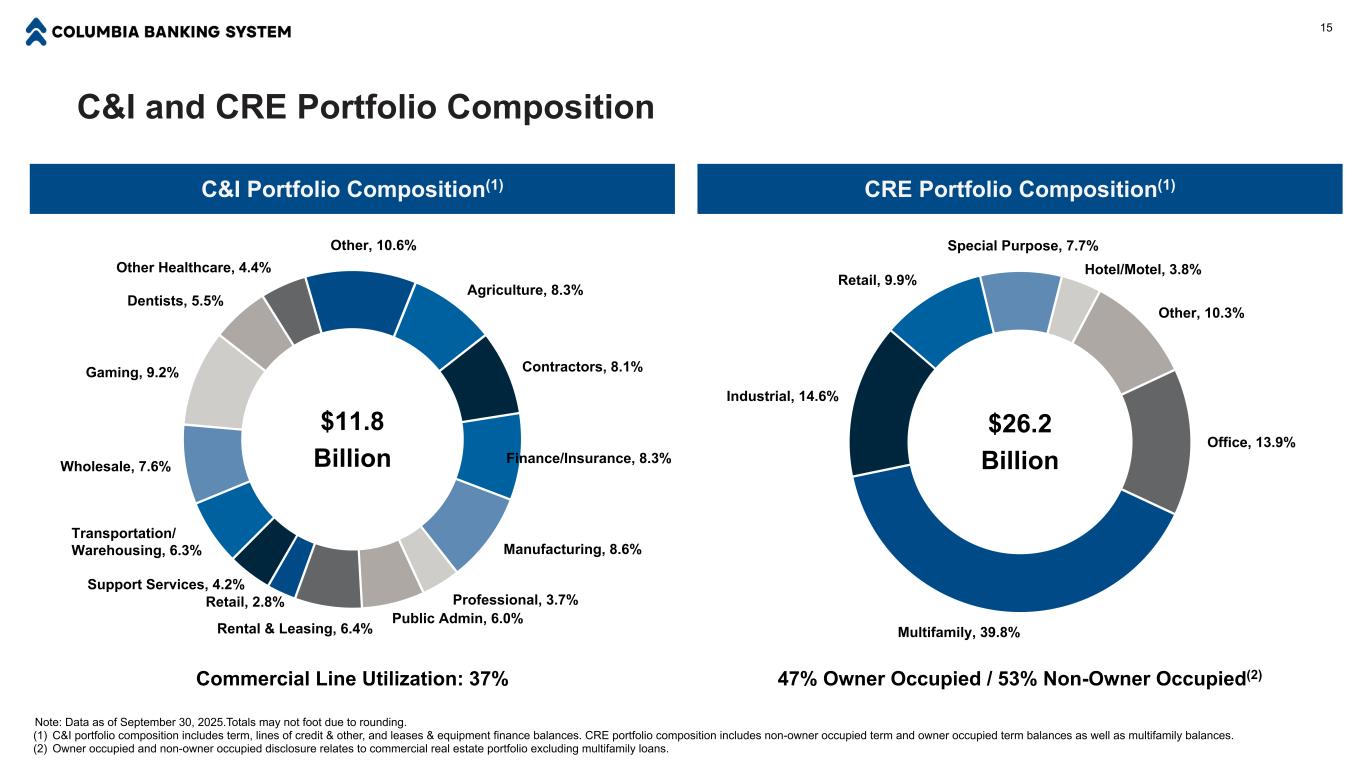
A portion of it. and another part of it just in a very small commercial real estate facility, which we expect to be gone next quarter. So, I mean, that's essentially it.
So, okay, 20 of it was not PPBI-related?
About 16 of it, I would say, is not PPBI-related.
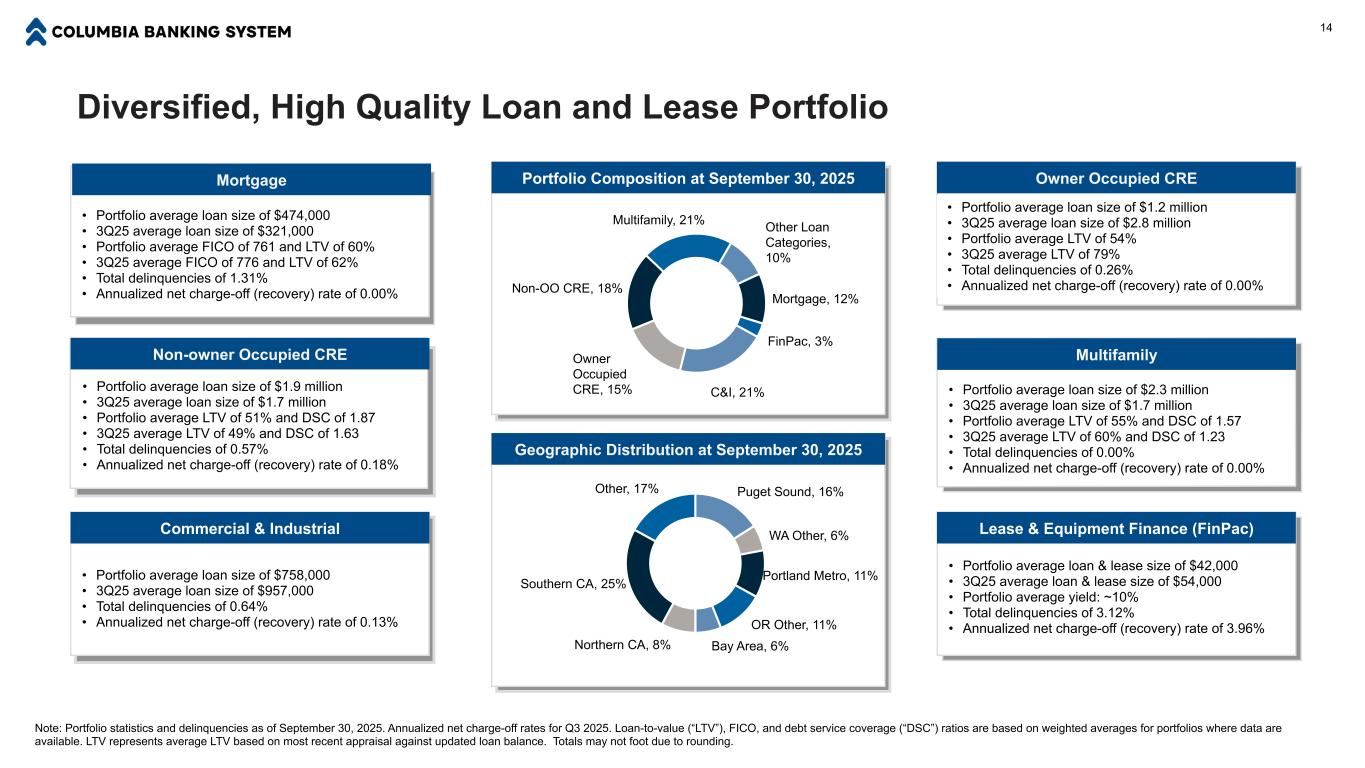
And then it looked like delinquencies were down at FinPAC, which I think is a good proxy for charge-offs going forward. you know the bank had much lower charge-offs this quarter i guess how you any line of sight on on
kind of a range of net charge-offs in the near term well i've said with regard to fin pack that we're we're kind of at normalized levels now and bouncing along the bottom uh and and so i'm pretty pleased with that um but i think that as far as a normalized run rate for charge-offs i think for bank i think uh you know i'm very happy with this quarter's uh this quarter's numbers and you know i think somewhere around there would be a would be a proxy for for going forward okay thanks again
Operator
thank you and our next question comes from jared shaw of barclays your line is open
hey good afternoon thanks um maybe sticking with this with credit you know as we see that portfolio run down on slide 25 and then get back filled with with new CNI production how should we think about the allowance level growing from here I guess as you as you pay down or get paid off on loans that have a specific mark should should we be thinking that that gets back to like the 112 level over
time, you know, given a stable economic backdrop? I think that's an accurate assessment, just kind
of a slow, slow kind of upward migration. And then just for me on the merger charges this quarter, was that just a pull forward of some charges or should we expect that the total merger costs may be a little bit higher. We'll have additional
merger expense in the next couple quarters as we get through the system conversions in Q1. Probably a little bit of a tail there. So, lower amounts, obviously, Q4 and Q1, and very little amounts thereafter.
In terms of from the initial expectations still holding? Yes.
Jared, I know that we just put the release out a short while before the call. But we also included a new slide in there that compares our assumptions at announcement for PAC Premier and our current thinking. And you'll see that our cost synergies and total deal costs are unchanged. Great, thanks.
Operator
Thank you. Our next question comes from Timor Brazileur of Wells Fargo. Your line is open.
It looks like the PPBI contribution to the balance sheet was maybe a little bit smaller than their last reported asset size, loan size. I guess, did you use the opportunity at close to maybe accelerate some of the outflows on the lending side or maybe just give us a little bit of color as to the size of
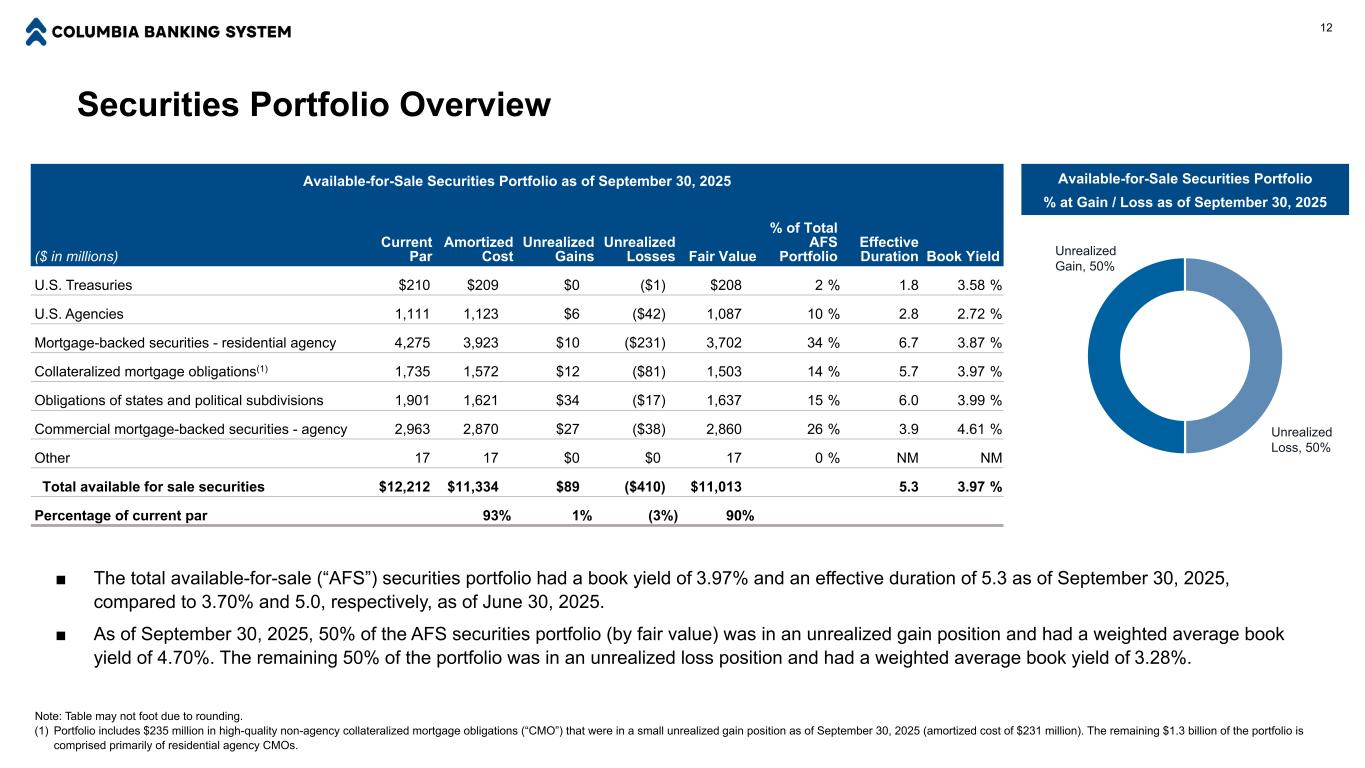
that balance sheet that was brought over yeah so so so we did we we did sell a substantial portion of their securities portfolio and in in in repurchased a portion of what we sold in securities that fit neatly with with what we have in our existing portfolio and also positioned us for our bias towards continued decline in rates. And also, we had some leverage that we put on early in the year just to take advantage of, you know, to insulate us to a small degree of, you know, rate changes while we were waiting for the approval and close. And so from that perspective, we didn't fully reinvest. We paid down some wholesale funding. The other side of it is the timing. We closed it sooner than what we expected. And so that might be part of what you're looking at. But I'll step back and see if Ron or Ivan want to add any context.
Yeah, just in terms of how these transactions work. You announced in April. you've got a pro form expectation i think if you were to go back to the the pack that was issued back in um when the deal was announced in april uh loans hfi at that point uh was 12.0 um you know came in a little bit shy of that just in terms of where the balance landed uh on the day of close and then obviously we we go through and provide our marks which are all disclosed within the packet today so once you kind of overlay the the rate and credit marks on top of that acquired loan portfolio it's a little shy of that $12 billion number, but still in a good spot there.
Okay, thanks for that. And then maybe switching to deposits, you had brought up the typical seasonality that you see in 4Q, 1Q. I'm just thinking, you know, as some of those balances flow out, how should we think about either replacing that with wholesale funds using the bond book? kind of what's the balance sheet reaction to some of this expected seasonality that we're going to
see on the deposit base? So, this is Chris. I'll take the first step of it and then Ivan and Ron can jump in. Yeah, there's seasonality in that piece, but as Tori and I mentioned, we've got strong momentum of new customer acquisition and I expect that to offset some of that outflow. As you saw in the earnings commentary, we'll start disclosing a bit more of that so you can see the components and the levers that go into it and trying to separate seasonality away from what is indeed new customer acquisition. And Ron, I don't know if you want to add on the wholesale part of it.
I mean, there will be some fluctuations in wholesale depending, but it just depends on the amount of flows, right, within the loan and deposit portfolios. We'll also have cash flows coming off the bond portfolio to help support some of that funding. So I think what Ivan mentioned earlier, just in terms of the average earning assets with the NIMM expectation in the next cup course, still is within range of the volatility you could see within and based on just the wholesale flows. We'll be maintaining transparent cash, you know, targets of around $1.7 to $1.9 billion over that time period.
Thank you. Great. And then just last for me, just maybe the contribution of accretion income in the third quarter, and more specifically if any of that was accelerated accretion from maybe some of the elevated payoff activity that we experience here in three years.
Yeah, a couple quarters back we stopped providing the accretion-specific detail, and I'll give you a great case in point. So as Clint mentioned earlier, we put on some leverage back in April and restructured the bond portfolio acquired from Tech Premier here in September, the first month post-close. And with that, we bought bonds at 85 cents on the dollar, right, straight up. Great bonds yielding upper 4% range. That is discount accretion. I mean, by 85 cents on the dollar, but it's yield. It's government yield in most cases. So I think we should just look at the face of the financials and look at those levels over time.
Okay, so in terms of accelerated kind of credit accretion on the loan book, there wasn't abnormal.
Very minimal credit discount. Minimum to minimus. Great.
Operator
Thank you. Next question comes from Andrew Terrell of Stevens. Your line is open.
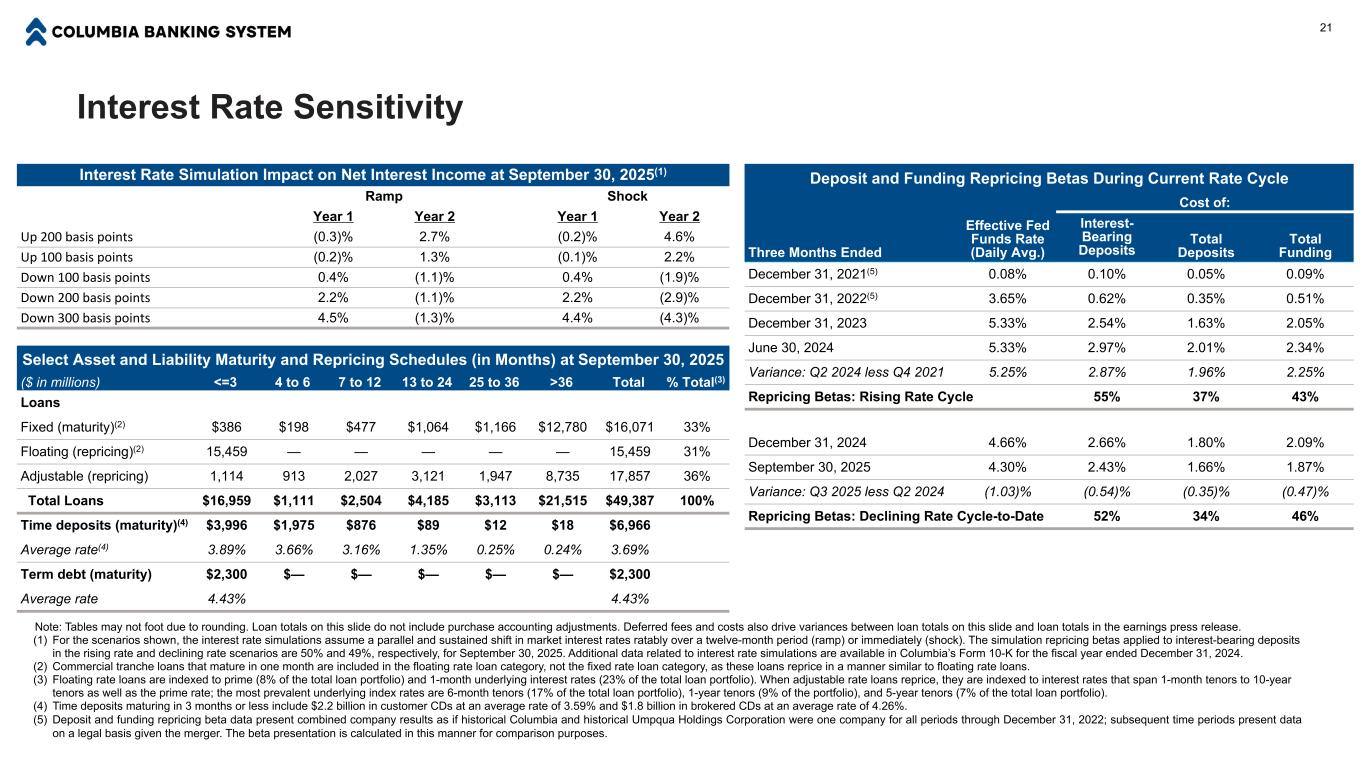
Hey, good afternoon. Hey, if I could just start just on the interest-bearing deposit beta. It looks like in the footnotes on the sensitivity, that moved down from 55% last quarter to a 49% beta assumed this quarter. I'm assuming that's mostly reflective of lower brokered deposits. Is that the case, or has anything changed in terms of your customer deposit repricing expectations for FedCuts?
Yeah, thanks for the question. This is Ivan. No, nothing's changed in short. We'd expect interest-bearing deposit beta roughly 50%. Obviously, it's a little bit of a unique quarter for us because you have the combination of the PPBI book, which when you squint at it, looks remarkably similar to the legacy deposit book that was in existence beforehand. And then you also had the late quarter FOMC. And so not the entirety of that is fit into the end of the quarter. But as we've continued to monitor the portfolio through October, continue to see betas kind of in that 50% range. And I think Tori is going to provide some other comments on deposits here.
Andrew, I would just say that kind of pre any Fed move, Chris and I have structured the various business lines for reductions to be very quick and responsive, proactive with the customer base, moving rates down. as much as possible and as fast as possible. And I think we've done that every single time, and we're ready for this most recent move, and we're implementing that in the bank today. And we will continue to do that going forward and feel very confident in our ability to lower rates as the Fed moves rates down.
Got it. Thank you for all the color. And then on the buyback, if I could go back to that, you guys have an earnback tolerance on Tangible Book when you think about deploying capital into the buyback versus other means. I mean, I understand the current multiple. It probably makes a lot of sense, but is there any sensitivity from a tangible earnback standpoint?
Yeah, this is Ron. This earnback plan we've got looking out over the year with some sensitivity around the price is under three years. I think the bigger issue here is we're pretty discounted against peers, and so this is a great buy.
And the thing I'd add to that is, you know, as we scan the horizon and look at things, our view is the greatest investment we can make is in our own stock, our own company.
Great. Thanks for the questions. And, Ron, it's been great working with you.
Operator
Thank you. And our next question comes from John Arstrom of RBC. Your line is open.
Hey, thank you. Good afternoon. Hi, John. Same sentiment there, Ron. Thanks for everything.
Tori or Clint, maybe, or Chris, back to you guys on the lending environment. How would you characterize the pipelines right now? Are they better, same, lower? Just what are you hearing from your borrowers?
So it's interesting. If you kind of look back to the beginning of the year, all the conversations around what rates we're going to do, the tariff kind of messed. It just put people in a holding pattern, and for Q1 and Q2, there was a lot of just doing nothing in a pretty stagnant environment. Interestingly, a lot of that rates have come down a little bit. The tariff noise is less noise, and you're starting to see some increase in activity on M&A activity, customers buying other businesses, some real interest in investment into their companies, in the acquisition of pieces of equipment, et cetera. So you're starting to see some good net loan opportunity. Interestingly, we look at production, the biggest producing parts of the company today, and it's been the Pacific Northwest and Southern California for us this past quarter, and growth in pipelines have been across the entire franchise. So when I look at the different pipelines and the different geographies, they're kind of mixed and they're everywhere in the footprint, which is great to see. And that, to me, shows that this idea of increased activity is kind of throughout at least the western part of the U.S., not in one particular industry or a couple or in one geography. So I think, as I said earlier, that the CNI pipeline is up 700 million quarter over quarter um the real estate pipeline is flat uh it's been declining over the last several quarters but it's flat quarter for this time so things are looking things are looking up which
is which is great to see hey john this is chris and i'd add to that um part of that number tory mentions is our investment in new bankers this year and that's throughout the markets a couple of them specifically um our new healthcare folks have a really good pipeline and started booking business. Native American banking, the same. And there's several other CNI bankers that have come on that are doing the same thing and starting to hit their stride. So I think that's all positive
momentum. Good. That's helpful. Maybe, Clint, just for you, you guys have provided a lot of numbers, which I think are helpful. But curious how you think about a sustainable return on tangible for the company. Obviously, a good number this quarter. But do you feel like you can continue to crank out high teens, return on tangible the way the model is today?
Yeah, absolutely. You know, absent something breaking in the macroeconomic environment, you know, we would expect to be where we're at or even a little bit higher and deeper into the high teens. So, very optimistic about our level of performance. You know, we track it, and in many cases have been at the top quartile, and we think with the addition of PAC Premier and the momentum that we have that we can move into the top decile, and obviously at 18-plus ROTCE, we're already well above our peer group, and we feel very bullish about that. Okay. All right. Thank you. Thanks, John.
Operator
Thank you. And our next question comes from Anthony Ilion of J.P. Morgan. Your line is open.
Hi, everyone. Ivan, just to put a finer point on your near-term NIM comments, for 4Q, you expect just north of 390, but the similar range you said for 1Q, is that relative to 390 or to the 384 you just printed?
For 1Q, from an NII perspective, normalized, we'd be in a similar spot. I think that NIM will be probably 390-ish range, maybe a tad higher. But we project earning assets just a touch lower with a couple items going on there. So from an NII perspective, fairly stable, with the exception of that $12 million deposit premium accretion that we've talked about a couple times already.
Okay. And then my follow-up, slide 25 on the optimization. The $8 billion of transactional loans, is that all we should think about for our optimization for now, or could there be other loans, deposits, anything on the funding side from PAC Premier that could run off or exit to further optimize the balance sheet?
No, we wanted to make sure that we captured fully so that as we go forward, you know, there's integrity in that number, and as you see us walk that down, then you'll be able to see the the remix happen on a on a quarterly basis so our intent is that this is the bucket um and as the bucket empties we we will not refill it we're very very satisfied with virtually everything else that's on our on our balance sheet great thank you ron uh for everything
Operator
i'm looking forward to working with you ivan thank you next question comes from janet lee
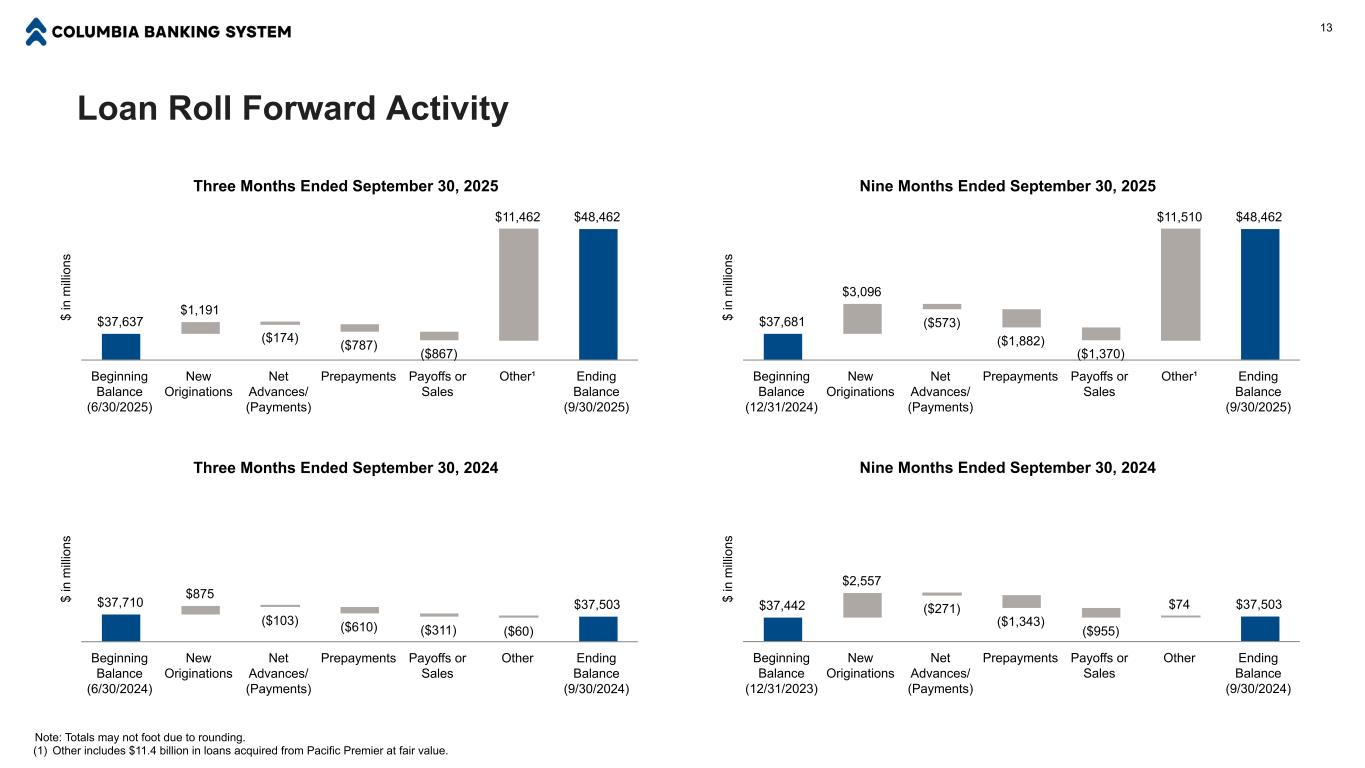
of T.T. Cowan, your line is open. Hello. If I were to look at page 13, if I do the delta between the new originations and payoffs and prepayments combined, it's about like 500 million delta there. In the coming quarter, should I expect that to accelerate in terms of more prepays versus new originations, or should that narrow?
Yeah, this is Tori. That's hard to answer kind of because things happen in the quarter that you're not fully anticipating, but we did have some loans that we transferred into Health for Sales. I think that's in that number there, which won't happen again for Q4. But if you look at over the course of a year, you can get a fairly good view of just net paydowns, prepayments, and payoffs relative to originations. And the goal here for us is that, as Clint and everybody else has mentioned, we're driving core relationship growth for the company. And the idea is to take market share, add new names to the company, and grow the company with new customers, that would be deposits, core fee income, and C&I loans.
And just to make sure that I understand your comment correctly on balance sheet optimization, is it fair to assume that the biggest impact to loan growth total should be in 2026 and maybe in 27 and beyond? Like it gets lessened if I were to just look at your schedule, or is it more of a consistent multi-year plan?
Yeah, I think when you look at the repricing and maturity schedule that we put into the material this quarter, the majority of the portfolio that we're looking at, we would anticipate working through over the next eight quarters, two years. Of course, interest rate movements could change that dynamic if we see a steeper decline in terms of the interest rate environment than what's currently anticipated. Some of this stuff could come into the money more rapidly. But as of what, you know, given the facts and circumstances we're looking at today, I'd say it's going to be a story we'll be talking about and a process we'll be working through for the next two years for the most part.
Operator
Got it. Thank you. Thank you. And our next question comes from David Tiaverini of Jefferies. Your line is open.
Hi. Thanks for taking the question. I was curious about loan pricing. I think you mentioned 8% earlier in the call on CNI. I was curious, is 8% a good number to think about for the $700 million loan pipeline, and could you also talk about the competitive environment for loan pricing?
Sure. Hey, David, this is Tori. New originations on the lending side are roughly between 6.5% and 8%. I think probably a weighted average this past quarter was in the low 7s. So that's a fairly good indicator, I think, of the future for the most part. You know, I think that the competitive environment shifts pretty quickly. There are a lot of banks trying to generate asset growth, and so you see some pretty tight margins on some deals. And, you know, we're going to hold steady to what we think the value of our company is, and we're not going to chase price. We will be competitive. But we look at pricing very holistically. We look at the cost of deposits. We look at core fee income generated. And then obviously we look at loan pricing all collectively to decide, you know, how we're going to approach either a current customer or a prospect to bring into the bank. So, you know, the environment, it changes overnight, and it's always competitive. The idea is to drive value in something other than we do well every single day with the way we operate our company.
David, this is Clint. I'm glad you asked your question because I was using that as an illustrative just for math purposes of the difference between something that's at a weighted coupon of 410 and rotating into something that's more of a traditional C&I or other relationships. And we'll continue to do CRE, and so, you know, those are at a lower rate, and so depending on what it remixes into. But glad you asked the question so we could clarify that.
Operator
Thank you. And our next question is a follow-up from Chris McGrady of KBW. Your line is open.
And don't kill me for the follow-up. I want to make sure this is to get the NII right. Okay. The 390, I hear you on 390, Ivan, and that includes the 12 million of NII. But I guess, can you just give me all the moving pieces one more time, the earning assets for the fourth quarter and the expected fully loaded NII, and then we can make the adjustments for Q1. I just
So we are wrapping up this quarter with total earning assets just a hair below $62 billion. It's a 3.84 margin for the full quarter. As we look forward to next quarter, we'd anticipate a similar level of earning assets, maybe a hair lower, and landing at about a 390, just a hair above 390 from a net interest
margin perspective in q4 okay and then and then the only adjustment for q1 would be to pull out the 12 million dollars that you talked about uh factor in i guess our assumptions on balance sheet but um absent the 12 million roughly nii should be stable in q1 i'm just trying to make sure i get yeah that's right right okay perfect thank you right got it thanks thanks chris thank
Operator
Thank you. I'm showing no further questions at this time. I'd like to turn it back to Jackie Boland for closing remarks.
Thank you, DeeDee. Thank you for joining this afternoon's call. Please contact me if you have any questions or would like to schedule a follow-up discussion with members of management. Have a good rest of the day.
Operator
This concludes today's conference call. Thank you for participating, and you may now disconnect.