Operator
Ladies and gentlemen, thank you for standing by. My name is Krista, and I will be your conference operator today. At this time, I would like to welcome you to the Circle Internet Group 3rd Quarter 2025 Earnings Conference Call. All lines have been placed on mute to prevent any background noise. After the speaker's remarks, there will be a question-and-answer session. If you would like to ask a question at that time, simply press star followed by the number 1 on your telephone keypad. And if you'd like to withdraw that question, again, press star 1. Thank you. I would now like to turn the conference over to John Andrews, Vice President of Capital Markets and Investor Relations. John, you may begin.
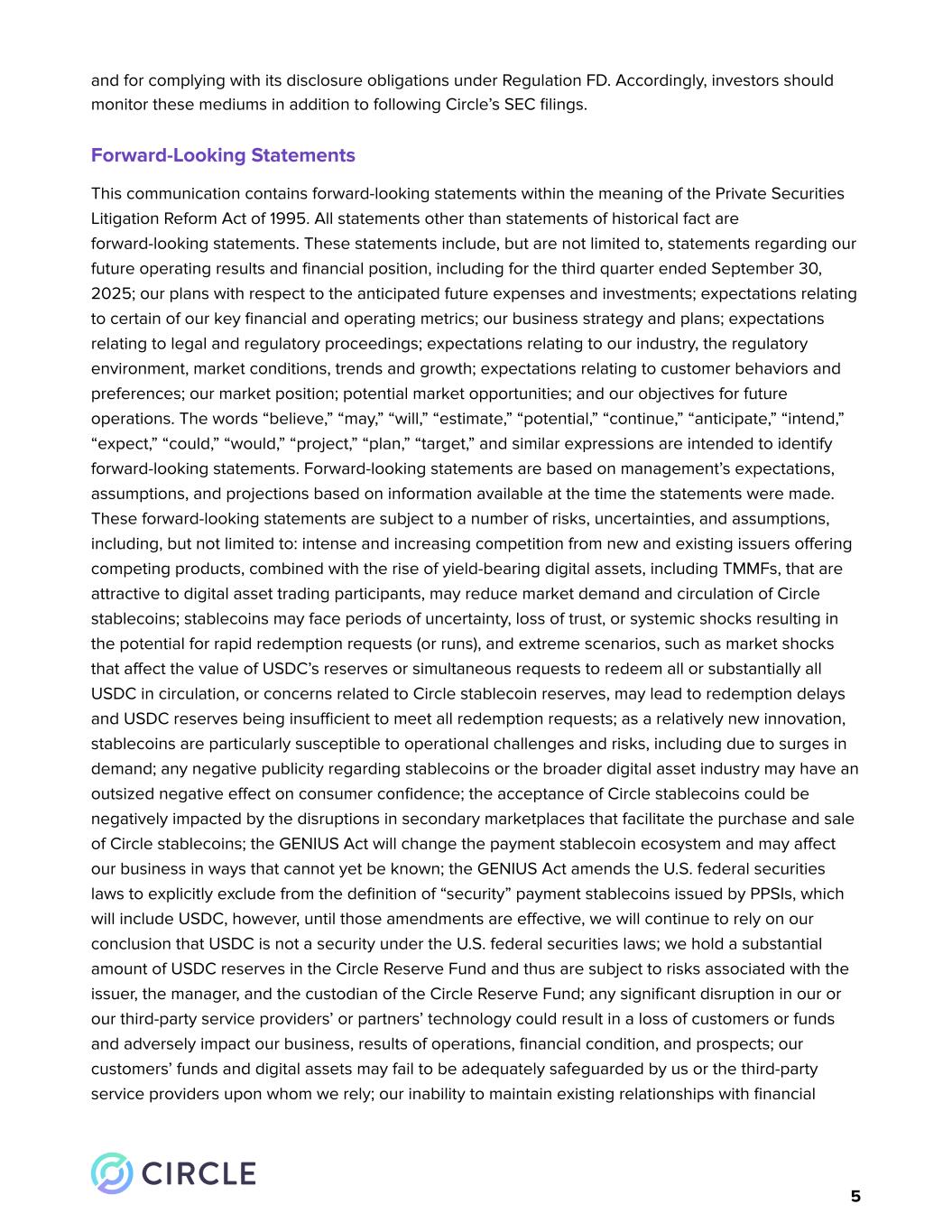
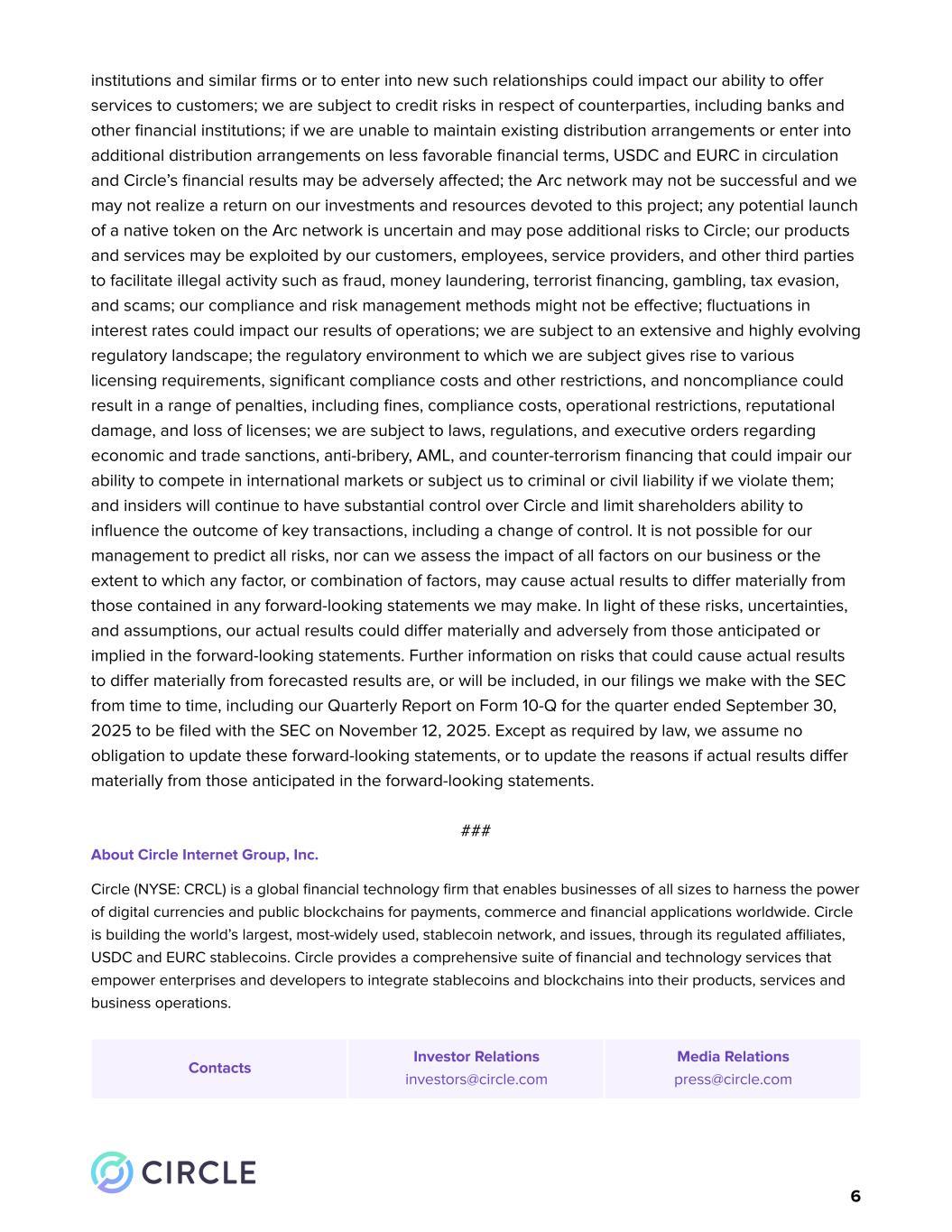
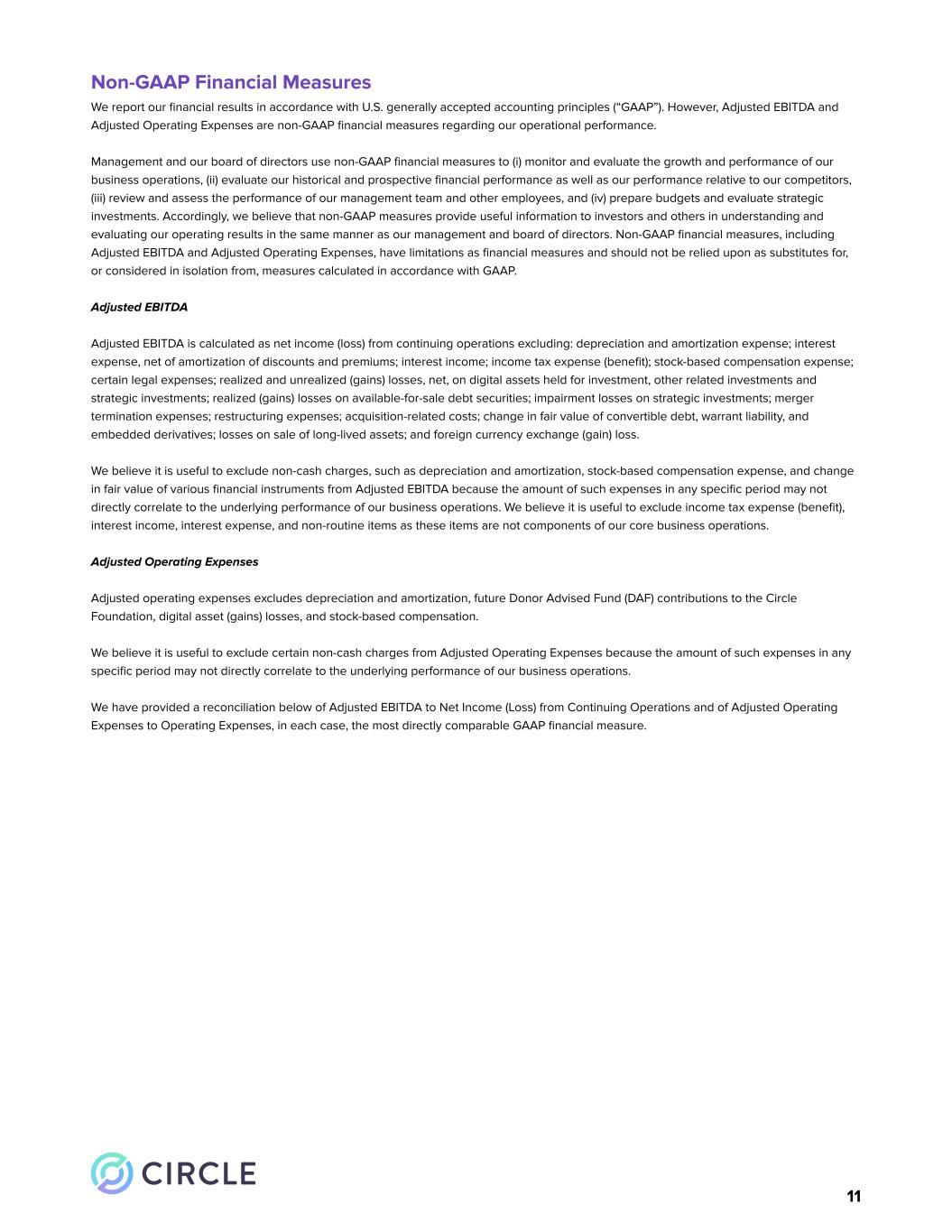
Thank you, Operator, and good morning. I'd like to welcome you to Circle's third quarter 2025 earnings call. I'm joined by Jeremy Allaire, our co-founder, chief executive officer, and chairman, and Jeremy Fox-Kean, our chief financial officer. Earlier this morning, we posted our earnings press release and earnings presentation on the Circle Investor Relations website, investor.circle.com. The transcript of this call will be posted on that website once available. I do need to remind everyone that our earnings press release presentation and this call contain statements that are forward-looking. Because forward-looking statements are inherently subject to risks and uncertainties, some of which cannot be predicted or quantified, and some of which are beyond our control, you should not rely on these forward-looking statements as predictions of future events. The events and circumstances reflected in our forward-looking statements may not be achieved or occur, and actual results could differ materially from those projected in the forward-looking statements. information concerning risks uncertainties and other factors that could cause these results to differ is included in our SEC filings. We will also disclose non-GAAP financial measures on this call today. Definitions of those non-GAAP financial measures and reconciliations to the most comparable GAAP financial measures can be found in the earnings press release and earnings presentation which are posted on Circle's Investor Relations website, investor.circle.com. Non-GAAP financial measures should be considered in addition to not as a substitute for gap measures. Now, I'd like to turn the call over to Jeremy Allaire.
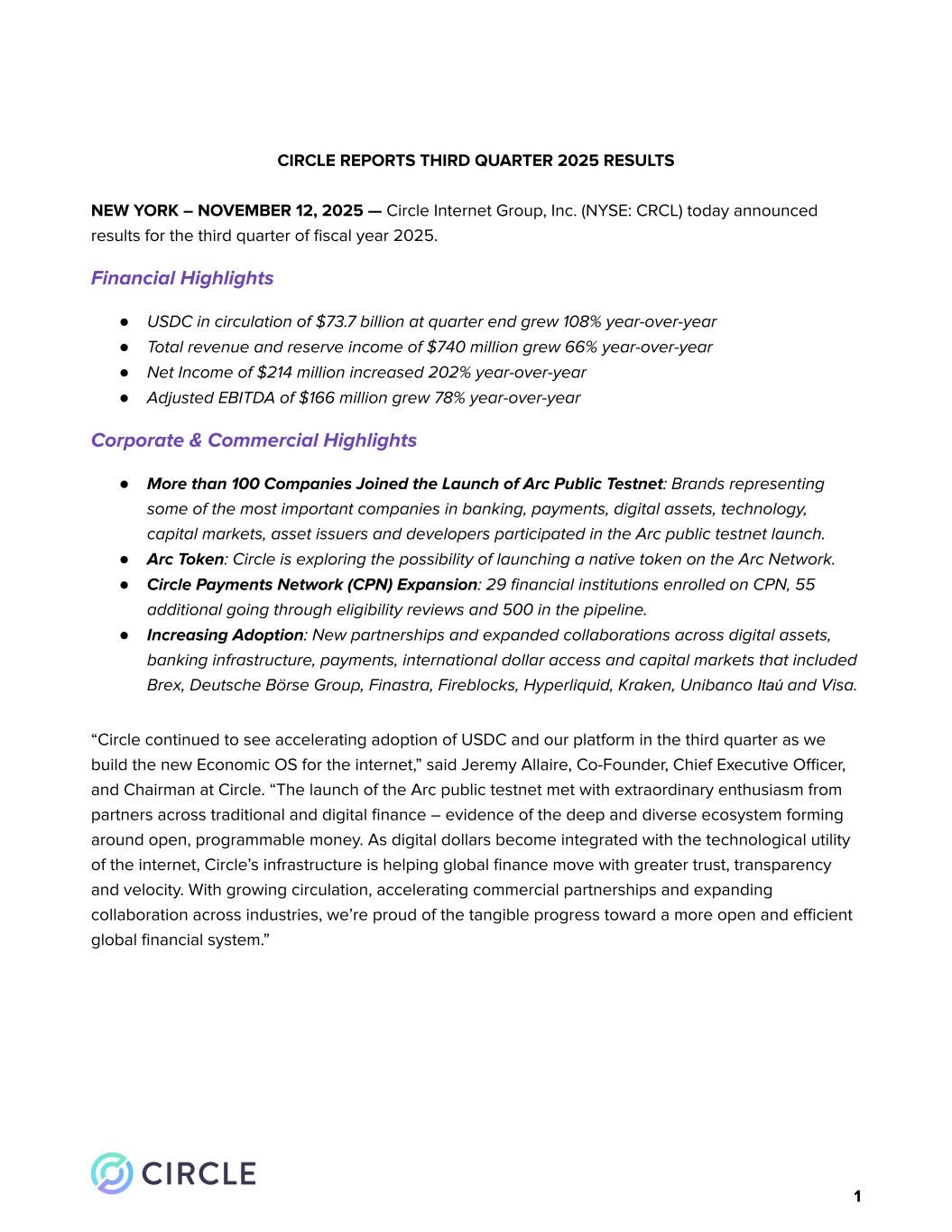
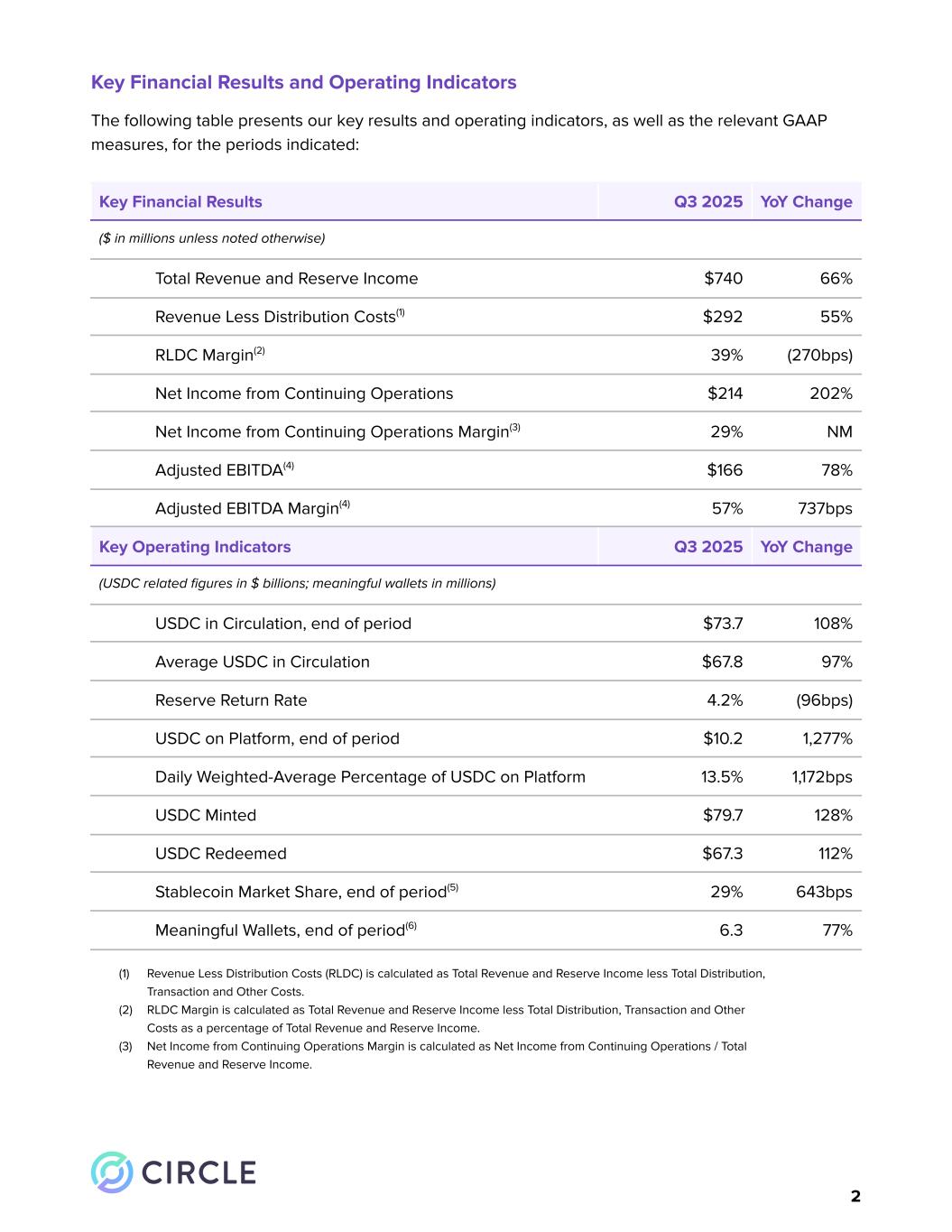
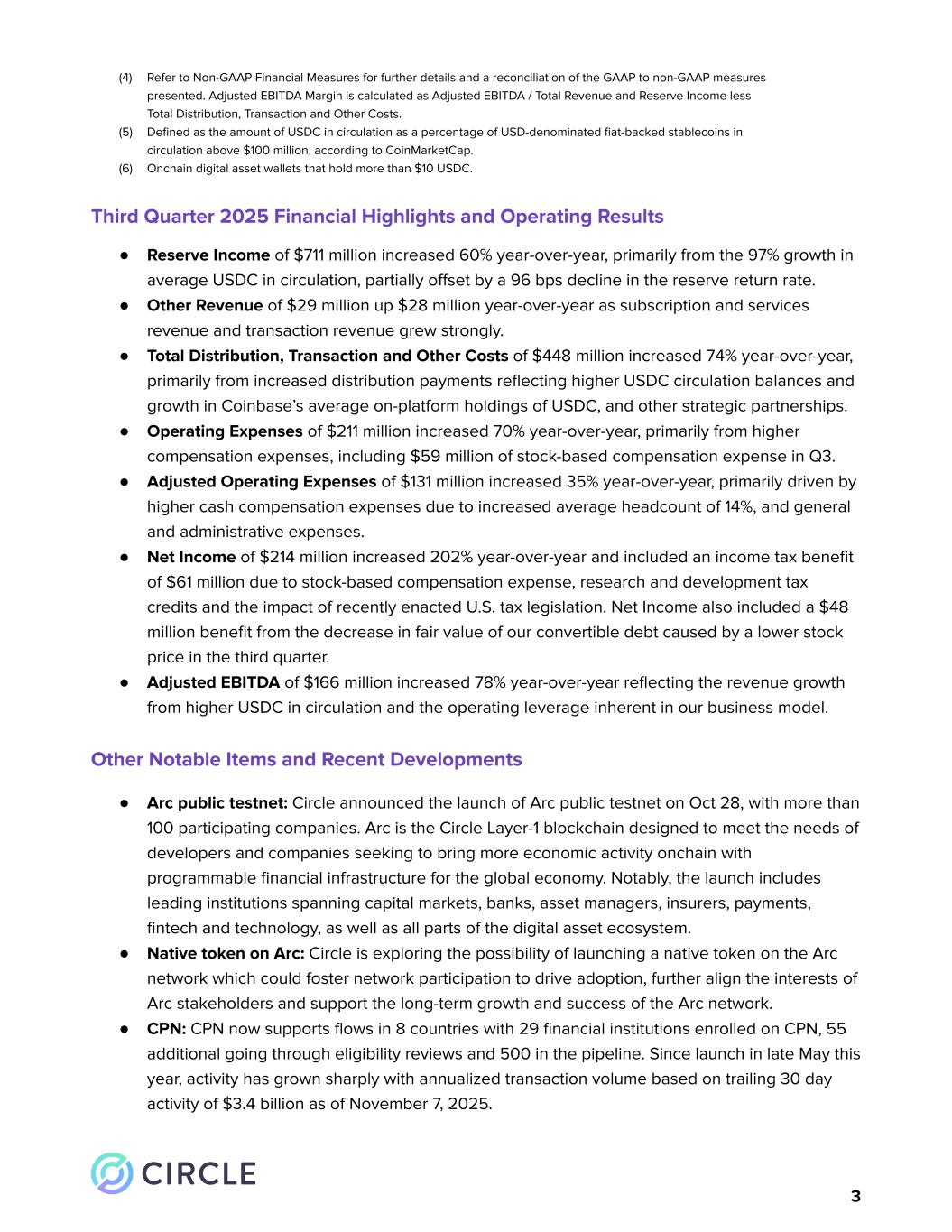
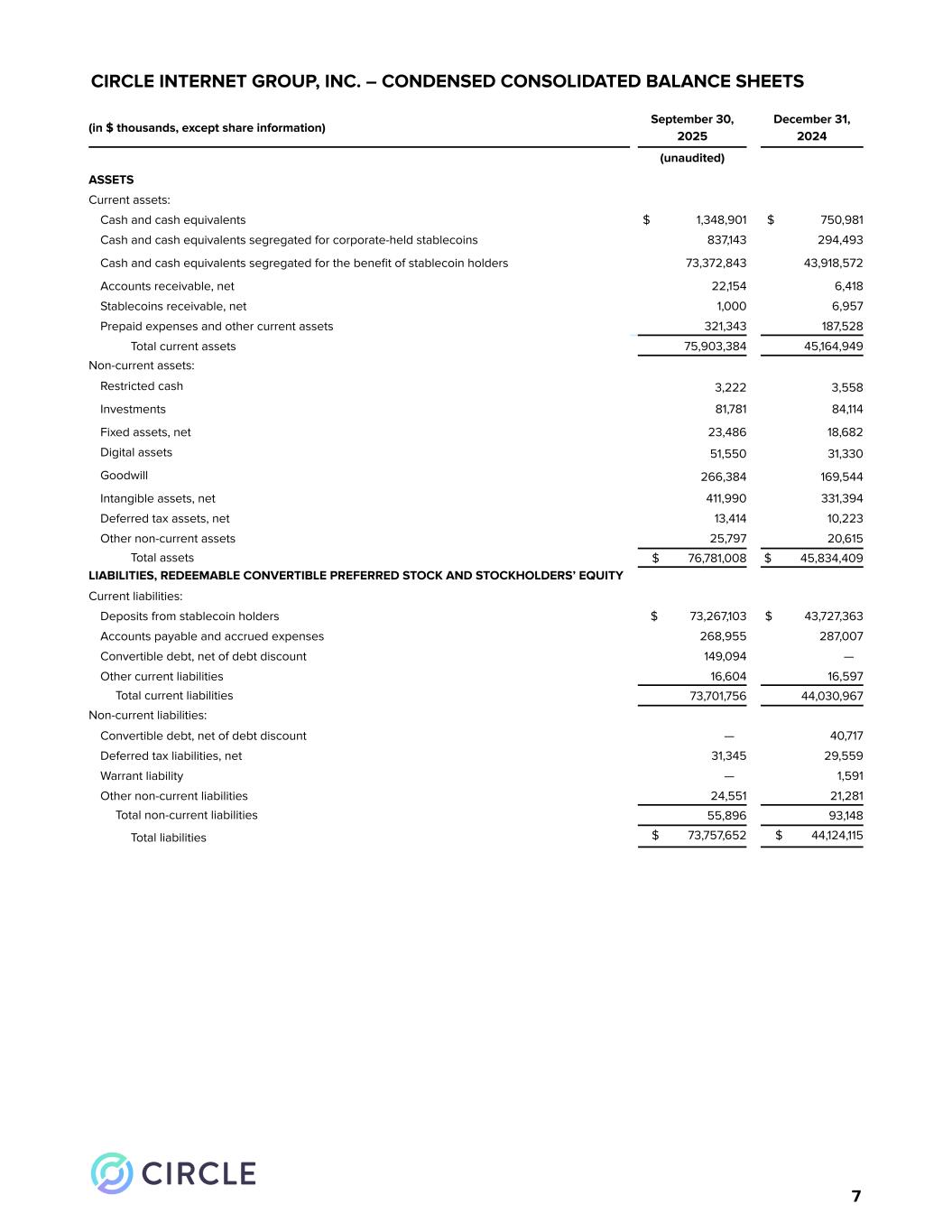
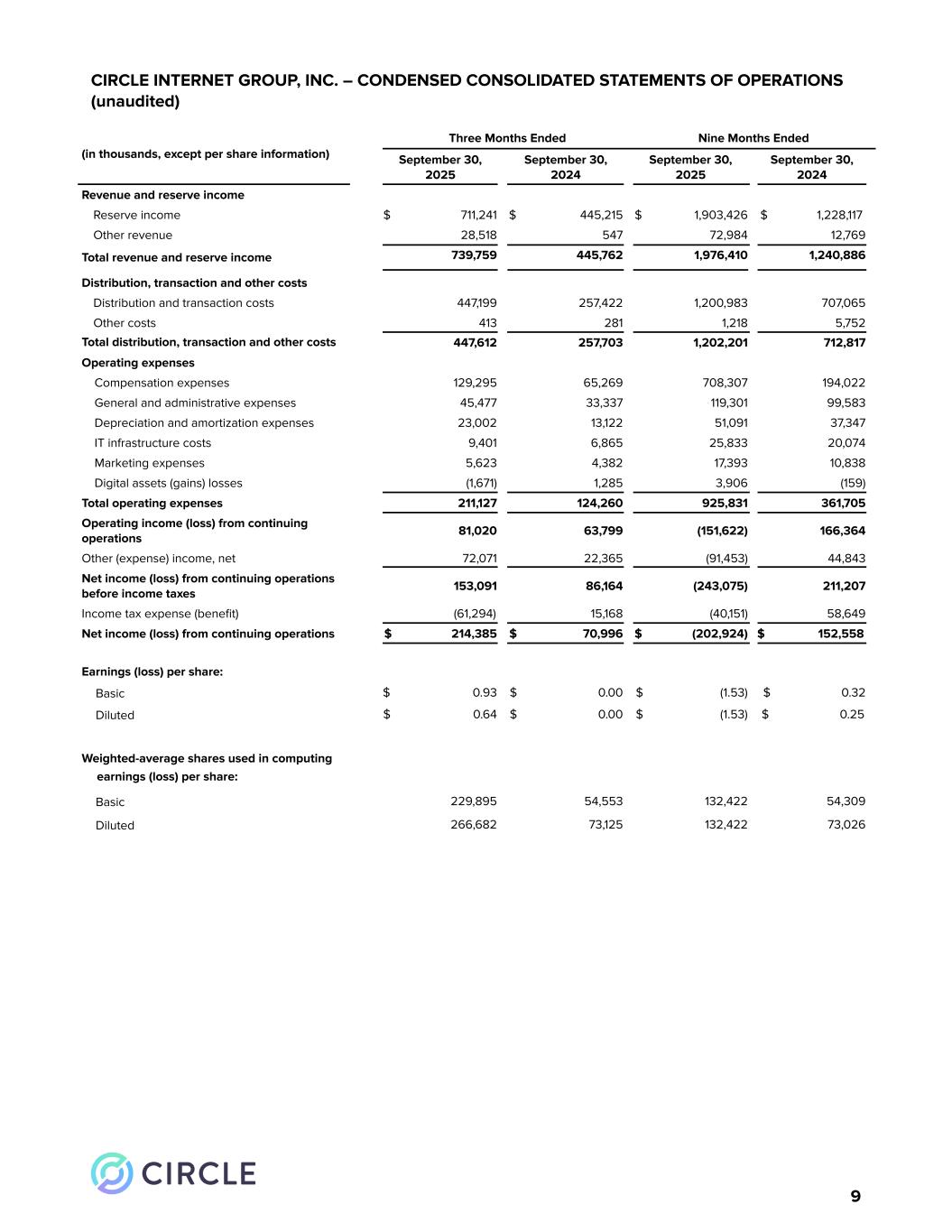
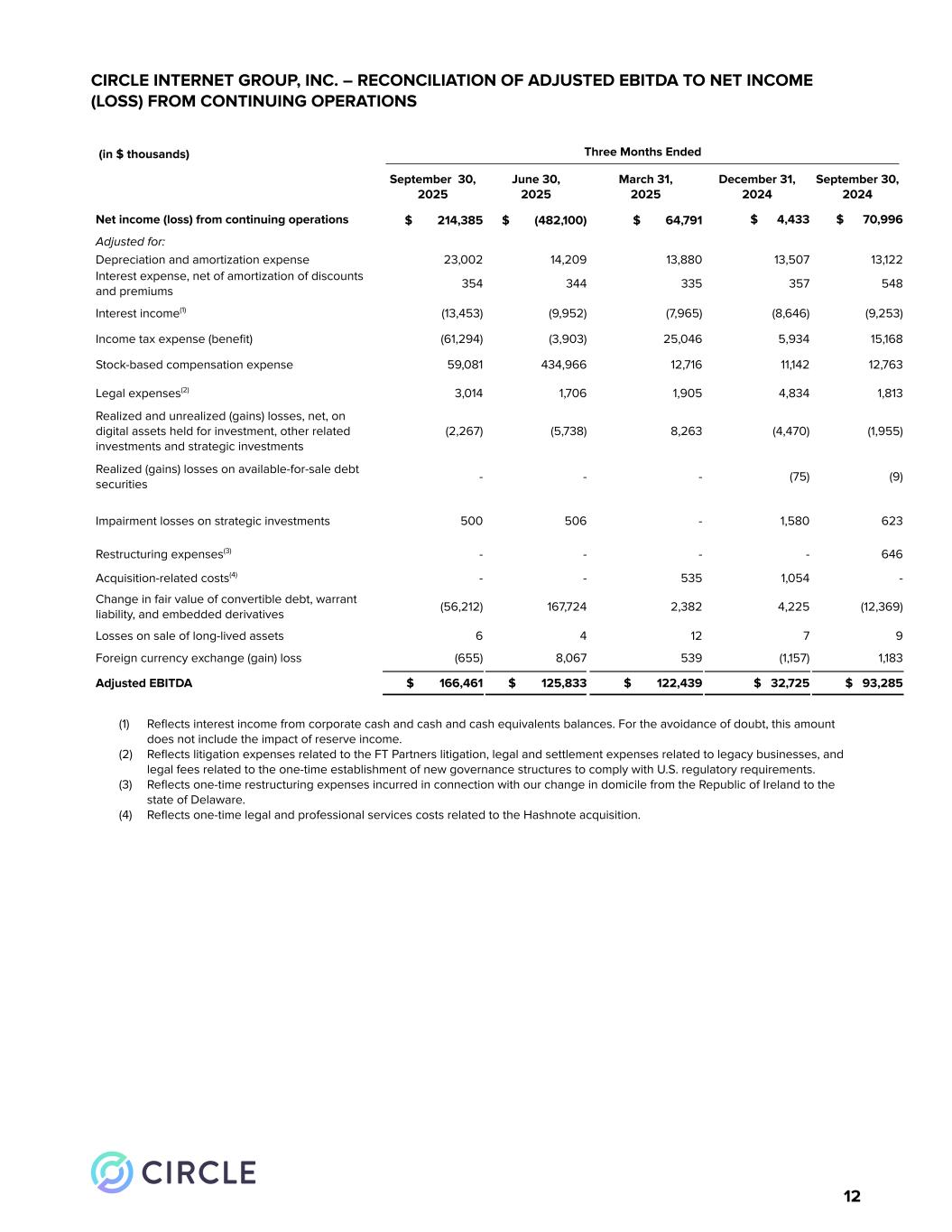
Thank you, John. I'm excited to talk with all of you today about our quarterly results and general outlook. But before I do, I want to talk about our broader vision for what is taking place in this market, a vision of an internet financial system that guides what we're building towards at Circle. Our vision from the beginning has been that a new set of open internet infrastructure and open software infrastructure would collide with the global financial system and ultimately transform it. We are moving more and more towards that world and realizing that vision. What we are seeing emerge is the opportunity to build a full stack internet financial platform company with several platform layers. The first layer, blockchain networks are becoming foundational operating systems for economic activity on the Internet, what we call economic OSs for the Internet. These infrastructure layers will be part of migrating coordination, governance, value storage, financial contracts, and other forms of economic intermediation into a software-powered and agentic economic system. This is an enormous platform and infrastructure opportunity that we believe is even larger than any past internet platform technology. On top of these economic OSs is the second platform layer of digital assets. This includes stable coins, internet native digital assets based on protocols and applications, and broader tokenization, including the tokenization of traditional assets and many other types of economic contracts. All of these digital assets will be built on the first layer of blockchain networks, the economic OSs for the internet. This digital asset layer is fundamental to how economic value will be stored, transformed, transmitted, and exchanged all around the world. On top of the blockchain and digital asset layers is the third layer, new application utilities that are built for the Internet economy, application utilities for payments, commerce, treasury management, capital formation, lending, governance, and many other applications that are fundamental to economic activity. Full-stack Internet financial platforms are emerging, and Circle intends to be the leader in this space. With that backdrop, I want to discuss our latest results and our progress in expanding our platform and building towards the vision that I just described. In Q3, we saw very strong growth in our network. USDC in circulation grew 108% year-over-year to $73.7 billion. This is tremendous growth, and we're very proud that our growth also represents continued market share expansion. Moreover, the amount of on-chain transactions using USDC grew 580% year-over-year to $9.6 trillion in Q3, underscoring the inherent and increasing velocity and efficiency of using USDC as a medium of exchange. This increasing velocity of money is a crucial feature of the internet financial system. We had strong financial results in the third quarter. We realized $740 million in total revenue and reserve income, representing 66% year-on-year growth. Our adjusted EBITDA grew 78% year-on-year to $166 million, dollars with a 57% adjusted EBITDA margin, a 737 basis point expansion. And we've delivered continued expansion in our platform. We launched ARK into public test net in recent weeks with over 100 major participants. I'm going to talk more about that in a few minutes. We're also sharing today that we are exploring the possibility of launching a native token on the ARK network, which we think could be an important component for driving utility, incentives, growth, and governance of the ARK network. We saw Circle Payments Network product expansion with multiple product releases and significant growth in transaction volumes. And we've continued to expand our stablecoin network across more chains with five new chain launches and 28 supported chains today, part of our deep commitment to maintaining a strongly market-neutral position. and adoption has been expanding across a range of use cases, industries, and types of firms. Overall, the stablecoin market has continued to grow strongly, and Circle continues to gain share. On a year-over-year basis, stablecoins in circulation grew 59%. Because we grew faster than the overall market, Circle's share grew to 29% in the third quarter. Based on Visa's published analysis, stablecoin transaction volumes have grown approximately 130% year-over-year, with USDC share expanding to 40% in Q3. And as you can see, the dollar stablecoin space remains a market with two leading issuers and a number of much smaller players, as we continue to sustain our strong position despite increasing competition. At the heart of our competitive position are durable and powerful network effects that are anchored in several areas. The trust that we have enshrined in our infrastructure by being regulated, audited, public, transparent, and compliant. The core liquidity infrastructure, our reserve infrastructure with systemically important banks and banking connectivity around the world providing at-scale minting and redemption. But also our broad distribution across blockchain networks and ecosystems, which has helped sustain the broader utility of our network. And we continue to innovate in product and technology and developer services, which provides powerful infrastructure for application developers, financial infrastructure companies, and others to build on. Crucially, we have been able to maintain our competitive position by being a market-neutral infrastructure that leading companies can build on top of. Our stablecoin network growth remains strong. As already noted, on-chain transaction volume grew to $9.6 trillion in the quarter, up from $5.9 trillion in Q2. CCTP, our cross-chain transfer protocol, is a key infrastructure in enabling capital-efficient and secure transfers of digital dollars across blockchain networks, applications, and services. CCTP volume grew approximately 640% year-over-year to $31.3 billion in Q3. And, in fact, over the quarter, of all bridged volume of all assets from major bridge providers that we track, CCTP represented 47% of all of that traffic. In October, it was over 50%. This is really key as we think about the expanding role that Circle can play in providing infrastructure that supports broader cross-chain interoperability for digital assets. We're continuing to gain share in digital asset trading markets as well. It's a key priority for us, and you see this in our growing share of spot trading year over year and in the ongoing expansion of USDC within perpetual markets, in particular on platforms such as Binance, the world's largest centralized exchange, and Hyperliquid, the largest decentralized exchange. From June 30th to November 8th, we've seen our tokenized money market fund, USYC, more than triple in size to approximately $1 billion, making it the second largest TMMF in the world. This is an important part of our growth in tokenized collateral for digital asset markets. And use case expansion and adoption is growing. We're seeing adoption in capital markets, in payments, in the digital assets ecosystem, with banking infrastructure providers, and to provide dollar access around the world, including with leading companies such as Brex, Deutsche Börse, Fireblocks, Finastra, Kraken, and Netau, the largest bank in Latin America. These are all key use cases with industry-leading companies that chose to work with Circle, and which will be important to the ongoing growth and adoption of our stablecoin network. While USDC and Circle's broader stablecoin network are central to our business today, we are continuing to expand our platform across key dimensions. Coming back to this idea of building a full-stack Internet platform company, Circle has been methodically building infrastructure that goes down the stack into the core network operating system layer with ARC and moving up the stack into the application utility layer with CPN. With ARC, we've just delivered a critical and significant milestone in recent weeks with the launch of the ARC public testnet. When we think about this layer of infrastructure, we really look at it as an operating system layer, an economic OS for the Internet. Over prior decades, there have been fundamental platform shifts for how software infrastructure supported growth in the utility of the Internet. The web as an OS for information and data. The evolution into mobile as an organizing operating environment. Cloud as an operating infrastructure. And then other core utilities, such as social, search, and commerce, helping to organize ecosystems, platforms, and activity. And now we're seeing two new major operating system paradigms, AI platforms and blockchain platforms. With ARK, we've created something that is enterprise-grade and purpose-built to bring stablecoin finance and real-world economic activity on-chain. Our public test net launched with over 100 world-class companies spanning every major category of the financial industry, major payments firms, technology companies, fintechs, and broad support across the digital asset markets industry. From Apollo to AWS, BlackRock, HSBC, MasterCard, Standard Chartered, Visa, and so many other tremendous firms who are testing, evaluating, and collaborating with Circle as we seek to bring ARK to commercial mainnet launch in 2026. We've also been activating ARK across our entire Circle product suite, making it seamless for developers and all participants in the ecosystem to take advantage of this new infrastructure from Circle as they prepare for ARK main net. Our vision for ARK is of a globally distributed network with infrastructure operators all around the world, in every region of the world, from every economic system in the world, and we envision strong stakeholder incentives and governance to help drive the adoption and evolution of this network. Consistent with that thinking, Circle is actively exploring the introduction of a native token on the ARK network. This is an exciting development that we're actively looking at, and we'll share more as we continue our exploration. We are also seeing strong early momentum for Circle Payments Network, and we've expanded the CPN product portfolio. We launched CPN Console, which brings self-service operations to CPN members for onboarding, integration, and operating payment flows on behalf of their customers. This will streamline our ability to bring more members and more institutions onto the CPN Marketplace itself has continued to expand, as I'll talk about momentarily. And we launched a new capability called CPN Payouts, which is purpose-built for automated stablecoin payouts on CPN. We've seen the number of financial institutions enrolled on the network grow to 29. We've also seen more and more institutions that are actively engaged in eligibility reviews to integrate to our network, including 55 financial institutions. and the overall pipeline of financial institutions seeking to join CPN has grown to 500. Across these participants are global, systemically important banks, payment service providers, cross-border firms, neobanks, digital asset firms, and many others. We've continued to expand the markets where CPN is available, with live flows happening across Brazil, Canada, China, Hong Kong, India, Mexico, Nigeria, and the United States. And we expect upcoming launches for flows into Colombia, the European Union, the Philippines, Singapore, the UAE, and the United Kingdom, to name a few. We've also been seeing strong early adoption with rapid growth in CPN's monthly total payment volume. From our first full month, only five months ago, to November 7th, we've seen over 100 times growth in trailing 30-day payment volumes. As of last Friday, annualized transaction volume based on trailing 30 days is $3.4 billion. We're excited about this expansion of Circle's platform, continuing to build out what we believe can be one of the most significant and broadly adopted internet financial platforms in the world. With that, I'm pleased to turn this over to Jeremy Fox Gein for the financial review.
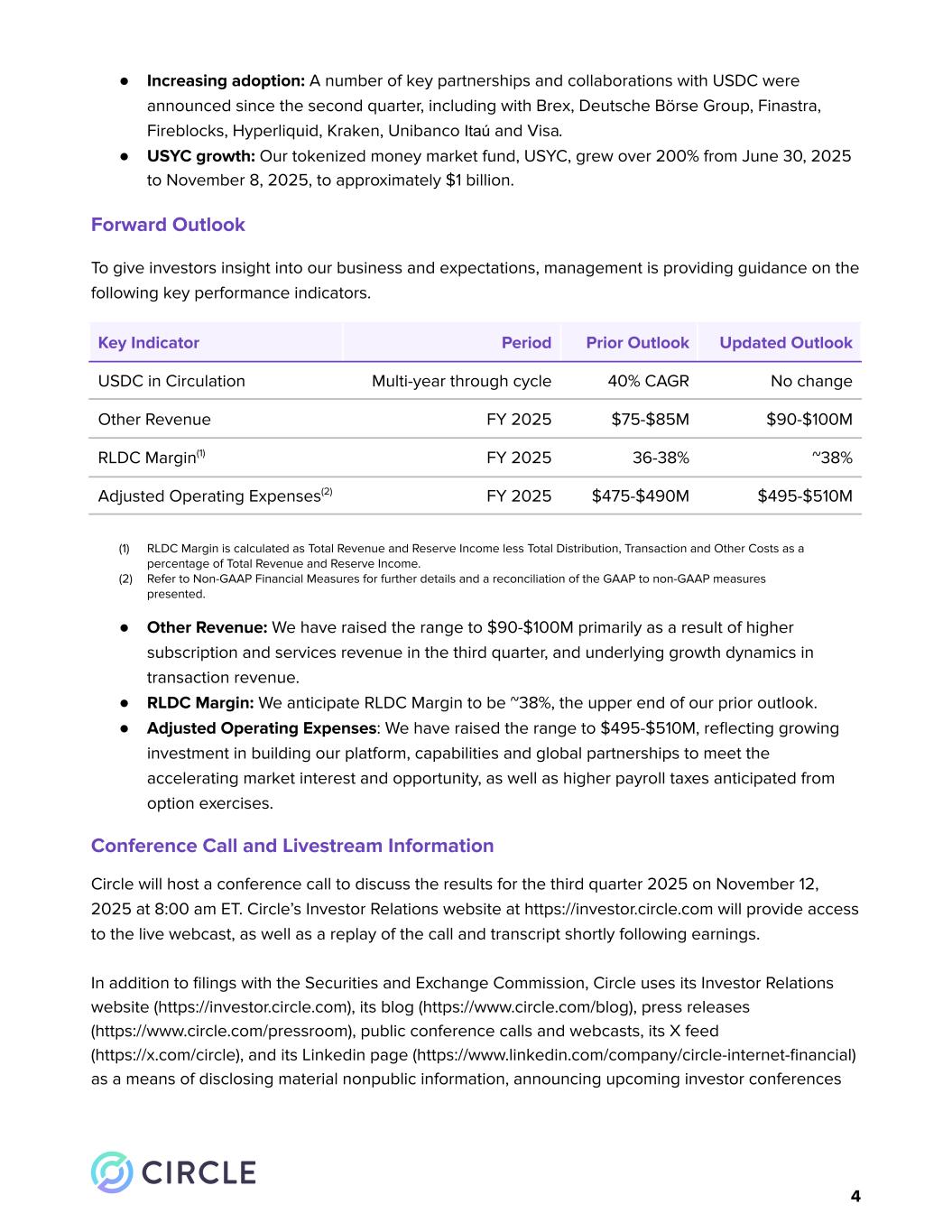
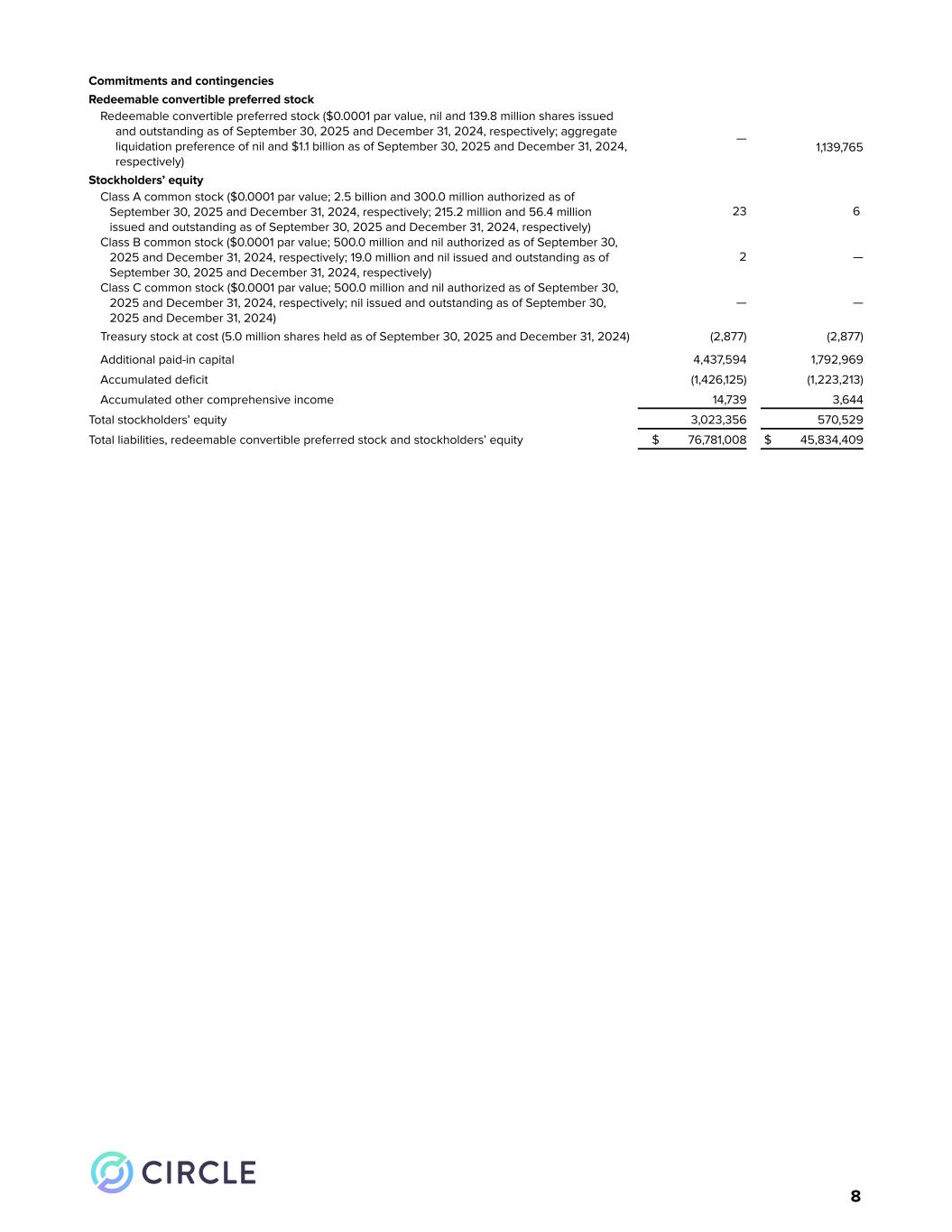
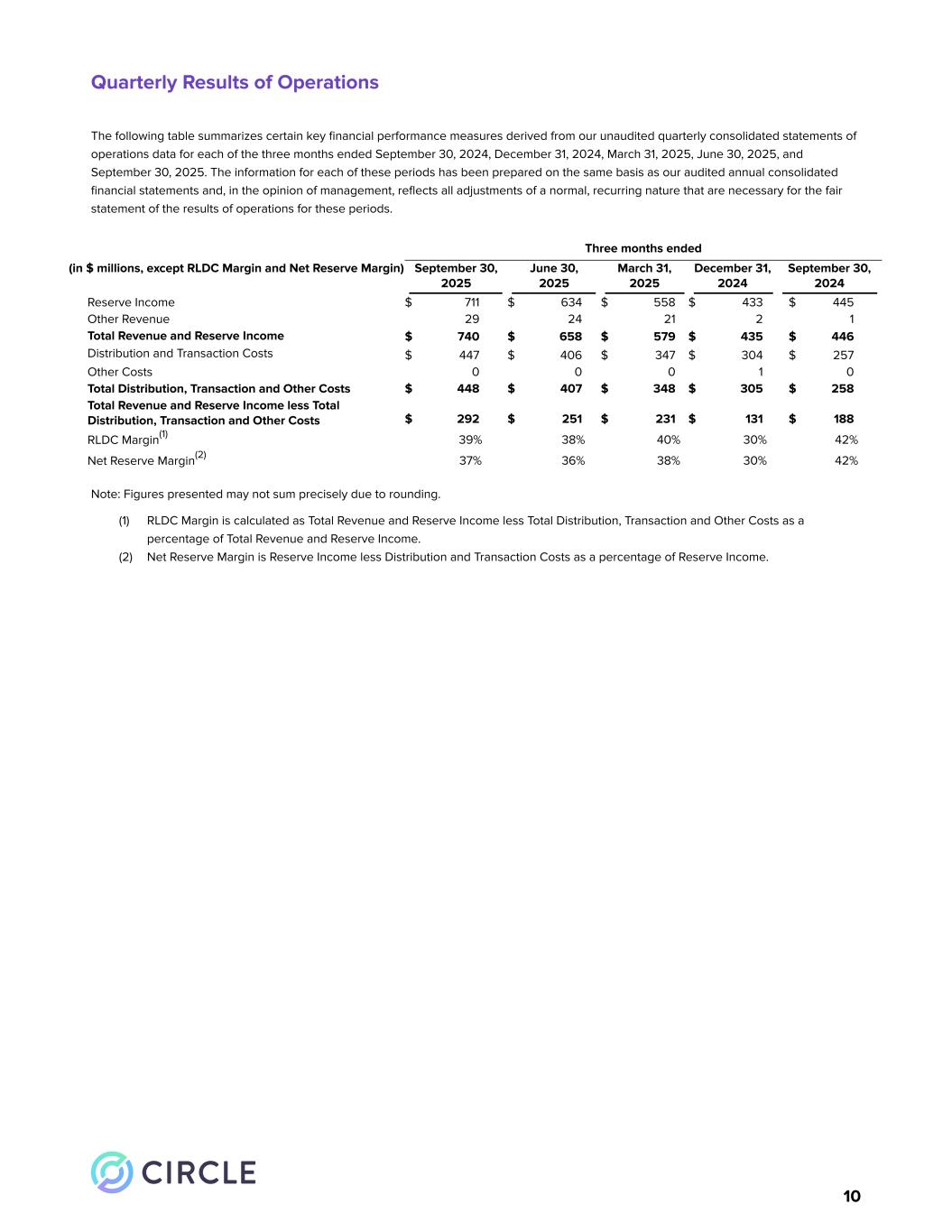
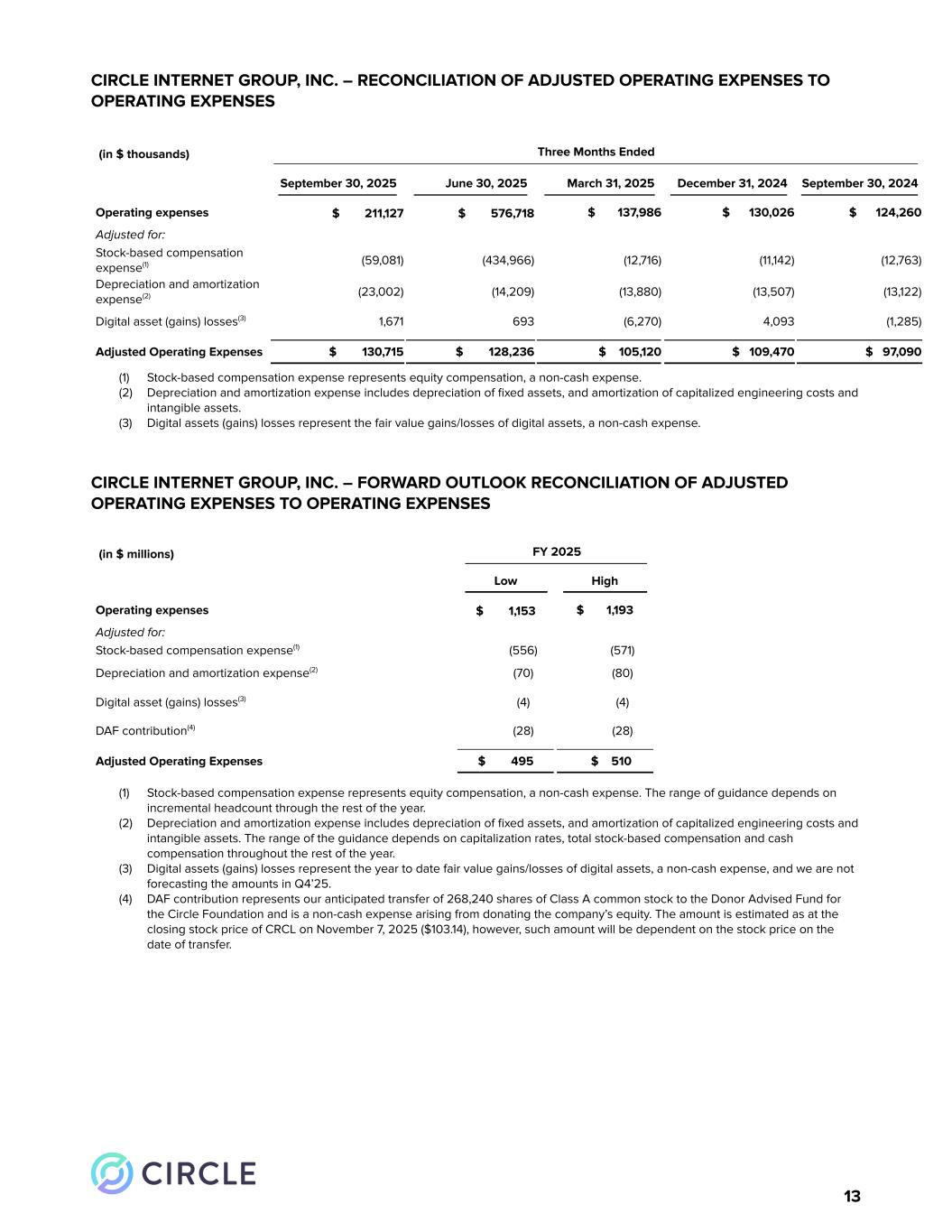
Thank you, Jeremy, and good morning, everyone. 2025 continues to be a year defined by growth, and I'm pleased to report we continued this momentum in the third quarter, delivering strong financial results. I'll start by briefly recapping the fundamentals of our business and financial model. Stablecoins are a network business, and successful networks are enduring and valuable. Our strategy remains to grow and deepen our network. We earn reserve of income on the assets backing our stablecoins, and we incentivize strategic partners to grow distribution and our network. Over the last year, we have expanded our revenue lines and now earn other revenue from certain of our transaction flows and network infrastructure. And as an internet platform business, we have a highly scalable model with strong inherent operating leverage. Let me now review the quarter. USDC in circulation was $73.7 billion at quarter end, more than doubling year-on-year and growing faster than the overall market. USDC held within Circle's platform infrastructure grew nearly 14 times year-on-year to $10.2 billion at quarter end, representing 14% of total circulation, as increasingly we are seeing leading institutions build upon our platform. Reserve return rate was 4.15% for the third quarter, down 96 basis points year-on-year, reflecting the decline in SOFR during this period. Total revenue and reserve income increased 66% year-on-year to $740 million for the quarter, as growth in USDC circulation was partly offset by that lower reserve return rate. Total distribution and transaction and other costs increased 74% year-on-year to $448 million. The increase was driven primarily by higher-average USDC balances held on Coinbase's platform and other distribution incentives as we continue to build partnerships to drive growth and adoption. RLDC margin was 39.5% in the quarter, down 270 basis points year on year, but strengthening 133 basis points sequentially from the second quarter, reflecting the impact from growth with certain higher margin products and partners. Other revenues, which are high margin and scalable, increased to $29 million from less than $1 million in the prior year, reflecting the new products and services launched since the second half of 2024. Subscription and services revenue was $23.6 million in the third quarter, primarily from revenue from our blockchain network partnerships. We added five new chains this quarter and 12 new chains this year. Transaction revenue was $4.7 million. Total revenue and reserve income, less distribution transaction and other costs grew 55% year over year to $292 million. Adjusted operating expenses, which excludes depreciation and amortization, digital asset gains and losses, and stock-based compensation, boost 35% year-over-year to $131 million for the quarter as we continue to invest in growing our platform and distribution at this pivotal time for our industry. Notably, this measure includes payroll taxes, which since our IPO also includes payroll taxes on stock-based compensation. These new payroll taxes on stock comp were $5 million in the third quarter. Adjusting for these new payroll taxes to make for a cleaner comparison, our underlying adjusted operating expenses grew 29% year-over-year. Adjusted EBITDA grew 78% year-over-year to $166 million, reflecting the strong operating leverage inherent in our model. Adjusted EBITDA margin expanded both year-over-year and sequentially to 57%. Let me conclude with a brief update on our outlook. We are at the beginning of meaningful shifts in the global markets for money, and we manage our business for long-term success. Moreover, several of our core performance drivers are visible to the market in real time. As such, we do not give detailed quarterly or full financial guidance. We do, however, provide full-year guidance on certain metrics to help our investors better understand our expected performance. We will update this guidance when we expect our performance to materially deviate from that guidance. Our USDC circulation outlook is long-term and through-cycle and remains unchanged. We are increasing other revenue, full-year 2025 guidance, to $90 million to $100 million as a result of strong subscription and services revenue in Q3 and underlying growth dynamics and transactions revenue. We expect our LDC margin to end the year around 38% at the high end of our range, reflecting strong on-platform performance. We are increasing our adjusted operating expenses for the year to $495 to $510 million, reflecting growing investment in building our platform capabilities in global partnerships. This also reflects the impact from payroll taxes related to the potential future exercise of options by Circle employees. Overall, we've delivered a strong third quarter with meaningful growth and margin expansion. We're only just beginning to attack the opportunity before us and remain excited about our future. I want to thank the team here at Circle for your continued hard work and thank our investors and analysts for your support and engagement. With that, Operator, we can now start the Q&A portion of the call.
Operator
Thank you. We will now begin the question and answer session. If you would like to ask a question, please press star one on your telephone keypad to raise your hand and join the queue. And if you'd like to withdraw that question, again, press star one. We also ask that you limit yourself to one question and one follow up. For any additional questions, please requeue. And your first question comes from Pete Christensen with Citi. Please go ahead.
Good morning. Thank you for the question. Really great trends here. Pretty impressive, particularly with CPN. I want to double-click into some of the CPN results. How should investors think about the pipeline developing here? You have 55 new partners in Redview, a huge pipeline of 500. it? How should we think about the conversion into full users? And then as a follow-up, if you can give us a sense of how Circle intends to monetize CPN, whether directly or indirectly. Thank you so much.
Yeah, thanks for the question, Pete. This is Jeremy Allaire. Yeah, we're very pleased with how CPN is progressing. Obviously, we announced it in the spring. We went online. We've seen really good traction. A couple things I'd say. I think the first is we've really been focused on making sure that we've got great product and operations that we are confident in that can scale membership and activations. And so we've made a lot of progress there, and you're sort of seeing that in the results and some of the other data points that I shared. For us, this isn't all about total size of the number of members on the network, although we do expect to continue to grow the total size of the members on the network, but we're focused on adding markets, not just adding markets for the sake of saying, hey, we can flow money here and there, but adding quality participants, participants that have meaningful flows, participants that want the benefit of a multilateral framework like this, participants that have good reach into businesses, enterprises, consumer retail, et cetera. So sort of quality, not quantity, I would say. And ultimately, we want to make sure, and this is part of the, when we talk about eligibility and the eligibility reviews, we're looking at a lot of things. We're looking at, you know, how strong is their local liquidity against kind of local banking systems and currencies and their ability to meet the SLAs of the network and things like that. So we're underwriting for quality operational capabilities and the like. And, you know, I think we're, again, very pleased with the progression and the progression of TPV, both the kind of monthly TPV and the annualized TPV run rate that we shared.
On monetization, just for the follow-up, I might add a couple of points. The first is to say we're focused now on growing the network. We're not focused on monetizing the network or extracting value. We want the network to grow so that it's creating value for all participants in an increasing way, and that's how networks grow and become valuable. Over time, there are many opportunities for very small fees, which benefit these new, more efficient internet scale architectures. You want to charge much lower fees than traditional models and build businesses at much higher scale.
I would just add very quickly, you know, the members on their network can make money. These are flows where they have fees for their users and for the businesses that use this and for and obviously for ultimately the kind of currency flows that happen as well. And so this is, I think, an attractive platform that adds value to these members, products, services and offerings where they can certainly generate value. And we want to scale that up. So, you know, more to come there. I think we're excited about integrating ARK into CPN and kind of new infrastructure that can support these mainstream payment flows on the network.
Thank you, Jeremy. That's a very useful point. Thank you.
Operator
Your next question comes from the line of Jeff Cantwell with Seaport Research. Please go ahead.
Hey, thank you. I wanted to ask you on, in October, Chris Waller from the Fed spoke at a Payment Innovation Conference, and he said that this is a new era for the Federal Reserve in payments, and that P5 slash crypto, that world's no longer on the fringes of the financial system, and that the Fed intends to be an active part of that revolution. I'm curious what your reaction was to that. Do you think Circle has a seat at that table as the Fed likely starts to look more closely at crypto here?
Yeah, thanks for the question, Jeff. So we're 100% in alignment with Governor Waller, and today, Circle's infrastructure, whether it be our stablecoin network infrastructure, USDC itself, our cross-chain infrastructure, are actually fundamental to this on-chain and DeFi-based financial system that's emerging. And in fact, we maintain a very strong leadership position in the DeFi-based on-chain world. And I think our competitive strength there has grown over time. I think the bigger idea, which I think Governor Waller is getting at, is that the ability to kind of take what we think of as the building blocks of the financial system and move those into code and smart contracts and tokenized assets that run on the internet is like a wholesale architecture shift. And it represents a major change in the actual underlying design of the global financial system from digital cash instruments like stablecoin money to financial contracts and financial market primitives, all expressed in code. And that is at the very heart of the thesis of Circle. We keep talking about building the internet financial system. We believe there is a large-scale change, and there will be this large internet financial system. We see it already sort of forming today. And Circle intends to be the leading internet platform company for this new internet financial system age. So I think it's very encouraging that the leaders of central banks, that the leaders of global institutions are seeing this as well and are affecting policy, but also technology and business practices that are really aimed in this direction.
And then a follow-up I had for you is you were at 29% market share this quarter. Last quarter, you had 28%, so you're sure stepping up there. Do you mind just talking more about where the share gains are materializing for you guys? I'm curious if you're seeing any notable change in the U.S. demand for USDC in particular post-passing of the Genius Act and whether that clarity has been helping out in any way with the share gains you're seeing here.
I'm happy to take that. So, you know, as noted, we saw very strong growth in Q3. I think that growth has come from, yes, the regulatory clarity, but also I think the overall just advancements in the technology and all of that combined is leading towards more market activity, more major financial institutions, payments firms, neobanks, large enterprises who are implementing Stablecoin in their products and services. We mentioned a number of major firms that we saw in the quarter. And so that is effectively a very strong set of tailwinds. And I think in a world where not just in the U.S., but in Europe, in Asia, in places like Hong Kong, UAE, where stable coins are being regulated, the mainstream players who are coming in want to work with an infrastructure that has the trust, transparency, liquidity, and compliance that a firm like Circle has. And so I think, you know, we've long held that that kind of infrastructure approach as this becomes a mainstream phenomenon, not just because of regulation, but because of the technology advantages that it would advantage circle. And I think, you know, as you look at our share gains year over year and then the absolute growth in recent periods, I think it reflects that.
Great. Thank you very much. Congratulations on the results.
Operator
Your next question comes from the line of Joseph Vaffi with Canaccord Genuity. Please go ahead.
Hey guys, good morning and congrats on all the terrific progress. I was wondering if we could kind of drill down a little bit on ARC here. Number one, I know Jeremy, I'm pretty excited in your exploration of a native token here. We just double click on that. You know, what you're looking at. You know, what would be some of the reasons you would move forward with it versus not and implications both ways? And then I'll quick follow.
Yes, no problem. A couple of things. I think the first and I mentioned this briefly in in my comments as well, which is, you know, Arc Network is being designed and built in collaboration with, you know, a lot of major institutions. And you'll note, if you go and look at the actual ARC announcement, the range of financial infrastructure companies, global banks, firms in capital markets, asset issuers, asset managers, but from all around the world, from Asia to the Middle East to Europe to the United States to Latin America. And so one of the fundamental principles is we want a network that is distributed, that has operators from around the world, from different geographies and geoeconomic systems, and we want to create ways for those participants, including the developers that build applications on Arc and the end users that are driving and growing the usage of Arc. We want to create stakeholder incentives, and we want to create governance methods for the evolution of the network. Now, this is, I think, relatively common in the blockchain network space, but I think at this moment in time when we're trying to bring together these mainstream companies and leading firms in the digital asset ecosystem as well, We really see the potential benefit of a native token for ARK that can provide utility for users of the network, that can align incentives around the growth of the network, and that provides a concrete way for stakeholders to participate in governance around choices in terms of the technology and its upgrades, choices in terms of the expansion of the operators on the network as well. And so we're actively evaluating a token for ARK, and we'll share more about that as that comes together. But I think based on the ARK public testnet launch and the engagement we're seeing from developers already, we're really excited about this. We think it can be a critical infrastructure for Circle, but also a critical infrastructure for the entire global ecosystem that are trying to build mainstream-scale applications on these networks and operating systems.
That's great. Really exciting. And then just what does the intersection, I know it's early days, the intersection of CPN and ARC look like at this point or in the near future?
Yeah, so a couple things. I think the first is that we have, you know, we have with ARC now and Testnet, we are activating the ARC as an infrastructure in Testnet across all of Circle's products and services. And so during testnet, we'll continue to make sure that everything is available. We just, I think, announced in the last day our tokenized money market fund product, USYC, went live on our testnet. And so we want to make sure that that full suite is there. And then secondly, directly to your question, we think that ARK network can be a very important infrastructure for CPN, providing a best-in-class infrastructure with low costs, with settlement finality, and ultimately with great FX infrastructure as well. You'll note in the ARK testnet announcement, there were a large number of non-dollar currency issuers launching on ARK testnet, and a number of those are already up and running on the testnet. And so whether these are yen or real or peso or Australian currencies, other currencies, we want to grow the number of local currencies. And that's important because if we can establish a seamless, real-time, atomically swappable currency exchange and embed that as a primitive that could be used by members on CPN, that could be a very powerful capability. And so ARK as a platform for stablecoin finance and ARK as a sort of enterprise-grade and regulatory-ready infrastructure for FIs aligns very well with the ultimate goals for CPN. So, in other words, the application layer, CPN, is building on our stablecoin and digital asset network with USDC and EURC and USYC, and they're all able to build on and take advantage of our operating system with ARK.
Operator
Your next question comes from the line of Devin Ryan with Citizens. Please go ahead.
Good morning, everyone. A couple of follow-ups here. First, on the Circle Payment Network, obviously great to see the momentum in the pipeline there up pretty materially from the last update. Just love to get a sense of kind of the catalysts to convert that pipeline kind of on the timeline, if you can give us anything there. What may close over the next quarter or two versus what is kind of more initial exploratory phase? And then anything on partnership economics? And then as you do scale the pipeline, do you have the capacity or should we expect to see some more costs come in? Thanks.
I'll take the first part of that and have Jeremy Foxkeen take the second part of it. Just in terms of the catalysts, I think, you know, the building these kind of member based payment networks is, you know, obviously always a classic chicken and egg. Right. You want to make sure that you've got you've got flows on both sides. And so a lot of our focus as we have gotten this started is get those quality flows from originators in major markets to to destinations around the world. And we're starting to see that. And I think that's showing up in some of the numbers that we've also shared. I think, per my earlier comments, more and more firms who are involved in money movement, who are involved in cross-border money movement, whether they be banks or cross-border payments firms or even large enterprises that just deal with the complexity of how they collect and remit and move money for whether it's a creator or a supplier, All of those want to take advantage of the speed and capital efficiency and cost efficiency of stablecoin infrastructure. And so that's where we're seeing the catalyst. We're seeing the catalyst from established firms that are seeing that if they can internalize how they move money, it actually frees up capital, reduces the amount of collateral that they have to have, creates more capital efficiency. And it can deliver a faster, better product user experience as well. So those are the kind of business motivators that people have. And I think obviously for us, we're very focused on making sure that we've got high quality participants across the network so that, you know, by, you know, kind of to Metcalfe's law, every new node on the network exponentially increases the value of the network. We want these FIs who are becoming members to immediately feel the benefits and the uplift that they get bidirectionally as well in using this network. So those are catalysts from what are the business drivers for people who are coming on and the kinds of things that we're focused on as we evaluate onboarding new members. In terms of the kind of outlook for growth on that and or partnership models and investments, I'll turn that over to Jeremy Foxkeen.
Thanks, Jeremy. And hi, Devin. And you're first just addressing the cost piece of your question. Obviously, as the network grows and accelerates its growth, so too are the costs inherent, for example, in onboarding those FIs through the risk and compliance reviews and ongoing monitoring and things like that. So, yes, there will be more cost associated with that. It's kind of within our overall cost envelope. And as a technology company, obviously, we're building this in a very scalable infrastructure driven way with sort of AI technologies built in wherever possible to ensure that as we scale and grow, we're not doing so by adding people. We're doing so in a very cost-effective, cost-efficient manner, which is very congruent to our sort of overall strong operating leverage inherent in every part of our model.
Excellent. Thank you very much. And then as a follow-up, obviously, as you're having more conversations with potential partners and customers, and those are scaling pretty materially here, are you learning anything about kind of on the demand side, anything that could influence kind of the product roadmap from here? And then, you know, kind of tied to that, there's been a lot of M&A headlines in the space right now. So just if you can touch on kind of M&A conversations or interest at the moment or even kind of what's going to do.
Yeah, sure. So I would say a couple of things thematically. I think a critical need that firms that are looking to build on stablecoin payments, they're looking for strong direct liquidity between the stablecoin and the stablecoin network and local markets. And so that's been a key focus for us, basically ensuring that our liquidity network is as strong as possible. You know, we mint and redeem at scale through major financial market centers around the world. We're increasing the number of significant banks that are kind of plugged into our infrastructure in these major markets. And sort of if you think about that, that's sort of like the width and the efficiency of the pipes. How efficient and cost efficient is it to be able to move capital through those pipes? And so that's been a big differentiator for us. And I think we're now able to build on top of that these other abstractions, whether they be FX abstractions, settlement credit abstractions, the CPN orchestration coordination capabilities. And then obviously for many of the firms who are – this is new to them. This is, you know, there's the digital asset native ecosystem who are leaning in, and then there's all these firms that are new to this. This is really where technologies like ARK come in, and a big motivator for us with ARK is we've looked for years at what does it take for a traditional FI or traditional enterprise to build an application, deploy it to use these networks, and to do that in as simple, safe, and well-assured process as possible. So with ARK, for example, deterministic settlement finality in sub-second transaction costs of around a penny, the fees paid on the network are actually in USDC and other stable coins over time. And so confidentiality features, these are critical features that people need to make this work for them. And this is really the classic evolution from an earlier adopter set of technology infrastructure, an early adopter mentality, which has largely been focused on speculating, and a mainstream scaling phase where the infrastructure needs to map to the mainstream needs. And I think those are the things that we're doing up and down the entire product stack, not just in CPN, but the entire product stack that we're building for all of these mainstream institutions around the world who are looking to build on this infrastructure.
And then just taking the M&A part of your questions, when we've talked about M&A and our internal M&A strategy, right, we see M&A and its use as accelerative to our core offerings. So we have offerings in the blockchain space, in the digital asset space, and then in the application space, on top of all of those with the Circle Payments Network, we've done three deals, closed three deals so far this year, and we would expect to continue to do M&A to accelerate within each of those spaces. We do not anticipate using M&A to diversify for diversification's sake.
One last comment there is, you know, we've been building infrastructure in this whole space for a very long time, and there are other firms who want to be in this space but need to catch up, and so naturally you're sort of seeing people who are trying to find, you know, teams and technology and other things out there. You know, we've built everything that we do historically more or less organically. As Jeremy noted, we've acquired IP and teams and others, and we'll continue to look at opportunities as noted. But we feel very good about our kind of innovation curve itself and our direct IP generation. We actually recently noted that we had 25 patents generated from the novel engineering and research and development of Circle. Well, I appreciate it.
Operator
Your next question comes from the line of John Tordero with Needham. Please go ahead.
Great. Thanks for taking my question, and congrats on the results here. I guess I have one and a follow-up. First, on the on-platform performance, I think we've been continuously pretty pleasantly surprised with the USDC on-circle platform here, up to $10.2 billion. I'm just trying to frame this up. I would think most of this is for payments, cross-border money movement versus kind of crypto-native. Any kind of maybe percentages or just framing that up and give us a little bit more color, is that the right way to think about it? that, you know, that moves more towards some of the payment verticals versus some of the crypto-native stuff, and then I have a follow-up on ARK.
Sure. So, John, we don't break out the on-platform by, say, use case directly, but what I can say is, you know, for Circle, what we've been focused on is, you know, building partnerships with firms that want to build on top of our technology stack, you know, ideally end-to-end on our technology stack, taking advantage of, you know, our wallets, our Circle Mint, our core liquidity, and increasingly these other developer services and infrastructure like CPN. So we very much focus on firms that want to build on our infrastructure, and we focus on building partnerships with firms that are going to be growth-oriented, meaning we want We want to do deals with and build strong economic relationships with firms who have a credible path to driving growth. And so those have been the focuses. And I think when we look at the partnerships that have helped us grow on platform, they all fit that criteria overall. all. And I think in some cases, just to give you a little bit more color, in some cases, these are partnerships with firms that have tens or hundreds of millions of users. And those users are oftentimes in what I'll kind of call like financial super apps, where they offer wallets, they offer payments, they offer trading, investing, and other things. And so we don't see through into all of the behavior of their users and how much of it is for peer-to-peer transfers versus investments and other things as well. But the nature of this is we're really going after partnerships with platforms that have good distribution and are growth-oriented in what they can do with us. That's very helpful.
And then my follow-up on ARK, as you mentioned, the fees are paid in USDC and other stable coins, and then also just those transaction fees are so de minimis that I can't imagine a token would be for gas fees or anything of that. You kind of framed it up as maybe like a governance token. Is that the right way to think about it? And I know it's early, but just maybe some more of the potential economic accrual or utility outside of, yeah, I guess just what would the other potential utility be if it's not for the gas side?
Yeah. So a couple of things. I think, as I said earlier, we're looking broadly at utility, economic incentives, stakeholder participation, and governance across the full ecosystem that will engage with ARC. And we are exploring a token for ARC network that aligns with trying to accomplish all those things. But there's not a lot more I can say right now. Certainly, as we continue this exploration, we'll be able to share considerably more, assuming that that continues to go well.
Understood. Appreciate it. Thanks for taking my questions, and congrats again. Thank you.
Operator
Your next question comes from the line of Ken Schakowsky with Autonomous Research. Please go ahead.
Hey, good morning. Thanks for taking the questions. I wanted to ask about the other revenue. I think subscription revenue stepped up nicely quarter over quarter. So how much of that is driven by adding the five new chains that you talked about versus some of the other recurring revenue sources? And then maybe on the transaction revenue within other revenue, I think that ticked down slightly quarter over quarter, despite showing really strong growth across the various metrics. So maybe a little more detail on why the decline quarter over quarter. Thanks so much.
So thank you. Excuse me, and thank you for the question. There's a lot that goes on in this. So let me try and unpick some of the pieces. Yes, there's sort of, as you said, strong growth in subscription and services revenue. Primarily, that is revenues from our blockchain network partnerships. As I think we said before, that revenue stream has two components. There are upfront revenues from the various integrations that we do, and then there are ongoing revenues for maintaining those. Now, the pace and progress of the upfront can depend upon a whole number of different factors. And so we've historically, and we'll do so again, described that business as lumpy. And so we had a very strong quarter, and we had a long pipeline of fees, and we've been working very, very hard to execute upon those. And so the upfront fees is the largest part of that bucket, but we're seeing strong growth in the underlying recurring revenues within subscription services, which we're very happy about. You note the decline in transaction revenues, rightly from $5.8 million last quarter to $4.7 million this quarter. And then you comment on the underlying growth of so many other things. There's a wide variety of elements within transaction revenues, and yes, we are seeing strong underlying growth in many of them. The decline quarter on quarter is best thought of as a spike in the prior quarter, a spike in redemption revenues associated with our USYC tokenized money market fund product. After we had made that acquisition, we repositioned that product to be used as collateral within the digital asset markets. And through that repositioning, we saw a very large amount of redemptions, leading to a spike in redemption fees in the second quarter, which masks the underlying growth trends in the other products and services within that. Notably, USYC itself has returned to growth. It has grown at 200% from the end of last quarter to today and now stands as the second largest tokenized money fund product in the world.
Great. That's helpful, Jeremy. And then for my follow-up, I wanted to ask about the implied 4Q guide just because we're getting a few questions on it. For RLDC, I think there's some assumptions we all have to make there. But I think to reach the full year guide that implies quite a bit of sequential step down in margins, maybe you could talk about what's driving this step down. We would have thought that the performance on circle on platform USDC and then some of the other revenue at a high margin that RLDC margins would actually improve over time. But maybe there's some dynamics in the market related to rewards and distribution costs. So any thoughts there, any help there would be very helpful.
Thank you. And that's a great question. And, again, I'm going to say there's a lot of different pieces moving around in the underlying there, which can make it quite difficult to unpick. We're very pleased to have seen strong sequential RLDC revenues against a backdrop over the last few years of that declining. We've long said that networks have network effects, and we see this both in sort of growth of options. off-platform USDC and in certain of our economic agreements, there can be some lumpiness within those, which kind of gets to the point on the guidance. On our philosophy to guidance overall, we've consistently said that we want to be as clear and transparent with you as we have line of sight into. So we take a sort of modestly conservative posture. We don't bake in everything we hope is going to happen or everything we're working on. And we're working on an awful lot of things, we bake into sort of our line of sight on what we feel confident that is going to be delivered, and we would always look to our meet or our performance.
Operator
Your next question comes from the line of Dan Dolev with Mizuho. Please go ahead.
Hey, guys. Thanks for taking my question. So, yeah, overall, you know, really strong 3Q. Kind of touching on that question from before, I mean, you know, if the bull case is the TAM is growing and that could have set, you know, rate declines. You do seem to, I mean, you were talking about guiding down Q4, other income, and expenses are rising. I don't think we've heard like a really good explanation, but maybe my bigger question is, you know, what would be the pushback to the skeptics in the industry who are saying, look, this is somewhat of a commoditized thing. I think even the networks are saying there's going to be a lot of stable coins. Like, what would make USDC win in this market long term? So maybe like a shorter term question on this Q4 guide and then longer term, more conceptual question would be great.
Hey, Dan, this is Jeremy. Thanks for the question. I'll actually take the second part first. You know, I think there's a fundamental misunderstanding in the market. And I think that there's a view that, hey, anyone can kind of pop out a stablecoin, and therefore, if it's a big company that pops out a stablecoin, that it's automatically going to be successful. We've actually seen the opposite historically. We've seen consortiums of major companies launch stablecoin products that effectively have zero circulation. We've seen very large players with huge numbers of users push, push, push on this to get very, very little traction. And I think the misunderstanding is that stablecoin networks are like other Internet platform utilities, meaning they have network effects. And those network effects come from the number of products and services and integrations to the network. And so if I'm building a product and I want to support stablecoin settlements and stablecoin payments, you're at a disadvantage if you don't support USDC because it has so much interoperability around the world. And we see that all the time. We see major B2B firms adding USDC as the payment option without a deal with Circle, without any relationship with Circle. They're doing it because it's got the most reach and interoperability. So there's sort of the network utility. That also ties to what I would describe as developer flywheels, which is developers want to build and integrate to things that are going to help them themselves provide utility directly to their users. And so the reach of the network and the utility of the network compound each other. And then the other piece, which is, I think, also not as well understood, is that these digital currencies live and breathe by the liquidity that exists around them. And so we have focused years on building, you know, the best, you know, most widely integrated liquidity network for USDC, primary liquidity in major banking systems around the world, as well as secondary market liquidity so that it exists on brokerages, exchanges, payment apps, wallets through banks and others around the world. That primary and secondary liquidity is also something with network effects. If you want to do something and know that your counterparty is going to be able to be liquid in it and utilize it, that liquidity is really key. So those are big. Those are very big, I think, and very powerful network effects. And I think, you know, the last piece of this is that there are there are also important kind of regulatory and infrastructure moats that exist, which is that it's a huge undertaking to ensure that you are well integrated and supervised by central banking regimes around the world. And that's something that we've done the hard work on with over 55 licenses activated in more markets, bringing more markets online. And so the infrastructure from that, the risk infrastructure from that, and then all these other network effects are really important. And I think it explains the fact that we have continued to grow at the pace we have, that the amount of growth we've seen in the on-chain markets, in total transaction volumes, in what Visa characterizes as, quote, real payment volumes, we've grown. And we've grown our share, and despite there being more and more players. And so I think, you know, I think as we look out over the next, you know, one, two, three, four quarters, you're going to see a lot of noise from a lot of people who think, oh, I need to do a stable coin. And I think you're going to be able to measure those every single day. And I would encourage people to measure the actual trading liquidity that exists in these other tokens, the actual number of wallets that hold these other tokens and the distribution that's there. And I think we're going to continue to see what we've seen. This is a winner-take-most market structure. It's not a winner-take-all market structure, but it's a winner-take-most market structure. And I think the investments that you're seeing, and I'm kind of bleeding into maybe JFG's other part of your question, Dan, we are leaning into this. We're seeing growth in major platform developments that we think are critical to winning the Internet platform game in this space. And we're seeing a lot of commercial tailwinds all around the world, you know, in every region, commercial tailwinds because of the technology progress and regulatory clarity. And we want to make sure that we are stepping into that opportunity so that we can continue to be an outsized winner in this kind of upgrade of the financial system to the Internet.
Yeah, thank you, Jeremy. Thank you, Jeremy. You hit on all the major points, and just one small follow-up on the piece about guidance. We are at the beginning of what can best really only be described as a megatrend, right? the growth and the building of the internet financial system, bringing internet capabilities and architectures into the world of money. And as you noted, Dan, the addressable markets here are huge. We don't give full year or quarterly financial guidance other than on a few key metrics for that reason. Whenever you see an exponential growth curve and you zoom into the detail, particularly at the early end of that curve, you see a lot of fluctuations and variations. And we think that those shorter-term fluctuations are best described as, you know, missing the forest for the trees if one was to overly focus on them.
Thank you. Really, really appreciate the perspective. I think it was very useful for investors, too. So thanks, Jeremy and Jeremy.
Operator
Your next question comes from the line of Andrew Jeffrey with William Blair. Please go ahead.
Hey, good morning, guys. this is a deep chattery on for Andrew. Building on some prior questions, it sounds like maybe you're somewhat agnostic to a specific use case around USDC and focus more on distribution. But if you have to pick, I guess, what's the most imminent use case beyond crypto trading in your view and what's sort of the near-term visibility you have around USDC for non-crypto activity taking off? Thanks.
Absolutely. Great question. So we are definitely not agnostic to the use case of USDC. However, what we do often say is, you know, stablecoin money is increasingly a general purpose, general architecture form of money that is being used across a very wide range of use cases. Everything from small agent to agent payments to large capital markets transactions between major electronic markets firms to everything in between. You know, we're obviously we're seeing major consumer retail acceptance platforms like Stripe and Shopify make it an out-of-the-box feature for payment acceptance. But very specifically, to get to the heart of your question, Andrew, I think we are seeing growth in cross-border and international payments with stablecoins. That has been a driver for quite some time, and it continues to drive growth. That led to us building out an entire new pillar of our business with CPN, where we're seeing mainstream flows wanting to use this as a superior money movement system. And so that is very much a driver of activity and growth and partnerships. When I look at the partnerships that we're forming around the world, there are many in that space. And we're even seeing some of the biggest systemically important banks leaning into that to actually improve upon the way in which they do their own international money movement. We're seeing large enterprises who are looking at internal treasury management and how they can move money across geographies and deal with collections and disbursements across global markets as a growth driver. And then we've talked in the past as well about sort of digital dollar as store of value. So we continue to see demand for both firms and households who want to hold USDC. And I think that if you look back at the Genius Act and really one of the goals that Secretary Besant and other kind of, I think, promoters of that breakthrough in federal law, it really is about how do we kind of continue to export the dollar in these powerful ways. So we're certainly seeing those. And then I think we're also starting to see, and this is, I think, something to kind of watch this space closely, is traditional financial markets embracing stable coins. So traditional financial markets like clearinghouses, derivatives exchanges that want to be able to use stable coins as collateral for relative margin and for settlement as an improvement over the way that works versus the traditional banking system. So we're seeing that. We're seeing big pushes around that. We're seeing regulatory pushes around that. And you've seen us announce partnerships with the likes of Intercontinental Exchange, Deutsche Bank, and others. And that's something that we are pressing on. And related to that is essentially the number of traditional financial institutions that are launching smart contracts and digital tokens, i.e. tokenized forms of investment products that already exist. And virtually every one of those products uses USDC as its primary cash leg and settlement leg. And so you have firms like ZeroHash, who works with us quite a bit, and they face off against a lot of these tokenized issuers, for example, and driving the use of USDC there. So it is diverse, but we are not agnostic. We are leaning into the places where we're seeing both the most immediate product market fit and traction, and then also where we're seeing pull from the market to where parts of the market are really wanting to implement this infrastructure. And I cannot underscore how significant the Genius Act has been in terms of unlocking major institutions' willingness to start embracing and using this technology. And there's a knock-on effect with regulators around the world who are also looking to conform and ensure that, you know, well-regulated issued products like USDC can work in their local markets as well, which is driving institutional access and demand in those global geographies also.
Operator
Your next question comes from the line of James Yarrow with Goldman Sachs. Please go ahead.
Thanks for taking the question, and good morning. I just wanted to follow up on the prior question. I'd love to just get a sense, perhaps quantitatively, if there's any ability to contextualize how much USDC is being used in those use cases outside of crypto trading, DeFi, and developing market access to dollars, specifically the two use cases which you just talked about are payments and capital markets. So are we seeing, you know, is there any ability to sort of size how much is being used there, and perhaps you can compare it versus the IPO, or is this all on the come?
So there is certainly growth happening in these cross-border use cases, and in fact, I think there's, you know, there's some good third-party reporting on this. There's a third-party analyst firm, Artemis, which has recently published, I think, some of the best data on growth in business-to-business payments, international business-to-business payments, and the growth through these periods. I don't know what the ending period – the ending period is pretty recent – is very strong. I think it's reflective of what we're seeing in the partnerships that we're forming in the cross-border-related payment space. We don't break out across the entirety of our transactions that, although almost by definition, CPN flows are that because of the construct of the product. But the uses of USDC in international settlements go well beyond what is happening just inside of CPN. So we don't break it out, but there are, I think, very good third parties who are looking across the entire ecosystem, not just Circle, to size that growth and activation.
Okay, thanks a lot. I'd just like to touch on the potential that stablecoins could become interest-bearing in Congress's market structure bill. How should we think about the impacts on your business if interests were permitted?
So I think the key issue here is specifically not that stablecoins would become interest-bearing. I don't think there's anyone who's looking at revising the Genius Act and the prohibition on stablecoin issuers being able to pay interest. I think what's in discussion, I should say, in the market structure legislation is whether or not distributors of stablecoins, exchanges, brokerages, other wallet products have the ability to use rewards as an incentive for people to use stablecoins on their platforms. And that is permitted under the Genius Act, and I think there's a real push from other parts of the industry, not the digital asset side of the industry, to amend not the Genius Act, but to provide provisions in the market structure bill, which would allow these stablecoin distributors to continue this practice of offering rewards. You know, I think we think that the language in the Genius Act is very good. We think it creates a balanced approach here. And it keeps, importantly, it keeps, you know, stable coins considered as cash and cash equivalent instruments, which is vital from a financial markets perspective, from a credential supervisory perspective as well. But I think we also believe that there should be business model innovation in these kind of distribution platforms for how they engage with their customers. And so I think we're also supportive of the industry's view on that as well.
That's very helpful. Thanks a lot.
Operator
Your next question comes from the line of Ken Worthington with J.P. Morgan. Please go ahead.
Hi, good morning. Thanks for taking the question. So you've announced a series of arrangements with high-profile financial institutions to utilize USDC. And I guess the fact that they're choosing USDC shows the power of your brand. What are you seeing in terms of the economics that they're asking of you? Are these new partners sort of getting full fare? Or are you seeing the power of the network allowing you to negotiate better economics for you in these arrangements than maybe what you had seen in the earlier arrangements?
Yeah, it's a very good question, and it relates to something I shared earlier, which is that we have a very powerful global utility that, in some ways, people can't afford not to support and integrate with. If you're building a product that wants to be interoperable in this world, you need to support USDC. And if you need it, if you want a product that can can easily move value in and out, the liquidity of USDC is essential. So we do have, I think, as noted, very strong network effects. And when we think about partnerships, as I said earlier, we're very focused on we will invest in, so to speak, growth incentives with partners who can grow distribution. contribution. That's where we're focused. And so the fact that someone adds USDC support to their own product or service is not sufficient to get any economics. We need to see a real path, a win-win path, where partners are going to lean in. They're going to prefer our platform and network. They're going to advance it. They're going to market it. They're going to drive measurable growth. And only when we see that are we going to really step in and try and get economic incentives in place. And that's important. We want this to be win-win partnerships that drive value and growth for both of us. And, you know, we know today that, you know, our network and capabilities is essential for most products that are out there. But at the same time, yes, we are trying to, you know, construct win-win partnerships with firms. But a very large number of the major brands that you see supporting USDC, there's not a direct economic incentive at all. These are just people who are choosing us because we are the most trusted, transparent, compliant, liquid, globally available in the world.
Operator
Ladies and gentlemen, that does conclude our question and answer session.
I will now turn the conference back over to John Andrews for closing comments great thank you everyone for taking the time to listen to us this morning obviously the IR team here at circle standing by to engage with you in any follow-ups and we wish you all a good day thank you this concludes today's conference call thank you for your participation and you may now disconnect