Operator
Thank you for being here. My name is Jale and I will be your conference operator today. I would like to welcome everyone to the Delek US First Quarter Earnings Call. All lines are muted to avoid background noise. After the speaker's remarks, there will be a question-and-answer session. I will now turn the conference over to Robert Wright, Senior VP of the U.S. branch. You may begin.
Speaker 1
Good morning and welcome to the Delek US first quarter earnings conference call. Participants joining me on today's call will include Avigal Soreq, President and CEO; Joseph Israel, EVP of operations; and Mark Hobbs, EVP and Chief Financial Officer. Today's presentation material can be found on the investor relations section of the Delek US website. Slide two contains our safe harbor statement regarding forward-looking comments. Any forward-looking information shared during today's call involves risks and uncertainties that may cause actual results to differ materially from today's comments. Factors that could cause actual results to differ are included here as well as within our SEC filings. The company assumes no obligation to update any forward-looking statements. I will now turn the call over to Avigal for opening remarks.
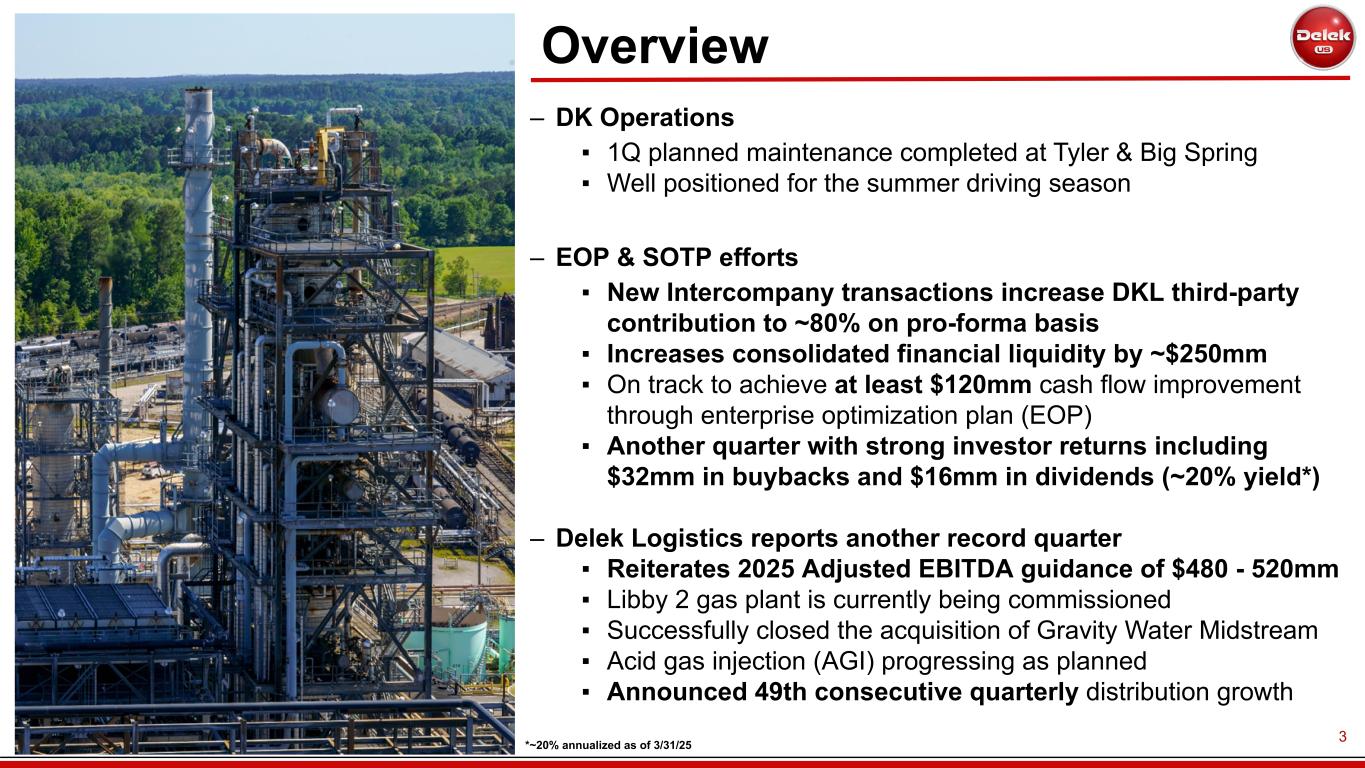
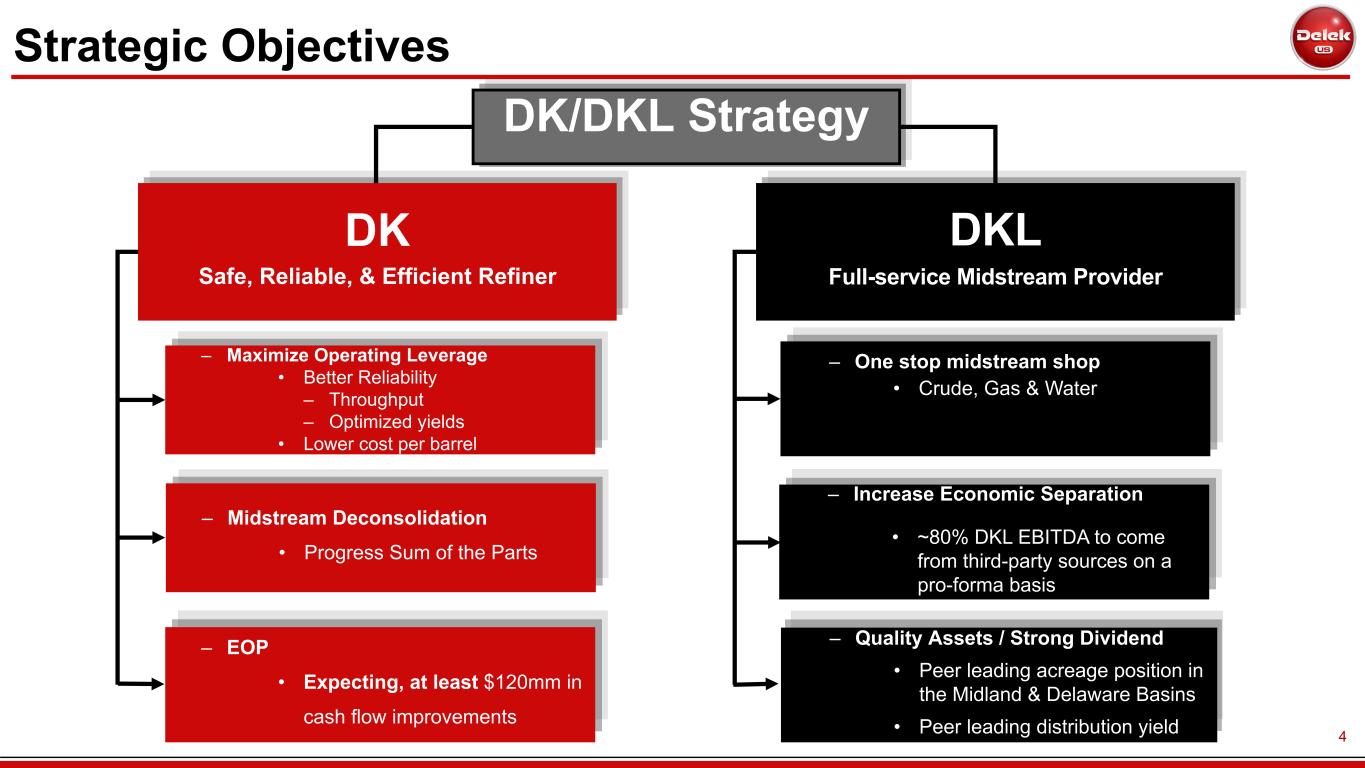
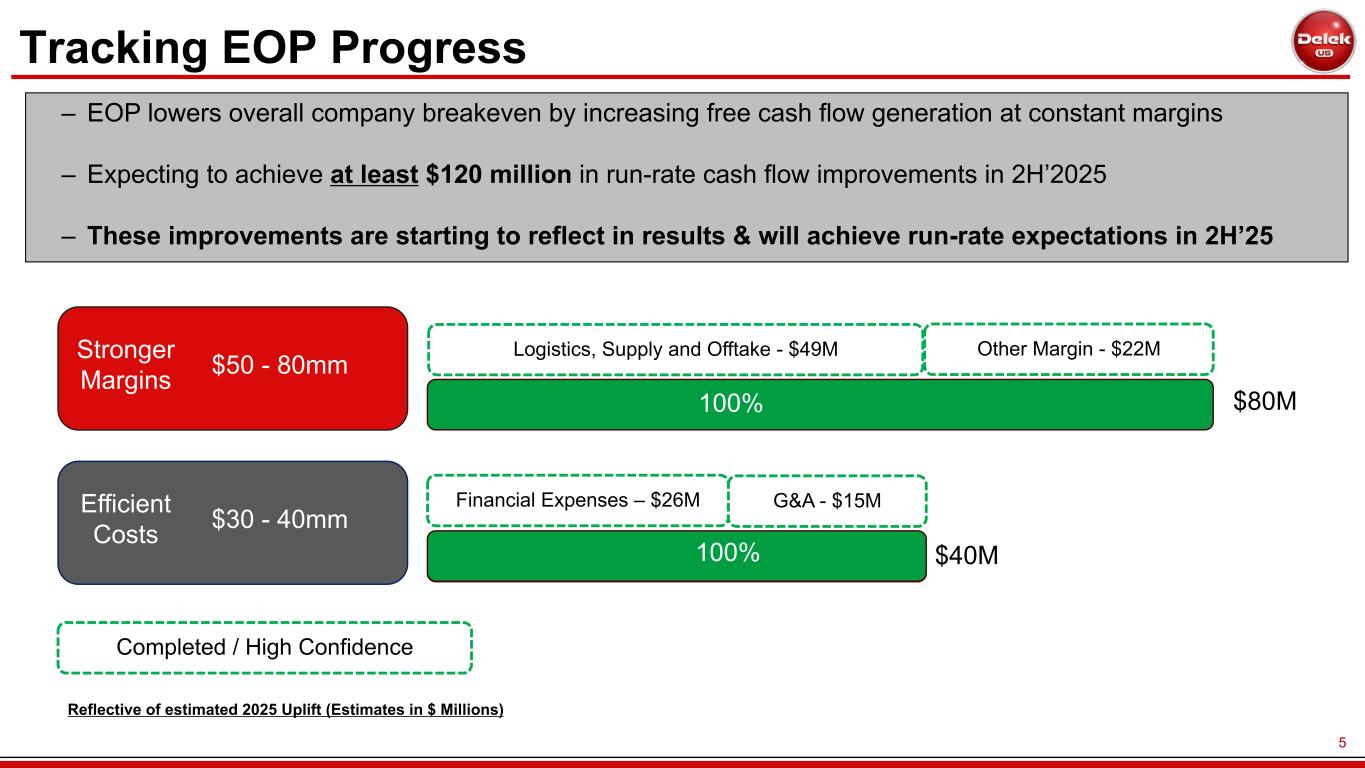
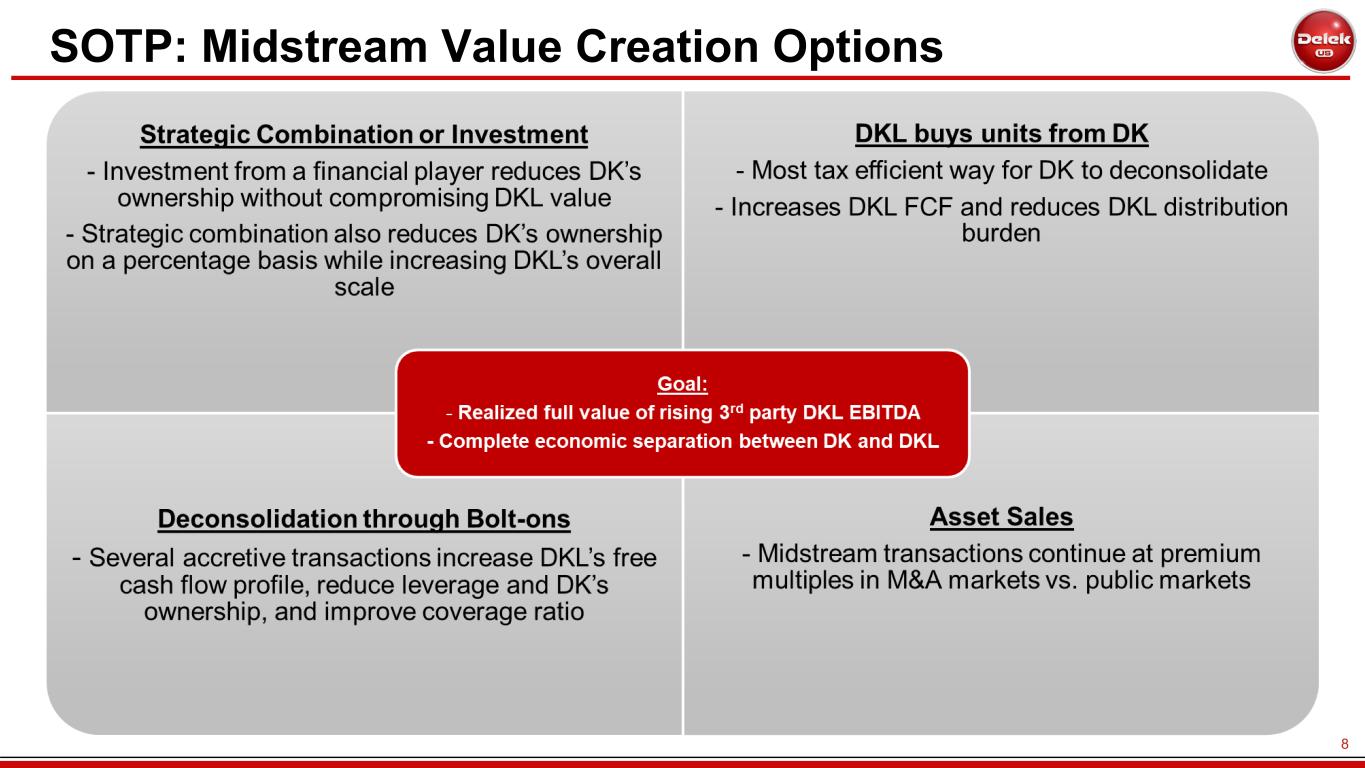
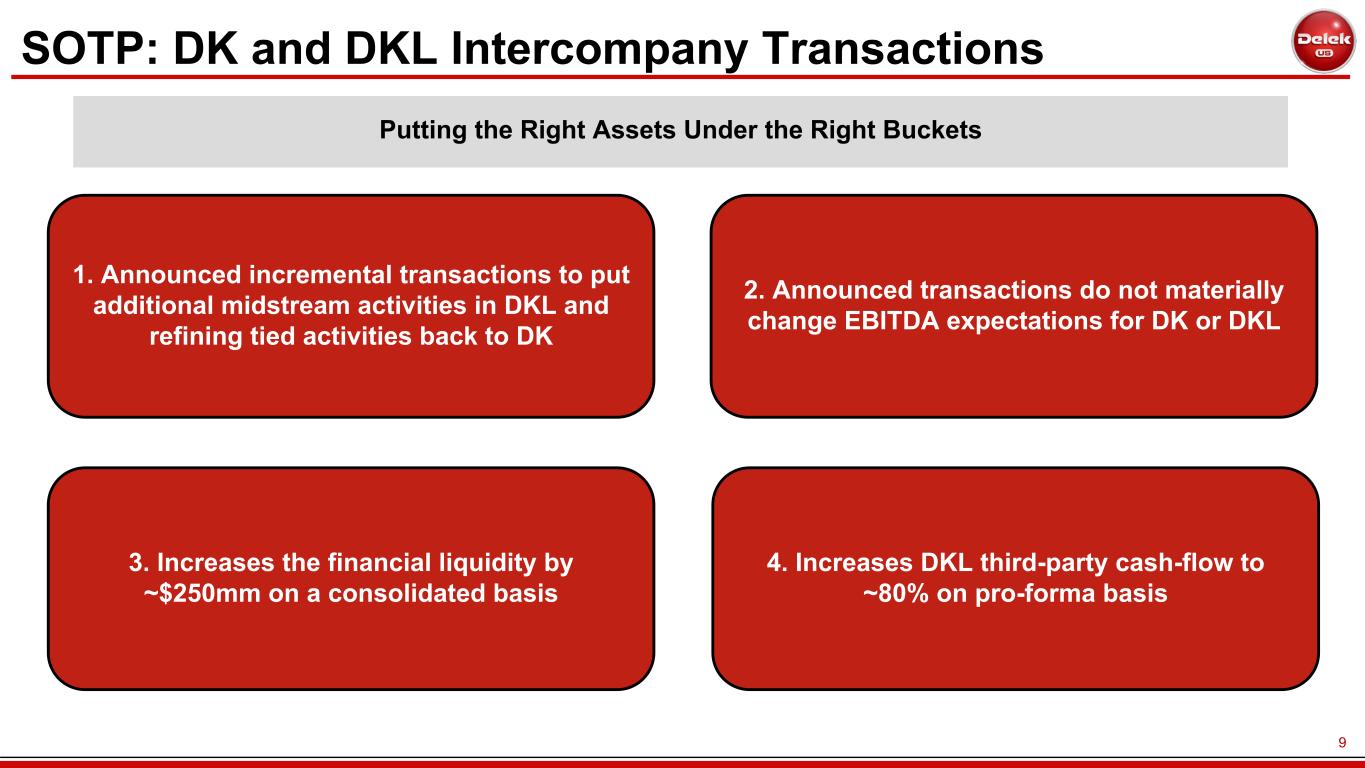
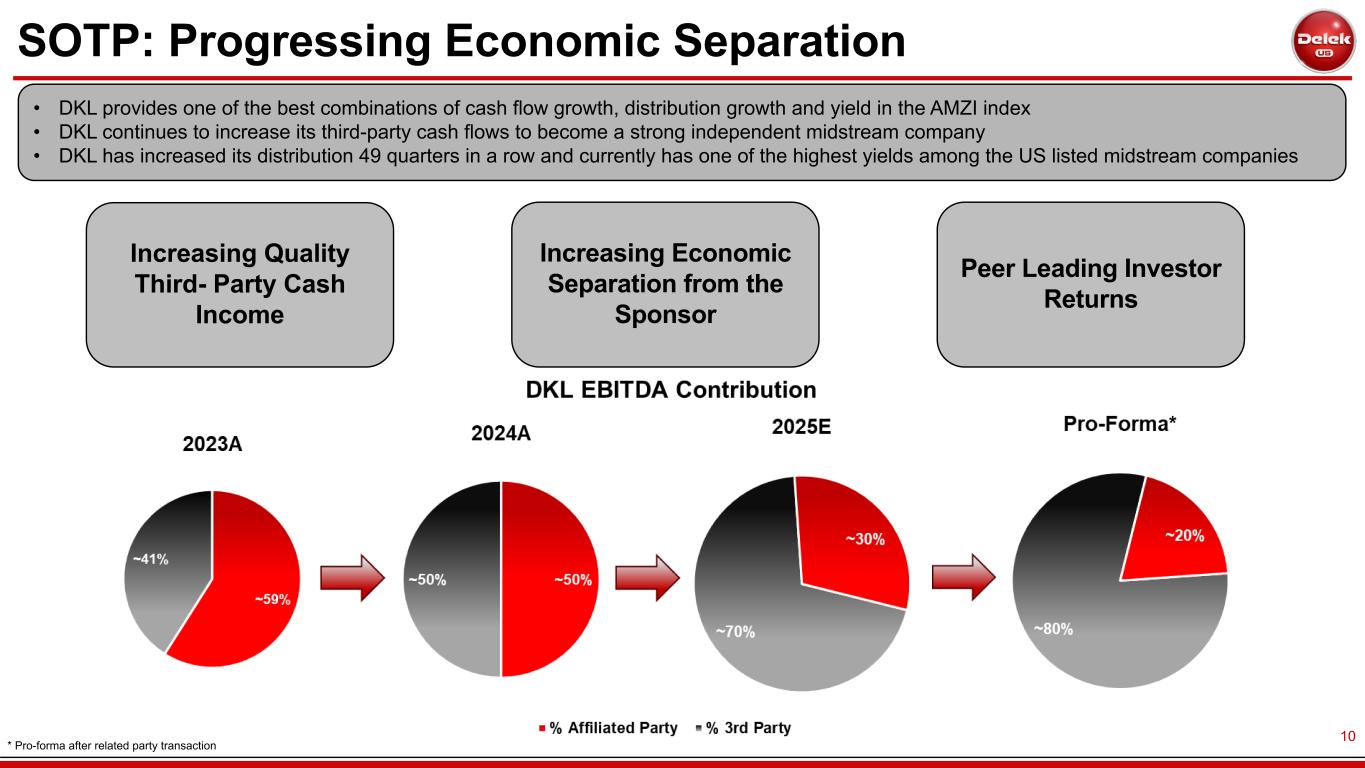
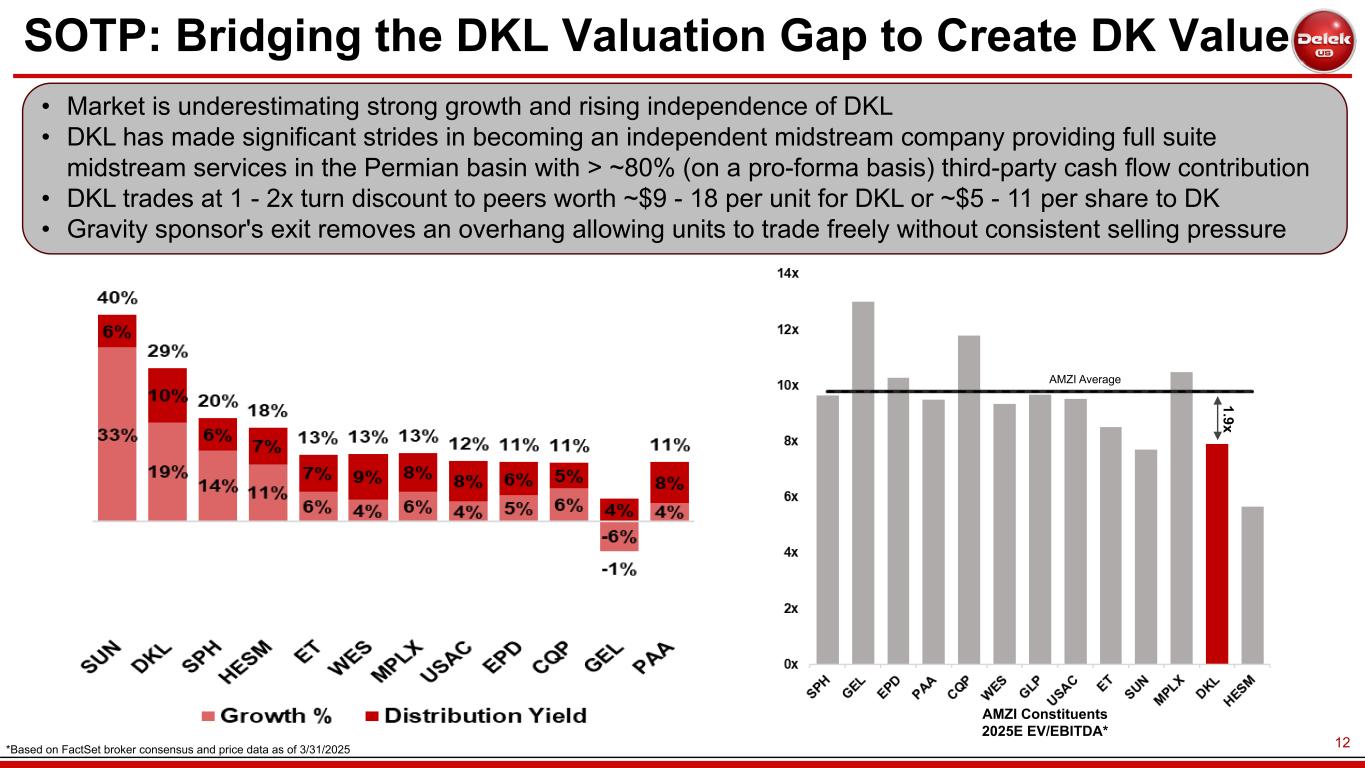
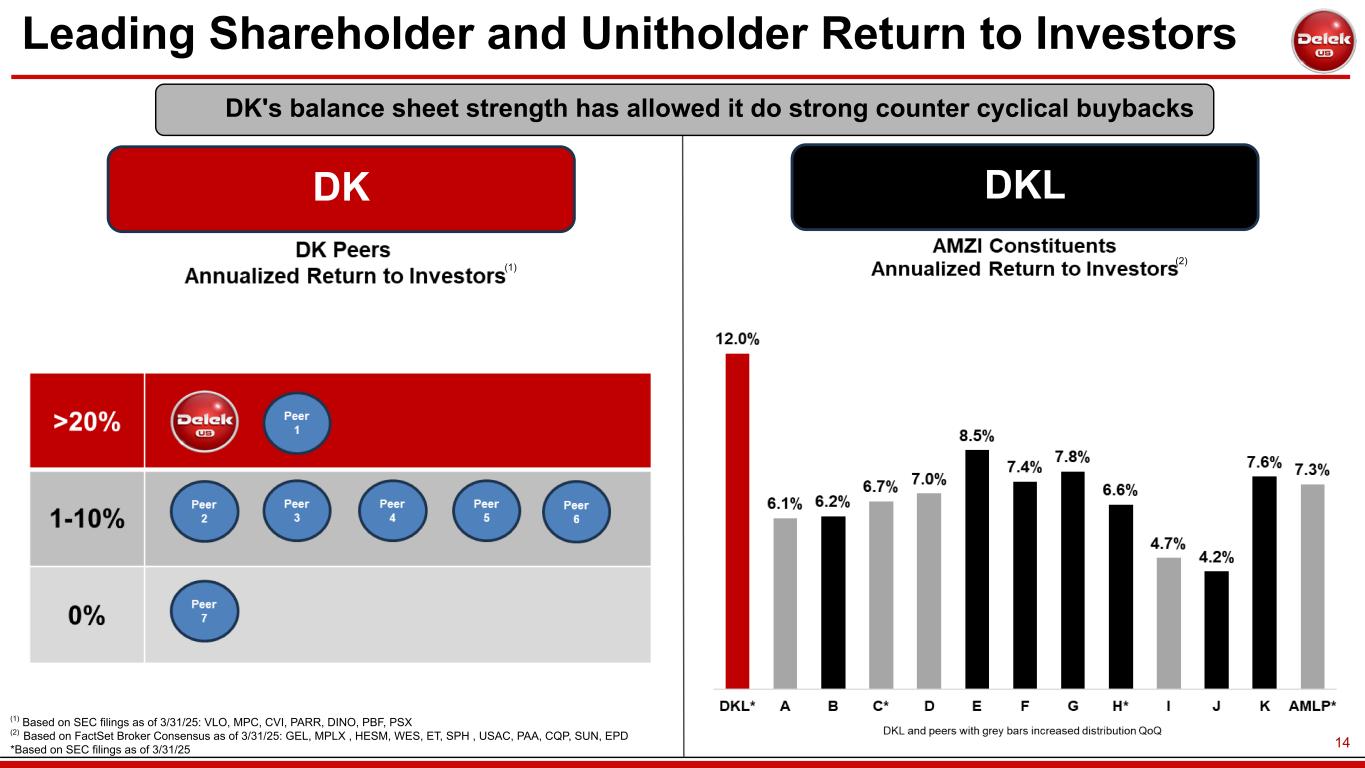
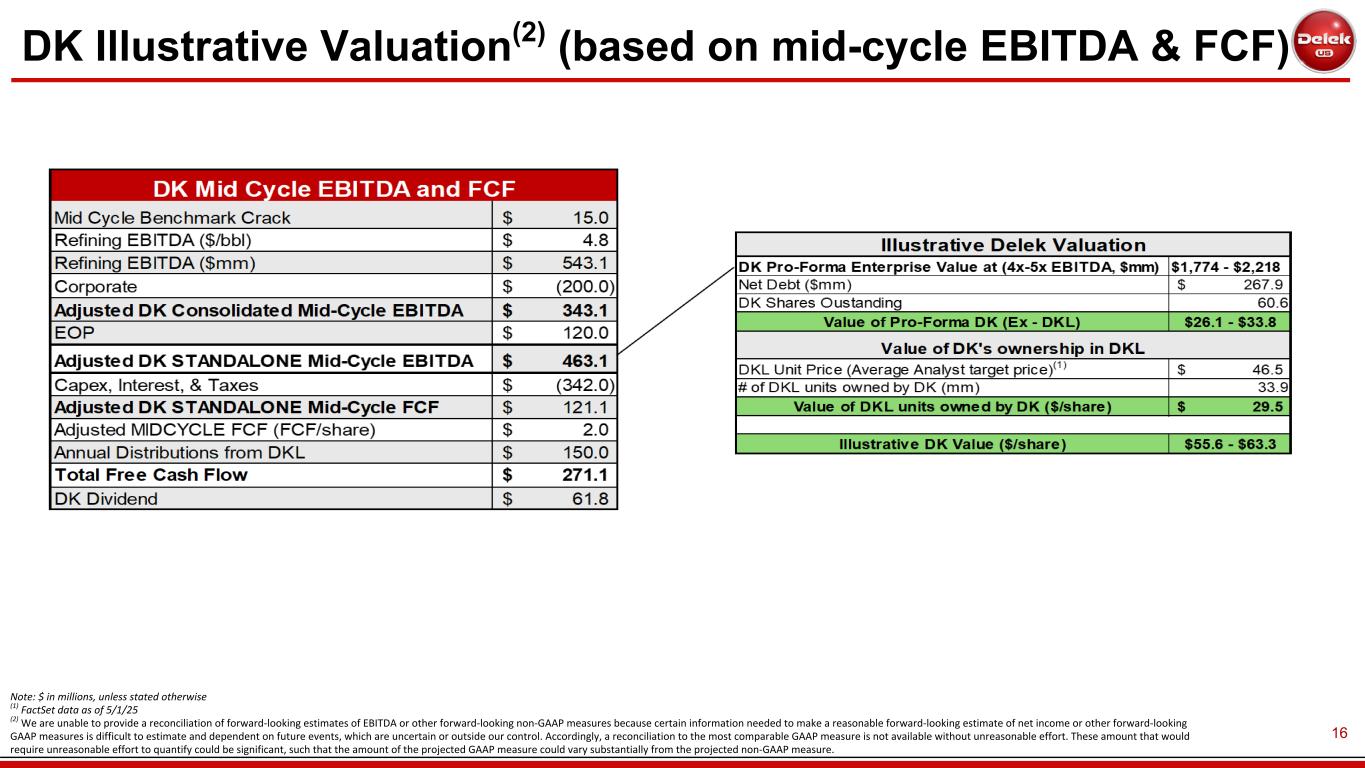
Thank you, Robert. Good morning and thank you for joining us today. Despite the continued challenging refining margin environment, which was around $4 below mid-cycle, Delek continued on its transformational journey. In the first quarter, we made further progress in improving our operational performance by conducting two important plant outages at Tyler and Big Spring. We continue to make strong progress on our EOP plans. We also continue to advance some of the parts efforts to additional inter-company agreements between DK and DKL. Let me highlight the progress we have made on our key priorities. First, safe and reliable operations. We have made further progress in improving the operations throughout our companies. We successfully completed an active turnaround at Tyler and maintenance at several units at Big Spring. The Big Spring refinery continues to make good progress in improving its operations, and we expect our reliability investment to serve us well into the future. After these Q1 outages, we look forward to a cleaner runway into the summer driving season. Now I would like to discuss our some of the parts strategy. We continue to make progress towards our mid-spring deconsolidation goal. This week we announced another inter-company transaction. The transaction further increased third-party cash flow at DKL to around 80%. The transactions also improved financial liquidity at DK by around $250 million, which will allow us to maintain our balance sheet strength. DKL's two water acquisitions are performing well, and along with the new gas processing plant will support DKL cash flow and distribution growth. DKL has a strong runway of growth in its gas processing business led by its prime location in Lee County, New Mexico. DKL is also enhancing its position by being one of the few mid-spring companies with sour gas gathering and acid gas injection capabilities. These steps highlight DKL's progress in becoming an attractive high-growth mid-size midstream company benefiting from the natural gas growth in the Permanent Basin. Delek Logistics is also on track to meet its strong 2025 EBITDA guidance of $480 million to $520 million. Despite these great moves, DKL remains undervalued compared to its peers, with minimally any of this value reflected in DK shares. We will continue to take additional steps such that the value of approximately $400 million in third-party EBITDA at DKL is fully reflected in DK share price and DKL unit price. We remain confident that we will complete the DKL deconsolidation in a methodical manner that will create value for both DK shareholders and DKL unit holders. I'm also excited about the progress we are making on our enterprise optimization plan, or EOP. As a reminder, we started EOP with the aim to improve DK cash flow by $80 million to $120 million starting in the second half of 2025. On our last earnings call, we announced that we expect to be closer to the top end of the original cash flow improvement guidance. We remain confident in achieving at least $120 million in cash flow improvement through EOP annually. The final piece of our strategy is being shareholder-friendly and having a strong balance sheet. During the quarter, we paid $16 million in dividends and bought back $32 million of our shares. Our strong balance sheet, improved reliability, and confidence in EOP have allowed us to do counter-cyclical buybacks in the first quarter. We remain committed to a disciplined and balanced approach to capital allocation. Now, I would like to make a comment about small refinery exemption. As you know, last year the D.C. Circuit Court overturned the EPA denial of our SREs petition. We're excited about the support of domestic energy production by both the current administration and EPA. We are confident that the EPA under the leadership of President Trump will provide needed support to small refineries by granting exemption under RFS. In closing, I would like to thank our entire team for their hard work and dedication. We are excited about the prospects of DK in 2025 and beyond. Now, I will turn the call over to Joseph who will provide additional color on our operations.
Speaker 3
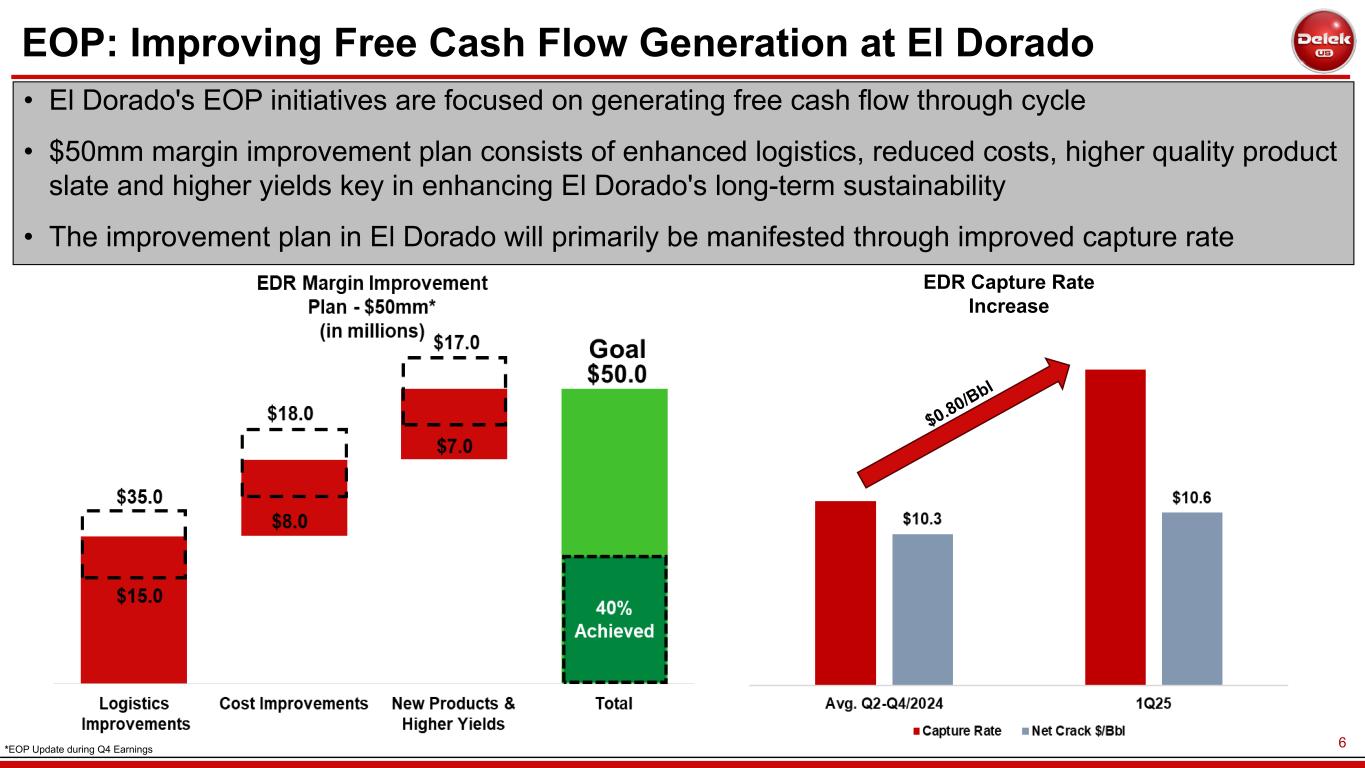
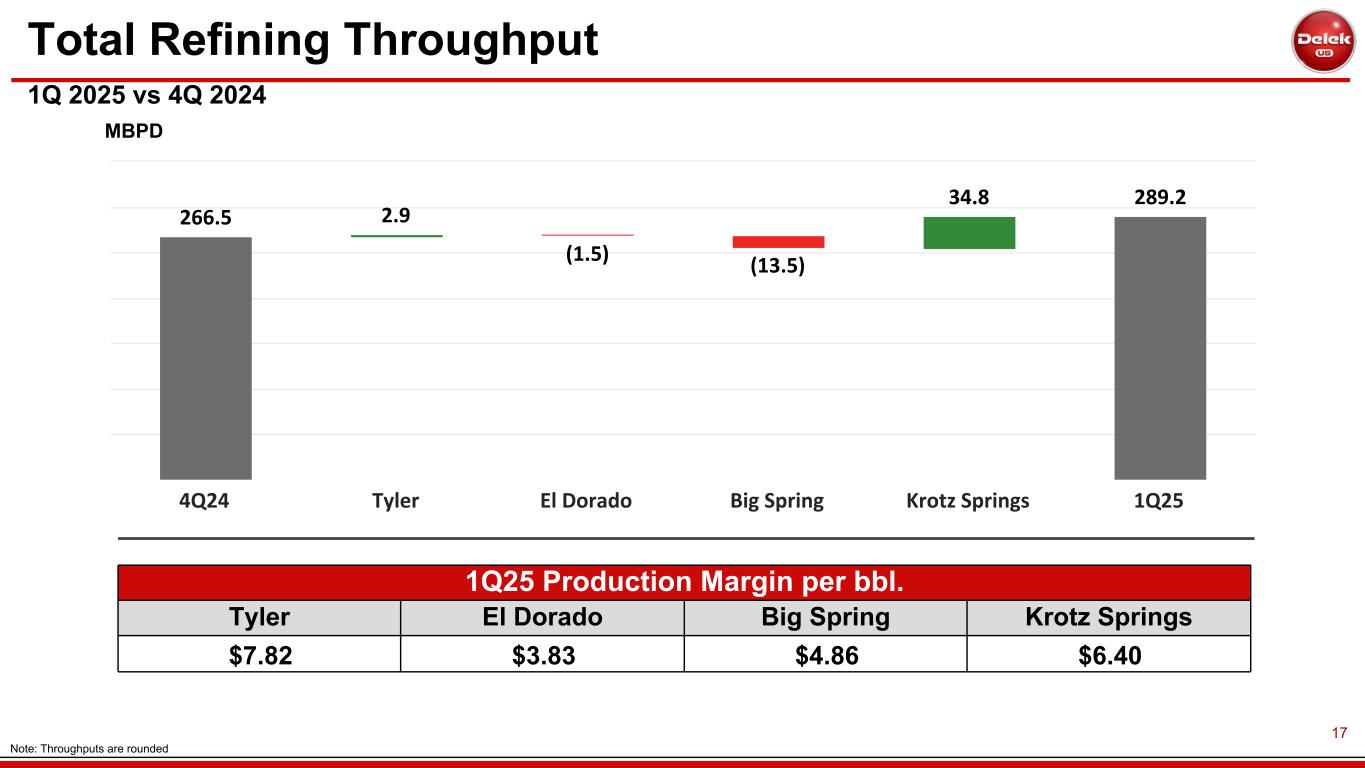
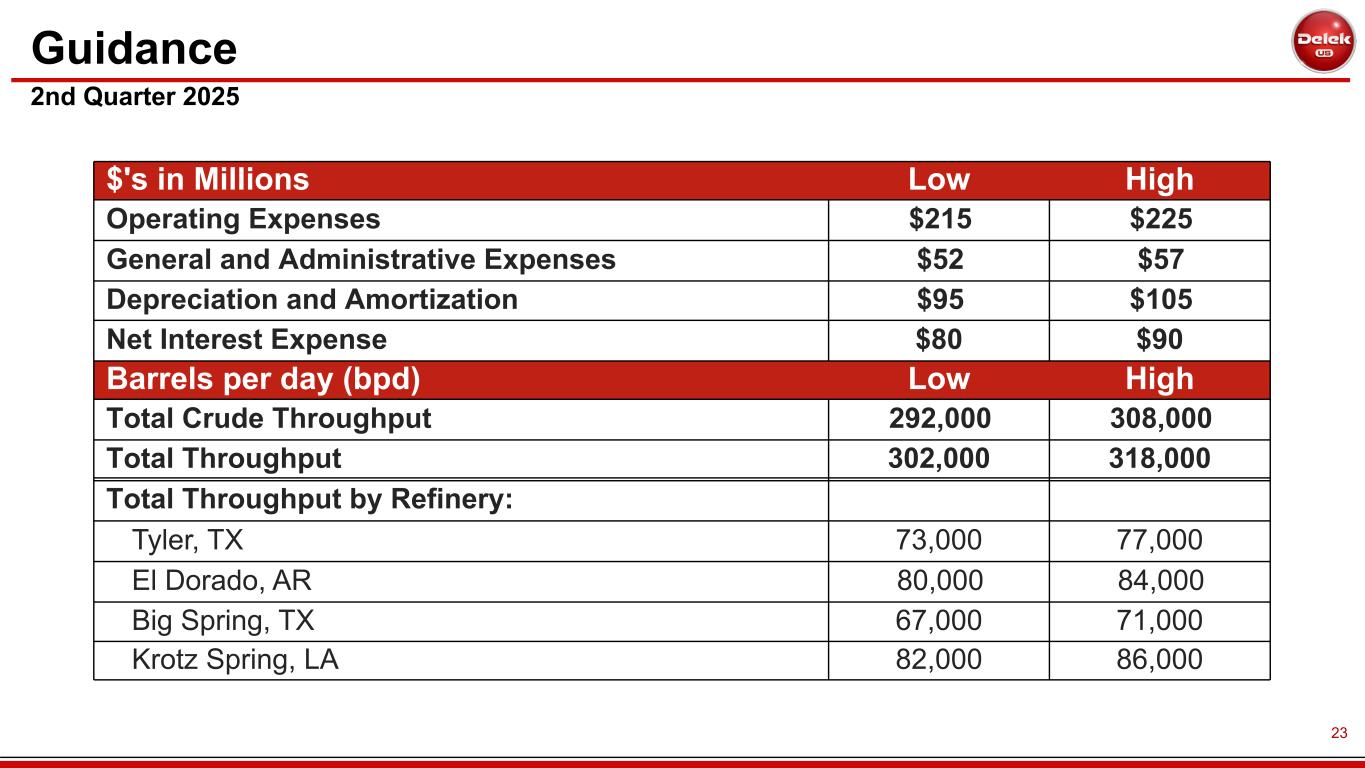
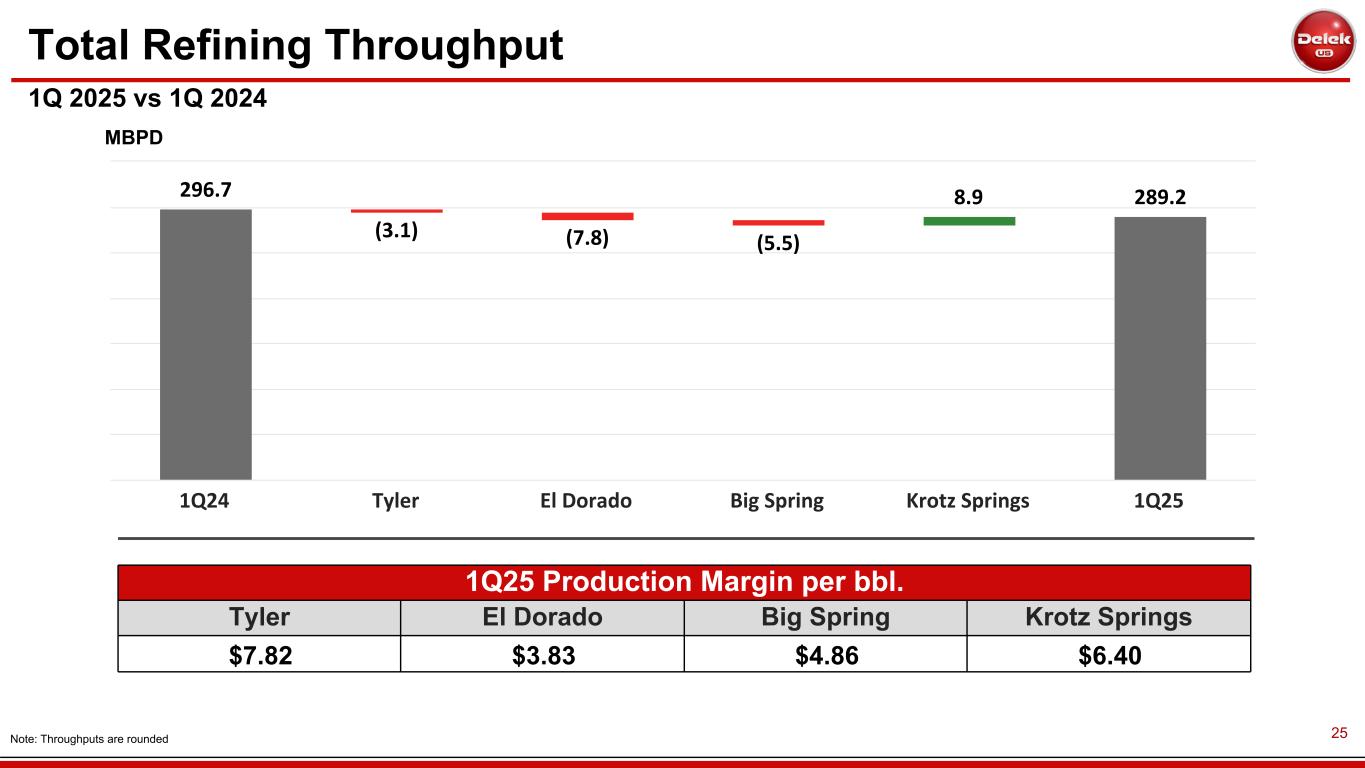
Thank you, Avigal. In the first quarter, we performed our planned outages and our system is well-positioned for the gasoline season. In addition, EOP initiatives are on track to achieve approximately $80 million of incremental capture in refining process and commercial footprint by mid-year. In Tyler, the team successfully executed our planned maintenance in the alkylation unit, including the upgrade scope which allows us to increase production of high-value products by approximately 500 barrels per day. Total throughput in the first quarter was approximately 69,000 barrels per day. Production margin in the quarter was $7.82 per barrel, including an unfavorable $0.70 per barrel impact from the planned alky outage. Operating expenses were $5.69 per barrel. For the second quarter, our estimated total throughput in Tyler is in the 73,000 to 77,000 barrels per day range. In El Dorado, total throughput in the first quarter was approximately 76,000 barrels per day. Our production margin was $3.83 per barrel, and operating expenses were $5.16 per barrel. Planned throughput for the second quarter is in the 80,000 to 84,000 barrels per day range. The El Dorado system is one of our top operational EOP priorities. In the first quarter, we achieved approximately $0.80 per barrel of improvements, which is in line with our $2 per barrel run rate target. In Big Spring, the team executed well on our planned catalyst replacement work in the reformer and diesel hydrotreater, and total throughput was consistent with the guidance range at approximately 59,000 barrels per day. Our production margin was $4.86 per barrel, including an unfavorable $1.70 per barrel impact of the planned outage. Operating expenses were $8.36 per barrel, reflecting the maintenance activities and the relatively low throughput denominator. In the second quarter, estimated throughput is in the 67,000 to 71,000 barrels per day range. In Cross Springs, we continue to demonstrate improved capacity and performance capabilities since turnaround completion late last year. Total throughput in the first quarter was approximately 85,000 barrels per day, which is a record high rate for the plant. Our production margin was $6.40 per barrel, and operating expenses in the quarter were $5.36 per barrel. Our planned throughput for the second quarter is in the 82,000 to 86,000 barrels per day range. Our implied system throughput target for the second quarter is in the 302,000 to 318,000 barrels per day range. Moving on to the commercial front, in the first quarter, supply and marketing contributed to the loss of $23.7 million. Of that, approximately $8.7 million loss was generated by wholesale marketing, and a negative $8.5 million contribution was generated by asphalt, both driven by seasonal low demand trends. $6.4 million loss was attributed to supply. In summary, we continue to execute well on the fundamentals of our business. Our focus on EOP allows us to capture structural liquid yield, product mix, and cost structure improvements as we optimize our marketing footprint. Considering the constructive market conditions and our asset positioning, we are excited about the opportunities ahead of us, both short and long term. Mark will now address the financial variance.
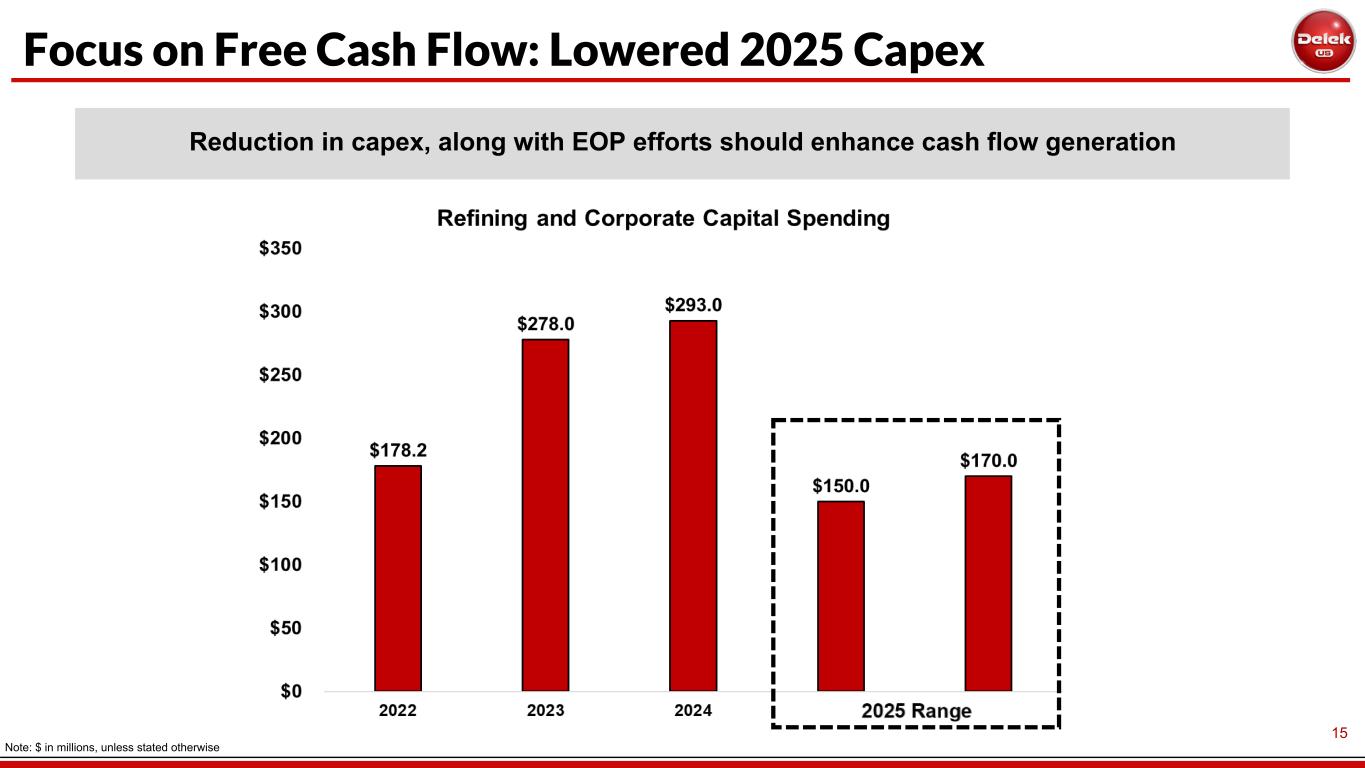
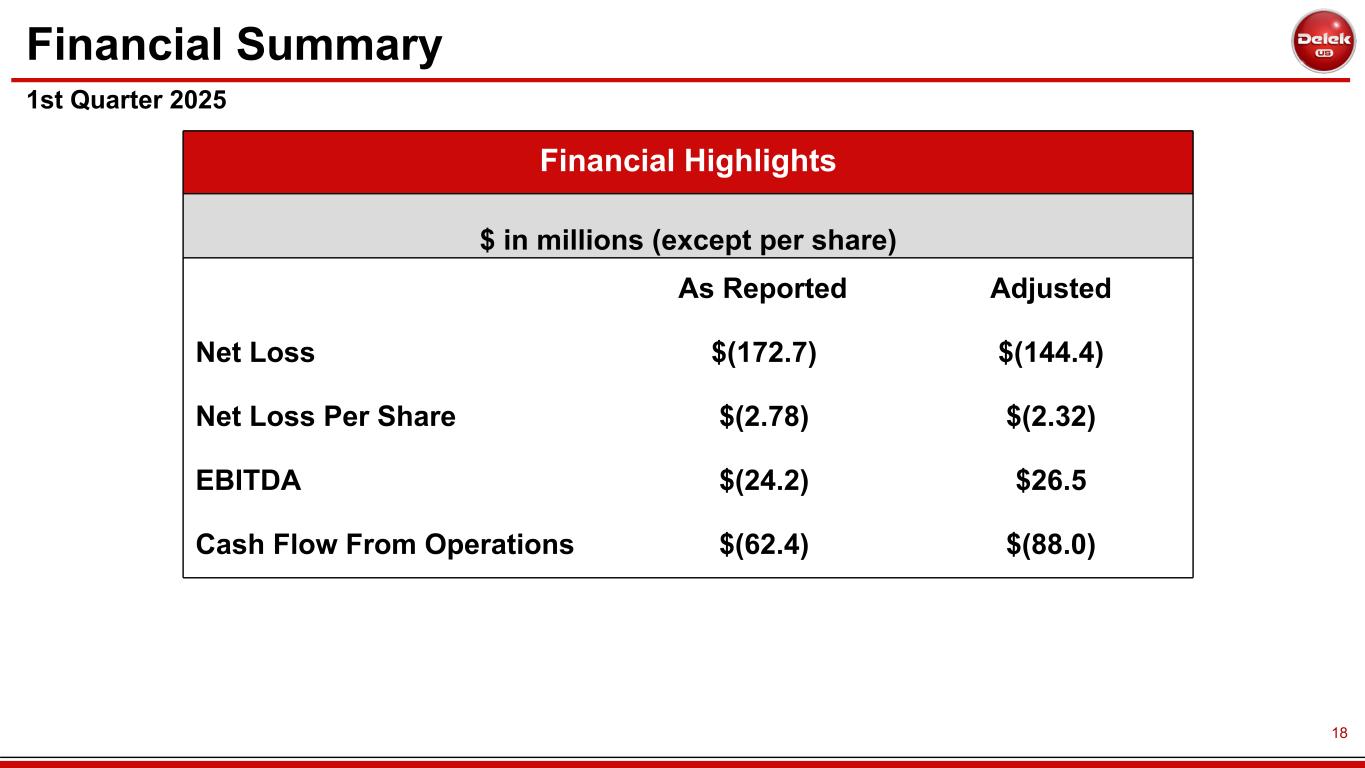
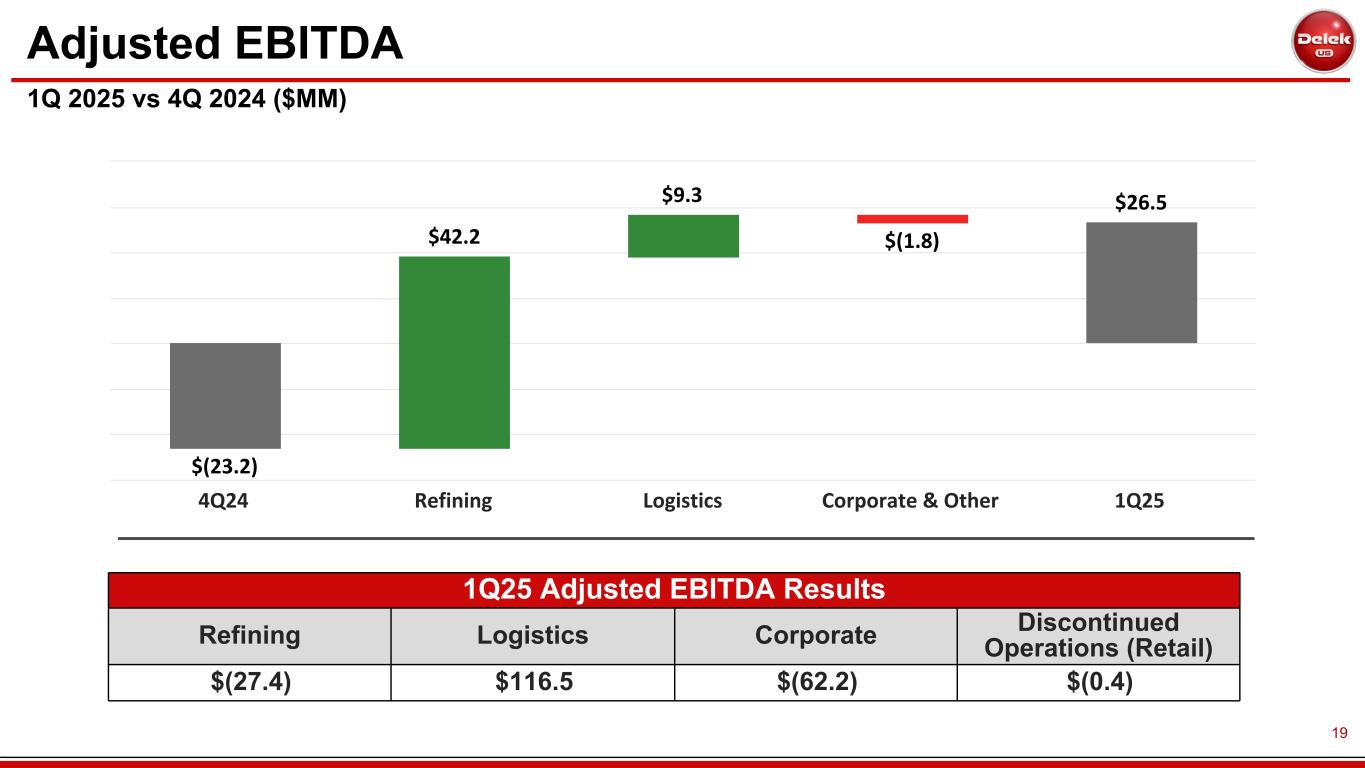
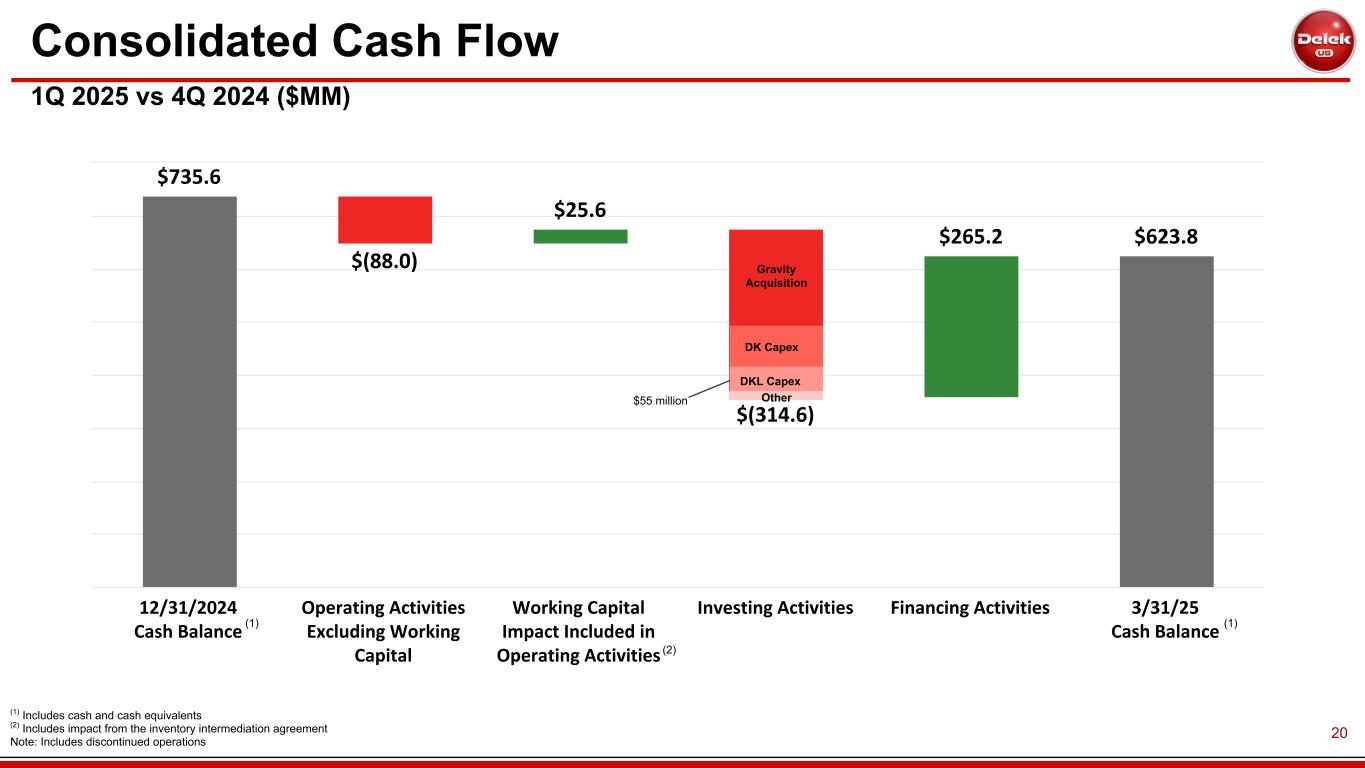
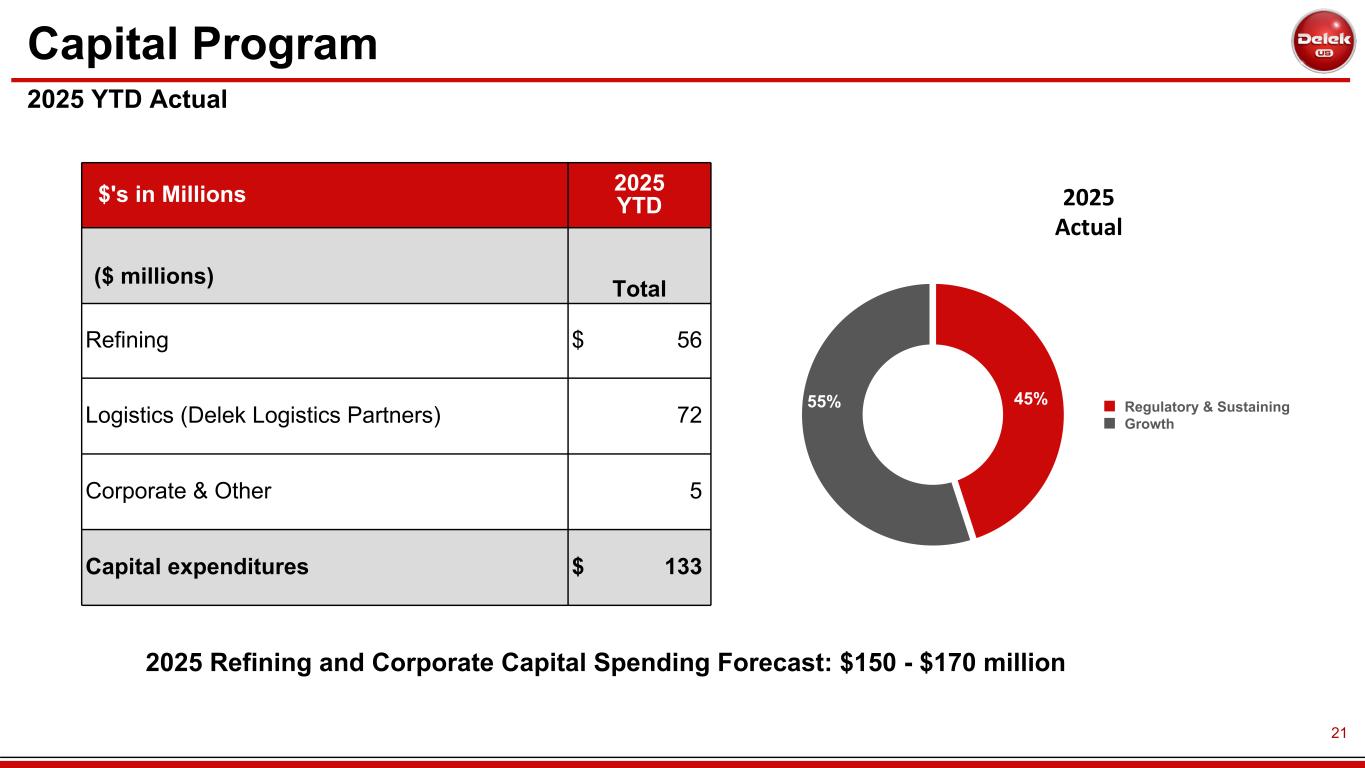
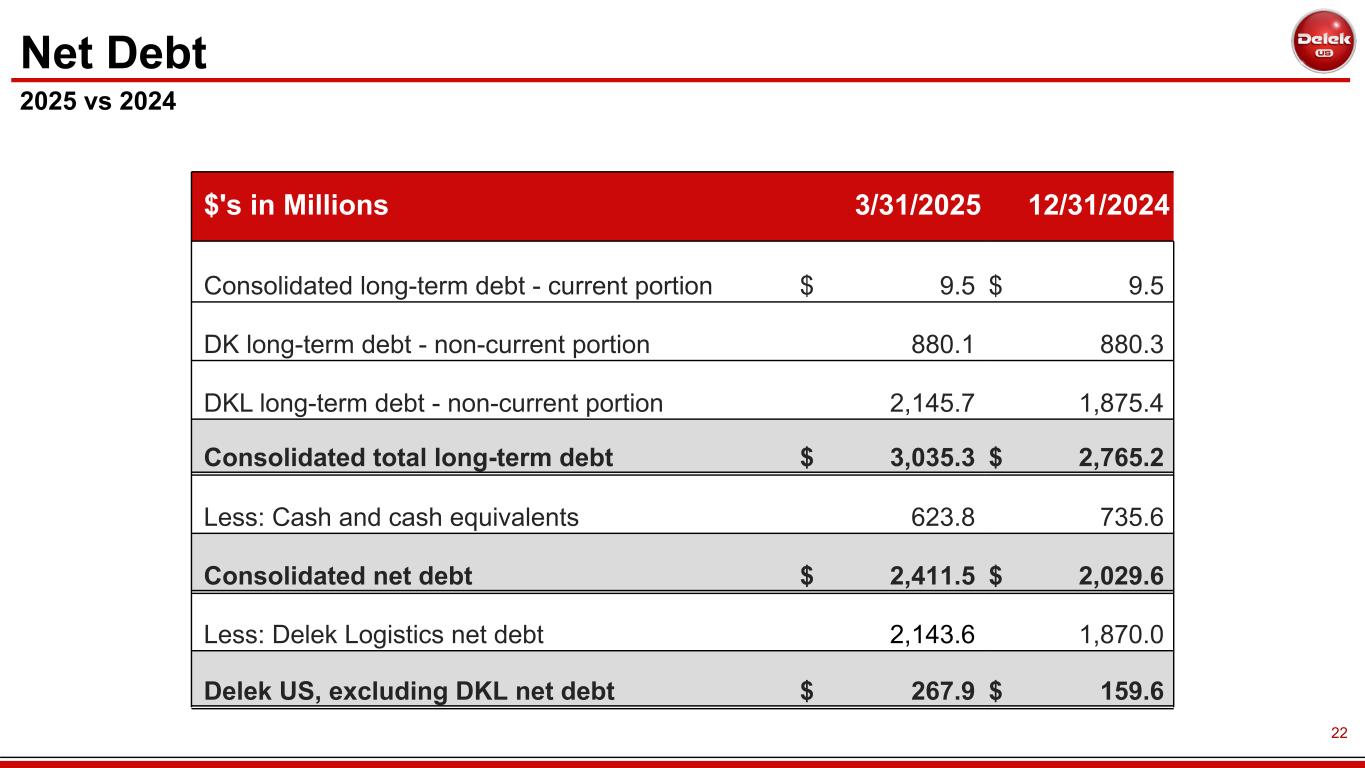
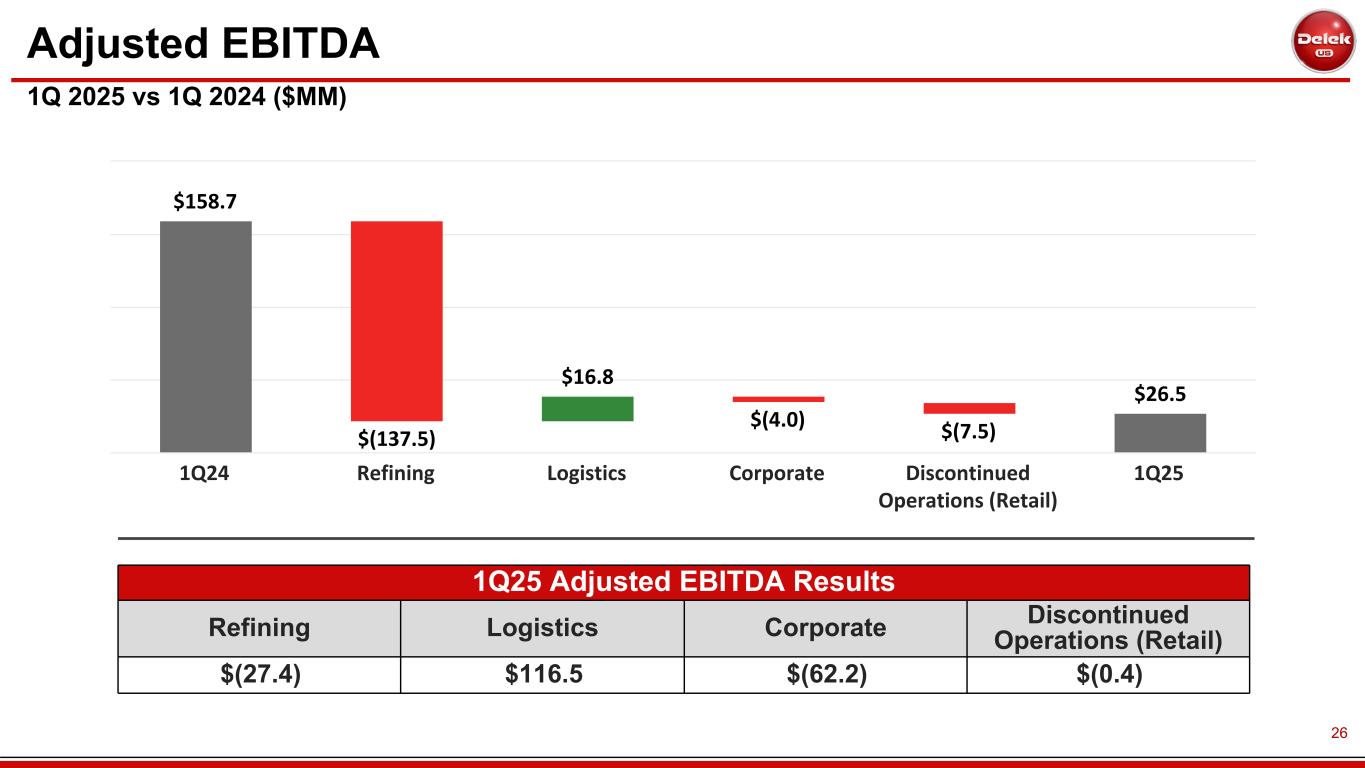
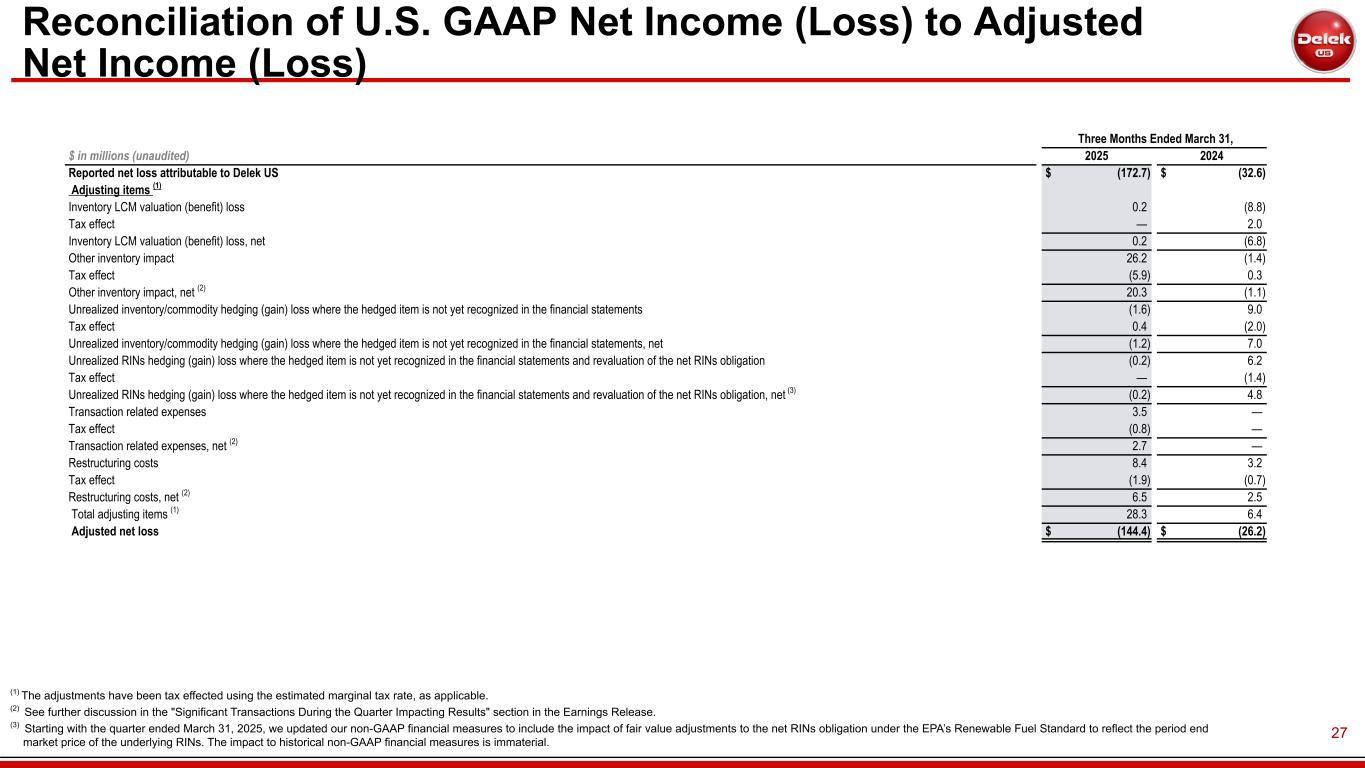
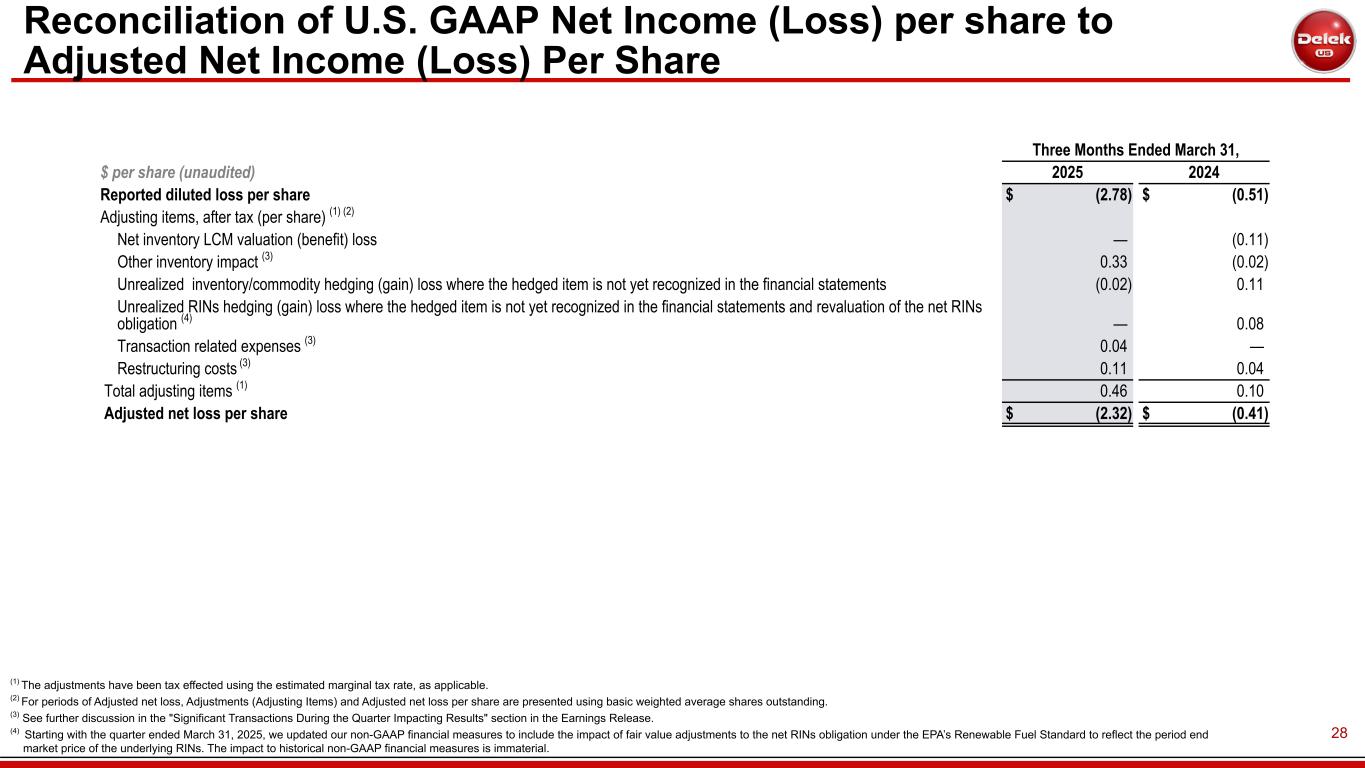
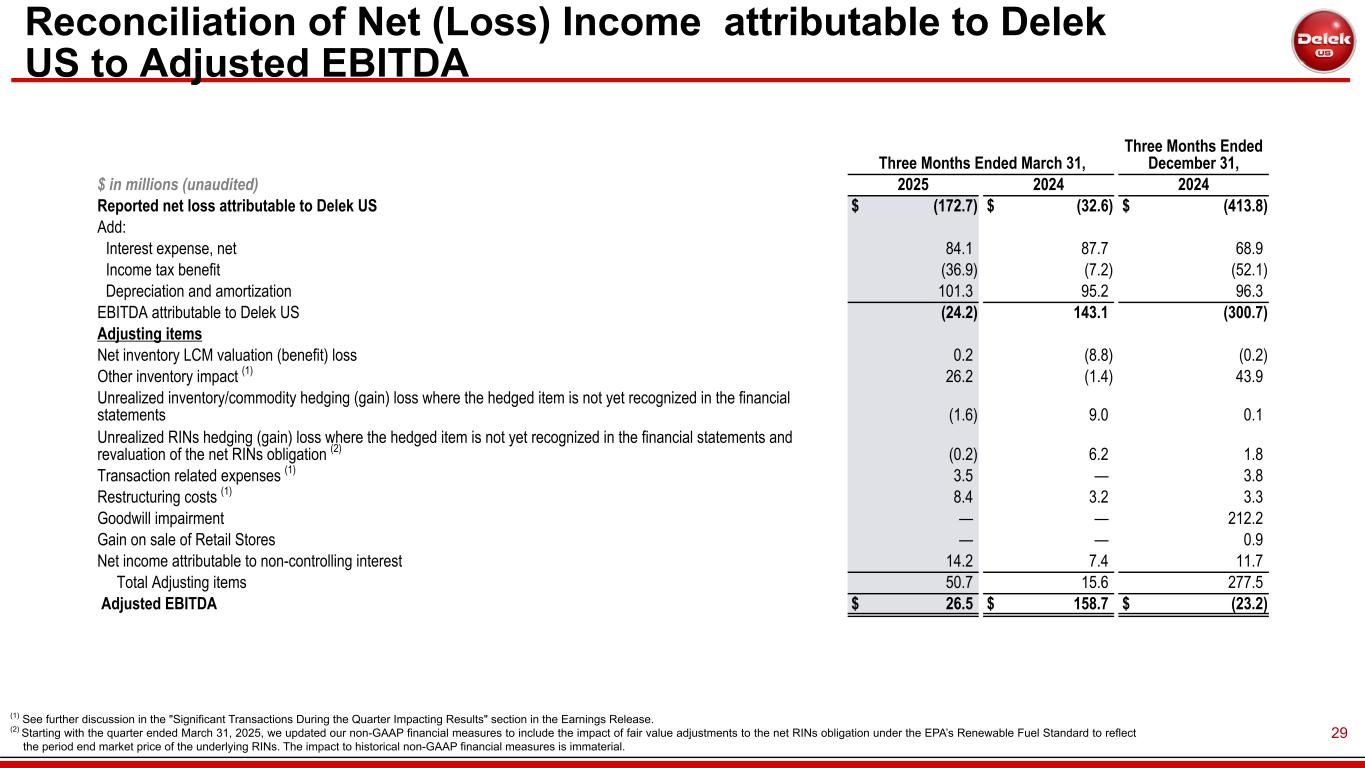
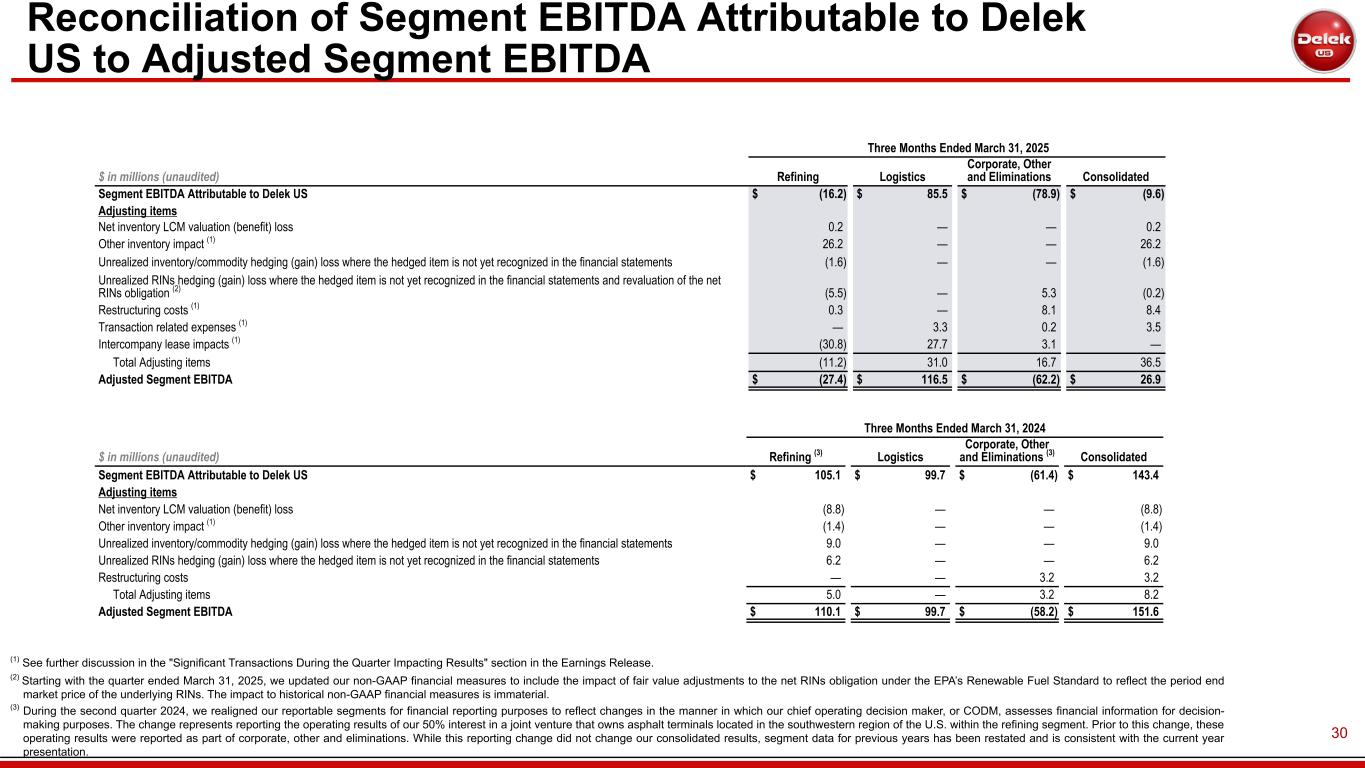
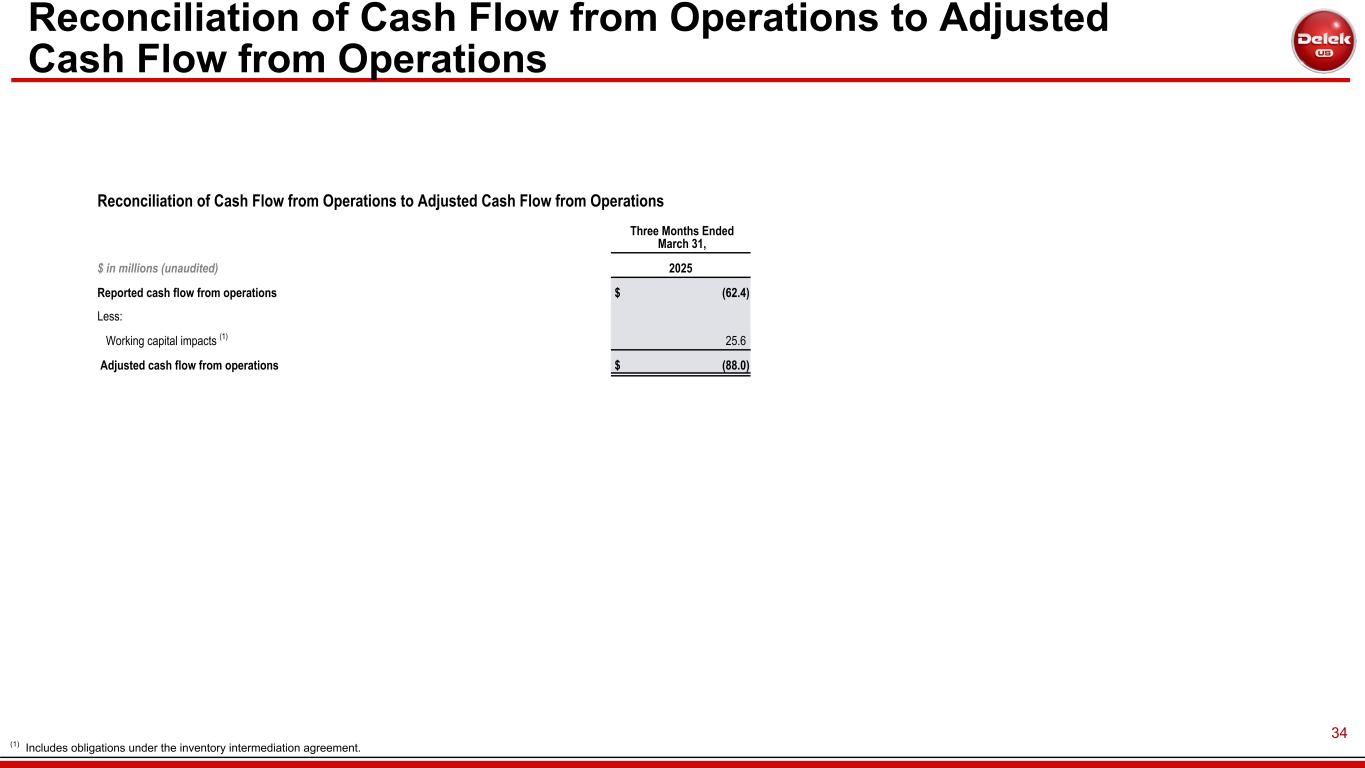
Thank you, Joseph. Referring to Slide 18, for the first quarter, Delek had a net loss of $173 million, or negative $2.78 per share. Adjusted net loss was $144 million, or negative $2.32 per share, and adjusted EBITDA was $26.5 million. On Slide 19, the waterfall of adjusted EBITDA from the fourth quarter of 2024 to the first quarter of 2025 shows that there were two main drivers for the increase in EBITDA. First, a $42.2 million increase in refining was primarily attributable to a higher margin environment in the first quarter relative to the fourth quarter, along with sequentially higher throughputs. Second, in the logistics segment, we continue to have another strong quarter delivering $117 million in adjusted EBITDA, a $9 million increase over our previous record of quarterly adjusted EBITDA. These improvements were mitigated by slightly higher costs in the corporate segment of approximately $1.8 million compared to the prior period. Moving to Slide 20 to discuss cash flow. Cash flow from operations was a net use of $62 million. Within this amount is our net loss for the period, in addition to an inflow of approximately $26 million of timing-related working capital movements, which include the impacts of the inventory intermediation agreement. Investing activities of $315 million include approximately $180 million paid at the closing of the gravity acquisition and PP&E additions of $136 million. Financing activities of $265 million reflect $32 million in share repurchases, $16 million in dividend payments, and $22 million in DKL distribution payments to public unit holders. Along with share repurchases, this quarter, DK agreed to sell $10 million worth of DKL units back to DKL under the DKL $150 million unit repurchase program. As mentioned previously, this is a tax-efficient way for DK to proceed with its deconsolidation efforts. On Slide 21, we show our actual progress under the 2025 capital program. First quarter capital expenditures were $133 million. Approximately $72 million of this spend was in the logistics segment, of which $52 million was associated with the construction of the Libby 2 gas plant, which remains on track from a cost and time perspective and is currently under the commissioning phase. Primarily all of the remaining capital spend during the quarter was in the refining segment, addressing planned sustaining capital initiatives. Our DK refining and corporate capital spending outlook for 2025 remains consistent with prior guidance. Our net debt position is broken out between Delek and Delek Logistics on Slide 22. During the quarter, we drew approximately $112 million of cash, primarily to return approximately $48 million to shareholders for capital expenditures on growth projects and for the acquisition of gravity. Moving now to Slide 23, where we cover second quarter outlook items. In addition to the guidance Joseph provided, for the second quarter of 2025, we expect operating expenses to be between $215 and $225 million. Operating expenses are based on higher throughput expected for the second quarter, so although in line with first quarter results, we are expecting improvements on a per barrel basis. G&A is expected to be between $52 million and $57 million, D&A to be between $95 and $105 million, and net interest expense to be between $80 million and $90 million. With that, we will now open the call for questions.
Operator
Thank you. The floor is now open for questions. Your first question comes from Alexa Patrick of Goldman Sachs. Your line is open.
Speaker 5
Hi, good morning, team, and thank you for taking my question.
Absolutely. Good morning.
Speaker 5
Good morning. I wanted to talk about DKL and the full year EBITDA guidance, which you reiterated. Can you talk about some of the moving pieces there? And then how should we think about changes in Permian activity potentially impacting the outlook?
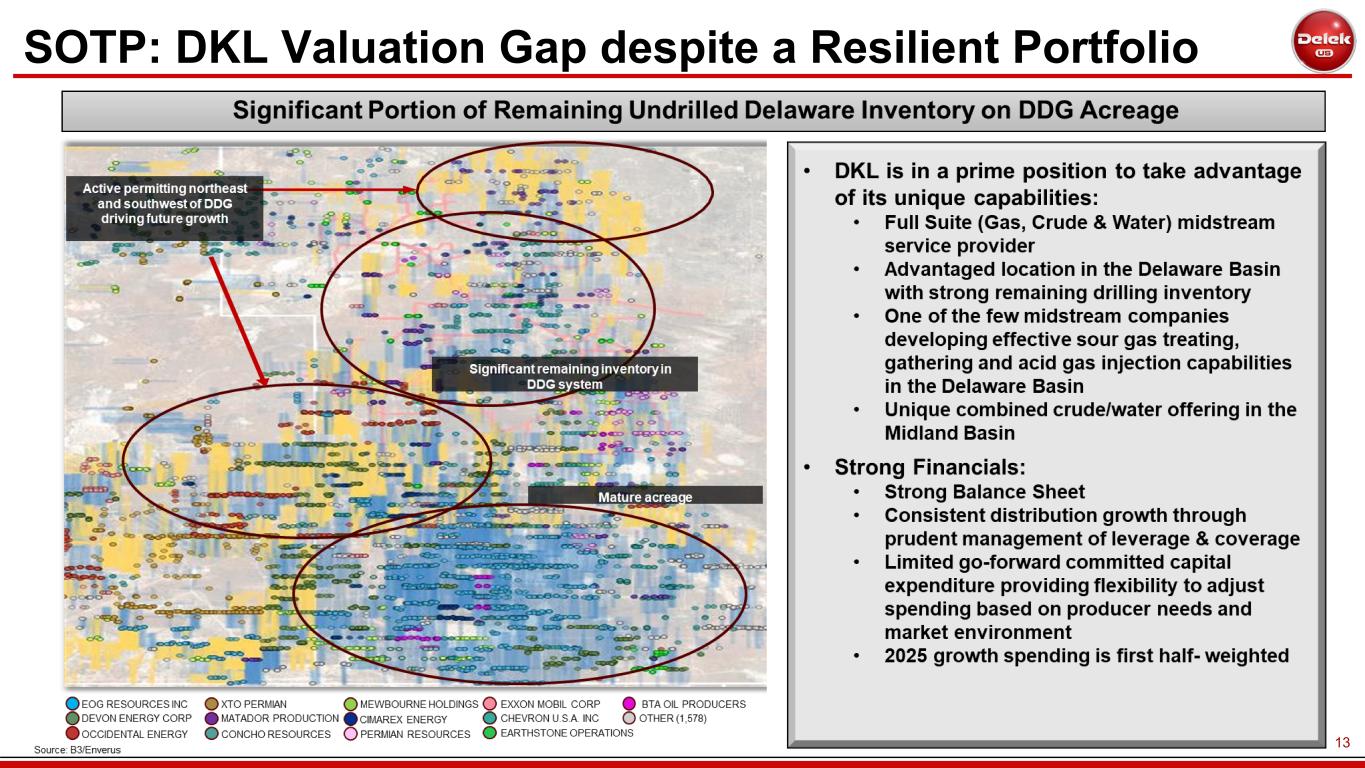
Yes, absolutely. I will start with the Permian activity, and then we'll talk about the great news that we are seeing on DKL. In terms of the Permian activity, we can divide that into three buckets, right? Bucket number one is Midland, which is more mature acreage, but with a great activity and a great producer, a mature producer over there. The big thing that we have over there is that we have a very strong combined offer with the water, and those acquisitions are going to the high end of our expectations. So over there, with all the discussion we had with our producer, we are very secured and have a very nice volume. So that's one. The second part is the Delaware. Delaware, as you know better than I do, has the lowest breakeven of a shell in any place, and we are in a very good position over there. We have a volume that we didn't produce until we are finishing the expansion of the plant, so that's a very easy move for us to fill up the plant, and we are in a very solid ground over there with what we are discussing with all of our producers. So when everyone is scared, actually we see a great opportunity. On the Delaware, as you well know, we also have a sour offering, which is very unique, and then no one else almost in our area has that to offer to our producer. So we're in a very good shape with both of that. That's the reason we reiterate the guidance we gave, and we are looking forward to a very strong year for DKL and more to come.
Speaker 5
That's very helpful. Thank you. My follow-up is just on capital returns. Can you talk about your strategy there? How should we be thinking about the sustainability of the current dividend yield, and then how are you thinking about share repurchases and balancing share price and deleveraging efforts?
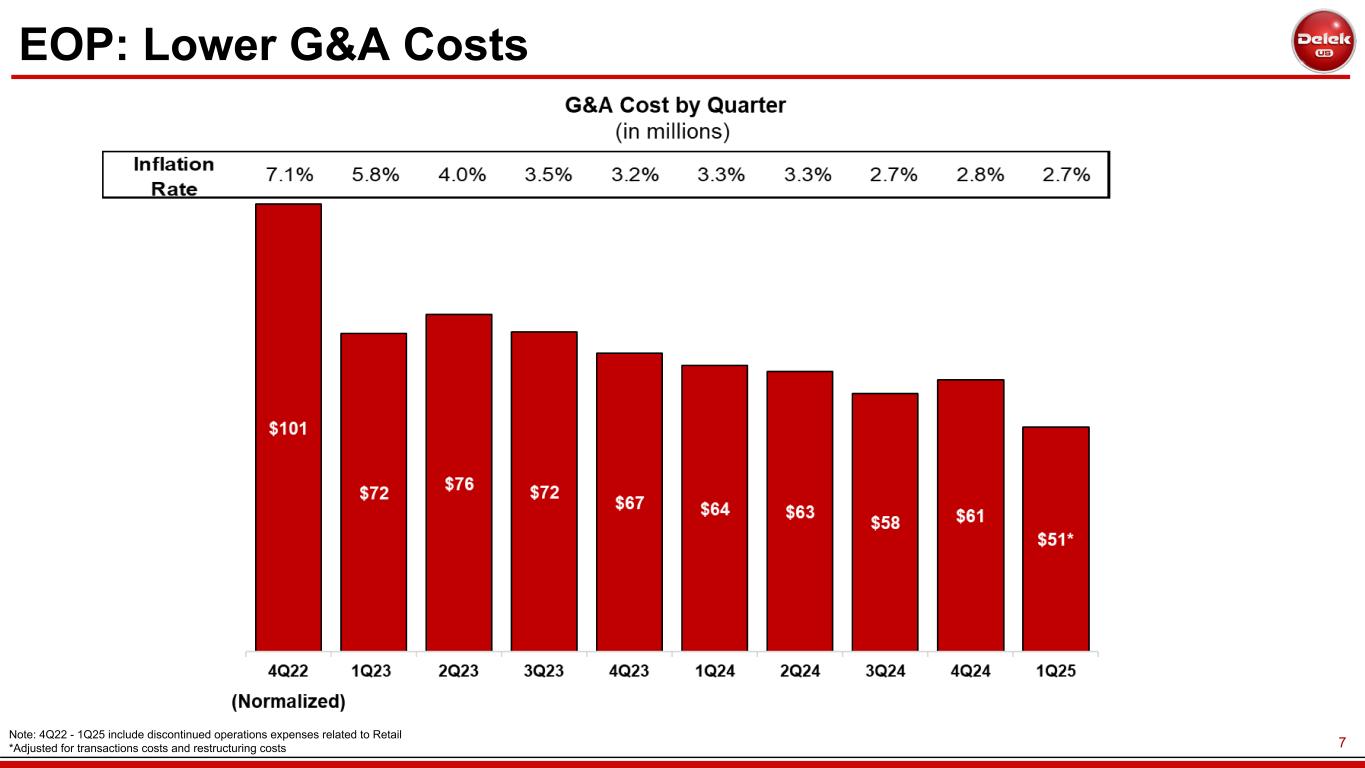
Yes, absolutely. So I want to start with a bigger picture with your permission. So we started like almost a year ago, I want to say, the EOP, Enterprise Optimization Plan. The whole point of that is free cash flow. Free cash flow is king, and we are showing improvement, and we have a very good second half with minimal capital, and that's the whole point of free cash flow. So I want to make it very clear. Today, as you saw in the announcement, we set at least $120 million improvement on an annual basis second half, and we have a very nice project. And again, I'm saying that, more to come around that in the near future. So we are very excited about where we are with that project. So as you know, EOP is not only cost, but it's also margin. You saw a very good G&A number going down. We put you a slide that basically started with 100, and we basically it's now in the low 50s. You saw the OPECs coming along very nicely to guidance, even though that we are adding more and more activities to the business. We are adding another natural gas plant. We just added another acquisition gravity that we did, and we are having a higher throughput. So all of that is coming in the right direction, with the entire team coming behind it. You have seen the El Dorado capture rate going up almost a buck on the top of the crack spread improvement. So that's very good. So in terms of capital allocation, to your point, we said before the cycle started, that the dividend for us is something that we want to do through the cycle. And that's exactly what we are doing. And then we have a balanced approach between buyback and improving our balance sheet. That's exactly what we are doing. We see a huge, huge, huge amount of value in our share price. For us to return to shareholders is not a one quarter campaign. It's a philosophy, and we are following through. We did the buyback in all the previous quarters, and our level of conviction and the amount of discount of our share price is just huge. It doesn't allow us not to act.
Operator
Thank you. Your next question comes from a line of Matthew Blair of TPH. Your line is open.
Speaker 6
Thank you, and good morning.
Speaker 6
Supply and marketing showed some improvement in the first quarter, relative to the fourth quarter. You talked about some of the drivers there, but I was hoping you could talk a little bit about how things are trending in the second quarter. Should we expect further improvements in the wholesale marketing and asphalt categories? Thank you.
Yes, absolutely. Matthew, you're absolutely right about your observation. It's a move $10 million on a similar market on the wholesale price and even worse market on the asphalt. So that actually even makes the position even better. In terms of our rack, we see a strong rack demand. We see netbacks going in the right direction. We've seen crack spreads going $3 to $4 in the last few weeks. All of that are very positive in terms of the reaction of supply and demand, and we are very positive about where we are and about Q2. So that's all going in the right direction. So we're in a good position. Market going well, and we see some more way to come around it.
Speaker 7
Hey, Matt, this is Mohit. I'll add a bit on that. As Avigal mentioned, in Q4, we typically discuss our supply and marketing line item in three categories: wholesale, asphalt, and supply. The conditions for wholesale are quite similar compared to Q4, and Q1 is traditionally the weakest quarter for asphalt. Nevertheless, EOP is a significant focus for the organization, and we are implementing various structural improvements, which is reflected in the $10 million enhancement you observed. Regarding guidance, we don’t usually offer predictions, but we have experienced a strong start to the group differentials in the second quarter, and asphalt is also seeing improvements. That’s how the quarter has begun, but we’ll see how it all wraps up by the end of the quarter. So far, everything looks promising.
Speaker 6
Sounds good. I was hoping you could discuss some of the dynamics in the Southwest. It seems like it's off to a little bit of a sluggish start with both gasoline and diesel cracks below five-year averages. Has anything structurally changed in the Southwest, and would you expect to see improvements into the summer here?
Speaker 7
Matt, this is Mohit again. I think Southwest, we are actually seeing very strong cracks. If you look at some of the problems that we've seen on the West Coast, it's translating into Arizona markets, especially Azerbai, which is a gasoline grid for Arizona markets, has been very, very strong. We supply that market, and we are not seeing any weakness that you're talking about.
Operator
Thank you. Your next question comes from a line of Manav Gupta of UBS. Your line is open.
Speaker 7
Good morning, Manav.
Speaker 8
Good morning, sir. My question here is a little more on the SREs, and obviously your knowledge is vastly higher than ours. I'm just trying to understand here, when we are talking SREs, are we talking SREs on a go-forward basis, or you also might actually would like to go back and claim SREs for a period of 20 or 20, whatever timeframe? I'm just trying to understand, is it all going to be forward-looking, or you're also going for what you believe could be retroactive SREs for you guys?
Our comment that we put is retroactive, and it's going to go to a backlog all the way from 2019. I think if you look at the previous posting that we gave, we gave a rounding number around it. For us, it's a huge value. As I said in my prepared remarks, we are very optimistic about that, and more news to come. So it's both backward and forward.
Speaker 8
Okay, so both backward and forward. Forward also, even if RVO is raised materially and the RIN prices do move higher, you still expect those SREs to give you relief. Is that the right way to think about it?
Speaker 7
Manav, this is Mohit. Thanks for the question. So let me just give you all the details around that. So after the D.C. Circuit Court ruling last year, our petitions for SREs were sent back to the EPA. The total amount, as we disclosed in the past to comply with those petitions, was close to $300 million, and that is for the years of 2019 and 2020. From '21, '22, '23, and '24, the cost of our compliance is way above our current market cap. So first of all, we obviously are putting forward and talking with the EPA to get the retroactive SREs, and we obviously, as the law clearly states, that we deserve SREs. 100% of our capacity deserves SREs, so we also are looking from a forward basis. So that is the situation right now, and we do think there are competing incentives that the EPA has to balance, but as far as we are concerned, we are very optimistic that the EPA will grant us SREs that we deserve under the RFS law.
Speaker 8
Thank you, guys. I'll turn it over.
Operator
Your next question comes from the line of Doug Leggate of Wolfe Research. Your line is open.
Speaker 9
Hi. Good morning, everyone. This is McKinley Trusclair for Doug Leggate. He is currently traveling. My first question is going to be centered around the ERP you guys touched on earlier. It appears that you're going to fairly comfortably reach your $120 million target heading into the second half of the year, but my question is, are there any opportunities for upside beyond that $120 million, and if so, what are the potential drivers of further improvement upon that target?
Yes, you correctly identified that we have not provided guidance exceeding $120 million. However, don't be surprised if we do consider that guidance in the future, as we see potential for growth beyond that figure. You've highlighted what we're aiming for in the market, so thank you for that. Our whole organization is focused on achieving this, and we will have more information to share soon.
Speaker 9
All right, thank you. My follow-up is also generally centered around the EOP, so do you have a kind of a guide or an idea of how or if the refining business can generate sustainable free cash flow net of turnaround expenses post you recognizing all your cost savings from the EOP? Thanks.
Yes, absolutely. So first of all, you need to understand that we are very confident in the EOP, and that's what looks great. We gave you numbers, and you've seen the numbers around the improvement that you already see in El Dorado. You see the improvement that we see in the cost basis. You see the improvement that we showed in KSR. You see the improvement in reliability in Big Spring, and you see Tyler in a very good, comfortable spot. I will let Mark, our CFO, to say a few words about the cash flow going forward, and that's going to give you another level of understanding.
Yeah, thanks, Avigal. Speaking about cash flow and digging in a little bit more over the recent past in the quarter, keep in mind that over 80% of our capital spend in the first quarter was for highly accretive growth, primarily at DKL, that furthers our some of the parts initiatives. As you know, we closed the gravity acquisition on January 2nd. That was about $180 million just over of cash in the quarter. In 2025, CapEx, as we've provided guidance, is heavily weighted to the first half of the year. In the first quarter, we spent about $72 million in growth CapEx at DKL, $52 million of which was for our Libby 2 expansion. We also had planned maintenance at both Big Spring and Tyler, and our plants are running well, so we feel very good about being set up for moving into the summer driving season. If you take a longer-term view and think about the relatively heavy spend that we had over the last nine months, which included the KSR turnaround late last year, the ongoing Libby 2 expansion, which is critically important for our Delaware growth initiatives around gas and sour gas, plus acquiring both H2O and gravity, in the face of challenging margin environments, we've maintained a strong balance sheet, and we're very happy with our liquidity position as we move into the year. This also incorporates the fact that we've continued our counter-cyclical approach to buybacks. Over that period of time, we purchased approximately $75 million of our stock, along with paying around $50 million in dividends. And so we're set up very well as we move through 2025. The EOP initiatives that Avigal has given a lot of detail around moving through the second half of the year, very comfortable with $120 million plus in improvement, that's very much a free cash flow initiative, with a limited capital spend in the second half of the year, we feel very good about how we're set up going forward.
Speaker 9
All right, thanks for your response. Thank you for taking my questions.
Operator
Your next question comes from the line of Joe Lack of Morgan Stanley. Your line is open.
Speaker 10
Hi, good morning, team, and thanks for taking my questions.
Speaker 10
Good morning. I wanted to ask about the progress of some parts and if you could elaborate on the intercompany transactions. Is there more to address in this area, or have the appropriate assets been allocated correctly? Thanks.
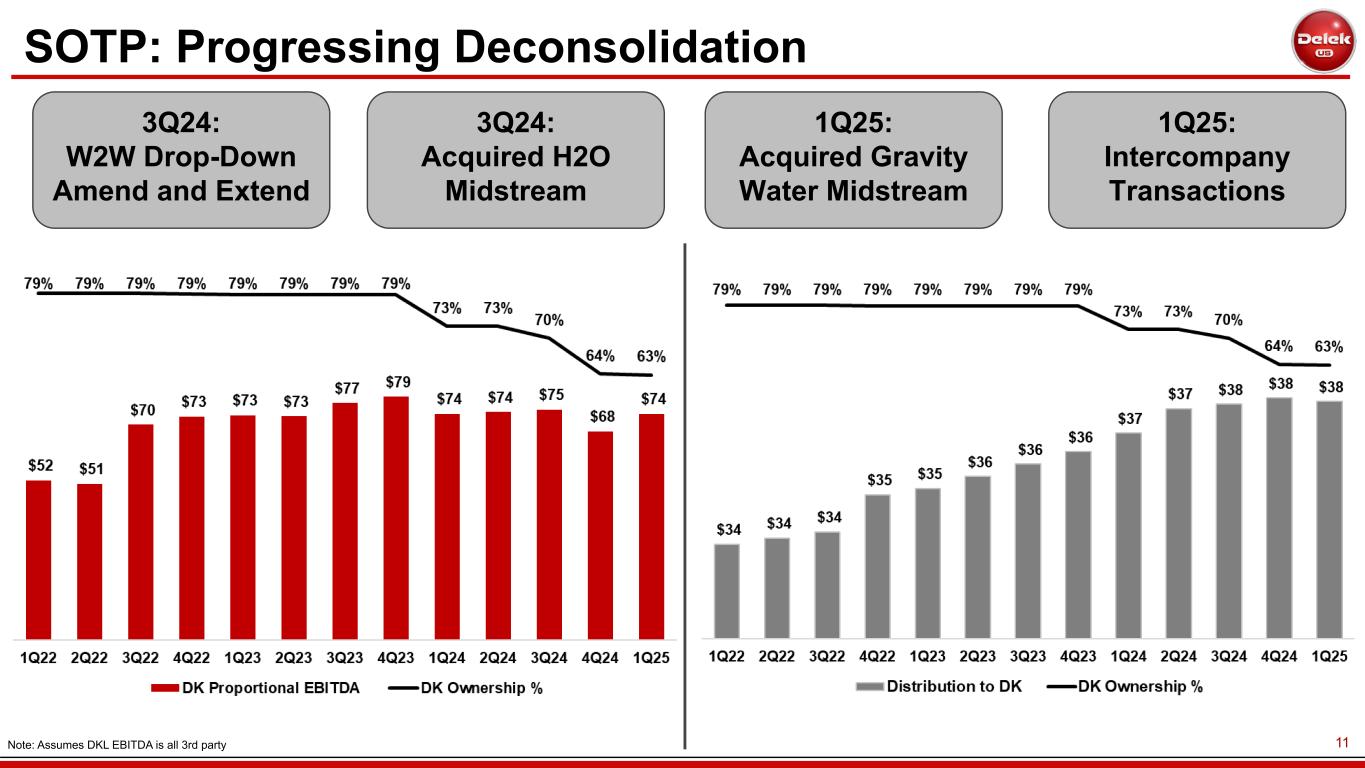
Yes, absolutely. So some of the parts, along with EOP, are the most important initiatives in our company. So I want to make it very, very clear. Deconsolidation is the goal, and deconsolidation is happening as we speak, just to make it very, very clear. As you, Joe, know and see every day, we went from 79% just a year ago, more or less, to 60%, just lower 60% now. While doing that, we increased the DKL EBITDA from 385 to midpoint of 500. While doing that, we increased third party from around 40% to around 80%, as we see today. And while doing that, we increased the distribution that DK actually gets. So all of that is a very creative, agile way to achieve some of the part, and achieving value for both DK shareholder and DKL unit holder, that's the objective. So I will let Mark add more into the transaction that we discussed today, because it's very important.
Yes, Joe. So the intercompany transactions that we announced coinciding with the earnings, it's really about cleaning up contracts between DK and DKL. And it's a critically important step to advancing our deconsolidation efforts, because as Avigal said, it's kind of getting assets and activities in the right place. And what we've done is we've basically moved refining related activities from DKL back to DK, which is obviously important. And we also moved midstream related activities from DK down to DKL through the cleaning up of these contracts. The overall net impact of this is not really material to either one of the entities. But through this restructuring, it does unlock approximately $250 million of availability, as we mentioned under our credit facilities. And importantly, the results of this, it increases DKL's third party EBITDA contribution to approximately 80% on a pro forma basis. And that further drives our economic separation between the two companies, which is also critically important.
Speaker 10
Great, thanks. That's helpful. And then I want to follow up on the logistics side. You've done a good job growing midstream through bolt-ons. Can you talk about what you're seeing in the M&A landscape today? And has that changed at all with the pullback in crude and some E&Ps starting to reduce activity here? Thank you.
Yes, absolutely. So we are developing a company, which is a midsize midstream company that provides all services, crude, gas, and water. Looking on M&A specifically, we are not going to comment. We have done in the past a deal that made a lot of sense for you guys and made a lot of sense for us. And the three main criteria that we are looking at are free cash flow, accretive to leverage, and accretive to coverage ratio. So we are not after the deal. We are after providing value to unit holders and shareholders. That's the goal. And we are picking the right tool at the right time. We can either sell like we sold retail. We can either buy like we did with gravity and H2O. Or we can build when we have the right multiple to build versus buy. So we have the full toolkit ahead of us, and we are trying to use the right toolkit for the right mission and not to confuse them. That's the goal. The goal is to provide value to investors, and that's what we are determined to do.
Operator
Your next question comes from Ryan Todd of Piper Sandler. Your line is open.
Speaker 11
Great. Thanks. Maybe first off, congratulations on the improved margin capture, particularly at El Dorado. Can you talk about what you have been able to do to drive improvement there, and what are the next steps in terms of continuing to improve capture?
Yes, absolutely. So El Dorado is a very nice kid. We visited there just a few weeks ago. All the refineries are behind the new initiative, and we definitely see great progress. The complexity of the refinery is good. We finished the journey of operations. And I will let Joseph, who is very close to that, comment on that. Please, Joseph.
Speaker 3
Yes. Going from our fourth quarter to the first quarter, we realized the growth margin improved by a dollar over benchmark crack spreads. We went up 327 versus what the market gave us of 238, meaning there's the EOP initiative that is starting to really impact our capture. We saw $0.80 per barrel in place in the first quarter, like we mentioned in our prepared remarks, and we are on track to achieve the $2 per barrel annual rate by the end of this quarter. To remind everyone, these are structural process logistics and commercial improvements which will support El Dorado profitability in the long run through the cycles. And if you're asking in specific, we're talking about jet fuel production, which we added in El Dorado and really helps the offering of high-value products, plus the ability to leave more products in the local market area. We have some catalyst changes, which are really helping our liquid yield and performance of some of our units and other creative engineering techniques that we implemented. El Dorado is supposed to generate $50 million of incremental value by the time it's all said and done in those three fronts. So I'm very happy with the progress and the results.
Speaker 11
Great. Thank you. Maybe a follow-up on an earlier question. There have been a lot of moving pieces over the last few quarters across your business that impacts how we view the financials. The refining business has certainly seen some improvement, but I think if we go back, I believe it was last August when you had made a number of these structural changes, there was a part of the amend and extend program. I think maybe you were talking about something on the order of $60 million of EBITDA that we moved from DKL towards DK. You've announced some additional kind of inter-company adjustments here. Can we look at 1Q earnings and the results here? Does it reflect a normalized run rate in terms of these inter-company adjustments and the amend and extend from last year? Is that generally reflected in the first quarter underlying profitability or is there more to go there outside of the EOP?
For the most part, that's not the changes that we see. The most part is the business that we are improving and making that better. That's not the essence. Those deals are more towards the back, but I would like to say Mohit was very close to that too.
Speaker 7
Yes. So, as far as these inter-company agreements are concerned, let's just talk about the first one that we just announced. The basic idea here is to just put the right assets under the right buckets. We're just making sure all the DKL-tied assets are at DKL and all the refining-tied assets are coming back or at least economically coming back to Delek. So for the latest round of inter-company transactions, we basically expect EBITDA, in fact, to be relatively muted for DKL and for DK. As far as the amend and extend contracts that we announced in August of last year, we still expect some of that $60 million to come back to DK progressively throughout this year.
Speaker 11
Great. Thank you.
Operator
Your next question comes from the line of Jason Gabelman of TD Cowen. Your line is open.
Speaker 12
Yes. Hey, morning. Thanks for taking my questions.
Hi, Jason. Good morning. How are you?
Speaker 12
Yes, good. I was a bit surprised by the OpEx guidance going forward in light of declining turnaround activity. And if I compare to where you were the back half of last year on a consolidated basis, you were about 185, and 2Q '25 throughput was flat with 2Q '25 guidance, so I would have anticipated that to be a good benchmark. And understanding higher logistics, OpEx adds $10 million, higher natural gas prices probably add another $10. There's still a decent, maybe call it a $15 million gap to where we think you should be on OpEx. So is there anything going on in that bucket that we should be thinking about in terms of increases from the second half of the year to the go forward guidance?
Thank you for the question. The primary factor influencing operating expenses between Q1 and Q2 is straightforward: it's the addition of the natural gas plant, which we expect to handle over 30,000 barrels a day, and we have strong guidance for Q2 regarding this. All of these factors are crucial, and we are pleased about the potential for overall increased earnings. Additionally, you can expect ongoing improvements in operating expenses for the remainder of the year, particularly in Q3 and Q4. We are encouraged by our progress in reducing operating expenses, as we have come in under our initial targets and achieved significant improvements. The general and administrative expenses have been reduced to about half of what they were when we launched the program. We are actively expanding our activities and throughput, and you will receive more updates soon.
Speaker 12
Yes, and I hear you on the G&A side for sure. That's coming through. Do you have a sense of where OpEx should trend in the second half of the year?
I don't think it's the best practice to give guidance so far out, but we are very optimistic.
Speaker 12
Okay, that was it for me, so appreciate the help there. Thanks.
Operator
That concludes our Q&A session. I will now turn the conference back over to Avigal Soreq for closing remarks.
Yes, absolutely. I would like to thank the management here around the table, our board of directors, our investors, and most importantly, our great employees that make this company what it is, and we'll talk again next quarter. Thank you.
Operator
This concludes today's conference call. You may now disconnect. Thank you.