Thank you for standing by.
Operator
My name is Jael, and I will be your conference operator today. At this time, I would like to welcome everyone to the DellX U.S. Fourth Quarter earnings call. All lines have been placed on mute to prevent any background noise. After the speaker's remarks, there will be a question and answer session. If you would like to ask a question at this time, simply press star, followed by the number 1 on your telephone keypad. If you would like to withdraw your question, simply press star 1 again. I would now like to turn the conference over to Robert Wright, EVP, DellX. You may begin.
Good morning, and welcome to the Delic-US fourth quarter earnings conference call. Participants joining me on today's call will include Abigail Sorek, President and CEO, Mark Hobbs, EVP Chief Financial Officer, as well as other members of our management team. Today's presentation material can be found on the Investor Relations section of the Delic-US website. Slide two contains our safe harbor statement regarding forward-looking information. As a reminder, this conference call will contain forward-looking information as defined under the federal securities laws, including statements regarding guidance and future business outlooks. Any forward-looking statements made during today's call will involve risks and uncertainties that may cause actual results to differ materially from today's comments. Factors that could cause actual results to differ are included in our SEC filings. The company assumes no obligation to update any forward-looking statements. I will now turn the call over to Abigail for opening remarks.
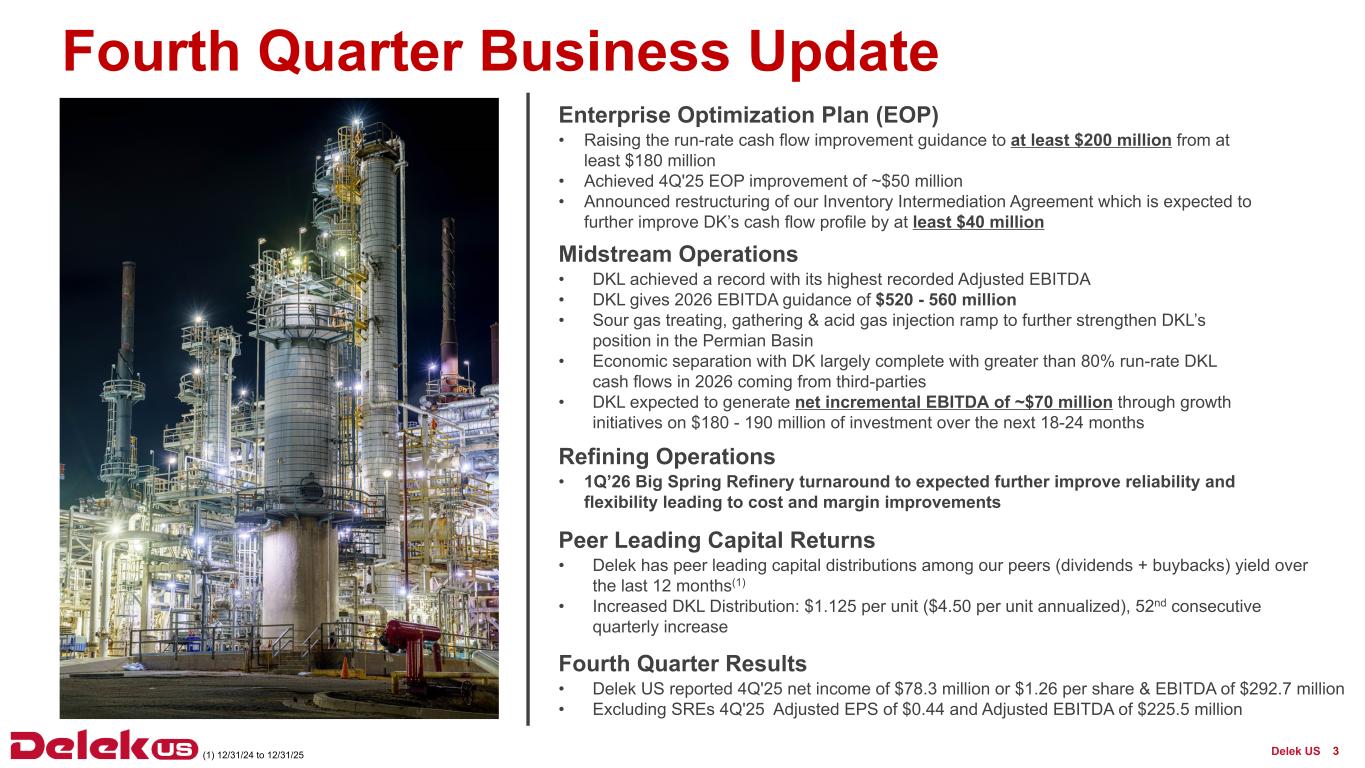
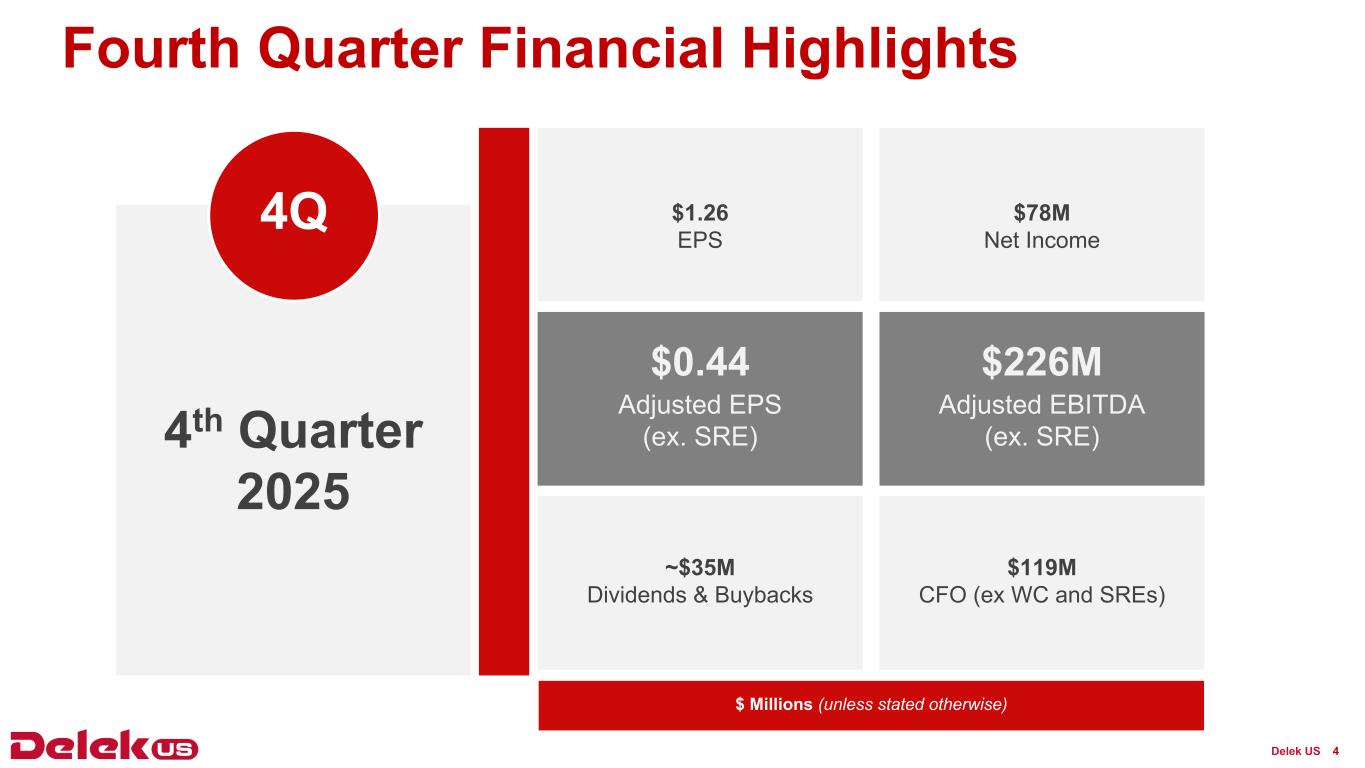
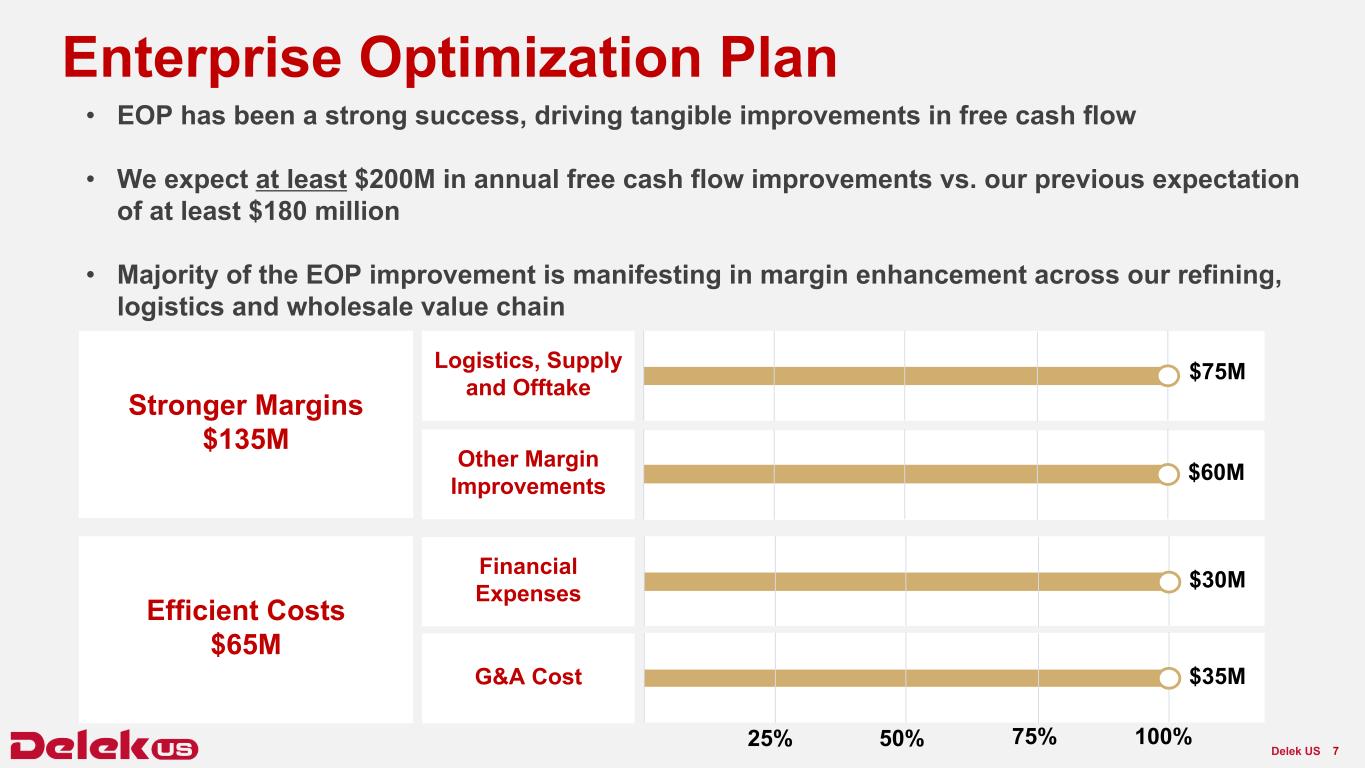
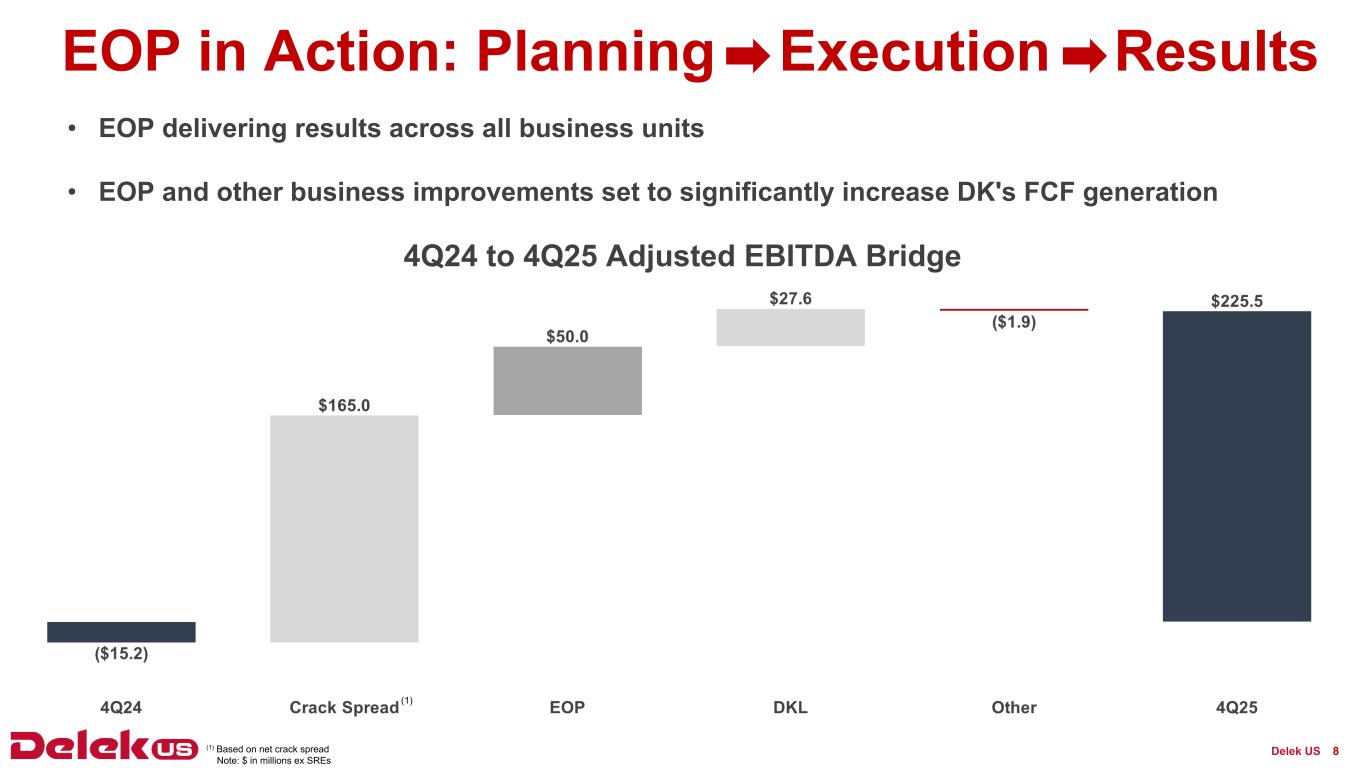
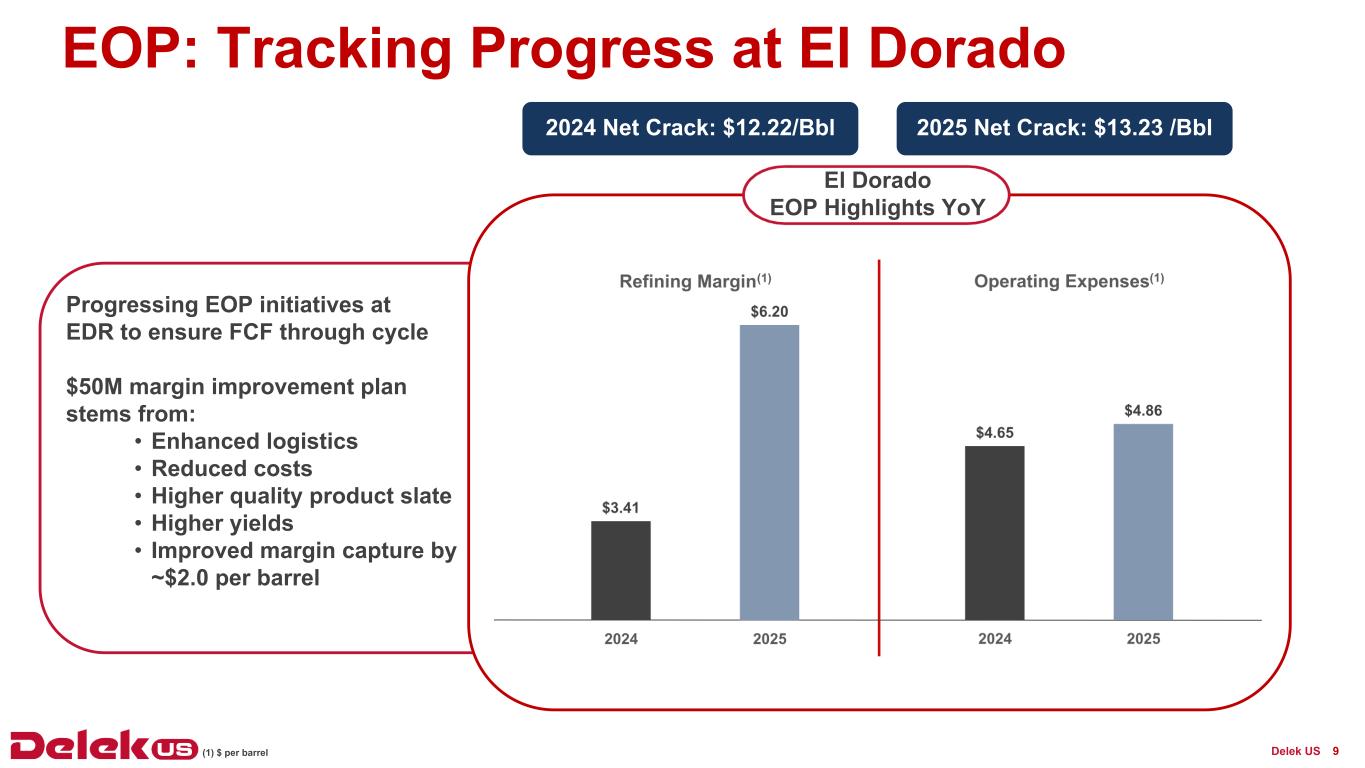
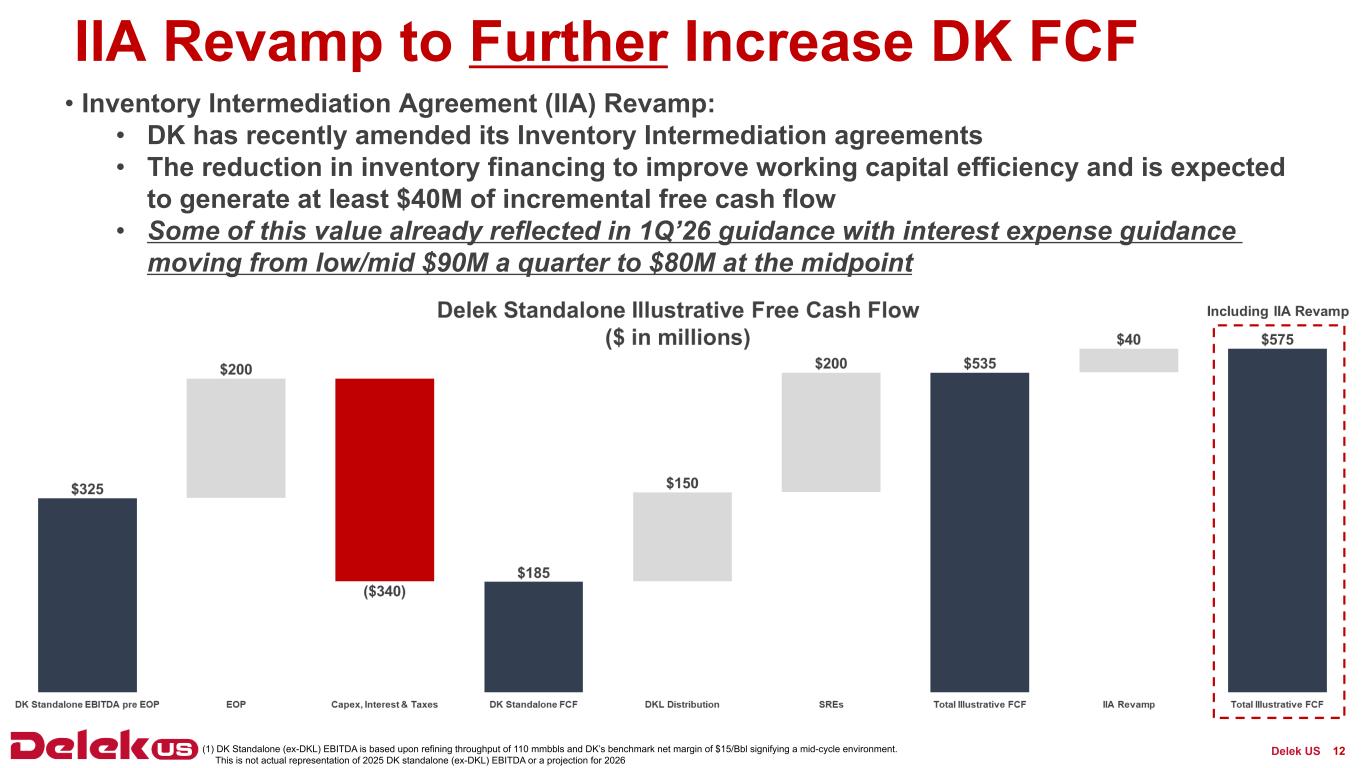
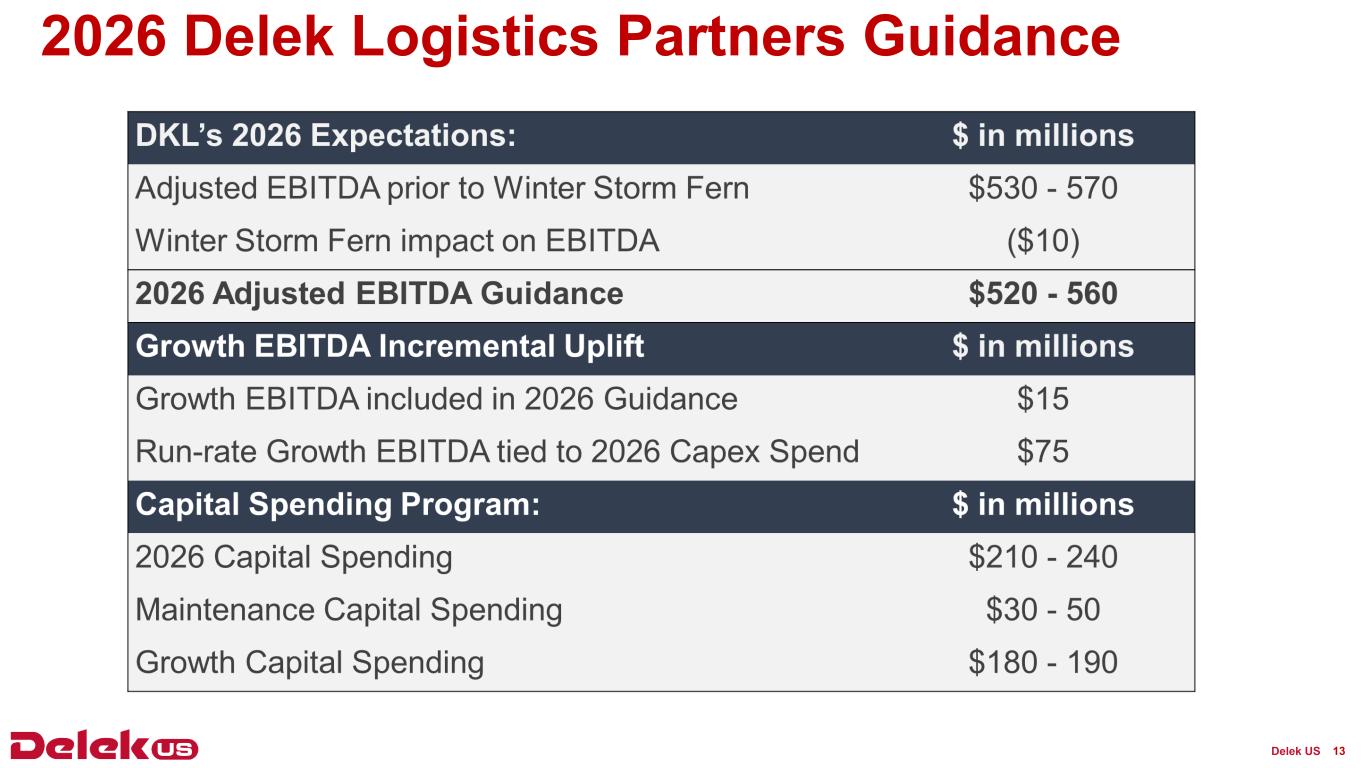
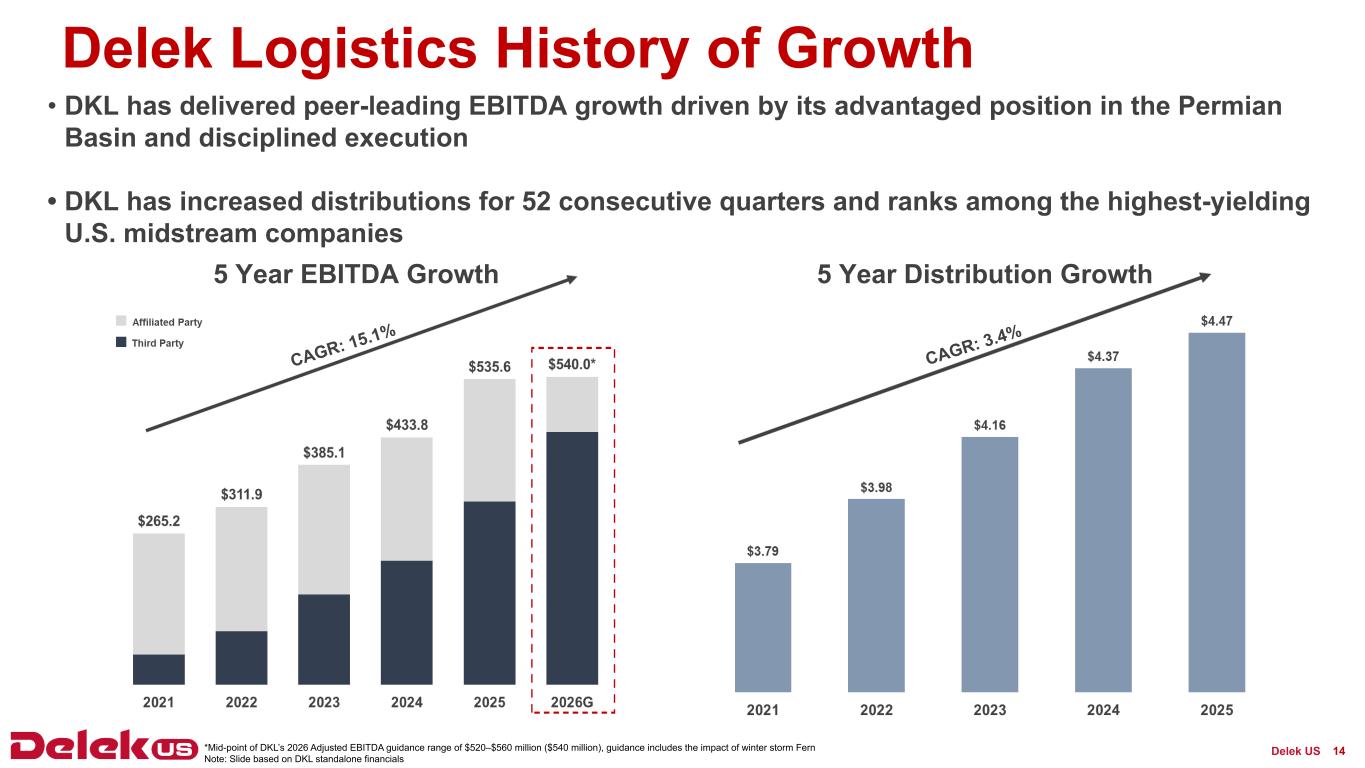
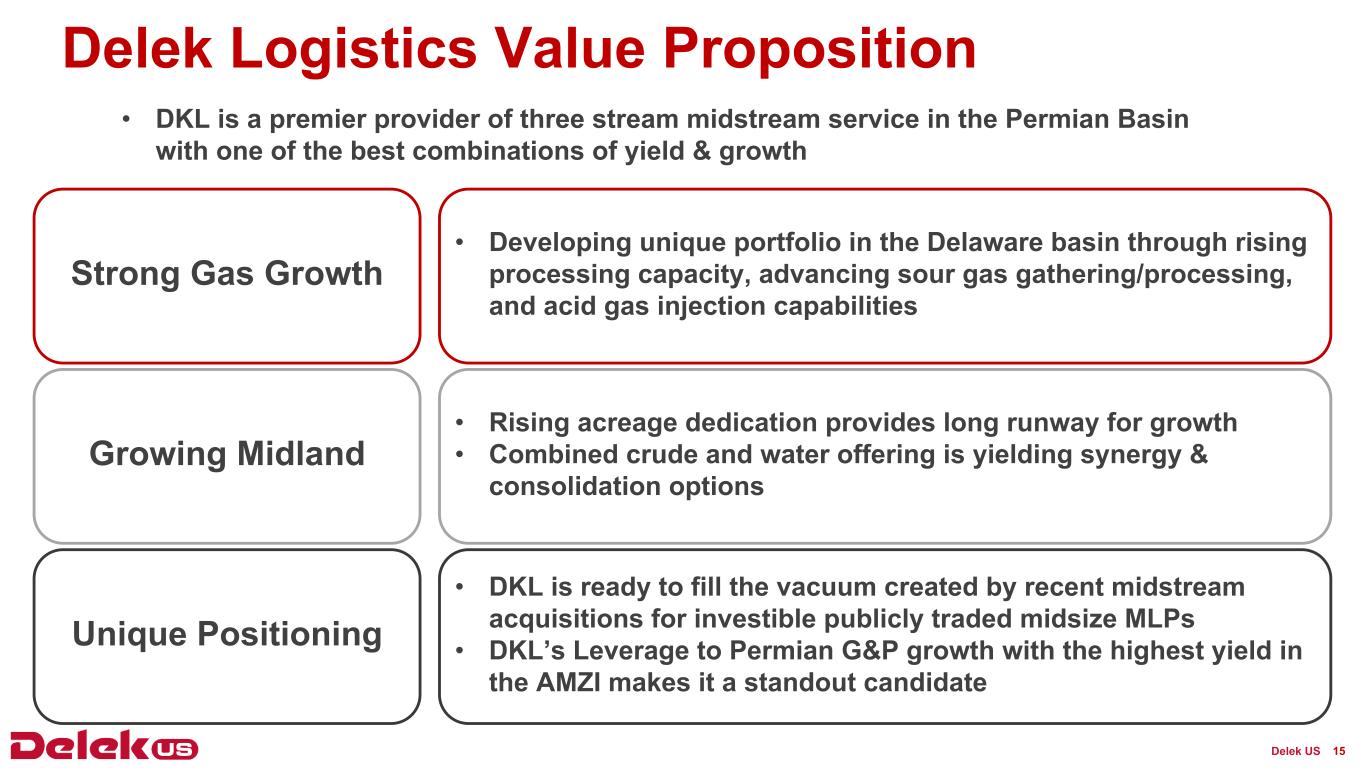
Thank you, Robert. Good morning, and thank you for joining us today. 2025 was a transformational year for DELEC. We have made progress on all fronts, including improving the free cash flow profile of the company and increasing the economic separation between DK and DKL. The year also concludes with a strong fourth quarter results. In Q4 2025, excluding SRE, DELEC reported an adjusted EPS of $0.44 and adjusted EBITDA of approximately $226 million. These results highlight the accelerating momentum at DELEC and the stability of our strategy. Now, I will cover some of the achievements in 2025 in detail. Starting with EOP, I am proud of how we have created a culture of continuous improvement through our enterprise optimization plan. EOP drove substantial value toward the year with a strong execution and measurable progress across all business units. As a result of continued success, we are once again raising our enterprise optimization plan target to at least 200 million dollars on an annual run rate basis our sum of the parts initiative continue to advance 2026 is expected to have highest economic separation between dk and dkl 2025 was the record year for dkl with approximately 536 million dollars in adjusted EBITDA DKL continues to build on its premier position in the Permanent Basin to its full sweep of service and a strong organic growth. Continuing the momentum, DKL today announced its 2026 EBITDA guidance to be in the range of $520 to $560 million. DKL is close to the finish line on its industry-leading comprehensive sour gas solution, including gathering, treatment, processing, and acid-gas injection, providing market access for residue gas and NGLs. These capabilities will provide DKL the ability to fully capitalize on its growth opportunity in the Dollar Basin and maintain its best-in-class EBITDA growth and yield. In 2026, on a performer basis with continued growth in third-party cash flow, we expected the D.K.L. third-party EBITDA to exceed 80%. Achieving this level of economic separation has been cornerstone of our sum-of-the-part strategy. We are taking additional action to ensure the strength of D.K.L. third-party midstream service are fully reflected in the share price and unit price. As I always do, I will now give an update on our key long-term priorities. First, safe and reliable operations. We had a strong operational quarter in our refining system with solid performance from our four refineries. At Big Spring, our first quarter 2026 planned turnaround is progressing well and remains on track. the focus of this turnaround is to further enhance reliability and operational flexibility positioning the refinery for improved cost structure and margin capture we expect this enhancement to drive meaningful performance improvement once the refinery returns to full operation this is our only planned turnaround in 2026 which sets our refining system up well for the remainder of the year second I would like to add a little more context on our own enterprise optimization plan as a reminder we started EOP with an aim to improve DK cash flow by 80 to 120 million dollars on a run rate basis starting in second half of 2025 as a result of the strong buy-in from the organization we have been able to continue to increase our EOP range we are again increasing our expectation for EOP-related cash flow improvement to at least $200 million annually. During the fourth quarter of 2025, we estimate approximately $50 million of EOP contribution in our P&L. The success of EOP is clearly visible in the performance of Eldorado refinery, supply and marketing results, and G&A. These improvements are here to stay and have set us up for long-term success. I'm confident that DOP will remain a core strength well into the future. As mentioned last quarter, we pursued a proactive strategy to monetize the 2023 and 2024 REINs granted after the EPA cleared the backlog of pending 2019 to 2024 SRE petitions. I'm pleased to announce that we were able to monetize a large portion of our 23 and 24 RINs faster versus our original plan and have been able to use the proceeds to reduce our inventory intermediation agreement. The restructuring of the IAEA will improve our free cash flow generation on the top of EOP by at least $40 million on a yearly basis. We remain actively involved in our effort to get full value for the 2019-2022 RINs for which we were provided in valid relief. Finally, we believe that the current Administration, Senate, Congress, and EPA realize the importance of SREs not only for the refineries which qualify under the program, but also to the local communities they serve. We believe SREs will remain a core part of the current administration's energy policy as it advances its energy dominance agenda. The final piece of our strategy is being shareholders friendly and having a strong balance sheet. During the quarter, we paid approximately $15 million in dividend and bought back approximately $20 million of our shares. Our strong balance sheet, improved reliability, and confidence in EOP enable us to do counter-technical buyback in 2025. I'm proud to continue our strong shareholder return, dividend, and buyback through the cycle. We remain committed to a disciplined and balanced approach to capital allocation and look forward to continue rewarding other shareholders. In closing, thank you for our team for the hard work and dedication to 2025. I'm proud of the progress in DELIC over the last year and look forward to continue this progress in 2026. Now, I will turn the call over to Mark, who will provide additional color on the court.
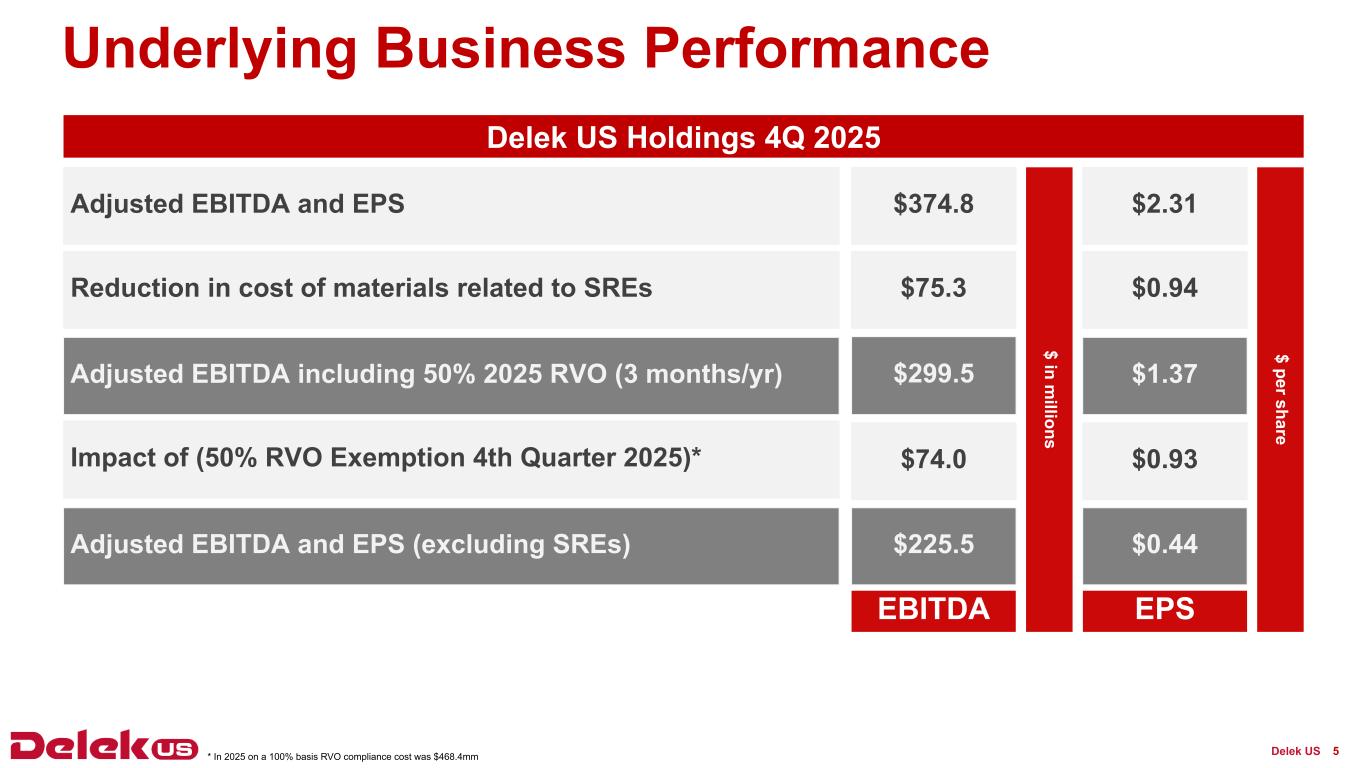
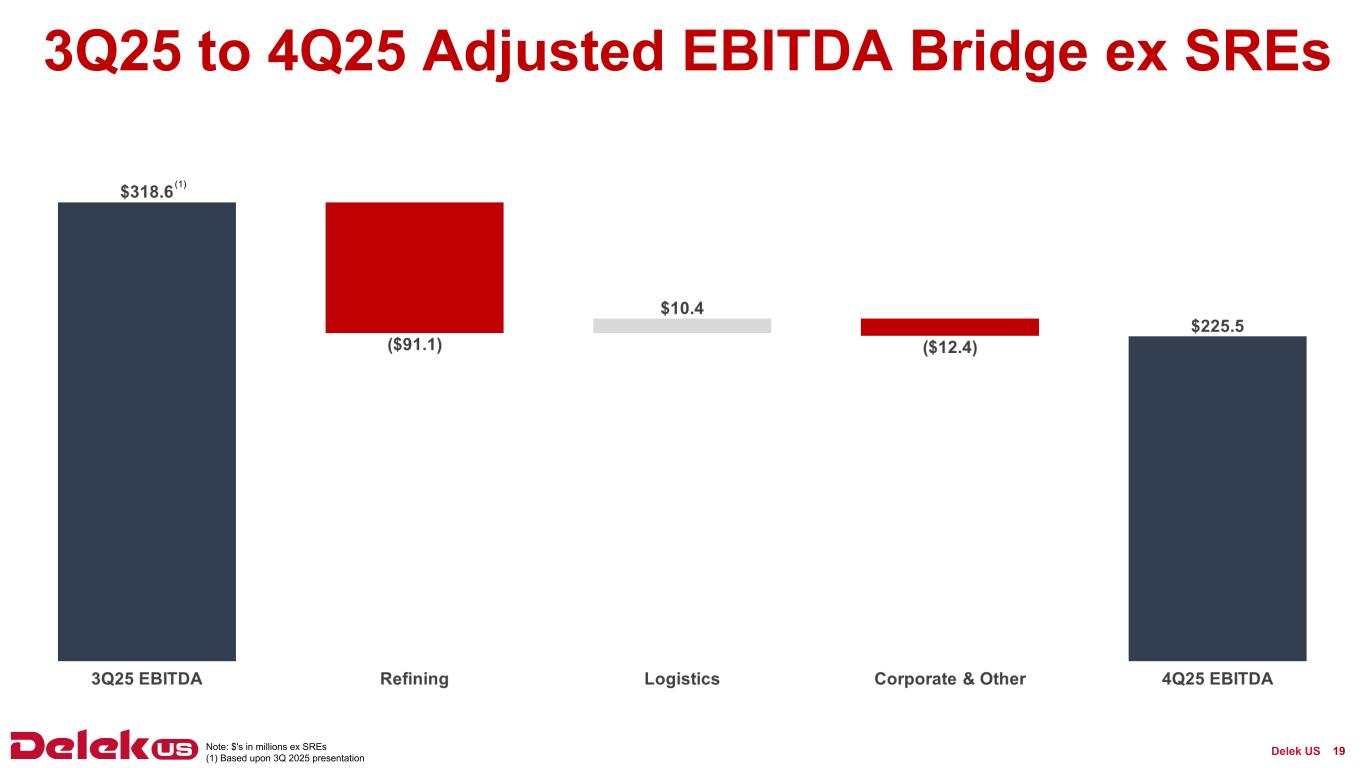
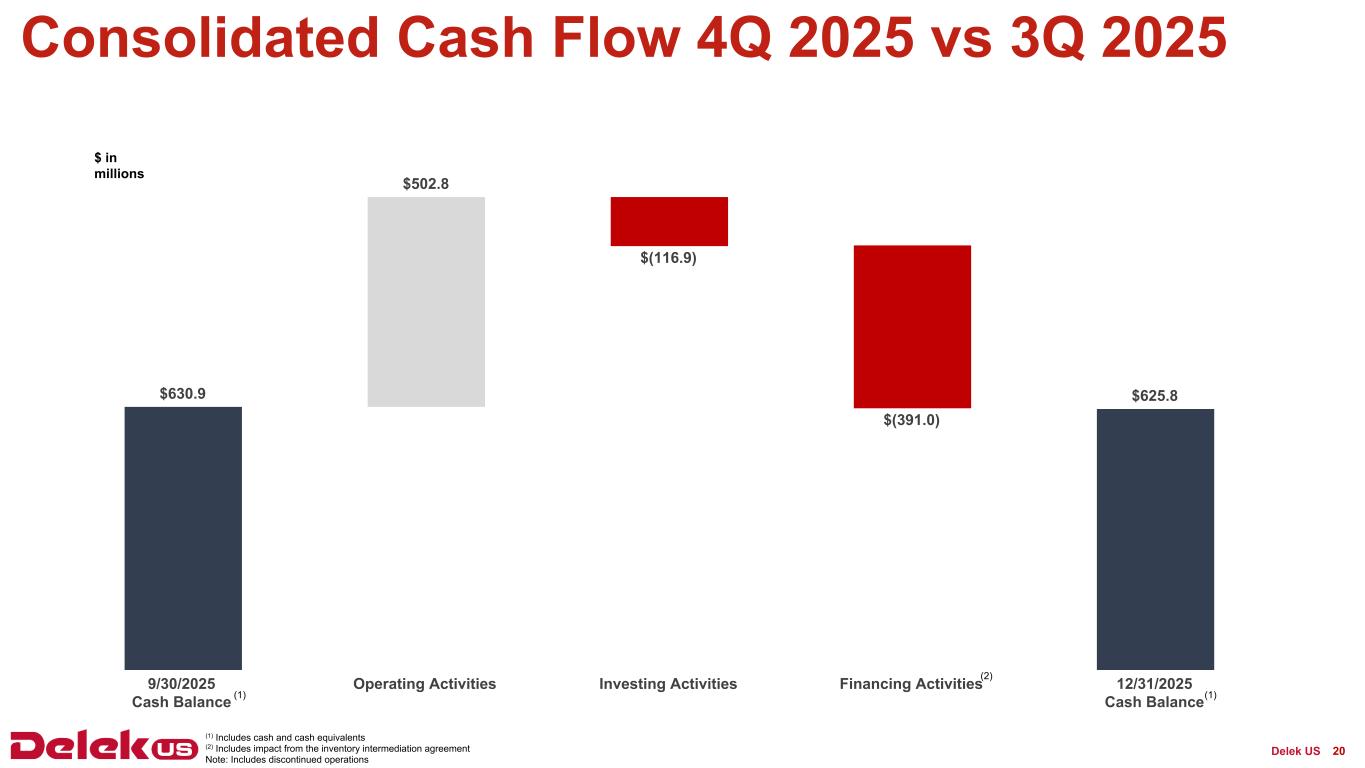
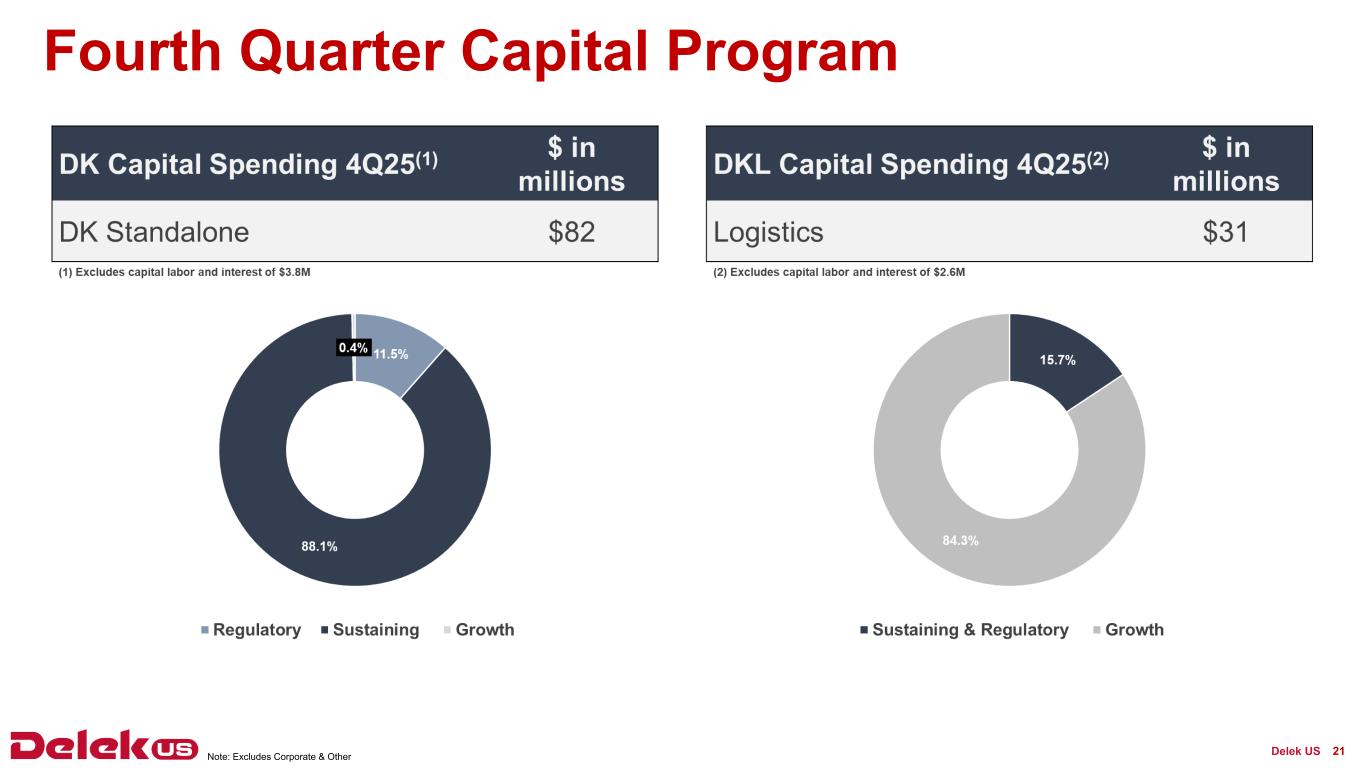
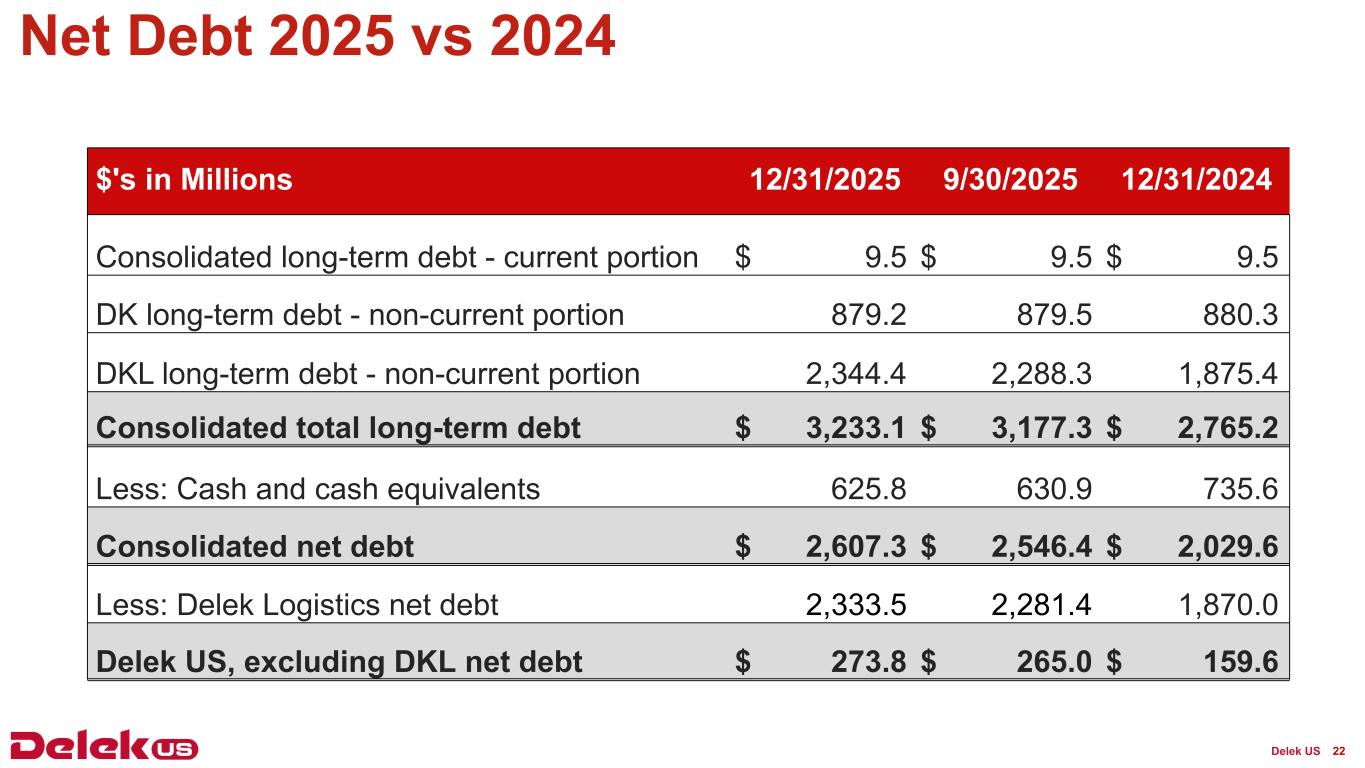
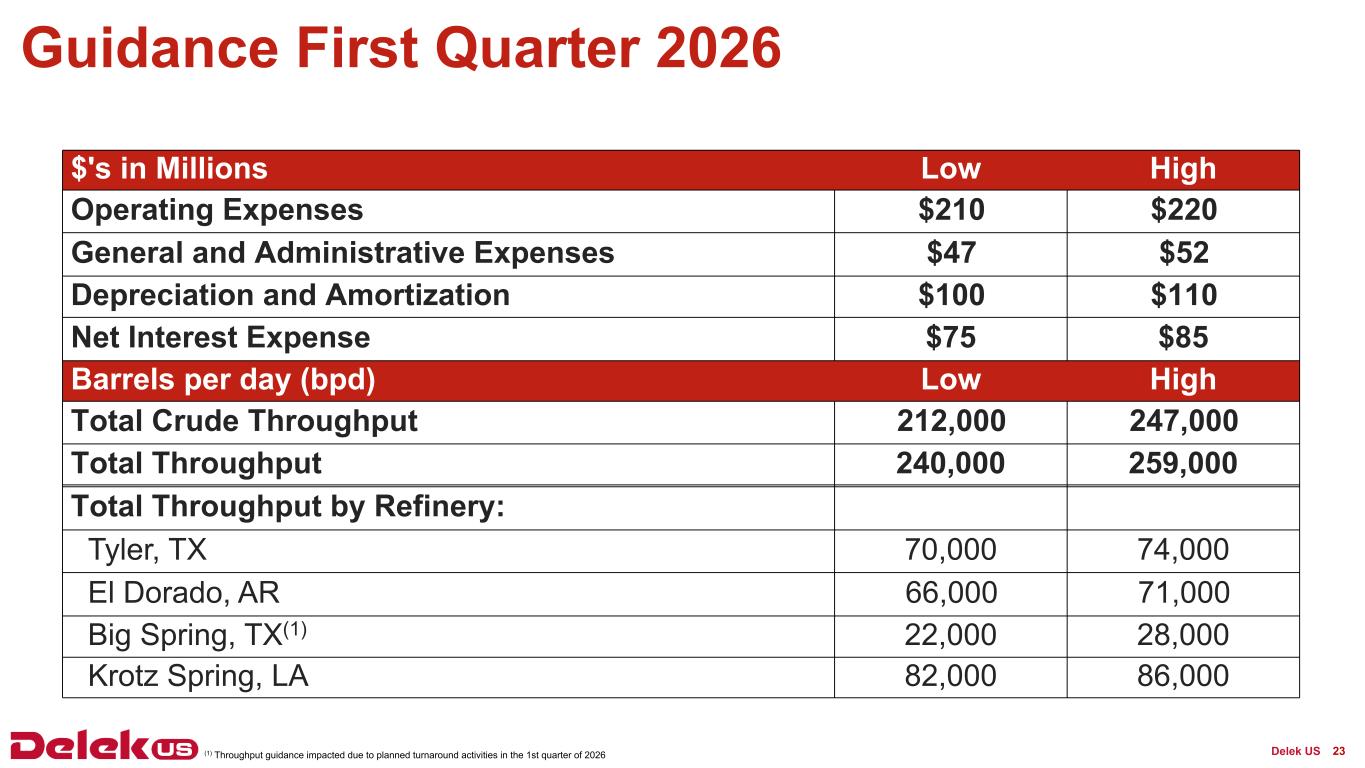
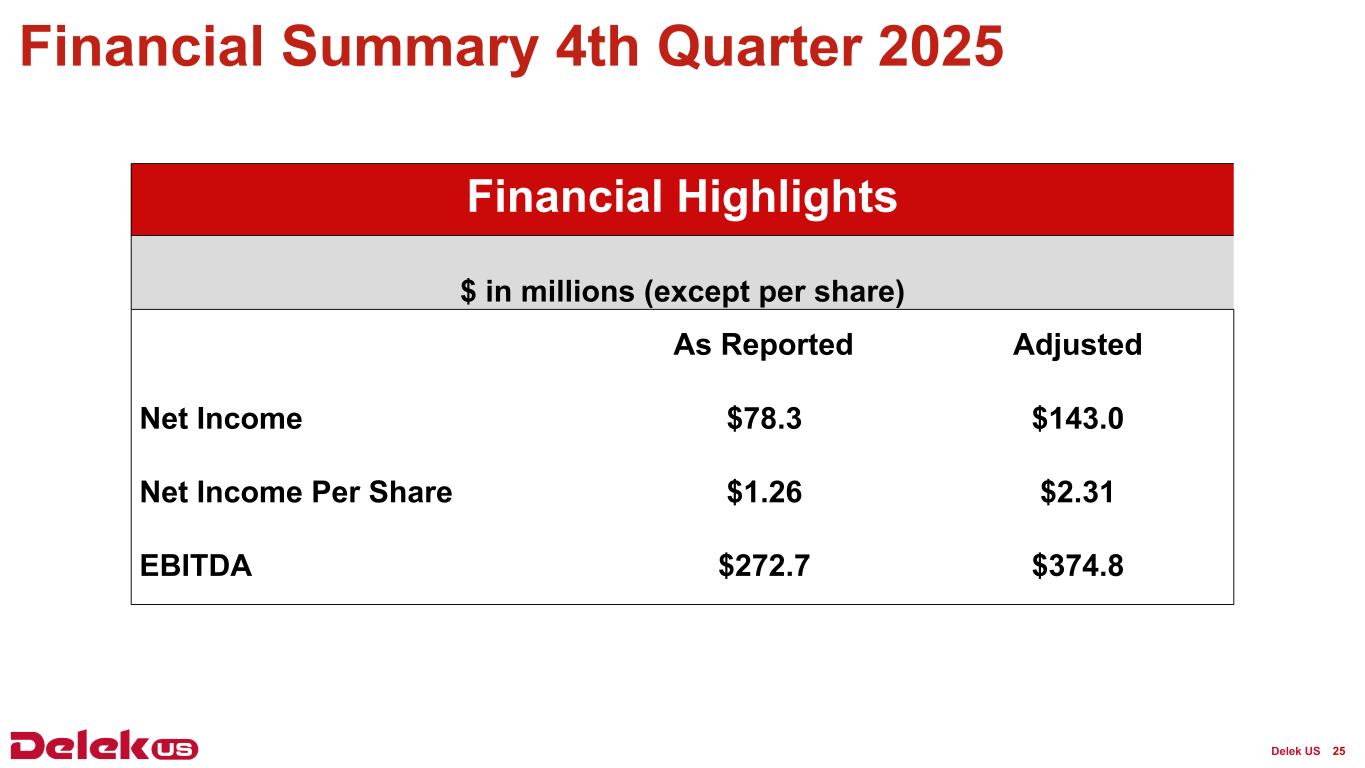
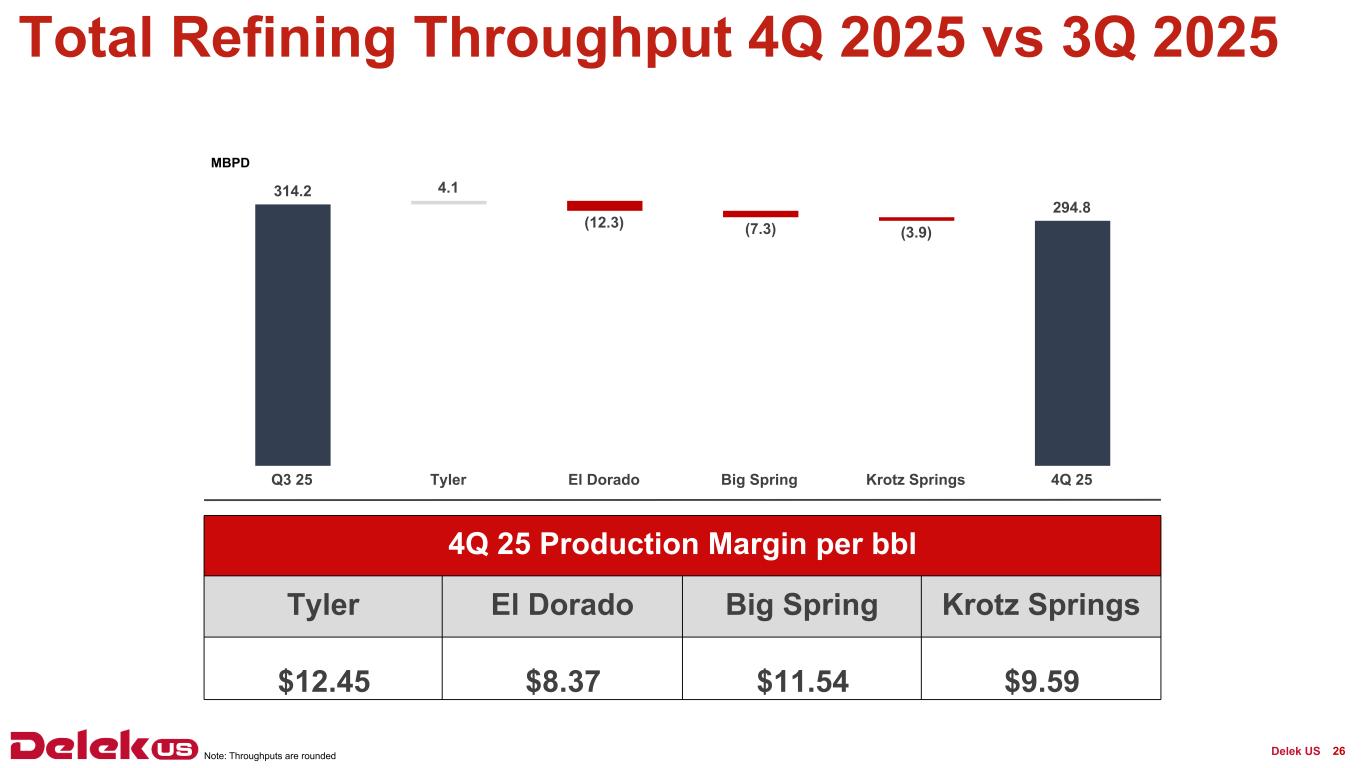
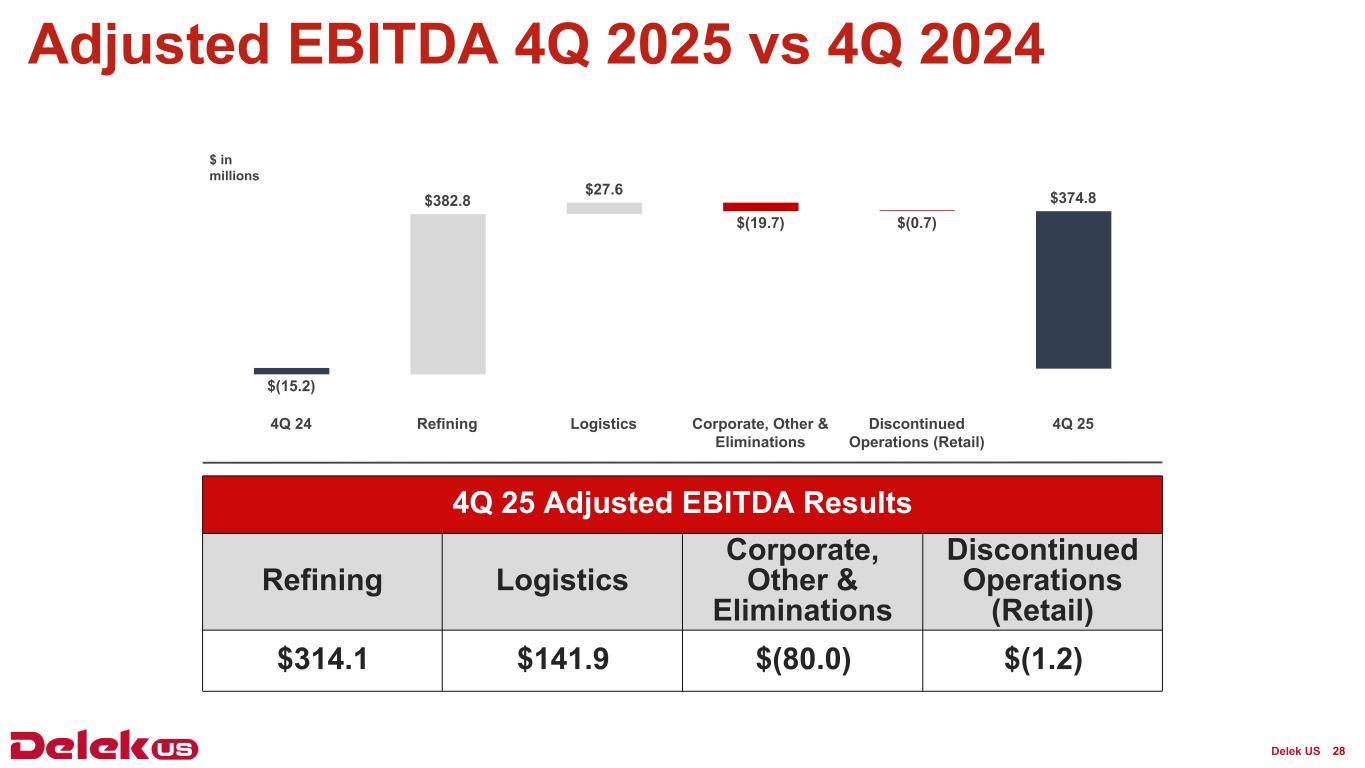
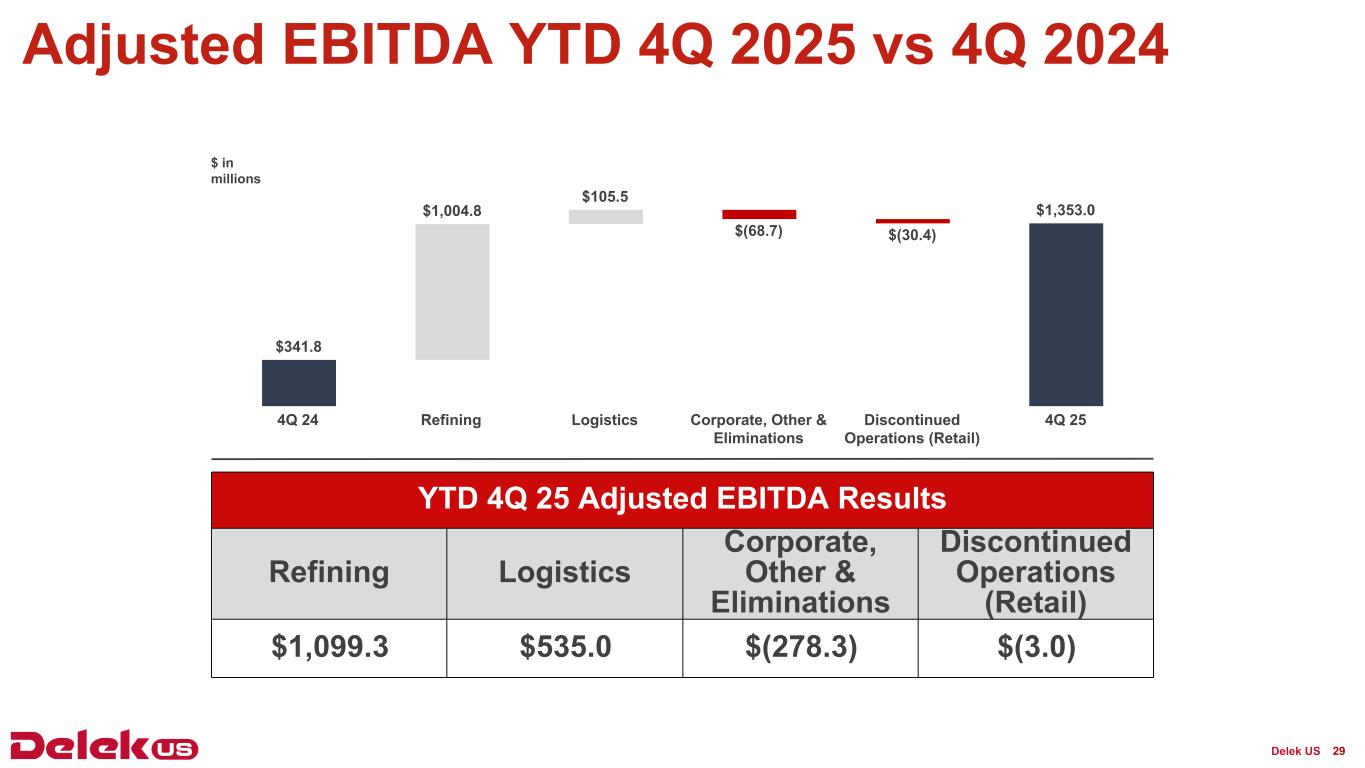
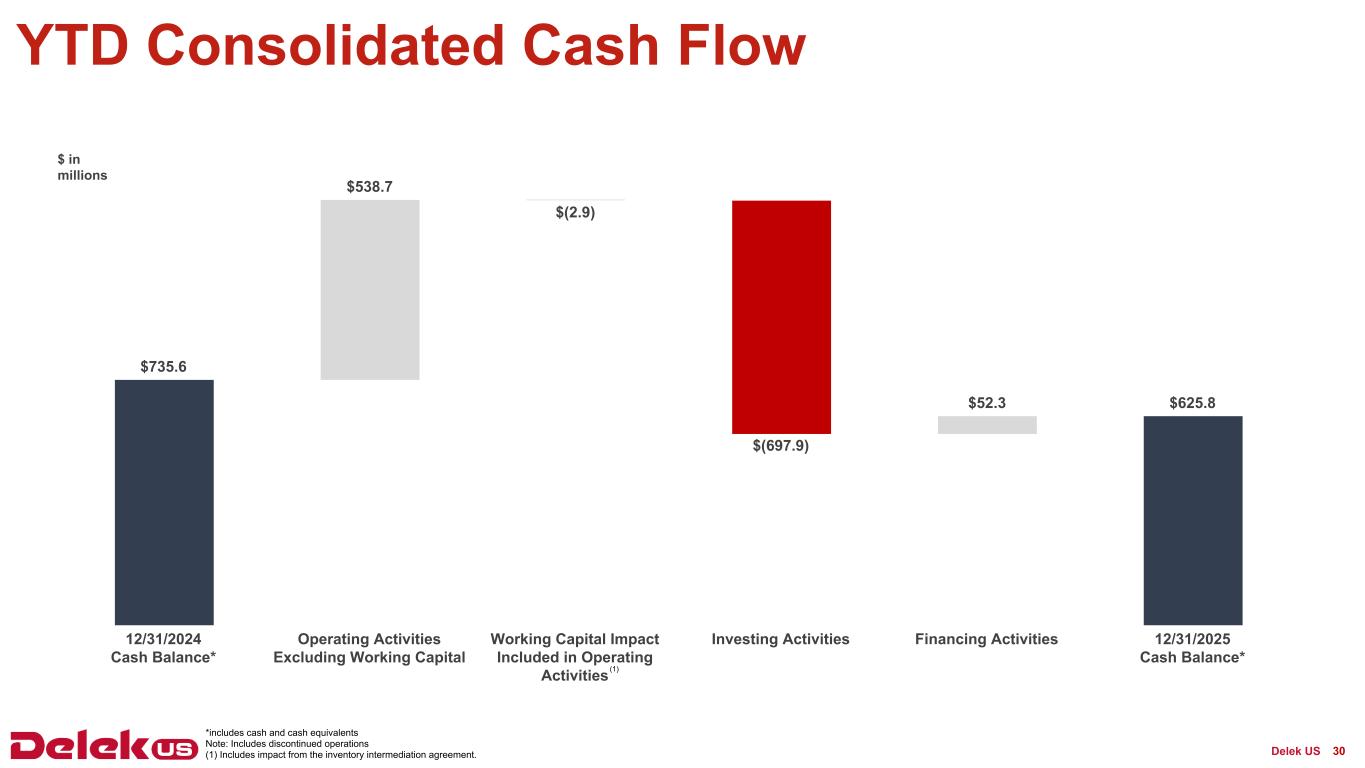
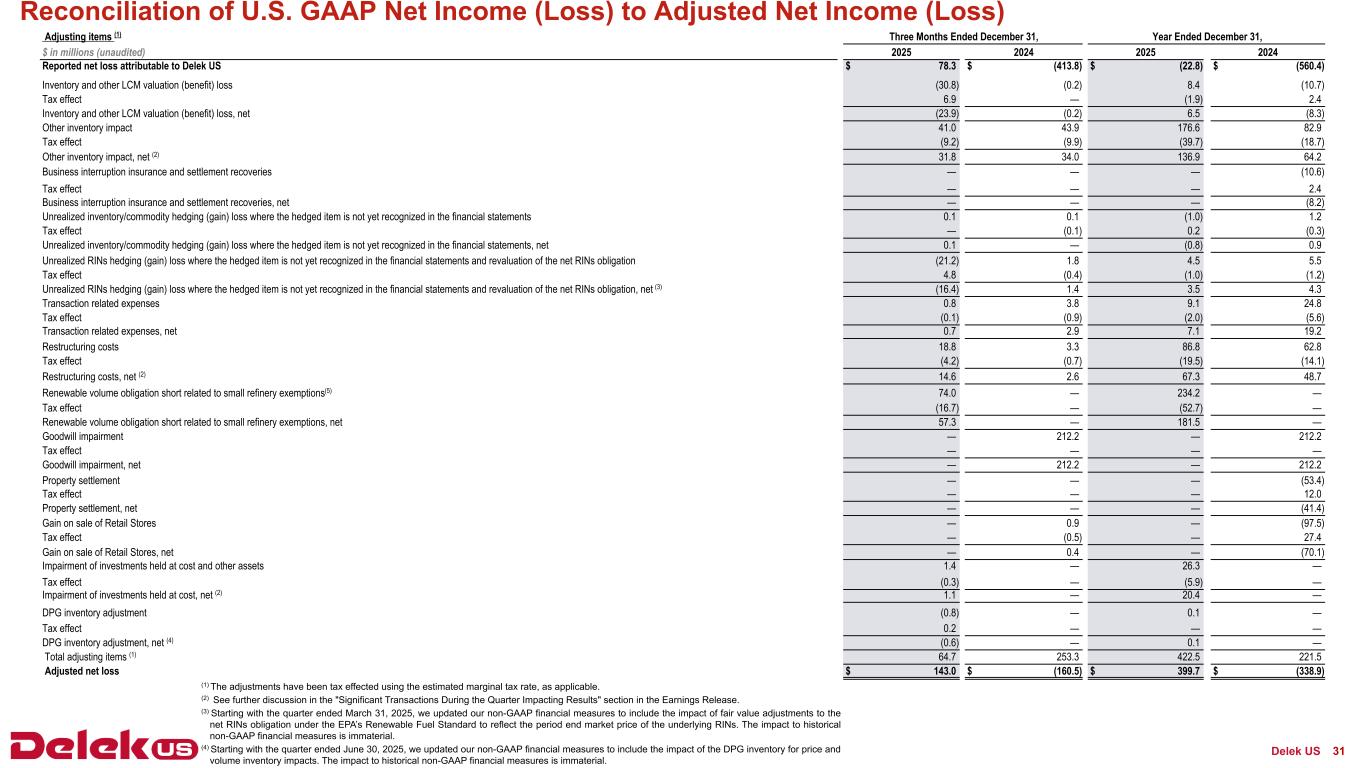
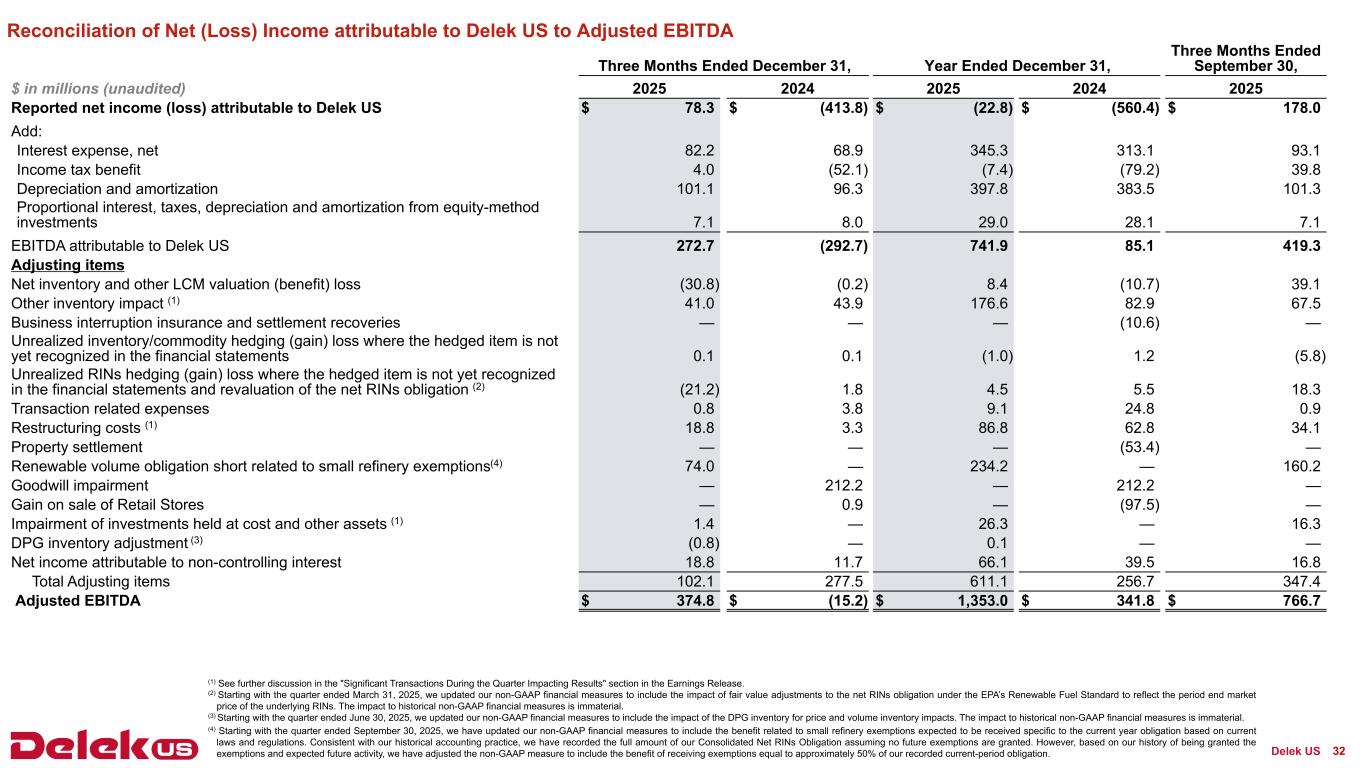
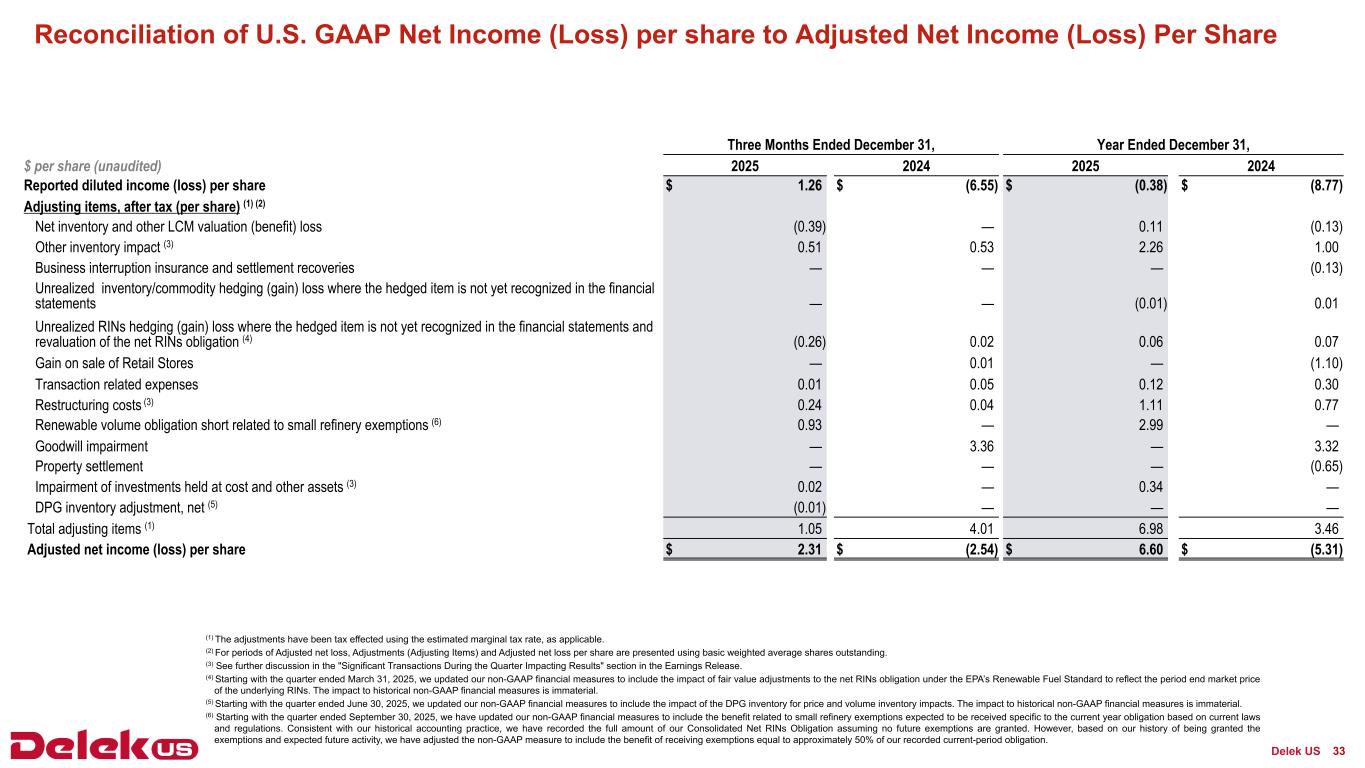
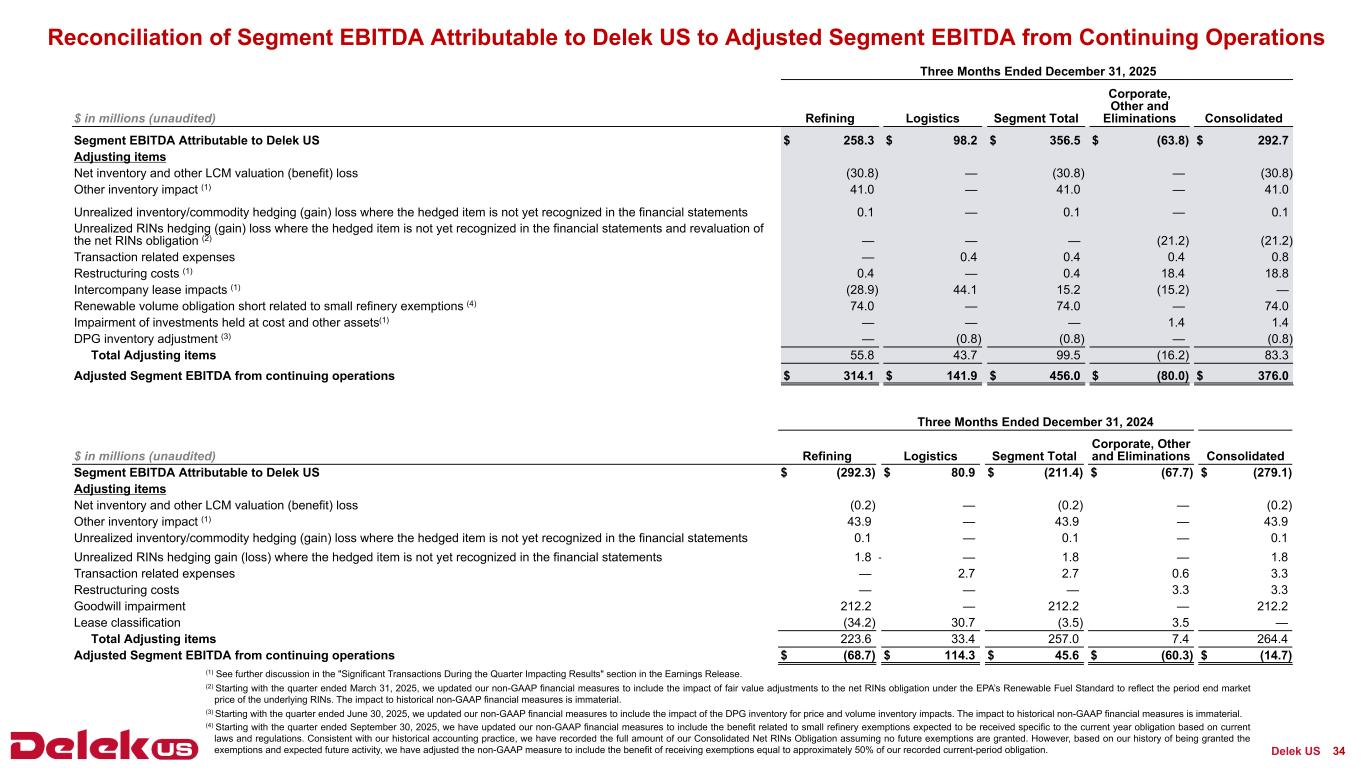
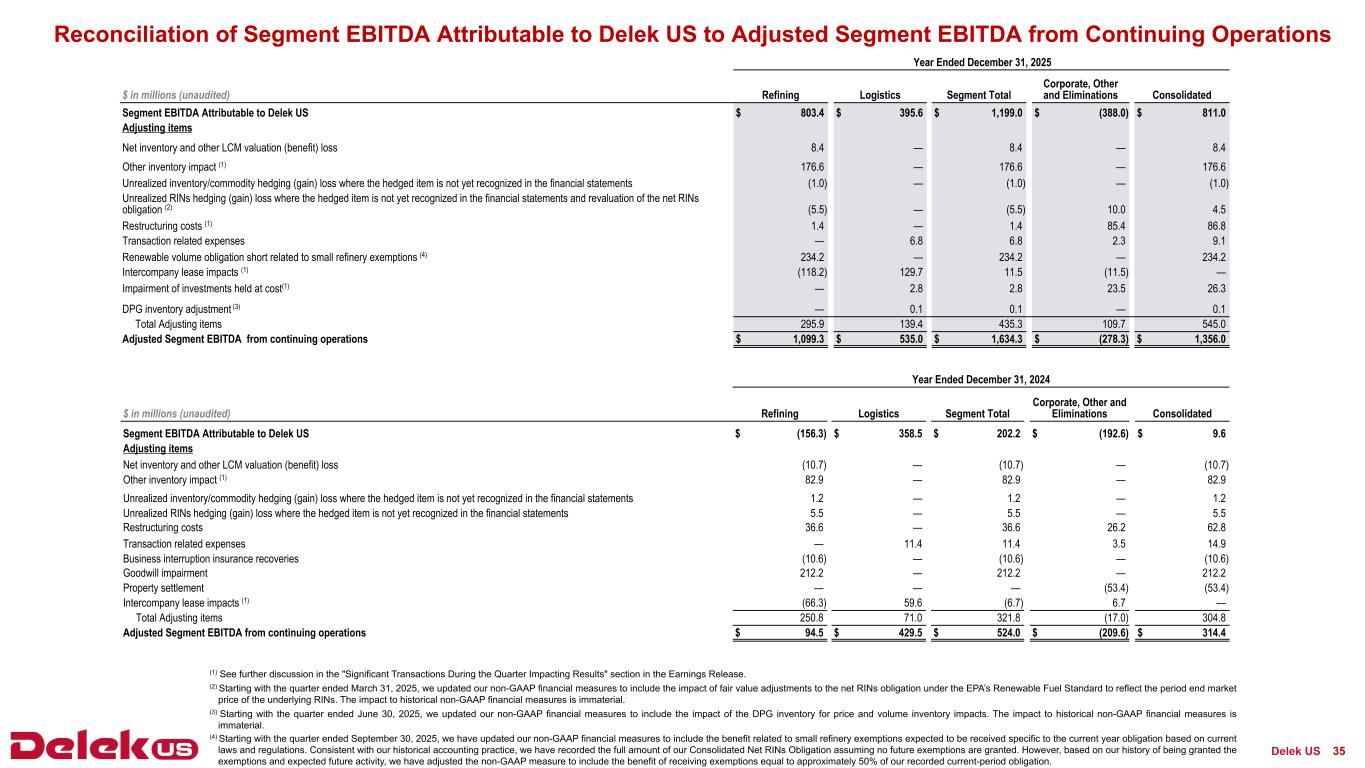
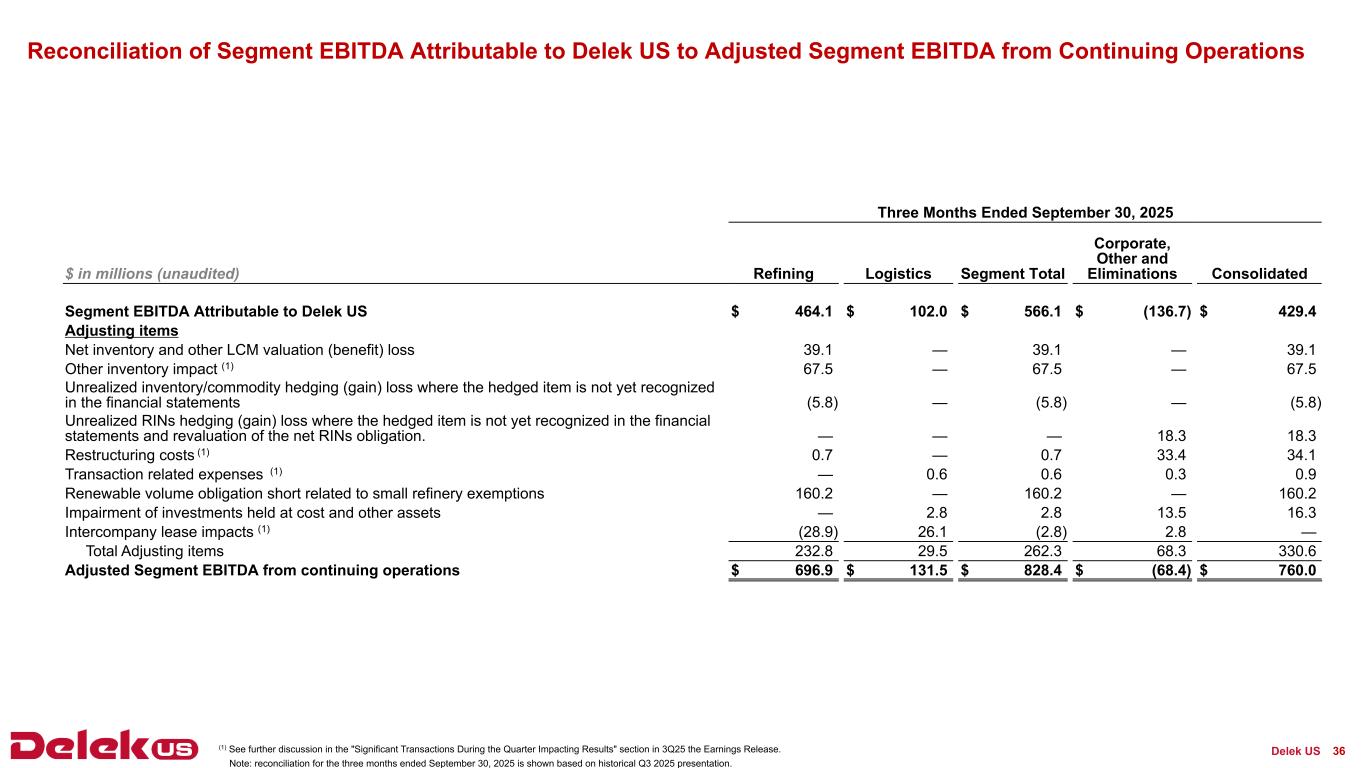
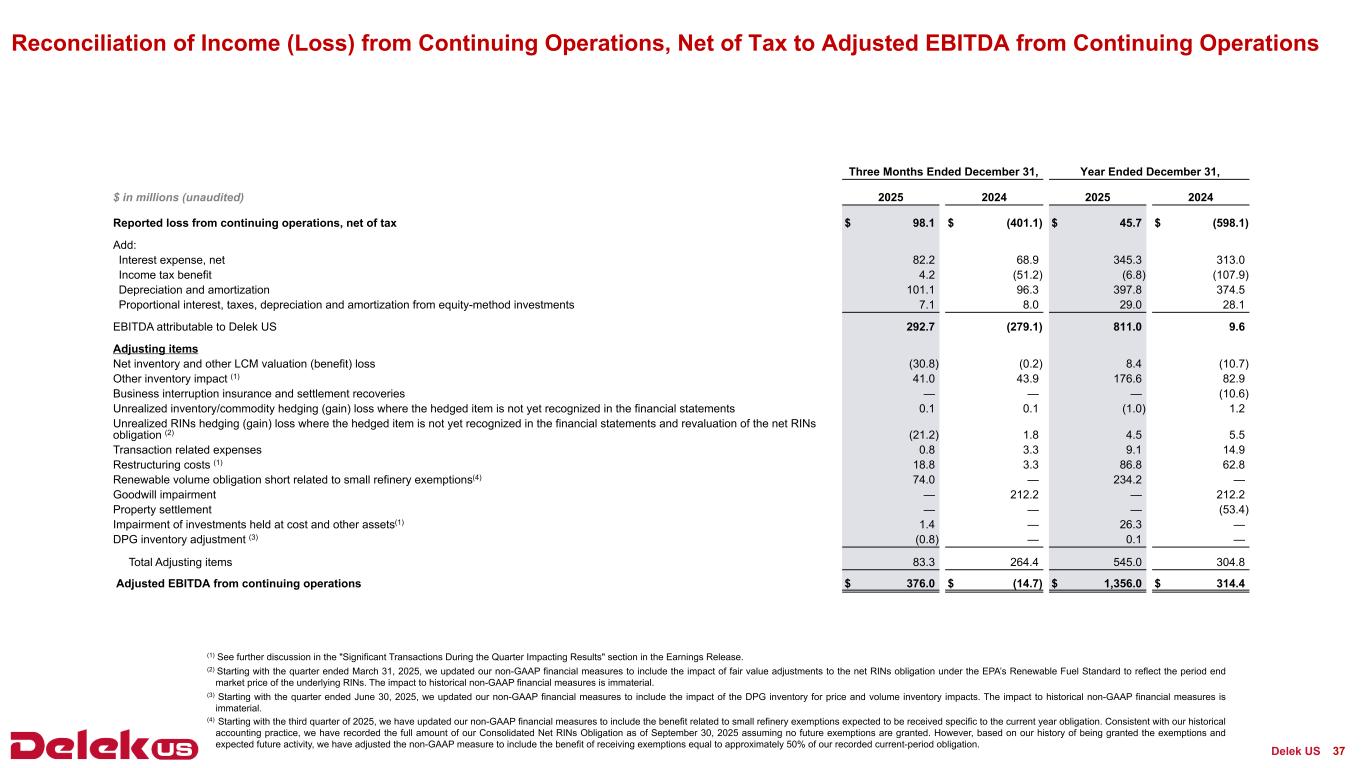
Thank you, Avagol. For the fourth quarter, DELIC had net income of $78 million, or $1.26 per share. Adjusted net income was $143 million, or $2.31 per share, and adjusted EBITDA was approximately $375 million. Moving to slide five, we show the breakout of adjusted EBITDA and adjusted EPS for the fourth quarter. Excluding SREs, adjusted EBITDA and adjusted EPS were approximately $226 million and 44 cents per share, respectively. This removes the reduction in cost of materials of $75 million associated with prior year SREs and the impact of our RVO exemption recognition for the fourth quarter of $74 million. For the full year 2025 excluding SREs, our adjusted EBITDA was approximately $763 million. On slide 19, the breakdown of adjusted EBITDA excluding SREs from the third quarter of 2025 to the fourth quarter shows that there was one main driver for the decrease in EBITDA. The primary driver was in the refining segment, where adjusted EBITDA declined by $91 million, largely due to seasonality. Excluding SREs, supply and marketing contributed approximately $23 million in the quarter. Of that amount, approximately $35 million was generated by wholesale marketing. Asphalt contributed a loss of $4.2 million, with the remaining contribution coming from supply. In the logistics segment, we continue to have another strong quarter, delivering approximately $142 million and adjusted EBITDA. Moving to slide 20 to discuss cash flow. Cash flow provided by operations in the fourth quarter was $503 million. This includes our net income for the period adjusted for non-cash items, monetization of SREs, and a net inflow related to changes in working capital of $26 million. When adjusting for working capital and SREs, cash flow from operations was $119 million. This was an improvement of $211 million when compared to the fourth quarter of last year. This improvement was driven by an increase in net margin in the quarter versus last year and the continued success we are having with our enterprise optimization plan. Investing activities of $117 million in the quarter includes approximately $26 million for growth projects primarily at DKL. Financing activities of $391 million includes approximately $380 million dollars related to the pay down of our inventory intermediation agreement and associated inventory financing, which will result in at least a 40 million dollar reduction in annual interest expense. 20 million dollars in share repurchases, approximately 15 million dollars in dividend payments, and approximately 22 million dollars in decaled distribution payments to public unit holders. On slide 21, we outline our fourth quarter capital spending. with $82 million invested at DELEC standalone and $31 million at DKL, largely for growth projects. Our net debt position is broken out between DELEC and DELEC Logistics on slide 22. Excluding DELEC Logistics, our DELEC standalone net debt remained largely in line with prior quarters. Moving now to slide 23, where we cover first quarter outlook items. Our throughput guidance for the first quarter of 2026 is 70,000 to 74,000 barrels per day at Tyler, 66,000 to 71,000 barrels per day at El Dorado. Due to the planned turnaround, Big Spring will run 22,000 to 28,000 barrels per day, and lastly, Crott Springs will run 82,000 to 86,000 barrels per day. Our implied system throughput target for the first quarter is in the 240 to 259,000 barrels per day range. In addition to throughput guidance, for the first quarter, we expect operating expenses to be between $210 and $220 million. Our guidance for the first quarter incorporates increased operating expenses associated with preparing for winter storm fern gna to be between 47 and 52 million dollars dna is expected to be between 100 and 110 million dollars and net interest expense to be between 75 and 85 million dollars with that we will now open the call for questions thank you the floor is now open for questions if you have a question and have dialed in just simply press star one on your telephone keypad to raise your hand and join the queue if you'd like to withdraw your question simply press star one again if you are called upon to ask a question and are listening via loudspeaker on
Operator
your device please pick up your handset and ensure that your phone is not on mute when asking your question and we do request for today's session that you please limit yourself to one question and one follow-up and again to join the queue just simply press star one your first question comes from the line of doug liggett of wolf research your line is open thank you excuse me Good morning, everyone.
I wonder if I could, it's great to see these SREs showing up, but I wonder if I could just ask a couple of questions relating to what you've already booked. So I guess I'm really looking for the cash inflow and what's remaining still to be recognized for the SREs that you've already, you know, been awarded. And maybe you could, you know, address how you – what the path is to get the pre-2023 SREs recognized. That's my first question. My second question is on the go-forward SRE value, because it's obviously massive. And there's a lot of other things we could talk about, like the EOP and so on today. But the dominant issue, we think, is the value of the 25 to 28 RINs and any risks from legislative changes that you see there. So, could you maybe offer any insight you can on why you continue to risk the 2025 and specifically? Thank you.
Yes, absolutely, Doug. And with your permission, I will try to start with the future. And, again, this is one person's opinion about what's the situation exactly. But when we are talking about the future, first of all, we need to understand it's not a delicate topic. It's a way broader topic than that. It's directly impacting close to fourth refineries and indirectly impact to the bed half of our industry. So it's a huge, huge topic. And I want to make it even more clear than that. The whole point of SRE is disproportionate economic harm. Disproportionate economic harm. And the essence of the law behind it is to maintain high-paying jobs, to support local communities, and to be able to have affordable fuel for those communities. So it's very, very, very, very important. SRE and small refineries are critical to meet the energy dominance policy of energy, critical in our mind, and are here to stay. About 2019 to 2022, you asked that as well, I want to say something that relief and eligibility are coming together. So, we're obviously eligible for those SREs, but we got an invalid RINs, there is an acronym for those RINs lately, it's a zombie RINs, that's what the people just call them. And since those twins of relief and eligibility coming together, we believe in our case around that, and we believe that we get full value for what we already pay. So, Mark, why don't you touch the proceed?
Avagol and Doug. I appreciate the question. And as Avagol mentioned in his prepared remarks, we're extremely excited and proud of the progress we made during the quarter. You know, we saw an opportunity during the quarter to restructure and pay down our inventory intermediation agreement, and our team did a great job. And they were actually able to monetize a vast majority of the RENs from our prior year SREs from 2023-2024, you know, that $400 million that we mentioned on last quarter's call, much earlier than our original estimate of six to nine months, raising approximately $360 million during the fourth quarter. And at the end of the quarter, near the very end, we used these proceeds and available cash to pay down approximately $380 million under the IA and associated inventory financing, which was a large portion of what we actually had outstanding under the program. And these activities are going to reduce our annual interest expense associated with the IA by at least $40 million. This further enhances our free cash flow generation, and as Avigal also mentioned in his prepared remarks, this is on top of and beyond everything that we've discussed to date with regards to our EOP initiatives.
And Doug, just to – So, Avigal. Doug, one more thing. Go ahead, Mark. Yeah, I just wanted to add to what Mark and Avigal just talked about, and I think you were mentioning and you're trying to touch upon this point about, you know, whether some of this value is reflected in our stock price or not. But if you look at just on a mid-cycle basis, pre-inventory intermediation agreement restructuring, we would have made $150 million of free cash flow. And Mark just talked about, you know, another $40 million on top of that. And if you take that $1.190 million of value at 10% free cash flow, that's $32 a share. And if you look at our value of DTL, that's another $32 a share, so that's at least $65 a share that's missing, and, you know, that's got nothing to do with SREs at all. So, you know, we definitely agree with you that there's a lot of value that's still, you know, not reflected in our shares. And to answer one last piece of your question, yes, there's some more left beyond the monetization that we have done for 2023 and 2024 rents, still left to be, which we expect to be monetizing in the first half of 2026, most likely in the first quarter.
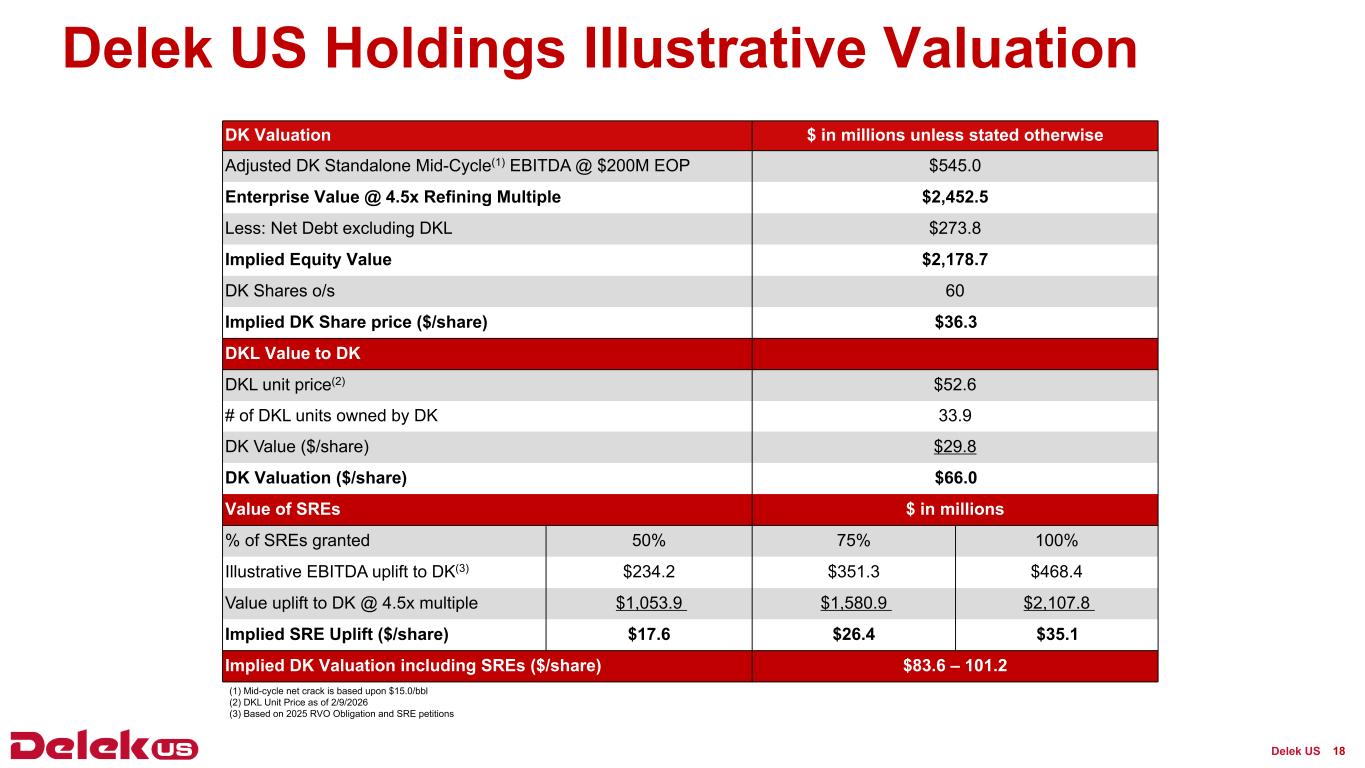
Guys, I don't want to hog the question here, but I want to make sure you understood my question about the forward. Slide 18, you're showing a range of 50% to 100%, 468 million on the 100% basis. But you're also getting a guidance that all four refineries are going to be under 75,000 pounds a day. So why should we risk that number in 25 or for that matter, 26 through 28?
Yeah, I think, Doug, again, a very good question, and I just want to make sure that this point about disproportionate economic harm comes across. Like, you know, you're absolutely right. So these rents are not a windfall, right? So, you know, you'll be the way if you are a refiner like us who stays in compliance, you pay for these rents, and then these rents, the cost of these rents are returned to you a year later. So we cannot decide for the EPA. The EPA will decide, you know, how they will rule upon these petitions, but, you know, so far all we can say that EPA has done a good job in clearing the backlog that was created from 2019 to 2024, and they have been very good in creating a forward-looking guidance So we just expect them to continue with this good work and we'll see what happens as far as our 2025 petitions are concerned on a go-forward basis. For us, we just wanted you to have the $468.4 million RBO obligation on a 2025 basis, and that's what we have provided. What percentage of that is approved, that's an EPS hand.
I'll pass it back. Thanks for the clarification.
Operator
Your next question comes from the line of Paul Ching of Scotiabank. Your line is open.
Hey, guys. Good morning. Hi, Paul. Yes, a very good quarter. Eric, just curious, what's left in the consolidation of the DKL in terms of timeline, and also ultimately what is the ownership that you think you need or you want to have in DKL? and second question is that in the big spring refinery you're going to have a full pan turn around currently going so what initiative other than the normal turn around that you are taking that will lead to the improvement of the performance going forward what other than say the normal full pan turn around
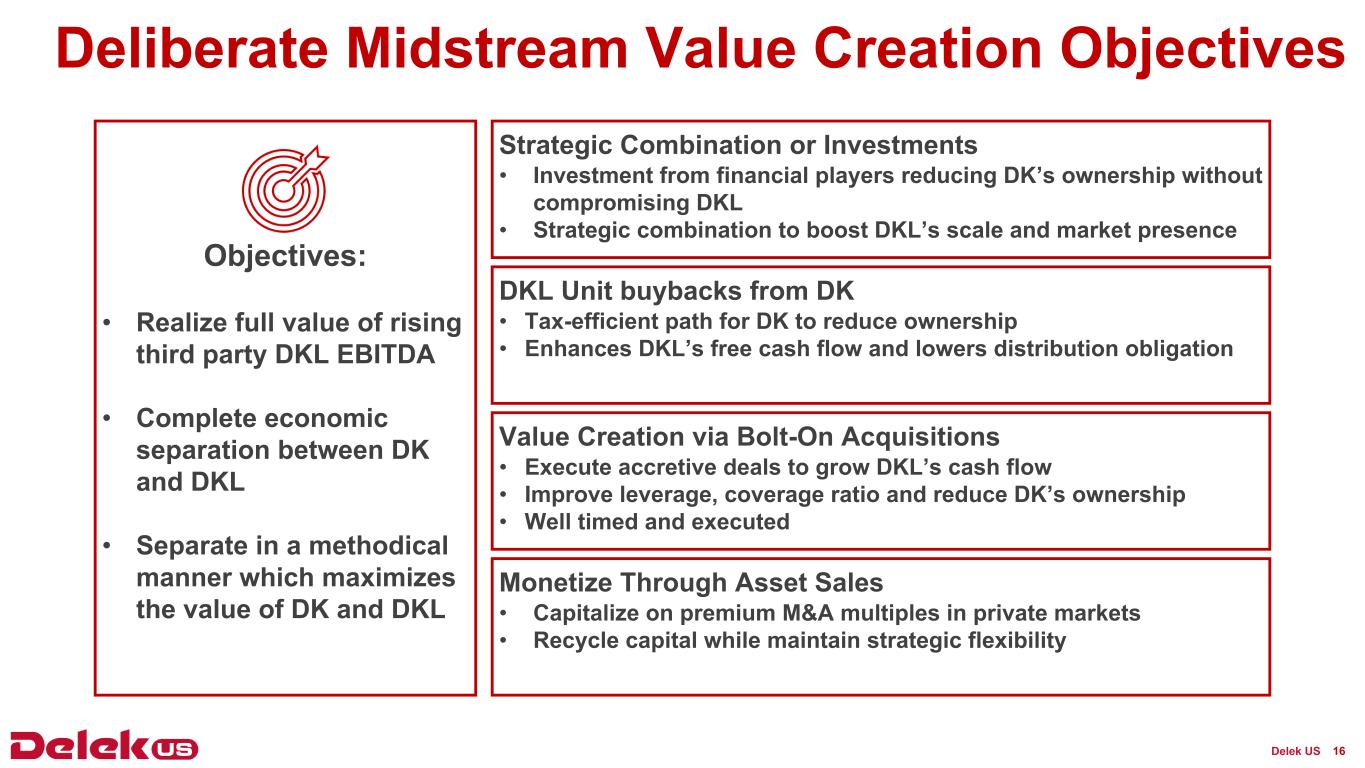
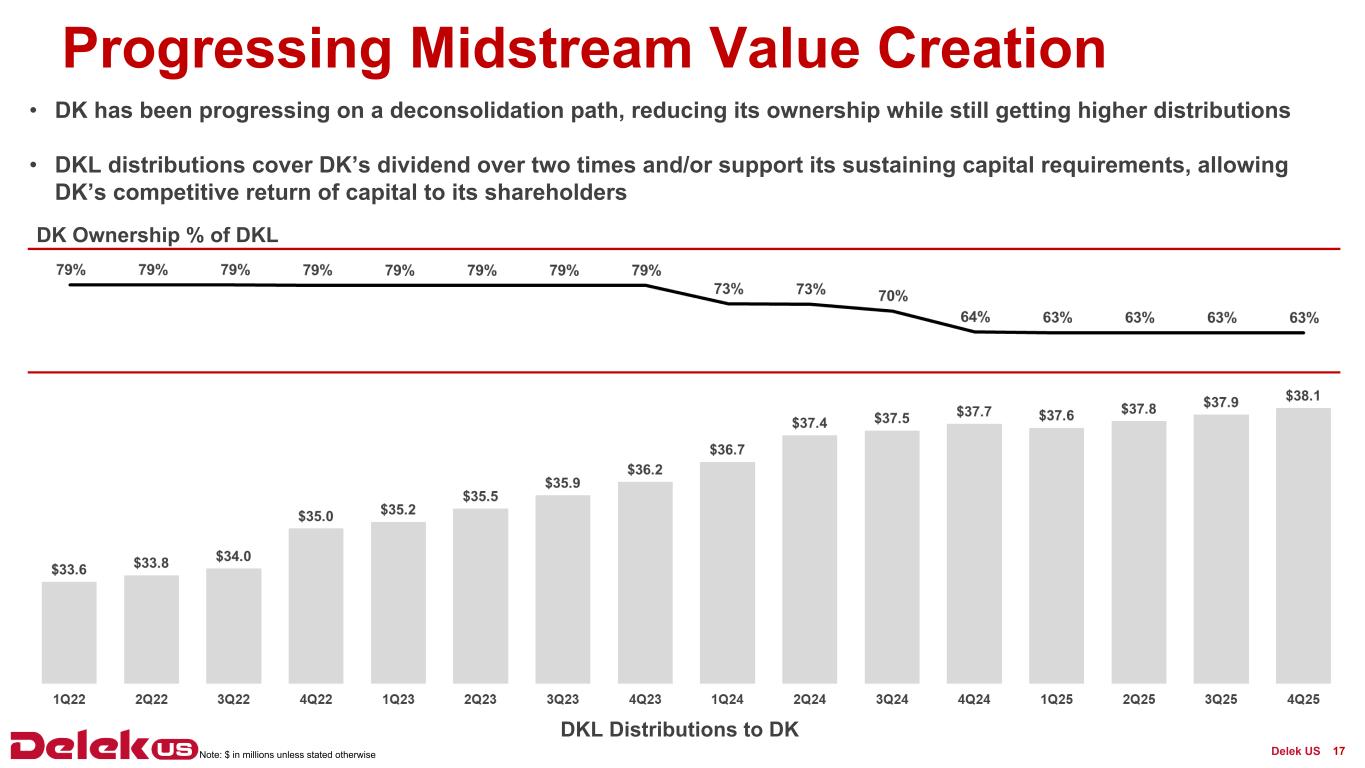
that you typically would do every four or five years what else are you doing in this turn around thank you yeah thank you for with your permission I would start with a bigger discussion about the some of the parts and the consolidation and all of the topic so I want to make sure that the point coming across very very clearly the whole point of some of the part is to make sure that the value of our business the business that we are building is fully reflected in the unit That's the objective. Obviously we have done tremendous amount of work in the last 18 months around that it's very visible to the market. We have sold retail in a product you liked. We have done two acquisitions of a company before the market realized what the value We probably bought it around half of the market versus what it is today. We have done a build a gas plant in a very, very good location with very good capabilities and develop those business very, very nicely, and we are very proud of that. Obviously, we reduced our ownership from close to 80 percent to around 60 percent now while doing that increased distribution. So we checked many, many boxes around creating value for both unit order and shareholder. At that junction, we are working extensively on four paths, and maybe some of them were working together. One is sell the entire assets for the right value, And when I'm saying the entire value, if you're looking on the intrinsic value of which business unit in D.K.L., you get to seven-handle number of the D.K.L. unit. We can always monetize one of the assets of D.K.L. for the right price. We have the free tax between D.K.L. and D.K.L. to allow D.K.L. to buy unit back from D.K.L. and we always can do M&A and reduce our ownership like we have done so far. So, we are walking many angles. I think that there is a tremendous amount of activity that's visible to the market, and you need to remember that the lack of announcement is not lack of work or lack of Stay tuned. Around the big spring, you had another question. So, around the big spring, we are very happy with the team over there. The team, it's also visible in the Q4 numbers, they made a very good progress. And I would focus the BigSpring after the turnaround in four areas, right? One, improve reliability, second, improve our code slate and optimization, and third, improve the product slate. So we are very excited to see how BigSpring is going to perform after turnaround, and let's all stay tuned. Eric, for BigSpring, is there any new technology being introduced or new unit being ads or any things that we should be aware in this full pan turn around no it's a cycle turn around the last set around we've been done in big spring was 2020 so that's on the cycle we are not doing any huge capital projects but we are making sure that those three boxes that I've said are being a very clear the operational and reliability the code slate and the product mix after that and No, I just want to add to what we just said, and Paul, you're asking the right question.
For us, the most important piece about BigSpring is to improve its reliability. And once we improve the reliability, our cost structure is going to improve, and it has been – we've been making great progress in improving its cost structure, and we expect after a turnaround that cost structure will improve even more. And if you look at the product side, that will help with the margin capture as well. So, you know, I think we are very excited about this turnaround, as Avigal just mentioned, and we look forward to updating you about this at our next earnings call.
Operator
Your next question comes from the line of Alexa Petrick of Goldman Sachs. Your line is open.
Hey, good morning, team, and thank you for taking our question. We wanted to ask a follow-up on the cash flow profile. Can you unpack the drivers of the raised cash flow guidance, and then how do we think about potential upside from that number, just given you've raised it a few times?
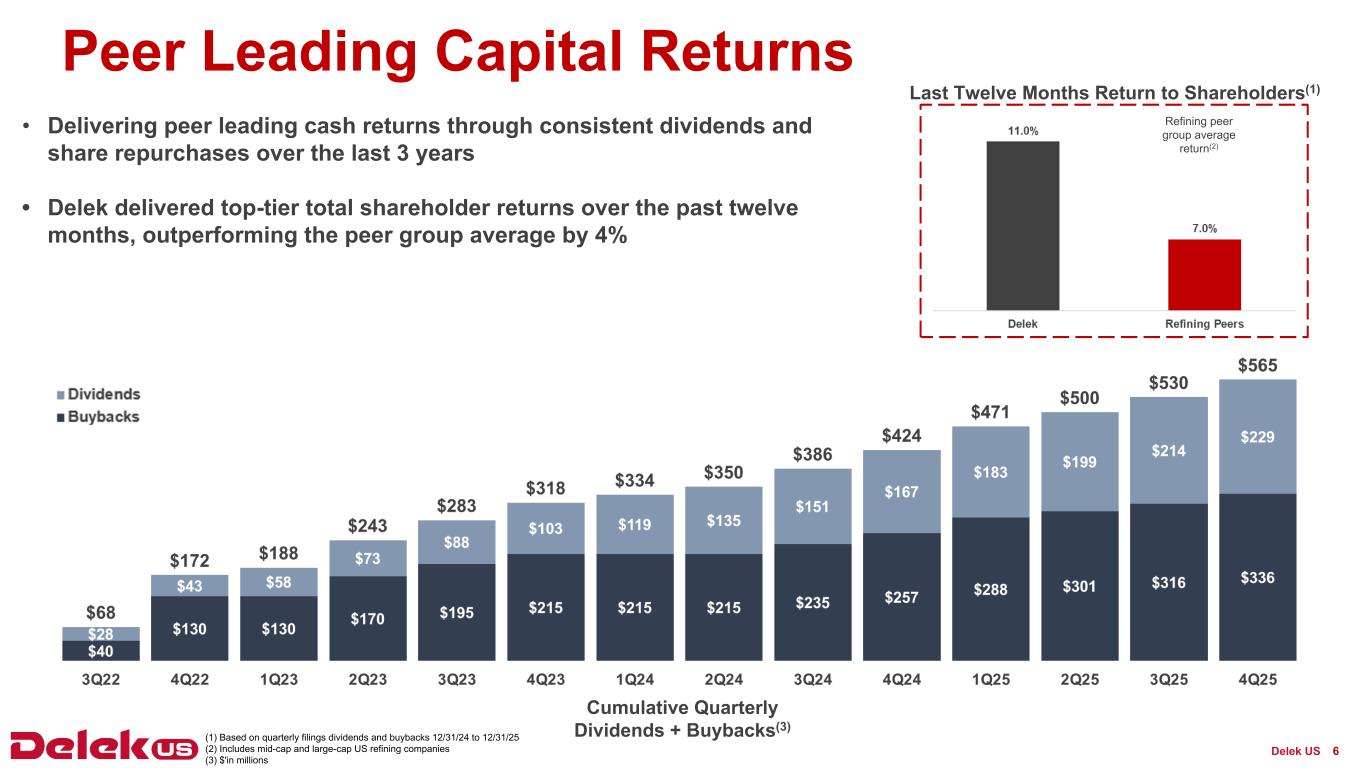
Yeah. So, Alexa, that's a very nice question. I will make a step back and I will give a broader context because I think that the real discussion is EOP because EOP is all about free cash flow. That's the essence of the program, and that's what we got the organization's laser focus EOP, and I want to make it very clear, it's not just projects. It's a lifestyle. It's a language that the organization speaks, and everyone in this company speaks that language, and it's bubbling from bottom-up. So it's very exciting and pleasant to see how it's becoming part of our culture, and it's a cornerstone in our culture, and I'm very proud of that. And if you think about it, when we started a year and a half ago around the UOP, we started with the guidance of around $100 billion. Now, we are saying it's at least $200, so we more than doubled it. And if you look at the restore, it's very rare that the company is able to increase it time over time over time. But I want to tell another thing that you're probably going to be happy to hear, that we are not stopping here. We are not stopping here, and we have a big plan about the future EOP and more to come, and it's going to be in the gross margin, in the GNA, in supply and marketing, in many other many area of the business that we are very excited for so still more to come okay that's helpful and then a follow-up on that you've got EOP SREs and IIA as we think about the the implications of incremental free cash flow how should we think about the capital allocation priorities should we expect you to maybe lean more into buybacks or any thoughts that would be helpful yeah so that's a great question thank you for asking that question we We are very proud of our capital allocation strategy. We said that we're going to maintain dividend through the cycle. We can check the box around that. We said that we're going to do a balanced approach between balance sheet and buyback. We can definitely check the box around that. We did in 2025 counter-technical buyback, and actually our total return to shareholders is higher by 4% than the average of our refining peers. So, our philosophy of capital allocation did not change, and we are very consistent about it. We communicated to investors very clearly, and we always take opportunity to reward investors. So, that's the goal we have, and we'll keep doing it.
Thank you. I'll turn it back.
Operator
Thanks, Alexa. Your next question comes from the line of Jason Gableman of TD Cowan. Your line is open.
Hey, morning. And thanks for taking my questions. I want to ask on the supply line because it's now been two consecutive quarters where that supply and other part of the supply line has been above $50 million. And I know it includes kind of a grab bag of items. So you can just talk about kind of what drove the strength in Fort Q, How much of it was EOP versus any one-time benefits, and how we should think about that sub-line item within the overall supply line moving forward?
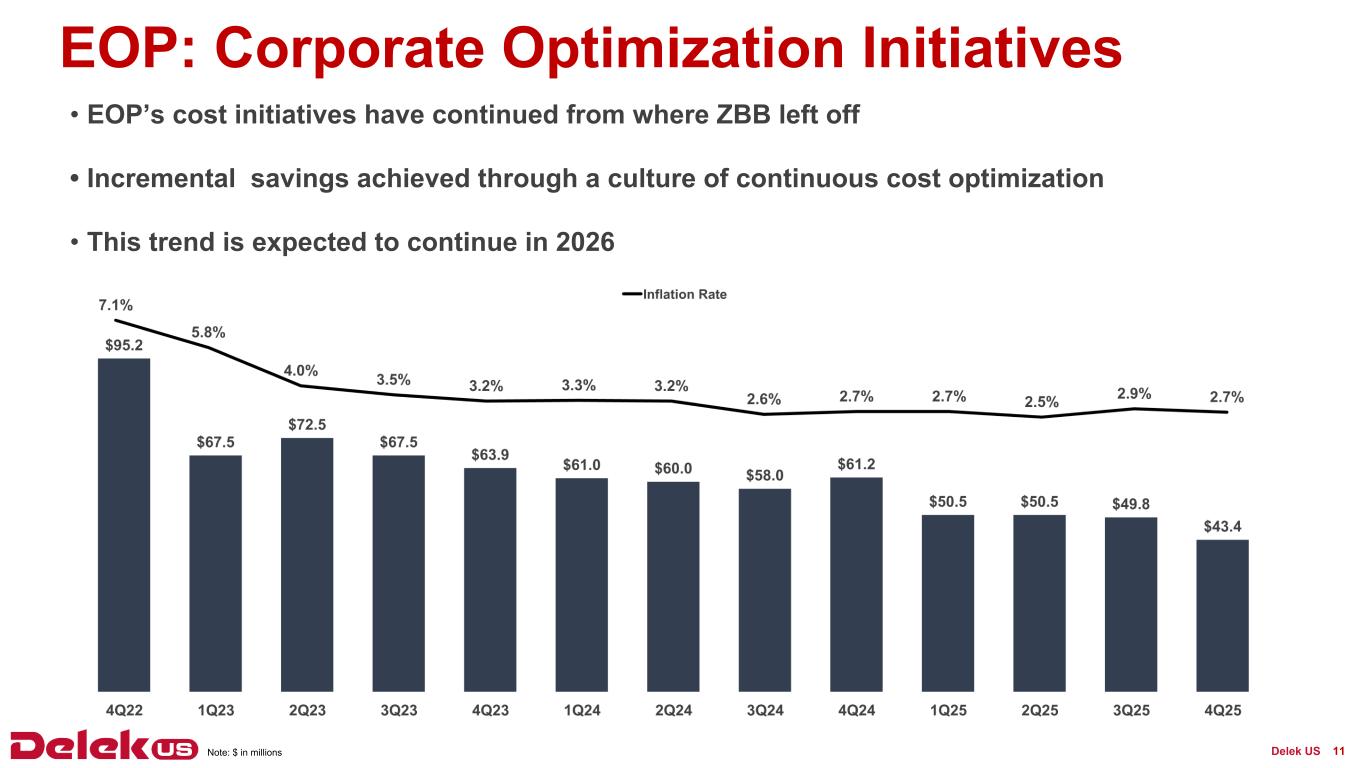
Yeah, absolutely, and thank you for joining our call this morning, we appreciate you. In reality, as I said in my prepared remarks, and you probably listened, it's very visible that the EOP progress in the supply marketing. We see that very, very clearly. We see that in other places. You've seen that in the G&A, basically cutting the cost by close to half, that's what it used to be. You've seen that in El Dorado, we're able to increase, to improve our capture by $2 a barrel on the top of the crack. So great team over there, very proud of the progress. We still see more opportunities over there, and I will let Mohit touch the specific question about DKDS.
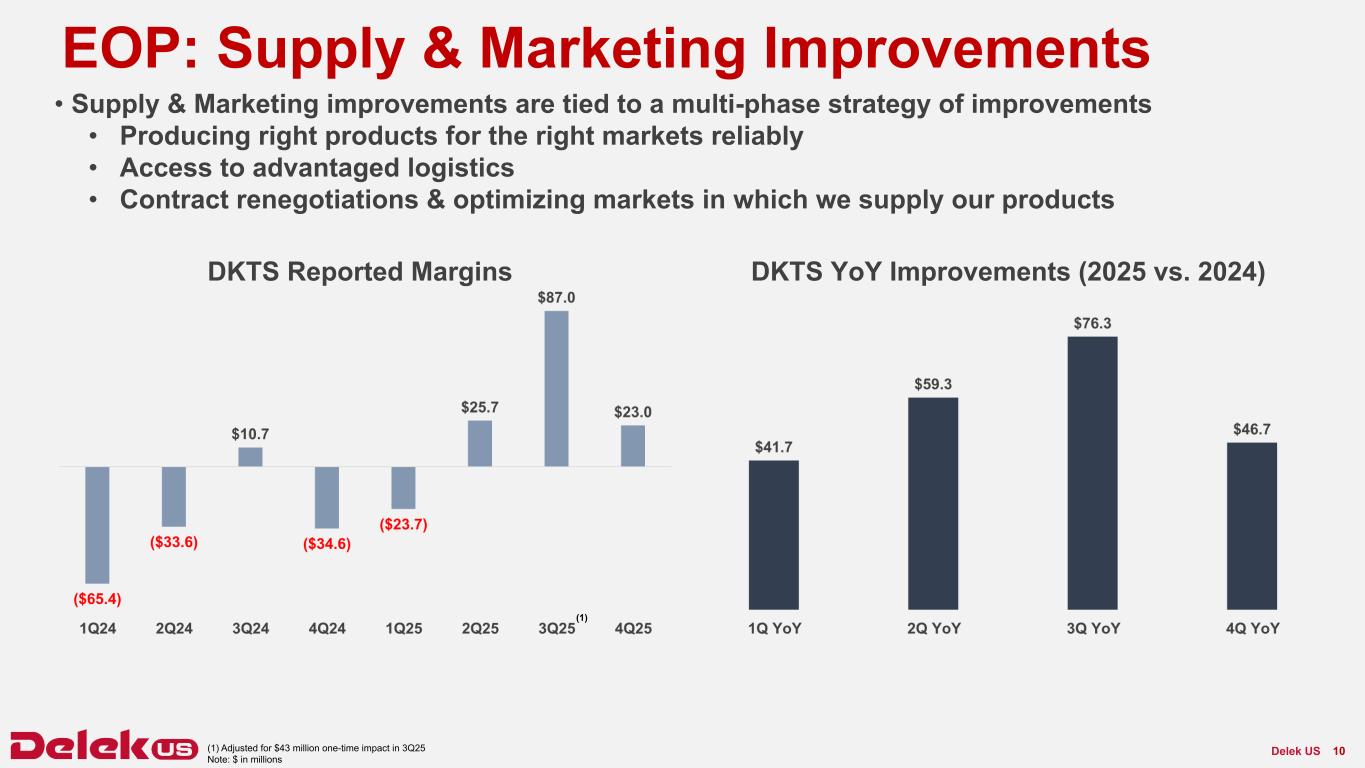
Hey, Jason. Good to hear from you. As far as supply and marketing is concerned, I think I talked about this last quarter as So the two specific businesses which are part of the supply and marketing are wholesale and asphalt, and we're making great progress in both. Especially as it comes to wholesale, we have been improving the business in three phases. The first phase was to have the right products available to supply the markets that we are And second has been contract renegotiations and increased logistics, which has allowed us to access these markets. Currently we are in phase three where we are optimizing the markets we are participating So some markets we are, you know, trying to put more product in and other markets we are exiting. So that's the main reason why we are seeing reduced seasonality in this supply and marketing line item. This will not avoid the seasonality completely, but we are trying to reduce the impact of that seasonality and then market is going to help us as well so if you look at what's happening later this year Magellan is going to bring its pipeline online which is going to clear start letting the group and put more products into bag four and once these West Coast pipelines come online you know those West Coast barrels will be supplied by the group and the mid-continent so the markets also helping us is going to help us not helping us currently but it's us as these pipelines come online so we are very excited about the steps we are taking and we'll take if the market also starts to help us we'll definitely take
that too yeah thanks I appreciate the detail the question was more about not the wholesale or asphalt but the third part of that supply and marketing business which has been I think about 50 million dollars for a couple of consecutive quarters and I was wondering if you think that's a good rate moving forward or or expected to be kind of volatile quarter to quarter yeah Jason so we did call out a forty three million dollar one-time impact for the last quarter that's for 3Q this quarter that line item is more in line with what you know we expect but there would be some volatility in that line item but that's not a reflection of the core business so I just wanted to focus on what our core business is and where most of the improvements are coming and if you want to talk more about it you can take it offline all right great um my follow-up is on dkl and the truth uh the transactions you announced this morning which were uh i think about 85 million dollars um wondering what the ebitda contribution is going to be from those um you know um the structure of the deal between cash and perhaps units, and, you know, why the second part of the deal is closing in October 2027.
Okay. Hassan, what about you want to take it? Yeah, sure. Great question. You know, what we really completed here was furthering the economic separation of the two public companies. DKL now has 82% of their EBITDA on a third-party basis, but what really got accomplished here was DK materially is complete with putting the right assets under the right roof, and really at a high level, these transactions from an EBITDA perspective are not material, and so I think, you know, and I guess the other piece of your question was the timing, and we've kind of laid out the two timing, that's really the phase in the cash flows between the two parties.
Okay. I'll leave it there.
Operator
Your next question comes from the line of Ryan Todd of Piper Sandler. Your line is open.
Good morning and congrats on the result. Maybe just a question. I know you've touched on this in some of the things already, but obviously margin capture was very strong across multiple regions. I know some of that you've highlighted to some degree in terms of EOP drivers, but can Can you talk about, you know, what has gone well and how you see that sustainably going forward in terms of, you know, what may have been structural drivers versus what may have been some transient impacts and what you see in terms of margin capture going forward?
Yeah, so I think that what you see is our strategy coming into a reflection in the results. That's the essence of that. And our strategy, there is a big component for a safe and reliable operation, an EOP. So, in order to have the right capture, you need three legs, right? You need a safe and reliable operation, you need very strong commercial activity led by our chief commercial officer, Ishmael, that is here with us today, and you need a strong The combination of those three together improves capture over time. We are very proud of the results. You can see both in Tyler and KSAR, post-turnaround, you see a meaningful improvement in Captcha, and that's something that we are very proud of, post-turnaround improvement before. Mohit, you want to chime in?
Yeah, and Avigal, you rightly pointed out EOP as the reason for it, and because of EOP, we've been able to, you know, produce more high-actin products and sell them all year-round, so that is helping as well. We also have a very high display deal, which helped, and we have increased our total liquid volume yield, which is also part of our enterprise optimization plan, and that is showing results in our capture. Good.
Thank you. That's all for me. Thank you.
Operator
With no further questions, I'd like to pass it back to Avigal for closing remarks.
Yeah, so I wanted to say thank you for the team here that did a very good job. to our board of directors that help and guide us and lead us, to our investors that like the story and stay with the story, and most importantly, to our great employees that made that company that great company. Thank you, and we'll talk again next time.
Operator
This concludes today's conference call. You may now disconnect.