Operator
Good morning, ladies and gentlemen, and welcome to the first Interstate Bank System, Inc. second quarter earnings conference call. At this time, our lines are in a listen-only mode. Following the presentation, we will conduct a question-and-answer session. If at any time during this call you need assistance, please press star zero for the operator. This call is being recorded on Wednesday, July 30, 2025. I would now like to turn the conference over to Nancy Vermeulian. Please go ahead.
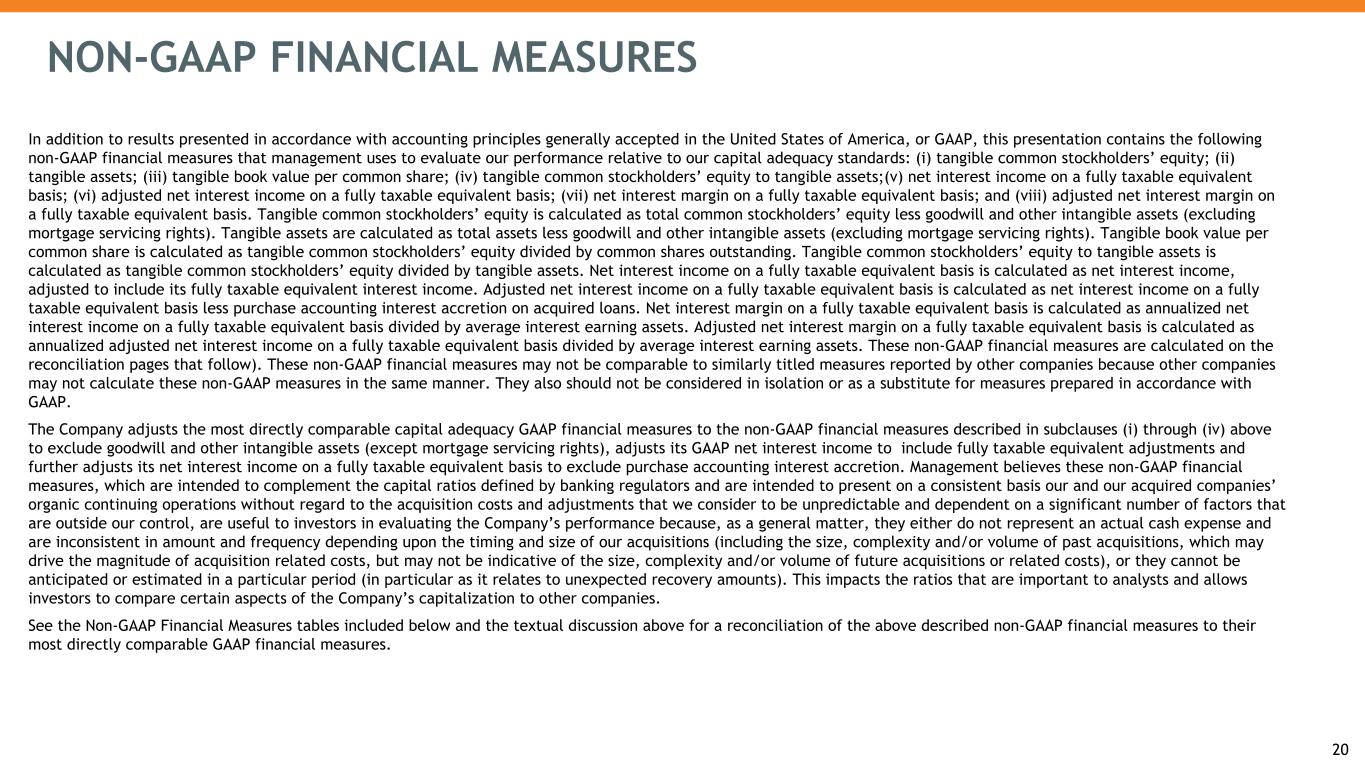
Thanks very much. Good morning. Thank you for joining us for our second quarter earnings conference call. As we begin, please note that the information provided during this call will contain forward-looking statements. Actual results or outcomes might differ materially from those expressed by those statements. I'd like to direct all listeners to read the cautionary note regarding forward-looking statements contained in our most recent annual report on Form 10-K filed with the SEC and in our earnings release, as well as the risk factors identified in the annual report and our more recent periodic reports filed with the SEC. Relevant factors that could cause actual results to differ materially from any forward-looking statements are included in the earnings release and in our SEC filings. The company does not undertake to update any of the forward-looking statements made today. A copy of our earnings release, which contains non-GAAP financial measures, is available on our website at fibk.com. Information regarding our use of the non-GAAP financial measures may be found in the body of the earnings release, and a reconciliation to their most directly comparable GAAP financial measures is included at the end of the earnings release for your reference. Again, this quarter, along with our earnings release, we've published an updated investor presentation that has additional disclosures that we believe will be helpful. The presentation can be accessed on our investor relations website. If you have not downloaded a copy yet, we encourage you to do so please also note that as we discuss our financials today unless otherwise noted all of the prior period comparisons will be with the first quarter of 2025. joining us from management this morning are jim reuter our chief executive officer david della camera our chief financial officer and other members of our management team now i'll turn the call over to jim reuter jim thank you nancy and good morning everyone and thank you for joining us on our call today.
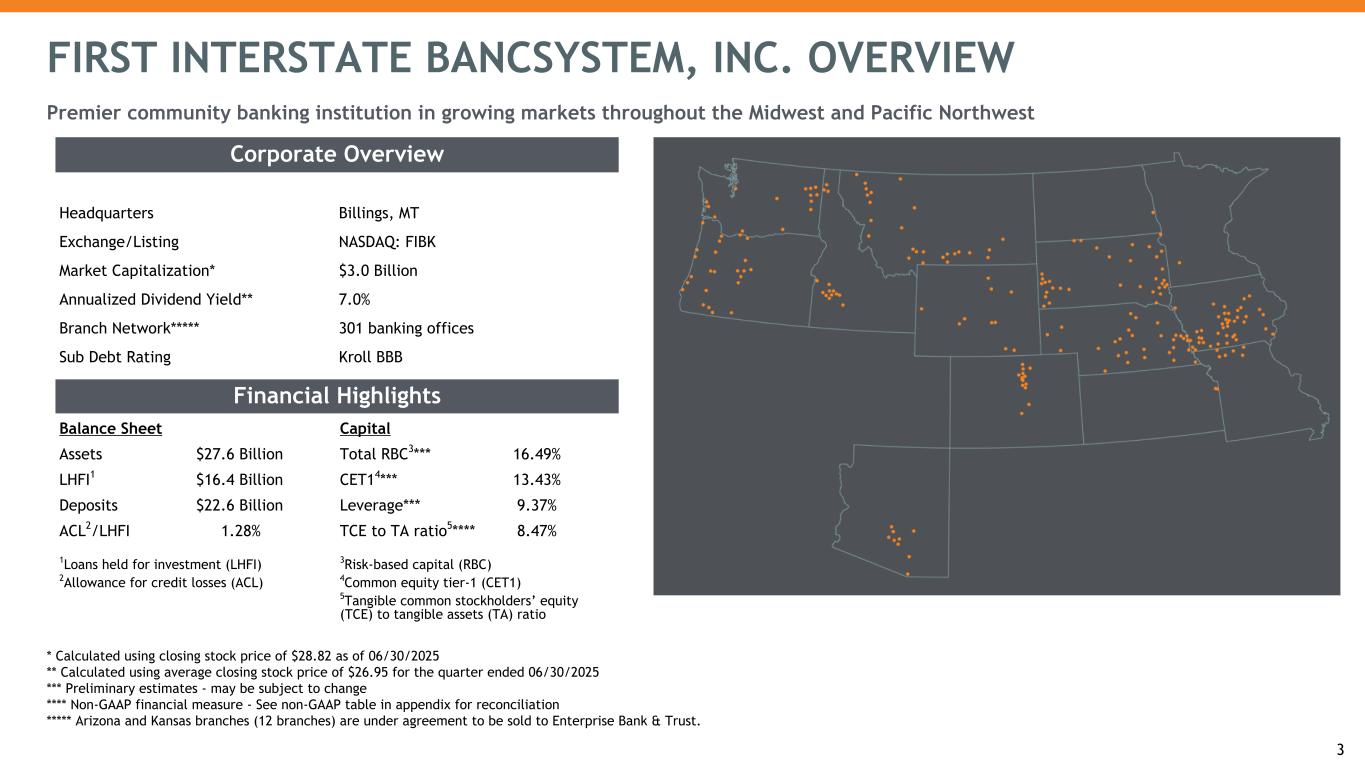
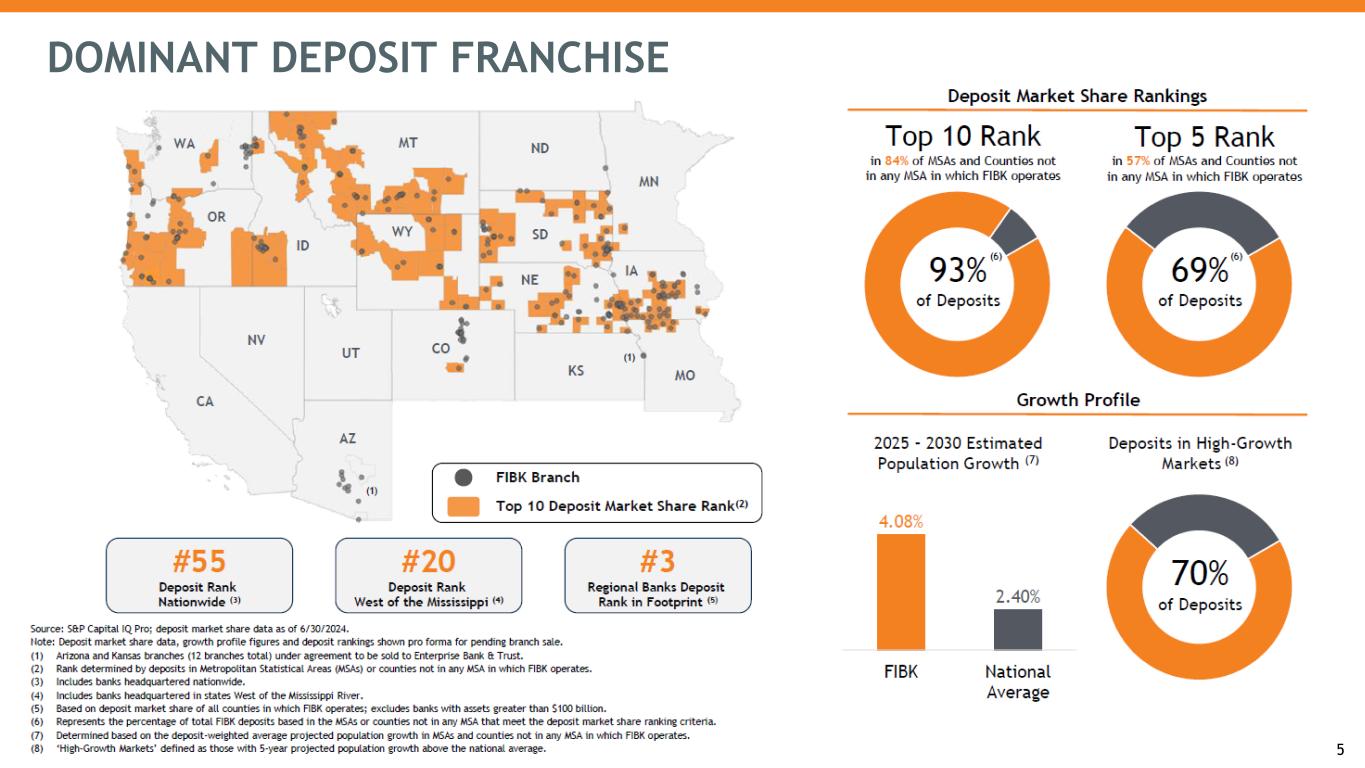
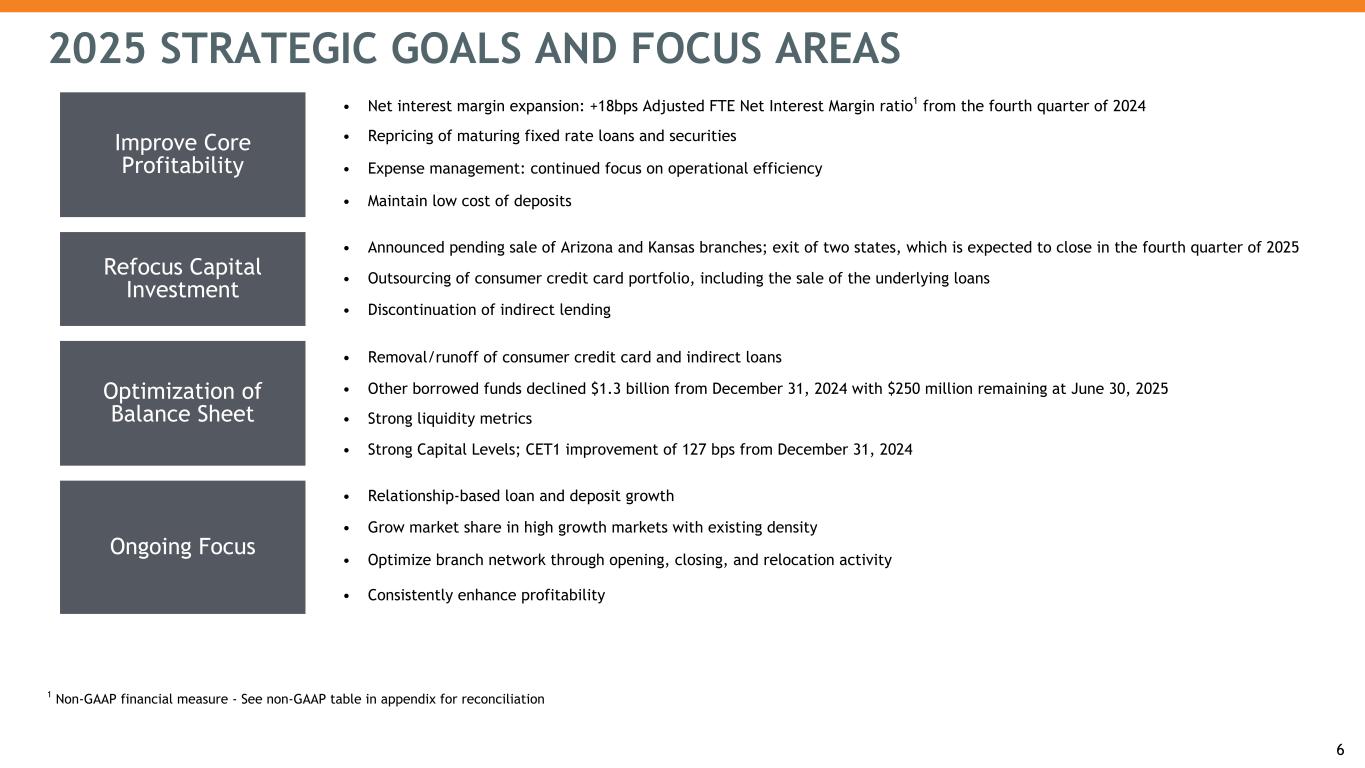
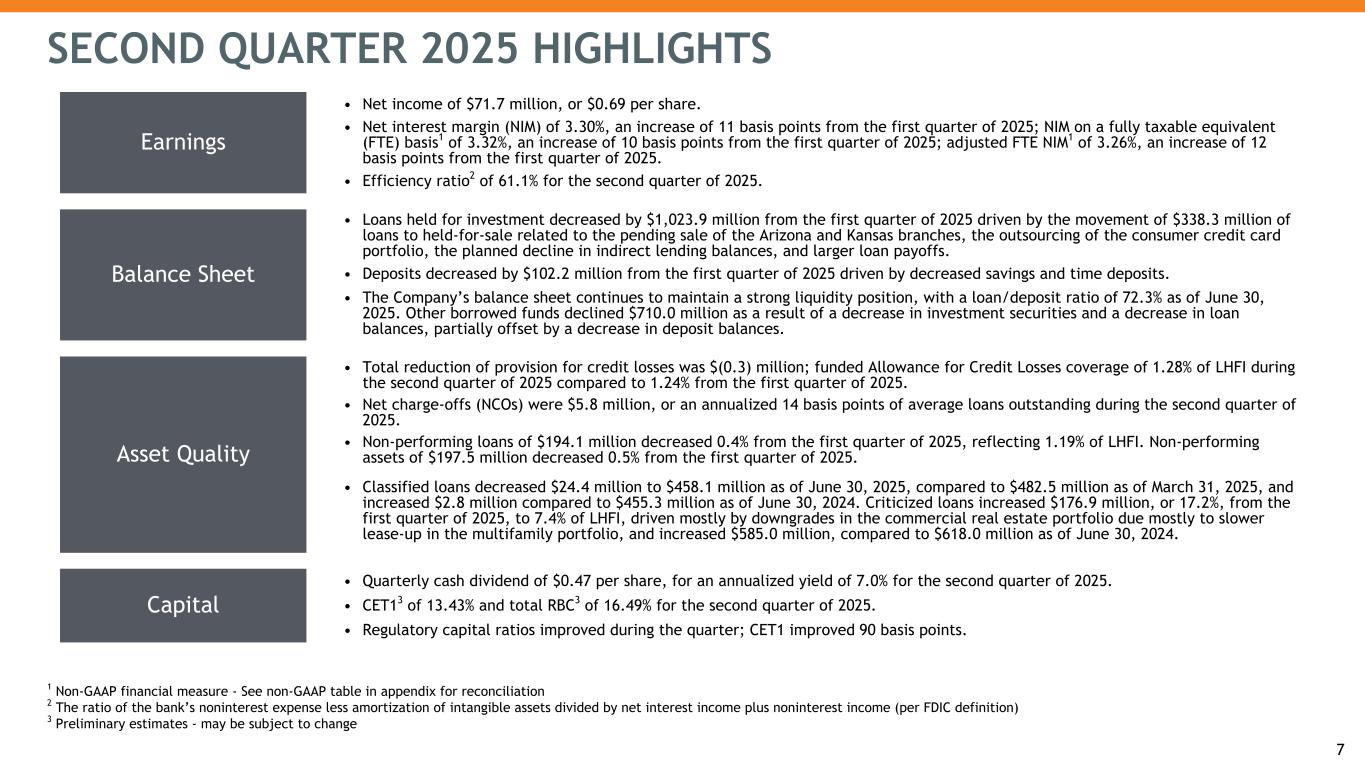
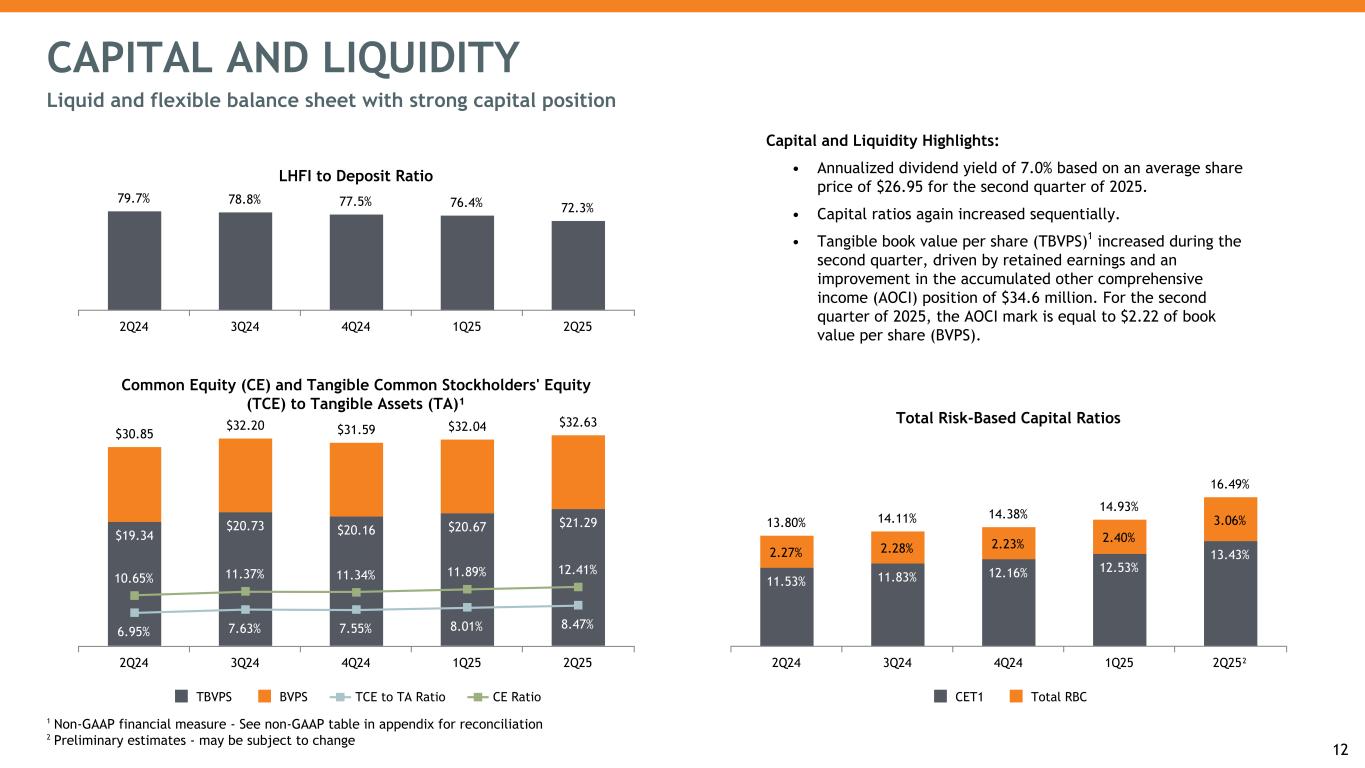
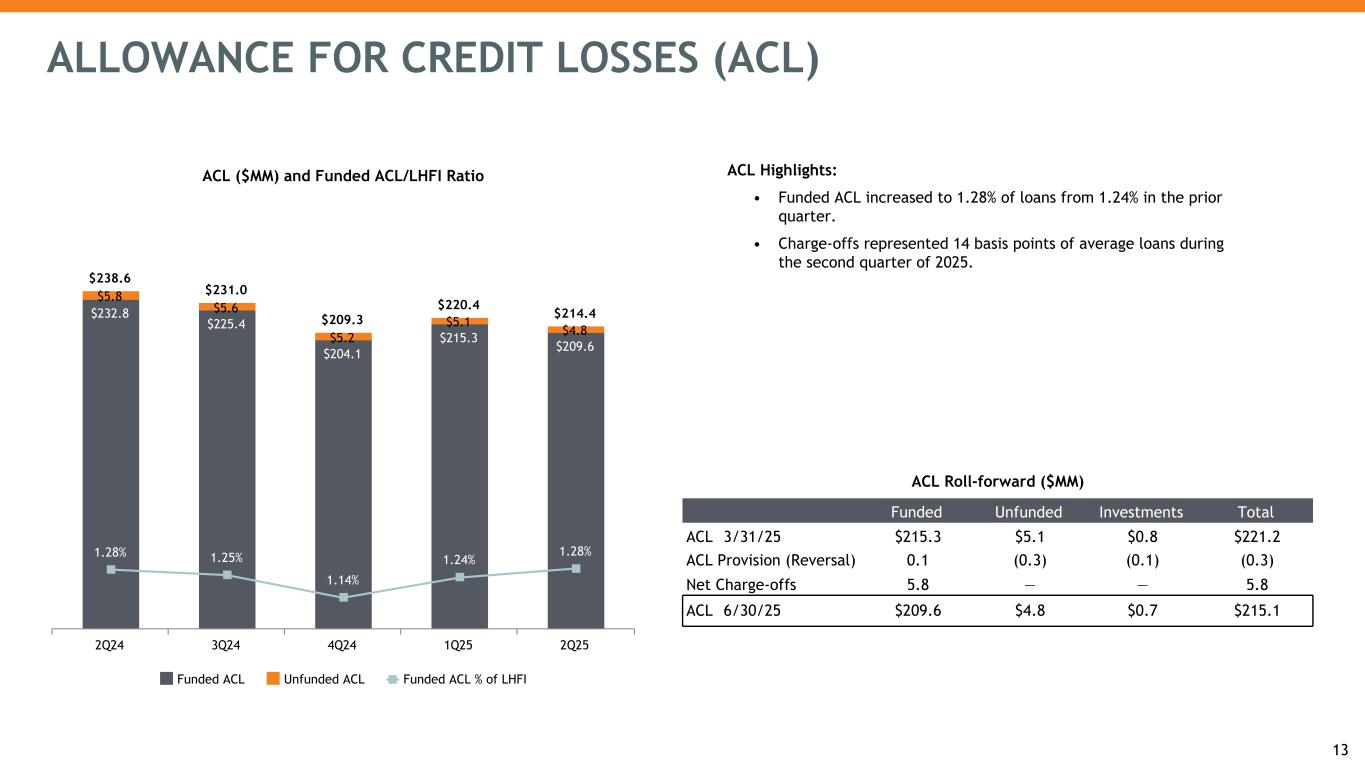
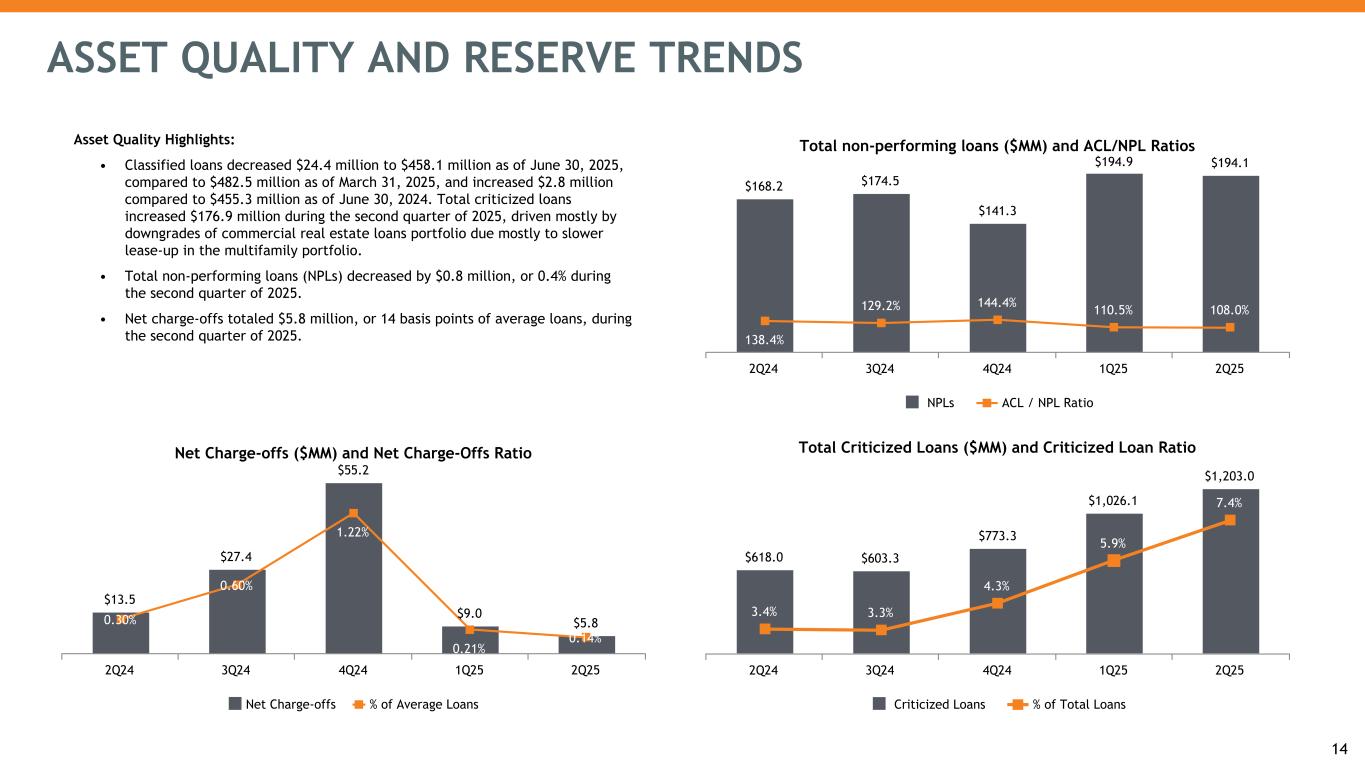
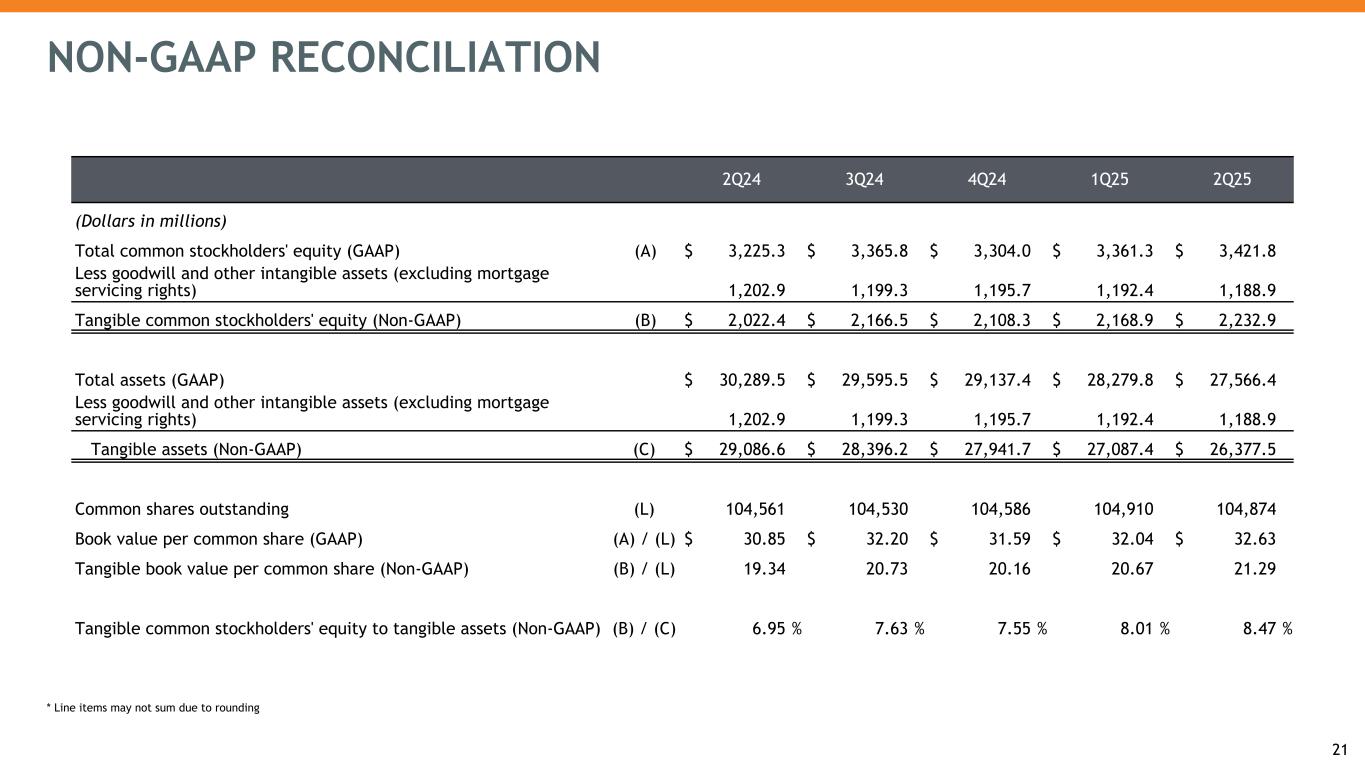
This remains an exciting and busy time at First Interstate. This quarter, we continued our efforts to refocus our capital investment, optimize our balance sheet, and improve core profitability. In addition to our decision in the first quarter to stop new originations and indirect lending, followed by our April announcement of the Arizona and Kansas branch transaction, we signed an agreement this quarter to outsource our consumer credit card products and the underlying loans moved off of our balance sheet. We continue to take steps to refocus the franchise in our core markets where we enjoy strong market share and believe there is high growth potential. First Interstate has a strong brand and branch network located in growth markets, a market-leading low-cost granular deposit base, and a team of strong community bankers. We believe these attributes, when combined with recent strategic actions, branch optimization, future organic growth through relationship banking, and the continued repricing of our assets will lead to higher profitability. We continue to take a proactive approach to credit risk management. This quarter, we were pleased to see stability in non-performing asset levels, modestly lower classified asset levels, and 14 basis points of annualized net charge-offs. Criticized loans did increase, generally reflective of slower lease-up in our multifamily book, and we will discuss that in more detail later in the call. Our recent strategic decisions have led to strong levels of capital and liquidity, providing us with a solid and flexible foundation. We ended the quarter with a 72% loan-to-deposit ratio, minimal short-term borrowings on the balance sheet, and no brokered deposits. capital has also continued to meaningfully accrete with our common equity tier one capital ratio ending the quarter at 13.43 percent with an expectation for continued accretion through 2025. later in the call david will address new commentary we have added to our guidance regarding our anticipation for a high single digit increase in net interest income in 2026 supported by our expectation for continued margin improvement assuming generally flat total loan balances in 2026. We are sharing this color to highlight what we believe is the impact of our disciplined approach to repricing maturing assets as we continue to focus the organization on organically growing loan balances over the long term. We have also added a slide to our investor presentation this quarter, highlighting the strength of our deposit profile, which we believe is the key driver of the long-term value of the franchise. 93% of the deposit base is located in areas where we have top 10 market share, and about 70% of our deposits are in markets that are growing faster than the national average, supporting long-term organic growth. We opened one additional branch this quarter in Columbia Falls, Montana, which is a small example of our future efforts to drive organic growth. We did not announce any branch consolidations in the second quarter, but we anticipate sequential action moving forward as we progress through 2025 and into 2026. With that, I will hand the call off to David to give more details on our quarterly results and to discuss our guidance. David.
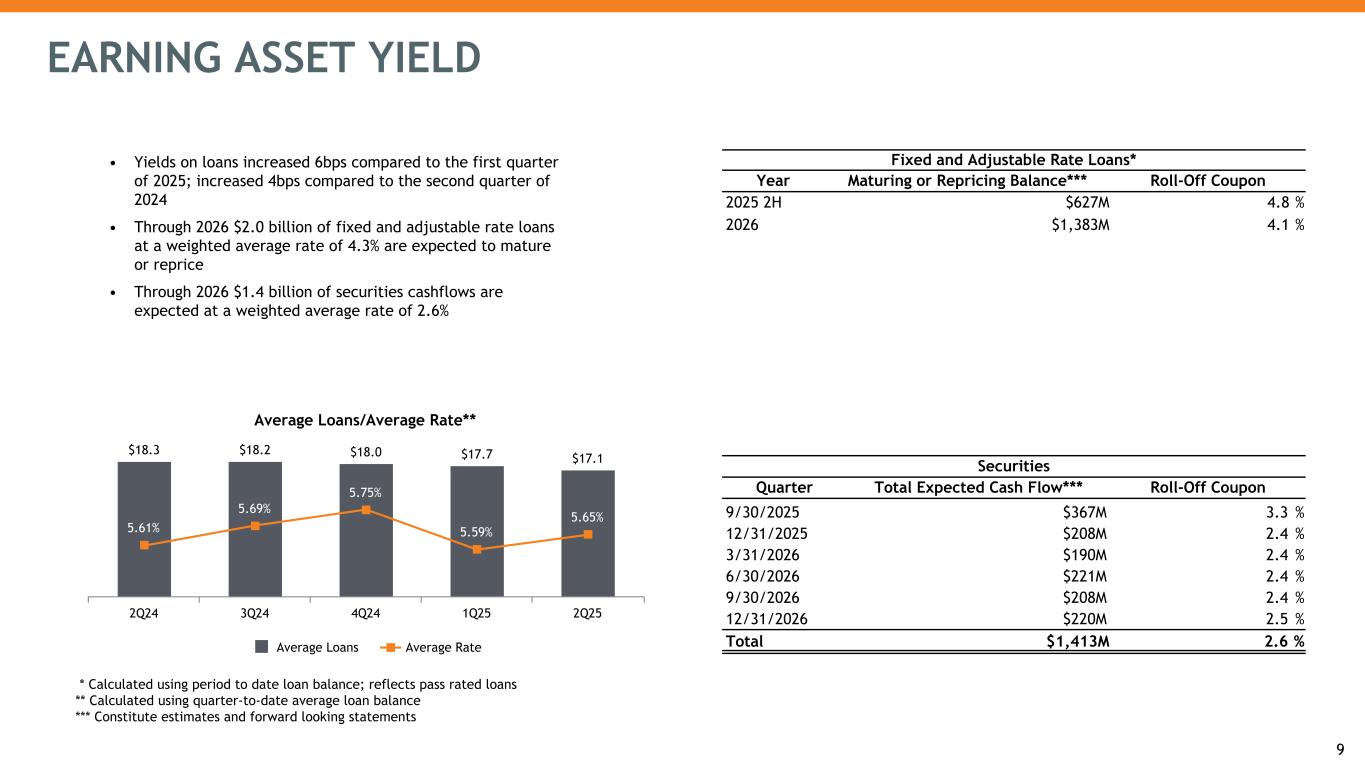
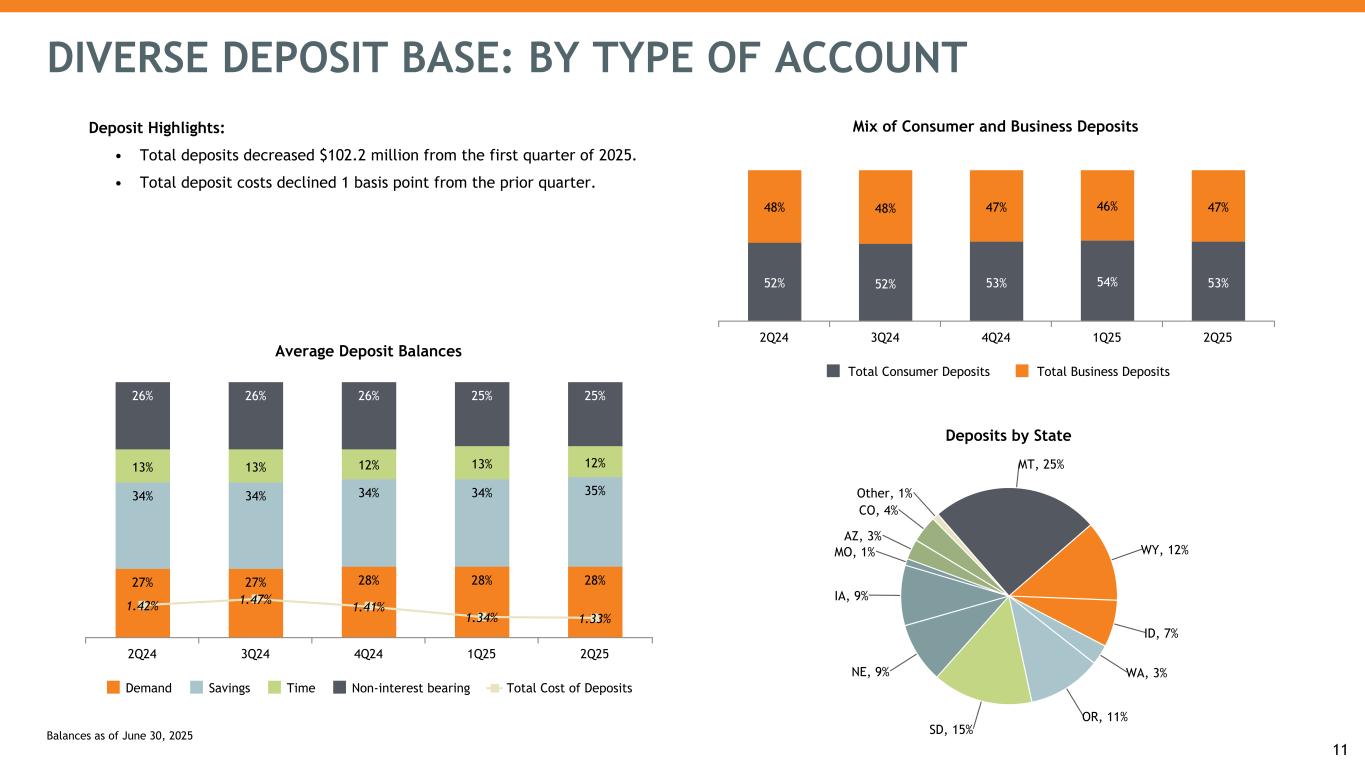
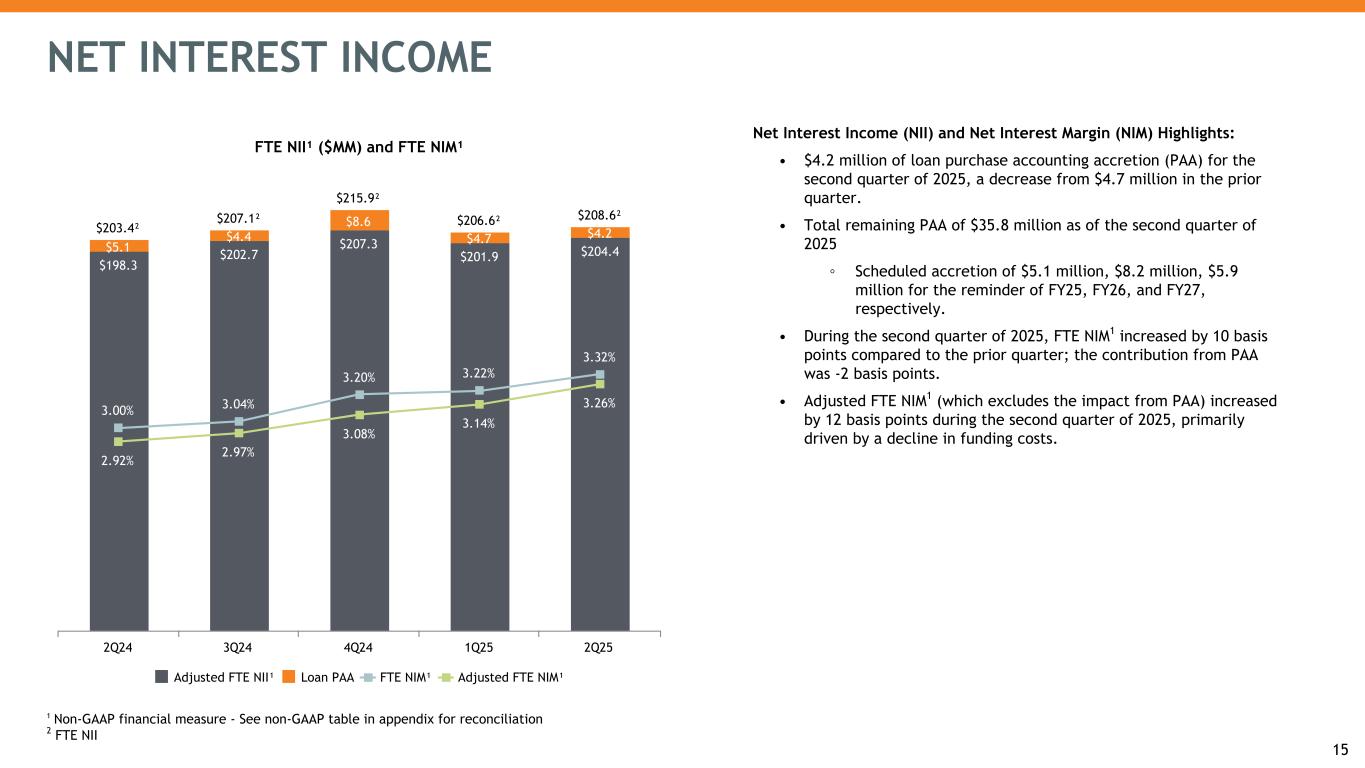
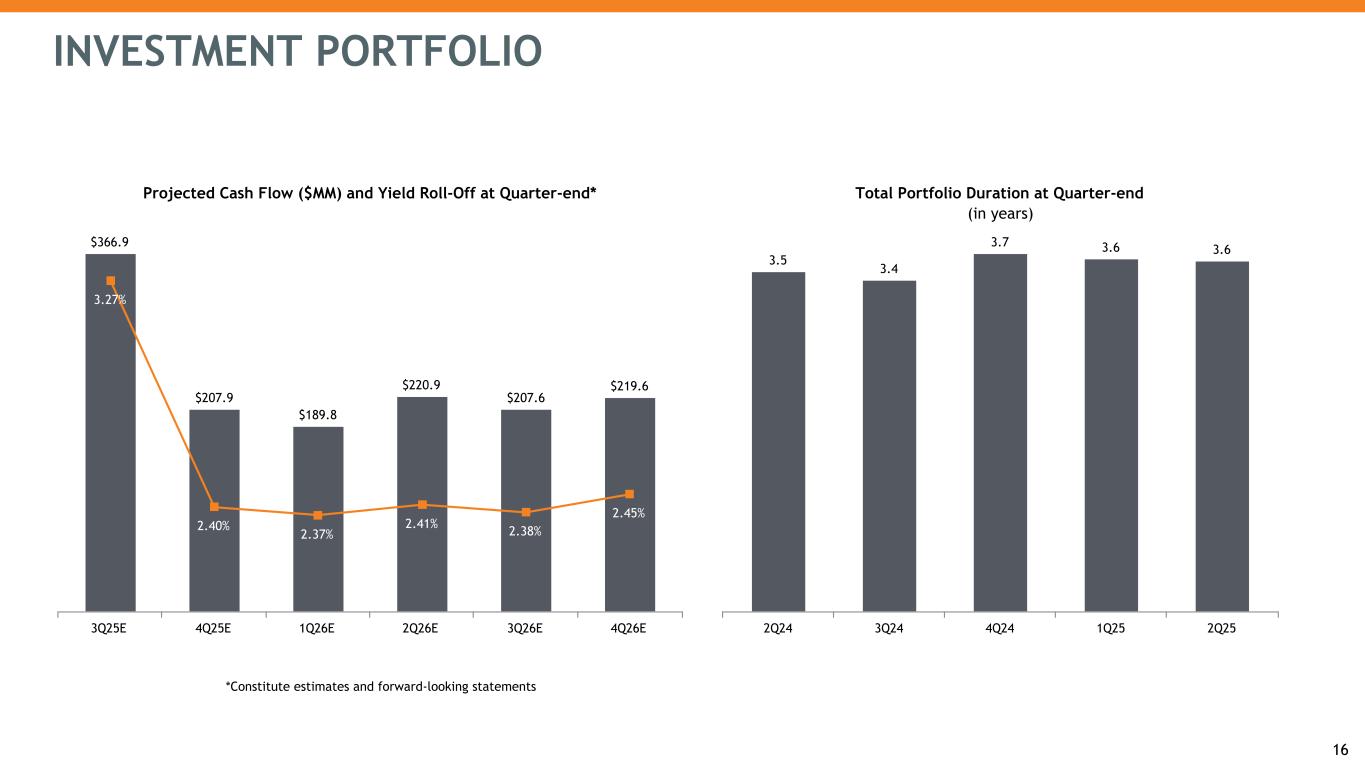
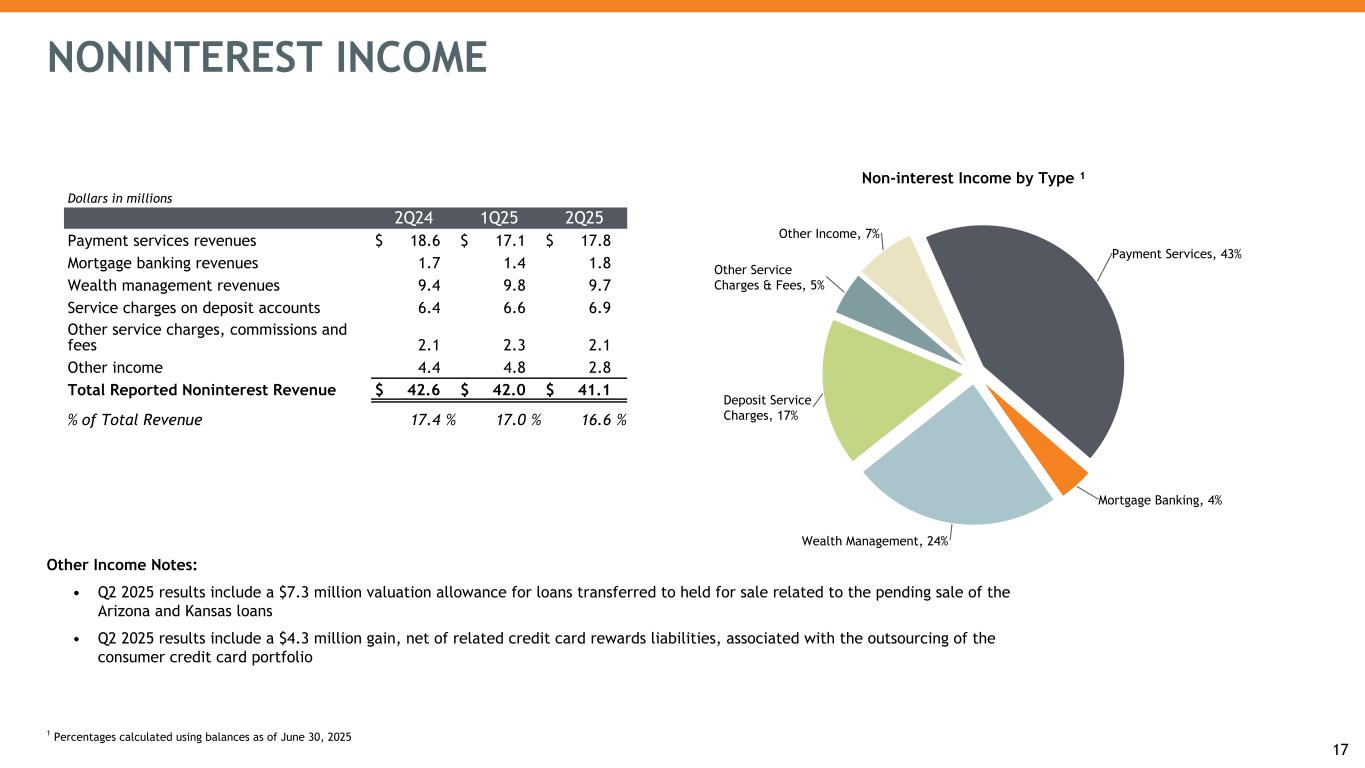
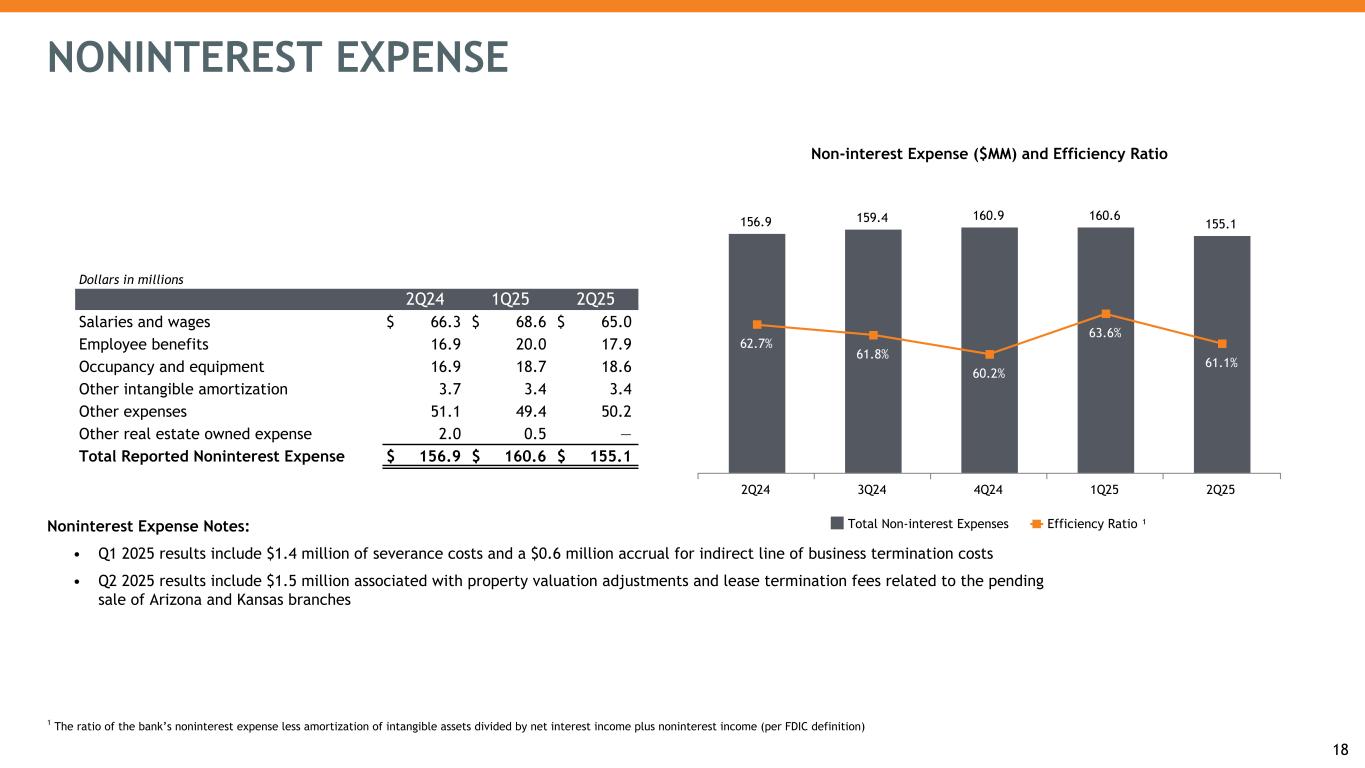
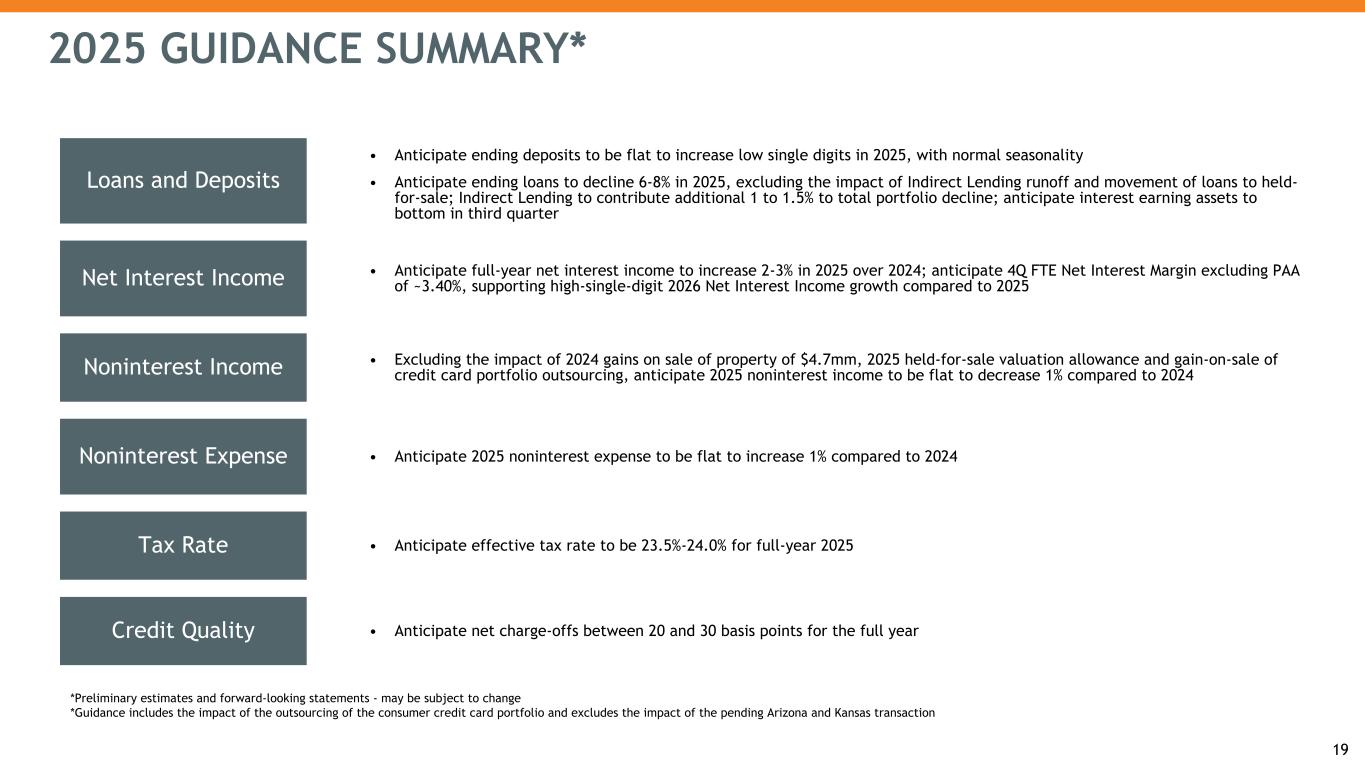
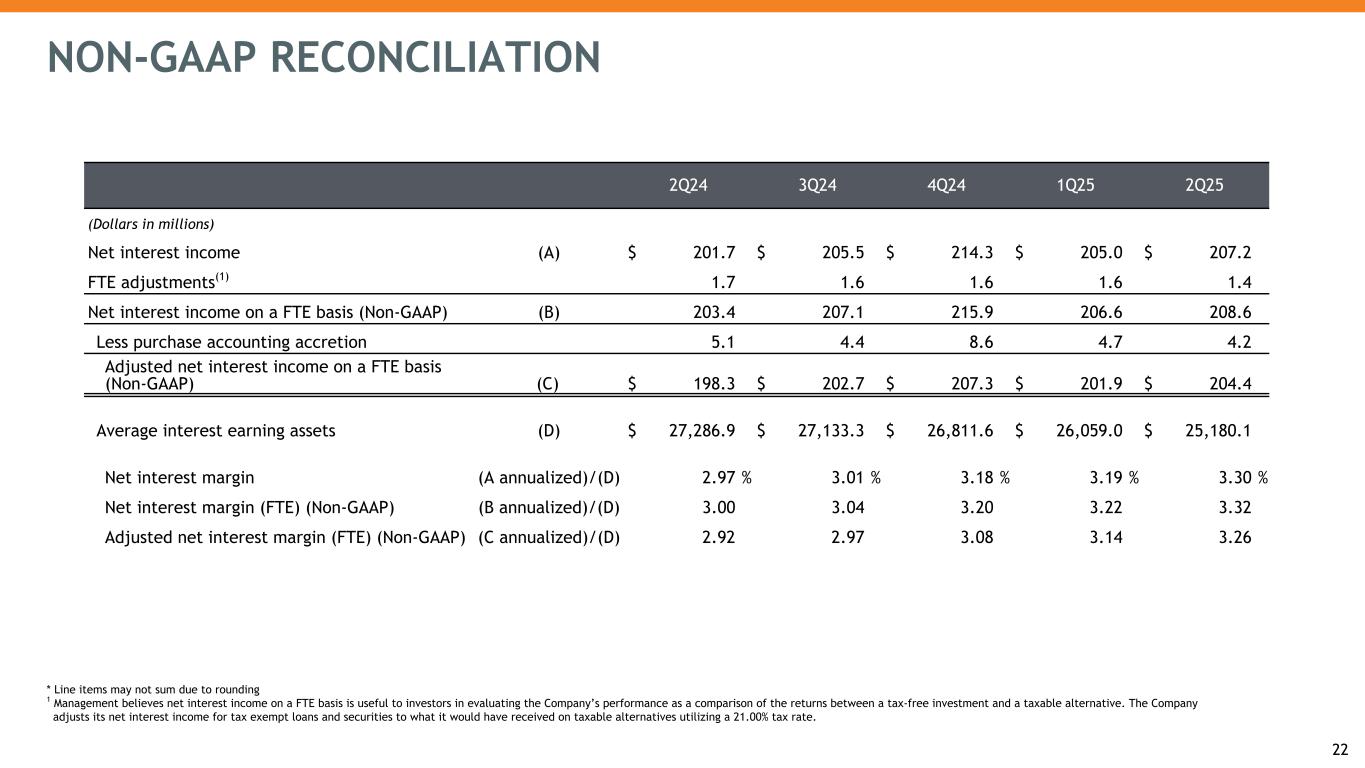
Thank you, Jim. I will start with our second quarter results. For the second quarter of the year, the company reported net income of $71.7 million, or $0.69 per diluted share, compared to $50.2 million, or $0.49 per diluted share in the first quarter. Net interest income was $207.2 million in the second quarter, an increase of $2.2 million over the prior period. This increase is primarily driven by a reduction in interest expense from reduced other borrowed funds balances partially offset by lower interest income on earning assets resulting from a decrease in average loan balances our net interest margin was 3.32 percent on a fully tax equivalent basis and excluding purchase accounting accretion our net interest margin was 3.26 percent an increase of 12 basis points from the prior quarter other borrowed funds ended the second quarter at $250 million, a decline of $2.2 billion from a year ago, and $710 million from the end of the prior quarter. Yield on average loans increased six basis points from the previous quarter to 5.65% in the second quarter, driven by continued repricing and payoffs of lower yielding loans. Interest-bearing deposit costs declined one basis point in the second quarter compared to the first quarter, and total funding costs declined to nine basis points due to improving mix shift driven by the reduction in other borrowed funds non-interest income was 41.1 million dollars a decrease of 0.9 million dollars from the prior quarter results this quarter include a 7.3 million dollar valuation allowance related to the movement of arizona and kansas loans that are included in the branch transaction to held for sale this was partially offset by a 4.3 million dollar gain on sale related to the outsourcing of our consumer credit card product results were generally in line with our expectations excluding these items non-interest expense declined in the second quarter by 5.5 million dollars to 155.1 million dollars this decline compared to the prior quarter was due to lower seasonal payroll taxes and reductions in incentive-based compensation estimates results include roughly 1.5 million dollars in property valuation adjustments and lease termination fees associated with properties in Arizona and Kansas. We continue to exhibit expense discipline related to our staffing levels, driving results favorable to our prior expectations. As part of that discipline, we are thoughtfully developing efficiencies as we move forward, which includes our ongoing analysis related to the branch network and are carefully controlling staffing levels and other marginal spend. Turning to credit, net charge-offs totaled $5.8 million, representing 14 basis points of average loans on an annualized basis. We recorded a reduction to provision expense for the current quarter of $0.3 million, driven by lower loans held for investment. Our total funded provision increased to 1.28% of loans held for investment from 1.24% at the end of the first quarter. Classified loans declined $24.4 million, or 5.1%, and non-performing loans also declined modestly. Criticized loans increased $176.9 million, or 17.2% from the first quarter of 2025, driven mostly by some of our larger multifamily loans, generally reflective of slower lease-up. Broadly, we are comfortable with the underlying value of the properties and guarantors' ability to support in these circumstances, but lease-up timelines are slower than initially anticipated at underwriting, driving movement into the criticized bucket. Turning to the balance sheet, loans held for investment declined $1 billion, which included the impact from the strategic moves we've discussed. The decline was influenced by $338 million in loans related to the Arizona and Kansas transaction that moved to held for sale, $74 million of loans sold with the consumer credit card outsourcing, and $73 million from the continued amortization of the indirect lending portfolio. The remaining reduction was influenced by higher or larger loan payoffs, including loans we strategically exited we are remaining diligent and adhering to our pricing and credit discipline and while competition is always strong for great clients we are seeing initial indications of increasing pipeline activity we do believe that loans will decline in the near term but remain optimistic that we will stabilize and return balances to growth in the medium term deposits declined 102.2 million dollars in the second quarter and are approximately flat compared to prior year adjusted for a larger temporary deposit on our balance sheet at the end of the second quarter of 2024. Finally in the second quarter we declared a dividend of 47 cents per share or a yield of 7.0 percent. Our common equity tier one capital ratio improved 90 basis points to 13.43 percent. Moving to our guidance. Our guidance as displayed includes the impact of consumer credit card outsourcing and excludes the impact of the branch transaction which we anticipate closing in the fourth quarter broadly the consumer credit card outsourcing reduces the major lines of the income statement and is mostly neutral to forward net income we have updated our guidance to reflect our current assumption of 125 basis point rate cut for the remainder of 2025. as of the end of the second quarter our balance sheet has shifted from slightly liability sensitive to mostly neutral, and we do not believe the rate cut included in our guidance is meaningful to the net interest income forecast we have presented for 2025. Our net interest income guidance reflects an anticipation of continued margin improvement with an expectation of fourth quarter net interest margin, excluding purchase accounting accretion, to approximate 3.4% compared to the 3.26% figure reported in the second quarter. Compared to the prior quarter's forecast, in addition to the impact from the outsourcing of consumer credit card, the net interest income forecast was modestly impacted by lower risk-weighted density. Our guidance now assumes a more meaningful near-term asset allocation into the investment portfolio versus loan balances, as loans have declined more than previously anticipated. We anticipate beginning to reinvest into the investment portfolio in this quarter. We have added commentary in our guidance, noting that we anticipate net interest income to increase in the high single digits in 2026 compared to 2025 supported by our expectation for continued margin improvement assuming generally flat loan balances in 2026. we're sharing this to highlight what we believe is the impact of our disciplined approach to repricing maturing assets and continue to believe we will grow loan balances over the long term to provide additional detail we've included a slide in our investor presentation detailing near-term fixed asset maturity and adjustable rate loan repricing expectations. Note that loan balances represent maturities in the case of fixed rate loans and maturities or repricing events in the case of adjustable rate loans. These figures displayed do not include contractual cash flow or any prepayment expectations. We expect loan yields to continue to benefit from the tailwinds of fixed rate repricing, a key component of our expectation for continued net interest margin and net interest income improvement. The investment security figures displayed represent current market expectations for total principal cash flows during each period, which provides another source of anticipated net interest income expansion. Non-interest income guidance is modestly lower than the prior quarter, impacted by the outsourcing of our consumer credit card. Finally, we reduced our non-interest expense guidance from an expectation in the prior quarter for a two to four percent full year increase to zero to one percent for the full year of 2025 compared to the reported 2024 number in addition to favorability in the second quarter expense levels to prior expectations we are carefully controlling staffing levels and other expense levers while continuing to invest in production driven areas as we look to drive our balance sheet growth these areas of continued focus have reduced our forward expectation of expenses in the near term. While near-term loan levels are lower than previously anticipated, leading to some modest pressure and net interest income in the near term, we are carefully controlling the expense base as we look to drive an efficient return profile for our shareholders. Turning to the Arizona and Kansas branch transaction, we stated in our previous earnings call that we anticipate tangible book value accretion of roughly 2% at the close of the branch transaction, an improvement in our common equity tier one ratio of approximately 30 to 40 basis points. As noted, we modestly increased the loans associated with the transaction since the prior quarter. Together with the anticipated recognition of the deposit premium in the fourth quarter, which would occur concurrent with close, we continue to anticipate total tangible book value accretion of approximately 2% from the transaction, which would include the impact of the held-for-sale valuation allowance recognized this quarter. We now anticipate our CET1 ratio to increase at the high end of the noted range, given the additional loans included. With that, I will hand the call back to Jim. Jim?
Thanks, David. We are diligently focused on continuing to make sequential progress on our strategic plan and added a slide in our investor presentation to outline our focus areas, which include refocusing capital investment, optimizing the balance sheet and improving core profitability. We believe earnings will continue to improve through 2026 and into 2027, and the ongoing remix of our balance sheet is providing us with liquidity and capital flexibility. We are actively working through our asset quality levels and are optimistic that we are beginning to see positive underlying credit developments, evidence of our disciplined and proactive work on asset quality. We will continue to work diligently to improve the earnings profile of our institution, and we look forward to sharing our progress with you. Now I will open the call up for questions.
Operator
Thank you. Ladies and gentlemen, we will now begin the question and answer session. Should you have a question, please press the star followed by the one on your touchtone phone. You will hear a prompt that your hand has been raised. If you wish to decline from the polling process, please press star followed by the two. And if you are using a speakerphone, please lift the handset before pressing any keys. The first question comes from Jeff Rulis at DA Davidson. Please go ahead.
Thanks. Good morning. Appreciate the color in the deck and the commentary. That's helpful. A tough question, but want to try to get the timing on the loan portfolio stabilization. It seems like it's a lot of heavy lifting up front here with the runoff and maybe some further drift, but thinking about when, you know, does the portfolio runoff kind of by year end, or are you thinking that's a first half of next year event in terms of when the loan portfolio stabilizes?
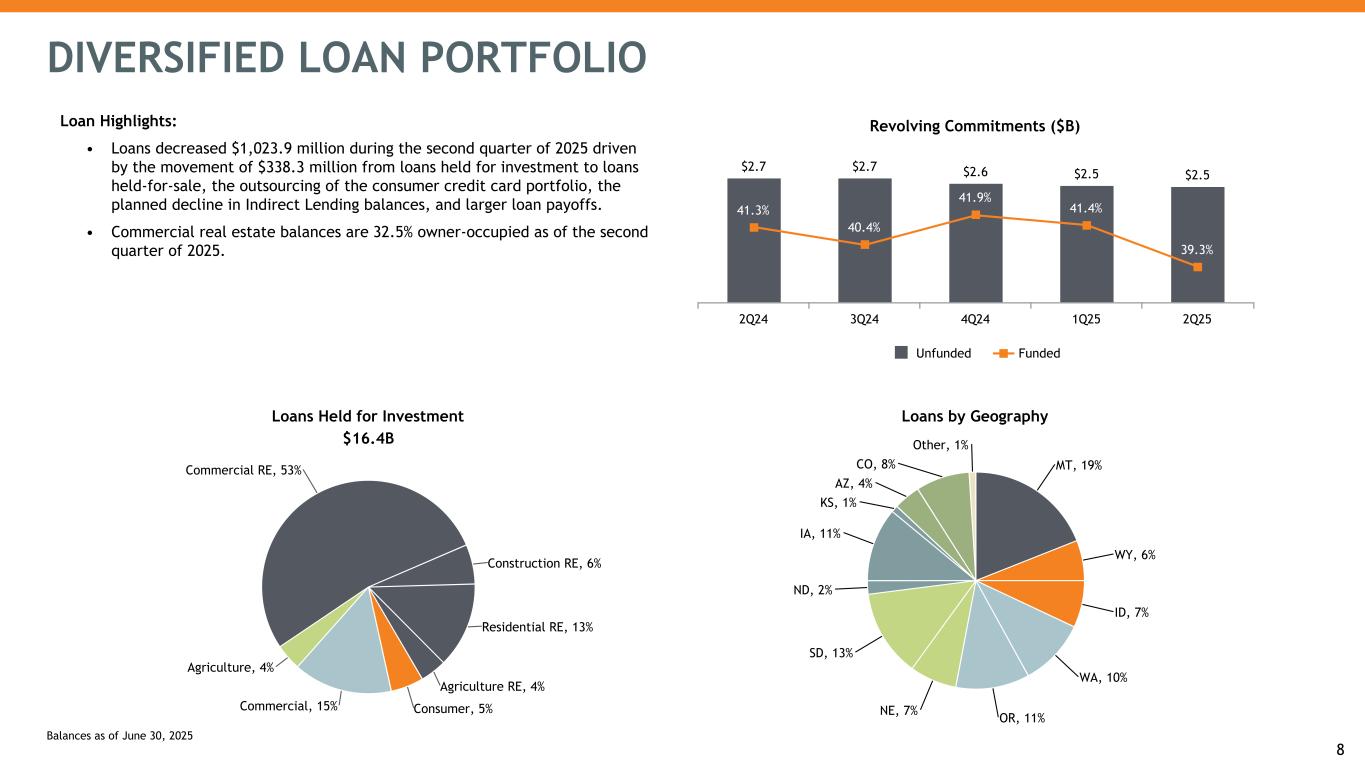
Hi, Jeff. So a couple things here, good question. I think to start, there was, as we think about the balances in the quarter, of course, we had the held for sale, we had the indirect and the credit card. We also mentioned large loan payoffs. The other thing you'll note in one of our slides is we did see some line utilization that was a little bit lower this quarter. Adjusted for all of that, the change in loans quarter per quarter, we think was more of a mid-1% number versus the reported on HFI.
So as we think about going forward, we do anticipate modestly lower loans in the third that's what's incorporated in our guidance we're hopeful for more stability fourth quarter from a reported held for investment level and then of course we're optimistic we can grow from there and Jeff this is Jim good morning to add on to that when I look at the payoffs in the quarter there were four larger loans a few of those were frankly intentional and it's the type of lending we don't want to do on a go forward basis. And one was also a multifamily that went to the secondary market. So, you know, as I've discussed the past two quarters, we completed, you know, a deep dive on credit, set up a new credit committee process to get everybody on the same page. And I can confidently say we're now on offense, have some specific promotions, and we're seeing some good activity in the pipeline.
That's great. Maybe a related question and trying to back into some of the NII guidance, sounds like a pretty good commitment on the security side. Any effort to try to peg where earning asset levels could be at your end? My guess is it sounds up from here, but.
Yeah, good question. So our borrowings ended the quarter about 250, 250 million dollars short-term borrowing. So we would be, we think the third quarter is where we bottom in earning asset levels. You know, to your point, a higher level of investment security than previously anticipated in the near term, given the balance sheet trends. Long term, we'd of course like to makeshift that into more loans. But third quarter review is the bottom of earning assets. That's ex-Arizona, Kansas. So you might get a little bit of a step down into the fourth quarter, but modest. And we think we're around the bottom there.
Okay. And just the last one on the capital side um i think you mentioned um the high end of the range of guidance maybe cet1 possibly um by year end given the branch deal uh should be behind you um but i guess that's part one is is maybe a cet1 at year end and then part two is just um if you wouldn't mind kind of going through the capital priorities from there as you've got a pretty high level building here?
So I think at year end, to your point, so 13-4 was the June 30 number. We think we are around the 40 basis point number of additional accretion from the branch transaction and then modestly lower loans in the near term. So that does get you to a higher number from here, all else equal. As we think about capital, we certainly acknowledge we have strong capital levels and it creates significant optionality for us we're very pleased with that we're looking at a variety of options so we're looking at all the different capital deployment options from here and considering how we can utilize that to enhance return so um you know more to come there but we're looking at our different options okay thanks i'll step back thank you the next question comes from andrew terrell at stephen think please go ahead hey good morning um hey i wanted to start off just It was good to see the classified loans down sequentially, but I think it was a bit surprising
to see special mentions step up so much this quarter, I think particularly given the work you guys have done over the past six, nine months or so regarding the credit review process.
I was hoping you could just talk maybe a little bit more about what drove that special mention migration, the kind of lost content you would or would not expect, and then does it feel like we should continue to anticipate continued migration and to criticize classified yeah good morning andrew i'll take that um you know we we saw as you mentioned a step up in the criticize a lot of that was driven with new information on some multi-family projects that uh you know as we mentioned primary source of repayments what we focus on and uh the builder's original plans for absorption and how that project would go are not being met. I've actually looked at two of the three larger ones that are in the group that moved up, been by them, seen them personally, still feel good about the collateral, really like the guarantors. So it's really that primary source of repayment. Otherwise, it was fairly flat. And I can tell you that I see the fruits of our proactive management of credit.
Okay, great. I appreciate the color, Jim. And if I could also just ask on on kind of the the expense guidance you know it feels like lots of kind of moving pieces here but um david could you just maybe talk a little more about kind of near-term expectations it seems like the guidance implies there there should be kind of a core lift on expenses into 3q um i think can you remind us just the maybe expense saves from the branch divestiture that's scheduled in the fourth quarter and i think you know the i would assume that there are no branch consolidation efforts um reflected in kind of expense guidance so should we think about those as you know potentially a positive to the current kind of stated guidance sure so first on the i'll
kind of take that uh backwards to forward so there are no branch divestitures outside uh included in the guidance you're correct there so anything that occurs there again just given timing we think that's more of a 26 impact than a 25 impact actually on the expense figure but you're correct. No expectation is included in that. Related to Arizona, Kansas, to remind on the commentary from the prior quarter, about a mid twos number as a percentage of the deposit base is how we view that annualized cost impact after close there. Quarter to quarter as we think about our expenses, you're correct that we do anticipate third and fourth quarter to be a higher reported number than second quarter for expenses. A couple drivers there includes things such as our medical insurance, we generally see a little bit higher in the back half than the front half. That'll be included in there. There was some timing in the second quarter on some of the salary and wage items that will be modestly higher in the third quarter. And then we had some benefits in our tech spend in the second quarter that we'll see a little bit higher in the third quarter. Nothing generally unusual, but some timing items as well that will cause that increase.
Yeah, that's really awful i appreciate it david and then if i could ask also just on on the guidance um one i i appreciate you guys putting you know some of the repricing detail uh into the presentation this quarter that's really helpful on the on the comment for the the net interest income um high single digit growth in 2026 does that factor in you know the i would presume kind of ni headwind from the branch divestiture and 4Q, and would that materially alter the high single-digit 2026 expectation?
So it does not include the divestiture impact. We don't believe that materially alters that figure. Broadly, loans and deposits associated with the transaction don't look dissimilar than the bank's loans and deposits as a whole, so we wouldn't view that change is materially different and again the capital raised with the transaction there's there's different options related to that of course so at this time that high single digit would be excluding any decision there related to the loans deposits and capital um got it okay uh i appreciate the color uh and thanks for the questions thank you the next question comes from Kelly Mata at KBW.
Operator
Please go ahead.
Hey, good morning. Thanks for the question. In terms of the expense base, kind of circling back to that, I appreciate the color on the expense base relative regarding the branch divestitures. Wondering how you're thinking about the reinvestment of the savings versus flowing to the bottom line um and specifically with regards to um frontline hires if you have the right talent um to you know start to drive the inflection in growth as we look to next year yeah good morning kelly um you know we um you know david walked through some of the color around the expense phase but you know it there's a couple things here.
When we look at growth and NII and different things, obviously another lever we manage is our expenses. And so we're going to pay attention to that closely as we drive for stronger NII. But we will not sacrifice having the right people on the team and being able to do the things we need to grow. We do have the right people on the team. So the cost saves are not coming at the expense of talent. So anything we need to do to invest to grow, it's going to be a priority.
Got it. That's helpful. Um, and then in terms of, um, I appreciate the color that, um, the NII Outlook includes, um, more securities purchases given, given the slowdown in loans. Um, uh, maybe for David if you could provide, uh, color as to what you're, you're looking to add to the book and the incremental yields on that as well as the incremental yields, the new yields you're getting on, on the loans you are booking now.
Sure. So, on the security side, the incremental purchases won't look holistically dissimilar than what we currently have in the book. The way we broadly think about that is just given the structural rate sensitivity position of the company, shorter duration, similar to what we have today broadly, lower risk-weighted density, and no credit risk. So that's kind of limited to no credit risk. That's broadly how we think about that. From a yield perspective, you know, if you kind of think something like a mid-duration MBS as an example, and there's, of course, a variety of different things we would be purchasing, that's five-year plus 80 to 90 today. That'll move, of course, but something in that range. New loan production, somewhere in that 7% range, it's going to be sensitive to that five- to seven-year point on the curve, but that's broadly where we are today.
Got it. That's helpful. Paul. Last question for me, and then I'll step back into the queue. On the loan side, I appreciate the color on some of the larger payoffs you had, some of which was intentional. Looking at the line for commercial, that was down pretty meaningfully. And I know you noted some drop down in the utilization there. Can you provide additional color as to what you're seeing on the commercial side and um if there was any sort of just like end of quarter flows that we should be keeping in mind in terms of um thinking about the average balance sheet thank you yeah thanks for the question so i'd note a few things there first would note the to your point the utilization that did have an impact there second would note the there was one of the larger payoffs we referenced was in that segment.
So that was an impact as well. The other impact is the loans that moved to held for sale. There were some commercial real estate, some CNI. So there was some impact there as well, quarter over quarter related to that. So we don't believe that's reflective, of course, of our anticipation going forward and change in that category.
Certainly a focus as we think about small business, but some one-time movement in in the quarter great thanks thanks thanks for the color i'll step back thank you the next question comes from jared shaw at barclays please go ahead hey good morning um it's just as we're looking just to confirm as we're looking at year-end 25 um loan levels as an exit that including everything is that uh like down 10 to 12 when we include the loan sales include the indirect include the uh some of that payoff activity is that the right way to think about it
yeah so how we're thinking about that is the guide of six to eight is the excluding the other items an additional one to one and a half on indirect and then the held for sale balances we anticipate of course leaving in the fourth quarter when we anticipate that transaction to close so that would be a marginal about two percent impact that's correct okay all right um and then when you look at the valuation allowance that you took on those on those loans um can you give any color on what what the rate first credit impact uh that could have been so that valuation allowance was a rate
mark on the loans it was it was purely reflective of rate and yeah so that that's just a rate mark there thank you the next question comes from Matthew Clark at Piper Sandler please go ahead hey good morning appreciate the questions first one for me on the loans transferred to hell for sale 338 million I think you called it out as being related to the branch sale but I think when you announced the branch sale it was only 200 million loans so are those all tied to those
branches or did you guys also move some additional loans into hfs they were all tied to the branches there were some additional loans during the quarter that were identified related to the transaction some relationship related loans so all related to the branch transaction okay Okay.
Great. And then in terms of the loan portfolio, can you quantify what's left in the book that you would argue is not relationship-based and would prefer to run it off? We obviously see the consumer credit portfolio being the latest piece of it, but trying to get a sense for any way to ring fence some kind of deliberate runoff from here.
Yeah, Matthew, I don't see a lot of deliberate runoff left in the book. I do think the one challenge we have is multifamily that are construction that once they're leased up and fully stabilized, some of those have an intention to go to the secondary market. So we'll see some of that. But, you know, our message to our team is we, you know, because something leaves doesn't give us a bogey to not find a replacement and grow the bank. But I would say the bigger loans that when I arrived that I had a preference would leave the balance sheet, most of that has already happened.
Okay. And then on the slide deck, the deposit market share slide, does that imply that you'd like to exit some additional markets where you're not in the top five? It's about 30% of the total. Not to say you'd exit all 30%, but or is it more to illustrate an opportunity to grow market share? It just looks like Colorado kind of stands out in some of those markets as not being the top five.
Yeah, Matthew. Yeah, it's not to illustrate where we want to exit. It's to illustrate where we have existing density, which gives us an advantage. And if you look at a lot of those states and MSAs and areas, they're growth areas. So we think it's a positive that we have that type of market share. And we hope to gain it in other areas as well. So where you see less of it, it's not an indication we're going to retreat. It's an indication of where we need to make progress.
Operator
Thank you. The next question comes from Timur Brasiller from Wells Fargo. Please go ahead.
Hi, good morning. Thanks. Looking at the capital priorities and examining the options here on a go-forward basis, I guess, I mean, Jim, you made it pretty clear that M&A is off the table. Looking at the dividend, you guys already have one of the highest dividends out there. I guess I would leave share buyback or some sort of balance sheet restructure. One would be a slower use of capital. One would be a more kind of acute use of capital. I'm just wondering kind of where the thought is between those two, the mix of, and then to the extent that some balance sheet restructure is in the cards, how much of that might be included in the 2026 NII guidance?
Yeah, Timor, that's a good question. You know, as you've already pointed out, we have strong capital levels, and it's going to increase, as we've already talked about, which gives us a lot of flexibility and so obviously dividend is important to us we've we've demonstrated that historically and and currently today uh organic growth will be our focus if we can grow the bank and make use of the capital uh but all that said if we're not able to utilize the capital in that fashion we will look at all options on the table including all the things you mentioned so um you We have a focus on creating shareholder value, and so that will be an active conversation for us.
And, Timur, the 26 guide, that does not include or assume capital actions.
Okay, got it. And then looking at the loans specifically that are maturing and are resetting through 26, I calculate that to be about 12% of the outstanding loan book. Do you guys view that as an opportunity or is there a potential threat that maybe some of those either get refied away into the secondary market or still some composition of, quote unquote, the type of lending that you don't really want to do? I'm just trying to get a sense of this elevated portion of resets that are coming due in the next 18 months and what effect that might have on balance sheet composition and your expectations for average earning assets here to stabilize in the not too distant future.
Yeah, Timo, that's a good question. And as I mentioned earlier, I don't see a lot of loans that don't fit our profile in that mix. There is some multifamily that, as I mentioned, that when stabilized. The borrower's intent was to go to secondary market. Obviously, we're not going to compete with secondary market from a rate and structure perspective. And so that's why we show loan growth fairly flat. But our intent is to replace that with production and growth. And as I mentioned, we're seeing good activity in the pipeline and CNI owner occupied and different things. So that's where we're headed there and optimistic that we can replace a lot of that.
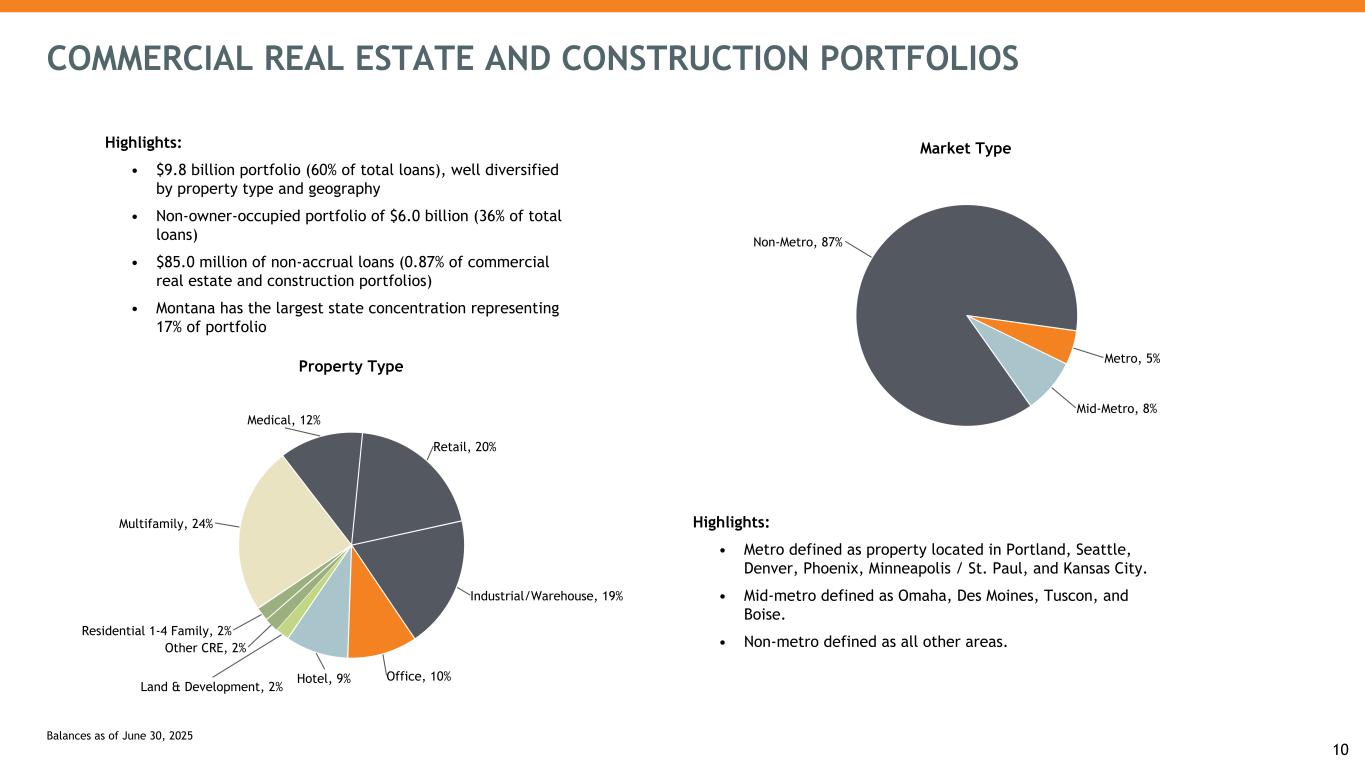
Okay. And then just last for me around credit, just looking at the recent trends in criticized loans coupled with your unchanged net charge-off guidance, I guess what's giving you comfort to the fact that the increase in criticized that are now over 7% of the loan book isn't going to drive some volatility around charge-off activity either in the back end of 25 or into 26.
Yeah, Teamer, what continues to give us confidence in that area is that a lot of the movement into criticize has been that primary source of repayment. We still like the collateral and the guarantors that are backing those credits and they're well located, which is part of why we like the collateral. So that's why we continue to be confident. And I think, again, I've mentioned this before, proactive credit management, I think, is one of the tenets of running a good bank in all economic cycles. And that's what you're seeing in play here.
Great. Thank you for the questions.
Operator
Thank you. We have no further questions. I'll turn the call back over to Jim Reuter for closing comments.
Operator
All right. Thank you. And thank you, everybody, for your questions. And as always, we welcome calls from our investors and analysts so please reach out to us if you have any follow-up questions and thank you for tuning into the call today ladies and gentlemen this concludes your conference call for today we thank you for participating and we ask that you please disconnect your lines