Operator
Hello, everyone. Thank you for joining us and welcome to Frontview REIT Inc's first quarter 2026 earnings conference call. After today's prepared remarks, we will host a question and answer session. If you would like to ask a question, please press star one to raise your hand. To withdraw your question, press star one again. I will now hand the conference over to Pierre Raval, Chief Financial Officer. Please go ahead.
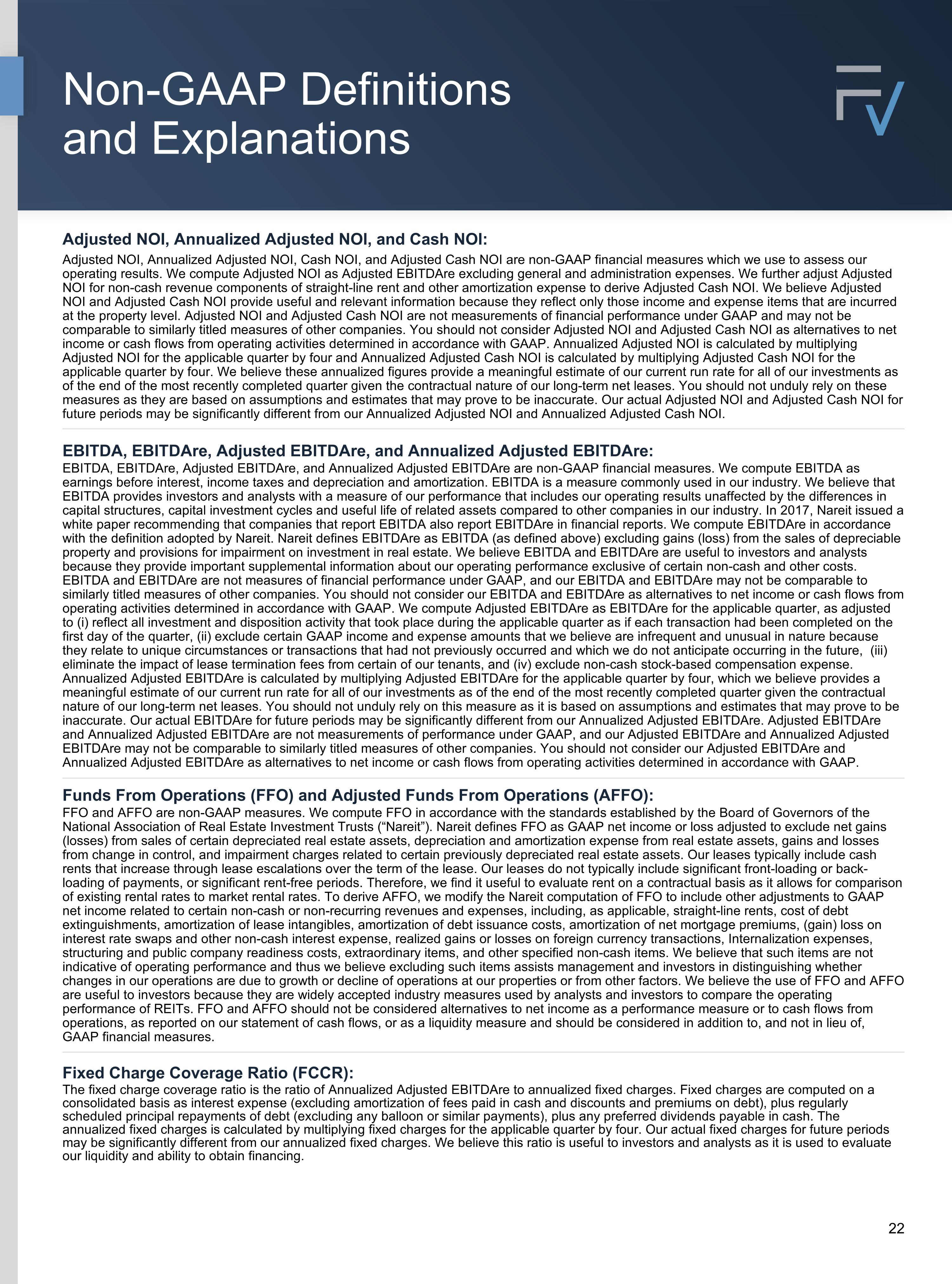
Thank you, Operator, and thank you, everyone, for joining us for Front View's first quarter 2026 earnings call. I will be joined on the call by Steve Preston, Chairman and CEO. Before we get started, I would like to remind everyone that this presentation contains forward-looking statements. Although we believe these forward-looking statements are based on reasonable assumptions, they are subject to known and unknown risk and and uncertainties that can cause actual results to differ materially from those currently anticipated due to several factors. I refer you to the Safe Harbor Statement in our most recent filings with the SEC for a detailed discussion of the risk factors relating to these forward-looking statements. This presentation also contains certain non-GAAP financial metrics. Reconciliation of non-GAAP financial metrics to most directly comparable GAAP metrics are included in the exhibits, Furnish the SEC under 4-8-K, which include our earnings release, supplemental package, and investor presentation. These materials are available on the investor relations page for our company website. With that, I'm now pleased to introduce Steve Preston.
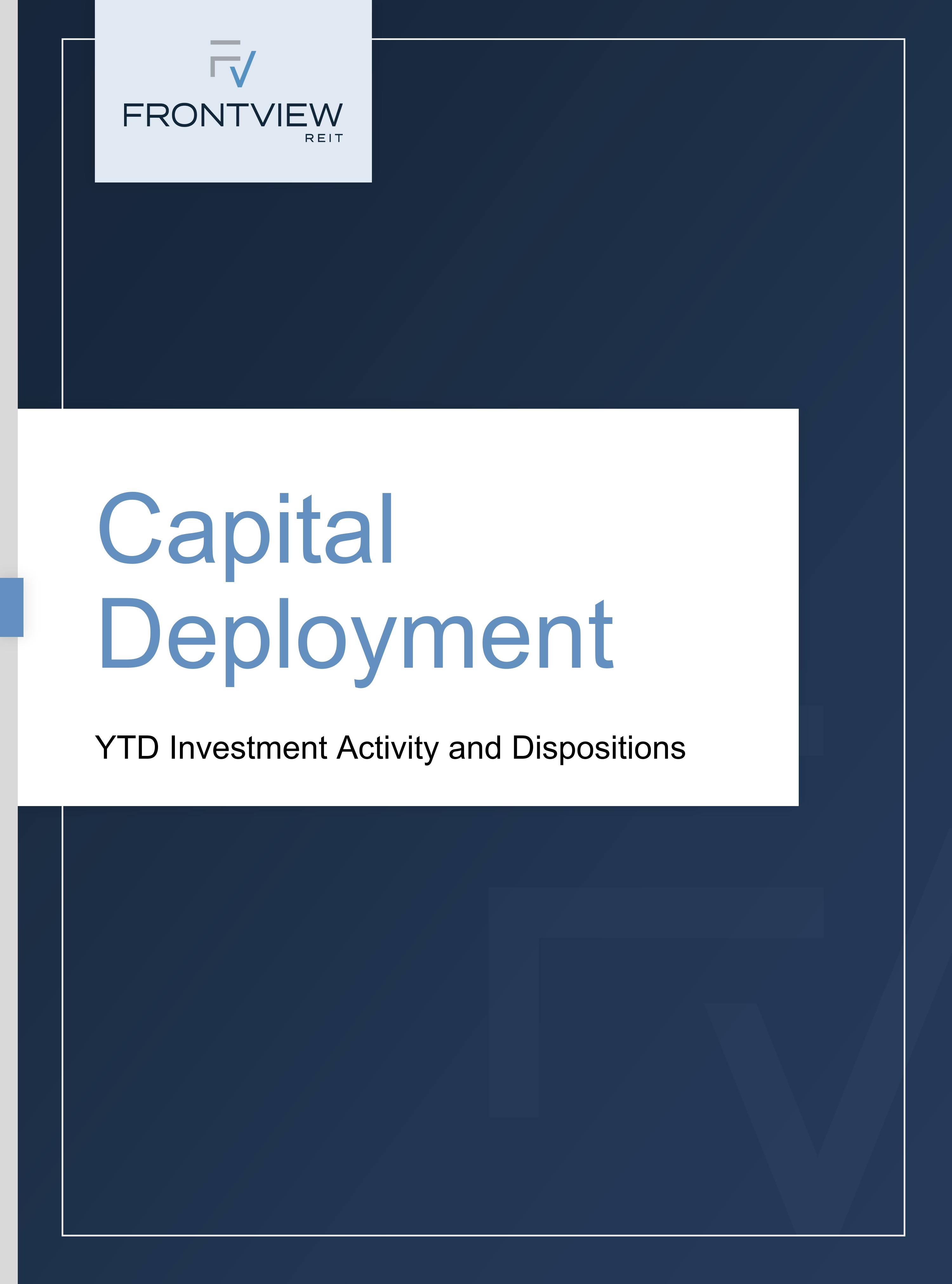
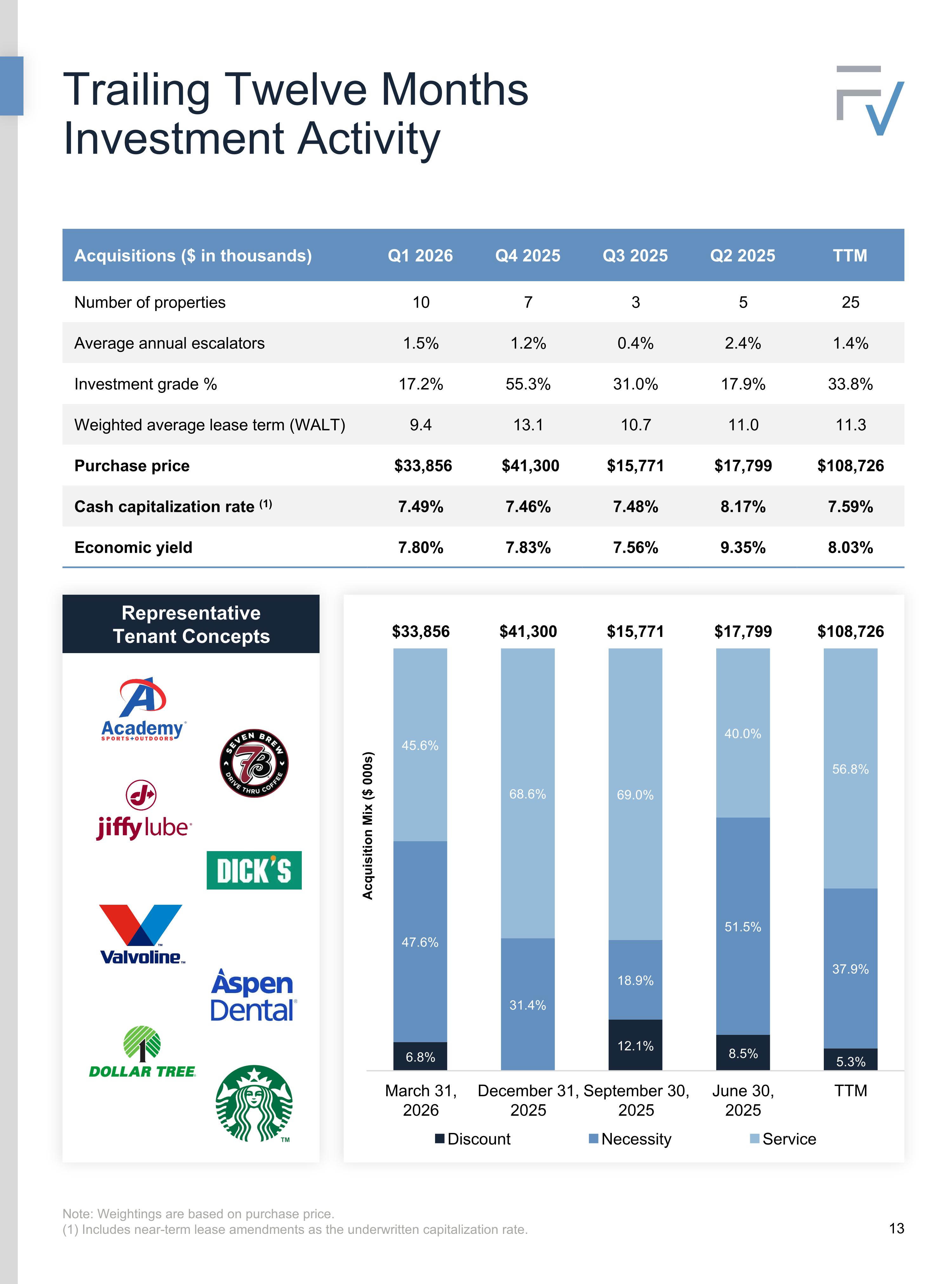
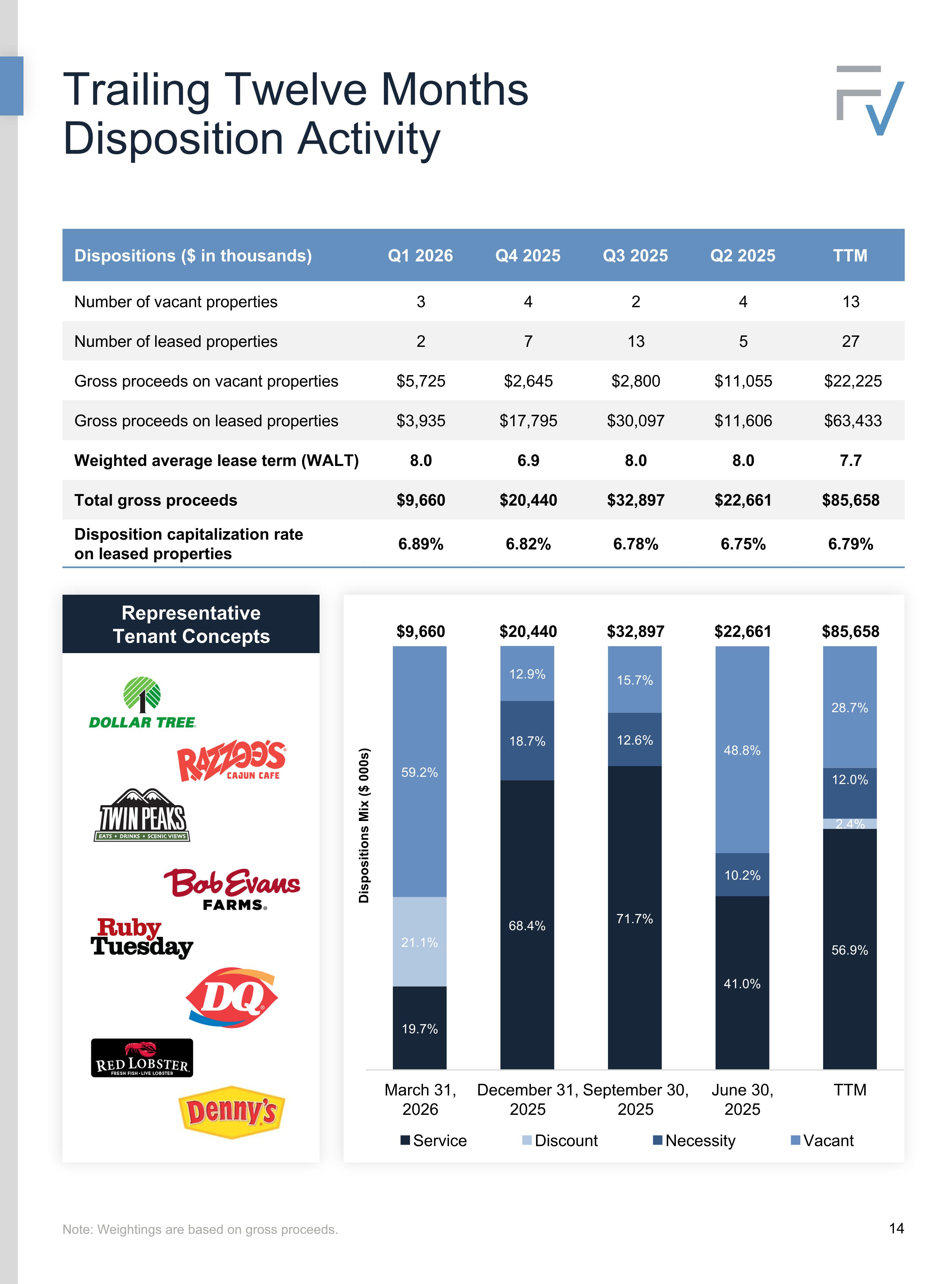
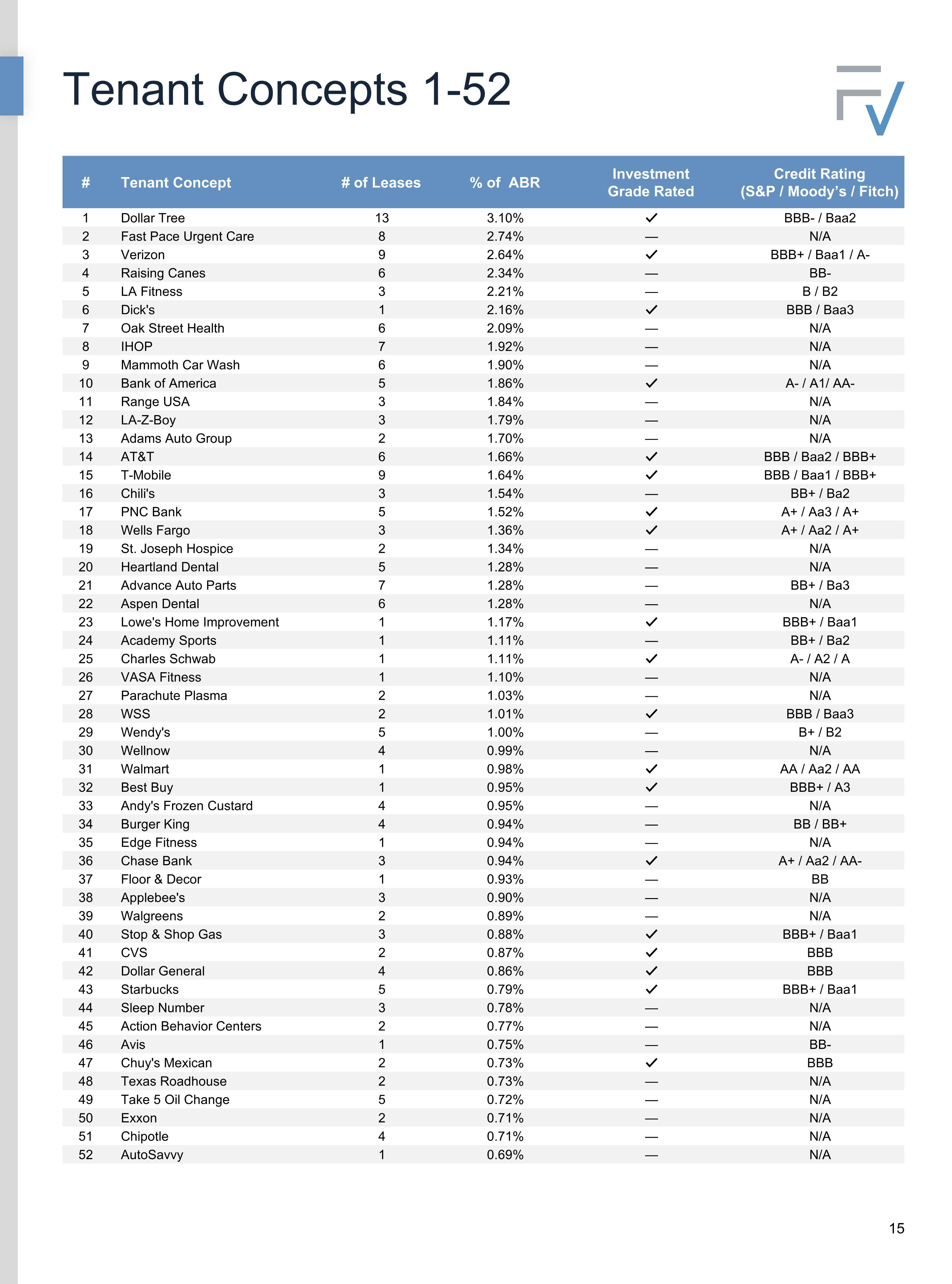
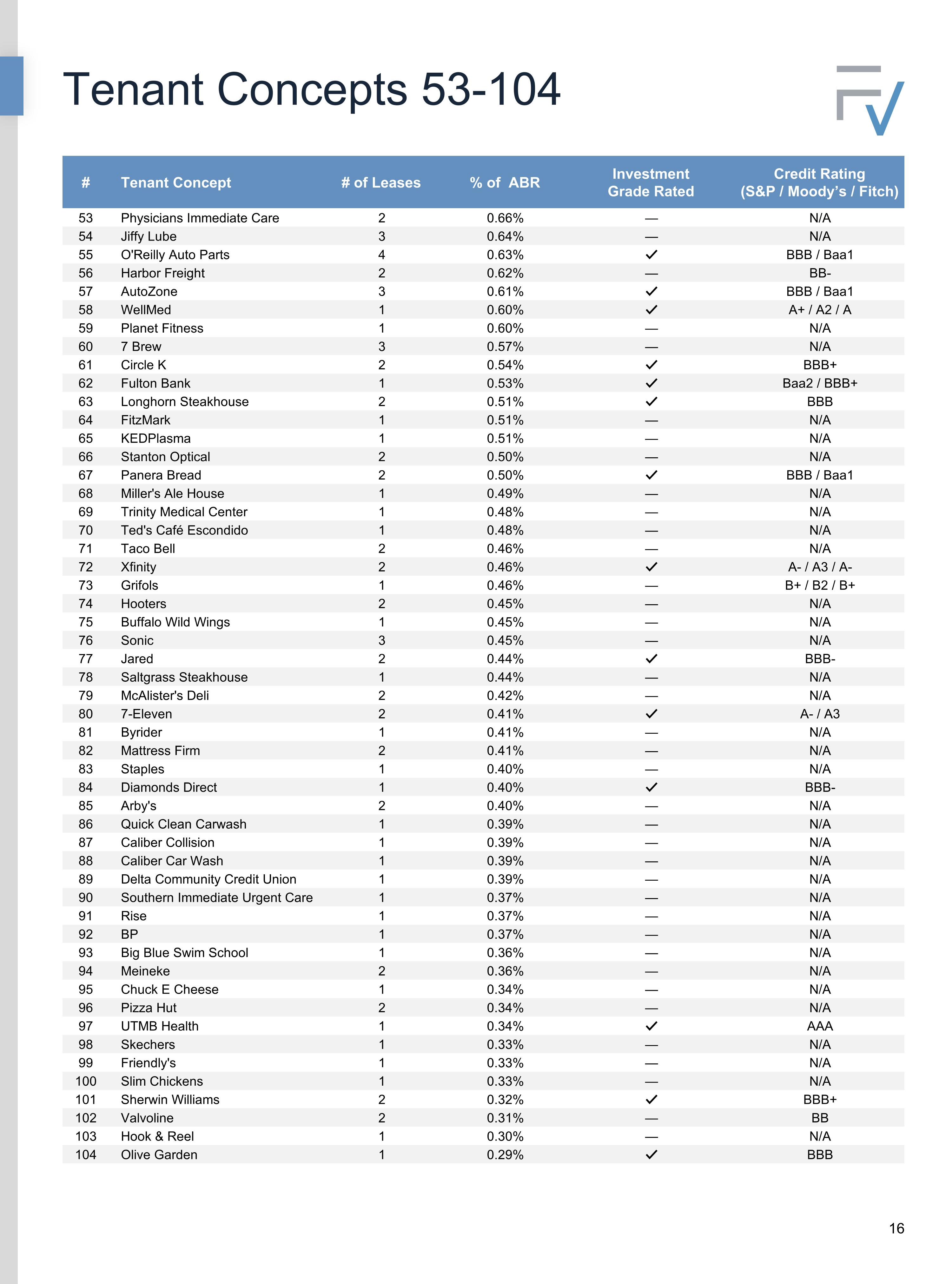
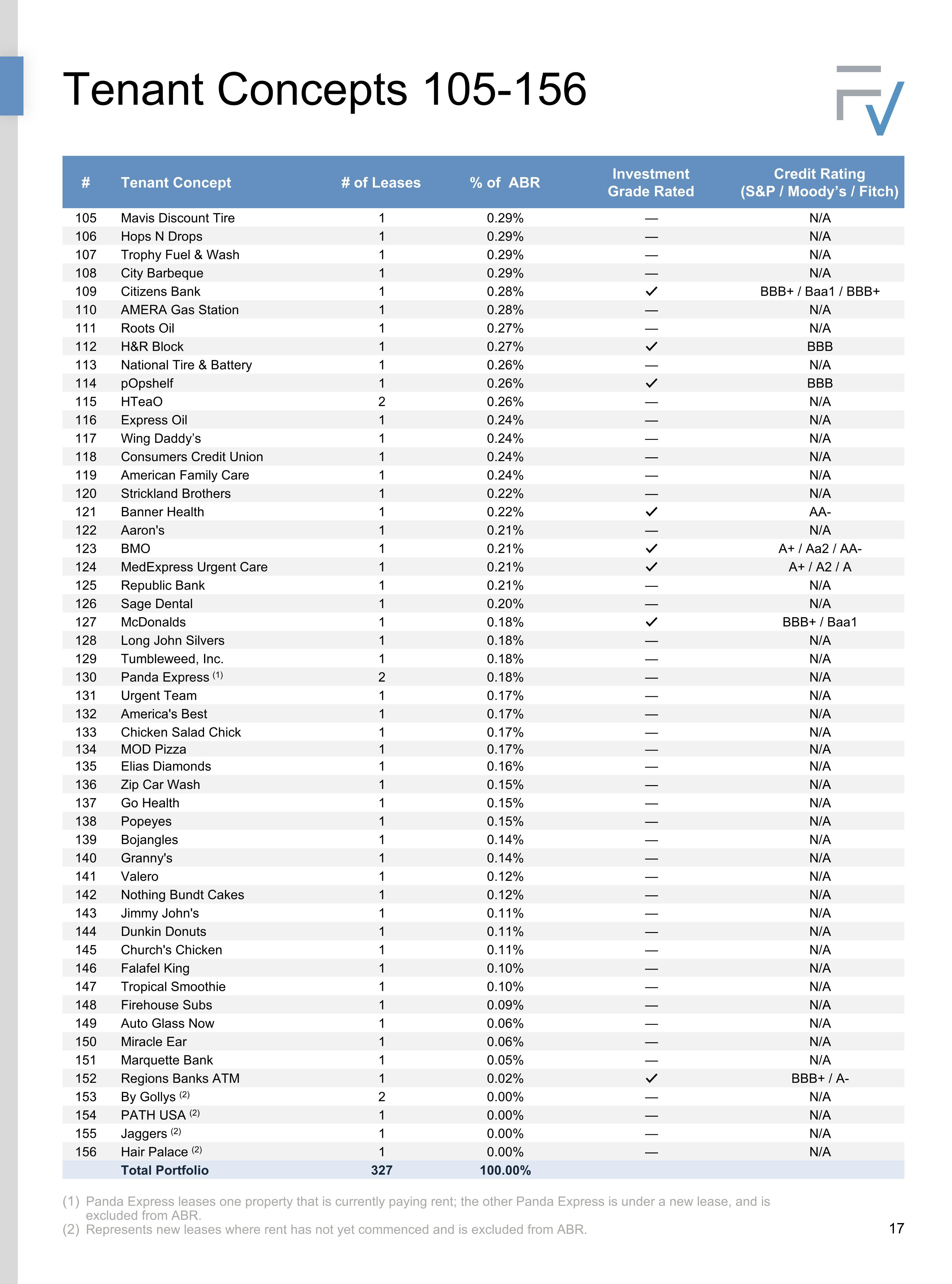
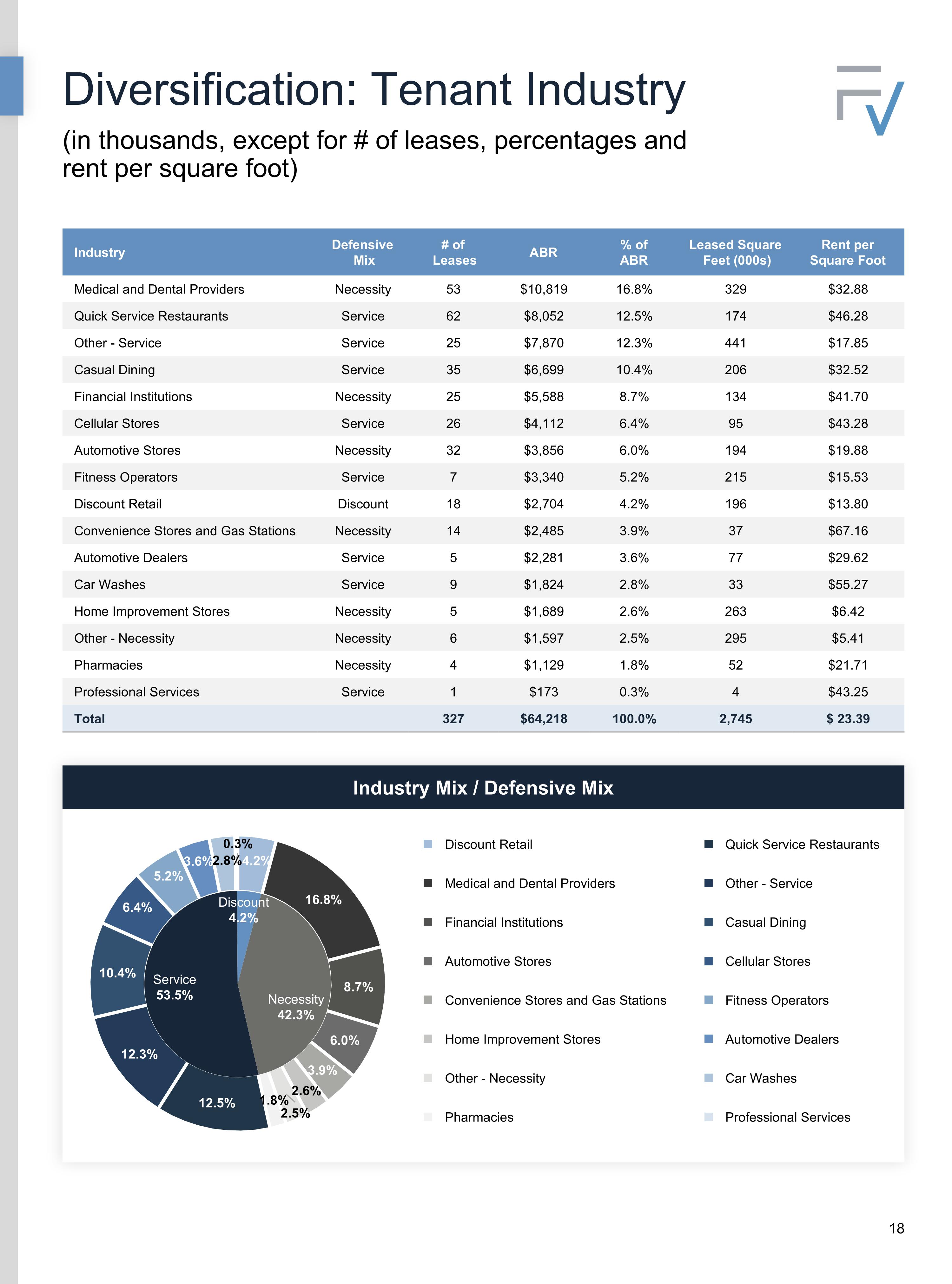
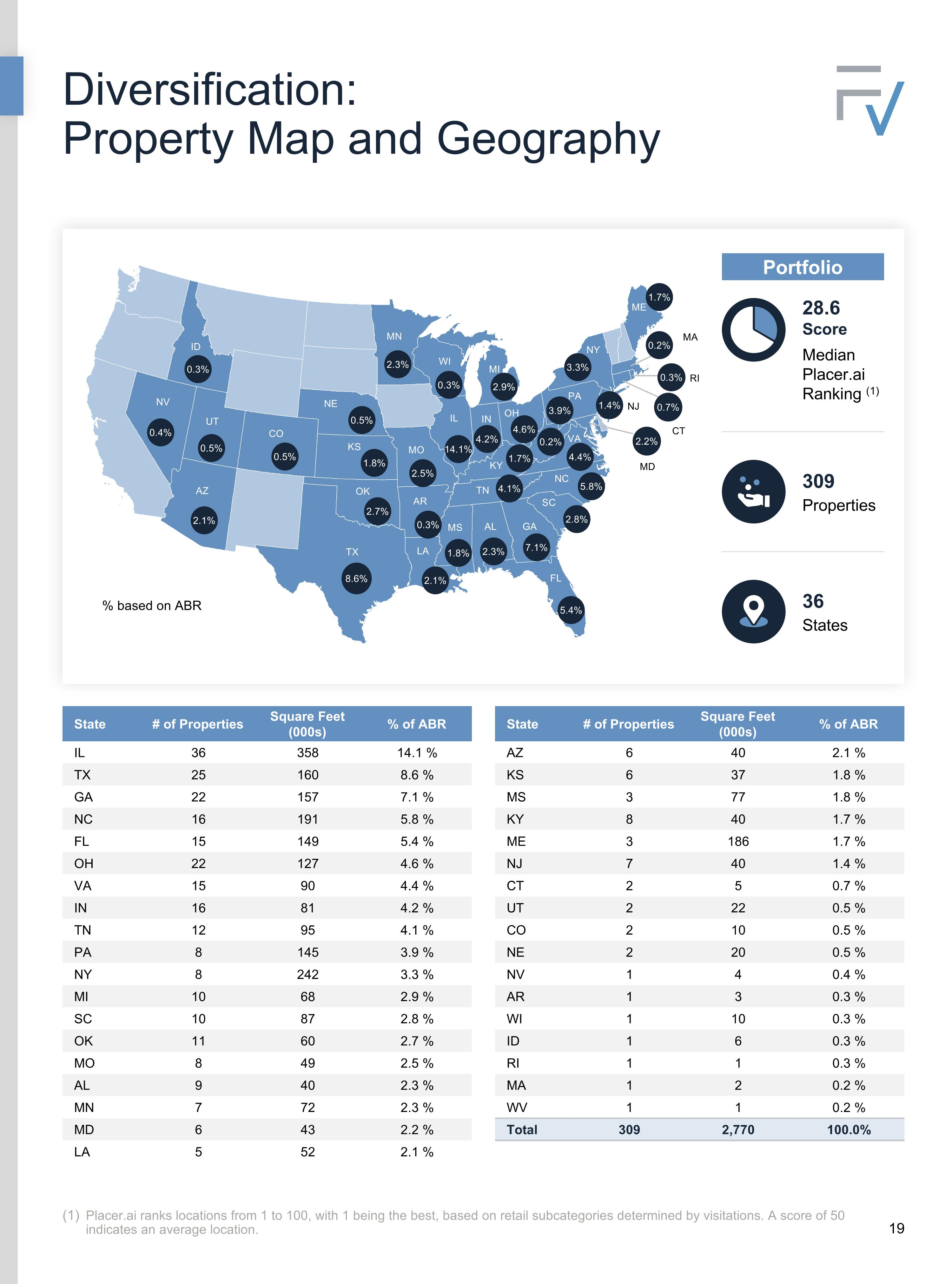
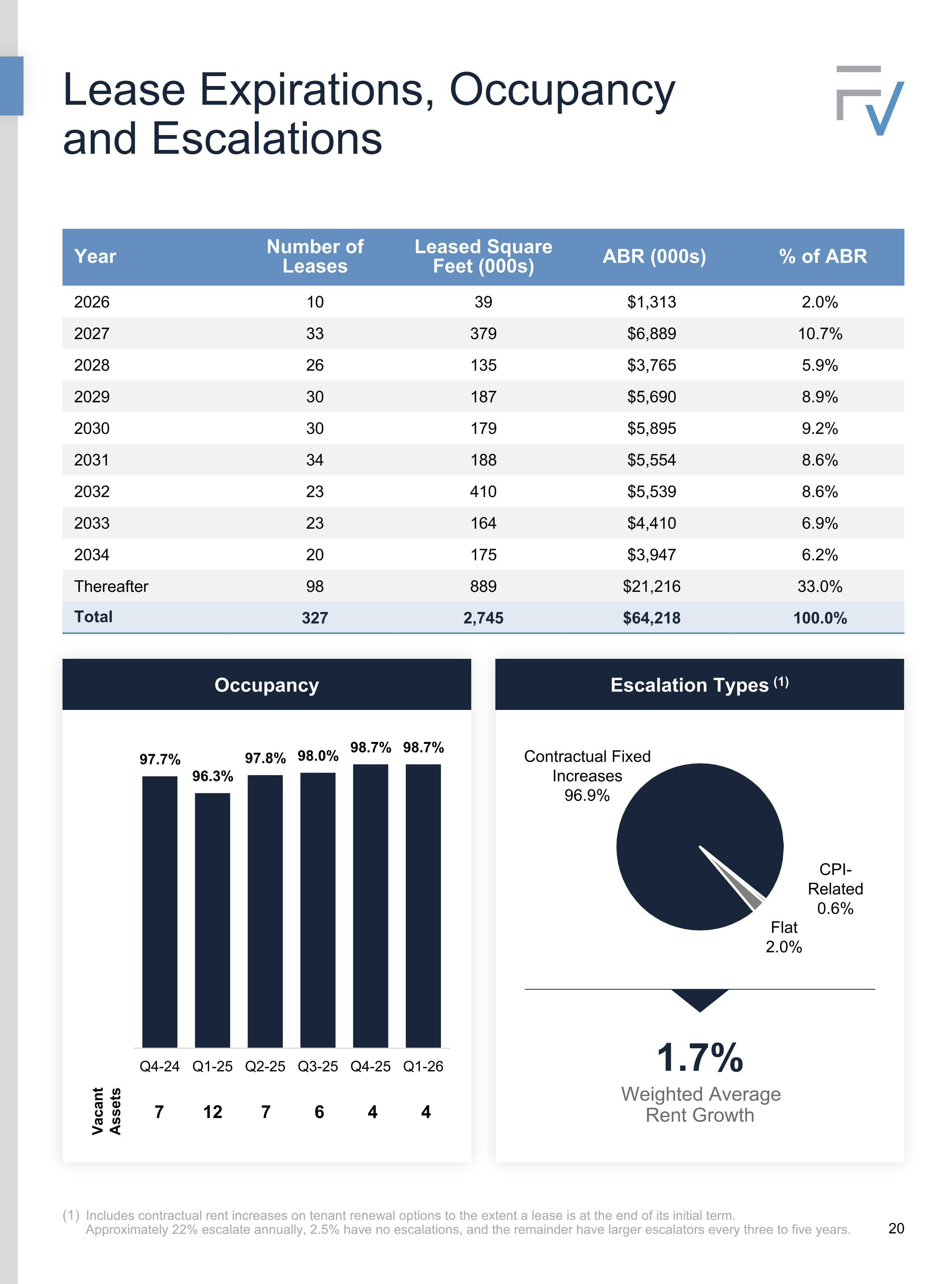
Steve? Thank you, Pierre, and good morning, everyone. This quarter demonstrates the operational and portfolio advancements we have made over the last year. We have elevated the strength of the management team, enhanced our portfolio, deepened tenant and industry diversification, and continued to focus on attractive markets with replaceable rents in high-profile street frontage locations. Since the IPO, we have reduced our largest tenant exposure to 3.1%, lowered our top 10 tenant concentration to 23%, and reduced our restaurant exposure from 37% to under 23%. At the same time, We've invested in technology, data, and processes that improve scalability and decision-making. Frontview is in its strongest position since inception and is poised to deliver compounding growth. Our scalable, real estate-first strategy is focused on acquiring fungible, frontage-based assets typically located in dense retail corridors where underlying land value provides downside protection. Today, 77% of our properties are located within a top 100 MSA, and our average five-mile population is 175,000 people, highlighting the vibrant, desirable markets in which we own and operate real estate. Consistent with this strategy, we disclose each of our property locations through a Google Map link on the portfolio page of our corporate website. We also disclose every tenant and at ABR in our filings. I encourage investors to review these best-in-class disclosures which provide detailed industry-leading visibility into the merits of our real estate, tenant credit, box sizes, and portfolio diversification. As I mentioned last quarter, we will be featuring an acquisition each quarter on the front cover of our investor presentation. This quarter, we are highlighting a Jiffy Lube in Baton Rouge, Louisiana, the second largest MSA in the state and a top 100 MSA nationally. Jiffy Lube is a national automotive service brand and subsidiary of Shell USA with more than 2,000 locations across North America. We acquired the property at a 7.4% cap rate on a 10-year net lease. The site sits directly in front of a Walmart neighborhood market and across from Raising Canes with direct frontage on Kersey Boulevard and approximately 37,000 vehicles per day. At roughly 160,000 of annual rent, the rent basis is replaceable with arguable upside given the visibility, traffic counts, and surrounding retail demand. We were able to acquire the asset at an attractive price and at a significant discount to market by accommodating a seller-specific timing requirement. This acquisition demonstrates Frontview's reputation as a buyer that can solve problems for sellers and source transactions that are not widely marketed. To summarize, we bought a fungible asset with frontage with replaceable rent and a desirable retail node, all at an elevated cap rate relative to the market. Including this asset, we own three Jiffy Lubes representing about 60 basis points of our ABR. In addition to this Jiffy Lube, I would also call your attention to the cover of our annual report where we highlight another one of our properties, a two-tenant building leased to Wells Fargo and T-Mobile. This is an A-plus location across from a Walmart Supercenter in urban Dallas. The property is under-rented at $313,000 annual rent with over 6,000 square feet of rentable feet and is situated on approximately one acre of land on a corner with over 295,000 vehicles per day. This is emblematic of the type of real estate we are focused on securing. For the quarter, we acquired 10 properties for $34 million at an average cash cap rate of 7.5% and a weighted average lease term of 9.4 years. These acquisitions were consistent with the characteristics we target across the portfolio, including a median purchase price of $2.3 million and weighted average placer I score of 26, indicating it's in the top 30% of the category within the state and a median rent per box of $170,000. With respect to acquisition cap rates, we anticipate Q2 26 to settle around 7.3 to 7.4 with volumes generally in line with our guidance. We continue to see significant depth in the marketplace, particularly in smaller transactions where Frontview has real advantages. Since we are not dependent on larger transactions or portfolio deals, we rarely compete directly with large institutional buyers, REITs, or private equity capital. This allows us to secure attractive transactions from multiple sources where our execution and reputation provide us with a competitive edge relative to other less sophisticated parties in the space. We are also seeing select development opportunities where our extensive retail development experience may allow us to achieve meaningful wider yields while maintaining a disciplined approach to risk. Our team's decade of historical experience developing out parcels, along with developing retail and large format shopping centers, makes us uniquely qualified to underwrite and evaluate development opportunities. This capability is already established at Frontview. We have completed several successful value-creating developments, including a Miller's Alehouse to a Raising Cane's, a Sleep Number to a Seven Brew, a Burger King to a Chipotle, a Twin Peaks to a Jaggers and a Panda, and a new Bank of America ground lease in front of our Walmart in Rochester. Collectively, these projects created about $10 million of incremental value, representing an approximately 90% increase in value to our shareholders over and above our original purchase price. Although we do not currently have any third-party development assets under formal contract. We expect to begin a limited development program over the next few quarters and look forward to generating outsized risk-adjusted returns on these assets. Regarding dispositions, we sold five properties for $10 million during the quarter at an average cash cap rate of approximately 6.9% for the occupied assets, with a weighted average lease term of eight years. We sold a Dollar Tree in Vermillion, South Dakota, which did not align with our real estate first focus and an underperforming McAllister's deli. Asset recycling is part of our strategy, and we expect this position to be incrementally focused on fine tuning the portfolio and pruning less optimal locations and concepts. Switching to the portfolio, we ended the quarter at approximately 99% occupancy with only four vacant assets. Importantly, our view of vacancy is shaped by the quality of the underlying real estate. Historically, when we have re-tenanted properties we achieved, rent spreads north of 110% of prior rent, which reinforces our willingness to be patient and pursue the right long-term outcome rather than defaulting to a quick sale. During the quarter, we successfully re-tenanted three expiring locations, a CVS in Chicago, a Dollar Tree in Newark, and at Twin Peaks in North Carolina. As highlighted on page 3 of our investor presentation, these transactions in total generated over 23% increases in rent relative to the prior tenants, reinforcing the embedded value of our real estate and the strength of our locations. These properties create a temporary drag in 2026 because repositioning takes time. However, the right answer is to be patient. By focusing on quality locations, fungible boxes, and replaceable reps, we can generate stronger outcomes. These retenantings create meaningfully greater long-term value than simply selling the asset quickly and redeploying the proceeds. Over time, this approach enhances organic growth, as our high-quality real estate appreciates. With multiple proven levers to create value, including active asset management, re-tenanting, and accretive acquisitions, we are well-positioned to generate returns both through growth and expertise, not simply relying on outside capital or market conditions. We are aligned with our shareholders, and we will continue to capitalize on value-enhancing opportunities positioning us to outperform. With that, I'll turn the call over to Pierre to review the quarterly numbers and guidance. Pierre? Thanks, Steve.
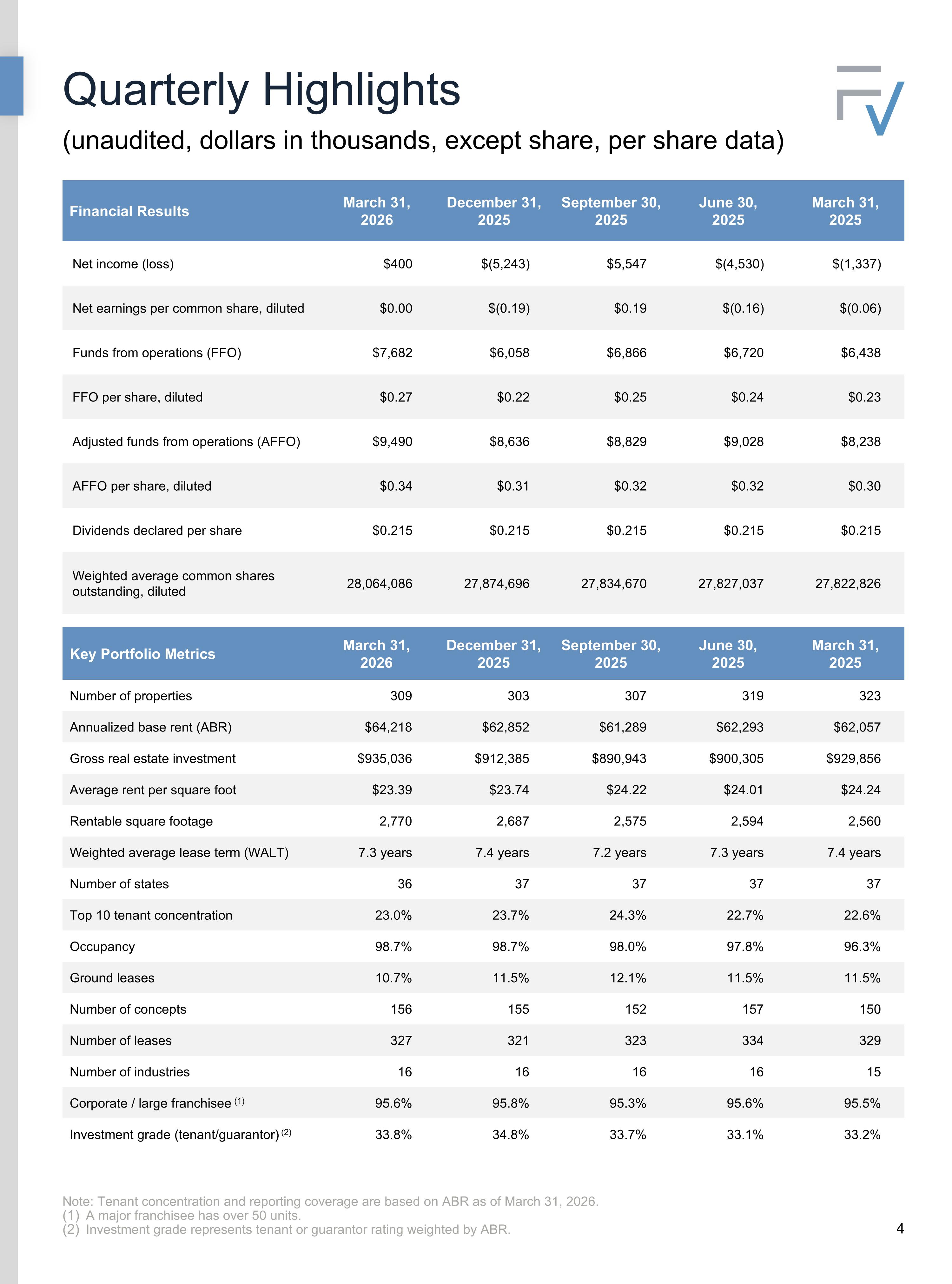
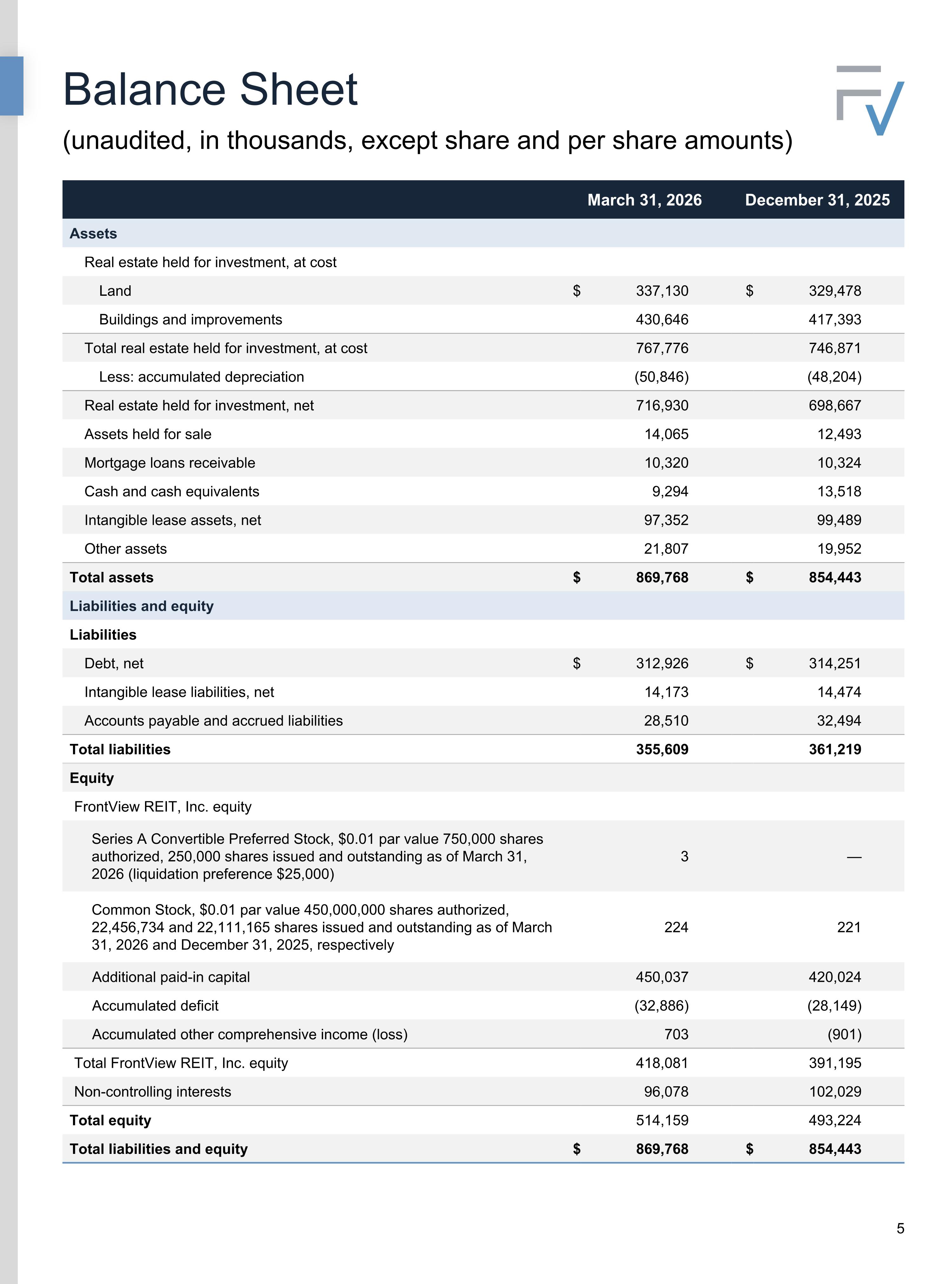
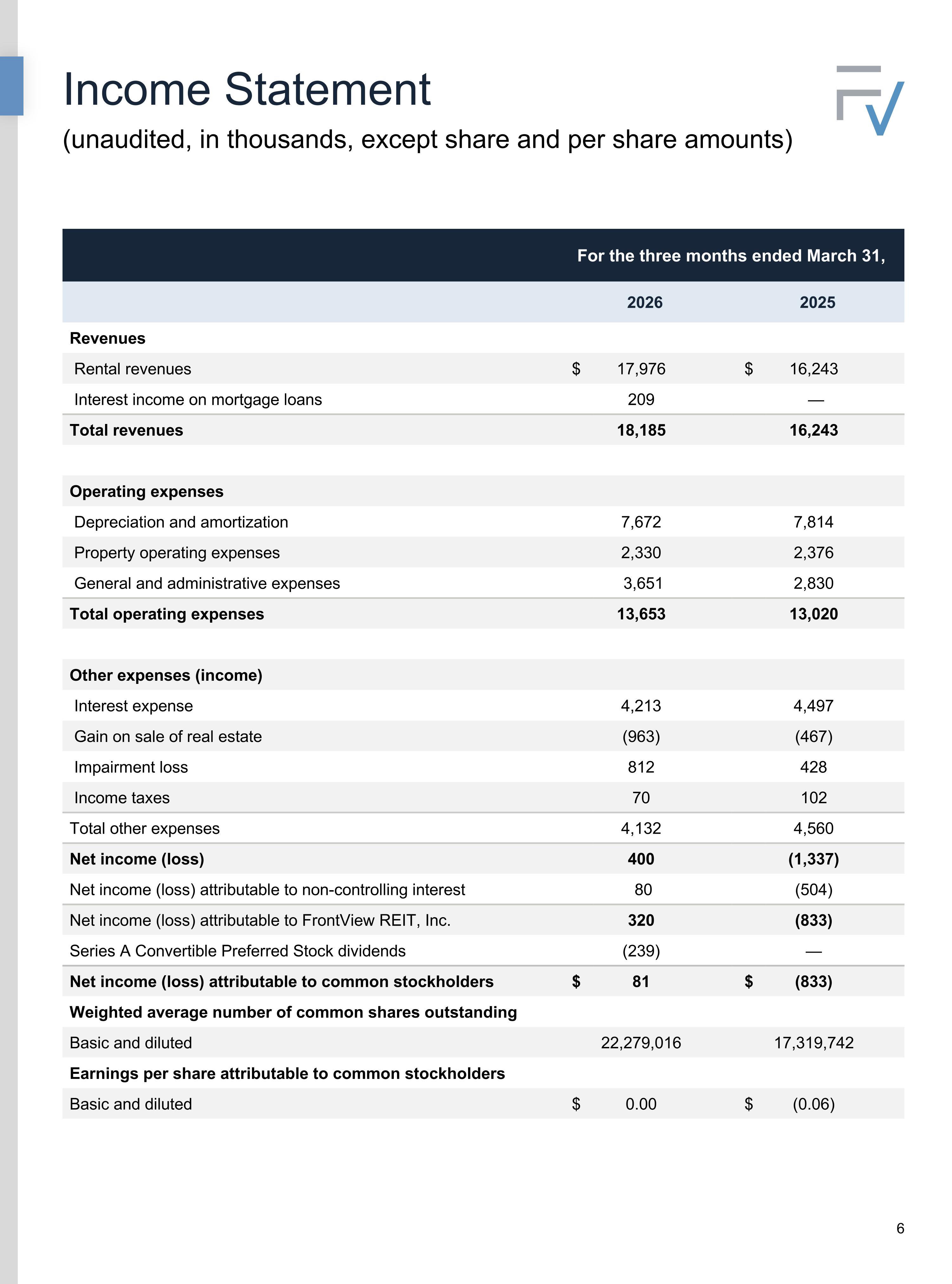
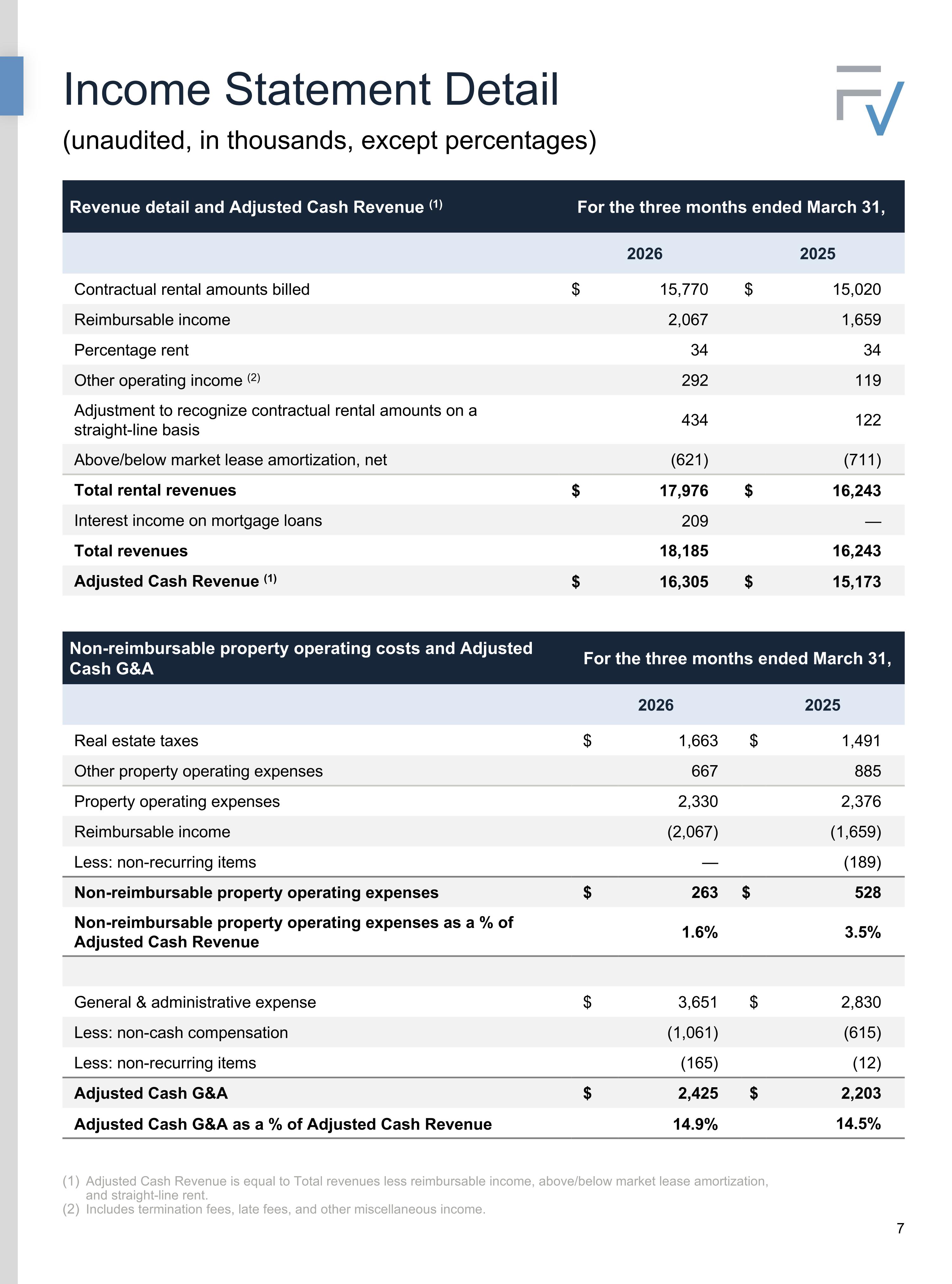
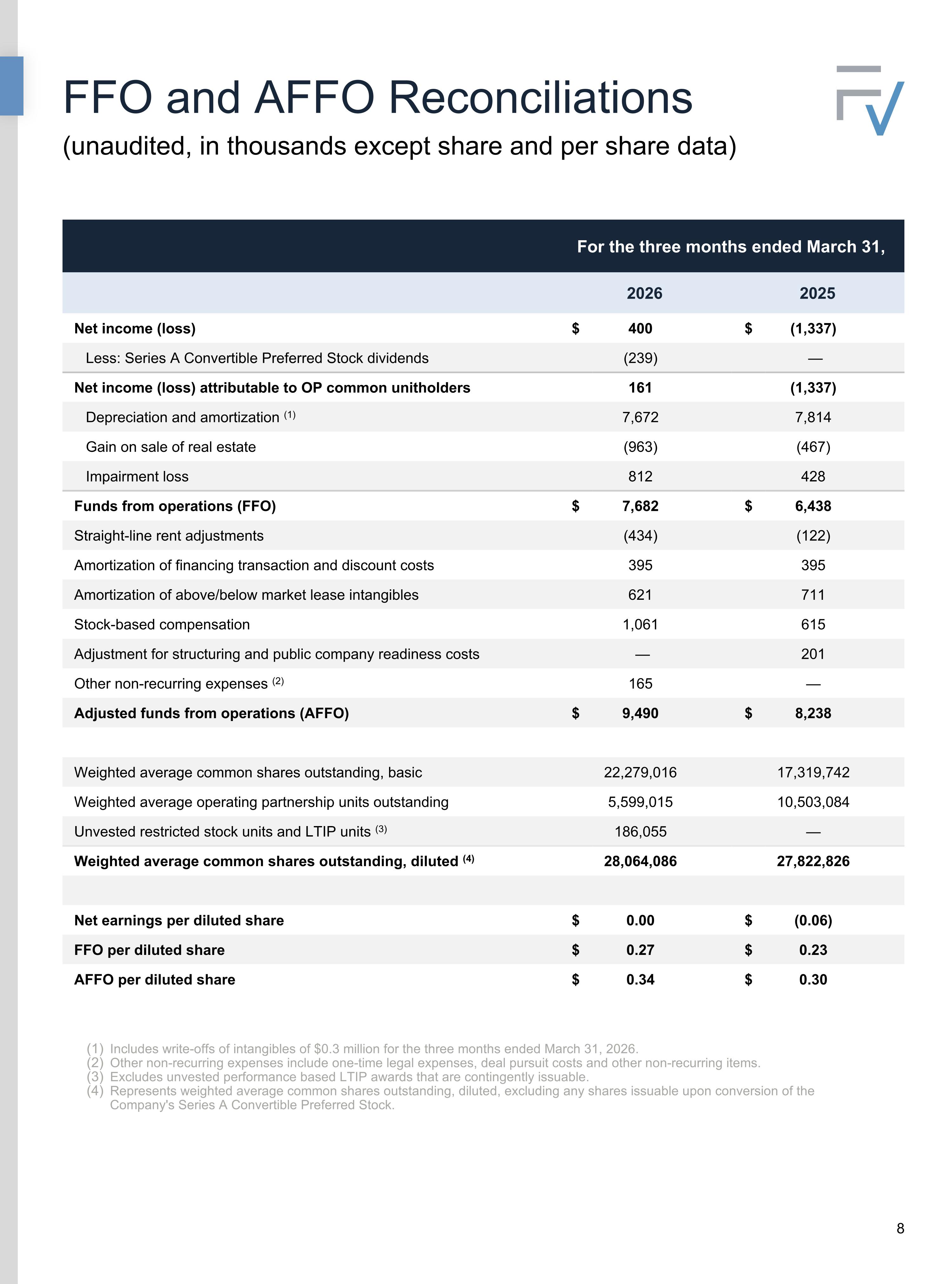
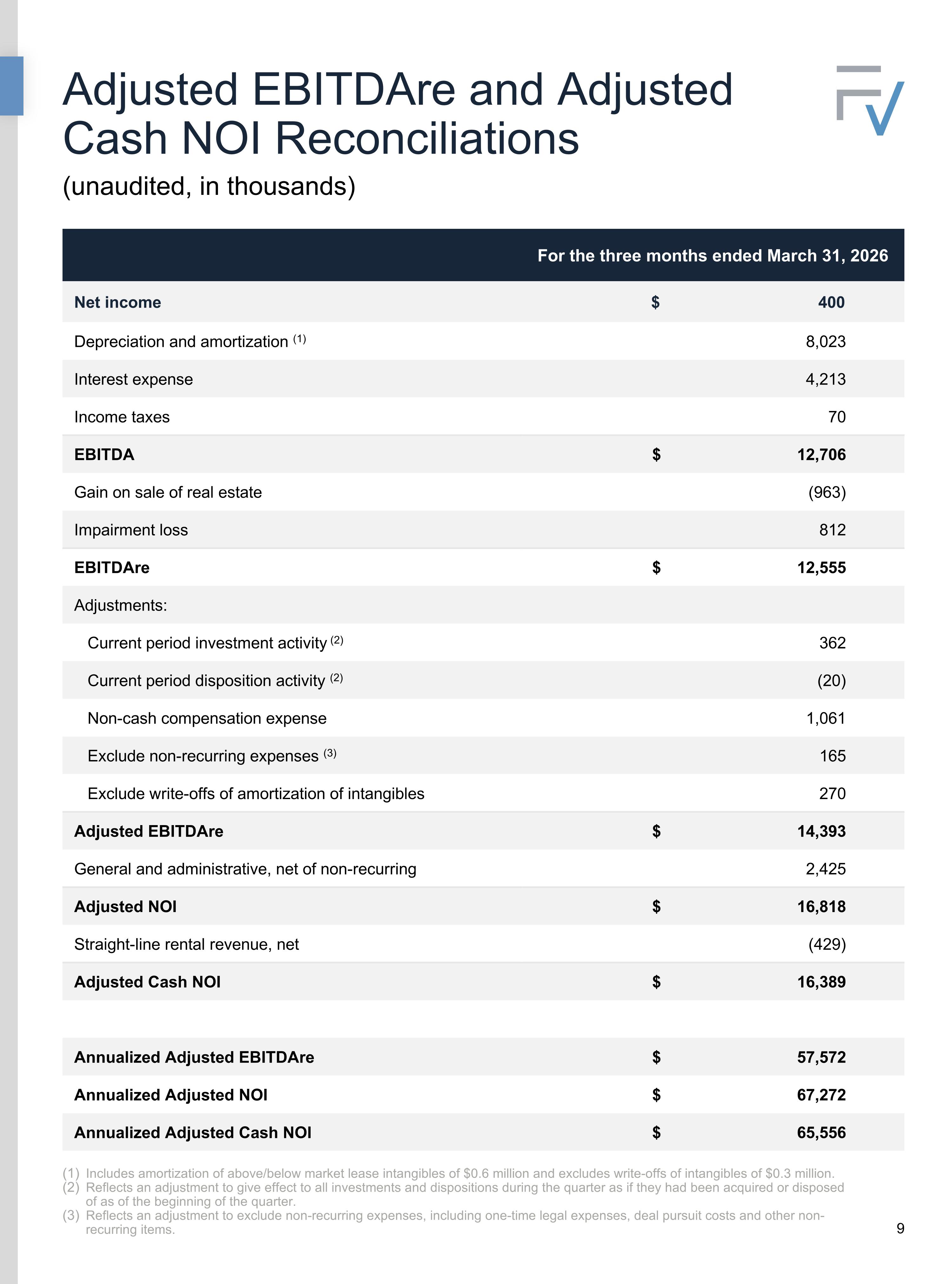
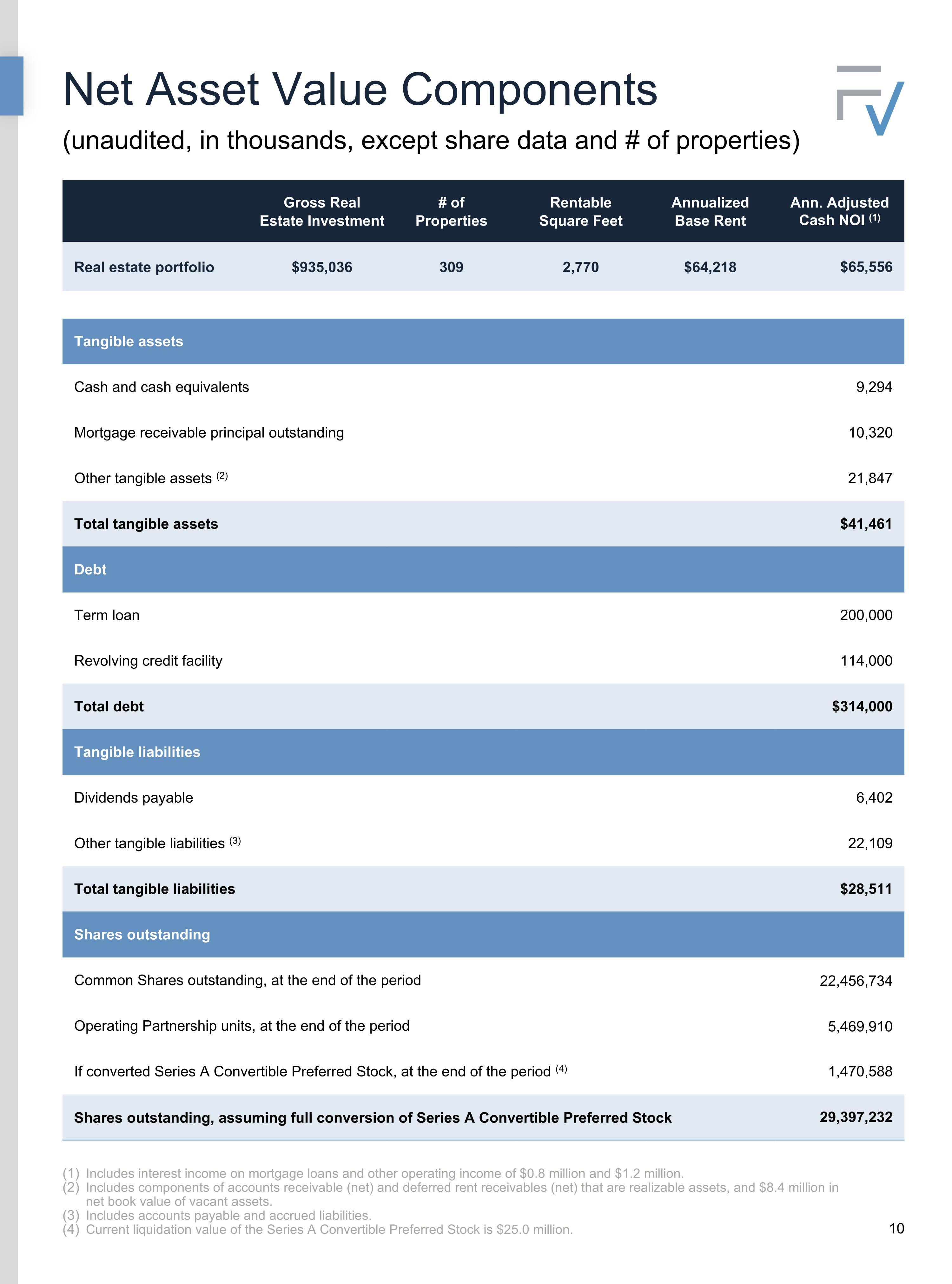
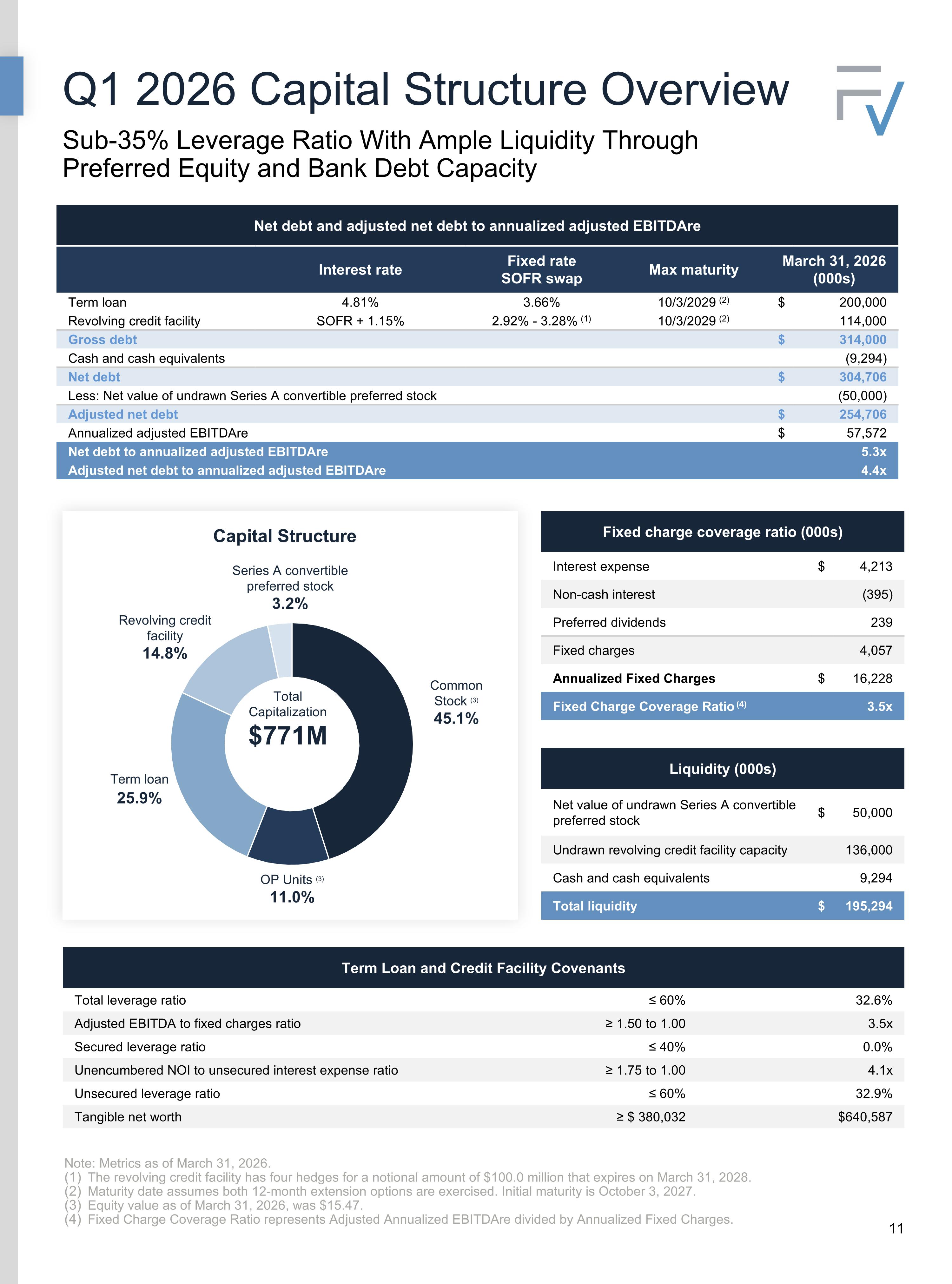
We had a strong operational quarter driven primarily by improved cash NOI and accretive capital deployment. Our adjusted cash revenue, which excludes reimbursement income and non-cash items, increased $707,000 sequentially to $16.3 million. The increase was driven by $75 million of acquisitions completed over the last two quarters, as well as a $274,000 lease termination fee related to a dark take five property. We subsequently sold the vacant asset for $1.7 million, generating close to a $700,000 gain over our original purchase price, highlighting the strength of our basis and underlying real estate. During the quarter, we enhanced our revenue disclosure by separately presenting other operating income, which includes termination fees, late fees, and other miscellaneous income generated through active portfolio management. These amounts are a normal part of operating a diversified real estate portfolio, but they are more episodic than base rent or percentage rent. Although this level of detail is not commonly broken out by net lease REITs, we believe the additional transparency helps investors better understand the underlying drivers of our results. This change is consistent with our broader commitment to best-in-class disclosures and is reflected in our Form 10-Q and is highlighted in both our supplemental and investor presentation. Our non-reimbursable property costs decreased $385,000 sequentially to $263,000, or 1.6% of adjusted cash revenue, compared to 4.2% last quarter. This meaningful improvement was driven by improved occupancy, higher recovery income, and the impact of portfolio optimization work completed in 2025. As Steve mentioned, we also have three properties currently being re-tenanted that contributed $181,000 of base rent in the first quarter. These three properties have already been leased to four tenants, with the majority of the rent commencements staggered over the next 12 to 18 months. Once stabilized, we expect quarterly rent from these assets to increase to approximately $225,000. First quarter cash NOI benefited from termination income, rent from the three properties currently being retenanted, and unusually low property cost leakage relative to the 2.5% to 3% range we anticipated for 2026. After normalizing for these items, second quarter run rate cash NOI on the current portfolio would approximate $15.7 million before the incremental benefit from the recently executed re-tenanting leases, or approximately $700,000 lower than Q1 actuals. Our adjusted cash GNA was $2.4 million, consistent with prior quarter. As we continue to grow our asset base, we have meaningful opportunity to create operating leverage by building the business the right way through disciplined processes, better data and technology, and a platform that can scale with limited incremental G&A. Beginning last fall, we began investing in select technology partnerships, enterprise licenses, data analytics, and workflow applications to improve the efficiencies and operations of our business. These investments are building blocks in our effort to create an AI-native net lease reach. Importantly, these tools and process changes are not a substitute for real estate judgment. They complement the deep real estate experience built over decades as private developers, or what we often refer to as our developer DNA. Our objective is to build scalability, improve decision-making, enhance risk management, and drive efficiency with an emphasis on data analytics. Turning to the balance sheet, our revolver balance decreased modestly to $114 million, and our cash interest expense declined $86,000 sequentially to $3.8 million. Net debt to annualized adjusted EBITDA RE improved by three-tenths of a turn to 5.3 times, while LTV fell to 32.6%, and our fixed-charge coverage ratio remained strong at 3.5 times. Including the remaining $50 million of available convertible preferred equity capacity, Adjusted net debt to annualized adjusted EBITDA RE was 4.4 times. We also announced a quarterly dividend of $0.21.5 per share, which represents a 63.2% in AFFO payout ratio. This is our lowest payout ratio since becoming a public company and provides more free cash flow to fund higher growth. Turning to guidance, we are maintaining our fully funded net investment target of $100 million and raising our AFFO per share guidance range to $1.29 to $1.33. At the midpoint, this represents 5% year-over-year growth and at the high end, approximately 7% growth. The increase in AFFO per share guidance is primarily driven by our strong first quarter operating results and continued portfolio performance to date. We remain disciplined in capital allocation and our fully funded investment target provides meaningful visibility into our ability to grow, while maintaining a conservatively levered balance sheet and dividend policy. As we said before, our smaller size is a structural advantage. With only $100 million of net investment, we can generate elevated AFFO per share growth while remaining disciplined in our capital allocation criteria. Our cash flow per share growth is built on frontage-focused portfolio that is intentionally diversified across tenants and industries, yet concentrated in the attributes that matter most as real estate investors, targeting top 100 MSAs, fungible boxes, and replaceable rents. When combined with our discount to NAV, our growth profile is not yet reflected in our forward AFFO per share multiple. To help frame that disconnect, we included pages 24 and 25 in our investment presentation, which compares front-view's growth, diversification, and valuation relative to peers. Front-view's growth profile is already among the most competitive in that lease sector, while our AFFO multiple relative to growth remains among the lowest. In our view, that gap does not reflect the quality of the real estate we own, the multiple avenues that drive front-view's growth, or the long-term value creation embedded in the portfolio. you. With that, I'll turn to call over the operator to open it up for Q&A. Operator?
Operator
We will now begin the question and answer session. Please limit yourself to one question and one follow-up. If you would like to ask a question, please press star 1 to raise your hand. To withdraw your question, press star 1 again. We ask that you pick up your handset when asking a question to allow for optimum sound quality. If you are muted locally, please remember to unmute your device. Please stand by while we compile the Q&A roster. Your first question comes from Anthony Paolone with JPMorgan Chase. Please go ahead.
Great, thanks. Good morning, everybody. My first question is, you brought up the idea of looking at development deals. Can you maybe expand on that a little bit and give us a sense as to what order of magnitude you're looking at right now, who your partners might be, how you might structure these sorts of things. Just a little bit more detail there would be great.
Yeah, sure. Good morning, Anthony, and thank you. Good question. I'll start with as a management team. We've been historically involved in significant retail development activities. We're going to look to develop when risk is mitigated. Certainly that'll mean that we've got a signed lease, that we've got entitlements in place. That means like your site plan is in place. We've got costs in place through a general contracting contract. And we've got, of course, zoning. And then we're going to have building permits in tow as well. We're going to start small. We think that it's going to be small capital allocations, It may be $1 million to $3 million of equity for any one transaction. And ultimately, it's very important that we want to make sure that we've got sufficient spreads. I mean, that's certainly why you're doing development in the first place built into the project. And so we expect that we'll be doing our own development and that we'll be developing with sophisticated partners as well and expecting somewhere between 100 to 200 basis points of spread built into the project. I think it's also important to note, too, that development is certainly not new to front view as well. We've already completed several developments in our portfolio. We've completed a Miller's Ale to a Raising Cane's, a Burger King to a Chipotle. We did a Sleep Number to a Seven Brew. Of course, the Twin Peaks that we've been talking about to two separately plotted tenants, Jaggers and Apanda. And then ultimately, we created a Bank of America in our Walmart Rochester out parcel from scratch under vacant land. So we're very suitable and ready to embark upon a development program. And these activities, too, I think that is important to note have brought about $10 million of value increase over and above our purchase price across those assets. So this can be a good engine for us and very accretive. And, again, we're going to take it slow in the beginning.
I would just add to that, Tony, the legacy of the company as a developer goes back even in the NADG days. They were partners with Kimco in a lot of projects as well. There's a lot of understanding on how these partnerships work. And then both Steve and the team here has these relationships with these developers, have done it for a very long time. And that's why it sort of makes sense if you find the right partnership, the right deal with the right real estate qualities that we're pursuing.
Okay. Thank you for all that color there. And then just my second question is on the leasing side. You guys seem to be off to a good start there. Can you maybe just give us a little bit of a look ahead and anything you're picking up in terms of potential known move-outs or how things are going as you look out through 2027?
Yeah, I think that's maybe kind of like a – call it a credit watch list or call it sort of a bad debt question. And, you know, everything feels, you know, pretty good right now, you know, as we look forward. We have the watch list. I think it's pretty minimal. Again, coming from last quarter as well, we've got no material changes or additions to that watch list. Seems very healthy. We've got, I think it's similar, we're watching a Go Health, the sleep number, maybe a couple of small urgent cares and a couple of gas stations. But otherwise, it feels pretty good. We've worked through the pharmacy, you know, throughout the portfolio. And, you know, that exposure is, you know, roughly about, you know, 2% or less. And then our total sleep number exposure is, you know, roughly, you know, 70 basis points across all three. And sort of just extrapolate a little bit on that. I'm sure someone else asked this as well. You know, but, you know, we expect sort of that bad debt to be in that 50 basis points. And it's really right now, very little, you know, is known. And so mostly it's, you know, about the, you know, sort of the unknown at this point.
And then in terms of just the lease expirations, like we have 10 expirations coming up and there's nothing really in there that we expect to be problematic. We have a couple of vacancies. We have four properties. We're working through those. I think that we talked about Smokey Bones last quarter. We did sign a lease. We're working to sign a lease on that one, and we have a Walgreens as well that we're working to sign a lease. And so those would be potential pickups as we look forward, but we feel very comfortable around the expiration schedule.
Yes, actually, that'll be a good one. The Smokey, that's an asset that we decided to take our time on, and that's looking like it's going to become two tenants as well. So, again, you know, the virtues of the real estate that we buy and the demand that tenants have for this real estate. And then that one other, Walgreens, that closed, we've got hopefully a good tenant that's going to backfill that, that we're very close to finalizing that everyone will be very happy to hear and learn about. So, again, I'm very excited about our ability to continue to retenant and create very, very strong recapture rates relative to where we were prior. Great. Thank you.
Operator
Your next question comes from Eric Borden with BMO Capital Markets. Please go ahead.
Good morning. Thanks for taking my question. And just following up on the recapture rates and the lease expiration schedule, you know, just curious if you could help quantify the mark-to-market or recapture rate that you're, you know, hoping to achieve, you know, on the 10 lease expirations in this year and then the 33 in the following year.
Yeah, sure, of course. Yeah, no, just to, you know, expound upon the expirations, you know, I'll start with, you know, that theme, which is accurate. We've got quality real estate, it's desirable, it's fungible, and our portfolio is exceptionally diversified. We view these lease expirations, I think, as evidenced, as opportunities for us, and we aren't looking to quickly sell these off before expiration. So for some context, Eric, since 2016, we have had 51 tenants renew, 45 have renewed to the same tenant and six renewing to a new tenant. And we're about 106% rental rate recapture and our overall renewal rate is about 90%. So the, you know, the comment about 26 and coming up on 27, the tenants that are renewing are about to expire. They're in the top quartile in Placer. So they're performing well. In 26, we're already through half of, you know, the expirations and we have increased rent income. I think we only have about nine left. So we expect 26 to, again, just like historicals, be a very positive year. And then we expect 27 to follow that same suit. And we're already in discussions with a number of those tenants. So again, very, very, very real estate focused and tenant driven based on that quality of real estate.
And I'd also add, Eric, to point you to page 12 of our investor presentation. There's several stats here around the placers, the populations, but the one I'd call out is a median rent per box over the next five years of all the expirations is $156,000. So if you go to our website, you look at our boxes, you sort of know what's there. That's very good basis. So most people will renew as expected, but the off chance of the 10% that may not renew or choose not to renew, maybe in 27, we're going to be able to resolve that. and get higher rents.
Thank you. Appreciate all the detail. My follow-up question is on the disposition spread and over acquisitions that you achieved in the quarter. It was approximately 60 basis points. And I'm just curious, how repeatable is that spread as you look to complete your net investment goals this year? Thank you.
Yeah, I would say very repeatable. And we'll just use historical data to hit that home. So, so far in the last 25 and into 26, we have sold off about $86 million of property. And that's about a 6.97 cap rate. It's about average. And that's obviously considerably below where we're trading at, you know, close to an eight or in the upper sevens. And those are the assets that we've sold off that are not our best assets. They're certainly not our Chipotles. They're not our Raising Cane. They're not our Walmarts. They're not our Lowe's. You know, these are assets that we sold off to optimize the portfolio. And, you know, just to give everyone a little bit of a flavor, you know, just the types of assets that were sold off, Twin Peaks that filed for bankruptcy, Red Lobster, we sold off Ruby Tuesdays that was previously in bankruptcy, Cafe Rio, which has been closing off some stores. We've, you know, sold off, we sold off at Dark Bojangles and, you know, a Denny's franchisee. And if you kind of go through that list, not to keep everyone any longer, but again, these are not the best assets that we have in the portfolio, and they were sold off to optimize, and we certainly expect to continue with cap rates in that realm. And if we were to add in a couple of the hot assets, then you'd see that drop materially.
Operator
Your next question comes from Ronald Camdem with Morgan Stanley.
Please go ahead. great um maybe just start on staying on sort of the capital recycling you could talk a little bit more about just what the acquisition pipeline and cap rates uh how those have been trending and then just on the disposition side clearly there's always proving to be done but um is are you mostly through or or how should we think about what's left uh to be sold thanks yeah let me just start with the dispo you know i think that you know the uh the optimization you know is is fairly close to complete i think it's always prudent to be managed with the portfolio so we expect that we're going to continue to have dispositions and we probably expect
you know somewhere in the uh you know we were about 80 you know probably about 40 to 50 uh this year of dispositions um you know in the aggregate so down about a half you know with respect to cap rates, you know, we were about 7.5, I think, for the quarter. We, you know, the market's pretty stable. We expect, we're sort of forecasting cap rates Q2, somewhere in that 7.3 range. You know, maybe, you know, similar to that, we think, we usually try to only guide to one quarter, but similar to that probably in Q3. You know, in the market, there is increased institutional interest just generally in net lease. There's abundant, I think we all know this, but there's really abundant amount of capital that's really setting the tone for the market you know we play in a different market uh leverage for the smaller buyers a little bit easier to obtain from some of the smaller banks and you know cap rates in the shopping center retail area have come in you know pretty significantly um you know not not quite the same for for our space so we still feel very good again with that stable market and i think also the the seven three versus maybe you know, some of the historical cap rates that we've seen, we're going to be focusing a little bit more on, you know, what we call sort of like, you know, good hot states, like we've got Texas, where there's, you know, increased population growth, Florida, Georgia, Arizona, etc. And cap rates can be a little bit tighter there. They're generally a little bit more friendly states from a landlord standpoint. And then, you know, to kind of like hit on your pipeline question, you know, we've got, you know a very strong deep pipeline you know i would say that you know the pipeline has at this point you know which is expected q2 sort of in tow we've got q3 right now it's effectively set and in tow and we're seeing you know a lot of great opportunities i mean we're buying the same stuff that that you see in our portfolio we're buying great real estate with frontage you know that are low rents they're you know we say typically from sort of motivated sellers or circumstantial sellers. Credit is solid. There are large operations that are long-term operating businesses. And our market, Ron, is attractive and it's open to us. And just for a moment, just take a couple of the tenants that you can see that are on our pipeline. Hawaiian Brothers would be a new tenant. Burlington is in our pipeline, new tenant. Bob's Furniture, a new tenant, Tropical Smoothie. We've got a Spex be a new tenant. We're looking at a PNC. There's just some examples, a pair of veterinarian clinics that would be, you know, new tenants. We're looking at a Giant Eagle grocery store that would be a new tenant. So we're expanding and buying these great tenants and we call great markets with great real estate and great credit. And the market is there for us. And we certainly have the ability, if we wanted to, to increase the acquisition cadence. I think we established that availability when we first went public with about $100 million in a quarter. So right now, we have the $100 million with our capital in tow, and we're set for this year. But we certainly, from a market standpoint, can certainly expand that round if we needed to. Great.
Really helpful. And then for my follow-up, just on the guidance raise, could you just go through the pieces? Is it bad debt? Is it higher rents? Just quickly, just the guidance raise components. Thanks.
Yeah, Ron. So the guidance range is primarily driven by the portfolios doing really well. If you think about what we printed in the first quarter at $0.34, at the midpoint of the range, you're effectively doing $0.32, $0.33 in the remaining three quarters. We're not seeing any sort of issues in terms of the portfolio leasing. We don't have any dispositions that are required in terms of these are just portfolio optimizations, but nothing that's distressed. So we're seeing good things in the portfolio. We feel comfortable with the range. And with most of our bad debt just being unidentified reserves on the things that we're watching, we thought it was a good time to continue to move it forward.
Operator
Your next question is from Yana Galan with Bank of America. Please go ahead.
This is Dan Pian for Yana. Just following up on the guidance range, like you said, it kind of implies a 32, 33 percent per quarter FFO. So, I guess just sequentially, how should we think about the cadence for the balance of the year, and then if there are any factors or expected – sorry, what factors are expected to drive the implied moderation?
So, in my prepared remarks, I walked you through the NOI components in terms of what was in place in the first quarter that will drop a bit into the second quarter. The other income that we called out, those three tenants that expired after re-tenanting, those re-tenantings won't really impact 26, but will flow into 2027. But all in, that dropped the effective NOI from Q1 going to Q2 by $700,000. So when you think about the cadence in terms of AFFO per share growth, you would expect that sort of drop into Q2 from the $0.34. sense, but then as we have these assets that are coming in being deployed and the rent escalators, it should increase from there to get within that $1.31 range where we have it at the midpoint.
And just kind of sticking to cadence, given where the current share price is and the maintenance of the net investment guidance, how should we be thinking about the timing of deployment of the remaining $50 million of the preferred capital?
So, yeah, it might be helpful to just go over that. So the preferred equity capital we put in place last year, on November 12th, it was $75 million, 675% with a convertible feature at $17 a share, which we're over. That is – we have until November 12th to call it. And so our idea was to hit our target of $100 million of acquisitions and fund it with a $75 million of equity capital this year. For two years after that final draw, so as late as November 2028, we cannot convert it. And there might be a question of whether or not they would convert it, which is possible, but I would doubt that they would, considering that the yield they're getting is 675 versus our dividend yield is much lower than that. But we're fully funded. I expect that we will match fund our acquisitions with the equity and some debt on a 25% LTV ratio, as I talked about before. So our second quarter and our third quarter, as Steve mentioned, is pretty well built. And we will just time the deployment of that preferred equity to fund those deals.
Operator
Your next question comes from John Matsoka with B. Riley Securities. Please go ahead.
Good morning. Maybe thinking about investment yields, I know you talked a little bit about where you want to see development spreads. I'm assuming relative to your cost of capital, but how could that kind of impact or maybe uplift, you know, the kind of historical cap rates you've seen on your more traditional investments?
Well, yeah, so we would be, you know, when we're investing in the developments, we're, you know, going to be expecting to receive a preferred return as a beginning on the capital. And what we'll be able to do on the development side, too, with the spreads is end up acquiring assets that we wouldn't necessarily be able to acquire due to that spread. So, for example, you know, if we were wanting to acquire a Chick-fil-A today at, you know, a five cap, as much as we'd like to have a few Chick-fil-A's in the portfolio, that doesn't necessarily make sense. But from a development standpoint, it's going to give us access to tenants that we couldn't otherwise be able to acquire because you add your spread in there of roughly 150 to 200 basis points, and then now you're putting a Chick-fil-A on the books in the high sixes or low sevens. And that's really a good accretive way to create value for the portfolio, A, because the stable cash flow would be we could then turn around, obviously, and sell that in the open market and then create that widened spread.
That makes sense. And then as I'm thinking about the kind of rent roll-ups on the leasing activity, how much of that was tied to kind of replacing tenants that had credit issues? I'm assuming the Twin Peaks was kind of repositioning within that number. And was any of it just purely lease expirations where you felt you could get a better rent with a new tenant and therefore didn't keep the old tenant in place?
I think it's a little bit of both. You know, it's credit, it's lease expirations, and then it's also being proactive, and then getting ahead of where we think we may have something that could be a problem. Like our Miller's Alehouse to Raising Canes, for example, you know, that was a, you know, paying operating tenant. And, you know, we just, you know, again, followed through and, like, understood that sales volumes were, you know, sort of not performing well. We proactively reached out and worked through a buyout and then replaced that tenant with obviously a Raising Cane's ground lease, which was a huge uplift. So throughout the portfolio, it's a little combination of everything, and it's driven by that strong underlying real estate value and really the rents that we have that are low throughout the portfolio.
I would just kind of highlight on the three we talked about. So the Twin Peaks, it was actually expiring in the first quarter, so we knew that that was an expiring lease. We knew that they were doing so-so, so we did solve it before it expired, which is where we can add value. We know it's coming. We're monitoring them. We saw they got a 92% rent increase. But the other one is CBS. Like, we knew that the CBS was in Chicago. We knew it was doing – like, we weren't sure if we're going to stay open or renew. They decided not to renew, and we put in PATH USA getting 18 – it's a child care. It's getting 18% rent increase once that tenant goes in. And so it's about knowing what's coming and whether or not they're going to stay open or close. If you don't think they're going to renew, get ahead of it, figure out who's the best tenant to replace it. So when you think about broadly in net lease, a lot of times what people, people a lot of times talk about, you know, recapture and growth, but they miss the people that don't renew. The people for us, the ones that don't renew, we are actually finding opportunities to grow there, which ultimately leads to, you know, less like earnings going away because you have you have these leases that will come on later. and it just goes into the fact that we have good real estate and good locations where you can find new tenants to replace these boxes, which will help us in 2027 and beyond.
Yeah, it's really like it's a lot of proactive portfolio management. And again, it's our years of decades of experience in the real estate space. And it's our constant discussions that we have with tenants that allow us to get ahead of these renewals and the probabilities. And it's the relationships that we have, too, that are very important with the real estate directors and also with, you know, the tenant rep brokers. So we can get a very good understanding of how a tenant is performing and then we make the appropriate decisions that way as well. I appreciate that, Collar. Thank you.
Operator
Your next question comes from Daniel Guglielmo with Capital One Securities. Please go ahead.
Hi, everyone. Thanks for taking my questions. We've talked a few times about development, but I do know over the past couple of years or so, really since rates went up, it's been hard to get development investments to pencil. So I guess what has changed over the past few months around kind of that underwriting math that makes it more attractive?
Yeah. You know, you're 100% spot on. Development absolutely does depend on the market and the cycle of cap rates for acquisitions, right? So as you can buy finished product at a higher cap rate, your development spreads begin to narrow. And then conversely, you know, they widen when cap rates come in or they start to fall. So the timing needs to be right. And I think we've all seen, you know, certainly in the retail space, and we've talked about it, cap rates come in, and so it is an opportunity for us to create wider returns and accretive values in the development space without taking on very much additional risk. And again, we're going to start small, and we're going to watch it, as you point out or I'm pointing out right now, with that cycle of cap rates, but that's absolutely important, and that's effectively why it didn't work for the last several years.
Okay, great. Yeah, that's very, very helpful. And then just on the transaction market, recently, what's been driving owners to sell the properties that you're acquiring?
It would just be kind of a helpful refresher, because you all do focus on niche property type with less competition. yeah it's just it's we you know the market is filled with individuals and unsophisticated uh sellers uh that's just the nature of the the market that we play in with you know very little institutional competition i think you know we don't compete on like big portfolios we don't really compete on large assets generally vast marketed deals which is an advantage for us you know because we're buying those assets that are you know sub 10 million um you know that we're you don't have to deploy large sums of money. We're just, we're up against these unsophisticated, you know, individuals, 1031 buyers that, you know, just make decisions for a variety of different reasons that it could be, they just want to sell something. They need capital for something else. They're refinancing their house. They're moving to Miami. There's a death in the family. You know, this is a lot of the reasons why we, you know, continually see liquidity and turnover in the marketplace. And then why we can, you know, as a buyer, you know, buy better than, you know, the other smaller groups, because we don't need financing contingencies, we can close quickly, we're sophisticated, and that's why we tend to see, you know, elevated or wider spreads relative to the marketplace when we're acquiring an asset.
Operator
Your next question comes from Matthew Erdner with Jones Trading. Please go ahead.
Hey guys, thanks for taking the question. You talked a little bit about the dispositions and kind of that part being somewhat pruned out by now. As you look to kind of refine that a little further, are there any geographic concentrations? Illinois kind of sticks out to me or certain sectors that you guys are looking to move out of.
Yeah. It's interesting. Illinois does get a little bit of a bad rap, but some of the suburbs in Illinois are some of the strongest suburbs that are out there in the country, and they're safe, and there's vibrancy. But all that being said, we have brought Illinois in, and I think we're wanting to bring Texas up. And so we're wanting to say that we think that Texas will be our number one state at some point. From an industry perspective, yeah, first, we're always going to continue to keep diversification. that's a prime focus. Obviously, no matter what we're doing, we're focusing on real estate, the quality, and our rents. What we like, you know, we like certain medical. We like a little bit of financial automotive, again, keeping diversity. We're adding a couple of vet clinics this quarter. Fitness, we like fitness. QSR, call it fast casual, and then, you know, certainly some retail concepts. Fitness is generally, I mean, sitting in a pretty good place right now, you know, coming back from post-COVID level, I think it's kind of exceeding. And then there's, you know, new concepts like yoga and HIIT moving into, you know, the LA Fitnesses of the world. So they're performing well. Where we're being careful, I think this is a little bit of a new add for us, not that we have any high exposure to this at all. Careful with gas, you know, just sort of you see that model sort of unfold. And then pharmacy, we've always been, you know, continuing to bring down. And that's, I think, you know, right around 2% or so of the ABR. And then, you know, car wash we're sensitive to, even though, you know, ours are performing well. And then certainly I would say that, you know, certain restaurants that we have continued to reduce down are, you know, older concepts, tired concepts, you know, concepts that were popular in the 90s and the early 2000s that just aren't cutting it today. We just, we don't, we want to, we want to stay away from that. and then, you know, with respect to restaurants, you know, we like what we do own and it's not that we don't like restaurants. It just, again, we've just reduced our exposure to these tired concepts and, you know, I think if you're getting a restaurant, which is a QSR with a drive-through that's got a versatile fungible box that could work for 10 different types of uses, you know, that's at low rent. I mean, we're going to continue to, you know, be happy owning those as well.
And I would just add, Matt, on the dispose, another component we do look at is, is it a tertiary market? No, we do target top 100 MSAs. We want to bring that higher. So if you see some tenants might be really good tenants, but they're not good tenants for front view. But they are good tenants that people will buy just because of their credit or because of their national brand. But if they're in a tertiary market with a lot of land, with nothing around it, with not a lot of population, It's not really for us, and so you might see some of that where it's still really sought after by a lot of different buyers, and that could be a component. But the nice part is that we can choose to do these, we don't have to do these, and it's completely improving the real estate quality of the portfolio as well.
Yeah, I got it. That's very helpful. I appreciate all the comments. Thank you.
Operator
There are no further questions at this time. I will now hand the call back to Steve for closing remarks.
Yes, thank you, everyone, for your time today, and we appreciate your interest in Frontview and our differentiated approach to net lease. We look forward to seeing you at the BMO conference next week and, of course, NARIT in June in New York. And please don't forget to check out our properties on our website. Be safe and be healthy. Thank you all.
Operator
This concludes today's call. Thank you for attending. You may now disconnect.