Operator
Good morning. My name is Madison, and I will be your conference operator today. At this time, I would like to welcome everyone to Harmony Biosciences Second Quarter 2025 Financial Results Conference Call. Please be advised that today's conference may be recorded. I will now turn the call over to Brennan Doyle, Head of Investor Relations. Please go ahead.
Thank you, operator. Good morning, everyone, and thank you for joining us today as we review Harmony Biosciences Second Quarter 2025 financial results and provide a business update. Before we start, I encourage everyone to follow along with our discussion today, including a reconciliation of our GAAP to non-GAAP financial measures. At this stage of our life cycle, we believe non-GAAP financial results better represent the underlying business performance. Our speakers on today's call are Dr. Jeffrey Dayno, President and CEO; Adam Zaeske, Medical and Scientific Officer; and Sandip Kapadia, Chief Financial Officer and Chief Administrative Officer. As a reminder, we will be making forward-looking statements today, which are based on our current expectations and beliefs. These statements are subject to certain risks and uncertainties. Our actual results may differ materially, and we undertake no obligation to update these statements even if circumstances change. We encourage you to consult the risk factors referenced in our SEC filings for additional details. I would now like to turn the call over to our CEO, Dr. Jeffrey Dayno. Jeff?
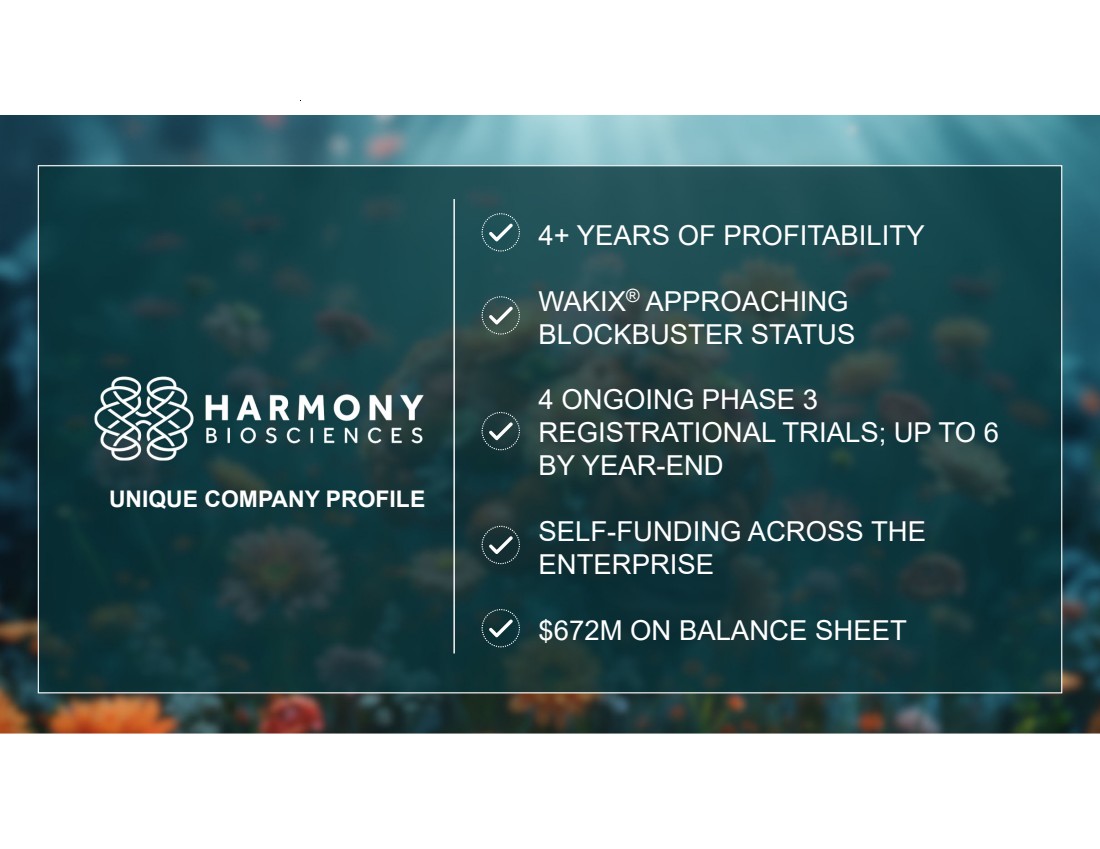
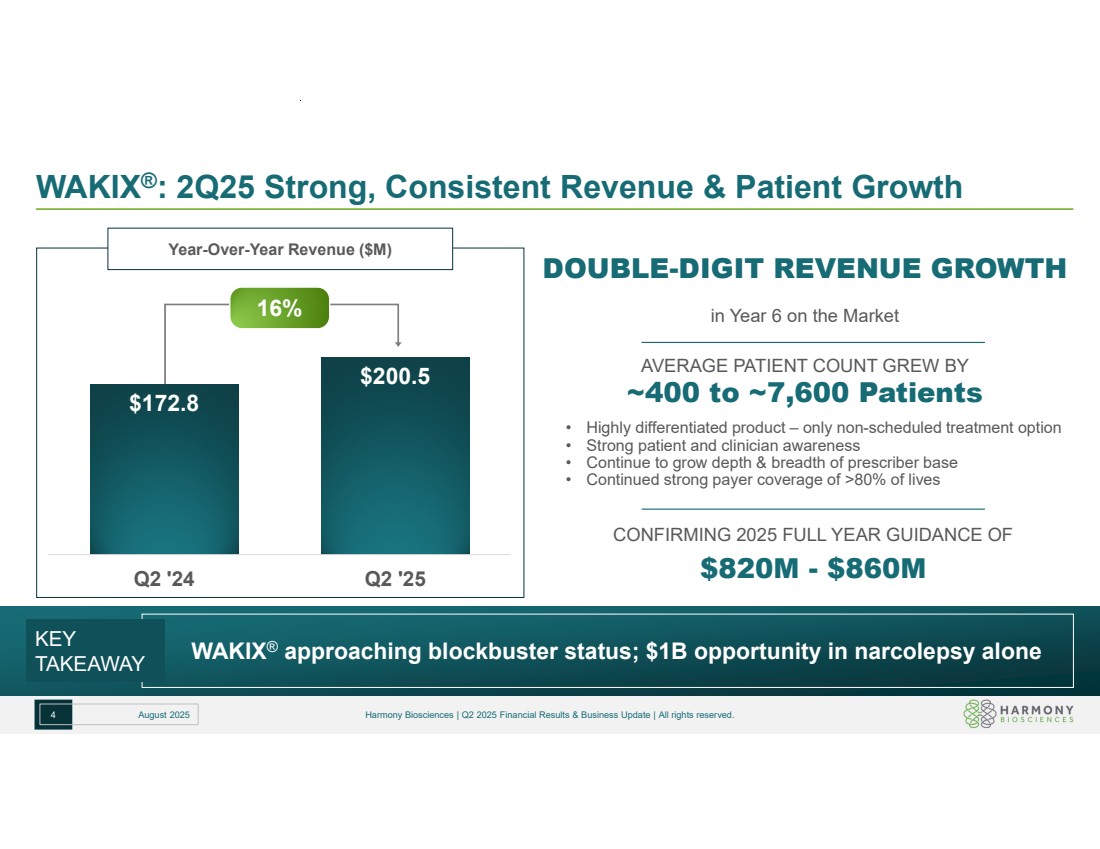
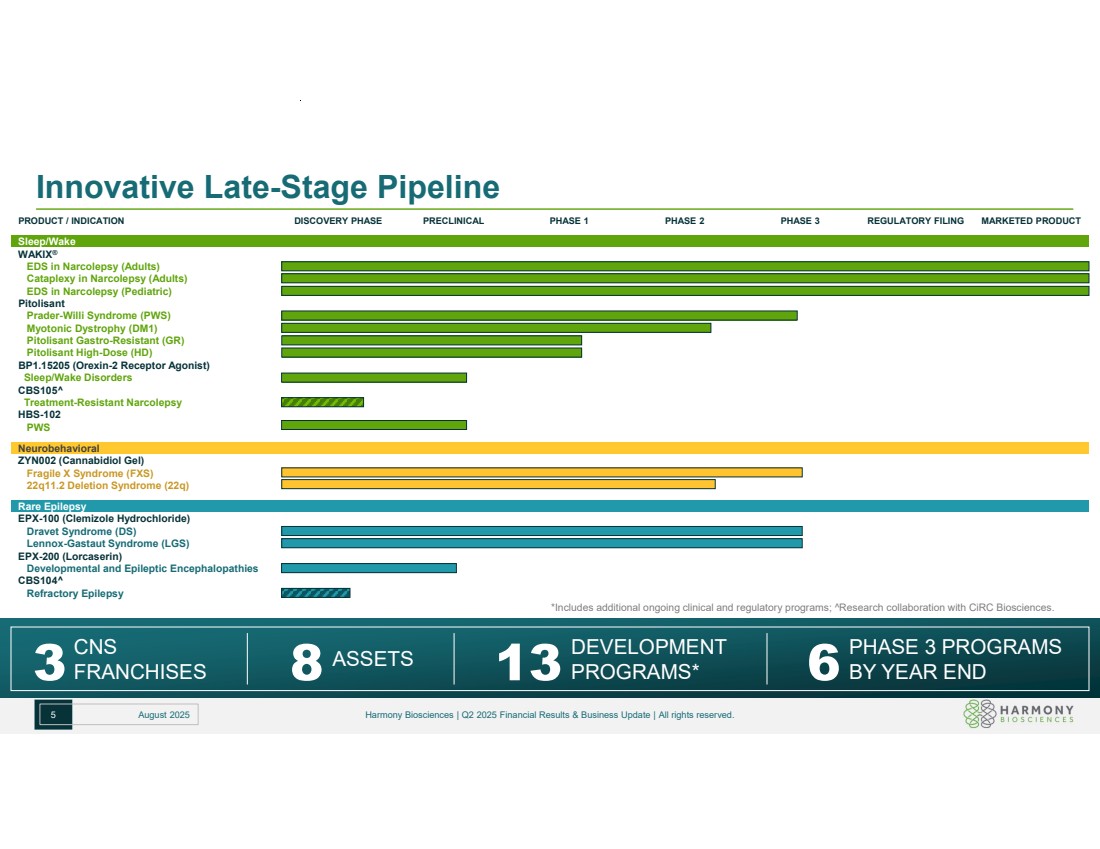
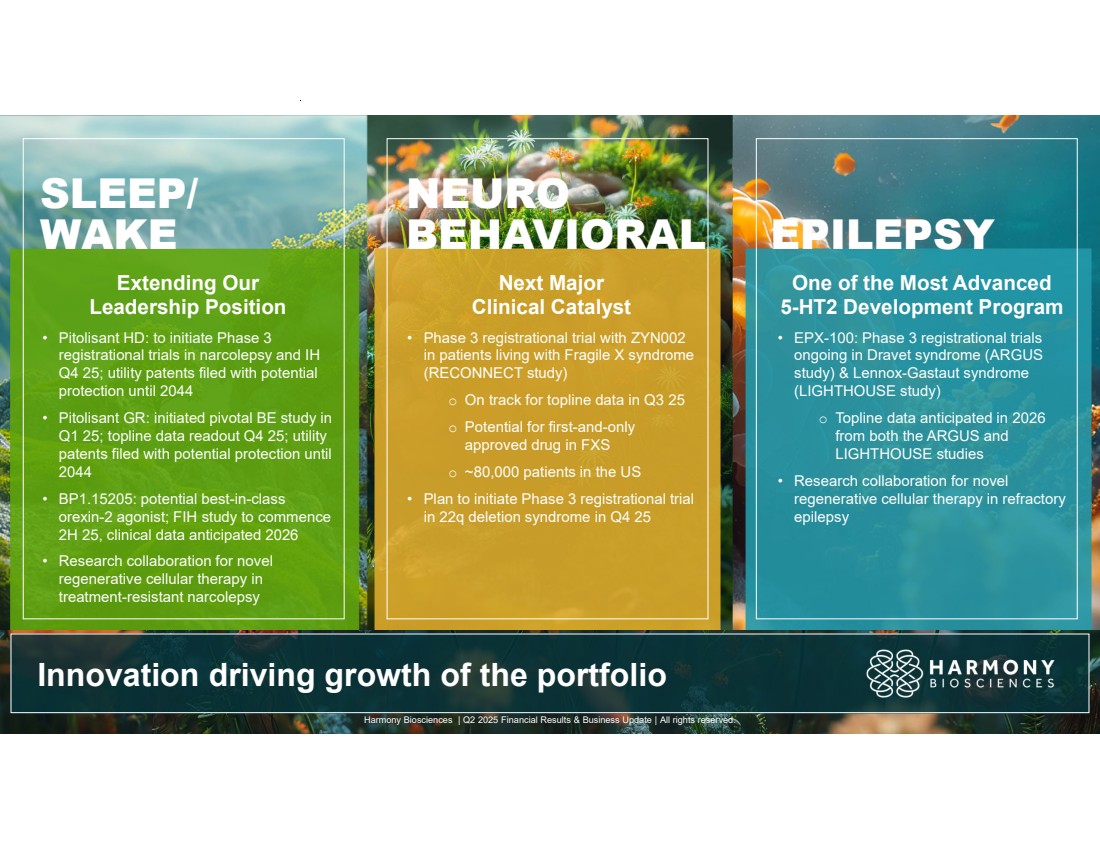
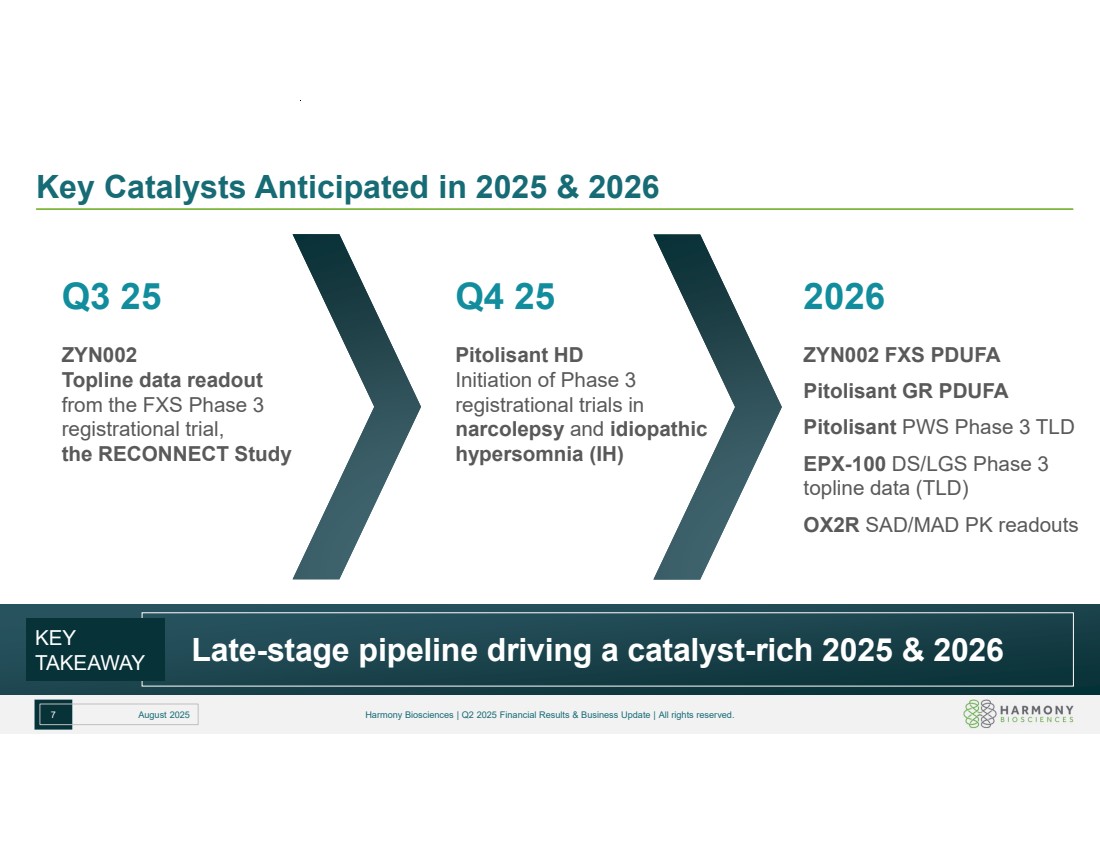
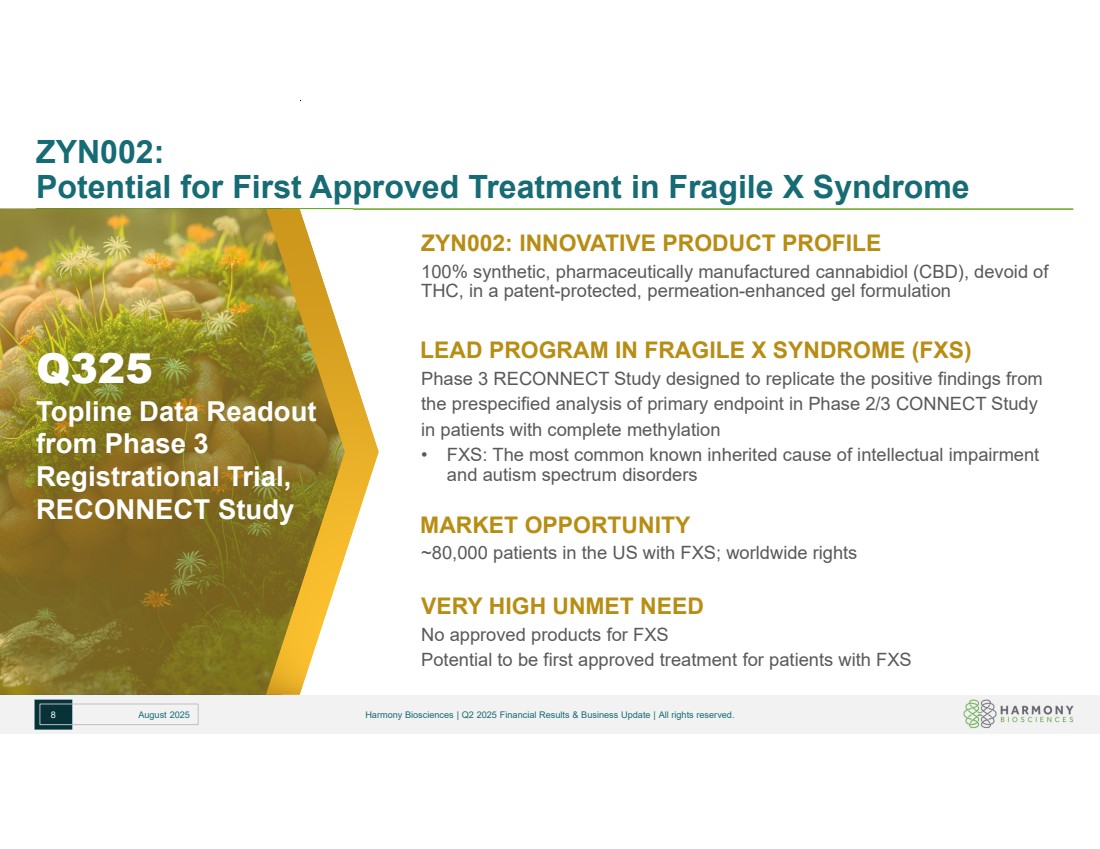
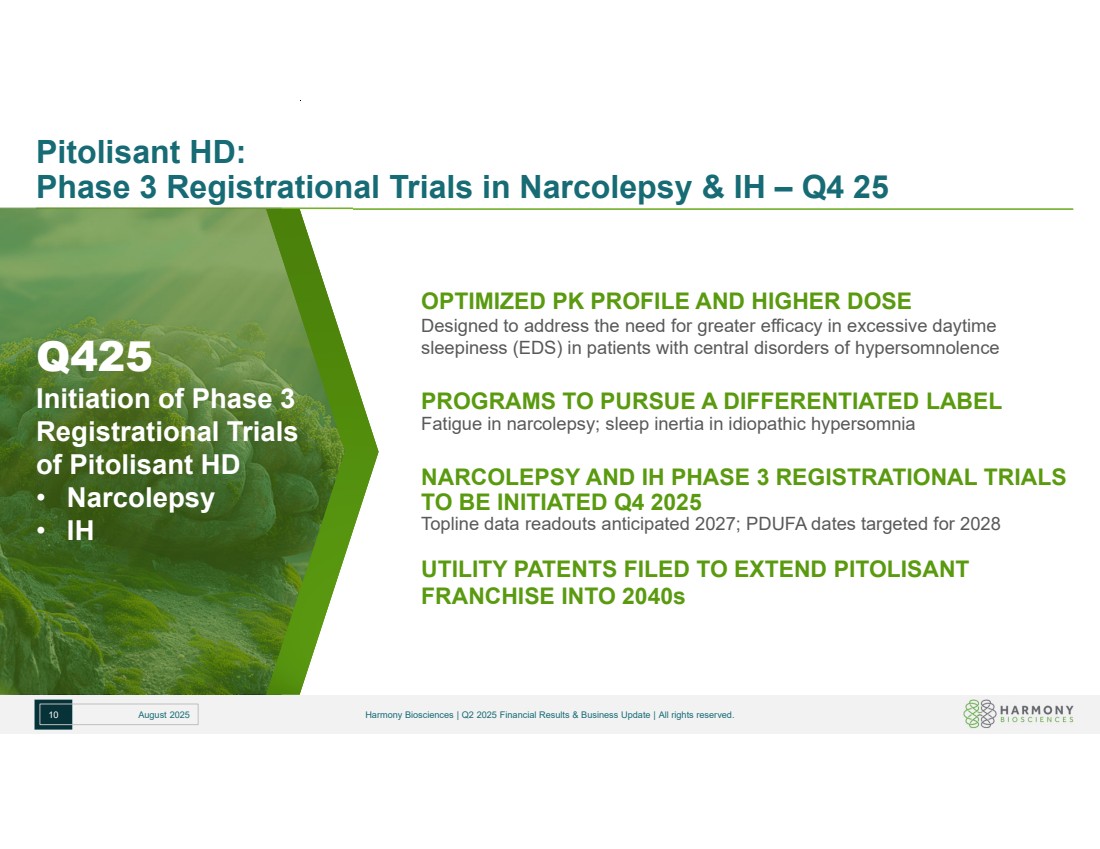
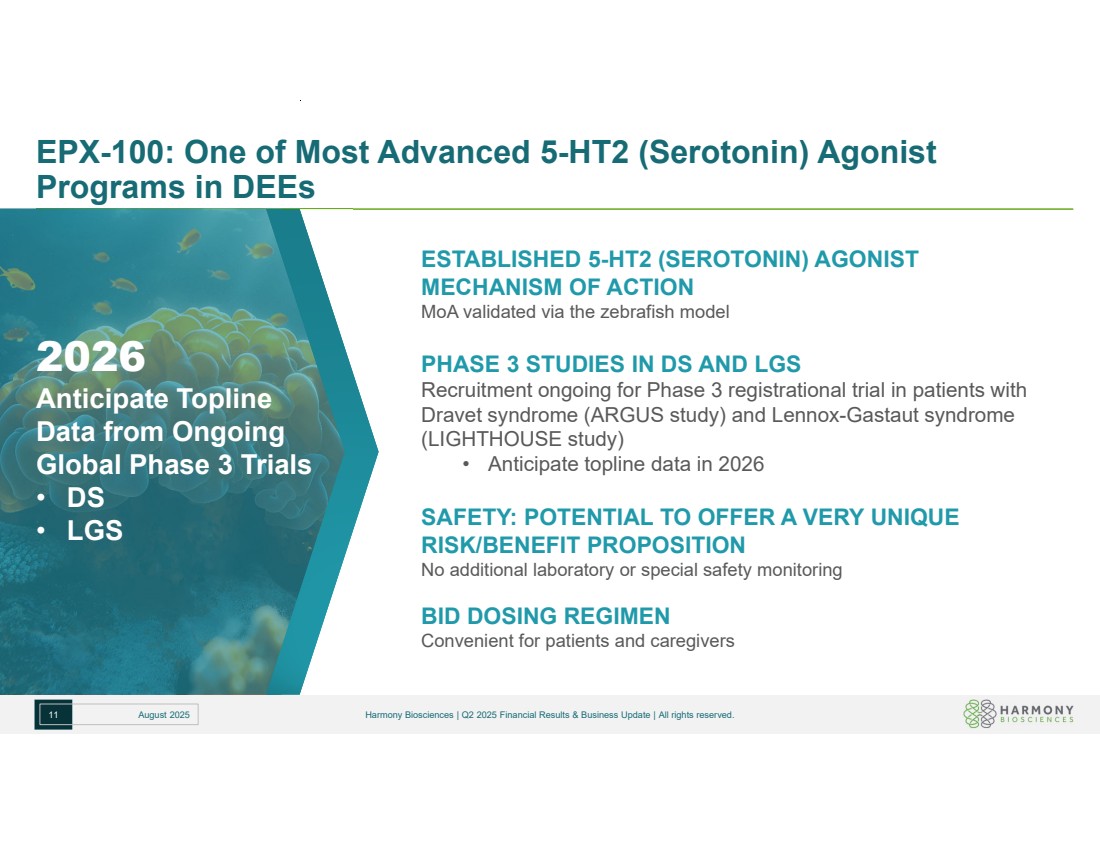
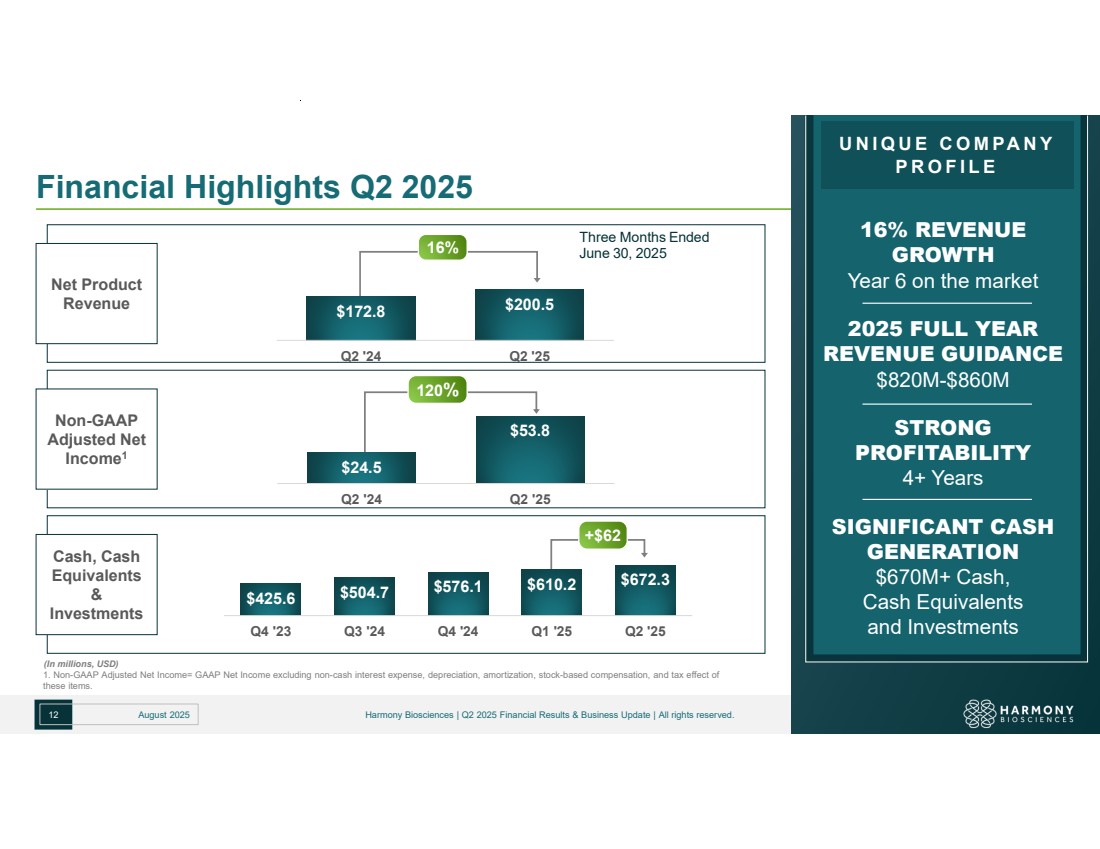
Thank you, Brennan. Good morning, everyone, and thank you for joining our call today. I want to begin today's call by reaffirming something we believe is becoming incredibly clear. We have built something rare in our industry, a profitable, self-funding biotech company with an innovative late-stage pipeline poised to deliver meaningful value for both patients and shareholders. Because of this unique profile, we continue to execute business anchored by WAKIX, and our narcolepsy product has now delivered another quarter of double-digit revenue growth. We reported $200.5 million in second quarter net revenue, representing a 16% increase year-over-year. This performance extends our four-year streak of profitability and reinforces WAKIX's strong momentum with the addition of 400 average patients during the second quarter. WAKIX remains the first and only non-scheduled treatment for narcolepsy, leading prescribers. As demonstrated by the sustained momentum, we believe WAKIX will achieve blockbuster status of $1 billion plus in narcolepsy alone, well ahead of loss of exclusivity in 2030. But our story doesn't end with the success of WAKIX because we are just getting started. What excites us most is what lies ahead as a franchise company with three core areas of focus: sleep/wake, neurobehavioral, and rare epilepsies. Each of these franchises has peak sales potential across multiple indications. Let me walk you through what lies ahead in our pipeline, starting with our next major clinical catalyst coming from our neurobehavioral franchise and its innovative investigational product, ZYN002. This is a 100% synthetic pharmaceutically manufactured cannabidiol devoid of THC, delivered through a unique proprietary patent-protected permeation-enhanced transdermal gel formulation. Our Phase III registrational trial in patients with Fragile X syndrome completed enrollment in Q2 and is on track to produce data later this quarter. This study, the RECONNECT study, was designed to confirm the positive findings of the primary outcome from the Phase II/III CONNECT study in the prespecified group of patients with the complete underlying genetic defect in patients with Fragile X syndrome. In fact, Fragile X is the most common known inherited cause of intellectual impairment and autism spectrum disorders. Stepping back for a moment, in order to understand the potential significance of our Phase III RECONNECT study, there are roughly 80,000 people living with Fragile X in the U.S., a population size similar to the diagnosed narcolepsy market. However, unlike that market, there are currently no FDA-approved treatments for Fragile X syndrome. A positive readout from the RECONNECT study could pave the way for the first and only approved therapy for Fragile X syndrome and be a transformational moment for people living with this condition and their families who have waited far too long for an effective therapy. Kumar will be sharing more details with you on the reasons for our strong conviction in the upcoming top-line data. As I mentioned, WAKIX continues to grow, and our pitolisant life cycle management programs are designed to both expand and extend this franchise well into the mid-2040s. We have major catalysts ahead for the two next-generation formulations of pitolisant, high-dose pitolisant (pitolisant HD) and a gastro-resistant formulation of pitolisant (pitolisant GR). We are on track to initiate Phase III registrational trials in both narcolepsy and idiopathic hypersomnia with pitolisant HD in the fourth quarter of this year. The profile of these formulations is anticipated to be best-in-class, and we remain on track to enter the clinic and initiate first-in-human studies later this year, with clinical data anticipated in 2026. Our third franchise in rare epilepsy is also making steady progress, with one of the most advanced 5-HT2 agonist compounds that has a well-characterized mechanism of action and a strong safety record. It is now in Phase III registrational trials for both Dravet syndrome and Lennox-Gastaut syndrome, with pivotal data expected in 2026. Our commitment to patients with serious rare neurological disorders does not end here. To that end, we recently entered into a research collaboration with Circ Biosciences, a regenerative medicine company discovering novel therapies based on cellular reprogramming and focused on developing innovative cellular therapies to address disorders. Our collaboration with Circ is strategically aligned with our current pipeline and concentrated on treatments for refractory epilepsy and treatment-resistant narcolepsy. This research could potentially lead to advances in therapies for these chronic neurological disorders. Sandip will be commenting further on the terms of this deal. When you look at Harmony today, it should be evident that what we are building is one of the most robust pipelines in the industry for patients with rare neurological disorders. We now have eight innovative assets across 13 development programs, including up to six Phase III trials by the end of this year. This pipeline is poised to deliver one or more new products or indication launches every year for the next several years. With more than $670 million in cash and a disciplined approach to capital deployment, we have the flexibility to continue to strategically expand our pipeline through targeted business development efforts in this favorable environment. So, what does all this mean? It means Harmony has built something different and something unique, a commercially durable business with a robust late-stage pipeline and a clear path to delivering long-term value for patients, providers, and shareholders alike. And that's what makes Harmony one of the most compelling growth stories in biotech today. With that, I'll turn the call over to Adam Zaeske, our Chief Commercial Officer, for an update on our commercial performance. Adam?
Speaker 3
Thanks, Jeff. Harmony's Q2 2025 results demonstrate the enduring strength of our commercial business. WAKIX delivered $200.5 million in net sales for the quarter, representing 16% year-over-year growth in its sixth year on the market, which is among the strongest quarterly results we've seen since launch and continues the steady reliable growth we've experienced over the past several years. This sustained scheduled treatment option has broad clinical utility for more than 80,000 patients with narcolepsy, combined with the strong focus and execution of our commercial teams and the support of the entire Harmony organization. We have great confidence in the continued growth potential and performance of WAKIX. In addition to its unique position as the only non-scheduled treatment option, WAKIX has among the highest brand awareness in the market, is perceived as efficacious and well-tolerated, and is supported by broad payer coverage that has remained consistent for years. We continue to see increases in prescribing among the approximately 4,000 oxybate REMS enrolled prescribing clinicians, as well as among the approximately 5,000 non-oxybate REMS enrolled clinicians, where WAKIX is the only branded option. This dual expansion, deepening usage within our core base while broadening our prescriber footprint, demonstrates WAKIX's resilient position and reinforces our strategy as we look to the second half of 2025. These strong WAKIX fundamentals support our confidence in maintaining its growth momentum. We are confirming our full year revenue guidance of $820 million to $860 million, and we remain on track to achieve $1 billion plus in annual revenue in narcolepsy alone. Looking to the future, the pitolisant GR and HD formulations each target significant unmet patient needs while extending our growth potential, with utility patents filed through 2044. Particularly encouraging, we will be able to fully leverage our commercial infrastructure to drive the next phase of growth through our pitolisant franchise formulations. We're also excited about the opportunity to expand beyond the sleep/wake franchise and are eagerly anticipating the top-line data readout for ZYN. Kumar will provide a progress update on these programs in a moment. In summary, the fundamentals of our business remain robust. Our strong second quarter performance reflects the continued execution of our strategic priorities, and we are well-positioned to capitalize on the substantial opportunities before us. I'd like to now turn the call over to our Chief Medical and Scientific Officer, Kumar Budur, to discuss the advancements in our clinical development programs. Kumar?
Speaker 4
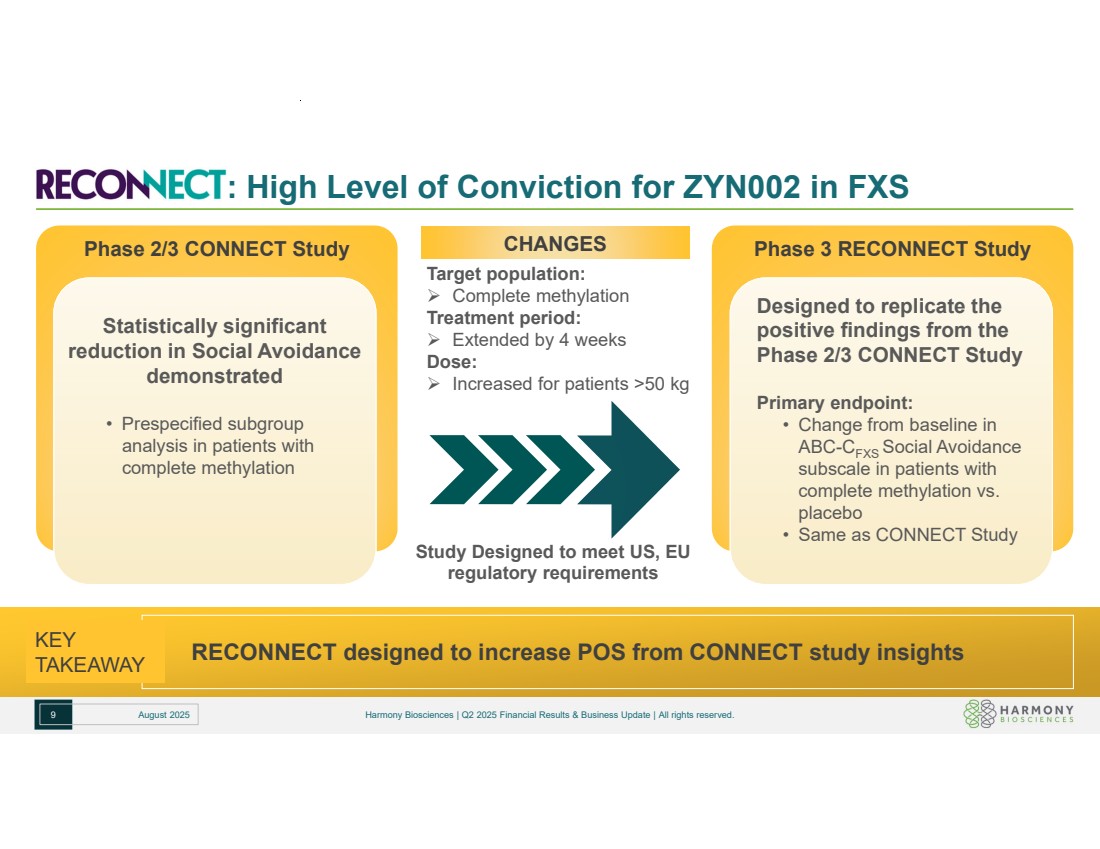
Thank you, Adam. Good morning, everyone, and thank you for joining us today. Please refer to Slide #5 for our pipeline chart and the clinical development highlights on Slides 6 through 11. In R&D, we are on track for our next major catalyst, the top-line data for ZYN002, and we have a high degree of confidence in the success of the Phase III registrational trial (the RECONNECT study) as it builds upon the data and insights from the last Phase II/III CONNECT study. The efficacy data from the CONNECT study, especially in patients with complete methylation, is one of the strongest efficacy data sets generated in patients with Fragile X syndrome. We observed over 50% of patients demonstrating clinically meaningful improvements in social avoidance, the primary endpoint, and in irritability and disruptive behaviors, which are other core symptoms in patients with Fragile X. The RECONNECT study essentially seeks to replicate the statistically significant efficacy signals with several enhancements to further bolster the probability of success. We have completed enrollment, and we are on track for top-line data later this quarter. If positive, the RECONNECT study is expected to support regulatory approvals in both the U.S. and EU, and Harmony holds global rights to be the first and only approved treatment for any symptom domains in patients living with Fragile X. Moving on to the scientific rationale for ZYN002 in this condition, Fragile X syndrome is a rare genetic disorder caused by the mutation of the FMR1 gene on the X chromosome, and it is the most common known inherited cause of intellectual impairment and autism spectrum disorders. Fragile X syndrome is characterized by FMR protein deficiency, resulting in endocannabinoid dysfunction. ZYN002 interacts with the CT1 receptors, modulating the system and improving neurobehavioral symptoms. With ZYN002, we also remain on schedule to initiate a Phase III registrational trial in 22q deletion syndrome later this year, a disorder with significant neurobehavioral symptoms similar to Fragile X, which currently has no approved therapies and affects approximately 80,000 individuals each in the U.S. and Europe. Moving on to our sleep/wake franchise, we have made significant progress across our next-generation pitolisant programs. The pitolisant HD program, a higher-dose pitolisant formulation with an optimized PK profile targeting enhanced efficacy for excessive daytime sleepiness and pursuing a differentiated label with an indication for fatigue in narcolepsy, is on track for initiation in Q4 2025. Similarly, the Phase III study of pitolisant in patients with idiopathic hypersomnia is also pursuing a differentiated label with an indication for sleep inertia and is also on track for initiation in Q4 2025. As for the pitolisant GR formulation, it is designed to address the potential for treatment-related GI side effects, especially since almost 90% of patients with narcolepsy experience GI symptoms. In addition, it provides the ability to start at the therapeutic dose range, eliminating titration. This is a fast-to-market strategy with demonstrated bioequivalence to the formulation. The top-line data from the pivotal BE study is expected in Q4, with a potential PDUFA in 2026. Utility patents have been filed for both formulations to secure long-term franchise value. Beyond pitolisant, our sleep/wake portfolio continues to advance with BP1.15205, a highly potent orexin-2 receptor agonist demonstrating efficacy. At the recent sleep meeting, we presented comprehensive preclinical safety and efficacy data that demonstrated efficacy at very low doses across all parameters of interest in a standard transgenic mouse model. The program remains on schedule for IMPD submission and first-in-human studies later this year, and we anticipate sharing clinical data in 2026. In our epilepsy franchise, we continue to actively enroll patients in two global Phase III registrational trials with EPX100, the ARGUS study in Dravet syndrome. In conclusion, our late-stage rare neurology portfolio is advancing with exceptional momentum, positioning us to potentially introduce multiple new products for indications every year over the next several years. Beyond the clinical and regulatory milestones, what truly drives us is the opportunity to transform lives for many individuals who currently have either no treatment options or therapies with suboptimal efficacy and significant safety and tolerability limitations. As always, on behalf of Harmony, I would like to thank all the patients and their families who are participating in our clinical trials, as well as the clinical investigators and site personnel for their efforts and commitment in helping us to advance our development programs. I'll now turn the call over to our CFO, Sandip Kapadia, for an update on our financial performance. Sandip?
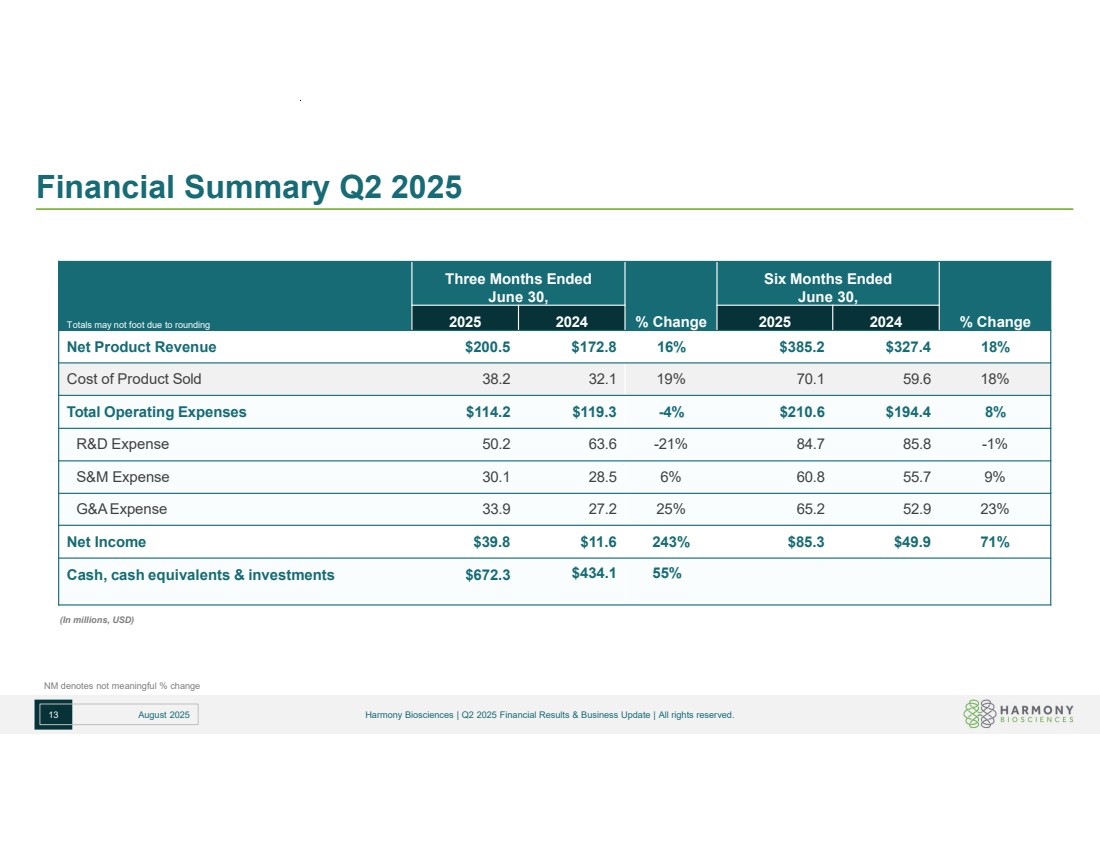
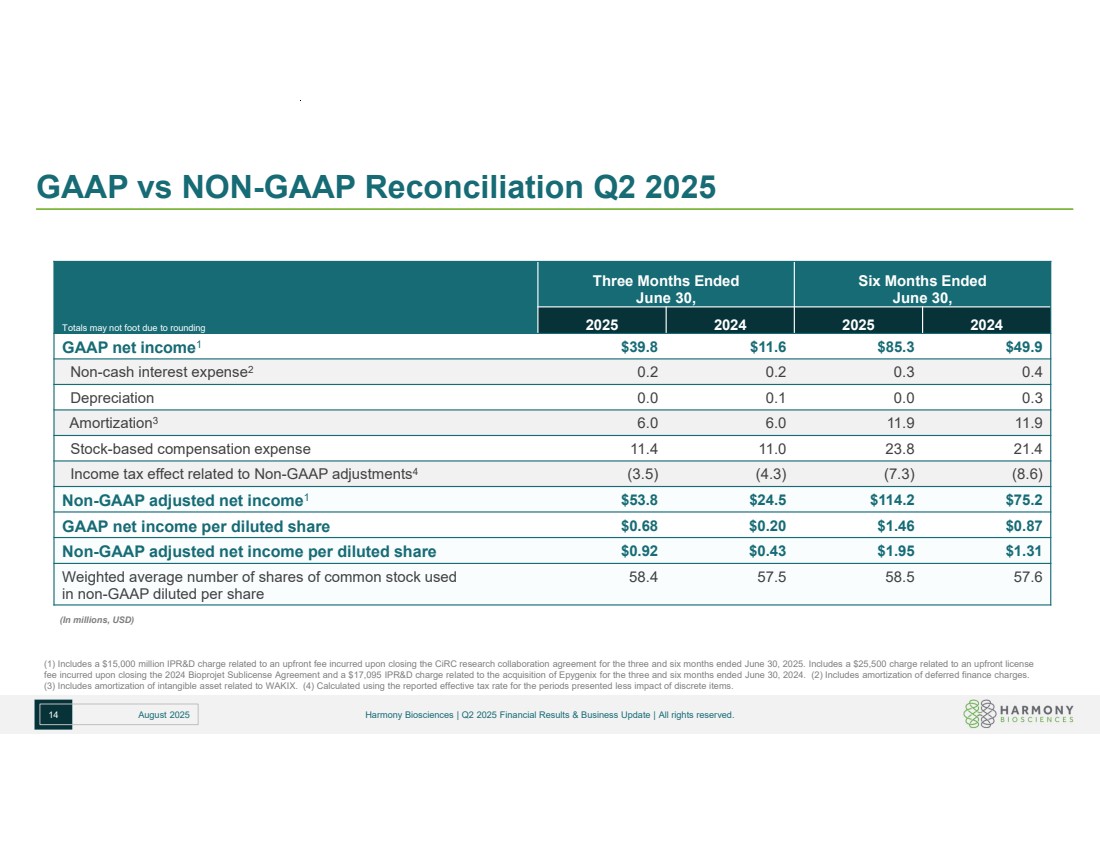
Thank you, Kumar, and good morning, everyone. This morning, we issued our second quarter 2025 earnings release and filed our 10-Q with operating results. We had a great first half of the year. We delivered another quarter of solid financial performance with continued double-digit top line growth, sustained profitability, and robust cash generation. For the second quarter of 2025, we reported net revenues of $200.5 million compared to $172.8 million in the prior year quarter, representing a growth of 16%. This performance reflects the strong underlying demand for WAKIX, offset by a reduction in trade inventories of a few days as we head into the summer months. We recorded total operating expenses for the second quarter of $114.2 million compared to $119.3 million for the same quarter in 2024. The expenses during the second quarter were primarily related to the commercialization of WAKIX in narcolepsy. We also recognized a $15 million IP R&D charge related to the Circ research collaboration that Jeff mentioned. We have an option for customary milestones and royalties based on continued development and potential commercialization. We continue to show solid net income and margins. Non-GAAP adjusted net income for the second quarter of 2025 was $53.8 million, or $0.92 per diluted share, compared to $24.5 million, or $0.43 per diluted share, in the prior year quarter. We believe non-GAAP adjusted net income better reflects the underlying business performance. Our cash, cash equivalents, and investments on the balance sheet reflect strong cash generation from operations of approximately $79 million during the second quarter. Our cash position provides us with the financial flexibility to execute on business development. Looking ahead to the balance of 2025, our strong first half results give us increasing confidence in our full year outlook. We are reiterating our revenue guidance of $820 million to $860 million, highlighting our progress towards a $1 billion-plus opportunity with WAKIX in narcolepsy alone. We expect continued quarter-over-quarter net revenue growth for the balance of the year. With respect to expenses, we expect continued investment in R&D as we advance our late-stage pipeline with multiple programs in Phase III registrational trials. As previously noted, we expect to potentially incur $29 million in milestones for the completion of the Phase III trial for ZYN002 in Fragile X syndrome, $15 million on track for Q3, along with a potential milestone of $10 million for positive top-line data from this trial. In addition, we expect a milestone of approximately $4 million in our orexin-2 program. In summary, we're having a very successful first half of the year and have confidence in the continued growth of WAKIX along with the advancement of our late-stage pipeline in the second half. And with that, I'd like to turn the call back over to Jeff for his closing remarks. Jeff?
Thank you, Sandip. My thanks to everyone for joining our call today and for your interest in Harmony Biosciences. At this juncture of our company's journey, I have never been more proud of the Harmony team. We're very excited about what lies ahead. WAKIX is on its way to a $1 billion-plus opportunity in narcolepsy alone. Our robust pipeline is expected to deliver one or more indication launches every year over the next several years, with peak sales potential of $3 billion to $6 billion in total. We have a high degree of conviction and are very excited about our next major clinical catalysts coming later this quarter, the top-line data readout from our Phase III trial of ZYN002, which could represent a transformational moment for both the Fragile X community and for Harmony Biosciences. We have built something unique in our industry, a late-stage pipeline poised to deliver meaningful value for both patients and shareholders alike. Because of this unique profile, we continue to execute from a position of strength, and that is what makes Harmony one of the most compelling growth stories in biotech today. Thanks, everyone, and I will now turn the call back over to the operator for Q&A. Operator?
Operator
We will take our first question from Jay Olson with Oppenheimer.
Speaker 6
Congrats on all the progress. I wanted to focus on the RECONNECT top-line data readout, which I think you mentioned is still on track for this quarter. Can you please provide any additional color on the timing of when to expect that readout? It sounds like maybe it could be after Labor Day. Just describe what would be clinically meaningful and what is your target for a successful outcome in this registrational of the Fragile X study? And finally, if you could just remind us of your target profile.
Thank you for your questions, and thanks for your coverage of Harmony. I appreciate your initiation of coverage. I will have Kumar address your questions about the RECONNECT study and the opportunity in Fragile X syndrome.
Speaker 4
Thank you, Jeff. Thanks for the question. Yes, we are on track for top-line data in Q3, and we are very excited about this opportunity, not just with Fragile X syndrome but for the caregivers as well. Regarding the level of confidence we have, we are essentially trying to replicate the statistically significant findings that we saw in the last Phase II/III CONNECT study on the primary endpoint of social avoidance in patients with complete methylation. The useful outcome will be defined by demonstrating a statistically significant outcome in the primary endpoint, and the study is adequately powered to detect that. If positive, we have an opportunity here to bring the first and only approved treatment for any symptom domains in patients with Fragile X syndrome, and that's what we're really excited about.
Operator
And our next question comes from David Hoang with Deutsche Bank.
Speaker 7
I also wanted to ask on Fragile X in terms of the top-line readout, could you outline for us the types of data you expect to disclose in the top-line? And at that time, will we have visibility on the results in the fully methylated versus partially methylated patients? And when might we know how you plan to approach your filing strategy with the FDA, if you would be pursuing fully methylated or in the back half of the year? I was wondering if you could just talk about the pushes and pulls that get you to the upper versus the lower end of the guidance range.
Yes, obviously, the strategy for Fragile X and the ZYN readout; Adam can address the question about WAKIX. Kumar?
Speaker 4
Yes, David, thanks for the question. So in terms of what we disclosed at the top-line data for Fragile X syndrome, it will be a standard top-line data readout, which includes the demographic data, safety and tolerability data, and the efficacy results. We will proceed based on how the results show in fully methylated versus partially methylated patient analysis, and we are well prepared for our filing strategy with the FDA. If the study shows a statistically significant outcome on the primary endpoint, we will move rapidly to have a pre-NDA meeting, where there are no approved treatments. I think it's fair to expect a priority review, and if everything goes according to plan, hopefully, we will have an approved product by the end of next year.
Speaker 3
Yes, thanks for the question on WAKIX. We're really pleased with the performance that we're seeing on WAKIX at this stage, achieving $200.5 million in net revenue for the second quarter, a 16% year-over-year increase in its sixth year, which is fantastic. We also achieved 7,600 average patients in the quarter, an increase of 400 average patients in Q2. So, the performance steady drumbeat continues. In terms of puts and takes, I would say that WAKIX is a highly differentiated product, the first and only non-scheduled treatment option for patients. We're supported by broad payer coverage with 80% of lives covered, and that's been the case for years. We do not expect any changes in payer coverage. We have a very experienced team, many of whom actually started at the launch of WAKIX. They provide a high level of service to HCPs and office staff as well as patients. I'd highlight increased preference share in the 4,000 oxybate REMS enrolled clinicians, and we're seeing increased preference share and the addition of new prescribers in the 5,000 non-oxybate REMS enrolled HCP group as well. So those are probably the key drivers of that continued performance. Sandip, I don't know if you want to add anything.
No, I think increased confidence certainly in our guidance range. Look, we're very comfortable with where things are at right now. At the end of the day, it's the underlying demand that really drives overall net sales. Net patient adds certainly have an impact on any potential gross to net impacts as well as trade inventory impacts. As you know, we have a concentrated customer base overall, so just order patterns overall do have an influence. However, we're very confident in the guidance range. Consensus currently falls right within the range.
Operator
And our next question comes from.
Speaker 8
I would like to ask about Fragile X and the implications of full methylation. Does the distinction between full and partial methylation indicate a reduction in the patient population? Can you provide an estimate of the percentage of Fragile X patients in the U.S. that have full methylation compared to the 80,000 you mentioned? Additionally, has the FDA accepted applications for these rare pediatric conditions based on efficacy data that only includes a fully methylated population?
Speaker 4
Thank you for the question. So, in terms of the split between complete methylation versus partial methylation, approximately 60% to 70% of patients with Fragile X syndrome have complete methylation, and the rest have partial methylation. So in terms of us choosing the complete methylation group based on the findings that we observed in the CONNECT study, this aligns with the etiology and the pathophysiology of Fragile X syndrome that we know about. This gene mutation results in more than 200 nucleotide repeats of CGG, which leads to almost complete silencing of the gene. Patients with complete methylation present a higher burden of symptoms. Regarding the FDA, we have full alignment with the FDA on the study design, the target patient population, and the primary endpoint. In fact, the study is designed not just to meet the requirements of the FDA, but also EMA. Thus far, if the study is positive, we will be pursuing an indication in both the U.S. and Europe.
Yes. Ash, I would just add that the data and the Phase III RECONNECT trial are designed to replicate the positive findings in the Phase II/III CONNECT study. Additionally, there are no approved therapies, and the bar would be set with a high unmet need in this patient population.
Operator
And our next question comes from.
Speaker 9
I was curious about your perspective. Can you walk us through your thoughts, especially from a business development and corporate strategy viewpoint? The cell therapy approach is definitely intriguing, but I don't believe it has been validated yet. I would like to hear your insights on the collaboration and also any potential future business development directions.
Thanks for your question. Yes, I think in terms of the collaboration, we see it as an exciting opportunity. Obviously, this is an early-stage discovery commitment to patients with serious rare neurological disorders. It's strategically aligned with our pipeline and has potential cellular therapies for refractory epilepsy in one of the discovery programs and the other treatment-resistant narcolepsy based on reprogramming the cellular platform. This collaboration could lead to the next generation of innovative disease therapies. With that, Kumar, can you comment further on the platform and what we observed in the opportunity?
Speaker 4
Sure. Graig, thanks for the question. What really attracted and fascinated us was the utilization that offers significant competitive and manufacturing advantages compared to embryonic or induced technologies. The consistency and reliability of readily sourced GMP-grade cell lines allow for allogeneic cryopreserved ready-to-use therapies that require no manipulation at the point of care, minimizing tumorigenicity and the manufacturing inefficiencies seen with stem cells. We are very excited about the collaboration, both in epilepsy and in narcolepsy, and look forward to data generation from this partnership as we progress.
Yes. And Graig, I would add that we see this as an opportunistic play. As always, we continue to evaluate different opportunities across the spectrum of development phases, from early to late and potentially on-market opportunities. We take a disciplined and strategic approach to how we build out the pipeline, and we feel we are just getting started. Sandip, any further comments on our capacity?
Yes. This quarter was a very strong quarter in terms of cash flow with over $670 million in cash. We are in a strong position to be able to transact. We will continue to look for opportunities across the spectrum. Our overall approach always remains disciplined regarding how we deploy our capital. However, we feel that we're in a unique position as a profitable company generating positive cash flow with the ability to invest in an attractive market.
Operator
And our next question comes from David Amsellem with Piper Sandler.
Speaker 10
I had some questions on the AR data that you're anticipating next year. Is that for healthy, sleep-deprived volunteers, or is that going to be actual narcolepsy patients for next year? To the extent you're not yet testing narcolepsy in IH patients, when do you expect to do so? That's number one. And then number two, in terms of differentiation, I know you've talked about it as potentially being best-in-class. But we've got a number of more advanced orexin improvements well north of 20 minutes, and we've seen real validation here. So, what do you need to see in orexin being indeed best-in-class?
David, thanks for your question. Kumar, our position on the orexin programs?
Speaker 4
Yes. Thank you, Jeff. Thank you for the question. Regarding our orexin program, we are approaching the first-in-human studies with a single-ascending dose study in healthy volunteers and simultaneously conducting a healthy volunteer sleep-deprivation study for BP1.5205 as disclosed in the public domain. We want to get a better idea in terms of the dose range before we progress this into patients. You can expect the next steps in the healthy volunteers sleep-deprivation study.
Operator
And our next question comes from Danielle Brill with Truist.
Speaker 9
As a follow-up to the previous question, I wanted to ask in general how we should think about the potential impact of Takeda's orexin-2 entering the market and how confident you are that the WAKIX franchise can continue. I wanted to clarify, it looks like the quarter-over-quarter growth was lower than what you typically observe in the past despite the high number of new patient adds. Can you speak to the dynamics that were at play here such as gross-to-net compliance and any other factors?
Danielle, thanks for your questions. In terms of the impact of orexin, how we see it is we follow these programs closely. I'll ask Adam to comment on this from a commercial perspective.
Speaker 3
Orexin as a potential new treatment option for patients. As Kumar mentioned, we're very confident in the molecule we have in our pipeline. There's still some questions to be addressed as a class, I think, regarding dosing label. This is the only non-scheduled treatment option. It's been on the market for now over six years, really steady performance quarter-over-quarter over that period. That's despite new brand and generic entrants coming in; I think that's because physicians see WAKIX as highly differentiated. They perceive it to be well-tolerated and has broad clinical utility, and we expect that to continue. By the time orexin is launched, HCPs will have more than eight years of clinical experience, and it's a very familiar pharmacy approach to treatment. We expect WAKIX will continue to be added to therapy for patients broadly. Not to mention that, there's evidence to suggest in the continued growth and performance of WAKIX.
Thanks, Adam. With regard to the quarter's performance, Sandip, can you provide a few comments on that?
Sure. Happy to comment on that. I think, as I mentioned, our results thus far give us increased confidence in our revenue guidance of $820 million to $860 million, which is 15% versus the prior year. In Q2, getting to your point, it's really underlying performance is probably even stronger than the net revenues would indicate. As I mentioned, there was a trade inventory drawdown of several days as we headed into the summer months. Typically, what happens with trade inventory, Q4, Q1 tends to be a bit higher, while Q2 and Q3 tend to be lower. However, I think the more important point is looking at the fundamentals of our business and the forward demand from one of the strongest quarters we've had in terms of net patient adds. This gives us really strong confidence moving into the next two quarters to finish out the year.
Yes. I think just to reiterate, I think underlying business fundamentals remain strong quarter-to-quarter, as Sandip pointed out. Obviously, as the patient base increases, and with only three specialty pharmacies in terms of the ordering pattern. We are comfortable with the Street's estimates of where we are. This business continues to grow, and we are excited as our pipeline advances and the opportunities ahead.
Operator
And our next question comes from Corinne Johnson with Goldman Sachs.
Speaker 9
This is Eric on for Corinne Johnson. I just wanted to ask a question elaborating on the last little bit. Specifically, how should we think about net price for WAKIX this quarter and specifically moving towards the back half of 2025 and beyond? To what extent are you using price as a lever to improve volume or drive broader adoption?
Thanks for your question. As seen in past years, typically, the first quarter reflects the lowest net price due to higher gross-to-net deductions that typically occur with insurance plan resets and usually improving in the balance of the year. We did see some improvement as we went into Q2, and we expect that the price increase we took earlier this year will bring further impact as we progress into the second half of the year.
Operator
Thanks for your question. As seen in past years, typically, the first quarter reflects the lowest net price due to higher gross-to-net deductions that usually occur with insurance plan resets and usually improve in the balance of the year. We did see some improvement as we went into Q2, and we expect that the price increase we took earlier this year will bring further impact as we progress into the second half of the year.
Speaker 9
Congrats on the quarter. I have two questions. The primary endpoint for RECONNECT, which involves social avoidance, is measured on a scale where parents or caregivers provide scores. Can you discuss this outcome, the potential variability, the expected placebo response, and the measures you've taken to address this response? My second question is for Adam. You joined Harmony over a year ago. I'm interested in your thoughts on how to build upon what is already a successful franchise and what your plans are for life cycle management.
Yes, Pete, thanks for your question, and thank you for taking coverage on Harmony. I appreciate that. Kumar?
Speaker 4
Yes, Pete, thanks for the question. Regarding the social avoidance subscale within the broader aberrant behavior scale (ABC) which has been used extensively and is well validated, in terms of variability and placebo, great question. In any neuros trial, these are things we carefully monitor. In this particular study, we have multiple checks and balances in place to manage this, including rigorous inclusion and exclusion criteria. These are patients that are biologically confirmed based on full mutation and complete methylation. We know the standard deviation for this instrument both in general terms and using blinded data from prior studies. Thus far, we feel good about our data. In terms of differences between CONNECT and RECONNECT studies, the primary endpoint remains the same with the social avoidance subscale within the broader ABC scale. The target population is patients with complete methylation only. We made some adjustments, including increasing the dose in patients who weigh more than 50 kilograms to enhance the probability of success. We have a high level of confidence and conviction in this program and the opportunity that lies ahead if the study is positive.
Thanks, Kumar. Adam, your thoughts on levers for growth?
Speaker 3
This is a term we talk about frequently at Harmony, and it's a big focus. I have to give credit to the team. The team here has a history of growth mindset looking for continued improvement opportunities. We focus on top-line demand growth, average referrals per day, and then conversion of those referrals into dispensing events. How can we make sure our process is efficient and effective for patients to secure these dispensing events and retention over time? How can we provide the service that supports HCPs, the office staff, and the patient to ensure they maintain or remain on therapy over time? The work of the team is going to continue to help drive that performance.
Operator
From Wainwright.
Speaker 11
Just a couple of follow-up questions from us on the pipeline. The first is on pitolisant HD. I'm just wondering with the expectation to initiate Phase III trials in the fourth quarter, can you talk to potential trial design or differentiation goals with this program? And then separately, regarding Fragile X, assuming a positive RECONNECT readout, how are you thinking about the commercial build for ZYN002, specifically with payers? And what does this suggest about market receptivity and launch planning? Based on that engagement, would you anticipate a more gradual build, or could you see a very rapid uptake if it's approved?
Speaker 4
For pitolisant HD, we are on track to initiate two Phase III studies, one in narcolepsy and the other in idiopathic hypersomnia in the fourth quarter of this year. At this stage, I can say it's going to be a standard randomized double-blind, placebo-controlled parallel arm study. We'll provide more information as we approach the study initiation.
Yes, we will pursue a standard trial design and also aim for a differentiated label in that regard. Regarding opportunities for ZYN002's go-to-market, a lot of work has already begun. Adam, could you share some thoughts on that?
Speaker 3
Yes, and actually, thanks for the question. I'll just go straight to the community; these families are deeply aware of any treatment being developed, and they exhibit very high awareness and receptivity when we come to market. Our plans are underway. We're continuing to have discussions with various stakeholders in the community to ensure that we are prepared for a successful launch.
Yes. I would add that engaging with rare disease communities is a core part of our strategy at Harmony. We have a dedicated team working on our go-to-market strategy to maximize the potential opportunities.
Operator
And we will take our next question from Jason Gerberry with Bank of America.
Speaker 12
This is Pavan Patel on for Jason Gerberry. A couple of questions from us, focused on Fragile for Fragile X syndrome. First, based on prior CONNECT data, how are you modeling patient adherence to therapy if the drug replicates the subgroup data with FMR1 gene methylation? Specifically, what percent of patients do you expect to stay on therapy versus expected discontinuation due to a lack of response? My second question is beyond achieving statistical significance on the social avoidance primary endpoint, what specific additional results or caregiver global impressions would provide you the highest conviction in the data package for filing?
Speaker 4
Yes, thank you for those questions. I appreciate your questions; there were several aspects. First, regarding what we are monitoring, while social avoidance is the primary endpoint, we're also looking at irritability and behavior—which are core symptoms in patients with Fragile X syndrome. Notably, we saw a significant response in the irritability domain at the recent American Academy of Neurology meeting in April. The ZYN002 product has shown unique attributes, and we expect a high adherence rate based on past data. In fact, over 90% of patients who completed the CONNECT study chose to participate in the long-term extension study, with data lasting over eight years. Adherence is typically high when patients experience benefits.
Yes, I believe overall ZYN002 is a promising innovative product offering a distinct method of delivery that sets it apart from other products on the market. As Kumar mentioned, we are continually gathering comprehensive data about adherence and patient experiences to optimize our filing strategy.
Speaker 13
Maybe two follow-ups on prior comments. Firstly, with regards to the RECONNECT study, can Kumar remind us what the placebo response was in the CONNECT study and what assumptions you've made for the RECONNECT study? What are you observing for placebo responses that you feel confident about? If you could elaborate on that range, it would be appreciated. And with regards to the orexins, we've heard from physicians that they might consider moving patients from polypharmacy to monotherapy as they bring about normalized levels, increasing their scrutiny to just a prospective study evaluating the complementary mechanisms between orexins and WAKIX.
Yes, Ami, thanks for your questions. The details of the placebo response in the CONNECT study are published by Barry in the Journal of Neurodevelopmental Disorders. I'm happy to share that paper for your reference.
Speaker 4
Yes, Ami, it’s a great question. The placebo response in the CONNECT study was lower at around 1 point in efficacy magnitude among patients with complete methylation. This further supports our confidence in using this cohort as we know they have a higher burden of symptoms. As for the orexin's synergistic effects with WAKIX, we have not shared detailed information currently but are evaluating those possible interactions.
Conversely, the study remains powered to differentiate between treatment and placebo effectively. It’s imperative to develop a comprehensive understanding of how both treatments can coexist in patient regimens.
Operator
And I'm showing no further questions. I would now like to turn the call back for any closing remarks.
Thank you, Madison. And thanks, everyone, for joining our call this morning and for your interest in Harmony Biosciences. We remain committed to advancing our pipeline and addressing the needs of patients and their families. As we look forward, we are excited about the data readout and the possible significant implications for patients with Fragile X syndrome. Thank you all, and have a great day.
Operator
This does conclude today's Harmony Biosciences Second Quarter 2025 Financial Results Conference Call. You may now disconnect your line and have a wonderful day.