Operator
Welcome to IdaCorp's third quarter 2025 earnings call. Today's call is being recorded and our webcast is live. A replay will be available later today and for the next 12 months on the IdaCorp website. If you need assistance at any time during the presentation, please press star zero on your phone. I will now turn the call over to Amy Shaw, Vice President of Finance, Compliance, and Risk.
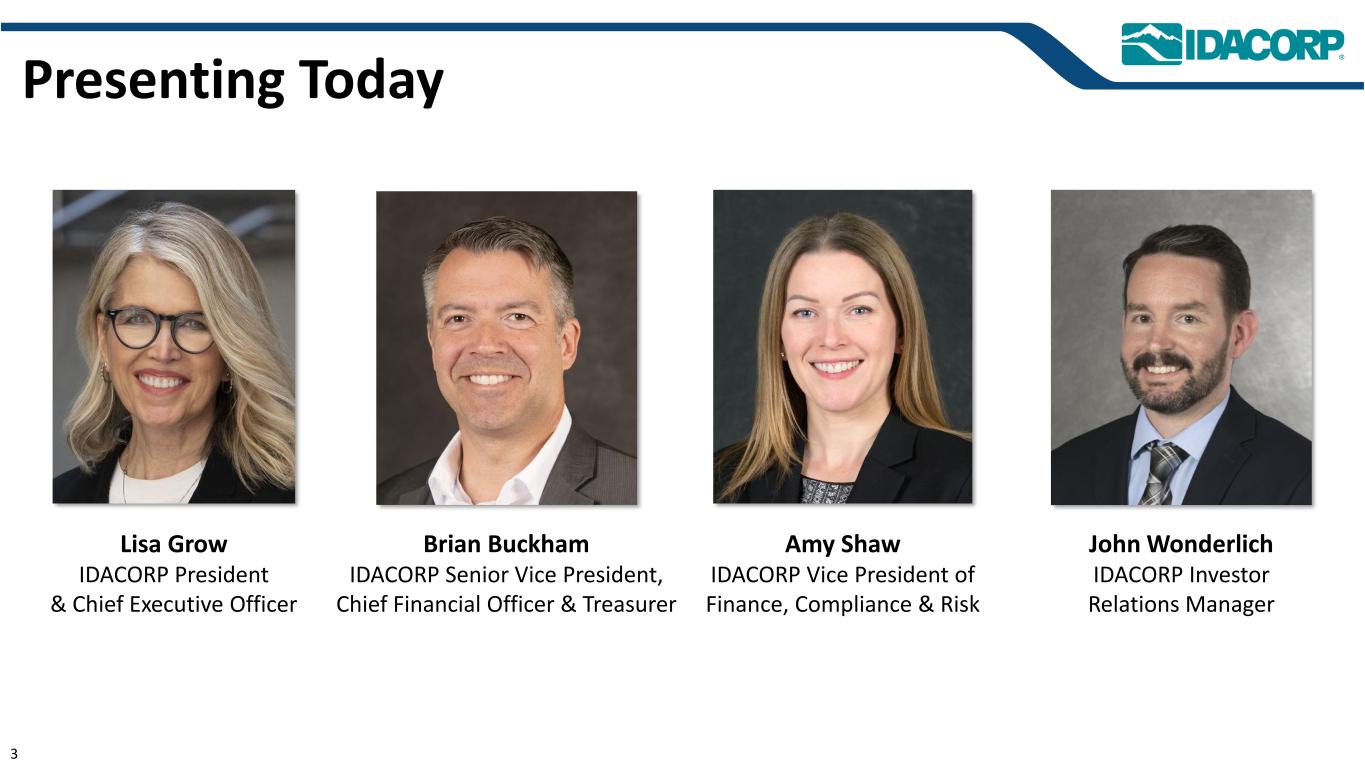
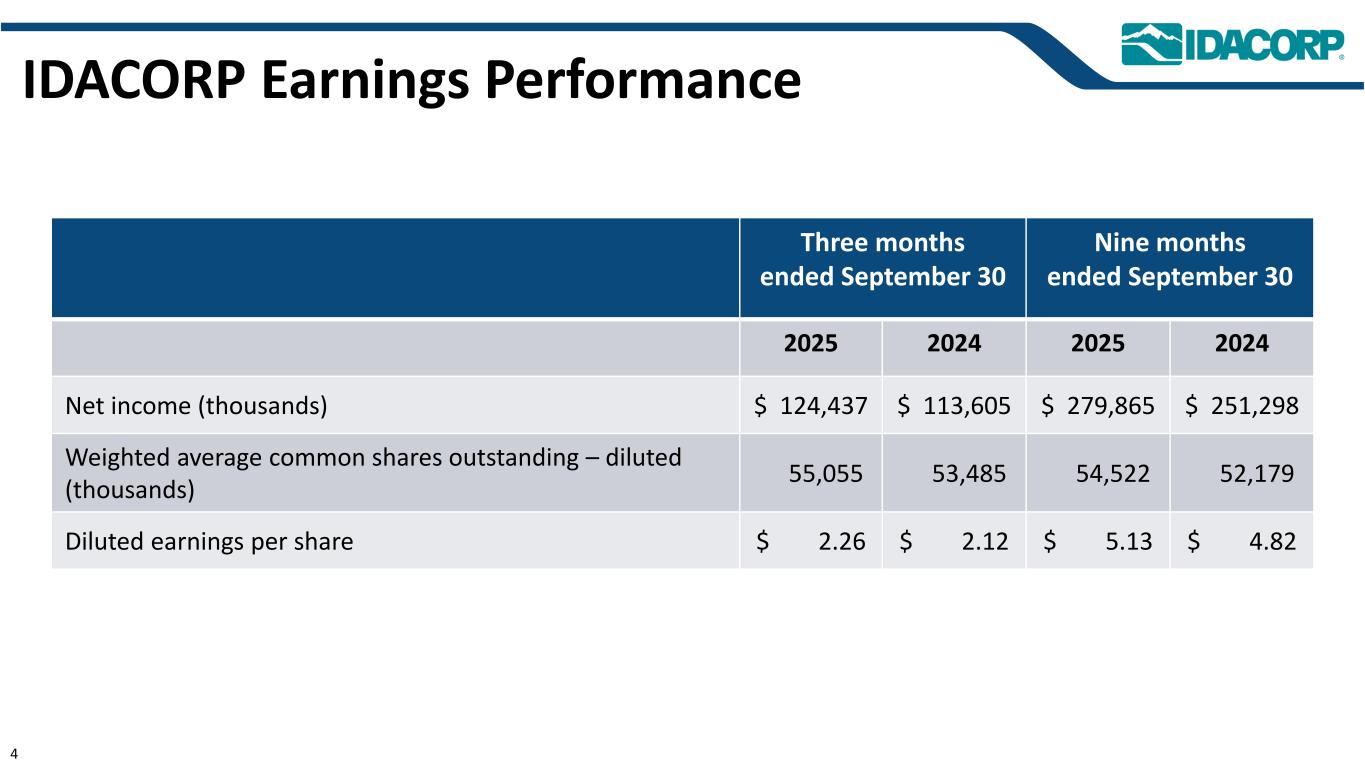
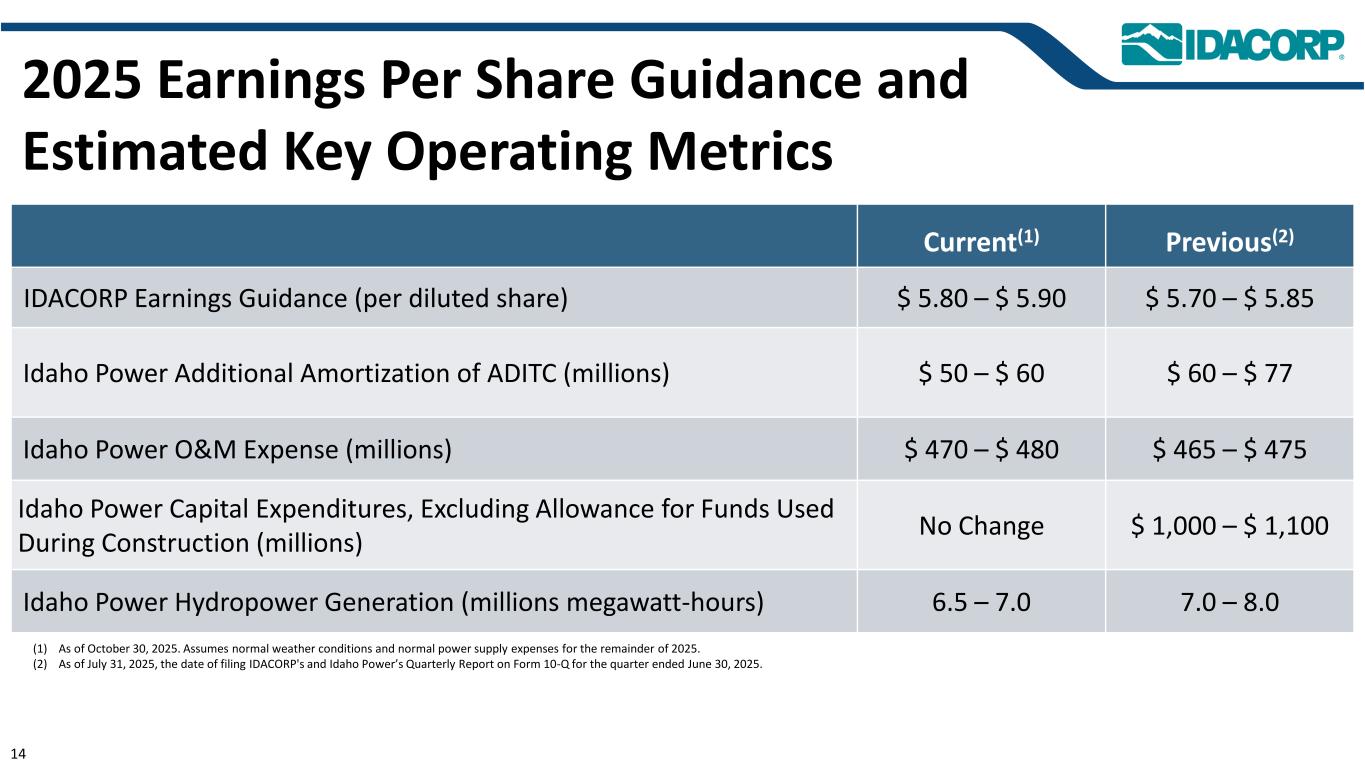
Thank you. Good afternoon, everyone. we appreciate you joining our call. The slides we'll reference during today's call are available on IDACORP's website. As noted on slide two, our discussion today includes forward-looking statements including earnings guidance, spending forecasts, financing plans, regulatory plans and actions, and estimates and assumptions that reflect our current views on what the future holds, all of which are subject to risks and uncertainties. These risks and uncertainties may cause actual results to differ materially from statements made today, and we caution against placing undue reliance on any forward-looking statements. We've included our cautionary note on forward-looking statements and various risk factors in more detail for your review in our filings with the Securities and Exchange Commission. As shown on slide three, also presenting today, we have Lisa Groh, President and CEO, Brian Buckham, SVP, CFO and Treasurer, and John Wunderlich, Investor Relations Manager. Slide 4 has a summary of our third quarter results. IDACorp's diluted earnings per share were $226 compared with $212 for last year's third quarter. In the third quarter of this year, Idaho Power recorded $2.5 million of additional tax credit amortization under the Idaho regulatory mechanism, which is the same amount Idaho Power recorded in the third quarter of last year. For the first three quarters of 2025, diluted earnings per share were $513 versus $482 for the first three quarters. quarters of 2024. Those results include additional tax credit amortization of $39 million in the first three quarters of 2025, compared to $22.5 million in the first three quarters of last year. For our guidance, we're raising our full-year IdaCorp diluted earnings per share guidance range for the second time this year. Our new expected range is $580 to $590 per diluted share. Our current expectation is that Idaho Power will use between $50 and $60 million of additional tax credit amortization for the full year a reduction from our estimate last quarter so we were able to increase our earnings per share estimate for the year while decreasing our estimate of additional aditc amortization which is reflective of our strong operational performance this year these estimates assume historically normal weather conditions and normal power supply expenses for the fourth quarter now i'll turn the call over to lisa thanks amy and thanks to everyone for joining us on the call.
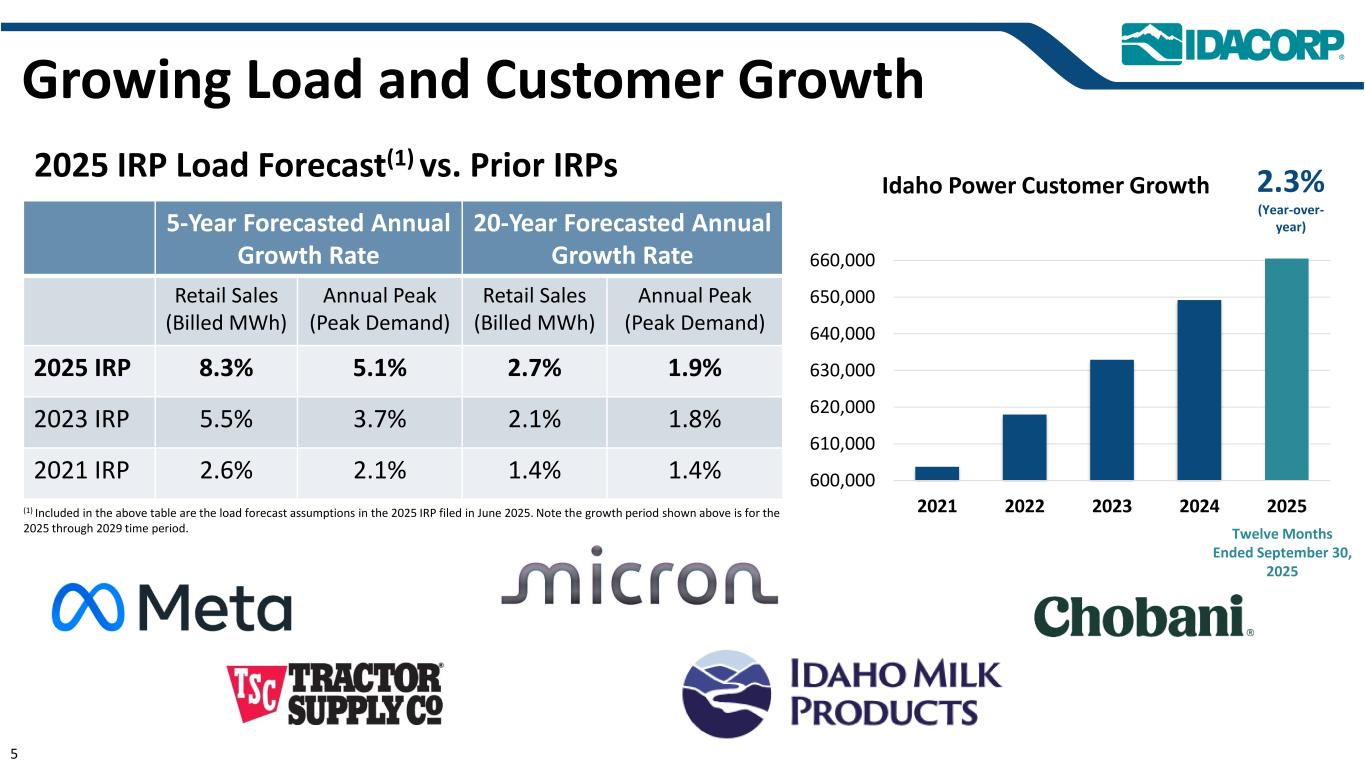
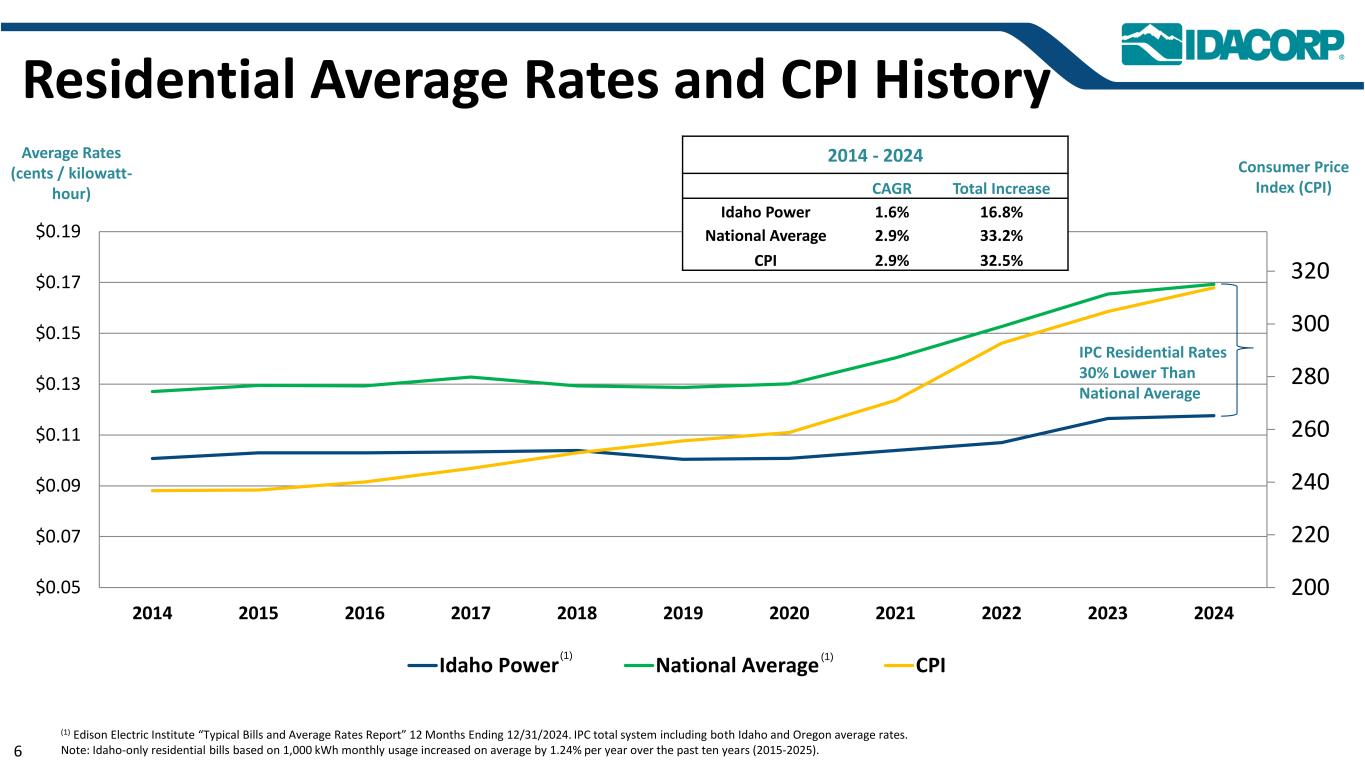
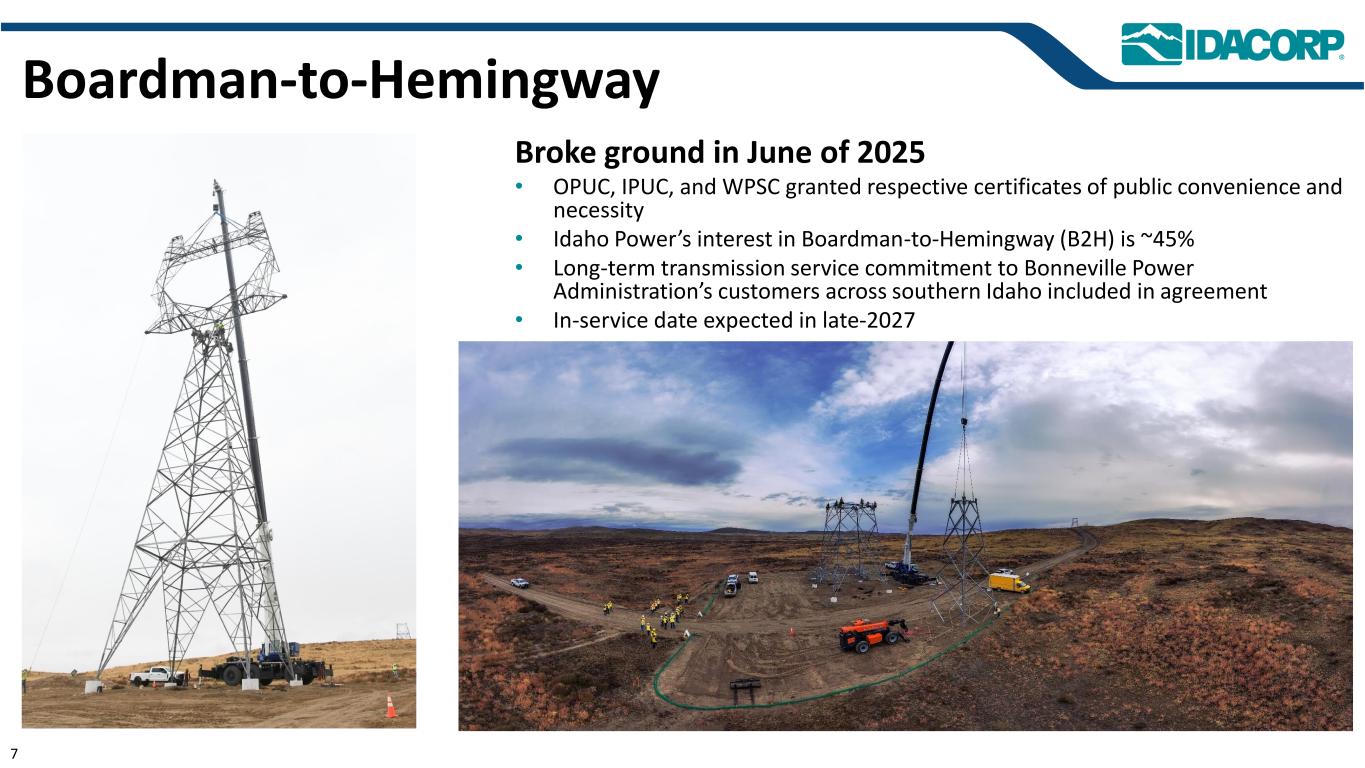
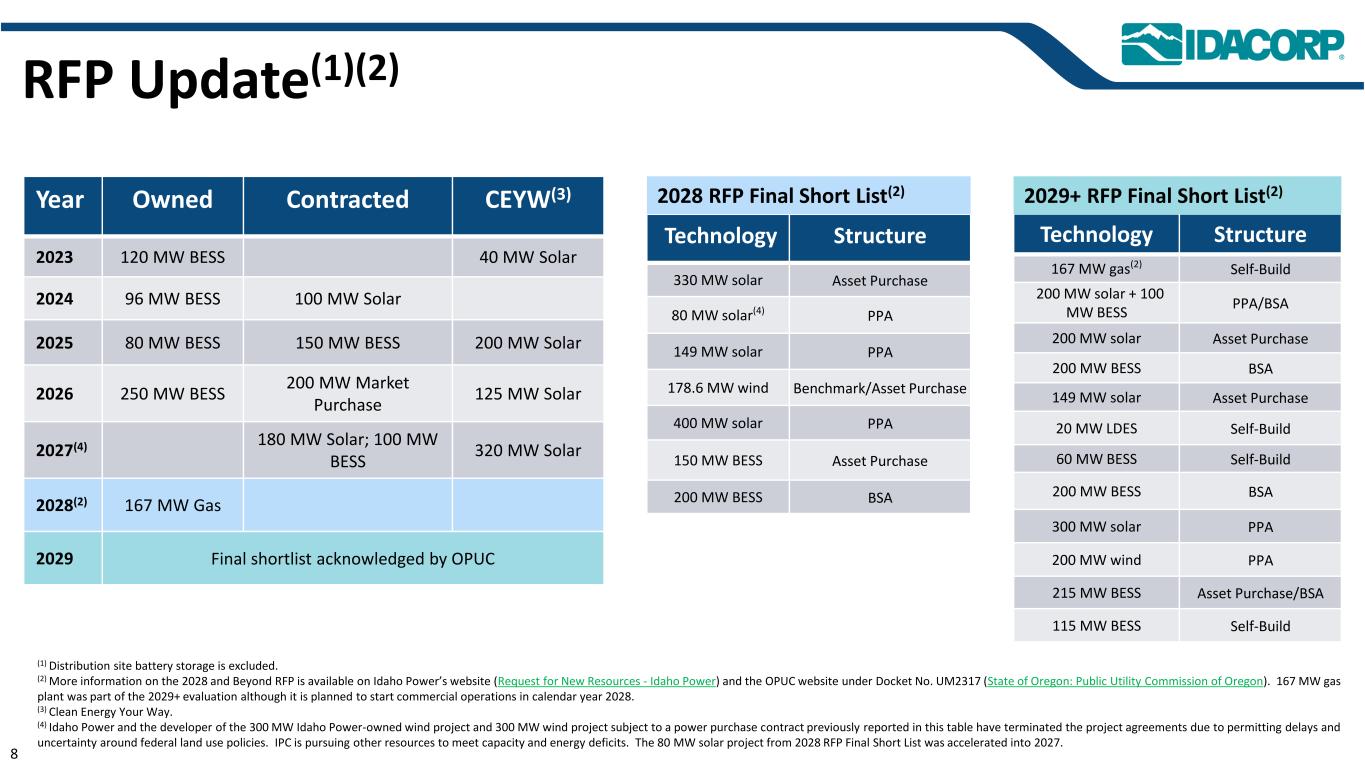
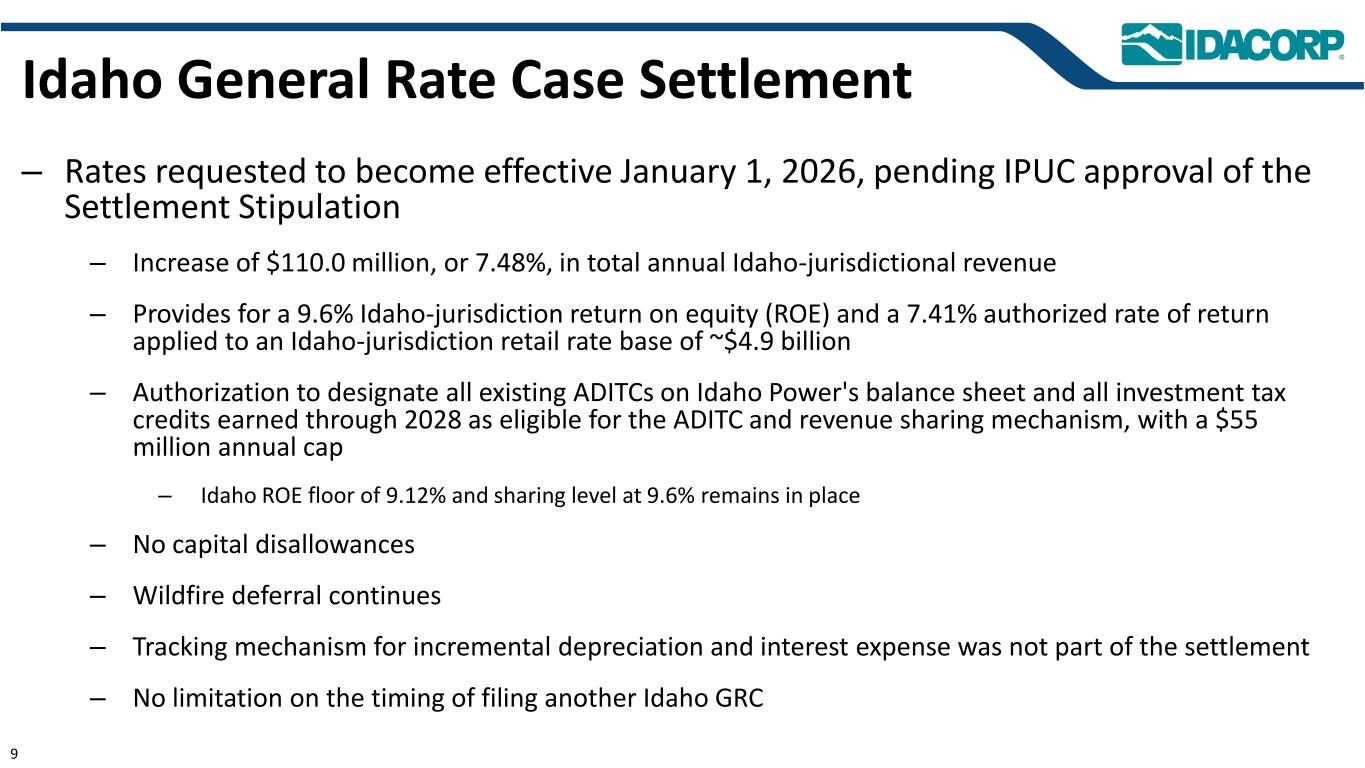
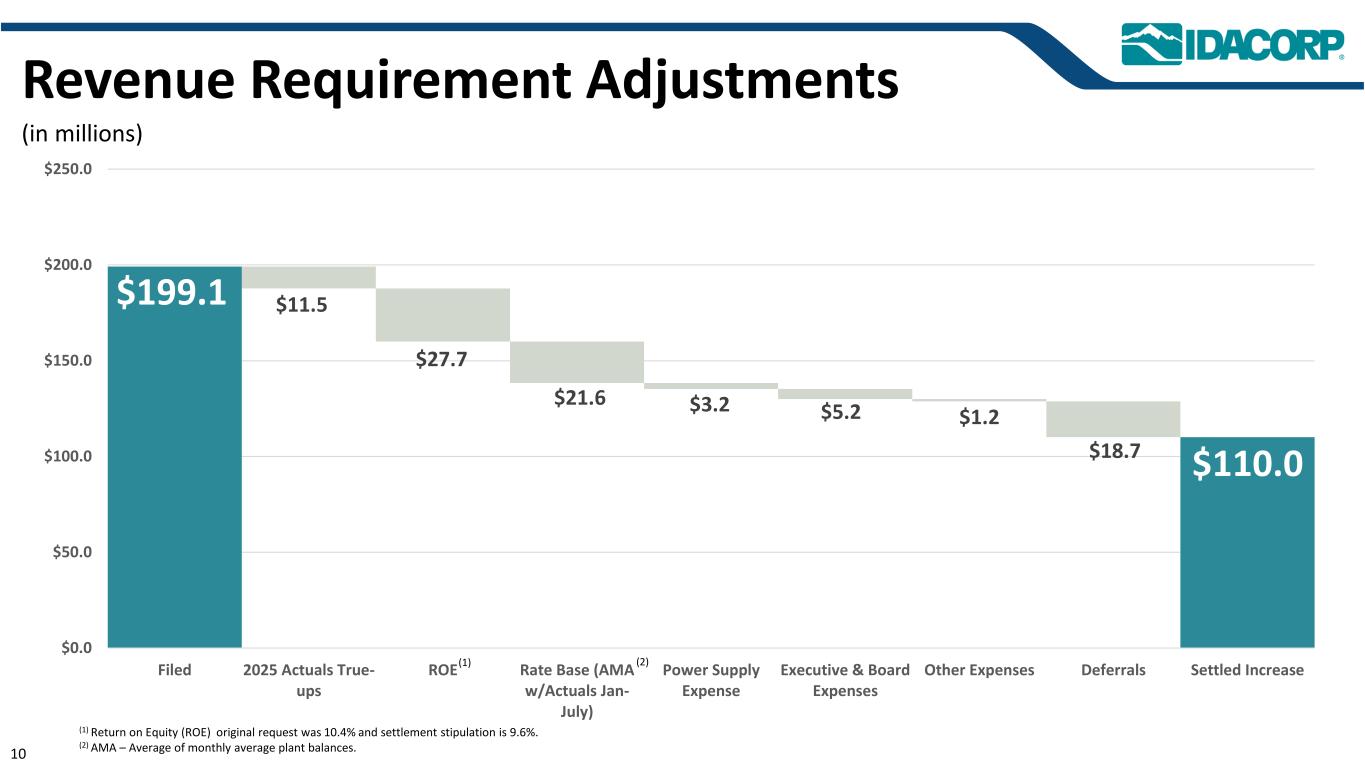
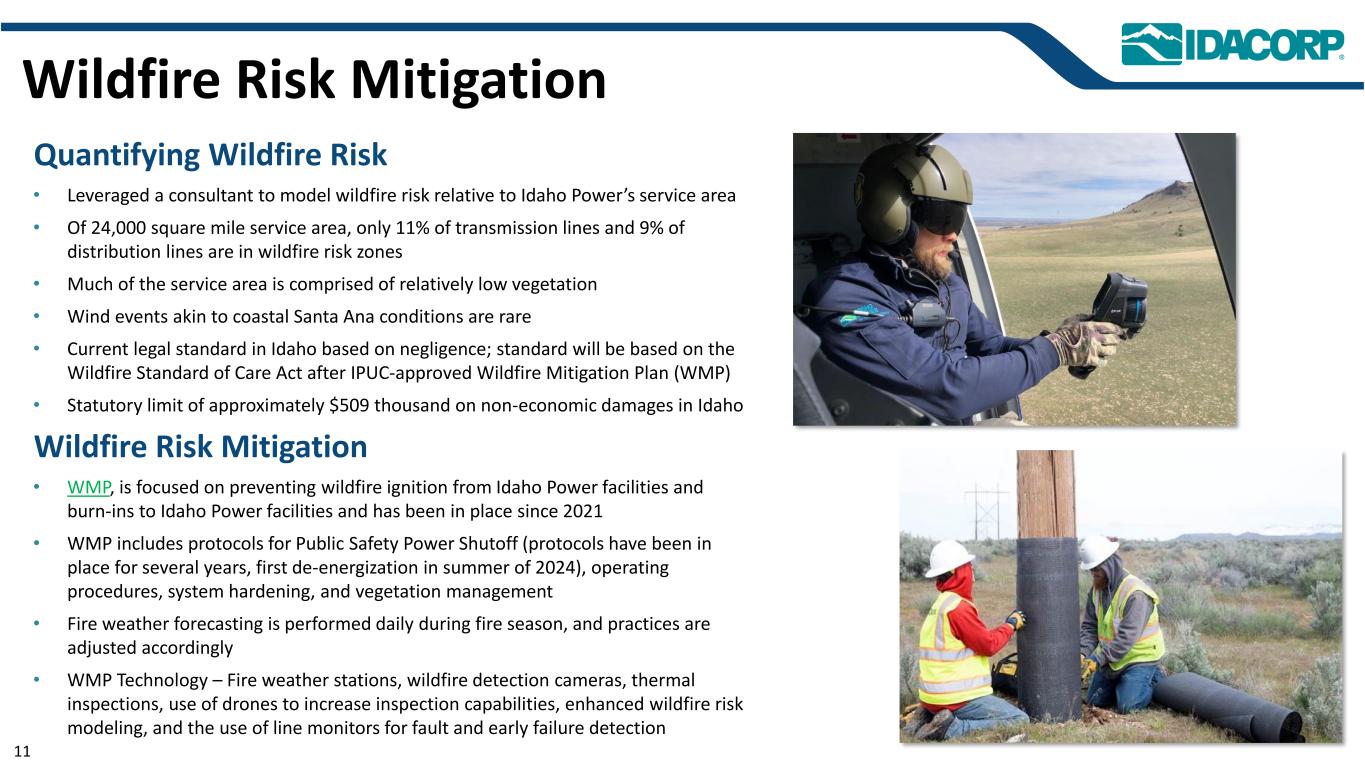
Let's start with a look at customer growth and economic expansion. As you can see on slide five, our customer base has grown 2.3% since last year's third quarter, including 2.5% for residential customers. We continue to see robust activity across several sectors, including manufacturing, food processing, distribution, warehousing, and technology. Micron's two fab projects remain a cornerstone of our industrial engagement. The two fab expansion represents the largest private capital investment in Idaho's history and underscores our region's growing prominence in advanced manufacturing and technology. In parallel, we're actively engaging with several Micron suppliers planning to establish operations in the Treasure Valley. Perpetua Resources, another new large customer, recently achieved a significant milestone in its mining project by transitioning from permitting to development. The project broke ground earlier this month, marking a new phase in Idaho's mining sector. We're also seeing increased momentum in agricultural-related projects in the southern part of our service area. These include cross-bent barns, rotary milking parlors, and biodigesters that will contribute to load growth while supporting energy production through renewable natural gas. Our new large load pipeline remains very robust. As we've previously communicated, our load forecasting methodology remains conservative and disciplined. We don't include new large projects in our forecast until contracts for the procurement and construction are executed, which occurs after we've identified how to serve the customer. This approach ensures that only viable projects are reflected in our projections. Now, the laws of physics are unyielding, so we are working hard on creative options to serve these new large loads while ensuring the system remains reliable and affordable. As we work with these new loads, I want to emphasize Idaho Power's continued commitment to customer affordability. We work hard to keep our prices among the most affordable in the country, and according to national data compiled by the Edison Electric Institute, Idaho Power's customers' bills remain 20 to 30 percent lower than the national average. We strive to achieve a thoughtful balance between growth and affordability, in part through the design of pricing and contractual provisions for new large load customers, guided by a longstanding growth pace for growth philosophy. As shown on slide 6, our residential customer rate increases since 2014 are much lower than the national average and the steep increase in consumer price index in recent years. Shifting gears and turning to slide 7, we remain full speed ahead as we execute on key projects. Most notably, work is progressing quickly on the Boardman to Hemingway transmission line project. Several towers for that project are now complete. We're thrilled to have steel on the ground on this key resource for helping us access reliable, affordable energy in the Northwest. We continue working through the regulatory and permitting processes on the Gateway West and Swift North transmission lines, and we look forward to moving both of those projects into the construction phase hopefully soon, as they are necessary resources. As I touched on during the last call, recent policy changes impacted the permitting of the 600-megawatt Jackalope wind project that we plan to have in service by 2027. As a result, we terminated the agreements we had for that project, both the ownership and the power purchase components. With the wind project agreements terminated, we're busy identifying power supply solutions to meet future load growth. These solutions could include short-term market purchases, natural gas projects, and potentially additional solar and battery storage resources. We're in a continuous state of planning and execution to affordably serve the growing demand with a reliable mix of generation resources. As described in our IRP, natural gas resources are a good operational fit for our system, as well as a least-cost, least-risk resource. Idaho Power is planning a 167-megawatt expansion of the Bennett Mountain gas-wired power plant, which will help serve load during peak times. In September, we received a pre-permit to construct from the Idaho Department of Environmental Quality, which allows construction to begin. We've also submitted a Certificate of Public Convenience and Necessity for the project to the Idaho Commission. If approved, we expect to begin construction in the spring of 2026 and bring the project online in 2028. As you can see on slide 8, there's lots of work going on in the RFP space and lots more The Bennett Project is an important step in helping to solve our future power supply needs. We're continuing to work through the resource selection process and we anticipate being able to provide some updates on additional selected generation projects on our year-end call, if not sooner. The next two slides highlight some news in our pending Idaho general rate case. We recently reached a settlement with new rates designed to increase annual revenues by $110 million or 7.48 percent effective January 1. Additional details of the rate case settlement include a 9.6 percent ROE, a 7.41 percent overall rate of return, and a $4.9 billion Idaho jurisdictional rate base, excluding coal plants that are under separate mechanisms. There were no capital disallowances in the settlement. Our ADITC mechanism remains in place with a $55 million annual cap for 2026 and thereafter. Also, all existing ADITCs not currently included in the mechanism and all investment tax credits generated through 2028 eight will be added to the mechanism. We view the settlement as a constructive outcome that helps us continue to safely, reliably, and affordably provide electric service to our growing service area. The settlement requires approval by the Idaho Public Utilities Commission, and based on prior cases, we expect a commission will issue an order on the settlement sometime in December. Turning to slide 11, we filed our 2026 Idaho Wildfire Mitigation Plan with the Idaho Commission earlier this month. It's the first wildfire mitigation plan being filed pursuant to Idaho's new Wildfire Standard of Care Act, and it outlines our proposed methods of mitigating wildfire risk and hardening our system. As a reminder, the Wildfire Standard of Care Act was signed into law earlier this year. The law empowers the Idaho Commission to set clear and consistent expectations for utilities' wildfire mitigation efforts. Under the law, stated generally, utilities are assumed to be acting without negligence if they follow a commission-approved wildfire mitigation plan and provides up to six months for the Idaho Commission to review and approve the plan after it is filed. So with that, I will turn the presentation over to Brian for a financial update.
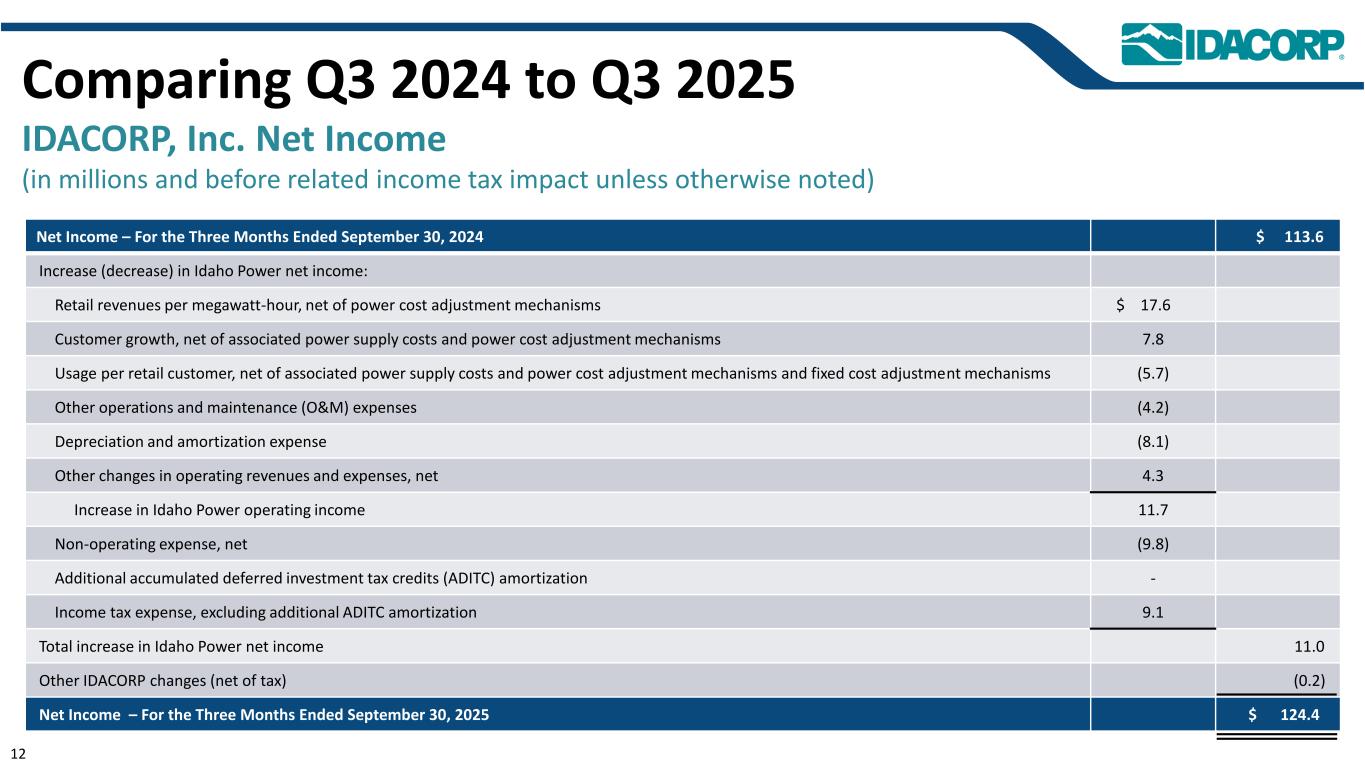
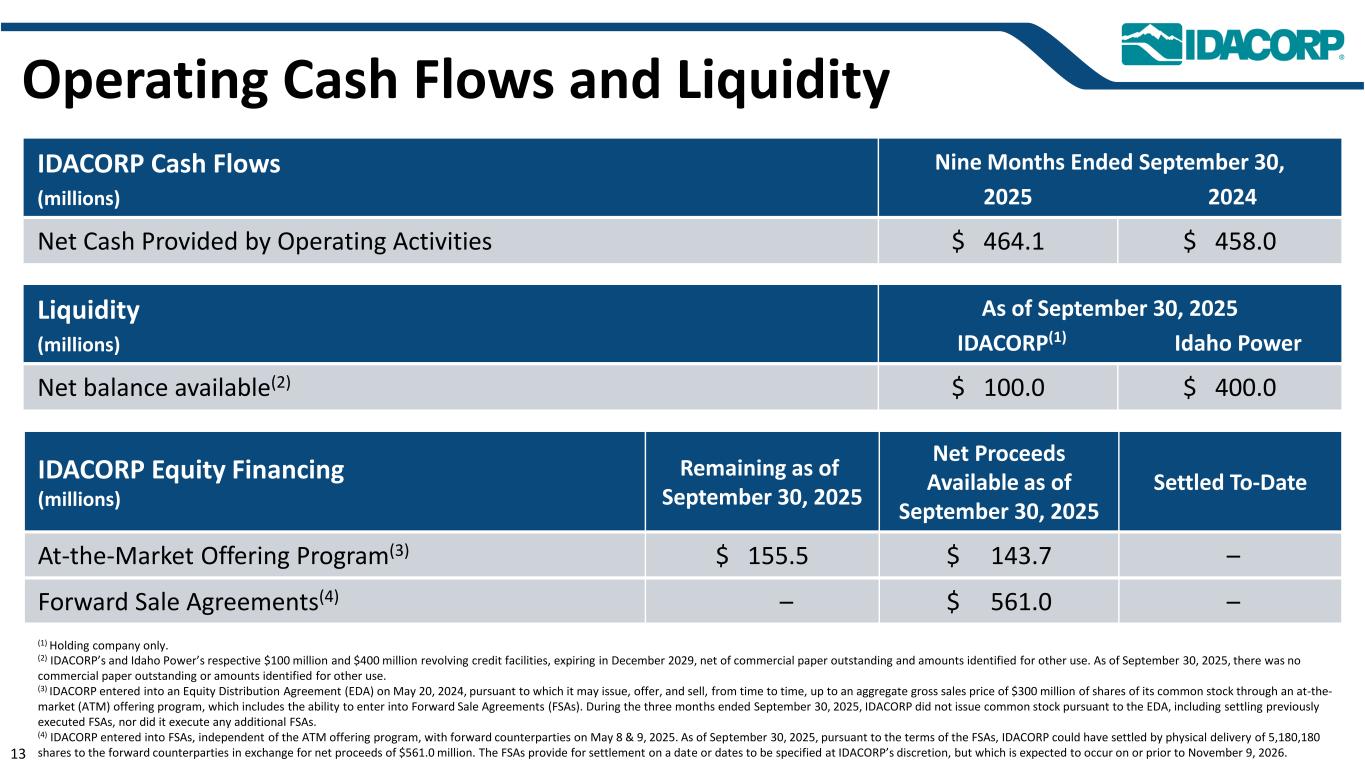
Hey thanks Lisa. Hi everybody. I'm going to start today with the financial results on slide 12. As you can see Ivy Corp's net income increased 10.8 million dollars for the third quarter this year when compared with the third quarter last year. Just to summarize that increase was mainly driven by higher retail revenues from the January rate change and from customer growth. On the other hand we saw lower usage per customer and that's because we're comparing to a very hot, very dry third quarter of last year. We also saw higher O&M expense and, as expected, depreciation and interest expense increase from our continued build-out of the infrastructure support the growth that Lisa talked about. To add some detail on that, a net increase in retail revenues per megawatt hour increased operating income by $17.6 million on a relative basis, resulting mostly from the rate changes from the limited-issue rate case Idaho Power filed last year. At customer growth, increased operating income by $7.8 million. That was the result of adding 15,000 customers over the last year. And although cooling degree days in Boise were 14% higher than normal, we saw an impact from a relative decrease in usage for a customer of $5.7 million. That's not intuitive when it was so warm this year, but it's because the third quarter last year was even more abnormally hot and dry, which affects the comparability. Of the customer classes, irrigation usage for customers decreased most significantly with higher precipitation and lower temperatures. Other O&M expenses were $4.2 million higher. That was driven by inflationary pressures on labor and professional insurance expenses. As the system grows, we also expect to see higher O&M expenses to maintain an expanding system, the natural result of that growth. That said, we plan to keep our culture of measured and thoughtful spending fully intact. The depreciation expense increased $8.1 million quarter over quarter, again, as we expected from our infrastructure development and the placement of additional assets into service. Other net changes in operating revenues and expenses increased operating income by $4.3 million. This was due primarily to a decrease in net power supply. And then non-operating expense increased $9.8 million in the third quarter on a net basis. As we continue to grow, we continue to experience higher interest expense to finance it. Also, we had an increase in interest that Idaho Power is required to pay on transmission customer deposits. And as I noted on our Q2 call, a portion of our higher interest expense is driven by our new finance lease related to a third-party energy storage agreement, and that affects comparability as well. I think it's important to remember that the additional financing costs and the amortization is related to that right-of-use lease asset. The increase in non-operating expenses was partially offset by an increase in AFUDC. from higher average construction work-in-progress balances. Just as a barometer of how busy we've been as a company, our quick balance was $1.6 billion at the end of the quarter. And at the same time, ID Corp's total assets went over $10 billion for the first year. Income tax expense, in this case, excluding additional ADIDC amortization under the mechanism, decreased by $9.1 million. I distribute this mostly to annual income tax return adjustments and recurring regulatory flow-through tax items. So to sum it up on financial results, it was a strong quarter, and it's been a strong year And because of that, we've decreased our full year expectation of additional ADITC amortization while at the same time raising our expectations on earnings for the year. Now moving on to slide 13, I'll talk about the cash side. Our operating cash flows through September were $464 million, which was $6 million higher than the comparative period last year. This continues the trend of steadily improving cash flows from our rate cases. At the end of September, the Idaho Commission approved our request for additional pre-collection of Health Canyon AFUDC. On an annual basis, this will increase cash collection by about $30 million. Now, there's no income statement impact from that, but it's positive on the cash side and it's beneficial for our credit metrics. We think the order demonstrates the Idaho Commission's intent to support the financial health of the company and also a willingness to make decisions to help. It was another busy quarter. The fourth quarter surely offers no reprieve. We're working through resource acquisitions, building infrastructure like the Bennett expansion and our major transmission projects, and undoubtedly other projects to meet load and reliability obligations, and we're otherwise executing on our strategy. So we're hard at work. We're glad you're with us in the relative near term as soon as we have them. I'd be remiss if I didn't mention that we're excited to see you in a little over a week. Lisa, Amy, John, and I will all be there. And now over to John for an update on our 2025 guidance.
Thanks, Brian. Moving to slide 14, you can see our updated 2025 full-year earnings guidance and key operating metrics. This guidance assumes normal weather and normal power supply expenses for the rest of the year. Amy and Brian already mentioned this, but with continued positive operating results, we raised our guidance and now expect IDACorp's diluted earnings per share this year to be in range of $5.80 to $5.90 with the assumption that Idaho Power will use 50 to 60 million dollars of additional investment tax credit amortization. Our expectation for full year O&M expense increased to a range of 470 to 480 million dollars as we continue to experience inflationary pressures on labor and professional services and added work on wildfire mitigation efforts we still expect to spend between 1 and 1.1 billion dollars on capex in 2025. finally we still expect pretty good hydropower generation in 2025 though we've updated our range to 6.5 to 7.0 million megawatt hours for the year. With that, we're happy to address any questions you might have.
Operator
We are now ready to begin the question and answer session for attendees who have joined on the Q&A line. If you would like to ask a question, please do so by pressing star 1 on your phone. Please ensure your mute function is turned off before you ask your question. We will take as many questions as time permits on a first comm basis. Once again, that is star one on your phone to ask the question now. Your first question comes from the line of Bill Apicelli with UBS. Your line is open.
Hi. Good afternoon. Just a question around the meat generation needs and some of the considerations you are making around the change with the wind farm. So, can you just maybe remind us, you know, what was in the capital plan for Jackalope, and then, you know, what are the sort of, you know, potential solutions and the timeline for that?
I'll start. I'll have Brian go over the numbers. Certainly, as we shifted away from the wind project and we're reviewing what the opportunities are for replacement, we only have the, really, Bennett to talk about today. But it's worth noting that, you know, it was 600 megawatts of wind, so it won't be a megawatt for megawatt replacement. We do, as I mentioned in my comments, gas is showing up in our IRP, and we are certainly looking at those options as well as others as we work our way through the RFP process. So you want to talk about what was in the budget, Brian?
Sure. Hi, Bill. So one thing I'll mention about the Jackalope Wind Project is that the spend for that project was consolidated in the years 2026 and 2027. So when you look at our capital stack, that's where you'll see the generation resource for that. Now 300 megawatts of that was owned, 300 megawatts was a PPA. We don't have the exact number to give you in terms of the cost because it's competitive information but I will say that if you use typical wind pricing on a 300 megawatt project there's also some interconnection costs associated with that that given the location were relatively high though it was a pretty significant piece of capital in our in our stack but as we're looking to the future I think there's some other pretty significant bias to the upside on CAP might be coming out of the RFP process.
Okay. Just so, I'm going to have Adam just give a little highlight on the RFP process.
Yeah, so we're still working through the 2028 and 2029 RFP processes. Just as a reminder, the 2028 process, I know Power has three projects on that. On the 2029 shortlist, we have four projects. Lisa mentioned the Bennett project. So we're going to continue to work through those to see how to replace that capacity. It's 600 megawatts, but Jackwell was mainly an energy resource for us. The effective load carrying capability was about 90 megawatts. So that's what you'll see us try to replace from a capacity perspective. Lisa also mentioned the IRP shows gas in the future in 2029 and 2030. There was only one gas bid that made the 2029 RFP, so we'll have to consider.
Okay. And then was the Bennett project in the capital stack, Brian, in February or no?
We had a resource that was in there somewhat as a proxy in the most recent capital updates that we gave, but it's not a full reflection of the 2020 and RFP.
Okay. And then just my only other question was just around customer growth trends. It seems like that's not an issue based on the amount of growth that you guys are talking about, but I just did notice that the 12-month trailing did tick down a little bit. Any color there or thoughts on those trends moving forward? Are you talking about the load growth or the actual? the sorry the the customer growth yeah the actual that you you cite there i think it was uh you know the 2.3 percent year over year on a trailing 12 month basis i think that had been a little bit yes yeah 2.5 so yeah i think those have been pretty much um we've been consistent kind of in the this is adam the 2.3 2.4 that's meter growth that's um you know per customer or customer meters really where we're going to see and continue to see more substantial growth.
And just to sort of put a finer point on it too, that prospectively we're looking at around 8.3% growth overall.
In terms of total load of growth, right?
And that's each year over the next five.
Hey, Bill, this is Dan. I want to go back to your question on whether or not the gas plant was included in the capital stack. So if you go back to February, we didn't have a CPCN on that, and the RFP wasn't known. So that project is actually an incremental add since then. So you take the wind out, and the 167-megawatt band approach is actually an incremental add.
And then we'll expect additional adds.
All right, that's clear. I'll let someone else jump in.
Operator
Your next question comes from the line of Chris Ellinghaus with Gilbert William Shank. Your line is open.
Hey, everybody. How are you?
Good. So residential customer growth slowed sequentially from the last few quarters. Is that telling us anything about sort of how the ramping of staffing of the new customer loads is going? Or is that telling us anything about some slower economy overall? Is that like the labor market has slowed a little bit? What can you say about that?
Well, certainly on the large loads, I mean, right now it's mostly construction personnel that are there. So, you know, I can't really say too much about, you know, what their final load growth will be. But, you know, I think their interest rates have impact. I think, you know, where you are in the year has impact in terms of people's ability and willingness to move. And I do think there probably is a little bit of softening in the economy, just given so much of the uncertainty out there. But there's not really any, you know, big trend that we're seeing that we're concerned about.
Okay. Sales growth for the quarter was actually, I thought, a little surprisingly good. despite the usage impact. Is that just sort of the year-over-year progression of customer growth? Or are there other factors there? Given, you know, cooling degree days were down double digits, so to have your sales level be up as much as it was on the residential and commercial sides may be a little surprising. Have you got any thoughts there?
Yeah, I mean, I think it does speak to growth. You know, weather was a little wonky this year, so I think that kind of dampened some of it. But, yeah, I think I would point to growth mostly.
Yeah, Chris, this is Adam. It's been interesting looking at the operational side. Every single day we look at the load and where it's going versus the temperatures, and I think if you asked our operators, they would say they definitely noticed kind of an uptick even when the weather maybe wasn't as strong this year so when I see that every single day I view it is we're starting to see the manufacturing load increase a lot of the projects that are large projects are starting to get construction power we're starting to see that come through our loads so I thought it was a pretty positive year when you consider the weather can you say the same about irrigation I really kind of thought it might be even lower given and what the weather was, particularly sort of the way that precipitation fell during the quarter.
So was there something going on with ag where it was particularly strong to keep irrigation as high as it was?
Well, I think that, you know, the way that the spring and summer started, it was quite warm and dry. So I think, you know, we got a good bump there. And then, of course, you know, it rained on the 4th of July. We had rain in August. It never really got, you know, miserably hot for extended periods of time, which often is where you see some of those super peaks show up. So, you know, but overall, you know, for what we're projecting for the year, it is slightly up over last year, even though it sort of doesn't have the historic shape as you go through the year. Anything you would add, Adam?
Maybe I'll just hit the kind of boots on ground perspective. And then, Brian, I know you have some numbers on it. Talking to our ag reps, they kind of have said that the demand's been pretty strong. It's been pretty steady. So that I think that's what we expected going into the year based on our conversations with farmers. And I think that's what we ended up seeing as a pretty steady amount of energy used throughout the year.
As it flowed, Brian, I know you have the numbers, but it was the demand was strong. yeah and this is brian if you look at just the the third quarter a modest downtick in irrigation loads but if you look at the nine months of the first nine months of the year kind of a modest increase right that you see overall so you know june usage was high both years uh june 2025 didn't have precip right and that's a big driver it turns out is the amount of precipitation not just the temperature we found uptick in precipitation actually uh in the third quarter but nonetheless Okay.
Lastly, if I recall correctly, in the IRP with the preferred portfolio, I think you had a scenario in there with reduced renewables, probably in anticipation of the jackalope issue. and if I recall correctly sort of gas was next up in the queue there is that kind of what you're thinking and given the sort of RFP results do you anticipate sort of opening that up at all to see if there's additional interest given the sort of gas environment that we see ourselves in today well certainly you
know, with a lot of the policy changes, that has changed the economics of renewables for sure. So that has an impact in how those inputs go into the model. And, you know, we'll see sort of what on the shortlisted projects, their ability to meet the terms that they were selected on, given those changes in policy. Anything you would add?
Chris, maybe I'll just add, you're right. 2029 had a gas plant, 2030 had a gas plant. If you look at our 2029 RFP, and it was actually 2029 and later, there was only one gas plant that was part of that RFP. So, just by virtue of seeing what's least cost, least risk in our resource portfolios, we're going to have to start looking to see what might exist beyond the RFPs in that 2030 range. Okay, that makes sense. All right, thanks a bunch.
Appreciate it. Thanks, Chris.
Operator
Your next question comes from the line of Julian Jamal and Smith with Jeffries. Your line is open.
Operator
Yeah, it's Brian Russo on for Julian. Hey, I think you may have just answered my question, but I'll just ask it again anyway. Given that you're really the only bidder of gas generation in the RFPs, is there an alternative to the RFPs to expedite the process considering the long lead time to secure turbines, et cetera? And given, you know, the profile of your customer and the demand that you need to meet, you know, as we move towards the end of the decade, I was just curious if that was even considered.
Well, we're certainly considering all options. And, you know, it's just an incredibly dynamic environment from which to try to plan and execute quickly. So we will report back to everyone next quarter when we have a little more insight as to what those alternatives will be.
Operator
Okay, great. And I think, you know, given that you can only get Bennett in service by 2028, right, that's a year after you were hoping to have the jackalope capacity. And you mentioned three alternatives, short-term purchases. I think the second one was gas, and the third was solar and battery storage. I suppose that your preferred choice is to own something, but it doesn't seem realistic to own any gas generation that soon. So would solar or battery storage be kind of the next preferred scenario to replace jackalope?
Well, again, we're looking at all options to see what can we actually get as quickly as we need. So I don't know that we have more than that to really say about it today. Is there anything that you would add?
Brian, this is Adam. I mean, I think you're right. You're seeing a gap there. And certainly, we have a couple PPA projects that we're going to help fill that gap. But to your point, we've got to start considering what other options exist because what the IRP is showing is it's most cost-effective right now to go forward with a gas facility. So we are taking a look at that and hopefully we'll be able to update you next quarter.
Yeah, and to just add to our transmission projects also help get us to market to bring resources in. So those are also important.
And on those, just quickly as a reminder, 2027 is the in-service date for B2H, so that's pretty significant. We will bring resources in using that resource. And then 2028, we have both the Southwest Intertide Project down south. And when you look at 27 and 28 from a CapEx perspective, they're going to be pretty busy setting aside the generation side of things.
And I guess I just try it all up and just remind you that, you know, certainly, you know, we have our obligation to serve, and we do also procure those resources competitively. So, you know, that doesn't change.
Operator
Okay, great. Well, thank you very much.
Operator
Your next question comes from the line of David or Cara with Morgan Stanley. Your line is open.
Alex
Analyst — Morgan Stanley
Hi, this is Alex. I'm on for Dave. Good afternoon.
Alex
Analyst — Morgan Stanley
Hey, could you talk about the priorities for our next rate case and especially related to potential tracking mechanisms? How important is that to your plan and how do you see the regulatory support for that in Idaho?
I want to make sure that I heard the whole question. So, you know, we are very sensitive about rate cases. We want to make sure that we're being careful about meeting our obligation to serve, but also keeping rates as affordable as possible. And so as we go through time, we evaluate each subsequent rate case based on the need for what we're spending. and, you know, if we can, you know, cover that with revenues, that that kind of growth. So it really is a very dynamic calculation as we go through time. We want to make sure that we, you know, maintain our financial health as we go through this extraordinary period of growth. But certainly rates are, rate cases are part of that calculation as we go through time.
Is there anything, Tim, that you would add? yeah thanks for the question alex it's a great one uh we just filed our our 2025 general rate case settlement stipulation last week um timely question i met with a few folks this morning to start talking about it and uh we're working on trying to assess the timing and need of our next case and what elements might be included all of that's on the table at this point the plan is is in development and in early stages so got it no very clear and then shifting to the earnings
outflow going forward uh as our new large load customers start to come online do you think you could earn an roe above the minimum level of 9.12 percent yeah like this is brian so uh at some point along the way yes there's a convergence of just revenues coming in from customers that cause our earned roe to increase above the 9.12 level in fact that's what we've been looking to do is increase the you know the roe every year we've done that with cases over the last few years we have removed some element of regulatory lag by doing that and eventually hope that you know the magnitude or frequency of cases would decline and the revenues from large load customers would in fact come in and cover the infrastructure that has been developed for them So those large load, large volume customers, and that therefore would still allow earning at or above that 9.12% floor, as in not needing 80 ITCs.
Alex
Analyst — Morgan Stanley
All right. Perfect. Thanks for taking my question. Thank you.
Operator
Your next question comes from the line of Anthony Croto with Mizzou. Your line is open.
Hi, Anthony. Hey, good afternoon. How are you doing? I just want to follow up on one of Bill Apicelli's question on the Jackalope project. The loss of 300 megawatts, I guess, in your capital plan. I know you talk about the transmission and maybe you'll meet the generation need. But is there offsetting CapEx that goes into your forecast, or should we expect a dip from what you previously thought 2027 was going to be now that Jackalope has been canceled?
Yeah, great question, Anthony. So we typically update our capital forecast every February on the Q4 call. The last couple of years, we've done an interim update just based on the outcome of RFPs and resource procurements. I think you should expect us to do that potentially this time as well. I mean, we've talked about the Bennett plant, but that is an inadequate resource to cover, you know, the load growth that we have going forward. Even for just the customers we've announced so far, the ones that are in the construction phase or that have executed agreements with us, there are incremental generation requirements in there, and they are not reflected yet in a capital stack, but as we solidify those, we will add those to the capital stack. you'll see jackalope come out you'll see bennett go in and then by the time we get to that update i would expect to see incremental resources in there as well as project costs and timing adjustments that we typically include in our annual update so that that may be the q4 call it may actually be sooner that you see some of that coming to fruition uh possibly as early as this year starting to see some incremental generation resources being added depending on the outcome of our process.
The driver that we would see the update in 2025, is it approval of the settlement or is it something else that would cause us to see it in 2025?
No, it's just getting through the procurement process. Sometimes that can be a relatively lengthy process and it is a competitive process. So identifying whether or not we've been the successful bidder, negotiating with the actual suppliers and vendors and ensuring we can meet timelines are all factors that go into whether or not that'll be a 2025 announcement or not. And it's also a confidential process that we have as we negotiate with those vendors. So there's not much we can release until we've gotten to a point where we're very comfortable in the fact that it is a winning project. And then we'll announce what it is.
Great. And when do you expect approval of this settlement? I apologize if you've already put it in the 8K on when the commission would vote on it.
Yeah, we're expecting that sometime in December, as they have done historically, so probably late December.
And then lastly, Brian, you talked about, I guess, you're carrying a quit balance of a billion dollars.
I believe Moody's has you on a negative outlook for your rating. um do you plan on working down that quip balance in 26 or it stays at that level and with the negative outlook and that large quip balance that maybe accelerates uh equity needs actually i would think the equity need would go the other direction in the near term anthony and the reason for that was i mentioned the jackalope wind project had two large payment obligations in 2026 and 2027 as we look at removing that and replacing it with you know, potentially more traditional timing of payment, like for a gas plant, for example, those tend to be spread out longer. And that can actually reduce our near-term equity need by pushing out the capital requirements until further in our five-year window. So we could see a reduction in near-term equity and overall equity just as a result of the payment timing for CapEx. On the credit metric side, you know, we did have this rate case outcome. We do believe it to be you know the settlement is a balanced settlement certainly and constructive but it does help on the credit rating side as does the outcome of the health canyon afudc case so we see ourselves naturally progressing out of being near the threshold without having to thanks so much for taking my questions and i'll see you guys at eei yeah we look forward to it you there.
Operator
And a final opportunity, press star one to signal for question and we'll pause for just a moment. That concludes the question and answer session for today. Michelle, I will turn the conference back to you.
All right, well thank you very much for everyone for joining us today and I hope you all have your Halloween costumes picked out and that you have a very safe and happy Halloween. So thank you.
Operator
That concludes our conference for today, Humano Disconnect. Thank you and have a great day.