Operator
Greetings, and welcome to the KLX Energy Services First Quarter 2026 Conference Call. At this time, all participants are in a listen-only mode. A brief question-and-answer session will follow the formal presentation. If anyone should require operator assistance during the conference, as a reminder, this conference is being recorded. It is now my pleasure to introduce your host, Ken Dennard, Investor Relations. Thank you, sir. You may begin.
Thank you, operator, and good morning, everyone. We appreciate you joining us for the KLX Energy Services conference call and webcast to review first quarter 2026 results. With me today are Christopher J. Baker, President and Chief Executive Officer, and Jeff Stanford, interim Chief Financial Officer. Following my remarks, management will provide commentary on its quarterly financial results and outlook before opening the call for your questions. There will be a replay of today's call that will be available by webcast on the website at www.klx.com, and there will also be a telephonic recorded replay available until 05/27/2026. More information on how to access these replay features was included in yesterday's earnings release. Please note that the information reported on this call speaks only as of today, 05/13/2026, and therefore you are advised that time-sensitive information may no longer be accurate as of the time of any replay listening or transcript reading. Also, comments on this call will contain forward-looking statements within the meaning of the United States federal securities laws. These forward-looking statements reflect the current views of KLX management. However, various risks and uncertainties and contingencies could cause actual results, performance, or achievements to differ materially from those expressed in the statements made by management. The listener or reader is encouraged to read the annual report on Form 10-K, quarterly reports on Form 10-Q, and current reports on Form 8-K to understand those certain risks, uncertainties, and contingencies. The comments today will also include certain non-GAAP financial measures. Additional details and reconciliations to the most directly comparable GAAP financial measures are included in the quarterly press release, which can be found on the KLX website. And now with that behind me, I would like to turn the call over to Christopher J. Baker. Christopher?
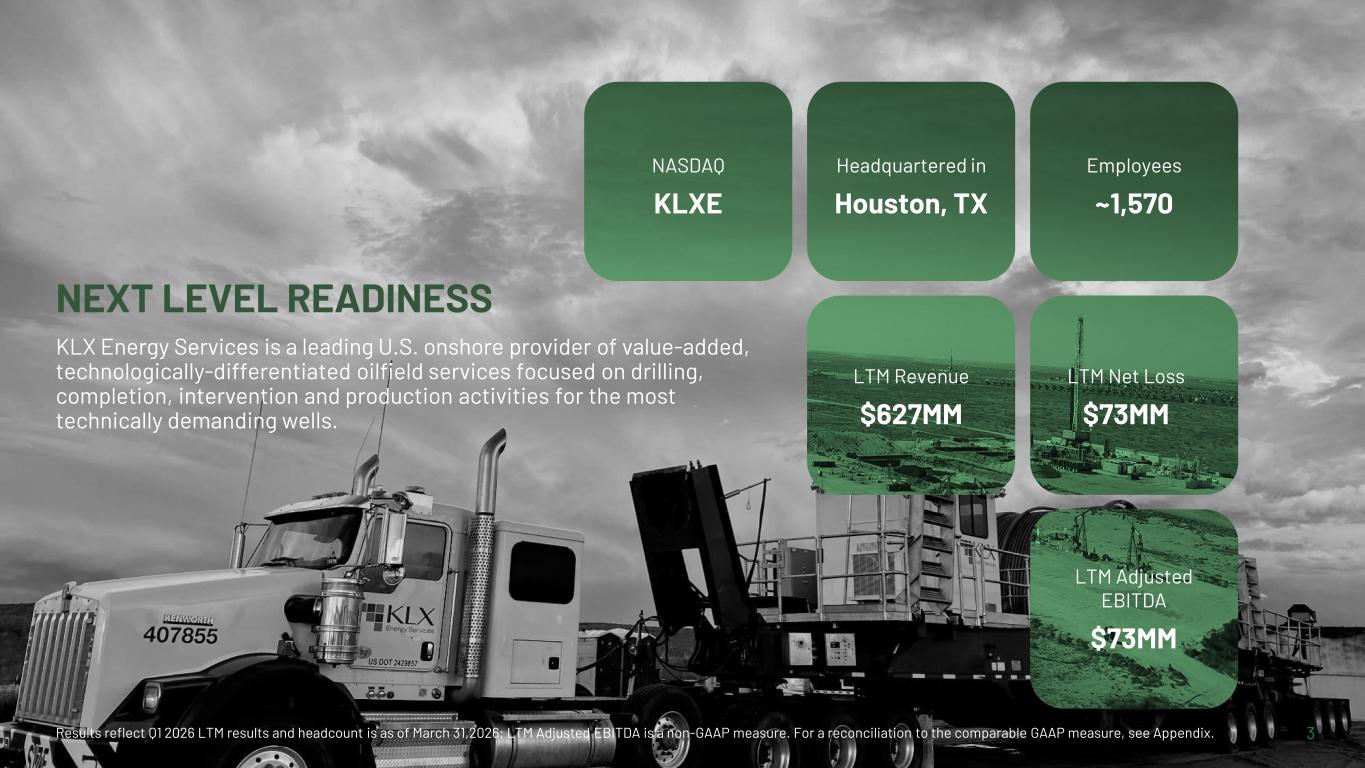
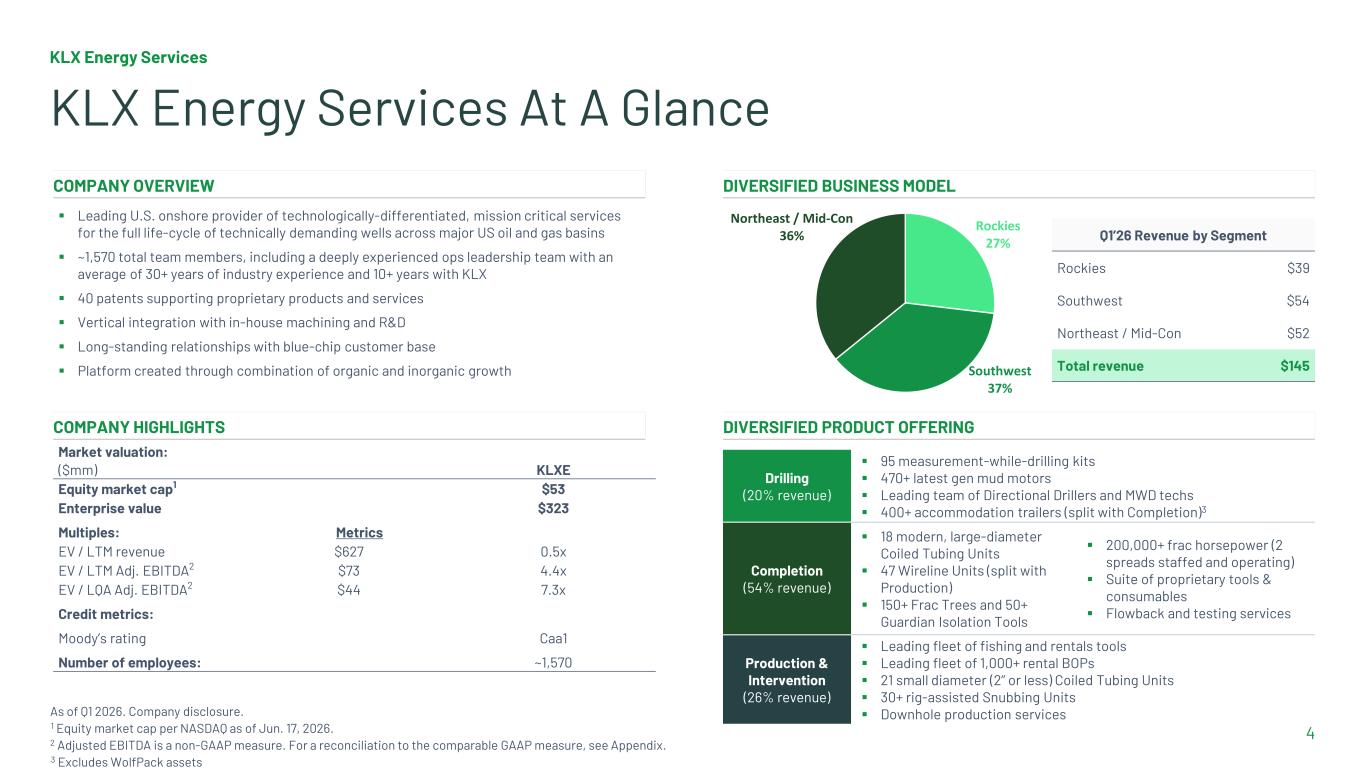
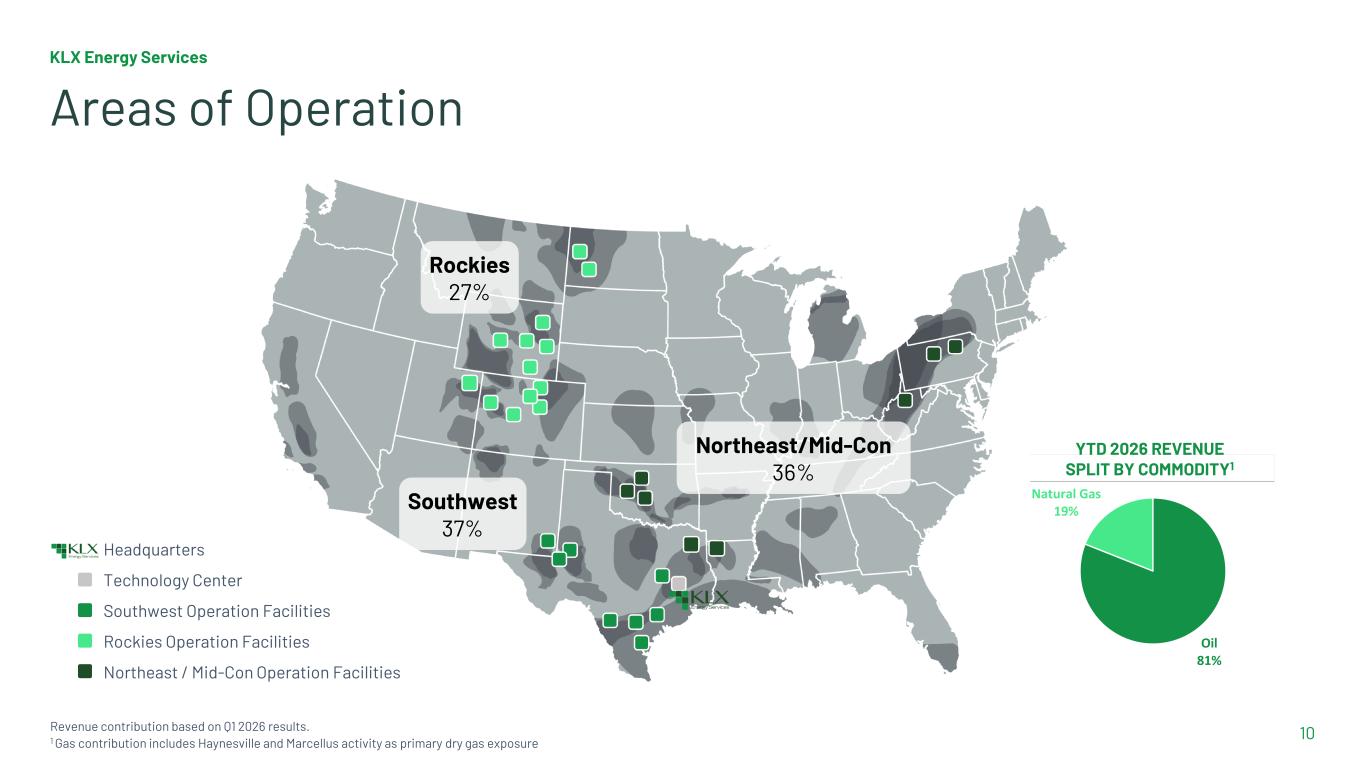
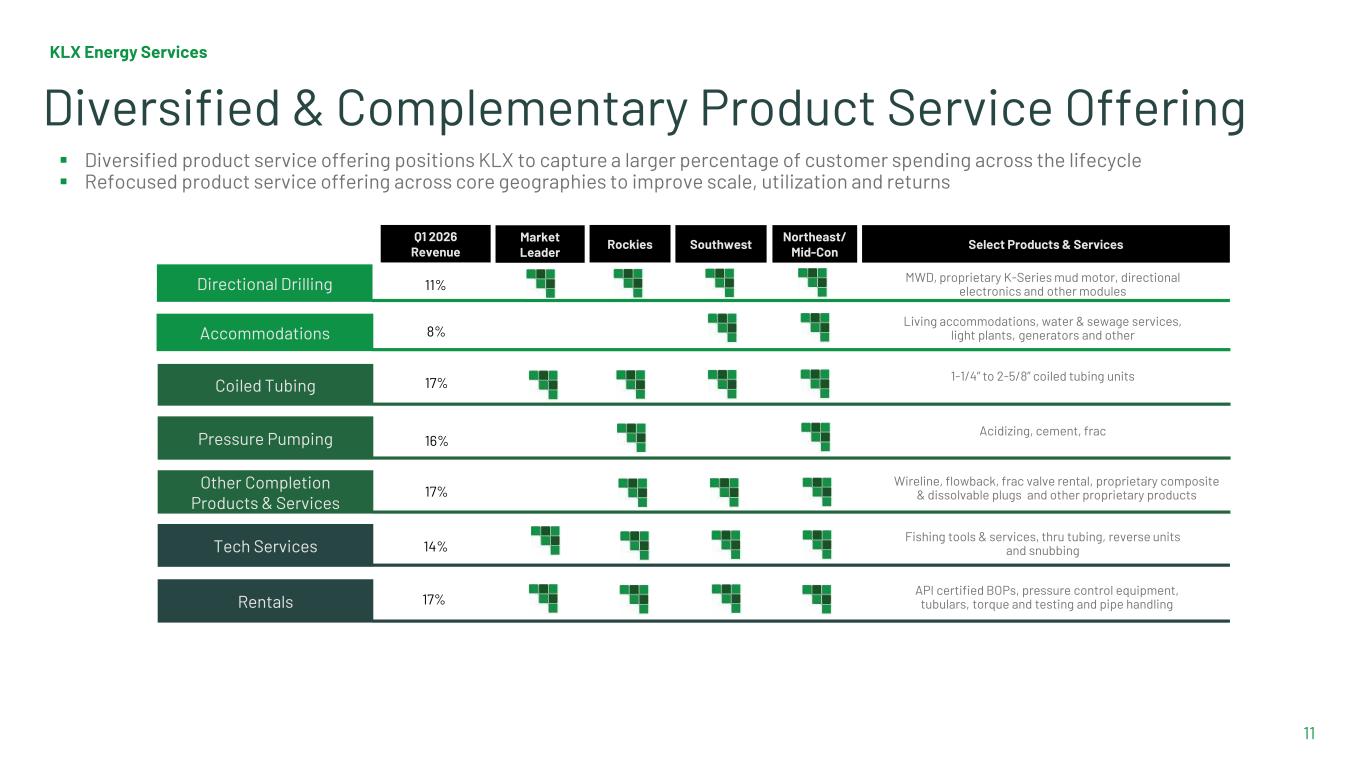
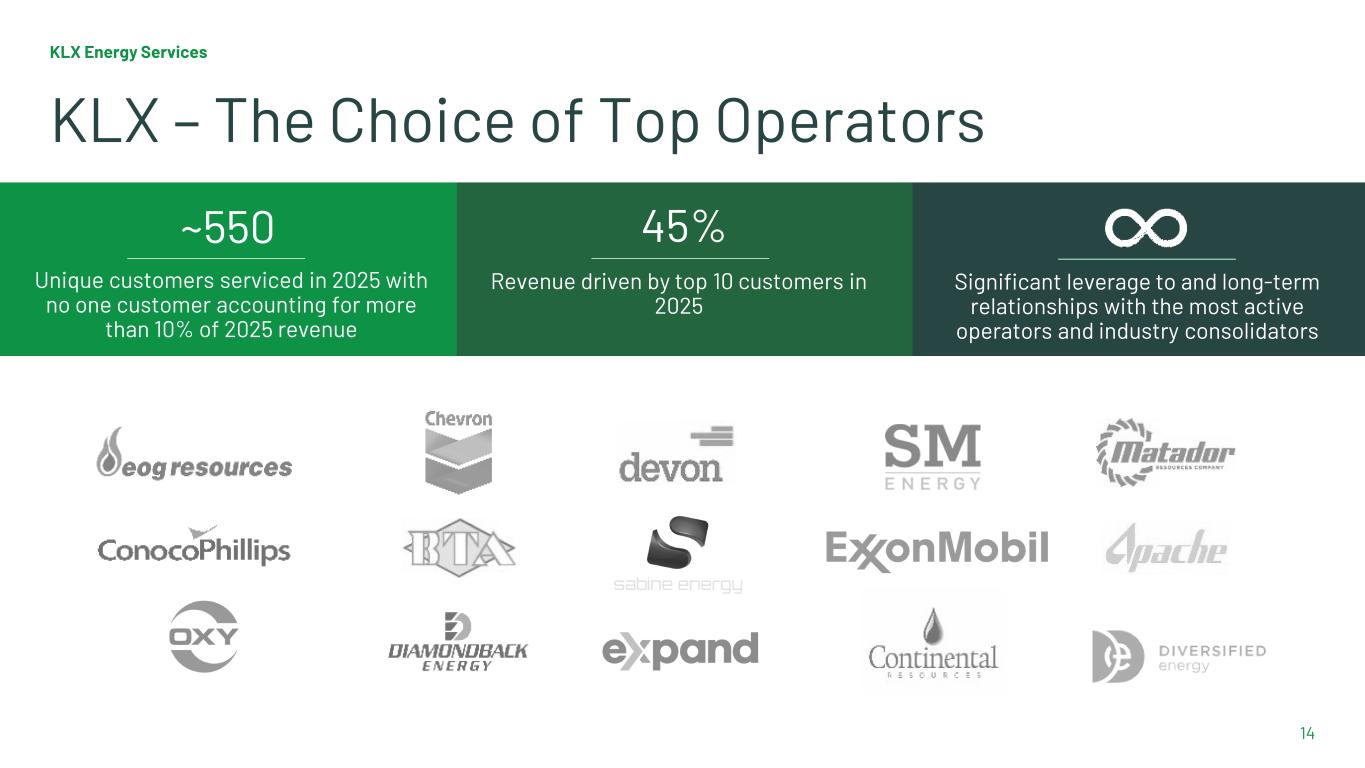
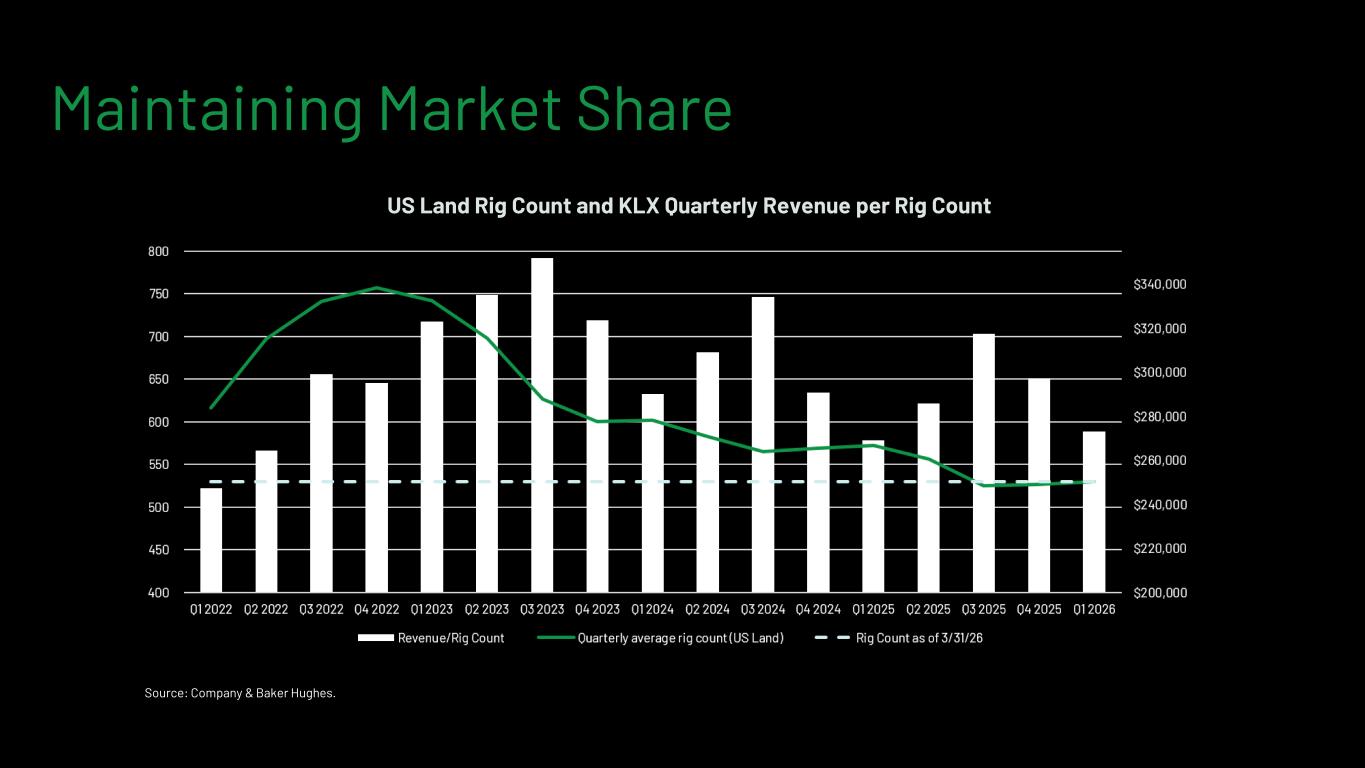
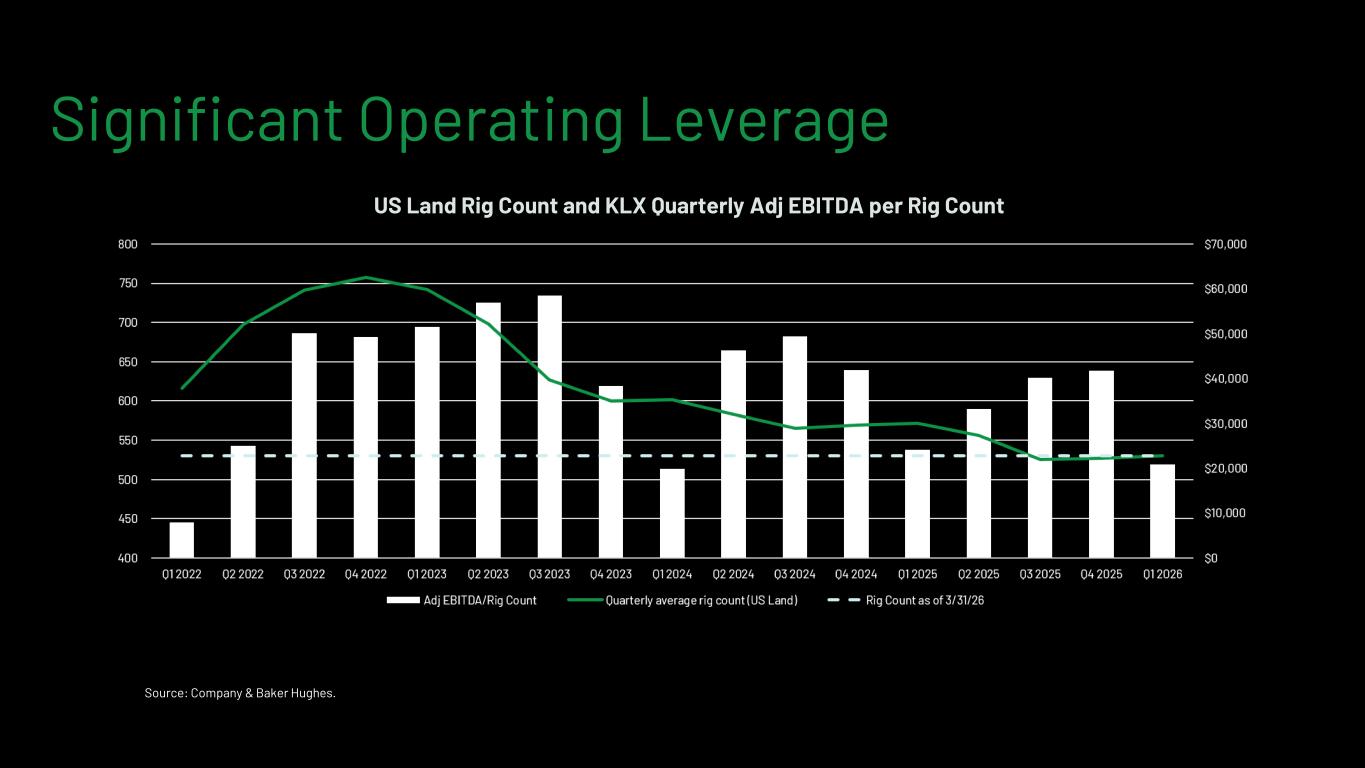
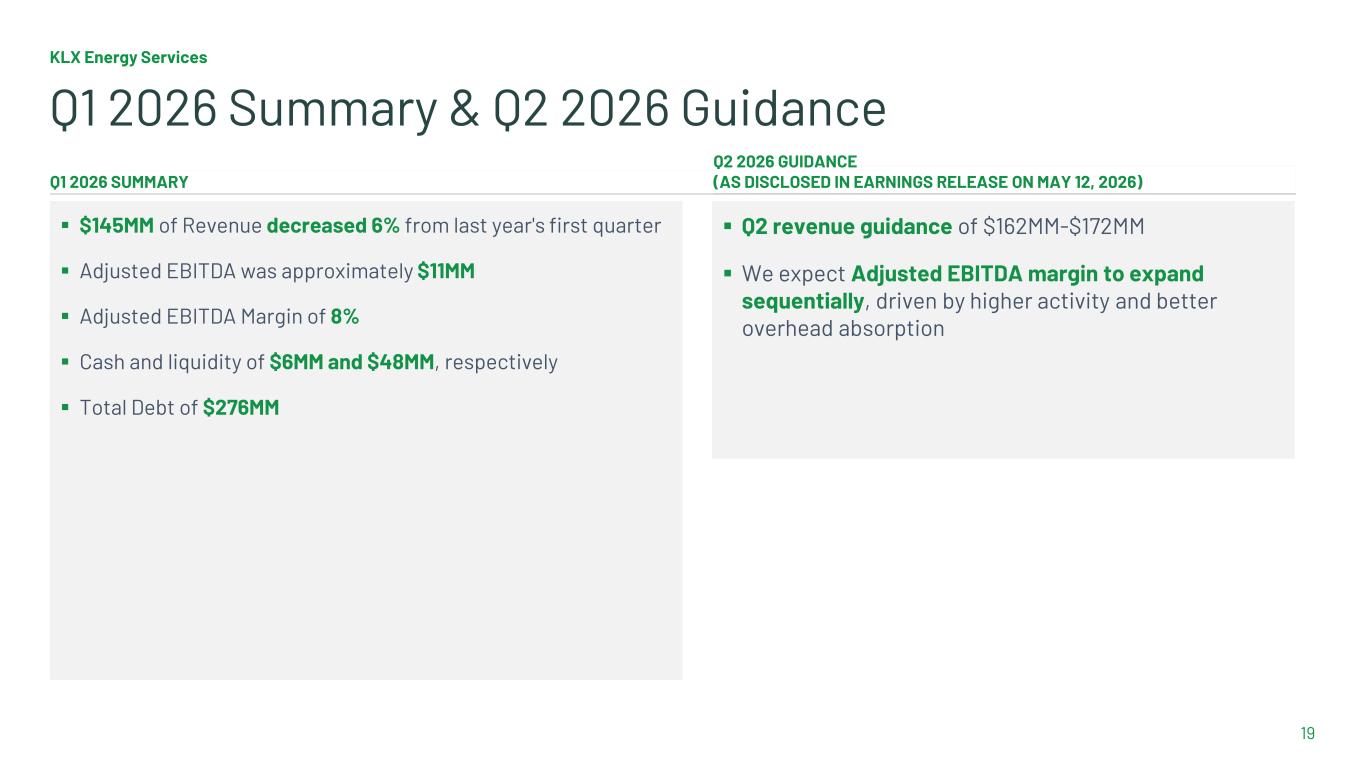
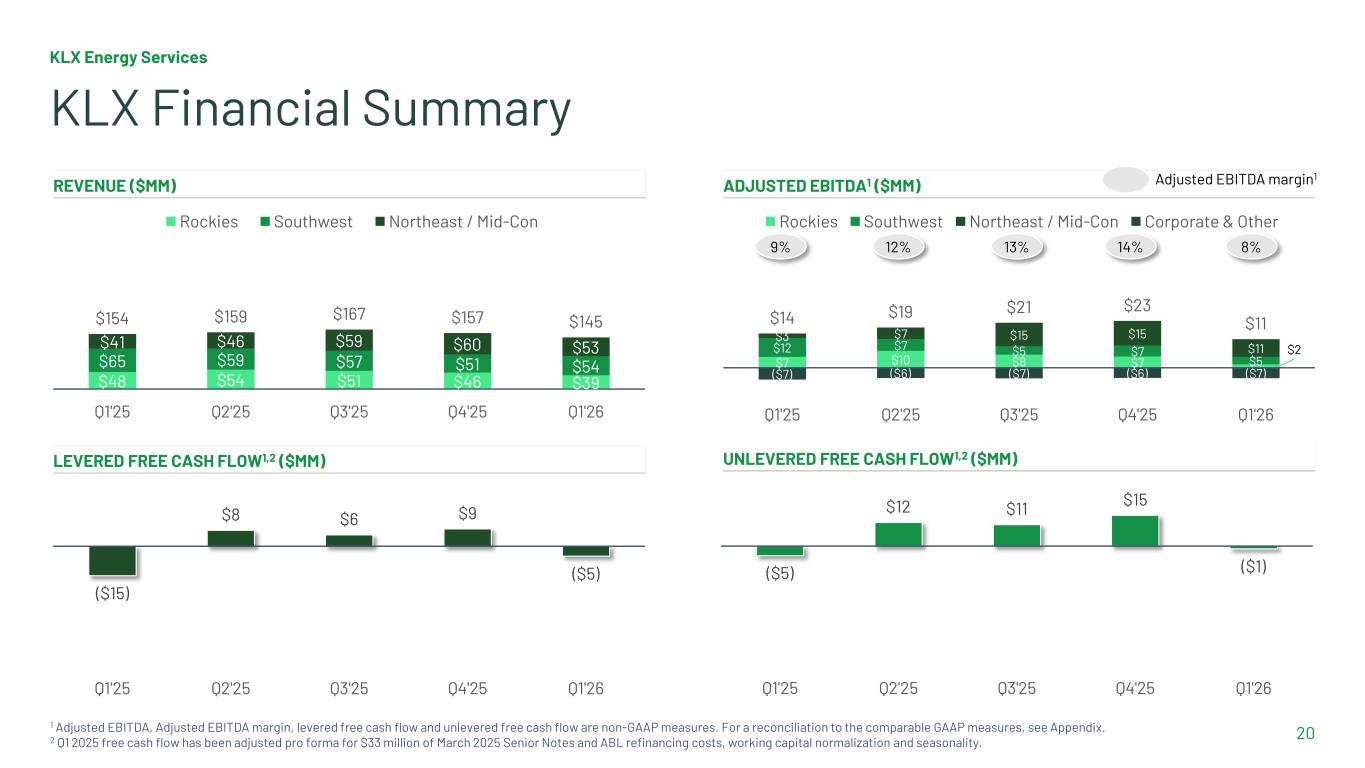
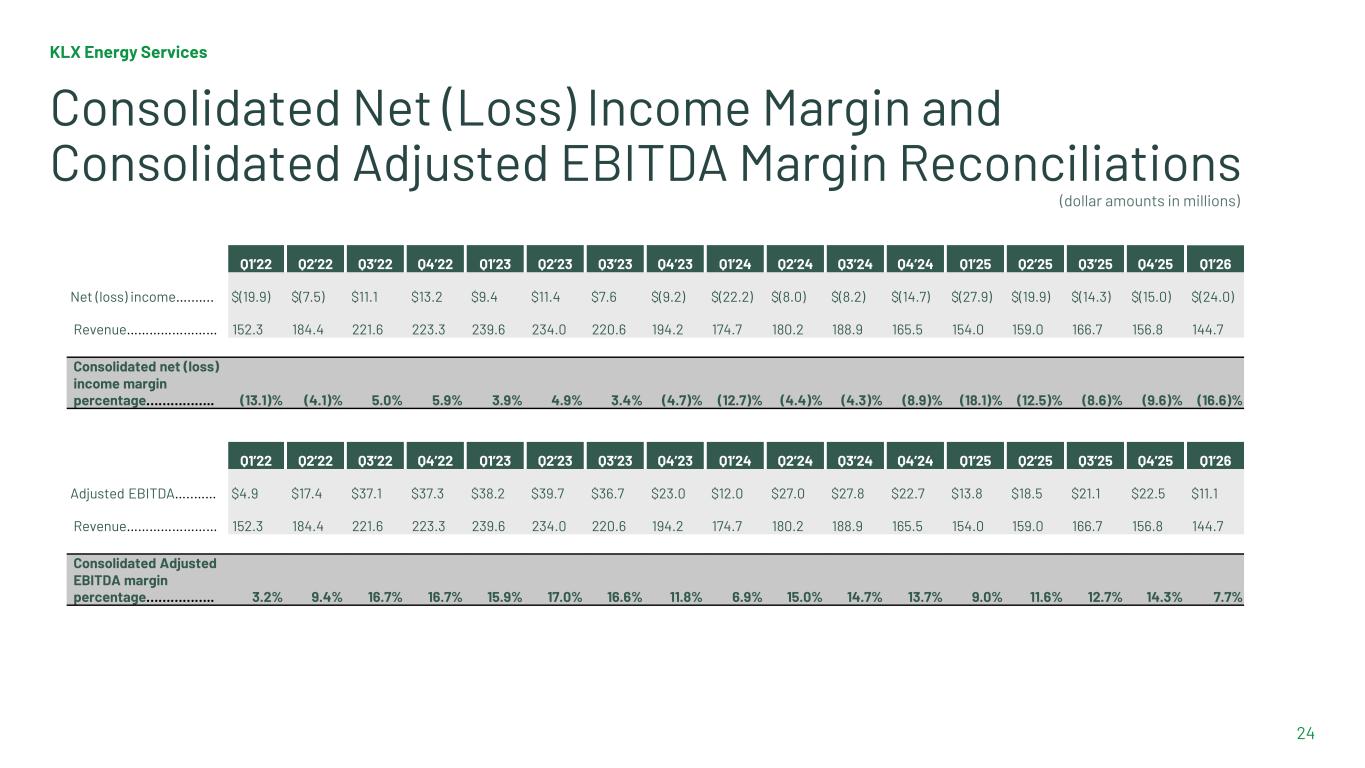
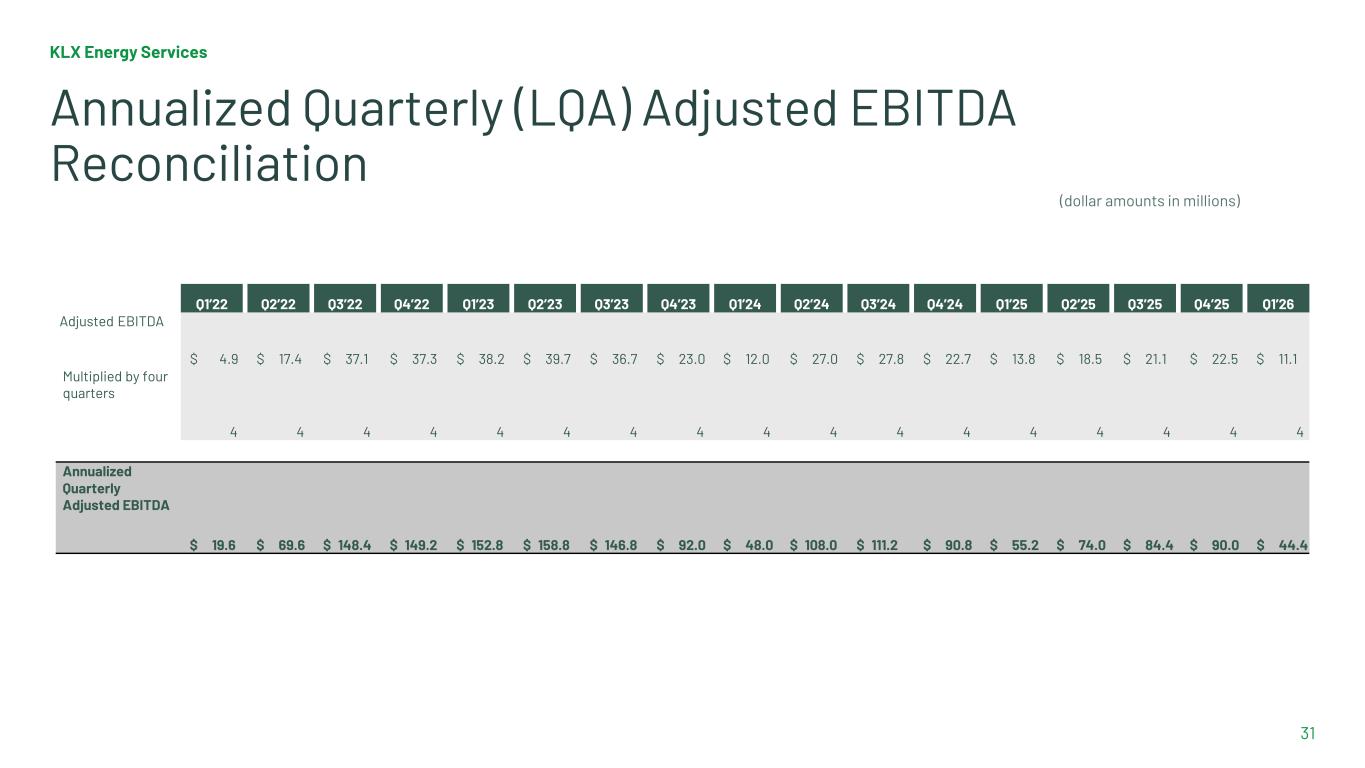
Thank you, Ken, and good morning, everyone. I will start with a brief overview of our first quarter results and recent trends across the portfolio. Then later in the call, I will discuss the current market backdrop and how we are thinking about the rest of 2026. Before getting into the numbers, I want to again recognize the men and women of the U.S. military who remain deployed in the Middle East. While the situation has evolved since our last call, it is far from resolved and many service members and their families are still living with significant uncertainty. Nearly 100 KLX employees are veterans, and many more across our industry share that connection. On behalf of all of us at KLX, thank you for your service and sacrifice, and we continue to pray for your safe return home. Turning to the quarter, we expect Q1 to be the low point for the 2026 fiscal year, as it has been in prior fiscal years. The Q1 softness reflects the yearly pattern of customer budget resets and post-holiday restarts of completion programs, combined with specific schedule disruptions caused by customer drilling issues delaying completion jobs, and disruptions of approximately 4 to 5 days from Winter Storm Firm. Revenue was down sequentially in every product service line, or PSL, except for our tech services and accommodations businesses, which led to a negative shift in our service offering mix on a relative basis, with a higher revenue contribution from drilling services relative to completion services. First quarter revenue was $145 million, within our estimated revenue range albeit at the lower end primarily due to the previously mentioned Winter Storm Firm and customer delays in the last two weeks of March that pushed $5 million of revenue into Q2 across multiple districts. Adjusted EBITDA for the quarter was $11.1 million with an adjusted EBITDA margin of 8%—in line with the mid- to high-single-digit range historically delivered in Q1 and consistent with the context provided on our Q4 call. As in past years, margin reflected typical Q1 headwinds: seasonality, weather-related white space, and the payroll cost reset. Segment performance continues to reflect the shift in our portfolio towards gas-directed activity. The Northeast/Mid-Con segment again led the way with revenue up 28% year over year and adjusted EBITDA of $10.9 million, almost four times the 2025 adjusted EBITDA. Our dry gas revenue was up approximately 45% year over year, even though we did see a modest sequential decline of 4%—the first sequential decline in five quarters—primarily tied to weather delays in the Haynesville. The Rockies and Southwest segments reflected a softer activity environment. The Rockies were pressured by typical winter seasonality and lower activity levels across several PSLs. We expect a meaningful sequential improvement in Q2 as we exit the worst of the winter impact and currently forecast sequential improvements in all PSLs in the Rockies. In the Southwest, activity levels remained soft as the Permian rig count continued its decline in Q1, and operators slowed start-up of some completion programs. Permian activity has shifted heading into Q2 with a sentiment shift around completions and DUCs in particular. Additionally, we see positive indicators for South Texas which, along with expected activity rebounds in the Permian, should drive the Southwest. We continue to gain traction with larger blue-chip operators and are well positioned as these operators increasingly demand certified higher-spec equipment and stringent safety requirements. At the same time, we expect 2026 activity to benefit from smaller independent and private operators driving incremental activity. Revenue per average operating rig was favorable year over year, landing at $273 thousand in Q1 2026 compared to $269 thousand in 2025. The previously mentioned shift in revenues, however, contributed to a reduction in EBITDA per average operated rig of approximately 13%. Looking forward and based on our current Q2 revenue forecast, this metric will increase to $310 thousand in Q2 depending on Q2 average rig count, which is a level that has historically driven strong margins. With that, I will hand the call over to Jeff to review our financial results in greater detail, and I will return later in the call to discuss our outlook. Jeff?
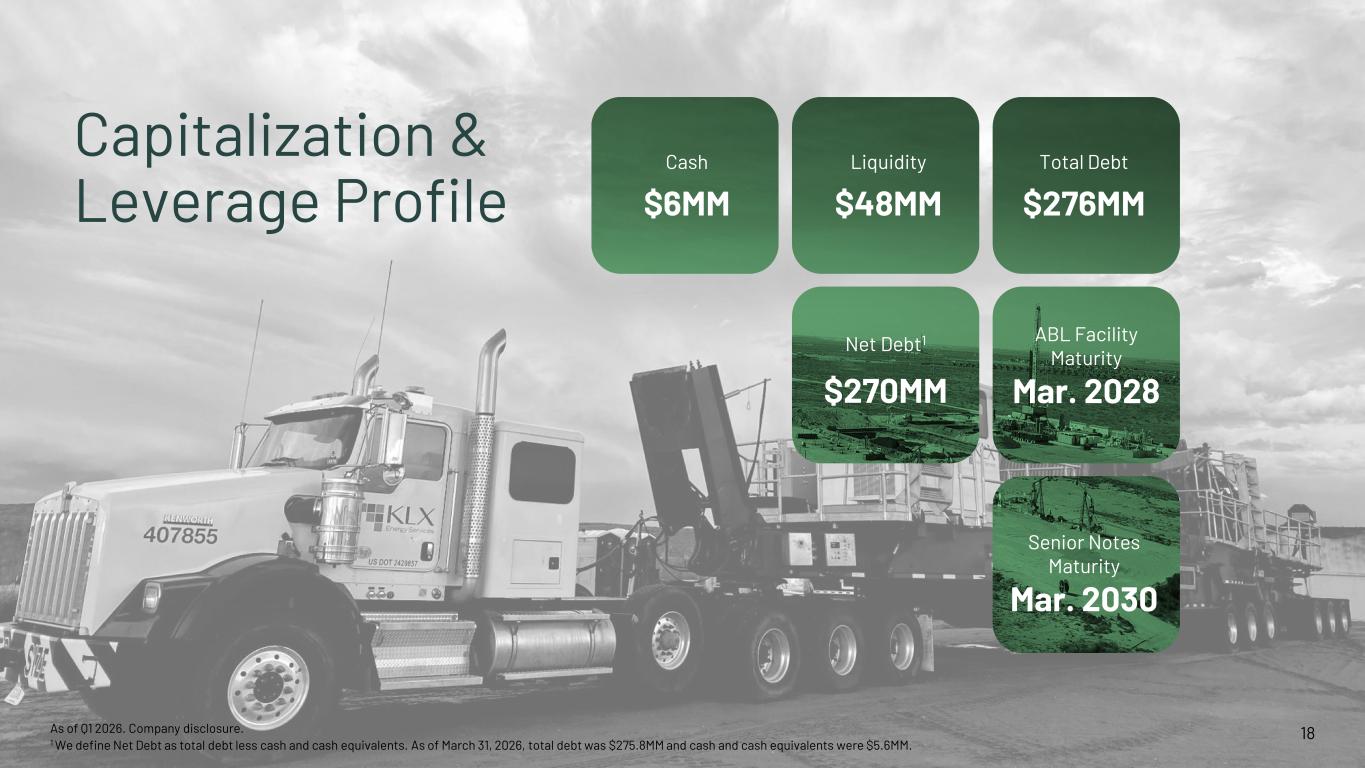
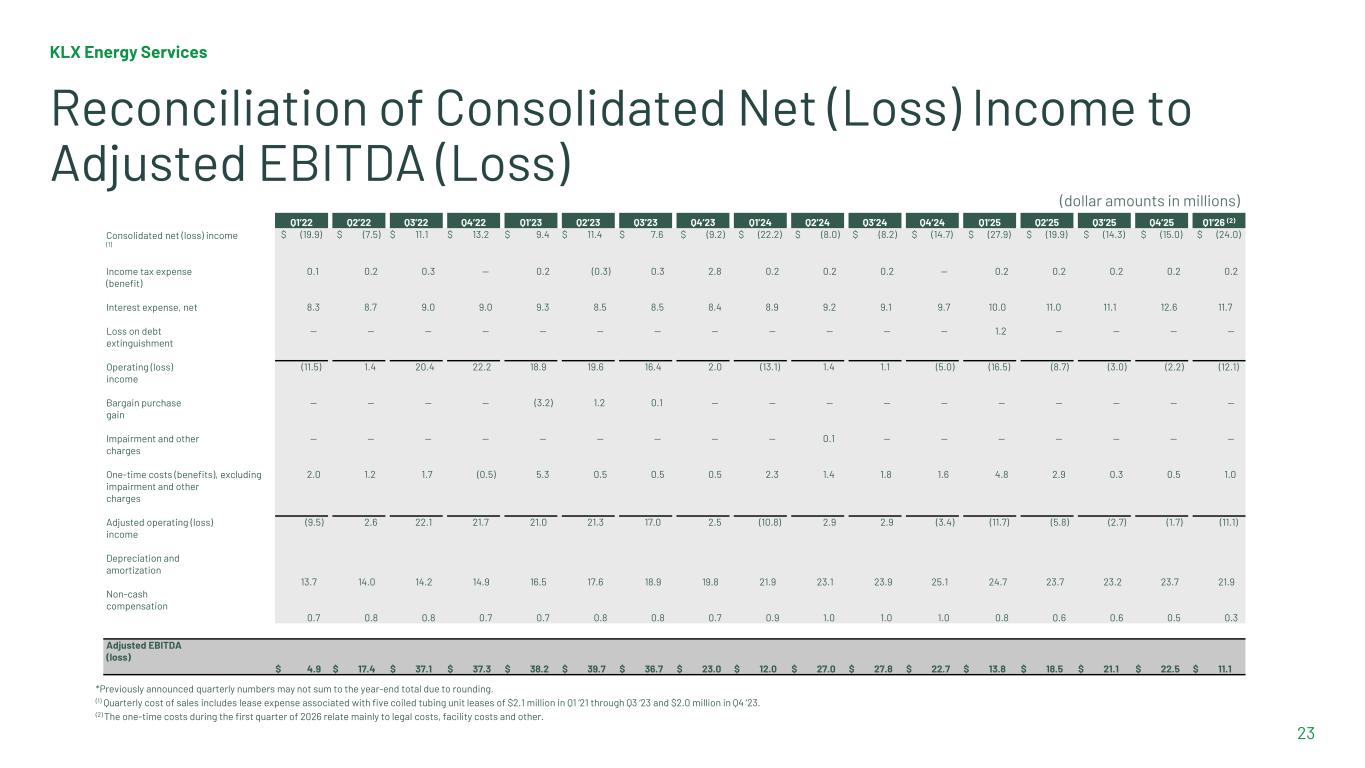
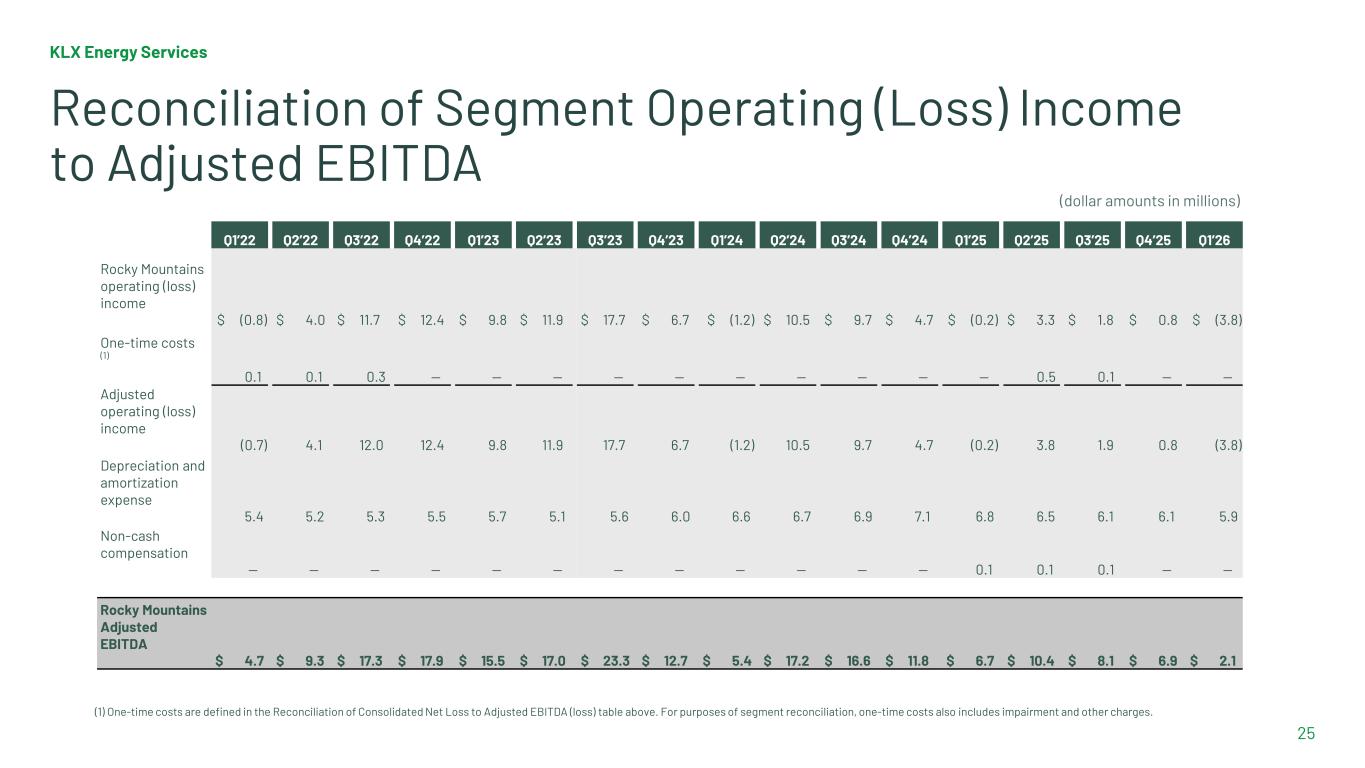
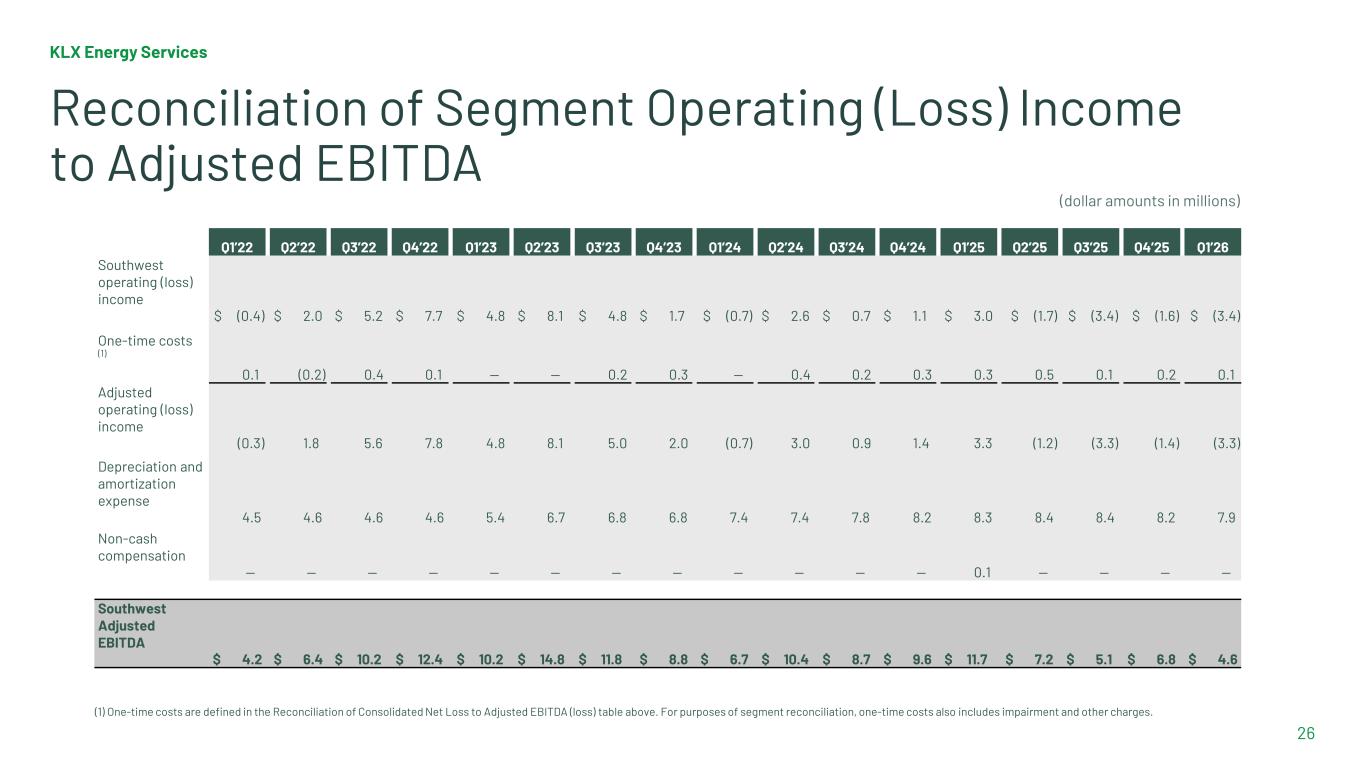
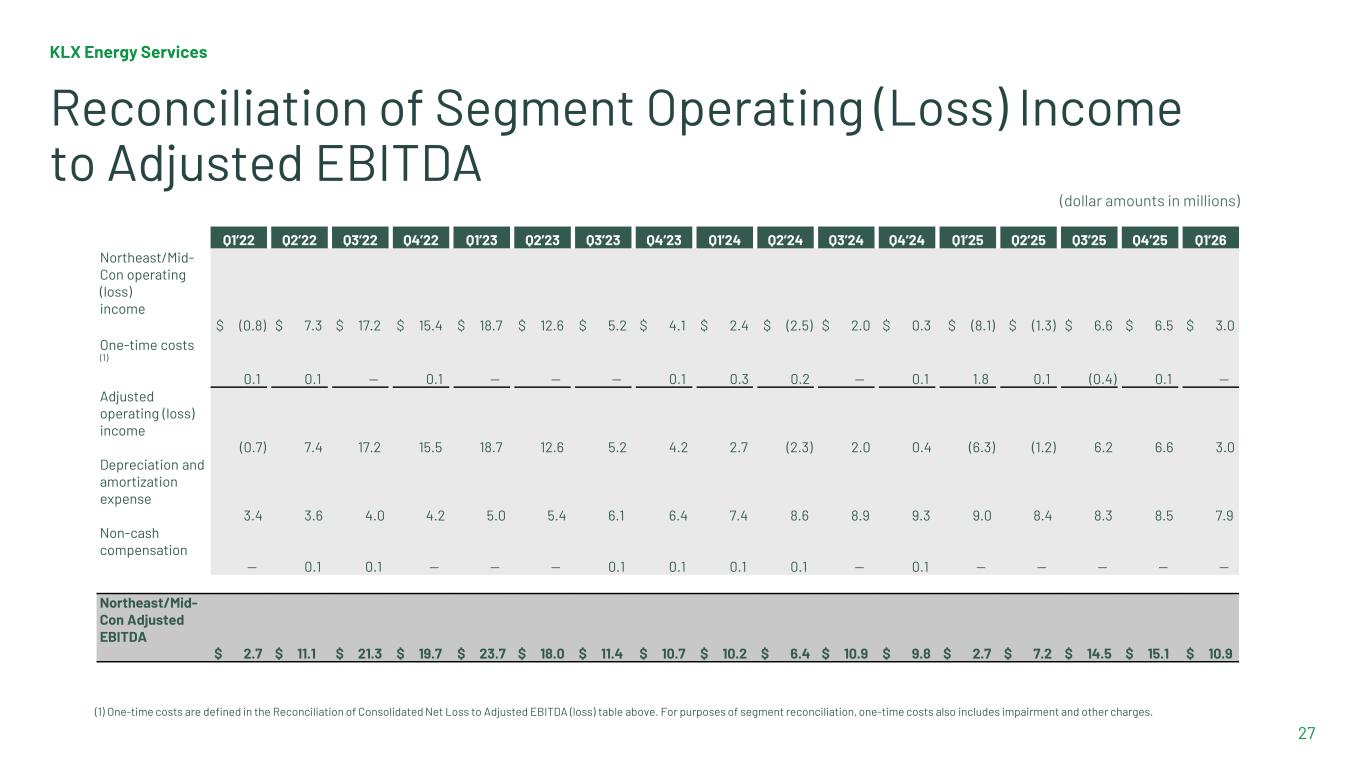
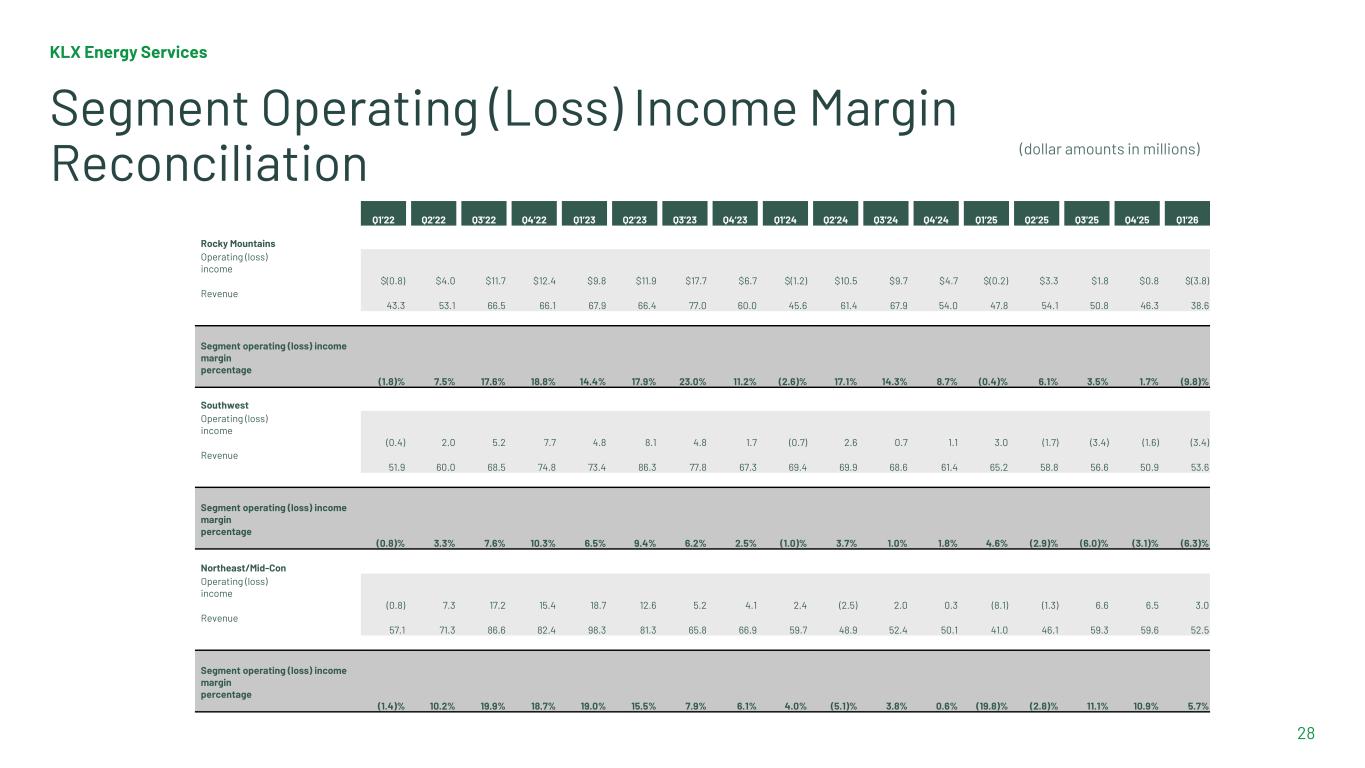
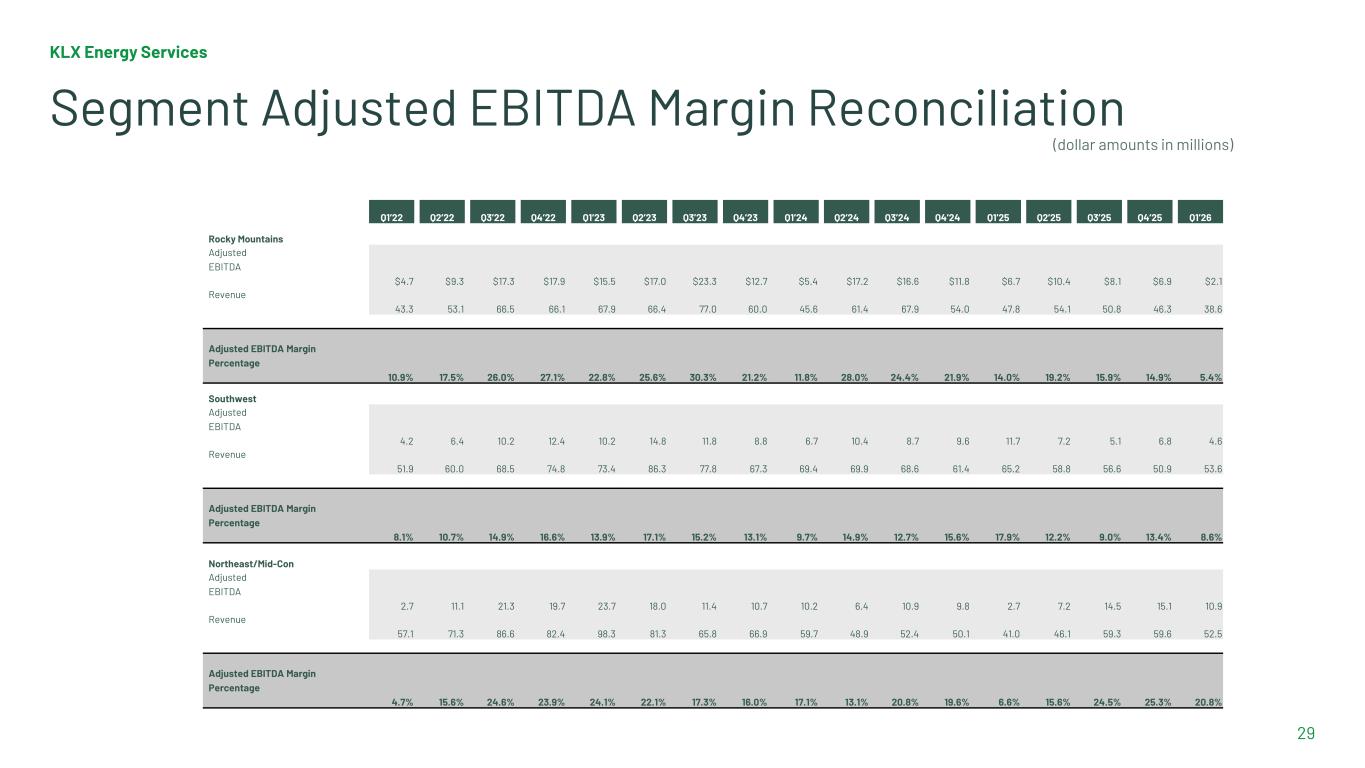
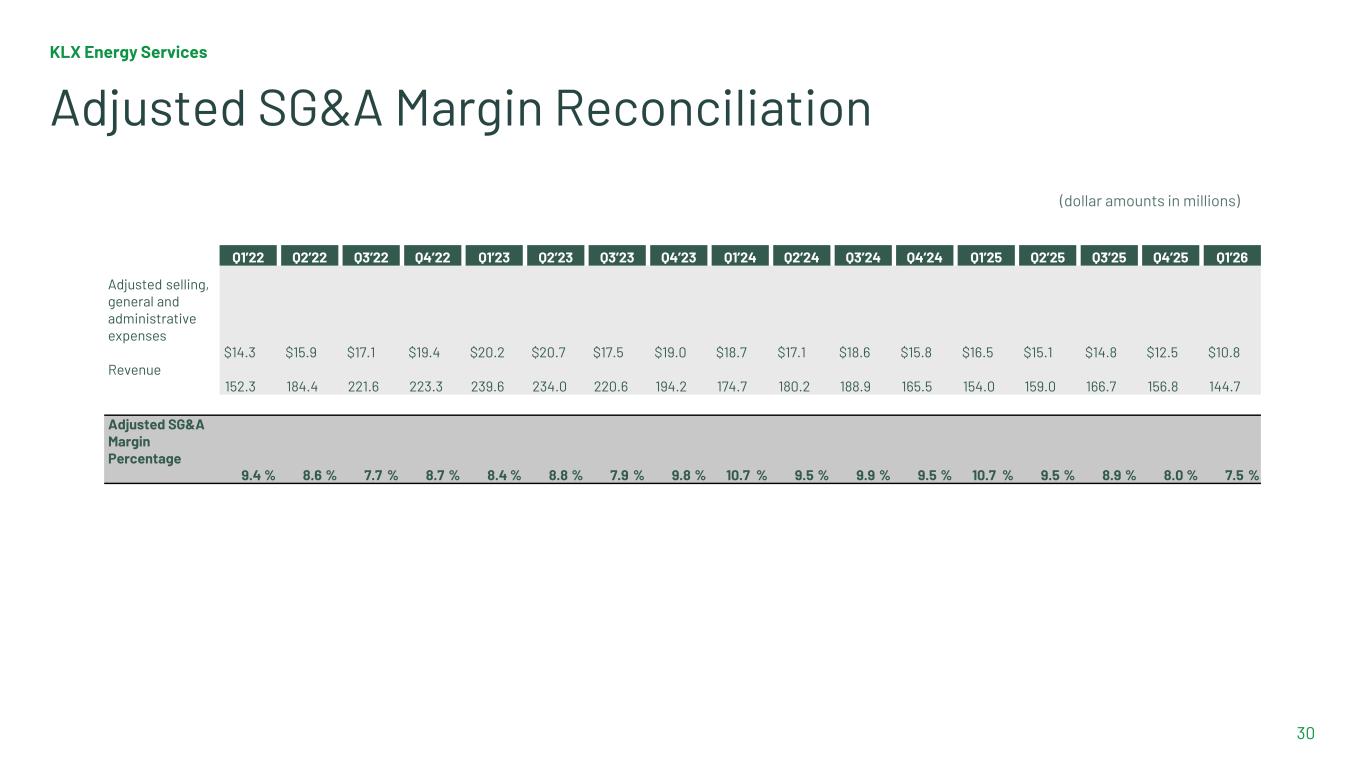
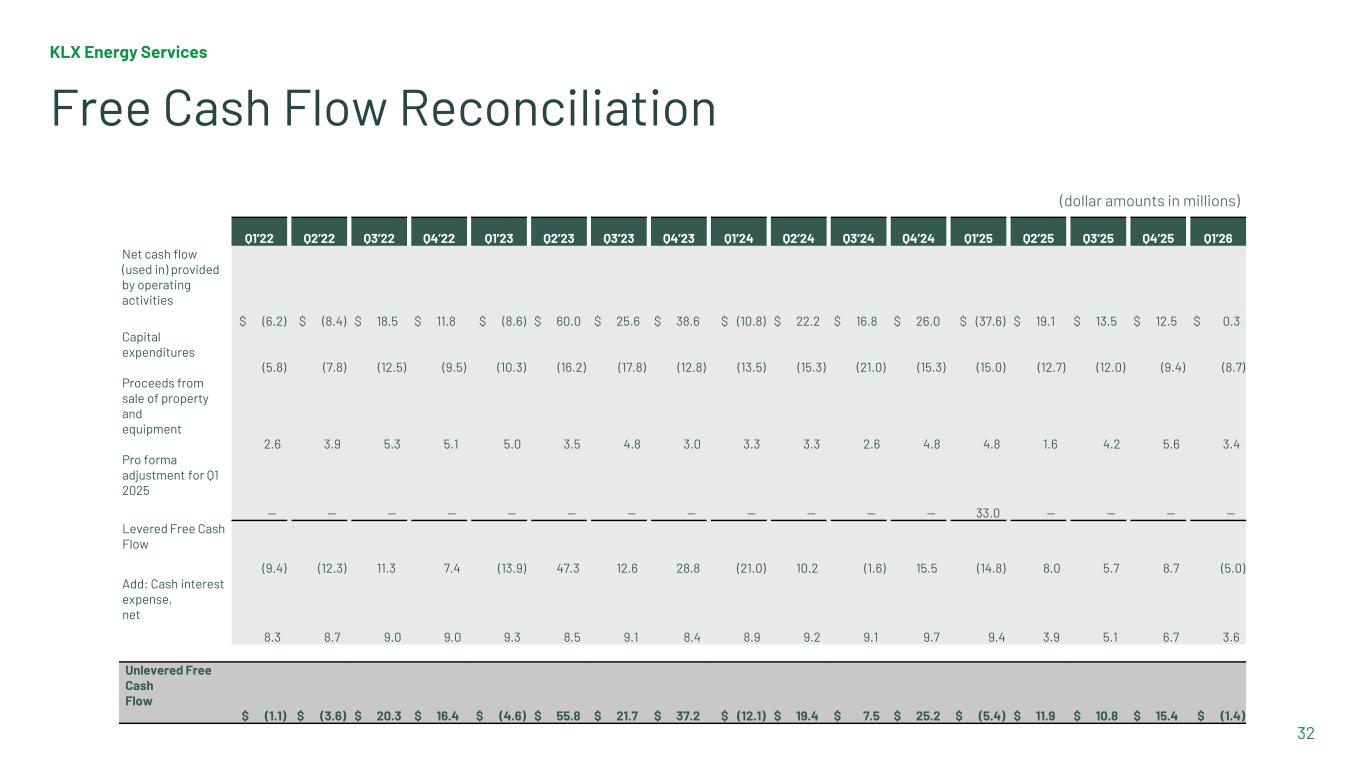
Thanks, Christopher. Good morning, everybody. Consistent with Christopher's remarks, given the seasonality in our first quarter, particularly within the Rockies, the most useful analysis is a year-over-year comparison rather than a sequential comparison. So I will discuss that accordingly. First quarter revenue was $145 million, down about 6% versus 2025, compared with an estimated 12% decline in the average U.S. rig count. Adjusted EBITDA was $11.1 million, or approximately an 8% adjusted EBITDA margin, broadly consistent with the mid- to high-single-digit margin we have delivered on prior first quarters. Net loss for the quarter was $24 million, or a loss of $1.23 per share. SG&A for the quarter was $15.4 million, down about 29% versus the prior year, reflecting the structural cost actions over the past several quarters. Turning to segment results: In the Rocky Mountains segment, first quarter revenue was $38.6 million with an operating loss of $3.8 million and an adjusted EBITDA of $2.1 million. Revenue declined approximately 19% year over year, reflecting lower activity across our product lines and typical winter impacts. As Chris previously mentioned, we expect Rockies revenue and profitability to improve sequentially in Q2 as seasonal conditions normalize. In the Southwest Region, first quarter revenue was $53.6 million, operating loss $3.4 million, and adjusted EBITDA $4.6 million. Revenue declined roughly 18% versus the prior year quarter driven by reduced oil-directed activity in the Permian that began in 2025. In the Northeast/Mid-Con segment, first quarter revenue was $52.5 million, operating income $3 million, and adjusted EBITDA $10.9 million. Revenue increased 28% year over year and adjusted EBITDA quadrupled compared to 2025 with segment adjusted EBITDA margin expanding to approximately 21% from roughly 7% in the prior year period. This performance was driven by sustained gas-focused activity particularly in our Haynesville and other Northeast/Mid-Con operations as well as strong execution and limited white space. At Corporate and Other, adjusted EBITDA loss was $6.5 million in Q1, an improvement of about 11% year over year reflecting ongoing G&A rightsizing and our focus on returning corporate costs toward 2021 and 2022 levels. Turning to capital allocation and cash flow: Capital expenditures in Q1 2026 were approximately $8.7 million with net CapEx of roughly $5.3 million after about $3.4 million of asset sale proceeds. Spending was predominantly maintenance-oriented, focused on sustaining rentals, coiled tubing, through tubing, and pressure pumping assets. For the full year, we previously guided to approximately $40 million of gross CapEx and $30 million to $35 million of net CapEx. Based on the current purchase order logs and deployment schedules, our full-year CapEx is tracking below that original framework. However, given the market backdrop and potential incremental activity, we expect to refine this range at midyear. Net cash provided by operating activities was $300 thousand in the quarter. Unlevered free cash flow was negative $1.4 million and levered free cash flow was negative $5 million. That is typical for us—working capital was a use of cash in the first quarter reflecting two additional payroll cycles in the period, an increase in days sales outstanding, and lower accrued liabilities. We expect cash generation and liquidity to improve throughout the year consistent with our historical seasonal pattern. Turning to the balance sheet: At quarter end, total debt was approximately $275.8 million and total liquidity was $48 million, consisting of roughly $6 million of cash and cash equivalents and about $42 million of availability under our March 2026 ABL facility including undrawn silo capacity. Net working capital at quarter end was $54 million. Given the significant revenue increase forecast in the second quarter, we expect a slight reduction in liquidity at quarter end as working capital increases to support higher activity, with working capital levels expected to normalize over the second half of the year as receivables convert to cash and operations are funded from ongoing cash flow. With respect to our notes, consistent with the commentary we provided in our Q4 call, we paid 25% of interest in cash and 75% in kind for the first two months of the quarter; we elected to pay 100% in kind in March. Looking forward, we expect to pay interest 100% in kind for Q2 and 2026 and then go to a 50/50 ratio for Q4. We will continue to evaluate this mix based on market conditions, leverage, and liquidity. We remain well within our leverage covenants, providing us with incremental flexibility to fund CapEx, potential M&A, and other capital needs. With that, I will hand it back over to Christopher to discuss our outlook.
Thanks, Jeff. From a macro standpoint, we continue to operate in a highly volatile but constructive environment. By many measures, this is the largest energy shock in history. Commodity prices continue to be volatile and trade in a wide yet constructive band for activity due to the ongoing Middle East conflict and macroeconomic news. We are discussing customer reactions and expected incremental activity in real time, particularly in the Permian and other oil-weighted basins. I would note that despite the recent declines in prompt-month WTI pricing, the forward curve for the balance of 2026 is still constructive, and operator sentiment seems to be shifting quickly. We have already seen larger operators accelerating DUCs and independent operators pulling forward activity in the face of elevated spot prices. On the gas side, the forward strip remains supportive, though as natural gas prices flirt with the mid-$2 range, we have seen some operators feather the clutch a bit on activity, specifically in the Haynesville, with some considering pushing incremental programs to the second half of the year. We continue to believe that KLX's gas-weighted basins have longer-term strength and KLX has meaningful exposure particularly in the Northeast Mid-Con and Haynesville to drive incremental revenue as activity increases. Looking forward, we are forecasting Q2 revenue of $162 million to $172 million with a midpoint of $167 million—5% higher than 2025 and $22 million higher than Q1 2026. We expect solid contributions from the Northeast Mid-Con and a seasonal rebound in the Rockies, with the Southwest gradually improving off of current levels as Permian activity stabilizes. In short, we forecast revenue to increase in all three segments in Q2 along with nearly every single PSL. The mix of drilling versus completion versus production and intervention services will still lean unfavorable on a historical basis, but it is definitely trending back to normal. We expect adjusted EBITDA margin to expand sequentially driven by higher activity and better overhead absorption. Looking beyond Q2, our historic pattern has been for Q3 to be our strongest quarter of the year, and current operator commentary suggests a robust second half—particularly as smaller independents and private operators increase activity. Those customers have historically been a core customer base for KLX, and we look forward to seeing them increase their activity in 2026. That said, I want to see how margins translate at higher revenue levels including any impact from pricing and mix before providing additional color on 2026 and updating our full-year 2026 framework. In closing, I would like to thank our team of hardworking employees for their continued commitment and resilience, particularly given the challenges that always come with the first quarter in our business. I would also like to thank our customers and shareholders for their ongoing support of KLX. We remain confident in our ability to execute our strategy and navigate what continues to be a dynamic and fast-moving market. With that, we will now take your questions. Operator?
Operator
Thank you. We will now be conducting a question-and-answer session. If you would like to ask a question, please press 1 on your telephone keypad. A confirmation tone will indicate your line is in the question queue. You may press 2 if you would like to remove your question from the queue. For participants using speaker equipment, it may be necessary to pick up your handset before pressing the star key. Our first question comes from the line of Steve Ferazani with Sidoti. Please proceed with your question.
Speaker 4
Morning, Christopher. Morning, Jeff. Appreciate the detail on the call. Christopher, when I think about the pretty significant sequential improvement guide you have in Q2—certainly, it is much higher than we have seen the previous two years—I am just trying to get a better sense of how severe the weather impact was to you on Q1 and how much that is leading towards the much stronger guide to Q2?
Yeah, it is a great question. I think it very much depends on the region. The Rockies saw typical seasonal winter weather as we always do, and we had a lot of nonoperational days due to high wind, especially in North Dakota. We candidly do not and did not quantify those days just due to the fact that this is a very typical seasonal pattern up there. I would say our gut feel is North Dakota and Wyoming this year were probably more impacted than last year. When you shift to the Mid-Continent and Haynesville, we definitely, as we said in prepared remarks, saw anywhere from 2 to 5 days of revenue loss across various PSLs. So when you think about the combination collectively—between Winter Storm Firm plus the drilling delays that we mentioned that pushed some completion programs out—we estimate approximately $5 million of total revenue loss. And as you well know, we still incur all the fixed cost and, candidly, on short-term notice, a lot of the variable cost in those instances.
Speaker 4
Okay, that is helpful. I was actually surprised at the sequential revenue improvement in the Southwest given what activity has looked like there in Q1, but it was at a much lower margin. Can you sort of explain that?
Yes, sure. I think it was largely due to what we talked about in the prepared remarks where we had a PSL mix shift, with some completion activity slowing down and drilling activity holding in pretty well. We were also staffed up for some completions work that slipped later into the quarter, so that compressed margins as well. What I would say is we expect margins to expand in Q2, and we have already seen this in April. We will continue to see the mix shift improve and we have seen a material improvement in segment-level margin in the Southwest relative to Q1 based on internal April numbers. It is a one-month proxy, but it is meaningful.
Speaker 4
Got it. Excellent. You mentioned—both of you mentioned in your remarks—typically, it is the extra one or two payroll cycles in Q1 and usually that has been your highest SG&A quarter. I was surprised how low SG&A was this quarter. Are you thinking about trends this year on SG&A after a very strong performance in Q1 in terms of how low it was?
Yeah, good morning, Steve. This is Jeff. It was a good quarter for SG&A, and we are looking at every single dollar. We have a great team. We are looking at every single dollar, so we are trying to keep those costs as low as possible without loss of quality. If you look at the full year, 2025 SG&A was $68.5 million and 2024 was $79.6 million. Our goal is to get it in that kind of range and, if we can get lower than 2025 for the full year, we are heading in the right direction. We are reviewing everything and going through that process, but for the full year you can kind of think about SG&A being at or below the 2025 rate.
Speaker 4
Excellent. That is helpful. Thanks, Jeff. You touched on this a little bit in your closing remarks, Christopher. Obviously, when we look at rig count, the one place we have continued to see growth was in the Haynesville, but obviously, we know the lower natural gas prices could pressure there. And obviously just even with the weather impact, still incredibly strong margin in that geographical region. Sounds like you are a little bit more cautious about growth moving forward—where you think the pickup may be in the oil basins for obvious reasons in the second half. Can you just walk through the different pieces there?
Yes, it is definitely a multifaceted question. If you think about the pure Mid-Con, it is holding steady. The Haynesville has been the story of the year: it is up, what, eight rigs year to date and 25 rigs year over year. As we stated in our prepared remarks, we have seen a number of operators feather the clutch or talk about holding back or delaying programs. Natural gas prices are still pretty robust if you look at the forward strip this morning, so it is not a case of a multi-month collapse. I would say the second half of the year in the Haynesville gets back on track from what I think will be a little bit of a slow spell in the shoulder months of Q2, with Q3 and Q4 stepping up. The same applies to the Marcellus and Utica. They are up two rigs year to date. When you think about all the components of the Northeast Mid-Con, the Northeast in that segment was very strong year over year, and the business there and the team continue to perform at an elevated and steady pace. From a macro standpoint, D&C activity in that segment seems steady. Regarding what happens to oil demand and oil rig count in the second half of the year: this is the longest we have seen prices this elevated without a material inflection in rig count. Typically, 60 to 90 days after major moves in WTI you will see the market respond. That really has not been the case. And depending on which rig count you look at—Baker or Enverus—one shows Permian flat year to date, the other shows it slightly up. I think operators have been cautious because of the Middle East overhang and thoughts that prices would crash back to the $60 range on WTI, but I think markets are coming to terms that even with some resolution, WTI is not heading back below $70 anytime soon. In fact, the forward strip still has prices in the $80s in Q1 of next year as of this morning. So based on operator discussions and public commentary, the second half should tend to be stronger than the first half due to a number of macro tailwinds. As for smaller independents and private operators being the driver, we are seeing some of those former teams pick up acreage and do interesting acreage deals. In the Permian and other basins, some smaller operators have pulled forward completion activity and accelerated the pace of drill-outs, putting more completion resources per pad. That often just pulls forward our existing base load revenue. The key question is how much incremental capital they allocate across the year to increase drilling and completion expenditures. They are certainly incentivized at roughly $90 a barrel.
Speaker 4
Thanks, Christopher. Thanks, Jeff.
Yeah, appreciate it, Steve.
Operator
Next question comes from the line of John Daniel with Daniel Energy Partners.
Speaker 5
Thanks. Good morning. First one, you talked through the different geographies, but in light of the commodity price moves year to date, maybe you could just talk about different senses of urgency around different product lines and how you see demand in the back half of the year across your different business lines first.
Yes, it is a great question. Of course we are geographically and product-line diverse when you think about the business of KLX. If you think about our guide for Q2, we typically provide granular detail around the market movement, but from a segment perspective I think we are going to see the highest rebound in Q2 in the Rockies, largely due to Q1 performance. I would estimate of the incremental upside revenue, probably 50% of that is coming from the Rockies, ballpark, followed by the Southwest at roughly 30%, and then the Mid-Con for the balance. Those percentages are skewed due to KLX's diversity. In the second half of the year, I think the rate of change probably shifts back to the oilier basins—specifically the Permian. We have seen South Texas ramp a lot of activity lately and are having many conversations with operators about incremental opportunity sets in the Bakken, the Uinta, and other basins. I think those basins in the second half of the year will on a relative basis drive any incremental market performance compared to the gas basins because the gas basins are already seeing a lot of the leg up and while there are tailwinds there, I do not think you will see the same order of magnitude of growth.
Speaker 5
Okay, thanks. And then thoughts on pricing—how you see it evolving over the balance of this year? Do you think it will be more region-driven or more product-line-driven? Maybe any anecdotes you could give would be helpful.
Great question. I will start by saying what we said most of 2025: pricing in most PSLs across the industry was anemic and did not justify many reactivations. That sentiment was pretty consistent. As we entered 2026, the floor was basically established and there was mostly one direction to go. We selectively started to push price on certain PSLs, specifically in basins that ramped earlier in late Q4 and into 2026. That was targeted. We have pushed through standard fuel surcharges, and we have started conversations that in order to add capacity on people-intensive PSLs—like coiled tubing and wireline, not rentals—we need to see price move. So region and product-line dynamics both matter; expect targeted price moves where capacity constraints exist and where operators value the incremental capacity and execution. We will see how the market develops, but that is the macro theme for our portfolio.
Speaker 5
Last one for me: there is still a lot going on with tariffs and global logistics being disrupted. Maybe you could talk through anything you are seeing today and how that may impact an activity ramp coming in the Lower 48 and steps you are taking to help mitigate supply chain risk moving forward?
That is a great question. If you go back to the 2016 or 2020 COVID cycles, what we saw coming out of those cycles was the biggest issue was people. I think, based on the rig count forecasts into the second half, there are not a lot of hot stacked rigs available in the market. If you think about pulling DUCs forward and adding completion activity at the same time as trying to ramp rig count, people could be the biggest stumbling block. From a tariff perspective, most of those issues have been alleviated over the last couple of years. There are some sensors and boards on directional and downhole modules that still have issues at times, and everyone is watching the OCTG goods market to see if things start to get tighter again. Pricing on tubulars had come down over the last 18 months and seems to have found a floor, but we are definitely watching that market in real time.
Speaker 5
Understood. Thanks for taking my questions. Appreciate it.
Yeah, appreciate it, John.
Operator
Thank you. Mr. Baker, I would like to turn the floor back over to you for closing comments.
Thank you once again for joining us on this call and for your continued interest in KLX. We look forward to speaking with you again next quarter.
Operator
Ladies and gentlemen, thank you for your participation. This does conclude today's teleconference. You may disconnect your lines, and have a wonderful day.