Operator
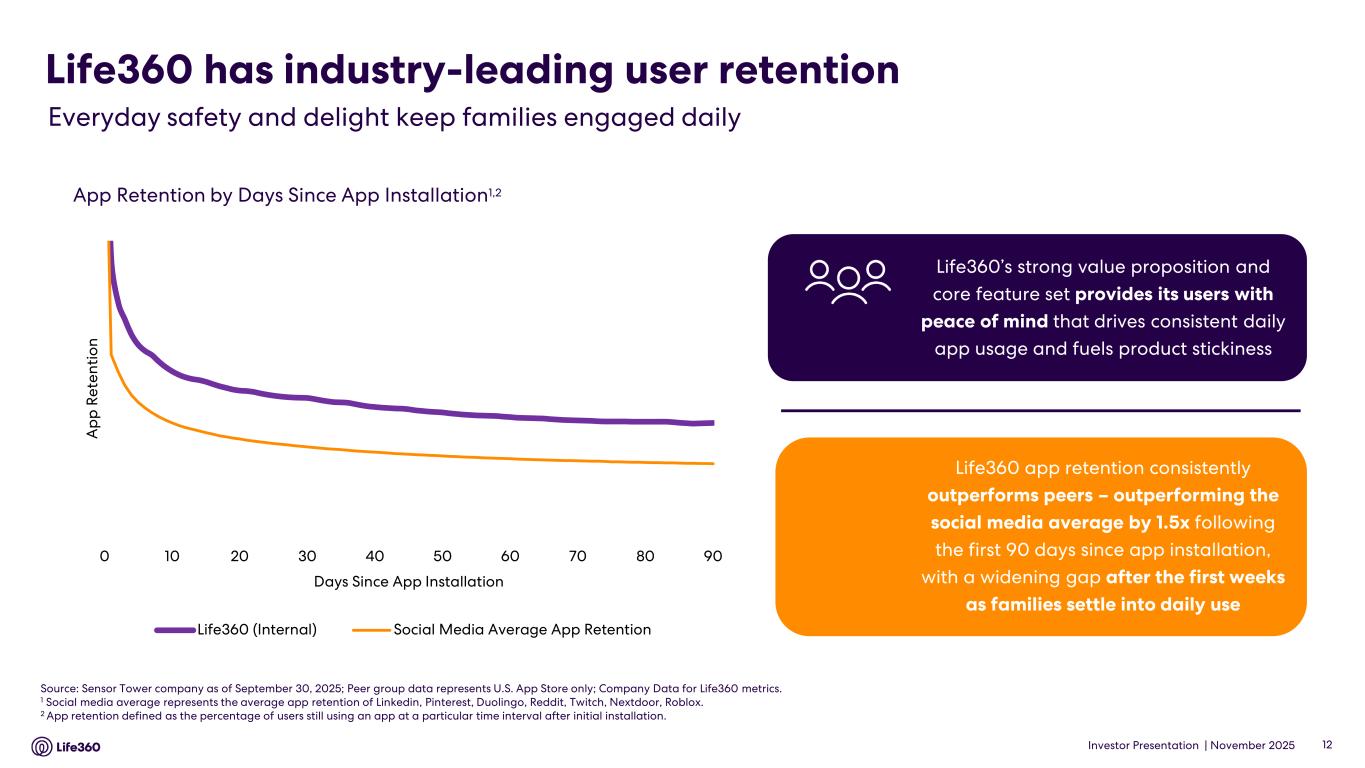
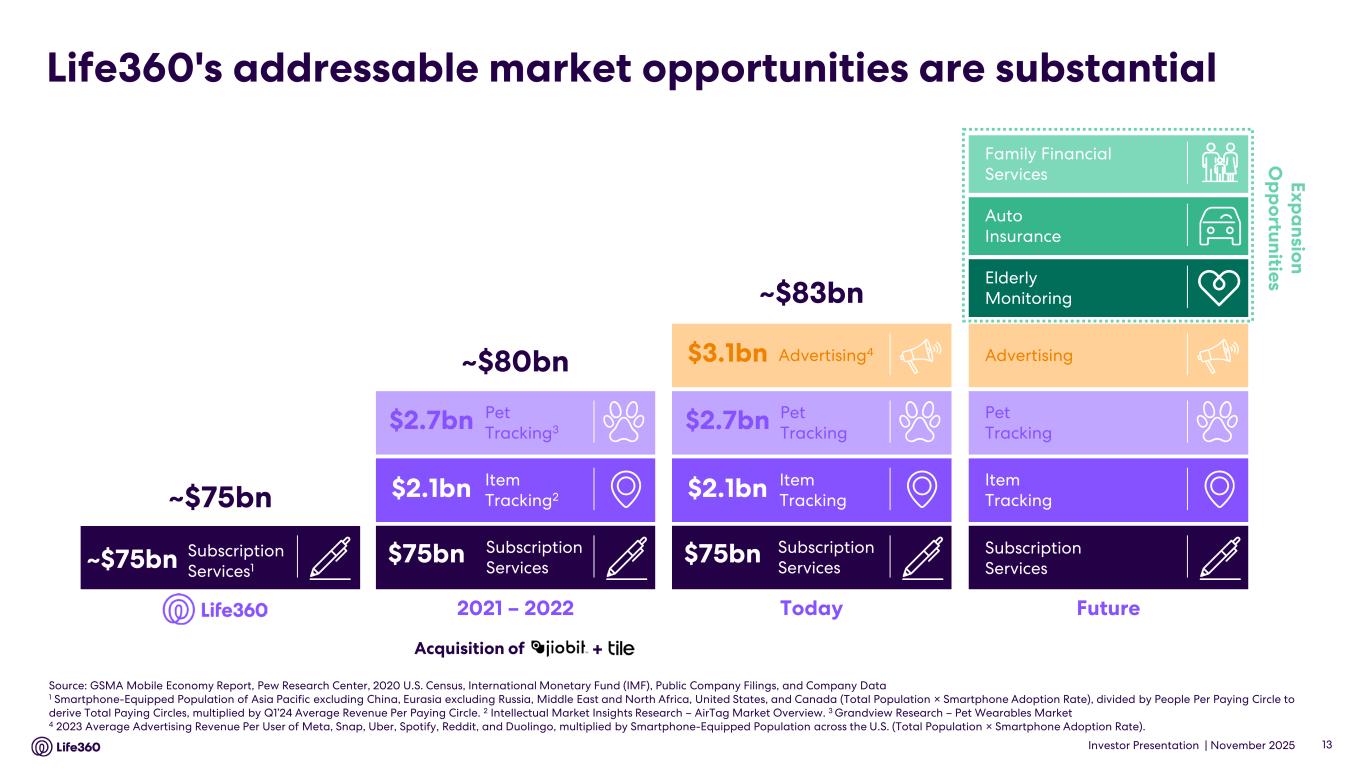
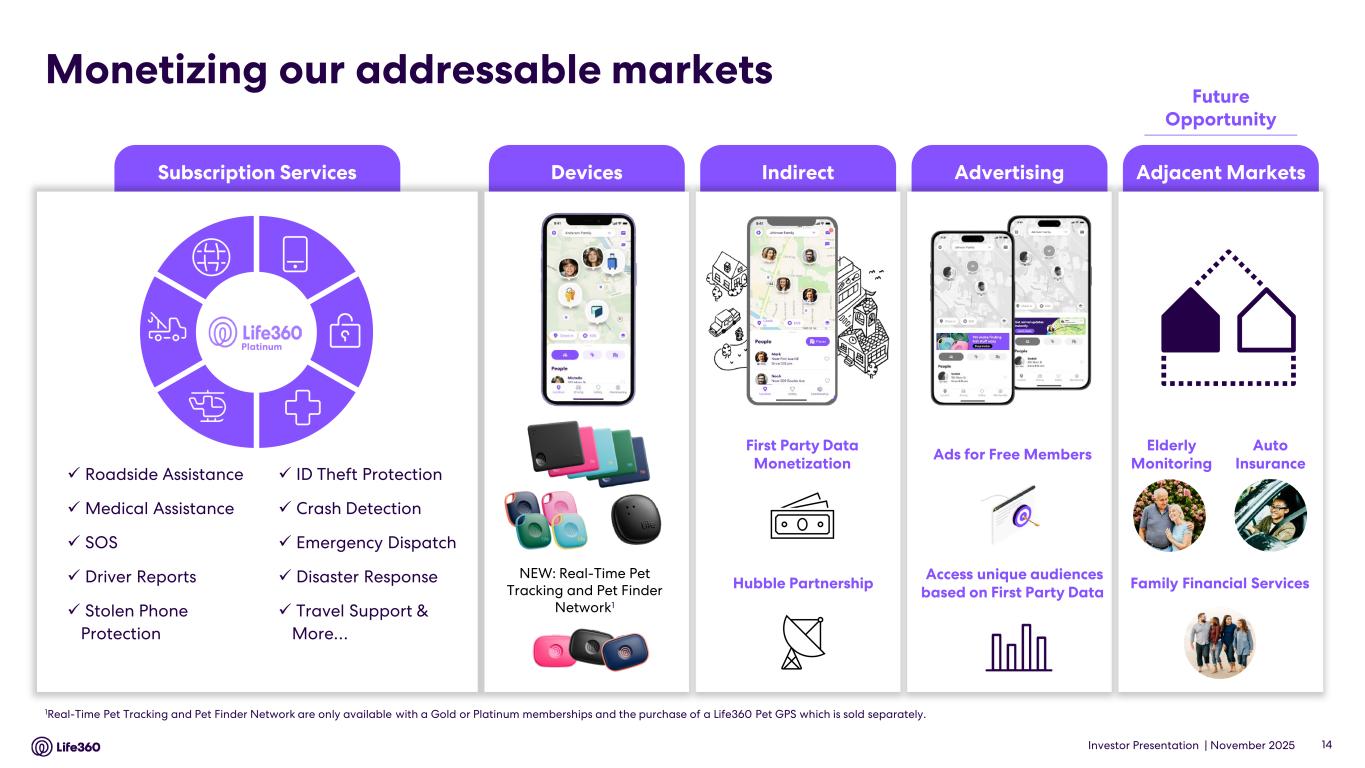
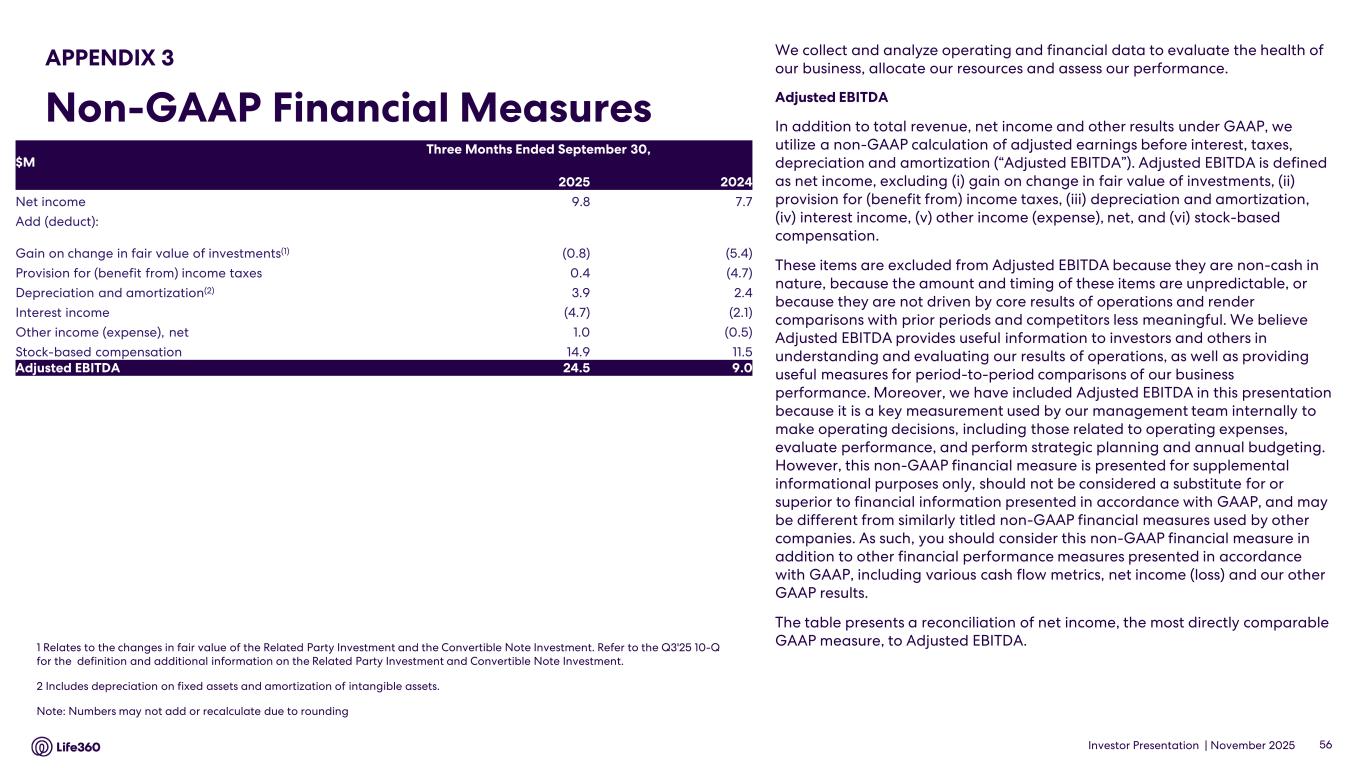
Greetings everyone and welcome to our third quarter 2025 earnings conference call. This call is being conducted as audio. As a reminder, we will make forward-looking statements regarding future events and potential financial performance during this call, which are subject to material risks and uncertainties that can cause actual results to differ materially from such statements. A summary of these risks may be found in the Risk Factors section in our Form 10-K filing with the SEC dated February 27, 2025, and our Form 10-Qs filed with the SEC dated May 12, 2025, August 11, 2025, and November 10, 2025. These forward-looking statements are based on assumptions that we believe to be reasonable as of today's date, November 10, 2025, and we have no obligation to update these statements as a result of new information or future events, except when required by law. Additionally, we will present both GAAP and non-GAAP financial measures on today's call. These non-GAAP measures are not intended to be considered in isolation from, a substitute for, or superior to our GAAP results and should be read in conjunction with the company's consolidated financial statements prepared in accordance with GAAP. A description of these non-GAAP financial measures as well as a reconciliation to the nearest GAAP financial measures are included at the end of the company's earnings media release issued earlier today, which has been posted on the Investor Relations page of the company's website. We have posted an updated investor presentation on the Investor Relations page, which includes additional complementary graphics and data. Please note that it has been provided as an additional reference and that we will not be using the presentation as an exhibit during today's call. We will begin with an overview of results and a business update from our Chief Executive Officer, Lauren Antonoff, with a comment from our Co-Founder and Executive Chairman, Chris Hulls; then our Chief Financial Officer, Russell Burke, will walk through the Q3 2025 financials. Lauren will return with comments on our updated 2025 outlook before we open up the call for Q&A. With that, I'll turn the call over to Lauren.
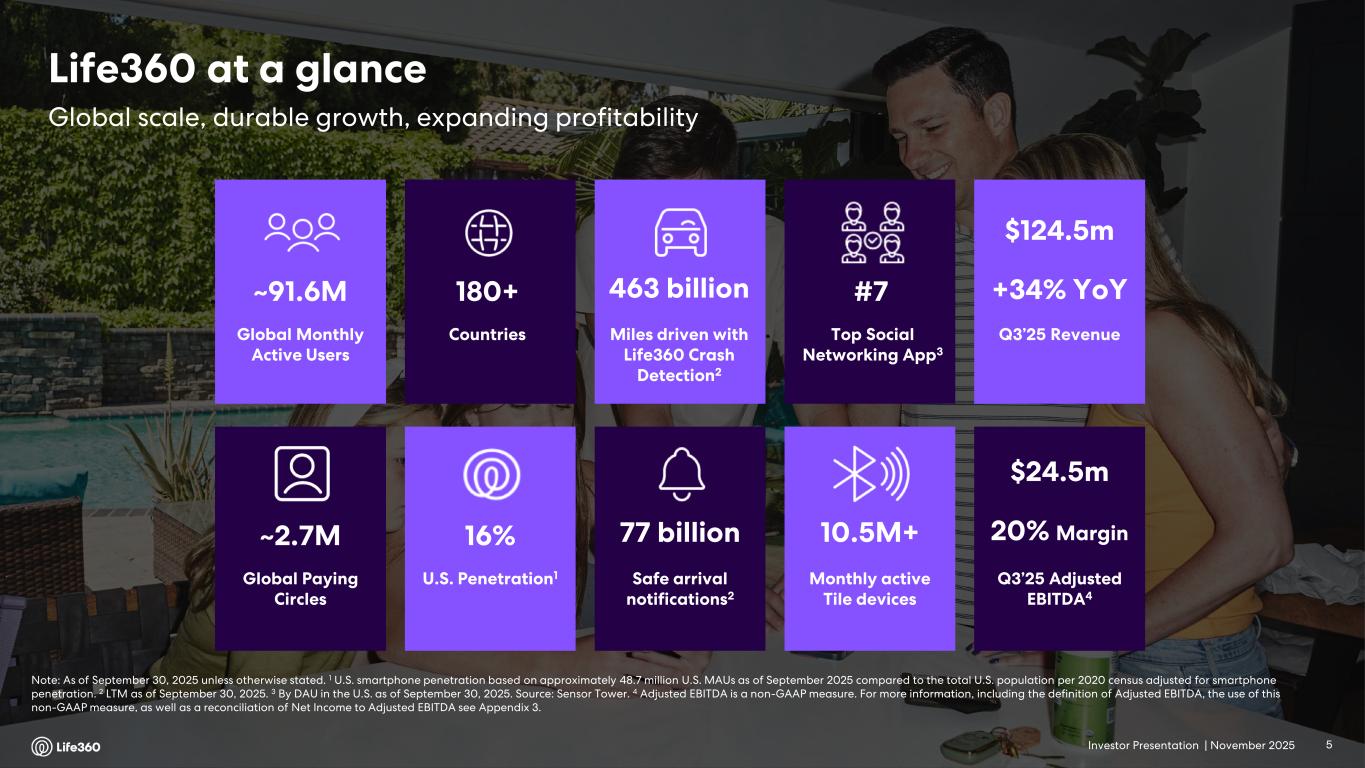
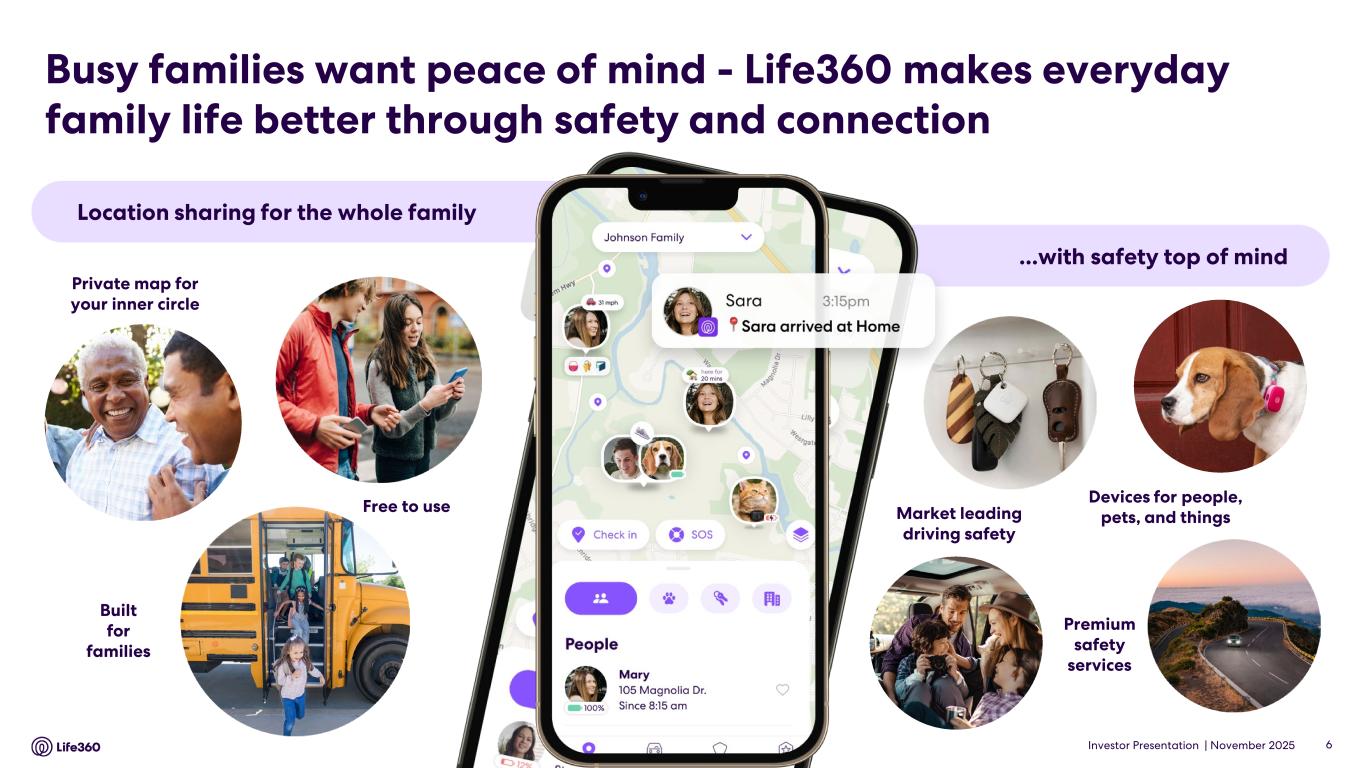
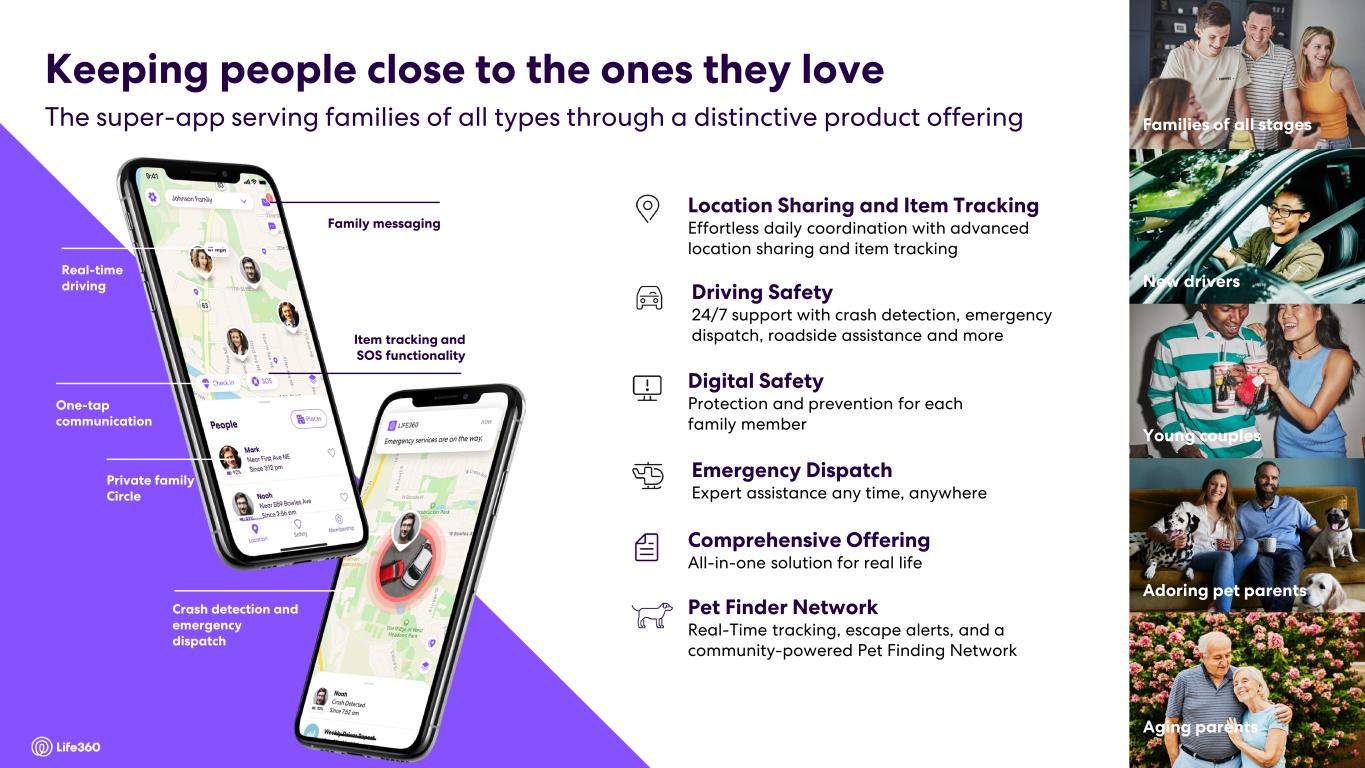
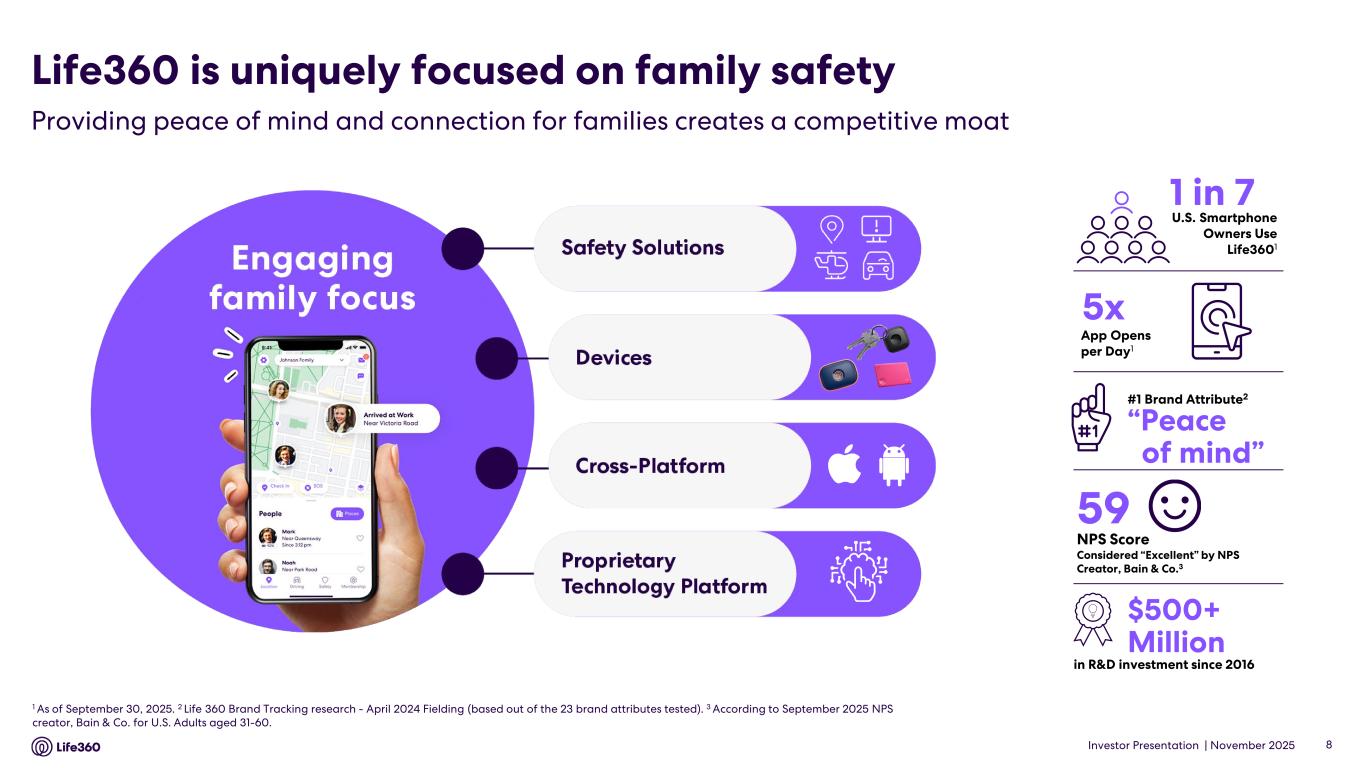
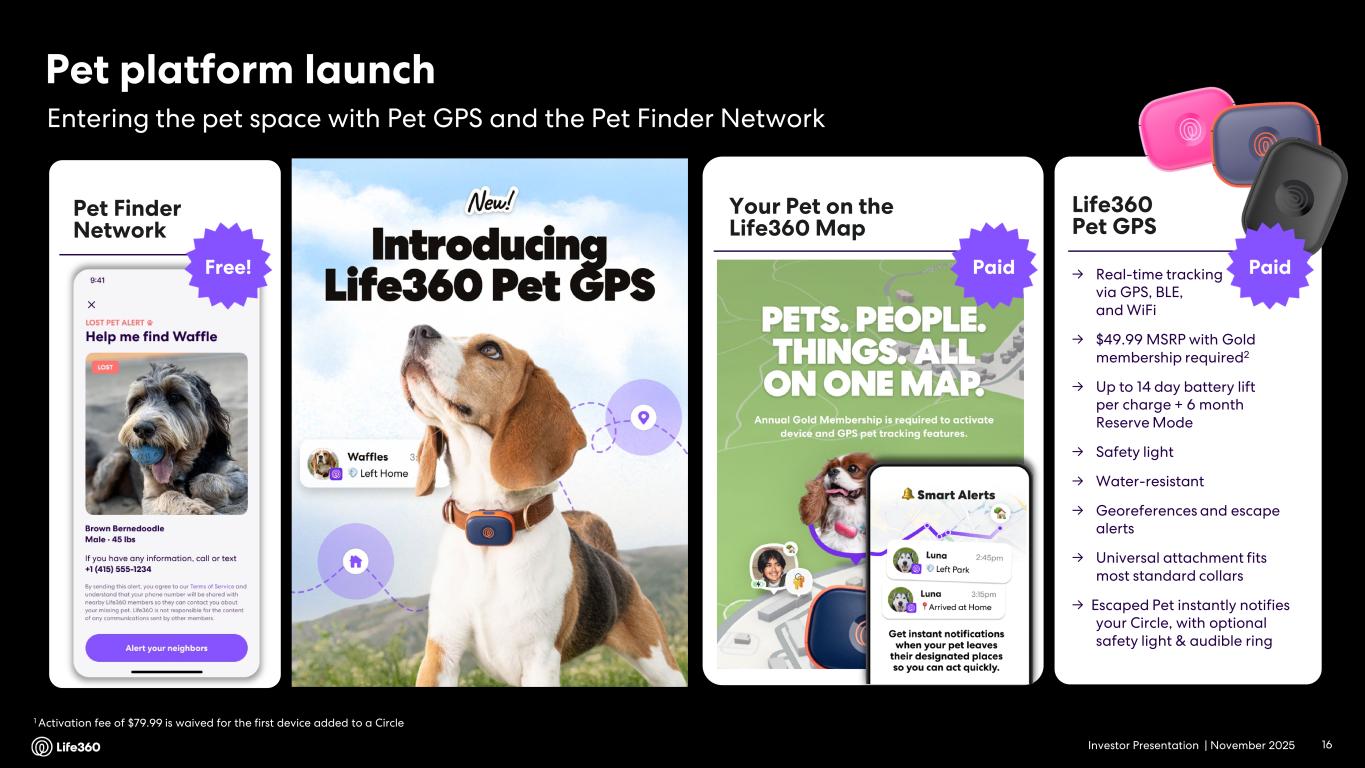
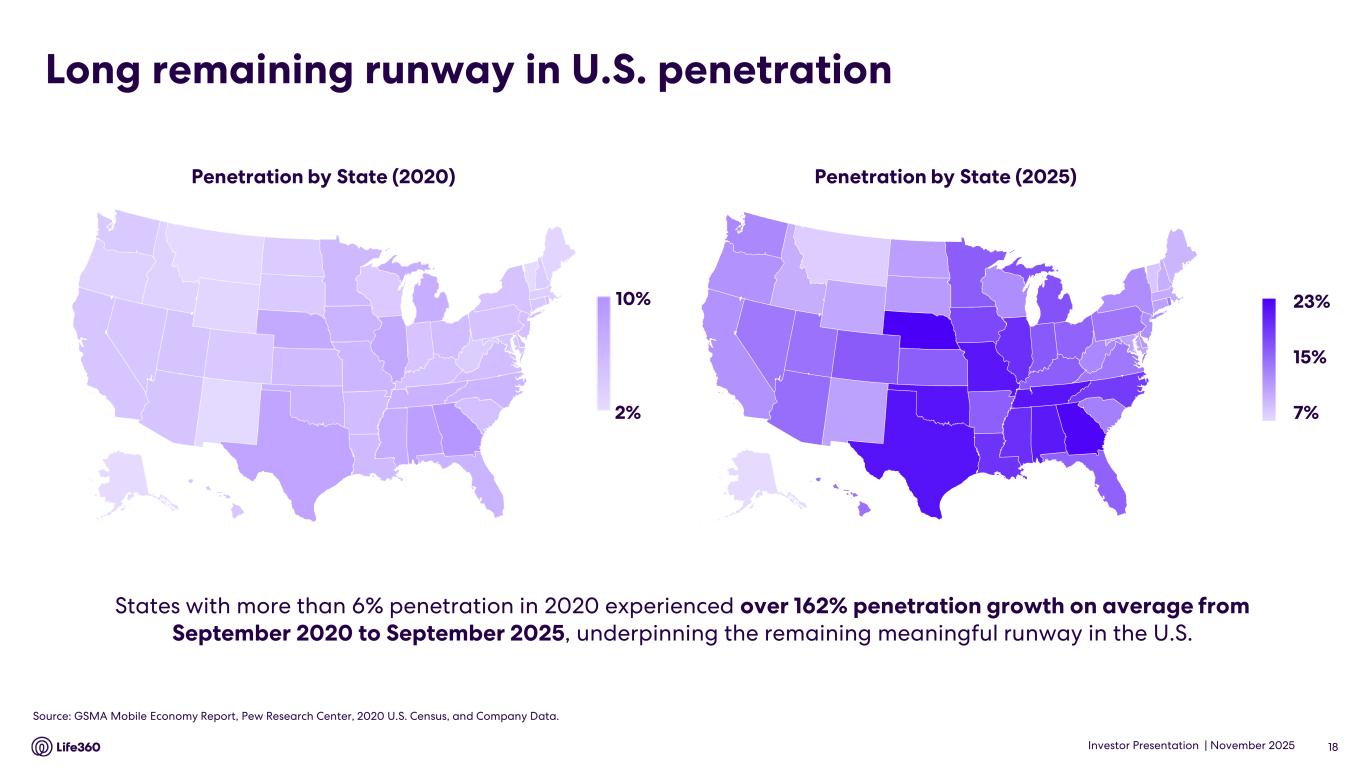
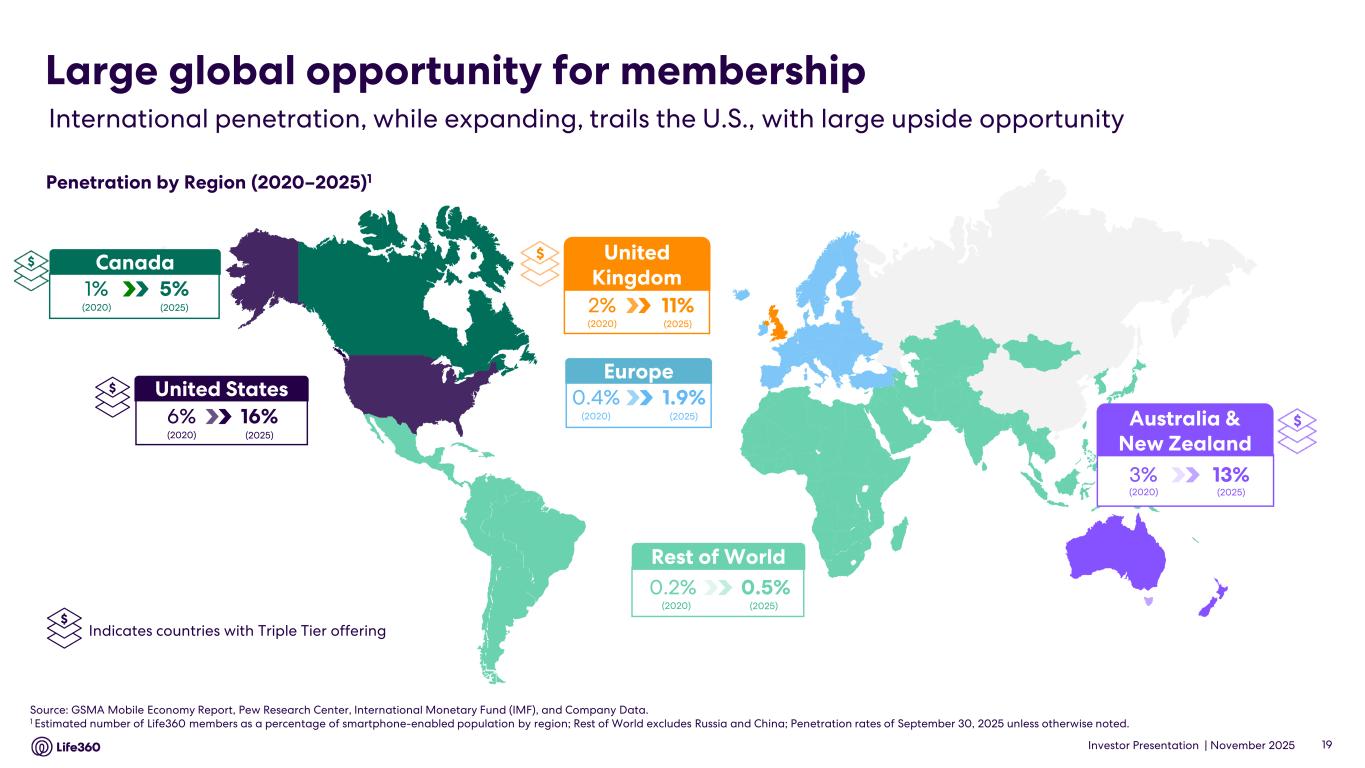
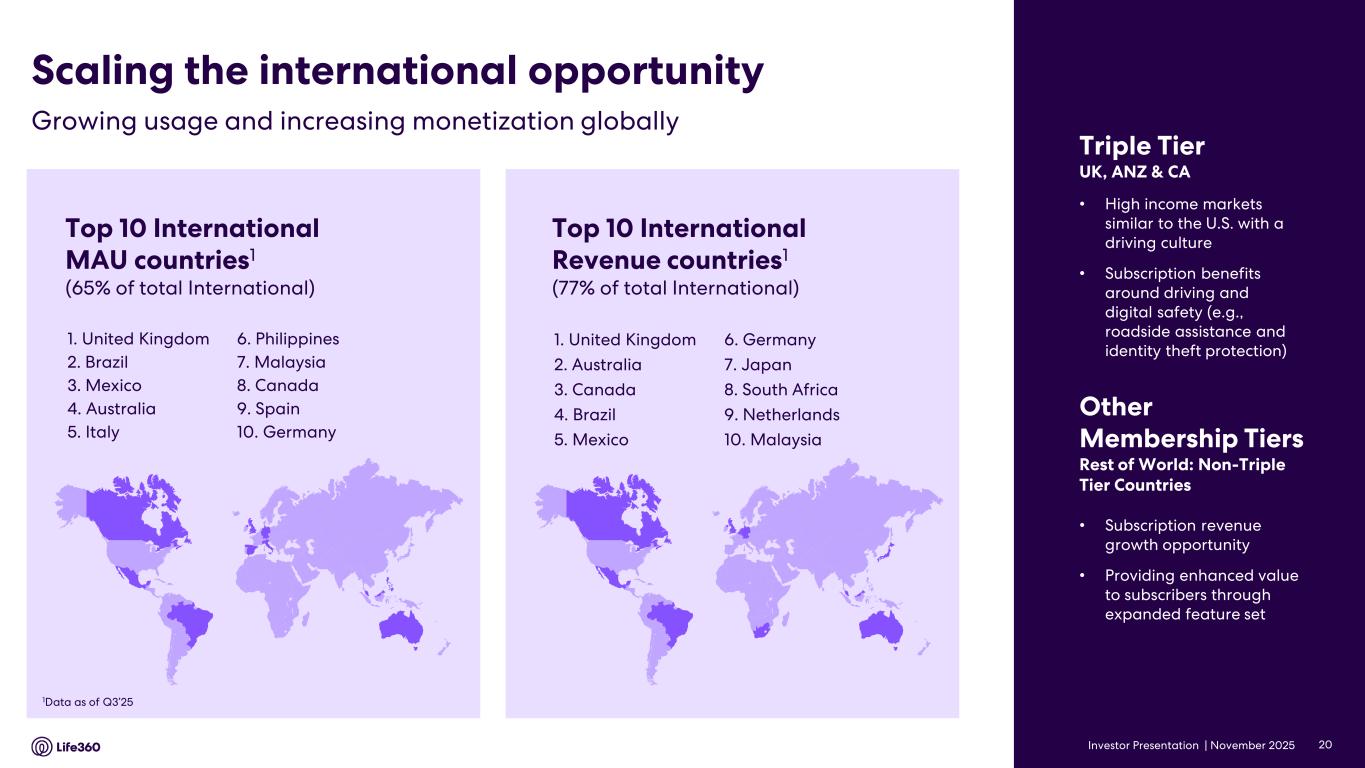
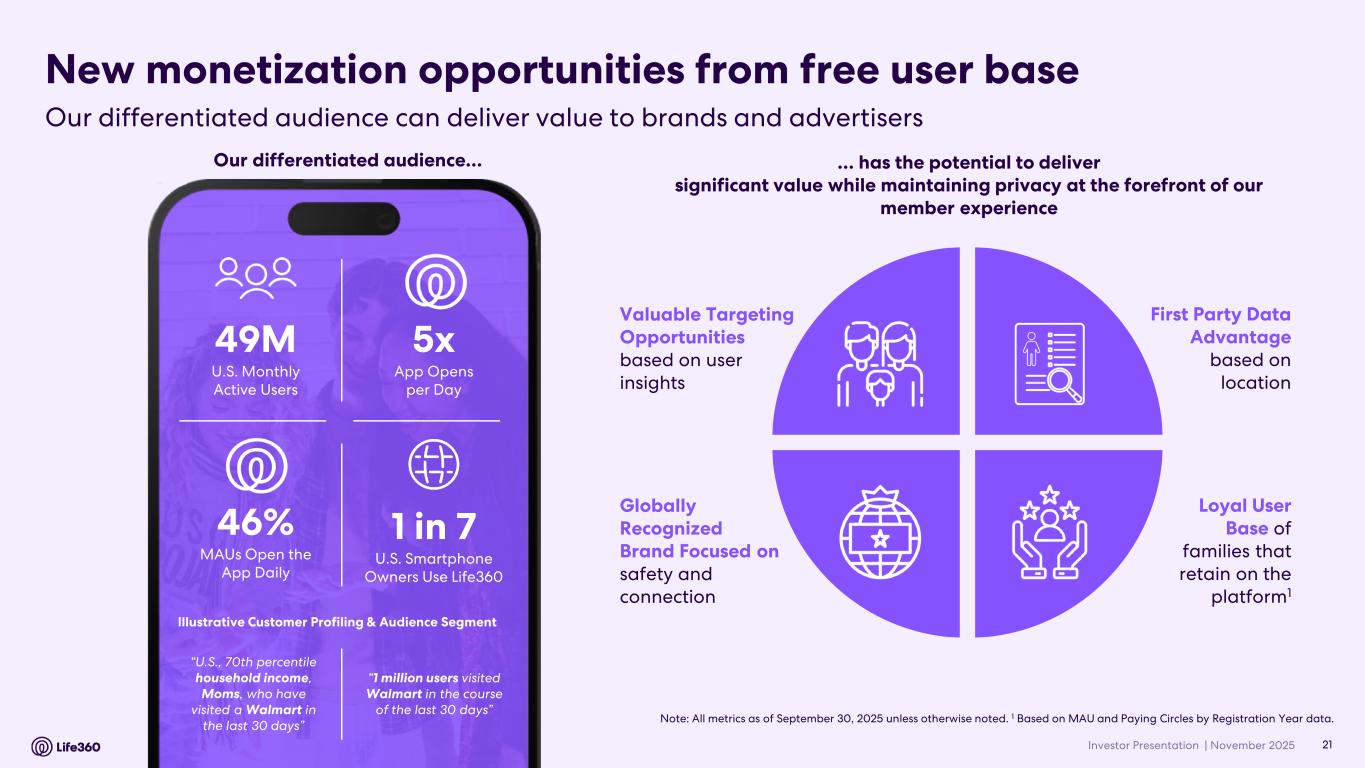
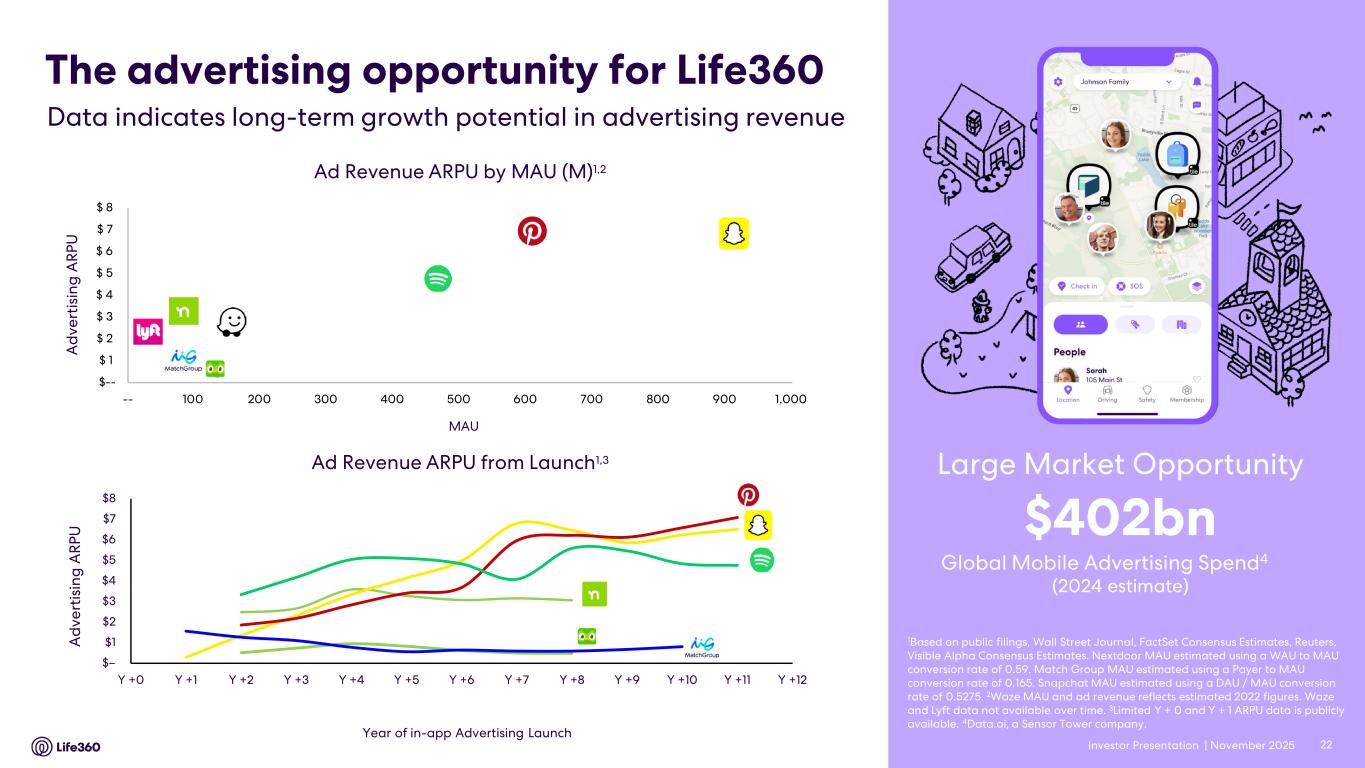
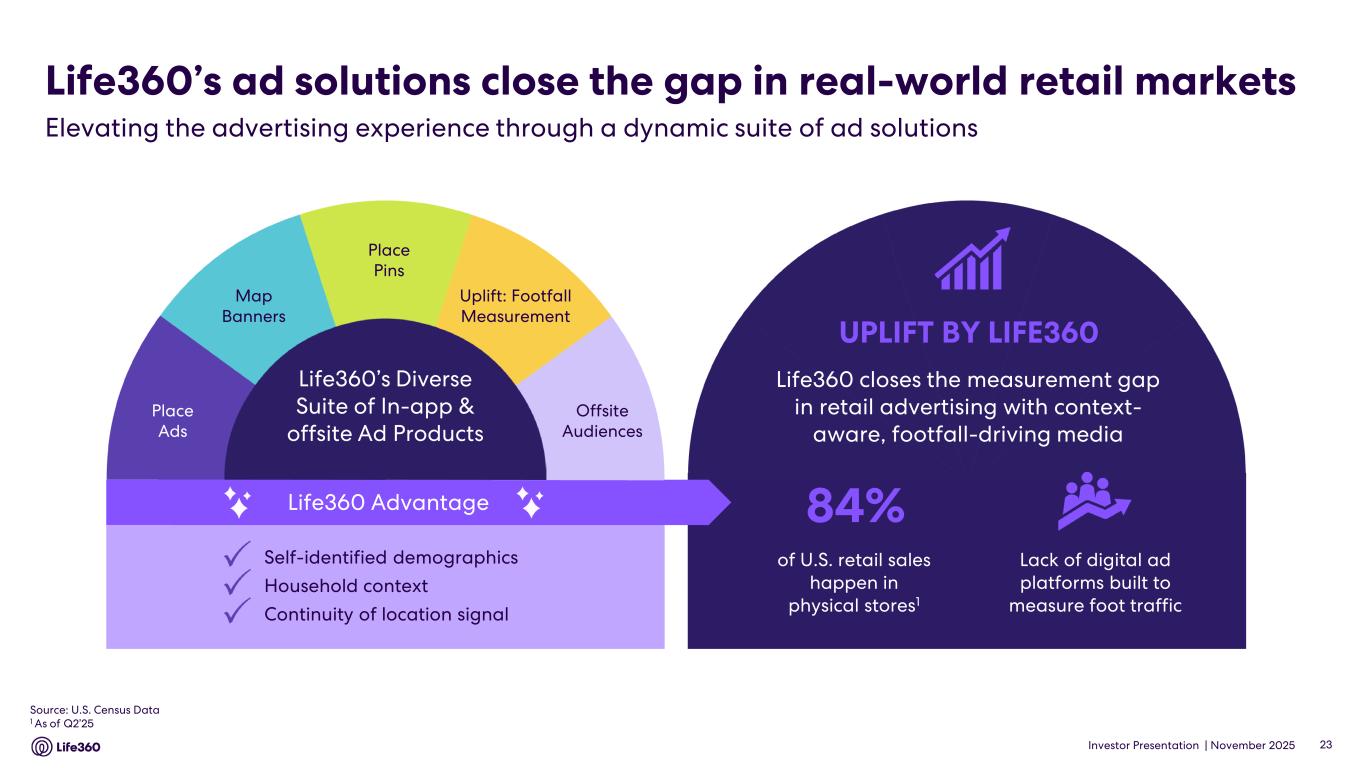
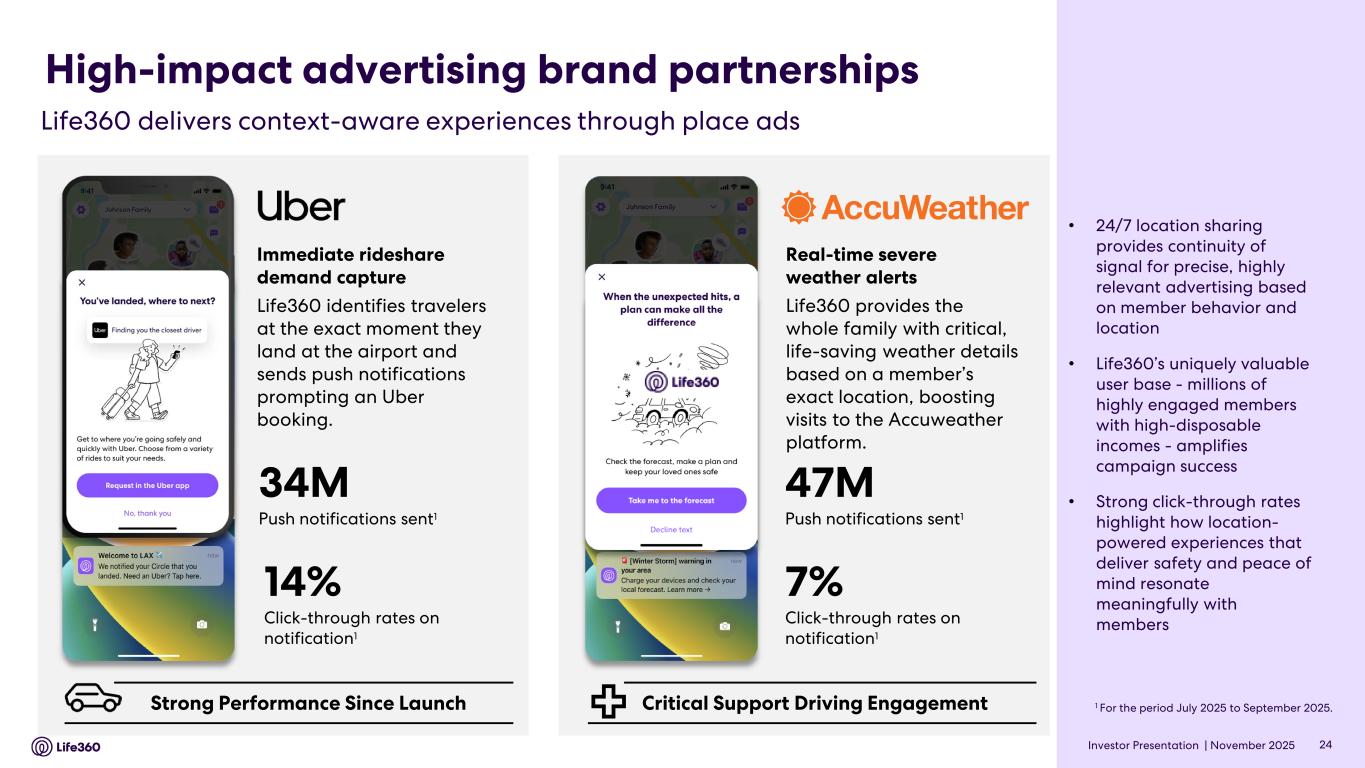
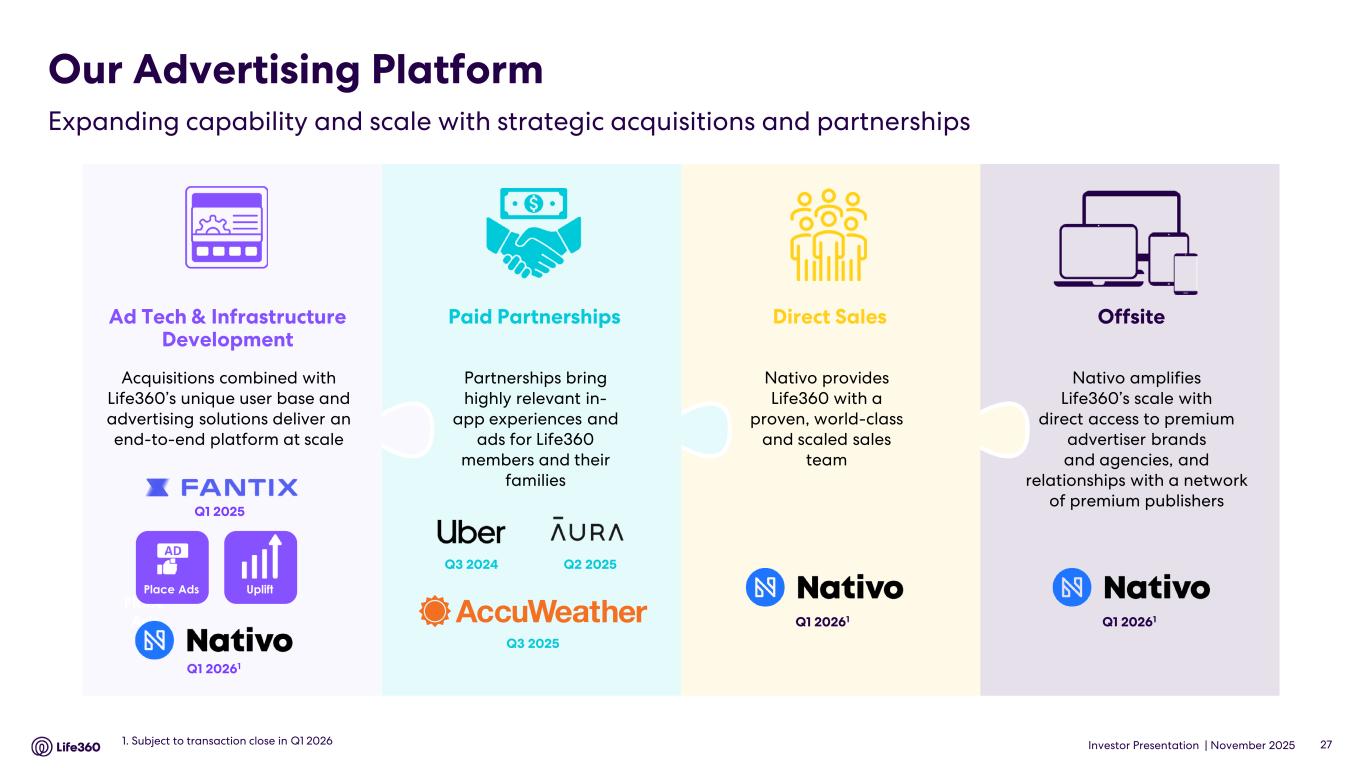
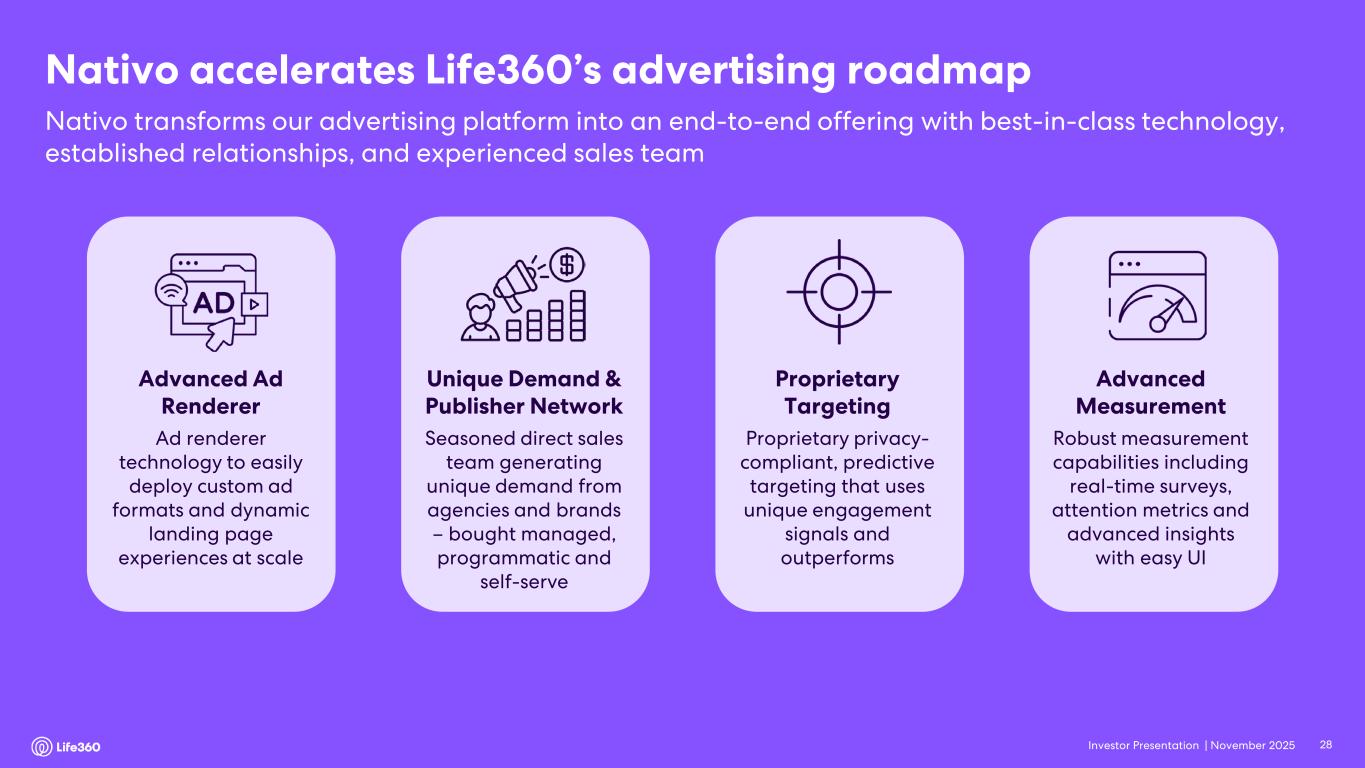
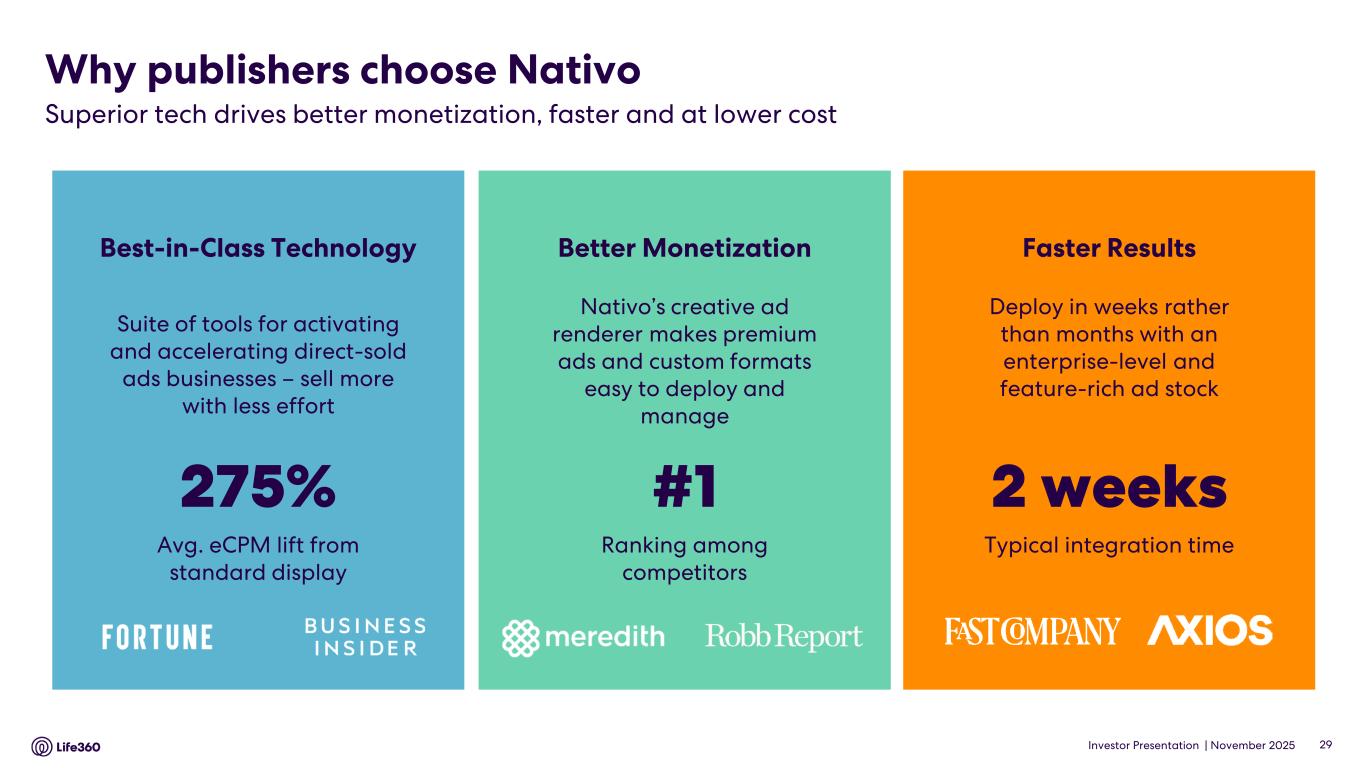
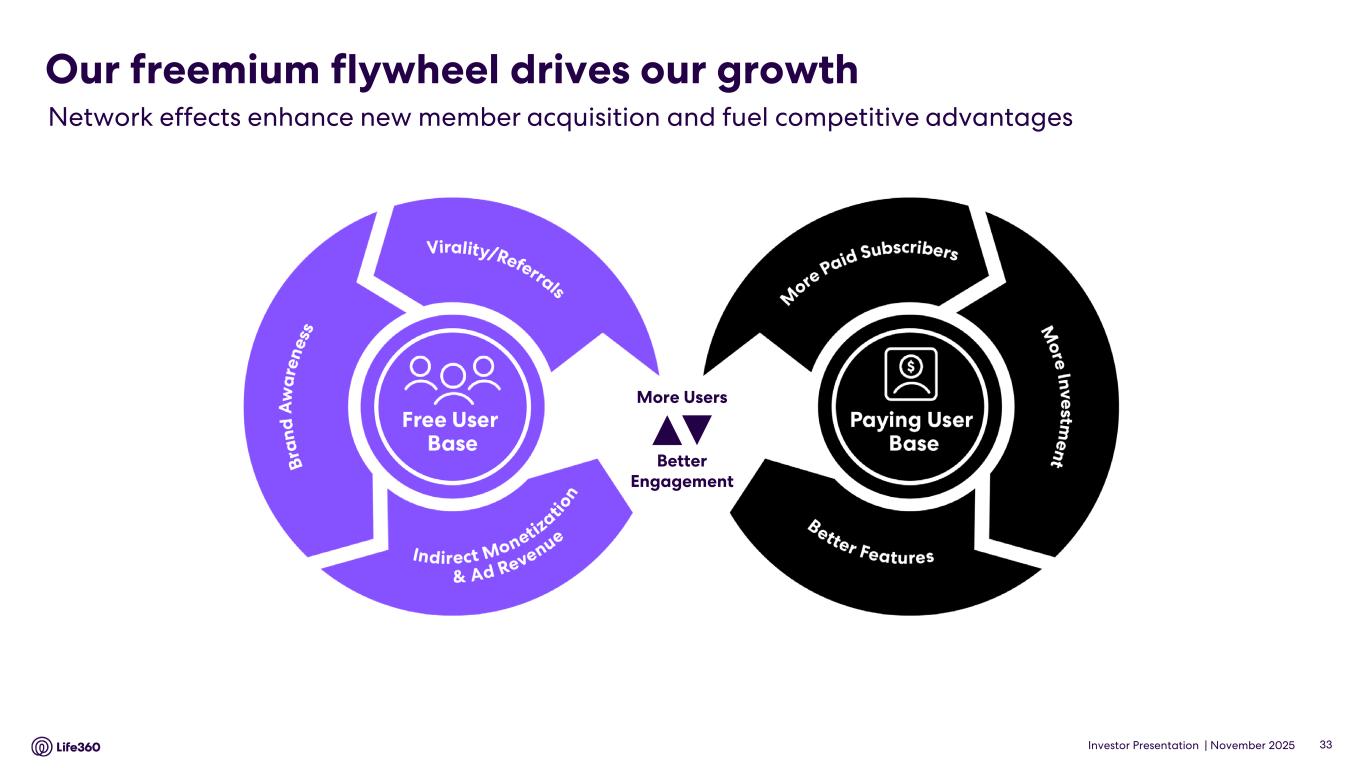
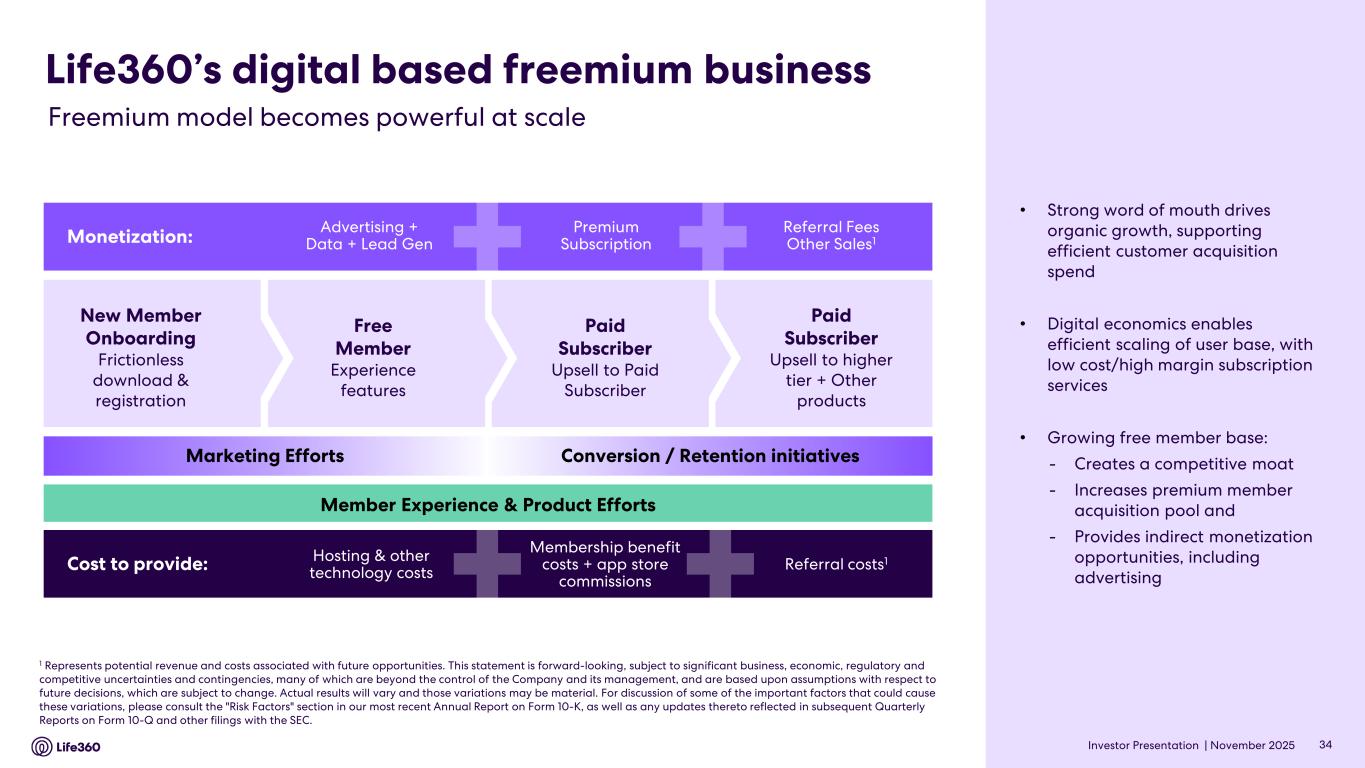
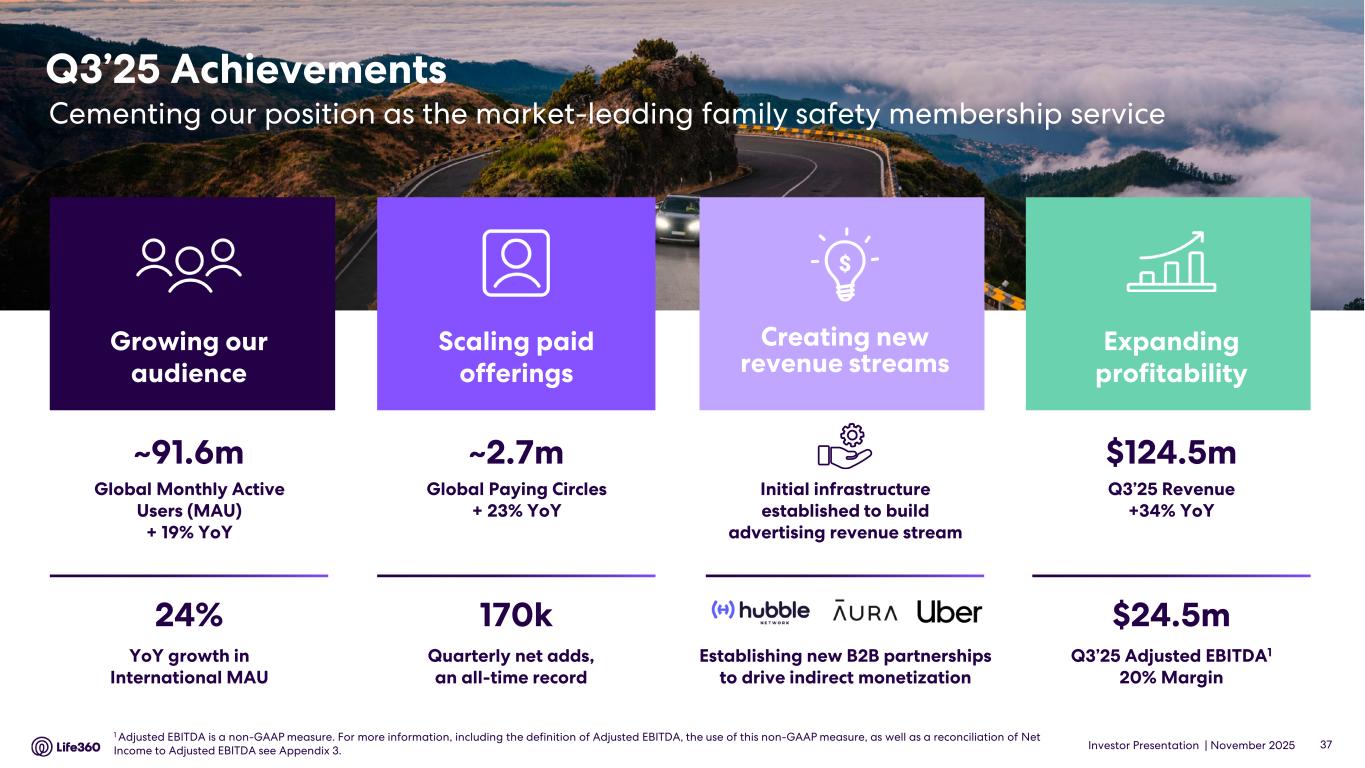
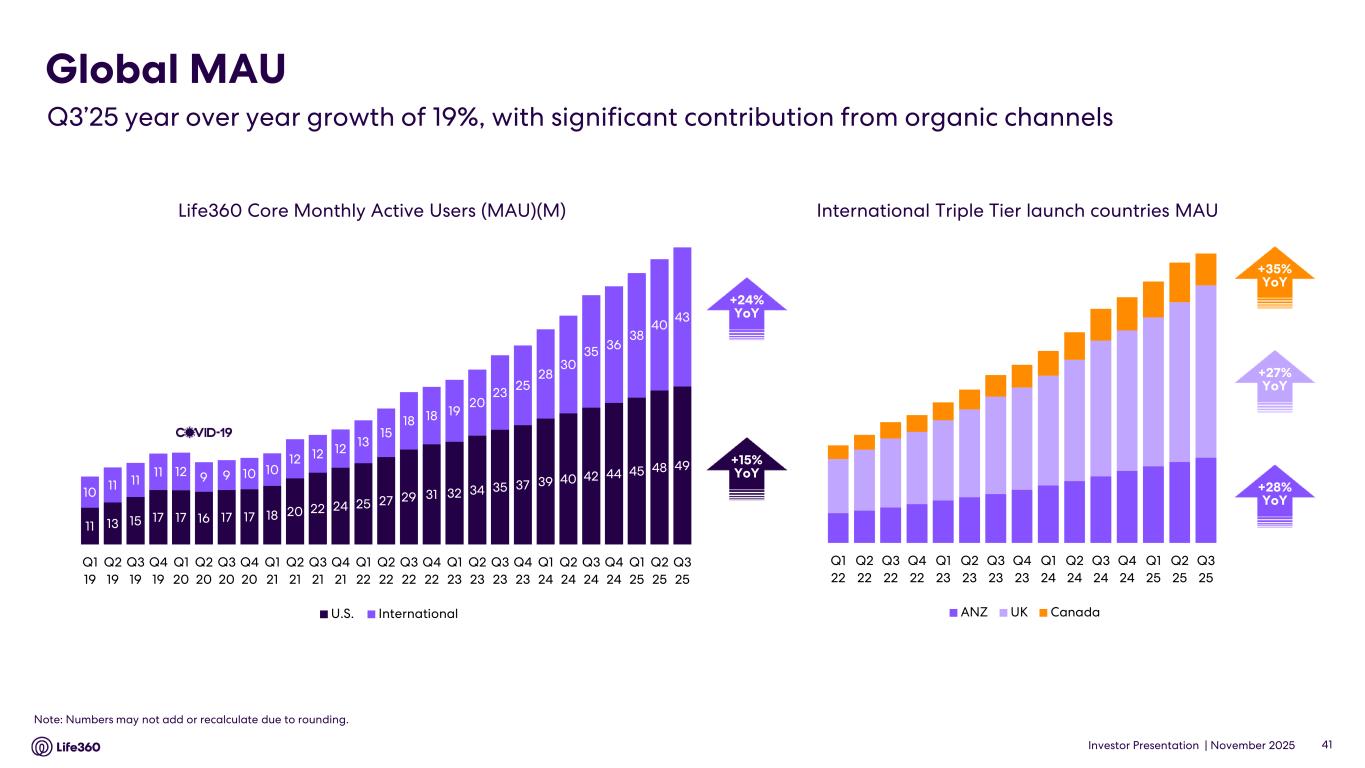
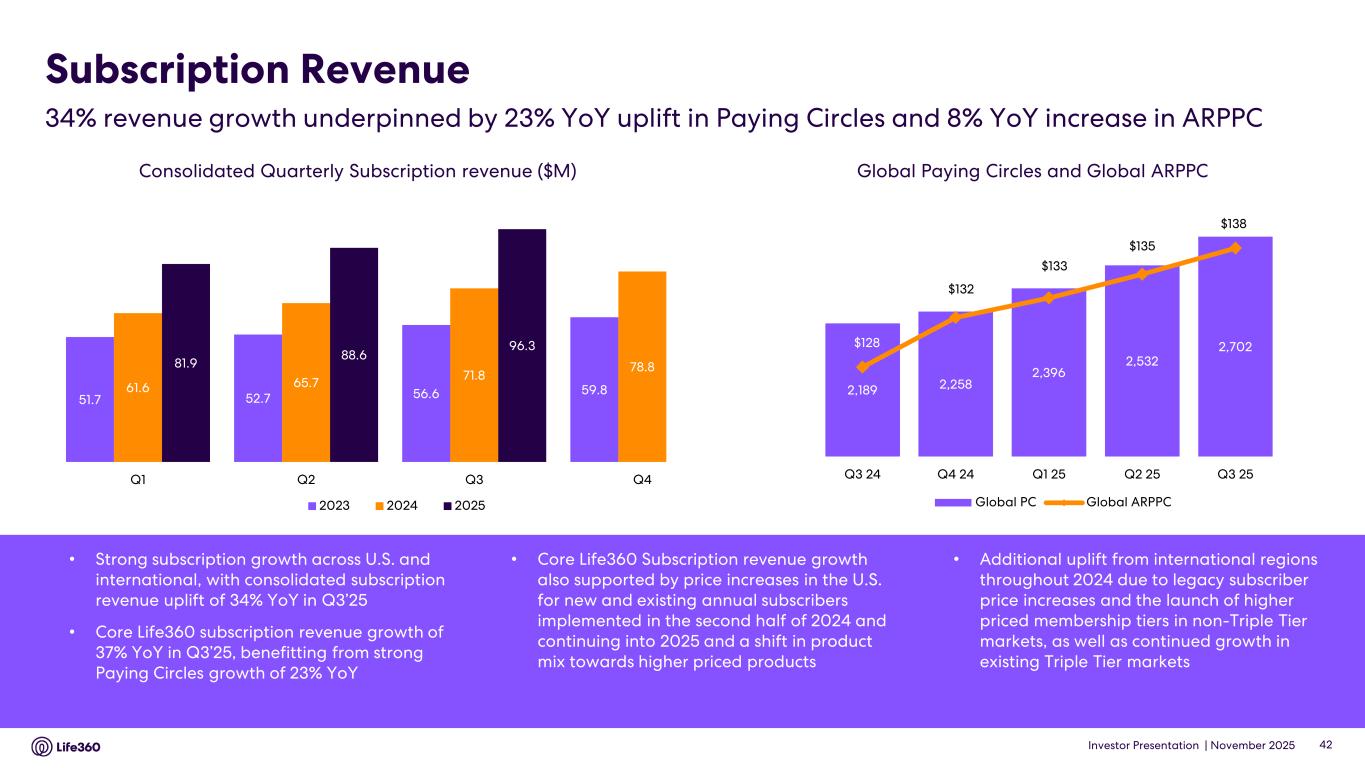
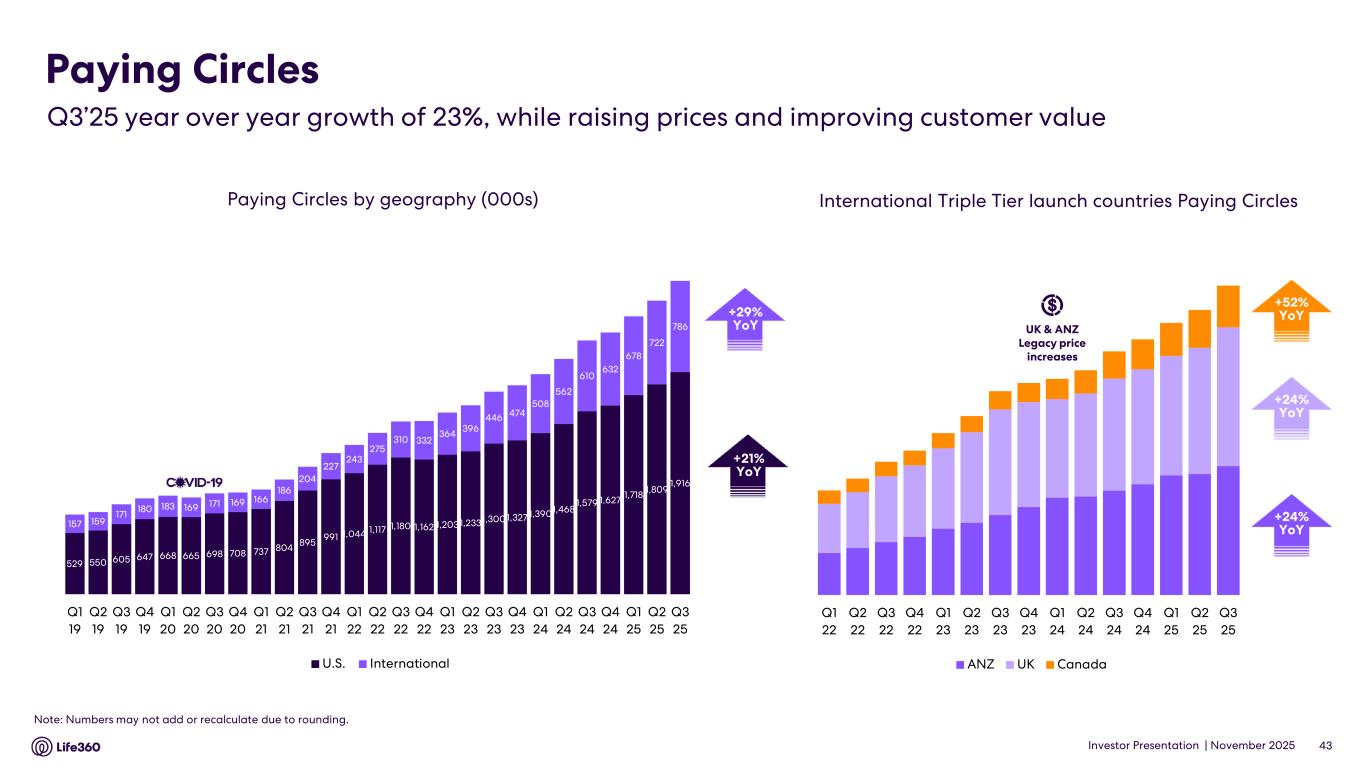
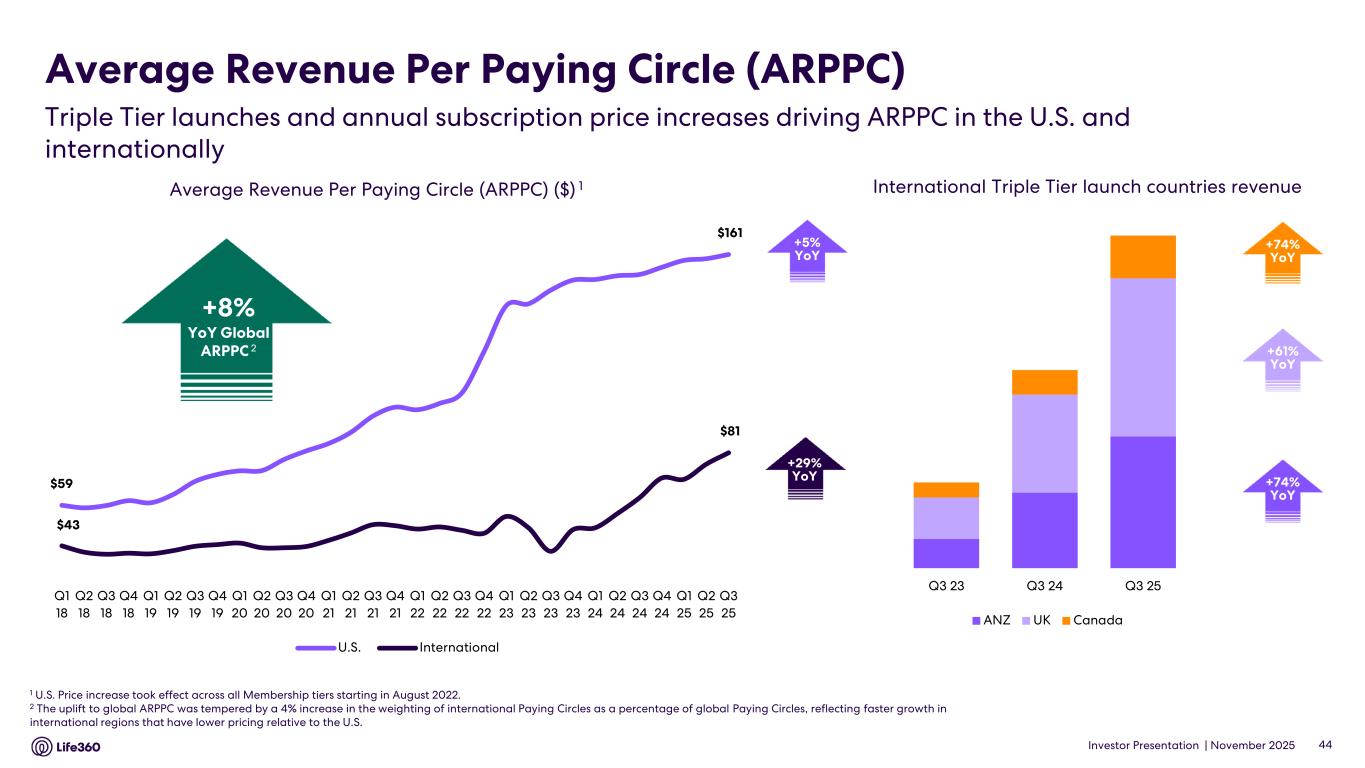
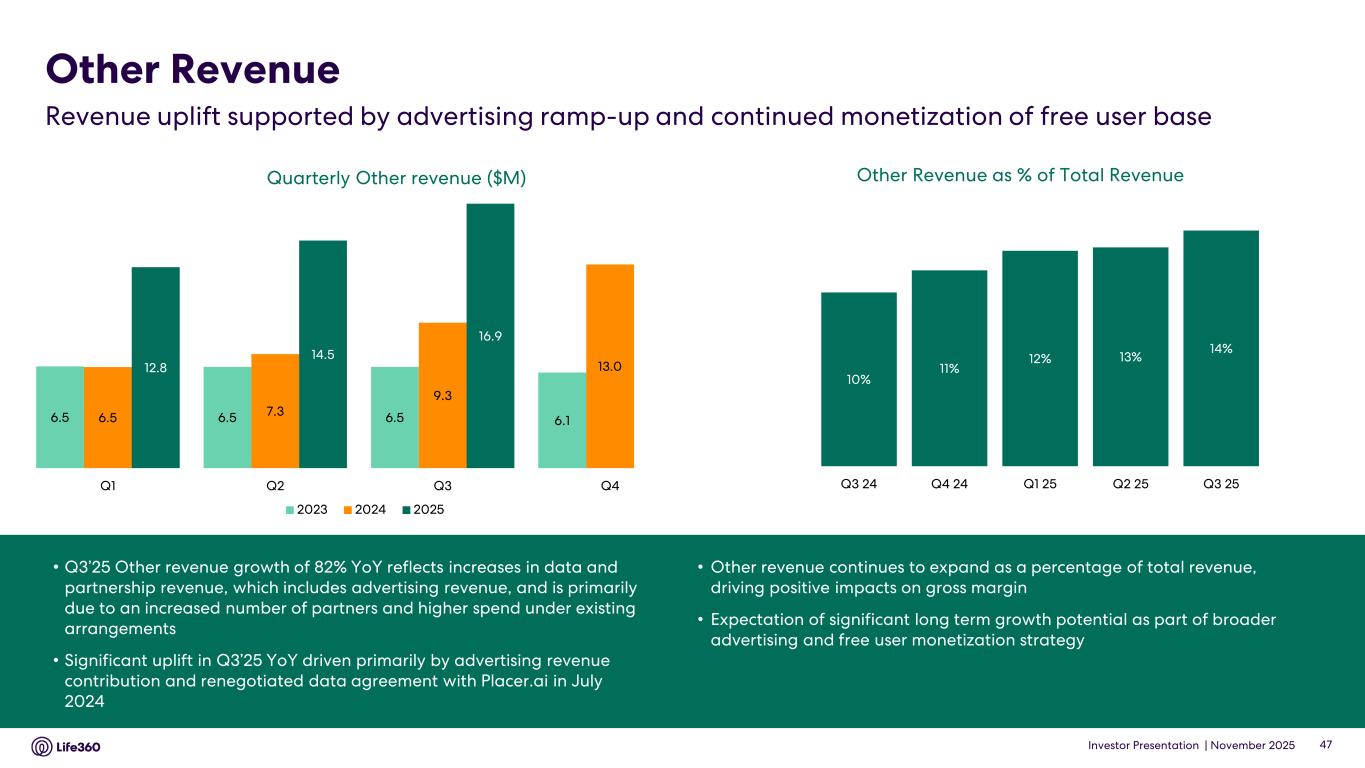
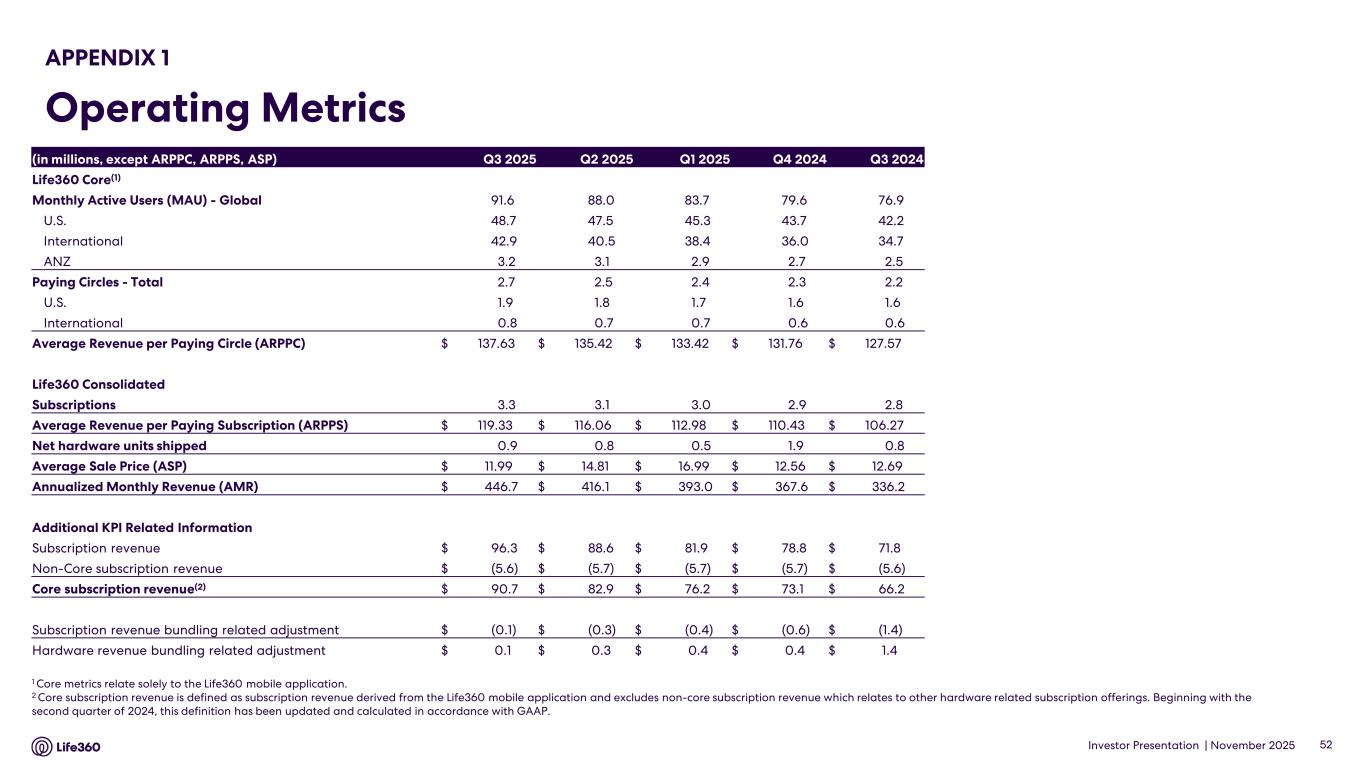
Good afternoon to everyone joining from the U.S., and good morning to those of you tuning in from Australia. Thank you for joining our third quarter results call. Q3 2025 was another record quarter for Life360. We reached all-time highs in Paying Circles and global net subscription adds while continuing to advance our vision of becoming the go-to platform for everyday family life. These results reflect our outstanding product market fit, the strength of our freemium model and most importantly, the trust we built with millions of families who depend on Life360 every day to keep their families safe and manage the day-to-day chaos of family life. Our growth engine is fueled by the peace of mind that Life360 provides families who use our platform to stay connected to the people, pets and things they love. Our freemium model continues to drive delight and encourage upgrades to premium features such as unlimited place alerts that give families a heads up where mom leaves work or dad stops by their favorite sandwich shop. Our free offering is now even more valuable to families with the introduction of our new Pet Finder Network, which I'll come back to in a moment. Because of our outstanding value, the majority of our growth remains organic, driven by word of mouth and increasing brand awareness. This quarter, we continued to deliver innovative experiences like no-show alerts. We spotted a pattern where nervous parents continually check to see if their kid arrived and we decided to create a feature to reduce anxiety by flipping this experience on its head. Now we can alert parents when a loved one doesn't arrive on time at a designated location. No need to keep checking. It's one more way we're giving families peace of mind and making everyday family life better. We delivered no-show alerts just as kids were heading back to school, and we've seen outstanding engagement with over 1 million alerts configured to make sure that people arrive safely as expected. We also deepened our partnership with AccuWeather, the world's most accurate and widely used source of weather forecasts and warnings. Last quarter, this partnership delivered severe weather alerts to our members. In Q3, we took it a step further by extending these alerts to the entire circle, so every family member is notified when weather threatens someone they care about. This integration, as with our work with Uber, highlights how major brands are recognizing Life360 as a true platform, not just another location sharing app. We're creating monetizable experiences that drive far higher engagement than traditional ads and genuinely add value to our members' daily lives. Unlike banner ads that users simply tolerate, our AccuWeather experience shows why people choose Life360. It makes the platform more useful, relevant and uniquely positioned at the center of family life. We're also engaging members in creative ways like our Life360 Pays For campaign, which was designed to reinforce our mission of making everyday family life better and build brand affinity by helping families manage real-life costs from rent to gas to data plans. Our combination of product innovation and creative marketing with millions of views across the media spectrum continues to strengthen engagement across our platform. As a result, we added 3.7 million monthly active users in the third quarter, growing 19% year-over-year, bringing our total active users to nearly 92 million. Our total Paying Circles grew 23% year-over-year to 2.7 million, achieving a record 170,000 net new additions, boosted by focus in our marketing efforts and optimization in our funnel, resulting in better conversion from free to paid in the U.S. and international markets, especially within that first critical 30 days of use. While MAU growth is lower than the same period last year, it was led by our highest value user segments, reflecting an intentional shift in our marketing to focus paid media on users who are more likely to retain and convert. The strategy is working. Our 35- to 50-year-olds, which drive the majority of our monetization, reached record highs this quarter. The results speak for themselves with record growth in Paying Circles and strong brand awareness. At the same time, we continue to benefit from Life360's cultural relevance, which extends well beyond our core target audience. In recent weeks, we've been trending on TikTok because we created a product experience that hopped on the 67 meme. If you don't have teens, you might not know what that means, but millions of our younger members do. While we don't rely on Gen Z as primary converters, their enthusiasm fuels a powerful halo effect that keeps Life360 part of the broader cultural conversation. Just this week, one of our TikTok posts went viral with an astounding 2.2 million views. This visibility strengthens our brands with parents and families alike, proving that our position at the center of the digital zeitgeist is a real competitive advantage. Internationally, momentum remains strong. Paying Circles outside the U.S. grew 29% year-over-year with an 8% year-over-year ARPPC uplift driven by local pricing strategies and the continued success of premium tiers across the U.K., Canada, Australia and New Zealand. If these markets continue on the same trajectory as the U.S., and current trends suggest they will, there remains significant headroom for accelerated growth ahead. While we continue to experiment with our marketing levers, the results we've seen give us confidence that edgy creative, disciplined marketing investment and most importantly, a product that delights customers will continue to drive durable growth for many years to come. On top of growing our membership base, we're deeply committed to increasing the value we deliver to our members, including extending Life360's impact beyond the phone. Our connected devices play a critical role in expanding our reach and deepening engagement, giving families more ways to stay connected. We took a big step forward on this front as we launched Life360 Pet GPS, which brings to life our vision to connect families with the people, pets and things they love on one map and extends the peace of mind we're known for to furry family members. This is our first product designed specifically for pets, and it's now available in the United States, Canada, the U.K., Australia and New Zealand. We took a measured approach to our initial launch, and while it's too soon to provide a forecast, early demand exceeded our initial expectations, selling out in most regions within days. One in 3 pets becomes lost at some point during their lifetime, and families with pets represent a significant opportunity, covering nearly 70% of U.S. households. Young families tend to get their first pet before they have kids and certainly before the age that kids get their own phone. And pets don't head off to college, meaning that our Pet GPS makes subscriptions more valuable to families through all life stages. Our goal with pets goes far beyond selling devices. We have an opportunity to raise the bar for what it means to be a responsible pet parent. We're committed to driving awareness and education about how to keep pets safe. Pet owners have been led to believe that a microchip or Bluetooth tracker will help if their pet escapes. And I know from personal experiences that these solutions are outdated and woefully unsuited to the job. To make use of a microchip, someone needs to capture your pet and take it to a vet or a shelter. Not only does that count on extraordinary effort, but trying to catch a lost dog and put both the dog and the person in danger. Bluetooth trackers work great when your dog is at home on the couch, but they're ill suited for a dog on the run. The best way to get a dog home safely is to equip them with a GPS tracker that tracks your pet in real time, so you can close the distance quickly and bring them home safely. While Pet GPS is the best way to keep a pet safe, at Life360, we want to keep every pet safe, even those without a tracker. Our community-powered Pet Finder Network draws on our nearly 92 million members to help reunite lost pets with their families by sending a lost pet alert to members nearby. Pet GPS and our Pet Finder Network expand our relevance to even more households and reinforce our position as the go-to platform for everyday family safety. Families already trust Life360 to keep their loved ones connected and safe, and that trust gives us a strong foundation to lead in this growing category. Beyond subscriptions and hardware, we continue to advance our strategy to build high-margin complementary revenue streams. Q3 other revenue grew 82% year-over-year to $16.9 million with strong performance in advertising. We're still early in our advertising road map, but we're making progress building the full operating stack that will power long-term growth. Our place ads and uplift products are live and gaining traction, enabling brands to reach families in relevant real-world moments and measure the impact of their ad campaigns. At the same time, we're enhancing our programmatic partnerships and data integrations to improve targeting, delivery and performance. This phase is about building the right foundation, bringing together the people, technology and relationships that will allow us to efficiently and effectively scale. The momentum we're seeing fuels our confidence that advertising is on track to become a durable high-margin growth engine for Life360. To accelerate our vision, we've entered into an agreement to acquire Nativo, a best-in-class advertising technology company. Nativo brings full stack ad technology, a seasoned team and hundreds of advertiser and publisher relationships that will allow us to scale our ads business faster and more efficiently while maintaining the high editorial and privacy standards that define the Life360 promise. We expect this combination to accelerate our advertising road map, expand our offsite reach and position Life360 to deliver a unified ad platform that seamlessly connects our audience with broader publisher networks. It's a major step forward in creating a differentiated full-funnel solution for brands and agencies. And importantly, it advances our mission to grow advertising in a way that's consistent with our commitment to families. We look forward to welcoming the Nativo team to Life360 once the transaction closes. Before I conclude, I've asked Chris to share a few thoughts from his new role. So Chris, over to you.
Speaker 2
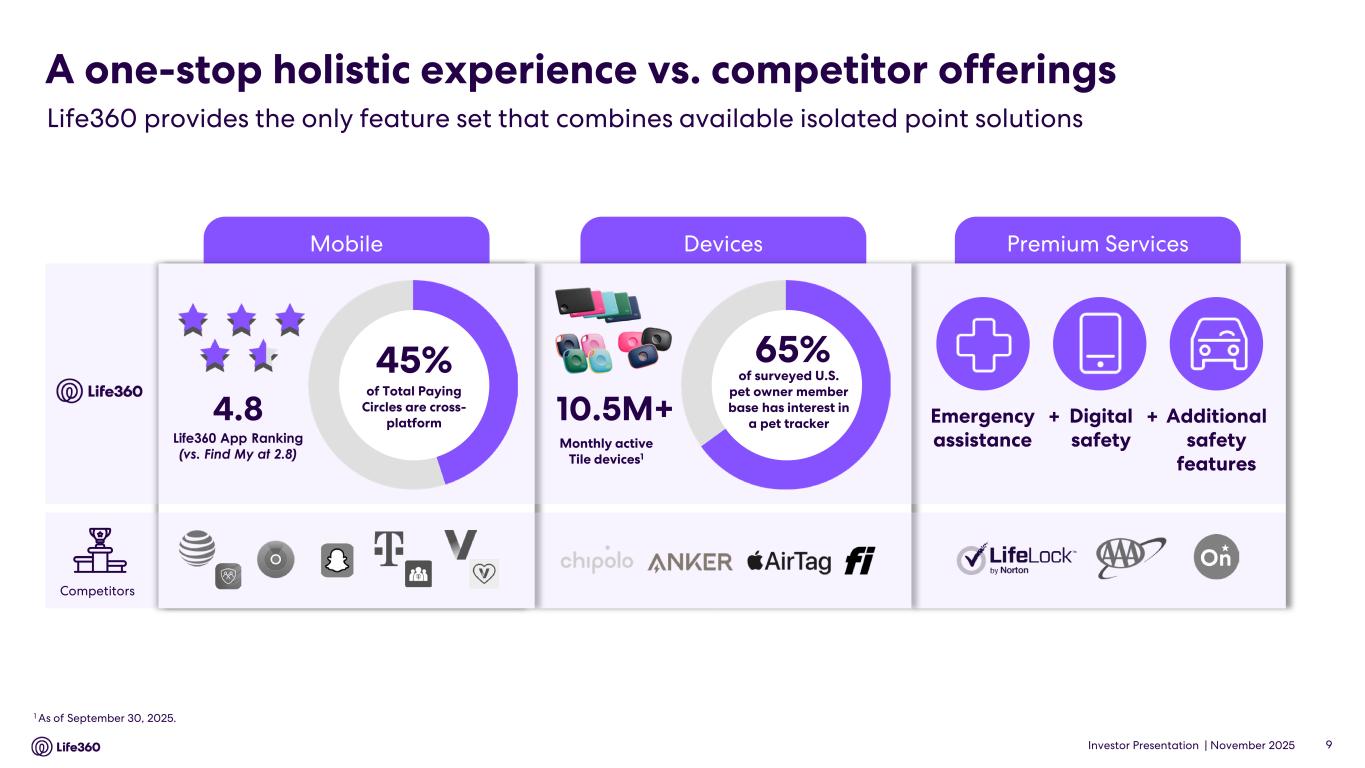
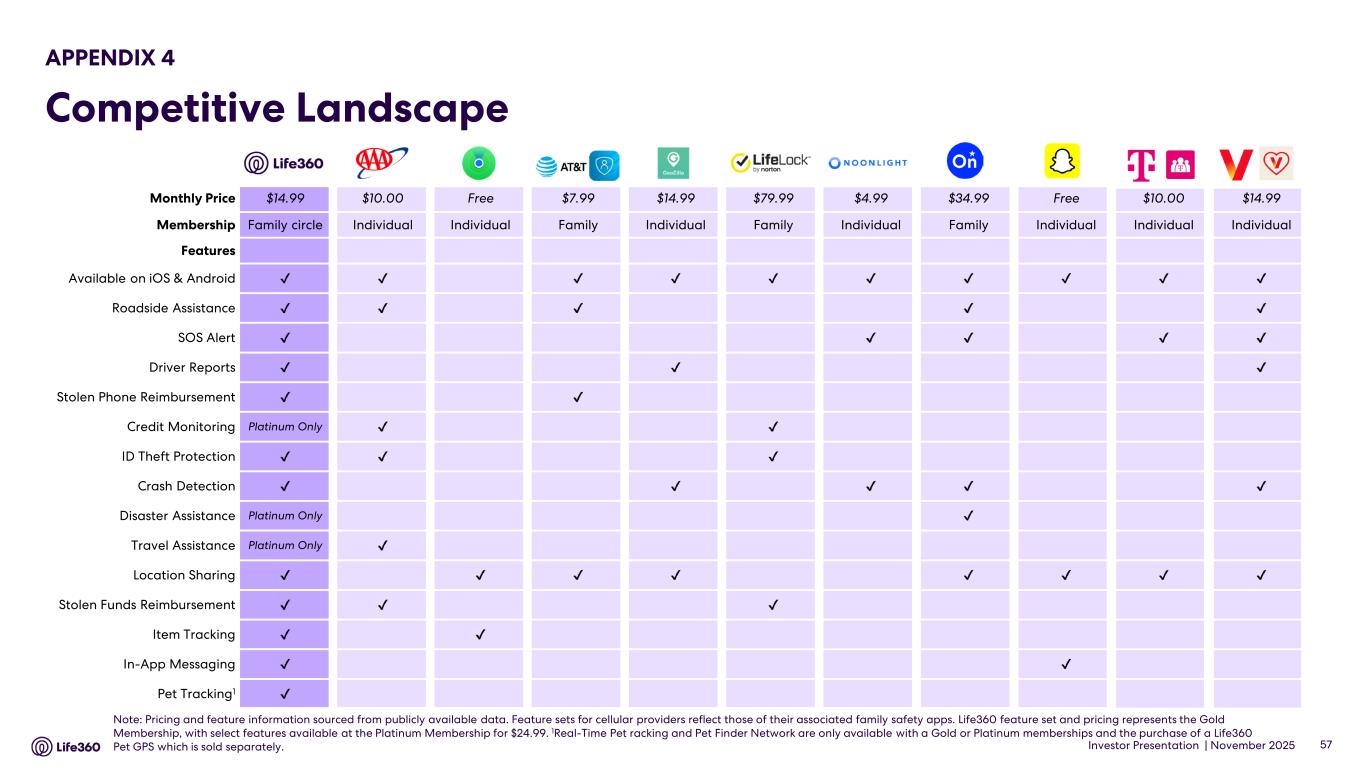
Thanks, Lauren. I'll keep it brief. The transition has gone incredibly smoothly, and it's great to see how well the company has executed while continuing to advance our long-term vision. If I had to sum up this quarter on one theme, it's that we're proving Life360 is not just an app, it's a platform that's always been at the heart of the 360 in our name. With the launch of our new device, people, pets and things are now fully integrated into the Life360 map. And we're the only player in the space with a complete family-focused hardware and software ecosystem, and it shows how far ahead we are of any direct competitor. The Nativo acquisition is another major milestone. We've long said that indirect revenue could one day rival subscriptions, and this deal accelerates that vision. Nativo isn't just about adding more ads. It's about enabling third parties to use our location intelligence in privacy-safe ways that improve their performance while preserving the experience of our free users who remain the foundation of our platform. And finally, it's great to see Life360 jumping on the 67 trend and going viral on TikTok again, this time organically from the team, which means in a very genuine way, I'm very happy I do not have to reprise my role as an influencer. I'm excited to continue supporting the team as Executive Chairman, and back to you, Lauren.
Thanks, Chris. I'm incredibly proud of the team for delivering another outstanding quarter of balanced growth and disciplined execution. We continue to scale our core subscription business, expand our high-margin revenue streams and invest in new innovations that make everyday family life better. With momentum in our core business, the successful launch of Pet GPS and continued expansion in advertising with the addition of Nativo, we're confident in our trajectory as we enter the holiday season and head into 2026. So with that, I'll hand it over to Russell to walk through the financials and our continued progress on profitability.
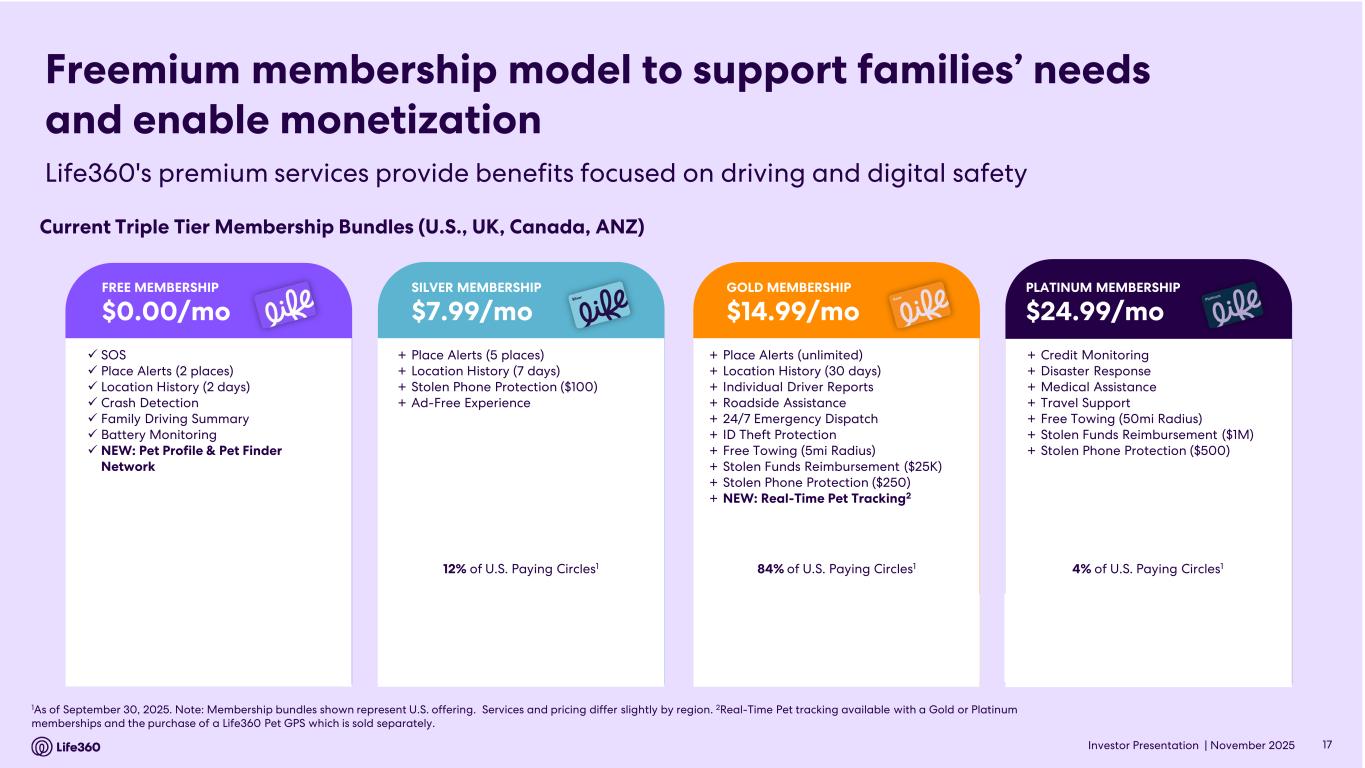
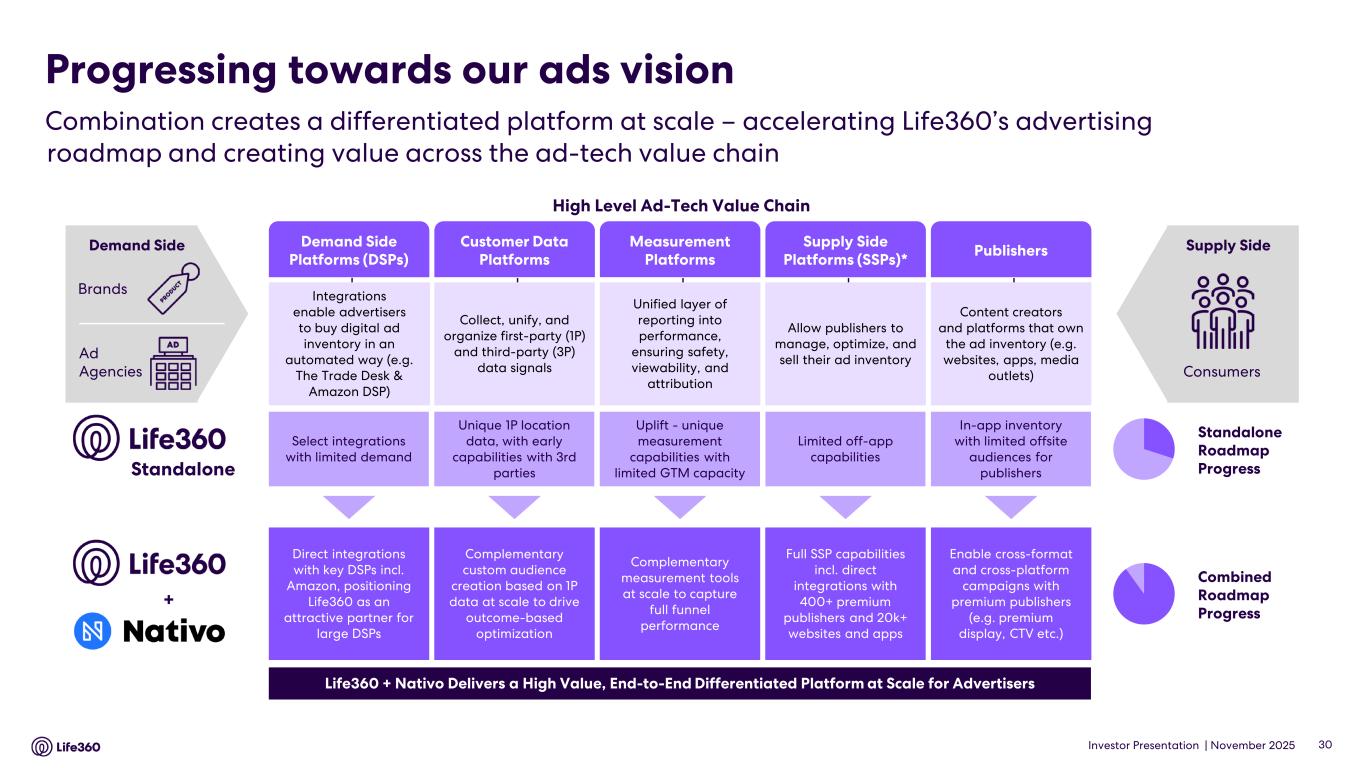
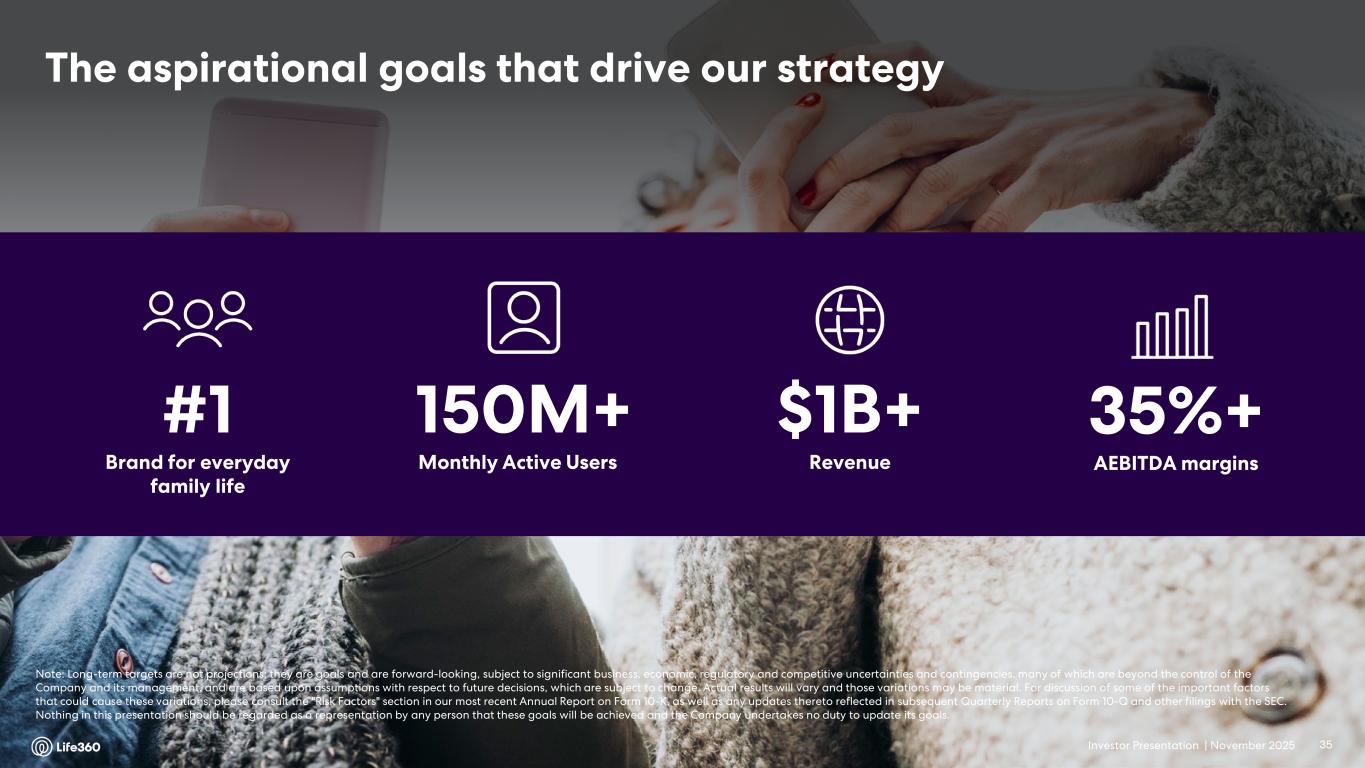
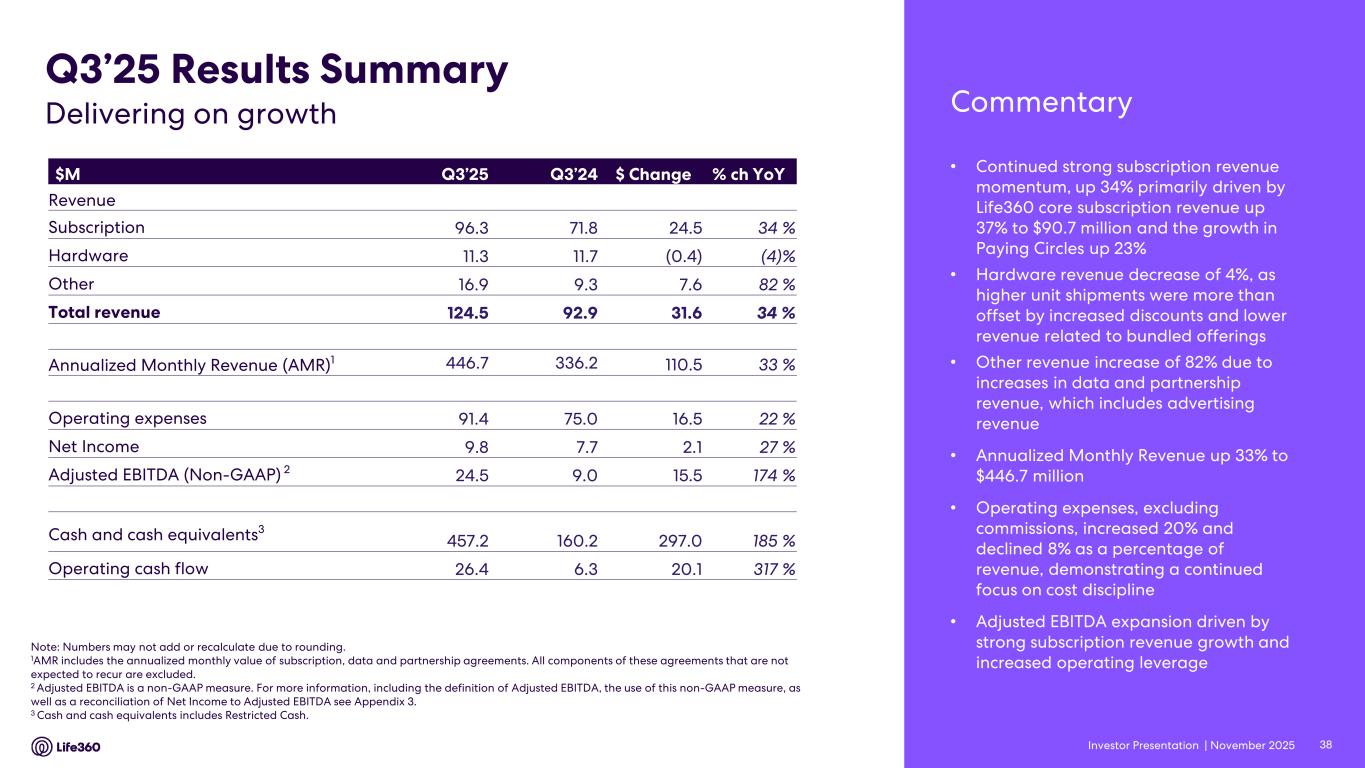
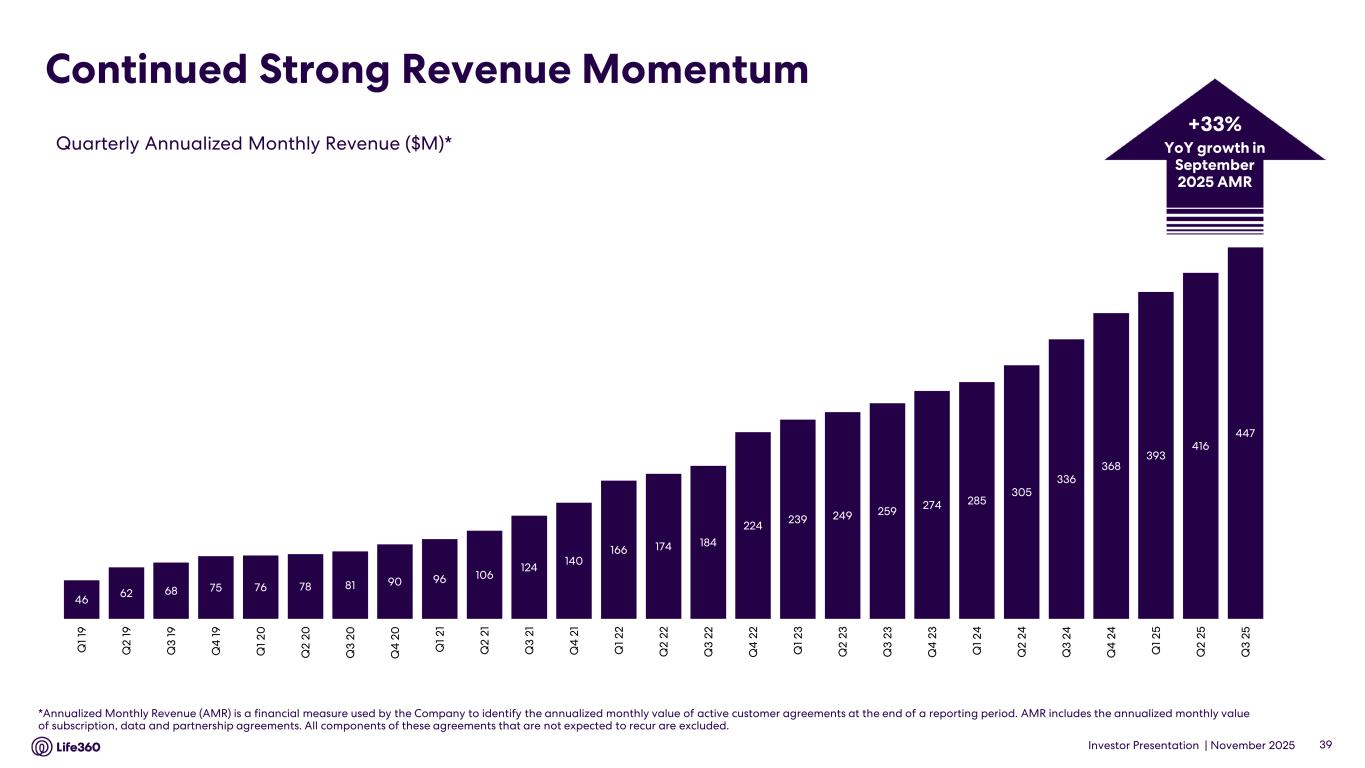
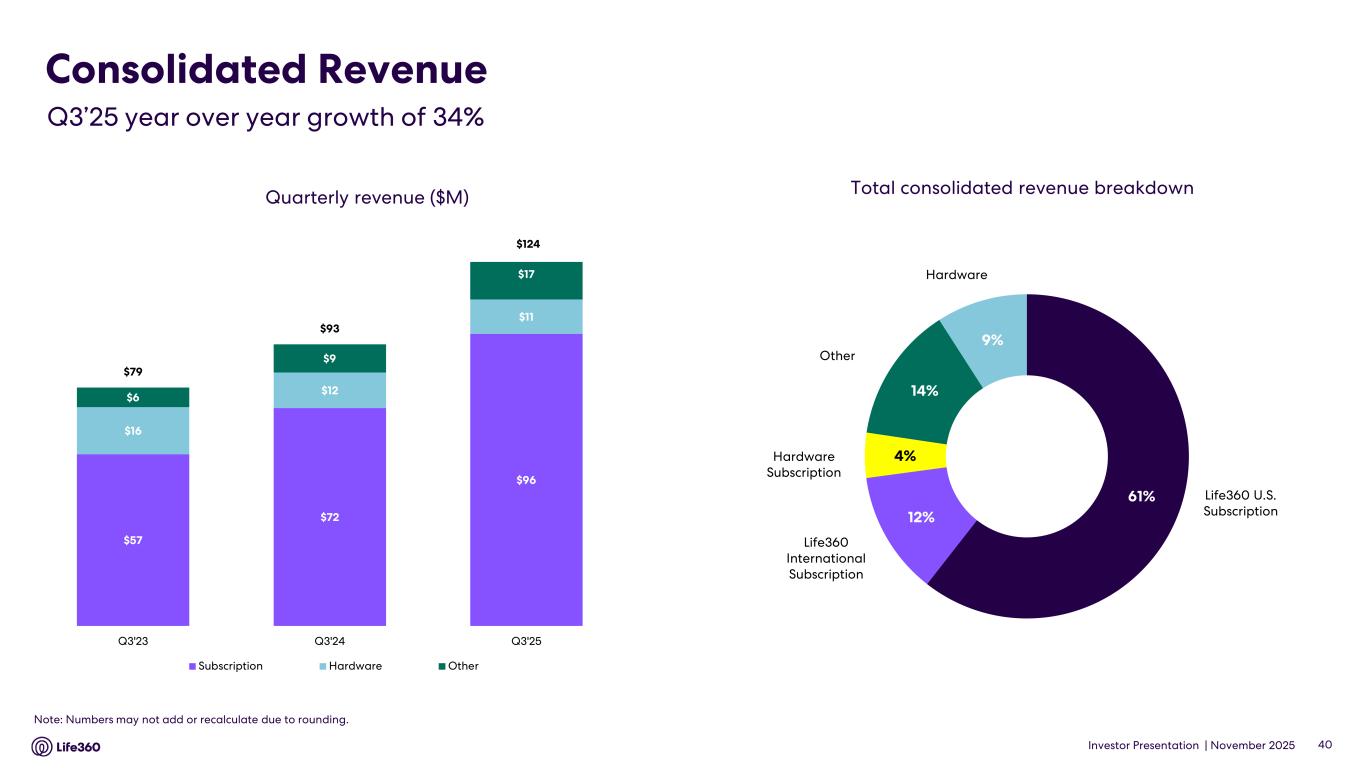
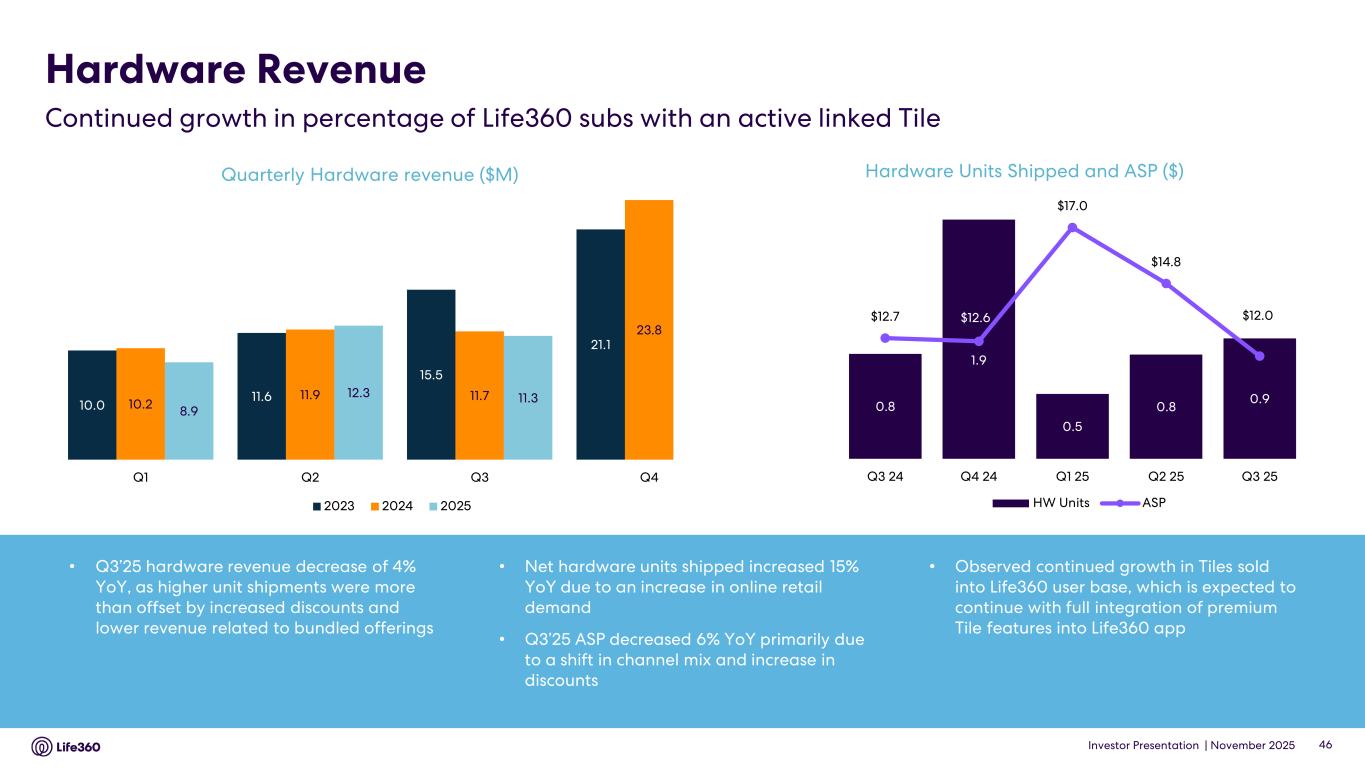
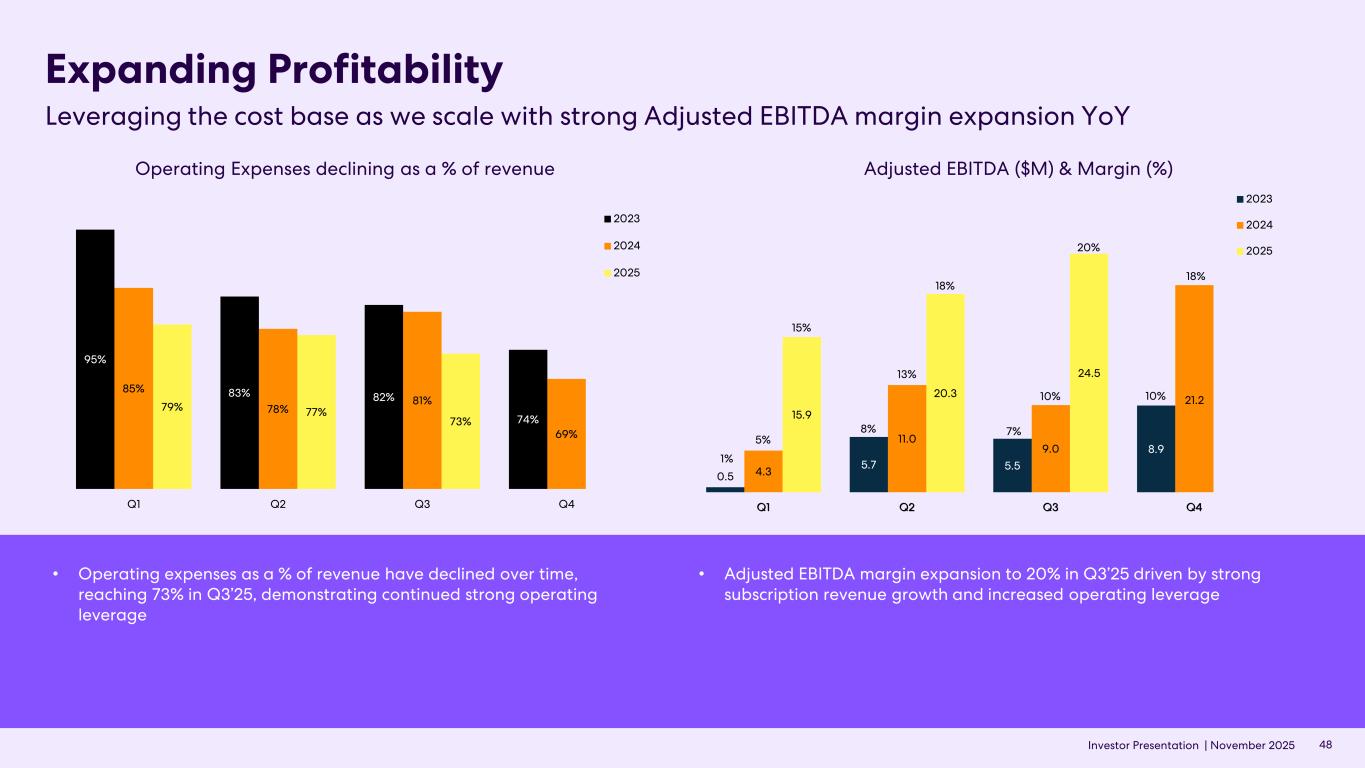
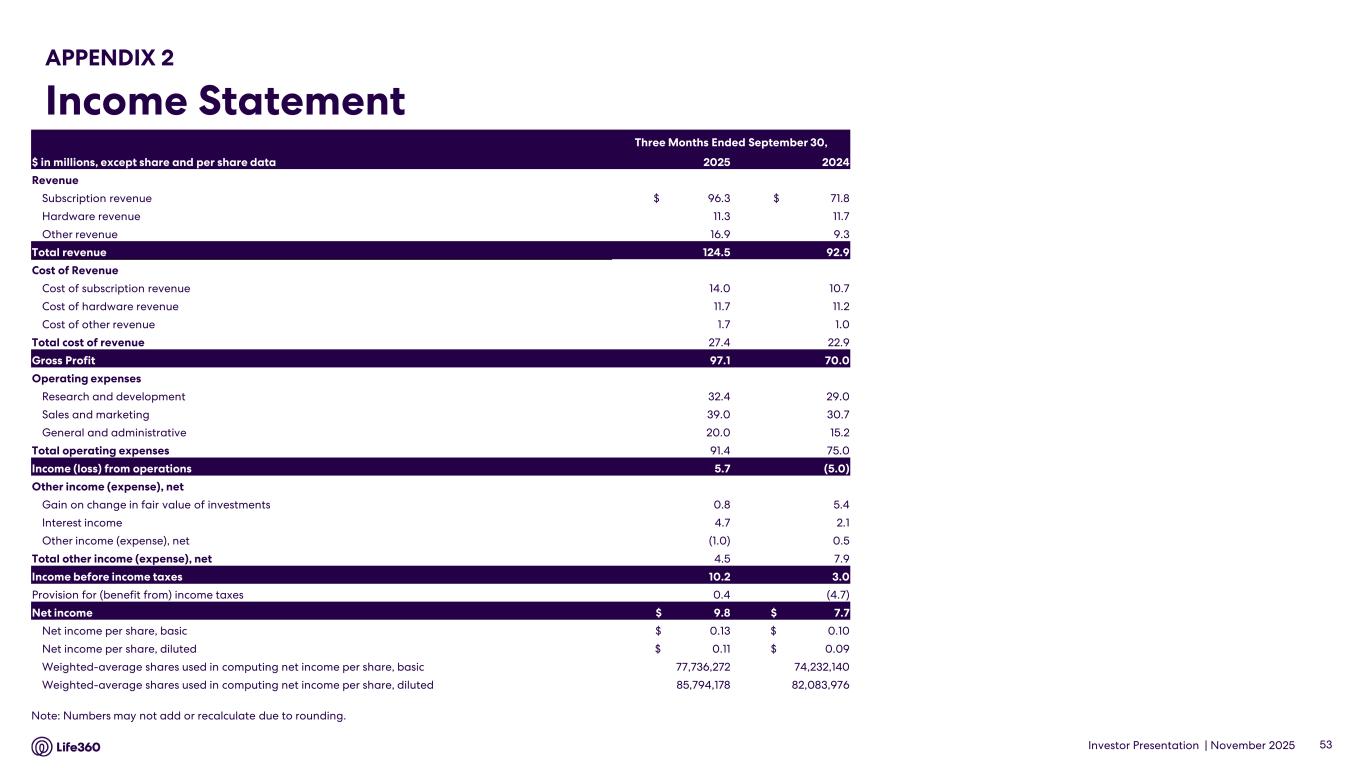
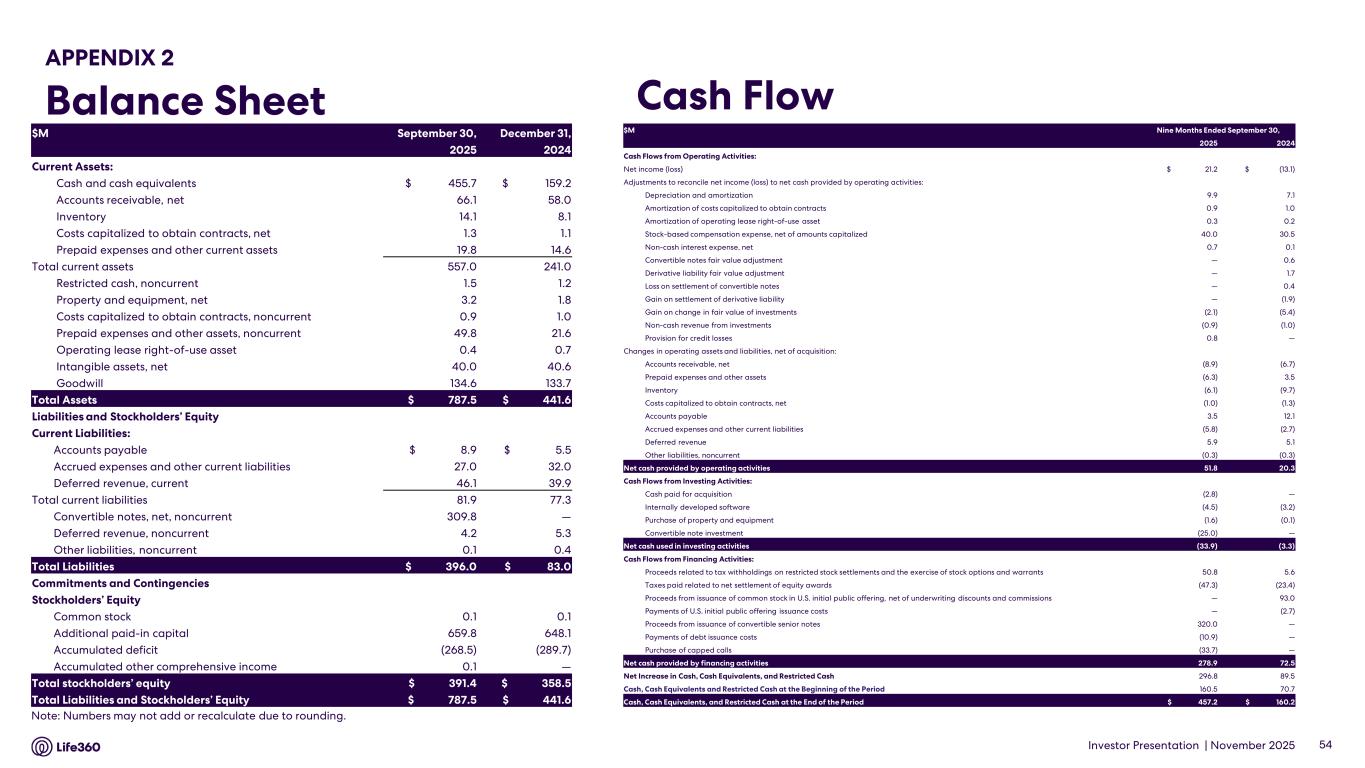
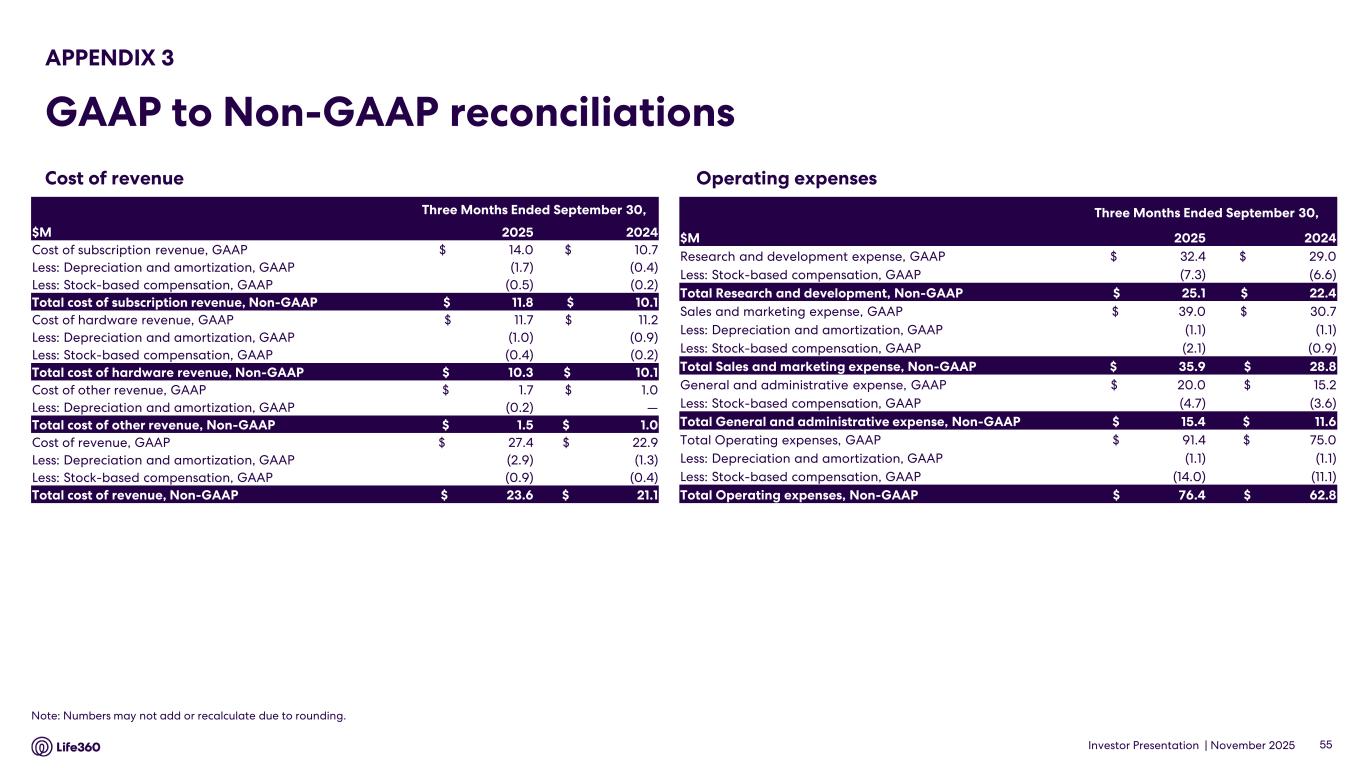
Thanks, Lauren, and thank you all for joining the call today. As a reminder, the Q3 financials I'll be referencing are unaudited and denominated in U.S. dollars. We are very pleased to report another record quarter, reflecting continued strength in our core subscription business, accelerating momentum in advertising and data revenue and disciplined expense management. Q3 total revenue grew 34% year-on-year to $124.5 million with continued strong momentum. Subscription revenue increased 34% to $96.3 million, while core Life360 subscription revenue, which excludes stand-alone hardware subscriptions, rose 37%. The increase was driven by sustained global Paying Circle growth and ongoing improvements in conversion across both U.S. and international markets. Other revenue grew 82% year-on-year to $16.9 million, fueled by strong performance from our expanding advertising platform and partnerships. We continue to see advertiser demand scaling as expected, supported by new formats and higher engagement. Stand-alone hardware decreased 4% year-on-year to $11.3 million. Unit sales increased 15% year-on-year, driven by strength in online channels. Stand-alone hardware gross profit and margin were impacted by tariff-related costs. Absent those tariffs, both would have been positive. We view the tariff impact as manageable long term, and we took steps earlier in the year to largely mitigate it. Our focus remains on driving adoption, not short-term stand-alone hardware margin as devices continue to be an important funnel into our subscription ecosystem. Looking ahead, our Q4 outlook includes the impact of promotional launch pricing for Life360 Pets GPS across all markets. This pricing was strategic and time limited, focused on driving adoption and engagement within Paying Circles. Pet GPS operates exclusively with a paid Gold or Platinum membership, which delivers the near real-time GPS visibility and integrated safety experience families expect from Life360. We've structured device pricing to minimize friction and expand the pool of paying members, which aligns with our long-term strategy. This approach is fully reflected in our Q4 guidance and supports our goal of growing high-value subscribers rather than focusing on near-term device margins. We are still in the early stage of the Pet GPS launch, and we'll share more detail at year-end. Turning back to Q3 results. Annualized monthly revenue reached $446.7 million, up 33% year-on-year, underscoring the durability of our high-quality recurring revenue model. Gross profit increased 39% year-on-year to $97.1 million. Gross margin was 78% compared with 75% a year ago, reflecting mix shifts in the quarter. Operating expenses, excluding commissions, grew 20%, well below our revenue growth rate, demonstrating continued operating leverage. Year-over-year, you'll see a visible shift in marketing spend as we ramp campaigns ahead of our Pet GPS launch and key holiday promotions. These were planned investments that support long-term subscriber growth and product adoption. Breaking it down by expense line, R&D rose 12%, reflecting ongoing product innovation and scaling of our data and ad tech capabilities. Sales and marketing increased 27%, primarily driven by seasonal campaigns and commissions in line with subscription growth. G&A grew 31%, consistent with the overall pace of company expansion. We also continue to test purchase path variations to enhance conversion efficiency across platforms. Profitability continues to strengthen. Net income for the quarter was $9.8 million compared to $7 million in Q2 and $7.7 million in Q3 last year. Adjusted EBITDA rose 174% year-on-year to $24.5 million, representing a 20% margin, our 12th consecutive quarter of positive adjusted EBITDA and further progress towards our target of 35% plus. Turning to the balance sheet. We ended the quarter with $457.2 million in cash, cash equivalents and restricted cash. We remain in a strong position with strategic flexibility to pursue investment opportunities. Operating cash flow was positive for the 10th consecutive quarter at $26.4 million, up 319% year-over-year. In summary, Q3 demonstrated that Life360's growth engine remains strong and efficient with record revenue, expanding high-margin businesses, disciplined cost control and clear line of sight to increasing profitability. Before we move to guidance, I'd like to share some additional context on the exciting step forward for our advertising business. As Lauren mentioned, we entered into an agreement to acquire Nativo, a leading native advertising technology company for approximately $120 million in the combination of cash and stock and subject to customary closing conditions. This acquisition positions Life360 to compete at scale with a unified end-to-end advertising platform that expands our reach and will unlock meaningful revenue potential. The acquisition will be accretive to adjusted EBITDA from day 1 and reinforces our commitment to growing adjusted EBITDA margins through high-quality complementary revenue streams that deliver long-term shareholder value. Because the transaction is expected to close in early 2026, we do not anticipate any financial impact in 2025. Nativo currently generates roughly twice the level of advertising revenue that we expect to deliver this year with a different margin profile that reflects its position across the full ad tech value chain, spanning the demand side, customer data, measurement and supply side platforms, all of which typically carry lower gross margins than pure digital advertising. The company has approximately 125 employees or about 1/4 of Life360's current headcount and brings full stack technology, sales and operations capabilities that will accelerate our advertising road map significantly. We expect both revenue and cost synergies to begin ramping in 2026 with full realization by year-end. Importantly, the acquisition further supports our longer-term goal of achieving 35% adjusted EBITDA margins. With that, I'll hand it back to Lauren to review our updated outlook for the remainder of 2025.
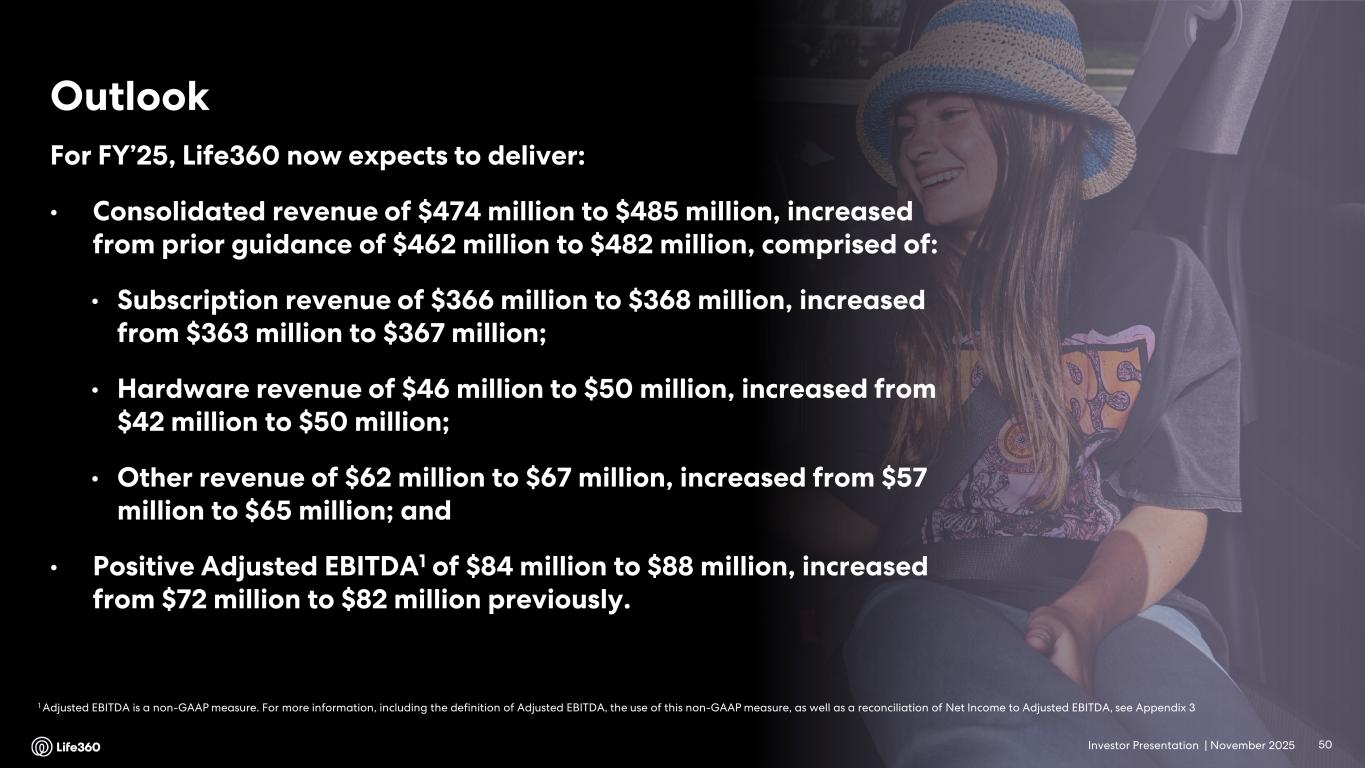
Thanks, Russell. As we look ahead, we remain confident in our ability to deliver consistent results through disciplined execution and our continued commitment to making everyday family life better for millions of families worldwide. With the launch of our new Pet GPS across key markets and continued momentum in our advertising business, we're extending our reach and deepening our engagement across the platform. With that foundation and the strength of our subscription model, we're focusing on finishing the year strong, and we're raising full year 2025 guidance as follows: We're increasing our consolidated revenue guidance from the previous range of $462 million to $482 million to a new range of $474 million to $485 million. We're raising subscription revenue guidance from the previous range of $363 million to $367 million to the new range of $366 million to $368 million. We're also raising the range of hardware revenue guidance from $42 million to $50 million to the new range of $46 million to $50 million. We expect full year gross margin on hardware to be negative single digits due to the impact of tariffs and the launch of Pet GPS. We're also raising the range of our other revenue guidance, which includes advertising and partnerships from the previous range of $57 million to $65 million to a new range of $62 million to $67 million. And finally, we're raising our guidance for adjusted EBITDA from the previous range of $72 million to $82 million to a new range of $82 million to $88 million. This concludes our prepared remarks, and now I'll turn the call over to RJ, who will manage the question-and-answer portion of our call.
Operator
With that, we'd like to open it up to Maria Ripps from Canaccord.
Speaker 4
I appreciate all the color on the Nativo acquisition. I guess do you expect the platform to maintain its existing advertiser base? And sort of how do you see the operating model evolving here sort of over time once you integrate the acquisition?
So we definitely see the Nativo acquisition as additive. We continue to work on the base of both features and momentum that we have in Life360, and we expect that to accelerate with this technology that Nativo is bringing in, in addition to bringing the momentum in their business.
Operator
Thanks, Maria. Next, we'd like to open it up to Lafitani Sotiriou with MST.
Speaker 5
I have two quick questions for clarification. Regarding the Nativo acquisition, could you provide an estimate of the revenue run rate for Nativo and the overall cost base for FY '25? This will help us establish a baseline for future projections. Additionally, concerning the Pet GPS, could you share early insights on the engagement of free users adopting the Pet GPS compared to existing subscribers?
Taking these points one at a time, we're not going to provide a lot more detail. However, we have clearly indicated that you have a good understanding of our advertising revenue for 2025. Nativo is operating at roughly double that rate. They would have anticipated being in a small adjusted EBITDA positive position next year without this acquisition, and we absolutely expect that, when combined with Life360, it will be positive adjusted EBITDA accretive from day one. This will provide enough information regarding both the revenue run rate and the cost base. Regarding Pet GPS, the initial phase was primarily directed towards our existing members. Since the launch, it mostly reached existing members and has now shifted focus toward free members. It's still very early in the adoption process, and we expect to provide more detailed insights by year-end.
Speaker 5
Can I clarify, are you talking about advertising, including all buckets in other revenue? Or are you calling out advertising as a component, excluding data income?
For the comparison piece, it's the advertising, excluding data. And I think as you know, that's approaching sort of 50% of other revenue at this point.
Operator
Thanks, Laf. Next, we'd like to open up the line to Mark Mahaney from Evercore. Mark, are you on by chance?
Speaker 6
Okay. Russell, you mentioned the long-term margins increasing from the 20% level to over 35%. What factors would influence that margin growth to be faster or slower? Should we consider the rate of margin expansion we've seen over the past year or two as a guideline for future growth? Also, Lauren, when thinking about the product development roadmap going forward, what are your main priorities for new products aimed at your existing customers?
So Mark, on the first part, I think there's 2 major factors in terms of margin expansion. One is purely scale as we've demonstrated over the last couple of years, in particular. As we increase scale, we're really able to leverage operating costs quite effectively. So even just with that, we see a sort of a clear path to those adjusted EBITDA margins. On top of that, we are increasing the mix of higher-margin revenue within our total revenue base. So that contributes to that as well.
Speaker 6
That advertising is the higher-margin businesses?
That's the biggest factor, yes.
So speaking a little bit about our road map. The thing that we want to make sure that we do is not to dilute our focus too much. So we've introduced a lot of new experiences with things like our advertising business and now Pet GPS, and we want to make sure that we're taking the time to really nurture those ad capabilities, incorporate customer feedback. And we think there's a lot of opportunity on a lot of the new things we've started already. In addition, the thing that powers this business is our core app experience. And as we pointed out with our new map experience, we're continually investing in enriching and uplifting that core experience. And so while we have a lot of extensions to the business that we plan to do over time, our focus isn't primarily adding new products right now. It's making the things we have better. I'll say the one thing that we are starting to work on is specifically making our app a much better place to attract aging parents. And so we are starting to work on that. That's something we planned for a long time, and in 2026, we'll get a lot of our focus.
Speaker 6
Lauren, what percentage of the pet customers do you think will be your existing customers in the next couple of years compared to those who are completely new to the platform, like people who have pets but don't have kids?
Yes. Our focus certainly is on our members. I think that's where we have the most differentiated offering. And so that's where our focus is initially. My hope is that as we convince the world that every pet needs this kind of protection that, that starts to balance out. And over, I think, a much longer time horizon, we'll start to get more people from the outside, but it's not our focus right now.
Operator
Thanks, Mark. I'd like to open up the line next to Eric Choi from Barrenjoey.
Speaker 7
I have a quick follow-up about pets. You mentioned that it's performing well, and I wanted to explore that further. I noticed you've removed discounts on some trackers, so does that suggest that the average profitability per subscriber could exceed your expectations? We've also been registering various team members for pet trackers at different times and comparing order numbers. We've observed that the sales rate hasn't really slowed down. I'm curious if the ongoing momentum has outperformed your expectations and if it’s not just a temporary trend. Additionally, regarding the outperformance, I understand from your previous comments that most new pet tracker sales come from existing customers. Is that accurate? How has the performance of new customers compared to your expectations?
There are several questions in there, Eric. We'll aim to address all of them. Generally, the Pet GPS launch exceeded our expectations significantly at the start, and we received a very strong response from our existing members. Moving forward, we are focusing on balancing our strategies between paid and existing members, and as Lauren mentioned, we also aim to attract completely new customers to our ecosystem. Additionally, we are testing different pricing strategies in a few regions, but we have mostly removed the promotional pricing. Therefore, the pricing in most areas is in line with our original plans. As we previously mentioned, there is still a subsidization on the actual hardware cost because our strategy is to encourage subscription adoption. We believe this will be effective, and we will provide more detailed information at the end of the year.
Operator
Thanks, Eric. Next, we'd like to open the call to Mark Kelley from Stifel.
Speaker 8
I want to revisit Nativo to clarify some points. Since it's a comprehensive offering that already supports publishers on the SSP side, and there appears to be a self-serve platform resembling a DSP, should we anticipate that the advertising revenue from other publishers, as well as the ads purchased by the current buyer base from Life360, will be counted as part of your revenue? I’m trying to better grasp the revenue generation mechanics, considering you likely acquired it for its technology. Additionally, is that revenue reported as gross or net of the ad value?
Right. So Mark, you're absolutely right. The exciting part of the acquisition for us is the fact that this is a full stack broad spectrum advertising platform that we'll be able to use to really accelerate our advertising road map. So that is the strategy behind the acquisition. You're absolutely correct. They have a solid existing business with a good range of publishers and a good range of advertising context and sales staff, all of which will help us really move our advertising business forward. So yes, we expect to continue that business. We expect to use that to enhance the Life360 business and enlarge it and accelerate it as we move forward.
Operator
Thanks, Mark. Next, we'd like to open up to James Bales with Morgan Stanley.
Speaker 9
I had a question on MAU growth. So in the past, I think Chris has described it as sort of North Star. Third quarter is typically the seasonally strongest part of the year. And this year, you had an ad campaign that you guys were really excited about. I guess I'd like to understand why it sort of slowed so significantly year-on-year and explain maybe those comments earlier about targeting consumers that are more likely to convert.
I'll start with that, and Lauren might want to add a bit more detail. There are several factors to consider. Historically, we've noted that MAU growth can fluctuate greatly from one period to the next, and we often observe this variation. In this regard, the comparisons from last year to this year are quite challenging because we experienced exceptionally high MAU growth internationally across multiple territories last year. While this year remains strong, we don't anticipate that same level of exceptional growth to happen again. Additionally, you mentioned the advertising campaign, and we are very enthusiastic about the marketing initiatives we're implementing. There are two key elements to this: first, the creativity is engaging, and second, it's aimed at generating demand, specifically targeting users who are more likely to convert at the top of the funnel. Consequently, the quality of the users entering the funnel and our conversion rates are quite high, as evidenced by the record net Paying Circle additions. Another minor point regarding advertising is that we launched a significant campaign in Q2, which notably boosted performance for that quarter and may have slightly influenced results in Q3.
Operator
Thanks, James. Next question we'd like to hear from is from Chris Kuntarich from UBS. Chris from UBS, hopefully, you're there.
Operator
Okay. We'll come back to Chris. Next, I'd like to open up to Siraj Ahmed from Citi.
Speaker 10
Can you hear me okay?
Speaker 10
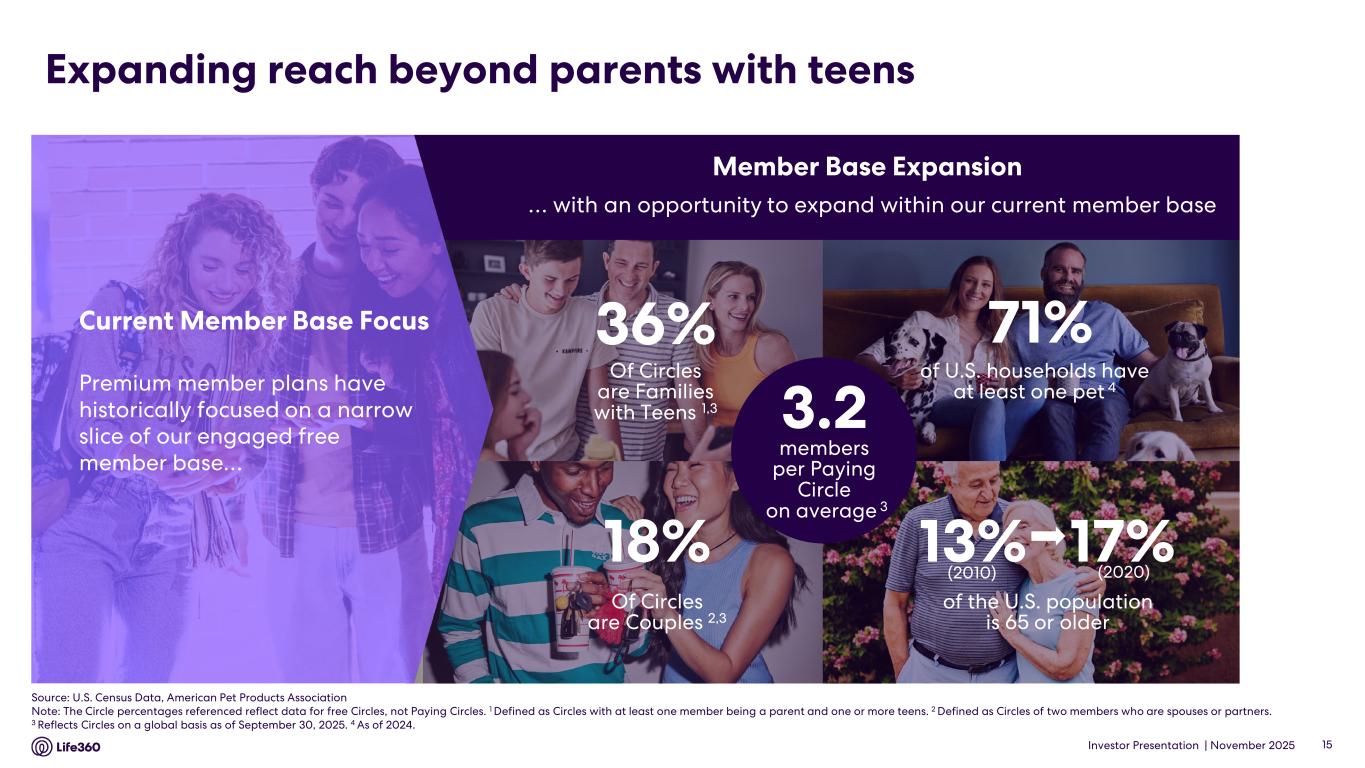
I want to follow up on James's question regarding MAUs. Lauren mentioned that the focus is on higher intent members, but according to the data on Slide 15, it seems that Circles with families and teams have decreased slightly, and members per Paying Circle have dropped from 3.3 to 3.2. I'm curious about the dynamics behind this, considering you are indicating that you are attracting higher intent MAUs. Also, for Russell, can you confirm whether the strong performance in other revenue this quarter was driven by ads rather than your Placer partnership? Additionally, regarding ads, has your partnership with Aura started to show results this quarter?
I'll begin with the last part of your question, and then Lauren can address the earlier part. Could you please repeat the last part of your question, Siraj?
Speaker 10
I have two questions. Regarding the other revenue, was it primarily driven by advertisements or partnerships? Also, concerning ads, you had the Aura partnership that was supposed to start generating revenue. Has that begun?
Yes, it has, although the major part of the Aura advertising revenue will flow through in Q4. And to the other part of your question, yes, the major growth in Q3 relates to advertising. There's a small element related to data and other revenue and partnerships, but it's primarily driven by advertising.
And stepping back to this question of how we're focusing our advertisement. A lot of the focus this quarter was on that optimization, targeting those people who convert. And that's where we've seen this really great uplift in those people who convert in the first 30 days. That's what's helping to drive our outstanding conversions. But we're always playing around with those optimizations.
Speaker 10
And Lauren, just to clarify, is the decrease to 3.2 simply because you're attracting younger couples or families?
It's a relatively small difference from 3.3 to 3.2. There are several factors influencing that, but it's mainly the growth in the base that leads to these minor fluctuations.
Yes. A lot of our circles start smaller and grow over time. And so when we have more new circles, those are smaller circles than bigger circles. So don't read too much into that, I would say.
Operator
Thanks, Siraj. Next, we'd like to open up the line to Rob Sanderson.
Speaker 11
Yes. I have a couple of questions. First, regarding the subscription guidance, you had a very strong Q3 with a notable upside to consensus, but your midpoint for Q4 is a little below. Is there anything unusual about seasonality, Pet GPS, or other factors that might explain this? It seems like the market might be miscalculating. Also, I wanted to follow up on Nativo and discuss the importance of differentiating in-feed native content compared to other display networks. I understand that it's primarily a technology purchase, but I’d like to know how you can leverage the existing business and reach, especially given the hundreds of publishing partners you mentioned, as well as connecting to publisher networks. Are these direct deals or connected through networks? Is scaling the supply side here relatively straightforward if you can generate...
We're not going to remember all these questions.
Rob, I will address the first part of your question, and then Lauren will give more details about the Nativo platform. There is nothing unusual about subscriptions. Typically, Q3 is our strongest seasonal period in terms of metrics. As we enter Q4, we are experiencing the same levels of strength. There are no significant anomalies in subscription for Q4. I believe it is likely related to how we model the mix of revenue.
And one of the things that was really exciting to us about Nativo is they focus on making ads that are relevant to consumers, and that helps brands and that also is good for the people who are seeing the ads and in particular, we're interested in families and what the impact is on Life360 families. So that was a real differentiator for us. Their business is pretty multifaceted. They have both direct and programmatic deals. We're interested in both sides of those and plan to continue to invest in those. And the scale of their publisher relationships is quite extensive and allows us to take a lot of the good information and information about our members and use that to deliver experiences across a wide range of publishers.
Operator
Thanks, Rob. Next, we'd like to open up the line to Bob Chen from JPMorgan.
Speaker 12
A quick one for me. And I think you touched on it earlier, Lauren. You mentioned one of the key product areas of focus for next year is making the app more user-friendly for elderly. Any comments on sort of timeline on when we might see an elderly product come to market as well?
Yes. So it depends what you mean by product. I think the first thing that we think about is today, many aging parents are using Life360, but not nearly as many as it could be if all the families in Life360 brought in their parents. And what we're looking at is what are those inhibitors, why do people not come as often as they might? How do people come to think of Life360 as a way to keep their parents safe just like it's a way to keep their kids safe? And what do we need to do differently to make this a great solution for those people. And so the work in that will continue, I think, in an ongoing basis throughout the year, and I would expect that you would be seeing some of that stuff by midyear and continuing to see that potentially even sooner and continuing to see that throughout the year. In terms of bringing sort of a stand-alone product offering with something like a hardware, we don't yet have a timeline on that. But we are continuing to use all the resources that we have to solve family problems in a multifaceted way.
Operator
Thanks, Bob. Next, we'd like to open up the line to Chris Kuntarich from UBS. One more time for Chris at UBS.
Okay. We'll come back to Chris again. Next, we'd like to open up to Andrew Boone from Citizens.
Speaker 13
I wanted to go back and just hit on the Nativo again, just like everyone else. We talked about the opportunity of the subscription business being as big as kind of other at large. Lauren, can you just paint the 5-year picture for us of what does that kind of look like? What are you guys building on the advertising side? Like what's the opportunity in a multi-year context of what you guys can put together here and what that looks like?
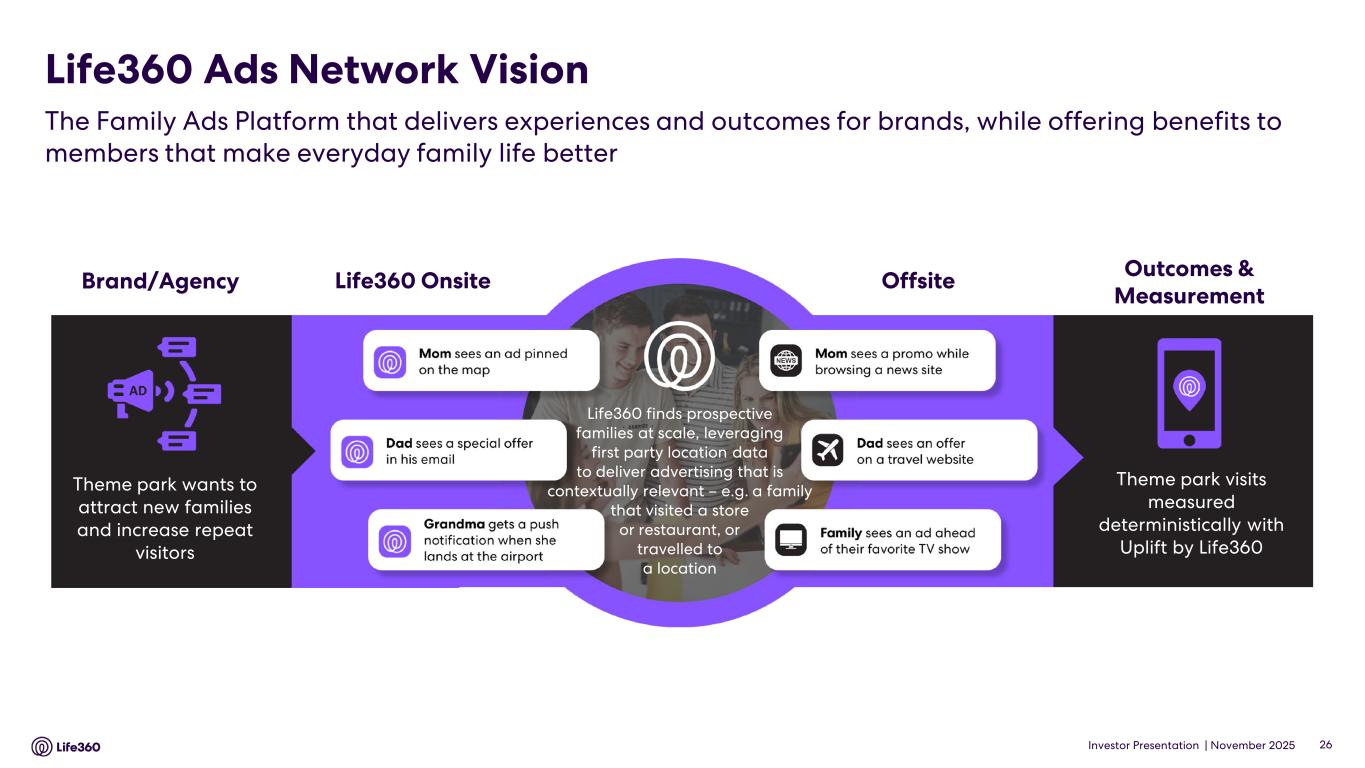
Yes. So what we envision for our advertising business is one where we can take all of the value and insights that we have about our members and use that to connect brands with a wide range of publishers on many platforms, so not just within the Life360 app, but in a multitude of apps in ways that are really relevant and with that, be able to deliver better performance on those ads that we also can measure through our measurement products like Uplift. And so that we have sort of this end-to-end solution where we have those insights, we help people target the right audiences. We deliver app experiences, both inside our app and outside our app that are more compelling and more relevant. And then we can measure the results of those for brands. So I hope that's helpful.
Operator
Thanks, Andrew. Next, we'd like to open up the line to Wei-Weng Chen from RBC.
Speaker 14
Yes, more Nativo questions from me as well. I guess, can you help quantify how much faster this acquisition allows you to move? Like how many years of development and how much cost has 360 avoided by making this acquisition? And then I guess you mentioned Nativo is about 2x your revenue. 360 has kind of built this revenue base over 12 months that Nativo has been around since 2010. So can you maybe speak to the growth rate of Nativo and how we should think about a forward blended growth rate for the advertising business?
So taking the last part of your question first, Wei. The 2x revenue is just to give you a sort of a concept of scale so that as we look at the combined businesses going forward. You're right, Nativo has been around since 2010. They built this business from scratch basically. So they were very much a pure start-up. So they've created the business that they're doing and created that quite successfully over a period of time. Again, the attraction for us here is the platform that they've built, the ad tech, the publisher relationships, the sales staff, the infrastructure that they've put together on creating this sort of full stack ad tech platform. So that's the piece that's exciting for us. We could debate in terms of how long it would have taken us to build and what that would have cost. But clearly, from our point of view, this accelerates our road map probably in the range of sort of 12 to 18 months.
Operator
Next, Wei-Wei. I'd like to open up the line to Lindsay Bettiol from Goldman Sachs.
Speaker 15
Yes. Okay. So I'm going to have a crack at the question that's been asked a couple of ways, just on the other revenue front. It looks like advertising accelerated like pretty meaningfully Q-on-Q. So I've got something like 60% growth. You've called out existing arrangements and an increased number of partners. Could you maybe like just delineate those 2 and talk to us a bit about whether it's an existing partner paying a lot more or it's like you've seen kind of meaningful growth in the new number of partners using advertising?
So I mean in terms of advertising, it's largely a ramp-up of the various things that we are doing. We've talked about the various products that we've launched in the last couple of quarters. There's probably no one significant piece that would accelerate that. And that's going to be sort of somewhat uneven. We also talked about the Aura partnership. And as I said earlier, the larger part of that advertising piece at least will flow through in Q4. So there's those pieces. And again, just to give you a sense of where that's at, as I said before, as we look at the full year, we expect advertising revenue to be coming up towards half of other revenue in total.
Operator
Thanks, Lindsay. Next, we'd like to open up the line to Jennifer Xu from Jefferies.
Speaker 16
I just have one question related to pet. So for pet, when you comment that it is currently focusing on existing members, can I understand that pet product is now expected to bring more conversion from free users to paid users rather than increasing MAU? And how long the conversion usually take and will be that period change shorter due to the launch of the pet?
Yes. So our focus is certainly giving our existing free member base a reason to convert. One of the blessings and challenges of Life360 is that customers love us a lot and don't always feel like they need to pay for it. And so this is a great reason for people who love the product to have a real concrete visible reason to pay. It's really too early for us to extrapolate the timing and when in someone's life cycle are they going to discover that. But we certainly think it will apply to more members more often and earlier in their journey than in the past.
Operator
Thanks, Jennifer. Next, we'd like to open up the line to Chris Smith from Ausbil.
Speaker 17
It's really exciting to see the 20% growth in Paying Circles, and even more encouraging to note that the pet trackers are selling out in key regions. I’m not looking for specific timing details, but could you discuss how you plan to use this as a conversion tool? With 26 million nonpaying circles on the platform, there's significant potential to increase your business just by converting them to Paying Circles. Additionally, could you provide insight into the discount strategy? If you give away the hardware, it affects the App store commission and gross margin, but could improve EBITDA. How do you plan to approach the product release to target those 26 million nonpaying circles, especially considering that about 13 million likely have pets?
Yes. So this is exactly the point is providing value to members that is inherently linked to subscriptions. The Pet GPS requires that LTE connection in order to be able to give your pets real-time location. People understand that reason and understand that as a reason to pay. As we learn more about the price sensitivity and as we have more volume of units in stock, we're certainly willing to lean in and deliver units at a lower cost if we find that, that helps us convert people faster. I think we're doing a lot of experiments to understand the price sensitivity and what allows us to scale the business and convince members to buy.
And Chris, as we've mentioned before, there is a timing aspect to that. While it may be dilutive to stand-alone hardware margins, the goal is to get people into high-margin subscriptions. We expect to achieve that; it's just a matter of when it will happen and what the payback period will be.
Operator
Great. And look personal anecdote, the pet tracker life cycle is probably 3 to 4 weeks and I couldn't be more pleased with mine.
We're happy to hear that.
Operator
Thanks, Chris. We'll open up the line to one more time for our final question.
Speaker 18
It's been answered. All good.
Okay. Thank you, everybody, for joining us today. We appreciate it.