Operator
Hello and welcome to Miriam Pharmaceuticals' report's fourth quarter and year-end 2024 financial results and provides business update. My name is Elliot and I'll be your coordinator today. If you would like to register a question during today's event, please press star 1 on your telephone keypad. I'll now like to hand over to Andrew McKibben, Senior Vice President of Strategic Finance and Investor Relations. Please go ahead.
Thanks, Elliot, and good afternoon, everyone. I'd like to welcome you to Miram Pharmaceuticals' fourth quarter 2024 conference call. I'm joined today by our CEO, Chris Peets, our chief medical officer, Joanne Kwan, and Eric Bierkal, our chief financial officer. Peter Radovich, our president and chief operating officer, could not be with us today as he's at an international launch event in Europe this week. Earlier today, Miram issued a news release announcing the company's results for the fourth quarter and full year 2024. for. Copies of this news release and SEC filings can be found in the Investors section of our website. Before we start, I'd like to remind you that during the course of this conference call, we will be making certain forward-looking statements based on management's current expectations, including statements regarding Merrim's programs and market opportunities for its approved medicines and product candidates. These statements represent our judgment as of today and inherently involve risks and uncertainties that may cause actual results to differ materially from the results discussed we are under no duty to update these statements please refer to the risk factors in our latest form 10k and subsequent sec filings for more information with that said
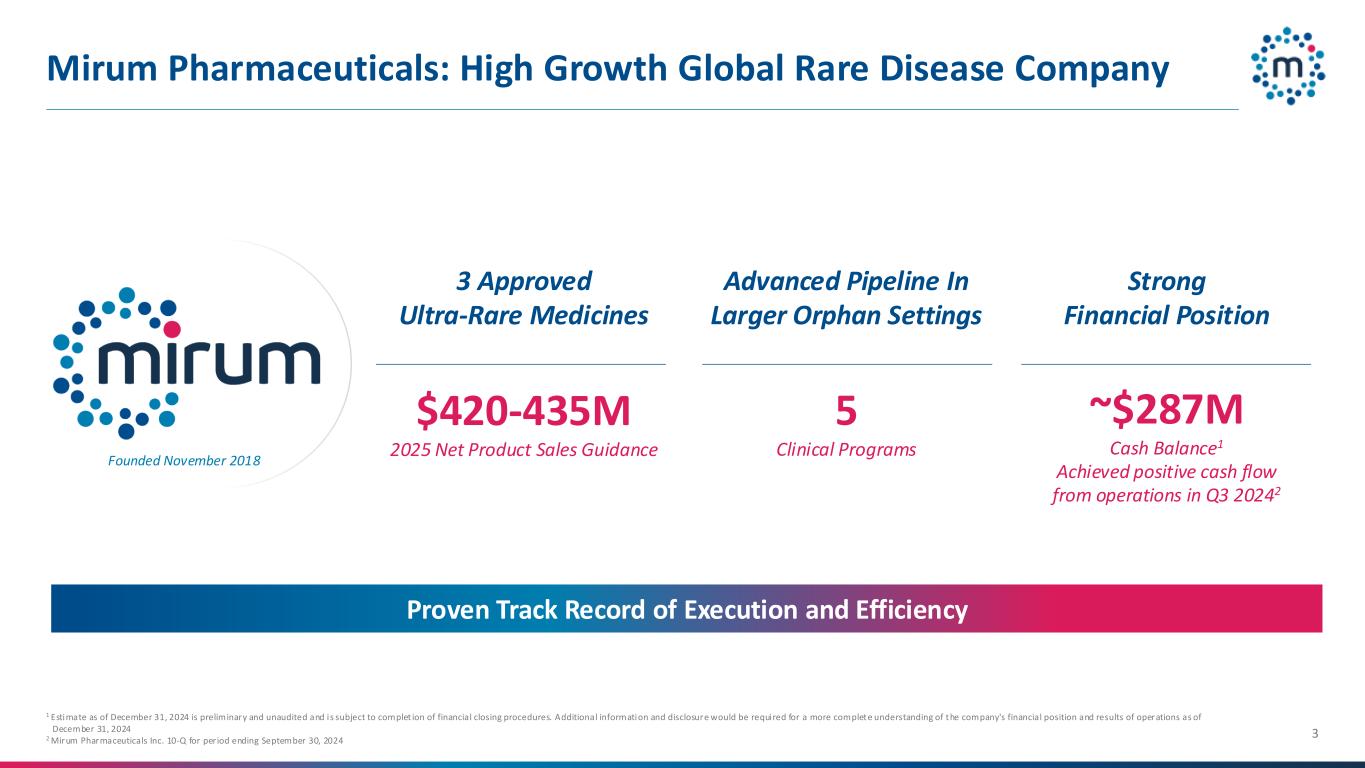
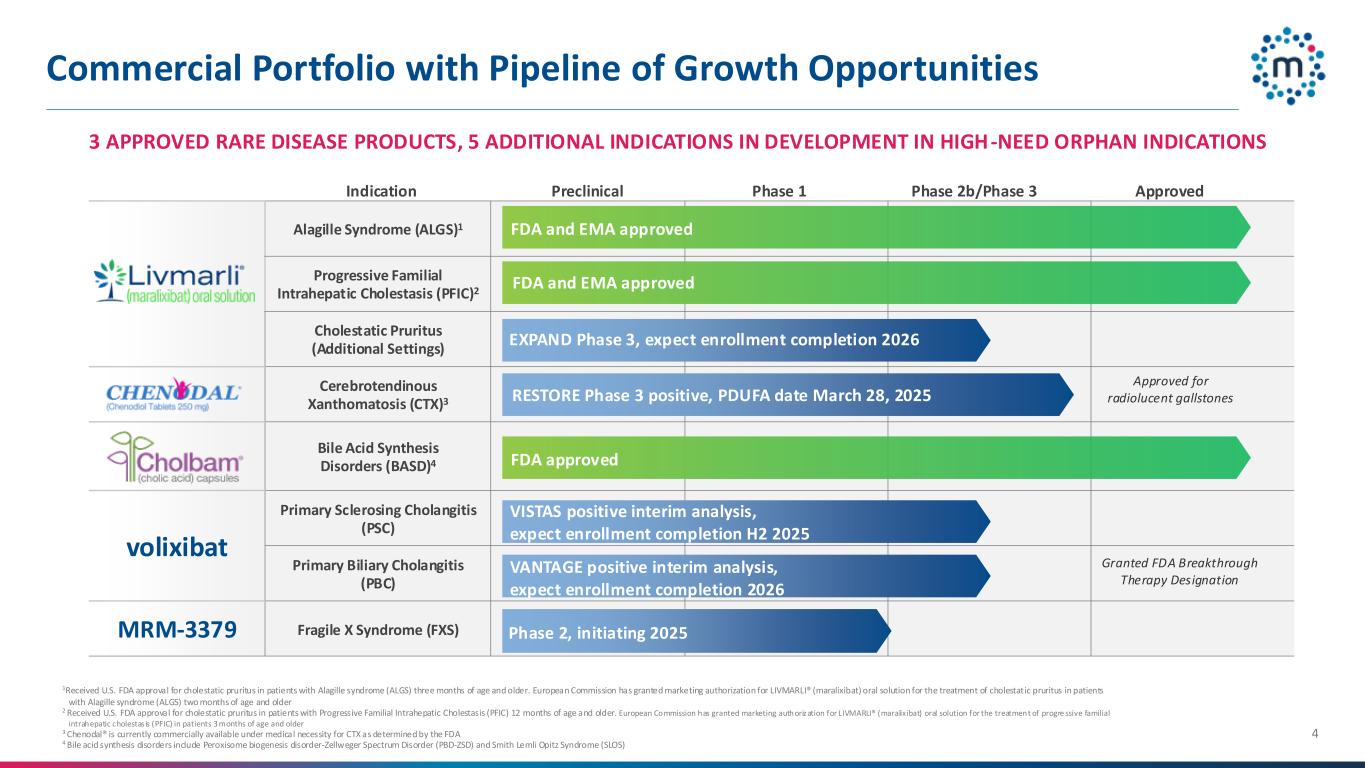
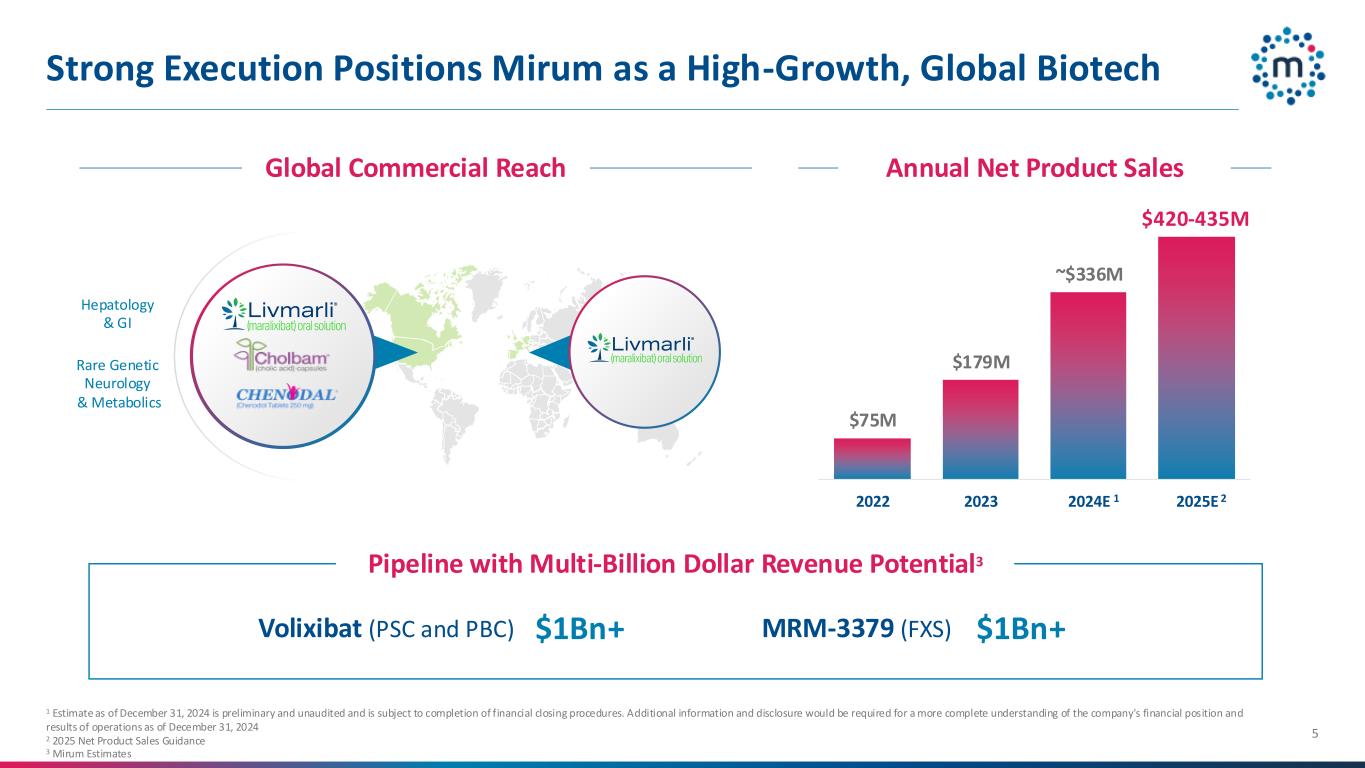
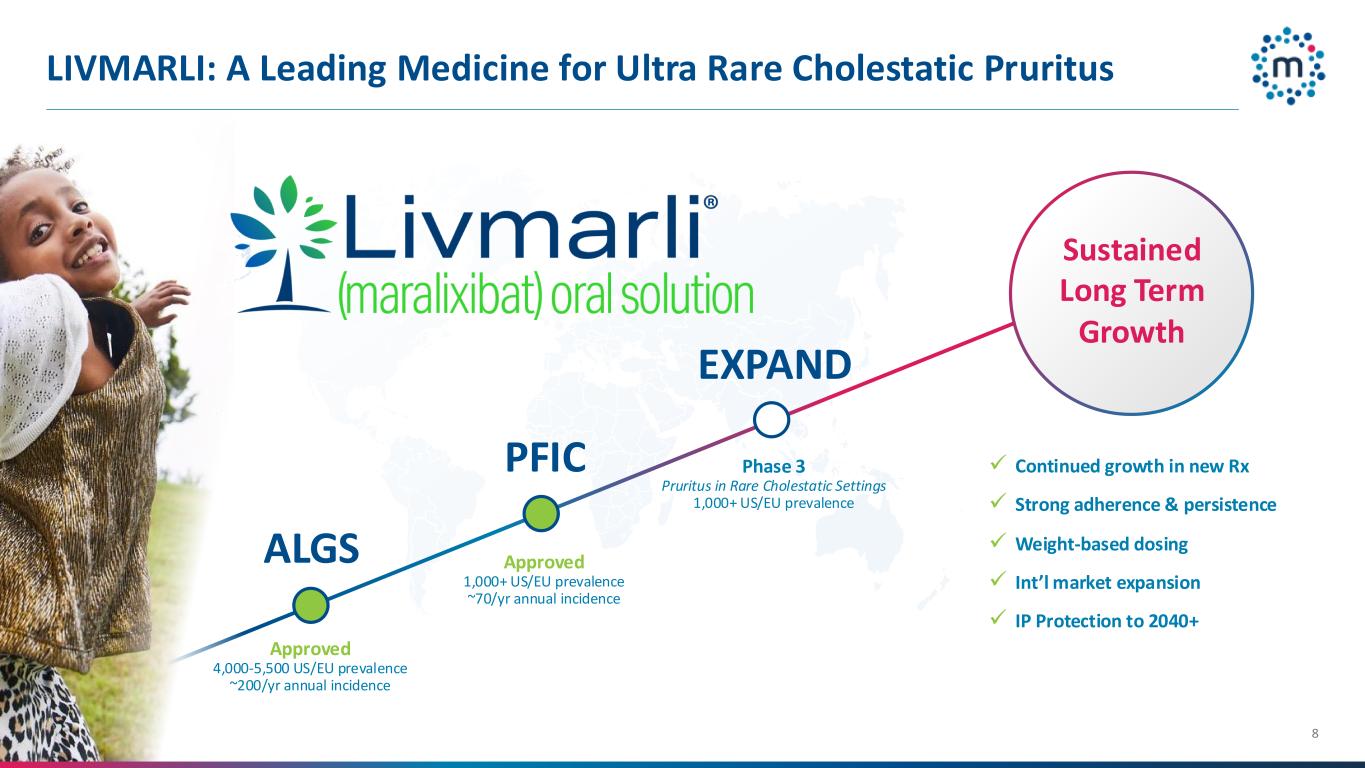
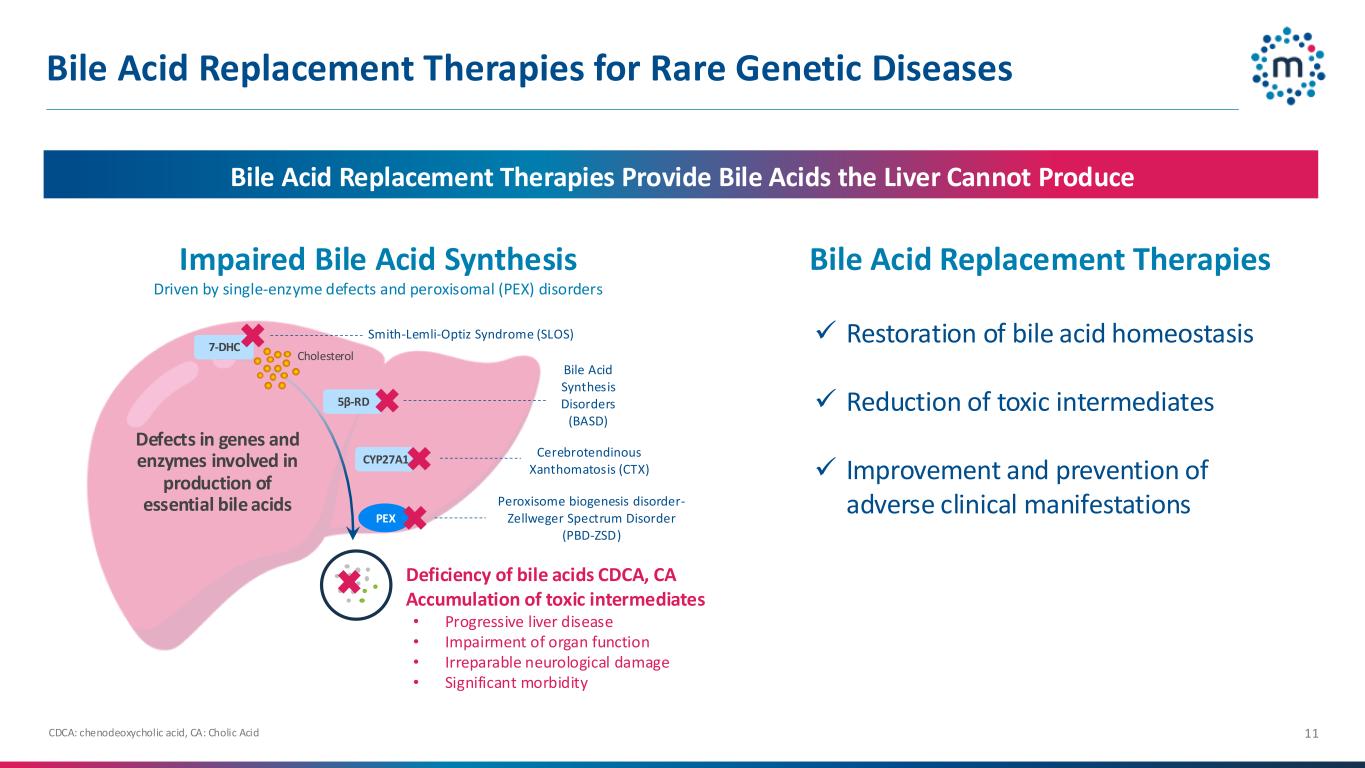
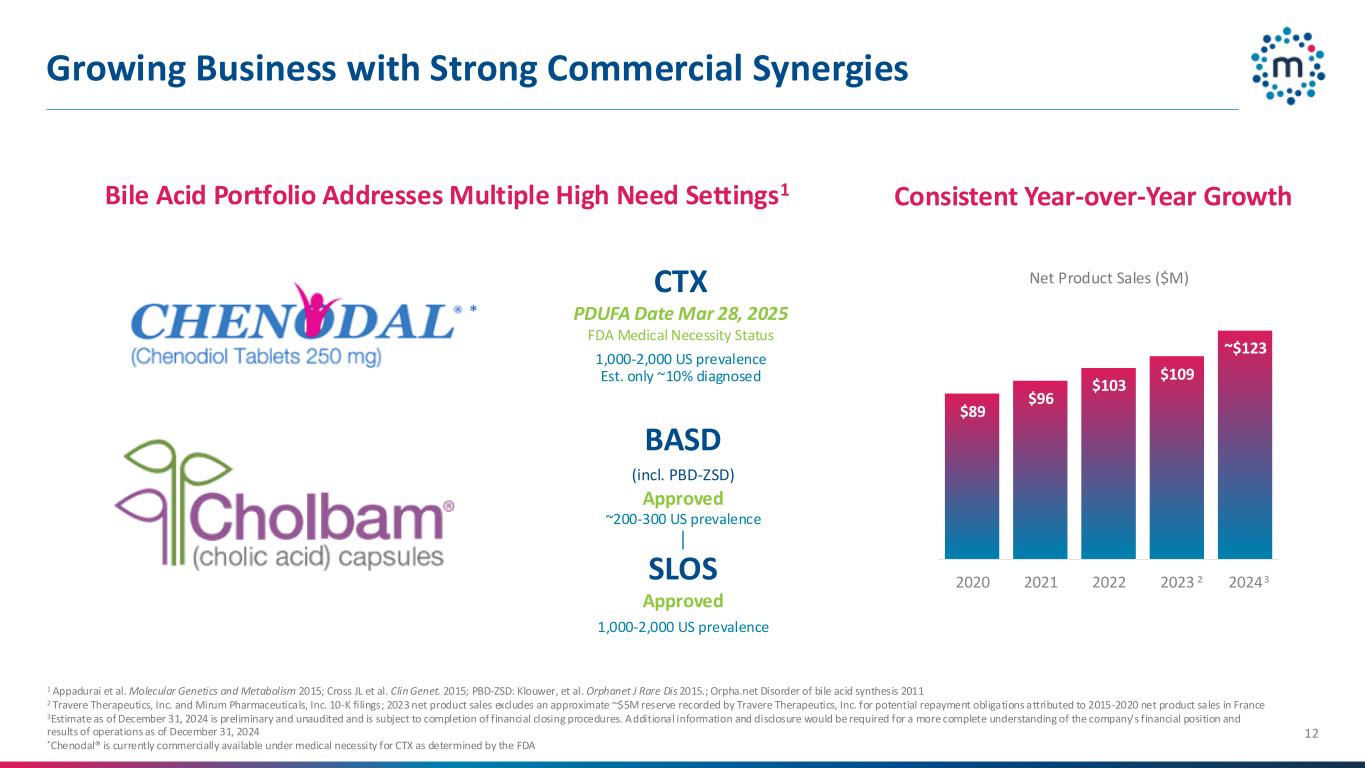
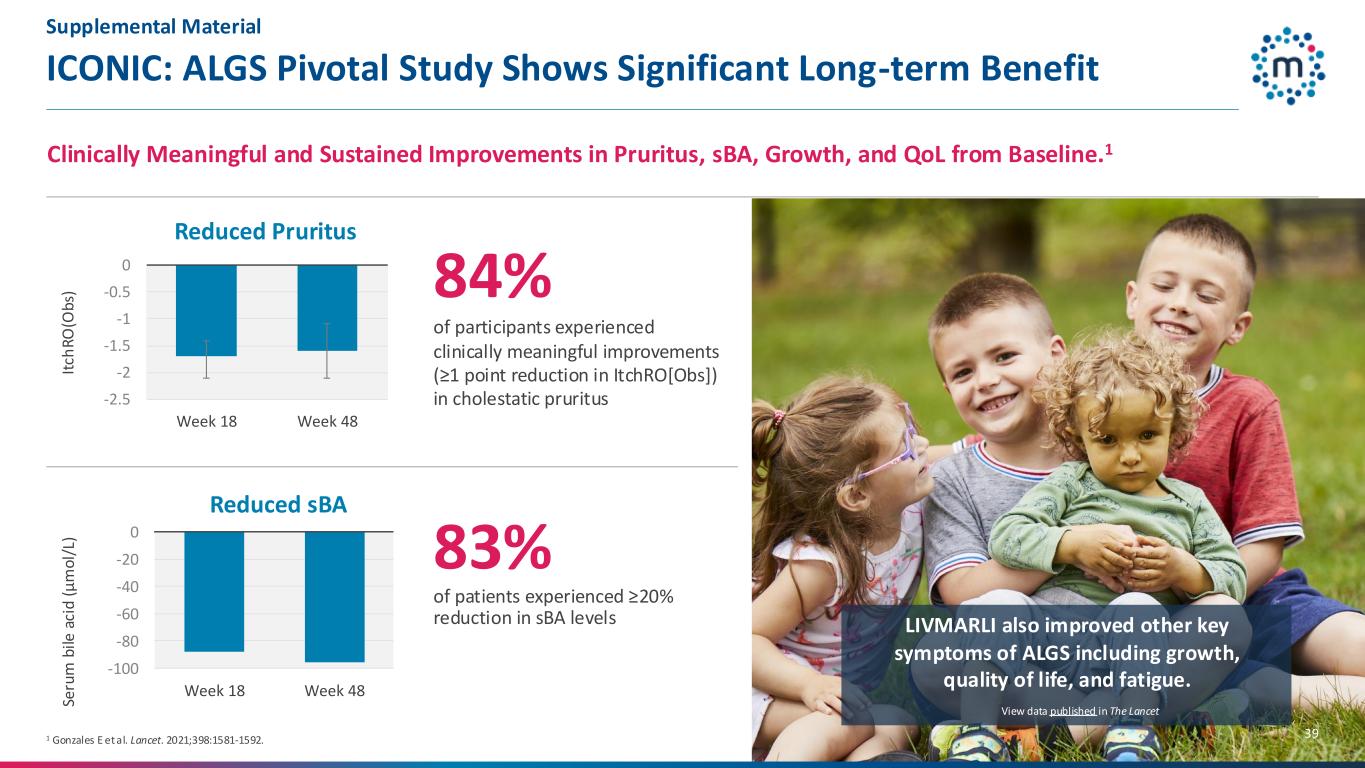
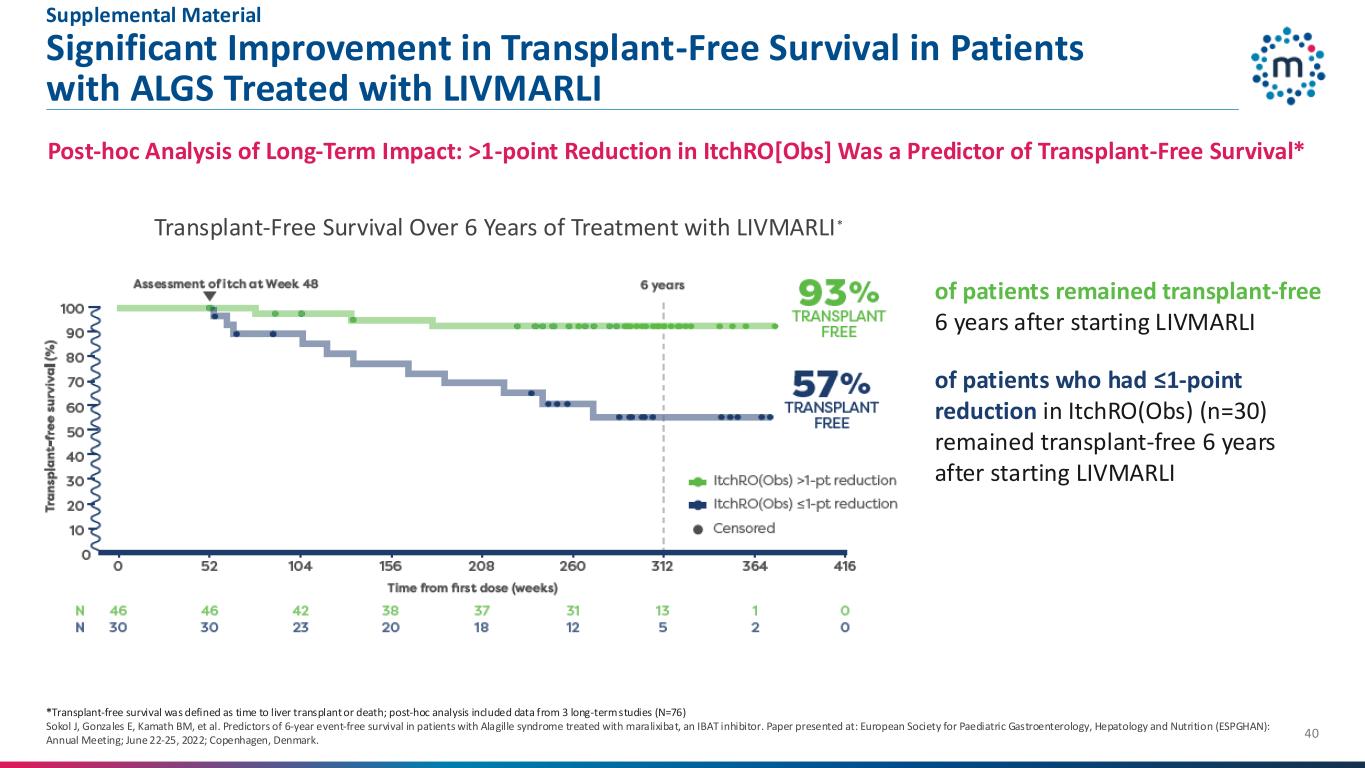
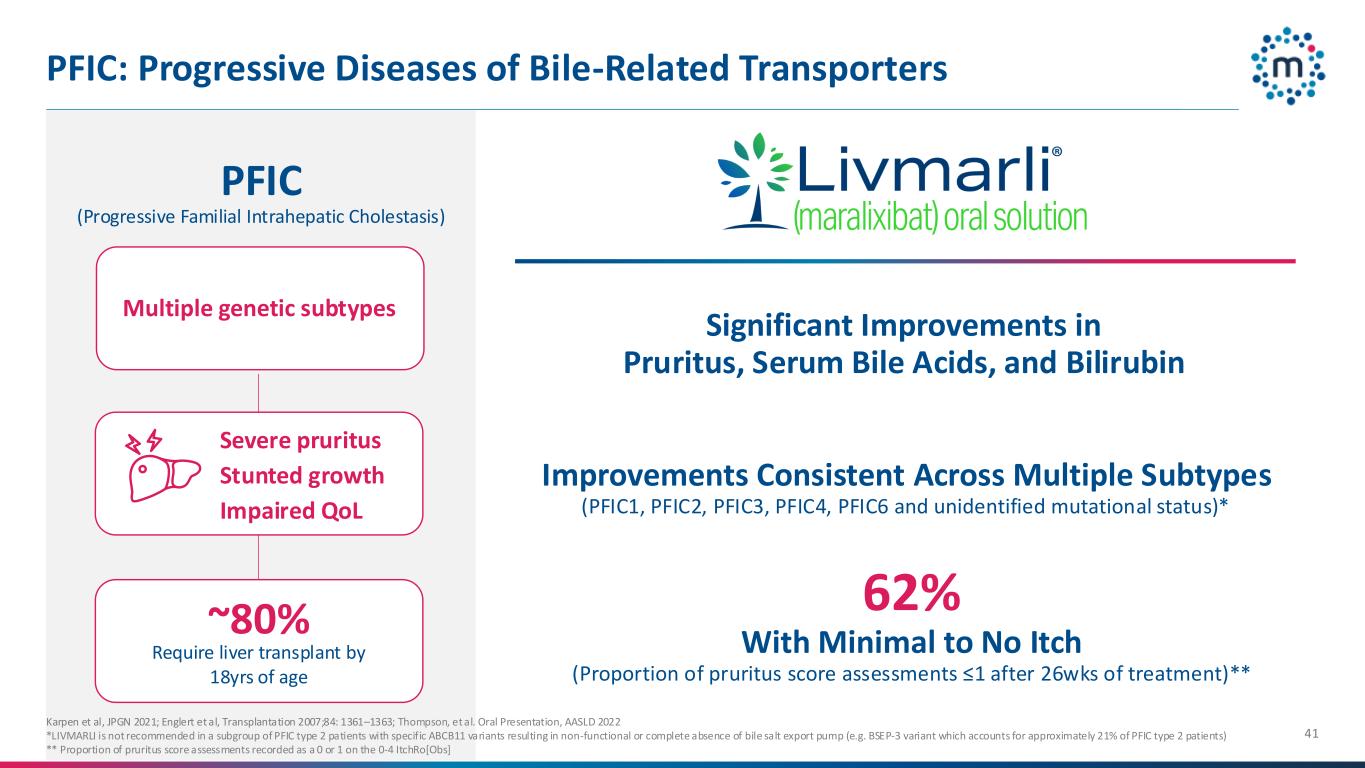
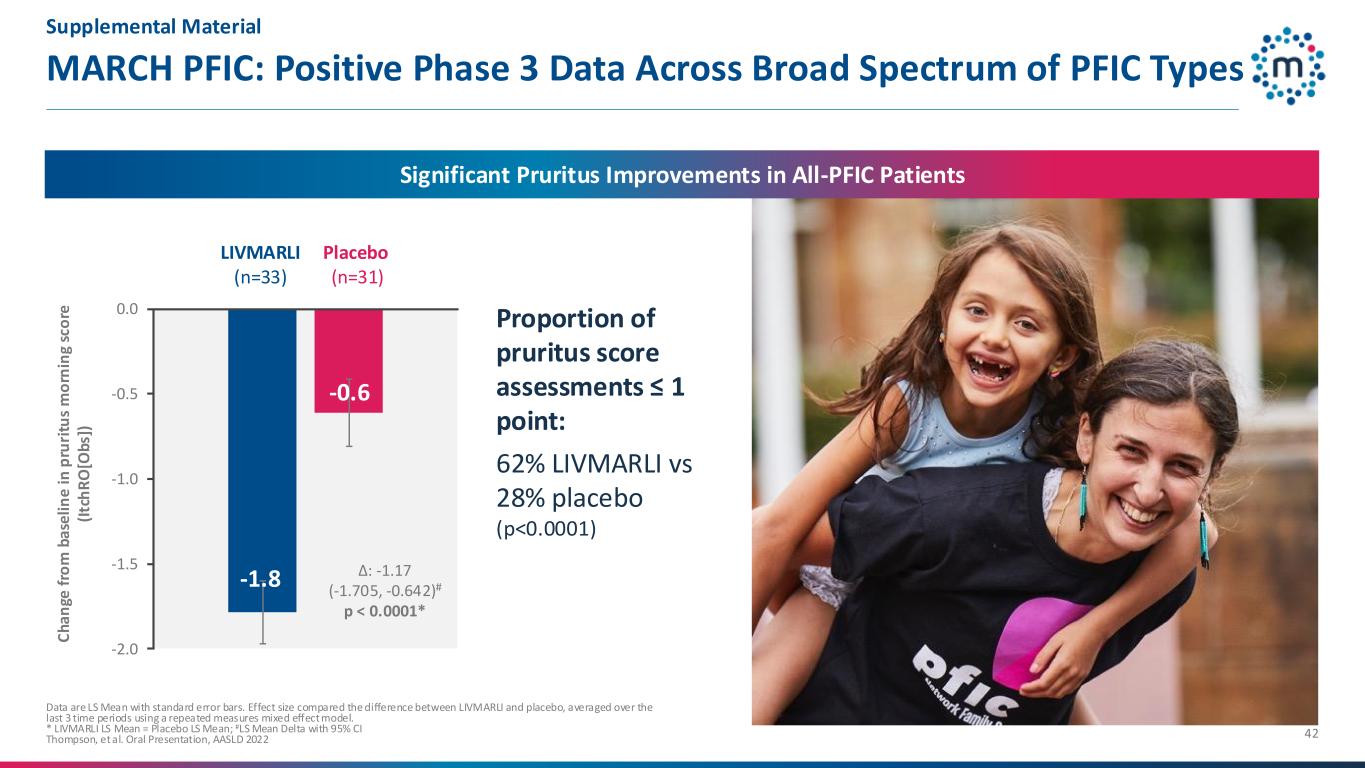
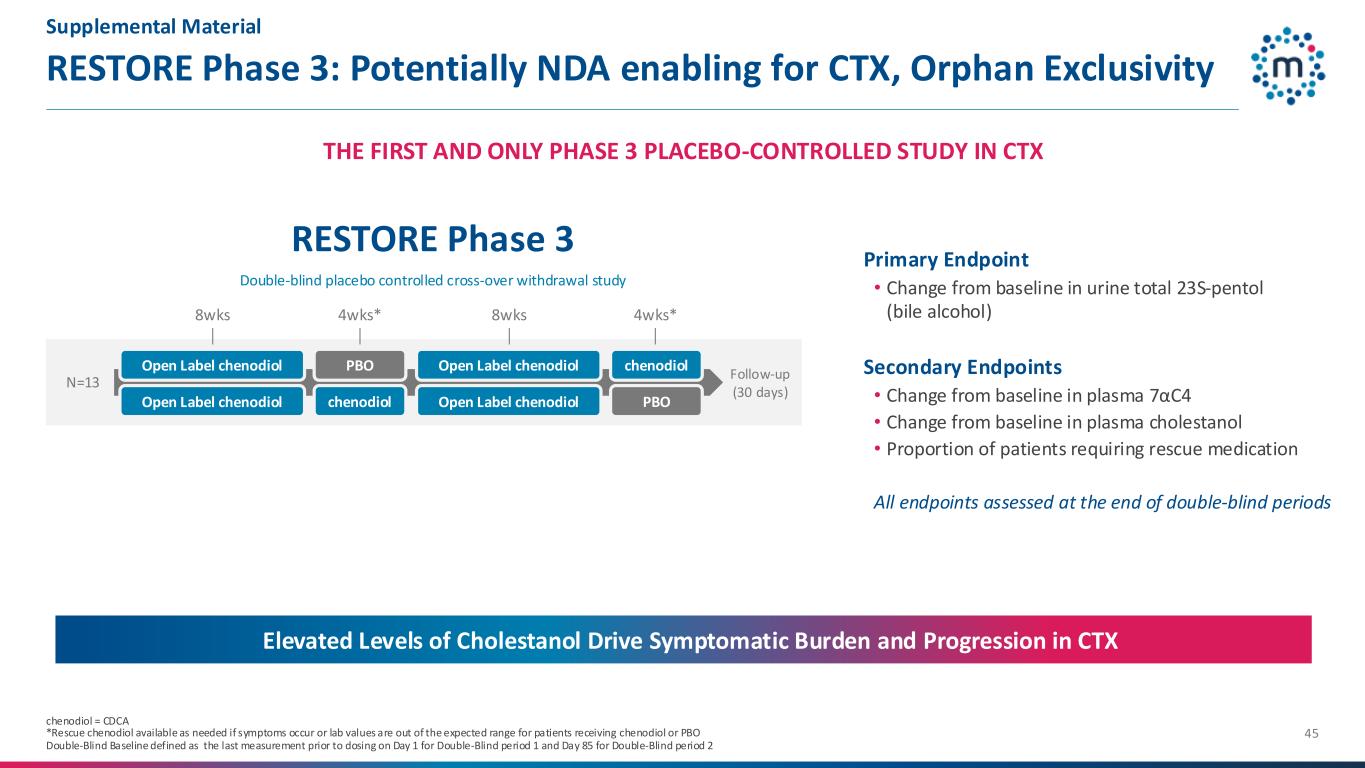
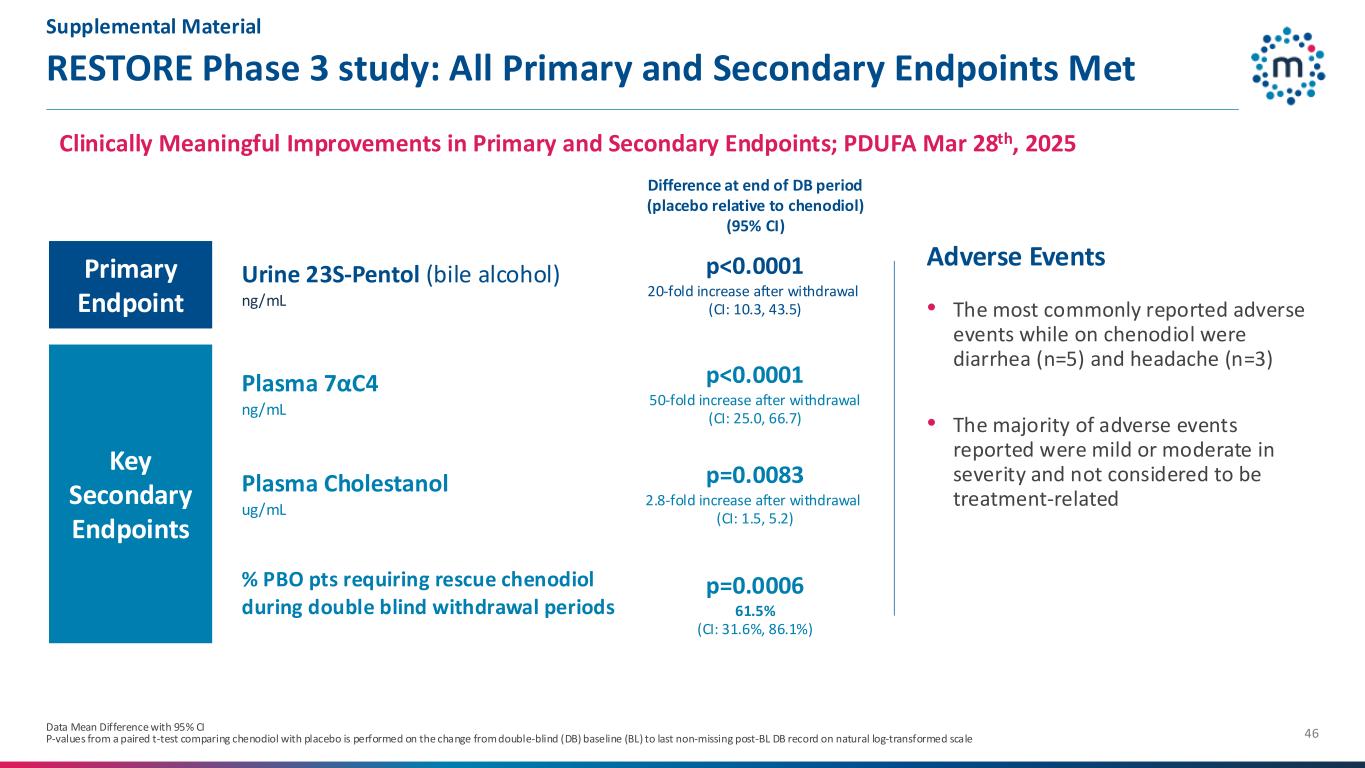
i'd like to turn the call over to chris chris thanks andrew and good afternoon everyone i'm excited to start today's call with a recap of miriam's achievements over the last year share an update on our strategic goals for 2025. in the short time since our founding through our focus on bringing important medicines to patients we have created a strong business and ultra rare disease that is cash flow positive with an attractive pipeline and broader patient populations we are still early in our journey and we firmly believe the best is yet to come our strategic priorities over the next two years are to one further the global growth of our commercial medicines highlighted by libmarly's continued allogel syndrome expansion early pfix success and the recent approval of Cetextli for Cerebro-Tendinous Xenthomatosis or CTS in the U.S. Two, advance our high-impact pipeline, driving the list about the potentially pivotal data in adult colostasis next year, initiating our Fragile X program for MRM-3379 and completing enrollment of the EXPAND study for Lizmarly and Cholestatic Tyritis. Three, selectively pursue product acquisition and license opportunities and rare disease with potential for significant patient and patient impact and value creation just as we have since the launch of mirror and for accomplish all of the above with continued scientific and financial discipline 2024 was a big year for delivering on strategic goals total net product sales were 336.4 million exceeding the upper end of our revised guidance range with marley finished the year with total net product sales of 213 million, including approximately 155 million from our U.S. business and 59 million internationally. In the second half of last year, PFIC new patient starts and international uptake were drivers of the step-up in growth. We believe the strong demand we are seeing for Lugmarly and Alagil syndrome and PFIC will continue. Beyond Lugmarly, we also saw healthy growth in our bile acid medicine. We think we are starting to bend the curve here with total 2024 net product sales of $123 million. I'm also happy to say that last week the FDA approved Citexly, which is our new brand name for kenodiol, for CTX in adults. With this approval comes seven years of work on exclusivity and the opportunity to begin promotional efforts with our current field team to reach patients in this underdiagnosed condition ultimately the robust growth dynamics across all of our medicines positions us well for 2025 where we expect to add close to 100 million dollars to our top line with the anticipated net product sales between 420 and 435 million dollars for the year 2024 was also a significant year for our pipeline we expanded livemarly's label with its approval for PFIC in both the U.S. and Europe. We initiated the Phase III Expand study of Livmarly in broader settings of cholestatic curitis, a significant growth opportunity for the brand. And beyond Livmarly, we achieved positive interim results for Velixabat in both Vistis PFC and Vantage PBC studies, resulting in breakthrough designation in PBC. And finally, we have expanded our pipeline with the addition of MRM3379 for fragile X syndrome. This is another high unmet need or orphan settings that aligns well with the capabilities we have built in rare genetic neurology for the launch of Cetextly. Pulling all this together, we are set up for an exciting 2025 and beyond with continued strong execution of both our commercial business and pipeline of potentially high-impact medicine. And with that, I'll turn it over to Joanne to give a brief update on the pipeline. Joanne?
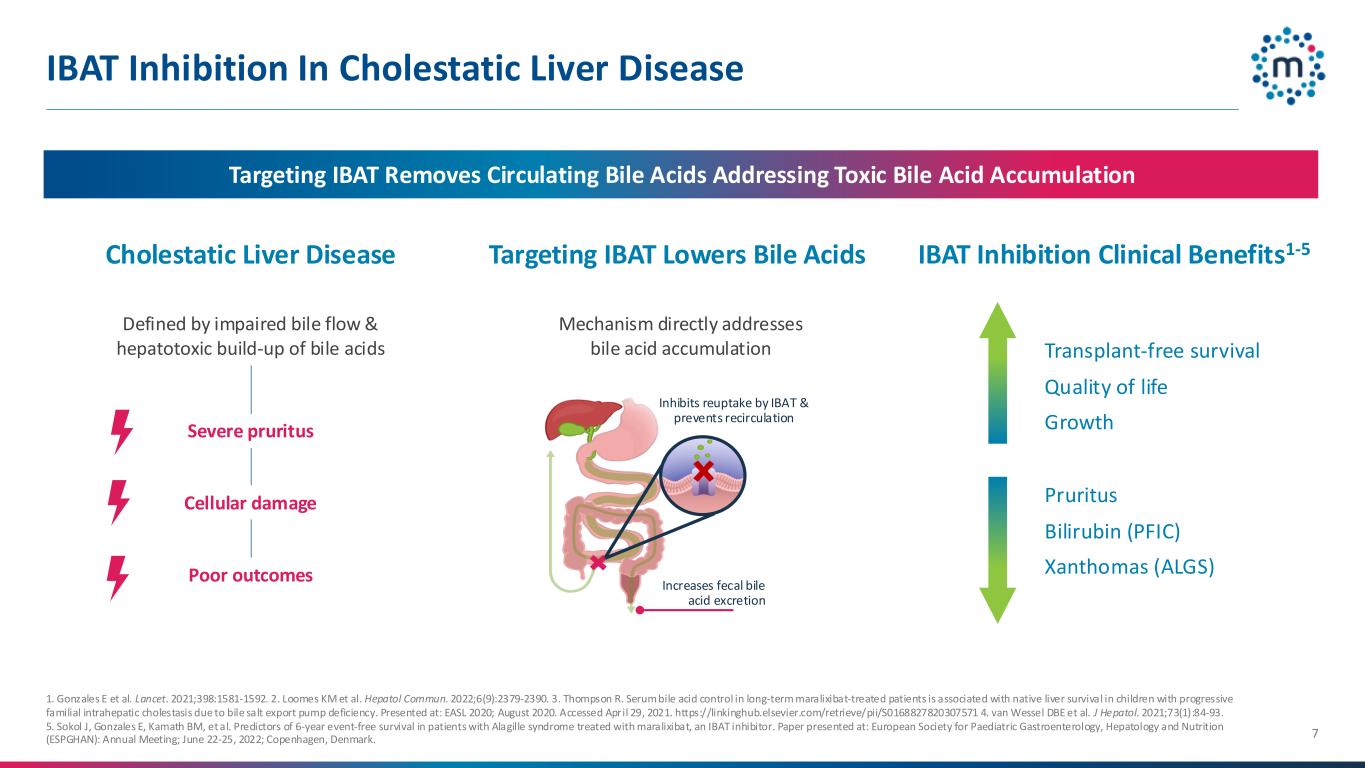
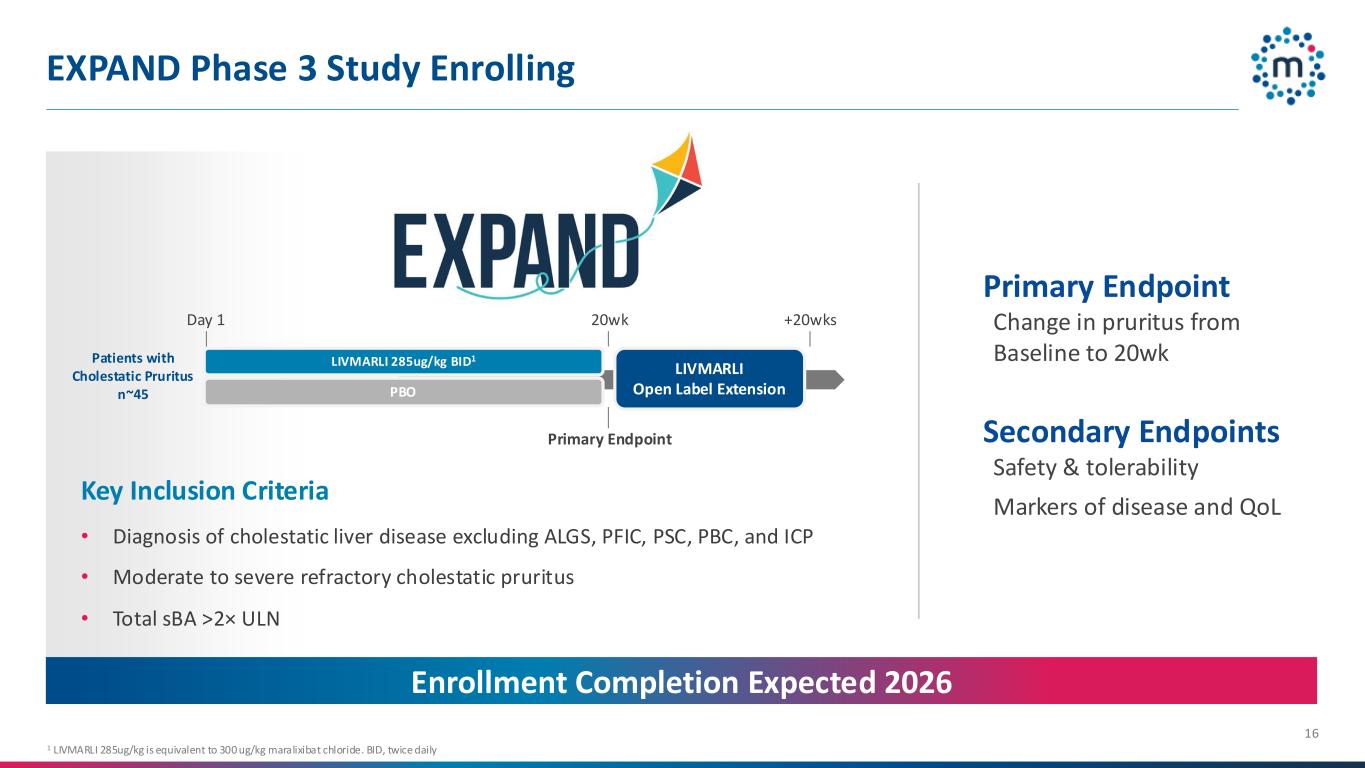
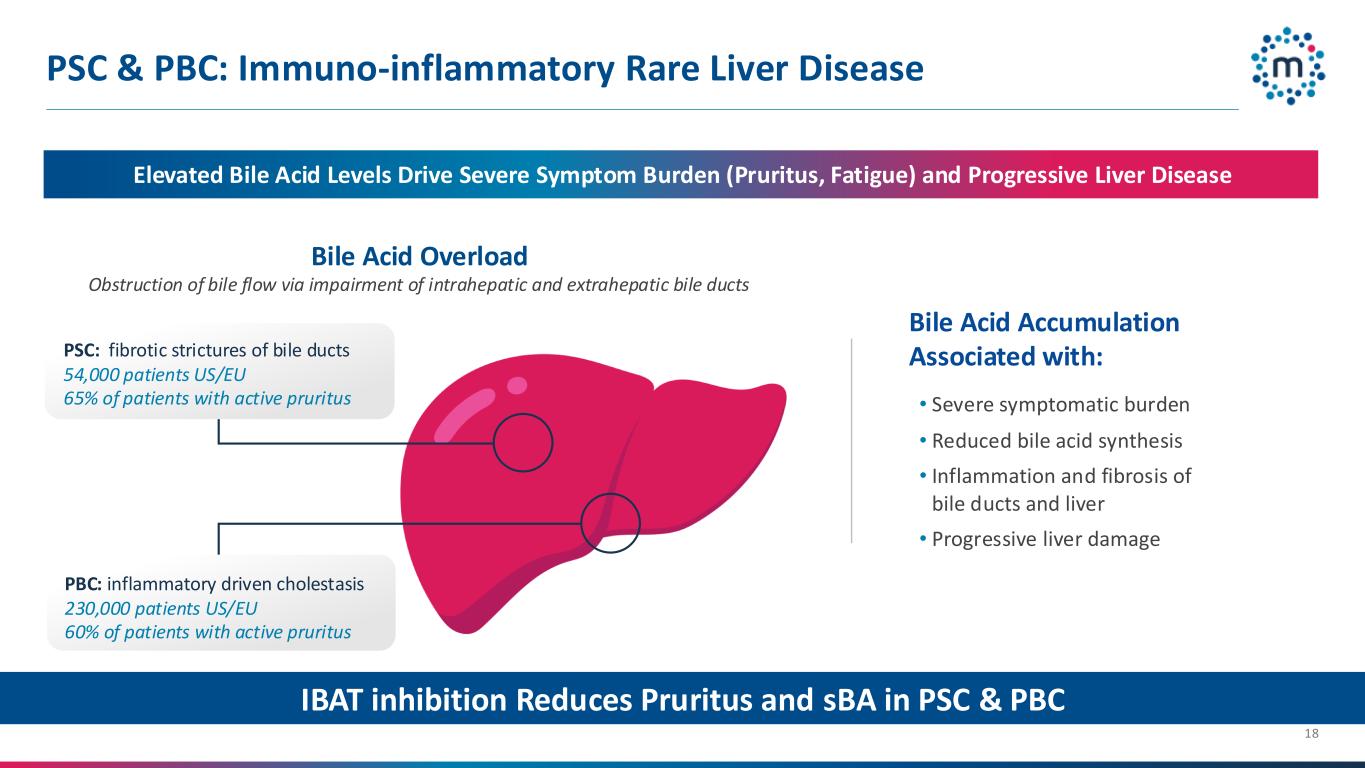
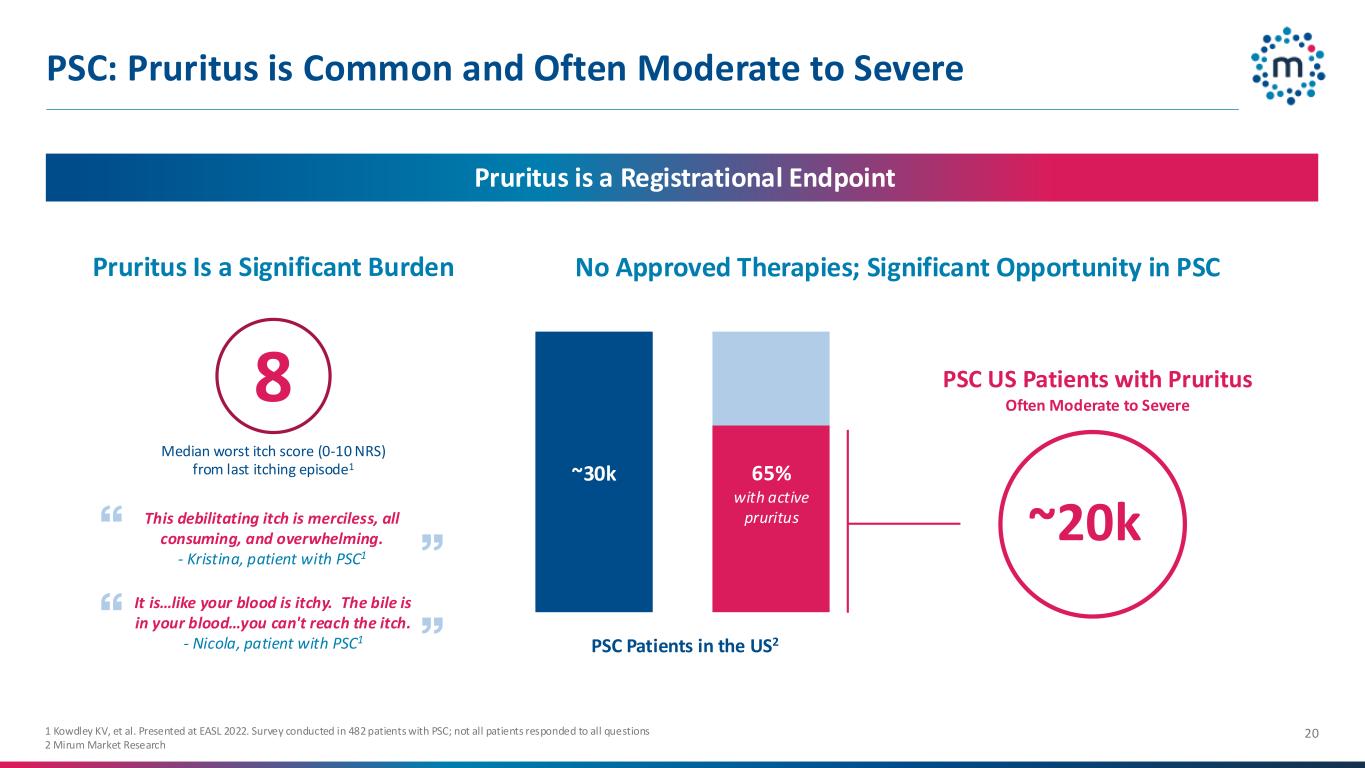
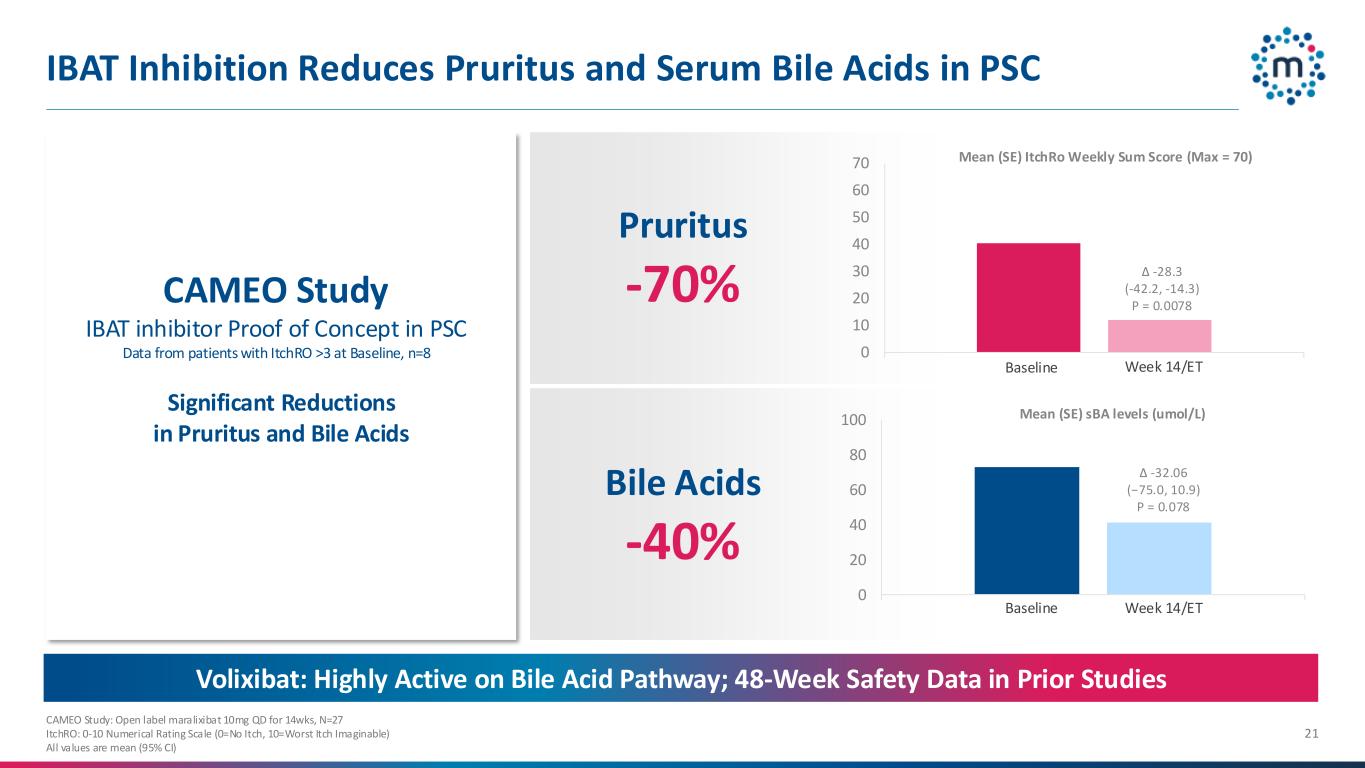
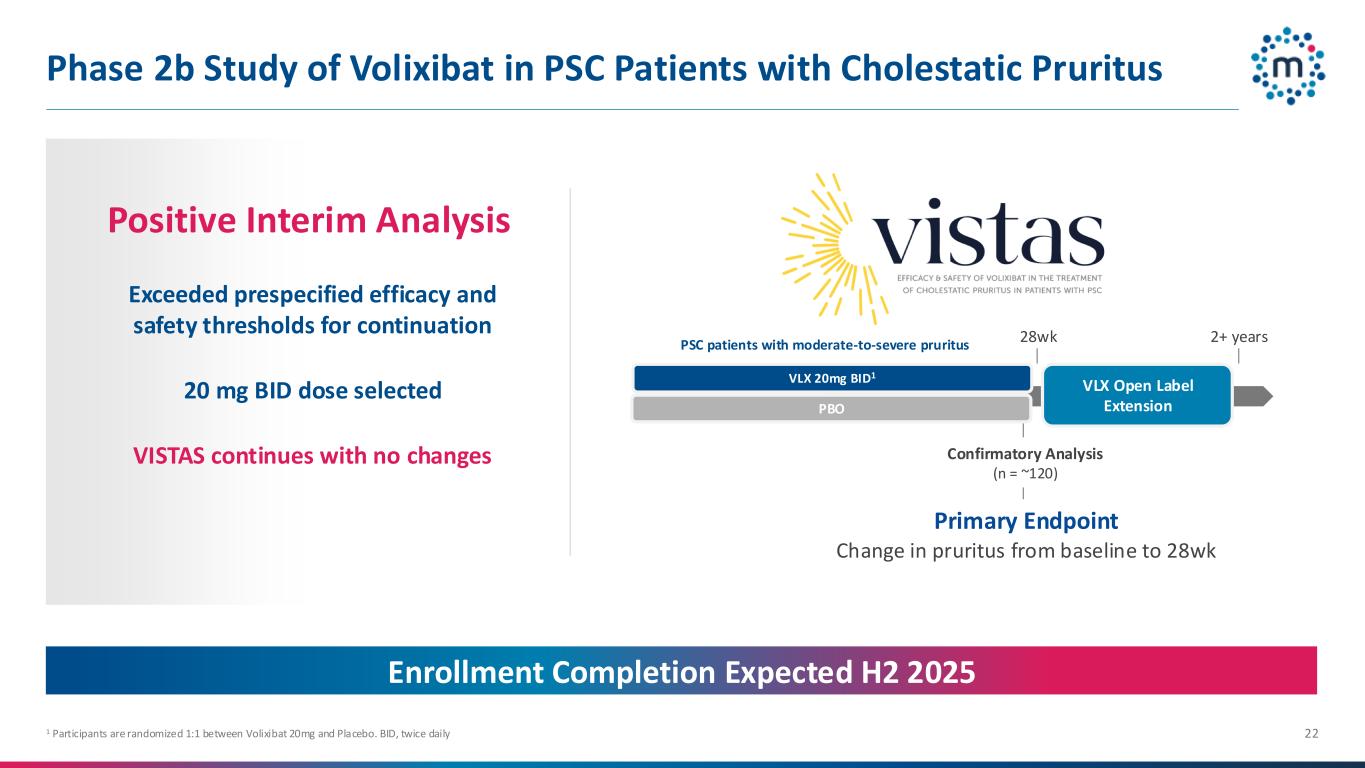
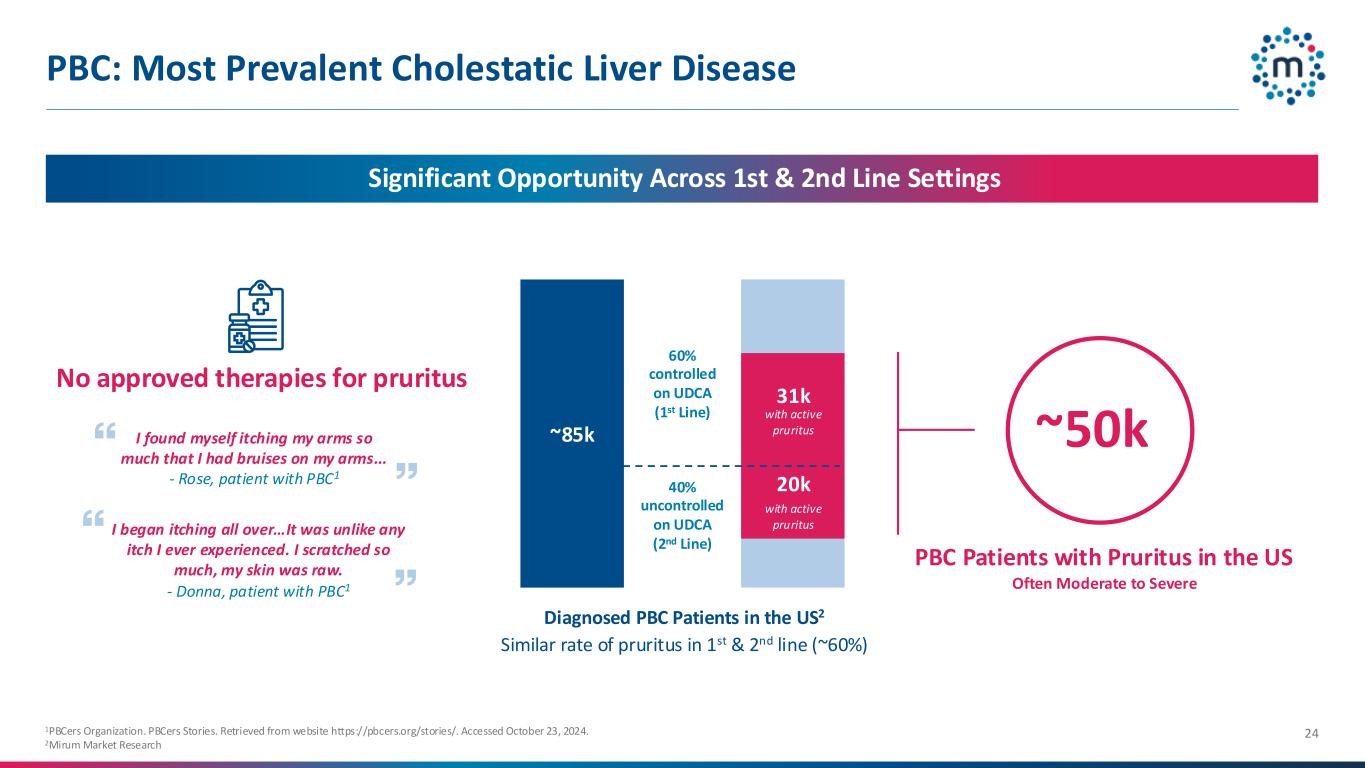
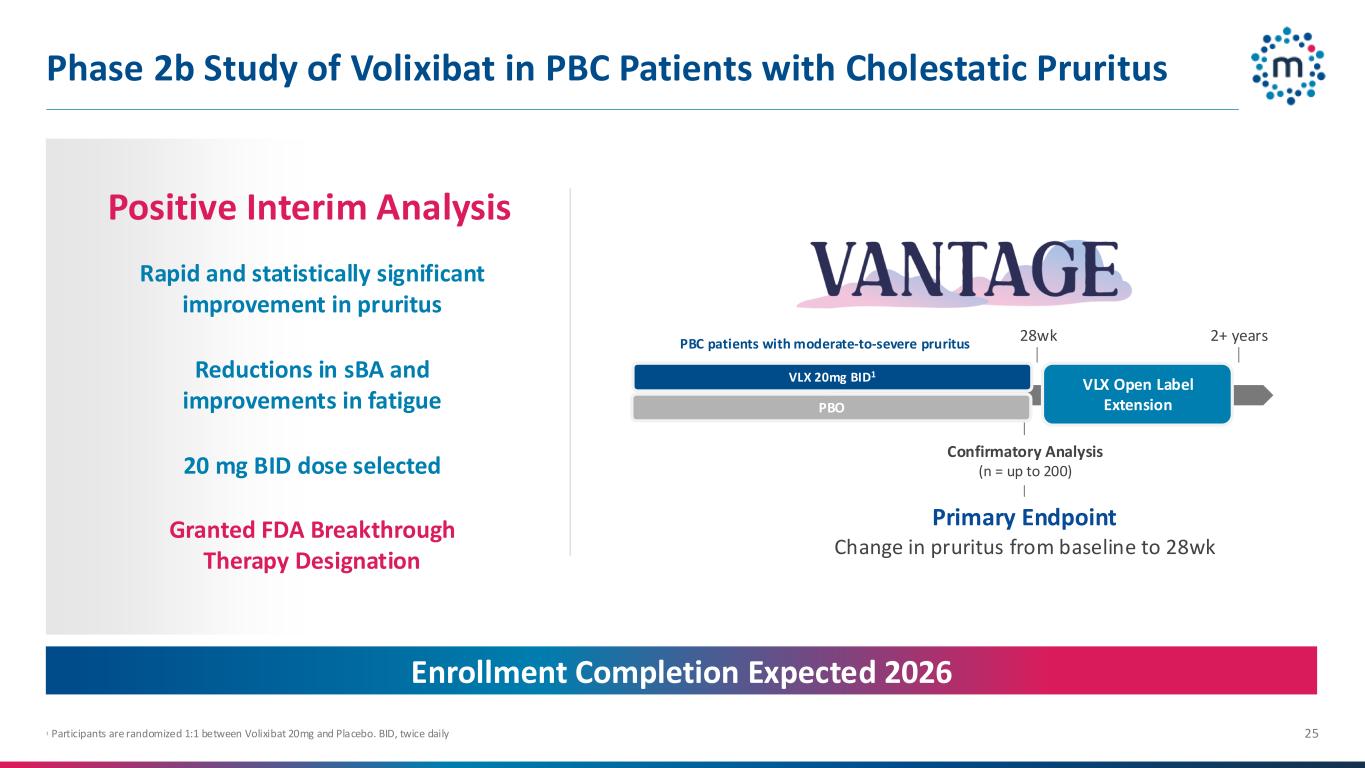
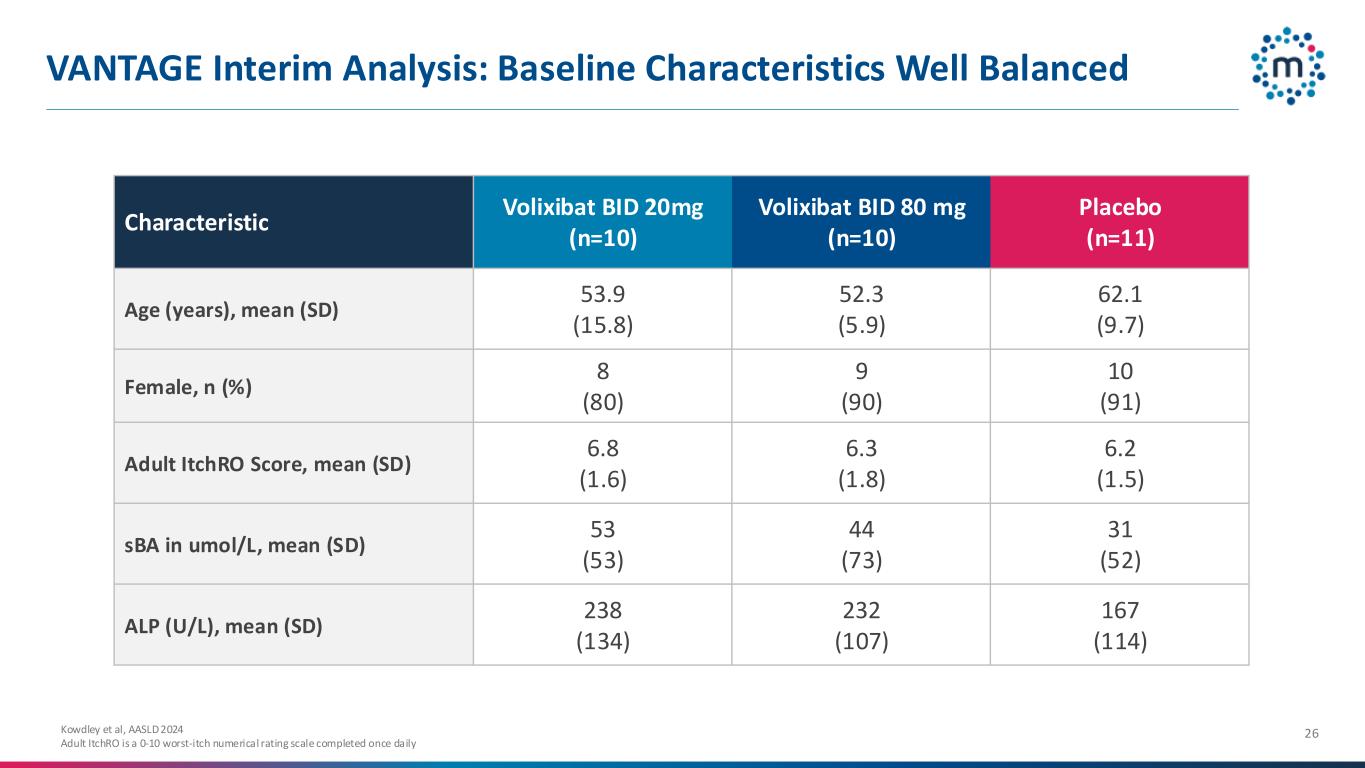
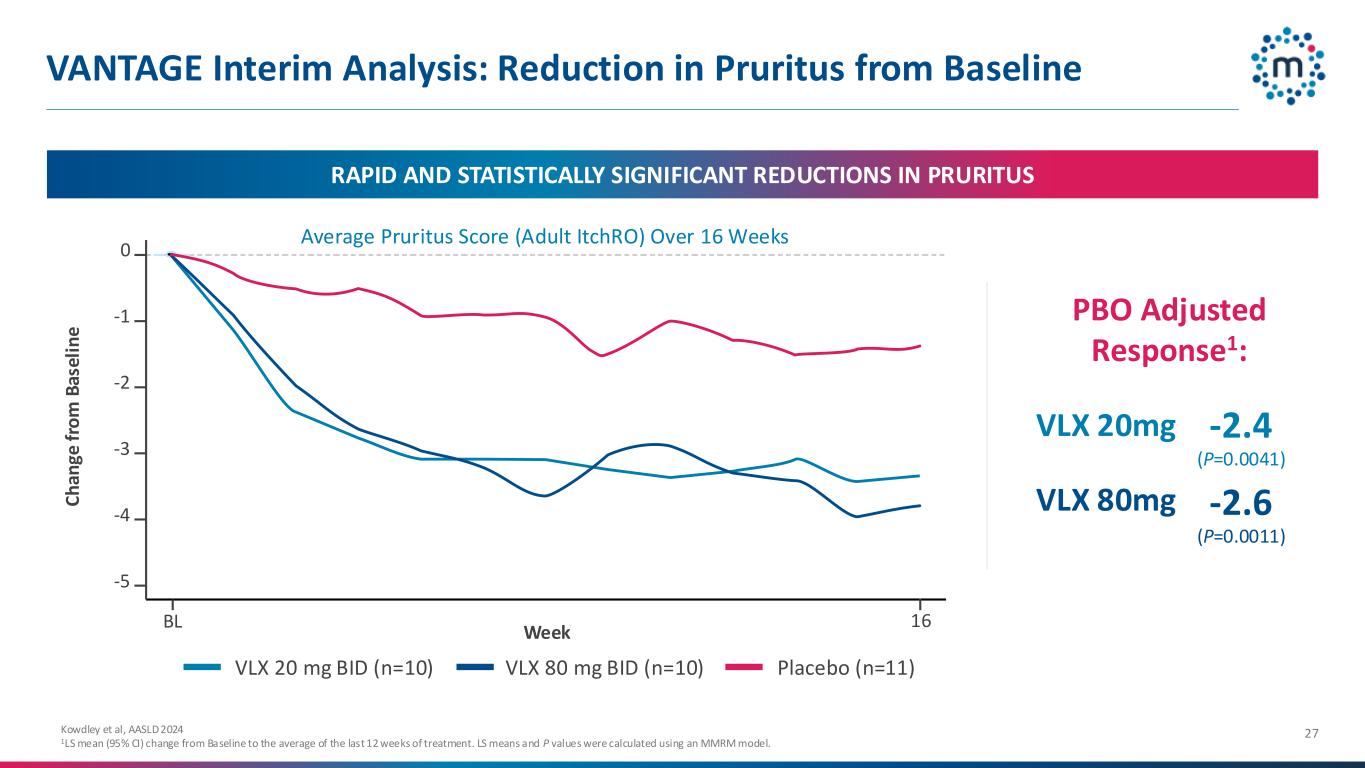
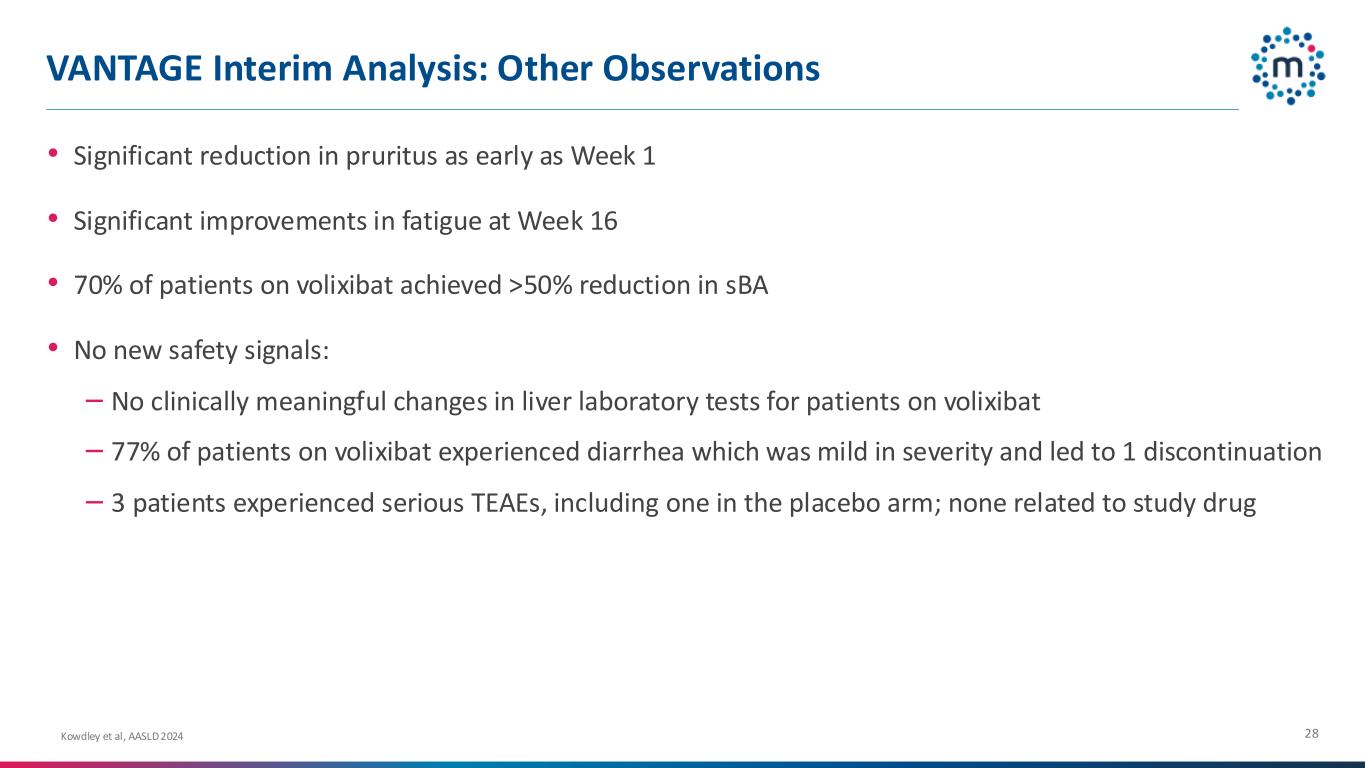
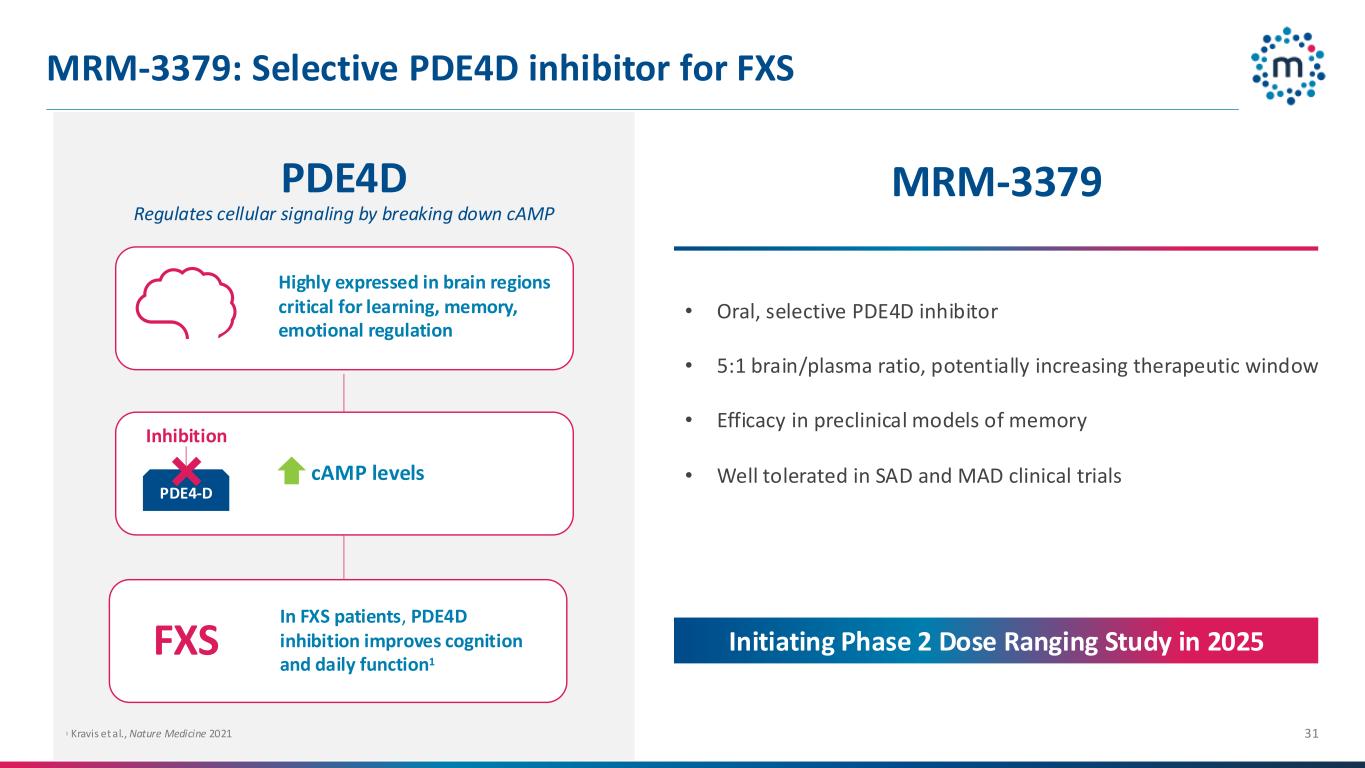
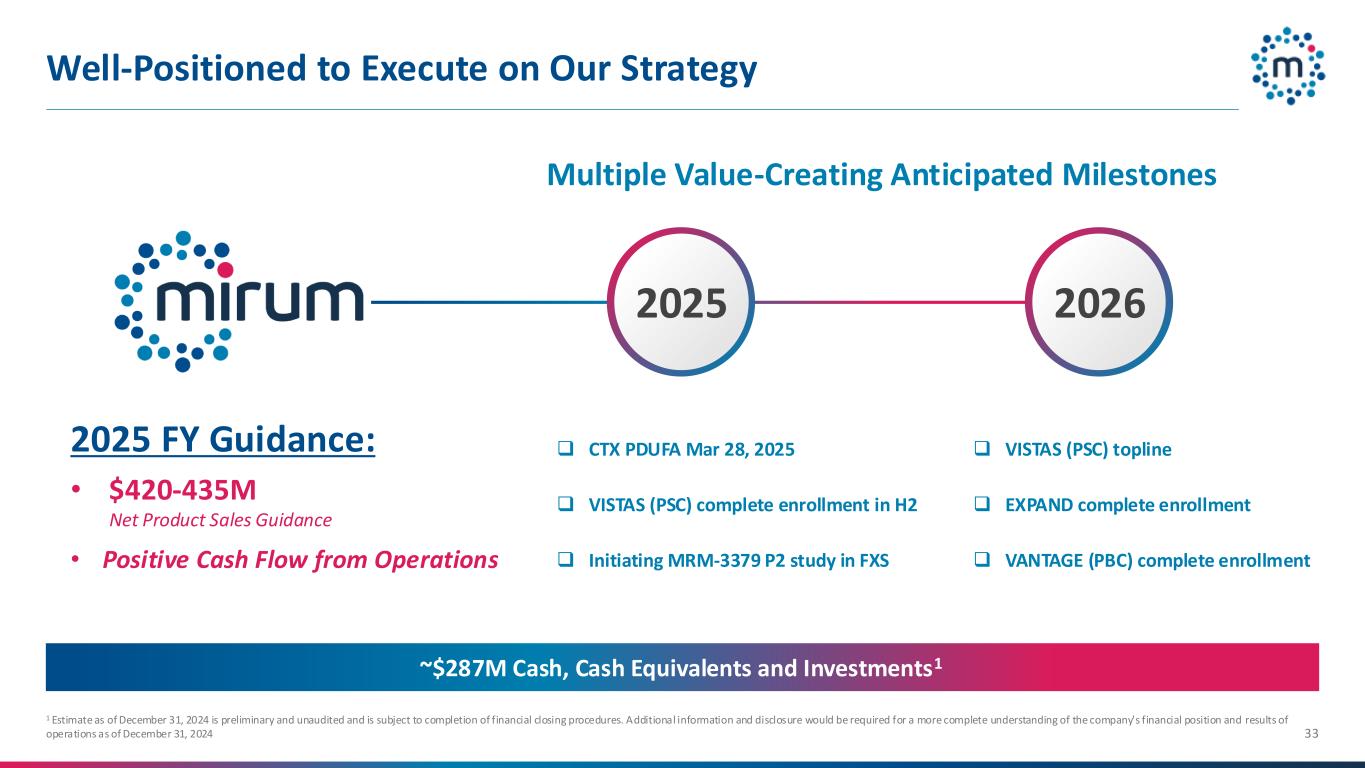
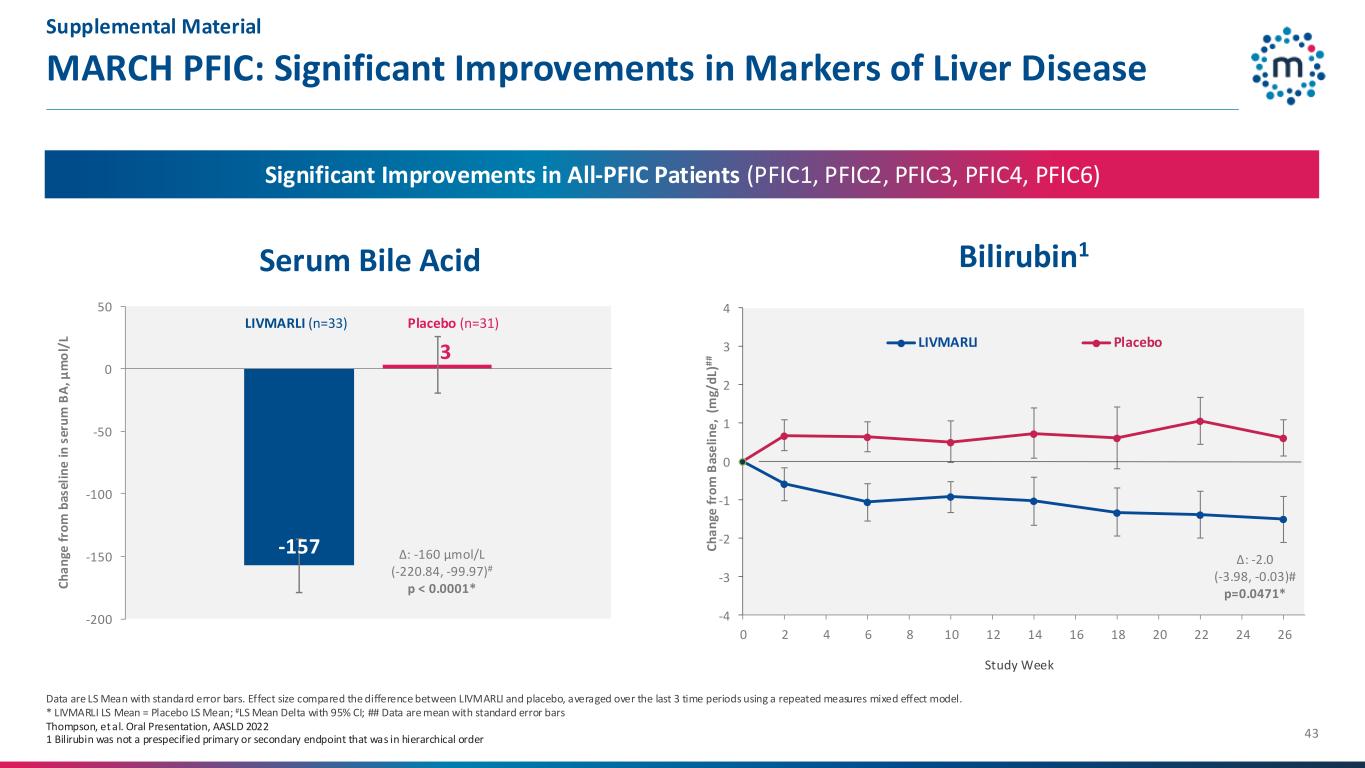
Thanks, Chris. 2024 was a highly productive year for our clinical programs, and I'm excited to continue this momentum into 2025. Starting with our three potentially registrational studies of our IBAD inhibitors, Livmarly and Melixabat, I am pleased to say that the progress we made in 2024 builds further confidence in the impact of this mechanism on cholestatic pruritus. Across multiple settings, including allergial syndrome, PFIC, biliary atresia, PSC, and PBC, we have now seen clinical evidence for the potential of IBAD inhibition to have a pronounced impact on this debilitating symptom. Starting with Velixivad and PSC, recall that the VISTA study is currently enrolling with a single active dose, 20 milligram BID versus placebo, based on the blinded interim analysis we conducted in June of last year. Following the positive interim analysis, where we passed both the efficacy and safety thresholds for continuation, we have had great engagement from investigators and patient communities, and we are pleased with the continued progress in this study. We are on track to complete enrollment in the second half of this year, and, given that this is a 28-week study, expect top-line results in 2026. There are no approved treatments for PSE, and we look forward to another opportunity to work with global health authorities to bring a high-impact medicine to an underserved patient community globally. Turning to PBC, enrollment in the Vantage study is also progressing well, and we remain on track to complete full enrollment in 2026. Given the results of our interim analysis, where we showed statistically significant rapid and sustained improvement in pruritus versus placebo, we have seen a positive response from the investigator and patient community. The majority of PBC patients are able to maintain a good biochemical response with first-line UDCA treatment, but do not have adequate options to address their symptoms. The strength of the Vantage interim analysis results in both first-line and second-line patients, positions Velixabat to be a potentially impactful treatment option for a large proportion of patients with PBC. The breakthrough therapy designation we received from FDA last year acknowledges the importance of Elixabat as a potential treatment option. We are also excited about the Phase 3 EXPAND study of Livmarly. This is an excellent opportunity to expand the label for Livmarly to include additional settings of cholecytic pruritus, where there's a clear need for an approved, effective treatment, and we are encouraged by the enthusiasm we've been seeing from investigators. The study is ramping up well and we are on track to complete enrollment in 2026. Shifting to MRM3379, our new PDE4D inhibitor for Fragile X syndrome, we're preparing to initiate a Phase II study this year following discussions with the FDA. As a reminder, this mechanism has demonstrated proof of concept in Fragile X and, given the high expression of PDE4D in the brain and importance of this pathway in learning and memory, we believe MRM 3379's brain-penetrant profile is potentially differentiating. In summary, we're very happy with the continued momentum of all of our clinical programs and the active engagement we foster with investigators and patient communities. I look forward to providing further updates on our progress during the year. I'll now turn it over to Eric. Eric?
Thank you, John. I'm pleased to say that we are in an excellent financial position supported by our strong performance in 2024, which I will now briefly summarize. 2024 was another year of continued strong growth in net product sales of our three commercial medicines. Total net product sales in the fourth quarter 2024 was $99.4 million compared to $69.5 million the year before, representing a 43% year-over-year increase. For the full year 2024, total net product sales was $336.4 million, compared to $178.9 million in 2023. For Livemarly, total net product sales in the fourth quarter, 2024, was $64.1 million. Totally modeling net product sales for 2024 was 213.3 million, representing a 50% increase compared to 2023. Turning to our bile acid medicines, total net product sales in the fourth quarter 2024 was 35 million, representing an approximately 25% growth over the fourth quarter of 2023. The first full quarter the portfolio was under operation. Total net product sales for the portfolio for all of 2024 was $123.1 million. Total operating expense for 2024 was $424.5 million, which includes R&D expense of $140.6 million, SG&A expense of $202.2 million, and cost of sales of $81.6 million. Expenses for the year included non-cash stock-based compensation expense of $48.4 million and intangible amortization and other non-cash items of $31 million. This intangible amortization and other non-cash items expense is largely reflected in our cost the goods sold. In the fourth quarter and full year, R&D expense also reflects the $7.5 million upfront payments we paid to Enthorin for the MRM 3379 license. When adjusting for the non-cash items, I'm happy to say the business was cash flow positive in 2024 and we expect this to continue this year we ended 2024 with cash cash equivalents and investments of 293 million an increase of approximately 7 million from the start of the year looking ahead we expect net product sales of 420 to 435 million in 2025 and we are guiding toward positive cash flow again this year we are well-funded and we have the resources to execute on our plans and progress toward a multiple upcoming pipeline catalyst. Now I'll turn the call back over to Chris for final count.
Thanks Eric. 2025 is set to be another big year for Mira. With industry-leading commercial execution, an advancing pipeline, and a disciplined operating model, we have built a leading rare disease company, one that is positioned for sustained growth in the years to come. I'm proud of what we've accomplished and excited for the opportunities ahead as we continue to deliver life-changing medicines for patients and their families. And with that operator, please open the call for questions. Thank you. If you would like to ask a question,
Operator
please press star followed by one on your telephone keypad. If you would like to withdraw your question, please press star followed by two. When preparing to ask your question, please ensure your device is unmuted locally. First question comes from Gavin Clark Gratner
with Evercore ISI. Your line is open. Please go ahead. Hey, guys. Congrats on the great progress. So I just had one more strategic question. I know that you aren't able to call for redemption of convertible notes until next year, but just bigger picture, as your stock has traded well above the conversion price, the back are really strong earnings performance, pipeline advancement. Does this all change how you think about BD and capital allocation in general? Thank you.
Thanks, Gavin, for the question. I'll make a first comment there and ask Eric to add anything else on the balance sheet. And the thing that I point out, kind of the dynamic behind what you're pointing out there, is that we've been able to navigate Mirim to a really unique position, in particular in this market backdrop for rare disease, where we can take advantage of our financial position and performance to acquire and basically roll up some of these rare disease programs. products that we see as great value creation opportunities for the company. I'll ask Eric to speak more specifically to the financing plans.
Yeah, thank you. The convert matures in four years, so that doesn't really factor into our plans meaningfully. I think our financial and financing flexibility as we continue to progress the business is significant gives us a lot of flexibility to consider BD alternatives that we might find attractive.
Operator
We now turn to Jessica Fai with JP Morgan. Your line is open. Please go ahead.
Hey guys, good afternoon. Thanks for taking the question. I was hoping you could talk about the underlying assumptions like market penetration or share, potential competition, and et cetera, that are behind the $1 billion revenue potential for Miram 3379 in Fragile X. And I guess while we're talking about that asset, are there any other indications with the mechanistic rationale that could make sense to pursue? Thank you.
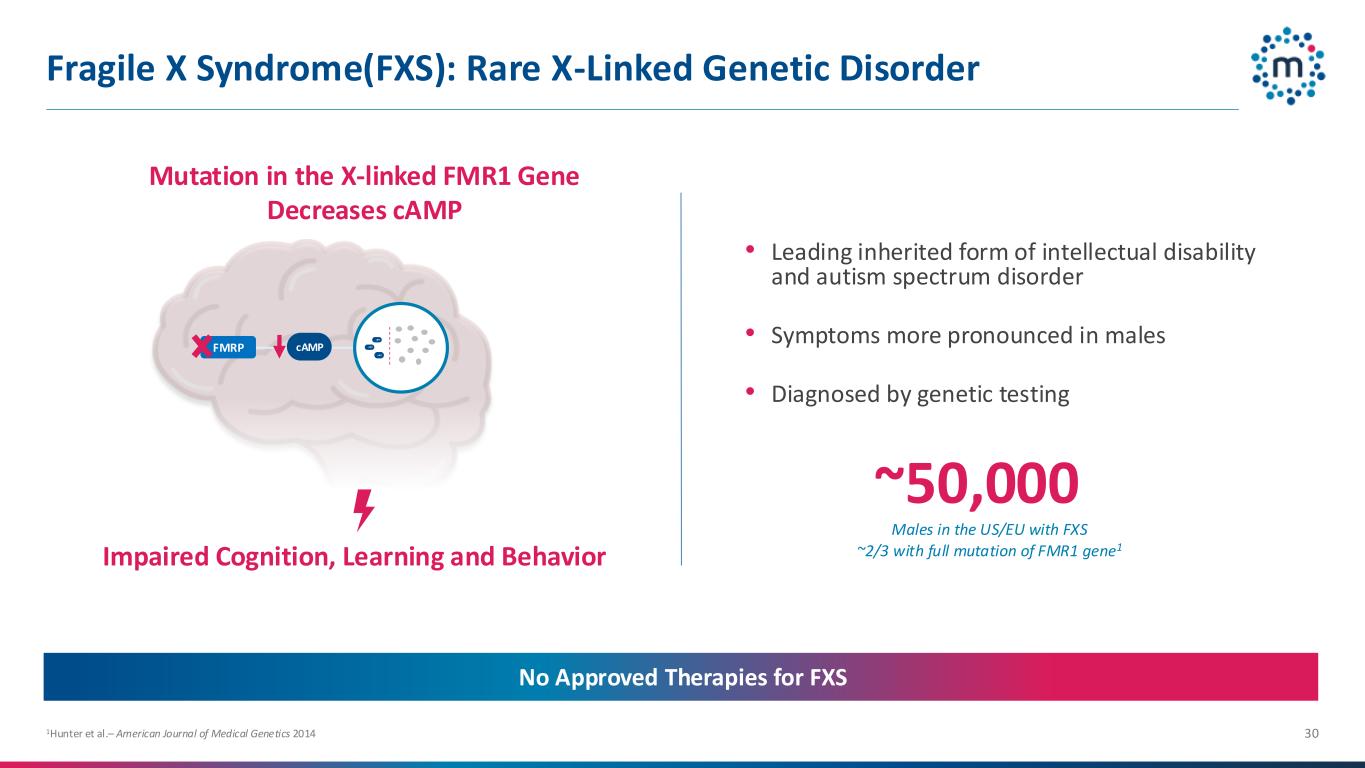
Thanks for the question, Jessica. I'll speak to the market sizing and then have Joanne kind of comment about applicability of the mechanism in other settings. And quite simply, the way to think about the market potential, when we look at just male patients with Fragile X, it's a 50,000 patient market. So, a lot of different ways that you can look at the assumptions to see that the total addressable market is a billion or more quite easily. So, really, when we talk about that number, we're looking at the U.S. opportunity to see substantial upside beyond that number even it's pretty simple kind of watermark to comment about yeah yeah so actually I think Jessica you sort of kind of
rightly kind of ask the question in terms of what are the opportunities we know that PDE4D is you know highly expressed in the brain in areas where learning and memory are very important and so there are a you know what number
of um conditions that this could be you could envision this could be used for the way we're
really approaching this is to kind of use fragile x as our kind of first entry point conducting a proof of concept there identifying a dose and then um you know once we have that then i think it opens up the possibility for entering into some other indications associated with intellectual so certainly a lot of potential there that we're excited to access
Operator
We now turn to Manifor Ruha with LeeWink Partners. Your line is open. Please go ahead.
Ryan
Analyst — Leerink Partners
Hey, guys. You have Ryan on from Mani. Thanks for taking our question. So I'm curious, when you look at the Alagil market, where do you think we are in terms of penetration into the prevalent population? And kind of going forward, is U.S. growth really going to be driven more by new diagnoses or kind of greater penetration into those that are not on IVAT yet? Thanks.
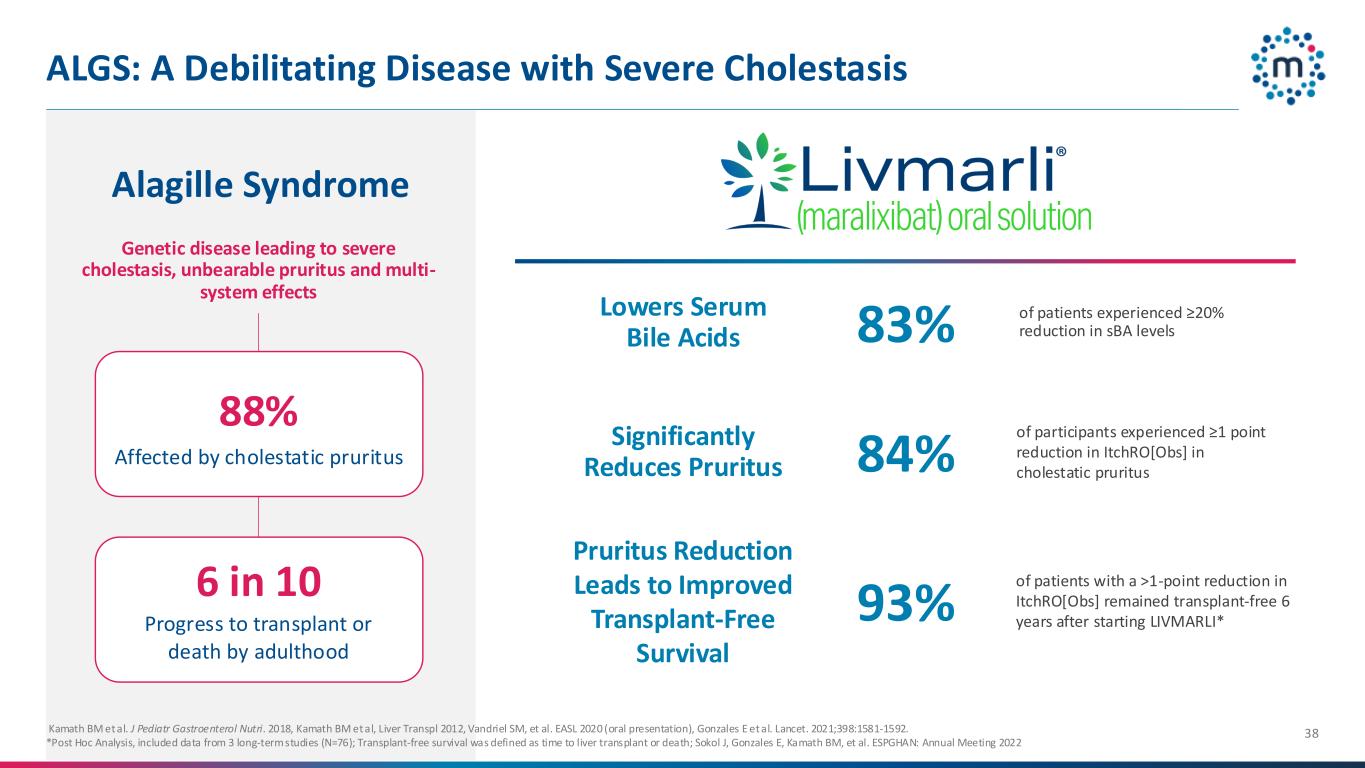
Thanks, Ryan, for the question. In terms of overall penetration for the eligible treatment population in the U.S., so algeal syndrome patients with pruritus that are pre-transplant, we're probably in the range of 40 percent or so penetrated. So just from that statistic alone, we see a lot of growth potential in the prevalent patients. And thinking about, you know, what's driving that growth over time, there are actually several tailwinds on that. One is, you know, just the further penetration into the prevalent population. There's continued new diagnoses that come along the way, so new patients entering, usually infants, so they're generally lower-dose patients, but there are new patients that are diagnosed and start each year. And then behind that, you know, this is weight-based dosing, so you do see some of those dose adjustments over time. So all of that kind of combines for the U.S. to show that, you know, there's a long runway of continued growth for alergial syndrome in the U.S.
Operator
We now turn to David Lebowitz with Citi. Your line is open. Please go ahead.
Thank you very much for taking my question. In terms of the recent approval for CTX, congratulations on that um could you i guess elaborate on how you expect this could affect the sales trajectory um from this point going forward given there's already uh use in that
particular population thanks for the question david yeah so that you're kind of understanding in your question there's a dynamic here where we already have um we think that there's you know you know, substantial number of the diagnosed CTX patients had been on Keen and all. The plan is to have those convert over to Citexily in the coming months. And the goal here is to impact diagnosis and getting more patients diagnosed and then to treatment. So we do expect it to be a gradual kind of bending of the curve of bringing new patients to diagnosis earlier preventing the accumulation and build-up of some of these irreversible effects of the disease.
Operator
Got it. Our next question comes from Mike Olves with Morgan Stanley. Your line is open. Please
Rohit
Analyst — Morgan Stanley
go ahead. Hi, this is Rohit on for Mike. Thanks for taking our questions. Can you just talk about the patient mix between allogile syndrome and PFIX for Livmarly in the fourth quarter of 24 and how you expect this to play out in 2025? And then additionally, how many of the patients on the PFIC expanded access program are now on paid drug? Thank you.
Thanks for the question, Rohit. Touch on the last one there first. During the year last year, we were able to convert all of the U.S. expanded access patients over to commercial products. So That was complete, really, most of it into the third quarter last year. And in terms of the patient mix, you know, we don't post specific numbers, kind of where we stand today. Most Livmarly patients are syndrome patients. So that's the vast majority of the contribution today. In terms of new patient starts, since really Q3 of next year, we have seen, you know, with the steady allergial patient starts, we have seen a nice step up in PFIC patient starts. So they are contributing quite substantially to new patient starts going forward. You see that reflected in the top line performance. Thanks for the question.
Operator
We now turn to Ryan Deschner with Raymond James. Your line is open. Please go ahead.
Congrats on the quarter. My question is, how much commercial team expansion would you anticipate doing for expanded pruritus in ultra-rare cholestatic patients pending the result of the Phase III EXPAND study. And then I have a quick follow-up.
All right. Thanks for the question, Ryan. Yeah, for looking at planning for Lips-Marley's potential label expansion with EXPAND, we anticipate that's largely the same prescribing universe as the Alley-Schill syndrome and PFIC prescribers. So it wouldn't be an expansion of the field team that's already in place. So a lot that we can leverage there commercially. And you said you had a follow-up question.
Rohit
Analyst — Morgan Stanley
Yeah, thanks.
Do you feel at this point, do you have a feel at this point for how many, specifically how much of an impact the growing average patient weights are in impacting sales growth in alageal? How big, actually, is this growth component now compared to some of the other tailwinds here, and how do you expect it to grow moving forward?
I mean, the way that I would describe it is, you know, we look at and kind of think about this as the average dispense, and it changes quite modestly over time, in part because you have—we continue to have new diagnoses come in, so there are new infant patient starts along the way. That kind of tempers the overall effect, but we have seen it kind of gradually increase over the years.
Operator
We now turn to Brian Scorney with Baird. Your line is open. Please go ahead.
Hi, this is Luke. I'm for Brian. Thanks for taking the question. We were hoping you could just talk a little bit about how the Vantage study takes into account prior OCA use and enrollment. And do you think patients recently discontinuing OCA could see an impact on paritis measurements as compared to a patient not discontinuing? Thanks for the question.
I'll let Joanne jump into that one.
Yeah. Thanks for the question. So, you know, when the study was started, we actually thought there would be a bigger contribution in terms of patients who are in OTA. It turns out it's really not an issue at this point. And so, you know, that's our enrollment is actually picked up quite nicely since the interim results came out. We're not really seeing that there's an issue in terms of patients, a lot of patients coming forward with OCA who are candidates for the study otherwise. And I think that just reflects overall kind of usage patterns with OCA in general. Not really that much of a contender in this space.
Kind of in addition to that, recall that for PDC, the Vantage study, about two-thirds of those patients are first-line, so that would be before OCA would have been used or before the, you know, the new P-PARs are used.
Operator
Our next question comes from Jonathan Wallaban with Citizens JMP. Your line is open. Please go ahead.
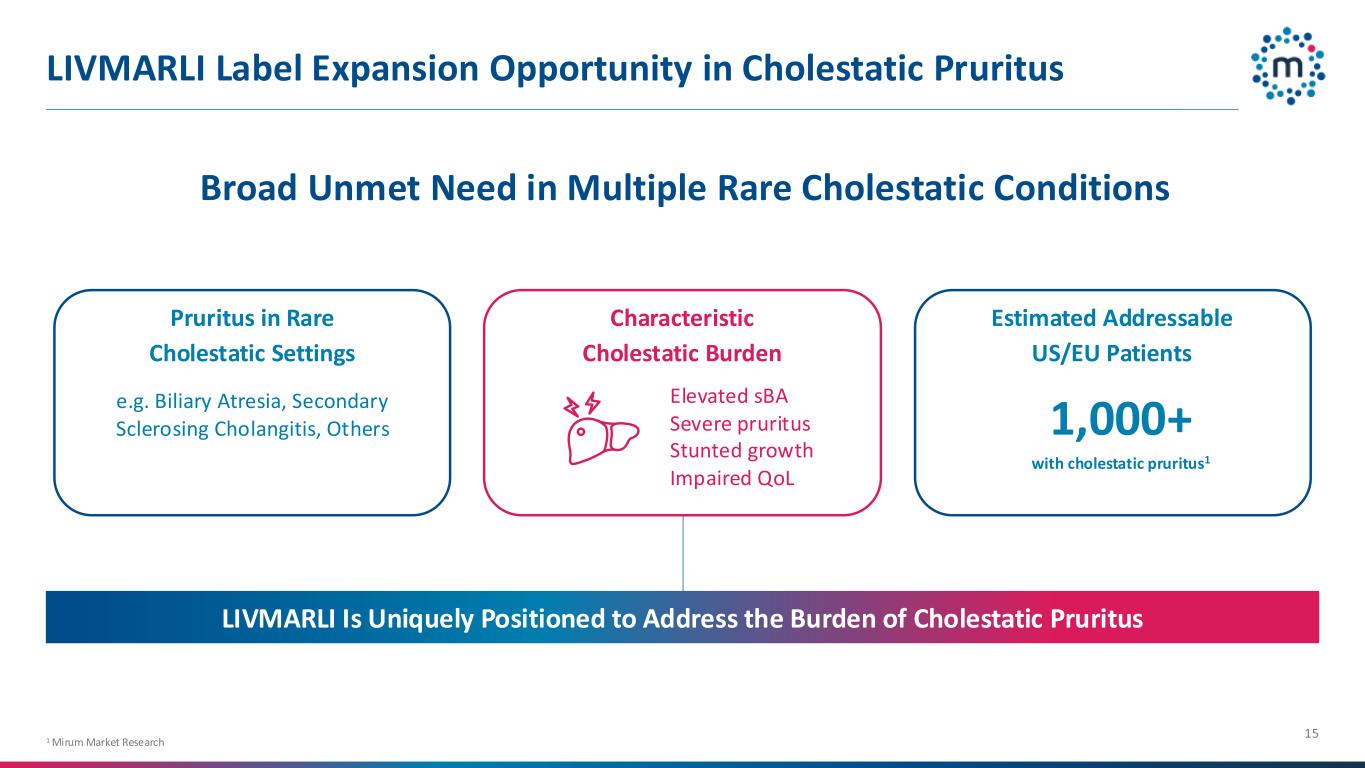
Hey, thanks for taking the question. Just wondering, you know, P-BAC on a prior expand question. What do you envision the label looks like if you have success in that phase-through trial? And then how do you wrap your heads around that 1,000 patient US and EU prevalence, given it's a collection of a bunch of small, small indications.
Jonathan, thanks for the question. You know, the label, the indication statement is something to nail down, frankly. It is, as you point out, it's a definition somewhat of exclusion. It's a basket of several different causes of cholestasis, excluding PSC, PBC, ICP, atlasville syndrome and pfix so it's all of the the many uh less common uh causes of cholestasis so exact wording uh will need to be ironed out as we get to that label expansion but in terms of how we think about the patient number though you know we we think it's quite simply the way to think about it it's a pfix sized opportunity or larger and kind of real compassionate use requests and interest from physicians kind of counting up some of those patient numbers and where that demand was coming from. That's how we landed at that 1,000 patient estimate for the U.S. and Europe. So I feel it's a very tangible market estimate as opposed to maybe an epidemiology study, for example. So I feel confident that's a quite
Operator
And our final question comes from Ed Ars with HC Wainwright. Your line is open. Please go ahead. Hello. Good afternoon, everyone.
This is Thomas Depp asking a couple of questions for Ed. Thank you so much for the kind of questions. So first, for being able to look at this study in PFC, good to hear that it's on target to compete in the second half this year. just wonder how many months or you know what when should we expect to see top line data after complete enrollment is announced if you can outline some details on the process yeah thanks
for the question Thomas I mean this simple way to think of it is it's a approximately six month end point and time to close and clean the database so you know kind of project some amount of time like that after enrollment completion we do plan to announce enrollment completion when we get there
Got it. And then perhaps one question on the phase three, on the expense study with Molly as well. Just wonder if you can share some patient experience that you have received today and which type of rare goestatic conditions are most common so far.
Yeah, thanks for the question. I'll maybe ask Joanne to speak to some of the data at ASLD last year on that point.
Yeah, we do actually have a number of patients that were treated through compassionate use for biliary atresia, and those results are quite strikingly positive for treatment of their paritis. And of note, this is a different patient group than was studied in the earlier EMBARC study. So these are biliary atresia patients that have likely had a CASAI when they were quite young, and then they continue on. We do know that over time, patients will progress in terms of their disease and often will require a liver transplant. And as part of that progression of disease that will develop paritis. And so we do have an abstract with a handful of cases where there's been quite good treatment outcomes using IBAD inhibitions. So that's partly what gives us confidence in conducting a study like the EXPAND study that ultimately there is a need and also that we do have a product that can really address that.
Understood. Perhaps one follow-up on that, should we expect to see some kind of interim data from this study, perhaps, in medical conferences, posters?
Actually, we do not plan to do an interim analysis for the study. Our plan is to complete enrollment in 2026, next year. So if we did an interim, it would actually slow things down. So we do think we're, you know, we're on track to complete enrollment in 2026 and look forward to sharing the results when they're available for the full study.
That's it. Thank you again for the kind of questions.
Operator
This concludes our Q&A. I'll now hand back to Chris Peets, CEO, for any final remarks.
Great. Thank you all for joining us today. Have a great afternoon.
Operator
Ladies and gentlemen, the data call has now concluded. We'd like to thank you for your participation. You may now disconnect your lines.