Operator
Thank you for your patience. My name is Tina, and I will be your conference operator today. I would like to welcome everyone to the NACCO Industries Second Quarter 2025 Earnings Call. It is now my pleasure to turn the call over to Christina Kmetko, Investor Relations. Please proceed.
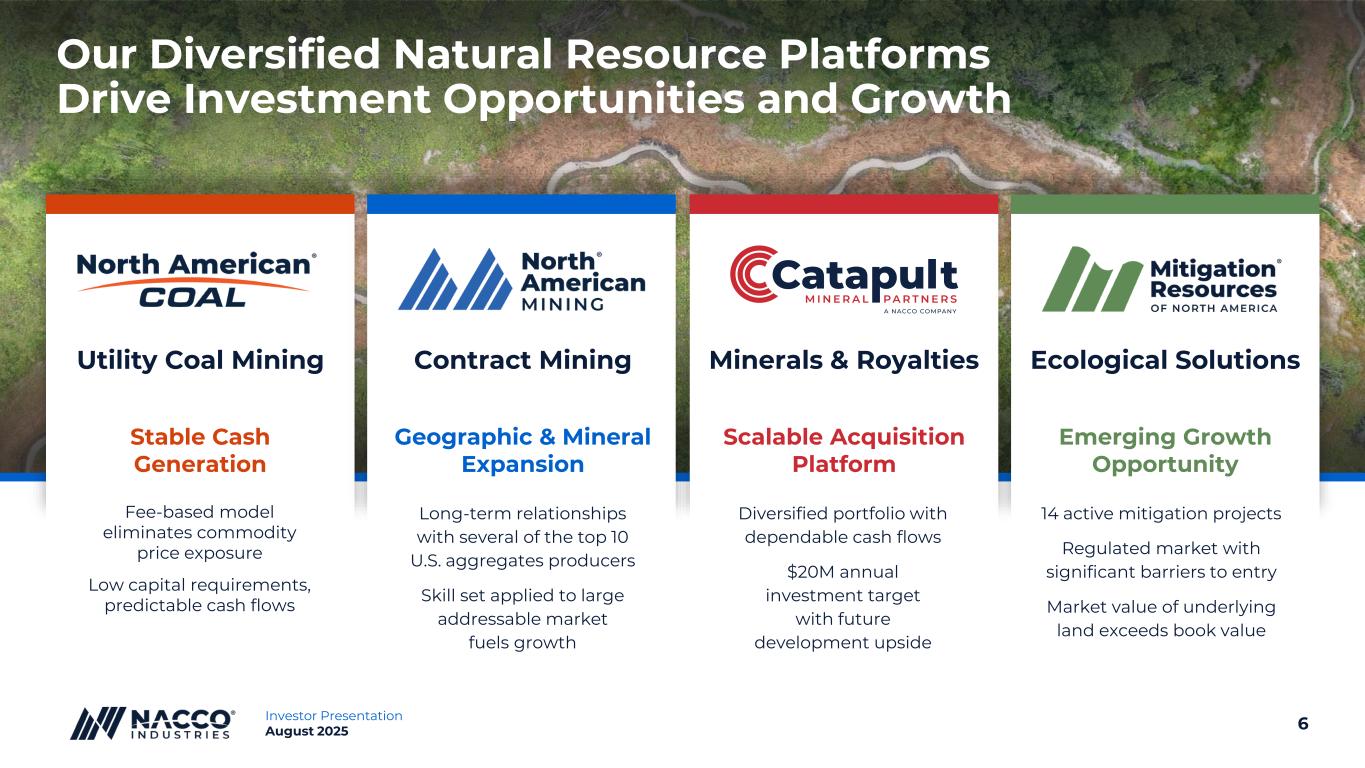
Good morning, everyone, and thank you for joining us on today's second quarter 2025 Earnings Call. I'm Christina Kmetko, and I oversee Investor Relations here at NACCO. I'm joined by our President and CEO, J.C. Butler, and our Senior Vice President and Controller, Elizabeth Loveman. Yesterday evening, we released our second quarter results and filed our 10-Q with the SEC, both of which are available on the website if you haven't had a chance to review them. Before we dive in, let me remind you that today's discussion will include forward-looking statements. As always, actual outcomes could differ materially due to various risks and uncertainties, which are outlined in our earnings release, 10-Q and other filings. We don't plan to update these statements until our next call. We'll also be referencing some non-GAAP metrics to give you a clear picture of how we think about our businesses. Reconciliations to GAAP can be found in the materials we posted online. Lastly, we mentioned in our earnings release that during the quarter, we changed our reportable segment names to make it easier for our stakeholders to associate the business activities with each segment. Coal Mining was renamed Utility Coal Mining. North American Mining is now referred to as Contract Mining, and Minerals Management was renamed Minerals and Royalties. The composition and historical reporting of each segment remained the same. With the housekeeping out of the way, I'll hand things over to J.C. for his opening comments. J.C.?
Speaker 2
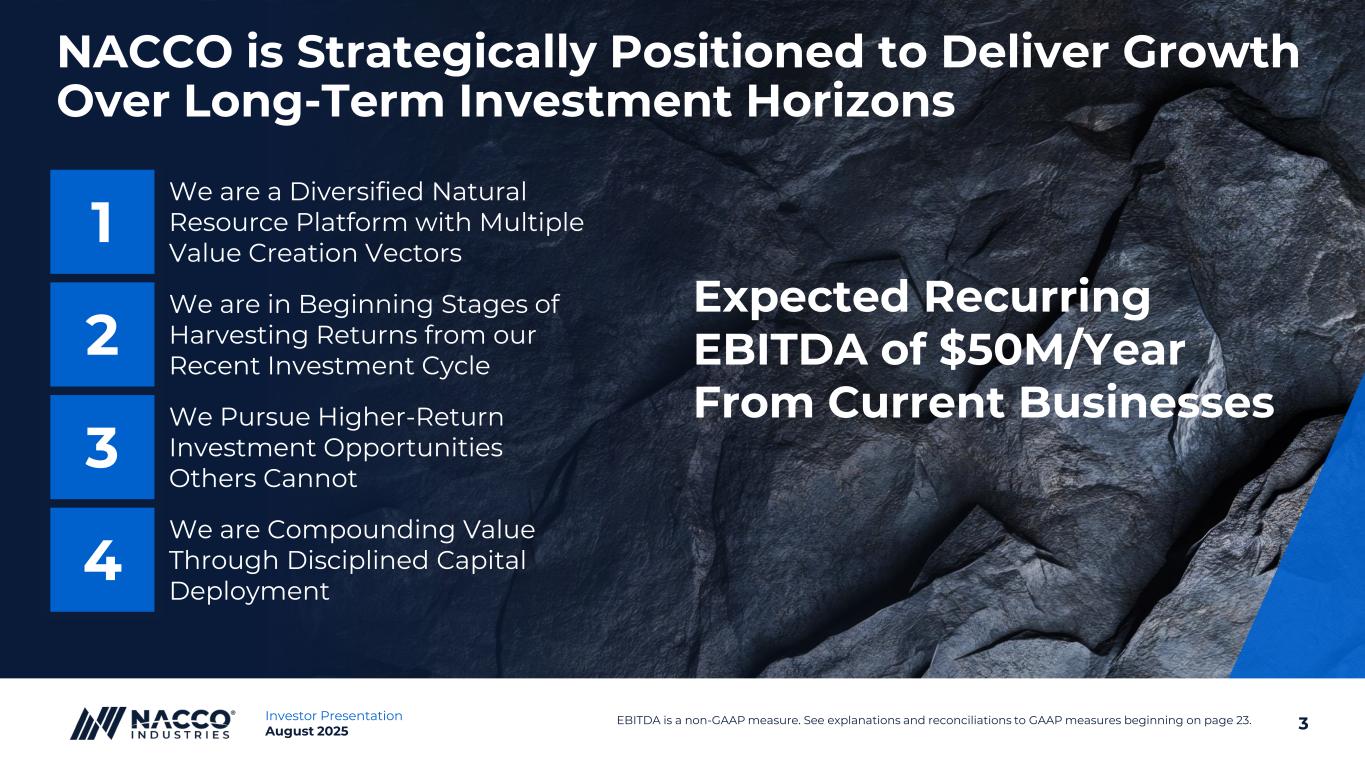
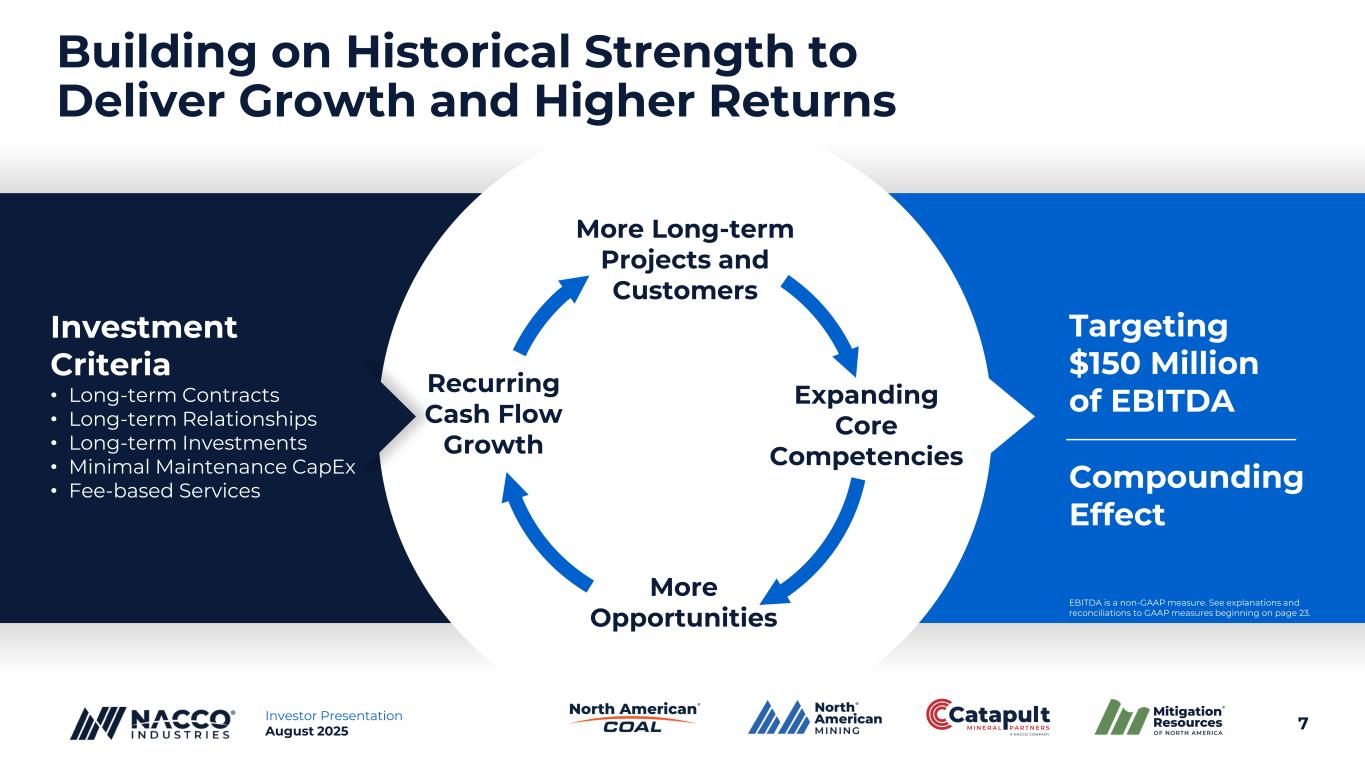
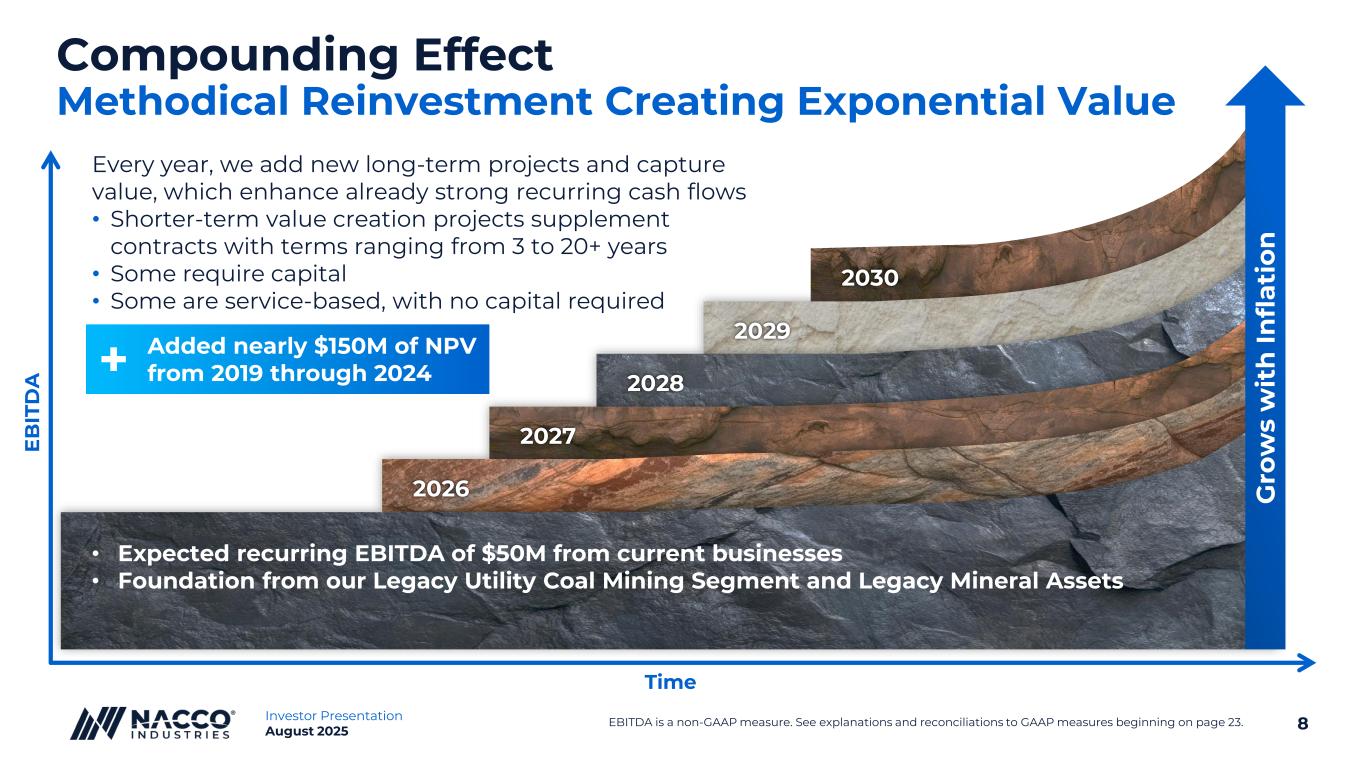
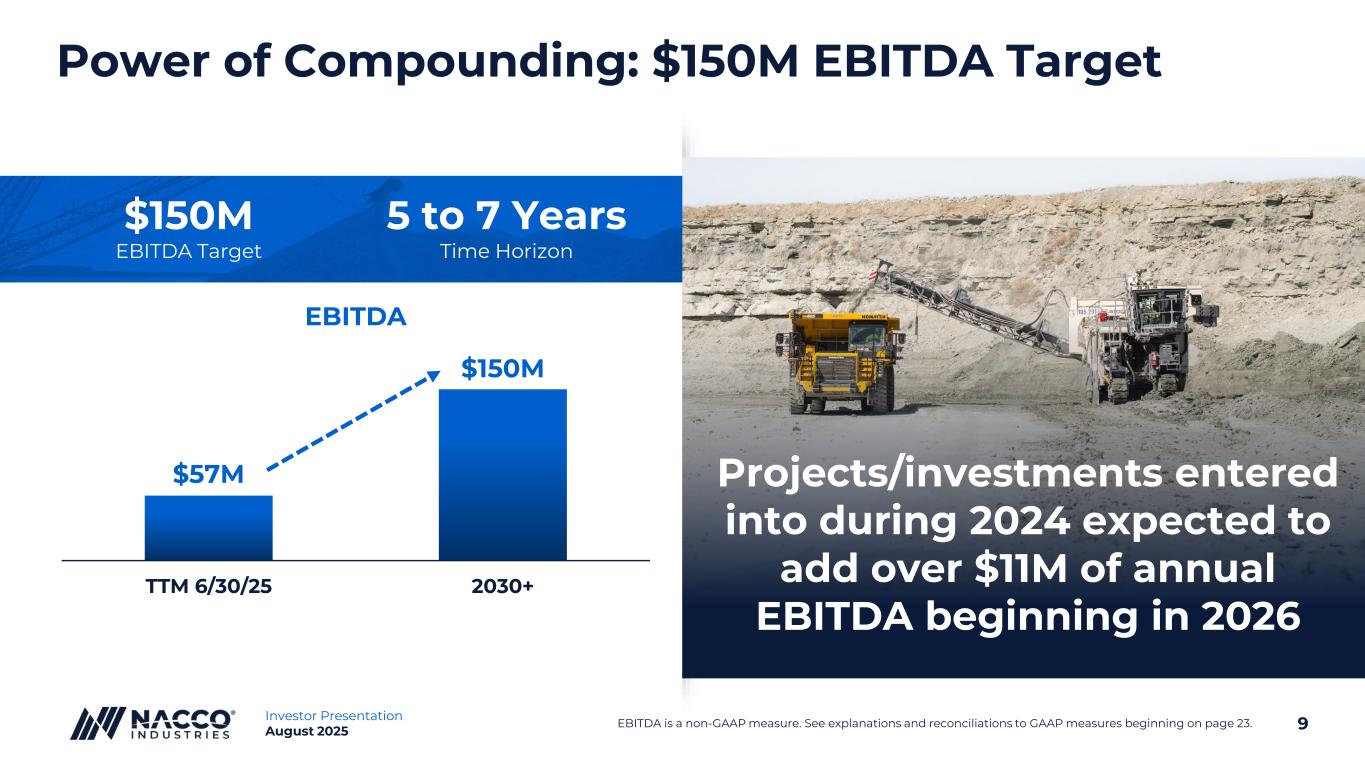
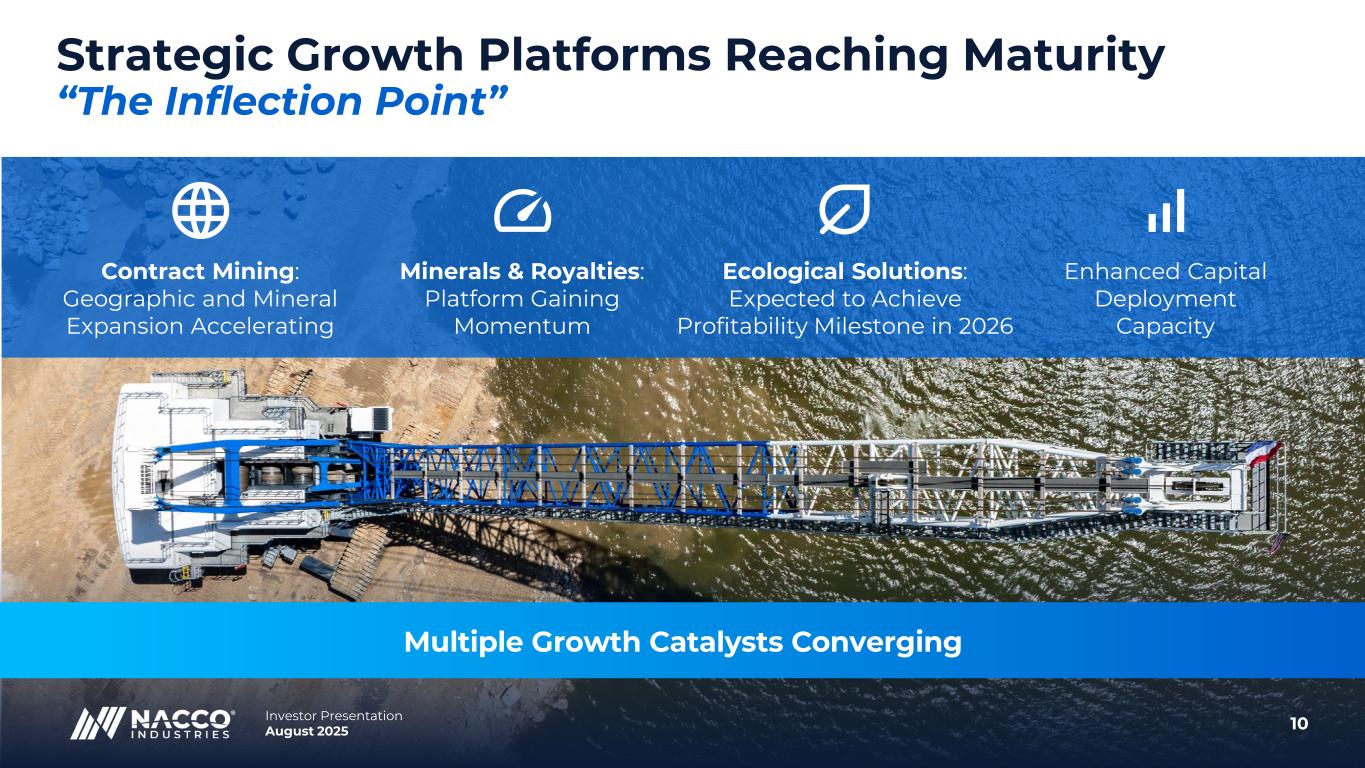
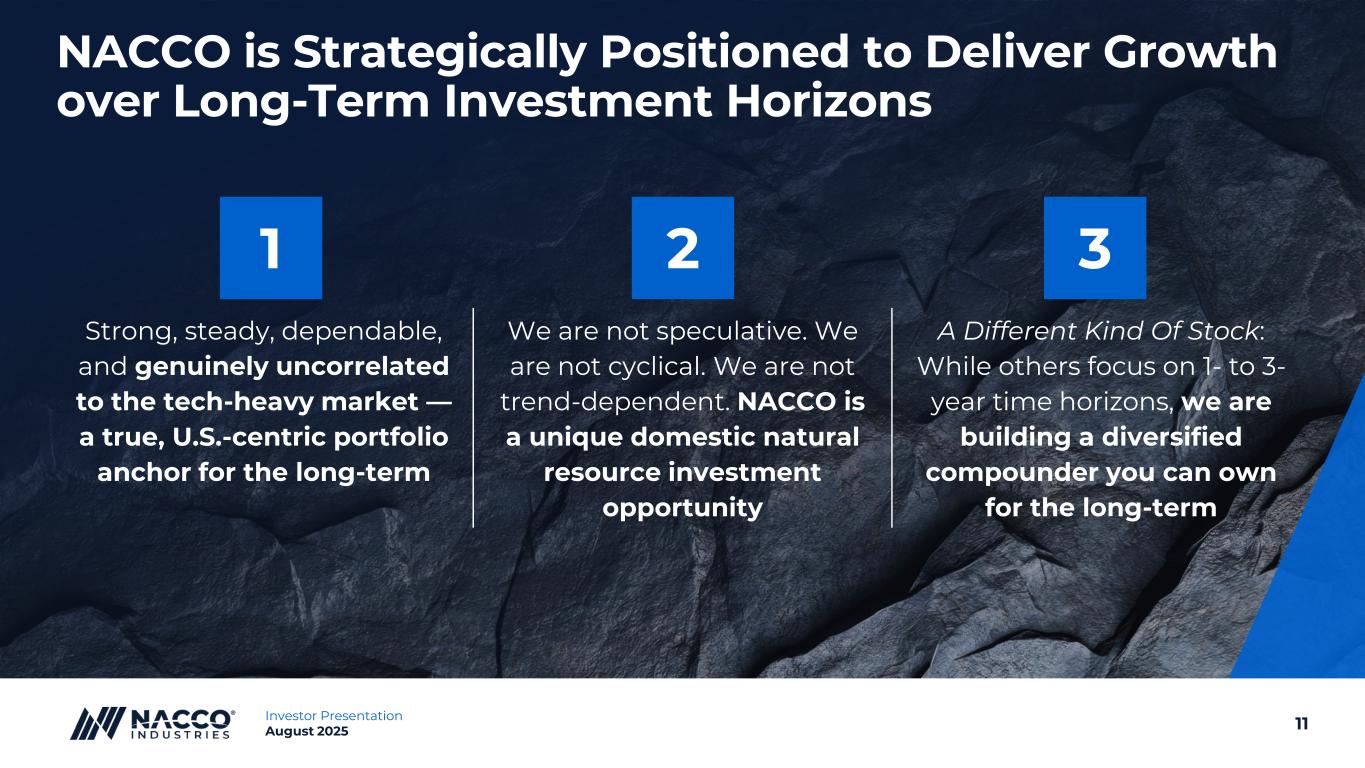
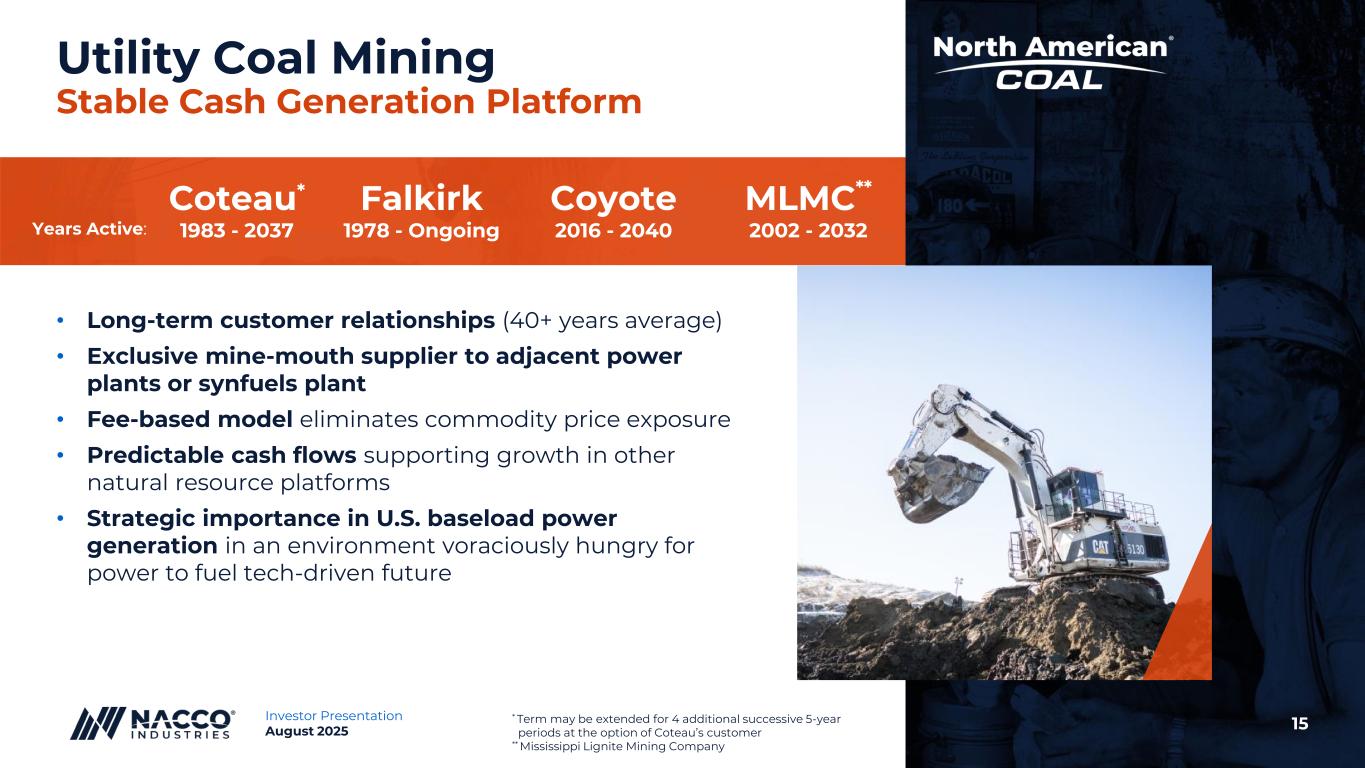
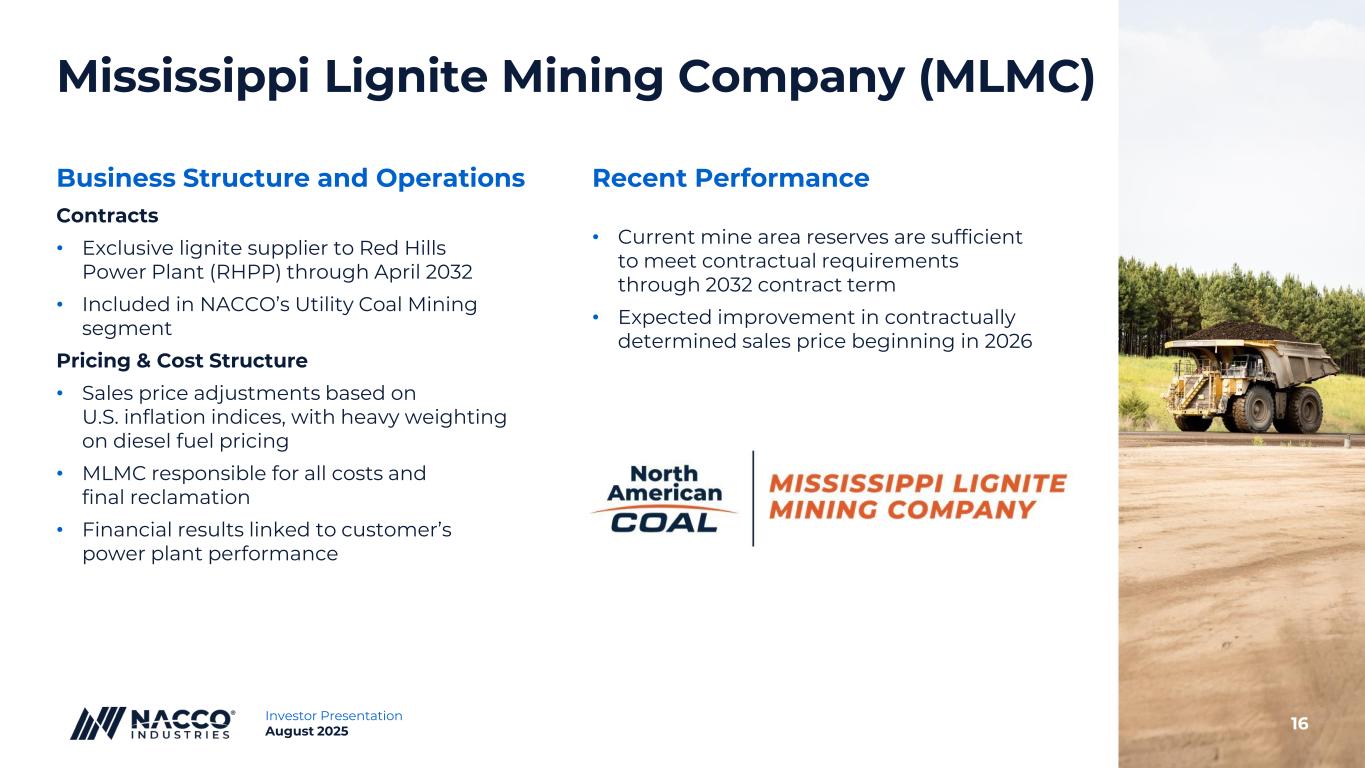
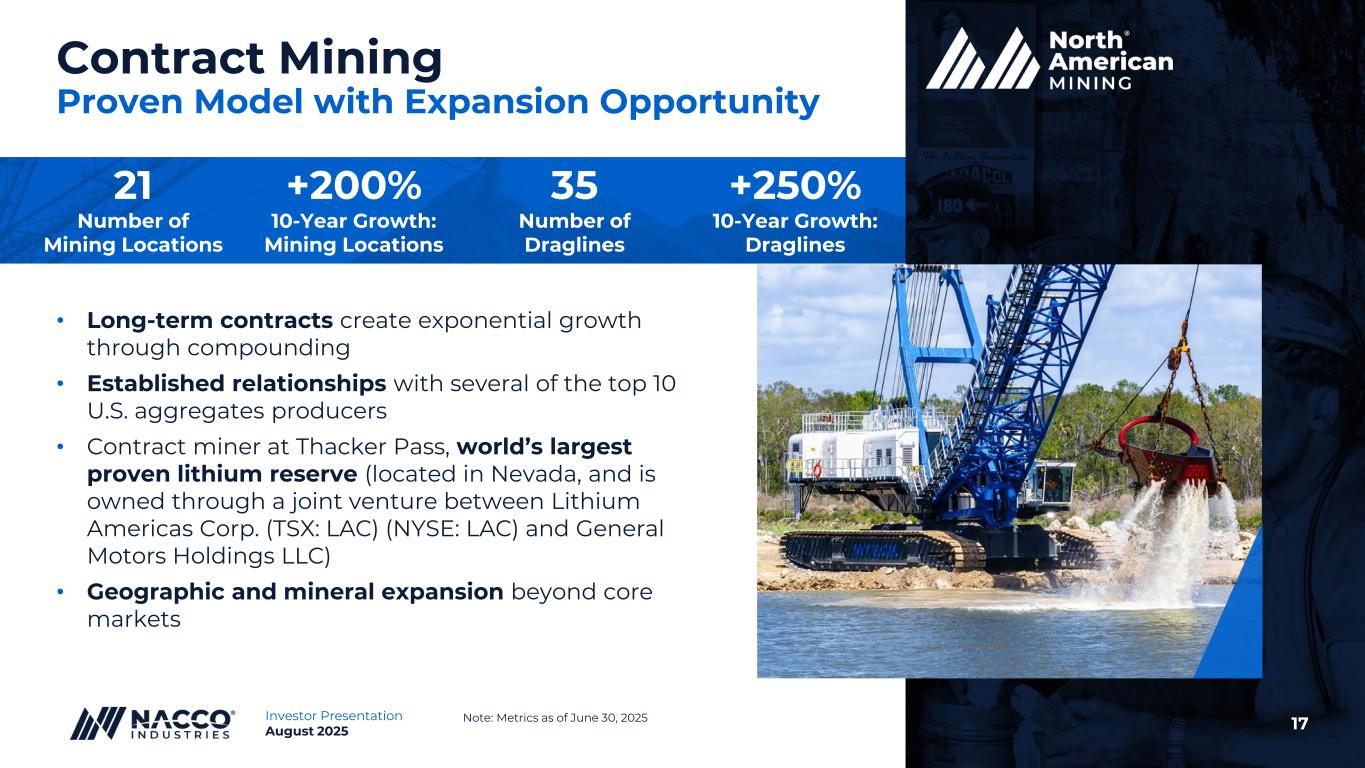
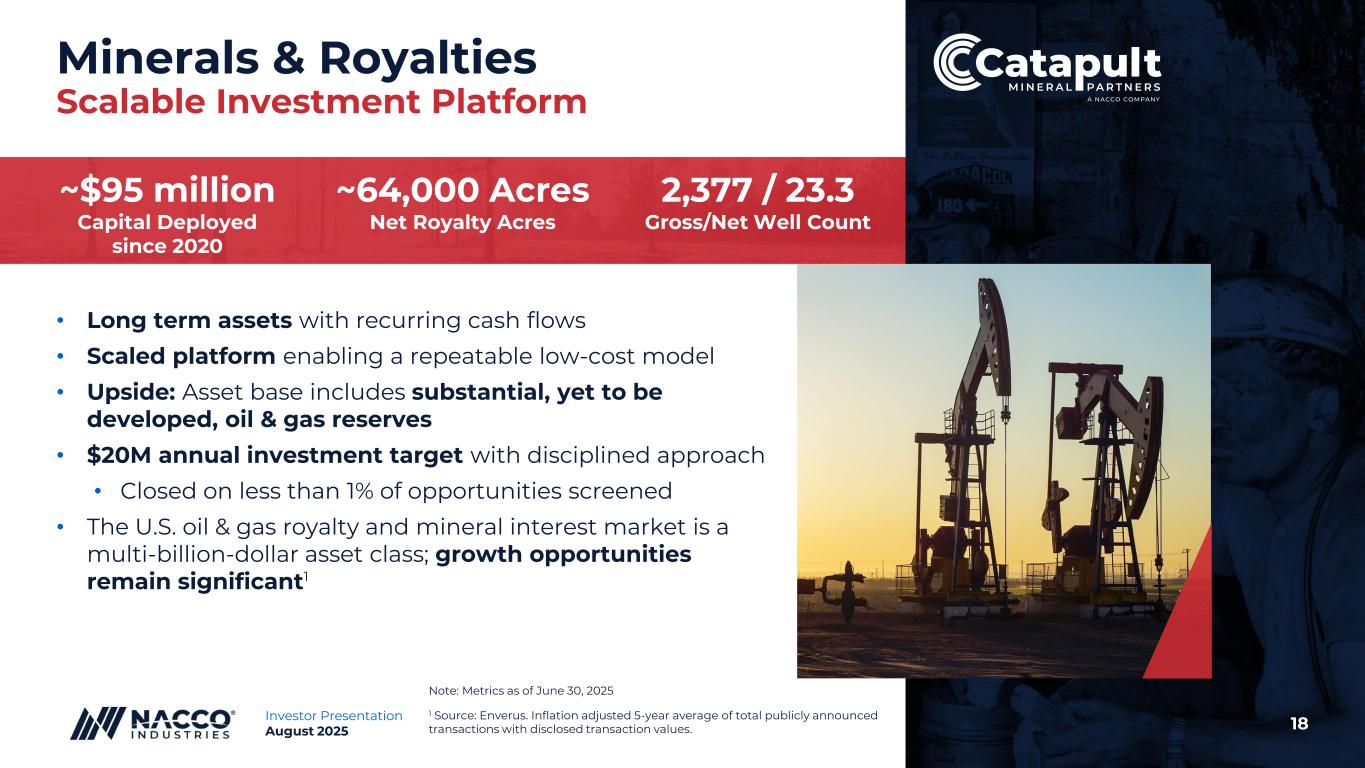
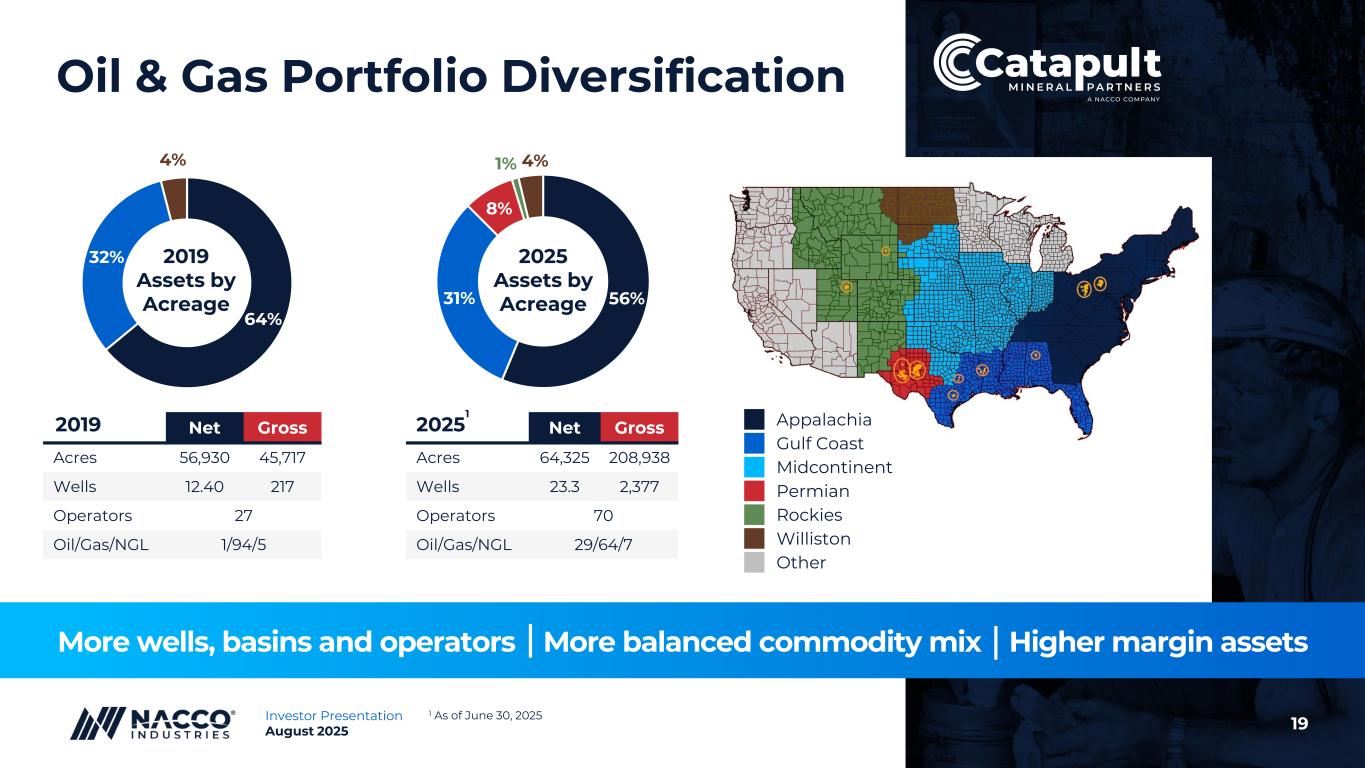
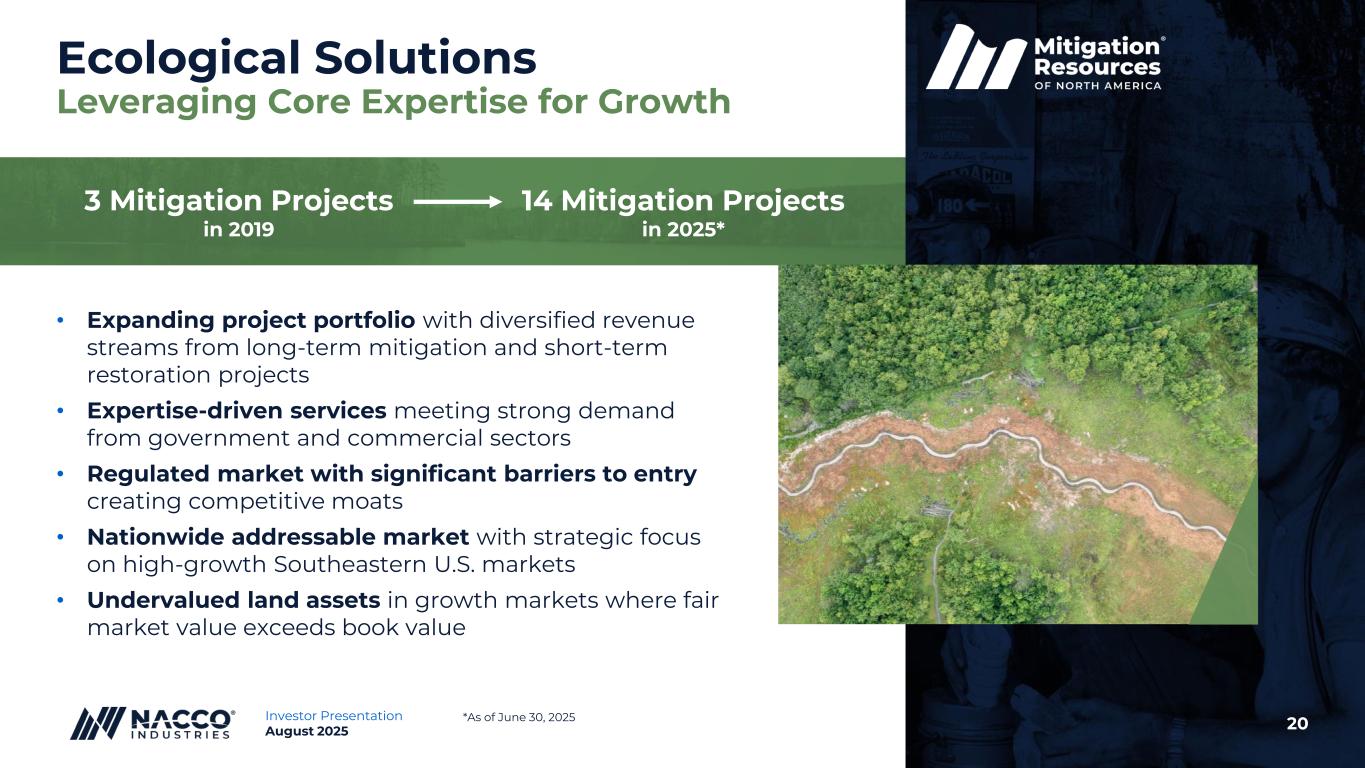
Thank you, Christy, and good morning, everyone. I want to open today by giving you a sense of how we see our business developing, where our momentum is most visible, and how we're navigating what we believe are temporary challenges. The operational challenges we mentioned occurred primarily at our utility coal mining and contract mining segments. These temporary disruptions affected our second quarter results, but my confidence in our business remains strong. We're also comparing these results against a particularly strong prior year quarter, where earnings a year ago were boosted by a sizable gain on the sale of legacy land. We experienced strong revenue growth, specifically in the Utility Coal Mining segment, but it wasn't enough to overcome operational disruptions in the utility coal and contract mining segments, as well as higher unallocated costs. Within the Utility Coal Mining segment, challenges at Mississippi Lignite Mining Company primarily drove the lower segment results. MLMC's customer has and continues to experience inefficiencies at its power plant. This, in turn, affects our ability to efficiently mine coal. Our team continues to respond to these unfavorable conditions with agility, but the operating inefficiencies tied to the power plant and lower pricing did weigh on our results. Disruptions at the Contract Mining segment due to temporary mechanical issues at certain quarries resulted in fewer tons delivered and higher operating costs. That said, parts sales helped offset some of this, and we expect stronger results in the back half of the year as benefits from additional parts sales and several new and extended contracts kick in. The second new MTech dragline was commissioned early in the third quarter at an existing customer quarry, joining one commissioned at the end of the first quarter at a different quarry. These new MTech draglines are great additions to the fleet. Their design simplifies maintenance, which allows increased uptime and greater efficiency. Amid these temporary bumps, our underlying growth drivers are performing well. Within Contract Mining, soft tooth mining is continuing to provide support for the Thacker Pass Project in Nevada, which is now under construction. This operation generates stable income today and is expected to provide enhanced income and lasting cash flow as the project transitions to full-scale lithium production in late 2027. We are now providing contract mining services for several of the top 10 U.S. producers of aggregates, and our expanding pipeline of potential new deals is strong. We believe that our continued engagement with current and potential customers positions North American Mining and the Contract Mining segment as a key pillar for future growth. Turning to our Minerals and Royalties segment. In July, Catapult completed a $4.2 million strategic acquisition that expanded our minerals interest within the Midland Basin. This deal included 10,500 gross acres and approximately 400 net royalty acres and includes a mix of producing wells as well as additional upside opportunities through future development with existing operators in the area. Switching gears, we are also seeing growth in mitigation resources. We had expected Mitigation Resources to achieve full year profitability in 2025; however, temporary delays in federal permitting have pushed out that expectation. Mitigation Resources is now expected to achieve full year profitability in 2026 and move toward more consistent results over time. The pace of growth that Mitigation Resources is building as this key team continues to secure new projects builds on results from projects that are currently under way. Despite the current quarter challenges, we're well positioned to achieve meaningful growth going forward. Our fundamental business model is built on a strong collection of long-term contracts and investments that produce relatively strong and steady earnings and cash flows over time. Each year, we add to this business model by securing more long-term projects and making investments that will contribute to future results, creating a compounding effect. Many of these opportunities are built on a fee-for-service model where we have little or no capital exposure, while others might require us to invest capital upfront. Regardless of the model, very few of our businesses require significant amounts of maintenance CapEx. Our goal is to keep adding layers that will provide something approaching annuity-like returns and cash generation over time. All of this is underpinned by a business model purposely built for durability and compounding growth. We've been pursuing this approach for 10 years, and it's really gaining momentum. This is why I remain confident in our ability to deliver what we believe will be improving results in the second half of the year and continuing in the future years. Before wrapping up my comments, I'd like to note that I believe our new segment names do a much better job at describing what we do in each of our businesses. We made this change as part of a larger effort to enhance our communications with shareholders and others who might be interested in our company. With that, I'll turn the call over to Liz for a closer look at the financials. Liz?
Speaker 3
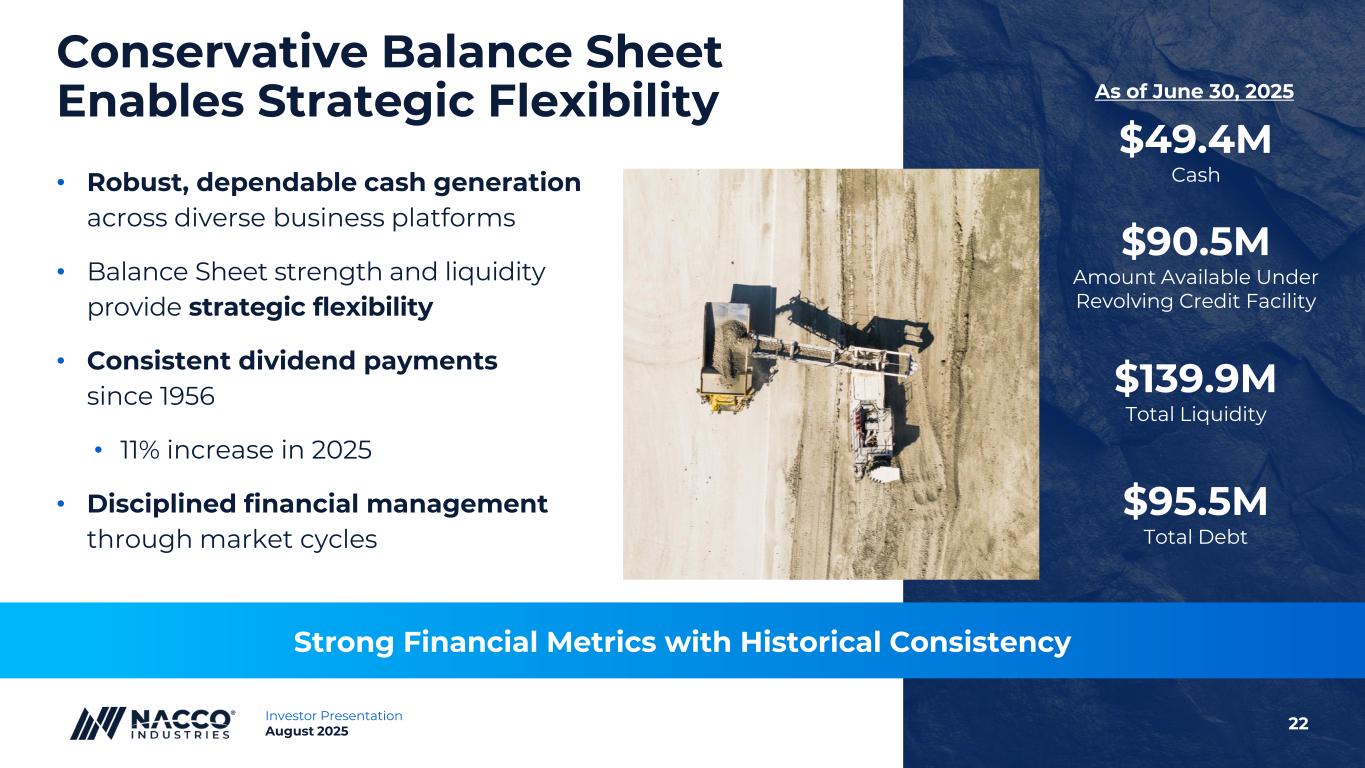
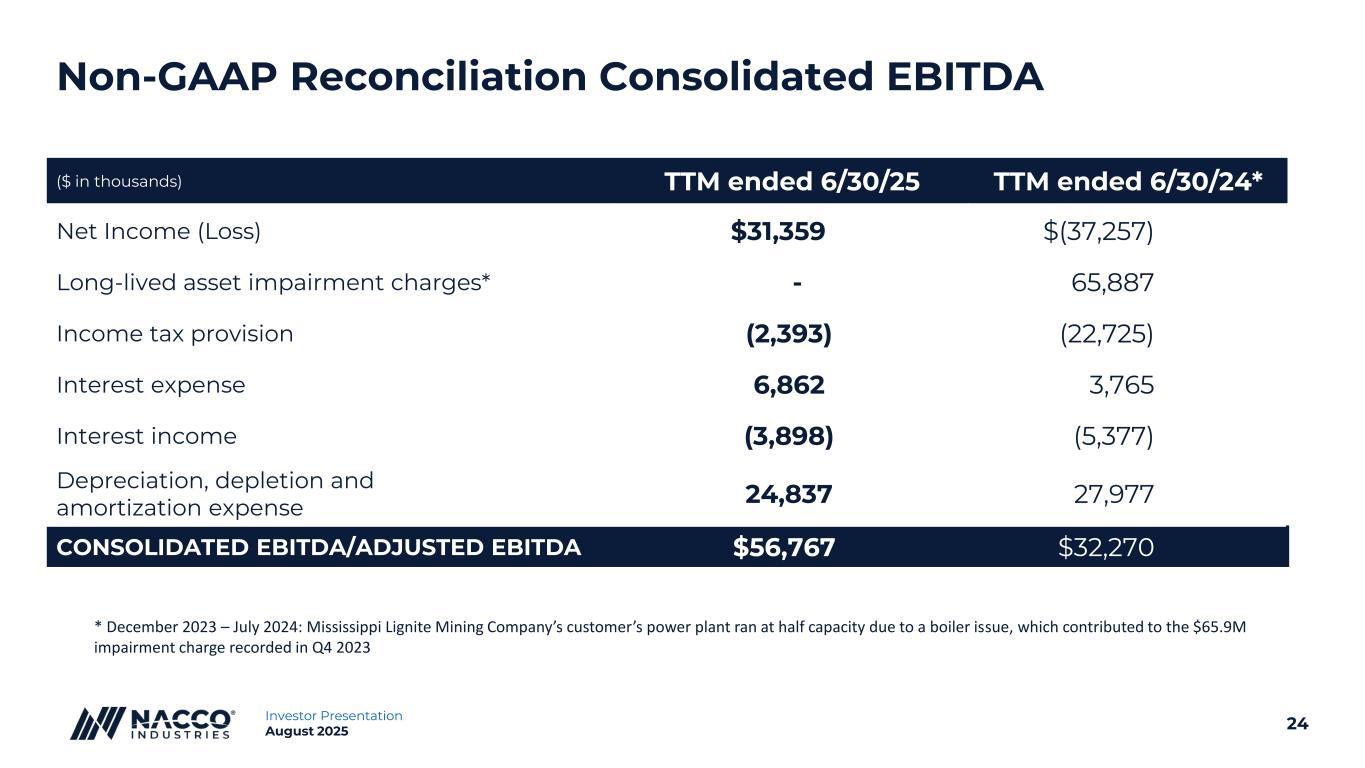
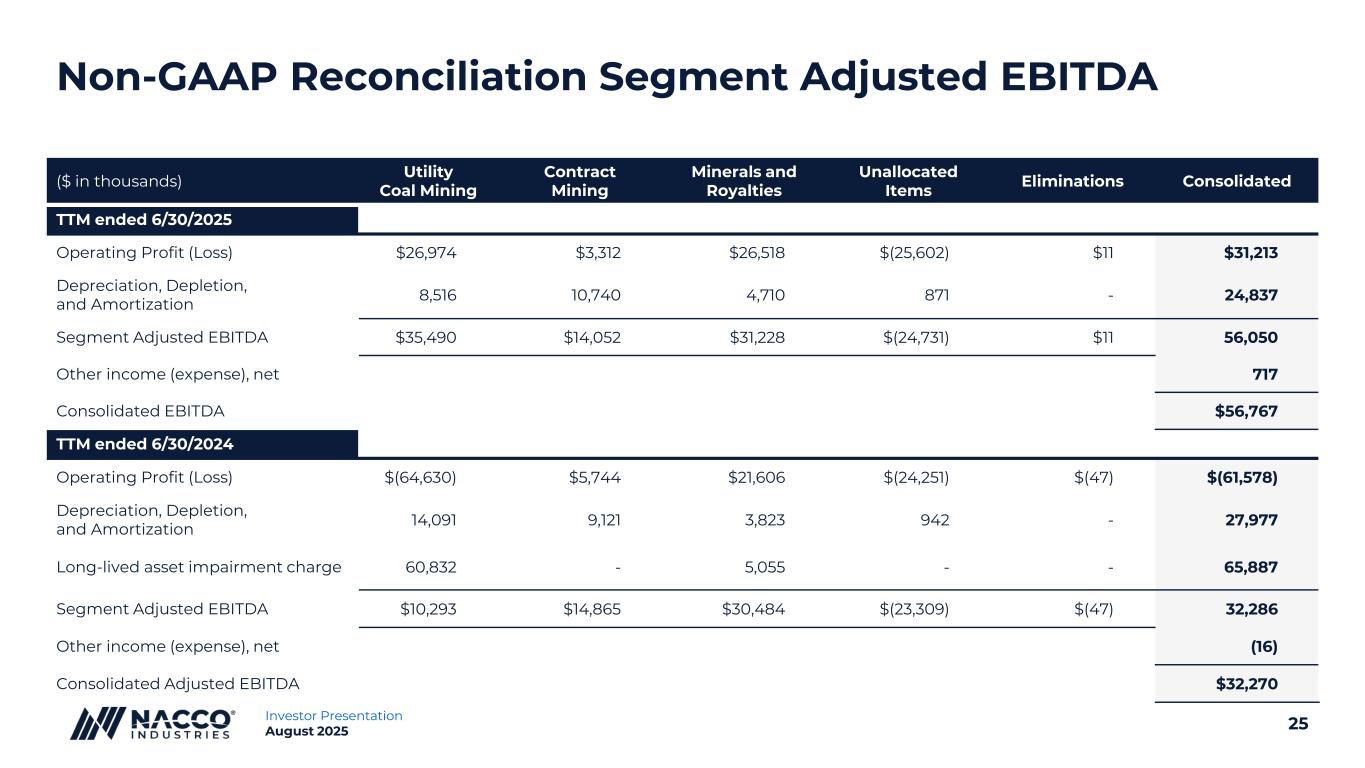
Thank you, J.C. Let's get into the results for the quarter, and I'll try to keep it as straightforward as possible. Consolidated revenues were $68 million, up 30% year-over-year. That's really being driven by the Utility Coal Mining segment as Mississippi Lignite Mining Company's customer returned to more normal operations after running at reduced capacity for much of last year. Both an increase in other income and a favorable change in income taxes helped to partly counterbalance the impact from operational disruptions. This combination resulted in consolidated net income of $3.3 million, down from $6 million in the prior year. Diluted earnings per share decreased 46% year-on-year, again, reflecting those operational headwinds and last year's unusually strong comparison. EBITDA was $9.3 million versus $13.5 million in the same period last year. There's a little more color at the segment level. At the Utility Coal Mining segment, the decline in operating profit and segment adjusted EBITDA was primarily driven by unfavorable results at Mississippi Lignite Mining Company. Although the cost per ton of coal delivered improved, the lower contract pricing more than offset that improvement. Looking ahead, we expect improvement in the second half of 2025 compared with the first half of the year. Still, the current formula-based contract pricing remains a headwind compared to the second half of last year, which also benefited from business interruption insurance income. Anticipated improvements in both sales price and cost per ton delivered are expected to result in a return to profitability at Mississippi Lignite Mining Company in 2026, assuming the customer power plant operations and demand stabilize and formula-based pricing improves as expected. At North American Mining, revenues net of reimbursed costs rose 3%, driven by increased parts sales. However, this upside was offset by fewer tons delivered due to customer operational delays plus higher operating costs, including unexpected repairs and maintenance expenses. This resulted in a decrease in the current quarter profit and segment adjusted EBITDA. With operational efficiencies expected to improve and a growing focus on parts sales, we expect the Contract Mining segment profits to strengthen in the back half of the year, with the momentum continuing into 2026. At the Minerals and Royalties segment, last year's results included a large one-time gain. Excluding that, this year's operating profit and EBITDA actually increased, thanks primarily to a 30% rise in revenues, largely due to higher natural gas prices. As J.C. mentioned, Catapult completed a new acquisition in July, expanding our mineral interest portfolio. Both this new acquisition and Catapult's equity investment should contribute more meaningfully to results starting in the second half of 2025. Adding everything together for the remainder of the year, we anticipate a substantial increase in consolidated 2025 operating profit over the first half, but full year operating profit will still fall short of last year, which included a large gain on sale. We will complete the termination of our pension plan by the end of this year. While this will trigger a noncash settlement charge, the plan is overfunded and the move will simplify our financial structure going forward. Nonetheless, the pension settlement charge and lower operating profit are expected to lead to a substantial year-over-year decrease in net income and EBITDA compared with the 2024 second half and full year. From a liquidity standpoint, at June 30, we had total debt outstanding of $95.5 million. Our total liquidity was $139.9 million, which consisted of $49.4 million of cash and $90.5 million of availability under our revolving credit facility. During the quarter, we paid $1.9 million in dividends, and as of June 30, 2025, we had $7.8 million remaining under our $20 million share repurchase program that expires at the end of this year. We are forecasting up to $86 million in capital spending this year, which is higher than we projected at the end of last quarter. Most of this is earmarked for new business development. As our returns from previous investments start to materialize, we expect cash flow to improve over the prior year and continue to increase steadily next year. With that, I'll hand it back to J.C. for closing remarks.
Speaker 2
To wrap up, I am confident in our future. We are operating in a very favorable environment. There is strong growing demand for the products and services that we provide and rapidly growing demand for energy. Recent government support is also further boosting all of our businesses. Short-term disruptions aside, I believe the building blocks for durable compounding growth at NACCO are firmly in place. Our team remains focused on execution, operational discipline, and driving long-term returns for shareholders. We're optimistic about what the rest of the year holds and even more so about our prospects for 2026 and beyond. With that, we will now turn to any questions you may have.
Operator
Our first question comes from Douglas Weiss with DSW Investment.
Speaker 4
Starting with the coal segment. So on your unconsolidated businesses, volumes were a little bit lighter than they've been over the last couple of years. Could you say why that happened?
Speaker 2
It was really a collection of minor things in a number of places. There's nothing there that I would specifically call out, and there's nothing that I really think is a problem going forward. It's really just kind of single quarter noise that has been the main problem.
Speaker 4
Okay. So you would see that it dropped from...
Speaker 2
Yes. There's nothing in there that's a reason for concern.
Speaker 4
Okay. You'd see kind of returning to trend line there. Yes. And then when you say MLMC will return or you expect it to return to profit next year? Are you talking about gross profit?
Speaker 2
Yes. It's not a combination. We think the formula pricing is going to improve based on what we know about the formula and now we can look at where we think inflation will go in the future as well as we're expecting that the plant is going to operate more consistently, which allows us to operate more consistently and drive down our cost.
Speaker 4
Right. And that formula, is it redetermined based on year-end pricing?
Speaker 2
No. It's reset. It is monthly or quarterly?
Speaker 3
Monthly. That includes when we look back monthly and the 5-year.
Speaker 2
And so it's a contractually great formula that came up with back in the mid-1990s that takes a 1-year look back as well as a 5-year look back published, nationally published indices that reflect general inputs in mining and power production.
Speaker 4
I see. But is it resetting every quarter? Did I understand you?
Speaker 4
Okay. So you could actually see better pricing over the next couple of quarters, depending on...
Speaker 2
Yes. Well, based on the way we're forecasting the coming quarters, yes.
Speaker 3
It's really in 2026 that we see the substantial improvement in the sales price.
Speaker 2
There will be some fluctuations in the pricing model, which is expected. I previously mentioned that it’s based on a one-year review. This means we’re comparing today’s index to what it was a year ago and also to what it was five years ago. Looking back five years, the economy faced significant shifts due to COVID, leading to dramatic price drops initially followed by significant increases. The one-year review shows minimal fluctuations, but looking five years back introduces some inconsistencies that are currently affecting the formula. We anticipate these will level out as we approach 2026.
Speaker 4
Okay. And MLMC has the boiler problem, and it sounds like they are having some more operational problems. Is that coincidental? Or is it just a really old facility that you think may have ongoing issues?
Speaker 2
The facility is relatively new, having started operations in 2020, which is considered modern for coal-fired power plants. The significant boiler issue from over a year ago resulted in the loss of half the plant's output for six months. Such a major incident is generally expected to occur only once in the lifetime of a power plant over many years. Current issues are less severe and are typical of large, complex power plants, which can occasionally experience minor mechanical problems like tube leaks. These ongoing minor issues are not unusual and are simply impacting the results for the second quarter.
Speaker 4
Okay. For North American mining, the volume was light. Can you explain why that was?
Speaker 2
Yes. So it was a combination of some customer reduction in customer demand, which might be some general softness in their customer demand. But I don't think any of it is really significant. There were some minor issues with, I think, with some of their facilities, although nothing major. And we had some mechanical issues with some of our equipment, primarily draglines that made it difficult for us to deliver. It's one of the reasons that customers keep inventory stockpiles on site; it creates a buffer for them and for us with respect to deliveries. The repairs that we have made have been successful, and we don't see a problem with any of that going forward.
Speaker 4
Okay. In terms of the CapEx, it's back-end weighted. How is that allocated at this point? Is a lot of that for the contract mining or something else?
Speaker 2
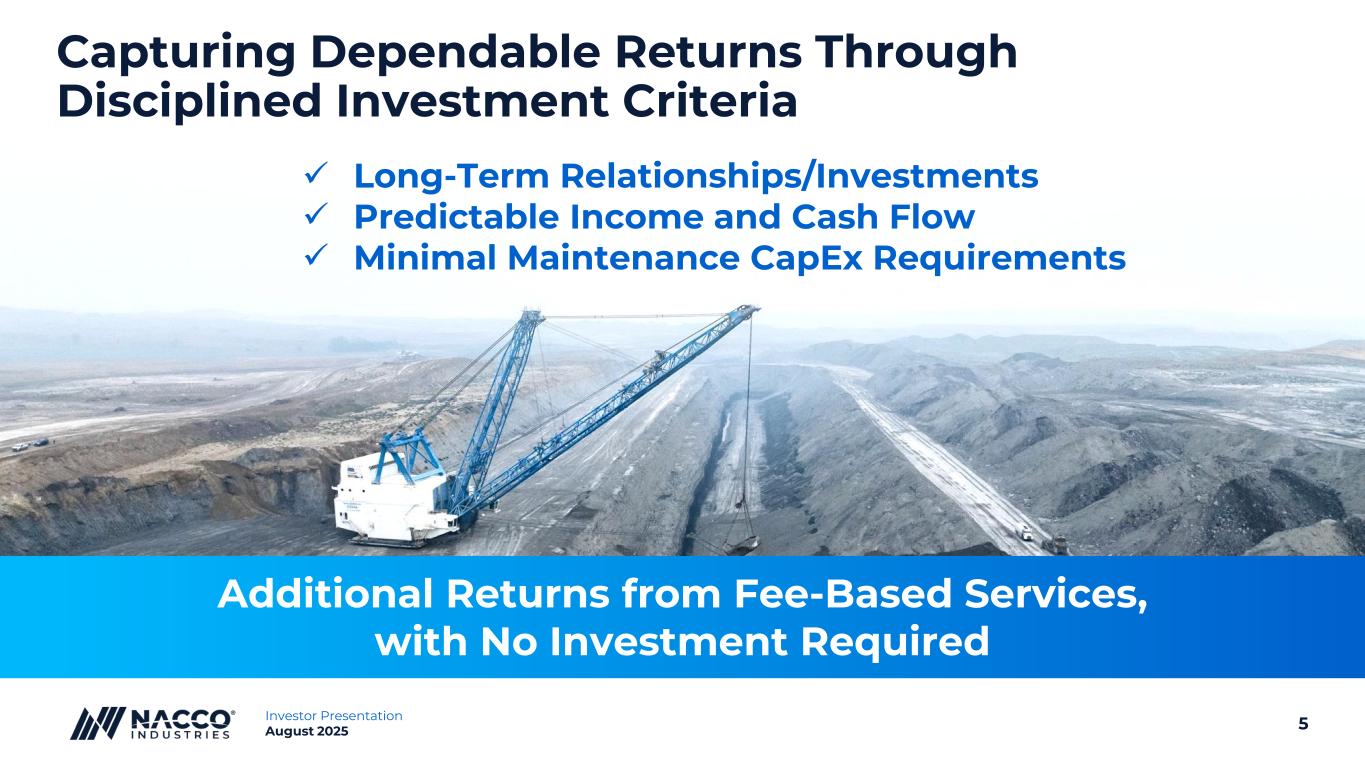
A large portion of our expenses is focused on growth initiatives aimed at securing new contracts and projects. Our business model typically involves not having to make significant upfront capital investments, instead collecting fees over time. However, in certain situations, particularly in North American Mining and Catapult, we do invest capital initially. For Catapult, this involves purchasing mineral and royalty interests to make further long-term investments without additional funding from us. In North American Mining, we may buy draglines upfront, where the maintenance costs are much lower than the depreciation over time. Thus, much of the capital expenditure planned for later in the year is related to growth through new contracts and investments.
Speaker 2
I apologize for the interruption, but I want to highlight that a key aspect of our business model is that we do not incur significant ongoing capital expenditures unless we identify growth opportunities that align with our well-defined and proven investment criteria for new projects. Therefore, our capital expenditures remain low unless we see a chance to expand through long-term contracts. In such cases, we will increase our capital spending as it presents an opportunity to grow the business.
Speaker 4
It sounds like you continue to sign new projects in the contract mining segment.
Speaker 2
Yes. In the contract mining segment, and indeed across the entire company, we have developed a highly effective business development operation. This has enabled us to secure new long-term multi-year projects, contracts, and investments in addition to our existing commitments. Our business is fundamentally supported by long-term contracts in our Coal Mining segment, particularly the Utility Coal Mining segment, alongside the income we generate from our long-held natural gas reserves in Appalachia. These long-term foundations have significantly contributed to our success over the past decade as we have continually added more long-term contracts. As we refine our business development capabilities, our proficiency has improved. Initially, our achievements felt more like singles, which I was pleased with, but recently we have begun to achieve more doubles, triples, and even some home runs in terms of long-term projects, contracts, and investments. With these opportunities, we are fortunate to have a strong balance sheet and stable cash flows that allow us to incorporate them into our existing portfolio. This has a compounding effect as we consider our growth trajectory.
Speaker 4
When you mention triples and home runs, can you provide some specific examples? Are you referring to the Contract Mining segment or Catapult?
Speaker 2
It's really kind of across the board. We've found some opportunities in each of our businesses to find projects that are increasingly attractive to us, both in terms of their size, in terms of the profit opportunities that they offer us, and in terms of the length of the contract. And I would also say we're finding ways to branch out really just kind of on the edges of what we do. A great example of that, I would point out is our lithium project. We signed that in 2019. We've been working with the customer to develop that project ever since. And we're making a modest amount of money right now and we're supporting them in development. But as we get to 2027 and beyond, when we start delivering lithium to them, that thing is a very substantial, meaningful project for us. So it's one example of something that we've already signed. We have others in other parts of our business that I have similar feelings about, and we've got a number in the pipeline that I think are equally as exciting.
Speaker 4
In terms of the cash flow statement, it appears that you still haven't received the cash from your investments in working capital over the last couple of years. Do you expect that later in the year?
Speaker 3
So we did say we expect more favorable cash flows this year than last year. If you look at our balance sheet, you can see we have the positive with vendors of $16.3 million as current. So we anticipate the collection of that. Last year, we did, in '23, '24, we were building up inventory in the contract mining business that we don't anticipate significant increases in that going forward. So that's I guess a little bit of color around that.
Speaker 4
Okay. Yes, you said you expected to generate cash this year. I think on a net basis, is that right? Net of CapEx? That's just what I recall the guidance being earlier in the year. Could you be off on that...
Speaker 3
This quarter, we said it would be an improvement in cash flow, but it was still a use of cash. But yes, you're correct. We had previously initially said we thought it was going to be an increase in cash flow, yes.
Speaker 2
The change is partly related to these additional CapEx opportunities. I really think of these CapEx opportunities as a way to secure some new projects.
Speaker 4
I see. Has your expectation for operating cash flow changed, or are you just spending more?
Speaker 2
Well, I'd say that they have changed to the extent that the second quarter didn't play out like we thought it would. If you neutralize the second quarter, we still feel pretty good around where we're heading. The second quarter is really the driver in the slight change in sentiment. It's not an ongoing change, it's really second quarter in that.
Speaker 3
And going into 2026 is when we really anticipate a more steady increase in annual cash flow generation.
Speaker 2
Look, remember, if we find some great opportunities to enter into some great new projects that do require some CapEx upfront, we're probably going to pursue those. But I would think as an investor, that's a good sight.
Speaker 4
Yes. No, absolutely. On the pension settlement, it sounds like that's noncash. And correct me if I'm wrong on that. But in terms of the overfunding, what happens to the overfunding there?
Speaker 3
Similar to what happened previously, we have a prepaid profit-sharing amount on our balance sheet at the end of the quarter, which we can use to fund other qualified plan funding requirements.
Speaker 2
It's money that's on the balance sheet that we can't use for capital expenditures, but we can use it to fund qualified plan contributions, like 401(k) plans. If you consider money as interchangeable, this money can be utilized for a specific purpose that we would otherwise fund with general funds.
Speaker 2
You're right that the pension charge is a noncash adjustment. It will affect the income statement and may create a negative impression, but I see it positively. We are finally exiting the pension business. We have not been involved with pensions for a long time, and this marks the completion of that process and the removal from our financial statements.
Speaker 4
Last question for me is there's been a fair amount of press coverage about activity in the Appalachia region with data centers and off the grid natural gas contracts. I assume that could be beneficial for gas prices, but does it have any other implications for your reserves in that region?
Speaker 2
I would say indirectly, yes. Directly, we only own the minerals and cannot enter into contracts for our minerals to be used in a power plant that serves a data farm. However, if you consider basis, which refers to the transportation cost from where the product is produced to the central markets, it's beneficial for natural gas pricing in the Appalachian region. The closer demand is to the product, the better it is.
Speaker 4
Okay. All right. Great. We always appreciate the answers and look forward to talking to you next quarter.
Speaker 2
Just one other thing regarding your last question. When moving oil and gas across the country, pipeline capacity is always a consideration. If you can bring demand closer, it likely increases the ability to take production from that area, which is beneficial. It stimulates more production and encourages more focus on a specific area since you’re not trying to channel all production through the current pipeline infrastructure.
Speaker 3
I just want to clarify something quickly. The pension plan was frozen in 2020; you are correct that it was 25 years ago. Additionally, deliveries actually started in 2002, not 2000; I'm just clarifying that.
Speaker 2
It's a long time ago.
Operator
Our final question comes from the line of Daniel Bori with AWCL.
Speaker 5
We have transitioned from having around $80 million or $100 million in net cash to now holding $46 million in net debt. Can you discuss your philosophical outlook on where you would like to be following this significant capital expenditures cycle and changes in cash flow? Do you foresee a period of deleveraging, and where do you see us heading?
Speaker 2
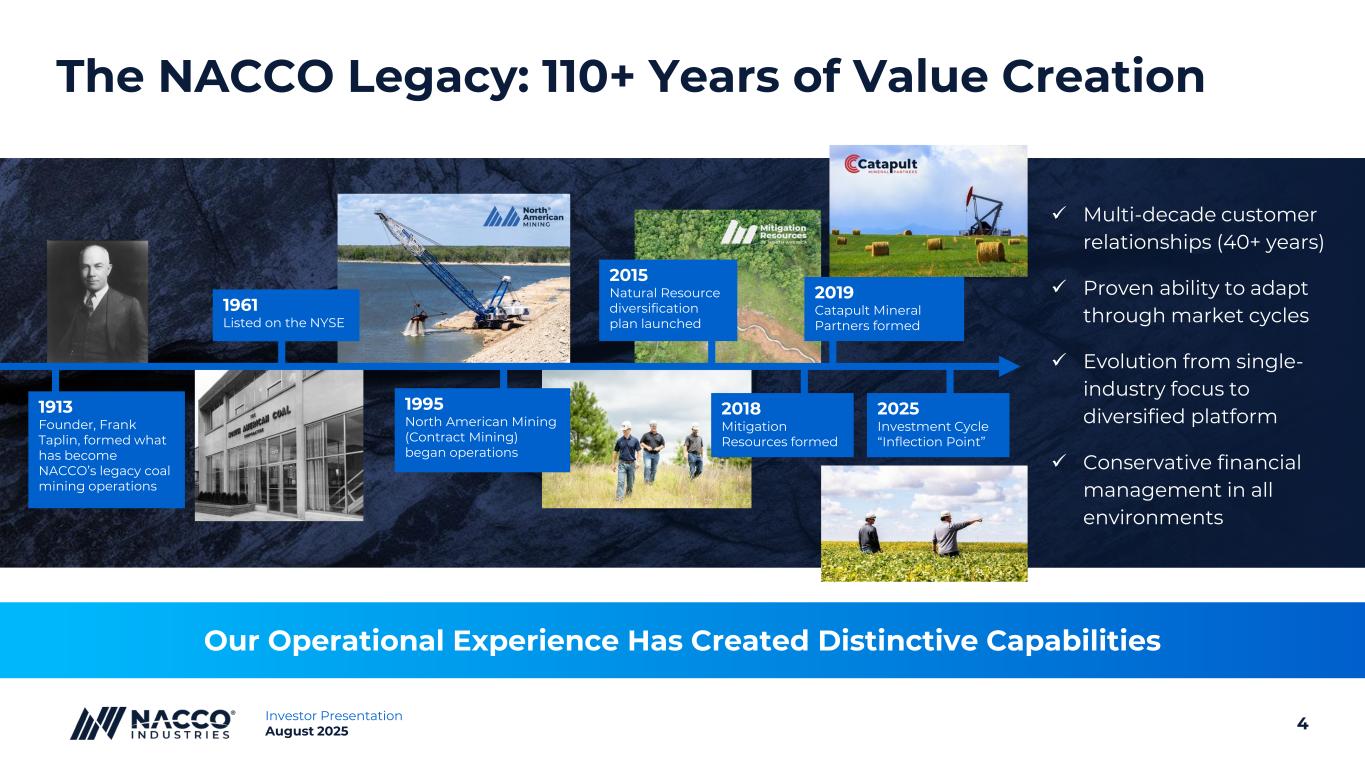
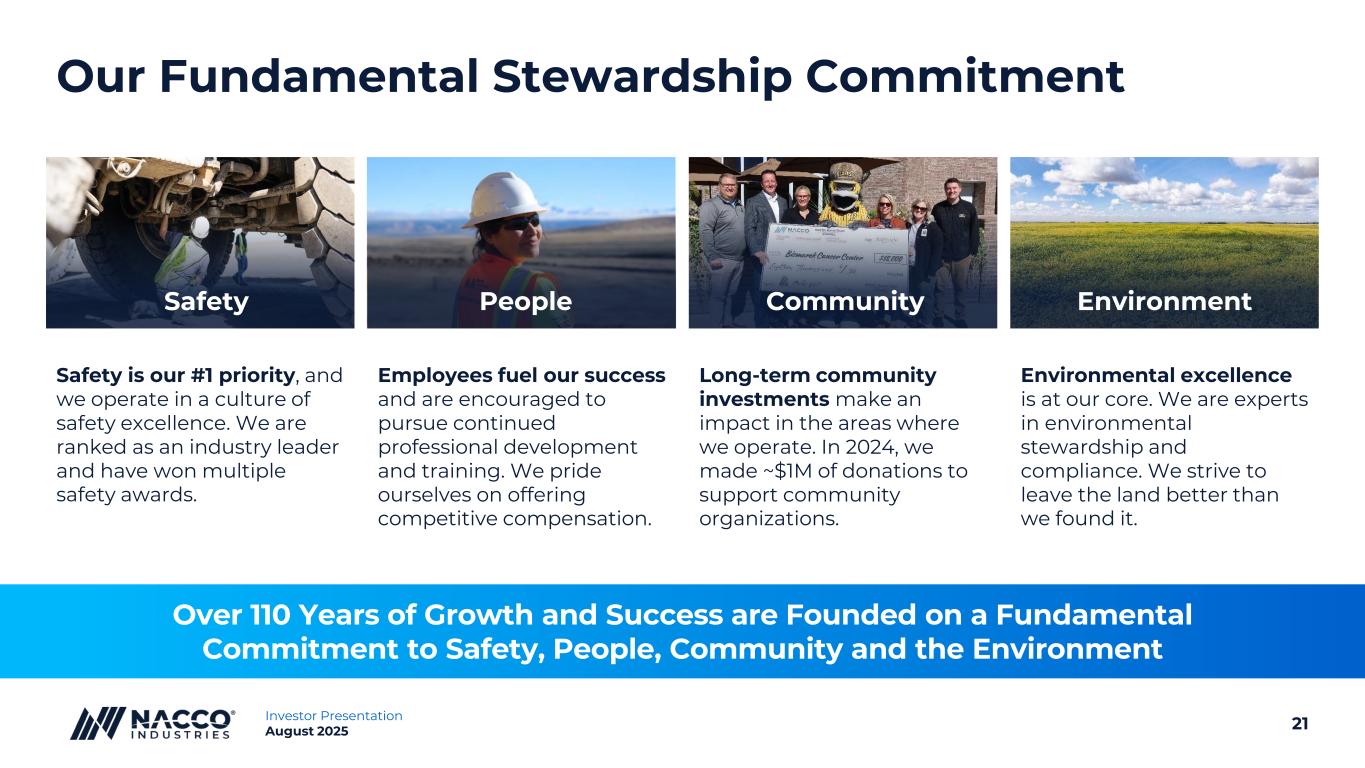
We are aiming for less leverage moving forward. While I am not suggesting this will happen in the next quarter, our goal is to reduce our current leverage. We operate in a very appealing political environment, but we do acknowledge the political risks, especially in our coal business. We also have some entrepreneurial startup risks, although our businesses have matured significantly over the past few years. My belief is that when there are political risks related to our core business and entrepreneurial risks in other areas, we should maintain no risk on our balance sheet. Internally, we emphasize the importance of having a strong balance sheet, which means keeping our debt levels very low while holding a considerable amount of cash. A conservative balance sheet is crucial because when we engage with current and potential customers, we need to assure them that we can support integrated services in their operations, whether it's managing a coal mine that supplies fuel to a power plant or coordinating logistics for an aggregates quarry or cement plant. Establishing reliable, long-term relationships is essential; therefore, we must reassure them of our commitment and stability. Our longest customer relationship spans nearly 47 years in North Dakota at one of our coal mines, and that's the type of connection we aspire to establish with many clients. To achieve this, we must assure them of our presence and reliability. We have been in business for 111 years, and we are looking forward to another century.
Speaker 5
It's a remarkable run. This parts business at Contract Mining, is it a new business model? Are you trying to run down inventory? Is that part of the change in contracts there? Can you talk more about what the changes from the past? It seems over the last couple of quarters, we've started talking much more about the parts business.
Speaker 2
Yes, I would say it's an evolution in our business model. We have maintained a parts inventory for a long time to service the draglines and equipment we operate in our integrated operations with customers. As our core contract mining business, particularly in North American Mining, has evolved, we've broadened the range of equipment we use, which has led to an increase in the inventory we hold. In reviewing this aspect of our business, we realized that we have been incurring costs to manage and carry these parts, and we should be compensated for that. Additionally, many of these pieces of equipment, including draglines, haven't been manufactured for decades, making it increasingly difficult to find parts and components. We have determined that it makes more sense for us and our customers to stock these harder-to-find components on-site. Instead of searching across the country when we need them, we will keep them in stock ourselves and function as a parts distributor, both for internal needs and external customers. This change reflects our ongoing commitment to serve our customers better in this area.
Speaker 5
That helps a lot. Regarding North American mining or the Contract business, when we start a new quarry, are we relocating draglines from closed North American coal mines? Is that a significant part of this business? If it is, does it limit the growth of contract mining, or are those activities entirely separate?
Speaker 2
It's a great question. They're completely separate. Most of the draglines we operate in our Coal Mining business are significantly larger than any equipment you would typically use at a quarry. When we start a new project, you don’t have to worry about it being a limiting factor. For starting up a new quarry and serving aggregates customers, we'll sometimes take over the operation of their existing equipment on site, so there’s no transition concern regarding the origin of the equipment. In other cases, when it's an operating quarry, we might introduce a more efficient dragline that’s better suited for that site, which would be part of our negotiations with the customer about the equipment we'll use and how we’ll serve them. For a greenfield quarry, we work with the customer to determine what equipment and draglines are necessary for that operation. We can source draglines from our existing contract mining fleet that might be available. Given that we operate more draglines than anyone else in the country by a significant margin, we have extensive knowledge about their availability and necessary repairs. Therefore, for a greenfield, we’ll either use one we already own or acquire one from another source and set it up at that facility. It’s a combination of factors, but we do not move draglines from our coal mining operations. Hopefully, that’s helpful.
Speaker 5
That's very helpful.
Speaker 2
I would like to add that we have established a partnership with a company in the Netherlands called MTech Cranes. Most of their business involves manufacturing cranes that utilize similar technology to draglines, although they are not identical. Through this collaboration, they are now producing electric draglines. Traditionally, older draglines are powered by diesel and are mechanical machines, whereas MTech’s machines employ much more modern technology. We have been deploying these draglines, and in fact, we are the only operator of MTech draglines in the United States and the exclusive dealer for MTech draglines in 48 out of 50 states. We also hold exclusive rights for MTech dragline parts across the country. This information aligns with your earlier inquiries about parts and the sources of our draglines. These new electric draglines are incredibly effective for the right operations and sizes in terms of efficiency, maintenance, and uptime. We are very excited about the opportunities that arise from our relationship with MTech.
Speaker 5
Thanks for that. The last one, I think, Iger is a business we've invested somewhere around $20 million then. Are they themselves fully invested? Or is this kind of $300,000 of sort of run rate earnings from them? And then could you talk about what their capital allocation plan is? Is that a growth business? Is it kind of a yield thing? What are we doing there?
Speaker 2
So Iger has its own website, which is quite modest but reflects what they do as a private business. We invested in them because we believe they have an intriguing business model, particularly regarding the area they are focused on and their approach to investment. We view it as a non-operating investment, as we are not managing any of the wells, and currently, neither are they. Their business model centers on enhancing the productivity of the wells they control. We find this model similar and complementary to ours, which is why we chose to invest. For us, it's simply a non-operating interest, meaning we are not responsible for operations; someone else is handling that aspect. Therefore, it’s just another addition to our investment portfolio. Regarding the potential income run rate, we are optimistic about their business model. Our investments are relatively new, and they seem to be gaining traction in what they are doing. However, I won't provide specific future outlooks on their direction. Overall, we believe it will be an attractive investment for us.
Speaker 5
All right. I appreciate you taking my questions.
Speaker 2
No. We really appreciate your interest, and we appreciate your call.
Okay. Thank you so much. Before we conclude, I'd like to provide a few reminders. A replay of our call will be available online later this morning. We'll also post a transcript on the Investor Relations website when it becomes available. If you have any follow-up questions, please reach out to me. You can reach me at the phone number in the release. I hope you enjoy the rest of your day, and I'll turn it back to Tina to conclude the call.
Operator
To access the replay of today's call, dial toll-free 1 (800) 770-2030, playback ID is 6790172 followed by the pound key. This does conclude today's conference call; you may now disconnect.