Operator
Greetings, and welcome to Peakstone Realty Trust First Quarter 2025 Arnings Webcast Conference Call. At this time, all participants are in listen-only mode. A brief question and answer session will follow the formal presentation. If anyone should require operator assistance, please press star then zero on your telephone keypad. As a reminder, this conference is being recorded. It is now my pleasure to introduce your host, Mr. Steve Sweat, Investor Relations. Please go ahead, sir.
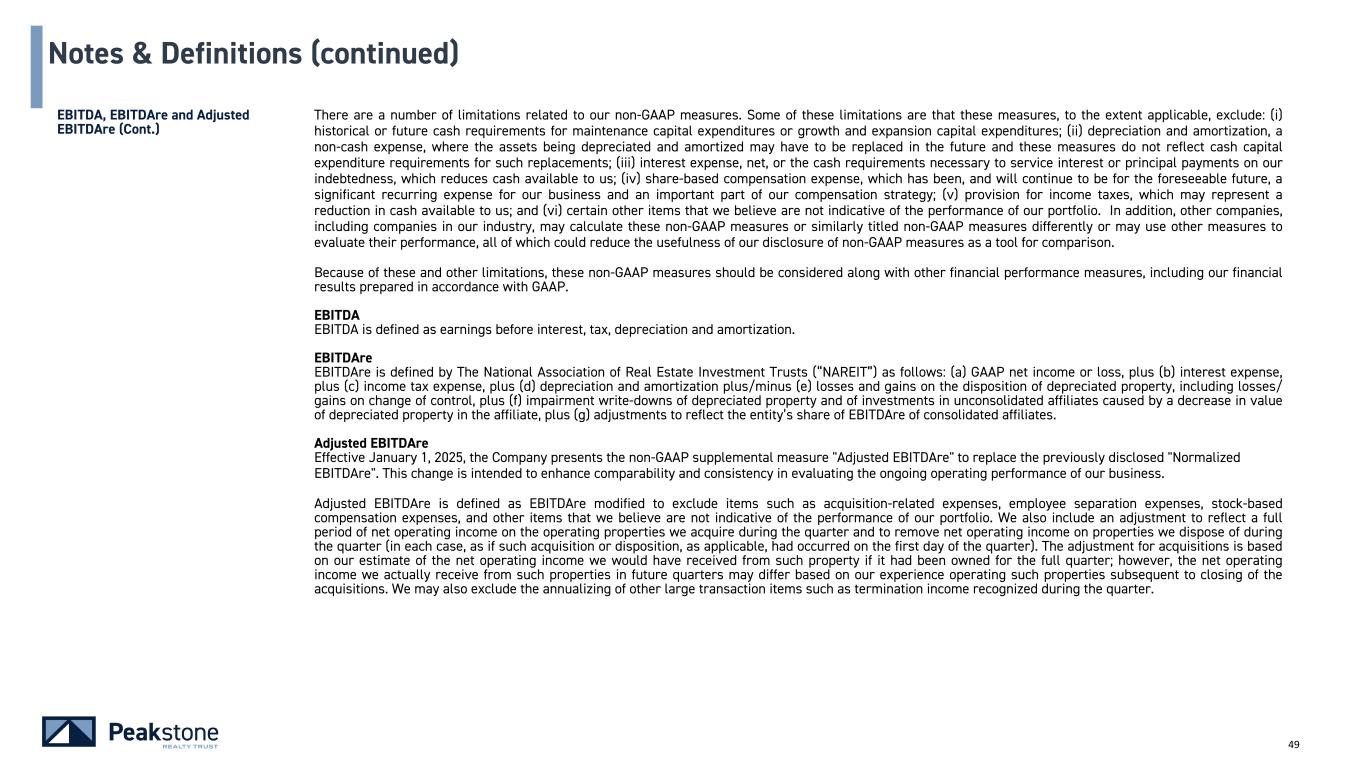
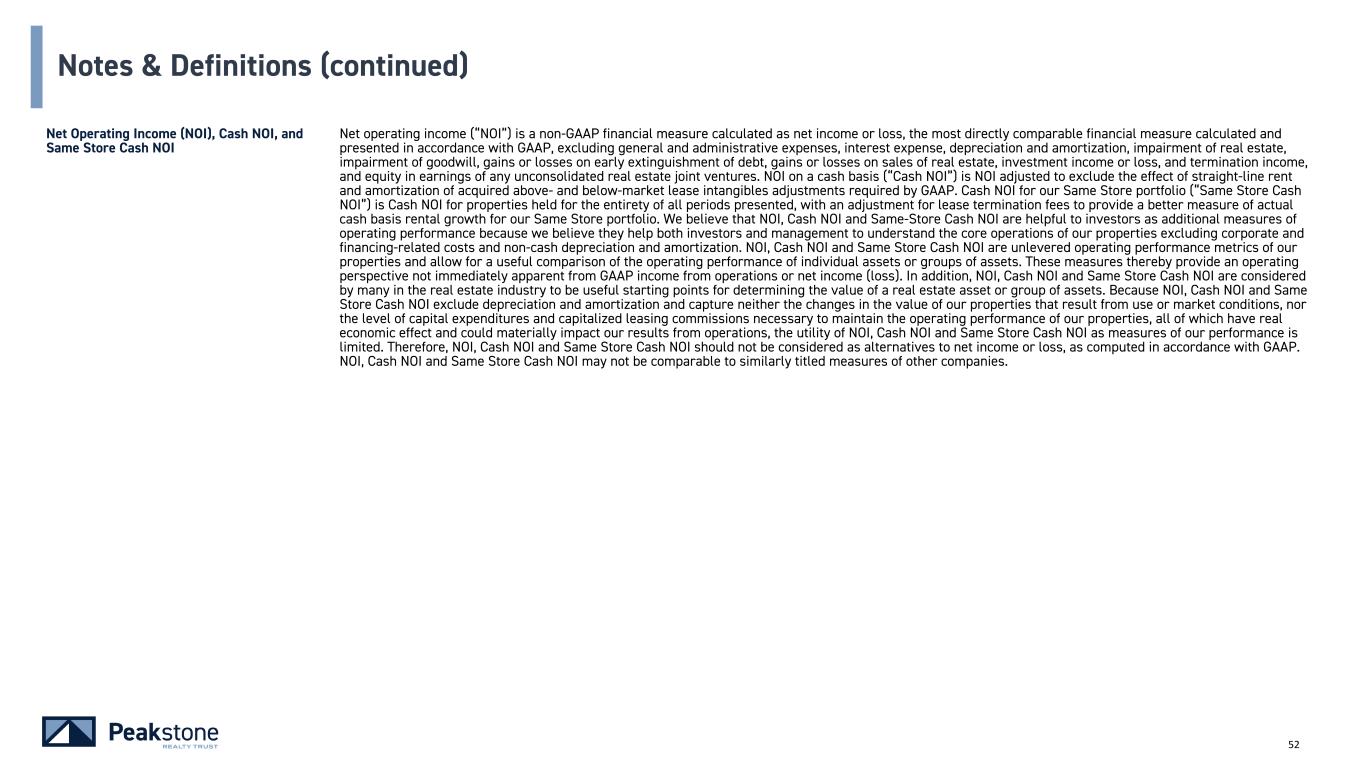
Good afternoon, and thank you for joining us for Peekstone Realty Trust's first quarter 2025 earnings call and webcast. Earlier today, we posted an earnings release supplemental and updated investor presentation to the investor's page on our website at www.pkst.com. Please reach out to our investor relations team at iratpkst.com with any questions. The company will be making forward-looking statements which include any statements that are not historical facts on today's webcast. Such forward-looking statements are based on expectations that involve risks and uncertainties that could cause actual results to differ materially. For further discussion of risks related to our business, please see our annual report on form 10k and subsequent filings with the sec additionally on this call the company may refer to certain non-gap financial measures such as funds from operations core funds from operations adjusted funds from operations ebdre and adjusted ebdre you can find a tabular reconciliation of these non-gap financial measures comparable to the most currently gap numbers in the company's earnings release and files with the sec on the call today i'm mike Escalante, CEO and President, and Javier Bittar, CFO. With that, I'll hand the call over to Mike.
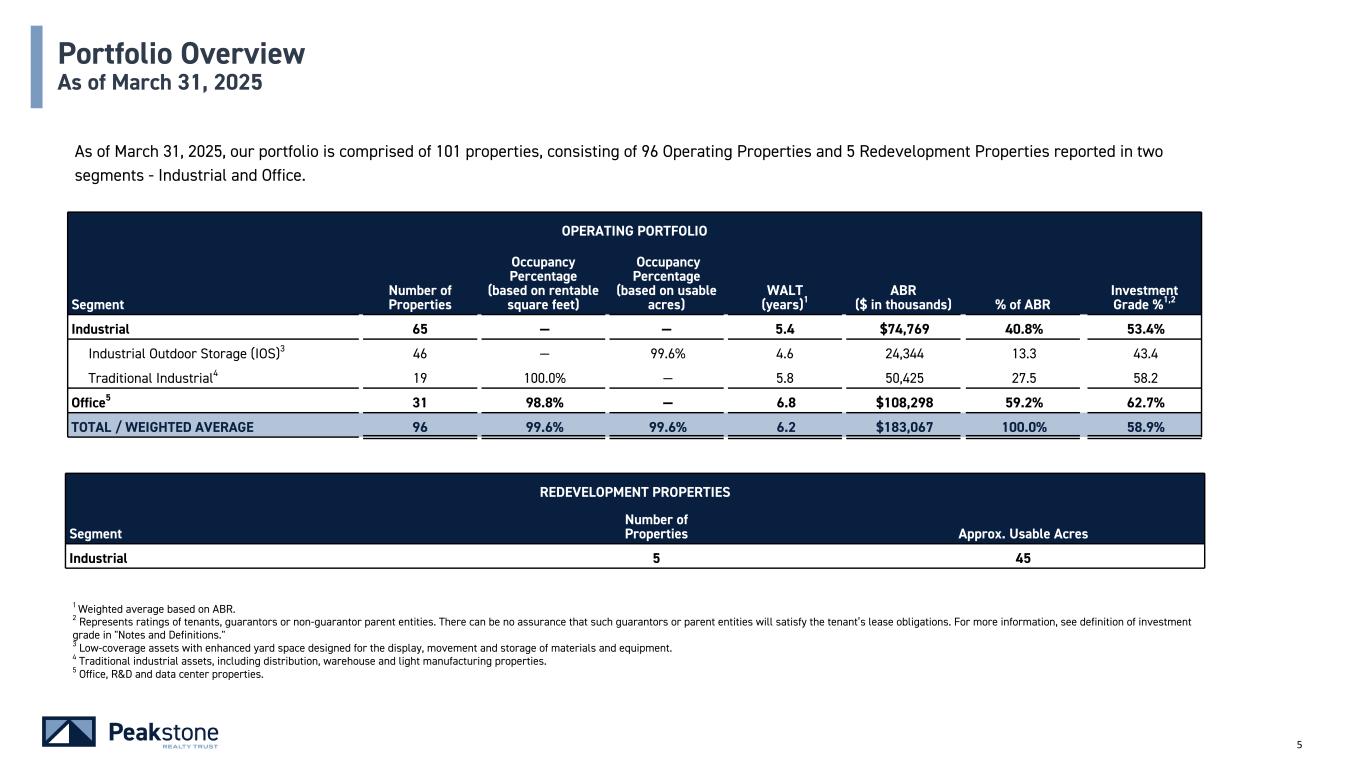
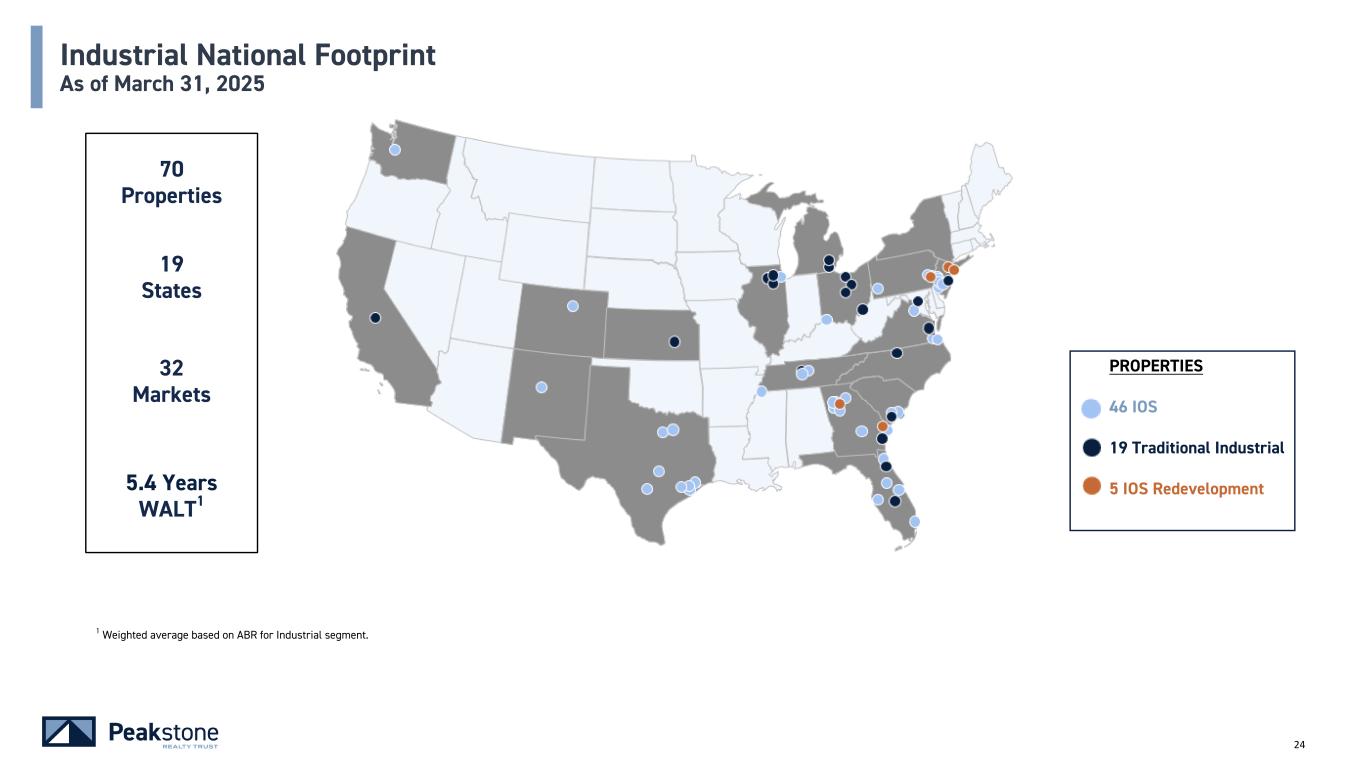
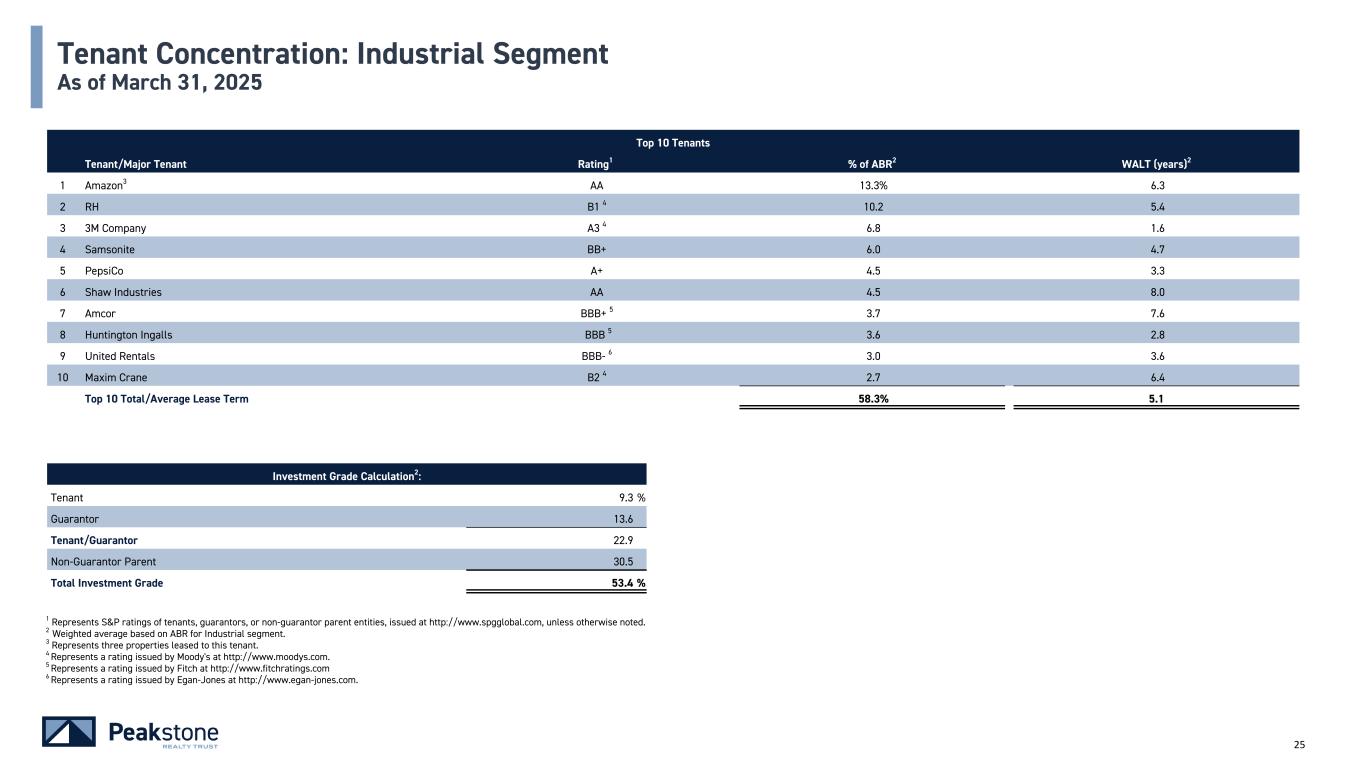
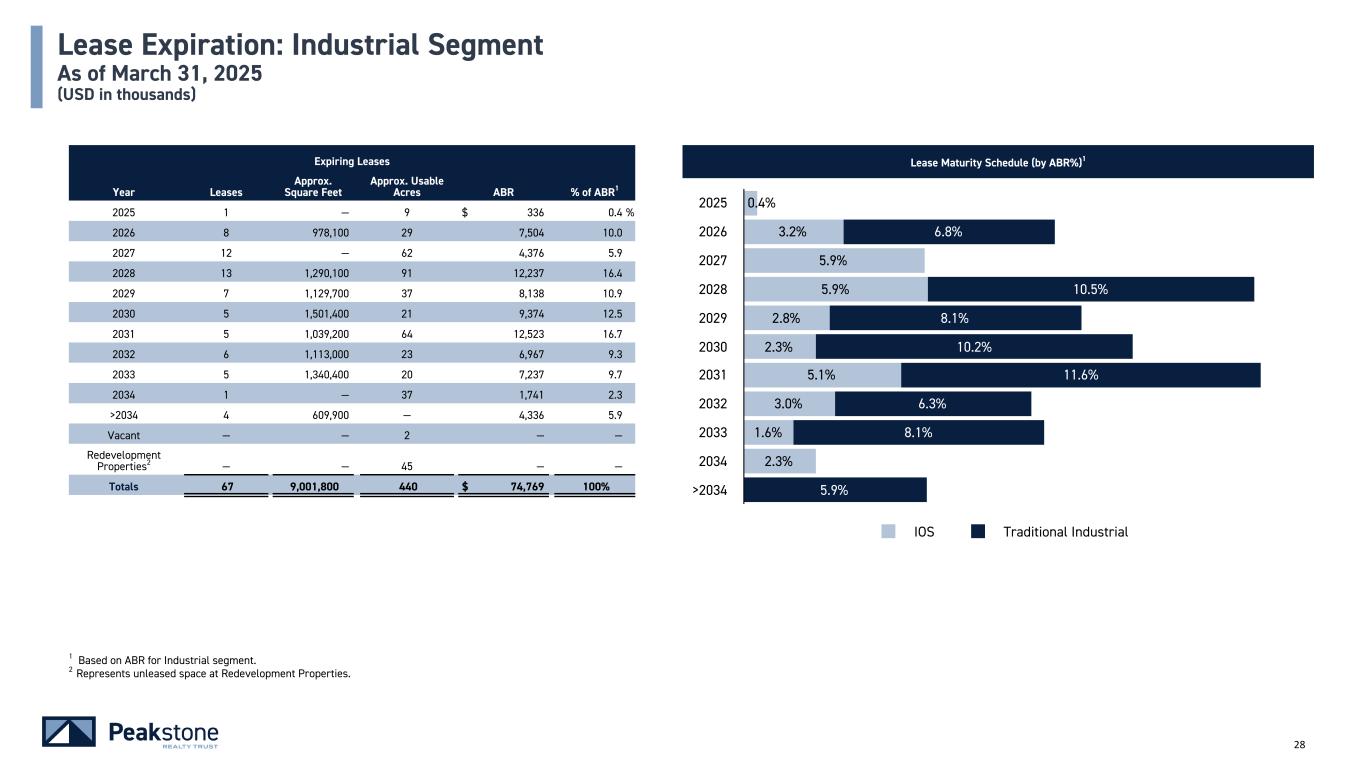
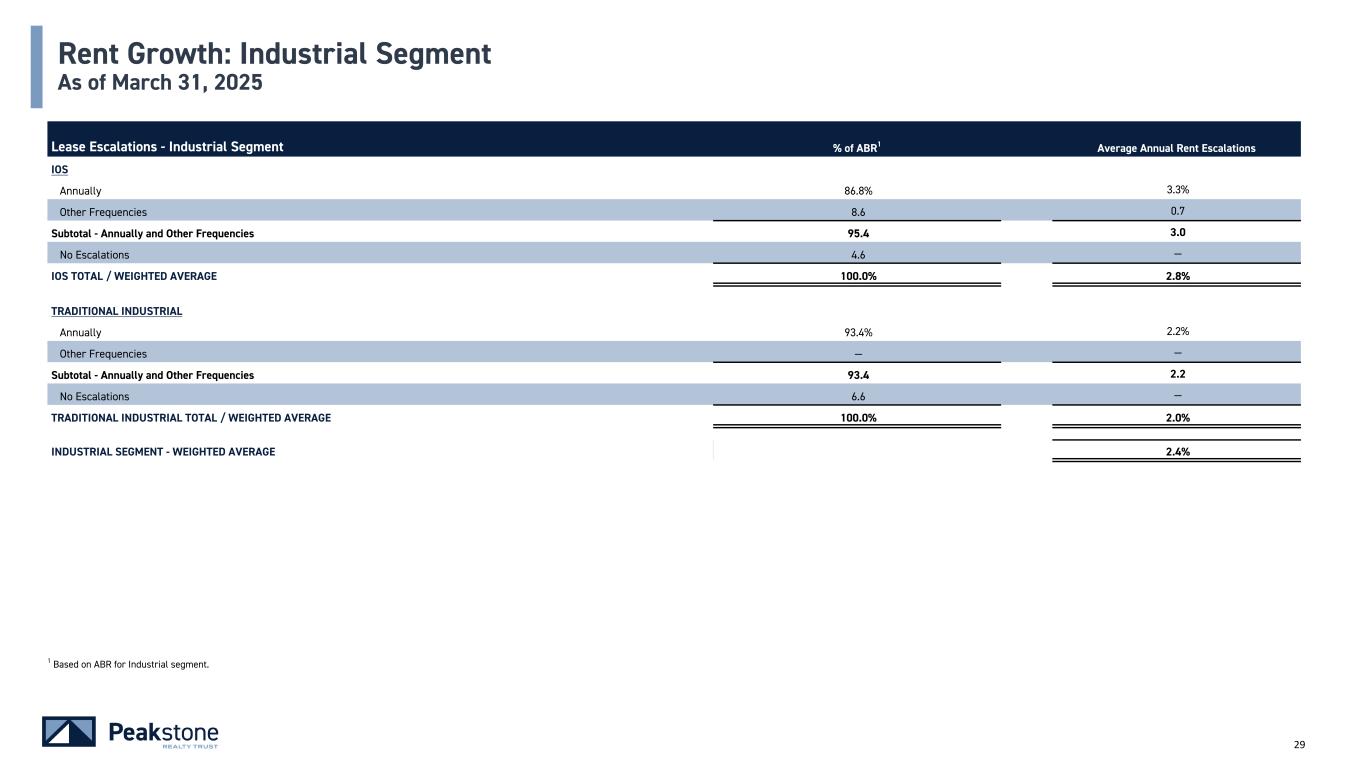
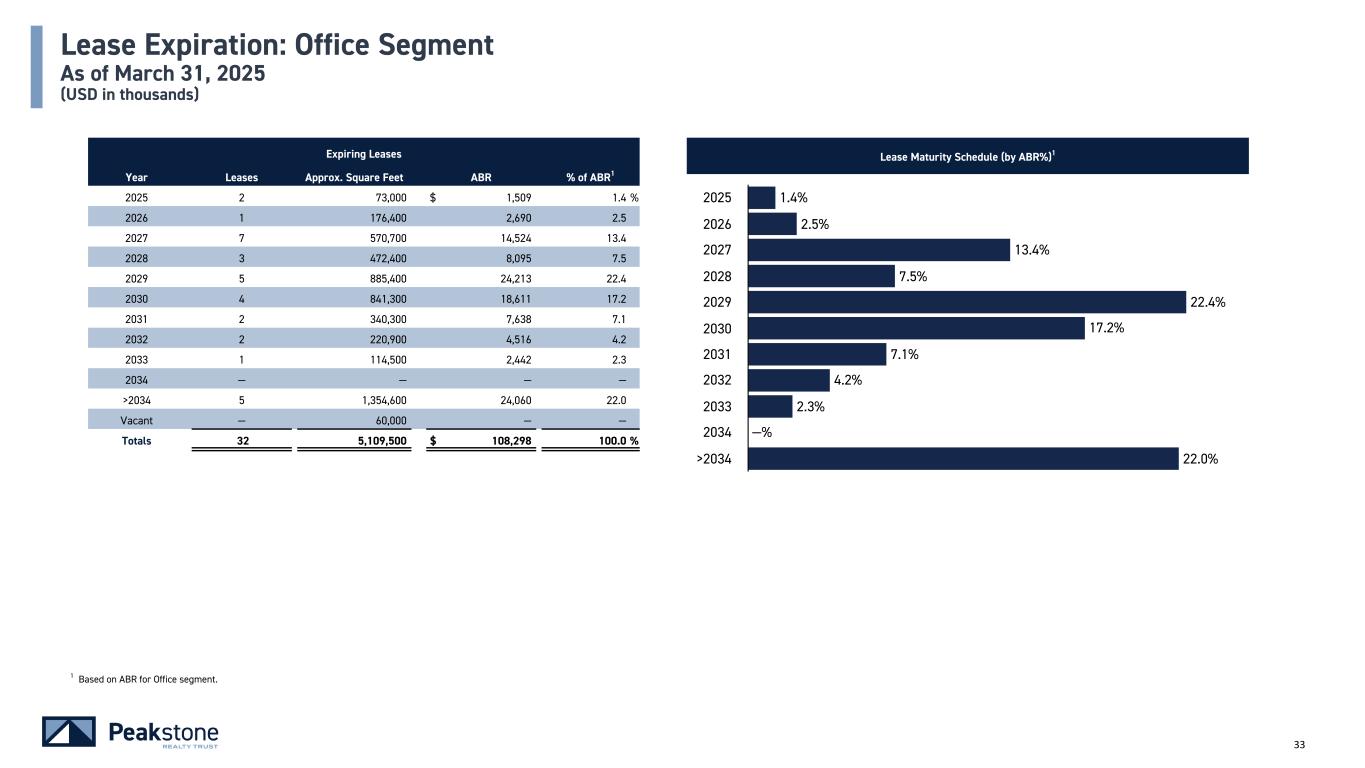
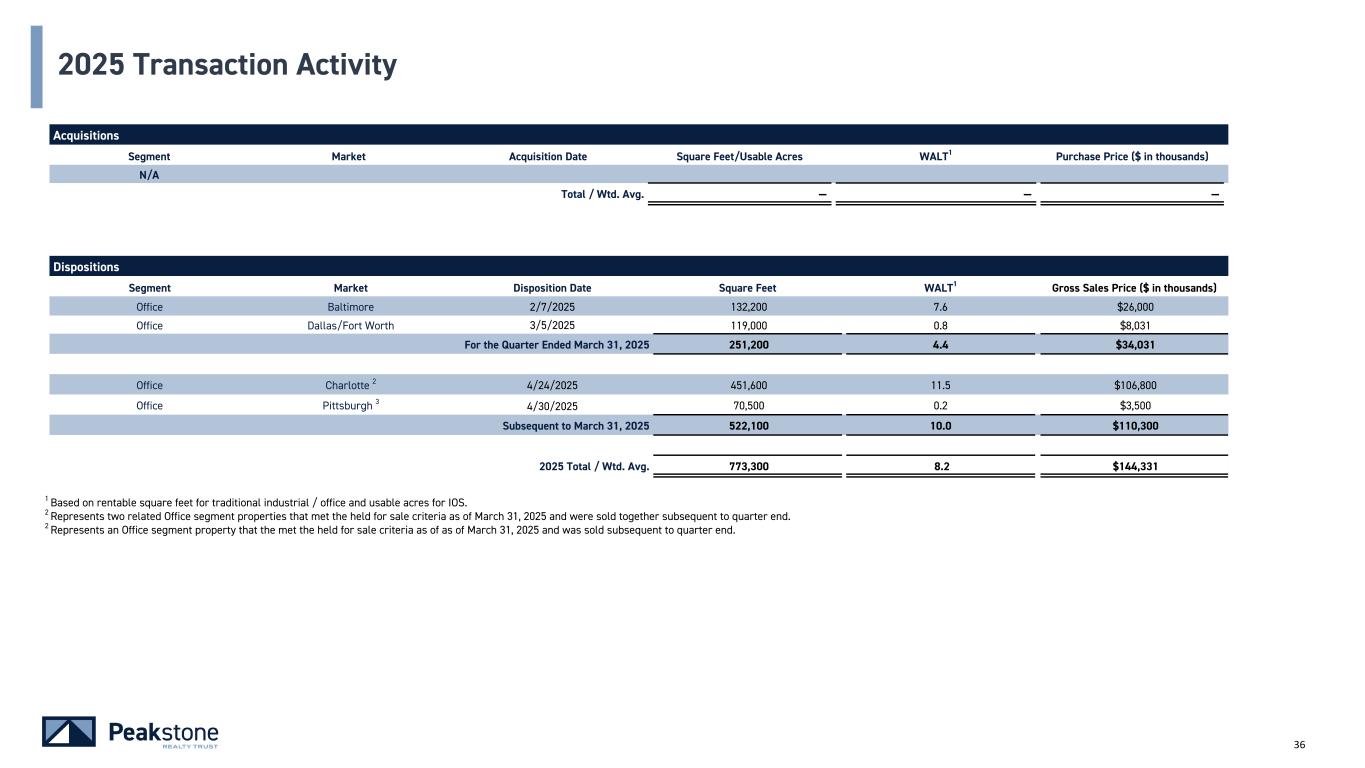
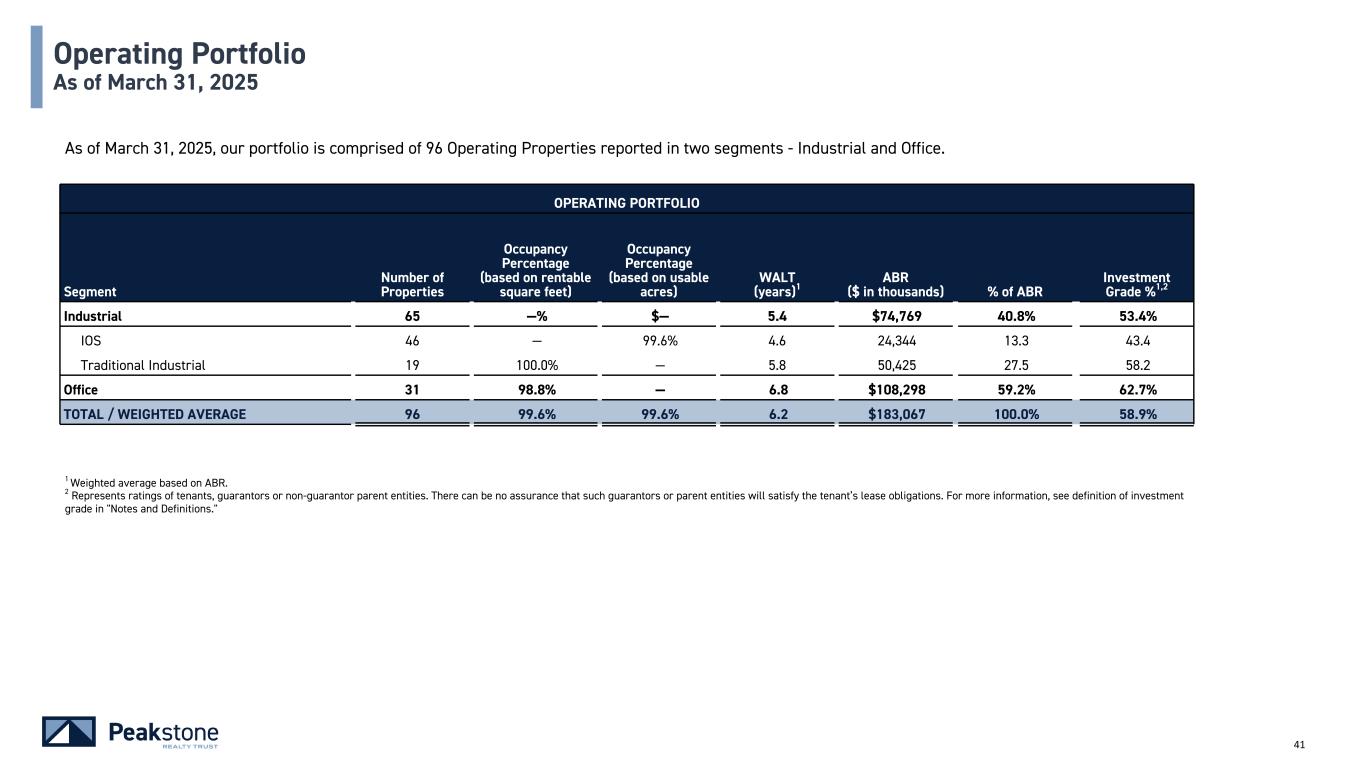
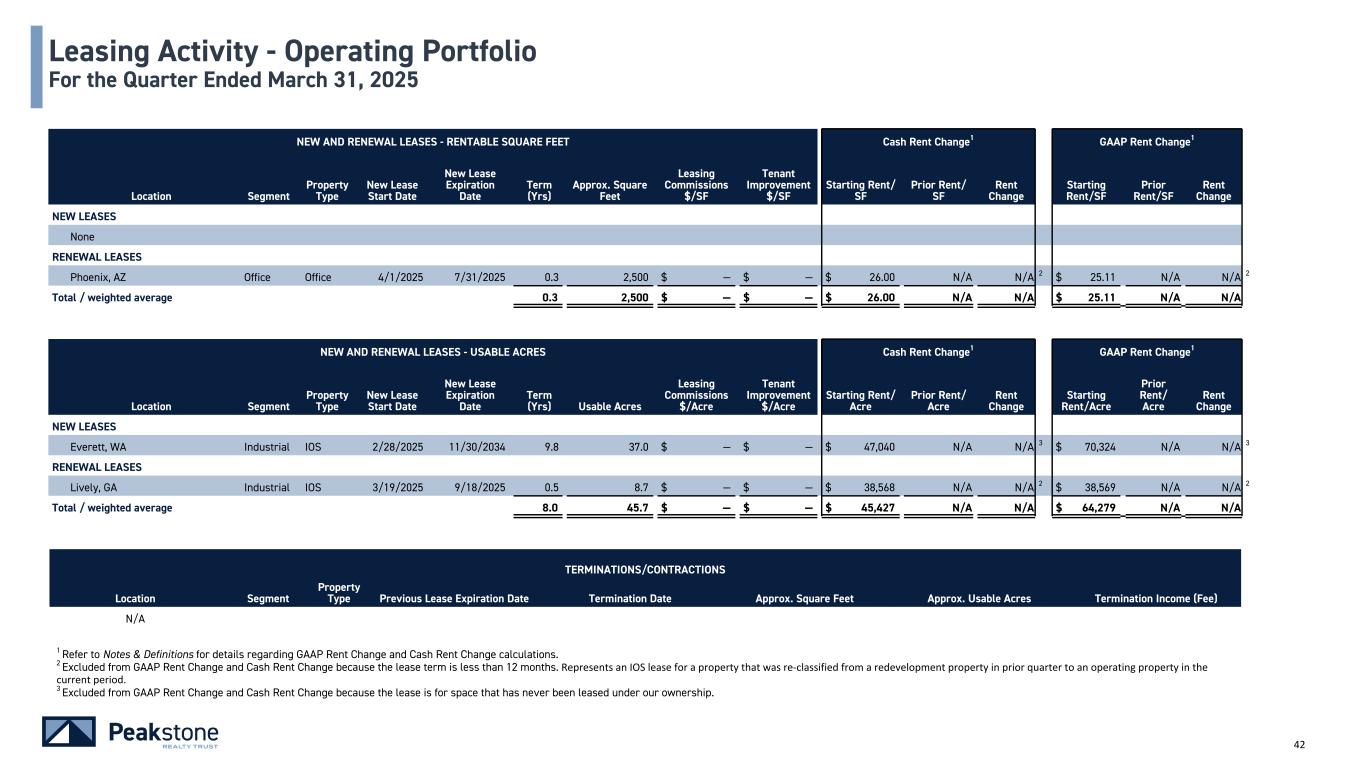
Good afternoon, and thank you for joining our call today. We continue to make meaningful progress on our strategic transition to an industrial REIT, with growth in the Industrial Outdoor Storage or iOS subsector serving as the cornerstone of this transformation. As part of this strategy, we are actively reshaping the portfolio through the targeted iOS growth initiatives and strategic asset sales primarily focused on the office segment this quarter we increased industrial segment abr by 2.4 million dollars quarter over quarter driven by a 10 percent rise in abr from our ios properties underscoring the strong fundamentals and the compelling growth trajectory of our high quality ios assets on the disposition front we've closed 144 million dollars of office asset sales year to date advancing our efforts to better align the portfolio with our long-term strategic goals thanks to strong leasing across our ios portfolio and the continued execution of these office sales industrial segment abr represented 41 percent of total abr at quarter end and 43 percent on a pro forma basis after giving effect to office dispositions completed subsequent the quarter end leasing activity related to our ios assets played a central role in this quarter's industrial abr growth and we'd like to provide more detail on the transactions that drove this performance most notably we fully leased our largest ios redevelopment property 37 usable acres in everett washington largely on a no-cost basis to a local lumber mill operator. This full site 9.8 year lease contributed approximately 1.7 million dollars of incremental AVR to our industrial segment and contains 8 percent annual rent escalations on average. While the initial rent is below market, completing this lease without the anticipated redevelopment spend enabled us to drive a meaningful increase in our iOS AVR and quickly achieve in-place yields of 5.9% on a cash basis and 8.8% on a gap basis. This lease provides a path to higher rent and enhances the internal growth profile of our iOS portfolio. Additional leasing activity, highlighting the strong market-to-market opportunities in our iOS portfolio, included the commencement of a new 6.5-year lease for 3.3 useful acres at our Mapleton, Georgia property, which added $0.3 million in ABR during the quarter. This lease includes 3.5% annual escalations and resulted in weighted average releasing spreads of 185% on a cash basis and 218% on a gap basis. Moving on to dispositions, As I mentioned earlier, year to date, we've closed approximately $144 million of office asset sales, underscoring both the successful execution of our office disposition strategy and the continued investor demand for the office assets in our portfolio. During the first quarter, we completed the sale of two properties totaling 251,000 square feet for approximately $34 million. These included our 40 white property in Baltimore and our Heritage III property in Dallas, fort worth subsequent to quarter end we closed on the sale of three additional properties totaling five hundred twenty thousand square feet for approximately 110 million dollars these sales consisted of our lpl properties in charlotte and our cigna property in pittsburgh all three assets were classified as held for sale at quarter end now i'd like to take a moment to provide some additional detail on what we're seeing in the market as it relates to our office dispositions we've been highly effective in generating strong outcomes from the sale of our office assets over the past three years we've completed over two billion dollars in office sales across more than 30 markets with buyers including both third-party investors and existing tenants these sales have provided greater clarity around market pricing expectations and transaction timing while we don't provide formal guidance on cap rates or pricing closed transaction data suggests that depending on tenancy market and asset characteristics our office assets with more than five years remaining term have generally been priced on a cap rate basis in the range of seven and a half percent to twelve and a half percent on in place noi office assets with shorter lease terms have generally been priced on a per square foot basis ranging from 50 to 175 dollars the pricing reflects a combination of estimated vacant building value and the net present value of the remaining rental stream we continue to see solid interest in our office properties and remain committed to maintaining or potentially accelerating the pace of our office disposition through year end while we recognize the capital markets environment may evolve we're well positioned to adapt and continue executing thoughtfully on these sales with that i will turn the call over to javier to review our financial results and capital markets activity
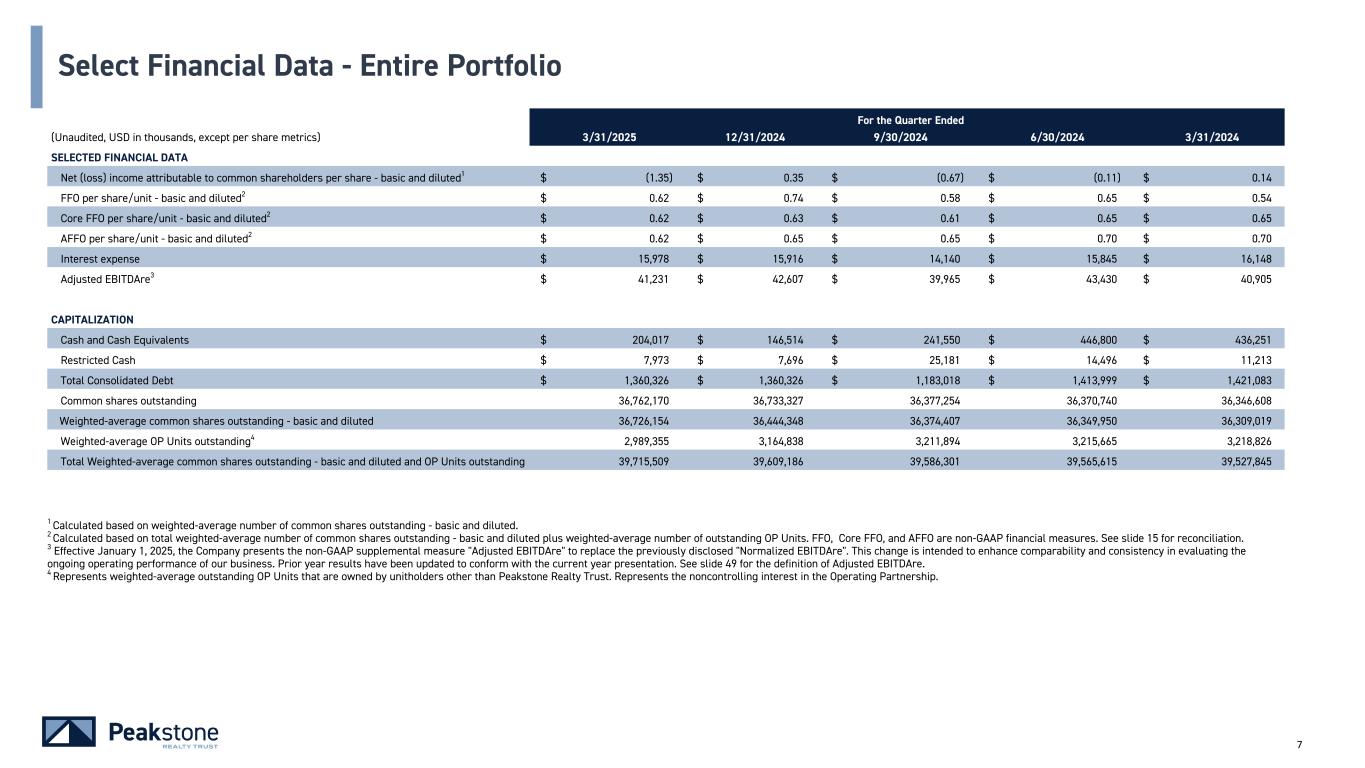
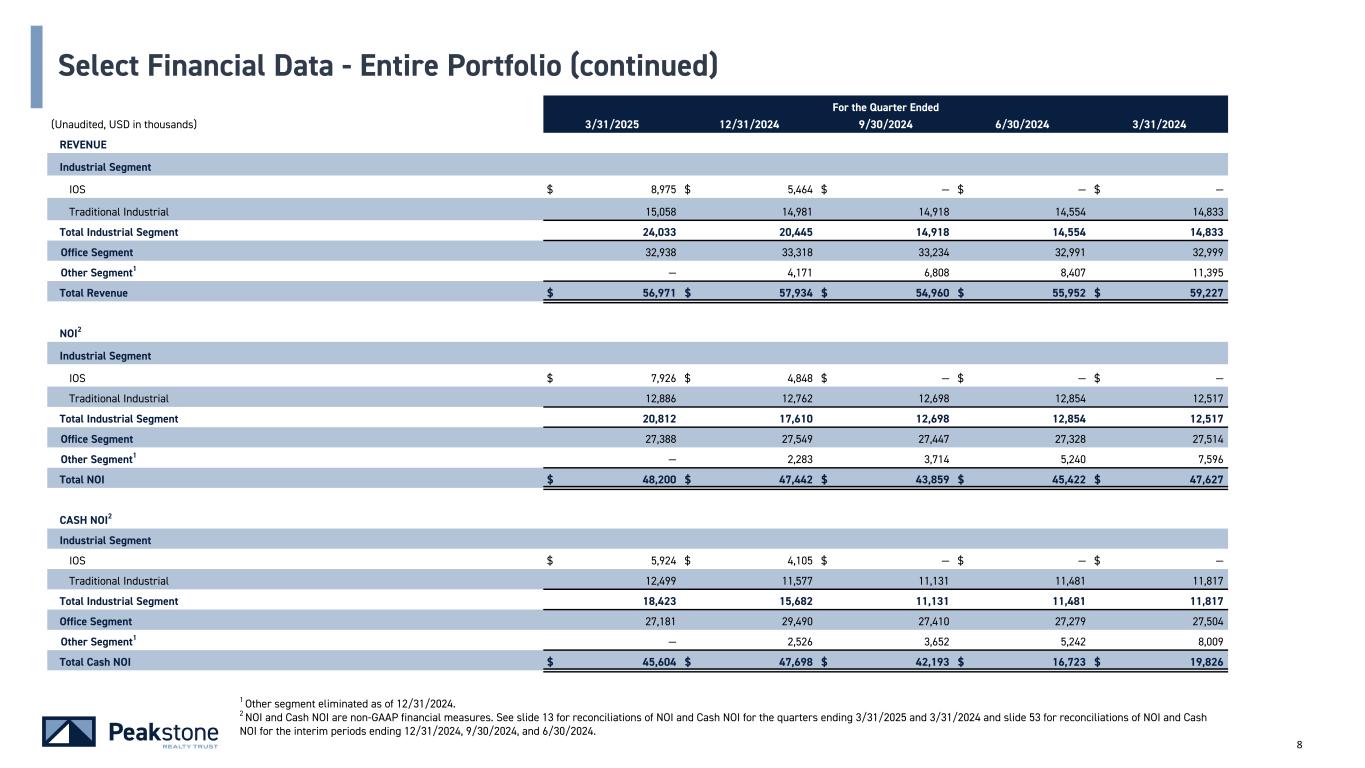
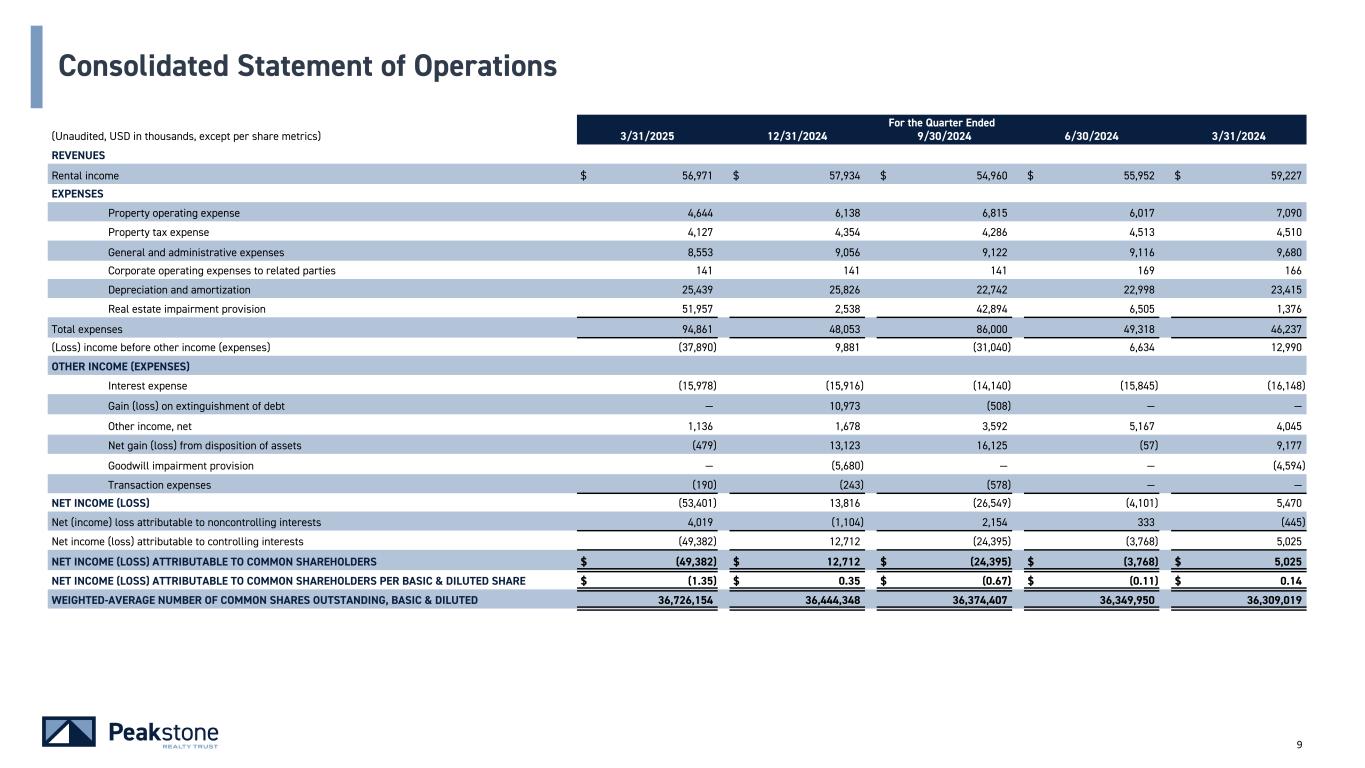
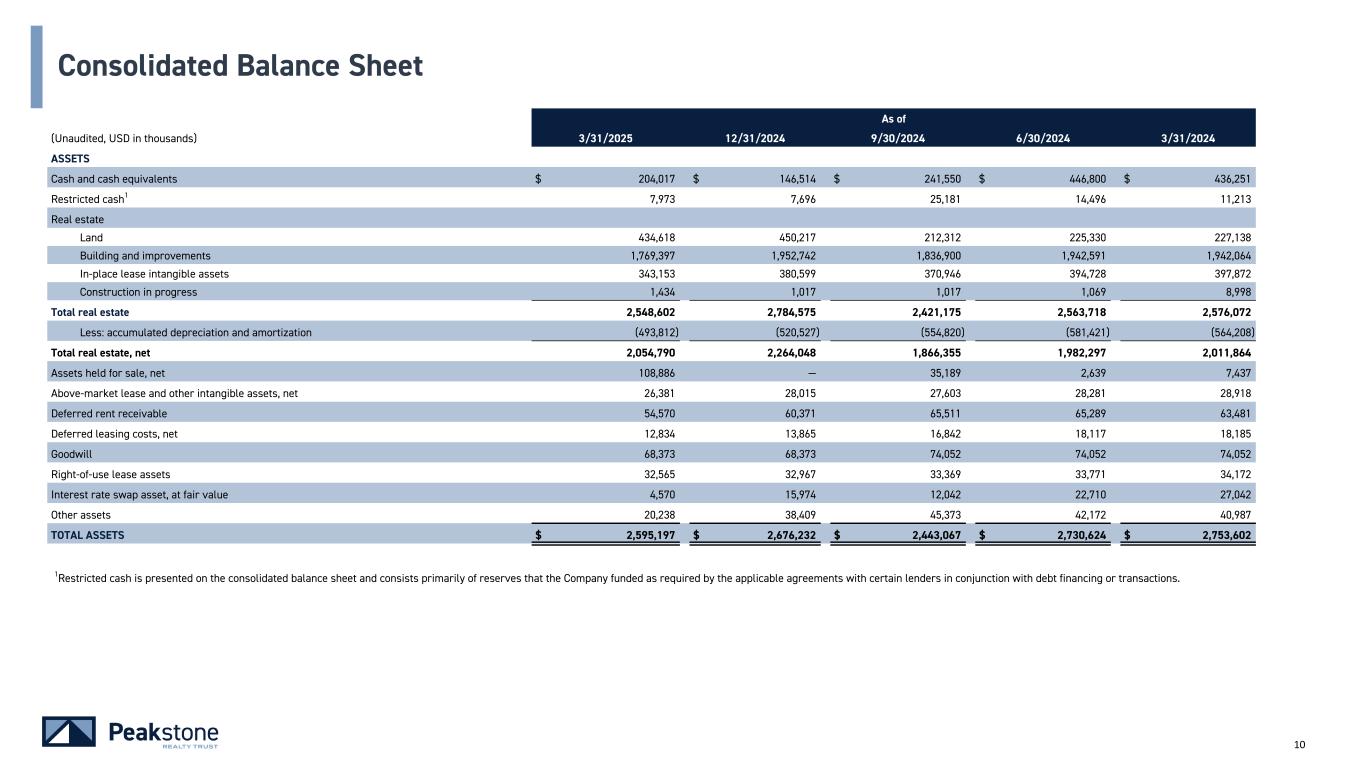
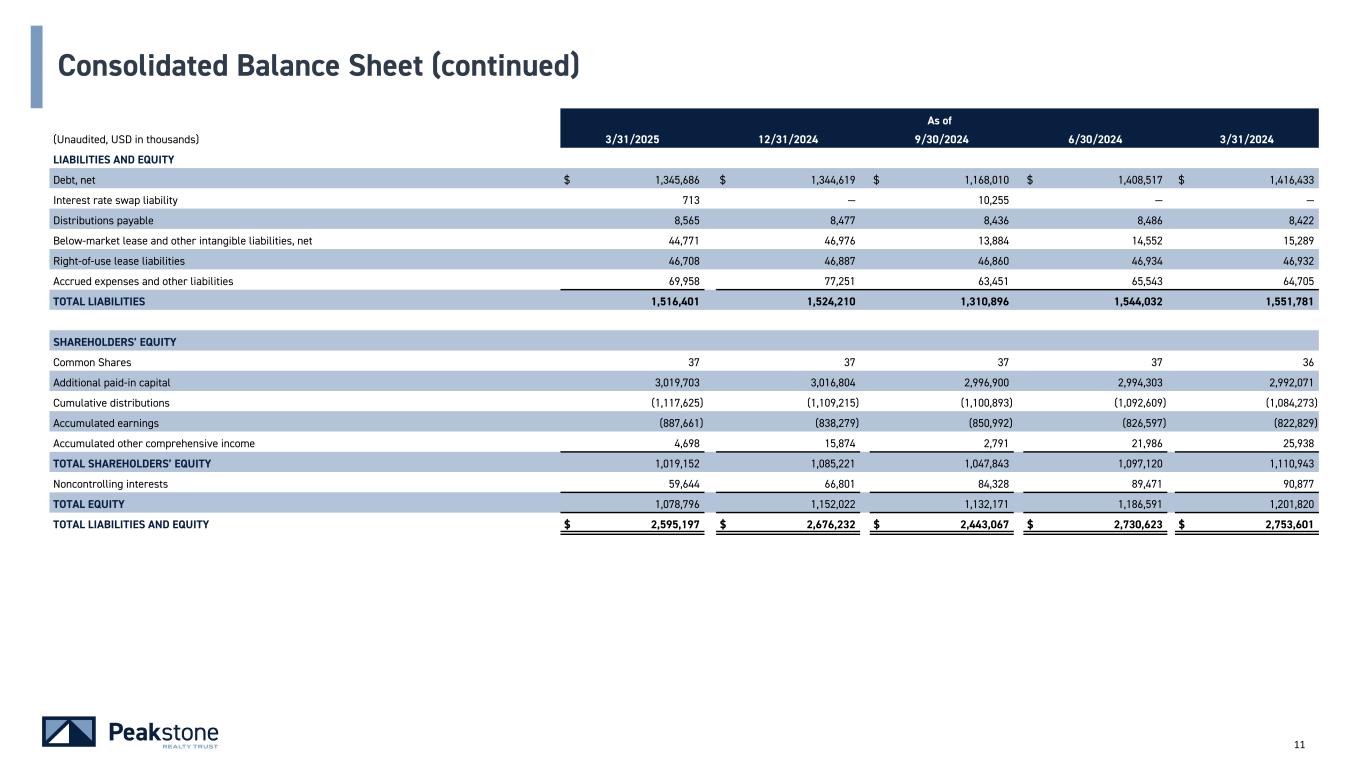
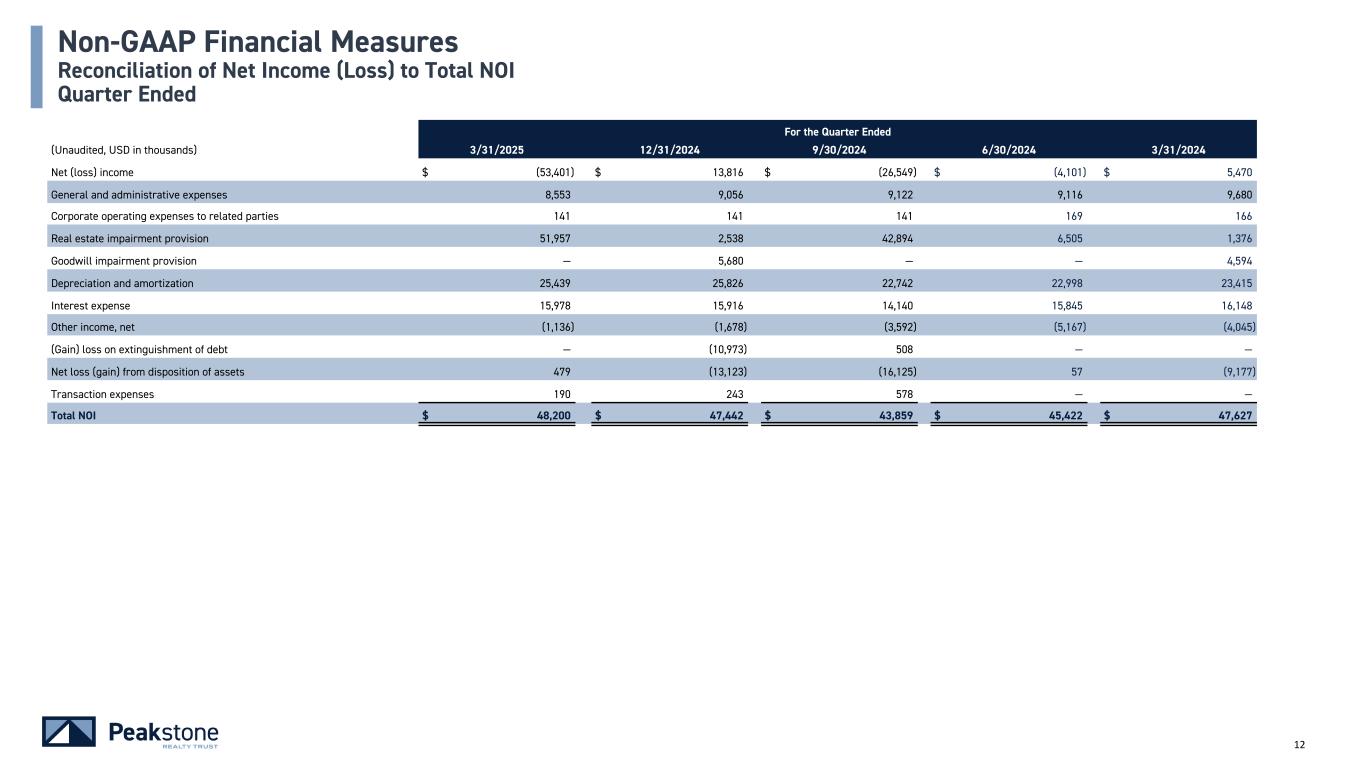
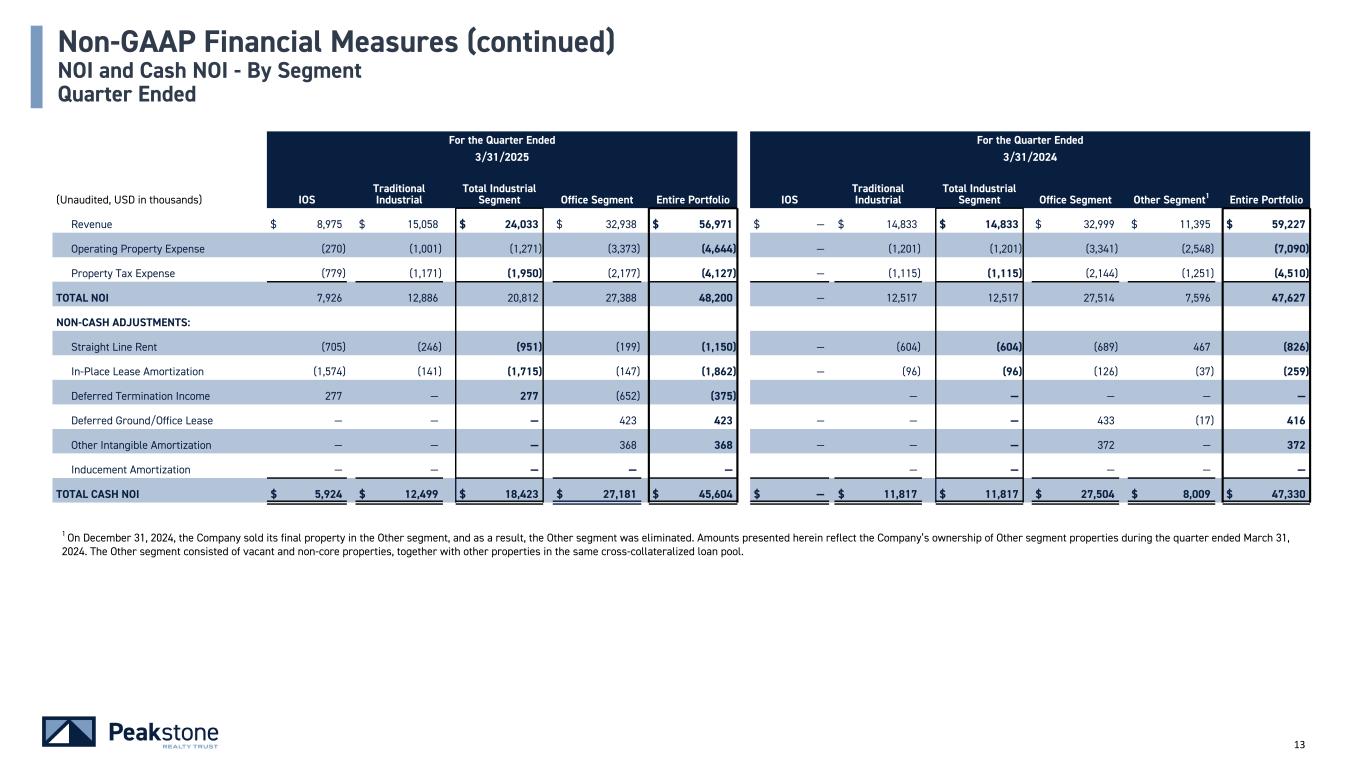
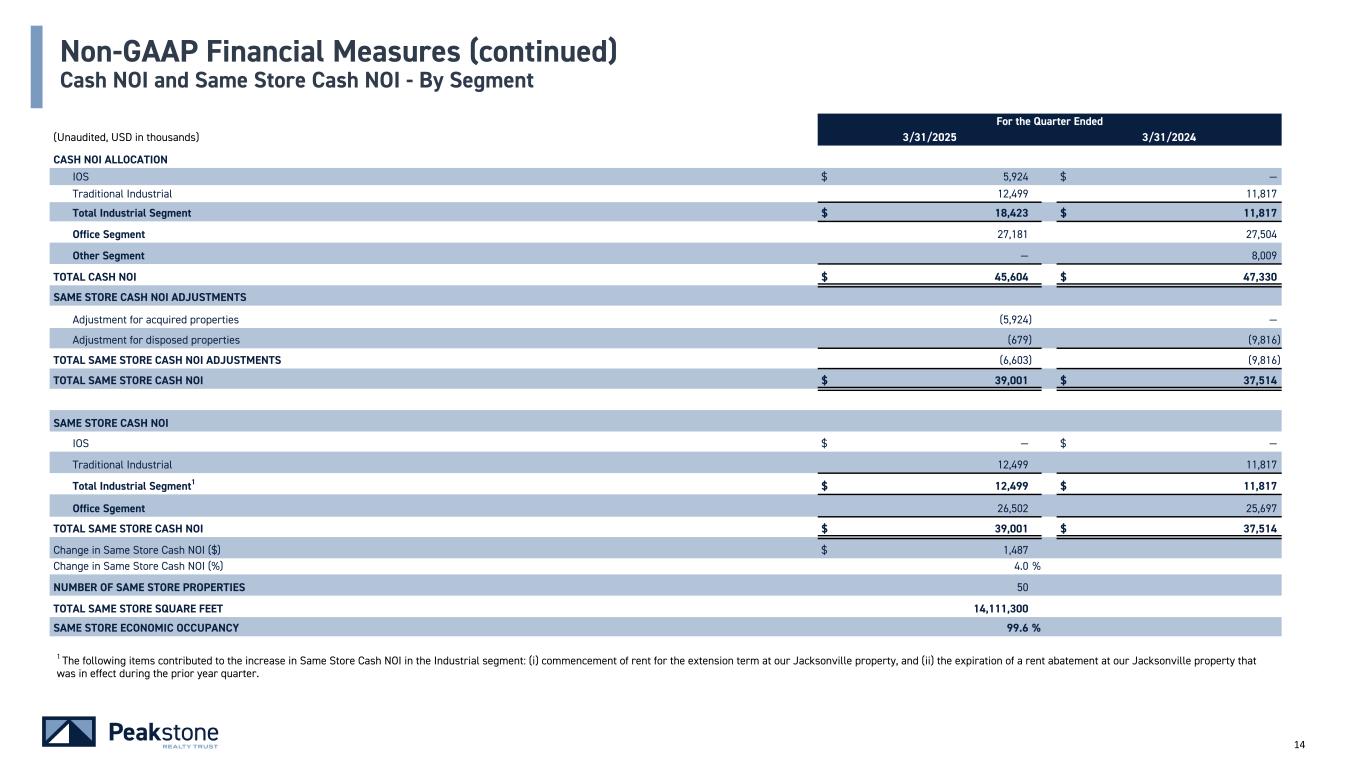
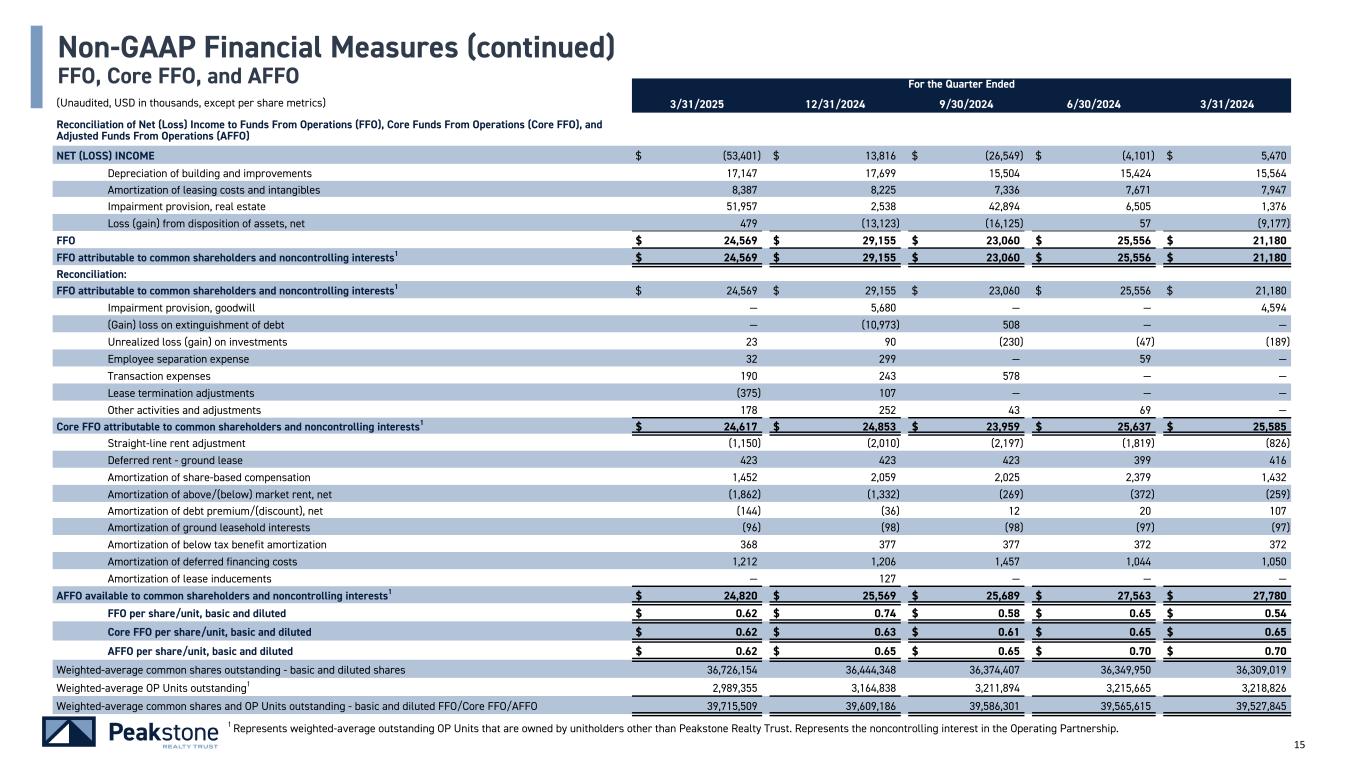
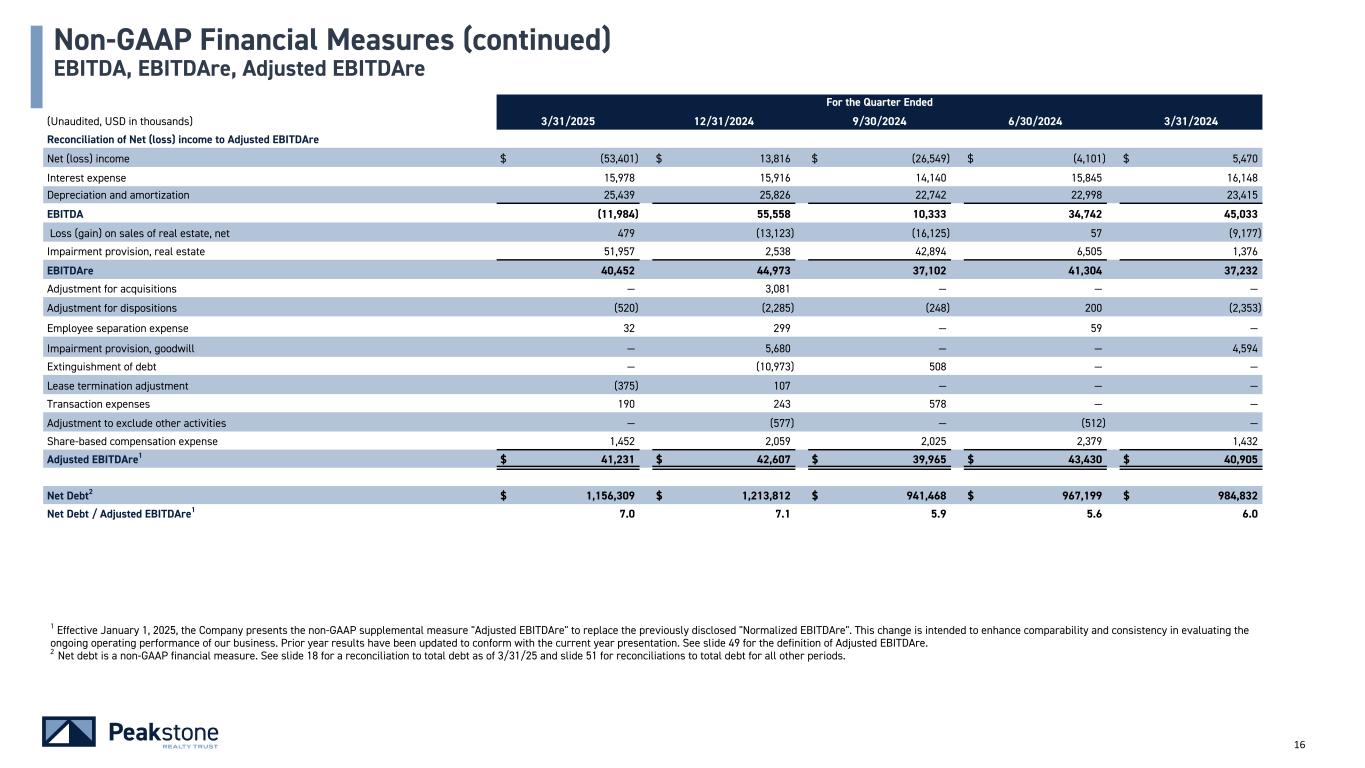
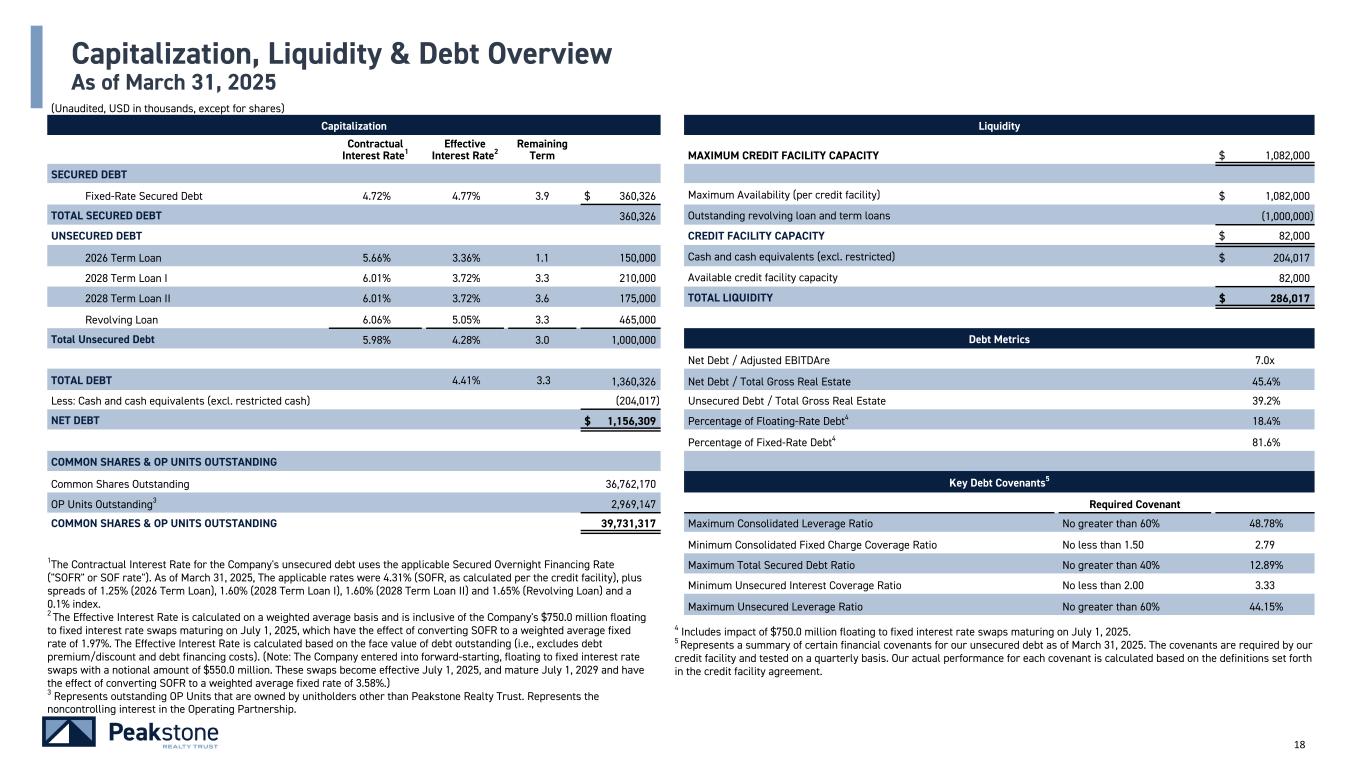
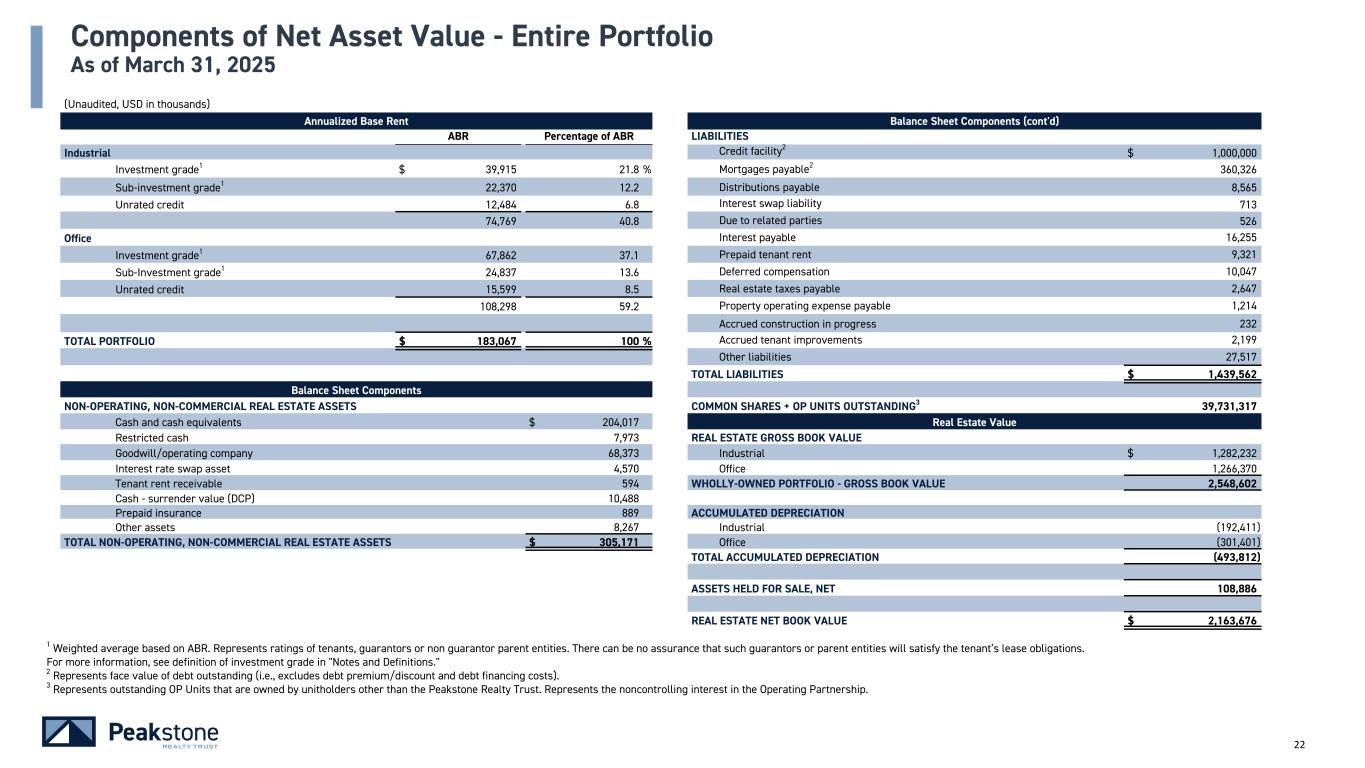
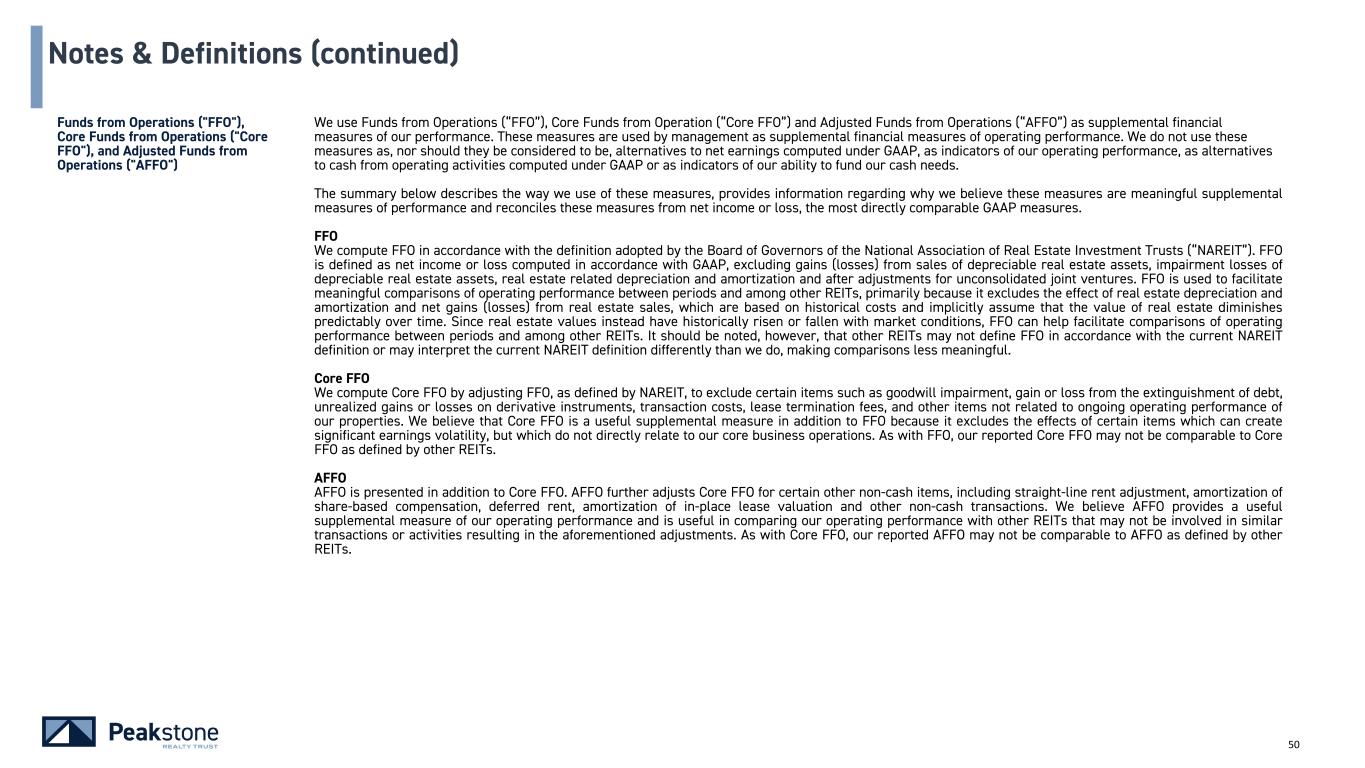
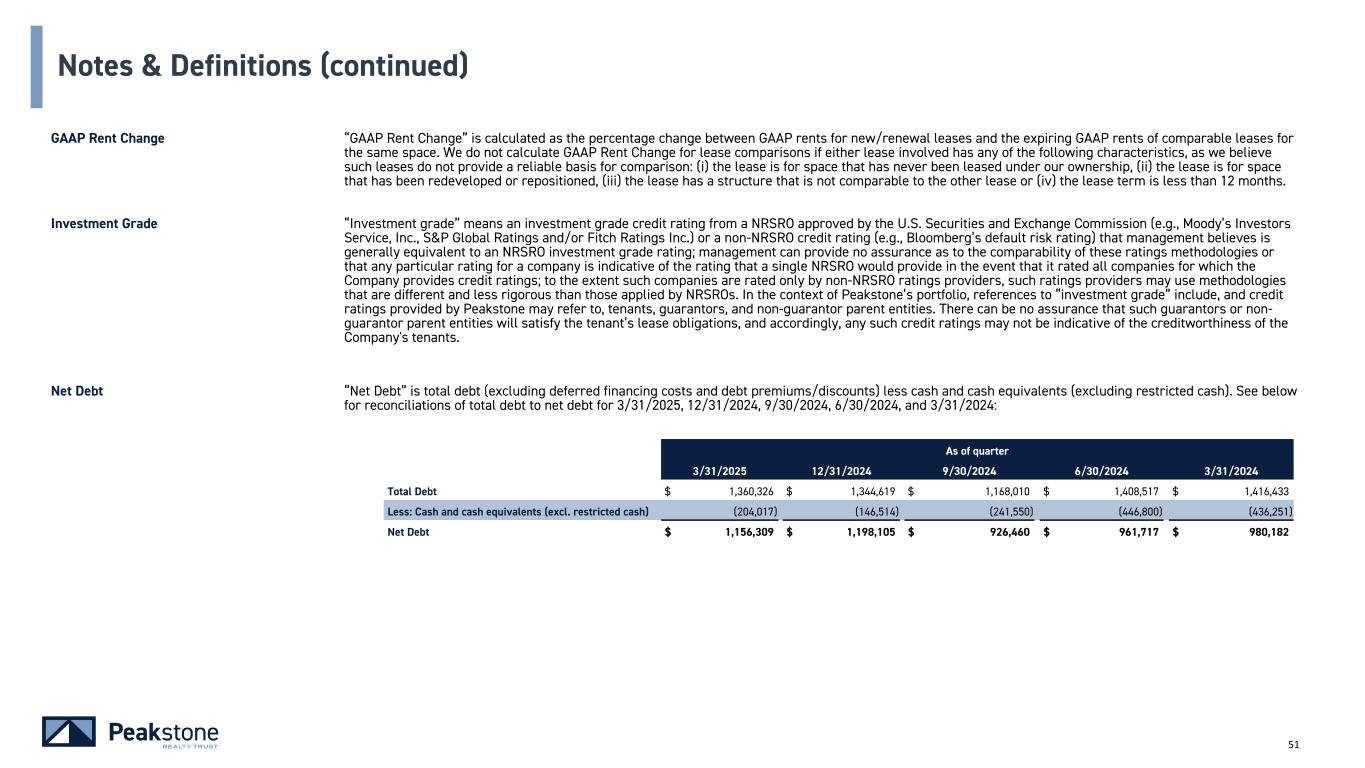
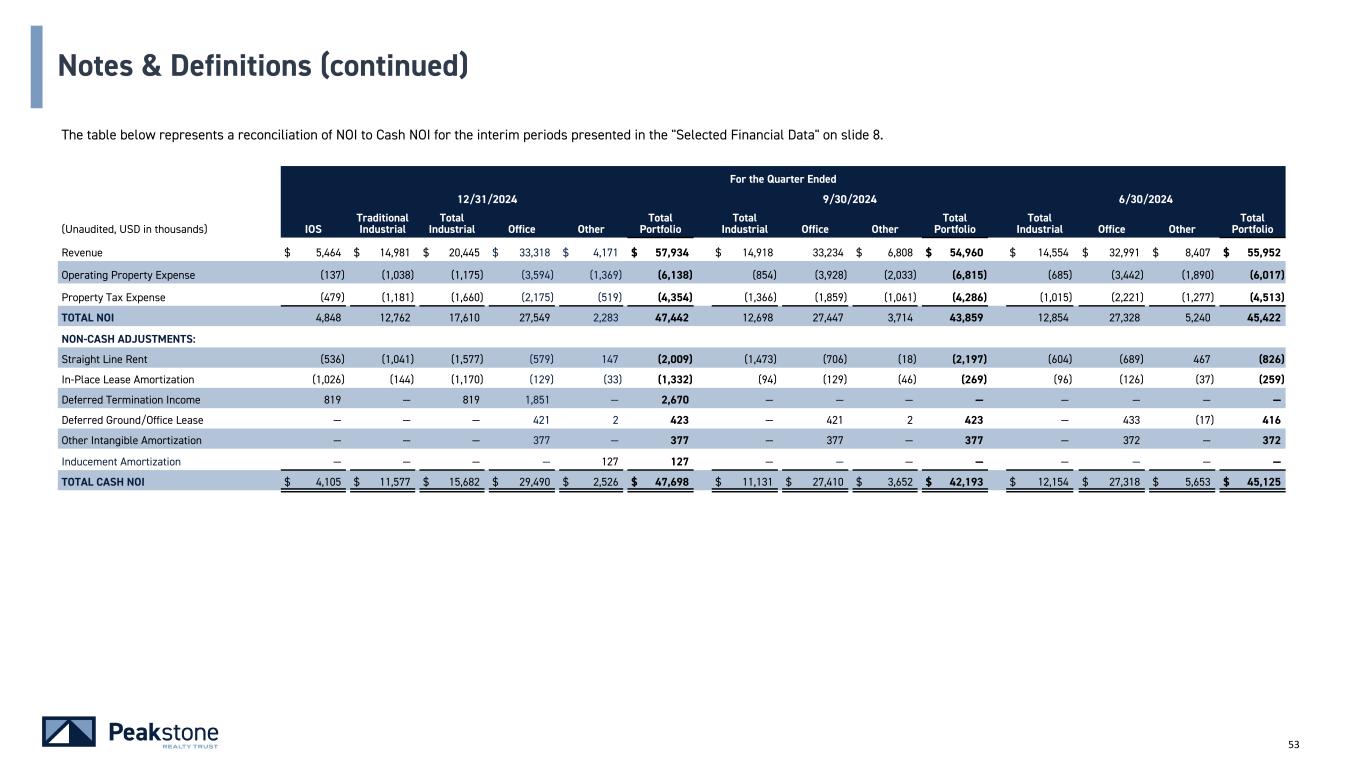
javier thanks mike i'd like to take a moment to highlight two reporting metrics that we are introducing in our financial materials beginning this quarter core ffo and adjusted ebitda re these metrics are intended to enhance comparability and consistency in evaluating the ongoing performance of our business definitions and calculations can be found in our supplemental materials and quarterly filings with that i'd like to share a few highlights of our financial results for the quarter ended march 31st total revenue was approximately 57 million dollars and cash noi was approximately 46 million dollars net loss attributable to common shareholders was approximately 49.4 million dollars or a dollar 35 per share inclusive of an approximately 52 million dollar non-cash impairment related to potential sales of assets in our office segment each ffo and core ffo were approximately 24.6 million dollars or 62 cents per share on a fully diluted basis a ffo was approximately 24.8 million dollars or coincidentally also 62 cents per share on a fully diluted basis Same-store cash NOI increased 5.8% for our industrial segment and 3.1% in our office segment for an overall increase of 4% compared to the same quarter last year. Moving on to our balance sheet. Our quarter-end metrics can be found in our queue and in our supplemental. Given the $110 million of office dispositions after quarter-end, I would like to provide quarter-end metrics on a pro forma basis reflecting these sales and the use of proceeds. We used $100 million to pay down our revolver, resulting in the following. Total liquidity of approximately $336 million consisting of cash and available revolver capacity. a cash balance excluding restricted cash of approximately $213 million and available revolver capacity of approximately $123 million. We now have approximately $1.26 billion in total debt outstanding, including $900 million of unsecured debt on our credit facility, reflecting the $100 million paydown subsequent to quarter end. The remaining approximately $360 million of debt is non-recourse secured debt. After deducting cash, our net debt would be approximately $1.048 billion, and our net debt to adjusted EBITDA RE would be 6.8 times. 88% of our debt is fixed, including the effects of our existing $750 million of interest rate swaps, which mature on July 1, 2025. The weighted average interest rate for all debt, both secured and unsecured, remains at 4.4%. As a reminder, we previously entered into forward starting floating to fixed interest rate swaps with a notional amount of $550 million. These swaps will take effect on the day our existing swaps mature. The new swaps will convert SOFR to a weighted average fixed rate of 3.58% and are set to mature on July 1, 2029. For the first quarter, as previously announced, we paid a dividend of 22.5 cents per common share on April 17th, and the Board of Trustees approved a dividend for the second quarter in the amount of 22.5 cents per common share that is payable on July 17th to holders of record on June 30th while the company expects to continue paying dividends on a quarterly basis all future dividend decisions will be made by the Board of Trustees with that I will pass the call back to Mike thank you Javier as we look ahead our primary focus remains on advancing our strategic shift to an industrial REIT with particular emphasis on the
ios subsector we believe that high quality ios properties in supply constrained markets present significant long-term growth opportunities regardless of broader economic fluctuations in line with our strategy we will continue to divest office assets allowing us to reallocate capital to higher growth opportunities within the ios space and further reduce our leverage We expect these actions to drive sustainable growth and enhance shareholder value over the long term. We will now turn the call over to the operator to take a few questions from analysts. Operator?
Operator
Thank you, sir. At this time, we will be conducting a question and answer session. If you would like to ask a question, please press star then 1 on your telephone keypad. A confirmation tone will indicate your line is in the question queue. You may press star and then 2 if you would like to remove your question from the queue. Again, if you would like to ask a question, please press star and then 1 now. The first question that we have comes from Yana Galam of Bank of America. Please go ahead.
Thank you. Good afternoon. Congrats on leasing the Everett site.
I was hoping if you could help us think about the abr opportunity at the remaining five ios sites kind of you know how should we think about the ranges and rent per acre in that segment good to have you on the call so we're not really providing uh guidance of that level um i would and and i think it's a little bit difficult given the variety of uh locations that we that we have there but i would say the one thing i would leave you with is that relative to the returns on costs that we've previously indicated and included in this uh go-round i mean you know we're comfortable in essence with the ranges that we provided uh not some of them will be a little bit below some of them are going to be uh higher than our anticipated numbers our spend is typically been a little bit lower than we originally anticipated at least at the outset we do have a considerable amount of activity underway so we're fingers crossed we don't like jinxing ourselves but fingers crossed that we should be able to have some uh announcements um you know forthcoming provided we can get through uh the details uh on those leases or prospective leases great thank
Thank you. And then maybe if you could just kind of comment on, you know, additional acquisition opportunities, kind of what you're seeing in the market, things like, you know, you have the liquidity to kind of move forward on more opportunities.
Yeah, for sure. I mean, that's going to be a balancing act. I think we've said strategically, we've got to balance two things, growth, which is, you know, pretty important for us to catch or capture, you know, a good cost of capital. And the second part is making sure that our leverage is within line. So that's going to be a balancing act as we recycle capital out of our strategic disposition program and what that looks like going forward. I would tell you that our pipeline is good. It's full. We are seeing a lot of individual one-off deals, both marketed and through our relationships. We're also continuing to see portfolios. You know, I guess it's no surprise that, you know, in taking on the assets that we took on, you know, we have been concentrating and focusing on making sure that we hit our numbers on those pieces. And at the same time, you know, we're out and active in market looking at additional transactions. So stay tuned again in that regard. Very much a balanced approach. We're not going to, you know, run out the door, but we do have liquidity to pursue things as we see a risk adjusted return that is compelling for us.
Great. Thank you for taking my questions.
Operator
The next question we have comes from Catherine Graves of UBS. Please go ahead.
Thank you for taking my questions. My first – can you hear me?
Oh, great. So, as I remember, I think their leverage was about 7.9 times after the iOS acquisition brought down to, I think, 7.5 times at the end of 2024. and I believe you said you're at 6.8 times now. So can you just maybe remind us what your sort of target leverage is? And then maybe, I know you don't get guidance, but just sort of what you're thinking about the timeline of bringing your leverage down to a comfortable level.
Hi, Catherine, this is Javier. Thanks for being on the call. The pro forma numbers that we presented after the acquisition was at 7.9, but the actual quarter end, as you noted there was 7.5. And in six, eight, now that we've completed these $110 million of additional sales subsequent to quarter end, we've said publicly that our target has been to be somewhere in the six times range or below, and that continues to be our current target leverage at this point.
I would just add, Catherine, I would just add that, you know, we've shown an ability to be at a fairly high number historically and through the recycling of capital and, you know, rejiggering our balance sheet, specifically the debt side of the equation. You know, we've been able to do that.
I think it was second quarter of last year, we actually eclipsed six to one debt to you, but in a rough sense. got it thank you that's helpful and then my second question you mentioned sort of either maintaining or accelerating the rate of office dispositions this year and i'm just wondering what will determine sort of how much you push the gas on on those dispositions is there anything in the macro that you're paying attention to or what uh what what sort of the the thought process there yeah so i think it's a case-by-case basis we take what we can get from the marketplace place in terms of disposition activity.
I think we've had a, I think in the public market, you have to always, you know, look at things and say, you know, your portfolio is for sale every day one way or another. So we're not attached to anything. We're just trying to maximize shareholder value as best we can. We are excited, it's probably too big of a word, but we have been able to achieve numbers that I think are far in excess of what the market's giving us credit for. You know, the pricing of our stock sort of indicates that we should continue to do these types of things until the market understands exactly, you know, how we're underwritten. And, You know, the bottom line is that, you know, we think we've got a portfolio of properties that are desirable to investors and specifically to our tenants. We've said from the very beginning that we own assets that are important to our underlying tenants for, you know, whatever reason that might be, headquarters, regional headquarters, national headquarters, R&D facilities, you know, key distribution facilities, whatever the heck it is. we've long considered our properties to be desirable in that sense. And so looking at the percentage of transactions that have gone to our tenants, I think that original investment thesis has proven itself. And so we're seeing a fair amount of interest from our existing tenant base as well. So we'll see how that all goes. And what is interesting at the moment is that the cost of capital for the corporates, and we have a pretty high, still high percentage of S&P 500 or, you know, oriented tenants, if you will, their cost of capital on the debt side is advantageous as compared to the real estate investment side. So all of that sets up pretty well for the comment as to, you know, why we think there might be a possible acceleration.
All right. Thanks so much for the color.
Operator
Thank you. Ladies and gentlemen, just a final reminder. If you would like to ask a question, please press star and then one. The next question we have comes from Anthony Howe of Truist Securities. Please go ahead.
Hey, guys. Congrats on the quarter. Mike, in your preparing remarks, you mentioned that for office properties with more than five-year terms are trading at seven and a half to 12 and a half cap rate on in-place NOI. So what are the characteristics for assets at the lower end or the range versus the higher end? And also, is this range a reference to Peekstone portfolio specifically or in general?
Yeah, so we gave two metrics that really what we're seeing in the marketplace and I think relative to our own portfolio and success. So we were trying to give you some, I don't know, I guess, goalposts by which to look at our portfolio through a lens that might provide you a little more clarity without giving you individual deal-by-deal guidance. So the line of demarcation generally is around five years. The, you know, the shorter, the seven and a half caps versus the 12 and a half cap is generally going to come down to, you know, greater duration. You know, you probably would be safe looking, you know, at a midpoint might be a way to look at it. And then the other part of the guidance we gave you was to say that if you have less than five years, a cap rate really doesn't apply. It's really a, you know, it's really looking at the NPV of the remaining cash flow plus a residual value number. And that even then provides a pretty wide range on a per square foot basis. But, you know, you can do a little bit of math in that sense. And if you're closer to five years and have a very high rent, you know, at least you're going to get paid for that. And then the residual values are, you know, arranged depending on the specific property, the specific market, the age of the asset, you know, those types of things. Got it.
Yeah, that's very helpful. And, like, what's currently in the pipeline in terms of signed PSA or, like, LIs? Has the buyer pool for office assets been, or are you still seeing reasonably deep interests?
I mean, reasonably deep enough to get it done. I mean, we've sold now over $2 billion worth of property, I think, since listing it. I don't know what that date is. But, you know, I think we've been one of the more active sellers of office. I think we've been one of the more successful sellers of office. I think people are, you know, surprised from time to time on some of the pricing that we get. The, well, I'm not going to tell you exactly what we have under PSA, but I, you know, I would tell you that, you know, it has, I would tell you there's more and more people talking about office investment. But I think, as I've said previously in previous quarters, this really comes down to finding the right buyer for the right asset at the right time. We tend to look for people that are sharpshooters, have banking relationships on a local level, have existing balance sheets where they don't need to borrow. They can borrow after closing, things of that nature. So you got that in combination with, you know, tenants that have very deep pockets, and that's a pretty good reliable – it's been reliable so far in going with them and their ability to close. So reliability is key in terms of how we're looking at buyers these days.
And then in terms of ILS, how will you characterize tenant demand today? Are there any shifts in terms of, you know, users such as logistics or construction or equipment storage?
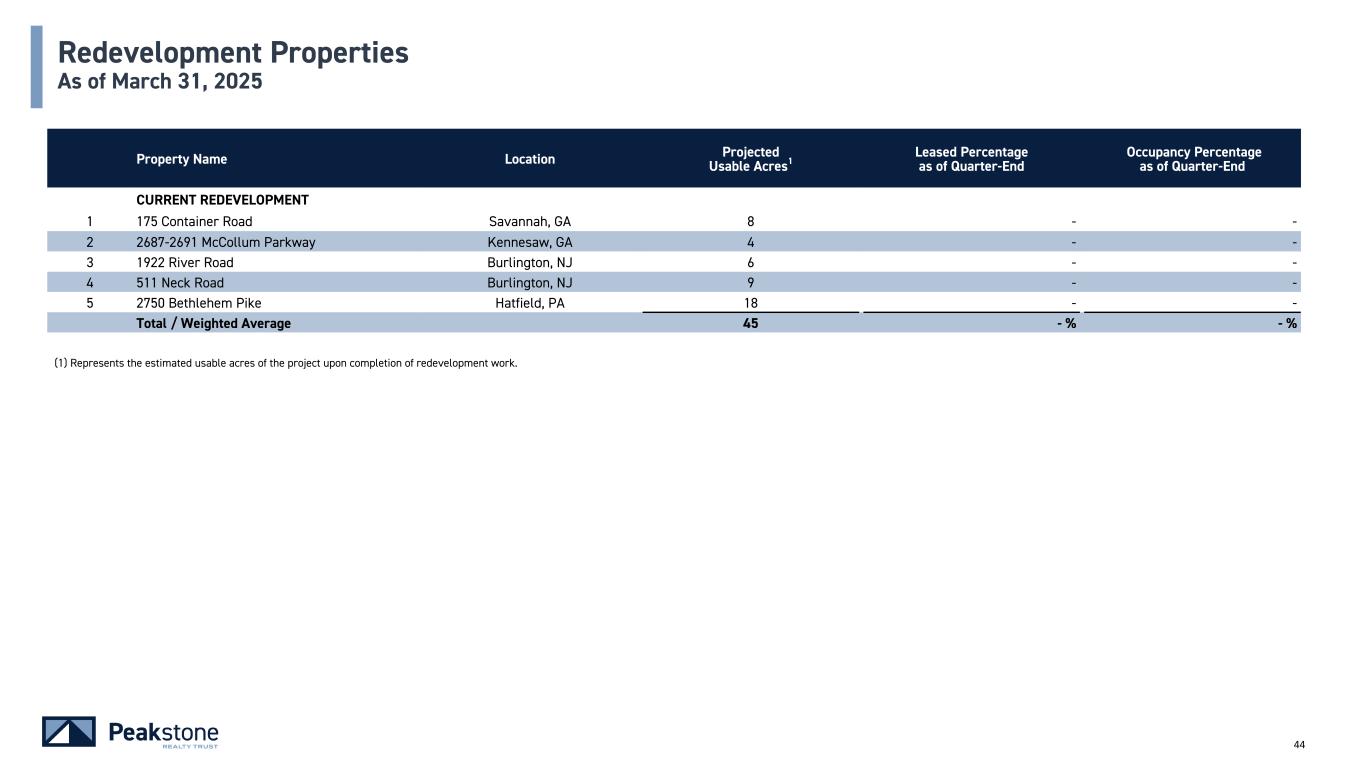
Yeah, I mean, I think, you know, we have the vacancy that we have is related to, you know, what was the six redevelopment assets we moved as a result of fully leasing the Everett property, our largest property. We will be effectively moving that out of our redevelopment to our operating portfolios as part of that process. And then we're actively in discussions with a variety of tenants. So demand has not really changed from the time that we took the properties over. We've changed a little bit of what we're doing on some of the properties. but i think we've benefited uh just like we benefited at everett from not having to spend capital that we originally performed at least on the on the first uh go around and that that is playing out we are actually finding some some demand from tenants who are willing to take the properties as is or you know virtually as is relative to what we you know could have spent uh in a particular situation so we've got a couple of others that have had a little more work going on to them uh and the the interest level in what we're going to bring to market for those deals uh seems to be you know spot on uh to what we anticipated originally so so far uh
Operator
fingers crossed knock on wood uh we haven't really seen any change okay thank you mike really appreciate it yeah no worries thank you uh for your time bondages thank you ladies and gentlemen We have reached the end of our question-and-answer session, and I would now like to turn and call back over to Michael Escalante for closing comments. Please go ahead, sir.
Thank you, operator. I appreciate everyone joining the call today and, of course, all the time and effort in following us. I appreciate your patience as we work through this transformation. We keep looking at what we're doing as trying to make sure that we message a succinct story, and we are trying to make sure that we're delivering on that story as well. So stay tuned. We're very, very active in the marketplace on all fronts, and we're excited about our future as we move through this transition. Thanks for your time today.
Operator
Thank you, Saul. Ladies and gentlemen, that then concludes today's conference. Thank you for joining us. You may now disconnect your lines.