Executive readout · one minute
Call research workspace
Read the call alongside every captured source. Audio, transcript, slides and SEC filings stay in one workspace.
Earnings call · FY2025 Q2
Executive readout · one minute
Read the call alongside every captured source. Audio, transcript, slides and SEC filings stay in one workspace.
Research coverage
4 live sources
Switch sources without leaving this page or losing your listening position.
Open the source you need; every reader stays inside this workspace.
How the reported period landed and where the business moved.
Listen and read together
The spoken word highlights as audio plays. Select any word to seek to that moment.
Greetings, and welcome to the Peakstone Realty Trust Second Quarter 2025 Earnings Conference Call and Webcast. As a reminder, this conference is being recorded. It is now my pleasure to introduce your host, Steve Swett, Investor Relations. Thank you. You may begin.
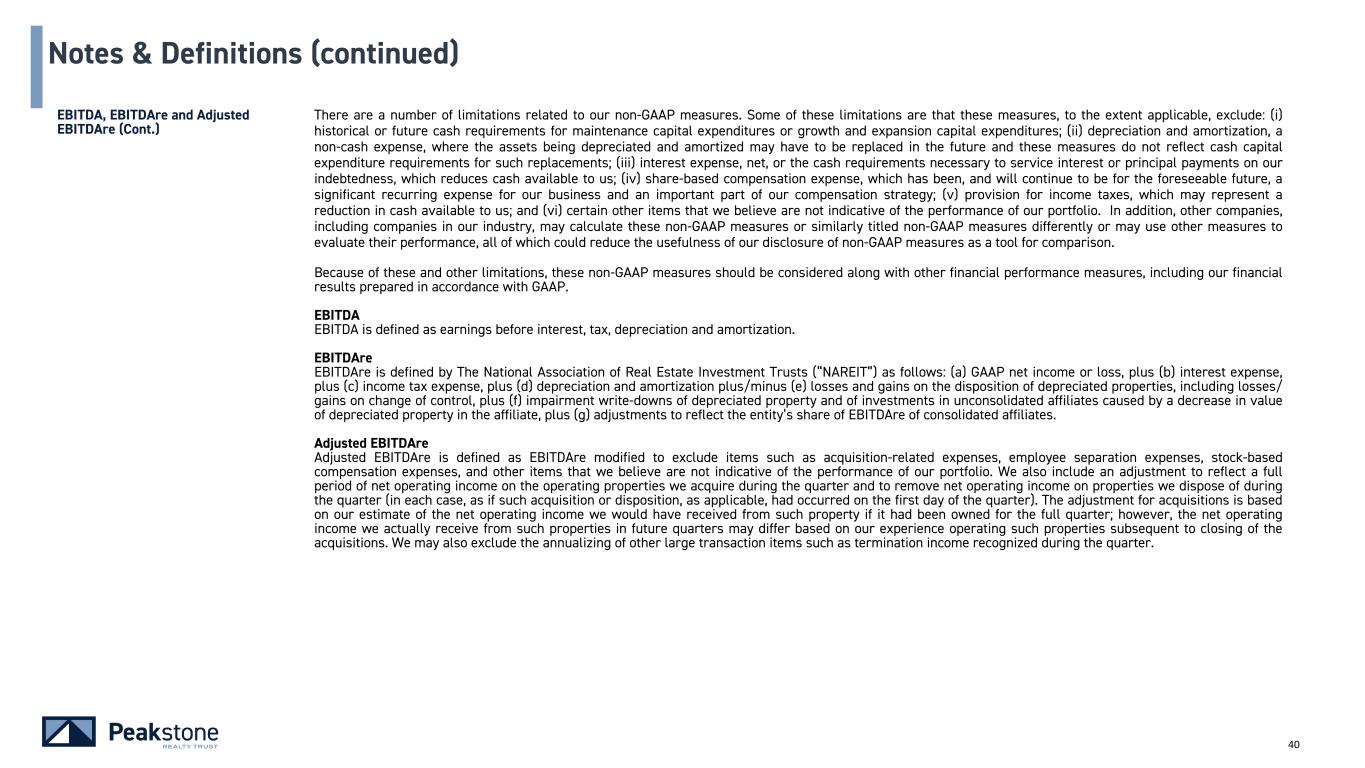
Good afternoon, and thank you for joining us for Peakstone Realty Trust's Second Quarter 2025 Earnings Call and Webcast. Earlier today, we posted an earnings release, supplemental and updated investor presentation to the Investor Relations page on our website at www.pkst.com. Please reach out to our Investor Relations team at [email protected] with any questions. The company will be making forward-looking statements, which include any statements that are not historical facts on today's webcast. Such forward-looking statements are based on expectations that involve risks and uncertainties that could cause actual results to differ materially. For a further discussion of risks related to our business, please see our annual report on Form 10-K and subsequent filings with the SEC. This call, the company may refer to certain non-GAAP financial measures, such as funds from operations, core funds from operations, adjusted funds from operations, EBITDAre and adjusted EBITDAre. You can find a tabular reconciliation of these non-GAAP financial measures to the most currently comparable GAAP numbers in the company's earnings release and filings with the SEC. On the call today are Mike Escalante, CEO and President; and Javier Bitar, CFO. With that, I'll hand the call over to Mike.
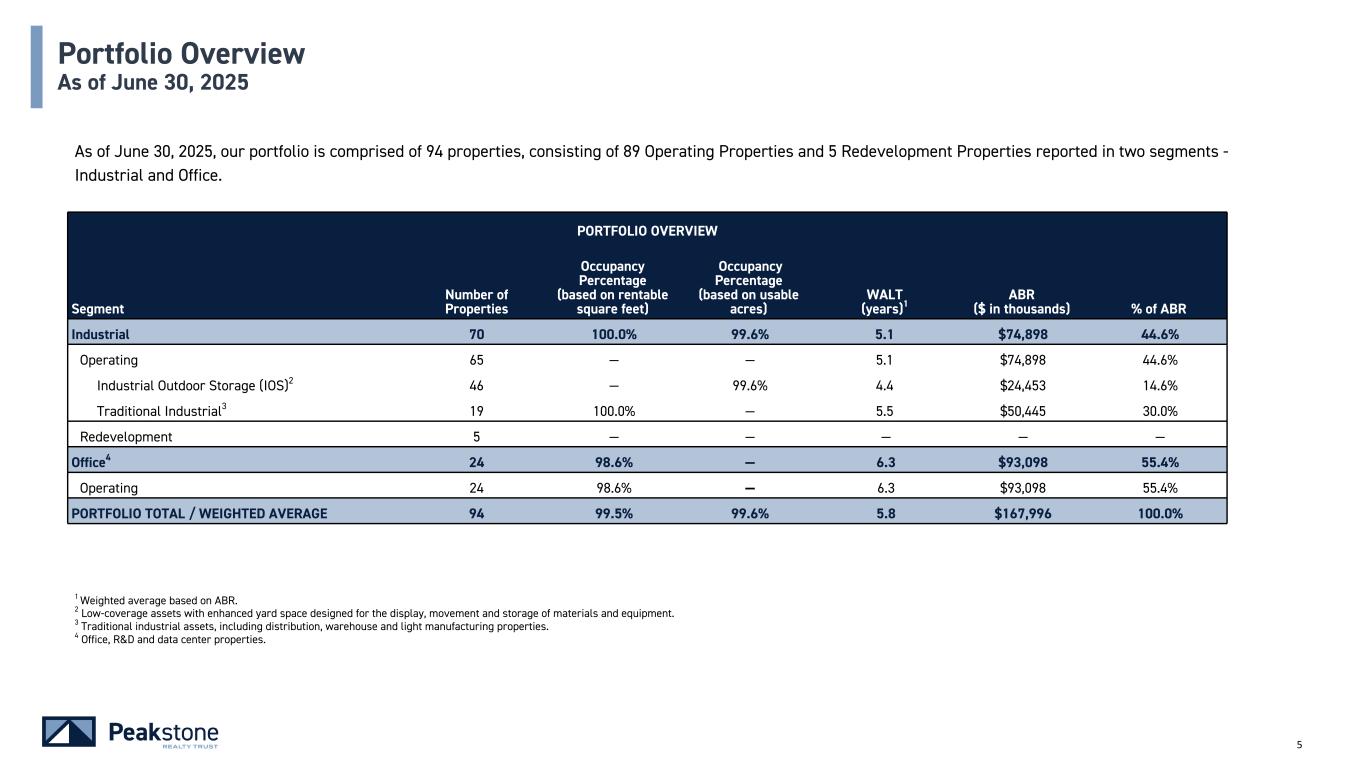
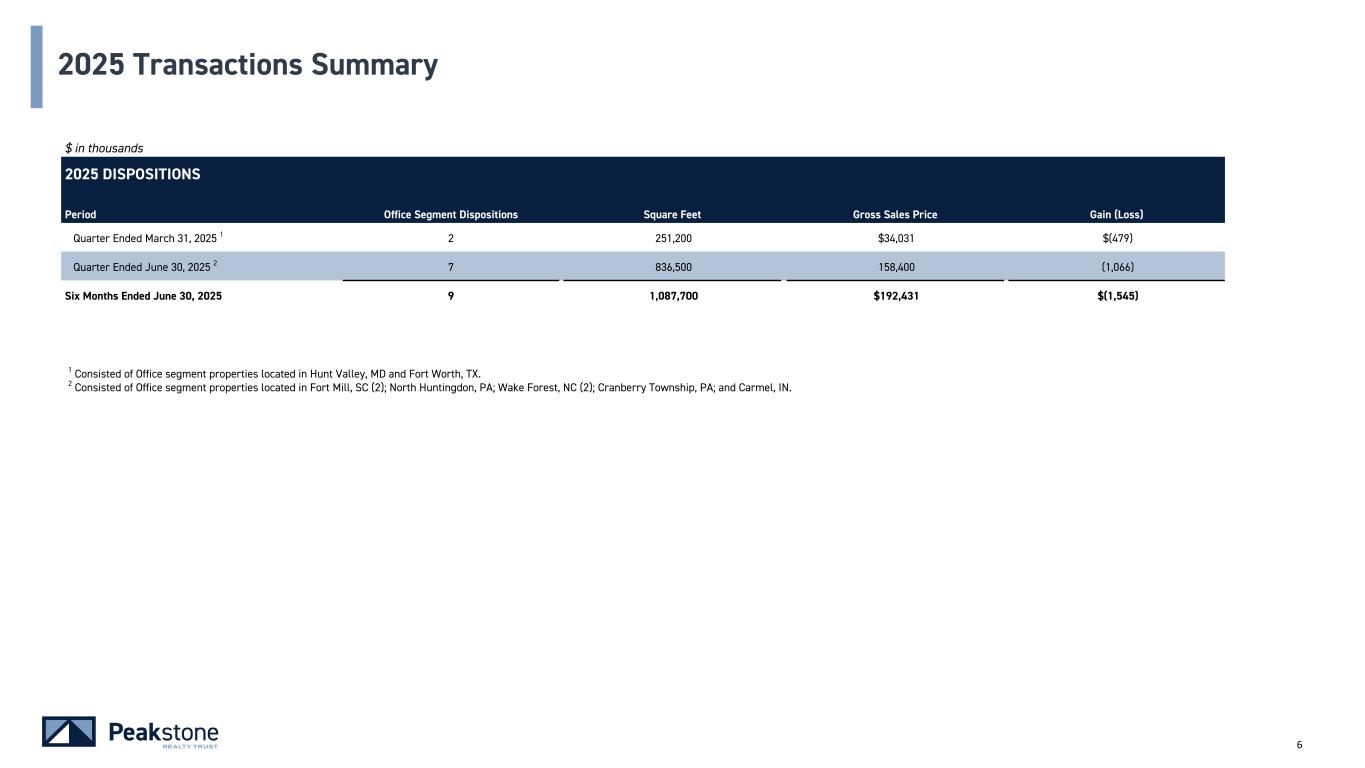
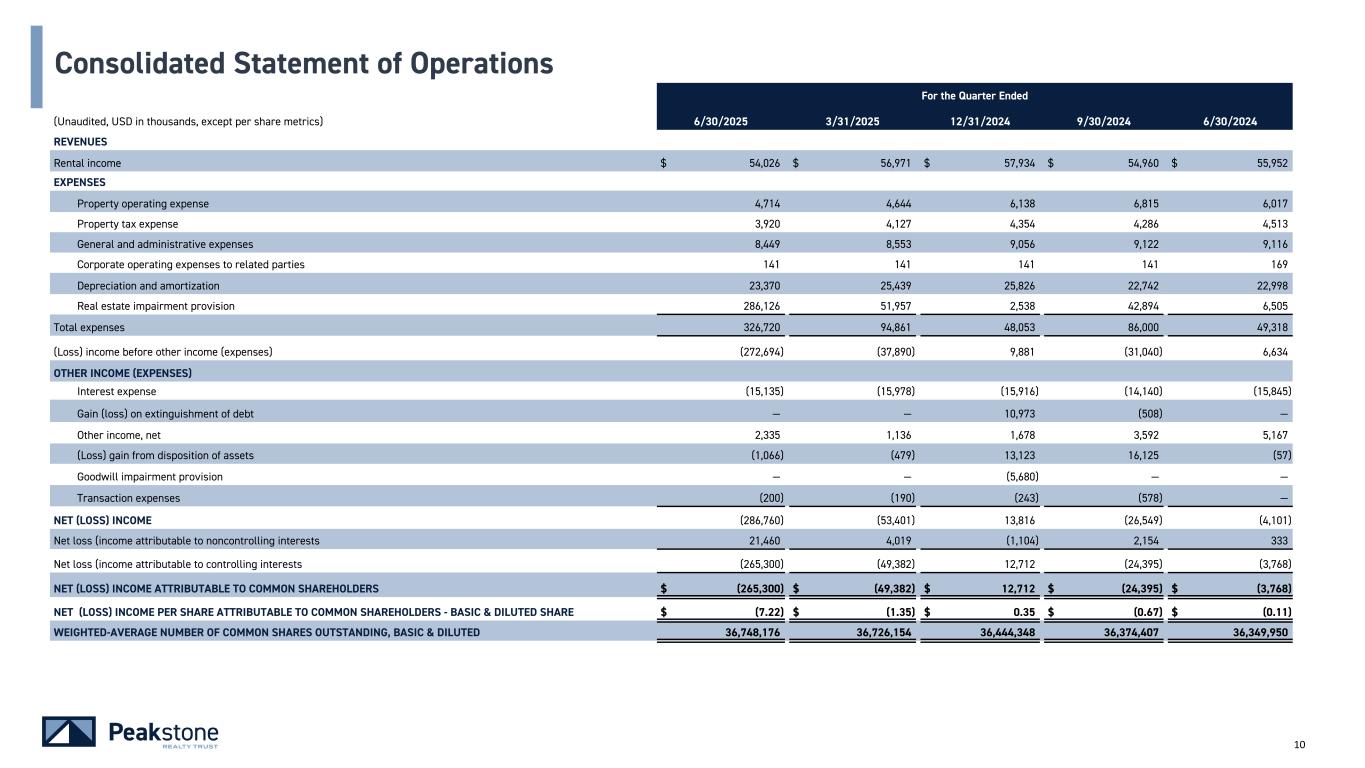
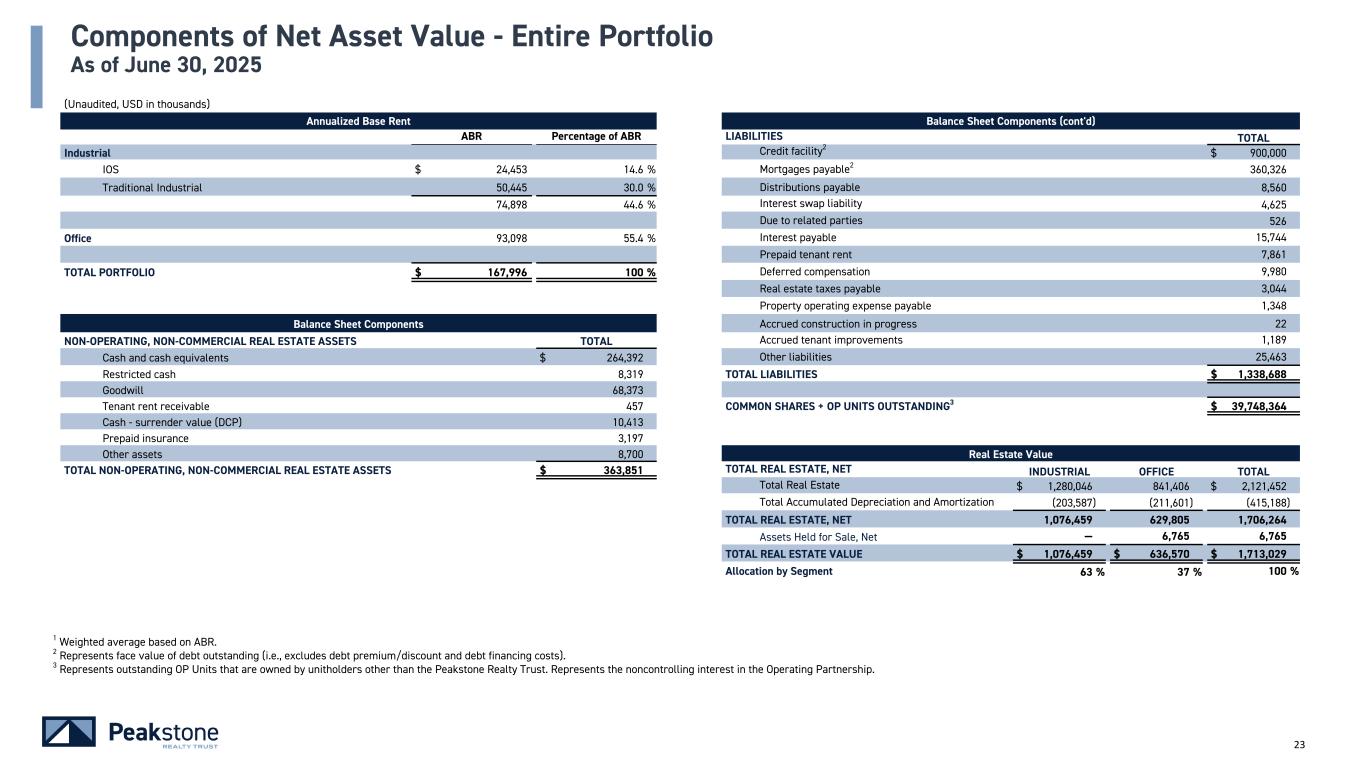
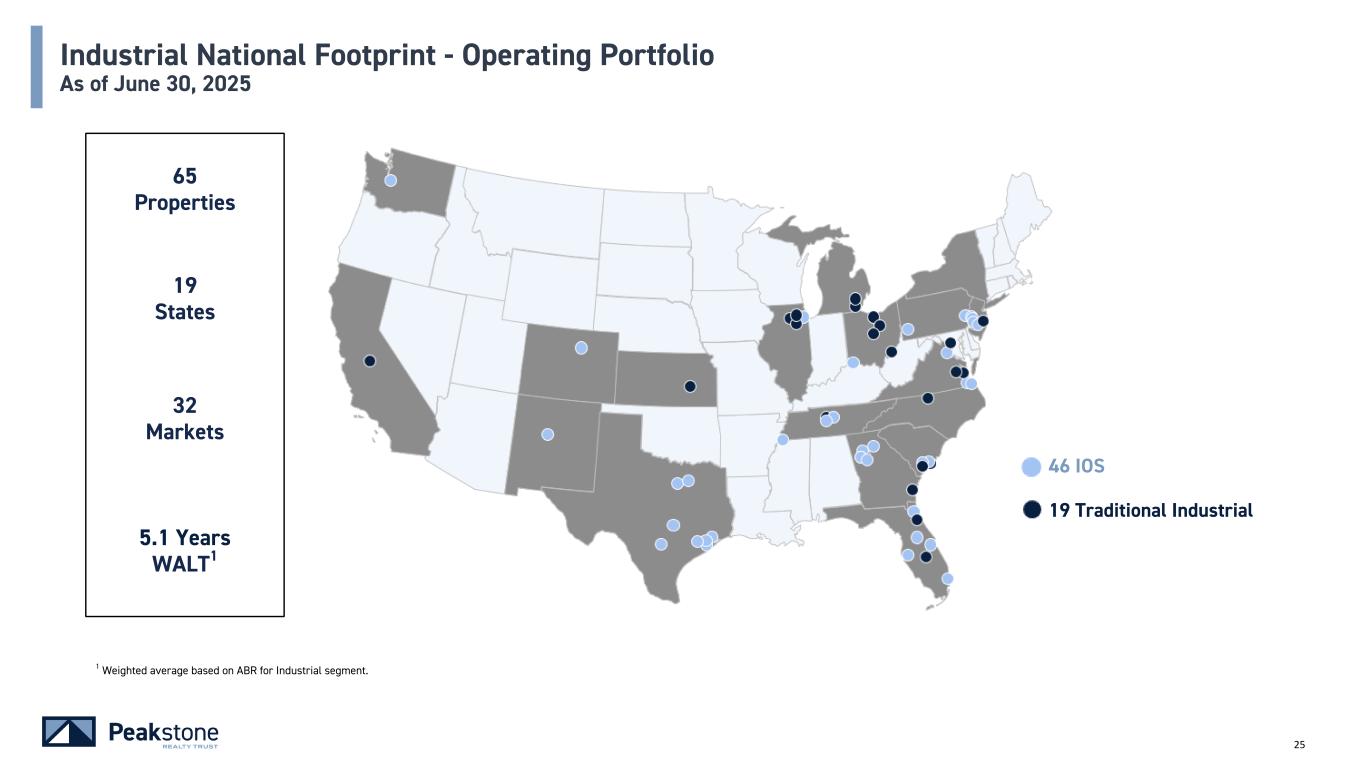
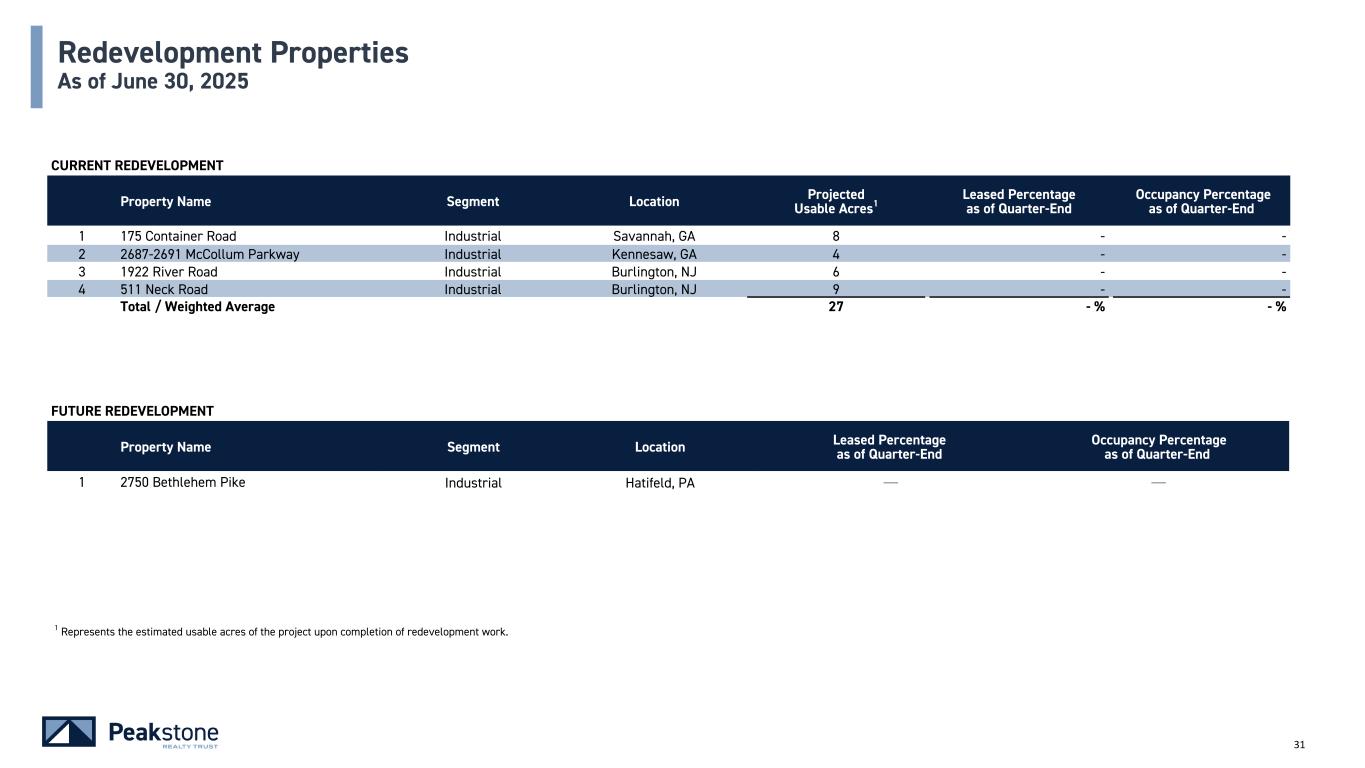
Good afternoon. Thank you for joining our call today. We continue to advance our strategic transformation into an industrial REIT. Growth in the industrial outdoor storage or IOS subsector remains central to this strategy. Our focus is on scaling our IOS platform through acquisitions and leasing, divesting our remaining office assets and reducing leverage. During and subsequent to quarter end, we made meaningful progress across each of these focus areas. Let me start with the recent activity across our IOS platform, where we continue to drive both external and internal growth. We expanded our IOS portfolio with 2 acquisitions totaling approximately $52 million. First, we acquired a 27 usable acre property in an infill submarket of Atlanta for approximately $42 million. This site is located along one of Atlanta's most active and established industrial corridors and features upgraded yard space and a combination of renovated and newly constructed buildings to support yard operations. It is fully leased to 2 tenants, each having long-term contracts in the logistics or municipal services sectors. On a combined basis, the leases have a weighted average term of 5 years and include 3.8% average annual rent escalations. Second, we acquired a 9.2 usable acre property in Port Charlotte, Florida, for approximately $10.4 million. The property is located within the growth corridor stretching from Tampa through Fort Myers, an area experiencing strong economic and demographic momentum. It is fully leased to 3 tenants, including a national equipment rental company as the anchor. On a combined basis, the leases have a weighted average term of 6.8 years and include 3% average annual escalations. In addition to acquisitions, we continue to demonstrate execution across our IOS redevelopment program. Shortly after quarter end, we completed the redevelopment of another IOS property. We executed a full site 2.5-year lease at our property in Savannah, which commenced in July. The lease delivers over $0.5 million of incremental ABR with 4% annual rent escalations. It is also notable that this was one of the largest IOS leases in the Savannah market year-to-date. The transaction reflects our continued ability to execute on redevelopment and drive growth across the IOS platform. As a result of this activity, we have increased our IOS ABR by over 25% since the beginning of the year. Turning to Office, we have taken meaningful steps towards monetizing our Office portfolio, a priority we expect to execute at an even more accelerated pace. Through quarter end, we sold 7 office properties for $158 million. Subsequent to quarter end, we closed on 2 additional sales located in Platteville, Colorado and Andover, Massachusetts totaling $24 million, bringing our year-to-date office sales to 11 properties totaling $216 million. We also took steps to further align book values with expected sale outcomes. During the quarter, we recognized a noncash impairment of approximately $286 million, primarily related to 18 office properties. These noncash impairments reflect shortened anticipated hold periods and updated expectations for sale pricing, consistent with our strategy to sell all of our office assets in the coming quarters. As a result, the Office segment now represents just 35% of the net book value of our real estate assets or approximately $615 million, while the Industrial segment accounts for approximately 65%, reflecting the ongoing success transforming our portfolio. With that, I'll turn the call over to Javier to walk you through our financial results and capital markets activity.
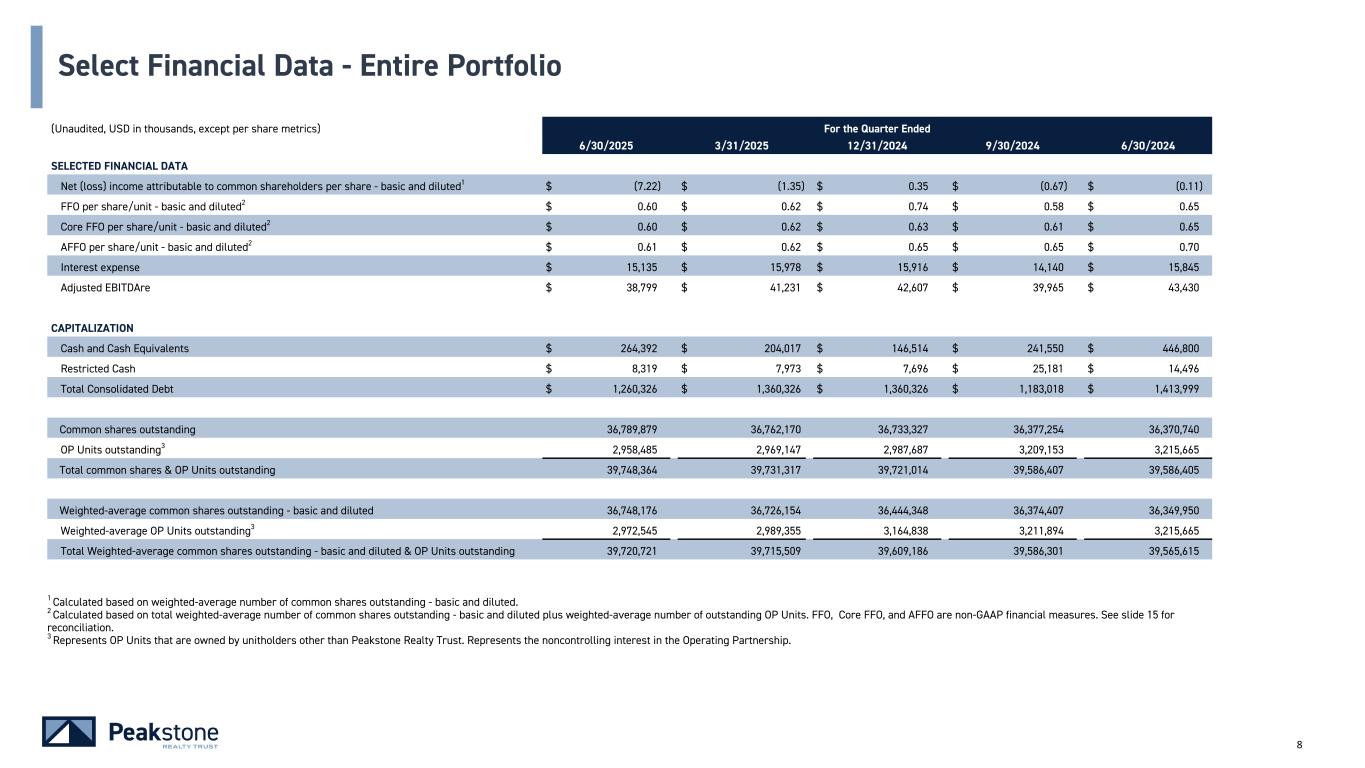
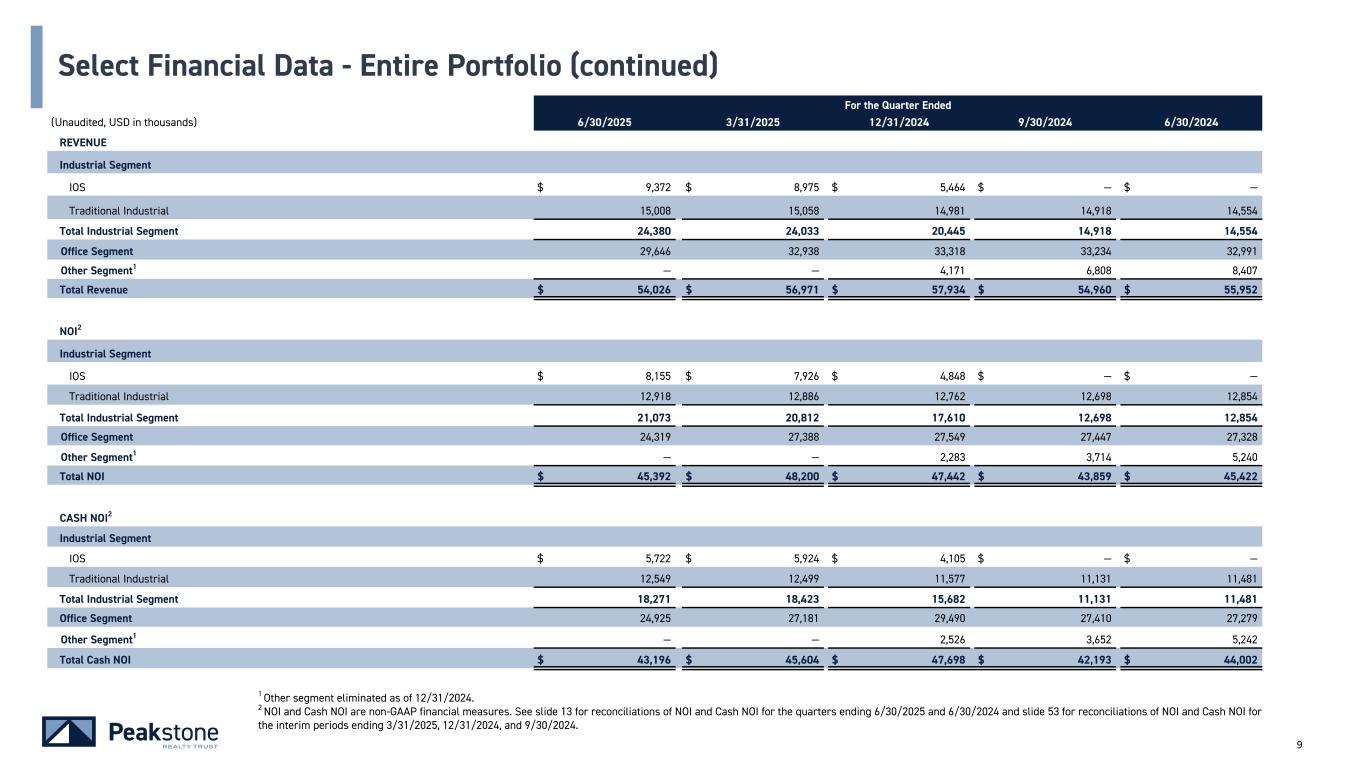
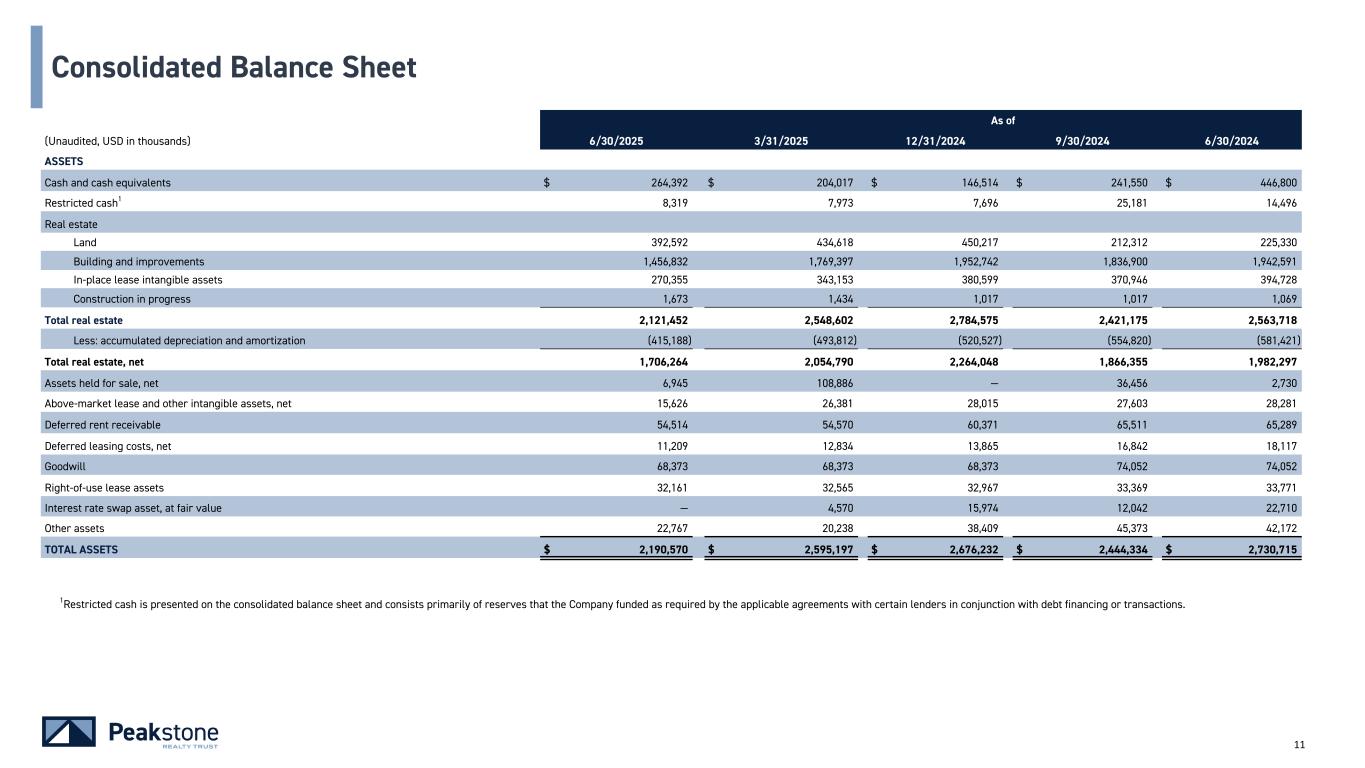
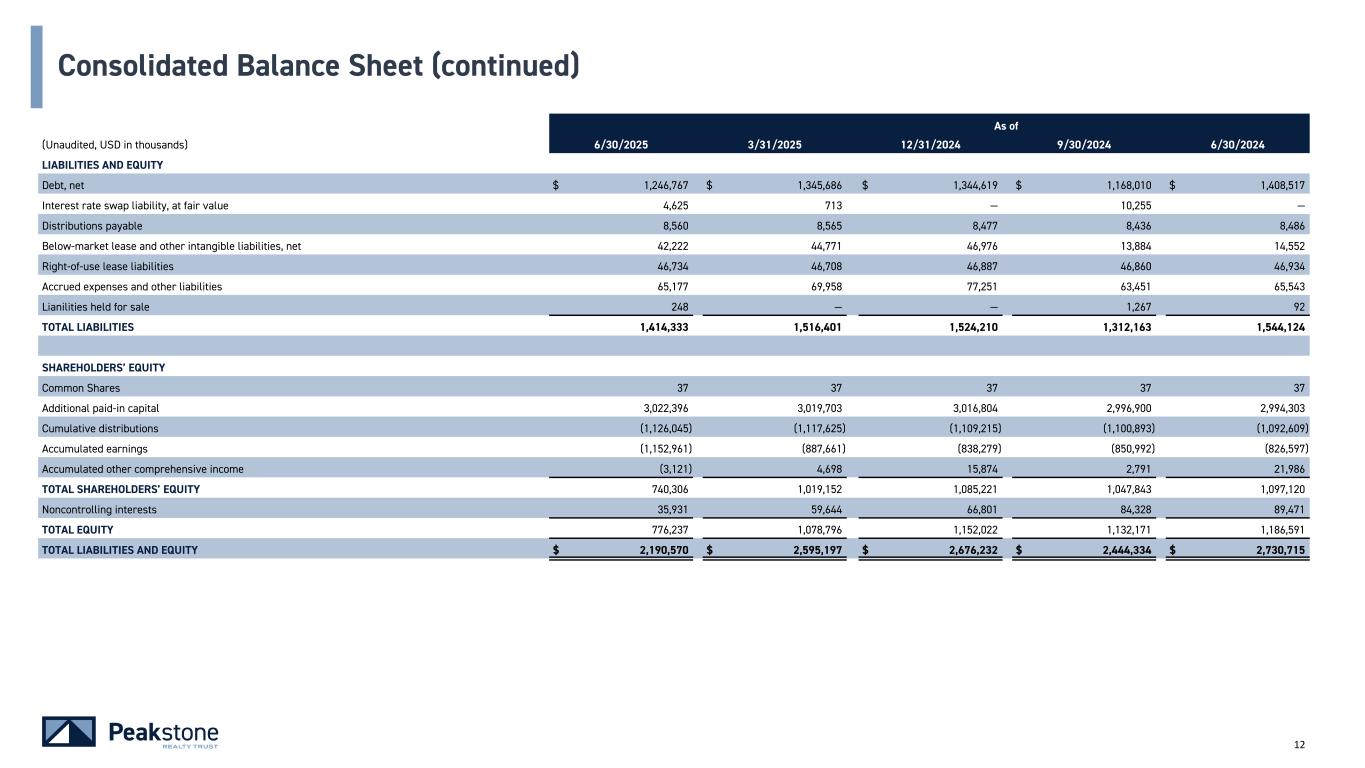
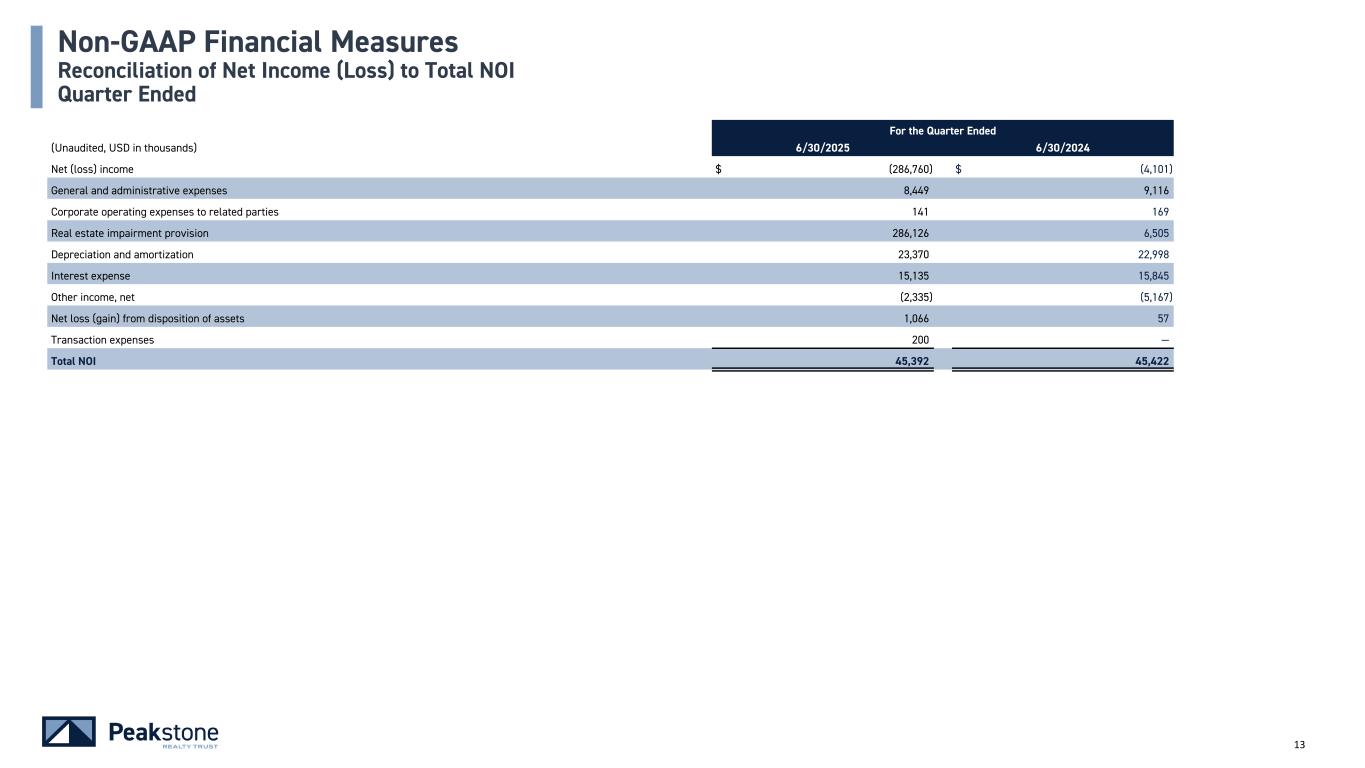
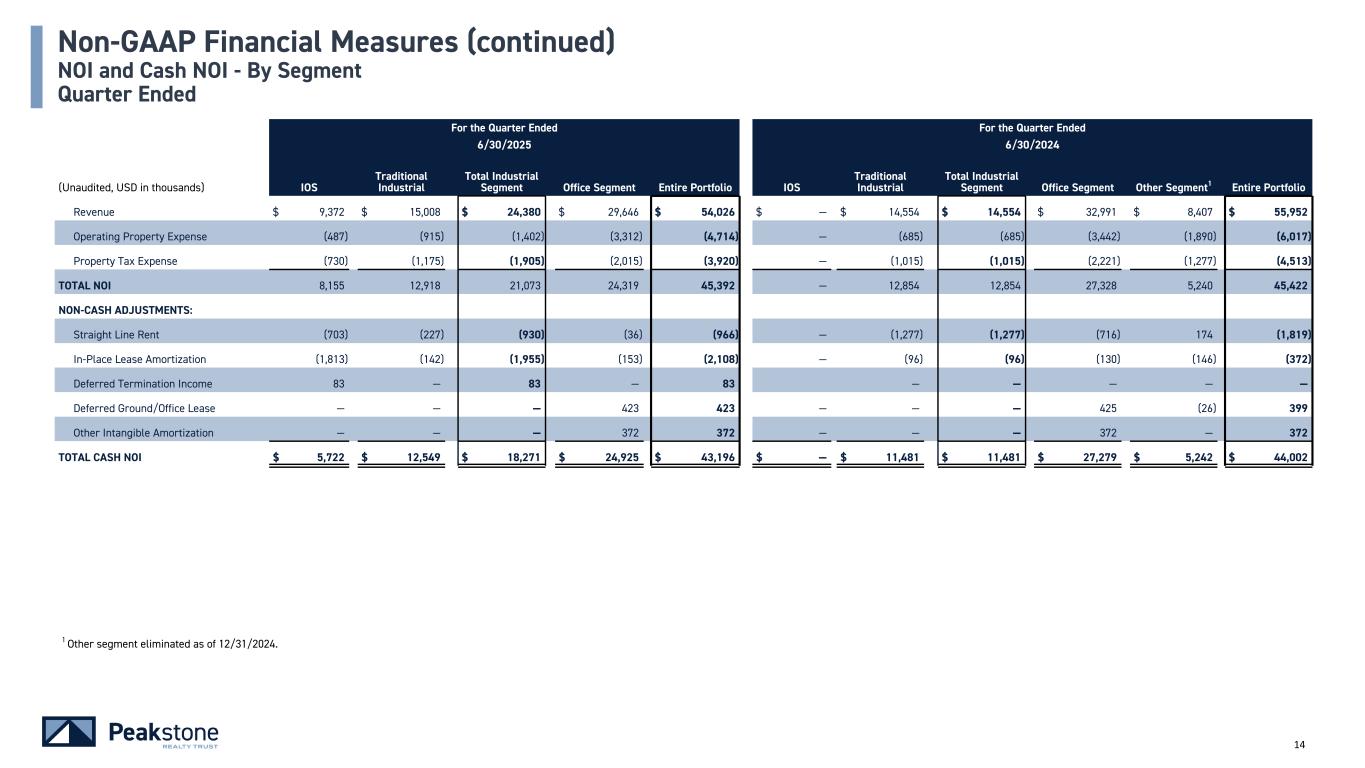
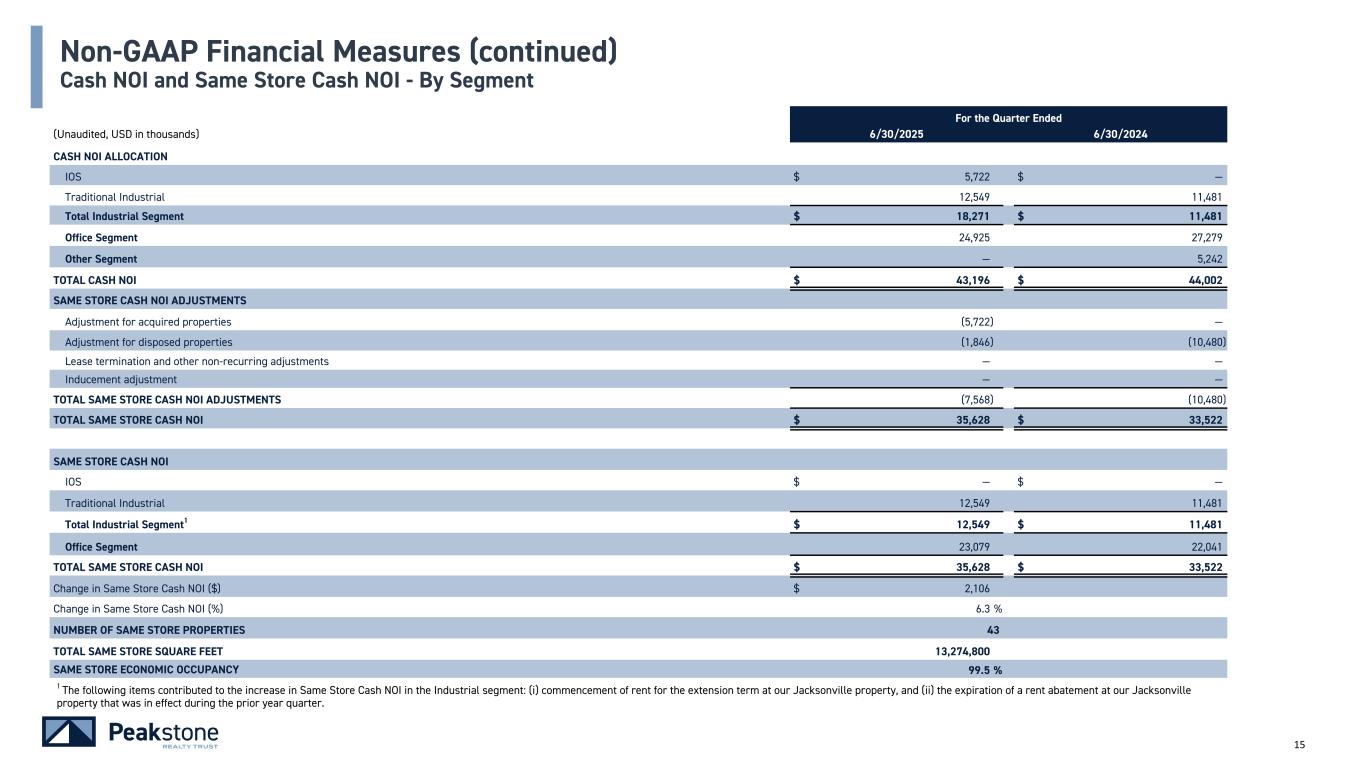
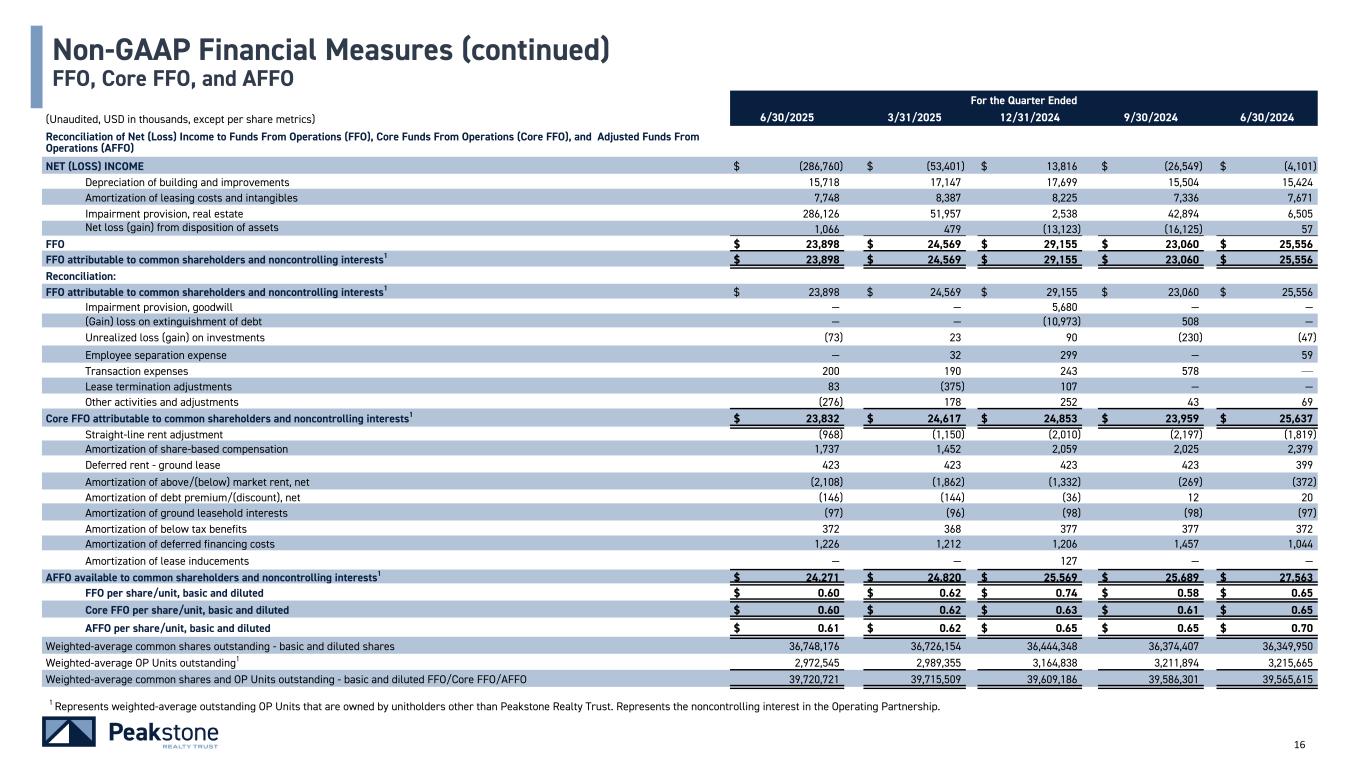
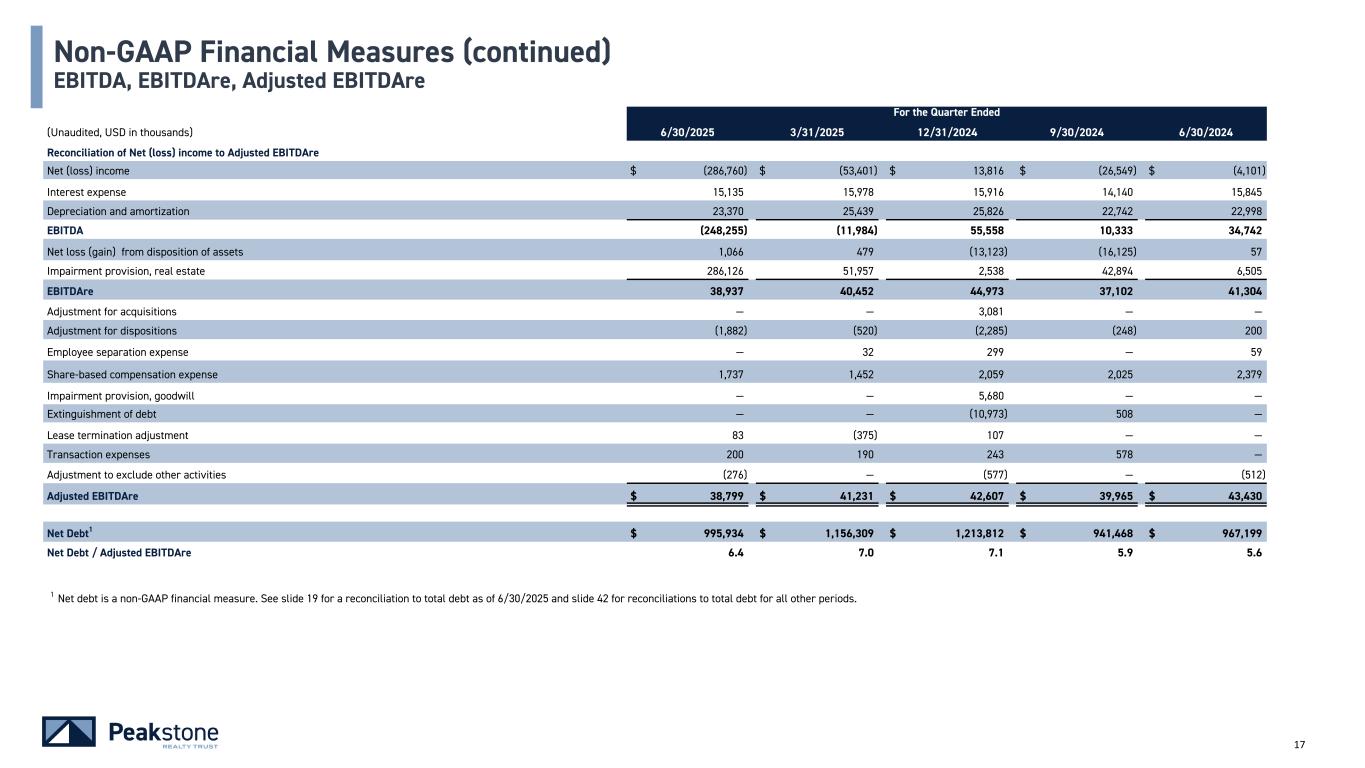
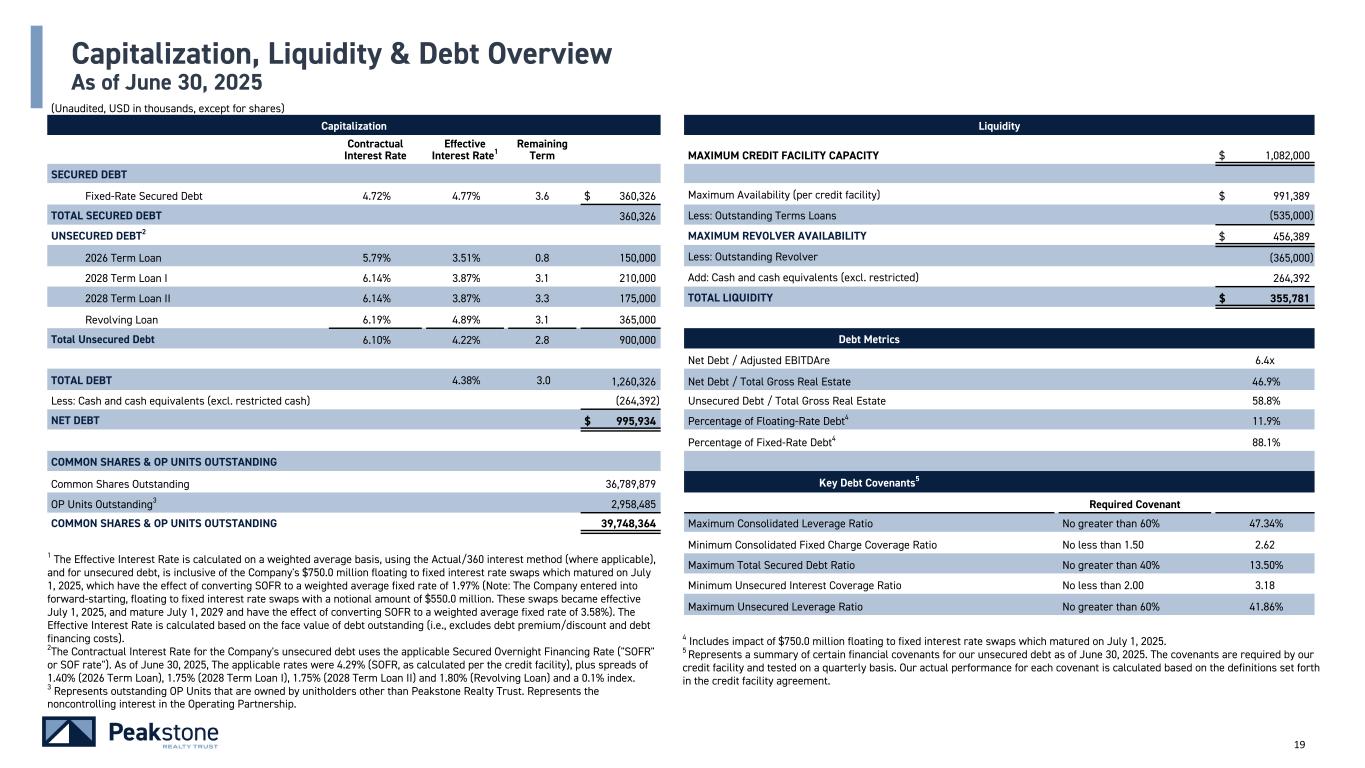
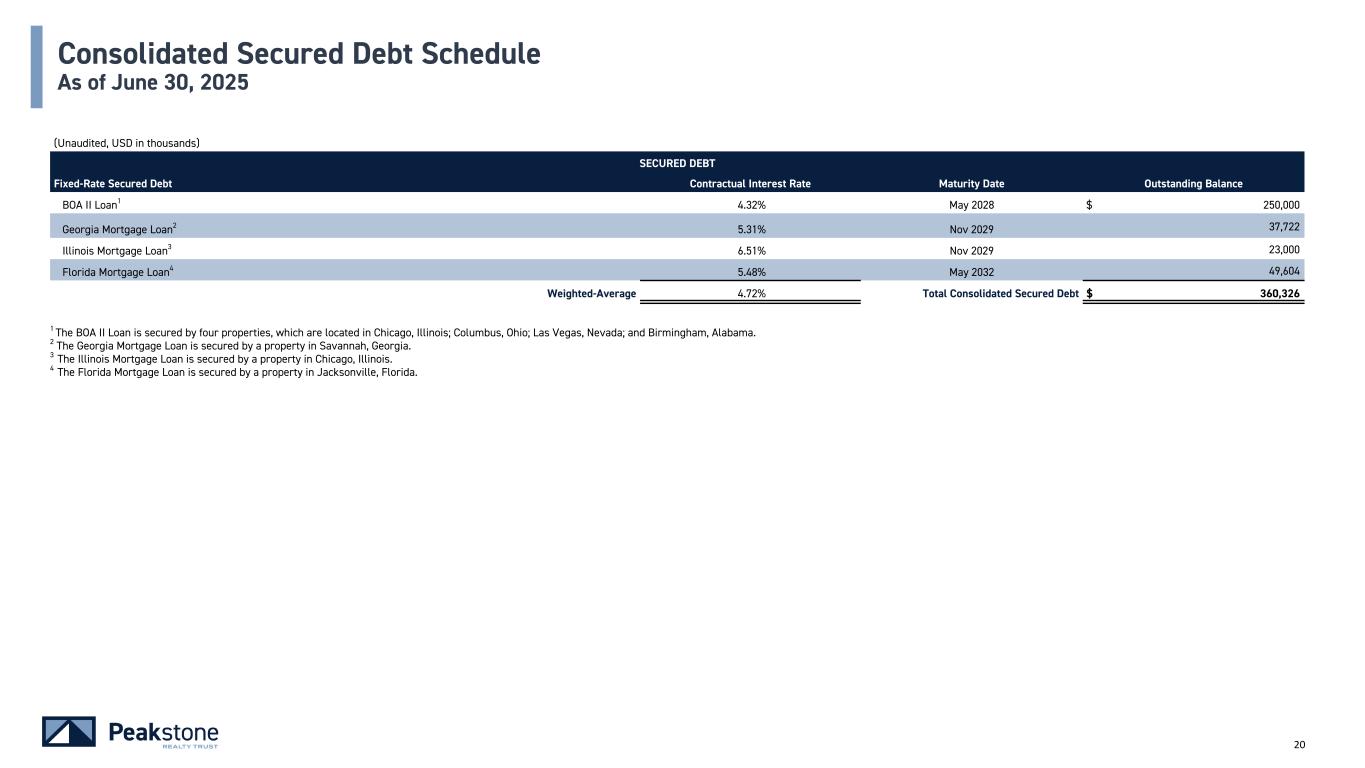
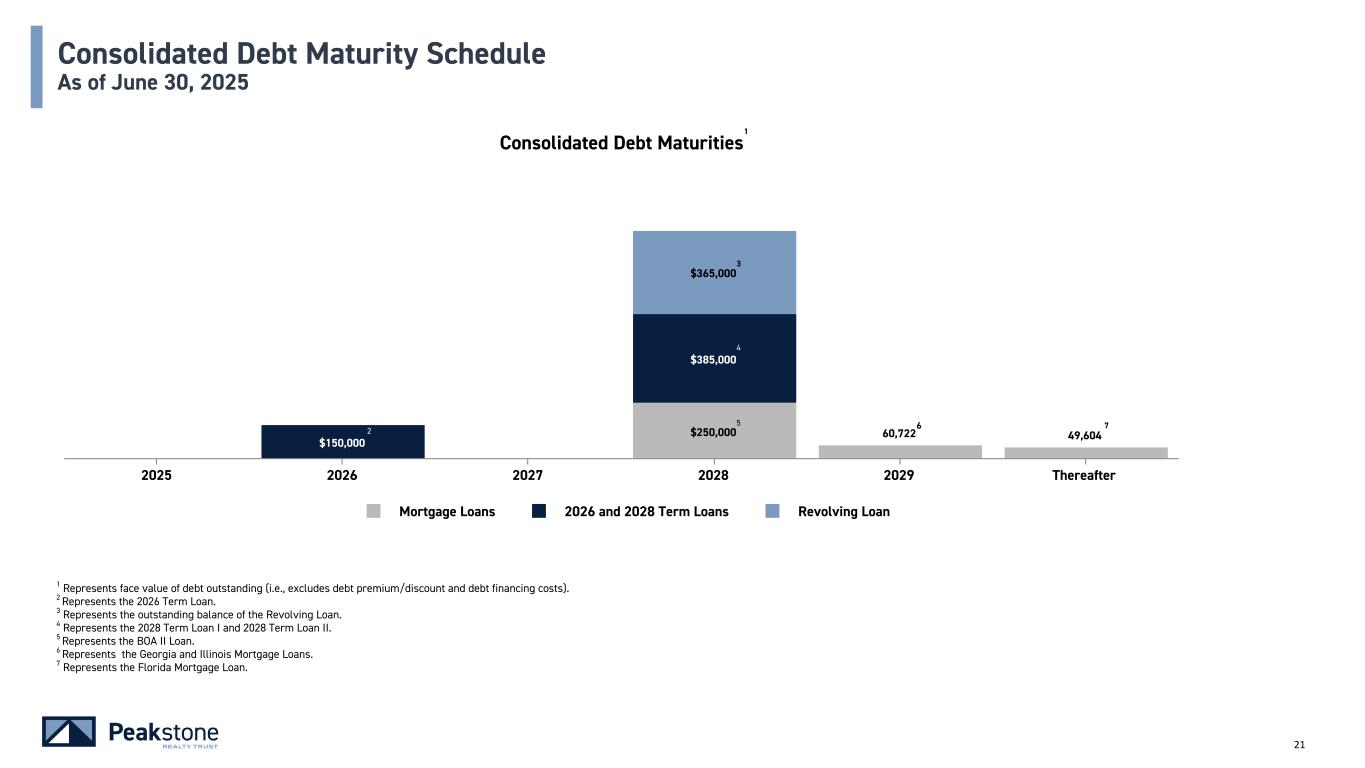
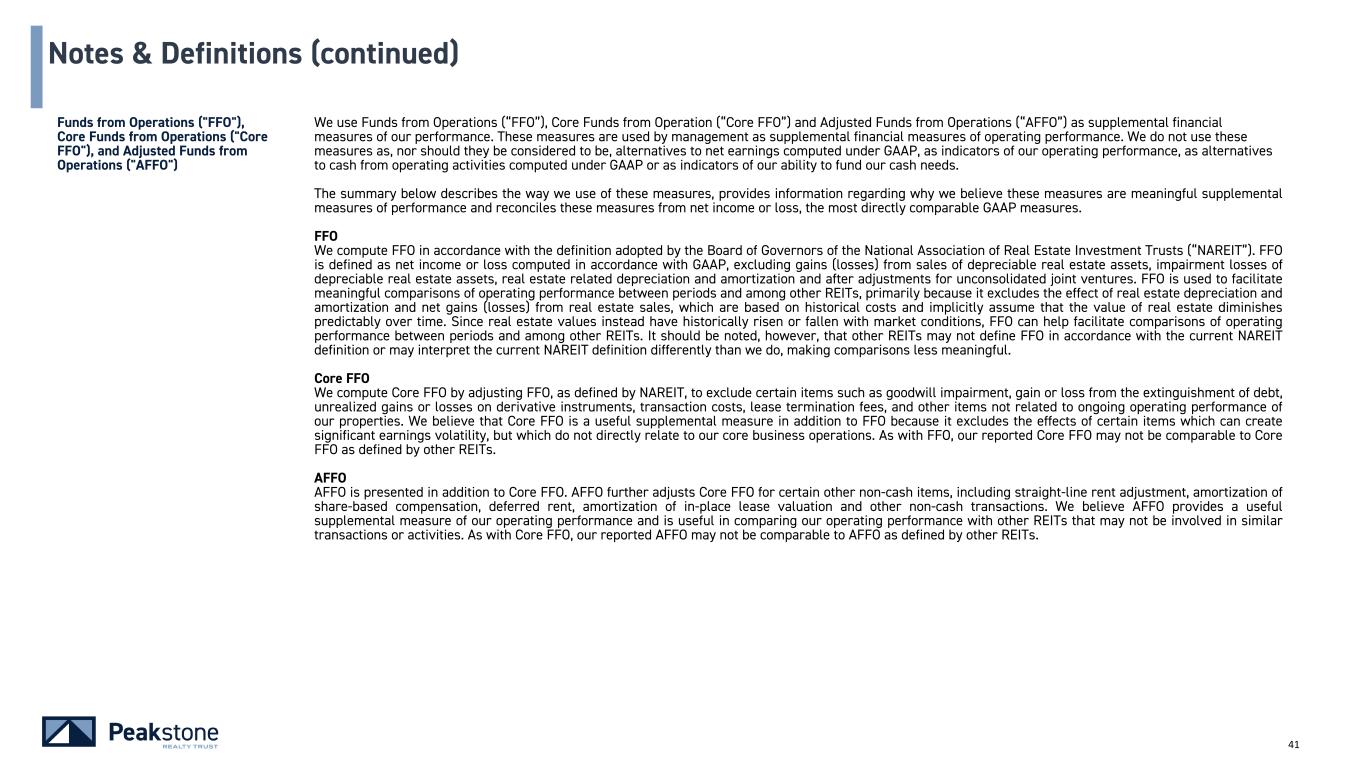
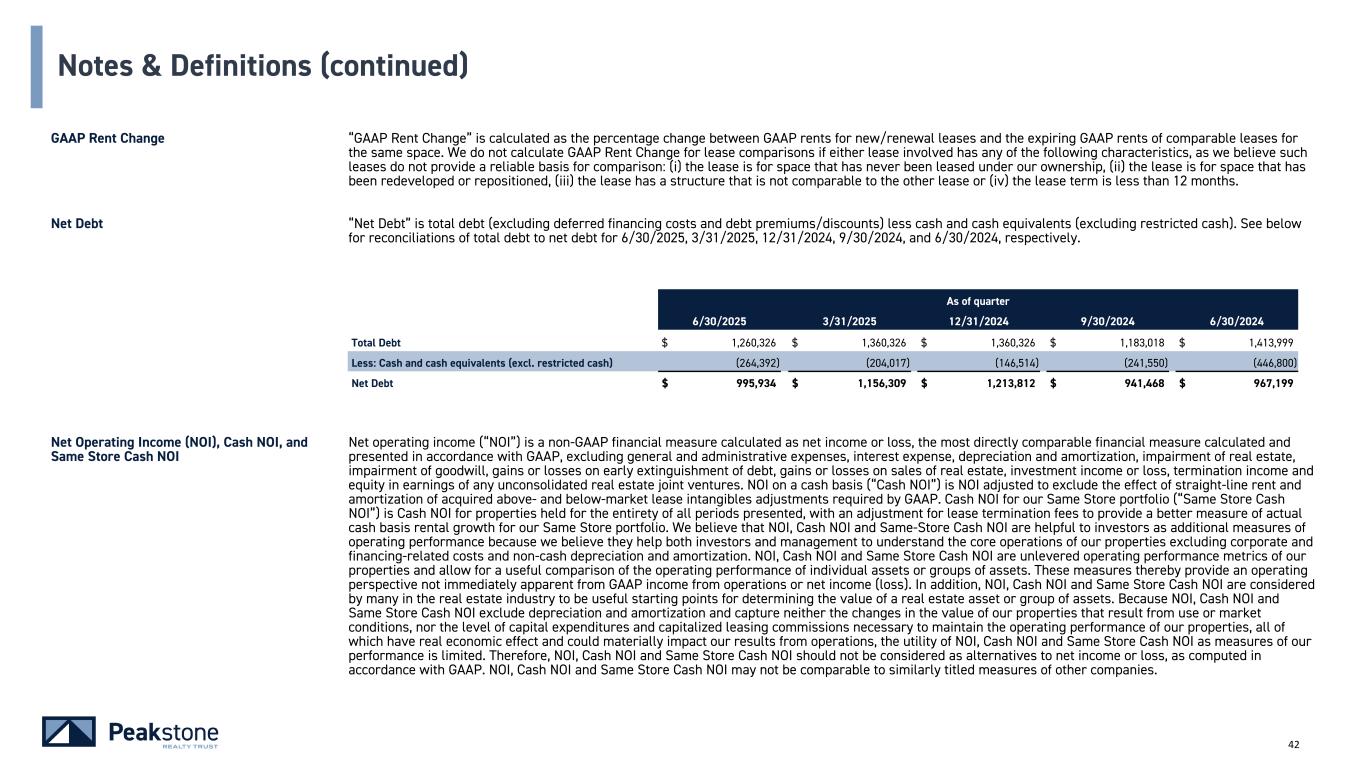
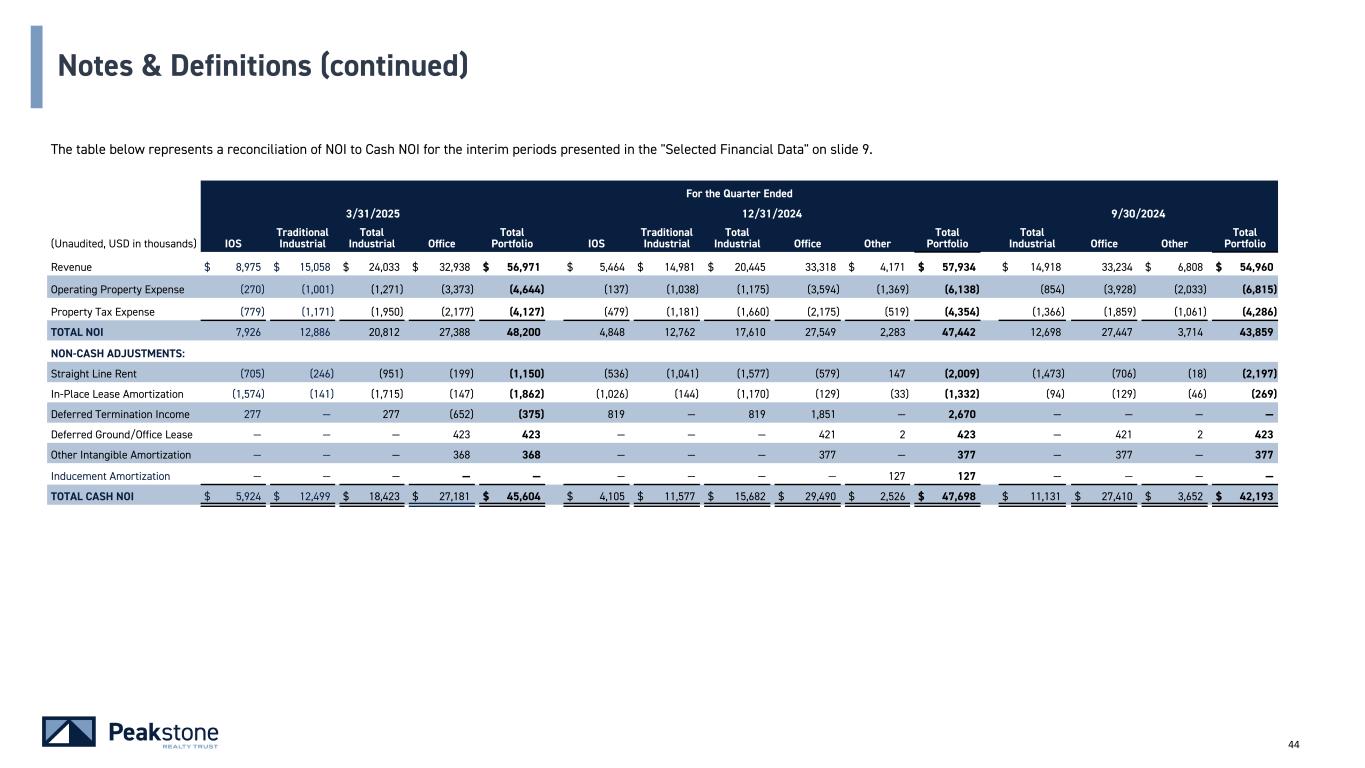
Thanks, Mike. To begin, I'll cover several key financial highlights for the quarter ended June 30 before turning to a few pro forma metrics that reflect activity completed after quarter end. For the quarter ended June 30, total revenue was approximately $54 million and cash NOI was approximately $43 million. Net loss attributable to common shareholders was approximately $265 million or $7.22 per share, inclusive of noncash impairments of approximately $286 million recorded during the quarter. As Mike explained, the vast majority of these noncash impairments related to 18 Office segment properties. FFO was approximately $23.9 million or $0.60 per share on a fully diluted basis. Core FFO was approximately $23.8 million or $0.60 per share on a fully diluted basis and AFFO was approximately $24.3 million or $0.61 per share on a fully diluted basis. Same-store cash NOI increased 9.3% in our Industrial segment and 4.7% in our Office segment or an overall increase of 6.3% compared to the same quarter last year. Moving on to our balance sheet. At quarter end, total liquidity was approximately $356 million, consisting of cash and available revolver capacity. Our cash balance, excluding restricted cash, was approximately $264 million and available revolver capacity was approximately $92 million. We had approximately $1.26 billion of total debt outstanding, including $900 million of unsecured debt on our credit facility with the remainder in nonrecourse secured mortgage debt. After deducting cash, our net debt was approximately $1 billion. As of quarter end, 88% of our debt was fixed, including the effect of $750 million of interest rate swaps that matured on July 1. Next, I'd like to mention the impact of certain post-quarter activity. As we've previously disclosed, our forward starting floating to fixed interest rate swaps totaling $550 million took effect on July 1, converting SOFR on our unsecured debt to a fixed rate of 3.58%. These swaps will mature on July 1, 2029. After giving effect to these swaps, our weighted average interest rate on all debt, both secured and unsecured, is approximately 5.47%. Also, following the post-quarter leasing acquisition and disposition activity that Mike described, our net debt to adjusted EBITDAre increased modestly from 6.4x at quarter end to 6.6x on a pro forma basis, but remains below our first-quarter level of 7x. We remain focused on reducing leverage over time and expect to continue making progress as we execute on our plan. In light of the continued execution of our Office dispositions and the resulting evolution of our earnings profile, the Board has approved a dividend of $0.10 per common share for the third quarter. This dividend is payable on October 17 to holders of record as of September 30. The updated dividend level reflects the ongoing transition of our portfolio to an exclusively industrial strategy and is designed to align with the cash flow characteristics of that portfolio. It also provides a foundation as we continue to scale the IOS platform. With that, I'll turn the call back over to Mike.
Thanks, Javier. As we look ahead, we remain confident in our strategy and our ability to execute. We're reshaping the portfolio with intention, simplifying the platform, reallocating capital to higher-growth IOS opportunities and strengthening the balance sheet. We believe this positions the company to maximize value for its shareholders. With that, we'll now open the call for questions.
The first question we have is from Jana Galan of Bank of America.
Just wanted to get a little bit more color on the Board's thinking around the dividend. And when you kind of mentioned align with the cash flow characteristics of industrial outdoor storage, can you just help us better understand what that means? And maybe at what scale would they go back to something of more of like a stabilized AFFO payout ratio or something of the sort?
I think it's much more straightforward than your question implies. I mean we're basically just looking forward to a post-Office environment and looking at our Industrial segment overall, which includes traditional and IOS. So looking at how that's been established is really in keeping with the fact that we've made an announcement that we're accelerating our shift to an industrial REIT and monetizing fully the Office segment.
Could you provide more insight into the 2026 lease expiration schedule and when renewal discussions for IOS typically start? What has been the historical renewal percentage for this type of product? Any additional information would be helpful.
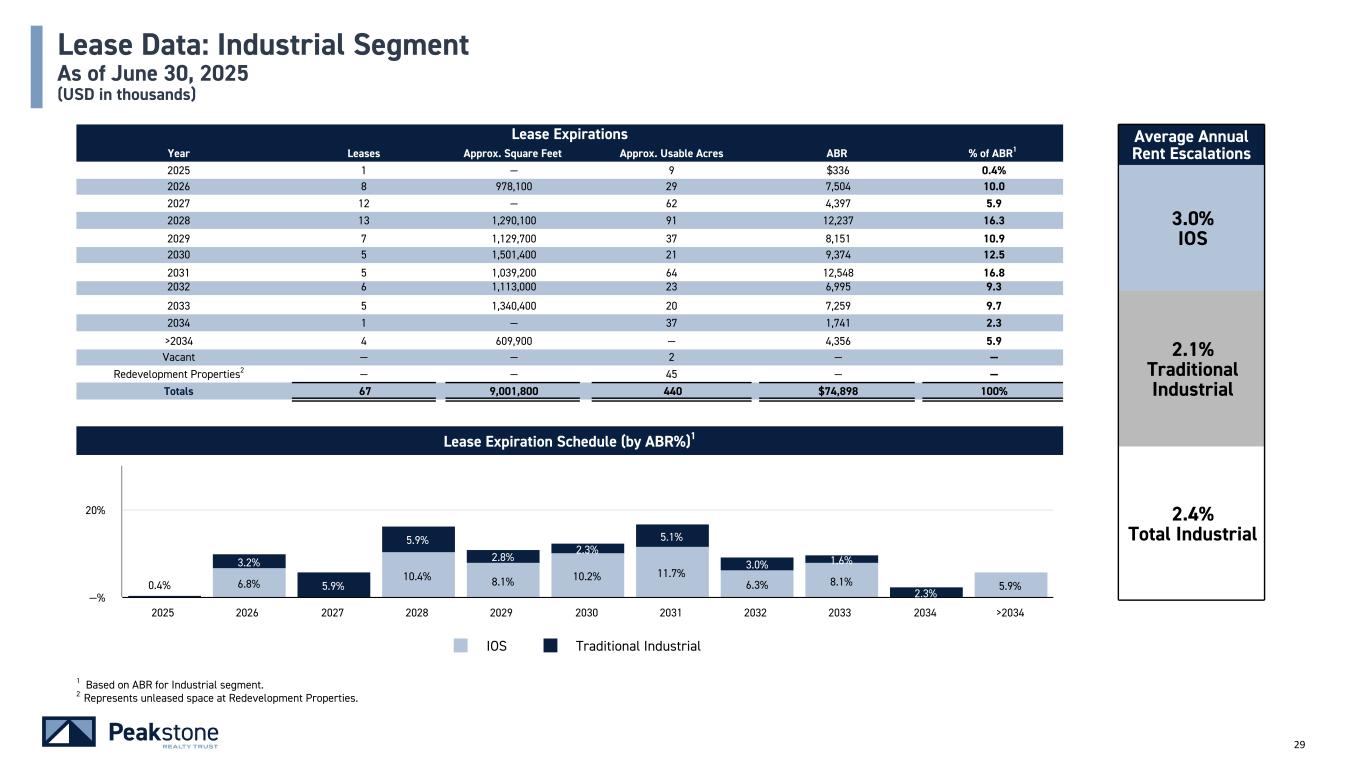
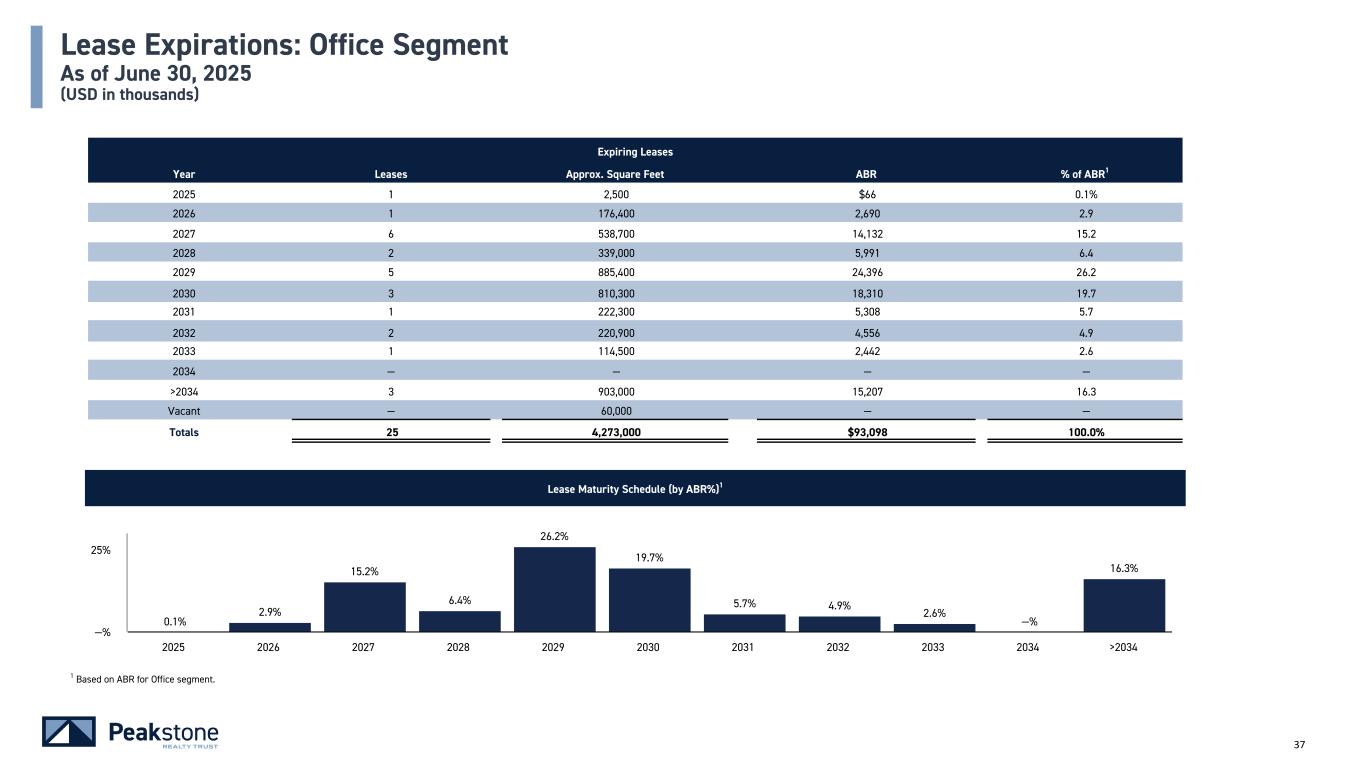
Yes, no worries. So the great news is that we've had very little rollover. We have very little vacancy in the operating portfolio. I think it's 0.4%. It's 2 of 12 acres in our Philadelphia location, and we're involved in doing a minor redo at that site and have interest in that particular property as well. If you look forward, we only have one more lease that expires in 2025. And we think that the tenant in that location is interested in staying as well for at least an abbreviated period. They're trying to figure out their long-term needs. And then looking forward to 2026, we have 8 leases that expire, and it's about 9% of our ABR. The majority of those leases have fixed rate renewals at tenant-favorable rates. Our expectation in that situation is based on their operations; to the extent that they're happy with the location, we anticipate that they would more than likely be incentivized to renew.
The next question we have is from Michael Goldsmith of UBS.
Can you provide the cap rates of where you've been buying the IOS during the quarter and where you've been selling the office?
We don’t disclose those figures individually. However, you can find the aggregated data in our supplemental information, which will allow you to calculate it if needed. Regarding acquisitions, we've highlighted specific properties that were sold both on an aggregate and individual basis in our supplemental information and reports, so you can piece together that information in relation to the total numbers we provide. We haven’t given individual details, but last quarter we provided guidance on the proportion of leases under 5 years and what the sales figures would look like. We also offered insights into leases over 5 years, and we’ve been performing within the set goals we shared during that time.
And as we think about the continued visibility into selling down the Office. So how are you thinking about using those proceeds? And you've gotten the leverage down to about 6.5x, and I know you kind of want to get it a little bit lower. So can you just kind of outline how you're thinking about using that for either paying down debt or acquiring and just kind of a framework as you continue to evolve the portfolio?
Yes, Michael, I think we've been very consistent in how we've approached that. It’s a very balanced approach for us. As you can see, we were able to do some acquisitions after the quarter. So in our past, we've been very direct in saying that we're looking to get to below 6x debt to EBITDA. Last quarter, we were at 7. If you look how we ended the quarter, I think we were at 6.4. And then we popped back up to 6.6 as a result of our acquisitions. In those numbers, you'll find somewhat of a microcosm of everything that we're trying to accomplish by balancing a further reduction in our leverage and at the same time, show that we are active in the acquisition market and looking at continuing to do that. We do have an active pipeline. I would say that we have a greater pipeline than we’ve had before, which allows us to be quite selective.
One last one for me. We've heard throughout triple-net reporting season about how there's been increased competition for deals. Recognizing you've been buying out of the IOS space, I was curious if you've seen competition evolve or pick up in any way within the space that you've now been acquiring.
Yes. I mean, yes, the market is active. There’s quite a bit of capital that is increasingly being raised for IOS. I think it's largely with private entities, by and large. I think there's actually more debt capital that is coming into the market. It's not cheap still, so it keeps pricing sort of elevated. I think we have a construct that allows us to be much more fluid than I think our private competitors in that regard. So yes, I would say the market is definitely active. However, by virtue of our experience, our long time frame of being in the marketplace overall, and our specific IOS contacts, we get a lot of interest from many parties looking to discuss opportunities with us.
The next question we have is from Anthony Hau of Truist Securities.
Just curious about what specific variables changed that triggered the $286 million impairment this quarter? Was it really driven by actual bids coming below the book value? Or is it third-party appraisals or just market comps?
I'll let Javier take the shot at that one, and I'll fill in behind him.
I believe this was largely due to the increase in our sales and the decision to have a shorter hold period, along with our assessment of controls and accounting processes in that context. From a GAAP perspective, when sales accelerate, it's important to consider the fair value calculation at that moment. This was the main factor leading to the increased impairments.
Okay. Got you. And I think you guys mentioned that expectation of acceleration in office disposition. Can you elaborate on what's driving the confidence? Is it improved buyer demand, better pricing picture or something else?
No. I mean, we've been hinting at the fact that we're leaning towards industrial. We've said that we're going to be recycling capital. We've come out very front and center today and highlighted the fact that we're going to accelerate our shift to an industrial REIT. This is just a continuing evolution of our transition. The market generally is impatient with transitions, and we believe that the faster we can get to the other side and start showing growth, specifically the embedded growth in our portfolio on the IOS side, is important. We have increasing escalations built in, and we are completing portions of our portfolio that are becoming available for leasing. We've shown that we've been successful already in bringing some of those into the operating portfolio. Therefore, the quicker we can move forward, the better for demonstrating value.
Fair enough. Yes, that makes sense. And last question for me. Can you share about what's currently in your IOS pipeline in terms of volume, maybe geography or even deal stages?
Yes, we are not at that stage yet. Currently, we are competing with private buyers in the market, which means we need to be cautious about sharing our strategy. However, I can say that we have a strong pipeline and a great opportunity to evaluate a variety of options for our portfolio. Market fundamentals will dictate our focus areas, and we are looking into markets with ongoing supply constraints, strong demand, and potential growth from tenants. We consider rent growth prospects, zoning compatibility, and the physical characteristics of properties. We are analyzing properties that can be improved for tenant operations, while also prioritizing industry diversification among our tenants. Our strategy includes focusing on core infill areas, growth corridors, and strategic growth in markets where our tenants want to expand.
At this time, we have no further questions, and I would like to turn the floor back over to management for any closing remarks.
Thank you, operator. I want to thank everybody, the analysts and investors as well for joining us today. We appreciate your support, and we continue to work diligently on behalf of the shareholders and really looking to maximize value. We believe we've got a great foundation to move forward in that regard. Thank you again.
Ladies and gentlemen, that concludes today's conference. Thank you for joining us. You may now disconnect.
SEC filing · Item 2.02
Filed Aug 7, 2025 · complete as-filed document
SEC periodic report
Filed Aug 7, 2025 · complete as-filed document