Operator
Greetings, and welcome to the Q2 2026 Palthos Therapeutics conference call. At this time, all participants are in a listen-only mode. A question and answer session will follow the formal presentation. If anyone requires operator assistance during the conference, please press star zero on your telephone keypad. As a reminder, this conference is being recorded. I would now like to turn the conference over to your host, Mike Moyer of LifeSci Advisors. You may begin.
Good morning, everyone, and welcome to Peltos Therapeutics' 2026 Second Quarter Financial Results Conference Call. Peltos issued a press release today announcing its financial results for the quarter ended June 30, 2026. A copy can be found in the Investor Relations tab on the company's corporate website at www.peltos.com. Before we begin, I'd like to remind you that during today's call, statements about the company's future expectations, projections, plans, and prospects are forward-looking statements. These forward-looking statements are based on management's current expectations. These statements are neither promises nor guarantees and involve known and unknown risks, uncertainties, and other important factors that may cause the company's actual results, performance, or achievements to be materially different from the company's current expectations expressed or implied by the forward-looking statements. Any such forward-looking statements represent management's estimates as of the date of this conference call. While the company may elect to update such forward-looking statements at some point in the future, it disclaims any obligation to do so, even if subsequent events cause its views to change. As a reminder, this conference call is being recorded and will remain available for 90 days. I'd now like to turn the call over to Scott Plesha, Chief Executive Officer. Scott, you may begin.
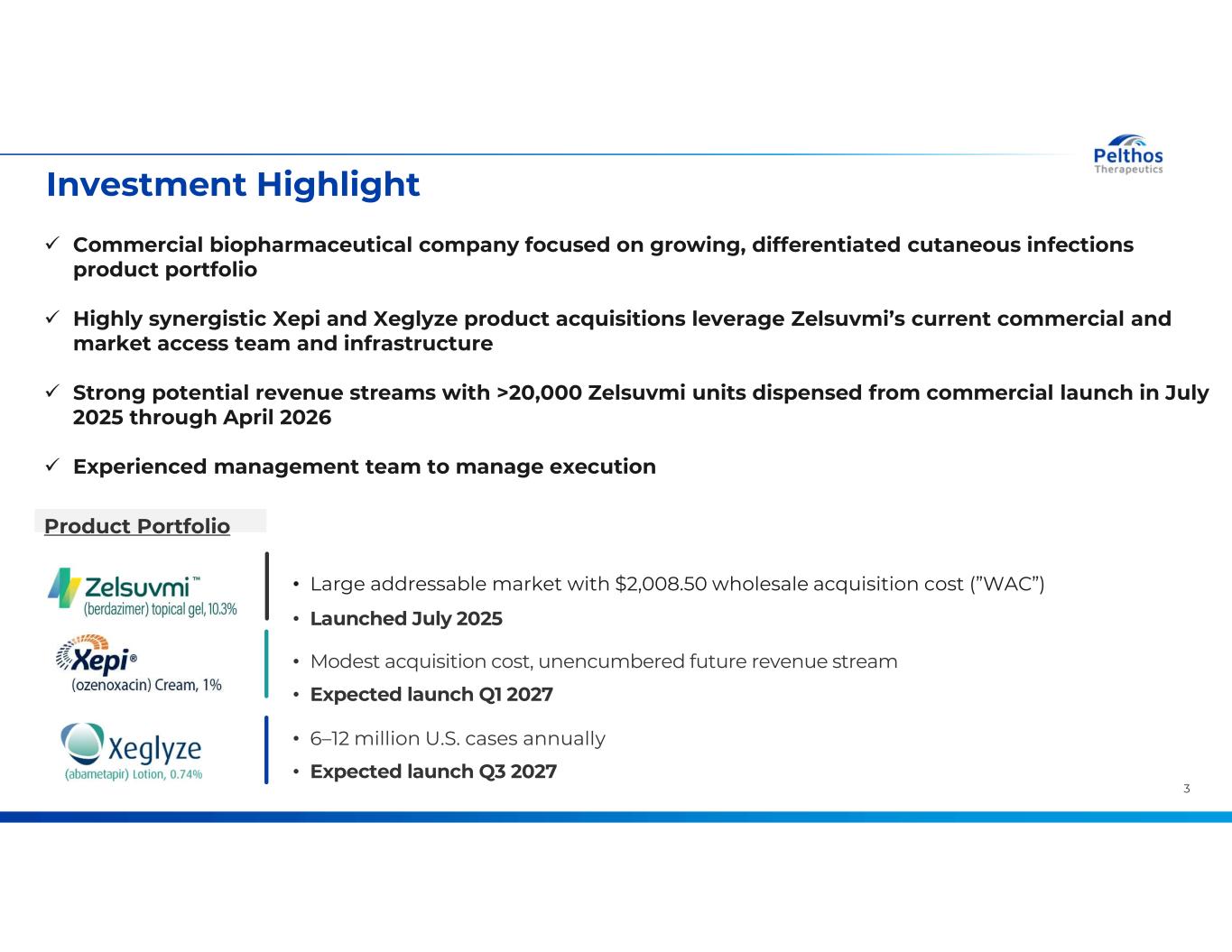
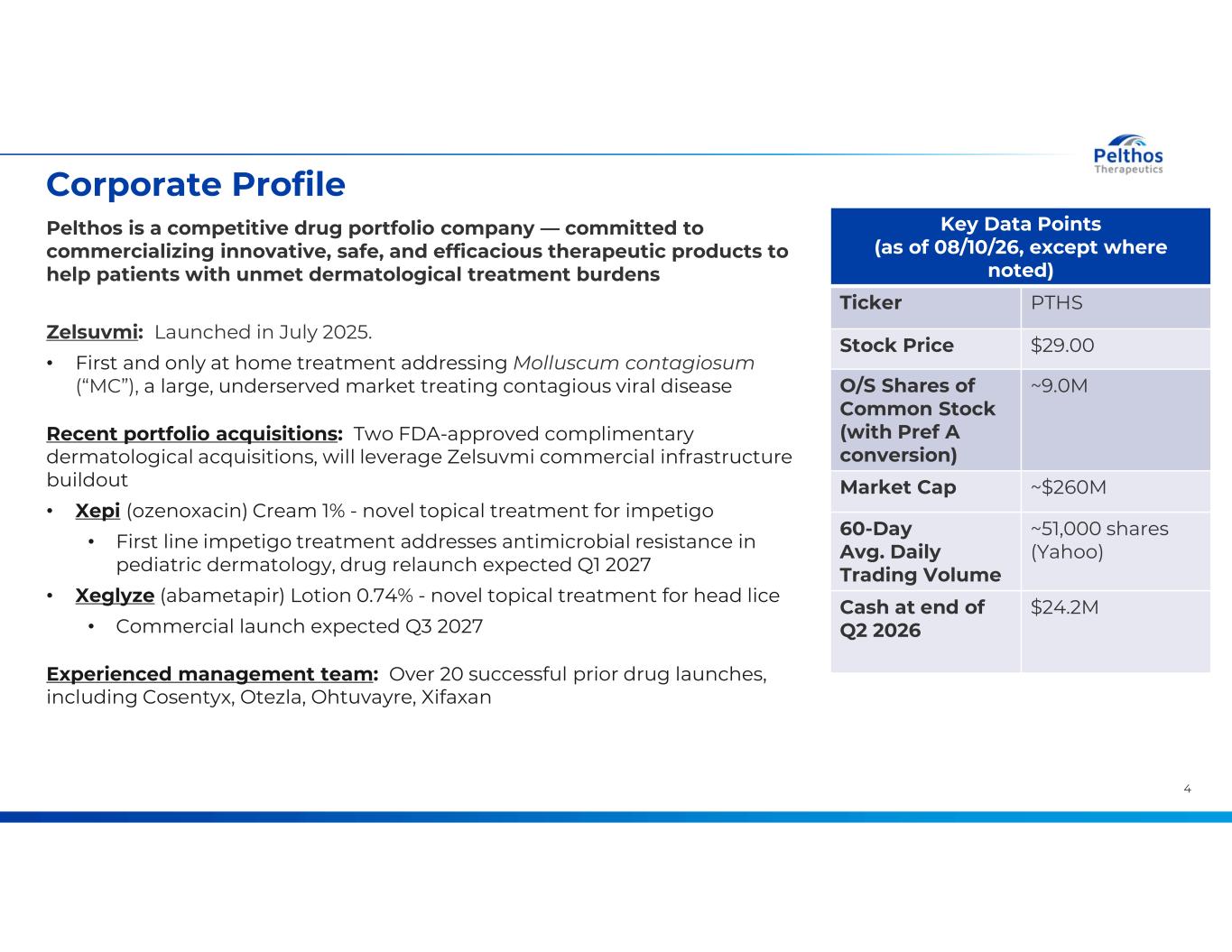
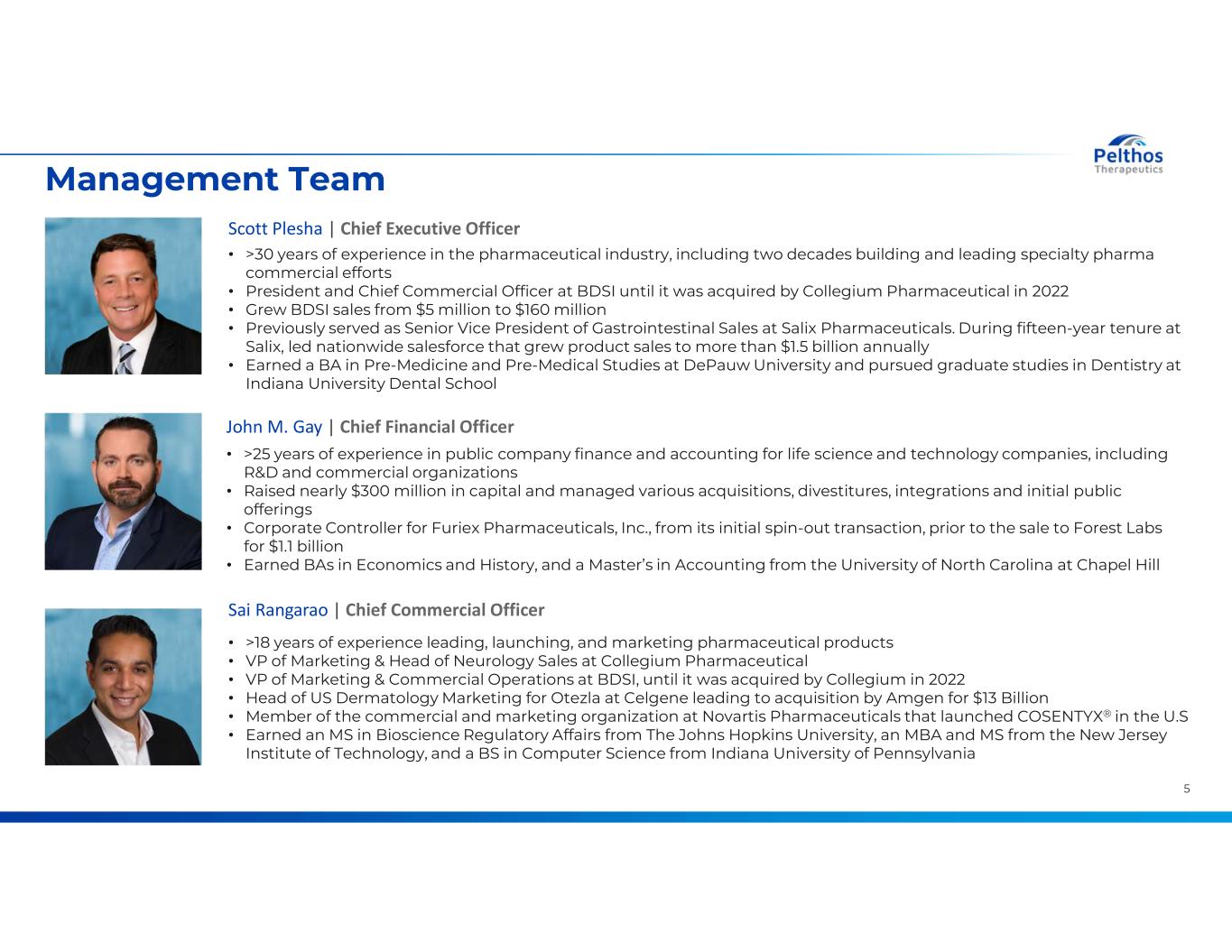
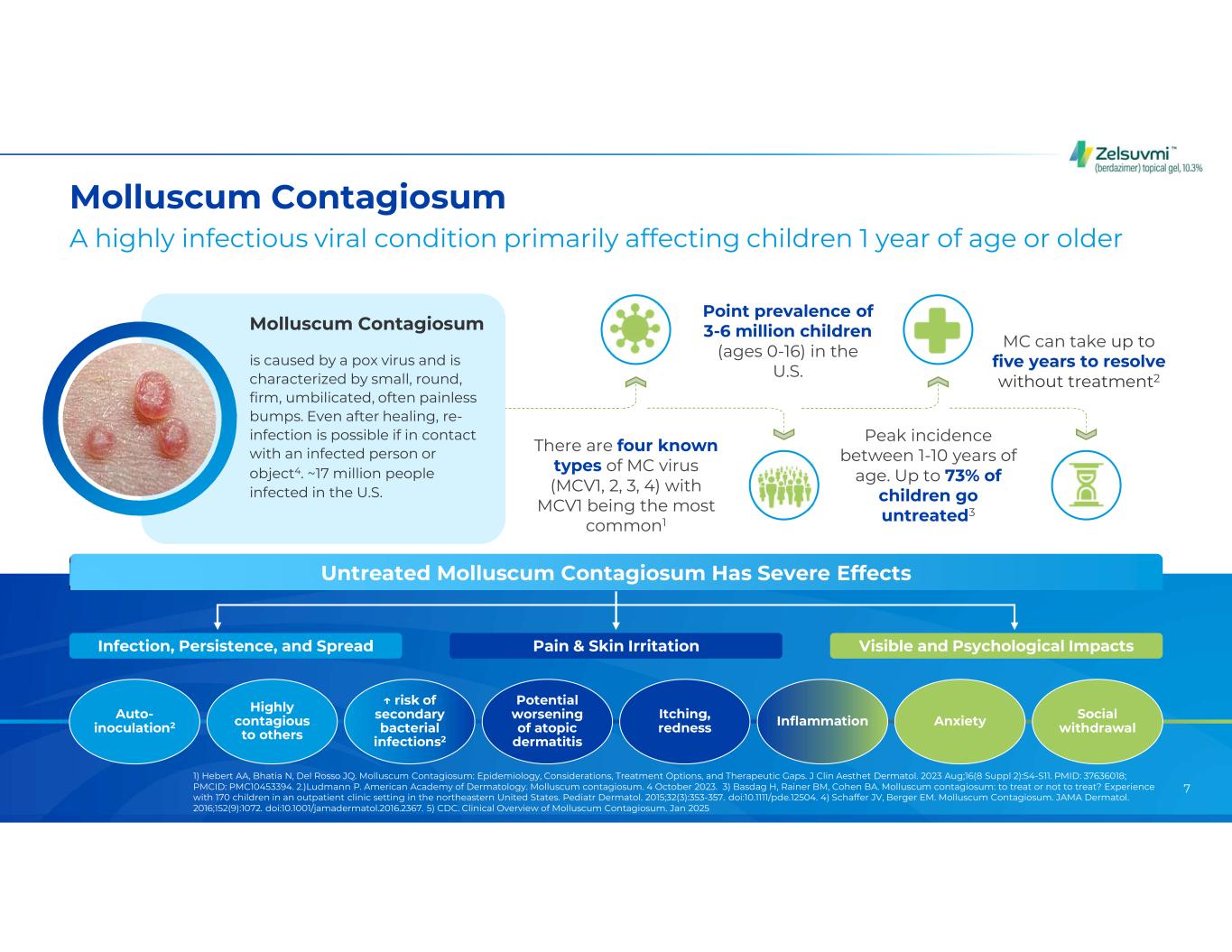
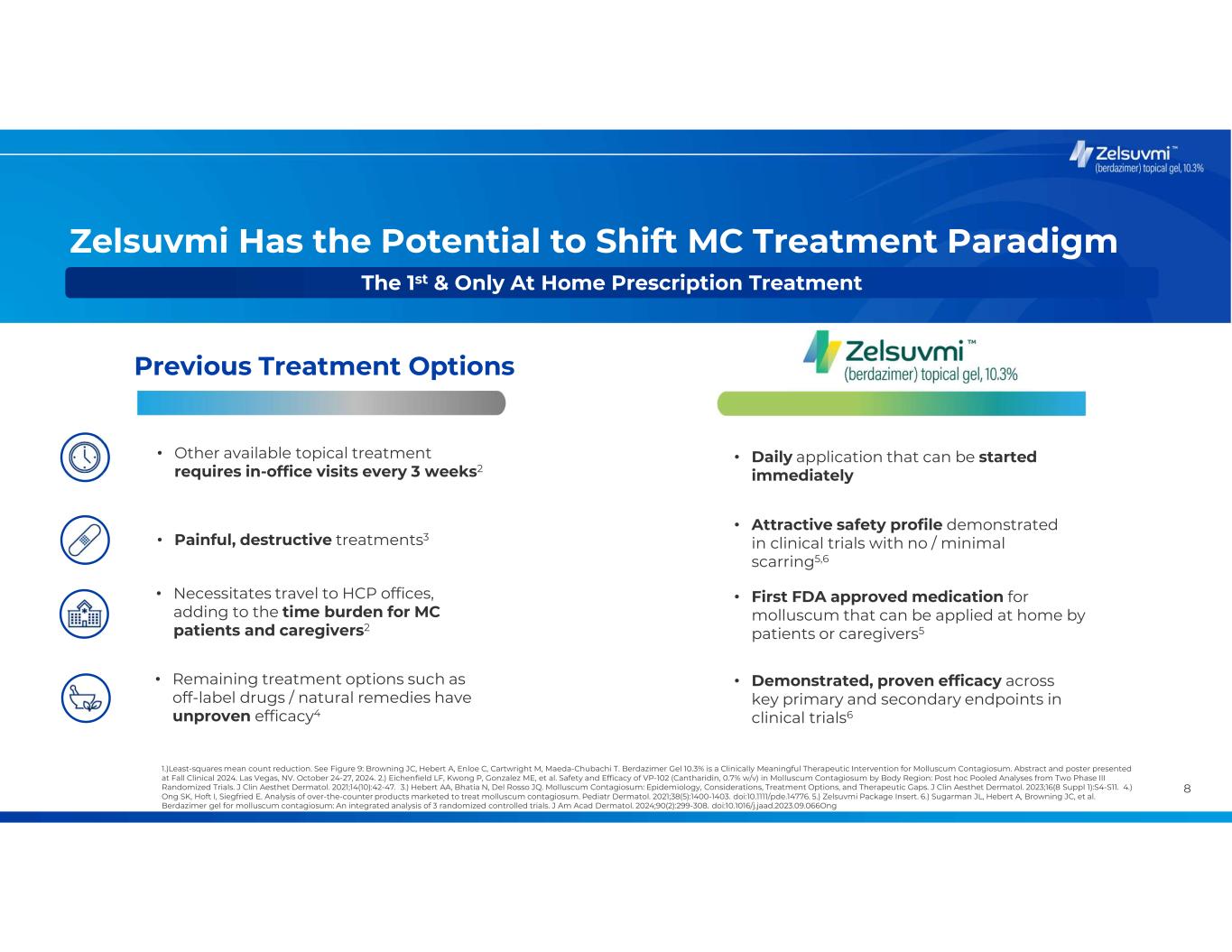
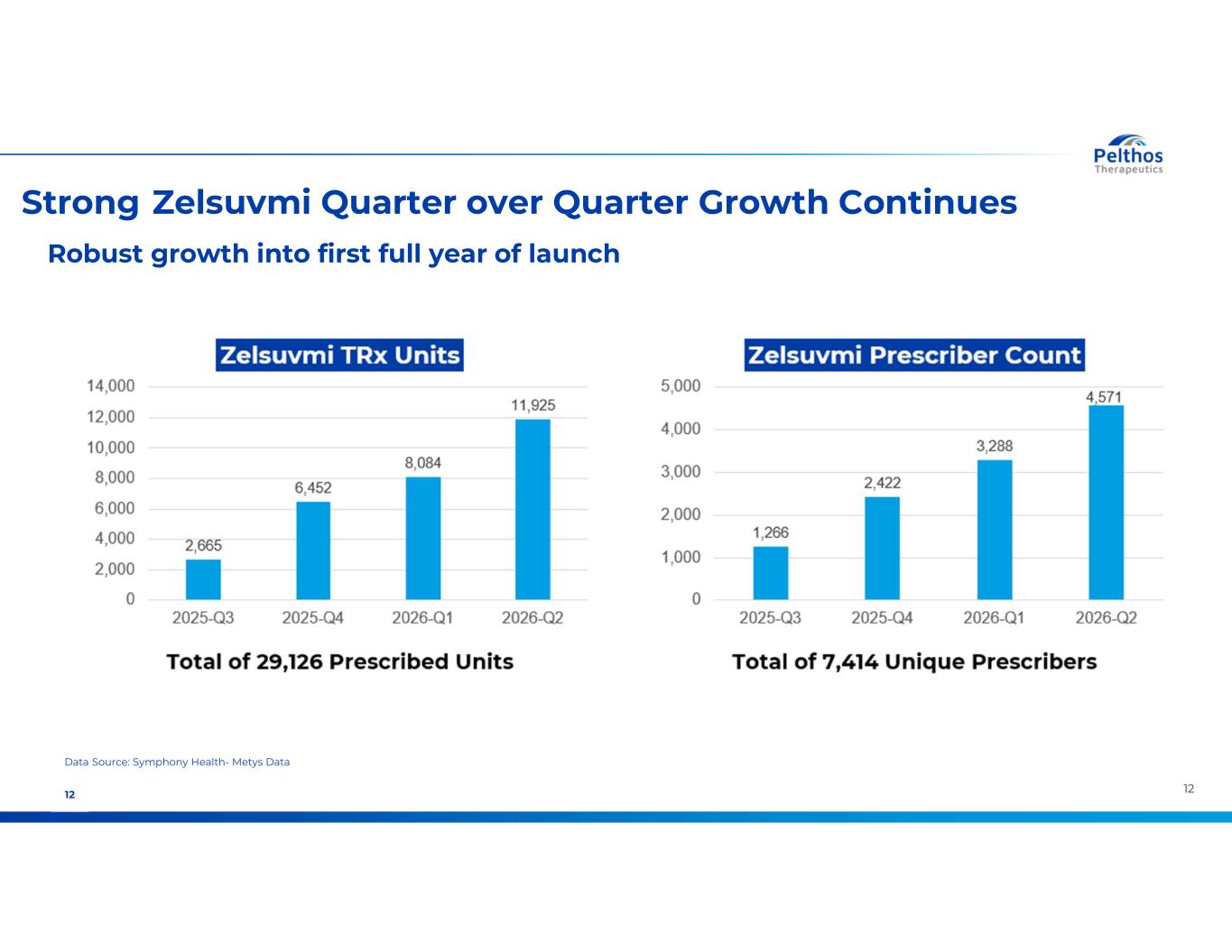
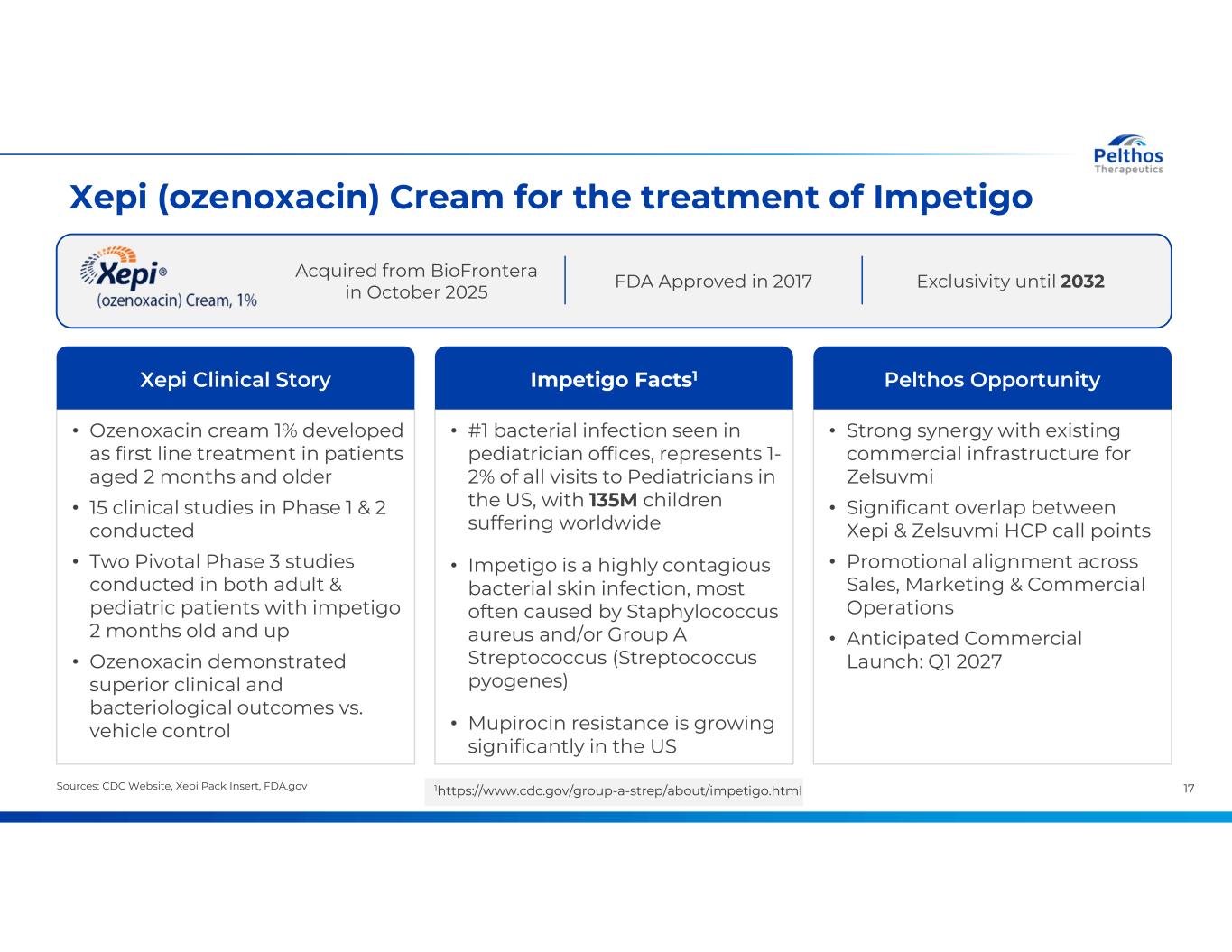
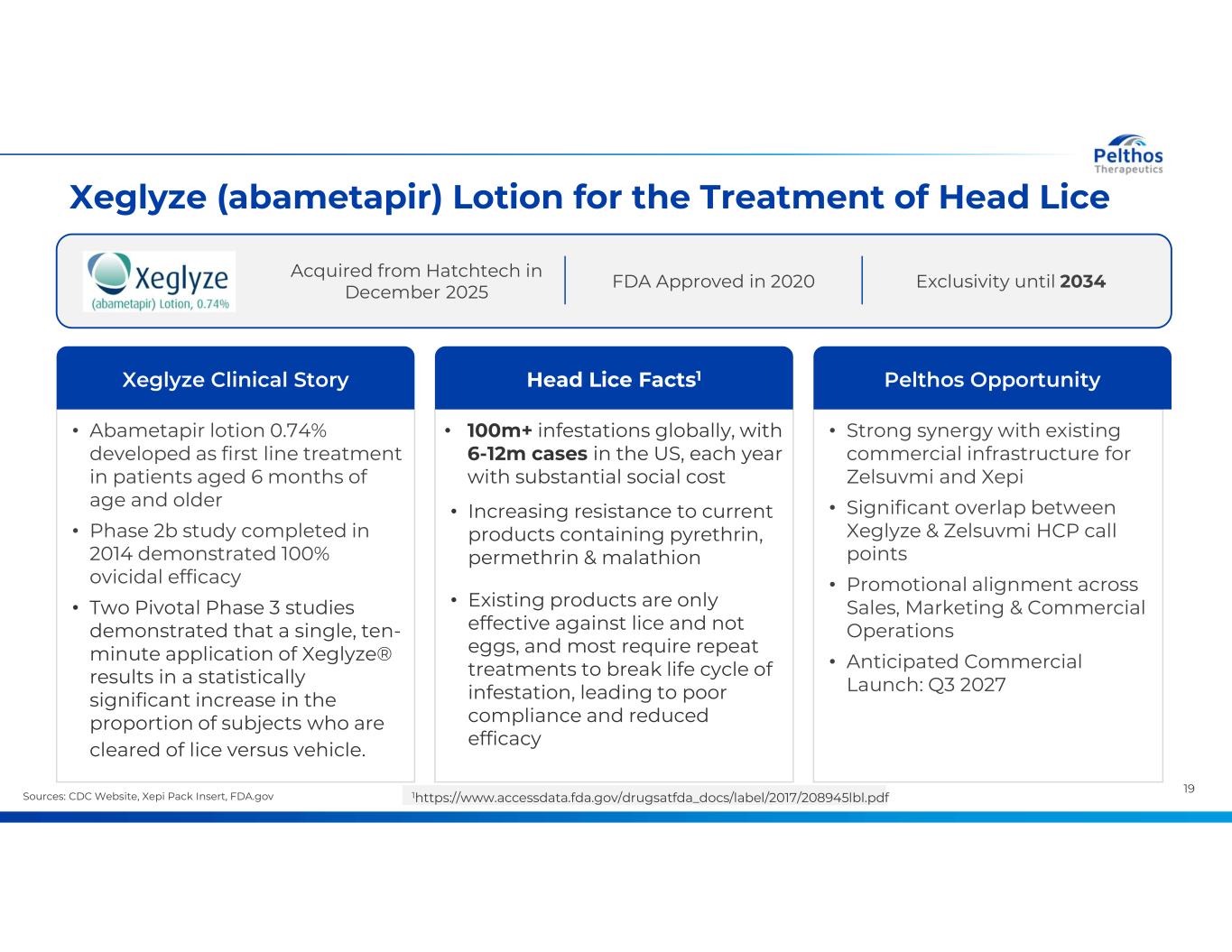
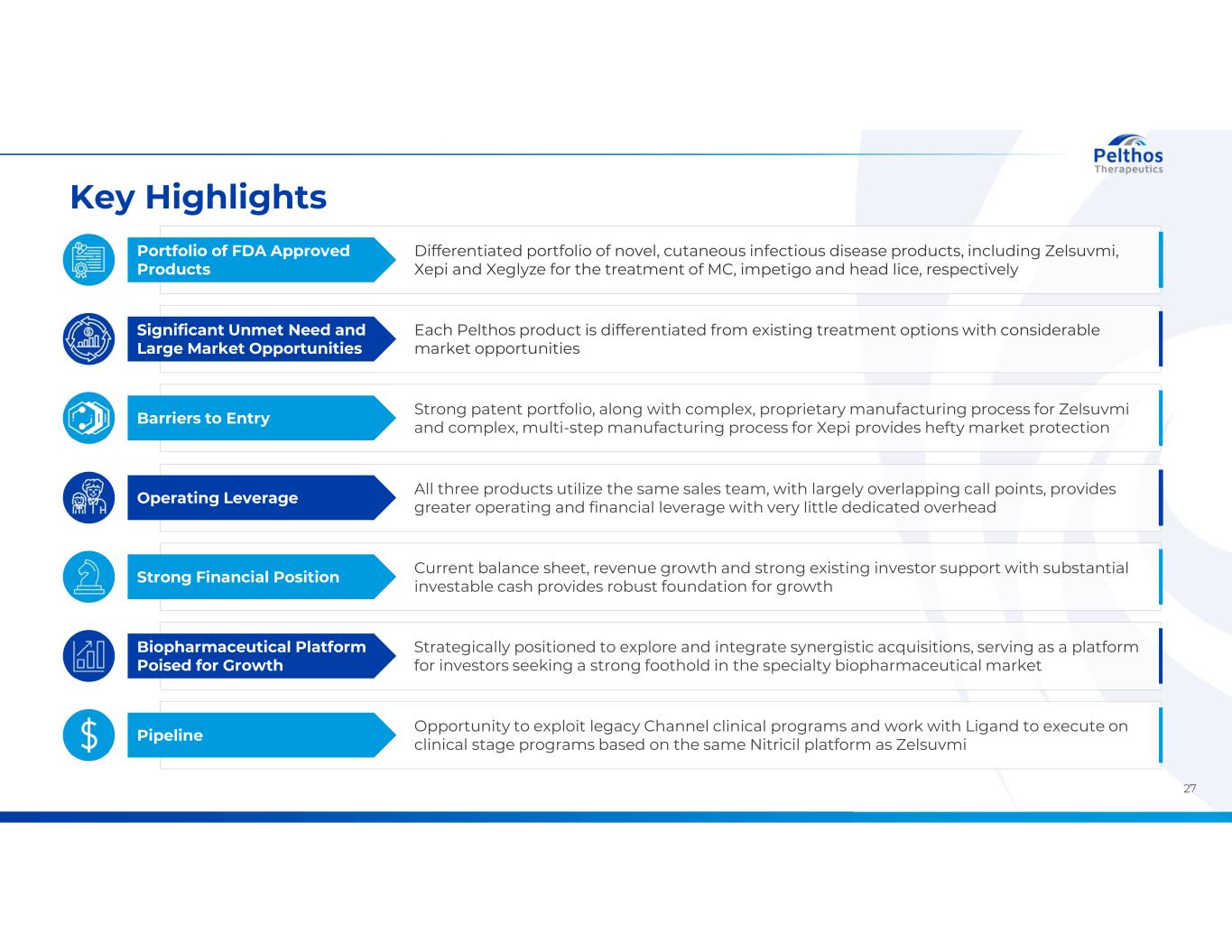
Thank you, Mike, and good morning, everyone. We're delighted to be with you today and share with you our second quarter 2026 operating results and highlights. Joining me today are John Gay, our Chief Financial Officer, and Cy Rangaro, our Chief Commercial Officer. The second quarter of 2026 was a successful one for Peltos with a strong execution and progress made in several key areas that I'll share at a high level with you. First, we experienced substantial revenue growth driven by increased prescriptions of our lead product Zelsudmi in this fourth quarter since launch. Next, the contracts we executed with a major pharmacy benefit manager at the end of last year has been an important catalyst in demand for Zelsudmi. Within this PBM, units dispensed increased 81.3% during the quarter, while the number of prescribers increased 68%. We continue to explore additional contracting options to further our reach and market penetration. Finally, we continue to make progress in establishing the manufacturing of our two other highly complementary products, Zeppi and Zeglice. John and Cy will provide a more detailed look at the quarters they'll soon be launched metrics and reported financial results, but I'd like to share a brief overview of our results of operations. Our top-line results were driven by a 48% increase in prescriptions units, as reported by Symphony Health, which increased from 8,084 units in the first quarter of 2026 to 11,925 units in the second quarter of 2026. This drove an increase in net product revenue from $10.7 million during the first quarter of 2026 to $15.4 million in the second quarter of 2026. Importantly, we achieved this growth with only a minimal increase in wholesale inventory while reducing days on hand by approximately three days from the end of Q1-2026 to the end of Q2-2026. As a reminder, Zelsubmi is a novel topical nitric oxide-releasing product indicated for the treatment of Molescum Contagiosum, or MC, in patients one year of age and older for up to 12 weeks. Zelsubmi is an important advancement in the treatment of MC as it's the first and only FDA-approved therapy that can be applied by parents, patients, or caregivers in the home or on the go. We believe the opportunity to treat MC at home and without the need for an in-office procedure has been and will continue to be a key driver of Zelsudmi demand. We are pleased with the growth delivered in Q2 and are confident in our future performance. Our belief remains strong that Zelsudmi is revolutionizing the treat of MC and is becoming the first-line treatment of choice for many HCPs in patients. This is supported by the recent August 2026 Journal of Drugs and Dermatology, JDD, publication titled, Molluscan Contagiosum in the Pediatric Population, Expert Consensus Guidance on Prevention and Treatment, which includes Birdazimer 10.3% gel, Zelsudny, as the only at-home available treatment option for MC that can provide clinically meaningful clearance rates and when combined with supportive management, provides an opportunity to improve outcomes and quality of life for children with MC. These landmark guidelines represent a significant advancement in the management of MC, and we're committed to ensuring they are appropriately communicated to healthcare professionals who treat MC. Regarding ZEPI and Zegolice, ZEPI is a novel FDA-approved topical treatment for epitigo that addresses a critical unmet need in antibiotic-resistant skin infections caused by staph and strep infections, most commonly affecting children. Empetigo is the most common skin infection in children seen by pediatricians with approximately 3 million patients diagnosed with this bacterial infection each year. We believe Zeppi is a highly complementary product as it mostly treats children that are managed by the same health care providers as El Subne. Importantly, this allows us to leverage our commercial infrastructure, including our expanded Salesforce. We continue to focus on establishing the manufacturing process and building launch inventory and expect to launch Zepi in the first quarter of 2027. With respect to Zeglize, Zeglize is a novel FDA-approved product indicated for the treatment of head lice in patients six months of age or older that is highly complementary to Zelsudny and Zepi and is expected to require minimal incremental overhead to commercial apps. At the operational level, we are standing up manufacturing for Zeglize and expect to bring it to market in the third quarter of 2027. Both Zepi and Zeglize will have meaningful call overlap for existing Salesforce, providing the company with greater operational and financial leverage from our existing team and infrastructure. In summary, we are pleased with the strong response from healthcare professionals to Zelsudny, as demonstrated by the more than 30,000 units dispensed since its launch in July of 2025. We continue to plan for the upcoming launches of Zepi and Zeglase to complementary FDA-approved products. We'll continue to evaluate and optimize our commercial strategy to drive sustainable, long-term shareholder value. I'll now turn it over to Sai to provide more specifics on the results of the Zelsudmi launch and key performance indicators.
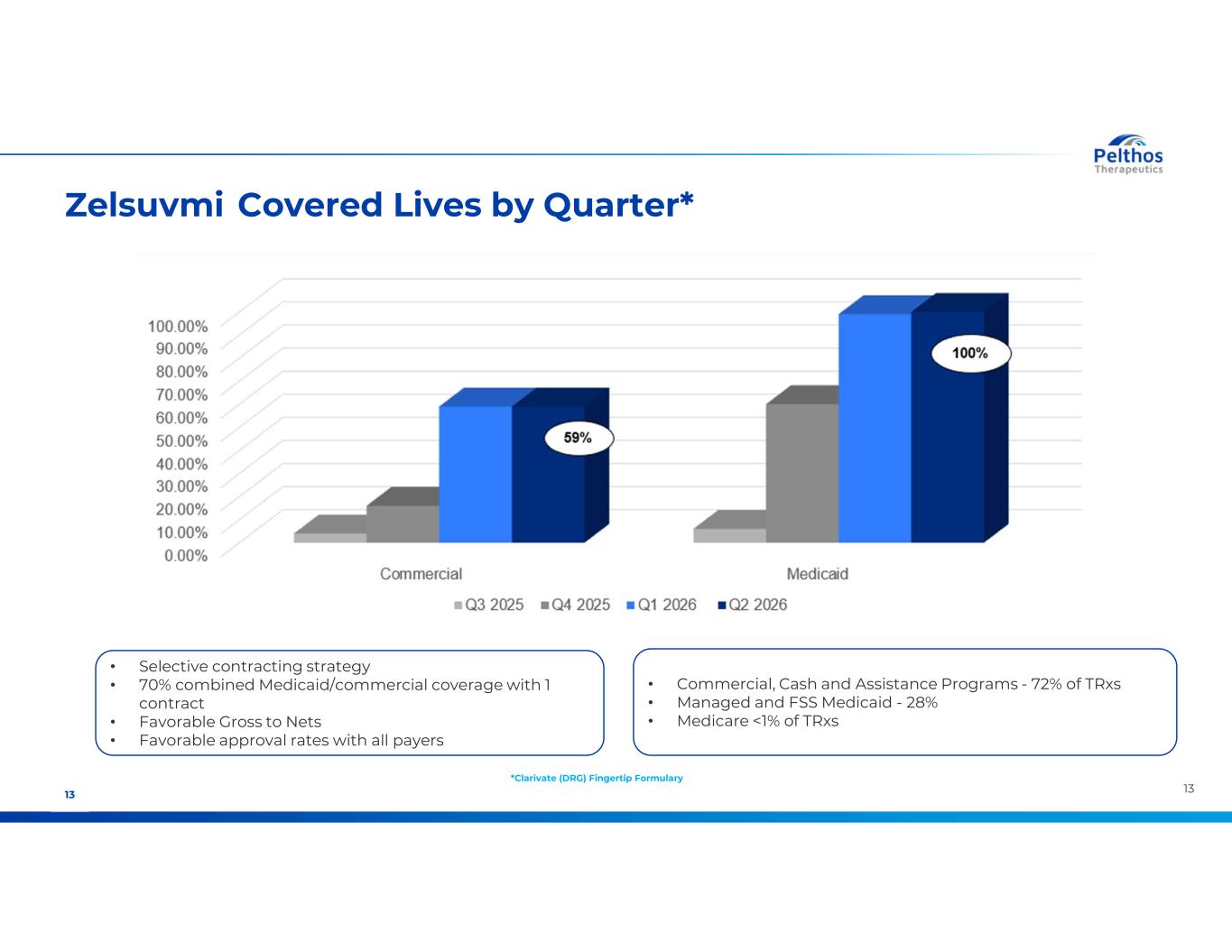
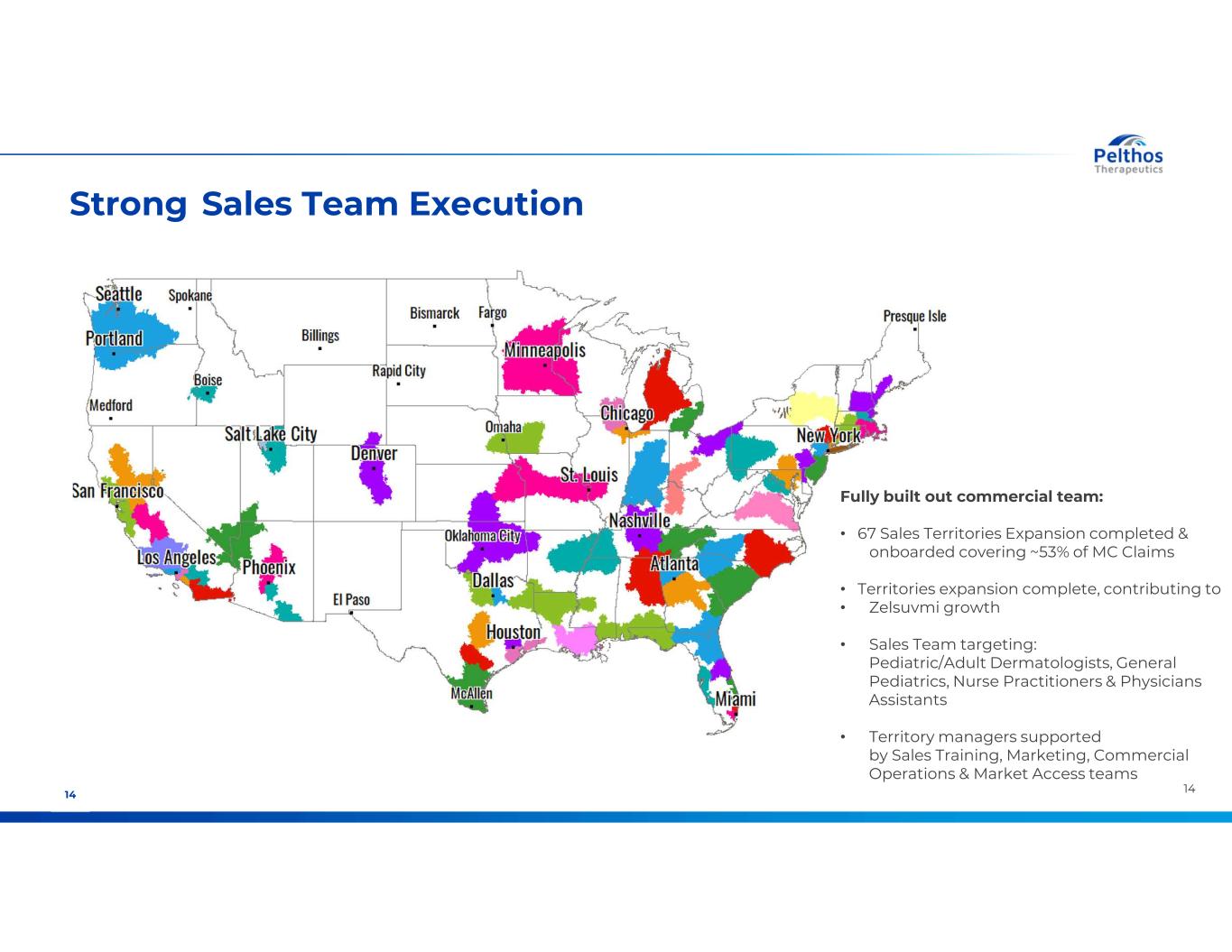
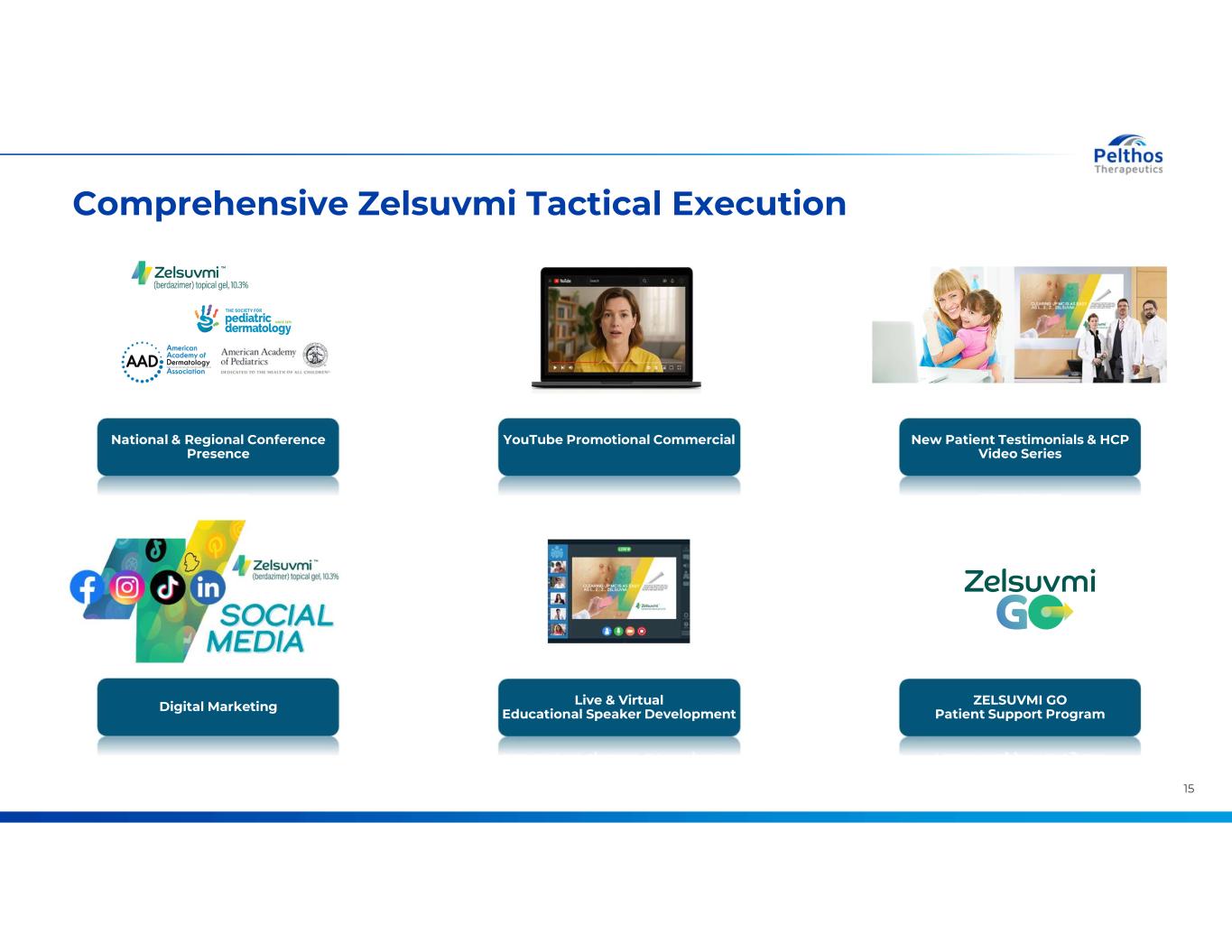
Thank you, Scott. Good morning, everyone. I'm pleased to provide an update on our Q2 2026 Zelsudmi performance. Our progress to date continues to deliver better-than-expected results in our first full year or four full quarters since launch. For Q2 2026, shipments and prescriptions continue to track ahead of expectations. We also continue to receive very positive feedback from several prescribers regarding the Zelsuvme clinical profile and ease of use. We now have more than 8,000 unique HCP prescribers in our latest data. We remain confident that Zelsuvme is revolutionizing the treatment of MC, as evidenced by the increased utilization of Zelsuvme. In the first full year since its commercial launch in July 2025, more than 25,000 patients have been prescribed Zelsuvme. This is an incredible milestone for Zelsivne and Peltos. Getting into the prescription details for Q2-2026, the number of prescriptions rose a very strong 48%, from 8,084 in Q1 to 11,925 prescribed units in Q2. The number of unique prescribers also rose from 3,288 in the first quarter to 4,571 by the end of the second quarter, with both sets of data reported in Symfony's Metis data. Prescribed units in July were 4,299 versus 4,208 in June. With typical seasonality and summer scheduling dynamics for HCPs and patients, performance between June and July was in line with our expectations. We continue to feel confident about our growth potential in Q3. We also continue to see weekly highs in prescribed units with our latest data for the week ending July 31st, reaching an all-time high of more than 1,000 units dispensed of Zelsuvi. Our coverage for Zelsuvi remains strong in 2026. As of today, we have a 59% coverage rate for commercial insurance plans and an incredible 100% coverage rate for Medicaid. This is a testament to the fact that Zelsudny, as the first FDA-approved at-home treatment for MC, is being adopted as a first-line treatment option and is being well-received by HCPs and coverage providers. As previously announced, we executed a contract with a large PBM to remove friction and help patients gain access to Zelsudny. This effort has continued to help many patients gain rapid access to Zelsudny. For Medicaid coverage, a number of larger states still do not require a prior authorization. In other states that require a PA, Medicaid only requires a prior authorization written to label, meaning that a patient over one year of age presenting with MC qualifies for coverage. We continue to have very good gross-to-nets, or GTNs. Our current GTNs are driven by distribution costs, Medicaid discounts, payer contracts, and our copay voucher program. It is our goal to offset prescription costs through the CopayCard program so that the prescription cost of $0 or close to zero for the majority of patients in most instances. For the second quarter of 2026, we had favorable GTNs of 29.6% in line with our expectations. Going forward, we expect our GTNs to move into the mid-30% range. In Q2-2026, we made three key additions to our sales team footprint with the launch of territories in Pittsburgh, Pennsylvania, Albany, New York, and Shreveport, Louisiana. These strategic additions bring our field force to 67 sales territories, further strengthening our reach and positioning us to deliver impactful Zelsuvmi education and awareness to a broad and growing community of healthcare professionals. Our awareness and utilization of Zelsuvmi as the first and only at-home prescription treatment option per MC are heavily complemented by our comprehensive promotional tactics. Our Zelsuvme YouTube commercial and our patient testimonial videos featuring a young patient and a renowned pediatric dermatologist continue to be highly educational and successful. With more than 9.2 million total views of Zelsudny YouTube commercial and more than 400,000 views of our patient testimonial videos, these unique and informative short-form videos have prompted parents and caregivers, along with adult patients, to ask their HCPs about Zelsudny and the potential for appropriately utilizing the treatment for their MC. To further strengthen our digital outreach in June, we launched a new series of HCP-focused YouTube videos featuring expert clinicians sharing their experiences with MC and their perspectives on Zelsu of Me as an important treatment option for appropriate patients. This video series, along with the content to follow, provides HCPs with concise, expert-driven insights that help them quickly understand the meaningful benefits that Zelsu of Me can offer to appropriate patients. Throughout Q2-2026, we participated in several key conferences, engaging with and educating HCPs on the differentiated benefits of Zelsugme for their patients. Our presence and presentations at the Society of Pediatric Dermatology and one of the largest nurse practitioner physician's assistant dermatology conferences generated significant attention and a strong volume of HCP leads. These engagements translated into meaningful interest in both continued and new use of as they'll soothe me, reinforcing the growing momentum and awareness of the brand among HCPs. We continue to build on our great tactical platform, along with a strong execution of our sales team to grow as they'll soothe me. I'm very proud of our strong performance to date, which reflects the passion, dedication, and hard work of our exceptional commercial team. And with that, I now turn the call over to John to discuss our financials. John?
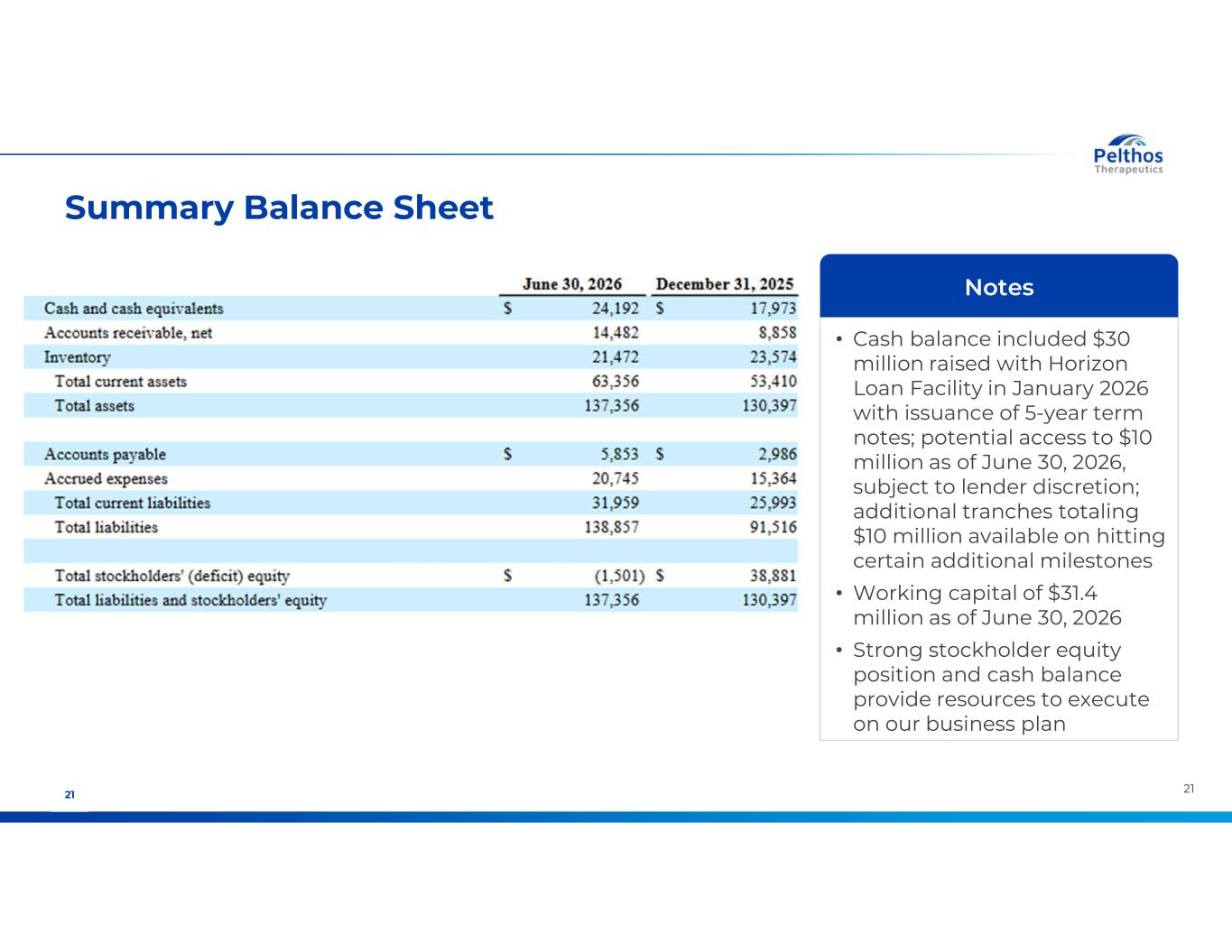
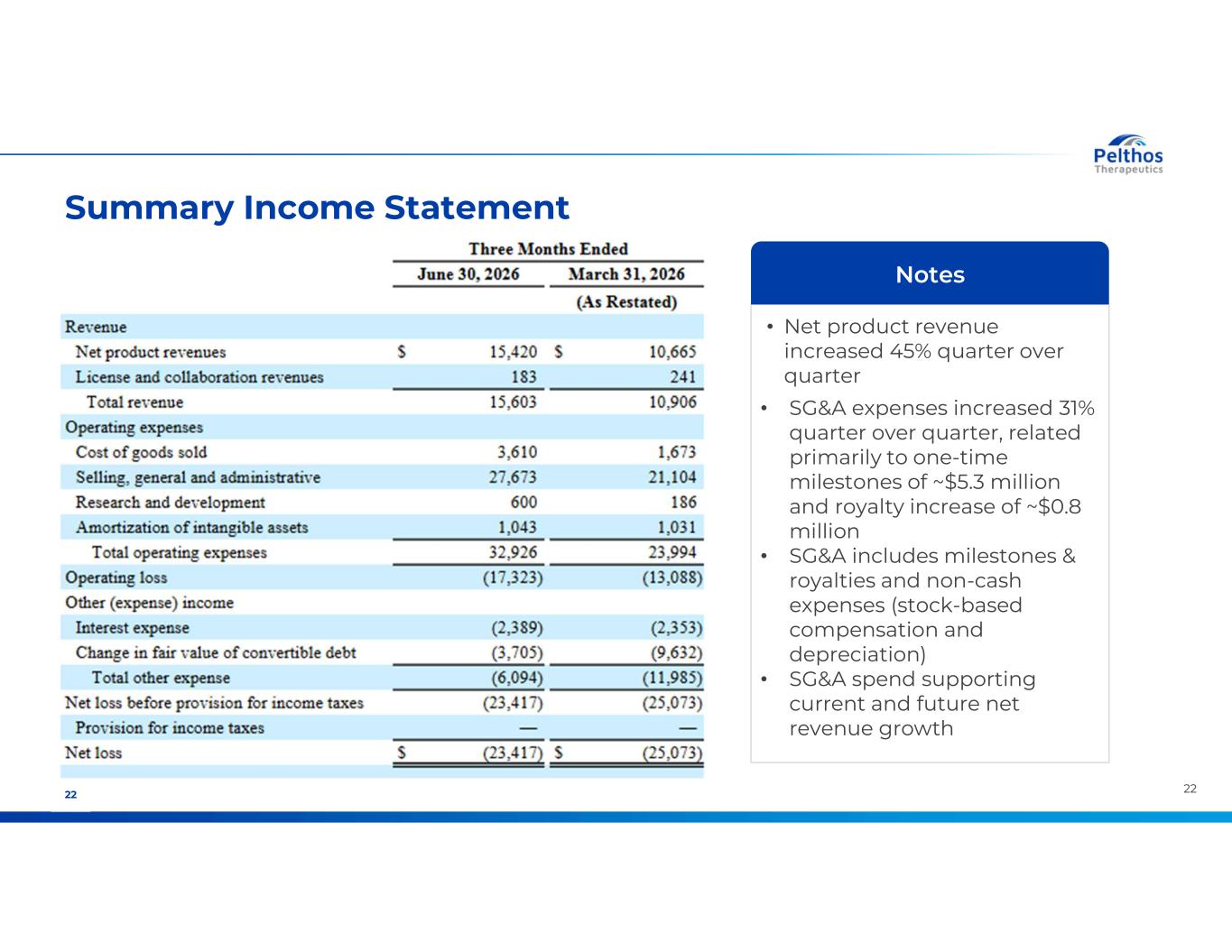
Thank you, Sai. Good morning, everyone. And thank you for joining us on today's call. As Scott and Cy have already touched on, we continue to see increasing demand for our lead product sales soon as demonstrated with our growing pull-through and dispensed units to date. Before I speak to the financial results for our second quarter, 2026, I would like to explain in more detail two filings PELPOS made this morning with the SEC regarding the complex U.S. gap accounting matter specifically associated with the fair value accounting of our related party convertible notes. I would encourage investors to review the company's current report on Form 8-K and Amendment No. 1 to the company's quarterly report on Form 10-Q for the quarter ended March 31, 2026, each of which was filed with the SEC earlier today and contains additional information regarding this restatement and the related accounting analysis. The following activity this morning associated with the first quarter of 2026 resulted from a misapplication of accounting standards codification 820, fair value measurements, related to certain fair value measurements used in estimating the fair value of our convertible debt, including valuation methodologies, specific valuation assumptions, and inputs. Specifically, this matter related to the valuation impact of certain provisions in the Convertible Notes Subordination Agreement entered into in January 2026 by the convertible note holders. As part of the Horizon Technology Finance Term Loan Facility closed in January of 2026, a subordination agreement was executed by the convertible note holders. Pursuant to this agreement, all payment obligations under the convertible notes, including principal and accrued interest became subordinated to the company's obligations under the Horizon Term Loans. The valuation issue stemmed from the effect of this subordination agreement and its impact on the fair value measurement of the company's convertible debt. The valuation assumptions and methodologies used in the company's originally filed Form 10-Q for the quarter ended March 31, 2026, did not appropriately reflect the impact of the subordination agreement in accordance with AFC 820, Fair Value Measurement. As a result, the company restated its previously issued financial statements for the quarter ended March 31, 2026, to revise certain fair value measurements associated with its convertible debt. The amended Q1-2026 filing reflects the revised fair value measurements and related accounting adjustments associated with the subordination agreement in accordance with ASC 820. The restatement is limited to fair value accounting measurements associated with the company's convertible debt and related accounts and does not affect the underlying economics of the company's convertible debt arrangements. In summary on this matter, I would like to emphasize that the restatement relates solely to fair value accounting estimates. It does not affect the company's cash balances, net revenues, product sales, operating expenses, nor operating loss, operating cash flows, or adjusted EBITDA. With that, I will now focus on the operating results of our commercial business. Please note that my comments will focus on our second quarter 2026 results as compared to the first quarter of 2026. For the second quarter of 2026, we reported $15.4 million of net product revenue, representing a 45% increase from the first quarter of 2026. With today's filing of our quarterly report on Form 10-Q for the period ended June 30, 2026, we have now completed and reported four fiscal quarters of commercialization efforts for Zelsuzmi. While these quarters straddle two fiscal years, we have reported, in aggregate, $42.3 million of net product revenue for the four quarters since commercial launches, they'll sue me. This amount is comprised of our net product revenue from the third and fourth quarters of fiscal 2025 of $7.1 million and $9.1 million, plus $10.7 million and $15.4 million of net product revenue for the first and second quarters of 2026, respectively. Cost of goods sold was $3.6 million for the second quarter of 2026 and $1.7 million in the first quarter of 2026. Cost of goods sold includes fair value adjustments related to finished goods and active pharmaceutical ingredient inventory on hand at the time of the company's merger in July 2025. Cost of goods sold for the second quarter of 2026 also include a $0.9 million write-off of commercial API inventory identified through the company's quality control processes related to out-of-spec testing results for API manufactured during the quarter. The underlying procedural cause of this matter was addressed, and subsequent API manufacturing has commenced and is meeting specifications. In addition, as previously discussed, a component of our cost of goods sold includes fair value adjustments associated with the July 2025 merger. At the time of the merger, all finished goods and active pharmaceutical ingredient inventory on hand was fair valued as prescribed under U.S. GAAP. As of the end of the second quarter of 2026, we have sold through the stepped-up finished goods inventory, and we expect to consume the remaining stepped-up API inventory within the next 12 to 15 months. Once we have sold all inventory with a basis step-up, we expect to have a normalized per-unit cost of goods of approximately a single – mid-single-digit percentage of our current WAC price. For the second quarter of 2026, we reported $27.7 million of SG&A expenses, representing a 31% increase from the first quarter of 2026 at $21.1 million. We provide a detailed breakdown of the components of SG&A within the MD&A section of our quarterly report on Form 10Q for the period ended June 30, 2026 filed this morning. But in summary, the $6.6 billion quarter-over-quarter change in SG&A was primarily related to an expected $5.3 million increase in one-time non-recurring sales-based milestone related to our Zelsugmi license, an increase in royalties owed of $0.8 million, an increase in personnel cost of $1.3 million, which includes $0.5 million of cash-based severance payments and $1 million of non-cash stock-based compensation related to a former executive, a decrease in regulatory and manufacturing-related expense of $0.8 million, an increase in corporate expenses of $0.7 million, a decrease in marketing and commercial expense of $0.5 million, and a decrease in non-cash depreciation expense of $0.2 million. Total cash basis SG&A, excluding milestones, royalties, and severance, was approximately $16.2 million for the second quarter of 2026, as compared to $16.7 million for the first quarter of 2026. We expect that quarterly cash basis SG&A, excluding milestones, royalties, and severance, will fluctuate in 2026 as we continue to invest in the expected growth of Zelsumi and as we prepare ZEPI and Zeglads for commercialization. Net loss for the second quarter of 2026 was $23.4 million as compared to $25.1 million of net loss for the first quarter of 2026 as amended. Adjusted EBITDA for the second quarter of 2026 was a negative $5.7 million as compared to a negative $8.0 million for the first quarter of 2026. Turning now to our balance sheet, as of June 30, 2026, we had $24.2 million of cash and $14.5 million in accounts receivable. Our working capital at the end of the second quarter of 2026 was $31.4 million, as compared to $44.8 million at the end of the first quarter of 2026. As previously discussed, in January this year, we entered into a $50 million senior secured term loan facility, of which we drew $30 million at close with Horizon. Based on the company achieving trailing 12-month net product revenues of $42.3 million as of June 30, 2026, the company understands it has achieved access to an additional $10 million under the term loan facility subject to the lender's discretion. Based on current projections, including forecasted cash flows related to net product sales of Zelsubmi and proceeds from the initial draw of the Horizon facility, we believe we have the capital and flexibility needed to advance and execute our business plans. In summary, our performance since the launch of ZellSuzmi in July 2025 has exceeded our expectations. Furthermore, since launch, we have strengthened our balance sheet and believe we are well positioned to continue our commercial execution story, bringing a much-needed treatment to Voluscan patients. With that, I'll now turn it back over to Scott. Scott.
Thank you, John. In closing, I would now like to highlight a few key points. To begin, we are extremely pleased with the success of the Zalzumi launch and our financial results to date. As we remain relatively early in our launch, we have not yet provided discrete revenue and earnings guidance. However, we remain confident about our revenue growth trajectory and believe that our current cash balance provides a runway to execute our business plan. I want to thank you for joining us today to learn more about the PELTOS story, and I'll turn the call over to the operator for any questions.
Operator
Thank you. We will now be conducting a question and answer session. If you would like to ask a question, please press star 1 on your telephone keypad. A confirmation tone will indicate your 1 is in the question queue. You may press star 2 if you'd like to remove your question from the queue. We ask to please limit to one question and one follow-up. for participants using speaker equipment and may be necessary to pick up your handset before pressing the star keys. Thank you. Our first question comes to the line of David Emsalom with Piper Sandler. Please go ahead.
Keon
Analyst — Piper Sandler
Hi, this is now Keon for David. Thank you for taking our question. First, as we look toward the second half of the year, you've in the past cited a SEVIL dip in claims in 3Q relative to 2Q. Any early indications on how pronounced that set down in claims might look this quarter? That's number one. And number two, regarding BD, what is your current appetite for adding an additional asset to the portfolio, and are you casting a wider net in the PEED space, or do you continue to favor DERM assets?
Okay. Yeah, thank you for the question. I'll let Cy talk a little bit about your first question, then I'll address the second business, Scott.
Good morning. Thanks for the question. In terms of claims relative to Q3, our early indicators tell us that it's actually going to be quite stable compared to where we are in Q2. We do see more of the global data sphere that tells us that you see a natural decline in the quarter, as we've stated previously. But the early weeks here into Q3 really show as a positive increase in what we see in terms of overall MC claims and patients utilizing Zelsutme. So we feel that that's promising for the quarter, but again, in line with our expectations.
Yeah, and I'll take the second question around BD. You know, right now, obviously, we're really busy with our launch. We're about one year in with Zelsudmi, preparing for Zepi and Zeglize, but we'll continue to evaluate other opportunities. I think, you know, critically for us, we're wanting to make sure that they align with our current assets, meaning that we have very novel, actually, NCEs that are meaningful and meet kind of a need in the market that hasn't been addressed. So something that would fit in that, not really looking to get into like a Me Too type marketplace at this time. So and regarding whether it would be Pete or Durham, I think ideally it overlapped in both. But if we found something compelling enough in one specialty to the other, I think we would consider it.
Got it. Thank you. Thank you.
Operator
Your next question comes from the line of Olivia Brayer with Cantor. Please go ahead.
Hi, good morning, guys, and congrats on the quarter. Can you maybe talk about how you expect growth to net trends to evolve over the coming quarters, and when do you actually expect to start to hit that steady state in the mid-30s range? And then as for the trends that we saw so far throughout the summer, has there been any anecdotal feedback on what's been driving some of that weekly Scripps choppiness? And I guess I'm just trying to get a better gauge for whether we might be out of that weekly volatility, especially now that kids are heading back to school. Thanks so much.
So let me – I'll take – thanks, Olivia. I'll take the GTN question really quick. So we reported 29.6, which is quite good, especially in dermatology. And in Q1, it was 29.1. So we're up a half a point. In the past, obviously, we've guided that we think we're going to go to the low to mid-30s here, you know, later in the year here. And when we do that, we're actually giving room for a potential plan to be added. So, you know, we're in discussions with a plan that we would like to have a contract with going forward. We'll see if that happens or not. It is one of the areas where we have friction. So we'll see if we can get that done. That would cause, you know, the rates to move to the mid to high 30s. I think if without that plan, we'll be more in the low 30s. We're only up a half a point this quarter. So, you know, I think still, again, very attractive. And I do think, you know, barring any other contracts or us wanting to do anything else, I think that kind of low to mid 30s will be kind of where we live going forward. And then I'll turn it over to Si for the second question on the volatility.
Thanks, Scott. Good morning, Olivia. Thanks for the questions. So in terms of overall volatility that we've seen over the last several weeks, I think a lot of it's tied to, as we had stated previously, the expected summer schedules, especially the HCP offices, and as well as the patients themselves coming in and being out of school and vacation schedules. I think you see that affecting an acute marketplace in which we're marketing within. What we do see, however, is an uptick in overall claims and then obviously utilization of Zelsubmi, where we had our highest week, just as we stated from our previous week's data. And, you know, as it relates to back to school, we really do feel like there is going to be, you know, an influx of patients back in for traditional wellness checks. And then, you know, the natural tie to then potentially serving their molluscum diagnosis. That obviously is going to vary depending upon where you are geographically, meaning, you know, some regions will be getting back to school a little sooner than others, but we do expect that to normalize here in the coming weeks. But again, I think we feel pretty confident based on what we've seen here in the last couple of weeks in particular in terms of an overall utilization.
Yeah, I'll just add a little bit to this, Scott. I think a holiday like July 4th, it impacted, July 4th was on a Friday, impacted that week, the week ending the 4th and the next week because people were taking long weekends and maybe a vacation the next week. So, you know, Cy mentioned us being an acute drug and we're really dependent on NRXs coming in. Our refills have actually gone up quite a bit in Q2 as a, you know, quarter over quarter percentage wise, they were up greatly, almost doubled. And so when you, when you, when you think about the impact of a holiday, it's much greater in a market like this. So, And then even the week that kids go back to school, they're not going to the doctor that week, right? So there is a little choppiness right now as well. We expect to grow in the quarter, you know, nonetheless. Like, we grew in July over June, even though there was a holiday in July. Great.
Operator
Thank you both. Very helpful caller.
Thanks, Olivia. Appreciate it.
Operator
Your next question comes from the line of Brandon Foulkes with H.C. Wainwright. Please go ahead.
Hi. Thanks for taking my question, and congrats on the progress. You know, just following on from the earlier question, you talked about sort of the back-to-school wellness checks. So just sort of following on that theme, you know, as Zolt Suvmi continues to grow, can you just talk about pediatrician awareness of a product and the willingness of pediatricians to treat? Are you seeing an increase in both awareness and a willingness to treat from a pediatrician perspective? Thank you.
Good morning, Brandon. And this is Sai. Thanks for the question. And yes, I do believe we are seeing an increased awareness in the space, largely prompted through what our field force has been doing as we call on an equal amount of pediatricians compared to a traditional dermatology segment. So we do see an increase of the urgency to treat. We see an increase in the utilization of Zelsumi in that category. We're still hovering in that 25 to 27 percent range of pediatric utilization and prescribing of the product. So we feel very confident that that will increase over time. We have a lot of other tools that we are using to get out there as it relates to non-personal and digital promotions. And then being at the conferences, the pediatric community definitely does not have as many conferences as the dermatology community, but we will surely be at the ones that make the most sense in order to get the word out and, again, increase that awareness and ultimate utilization.
Yeah, and Brandon, hi, Scott. Thanks for the question. Just a little bit to add there. So, we're seeing growth across all specialties. We're one of the, two of the metrics that we really like as we look at our performance is that we're adding anywhere from 150 to 200 new prescribers each week. So, I mentioned that we were over 8,000 now prescribers a year in. So, you know, quite good there, but not just new, but repeat continue to grow as well over time, it's trending in the right direction. And mentioning PEDS, I think in my comments, I mentioned the new consensus guidelines that were just published. And that was led by Nanette Silverberg, who was really one of, if not the top KOL in the world for Molescombe. We think that that's going to be a great educational tool going forward for PEDS that maybe aren't treating or aren't treating as much as they should, probably. So, I think it's pretty compelling. It's a very balanced and fair, and, you know, that panel was comprised of, you know, some of the top pediatric derms, and again, in the world, and a top-tier pediatrician as well. So, and that'll, as you can imagine, that'll get a lot of play posters and whatnot, or podiums at the different talks, including the pediatric ones.
Operator
Your next question comes from the line, Jeff Jones with Oppenheimer.
Mira
Analyst — Oppenheimer
Hi, this is Mira on for Jeff. Thank you for taking your questions. Just had two questions. Just wanted to ask more about how do you anticipate sort of that Scripps trend to trend into the fall and how should we think about that seasonality in the second half of the year? And then my second one is sort of what investments and sort of like gating items do you think will be required ahead of the Zeppi and Zeglice launches next year? Thank you.
Thank you, Maureen, Mira. I'll take the first question, and thanks for the question. In terms of our expectations, as I shared earlier, I think, again, as it ties to seasonality and the overall claims that we've seen in Q2 and that we expect here in Q3, I think it'll still be very much in line with our expectations. And again, as we've stated now, kind of the overall, you know, kind of sequence of getting back into school should vote well for us as we're positioned, both our field force and then our other promotional mechanisms to essentially attend to the needs of the quarter. But again, in terms of our overall expectations, very much in line with what we would see as per expected claims.
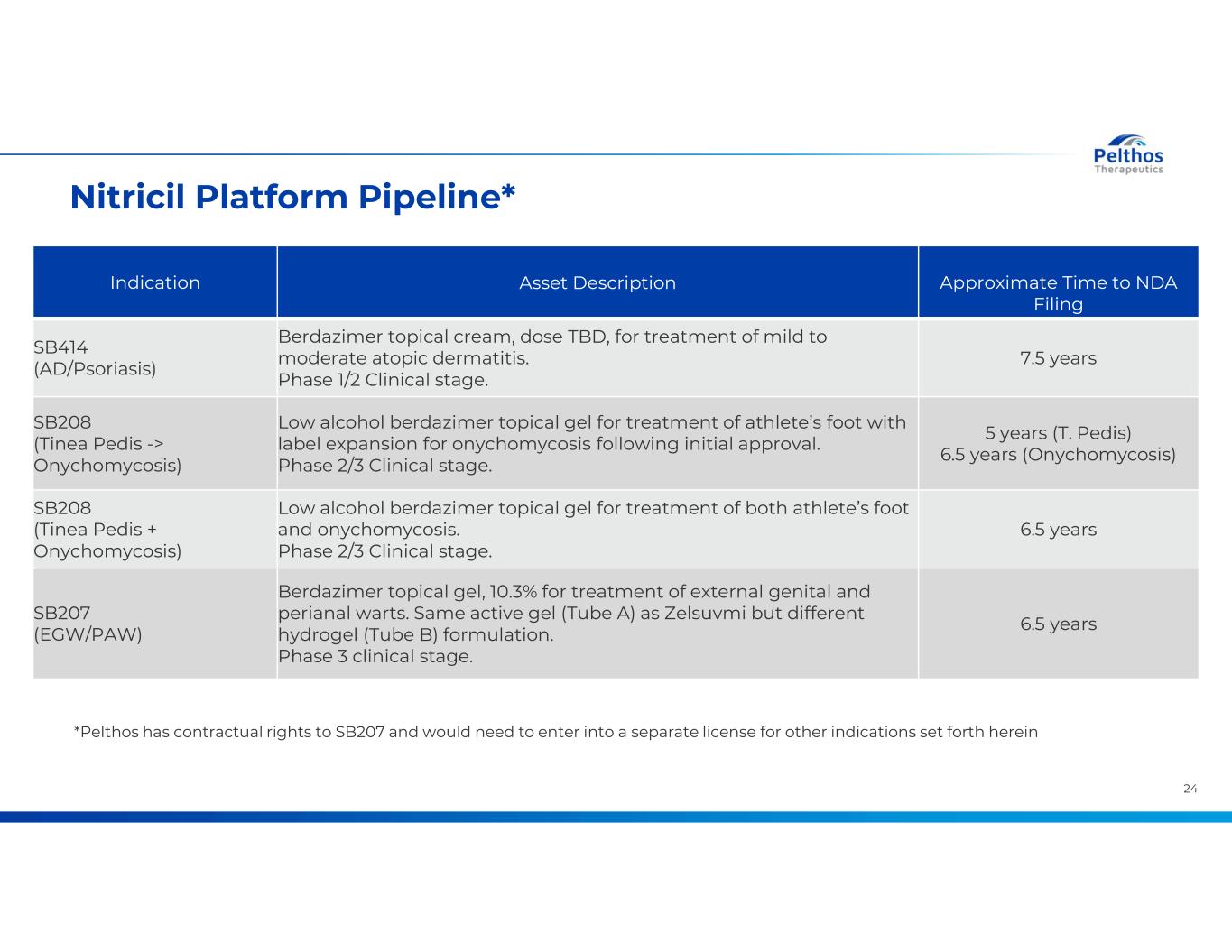
Yeah, and I'll talk about the launches of the other products. So again, you know, one of the reasons we really like these acquisitions is we really have our commercial infrastructure in place and it's just, we're going to leverage it. So it's really more about the marketing side and the manufacturing side. So, and, you know, these won't have the same marketing budget that SOSUMI has. But, you know, right now we're looking at probably a March of 2027 launch for ZEPI. We've made, we've actually made commercial product, are going through the different testing that needs to be done. And then we need an FDA approval because there was a change in manufacturer sites here. So, and then it aligns really well with the national sales meeting if we do that. So, you know, we decided to make sure that, you know, we get everything done and we're able to train and launch properly instead of trying to do kind of a soft launch there. So, it'll be a minimal spend around it because of the synergies. And then Zeglize right now, we're, again, just ramping up manufacturing. It starts a little bit sooner in the process. So, we have to – we're working on API right now. So, really, it's mostly manufacturing probably until almost middle of next year before we start really investing in ZEGLI's spend.
Mira
Analyst — Oppenheimer
Thank you so much.
Operator
Your next question comes from the line of Thomas Slatton with Lake Street. Please go ahead.
Hey, good morning. Thanks for taking the questions. Just a quick one for John. John, you mentioned the step-up inventory, and you need to sell that through until gross margins come back to maybe more of a normalized level. Do you know how long that will take to burn through that inventory?
Yeah, thanks, Thomas. Appreciate the question. Yeah, so as it relates to the finished basis step-up from the finished good inventory, we've actually sold through all of that. What we did have on hand from an API standpoint that also had a basis step-up, we will continue to convert that into finished good products, and we think that we'll burn through that in the next 12 to 15 months.
Yeah, it'll be Si's job to speed that up, if possible.
And speaking of which, what can you tell us about the number of touches that you need with the docs before they write their first prescription? Has that changed since launch? Is there a differential between PEDs and DERMs? Any kind of color on that would be super helpful.
Yeah, I'll take that question, Thomas, and good morning. No, it's a great question, because I think in terms of when you get to a steady state or a steadier state, rather, you do see the need for lesser touch points. And I think that's indicative of our repeat riders that we have. This last week, we hit an all-time high of repeat riders of 193. So I think we have a situation where we have a really important element and view of where that we see an overall view of there being a need to tie back to, you know, the validation of the clinical profile and then overall tying back as well to the repeat utilization as we also see with refills. And, you know, as Scott had mentioned, we've seen 82 percent quarter over quarter increase in refills. And, you know, really, as I was mentioning, as it ties to the refill mechanisms, that 193 was to the refill count specifically. The HCP writer count is at 157 at an all time high in our previous week. So we really do see, you know, a constant view and continued validation of that repeat rider and overall view of refills as well, which I think decreases the amount of need of attention and frequency at times.
Got it. Thank you. Thanks, Thomas.
Operator
Your next question comes from the line of James Molloy with Alliance Boulevard Partners. Please go ahead.
Matt
Analyst — Alliance Global Partners
Hi, guys. Matt, on for Jim this morning. Thanks for taking our questions, and congrats on the progress this queue. Could you give us a bit of an overview on your view of the relative strength of why can'ts recently, as well as what counter-detailing messages you guys and they are using against each other out in the field? Thanks.
Good morning, Matt. This is Sai. I'll take that question. So, just to be pretty straightforward about it, we don't ever get into a situation where we do any actual counter-detailing. We stay very firm to our clinical profile, for which we feel incredibly confident on, and in terms of our overall approved messaging. So there's never a situation where we either train or suggest any level of counter-detailing. We exist in a very fortunate market in the sense that we're the first and only at-home treatment prescription option. There's never been that type of option to date. The other products that exist in the procedural space have their kind of own category. But by virtue of what we go to market with and what we sell every day in terms of the overall HCP category, very, very closely tied to our clinical profile, our efficacy story, our safety story, and overall access to the medication.
Matt
Analyst — Alliance Global Partners
Got it. And any commentary on the relative strength of Wycant and the script? world recently?
Yeah, I mean, obviously, we see where they're growing. I think, like Cy said, there's room for both of us. I think you could compare our results and decide which, you know, that and which revenue is growing faster. But, you know, I think there's, you know, they're used in different patients, different offices sometimes. There is some overlap in doctors using for both. So, honestly, I would ask you to ask them about their growth. It's really about us growing our own business. That's what we're focused on.
Matt
Analyst — Alliance Global Partners
All right, great. Thanks for taking our questions.
Operator
Your last question comes from the line of Jonathan Ashoff with Roth Capital Partners, LLC. Please go ahead.
Thank you. Congrats on a nice quarter. How much of the 2Q revenue represents units versus channel till?
Yeah, so Jonathan, in my script, I shared, we actually pulled our days on hand down to three, by three days, I'm sorry, which is under three weeks in the channel at this point, and only up a couple hundred units, basically, of inventory. So very minimal.
Okay, thanks. And you mentioned 67 sales territories. Is that because you hired three more people, you know, 50 plus 14? Did you add three? Okay. And what were those geographies? You kind of rambled them off pretty fast.
Go ahead. Thank you, Maury, Jonathan. It's Pittsburgh, Pennsylvania. It's Shreveport, Louisiana, and Albany, New York.
Thank you very much, guys.
Operator
This now concludes our question and answer session. I would like to turn the floor back over to Scott Plesha for closing comments.
Thank you, Operator. I want to thank everyone for joining today's call. I'd also like to thank the Peltos employees for their continued focus, execution, hard work, and dedication in supporting patients, caregivers, and healthcare providers. Thank you again for joining our call, and we look forward to updating you on our progress in the future. Have a great day.
Operator
Ladies and gentlemen, thank you for your participation. This does conclude today's teleconference. You may disconnect your lines and have a wonderful day.