
SER 8-K
Serina Therapeutics, Inc. (SER)
8-K
2025-07-29
For: 2025-07-29
View Original
Added on
April 09, 2026
UNITED STATES
SECURITIES AND EXCHANGE COMMISSION
Washington, D.C. 20549
FORM 8-K
CURRENT REPORT
Pursuant to Section 13 or 15(d) of the Securities Exchange Act of 1934
Date of Report (date of earliest event reported): July 29, 2025
(Exact name of registrant as specified in its charter)
| (State or other jurisdiction of incorporation) | (Commission File Number) | (IRS Employer Identification No.) | ||||||||||||
(Address of principal executive offices)
(Registrant’s telephone number, including area code)
Not applicable
(Former name or former address, if changed since last report)
Check the appropriate box below if the Form 8-K filing is intended to simultaneously satisfy the filing obligation of the registrant under any of the following provisions:
| Written communications pursuant to Rule 425 under the Securities Act (17 CFR 230.425) | |||||
| Soliciting material pursuant to Rule 14a-12 under the Exchange Act (17 CFR 240.14a-12) | |||||
| Pre-commencement communications pursuant to Rule 14d-2(b) under the Exchange Act (17 CFR 240.14d-2(b)) | |||||
| Pre-commencement communications pursuant to Rule 13e-4(c) under the Exchange Act (17 CFR 240.13e-4(c)) | |||||
Securities registered pursuant to Section 12(b) of the Act:
| Title of each class | Trading Symbol | Name of exchange on which registered | ||||||||||||
Indicate by check mark whether the registrant is an emerging growth company as defined in Rule 405 of the Securities Act of 1933 (§230.405 of this chapter) or Rule 12b-2 of the Securities Exchange Act of 1934 (§240.12b-2 of this chapter). Emerging growth company o
If an emerging growth company, indicate by check mark if the registrant has elected not to use the extended transition period for complying with any new or revised financial accounting standards provided pursuant to Section 13(a) of the Exchange Act. o.
Item 7.01. Regulation FD Disclosure
On July 29, 2025, Serina Therapeutics, Inc. (the “Company”) issued a press release announcing the advancement of its novel product candidate, SER-270, a proprietary POZ-conjugated vesicular monoamine transporter 2 (VMAT2) inhibitor in development for the treatment of tardive dyskinesia. Steve Ledger, the Company’s Chief Executive Officer will be participating at the BTIG Virtual Biotechnology Conference on July 29, 2025 (the “BTIG Conference”), where he will discuss the advancement of the SER-270, also referred to as POZ-VMAT2i, program in development and will be using the materials furnished as Exhibit 99.1 to this report (the “Presentation”) in connection with the BTIG Conference. The Presentation is incorporated into this Item 7.01 by reference. A copy of the press release is furnished as Exhibit 99.2 hereto and is incorporated into this Item 7.01 by reference.
The information in this Item 7.01 is being furnished, not filed, pursuant to Regulation FD. Accordingly, the information in Item 7.01 of this report will not be incorporated by reference into any registration statement filed by the Company under the Securities Act of 1933, as amended, unless specifically identified therein as being incorporated therein by reference. The furnishing of the information in this report is not intended to, and does not, constitute a determination or admission by the Company that the information in this report is material or complete, or that investors should consider this information before making an investment decision with respect to any security of the Company or any of its affiliates.
Item 9.01 - Financial Statements and Exhibits.
(d) Exhibits
| Exhibit Number | Description | |||||||
| 99.1 | ||||||||
| 99.2 | ||||||||
| 104 | Cover Page Interactive Data File (embedded within the Inline XBRL document) | |||||||
SIGNATURES
Pursuant to the requirements of the Securities Exchange Act of 1934, the registrant has duly caused this report to be signed on its behalf by the undersigned hereunto duly authorized.
| SERINA THERAPEUTICS, INC. | ||||||||
Date: July 29, 2025 | By: | /s/ Steve Ledger | ||||||
| Chief Executive Officer | ||||||||
POZ Platform® June 2025 Non-Confidential • Next Generation Drug Product Optimization Platform Ticker (NYSE American): SER Shares outstanding: 10.0M Insider Ownership: 45% • Enabling Improvements of Multiple Drug Modalities
Forward Looking Statements NON-CONFIDENTIAL 2 This presentation contains forward-looking statements that are based on management’s beliefs and assumptions and on information currently available to management. In some cases, you can identify forward-looking statements by the following words: “may,” “will,” “could,” “would,” “should,” “expect,” “intend,” “plan,” “anticipate,” “believe,” “estimate,” “predict,” “project,” “potential,” “continue,” “ongoing” or the negative of these terms or other comparable terminology, although not all forward-looking statements contain these words. These statements involve risks, uncertainties and other factors that may cause actual results, levels of activity, performance or achievements to be materially different from the information expressed or implied by these forward-looking statements. Although we believe that we have a reasonable basis for each forward-looking statement contained in this presentation, we caution you that these statements are based on a combination of facts and factors currently known by us and our projections of the future, about which we cannot be certain. Forward-looking statements in this presentation include, but are not limited to, statements about: the potential attributes and benefits of our product candidates; the format, timing and objectives of our product development activities and clinical trials; the timing and outcome of regulatory interactions, including whether activities meet the criteria to serve as registrational; the ability to compete with other companies currently marketing or engaged in the development of treatments for relevant indications; the size and growth potential of the markets for product candidates and ability to serve those markets; the rate and degree of market acceptance of product candidates, if approved; and the sufficiency of our cash resources. We cannot assure you that the forward-looking statements in this presentation will prove to be accurate. Furthermore, if the forward-looking statements prove to be inaccurate, the inaccuracy may be material. Actual performance and results may differ materially from those projected or suggested in the forward-looking statements due to various risks and uncertainties, including, among others: clinical trial results may not be favorable; uncertainties inherent in the product development process (including with respect to the timing of results and whether such results will be predictive of future results); our ability to recruit and enroll suitable patients in our clinical trials, including the effectiveness of mitigation measures; whether and when, if at all, our product candidates will receive approval from the FDA or other regulatory authorities, and for which, if any, indications; competition from other biotechnology companies; uncertainties regarding intellectual property protection; and other risks identified in our SEC filings, including those under the heading “Risk Factors” in our Annual Report on Form 10-K and other periodic reports and documents filed with the SEC from time to time. In light of the significant uncertainties in these forward-looking statements, you should not regard these statements as a representation or warranty by us or any other person that we will achieve our objectives and plans in any specified time frame, or at all. The forward-looking statements in this presentation represent our views as of the date of this presentation. We anticipate that subsequent events and developments will cause our views to change. However, while we may elect to update these forward-looking statements at some point in the future, we have no current intention of doing so except to the extent required by applicable law. You should, therefore, not rely on these forward-looking statements as representing our views as of any date subsequent to the date of this presentation.
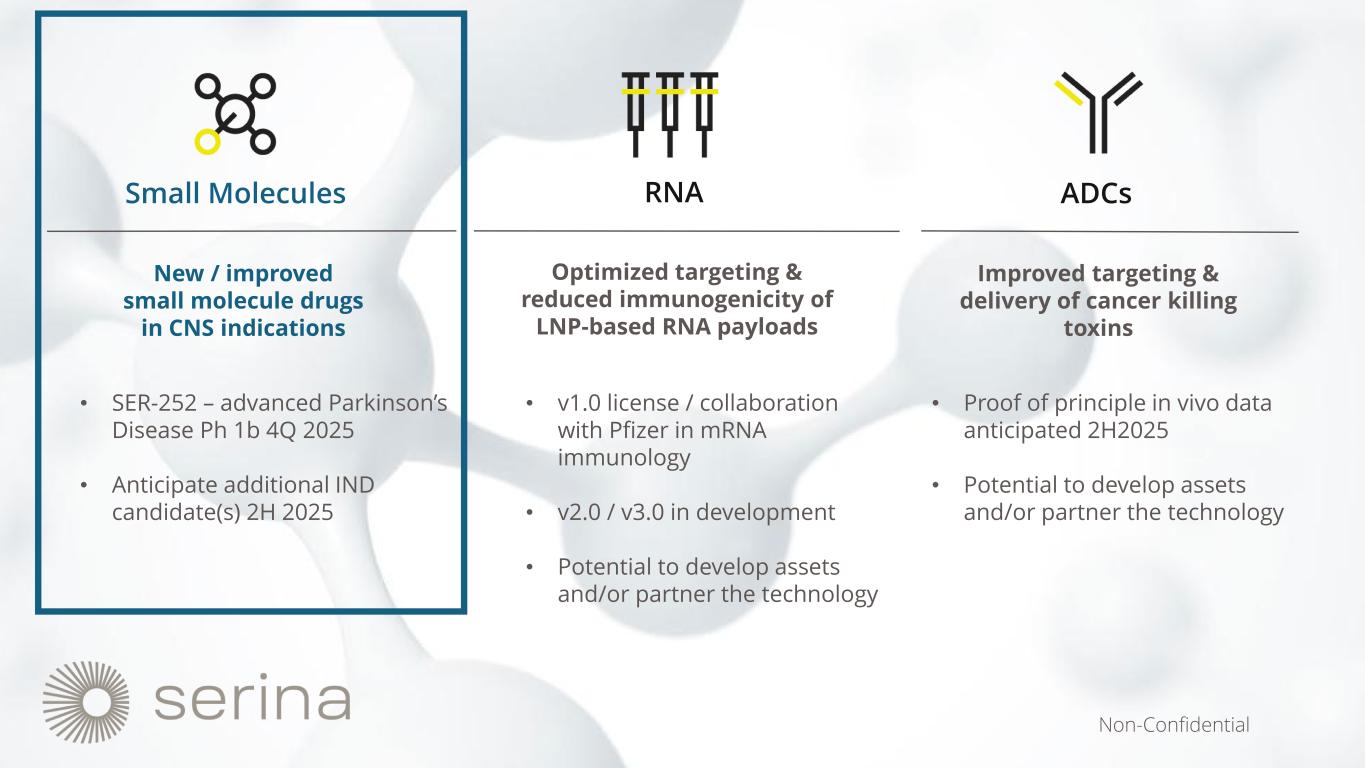
New / improved small molecule drugs in CNS indications Non-Confidential Small Molecules Optimized targeting & reduced immunogenicity of LNP-based RNA payloads RNA Improved targeting & delivery of cancer killing toxins ADCs • v1.0 license / collaboration with Pfizer in mRNA immunology • v2.0 / v3.0 in development • Potential to develop assets and/or partner the technology • Proof of principle in vivo data anticipated 2H2025 • Potential to develop assets and/or partner the technology • SER-252 – advanced Parkinson’s Disease Ph 1b 4Q 2025 • Anticipate additional IND candidate(s) 2H 2025
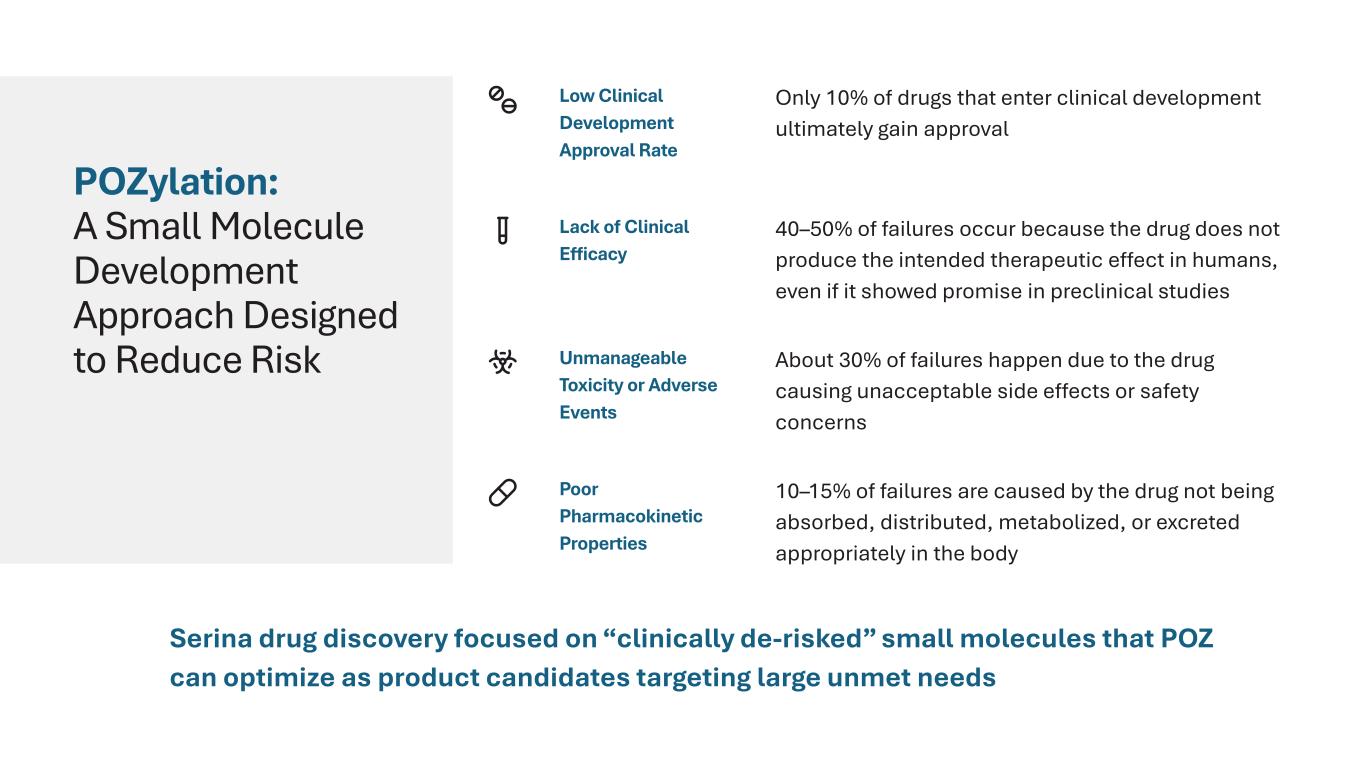
POZylation: A Small Molecule Development Approach Designed to Reduce Risk Only 10% of drugs that enter clinical development ultimately gain approval 40–50% of failures occur because the drug does not produce the intended therapeutic effect in humans, even if it showed promise in preclinical studies About 30% of failures happen due to the drug causing unacceptable side effects or safety concerns Low Clinical Development Approval Rate Lack of Clinical Efficacy Unmanageable Toxicity or Adverse Events 10–15% of failures are caused by the drug not being absorbed, distributed, metabolized, or excreted appropriately in the body Poor Pharmacokinetic Properties Serina drug discovery focused on “clinically de-risked” small molecules that POZ can optimize as product candidates targeting large unmet needs
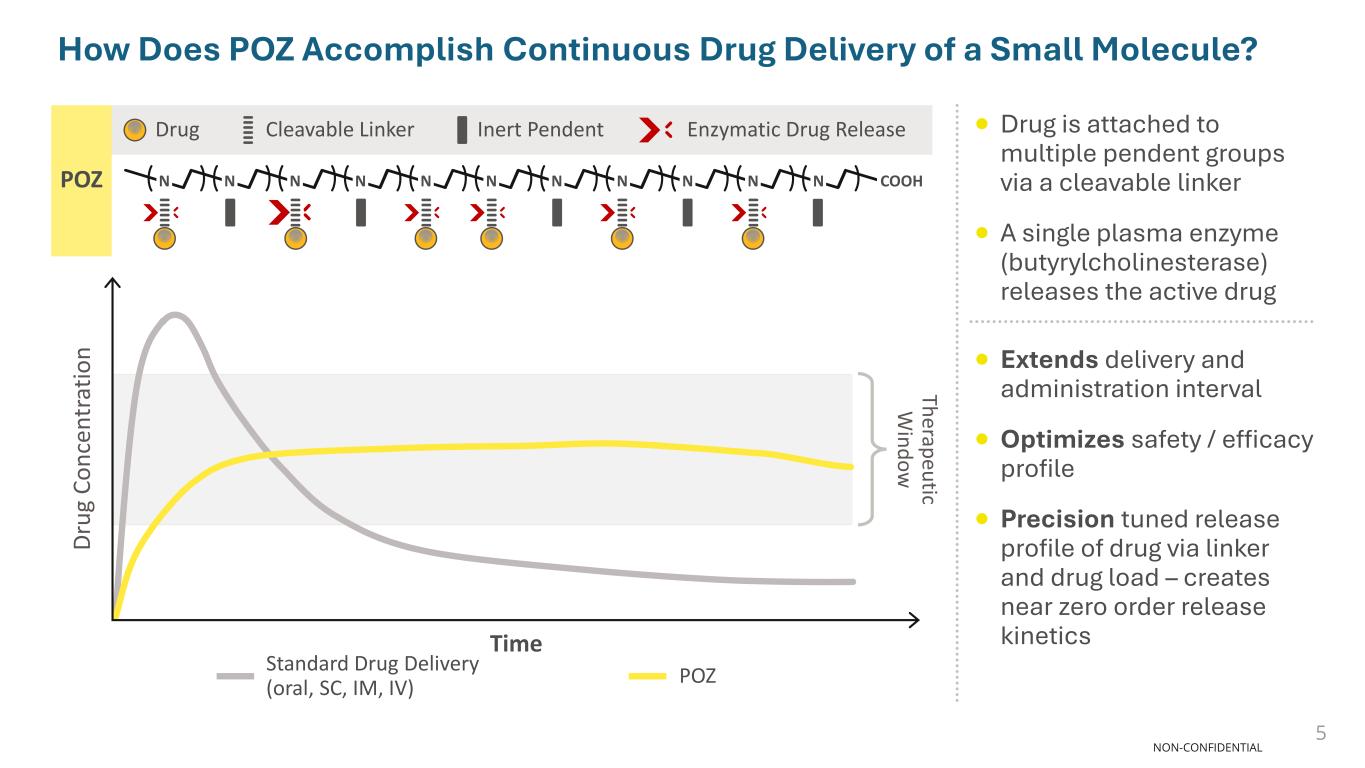
Th erap eu tic W in d o w How Does POZ Accomplish Continuous Drug Delivery of a Small Molecule? • Drug is attached to multiple pendent groups via a cleavable linker • A single plasma enzyme (butyrylcholinesterase) releases the active drug POZ Time D ru g C o n ce n tr at io n Standard Drug Delivery (oral, SC, IM, IV) POZ Drug Cleavable Linker Inert Pendent Enzymatic Drug Release • Extends delivery and administration interval • Optimizes safety / efficacy profile • Precision tuned release profile of drug via linker and drug load – creates near zero order release kinetics N N N N N N N N N N N COOH 5 NON-CONFIDENTIAL
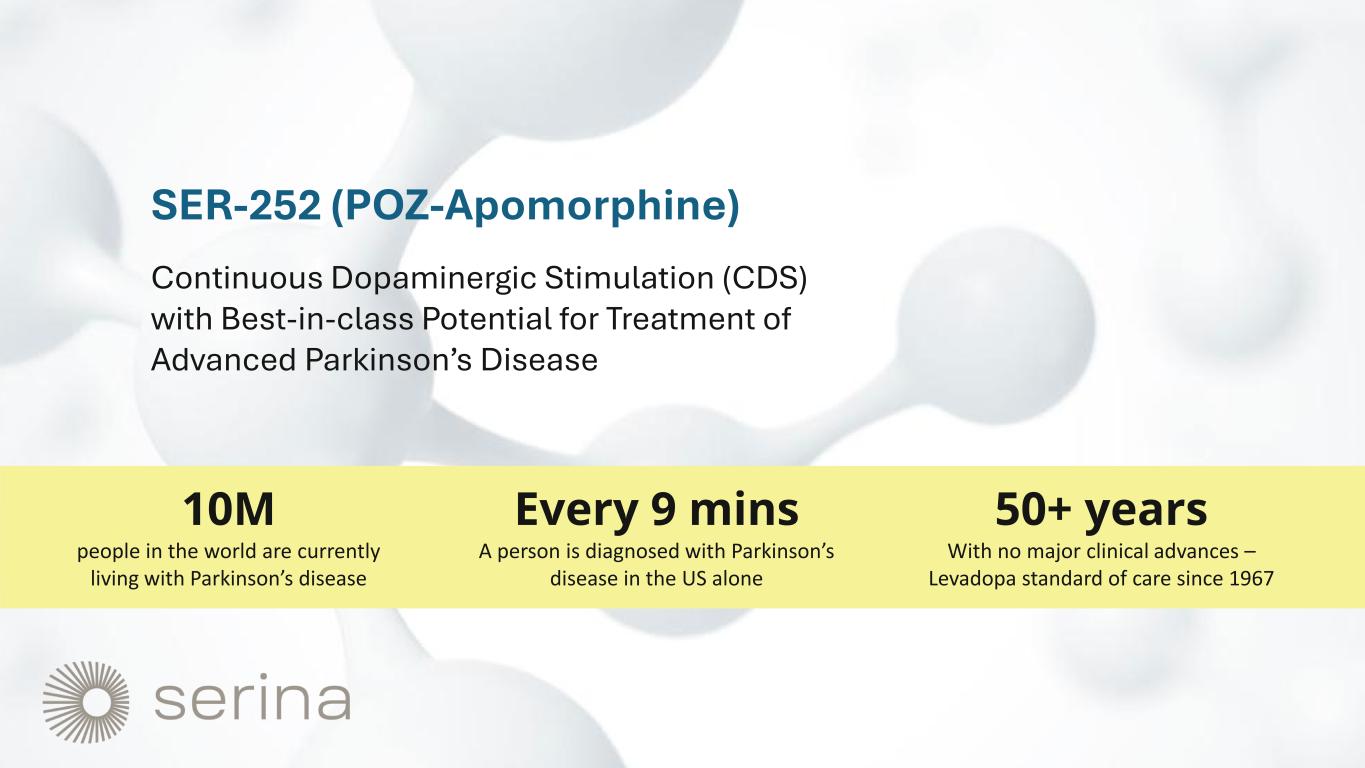
SER-252 (POZ-Apomorphine) Continuous Dopaminergic Stimulation (CDS) with Best-in-class Potential for Treatment of Advanced Parkinson’s Disease 10M people in the world are currently living with Parkinson’s disease Every 9 mins A person is diagnosed with Parkinson’s disease in the US alone 50+ years With no major clinical advances – Levadopa standard of care since 1967
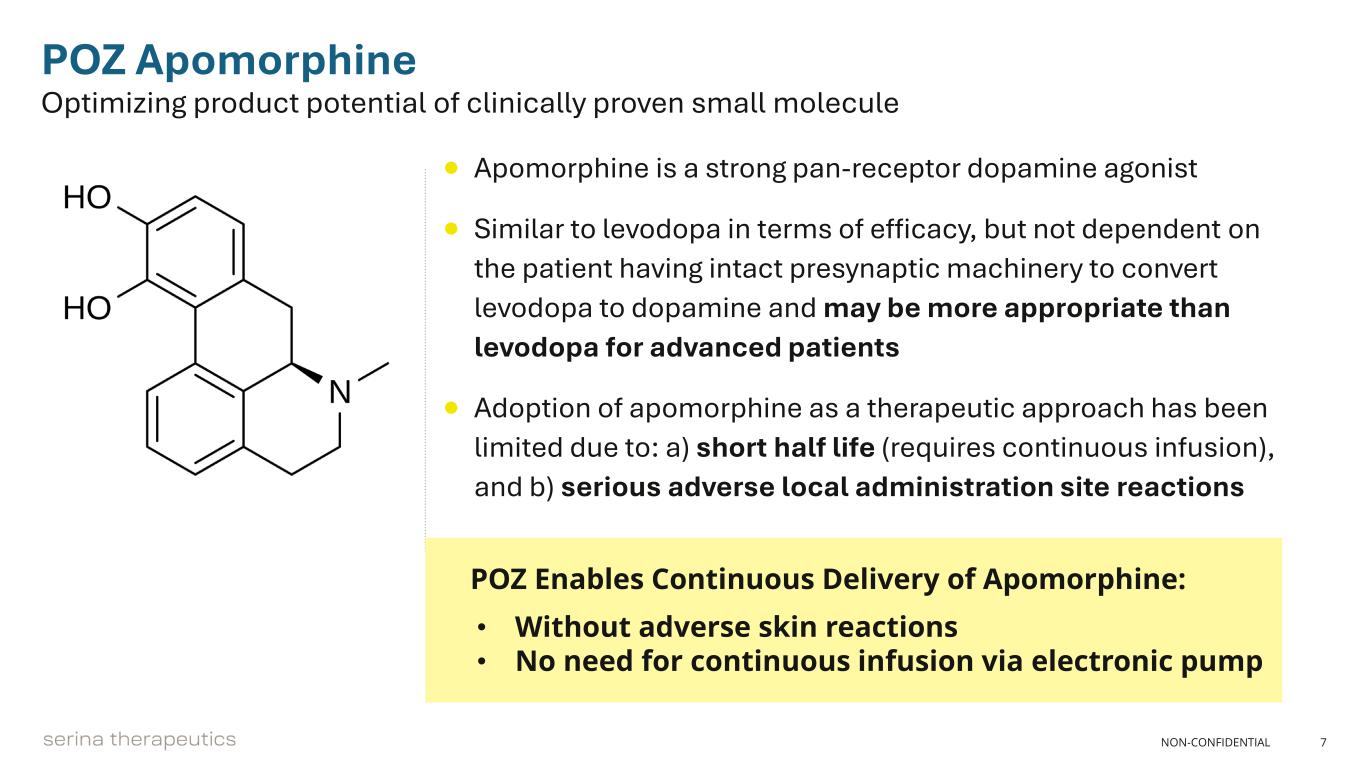
NON-CONFIDENTIAL 7 • Apomorphine is a strong pan-receptor dopamine agonist • Similar to levodopa in terms of efficacy, but not dependent on the patient having intact presynaptic machinery to convert levodopa to dopamine and may be more appropriate than levodopa for advanced patients • Adoption of apomorphine as a therapeutic approach has been limited due to: a) short half life (requires continuous infusion), and b) serious adverse local administration site reactions POZ Enables Continuous Delivery of Apomorphine: • Without adverse skin reactions • No need for continuous infusion via electronic pump POZ Apomorphine Optimizing product potential of clinically proven small molecule
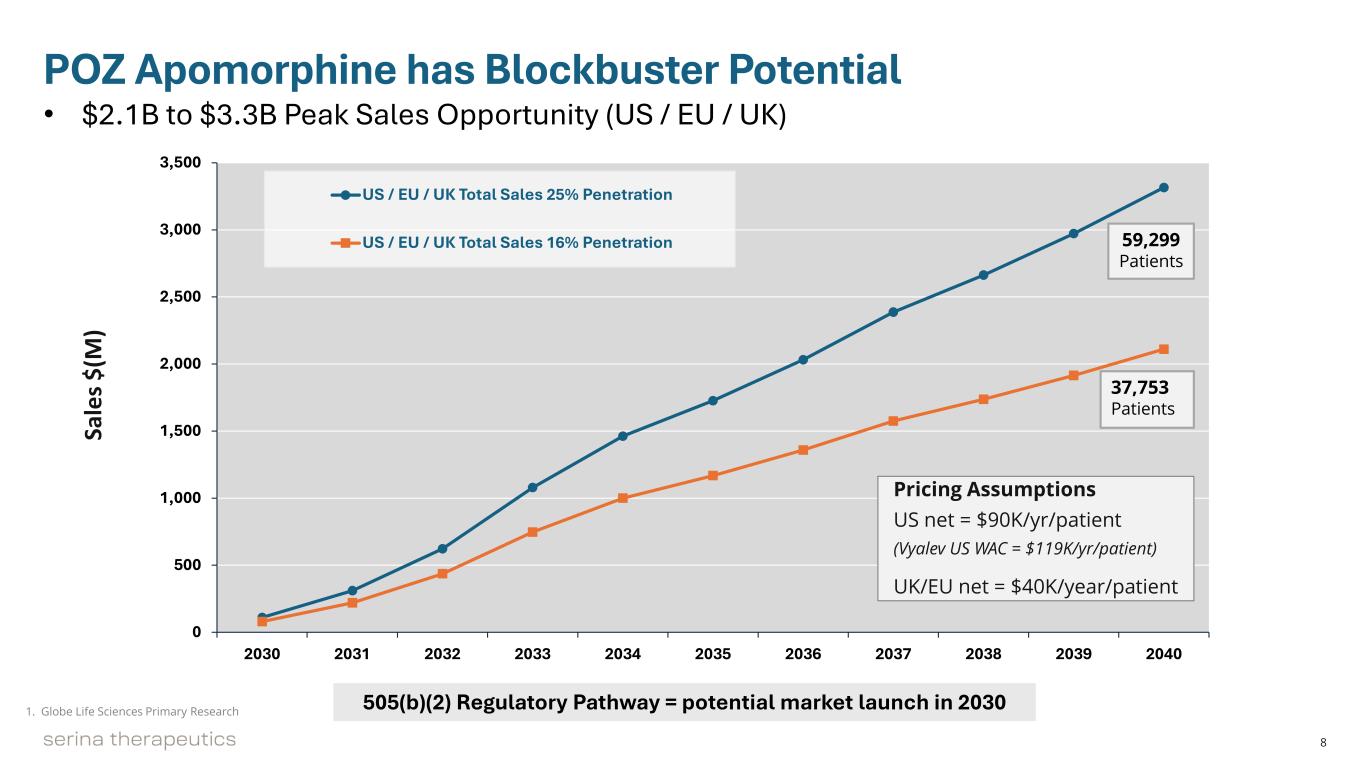
POZ Apomorphine has Blockbuster Potential 1. Globe Life Sciences Primary Research NON-CONFIDENTIAL 8 • $2.1B to $3.3B Peak Sales Opportunity (US / EU / UK) Sa le s $ (M ) 0 500 1,000 1,500 2,000 2,500 3,000 3,500 2030 2031 2032 2033 2034 2035 2036 2037 2038 2039 2040 US / EU / UK Total Sales 25% Penetration US / EU / UK Total Sales 16% Penetration 59,299 Patients 37,753 Patients 505(b)(2) Regulatory Pathway = potential market launch in 2030 Pricing Assumptions US net = $90K/yr/patient (Vyalev US WAC = $119K/yr/patient) UK/EU net = $40K/year/patient
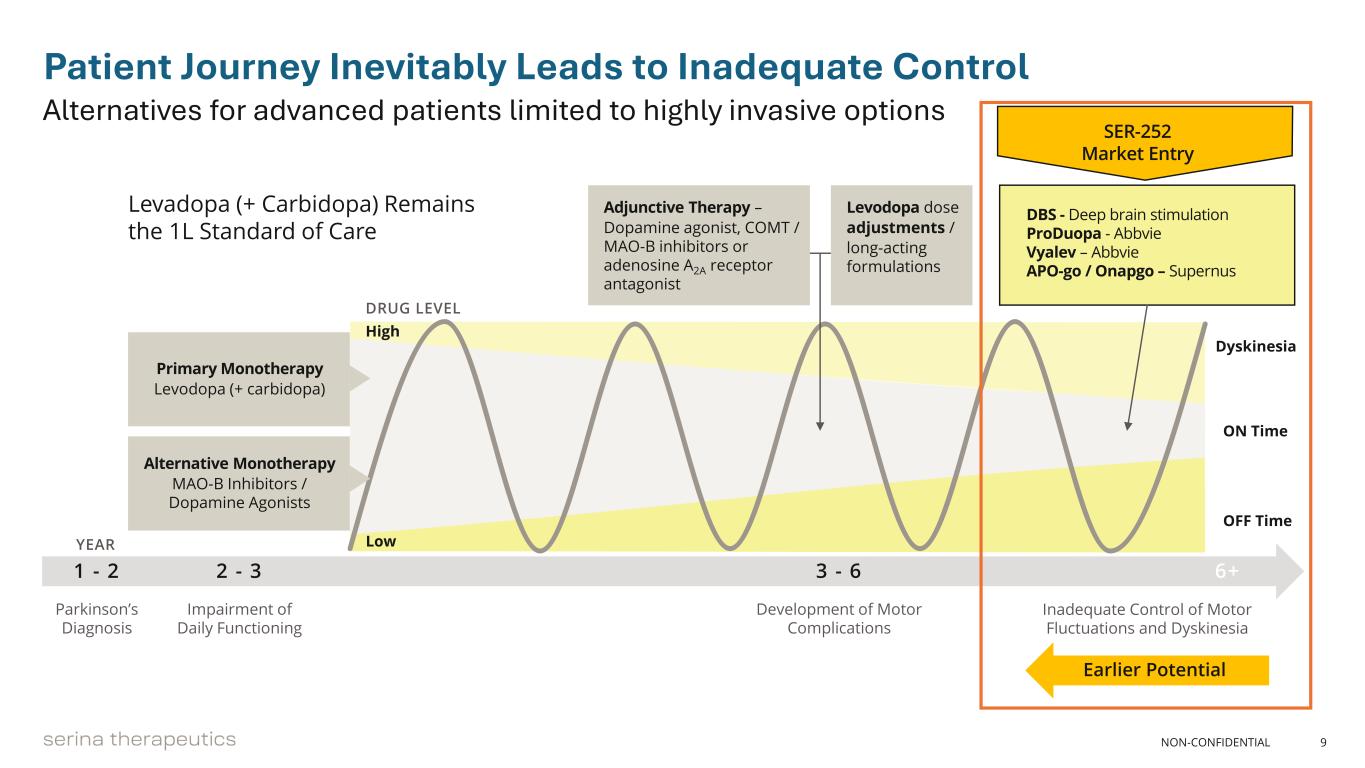
Patient Journey Inevitably Leads to Inadequate Control NON-CONFIDENTIAL 9 Alternatives for advanced patients limited to highly invasive options Dyskinesia ON Time OFF Time High LowYEAR DRUG LEVEL 1 - 2 2 - 3 3 - 6 6+ Parkinson’s Diagnosis Impairment of Daily Functioning Development of Motor Complications Inadequate Control of Motor Fluctuations and Dyskinesia Adjunctive Therapy – Dopamine agonist, COMT / MAO-B inhibitors or adenosine A2A receptor antagonist Levodopa dose adjustments / long-acting formulations DBS - Deep brain stimulation ProDuopa - Abbvie Vyalev – Abbvie APO-go / Onapgo – Supernus Primary Monotherapy Levodopa (+ carbidopa) Alternative Monotherapy MAO-B Inhibitors / Dopamine Agonists SER-252 Market Entry Earlier Potential Levadopa (+ Carbidopa) Remains the 1L Standard of Care
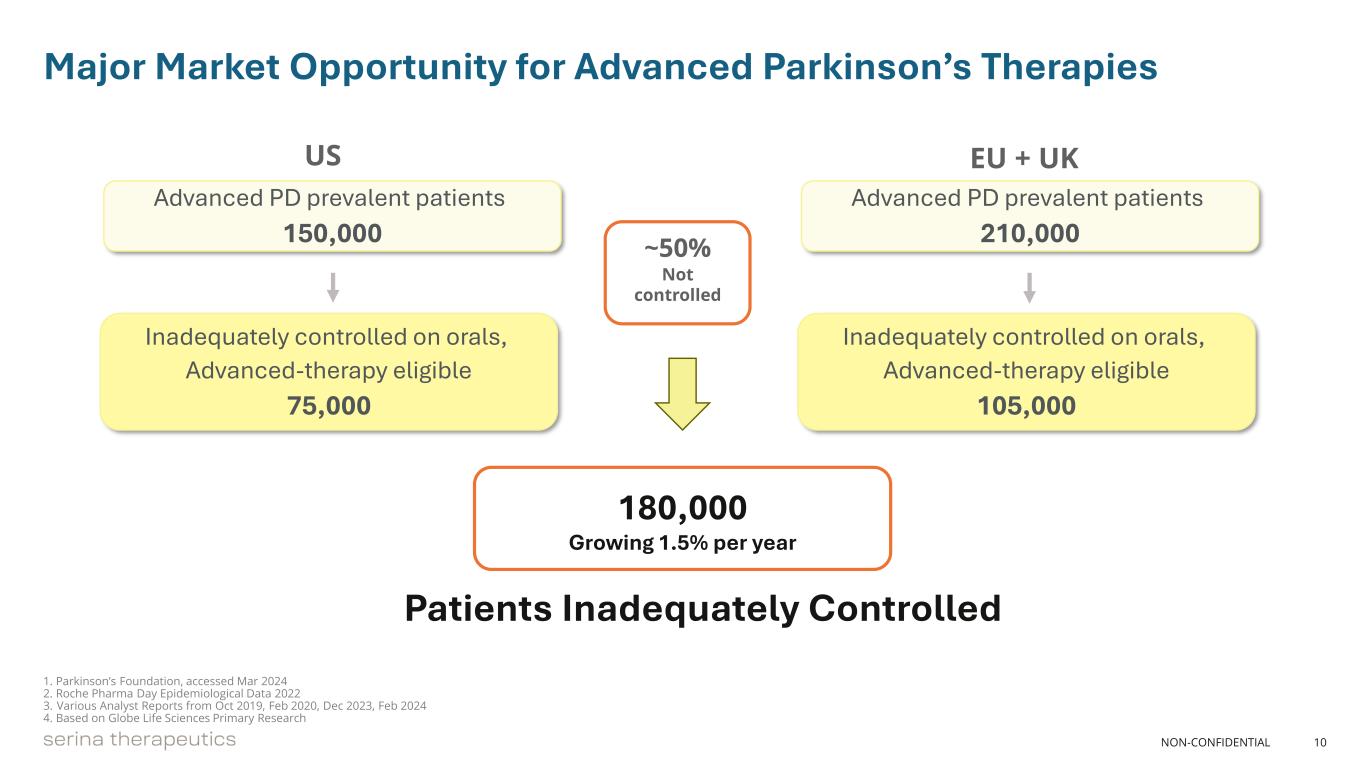
Major Market Opportunity for Advanced Parkinson’s Therapies 1. Parkinson’s Foundation, accessed Mar 2024 2. Roche Pharma Day Epidemiological Data 2022 3. Various Analyst Reports from Oct 2019, Feb 2020, Dec 2023, Feb 2024 4. Based on Globe Life Sciences Primary Research NON-CONFIDENTIAL 10 US Advanced PD prevalent patients 150,000 Inadequately controlled on orals, Advanced-therapy eligible 75,000 Advanced PD prevalent patients 210,000 Inadequately controlled on orals, Advanced-therapy eligible 105,000 180,000 Growing 1.5% per year EU + UK Patients Inadequately Controlled ~50% Not controlled
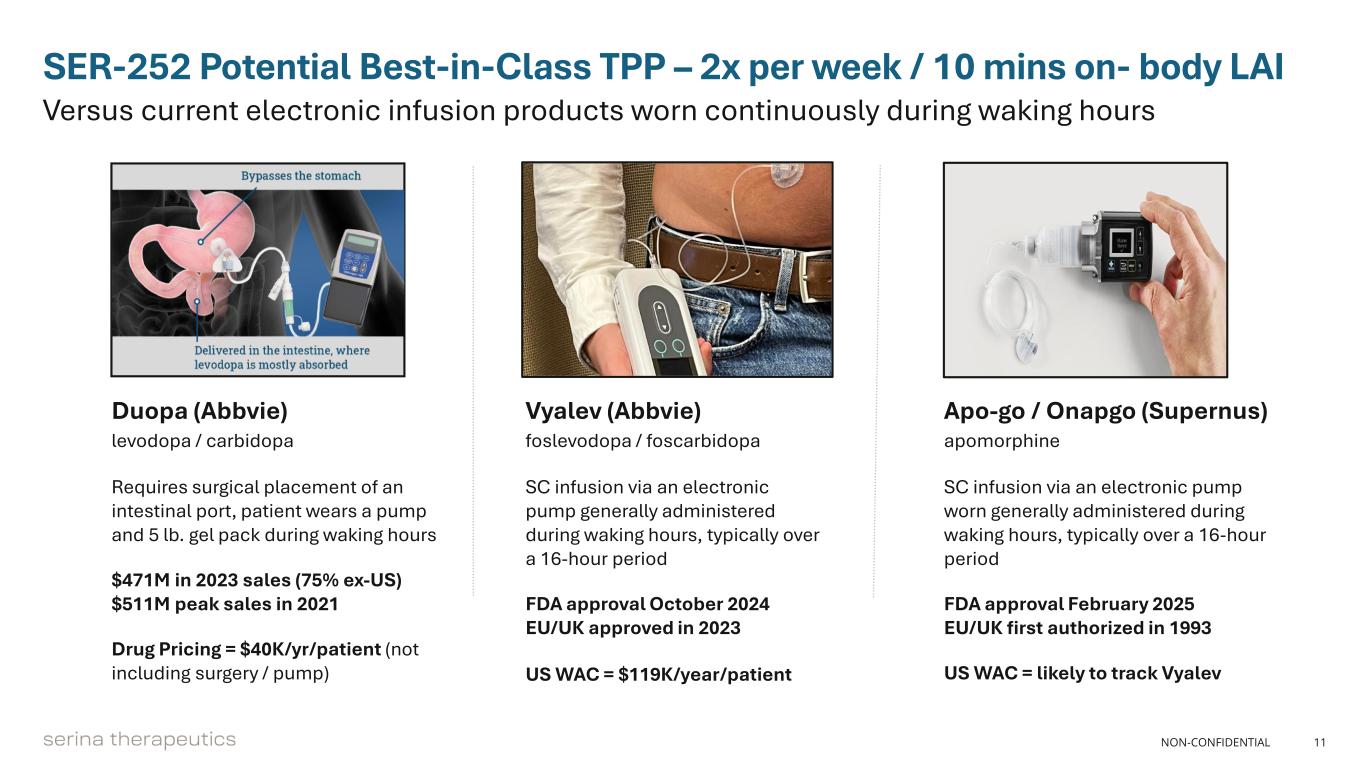
SER-252 Potential Best-in-Class TPP – 2x per week / 10 mins on- body LAI NON-CONFIDENTIAL 11 Duopa (Abbvie) levodopa / carbidopa Requires surgical placement of an intestinal port, patient wears a pump and 5 lb. gel pack during waking hours $471M in 2023 sales (75% ex-US) $511M peak sales in 2021 Drug Pricing = $40K/yr/patient (not including surgery / pump) Vyalev (Abbvie) foslevodopa / foscarbidopa SC infusion via an electronic pump generally administered during waking hours, typically over a 16-hour period FDA approval October 2024 EU/UK approved in 2023 US WAC = $119K/year/patient Apo-go / Onapgo (Supernus) apomorphine SC infusion via an electronic pump worn generally administered during waking hours, typically over a 16-hour period FDA approval February 2025 EU/UK first authorized in 1993 US WAC = likely to track Vyalev Versus current electronic infusion products worn continuously during waking hours
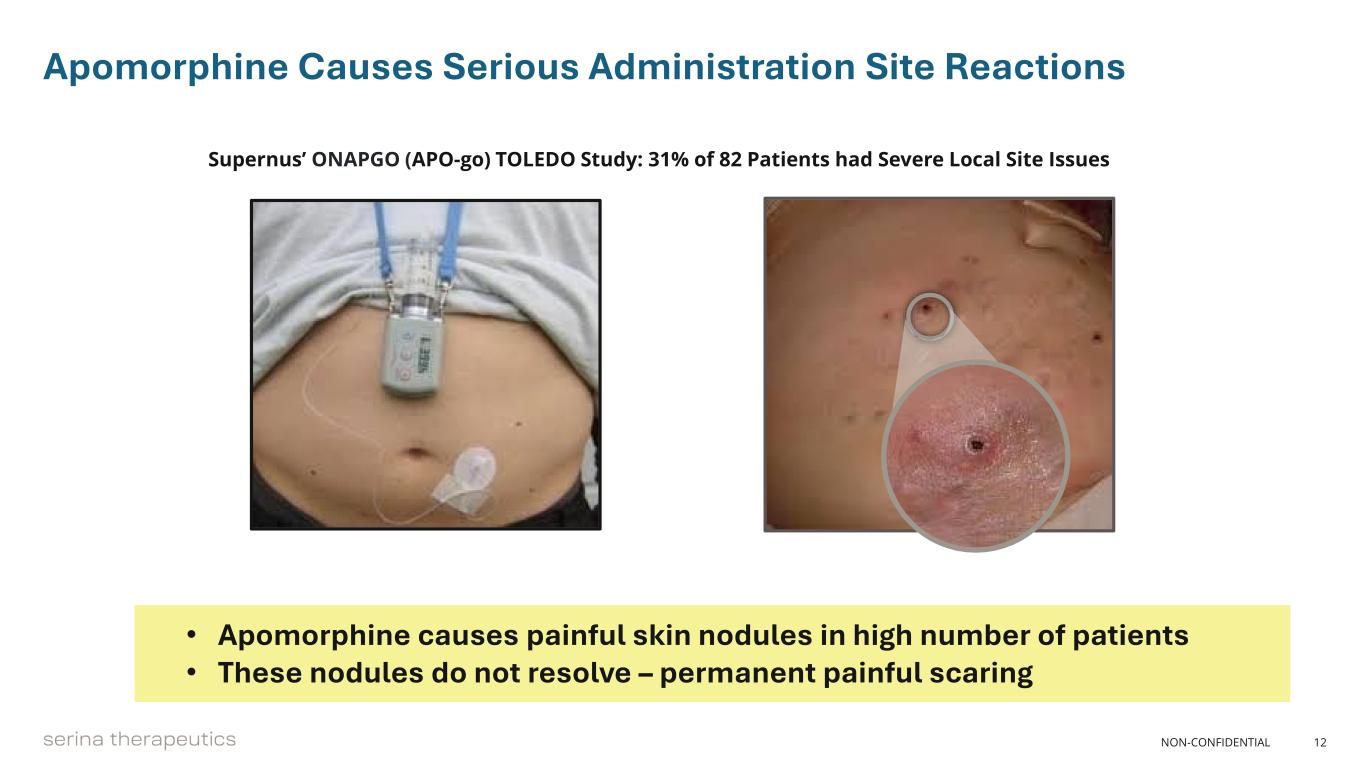
Apomorphine Causes Serious Administration Site Reactions NON-CONFIDENTIAL 12 Supernus’ ONAPGO (APO-go) TOLEDO Study: 31% of 82 Patients had Severe Local Site Issues • Apomorphine causes painful skin nodules in high number of patients • These nodules do not resolve – permanent painful scaring
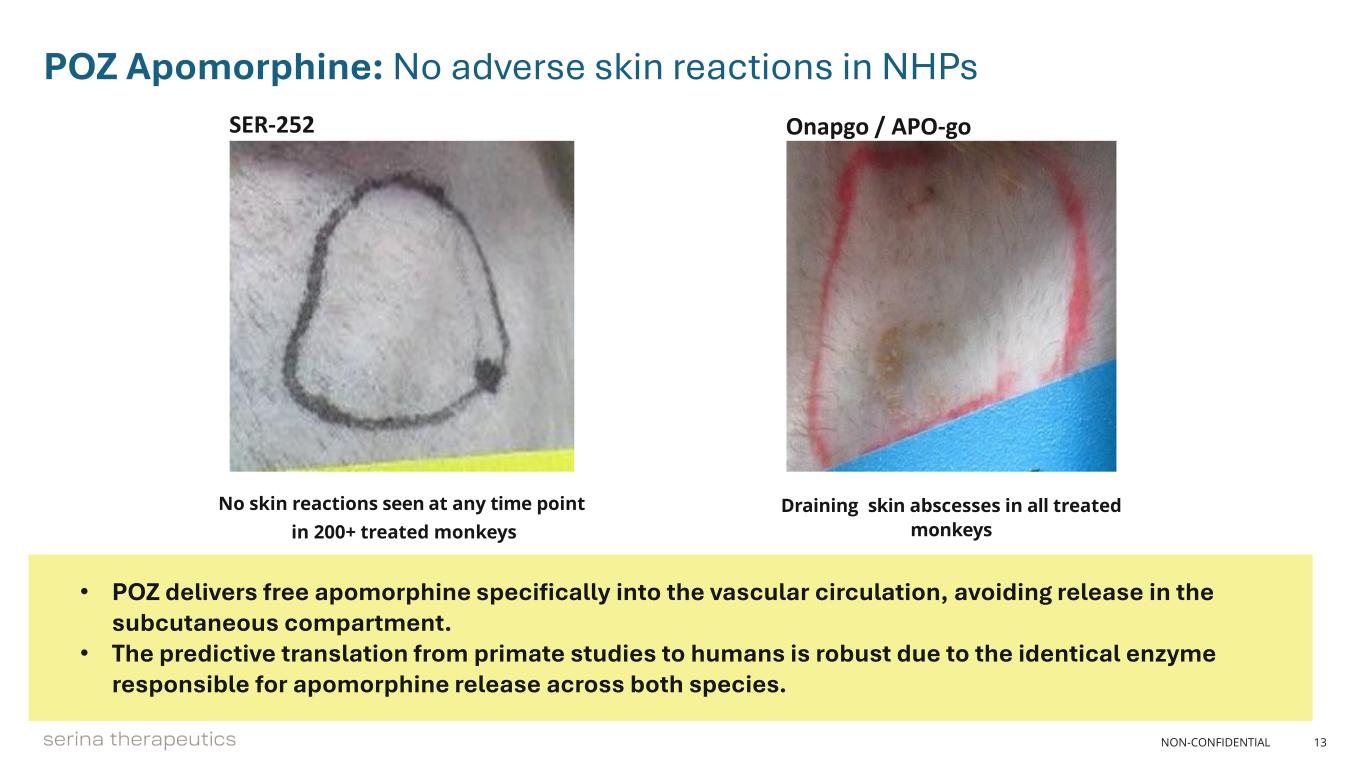
POZ Apomorphine: No adverse skin reactions in NHPs NON-CONFIDENTIAL 13 • POZ delivers free apomorphine specifically into the vascular circulation, avoiding release in the subcutaneous compartment. • The predictive translation from primate studies to humans is robust due to the identical enzyme responsible for apomorphine release across both species. Draining skin abscesses in all treated monkeys No skin reactions seen at any time point in 200+ treated monkeys SER-252 Onapgo / APO-go
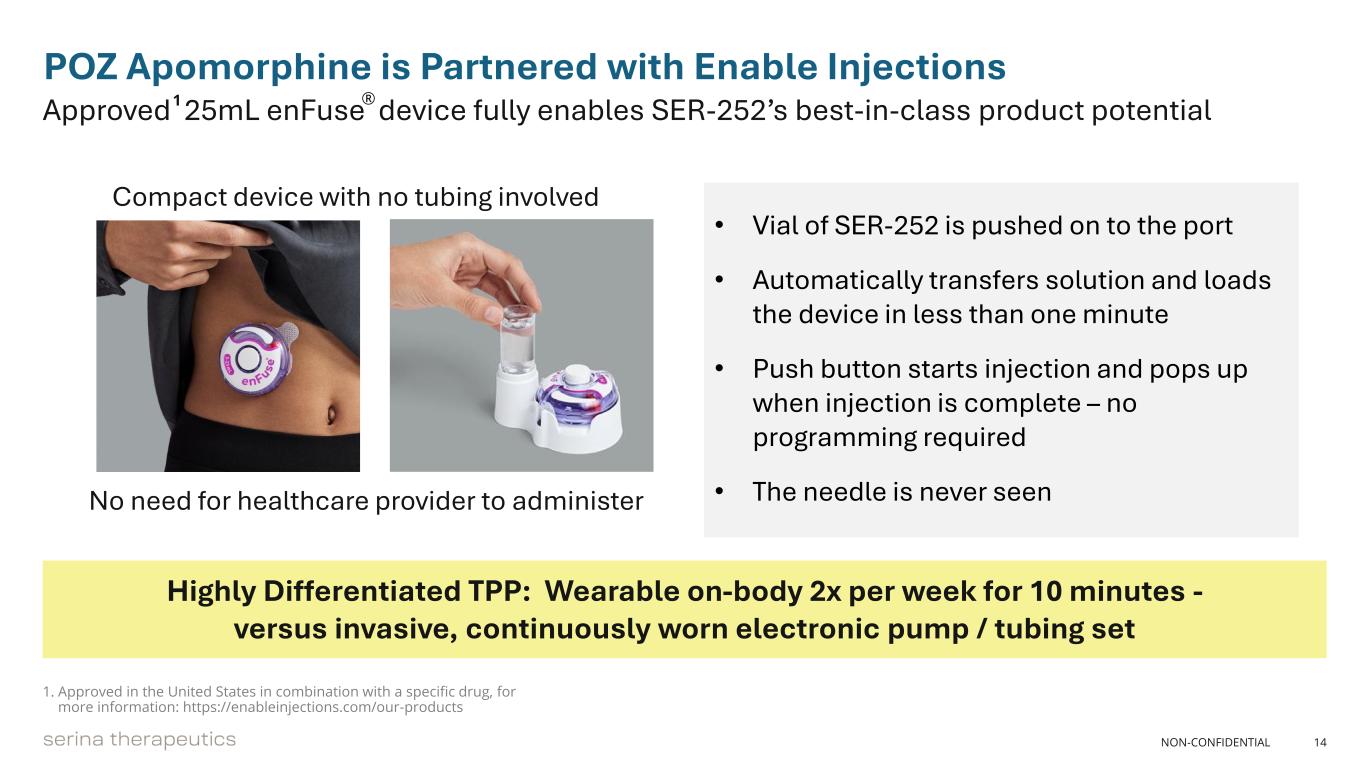
POZ Apomorphine is Partnered with Enable Injections 1. Approved in the United States in combination with a specific drug, for more information: https://enableinjections.com/our-products NON-CONFIDENTIAL 14 Approved 25mL enFuse device fully enables SER-252’s best-in-class product potential • Vial of SER-252 is pushed on to the port • Automatically transfers solution and loads the device in less than one minute • Push button starts injection and pops up when injection is complete – no programming required • The needle is never seen Highly Differentiated TPP: Wearable on-body 2x per week for 10 minutes - versus invasive, continuously worn electronic pump / tubing set Compact device with no tubing involved No need for healthcare provider to administer ®1
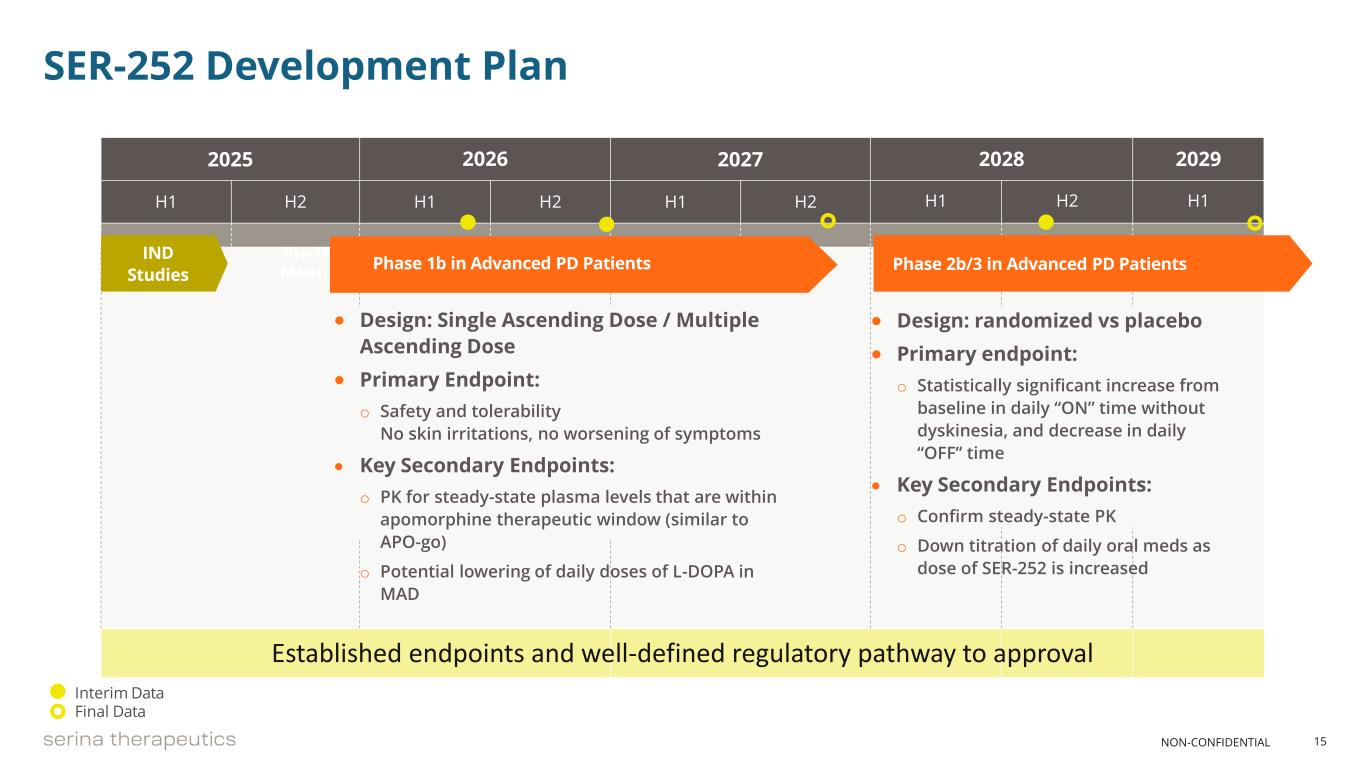
2025 2026 2027 2028 2029 H1 H2 H1 H2 H1 H2 H1 H2 H1 SER-252 Development Plan 15 IND Studies Pre-IND Meeting Phase 2b/3 in Advanced PD PatientsPhase 1b in Advanced PD Patients Interim Data Final Data • Design: Single Ascending Dose / Multiple Ascending Dose • Primary Endpoint: o Safety and tolerability No skin irritations, no worsening of symptoms • Key Secondary Endpoints: o PK for steady-state plasma levels that are within apomorphine therapeutic window (similar to APO-go) o Potential lowering of daily doses of L-DOPA in MAD • Design: randomized vs placebo • Primary endpoint: o Statistically significant increase from baseline in daily “ON” time without dyskinesia, and decrease in daily “OFF” time • Key Secondary Endpoints: o Confirm steady-state PK o Down titration of daily oral meds as dose of SER-252 is increased Established endpoints and well-defined regulatory pathway to approval NON-CONFIDENTIAL
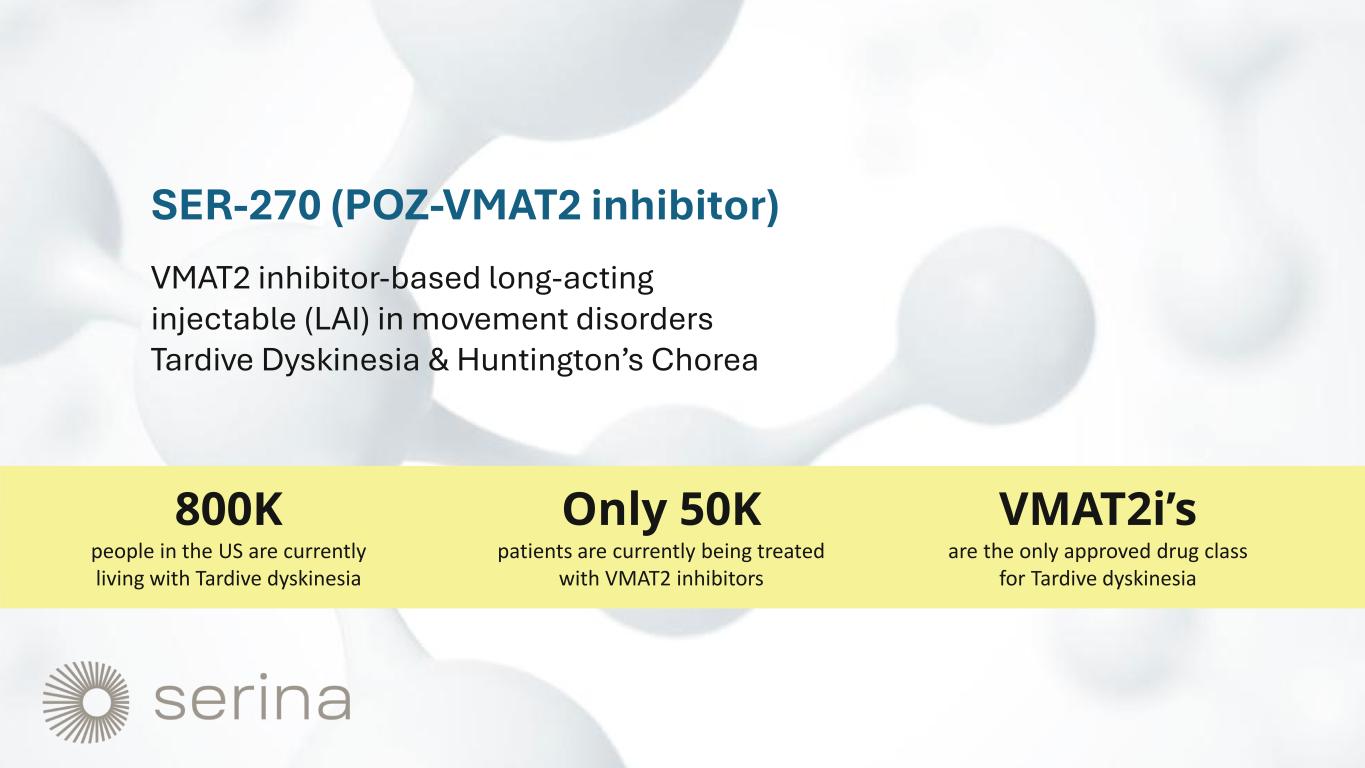
SER-270 (POZ-VMAT2 inhibitor) VMAT2 inhibitor-based long-acting injectable (LAI) in movement disorders Tardive Dyskinesia & Huntington’s Chorea 800K people in the US are currently living with Tardive dyskinesia Only 50K patients are currently being treated with VMAT2 inhibitors VMAT2i’s are the only approved drug class for Tardive dyskinesia
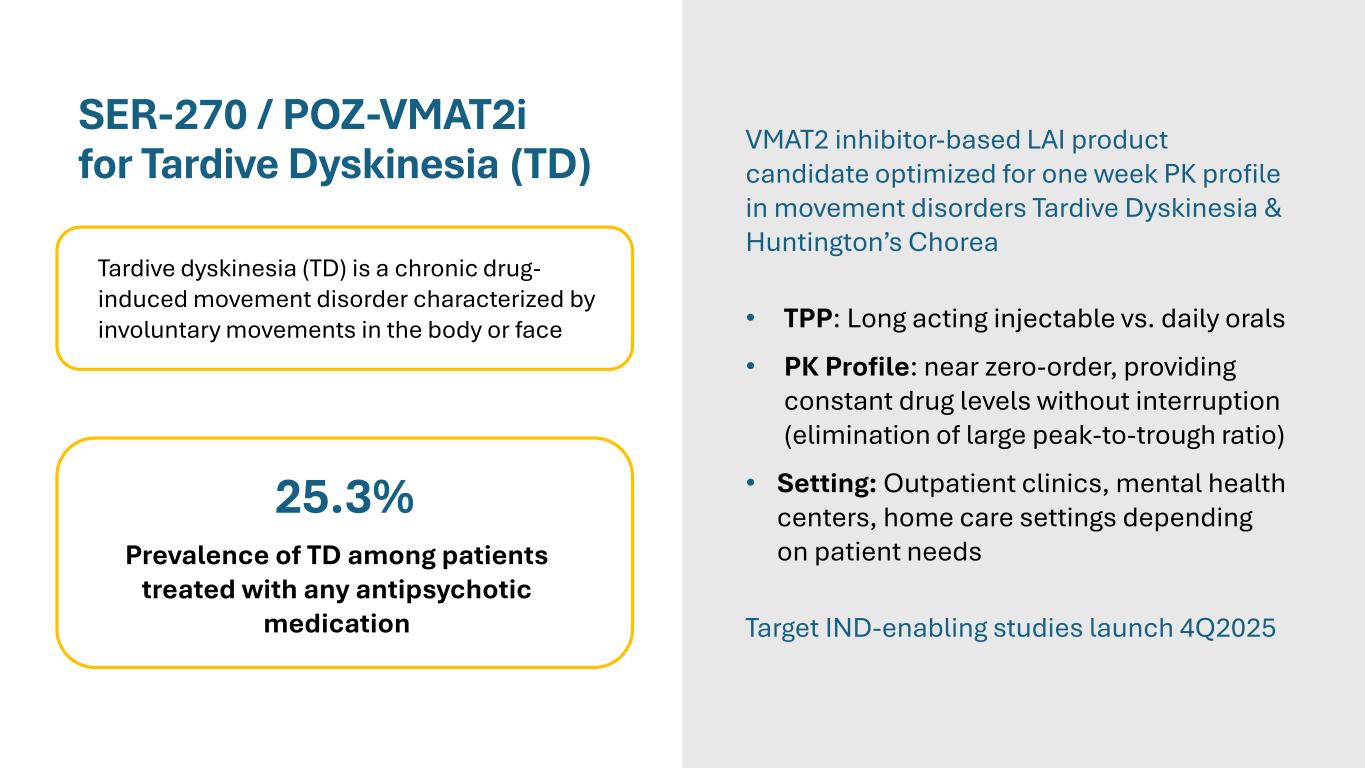
SER-270 / POZ-VMAT2i for Tardive Dyskinesia (TD) VMAT2 inhibitor-based LAI product candidate optimized for one week PK profile in movement disorders Tardive Dyskinesia & Huntington’s Chorea • TPP: Long acting injectable vs. twice daily orals • PK Profile: near zero-order, providing constant drug levels without interruption (elimination of large peak-to-trough ratio) • Setting: Outpatient clinics, mental health centers, home care settings depending on patient needs Target IND-enabling studies launch 4Q2025 Tardive dyskinesia (TD) is a chronic drug- induced movement disorder characterized by involuntary movements in the body or face Prevalence of TD among patients treated with any antipsychotic medication 25.3% VMAT2 inhibitor-based LAI product candidate optimized for one week PK profile in movement disorders Tardive Dyskinesia & Huntington’s Chorea • TPP: Long acting injectable vs. daily orals • PK Profile: near zero-order, providing constant drug levels without interruption (elimination of large peak-to-trough ratio) • Setting: Outpatient clinics, mental health centers, home care settings depending on patient needs Target IND-enabling studies launch 4Q2025
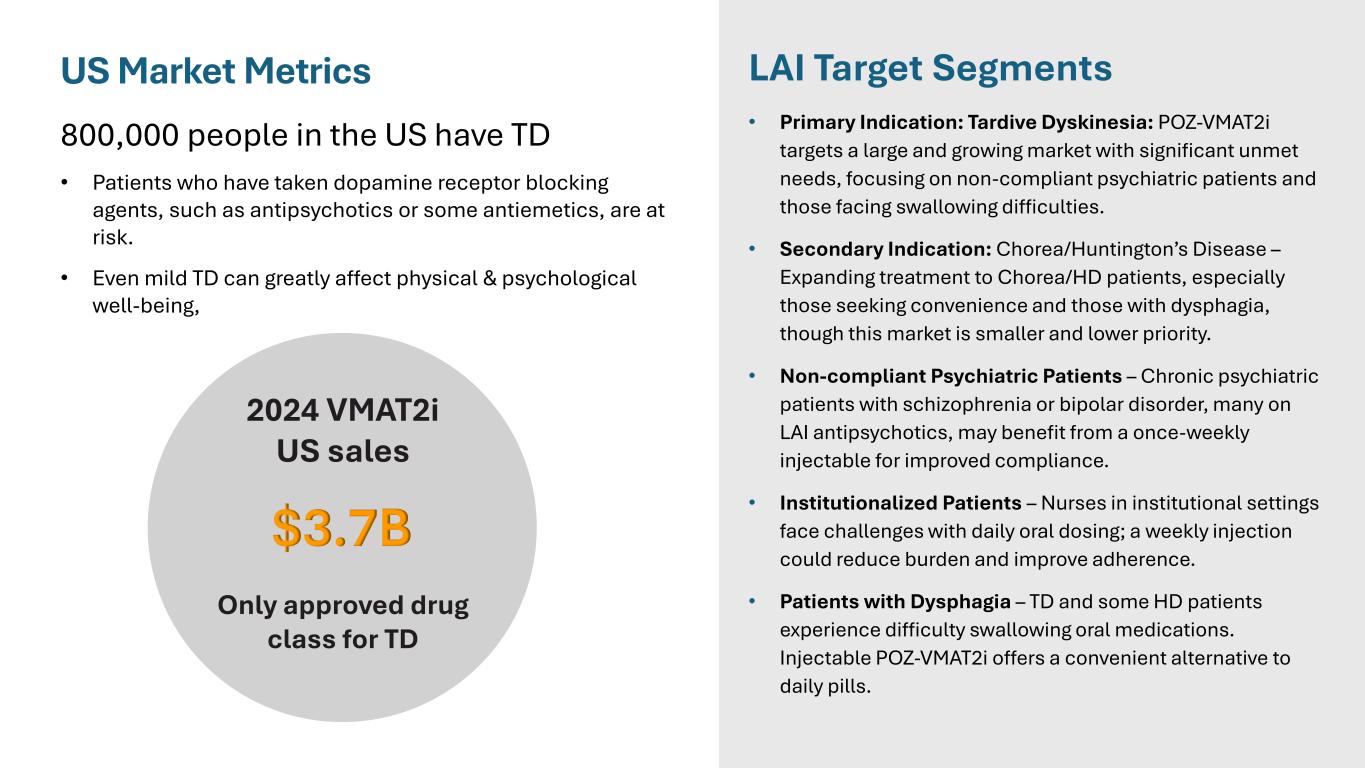
US Market Metrics $3.7B LAI Target Segments • Primary Indication: Tardive Dyskinesia: POZ-VMAT2i targets a large and growing market with significant unmet needs, focusing on non-compliant psychiatric patients and those facing swallowing difficulties. • Secondary Indication: Chorea/Huntington’s Disease – Expanding treatment to Chorea/HD patients, especially those seeking convenience and those with dysphagia, though this market is smaller and lower priority. • Non-compliant Psychiatric Patients – Chronic psychiatric patients with schizophrenia or bipolar disorder, many on LAI antipsychotics, may benefit from a once-weekly injectable for improved compliance. • Institutionalized Patients – Nurses in institutional settings face challenges with daily oral dosing; a weekly injection could reduce burden and improve adherence. • Patients with Dysphagia – TD and some HD patients experience difficulty swallowing oral medications. Injectable POZ-VMAT2i offers a convenient alternative to daily pills. 800,000 people in the US have TD • Patients who have taken dopamine receptor blocking agents, such as antipsychotics or some antiemetics, are at risk. • Even mild TD can greatly affect physical & psychological well-being, 2024 VMAT2i US sales Only approved drug class for TD
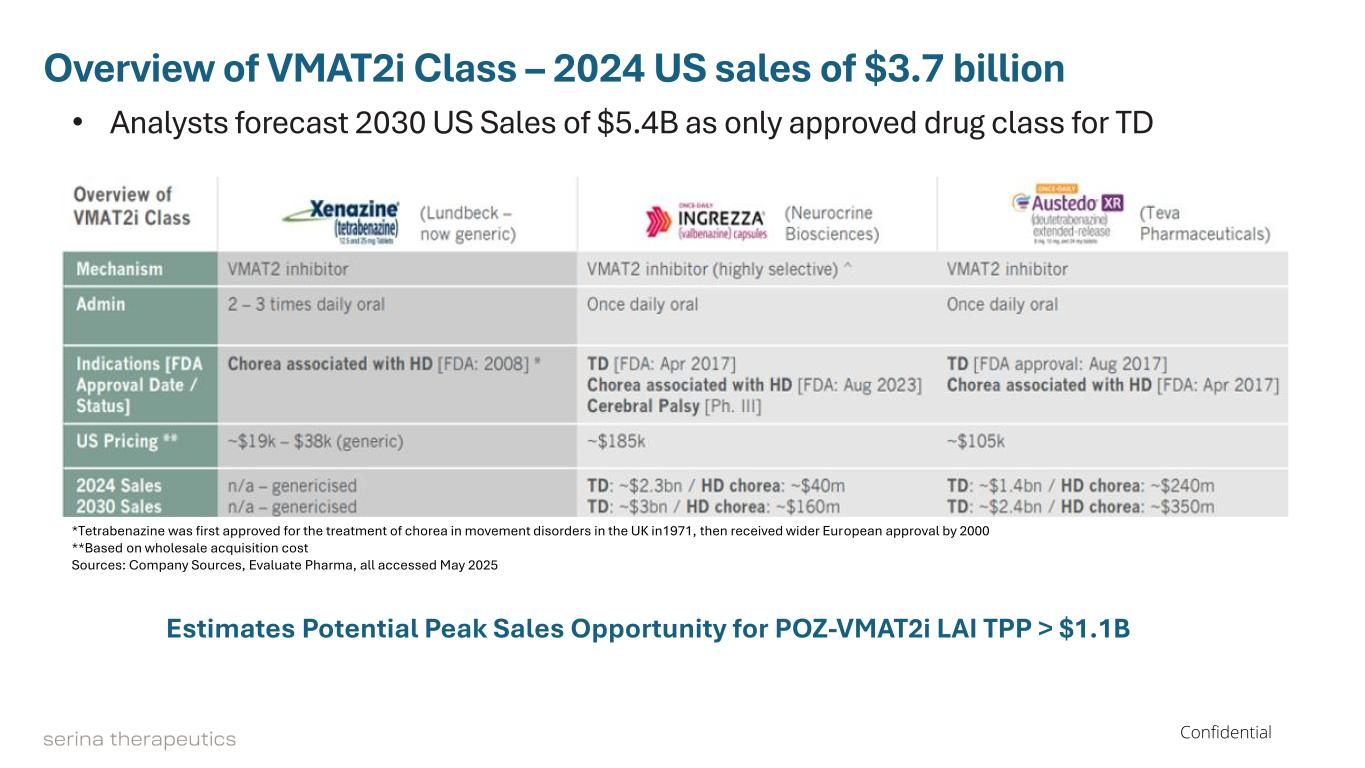
Overview of VMAT2i Class – 2024 US sales of $3.7 billion • Analysts forecast 2030 US Sales of $5.4B as only approved drug class for TD Confidential *Tetrabenazine was first approved for the treatment of chorea in movement disorders in the UK in1971, then received wider European approval by 2000 **Based on wholesale acquisition cost Sources: Company Sources, Evaluate Pharma, all accessed May 2025 Estimates Potential Peak Sales Opportunity for POZ-VMAT2i LAI TPP > $1.1B
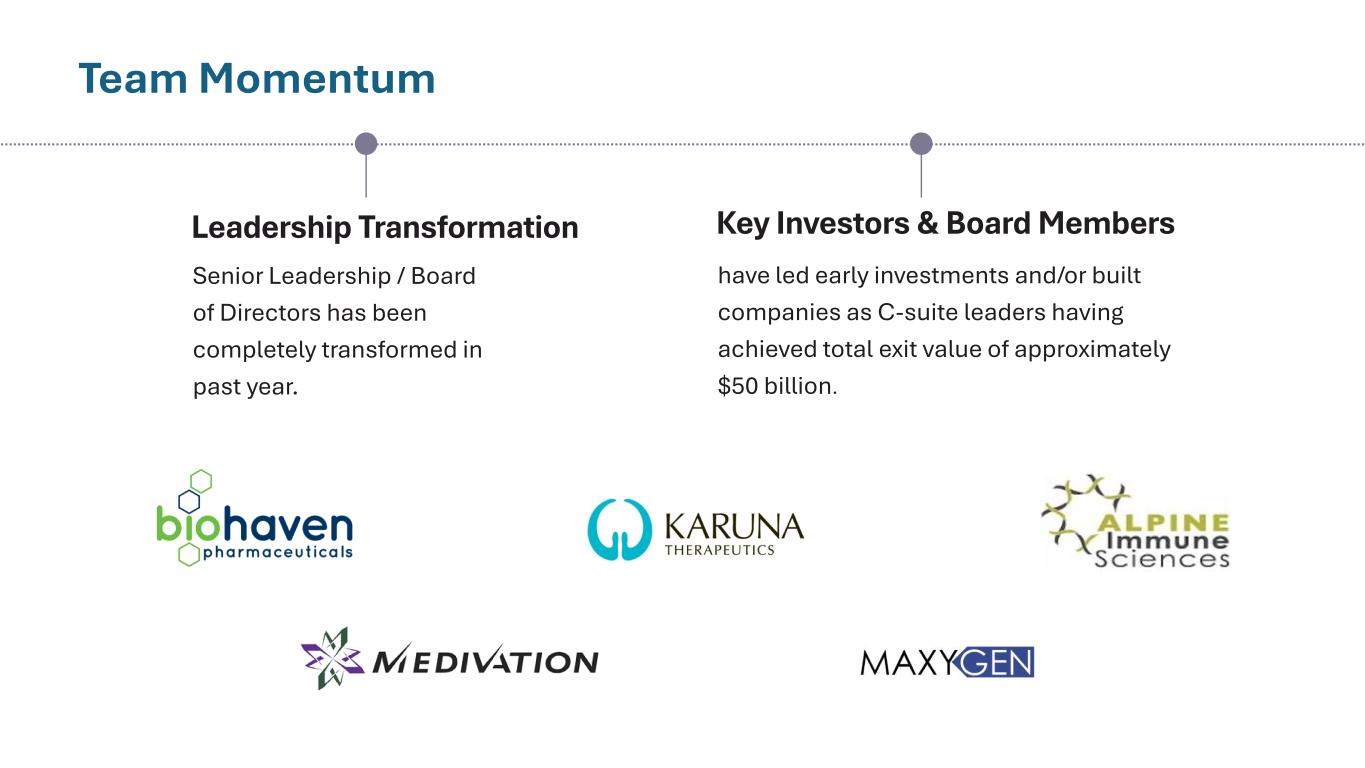
Team Momentum Senior Leadership / Board of Directors has been completely transformed in past year. have led early investments and/or built companies as C-suite leaders having achieved total exit value of approximately $50 billion. Leadership Transformation Key Investors & Board Members
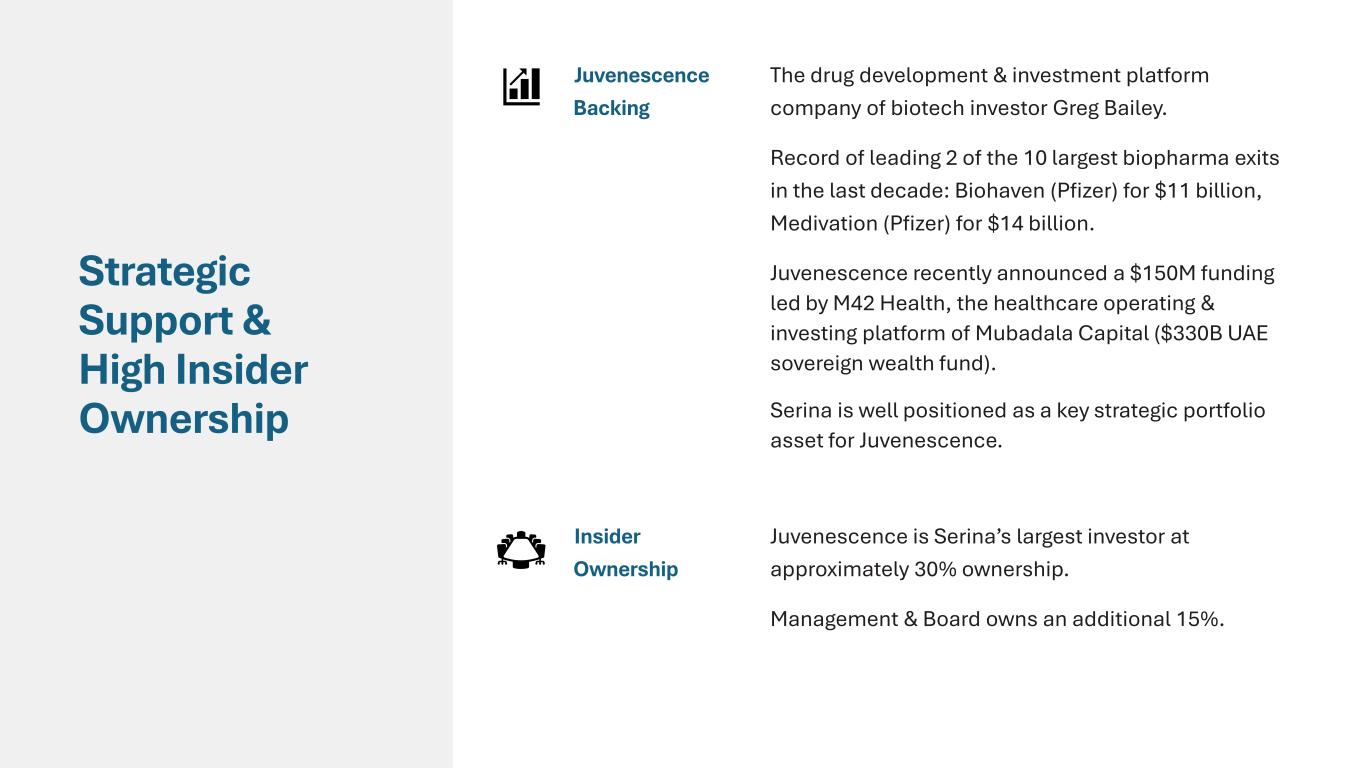
Strategic Support & High Insider Ownership The drug development & investment platform company of biotech investor Greg Bailey. Record of leading 2 of the 10 largest biopharma exits in the last decade: Biohaven (Pfizer) for $11 billion, Medivation (Pfizer) for $14 billion. Juvenescence is Serina’s largest investor at approximately 30% ownership. Management & Board owns an additional 15%. Juvenescence recently announced a $150M funding led by M42 Health, the healthcare operating & investing platform of Mubadala Capital ($330B UAE sovereign wealth fund). Serina is well positioned as a key strategic portfolio asset for Juvenescence. Juvenescence Backing Insider Ownership
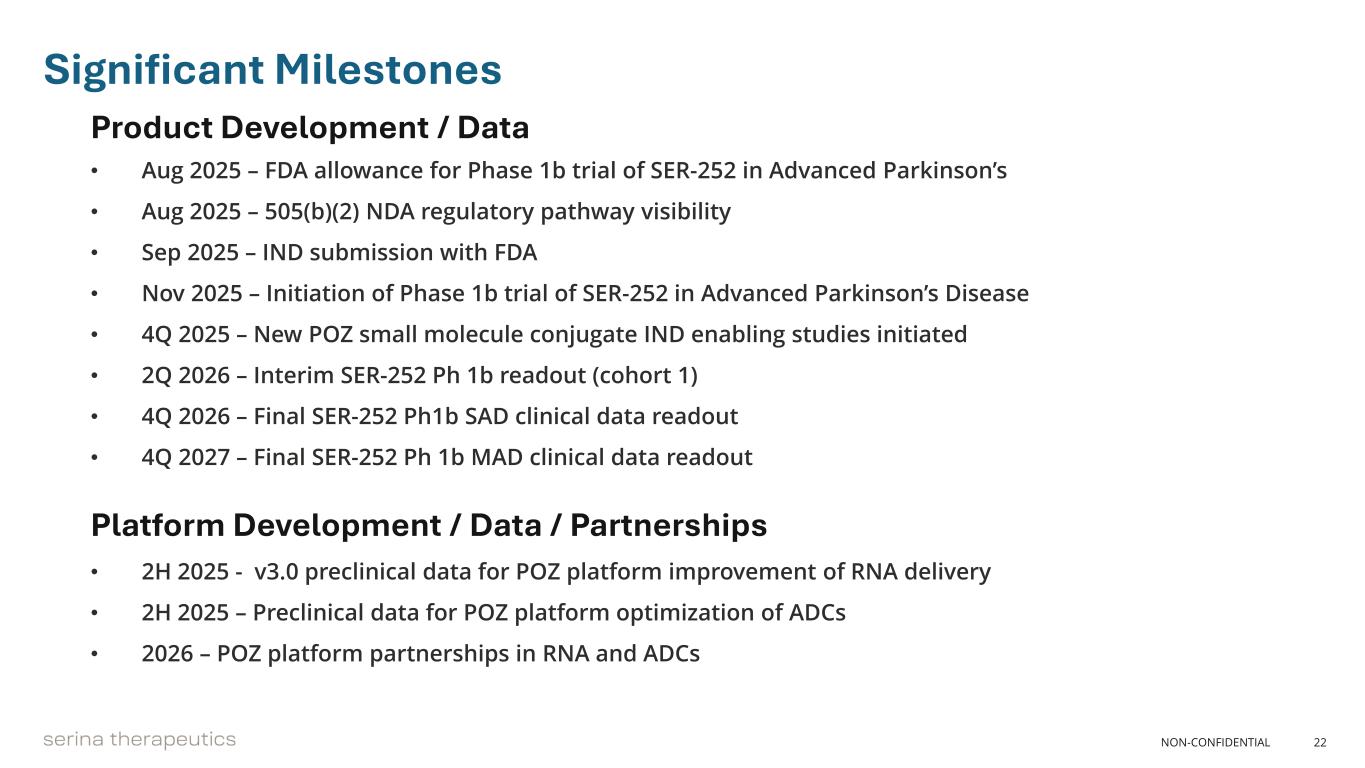
Significant Milestones NON-CONFIDENTIAL 22 Product Development / Data • Aug 2025 – FDA allowance for Phase 1b trial of SER-252 in Advanced Parkinson’s • Aug 2025 – 505(b)(2) NDA regulatory pathway visibility • Sep 2025 – IND submission with FDA • Nov 2025 – Initiation of Phase 1b trial of SER-252 in Advanced Parkinson’s Disease • 4Q 2025 – New POZ small molecule conjugate IND enabling studies initiated • 2Q 2026 – Interim SER-252 Ph 1b readout (cohort 1) • 4Q 2026 – Final SER-252 Ph1b SAD clinical data readout • 4Q 2027 – Final SER-252 Ph 1b MAD clinical data readout Platform Development / Data / Partnerships • 2H 2025 - v3.0 preclinical data for POZ platform improvement of RNA delivery • 2H 2025 – Preclinical data for POZ platform optimization of ADCs • 2026 – POZ platform partnerships in RNA and ADCs
Serina Therapeutics Advances POZ-VMAT2i into Development for Tardive Dyskinesia (TD)
- Novel once-weekly injectable VMAT2 inhibitor targets underserved patients with serious adherence and access challenges –
- Potential expansion into Huntington’s chorea – an underserved indication with high need for long-acting VMAT2 therapy -
HUNTSVILLE, AL, July 29, 2025 (GLOBE NEWSWIRE) -- Serina Therapeutics, Inc. (“Serina”) (NYSE American: SER), a clinical-stage biotechnology company developing its proprietary POZ Platform™ drug optimization technology, today announced the advancement of its novel product candidate, SER-270, a proprietary POZ-conjugated vesicular monoamine transporter 2 (VMAT2) inhibitor in development for the treatment of tardive dyskinesia (TD).
SER-270, also referred to as POZ-VMAT2i, leverages Serina’s proprietary POZ polymer technology to enable long-acting, once weekly subcutaneous administration, offering a potentially transformative alternative to existing oral VMAT2 inhibitors. The candidate is designed to meet the needs of underserved TD patients who struggle with daily medication adherence, including those already managed with long-acting injectable (LAI) antipsychotics.
Addressing Significant Unmet Needs in TD: A Large and Under-Treated Market
TD is a disabling and often stigmatizing movement disorder caused by long-term exposure to antipsychotic medications. It predominantly affects those with chronic psychiatric conditions such as schizophrenia and bipolar disorder who may have difficulty adhering to complex daily medication regimens. While oral VMAT2 inhibitors are the only approved class for TD, uptake remains modest due to underdiagnosis, low disease awareness among clinicians, and the challenges of ensuring daily medication adherence in complex, high-risk populations. It is estimated that fewer than 30% of U.S. TD patients are diagnosed, and less than half of those receive pharmacologic treatment. Despite these challenges, the U.S. TD market exceeded $3.7 billion in sales in 2024, driven by increased recognition and broader reimbursement. Analysts project the market to grow to $5.4 billion by 2030, underscoring the significant opportunity for differentiated therapies that address adherence, access, and administration barriers.
POZ-VMAT2i is uniquely positioned to address these barriers by offering:
•Once-weekly, long-acting injectable administration, critical for patients non-compliant with daily oral medications, including those currently managed with long-acting injectable (LAI) antipsychotics.
•Improved access for institutionalized patients, where daily oral therapy poses logistical challenges for nursing and care staff.
•A non-oral solution for patients with dysphagia (chewing/swallowing difficulties), a common complication among elderly and neurologically impaired individuals.
Expanding into Huntington’s Disease Chorea: A High Need Secondary Indication
Serina also plans to explore development of POZ-VMAT2i for chorea associated with Huntington’s disease, a neurodegenerative disorder marked by progressive movement impairment and often, serious swallowing difficulties. A weekly injectable therapy may offer meaningful advantages over current oral options for this population and their caregivers.
“POZ-VMAT2i embodies Serina’s commitment to solving real-world challenges for patients and caregivers who are often left behind by traditional therapies,” said Steve Ledger, Chief Executive Officer of Serina Therapeutics. “By targeting non-compliant, institutionalized, and dysphagic patients with a transformative once-weekly injectable, we believe we can meaningfully expand access to proven VMAT2 inhibitor therapy and improve patient lives.”
About Serina Therapeutics
Serina is a clinical-stage biotechnology company developing a pipeline of wholly owned drug product candidates to treat neurological diseases and other indications. Serina’s POZ Platform™ provides the potential to improve the integrated efficacy and safety profile of multiple modalities including small molecules, RNA-based therapeutics, and antibody-based drug conjugates (ADCs). Serina is headquartered in Huntsville, Alabama on the campus of the HudsonAlpha Institute of Biotechnology. For more information, please visit https://serinatherapeutics.com.
Cautionary Statement Regarding Forward-Looking Statement
This release contains forward-looking statements within the meaning of federal securities laws. These statements are based on management’s current expectations, plans, beliefs, or forecasts for the future, and are subject to uncertainty and changes in circumstances. Any express or implied statements in this press release that are not statements of historical fact, including statements about the potential of Serina’s POZ polymer technology, are forward-looking statements that involve substantial risks and uncertainties that could cause actual results to differ materially from those expressed or implied by such statements. Risks and uncertainties include, among other things, the uncertainties inherent in research and development, including the ability to meet anticipated clinical endpoints, commencement and/or completion dates for clinical trials, regulatory submission dates, regulatory approval dates and/or launch dates, as well as the possibility of unfavorable new clinical data and further analyses of existing clinical data; the risk that clinical trial data are subject to differing interpretations and assessments by regulatory authorities; whether regulatory authorities will be satisfied with the design of and results from our clinical studies; whether and when any applications may be filed for any drug or vaccine candidates in any jurisdictions; whether and when regulatory authorities may approve any potential applications that may be filed for any drug or vaccine candidates in any jurisdictions, which will depend on a myriad of factors, including making a determination as to whether the product’s benefits outweigh its known risks and determination of the product’s efficacy and, if approved, whether any such drug or vaccine candidates will be commercially successful; decisions by regulatory authorities impacting labeling, manufacturing processes, safety and/or other matters that could affect the availability or commercial potential of any drug or vaccine candidates; and competitive developments. These risks as well as other risks are more fully discussed in Serina’s Annual Report on Form 10-K, and Serina’s other periodic reports and documents filed from time to time with the SEC. The information contained in this release is as of
the date hereof, and Serina assumes no obligation to update forward-looking statements contained in this release as the result of new information or future events or developments. The information contained in this release is as of the date hereof, and Serina assumes no obligation to update forward-looking statements contained in this release as the result of new information or future events or developments.
For inquiries, please contact:
Stefan Riley
sriley@serinatherapeutics.com
(256) 327-9630
Stefan Riley
sriley@serinatherapeutics.com
(256) 327-9630