Operator
Greetings. Welcome to Shake Shack's Fourth Quarter 2024 Earnings Call. All participants are currently in a listen-only mode. This conference is being recorded. It is now my pleasure to introduce Michael Oriolo, Vice President of FP&A and Investor Relations. Thank you. You may begin.
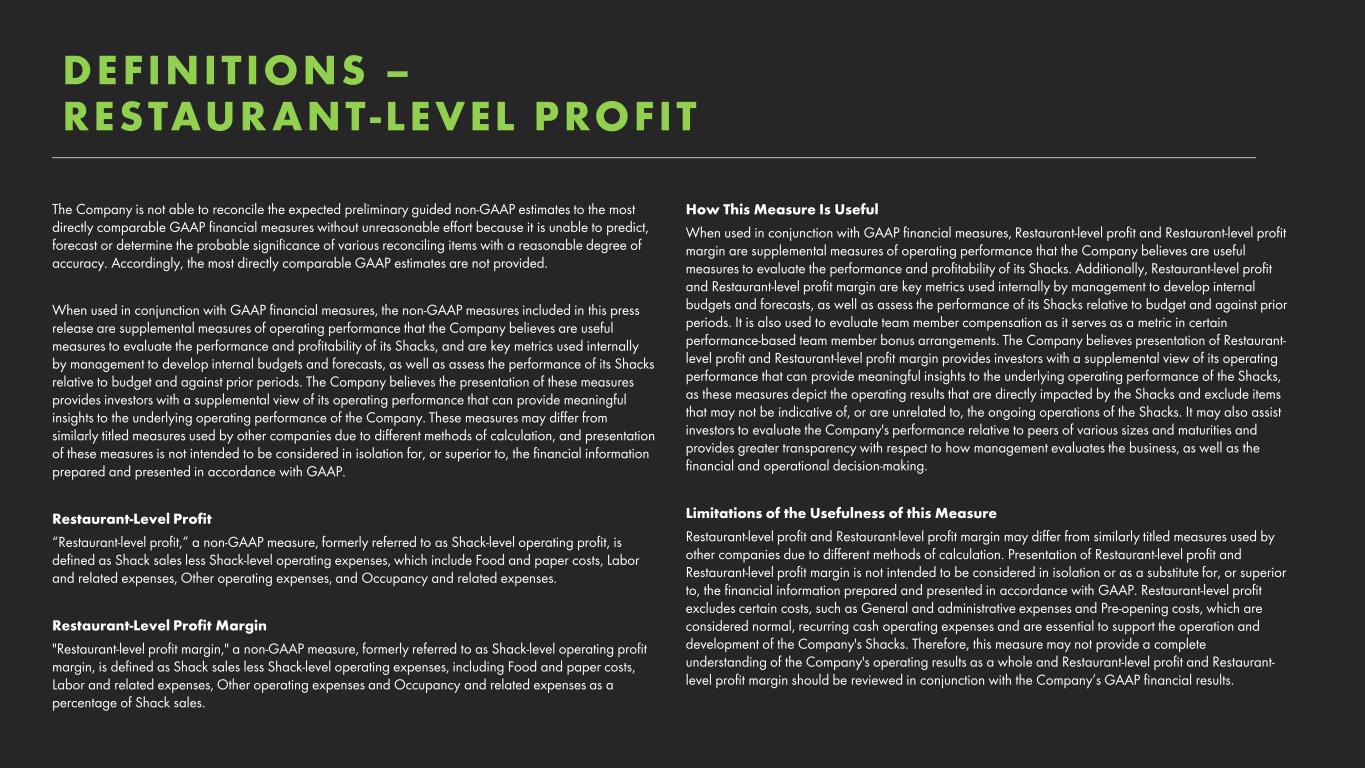
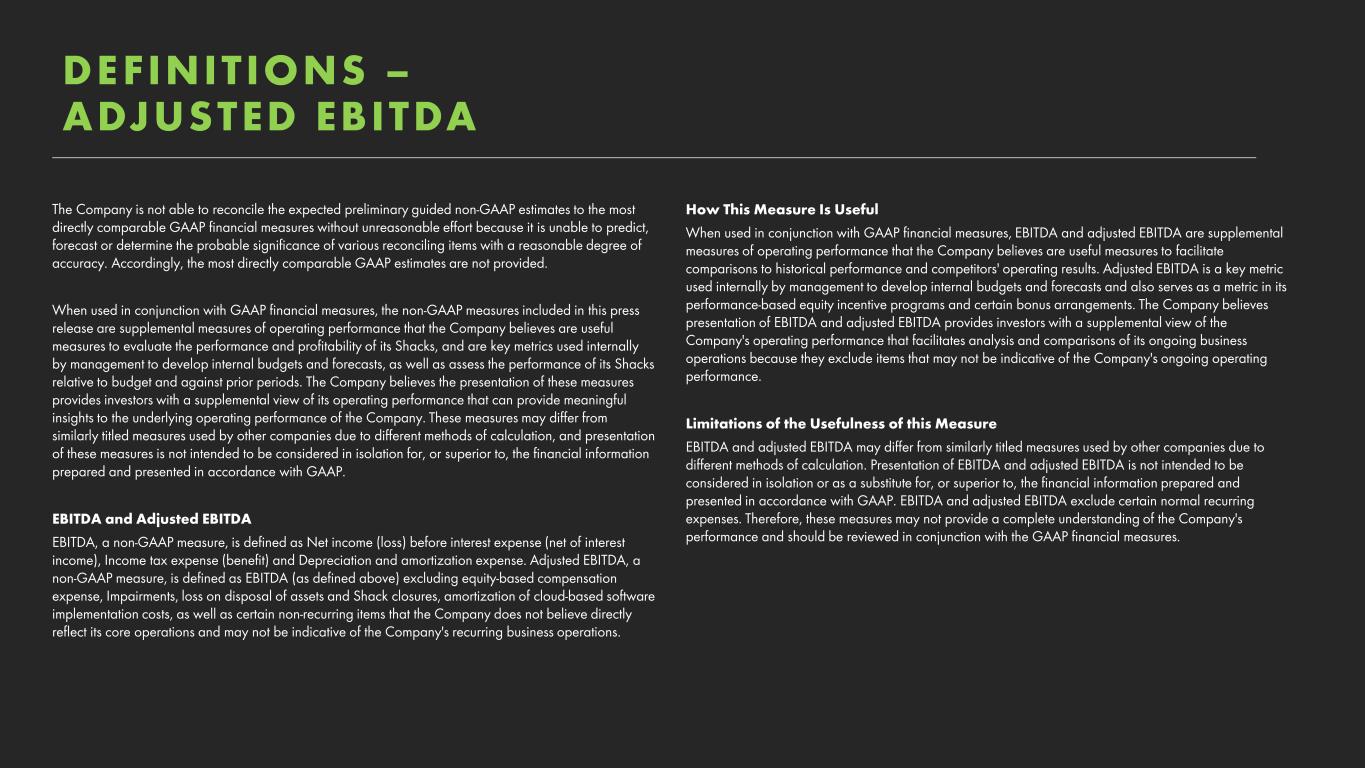
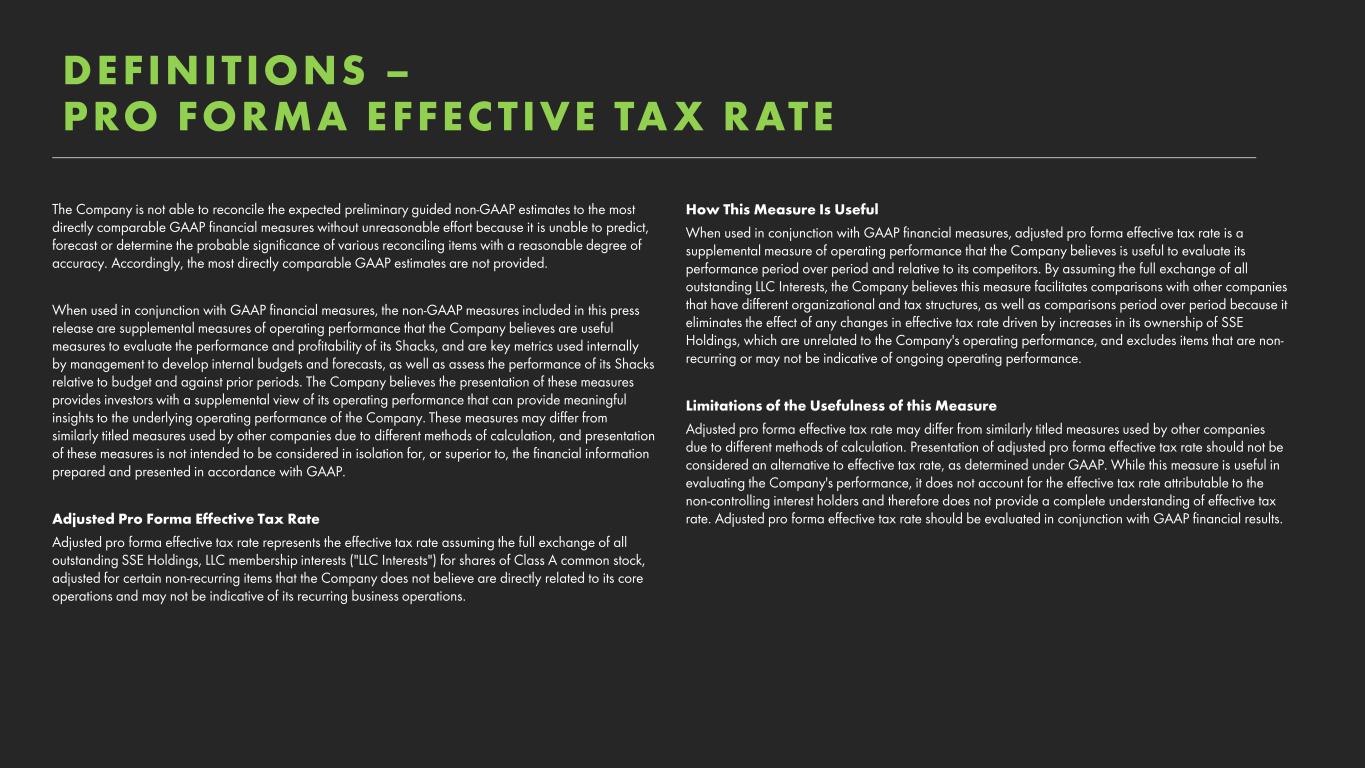
Thank you, and good morning, everyone. Joining me for Shake Shack's Conference Call is our CEO, Rob Lynch; and CFO, Katie Fogertey. During today's call, we will discuss non-GAAP financial measures, which we believe can be useful in evaluating our performance. The presentation of this additional information should not be considered in isolation or as a substitute for results prepared in accordance with GAAP. Reconciliations to comparable GAAP measures are available in our earnings release and the financial details section of our shareholder letter. Some of today's statements may be forward-looking, and actual results may differ materially due to a number of risks and uncertainties including those discussed in our annual report on Form 10-K filed on February 29, 2024, and the company's other filings as filed with the SEC. Any forward-looking statements represent our views only as of today and we assume no obligation to update any forward-looking statements if our views change. By now, you should have access to our fourth quarter 2024 shareholder letter, which can be found at investor.shakeshack.com, in the Quarterly Results section or as an exhibit to our 8-K for the quarter. I will now turn the call over to Rob.
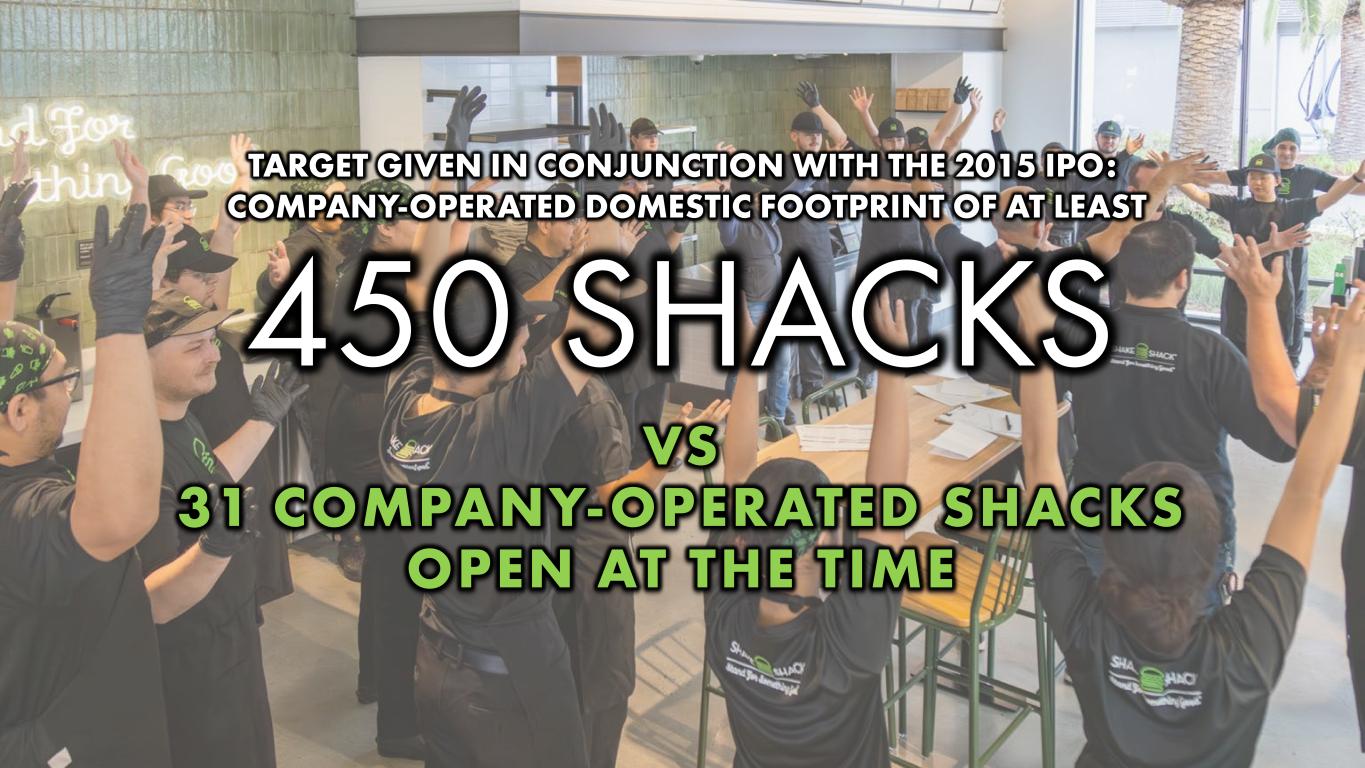
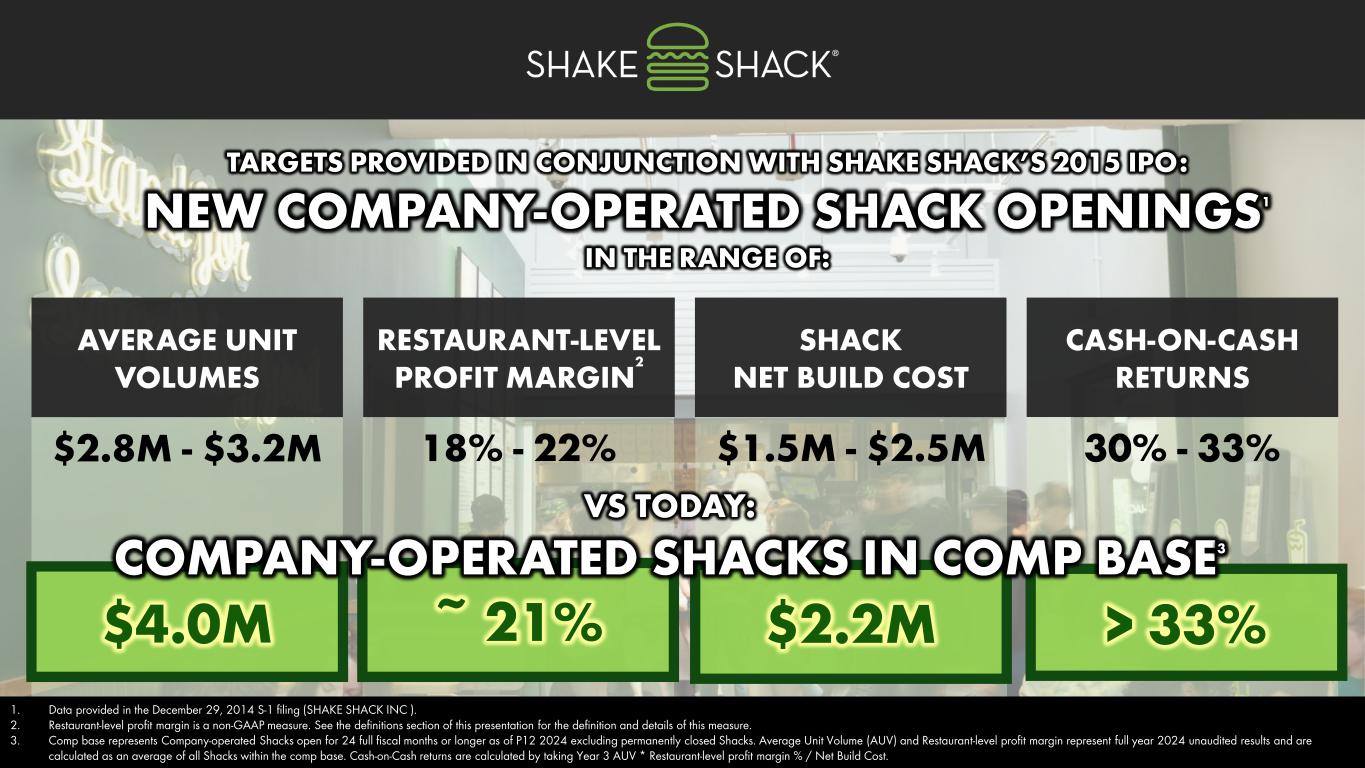
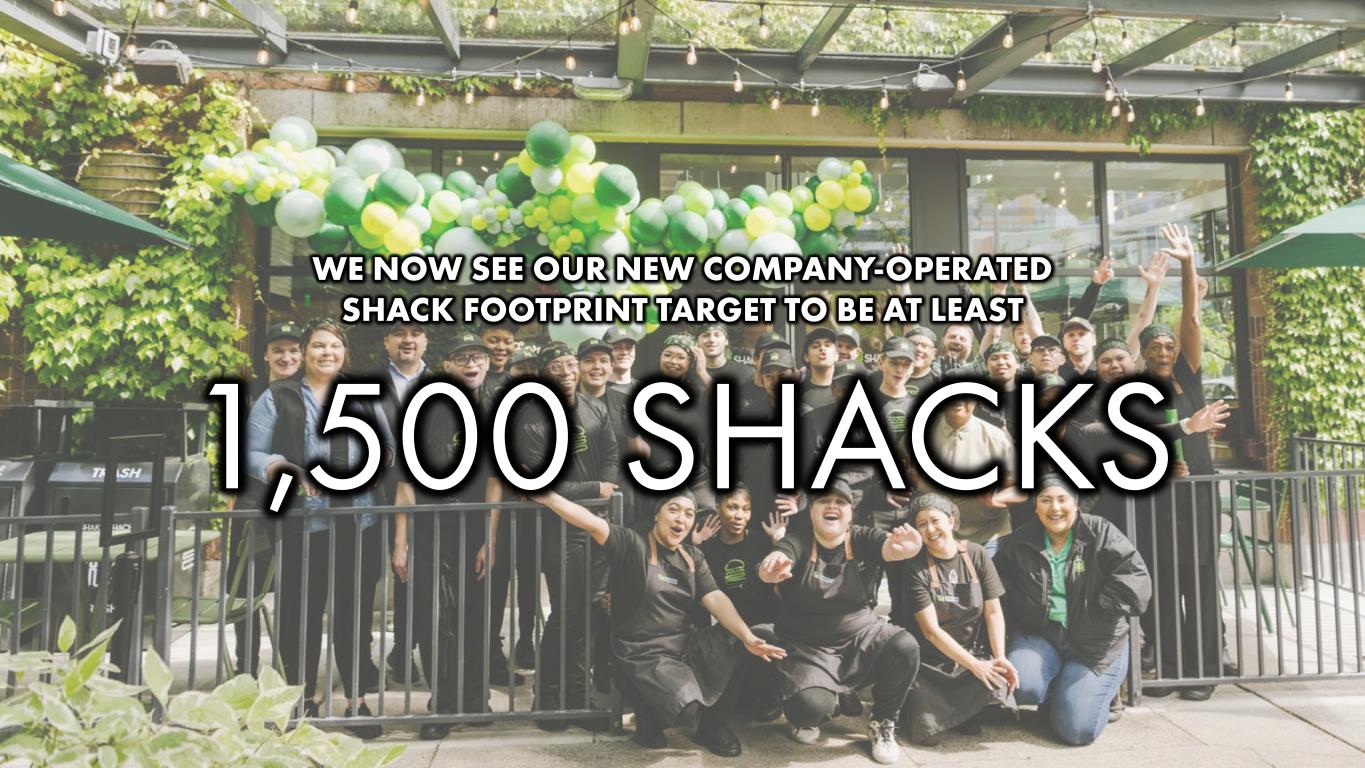
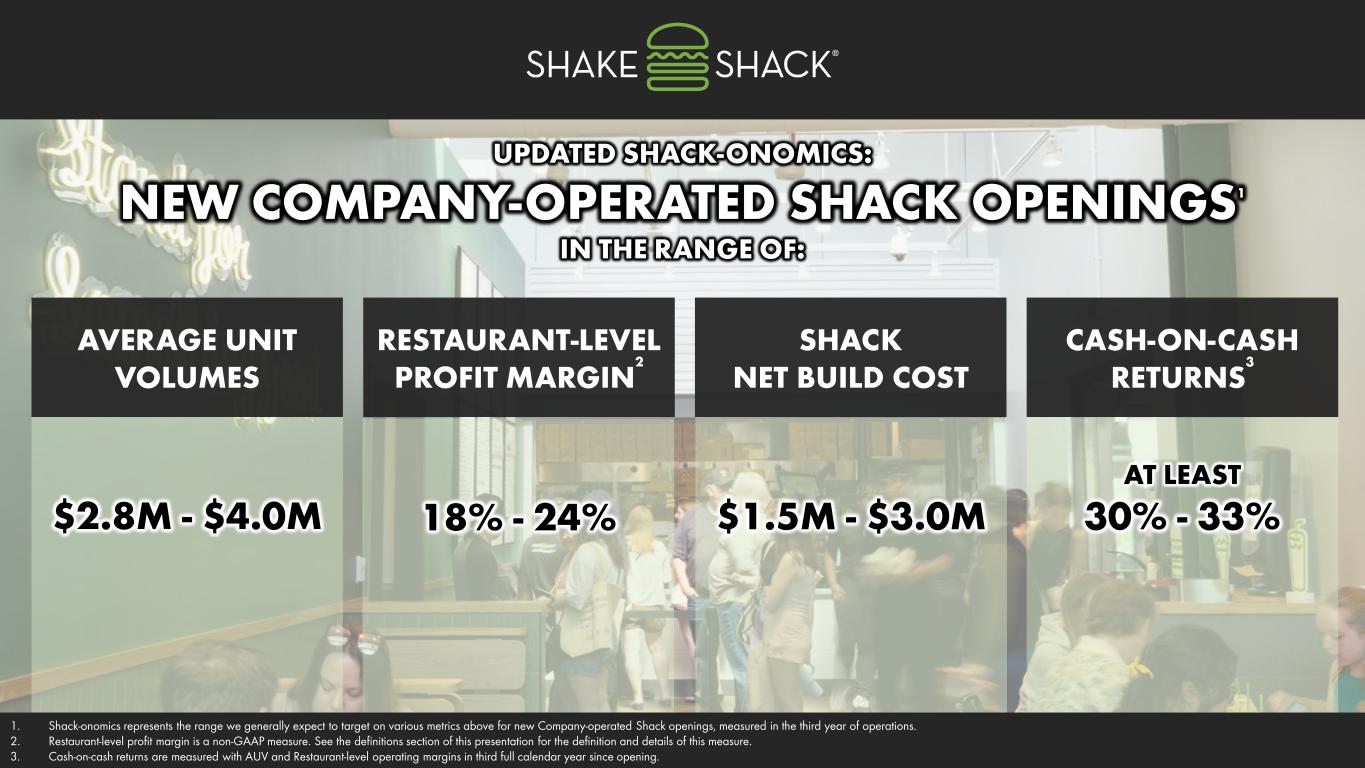
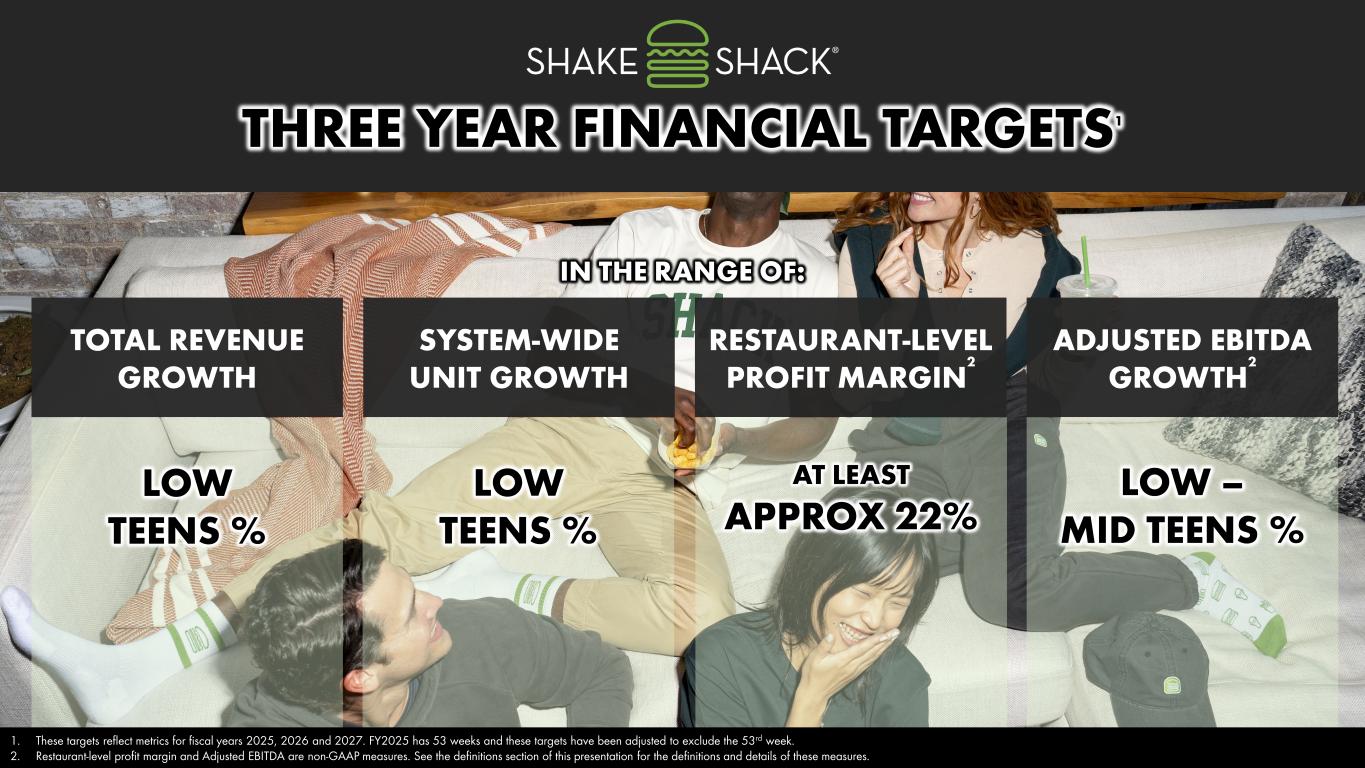
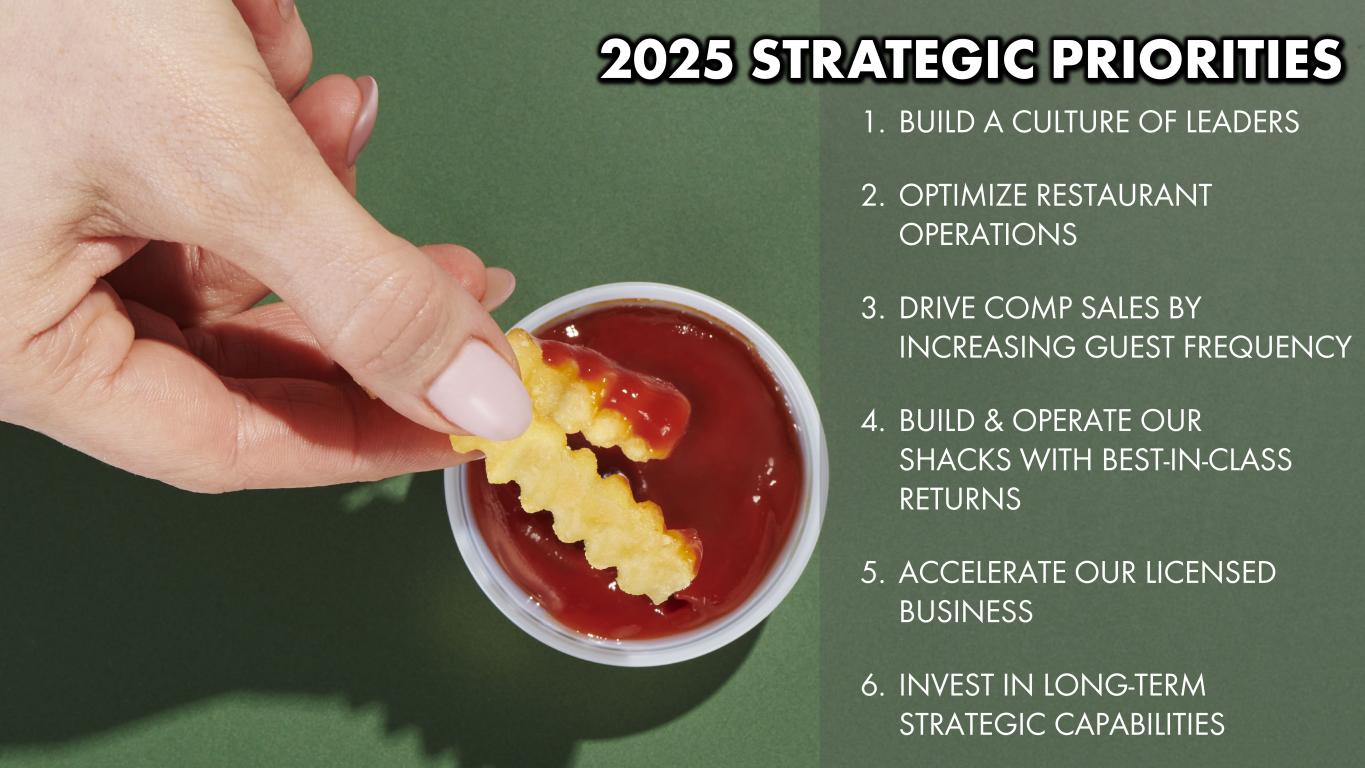
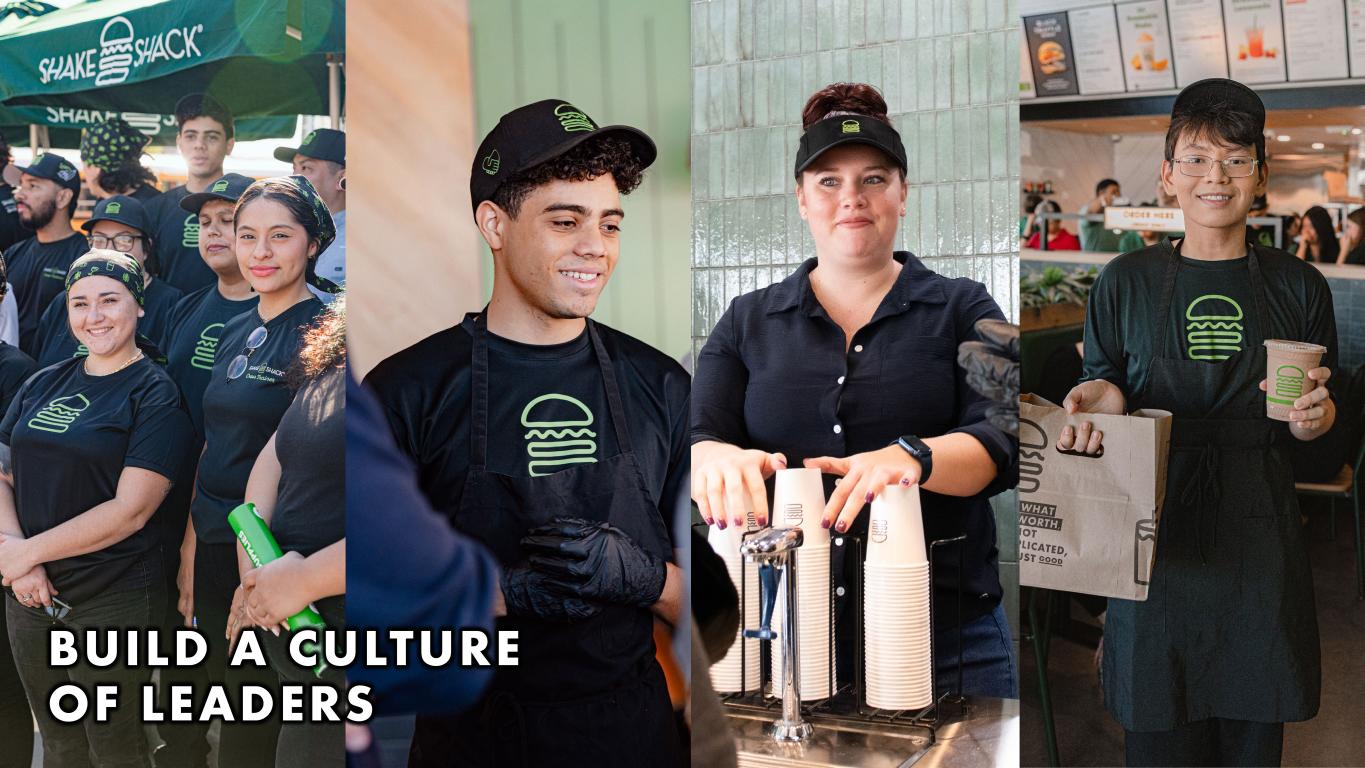
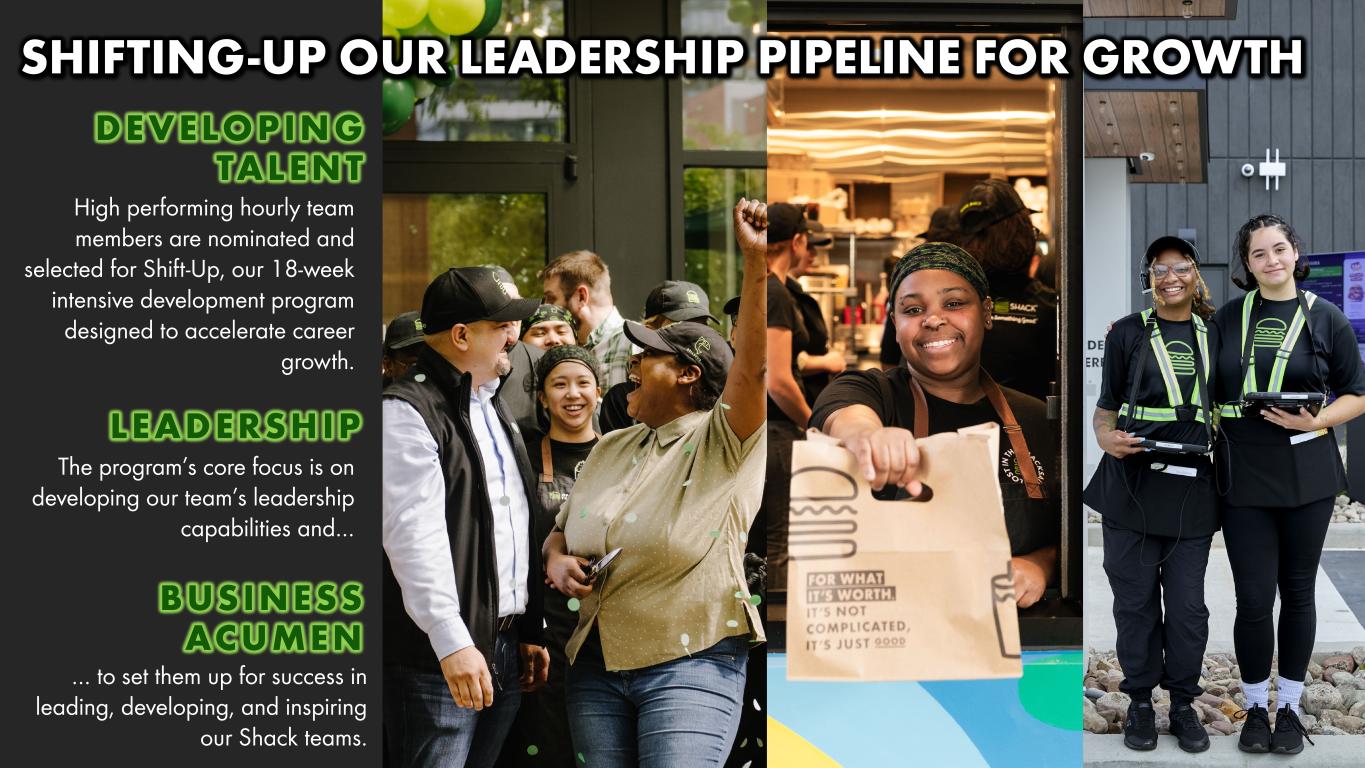
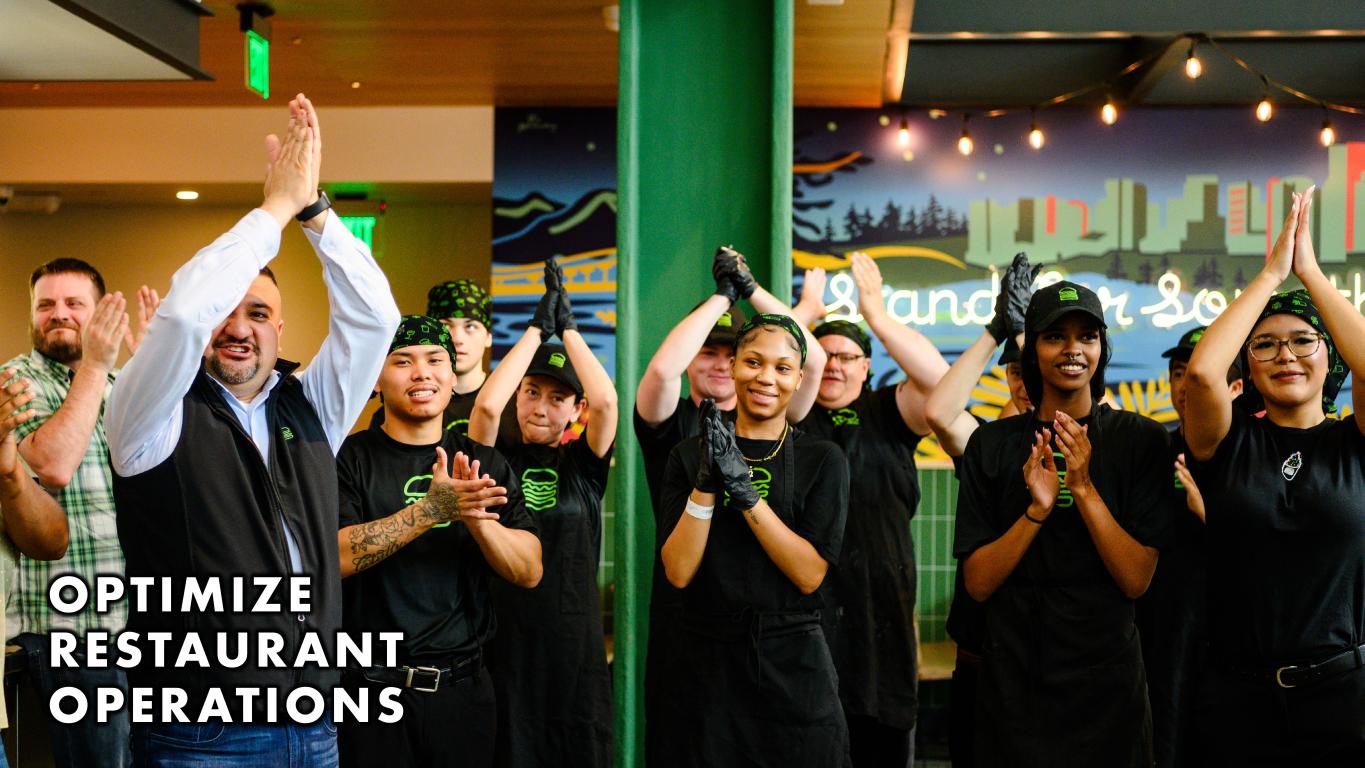
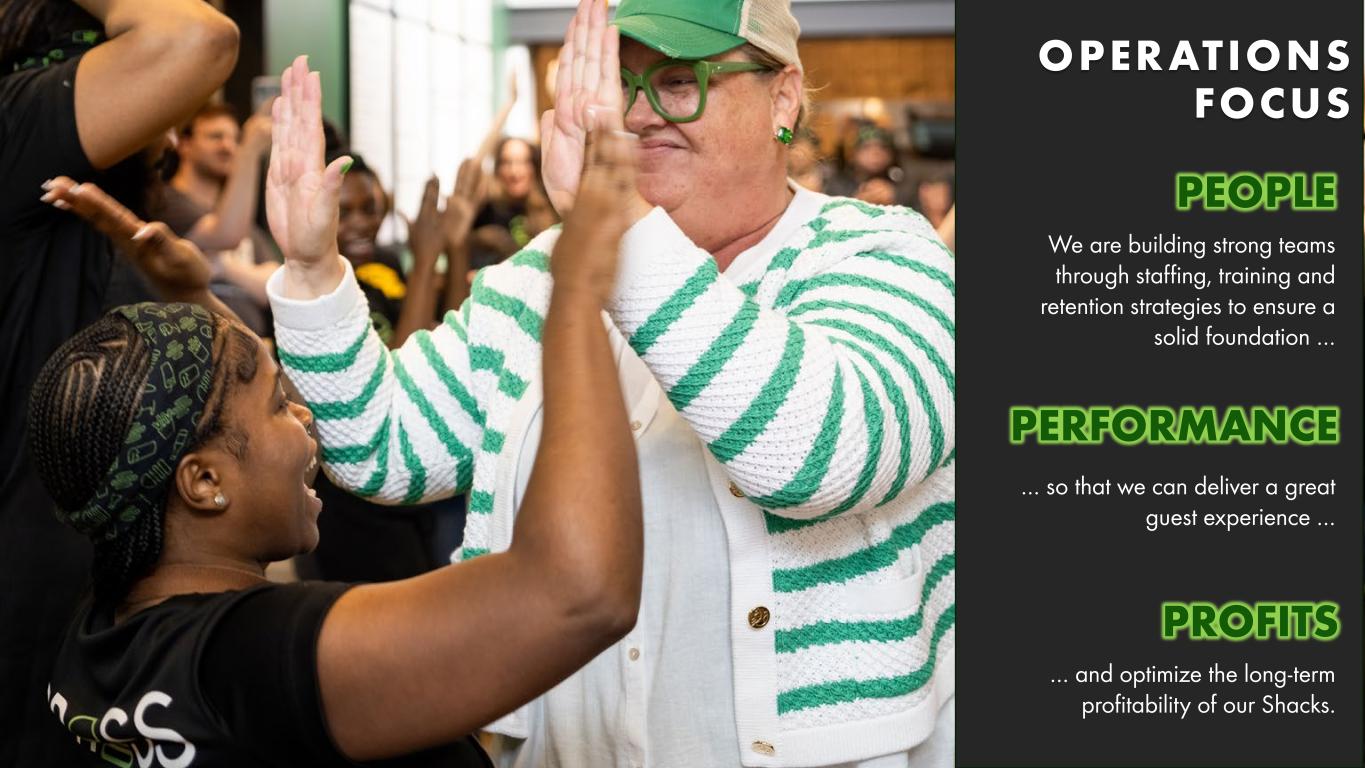
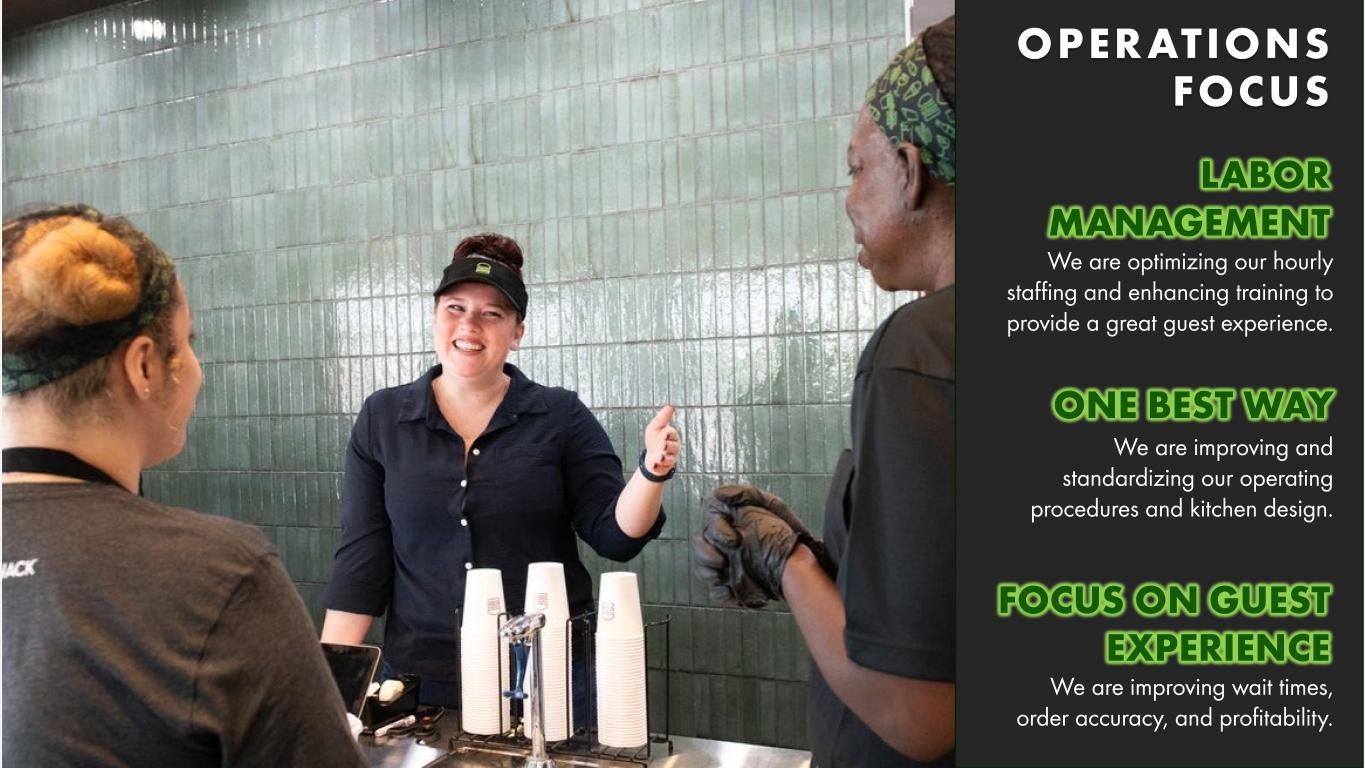
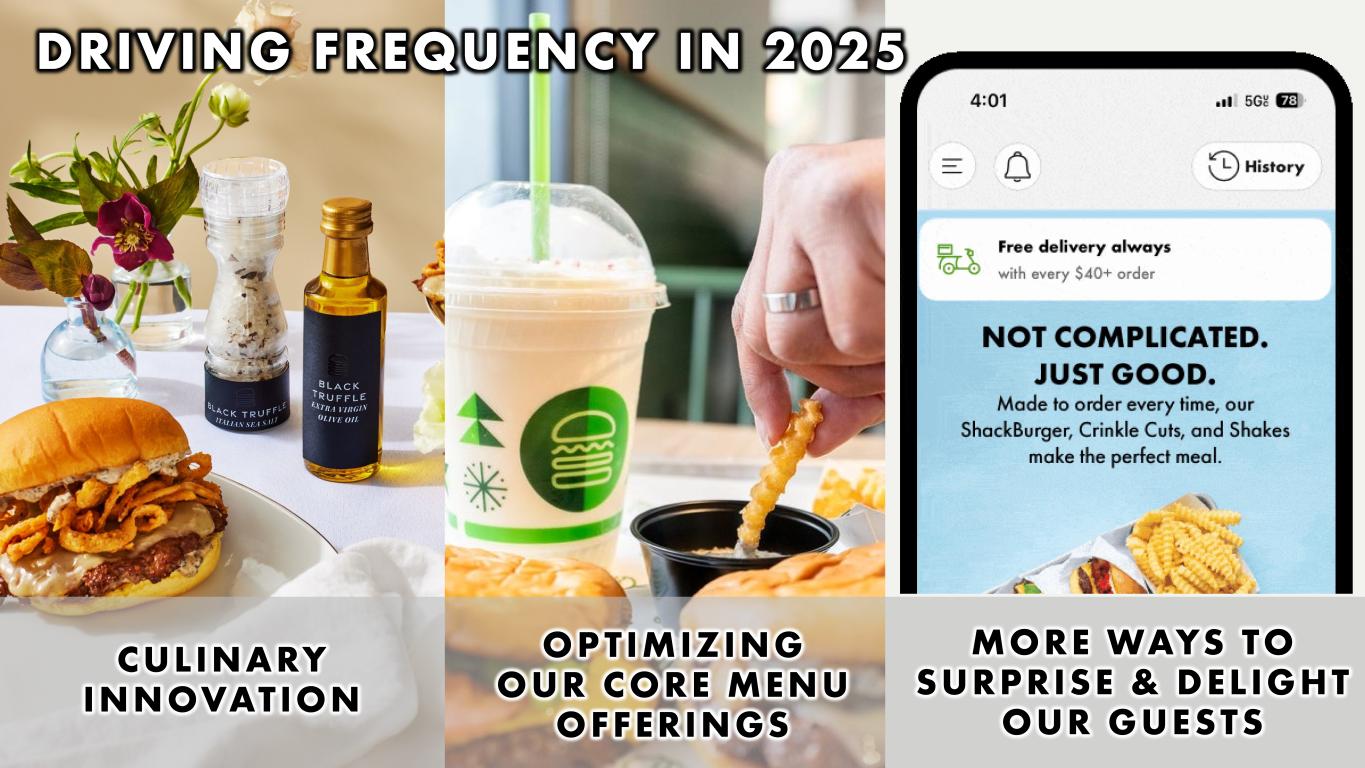
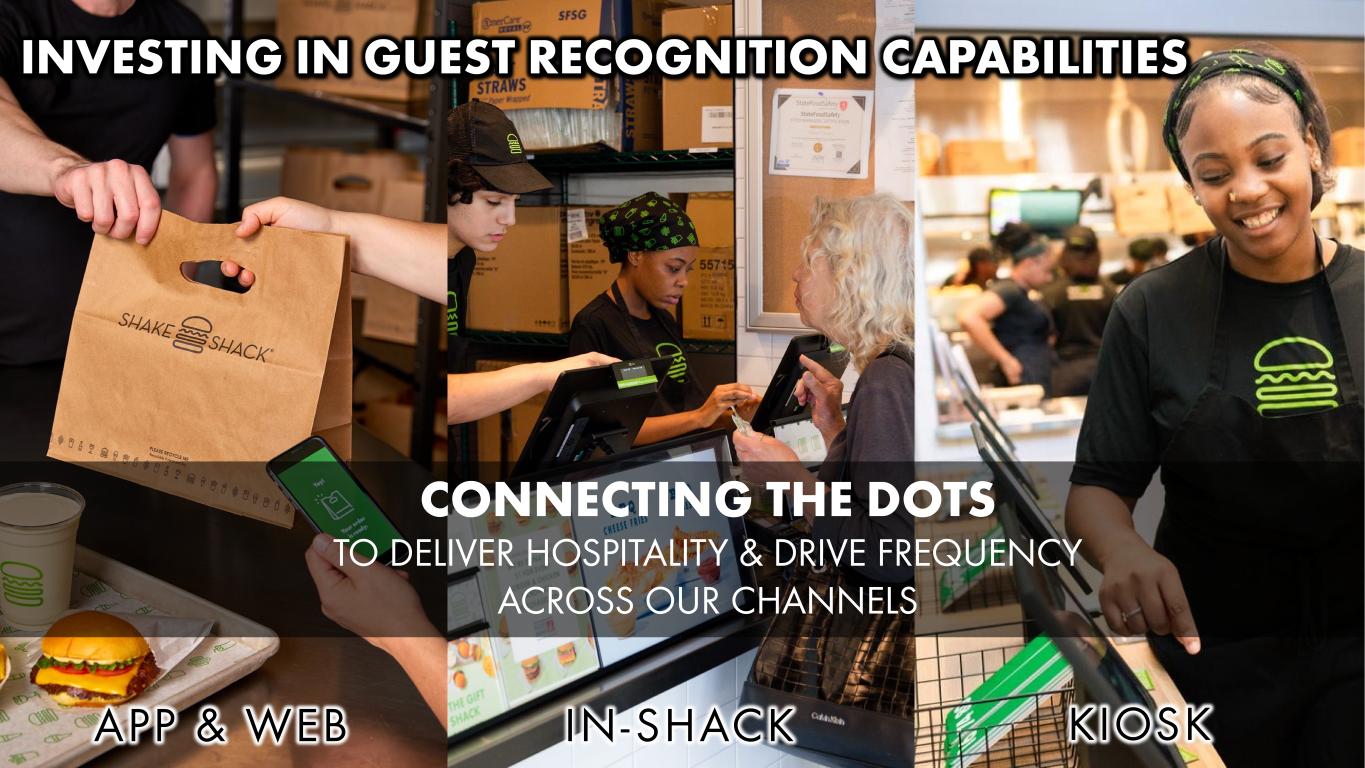
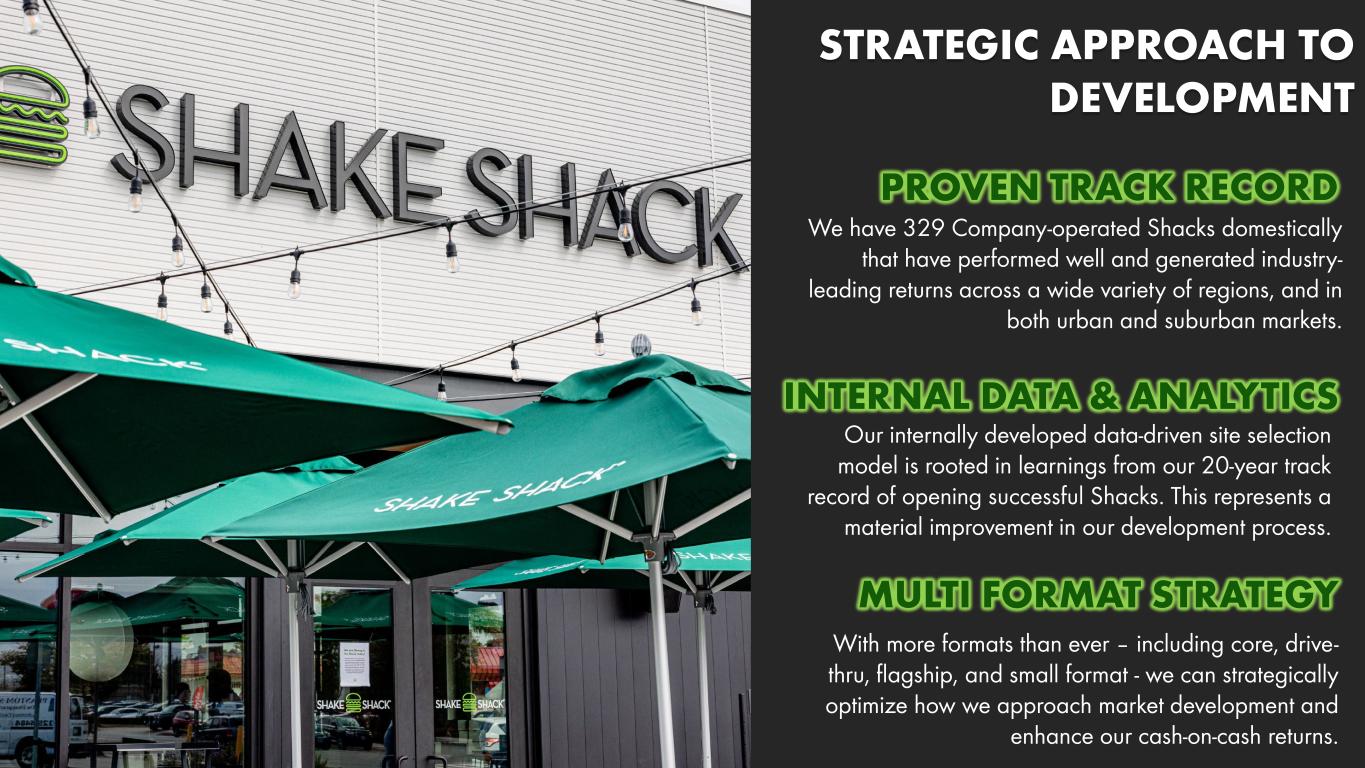
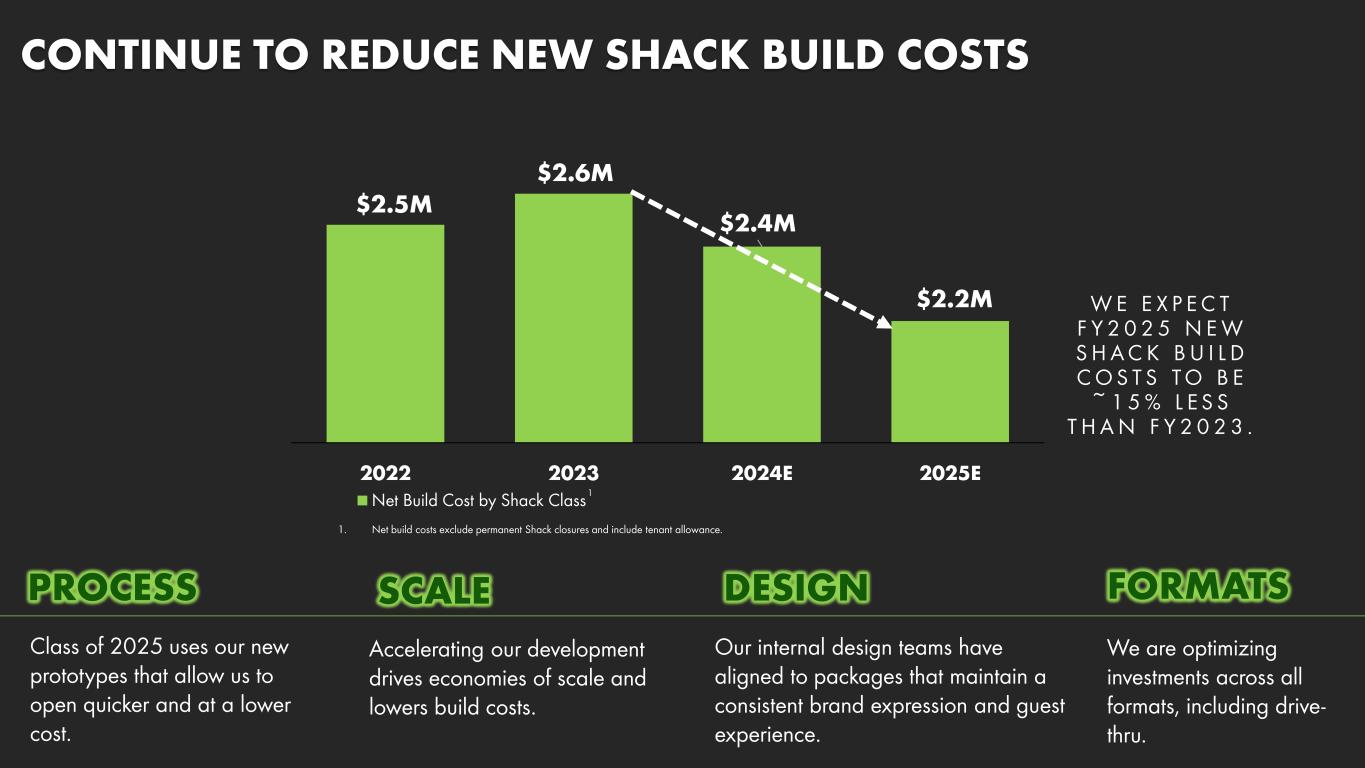
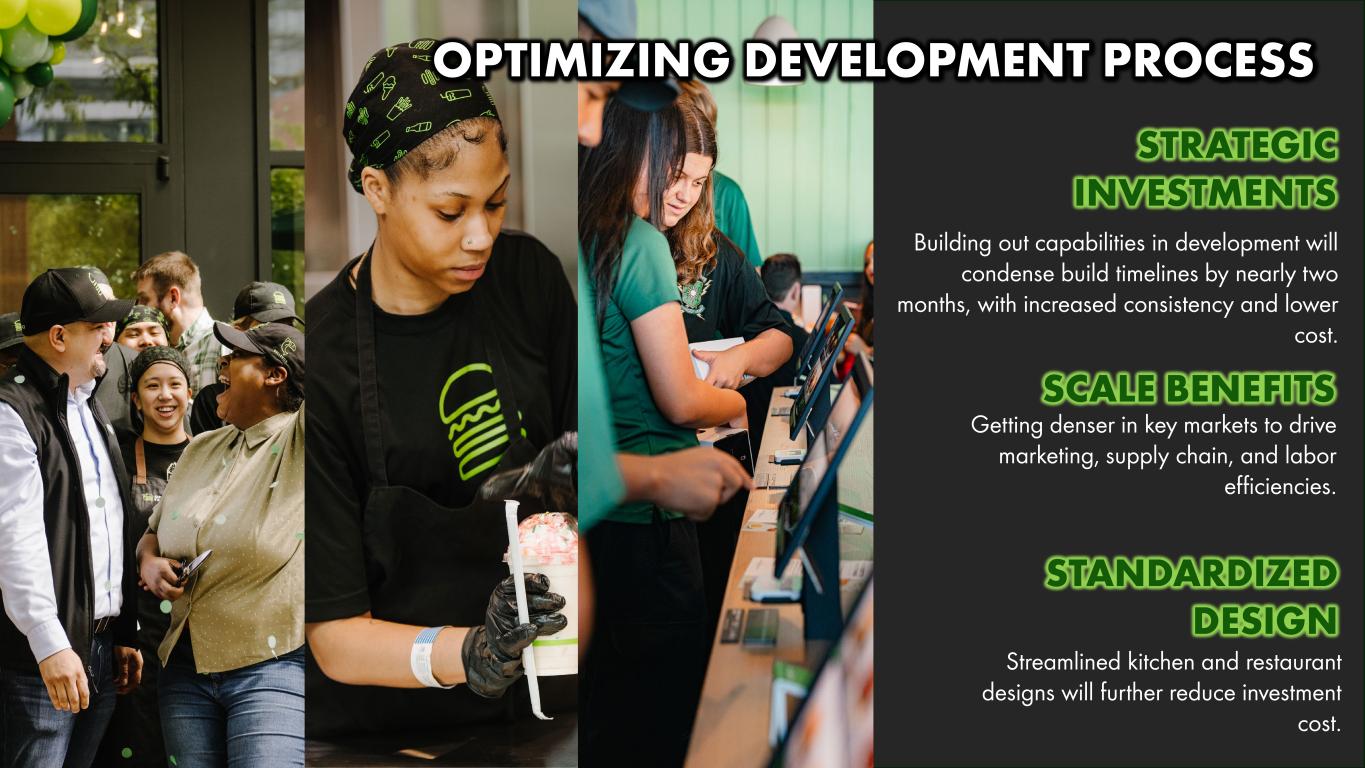
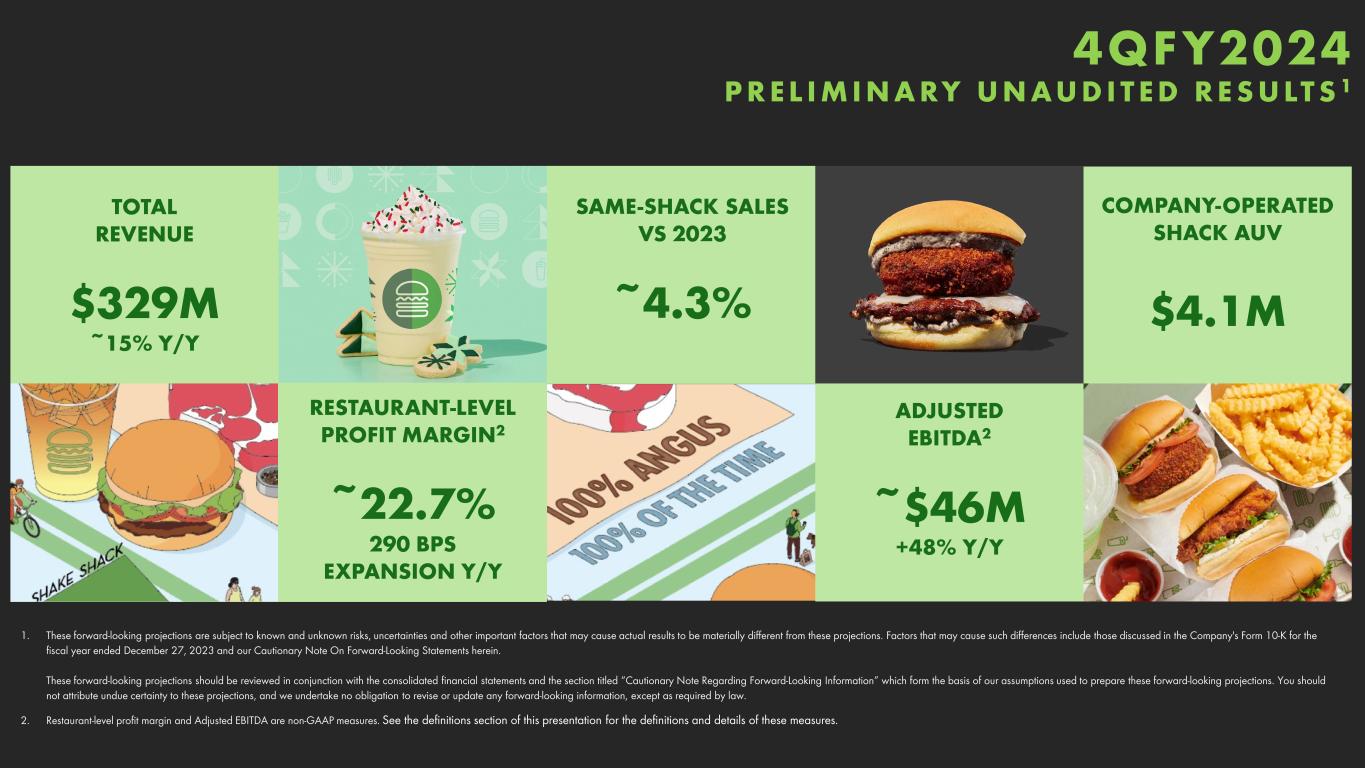
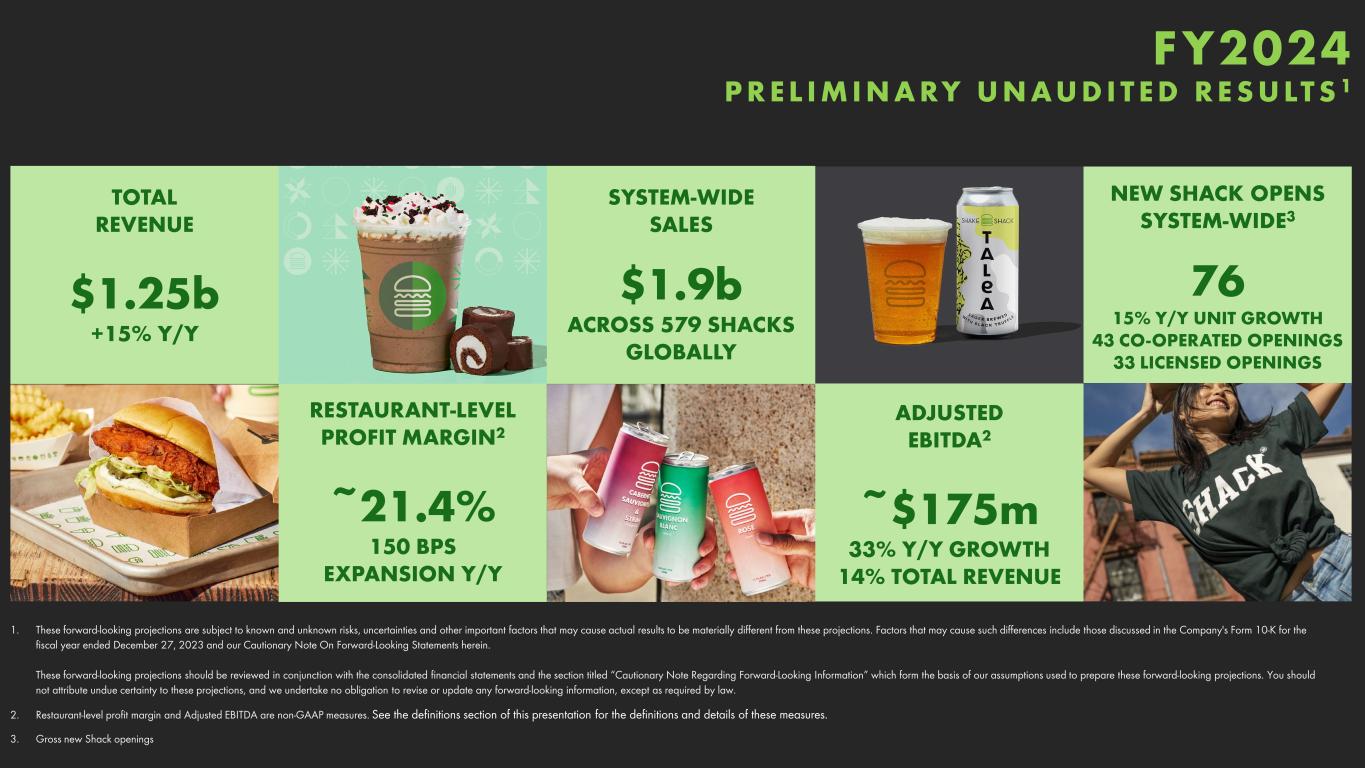
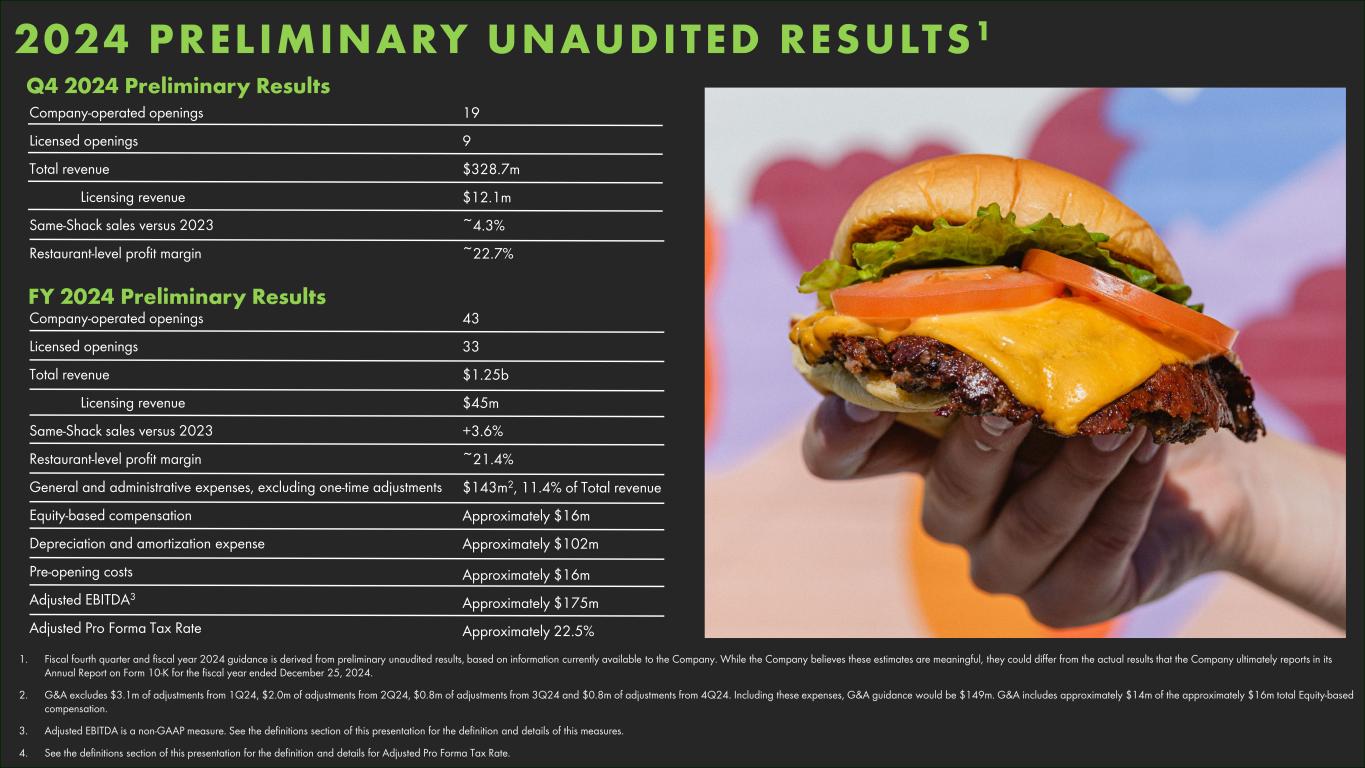
Thank you, Mike, and good morning, everyone. I want to congratulate our teams on an exceptional 2024. We finished the year strong with fourth quarter revenue up 14.8%, driven by 4.3% same Shack sales. Restaurant-level margins expanded nearly 300 basis points to 22.7% and adjusted EBITDA grew almost 50%. As we enter 2025, we have reached numerous milestones and achievements we are celebrating. 2024 marked the 20th anniversary since Danny and Randy opened the first Shake Shack, originating from a hot dog cart in New York's Madison Square Park. In January, we celebrated the 10th anniversary of our IPO. At the time of our IPO, we had only 31 company-operated Shacks, but the team dreamed of expanding one day, and it's 450 Shacks. With 329 company-operated Shacks today, we are now setting our sights much higher, targeting at least 1,500 company-operated Shacks across the U.S., more than four times our current size. Shake Shack is doubling down on our mission to deliver the best fine casual experience to our guests, team members and communities, fostering pride within our company, generating strong financial returns for our employees and shareholders. To that end, we have established three-year financial targets: low teens total revenue growth, low teens unit growth, at least approximately 22% restaurant-level margins and EBITDA growth in the low to mid-teens outpacing top-line growth. These targets reflect our strong financial performance to date and our confidence in our strategy, which we believe could lead to results exceeding these projections. We've talked a lot about the designation of fine casual in the past. Today, I want to reinforce the importance of and clearly define what fine casual means because it is who we are and why Shake Shack is different. Most of you know our brand was founded by an acclaimed fine dining company, Union Square Hospitality Group, and we aspire every day to deliver the same quality of ingredients and hospitality that you would expect from the best fine dining restaurants. As you also know, Shake Shack was born at a public park, which meant that we brought this elevated food to all, making our food and hospitality accessible to everyone in the Madison Square Park community. That's really what Shake Shack is all about, delivering the highest quality food and hospitality to communities around the world, and in doing so improving the world in which we live, work and play. We've made significant strides towards this mission in my first eight months, but the real potential lies ahead, as we execute our 2025 strategic priorities. I will now outline these six priorities, highlighting both our accomplishments to date and our plans for the future. Our first strategic priority is to build a culture of leaders. Everything we do starts with our people. They are the driving force behind our enlightened hospitality model and correspondingly, our results. We need to ensure that we have hundreds of leaders in waiting to support our growth. As a largely company-operated system, we determine the success of our new Shacks, by our readiness to open and operate them at scale. We are building a training and development program that will identify, prepare and place our best candidates into leadership positions throughout our company. A company that is growing as fast as we aspire to grow is an amazing place for future leaders to build their careers and achieve their full potential. We are building an infrastructure that will support that moving forward versus having to hire externally. We aspire to increase the number of internal promotions by 10% in 2025 and will continue to increase internal promotions sequentially moving forward. Two programs that we have implemented to help us accomplish this goal are Shift Up and Lead to Succeed. Shift Up nominates high-performing hourly team members for an 18-week intensive development program designed to provide the tools and business acumen needed to run a $4 million AUV Shack. In 2024, we retained 100% of the graduates from the program, with nearly one-third of participants being promoted to manager roles, and we expect this number to grow in 2025. The need to promote from within is vital to our growth due to our unique group model rooted in fine dining where everything is created fresh to order. As a result, this requires a different type of manager versus traditional quick-service restaurants, and promoting from within helps ensure that we are opening our new restaurants with excellence. Our Lead to Succeed program teaches our newly promoted managers in our support centers the crucial skills needed to transition from an individual contributor to leading others. This investment in our teams has been integral in achieving our best retention levels on record in 2024. Our second strategic priority is to optimize restaurant operations. In 2024, we began testing a standard scorecard as a way to measure performance across all of our Shacks. This management tool focuses on improving across our KPIs of people, which includes metrics such as staffing and retention; performance, which includes metrics such as speed of service; and profit. We officially rolled out the scorecard in January and are excited to see improvements across these three focus areas. We delivered an exceptional year across our operational and guest metrics while expanding restaurant-level margins by 150 basis points to 21.4%. We introduced speed of service as a key KPI for our operators in 2024 and saw immediate improvement. Average wait times dropped by approximately one minute year-over-year. Order accuracy also reached the best levels on record in 2024. On labor, we drove productivity through improved hourly and manager scheduling with enhanced reporting that leverages real-time data and analytics. At the same time, we piloted a new activity versus sales-based labor model that uses time-motion studies to optimize staffing and deployment schedules across various formats, menu mixes, sales channels and other key variables. The model was fully rolled out during Q4 2024 and drove approximately 80 basis points of leverage in the fourth quarter. Of course, the key metric for labor is talent, and our sourcing, training and retention continue to improve. All of these work streams will have both short- and long-term positive impacts on the operations of our Shacks. So what is next? This fiscal year, we’ll be standing up a kitchen innovation lab in close proximity to our brand-new Atlanta Support Center, which will provide a launchpad for innovation, largely focused on delivering improved service times and convenience for our guests. This, too, will provide both short-term and long-term benefits. In the short term, it will allow our teams to test process optimizations, including new equipment and allow us to learn, refine and test again, dramatically accelerating a process that historically took a lot longer. This approach will provide insights in 2025 that we can implement into 2026 and beyond with improved speed ultimately leading to higher frequency. We also see longer-term benefits through new kitchen design tests, which allow faster rollout of new formats and ensure strong cash-on-cash returns. Lastly, on drive-thru, we continue to develop and test the new menu strategy with the objective of decreasing order time and increasing accuracy. We’re committed to launching our new drive-thru optimizations this year. Optimizing our operations also applies to our supply chain. We leveraged our scale across the supply chain, onboarding new suppliers and implementing other strategic initiatives. For instance, introducing competitive suppliers drove savings in paper and packaging in 2024. Across our supply chain strategies, we offset nearly 30 basis points of inflationary pressures. We anticipate even greater savings in 2025 and beyond. Our third strategic priority is driving comp sales by increasing guest frequency. In 2024, we drove strong same-Shack sales of 3.6%, and nearly flat traffic despite significant macro industry headwinds. We accomplished this through our sales-driving initiatives and invested more in marketing and advertising to drive awareness. Through campaigns like our Chicken Sundays, which we ran in April and again in the fourth quarter, we drove strong incremental checks and saw chicken awareness improve 5% year-over-year in the fourth quarter. Second, we launched our Worth It brand campaigns in New York and Miami, highlighting our very own Shack Burger and Chicken Shack products and ingredients in our creative. The campaign effectively improved awareness and brand familiarity. Third, we drove sales through culinary innovation with limited-time offers, such as Summer barbecue and Korean barbecue, along with the return of our revamped Black Truffle menu. The 2024 edition of Black Truffle is outperforming our Truffle Menus from both 2021 and 2023. Shake Shack's DNA is built on culinary innovation and doing what a traditional QSR cannot and will not do. Looking ahead, we are excited to drive guest frequency and overall check through menu innovation. In 2025, you will see us increase product tests to drive incremental visits and mix, as well as invest in guest recognition, which will allow us to extend even more hospitality by connecting our app and web-known guests with an in-Shack experience with the kiosk. We expect this to be a huge unlock for Shake Shack and allows us to connect the dots to provide targeted offers to our guests and give that really important incremental driver for frequency over time. Into 2026, we expect to continue to refine and test our new creative against our new media mix model. This will help us make more strategic decisions on what channels we disproportionately invest in going forward, which we expect to positively impact 2026 and beyond. Our fourth strategic priority is to build and operate our Shacks with best-in-class returns. As I mentioned earlier, our mission is to bring the world's best fine casual experience to as many guests, team members and communities as possible. In 2024, we opened 43 company-operated Shacks, the highest number that we've ever opened in a single year. We reduced net build costs in 2024 to $2.4 million and in 2025, have committed to further improving net build cost to approximately $2.2 million. Last year, we began leveraging our scale to achieve greater purchasing efficiencies and we brought our design teams in-house. This year, we plan to condense build timelines by nearly two months with increased consistency and lower cost. We also plan to build our new prototype drive-thrus, which are designed to improve speed, accuracy and reduce cost to maintain. I remain highly confident in driving strong cash-on-cash returns, as we increase restaurant-level margins and bring down build costs. Recent classes are tracking well compared to our long-term targets of at least 30% to 33%. Our fifth strategic priority is to accelerate our license business. In 2024, we expanded into three new markets: Canada, Israel, and Malaysia, and grew our license footprint to 250 Shacks across 20 different countries. We opened 33 new licensed Shacks in 2024 and expect to accelerate the number of openings in 2025 to 35 to 40. In the fourth quarter, we also launched our partnership with Delta and began serving Shake Shack at 35,000 feet in the air. Today, we offer meals through preselection via Delta's First-Class Menu on all qualifying domestic flights originating from Boston Logan Airport with plans to expand our reach to additional airports in the near future. This is a great example of the power of the Shake Shack brand, which we increasingly look to leverage in the future. We will also be building the foundation for accelerated growth going forward by focusing on targeted culinary innovation and diversifying formats in our licensed markets around the world. For example, to address local taste and a gap in our menu, we recently launched the first-ever Fish Sandwich limited-time offer in Hong Kong, which has been well received with a lot of excitement from our guests. Lastly, our sixth strategic priority is to invest in long-term strategic capabilities. This year, we are investing across the business to ensure we have the right people and capabilities to achieve continued profitable growth and accelerate our business as we work towards our bright long-term potential of at least 1,500 company-operated Shacks. In January, we stood up a new transformation office to drive cross-functional collaboration and execution on the projects that are most critical to the company. We are also making investments in our tech platform to build out guest recognition and investing in our new kitchen innovation lab. We are making these investments while still committing to growing adjusted EBITDA at a faster rate than total revenue and see potential upside based on execution of these strategic priorities. As you can see, there is a lot going on at Shake Shack. We are very focused on becoming more productive so that as we increase our investments to drive same-Shack sales and sales from new Shack openings, we become even more profitable which then allows us to continue to invest in our growth moving forward. With that, I'll turn the call over to Katie to recap more on 2024 and provide more detail on our outlook for the first quarter and fiscal year 2025.
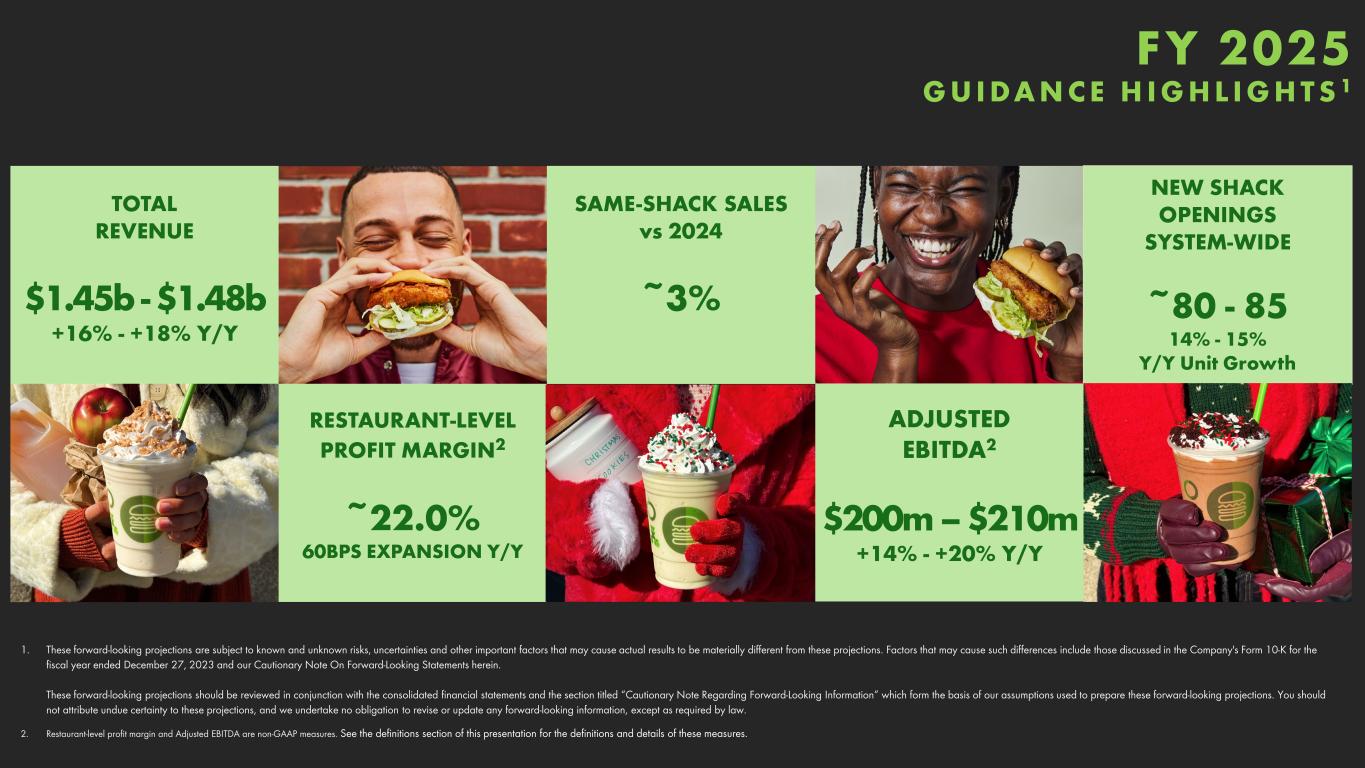
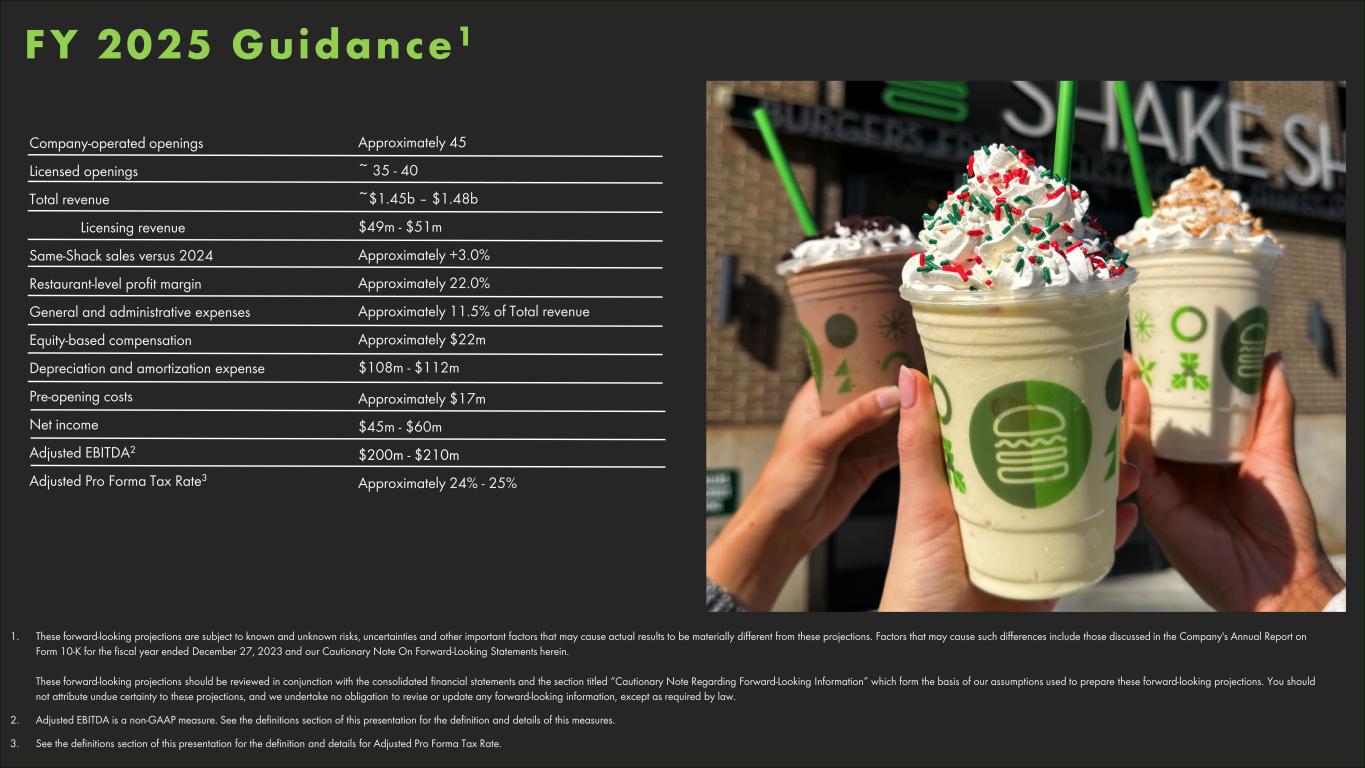
Thanks, Rob, and good morning everyone. We ended the year on a high note and are on a solid path for 2025, with continued success from our marketing and operational strategies, including faster speed of service and enhanced labor management, driving strong solid sales and record flow-through. Over the past 14 quarters, we have consistently proven our ability to grow our sales and adjusted EBITDA, while also making investments in our business to build a strong foundation for the future. This quarter also marks our 10th consecutive quarter that we have expanded our restaurant-level profit margins year-over-year and our 16th consecutive quarter that we've generated positive same-Shack sales. Our guidance for this year and the next three years underscores our confidence in maintaining this trajectory of success. In 2024, we expanded our restaurant-level profit margins by 150 basis points to 21.4%. We grew restaurant-level profit by 24% year-over-year to set a new record of $257.9 million, and we drove 33% year-over-year growth in adjusted EBITDA, reaching a record $175.6 million. We opened 43 company-operated Shacks in the year, marking our largest class on record, and we expect to open even more Shacks in 2025. We’re really proud of the results from our fourth quarter that highlight the broad-based strength in our business. Fourth quarter total revenue was $328.7 million, up 15% year-over-year, supported by the opening of 19 new company-operated Shacks and nine new licensed Shacks, leading to a 13% year-over-year growth in system-wide sales. Our licensing revenue reached $12.1 million in the fourth quarter, with licensing sales at $184.1 million, up 11% year-over-year. Shack sales in the fourth quarter were $316.6 million, growing approximately 15% year-over-year, supported by strong new Shack openings and 4.3% year-over-year growth in same-Shack sales with traffic down slightly impacted by infill and weather and price mix of 4.8%. Our in-Shack pricing was up approximately 4.5%, and our total price inclusive of additional price to address delivery cost headwinds was up approximately 6%. We generated $79,000 in average weekly sales, up 4% from $76,000 in the third quarter and also up 4% from $76,000 in the fourth quarter of 2023. Our trends first quarter-to-date have been choppy, and this is largely due to the headwinds from the significant weather pressures and the impacts from the tragic Los Angeles wildfires. In January, we faced approximately 150 to 200 basis points of same-Shack sales pressures from the weather and the fires, yet we still grew same-Shack sales by 3.7% in the month, showing the strength in our underlying business. Los Angeles is a very important market for Shake Shack. In fact, we opened our first Shack in California in 2016 in West Hollywood, and we've been serving the Los Angeles community ever since. We are immensely proud of our amazing leaders and teams there, as we have now grown to 27 Shacks in the area. Our motto at Shake Shack is to Stand For Something Good, and that doesn't just apply to our commitment to using the best ingredients in our food. It's also about how we show it for our teams and our communities. We are really grateful that all of our Los Angeles area leaders and team members were safe and accounted for during the fires. They were so quick to stand up to support our community and are first responders. Across the country, our team members and support staff also stood up to financially assist those directly impacted from the fires through meaningful donations and company matches to our special employee fund. We expect a degree of residual impact from the fires to persist for a while and the weather has been highly uncertain quarter-to-date. However, we believe our broad-based operations, marketing and culinary strategic focus will continue to drive improved guest experience and sales, and this will help us navigate these temporary impacts. Fourth quarter restaurant-level profit was $71.9 million or 22.7% of Shack sales, 290 basis points higher than last year, as we showed strong execution across our operational improvement strategies including labor management and optimizing our supply chain. In the fourth quarter, food and paper costs were $88.6 million or 28% of Shack sales, down 20 basis points quarter-over-quarter and down 110 basis points year-over-year. Blended food and paper inflation was nearly flat after taking into account the low single-digit benefit from identified efficiencies in our supply chain. Our beef costs rose by low single digits, somewhat less than our expectations. And our paper and packaging costs decreased by mid-single digits year-over-year. Labor and related expenses were $85.1 million or 26.9% of Shack sales, down 160 basis points year-over-year and down 110 basis points quarter-over-quarter, primarily led by the positive benefit from the first full quarter of our new labor scheduling system that drove 80 basis points of benefit. Other operating expenses were $47 million or 14.8% of Shack sales, down 10 basis points from the fourth quarter of 2023 and also down 10 basis points versus last quarter. Our improvement year-over-year was a function of identified efficiencies in repairs and maintenance and professional services, as well as more favorable utility spend. This was partially offset by planned increases in advertising expense. Occupancy and related expenses were $24 million or 7.6% of Shack sales, also down 10 basis points from the fourth quarter of 2023 and versus last quarter driven by the growth in Shack sales. G&A was $41.1 million or 12.5% of total revenue. Excluding $800,000 in one-time adjustments, G&A was $40.3 million or 12.3% of total revenue. For the full year, G&A was $149 million or $142.3 million, excluding one-time adjustments, approximately 11.4% of total revenue. This was down 10 basis points from 2023 levels despite nearly doubling our advertising year-over-year, as we showed significant improvements in how we've managed our underlying spending across other areas in G&A. As a reminder, a portion of our advertising spend is in other operating expenses. However, the majority of the spend is in G&A. Pre-opening costs were $5.1 million in the quarter as we opened 19 new company-operated Shacks. We made significant progress on reducing our cash and non-cash preopening expense in the year, bringing it down by nearly 23% per Shack year-over-year. Depreciation was $25.8 million. On a GAAP basis in the quarter, we reported a pretax income of $12.9 million and a tax expense of $3.6 million. On an adjusted pro forma basis, we reported a pretax income of $15 million and a tax expense of $3.3 million. Excluding the tax impact of equity-based compensation, our adjusted pro forma tax rate in the quarter was 29.8%. We reported fourth quarter adjusted EBITDA of $46.7 million, up approximately 49% year-over-year or 14.2% of total revenue, improving 320 basis points from 11% of total revenue in the fourth quarter of 2023. For the full year, we grew adjusted EBITDA by 33% to $175.6 million or 14% of total revenue, 190 basis points higher than the prior year. We realized a net income attributable to Shake Shack Inc. of $8.7 million or $0.21 per diluted share. On an adjusted pro forma basis, we reported a net income attributable to Shake Shack Inc. of $11.6 million or $0.26 per fully exchanged and diluted share. Our balance sheet is strong. We ended the year with $320.7 million in cash and cash equivalents and generated a record $36 million in free cash flow, the first time that we have generated positive free cash flow on the year since 2017. Now on to our guidance for the first quarter and full year 2025. Our guidance assumes no material changes in the macroeconomic or geopolitical landscape and the potential impact to system-wide sales or costs including any outside impact from potential tariffs. For the first quarter of 2025, we guide total revenue of $326.5 million to $330.9 million, with $10.5 million to $10.9 million of licensing revenue, three to four company-operated Shack openings, five to six licensed Shack openings, and for same-Shack sales to be up 2.5% to 3.5% year-over-year. We are seeing weather and the lingering impacts from the L.A. wildfires continue into February, and we expect some of our Los Angeles Shacks to take a while to fully recover. We are also lapping over the strong launch of our Korean barbecue limited-time offer from last year. These factors and the Easter shift together is an approximate low single-digit impact to our same-Shack sales guidance in the first quarter. In March, we will be rolling off the approximate 3.5% price that we took on the menu last year. We plan to exit the quarter with approximately 2% in check pricing and a blended 3% overall price. We guide restaurant-level profit margins of 20% to 20.5%, representing 50 to 100 basis points of improvement year-over-year despite the weather, wildfire, and inflationary headwinds that we are facing. We are planning for low single-digit year-over-year inflation in food and paper costs after baking in the positive benefits from our supply chain strategies with pressures led by uncertainty in our beef pricing that represents 25% to 30% of our blended food and paper basket. Additionally, our marketing plan for this year is more evenly split over the quarters versus last year that was back-end weighted. This cadence will result in a higher step-up year-over-year in both other operating expense and G&A in the first half of the year, tapering off in the back half. On to our full year 2025 outlook. We are largely reiterating the guidance that we provided at the ICR Conference in early January, while we are also raising our outlook for adjusted EBITDA based on increased confidence in our outlook for restaurant-level profit margins to reach approximately 22% this year. Our pricing plans for this year remain modest as our in-Shack price will be up about 2% year-over-year and our overall price across all channels will be up approximately 3%. Our commodity outlook reflects our expectations for low single-digit inflation led by beef up mid- to high single digits and does not contemplate any potential outsized impacts related to tariffs. We are planning for labor inflation to be in the low single-digit range. We're now guiding for adjusted EBITDA of $205 million to $215 million, representing 17% to 22% growth year-over-year as operationally, we are tracking strong against our three-year target of low to mid-teens growth. To close, I want to extend my heartfelt gratitude to our more than 12,000 team members in our 329 company-operated Shacks and our employees and our support centers for their outstanding work in 2024. Your dedication to our guests, to supporting one another and to executing our strategic priorities has been truly remarkable. Thank you for your efforts. We exceeded nearly all of our goals and targets, and we're really excited about the opportunities that lie ahead. We believe that we have the right plan in place to help us unlock our growth potential. We have confidence as we look forward to our target to grow to at least 1,500 company-operated Shacks over time, and we’re very much looking forward to updating you on our progress against our 2025 strategic priorities throughout the year. And thank you for your time. With that, I'll turn it back to Rob.
Thank you, Katie. Building off of a strong 2024, we are excited about the opportunities ahead and look forward to making progress against our new set of strategic priorities in 2025. Above all, I'm so grateful to our dedicated teams bringing their hearts, minds and focus to their endeavors every single day. Thank you all for your time today. And with that, operator, please open the call for questions.
Operator
Thank you. Our first question is from Michael Tamas with Oppenheimer & Company. Please proceed.
Speaker 4
Hi, thanks, good morning. You guys just talked about increased confidence in getting to that 22% restaurant margin this year, and that suggests about 60 basis points of expansion versus '24, despite, I think, a more choppy top-line environment since ICR. So can you maybe just unpack for us what's driving that increased confidence and talk about maybe some of those incremental initiatives throughout '25 that give you the confidence in this target? Thank you.
Great. Yes. Thanks for the question. Yes, we raised our full-year 2025 adjusted EBITDA to $205 million to $215 million. And that's really a function of our increased confidence to achieve this approximately 22% restaurant profit margin we expect to get this year. The reasons why we are going to be expanding margins this year by about that 60 basis points, it is pretty evenly split through just better labor management. The implementation of our new labor model that we put in place in the fourth quarter has gone exceptionally well. We are continuing to see really strong performance from that scheduling system in the first quarter of this year, and it is helping us to offset some of the sales pressures that we are seeing from the weather and the wildfires. So we have good confidence that that will continue throughout the rest of the year. And then on other initiatives that we're working on, I would say, part of it is the margin expansion that we delivered in the fourth quarter was really evenly split between labor management and then also on our supply chain. And we’re continuing to do great work there, uncovering opportunities to get more efficient, bring on more suppliers and optimize our freight while also from an operational standpoint, improve the way that we’re running our Shacks to help minimize waste. So those are the kind of big buckets that will help carry us through this year and give us increased confidence.
Operator
Our next question is from Christine Cho with Goldman Sachs. Please proceed.
Speaker 5
Yeah. Hi, thank you. So it was really encouraging to see kind of the 3.7% same-Shack sales growth in January despite the weather headwinds and the impact of the LA wildfire. Can you help us unpack that growth a little bit for us? Thank you so much.
Yes, we saw a very strong January despite facing some challenges. We mentioned a 150 to 200 basis points pressure due to traffic, the fires, and weather conditions. In terms of our sales components, we began the year with about a 6% price increase, which has since stabilized at around 5% for the remainder of the quarter. Taken together, this indicates a robust performance in our core business. Our marketing and operational strategies are effectively helping us achieve strong results and mitigate some of the impacts from weather and wildfire issues.
Operator
Our next question is from Brian Vaccaro with Raymond James. Please proceed.
Speaker 6
Hi, thanks and good morning. I had a question on the store margins, on labor specifically. You spoke to the Phase 2 labor model efficiencies. But I also wanted to ask about the improvement that you are seeing just from running tighter operations and more sort of your maybe lower-performing stores starting to achieve more of your new KPI targets. So I guess on that topic of attainment, is there a way to frame the improvement you are seeing on sort of bringing up the lower-performing stores and what the opportunity might be there if more of those stores start hitting more of your targeted KPIs?
The improvements we're observing from the labor model are closely linked to the operational enhancements we're experiencing. By introducing the new labor scheduling system, we believe we are enhancing the guest experience and increasing our returns. However, this can only be effectively carried out through the strength of our operations. Both aspects are interconnected. The successful implementation of the new scheduling system relies heavily on the efforts of our operators and their contributions to that aspect. I'll let Rob discuss the scorecard and what we're seeing there.
Yes, hi, Brian. I would say that it aligns well with what we've been discussing for the past six months. The new labor model is working well, and I wish we had some proprietary AI software driving many of these results. It's truly about maintaining discipline in operating restaurants. Our new leadership has effectively instilled this philosophy throughout the organization. A significant factor is the allocation of hours based on the activity-based labor model as opposed to a sales base. A major component is sticking to the allocated hours. There is now a strong emphasis on meeting the scheduled numbers, which wasn't prioritized in the past but is now a focus. To address your question about the lowest-performing locations, despite their improved adherence to labor scheduling, which is clearly enhancing profitability, we are confident in our ability to increase restaurant-level margin by over 60 basis points this year.
Operator
Our next question is from Jeffrey Bernstein with Barclays. Please proceed.
Speaker 7
Great. Thank you very much. Just wanted to follow up on the restaurant margin topic. Looking beyond this year, you guys gave a three-year guidance at ICR last month and reiterated this morning for a restaurant margin of at least 22%. And that is similar to the 22% you are projecting for this year. I think there were some investors that were hoping for maybe a little more context behind the at least 22% just because it seems like it is open-ended. But at 22%, it wouldn't demonstrate any improvement from here, but yet we know you have a variety of initiatives and it seems like you are increasingly confident in those. So I'm just wondering if you can give any kind of color, whether it is a range or an annual goal or potential magnitude of upside. Rob, I think you mentioned there was potential upside to those targets. So just trying to get some frame of reference for when you say at least 22%, kind of a little more context behind what that could be.
Yes, it's a great question. Our aspiration is to continue to get more efficient and more productive. Everything we talked about this morning and everything we talked about in our calls with all of our investment community really talks about all of the initiatives that we are putting in that are transforming our operations, improving our guest satisfaction, improving our team member experience and improving our retention and eventually that flows down to margin. So we will keep the investment community very close to that as we continue to see progress and as we continue to advance the initiatives that we have in place today towards driving more productivity. Our guide is a baseline. It's representative of what is in the model today and what we believe we can execute today. That doesn't mean we don't have five, six, seven other big initiatives in place with the intention of continuous improvement. That being said, we also see headwinds on the horizon. We also see a volatile commodity situation, both on ingredients, as well as equipment and other costs to our business, given kind of the uncertainty of the current environment. So we are trying to be thoughtful and planful and take both the upside into account, but also some of the risks that are facing kind of the industry as a whole right now.
And I will just add on that, what Rob just discussed. We are planning, and our plans for this year reflect us returning to a more normalized price environment of that kind of 2% for in-Shack, 3% overall. And our outlook for the next three years doesn't really contemplate any big step-up in pricing. So what we are doing here is really relying on operational efficiencies and other strategic initiatives to continue to expand our margins while still trying to navigate the pressures that Rob outlined.
Yes. Product innovation and productivity are more important than pricing. We are focused on creating a culinary innovation pipeline and a menu strategy where items complement each other to enhance both comparable sales and margins. We aim to minimize the amount of pricing increases, which will improve our value perception in relation to the industry. We know we have the best food and ingredients, and if we can boost our productivity and creativity in innovation while achieving our financial goals without relying on as much pricing, it will create a positive cycle that drives transaction growth for a long time. This is our primary focus.
Operator
Our next question is from Sharon Zackfia with William Blair. Please proceed.
Speaker 8
Hi, good morning. Thanks for taking my question. You guys just mentioned a lot of uncertainties with the commodity environment. And Katie, I know you said you don't have any kind of tariff impact in your guide. Are you guys exposed to Canadian or Mexican produce or imports in your business? Or would you just expect there to be potentially broader inflation of tariffs we are impacted?
Yes, we primarily source our ingredients domestically for our operations, which means we don't have significant exposure. However, it’s important to consider that we don’t have a large breakfast business, so we aren’t heavily affected by the egg market. Other restaurant companies that do use eggs might be diversifying their offerings to include more beef or chicken to offset the high costs. Changes in consumer demand could potentially influence domestic pricing as well. We are being deliberate in planning our supply chain, focusing on developing multiple sources of supply and establishing new vendors and partnerships. This approach supports both business continuity and pricing strategies. As we assess the market, we are carefully balancing our supply sources and pricing to ensure we have access to the best suppliers at competitive prices. Ultimately, most of our ingredients are still sourced domestically.
Operator
Our next question is from Brian Mullan with Piper Sandler. Please proceed.
Speaker 9
Hi, thank you. I have a question about loyalty. Can you share the plans for a future launch? Also, I understand that with Shake Shack, the aim is to express enlightened hospitality in a digital format. I'm curious about how you find the right balance between the fundamental strategies that have worked for other programs and creating something distinctive for Shake Shack. What are your thoughts on this?
Yes, we have achieved significant success this year by implementing targeted incentives to drive additional purchases. The marketing investments that Katie mentioned are largely focused on performance marketing instead of large-scale national advertising campaigns. A part of our business is dedicated to providing incentives. By enhancing our loyalty program and understanding our customers better, we will gain deeper insights that enable us to deliver even more effective targeted incentives. However, our approach goes beyond that. We also prioritize understanding our guests' historical purchasing behaviors and needs to provide valuable information and insights. For instance, if someone who usually orders a premium burger comes to our kiosk and orders a Shack Burger, we can seamlessly introduce them to a great new limited-time offer burger without disrupting their experience. This not only enhances their visit but also encourages them to upgrade their selection, benefitting our overall performance and margins. We're deliberately avoiding a basic points-based loyalty program because we believe we can achieve better results through a thoughtful hospitality approach that focuses on understanding our guests and meeting their unmet needs. These are just a couple of examples of how we plan to utilize our loyalty platform.
Operator
Our next question is from Andrew Charles with TD Cowen. Please proceed.
Speaker 10
Thanks. You mentioned advertising doubled year-over-year, which implies about an increase of about 1 point as a percent of sales to help drive the sales momentum in 4Q. What's embedded in guidance for advertising spend in 2025?
Hi, Andrew, yes. We had a really successful year ramping up advertising last year and learned a lot. We're excited to maintain a similar level of investment. However, our growth plans for 2025 are less ambitious than they were for 2024. We believe we have a solid plan and valuable insights from last year. To clarify, a portion of the expenses will impact other operating expenses in our restaurant line, but most will be allocated to G&A. For modeling purposes, it's worth noting that last year, we increased our advertising spend toward the end of the year, whereas this year we aim for a more consistent pace in both operating expenses and G&A.
To expand on what Katie mentioned, we are planning to increase our advertising, although not at the same pace she described. This adjustment is due to our decision to boost our investments in general and administrative expenses, operations, and development, including technology. We could potentially double our advertising this year and achieve similar returns as in previous years, or we could focus on enhancing G&A, improving operations, and increasing guest satisfaction. Investing in marketing that drives repeat visits is more valuable for us, as a better guest experience leads to a higher likelihood of customers returning. Our development efforts are crucial as well; currently, we have 329 company-operated Shacks across the U.S., which is fewer than many of our competitors. By building more Shacks, we can enhance convenience and accessibility, resulting in better returns on our marketing investments, since proximity can be a barrier to repeat customer visits. As I've mentioned in recent months, we have ambitious goals for 2025, and while we are focusing on investments this year in infrastructure, operations, development, and technology, these efforts will enable us to achieve even greater returns when we increase our marketing investments in 2026 and beyond. I want to clarify that we are not easing up on our marketing strategy; rather, we believe that by strengthening our culinary, operational, developmental, and technological capabilities, we will yield even better returns on those future investments.
Operator
Our next question is from Peter Saleh with BTIG. Please proceed.
Speaker 11
Great, thanks. I did want to follow up on that question on advertising. Rob, can you just talk a little bit about how the strategy may be a little bit different in '25 versus '24? I know you guys said that it'll be more evenly spaced. But I think the last we spoke, you said you haven't really leaned on a call to action or any price point advertising. Is that something that could be in the cards for 2025? Just a little bit more, call it action on the advertising strategy?
Yes, Pete. It could be. I recently hired a new Chief Communications Officer, Luke DeRouen, and we are both actively involved in the brand positioning and marketing efforts. This foundational work is crucial for ensuring that our media investment yields significant returns. A bad strategy can lead to ineffective media, so while I’m not suggesting we have a poor strategy, we do need to enhance how we bring the Shake Shack brand to life. There are numerous positive aspects to highlight, and we need to clarify and communicate these effectively and succinctly, which we haven't fully achieved yet. We are still crafting our strategic brief to define our main message going forward. Once that is established, we will have opportunities to express it through branding and also to utilize those insights for targeted promotions or limited-time offers, which we haven't pursued extensively in the past. We have engaged in specific digital incentives, but price point advertising promotions have been limited. This is something we are considering and can likely implement more in the second half of this year or even into the first half of 2026.
Operator
Our next question is from Brian Harbour with Morgan Stanley. Please proceed.
Speaker 12
Yeah, thanks. Good morning guys. Just on the same-Shack sales side. I guess you provided kind of that regional color in your letter. It seems like a couple regions got better, a couple faded a little bit. Can you just comment on what drove some of that? And then into this year, as you think about kind of at least 3% it seems for sales I think, was what you spoke about. That's obviously mostly pricing. I would sort of infer that you might be looking for a bit of traffic growth and maybe some offset from mix. Obviously, you did kind of see that in '24 as well. Is that kind of accurate? Or do you see any sort of changes in those pieces based on the strategies you're deploying this year?
Yes. So to start with the first part of your question on 4Q, same-Shack sales and kind of heading into January and how those trends look. So overall when you adjust for weather and the fires, our trends are actually quite consistent. And the regions where we are seeing strength are just areas where we are still building brand awareness. I'll talk about Florida has been a particularly strong market for us and operations are incredibly strong in that market as well. What we are seeing though, and I think this will – it is helpful color for the rest of the year and kind of lines up to the strategies that Rob has talked about is in January, towards the end of January, we were lapping the launch of our Korean barbecue limited-time offer last year and we did not have a new product to go against that. And so we are seeing that plus the continued impacts of weather and some calendar shifts be about a low single-digit pressure to our traffic overall for the first quarter. And when we talk about the investments that we are making and our focus on culinary and a culinary calendar, that is very important. It will help us get ahead of issues like this going forward. Rob, do you want to add some more on that?
You addressed it perfectly. The main point I’ve been emphasizing for the last six months is that we lack a strategic culinary calendar, which is what Katie referred to. Last February, we launched a great Korean barbecue, but we didn’t have anything planned to compare it to this February. Traditionally, this hasn’t been how things have operated. To their credit, it has been an incredible culinary process, but the focus has primarily been on bringing excellent food to the table. We need to continue doing that, but in a strategic manner to avoid gaps in our comp model due to the absence of a solid annual innovation plan. These are the issues we are addressing and correcting. I consistently mention that we are set for a successful 2025, but we are in the process of building it right now. If I end up in 2026 saying we didn’t have a solid innovation calendar to support what we achieved in 2025, then that’s on me. We are actively working to ensure that scenario doesn’t happen again.
Operator
Our next question is from Jake Bartlett with Truist Securities. Please proceed.
Speaker 13
Great, thanks for taking the question. Rob, I just wanted to build on that last comment, and that's the cadence of limited-time offers. And so I definitely note that January or February, there has been an LTO in years past, and there is not this year. So I guess the question is, does something come going forward soon? Or anything that is different about the cadence of LTOs in '25? And maybe what your vision is going forward? It seems like there are about three LTOs a year historically. Is that what you think should be the case going forward? How should we expect '25 to be different? But also what does the future look like in your view?
Every brand has its own unique characteristics based on their purchasing cycles and how they engage with their customers. For this brand, I believe the ideal approach is akin to what you mentioned—three to four significant limited-time offer promotions each year. This year, we made a strategic choice to focus on truffle, and currently, we do have a limited-time offer featuring truffle. However, it has been available for over four months now, and it seems that's a bit prolonged for stimulating demand. We are quite fond of truffle since we are the only ones offering it. It is a $25 burger that we sell for $11, which has been incredibly successful with our guests. While we are still seeing strong repeat purchasing, our trial numbers are not as robust after 4.5 months. Moving forward, our aim is to find the right balance between allowing customers the chance to enjoy a limited-time offer they love while also refreshing our offerings quickly enough to encourage new trials and demand for different items. I hope this answers your questions regarding our plans and the future of our limited-time offers.
Operator
Our next question is from Lauren Silberman with Credit Suisse. Please proceed.
Speaker 14
Thank you. So the industry comp is challenging exiting '24-'25 early on. Obviously, with the noise of weather and holiday shifts. Some of your peers have also had mixed commentary around the consumer. Can you just talk about what you're seeing with the underlying consumer? Any discernible changes in behaviors or thoughts on the relative resiliency at Shake Shack? Thank you.
When I joined in May, there were immediate concerns about our premium positioning and the potential risks associated with the shift towards value. Initially, I had some reservations as we are premium priced and competitors are focusing on value, which could pose a risk. However, what we learned last year is quite the opposite. Our locations are somewhat shielded from the highly value-conscious customer due to their prime real estate. Historically, our premium offerings have attracted higher-income customers who tend to be less sensitive to price fluctuations. As we aim for 1,500 locations, this situation will likely change as we enter more diverse demographic areas. Currently, we are seeing strong demand from our customers. Our Truffle Burger, which is our most expensive limited-time offer ever, has outperformed nearly all previous offers. These results indicate that there is still significant demand for high-quality food perceived as a great value. Additionally, our pricing has actually become more competitive compared to mainstream quick-service restaurants, especially for our Shack Burger and Double Shack Burger. We are confident in our value proposition, and our guests have demonstrated that we can successfully maintain this premium strategy.
Operator
Our next question is from David Tarantino with Baird. Please proceed.
Speaker 15
Hi, good morning. Rob, my question is about speed of service. You mentioned many times about that being a priority. You also indicated that wait times improve by more than a minute year-over-year. So I was hoping you could perhaps put the opportunity for speed of service into context. So for example, kind of where are you today on wait time? Where do you want to be? And just to kind of frame up kind of how much progress has been made already and how much more might be to come? Thanks.
That's a great question. Let me give you a brief overview. At Taco Bell, we used to estimate that every second reduced in drive-thru delivery time translated to about $1 million in sales, especially during peak hours when every additional car contributes to sales. They studied the point at which customers would leave if the line got too long, so they did a lot of analysis. We haven’t conducted that level of analysis at Shake Shack yet, and our drive-thrus account for less than 10% of our locations. There definitely is a throughput benefit during peak times at our busiest locations. If you walk around New York City at lunchtime, you’ll often see really long lines at almost every Shake Shack. So, there’s a throughput advantage, but there’s also a benefit to customer lifetime value from faster service. Sometimes, people avoid us because they anticipate long wait times. They’re okay with a longer food prep time, but our lines are longer than what they would tolerate. With an average unit volume of 4 million, we have a high volume of business and traffic. Improving speed is a major focus for us. Reducing service time by just one minute in a year isn't feasible in the fast-food industry. At Taco Bell and Arby's, where I’ve worked, we aimed to shave off seconds and managed to reduce a minute. However, we’re still far from the industry standard for total delivery time. We need to do more work on this. While I can't share our current wait times, I can say we still have a minute to shave off to reach my ideal target. Our initiatives—focused on our processes, equipment, and how we prepare and store food—are all aimed at speeding up service without sacrificing quality. This should yield short-term benefits by 2025, and as we expand our drive-thru locations, those benefits will become even more pronounced.
Operator
Our next question is from Andy Barish with Jefferies. Please proceed.
Speaker 16
Yeah. Hi guys. Just trying to level set on the new labor scheduling. I mean it seems like with low single-digit wage inflation and the pricing you still have for '25, those kind of offset. So are we expecting that 80 basis points to kind of continue before you lap it in the fourth quarter on the labor line? I know you've got obviously less pricing, but just trying to get the puts and takes there.
Yes. We are planning for about the same level of benefit throughout the year until we start to lap it closer to the fourth quarter. The other put and take here though, just to consider, we have been seeing sales pressure in the first quarter due to weather and the fires and it was lapping the LTO from last year. So that is a little bit of a pressure. We are lean on operational strategies to help still deliver quite strong margin improvement year-over-year, which is something for your model.
Operator
Our next question is from Jeff Farmer with Gordon Haskett. Please proceed.
Speaker 17
Great. Thank you. Just wanted to take another crack at the 3-year guidance question. Obviously, as you guys well know, that low to mid-teens EBITDA growth guide, it is just above that low teens revenue growth guide. So clearly implies a smaller level of margin expansion as you move forward. Here is the question, and you guys did hit on this, but I'm just looking for greater clarity on if this is sort of conservatism on your part or an expectation for some incremental costs or maybe a combination of both?
Yes. I mean we are definitely in investment mode. We see huge opportunities. We cannot get a better return than investing our capital into our assets, like new Shack openings is the #1 value unlocked for this company and that requires increased G&A investment as well that it requires us to continue to build teams, it requires us to go and build the development capability. We have to get dealmakers, real estate people, like a lot of that stuff in the quick-service restaurant industry sits on the franchisees play here, construction management, real estate, all those things, that is all us. So we are making those investments in 2025 and into 2026 to continue to drive incremental growth, like we are going to build more restaurants, more Shacks this year than we built last year, and we're going to build more than that in 2026 and beyond. So we are making investments. So as you think about the margin opportunities, we can absolutely grow our margins faster than what we've guided to. But that would come potentially at the expense of the investments necessary to deliver the full realized long-term potential of our company. I don't know, Katie, if you want to add anything to that?
Yes, it's important to put this into perspective. Looking at 2024, we began the year with around 200 locations in our comparable base and achieved a 3.6% year-over-year growth in our comps. This translates to approximately $30 million in revenue from our comp base. However, we also increased our overall sales by $160 million year-over-year, meaning that a significant portion of our revenue growth is coming from opening more Shacks. To reach our long-term goal of at least 1,500 Shacks and the potential impact on adjusted EBITDA, we do need to make investments. We believe we have a solid plan for this and are confident that we are maximizing returns from our business.
Operator
Our next question is from Jim Sanderson with Northcoast Research. Please proceed.
Speaker 18
Thanks for the question. I just want to go back to the drive-thru optimization process. Could you speak a little bit more about what that entails? And if menu bundling is going to be part of that solution or more broadly, how you expect the changes to improve performance?
Yes, Jim. Menu bundling will definitely be an essential part of our solution, and we will be launching it soon. I've been discussing this for quite some time now. We have been developing and optimizing it, and I assure you it is coming. This is just one aspect of the overall plan, but it's significant as the largest gap compared to the best-in-class drive-thru lies within the order zone. We aim for the adjustments we're making to the menu and the drive-thru to positively impact order times. Additionally, we are implementing other enhancements. As I mentioned earlier, we are streamlining our drive-thru locations. We are also focusing on our kitchen innovation lab, which is a vital takeaway. Previously, we had to build new restaurant models to conduct kitchen innovation. Now, with the kitchen innovation lab we're establishing in Atlanta, we will have a modular space to test and optimize our kitchen equipment, layouts, workflows, and processes. This will significantly accelerate our innovation efforts. So that’s going to have a big impact. And then the last thing I’ll say is our – I know we talked about the flows, but even just the equipment. I mean we talked about hot holding. We’ve talked about fries. We talked about shake machines, like all those things are on the table that haven’t really been on the table in the past. So we’re looking at all of that to decrease the times in the drive-thru. And we just built our first single lane drive-thru that opened in December in Wesley Chapel and Tampa. And I got to tell you, it has the best times in our system and drive-thru and it doesn’t even have all of these improved modifications. So lots of upside there.
Operator
Our next question is from Rahul Kro with JPMorgan. Please proceed.
Speaker 19
Can you talk more about this Atlanta support center? I know you mentioned a little bit about the kitchen innovation lab. But over time, like how big and what kind of capabilities will this center have? And it does sound like some sort of secondary HQ? And then I also wanted to follow up on how you plan to attract the right tech talent out there, given how expensive it is been and then as you continue to build out your data and tech capabilities?
Yes, that's a great question. In the last quarter, we've shifted our perspective from having a headquarters to creating Shack support centers. I've communicated this in a letter at the start of the year to all employees, stressing that everyone here is focused on making our Shacks successful. Regardless of whether one is in finance, tech, or marketing, we are all dedicated to supporting our operations. We currently have three support centers: one in New York, one in Hong Kong for international business, and we are in the process of establishing one in Atlanta. This Atlanta location will enhance our ability to operate a restaurant company, allowing us to recruit talent more efficiently from across the country. We're proud of our New York City roots and the outstanding work being done by our teams here, which will continue as is. We are not relocating staff from New York to Atlanta; rather, we're expanding our recruiting opportunities. This new office will also provide access to a larger pool of tech talent, especially since we just appointed a new Chief Information and Technology Officer, Justin Mennen, who is building an exceptional team. Atlanta is strategically located near over 60 universities within a two-hour drive, making it a hub for both restaurant operations and tech talent. We're excited to open this office, as it will significantly improve our recruitment efforts and offer a space for innovation.
Operator
We have reached the end of our question-and-answer session. This will conclude today's conference. You may disconnect your lines at this time, and thank you for your participation.