Operator
Good afternoon and welcome to SI Bohn's fourth quarter 2025 earnings conference call. At this time, all participants are in listen-only mode. We will be facilitating a question and answer session towards the end of today's call. As a reminder, this call is being recorded for replay purposes. I would now like to turn the call over to Sakeb Iqbal, Vice President, FP&A and Investor Relations at SI Bohn for a few introductory comments. Please go ahead, sir.
Earlier today, SI Bone released financial results for the quarter ended December 31st, 2025. A copy of the press release is available on the company's website. Before we begin, I'd like to remind you that management's remarks today may include forward-looking statements within the meaning of federal securities laws, which are made pursuant to the safe harbor provisions of the Private Securities Litigation Reform Act of 1995. These forward-looking statements are subject to a number of risks and uncertainties, including those set forth in our SEC filings, such as our most recent Form 10-K, and our actual results might differ materially from any forward-looking statements that we make today. Accordingly, you should not place undue reliance on these statements. These forward-looking statements speak only as of the date that they are made, and we do not assume any obligation to update any forward-looking statements except as required by law. During the call, management may also discuss certain non-GAAP measures, including the company's adjusted EBITDA results. Unless otherwise noted, any reference to profitability is in terms of positive adjusted EBITDA. For a reconciliation of these non-GAAP measures to GAAP accounting, please see the company's full earnings release issued earlier today. Unless otherwise noted, all results are compared to the comparable period in the prior year. With that, I'll turn the call over to Laura.
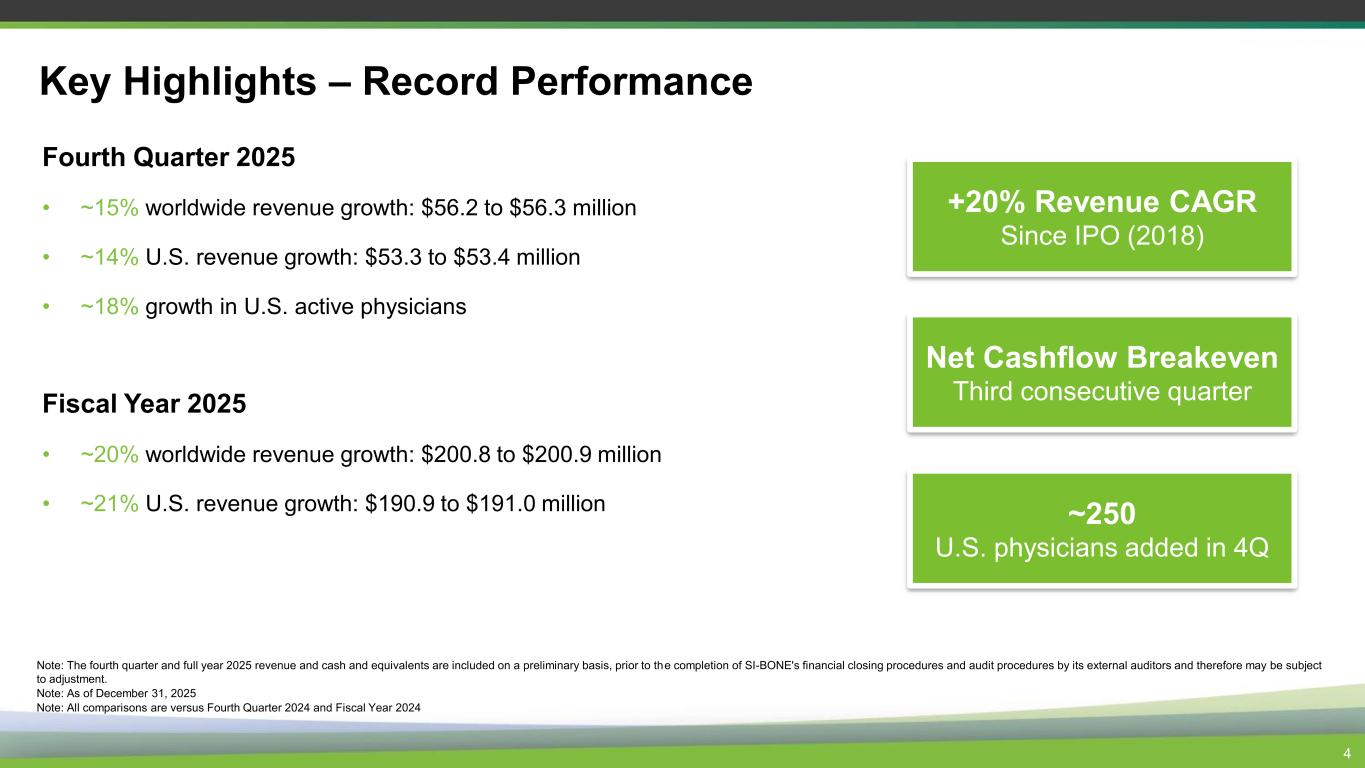
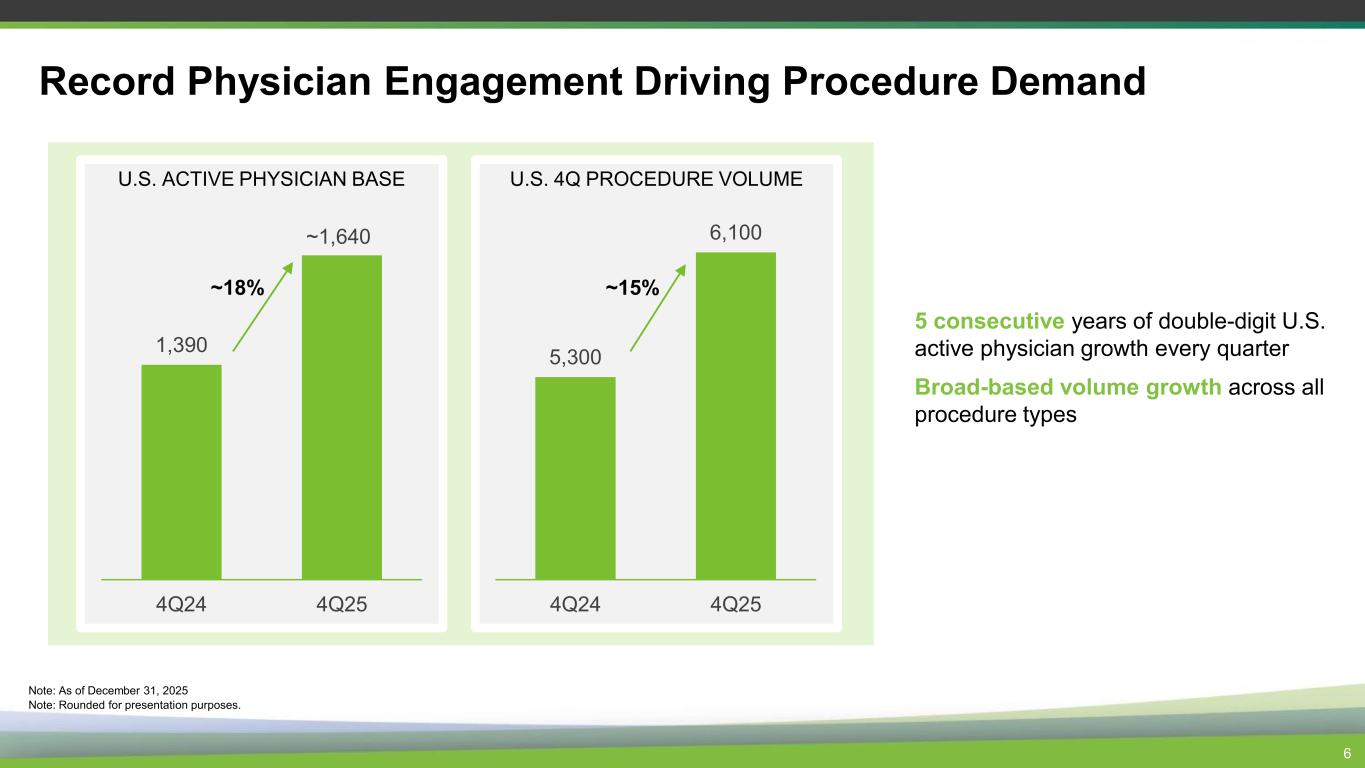
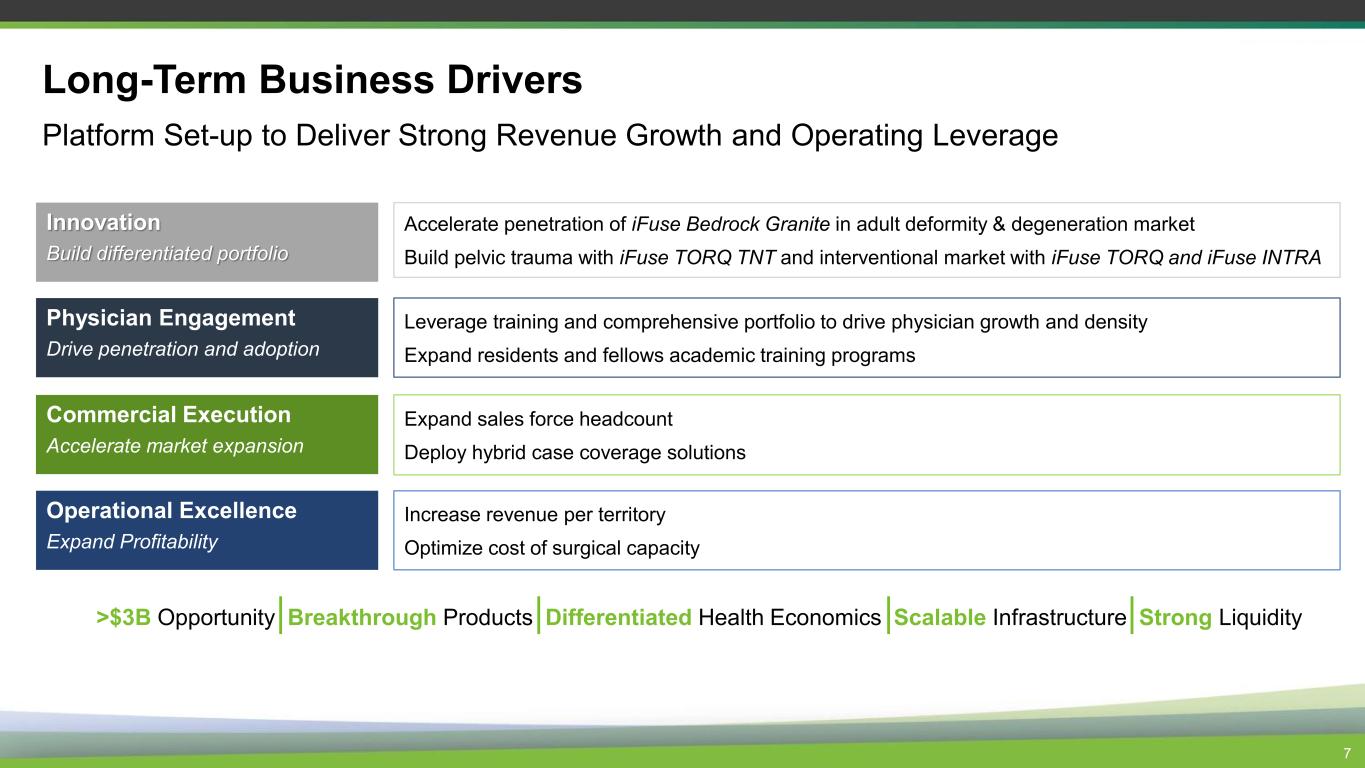
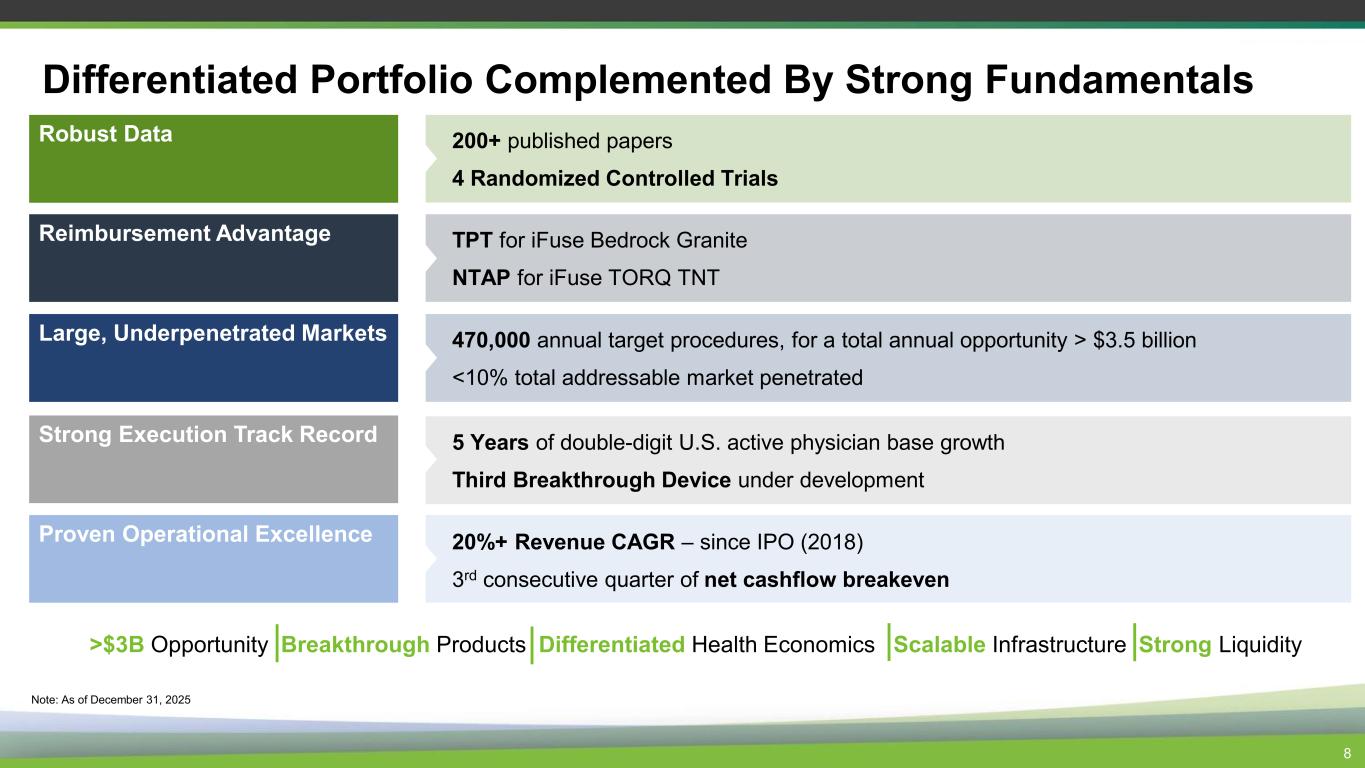
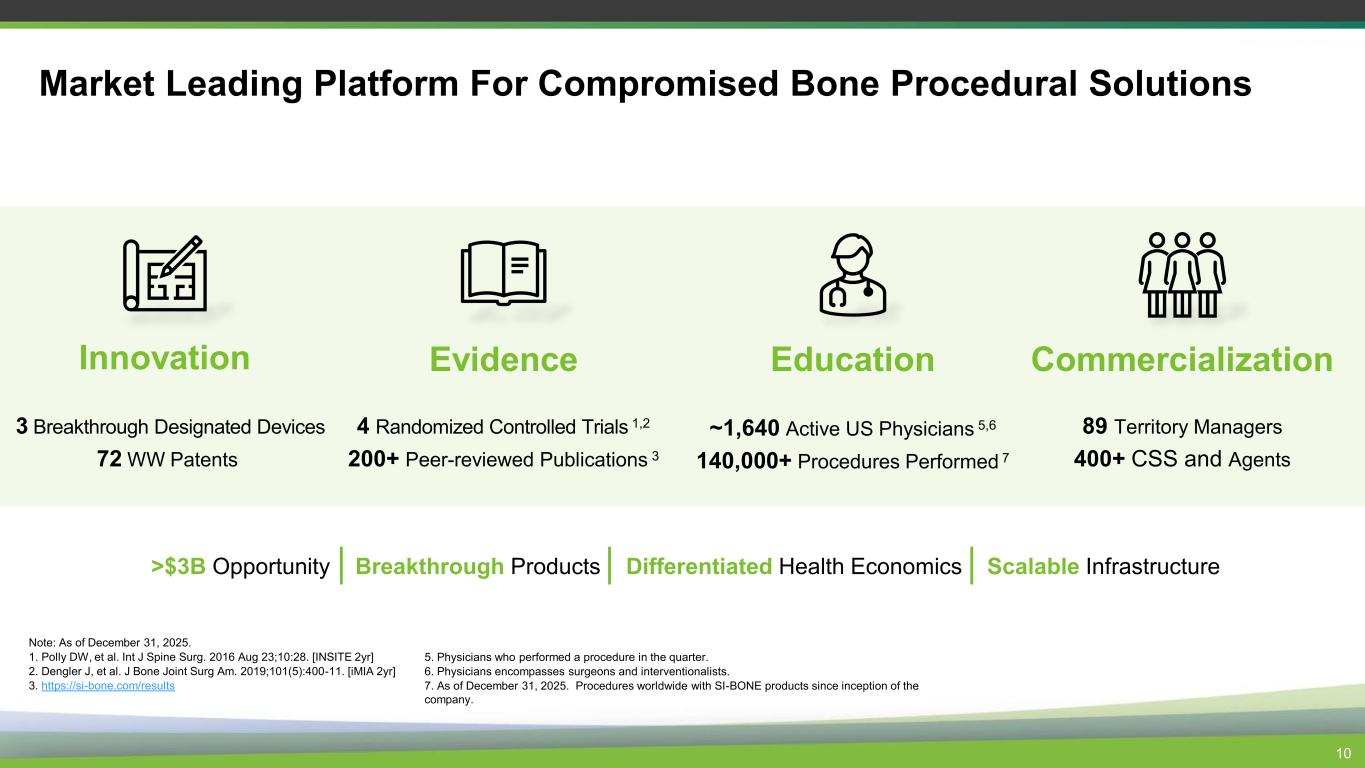
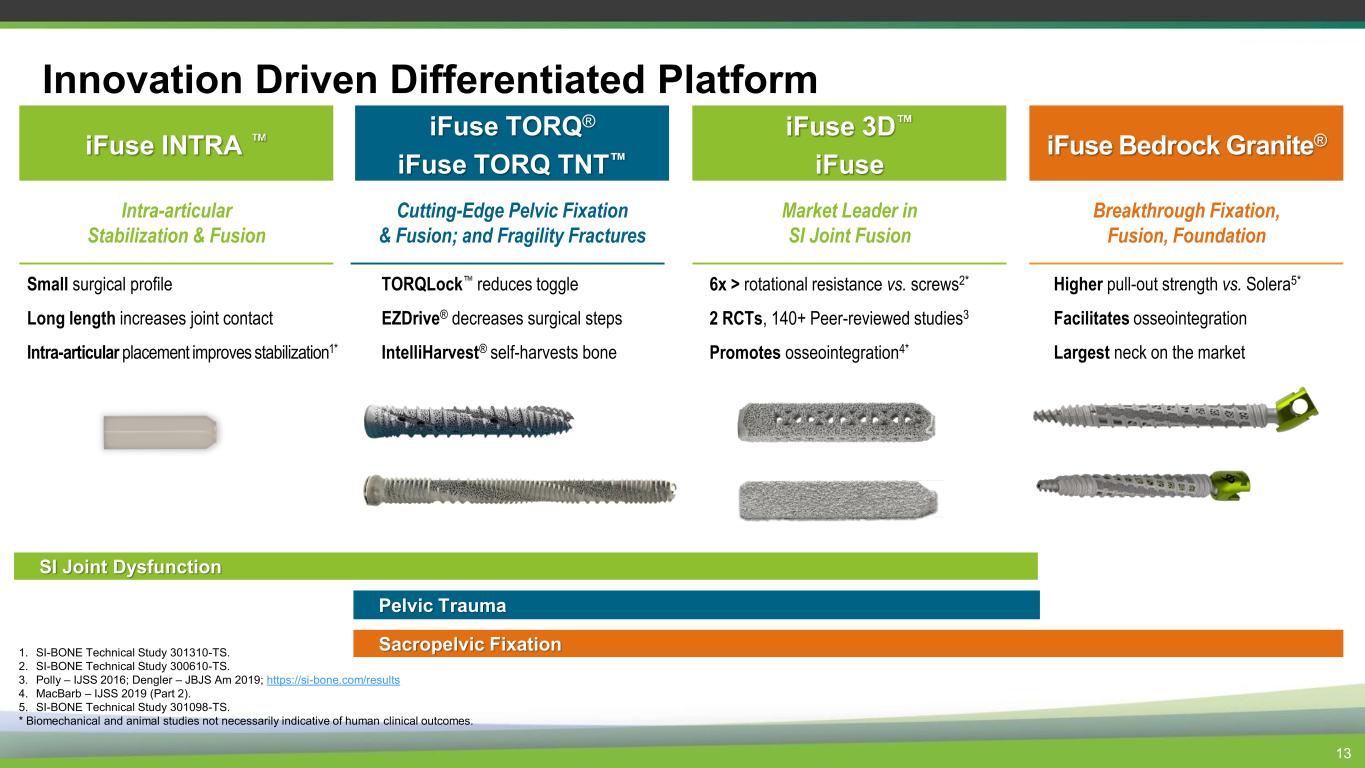
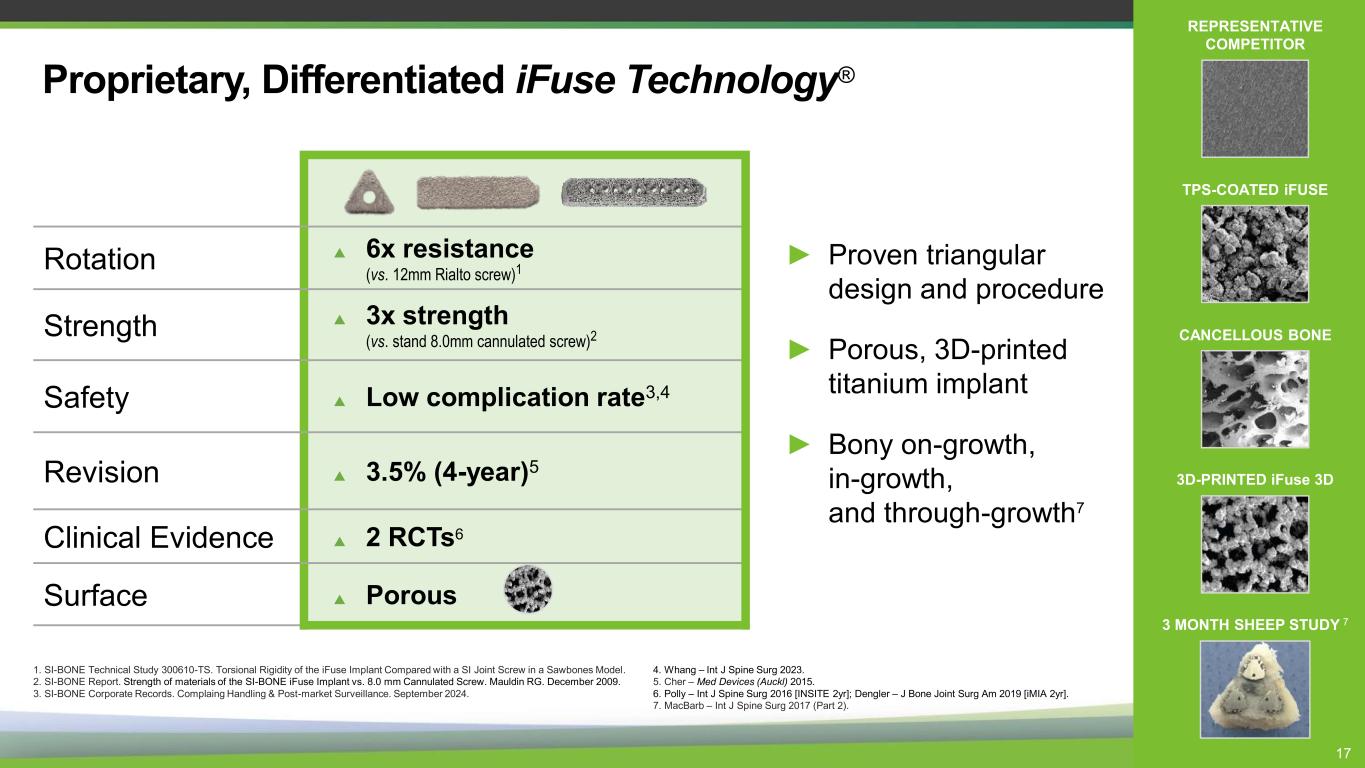
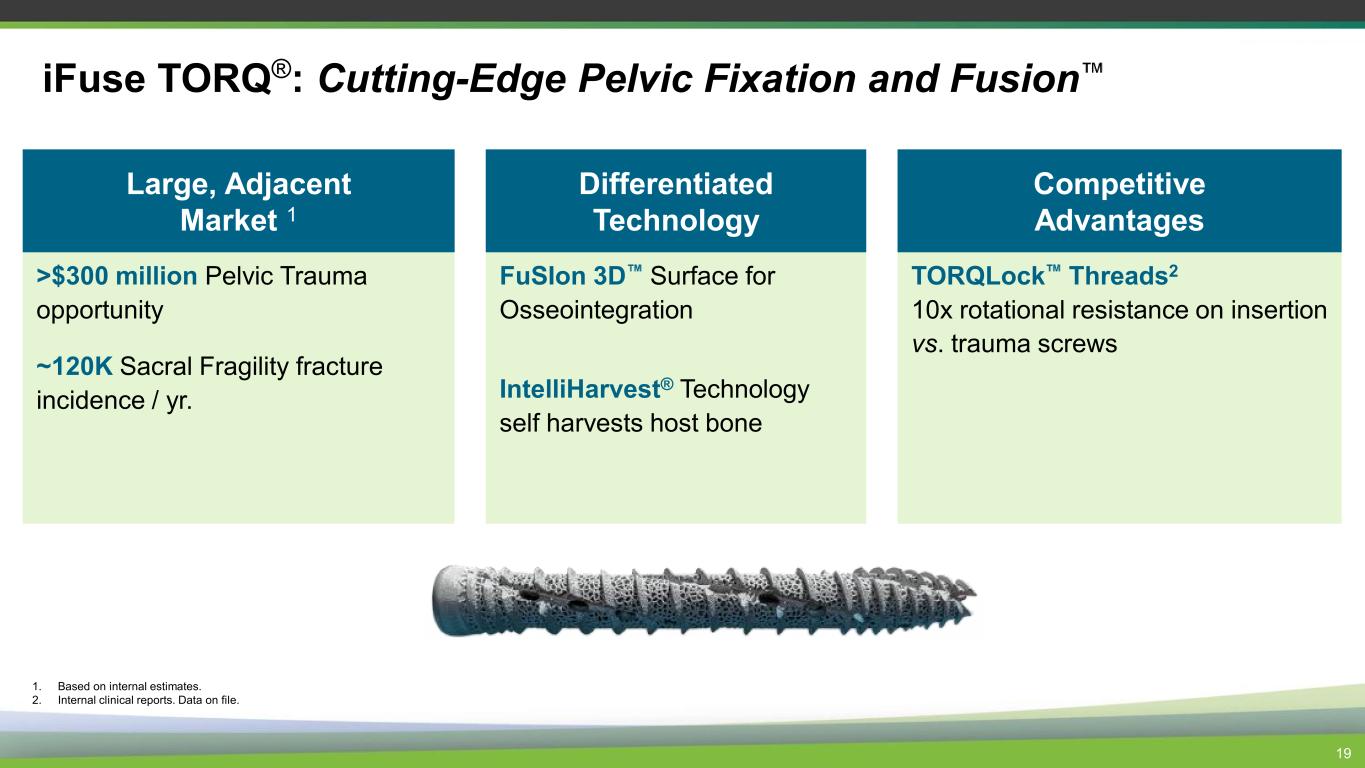
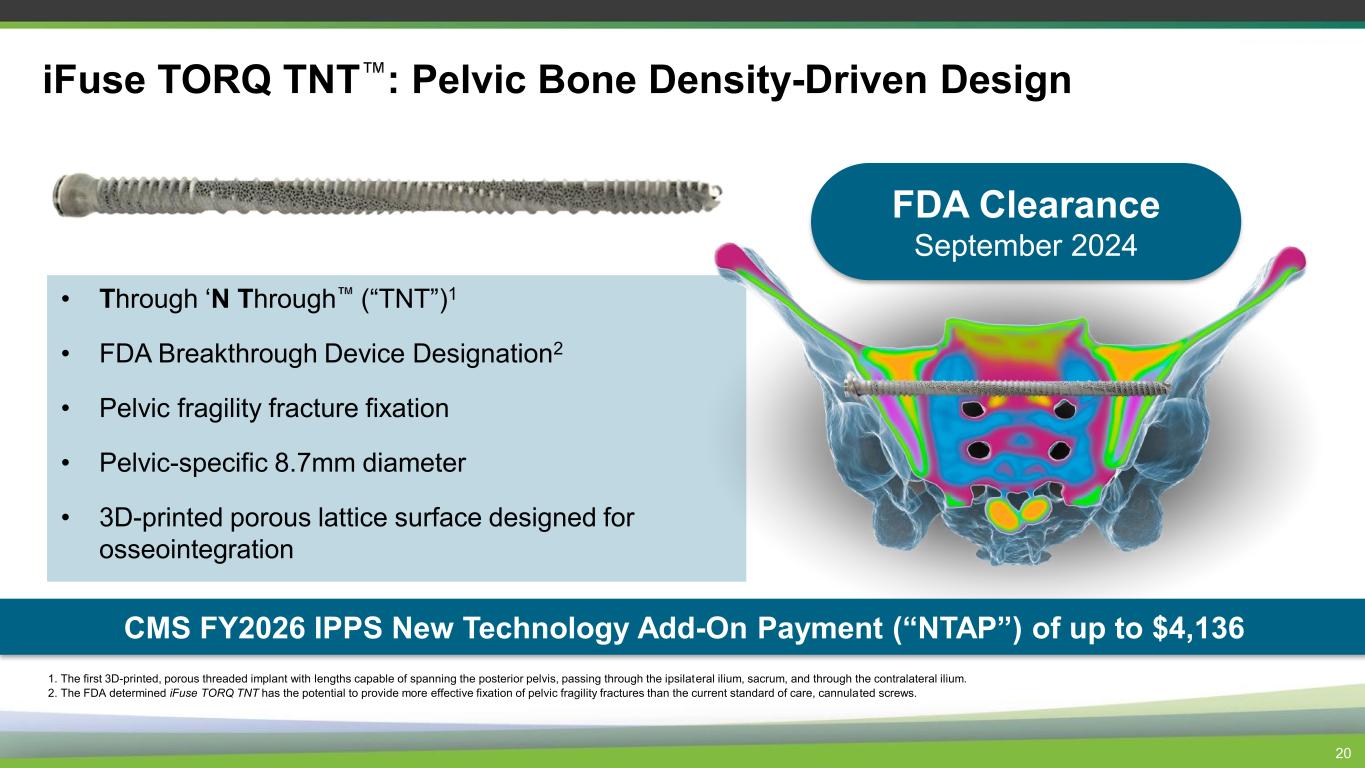
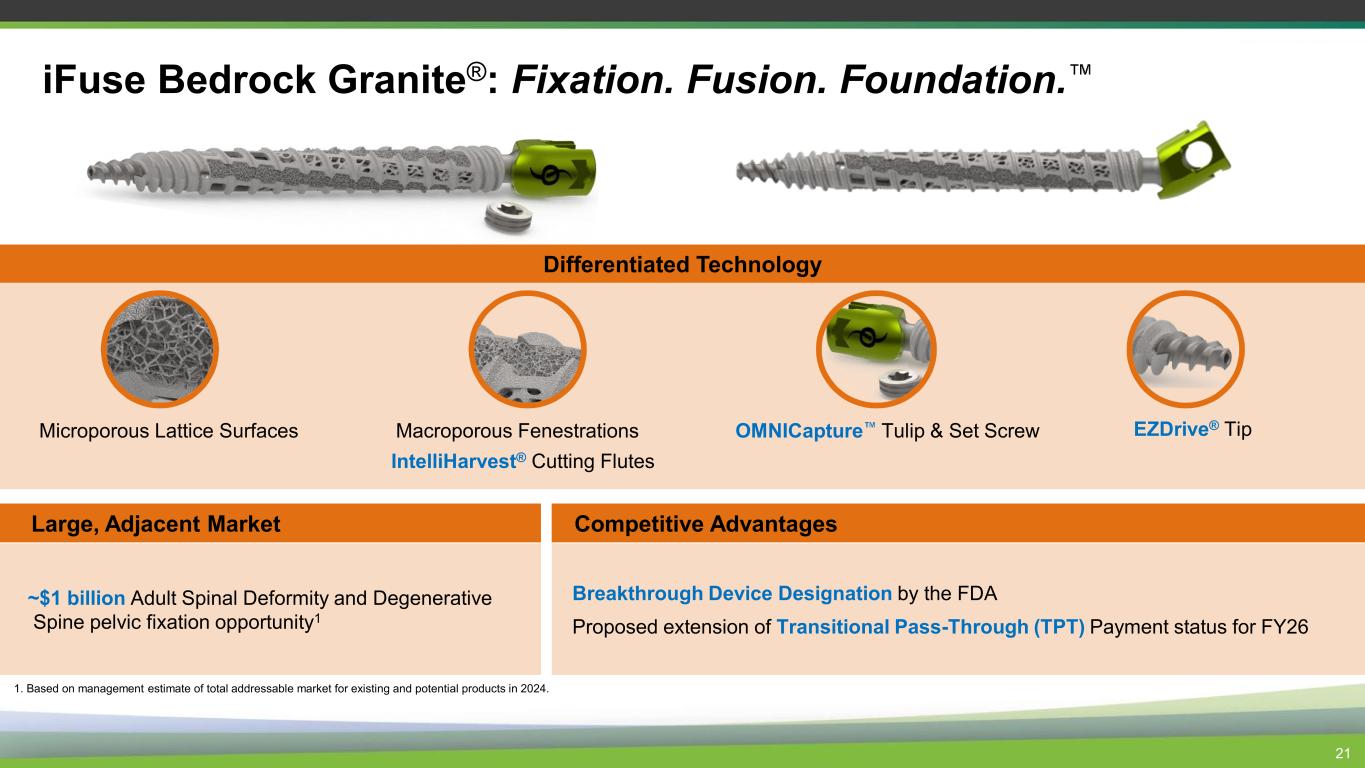
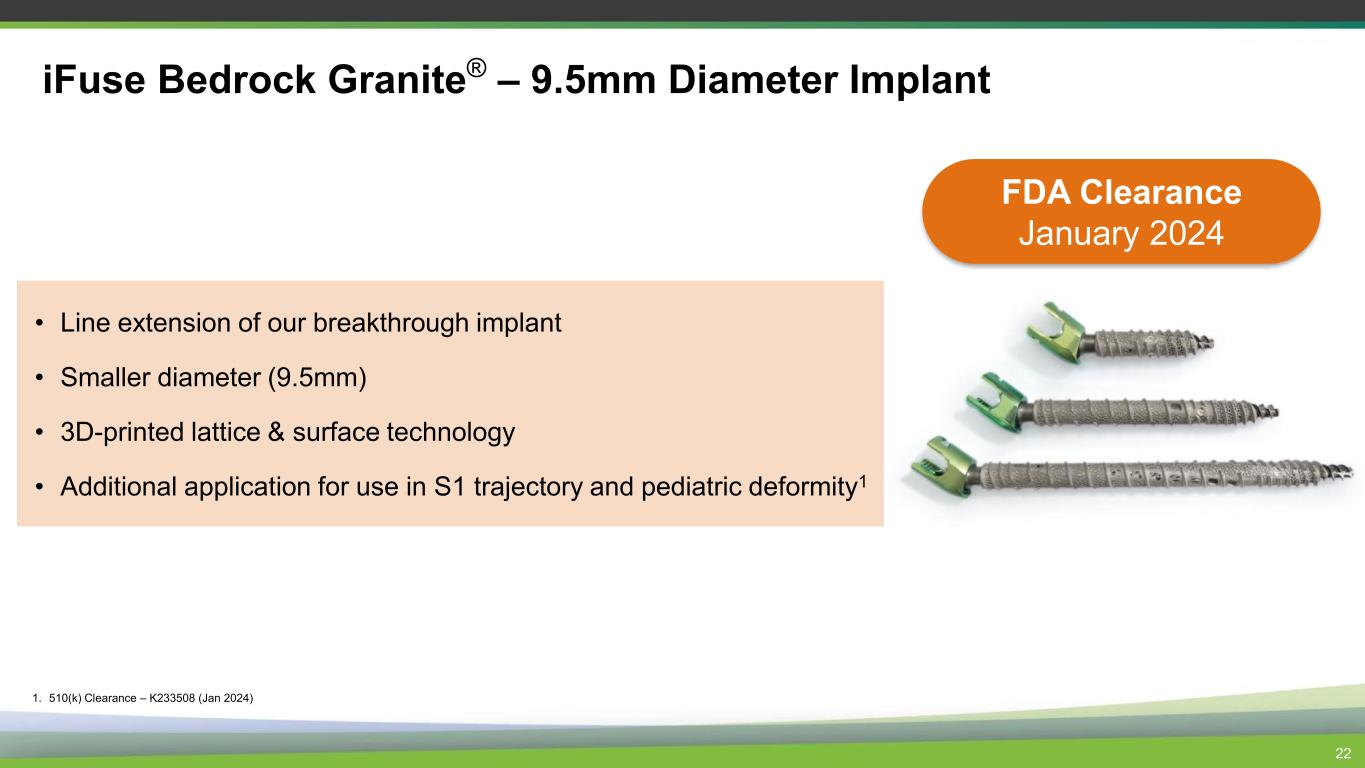
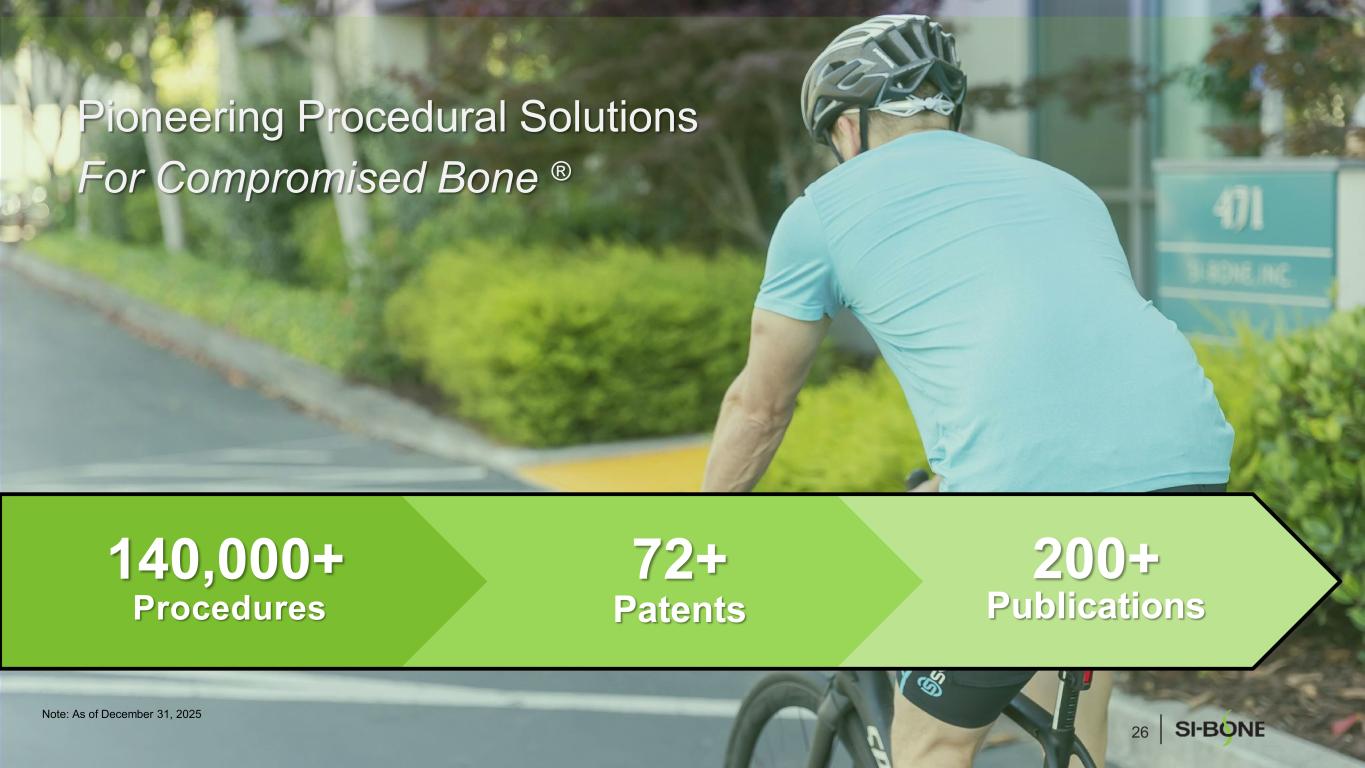
Thanks, Akib. Good afternoon and thank you for joining us. Our strong fourth quarter and full year 2025 results validate that our innovation-led growth strategy is delivering meaningful, real-world impact. We built deep technical expertise to solve complex procedural challenges that historically led to poor outcomes for patients with compromised bone. That expertise has produced a differentiated platform of solutions, including three products which have been granted FDA breakthrough device designation. We've consistently secured favorable reimbursement, including multiple new technology add-on payments and a transitional pass-through payment, confirming the superior outcomes, clinical value, and health economic benefits we deliver. Supported by world-class clinical evidence and an industry-leading commercial team, our proprietary technologies have been used in over 140,000 procedures worldwide. Looking at our execution in 2025, we achieved a series of major milestones that strengthened our foundation, and created powerful multi-year growth tailwinds. We generated record annual worldwide revenue of nearly $201 million, marking another year of over 20% growth. We reached new levels of customer engagement with over 2,400 U.S. positions, performing nearly 22,000 procedures in 2025. The 22% increase in U.S. positions who used our technologies in 2025 demonstrates the growing adoption, the expanded utilization, and the strength of our commercial engine. We meaningfully strengthen our reimbursement position, securing an NTAP for iFuse Torque TNT and a TPT for iFuse Bedrock Granite. These are critical catalysts that enhance our access, drive adoption, and reinforce platform leadership. At the same time, we've made substantial progress on two highly compelling new products. The first product, Intra-TI, was launched last week, and we expect to commercialize our next breakthrough device in late 2026, further extending our growth runway. 2025 also marked a step change in our financial profile. We delivered our first full year of positive adjusted EBITDA and achieved a 9% adjusted EBITDA margin in the fourth quarter. We capped the year by achieving positive free cash flow in the fourth quarter. Together, these results underscore a platform that is scaling and is positioned to deliver sustained, profitable growth. We started this company by creating the sacroiliac joint fusion market, and we remain the undisputed market leader. Over the past five years, we've expanded into new adjacencies in the broader sacral pelvic space, applying our biomechanical expertise and proprietary technology to achieve better patient outcomes. Looking ahead, the next five years represent an innovation super cycle for us as we launch unique technologies targeting new clinical adjacencies. We're positioned to solve the largest unmet needs for patients with compromised bone, and we intend to leave this space for the long term. With a significant runway in our existing markets and focused innovation aimed at sizable new opportunities, we're confident in the long-term growth potential of the business. Now, I'll highlight the progress we've made on our four key priorities, innovation and market development, physician engagement, commercial execution, and operational excellence. Starting with innovation and market development, innovation to solve complex procedural challenges that historically led to poor outcomes for patients with compromised bone have been the primary driver of our industry-leading revenue growth of more than 20% since our IPO in 2018. We've built a reputation for developing platform technologies that become category leaders in their respective markets. We offer the most comprehensive portfolio of solutions in SI Joint Fusion, purposefully designed to meet diverse patient needs and physician preferences. As we continue to expand this robust offering, we're reinforcing our leadership position and deepening our commitment to innovation that addresses the needs of our orthopedic and neurospine surgeons and a growing base of interventional spine physicians. Earlier this month, we received FDA 510-K clearance for Intra-TI, the newest addition to our SI joint fusion platform. Intra-TI builds on the interventional spine physician's preferred posterior approach than Intra-X uses, and is backed by established nationwide reimbursement. We're confident that Intra-TI will improve the procedural efficiency of SI joint fusion at ambulatory surgery centers. This launch further advances our strategy to be the go-to partner across call points and sites of service. We initiated our alpha launch last week and expect adoption to ramp over the course of 2026 as we scale physician education and training. InterX continues to gain momentum as the preferred percutaneous allograft solution in office-based labs. Effective January 1, 2026, Medicare reimbursement for the OBL site of care increased by 17%. The new reimbursement is nearly $14,000, reinforcing the economic attractiveness of minimally invasive SI joint fusion in this site of care. In the Thora Columbar market, IFU's Bedrock Granite has been one of our fastest-growing platforms and solidified our reputation as an innovator. Since launch, Granite has significantly outpaced the overall deformity market growth rate, driven by new surgeon adoption, and expanding use cases across both deformity and degenerative spine. The success of Granite and pelvic fixation underscores our ability to introduce true platform innovation, disrupt relatively mature markets, and establish new standards of care. Granite continues to benefit from TPT payment status with a $0 device offset, resulting in 100% reimbursement of facility-reported costs for Granite when used in outpatient and ASC settings. Also effective January 1, 2026, CMS approved the inclusion of the OpenSI Joint Fusion Code in the TPT calculation, further expanding reimbursement pathways for these cases. We're also encouraged by broader CMS policy signals that support outpatient migration in spine. Effective January 1, 2026, CMS created a new Level 7 musculoskeletal APC, paying nearly $28,000 for certain outpatient spine procedures. While higher acuity patients will continue to be treated inpatient and clinical practice patterns will evolve over time, these changes reflect CMS's continued efforts to move procedures to lower cost settings. We believe Granite is well positioned in this environment as an objective solution to spinal fusion, particularly given the availability of the TPT. In the trauma market, iFuse Torque TNT continues to gain momentum, as highlighted by the 50% increase in physician adoption in the fourth quarter. TNT addresses a long-standing procedural gap for sacral insufficiency fractures, where the majority of patients have low-density bone. With an intuitive workflow and up to 30% higher NTAP reimbursement in eligible cases, TNT is increasingly the preferred solution for sacral insufficiency fractures. Finally, an update on our third breakthrough device. We remain on track to file for 510K clearance in the third quarter. Subject to FDA review timeline, we could commercialize the unique product in late 2026. We believe this product will meaningfully expand our total addressable market and are excited about the clinical impact it can have and the growth opportunity it represents. Now let's move on to physician engagement. In the fourth quarter, a record 1,640 physicians perform procedures using our solutions. The addition of 250 physicians in the quarter represents 18% growth compared to the prior year period. This marked our 20th consecutive quarter of double-digit growth in physician adoption. Notably, this growing physician interest spans all call points as we observe double-digit growth across each of them in the fourth quarter. The number of physicians who perform procedures in the fourth quarter of 2025, as well as the prior year outpaced overall physician-based growth. This substantiates that our expanded platform strategy is driving adoption consistency. This cohort of physicians also perform more than three times the number of cases per physician compared to physicians who performed their first case with us in the current quarter. This highlights the long-term utilization potential as physicians integrate our solutions into their practices and use our modalities with increasing intensity. Furthermore, only about 25% of physicians who performed an SI joint fusion procedure have adopted another procedure, highlighting a significant opportunity to further expand the use of our products. We also expect future products to attract new physicians while accelerating procedural density with this growing physician base. Now let's turn to commercial execution. We ended the quarter with 89 quota-carrying territory managers. Annual revenue per territory was $2.1 million, reflecting 18% year-over-year growth. This marked the 13th consecutive quarter of double-digit territory productivity growth. Our hybrid sales model, combining a direct sales force with over 300 third-party agents, has been instrumental in driving this productivity and enabling us to achieve strong operating leverage. In 2026, we plan to add 10 new territories while expanding strategic agent partnerships to ensure we can fully capture the large market opportunity. Given our success with the hybrid model, I'm excited to announce that last week we entered into a strategic partnership with Smith & Nephew, an orthopedic industry leader, to capitalize on the growing physician interest in our trauma solutions. This collaboration significantly expands our reach and accelerates our penetration into the trauma market. It'll allow trauma surgeons across Level 1 and Level 2 trauma centers nationwide to gain access to TORC and TNT and pelvic trauma. On the leadership front, following our announcement last August, we completed a smooth commercial transition. Nicholas Kerr has assumed the role of Chief Commercial Officer, succeeding Tony Recupero, who has retired from his position as President of Commercial Operations. Tony will remain in an advisory role for the next 12 months. Nick has been the architect of our product platform expansion. And his deep relationships with both the field and our customers positions our sales organization for continued success. Before I hand the call over to Anshul, I'd like to share some additional leadership updates. I'm excited to announce that Anshul has assumed the role of Chief Operating Officer, alongside his current position as Chief Financial Officer. Anshul has been leading our operations function for the past 18 months, and now in this expanded role, he'll also be responsible for the IT and program management functions. Over the past five years, Anshul has been instrumental in bringing operational excellence to SI Bone. playing a pivotal role in driving strong and profitable top-line growth and guiding us toward our goal of sustained free cash flow. His strategic vision, combined with his deep operational insights, uniquely positioned him to drive the company's next phase of growth. I'm also pleased to announce the promotion of Jeff Ziegler to Senior Vice President of Market Access and Reimbursement. Jeff has developed our reimbursement strategy, playing a crucial role in securing favorable reimbursement, including NTAP and TPT for our solutions. He'll continue to drive impactful results as we focus our reimbursement efforts on our new technologies we expect to launch. With that, I'll hand the call over to Anshul to provide an update on our fourth key priority, operational excellence, and discuss our fourth quarter results and 2026 outlook in more detail. Anshul.
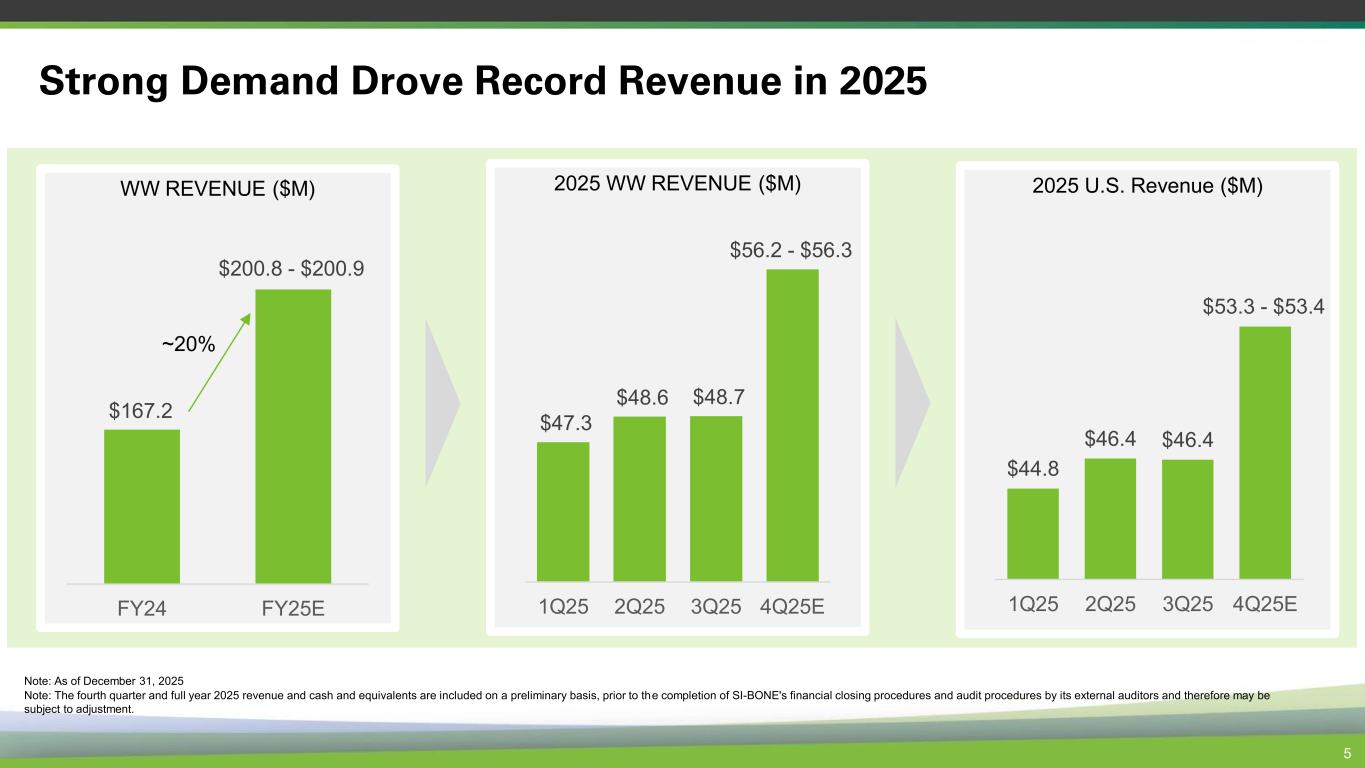
Thanks, Laura. Good afternoon, everyone. My comments today will cover fourth quarter and full year revenue growth, profitability, and liquidity, and then I will walk through our full year guidance for 2026. All comparisons provided will be against the prior year period unless noted otherwise. Starting with revenue growth, our fourth quarter worldwide revenue grew 15% to a record $56.3 million. U.S. revenue was $53.5 million, representing 13.9% growth, which was against a tough comparable prior year quarter. On a two-year stacked basis, U.S. revenue grew 20.7%, representing a 90 basis points acceleration compared to the third quarter's two-year stacked revenue growth. International revenue in the fourth quarter was $2.9 million, growing 38.8%. The strong international performance was driven by the stellar reception for IFU's Torque. We're encouraged by the traction we're seeing with Torque and are actively working to get TNT into these markets in late 2026, well ahead of a previously planned launch in 2027. For the full year 2025, we generated worldwide revenue of $200.9 million, reflecting 20.2% growth. Our U.S. revenue grew 20.6% to $191.1 million. U.S. revenue growth was driven by a 22% increase in procedure volume growth. International revenue for the full year 2025 was $9.8 million. Moving to profitability. Fourth quarter gross profit increased 14.8% to $44.5 million. For the full year, gross profit increased 21% to $159.9 million. Gross margin was 79% for the quarter and 79.6% for the full year. The gross margin for the full year came in approximately 200 basis points above our original 2025 guidance. This outperformance was driven by stable ASP from a favorable procedure mix and supported by the positive impact of our ongoing operational initiatives, including improved supply chain efficiency and cost optimization. Operating expenses grew 6.2% in the fourth quarter to $47 million. For the full year 2025, operating expenses grew 8.9% to $182.2 million. The increase in operating expenses was mainly driven by revenue-generating activity, including higher sales commission and increased R&D investment aimed at expanding our product pipeline. Net loss narrowed to $1.6 million or $0.04 per diluted share compared to a net loss of $4.5 million or $0.11 per diluted share last year. For the full year 2025, net loss narrowed by 38.8% to $18.9 million, or $0.44 per dilute share. We delivered positive adjusted EBITDA of $5.1 million in the quarter, a 176.2% improvement over the prior year. Our 9.1% adjusted EBITDA margin in the fourth quarter highlights the scalability of our infrastructure. Adjusted EBITDA for the full year 2025 was positive $8.9 million compared to $5.1 million of adjusted EBITDA loss in 2024, representing approximately $14 million improvement. Turning to liquidity, we exited 2025 with $147.8 million in cash and equivalents. This was an increase of $2.1 million from the third quarter. The fourth quarter was a second consecutive quarter of positive cash flow from operating activities and the first quarter in which we generated free cash flow. We generated nearly a half a million in net free cash flow in the fourth quarter. This was well ahead of our previously stated goal to achieve free cash flow at some point in 2026. For the full year 2025, our cash consumption was just $2.2 million compared to $16 million in cash consumption in 2024. This significant improvement achieved while continuing to invest in surgical capacity reflects our disciplined working capital management and our highly efficient asset-light business Our robust liquidity position, consistent profitability, and recent cash flow inflection positions us to self-fund revenue-accelerating investments in platform technologies targeting new addressable markets. Finally, moving to our outlook for 2026. In 2026, we expect worldwide revenue of $228.5 million to $232.5 million, implying year-over-year growth of 14% to 16%, driven by high-teams growth in U.S. procedure volume. Our guidance also assumes revenue growth to be weighted towards the second half of the year, as we expect the tailwinds that Laura highlighted to increasingly benefit the business as we progress through the year. Consistent with our guidance philosophy, we believe it's prudent to allow these tailwinds to materialize before we fully incorporate them into our expectations. Based on the revenue assumptions, we expect 2026 annual gross margin to be approximately 78%. We expect annual operating expenses to grow 12.5% at the midpoint of the revenue range, allowing us to fund key growth initiatives, including new product launch activity, planned Salesforce expansion, and pipeline development that we expect to commercialize in 2027 and beyond. Importantly, in 2026, based on the operating leverage inherent in our model, we will deliver increased adjusted EBITDA compared to the prior year and remain firmly on track to deliver on a free cash flow commitment. With that, I will turn the call over to Laura.
Thanks, Anshul. I want to congratulate my colleagues for record performance across revenue, physician engagement, and profitability. You are our most valuable asset, and I want to thank you for your commitment and contributions, which have helped tens of thousands of patients this year improve their lives. As we look ahead, I'm excited about the momentum we're carrying into 2026. With a strong foundation, a robust pipeline of innovative products, and expanding market opportunities, we're well positioned to deliver another impactful year. With that, we're happy to answer your questions. operator?
Operator
Certainly. And our first question for today comes from the line of Patrick Wood from Morgan Stanley. Your question, please.
Amazing. Thanks so much for taking the questions. I'll just do two quick ones. The first one on the Smith & Nephew partnership, how did that come about? How are you thinking about the potential contribution for that? And did we factor any that into the guide?
Hi, Patrick. It's Laura. Thank you so much for the question. We are really excited about the partnership with Smith & Nephew. And, you know, as you know, over the last few years, we've actually successfully deployed a hybrid sales model, and it's really been a key contributor as we expanded access to our solutions. And it also translated into significant territory productivity gains as well. So what we did is building on that experience, we are announcing that partnership with Smith & Nephew. We understood that they had a very significant footprint on the trauma side, and we have particular strengths and want to focus our team on spying and on interventional. And so we had talked about this on our last couple of earnings calls that we were looking at large strategic distribution partnerships, and we're very excited that this one came to fruition. In terms of the partnership itself, it covers level one, level two trauma centers, and it's going to allow trauma surgeons to get access to our trauma solutions and to treat these patients that have sacral insufficiency fractures. So really, for both of us, it's a win-win situation. It gives a large number of trauma surgeons working with Smith & Nephew access to our breakthrough technology, and we do believe that it will become a standard of care for treating pelvic fractures, similar to what we did with granite and pelvic fixation. And as I said, it also frees up our direct sales force to focus more on market development and physician engagement with spine surgeons as well as interventionalists, and especially given our march toward commercializing new products this year as well.
And then, Patrick, on your question on whether it was included in the guide, as we shared enough prepared remarks. Trauma was a nice growth driver for us last year. It's still year one into its launch and we saw a 50% increase in the number of physicians actually using our solution. So really excited about what this partnership can do in terms of expanding the access of a platform to these level one and level two trauma sites. But it's too early. We just signed the agreement. We want to see how it seasons and matures as we go through the year. And we'll be sharing more as we go through the year on the impact it's having on the business.
Super helpful. And then just as a quick follow-up, you know, you guys now have a clear clinical data set showing that, you know, the IPM physicians, you know, are getting very similar clinical outcomes to the direct surgeons on that side. Do you think that helps sort of create more engagement on that side? Do you think the mix changes over time, or should we see a similar mix of physicians being onboarded?
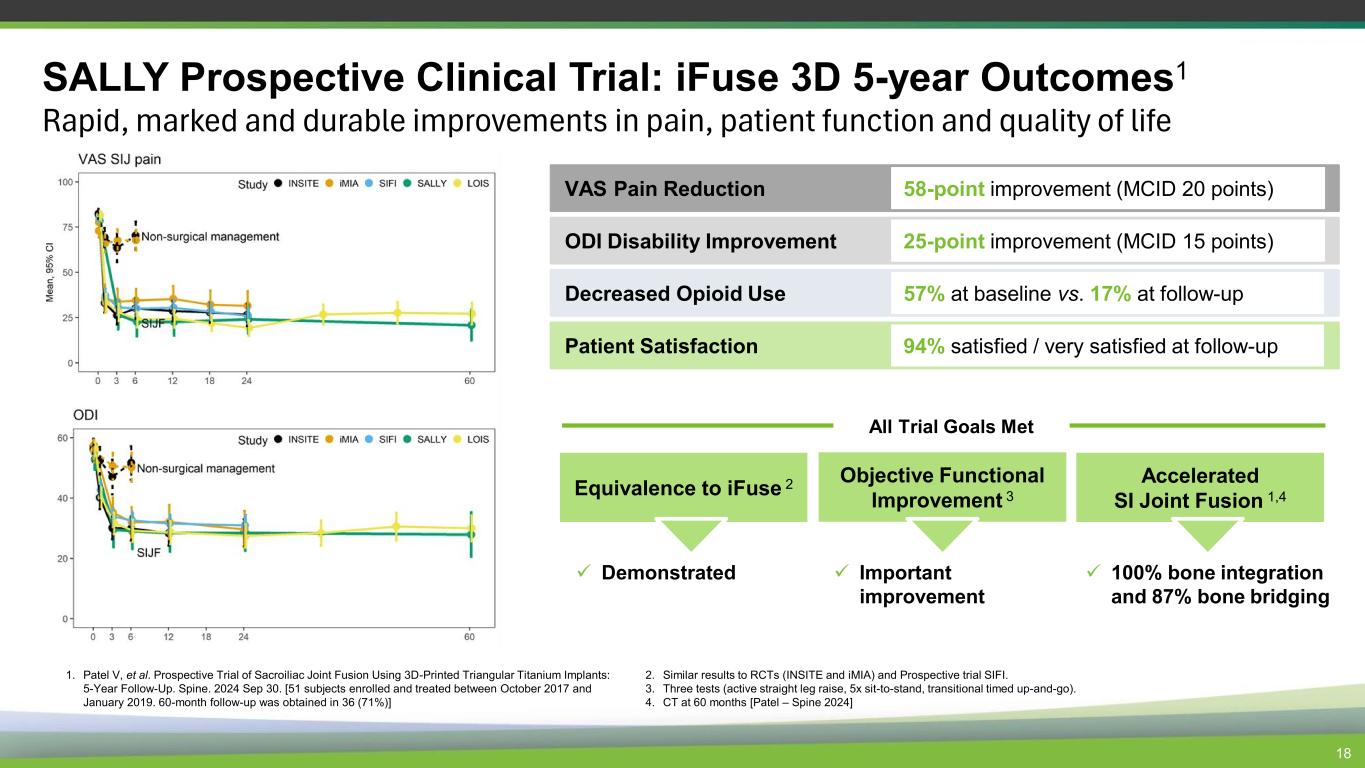
So, I think what you're asking is the opportunity that we have with interventional in SI joint fusion. As you can see with the launch of our INTRA product, it shows the dedication that we're making to the interventional physicians. Also, you mentioned clinical data. Our STACI study was recently published and showed the efficacy of our TORQ product used by interventionalists and, you know, shows that they are able to perform these cases and have the same sorts of outcomes that we've seen in our other prospective studies as well as randomized controlled trials. But, yeah, as you can tell, we're really leaning into our work with interventionalists. We're seeing significant growth in our interventional business and our Intra-TI product really rounds out our SI joint fusion portfolio. It's going to allow physicians to use iFuse regardless of their preferred approach and implant type to fuse the SI joint. So in this particular case, Intra-TI, it's a posterior metal implant with piercing features. It qualifies for CPT27279, which is clearly covered at all sites of service. And also the posterior approach really aligns with interventional spine physician's preferred workflow. And we have a streamlined single-use instrument kit, and it's going to allow us to drive procedural efficiency, specifically in the ambulatory surgery center site of service. So we're excited about the opportunity with interventional and with our suite of products, which includes Torque and Intra, as well as Intra-TI.
Nice. Thanks, Laura. Thanks, Anshul.
Operator
Thank you. And our next question comes from the line of Matthew Blackman from TD Cowan. Your question, please.
Good afternoon, everybody. Can you hear me okay?
Great. I appreciate you taking my questions. I've got two – excuse me. Maybe, Anshul, starting with you, If I'm backing into your adjusted EBITDA from some of the commentary, some assumptions on stock-based comp, and maybe a little bit of math, it seems like you're guiding to somewhere north of $20 million for EBITDA, adjusted EBITDA in 2026. So the first question is, is that right? Am I doing that math right? Any help there would be appreciated. And then I've got one follow-up.
Yeah, thanks for that question. So, the way we've talked about it externally is, you know, if you look at our growth rate for the year from a guidance perspective, it's around between 14% and 16%, gross margins of 78%, and OPEX growth of 12.5%. So, rough, Matt, that would imply operating leverage for 2026 being at 1.2 times. And there are three reasons for the operating leverage to be at 1.2 times this year. is we've got two new products that we want to look to commercialize this year. We're making investments in potentially putting out TNT in Europe as well in 2026. So you've got a lot of training and commercial activity that goes on to drive the adoption of the technologies. That's number one. Number two is we are investing in expanding our commercial infrastructure. So as we've shared in our prepared remarks, we want to add 10 more territories. Part of that is in anticipation of these new product launches and making sure we can maximize the opportunity ahead of us. And then indexing on R&D again, growth remains a key priority for us. Laura's talked about a regular cadence of product launches that will happen between now and 2030. So we're really indexing heavily on the R&D side as well. And on the adjusted EBITDA side, what we've said is we expect it to be an increase from prior year. We're not being very specific, but if you did the math, it would come not at $20 million, but a bit lighter than that.
Okay. I appreciate that. And then my follow-up is on Intra-TI and just thinking about its ASC-centric nature. How should we think about or should we think about a possible halo effect from Intra-TI that perhaps pulls through more of the portfolio in that setting as the product ramps over the next couple of years?
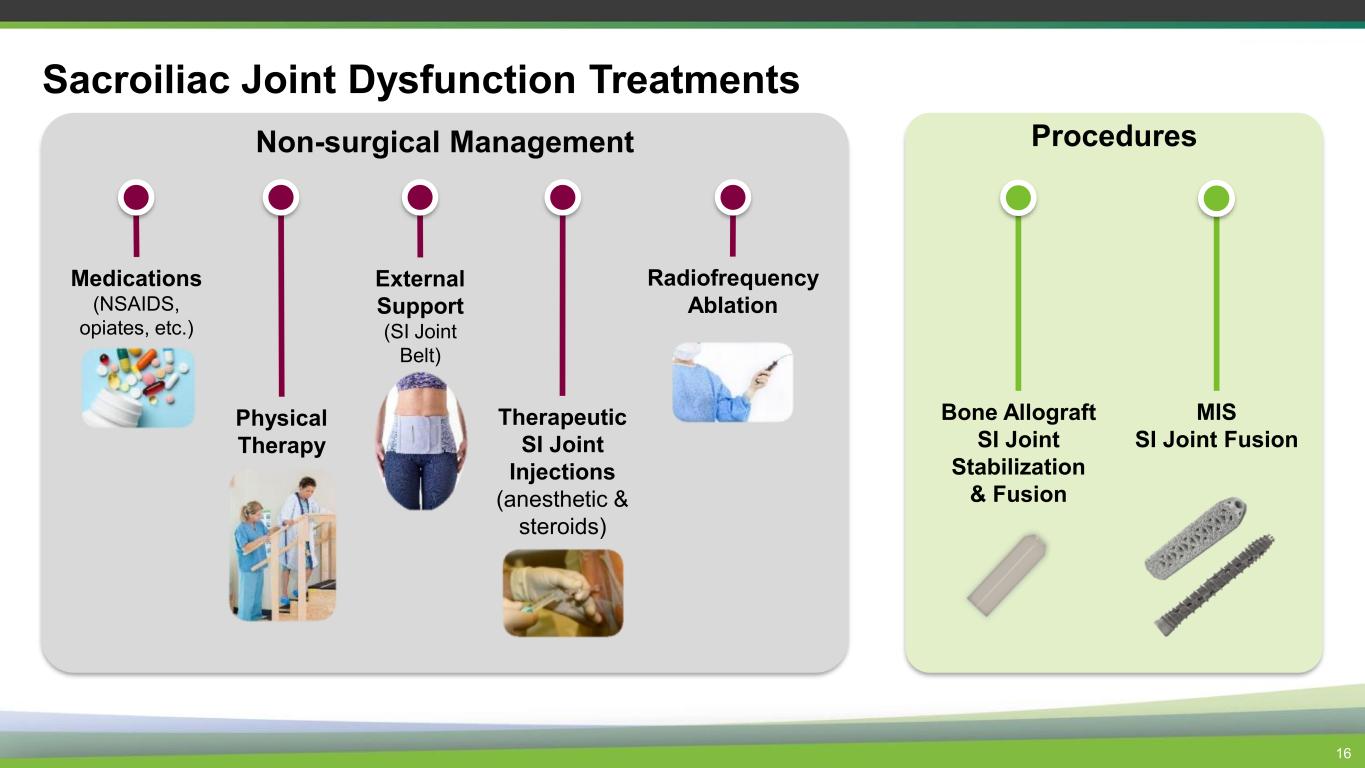
Yeah, I think it's a good question that you're asking because it really is targeted toward the ambulatory surgery center. I did talk about how it really fits well with the interventional spine physician preferred workflow, and typically those cases are done at the ambulatory surgery center. But it is also true that many of our spine surgeons also are working at ASCs too. And so we do think it's important in terms of continuing to see the growth that we would expect in our SI joint fusion part of the business. So just a little more information on it is a 3D printed titanium solution. It has a similar workflow to our Allograft solution. And as I said previously, it is reimbursed under CPT27279, which has nationwide coverage. So in terms of revenue impact, I'd say that it expands the market in a couple of ways. It provides interventional spine physicians with a product similar to our IntraX workflow, but there are 22 states where allograft solutions are not reimbursed, and so we think that it's going to be an important solution for the physicians that are there. And then there's also a subset of interventionalists who prefer a non-allograft solution that's delivered in a posterior approach. So Intra-TI is allowing us to serve those particular physicians. But I think what's most important is that we have a full suite of products for SI joint fusion. So with TORQ, Intra-X, iFuse 3D, and now Intra-TI, we have a setup to continue to lead the market, both with spine surgeons as well as interventional physicians as well. And maybe the final thing I would say is that we still are in alpha launch right now, so we expect an adoption ramp, and we expect to see progress through the year and into the back half of 2026 for that particular product.
All right. Much appreciated. Thank you.
Operator
Thank you. And our next question comes from the line of Travis Deed from B of A Securities. Your question, please.
Hey, thanks for taking the question. I wanted to ask more on the cadence on revenue. You mentioned second half, a little bit more weighted. Any color on kind of how you would titrate Q1 and if you'd kind of quantify some of the tailwinds in benefiting the second half?
Yeah, Travis, happy to take the question. So, look, coming into 2026, I think we have more tailwinds in the business than we've ever had before. If you look at the physician base that we entered the year with, We exited 2025 with over 1640 active physicians, so that's a pretty formidable physician base. You've got the improved reimbursement backdrop that Laura's talked about, whether it's the NTAP for TNT, the TPT for Granite, the increase in OBL fees for SI-GYN dysfunction. You've got the intra-TI product that we just launched. You've got the second BDD product that we're looking to commercialize potentially in late 2026. And then you've got the commercial expansion, both direct as well as the strategic partnership. So a lot of tailwinds coming into the business. Now, you know, we do think about our business on an annual basis and increasingly in a multi-year cycle basis. So we don't really provide quarterly guidance. And, you know, as you know, at our scale, the cadence of the business can vary based on the timing and scale of new product launches and how they get commercialized, especially through this new commercial model, the hybrid commercial model. So for modeling purposes, we're expecting the revenue growth to be back half-weighted so we can see all of these tailwinds starting to materialize and incorporate them in our guidance.
Okay, helpful. And I think earlier in the preparator remarks, you mentioned an innovation super cycle over the next five years. And should we think about that as kind of sustaining the long-term growth rate? or is there a potential that this company is actually growing faster over the next five years than it has been over the last five years?
Yeah, thanks for that question, Travis. And if you think about since our IPO, we've been delivering average revenue growth of around 20%, and we've been doing that through developing these innovative solutions and addressing failures of incumbent standard of care. So, you know, as we look at applications in compromised bone, we're looking at markets that have these higher-weighted average market growth rates because of these unmet clinical needs in the space. And our technologies have gone on to become category leaders, so whether it's SI joint fusion or whether it's pelvic fixation or now in pelvic trauma, it's allowing us to grow multiple times at the broader market growth rates in spine and interventional. So as we think about developing these various platform technologies, they are meaningfully expanding the total addressable market across various new disease states, but very specifically targeted towards spine and interventional, which is really important to us in terms of focus. But looking ahead over the next five years, we had used that term innovation super cycle, and we think that's the right way to think about it. We're going to be regularly launching a cadence of products, but they're going to be these unique technologies, and they're going to be targeting these new clinical adjacencies that focus on spine and interventional. And it really, first of all, takes these core competencies that we've developed in the business to address issues with compromised bone, but then also to lead the space for the long term.
Operator
That's great. Thanks a lot. Thank you. And our next question comes from the line of Matthew O'Brien from Piper Sandler. Your question, Britton.
Hi there. This is Ana on for Matt. Thanks for taking the questions. I wanted to start with one on the guide. I mean, it seems like you guys have a ton of tailwinds, you know, throughout the year, but you're baking in sort of a 500 basis point sequential slowdown versus last year. So just wondering if there's anything specific to call out on areas for upside. It seems like there's a lot of areas for things to move higher. So, yeah.
Yeah, so happy to take that, Anna. In terms of potential areas for upside, you're right. We've got a lot of tailwinds in the business. And the way I would categorize it is, if you look at our base guidance, it assumes high teens' growth in procedure volume and sort of a degradation in ASP mostly driven by the mix in procedures. Some of the deformity and trauma procedures use fewer implants, so the ASP tends to be lower. And what we've been able to do in the last few years is actually offset that ASP pressure with continued growth on the deformity side and the SI joint dysfunction side as well. So just simplistically maintaining that discipline and execution focus should provide some upside on the ASP. That's number one. And then you get into the potential ramp expectations of intra-TI, the continued acceleration of intra-X, and also this partnership with Smith & Nephew, which will continue to evolve as we progress through the first half of the year. So that also gives us a lot of confidence in the continued ramp in the business as we progress through the year. And more importantly, that ramp continuing into 2027, especially when you incorporate the rollout of TNT in Europe at some point in 2026, the potential impact of our ability to commercialize the third breakthrough device at the end of 2026, which would be a material impact in 2027.
Super helpful. And then I guess just again on the new intra-TI product for the ASC, I was wondering if you could give a bit more color on, you know, what your presence in the ASC is today, what you size that opportunity as, and how long it will take to really penetrate that market.
Yeah, I can help out on that. So I've been the CEO for five years of the company. Five years ago, virtually none of our sales were in the ASC. And today, around 35% of our SI Joint Fusion sales are in the ASC. So we do have a significant footprint there already. But I think the point you're trying to make is that with this new product, to ensure TI that it's going to provide another opportunity for us to grow the business overall and that a significant amount of that growth should be seen in the ASC. And just given the nature of the product, the single-use system that we have, the simplicity of it, it's really set up perfectly in order to grow overall in the SI joint fusion market and to drive additional sales to the ASC.
Operator
Thank you. And our next question comes from the line of Kathleen Roberts from Canaccord Genuity. Your question, please.
Thanks so much for taking the questions and congrats on the quarter. Just to talk about the commercial expansion, the direct commercial expansion, as you think about adding these new territories and the focus on growing the outpatient business, we were just touching on the ASC, how are you thinking about strategically adding these territories?
Yeah, I mean, what we do, obviously, we have quite a bit of information already on the opportunities that we have there, and so you identify where your targets actually are and where we're penetrated and where we're less penetrated. So what we're doing is we're looking across the United States and addressing those areas where we have a significant opportunity, and it could be on the spine side or it could be on the interventional side and then you add accordingly in terms of territory managers in those particular locations. In addition, in around half of our cases we actually will split a territory where the more junior territory rep is promoted to a territory manager. So in around 50% of the cases we're typically promoting somebody into that level and another 50% we're actually hiring from the outside. But we do have very significant opportunities across the portfolio to continue to grow and expand. We've gotten very significant leverage through our hybrid sales model with the addition of third-party agents. We have over 300 of them just in the U.S. alone. But there is a balance between growing your direct sales force and then supplementing it with hybrid and we think that we're striking the right balance by adding 10 more territories in 2026 to capture the opportunity.
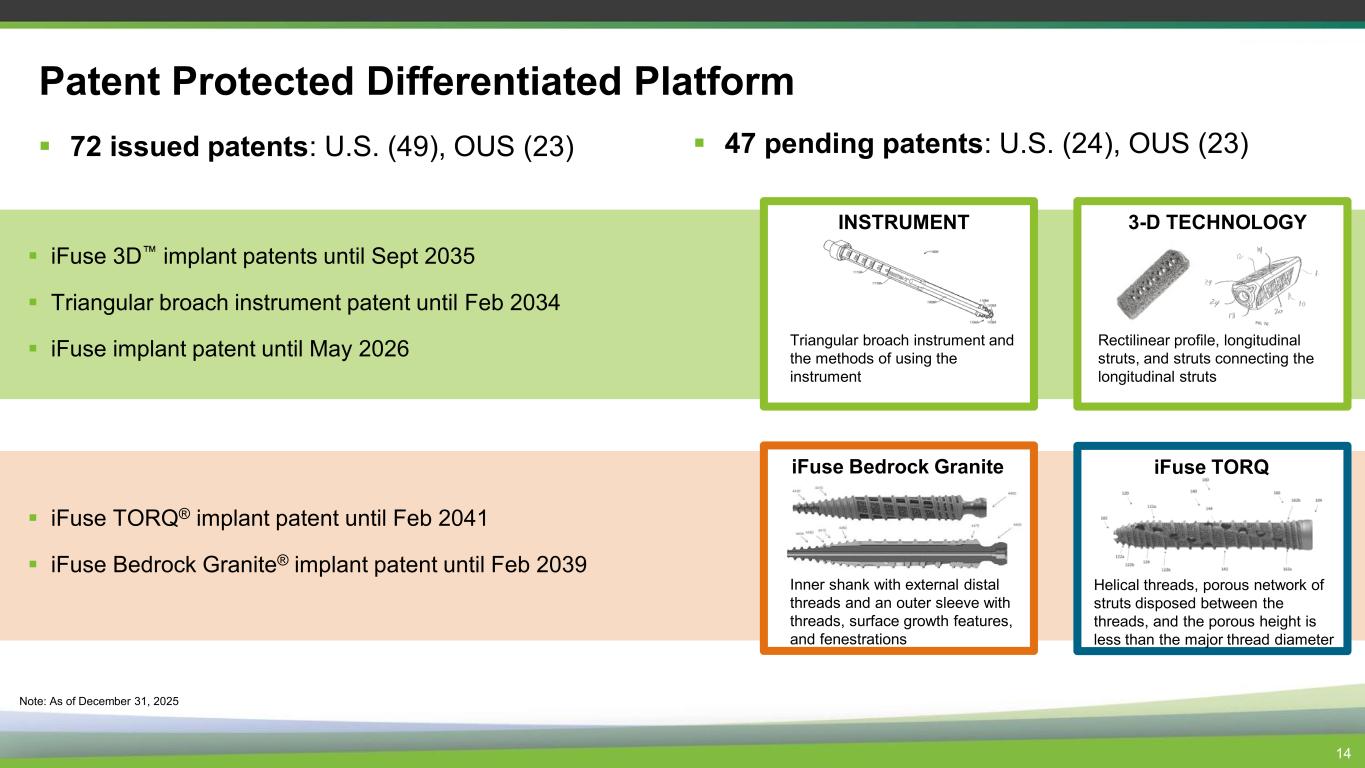
That's great. I'm just a quick one on the patent extension. Seems like it applies to your original, you know, triangular IFES implant. How much of your business would you say is that, you know, legacy segment?
Caitlin, happy to take that. The Legacy Classic is barely any part of our business, I'd say. It's less than 0.1%. At this point, majority of our SI joint business comes from Torque, 3D, and now with the going into interventional, Allograph, and now we expect InterTI to be a bigger contributor to the business as a portfolio.
Understood. Thank you so much.
Operator
Thank you. And our next question comes from the line of David Saxon from Needham & Company. Your question, please.
Good afternoon, Laura and Nanchal. Thanks for taking my questions. I wanted to follow up on the Smith & Nephew partnership. Maybe you can talk about the cadence of how that partnership ramps up in 2026. You know, when do Smith & Nephew reps actually start carrying TORC and TNT or, you know, those sets place? And then is that like a second quarter dynamic or can that start as early as March?
Yeah, I can at least start to answer that question. I mean, we just signed the agreement last week, but we are already in discussions to train and place implants as well as instrument trays into the field as well. So we're forming a joint steering committee between the two different companies. They're going to meet on a weekly basis and really get into a lot of the details of the relationship, but we do expect to start seeing some activity already in the month of March and then ramping up over the rest of the year.
Yeah, and what I would say there, David, is just like when we put out a new product, we want to make sure we have the surgical capacity available to be able to support it, and the The expectation is you should see the capacity ramp in Q2 and Q3 in preparation for Q4, which tends to be the biggest quarter.
That's helpful. Thanks for that. And then, Anshul, maybe sticking with you, so gross margin guidance, 78 percent. Looking back, you've seen expansion to varying degrees over the last couple of years. I understand there's this product mix dynamic that you might be considering, but would love to just understand kind of the drivers of the, you know, 160 basis points of compression, you know, mix, pricing, ramping product launches, et cetera. Thanks so much.
Yeah, no, happy to take that. On the gross margin side, again, look, really proud of how we've been able to address our gross margin. Obviously, we started the year in 2025 at 77% to 78%. We did much better than that, about 200 basis points higher. And, you know, as we get bigger, as the business scales, we're actually more focused on top-line acceleration and operating profit dollars growth. So for 2026, as we look at our guidance of 78% gross margin, we exit the year at about 79. So it's 100 basis points of gross margin impact. I'd put most of that is non-cash impact from depreciation. A lot of that's associated with the increase in surgical capacity. So, for example, as we're building out this Smith & Nephew distributorship, we're going to be putting out TNT trays that support the volume of demand we see there. Granite continues to perform really well. We're going to be putting capacity out there for that. Potentially the new product that we want to commercialize towards the tail end of 2026, there's going to be surgical capacity for that as well. ASP does have some pressure on gross margins, but we're offsetting them by some of the operational initiatives that we've been working on over the last 12 to 18 months to bring our own costs down. So I'd say, by and large, a lot of the impact is non-cash. And look, like we've seen over the last couple of years, the investment in surgical capacity and the new products, that does drive meaningful acceleration in our revenue growth. And while it is driving some de minimis pressure on the gross margin side, it's allowed us to get significant leverage and profitable dollar expansion over the subsequent period. And so we feel really good about the setup and the balance we're striking.
Operator
Great. Appreciate that. Thanks so much. Thank you. And our next question comes from the line. Richard Neuwitter from Truist Securities. Your question, please.
Hi, this is Ravi here for Rich. Thanks for taking the questions. Congratulations on the promotions, everybody. I guess two on our end. First, on guidance, you're talking about kind of high teams, U.S. volume growth, procedure weighted. And that would represent a little bit of a step down versus what you did in 2025. And I'd like to just kind of understand the rationale behind that outlook, given that you have a little bit more of a focused sales force coming in that's growing. You have this partnership with Smith & Nephew that should help kind of lever each product set in the respective areas of the hospital. And you have a number of new product launches. So just why was kind of high teens the right point? And then I have a follow-up.
So, Ravi, happy to take that. The first part of why it's high teens is you have to think about it from a comp perspective. some of the impact from new products is going to happen as we progress through the years. If you look at 2025, Q1, Q2 continue to benefit from new product launches that had happened in late 2024. If you look at it on a stack basis, actually, you do see a much higher increase in procedure volume growth versus 2024. So I'd say part of that is just the comps being the way they are. That's number one. Number two is, look, whenever you're putting out new products or expanding the impact of reimbursement coverage or commercial footprint expansion, we want to see how those play out before we start incorporating them in our guidance. So as you look at the rest of the year, you will see that impact happen more pronounced. But we think it's prudent early in the year to be thoughtful.
And then I guess another question on the Smith & Nephew partnership. Can you help us understand, you know, what the incremental or the kind of marginal profit looks like for, you know, each dollar of sale transferred over to Smith & Nephew?
Yeah, we're not going to break down what the relationship details are from that perspective. For us, what's important with the Smith & Nephew relationship is, number one, getting a product in level one, level two trauma sites at a national level. Number two, being able to satisfy the demand that we're seeing from the trauma physicians. Number three, which is a natural offset of building this distribution partnership, is allowing our reps to be freed up to continue to go build relationships, engage surgeons and interventionalists to drive that side of the business growth. So it's a multifaceted impact versus just one-off with what the impact Smith & Nephew will have on the B&L.
Operator
Thank you. This does conclude the question and answer session of today's program. I'd like to hand the program back to Laura for any further remarks.
I just wanted to say thanks to everybody for participating in our call and appreciate your interest in SI Bone. And we look forward to seeing all of you at upcoming conferences. Thanks again.
Operator
Thank you, ladies and gentlemen, for your participation in today's conference. This does conclude the program. You may now disconnect. Good day.