Operator
Good afternoon, and welcome to Abcelera's Q2 2026 Business Update Conference Call. My name is Jonathan, and I will facilitate the audio portion of today's interactive broadcast. After the prepared remarks, we will host a question and answer session. If you would like to ask a question, please press star 1 to raise your hand. To withdraw your question, press star 1 again. At this time, I would like to turn the call over to Trent Stimart, Abcelera's Chief Legal and Compliance Officer. You may proceed.
Thank you. Hello, everyone. Thank you for joining us for Bselera's second quarter 2026 earnings call. I'm Trin Steimart, Bselera's chief legal and compliance officer. Dr. Carl Hansen, Bselera's president and CEO, and Andrew Booth, Bselera's chief financial officer, are speaking on today's call. During this call, we may make statements about our strategic priorities and financial outlook based on our current expectations and in accordance with the safe harbor provisions of the private securities litigation reform act of 1995. Our statements are subject to a number of risks uncertainties and other factors that could cause actual results to differ materially from those described. Please review the risk factor section of our most recent form 10K and subsequent 10Q filings with the SEC for a more detailed discussion of these risks. Abcelera assumes no obligation to update any forward-looking statements to reflect events or circumstances after today's date our presentation today our earnings press release and our sec filings are available on our investor relations website the information we provide about our pipeline is intended for the investment community and is not promotional as we transition to our prepared remarks please note that this call is being recorded and will be available for replay on our investor relations website and that all dollars referred to during the call are us dollars After our prepared remarks, we will open the lines for questions and answers. Now, I'll turn the call over to Carl.
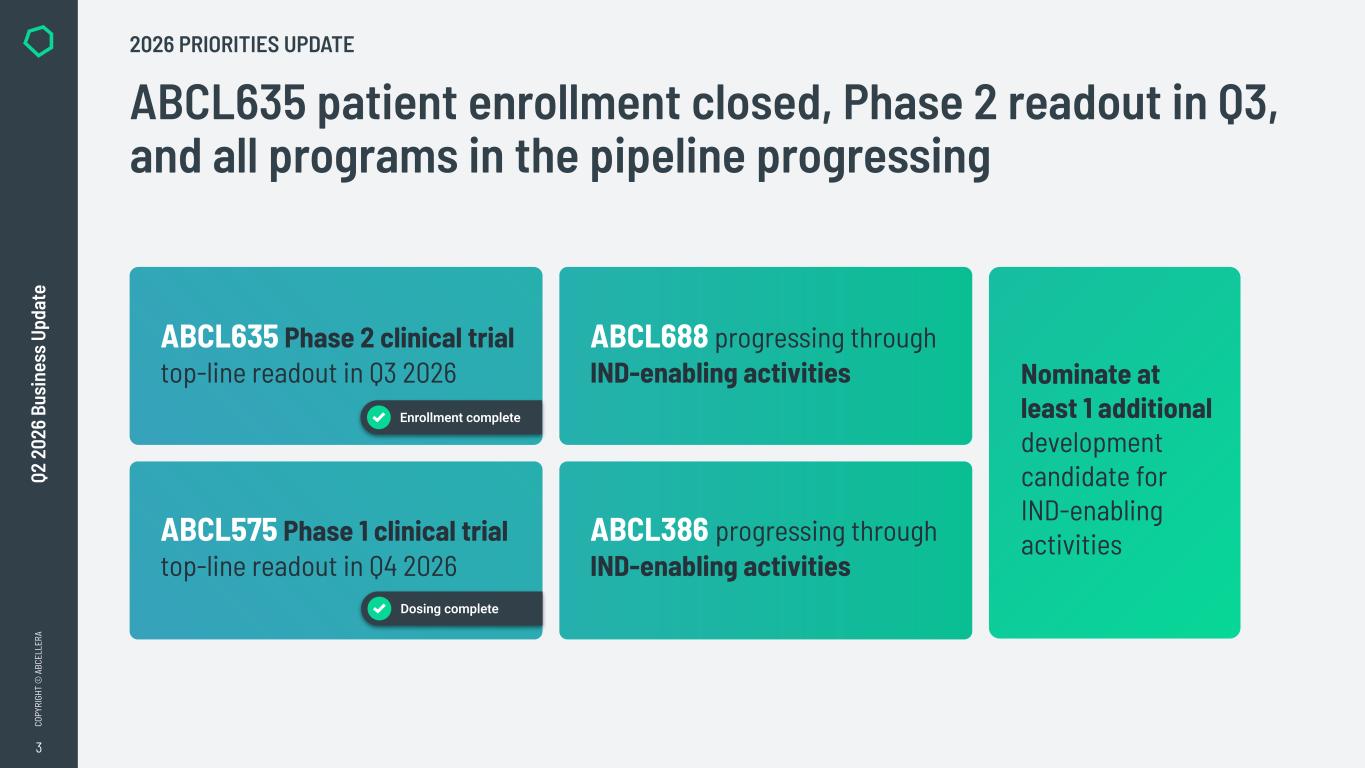
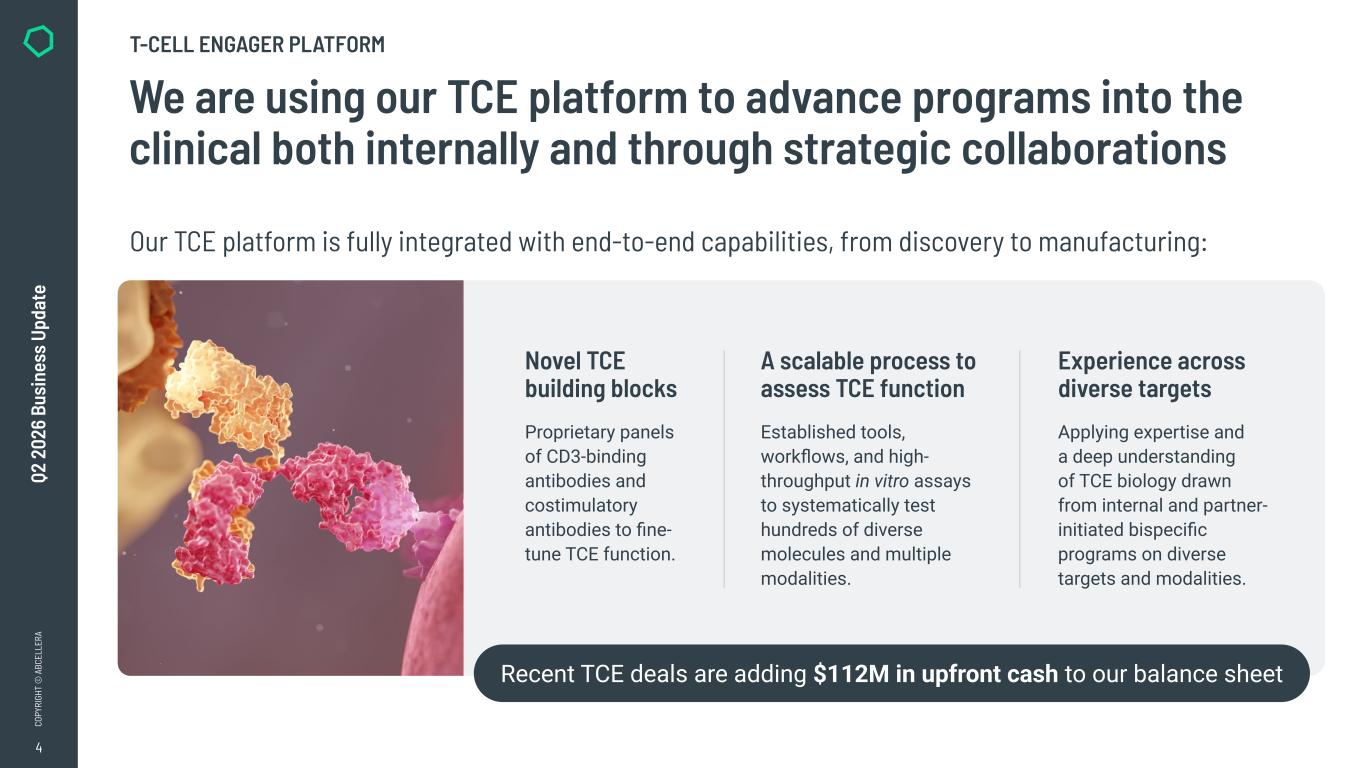
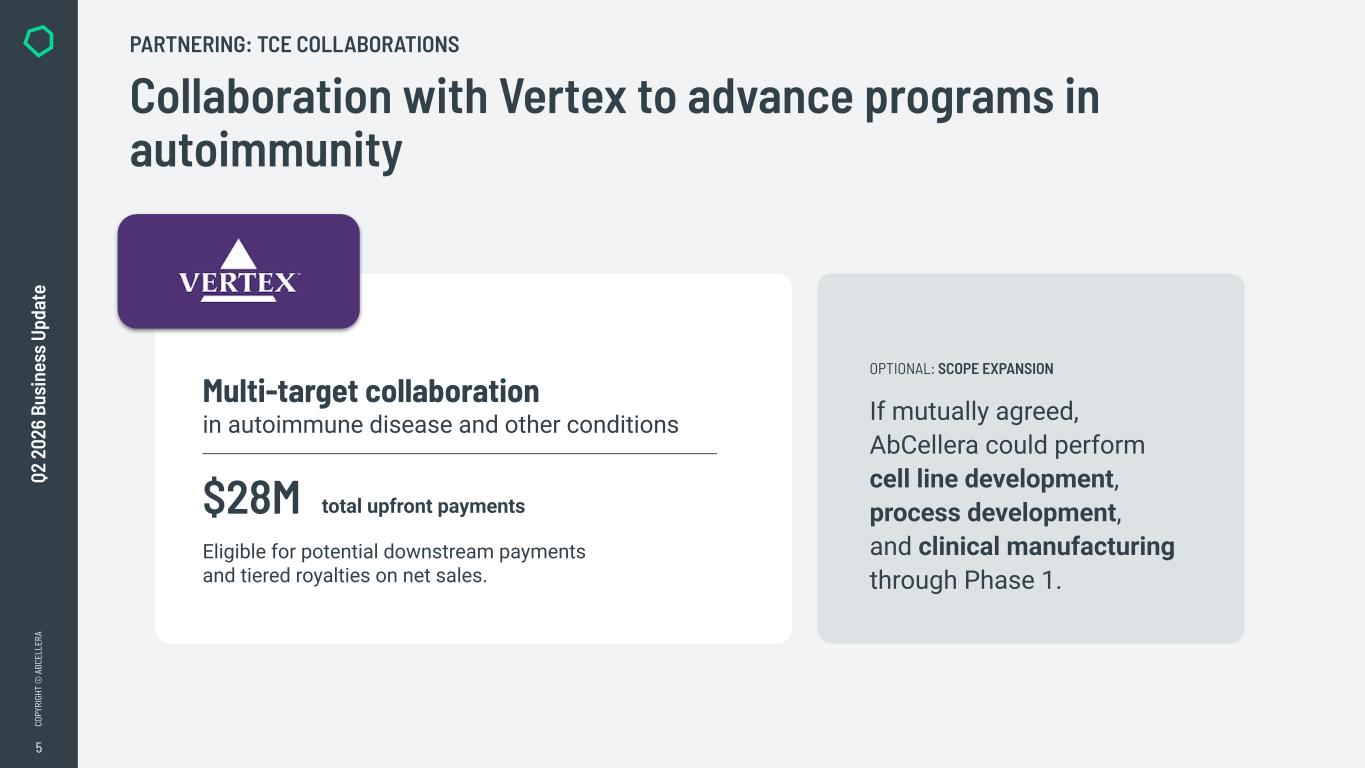
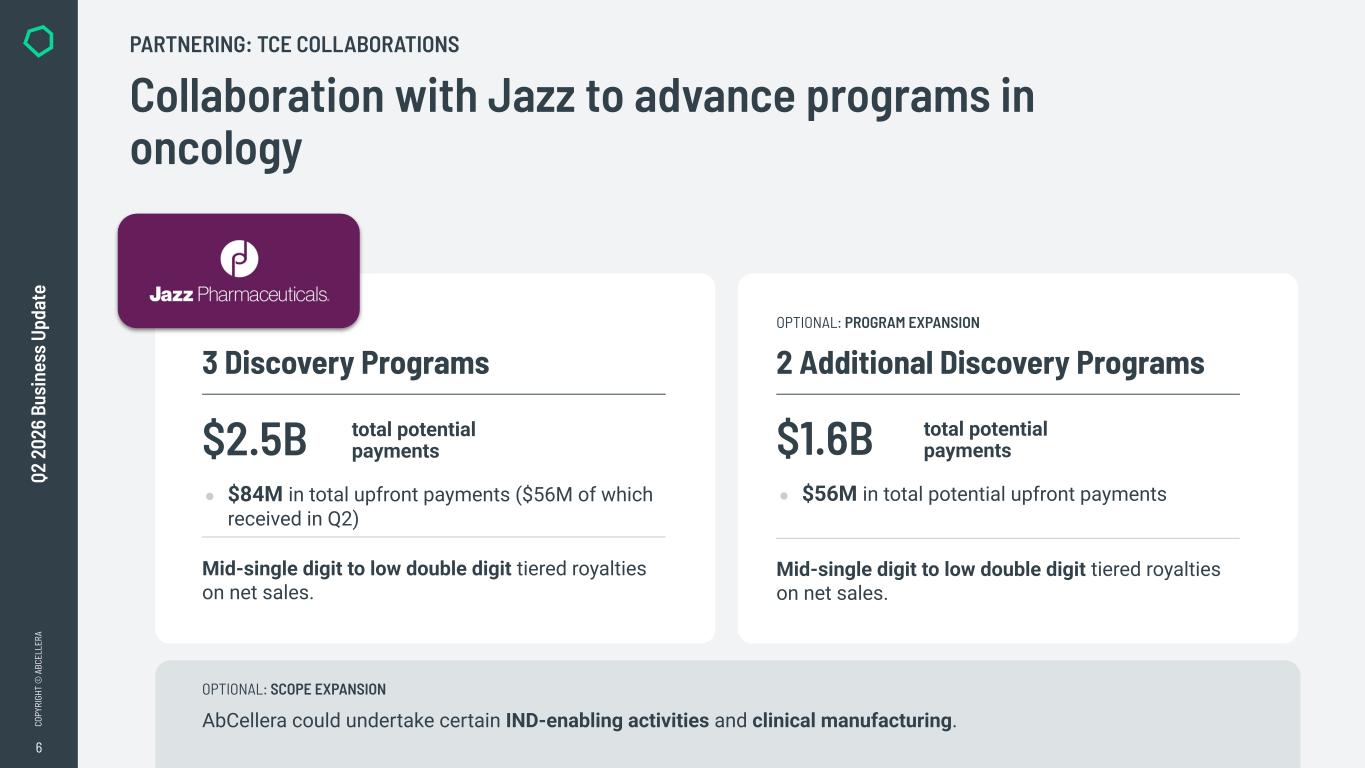
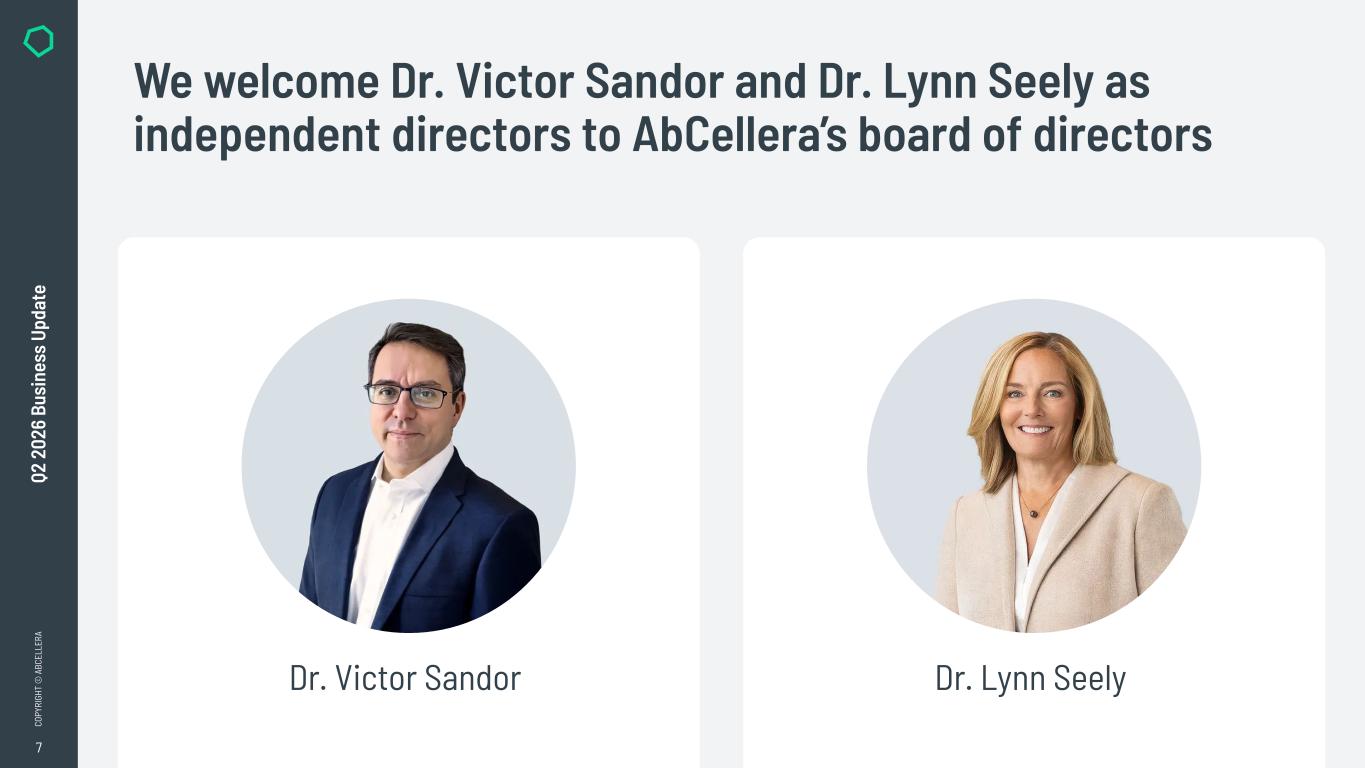
Thanks, Trins, and thank you everyone for joining us today. The most important data readout this year is the top line results for ABCL 635 in the treatment of moderate to severe hot flashes associated with menopause. Last quarter, we shared our interim phase one data that showed robust and sustained target engagement in healthy male volunteers and supported quickly advancing into a Phase II study in post-menopausal women experiencing moderate to severe hot flashes. Recruitment in this study accelerated through H1 and we completed enrollment and initial dosing of patients in June, well ahead of schedule. Based on this, we expect a top-line data readout very soon. If the data is positive, we believe ABCL635 will be highly de-risked. As noted in our last call, we've been preparing for next steps, which would include late-stage clinical development in moderate to severe VMS associated with menopause, and clinical studies to evaluate ABCL 635 in treating VMS associated with cancer treatment. Turning to our broader portfolio, ABCL 688 and ABCL 386 continue to progress through IND enabling activities, and we expect both to enter Phase I-II studies in 2027. We will disclose more information on these programs when they enter clinical studies. Our Phase I trial for ABCL575 completed dosing and is on track for a readout in Q4. As previously discussed, we intend to complete Phase I studies and we currently have no plans to develop it past Phase I. Finally, I had previously communicated a goal of moving another program into IND enabling activities in the first half of this year. Although we missed this timeline, we are making good progress, and I am confident in the productivity and innovation of discovery. The most significant public disclosures since our last earnings call are related to business development associated with our T-cell engagement platform. As a reminder, it was five years ago that we started working on TCEs, and since then, we have invested heavily in the platform. Our efforts began with the hypothesis that more diverse CD3 binders would be important for engineering TCEs with improved therapeutic properties. Our internal work to date has proven this to be true, but it's also revealed that diversity of CD3 binders alone is not sufficient. Today, we know that repeated success in generating optimal TCEs requires a comprehensive toolkit of binders, technologies, assays, models, and biological insight. Accordingly, our platform now includes diverse panels of CD3 targeting antibodies, along with proprietary panels of co-stimulatory antibodies to enhance and fine-tune TCE function, scalable protein engineering workflows to create a large diversity of binder combinations and formats, scalable in vitro assays to assess TCE function and development properties, experience in the translation between in vitro assays and in vivo models across multiple targets, and increasingly, a connection between TCE properties and third-party clinical data. Together, we believe this creates a highly-enabled platform for developing multispecific TCEs with broad applications across oncology and autoimmunity. While we are leveraging this capability to advance internal programs, we also view it as a key platform for strategic partnerships. Last year, we announced our first significant TCE collaboration with AbbVie. Adding to this, we have recently entered into two new TCE collaborations with Vertex and with Jazz. These two deals are adding over $110 million in upfront cash to our balance sheet and have the potential for larger value in downstream payments and tiered royalties on net sales. Last week, we announced our most recent collaboration, which is with Vertex, focused on TCEs for autoimmune diseases and other conditions. Under the terms of the deal, a seller will receive $28 million in upfront payments, is eligible for potential downstream payments and tiered royalties on net sales, and has a potential option to conduct process development and clinical manufacturing. In June, we also announced a collaboration with Jazz Pharmaceuticals that includes three confirmed discovery programs with $84 million in total near-term upfront payments. We have received 56 million dollars in upfront payments for the first two programs and we will receive another 28 million dollars for the third program which will be initiated within the next 12 months under the agreement abcelerate is also eligible to receive over 2 billion dollars in potential downstream payments along with mid single digit to low double digit tiered royalties on net sales the deal also includes a mutual option for two additional discovery programs under the same financial terms, and a mutual option for Abcelera to undertake certain IND enabling activities in clinical manufacturing. The total potential deal value with all five programs included would be over $4 billion. We believe that this is one of the largest TCE discovery deals reported to date. Before handing over to Andrew, I'm pleased to welcome Dr. Victor Sander and Dr. Lynn Seeley as new independent directors on Abcelera's board. Dr. Sander and Dr. Seeley are experienced biopharmaceutical executives with proven and complementary expertise in development across oncology, women's health, immunology, and endocrinology. Lynn and Victor bring deep expertise and development experience that will serve us well as we build our portfolio and our company. And with that, I will hand it over to Andrew to discuss our financials. Andrew?
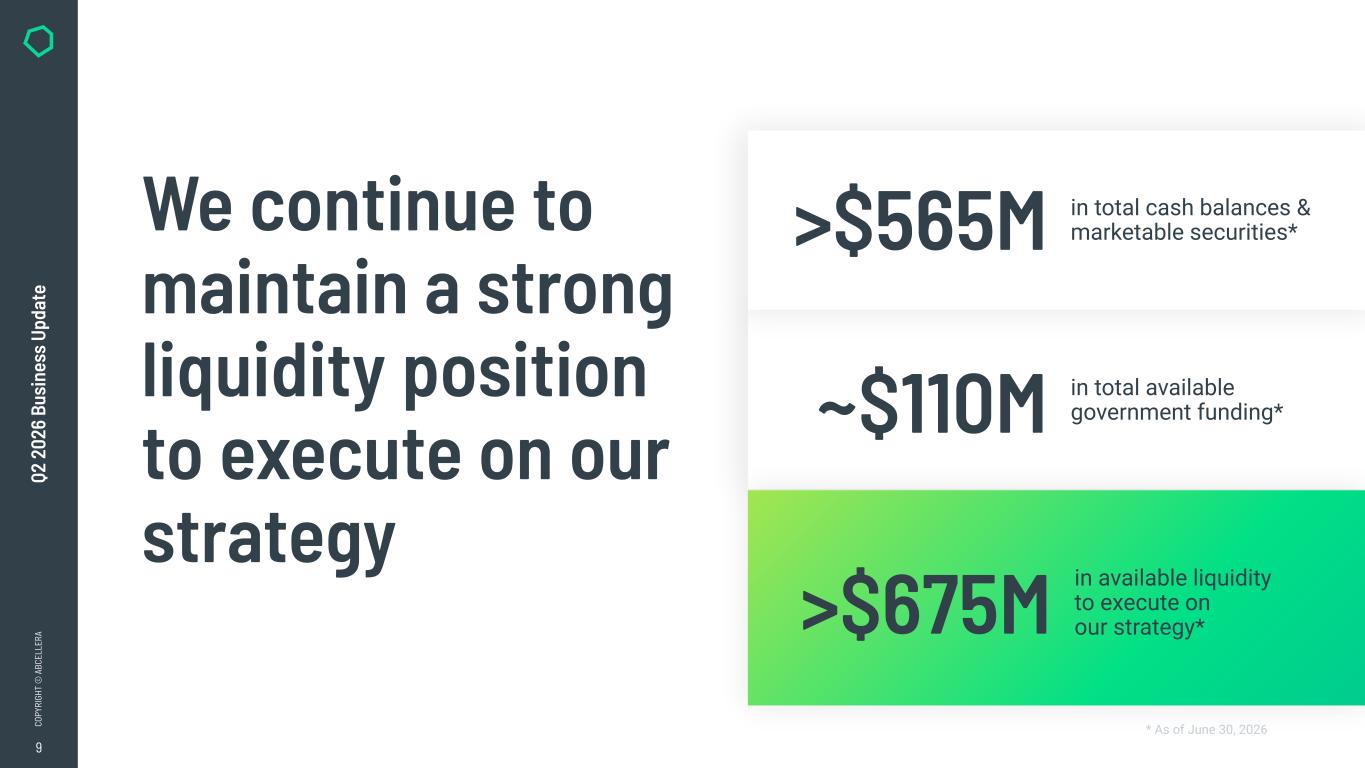
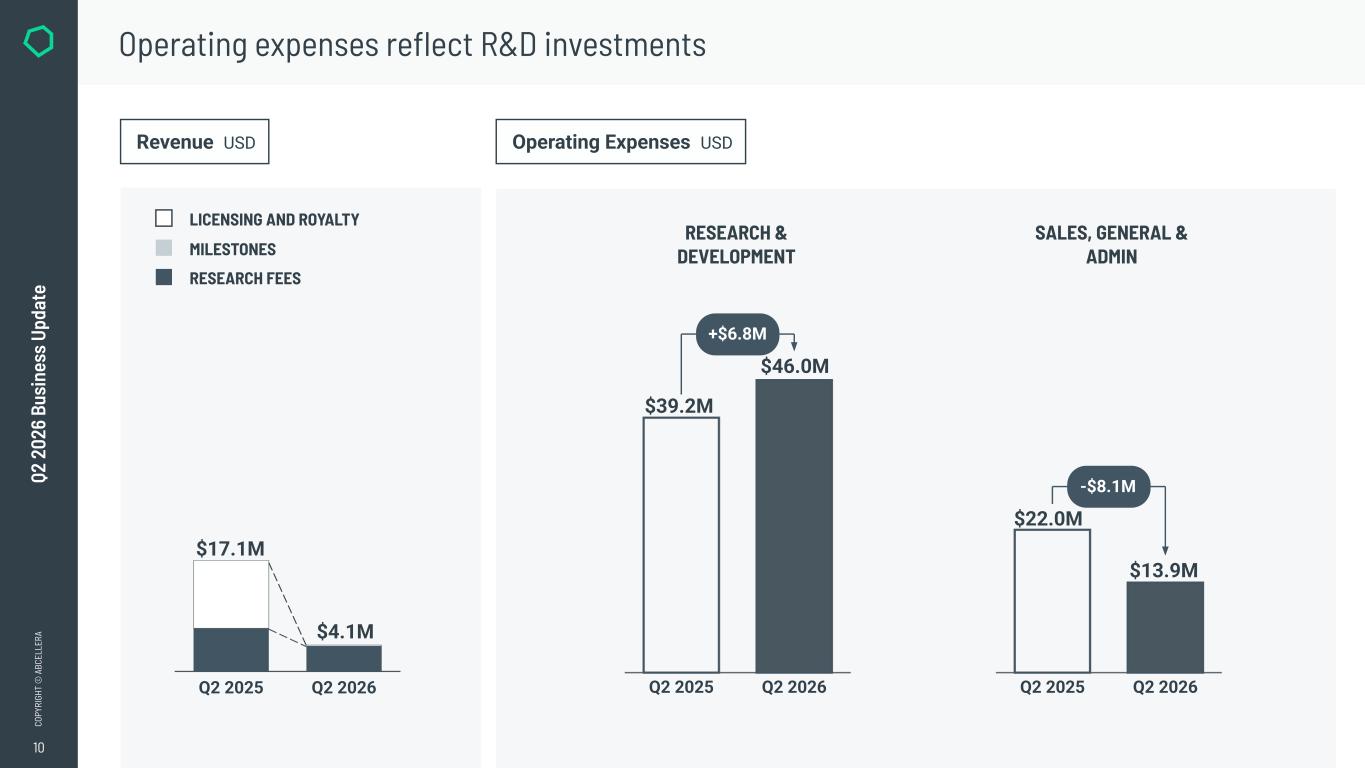
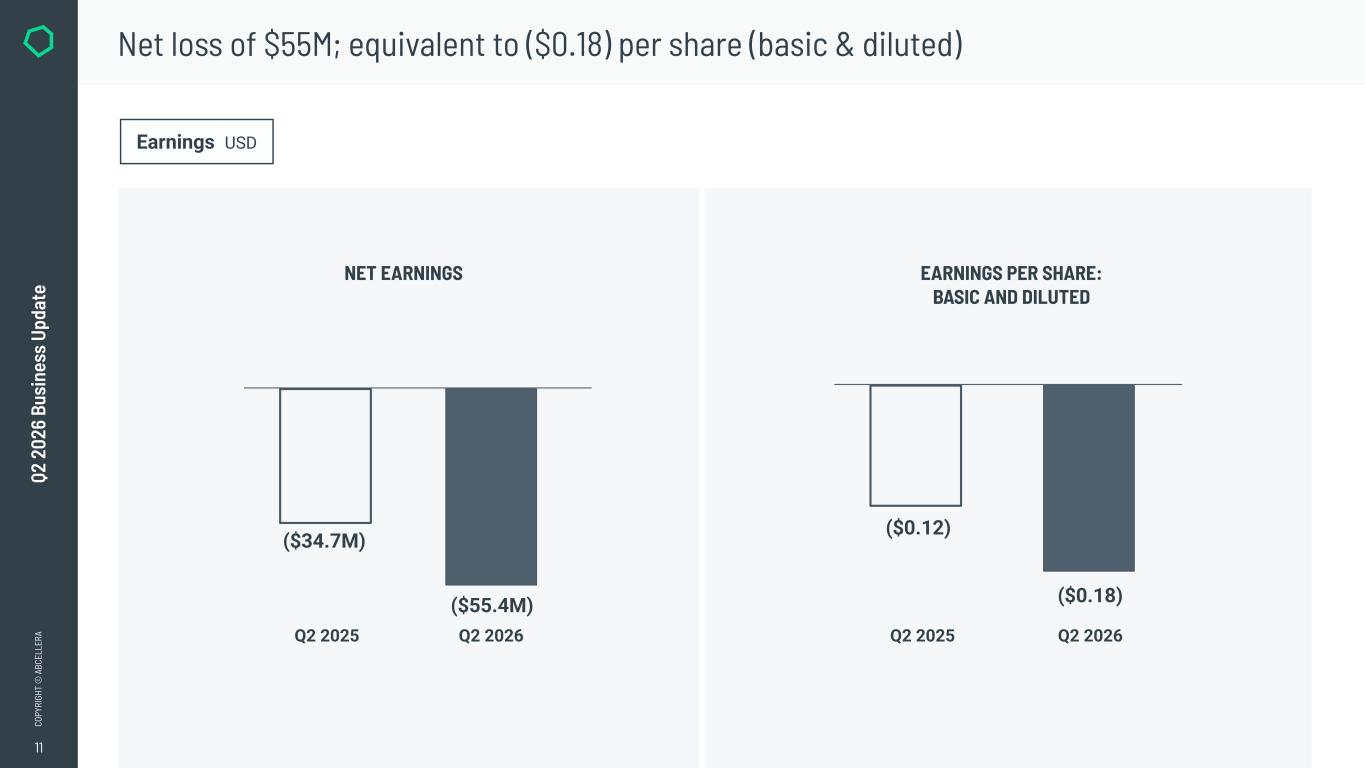
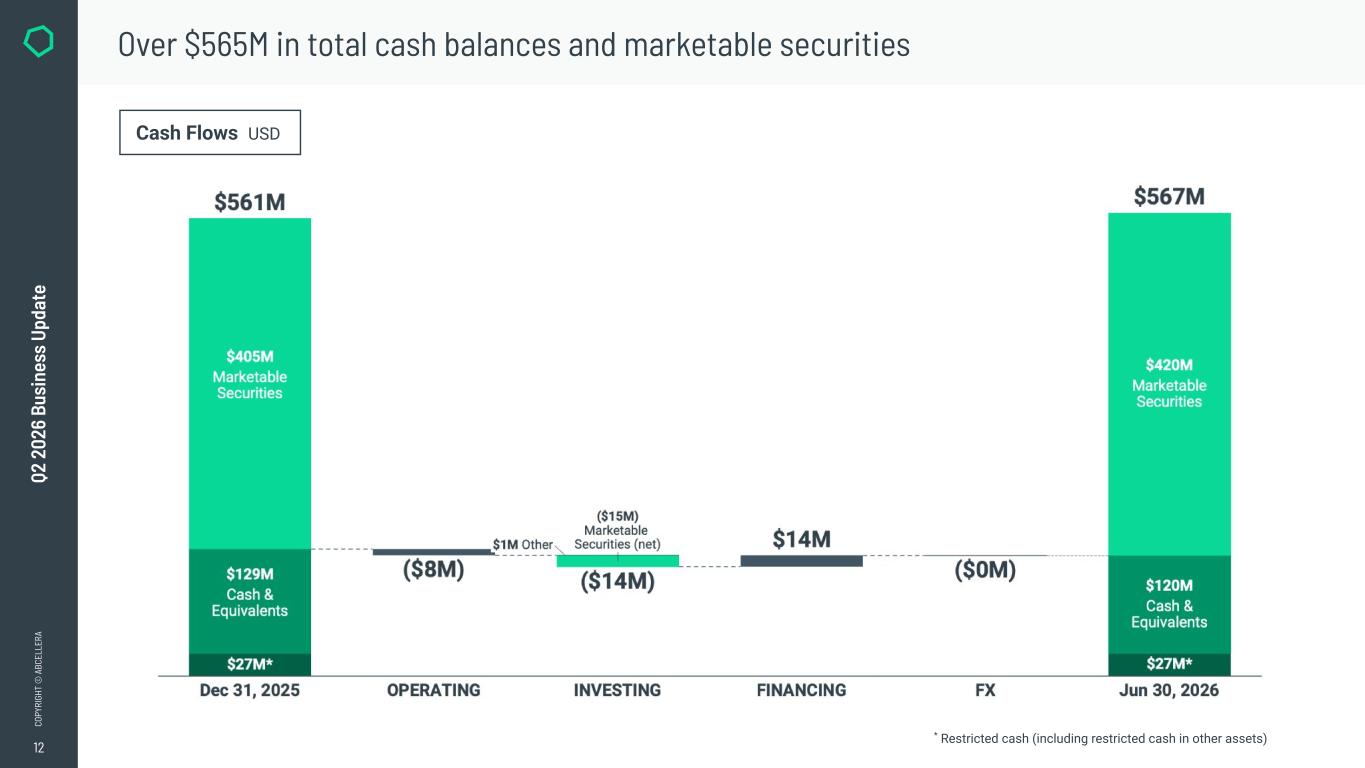
Thanks, Carl. As Carl pointed out, Abcelera continues to be in a strong liquidity position with over $565 million in cash and equivalents and with roughly $110 million in available committed government funding to execute on our strategy. We are continuing to execute on our plans with a focus on internal programs and leveraging our process development and clinical manufacturing investments. Looking at revenue and expenses, revenue for the quarter was around $4 million compared to total revenue of approximately $17 million in the same quarter of 2025. The revenue this quarter is consisted mostly of research fees. Our research and development expenses for the quarter were approximately $46 million, approximately $7 million more than last year. This expense reflects the focus on investment in our internal programs. In sales general and administration, expenses were approximately $14 million, compared to $22 million last year. The large decrease in SG&A expenses relates to the conclusion of our intellectual property litigation case and to changes in the teams following the focus on our internal pipeline. Looking at earnings, we are reporting a net loss of roughly $55 million for the second quarter of 2026 compared to a loss of about $35 million a year earlier. In terms of earnings per share, this result works out to a loss of $0.18 per share on a basic and diluted basis. Turning to cash, altogether, we finished the quarter with $567 million of total cash and marketable securities. That's a $6 million increase in total cash for the first half of 2026. Operating activities for the first half of the year used approximately $8 million in cash and included in the operating cash flow is the receipt of $56 million from the upfront payments under our TCE deal with JAS. This portion of the upfront payments from the JAS partnership was received in the quarter. Excluding marketable securities, investment activities year-to-date included approximately $6 million of capital expenditures offset by $7 million in government grants received. As a part of our Treasury strategy, we have $420 million invested in short-term marketable securities, and our investment activities for the quarter included a $15 million investment in these holdings. As a reminder, we have received committed commitments for funding the advancement of our internal pipeline from the government of canada's strategic innovation fund and the government of british columbia this available capital does not show up on our balance sheet and with over 565 million dollars in cash and equivalents and the unused portion of our secured government funding we have over 675 million dollars in available liquidity to execute on our strategy in addition we have further available liquidity from our ownership of the other Vancouver Lab-based office building, as well as our GMP facility. With respect to overall company expenditures, our capital needs are very manageable, and we continue to believe that we have sufficient liquidity to fund at least the next three years of pipeline investments. And with that, we'll be happy to take your questions. Operator?
Operator
We will now begin the question and answer session. Please limit yourself to one question and one follow-up. If you would like to ask a question, please press star 1 to raise your hand. To withdraw your question, press star 1 again. We ask that you pick up your handset when asking a question to allow for optimal sound quality. If you are muted locally, please remember to unmute your device. Please stand by while we compile the Q&A roster. Your first question comes from the line of Steve Seedhouse at Cantor. Your line is now open. Please go ahead.
Hi, good afternoon. Thanks so much for taking the question. Just wanted to ask first on the upcoming, on the forthcoming of VMS data, what in your view is a clinically meaningful improvement in the VMS severity just in the context of that, I think, three-point ordinal scale that's used for assessing severity? And then also, will you have threshold analyses for the VMS frequency data available with top line, something like proportion of patients with 90% or 100% reduction in frequency. Just curious if that's something that will be with the top line. And then I have a follow-up as well.
Steve, Carl here. Thanks for the question. So first, in terms of, you know, the upcoming readout that obviously we're very excited about, you know, our view is that success is a clean safety profile, which so far everything that we've seen through phase one has been entirely consistent with that and efficacy that tracks in a way that is comparable to the two small molecules that are approved so on the frequency side we are you know obviously looking for a response relative to placebo that's on the order of 20 at least which is about what you see with the small molecules and there's additional an additional requirement that you have at least two a reduction in frequency of at least two hot flashes per day which is something that we expect to meet on under the same criteria on the severity side um you know we're expecting that if we get the frequency we're going to track with severity and have numbers that are very comparable to the small molecules i don't think we've communicated you know at the definitive bar on that one but historically the severity has been easier to hit than the frequency and so we are really more focused on the frequency side right now all right thanks thanks carl and um just i wanted to ask about the, you made some comments and you've mentioned this before about potential application in cancer.
So I guess this would be certainly women with breast cancer, but maybe also men on androgen deprivation therapy. And it sounded like you were going to look into opening some phase two studies along with the late stage program and menopause. But I'm curious why, like why not move directly into phase threes label enabling studies in those cancer indications, just given what we've seen from OASIS-4 with Linquit and assuming you'll have positive phase two data in hand yourself and dose selection would be facilitated by that. We'd love to get your thoughts on that.
Thanks, Steve. It's a great question. Probably it's a question that would be best directed to Sarah, our chief medical officer, since she has been obviously a leading point on the regulatory strategy. My understanding is that moving it first into this patient population, which is obviously going to be significantly different given that you're dealing with patients that have oncology is the first step before moving into a later stage trials. And we expect to initiate that relatively soon as we get ready for the larger study on VMS associated with menopause. And of course, there's going to be some gap between a readout and getting the final trial closed up and getting all set up for that. So we're sequencing that as quickly as possible.
Operator
Your next question comes from the line of Kripa Devorakonda. Your line is now open. Please go ahead.
Yeah, thank you so much for taking my question. I want to ask a little bit about safety differentiation. You know, the small molecules have liver monitoring requirements. If the upcoming data from 65 confirms, reconfirms, I should say, a clean liver profile, can you talk a little bit about what you plan to do in phase three in terms of liver monitoring to help establish a definitive differentiation on this aspect? And also, do you think a clear differentiation on safety would help capture the first line non-hormonal market? Thank you. And I have a follow-up question.
Sure. I'm probably going to not go too deep into this since we are expecting data relatively soon, and then we'll have ample opportunity to vet all those questions. But just briefly, as you mentioned, we have been very focused on safety as a key differentiator. Both the two small molecules have liver monitoring. That is inconvenient, both in practice and for patients. And we believe that it is a property associated with metabolism of small molecules and one that an antibody should not have. And of course, as reported last earnings call, the data so far shows no perceptible increase in liver enzymes across any of the patients. And so In terms of how we look at that going forward, that will be on Sarah's docket, but my expectation is that we will continue to do some monitoring of enzyme levels and make sure that that holds going forward. But frankly, from a scientific perspective, I see no reason why that wouldn't. The other thing that you didn't mention on the safety side is there has been a somnolence side effect associated with the bear molecule. That's a somnolence side effect that we believe is associated with binding of that molecule not just to NK3R but to NK1R. We have an antibody that is specific entirely specific to NK3R so we do not expect to see that come up and obviously we haven't seen any of that in the in the data that we looked at so so far but that's another point that we'll be pushing. We do think that in addition to the convenience of a once monthly dosing. Improved safety for a product like this is paramount, and we are so far very encouraged by the data we've seen.
Great. Thank you so much. Just a quick question on the partnerships that you have signed with Vertex, JAS. Seems like the focus is on multi-specific T-cell engagers.
Just wondering if you can talk a little bit about the percentage of internal resources that are dedicated to this tce platform versus the others especially the gpcr ion channel platform it's a great question um as i mentioned in my prepared remarks uh you know our work in tc is now a long-standing effort so we have we have spent you know the last five years uh putting in place some of the very important building blocks to execute on these uh on these types of therapies and along the way have have learned a lot about what it takes to succeed in this space so much of that is now in the bank so we're operating now from an established platform we have extra bandwidth because that work is done to take on additional programs and so i i expect there will not be a big change in our allocation of resources to tce but it will be directed from putting the foundation in place building the expertise and the capabilities to executing on those capabilities both for internal programs and for partner programs And we are very pleased to see that come to fruition and to have attracted to stellar partners in Vertex and Jazz who prioritize, you know, high innovation and are serious about bringing these forward to the clinic. Just a last point, you know, with respect to the balance between TCEs and, let's say, GPCRs and ion channels, you know, I don't have a hard number, but I'd say that there's significantly more effort on the GPCR and ion channel side. But TC has been one of the strong pillars of the pipeline, and we expect it will stay that way for the coming future.
Okay, great. Thank you so much for the call.
Operator
Your next question comes from the line of Stephen Willey at Stiefel. Your line is now open. Please go ahead.
Hey, good afternoon. This is Josh on for Steve. Thanks for taking our questions, and congrats on the progress. Maybe just as a follow-up to the first question asked, specifically on severity, and looking at some of the historical Fezalinitin, Elenzenitant data, it sort of seems that or it doesn't appear that Fezalinitin actually maybe shows a statistically significant difference on severity at certain time points. And it looks like Elenzenitant, specifically at later time points and at higher doses, has kind of shown this. And I wanted to get your thoughts on maybe severity being something that's maybe exposure-driven and how you're thinking about that with ADCEL 635's differentiation with the extended pathway?
A great question. I don't know exactly the data that you're looking at. Both severity and frequency are important regulatory endpoints that need to be hit. That's the understanding that we're moving on, and we do think that they correlate very well. You know, at the very least, there's well-reported data on dose escalation or fesolinotant, where a dose escalation of fesolinotant showed improved efficacy, both in frequency and in severity. And on the severity case, it did look as though that dose response lasted longer or plateaued later than it did on frequency. So I think that would be consistent with what you're saying, but I would be cautious to speculate too much with exactly how that's going to play out. and in any event, we are anxiously awaiting the data that's coming, so we're going to have that answer pretty quick, and then we'll be digging deeper into it.
All right. Thanks for taking the question.
Operator
Your next question is from the line of Evan Siegerman from BMO Capital Markets. Your line is now open. Please go ahead.
Hi. I'm Malcolm Hoffman. I'm for Evan. Thanks for taking our question. The Vertex collaboration applies to solo engagers to autoimmune diseases, and without disclosing the targets, can you discuss what technical features are required to create an acceptable therapeutic profile in these autoimmune diseases, particularly around depth and duration of cell depletion, cytokine release, and repeat dosing? Appreciate it. Thanks.
Yeah, it's a great question. I think you highlighted the important things for, you know, cell depletors that are used in autoimmunity, and what you want is, you know, deep deep depletion uh something that is safe something that is tolerable um all of that is in play uh but it also depends on the target and the exact application so without getting into the details of that um i don't think i could give you a very uh uh you know a very detailed answer on that particular question your next question is from the line of allison bratzel from piper sandler your line is now open please go ahead hey uh good afternoon and and thanks for taking
the question. One from me on 635, could you just talk to your expectations for the placebo arm in the phase two? Are the small molecule trials a good benchmark of what to expect from the placebo? And could you just talk to aspects of the phase two trial design that are designed to mitigate placebo responses. Thank you.
Yeah, you know, the trials that have been done have all shown a pronounced placebo response. And so, you know, our expectation coming into the study is that we will also have a placebo response and that it will be in the range that's comparable to what has been seen. That's our working hypothesis. We're going to know that very soon. We'll read out the data. In terms of trying to reduce that response, apart from good, you know, clinical operations, having a period where you're enrolling patients, not telling people exactly what the numbers need to be before they're enrolled, all of that has been put in place. We feel very confident about the execution. But I do think one of the big questions is exactly where that placebo response is going to come out. And we'll know shortly. Thanks for the question.
Operator
Your next question is from the line of Brendan Smith from T. Cowan. Your line is now open. Please go ahead.
Thanks for taking the questions, guys. Maybe another one on 635 from us. I guess first, just quickly, can you confirm that the Phase 2 efficacy data will be out to four weeks in all patients, or will you have any data out to 12 weeks in some patients? Just to kind of check that box there. And then maybe secondly, when you look at the commercial opportunity, I guess, in VMS, how are you kind of thinking about a potential Phase 3 in terms of target patients? I guess, are you thinking of this exclusively as a non-hormonal alternative, or would you kind of consider a comparison in a pivotal study maybe with some patients on a refractory to HRT, just kind of trying to think about how we should segment that market?
So first, the data that we're expecting very soon is going to be data that is four weeks in all patients, and we will not report data on a subset of patients out to 12 weeks. So that's the top-line data. And historically, if you look at efficacy data, there's been a very good follow-through between four-week data and 12-week data. So we're feeling confident that we're in a great spot. Also, I should mention that the phase two was done with a single dose of ABCL 635. And so part of the study is that we are not dosing again. And as the dose comes down, we're getting an effective dose response curve. So we would expect that by 12 weeks, the effect should be certainly diminished, although we'll see that when it comes out. In terms of the phase three, I think it's a little bit early to talk about the design. I think it is a good question as to how you exactly design this and really speak to the medical need. We think at the very base case, there are a large number of women that are contraindicated and that would benefit from a non-hormonal option. As I've said on previous calls, we think that that's roughly or it's probably over a million women in the U.S. alone. in addition to that there's a very substantial number of people that would benefit from a treatment for hot flashes associated with cancer therapy where hormones are not an option that would include both both prostate cancer and breast cancer and then there will be some subset that are not tolerant to hrt or that decide not to and that that's a bit of a moving bar these days but we think there's a big opportunity there as well so we will take all that into consideration once we have the data and we're making plans for the larger trial.
Understood. Thanks, guys.
Operator
Your next question comes from the line of Devanjana Chatterjee from Jones. Your line is now open. Please go ahead.
Hi, thanks for taking my questions and congrats on the progress with the trials. Curious if you could add any additional color on the blinded safety data that's emerging from the trial? Are the overall adverse event rates that you're seeing on a blinded basis and any potential discontinuation rates tracking within expectations? And I have a quick follow-up.
Yeah. We haven't disclosed any safety data past what we did on the last call. What I will say is that there's nothing that we've seen that has given us any pause or damage our thesis. But of course, we're going to wait until the unblinding and have a close look at that. But so far, things are on track.
Thanks. Appreciate it. And a quick follow-up. What's your latest take on the debate around whether targeting the median pre-optic nucleus, I mean, inhibiting the NK3R receptors there, is crucial to seeing a potential benefit versus just, you know, suppressing the candy neurons in the arcuate nucleus?
That is a great question. And And it's one I think that we've highlighted on past calls, so that is the key remaining scientific risk in the program. What I will say is that the phase one data that we presented on the last call shows that we can get profound suppression of testosterone and that we can do that in a way that is deeper than what has been seen by the small molecules and that lasts for the entire dosing interval. So the candy neurons, so that reads right through to the candy neurons in the infundibular nucleus. Those are believed to be the most important neurons. I think everyone would agree with that. And so from that perspective, if those are the only neurons that matter, then we would expect an efficacious drug and probably a drug that has even better efficacy than what has been seen with the small molecules because the testosterone suppression has been greater. The open question remains as to whether also blocking NK3R in the preoptic nucleus has an effect uh we we have not done a conclusive experiment pre-clinically to prove that the experiment to prove that is the phase 2 data that we'll read out shortly and so that's the uh that's the remaining question um you know i'm not going to speculate further but we're feeling we're feeling very good that we have great target engagement in the neurons that are the main drivers of this whether or not uh taking another kick at the can in the pre-optic nucleus matters is something that we're going to find out very shortly.
Operator
There are no further questions at this time. We've reached the end of the Q&A session. I will now turn the call back to Carl for closing remarks.
Thank you, everyone, for joining the call today. Abselra is moving into a very exciting time, and we look forward to updating you shortly on our pipeline and our portfolio.
Operator
This concludes today's call. Thank you for attending. You may now disconnect.