Operator
Ladies and gentlemen, thank you for standing by. Welcome to the Acumen Farmer 4th Quarter 2025 Conference Call and Webcast. At this time, all participants are in a listen-only mode. After the speaker's presentation, there will be a question and answer session. And to ask a question during the session, you would need to press star 1-1 on your telephone. You will then hear an automated message advised and your hand is raised. And to withdraw your question, please press star 1-1 again. Please be advised that today's conference is being recorded. I would like now to turn the conference over to Alex Braun, Head of Investor Relations. Please go ahead.
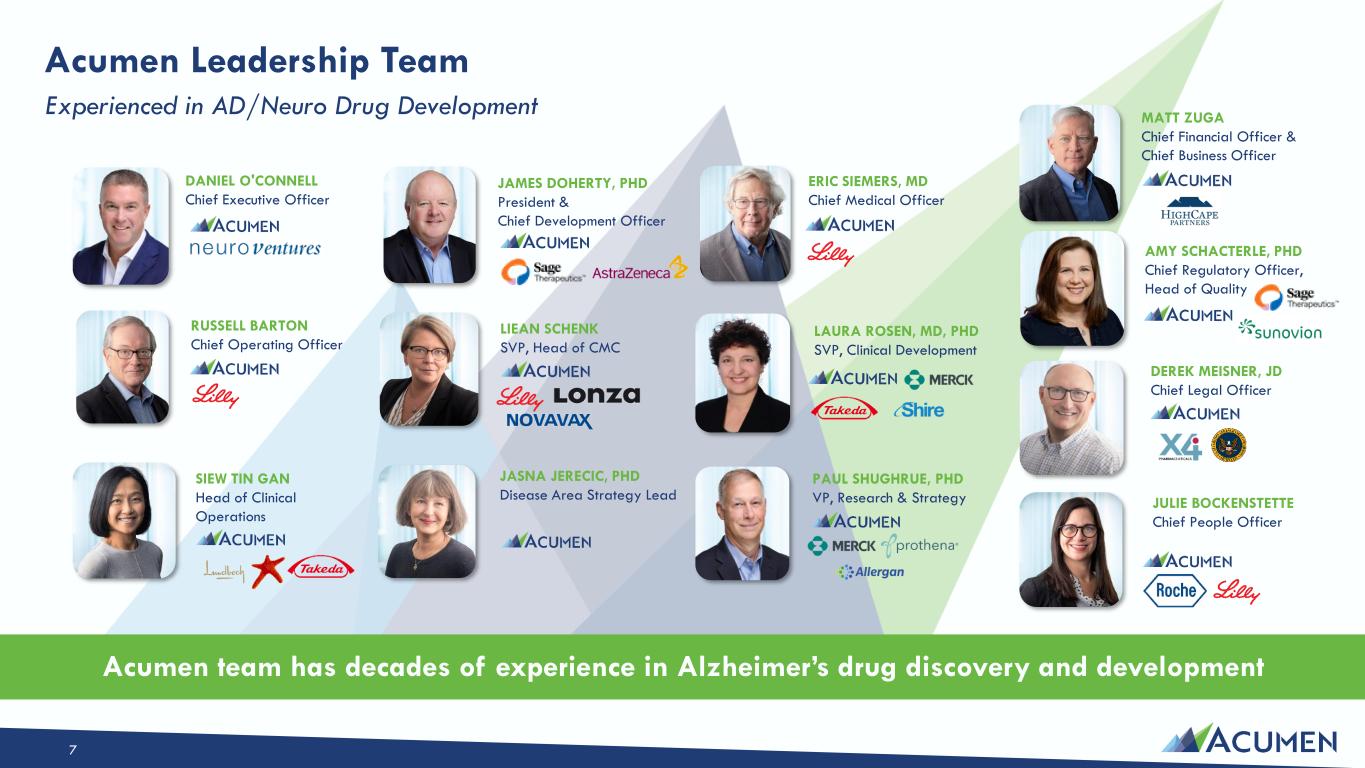
Thanks, Michelle. Good morning and welcome to the Acumen conference call to discuss our business update and financial results for the year ended December 31, 2025. 5. With me today are Dan O'Connell, our Chief Executive Officer, Dr. Jim Doherty, our President and Chief Development Officer, and Matt Zuga, our CFO and Chief Business Officer. They will have brief prepared remarks and then we'll open the call to questions. Joining for the Q&A session, we also have Dr. Eric Siemers, our Chief Medical Officer. Before we begin, we encourage listeners to go to the Investors section of the Acumen website to find our press release issued this morning that we'll discuss today. Please note that during today's conference call, we may make forward-looking statements within the meaning of the federal securities laws, including statements concerning our financial outlook and expected business plans. These statements are subject to risks and uncertainties that could cause actual results to differ materially from those described in the forward-looking statements. Please see slide two of our corporate presentation, our press release issued this morning, and our most recent annual and quarterly reports filed with the SEC for important risk factors that could cause our actual results to differ materially from those expressed or implied in the forward-looking statements. We undertake no obligation to update or revise the information provided on this call or in the accompanying presentation as a result of new information or future results or developments. And with that, I'll turn the call over to Dan.
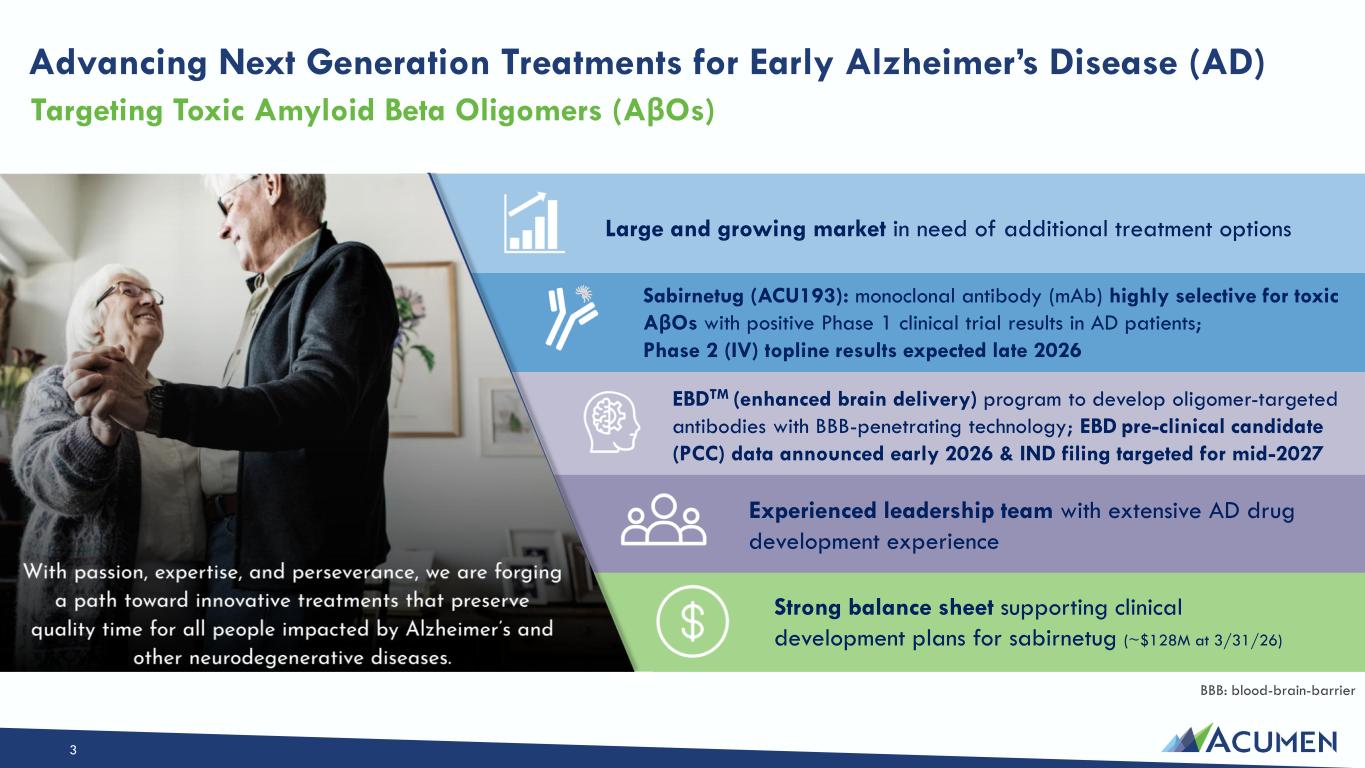
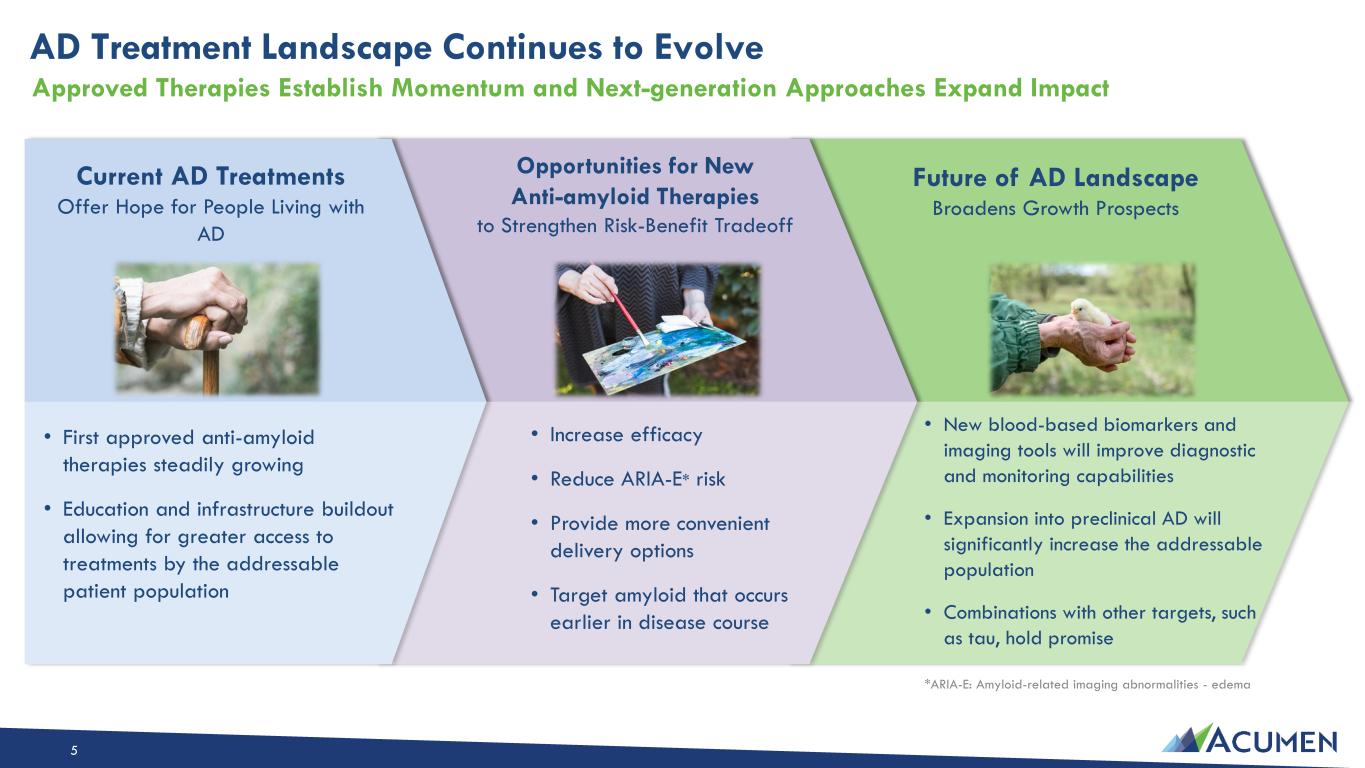
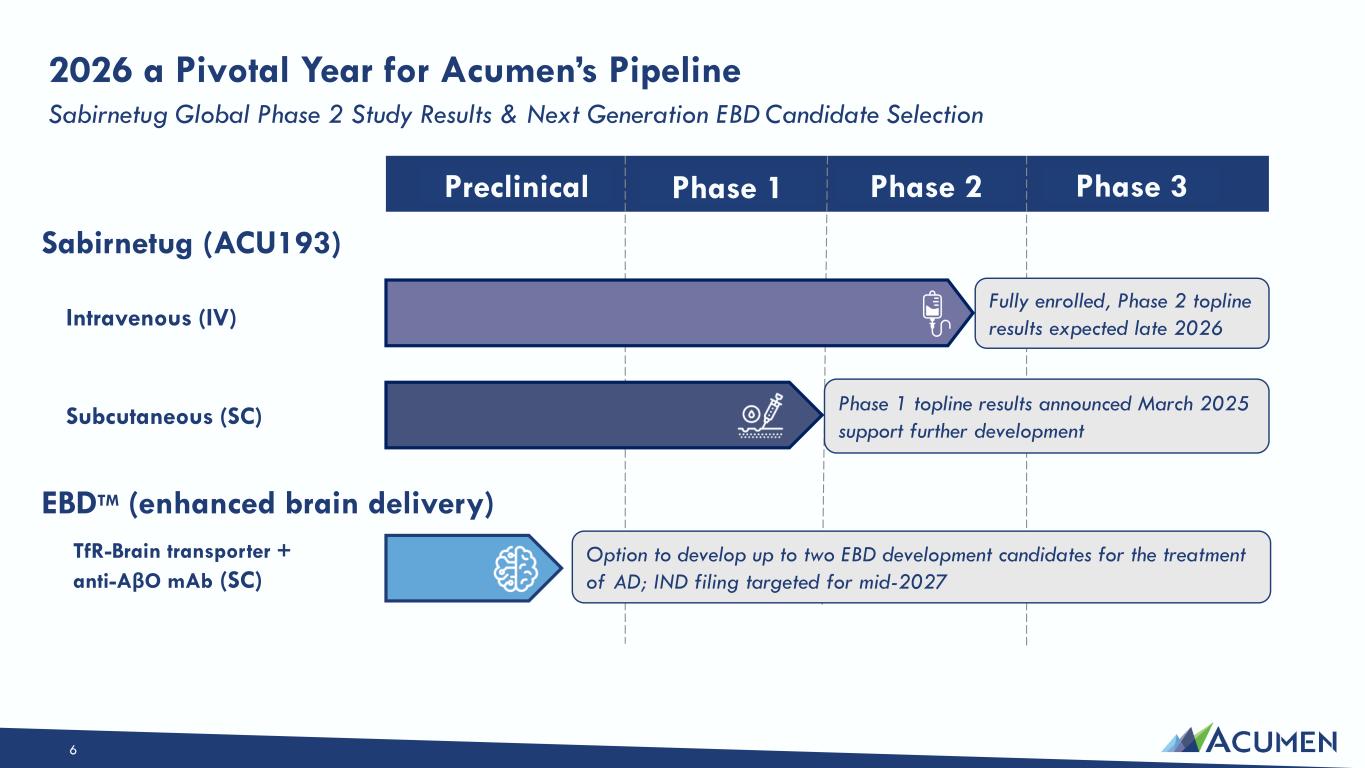
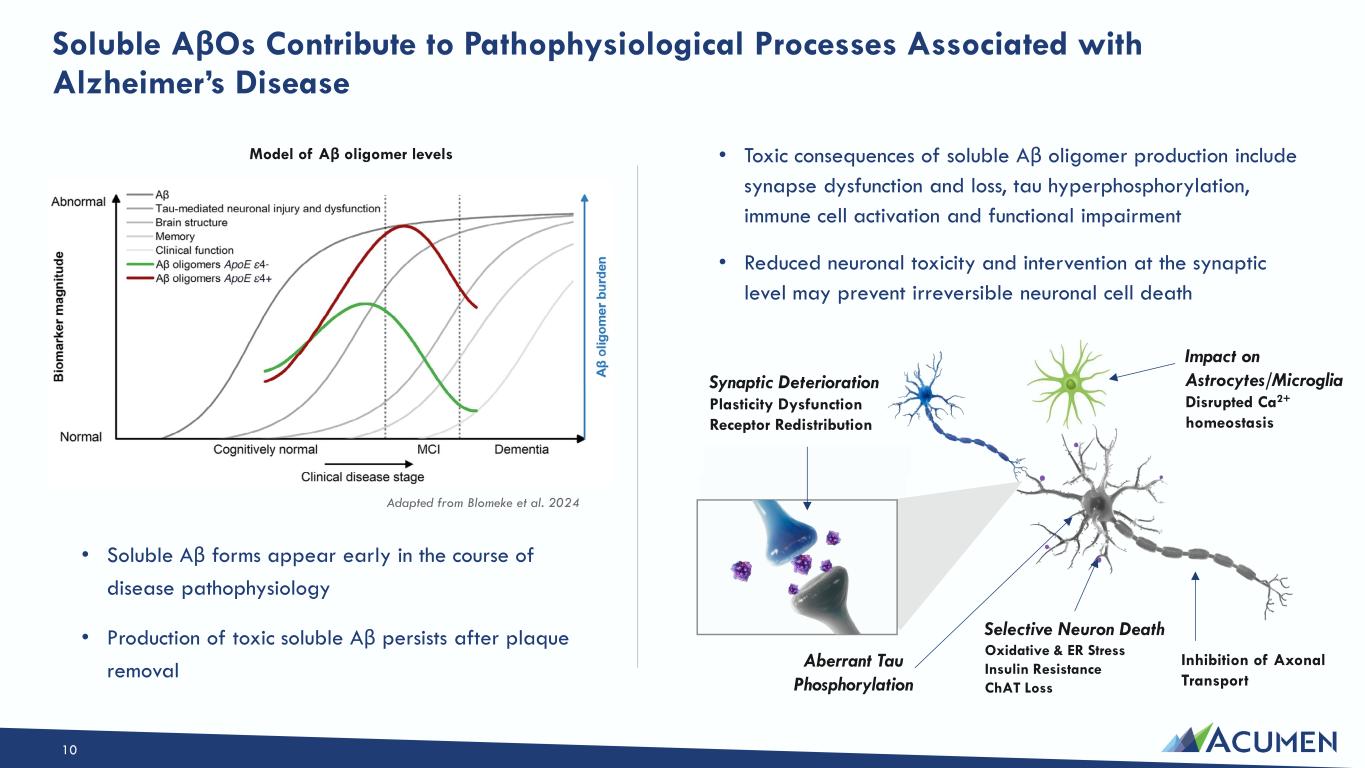
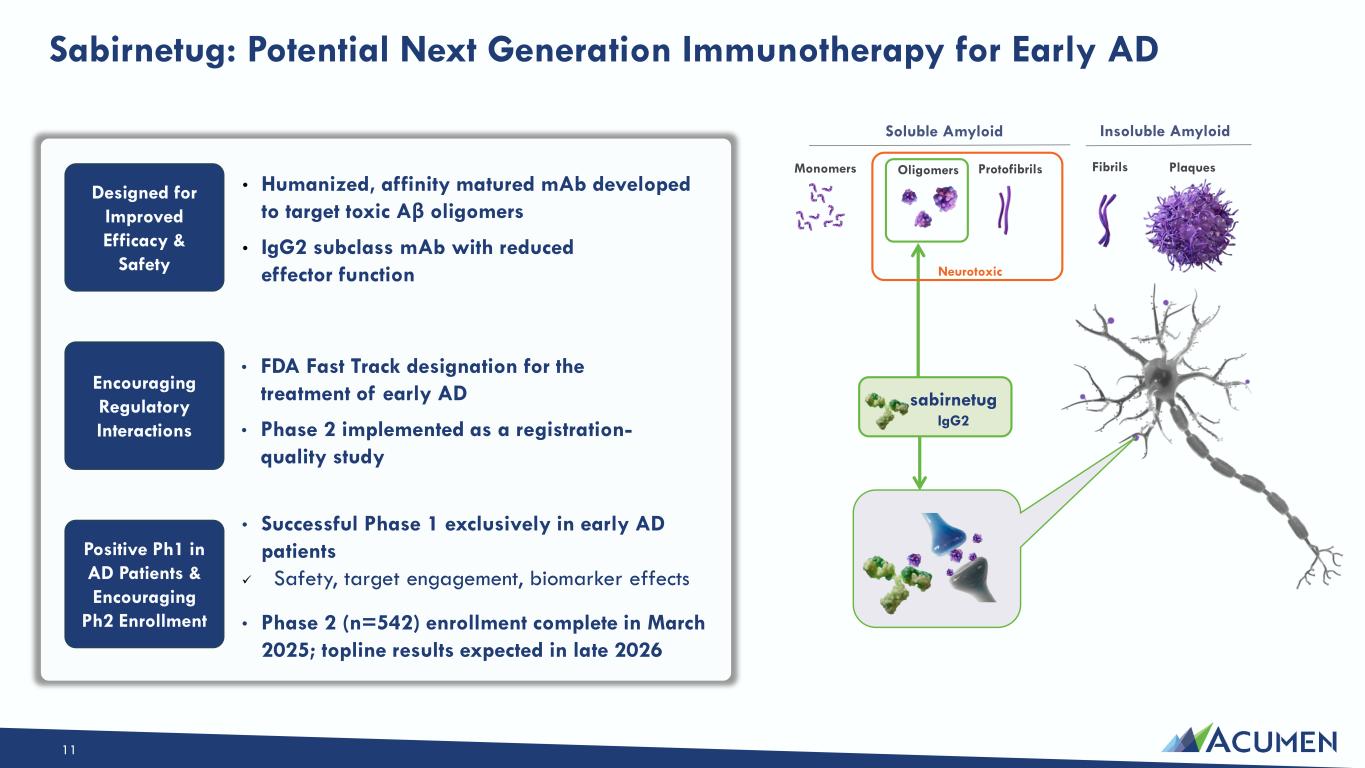
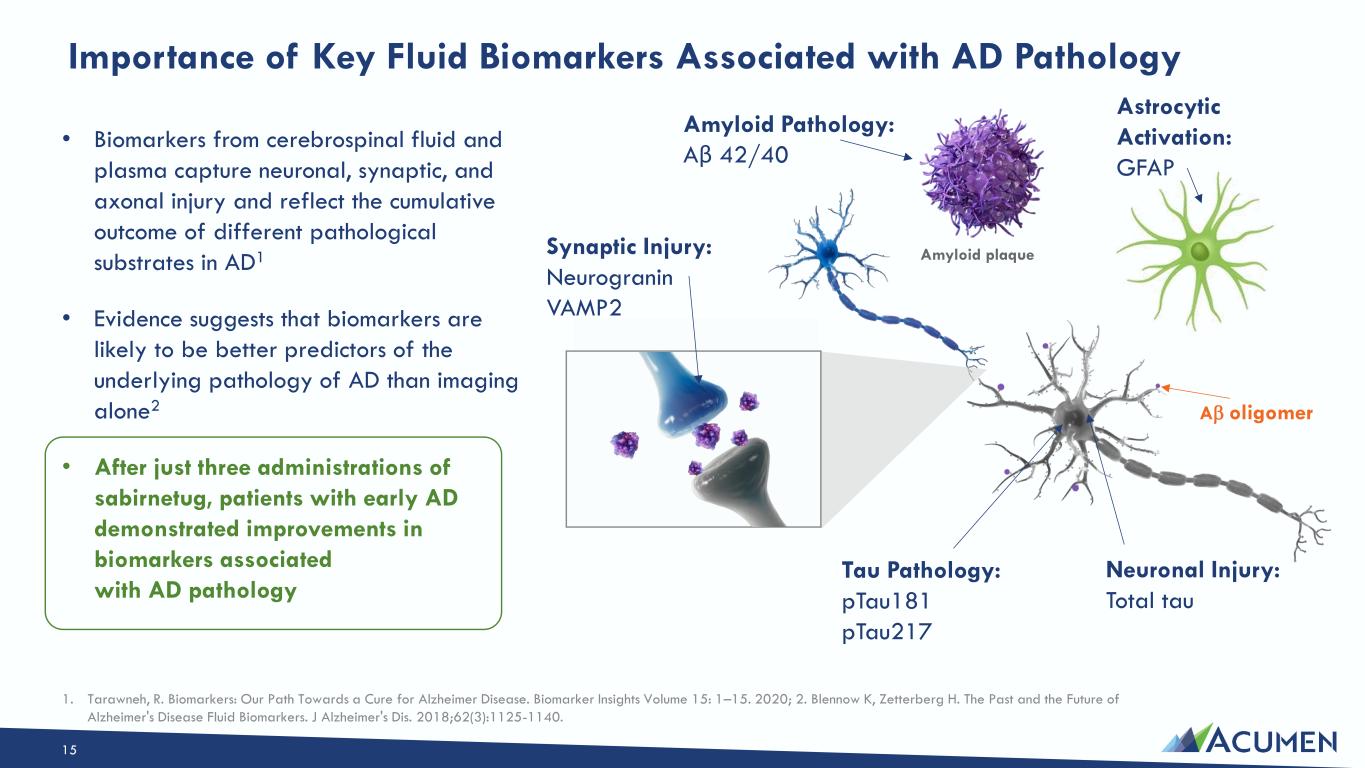
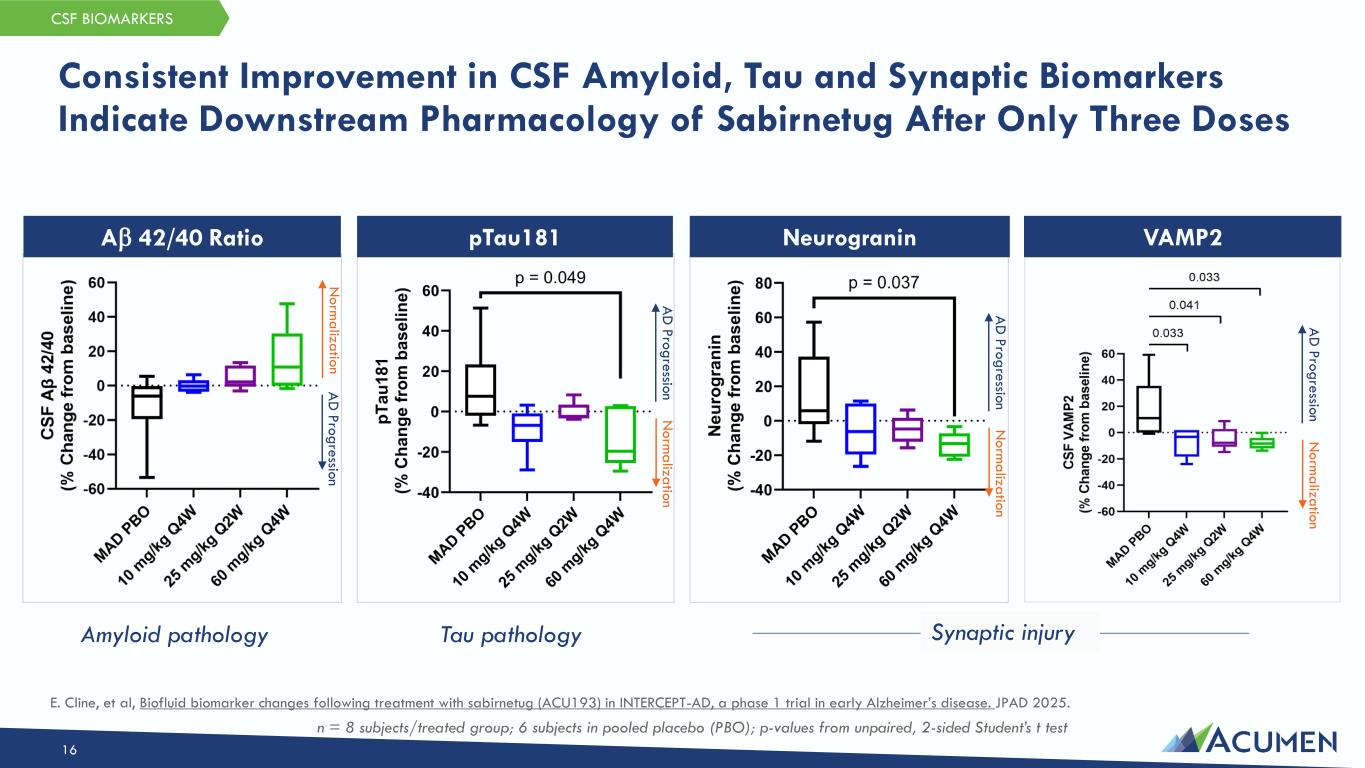
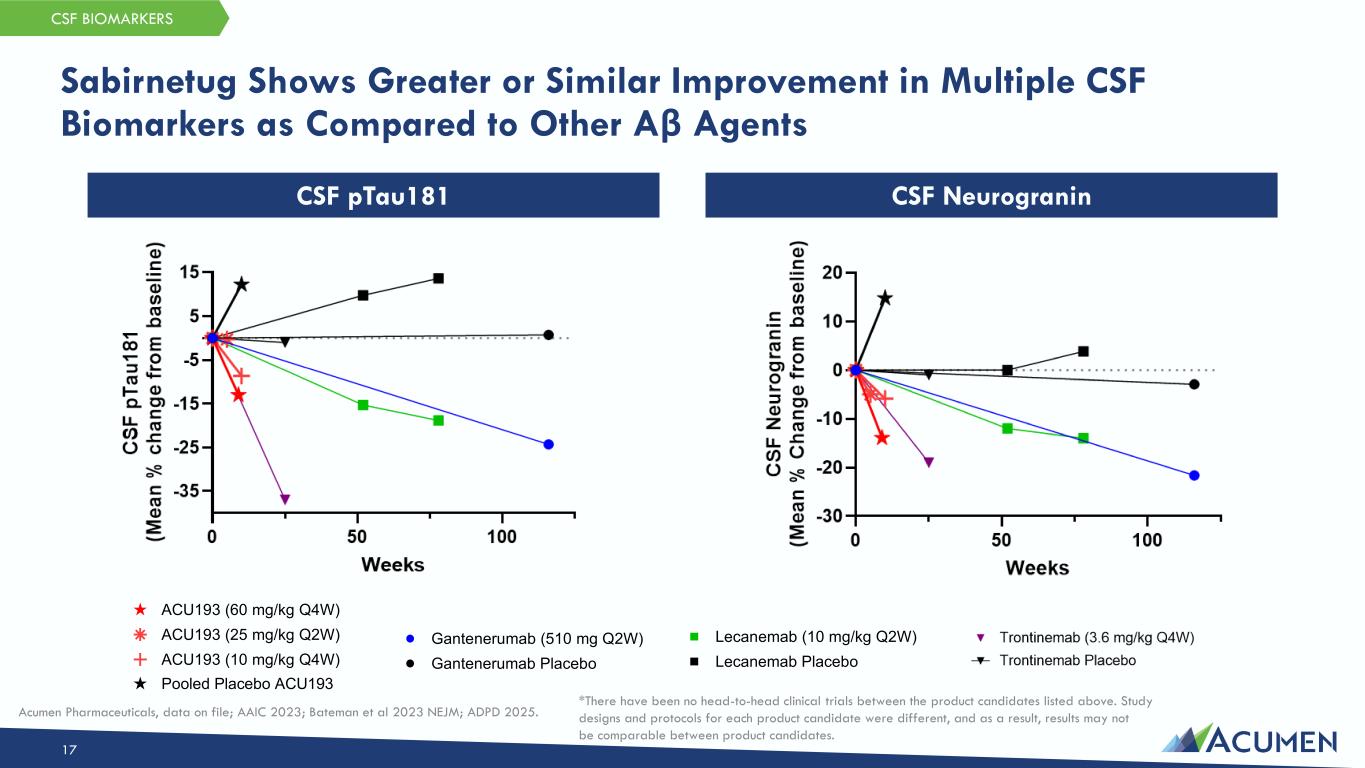
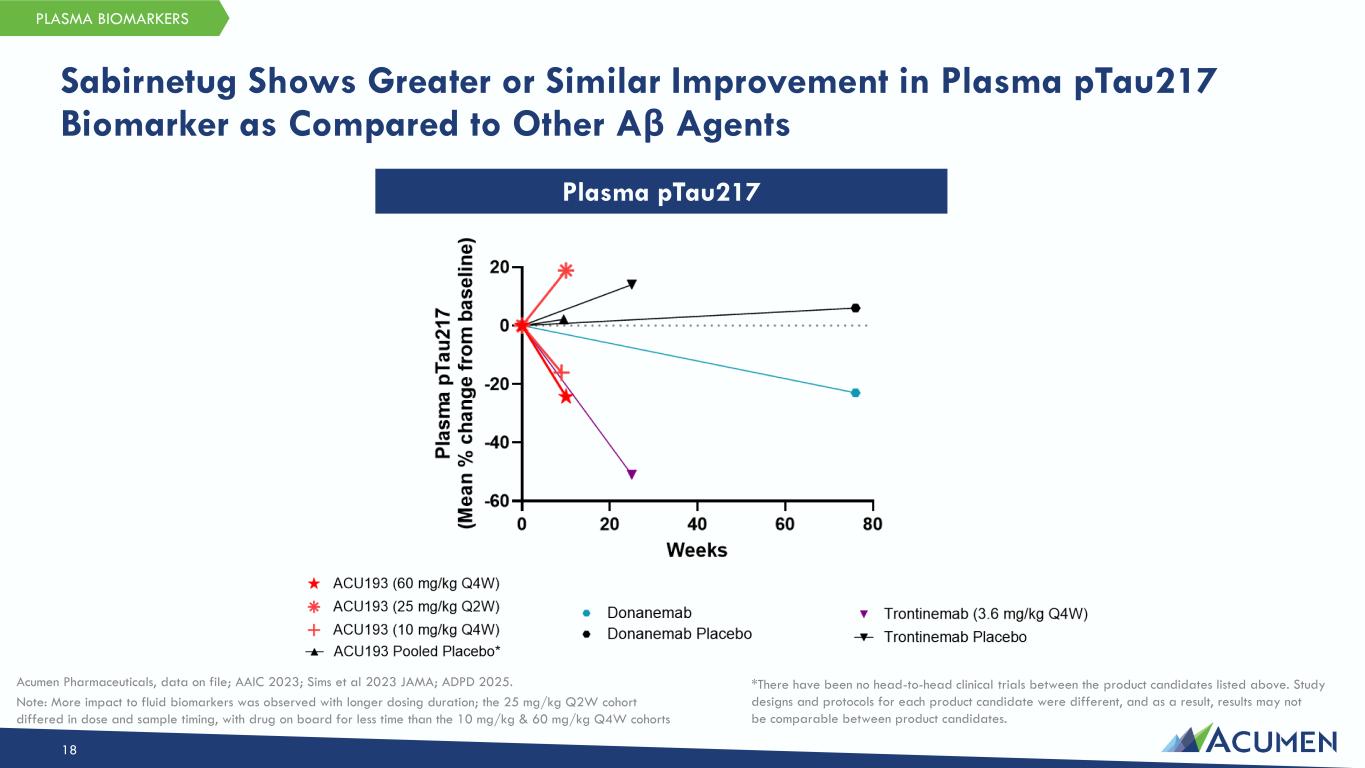
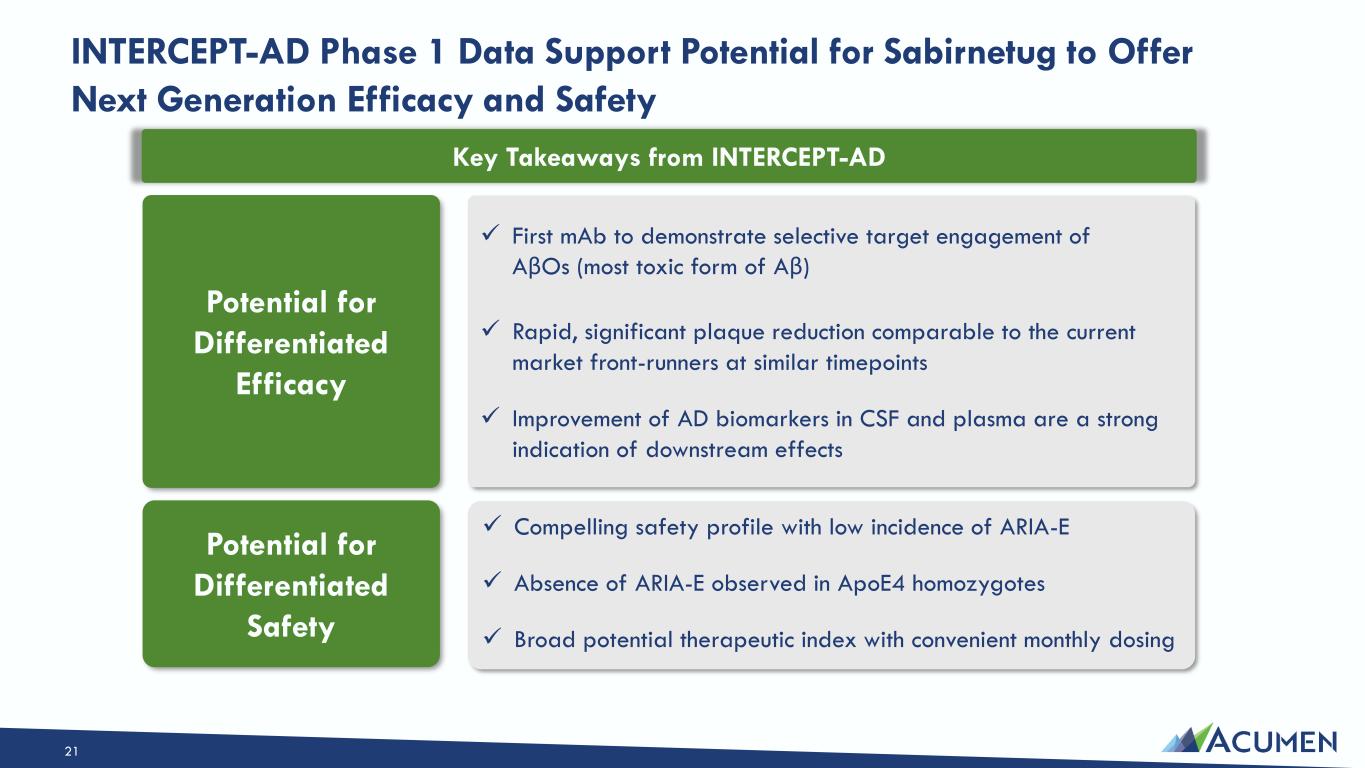
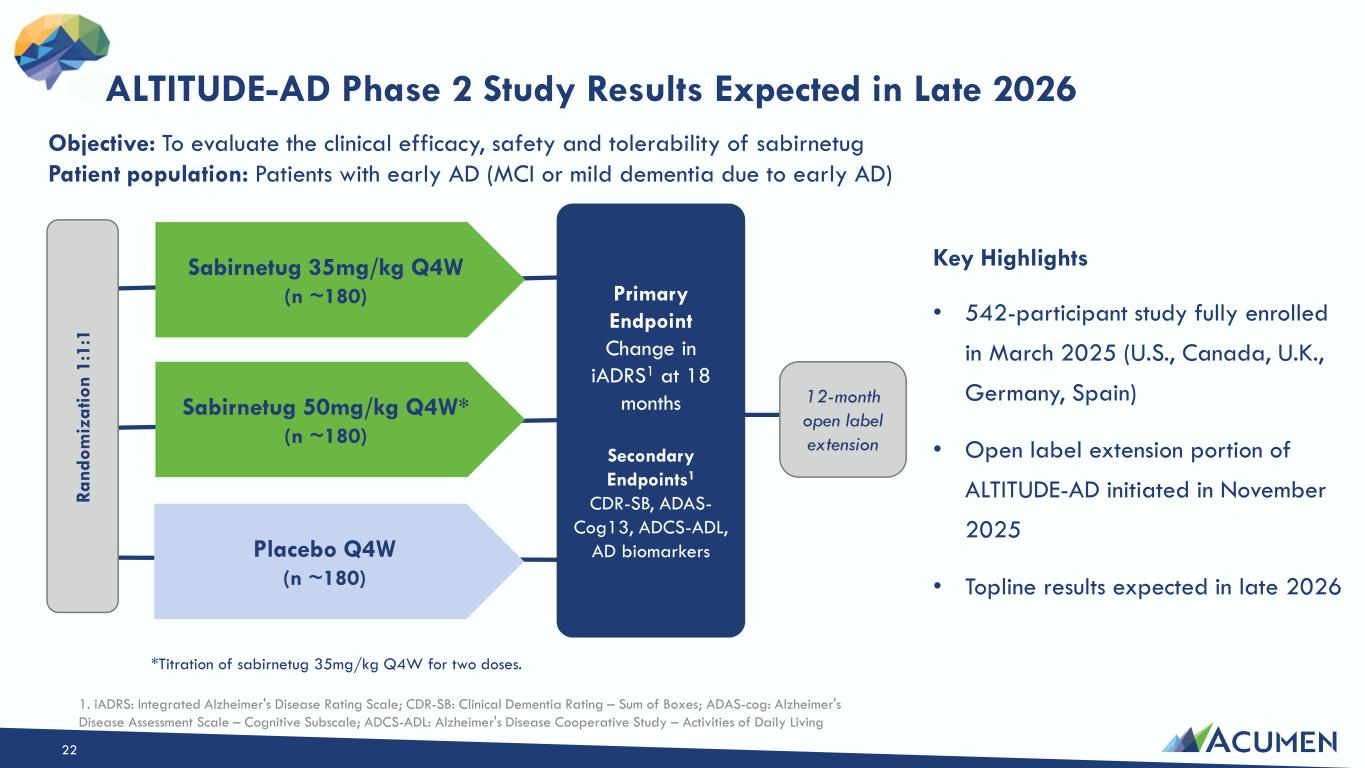
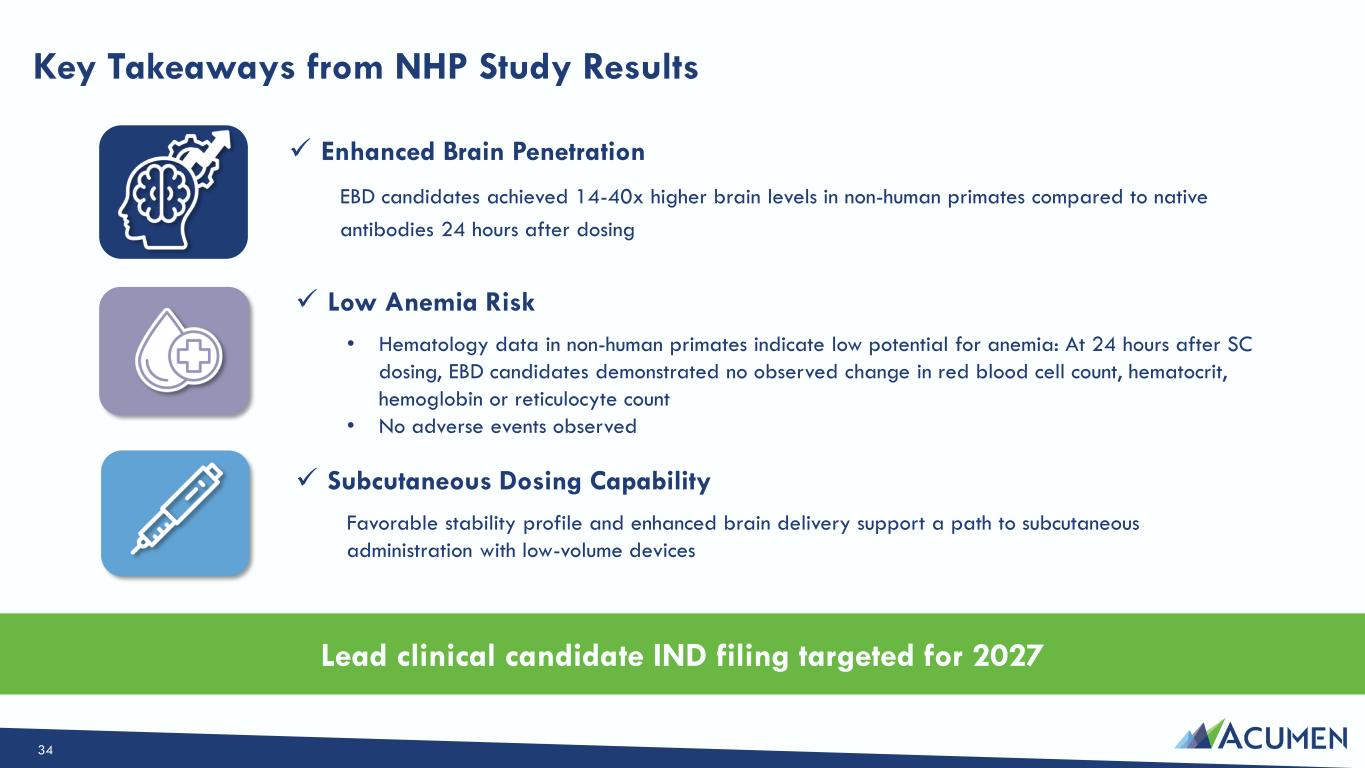
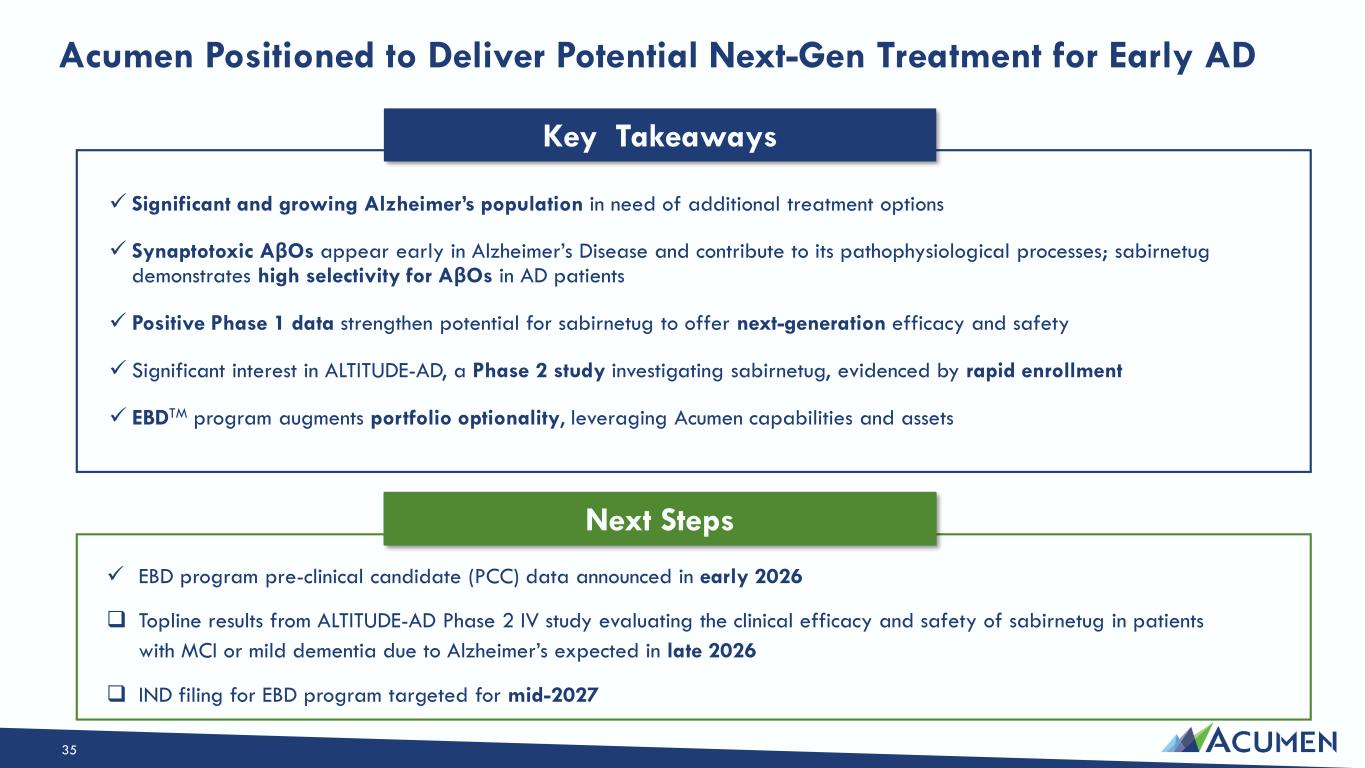
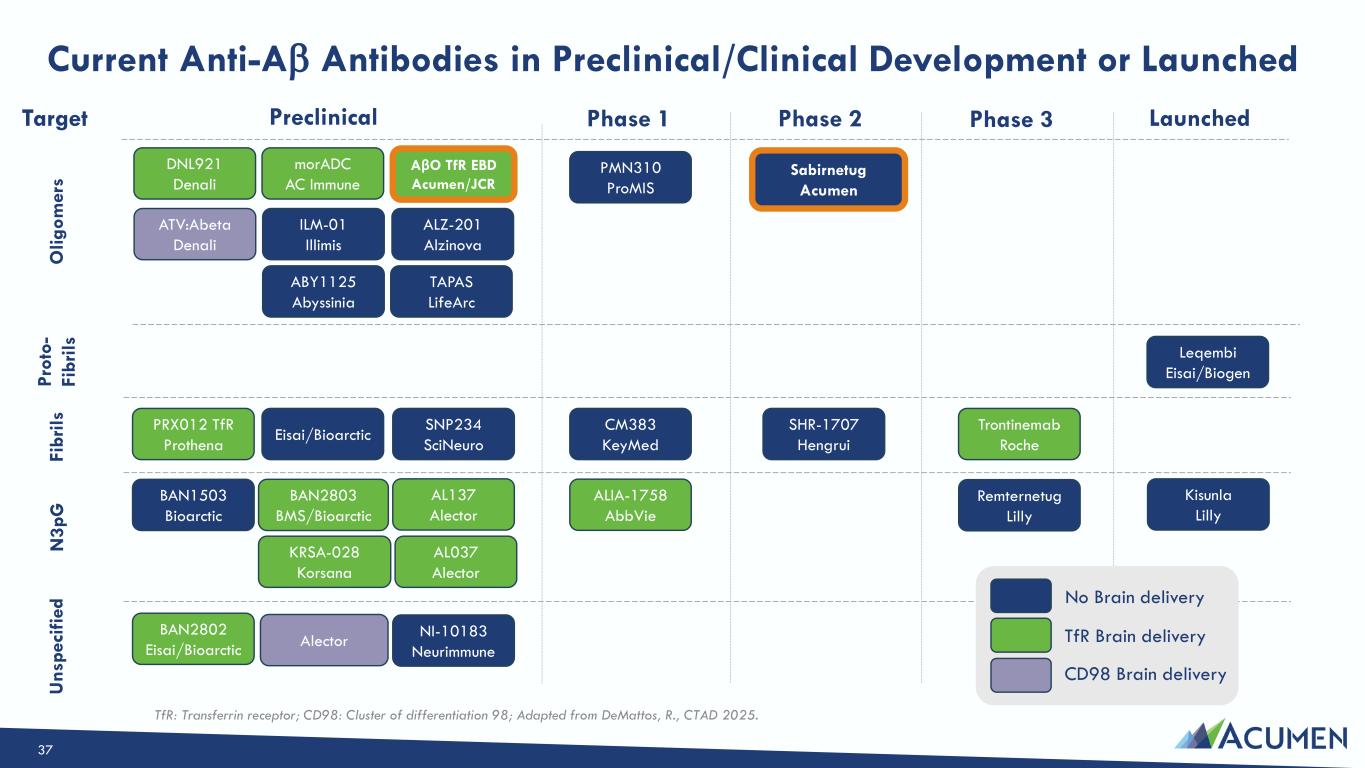
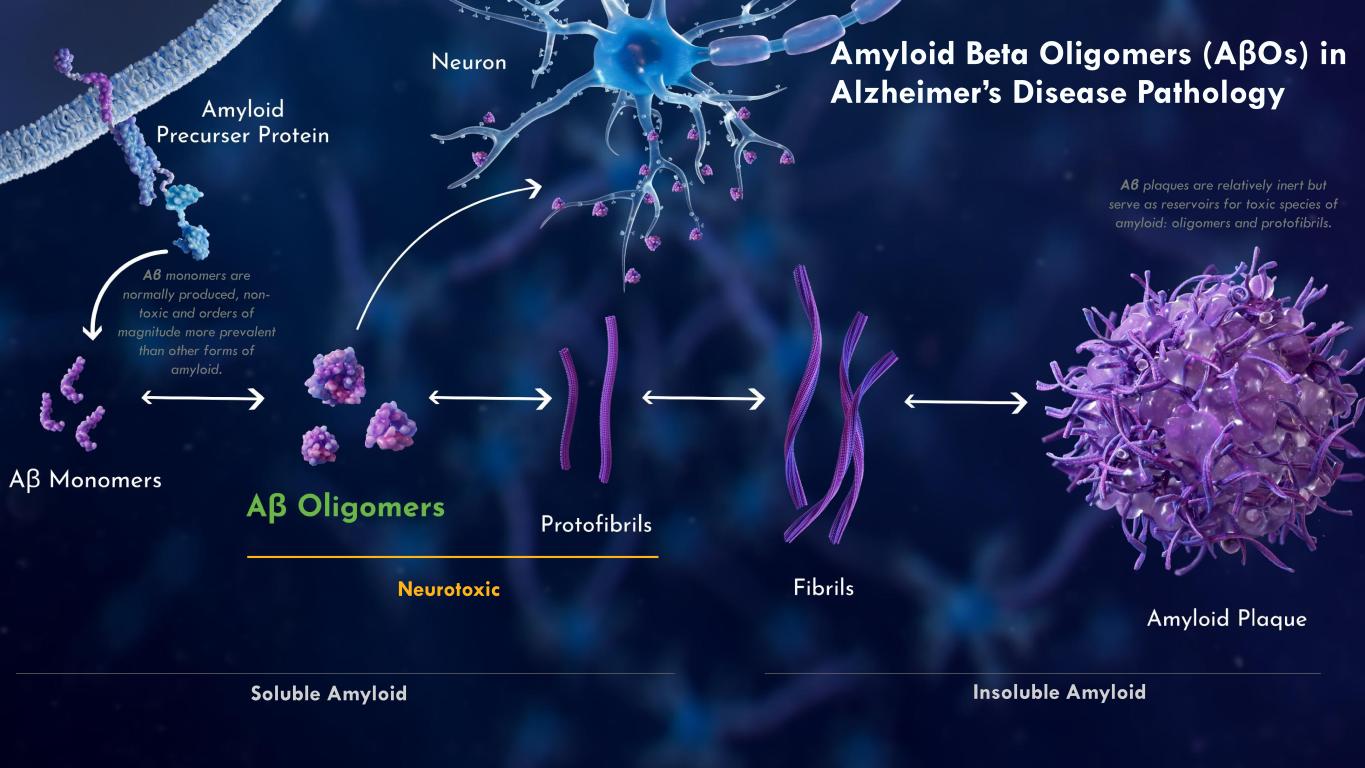
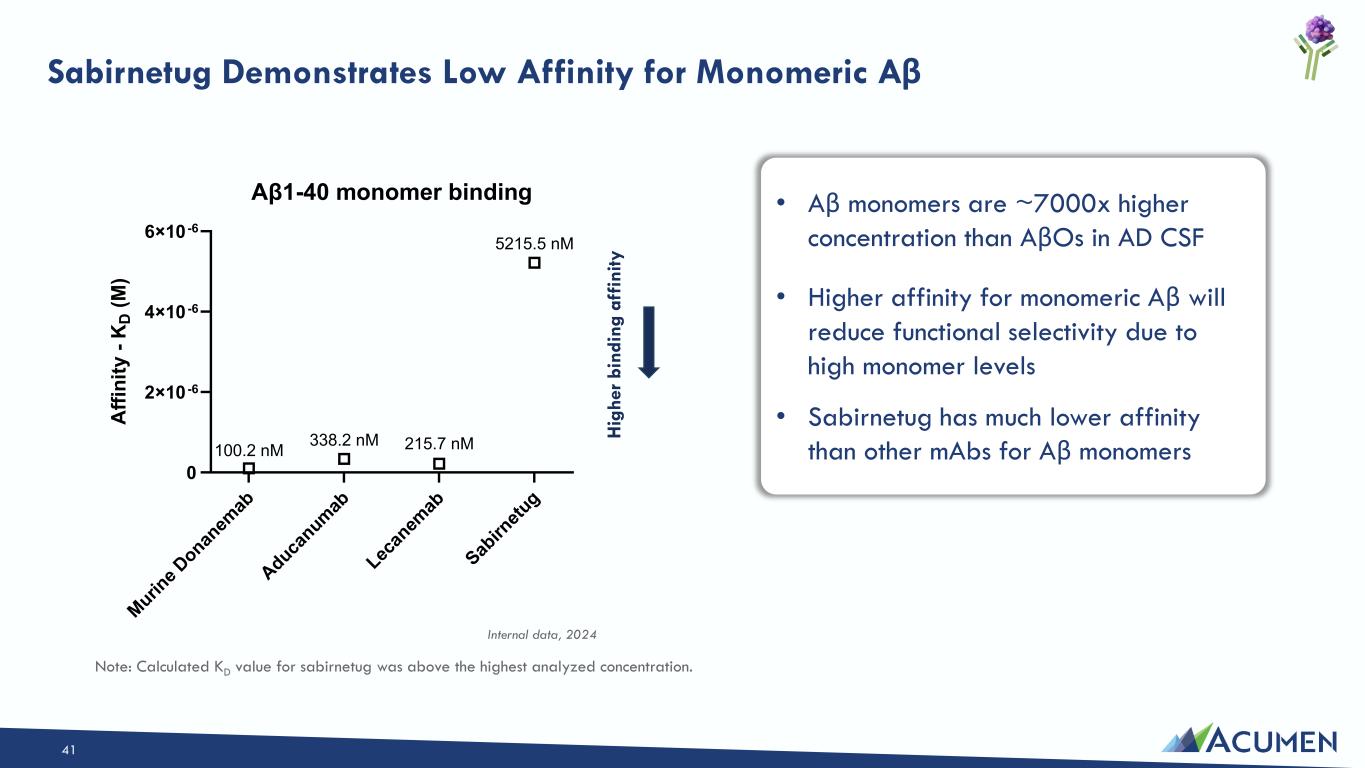
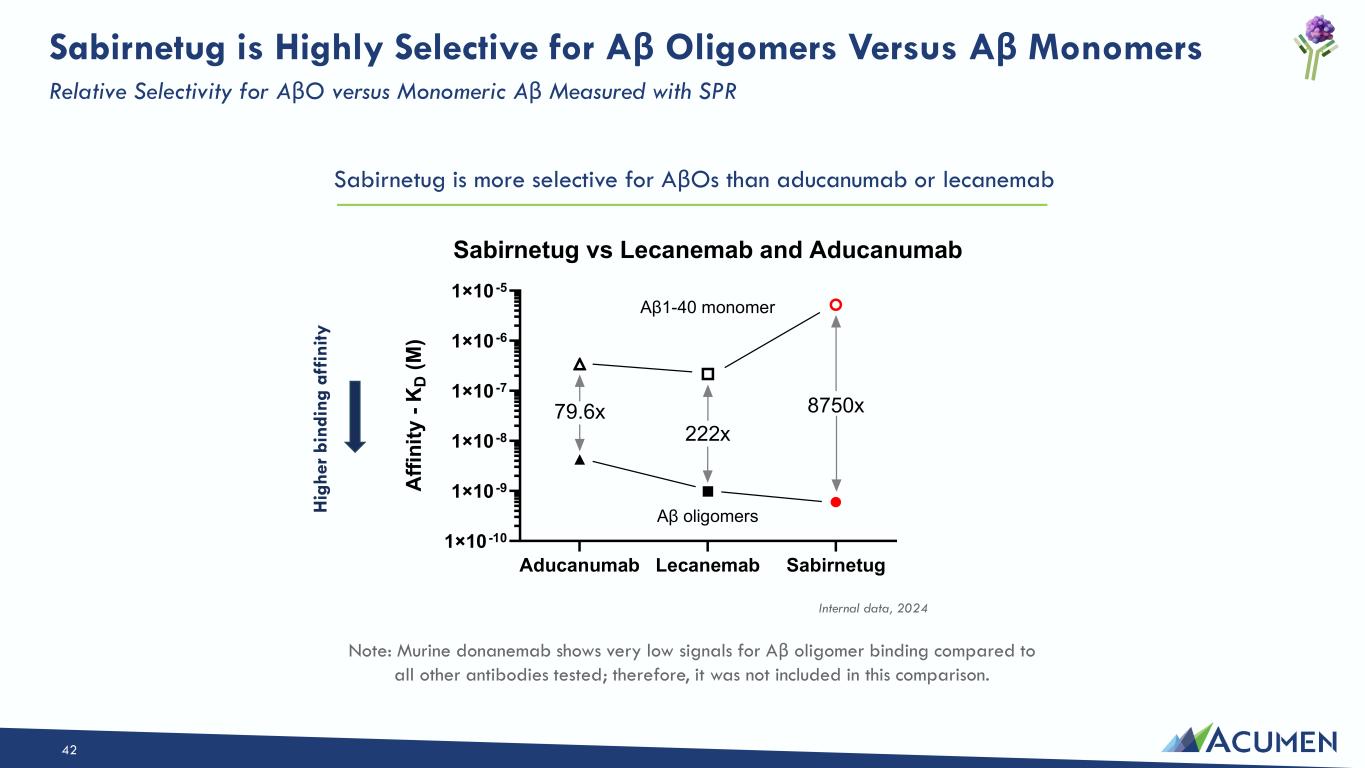
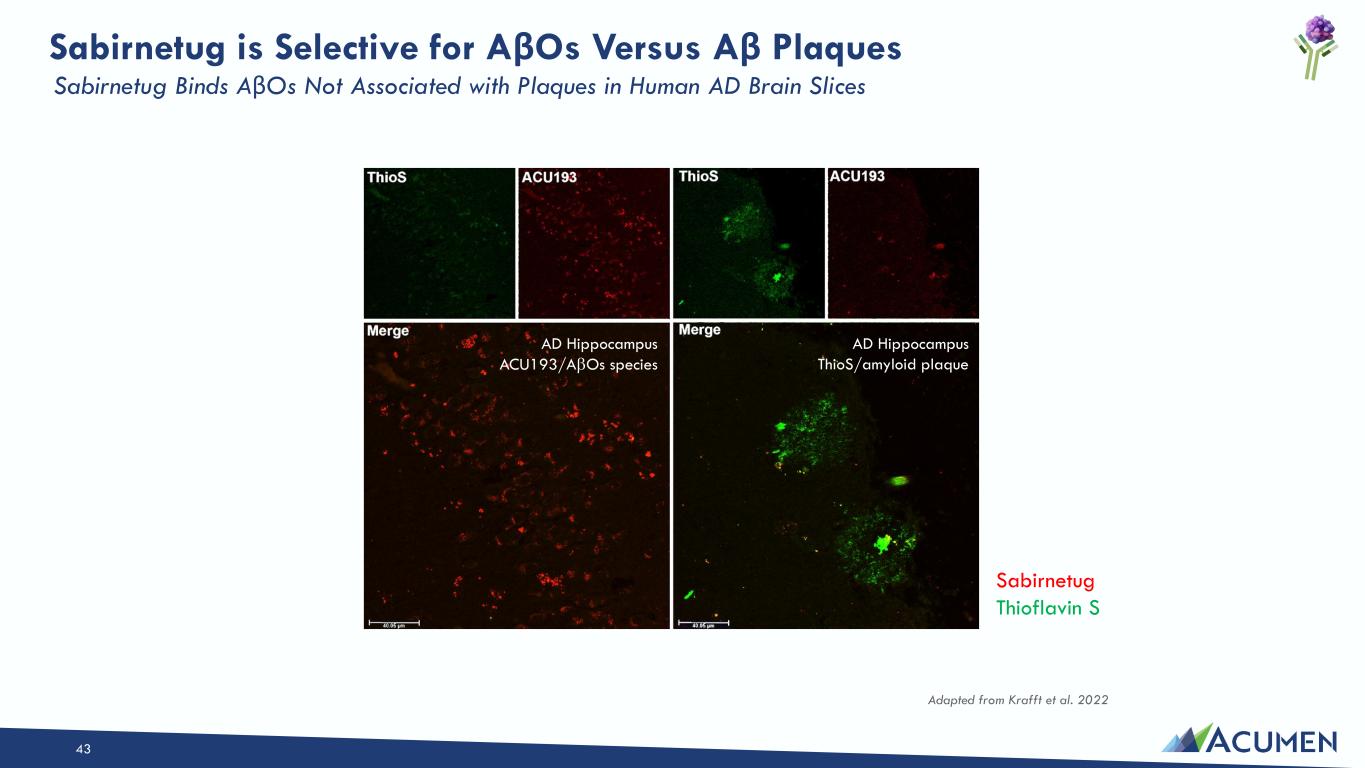
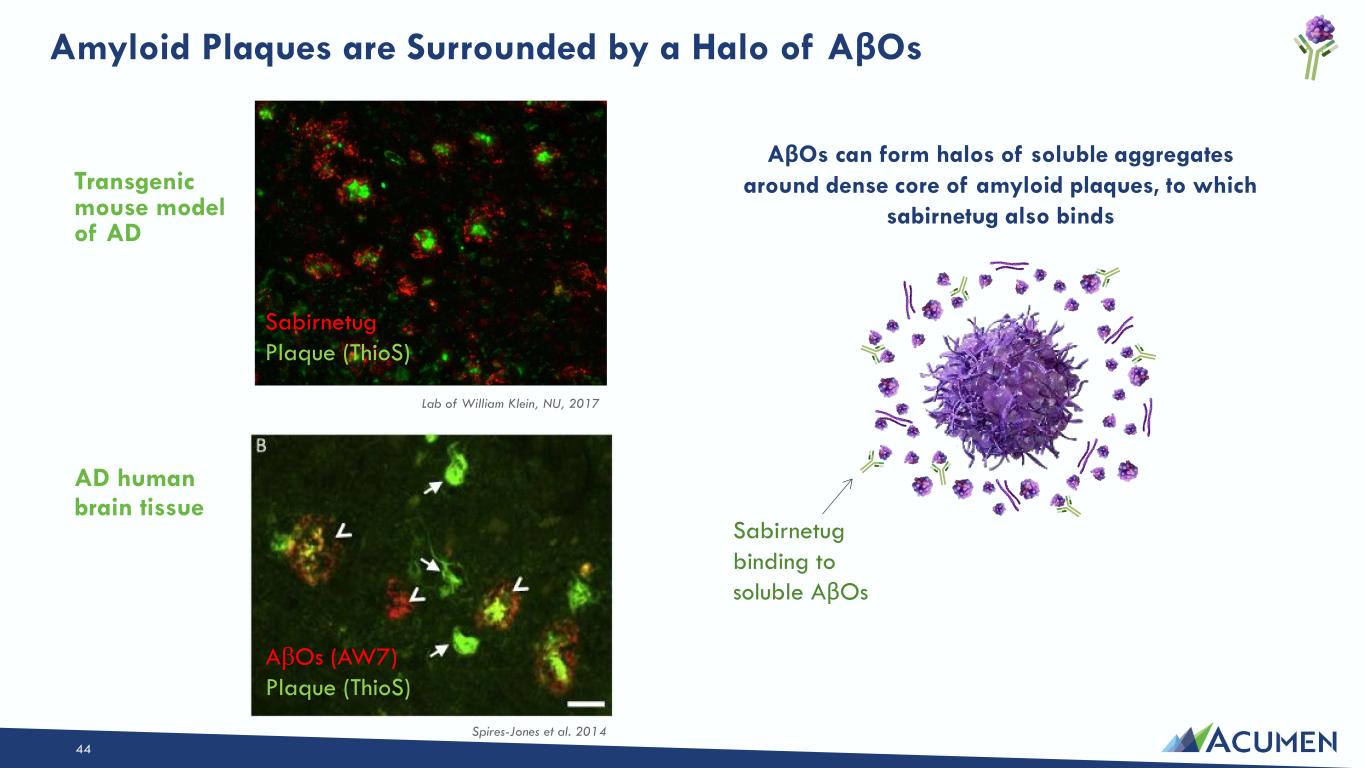
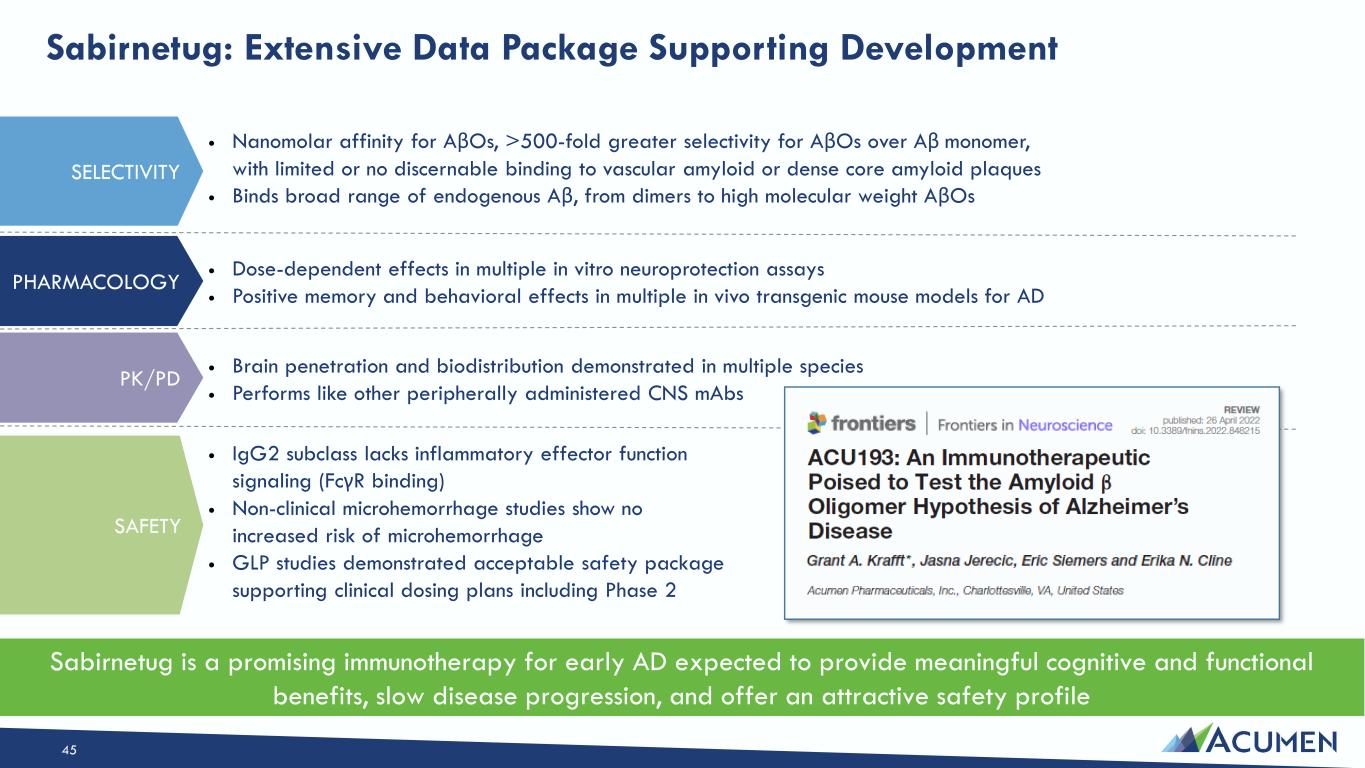
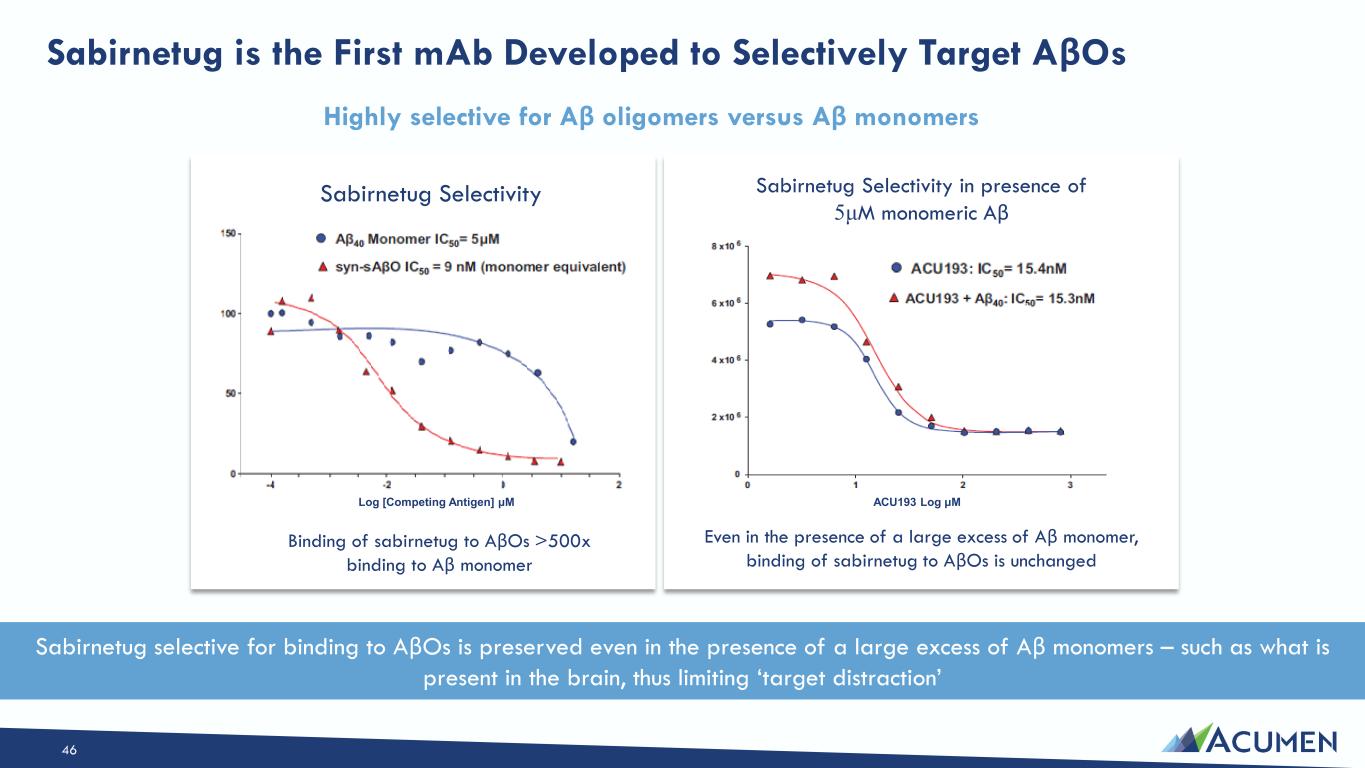
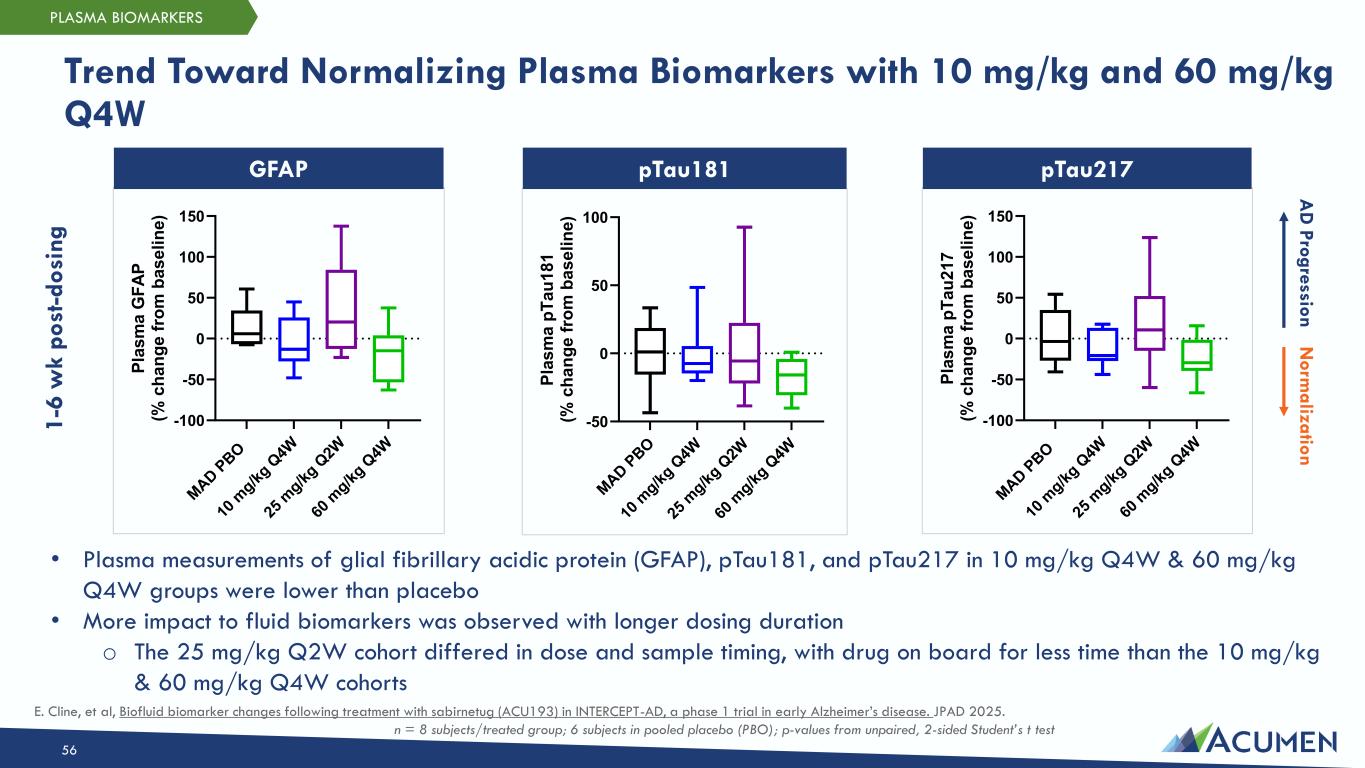
Great. Thanks, Alex. Good morning, everyone, and thanks for joining us today. 2025 can be defined as a year of execution and expansion at Acumen. We made demonstrable clinical progress for our lead program, Sobernatug, in our Phase II Altitude AD trial, which we consider an important test of our core hypothesis that synaptotoxic amyloid beta oligomers play a pivotal role in the development and progression of Alzheimer's disease. Altitude is a well-powered Phase II study that is investigating Sobernatug, our monoclonal antibody with high selectivity for A-beta oligomers. So Bernatug selectivity for toxic oligomers is central to why we believe it could unlock potentially greater clinical efficacy and improve safety relative to amyloid plaque directed antibodies. We are closely tracking the plan with altitude. We completed enrollment about a year ago and the participant transition into the 12 month open label study that started last November continues to be smooth and with a high rate of conversion. In 2025, we also expanded our pipeline in our persistent pursuit of innovation, which aligns with our mission of improved treatment options for people impacted by Alzheimer's. Our Enhanced Brain Delivery, or EBD, partnership with JCR Pharmaceuticals, which combines Acumen's A-beta oligomer-targeted therapeutic cargo with JCR's validated blood-brain barrier carrier technology, holds potential to produce a truly next-generation differentiated therapy for Alzheimer's disease. We think of EBD as supercharging our antibodies to significantly increase brain penetration and distribution with potentially lower safety risks and in a convenient subcutaneous dosing We believe our EBD approach is well-suited for study in a preclinical or pre-symptomatic AD population, and though not contemplated in our immediate clinical development plans, we foresee that population as an attractive opportunity for the future. 2026 is poised to be a transformative year for acumen we expect to read out altitude ad late this year inclusive of key clinical efficacy and safety measures we believe the study results will inform our development strategy in the field more generally in terms of better understanding of the impact of clearing a beta oligomers in Alzheimer's patients our optimism for the success of altitude is based in part on imaging and fluid biomarker data from our Phase I-B Intercept AD study. For instance, after just three doses, at the final three-month time point, Sabernatug showed positive effects on phosphatel-181 and neurogranin levels in CSF. These are competitive indicators in the AD space and continue to gain acceptance as diagnostic and clinical markers of disease. We view these data as supportive of Sabernatug's potential in Phase II, which assesses safety and efficacy of Soberna Tug over 18 months of treatment. We're obviously very excited to see these data later this year. Our EBD program is also gaining momentum. Just last week, we announced preclinical data, including in vitro, in vivo, and non-human primate study results that support multiple potential development candidates in the program. Jim will speak more about these results in just a minute. Importantly, the candidate profiles achieved exceeded our target product profile for the EBD program and catalyzed a roughly $36 million private placement. As of now, we are targeting a filing of an IND for a clinical candidate in mid-27. A final note on the sentiment in the AD field. We just returned from the ADPD conference in Denmark, where the energy and momentum in the Alzheimer's space was palpable. Between real-world data supporting the currently marketed therapies, the growing evidence that targeting A-beta is clinically beneficial, as well as the adoption of blood-based biomarkers to streamline development, diagnosis, and treatment, this is a hopeful time for Alzheimer's patients and their families. It's also important to realize we are still in the beginning of the treatment evolution in AD, and ample opportunity exists to provide improved benefit-risk options for patients. Between SuburnaTug's Altitude AD results and our next-generation EBD program advancing this year, we at Acumen believe our commitment to scientific innovation and track record of execution will enable us to deliver differentiated treatment options for Alzheimer's patients. And with that, I'll turn the call over to Jim.
Speaker 3
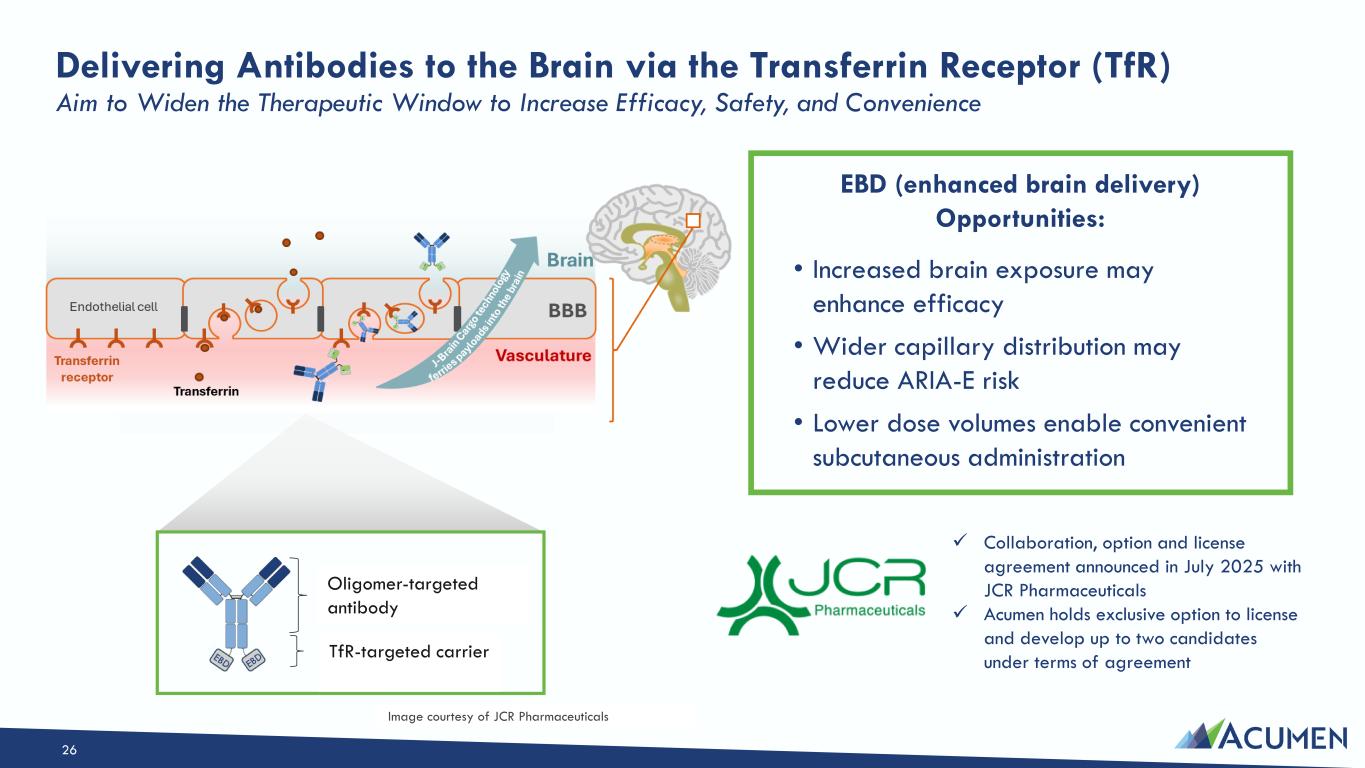
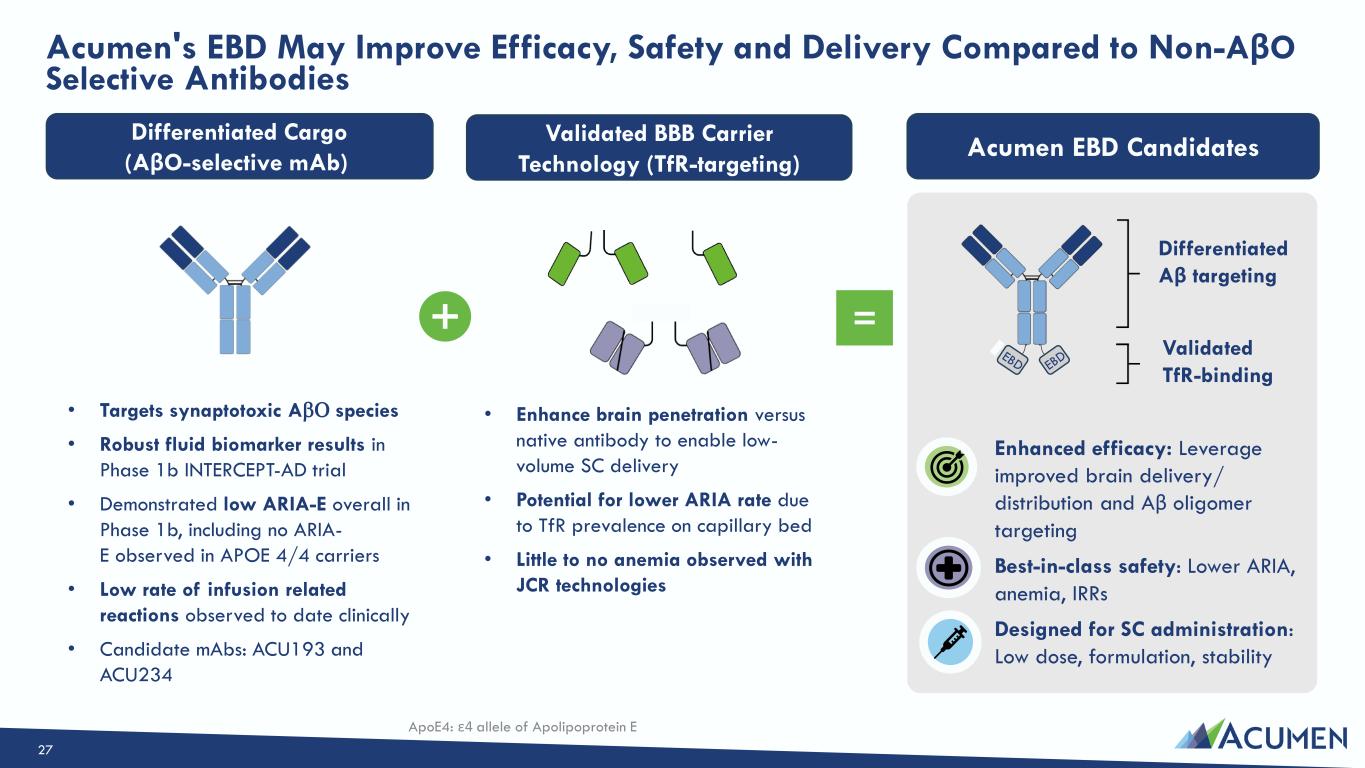
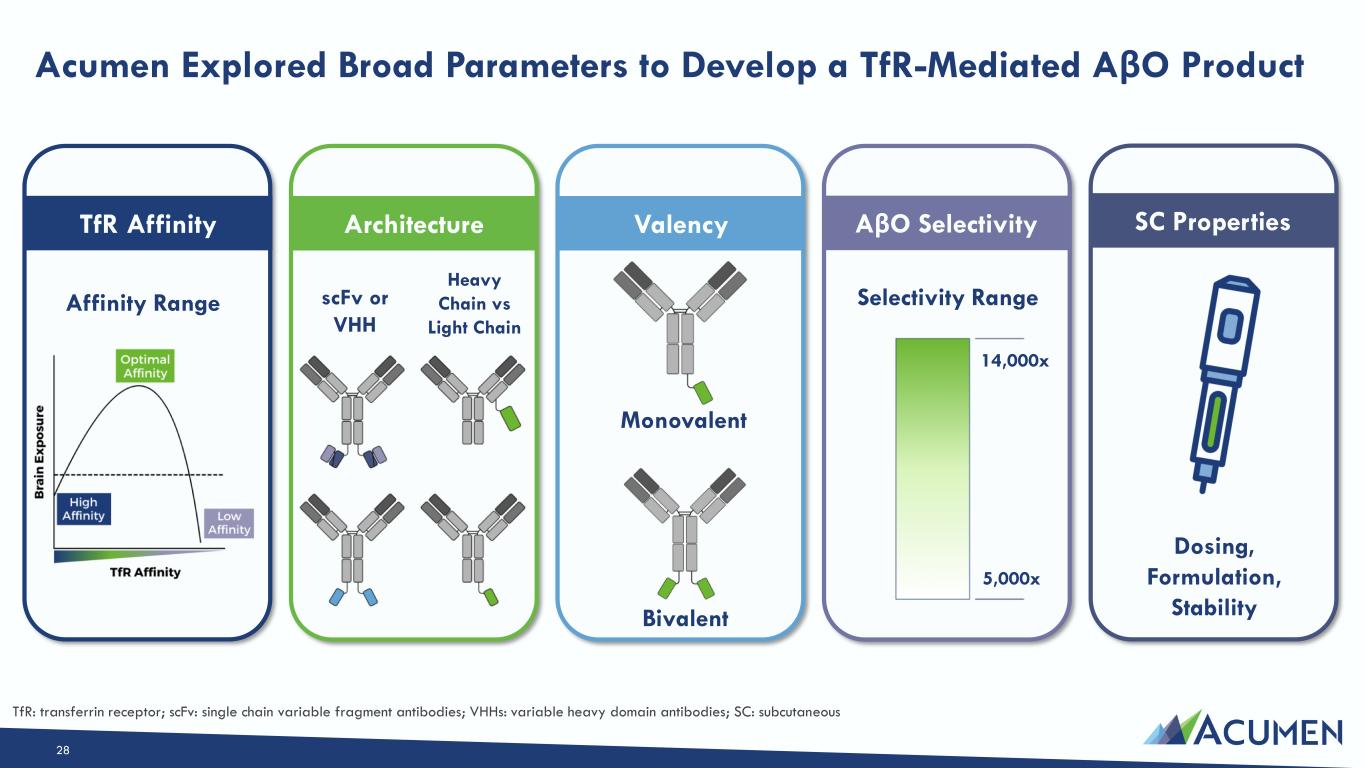
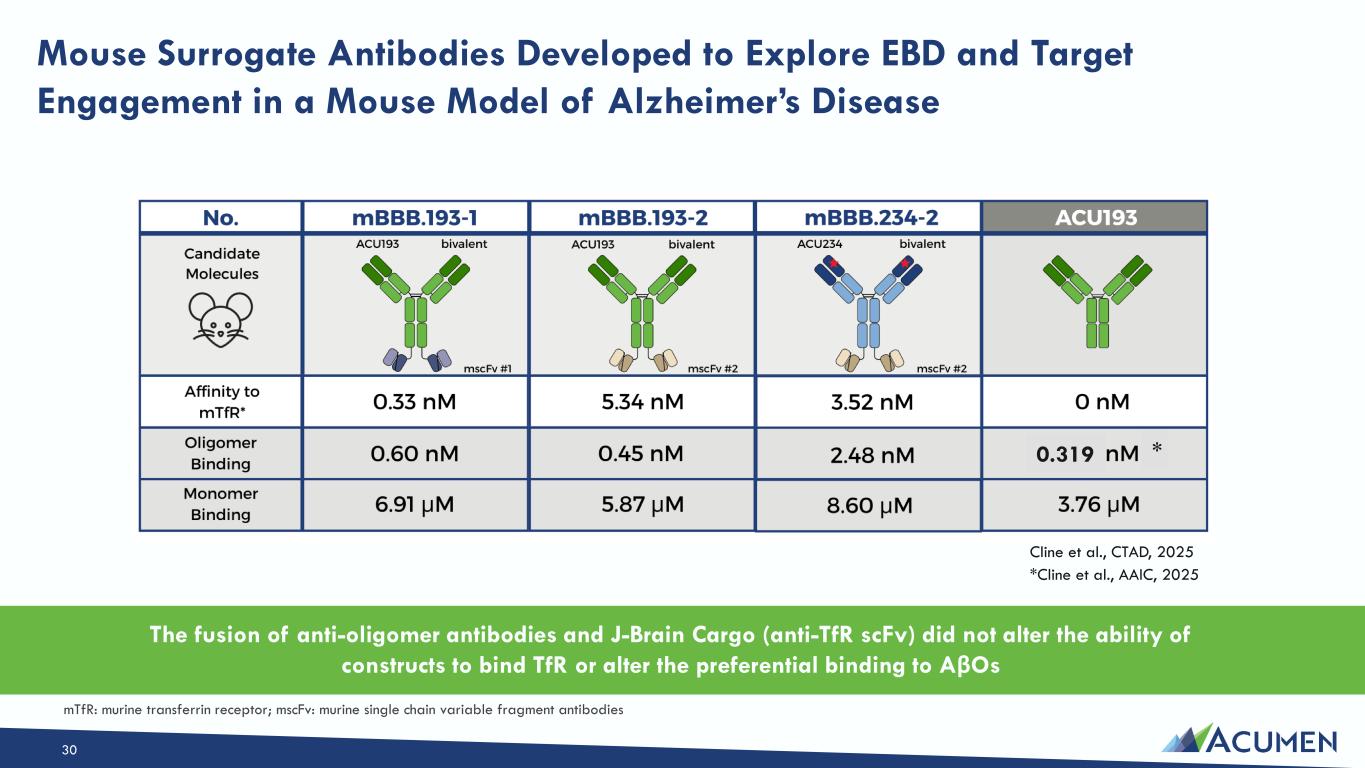
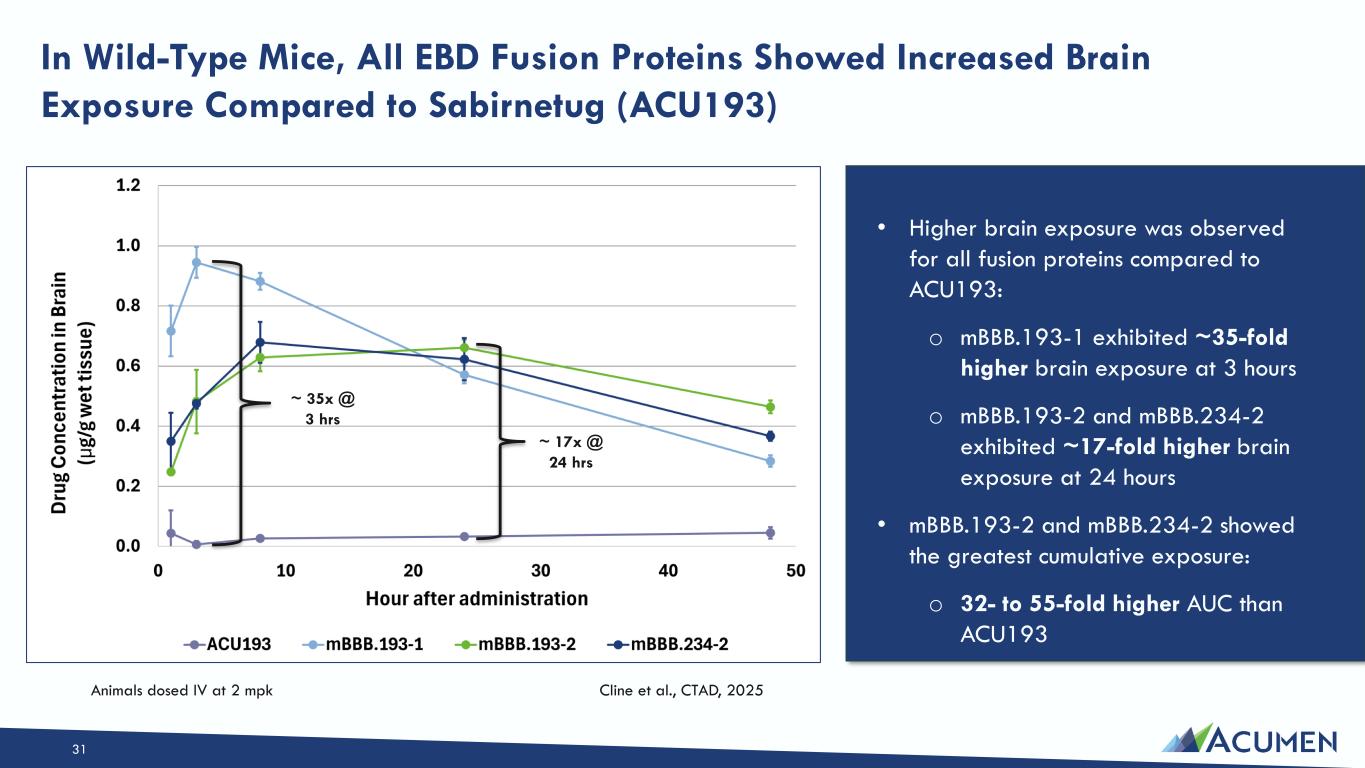
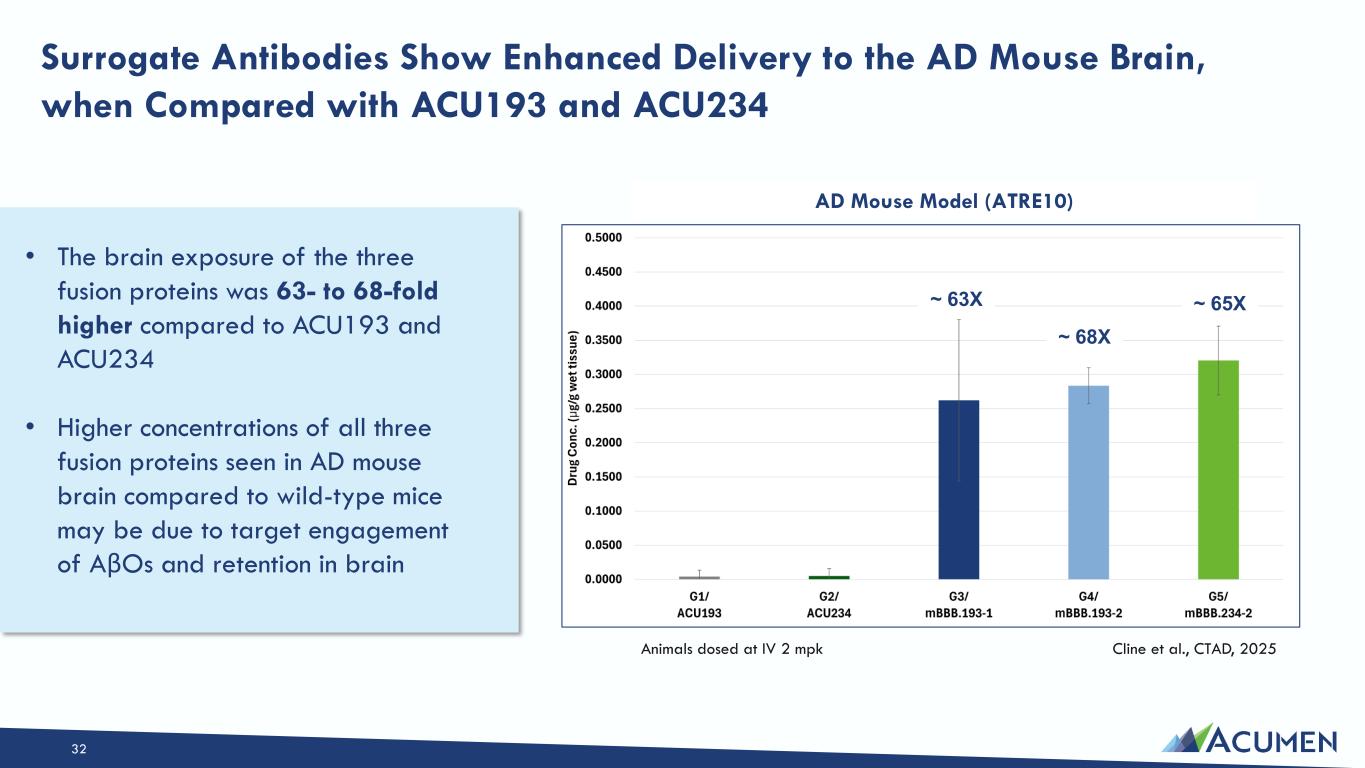
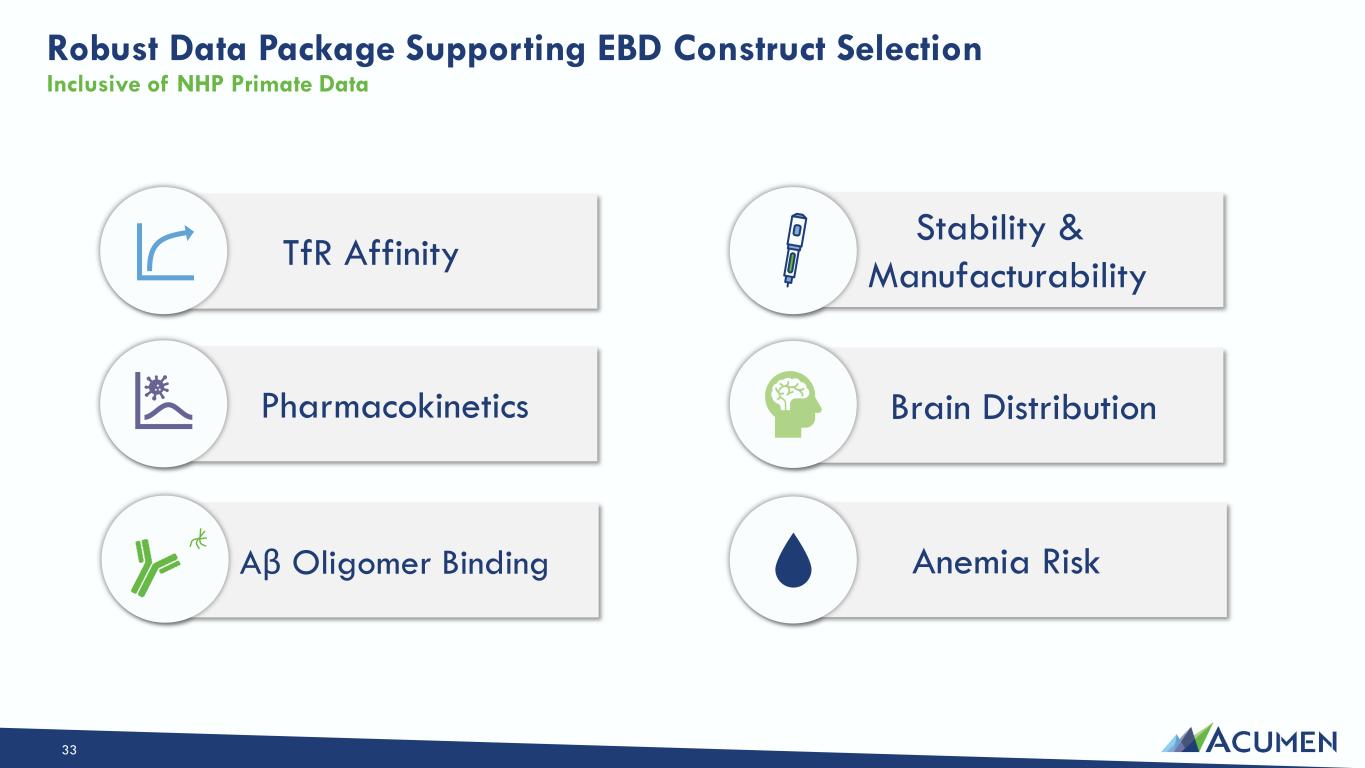
And to everyone on the call, happy to be here with you today. As Dan said, we're very pleased with the candidate profiles generated in our preclinical EBD program and impressed with the level of expertise contributed by our partner, JCR Pharmaceuticals. Each EBD candidate consists of two elements, a cargo, in this case, an A-beta-soluble oligomer targeted antibody, body, and a carrier, which is JCR's transferrin-based blood-brain barrier receptor-mediated transitosis technology. Sobernatug has demonstrated robust fluid biomarker results in the Intercept Phase I study, as Dan just mentioned, and also showed relatively low rates of REE and IRRs. JCR has clinically validated their technology, which is used in an approved therapy in Japan, with little observed anemia. By combining these components, we aim to develop a therapy for AD with enhanced efficacy, low REAE, an anemia risk, and subcutaneous dosing. We've been working diligently with our JCR colleagues over the last 18 months to combine our soluble AB-targeting monoclonal antibodies with their EBD technology to develop novel EBD candidates that significantly enhance brain distribution while maintaining our soluble A-beta oligomer targeting profile. Our testing cascade included measures of transferrin receptor affinity, single-chain or VHH architecture, valency, stability, and functional selectivity of our antibodies for oligomers following attachment of the JCR carriers. We brought a number of these candidates into a non-human primate study, which demonstrated between 14 and 40-fold higher brain levels when compared to the native antibody control at a time point of 24 hours post-dosing. Hematology data in non-human primates indicated low potential for anemia with no observed change in blood blood cell count, hematocrit, hemoglobin, or reticulocyte counts at 24 hours after subcutaneous dosing. Stability was also favorable and supportive of subcutaneous dosing with low volume devices. These profiles exceeded our expectations for a target profile in our program, meaning that we now have diversity and flexibility in nominating an IND candidate, which is targeted for mid-2027. With optimized cargo and carrier components, we believe we are on a path to developing a potential next-generation EBD treatment for people living with Alzheimer's disease. And now I'll hand the call over to Matt.
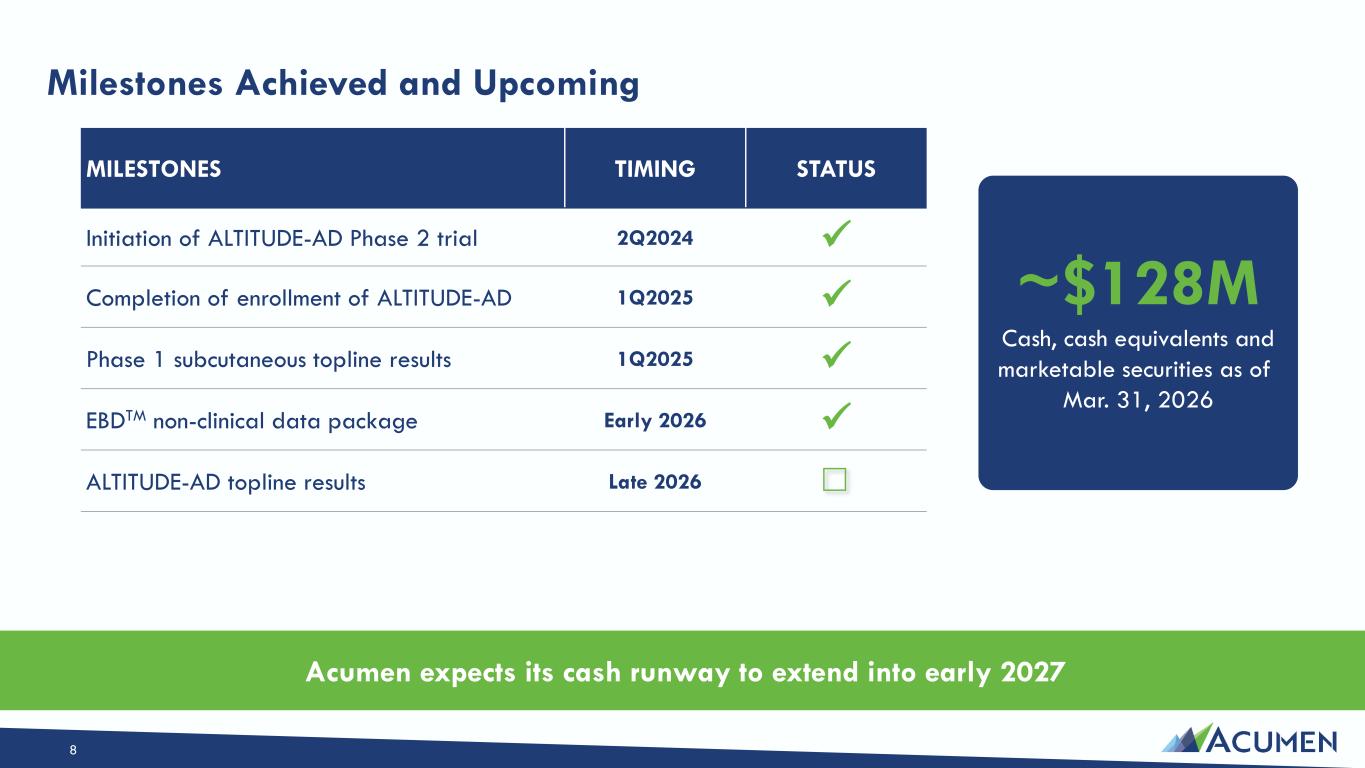
Thank you, Jim. As a reminder, our full year 2025 financial results are available in the press release we issued this morning, and in our 10-K we will file later today. We ended 2025 with $116.9 million in cash and marketable securities on our balance sheet, which is expected to support our current clinical and operational activities into early 2027. R&D expenses were $104.9 million in 2025. The increase over the prior year was primarily due to an increase in manufacturing and materials associated with our Altitude AD clinical trial, as well as personnel-related costs and research expenses, including EBD research. G&A expenses were $18.9 million in 2025, the decrease primarily due to reductions in recruiting expenses, corporate insurance expenses, and consulting costs. This led to a loss from operations and a net loss of $121.3 million in 2025. As Dan mentioned, on March 16, 2026, we closed a private placement in support of our EBD program that grossed $35.75 million before offering expenses, which were minimal. We believe this involvement from committed institutional investors strongly validates our portfolio and our enhanced brain delivery strategy. Proceeds from the financing are expected to primarily support our EBD program, including ongoing pre-clinical development work to support the nomination of a lead clinical candidate molecule and for working capital and other general corporate purposes. We are confident in our scientific innovation and strong track record of execution as we work towards our Phase II Altitude AD readout later this year and advance our EBD program. We remain dedicated to building value with our portfolio of A-beta oligomer targeted antibodies for Alzheimer's patients, caregivers, and stakeholders. And with that, we can open the call for Q&A. Operator?
Hi, Michelle. Are we ready for Q&A?
Operator
Thank you. And as a reminder, to ask a question, please press star 11 on your telephone and wait for your name to be announced. And to withdraw all your questions, please press star 1-1 again. Our first question will come from Pete Fevraplas with Cantor Fitzgerald. Your line is open.
Speaker 5
Hi, this is Samantha on the line for Pete. Thanks so much for taking our questions. So my first question related to the Altitude AD study, how has patient retention been so far? How is it trending relative to your initial assumptions? And you previously announced that the first patient enrolled in the OLE in November. Can you give us a sense of how rollover into the OLE has progressed overall? Any details you can give would be very helpful. And what, if anything, does the retention rate and rollover rate suggest to you about safety, tolerability, and how do they compare to other studies such as Lakanumab and Nanamab? Thanks so much.
Thanks, Samantha. I said, Jim, do you want to take a first pass at that?
Speaker 3
Yeah, absolutely. Happy to give you a response, Matt, and I'll ask Eric to comment when I'm done. Yeah, so you ask about retention and rollover rates for the altitude study. And really, as Dan had said in his prepared remarks, we've been very pleased with the overall progress of the altitude study. And that includes what we're seeing both in terms of retention in the study, which we think our numbers are in line with what's been observed in a lot of the other major Alzheimer's trials that have been conducted recently. And from a roll-over perspective, we've been very with the rate at which people are rolling over into the open label extension. So in both cases, metrics consistent with the trial progressing nicely. And then to your other question around how those numbers relate to things like overall safety and conduct in the trial. Of course, as you know very well, a blinded study, and we don't try to take too many interpretations away from those metrics, other than to say, given that those metrics are well in line with other studies and that consistent with the overall progression in the study, we're not seeing anything that we feel to be out of line based on those numbers. So basically, at this point, the study continues forward. Eric, anything you'd like to add?
Speaker 6
Yeah, no, that's a good summary. You know, as you mentioned, you know, this is an ongoing blinded study. And so a lot of the answers to the questions you're asking, we'll see at the end of the study. But so far, the study has run remarkably smoothly, I would say. I mean, we've not had to alter the protocol for dosing and that sort of thing. The retention rate's been good. And again, the rollover rate of people going into the open label extension has been very satisfying. I think it's a good sign that people sort of like the study and are satisfied or happy with the safety profile. So we're looking forward to the results at the end of this year. There's a limited amount that you can know for an ongoing blinded study, but especially, for instance, how we would compare to clarity, which is the patient population that's probably closest to what we're studying. We'll make those comparisons at the end of the year when we're unblinded.
Speaker 5
Thanks so much. And if I could just sneak in one more question for the EBD candidates. So you've generated different versions of Soberna Tug with JCR's BBB crossing tech, as well as another anti-beta oligomer antibody 234 from your portfolio. What have you seen in preclinical studies thus far in rodent models and primate studies that suggest you have viable candidates and that one candidate may ultimately have better efficacy over others? And what gives you confidence that you're on the right track?
Speaker 3
Yeah. As I said, we're really pleased with the progress we've been seeing. As you go through a typical discovery program, you make a lot of analogs, and given that there are several what I would call flavors that JCR has of their transference targeting technology, we really were looking at how to best combine the two pieces. I talked about the cargo. in our case, either subernotography or a related oligomer targeting antibody, and then various flavors of the JCR technology. And you can imagine the matrix, you mix and match, and you look to see which has the best overall profile. And having done that, I think one of the most attractive things from my perspective, having done this for a long time, is there are actually multiple candidates we like. Often it's the case you're really looking to identify which one is the one you want to take forward. We're actually in the happy position of liking the profile of a number of these candidates. And so it's a combination of the enhanced brain penetration. So I mentioned in my remarks that in a primate study, we're seeing 14 to 40-fold improvements in overall brain exposure, which is a substantial change in brain levels. And we believe that that's going to have multiple positive implications. But beyond that, it's also the overall profile and things like PK and, you know, the sort of distribution that you get in the antibodies. So, all that together kind of as well for the overall profile and really multiple candidates met not only our target profile for progression, but what we were calling sort of an idealized profile. So, you know, we'll see plenty of work left to be done, but where we are today, we think we're in a good position with multiple really robust candidate molecules.
Speaker 5
Thanks so much, and congrats on the quarter. Thank you.
Operator
Thank you, and our next question is going to come from Paul Mattheis with CFL. Your line is open.
Speaker 7
Hi, this is Matthew on for Paul. Thank you so much for taking our question, and congrats on the progress. I guess for my first question, are you planning to present additional NHP preclinical data for your EBD program in the near future? What should we expect there? And for my second question, we appreciate there's more brain penetration with the EBD program, but with the Bernatug already being pretty selective in targeting oligomers, how much more room do you think the EBD can improve on this? Thank you so much.
Speaker 3
Yeah, thank you, Matthew.
Speaker 3
So, to your first question around we'll be presenting more data. So, over the last few major scientific meetings, we've been increasingly presenting data from the EBD program. So, now we've sort of shown data from the humanized mouse with the humanized transferrin receptor expression. We've also, we have some mouse constructs. And I'm sure you know, one of the challenges with doing experiments around these transferrin targeting constructs is transferrin itself is very species specific. And so it's difficult to do experiments with the candidate molecules in a mouse or rodent system. So you can either use humanized mice or analogs that have the mouse transferrin receptor. So not your candidates, but sort of the mouse version. We've done both kinds of experiments and we started to publish on those. We've talked about some of the data that we've seen so far in the non-human primate study i think as we go along we've got some more work to do in our pre-clinical program ahead of the ind and we'll continue to be publishing more of the overall data set in support i don't know whether we'll pick out individual pieces but i think we'll continue to tell the story in upcoming scientific meetings and then to your second question uh do certainly we we already really like the profile of of Soberna Tug. And so, as Dan called it, we think that this is sort of supercharging that profile. And, you know, one of the words that I said when I was talking about our EBD program is we really think that we're going to improve the distribution of antibodies with the technology. So, of course, just that absolute change in magnitude, that 14 to 40-fold improvement in the overall brain levels, we think is beneficial. But beyond that, because the transferrin receptors are localized in small capillaries that run throughout the brain where the antibody gets into the brain is different with these ebd constructs and we think that's also an additional value that you don't see with a non carrier mediated antibody so and and you you can see that in multiple presentations that that multiple groups are making showing that you get a much broader pattern of distribution with this EBD technology. So yeah, multiple reasons to think that you can see a supercharged or enhanced profile with our EBD program. Thank you. That's super helpful. Of course.
Operator
Thank you. And our next question will come from Jason Zemansky with Bank of America. Your line is open.
Speaker 8
Good morning. Congrats on the great progress and thanks for taking our question. Maybe just a follow-up to your previous comment. you know if you think about the potential of an EBD enhanced molecule what is your sense right now and I appreciate this may be somewhat theoretical of the distribution within the brain of the different a beta species is there a sense that the oligomers are deep in the brain you know where an enhanced antibody might penetrate and then secondarily I was hoping you could speak to, you know, why you think you're seeing lower rates of the impact on the reticulocytes and anemia that some of the other transferrin antibodies have shown.
Speaker 3
Yeah, absolutely, Jason. So to your first question, distribution of the oligomers, yes, you're right that it is a somewhat theoretical topic, but I think probably a couple of days later, if you look at things like immunohyschemistry, it's pretty good evidence that you've got broad distribution of soluble oligomers across multiple cortical and subcortical regions. And, you know, there's been a lot of work published around the pattern of A beta distribution overall. And I think that the soluble oligomer pattern is not terribly different than that overall. I think there might be a, because it's a small soluble form of A beta, you get an even wider distribution than you have on something like plaque. So, pretty broad throughout cortical and subcortical regions, which I think is part of the reason why an EBD delivery is attractive, because since you are going in through those fine capillaries, there's really sort of no part of the brain pharenchyma that's not within a couple of hundred microns of some capillary. So, you do get broad overall distribution. At the recent ADPD meeting, there were some very nice presentations looking at sort of entry of antibodies, of A-beta targeting antibodies into the brain that don't have EBD technology. And what you're seeing is it's not only the areas of the brain where it's getting in, but it also tends to penetrate from, you know, leaky parts of the broad brain barrier for one of more time for a longer answer. And so you see things like superficial layers where you're getting antibody in, but the deeper cortical layers, you don't get as much antibody in. So, it's not only regional distribution, but it's sort of the parts of the cortex where your antibody is penetrating. So, obviously, anything that it can prove that is likely to have a beneficial effect on function. And your second question, I'm sorry, remind me, Jason.
Speaker 8
The lower rates of anemia that have, I guess, less apparent in the preclinical data. Thanks.
Speaker 3
Right. Thank you. Yeah. So part of the reason that we decided to work with JCR is they do have a track record from their clinical programs with a drug called Iscargo, where they were able to deliver enzyme into the brain for the treatment of Hunter syndrome in Japan. But they did see lower rates of anemia with their study. And so we do think that JCR's technology has reason to think that you have lower anemia rates. And I think it's likely to do with the specific epitopes that they're targeting on the transferrin receptor. But, you know, that's why we were so pleased to see in our non-human primate study a similar pattern where at 24 hours, which is where you'd expect to see the most robust effect on things like reticulocyte counts, we were not seeing much of an effect quite consistent with what they've seen clinically. Great. Thanks for the color.
Operator
Thank you. And our next question will come from Tom Schrader with BTIG. Your line is open.
Good morning. Thanks for taking the question. A lot of good questions on the shuttle. You're quoting numbers for uptake that are significantly higher than your competitors. I think Roche quotes numbers around 10. Are you sure you're better? And you're quoting ratios. Do you have data on amount that you're getting in? Because obviously the ratio depends a little bit on where you start. And then I have an OLE follow-up. Thanks.
Speaker 3
Yeah, Tom. So, you know, when we're, you're correct, when we're quoting numbers, we're quoting the ratio relative to brain penetration from the non-enhanced antibodies. And, you know, I think that's the appropriate way to do it. You know, I try to shy away from statements like better or worse. I mean, these are not head-to-head comparisons, but what we can say is we're seeing robust increases in levels of antibodies relative to the unlabeled controls. And so that's how we look at it. We're seeing robust improvements, and I think that compares well with what other people are seeing. I try to stay away from direct head-to-head numbers unless those studies have been done together.
Fair enough. And in your OLE study, what are you going to continue to measure? Are you still going to do A-beta scans? And I understand you don't have a ton of data, but is your expectation that after 18 months, based on the plaque clearance you've seen, most patients will have cleared plaque, or do you expect a lot of them might still be clearing plaque?
Speaker 6
I'm just wondering if you've made those calculations, what your summary is. Thanks.
Speaker 3
I think Eric is probably in the best position to answer this one. So, Eric, do you want to take this one?
Speaker 6
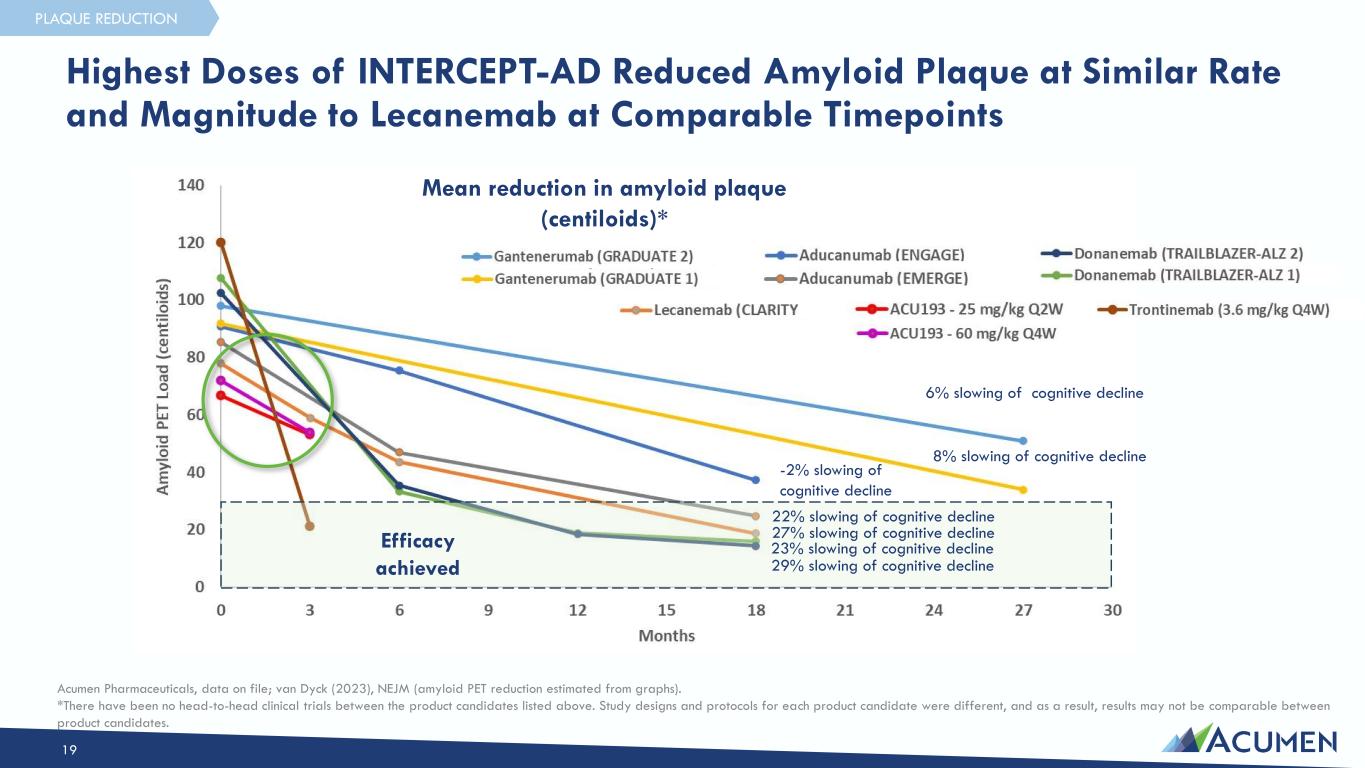
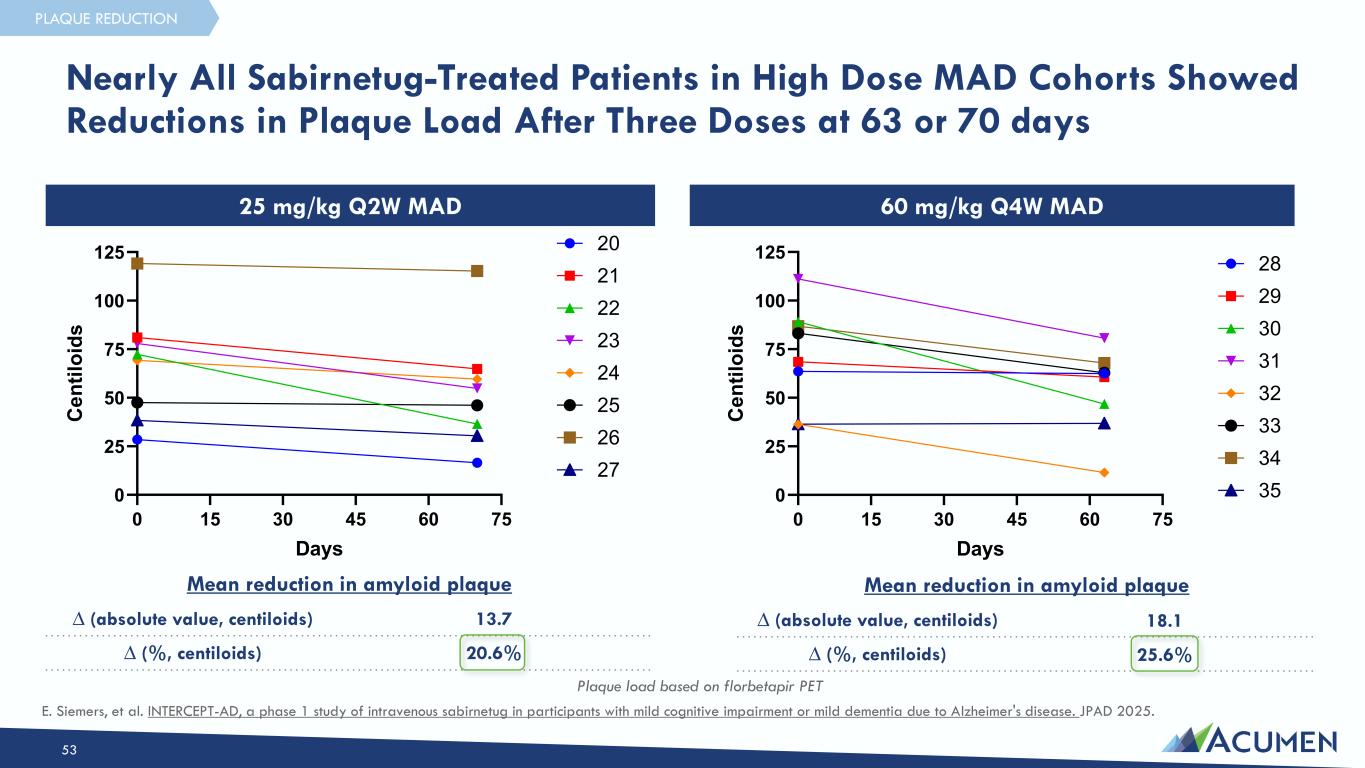
Yeah, sure. So, for these open label extensions, typically what's done, and this is what we've done, is you measure the same things, but you do it generally less frequently. And that's just a matter of patient burden, basically. I mean, obviously, everybody's on drug at this point. There's no placebo group. So you do want to measure the same things, and you want to look at a couple of things. One is the people who were originally on drug, you know, how they do is they continue for a longer period of time. And then we also have a third of the patients in altitude who were originally on placebo. And that will be interesting to see the effect once they go on active treatment. it. As far as the question about plaque reduction, it's a great question. And I don't know that there's any way that we can really know what to expect at the end of 18 months. Now, we know in their phase one study, after three months, at the highest two doses, 60 mgs per keg and 25 mgs per keg every two weeks, we did see some plaque reduction. And the amount of plaque reduction at three months was about the same amount of plaque reduction that was seen for lacanumab after three months. But what our plaque reduction will be at 18 months, I don't think we really can say at this point. I mean, that's why you do this study to get the data. And that's one of the things, obviously, that we'll be very much looking forward to is to finding out, does the plaque load continue to decrease or does it plateau out? Because in our case, we target oligomers. We don't target plaque. So plaque production isn't necessarily needed in our case, but it will be a very interesting part of the readout when we unblind the end of this year. Okay. Thanks for the thought.
Operator
Thank you. And our next question is going to come from Jeff Meacham with Citi. Your line is open.
Speaker 9
Good morning. This is Mary-Kate on for Jeff. Thanks for taking our questions. So just first question, with an IND targeted for mid-2027 for your EBD program, could you walk us through how you're looking at maybe trial design for an early-stage trial here? And then a separate question on Soberna Tug. As you guys approach data in Phase 2 later this year, could you walk us through the type of feedback you're receiving from physicians on where Soberna Tug could maybe address the unmet need in the space here. Thank you.
Speaker 3
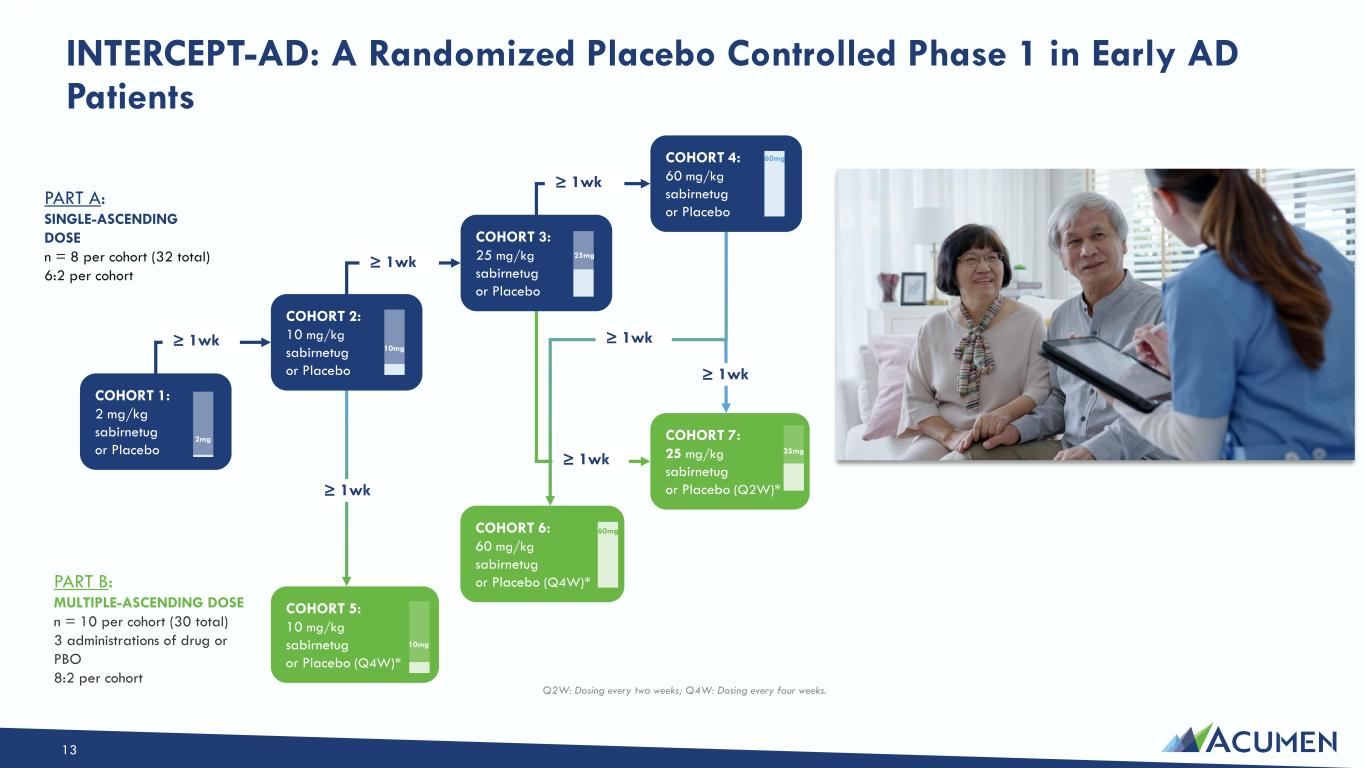
Yeah, of course, Mary-Kate. So, I'll take your first question around trial design for EBD, and again, I'll ask Eric to jump in around feedback around how Sobernatug might fit. From a trial design perspective, I think the first thing to say, still early days, we are in the midst of working on trial design. We do think that we can take advantage of the fact that we've got quite a lot of clinical experience now with Sobernatug in designing our study, and in particular, we got quite a lot of value out of including Alzheimer's patients in the phase one study for Sabernitog, and so that's likely to be a feature for the EBD program as well, both from the point of view of safety tolerability, but equally important, I think, is we were able to generate quite a lot of biomarker data, both imaging and fluid biomarkers in the intercept study and in the couple of years since that study was conducted that field only continues to expand so there's actually quite a lot of interesting information i think that one can glean from those uh fluid and imaging based biomarkers so you know those those are kind of the key thoughts i think the other thing that we'll we'll think about is uh perhaps the the length of the study that that's one thing that uh that we we might look at the intercept study as i'm sure you recall the multiple sending dose was a total of three doses spaced at a once monthly interval so you know we'll have a look at whether it makes sense to to dose for longer than that but i think you know at the as i said at the top the final decisions haven't been made in design yet but we do intend to take full advantage of what we've learned from our ongoing Sobernatuk studies. And then for your second question around feedback around positioning for Sobernatuk, let me turn it over to Eric and let him speak.
Speaker 6
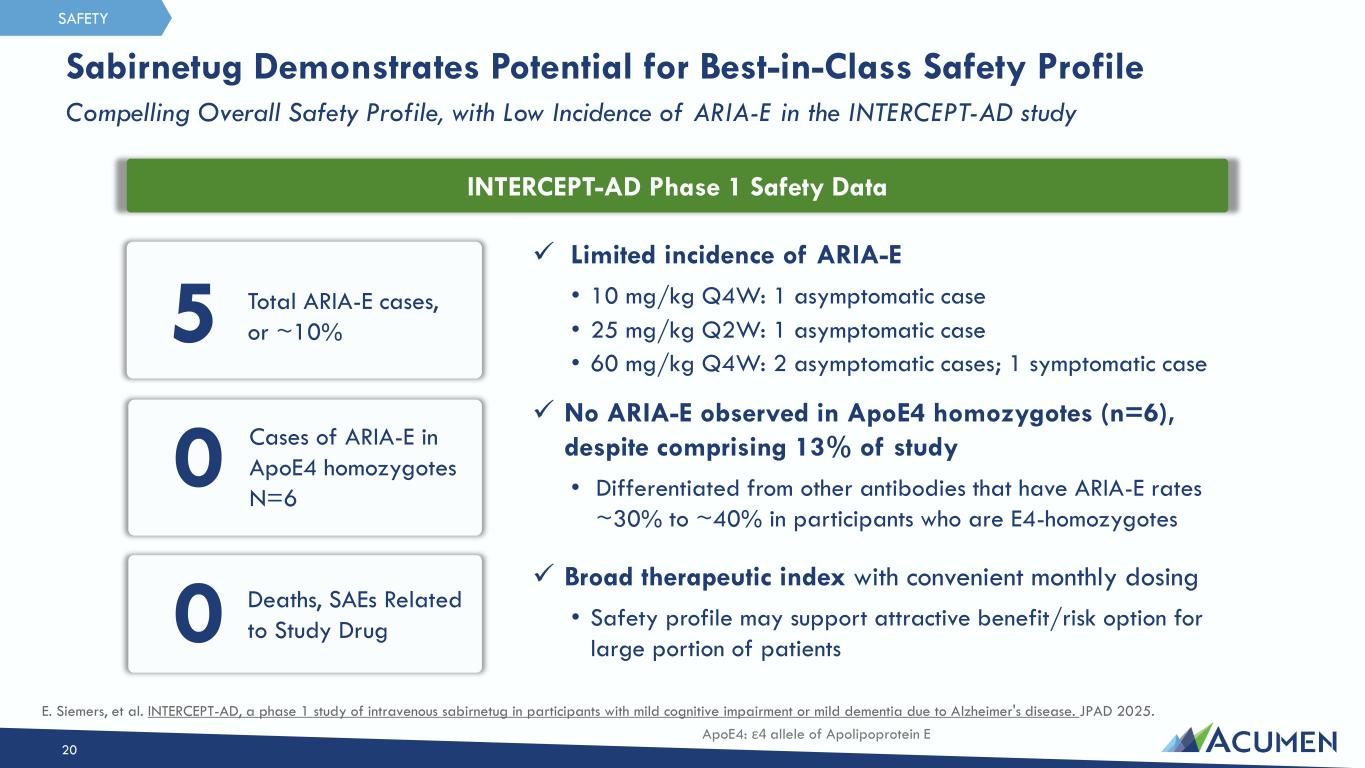
Well, yeah, and in terms of how this would be positioned, I'm not sure what exactly you're including in all this, but obviously there's two drugs that are approved right now in the U.S., And so we'll, you know, once we have our data, you know, we'll make some comparisons with those. But we do think that there's really, and I think everyone would agree, there's room for improvement with the currently available drugs. And one of the things that the field has actually learned over time is that in particular with regard to ARIA and safety is that when this was sort of a new event that the field hadn't seen before, it was certainly concerning. but over time what the field has learned is that what you really worry about is symptomatic aria and actually it's just the people with severe symptoms so in other words most cases of aria are asymptomatic it's just a radiographic finding on an mri um there are roughly roughly 20 percent of people who have aria do have some symptoms of those people most of those are fairly mild You may have a headache for a few days, some difficulty walking for a couple of days, but nothing that's an upset stomach, nothing that's really problematic. The ones that you really worry about are the rare cases of people who have serious symptoms. And those include things like status epilepticus, macro hemorrhages. There actually have been some fatalities, unfortunately. And so even though it's a small percentage of patients that have those kind of serious adverse events, those are the ones, obviously, that you really worry about. And so I think as the field progresses and as we read out our data, one of the things that we'll want to look at is do we see people with serious adverse events? And how does that compare with the other drugs that are available? We're in IgG2, and the other drugs are IgG1s. And IgG1 has more of what's called effector function, so it triggers more of an immune response. IgG2 has some effector function, but not as much as an IgG1. So again, when we read out our data at the end of this year, we'll find out whether that differentiation of an IgG2 versus an IgG1 makes a difference.
Speaker 7
So, I hope that answers your question.
Operator
Thank you. And our next question comes from Dev Prasad with Lucid. Your line is open.
Speaker 10
Hi. Thank you for taking our question and congrats on the update. I have a couple. One is the oil is dosing at 35 mg per cake rather than 50 mg per cake. Can you remind us and maybe add some color around wardrobe the dose selection and if altitude ad is positive what are your current thinking on the phase three design would you plan a single pivotal trial or two or would you pursue two dose or single then another question is on nhp so the exposure shows 40 40 into 40 x range can you help us understand what's driving the variability and is the 40x candidate also the one with the best anemia profile thank you yeah thanks Jeff happy to take the questions maybe we'll take them in reverse order and
Speaker 3
it's I'll take the first two and then ask Eric to comment on the choice of the 35 mink per kick dose for the OLE first to the variability question in the EBD you know, I think there's a couple of things at play here. So we are looking at brain levels across multiple regions. And so in a summary like this, we're just giving you the overall range of numbers. So there's also looking at the levels in frontal cortex versus hippocampus versus other brain regions. And so I think, you know, there's always going to be a little bit of variance between those numbers. But I think what you see more than anything across multiple candidates in the primate study is generally some pretty good consistency. So the variability is more between candidates than between brain regions for a single candidate, which is kind of nice. And then, you know, I think really all of the candidates we saw had low risk for anemia as measured at the 24-hour time point after subcutaneous dosing. So we're actually part of the reason I was saying earlier that we think that we're in a really good spot is multiple candidates have a really attractive overall profile. And so, it's going to be an interesting decision for which ones are the best ones to take forward. To your question around phase three design, we do think at this point that the altitude design that we're using is a good, robust design. And so, obviously, you always make decisions based on data, and we'll see where we are when we have the readout from altitude. But our assumption at the moment is that we're looking at a trial design similar to the altitude design, probably with a larger population. Our expectation, our base case at the moment is that we think that one additional phase three study should be sufficient to be able to file a BLA for early Alzheimer's disease. And we have had some interactions with the FDA that lead us to that conclusion at this Obviously, you know, nothing's decided at the moment, but our base case is one additional phase three study with quite a similar design to the altitude study. And then to your question around the choice of dose level for the OLE, I'll turn over to Eric to answer that one.
Speaker 6
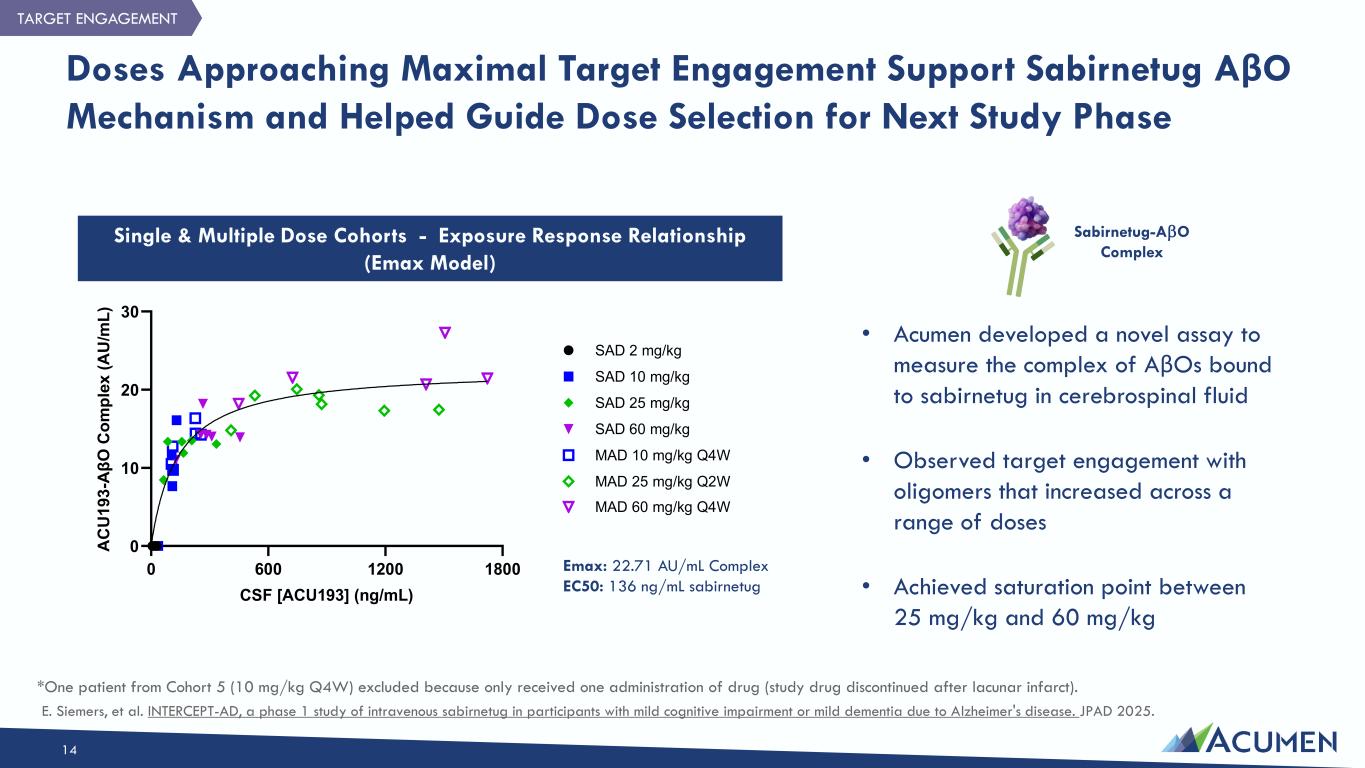
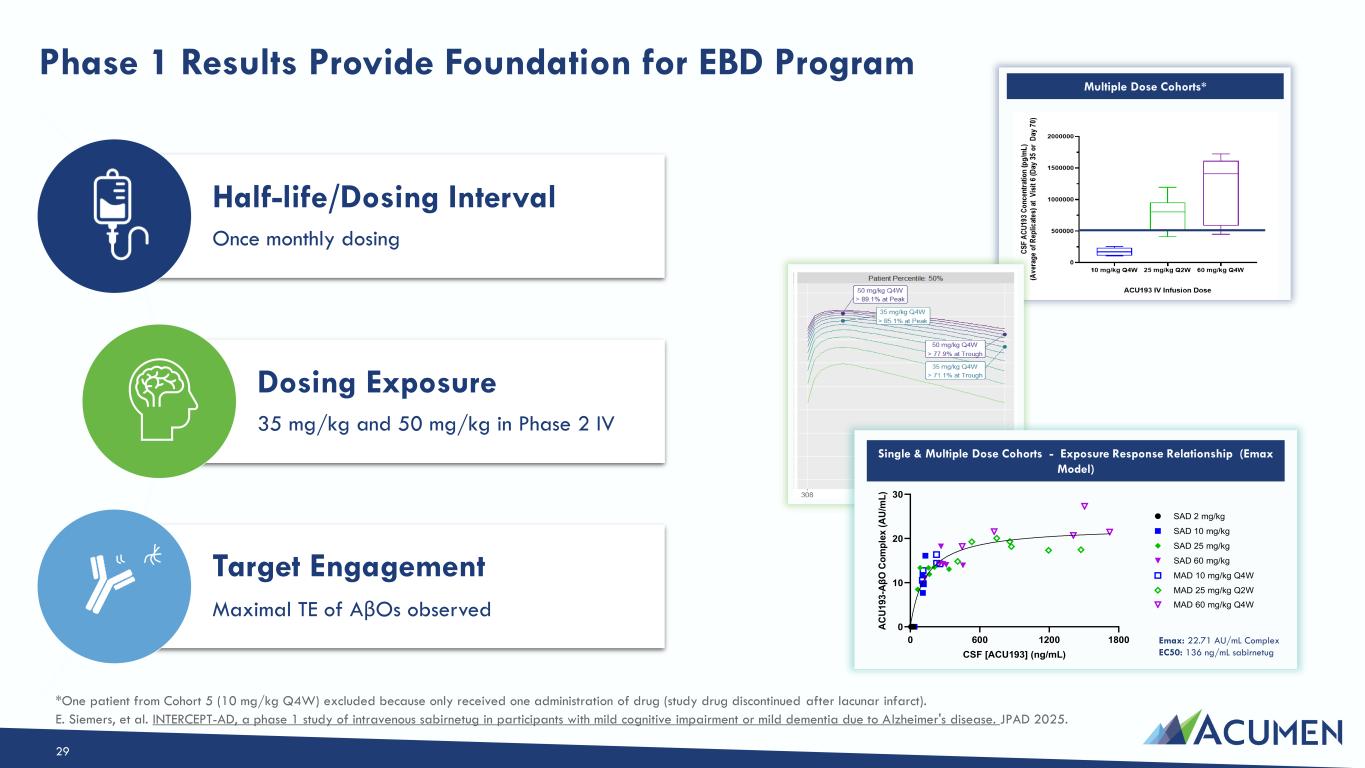
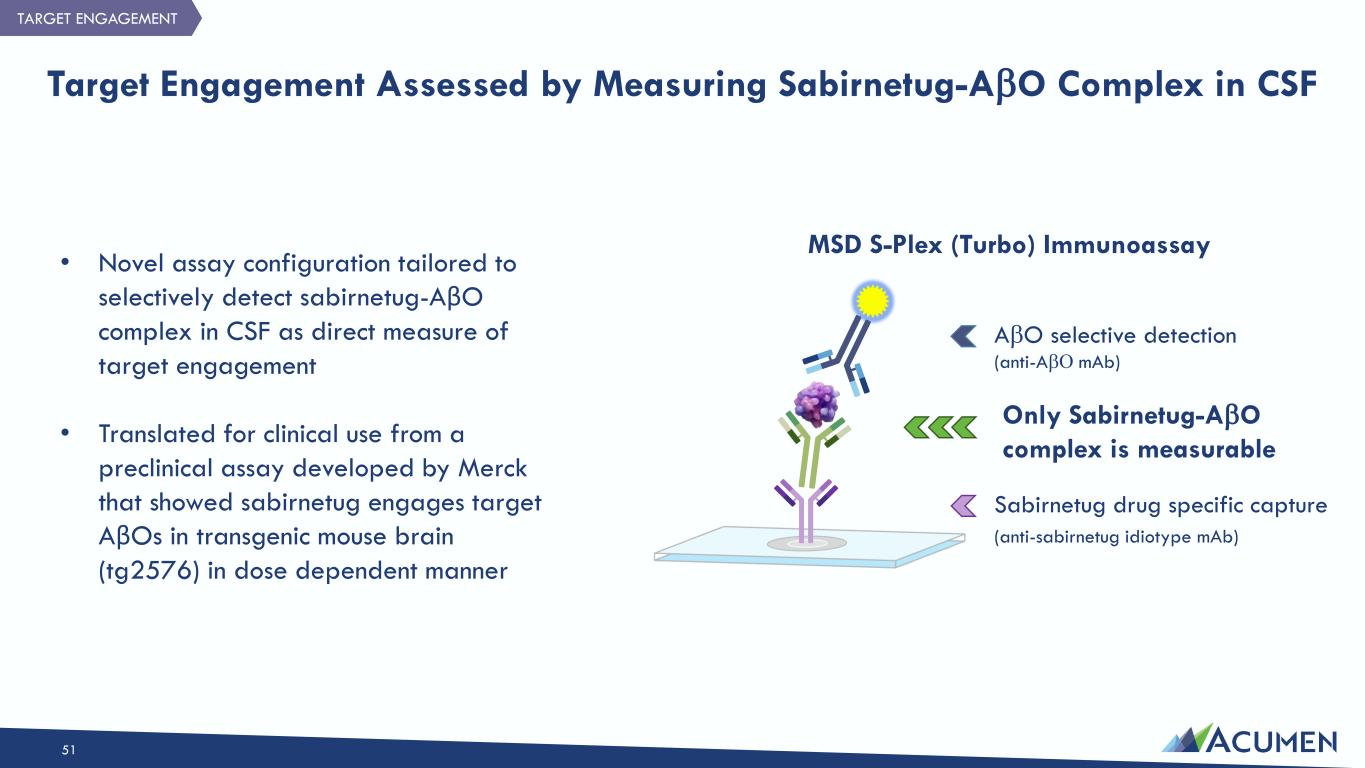
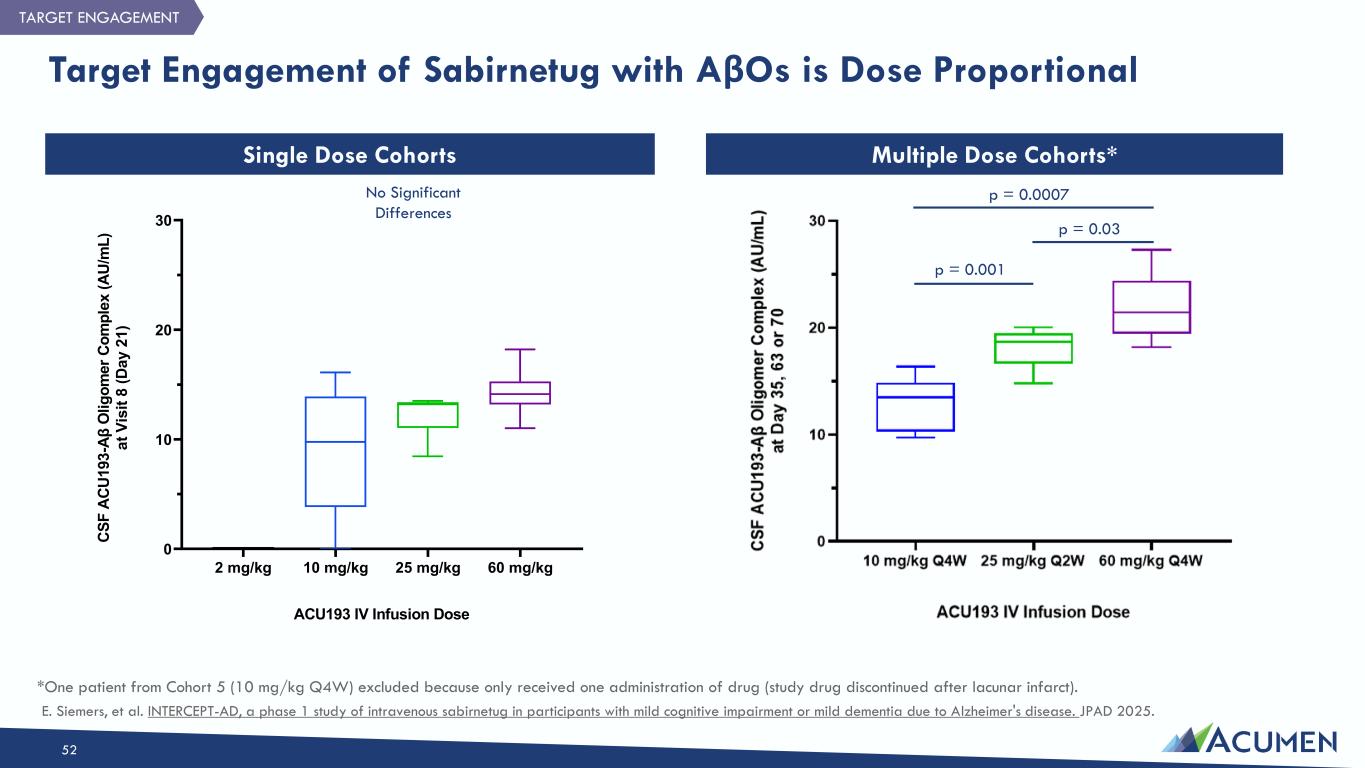
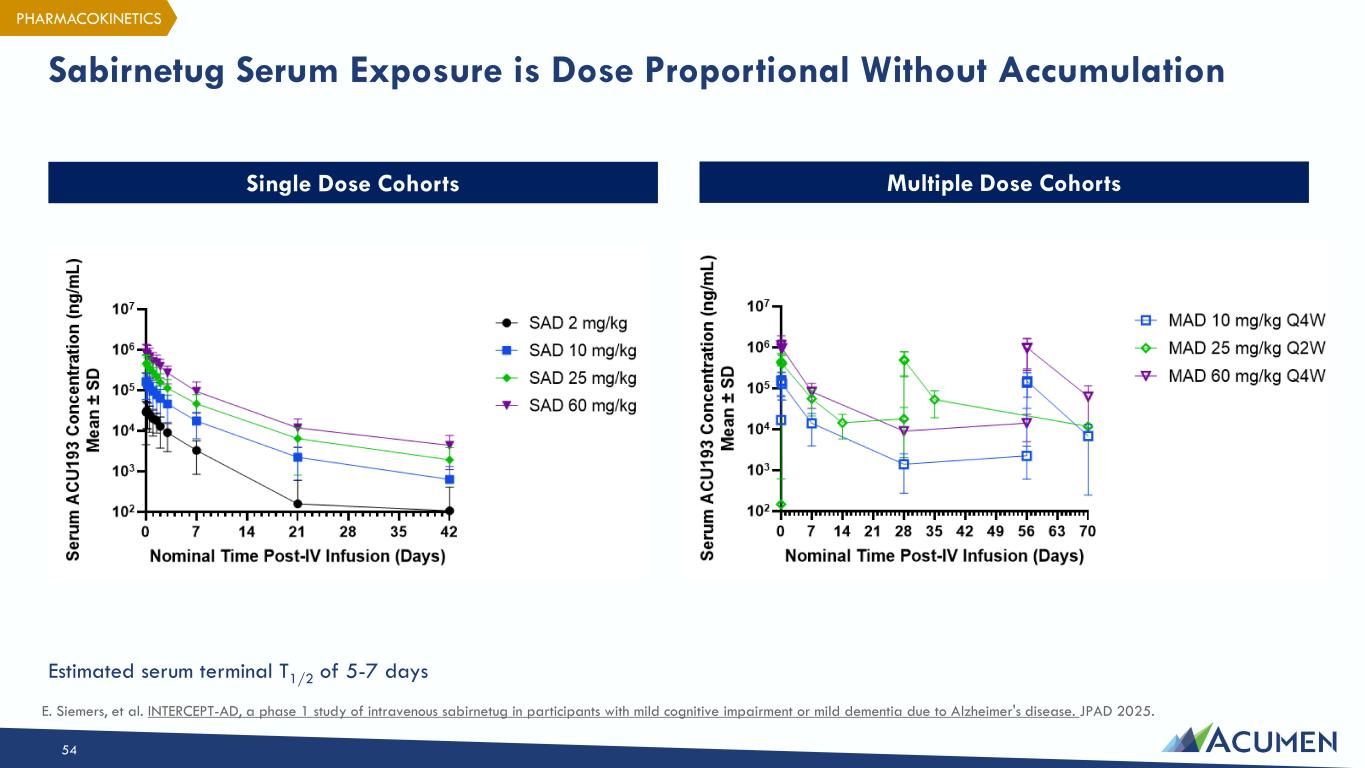
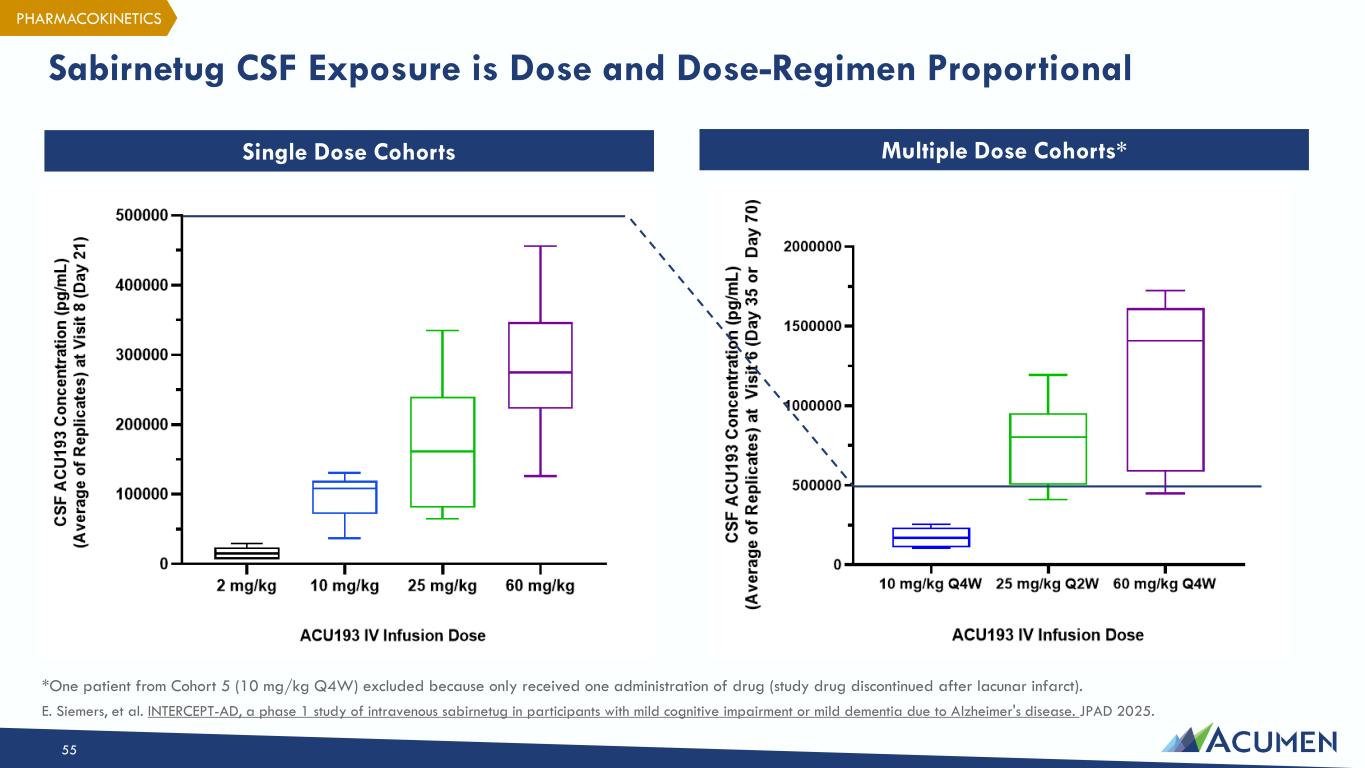
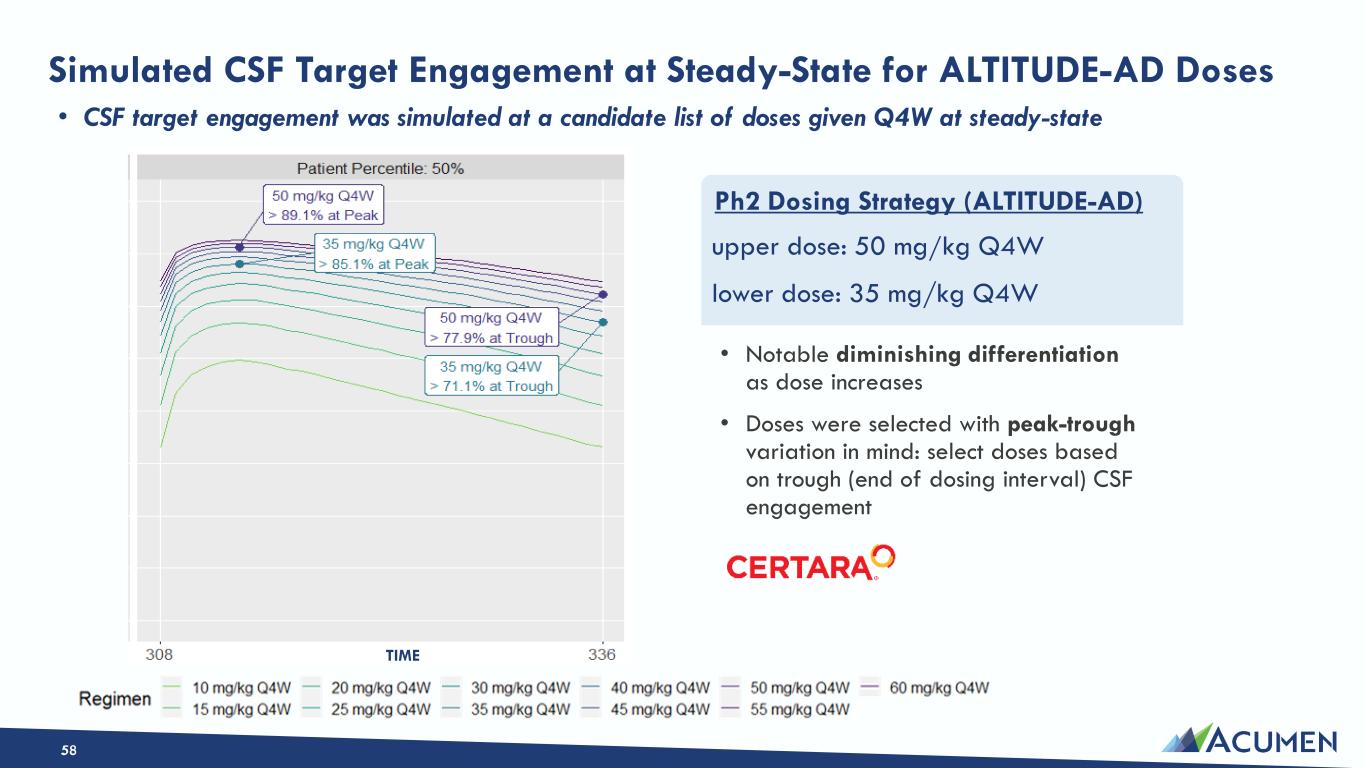
Yeah, so thanks. Just one additional comment about the phase three sort of strategy is just to remind you that for the nanomab for the trailblazer studies it's a little it's kind of similar to our situation so the trailblazer study was a phase two it's actually a little smaller than our altitude study but that was followed by a single uh trailblazer two study that was a larger phase three and that led to their regulatory approval so it was kind of in a similar situation to that As far as the dose selection, so I love the question, and this gets into the mini-gritty of drug development, but so we generated from our phase one intercept study a lot of good data on target engagement. In other words, first of all, how much antibody crosses the blood-brain barrier, but then does it actually bind to the target? Does it bind to oligomers? And we had some really good data that showed over the dose range that we used in the phase one study, we actually reached saturation. In other words, it's called the Emax curve, but we reached saturation where going higher than, say, 60 mg per kg really wasn't useful. But we also did a lot of modeling on those data. And what the modeling led us to is that at 35 mg per kg, you actually have good target engagement at both peak and trough. And we think this is a really good test of the oligomer hypothesis, actually. The 50 mix per kg was a little bit of an insurance policy in my mind because, you know, maybe you do need some plaque reduction and we'd be more likely to see that at 50 mix per kg. But the point is, is both of those doses are viable in terms of potential efficacy. And then, obviously, we'll compare the safety of the two doses at the end of the study. So, but the 35 mg per kg dose is a very viable dose. And actually, there was one study that was done several years ago now in monkeys where they used a 20 mg per kg dose. and based on molar ratios of the antibody in oligomers and spinal fluid, even 20 mgs per kig in that monkey study looked like a viable dose. So we think 35 mgs per kig is really a very viable dose, and obviously we're looking forward to seeing the results.
Speaker 10
Great. Thank you for the color.
Operator
Thank you, and I am showing no further questions in the queue at this time. I would now like to turn the call back over to Alex for closing remarks.
Thanks, Michelle, and thank you to everyone for tuning in and spending time with us today. Any other questions that you have, we are always available at the company, so please contact us. With that, have a great day.
Operator
This concludes today's conference call. Thank you for participating, and you may now disconnect.