Operator
Ladies and gentlemen, thank you for standing by and welcome to the Adron Holdings, Inc. 2nd Quarter 2026 Earnings Release Conference Call. All lines have been placed on mute to prevent any background noise. After the speaker's remarks, there will be a question and answer session. If you would like to ask a question at this time, just press star followed by the number 1 on your telephone keypad. And if you would like to withdraw your question, just press star 1 again. During the course of the conference call, Adron representatives expect to make forward-looking statements that reflects management's best judgment based on factors currently known. However, these statements involve recent uncertainties, including the successful development and market acceptance of our products, the ability of our third-party suppliers to supply components and products, our ability to convert our backlog into revenue, our ability to maintain current expected delivery schedules, competitive pricing and acceptance of our products, intellectual property matters, the effect of economic conditions, the impact of tariffs and trade policy, and other risk factors described in our most recent annual report on Form 10-K and in our quarterly finance with the Securities and Exchange Commission. Atron Holdings assumes no obligation to update any such forward-looking statements. During today's call, management will refer to the certain non-GAAP financial measures. Reconciliation of GAAPs and non-GAAP measures and certain additional information are also included in our investor presentation and our earnings release. Atron Holding has not provided reconciliation of its third-quarter 2026 outlook with regard to non-GAAP operating margins because it cannot predict and quantify without unreasonable effort all of the adjustments that may occur during the period. The investor presentation has been updated and is available for download on the Atron Investor Relations website. Posting to this call is Tom Stanton, Atron's Holdings Chief Executive Officer and Chairman of the Board, and Timothy Santos, Senior Vice President and Chief Financial Officer. It is now my pleasure to turn the call over to Tom Stanton, Chief Executive Officer of Adeline Holdings. Sir, please go ahead.
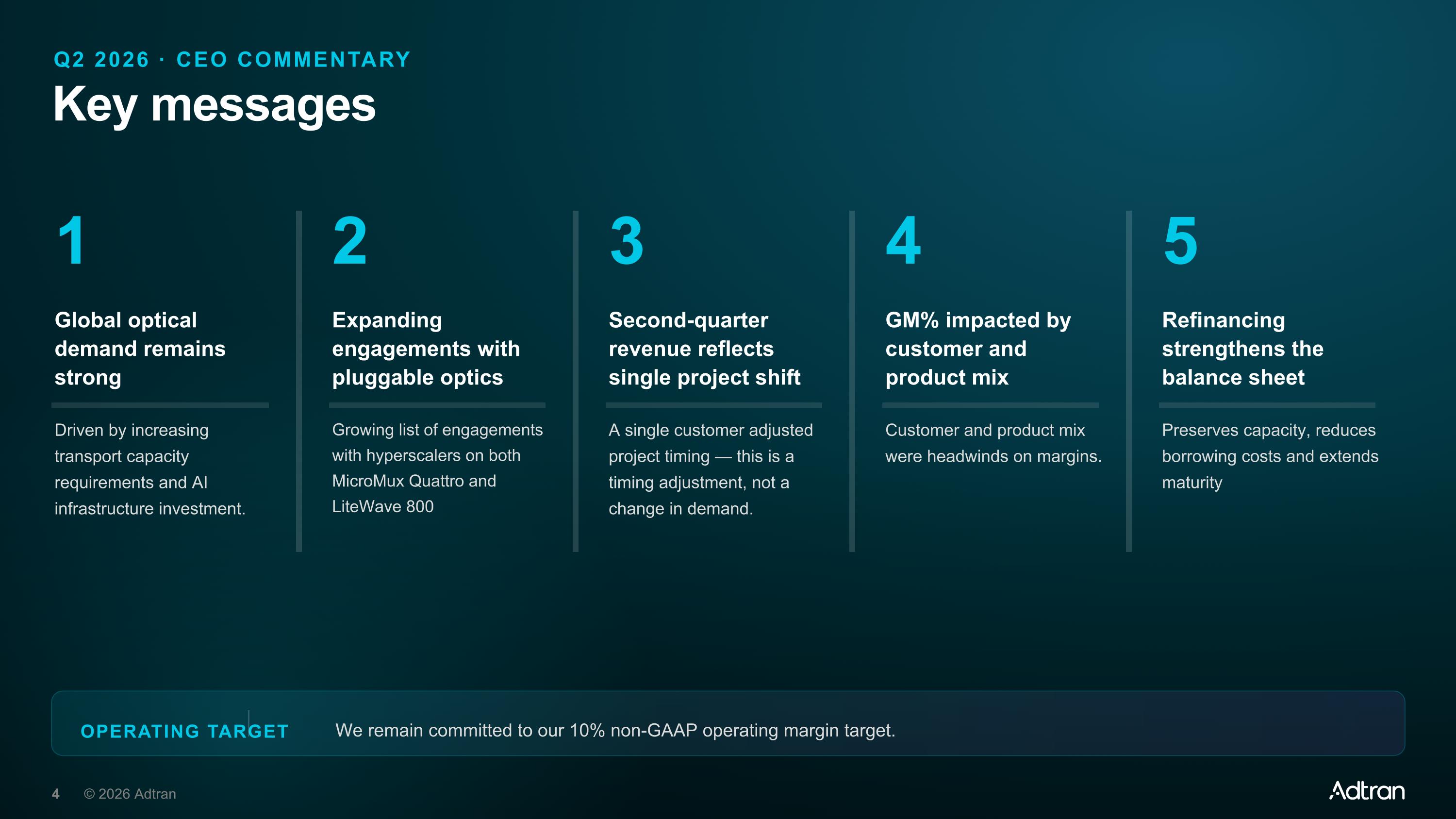
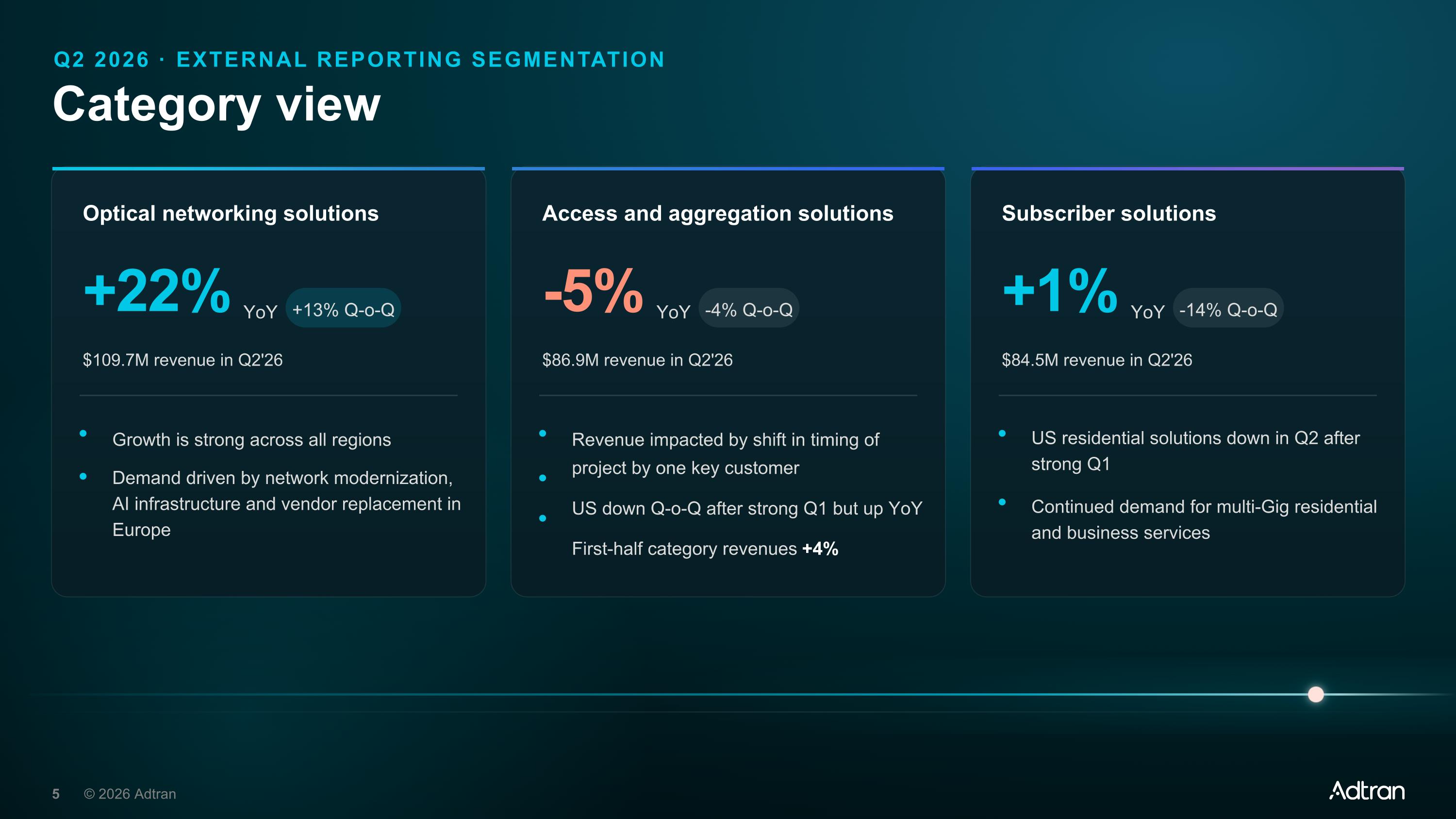
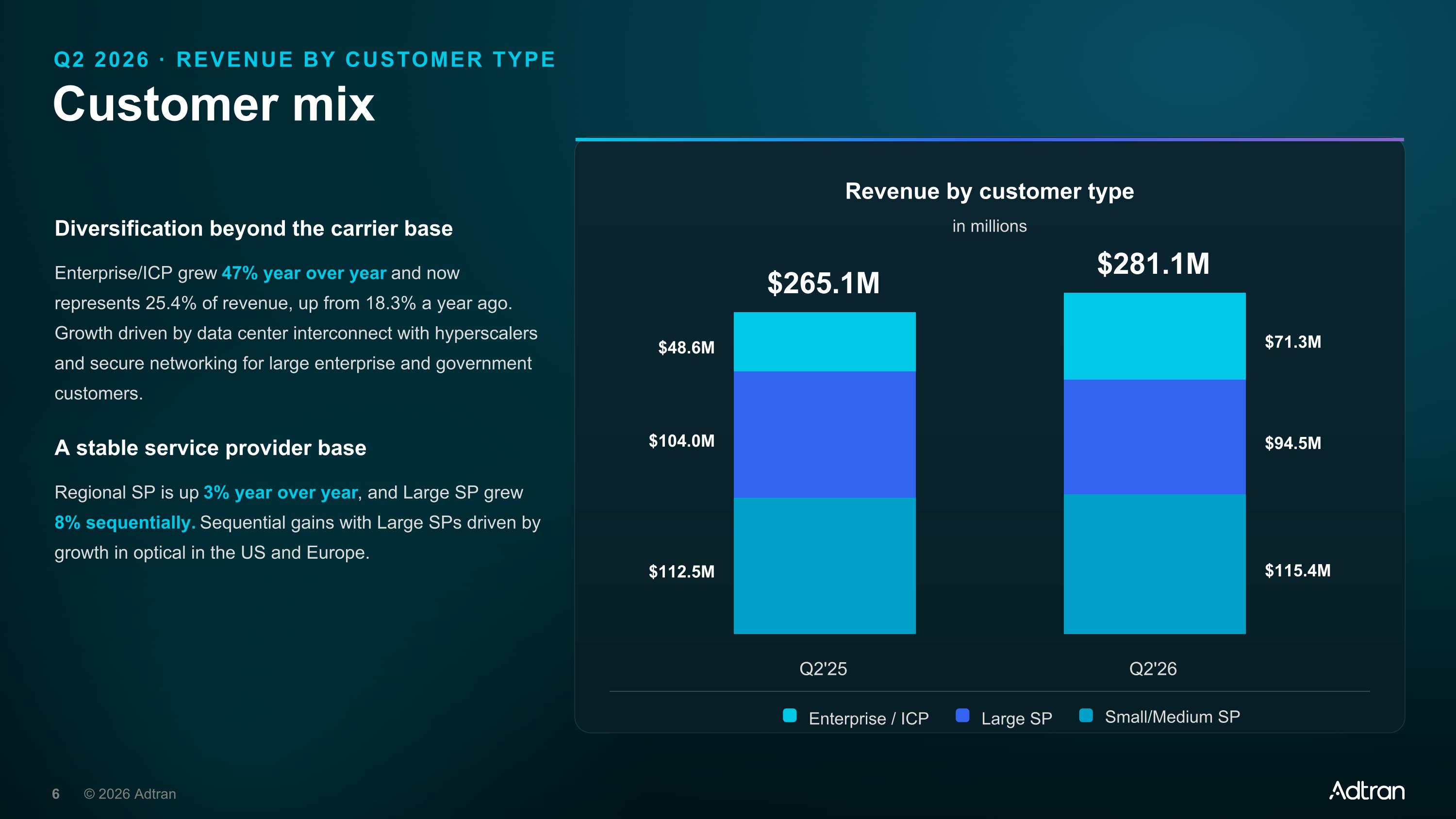
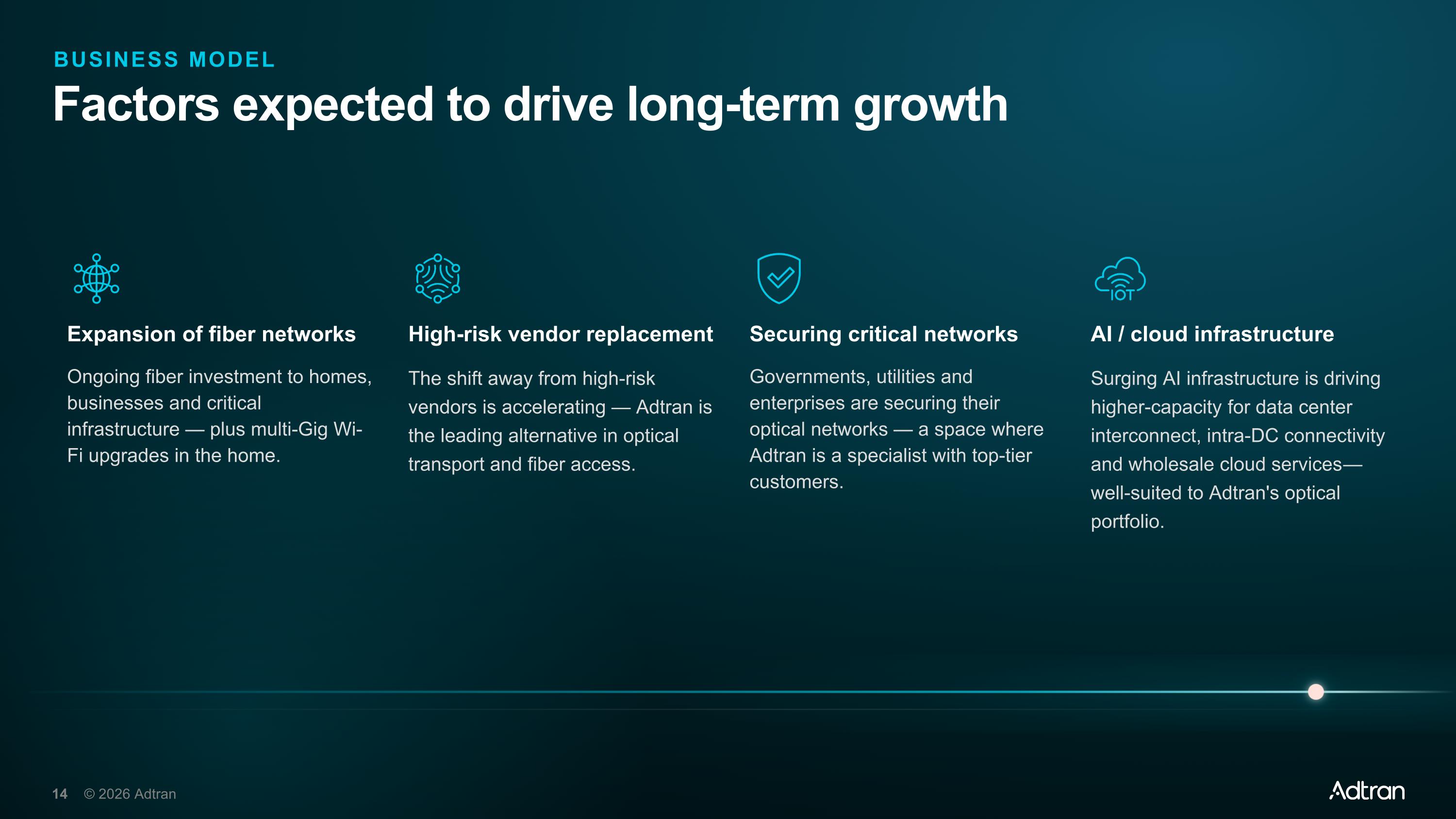
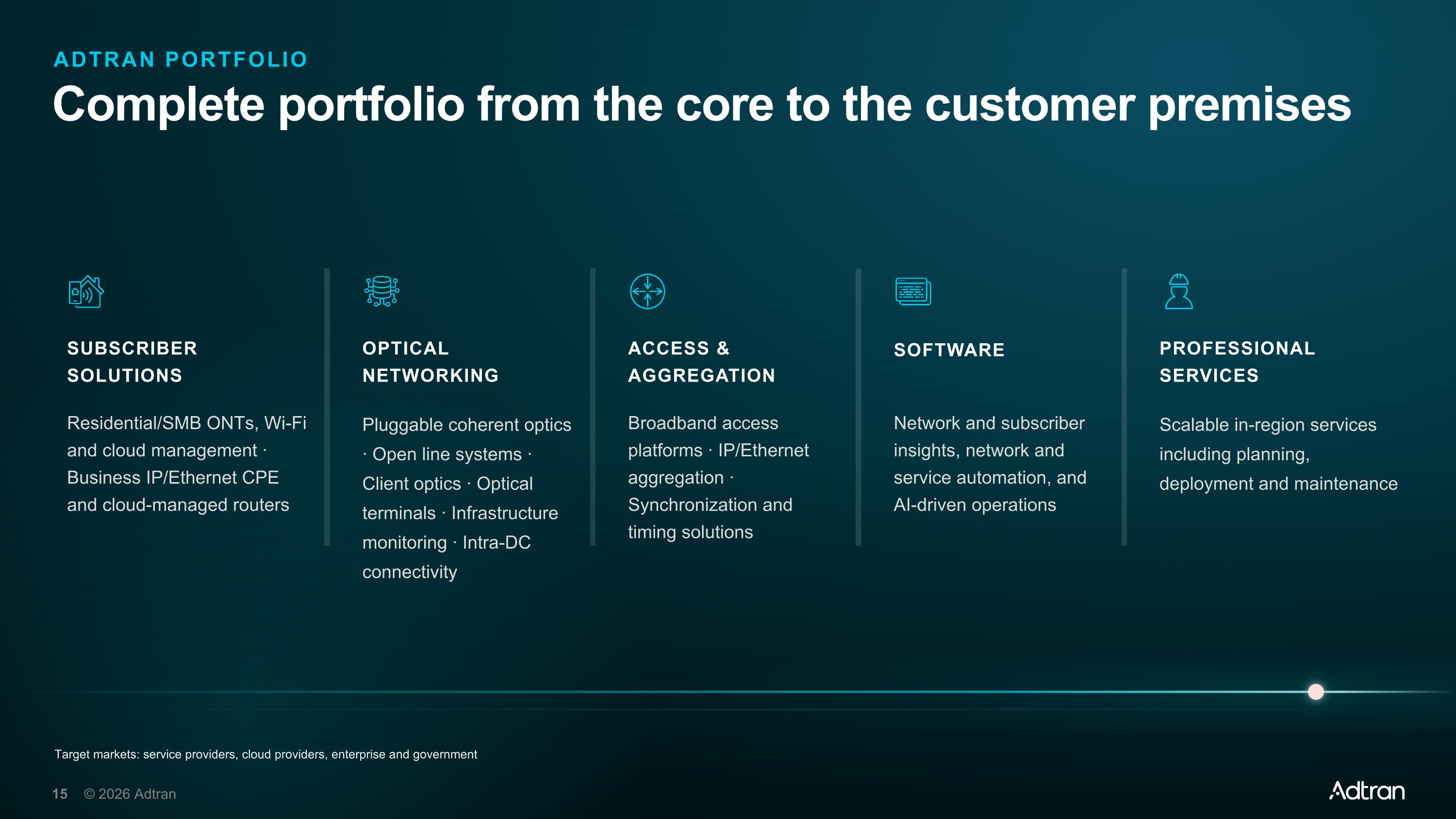
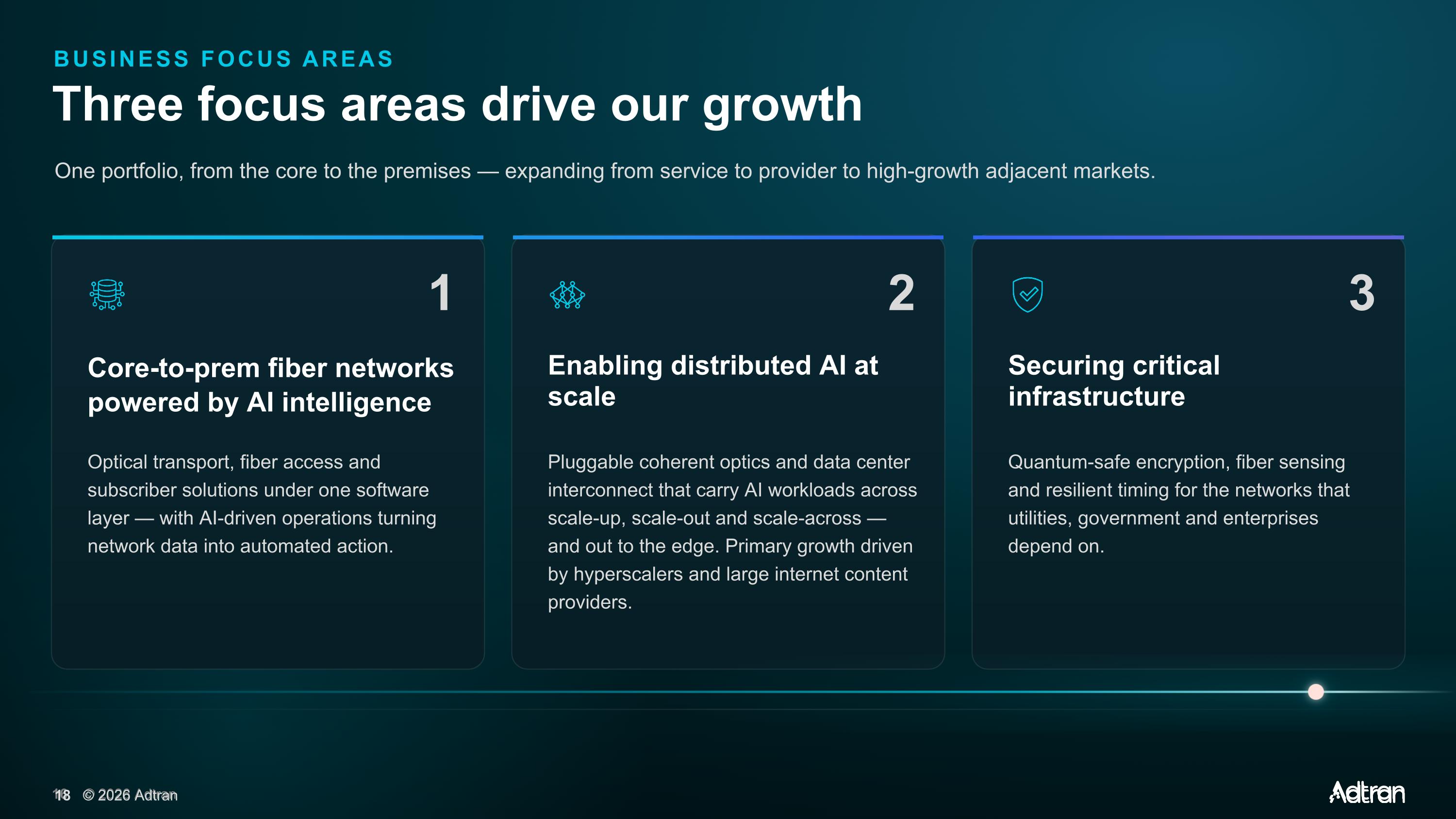
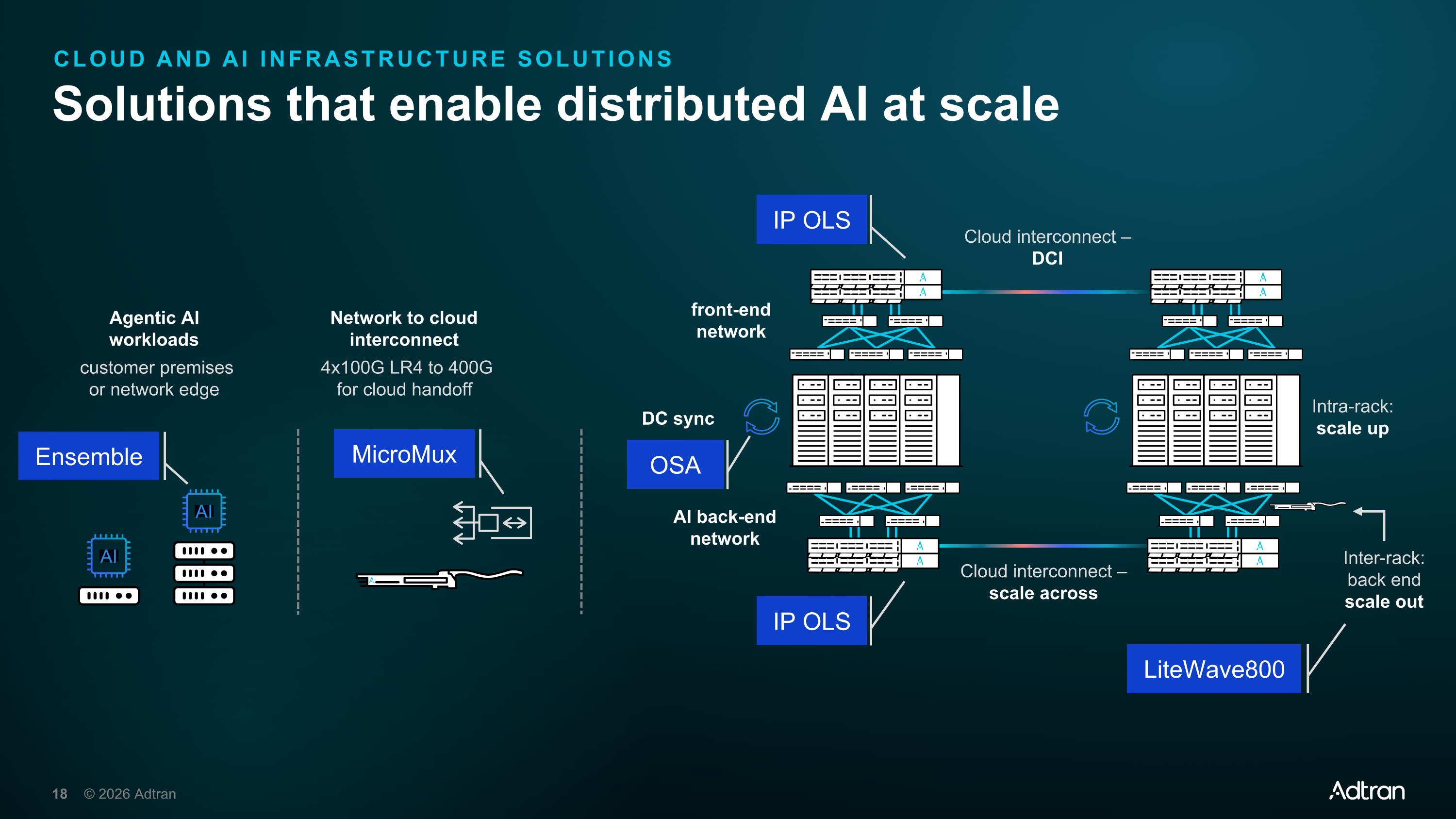
Thank you, Operator. Good morning, everyone. Although we are disappointed with the reported results of this past quarter, we believe they were driven by a specific set of factors. As we communicated in our preliminary results press release, a project delay from a single customer combined with unfavorable impacts from product and customer mix caused our results to fall short of our guidance. Despite these factors, demand across our end markets remains healthy. Our strategic priorities remain on track, and our customer base continues to diversify. We believe those underlying fundamentals position us well as we look ahead into 2027. As we shared in our pre-announcement, one of our customers adjusted the timing of a project, which affected our results for the quarter. This customer remains committed to its deployment objectives, and we view this as a timing adjustment rather than a change in demand. Overall, customer demand remained strong during the quarter, but a challenging supply environment limited our ability to fulfill that demand, constraining shipments and resulting in an unfavorable mix. To be clear, absent these incremental supply constraints, we would have met our original revenue guidance. Against this backdrop, ATRAN delivered second quarter revenue of $281.1 million, consistent with our preliminary results, and non-GAAP operating margin of approximately 3.8%, also in line with our free announcement. While these results reflected the items I just discussed, several indicators of our strategic progress continued to strengthen during the quarter. Our optical business continued to serve as a key growth engine, and our growth was broad-based across service provider, enterprise, government, and cloud customers, and reflects continued demand for higher-capacity optical infrastructure, AI-driven networking expansion, and secure connectivity. We are also generating tangible benefits from our diversification strategy. Revenue from enterprise, government, and cloud customers grew a strong 47% year-over-year and 19% sequentially, accounting for 25% of total company revenue in the quarter. Within this customer segment, revenue from hyperscalers increased 97% year-over-year, underscoring the strength of our diversification strategy. This momentum is being driven primarily by our data center interconnect business. In parallel, we continue to expand engagements with hyperscalers and lower-scale content providers for our upcoming MicroMux Quattroil and the LightWave 800 pluggable optics solutions. The results highlight our growing participation in attractive end markets beyond our traditional service provider base and reflect the opportunities created by continued investment in cloud and AI infrastructure. As we broaden our customer adoption and expand our solutions footprint, we believe we are well-positioned to benefit from these longer-term growth trends. Secure connectivity is another area where we continue to drive increasing customer demand. Our recently announced collaboration with EU Networks highlights growing demand for quantum-safe networking solutions and validates the strength of our multilayer encryption portfolio portfolio and integrated cryptographic management capabilities as service providers and enterprises place greater urgency on addressing quantum secure vulnerabilities. Within our service provider segment, we continue to unlock opportunities driven by vendor replacement programs, network modernization initiatives, broadband expansion efforts, and increasing security requirements. These trends are driving investment across transport and access networks and position us to benefit from large-scale broadband initiatives such as BEAD in the U.S., Project Gigabit in the U.K., Germany's Gigabit Strategy 2030, and Natalia's 1GIGA, alongside growing demand streaming from European network security and trusted vendor initiatives, including the proposed EU Cybersecurity Act II, or CSA-II. Now some specifics of our product category. Optical networking revenue was $109.7 million, up 22% year-over-year and 13% sequentially. Access and aggregation solutions revenue was $86.9 million and was directly impacted by the customer timing dynamics I discussed earlier. Subscriber solutions revenue was $84.5 million, reflecting normal variability following a very strong first quarter. Subsequent to quarter-end, we strengthen our financial foundation through the completion of a senior secured credit facility. This refinancing lowers borrowing costs and extends maturities, providing additional financial flexibility as we execute our long-term strategy. In summary, the underlying drivers of our business remains intact and demand for our products is strong. Although the company's gross margin performance has continued to improve over the last three years, including being able to overcome the product and freight cost increases we have experienced over the last few quarters, Q2 results reflected a tightening of supply, which resulted in unfavorable product mix as our ability to ship higher margin products was impacted and ultimately lowered gross margins. As the supply chain outlook remains uncertain, we continue to advance actions that will strengthen our margins and better align our performance with our long-term operating objectives of 42% to 43% gross margin. Amidst the current supply environment, we are maintaining strong operating expense control and remain committed to our 10% non-GAAP operating margin target. We continue to gain momentum in optical networking, further diversifying our customer base, and see a clear path forward towards improving profitability. We remain confident in our strategy and our ability to create long-term shareholder value. With that, I'll turn the call over to Tim to review our financial results in greater detail and follow-up with questions. Tim?
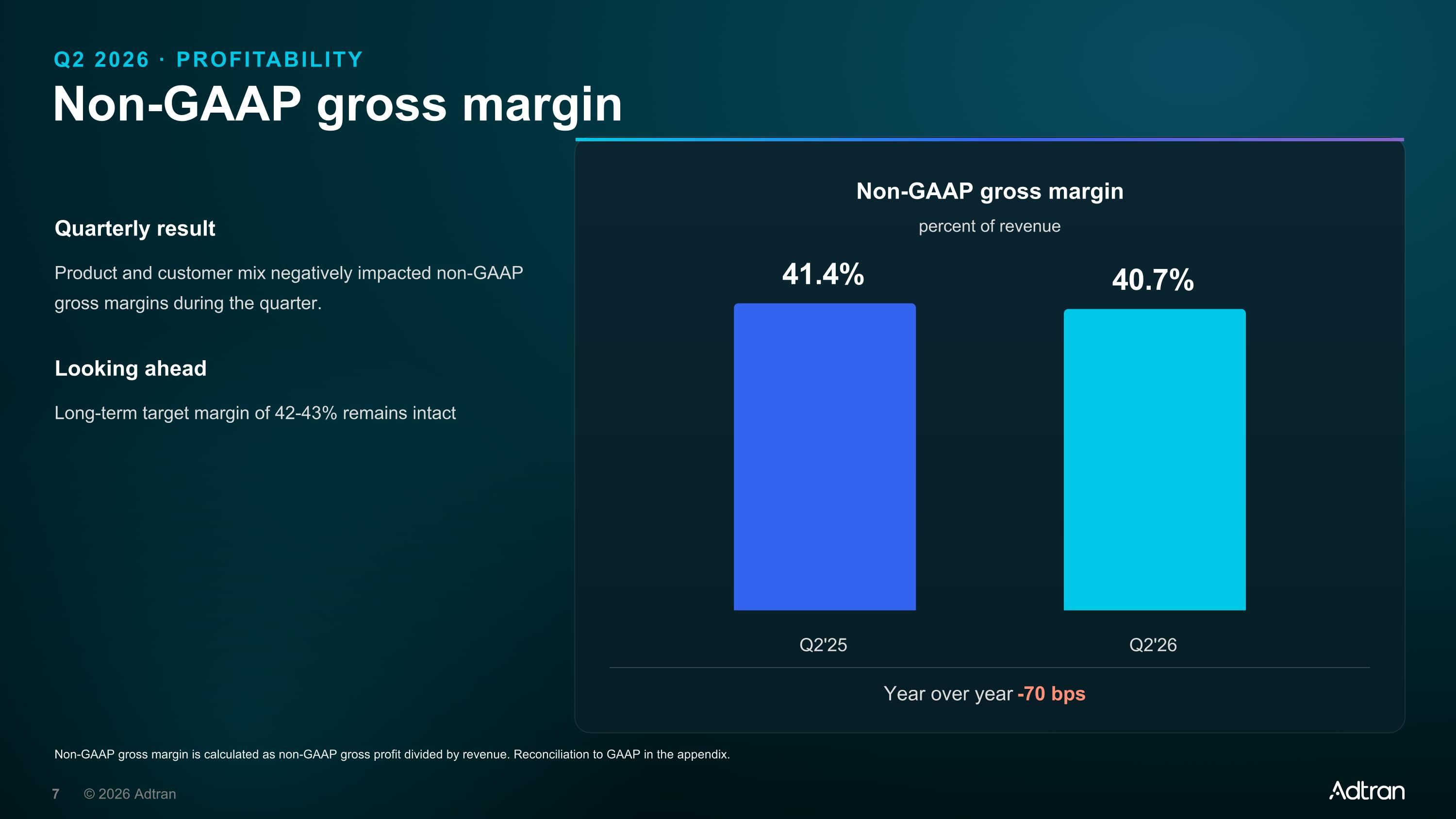
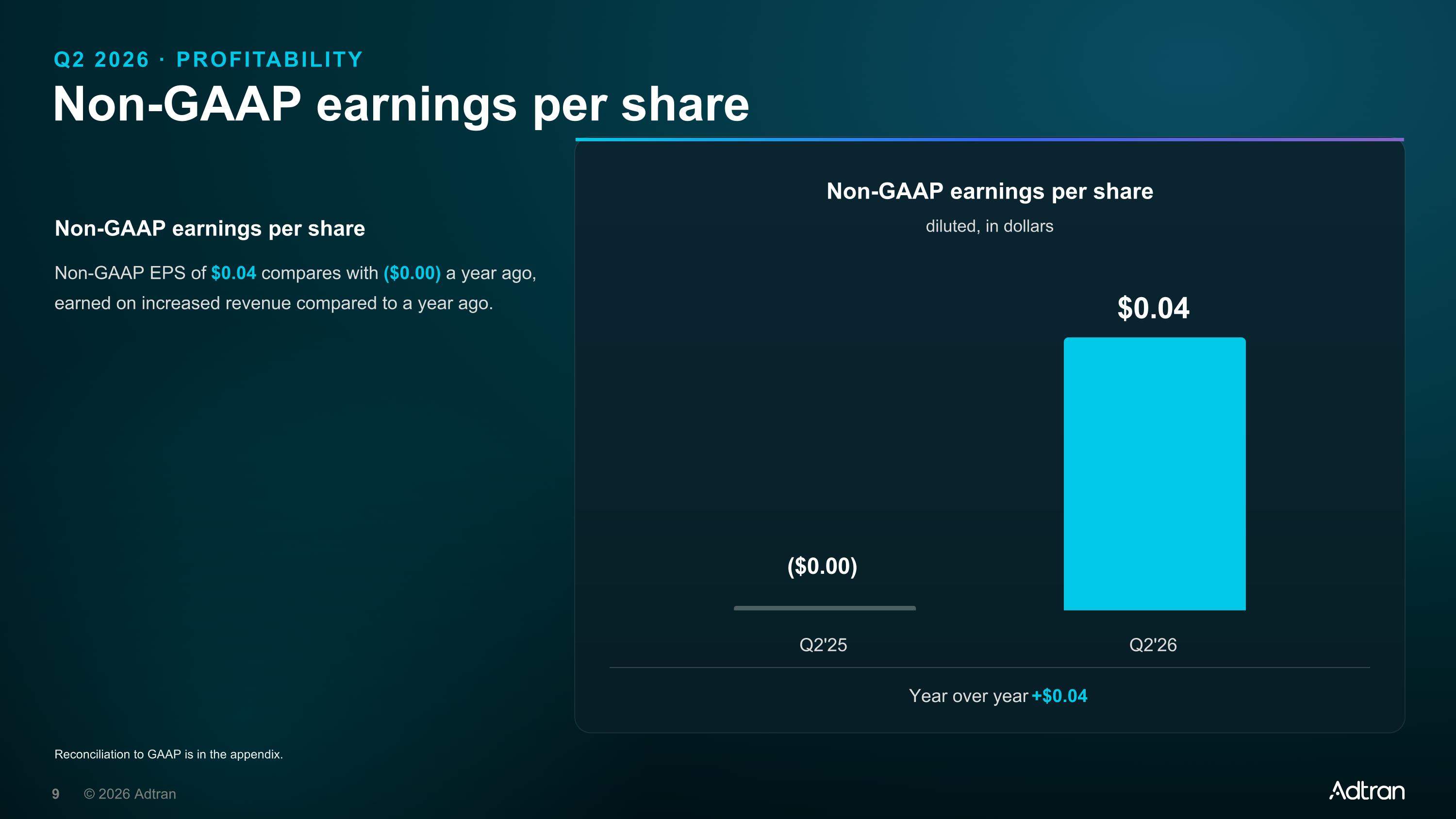
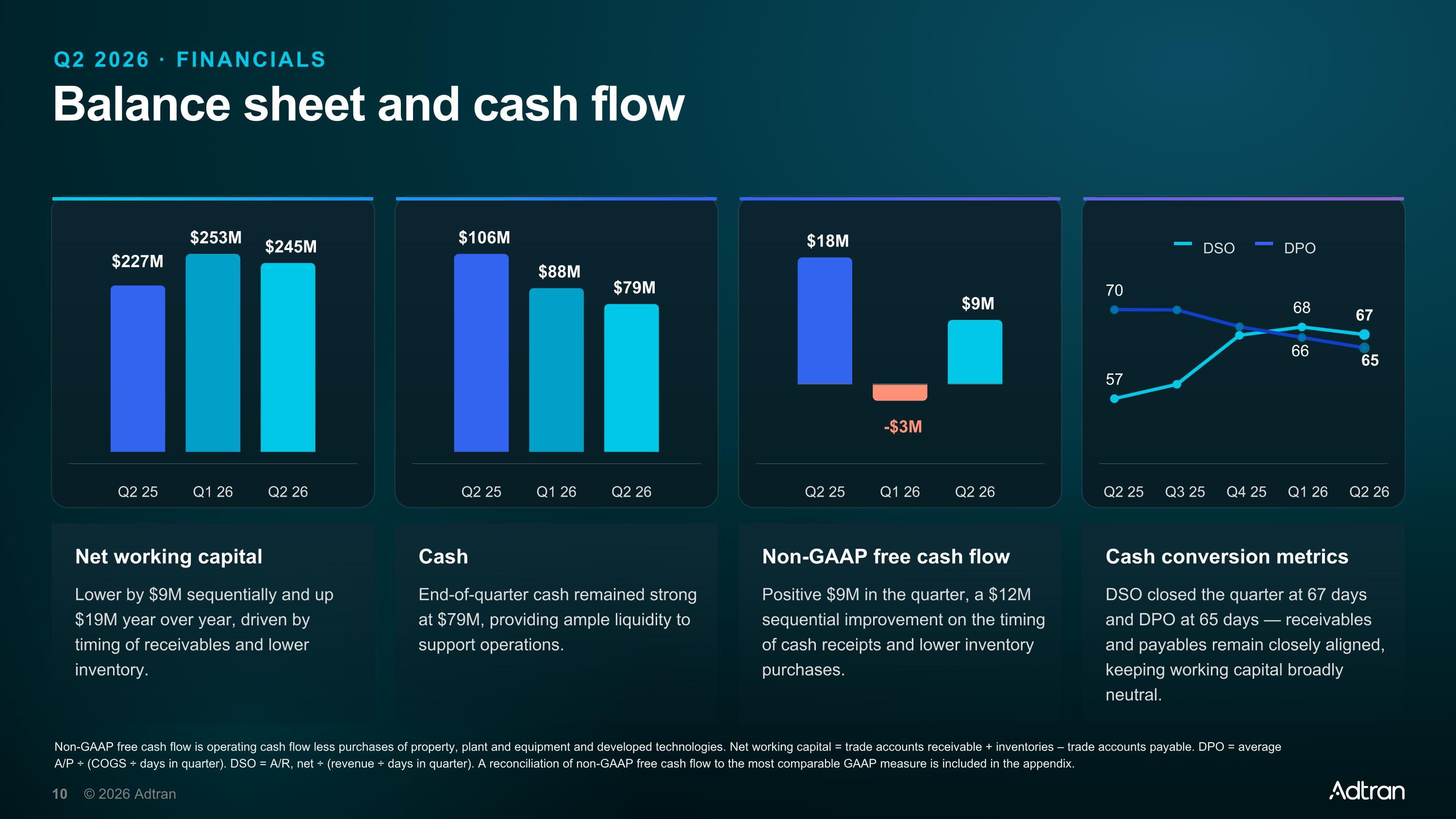
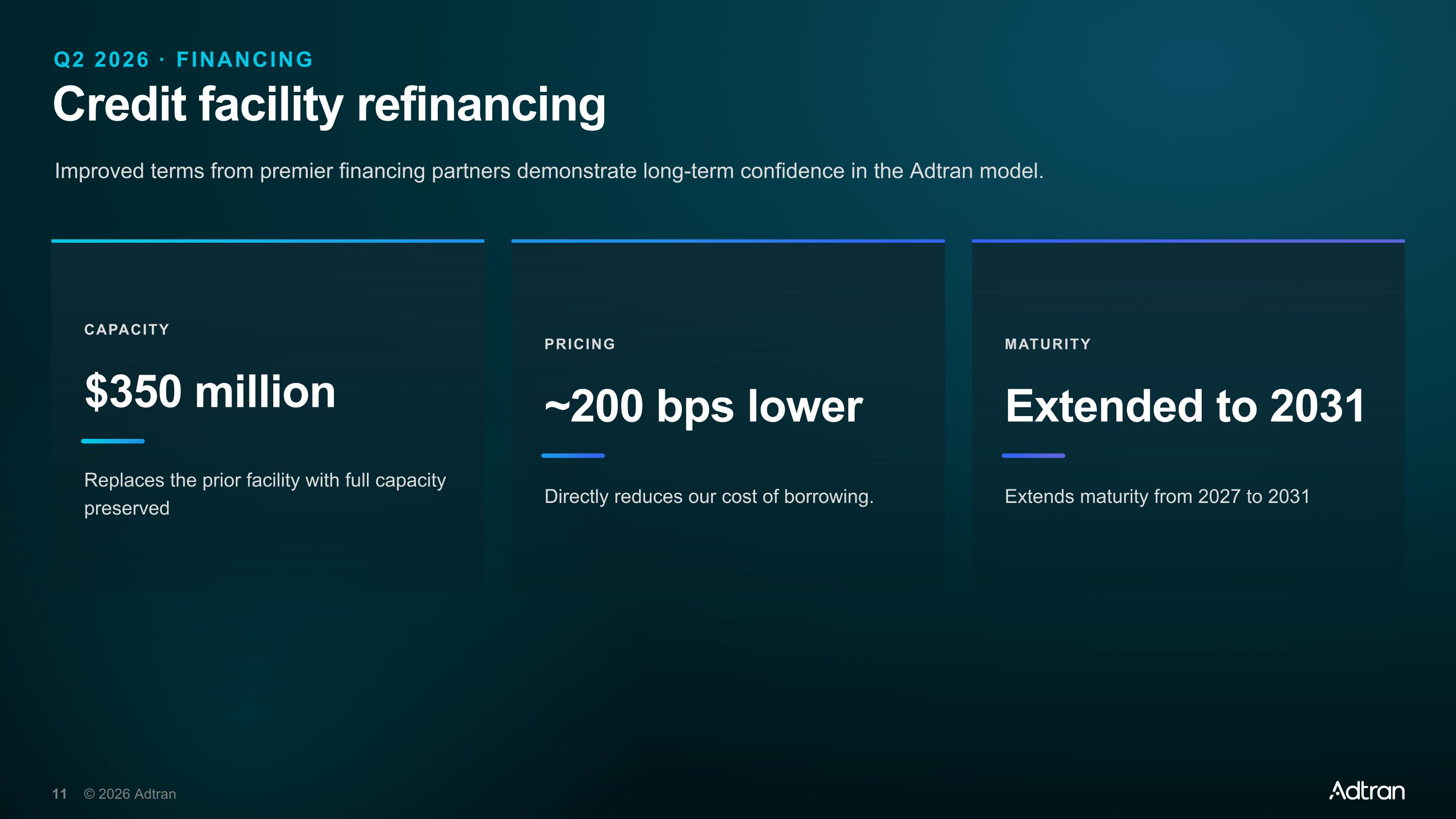
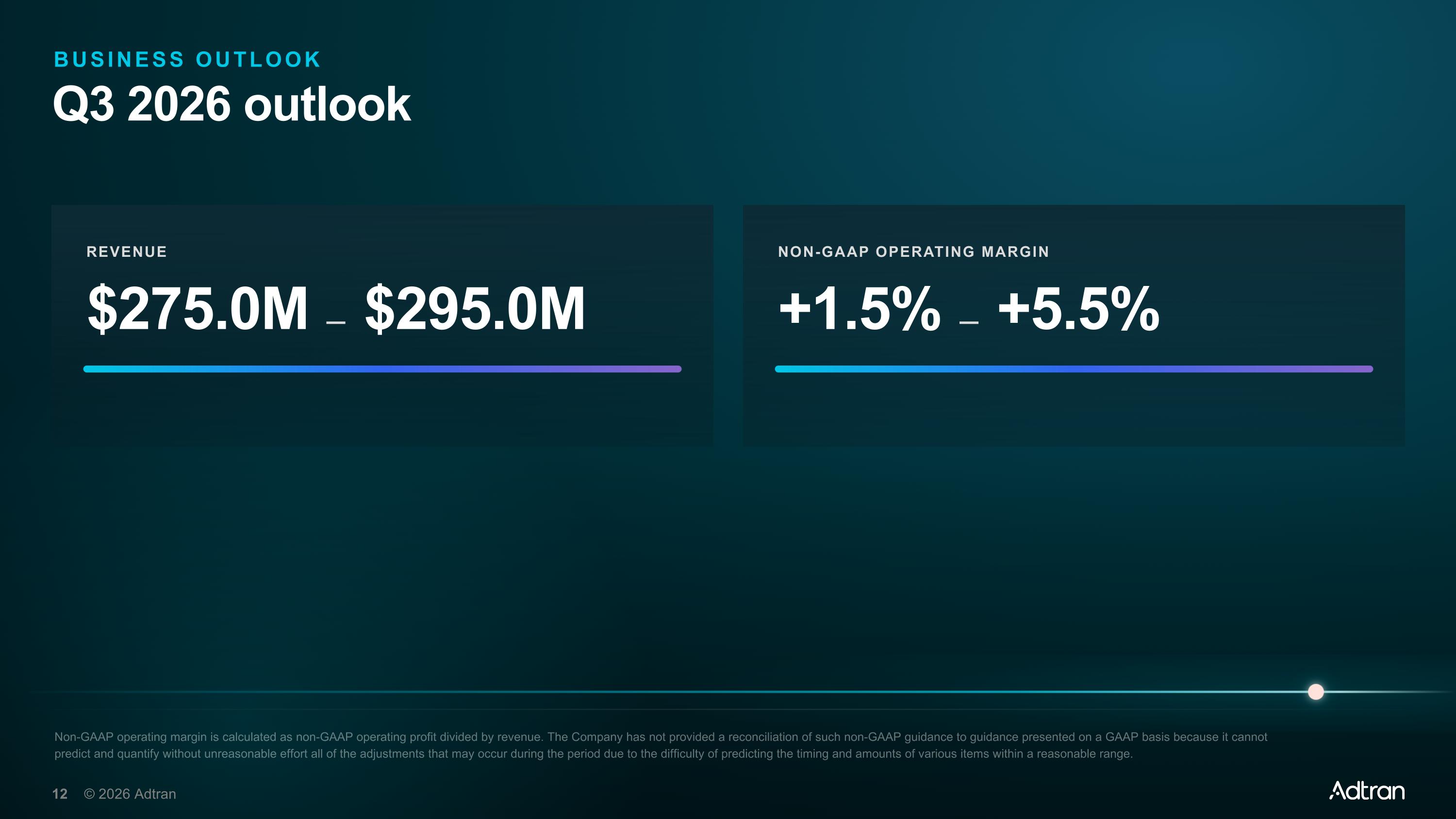
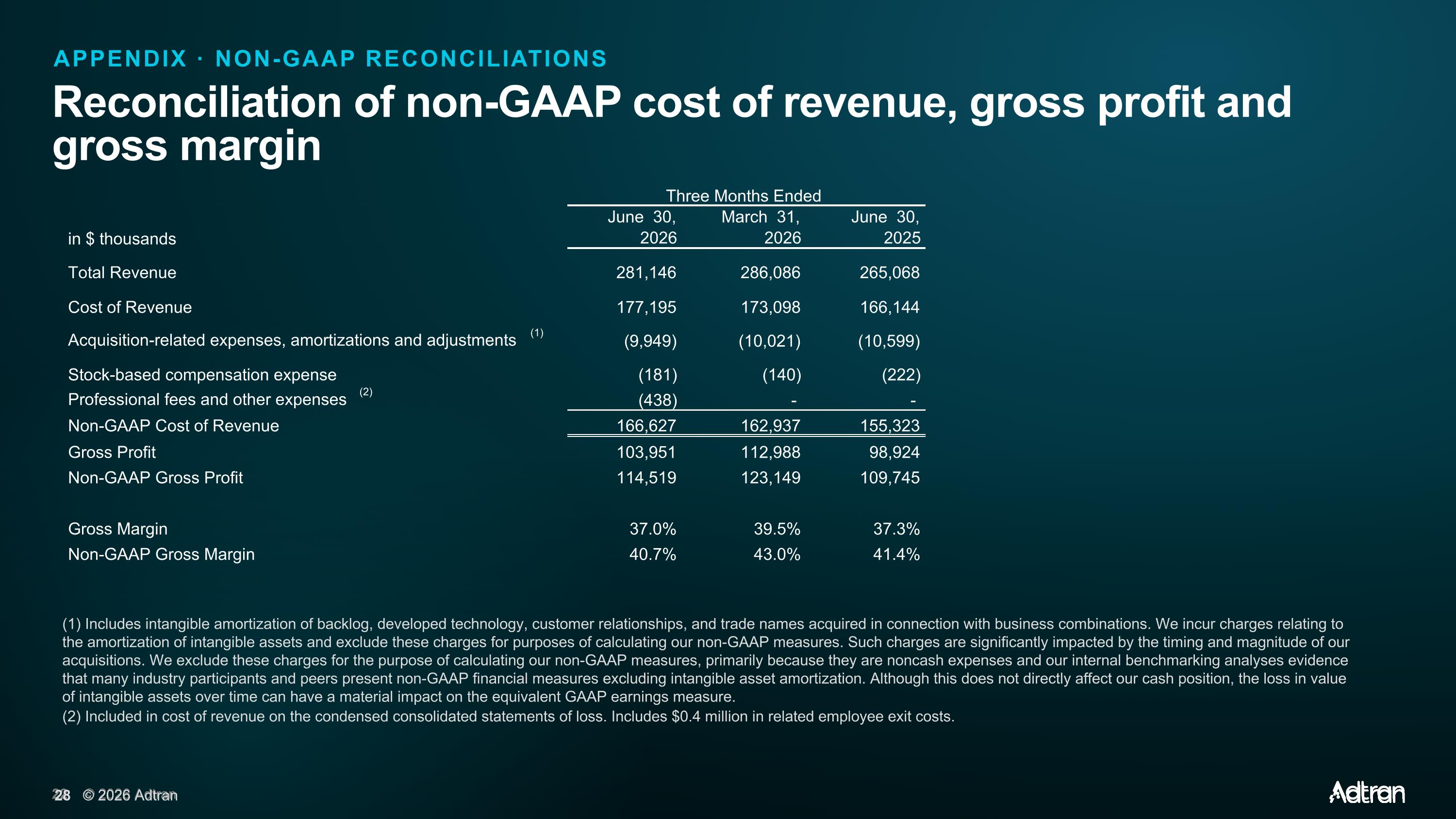
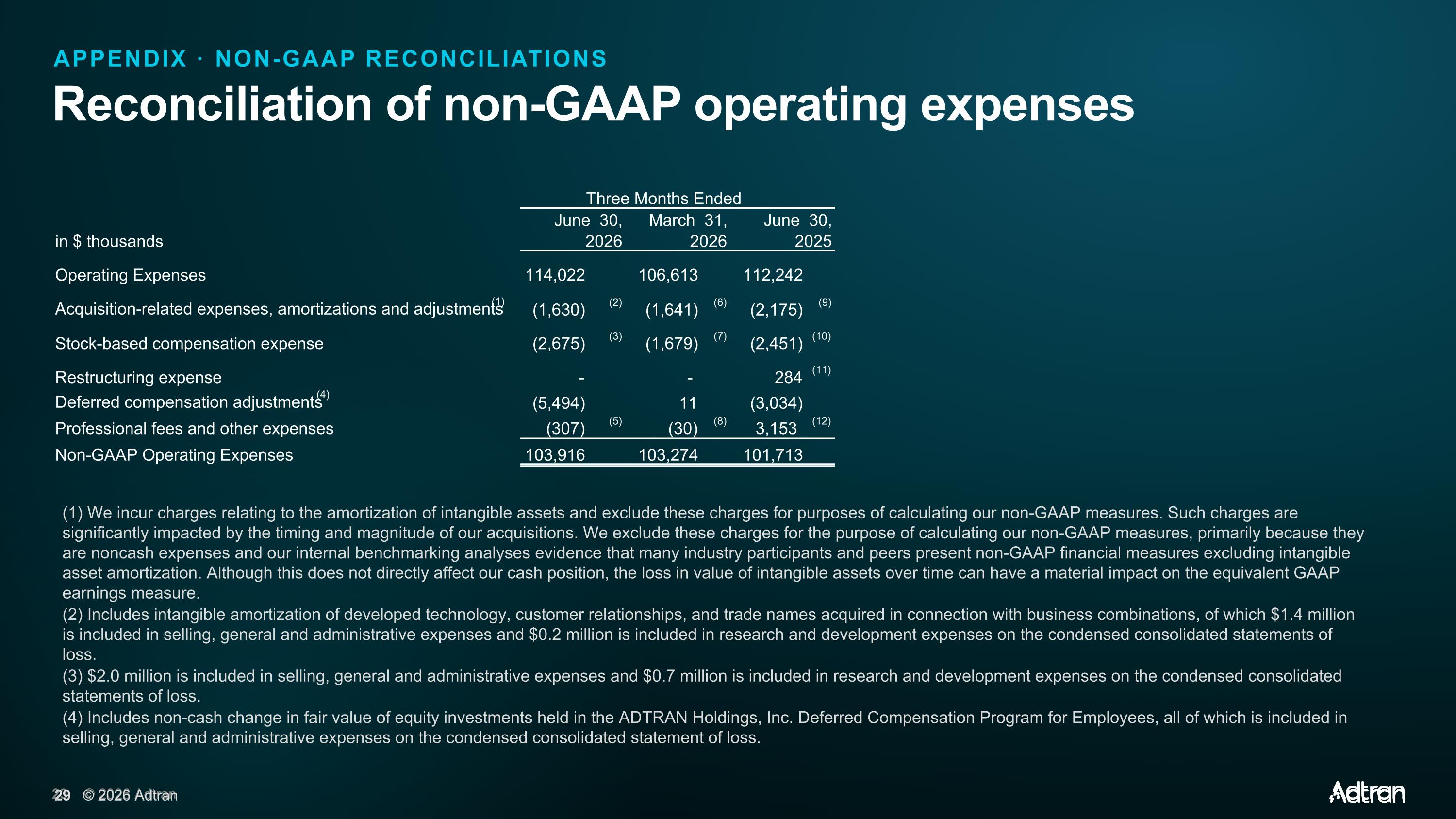
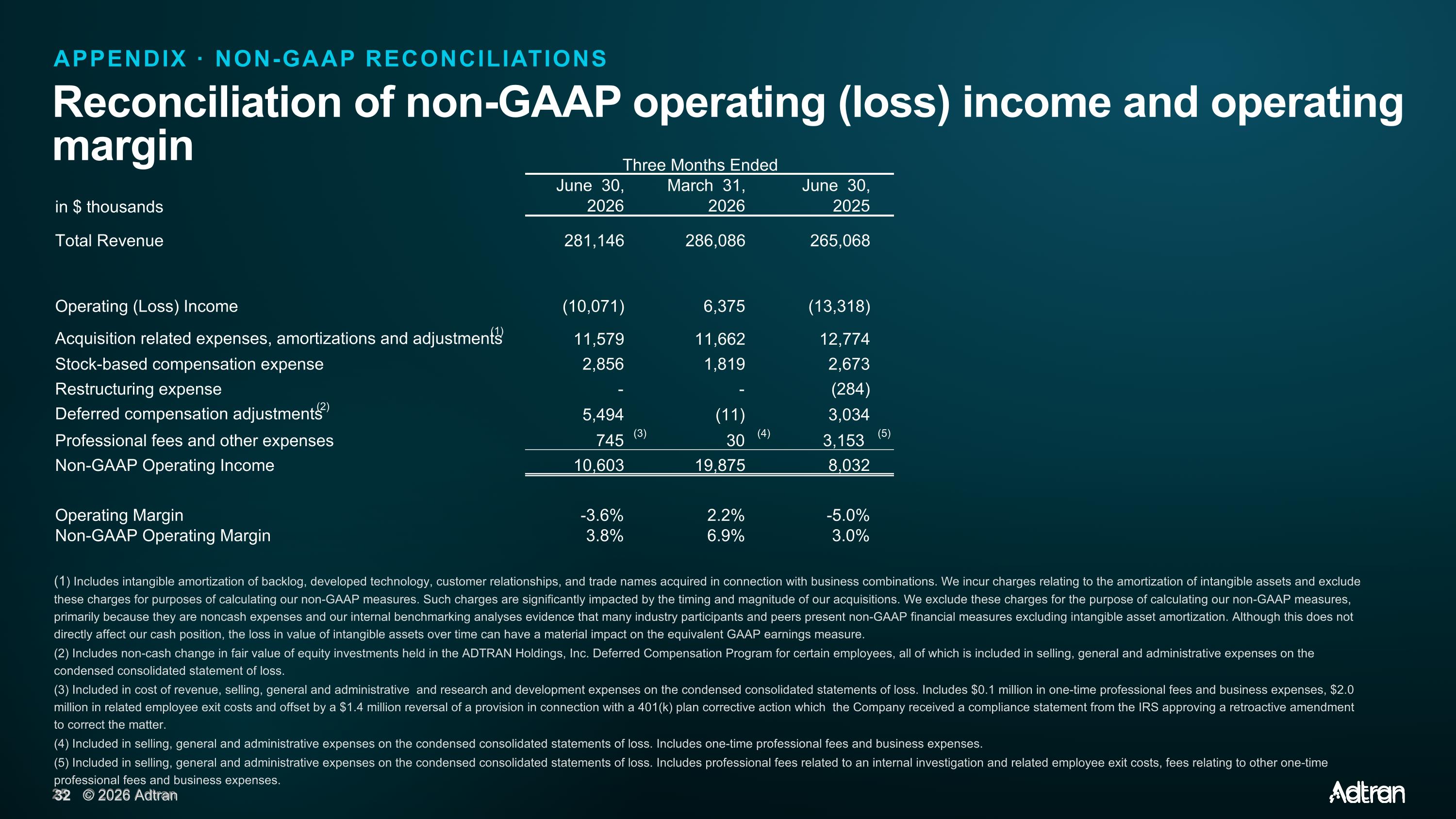
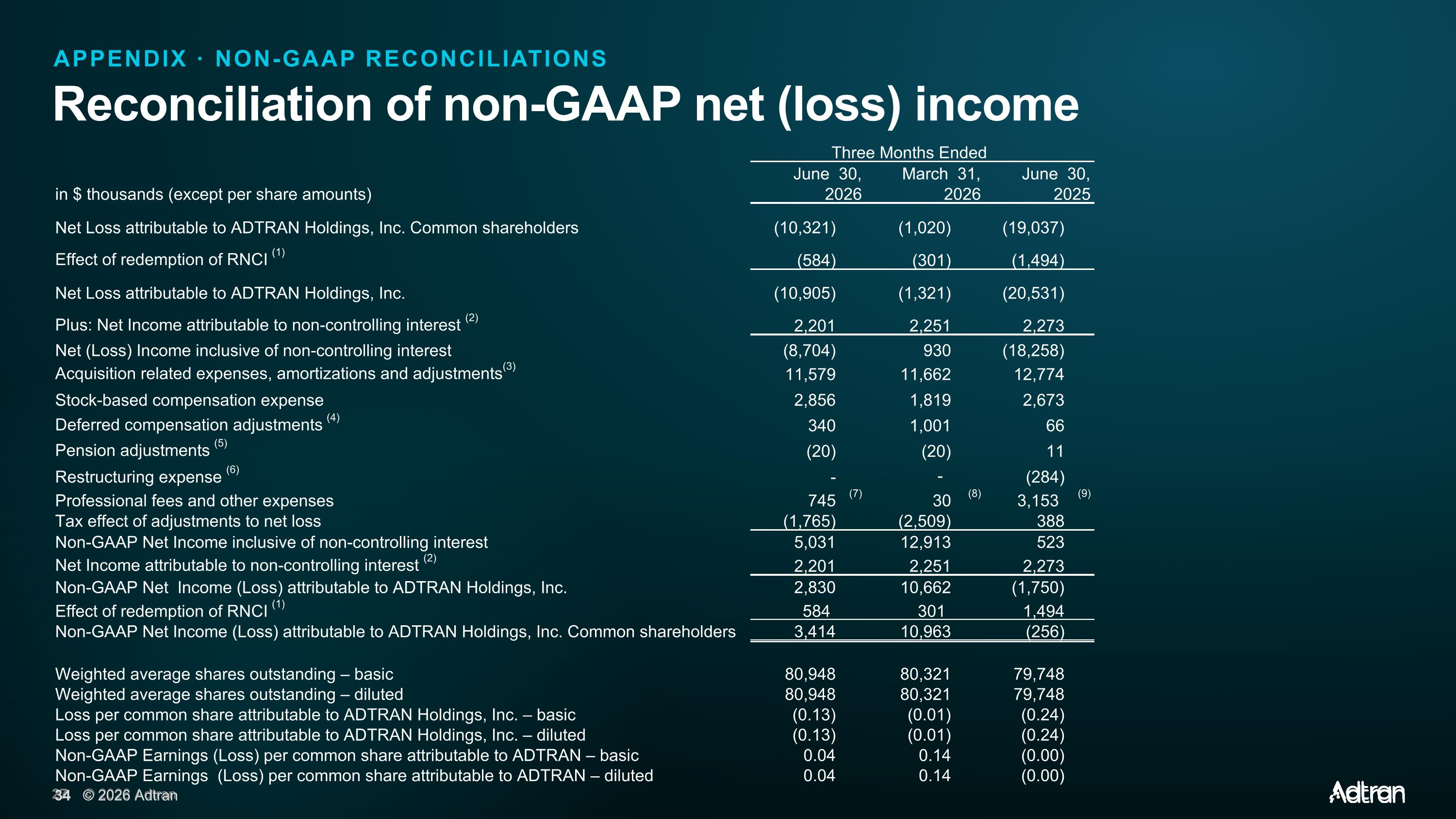
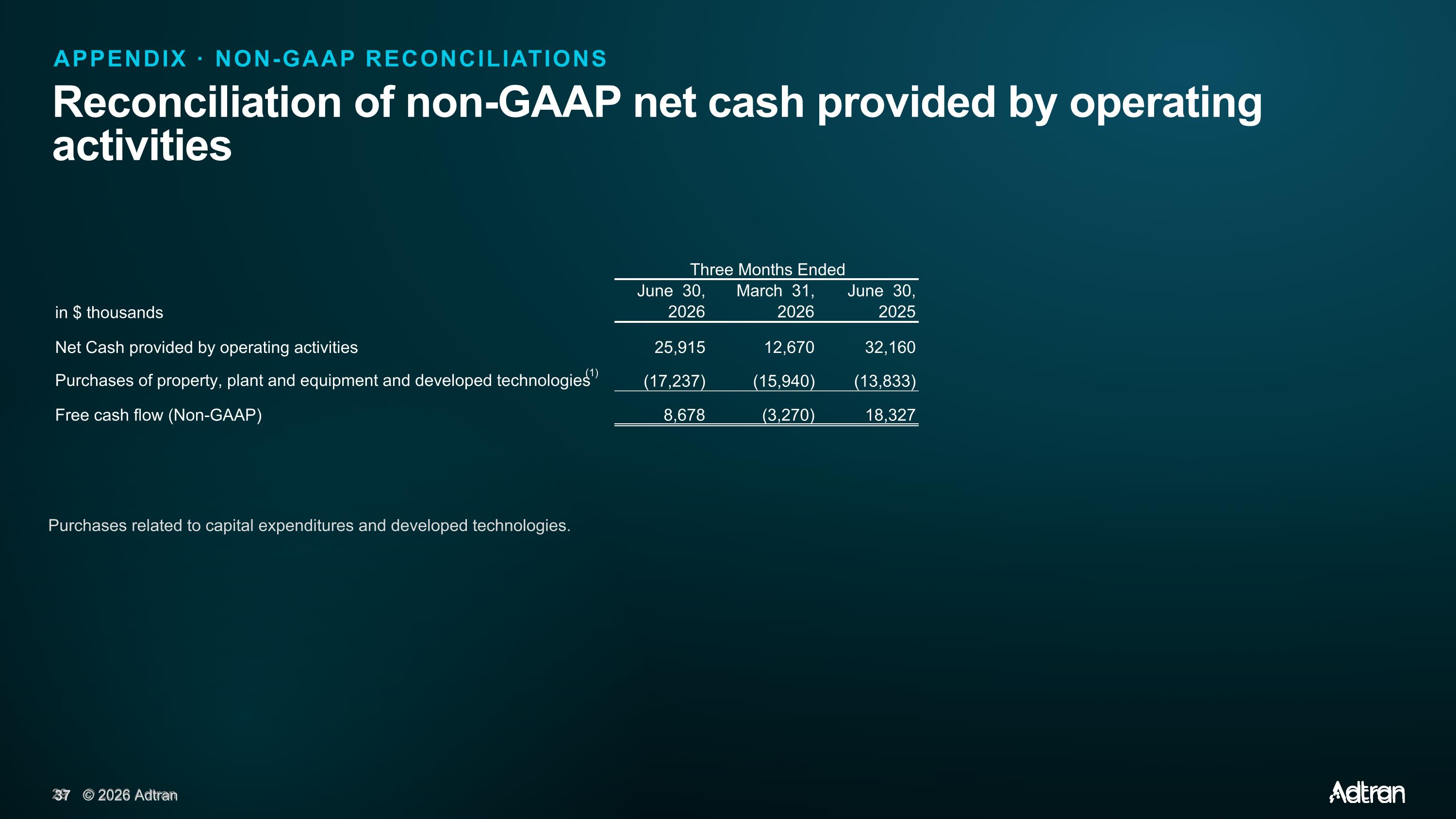
Thank you, Tom, and thank you all for joining us today. Revenue for the quarter was $281.1 million, representing growth of 6.1 percent compared to the second quarter of 2025. Geographically, U.S. revenue was $134.4 million, representing approximately 48 percent of total revenue, up 12 percent year-over-year. Non-U.S. revenue was $146.7 million, representing approximately 52 percent of total revenue and up 1 percent year-over-year. By product category, optical networking solutions revenue was $109.7 million, or 39 percent of total revenue, increasing 22% year-over-year and 13% sequentially. Access and aggregation solutions revenue was $86.9 million, or approximately 31% of total revenue. While down 5% year-over-year and 4% sequentially, U.S. access and aggregation revenues were up a healthy 13% year-over-year, partially offsetting the non-U.S. customer order timing described earlier. Subscriber solutions revenue was $84.5 million, or 30% of total revenue, up 1% year-over-year, and down 14% sequentially following a strong first quarter. Turning to margins, non-GAAP gross margin was 40.7%, compared to 41.4% in the second quarter of 2025 and 43% in the first quarter of 2026. Gross margin reflected the factors Tom discussed earlier, primarily the combination of product mix, customer mix, and higher product costs. Non-GAAP operating expenses were $103.9 million compared to $103.3 million in the first quarter of 2026 and $101.7 million in the second quarter of 2025, and as we continue to actively manage operating expenses-related costs against inflationary pressures. Non-GAAP operating income was $10.6 million, resulting in non-GAAP operating margin of 3.8 percent compared to 8 million and 3% on a year-over-year basis, however, down from 19.9 million and 6.9% on a sequential basis. Non-GAAP tax expense during the quarter was $2.6 million, reflecting an effective non-GAAP tax rate of 33.7%. Non-GAAP net income attributable to AdTran Holdings was $3.4 million, or $0.04 per diluted share, compared to break-even results in the second quarter of 2025 and $11,014,000 in the prior quarter. Turning now to the balance sheet and cash flow, we continued to make progress improving our working capital metrics during the quarter with $245.2 million of net working capital at quarter end. Inventory was $208.8 million with days inventory outstanding of 107 days, down three days sequentially. Trade accounts receivable were $205.8 million with DSO of 67 days, down one day sequentially. Accounts payable were $169.3 million with DPO of 65 days, also down one day sequentially. These improvements contributed to operating cash flow of $25.9 million during the quarter and free cash flow of $8.7 million. We ended the quarter with $79.2 million of cash and cash equivalents, net repurchases of AdTrend Network's SE shares, and dividend payments made during the quarter of $22.6 million, dollars. This compared to $88.3 million at March 31, 2026. Also of note, we recently completed the refinancing of our credit facility led by J.P. Morgan. This new facility replaces our prior credit agreement while maintaining total revolver capacity, reducing borrower costs by 200 basis points and extending our maturity to 2031. Turning our outlook to the third quarter, we expect revenue to be between $275 million and $295 million and non-GAAP operating margin to be between 1.5% and 5.5%. Our outlook reflects the current expectations regarding customer deployment timing supported by continued strength in the optical networking solutions business healthy demand across cloud enterprise and government markets this concludes our prepared remarks however before turning the call back to tom i'd like to note that we will be participating in the rosenblatt virtual technology summit on august 17th and the b reilly tmt conference in New York on September 10th. We hope to see many of you there. And with that, I'll turn the call back to Tom.
Thanks very much, Tim. Okay, at this point, we're ready to open up for any questions people may have.
Operator
We will now begin the question and answer session. If you would like to ask a question at this time, just press star followed by the number one on your telephone keypad. And if you would like to withdraw your question, press star one again. We'll pause for a moment to compile the Q&A roster. And our first question comes from the line of Irvin Liu with Evercore ISI. Irvin, please go ahead.
Hi, thank you for the question. Tom, can you help us understand the nature of the project delay at the single large customer? Is this more of a financial or strategic decision on their end?
And what gives you assurance that this is demand deferred and not demand destroyed well the biggest assurance that we have and of course we we do talk to them on a very very regular basis but the biggest assurance that we have is they've come out and recommitted to their plan so including the timing of their plan and it's a very visible very easy to check on number. And those plans haven't changed. So I think really what maybe a high-level way to look at it is they have multiple plans now in flight. Some of them include the normal footprint expansion that we have been involved in for a few years now. Some of it has to do with Huawei replacement or vendor replacement, which is kicking off. Some of it has to do with upgrades and speed, and then some of it has to do with expanding that footprint expansion to even a greater extent than they had initially planned. All of those are in flight, but what we're seeing right now is kind of a repositioning of priorities within those different buckets. And, you know, we may see one of the other ones kick in. We expect to see one of the other ones kick in sooner than originally planned. And this is all just kind of getting all the plans in place before they move forward. And they have enough inventory to continue to deploy at their committed rate as they kind of reposition these plans. Did that answer the question? Did that make sense? I know it's a long, drawn-out answer.
That did, Tom. And then for my follow-up, I guess it's good to see your commitment to your 10% operating margin target. And they're currently at low to mid-single digits due to product mix headwinds in addition to component and freight cost headwinds. But can you discuss, you know, any sort of margin mitigation strategies you might have and walk us through the path from, you know, low to mid-single digit operating margins currently to perhaps low double-digit margins longer term?
Sure. Maybe the easiest way to think about that, of course, the bigger driver in all of this is revenue. So we had envisioned on our basically historical profile of getting into that double digits right around the low 300s, say somewhere between 310 and 320, and that assumes a gross margin in the 42 to 43 percent. That gross margin this quarter, and I will say it was this quarter, and I don't want to at all minimize the fact that it was low, but you know we've had over two years, almost three years now of raising gross margins pretty much every quarter you know over any significant length of time you can just see the trend moving upwards and and that's benefited us and of course that allows that revenue number to be lower um when the numbers uh you know when i think about 310 320 that's kind of in the midpoint of where our margin has been But the environment is tougher, and really what that, the way that it is, that it impacted us this last quarter was it cut rid of some of our flexibility. So we saw the decline with our large customer, which has got, you know, it's in the, it's, well, we saw the decline in a large customer, and we had plenty of demand. The problem is the pluggables are really hot right now. Those are not high margin products. We shipped a significant amount of those. We could have shipped a whole lot more if we had access to them. And some of the higher gross margin products were also just limited in supply. So our flexibility got impacted this quarter. I think that flexibility problem is not a fixed next quarter problem. So we've kind of factored that into our numbers. Now, what we're doing, one is we can, of course, raise prices. I don't want to over kind of rotate on that, knowing that the, you know, there was a mixed problem more so than anything else. But we have already executed on our price increases, and we continue to keep our pricing uh in check with what we think the supply environment is going to be when those products ship so we'll continue to execute on that we have started doing some redesigns and that's just to give us more supplier flexibility i i think the gross margin piece is not the you know i don't worry so much about gross margin because i don't think we're in a really bad place i think we do have a mixed issue but we need to make sure that we can continue supply no matter what happens so we we have kicked off redesigns in order to effectively mitigate supply issues which ultimately will improve gross margins and then as we had talked about maybe a year ago or so we continue to move on reducing our opex uh in our cogs related areas so we're seeing some benefit in gross margin although it was hard to actually see through that this quarter. Got it.
Operator
And our next question comes from the line of Brian Koontz with Needham and Company. Brian, please go ahead.
Great. Thanks. Maybe just following up on the last question. Supply impacts on memory has been a bigot.
Yeah, sure. So it is more than memory. I hope I'm not the first one to tell you guys that, but it is definitely, you know, it has gotten tighter in other areas optical amplifiers are definitely tight there are kind of certain pieces of silicon that are fairly nebulous that are getting very tight so it is it is a broader base set of problems there are some areas where you know even pc boards are getting tight so you know what's really important you know the way that it impacts us is we still tend to book a lot of what we ship within the quarter. And that ability to flex up for incremental demand, which we definitely saw this quarter, especially in optical, our ability to flex up has really diminished. And so our forecasting is more important. But I would say the hardest thing at this point, so I'm sure we've talked about it in the past, memory was one of those things I wasn't so much worried about the pricing of memory I could pass a lot of that on what I couldn't do though is make supply that wasn't there so it was all about getting memory at least in our supply chain memory today is not the biggest issue right there are issues there now that have eclipsed that and memory is although incredibly expensive that supply isn't as problematic as it was, let's say, six months ago or three months ago. Got it. That's really helpful.
Pluggables, can you see color?
Yeah, so definitely on OLSs as well as, you know, just standard pluggables. I would say across the board it was high. I will tell you OLSs or our line systems were a little more difficult to ship because of the constraints that we just talked about. Yeah, pluggables is, generally speaking, upgrading a bandwidth, and as you know, we have some hyperscaler content there, and we're seeing kind of a significant uptick in that activity as people are trying to upgrade their networks. So, I think it's all just about bandwidth increases, not so much footprint, but just bandwidth increases.
Operator
Our next question comes from the line of George Snodder with Wolf Research. George, please go ahead.
Hi, guys. Thanks a lot. I was just trying to get a better sense for where you guys are on the balance sheet. I know there was some talk about the real estate transactions, kind of wondering where you are on those. Any update would be great. Thanks.
Tim, you want to grab that? Yes, we'll do.
You know, the best news there is Huntsville is very hot. The first 600 or so individuals for Space Command will have seats in housing by the end of this year. We've seen a large uptick in military defense and other contracts being awarded to the Huntsville area, and that has driven up significantly the interest in our property. Beyond that, George, when we have something to announce, we will announce it, but, you know, we're continuing to hold out for the best deal and the best opportunity for the company.
Let me just add a little, because I also am very nervous about trying to pre-forecast something, but our showings on that property have gone up substantially over the last couple of months. That's right.
Operator
All right. And our next question comes from the line of Bill Desenum with Titan Capital. Bill, please go ahead.
Thank you. You put out a press release this morning relative to tokenet and then beginning the trial would you talk a little bit about that and in the spirit of which i asked this is i don't recall ad tran being in japan historically so provide some backdrop there if you would please yeah to be honest with i don't have that press release in front of me but we do sell into japan um uh and this was you know in the optical space that we have sold for some period of time.
And I wish I did have that press release in front of me built, but I doubt it. Oh, okay. Yeah, so that is, there is also, Japan is an interesting area because they were one of the first to build out GPON. And there are, you know, so the population base is pretty much covered. And they are, I would say, leading the charge as in moving to 50 gig. They're not, you know, we have a lot of people that are trialing 50 gig and want to have kind of marketing, you know, capabilities around 50 gig. I would say from a country perspective, Japan is probably at the forefront of literally looking at making that transition more wholesale. So, and this is just that.
Great. Thank you. And then relative to the supply issues and the customer schedule adjustment, how does all of this affect 2027? I guess another way to ask that is, is the second half of 26, is that a long enough period to adjust component supply chain and make these various adjustments that you need to be back on track? Or is this a longer sort of adjustment period?
Let me answer that a couple of different ways, and I'll try to be as direct as I can. So one is, you know, the root cause of the situation was really born from a dynamic within a particular customer, which we think will be worked out before the end of the year. So if it weren't for that root, we would not be talking about this. But then it did highlight in going through the quarter, once that effect kind of permutated through the company, it did highlight the fact that flexibility within the rest of the product set is getting tighter and tighter. So I want to first put it in the right frame. I don't see that tightness going away in the near term. I do know, and probably many people on this call know, that there's talk about additional capacity, especially in the higher nanometer process, which is kind of where our products are, let's say 12 and up, coming online next year, which would alleviate some of these issues that we're talking about. But I think we're just in a tight or supply chain environment. And the best way for us to be able to mitigate that tightness is literally just better forecast, more order coverage. And, you know, I preach that to our customers every time I can. You need to get your orders in, right? We need to be able to have visibility to it and secure supply. And I do think the customers are getting – it's amazing. It's taken a long time, but I do think customers are getting it. But I can tell you what would mitigate a particular chip today, but I can tell you it will be a different chip or a different problem six months from now. So I just think we're living in a tight period right now. And I can't tell you it's going to disappear next year or, you know, what quarter it would disappear if it does disappear next year. I think it's all about discipline internally. We have, as we've talked about, you know, we've gotten some more key components in our inventories now to make sure that we can mitigate the problems that are known. But like this quarter, there was issues that were not an issue last quarter, right? So we have to get better at forecasting where those future issues will be, not just the ones that we're currently facing. So that's not a good answer, but that's kind of the environment we're in.
Now, that is helpful, and so I'll ask one more question before I hop off, Tom. Does that imply that we should anticipate you all building extra inventory in certain areas so that you can adjust that flexibility not with your supply chain, the product mix flexibility, not through the supply chain as much as just through your own warehouse, for lack of a better phrase?
Yeah, it does imply that. And I will tell you that that has been happening already. You just haven't seen it so much. And the reason is we've been able to draw down old inventory back from the supply chain crisis down to a point to where we're kind of mitigating that increase. But you can think about it as old inventory versus new inventory, and that new inventory is directly related. Our inventories would be going down more if we weren't adding these kind of key components. But at some point in time, that old inventory is going to not be so old anymore, and you'll see an uptick in that inventory. But I don't think that's a – I don't think it'll be material to the numbers.
Great. Thank you for taking all the questions.
Operator
Our next question comes from the line of Dave Kang with B-Reilly Securities. Dave, please go ahead.
Good morning. Thank you. First question is wondering if you can provide what the book to bill was and more interest in optical book to bill, if you can provide those?
We really don't do book to bill as a metric that we actually published. It was, I will tell you, optical was probably the, I'm guessing here, but probably the strongest area. And it was, let's just say, all the numbers were either at one or above one.
Got it. And then regarding the revenue miss, obviously it was a project delay, but it sounds like if you had enough components that you would have made up that revenue, was that the message? Basically, you're saying that demand is so strong that it would have made up that 12 million revenue shortfall if you had enough components?
Yes, without a doubt. I mean, no hesitation at all. If we had plenty of material, we would not be talking about the downtick.
And what about the current third quarter? Can you talk about that project delay where you are. And also, I mean, you talked quite a bit about supply situation, but how that's going to play out in third quarter. Obviously, we're looking for sort of a flattish quarter sequentially.
Yeah. So we don't see an uptick in the customer that we're talking about right now. And to be honest with you, we just don't see a change in the procurement environment. So, we think things are going to, you know, stay in the kind of status quo that they're in right now, maybe even get a little bit tighter in certain areas. We are fighting for more supply, I mean, literally calling, we have people calling every day trying to get more of whatever it is that we have on order or don't have on order. So that's just kind of seeing through that mix of what's going to be available and what's not going to be available is kind of what our forecasting process has turned into. And so, yeah, it's just assuming the environment doesn't change.
Well, I think, you know, I was juggling a couple of things. Obviously, you've seen that this FCC planning to ban Chinese transceivers. Just wondering if you were sourcing transceivers or pluggables from Chinese vendors? And if so, how quickly can you pivot to American vendors?
We do do some pluggables from China, let's say transceivers from China. We also source from other places. And I don't know, I'm not versed enough to give you a direct answer to that. So that's something that we can cover at, you know, you can call in and talk more about it.
Yeah, it's clearly a fluid situation. I'm sure there are really a lot of questions there. My last question is, any update on LPO activities? Any qualification or, yeah.
Well, it's still, we're not talking about qualification yet. It is still on track. As I talked about before, right, we would get units in right around the half or, you know, second quarter, get them to customers. We do have a significant – I will tell you another piece of this, which we haven't really talked much about, which is the Quattro. And we've got multiple customers, including multiple hyperscalers that are very interested in that product as well. That one actually delivers earlier, so I would expect to see trial units, let's say, sometime in the first quarter. We have people right now that are trialing kind of alpha units, and that seems to be going well. So I think both of those, both of them are on track, but both of those are getting some traction. So that seems to be going well.
Operator
Our next question comes from the line of Tim Cervaso with North Capital Markets. Tim, please go ahead.
Yeah, good morning. I think you mentioned a growth metric around the cloud portion. You talked about 25% of revenue being from government enterprise. I think it was something in the 90s in terms of cloud growth. I just want to go back and confirm that and also try to get a sense of, you know, within that 25% of revenue, how large is the cloud piece, and I'll follow up from there.
Let me, if I have that, I don't think I have the number, but I do kind of generally know where we're in that space. So the specific number that we gave was I think was 97% growth in hyperscalers. And so we look at cloud as being broader than hyperscalers because that would include typically large content cloud providers. So hyperscalers specifically was 97%. And that's not a surprise. i mean we we i think we kind of um signaled in our last call that that area we expected to be solid this year and continue to grow and it's it seems to be that that seems to be the case um and what was the second part of your question tim i was trying to get a sense of within that category um whether however you want to describe it how how significant is that i assume it's a relatively small percent of that 25 percent you know of the broader category but it's not it's
it's my sense and just from remembering is it's somewhere between 30 and 50 percent it's getting to be a big piece of that that pie uh of that of that 25 okay 25 yeah no i got it um and just a quick one any 10 customers in the quarter um and also as you look out to the q3 guide um be interested in what's happening there from the segment perspective it sounds like you don't expect access and aggregation to rebound given the customer push
then you've got a little sequential growth there I guess the overall question is do you expect to see opticals continue to grow yes direct answer is absolutely yes talked a little bit about the order flow there and yes we expect that to grow subscriber is one of those that's probably the most difficult thing to forecast because it is very much demand driven and people have chunks of inventory and then they go away for a while so you'll see you'll always see more volatility else i typically see more volatility in that subscriber piece so that one's less firm in our numbers and knowing exactly where it's going to end up access and ag you're right we don't expect a rebound because that single customer is such large piece of that content. I will tell you that access in ag in Europe, notwithstanding, that customer was actually pretty strong. We continue to expect that strength in the third quarter, but optical is going to be the biggest.
And I can confirm there were no 10% customers this quarter. Great. Thanks very much. Okay.
Operator
Our next question comes from the line of Michael Genovese with Rose Blunt Securities. Michael, please go ahead.
Thanks. Hey, Tom, I want to ask more about pluggables. So I want to clarify a couple things on the call. When you mentioned the mix shift earlier and that you were selling more pluggables, could you just talk about what business specifically that was in and which What kind of pluggables and selling more pluggables as opposed to, I guess, embedded systems and optical? Is that, you know, for DCI and long haul and metro? Is that what you were talking about?
Yes, but, you know, most specifically, I will tell you, we probably had the strongest 100ZR quarter we've ever had. So, you know, that should tell you kind of what we're talking about.
Okay, that makes sense. And then you just mentioned earlier the quad, you know, because we were, you know, I guess asking about the LPL product, which I think has a different name. And then the quad, could you talk more about the difference between those two products?
Yeah, so the other product that we've talked about that got a lot of press was the LightWave 800. The quad is actually a 4x100. It's in the Micromux family, so it's a 4x100. a MUX that's very, very efficient. I don't know if there's anything out on the market today that's like that. So, you know, plugs right into a router and gives you multiplexing capability at a very low cost.
So if I'm not mistaken, though, the LightWave 800 is different from these products because it's a new market of inside the data center for you as opposed to, you know, between data centers where most of your business is now? Is that a correct, you know, is that a correct understanding?
Yes. The LightWave 800 is intra-data center, which, yeah, we have not played in that space. We don't have a MicroMux product either, by the way. I mean, so both of these are kind of incremental to the piece that we have traditionally done. but I would say the LightWave is a farther reach, yes.
Okay. And the timing though is the MicroMux is earlier in 27 and the LightWave is mid 27. Is that correct?
The MicroMux is going to be out earlier. So I would – we should be trialing units end of this year or early next year? And then the current schedule for the lightweight is getting units trialing middle of next year. You know, we're saying end of Q2. And then production towards the end of the year or the first part of the following year.
Okay, great. And then just a final question from me. I guess maybe it's a two-part question. But, you know, with the transceivers for inside the data center, you know, this is a very large market, right? It's a new TAM that you're going into. And I'm kind of used to seeing deals there being, you know, like you don't get $25 or even $50 million deals. You know, every time I see somebody win a transceiver deal, it's at least $100 million, and it could be a billion. um you know i'm just wondering if the larger deal sizes as you start to work on that market make make sense to you if that if that if that if that sounds reasonable um and and then just you know your ability to sell into that market and to have a sales force that that interacts with that side of the customer and and to kind of you know it's a big tam but basically you're the confidence of adran that they can execute in that market from a sales and i mean the product specs look great um but if we can assume you can make the product can you are you confident that you can sell the product yes so um michael you may not we sell to most of these customers already
now we sell different products um but most of them have you know well for instance like like i mentioned before hyperscaler was the fastest growing area in our enterprise segment um and he was a significant contributor. So they know who we are. I would say without a doubt, you know, we've even sold Access products to one of the hyperscalers that was really into Access. So they know who we are. I don't think there's a trust problem with thinking that we can scale and that we build quality products. We have increased our sales force into that area to make sure that we're covering all of the bases. We've already done that. We're trying to get all the pieces in the right place it's not like they won't have heard us and i doubt if there'd be any issue with with worries about scalability with us in relation to the numbers that you're talking about you are correct i think um my job is to not get us too overhung uh out there um we need to be able to deliver what we need to be able to deliver but the numbers are typically bigger than the numbers that we're talking about great okay thanks so much appreciate it all right at this I see that we're at the end of the the call list so I appreciate everybody for joining us today and we look forward to talking to you next quarter this concludes today's call you may now disconnect