Speaker 0
Good morning. Thank you for joining us for American Healthcare REIT's Second Quarter 2025 Earnings Conference Call. With me today are Danny Prosky, President and CEO; Gabe Willhite, Chief Operating Officer; Stefan Oh, Chief Investment Officer; and Brian Peay, Chief Financial Officer. On today's call, Danny, Gabe, Stefan and Brian will provide high-level commentary discussing our operational results, financial position, changes related to our increased 2025 guidance and other recent news relating to American Healthcare REIT. Following these remarks, we will conduct a question-and-answer session. Please be advised that this call will include forward-looking statements. All statements made during this call other than statements of historical fact are forward-looking statements that are subject to numerous risks and uncertainties that could cause actual results to differ materially from those projected in these statements. Therefore, you should exercise caution in interpreting and relying on them. I refer you to our SEC filings for a more detailed discussion of the risks that could impact our future operating results, financial condition and prospects. All forward-looking statements speak only as of today, August 8, 2025 or such other dates as may otherwise be specified. We assume no obligation to update or revise any forward-looking statements, whether as a result of new information, future events or otherwise, except as required by law. During the call, we will discuss certain non-GAAP financial measures, which we believe can be useful in evaluating the company's operating performance. These measures should not be considered in isolation or as a substitute for our financial results prepared in accordance with GAAP. Reconciliations of non-GAAP financial measures discussed on this call to the most directly comparable measures calculated in accordance with GAAP are included in our earnings release, supplemental information package and our filings with the SEC. You can find these documents as well as an audio webcast replay of this conference call on the Investor Relations section of our website at www.americanhealthcarereit.com.
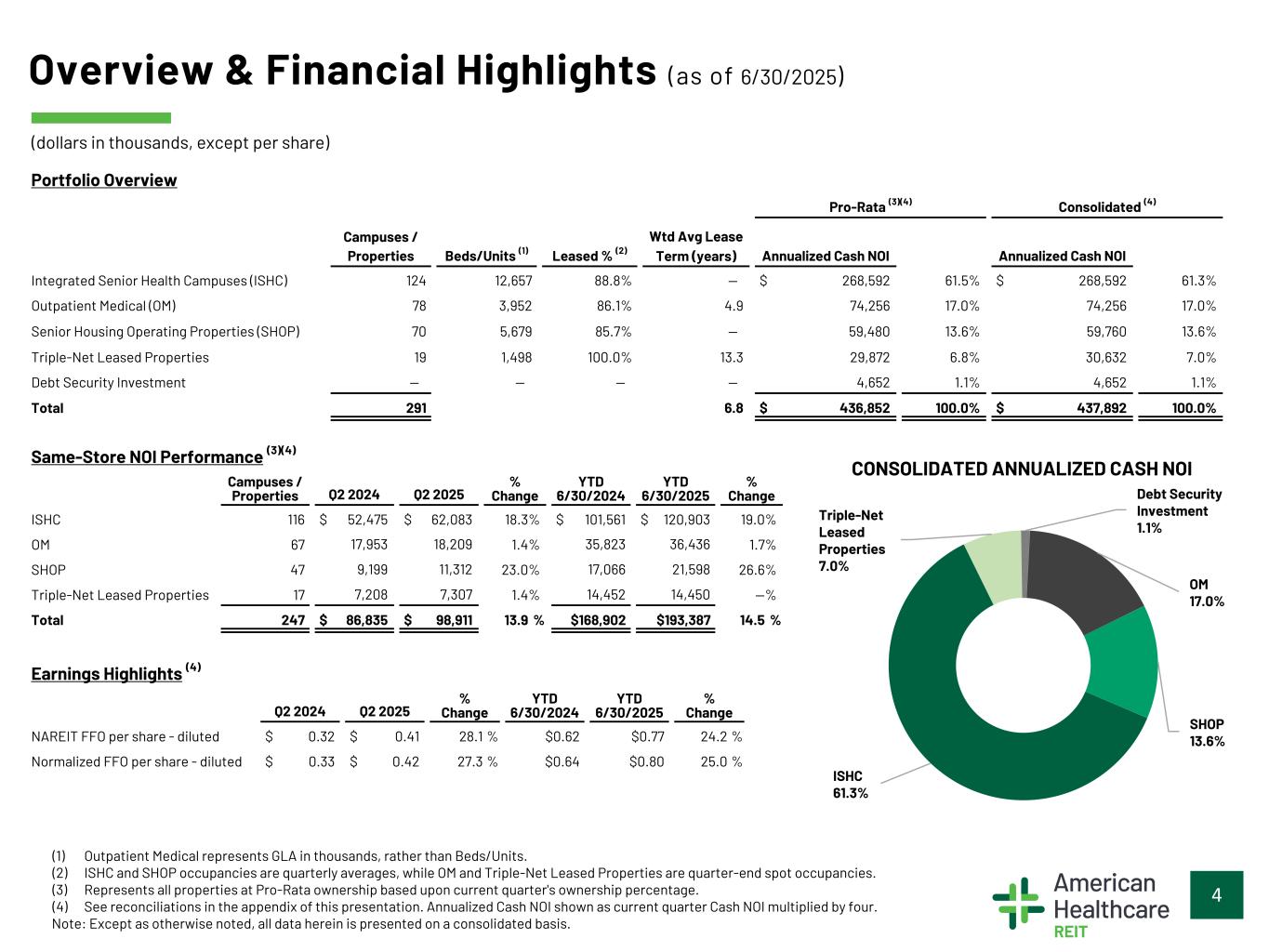
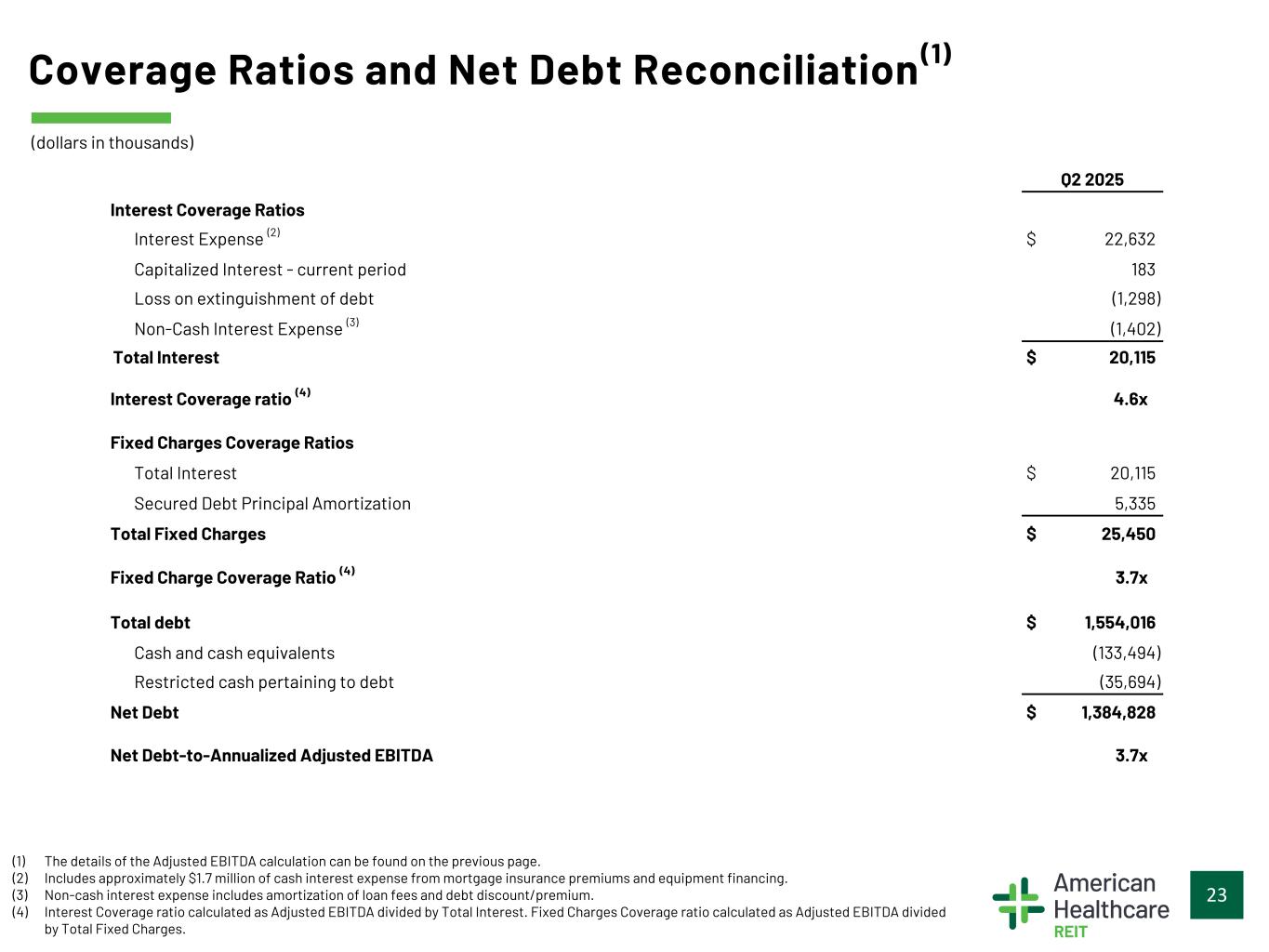
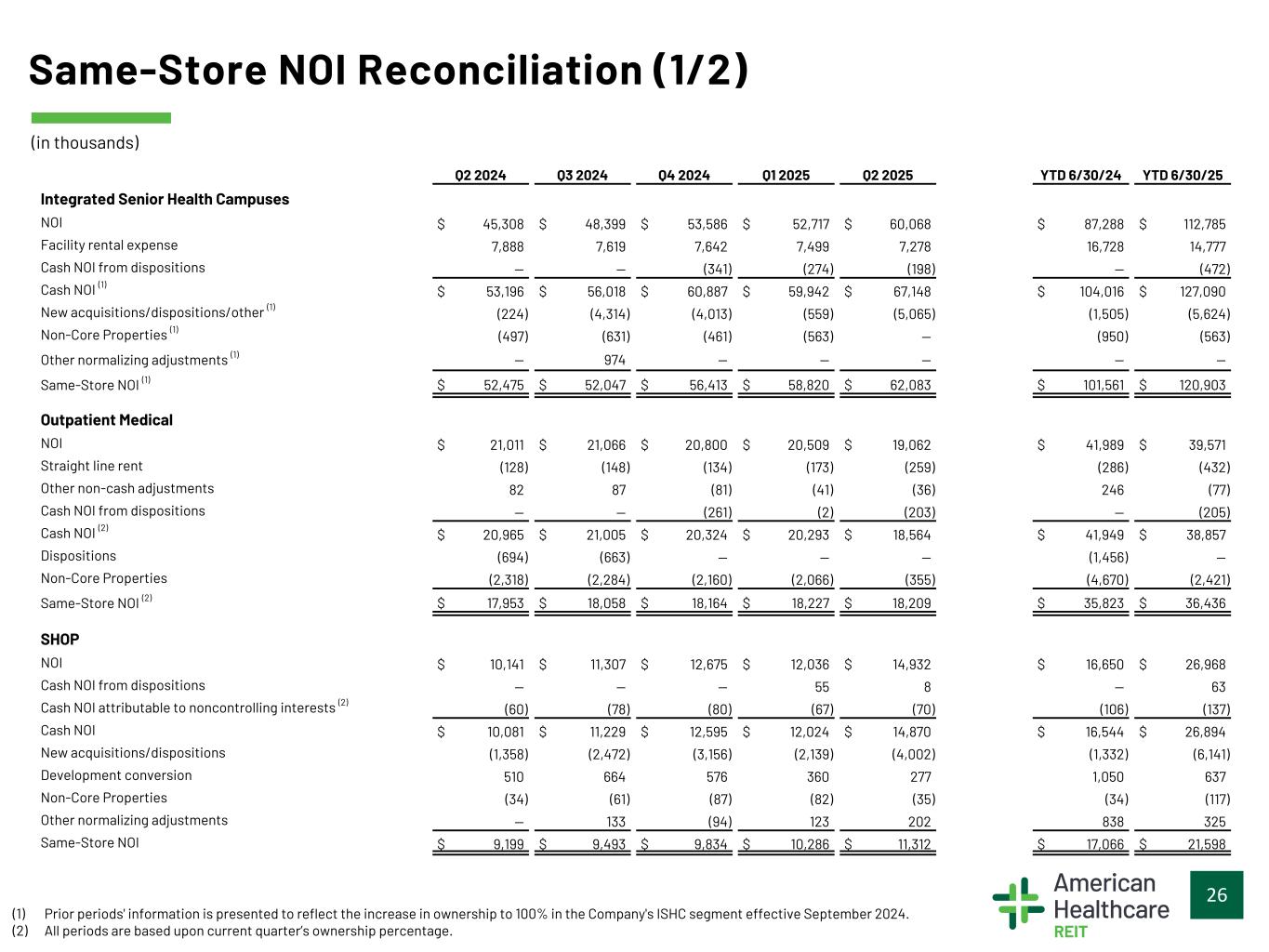
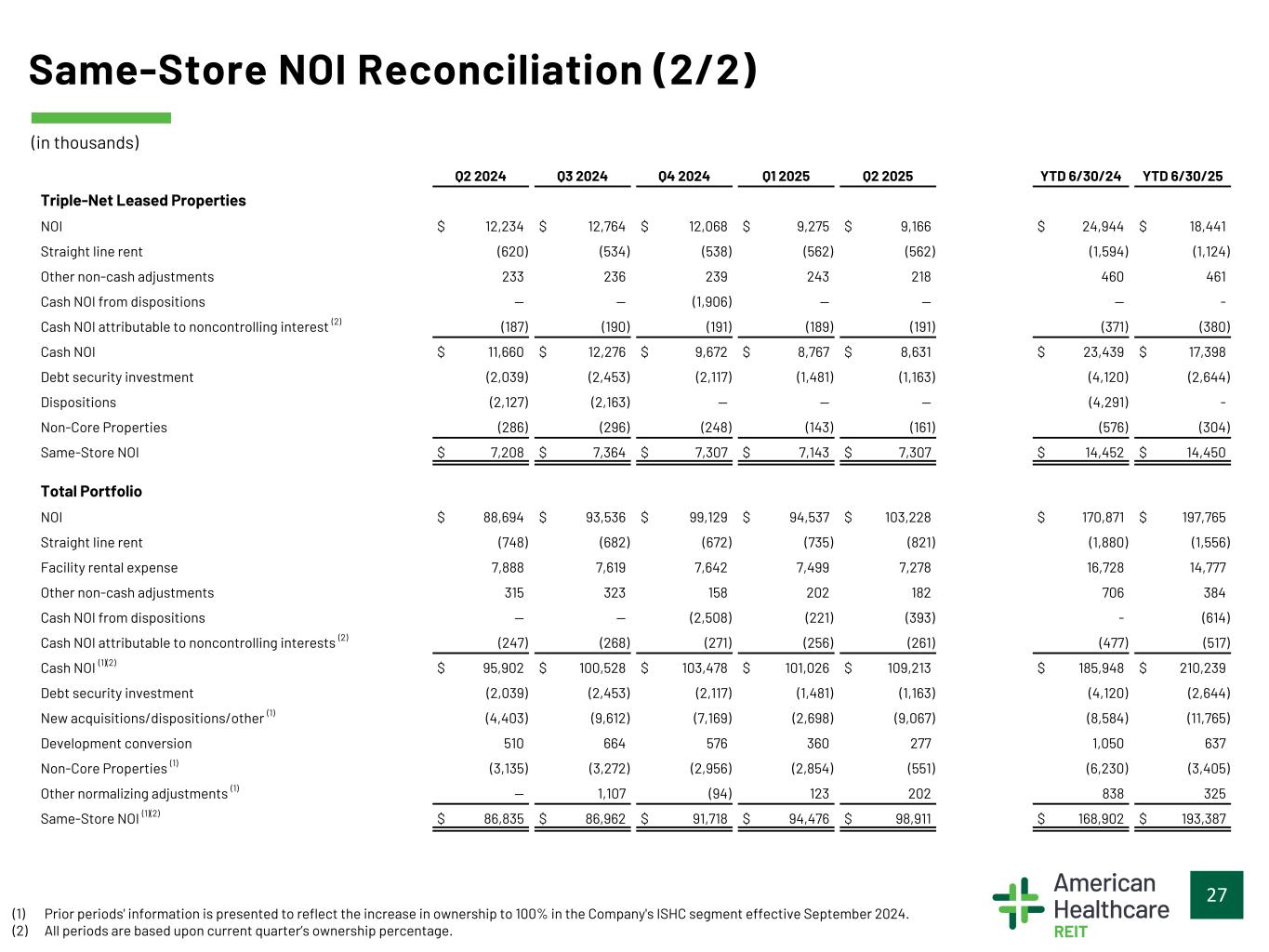
Thank you, Alan. Good morning or good afternoon, everyone, and thank you for joining us on today's call. We are excited to report another very strong quarter for AHR. We continue to make meaningful progress across our portfolio with outsized organic earnings growth, accretive acquisitions and disciplined capital markets activity. All of this is supported, of course, by the continuing strong business fundamentals across the entire seniors housing industry. The two main points regarding our business that I would continue to emphasize are as follows: number one, it is imperative that we here at AHR continue to stress to our operating partners that our primary commitment here at the company is a continued focus on quality resident care and high-quality health outcomes. We firmly believe that emphasizing patient care as well as employee satisfaction at the facility level will allow us to continue to provide strong financial results for our shareholders. And two, although the past couple of years have allowed our industry to perform well financially across the board due to a very favorable operating environment, we believe that we are in the early innings of a multiyear secular trend of ongoing improvements of operating metrics throughout the industry with rising occupancies, RevPOR, margins and net operating income. We expect the mismatch between supply and demand within the managed long-term care segments to remain favorable for the foreseeable future. These strong results would, of course, not be possible without the hard work of our AHR team members and our operating partners, and I thank them for the energy that they bring each day into all facets of our business. Now let's jump in. During the second quarter, we delivered another quarter of strong performance led by our operating portfolio, which is comprised of our integrated senior health campuses, also known as Trilogy, and our SHOP segments. We delivered 13.9% total portfolio same-store NOI growth in the second quarter of 2025 compared to the same period in 2024. And from our operating initiatives, where we continue to optimize the various levers in our control, we expect to capture more of this robust demand to drive double-digit total portfolio same-store NOI growth for the remainder of the year. On the capital allocation front, we have been complementing our strong organic growth with successful execution of new investments with approximately $255 million of acquisitions closed on so far this year. You may recall that during our first quarter earnings call, I noted that we had well over $300 million of high-quality seniors housing assets in our pipeline. I'm excited to report that we have already closed on approximately $174 million of properties that were part of that group since our last earnings call. I would also like to congratulate our investments team for continuing to build out our pipeline to the point where we still have well over $300 million of awarded deals in our pipeline. Our acquisition focus remains on high-quality long-term care assets that will be owned under a RIDEA structure. Additionally, we have been diligent and measured in our capital markets activity by sourcing attractively priced equity capital, which allows us to preserve optionality to continue pursuing further growth without relying on only one capital source. This is evidenced by the improvements we've seen in our leverage metrics with net debt to EBITDA, which stands at 3.7x at the end of the second quarter. I'll remind everyone on the call that the same ratio stood at 4.5x on March 31 of this year. Finally, before I turn it over to the team, I'd like to take a moment to acknowledge that AHR has been awarded the Great Place to Work Certification by Great Place to Work, the global authority in workplace culture. I am grateful that our mission of high-quality care and outcomes is shared by all of our team members and that our work provides meaning for our employees. All of our recent and future successes are owed to the AHR team members. And again, I want to thank you all for cultivating the purpose-oriented culture here at the company that has led to this recognition, which I know is only a small symbol of what we continue to build together. With that, I'll turn it over to Gabe to walk through our operational results in more detail.
Speaker 2
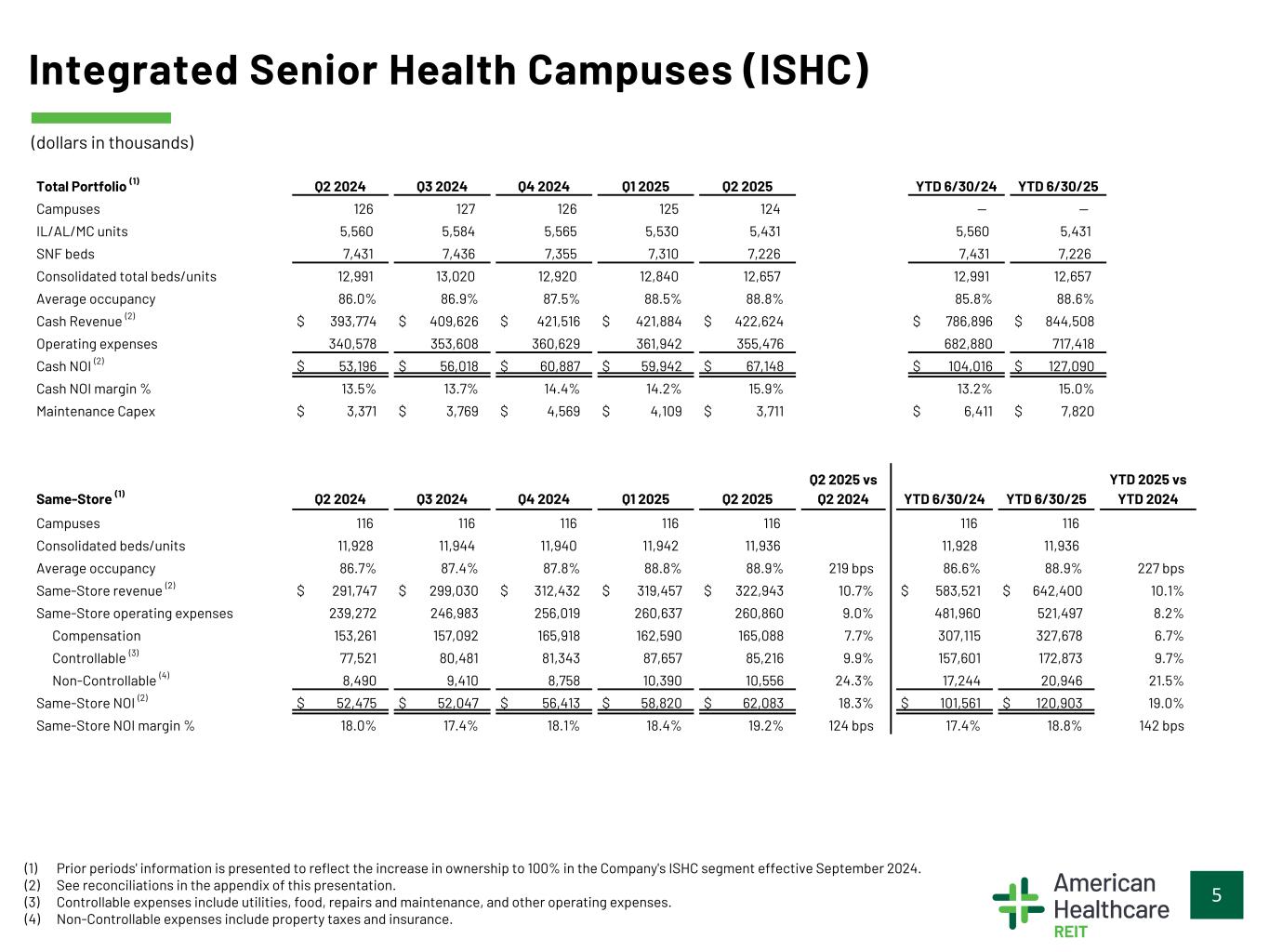
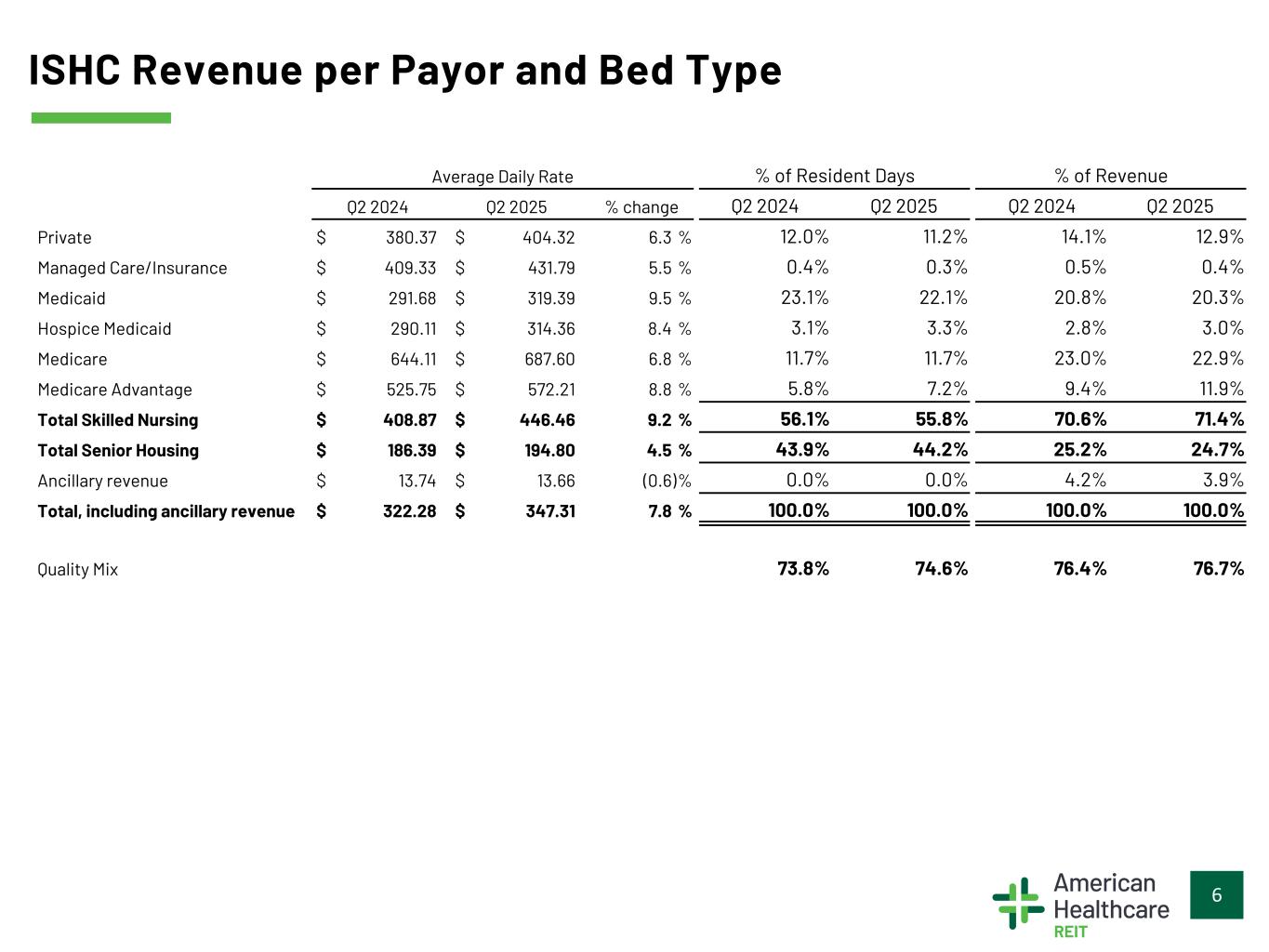
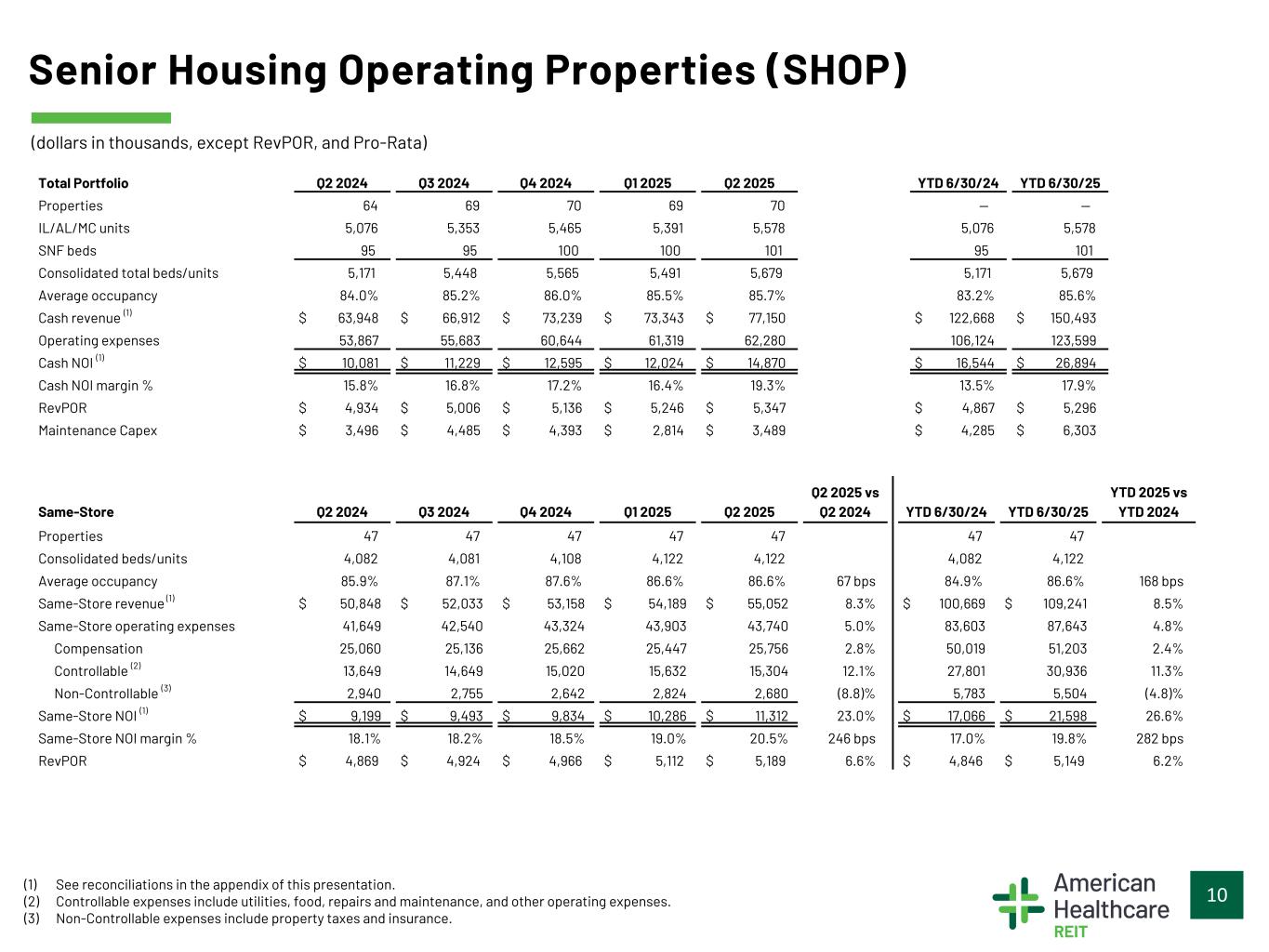
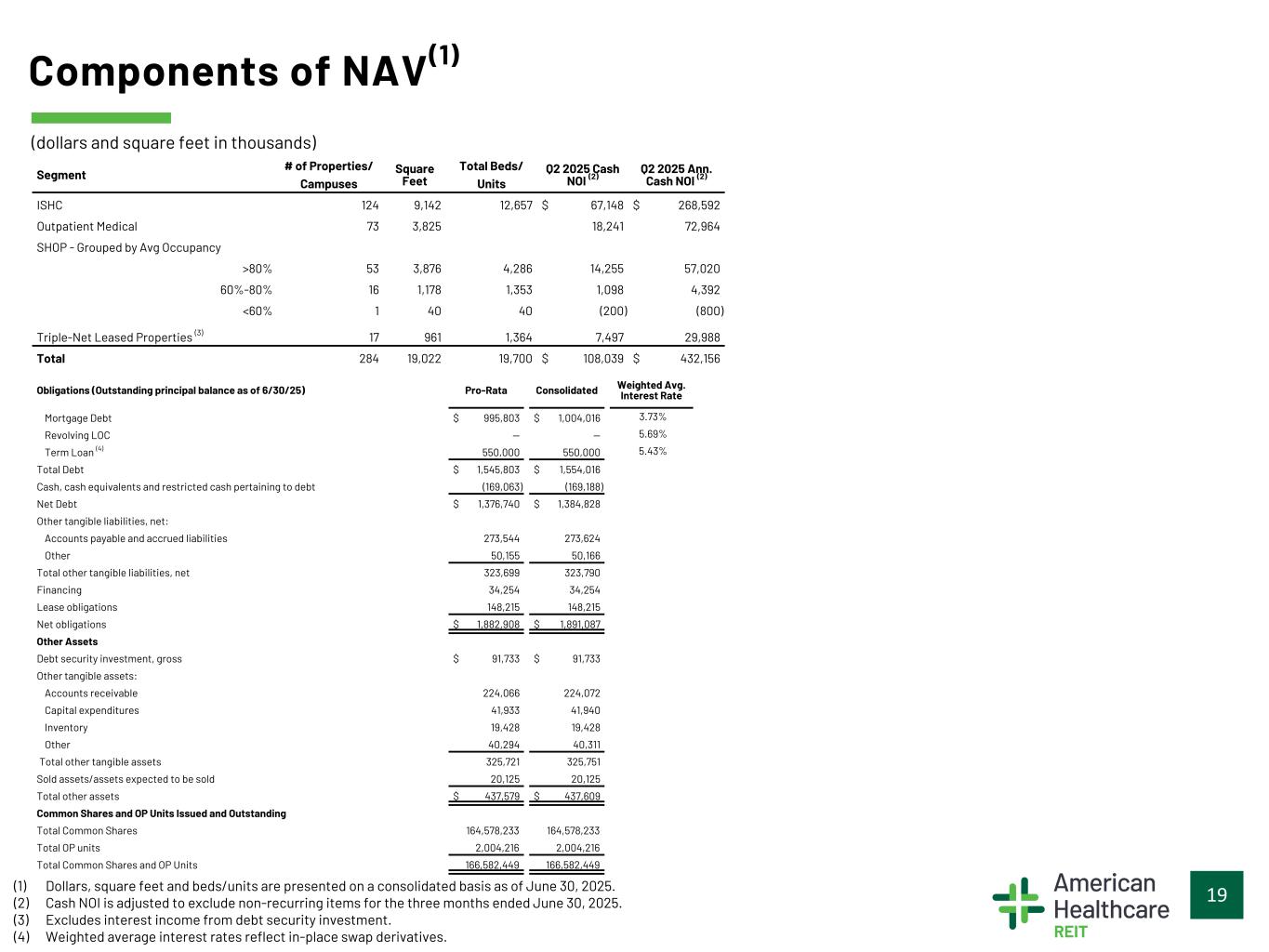
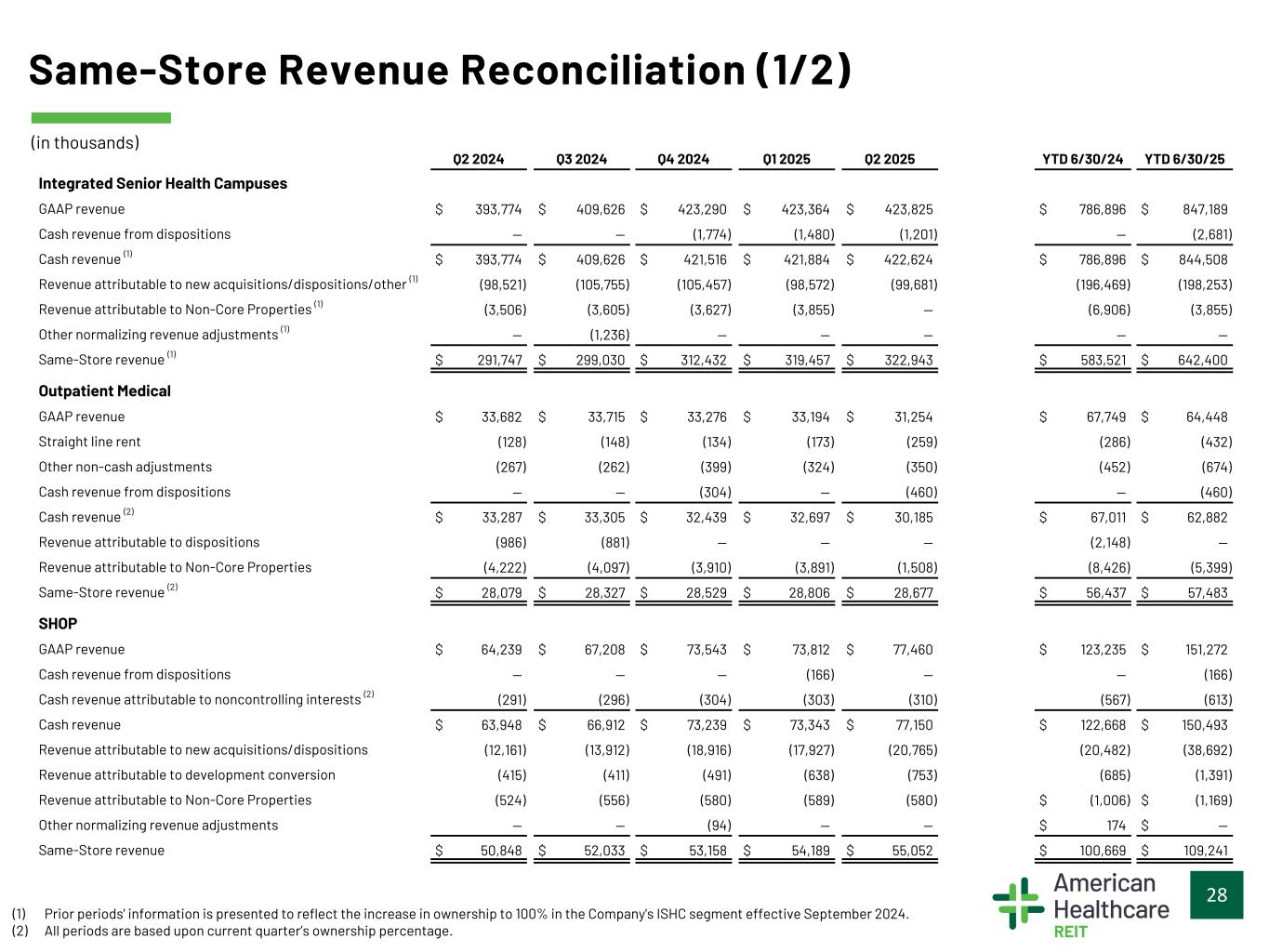
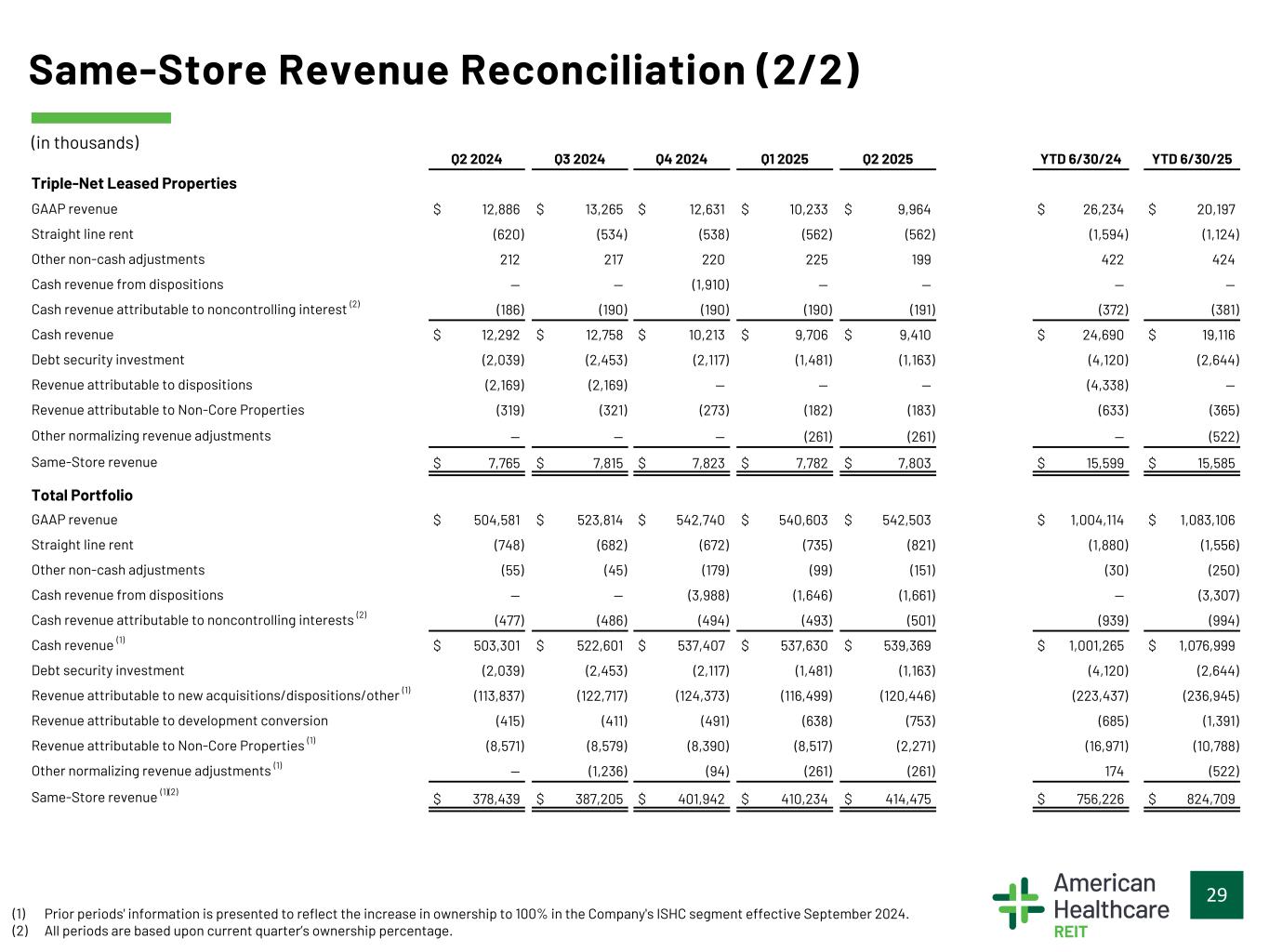
Thanks, Danny. Q2 was another strong quarter operationally. As Danny mentioned, our total same-store NOI increased 13.9% year-over-year with particularly strong results in Trilogy and in SHOP. Starting with Trilogy, we saw same-store NOI growth of 18.3% year-over-year, which was supported by broad-based improvements in occupancy and rate growth without compromising the focus on managing expenses. Occupancy climbed to 88.9%, a 219 basis point increase over the prior year with average daily rates across all payers growing by 7.8% year-over-year. That growth was aided by Trilogy's comprehensive revenue management program and continuous focus on improving quality mix. Within Trilogy, we're seeing growth across both skilled and senior living lines. And as I've mentioned before, the story of Trilogy's growth is not just limited to one component of revenue. As we look across some of the key drivers, I'd like to highlight that Trilogy's high quality of care continues to be recognized by Medicare Advantage plans and their enrollees, contributing to an increase in concentration with Medicare Advantage now making up 7.2% of resident days compared to 5.8% a year ago. Given that Trilogy has a portfolio-wide overall CMS rating of over 4 stars compared to the national average of below 3 stars, I'd anticipate that Trilogy will continue to be a highly sought-after post-acute care provider. Beyond the payors, we're also seeing strong tour volumes and observing a rise in internal referrals between care settings, which continues to support length of stay and improved margins that stand to benefit from more operating leverage at current levels. In short, Trilogy continues to execute on multiple fronts, further establishing themselves as a top operator in America. In SHOP, the momentum continues. Same-store NOI was up 23% year-over-year. And while average same-store occupancy appears flat from Q1 to Q2, occupancy was actually ramping and increasing through the quarter, rebounding from the impacts that the heavier winter flu season brought in Q1. In fact, throughout the second quarter, we realized the highest level of move-in activity we've seen in our SHOP segment in years and maybe even ever. And at the end of the second quarter, SHOP spot same-store occupancy was north of 87.5%. These occupancy gains are also being accomplished while remaining proactive in our pricing strategies, which resulted in RevPOR accelerating in Q2 with growth of 6.6% compared to the same quarter last year. Similar to Trilogy, our SHOP portfolio stands to benefit from operating leverage embedded at this occupancy and current same-store NOI margin, which is now above 20%. It's important to point out that our SHOP performance is a testament to our operating partners' ability to execute with the support of our active asset management team and our platform. We're continually refining our operating platform capabilities by leveraging expertise across our operators, particularly Trilogy. We've done this by improving best-in-class regional benchmarking tools and resources across our operating portfolio and the various operators, allowing for better pricing discipline, wage monitoring and expense management. As we move into the second half of the year, we continue to see a compelling backdrop. Outsized levels of demand paired with anemic levels of supply growth and low construction starts suggest that we should continue to benefit from a multiyear tailwind of favorable operating fundamentals. With our operating portfolio now accounting for approximately 75% of our total NOI and growing, we believe we've positioned ourselves favorably to continue delivering strong NOI growth across our diversified healthcare portfolio. Now I'll turn it over to Stefan to discuss our recent investment activity.
Speaker 3
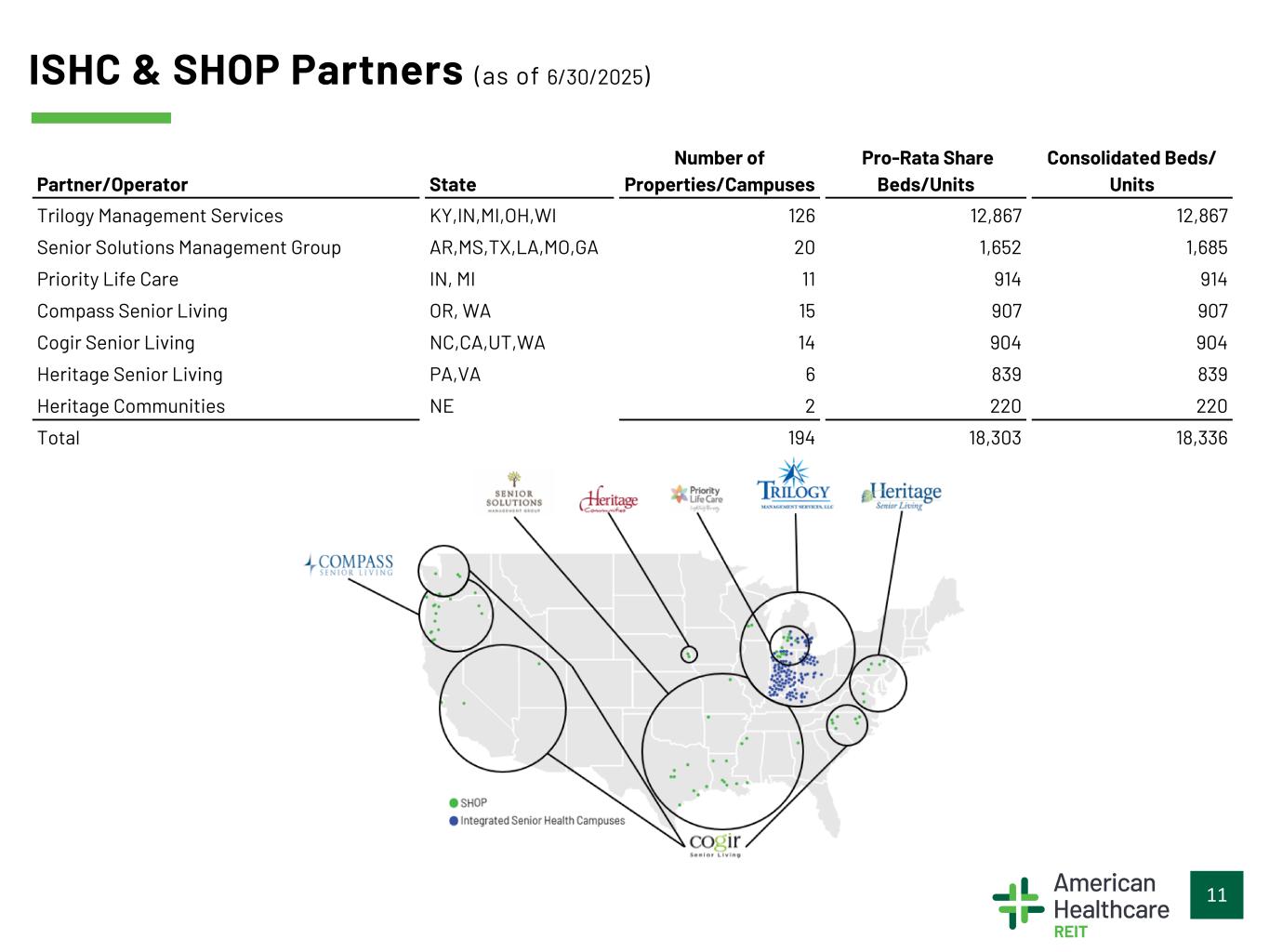
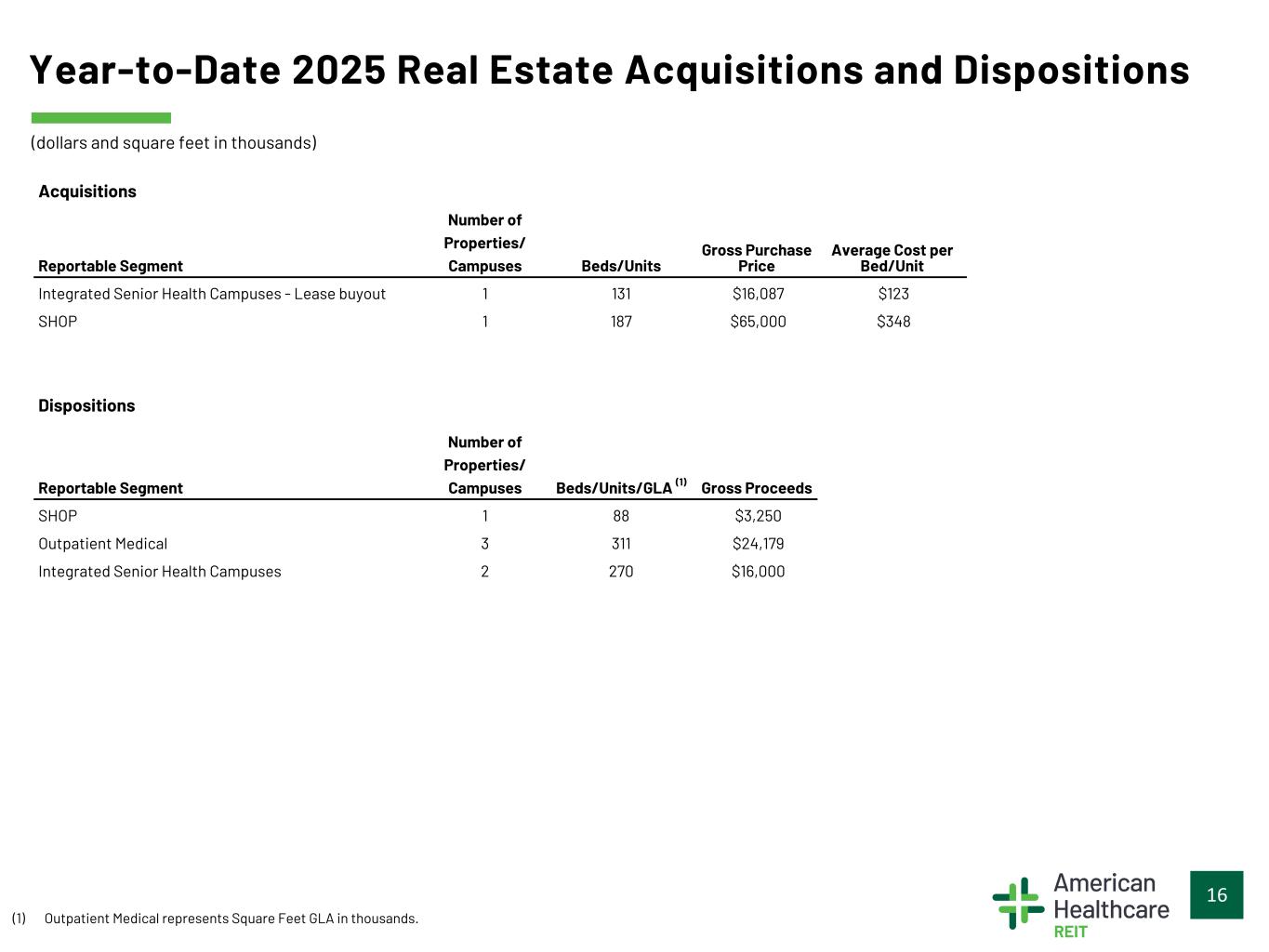
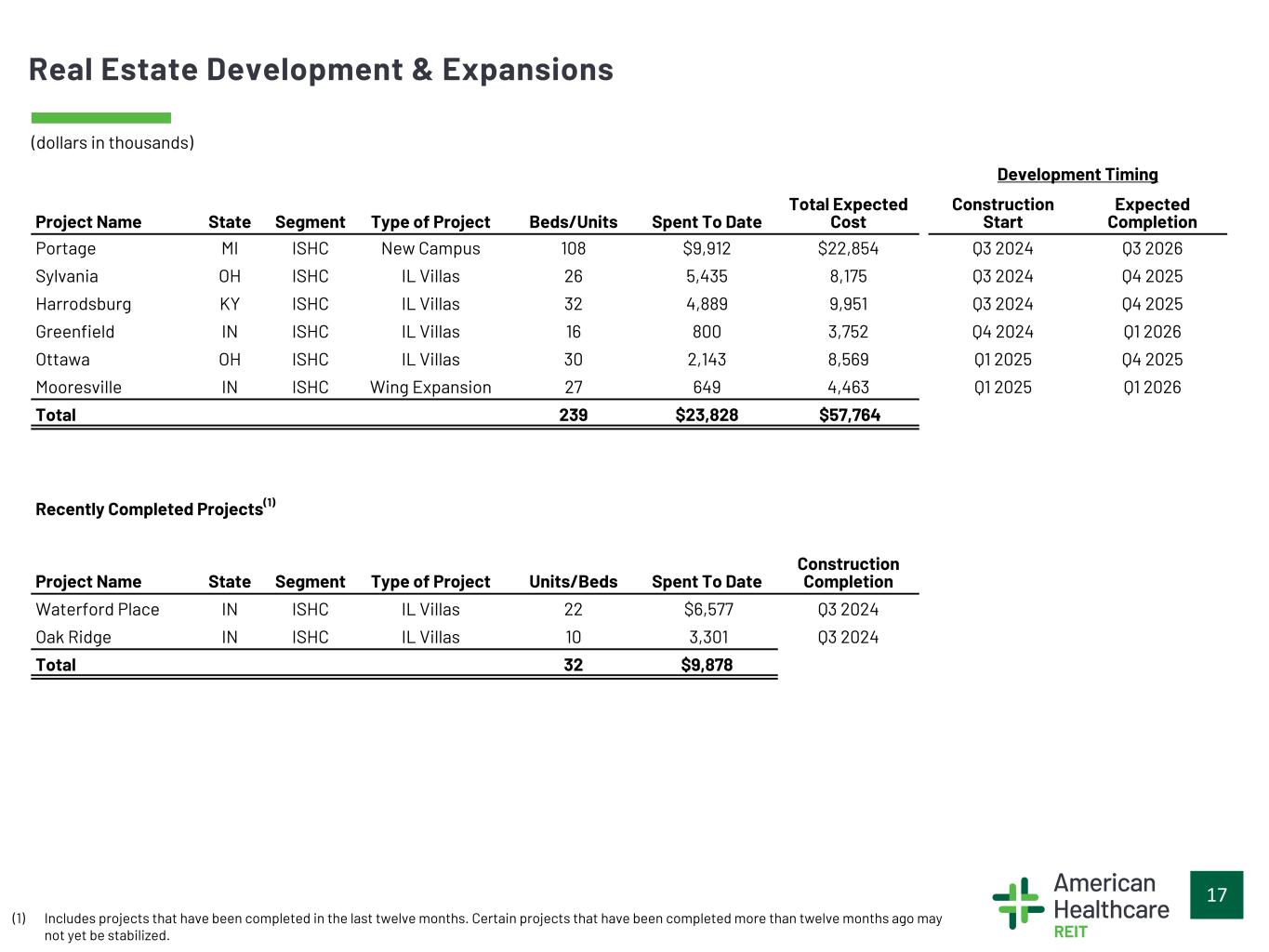
Thanks, Gabe. Our capital deployment strategy remains consistent. We're focused on accretive investments in settings and with operators where we have long-term conviction. That means pursuing opportunities where we already have relationships or have deliberately evaluated new ones where we understand the local care dynamics and where our capital can facilitate positive long-term clinical and financial outcomes. We are excited to announce that following quarter end, we formally established a new regional operator relationship with one of the two groups previously mentioned, an organization we've identified as aligned with our long-term strategy for the SHOP segment. The operator is Great Lakes Management, a premier senior living operator focused in Minnesota and other areas of the Midwest. We are very excited to grow with them across our target markets and appreciate the diligence they've shown throughout the partnership process. Now I'll walk through some of our recent activity in more detail. During the second quarter, we closed a previously announced $65 million SHOP acquisition in Virginia. Upon closing the acquisition, we transitioned operations to one of our trusted regional operating partners, Heritage Senior Living. Subsequent to quarter end, we closed several transactions that brought our year-to-date acquisition volume to approximately $255 million, all within our operating portfolio segments. In SHOP, this included two new acquisitions totaling approximately $33.5 million, while in our Trilogy segment, we closed on four senior housing properties already managed by Trilogy for approximately $65.3 million and the acquisition of our partner's 51% interest in five Trilogy-operated campuses held in an unconsolidated joint venture for approximately $118 million, which included the extinguishment of high interest rate partnership level debt. The campuses held in the joint venture were recently developed and are not yet stabilized, but we believe they are well located and positioned to deliver solid risk-adjusted returns. By increasing our exposure now, we secure long-term upside and expect more accretive growth within our Trilogy segment. On the capital recycling front, we closed on $33.5 million in dispositions during Q2. As we've noted before, we expect outpatient medical dispositions to continue as we prioritize growth in our operating portfolio. Looking forward, we've continued to add to our investment pipeline in the last few months with newly awarded deals. Despite closing approximately $174 million since our last call, our pipeline remains robust with well over $300 million of investments, most of which we expect to close by year-end. None of these transactions are included in our revised guidance due to timing uncertainty. However, this underscores the embedded upside we believe we may benefit from in the future. We remain active in pursuing further external growth opportunities as the market continues to offer attractive pricing, particularly for well-capitalized buyers like ourselves. With that, I'll turn it over to Brian.
Speaker 4
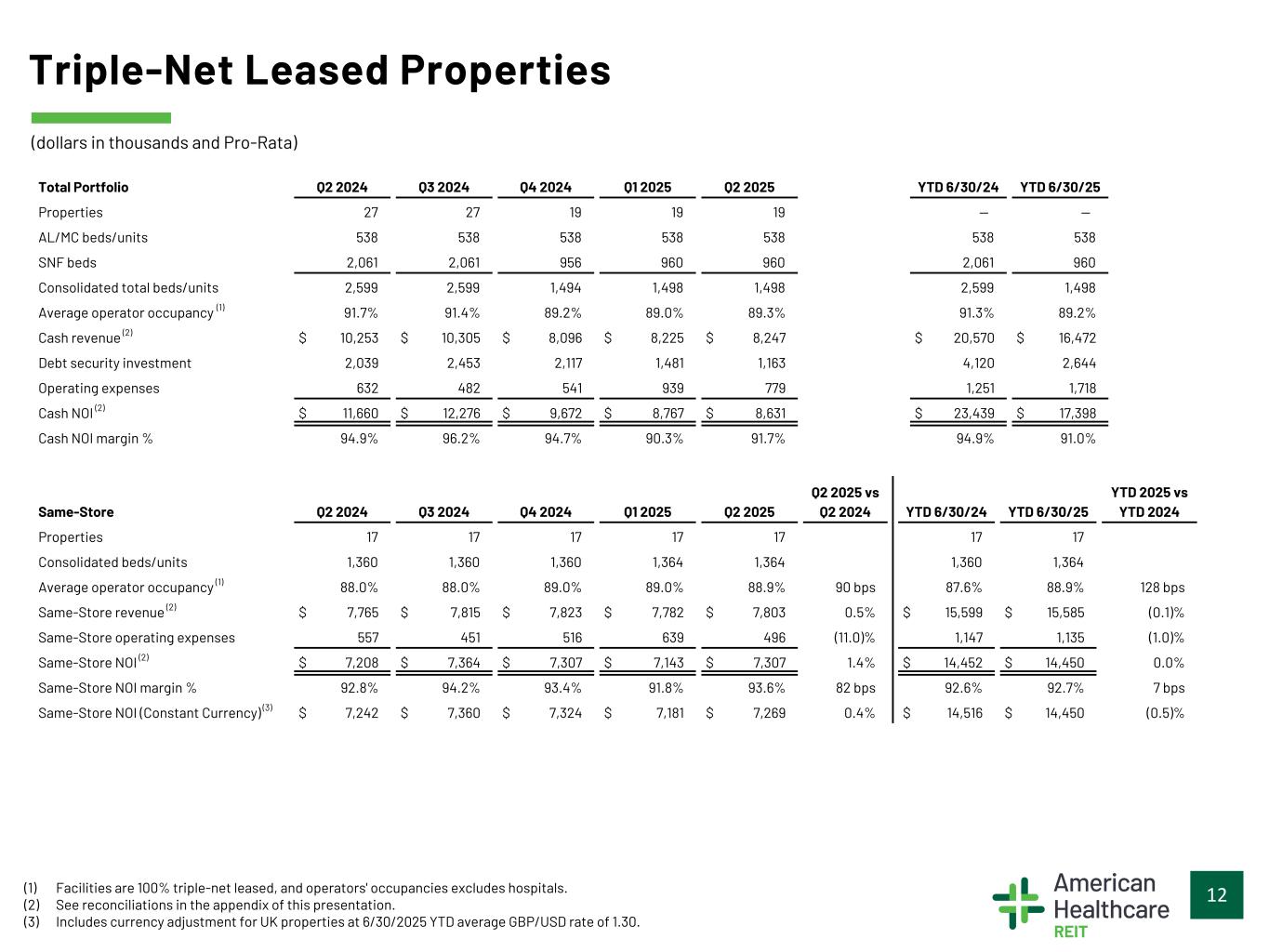
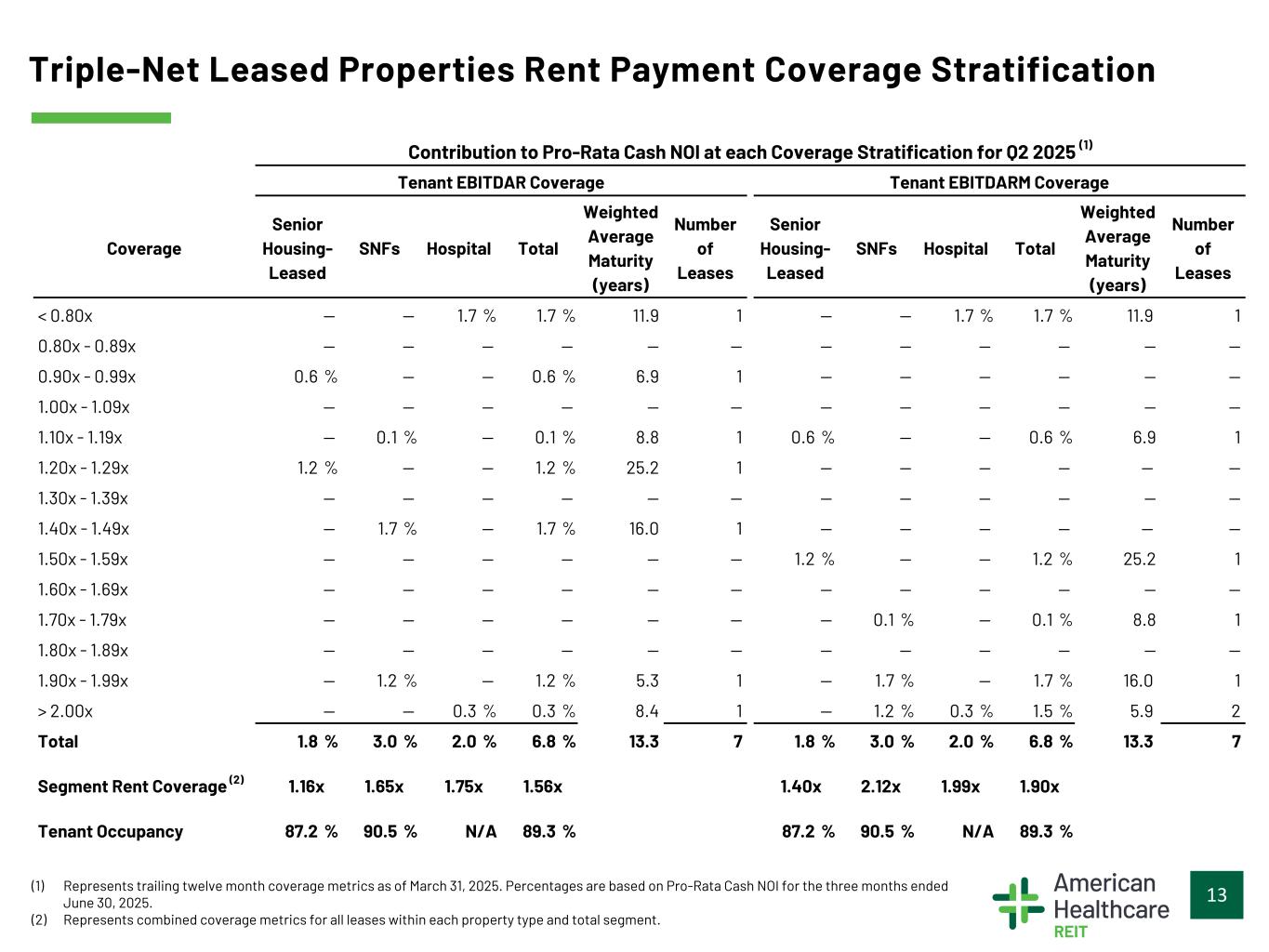
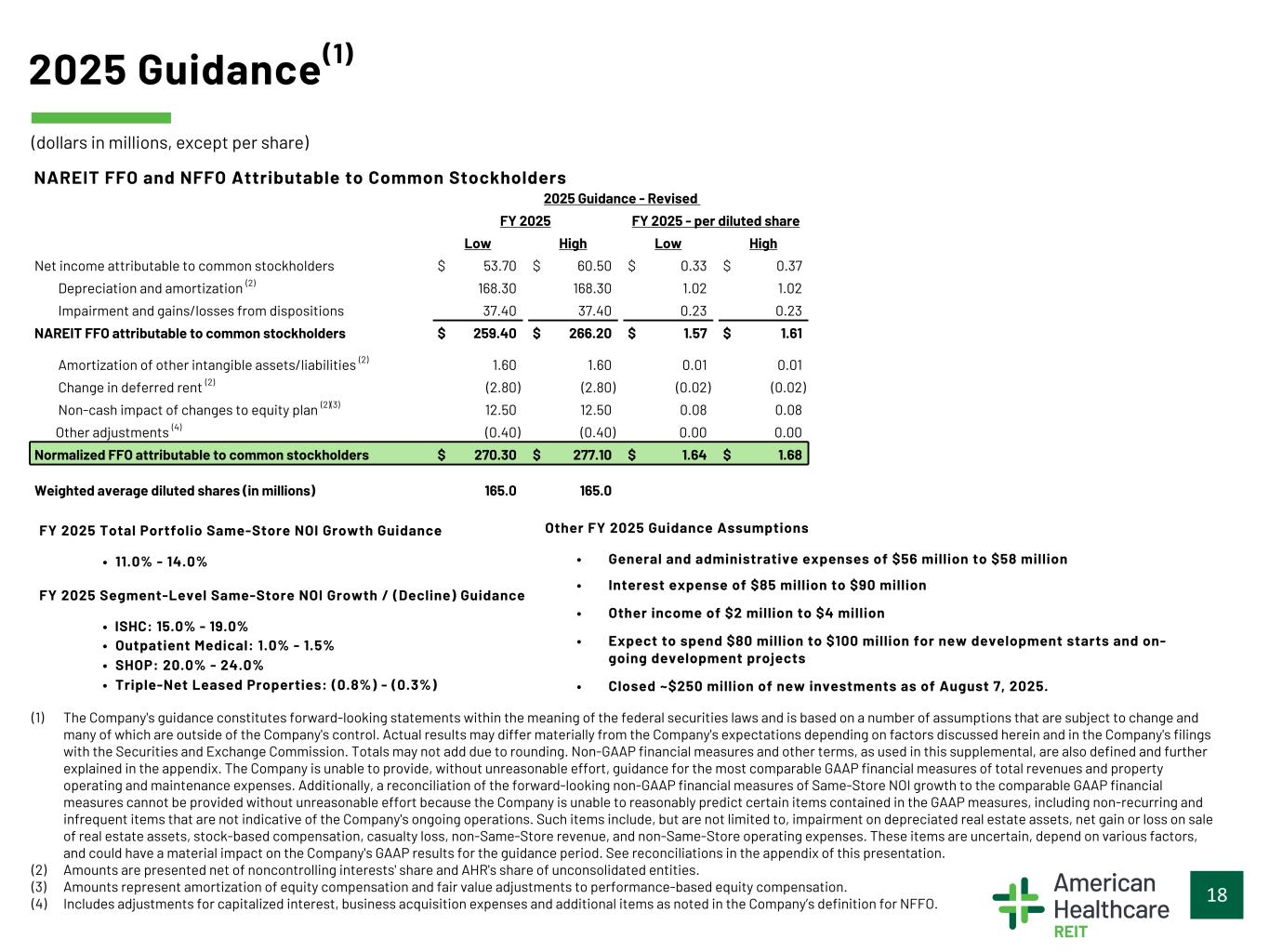
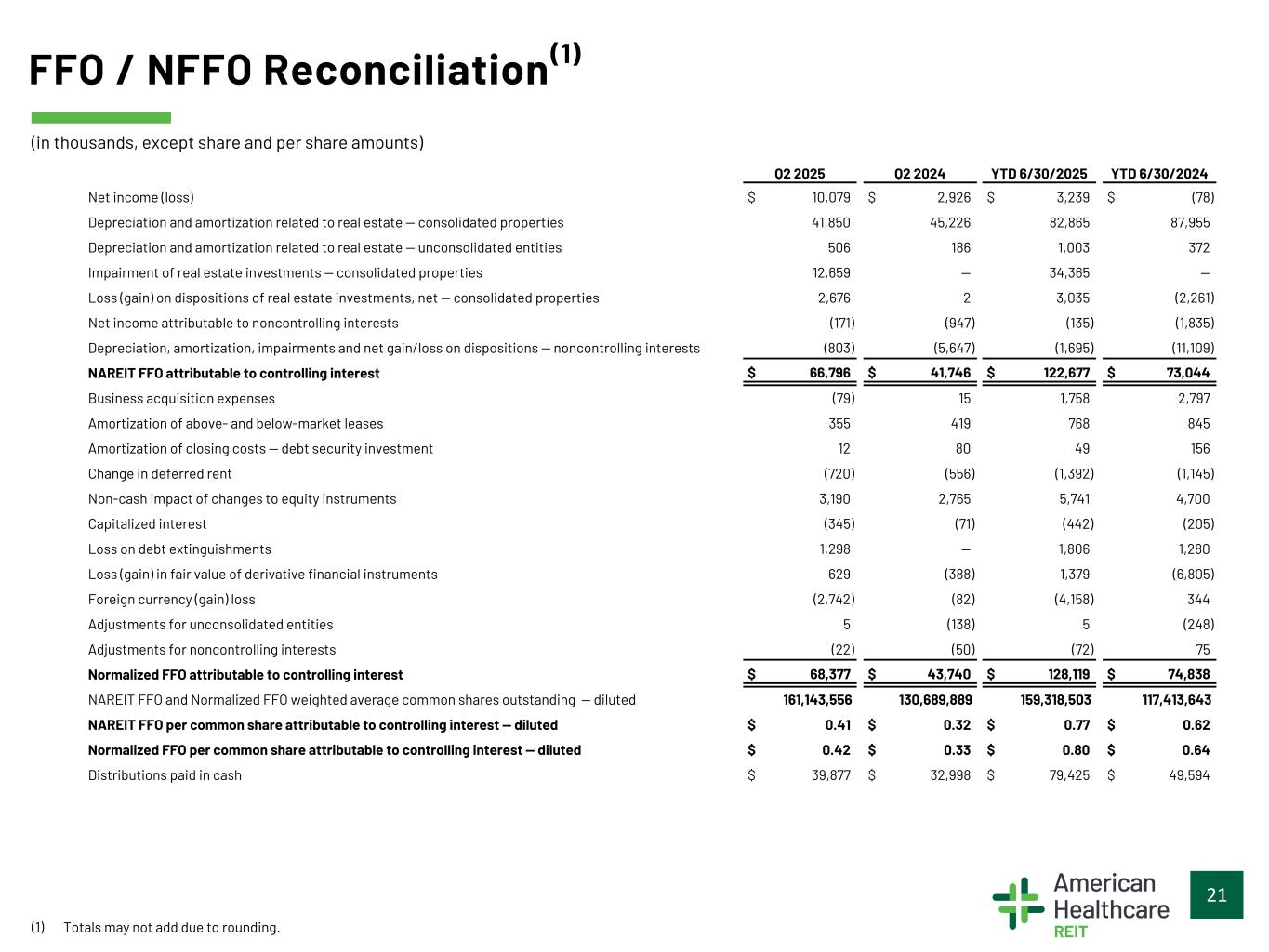
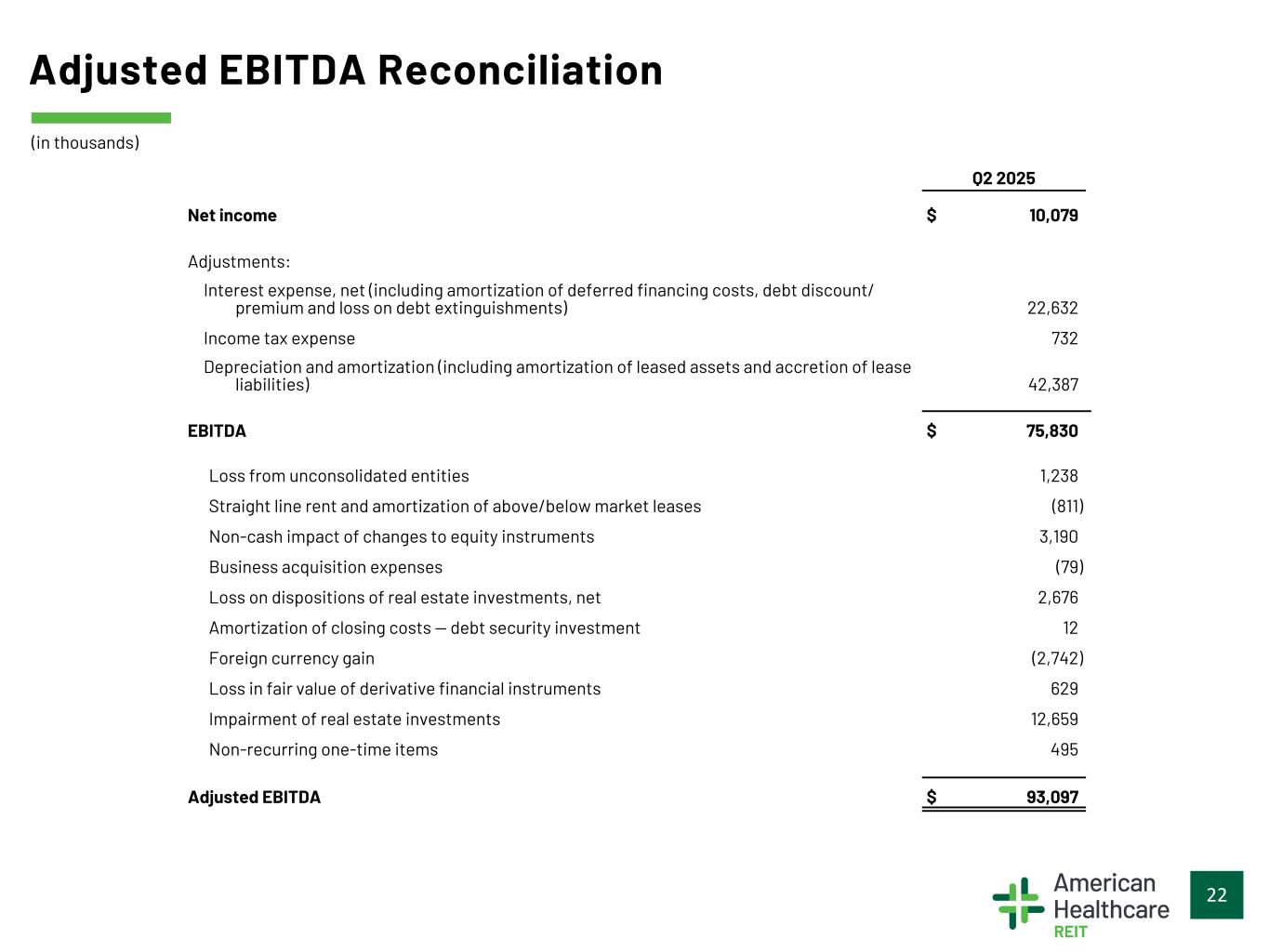
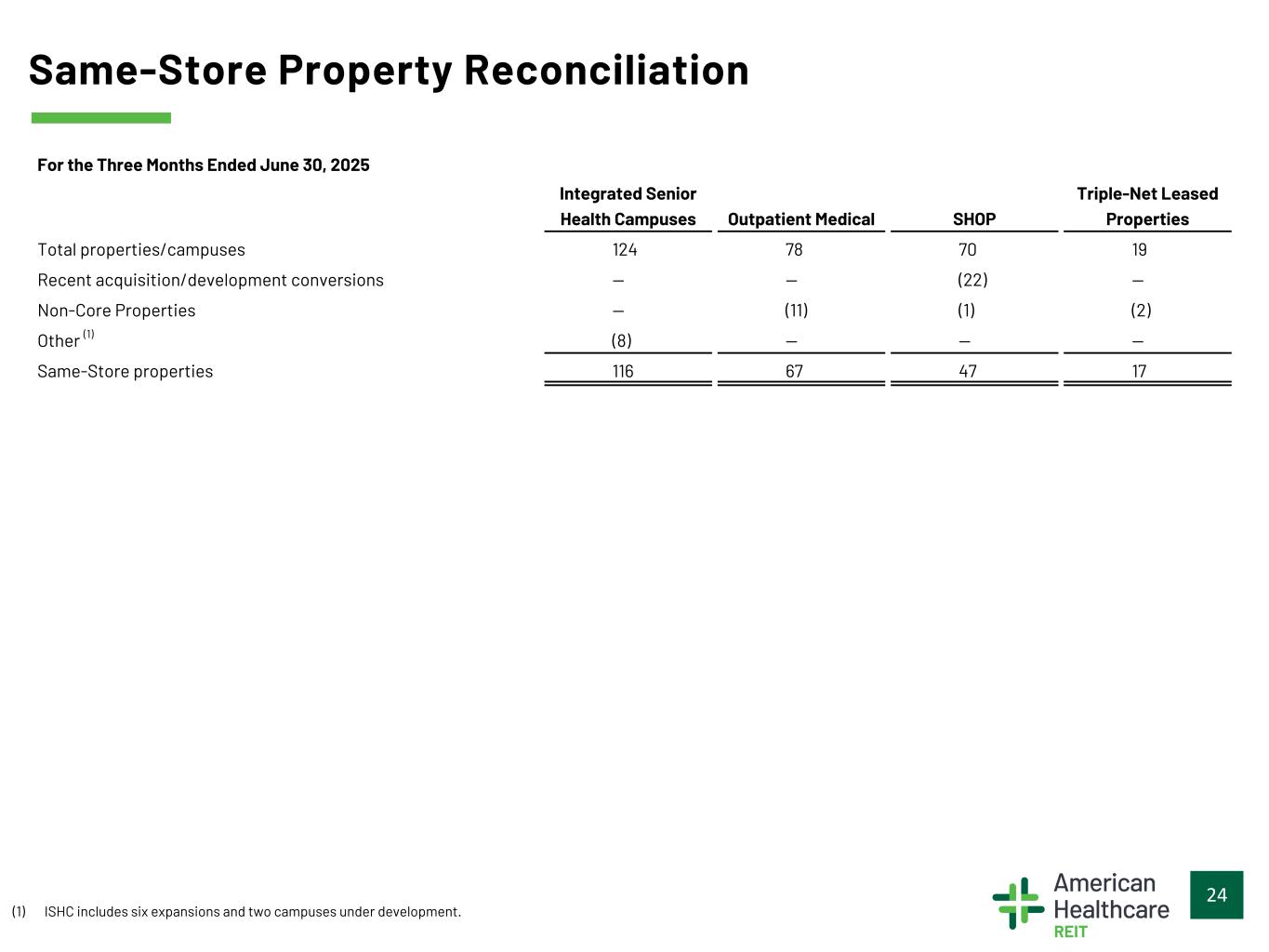
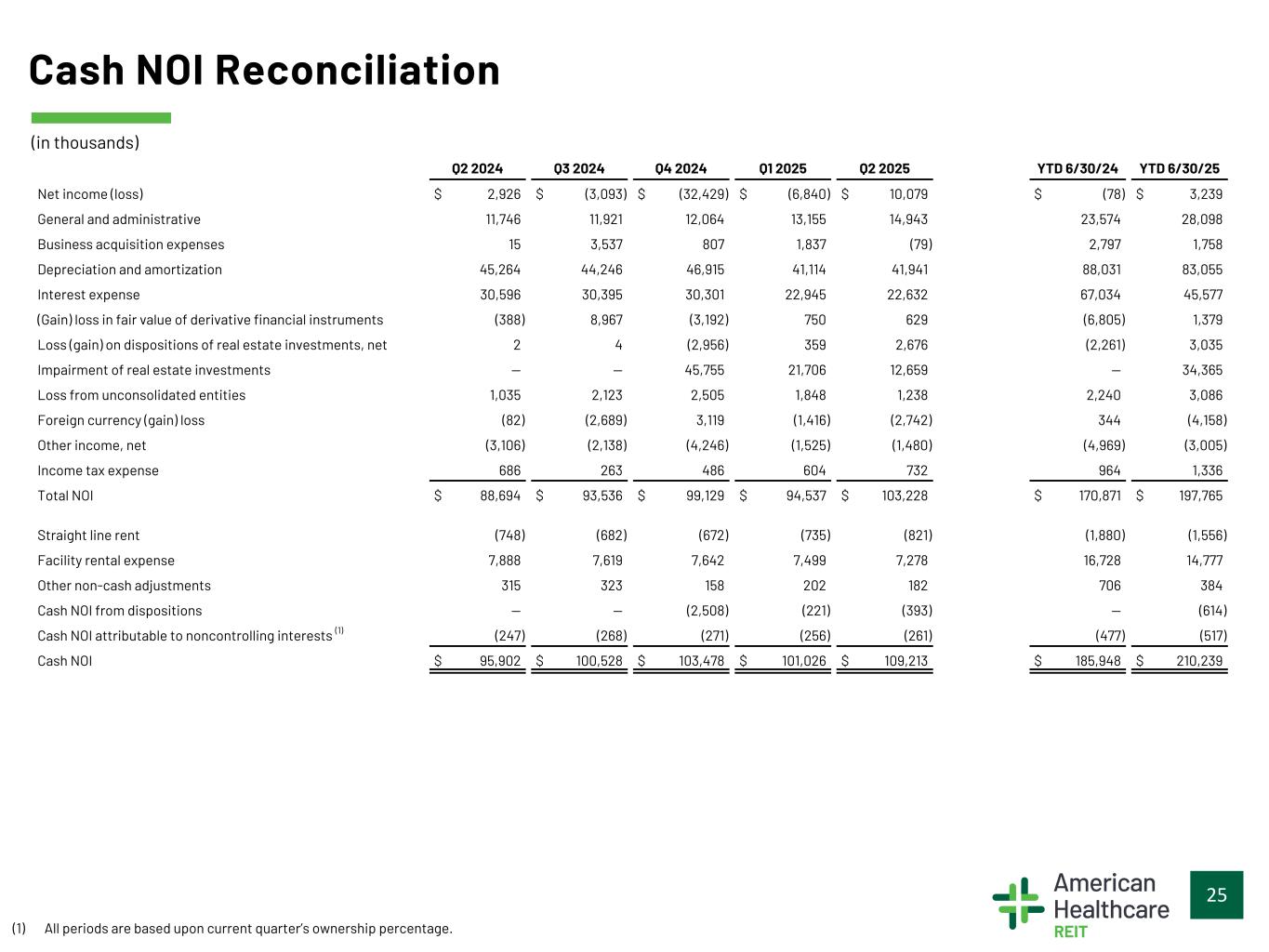
Thanks, Stefan. For the second quarter of 2025, we reported normalized FFO of $0.42 per fully diluted share, which equates to a 27% year-over-year increase in NFFO per share as compared to Q2 2024. Our strong organic growth, select acquisitions and capital markets initiatives have assisted us in further decreasing the company's leverage and building capacity for future growth. Our net debt to EBITDA stood at 3.7x at the end of the second quarter, driven by strong earnings growth, which creates retained earnings and proceeds from sales of stock through our ATM program. During and subsequent to the quarter, we raised $204.3 million through direct ATM sales at an average price of $34.72. Additionally, we settled sales under $127.8 million forward ATM agreement in early July at an average price of $35.96. We remain nimble in our approach to the capital markets and we're able to lock in attractively priced equity proceeds to assist us with our funding obligations or accretive investments in our growing acquisitions pipeline and previously announced development funding. Given our strong year-to-date performance and improved visibility into the second half, we are raising our full year 2025 NFFO per share guidance to a range of $1.64 to $1.68, up from a previous range of $1.58 to $1.64. Our revised guidance does not assume any additional acquisitions or capital markets activity beyond what we disclosed in yesterday's press release, nor does it include any deals from our awarded pipeline. This increase is primarily driven by the strong organic growth in our portfolio. As such, we are also increasing our total portfolio same-store NOI growth guidance to a range of 11% to 14%, up 150 basis points at the midpoint from the previous range of 9% to 13%. Segment level same-store NOI growth guidance updates are as follows: integrated senior health campuses increased to a range of 15% to 19%, reflecting continued strength at Trilogy. SHOP remains unchanged at 20% to 24%. Outpatient medical increased and tightened to 1% to 1.5% from a prior range of negative 1% to positive 1%. Triple-net lease properties increased and narrowed to negative 75 basis points to negative 25 basis points from negative 1.5% to negative 50 basis points. We believe our current outlook appropriately reflects the strength of our portfolio, led by our operating portfolio segments, the quality of our operator partnerships and the visibility we have over the remainder of 2025. With that, operator, we'll open the line for questions.
Speaker 5
Just the opening comments, you sort of mentioned that just you're in the early innings of sort of this demand tailwind. And I was hoping we could sort of double-click on that. When you're thinking about sort of the Trilogy portfolio as well as the SHOP portfolio, just in your mind, what is peak occupancy? And what do you think pricing can do when you get there, again, to maintain these innings as you sort of mentioned in your opening comments?
We are very confident that we are still in the early stages due to demographic factors. The baby boomers will start turning 80 next year, leading to a significant increase in the population over 80, which is where we anticipate most of the demand for long-term care. In the past six to seven years, there has been very little construction activity, and we don’t expect that to change soon. Even if construction starts increase next year or the following year, it will take two to three years for new facilities to open. Each year, we seem to be falling further behind in terms of supply and demand. Overall, we feel optimistic about our direction. Regarding peak occupancy, we are capable of increasing our occupancy quickly. Trilogy could begin accepting Medicaid residents to rapidly fill skilled facilities, and we can adjust rates to boost occupancy in our senior housing facilities. Our growth in occupancy should continue, and while we're focused on maintaining disciplined pricing, we have seen strong RevPOR growth in both SHOP and Trilogy. In previous years, we settled into mid-to-high 80s occupancy levels due to an influx of supply, but I believe we are heading towards mid-90s. It might even go higher depending on our pricing strategy. We see ample opportunity for growth. Additionally, occupancy growth makes it easier to increase RevPOR at a quicker rate than ExPOR. About one-third of our assets are fully occupied at 95% or more, and we continue to grow NOI in those assets through careful revenue management and expense control. We still have a long way to go.
Speaker 5
Helpful. And then if I could just ask a quick follow-up on the acquisitions. Just can you talk a little bit more about sort of the deals closed, the assets in the pipeline? Just what sort of occupancy level, what sort of upside is sort of baked in or underwritten in those?
I will begin and then pass it over to Stefan. As mentioned in our previous call, we are concentrating on RIDEA, SHOP, and some aspects of Trilogy as well. Our aim is not just to expand our asset portfolio but also to enhance quality overall. When we look at the assets we've sold, particularly in outpatient medical and a few selected long-term care facilities, our tendency has been to sell smaller, older properties. Our focus for the pipeline is primarily on larger, newer properties. There is nothing wrong with the current quality we possess; however, we want to continue improving upon that. The average age of our assets is quite recent. The two portfolios we finalized with Trilogy encompass properties built mostly within the last five years, with some opening only in the last year. Currently, our pipeline exceeds $300 million, with the exception of one asset at Trilogy concerning a lease buyout, all of it is SHOP. This is our primary focus. Stefan, perhaps you can elaborate on the deals we've closed and what's in the pipeline, as we have a blend of stabilized and unstabilized assets. Please share insights on what we're acquiring.
Speaker 3
Yes, I would like to express our satisfaction with our current position regarding the deals we have closed and the pipeline we have developed. Our investment team has performed exceptionally well, and the Trilogy and AM teams are essential to our achievements this year. It has truly been a collaborative effort. We believe that the assets we have acquired and those in our pipeline will yield significant long-term benefits. These assets are high quality, many of which are modern and well-suited for both the market and the operators we have chosen to manage them. Our primary focus is on higher acuity sectors, mainly assisted living and memory care. While we have some independent living facilities among our closed assets, the majority will center around memory care and assisted living. If we consider our closed transactions and our pipeline for 2025, independent living likely makes up around 15% to 20%. The price per unit for these buildings is significantly below replacement costs, averaging mid-to-high $200,000 for both our closed portfolio and what's in the pipeline. In terms of yields, as mentioned, we can categorize them between stabilized assets and those that are either pre-stabilized or require light value add. Overall, we anticipate all categories will stabilize in the high-7s to 8s, with year one yields for stabilized assets in the low-6s, while the pipeline for stabilized assets and the value-add pre-stabilized assets might be slightly lower. Nonetheless, we are confident that they will perform exceptionally well.
Speaker 6
So the ADR growth this quarter really stood out. And I'm just wondering if this was a glimpse of some of the recent moves taken around expanding the Medicare Advantage piece of the business and just your ability to shift the mix of residents around? And should we expect that, that benefit in Q2 carries into the back half of the year as well from a rate growth perspective?
You want me to start with that one, Gabe, or you want to take that?
Speaker 2
The rate growth at Trilogy has been strong, and it's due to several factors. The quality mix continues to improve, especially as the percentage of Medicaid has consistently decreased each quarter. It's not solely about the quality mix; there are nuances within that mix. The highest revenue residents are from Medicare and Medicare Advantage. Even within Medicare Advantage, we have various contracts with different rates. You can keep your Medicare Advantage percentage stable, but your average daily rate can significantly increase by focusing on the contracts that offer higher payments. Trilogy, due to the high-quality outcomes and good care they provide, continues to grow their Medicare Advantage admissions and can target those contracts that yield higher rates. This is a major focus for them, and it's something we're looking to integrate into the rest of our SHOP portfolio, even if those do not include a skilled component.
Yes. And we didn't even talk about quality add-ons, which contribute to that as well.
Speaker 6
Yes. No, certainly, that falls into all the levers. But just focusing specifically, I mean, last quarter, the team did highlight if Trilogy outperforms, Med Advantage would probably be a part of that. And so I guess, quite refreshing on your part. But you also mentioned you're looking at new Medicare Advantage plans not currently contracting with Trilogy. So anything in the near-term pipeline to further expand those relationships and continue to drive that shift in mix to the higher-rated segments?
There are always new developments and changes within Medicare Advantage, not just with new contracts but also with adjustments to existing ones. For instance, if Trilogy has a contract that is less favorable, they may start accepting fewer patients from that source because they have better contracts available. Consequently, that specific provider will need to renegotiate with Trilogy to gain access to their facilities, as patients prefer to be treated in a Trilogy building. This system is continuously changing and evolving.
Speaker 5
Your next question comes from the line of Michael Carroll from RBC Capital Markets.
Speaker 7
I want to kind of circle back on this Medicare Advantage discussion. When did these Medicare Advantage payers start to get more aggressive pursuing partners that can provide these better outcomes like Trilogy? Is this more of a recent phenomenon over the past few quarters or has it been going on for the past few years?
Speaker 2
Yes, Mike, it's Gabe. Last fall, I noticed a decline in star ratings for some major Medicare Advantage plans, which are determined by the quality of the plan and the accessibility of high-quality care providers. However, I believe this trend has been occurring for a longer period. The interesting aspect of these contracts is their fragmentation; there are numerous contracts in play. Although larger players can influence the overall market, the fragmentation and varying pricing among the different plans mean, as Danny mentioned earlier, that it may not be necessary to renegotiate a Medicare Advantage contract to achieve a higher rate. Instead, you might prioritize individuals on a higher-paying plan when you have the flexibility for admissions. With higher occupancy rates, there is more room for admission flexibility, allowing you to focus on sources offering the highest reimbursement.
It's difficult to determine because both parties play a role. Trilogy has always been cautious, often turning down contracts when the rates were unfavorable. In many cases, they would have to negotiate out of network for each resident, which would ultimately cost the insurer significantly more. This is why insurers eventually choose to negotiate with Trilogy at mutually agreeable rates. Some contracts are specific to certain states or regions rather than being company-wide. Overall, it seems clear that Trilogy's bargaining power has been growing over time for the reasons previously mentioned.
Speaker 8
I wanted to circle back on the occupancy comments. I know, Gabe, you kind of outlined a little bit about acceleration through the quarter. I was wondering if you could give a little bit more detail as well as either commentary on expectations for the increased move-ins of what you're seeing today?
Speaker 2
Yes, today we are performing better than we were at the end of Q1. I mentioned that occupancy at the end of Q2 was 87.5%. We're experiencing continued growth there and a positive summer selling season. As Danny pointed out, the top one-third of our SHOP portfolio is fairly well occupied. I want to emphasize that we will not sacrifice occupancy levels just to report a high figure. We are considering the overall business impact, which involves assessing the rates, the market rates, and the referral and community fees. Our focus is not solely on pushing occupancy to its maximum this summer, but rather on steadily increasing occupancy at the right rate to ensure sustained NOI growth.
But Farrell, that being said, just to clarify, as Gabe mentioned, in the second quarter, our occupancy peaked at the end of the quarter on June 30 at 87.5%, which is certainly higher than what we saw on average for the quarter. And today, that occupancy is definitely higher than that. So June and July have been very strong selling months within AL and IL. And our expectation is that, that will continue. So I'm looking forward to seeing our occupancy at the end of this quarter.
Speaker 2
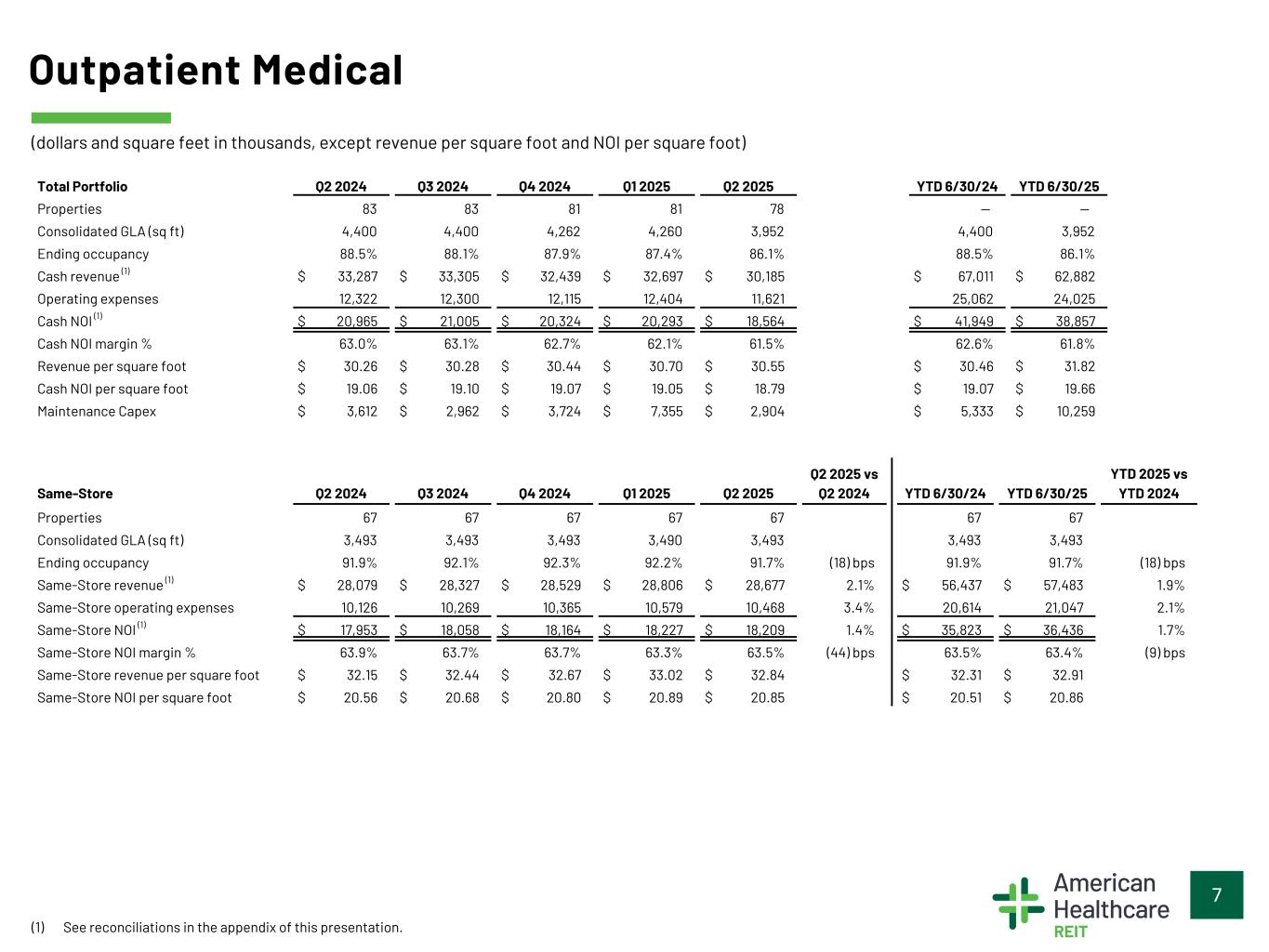
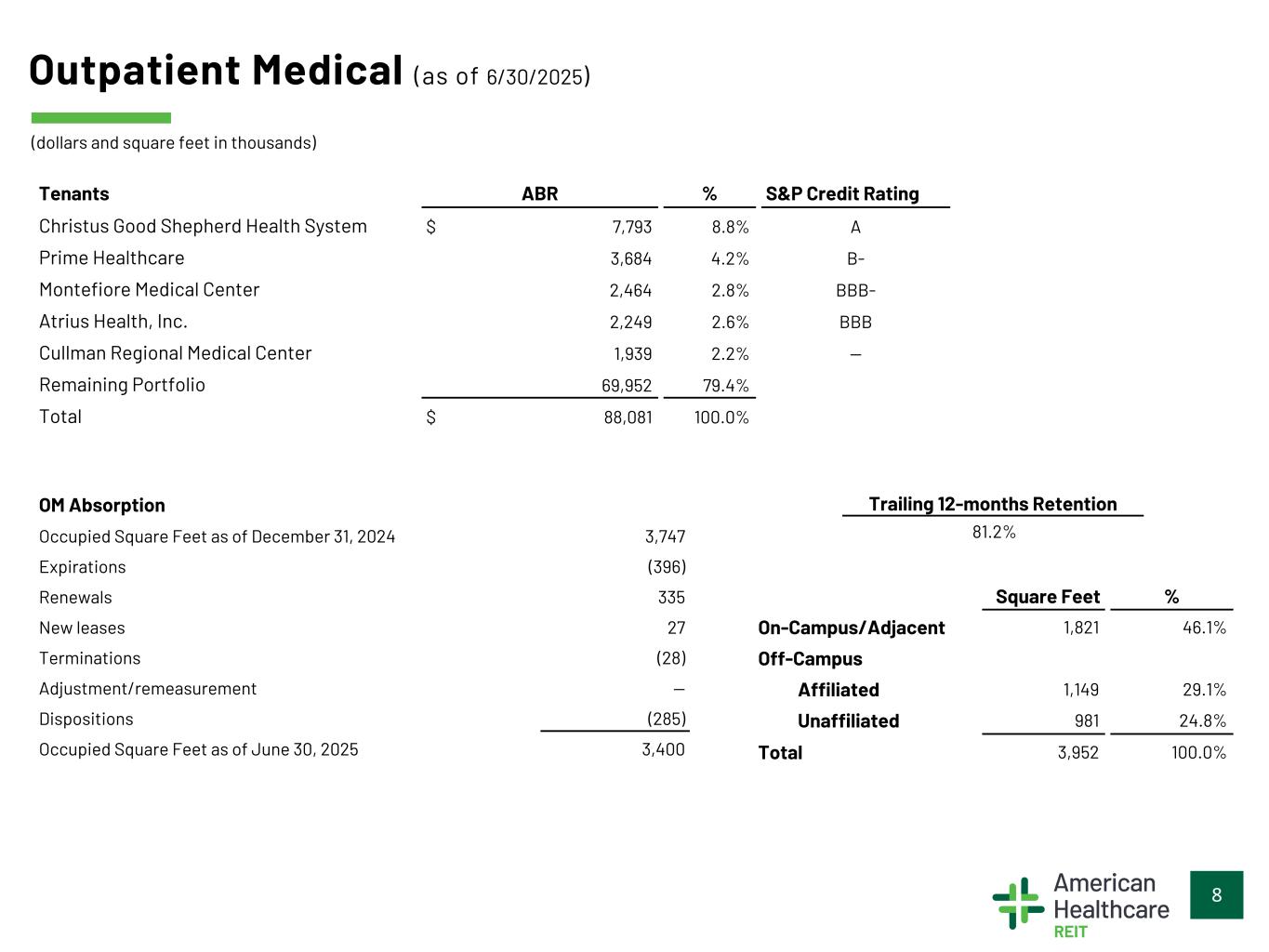
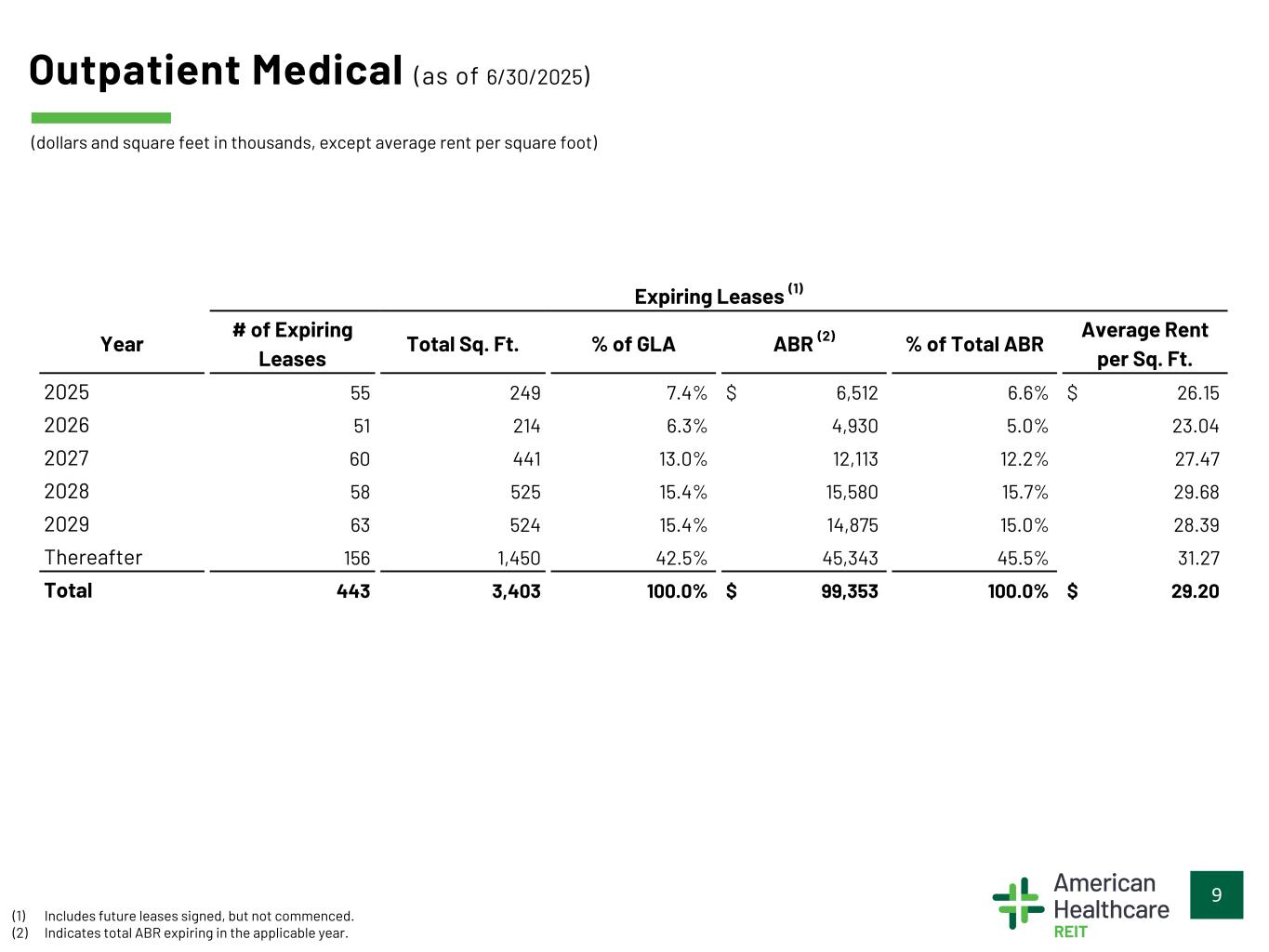
I would say that our asset managers overseeing the outpatient medical sector have been performing very well. They've successfully retained some tenants we expected would leave and have effectively managed renewals well before expiration. We are likely nearing the lowest point for our same-store portfolio. You might notice a slight drop in occupancy in the third quarter, but we fully expect improvements starting in the fourth quarter, both in occupancy and earnings. The main factor driving this business is the hospital systems. Until the hospital systems decide to take on more space, we may continue to experience very low growth, and possibly some negative growth, which is contradictory. However, we feel optimistic about our direction. At the end of the quarter, we had around 10 or 11 assets outside the same-store category. Of those, one has already been sold, five are under contract or have letters of intent, and the remaining five are being exposed to the market in various stages. Therefore, we believe we are at a low point for that portfolio.
Farrell, this is Danny. I'd just add, I'd certainly feel better about that space today than I did a year ago. There's always been good activity from a leasing perspective, lots of interest. The biggest issue I think in the last year or two has been the health systems themselves downsizing upon renewal, looking to cut costs. I mean, they've had a tough few years. And it feels like most of that is behind us, at least that's how it feels to me. So I am certainly more optimistic about the next 12 months than I was about the last 12 months.
Speaker 9
I just want to go back to that Medicare Advantage potential for higher rates and getting more contracts. Is there any seasonality to the renewals?
Speaker 2
No, not really. The contracts are too fragmented for that to be clearly noticeable. However, one thing to note is that about three-quarters of those contracts include a fixed annual increase based on the PDPM of the CMS increase, which takes effect on October 1 each year. Therefore, you can expect a proportional increase in the Medicare Advantage rate in line with the Medicare rate increase that occurs on October 1. At Trilogy, yes. Although there still are a few select assets that Trilogy either manages or leases that we do not yet own that we expect over time that we will own. So there's another, call it, four assets off the top of my head that I can think of that I would expect us to acquire potentially one this year, maybe the rest next year or the year after. So there's a few more, but most of what Trilogy operates now, we already own.
Speaker 10
So first question is just on Trilogy and the same-store NOI growth guidance, which you raised. Can you just talk about the back half of the year? It seems like there is a little bit of a slowing expected in the back half of the year, I'm not sure if that's just due to a tougher occupancy comp or if there are any other issues?
No, you're on track there. The reality is that at the midpoint of that Trilogy same-store guidance, it denotes fairly flat for the rest of the year. I will say that there is certainly seasonality that Trilogy has experienced over time in the second and third quarters. Now second quarter didn't really come to fruition. Their post-acute occupancy was quite strong. But there's something referred to as the dog days of summer, which basically means that there's not a lot of people that are doing elective surgeries during the summer months. And certainly, there's a lot less of the flu that's hitting people because you're much more outdoors. So there is a little bit of headwind, I would say, to the third quarter. There's a little bit of headwind on Medicaid rates, especially in Ohio in the fourth quarter. But ultimately, that's flat if we hit the midpoint with even a little bit of growth might get us to the higher end of that range.
Speaker 2
I think the biggest issue is that we saw market increase last year. So we're comparing ourselves to a higher base.
Speaker 9
Okay. And then just one more for you. When you look at the acquisition of the unstabilized assets, would that be the last of the non-consolidated assets?
Speaker 2
Yes. This is Stefan. First of all, we are very excited about Great Lakes joining us and developing that relationship. It has already yielded benefits in several ways. When it comes to selecting new operators, we take a careful approach. We want to ensure they meet our criteria, and we are fortunate to have extensive experience in this sector. Many of our team members have worked with or are familiar with various operators at different levels. This was certainly true for Great Lakes, as we had an existing relationship with them through someone on our team, and we had identified them as a potential partner in the future. This applies to any operator we consider. We evaluate their culture from both care and employee engagement perspectives, ensuring they are committed to growth and have an interest in expanding in the future. We are not interested in operators who are only looking for a one-time engagement. We want partners that share our vision for growth, including how and how quickly to expand, and we are focused on operators that align with our target markets. Therefore, our process is thorough, involving collaboration at all levels of the company to determine who we want to pursue.
But to clarify, this isn't a situation where we were awarded a building and then had to decide who to operate it. The operator came first. Both of these operators are groups that I've been hearing about from the investment team and the asset management team for a long time, and they are groups we want to partner with. In some cases, they even brought us the transaction on an off-market basis. Our Head of Asset Management had previous experience with someone from Great Lakes and suggested finding buildings to work on together, and they clearly want to collaborate with us. We have a strong reputation as an owner, and we excel at incentivizing our operators. If the building succeeds, they succeed. We are long-term holders, which is important to them, as opposed to those who simply want to flip properties. We are motivated to find good operators, and they are motivated to bring us good buildings. Therefore, the operator came before the building in both instances.
Speaker 2
Yes. To revisit your original question about allocation, I would estimate that about 65% to 70% of what we have closed on and what's in our pipeline remains with our current operators. However, this has proven to be beneficial as we are identifying opportunities to expand with new operators.
Speaker 3
Yes, that feels right to me too, Danny. And I think keep in mind, Seth, that at Trilogy, we're adding beds constantly. We're developing new products and we're adding new campuses. And as we continue to do that over the years, the mix within the buildings is shifting even more to senior housing than skilled nursing. So I think by nature of the bed mix shifting in the future, when we're talking about this second quarter and 2026, we'll see higher margins that are just coming through high-margin IL product that's being added to the total Trilogy portfolio.
That's a great point, Gabe, because looking at Trilogy's margins today versus whatever they were 7 years ago, it's not really apples-to-apples, right? Because there's so much more AL and IL today than they were 7 years ago because we've added villas. The new campuses tend to have a much higher percentage of AL and IL versus campuses that were developed 10 years ago. So I would expect to see Trilogy's margin continue to go up as their mix relies more on private pay AL and IL.
Speaker 2
The second part of your question regarding revenue mix and management is best illustrated by Trilogy. They achieved higher occupancy rates faster than others in the industry and relied heavily on revenue growth to enhance NOI. Trilogy has centralized their revenue management for all 130 campuses at their headquarters and hired a consultant from an aviation hospitality background to optimize their revenue management program. This program provides each building with a dashboard and a toolkit that equips the Executive Directors with the necessary tools to make informed decisions about unit pricing based on factors like views and building location, which are more sophisticated than previous methods in senior housing. It considers market rates, occupancy levels, tours, and leads to offer a real-time pricing strategy to ensure the best rates are set for new residents. This effective program has contributed significantly to their success in revenue management and is something we are testing to see if it can be replicated with our other operators. Our aim is to create platform value through comprehensive information and resources that support operators in executing revenue management strategies effectively. This initiative not only addresses the information gap for operators in our portfolio but also the execution gap, ensuring they have the necessary resources to implement revenue management and other key initiatives, similar to what has been achieved with Trilogy.
Speaker 0
Operator? Operator, are you there?
Speaker 2
I think we can wrap it up, Danny.
All right. Well, I apologize if anybody had any more questions. It looks like we may have lost our operator. Feel free to reach out to Brian, myself, Gabe, Stefan. Happy to answer any further questions. And we want to wish everyone a great weekend. Thank you.