Operator
Good day, and thank you for standing by. Welcome to the Abercrombie & Fitch First Quarter Fiscal Year 2026 Earnings Conference Call. At this time, all participants are in a listen-only mode. After the speaker's presentation, there will be a question and answer session. To ask a question during the session, you'll need to press star 11 on your telephone. You will then hear an automated message advising your hand is raised. To withdraw your question, please press star 11 again. Please be advised, today's conference is being recorded. I would now like to hand the conference over to your speaker today. Mo Gupta, VP of Investor Relations, please go ahead.
Thank you. Good morning and welcome to our first quarter 2026 earnings call. Joining me today on the call are Fran Horowitz, Chief Executive Officer, Scott Lepesky, Chief Operating Officer, and Robert Ball, Chief Financial Officer. Earlier this morning, we issued our first quarter earnings release, which is available on our website at corporate.abercrombie.com under the Investors section. Also available on our website is an investor presentation. Please keep in mind that we will make certain forward-looking statements on the call. These statements are subject to the safe harbor provisions of the Private Securities Litigation Reform Act of 1995 and are subject to risks and uncertainties that could cause actual results to differ materially from the expectations and assumptions we mentioned today. These factors and uncertainties are discussed in our reports and filings with the Securities and Exchange Commission. In addition, we will be referring to certain non-GAAP financial measures during the call. Additional details and reconciliations of GAAP to adjusted non-GAAP financial measures are included in the release and the investor presentation issued earlier this morning. With that, I'll hand it over to Fran.
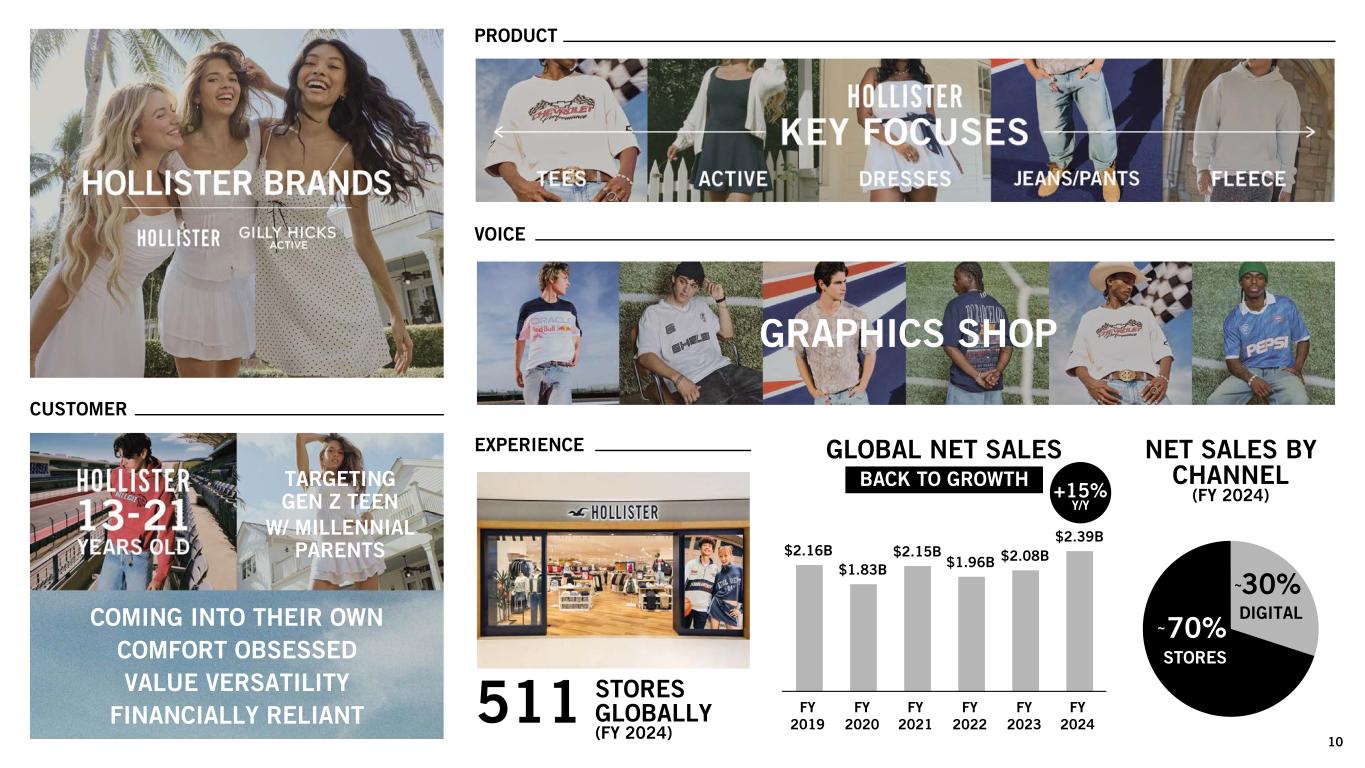
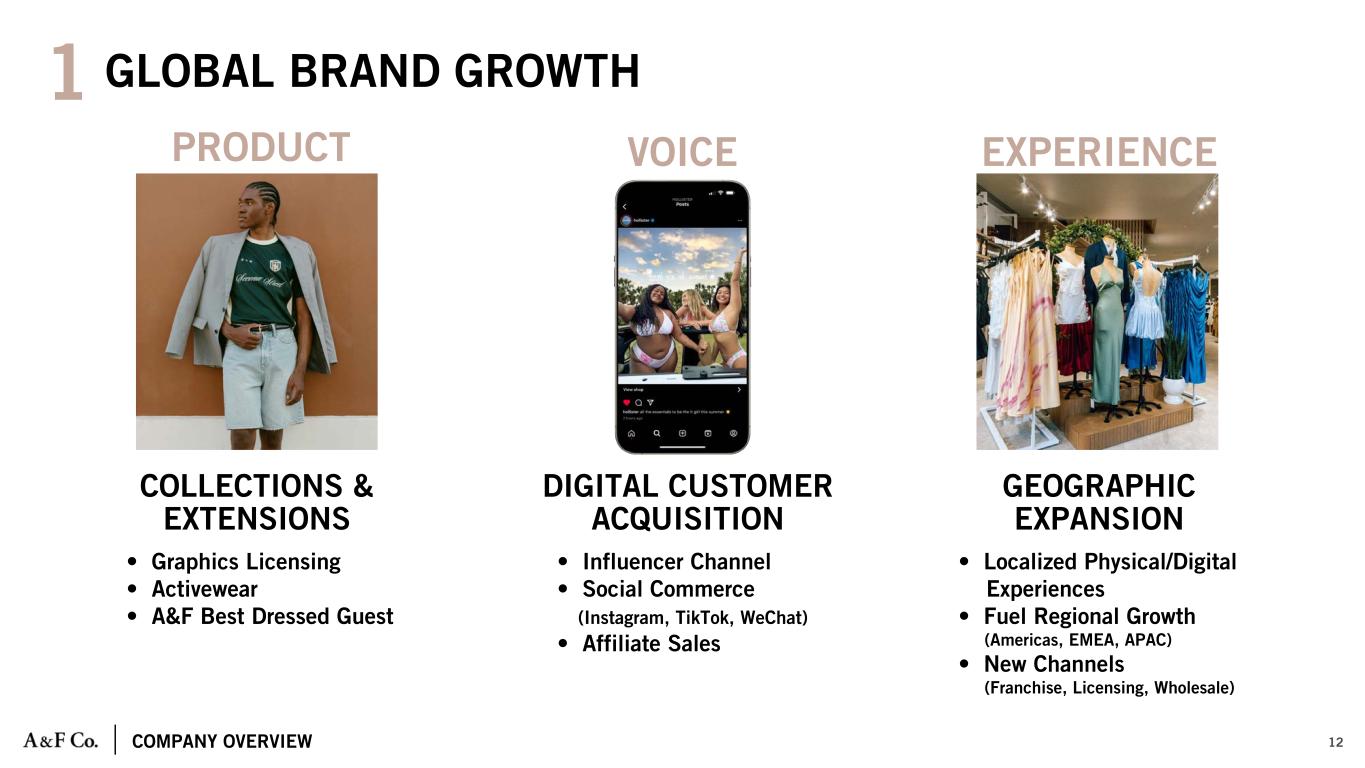
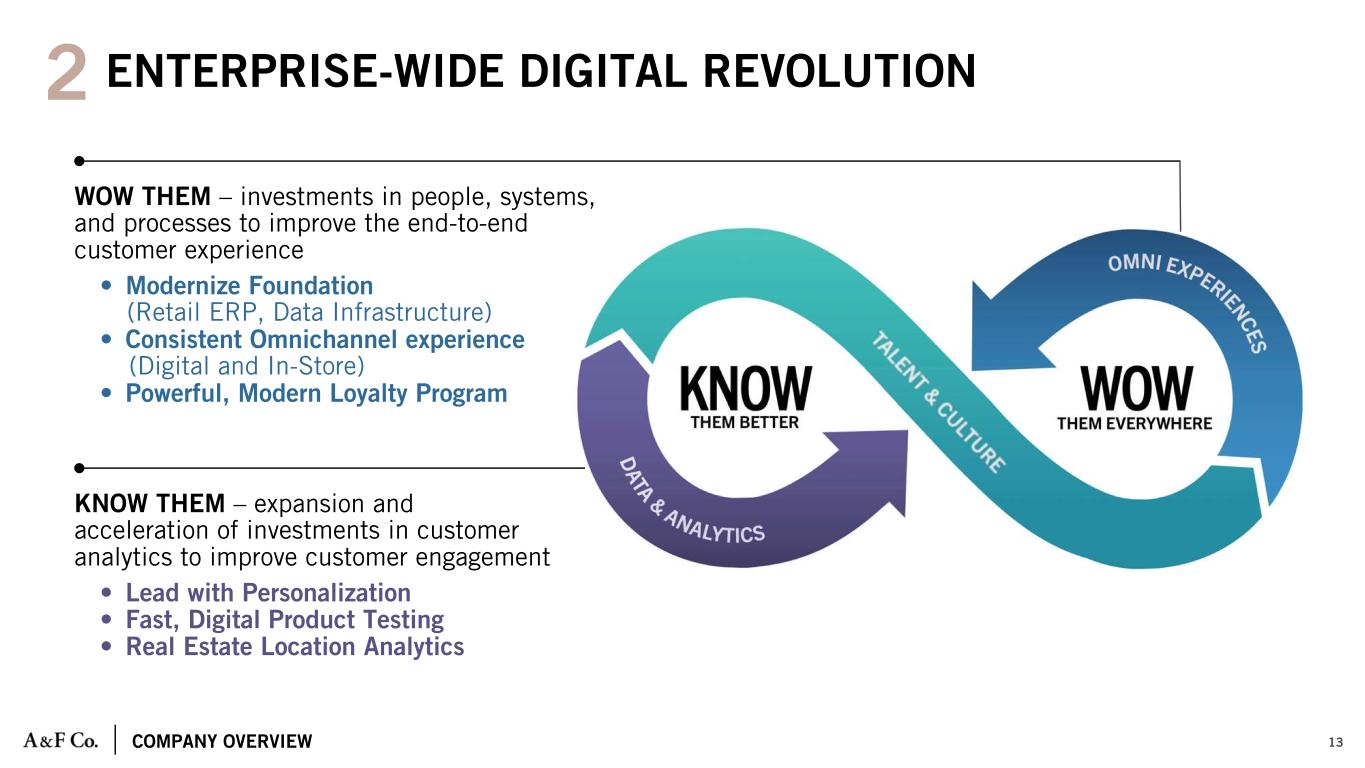
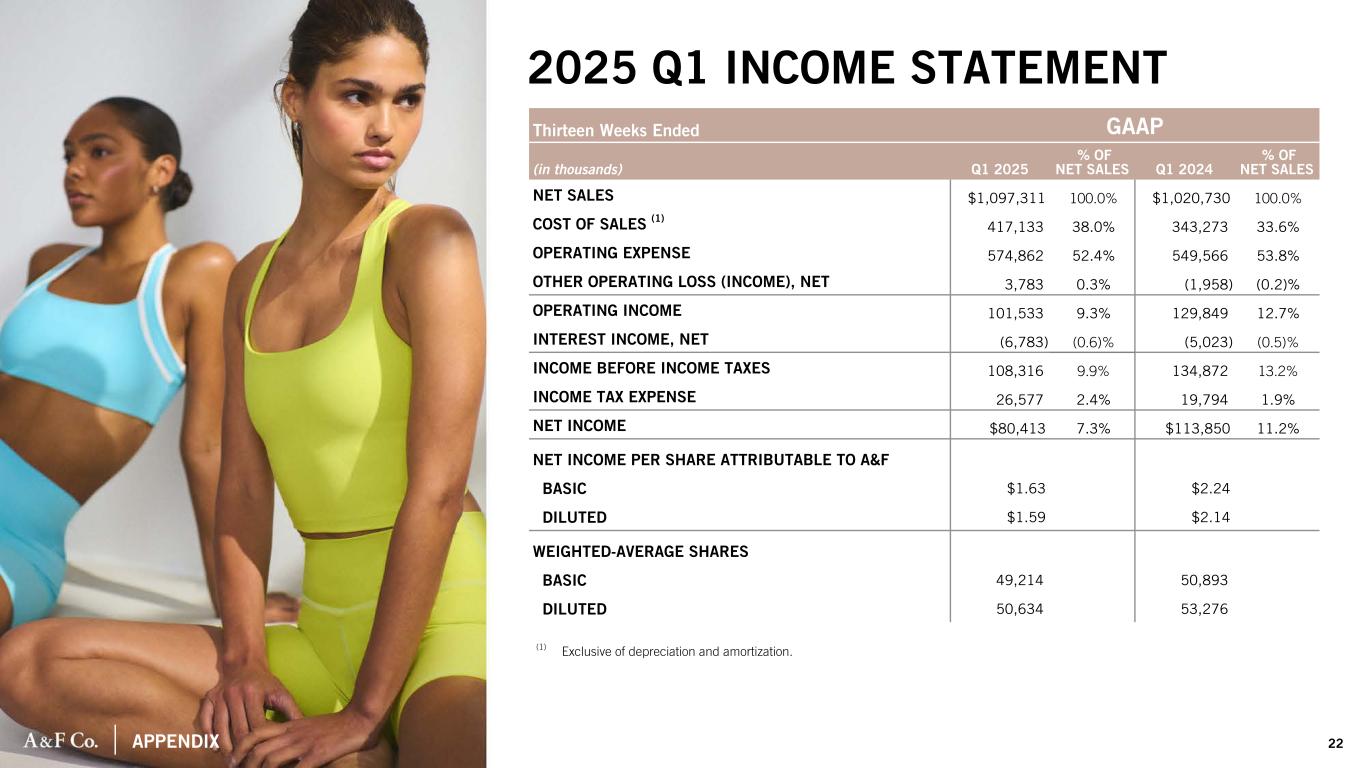
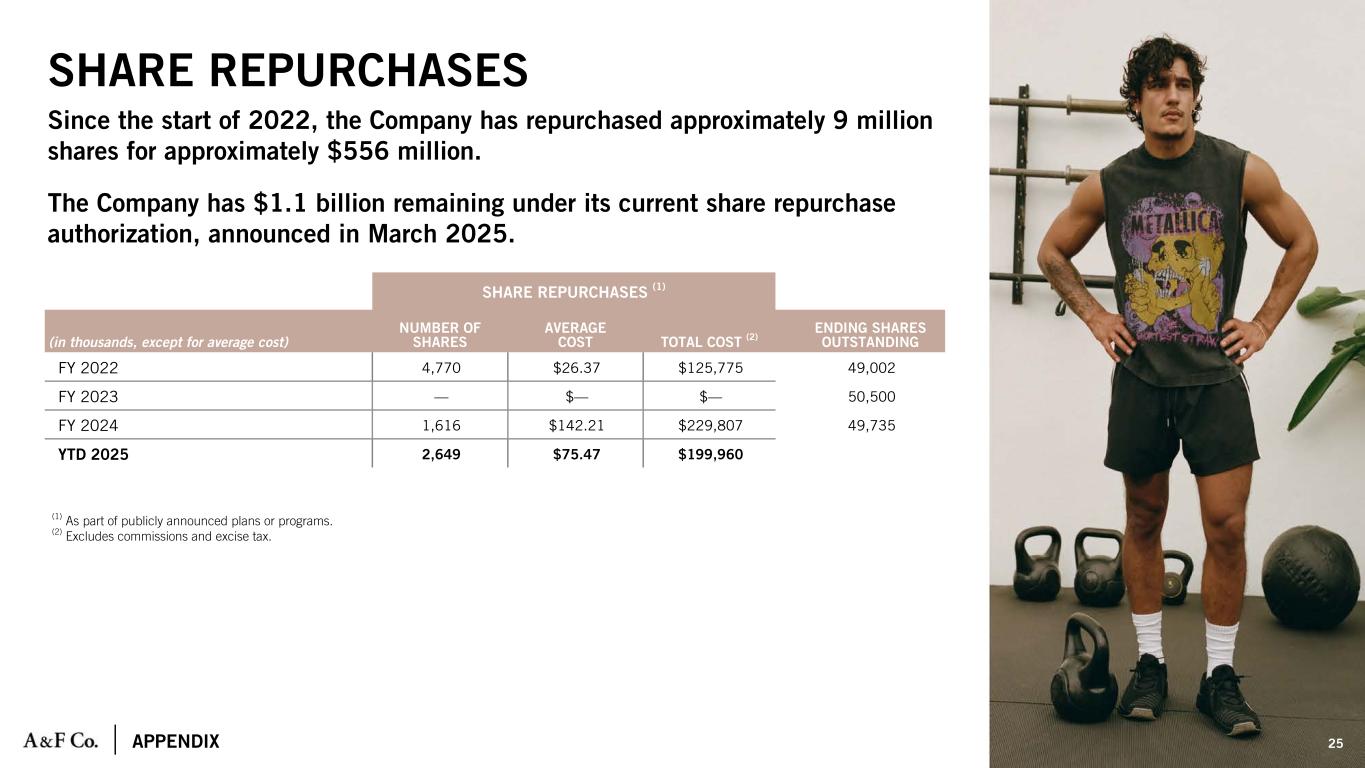
Thanks, Mo, and thanks, everyone, for joining. I'm happy to report that, once again, we delivered against our commitments, growing net sales for the 14th consecutive quarter, setting a record Q1 despite headwinds in the Middle East and other select countries in EMEA. On the bottom line, our first quarter results exceeded expectations on both operating income and earnings per share. We're seeing good progress against our company priorities so far in 2026, led by net sales growth across brands in the Americas and other key markets like the UK. We successfully launched our upgraded merchandising ERP, which will enable long-term channel and category expansion, and we continue to make strategic investments in marketing, digital, and stores to drive profitable growth. One quarter in, the team continues to stay agile in a dynamic global environment, and 2026 is shaping up to be another year of consistent progress as we maintain our full-year outlook on net sales, operating margin, and earnings per share. Recapping the first quarter, we delivered record net sales of $1.1 billion on growth of 2% to last year in line for expectations. Operating margin of 8% exceeded our plan, reflecting slightly lower tariff rates. Earnings per share of $1.47 was above our expected range and we used our strong balance sheet to return $105 million to shareholders through share repurchases totaling 3% of shares outstanding as of the beginning of the year. Regionally, the Americas grew 3% with growth across brands on good traffic levels in both stores and digital. In EMEA, continued growth in the U.K. was more than offset by declines in the Middle East and other European markets as the regional conflict ramped up, driving EMEA sales down 10% for the quarter. The team has taken action by controlling receipts and dialing in promotions to align to the trend. In APAC, we grew 24% on top of 5% growth last year, and our strategic evaluation of the region is underway to ensure we fully capitalize in the large addressable market there. From a brand perspective, Apocryme brands delivered net sales growth of 3% for the quarter on flat, comparable sales. We delivered positive AURs in the quarter on solid customer response to our spring assortment, along with consistent traffic and conversion levels to last year. In the Americas and the UK, we saw balanced growth across genders, with fleece, denim, and woven performing well. We continue to find excellent collaboration partners to highlight Abercrombie's elevated lifestyle brand positioning. Most recently, we teamed up with Sperry to renew a relationship that was first established in the 1930s on a collection of footwear and apparel across both men's and women's products. The initial launch, which reflected the rich heritage of our brand that continues to connect with today's customers. It exceeded internal expectations, and we're seeing higher-than-average conversion. We're in our fifth year of net store expansion for Abercrombie, and we're developing our local experiences directly on scaled customer feedback. A great example is our new, expanded Abercrombie & Fitch store opening in Soho next week. We've operated a smaller format location on Broadway for the past three years, and it was clear from our traffic and sales data that our customer was looking for a broader assortment. This new store will be our best expression of the Abercrombie brand to date, and we're continuing to invest in other new stores across key markets to support long-term growth. At Hollister Brands, we continue to find opportunities to further our connection with teen customers growing nicely in the Americas and APAC. This was offset by the Middle East and European demand trend, resulting in flat-net sales to last year's first quarter record in growth of 22%. In the Americas and APAC, we saw positive traffic across both stores and digital direct channels, along with slight AUR improvement. Graphic tees, shorts, swim, and other warm-weather categories grew nicely as we transitioned to spring. With graduation season well underway here in the U.S., Hollister was excited to showcase Gigi Perez in her updated version of the iconic Green Day song, Time of Your Life. We featured the song and highlighted our grad assortment across our digital marketing channels, celebrating this important milestone in our customers' lives. And with the upcoming World Cup, teams are looking for authentic fits to represent their Hollister has partnered with CAPPA, the Italian sportswear brand, with a deep connection to international football on a collection of men's and women's pieces. We believe we have exactly what the Hollister customer needs for match dates and watch parties in addition to the casual wear we're known for. Now turning to our 2026 priorities. In March, we outlined our focus areas for the year. First, to grow sales across brands with continued investments in owned and operated stores and digital businesses while adding growth from partnerships and new product categories. Second, to stabilize gross margins by mitigating external cost pressures including tariffs. Third, to continue to invest in tools and technologies including AI to improve our speed and efficiency across the product and customer journeys. And finally, to maintain our strong profitability by delivering double-digit operating margins and expansion earnings per share, which will fuel excess cash return to shareholders through share repurchases. We made solid progress on each of these in the first quarter. We're using our playbook in growth markets like the U.S. and the U.K., and we're there for our customers every day in all the places they want to shop. With investments in marketing, new stores, and digital, we're seeing the customer respond, leading to our record first quarter. As we shared in our March call, the team is closely monitoring developments in the Middle East, using our playbook and global operating models to remain agile. Sticking with our playbook, we're focused on what we can control, including our inventory levels and marketing investments, ensuring we can respond to what's happening in real time. Despite these EMEA headwinds, we expect total sales growth for second quarter, along with full year 2026, which would be our fourth consecutive year of net sales growth. Beyond net sales, we delivered modest year-over-year gross margin expansion in the first quarter as lower tariff rates and our mitigation efforts took hold. Our customers have responded positively to spring assortments, continuing to look to both Abercrombie and Hollister as leaders in the intersection of fashion and value for their respective demographics. We expect the team's extensive efforts to maintain our customer relationship, while balancing costs will support growth margin stability. Our 2026 priorities are also about evolving our model. We're finding new ways to grow, adding new chapters to our playbook, and strengthening our foundation. We're excited to find new categories to serve our customers, like we are with Abercrombie baby and toddler. We're also looking beyond our owned and operated channels, developing new franchise, wholesale, and licensing relationships that will allow us to reach even more customers. I have to commend our team on a successful ERP implementation in March. Sitting here on the other side of this incredible multi-year effort, we're all excited to see how our new technology will accelerate our abilities to onboard and support new global partners, channels, and geographies. Of course, we're also looking at how the buying process is evolving, particularly as AI advances, and we're testing new ways to bring our brands to those new chats, apps, and devices. Supported by our upgraded ERP, we have a modern digital foundation that will give us an advantage in leveraging data and insights with greater speed and impact. We're focused on continuing to develop these new capabilities to increase both quantity and quality of our customer relationships around the world. In summary, we started the year from a position of strength, delivering progress on both top and bottom lines. We remain confident in our plans and the growth opportunities ahead as we continue executing through 2026. We're tracking to another year of top-line growth, double-digit operating margins, expansion in earnings per share, and strong cash flow, enabling us to target returning $450 million to shareholders this year via share repurchases. And with that, I'll hand it over to Robert.
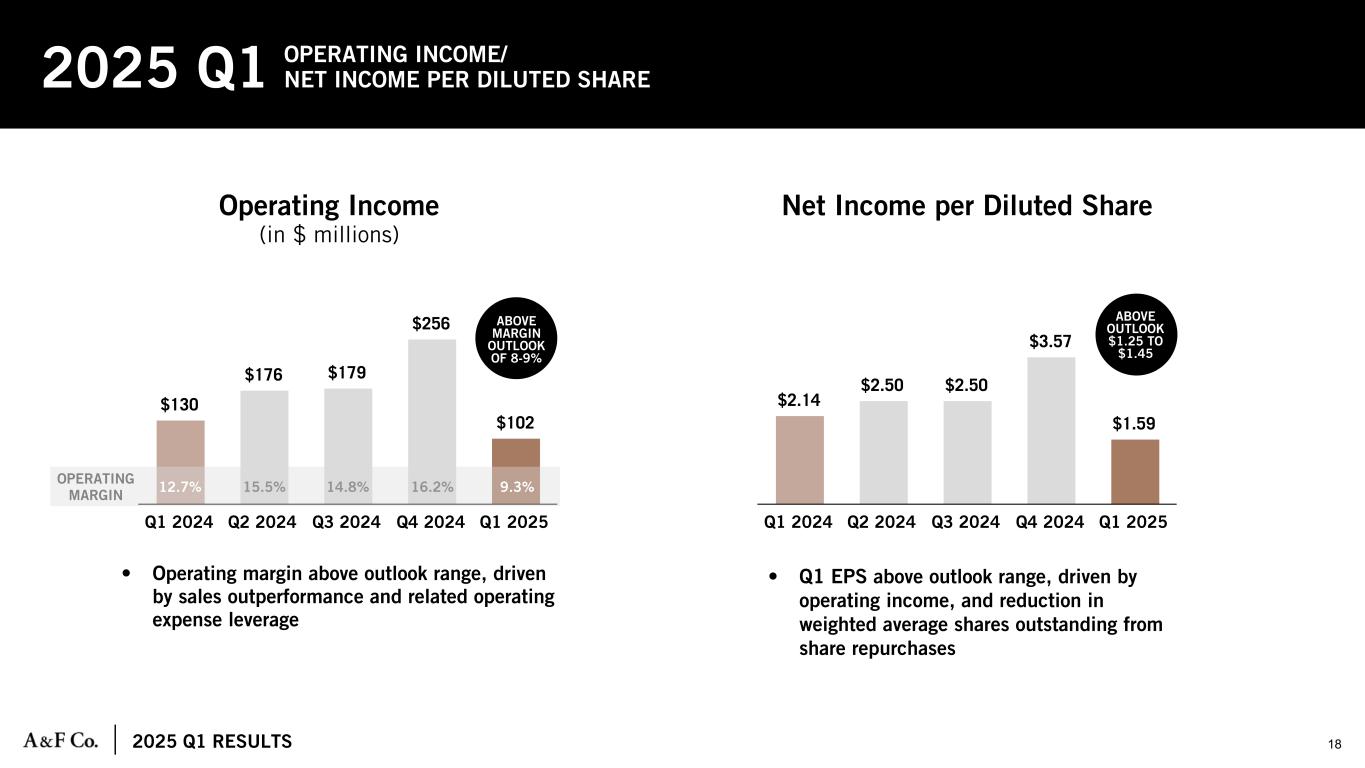
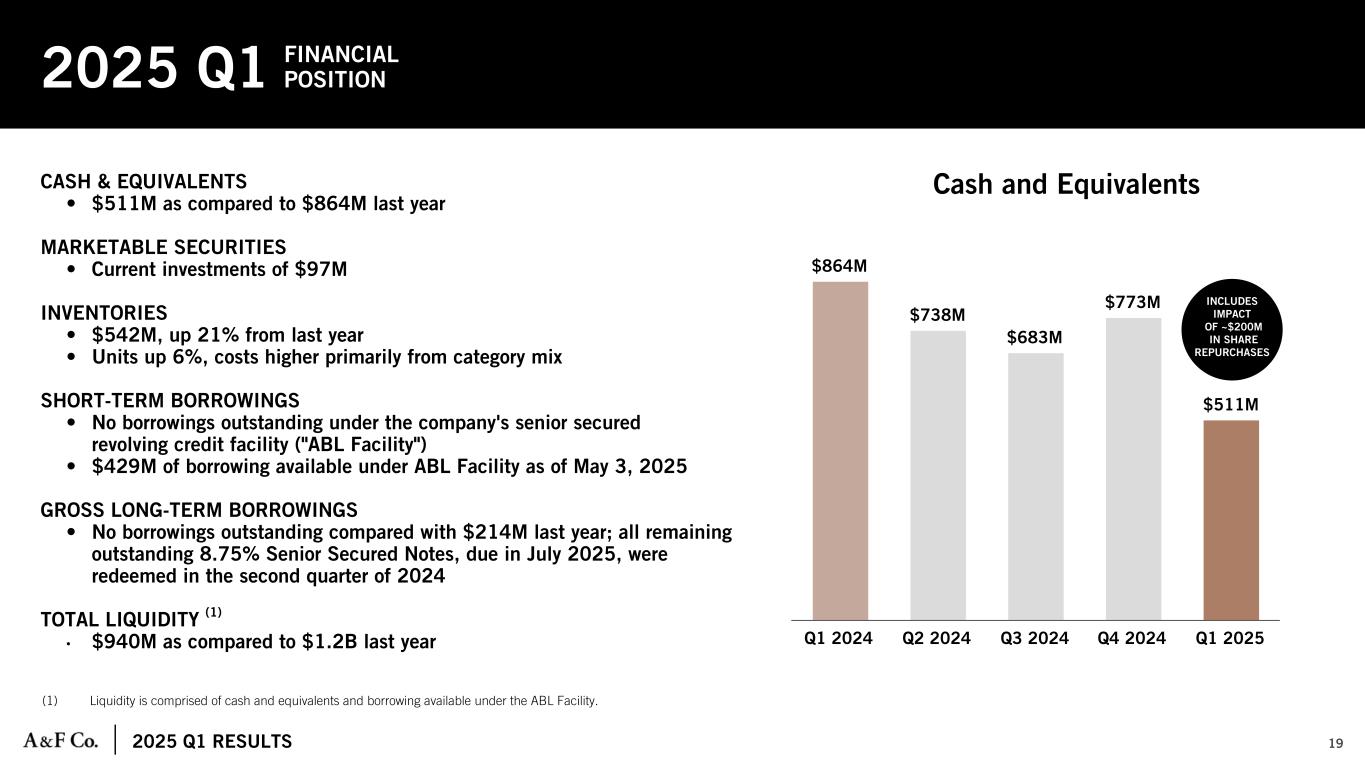
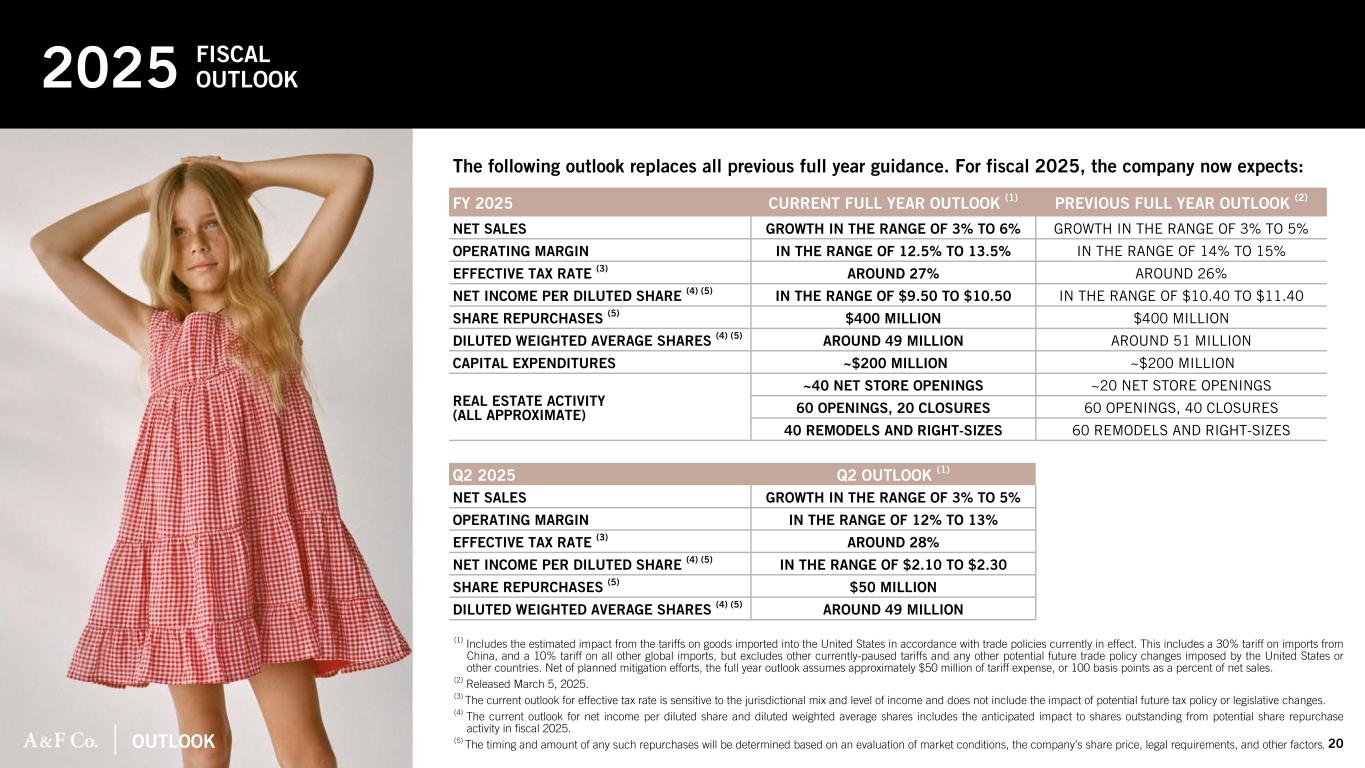
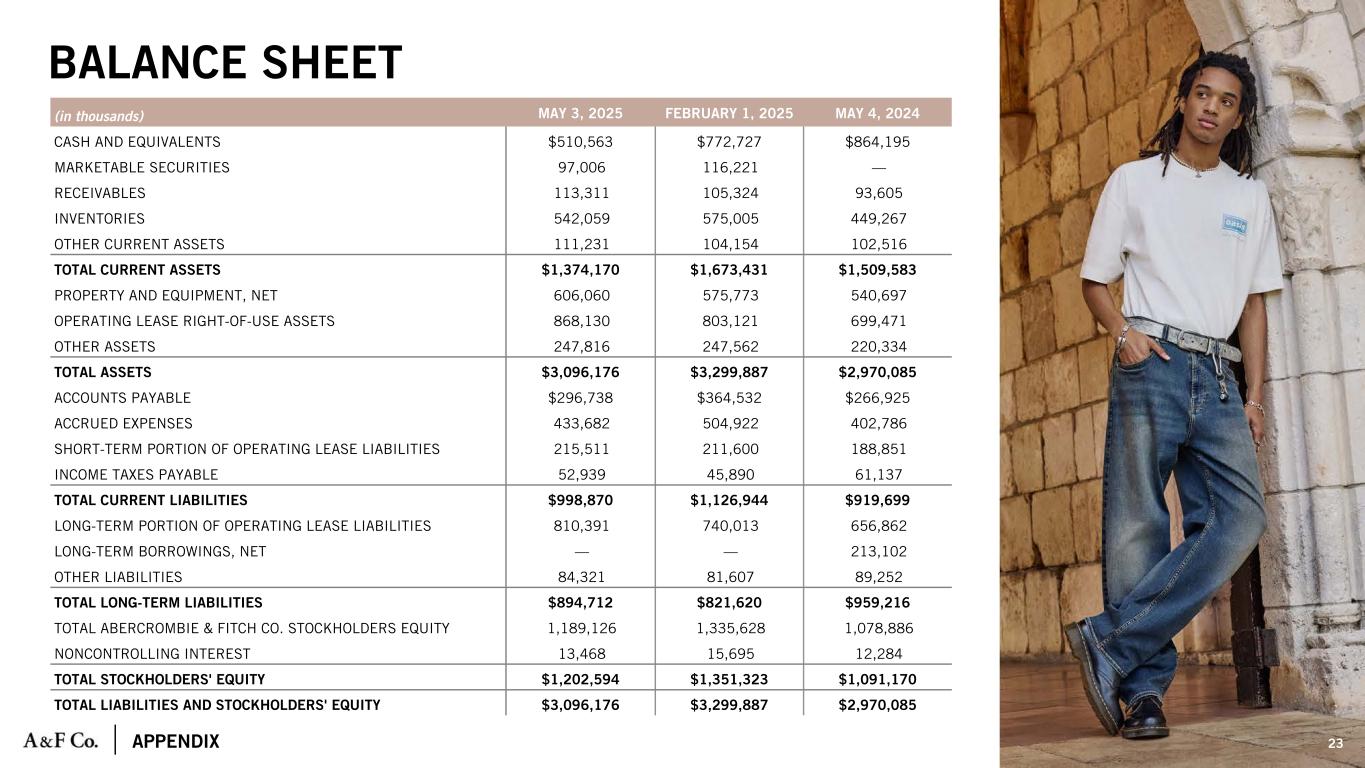
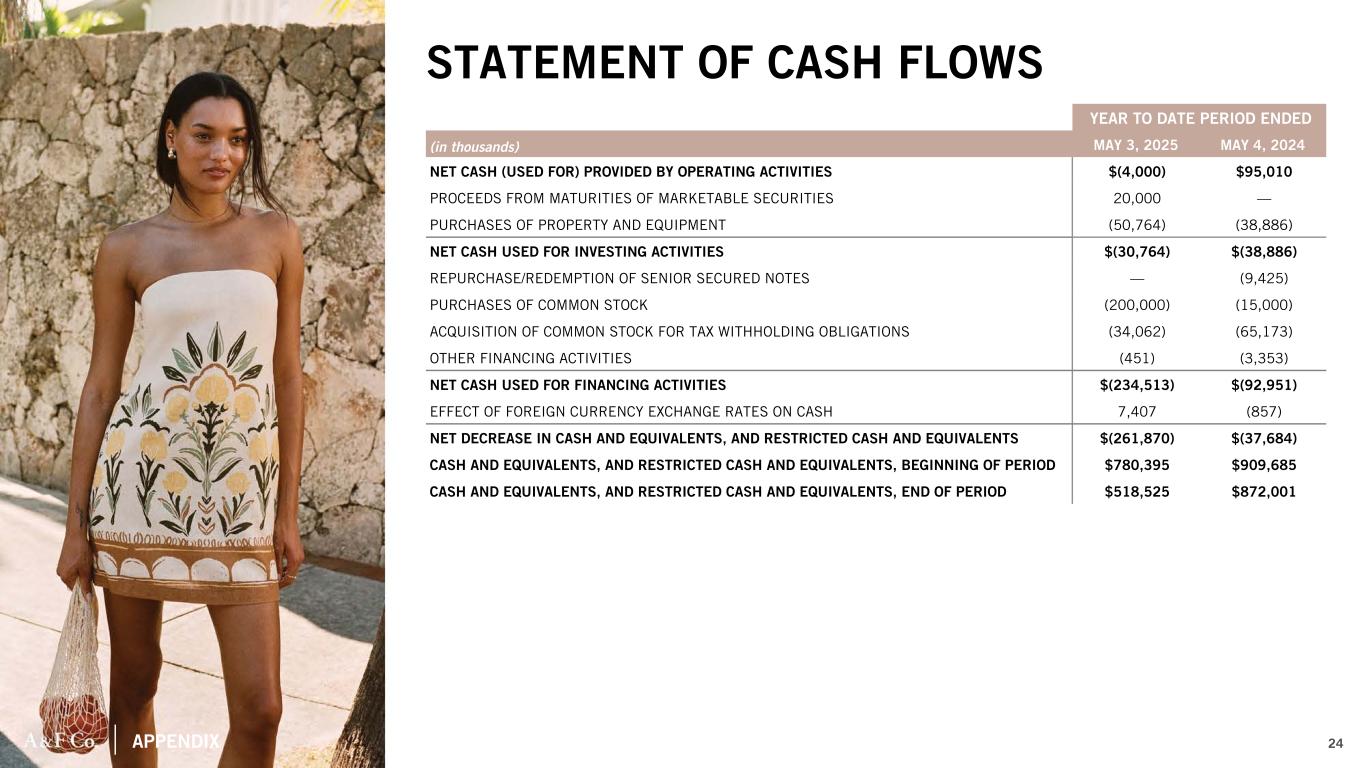
Thanks, Fran, and good morning, everyone. Recapping the quarter, we delivered record Q1 net sales of $1.1 billion, up 2% to last year on a reported basis, within the range of up 1% to 3% we provided in March. Comparable sales for the quarter were down 1%. By region, first quarter net sales increased 3% in the Americas, 24% in APAC, and declined 10% in EMEA. On a comparable sales basis, America's was up 1%, APAC was up 15%, and EMEA declined 11%. Demand in EMEA was directly impacted as the conflict in the Middle East ramped up, reducing first quarter total company net sales growth by more than 50 basis points relative to our outlook. As discussed in March, we proactively limited certain third-party orders during the implementation of our merchandising ERP, negatively impacting top-line growth by approximately 100 basis points. With the implementation complete, we resumed normal operations in April and moving forward. On the brands, Abercrombie Brands posted a second consecutive quarter of net sales growth, up 3% over last year on flat comparable sales. Hollister Brands' net sales were flat to last year's record on comparable sales decline of 2%. As expected, across brands, we saw low single-digit AUR growth and low single-digit unit growth. How brands both grew in the Americas and APAC offset by softer demand trends that emerged in the Middle East and select European markets, with particular impact to the Hollister brand's business. Across regions and brands, the three percentage points spread from net sales to comparable sales was driven by net new store openings and favorable foreign currency, partially offset by third-party channel performance, including the temporary pause for the ERP upgrade. Operating margin was 8% of sales, coming in above our outlook of around 7%. We delivered operating income of $89 million compared to $102 million last year. Adjusted EBITDA margin for the quarter was 12% of sales on adjusted EBITDA of $131 million compared to $140 million last year. The 130 basis point year-over-year decline in operating margin was primarily driven by 90 basis points of increased marketing investment and around 90 basis points of ERP implementation costs. Year-over-year expense investment was partially offset by AUR and foreign currency gross margin favorability, as 180 basis points of year-over-year tariff pressure was fully offset by favorable freight costs. Tariff expense was lower than anticipated given the timing and level of tariff rates in the quarter. The tax rate for the quarter was 28%, higher than our outlook primarily due to the jurisdictional mix of income. Net income per diluted share was above our outlook at $1.47 compared to $1.59 last year. We're managing inventory tightly, ending Q1 with inventory at cost down 2%. Within that, inventory units are up low single digits, reflecting planned investments to support growth, while remaining disciplined in adjusting receipts in regions where trends are softer, particularly in the Middle East. Product cost favorability was primarily driven by lower freight costs. equivalents of $594 million and liquidity of approximately $1 billion. We also ended the quarter with marketable securities of $25 million. For the quarter, we repurchased $105 million worth of shares, or 3% of shares outstanding, at the beginning of the year. We ended the quarter with $745 million remaining on our current share repurchase authorization. Shifting to the outlook, we remain on our path to a fourth consecutive year of total company growth, and we've incorporated both the Q1 outperformance and the current environment into our full-year outlook. On tariffs, our 2026 outlook assumes a 15% tariff on all global imports into the U.S. effective for the second half of the year. Combined with a 10% effective tariff rate for the second quarter, the updated tariff rate assumptions drive around 20 basis points of gross margin pressure for the full year, an improvement from 70 basis points in our March outlook. However, we expect that relief to be offset by elevated freight costs and continued investments in marketing and stores. As a result, our full-year outlook for sales and operating margin remains unchanged. We have applied for around $100 million in IEPA tariff refunds. However, we have not assumed any benefit from these in our outlook. Consistent with our prior outlook, for the full year, we expect net sales growth in the range of 3% to 5% from $5.27 billion in 2025, with full-year net sales growth expected across brands. We anticipate growth in the Americas, with AMEA currently expected to be slightly behind 2025 sales, given the current trend in the Middle East and parts of Europe. In APAC, work continues on our review of strategic alternatives for the region. Our focus continues to be on how to best scale the region with strong returns, and we're encouraged by the first quarter performance as it underlines the region's potential. We continue to assume modest AUR improvement for the full year, as well as an anticipated 40 basis points of favorable impact to net sales from foreign currency. We continue to expect full year operating margin in the range of 12% to 12.5%. We're forecasting a tax rate around 30%. For earnings per share, we expect diluted weighted average shares of around $44 million. We expect earnings per diluted share in the range of $10.20 to $11. For capital allocation, we expect capital expenditures of around $225 million. On stores, we expect to deliver around 130 new experiences, including 50 new stores and 80 remodels and rights sizes. We also expect to be net store openers, with our 50 new stores outpacing around 20 anticipated closures. We expect net store openings to be relatively balanced across brands but tilted to the Americas. We continue to expect share repurchases of around $450 million for 2026. For the second quarter of 2026, we expect net sales to be up 2% to 4% to the Q2 2025 level of $1.2 billion, consistent with how we exited the first quarter with continued strength in the Americas and APAC and ongoing pressure in parts of EMEA. We expect operating margin to be around 10%, including around $20 million or around 120 basis points of unfavorable tariff impact, net of mitigation efforts. We also anticipate a slightly favorable impact from freight on gross margin and modest AUR growth. The remaining operating expense deleveraged coming from incremental marketing, stores, and incentive compensation. We expect a Q2 tax rate around 32%. We expect net income per diluted share in the range of $1.80 to $2, with diluted weighted average shares expected to be around $45 million, including the anticipated impact of at least $150 million in share repurchases for the quarter. To close things out, we're entering the middle of 2026 with clear priorities, healthy brands, and a strong playbook. We're operating with discipline and flexibility in a mixed environment, and we're monitoring our markets, particularly the Middle East, and we're remaining nimble and tight with inventory. This is the same model we've consistently used to successfully manage through a wide range of environments, and we're confident in our ability to deliver another year growth and profitability. And with that operator, we are ready for questions. Thank you. Ladies and
Operator
gentlemen, if you have a question or a comment at this time, please press star one one on your telephone. If your question has been answered, you wish to move yourself from the queue, please press star one one again. We'll pause for a moment while we compile our Q&A roster. Our first question comes from Dana Telsey with Telsey Advisory Group. Your line is open. Hi, good morning, everyone,
and nice to see the progress. A couple of questions. First, Middle East, how much of an past. Was that how you planning that go forward within the second quarter? How are you incorporating it to the balance of the year? What percent of sales is it? Second on ERP, is that all complete now? And is that in the rear view? And then just lastly, Fran, how would you frame the consumer, both on Hollister and in Abercrombie? It certainly seems like the collaborations have done nicely. anything to note on consumer sentiment and strength of product categories of what you're
seeing. Thank you. Dana, good morning. I think we're actually going to start in reverse here. So I'm going to start with your third question regarding the consumer. So just really proud of another quarter of growth. Really, you know, we did exactly what we said we were going to do again. We have a strong relationship, as you well know, with our customer. The team is hard at work every day, aligning that product voice and experience. And when that customer is willing to spend and you get it right, they choose us. That's the magic in it, right? Both brands are strong. We are expecting to see growth in both brands through the year. As far as customer sentiment goes, I can speak to our business, right? They're showing up. We're positioned well with two healthy brands. We're not seeing any change in performance across cohorts. Abercrombie, again, you know, second consecutive quarter of growth. Collister, you know, strong in America, which I think is an important point to notice. Significantly affected more by the EMEA, which Robert's going to go into next.
So, hey, Dana, it's Robert. So impact on the quarter was about 50 basis points to the total versus the outlook that we put out there in March. Really expecting more of the same as we move throughout the balance of the season, so no change in the trend expectations there. So continue to expect a bit of an impact here on the Q2 and full year. In terms of, you know, how we're managing that, doing what we always do, we're adjusting inventory, we're aligning the promos, we'll stay close to the demand in that region, do what we can to mitigate as much as we can. In terms of the ERP, you know, really great to have that one in the rearview mirror here. Team did an amazing job with that cutover. Really excited about how that strengthens our foundation for this business and allows us to, you know, lean more into some of these new channels that we're developing, some of these new categories. So really excited to have that one cut over and be kind of back to normal operations here.
Operator
One moment for our next question. Our next question comes from Corey Tarla with Jeffries. Your line is open.
Great. Thanks and good morning. So I guess maybe if we could just start to talk about kind of trends that you saw throughout the quarter, maybe by month, and then any color on what you're seeing quarter to date and kind of what the expectation is for go forward comp performance as you think about Hollister specifically where you were lapping some pretty tough comps. in the quarter and how we should think about kind of the shape of that performance throughout the remainder of the year within the current guide. And then secondarily, could you talk a little bit about the promotional cadence as well and what you're seeing there? Thanks so much.
Hey, Corey. Good morning. So let's break down this lengthy question here. Okay. Starting with fact that we just had a strong Q1 in our 14th consecutive quarter of growth. The Q1 trends have continued and it's really built into our outlook of plus two to four. You know, we were straight down the fairway for Q1 and we're excited to see, you know, some potential acceleration, expecting, you know, two to four for the quarter. The inventory is well controlled in a great place, as Robert has mentioned. We are excited about our assortments. The consumer is responding positively to them. Regarding promotions and pricing, our strategy worked in the first quarter. There's no change to our strategy. We saw nice AUR growth in the first quarter, which obviously is a sign of product acceptance and the customer is seeing value in what they're purchasing. Controlling that inventory and aligning promotions is how we run the business, and that's how we will continue to run it for the balance of the year. What else is there?
um just on the um well i guess on the promotions i was curious if if they've been elevated recently that the response to that uh and then how you think about that shape throughout the remainder of the year and then on the just on the hollister performance as well like are you looking at it on a on a two-year stack how should we be thinking about that performance uh go forward thanks so
so much. Yeah. So, so the expectation for Hollister is to grow for the year. And yes, I mean, it was a 22% two-year stack for the first quarter. Good categories happening in there, Corey, like graphic tees, short swim, other warm weather categories, you know, staying connected to that teen consumer. Those categories get more important as we head into the quarter. So expecting full year growth. Okay, great. And then just lastly, go ahead, Robert. Sorry.
I don't know. So, you know, our approach to promos hasn't changed here, Corey. We're staying disciplined, obviously showing, you know, it's showing up in the quality of the results that we're putting out there. Q1 AUR is positive. Promotional levels were consistent with our plan coming into the quarter. And again, you know, we're thrilled about the product that we're putting out there and the customer response to that product. So, you know, that's really the story here. You know how we think about promos on an ongoing basis. You know, as long as we keep our inventory and tight control put that great value out there for the consumer. It gives us the chance to continue to grow that AUR, and that's our expectation here with modest AUR growth here as we think about the full year. Great. Thanks so much. I'll pass it on.
Operator
One moment for our next question. Our next question comes from Marnie Shapiro with the
Retail Tracker. Your line is open. Hey, guys. Congratulations. I'm curious, You know, Hollister, the inventory is moving very quickly through your stores, so I'm curious if you've been in chase mode and, you know, is there any impact being in chase mode these days given fuel costs and just the cost of doing business in general? Is there any additional cost to being in chase mode versus in the past? And then if you could just give us a quick update on YPB, there's been a couple of sets that have looked very good. And I'm curious, you know, what that looks like today and what you're thinking about it.
Hey, Marty. Good morning. So, yes, it's exciting. You know, we run the business in chase mode and Hollister is definitely in chase mode. We've had some exciting things happening in that business and the team is going after them. You know, on a weekly basis, we meet with them, see what's working. And we have the opportunity set up with our with our supply chain, you know, producing in 16 countries around the world. It enables us to do that. The fuel costs Robert mentioned earlier, really are affecting us more in the back half, but we will continue to chase. It's an important part of our business, and you know well, those are usually better purchases, right, than buying ahead and not having as much confidence in what you're doing. And as far as YPB goes, yes, we've seen nice businesses, YPB, nice acceleration this year so far.
Oh, that's exciting. Congratulations. And then if you could just touch on one more thing. On the men's side, online, there are a few, I would say, dressed items like that pleated trouser. That is amazing. Is there a shift happening in men's a little? I'm not seeing it quite in the stores yet as I am online, and I like what I'm seeing online.
Well, balance is my favorite word. Everybody knows that. So, yes, the team is working on it. A balanced assortment that is an opportunity for our customer, you know, Overall, casual as well as this more dressed-up consumer has been shopping with us.
Great. Congratulations. Best of luck for summer.
Operator
One moment for our next question. Our next question comes from Mauricio Cerner with UBS. Your line is open.
Great. Good morning. Thanks for taking my questions. Just curious on the shape of the guidance for the year, since you're maintaining 3% to 5% And then, you know, second quarter implies a little bit below that, you know, coming after a Q1 that also below. So just trying to understand, like, what drives the acceleration to get to the full year guide. And then you mentioned, you know, for the EBIT margin outlook, which you maintained, you know, you're getting a positive from lower tariffs, which I think is 50 basis points benefit. and that's offset by freight and marketing. Could you just break down, like, how much incremental you expect from freight and marketing at the offset?
Yeah, so thanks, Mauricio. So, again, 14th consecutive quarter of growth here for the first quarter, so we're excited about this, you know, that track record. We're adding to it every quarter here, and, you know, we've got the confidence here to keep that going. We've got the confidence in the underlying business here. We saw growth across the brands in America and APAC and within EMEA. We also saw growth in the U.K., which is great to see, and that's our largest market in that region. So, you know, sitting here today, as we think about some of the headwinds that we were facing in Q1, we've got the 50 basis points of the Middle East. We've got that kind of continuing through in terms of magnitude on the business. We had the 100 basis points of ERP impact that will come back to us. So, you know, we've got the building blocks that kind of keep us right in that range of that three to five on the full year. And, you know, as long as we keep inventory in good shape, we're seeing that AUR growth, that's a great thing. When you think about the EBIT margin and some of the big boulders here for the full year, it is a balanced story here. Tariffs and freight, by the time we get to year end, will be just slight headwinds year over year. So think like tens of basis points each. We've got this modest AUR growth that is largely funding the investments that we're making in the brand. So that all keeps us in line with this 12 and 12 and a half, despite those headwinds that we're seeing in the Middle East and broader EMEA. We're continuing to invest in this business, all while returning a bunch of cash, $450 million to shareholders through share repurchases. And I guess when it gets to some of the big boulders and pieces and parts, so tariff, 180 basis points of headwind here in Q1. We talked about $20 million for Q2, so that's about 120 basis points at the midpoint of our guide. And that will, you know, when we move to that 15% tariff in the back half of the year, that'll still flip to a tailwind as we're up against the full AEPA tariffs from last year. So that all kind of washes out to a full year of like tens of basis points of headwind for us. On the freight side of the house, nice to see in Q1 as expected. It was 180 basis points tailwinds to gross margins. So that fully offset tariffs, that's expected. That's really what us up against and lapping the higher freight rates that we saw in Q1 of 2025. That'll start to normalize here as we get into Q2. So again, handfuls of tens of basis points here of benefit in Q2. And with rates up, fuel prices up, we are seeing some pressure on freight. So that'll actually flip to a headwind for us in the back half of the year and kind of wash us back out to just a slight headwind, again, tens of basis points on the full year. So that's kind of the cadence there. From a marketing standpoint, we talked in March about front loading a little bit of the marketing. So we're pulling some of that forward. So we did shows some deleverage here in Q1. We're going to continue to invest in the marketing. We've got great brands. We've got a lot of great opportunities, so we're leaning in there for Q2. And then we'll kind of get back to kind of status quo or more normalized or flattish levels year over year in the back half of the year. Got it. Very helpful. Thanks for the detail.
Just quick follow-ups on the comps. On Q1, I saw America's comps were up 1%. Could you talk about if both brands come positive in the Americas. And then one other detail. You mentioned, you touched upon AI investments that you've done. Could you maybe share any benefits that you've gotten so far from your AI investments in the business?
I'll take the second part of that one, Marcia. So we're very excited about AI's potential for the business. You know, the past couple of calls, we've mentioned a few things, right? We launched on perplexity during Black Friday to learn a little bit more about agentic commerce. Our customer care function is a good example of rapid improvement, helping out our customers. The entire team is going through what we call basically an AI academy, and they all have access to co-pilot premium. We're excited about that. We're using it in our business models, being embedded into things like forecasting and inventory. We're using it for our customers to create a more seamless experience. So it's really becoming integrated in the entire business, and we're very excited about the opportunity.
Yeah, and just real quick on the Americas, again, proud to be delivering another quarter of growth here. Both brands growing in the Americas. That's really the right place to start. We're seeing a healthy business there. We've got positive AURs and unit growth both contributing in the quarter there, along with positive traffic, driving both a one-year and on a multi-year basis growth, which is great to see. So still seeing stable conversion, good product acceptance, which is why we, you know, we feel good about, you know, the trajectory of the brands in that core market.
Operator
Best of luck. One moment for our next question. Our next question comes from John Kepor with Goldman Sachs. Your line is open.
Thank you for the question. Good morning, everybody. I just wanted to drill into the EMEA. Hey, how are you guys? I just wanted to drill into the EMEA impact at Hollister. I just want to make sure I understand it. So it's 50 bips to the total company. That implies it was about 100 basis points of drag to Hollister. So if that's correct, we can go off that. But then if that's correct, that seems to imply that Hollister is still comped down a 1. Just wondering if we cancel out the Middle East stuff, what exactly drove the negative comp? I understand that the comp was very high last year. But I think a lot of us walked into the quarter expecting modest growth and to see that, you know, even an adjusted number is still down. Just wondering what drove that down one on an adjusted basis.
Yeah, I would say, like, generally your thought process is right, but I would correct you on one specific thing. So on the EMEA side, that's primarily a Hollister business. So applying a 50 percent, assuming that it's about 50 percent of the business is probably a little low. You definitely have to increase that total impact on the Hollister business. So, you know, much of that AMEA impact is coming from the Hollister brands. So that's what I would say as you're thinking about modeling out the region. Again, Middle East was 50 in total. I'd skew that more towards the Hollister brands. you know obviously actively managing this and still seeing strength in places like the uk so it is it is concentrated is focused you know we've got very specific areas that we that we have to to work on and we're controlling what we can control we're going to stay close to that consumer we're going to adjust inventory and promos uh we're going to use that playbook that that's been effective to to navigate a lot of different scenarios in the past and you know apply that to the dma region here and and work to improve that trend as we move through the year
Got it. And then I guess just on that last piece, you mentioned the promo cadence and things like that. I mean, we track promos like I'm sure everybody does. We've seen what looks like an elevated promotional cadence in Hollister, at least online. Can you just explain? I mean, first of all, maybe I have that wrong. But if that is true that it is kind of elevated, at least online, how does that wash out so that you're still getting the positive AUR? And, like, how should we think about what looks like elevated promotional cadence into this quarter through the rest of the year?
Yeah, I mean, it's a messy quarter. Q1 is a messy quarter with promo cadences as Easter shifts around on you. So I just say be cautious there. You know, from our vantage point, you know, we executed against our promo plans that were built into our outlook in March. You know, we were thrilled to see the product acceptance that we saw. the customer continues to find value in the assortments that we're putting out there, and it's ultimately driving another positive AUR result for us. So that's all part of the model. It's not the only driver of the outlook that this continues to be this demand-led story. We're seeing unit growth and AUR growth, which is an awesome place to be. So far in 26, we're seeing that customer react really, really well, and inventory is well-controlled, and that gives that puts us in the best position here to continue to deliver AUR growth as we move through the balance of the year. Got it. That's encouraging. Thank you.
Operator
One moment for our next question. Our next question comes from Rick Patel with Raymond James. Your line is open. Hi, this is
Suraj Mahotra on for Rick Patel. Thank you for taking our questions. Can you just help us understand demand in the denim category? Is it holding up at full price? Are you seeing customers being drawn to promotions there? And what are your expectations for denim as a year moves ahead? And just to follow up on how to think about SG&A levers from here, given the slower demand in the Middle East, do you see an opportunity to cut back on spending in EMEA to preserve margins? Or will you lean into more spend to drive better demand elsewhere? Just some color on the puts and takes would be great. Hey, good morning, Serge. So we'll start with the denim
question. So, we're not seeing any change in the demand for denim. We're actually excited about what we're seeing. There's some exciting trends happening within denim.
Promos. Oh, yeah. Pricing and promos, Serge. When we look at pricing, this is one of those categories that we're protecting from a price point standpoint. So, thrilled with the customer response there. We're seeing success in denim across brands, which is a great place to be in and the Bottoms business has been good for us.
Yeah, sorry about that. Yeah, so anyway, so back to the denim. That's actually true for both brands, for both genders. So, you know, heading into back to school, obviously, usually a big time for denim. So we're well positioned for that as well. But we're excited about what we're seeing and continue to expect that for the balance of the year.
Yeah, and Serge, on the SG&A side and the expense side of the house, you know, our model hasn't changed here. You know, we expect balance flow through at the midpoints of our guide here, and we're choosing to invest in a growing business. Investments are focused on places like marketing, stores, expanding capabilities, ultimately things that drive long-term growth. You know, it's great to be in a position where on that three to five sales guide, we're holding margins year over year with that 12 to 12.5% guide. So, you know, as you move above that range, that sales range, you know, the model does what it's always done. And you'll start to see some leverage kind of roll through the model. But, you know, sitting here today, whether EMEA or elsewhere, you know, we're investing in two very strong brands for the long term. And, you know, that's that's what positions us to deliver consistent growth over time.
Understood. Thank you so much.
Operator
One moment for our next question. Our next question comes from Tom Nickick with Needham. Your line is open.
Hey, good morning. Thanks for taking my question. I wanted to ask about the international business, you know, specifically about the strategic review of Asia. Given how strong Asia growth was in the quarter and some of the issues that, you know, have popped up geopolitically in EMEA, does it change the calculus at all on the strategic review or is it, you know, kind of full steam ahead there?
Yeah. Hey, Tom. Yeah. Great quarter for the APAC region. Both brands growing. You know, ultimately, you know, what that what that tells us and it reinforces our beliefs in the long term opportunity there. Focus right now is making sure that it scales in the right way. So to that end, you know, we're we're being thoughtful. We're reviewing how we can optimize that go to market model, whether it's partnerships or other capitalized approaches. So, you know, no change there. Review's underway. We'll have more to share later this year. And similar story on the EMEA side of the house. We're navigating some near-term choppiness here in the region. Happy to see growth in our biggest market there in the UK. We'll obviously navigate the Middle East dynamic here as we move through on the near-term, but nothing changing in terms of our long-term
belief and opportunity in the region for our brands. Understood. And if I could just follow up on Mauricio's question earlier about margins. I just kind of want to make sure I understand, you know, the puts and takes, I guess, for Q2 specifically. And the guidance implies that the EBIT margin is down, you know, close to 400 basis points, roughly speaking. I know tariffs are 120 basis points. It sounds like there's some marketing that's front-loaded to the first half this year. Any other kind of key puts and takes for EBIT margin in Q2?
Yeah, so really three big drivers here for Q2. Again, you called out the tariffs and we talked about that 20 million. So that's 120 basis points that will come off the top. Again, freight is it will be a slight tailwind. But again, tens of basis points instead of that 180 basis point benefit that we saw in Q1. You know, we're continuing to invest in this business. So, you know, when you think about the marketing investments, When you think about, you know, continuing to invest in new stores and this overall store experience, you know, you put that together and combine that with some modest AUR growth, and that's what ultimately walks you down to that 10% operating margin.
Operator
Thanks very much, and best of luck the rest of the year. One moment for our next question. Our next question comes from Janine Sichter with BTIG. Your line is open.
Hi, good morning. I want to follow up on the operating margin this year, 12 to 12.5%. How do you think about that structurally being the right level? I think you mentioned that if sales were above the 3 to 5, you would get some additional leverage. Would you let that flow through, or would you reinvest just how you're thinking about it?
Yeah, I mean, you know, our model has delivered really strong double-digit operating margins for multiple years now. You know, great to be positioned to continue that this year. Flow-through is really strong, and this is all about balance. You know, we're obviously staying on offense here and focused on building a sustainable, profitable, long term business here. We're not managing quarter by quarter. So, you know, we are navigating external headwinds like tariffs, like freight and these geopolitical conflicts. You know, we're making deliberate investments at the same time in marketing, digital and new stores and new channels of business. And we're also going to have to make some investments on the supply chain to support the brands and set us up to drive growth. So ultimately, that's that's the plan, right? We're going to set our goals. We're going to deliver against those goals. This business generates a ton of cash and, you know, we're going to we're going to make sure that we're supporting this business for the long term. To your point around around where we see leverage points above that that kind of three to five range, you'll start to see some leverage flow through and you might get some some margin expansion there. But, again, we're going to be diligent about how we repurpose or flow those dollars either through or reinvest back into this business for the long term.
Great. And then just maybe on raw materials, I know you mentioned higher freight costs from the higher fuel costs. Anything that we should be aware of on raw materials or when we would start to see any impact from the higher fuel costs flow through there?
Yeah. So on the fuel cost side specifically, we talked about freight flipping to a headwind here in the back half of the year. So that's really a result of just the timing of selling through that product. So you'll start to see that kind of flow through the back half of the year. Input costs, and we've got a great sourcing team. They've navigated a lot of different dynamics over the years. So we've got confidence in that team on a go forward basis. Sitting here today, raw material costs, you know, relatively stable. You got a little bit of an uptick on the synthetics here, but all of that's already reflected in how we're planning the business
in that guide. Great. And then last one for me, you know, I know the footwear collaboration with Sperry went really well. How should we just think about that category as a whole? Is there an opportunity to expand that just given what you saw with that collaboration? Hey, Janine, it's Fran.
So, yes, we have been talking a bit about footwear in our past couple of calls. We were excited about seeing the customer's acceptance on it. One of the biggest things that we hear from our customer when we show them outfits in any of the social media areas or on our website is to complete the outfit. So we were curious to learn a bit more about it. We saw some nice success, and we're continuing to explore.
Operator
One moment for our next question. Our next question comes from Janet Joseph with JJK Research Associates. Your line is open.
Hi, Fran. Hi, everybody. I wanted to review what happened in EMEA. I think you said the UK was okay, but the rest of the region was challenged. So can you account for that, like why the UK would be okay? And also, if there's any other fundamental issues going on in a mayor besides a challenge the region is, I would just love to understand that. And should we see promotional levels pick up in this region just because, you know, you had a pretty tough result? And last question on EMEA. Do you think that as comparisons ease that EMEA could improve for Hollister as you go through the year?
Well, so starting with the U.K., The U.K. is where we export our playbook to start. So we do have our strongest and our largest business in the region there. With our office based in London and the closeness to the customer, that has been a successful export of our playbook. So we're excited to continue to see the growth there. Regarding promotional levels in EMEA, Janet, really we have a model where we can control our inventory. And so we're working very closely with that team to make sure that we keep things tight and in line. and are reacting, you know, very quickly to the business. So we feel we have that under control. And then what was the third part improvement? We go through.
We'll just, all right, just to finish. So as we mentioned, what our, you know, our Q2 outlook and our full year outlook, which we held, Q2 at two to four sees a bit of an acceleration in the business. So that's all built into our outlook.
Okay. In EMEA, you see an acceleration for the Hollister brand in the second quarter?
I haven't given any sort of specifics around brands by regions. We're seeing our outlook for the second quarter is pretty consistent to how we saw things roll through. Coming out of Q1, continued strength in the Americas and APAC. We'll see some pockets of challenges here within the EMEA market that, to France Point, we're navigating. We're going to do everything we can to adjust our inventory levels and make sure that we're keeping things tight there and aligning things with demand. And, you know, that's ultimately what gives us the best opportunity to try and drive a trend improvement there.
Operator
And I'm not showing any further questions at this time. I'd like to turn the call back over to Fran for any further remarks.
I just want to thank everyone this morning, and we look forward to updating you after the second quarter.
Operator
Thank you, ladies and gentlemen. Let's conclude today's presentation. You may now disconnect and have a wonderful day.