Operator
Good day, everyone and welcome to the A10 Networks First Quarter 2025 Financial Results. At this time, all participants have been placed on a listen-only mode. It is now my pleasure to turn the floor over to your host, Tom Baumann. Sir, the floor is yours.
Speaker 1
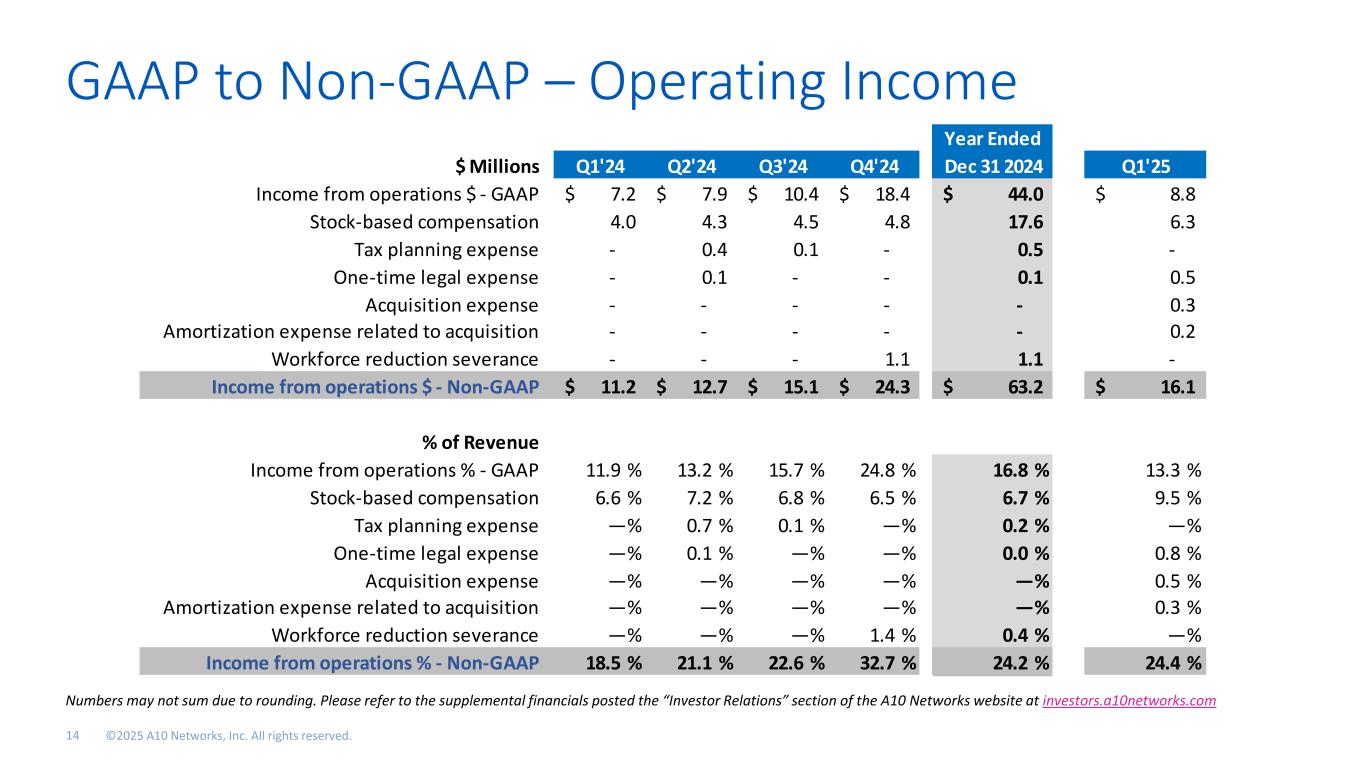
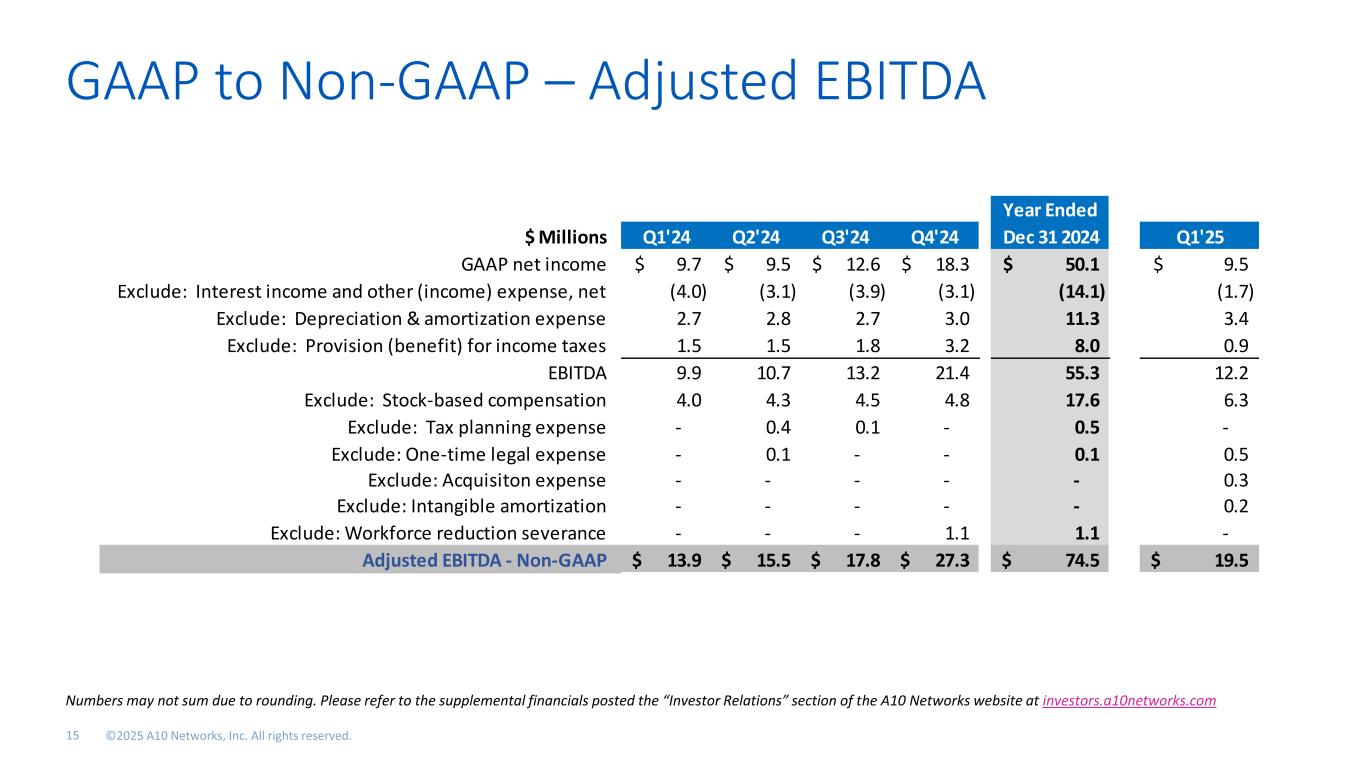
Thank you all for joining us today. This call is being recorded and webcast live and may be accessed for at least one year via the A10 Networks website at a10networks.com. Hosting the call today are Dhrupad Trivedi, A10's President and CEO; and CFO, Brian Becker. Before we begin, I would like to remind you that shortly after the market closed today, A10 Networks issued a press release announcing its first quarter 2025 financial results. Additionally, A10 published a presentation and supplemental trended financial statements. You may access the press release, presentation and trended financial statements on the Investor Relations section of the company's website. During the course of today's call, management will make forward-looking statements, including statements regarding projections for future operating results, demand, industry and customer trends, strategy, potential new products and solutions, our capital allocation strategy, profitability, expenses and investments, positioning and our dividend program. These statements are based on current expectations and beliefs as of today, May 1, 2025. These forward-looking statements involve a number of risks and uncertainties, some of which are beyond our control, that could cause actual results to differ materially and you should not rely on them as a prediction of future events. A10 does not intend to update information contained in these forward-looking statements, whether as a result of new information, future events or otherwise, unless required by law. For a more detailed description of these risks and uncertainties, please refer to our most recent 10-K and quarterly report on Form 10-Q. Please note that with the exception of revenue, financial measures discussed today are on a non-GAAP basis and have been adjusted to exclude certain charges. Non-GAAP financial measures are not intended to be considered in isolation or as a substitute for results prepared in accordance with GAAP and may be different from non-GAAP financial measures presented by other companies. A reconciliation between GAAP and non-GAAP measures can be found in the press release issued today and on the trended quarterly financial statements posted on the company's website. Now, I would like to turn the call over to Dhrupad Trivedi, President and CEO of A10 Networks.
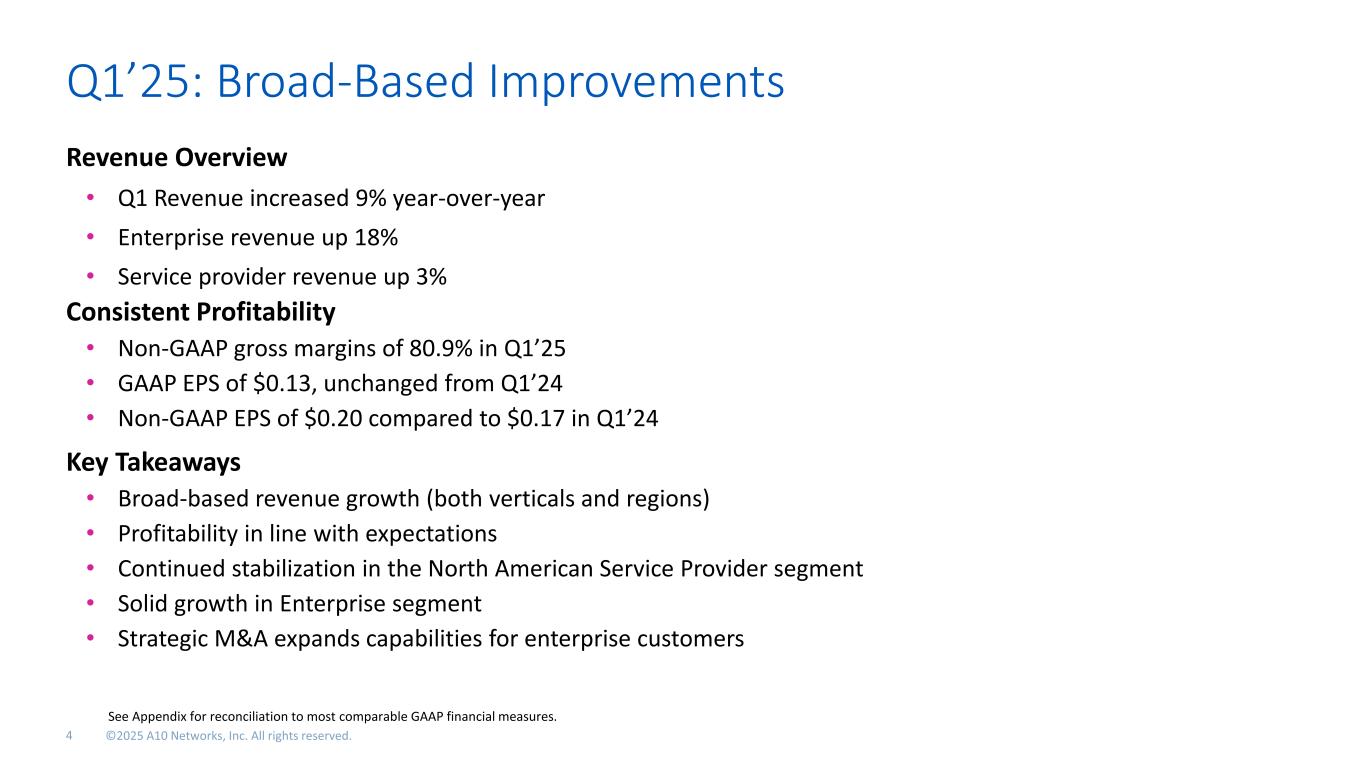
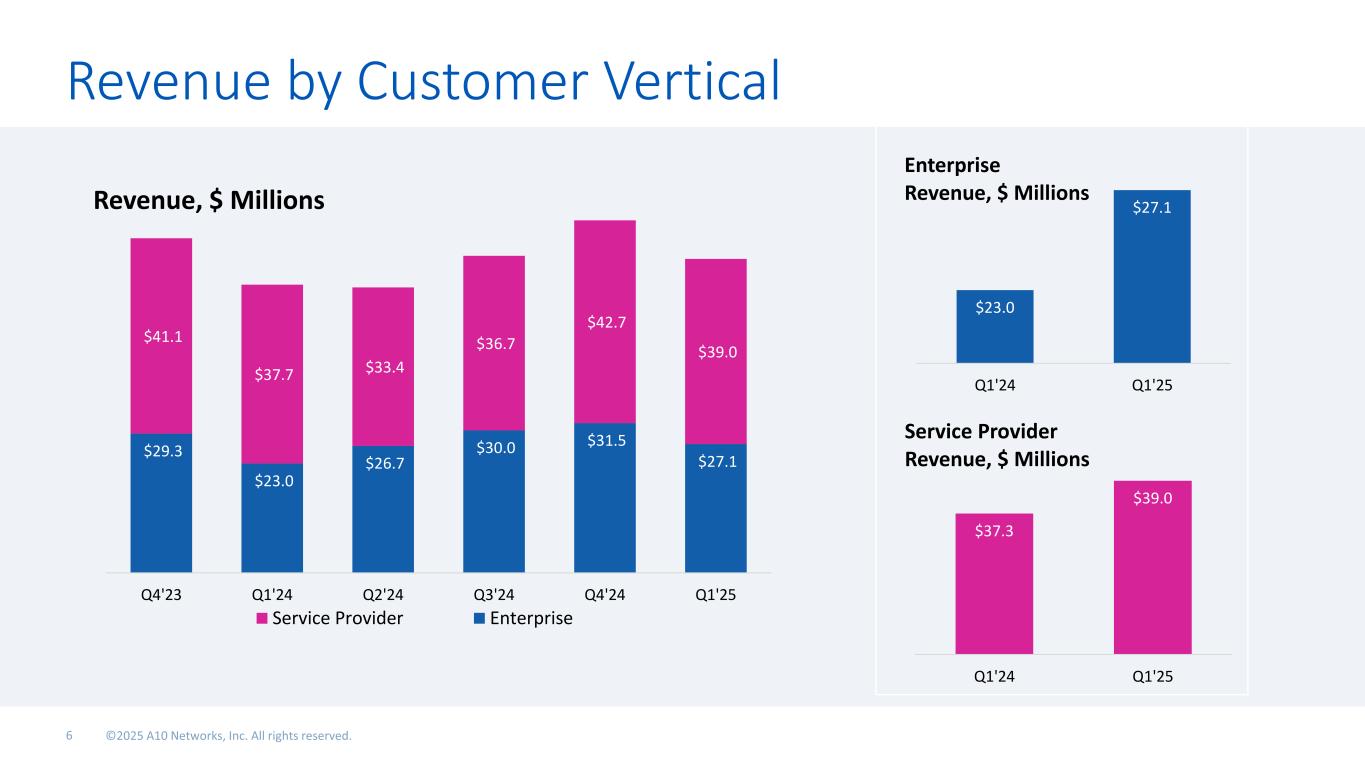
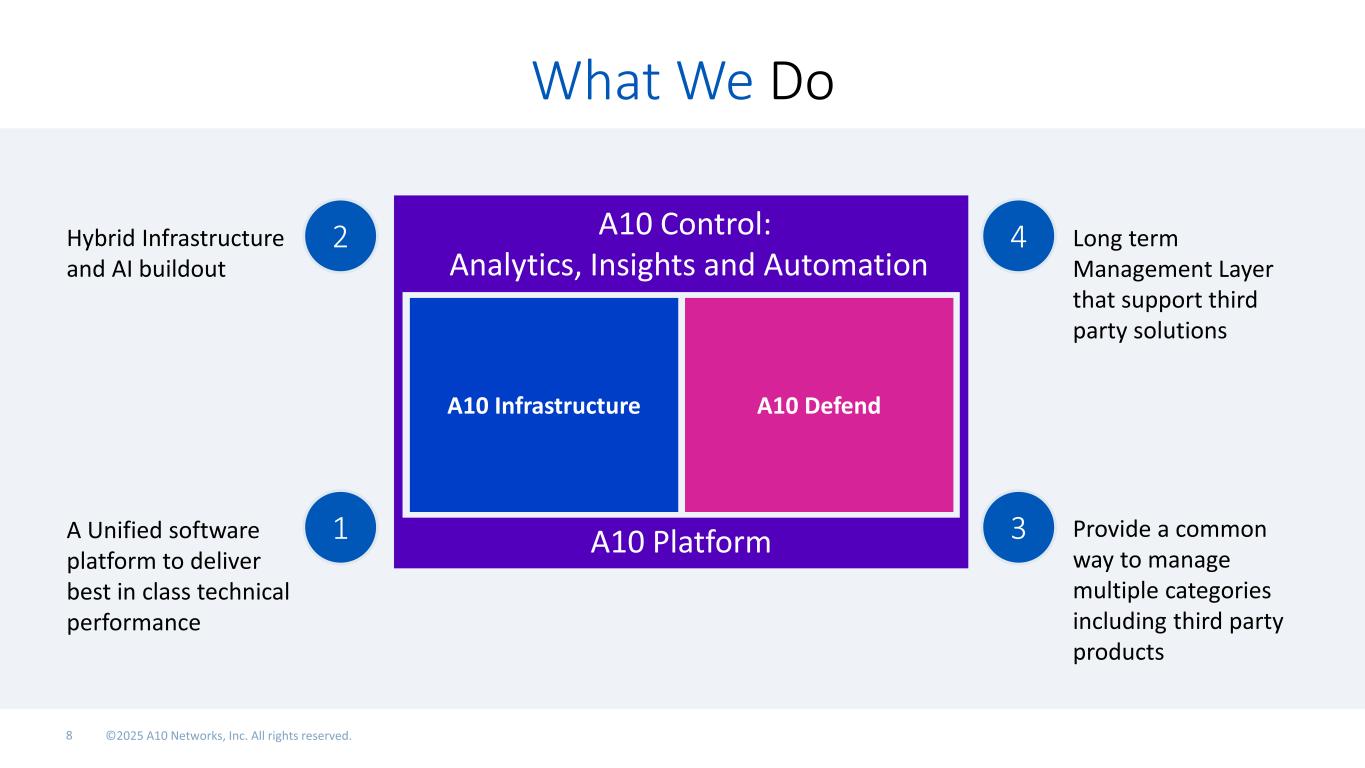
Thank you, Tom, and thank you all for joining us today. A10's first quarter financial results demonstrate continued execution as we delivered broad-based growth and solid profitability. Our investments designed to expand our presence and capabilities with enterprise customers are delivering the desired results and the service provider market, especially in North America, has improved modestly. Overall, A10 remains well positioned, addressing nondiscretionary security and capacity requirements with a diversified approach that provides continued durability against ongoing market volatility. Overall, A10 delivered 9% revenue growth year-over-year. Enterprise revenue grew 18%, partly as a result of depressed 2024 and service provider revenue increased 3% year-over-year. More importantly, enterprise revenue grew 12% on a trailing 12-month basis, providing an increasingly durable foundation for future growth. Market trends and global demand are largely unchanged over the last few months and customers continue to navigate evolving conditions related to higher interest rates and the growing trade policy dynamics in the United States. These various factors are creating friction impacting order timing. But as I mentioned, our solutions are increasingly nondiscretionary and high priority in terms of spending. Our solutions impact capacity and security. So while there may be delays, these delays can usually only be temporary. And over the past few quarters, the overall market conditions have improved and stabilized. Our service provider customer growth continues to be driven by the demand for greater data center capacity. The rise of AI is only adding to this demand. In addition, AI is power hungry and our solutions provide industry-leading efficiency in terms of throughput and low latency and also include integrated security capabilities, enabling high-capacity build-outs with fewer A1 products compared to competitors. As such, we are often designed into large data center projects. This is serving not only as a catalyst for our business but also a meaningful competitive advantage. We continue to allocate resources to address enterprise customers and this includes the recent acquisition of the assets and key personnel of ThreatXProtect. This accretive acquisition will expand our cybersecurity portfolio with web application and API protection. Attacks against web applications and application programming interfaces or APIs are on the rise. In particular, these threats are significantly applicable to enterprise. ThreatXProtect provides a unique WAP solution which harnesses behavioral and risk profiling to help protect enterprises from evolving threats, including threats to AI applications. We believe this capability which is delivered as a Software-as-a-Service solution represents an ideal complement to our existing AI firewall solution. This acquisition is another piece of our strategy to make A10 even more relevant in the enterprise vertical. We now offer advanced security solutions in a hybrid approach to protect apps and APIs running anywhere from public cloud to the private cloud to colocation facilities or on-prem networks. Our comprehensive A10 Defend portfolio of solutions provides hybrid DDoS protection, DDoS threat intelligence and web application and bot protection and now adds a full-featured WAP solution, all integrated into a single platform with end-to-end delivery and stronger security for mission-critical applications. I'd note that the growth of AI is driving demand in the enterprise segment as well. This trend reinforces the benefit of the ThreatXProtect acquisition and underscores our overall strategic position in the market. I am encouraged by our strategic position. Our presence with enterprise customers is strong and growing with solutions that are increasingly well aligned with current and near-term customer needs. Our solutions are also meeting the needs of Tier 1 service providers and this segment is stabilizing and returning to growth, although with continued short-term volatility. We are navigating the ebbs and flows of short-term market volatility with a strong balance sheet, delivering consistent profitability and returning capital to shareholders. As markets stabilize, we are well positioned to outpace the market in terms of revenue growth and increase our profitability. With that, I'd like to turn the call over to Brian for a detailed review of the quarter.
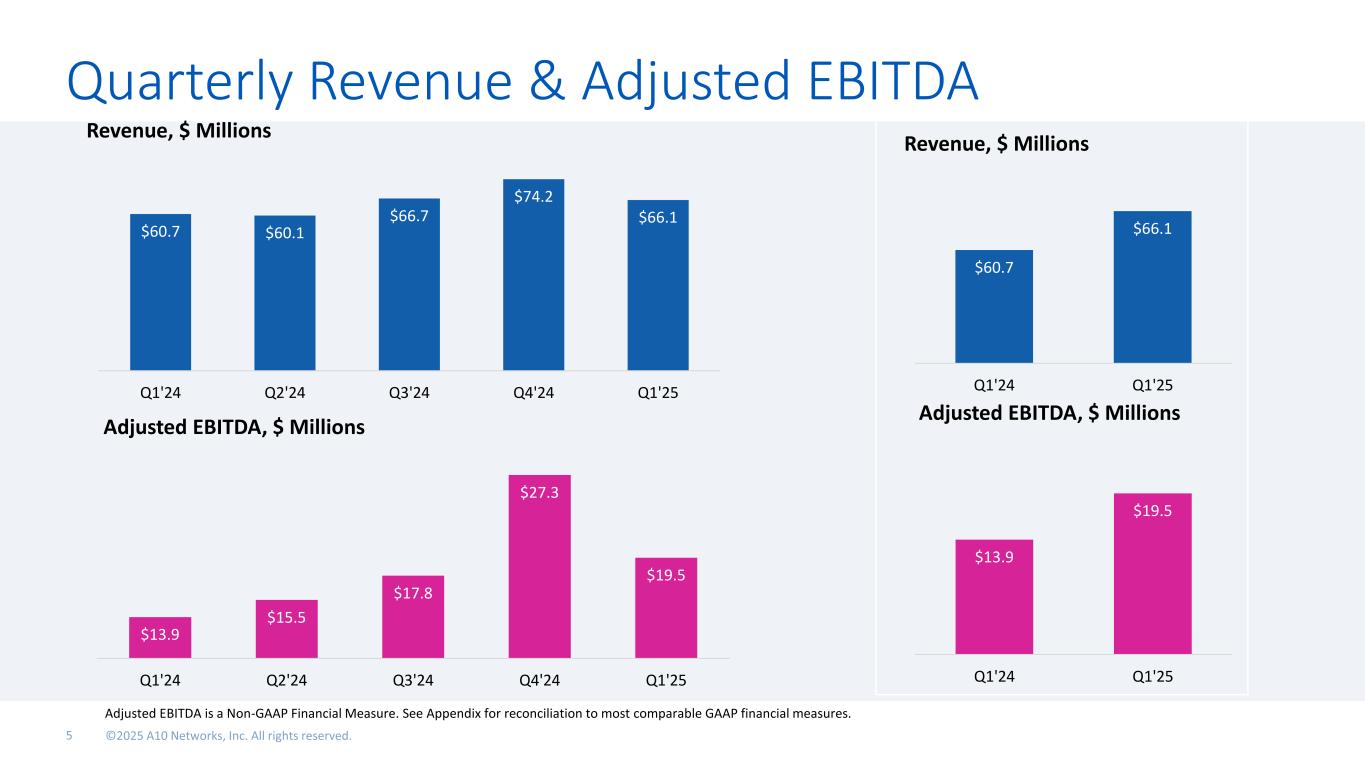
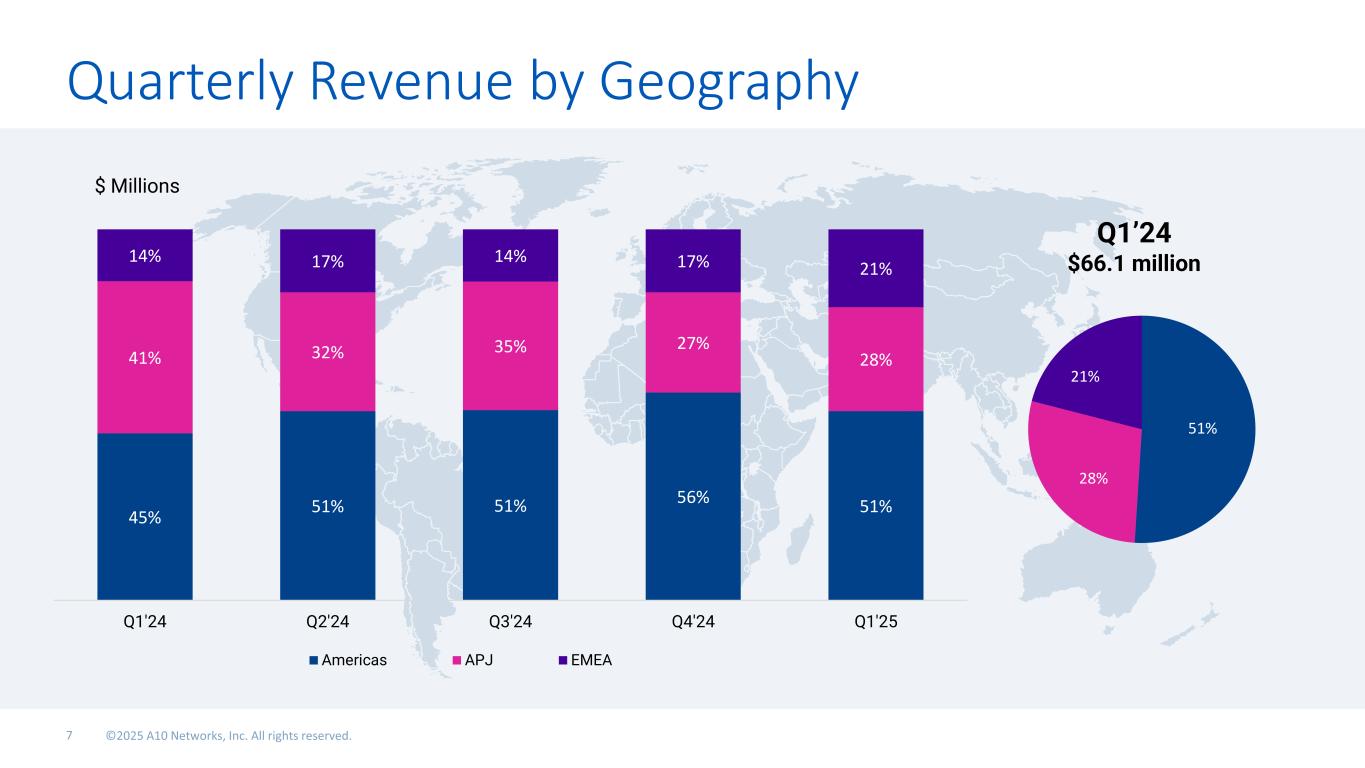
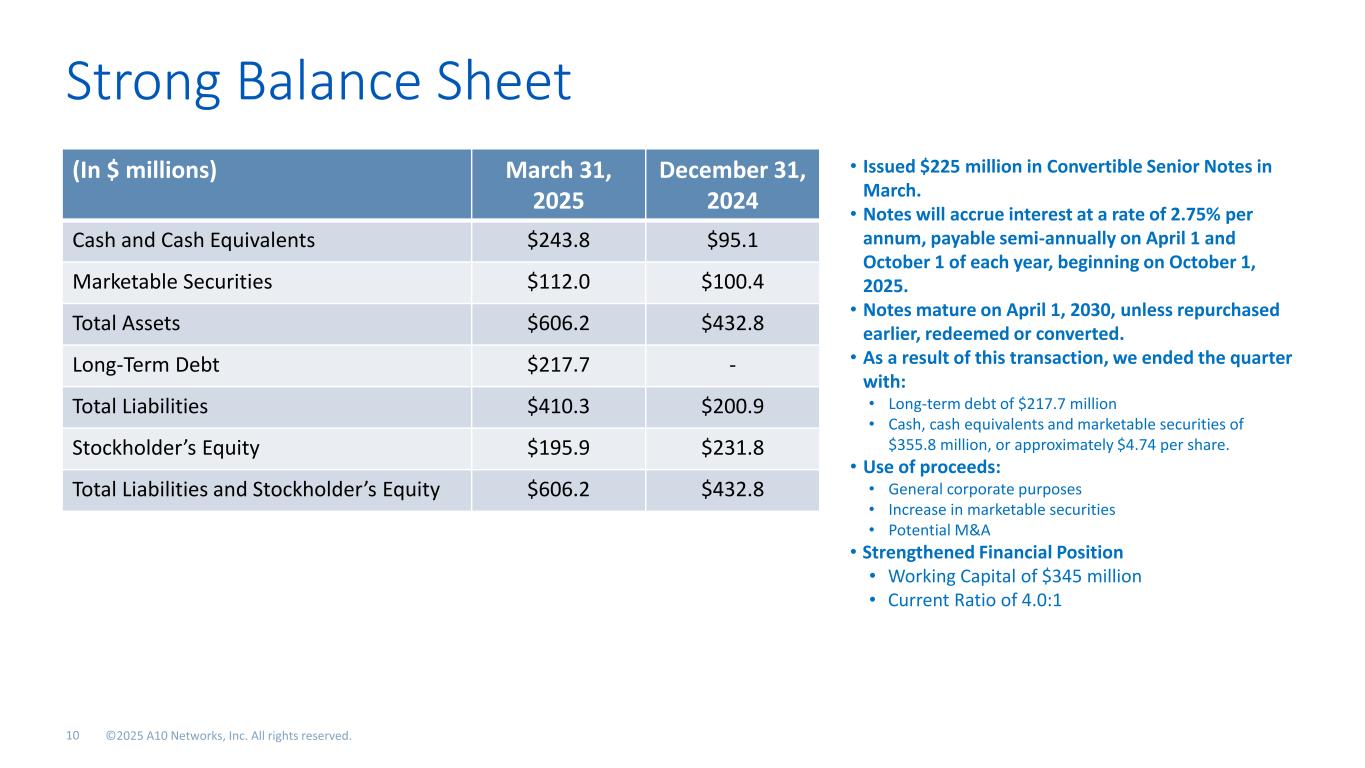
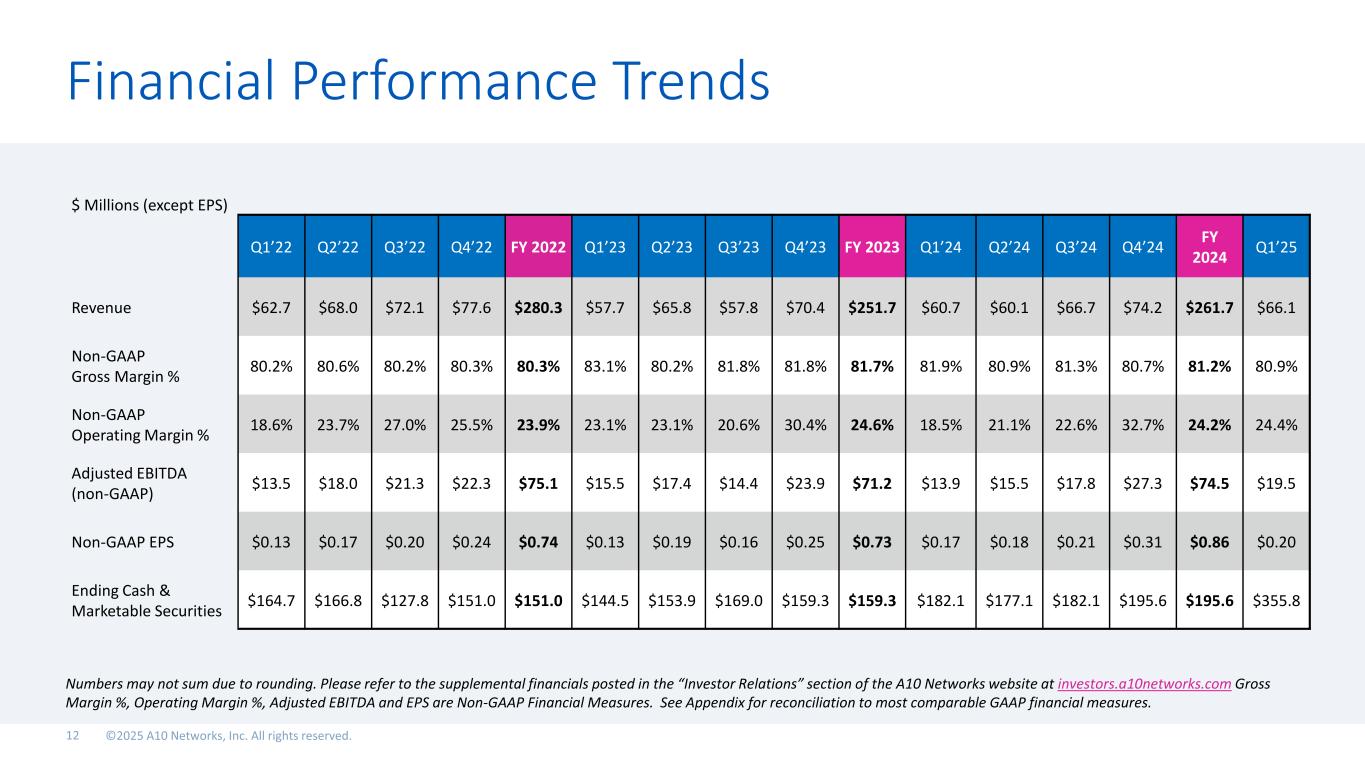
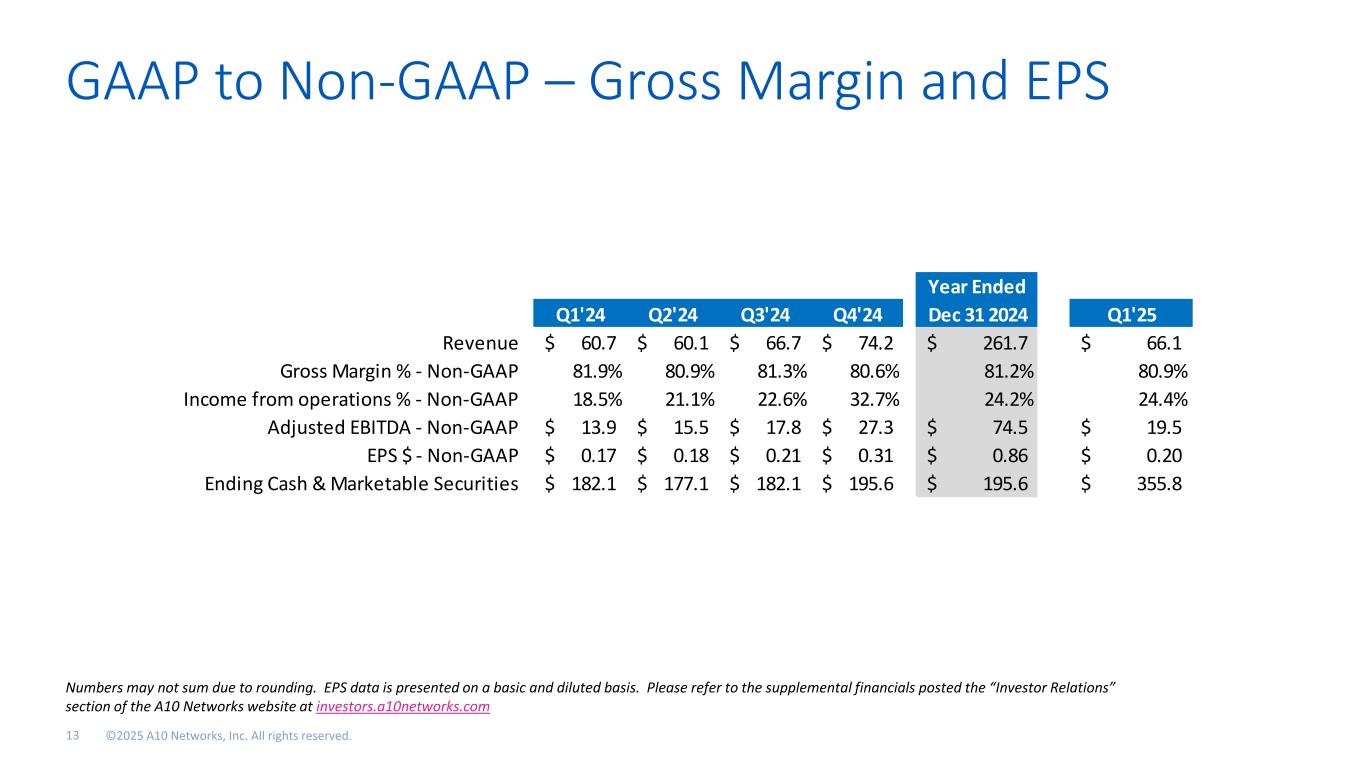
Thank you, Dhrupad. First quarter revenue was $66.1 million, an increase of 9% year-over-year. The growth was broad-based with enterprise revenue increasing 18% faster than consolidated revenue and service provider revenue increasing 3%. The results reflect the continued normalization of service provider spending patterns and the investments we have made in the Enterprise segment. We continue to experience quarter-to-quarter volatility in the service provider sector. This quarter, North America was relatively strong. Asia Pacific results were impacted on a year-over-year basis, mostly as a result of strong Q1 last year related to large infrastructure projects in Japan. The overall trends are increasingly positive and our global diversification continues to work in our favor. Product revenue for the quarter was $36 million, representing 54% of total revenue. Services revenue was $30.2 million or 46% of total revenue. Total deferred revenue was an 8% increase to $152.7 million. During 2024, A10 introduced several new products and refreshed certain other products. As a result, we have been entering into large long-term service agreements, typically 5 years in length compared to 3-year terms previously seen. As a result, we are experiencing a short-term impact on our service revenue as contracts are spread over 5 years rather than 3. However, our long-term deferred revenue is increasing, providing us greater visibility into future revenues and demonstrating the confidence our customers have in A10 and our solutions as we are designed into longer-term deployments. With the exception of revenue, all the other metrics on this call are on a non-GAAP basis, unless otherwise stated. A full reconciliation of GAAP to non-GAAP results are provided in our press release and on our website. Gross margin in the first quarter was 80.9%, in line with our stated goal of 80% to 82%, inclusive of short-term impact from the acquisition of ThreatXProtect which added hosting and support-related costs. Adjusted EBITDA was $19.5 million for the quarter, reflecting 29.5% of revenue. Non-GAAP net income for the quarter was $15 million or $0.20 per diluted share compared to $12.7 million or $0.17 per diluted share in the year-ago quarter. Diluted weighted shares used for computing non-GAAP EPS for the first quarter were approximately 75 million shares, down slightly year-over-year due to our continued share buyback. On a GAAP basis, net income for the quarter was $9.5 million or $0.13 per diluted share compared to net income of $9.7 million or $0.13 per diluted share in the year-ago quarter. During the quarter, we generated $15.2 million in cash from operations. As expected, cash generation normalized in the first quarter, in line with historical patterns. Turning to the balance sheet. As of March 31, 2025, we had $355.8 million in cash, cash equivalents and marketable securities compared to $195.6 million at the end of 2024. On March 17, we issued $200 million in convertible senior notes. Shortly after we issued an additional $25 million to the original purchaser. The notes will accrue interest at a rate of 2.75% per annum payable semi-annually on April 1 and October 1 of each year, beginning on October 1, 2025. The notes will mature on April 1, 2030, unless repurchased earlier, redeemed, or converted. Before December 1, 2029, note holders will have the right to convert their notes only upon the occurrence of certain events. As a result of this transaction, we ended the quarter with long-term debt of $217.7 million and increased our cash, cash equivalents and marketable securities to $355.8 million or approximately $4.74 per share. During the quarter, we paid $4.4 million in cash dividends and repurchased $47 million worth of shares. As a result of the debt offering, we used approximately $44.2 million of the net proceeds to repurchase shares of common stock in privately negotiated transactions effected through one of the initial purchasers of the notes or its affiliate as the company's agent and a repurchase price of $19.55 per share. The Board has approved a quarterly cash dividend of $0.06 per share to be paid on June 2, 2025, to shareholders of record on May 15, 2025. We have nearly exhausted our prior $50 million share repurchase authorization as of March 31, but the Board has now authorized a new $75 million share repurchase program. We continue to target gross margins of 80% to 82% and adjusted EBITDA margins of 26% to 28% on a full-year basis. I'll now turn the call back over to Dhrupad for closing comments.
Thank you, Brian. A10 continues to deliver solid execution, navigating uncertain times with a strong balance sheet and innovative solutions. We have established a business model that enables us to reallocate resources to address changing market conditions and flex expenses to preserve profitability and shareholder returns. We continue to outperform our peer set and our tight alignment with AI trends positions us for continued success. Operator, you can now open the call up for questions.
Operator
Your first question is coming from Gray Powell from BTIG.
Speaker 4
Okay. I'm in the back of a car, so I hope you can hear me okay. I want to start off with a couple of questions about tariffs. How is the uncertainty surrounding them affecting conversations with customers in recent weeks? My general understanding is that after Liberation Day, many customers, not just those specific to AT, felt as if they were entering a COVID lockdown. However, I've noticed in recent weeks that the tone of these conversations might have improved. I would appreciate any insights on your discussions during April and whether there's a significant difference in the responses from service providers compared to enterprise customers.
Yes, that's a great question, Gray. Overall, across all customers, we're observing something that is somewhat different yet also similar. In many instances, customers in the Asia Pacific and EMEA regions aren't directly linking tariff changes to their decisions, but there's noticeably more caution. They are concerned about the long-term implications for the macro economy over the next couple of quarters. This caution is particularly evident with larger service provider projects that have a longer timeline for ROI. In contrast, enterprise customers seem to be less concerned, which also applies to those in the U.S. For our customers, we see two main responses. Some are awaiting July 7 as a critical date to determine their next steps, while others are contemplating whether it's wise to procure ahead to mitigate risks. Currently, the net impact for us is neutral, but it's difficult to gauge which sentiment is stronger. An unknown factor remains how manufacturers of subcomponents, such as chips, will respond to the situation. We can't control that, but generally, we're noticing a more cautious spending pattern instead of a total halt.
Speaker 4
Understood. Okay. I really appreciate the transparency there. And then just maybe one more question, if I may. What kind of visibility do you have on some of the large customer initiatives to build out AI data centers? And just how should we think about that materializing in the form of incremental demand?
I would characterize the situation as being in the initial phase of large-scale AI development. Companies expected to be leaders in this space are building substantial data centers to support their AI efforts, which includes both public and private cloud providers as well as large enterprises. We have reasonably good visibility into these developments, although many of these companies adjust their plans based on their financial situations, resulting in some uncertainty. However, we have a general understanding of their long-term strategies. The true market value will likely become evident in one to two years when enterprise customers begin implementing more inference models, especially on-premises or on private clouds, particularly outside of the U.S. We are actively engaged with these customers regarding their plans, although they have not yet started building. We believe this presents a larger, more sustainable opportunity and we are getting involved with many of them early on.
Operator
Your next question is coming from Christian Schwab from Craig-Hallum.
Speaker 5
Congrats on a solid quarter. Understanding the overall cautious pattern that you're seeing but yet the outperformance in the current March quarter, are you still anticipating high single-digit revenue growth or maybe you weren't anticipating, I guess that's where the Street is at. But are you comfortable with high single-digit revenue growth for the year in this environment?
Thank you, Christian. That's a good question. As I mentioned earlier, we are currently comfortable with our expectations. We don't anticipate significant changes until we get through July, unless there are unexpected macro shifts, which are difficult for anyone to predict. However, barring any unusual circumstances, we expect to remain within that similar range.
Speaker 5
Perfect. And then can you just remind us on the competitive front on the data center capacity, AI-driven product portfolio, who you face most often as far as competition? And does it vary by geography?
Yes, sure. Good question. So I think the competitive dynamic is not that different than the typical data center build-outs. It does vary by geography. And what I mean by that is we are partnering with many of our existing large service provider type customers, whether it's in Japan or Europe or U.S. and evolving with them as they are building out their own AI data centers, right? So it's a logical evolution of what they were doing with us. And in that sense, right, we are not facing kind of a new wave of competitors from a technology provider perspective. I think there's more of the players in maybe as it relates to building the physical data centers. But as it relates to the core technology, I think we are not in any different competitive situation. It's the same differentiation that has helped us before.
Operator
Your next question is coming from Hamed Khorsand from BWS Financial.
Speaker 6
So first off, on the enterprise side, is the growth that you saw this past quarter a dynamic from that large customer or large order you received last year? Or is there something else here that's helping you grow this past quarter?
Good question, Hamed. So I would say if you look at our enterprise revenue by quarter in the trended numbers, the reason why that percentage looks really big has more to do with a bad or soft Q1 last year. And that's why I think it's more important to see that on a trailing 12-month basis versus the previous 12 months, that revenue is up about 12%. So we think that number is more indicative of continued progress. We did get a small follow-on repeat order from what we had talked last year but that was not a major reason here, right? So we had multiple kinds of customers that drove that growth and then we were comparing it to a soft Q1 last year which made that number look bigger on a quarter-over-quarter basis. But even on a 12-month basis, I think the 12% is more reflective.
Speaker 6
Okay. And then on the service provider side, you were talking about North America being strong but then you're saying that there's caution. Is there caution among every one of your customer base within service provider? Or is it just a particular subset?
Yes. I would say that service provider growth year-over-year was around 3%. While this is better than no growth, it's still not a significant figure. It shows improvement and stability, as we are not seeing a decline. However, there is general caution among many of the service providers, although a few are more optimistic. The cautious sentiment seems to relate to macroeconomic conditions and how they might change. There are some aggressive players in the market, which has helped our progress. Looking ahead, we believe there will be overall stability, as most customers are expected to spend something this year, though we are uncertain about the specific timing for that spending.
Speaker 6
And lastly, your sales and marketing was down this year compared to last year. Is there a reason for that? Or are you just managing costs?
Yes. I think there's no reason for that. I think we just continue to monitor that in terms of our EBITDA margin. And second, I would say, right, is to do that and continue to invest in new solutions like AI and other things, you can see R&D is up. And so to get to the same EBITDA, right, it has to net out somewhere.
Operator
Your next question is coming from Simon Leopold from Raymond James.
Speaker 7
A couple of things I wanted to check on. One was in the prior quarter, you had talked about targeting a full year EBITDA of 26% to 28%. Certainly, there's a lot of moving parts that are changing but just want to check in on how you're feeling about that target today.
Yes. Thank you, Simon. So I think we feel pretty good about being in that range of EBITDA of 26% to 28%. And the way we think about it is we may face some fluctuation on input costs and so forth with tariffs and we'll have to manage through that. We'll have to manage OpEx through that. But we are confident and committed to kind of getting to the 26% to 28%.
Speaker 7
And then in terms of your contract manufacturing partners, I think most, if not all, of your exposures to Taiwan. I certainly appreciate the fluidity of the tariff environment. But how do you think about that strategically? I know you can't change overnight but do you think about trying to diversify? And what would it take to do so?
Yes. No, good question. And I think I would say there are two layers to it. So one is, as it relates to assembly and manufacturing, you are correct. We are engaged with those partners to understand how to build something more resilient, more flexible footprint globally because still 50% of our business is not to U.S., right? So their impact is different. And so yes, absolutely, we are continuing to work and it takes time to requalify the line and things like that, right? But absolutely something we look at. The second layer that is a little harder to quantify is within that, right, there is a supply chain where you might be getting chips from a U.S. company or et cetera, right? So in those subcomponent level, it is hard to know where that lands after July and we monitor that. But as it relates to diversity of sourcing and improving that kind of profile for us, absolutely something we are involved in. And we were already looking at that for things like disaster recovery, right? So it's a matter of accelerating some of those initiatives.
Speaker 7
And then just one last one. We've seen quite a bit of movement in exchange rates in the last month or so. Could you help level set how we should think about that? Because you obviously have a lot of yen exposure and just how to quantify that in terms of both the top line as well as operating aspects.
Yes, that's correct. Our business operates throughout the U.S., with the exception of Japan, where transactions are in yen. We haven't noticed significant demand changes due to this situation, as project timelines generally drive activity rather than fluctuations in exchange rates. However, this does present some revenue risk for us. A couple of years ago, we experienced about a 200 basis points impact on growth from exchange rates, though we do not adjust our top line for foreign exchange. Our main focus remains on the customer and their project needs, accepting that exposure. For existing contracts and receivables, we take steps to hedge against this exposure as much as possible.
Operator
Your next question is coming from Hendi Susanto from Gabelli Funds.
Speaker 8
Congrats on positive year-over-year growth. Dhrupad and Brian, I would like to ask about the product refresh. Brian mentioned that. Like can you compare and contrast what the refresh outlook looks like for this year compared to the past and maybe down the road?
Yes. Good question, Hendi. What I was referring to is normal cycle product upgrades. So customer buys products and typically would depreciate that product in our Service Provider segment between 5 and 7 years. So at some point, the product becomes non-serviceable and no longer performs to the spec. That's the product refresh cycle I was referring to. It wasn't that we suddenly had a revamp of our product line, nothing like that. It was just normal course of business. It just so happened that there was a pretty significant switch in two product lines at the same time, which usually we stagger over a smaller period. But again, it's normal course of business, nothing that really changed the outlook from a customer's perspective and really would just be considered a shift from service renewals to product increase.
Yes. And the refresh cycle is driven by the customers' usage cycle, not necessarily us making them all change their product, right?
Speaker 8
And then second question, Dhrupad, you mentioned that the longer and bigger opportunity is in the enterprise AI inferencing solutions. And then you made a comment particularly outside of U.S. May I know why you emphasize opportunity outside of U.S. for the enterprise inferencing?
Sorry, no, I think the opportunity is equal everywhere. And I think, obviously, U.S. is a very big market. I think what I was highlighting is that in the U.S., the market has three or four major players and that's what everybody does. Outside of U.S., many of our customers are in countries which have data sovereignty and other data privacy reasons. And for those reasons, they are building private clouds and private LLM. And that is what I meant by being a different type of opportunity versus having to be one of the three players in the U.S.
Speaker 8
And then last question for me. If there's any tariff impact and then you need to negotiate price with the customers, like the choice between like new pricing or absorbing that, how should we think about the likely scenarios?
I mean I think that's a very, very difficult question to have a perfect answer for. So certainly, I think our expectation is if there is tariff impact, we would work with our customers to figure out how to share that. And it's somewhere between 100% and 0, right, that they would share. And I think we would need to have a better view after July or whenever to be able to have those conversations, right? Because today, we don't know if that impact is going to be 0%, 30% or 150%. So it's hard to actually have those conversations. But of course, our goal will be that because the nature of our customers is also one where they are very worried about performance of the network. They want to make sure, of course, that A10 can continue to invest in R&D and drive more innovation versus buying the lowest cost commodity on the market, right? So we think that's the profile of our customers, that's our company profile. So we would jointly solve that problem once we know what the problem is.
Operator
Thank you. That concludes our Q&A session. I will now hand the conference back to Dhrupad Trivedi for closing remarks. Please go ahead.
Thank you. And thank you to all of our shareholders and employees for joining us today and for your ongoing support. Thanks.
Operator
Thank you. Everyone, this concludes today's event. You may disconnect at this time and have a wonderful day. Thank you for your participation.