Operator
Hello, everyone, and thank you for joining the Banner Corporation Third Quarter 2025 Conference Call and Webcast. My name is Claire, and I will be coordinating your call today. I will now hand over to Mark Grescovich, President and CEO of Banner Corporation to begin. Please go ahead.
Thank you, Claire, and good morning, everyone. I would also like to welcome you to the third quarter earnings call for Banner Corporation. Joining me on the call today is Rob Butterfield, Banner Corporation's Chief Financial Officer; Jill Rice, our Chief Credit Officer; and Rich Arnold, our Head of Investor Relations. Rich, would you please read our forward-looking safe harbor statement?
Sure, Mark. Good morning. Our presentation today discusses Banner's business outlook and will include forward-looking statements. These statements include descriptions of management's plans, objectives or goals for future operations, products or services, forecasts of financial or other performance measures, and statements about Banner's general outlook for economic and other conditions. We also may make other forward-looking statements in the question-and-answer period following management's discussion. These forward-looking statements are subject to a number of risks and uncertainties, and actual results may differ materially from those discussed today. Information on the risk factors that could cause actual results to differ are available from the earnings press release that was released yesterday and the most recently filed Form 10-Q for the quarter ended June 30, 2025. Forward-looking statements are effective only as of the date they are made, and Banner assumes no obligation to update information concerning its expectations. Mark?
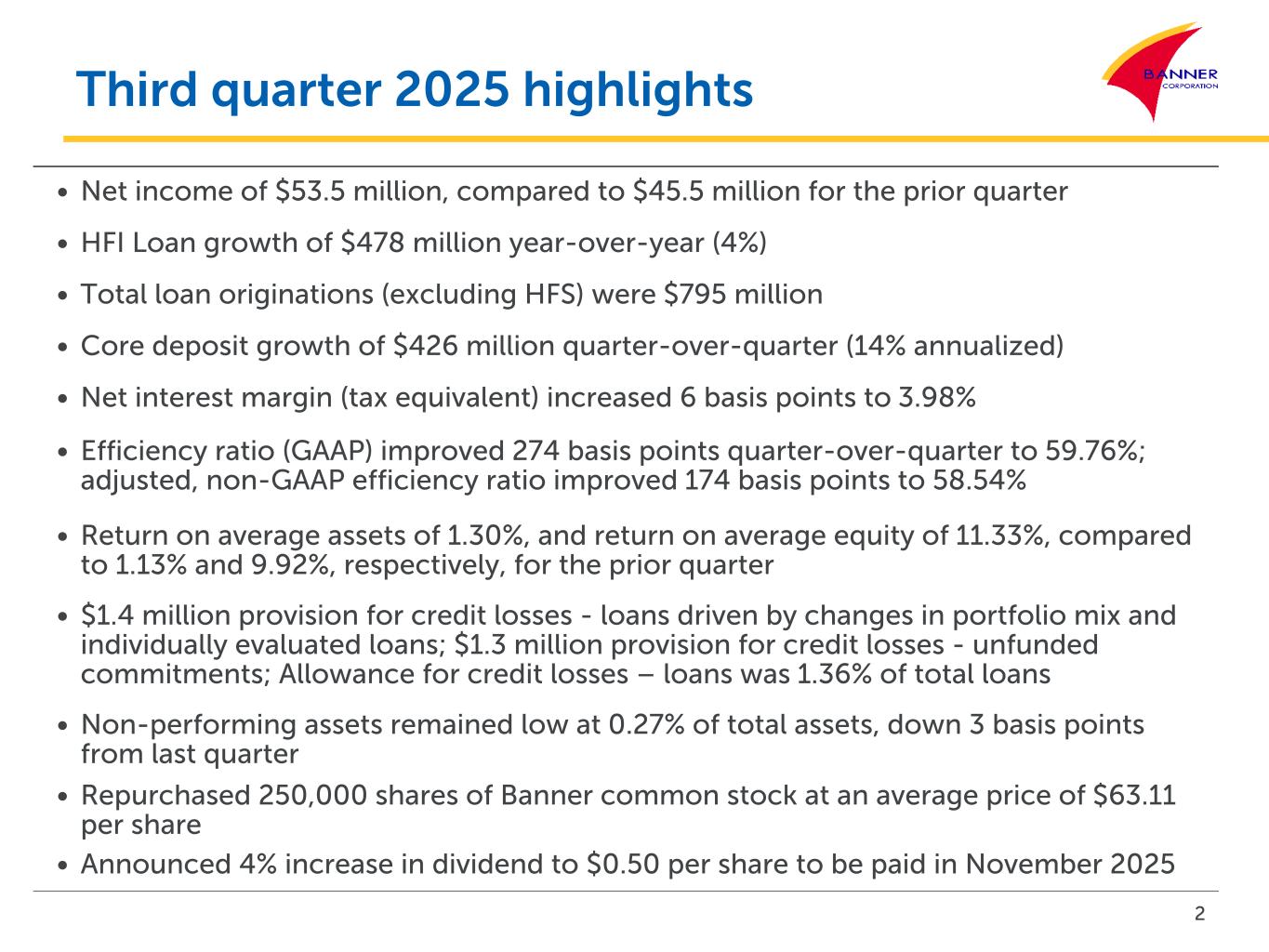
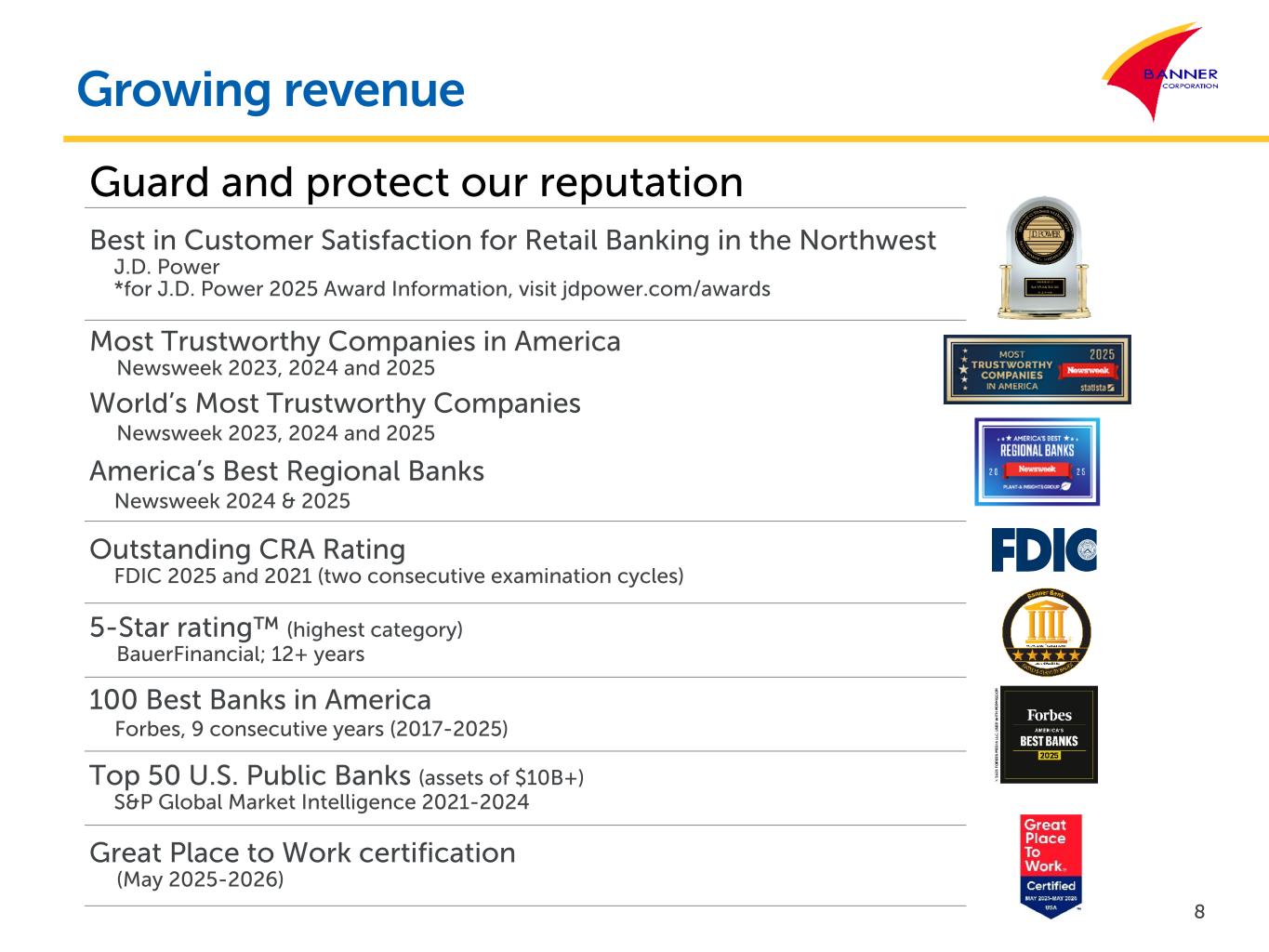
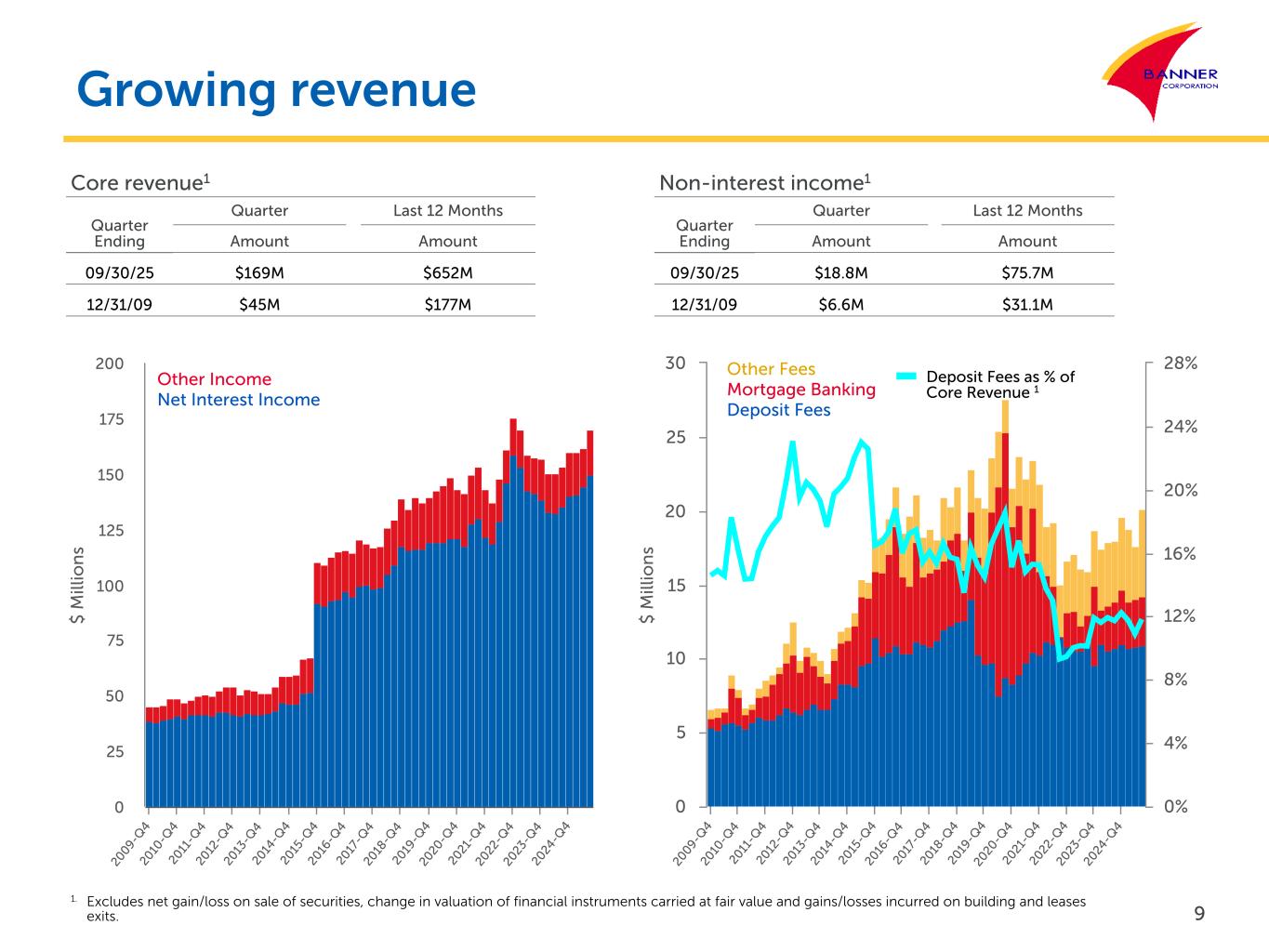
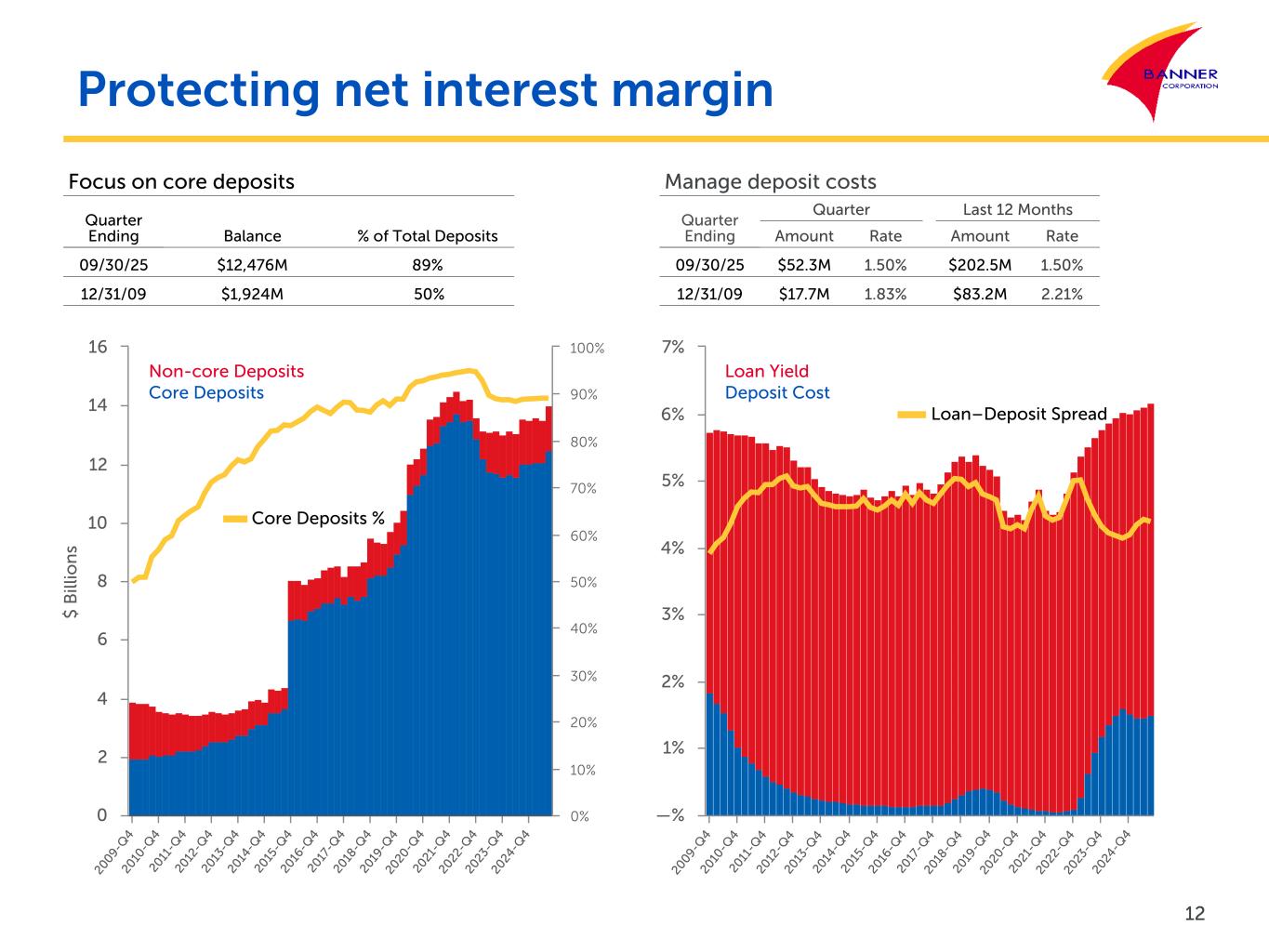
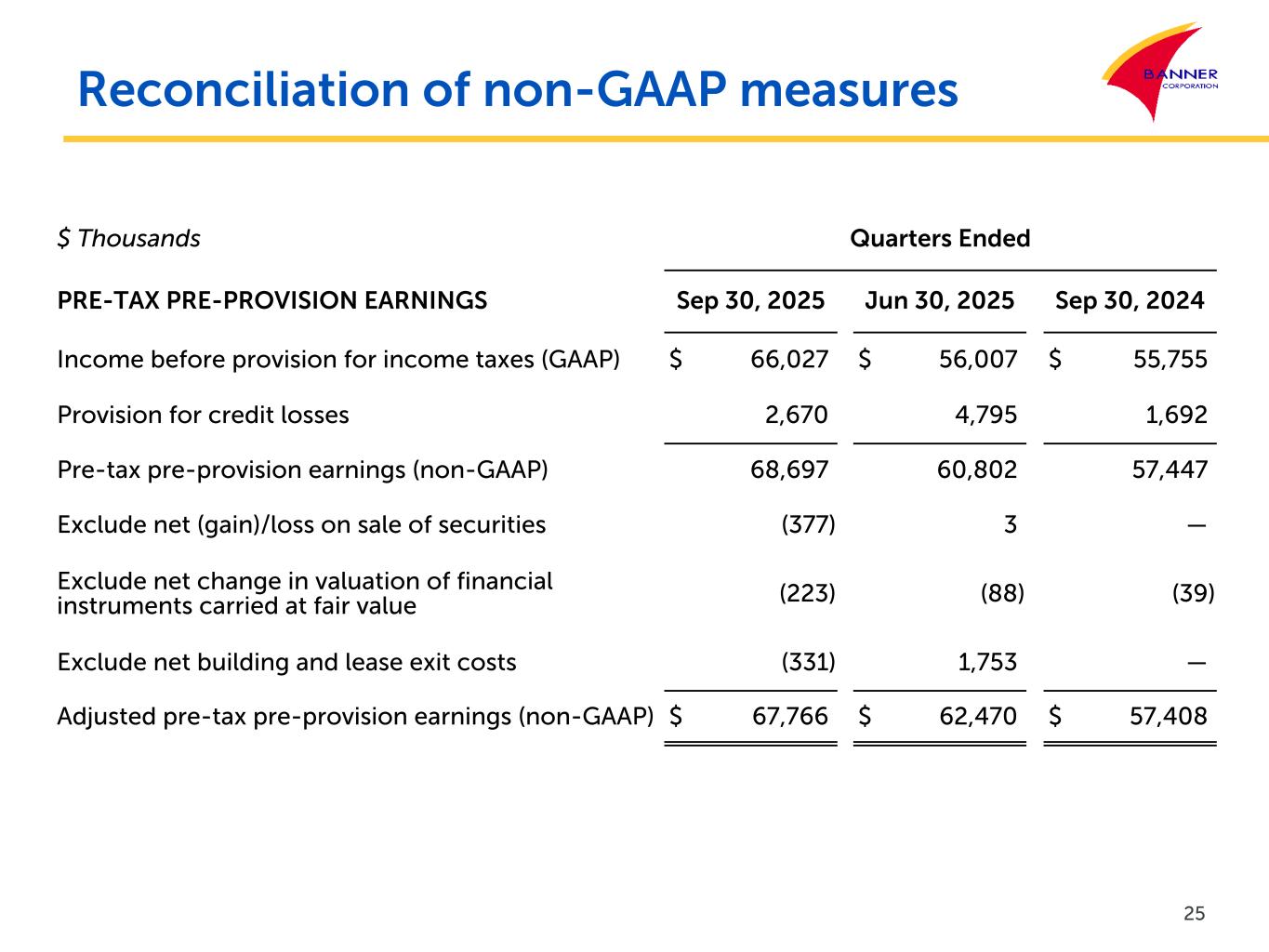
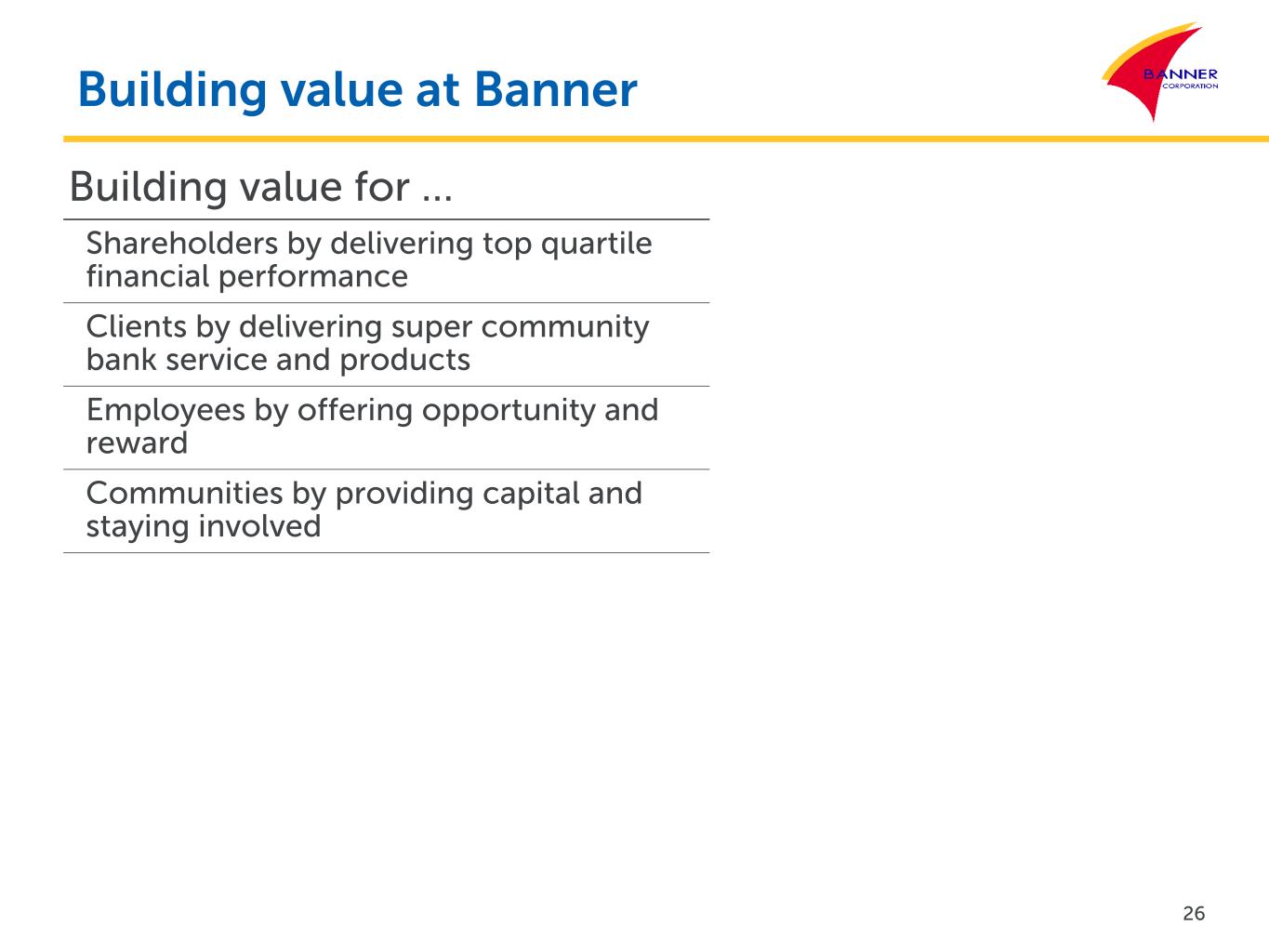
Thank you, Rich. Today, we will discuss four main topics. First, I will share high-level insights on Banner's performance for the third quarter. Second, I will outline the steps Banner is taking to support our stakeholders, including our team, clients, communities, and shareholders. Third, Jill Rice will provide an update on the current status of our loan portfolio. Finally, Rob Butterfield will detail our operating performance for the quarter and share insights on our balance sheet. Before I begin, I want to express my gratitude to my 2,000 colleagues who are working tirelessly to support our clients and communities. Banner has upheld our core values by consistently doing the right thing for the past 135 years. Our primary goal remains to do right by our clients, communities, colleagues, company, and shareholders, while providing consistent and reliable commerce and capital through all economic cycles. I'm pleased to report that this is exactly what we continue to accomplish, and I am proud of the entire Banner team for embodying our core values. Now, let’s move to an overview of our performance. Banner Corporation reported a net profit available to common shareholders of $53.5 million or $1.54 per diluted share for the quarter ending September 30, 2025. This is an increase from a net profit of $1.30 per share for the same quarter in 2024 and $1.31 per share for the second quarter of 2025. Our strategy to maintain a moderate risk profile, along with our ongoing investments to enhance operating performance, has positioned the company well for the future. The robustness of our balance sheet and our solid reputation in the market enable us to navigate through the current market uncertainties. Rob will elaborate on these points shortly. To demonstrate Banner's core earnings capability, I want to highlight our pretax pre-provision earnings, excluding gains and losses on security sales, changes in the fair value of financial instruments, and building and lease exit costs. In the third quarter of 2025, our core earnings stood at $67.8 million, up from $62.5 million the previous quarter and $57.4 million in the third quarter of 2024. Our revenue from core operations in the third quarter of 2025 was $169 million, compared to $163 million the prior quarter and $154 million in the same quarter last year. We continue to enjoy the benefits of a strong core deposit base that demonstrates resilience and loyalty to Banner, a favorable net interest margin, and controlled core expenses. Consequently, this led to a return on average assets of 1.3% in the third quarter of 2025. Once again, our core performance illustrates our commitment to our super community bank strategy, which focuses on building new client relationships, maintaining our core funding position, fostering client loyalty through our responsive service model, and ensuring safety and soundness throughout all economic cycles. In line with this, our core deposits account for 89% of total deposits. Additionally, we have experienced solid organic growth, with loans and core deposits both increasing by 4% compared to the same period last year. Reflecting this strong performance, along with our robust regulatory capital ratios and a 9% rise in tangible common equity per share from last year, we have announced a 4% increase in the core dividend to $0.50 per share. Lastly, I'm happy to report that we have received recognition in the marketplace for our business model and value proposition. Banner has been named one of America's 100 Best Banks and one of the best banks in the world by Forbes. Newsweek recognized Banner Bank as one of the Most Trustworthy Companies in America and the world this year and just recently acknowledged it as one of the Best Regional Banks in the country. J.D. Power and Associates named Banner the Best Bank in the Northwest for retail client satisfaction. Our company has also been certified by Great Place to Work, and S&P Global Market Intelligence ranked Banner's financial performance among the top 50 public banks with over $10 billion in assets. Furthermore, the Kroll Bond Rating Agency has affirmed all of Banner's investment-grade debt and deposit ratings, and we have received an outstanding CRA rating. Now, I will turn the call over to Jill to discuss trends in our loan portfolio and share her insights on Banner's credit quality. Jill?
Speaker 3
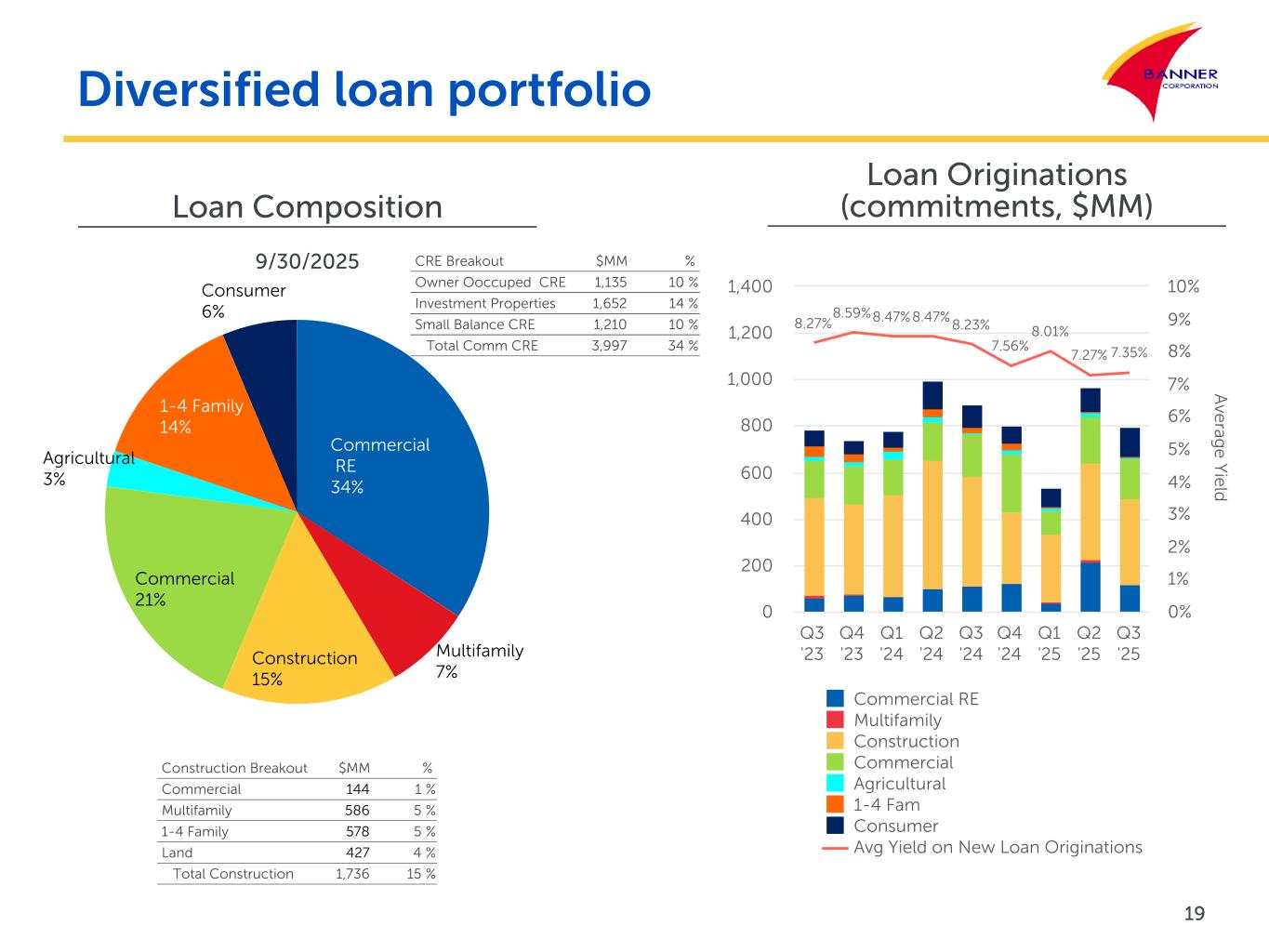
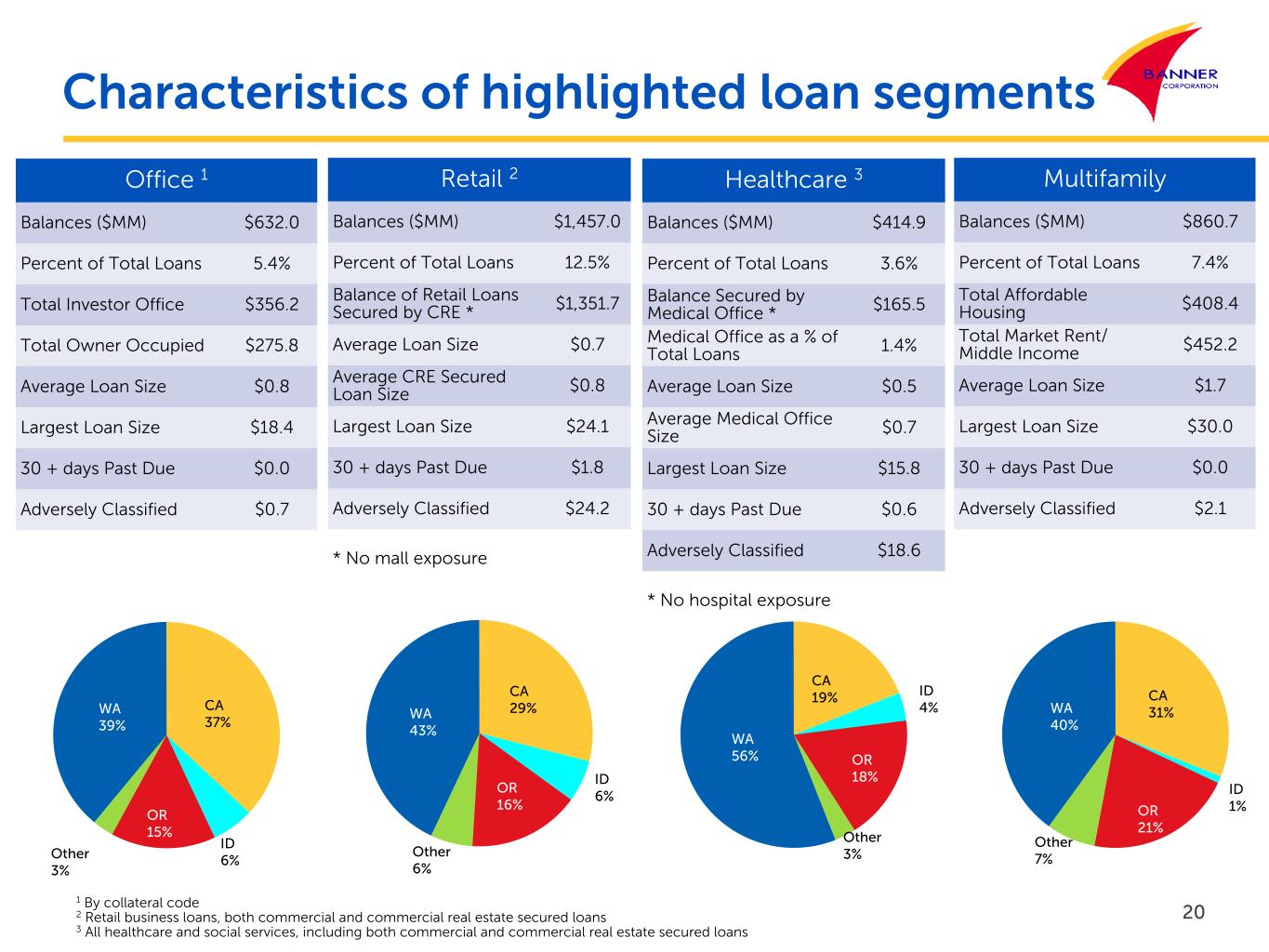
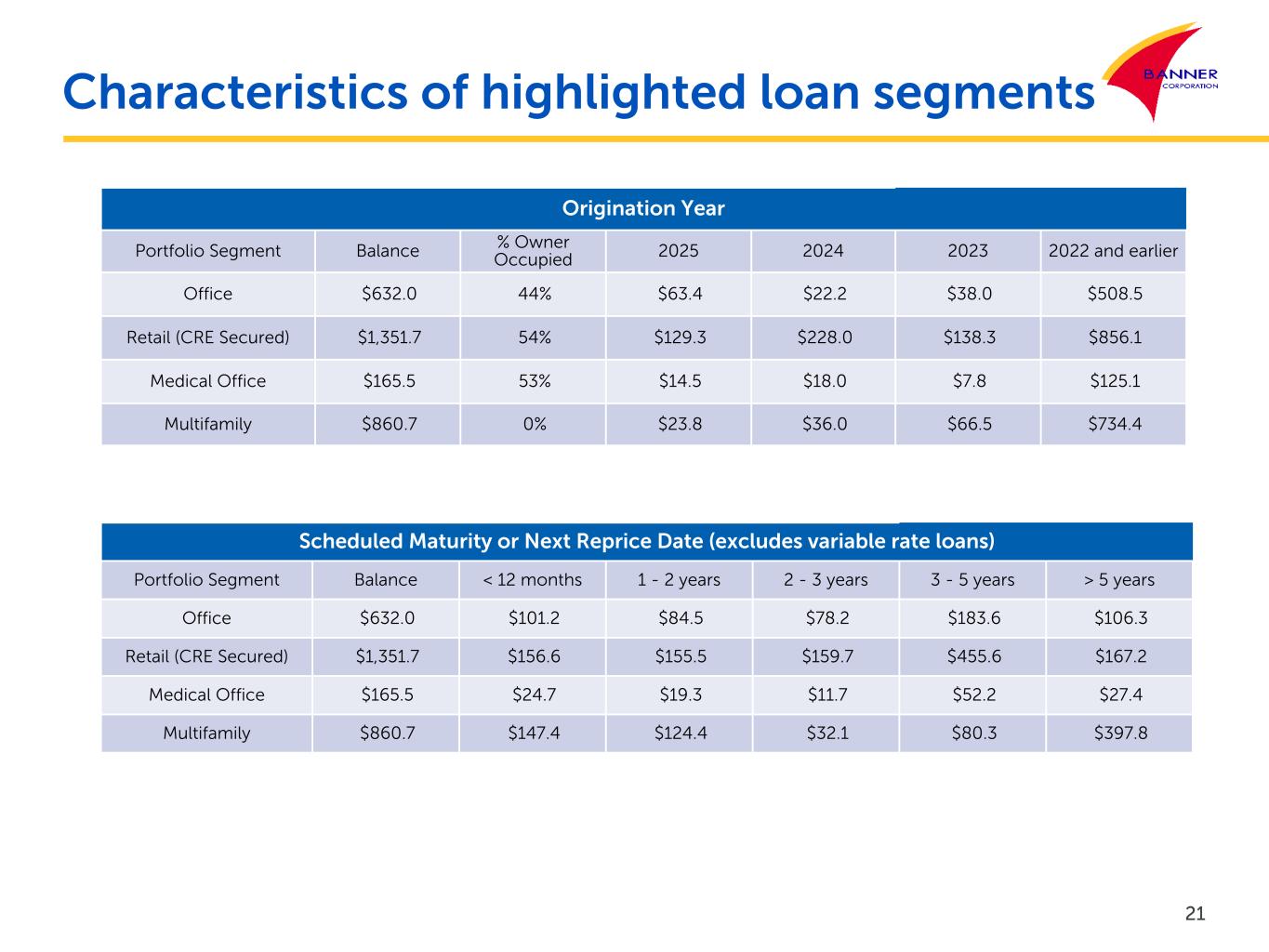
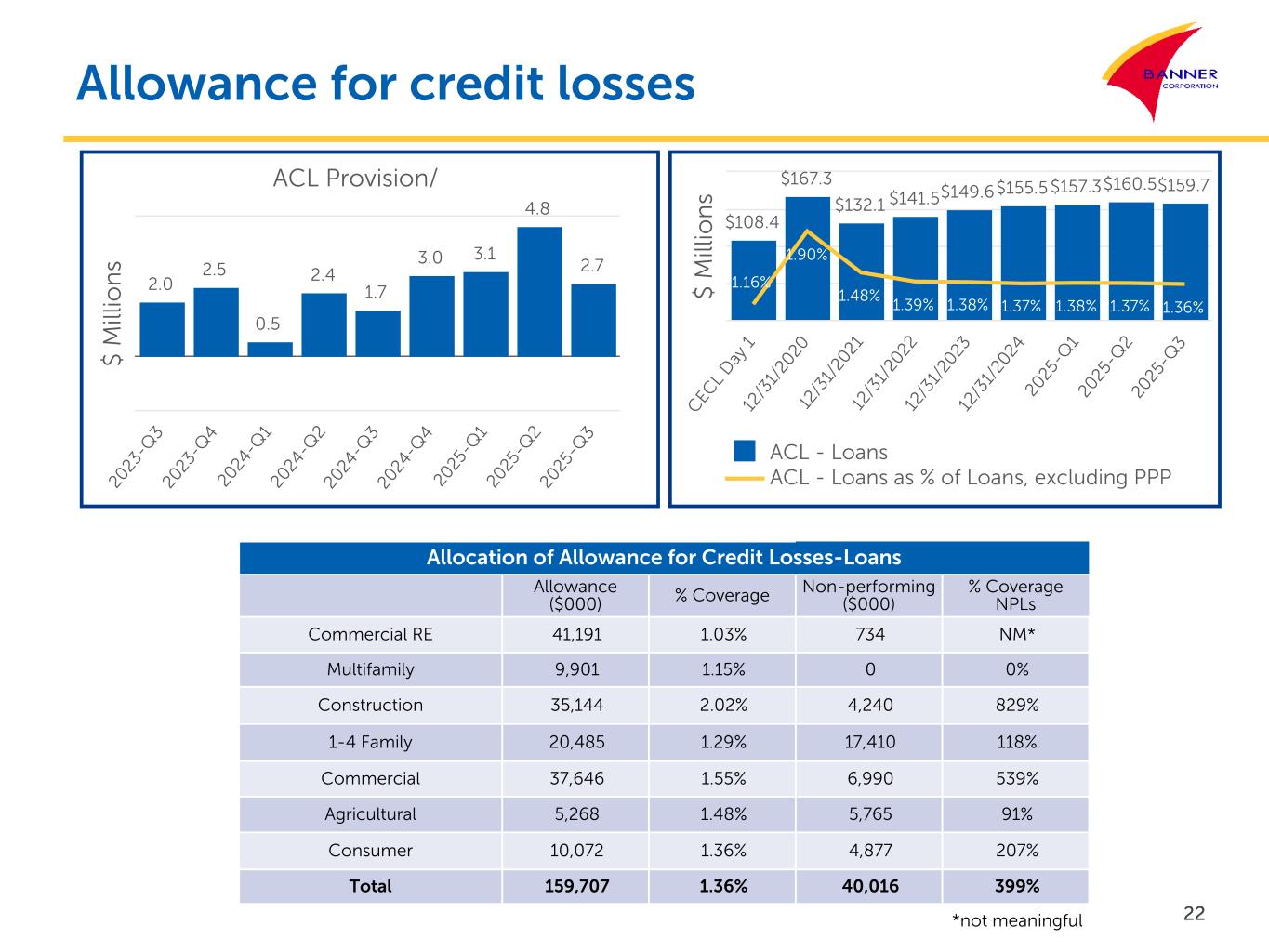
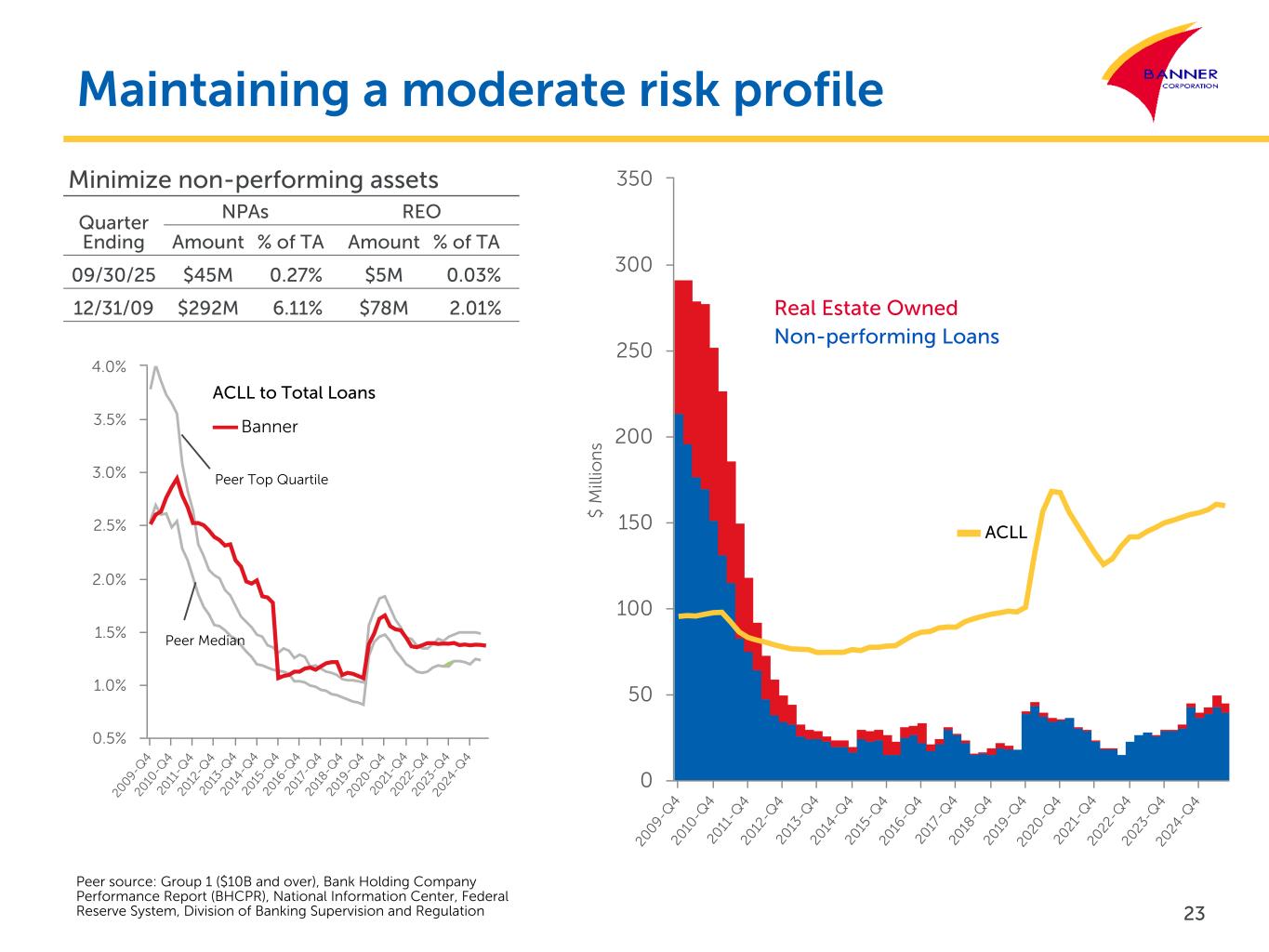
Thank you, Mark, and good morning, everyone. As reported, our overall credit metrics remained strong. Delinquent loans improved slightly and now represent 0.39% of total loans, down 2 basis points from the linked quarter and compared to 0.40% reported as of September 30, 2024. Adversely classified loans declined by $16 million quarter-over-quarter and now represent 1.49% of total loans, down 13 basis points from June 30; and our total nonperforming assets, down $4.5 million, represent a modest 0.27% of total assets. Loan losses in the quarter totaled $3.2 million and were offset in part by recoveries totaling $1 million. The net provision for credit losses for the quarter was $2.7 million, including a $1.4 million provision for loan losses and a $1.3 million provision related to unfunded loan commitments. After the provision, the allowance for credit losses totaled $159.7 million and provided coverage of 1.36% of total loans, which compares to 1.37% as of the linked quarter and 1.38% as of September 2024. After recording very strong second-quarter loan growth, I indicated that we expected a pullback this quarter. And as anticipated, loan originations were $172 million, lower than that reported for the quarter ending June 30. Additionally, new production was offset by material payoffs and paydowns on adversely classified relationships, as well as reduced commercial line utilization and a small handful of anticipated commercial real estate and C&I payoffs. Still, portfolio loan balances, while basically flat when compared to the linked quarter, remained up 4% year-over-year. The decline in the commercial construction portfolio reflects the net effect of additional construction advances offset by the transition of both completed owner-occupied and investor real estate projects to the permanent portfolio. The residential construction portfolio at 5% of total loans continues to be diversified across markets and product mix. And while days on market has increased again slightly this quarter, the level of completed and unsold inventory continues to remain below historical norms. Consistent with prior quarters, the total construction portfolio remains balanced at 15% of total loans when you aggregate all business lines. The decline reflected in C&I is driven in part by reduced line utilization, down 2% quarter-over-quarter, as well as the previously mentioned exiting of adversely classified relationships. The decline was offset in part by continued growth in the small business segment, which is up 8% year-over-year. And as expected, agricultural balances increased again this quarter due to line utilization, up 3% compared to last quarter and up 2% year-over-year. Lastly, I will just note that commercial pipelines remain solid. Fourth quarter loan growth is typically strong, and we expect the same to be true this year. As such, we still anticipate reporting a mid-single-digit growth rate for the full year. Banner's moderate risk profile with stable and strong credit metrics remains a significant source of strength. With that, I will hand the microphone over to Rob for his comments. Rob?
Speaker 4
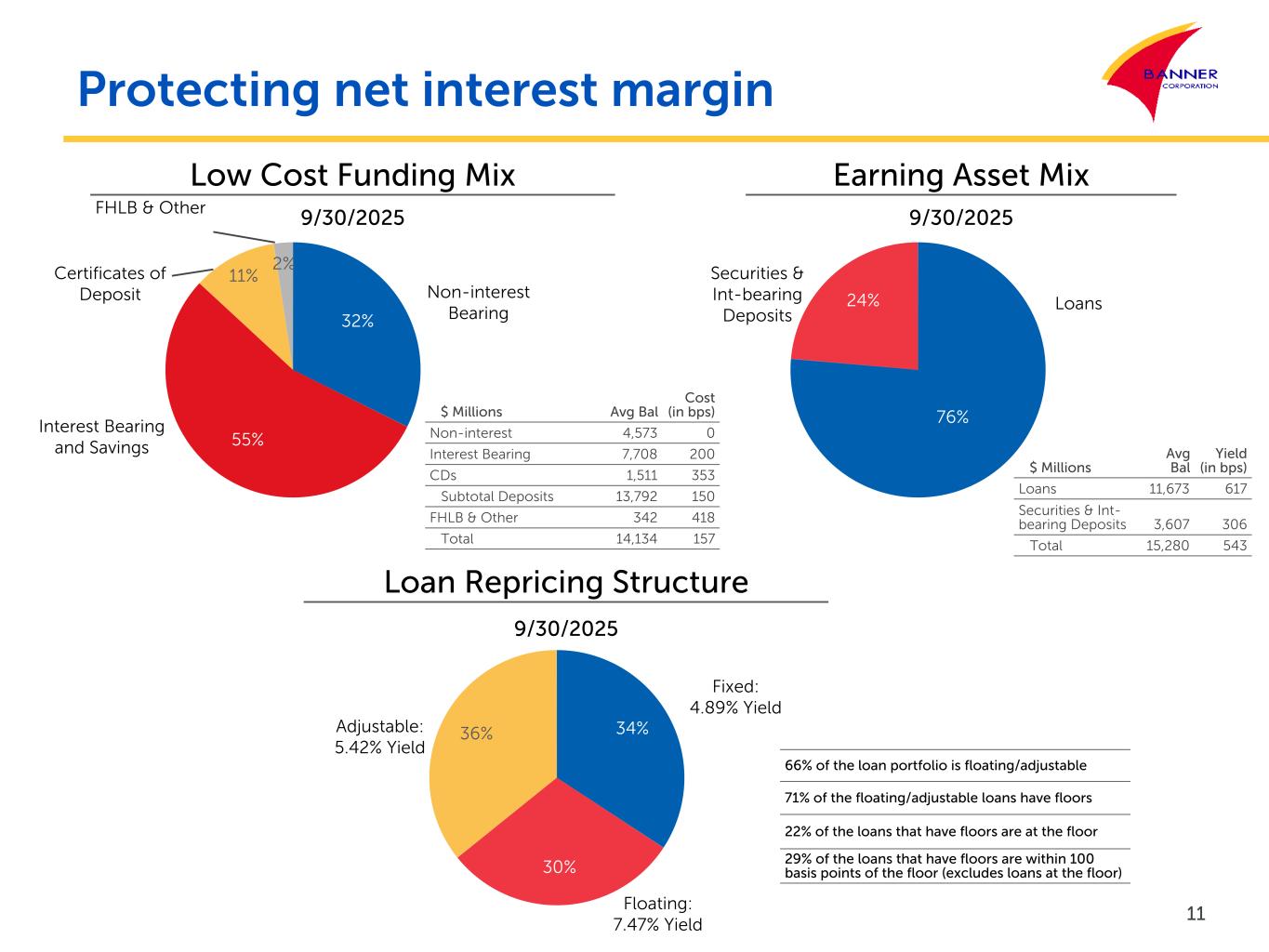
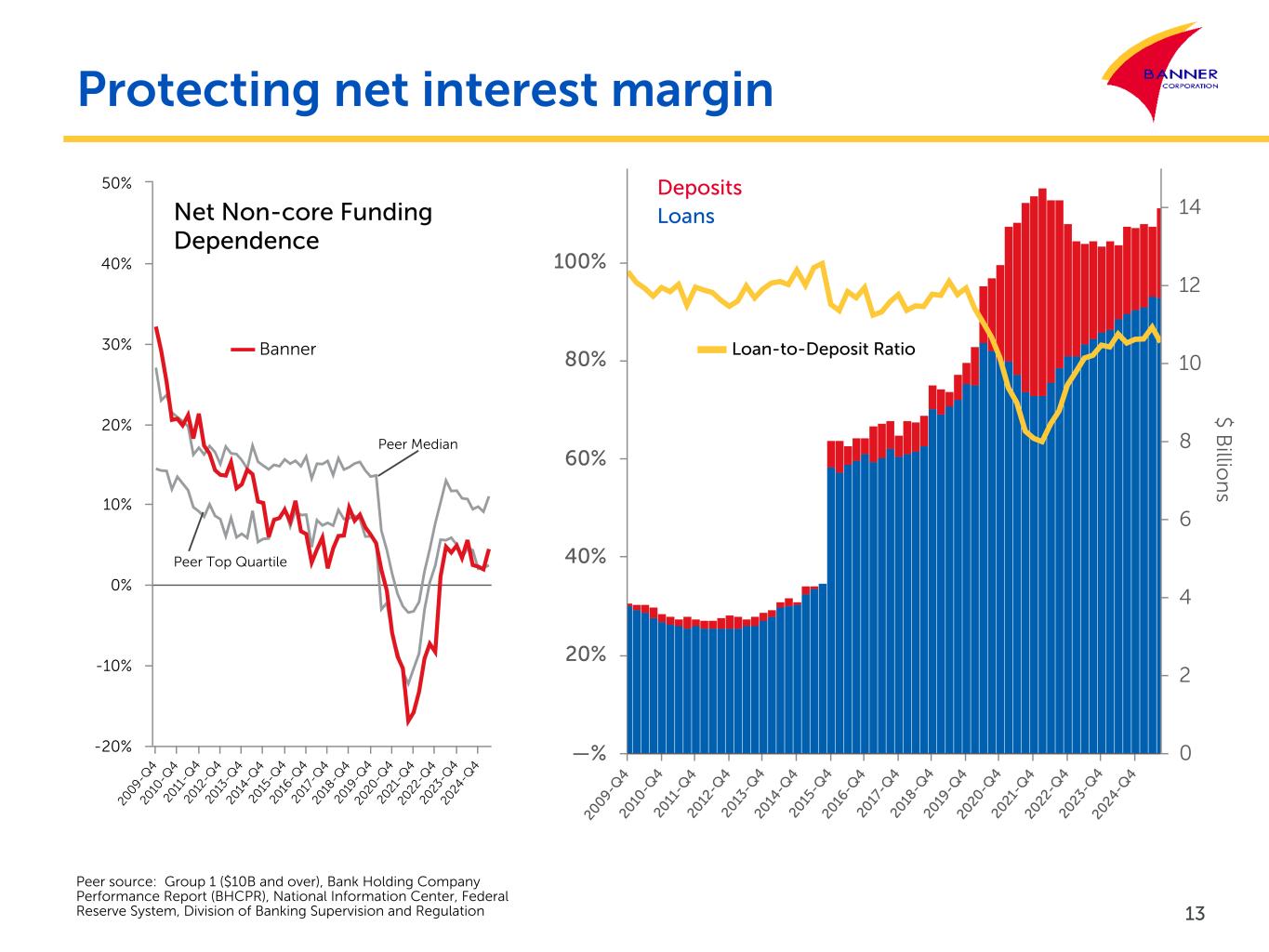
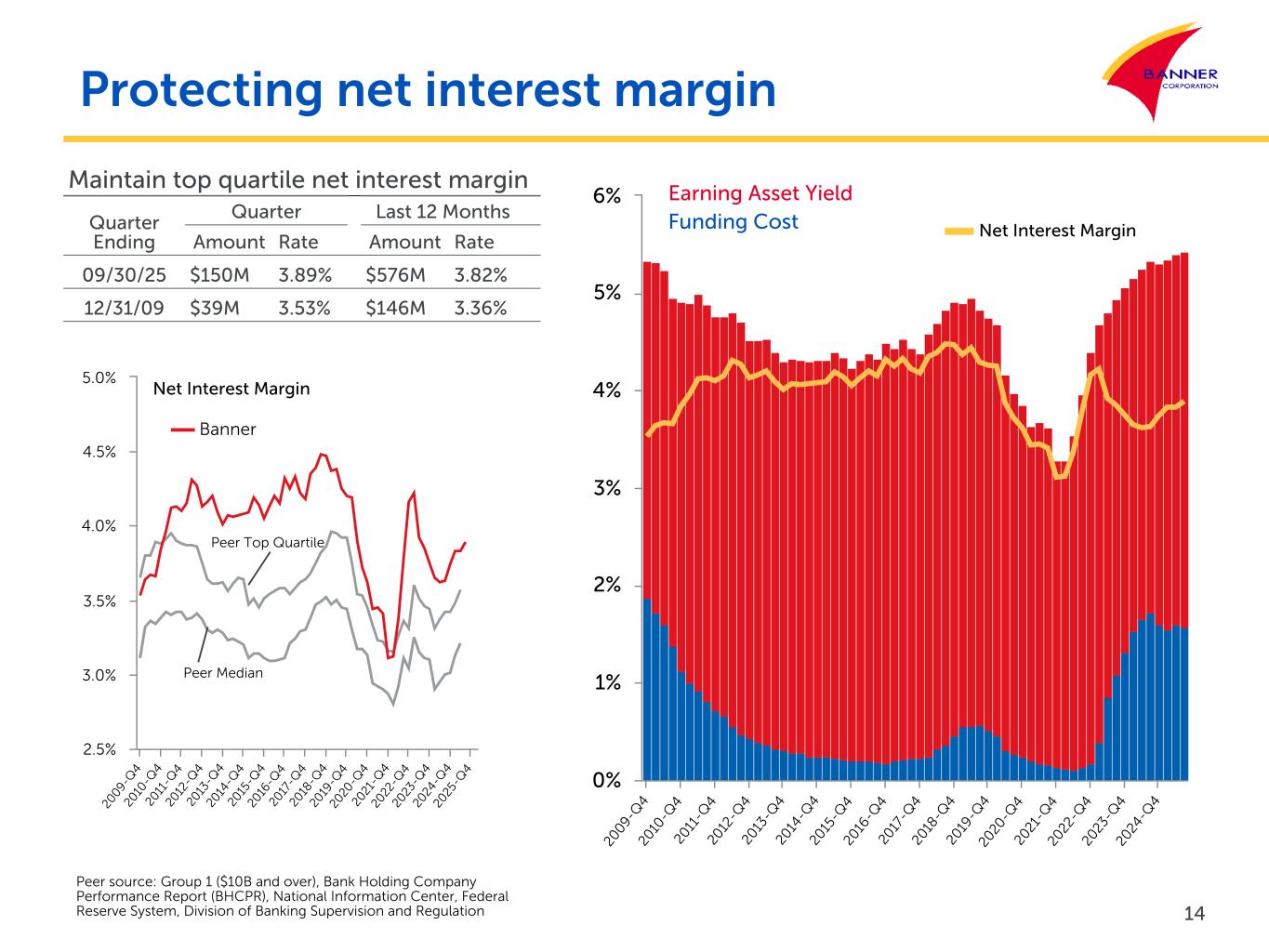
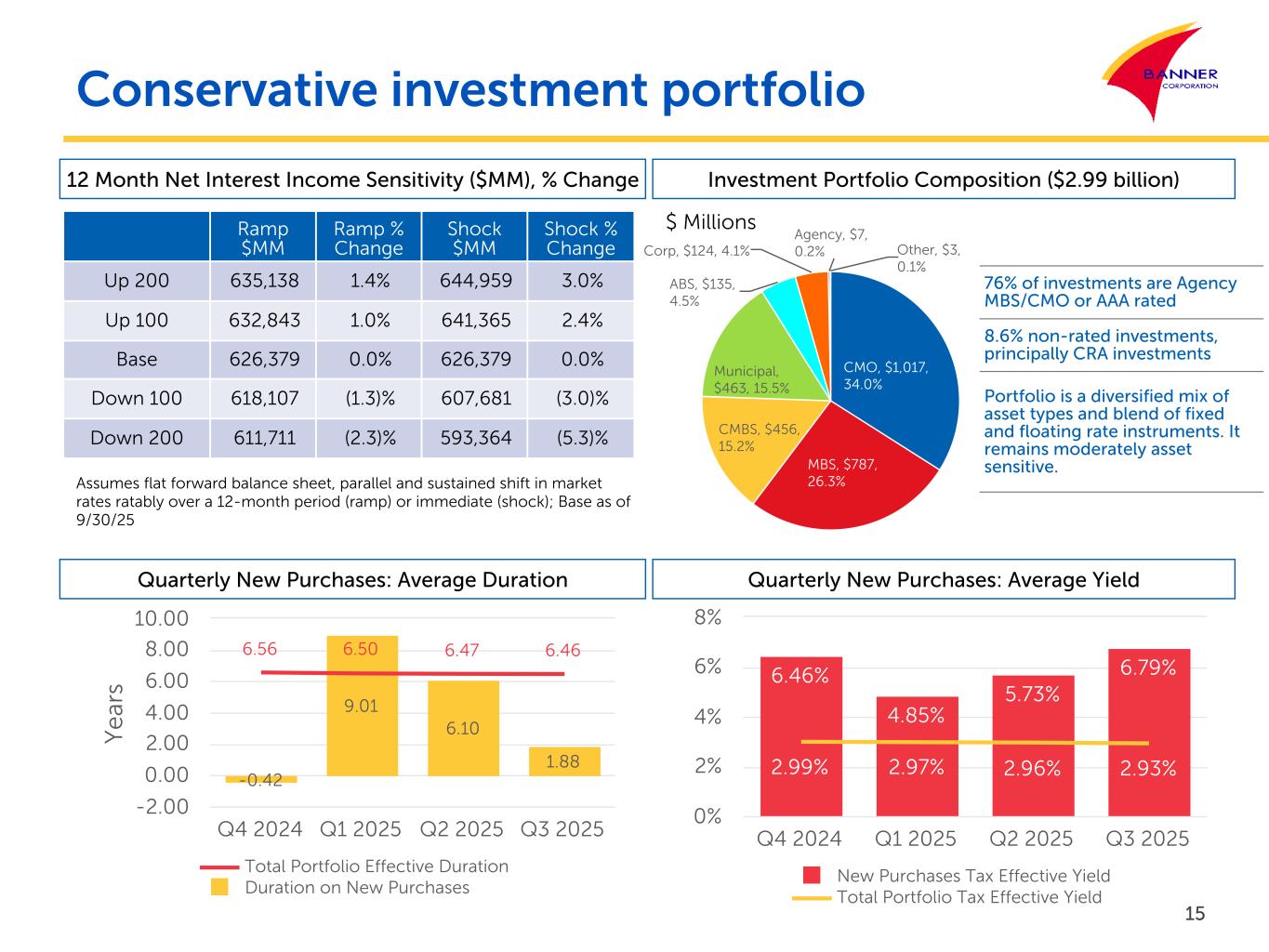
Great. Thank you, Jill. We reported $1.54 per diluted share for the third quarter compared to $1.31 per diluted share for the prior quarter. The $0.23 increase in earnings per share was primarily due to an increase in net interest income, a lower provision for credit losses, as well as the current quarter, including a gain of $1.4 million on the disposal of assets while the prior quarter included a loss of $919,000 on the disposal of assets. We experienced strong positive operating leverage during the quarter compared to both the prior quarter and the quarter ended September 30, 2024. As core pretax pre-provision income increased by 8.5% or $5.3 million compared to the prior quarter and increased 18% or $10.4 million compared to the year-ago quarter. Held-for-investment loan balances increased $12 million from the prior quarter as pipelines rebuilt after the strong pull-through we experienced in the second quarter. In addition, we saw higher prepayments in the third quarter. The loan-to-deposit ratio ended the quarter at 84%, giving us ample capacity to continue to add new clients. Total securities decreased $56 million due to a combination of normal portfolio cash flows and some securities being called early. Deposits increased by $489 million during the quarter, primarily due to core deposits increasing $426 million, as well as time deposits increasing $63 million during the quarter. Core deposits ended the quarter at 89% of total deposits. Total borrowings decreased $459 million during the quarter as the growth in deposits was used to pay off short-term FHLB advances. Banner's liquidity and capital profile continue to remain strong with a robust core funding base, a low reliance on wholesale borrowings, and significant off-balance sheet borrowing capacity. As a reflection of our robust capital and strong liquidity positions, Banner repurchased 250,000 shares during the quarter and announced a 4% increase in its declared dividend to common shareholders. Net interest income increased $5.6 million from the prior quarter due to a 6 basis point increase in net interest margin, as well as average earning assets increasing by $151 million and one more interest-earning day in the current quarter. The increase in average earning assets was due to average loan balances increasing $33 million, and total average interest-bearing cash and investment balances increasing $118 million. Tax equivalent net interest margin was 3.98% for the quarter compared to 3.92% for the prior quarter. Earning asset yields increased 3 basis points due to a 5 basis point increase in loan yields as adjustable loans continue to reprice higher and new loans are being originated at rates higher than the average yield on the loan portfolio. Average rate on new loan production for the quarter was 7.35% compared to 7.27% for the prior quarter. Funding costs decreased by 3 basis points as a result of using the increase in deposit balances to reduce higher-cost borrowings. Deposit costs were 1.50% for the quarter, which was 3 basis points higher than the prior quarter, as the deposit growth during the quarter was mostly in interest-bearing accounts and non-interest-bearing deposits ended the quarter at 33% of total deposits. Total noninterest income increased $3 million from the prior quarter, primarily due to the current quarter, including a gain of $1.4 million on the disposal of assets, while the prior quarter included a loss of $919,000 on the disposal of assets. Both of these related to back-office consolidation. In addition, the current quarter had a net gain of $377,000 on security sales and a positive fair value adjustment of $223,000 on financial instruments carried at fair value. Total noninterest expense was $674,000 higher than the prior quarter with increases in marketing, employee-related expenses, occupancy expenses, and business and use tax; and partially offset by lower salary and benefit expenses. The current quarter occupancy expense included $1 million of lease termination costs associated with the back office space consolidation compared to $834,000 in the prior quarter. Our strong capital and liquidity levels position us well to continue to execute on our super community bank business model. This concludes my prepared comments. Now I will turn it back to Mark.
Thank you, Jill and Rob for your comments. That concludes our prepared remarks. And Claire, we will now open the call and welcome questions.
Operator
We have our first question from Jeff Rulis from D.A. Davidson.
Speaker 5
I wanted to check in on the margin. I guess kind of two-part question is the first kind of the timing of those FHLB payoffs. I mean I guess I'm kind of centering on is there a tail of benefit that came later in the quarter in terms of the go-forward margin? And then maybe just checking in on Rob, maybe the impact of rate sensitivity as you see the cut we had and the expected cuts ahead?
Speaker 4
Sure, Jeff. We began to see the deposits come in early in the quarter. I would say the FHLB advances were paid down by about the halfway mark of the quarter, which could provide some additional benefit from a funding cost perspective. Regarding the impact of the Fed rate cuts on our margin, I think it's similar to what we've discussed previously. If there are no Fed actions in a quarter, we would expect our margin to expand, like we observed in the third quarter. As adjustable-rate loans continue to reprice upward, we would anticipate funding costs to remain relatively flat, absent the pay down of borrowings. If the Fed makes one rate cut during the quarter, we expect our margin to be relatively flat, although it could vary by a basis point or two. Looking at the fourth quarter, we saw a rate cut in September, and both the market and Moody's forecast another cut at the end of October, followed by a third cut in mid-December. In this scenario of multiple rate cuts in one quarter, we expect some moderate margin compression. This is because 29% of our portfolio consists of adjustable-rate loans, which will reprice down. As soon as the Fed cuts rates and we anticipate the second cut, we won’t benefit from the adjustable-rate loans repricing upwards, as that will offset the first rate cut. We will likely see some improvement in funding costs due to additional deposit rate reductions, but it won't fully offset the impact of the variable floating rates repricing downward.
Speaker 5
Appreciate it. Did you have a September average for the margin?
Speaker 4
Margin was fairly stable. I would say the margin for September is very similar to what we observed during the quarter.
Speaker 5
Got it. Okay. And Mark, I guess just checking in on capital on several fronts, you're pretty active with the dividend and the buyback. I guess the first question is sort of the sensitivity on price. I mean I think you're just below where you were on average, the buybacks in the third quarter. So checking in on buyback activity or appetite versus also the ongoing question on the M&A side, if you care to opine on your interest there.
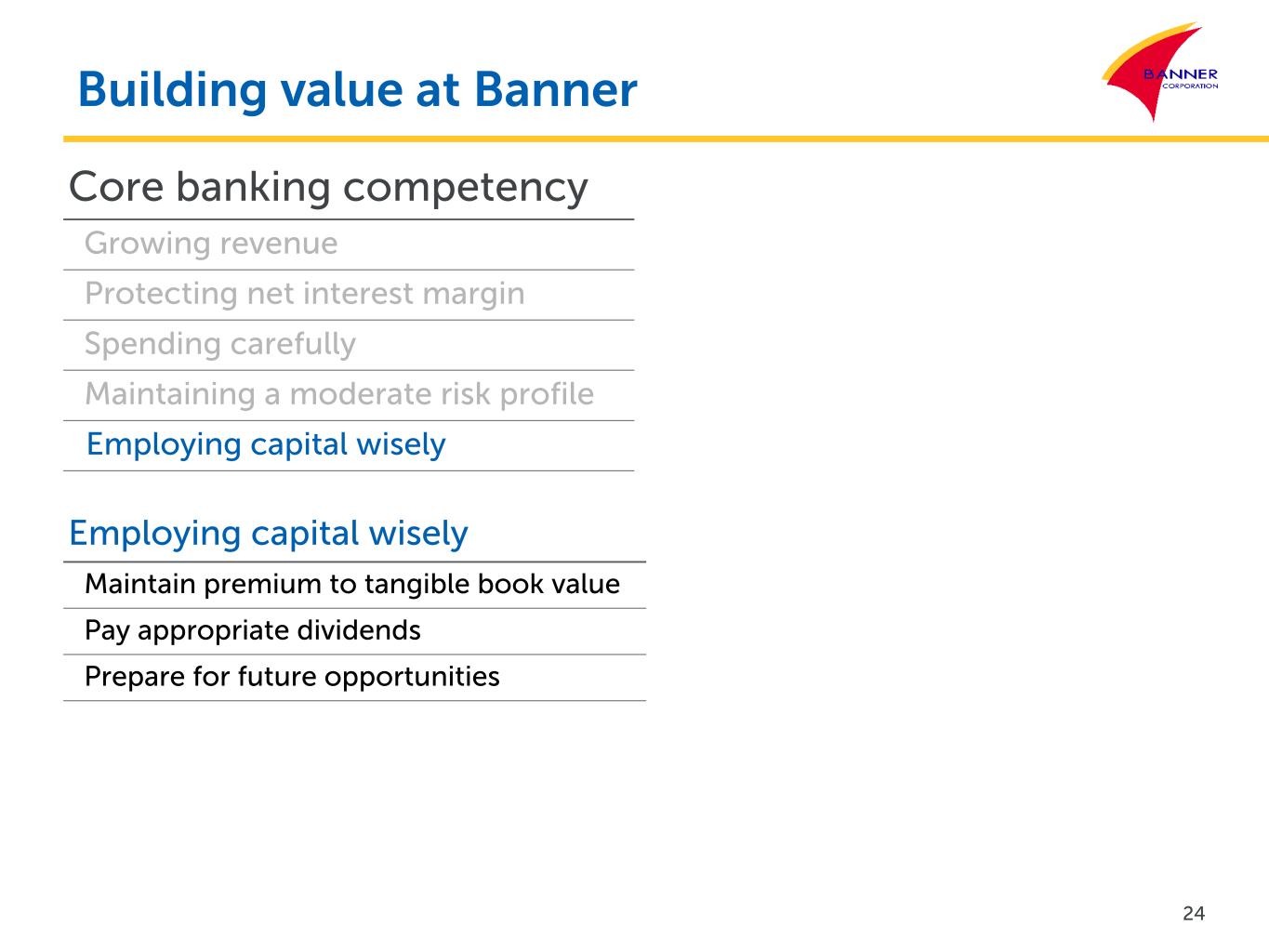
Yes, thank you, Jeff. It's clear that we were confident in buying back shares at an average price of $63.50, and the current pricing suggests we can continue this buyback strategy. We're in the process of accumulating capital, with our TCE ratio at 9.5%. The company's earnings performance is robust, and there is some positive momentum with mergers and acquisitions. If a suitable opportunity arises, we would be ready to pursue additional acquisitions. However, I believe we don't need to make any acquisitions to enhance our earnings power, given our strong performance this quarter and beyond. That said, if a good opportunity comes along, it would be a valuable addition, and we have sufficient capital to make that happen.
Operator
Our next question comes from Kelly Motta from KBW.
Speaker 6
I might just follow up in terms of how you guys are thinking about the buyback. Notably, this was one of the first quarters you guys have repurchased shares in quite a while. Wondering if you can remind us any sort of like what you look at in terms of valuation, how you guys are viewing the buyback? It seems like the door to M&A is open. So just wondering how we should be thinking through greater activity on that versus keeping dry powder ahead.
Speaker 4
Sure, Mark. So yes, Kelly, I mean, we're always looking at the different alternatives for capital deployment. You saw at the end of the second quarter, we essentially paid off the $100 million of sub debt out there, and then the current quarter where we had the repurchase of the 250,000 shares and then also announced the increase in our core dividend by 4%. And I think the range that you saw in this current quarter as far as share repurchases certainly that's a price where we think it's attractive and beneficial to shareholders and the tangible book value earn-back makes sense. I think could extend a bit above where that's at right now. I think as we look at the fourth quarter, we'll look at all the different alternatives for capital deployment, which clearly, the share repurchases is on the table. We do have the share repurchase authorization in place right now that would allow us to continue to do that. But ultimately, it's going to be based on an assessment of the market conditions and what's going on in the market at the time. Right now, we are in a blackout period, so we wouldn't consider that until after we're out of our blackout period.
Speaker 6
Got it. That's helpful. Maybe turning to the balance sheet, your deposit growth was really strong and you managed to pay down some of the FHLB that you had backfilled in the previous quarter. Can you share what drove that growth, particularly if you ran any promotions? Also, how are you approaching deposit pricing following the Fed's cut in September?
Speaker 4
Yes. So a couple of things. I mean if you look back even last year, Q3 is our strongest growth from a deposit standpoint from a seasonality standpoint. That is when the crops come in and the cash comes in from our ad clients. So it is a strong quarter for us. We weren't running any particular promotions or specials, just the standard hard work that all of our teams do in going out and trying to get existing clients to bring additional deposits on balance sheet and continuing to prospect for new clients. On the pricing side of things, so post-Fed rate cut, we did reduce our advertised CD specials, which, as you know, are generally below market already, but we pretty much took the full 25 basis points and a reduction of the advertised CD rates. And then we also reduced our high-yield savings account, the different tiers there as well. And that probably, let's say, that range from 5 to 20 basis points depending on what the tier was. And then we also looked at our exception price clients and took some reduction there as well.
Speaker 6
Got it. Last question for me, if I can just sneak it in related. Your average cash balances were elevated in part due to the significant deposit growth you had. I'm just wondering how we should be thinking about the liquidity position on the balance sheet and optimizing that.
Speaker 4
Yes. Throughout the quarter, we maintained a higher average cash balance than usual. Our perspective on this is that it serves as dry powder, allowing us to fund loan growth in the fourth quarter without relying on wholesale borrowings. I'll let Jill discuss loan growth in more detail for the fourth quarter.
Speaker 7
I wanted to touch on the competitive landscape a bit. Originations declined slightly quarter-over-quarter, and while there's some noise, I'm curious about what you believe drove the decrease. Is it weaker demand, slower pull-through in the pipelines, or increased competition? We've been hearing about more competition, particularly from larger banks that are moving down market, which is leading to some pricing competition. I would like to know what you're observing on the demand side. We've noted the mid-single-digit loan growth guidance, but could you elaborate on what you're seeing regarding demand for originations and the competitive landscape?
Speaker 3
Sure, David. So I think I'm pretty consistent in the message that the competitive landscape is it's not really unchanged. We're competing all the time for all of the deals that we book. Certainly, there are players who are coming back in offering some maybe different terms than we would. But by and large, the competitive landscape is the same. I would suggest that the decline in originations this quarter was multifaceted, right? We had that really strong pull-through in the second quarter. Our pipelines have built and are continuing to build. So they're really strong going into the fourth quarter. The reaction to the 25 basis point rate cut was really rather muted on the credit side where people were saying, great, but when is the next one coming, expecting a little bit more. So I think as we start to see that, it will pull some of the fourth quarter pipeline through a little bit faster. And again, fourth quarter is generally a strong quarter for us. I feel like I missed one piece of your question there, David. So it was competition, it was pipeline, and did I get it? Or is there something else?
Speaker 7
Yes, that covers it. To follow up on the competitive landscape, there are two aspects to consider. We've mainly heard that competition is centered around pricing. Where are you currently seeing new origination yields and spreads? Have you noticed any changes in the competitive environment, possibly affecting underwriting, structures, and standards, or has that remained stable from your perspective?
Speaker 3
Mostly held up well. I mean we are seeing a little bit more stretching in terms of ask for longer interest-only periods, while people wait for rate cuts to come down and take that term P&I amortizing loan structure. So there's that ask, and I think some of the banks are more inclined to give longer terms than we would be. But generally, the underwriting is holding up.
Rob, I'd like you address some of our investment. And then, Jill, if you want to talk about some of the talent we've added.
Speaker 4
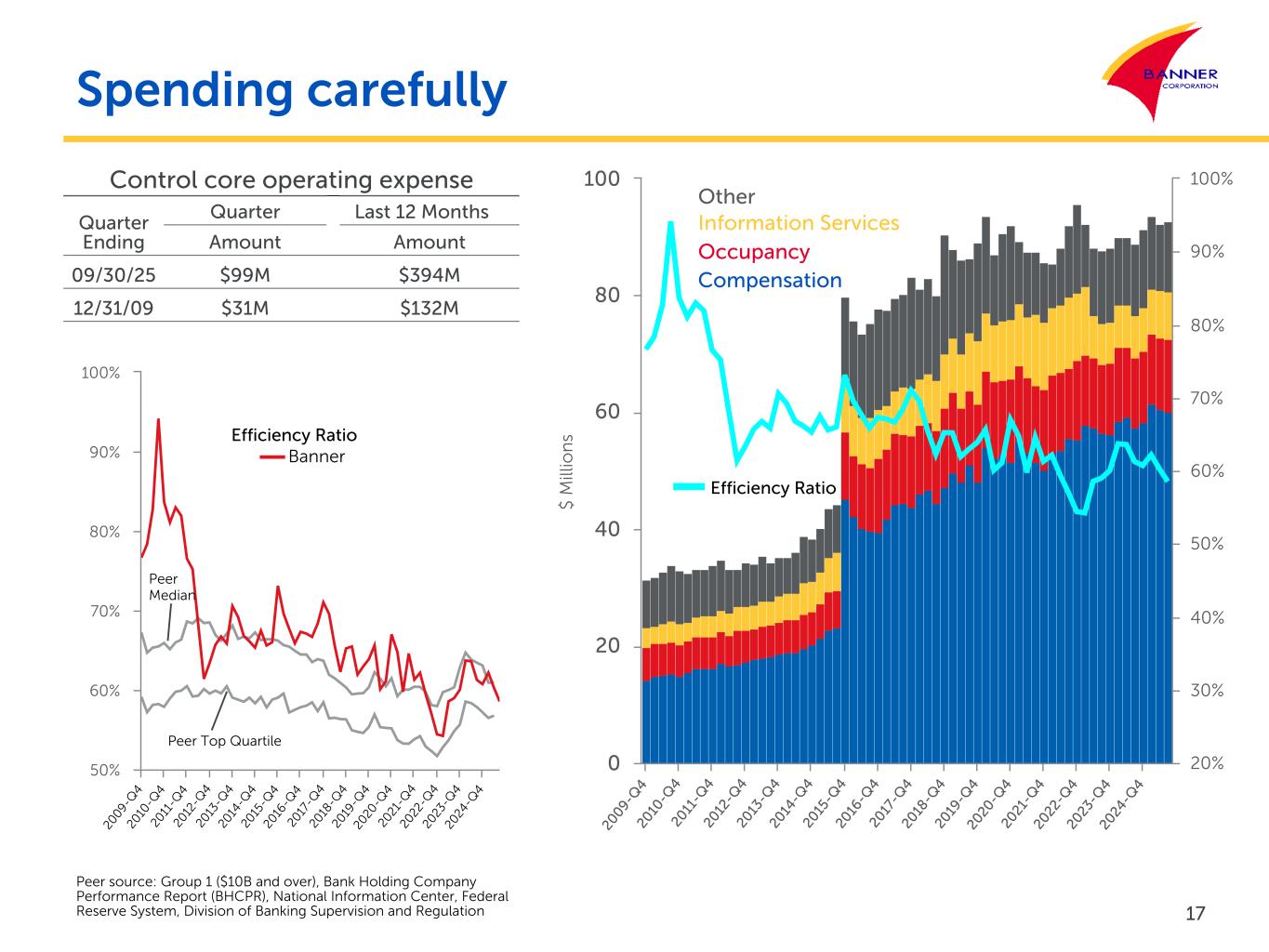
Sure, Mark. So David, we've discussed some of our investments. The largest ones are in technology. We've launched the new deposit loan origination system earlier this year, with more modules set to go live in the fourth quarter. This system will enhance our scalability, allowing for growth in loans and deposits without significantly increasing expenses. The benefits will be seen over the long term. Initially, implementing a new system typically raises expenses temporarily, but eventually, we will achieve efficiencies and scalability. We are also investing in fraud-related technology, as fraud costs exceed our credit losses. This remains a focus for us. Additionally, AI is a priority for everyone. Given our moderate risk profile, we have focused on governance to avoid additional risks while implementing various AI technologies. We are now starting to activate AI features in our existing software and are developing a longer-term strategic AI roadmap. We view AI not as an immediate cost-cutting tool, but as a long-term investment that will enhance our scalability.
Speaker 3
Yes. The talent story is, David, the same as before and that we continue to add talent in the commercial and commercial real estate teams up and down the West Coast primarily this quarter, but we've added team leaders, RMs, commercial real estate lenders as well. And they're coming from different organizations that are experiencing, whether it's changes in the management structure and/or just an overall feel that the way Banner is operating open for business, they just resonate with our current operating model.
Speaker 8
Rob, I'd like to ask you about deposit costs. Can you share your approach? I understand you've reduced some promotional rates and adjusted certain pricing after the Fed's 25 basis point cut. I'm interested in how you're handling the rate cuts this time compared to the 100 basis points we saw late last year. Are you addressing the cuts similarly to last year regarding the magnitude, particularly in relation to interest-bearing deposits? Should we expect a comparable response to the initial 100 basis points, or do you think client behavior has shifted or become more sensitive?
Speaker 4
Sorry. Sorry, Mark. Yes. So Andrew, I guess what I'd start with is from a modeling perspective, we're modeling a 28% deposit beta. But from an overall, what we're expecting on this set of rate cuts compared to last time, right now, our expectation is that we would get a similar deposit beta that we got last time on it. And that deposit beta has always lagged. We've taken initial cut at it and reduction, and then we evaluate what we're seeing in the marketplace and determine if we can layer in some additional rate reductions related to that. So it's generally a lag impact. And then the other piece of it, of course, is your CD book. The CD book doesn't reprice right away. So even though we've reduced our advertised specials by 25 basis points, it takes some time for that to flow through. Probably about 2/3 of our CD book typically matures within a 6-month period of time. So it will take a little bit for us to see the impact on the CD side of things.
Speaker 8
Understood. I appreciate it. And then just on the kind of customer sensitivity, do you feel like that's changed much relative to prior experiences?
Speaker 4
We haven't seen that at this point. I mean we implemented the reduction in rates shortly after the Fed made their move in September, and we haven't received any kind of feedback from clients necessarily as far as their sensitivity to that deposit cut. I mean, keep in mind, a lot of our largest depositors are commercial depositors and those same clients saw a reduction in some of their loans at the same time. So they're seeing kind of a benefit on one side of it even if they're getting a reduction on what we're paying them. So I think they're sophisticated enough to understand that as rates come down, the rate that they're earning on the deposits, all market deposit rates are going to come down. So we haven't seen any unusual sensitivity at this point.
Speaker 8
Yes. Okay. Great. I appreciate it. And then just sticking kind of overall on the margin, I heard your comments about just expectations in a static quarter versus a quarter where the Fed cuts. But if I look back over the past year, your margin is up. I think it's right at 25 basis points relative to 3Q of last year. We digested 100 basis points of rate cuts over that timeframe. Just when I look at the next 12 months, I think consensus margin is up only 6 basis points over the next 12 months. And then historically, you've been able to operate in that 4.25% to 4.5% margin range. So I guess my two questions are, one, do you feel like the 6 basis points is kind of conservative on the NIM forecasting over the next 12 months? And then just over the medium term, do you feel like a 4.25% to 4.50% kind of margin range is still achievable?
Speaker 4
Yes. So Andrew, I guess in general, what I'd say is, I mean, ultimately, it's going to be dependent on how aggressive the Fed gets and how they approach any kind of reductions. And so it's a bit hard to predict what they're going to do if you're going out longer term. At 3.98% right now, I mean, I think we're happy to see us approaching 4%. I haven't necessarily considered the idea of getting back to 4.25% or 4.30%. It's going to depend on the Fed actions, but I don't see that as being something. I think if you're saying 6 basis points is what the market is expecting, I mean, I think that's a more reasonable number certainly than getting up to 4.25% or 4.30%.
Speaker 9
I had a couple of questions I want to start with Jill. Jill, can you kind of give us maybe a thumbnail sketch or a high-level overview of how the company incorporates monitoring personal guarantees, appraising collateral on an ongoing basis as a way to maintain the solid credit quality you have and have shown over the recent past?
Speaker 3
Sure, Tim. So as to reappraising properties, that is not an ongoing annual updated type of action. What we do as we're going into these credits and then through the life of the loan is consider changes to the environment, contemplate changes to cap rates using original appraisals and current operating income and kind of use that as a basis to test where we think we are, recognizing that the originating on the values that we go into are generally much lower than some of the other lending institutions out there. And so we've got room for some valuation drop, certainly where things still continue to work. We also are continually contemplating what might happen to top line and revenue changes. So we're stressing in the income side we're stressing the cap rates and that sort of thing to look at the collateral. When you go back to guarantees, I would suggest to you that the vast majority, and I'm talking north of 95% of our loans have personal or corporate guarantees that add significant secondary sources of repayment to backstop losses. Did I get all of your questions?
Speaker 9
Yes, that's great. Sorry. Yes, it was. Yes. And I just want to clarify, I wasn't so much asking about how often you reprice collateral. It's more of how are you ensuring that the borrowers are doing what they told you they were going to do, right? So the personal guarantees does that, monitoring the collateral for sure, actually does that as well. So yes, but that...
Speaker 3
I was reviewing the financial statements for covenant compliance, and we require regular updates from our borrowers. Testing the covenants is essential to understand what they are doing and whether they are properly maintaining their properties, including conducting annual site inspections and similar checks.
Speaker 9
Okay, great. That's helpful. And then my question for you, Jill. The loan-to-deposit ratio is solidly in the mid-80s, which is a good number. Is there any consideration to increasing it? Do you see any possibility of that ratio being higher than 90?
Speaker 3
We have in the past certainly been higher than that. I would say that if we were to approach 95% would be okay. I don't think we'd go above that.
Speaker 4
Overall, we have many loyal clients at Banner. Our deposit base is split evenly between rural and metro areas, which results in a stable client base that values the long-term relationships we offer. Because of this, we haven't noticed significant client movement, and we've successfully attracted new clients, particularly through our focus on small businesses that tend to generate more deposits and loan balances. It still requires significant effort from our relationship teams to acquire quality new clients, and I wouldn't say there has been a change in how often clients switch banks.
Well, the core deposit growth year-over-year has been very strong at Banner. So good job. And then, Mark, if I can ask a question about a special dividend. Now I understand your capital priorities. I understand your comments about M&A. But I also see kind of the anticipated capital growth on your income statement over the next, say, 12 months or so. Is it possible that a special dividend could be on the table discussion this time next year? Well thanks for the question, Tim. I don't think we rule out any options on capital deployment. We've done special dividends in the past. I would suggest to you that the reason you do a special dividend is to do a blunt force reduction in your capital position, and you can do it very quickly and with little execution risk. I don't suspect that is our top priority to do a special dividend. I think our core focus is making sure that we focus on the core dividend itself. We'll continue to deploy capital through share repurchases as appropriate and certainly M&A. But we've done special dividends in the past. It's less likely that we will do one going forward unless we really need to reduce capital for some reason.
Speaker 5
Hello. Mark, can you hear me?
I can hear you now, Jeff.
Speaker 5
Okay. Sorry, just a follow-up. On the consolidating of office space, I want to kind of see if we're at the sort of the tail end of that in terms of some of the lease termination costs and the gains and losses on that. Is that at the tail end of that or kind of continue to nibble away at those as it comes up?
Speaker 4
Thanks, Jeff, it's Rob. So yes, we'll see a couple more quarters of those back-office consolidation lease termination costs come through. So I would say we're going to see a potentially through the middle of '26. So maybe over the next 3 quarters, just depending on how quickly we can get through the space that we're exiting. So we'll see a few more quarters of it.
Operator
We currently have no further questions, so I will hand back to Mark for any closing remarks.
Right. Thank you, Claire. As I stated, we're very proud of the Banner team and our third quarter 2025 performance. Even though it doesn't appear that the market is reflecting the value of Banner or some of the other bank stocks, but in particular, Banner, we're very proud of our performance and how we are viewing the future performance for Banner. So thank you for your interest in our company and joining the call today. We look forward to reporting our results to you again in the future. Have a great day, everyone.
Operator
This concludes today's call. Thank you for joining. You may now disconnect your lines.