Operator
Hello, everyone, and thank you for joining the Banner Corporation fourth quarter 2025 conference call and webcast. My name is Lucy, and I'll be coordinating your call today. During the presentation, you can register a question by pressing star followed by one on your telephone keypad. If you change your mind, please press star followed by two. It is now my pleasure to hand over to President and CEO Mark Grescovich to begin. Please go ahead.
Thank you, Lucy, and good morning and happy to hear everyone. I would also like to welcome you to the fourth quarter and full year 2025 earnings call for Banner Corporation. Joining me on the call today is Rob Butterfield, Banner Corporation's Chief Financial Officer, Jill Rice, our Chief Credit Officer, and Rich Arnold, our Head of Investor Relations. Rich, would you please read our forward-looking, safe harbor statement?
Sure, Mark. Good morning. Our presentation today discusses Banner's business outlook and will include forward-looking statements. These statements include descriptions of management's plans, objectives, or goals for future operations, products or services, forecasts of financial or other performance measures, and statements about Banner's general outlook for economic and other conditions. We also may make other forward-looking statements in the question and answer period following management's discussion. These forward-looking statements are subject to a number of risks and uncertainties and actual results may differ materially from those discussed today. Information on the risk factors that could cause actual results to differ are available in the earnings press release that was released yesterday and the recently filed Form 10-Q for the quarter ended September 30, 2025. Forward looking statements are effective only as of the day they are made and Banner assumes no obligation to update information concerning its expectations. Mark?
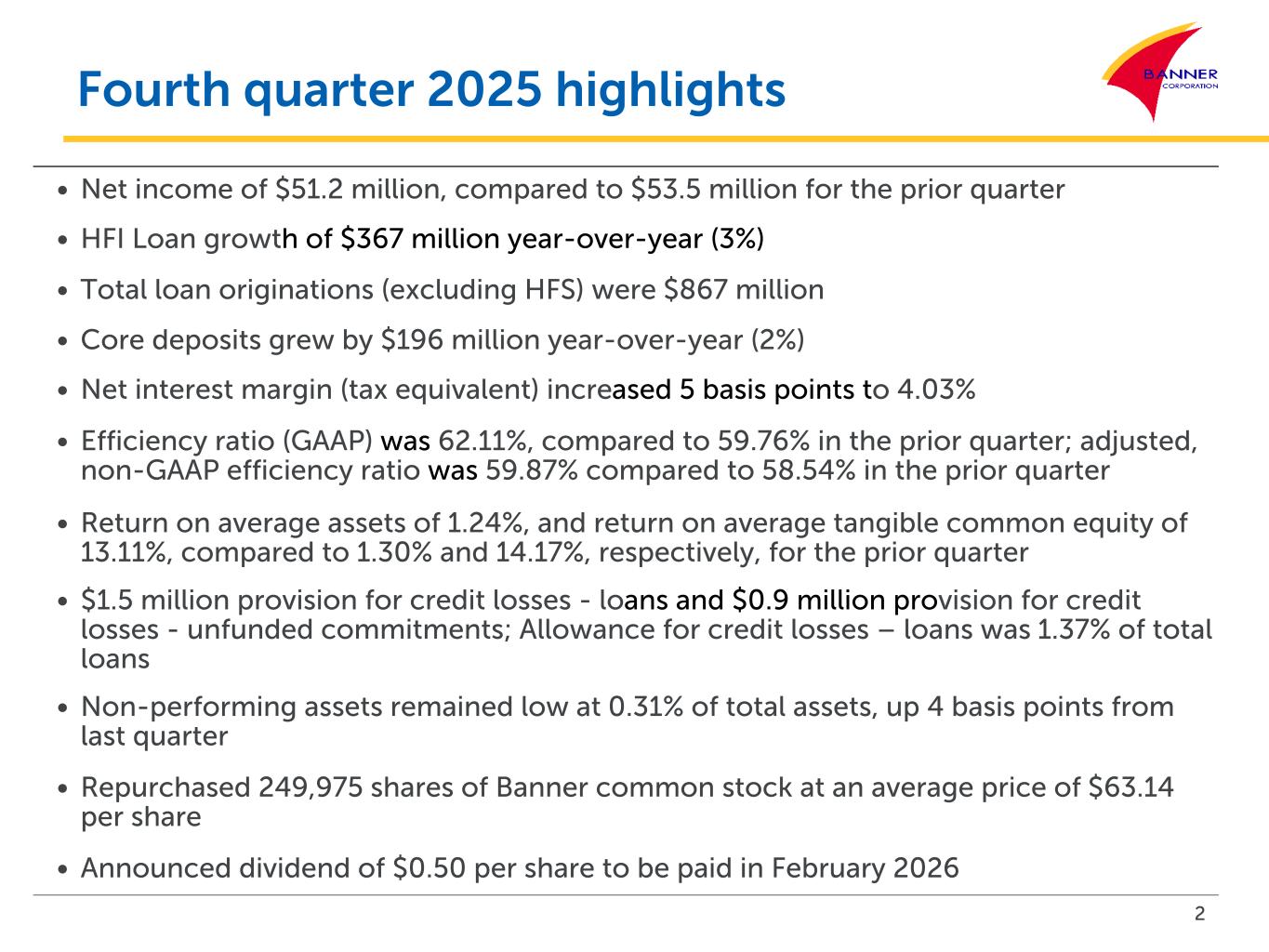
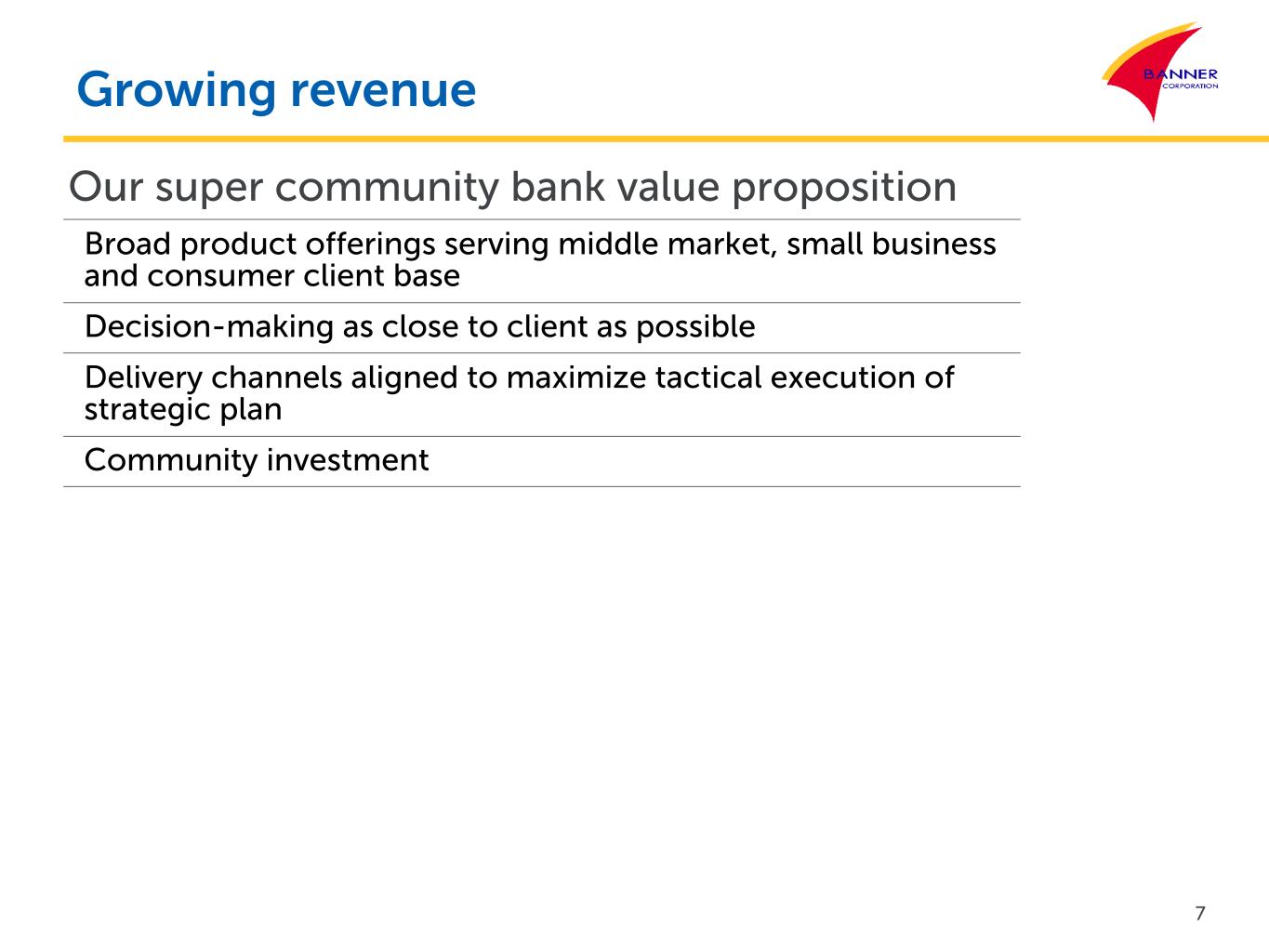
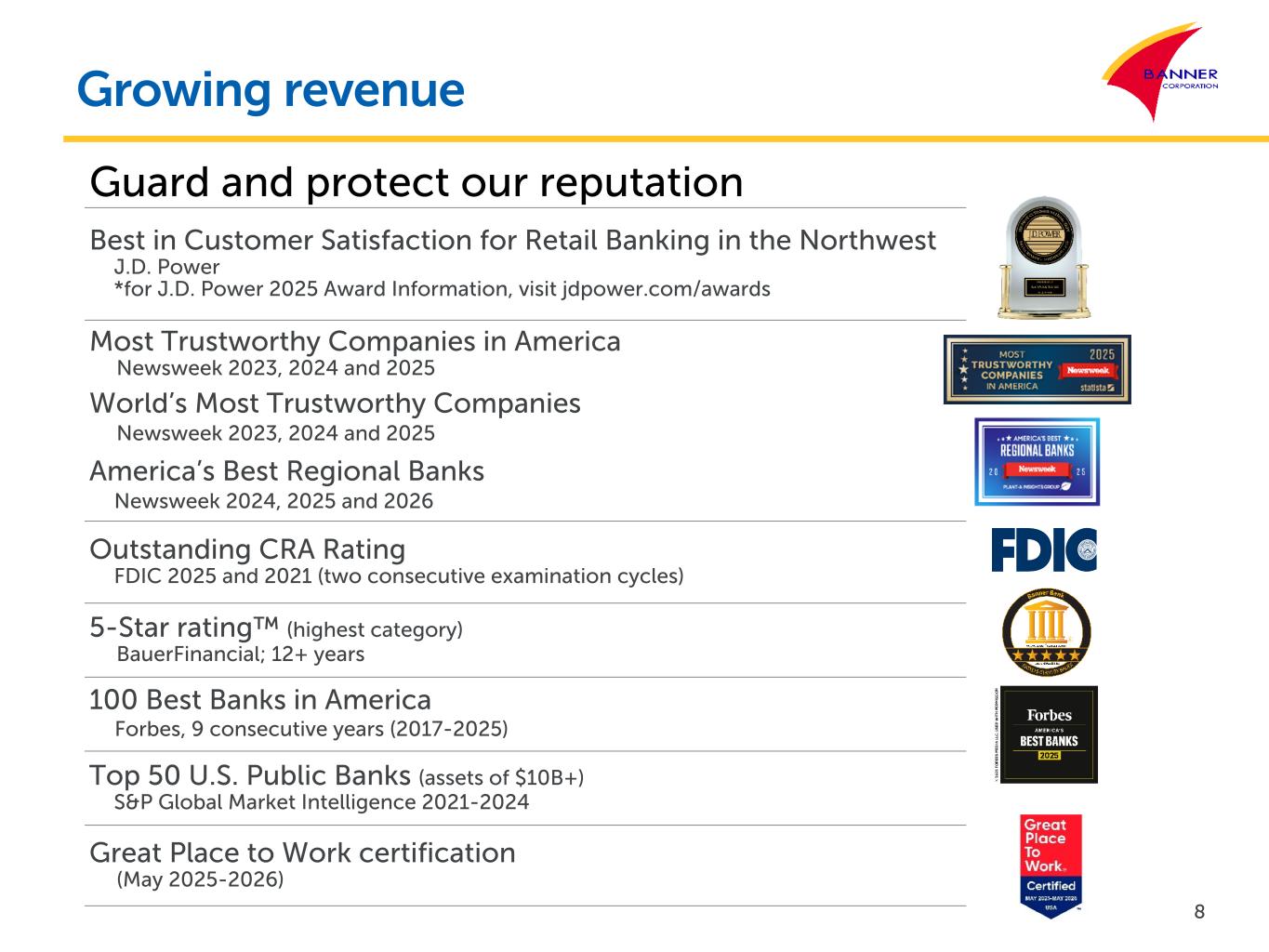
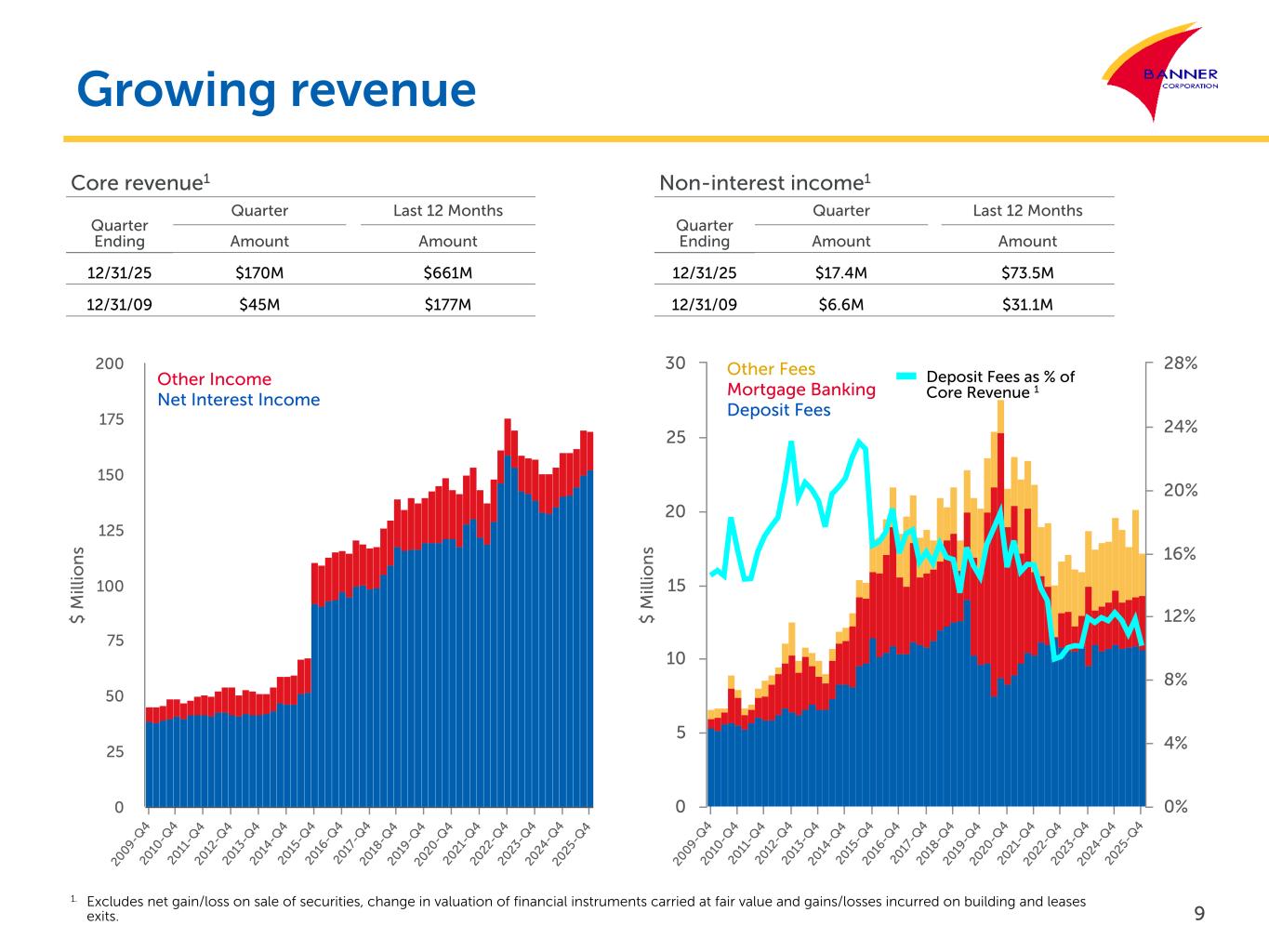
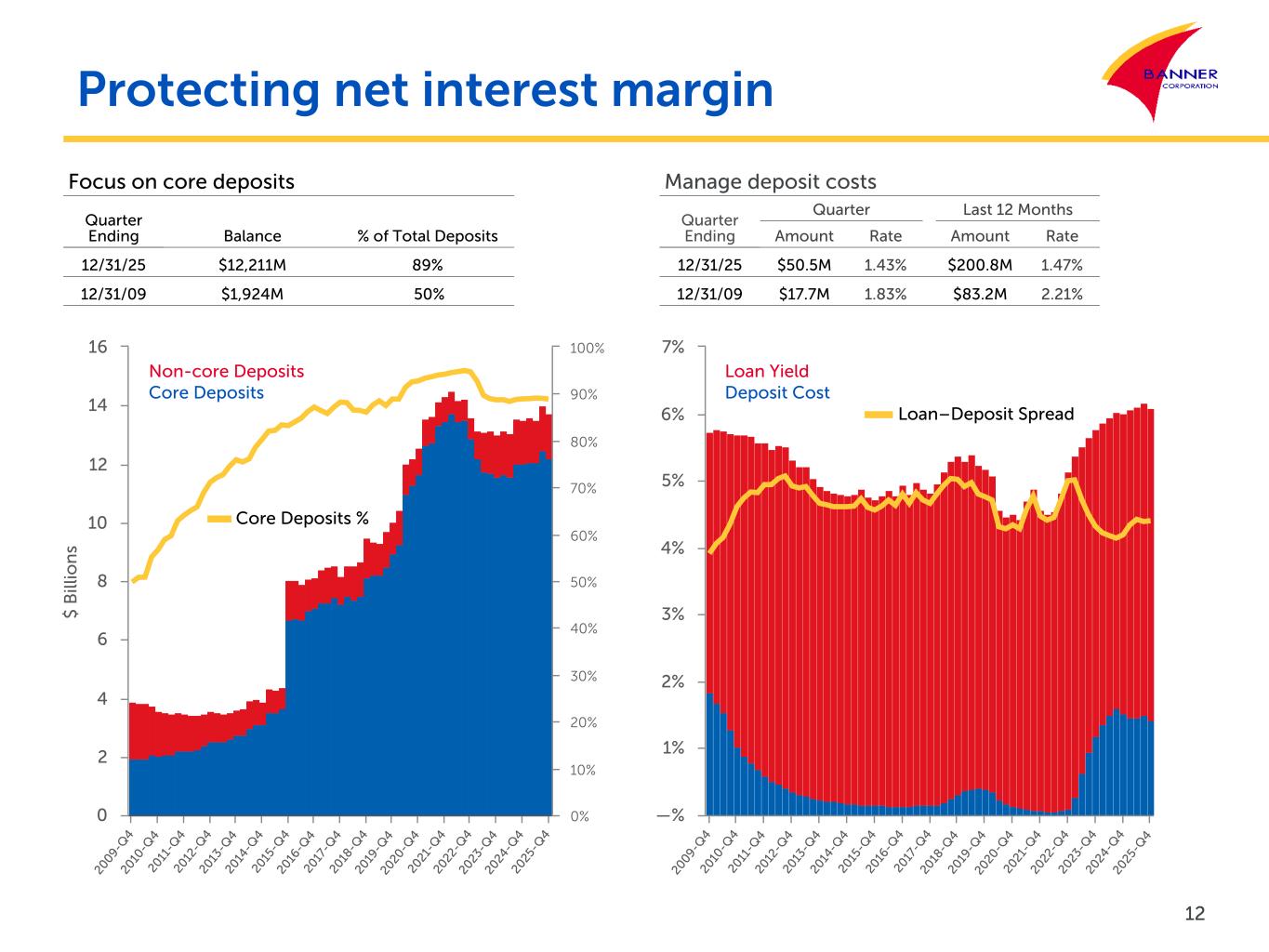
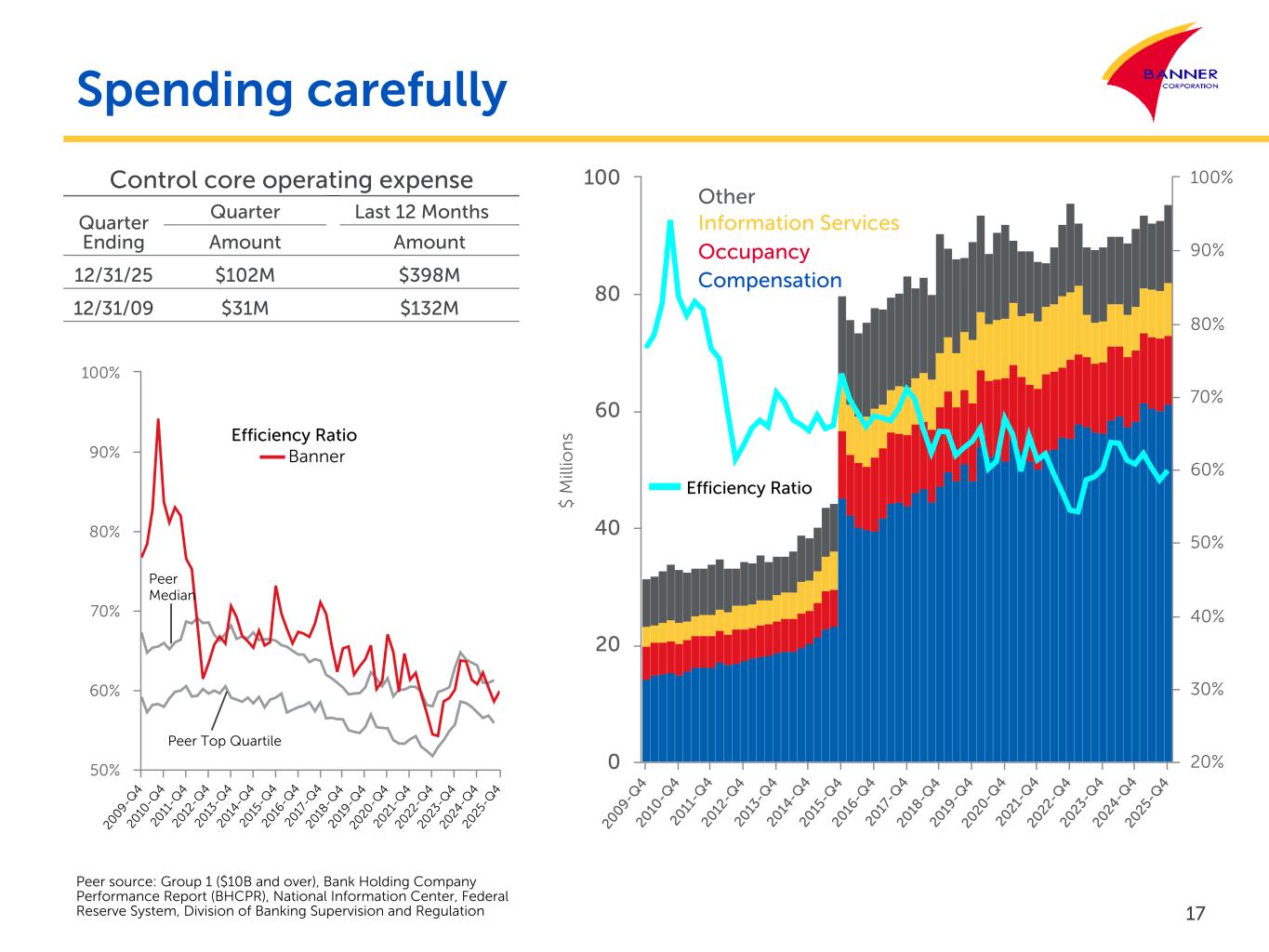
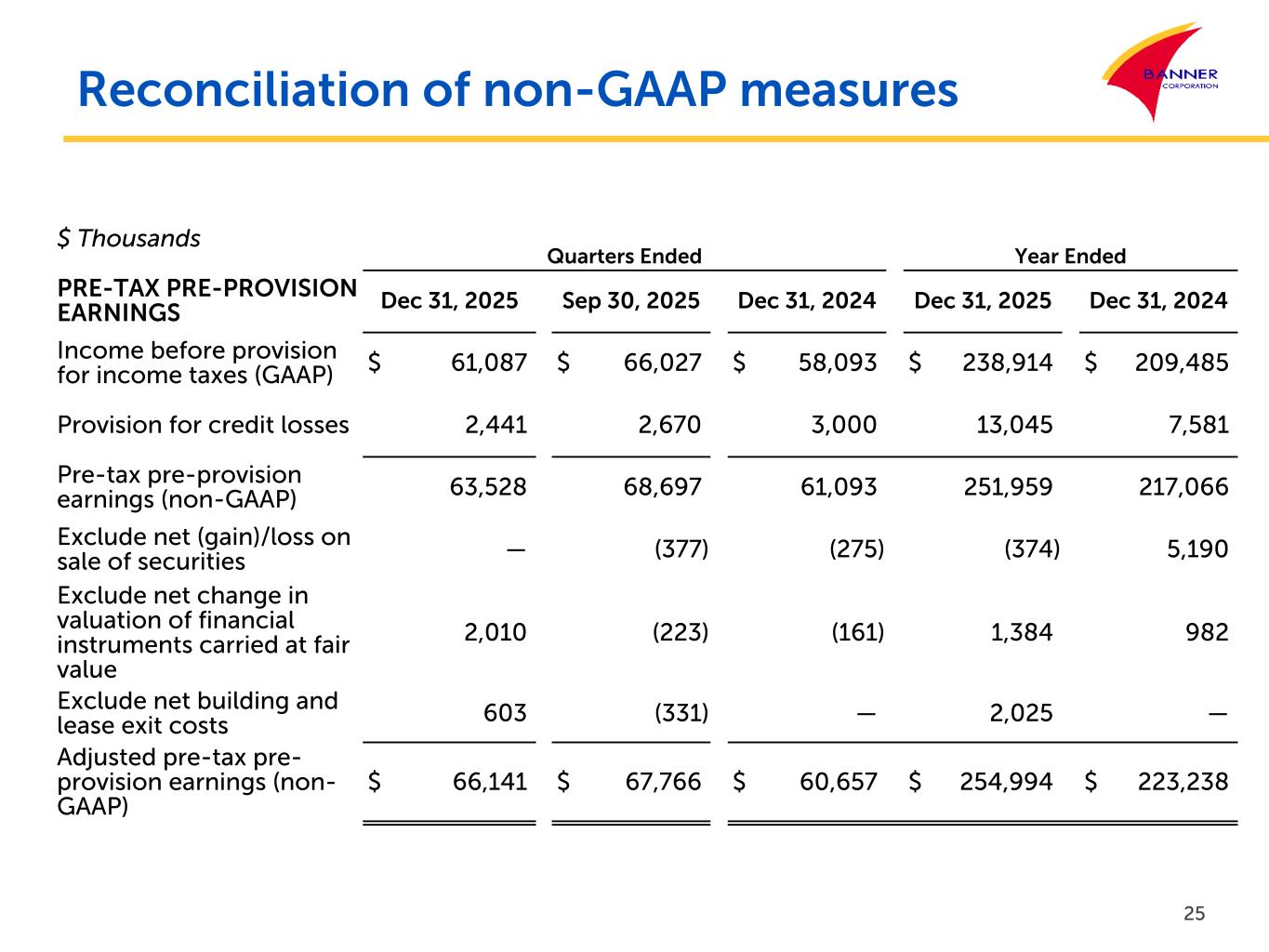
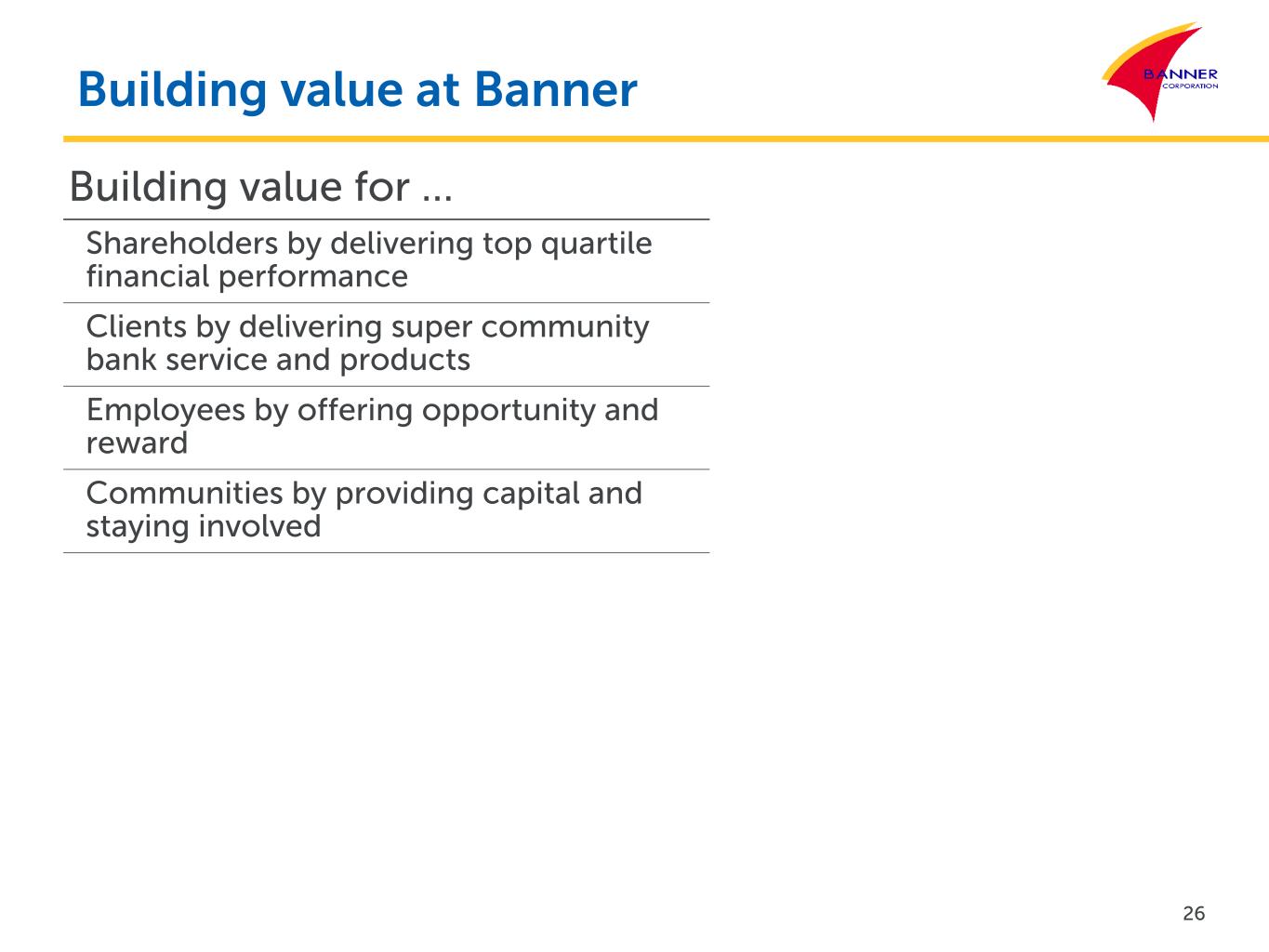
Thank you, Rich. As is customary, today we will cover four primary items with you. First, I will provide you high-level comments on Banner's fourth quarter and full year 2025 performance. Second, the actions Banner continues to take to support all of our stakeholders, including our Banner team, our clients, our communities, and our shareholders. Third, Jill Rice will provide comments on the current status of our loan portfolio. And finally, Rob Butterfield will provide more detail on our operating performance for the quarter, as well as comments on our balance sheet. Before I get started, I wanted to thank all of my 2,000 colleagues in our company who are working extremely hard to assist our clients and communities. Banner has lived our core values, summed up as doing the right thing, for the past 135 Our overarching goal continues to be to do the right thing for our clients, our communities, our colleagues, our company, and our shareholders, and to provide a consistent and reliable source of commerce and capital through all economic cycles and change events. I am pleased to report again to you that is exactly what we continue to do. I am very proud of the entire Banner team that are living our core values. Now let me turn to an overview of our performance. As announced, Banner Corporation reported a net profit available to common shareholders of $51.2 million, or $1.49 per diluted share for the quarter ended December 31st, 2025. This compares to a net profit to common shareholders of $1.54 per share for the third quarter of 2025 and $1.34 per share for the fourth quarter of 2024. For the full year ended December 31, 2025, Banner reported net income available to common shareholders of $195.4 million, or $5.64 per diluted share, compared to $168.9 million, dollars for $4.88 per share for the year ended December 31, 2024. Our strategy to maintain a moderate risk profile and the investments we have made and continue to make in order to improve our operating performance have positioned the company well for the future. Rob will discuss these in more detail shortly. The strength of our balance sheet, coupled with the strong reputation we maintain in our markets, will allow us to manage through the current market uncertainty. To illustrate the core earnings power of Banner, I would direct your attention to pre-tax, pre-provisioned earnings, excluding gains and losses on the sale of securities, changes in fair value of financial instruments, and building and lease exit costs. For the full year of 2025, core earnings were $255 million, compared to $223.2 million for the full year of 2024. Banner's fourth quarter 2025 revenue from core operations was $170 million, compared to $169 million for the prior quarter and $160 million for the fourth quarter of 2024. The full year 2025 core revenue was $661 million, compared to $615 million for the full year of 2024, an increase of 8%. We continue to benefit from a strong core deposit base that has proved to be resilient and loyal to Banner, a very good net interest margin, and core expense control. Overall, this resulted in a return on average assets of 1.24% for the fourth quarter of 2025. Once again, our core performance reflects continued execution on our super community bank strategy. That is, growing new client relationships, maintaining our core funding position, promoting client loyalty and advocacy through our responsive service model, and demonstrating our safety and soundness through all economic cycles and change events. To that point, our core deposits continue to represent 89% of total deposits. Reflective of this performance, coupled with our strong regulatory capital ratios, and the fact that we increased our tangible common equity per share by 14% from the same period last year, we announced a core dividend of $0.50 per common share. Finally, I'm pleased to say that we continue to receive marketplace recognition and validation of our business model and our value proposition. Banner was again named one of America's 100 best banks and one of the best banks in the world by Forbes. Newsweek named Banner one of the most trustworthy companies in America in the world again this year and just recently again named Banner one of the best regional banks in the country. JD Power and Associates named Banner Bank the best bank in the Northwest for retail client satisfaction. Our company was also recently certified by Great Place to Work, and S&P Global Market Intelligence ranked Banner's financial performance among the top 50 public banks with more than $10 billion in assets. Additionally, as we've noted previously, Banner Bank received an outstanding CRA rating. Let me now turn the call over to Jill to discuss trends in our loan portfolio and her comments on Banner's credit quality.
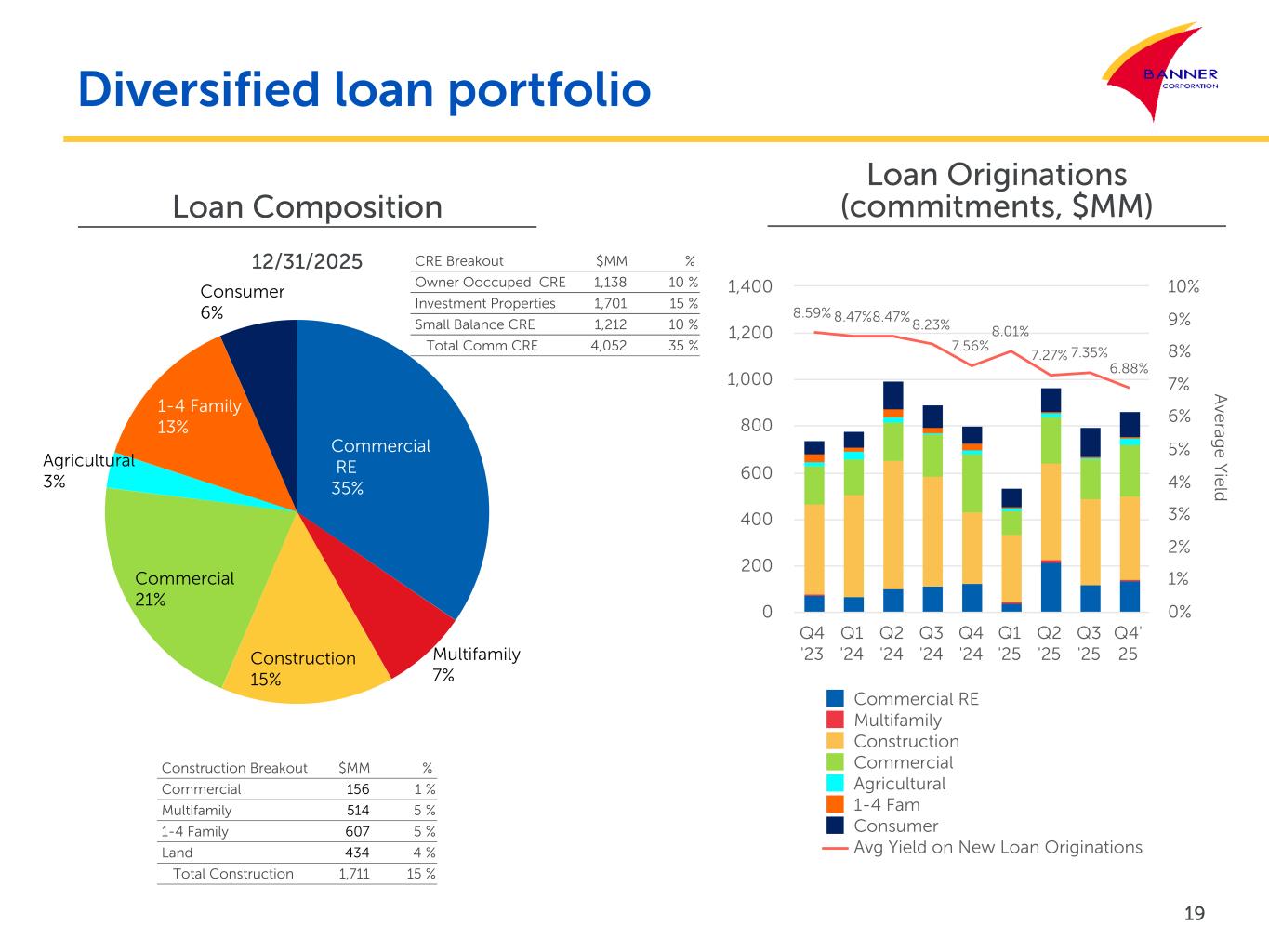
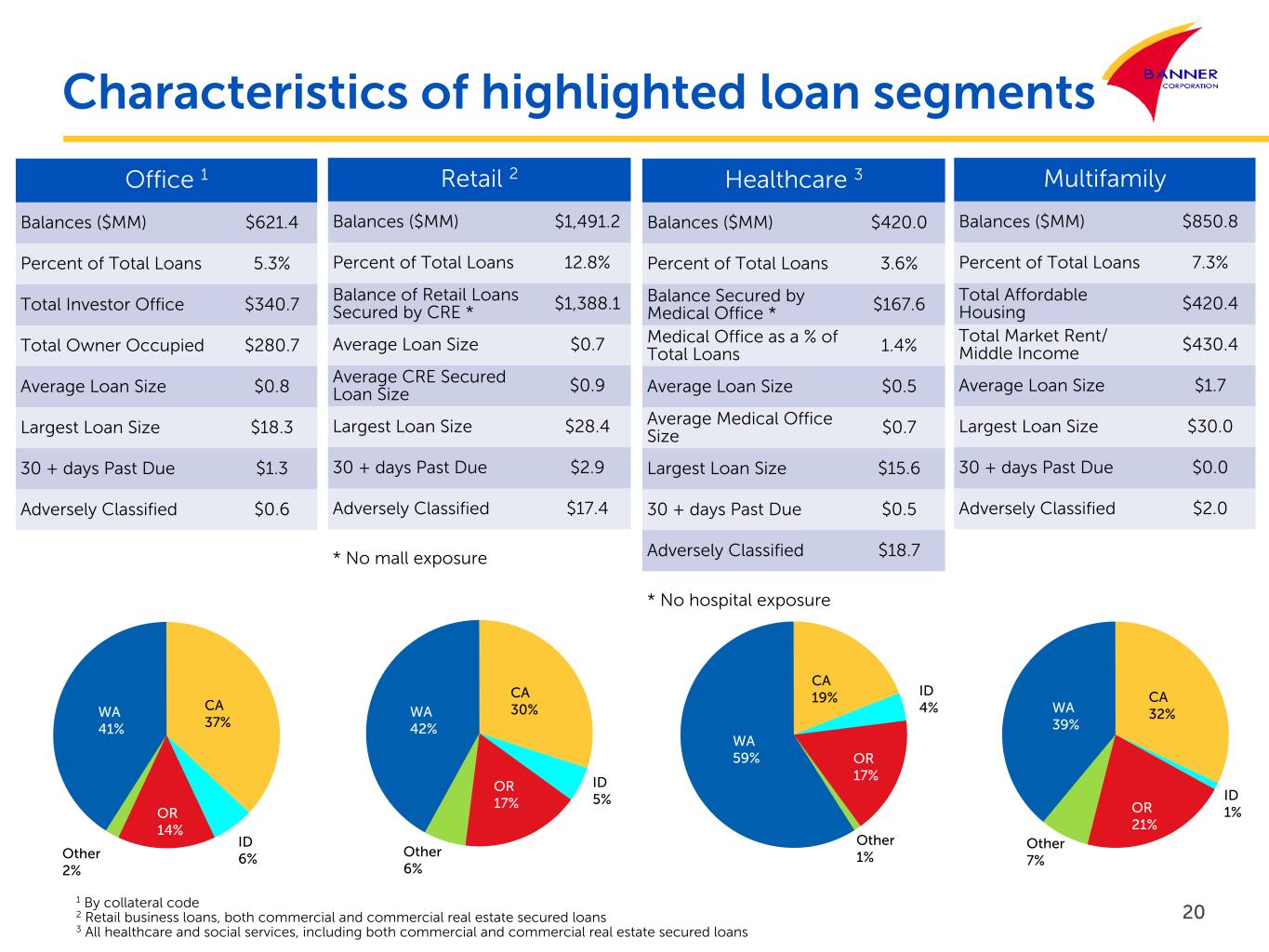
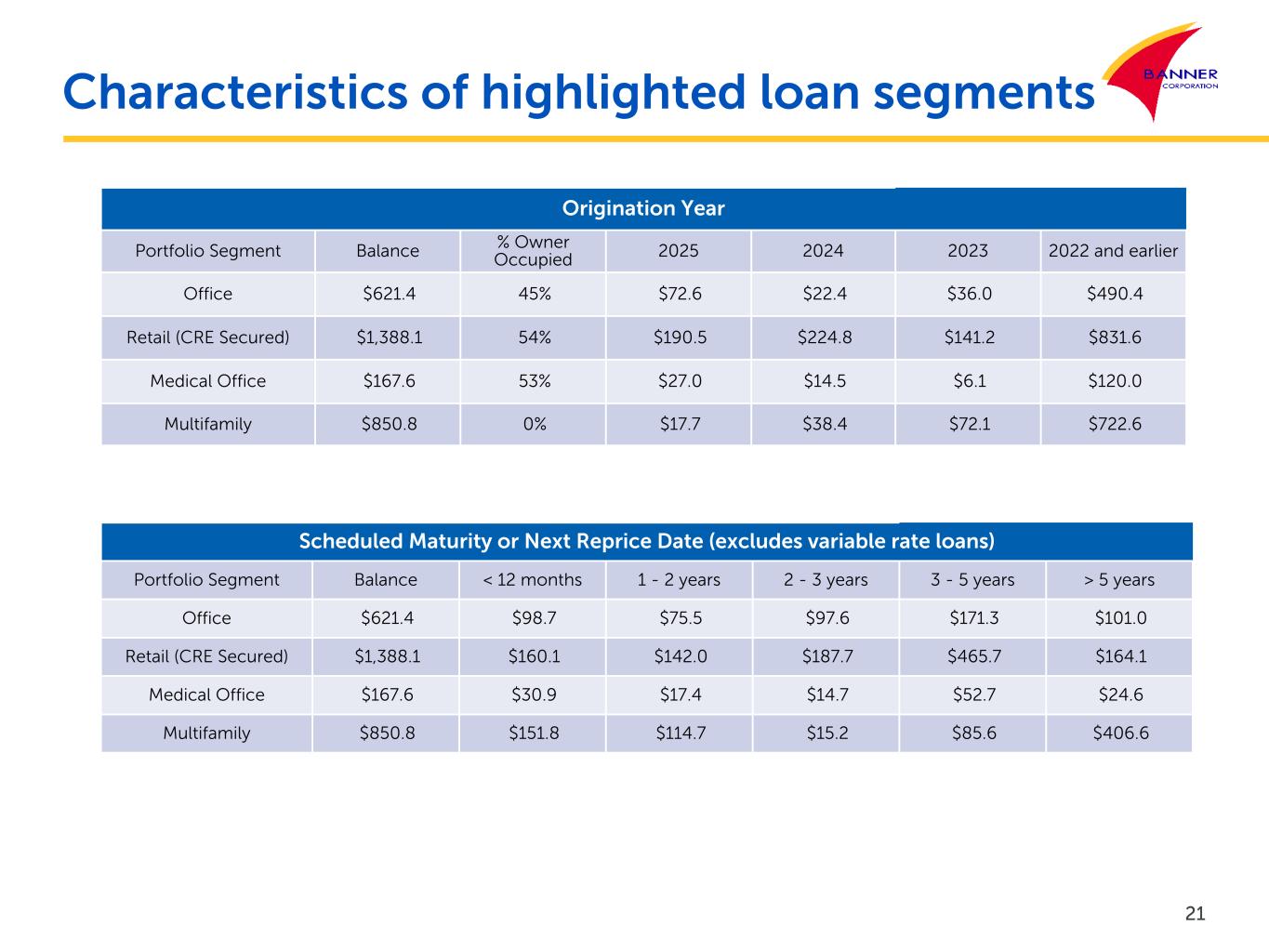
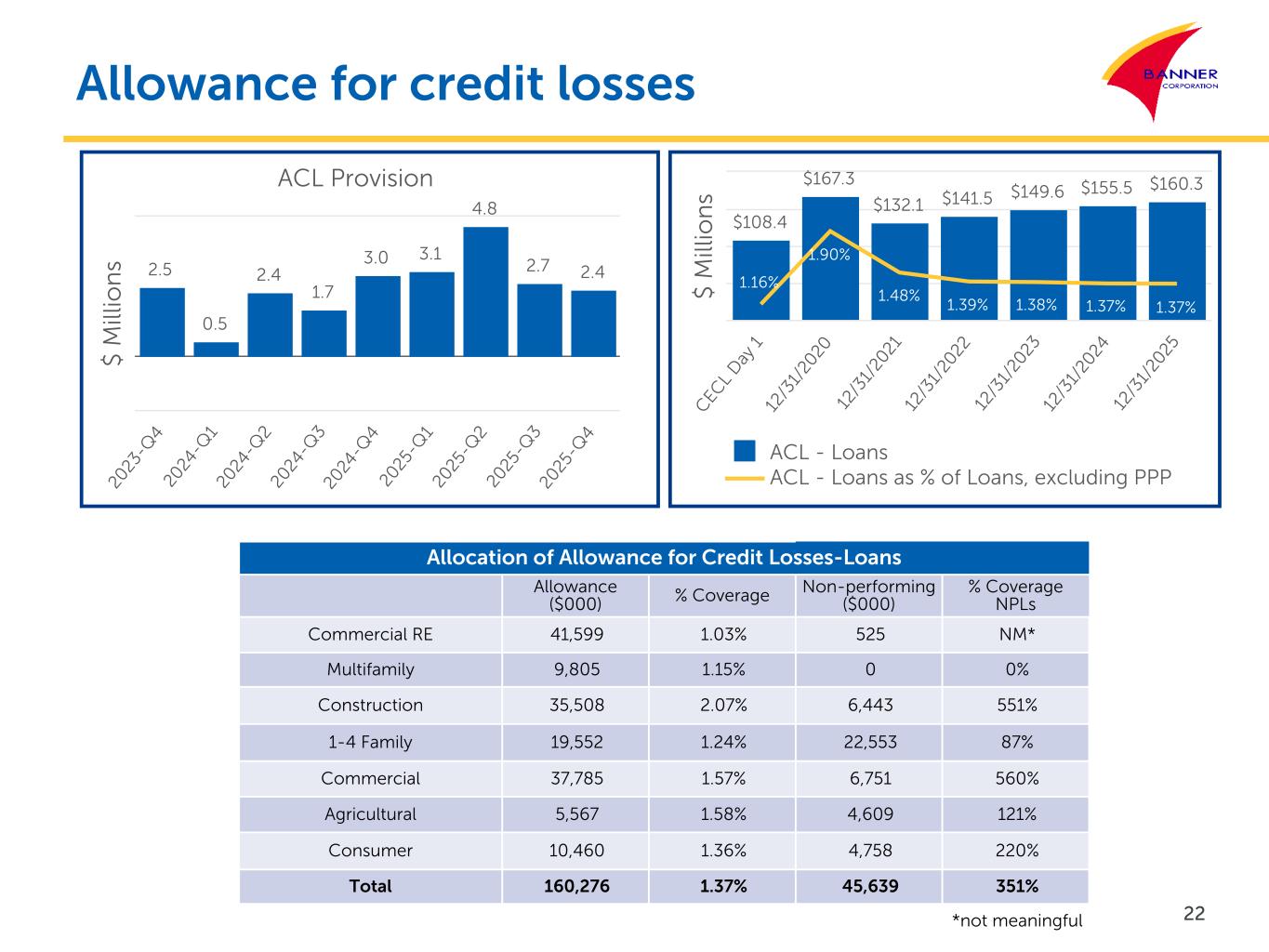
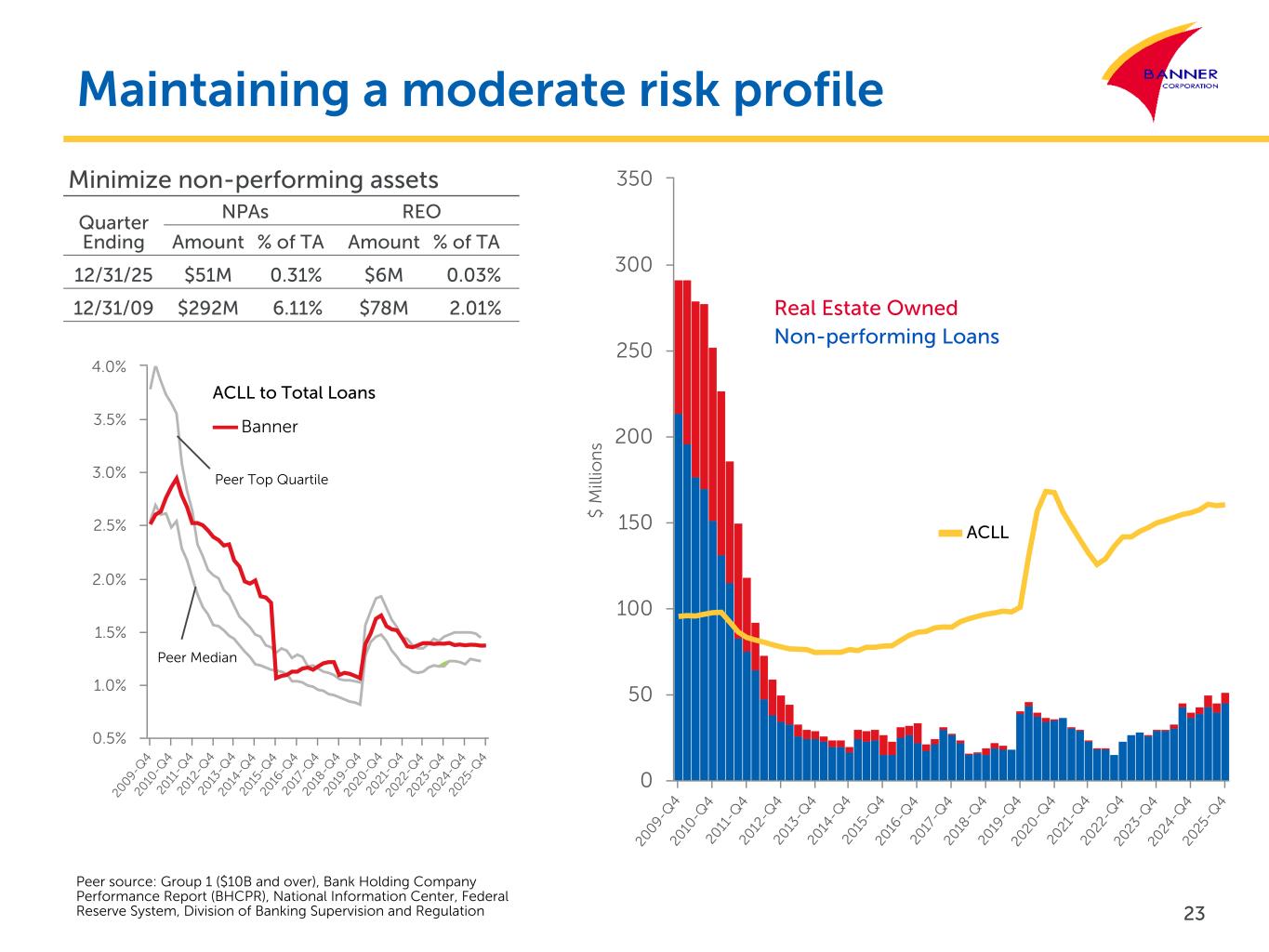
Thank you, Mark, and good morning, everyone. In spite of the solid level of loan originations, up 9% compared to the linked quarter and 8% compared to the quarter ending 12-31-2024, we experienced negligible loan growth during the quarter. Loan production was offset by higher than expected affordable housing tax credit paydowns, a small number of both CRE and shared national credit payoffs, and significantly lower C&I line utilization, down 3% in a quarter and 4% year-over-year. Year-over-year, portfolio loan balances increased 3.2%. Within the commercial real estate portfolio, we reported solid growth year-over-year, with investor CRE increasing 5% and owner-occupied CRE increasing 11%. This growth was diversified both in product type and geography and was granular in nature, with our small business teams providing nearly 40% of the owner-occupied originations by As mentioned earlier, the fourth quarter results were impacted by prepayments. The decline, year-over-year, in the multifamily portfolio is primarily the result of stabilized localized properties moving to the secondary market. Looking at the construction portfolios, construction lending has long been a core competency at Banner and it continues to be a source of strength. In aggregate, it remains well balanced at 15% of total loans. The growth in commercial construction, 1-4 family construction, and land and land development reported in the quarter reflects the continued funding of previously approved projects. The decline reflected in the multifamily construction was primarily driven by the affordable housing tax credit paydowns mentioned earlier. In spite of the housing affordability crisis, our residential construction portfolio at 5% of the total continues to perform well. It remains geographically dispersed and is diversified by product mix and price point with levels of completed inventory continuing to be manageable. Sales activity within the general market, as well as by sub-markets, continues to be monitored closely. The decline reflected in CNI is driven largely by a continued reduction in line utilization down 3% in the quarter and 4% when compared to last December. Additionally, the year-over-year decline includes the exiting of several classified relationships, the refinancing off-balance sheet of multiple shared national credits, as well as the payoff of certain relationships that we chose not to retain based on underwriting terms offered by others. The decline was offset in part by continued growth in the small business segment, up 8% year over year, which continues to be a focus of our community banking division. The modest increase in agricultural balances year over year is the result of expanding a select number of existing relationships. The decline reflected in the 1-4 family portfolio year over year is the result of slightly lower mortgage rates as we closed out 2025, resulting in home refinances. And the growth in home equity lines of credit, both in the current quarter and year over year, represent new originations versus an increase in line utilization. As reported, our overall credit metrics remain strong. Delinquent loans increased modestly, due primarily to a spike in the 1-4 family portfolio and now represent 0.54% of total loans, up 15 basis points from the linked quarter. This compares to 0.49% reported as of December 31, 2024. Adversely classified loans increased by 19 million in the quarter and now represent 1.65% of total loans. And total non-performing assets at $51.3 million continue to represent a modest 0.31% of total assets. The net provision for credit losses for the quarter was $2.4 million, including a $1.5 million provision for loan losses and a $945,000 provision related to unfunded loan commitment. Loan losses in the quarter totaled $1.2 million and were offset in part by recoveries totaling $310,000, with net charge-offs for the year representing a nominal six basis points of average total loans. After the provision, the allowance for credit losses totals $160.3 million, providing 1.37% coverage of total loans consistent with prior quarters. I will close by again saying Banner's moderate risk profile with stable and strong credit metrics, a solid reserve for loan losses, and robust capital levels continues to be significant source of strength. We are well positioned to manage through the balance of this economic cycle and the market uncertainty that comes with it. With that, I will hand the microphone over to Rob for his comments. Rob?
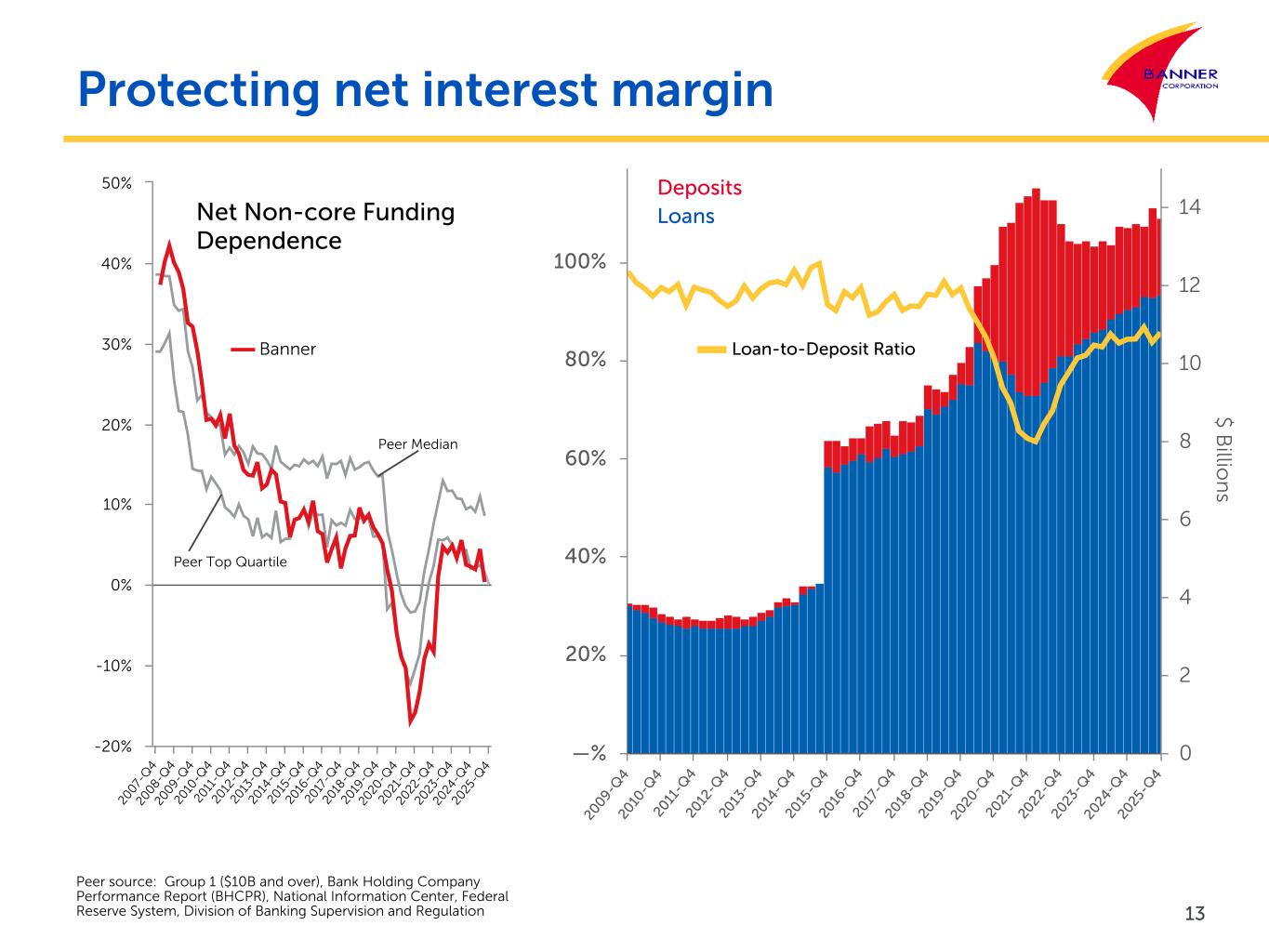
Thank you, Jill. We reported $1.49 per diluted share for the fourth quarter compared to $1.54 per diluted share for the prior quarter. For the full year In the year of 2025, we reported $5.64 per diluted share compared to $4.88 per diluted share for 2024. The decrease in earnings per share compared to the prior quarter was primarily due to a decrease in the valuation of financial instruments carried at fair value, a loss on the disposal of assets related to software no longer being used, as well as an increase in medical and IT expenses, partially offset by an increase in net interest income. Compared to 2024, the increase in the full year 2025 earnings per share was primarily due to an 8.5% increase in net interest income due to higher net interest margin and growth in earning assets. Core pre-tax pre-provision income for the current quarter increased 9% or $5.5 billion compared to the quarter ended December 2024, while core pre-tax pre-provision income for the current year increased 14% or $32 million compared to the prior year. Our performance metrics remain solid as we reported a return on tangible common equity for the current quarter of 13.11% and a return on tangible common equity for the full year 2025 of 13.16%. As Jill previously mentioned, loan growth was limited during the quarter as the increase in production was mostly offset by an increase in payoffs and reduced line utilization. The loan-to-deposit ratio into the quarter at 86%, giving us ample capacity, continued to support existing clients and add new clients. Total securities decreased $13 million during the quarter as normal portfolio cash flows were partially offset by security purchases. Deposits decreased by $273 million during the quarter primarily due to normal seasonal activity as Act clients used deposits to pay downline credit and larger deposit clients started to deploy excess liquidity. Core deposits into the quarter is 89% of total deposits. Total borrowings increased $40 million during the quarter as we continue to have a low reliance on wholesale borrowings. The tangible common equity ratio increased from 9.5% to 9.84%. As a reflection of our robust capital and strong liquidity positions, Banner repurchased approximately 250,000 shares during the quarter and declared a quarterly dividend of 50 cents per share. Net interest income increased 2.5 million from the prior quarter due to a five basis point increase in net interest margin as well as average earning assets increasing $60 million during the quarter. The increase in average earning assets was due to average loan balances increasing $115 million, partially offset by total average interest during cash and investment balances
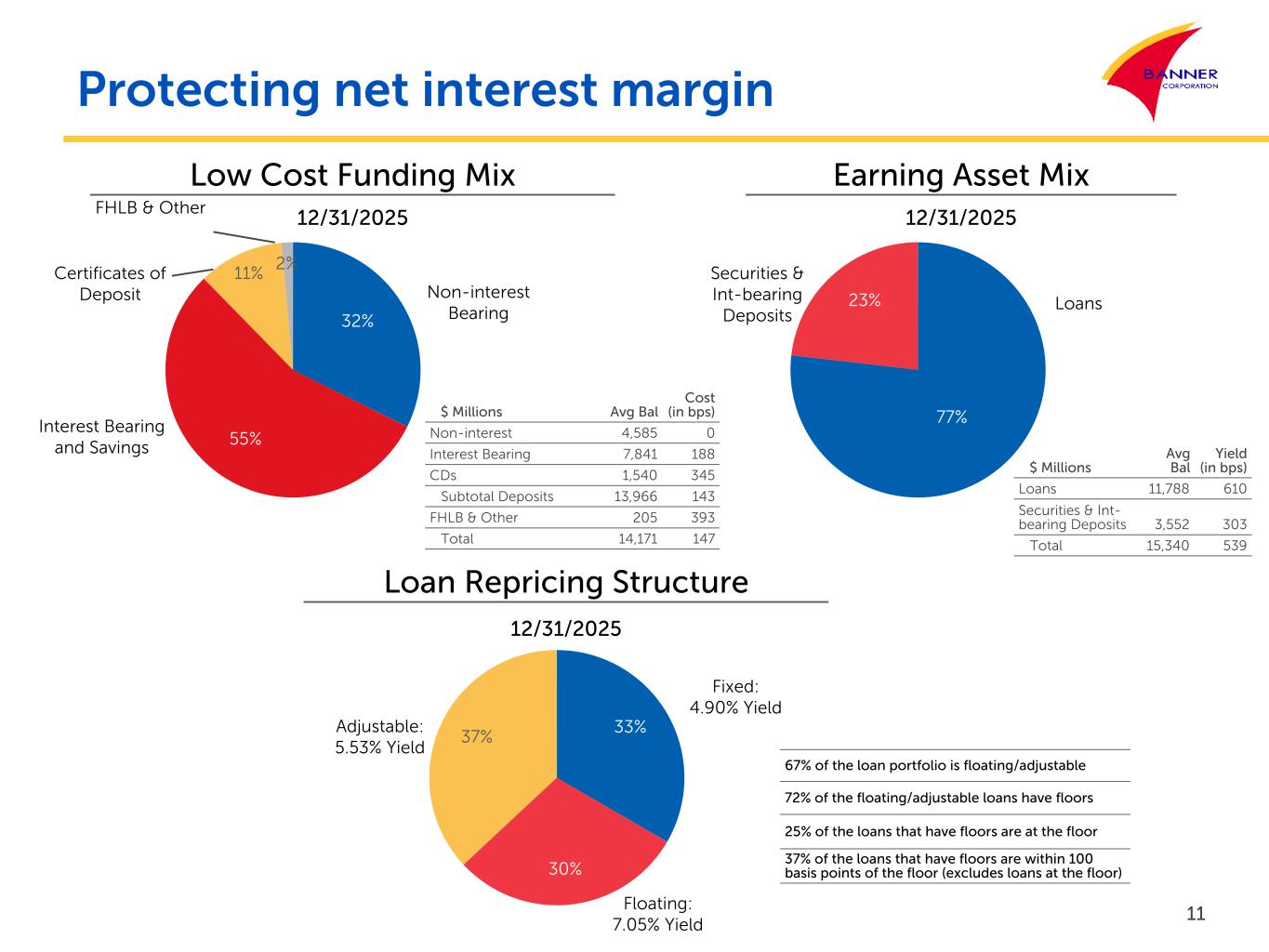
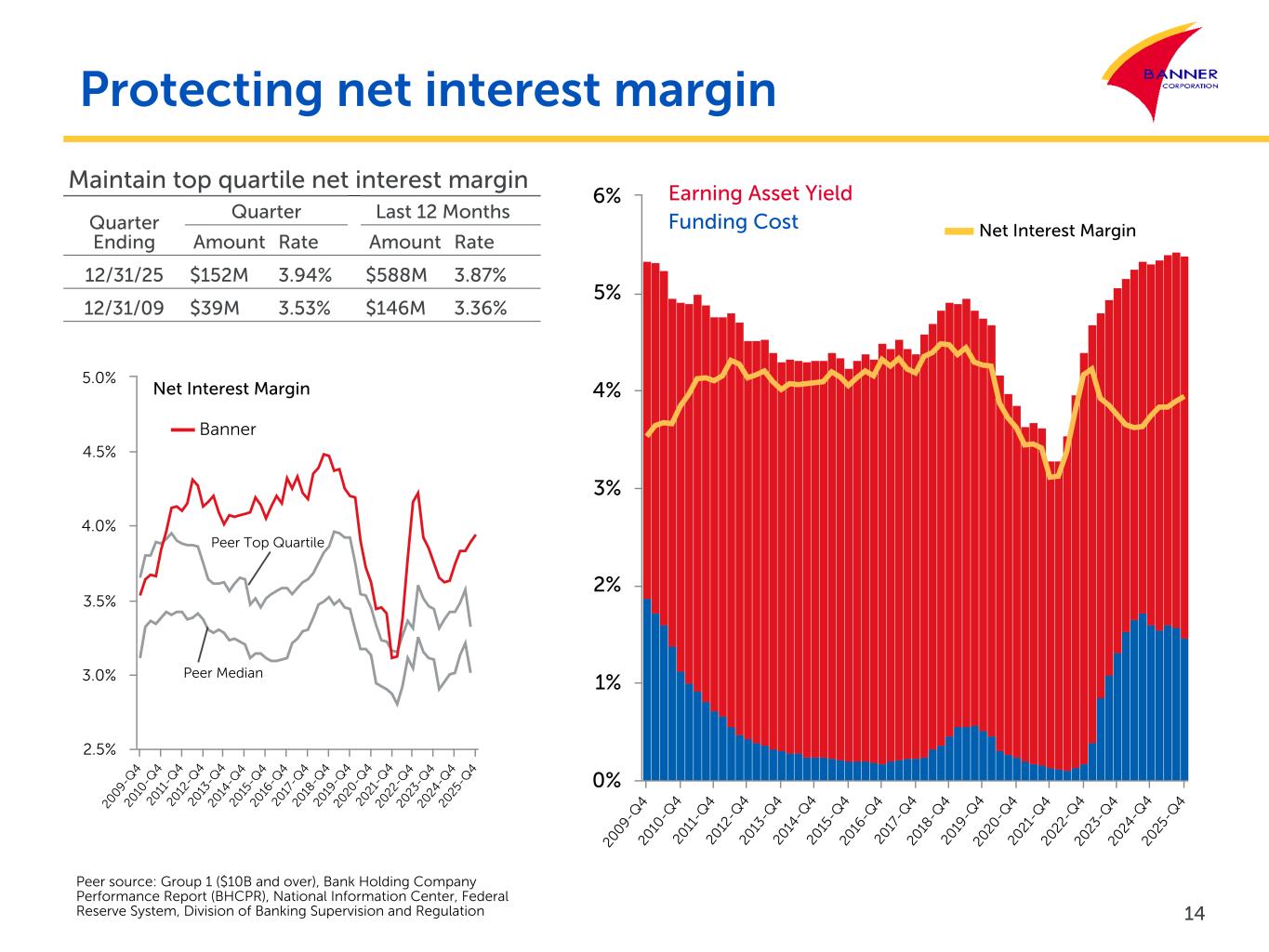
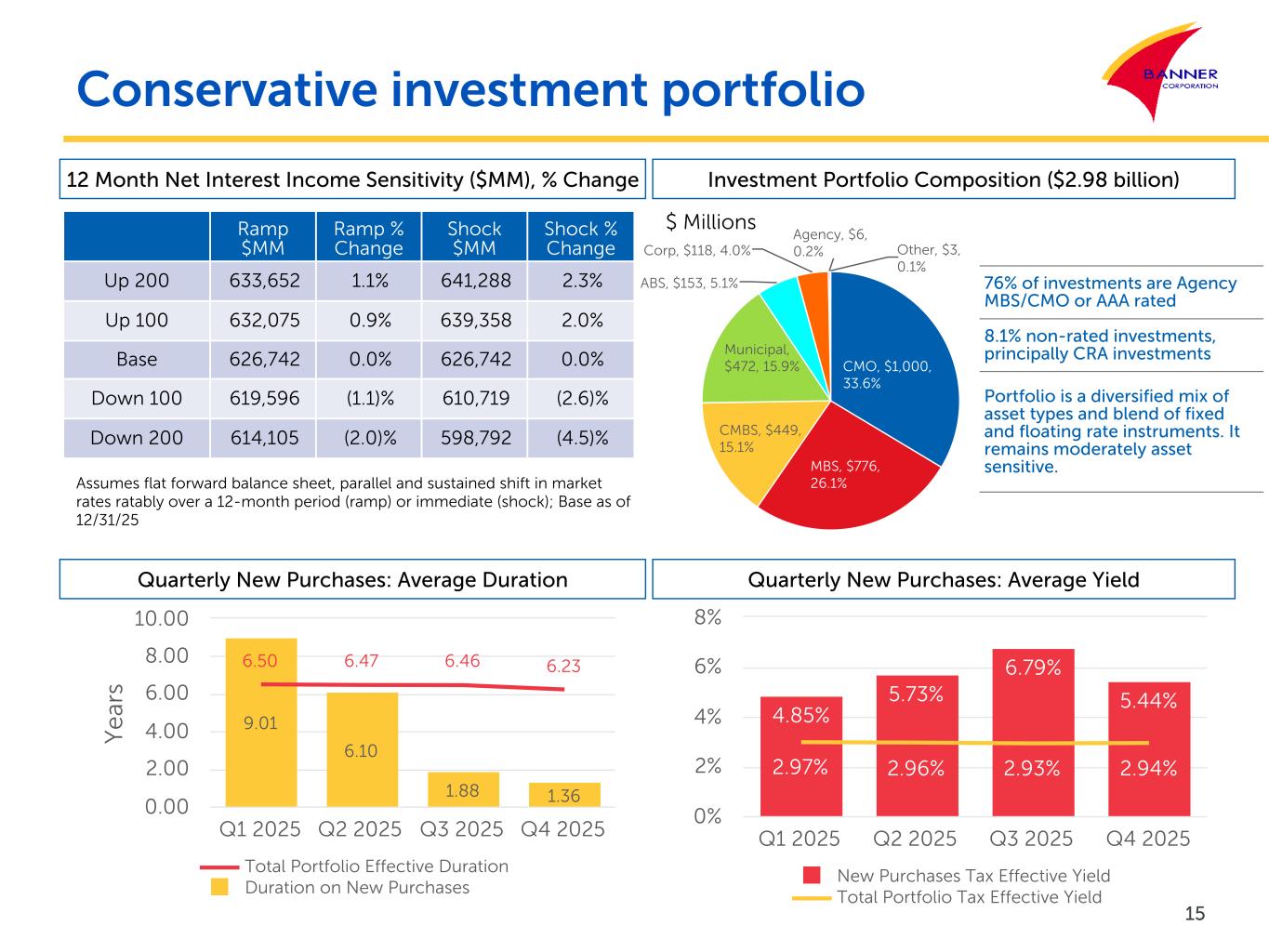
The tax equivalent net interest margin was 4.03% for the current quarter compared to 3.98% for the prior quarter. Earning asset yields decreased 4 basis points due to a 7 basis point decrease in loan yields as floating rate loans repriced down as a result of the 75 basis point reduction in the Fed funds rate. The average rate on new loan production for the current quarter was 6.88% compared to 7.35% for the prior quarter. Funding costs decreased 10 basis points due to average borrowings decrease in $137 million and deposit costs decreasing 7 basis points, as deposit pricing was reduced due to the reduction in the Fed funds rate. Non-interest buried deposits into the quarter at 33% of total deposits. Total non-interest income increased $5.5 million, or decreased $5.5 million from the prior quarter, primarily due to recording a loss of $1.4 million on the disposal of assets, which included the write-off of $1 million for software no longer being used. as compared to a $1.4 million gain on the sale of assets in the prior quarter. In addition, the current quarter had a fair value decrease of $2 million on financial instruments carried at fair value. Total non-interest expense was $2.1 million higher than the prior quarter, with increases in medical claims, software expense, and legal expense, as well as lower capitalized loan origination costs. Our strong capital and liquidity levels position us well for 2026. This concludes my prepared comments. Now we'll turn it back to Mark.
Thank you, Jill and Rob, for your comments on the operating performance of Banner. That concludes our prepared remarks, and, Lucy, we will now open the call and welcome
Operator
Thank you. To ask a question, please press star followed by one on your telephone keypad now. If you change your mind, please press star followed by two. When preparing to ask your question, please ensure your device is unmuted locally. The first question comes from Jeff Rulis of DA Davidson. Your line is now open. Please go ahead.
Good morning. I appreciate the detail on the loan front. Sounds like some, you know, payoffs and line utilization impact. Julie, you know, thinking about 26 and the outlook, payoffs are tough to gauge, but you're thinking on kind of net growth in the coming year.
Yeah, Jeff, and I would expect it likely to continue to be a headwind this next year. Still, our pipelines are, again, building, you saw decent growth this last quarter. We've seen positive impact from new bankers hired in the last two years, so all in. If the economy holds up, I'm going to say we would expect to grow our loan book in the mid-single digits again over the course of this next year.
Jill, just to kind of the competitive landscape, it seems like the production side is originations pretty strong. Is that much of a headwind, if you will? I mean, that sounds pretty positive if you just want to kind of check in on the competitive environment.
You know, engage in, Jeff. So, I mean, certainly some banks, you know, as I indicated, we lost over the course of some credits because we just weren't going to stretch on some of the terms that people are offering to expand their loan book, but all in, you know, I think we compete well both in the product offering suite we have and in pricing.
Maybe a similar question for Rob on the margin and that outlook as you top 4%, you know, some some deposit fluctuations into the year, but your expectations for margin ahead.
Yeah, thanks. Thanks, Jeff. So, I mean, what I'd say is ultimately, I think it's going to be largely influenced by the level of actions from the Federal Reserve. You know, we've talked about in the past that if there's no Fed action in a quarter, then we'd light the price up, and even at this point, new production is coming on at higher rates. And if there's a 125 basis point cut, then it would be more of a flat scenario. If you get multiple rate cuts in a quarter, if that's the Fed actions, somewhere between no rate cuts, which would suggest higher net interest margins, suggest more of a...
Operator
From Matthew Clark of Piper Sandler. Your line is now open. Please go ahead.
On deposits at the end of December and the average margin in the month of December.
Could you repeat the question? Good morning, by the way. Glad to have you on the call.
Sure, just looking for the spot rate on deposits at the end of the year, either interest-bearing or total, and then if you had the average margin in the month of December.
Yeah, Matthew, it's Rob. So, spot deposit costs for the month of December were 139. Margin for December was essentially the same as the quarter, right around 403.
Okay. And the 139 is for the month of December, not year end.
That's correct. That's the average for the month.
And then just on expenses, you know, a couple of unusual items there this quarter. It also seemed like there might have been some transitory expenses. How do you think about that, you know, that kind of core run rate going into the first
So, you know, it's not – I just say in general, it's not unusual for expenses to bounce around a little bit quarter to quarter. And we saw some of those, you know, we saw an increase in IT expenses as the new loan and deposit regination. And then we also saw higher medical claims, which isn't unusual for the fourth quarter. But I just say there were even – for the first nine months of the year on medical expenses, they were running lower than typical. And then the fourth quarter kind of made up the difference, so probably medical expenses for the full year were kind of as expected. It was just more back-end loaded than normal. And then we had some higher legal expenses during the current quarter as well. We have one legal matter that can capitalize on. As I think about that, going into 2025 or 2026, I would look at the full year 2025 expenses. And then above that, for 26, I would just expect normal inflationary, whatever you want to call that, in that 3% range as far as total expenses and 20.
Okay. Great. And last one for me, on special mention and substandard, it looked like about a 55 basis point increase. Can you give us some color on what drove those changes this quarter?
When you look at special mention, the large strives are creating a couple alcoholic alcoholic beverage-related enterprises due to decline. Within that category, the largest relationships, approximately $25 million, we shift over to substandard. We saw within the commercial and construction segments, downgrades continue to be idiosyncratic outstanding. The average substandard loan.
Operator
Thank you, Matthew. The next question comes from Andrew Terrell from Stevens. Your line is open. Please go ahead. Good morning, Andrew.
If I could go just quickly to capital, you're obviously still in a very good capital position. Just hoping you could refresh this. I think you've still got a million or so shares or maybe a little more on the buyback authorization. You've been, you know, somewhat active. Just with evaluations of that today, talking about the appetite for buyback or potentially increasing the buyback, and then just any update on how you're approaching M&A right now.
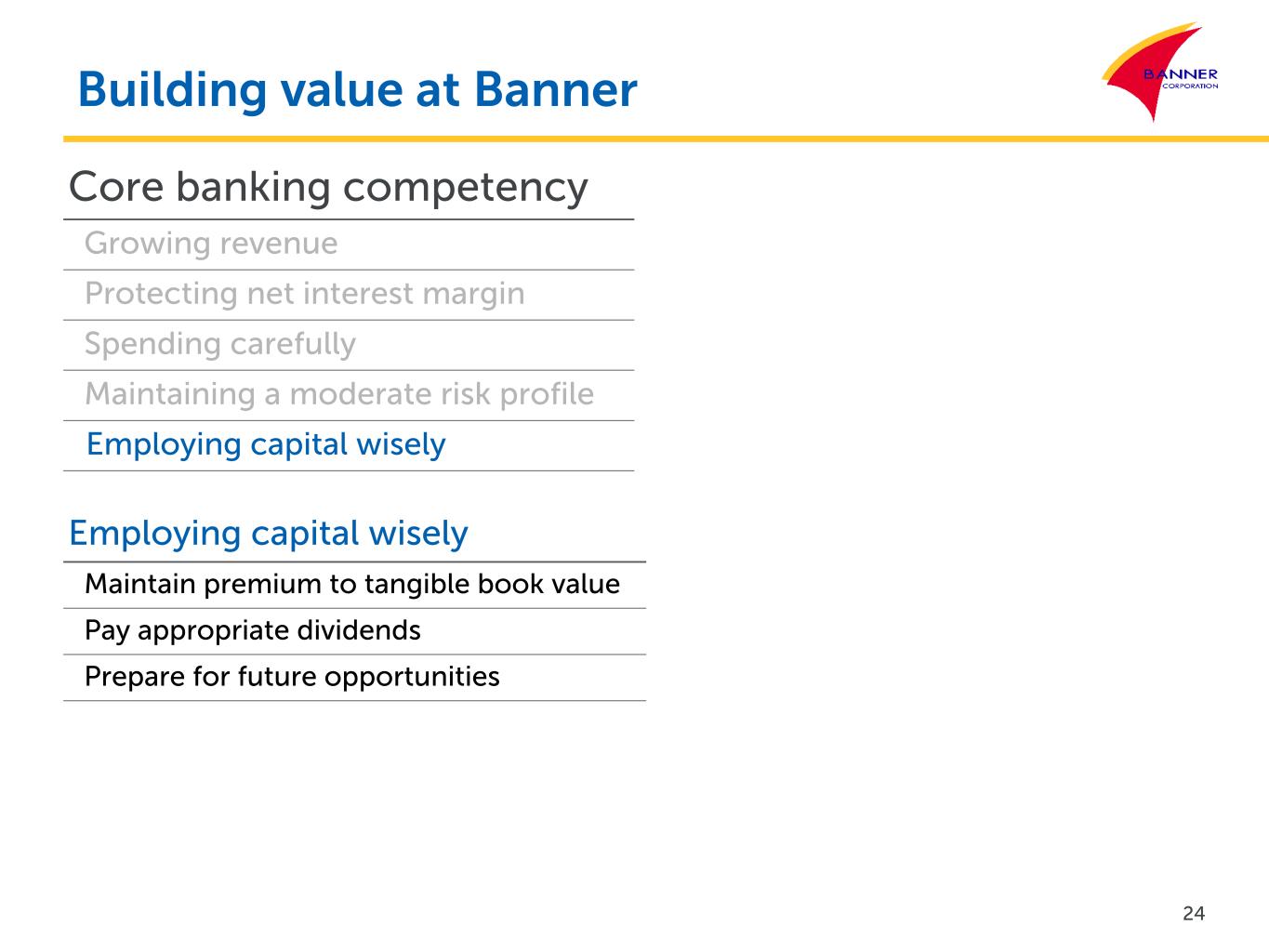
Andrew, I'll start with the capital aspect of it. So, I mean, I think as you saw the last couple quarters, we've taken a number of capital actions middle of the year, repaying the $100 million subdebt and then increasing the core dividend last quarter. Then as you mentioned, we have repurchased around 250,000 shares for the last two quarters. We still have about 1.2 million shares that are, you know, if you look at the last two quarters we've repurchased the shares right around that $63 level and so we think that's an attractive point to be aware today yesterday it's a little bit above that we still think that is attractive so ultimately what we'll be doing during the first quarter here is really monitoring market activity and if you look at our capitals we target capital more than a range than a specific number but we're probably still on that upper end of the capital right now and so that was the job as it relates to M&A you know our posture does not
change we continue to have conversations with parties that we think would be a great combination for Banner and given the strong capital position we have the strong core earnings power of the company and our market reputation we think we would continue to be an excellent partner so as you know those are a matter of time to work out appropriately it's not necessarily something that you can for we continue to have very good dialogue with yeah
okay I appreciate it and then Rob just on the margin you know I guess I guess the question is what's kind of driving some of the conservatism around in your reference getting successive rate cuts could lead to margin down but when I look at you know fourth quarter of this year your margin was up when we digested most of the cuts and then same for Q of 24 we had a lot of cuts in that quarter and your margin was still still up in that quarter so I guess what's kind of driving the conservatism are you trying to kind of imply that you know maybe there's some lag to the to the loan loan repricing on a monthly basis and we should expect some margin headwinds in the first quarter just wanted to unpack
Yeah, so I wouldn't expect some headwinds against margin necessarily in the first quarter. If you think, we did get the Fed rate cut in December, that's not fully baked in necessarily to the run rate in the Fed, but the one thing that we're looking at is those adjustable rate loans that have been repricing through the cycle and then also the new loans coming at a higher yield. The backlog of those adjustable rate loans that have been repricing is coming down. At one point, I think you look at a year and a half ago, we might have been getting nine basis points a quarter from that, and at this point, it's maybe a benefit of four basis points a quarter, and then also the average loan yield, new loan yield compared to the average yield of the portfolio is also kind of narrowing as well. So I think the repricing aspect of the loan portfolio, even under a flat rate environment, I think it's more, you know, call it four basis points. So if the Fed's on pause and funding costs where they're at, and we get that backlog, then figure it out. But I've gone through the other scenarios that of that 30 percent, 10 percent are on their floors right now, so 90 percent of that continues to reprice down 25 basis plans.
Thanks for taking the questions.
Operator
The next question is from Kelly Motter of KBWE. Your line is now open. Please go ahead.
Hey, good morning. Thanks for the question. I apologize if this has been asked earlier. I joined a little late, but just on the tax rate, it looks a bit lower in the fourth quarter, understanding there can sometimes be catch-ups or adjustments for the full year. Maybe, Rob, if you could provide what you're expecting here for the tax rate next year as a normalized number.
Yeah, thanks, Kelly. So on that one, you are correct. So the fourth quarter, we just had some annual year-end trip of some of the tax items there. But the rate that we're expecting is right around 19%. I think that's what we were for the first nine months of the year. So I think if you're looking at 2026, it's probably right around 19%.
Got it. That's helpful. And then in terms of – it looks like there was some noise, too, in other fees. I know there was, you know, some, you know, building lease exit costs that ran through. Was there anything else of note that we should keep in mind as we kind of start to think about a normalized fee rate?
Yeah, so the other item in there, so we had a total of $1.4 million loss on the disposal of assets, and part of that was building-related, which we adjusted out of our core numbers to get to the 155 earnings per share for the quarter. But it also included a million-dollar write-off of software-related assets that we're no longer using, and that's not typically an item that we back out of our core number. So that's a million-dollar non-reoccurring item in there that I wouldn't expect to see going forward.
Got it. Thanks for the color. Maybe last one, and I apologize again if this was taken, but for Jill, it seems like payoffs in the move of construction to permanent financing weighed on some growth this quarter. What's your expectation there? I know that's been something you've been talking about for a while. Is this, you know, a continued potential headwind here as we look to 26?
Yeah, Kelly. I did note that I do expect that commercial real estate payoffs will continue to be a headwind as we move into this next year. Still, we're going to project that we're going to grow our loan book as long as the economy holds up in the mid-single digits over 2026 as well, given the kind of numbers that we're showing in production, the strength of the –
Got it. Appreciate it. I'll step back. Thank you very much.
Operator
Thanks, Kelly. As a reminder, to ask a question, please press star followed by one on your telephone keypad now. The next question comes from Liam Cuhill of Raymond James. Your line is now open. Please go ahead.
Hi. Good morning, guys. This is Liam on for David. Morning, Liam. So just to take it at a higher level, you've noted the core deposit seasonality in your prepared remarks, but deposits have increased year-on-year across all of your geographies. Could you discuss some of the key drivers behind that year-on-year growth, and could we maybe expect some similar core deposit growth in 26 given the new banker ads?
Yeah, Liam, it's Ross. So, yeah, I think if you look at it, there's always some seasonality to deposits. At our core, we are a relationship bank. So as we're bringing in new clients, we expect those clients not only to come with the loan relationship but also the deposit relationship. And then also we've been heavily focused on building our small business relationships. And small businesses typically are deposit rich in nature where oftentimes their deposits are larger than the loans that we're giving them. So I think that's part of the success, and Jill talked about it earlier, the bankers that we've added over the last two years, and then also seeing some traction on this.
I appreciate it. And just one more for me. How are you thinking about deposit betas in 2026, given your already low-cost core deposit base?
Yeah, it's Rob again. So we've been modeling 28% for the deposit beta, and that's essentially, I think, what we've seen through the cycle, specifically here in the fourth quarter and the activity that we saw there, we do think that over time that will start to trend down some. At this point, we've been able to take that 28% deposit data by really taking even the full 25 basis points on some of the exception price clients and also on CDs and then a higher amount even on some of our high-yield savings accounts. But as time goes by, we think that will continue to narrow some. So we might get that full 28 percent on the next cut or two, but I see it trending down in 26, depending on the level of VECDA activity. Thanks, Liam.
Operator
We have no further questions at this time, so I'd like to hand back to Mark for closing remarks.
Thank you, Lucy. As I've stated, we are very proud of the Banner team and our full year 2025 performance, a significant improvement over 2024. Thank you again for your interest in Banner and for joining the call today. We look forward to reporting our results again to you in the future. Have a great day everyone. Thank you for attending.
Operator
This concludes today's call. Thank you all for joining. You may now disconnect your lines.