Operator
Good day and thank you for standing by. Welcome to the Bank United Third Quarter 2025 Earnings Conference Call. At this time, all participants are in a listen-only mode. After the speaker's presentation, there will be a question and answer session. To ask a question during this session, you will need to press star 11 on your telephone. You will then hear an automated message advising your hand is raised. To withdraw your question, please press star 11 again. Please be advised that today's conference is being recorded. I would now like to hand the conference over to your first speaker today, Jackie Bravo, Corporate Secretary.
Ma'am, please go ahead. Thank you, Michelle. Good morning, and thank you, everyone, for joining us today for Bank United Inc's third quarter 2025 results conference call. On the call this morning are Raj Singh, Chairman, President, and CEO, Leslie Lunak, Chief Financial Officer, Jim Mackey, Incoming Chief Financial Officer, and Tom Cornish, Chief Operating Officer. Before we start, I'd like to remind everyone that this call may contain forward-looking statements within the meaning of the Private Securities Litigation Reform Act of 1995 that reflects the company's current views with respect to, among other things, future events and financial performance. Any forward-looking statements made during this call are based on the historical performance of the company and its subsidiaries, or on the company's current plans, estimates, and expectations. The inclusion of this forward-looking information should not be regarded as a representation by the company as the future plans, estimates, or expectations contemplated by the company will be achieved. Such forward-looking statements are subject to various risks, uncertainties, and assumptions, including those relating to the company's operations, financial results, financial condition, business prospects, growth strategy, and liquidity, including as impacted by external circumstances outside the company's direct control, such as adverse events impacting the financial service. The company does not undertake any obligation to publicly update or review any forward-looking statement, whether as a result of new information, future developments, or otherwise. A number of important factors could cause actual results to differ materially from those indicated by the forward-looking statement. These factors should not be construed as exhaustive. Information on these factors can be found in the company's annual report on Form 10-K for the year ended December 31st, 2024, and any subsequent quarterly report on Form 10-Q or current report on Form 8-K, which are available at the SEC's website. With that, I'd like to turn the call over to Mr. Raj Singh.
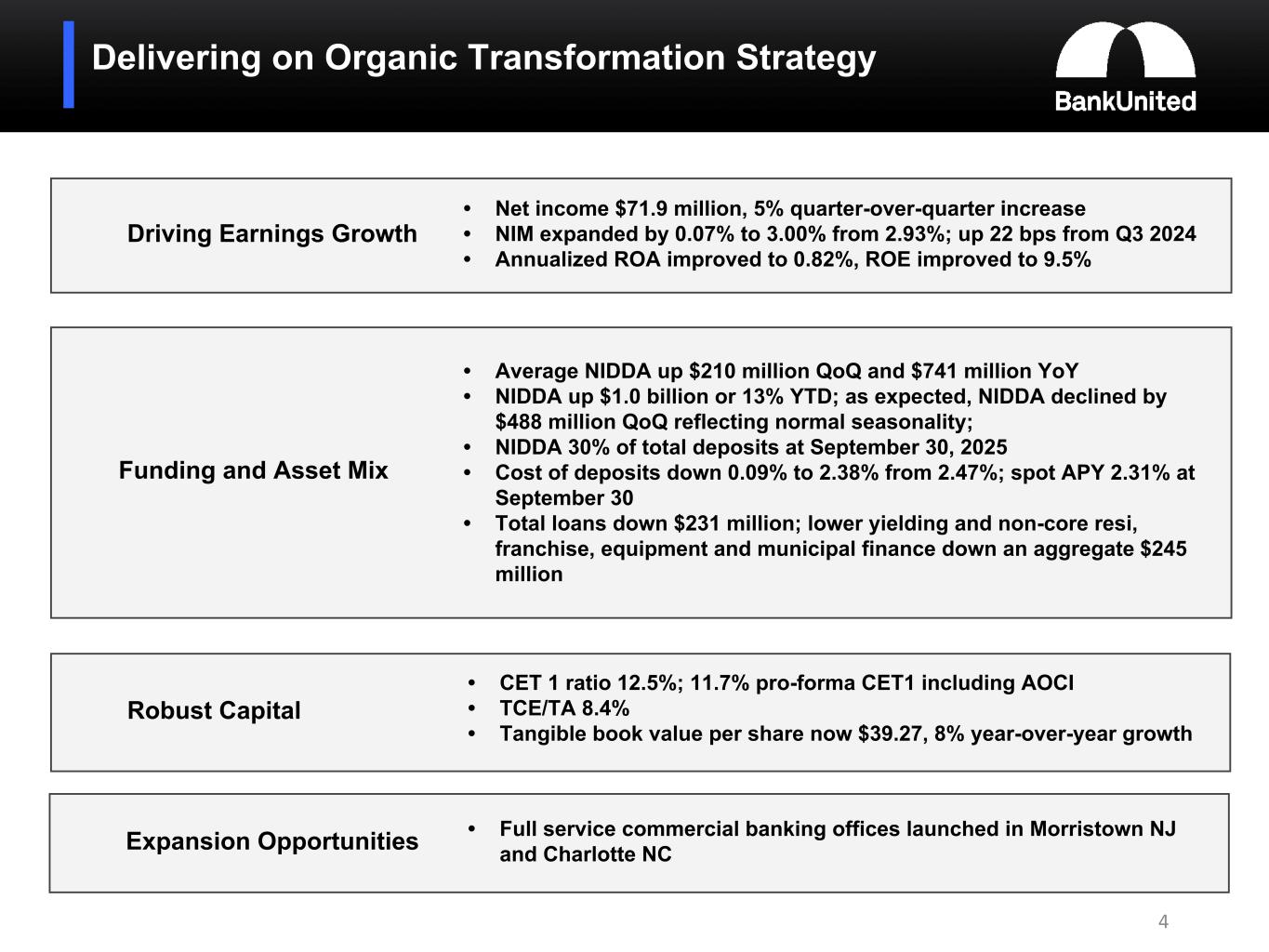
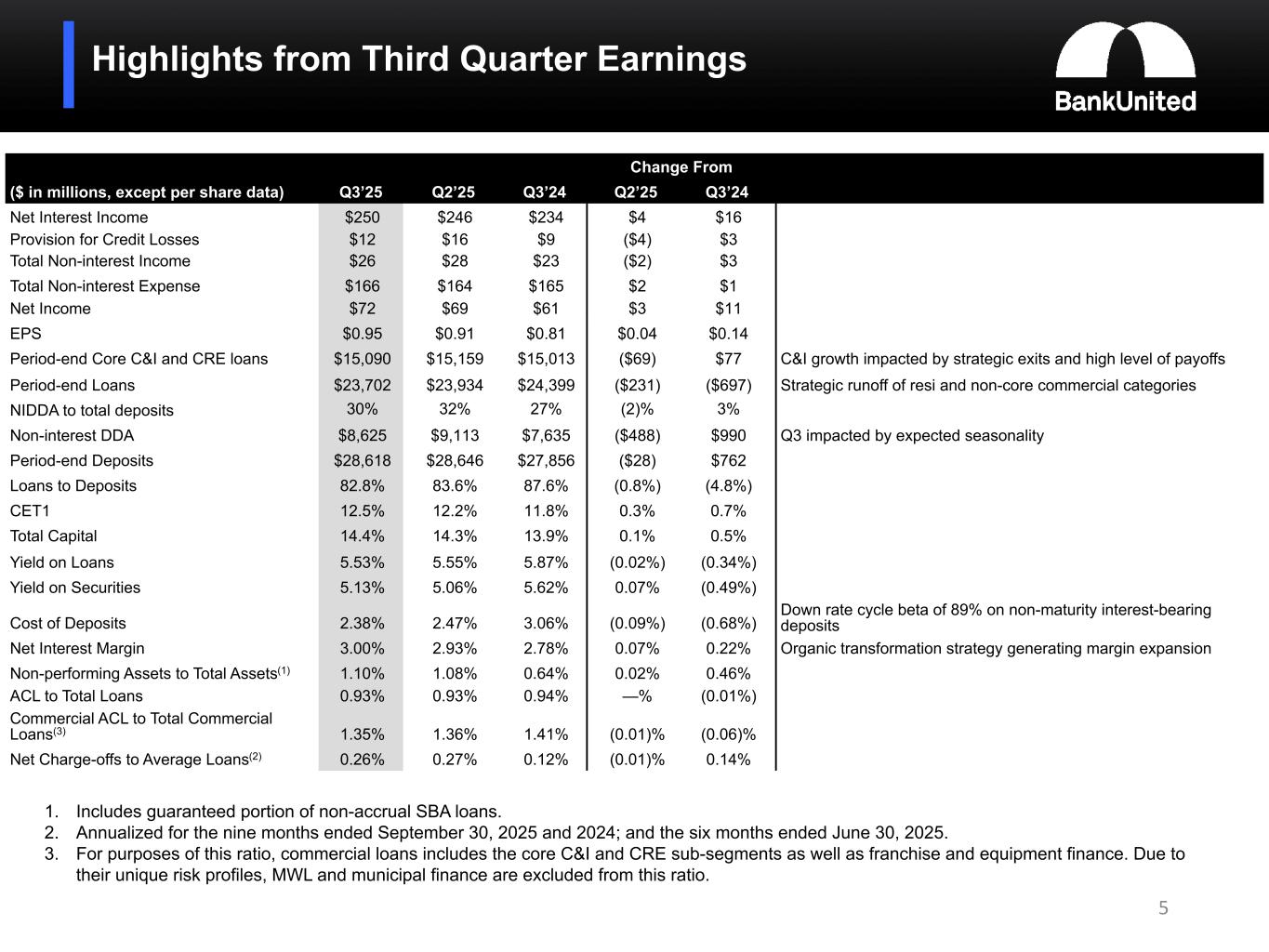
Thank you, Jackie. Welcome, everyone. Thanks for joining us. Third quarter, a pretty solid quarter. Try not to get into the level of detail that Leslie and Tom will, but just hit the highlights. For the quarter, earnings are up, ROA is up, EPS is up, ROE is up, margin is up, and expenses are very controlled, and credit is flat. So if I was to summarize this, this is as good a quarter as I could have expected even just a month ago. Oh, by the way, deposits did exactly what we had expected them to do, almost to a T. Loans, CRE was up modestly. Mortgage warehouse was up nicely. CNI was down, unfortunately, not because of production, but of the ongoing payoffs that we've been seeing. So, you know, hitting margin 3% a quarter early, I think that's sort of the highlight. We're very happy about that. We kind of hinted on that. Even on our last call, we were running further ahead. We've been running further ahead all year. So we're very happy that we're at 3%. And by no means is 3% the destination. This was just a way stop. We want to get further and we will get further and we'll give you more guidance in January where margin can get to in the short term. ROE of 82 basis points is improvement over last quarter and certainly a big improvement over last year. ROE of 9.5%, EPS of 95 cents. I think I checked a couple of days ago, the consensus was $0.88. I'm still happy to beat that. Capital continues to grow now at 12.5% and tangible capital book value per share is up to $39.27. I think total book value per share is now over 40. The buyback is in place, though we didn't really hit much of it or any of it in the third quarter. We're being more opportunistic with the buyback rather than in the past our buyback strategy has been buy a little bit every day. This time around, we have a different strategy because the amount of volatility we see in the marketplace, we think it's better to be more opportunistic and lean and hard when there is the opportunity to do so. So you'll see that play out over the course of the next few months. What else am I missing? Like I said, with credit, everything was about as flat. Criticize classified NPLs, our ACL, our charge-offs, everything was like, when I first looked at the numbers, I thought it was a typo, but it's not. Everything has been just very, very flat this quarter. So we have put in some new disclosures around NDFI, which Leslie and Tom will walk you through, because those are the kind of questions we're expecting. But again, there also, there's It's not much sensational news either. But with that, I'll turn it over to Tom, and then Tom will turn it over to Leslie.
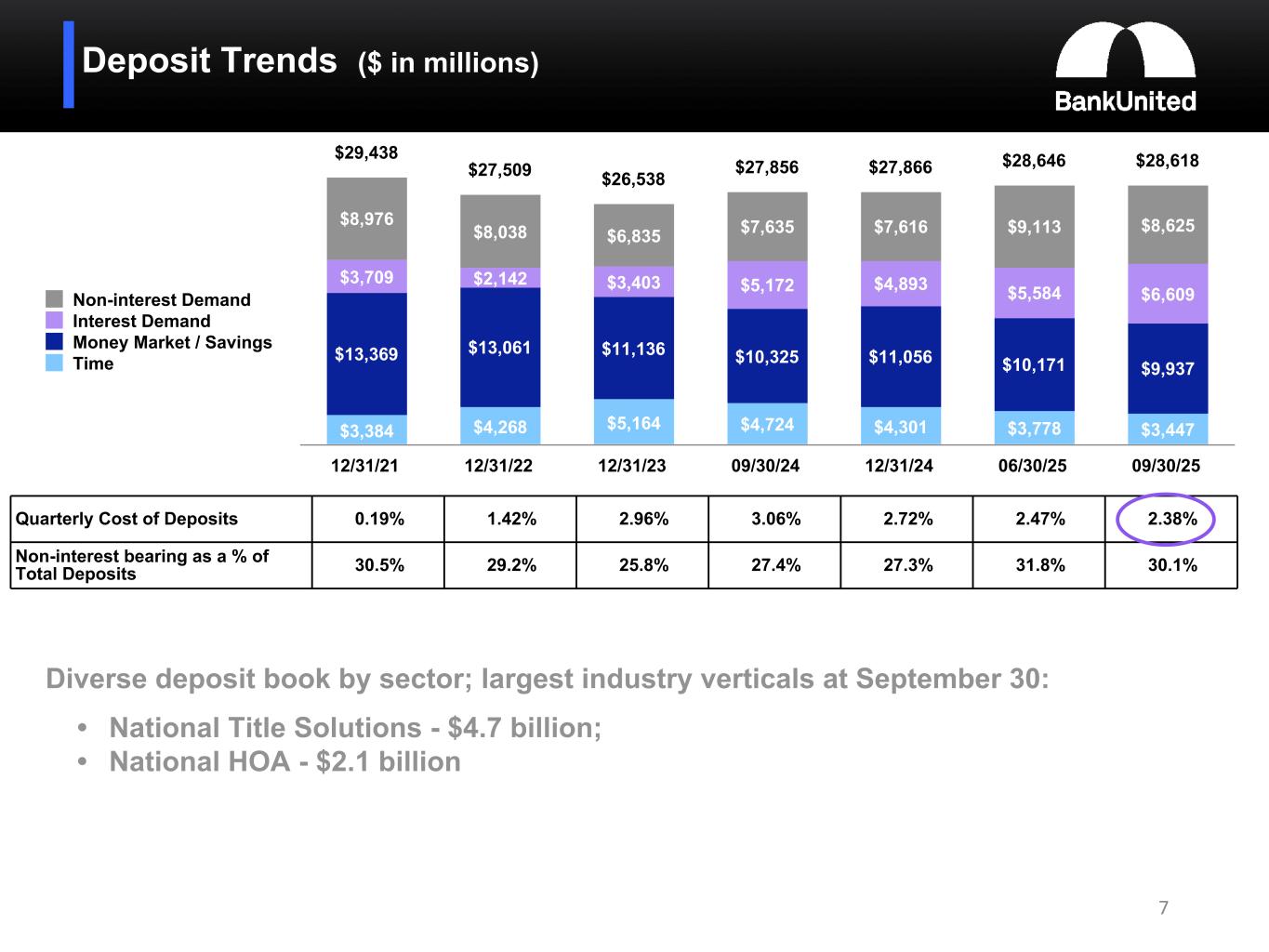
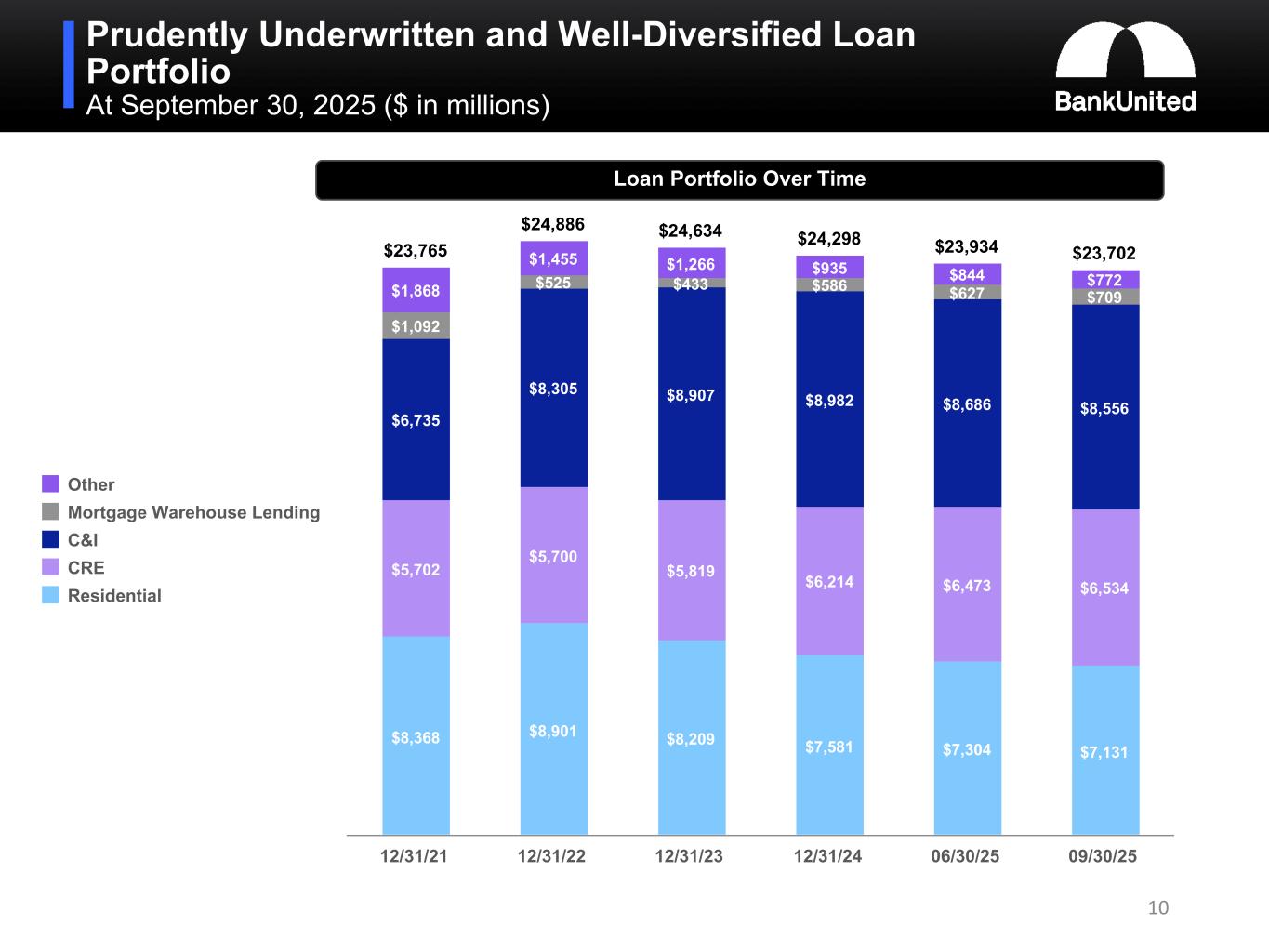
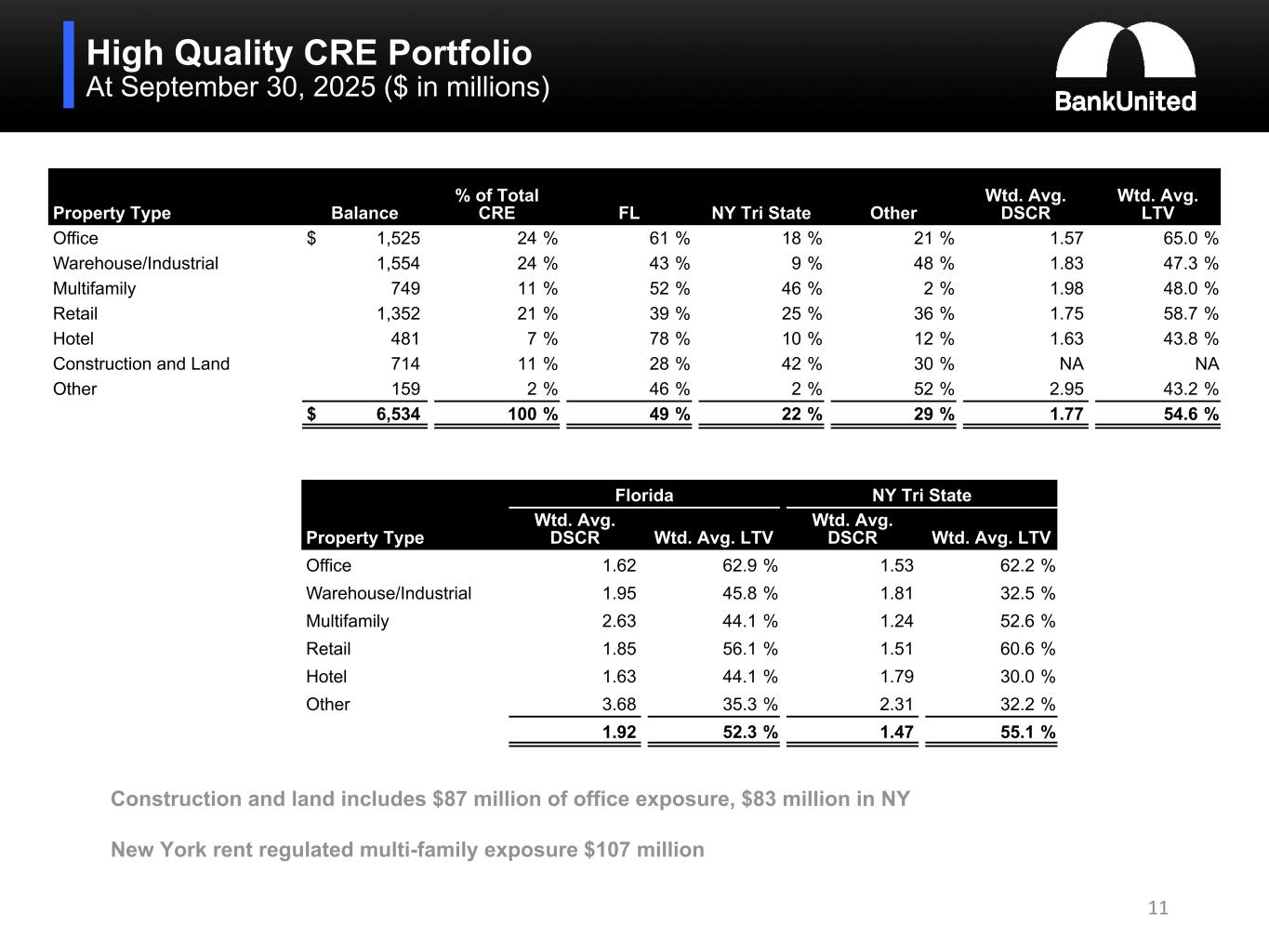
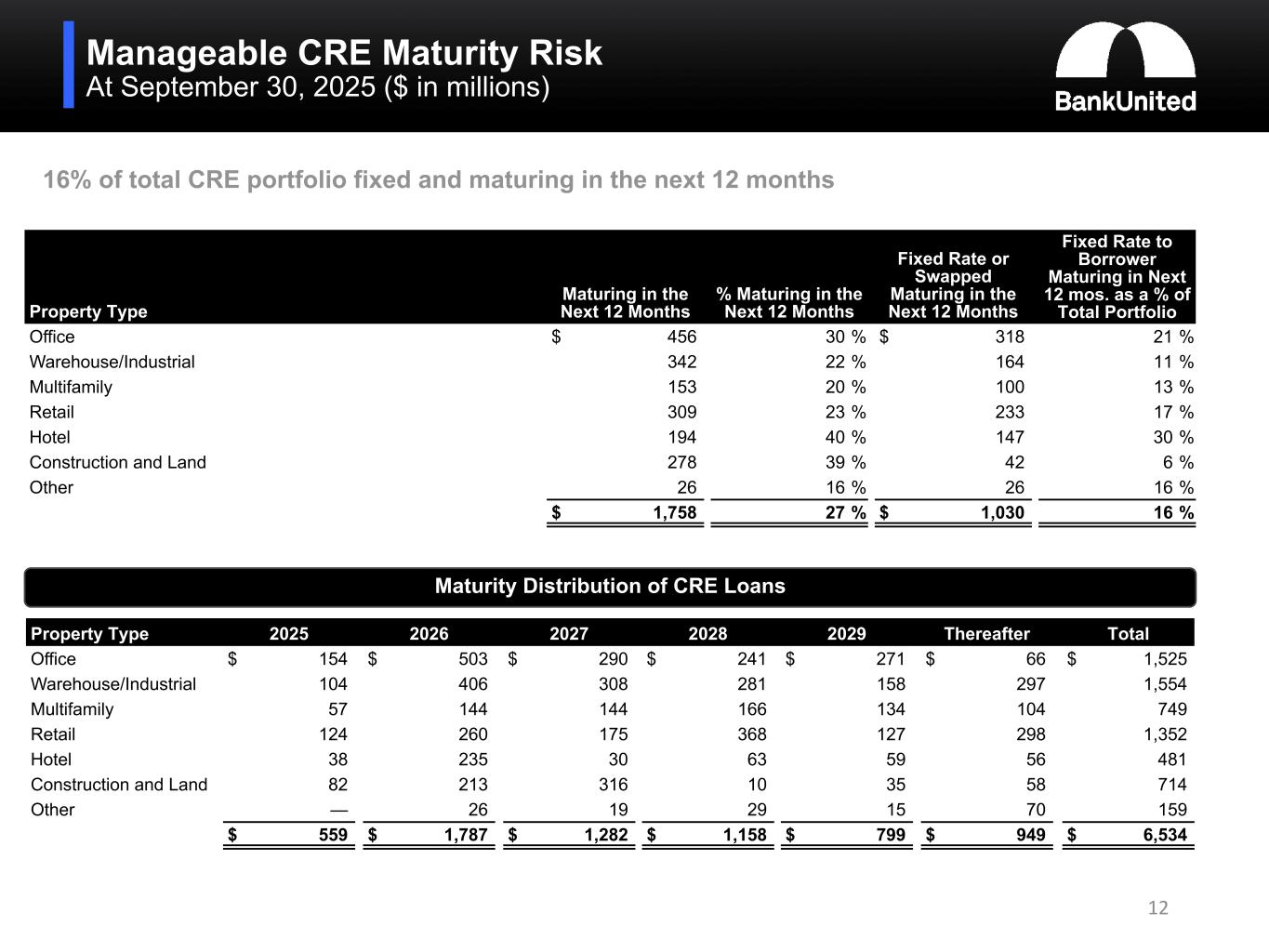
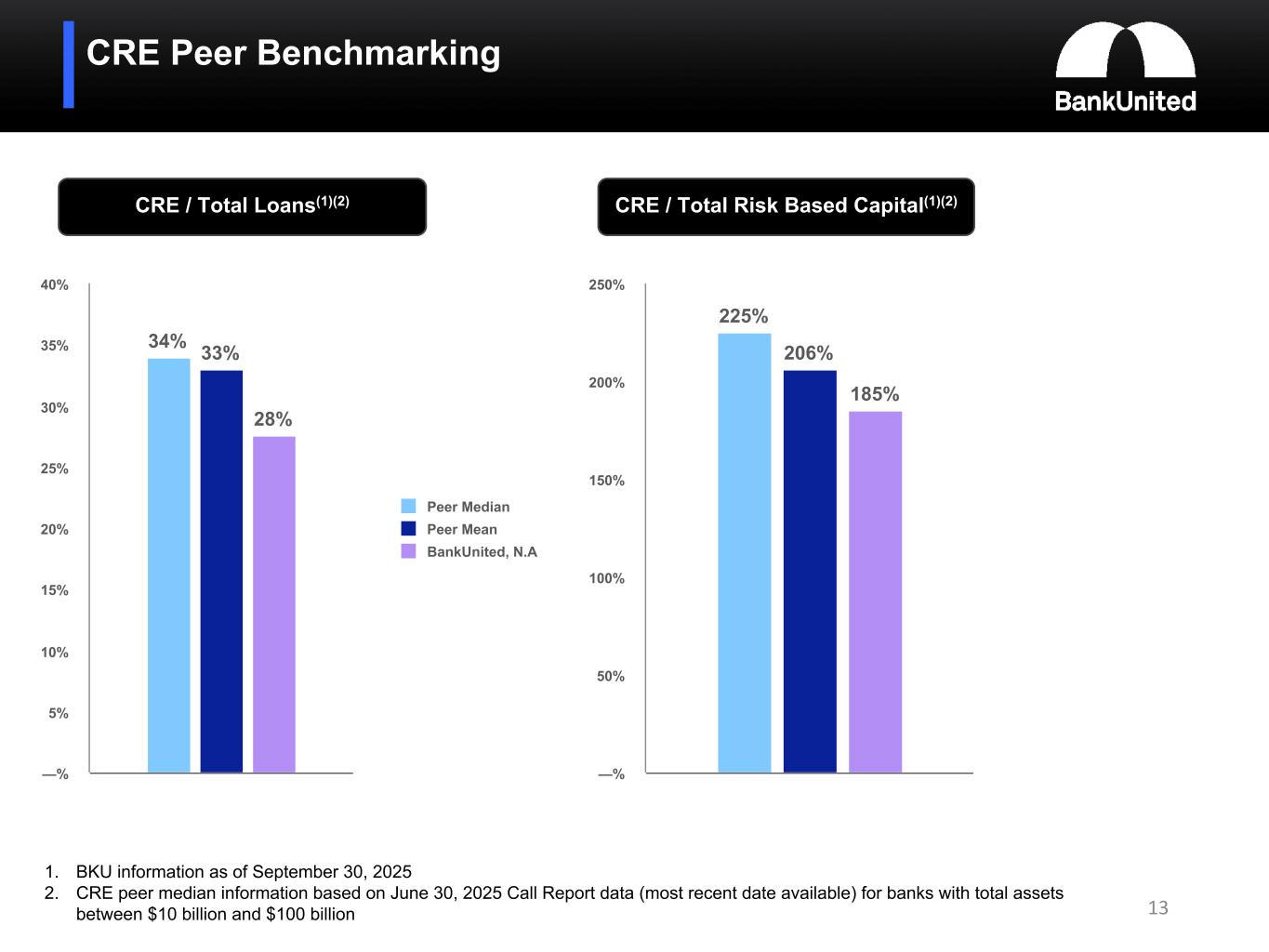
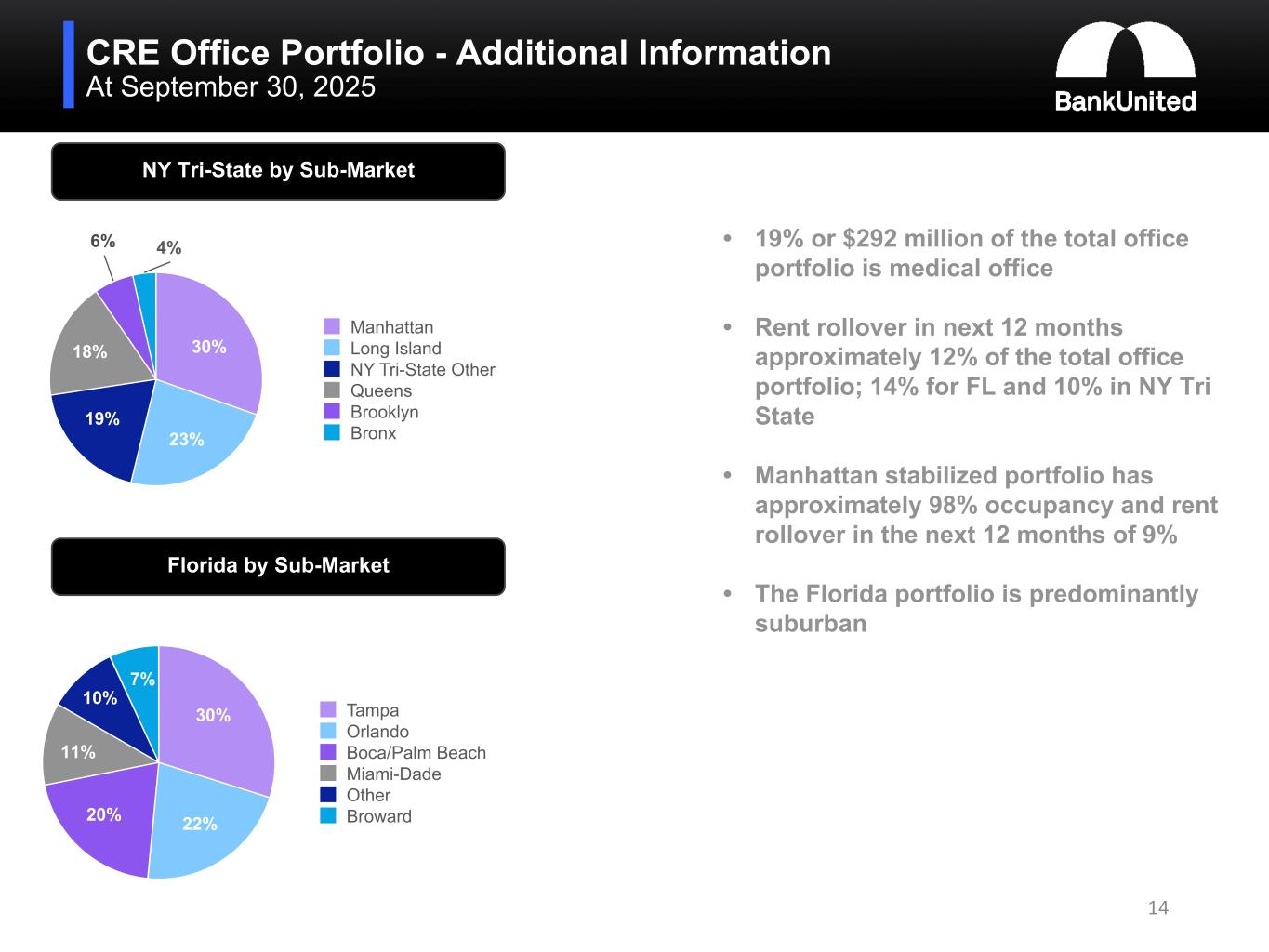
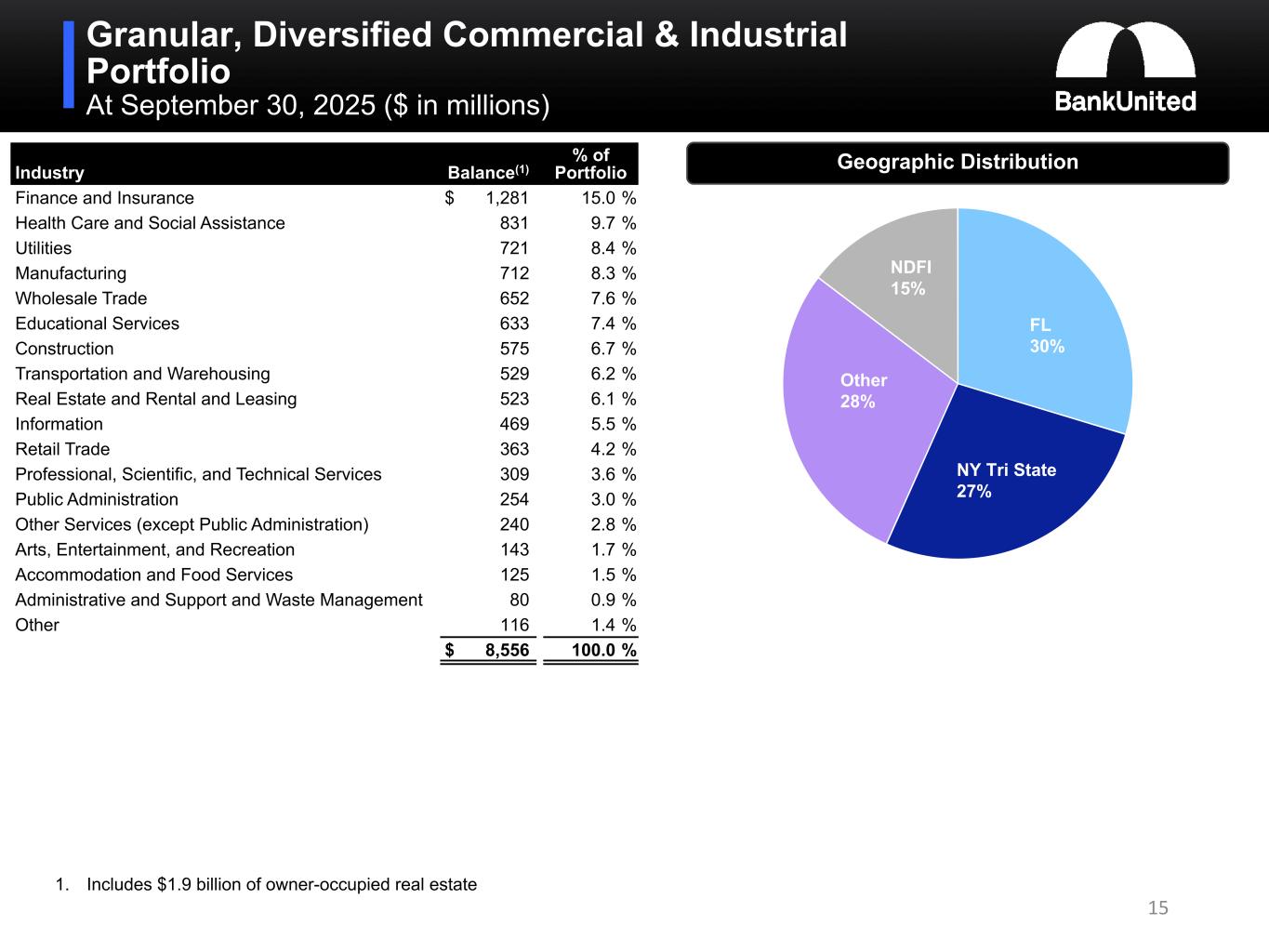
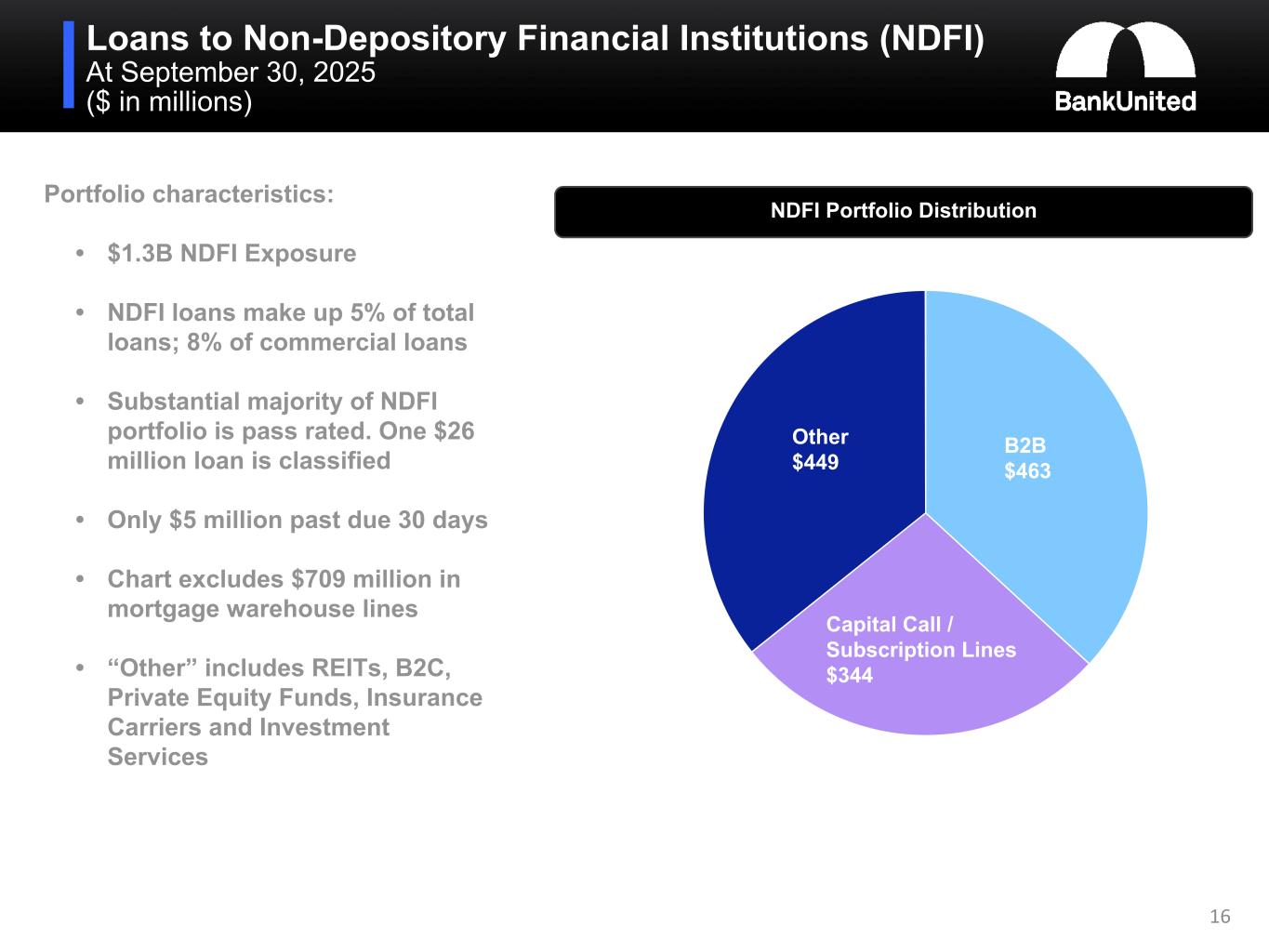
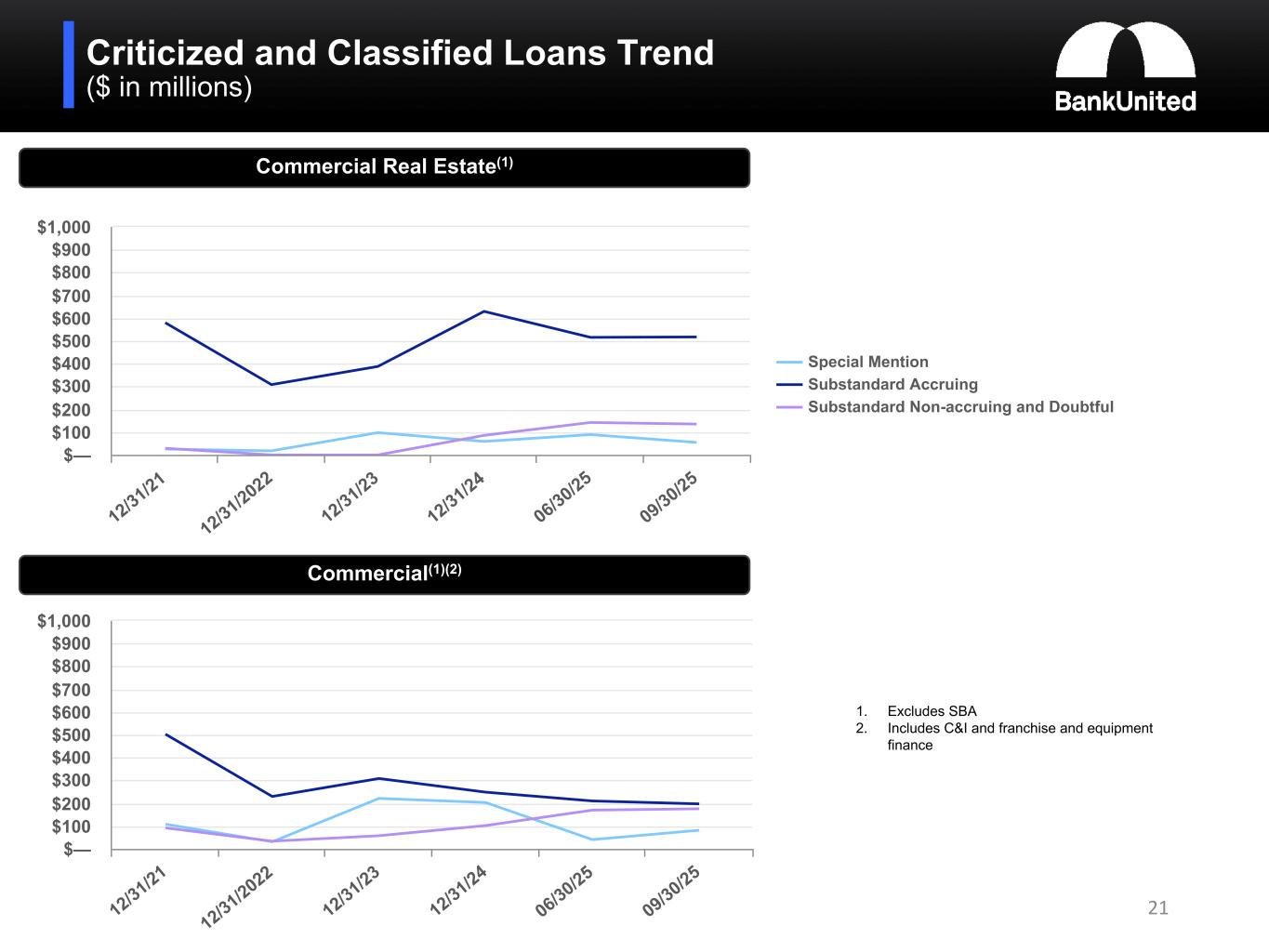
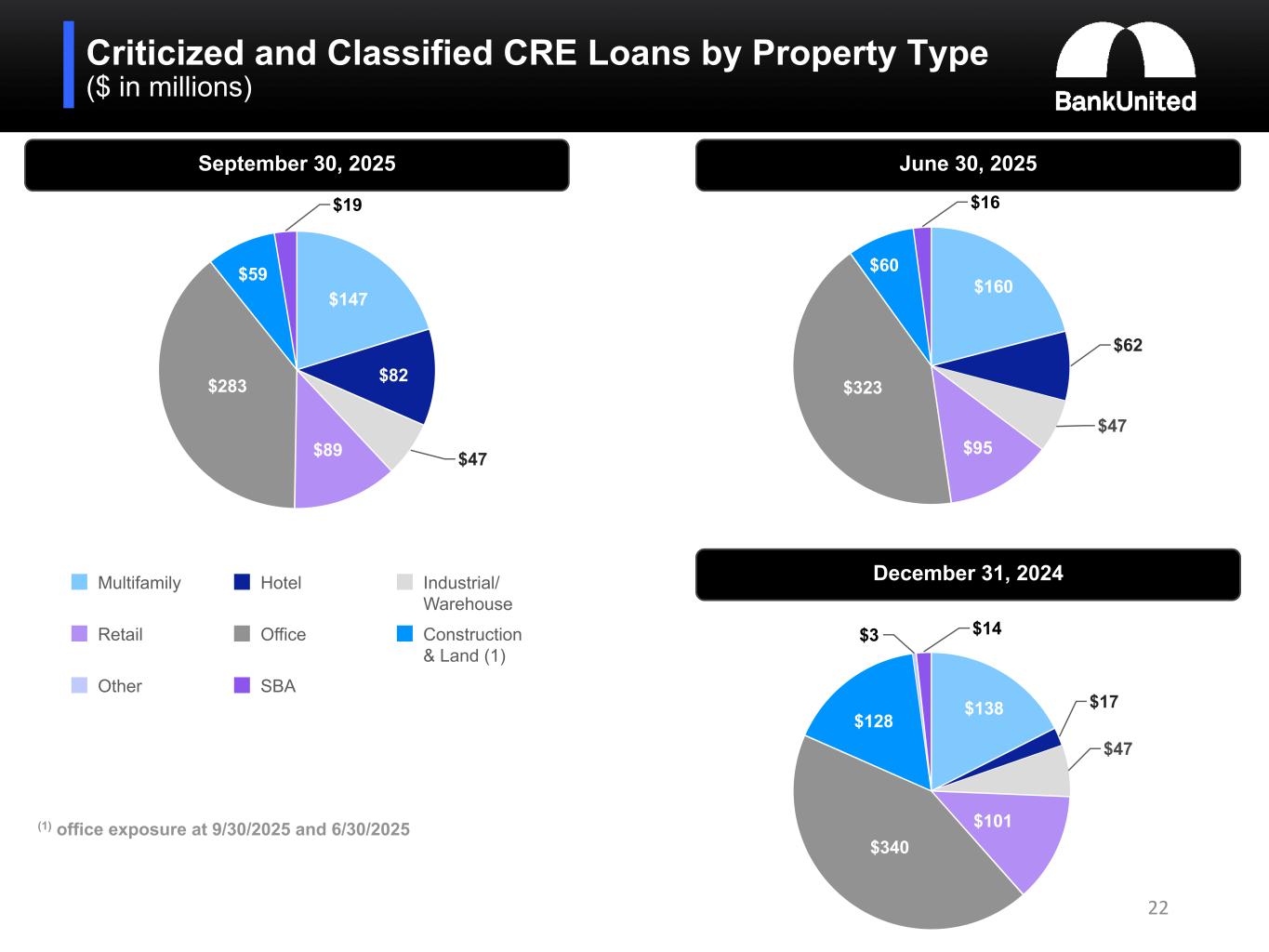
Thank you, Raj. So before I dive into a little bit of details about the quarter, just a couple of comments from an environment perspective that we're operating in right now and what we kind of see as we look forward into this coming quarter and the start of next year. So Raj and I have done a number of events with major clients over the last few weeks. We've visited almost all of our offices, including, you know, the new office locations that we've been announcing. We've seen a fair amount of hiring that's really good quality hiring that we're starting to see a really good build in those areas. So we have traditionally been an early-of-the-year deposit grower and an end-of-the-year asset grower on the loan side, and I would expect that we would see that based upon what we're looking at right now. We've got very, very good pipelines in the commercial teams across the bank. We've got very good pipelines in the real estate team, and real estate's been a good growth area for us all year long. Deposit pipelines look retrospective in the fourth quarter. So I think when we track business sentiment of clients, both on the commercial side and on the Cree side, I think businesses are feeling pretty optimistic. right now. And we had a lengthy session with a group of Cree clients the other night, probably over 100 clients. And I think the optimism in the Cree markets heading into the end of this year and next year is very strong. So we're quite optimistic about what we expect to see in the near-term environment. A little bit more detail on the quarter. As Rod said, total deposits were basically flat for the quarter, declining by $28 million. We did experience the normal seasonal fluctuations that we, you know, always see in the title business at this point in the year and to a lesser extent, HOA and government banking, the municipal quarters generally, and overall we're pleased with $1.2 billion in non-broker deposit growth that we've had over the last 12 months. We expect to see seasonality continue. In the fourth quarter, market penetration, new relationships, net new relationships in each of our operating segments and geographies is really very strong and very encouraging. On the loan side, as Raj mentioned, of course, CRI and CNI loan portfolio declined by $69 million for the quarter, CRE being up $61, while CNI segment declined by $130 million for the quarter. We still see payoffs larger than we have historically seen, but we also see those kind of coming to a close as it relates to relationships that we may have decided to exit. We are seeing a little less utilization than we've traditionally seen on the book. I think part of that is because we are continuing to focus on relationships that tend to be more deposit-rich. That's one of the reasons, but we're seeing a slight dip in utilization. but nothing that I don't think new business opportunities in production can outrun as we move forward. Mortgage Warehouse grew by $83 million in the quarter, which was a good quarter, and the RESI franchise equipment and municipal finance were down in line with what we have guided to in the past and what we expect. Overall loan-to-deposit ratio finished at 82.8% for the end of the quarter. Raj mentioned NDFI, so there's been a lot of talk about that recently. So we added some information on slide 16 in the supplemental deck about our NDFI exposure. In total, we have $1.3 billion in NDIF exposure as of 9-30-25, which excludes mortgage warehouse lines. That's about 5% of our total loan portfolio. The largest components are B2B credit and subscription lines or subscription line outstandings as you look at the exhibit are almost all predominantly investment grade, very high risk graded from a quality perspective portfolio. And our B2B portfolio is predominantly secured lending facilities that we have. to real estate investment funds. We're not really in the kinds of larger lending to private credit that people are reading about and talking about. Our facilities are more moderate in size and generally secured by the pledges of assets and real estate collateral that we have. Substantially, all of the NDFI portfolio was rated pass as of September the 30th, $26 million, to a real estate investment fund. Brief comments on Cree exposure. Our Cree exposure totaled $6.5 billion for 28% of loans and 185% of risk-based capital, pretty consistent with the prior quarter. I think if you look at page 11 of the supplemental deck, you can see we've got a well-balanced portfolio. It's kind of interesting. It's almost a billion five in every major asset class from retail to industrial to office, including medical office, and to multifamily when you include the construction portfolio, which is predominantly multifamily. So very balanced overall real estate portfolio, consistent with last quarter at September the 30th, the weighted average LTV of the Greek portfolio was 55%. Weighted average debt service coverage was 1.77. 49% of the portfolio was in Florida, 22% in the New York tri-state area. and these numbers are becoming a little less concentrated in those two as we do more real estate in the Atlanta market, the Southeast market, and the Texas market. Office exposure was down $122 million, or 7%, from the prior quarter and criticized classified CRE loans declined by $41 million in the third quarter, primarily as a result of payoffs and paydowns. We are seeing a more normalized refinancing market in the office market. I think everybody has seen positive comments about most of the office markets that we're in, particularly the New York market. In the recent months, the CMBS market has picked up and there are more players involved in looking at new office. So that's part of the reason why the portfolio continues to trend down. We're seeing a little bit more of a normalized refinancing market out there. Pages 11 through 14 of the deck have more details on the CRE portfolio, including the office segment. And with that, I think I'll turn it over to Leslie.
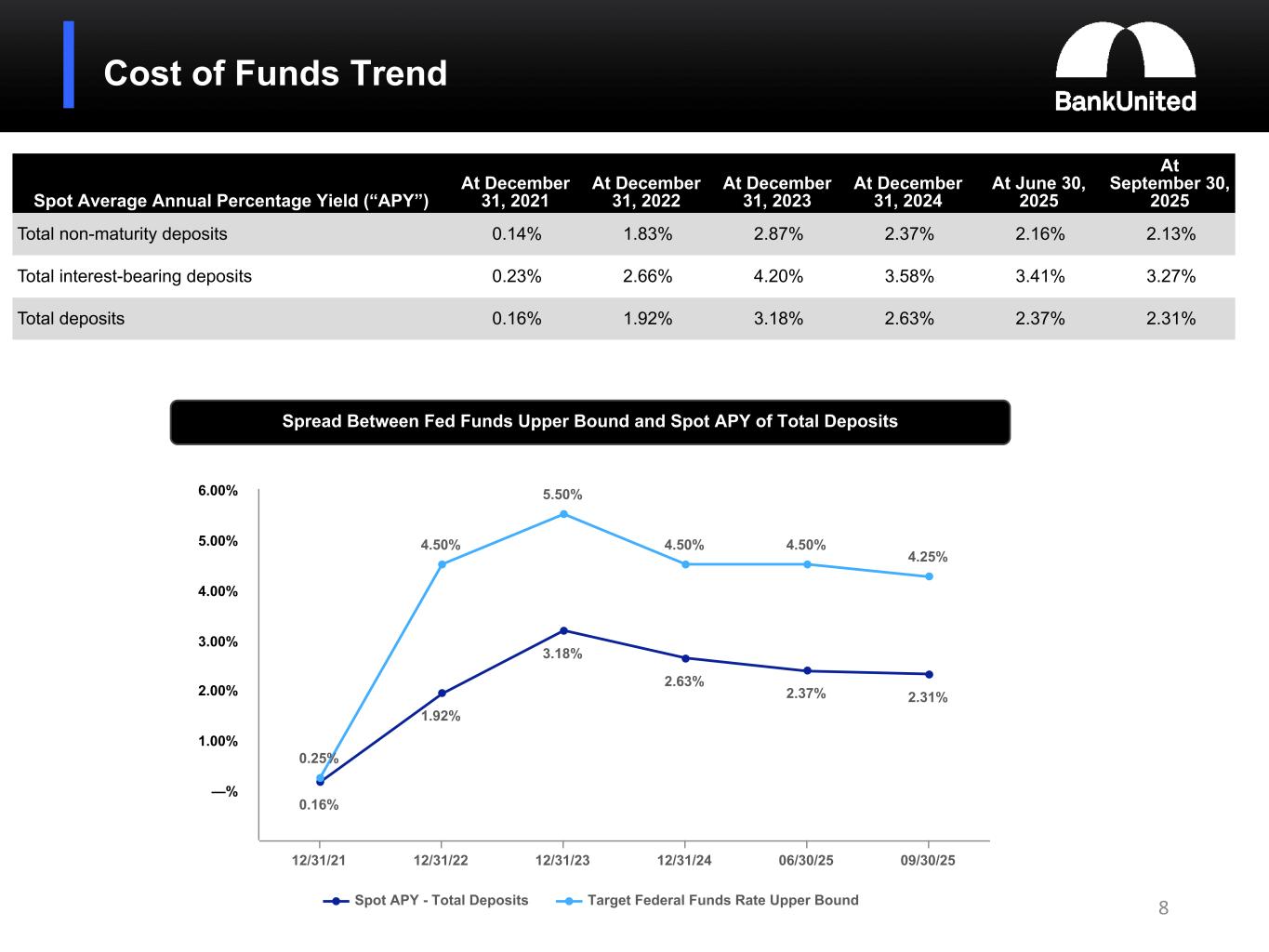
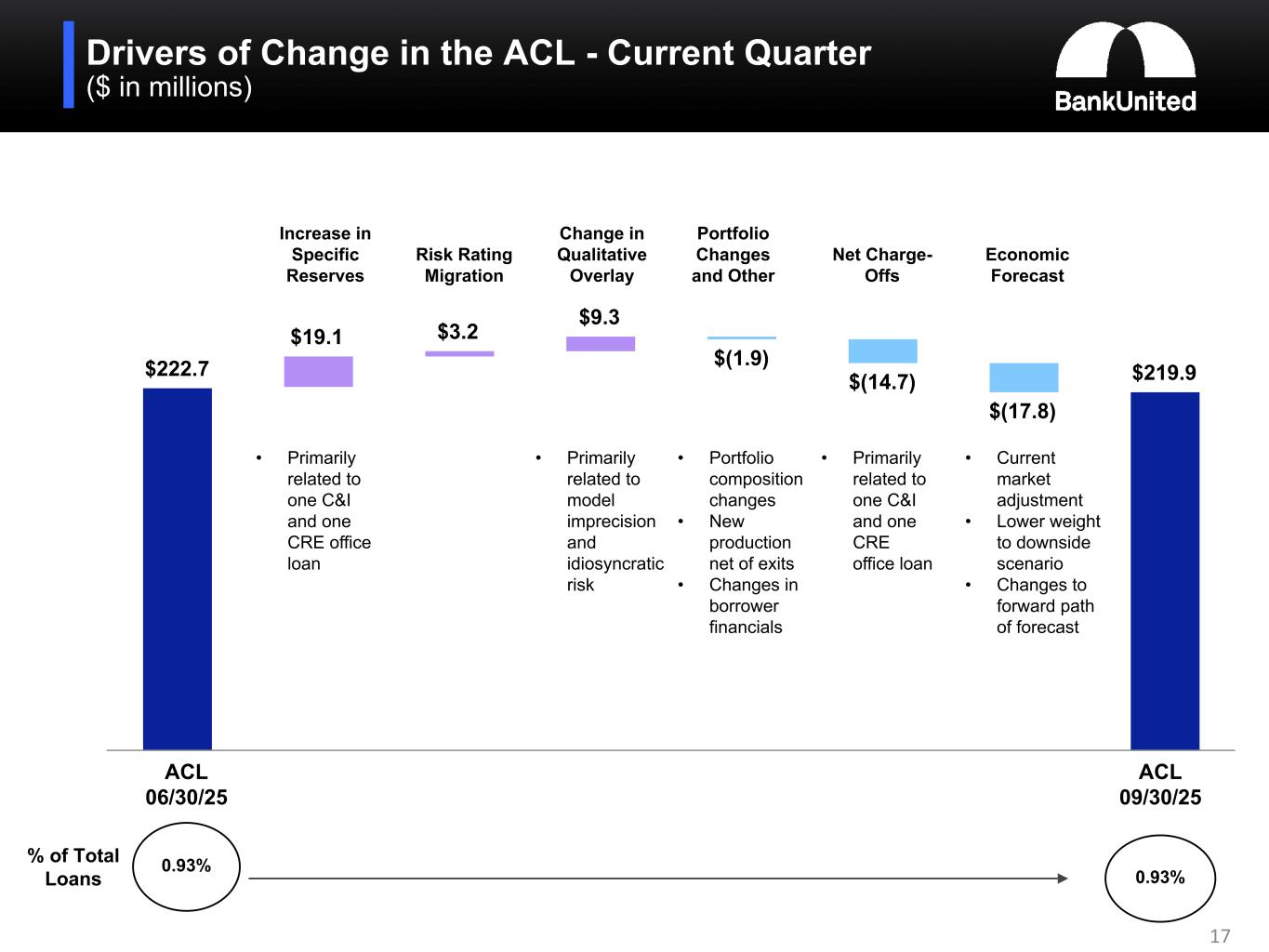
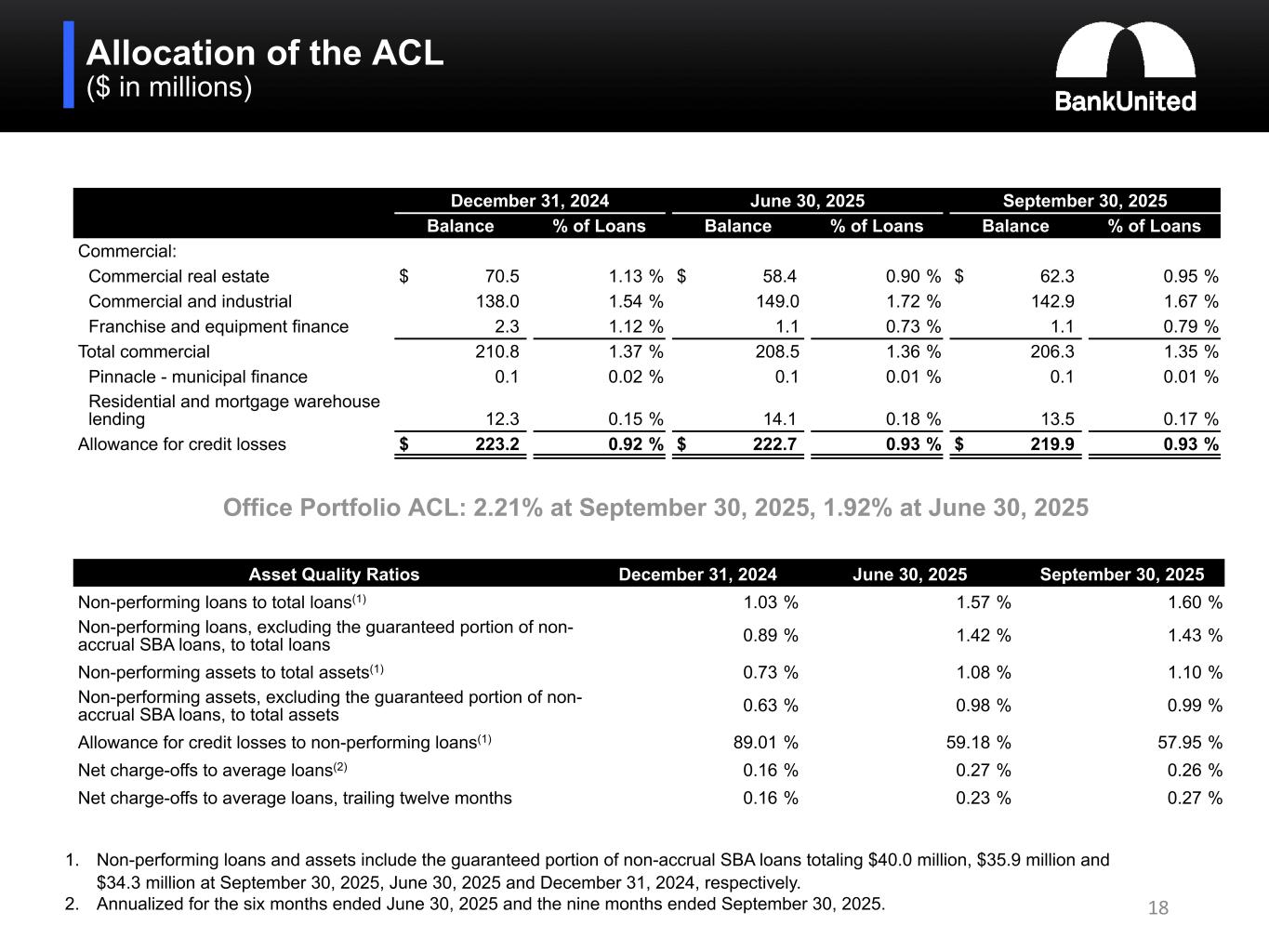
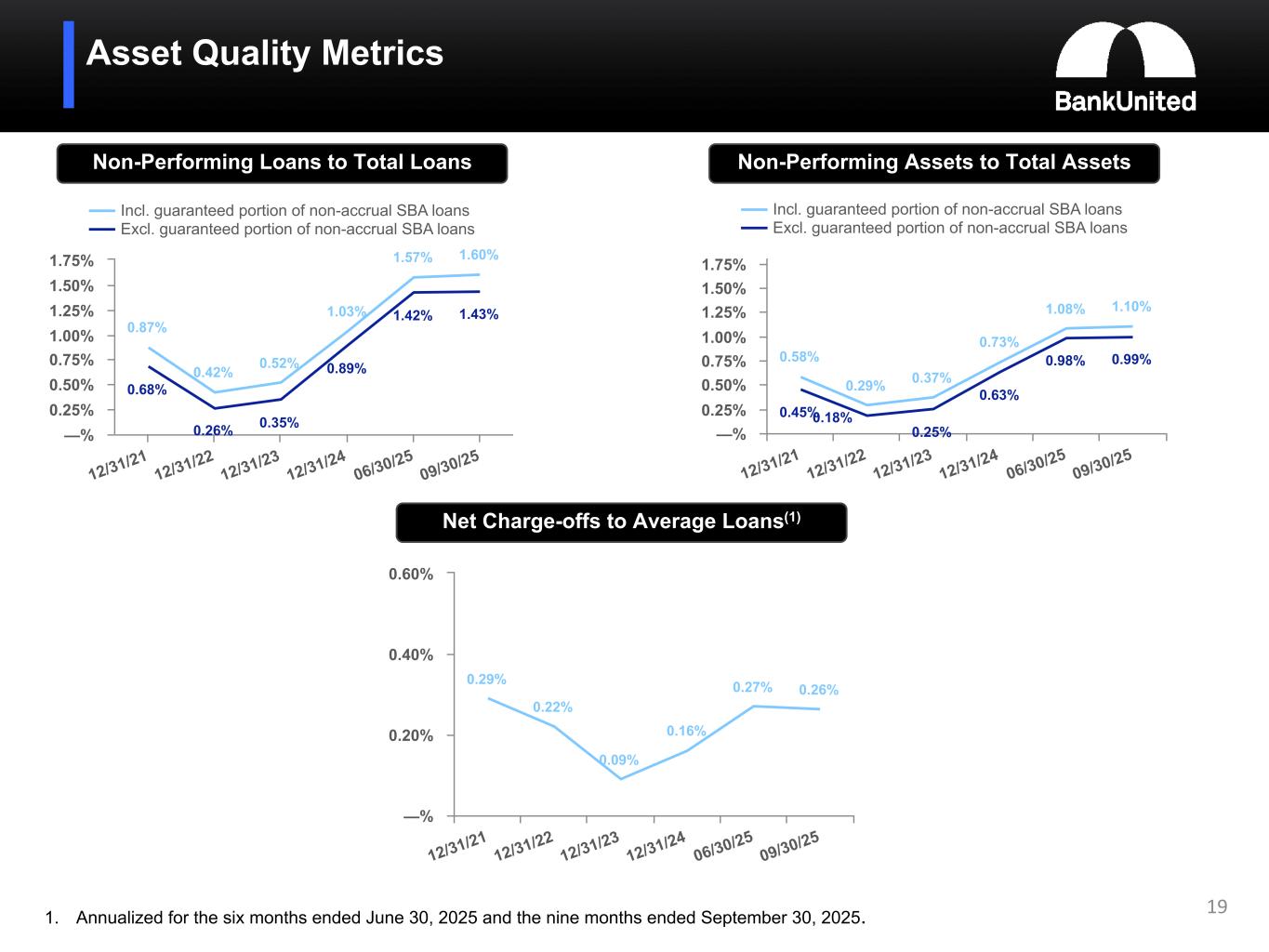
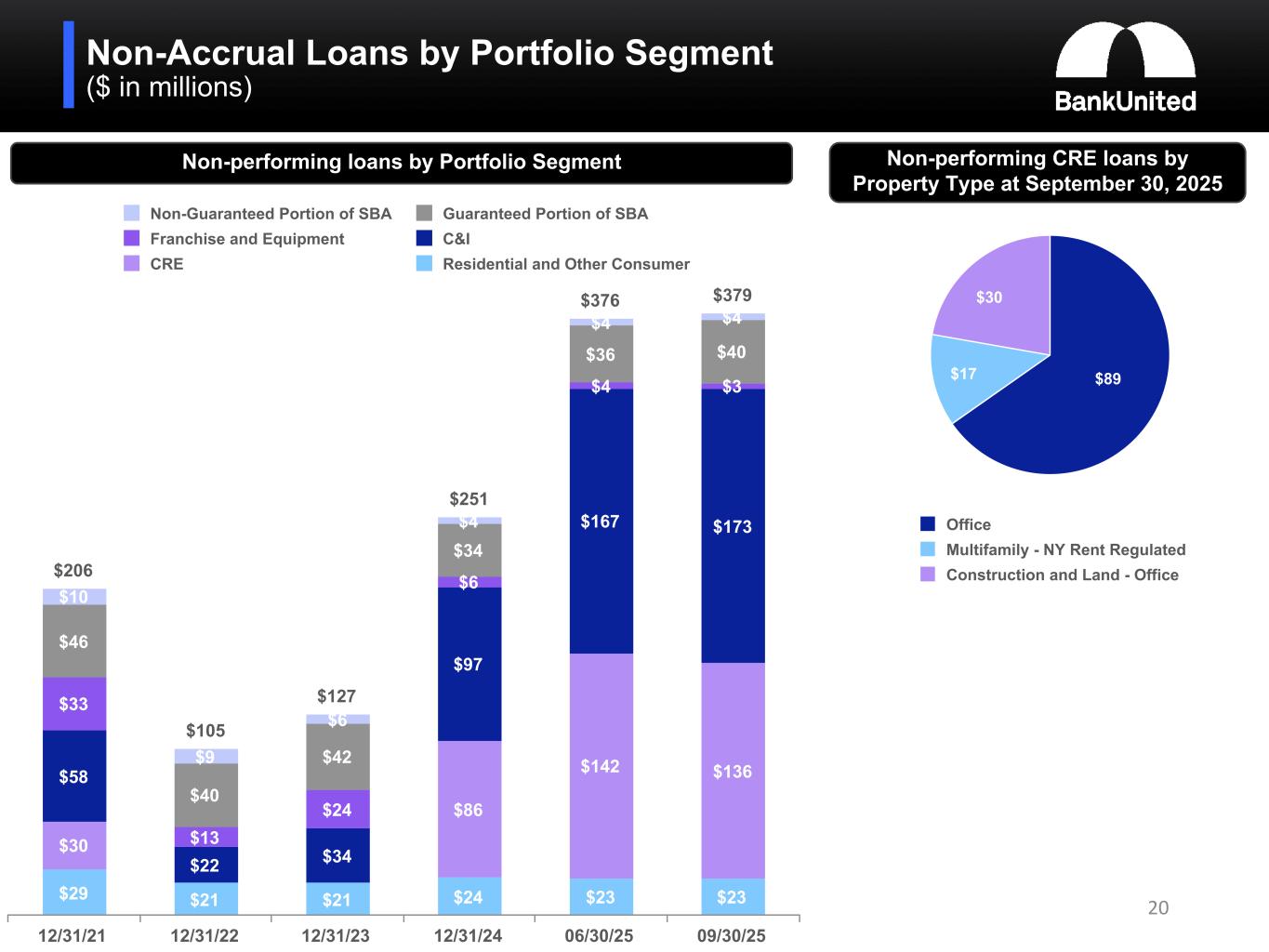
Thanks, Tom. Just one quick point. That $41 million decline was specifically Cree office, not Cree overall in Crescised and Classified. So to reiterate, net income for the quarter was $71.9 million, or $0.95 per share. Net interest income was up $4 million, and as Raj said, we're very happy to report that the NIM was up seven basis points to 3%, so we hit that target that we had put out there for you a quarter sooner than we thought we would at the beginning of the year. To reiterate what we've been saying for a while now, margin expansion has been and will continue to be primarily driven by a change and mix on both sides of the balance sheet rather than by the Fed's actions with respect to rates. Continued execution on this has continued to remain our priority, and the static balance sheet remains modestly asset sensitive. We've done some hedging to protect the margin if rates should decline more than the forward curves would suggest, and there'll be details about those in the upcoming 10Q filing. This quarter margin expansion was mostly attributable to an improved funding mix. Average NIDDA grew by $210 million, and average interest-bearing liabilities declined by $526 million. On average, higher-cost brokered deposits were a smaller part of the funding mix this quarter. We did redeem the $400 million of outstanding senior debt in August. That improved the funding mix from a cost perspective. The yield on that was 5.12, so that was helpful also. So the average cost of interest-bearing liabilities declined to 352 from 357, and the average cost of deposits declined by nine basis points to 238. The average cost of interest-bearing deposits was down eight basis points to 340, and on a spot basis, the APY of deposits continued to trend down to 231, and with the rate cuts that we expect in the fourth quarter, that trend should continue. The average rate paid on FHLB advances did increase, and that was mainly due to the continued expiration of cash flow hedges. Again, there'll be details on all of that in the queue. The average yield on interest-earning assets was flat at 538 this quarter, while the yield on loans decreased marginally. The yield on securities was up a little bit to offset that. All of our guidance assumes two additional rate cuts in 2025, one in October and a 75% chance of another in December. On the provision and reserve, the provision this quarter was $11.6 million. The ACL to loans ratio was 93 basis points, consistent with the prior quarter end. And I'd refer you to slide 17 of the deck for a waterfall chart that talks about the changes in the ACL for the quarter. A couple of things that were driving the movement in the ACL and provision for the quarter. We had improvement in the economic forecast, largely offsetting an increase in specific reserves, and the majority of that increase in specific reserves was related to one CNI credit, to a lesser extent, one office loan. That CNI credit appears to be idiosyncratic in nature, doesn't seem to be any kind of common thread with respect to industry or geography emerging there. We also had increases in certain qualitative overlays, and obviously net charge-offs reduced the reserve. Net charge-offs totaled $14.7 million. The net charge-off rate was 26 basis points for the nine months ended September 30th, and 27 basis points for the trailing 12 months, so pretty consistent. And those net charge-offs primarily related to those same two loans, the one CNI loan and the one office loan. The commercial ACL ratio was pretty consistent with last quarter at 135, and the reserve remains a little more than double historical net charge also for the weighted average life of the portfolio. As Raj mentioned, NPLs were essentially flat, quarter over quarter, up $3 million. Of $136 million in total CRE non-accruals, $119 million is office, and the other $17 million is New York rent-regulated multifamily. NPA ratio was pretty flat, quarter over quarter, 99 basis points this quarter, compared to 98 last, excluding guaranteed SPA loans. Nothing of note to point out in non-interest income or expense this quarter. I will point out, however, that year over year, non-interest income for all categories combined, other than lease financing, which we know is running down as expected, is up 24%, as some of our commercial fee businesses start to gain traction. So I think that's very noticeable. We've been pointing that out. I think that 24% increase is worth noting.
And that's early innings for us.
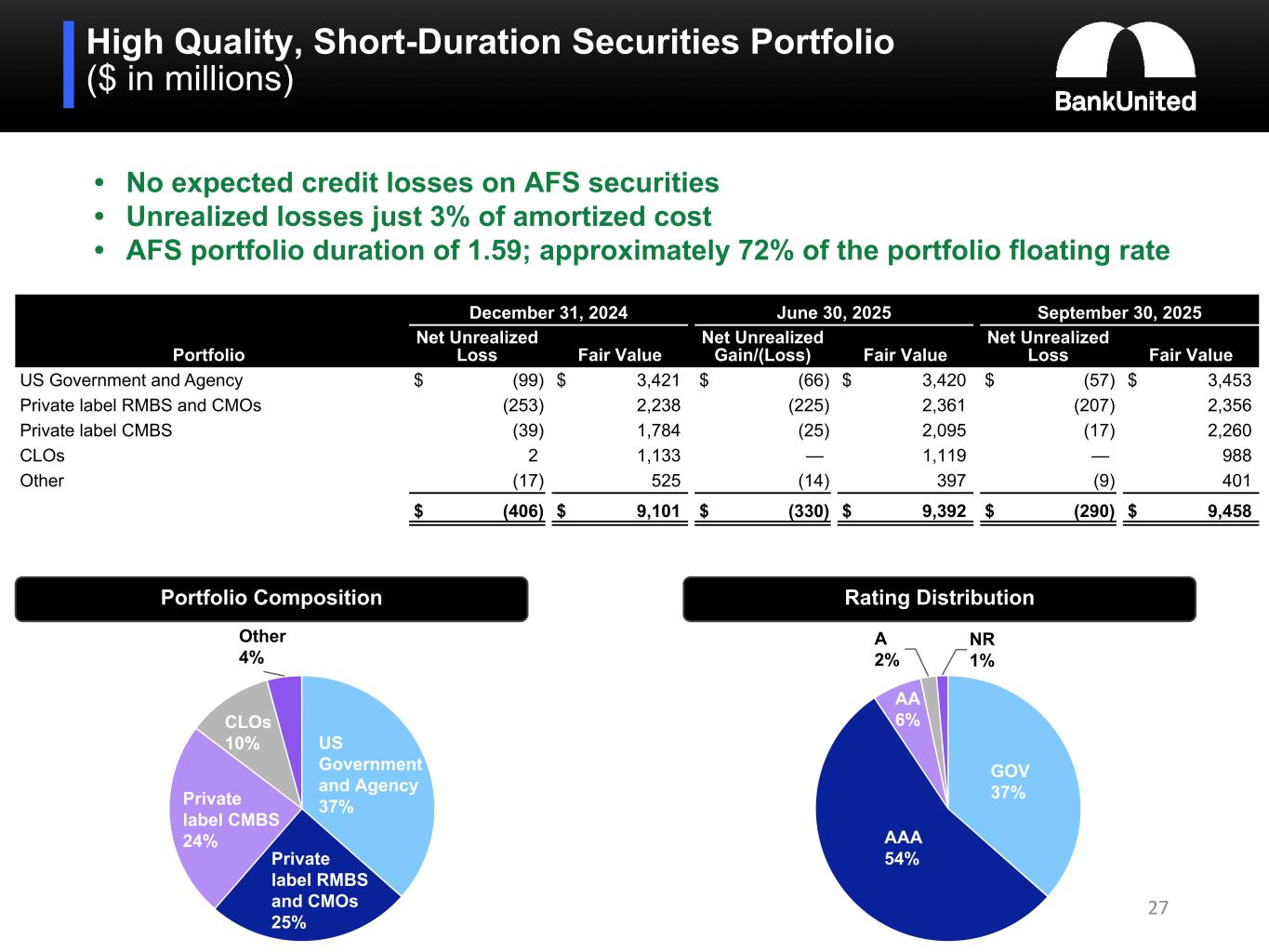
Yes, very much so. And non-interest expense remains well controlled. A couple of comments on guidance for the fourth quarter. We expect margin for the fourth quarter to be flattish, essentially flat. Double-digit NIDDA growth for the year is what we have guided to. We're at 13% year-to-date, and while we do expect some headwinds to that in the fourth quarter, I think we'll easily hit that double-digit guidance that we gave you for the full year. Total loans, likely flat year-over-year. And core CNI, we expect year-over-year to end with low single-digit growth, which echoes Tom's comments that we do expect pretty strong core commercial loan growth in the fourth quarter. Because of some opportunistic purchasing activity, I think the securities portfolio will be down in Q4 but still up slightly year over year. Non-interest expense, we had guided to being up mid-single digits for the year. I think we'll do a little bit better than that, probably closer to the 3% area. So those remain well-controlled. So with that, I will turn it over to Raj for any closing comments.
No, listen, I'll close with where I started, and I'll just add one thing to it, which you just alluded to, which is 20% growth in core fee income is something we're very happy about and celebrating, but not, again, it's not a destination. This is just maybe the first or second inning of what we want to do in that category, so we're very optimistic about long-term prospects for fee income. But like I said, I'll end where we started, you know, strong EPS growth, ROA, ROE got better, margin got to 3% a little earlier than we thought. And the balance sheet, for the most part, behaved like we had expected it to, and credit remains pretty stable. And capital continued to accrue. So the other thing I would like to say is this is Leslie's last earnings fall. And I talked to her yesterday. I wanted to make sure she wouldn't tear up.
She has been my partner as CFO for 13 years. 13 years. So they've gone by very fast. But I just want to thank her for her partnership, helping me build what we have. And not just a strong finance department, but a strong company. And the transition to Jim is going very well. it's been a couple of months and over the next couple of weeks we will see the transition actually officially happen Leslie will be with us at the end of the year and will be a friend of the company so I'll probably still reach out to her for advice into next year wherever she is traveling good luck finding me I'll find you but thank you for everything you've done for the company and for me specifically Thanks, Raj.
And just one thing I would add to that, seriously, and I mean this very sincerely, one of my favorite parts of this job has been interacting with and working with and getting to know all of you in the analyst and investor community. I really have enjoyed that. I've enjoyed working with each and every one of you, and that's one of the parts of this job that I'm going to miss the most.
With that, let's turn it over for Q&A.
Operator
Thank you. As a reminder, to ask a question, please press star 11 on your telephone and wait for your name to be announced. To withdraw your question, please press star 11 again. One moment while we compile our Q&A roster. Our first question is going to come from the line of Ben Gerlinger with Citi. Your line is open. Please go ahead.
Hi. Good morning. Thanks again, Leslie, for all the help and really, really dumbing, dumbing, dumbing things down for me. I appreciate that. Not to start on credit, but I'm going to start on credit. When you think about the one CNI and CRE, you have a specific reserve, and you're also charging off, but the reserve was – the build was bigger than the charge off. Is it fair to anticipate a potential charge-off in 4Q or another one down the road as related to those two loans?
Yeah, I think with the one CNI credit, yes, there will be an additional few million dollars charge-off in 4Q related to that loan, but it's been fully reserved for. And then with the other one, the office loan, the charge-off has already been taken.
And then as we kind of finish out the year, I know you gave some preliminary guidance. And you just think about the loan opportunity. When you think, are clients becoming more comfortable with the environment we're working in? And are you seeing an increased traction in Atlanta? And I know the Charlotte one is fairly new, but just kind of think like longer term, is the opportunity set getting better over, because I mean, you're arguably the most competitive area in the United States. So I'm just trying to think, like, is it risk-adjusted spread that's not meeting the hurdles? Why are loans so kind of stuck? I get there's payoffs, but what can we expect over the road?
I'll have Tom answer this, but I just want to start by saying, with now being in markets outside of Florida, the opportunity set is actually bigger. And yes, these are competitive markets, but they're also healthy, growing markets, right? That's a trade-off. You want to be in good markets, but good markets are also competitive markets. We've chosen these markets intentionally, and we'd rather be in growing markets that are healthy, that are competitive, than the opposite. So I'll let Tom speak specifically where we're seeing the opportunities. And we are being very disciplined about pricing, right? Because we have one eye on margin and the other on volume. So it is, you have to, and of course, credit is always front and center. So you have to balance all those three things. But I would still say that it is, the miss that we've had in, specifically in CNI, is not about missing on production. It has been mostly because of a large amount of runoff, some of it that we don't control, but some that we do control, which is pricing and credit and letting those things run out prudently. But Tom, just add some more color to it, please.
Yeah, I would say when you talk about opportunity in markets, Raj has asked me to find great markets that are not competitive, and I've not been able to do that yet. Every great market we're in is pretty competitive. But I think if you look at the pricing piece of it for a second, and I think we have held – there is a lot of price compression and there is a lot of price competition. When we look at pricing through the end of the third quarter, I was actually very happy with where we held spreads at the end of the third quarter, and we had some key segments that actually had a couple of basis points of spread increase for the quarter, and that might not seem too exciting, but this is a game of inches, you know, and keeping spreads at the level that we're keeping them is a big part of making the overall margin numbers we're looking at. I think the environment is very good. I am always heavily impacted by ensuring that we're hitting overall production numbers, because I believe as long as we're hitting overall production numbers, we will we will see growth over the long run and we're also growing core relationships which are really really critical to the bank i think new markets we've invested a lot in new markets and we're investing even in markets that were maybe older markets that we were a bit under invested in you know like tampa in the past we're investing in new producers in these markets so i'm very optimistic about what we're going to see. The environment's good. Business owners and executives are optimistic about what they see in the economy, and they're optimistic about what they see in companies. To some extent, this is a very complicated answer, but to some extent, mix plays a big role in what we've seen in loan growth, particularly on the upper end of the C&I market, more towards the corporate banking market, in terms of a lot of times you're in deals and you're approving deals that have delayed term funding in it. They have acquisition components in it. So your production on some of these kinds of opportunities doesn't immediately turn in the funding. It almost looks like a construction loan in many ways. But I feel very good about what we're looking at in the very near term and in the next year in terms of business environment, where clients are, where we're positioned in the market, and actually how we're doing from a spread perspective and a competitive perspective in the market. I feel very, very enthused about where we are.
And I will reiterate on a little bit shorter term focus, Q4 has traditionally and historically been a stronger long production quarter for us. So with respect to next quarter in particular, that's another factor that comes into play.
Operator
Thank you in one moment for our next question. Our next question comes from the line of Dave Rochester with Cantor. Your line is open. Please go ahead.
Hey, good morning, guys. And Leslie, I know I've already told you this before, but it's been a real pleasure over the years working with you. You've been extremely helpful. Good luck in retirement. And, Jim, looking forward to picking it up with you. Yeah, absolutely. On expenses for next year, I know you may still be working on those at this point, but is there any reason for expense growth to accelerate next year, just given everything you want to do in the new markets or upgrading systems, anything like that? And is there anything big that's coming that people should be aware of?
I mean, Dave, we're not prepared to give any 2026 guidance on this call. You'll hear all that from Jim in January. But we've talked about some investments in teams and platforms and whatnot, but it's not like any giant rip-everything-out-and-replace kind of investment that we're looking at. But we'll give more specific guidance on a January call.
Yep, that sounds good. I figured I'd try one last time. on deposits uh if you could give an update on the title business on some of the trends this quarter just from a customer growth perspective i know you gave the the balance of title which is great but it'd be great to hear just you know what the customer acquisition was this quarter i know you typically grow around you know 40 customers plus or minus um and then uh how many customers do you have at this point and what's your outlook there it's very similar to uh the run rate that we've seen over the last many quarters so i don't have the exact number in
front of me but i also looking at you know i've gotten an update on the pipeline for the next couple of quarters and very strong so uh the title business is doing just great you know it's it's so we have about 10 market share if not more of the entire industry already i'll leave it at that and that's the best we can tell because nobody publishes it through the perfect accuracy but this business is growing it's growing at the same speed as it has over the last 2-3 years anything to slow down
someday hopefully the mortgage market will come back and that will help us we're not counting on it when that happens it happens it will be nice maybe just one last one on capital You know, at this point, trading below Tangible Book, it's about a 6% discount right now. It seems like a great time to sort of lean into that. Your capital levels are very strong. I just wanted to get your thoughts there.
Yeah. Like I said in my comments, we are being opportunistic with the buyback because there's been a lot of volatility in the marketplace. So the 10B51 plan we have out there is designed to take advantage of that opportunity.
Sounds great. Thanks, guys. Thanks again, Leslie.
Operator
Yep. Thank you. And one moment for our next question. Our next question will come from the line of Woody Lay with KBW. Your line is open. Please go ahead.
I wanted to start on fee income. I appreciate you sort of highlighting the core growth trends because it does get masked a little bit just with lease financing comes down. So that growth rate is pretty impressive. And I know a lot of it gets lumped into the other non-interest income bucket. So I was just curious if you could sort of break down some of those initiatives and, you know, given we're in the early things, what's the growth potential of those businesses?
Yeah. I'll tell you what is in that, like the big buckets without breaking it out like dollars and cents, but things that are in there. It's lending fees, syndication fees, capital markets, interest rate derivatives business, capital markets, FX business, which is very new and very small so far, but could be much bigger. There's capital, commercial card, purchasing card businesses in there. So all of that...
FX more broadly, not just the derivatives.
Yeah, exactly. The FX, the spot business as well. So all of those are investments that were made over the last three, four years, some as recently as just 12 months ago, some about four or five years ago. But they're all at different levels of their – I'd say they're all in early innings. The question is, what is in first inning and what is in second inning? So there's a lot of room to grow, and probably the most exciting part of the bank right now, growing that. The lease financing business absolutely is something which is being wound down, as you can see, quarter over quarter, those numbers are coming down. And the deposit business, the deposit service charges, that's more related to DDA. Some of the benefits of growing DDA get picked up at margin, some in that fee income, but that's also growing at a healthy clip, not at 24%, but it's also growing. So overall fee income should grow very nicely, especially once the lease finance is behind us, which we're getting close to. So we're excited about this contributing to profitability in a meaningful way very soon.
Yeah, and I would say all of those buckets that Raj mentioned are complementary to our core commercial lending and deposit businesses, and I think that's an important thing to make.
And there's no gain-on-sale type of stuff in there. We don't have a mortgage origination business that can go up and down on a moment's notice. It's all related to a core commercial business. You're making a loan, you sell a swap. You're moving money around internationally, you sell an FX product. A purchasing card, it's an annuity. Once you sell it, it's a recurring income item. So we focus on trying to build stuff that is recurring and it's closely tied to our core business. We didn't just go out there and say, let's start something totally different and just generate fee income. So we don't have wealth management. We don't have some funky servicing income in here. It's very, very core to what we are doing with our clients.
And I do think the derivatives business, the FX business, the card business, the syndications business, all of those have tremendous growth potential.
Yeah, I would add that, you know, if you look two years ago, we have invested a lot in syndications capability. If you look two years ago, we were normally either in a bilateral deal where we were the only bank or we may have been in a deal led by somebody else. Today, we are leading more and more deals on both the Cree side and the corporate side, and that's what's driving the syndication revenue.
And FX is brand, brand new. It's a baby business. And, you know, not even, you know, making today a pretty insignificant contribution, and that's one of the areas where we see the biggest growth potential in the markets we're in.
We're in high international business markets where you have a lot of international trade, and I think this gives us the opportunity to focus on when you're in places like Miami and New York and Atlanta and Dallas. you're in big international trade markets and having this capability allows us to not just take advantage of sort of daily transactions, but to focus on this kind of a client base that will drive that revenue.
Business we can win that we could have won when we didn't have the capability as well. And, you know, like I said, Jim will now be looking forward to the day when those numbers are all big enough that we have to break them out on the P&L. Right now they're still new and they're a bit lumpy, but.
Right. That's really great color. I appreciate it. And obviously there's, um, a bunch of sub verticals there, but if I kind of just track, you know, compensation from a year ago, it feels like the fee income growth is, is, you know, growing a lot faster than the expense side. Um, so how do you, how do you expect sort of like, uh, the efficiency ratio impact of those businesses? It feels like it should, uh, help drive improvements.
A hundred percent. I think all of those businesses are very efficient from that, you know, from a cost revenue relationship perspective without question. And I do expect, you know, operating leverage to continue. All right.
That's great to hear. And then last, I appreciate the updated disclosures on the NDFI lending book. I was just interested on sort of how that portfolio has grown over the past several years. Has it been pretty stable or has it just any note on the growth trends over the years in that specific portfolio?
Yeah, I'd say there's been modest growth in it.
I don't have all the numbers in front of me, but I would agree with that.
I mean, there are certain segments that have grown more. There are certain segments that have grown, you know, less when we look at that. You know, we have grown more in business-to-business and sort of real estate underlying businesses, and we've reduced substantially the portion of it that was consumer lending-related over the last couple of years as we had more concerns about what was happening at the consumer level in some of those. So the overall bucket has grown modestly, but there's been some shifts within those buckets to kind of reflect portfolio strategy.
Got it. All right, well, thanks for taking my questions, and congrats, Leslie, on the upcoming retirement. Really appreciate all the help you've given me in my seat.
Operator
Thank you. And one moment for our next question. Our next question is going to come from the line of Jared Shaw with Barclays. Your line is open. Please go ahead.
Hey, good morning, everybody, and congratulations also, Leslie. I guess maybe on the CRE side, where's your appetite for incremental CRE here? Multi-family balances were down quarter over quarter. The office was down quarter over quarter. Where do you see sort of opportunity and, you know, within those subsectors?
I would say it's in three areas. I think the retail market has been very strong, particularly the grocery anchored urban market in every market that we're in. We've seen good growth in that asset segment over the last 18 months, 24 months. We continue to feel good about the industrial segment, which has had good growth over the last few years. Industrial is performing well in virtually every market that we're in, and even in the Northeast as well, in places like New Jersey, the industrial market is very good. and multifamily has shifted a bit because we have a little bit less in stabilized lending and a little bit more in construction. When you look at the construction line, that's virtually all multifamily. Most stabilized loans are now moving to permanent markets, but we still see in all the markets that we're in, for the most part, particularly in the South, you're still seeing good population migration. You're seeing good development of new multifamily. And when you look at the big picture data around the cost of owning versus the cost of renting, in most of the markets we're in, we still see a very big differential in cost of owning versus cost of renting for homeowners. So we see continued growth in multifamily in virtually all of the markets that we're in. So those would be the three, you know, primary points of emphasis that we would have. We will still be open to a little bit of medical office, but I would say the big three will be retail, industrial, and multifamily.
Yeah, Jared, I think the decline in multifamily this quarter wasn't anything intentional or by design. It's just the way the chips fell for the quarter.
Okay. And then on the non-performers in office, I know it's relatively small numbers overall, But what drove sort of the incremental weakness to cause that, you know, that uptick in non-performers? Was it more vacancy or rate?
I don't even know if I'd really call it an incremental weakness, Jared. I think it was just episodic as these things worked their way through the resolution process. I don't think it was a trend or, you know, if anything, looking forward over the medium term, I would expect it to trend down as opposed to up. I wouldn't make that comment necessarily for any one quarter specifically. But I don't think it was a trend or incremental weakness. I think it was just, you know, the kind of episodic things that are going to happen as we work through that portfolio.
There's a small batch of loans. If you look at the overall portfolio and look at the average debt service coverage ratio, obviously the overall portfolio is performing, you know, pretty well to be over 1.5. but there are a handful of assets that can move up or down and there are situations where you lose a tenant in any one building and now you're in abatement period even if you bring in a new asset that things can shift up and down. Overall, when we look at the whole portfolio, which I'm staring at the printout right now, the general trends in most markets are improving each quarter as abatements run off. That's the big driver is abatement runoff.
Yeah, and I would say the one we took the charge off on this quarter, you know, Jared, that's one that's been sitting in work out for a long time, and it finally just reached its final resolution, and yeah. So that's what was going on with that one.
Okay, thanks. And then just finally, you know, going back to the capital discussion, you know, we've seen a steady increase in capital, CET1 and TCE. And I guess if we're assuming that the buyback is more limited and opportunistic, any other uses of capital we should be thinking of, whether that's an accelerated increase in dividends or a special dividend or M&A? And I guess what would be the upper end of capital where you would start to be more interested in the buyback versus opportunistic?
Yeah, I don't think my answer is going to be very exciting. It's going to be the same that I've given in the past, which is, yeah, growing dividend is a priority for us, and that usually we do early in the year, so stay tuned for that. Special dividends are not on the table. We have gotten feedback from investors that has been very clear that don't do special dividends. Buyback is certainly something that is one of the tools that people use, though opportunistically. M&A has never really been a lever for us, as is demonstrated by our history of building the bank organically. So my number one priority would be to grow. And but if it is not that, then, you know, buybacks and dividends, but not special ones as regular ones. So those will be the way to deploy it.
And the only other thing I would add to that, Jared, I know we're being a little maybe vague, but we're right in the thick right now of our annual business and capital planning process. So, you know, probably maybe a little bit more to say about this on the January call when we give you guidance for 2026.
Okay. Thank you. I appreciate it.
Operator
Thank you. And one moment for our next question. Our next question comes from the line of Tim or Braziller with Wells Fargo. Your line is open. Please go ahead.
Hi. Good morning. Good morning. Looking at, you know, margin over 3% return on equity, if you round up, you're at that 10% level. I know you'll give us more detail as to the margin trajectory on the January call, but, you know, for the 10% return on equity benefited a little bit this quarter, maybe from a lower provision, but is that pretty sustainable here going forward? Are we kind of at that level where we're going to continue grinding that higher, or is there still going to be potentially some kind of back and forth with either provision expense or PPMR or whatever else?
I expect it to grow. Yeah, 100%. I expect margin to grow, I expect ROE to grow, and I expect ROE to grow.
And I would say with respect to provision, I don't think it was abnormally low this quarter. Because we have largely a commercial lending base and things can be episodic, you can see some volatility quarter over quarter. But I don't know that I would characterize this quarter's provision overall as being abnormally low in terms of the range of what one could expect.
That's a good caller. A couple on credit, just the $26 million NDFI loan that was called out for the real estate investment fund. Can you just give us some more detail there? What's driving that MPL status?
The underlying assets or office.
Real estate assets or office. That's the answer.
And that's the only one we have with an office concentration okay and then the bucket that B2C I guess how big is that bucket and just in terms of underlying collateral there is there any exposure to the subprime consumer maybe just talk me through kind of what's in that bucket more broadly yeah the if you look at the B2C which is in other in that charge.
Yeah, that portfolio is relatively small. And it's been substantially reduced over the last few years.
Okay. But in terms of borrower type, is there any kind of distribution either by FICO or collateral type?
It's literally a handful of loans. Okay.
Yeah. We've been negative on the consumer lending space for a couple of years. So we've been working that portfolio down, which is why it's not even making the chart. In that other, there are a lot of different categories, but all of which are tiny. But if we had done this chart two years ago or three years ago, that would have been...
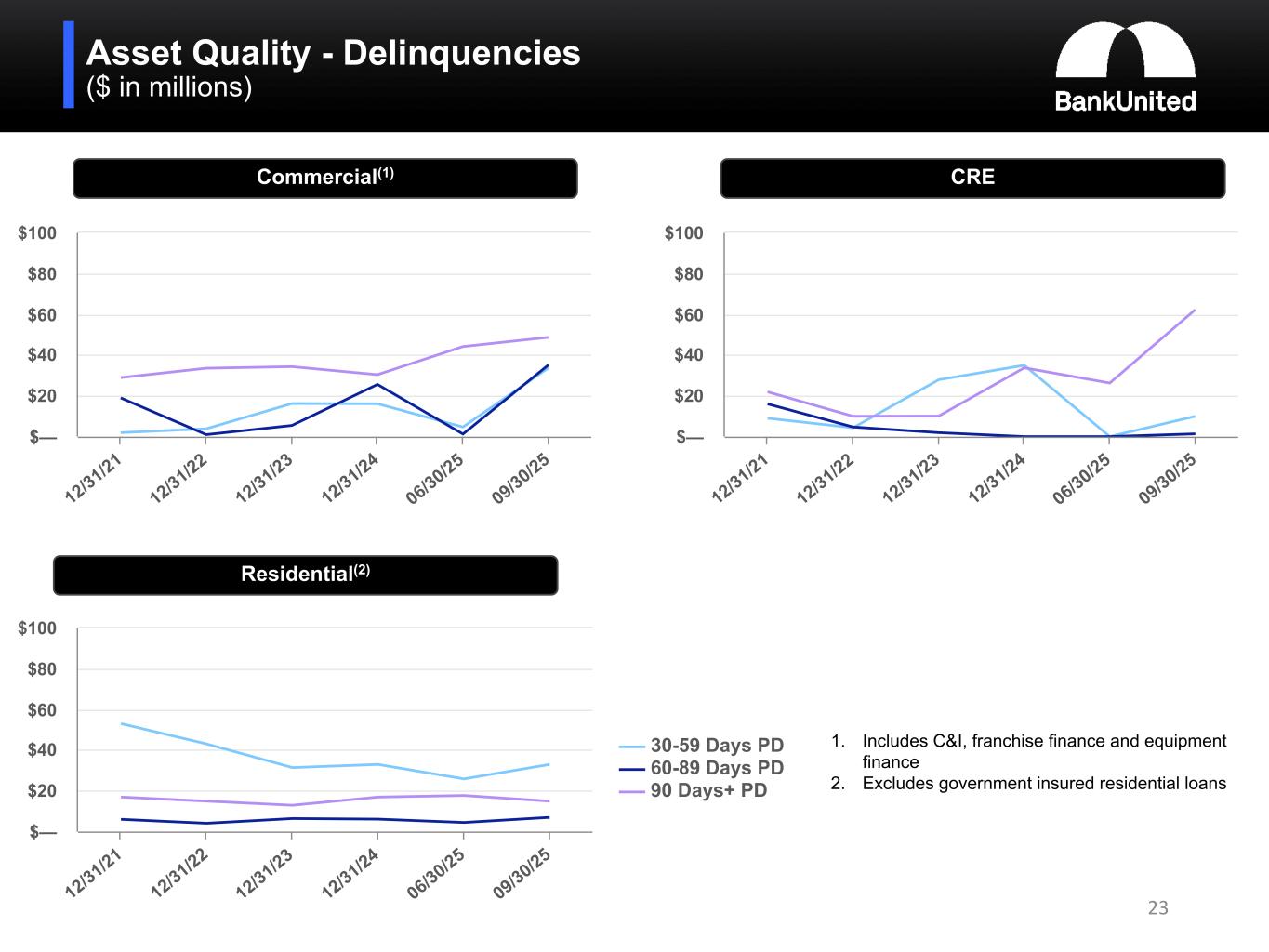
We say handful, it's only one handful. got it okay um how about on the commercial side uh commercial delinquencies you know ticked up across the board you had the the the charge and reserve for one cni credit but allowance looks like it's down kind of a couple quarters in a row in the cni book can you just maybe talk through is that an indication that maybe we're getting through some of the more kind of ringed in credits, and the outlook is improving, indicative of the reserves, or is there maybe a chance where commercial allowance has to catch up on the back end of the year, just given some of the delinquencies?
So I really, you know, I'm pulling up this slide now, but I think the commercial reserve overall was pretty consistent quarter over quarter. The slight downtick in C&I was really because of the charge-off that we took for the one loan. So I don't think really there's anything changing at a high level about how we think about the reserve for that portfolio. I think the delinquencies are exactly what you said. They're just, you know, the normal ins and outs. I did actually ask for a list of them. It's, you know, a couple loans, and I don't think there's anything going on in there that feels like a trend.
Got it. And then just last for me, Raj, one of your Southeast peers made a comment last week that there's a lot more banks potentially for sale in the Southeast. Maybe just talk through that dynamic. Are you getting more inbounds? How are you just thinking about the broader M&A environment in the Southeast?
I think mostly I'm getting calls from investment bankers trying to do the best that they can to feeding the FOMO sentiment, if anything else, like, everybody's doing a deal. Everyone's, you better be talking. So that's the sentiment I would say. It's mostly driven from innocent bankers. Having said that, I will say there will be more deals. I've been saying that for a better part of a year, that there's a pent-up demand for deals, and we're seeing it, and we'll see more of it in the coming weeks, months. And as a buyer, you know where I stand. We want to build the bank organically. We've had that stand for ever since we started. Any other deal that makes sense for us, we're always open to having a discussion. But we don't spend our day-to-day thinking about a deal because if you do that, you're not going to build a company. So we're focused on building. And if a deal ever comes along that makes sense, whether it's tomorrow or 10 years from tomorrow, So we're always here.
Great. And Leslie, again, just echo the congratulations on retirement.
Thank you. Just a quick follow-up on your delinquency question in the C&I bucket. It's actually three loans, and they've been in the criticized classified bucket, but paying for a while, and so not unexpected.
Nor are we seeing any trends with delinquency perspective that we're concerned.
It doesn't look like a trend.
Operator
Thank you. And one moment for our next question. Our next question comes from the line of John Arfstrom with RBC Capital Markets. Your line is open. Please go ahead.
Good morning, John. Congrats, Leslie. Thank you. Just a few follow-ups. This can be rapid fire as well. But has your buyback appetite changed at all, or is it just your approach and timing?
And do you want to grow the balance sheet over time, Raj, or are we still kind of in the medium term in the loan makeshift mode?
We certainly want to grow the balance sheet.
Getting weird music. Emphatically, yes, we want to grow the balance sheet.
That's the investment bankers calling, Raj. They are entertaining, if nothing else. Okay. Okay. And then, I think I know the answer, but you touched a little on CRE optimism and some slower utilization as well. But is borrower sentiment better than it was a quarter ago? Is it generally improving at this point, or is it kind of the same as it was a quarter ago?
I wouldn't necessarily compare it to a quarter ago as much as I'd compare it to the beginning of the year. There was a lot more concern about tariff issues and the way the economy was going to head and would interest rates decline as much as people expected? That was particularly in Cree investors' mind. So I would say clients have a more clear and optimistic view that's getting a little bit better every day.
I guess, Raj, on the balance sheet growth question, I guess back to that. We were interrupted. But medium term, do you expect to grow the balance sheet? Is it still a near-term mix shift? What are your thoughts there?
I expect the balance sheet to grow in the medium term. I do expect the balance sheet to also keep changing the mix because we're not going to stop on the resi runoff. So that will keep happening. But I eventually expect CNI growth to overtake that runoff.
Thanks a lot. I appreciate it.
Operator
Thank you. And one moment for our next question. Our next question will come from the line of David Bishop with Hovde Group. Your line is open, please go ahead.
Yeah, thank you and congrats again, Leslie. I've enjoyed working with you over the years and I think I will cry if you tell me Isis is leaving as well. Hey, quick follow-up question on the NDFI. I appreciate the color there. Just curious in terms of the granularity of both the other and the B2B NDFI? Is that comparable average loan size to the rest of the commercial bank? Just curious if you have any granularity there you can share.
I would say if you looked at the NDFI portfolio, the average credit size is maybe slightly larger, but not much. It's pretty comparable. Pretty comparable. It's a fairly granular look at the entire, like we're generally prudent about taking very large exposures in credits. And if you look at this portfolio or the remainder of the whole portfolio, you'll see a lot of mid-sized credit exposures. You will not tend to see extremely large individual credit exposures.
Is it fair to say, Tom, that we're really not in the business of or we're really not concentrated in lines to private credit funds.
Yeah, no, no, we're not at all. I mean, our, our B2B exposure would look like a small handful of BDC corporations, which are very modest facilities in size and credit facilities that are predominantly to real estate investment funds, largely in the Northeast that have been long-term historical clients and major depository clients of the institution and were secured by pledges of assets. These are not like, not to say anything negative about any of the large private credit funds, but we're not in, you know, the $2 billion fund to, you know, whatever fund you want to pick. That's an unsecured facility for, you know, supporting their general obligations. We're not in those kinds of deals.
Got it. Appreciate the color. Then, Tom, maybe a follow-up question, final question for you. You noted some of the headwinds on some of the runoff in the C&I segments and such. Just curious, I don't know if you have a dollar basis or maybe what inning we're maybe in in terms of runoff from some of those maybe non-core portfolio.
Yeah, I'd say we're in the bottom of the ninth inning on that. We're pretty much finished with the work that we wanted to do from a rate perspective or a risk perspective or client-focused perspective. We're at the very bottom of the game. Got it.
Operator
Thank you. And one moment for our next question. Our last question will come from the line of Stephen Scalton with Piper Sandler. Your line is open. Please go ahead.
Thanks, guys. So, Tom, your last comment was encouraging, kind of similar to what I was curious about. You know, thinking about you guys in, man, 2013, 14, 15 was a strong double-digit kind of loan grower. You know, loans have basically been flat since 2019. So, what's kind of the spectrum of how we can think about potential loan growth if we really are, you know, kind of past all the needed remixing? Is it kind of a mid-single-digit run rate in a perfect world, or could it be better than that? We'll give you the exact guidance in January.
And I would say expect balanced growth across the segments that we're in, across geographies that we're in. And when you look at the Cree book, expect us to keep a very balanced portfolio. And, you know, as the overall size of the bank grows, the Cree book will grow, but it will remain reasonably in line with, you know, a 28 to 30 percent kind of size range. And when you look at the asset distribution that we have today, it will be evenly spread among major asset categories. We will not be, you know, overly indulgent in chasing any one asset category. It'll be a balanced growth portfolio.
Got it. But it sounds like 2026 could kind of be the inflection point versus what we've seen the last, you know, five or six years in terms of loan and balance sheet growth. Is that fair to say?
Yeah, and you should remember during that five- to six-year timeframe, you know, we were taking the leasing portfolio from $2 billion to a couple hundred million dollars, and we were taking multi-family.
The rest of the rent-regulated multi-family.
You know, that dropped dramatically by three-plus – Minor matter of a global pandemic. Three-plus billion dollars, and we're awful happy to be sitting where we are. Yeah.
Yeah, no, for sure. I think that's why the remix question is important to know if that process is kind of completed after all the puts and takes. And then maybe last thing for me, just, you know, obviously we've seen a bit of an uptick in the banking space in terms of more activism from investors. I'm kind of curious if you've seen any incremental pushback from your investors around the path and the pace of progress and kind of what your response would be, you know, if anyone were to get more aggressive in terms of asking you guys where's profitability and what's really the pace of improvement to come?
I'll take the first part, and then I'll let Raj take the second part. We have not been getting any increased level of pushback, and I will let Raj answer what we would say if we did.
We engage. We're happy to engage with anyone, and we actually reach out and do as many conferences as we can and try and go see investors as often as we can. So what I want to make sure is that our investors understand the approach that we've taken and the progress that we're making. I wish I could just give you a catalyst that tomorrow everything will improve. This is, as Tom said in his earlier remarks, this is a game of inches, but that's how you build a franchise. It's not something, you know, This is a nuts and bolts business, one-climb-at-a-time business. But that's how you build something which sustains in value for a long time. So we're open to engaging with any investor who wants to talk to us. And we do all the time. And when we sit down and talk to them, rarely have I come across an investor saying, I don't agree with what you're doing.
No, they've been very supportive of what we've been doing. They've asked some of the same questions that you guys are asking. what's our more medium and longer-term thoughts about growth. But we haven't gotten, you know, I think there's been supportive of what we've done thus far.
Appreciate the transparency. And, Leslie, congrats on the retirement.
Operator
Thank you. And I would now like to hand the conference back over to Raj Singh for closing remarks.
Thank you all for joining me and joining us. and we will talk to you again, minus Leslie, in 90 days. I'll be listening, maybe. She'll be listening. She'll be asking questions.
Yeah, yeah, I'll get the Q&A.
Thank you so much. But if you have any more detailed questions, you know how to reach either Jim or Leslie, feel free to call us.
Operator
This concludes today's conference call. Thank you for participating. You may now disconnect. Everyone, have a great day.