Operator
Greetings! Welcome to Buck Financial Corporation's first quarter 2025 earnings conference call. All lines have been placed on mute to prevent any background noise. After the speaker's remarks, there will be a question and answer session. If you would like to ask a question this time, simply press star followed by the number 1 on your telephone keypad. If you would like to reach out your question, press star 1 again. As a reminder, this conference is being recorded. I would now like to turn the presentation over to Heather King, Director of Investor Relations for Buck Financial Corporation. Please proceed.
Good afternoon, and thank you for joining our discussion of VOK Financial's first quarter 2025 financial results. Our CEO, Stacey Kimes, will provide opening comments and cover our loan portfolio and related credit metrics. Scott Brower, Executive Vice President of Wealth Management, will cover our fee-based results. Our CFO, Marty Grunst, will then discuss financial performance for the quarter and our forward guidance. Slide presentation and press release are available on our website at BOKF.com. We refer you to the disclaimers on slide 2 regarding any forward-looking statements made during this call. I'll now turn the call over to Stacy Kimes, who will begin on slide 4.
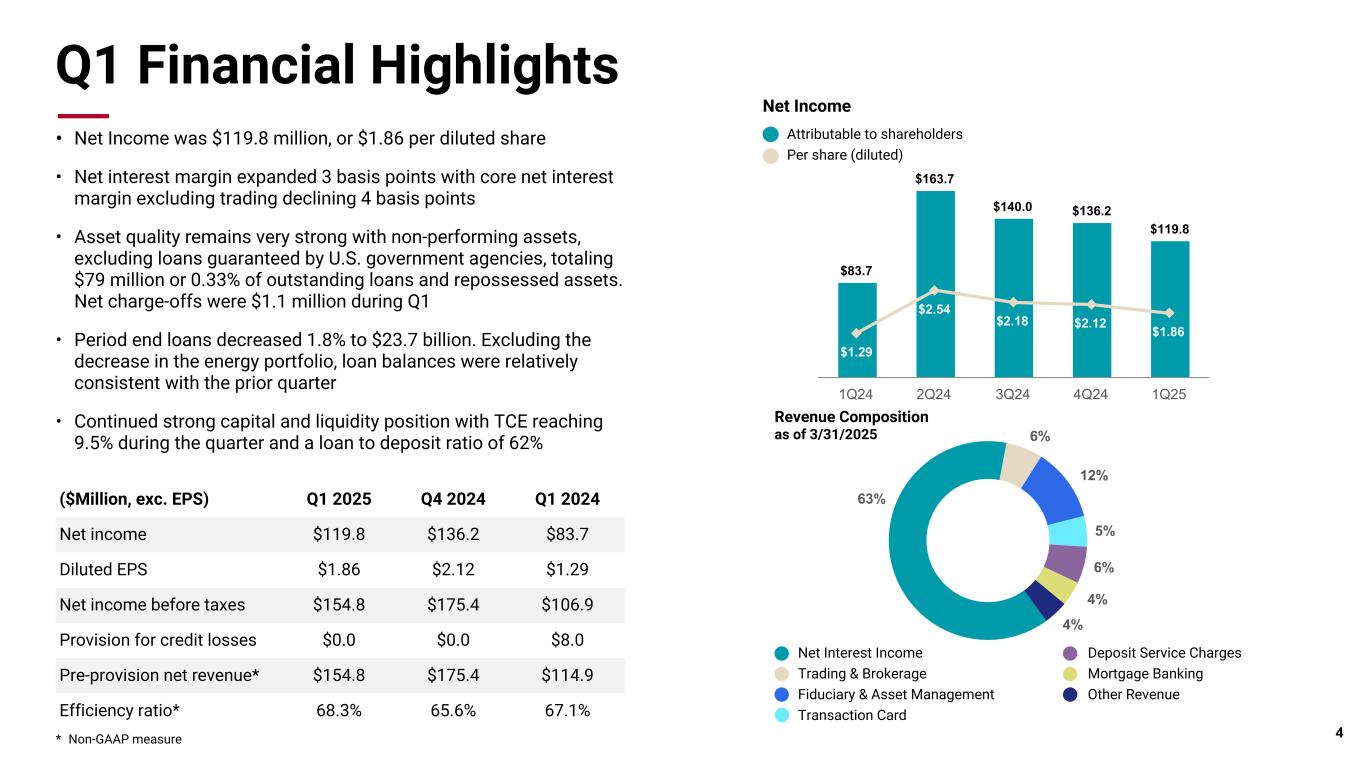
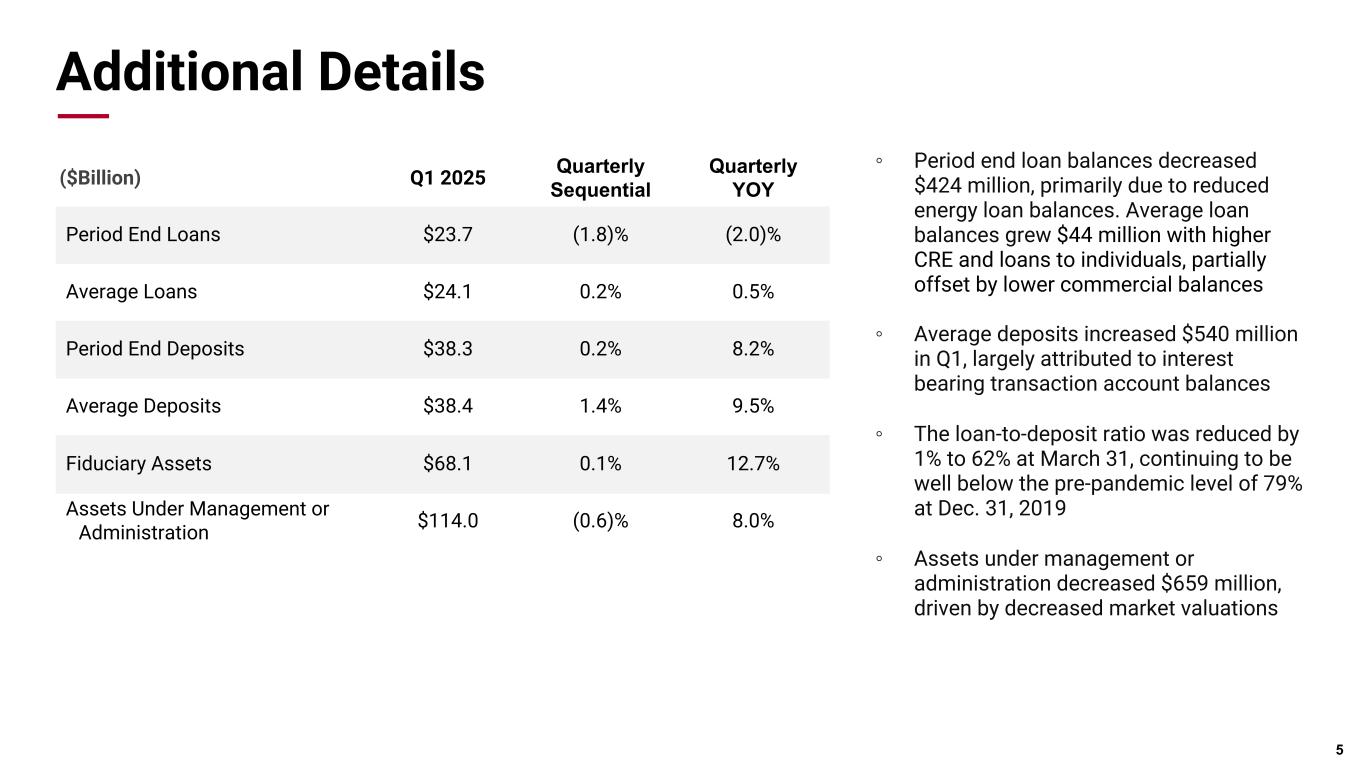
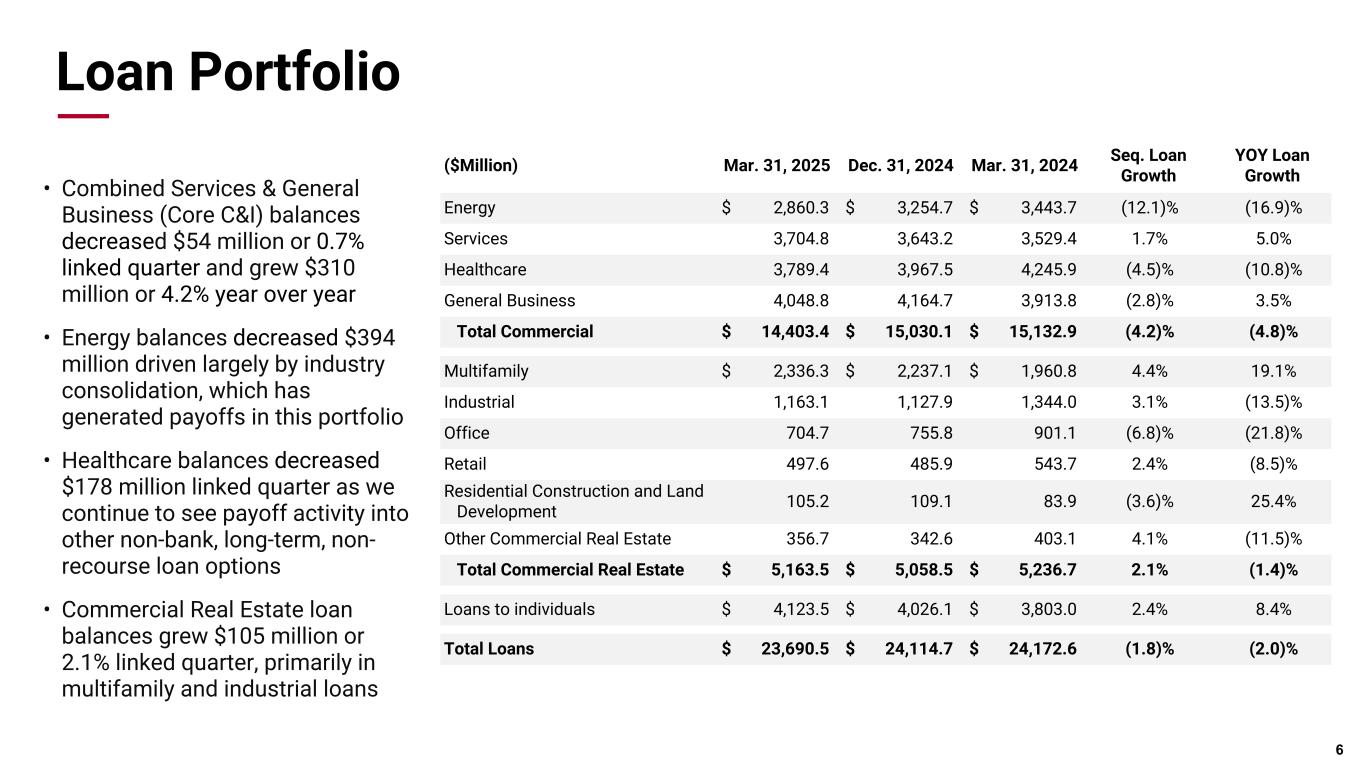
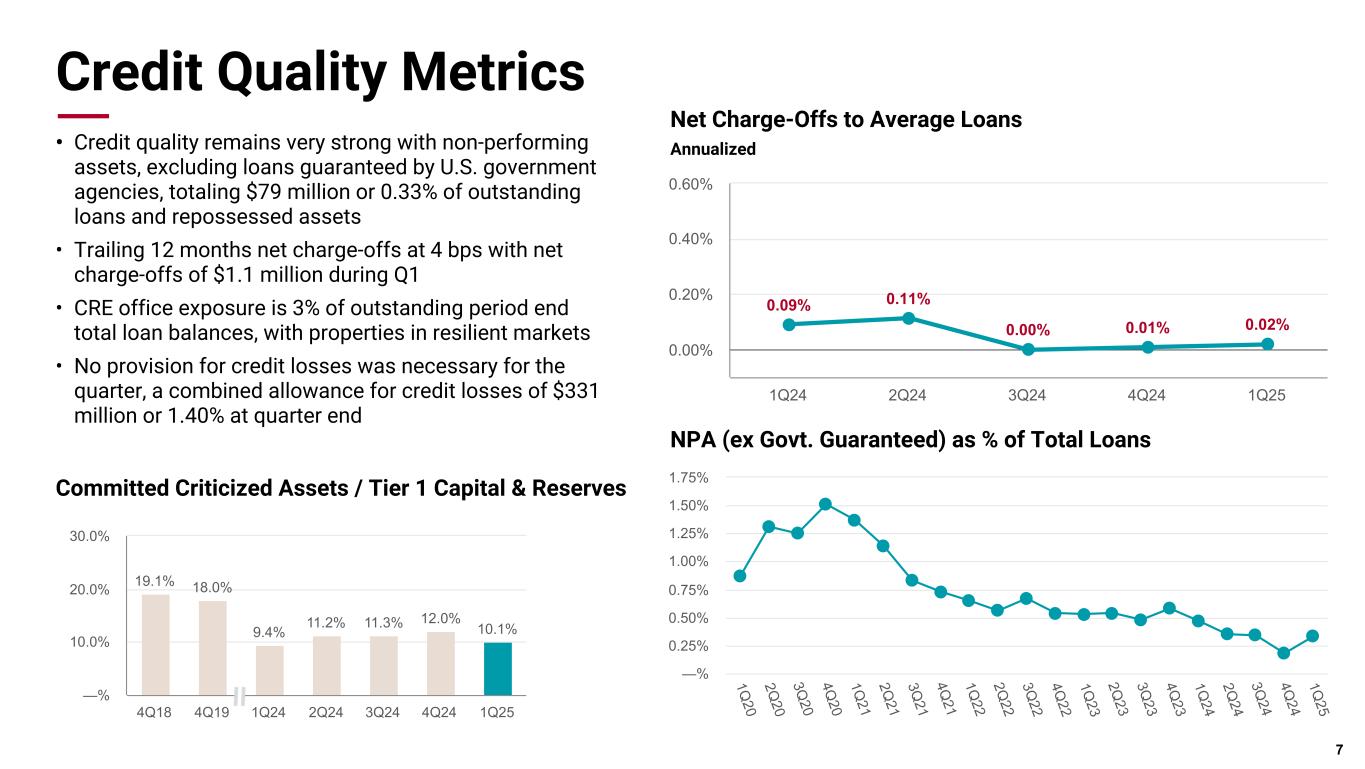
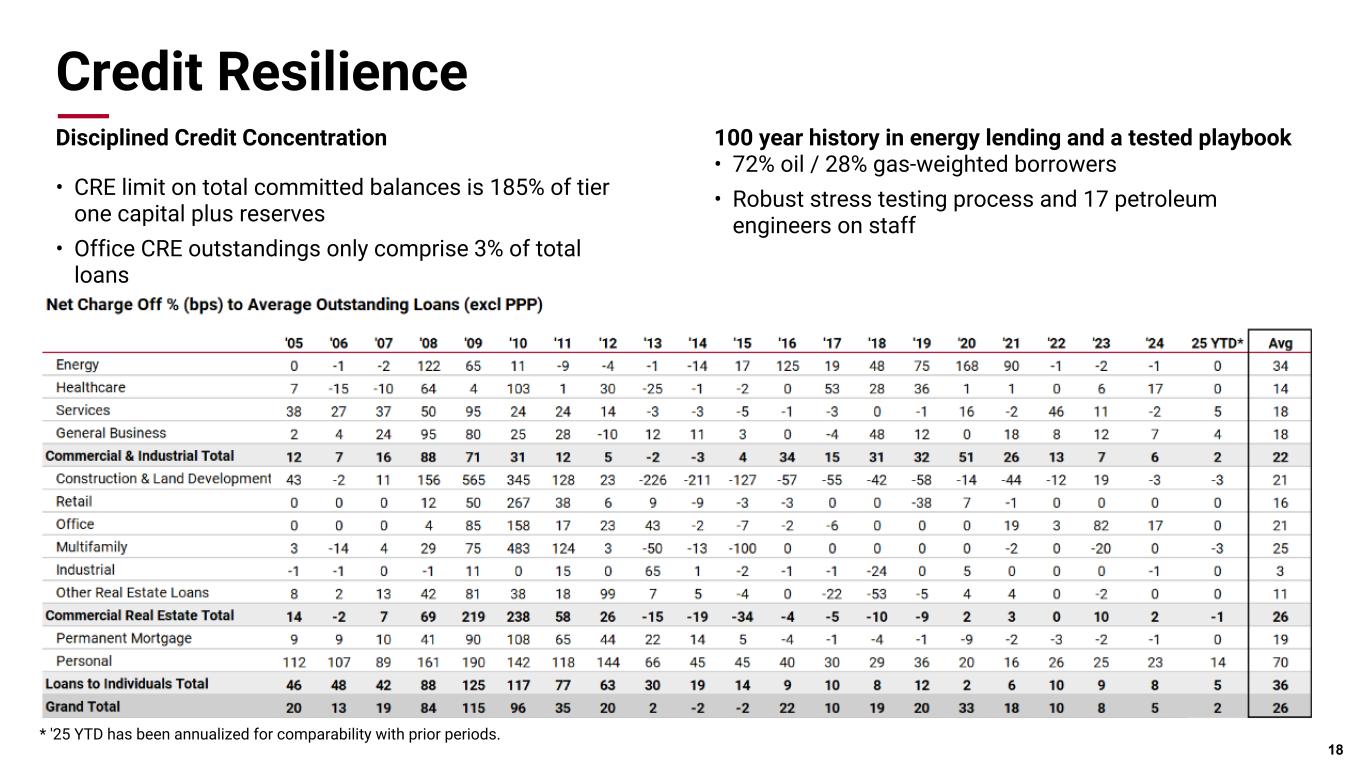
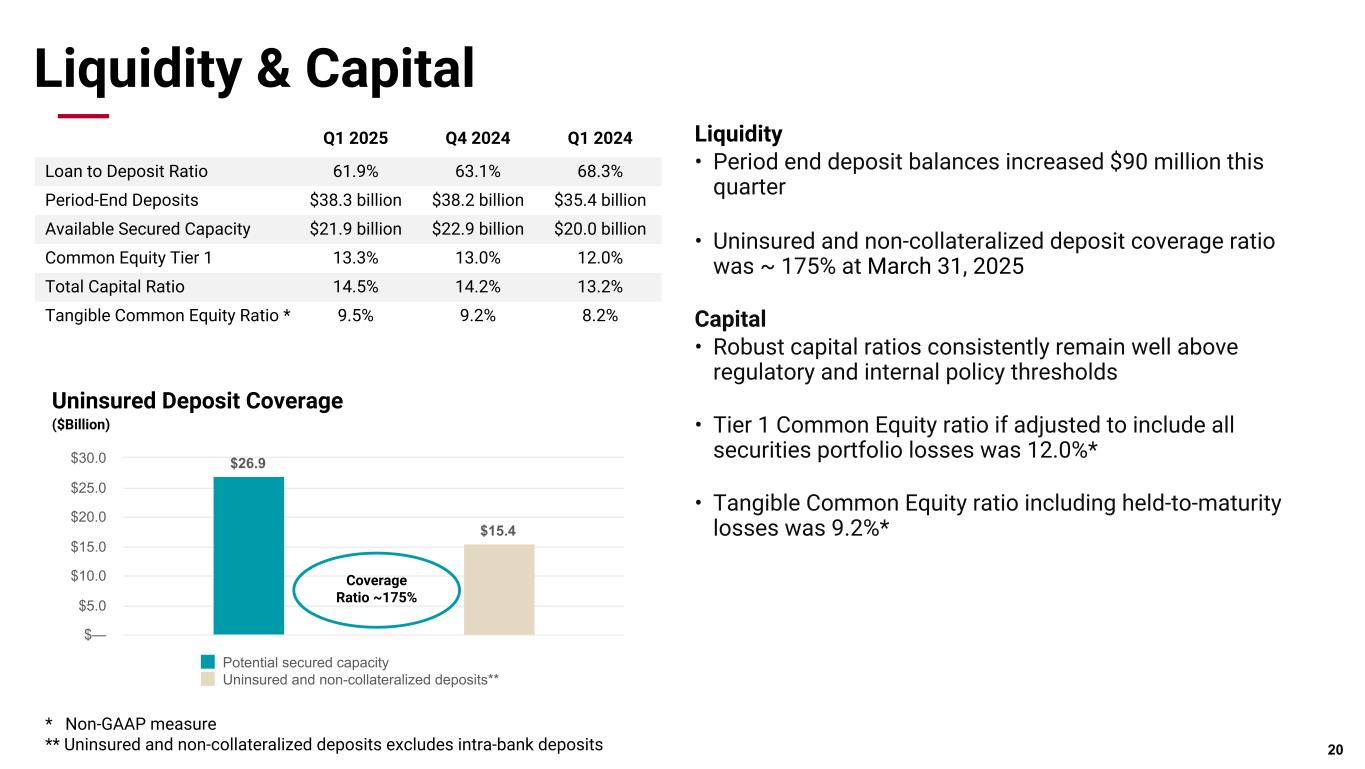
Thank you, Heather. We appreciate you joining the call this afternoon. We are pleased to report earnings of 119.8 million or EPS, of $1.86 per diluted share for the first quarter. At VOK Financial, we've worked hard over the years to build a reputation as a strong, stable, and growing financial services provider. In today's follow-to-market environment, the stability of our franchise is apparent. We have a consistent risk management framework built to weather many different economic and market cycles. Our capital levels remain strong and, in fact, improved yet again this quarter, with TCE reaching 9.5% and CET1 reaching 13.3%. These strong capital levels not only help insulate us from market disruptions, but also allow us to confidently and strategically plan for future growth. Another insulator is our liquidity position. At 62%, our loan-to-deposit ratio is one of the lowest in our peer group. Additionally, part of our stability story is a disciplined approach to credit that doesn't change over cycles. That consistency has driven solid performance in our loan portfolio with low criticized classified levels and a combined allowance at a healthy 1.4 percent of outstanding loans our long-term credit performance of 26 basis points of charge-offs is peer-leading and we believe in our ability to continue outperforming the market in this area commercial real estate is another area that can be sensitive to market conditions our cre concentration is currently well below limits which at 185 limit on tier one capital plus reserves in itself is low compared to peers our financial performance this quarter reflects our ability to navigate through times of extraordinary market volatility despite recent market disruptions and geopolitical events our diverse business model has performed well our strategy at bok financial is to produce long-term sustainable value for our shareholders and we base our decisions on that strategy when we may see fluctuating results in some of our business lines during unstable conditions, as we did this quarter. These businesses are built for long-term success. During the quarter, net interest income was strong, and we continue to see net interest margin expansion for the third quarter in a row as we recognize the downrate deposit status with continued lower repricing. We are already showing a total liability beta of 74%, which is one of the highest in our peer group. The lack of clarity and volatility in the financial markets impacted our fee income, specifically in our trading business. Trading fees in January were in line with our expectations. The trading volumes and spread were compressed during February and March as uncertainty in the markets slowed fixed income trading. However, as we mentioned last quarter, we expected a mixed shift in trading revenue to net interest income as the yield curve steepened, and we saw that come to fruition in Q1 with some of our fee income decline recaptured and net interest income growth. Scott will talk more about this in his commentary. Consistent with the rest of the industry, loan growth in the first quarter has been challenging. As you can see on slide six, we experienced contraction in our loan portfolio, mainly driven by pullback in our energy book. Excluding energy, our total loan portfolio was relatively consistent with prior quarter. Loan balances in the energy business decreased 12.1% linked quarter our appetite for adding new energy transactions is unchanged and we're proactive in supporting our customers in this space over the last few quarters the energy industry has been consolidating which has generated payoffs in the portfolio we expect these balances will rebound over time as the markets adjust our core cni loan portfolio which represents our combined services and general business portfolios was relatively stable late quarter contracting only 0.7 percent On a year-over-year basis, these portfolios are still showing positive results, growing 4.2%. Our healthcare business loans decreased 4.5% in a quarter. We set a new record for healthcare commitment production in Q1. However, payoff levels have remained elevated relative to historical standards and more than offset the increased outstanding. Payoff activity is a normal component of this business and was driven by increases in asset sales by sponsors and refinancing into non-bank, long-term, non-recourse loan options. We expect payoff activity, especially related to refinances, to moderate and pipelines to remain robust. Our commercial real estate business increased 2.1 percent quarter over quarter, with the majority of the growth coming from multi-family housing and industrial projects. We are starting to see the loans that we originated in 2024 fund up as they move through the construction phase as we've signaled the past couple of quarters. We expect to see further growth and outstanding in the second half of the year. As I mentioned last quarter, we are expanding into the mortgage finance and warehouse lending business. This initiative is progressing nicely with the system implementation well underway and the talent already in place. This lays the foundation for a launch of this new line of business in the September to October timeframe. This won't be a monoline offering, and we believe that this will unlock value across our existing lines of business and allow us to better support and engage with the more than 500 independent mortgage originators that we do business with today. Transisting to slide seven, credit quality remains exceptional across the loan portfolio. This isn't a new story for us. we've consistently shown peer-leading credit outcomes over the last 30 years across good and challenging market cycles. Non-performing assets not guaranteed by the U.S. government increased $36 million to $79 million. However, this is coming off the lowest levels in the last 20 years and remains exceptionally low. The resulting non-performing assets, the period in loans and repossessed assets, increased 15 basis points to 33 basis points. Committed criticized assets also remain very low relative to historical standards. In addition, we had minimal net charge-offs of $1.1 million during the quarter, and net charge-offs have averaged four basis points over the last 12 months. We expect net charge-offs to remain below historical norms in the future. Our combined allowance of credit losses is $331 million, or 1.4% of outstanding loans, which is a healthy reserve level. Overall, I'm pleased with the results this quarter. We are focused on people and process. Our exceptional team demonstrates the grit and determination it takes to succeed in a very dynamic and fast-changing market. We continue to add revenue-generating team members, and our sales process continues to produce opportunities for us going forward. And now I'll turn the call over to Scott.
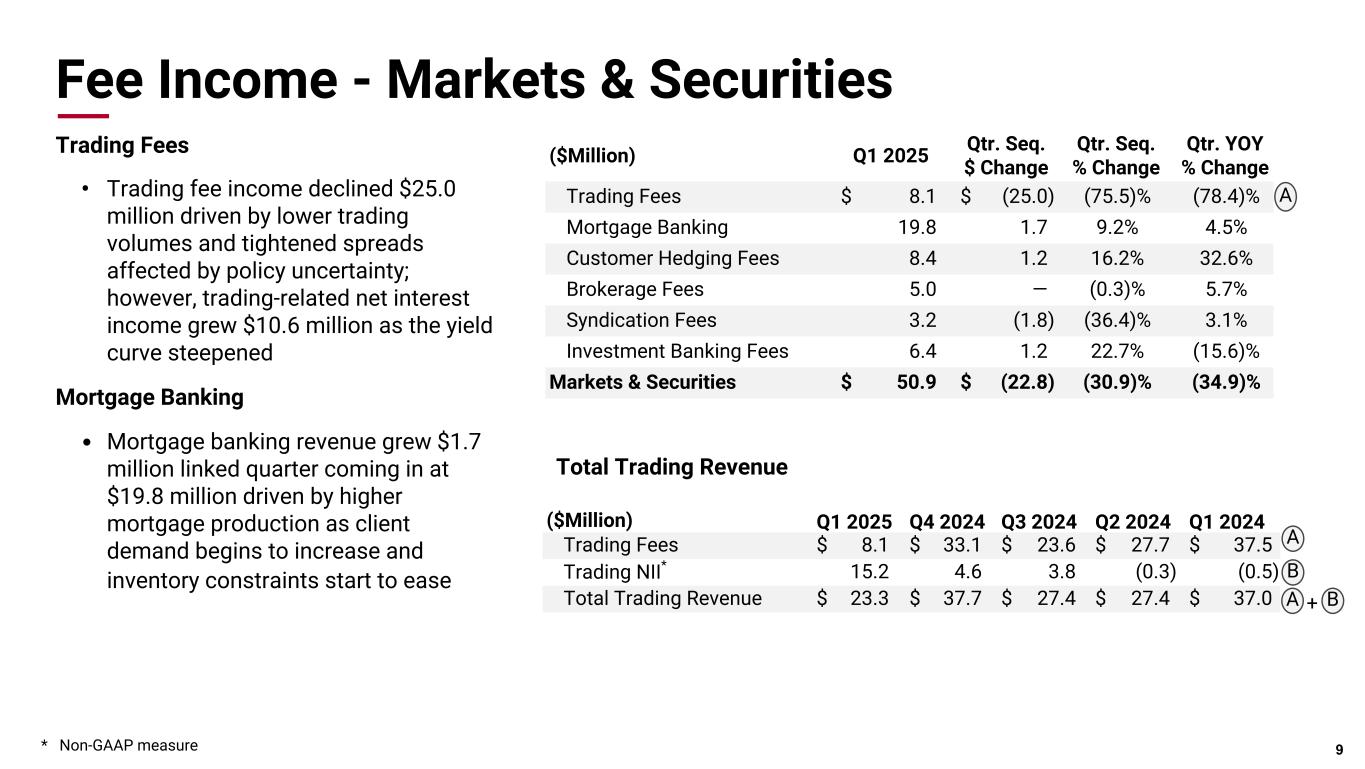
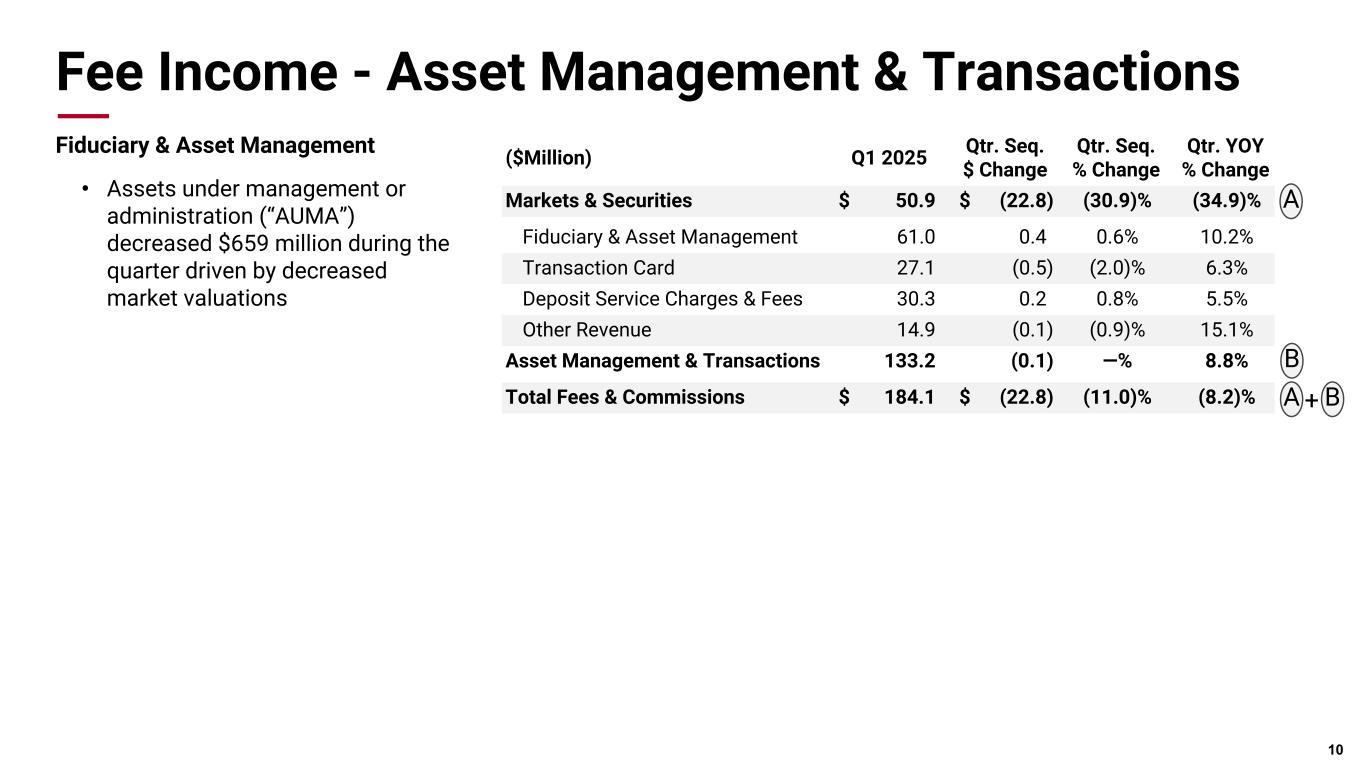
Thank you, Stacey. Turning to our operating results for the quarter on Slides 9 and 10, total fee income decreased $22.8 million on a late quarter basis, contributing $184.1 million to revenue. As Stacey mentioned, market volatility resulting from uncertainty surrounding U.S. domestic and foreign policy affected our trading business this quarter, but this business is designed to produce solid long-term results. To give you a sense of the composition of our trading portfolio, more than 97% is residential mortgage-backed securities issued by U.S. government agencies. Even in more challenging environments, the credit quality of this portfolio is high and comes with limited basis risk. This quarter, you started to see the transition from fee income to the trading related net interest income that we discussed in our last call. During the quarter, total trading revenue was $23.3 million, which was down from $37.7 million the prior quarter. $10.6 million of fee revenue shifted from fees to net interest income as the yield curve steepened. The remainder of the decline in trading revenue reflects lower MBS trading volumes and tightened spreads as client demand was muted toward the end of the first quarter. We also experienced seasonally weaker pipelines in our municipal desk. We provided a table on slide nine to allow i.e. to see this dynamic. Mortgage banking revenue grew $1.7 million linked quarter, coming in at $19.8 million driven by higher mortgage production as client demand begins to increase and inventory constraints ease slightly. Turning to slide 10, our asset management and transactions businesses were very consistent with the prior quarter, contributing $133.2 million in revenue. Importantly, there is diversification within this portfolio, with 43% fixed income, 34% equities, 15% cash, and the remainder in alternatives. AUMA decreased $659 million linked quarter, reflecting the volatile market conditions during Q1. And now, I'll hand the call over to Marty to cover the financials.
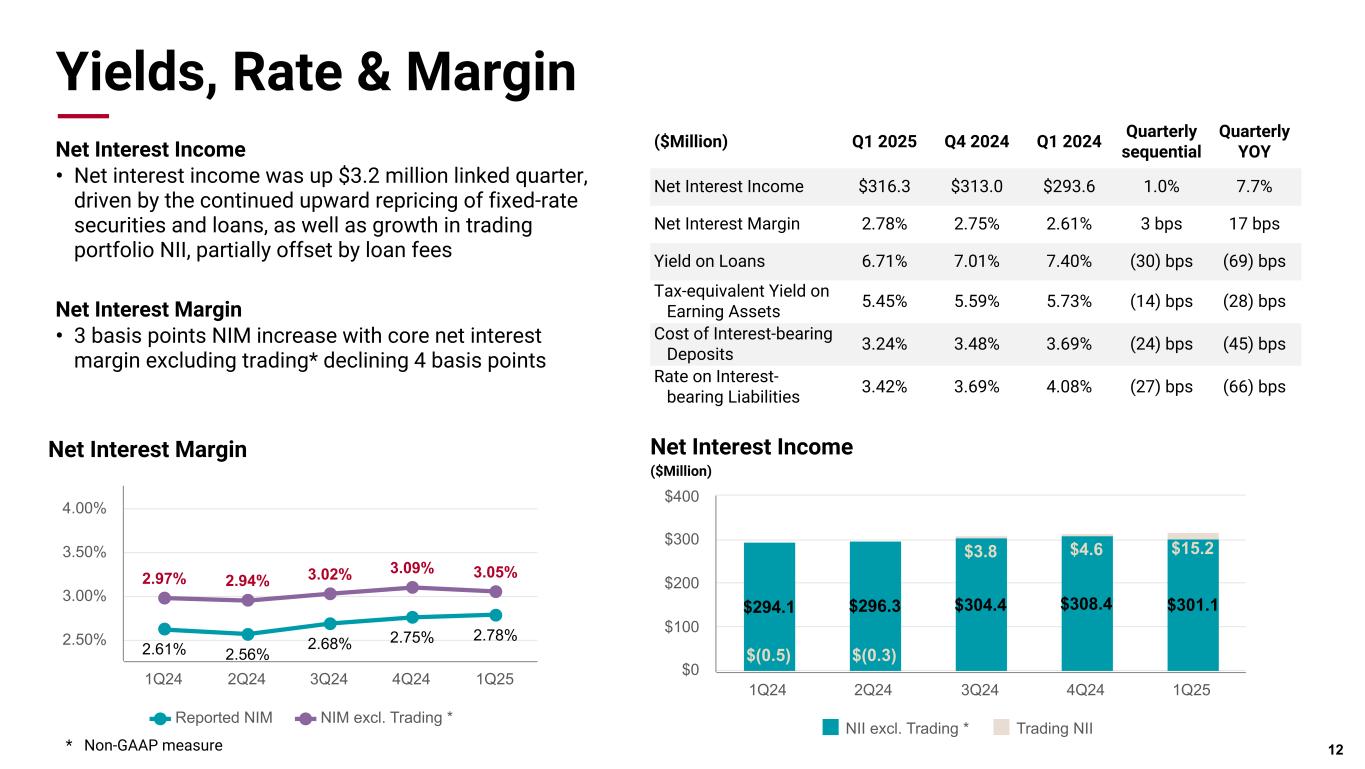
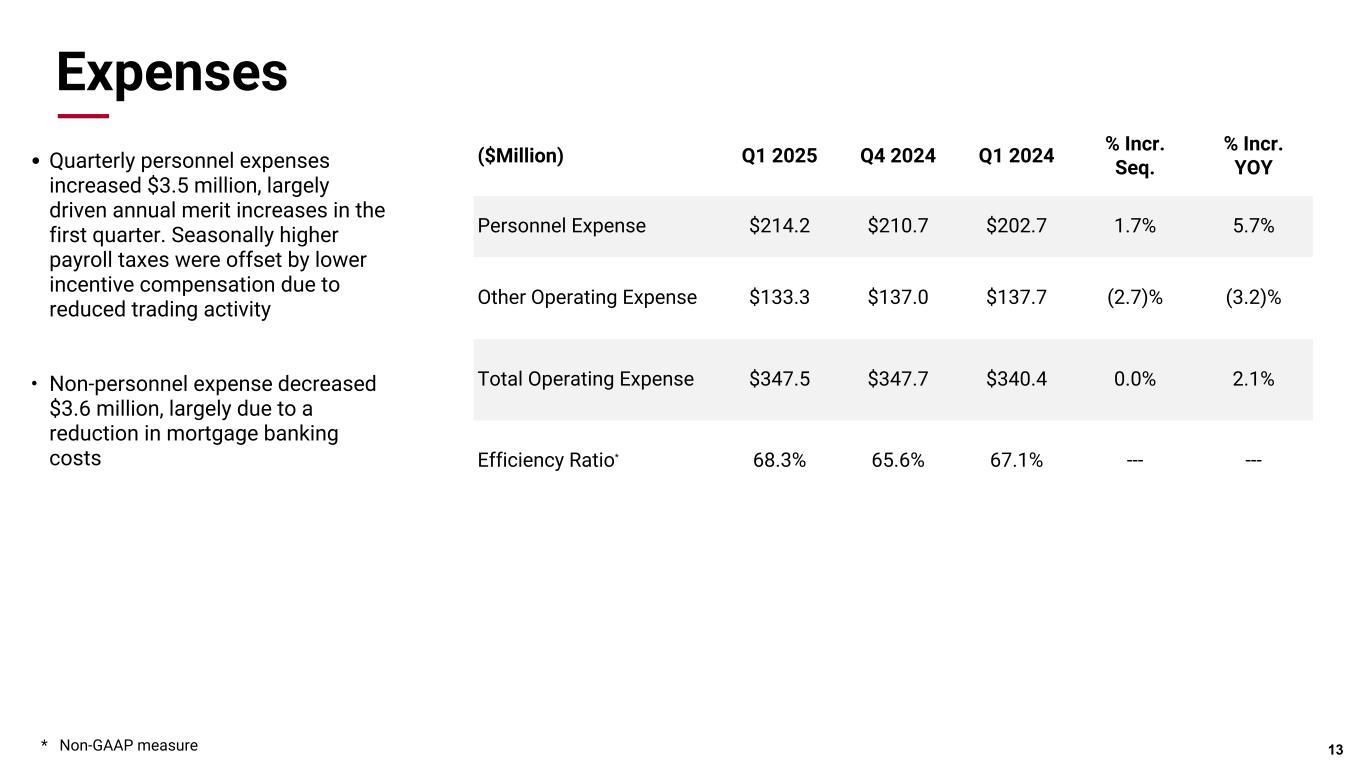
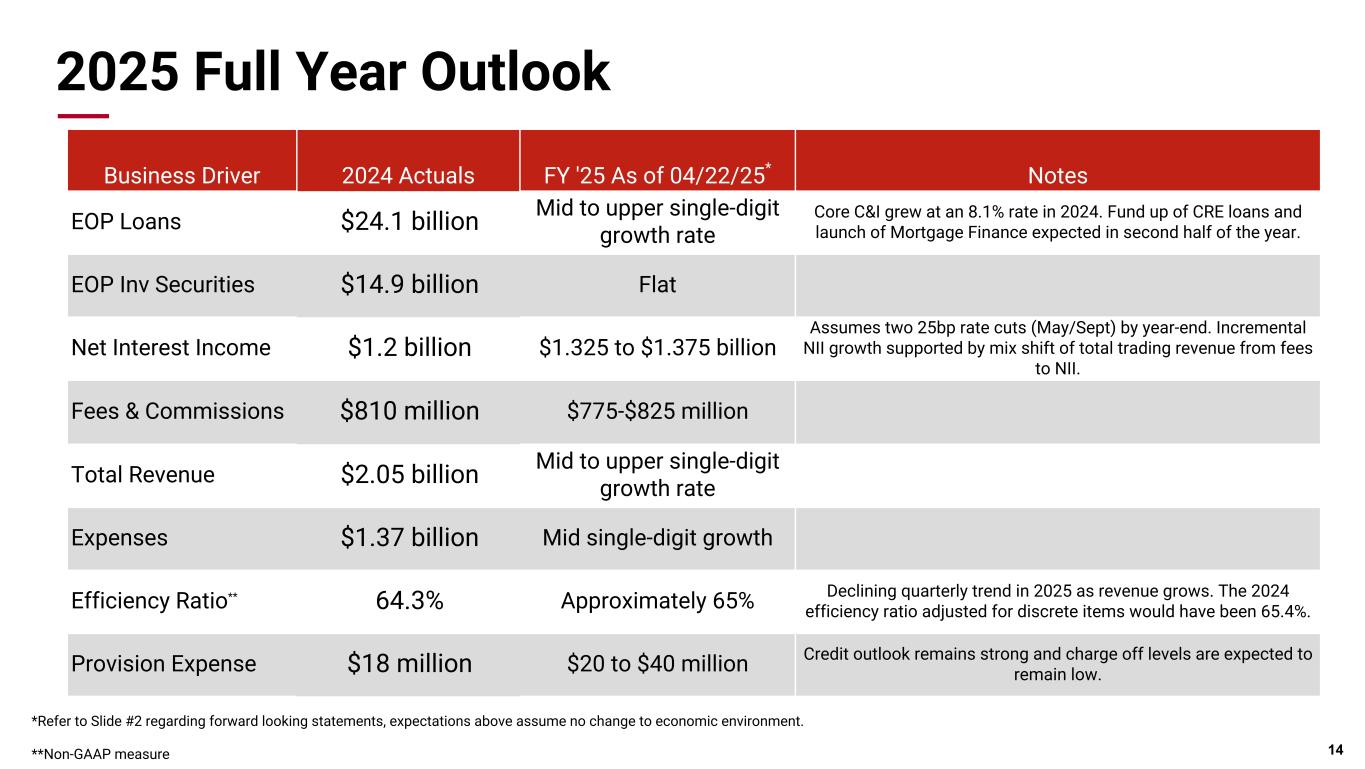
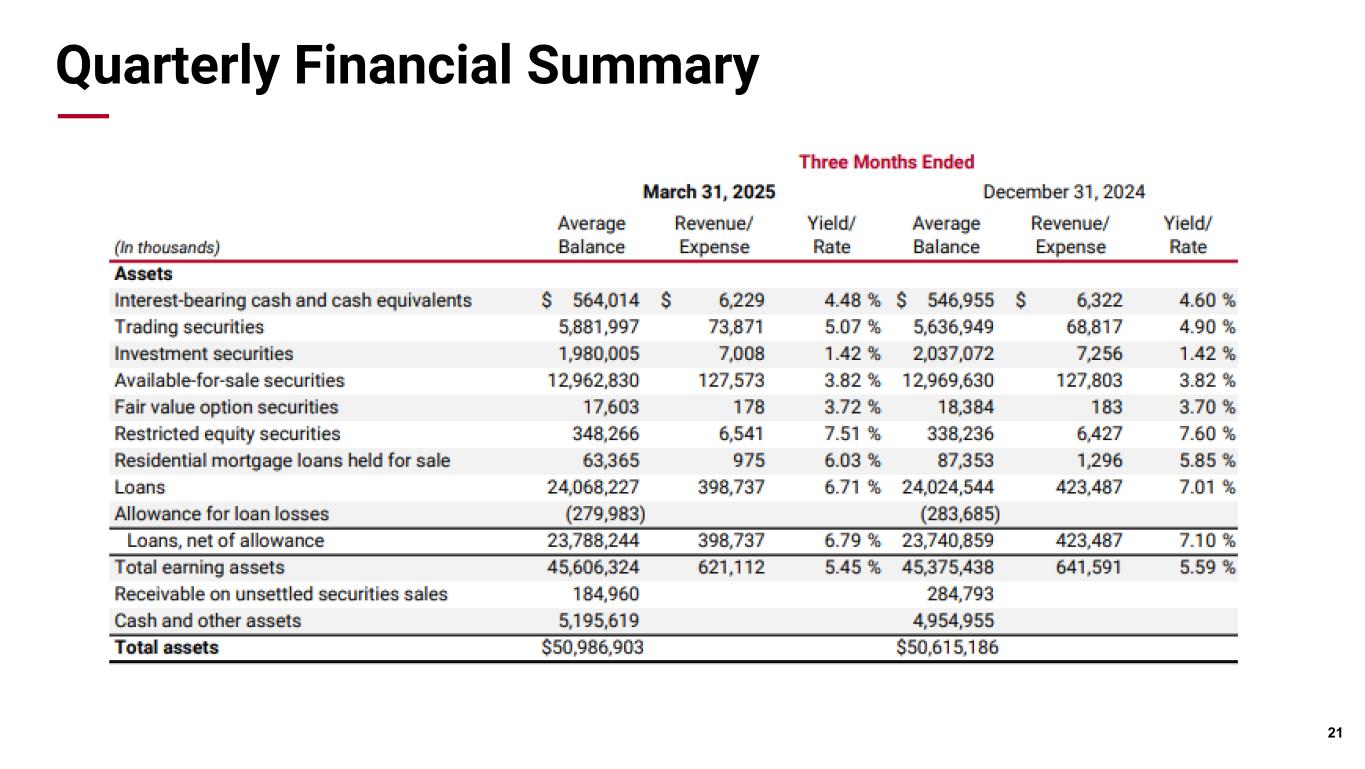
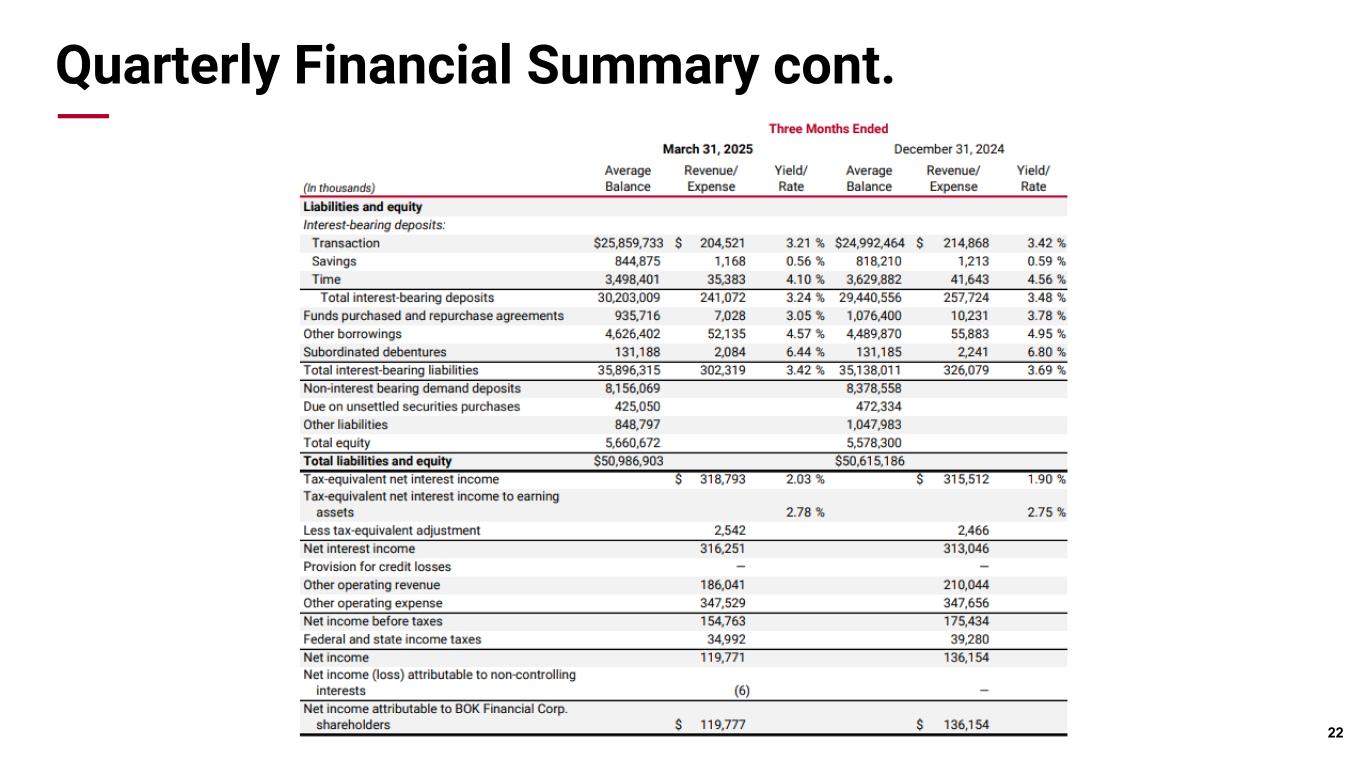
Thank you, Scott. Turning to slide 12, net interest income was up $3.2 million, and headline net interest margin expanded three basis points, reflecting growth in trading-related net interest income. Core net interest margin, excluding trading, decreased four basis points and was driven by several factors. The securities and fixed-rate loan portfolios continued to reinvest cash flows at higher current market yields. The upward repricing in the securities portfolio was dampened this quarter from lower accretion of purchase discount. Non-interest-bearing DDA balances declined slightly coming off seasonal highs of Q4. While these balances were sequentially lower, both the average balance and the trends within the quarter were aligned with our expectations. Loan fees declined during the quarter after being elevated for the prior two quarters, which negatively impacted effective loan yields. Loan fees are now in line with their typical historical and seasonal patterns. Loan spreads were pressured due to a mixed shift within the loan portfolio with higher spread energy loans being replaced with narrower spread core CNILA and of course the lower day account impacted Q1 versus Q4. Each of these factors vary in terms of their predictability and stability of trends. Fixed rate asset repricing has clear drivers and an established supportive trend. DDA mix shift seems to have largely run its course, and normal seasonality and customer usage variability have been more visible lately. Over time, we have demonstrated the ability to generate very good loan growth in our specialty lines of business, and we believe that represents future loan yield opportunity. Turning to slide 13, total expenses were consistent with the prior quarter. Personnel expenses grew $3.5 million, largely driven by annual merit increases in the first quarter. Seasonally higher employee benefits costs, driven by payroll taxes, were offset by lower incentive compensation costs, resulting from reduced trading activity. Non-personnel expense decreased $3.6 million, led by a reduction in mortgage banking costs. Slide 14 provides an update on our outlook for full year 2025. Loan balance projections reflect continued fund-up activity on construction loans in the CRE portfolio, continued growth in core C&I, and the successful launch of our mortgage finance business later in the year. We recognize the economic policy uncertainty adds some risk to this guidance. Our net interest income expectations remain unchanged. This assumes two 25 basis point rate cuts with a small amount of upside should additional cuts materialize. I will note that trading-related net interest income will be impacted by rate levels and curve steepness, which would largely be offset by trading related fee income. We widen the range of our guidance for fees and commissions given the impact of economic and market uncertainty on activity within our fixed income trading business. Lastly, on credit, non-performing assets are remarkably low and portfolio credit quality is very strong, all of which supports our expectation that charge-offs will remain well controlled for the foreseeable future.
Operator
With that, I would like to hand the call back to the operator for q a which will be followed by closing remarks from stacy we will now begin the question and answer session in order to ask a question simply press star followed by the number one on your telephone keypad we'll pause for just a moment to compile the q a roster and your first question comes from the line of jared shaw with barclays jared please go ahead hi thanks a lot good afternoon hey jared welcome thanks thanks good to be back on the call Um, maybe just first looking at the, the dynamic with, um, trading income, uh, and, you know,
the trading fees versus the, the NII, when you look at total trading revenue still down, um, is, is all of that 14 million roughly due to the, the lower volume, as you said. And, you know, at some point, I guess when, you know, what's, what's a normalized level, would you say for total trading revenue? You know, is it closer to what we have this quarter, or, you know, should we expect to see that start to trend higher?
Yeah, Jared, so the short answer to your first question is yes. That was just all volume-driven. There's nothing else within there. And, yes, we do expect to see trends come back.
You know, it's certainly market-dependent, but our view is that that trend's back up here over the second quarter in the trading business. as a matter of fact you know the first few weeks of the quarter you know we've seen some rebound activity there so that that gives us some confidence about how that trends going forward and so jared this is scott so i would i would add that uh you know so as stacy mentioned early in the call um we actually on our our trading activities specifically in the mortgage back securities we started the year very solid out of the gates our january was was uh in line and actually growing uh versus our previous results in 2024 and then as the economic and trade uncertainties i'll call them were introduced into the market in both february and kind of climaxed in March, that activity suffered significantly. As you look forward into April, we believe that where we started the year and where we expected that activity to be absent that significant uncertainty is reasonable.
Good color. Thanks. And looking at the pressure on balances in energy and health care, is that dynamic continuing, you know, through second, you know, should we assume that that's just sort of a, you know, in this current environment, that that's going to be a consistent pressure and, you know, going back to like the loan yields that we should think that incremental loan yields are under pressure You know, I don't think so.
I think, you know, the calling the absolute bottom on the energy loans is difficult, but think we feel pretty confident that if we're not there we're close to there i don't think that's going to be a headwind for us uh to the extent it has been the last two quarters going forward actually if you look you know it's it's always dangerous to talk about you know april results but we're up in all categories really uh in april across the board so early trends there are very positive but with respect to both health care and energy i don't think you're going to see that the headwind there in the next three quarters like you saw in the last two quarters but understand you know it's a difficult one for us to forecast with great accuracy as well just given the market dynamics and what the shape of the curve is at any point in time and particularly in the m&a space you know acquisitions mergers and acquisitions have played a significant role there we do see that slowing down a bit which is part of the optimism about the lack of headwind going forward Great.
And then just finally for me, when we look at the provision guide with sort of the dynamic of the loan growth guide, should we assume that you're going to be growing the ACL as a ratio over the course of the year? And I guess what are some of the dynamics you're using in terms of qualitative overlay and potentially a more risk or a more adverse scenario? Yeah.
Yeah. So, so Jared, uh, so we would, we would not expect to need to grow the, uh, the, the coverage ratio over the course of the year. Um, you know, if you look at how we, uh, closed out, uh, the first quarter, you know, the increase that we saw in credit quality on our portfolio combined with, uh, where the actual, uh, uh, balance levels came. So when we ran our, our reserve calc it actually suggested that uh that we could do a reserve release however when we looked at you know current circumstances that just didn't make any sense to us so uh so you know we obviously provided uh at at zero but that just gives you a sense for the fact that there is some uh you know judgmental uh addition in there on top of what it would normally be great thank you and your next question comes from the line of John Armstrong with RBC Capital Markets.
Operator
John, please go ahead.
Thanks. Good afternoon. Hey. Hello, John. Hey. Just I wanted to ask a little bit about the loan growth outlook, but can you give us an update as to what you're hearing on pipelines in general?
And then Stacy, maybe give us an update on the expected size of the mortgage finance business um maybe by the end of the year yeah so uh pipelines are good we actually track our our uh pipelines through salesforce uh marty and i review those every month and and those are very strong i think that the the color that's hard to weave into you know that is how will borrower uncertainty play out you know will will you know the deal that they've agreed to will they go ahead and close that in the face of a less certain economic environment. I think that's the piece that's hard for us to put our finger on exactly. And so I think when Marty alluded to the loan growth guidance, he acknowledged that there's some uncertainty around that, but based on what we know today, that we still feel confident in that. So I'm not worried about the pipelines. I feel really good about where we're at there and how we're building those and the the piece that's the wild card that we we can't really uh discern well is how will the borrow response be will they advance on the line of credit will they go ahead with the new piece of equipment or the you know whatever is driving the capital need i think that's a harder harder one for us to to deal with uh with great certainty today because as we've learned what what are the conditions today, they could be very different tomorrow. And so we're very hesitant to kind of extrapolate kind of what happened in late first quarter, early second quarter, and say, well, that's going to be the conditions for the rest of the year. You know, it's likely to change in some way, shape, or form. And so, you know, we felt more comfortable kind of sticking with what we knew, which was the pipeline that we have. On the mortgage warehouse side, I'm not ready to give volume estimates there yet when we haven't even made our first loan. But it did give us confidence to reaffirm the kind of point-to-point loan guidance we provided in our forward-looking guidance. And so we still feel very good about that and, frankly, are excited about the team that we've put on board as well as their ability to attract business. Like we said, this fits so well with the rest of our businesses. We have the core mortgage business. We've got the mortgage hedging, the pipeline hedging. We've got the structured finance business. And now we're going to have the warehouse business here as well. And so really integrates well into the 500 plus mortgage finance companies that are already our customers today. And so that's not going to just be about uh loans it's also going to be about deposits as well so uh we're we're probably more excited about that than we were you know even 90 days ago so it just helps uh helps us feel more confident in uh believing that we'll achieve our point-to-point loan guidance that we provided and john just be clear again we've got leadership in place we've got operations folks credit folks and producers all in place today uh so we have uh we have everything we need to to begin okay good that's helpful um and then just scott one follow-up for you that that trading nii line
um is that is that unusual i mean it looks like it's a big jump but at the same time you guys are flagging maybe a steeper curve as a driver yes and that that is the you know why that mix shift as we you know the the curves returned to steepness and an actual yield curve last year why we talked about that in the fourth quarter in particular as we do have steepness to the curve that is a more traditional of the revenues as opposed to the flat or inverted curve we experienced for 24, 26 months. So we don't expect that to be a one-time occurrence. We think that mix between fees and NII are more reflective of that business in a normal-shaped curve. And John, Marty, I would add on the bottom of page nine on the slides, to understand the trends in the business, it's better to look at that total trading revenue line at the very bottom and that gives you a much more muted level of change there and that's really the insightful way to think about the trends in that business unit and and recognizing that you know our our trading business is largely mbs in that category and then um municipals so you know there is no equities uh increased volume due to chaotic markets offset to that so um ours is going to reflect that curve and the mbs activity overall most most predominantly yeah okay yeah i was just curious if we get a couple of cuts and we have a steeper curve if if in aggregate those numbers can move higher that's that's they can yeah you can see that shift uh go even further if if what you just described laid out uh but the total revenue of the business would remain unaffected and and historically when we had that you know steeper curve more traditional curve prior to the flattening and inversion that was the composition of our business and it was uh more predominantly NII than fees than where it is
Operator
at the end of this quarter okay okay very helpful thanks guys and your next question comes from the line of Peter Winter with DA Davidson. Peter, please go ahead.
Thanks. Good afternoon. I just had two questions. Just digging a little bit deeper into the outlook. First, you didn't lower the expense forecast given somewhat of a weaker fee income outlook. But can you talk about your flexibility to manage expenses if revenues come in weaker?
Yeah. So we've got a little bit of flexibility in a couple of different areas. So number one um as you know peter you you've got a couple of lines where the the compensation is heavily variable and so both in the trading and investment banking and mortgage areas you know that'll just naturally ebb and flow with the revenue streams uh and then number two you know we're always looking for efficiencies throughout our business that's just a constant look for us and you know so that's that's something that you know we can find more things from time to time and then you know third you know most of our expense growth is really about strategic initiatives and investments in our future whether that's technology etc and you know by and large those are those are decisions that we make thinking through through a long-term lens and we're convicted about doing and largely make those on their merits, you know, if the world changes and IRRs for those investments change as a result, you know, there's something you might delay just based on the economics of it and, you know, something might be worth doing later, but largely those are made through the lens of the decision that, you know, the long-term returns of that investment.
So that kind of gives you a sense for how we think about the expense space yeah let me let me clarify peter i think you know really uh two things one obviously on the trading revenue side there's a lot of variability with that expense to the extent that the revenue is there uh the expenses will be there and to the extent that it's not then that that associated expense will decline but i think uh i would be careful to characterize softness and fee revenue i think softness and trade revenue but if you look at mortgage banking yep year over year 4.5%, hedging fees up 33% year over year, brokerage fees up 6% year over year, fiduciary and asset management fees up 10% year over year, transaction card up over 6% year over year. So the core fee businesses are humming. You're really talking about one category, trading fees that were soft this quarter, and they were soft because of a really difficult macro environment. And from my perspective in trading the risks were very asymmetric this quarter i'm really proud of the team and how how we work through that in the manner that we did with spreads moving wider and then contracting and moving in ways that aren't uh historical norms with treasuries our risk management team did a fantastic job keeping that portfolio well hedged and managing through that in a very positive way and so you know the trading revenue was clearly volatile and and underperformed there's no doubt about that but the the rest of the fee businesses are really performing well and uh very proud of that and don't don't want to get don't want that to get lost uh in the noise of the trading revenue no i appreciate that kala um just can you talk maybe
about the outlook for deposit growth and these talk about maybe further opportunities to lower deposit costs and funding costs if the Fed doesn't cut rates and how you think the deposit beta trends from here?
Yeah. So, you know, Peter, we're really proud of the activity that we did during the quarter on deposit pricing. So, you know, we had a 75% deposit beta for Q1, which is a great result, and kudos to our teams for managing that well. I think when you look at, you know, it's probably smarter to look at the cumulative interest-bearing liability beta. The cumulatives are generally more insightful, and our cumulative interest-bearing beta is 74, which is right on top of our cycle cumulative up beta, just almost within a percentage point. So we're very happy about that. and we do think that given the strong uh loan deposit ratio we have just really one of the strongest out there that gives us the ability to uh to continue to work on deposit pricing over time in fact we did some of that at the end of the first quarter and we'll see some benefit rolling into q2 as a result and you know we'll we'll continue to work on that throughout the course of the year so yes you can do some of that without fed moves and we'll just look at the competitive environment, but certainly makes it easier if you do get some Fed moves.
And could you just mention the outlook on deposit growth?
Yeah, so we do expect deposits to grow throughout the rest of the year, but given the loan-to-deposit ratio that we have, if we were to turn the dial some on deposit pricing and we saw a different trend line there, you know, that would ultimately be fine for us because of how luxurious that level of loan-to-deposit ratio is, and, you know, at the end of the day, doing so would be something that would be net interest income for you.
Operator
And your next question comes from the line of Michael Rose with Raymond James. Michael, please go ahead.
Hey, good afternoon. Thanks for taking my questions. Just wanted to start going back to the energy portfolio. Can you just help us better appreciate what's going on with energy prices now and if they were to continue to fall versus what happened during the energy downturn from late 2014 through 2017? I know the percentage is lower. Energy companies are generally operating within cash flows, which is a big difference now versus then.
But wouldn't there be some further delevering if energy prices remained under pressure, if we did move closer to a recession? just try to better appreciate you know what those balances could look like over time understanding that it is a bigger proportion for you versus versus many others so thanks yeah yeah good question a lot of a lot of differences between 2014 and today uh i think the biggest one is leverage i mean leverage in the the core portfolio was probably in excess of three times somewhere between three and three and a half times in 2014 today the leverage in our energy production portfolio is less than one times. Part of the problem we have getting outstanding is we've had great commitment growth. The team has done a great job there. The borrowers are just not using the leverage today. And so that singularly is the biggest difference. The other one is hedging as a risk management tool is very different today. And so in 2014, borrowers were largely under hedged and that's not an issue today at all so i don't i don't know that that you know lower commodity prices for a short term here are going to have a lot of headwind on on energy loans uh you know we we do a lot of stress testing we've stressed oil down to 44 which is really the stress point today don't see a lot of loss there and really that's because of the extensive of amount of hedging and the very low leverage. So, you know, our average leverage is less than one times on energy production and less than one and a half times on midstream. And so those are very low levels.
Well, Stacey, I appreciate it. And maybe one for Marty. Understand that you have two cuts baked into your forecast.
I don't think it's the biggest driver, but can you just give us a sense for, you know, we did assume the forward curve which i think is around four cuts or you know what the impact could on ni could be um if we did get no cuts thanks yeah so either way it would not make much of a difference and certainly not enough to make us you know think about changing guidance so basically you know an additional cut or two it would be a little bit helpful uh in in the you know the later part of the year but but nothing material and by the same token uh you know if we don't get those rate cuts um you know that would that would be you know virtually no impact to revenue now you'd see a little bit of a different shift between trading fees and trading nii but total
revenue would be basically unchanged thanks for taking my questions and your next question comes from the line of food delay with kbw hoodie please go ahead hey thanks for taking my question um I wanted to start with the loan growth guide and just to follow up there. So, was the addition of the mortgage finance vertical, was that embedded in the loan growth guide in the last quarter or is adding that vertical sort of helping bridge the gap after the loan shrinkage this quarter?
Yeah, Woody, we did not have that in the guide we had prior quarter. We just weren't far enough along to feel like we wanted to put it in. So we did put it in this quarter, just given that, you know, we've got all the groundwork laid. We feel very confident about where we are and so felt good about putting that in.
Got it. And then I know you're not ready to sort of guide where balances can be by the end of the year. But, I mean, longer term, how do you sort of think about the concentration of mortgage warehouse in the one portfolio?
Yeah, I mean, we're not concerned with letting it grow. I mean, we're going to, you know, we're going to walk before we run here, but, you know, we understand this portfolio can grow. And frankly, for us, it provides a diversification benefit across the broader portfolio. The risk in mortgage finance is less credit risk and more about operating risk, like that aspect of it. And we like the full relationship that we're going to have both on the depository side and on the hedging side and structured finance side. So for us, it kind of completes the vertical in many respects for us, and it has really limited credit risk and then provides strong diversification benefit for the rest of the loan portfolio. So we expect to see it grow and be a meaningful number when we're sitting here, say the end of 26th, I expect it to be a meaningful number for BOKF.
Got it. And then last for me, capital remains strong and the stock price has seen a pullback here just alongside the broader market. How do you weigh buybacks in the current tape, given all the uncertainty on the macro side?
Yeah, so as you know, we do have a very strong capital position and are sitting at some excess capital. And as we look at the alternatives available to us, we do expect to be active share repurchasers.
All right. Thanks for taking my question. Thank you.
And our final question come from the line of matt alney with steven matt please go ahead hey thanks guys just a few cleanups here um stacy you mentioned that energy customers already have lots of hedging on future production in the past we've seen increased activity uh which is volatility the commodity prices but it sounds like maybe we should not anticipate this uh given you know the existing customers already are fully hedged yeah the customers are well hedged and because leverage is low you know hedge coverage may not be you know at the same level it was say even you know a year ago but that hedge coverage is like an accordion it grows as the leverage grows and so
with leverage less than one times you're going to have you know i think like 55 percent of our borrowers are hedged out the next 12 months or so and that that may seem a little bit low but because the leverage is so low. We're not requiring the hedging when their leverage is that low, but that would grow to the extent that their leverage profile changed as well.
I guess that's a different way, Stacey. With lower commodity prices more recently, that may not represent a catalyst to see increased hedging activity for you guys.
Yes, that's a fair price. We had a really strong hedging activity in the first quarter, hedging quarter in the first quarter. you know those guys will are opportunistic and they'll dip in and dip out of hedging when they see the opportunities obviously oil is is under pressure and so you know this may not be the quarter that people want to hedge more oil but there's other ways they can do that with and still have a floor put a floor in without necessarily having a top end so so you know it can change but you're right at $60 oil not there's going to be less hedging activity in all likelihood during the second quarter.
Okay, perfect. And then Marty made another question on the trading interest revenue. I asked a little bit differently. I think you disclosed in the press release that the trading activity spread was around 98 bps in the first quarter. Does the four-year guidance assume that we just maintain these levels around 98 bps or with the May and of timber cuts, could we see that spread actually improve?
Yes, so we do, within the guidance, we expect that the spread improves some as you get those rate cuts later in the year, that's the right way to think about it.
Operator
That concludes our question and answer session. I will now hand it over to Stacey for closing remarks.
Thank you everyone for joining our discussion today. Our results this quarter are a testament to the strength and adaptability of our organization and our ability to operate successfully in any market cycle. Our exacting focus on our risk management framework and diverse business model work together and are core to our success. Credit quality remains excellent. We've got a strong loan pipeline, our growing relationships. Net interest income is expanding, and our fee income businesses continue to work as designed. We appreciate your interest in BOK Financial and your willingness to spend time with us this afternoon. Please reach out to Heather King if you have any questions at h.king at bokf.com.
Operator
That concludes our conference call. You may now disconnect.