Operator
Hello, everyone, and welcome to the BellRing Brands Second Quarter Fiscal Year 2025 Earnings Conference Call. Please be advised that today's conference is being recorded. Now it's my pleasure to turn the call over to Jennifer Meyer with Investor Relations for BellRing Brands. The floor is yours.
Good morning, and thank you for joining us today for BellRing Brands Second Quarter Fiscal 2025 Earnings Call. With me today are Darcy Davenport, our President and CEO; and Paul Rode, our CFO. Darcy and Paul will begin with prepared remarks, and afterwards, we'll have a brief question-and-answer session. The press release and supplemental slide presentation that support these remarks are posted on our website in both the Investor Relations and the SEC Filings sections at bellring.com. In addition, the release and slides are available on the SEC's website. Before we continue, I would like to remind you that this call will contain forward-looking statements, which are subject to risks and uncertainties that should be carefully considered by investors as actual results could differ materially from these statements. These forward-looking statements are current as of the date of this call, and management undertakes no obligation to update these statements. As a reminder, this call is being recorded, and an audio replay will be available on our website. And finally, this call will discuss certain non-GAAP measures. For a reconciliation of these non-GAAP measures to the nearest GAAP measure, see our press release issued yesterday and posted on our website. With that, I will turn the call over to Darcy.
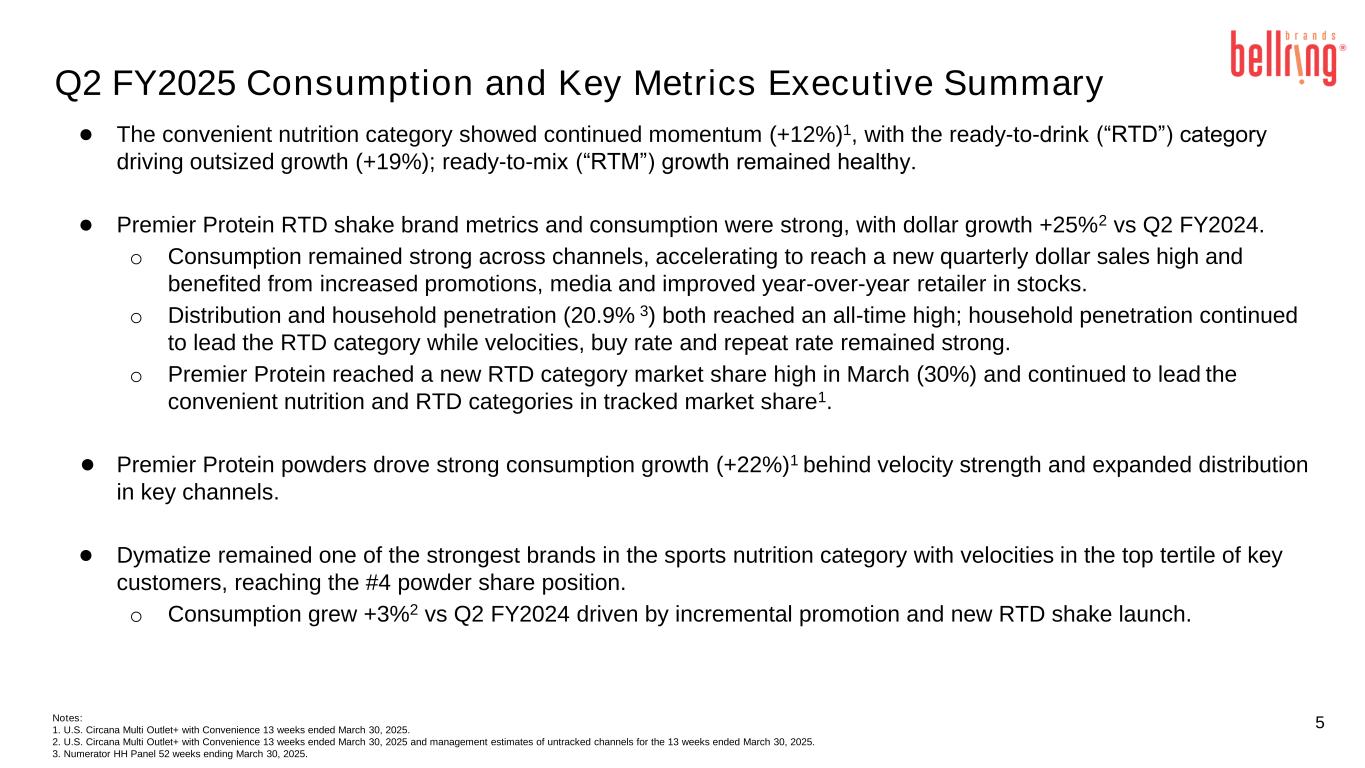
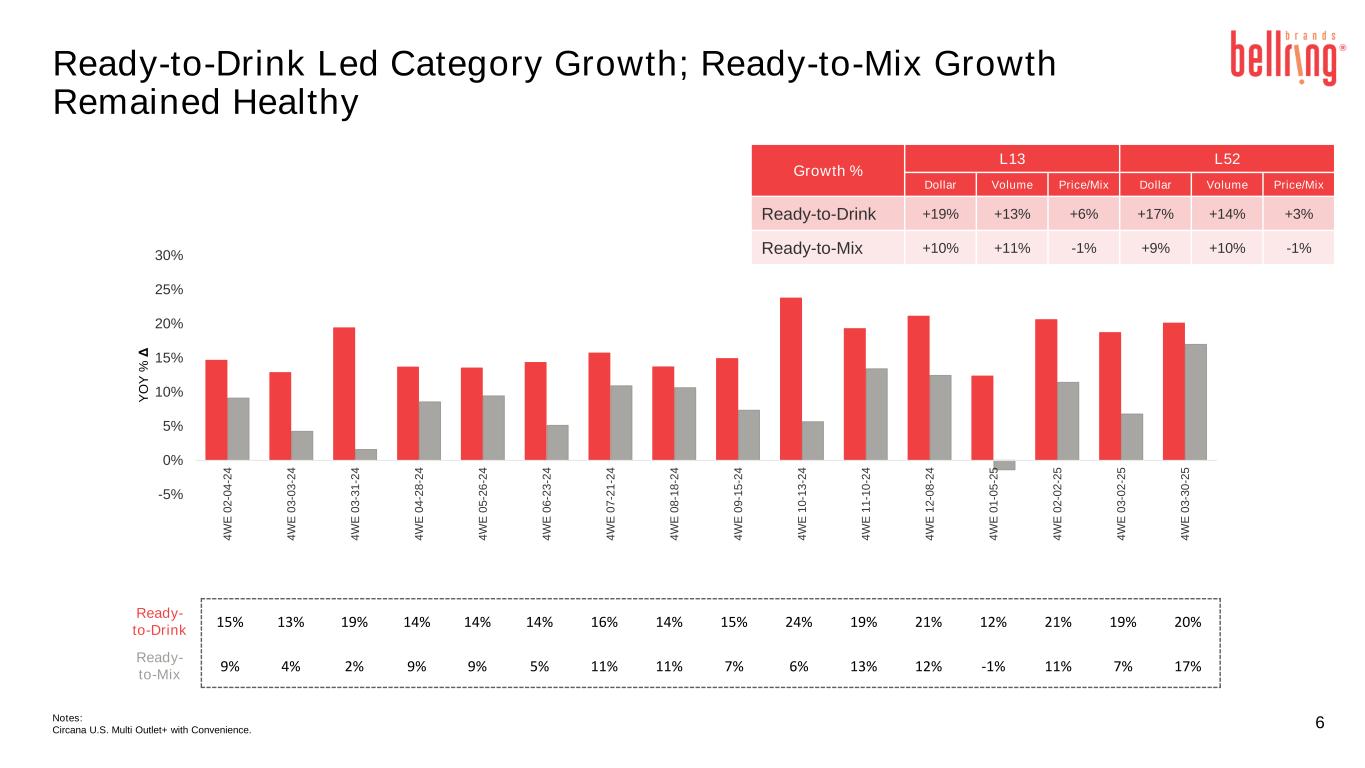
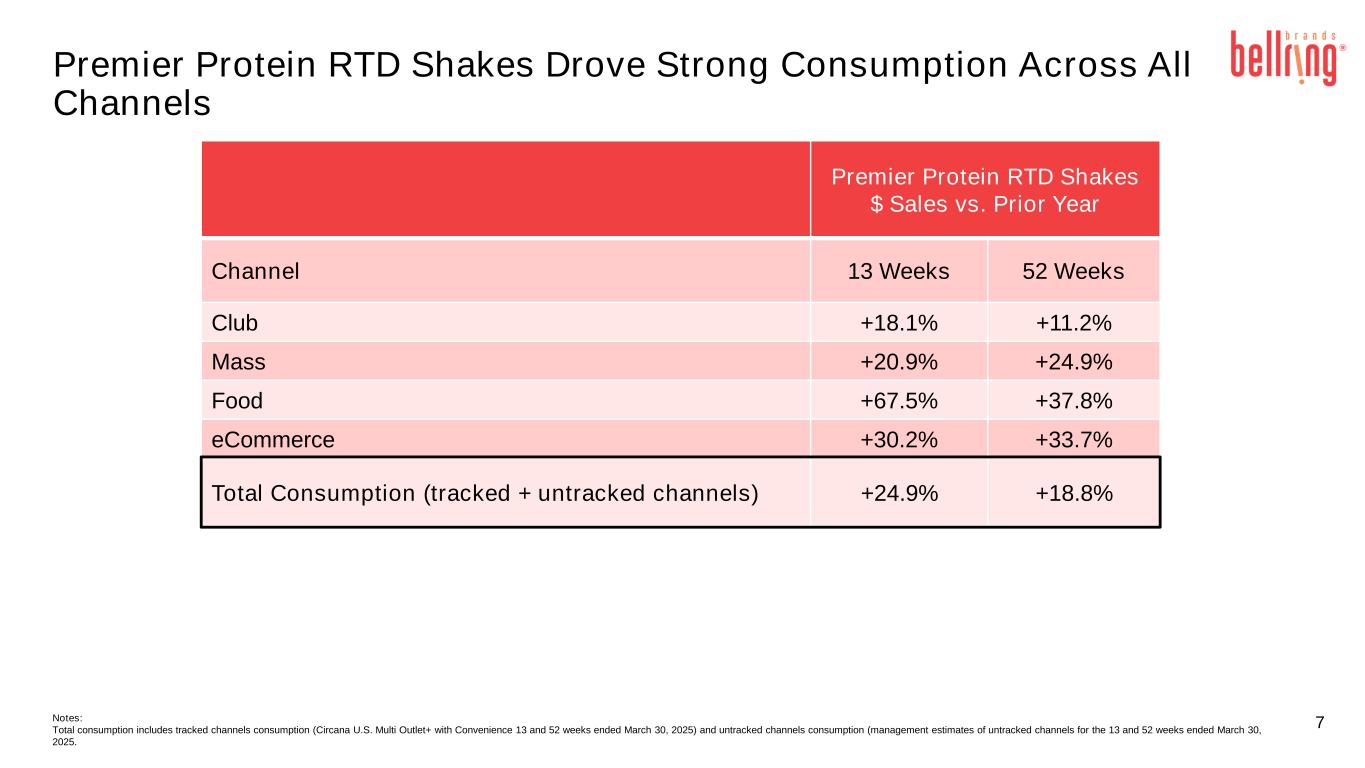
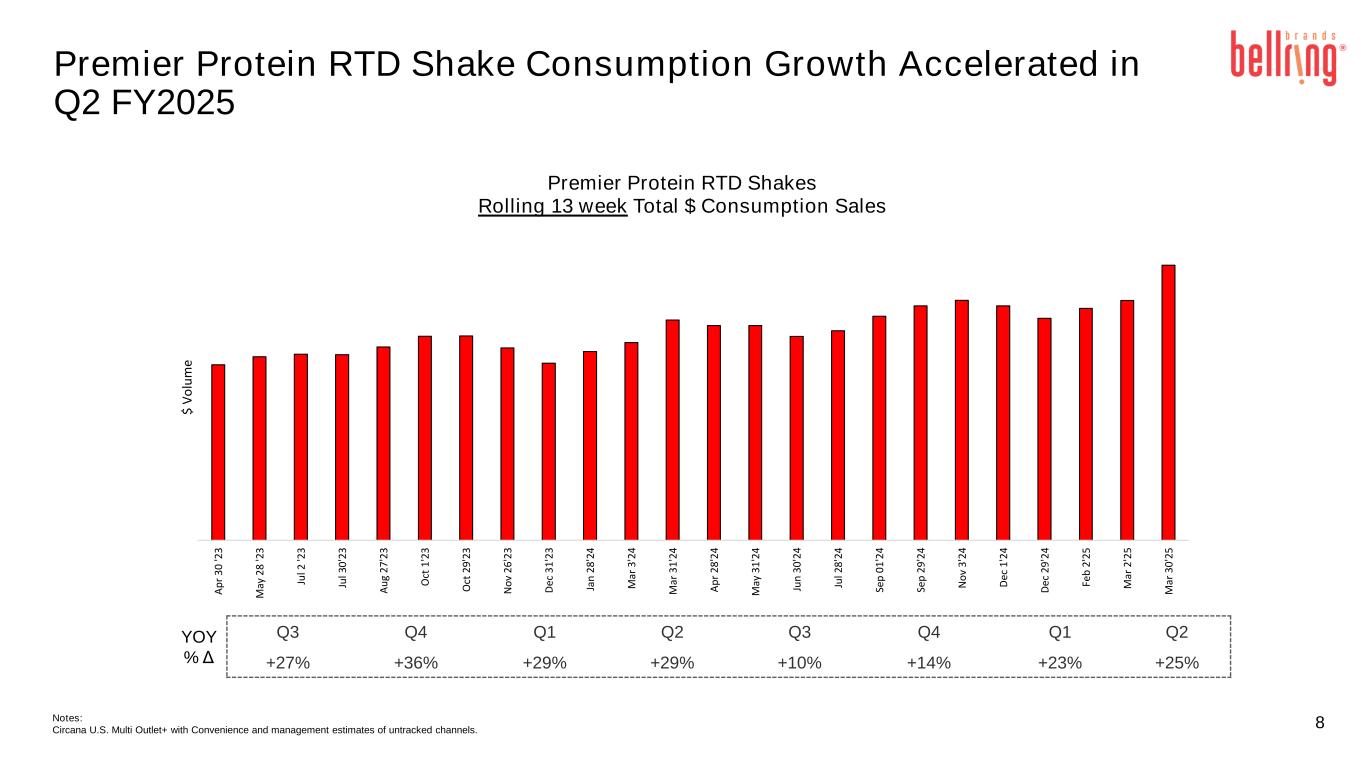
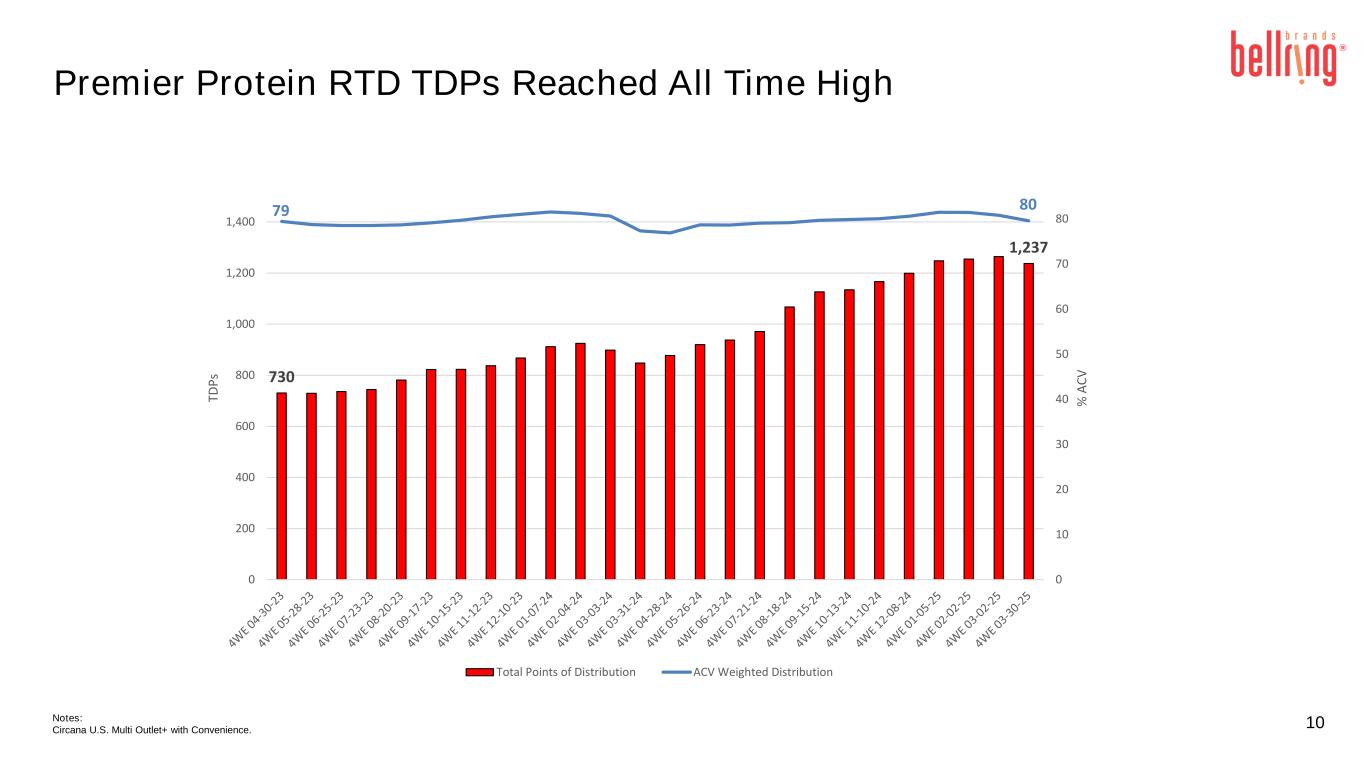
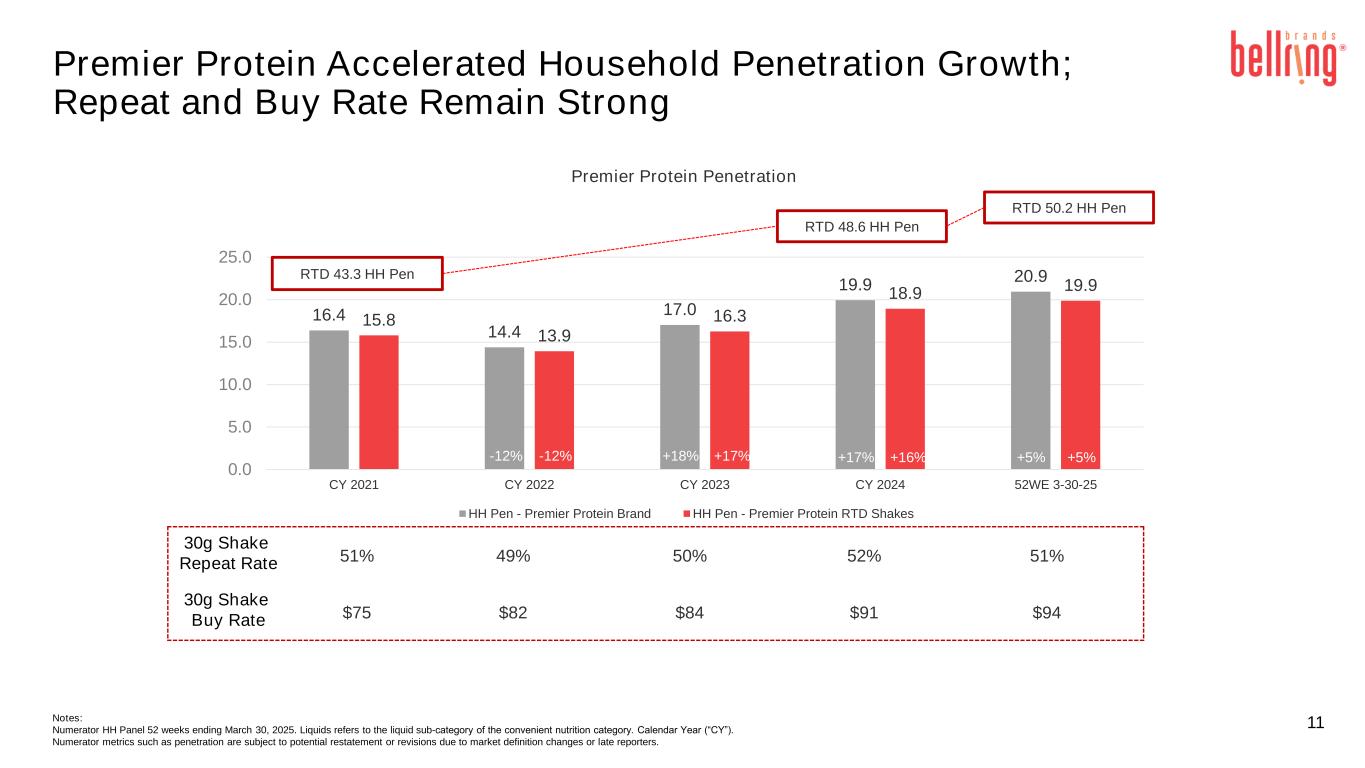
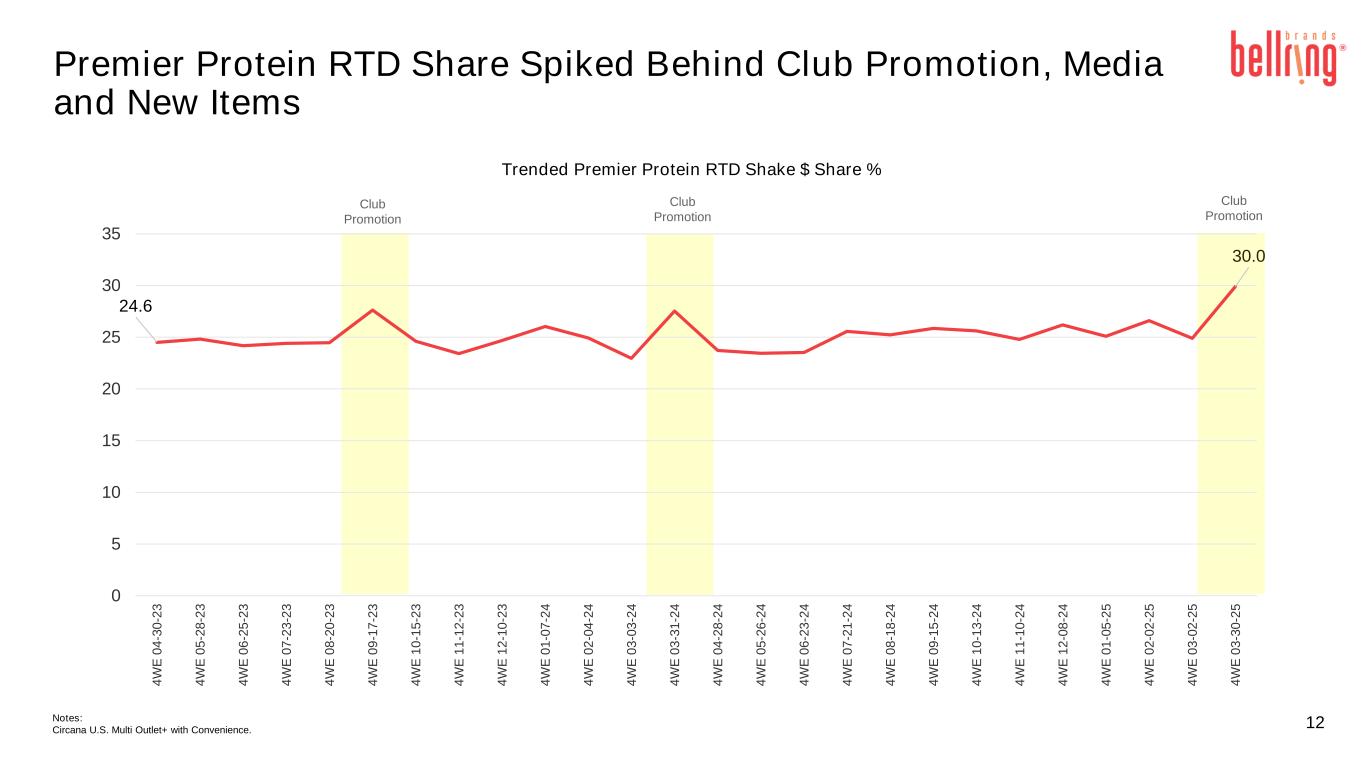
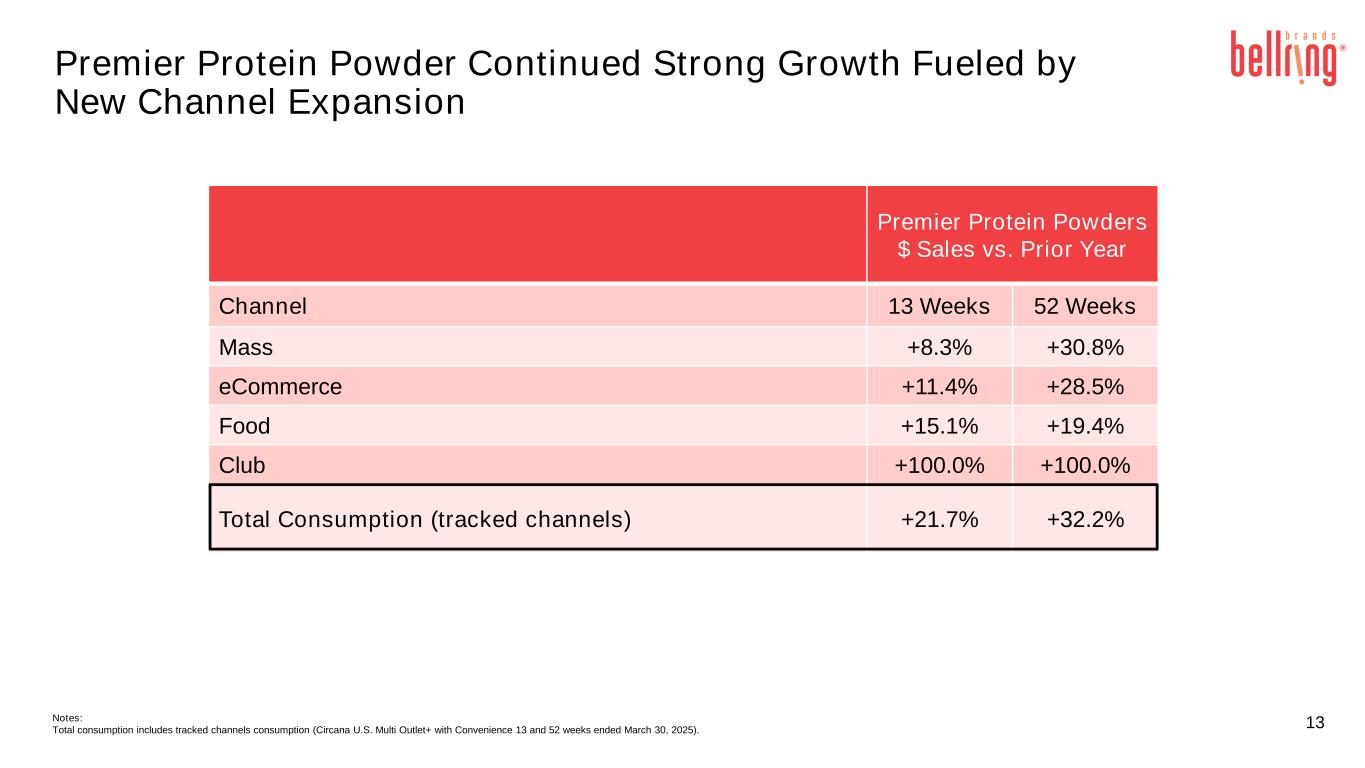
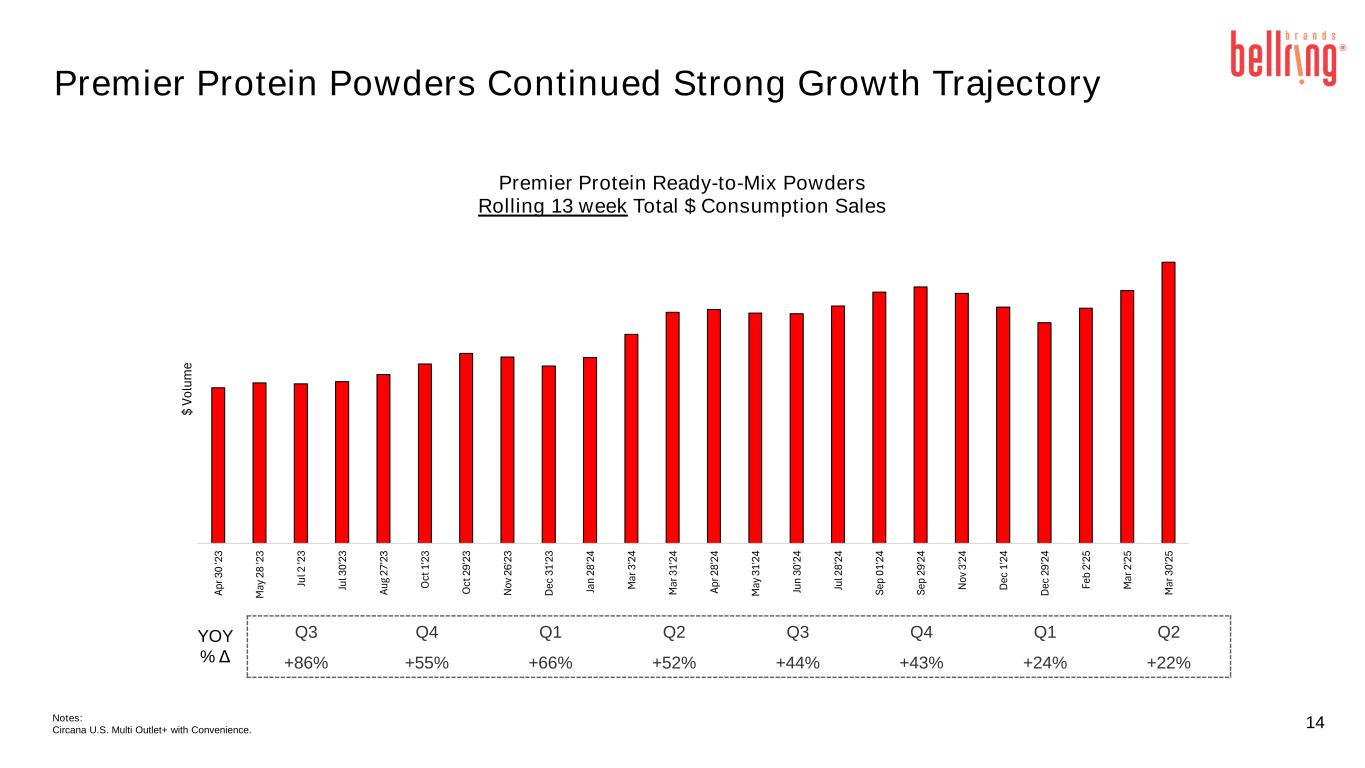
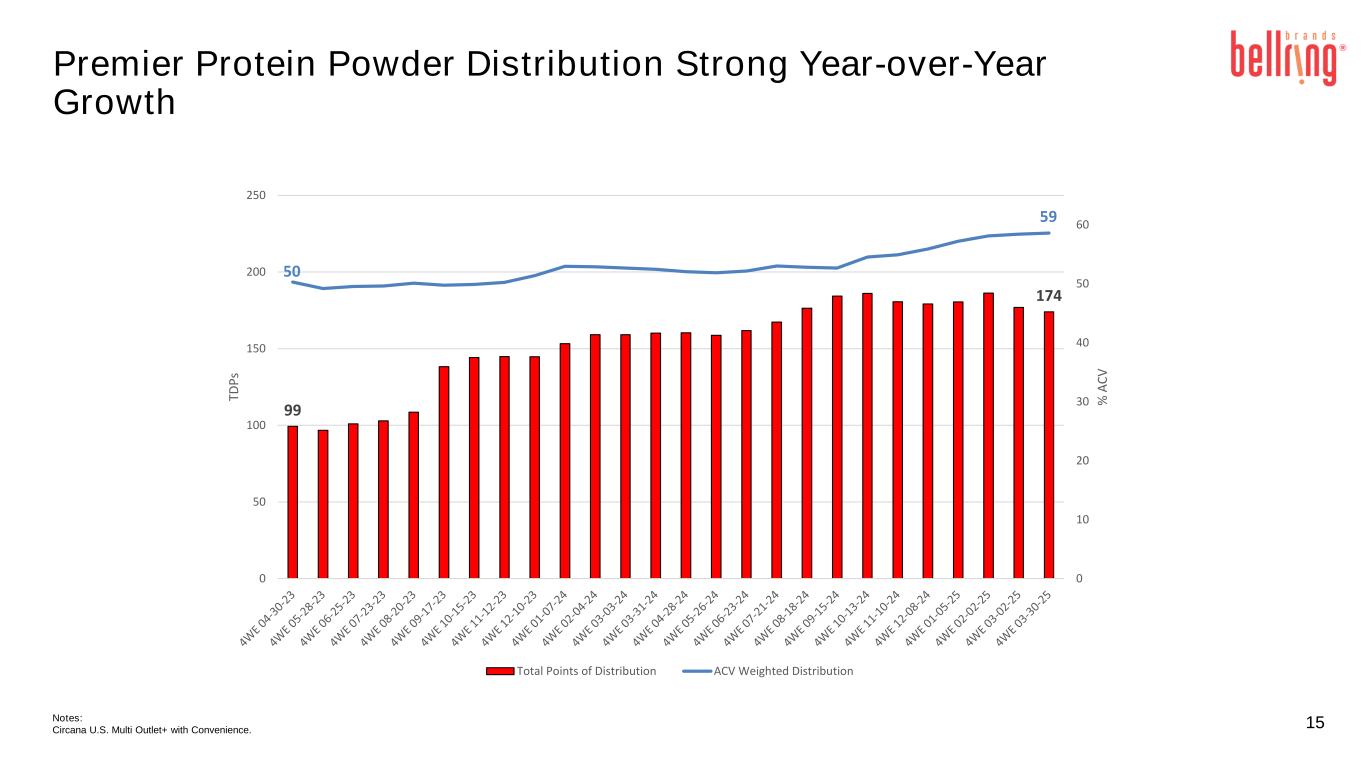
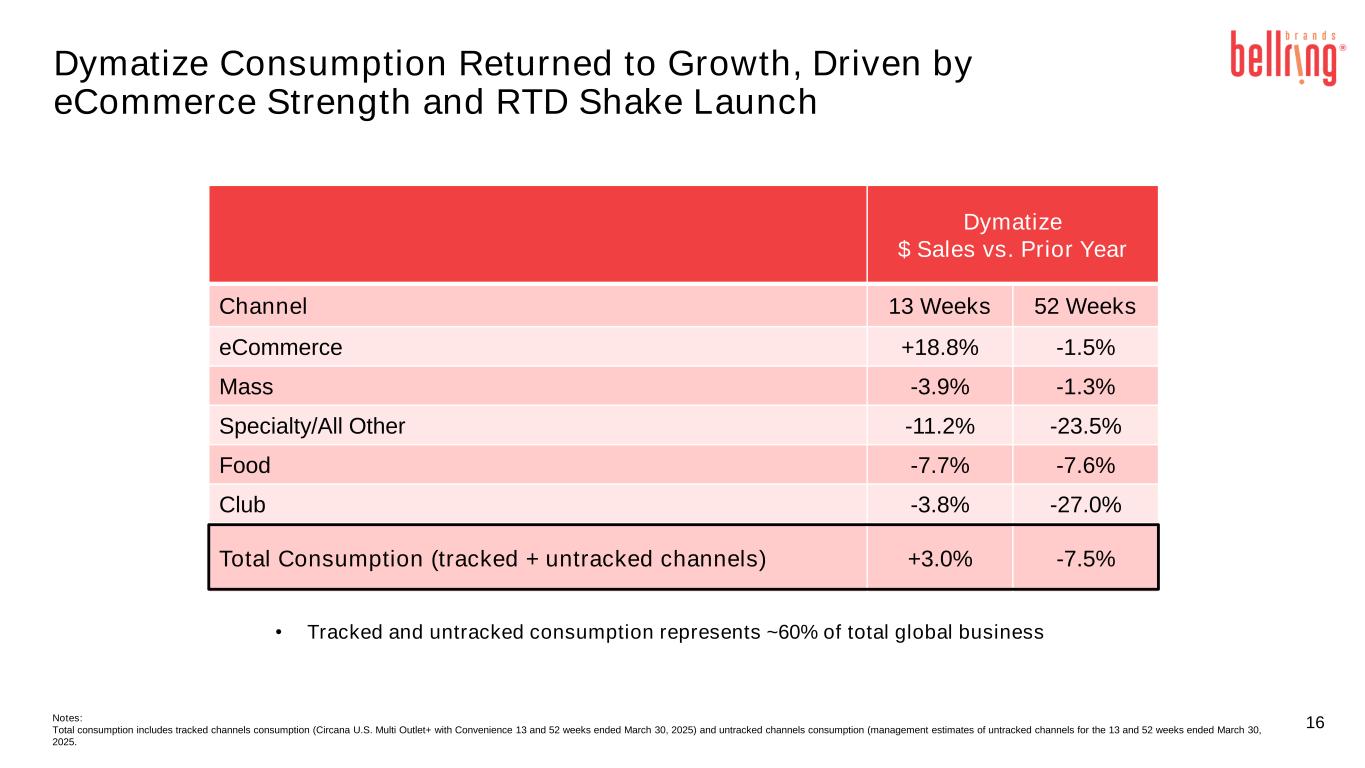
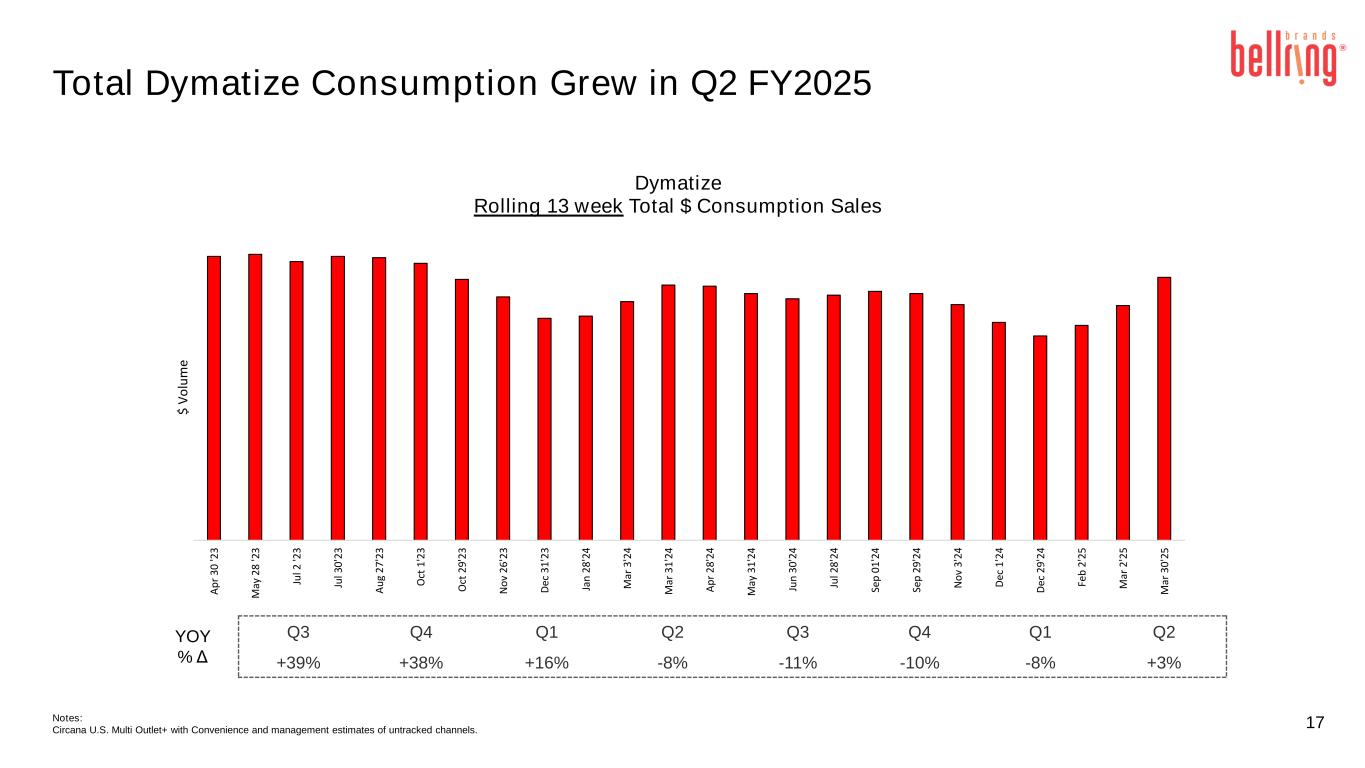
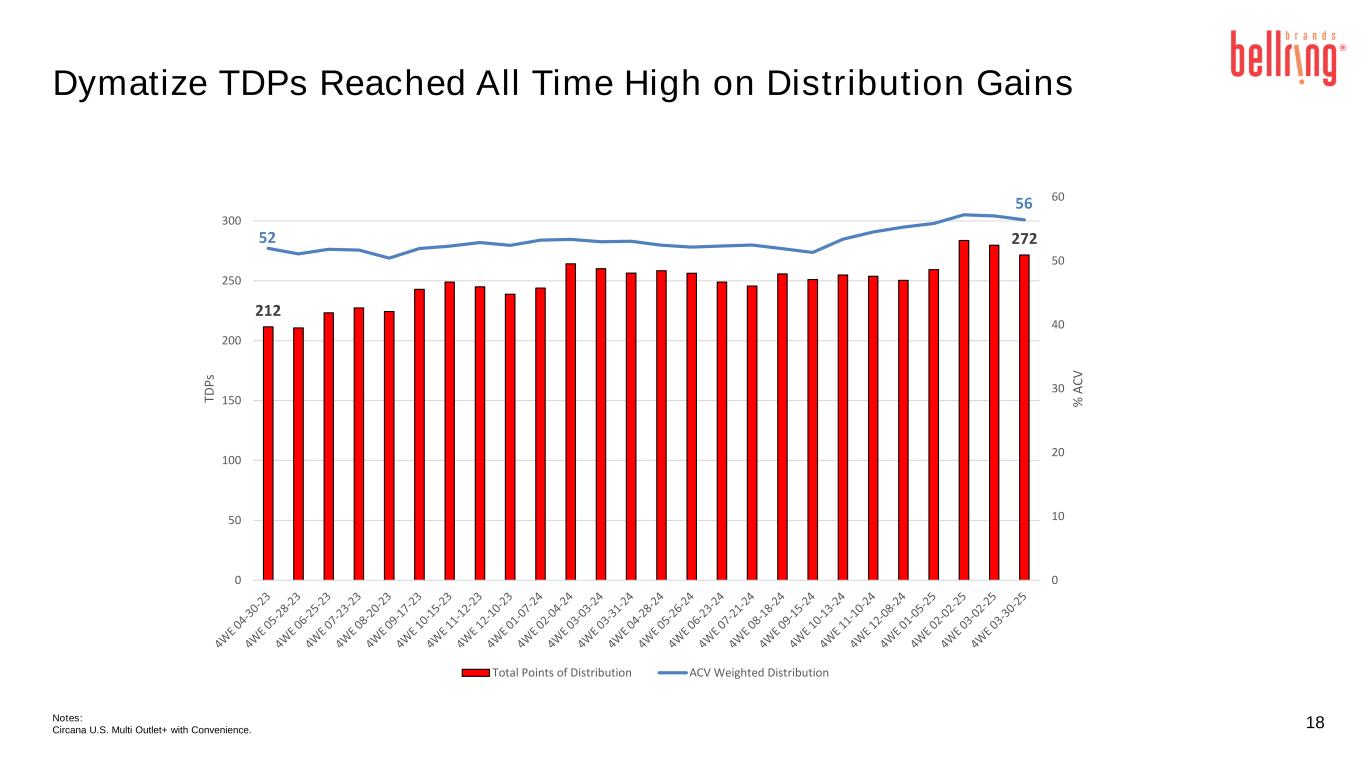
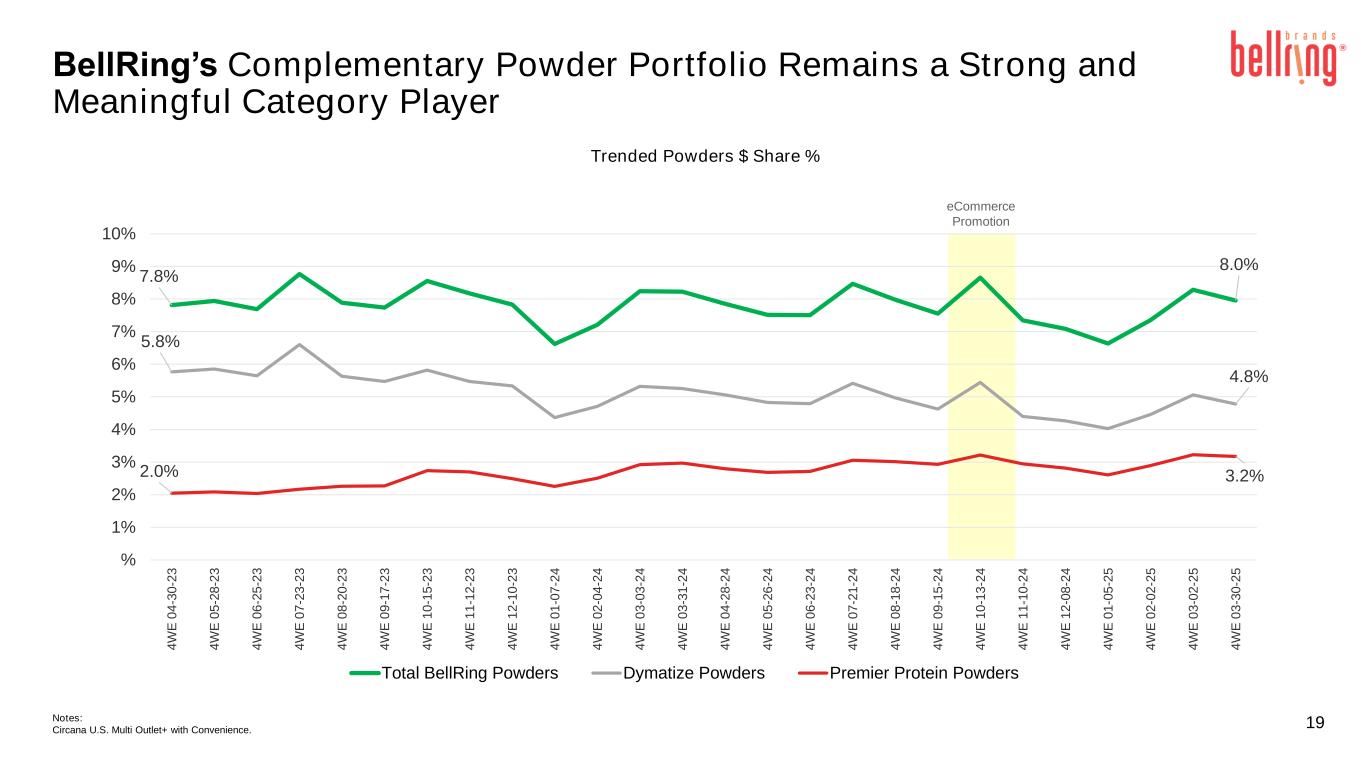
Thanks, Jennifer, and thank you all for joining us this morning. Last evening, we reported our second quarter results and posted a supplemental presentation to our website. I'm happy to share that we had a good first half, delivering a second quarter largely in line with our expectations. For the first time since 2021, we had a full quarter with Premier Protein demand drivers. This drove net sales of 19% with strong EBITDA margins of over 20%. Premier shake consumption accelerated up 25%, and we reached new highs in household penetration, market share and shake TDPs. As you saw in yesterday's press release, we affirmed our fiscal '25 outlook for net sales growth of 13% to 17% over fiscal '24 and EBITDA growth of 7% to 14%. While we have some puts and takes in the second half that Paul will review, I am pleased that our outlook and consumption remain resilient and strong. Now to our Q2 category and brand highlights. Even though broad consumer sentiment is weakening, protein and specifically our category remain incredibly healthy. The convenient nutrition category grew 12% in Q2 with everyday and sports nutrition driving most of this growth. From a form perspective, ready-to-drink growth was strong and continued to lead the category up 19%, driven by robust consumer demand and increased promotions. RTDs remain the second fastest-growing category in the entire store, only behind eggs. Mainstream everyday and sports nutrition RTD brands continue to bring new consumers into the category and are up over 30%. Ready-to-mix grew 10%, a slight acceleration from the last two quarters behind distribution gains and increased consumer demand. Turning to our brands. As I mentioned earlier, Premier shake consumption was up 25% this quarter. Growth was robust in all channels driven by increased promotions, distribution expansion and strong velocities. Expansion in pack size and form, including bottles, drove the distribution gains along with space gained for our new indulgence line. Improved retailer in-stocks also contributed to our year-over-year growth. Our newest seasonal flavor, lemon bar, drove high consumer interest with sell-through outpacing expectations. As we come off a heavy promotional quarter, consumption remains healthy with April up 16%. We expect distribution gains, improved in-stocks and display activity to continue to drive consumption, resulting in Q3 growth in line with Q3 growth in the mid- to high teens. Moving to our brand metrics. Premier Protein reached all-time highs in household penetration and market share. Household penetration gained 1 percentage point, nearly reaching 21%. Promotional activity, our media campaign and new products contributed to this result. We saw growth in buy rate and with repeat rate remaining steady demonstrating our category-leading consumer loyalty. Premier Protein with RTD market share of 27% maintained its position as the #1 brand in the RTD segment as well as the #1 brand in the broader convenient nutrition category. All of this is especially encouraging because in a high-growth category with low household penetration, we see plenty of room to continue to grow our brand and expand the overall category. Given our brand metric gains this quarter, driven by promotions and the new media campaign, we decided to expand our Q4 promotions. We know from experience, promotions and more importantly, the displays that come with them are key to reaching new households and growing our business. With our capacity position better than ever, it allows us to lean into effective tactics to drive demand and grow the overall category. Premier Protein powder continued its growth with consumption up 22% in Q2 behind strong velocities and distribution gains. I'm delighted to share that the product recently gained full distribution at club retailer and currently has the highest velocity across all whey protein powders in this key customer. We remain encouraged by the growth potential of Premier Protein brand in this format. With household penetration of only 2%, we continue to believe Premier powder has a long runway for future growth. Our new Premier Protein marketing campaign ran nationally during the second quarter, reaching TV, streaming and social media audiences. We are pleased with the first wave's results with all key measures exceeding benchmarks. We expect the second wave, which starts later in Q3 to feature a new logo and package design. As a reminder, the new package builds on our strong performing current design and brings a modern look that improves discoverability at shelf. Our media and interim is focused on our new indulgent line. Recall, we launched this new line late in Q1 with 4 decadent shake flavors and 1 powder flavor. These items are richer and creamier targeting an incremental consumption occasion while still delivering on the nutritional value that our consumers expect from the Premier brand. The items continue to build distribution and are off to a promising start. Indulgence has demonstrated impressive incrementality, bringing in a considerable number of consumers new to the brand and category. More innovation is planned later this year. Turning to Dymatize. The brand posted positive domestic consumption growth this quarter, up 3%, lifted by brand investments and new products. Dymatize improved its market share in the powders category to the #4 position and continues to hold the #2 share position within sports nutrition powders. While the domestic business made progress this quarter, the global brand continues to be driven by momentum outside the U.S. with Dymatize's international business up double digits. Our Dymatize athlete-focused marketing campaign is generating high consumer engagement. The campaign has improved our brand metrics and showed great success in bringing in consumers new to the brand. We will continue to add top-tier athletes to our Dymatize roster in the coming years. Recall, we launched two new Dymatize products this quarter: RTD shakes as well as a pre-workout called Energize. We are encouraged by the positive signs we are seeing in the Dymatize business as we expand our portfolio, and we remain bullish on the sports nutrition category opportunity. In closing, our Q2 results position us well for another above-algorithm year. Strong macro tailwinds around protein are driving robust long-term growth in our category with ready-to-drink and powder segments in the early stages of growth. Premier Protein is already the #1 convenient nutrition brand, and we are just starting to drive demand. Our innovation pipeline for both brands is rich, enabling us to bring excitement to consumers and our retailer partners for years to come. Our confidence in the long-term outlook for BellRing remains high. Thank you for your interest in our company. We look forward to sharing our progress next quarter. I will now turn the call over to Paul.
Thanks, Darcy, and good morning, everyone. As Darcy highlighted, we had another good quarter. Net sales were $588 million, and adjusted EBITDA was $119 million. Net sales grew 19% over prior year and adjusted EBITDA increased 14%. Adjusted EBITDA margins were in line with our expectations at 20.2%. Starting with brand performance. Premier Protein net sales grew 22% behind strong volume growth for RTD shakes and powders. Distribution gains and promotions drove the sales growth along with a positive benefit from higher net pricing. Dymatize net sales increased 3% this quarter on 20% higher volume. Double-digit sales growth for international was partly offset by domestic headwinds. Adjusted gross profit, which excludes mark-to-market adjustments on commodity hedges, was $203 million and grew 22% from the prior year. Adjusted gross profit margin of 34.5% increased 80 basis points. Our pricing actions have offset input cost inflation to date. However, the rate of inflation will increase in the second half of '25, pressuring margins when compared to the prior year. SG&A expenses were $91 million, an increase of 140 basis points as a percentage of net sales. Higher advertising and promotion spend and warehousing costs largely drove the increase. Advertising and promotion was 4.7% of net sales, up meaningfully from 3.1% last year's second quarter. The A&P step-up was driven by the new Premier Protein national advertising campaign that ran throughout the entire second quarter and support for the indulgence RTD shakes launch. Before reviewing our outlook, I would like to make a few comments on cash flow and liquidity. We generated $48 million in cash flow from operations in the second quarter and $51 million in the first half. We continue to expect our cash flow in fiscal '25 to be in line with fiscal '24. As of March 31, net debt was $932 million, and net leverage was 1.9x. With our strong cash flow generation and EBITDA growth, we anticipate net leverage will remain below 2x throughout fiscal '25. With respect to our share repurchases this quarter, we bought 2.4 million shares at an average price of $71.68 per share or $172 million in total. As of March 31, our remaining share repurchase authorization was $280 million. Turning to our outlook. We affirmed our fiscal '25 guidance for net sales to be $2.26 billion to $2.34 billion, and adjusted EBITDA of $470 million to $500 million. Our guidance implies strong top-line growth of 13% to 17% and adjusted EBITDA growth of 7% to 14% with healthy adjusted EBITDA margins of 21.1% at the midpoint. Overall, our second half outlook for net sales is unchanged, but now reflects increased sales from our expanded fourth quarter promotions, offset by third quarter reductions in retailer trade inventory levels. Starting late in Q2 and continuing into the third quarter, several key retailers lowered their weeks of supply on hand, which is expected to be a mid-single-digit headwind to our third quarter growth. This change is in addition to the previously anticipated mid-single-digit impact to the third quarter from lapping last year's trade inventory replenishments. We now expect Q3 net sales growth of low single digits with Premier Protein the main driver and all other flat to down. Without the impact of these trade inventory changes, our underlying third quarter growth for Premier Protein RTD shakes would be more in line with our expected consumption growth of mid- to high teens. Regarding adjusted EBITDA, we expect second half margins of just over 20% at the midpoint with our EBITDA dollar growth occurring in the fourth quarter. As anticipated, third quarter margins faced moderate year-over-year pressure from input cost inflation, packaging redesign costs and lapping some nonrecurring product cost favorability. Margins in the fourth quarter will be sequentially lower as higher input costs and promotional spend weigh on margins. Wrapping up, we are closely monitoring developments as it relates to tariffs. Based on current policy, a portion of our input costs could be subject to future tariffs with the majority of this potential impact from dairy protein sourced from New Zealand and the EU. For fiscal '25, there is no expected impact. Regarding fiscal '26, given our normal lag time from sourcing the P&L flow, we'd only expect a partial year impact from tariffs. However, we are actively evaluating ways to mitigate tariff impacts. We will continue to monitor and provide updates later this year. In closing, we are pleased with our first half performance. Our Q2 results were strong with our products continuing to resonate with consumers. Our long-term prospects remain bright with a long runway of growth ahead.
Operator
Please stand by for our first question. It comes from the line of Andrew Lazar with Barclays.
Speaker 4
Firstly, the convenient nutrition category, as you said, has grown 12% in each of the first two fiscal quarters. I'm curious what expectations are built into your back half guidance when it comes to sort of category growth just in light of the broader weakening consumer environment.
Yes. The fundamentals of the category remain strong, supported by macro tailwinds and the fact that the RTD category only has 50% household penetration, indicating substantial growth potential. While the RTD category makes up 12% of the convenient nutrition sector, it saw a 19% increase and has consistently driven overall category growth, which we anticipate will continue. We are considering various scenarios, and we aren't observing the same degree of consumer weakness impacting our category as seen in others. This resilience stems from the strong fundamentals and macro trends supporting convenient nutrition. That said, we are planning for a few scenarios, one where growth continues at the current rate and another where it might be slightly affected, but nothing significant.
Operator
One moment for our next question. It comes from Thomas Palmer with Citi.
Speaker 5
I wanted to ask on what you were seeing with the retailer inventories. Look, you're not obviously the only company to highlight this, but your takeaway trends have most been a lot better than many of these others. What do you think is driving that change from your perspective? Does it seem like it will be kind of more of a onetime reset? And are there any on-shelf changes or product mix changes that are accompanying those?
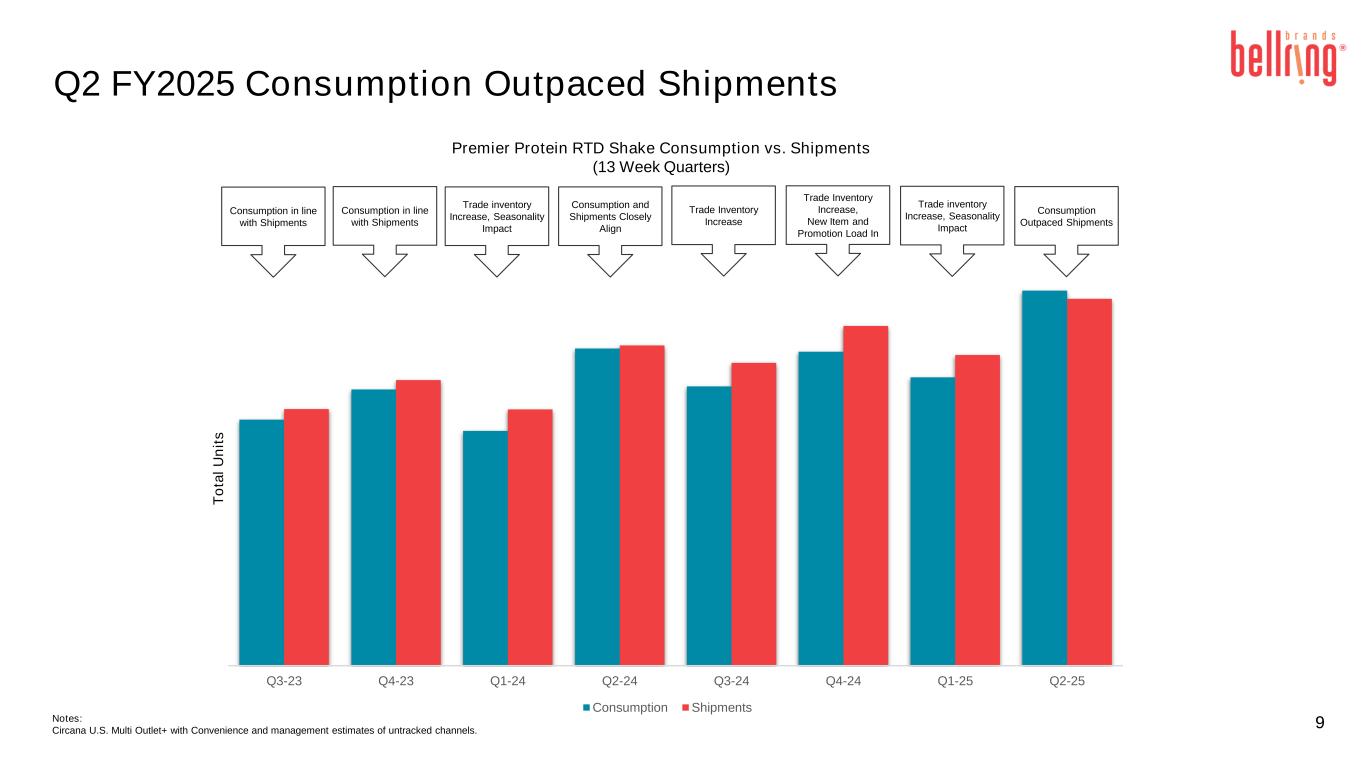
Yes, there are no changes in the inventory set. What we've observed is that last summer, during the second half of the year, some of our retailers increased their inventory weeks of supply as we were coming out of supply constraints. In particular, one of our club customers maintained a robust weeks of supply throughout the second half and into the second quarter. We believe this was a response to protect themselves, especially ahead of the second quarter promotions. We think this is a one-time occurrence that is somewhat unique to our situation. While there are broader macro factors influencing other retailers' inventory optimization, we believe our club customers were just being cautious after last year's supply constraints. Following our successful supply efforts over the past several months, they have now decided to optimize, which we are seeing reflected in our orders, particularly in April. This is happening alongside the strong consumption growth we experienced in the second quarter, which has continued into the third quarter. We believe this is mainly a timing issue.
Operator
Our next question comes from Ken Goldman with JPMorgan.
Speaker 6
Just to stay on the topic of the trade deload. It's fairly substantial in size, obviously. And I hear your comment on how it's onetime and it's primarily one customer who carried a lot of supply last year. But when it's that substantial, typically, it doesn't happen unless there is a little bit of either deceleration in consumption or disappointment in consumption from that retailer side. Are you hearing anything along those lines from your retailers about why they're really pulling back on this other than that they over-ordered because it just typically, we really don't see deloads happen unless it's on the consumption side as well.
Darcy, do you want to take that?
Yes, absolutely. I believe this situation is unique and connected to overcoming capacity constraints. There has been no change in consumption, which remains strong. In Q2, consumption increased by 25%, largely due to the New Year, New You promotions and advertising. As we enter Q3, we anticipate continued strong consumption, having seen a 16% rise in April. We expect Q3 to fall in the mid- to high teens, indicating robust performance. This is primarily related to retail, with a few retailers taking precautions as they emerge from capacity constraints. They had been accumulating inventory to ensure they wouldn't run out of stock, but after several quarters of high in-stock rates, they're now comfortable reducing that inventory. We anticipated this development, although we didn't know when it would occur. Importantly, there are no signs of softness or concern regarding consumption.
Operator
It comes from the line of Megan Clapp with Morgan Stanley.
Speaker 7
I wanted to shift to ask about tariffs, if I could. Paul, I appreciate the commentary and clearly, the operating environment is fluid and a lot can change. I think you said a portion of the input costs could be subject to tariffs. I wondered if you could just expand a bit, maybe remind us what percentage of input costs are raw materials related to dairy protein? And how should we think about potential mitigating actions? Are there opportunities to source some of those input costs in the U.S.? Or would you look to things like pricing?
Overall, dairy inputs account for about one-third to 40% of our total cost of goods sold, but only a part of that is affected by tariffs. Our powder business is largely insulated from these issues. However, some of our dairy proteins are sourced from New Zealand and the EU, which are currently facing a 10% tariff. This is the specific area that could be influenced. Looking at the overall potential impact, we estimate that if the rates do not change and no mitigations are made, it would be a low single-digit impact on our total cost of goods sold. This is relatively minor and can certainly be managed. We are exploring ways to mitigate this, which may include investigating different suppliers. These are all aspects we are currently assessing, but it’s still too early to draw conclusions. It's important to note that we do not anticipate any impact in fiscal '25. Any effects from tariffs would likely begin to appear after the start of fiscal '26, due to the lag in sourcing proteins and their reflection in our financial results, as well as arrangements with suppliers that would defer some of this into later in the year. Overall, we perceive it as a minor impact, but we will continue to monitor the situation and keep everyone updated as we progress.
Operator
Our next question comes from Matt Smith with Stifel.
Speaker 8
I wanted to ask about the increase in marketing and advertising. It was a little higher than I had anticipated in the quarter, reaching 4.7% of sales. Should we think of the second quarter as peak levels in terms of percent of sales? And how should we think about the level of spending for the year now? You talked about the path of returning to 4% to 5% of sales on an annual basis. Have you increased the level of spending in marketing and advertising relative to your previous expectations? Or is the higher investment really more focused on incremental promotional activity in the fourth quarter?
Yes, overall, our second quarter spend was right in line with what we expected. So again, with the national advertising campaign behind Premier and just our focus on marketing during kind of that peak New Year, new season, the marketing was right in line from what we expected. As far as overall for the full year, we had previously called for kind of mid-3s to low 4s. We have reallocated a little bit of marketing spend in the second half from marketing to promotion, not a big change, but would change our full year thinking down a little bit to more mid-3s to high 3s range. And so that's what we expect for our marketing spend in the full year.
Operator
Our next question comes from the line of Peter Grom with UBS.
Speaker 9
So I wanted to ask a question around how you think about or how you're approaching guidance and what remains a really dynamic backdrop. And Darcy, in some ways, this is a follow-up to your response to Andrew's question, where you talked about category growth and kind of scenario planning. But I'd just be curious, given the many moving pieces and uncertainty, are you approaching guidance differently or kind of giving yourself more cushion just given the backdrop?
Yes, we feel very positive about the opportunity ahead. There is significant growth potential and favorable trends within the category and for our brands. However, we acknowledge that there is some consumer uncertainty, which has led us to adopt a more cautious stance. Historically, we would have adjusted our guidance range tighter in this quarter, but we've opted not to do so. Our rationale is based on having a good level of visibility for the remaining five months of the year concerning promotional and marketing plans, as well as our distribution gains. That said, there are still some uncertainties, particularly regarding the consumer landscape, which appears more volatile than in the past. Therefore, we will maintain our cautious approach moving forward.
Operator
Our next question is from Jim Salera with Stephens.
Speaker 10
I wanted to maybe ask about some of the changes in the competitive landscape. If we go back a couple of years, Premier was really kind of at the vanguard of having that 30-gram RTD shake offering. And I think really deserves credit for kind of standardizing that for the industry. We've seen a lot of competitors kind of make up their standard offering as well. Recently, we've seen some launches that are kind of over 40 grams, but still have limited pour count over 200, but not by much and in that RTD format. Just any thoughts on, do you think that you're going to need to continue to raise the protein content? Is that kind of the most important characteristic that consumers look for? Or is there a balance between the protein content and the taste and the calorie count? Just any color there would be helpful on how you guys think about how that affects your competitive position?
Yes, we've noticed some new competitors increasing protein levels. However, I don’t believe that will become the standard. What has truly driven our business is a mix of being an approachable brand, offering excellent nutritional content with high protein, low sugar, fat, and calories, all while ensuring exceptional taste. In the past, 30 grams of protein was seen as an adequate amount in shakes, but now we’re observing trends pushing both higher and lower limits. Some consumers seek more protein for post-workout recovery, while others prefer less protein for a snack. This is a young category with only 50% household penetration, which is now expanding and catering to different occasions and consumer needs. It's quite exciting to see. We wouldn’t have imagined that 40 grams of protein or more could be mainstream, and while I think it's still somewhat limited, it is growing. So in response to your question, I don't see it becoming the norm, but I expect ongoing innovation at various protein levels. Additionally, we’ll see advancements in complementary ingredients and offerings tailored for specific consumer occasions.
Operator
Our next question comes from Kaumil Gajrawala with Jefferies.
Speaker 11
I have two questions. First, I want to clarify the situation regarding destocking. Is this a one-time occurrence, or could it potentially reverse? Secondly, I'd like to discuss your recent increase in advertising and marketing efforts. How has this strategy been received, and what kind of returns or metrics can you share regarding its effectiveness?
I can take the first one, Darcy. We are not modeling or considering a rebound in trade inventory levels in our guidance. Therefore, we view it as a one-time event.
From a marketing perspective, we implemented several demand-driving strategies for the New Year, New You campaign. It's challenging to determine the exact factors behind the 25% increase in consumption. A comprehensive analysis later this quarter will help isolate these variables. However, we do have certain key performance indicators that indicate success. We've achieved all our set benchmarks, with total impressions rising by 30%, exceeding expectations, and web traffic increasing by over 25% from organic search, which is very promising. We are capturing the attention of our consumers and noticing positive momentum in the business. Specific return on investment by tactic will be assessed later in the quarter.
Operator
Our next question comes from John Baumgartner with Mizuho Securities.
Speaker 12
Maybe first off, Darcy, for ready-to-mix, category-level pricing is still soft on the 13 weeks relative to the 52 despite the upstream cost inflation. And I'm curious, is there a sense that with new capacity coming on stream later this year that competitors are just sort of waiting it out and absorbing some of the temporary margin pain? Or are there any indications that given the higher base for retail prices now that maybe elasticities hit more of a tipping point with more pricing?
Yes, we have observed some reductions in net pricing for ready-to-mix products. Specifically regarding promotions, there haven't been any changes in list prices, but we have noticed some slight increases in the frequency and depth of promotions. We still anticipate some tightening in the market. There are many new entrants in the ready-to-mix space with low barriers to entry, and these companies seem focused on increasing sales rather than prioritizing profitability. We have also heard that some major players are planning to raise prices later this year, and I believe that will happen. For our part, we announced a price increase on Premier Protein powders and a small line within Dymatize at the beginning of this month. This increase is minor and does not significantly impact our overall business since it represents a small portion of it. We will see the effects of this soon. Overall, the situation is somewhat mixed, and it remains a wait-and-see scenario.
Speaker 12
Okay. And then on Dymatize in the U.S., sales are growing in e-comm, but they're down in every other channel. I'm curious the extent to which that's more structural where you're seeing performance-oriented consumers migrating more broadly into e-comm. And if that's the case, where sort of bricks and mortars is now becoming more structurally inhabited by the everyday consumer. I guess how do you see retailers responding to that? I mean could we see linear space being reduced for the category in total? Does the category maintain space, but it's easier to shop for new consumers? Is it a benefit for every brand like Premier? Like how do you see the shelf set sort of changing going forward given all the dynamics here?
E-commerce has been a significant factor in this category for an extended period. As you know the category well, it was primarily a specialty category. However, the specialty channel faced numerous challenges that led to a shift towards e-commerce. E-commerce has become the top channel for Dymatize and many ready-to-mix brands. Despite this, we still see potential in mainstream retail channels for those brands. E-commerce serves as a platform for consumers to discover brands, especially in the ready-to-mix segment. This trend will persist, and new brands often first gain visibility through e-commerce. Once they reach a certain level and target a more mainstream audience, we can expect to see them transition from e-commerce to traditional retail channels. For Premier Protein, there is a significant opportunity, with only 2% household penetration, indicating a lot of room for growth, including for Dymatize in mainstream channels.
Operator
Our next question comes from Robert Moskow with TD Cowen.
Speaker 13
I just wanted to clarify something regarding the guidance. Darcy, I think you said that given the strong retail performance, you typically would have narrowed the guidance, I suppose, at the higher end of the range. But because of the uncertainties about the consumer, you're not. But then you also said that the destocking by this major customer was a bit of a surprise. So can you confirm that, yes, that even with that destocking, you still could have narrowed the guidance. Can I separate those 2 things?
Yes, we definitely could have narrowed the guidance. However, due to the current consumer uncertainty, we are being more cautious.
Operator
Our next question comes from the line of Bryan Spillane with Bank of America Merrill Lynch.
Speaker 14
Darcy, can you discuss the current interaction between different channels? It seems that e-commerce has slowed down a bit and mass club is also softening, while we're seeing much faster growth in grocery. I'm trying to understand if there is any cannibalization we should consider as you expand, especially in high-traffic areas of large food retailers. Additionally, could you share your thoughts on pricing across channels to ensure there is no conflict or reduction of channel conflict from a pricing perspective?
From a channel perspective, we are not observing any significant cannibalization across channels or major shifts. We continue to see opportunities for increasing our market share, particularly in food and specifically in the food, drug, and mass channel. This channel also experienced the highest out-of-stock issues last year and the year before. Currently, we are benefiting from some tailwinds due to lower comparisons, especially in those channels where inventory levels have improved compared to others. Overall, there is substantial room for growth and opportunity in every channel, but the most significant potential lies in the food, drug, and mass category. Additionally, I want to emphasize that every channel presents an opportunity for greater household penetration. Even in our more established channels like club, there is considerable potential for both our brand and the overall category, as household penetration remains only at 50%. There's a tremendous opportunity ahead. What was your second question regarding pricing?
No. We have certain rules regarding pack sizes and channels. In the current environment, where consumers may be more focused on value, we've observed a shift from smaller counts to larger counts, particularly moving from 4 count packs to 12 count packs and even larger club packs. This change is driven by consumers seeking better value per shake. Overall, I believe the situation remains quite rational.
Operator
It comes from the line of Bill Chappell with Truist Securities.
Speaker 15
Darcy, just kind of go back to what you had said about new entrants into the category going for more, I guess, lower protein instead of the 40-gram high protein. I mean, historically, Premier has kind of been positioned well for those who wanted that 30-gram protein shake. You had more with a great taste. Is there a thought that you need to be more aggressive or to kind of get those new users with some lower protein shakes go the other way? Or is there so much opportunity right at the kind of that core 30-gram and consumers moving up from end to 20 to 30 that you're in a good spot? So kind of any thoughts, not necessarily the next couple of quarters, but longer term, you need to get to go to those opening price point, but opening protein point shakes.
I think I would answer that with kind of yes. There is a lot more opportunity with our core 30-gram shake and whenever we do testing, that is by far the most kind of mainstream offering and the one that resonates with the most consumers. So we still see a ton of opportunity in household penetration and in distribution for our 30-gram shake just to continue to proliferate across pack sizes across flavors, et cetera. And I think there's also a lot of opportunity to innovate. And I've in the past, watched you guys through kind of our approach to innovation, which is really around capturing either a new consumer incremental to the 30-gram or a new occasion. And that's where kind of innovation can play. So part of that can be macro, so up or down in protein levels. It can also be like our indulgence line, which clearly goes after a new occasion. However, what's nice to see is we actually are getting new consumers also with the indulgence line. So I think I'd just go back to the fundamentals of this category, when you're dealing with a category that only has 50% household penetration, there is just a lot of opportunity usually within the base as well as with innovation.
Operator
Our next question comes from Jon Andersen with William Blair.
Speaker 16
Darcy, I would like to follow up on your last point about innovation. Could you provide more insight into what you're observing with the indulgence line? It seems to present an opportunity for a new occasion. Are existing users primarily using it for snacking or for a different time of day? Additionally, I understand you have another significant innovation planned for the latter part of the fiscal year. How should we view that innovation? Can you share more details about it? Is it focused on expanding the range for consumers or is it also occasion-based?
Yes. I'll start by saying we've seen some early success. We initially launched in mass retail, and that success has opened doors in other retailers. We're now expecting a rollout across food, drug, mass, and club channels. This is encouraging as it's adding significant value to the category and creating new occasions for use. At one of our mass retailers, about 35% of buyers are new to the category. In a category with low household penetration, attracting new consumers is exactly what we aimed for, and it’s happening, which is very exciting. Online reviews are also highlighting aspects like treats and desserts, whereas our baseline was mostly around breakfast replacements. The positive feedback regarding treats and desserts reinforces our strategy, which is reassuring. Regarding upcoming innovations, we do have something planned for the latter part of Q4. The strategy is focused on reaching new consumers, with our first innovation aimed at creating new occasions and the second one targeting new consumers.
Operator
And our last question, one moment, comes from Steve Powers with Deutsche Bank.
Speaker 17
Could you provide some insight into your reasoning behind the emphasis on fourth quarter promotions? Is this approach a response to the current market conditions and consumer behavior, or do you see it as a permanent addition to the calendar that we can expect to see repeatedly?
Yes. I view it as a fixed part of the calendar. Historically, we have held two large club promotions annually for nearly a decade, even before COVID and supply constraints. This has been consistent. In the second quarter, we noticed a significant improvement in our brand metrics, particularly in household penetration. We observed that these club promotions lead to excellent visibility and increased household penetration. After seeing positive results in Q2 and having sufficient inventory, we decided to expand the Q4 promotion. This was a strategic decision made possible by our inventory support, and it allows us to collaborate with our retailers to provide value to consumers in the current environment.
Operator
Thank you. And ladies and gentlemen, this concludes our Q&A session and program for today. Thank you all for participating, and you may now disconnect. Good day.