Operator
Good day, and thank you for standing by. Welcome to the BellRing Brands Third Quarter Fiscal Year 2025 Earnings Conference Call. Please be advised that today's conference is being recorded. I would now like to hand the conference over to your first speaker today, Jennifer Meyer, Investor Relations for BellRing Brands. Please go ahead.
Good morning, and thank you for joining us today for BellRing Brands Third Quarter Fiscal 2025 Earnings Call. With me today are Darcy Davenport, our President and CEO; and Paul Rode, our CFO. Darcy and Paul will begin with prepared remarks, and afterwards, we'll have a brief question-and-answer session. The press release and supplemental slide presentation that support these remarks are posted on our website in both the Investor Relations and the SEC Filings sections at bellring.com. In addition, the release and slides are available on the SEC's website. Before we continue, I would like to remind you that this call will contain forward-looking statements, which are subject to risks and uncertainties that should be carefully considered by investors as actual results could differ materially from these statements. These forward-looking statements are current as of the date of this call, and management undertakes no obligation to update these statements. As a reminder, this call is being recorded, and an audio replay will be available on our website. And finally, this call will discuss certain non-GAAP measures. For a reconciliation of these non-GAAP measures to the nearest GAAP measure, see our press release issued yesterday and posted on our website. With that, I will turn the call over to Darcy.
Speaker 2
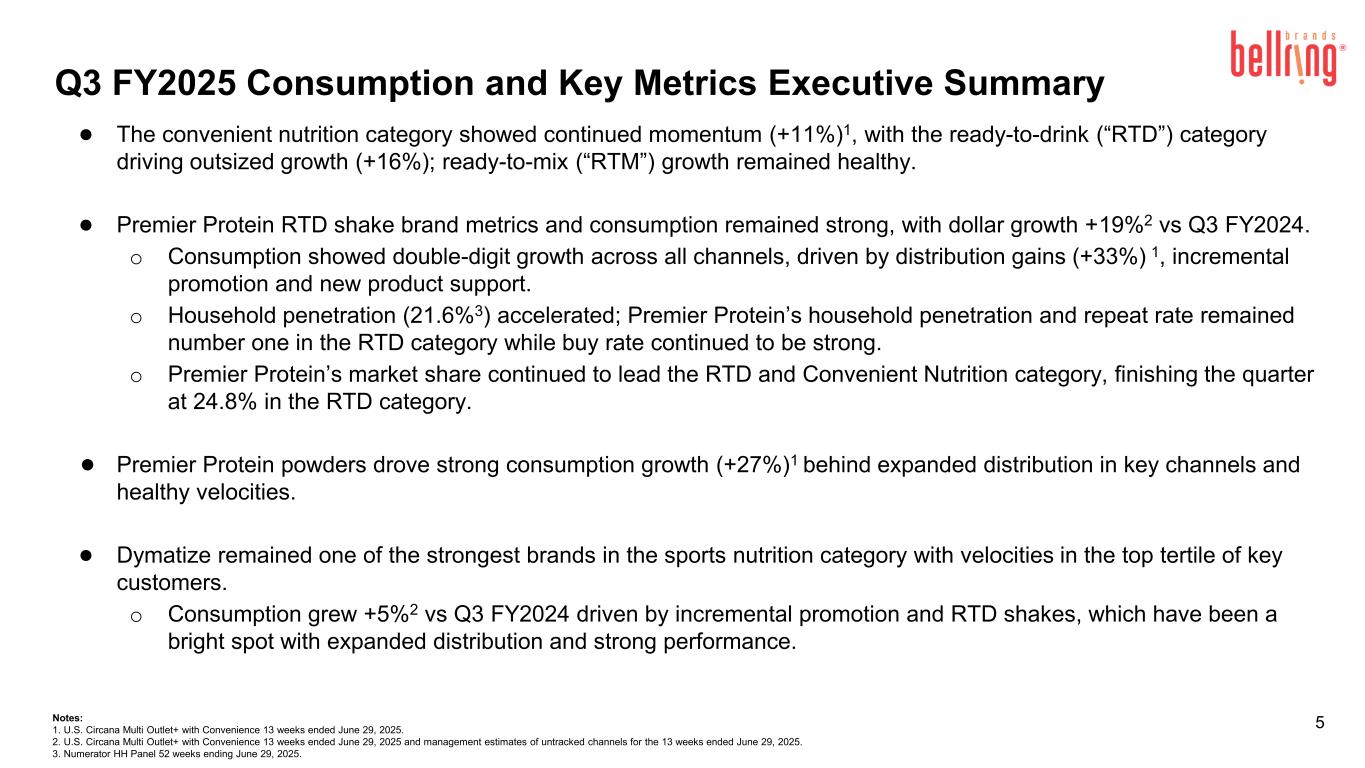
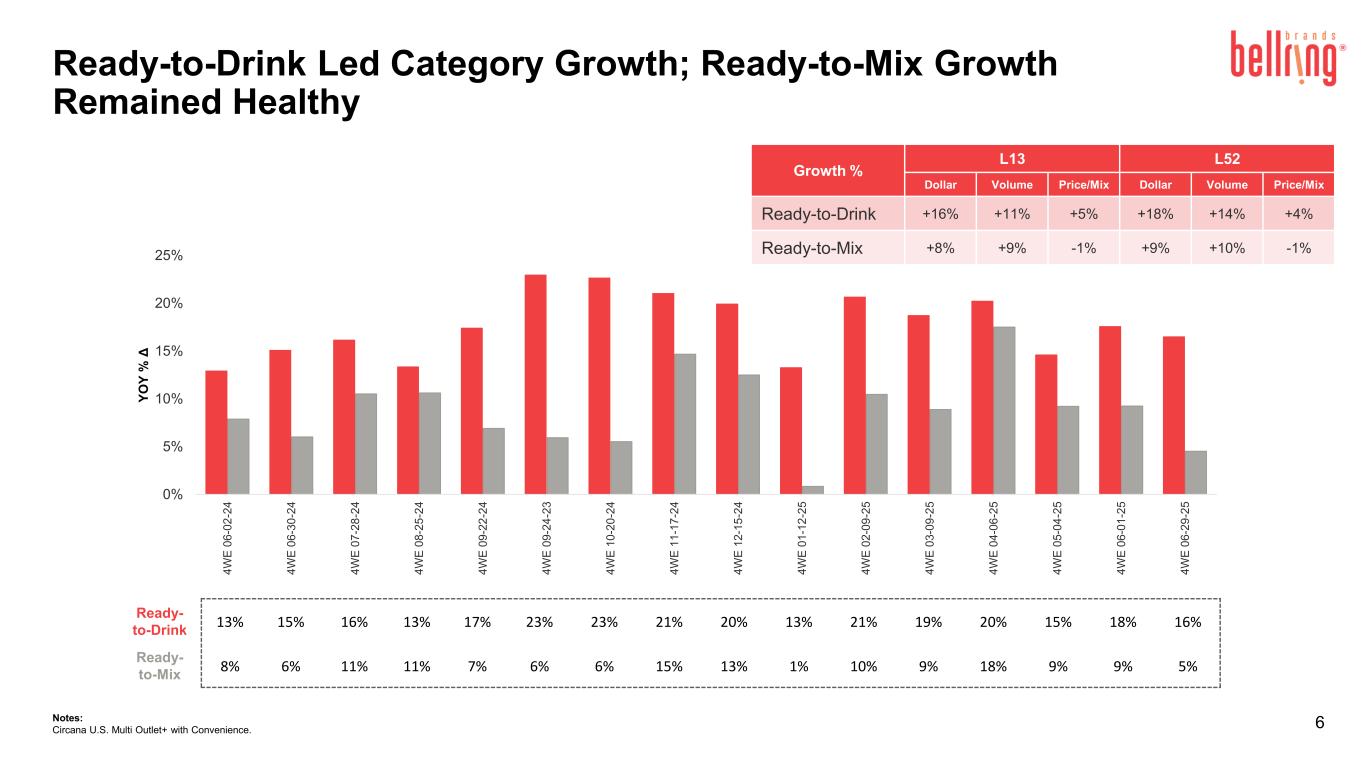
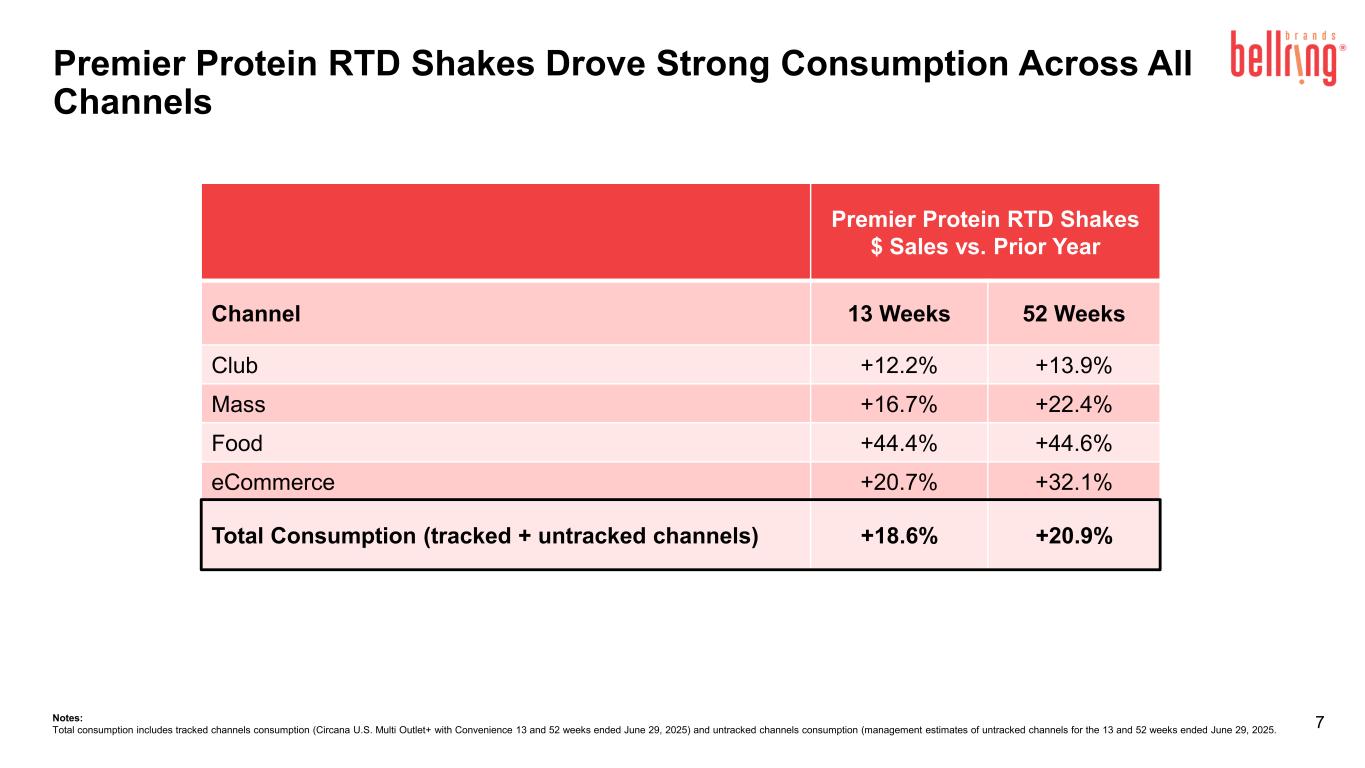
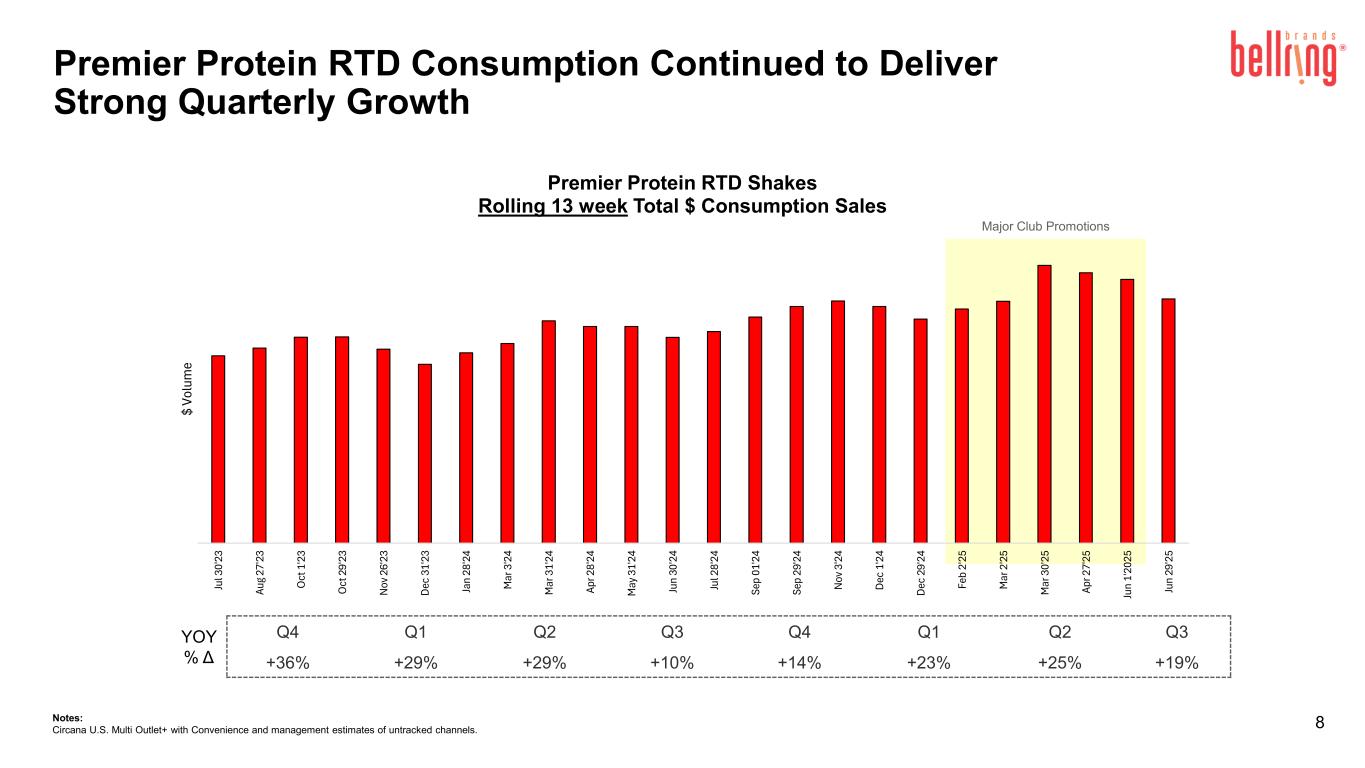
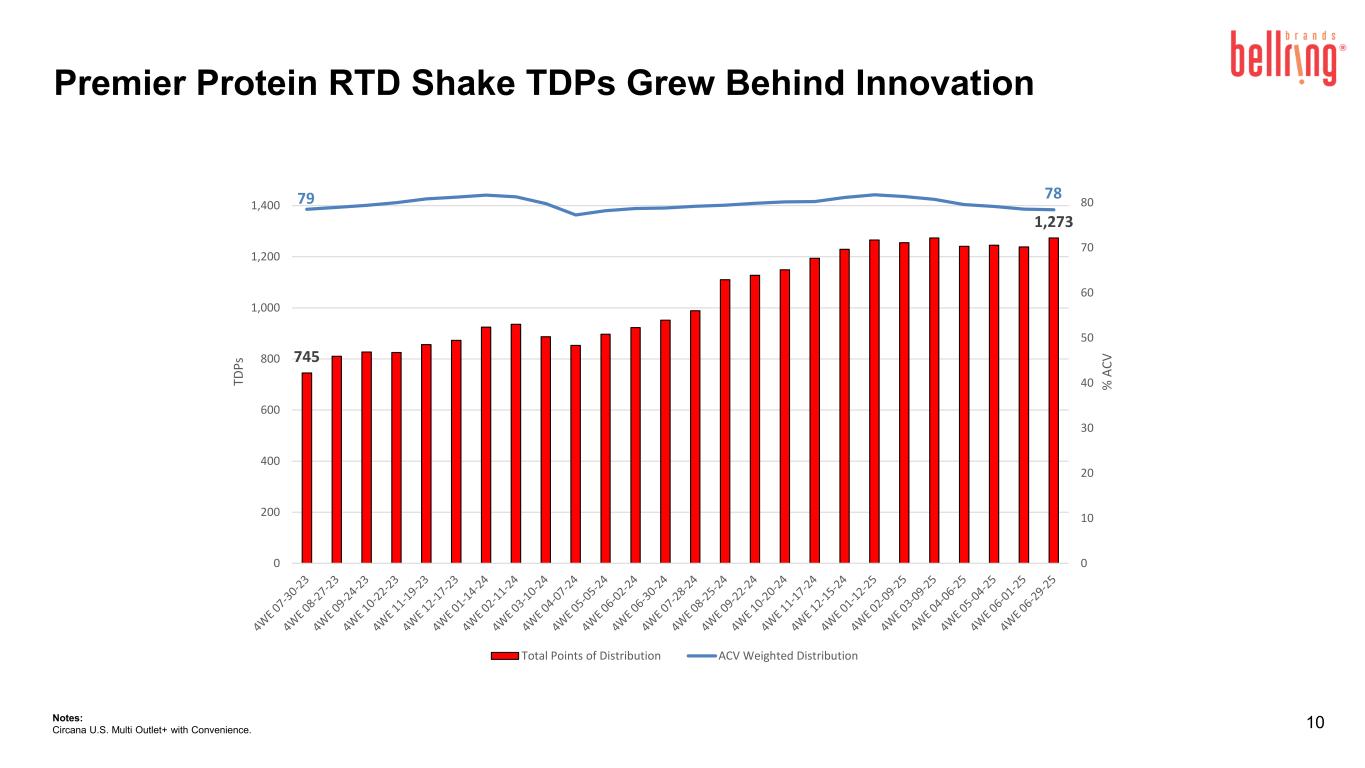
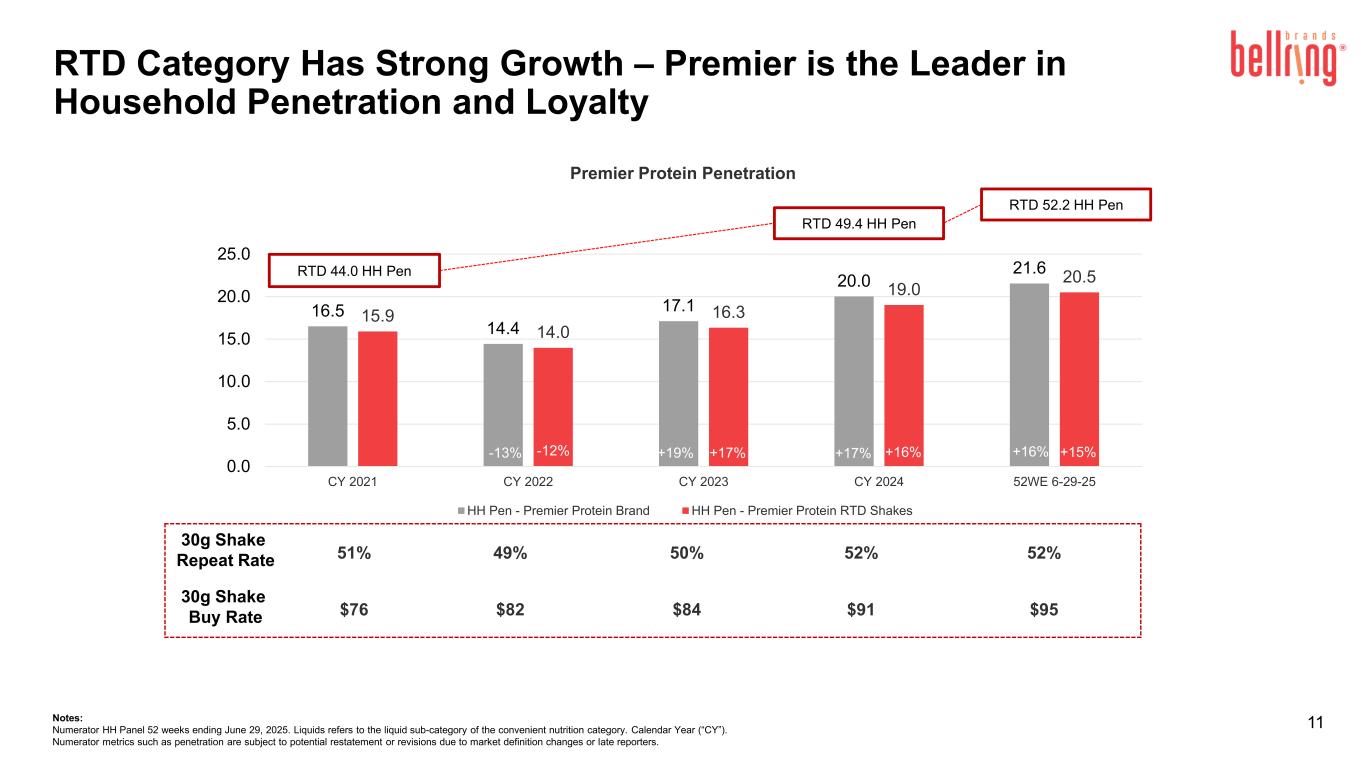
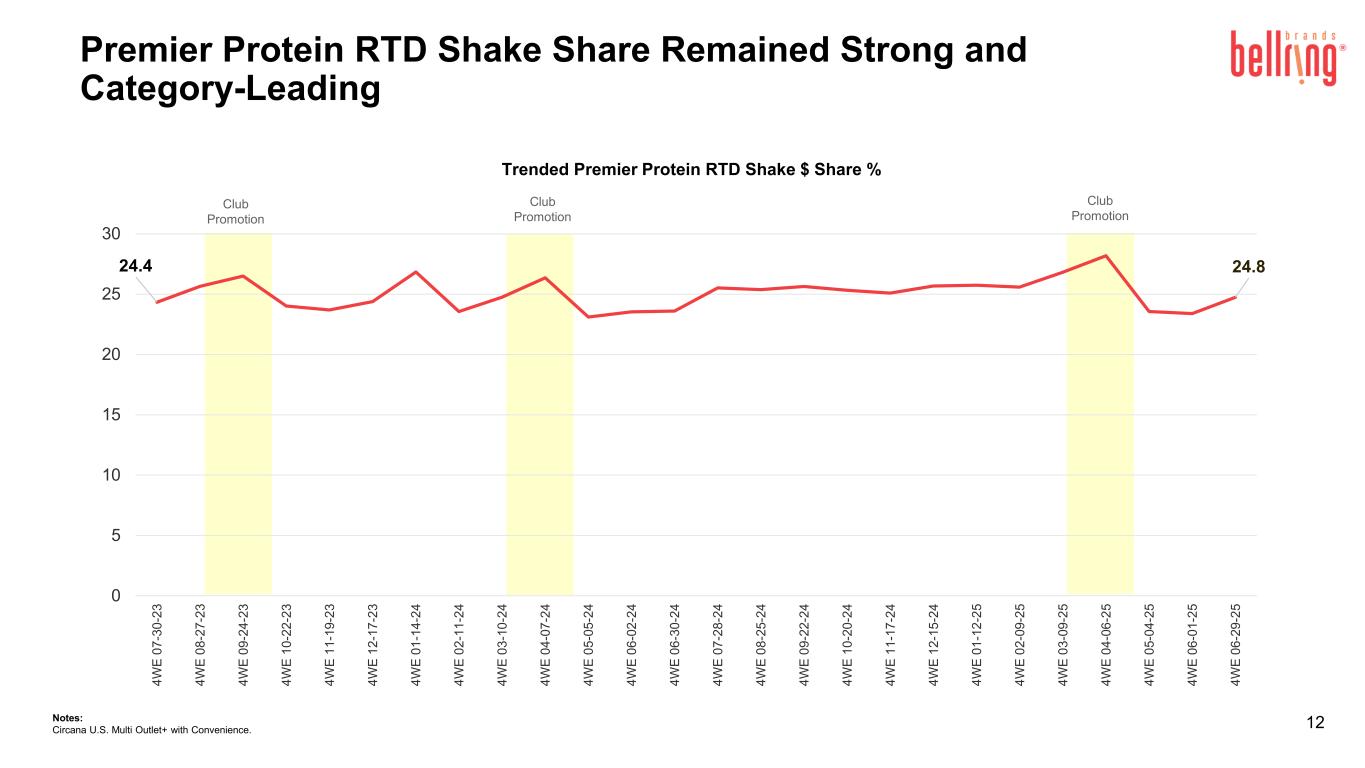
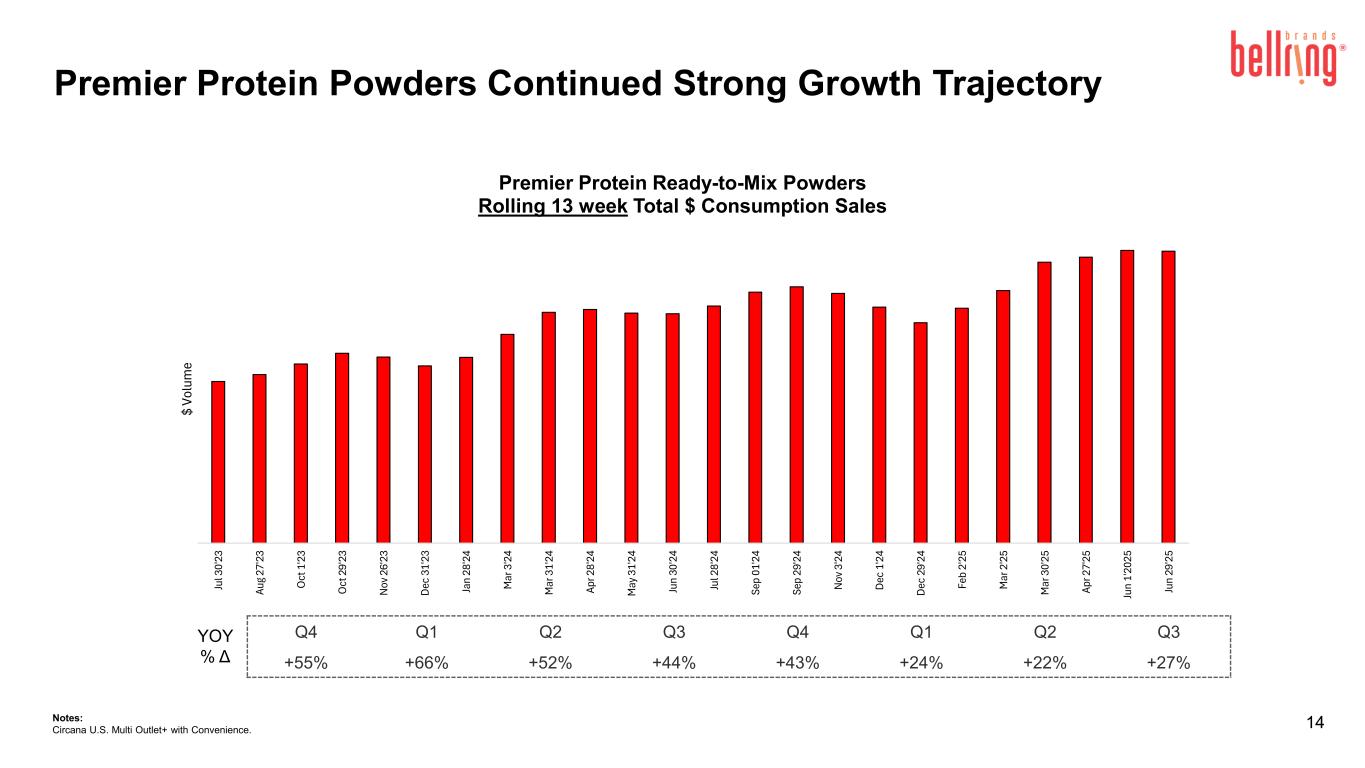
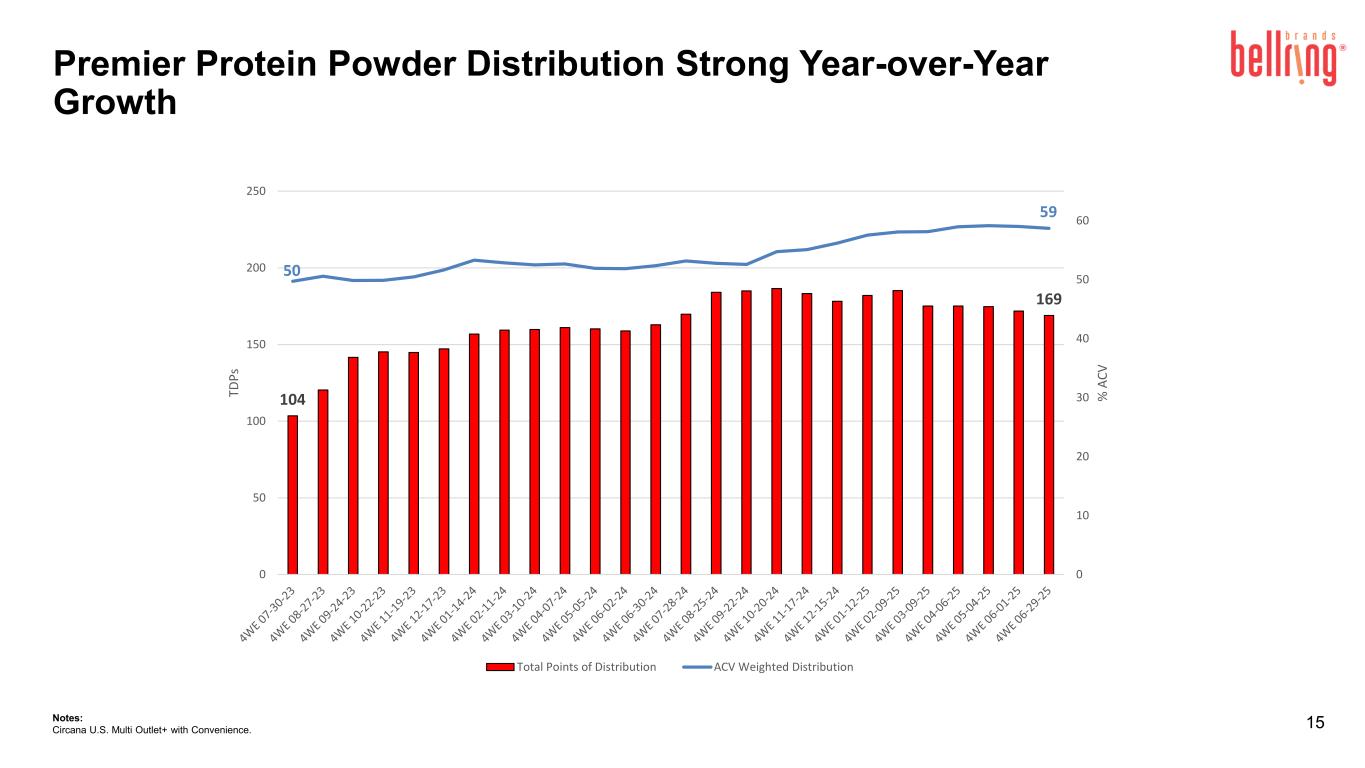
Thanks, Jennifer, and thank you all for joining us this morning. We delivered another impressive quarter, continuing to demonstrate our leadership position. Paul will go into more detail about the quarter's performance and how we expect to end the fiscal year. I plan to use my time today to remind you of our company's unique value proposition and why we believe in our continued success. I have three key messages. The first, the ready-to-drink shake category is on fire with a long runway of growth. Second, Premier Protein's demand and brand fundamentals continue to show exceptional growth. And last, we are building on our brand momentum, positioning ourselves for many years of future growth. Let's get started. As you know, our company's core focus is ready-to-drink shakes. It is no secret that this category remains one of the fastest-growing categories in the entire store. It has incredible momentum with meaningful long-term potential. Protein is at the center of many macro trends, including health and wellness, the popularity of functional beverages, increases in GLP-1 usage and the constant consumer desire for convenience. Ready-to-drink shakes are thriving because they fit so well with the evolving lifestyles and values of today's consumers. RTDs grew 16% this quarter with 70% of that growth coming from volume. One in two households now consume RTD shakes and the category added five penetration points in the past year. This was the second-highest household penetration increase of any category, only behind prebiotic sodas. It is worth noting that Premier Protein contributed approximately one-quarter of that growth, more than any other brand in the category. Retailers have seen this category's potential and are getting behind it. Many leading retailers turn to us for guidance on how to accelerate their growth. As the category leader, we serve as the official category captain in several key retailers and advise many others. We provide thought leadership on aisle location, assortment, merchandising solutions and signage. And retailers are taking action. They're adding more space for RTDs, testing higher traffic aisle locations and expanding displays in and out of the aisle, all in service of accelerating awareness of the category among their shoppers. Concurrently, they are deemphasizing less productive and, in many cases, declining subsegments and brands, which are weighing on their growth. Further adjustments of these underperformers remain a meaningful opportunity for the category. Success attracts competition. So it is not surprising to see new protein RTDs enter the category, especially in its biggest channel, club. The increased interest, especially from large established CPG companies, further validates the long-term consumer relevance and staying power of this category. And in a low household penetration category, competition is good. It brings expanded shelf space, increased marketing spend, heightened focus on innovation and a drive to delight consumers, all with the net effect of increased household penetration and category growth. We continue to believe the category is in the early stages of growth. At 52% household penetration, it trails mature CPG categories, which are often at 80% to 90%. The convenient nutrition category has one-third or less of the space of similarly sized categories in the food channel, a compelling argument for more space. The combination of expanded distribution, new households and increased buy rates of existing users will propel this category for years to come. The convenient nutrition category will look vastly different in five to ten years from now, and Premier Protein is positioned well to lead that evolution. My second message, Premier Protein's demand and brand fundamentals continue to show exceptional growth and strength. Premier Protein, with an RTD market share of 25%, is the number one brand in the RTD segment as well as the number one brand in the broader convenient nutrition category. Our consumption grew 19% in Q3. Volume gains drove approximately 60% of this growth. The brand hit an all-time high in household penetration and remains the leader in the RTD category, reaching 21.6% of consumers. Most encouragingly is that our loyalty and buy rate have remained strong, among the highest in the category. Retailers look to us for thought leadership and as a proven brand. We are the number one velocity brand with the overwhelming majority of our products in the top one-third of the category. Our brand continues to win incremental shelf space with Premier Protein shake TDPs up 34%. Premier Protein continues to be the go-to brand within the RTD category because of its mainstream appeal, unbelievable taste, and category-leading loyalty. The third and final message, we've built strong momentum, and we are now taking it to the next level, positioning ourselves for many years of future growth. Key enablers will be increased brand support, distribution expansion, both in and out of the aisle, and innovation. Starting with brand support. As a reminder, in late December, we launched our first media campaign since 2021, and results show a strong ROI. In July, we introduced our second wave of media, which features our updated packaging. The new packaging, which started to roll out in July, brings a modern look that improves discoverability at the shelf and raises our appeal to younger consumers. Consumer and retailer feedback has been overwhelmingly positive. In addition to increasing brand support, we are boosting in-store investments via promotion, display, and demos. We know from experience that promotions, and more importantly, the displays that come along with them, are key to reaching new households and growing our business. We are aggressively pursuing merchandising in aisle and throughout the store. We have established a dedicated team in addition to a new broker partner to expand our merchandising and consumer touchpoints across the store. These include pallet displays, end caps, and more recently, single-serve bottles and coolers. Distribution continues to be a major opportunity. We generate 11% of the convenient nutrition category sales, but only a 4% share of shelf. In Q4, we will continue to gain TDPs on our core products, single-serve bottles, new innovation as well as a short-term incremental pallet position at a key club retailer. We spent the last four years developing a scalable, regionally diverse co-manufacturing network and now have the capacity to aggressively pursue distribution and take advantage of these valuable retail opportunities. Lastly, we are accelerating our efforts around innovation. Recall, we launched two new shake lines this year. The first, our indulgence line targets an incremental consumption occasion while still delivering on the nutritionals that our consumers expect from the premier brand. We are pleased with this line's performance to date. Momentum continues to build, and it recently gained distribution in club. The second line, Almondmilkshakes, our first nondairy protein offering launched in late June. These shakes made with real almond milk deliver great-tasting nutrition without artificial colors, flavors, or sweeteners. Early results are promising and mark our first step of many toward more wholesome offerings. Our innovation pipeline is rich and is packed with both close-in innovation that has made us successful like flavor leadership, pack size, and format expansion as well as disruptive innovation, which will focus on incremental consumers and occasions. We are committed to bringing continued excitement to our consumers and retail partners for years to come. In closing, the RTD category has strong momentum. Retailers are starting to really lean into this category. The Premier Protein brand is leading the charge as the number one brand with scale and a lot of upside. Premier Protein sells 36 shakes per second, but the brand still has only 20% household penetration, clearly highlighting our consumer loyalty and a long runway for growth. I'm proud of our performance to date with another above-algorithm year. Our teams are energized by the momentum we've built and excited about the opportunity that is ahead of us. Our confidence in the long-term outlook for BellRing remains high. Thank you for your interest in the company. I will now turn the call over to Paul.
Speaker 3
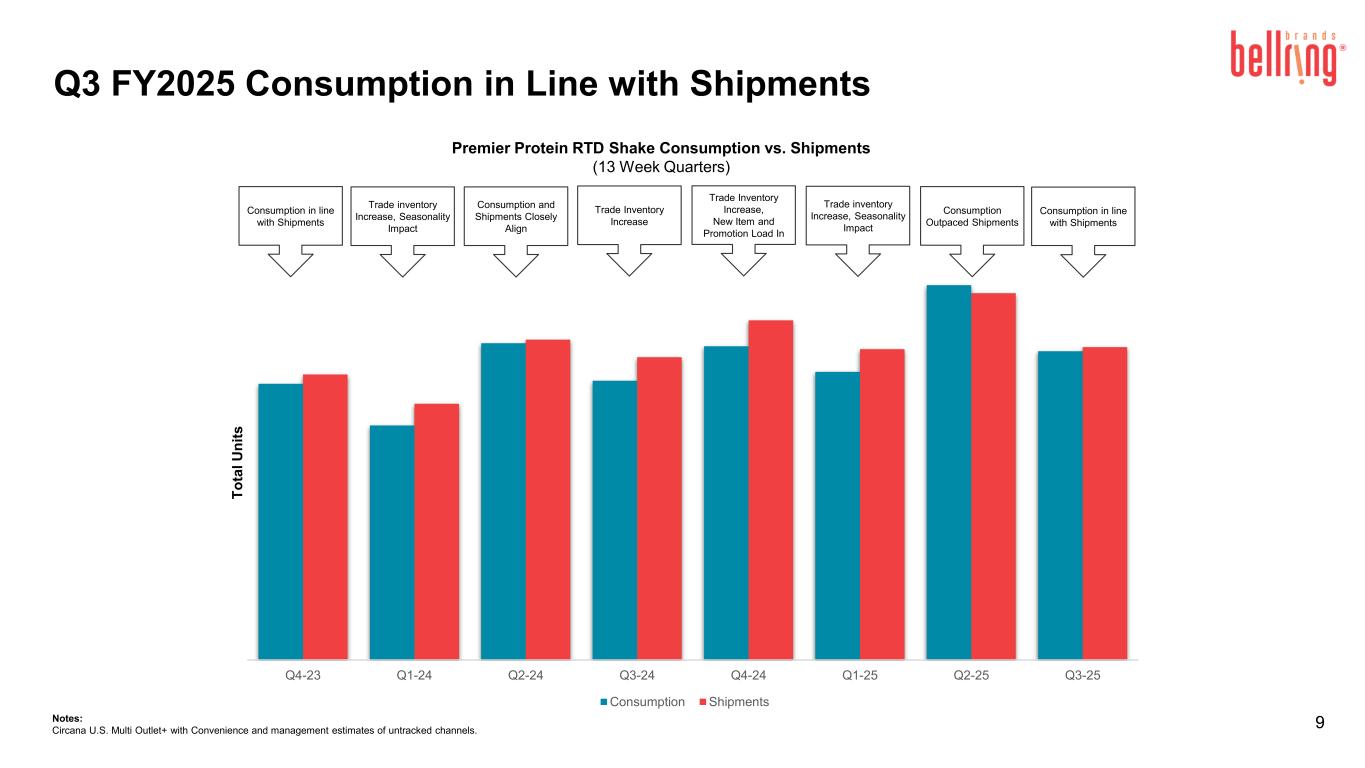
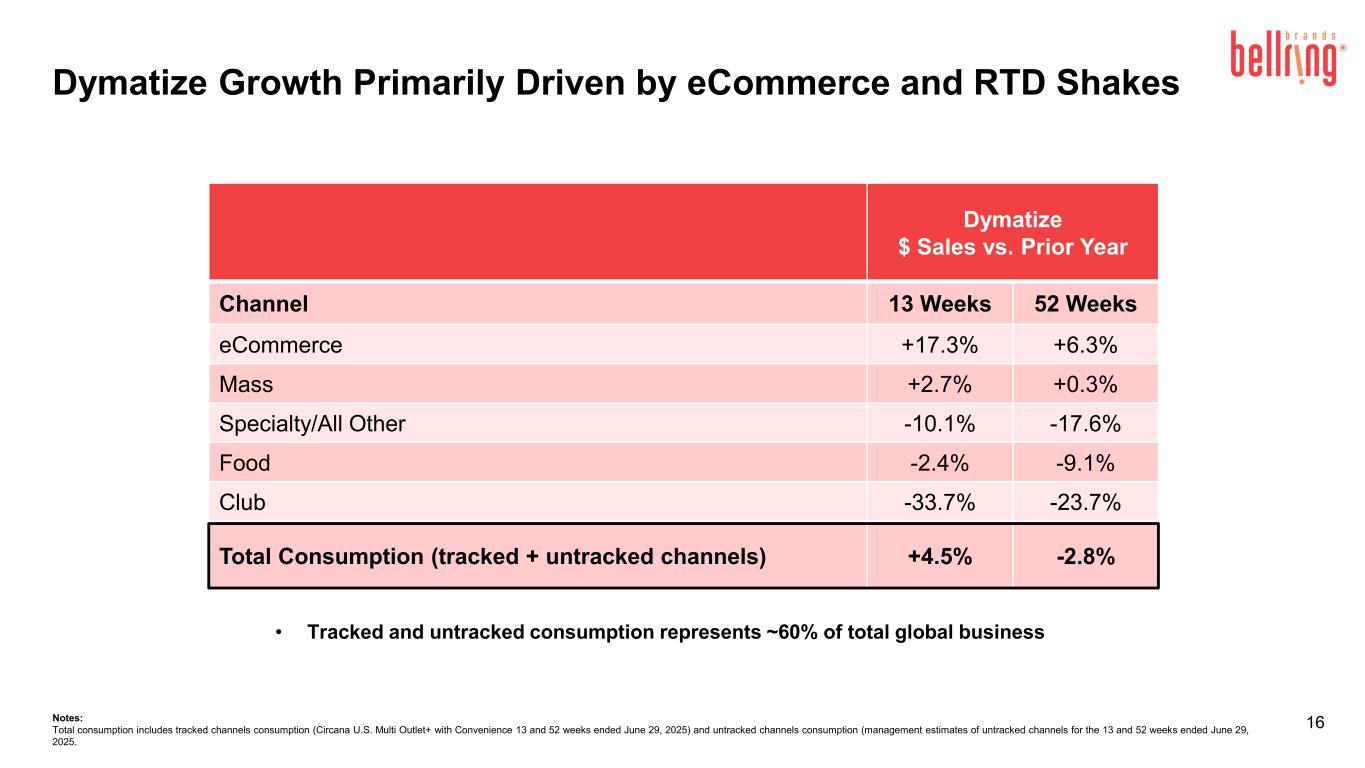
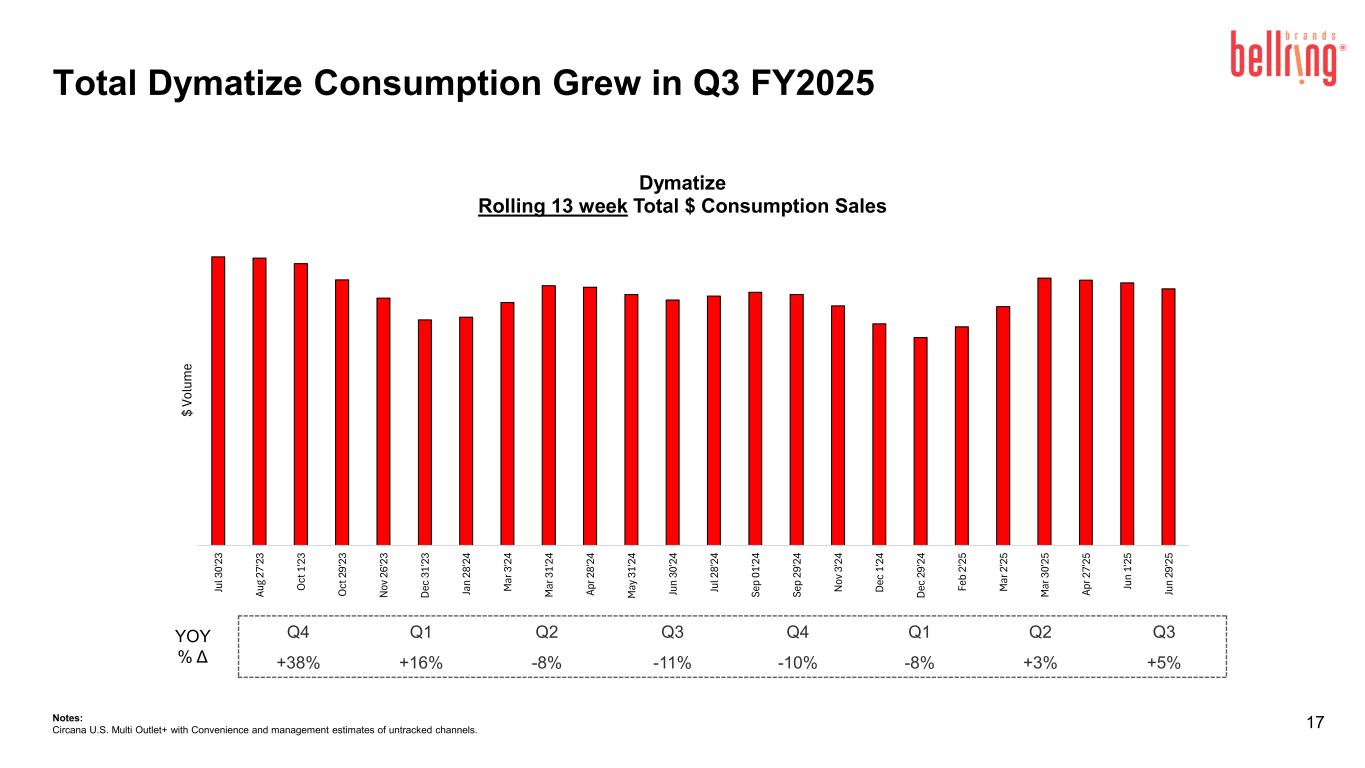
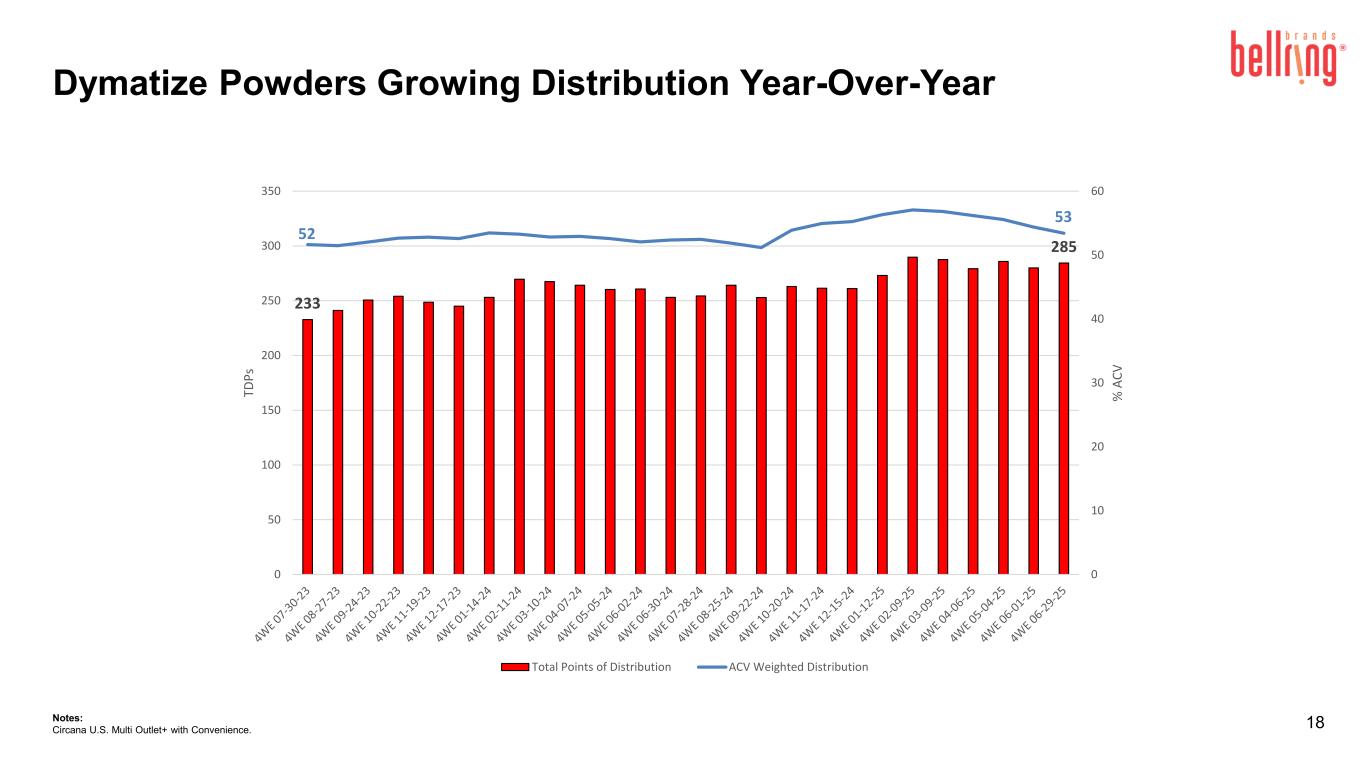
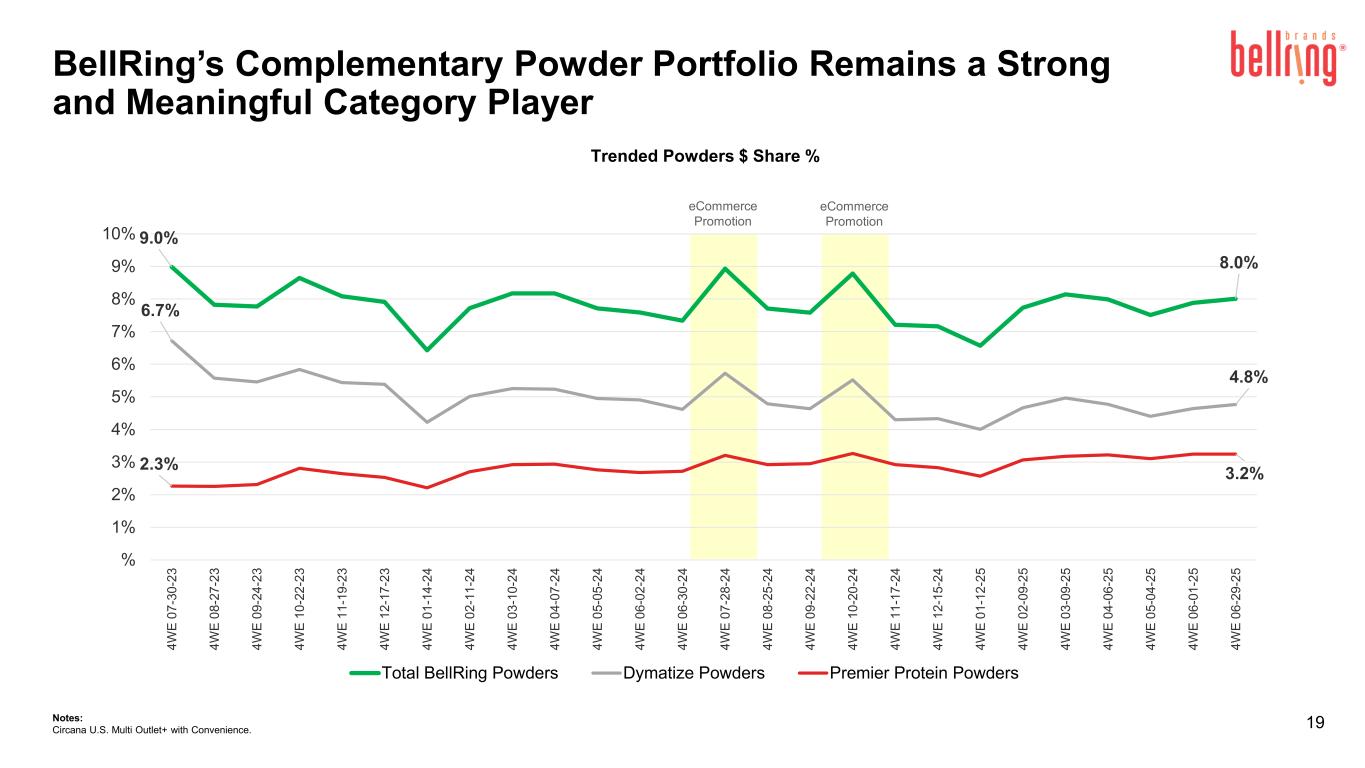
Thanks, Darcy, and good morning, everyone. As Darcy mentioned, we had another good quarter. Net sales were $548 million, up 6% over prior year, and adjusted EBITDA was $120 million. Adjusted EBITDA margins were in line with our expectations at 22%. Both net sales and adjusted EBITDA were slightly ahead of our expectations with the primary driver being a heavier-than-expected e-commerce promotion load-in for Premier Protein and Dymatize, which will deload in Q4. Starting with brand performance. Premier Protein net sales grew 6% with volume and pricing both up 3%. Distribution gains and promotions were the main drivers of volume growth. Recall, we expected trade inventory changes to be a headwind to Q3 growth as we lapped prior year inventory replenishment and certain key retailers lowered their weeks of supply. These trade inventory changes went as expected with the e-commerce load-in being a partial offset and together were a high single-digit headwind to growth. As a result, shake consumption dollar growth of 19% meaningfully outpaced shipment dollar growth in the quarter. Dymatize net sales increased 5% this quarter, lifted by strong growth for international and domestic RTD shake sales. Adjusted gross profit, which excludes mark-to-market adjustments on commodity hedges, was $192 million and grew 3% from prior year. Adjusted gross profit margin of 35.1% decreased 130 basis points. Third quarter margins faced moderate year-over-year pressure from input cost inflation and incremental trade and, to a lesser extent, packaging redesign costs and the lapping of nonrecurring cost favorability in the prior year period. SG&A expenses were $145 million and included a $68 million provision for legal matters related to our Joint Juice brand, which was discontinued in 2023. Excluding this provision, which was treated as an adjustment for non-GAAP measures, SG&A expenses were $76 million, a decrease of 40 basis points as a percentage of net sales, driven by leverage on G&A. A&P spend was 3% of net sales, relatively flat compared to the prior year. Regarding the Joint Juice litigation, a settlement in principle was reached during the quarter and remains subject to court approval. See our press release and 10-Q for further details on this litigation, which dates back to 2013. We expect payment on the matter sometime in fiscal 2026. Before reviewing our outlook, I would like to make a few comments on cash flow and liquidity. We generated $40 million in cash flow from operations in the third quarter and $92 million year-to-date. We continue to expect our cash flow in fiscal '25 to be in line with fiscal '24, with strong operating cash flow generation in the fourth quarter. As of June 30, net debt was $971 million, and net leverage was 2x. We anticipate net leverage will end the year below 2x. With respect to our share repurchases this quarter, we bought 1.3 million shares at an average price of $65.07 per share, or $83 million in total. Year-to-date, we have acquired 3.8 million shares or approximately 3% of our outstanding shares. As of June 30, our remaining share repurchase authorization was $197 million. Turning to our outlook. We tightened our fiscal '25 guidance with our midpoint for both net sales and adjusted EBITDA unchanged. Our outlook for net sales is now $2.28 billion to $2.32 billion, with adjusted EBITDA of $480 million to $490 million. Our guidance implies strong top-line growth of 14% to 16% and adjusted EBITDA growth of 9% to 11%, with healthy adjusted EBITDA margins of 21% at the midpoint. Inclusive of the previously mentioned e-commerce timing shift, we expect net sales to grow 14% at the midpoint in the fourth quarter. Premier Protein is the main driver of overall growth with Dymatize and all other expected to grow mid-single digits. Premier Protein is lifted by distribution gains and incremental promotional activity as we return to historical promotional levels. This is partly offset by lower net pricing. Consumption dollar growth for Premier RTD shakes is expected to remain strong in the high teens to low 20s for the quarter. Regarding fourth quarter adjusted EBITDA, we expect margins of approximately 19% at the midpoint. Compared to last year, we expect significantly lower gross margins, partially offset by meaningful SG&A leverage. For gross margins, higher promotional spend and input cost inflation are the main drivers of the decline. Protein cost headwinds will step up in the quarter for both our powders and shakes, with headwinds from elevated whey, the primary input on our powder products, continuing into fiscal '26. In addition, fourth quarter gross margins are negatively impacted by packaging redesign costs and the lapping of one-time favorability, which combined are a 100 basis point headwind. SG&A dollars are expected to decrease significantly compared to a year ago, with lower A&P spend and reduced G&A expenses. Wrapping up with an update on tariffs, we are monitoring the latest developments and potential implications for our fiscal '26 input costs. As you may recall, we previously discussed potential headwinds to our fiscal '26 cost of goods sold from the higher tariffs impacting our dairy protein sourced from New Zealand and the EU. Based on the policy communicated last week, the overall tariff impact for BellRing has increased slightly, with 15% tariff rates enacted for those countries. While we are evaluating ways to mitigate these costs, we continue to expect a low single-digit impact to our fiscal '26 total cost of goods sold, with no tariff impact on our fiscal '25 results. In closing, we are pleased with our year-to-date performance. Our long-term prospects remain bright, and we are well-positioned to close out the year.
Operator
Our first question comes from Andrew Lazar at Barclays.
Speaker 4
Darcy, you listed a bunch of reasons why you remain confident in the long-term potential of both the convenient nutrition category and Premier Protein's role within it. I think I remember last year on the fiscal 3Q call, I think you broadly addressed some expectations for the coming year. And I was wondering if you'd be able to admittedly on a preliminary basis, provide some initial color on your thinking for fiscal '26.
Speaker 2
It is really too early to discuss fiscal '26. We are currently deep in our planning process. In the past, we have provided some insights about '26 during this call, but it is much easier to estimate demand when we're facing capacity constraints, which we are not at the moment. Therefore, we need to adhere more closely to our planning process. There are several uncertain factors, such as the recent start of our significant promotion with club and another one coming up, which we want to evaluate. Additionally, we are still looking into the implications of tariffs. Overall, we are very positive about the long-term prospects of the business, as I mentioned in my earlier comments. I believe we are not only unencumbered by capacity issues but also showing impressive metrics. I feel we are at a pivotal moment with retailers, who are increasingly supporting the category, and we are leading the way. I am optimistic about our opportunities as we continue with our planning, and we will have more information to share in our next call.
Operator
Our next question comes from Kaumil Gajrawala.
Speaker 5
I have a couple of questions. First, the third quarter performance seemed better than anticipated when considering some of the destocking challenges. However, you've chosen to narrow your guidance instead of potentially aiming for the higher end, especially with all the metrics and the momentum you mentioned, Darcy. I'm curious as to why you've decided to narrow it instead of leaning towards the higher end. Additionally, I may have misinterpreted your Slide 9, but consumption appeared to align with shipments for the third quarter. I would have expected consumption to be significantly higher, considering there was some destocking during that period. I just want to clarify if I'm misunderstanding that or if there's something else at play.
Speaker 2
Sure. I'll begin by addressing your first question and then hand it over to Paul for the second. In any quarter, there are various factors at play, but most of them are quite minor. Let me outline a few of these factors to give you an idea. In Q3, our consumption was slightly higher than we anticipated, primarily due to pricing changes rather than volume, which contributed a couple of million dollars in benefits. Additionally, we secured a short-term club pallet, which provided about two months of benefit and we estimate that to be around $10 million. However, this was offset by the fact that several competitors also gained short-term space at the same time, leading to increased competitive pressure in the club sector that negates the initial advantages we gained. Ultimately, even though these figures are relatively small, making up about 2% of our quarterly results, they explain why we decided to lower the upper end of our projections.
Speaker 3
And then on your second question regarding our supplemental schedule, Slide 9. So yes, you're correct. We expected consumption to slightly outpace shipments more than it did. They came in more in line. And the primary driver is the e-commerce heavier-than-expected load-in that we saw in the third quarter. So that is masking the deload to some degree that we saw in club and other retailers. On the last call, we called out, obviously, an expected deload in the quarter. That played out exactly as we expected. We feel good about where our trade inventory levels are for those key customers. But that's the main reason is, yes, we expected it to be slightly lower as well, meaning consumption over shipments, and it was masked a bit by this e-commerce load-in that we expect to fully load deload in Q4. We think it's purely timing.
Operator
Our next question comes from David Palmer from Evercore ISI.
Speaker 6
I would like to follow up on Andrew's question. While I won't comment on the increased competition, I want to address your distribution innovation and marketing efforts. There are many factors to consider, and the category remains strong. Is your long-term target of 10% to 12% a reasonable benchmark for thinking about high single-digit category growth? Do you believe you will gain market share this coming year, or does it seem less likely? Any insights you can provide on how we should assess the category and your growth within it would be appreciated.
Speaker 2
Yes, we are very optimistic about the opportunity ahead. Our long-term algorithm remains strong. The points we've presented to investors continue to hold significance. This category is thriving, as I mentioned in my prepared remarks, and we are the leading player. While competition is expected to increase, I believe this will benefit the category overall. We are observing significant momentum with our retailers. This is the first time I've referred to us as category captains, which has been a focused effort over the past year, and we're witnessing substantial impacts as a result. Additionally, our innovation is making strides, with two new lines launched in a single year, and they are starting to gain traction on shelves as sales volumes increase. There are many factors at play, and we need a few more months to analyze and provide more accurate projections.
Operator
Our next question comes from Megan Clapp from Morgan Stanley.
Speaker 7
Maybe I wanted to ask the competition question maybe a little bit differently. And Darcy, you touched a bit on it in your prepared remarks, but I'd love to just hear your updated thoughts in terms of how you're evaluating the single-serve opportunity and kind of your desire to move the brand into the mainstream beverage aisle as a way to reach new customers maybe as competition is getting a little bit more fierce, if that's an okay word in kind of your main club channel.
Speaker 2
Sure, Megan. I’ll start with the club competition because I think it’s important to provide some context. I’ll then discuss our goals for the store and the significance of single-serve products. Please let me know if I miss anything. First, regarding the club situation, it’s somewhat unique. When we gained our short-term club pallet, several competitors also increased their space. One of our key club retailers chose to expand the ready-to-drink and powder floor space temporarily in Q3 to fill areas that were previously allocated to categories impacted by tariffs. This situation is expected to last until the end of the calendar year, so while we gained some space, competitors did too due to the availability of new space. This has led to increased competition, which I believe is beneficial for the category. I visited a club store this weekend, and it was encouraging to see that 60% to 70% of the shoppers had high-protein shakes in their carts. This shows that the category is becoming mainstream. I think the rise in competition, particularly in this channel, is a temporary situation and will level out soon, unlike other channels where resets occur more slowly. The second point I want to make concerns our discussions with retailers about our desired store presence and the opportunities available. We are advising retailers that it’s less about the specific store location and more about being in high-traffic areas with clear distinctions from other products. Strong signage and the visibility of convenient nutrition are essential, as is education to help consumers choose the right products. Displays that catch shoppers’ attention outside the aisles are crucial as well. In addition to working with retailers to enhance category visibility and the overall merchandising strategy, we are focusing next year on our single-serve efforts. This will include creating displays throughout the store, some in ambient sections and others in coolers, where we have seen success in food accounts. We believe this focus will be significant, marking the first year we prioritize this. The next step will be to pursue opportunities in direct store delivery.
Operator
Our next question comes from Jim Salera from Stephens.
Speaker 8
A lot of questions on competition already. And if you'll indulge me in asking another one kind of a different way. With industry capacity in a better spot and that maybe opening the door to newer upstart brands coming into the category, can you offer any thoughts on how we should think about promotional cadence going forward? Just conceptually, I think it would make sense as some of these other brands launch, they would probably have some heavy promo efforts behind that and if you have several launching maybe at kind of a sequential cadence, it might end up where the promotional calendar for the category as a whole is pretty packed for a year. So just any thoughts around does that mean that you need to increase or extend your promotional cadence? Do you feel that maybe other brands are going after different customers? Just any details you can offer about how we should think about that going forward?
Speaker 2
Yes. I believe our promotional schedule has remained steady. Recently, we enhanced our Q4 club promotions, which returned us to our previous practices before facing capacity constraints. In Q1, which includes October, November, and December, we typically see low promotional activity historically for our category as well as for ourselves. The main promotional period is January, February, and March, which will continue to be the case since that’s when most new customers enter the category. There are also usually minor promotions in Q3 and another significant promotional period during the back-to-school and back-to-sports timeframe, which falls in our Q4. I don’t expect this to change; the promotional pattern has remained consistent during my time in the category, aligning with consumer behavior. This year was our first full promotional effort since we resolved the capacity issues, and I anticipate this approach will continue moving forward.
Operator
Our next question comes from Yasmine Deswandhy from Bank of America.
Speaker 9
So I just wanted to follow up on Andrew's question earlier and maybe phrase it a little differently. Obviously, understanding that you won't get into details about next year until later this year. I think in the past, you've alluded that on-algo growth could be in the books for next year, at least on top line. You'll be lapping this year's innovation, incremental promotions. You've launched two new lines this year. So I'm not asking for any numbers, but just kind of qualitatively, how much confidence do you have in achieving that on-algo growth? And what are the qualitative things that we should consider for next year, just on top line?
Speaker 2
Yes, we feel positive about it. Reflecting on the past few years, we have been navigating capacity constraints to some extent. We have gradually been adding different demand drivers. Initially, we reinstated our full product line, and even as recently as last year, we still faced some stock shortages. Then we introduced promotions, starting with club promotions, followed by FDM promotions. This year marks the first time we've reintroduced our marketing drivers. Therefore, in 2025, we will have all our demand drivers in place. Moving into 2026 and beyond, we anticipate returning to normalcy. Considering this, our long-term objective remains 10% to 12% growth at 18% to 20% margins. That is our expectation. When you take a step back and consider our activities over the past few years, it provides valuable context for our future direction. What is particularly exciting is that in a dynamic category where we hold the top position, the leading player in any high-growth category typically gains substantial advantages, which we are experiencing. This is why we aim to be the category leader, shaping the future, pursuing additional displays, and influencing the product assortment while offering guidance on consumer trends and how we can support them.
Operator
Our next question comes from Brian Holland from D.A. Davidson.
Speaker 10
A lot of the questions, I think, on the numbers have sort of been addressed to the extent that they can. So maybe just asking, obviously, there's been a lot of questions about the competition as well. I'm just curious, Darcy, if you could sort of frame for us how you think about the value proposition of Premier Protein. And for context, obviously, we have new innovation, and this is a category that has and will continue to bring a lot of innovation to market. And so as that evolves, as consumer taste and preferences evolve, the positioning of Premier Protein, the value proposition of that product vis-a-vis some of the other products and macros that are out there available to the consumer. What gives you the confidence from that standpoint that you can hold or grow your share going forward?
Speaker 2
Sure. That's a great question. The value proposition for Premier is clear: consumers appreciate its approachable positioning, fantastic taste and flavors, along with great nutrition. It’s a perfect combination. A significant aspect of the great taste is its thick, milkshake-like consistency and the extensive array of flavors. Consumers are using our products daily and often seek alternatives to chocolate and vanilla, wanting to explore flavors like root beer float, pumpkin spice, and lemon bar. They refuse to compromise on taste. This is the key to Premier's success, and it will continue to be so. We've conducted extensive research to identify the white space and potential growth areas in the category. We believe there are great opportunities ahead, though I won't delve too deeply into our innovation strategy. Our findings indicate that most consumers prefer thick, decadent shakes that satisfy their hunger, while some may prefer thinner beverages. The majority seek around 20 to 30 grams of protein, with a preference for sweetness. This data shapes our understanding of the category's future. The advantage of a burgeoning category is that it often starts with a few brands and products, which then expand to meet broader consumer demands with various line extensions. For instance, ultra-filtered milk is a thinner product, akin to high-protein milk, while our offering resembles a milkshake, appealing to those who enjoy a rich, filling experience. Transitioning to a thinner product may not appeal to loyal Premier customers, but there’s still opportunity in that area. We believe we’re well-positioned as we recognize an increasing number of consumers seeking great taste, approachable offerings, and solid nutrition. This aligns with our marketing efforts, which emphasize moving beyond traditional aisles and supports the foundation of our innovation strategy.
Operator
Our next question comes from Peter Grom from UBS.
Speaker 11
A lot of questions on the top line. So maybe just some questions on profit. So Paul, I think you mentioned that the fourth quarter gross margin is going to be under significant pressure. Is there any way you can put some guardrails on that? And then I guess related, obviously, exiting the year with some margin pressure here, and I know we'll get building blocks to 26 in a few months. But can you maybe just help us understand of these headwinds you're dealing with in the fourth quarter, what do you view as transitory versus what should linger as we look ahead?
Speaker 3
From a fourth quarter perspective, we anticipate EBITDA margins to decrease by approximately 300 basis points compared to last year. We expect SG&A expenses to be lower, leading to significant leverage on SG&A, exceeding 300 basis points. The primary reason for the margin decline is the gross margins, which are affected by two main factors: increased promotional activities compared to last year, particularly in clubs, and inflation on protein and input costs. Protein prices have risen since the third quarter, impacting our fourth quarter for both shakes and powders. Additionally, there are some one-time costs related to packaging redesign, which we have previously mentioned, and we are also experiencing a favorable comparison to certain nonrecurring costs from last year, contributing to about a 100 basis point headwind. Overall, promotions and cost of goods sold inflation are our largest concerns. Specifically, in the case of whey protein, which is a critical input for our powder business involving both Dymatize and Premier, we expect these headwinds to persist into fiscal 2026. Therefore, we anticipate that whey protein costs will remain elevated next year. We are looking into strategies to mitigate these challenges. Furthermore, as we approach next year, tariffs are another factor we foresee causing cost pressures in fiscal 2026. We will not fully offset these through supplier or ingredient changes, which means we will face continued headwinds. However, we are also identifying various opportunities to reduce costs within our products and supply chain, which is a major focus for 2026. Additionally, I expect to see some G&A leverage as we continue to grow our top line. These are the key considerations as we look towards 2026.
Operator
Our next question comes from Matt Smith from Stifel.
Speaker 12
Darcy, you mentioned the competitive environment. Can you share your expectations for the fall shelf reset in the near term? As the category faces this new wave of competition, how do you assess success from a market share standpoint? Has the approach to the necessary level of advertising and promotion for BellRing changed in this more competitive landscape?
Speaker 2
We are optimistic about the upcoming fall resets and will continue to expand the distribution of TDPs for Premier Protein. We're seeing more growth in single-serve offerings compared to our core products and innovations. Additionally, I mentioned the temporary incremental pallet in club, which also contributes to our confidence in the fall resets. Regarding market share, the strength of our category and its low household penetration is significant. Over time, our market share has grown steadily, and we believe our success does not solely depend on increasing market share; we can achieve success by maintaining our current share. That covers one aspect. What was the third question?
Speaker 3
On marketing spend.
Speaker 2
Do you want to take that?
Speaker 3
Certainly. From a marketing spend perspective, we have previously indicated that we expect to gradually increase our marketing expenditures. This year, we added promotional activities, but looking ahead, we anticipate a modest increase in marketing spend as a percentage of sales. However, this should largely balance out as we achieve greater leverage in general and administrative expenses. In summary, I believe that our advertising and promotional spend will steadily rise over time.
Operator
Our next question comes from Jon Andersen from William Blair.
Speaker 13
I had a question about innovation. Could you elaborate on the indulgence line and how effectively it's attracting additional occasions? Also, regarding Almondmilk, while it might be early, how is the Premier brand performing in this different subsegment of the category? Additionally, I have a follow-up for Paul. With all the discussions about competition and investment levels, what are your thoughts on potential changes to your capital allocation priorities moving forward?
Speaker 2
I'll start by discussing Indulgence. It's the product we have the most experience with since it launched earlier this year, and its performance has been impressive. We initially introduced it in mass retail, and it has performed very well. Three of the four flavors are among the top third, and we've even managed to get the fourth flavor into that category due to its success. The strong performance in mass retail has allowed us to expand distribution into other areas. As I mentioned regarding the TDP gains in Q4, we will be further expanding Indulgence into more mass retail locations as well as other food channels, including club accounts. We're very optimistic about this. The concept of Indulgence was designed to be incremental in nature, particularly in terms of occasions, and the data confirms this with about half of the sales coming from category expansion. We're also attracting new consumers, which is a great bonus since the intent was for existing consumers to purchase more for various occasions. I mentioned 50%, but it's encouraging to see that new consumers are also responding positively to the concept. Regarding Almond, it's still early days as we have just launched and currently only have it available on Amazon. We had a recent promotion that generated some good trial. We're now working on rolling it out to other food and mass retailers in the fall, along with some tests in mass channels. It's too soon for concrete results, but we are seeing positive uptake in e-commerce. Personally, it's a favorite in my household, which speaks volumes.
Speaker 3
Regarding capital allocation, there is no significant change to our priorities. We will maintain a balance between paying down debt on our revolver and conducting opportunistic share buybacks using our strong free cash flow. M&A remains a more medium to long-term focus, while we continue to emphasize organic growth. Therefore, I can say there are no major changes to our capital allocation strategy moving forward.
Operator
Our next question comes from Steve Powers from Deutsche Bank.
Speaker 14
Not to take us backwards, but Darcy, I think if I had told you three months ago that consumption would have ended at 19% for 3Q, I think you would have said that that indicated momentum that would likely yield better than the high teens, low 20s consumption that you're now calling for in 4Q. So can you just be a little bit more precise as to what may have temporarily inflated 3Q? And then conversely, what may be dampening 4Q versus kind of your expectations three months ago? And then if I could, just looking forward, I just want to be really clear because I've heard different things. I've heard it's too early for '26. I've heard it's too soon to call. But then I've also heard more recently, you said 10% plus is your assumption. So coming out of 4Q, given the current momentum, are you saying that next year is supposed to be a 10-plus percent growth year? Or are you not sure about that?
Speaker 2
Okay. So Steve, can you respond to the first question regarding the Q3 consumption being 19% and what the expectation is for Q4?
Speaker 14
Your consumption growth in the third quarter was in the mid- to high teens, and you ended up at the high end of that range, which suggests positive momentum that would typically put you near the upper end of your projection. However, you have since adjusted down towards the midpoint of your range. What factors may have temporarily boosted consumption in the third quarter, or what might be affecting your fourth quarter consumption compared to your projections from three months ago?
Speaker 2
Yes, I'll return to the factors I mentioned earlier. First, the consumption in Q3 was slightly above expectations, primarily influenced by pricing rather than volume. This resulted in a potential benefit of a couple of million dollars. On the positive side for Q4, we received a short-term pallet that gives us a couple of months of advantage, especially since one was promoted. However, this gain is offset by the fact that several competitors also acquired short-term space at the same time, which we believe will increase competitive pressures and negate the earlier gains. These changes are minor, reflecting a range of about 2% up or down. So, while there are various factors at play, these are the key points to consider. Yes. We are in the middle of our planning process. What I said about 10% plus is that's our long-term algorithm. That's our goal.
Operator
Our next question comes from John Baumgartner from Mizuho Securities.
Speaker 15
Darcy, in your remarks, you mentioned innovation and the appeal of ultra-filtered milk in ready-to-drink has been proven at scale at this point. There's more competitors coming in with that formula. You touched on it a few moments ago. But just to keep with that line of thinking, setting aside the viscosity element of it, are there specific demographics where you're seeing filtered milk appeal more strongly? Are you seeing more new households coming into the category through filtered milk relative to MPCs at this point? If you could just speak to how you view segmentation in ready-to-drink going forward aside from the loyal premier consumers that are out there and whether you would consider launching an ultra-filtered format yourself for Premier?
Speaker 2
Yes, John. We see a pretty even situation. We don't really differentiate between ultra-filtered milk and MPC, but I understand your question. Recently, we conducted research and found that consumers are not familiar with ultra-filtered milk or MPC. The source of protein is not a significant factor influencing their purchase decisions. Instead, brand loyalty is the primary driver. Interestingly, even loyal consumers of ultra-filtered milk products often do not realize they are consuming ultra-filtered milk. The factors that drive consumption, purchase, and trial are actually brand, taste, and texture. When new consumers enter the category, ultra-filtered milk and MPC products are perceived similarly. Consumers are not distinguishing between the two; instead, they are focused on flavors, brands, and macro levels that appeal to them. Packaging formats also play a role in their decisions. Ultimately, they are not considering the type of protein used in the products.
Operator
The question-and-answer session is now closed. Thank you for your participation in today's conference. This does conclude the program. You may now disconnect.